I am aware, as you are, that time is fleeting and moments are passing. Life has taught us that. But there is more, like a dandelion will scatter with the wind as we hold it in our hand. There is no stopping any of that. Nor can we control it.
Still, there are messages for us here, right now, as we contemplate a little reality. If you know me personally, you know that I have lived an uneasy life full of trouble. In a way, tragedy became the path I traveled. I would struggle my way through one tragedy and then steeled myself waiting for the next one. The next tragedy always came eventually, a tragedy large or small.
When tragedy cruelly and abruptly stopped me in my tracks, I found that most of the time, I was resilient and full of hope. Yet, I became exhausted by the trauma, or the sorrow, or the grief.
It is true that when I fell to my knees, I always got up. Good for me! It’s not like that, though, that “good for me” attitude. I was strong enough to get up and move forward, but it was more like God graced me with the courage and hope I needed for to pick myself up and take my next step.
Void of any pending tragedy, I have felt positive for the past weeks. I finally have a stable, working kidney. My frequent falls have stopped. I didn’t get seriously hurt by falling, just a sprained wrist and later a bruised rib cage. So I firmly believed the words of faith from Julian of Norwich, “All shall be well, and all shall be well, and all manner of thing shall be well.”
Until, until, I heard the doctor say to my husband Fred and me, “You have advanced prostate cancer.”That’s when I broke my streak of resilient responses to tragedy. I have been happily married to this good, good man for 55 years! He cared for me during my long illness, five years of dialysis, and my kidney transplant. He cares for me every day in a thousand different ways! I honestly don’t know how I would live without him. Then I heard a whisper, “Where is your hope, my daughter? Where is the resilience that has always carried you through the hard times?”
That whisper was what I needed to hear, because everything about this felt different to me than any other time I had heard bad news. Questions and concerns and worries about every kind of life change flooded my psyche. I was assuming the worst right at the very beginning of this current life tragedy. I could not put my finger on it, until I saw this bit of insight from C.S. Lewis.
No one ever told me that grief felt so like fear
—C.S. Lewis, from “A Grief Observed”
I felt instantly that my feeling since the awful diagnosis day was indeed fear. That’s why it felt so different. It was not my normal response of sadness, anger, devastation, aliveness, fatigue, and more sadness. This time my grief felt more like fear. So there you have it. The gentle make up of a dandelion is not one you can hold together. It scatters with the breeze. Time continues to fleet no matter how we try to stop it. Moments are passing and that will not stop.
But we have this moment and all the comfort and peace and hope and joy we can get from it. And we can do just that: consider only the present; feel the emotion of it; recognize it as completely yours; and summon the courage to hold it in your arms and grab the good things. That is one simple definition of resilience, and you have it! You have resilience! Everyone has it! Keep it close and continue to move on your sacred path.
If I do any reflection or contemplation of spiritual truth, I can best do it in a peaceful place like the one depicted in this watercolor art—soft light, peaceful color, a canopy of trees, nothing going on, just silence with a bit of birdsong. I can’t often go to such places so I paint them and imagine myself there. It works.
I have been writing a spiritual memoir to be released sometime in August. Just imagine—all the multitude of my stories from this blog together in one book! I sort of cringe when I think about it. I have been writing my memoir for months, and the process revealed many truths to me. The stories—I call them Spirit Stories—unfold from reflection, contemplation, and experiencing my life events all over again. Emotions arise in me as I remember, and tears cleanse my spirit. Experiencing past life in present time reveals so much insight and healing. I am learning a lot about “my truth” in the process. These are just a few of the things I have realized so far.
Even the smallest events in my life teach me big, important lessons.
People are not always what they seem, including me!
I think I may have been placed on the earth to be hurt by mean people.
When I fall—face-in-the-dirt fall—I always get back up. So far!
Sometimes I do not fall. Someone pushes me!
I found my truth while reflecting on and writing my memoir.
So that’s what I’ve been up to. That’s why you haven’t heard from me much here. But just wait for the book to be released. You will learn more about me than you ever wanted to know! Deciding to write my memoir was a long, confusing process for me. I ruminated about it for years. But I landed on the fact that speaking my truth (to all three people who want to hear it) is important. Saying it clearly and out loud is an important life thing, even if I’m the only person who hears.
Anne Lamott expresses the important life thing like this:
You are going to feel like hell if you never write the stuff that is tugging on the sleeves of your heart—your stories, visions, memories, songs: your truth, your version of things, in your voice. That is really all you have to offer us, and it’s why you were born.
You may have noticed there have been no words coming from this blog in quite a while. No new posts. No graphics. No music. The reason is that inside me, there is nothing, and that has been my situation for several weeks. Part of the reason is that I was very sick for a while, hospitalized actually. In addition, I simply felt empty, without a creative spark that is usually so common for me.
Physically, I have felt unwell for a long time. Emotionally, I have felt the continued sting of isolation because getting Covid could be deadly for my immunocompromised body. Spiritually, I would have to say that the gun violence that has taken the lives of children and teachers in Uvalde has wounded my spirit and left me with so many unanswerable questions about faith and hope.
When all of those things rustle through my mind, it cannot help but reduce me into a silent kind of melancholia that affects my body, mind and spirit. It seems that this time, I can’t move past it. My husband asked me today if I am depressed. I answered, ”yes,” but honestly, I feel more sad than depressed. I don’t understand it this time. I can’t put my finger on the cause no matter how hard I have tried to figure it out.
The myth is that figuring out the root of depression or sadness will help one overcome it. Once you understand your depression and where it comes from, you can get beyond it. Also not necessarily true! Understanding is not a bad thing, but it is also not a cure-all.
These days, I simply cannot understand things—all things me! I recognize my sense of feeling empty, and I still have the ability to use reason and discernment to try to understand my feelings. But the truth is I don’t understand what’s going on in me. The internal web of my physical hurts, my emotional disturbance and my spiritual emptiness defy explanation and understanding. It’s complicated, outside of my ability to understand. So I have craved any flicker of light and life I could find.
I found it today, in a quote shared by a dear friend. This is the quote.
I didn’t need to understand the hypostatic unity of the Trinity; I just needed to turn my life over to whoever came up with redwood trees. ~ Anne Lamott
I can rest in that. I can find peace beyond my understanding. I can lean into the treasure of not being compelled to understand complicated things, even complicated things about myself. By the way, complicated things about myself may well be the most difficult things to understand, sometimes baffling and elusive. So Instead of the constant struggle to understand, I plan to turn my life over, again, to the One who created me to be complicated in the first place.
Thanks be to God for the ”peace that passes all understanding.” Amen.
“Come, Ye Disconsolate” is one of my favorite hymns. You might ask why. In every person’s life, there are times of sorrow that fall very deeply into the soul. There is a sense in which deep sorrow communes with us like no other emotion. Being disconsolate can be a beautiful experience.
It is a beautiful word — disconsolate — a word full of depth and full of meaning. Yet, it is not a word we often use. It sounds a bit like an ”old” word to me, perhaps more widely used in decades past. The definition? According to Merriam-Webster, the word disconsolate means “cheerless.” I don’t find enough soul angst in that definition, but the word has many soulful synonyms.
Synonyms for disconsolate can be as heart-rending as the word itself: downcast, inconsolable, dispirited, desolate, crushed, despairing, destroyed, despondent, hopeless, heartbroken ~ comfortless
So many words, so full of sorrow. Still, I love the word disconsolate. It has been my companion on many a journey and, although I did not welcome it as an emotion, I learned to own it, which is surely the most important way to have full awareness of your spirit. The truth is, when one is disconsolate, it is an opportunity to imagine being wrapped tenderly with a soft blanket of hope. Wrapped completely, face-under-the-covers wrapped!
How can such a word remind me of a soft blanket tenderly wrapped around me? How can the soft cover be called a blanket of hope? I will offer one reason that is a personal story about my friend and colleague in ministry, Donna. When I was desperately ill with end stage kidney disease, Donna came to visit me in the hospital often. Many of those visits I can’t remember, but she came one day holding a gift in her hands. The gift was a fluffy, white crocheted blanket that her entire congregation had prayed over as they petitioned God to restore me to health.
Every time, from that day to this, that I covered myself with that blanket, I would think of Donna and her church members and their act of love and concern. I imagined them nearby and sensed their prayers becoming a part of my soul’s lament. They did not leave me comfortless.
Whenever I feel disconsolate, comfortless, it helps me to remember these words from the Gospel of John, one of the most beautifully poignant passages in all of scripture:
16 And I will pray to God who will send you another Comforter who will abide with you forever, the Spirit of truth; Sadly, the world cannot accept the Comforter, because it does not truly see her or know her. But you know her; for she dwells with you, and shall be in you.
18 I will not leave you comfortless: I will come to you. 19 In a little while, the world will see me no more; but you see me: because I live, you shall live also.
25 These things have I spoken unto you while I am still present with you.
26 But the Comforter — the Holy Spirit — God will send in my name,
and the Spirit will teach you all things, and bring all things to your remembrance, all the things I have said to you.
27 Peace I leave with you, my peace I give to you: I do not give you peace as the world gives,
Instead I give you peace as if it were from God. And so, my beloved children, do not let your heart be troubled, neither let your heart be afraid. — Jesus, recorded in John 14: 16-19; 25-27, paraphrased
During the times I felt disconsolate through the years, I have always been able to rest under the comforting wings of the Spirit, the Comforter who is with me always. Yes, it is true that many times my heart was troubled and afraid. The words of Jesus did not always repair the state of my heart or diminish my fear. But the promise of Jesus — that I would not be left comfortless — soothed and strengthened my heart.
The words of this hymn held for me a depth of meaning that has spoken comfort and truth to my disconsolate spirit — every time — easing my suffering and leaving me with hope.
Come, ye disconsolate, where’er ye languish; come to the mercy seat, fervently kneel. Here bring your wounded hearts, here tell your anguish; earth has no sorrow that heaven cannot heal.
Joy of the desolate, light of the straying, hope of the penitent, fadeless and pure! Here speaks the Comforter, in mercy saying, “Earth has no sorrow that heaven cannot cure.”
Here see the bread of life; see waters flowing forth from the throne of God, pure from above. Come to the feast prepared; come, ever knowing earth has no sorrow but heaven can remove. Thomas Moore (1779-1852)
I have experienced the “joy of the desolate” many times. It is a joy that fills my heart, in spite of how deeply desolate I feel. As for what this all means during this Lenten season. For me, it means that a Lenten experience can help me see the ”light of the straying,” and that I will experience the ”hope of the penitent” and once again hear the words of the Comforter “in mercy saying, ‘Earth has no sorrow that heaven cannot cure.’”
From this time forth and forevermore. Amen.
As you spend a few quiet moments during this Second Week of Lent, the following video of this moving hymn may give you peace and hope.
The Georgia Boy Choir singing “Come, Ye Disconsolate” arranged by Terre Johnson. This performance was recorded on July 24, 2021, during the regional concert tour at Mulberry Street United Methodist Church in Macon, Georgia.
I have taken many trails throughout my life and I imagine that you have as well. It’s one of the things all of us have in common. The trails we take can sometimes lead us to places unknown. Not just places on a map, but places in the soul. Our more difficult trails can push us to our limits, mostly the limits of the soul at its depth. Sometimes, today maybe, my soul is in the depths of unknowing.
What does that sentence even mean? My soul is in the depths of unknowing? If I don’t know what that means, how can I possibly talk about it with you? I can try!
I’ll try. I’ll search for words that explain how I feel, how my soul feels and what it means — the depth of unknowing.
These days I sense an unease in my soul, in its depths. I have named it depression. I have tried in vain to make an appointment with my therapist. Isn’t that what people do when they are depressed? Anyway, I did that, but cannot see her until the end of July. So I determined that I had to become my own therapist. In doing that, I decided to search myself more deeply. I determined that perhaps what I feel isn’t depression after all. Instead, what I feel may be the depth of unknowing.
For me that means chasing away the unknowing, getting rid of it because I want to know when I will feel stronger physically, or when I will see my grandchildren, or how I will handle my emotional fragility, or where I will live for the rest of my life. Just to name a few things I need to know.
And yet, the depth of the soul’s unknowing may well be exactly where my soul begins to fully know. The trails I take while inside my soul’s depths contain lessons and treasures and wisdom. The trails bend and wind leading to an unknown path that opens its way for me. I follow it willingly, blindly, yet for some reason, expectantly. The trails are most surely my depression, their unknown, perilous way distressing me as I walk. Jagged rocks on the trails, vines creeping their way onto my path, thorns, bristles and barbs — boulders sometimes — all to remind me of the hard path I walk and the heavy load I carry.
The trails I walk may be no more ominous than yours. We all walk them and we all carry burdens on the way. You and I walk no easy trails. There is “no easy walk to freedom,” the song reminds us. Truth! The trails I walk, and your trails, are many and winding, hard and confusing. The obstacles overwhelm. I suppose this describes my depression as well as any words could, and it is precisely that unease in my soul’s depths that has come to me in these days.
The difficult thing about soul-deep depression is its dogged persistence. That kind of depression has staying power and it sits in the soul, creating that terrible sense of the soul’s unknowing. It has the power to convince me that I will never know the things I want to know. Mostly, I want to know destination. Where am I headed? What jagged rocks and prickly thorns will injure me along the way? And will I survive my injuries?
There lies the depth of depression. It lies in the desire, the need, to know. We need to know the unknown — where will the trails take us and what formidable obstacles will stop us. Now understand this, if I had answers, I would have given them to you several hundred words ago. I have no answers of my own, but I do have a nugget of wisdom written by author Angie Weiland-Crosby.
Some trails defy definition, longing only for the soul.
Angie Weiland-Crosby
There may be something in her words. If the trails defy our attempts to define them or to know them, perhaps we can find comfort knowing that the trails long only for our soul. The trails only want us to bare our souls along the way and to open them up to the new. The trails are meant for our good, for our spiritual maturing. And as for another comfort, the God we know has seen and known the trails before us. However you see and know God, you can rest in the knowledge that God has some hand in the work of the soul. God knows about the trails we take.
Haven’t I commanded you? Strength! Courage! Don’t be timid. Don’t get discouraged. God, your God, is with you every step you take.”
Joshua 1:9 (The Message Bible)
When all is said and done, I believe the trails I take are necessary ones. In a way, perhaps the trails I take are sacred ones, meant for opening up my soul to its depths where transformation can occur. No, God does not lay out my every trail or remove its thorns and rocks. The trails I take are strewn with rocks meant for me, thorns that pierce just enough to get my soul’s attention. I believe that. And I believe that there is for me a way to trust God wholly. My personal translation of Proverbs 3:5-6 gives me a tiny inkling of hope even when depression ravages my soul.
Trust in whoever you believe God to be in your life. Trust God with all your heart, and don’t rely only on what you understand. In all the twists and turns in your life, perceive this God as one who offers a depth of mercy, A God who sees and knows the trails you walk. And be assured, know deeply in your soul that God will direct your paths.
I want to share with you a video of a beautiful, meditative song entitled, “Depth of Mercy,” performed by students of Fountainview Academy, a Christian high school based in southern British Columbia, Canada. I also share this because of where it is filmed — a beautiful wooded area with various trails. Whatever trail the students took to arrive at their destination seemed a treacherous pathway to me, and even more treacherous, the place where they stood to play and sing.
They were on top of a magnificent ridge, but way too close to the edge for my comfort. At the end, as they sang, “Depth of mercy, can there be mercy still reserved for me?” The image pans across them to the jagged edge and then reveals a very deep and ominous gorge. Panning even farther across, you will see a most beautiful portrayal of nature, one that stirs the senses and reminds us of the depth of mercy our God reserves for us. I hope the video is meaningful to you.
Yesterday I noticed a dogwood tree in full bloom, the first blooming dogwood I have seen this year. The sight of it did my heart good, because it reminded me that some simple and beautiful things remain. They return every year. They mark a season. They grow, and their blooms become ever more vibrant, or so it seems.
The dogwood has its own story, a lovely legend that explains the tree’s qualities. The legend holds that the tree was once very large, like a Great Oak tree, and because its wood was strong and sturdy, it provided building material for a variety of purposes. According to the story, it was the dogwood tree that provided the wood used to build the cross on which Jesus was crucified.
Because of its role in the crucifixion, it is said that God both cursed and blessed the tree. It was cursed to forever be small, so that it would never grow large enough again for its wood to be used as a cross for a crucifixion. Its branches would be narrow and crooked — not good for building at all. At the same time, the tree was blessed so that it would produce beautiful flowers each spring, just in time for Easter. The legend says that God it is gave it a few traits so that whoever looks upon it will never forget.
The petals of the dogwood actually form the shape of a cross. The blooms have four petals. The tips of each of the petals are indented, as if they bear a nail dent. The hint of color at the indentation bring to mind the drops of blood spilled during the crucifixion.
Diana Butler Bass tells the story like this:
There’s an old southern legend that dogwoods grew in Jerusalem — and that one gave its wood for Jesus’s cross. Because of this, the dogwood was cursed (its short stature a ‘punishment’ for being the wood of death) but it also became a blessing. Blessing? For on each twisted branch burst forth petals of lightness and light.
So let’s leave the dogwood’s story and look at our stories — your story and my story. People often use the term “storied past.” Well, a storied past is something all of us have.
In talking with a friend a few days ago, I asked, “How is your heart?” She began to tell me her story, which was a long and winding one that included many mini-stories — happy ones snd sad ones — from her life’s journey. Toward the end of her story, she said, “I feel as if I am cursed by God.” That was her bottom line answer to my question, “How is your heart?” Hers was an honest, heartbroken response that instantly revealed that her heart was not all that good, but that was a critical part of her story.
If you and I are honest, we will admit that our hearts were broken and hurting at several places in our stories. Recalling our brokenhearted times is something we always do when we tell our stories, and it’s an important part of the telling. My story and yours is never complete if we leave out the heartbroken moments, for at those points, what feels like God’s curse almost always transforms into God’s grace.
If not for our heartbroken moments, the hurting places in our hearts might never “burst forth with lightness and light.” Our heartbroken moments change us and grow us. They set us on better paths and they embrace our pain with grace. Our heartbroken moments give us pause, and in that pause, we find that once again, our hearts are good. Our broken hearts are once again peaceful hearts — healed, restored, transformed, filled with God’s grace.
How is your heart? That is a question we would do well to ask ourselves often, because languishing with our heartbreak for long spans of time can cause our stories to be stories mostly of pain. Instead, stop right here in this post for just a few moments and ask yourself, “How is my heart?”
Your answer may well be your path to a contemplative, sacred pause that can become a moment of healing, a time for God’s grace to embrace whatever is broken in your heart and to transform it into love, light and hope. So don’t be afraid to look into your heart when pain is there. In looking, you may find reasons, many and and complex, that are causing deep pain and brokenness. You may also find the healing touch of the Spirit of God waiting there for you and offering healing grace — a Godburst of new hope.
May your story be filled always with times when your was light with joy and times when your heart was broken with loss, mourning, discouragement, disappointment. Both create your extraordinary story — the joyful parts and the sorrowful parts. So tell your story again and again to encourage yourself and to give the hope of God’s healing grace to all who hear it.
I remember a beloved hymn that is a prayer for the Spirit of God to “descend upon my heart.” May this be your prayer today.
Spirit of God, descend upon my heart; Wean it from earth; through all its pulses move. Stoop to my weakness, mighty as Thou art, And make me love Thee as I ought to love.
Hast Thou not bid me love Thee, God and King? All, all Thine own, soul, heart and strength and mind. I see Thy cross; there teach my heart to cling: Oh, let me seek Thee, and, oh, let me find!
Teach me to feel that Thou art always nigh; Teach me the struggles of the soul to bear, To check the rising doubt, the rebel sigh; Teach me the patience of unanswered prayer.
Teach me to love Thee as Thine angels love, One holy passion filling all my frame; The kindling of the heav’n-descended Dove, My heart an altar, and Thy love the flame.
I once preached a sermon entitled, “What Do You Say to a Broken World?” In this week, after our nation’s Capitol was breached and defiled, I have wondered if ministers who will stand before congregations in two days are asking themselves a similar question: “What will I say on this day to a broken world?”
A friend of mine is preaching this week. I am praying that she will have an extra measure of wisdom, because standing before a congregation while the nation is in chaos is not a responsibility to be taken lightly. My first feeling as I thought about preaching for this Sunday was relief that I was no longer a pastor with such a heavy responsibility, that I did not have to summon the wisdom to speak to a people with heavy hearts who need to hear of healing grace and hope. But my most intense feeling was envy, not hostile envy, but heart envy about my deep desire to speak Gospel Good News to people who need to hear good news. Still I envied my friend and wished that, this Sunday, I could stand before a congregation with wisdom, open my spirit and invite God to speak through me. It is a heavy responsibility and a sacred calling.
Dr. Greg Carey, Professor of New Testament at Lancaster Theological Seminary, wrote an essay this week entitled “Preaching When It’s Broken.” In the essay he says this:
God bless you, preachers who will address congregations this Sunday . . . Here in the United States, things are broken, most people know they’re broken, and we all need healing and truth.
For many of us, the invasion of the Capitol and the response to it by people we know, love and admire, brings this brokenness to the foreground. Since that terrible, violent day, I have heard dozens of interviews that expressed anger, frustration, contempt, indignation and all manner of raw emotion. I have also heard wise leaders express their resoluteness to lead this nation into healing, unity and hope.
Indeed, the questions about this Sunday’s preaching call us to attention: How do our pastors, our priests, our rabbis, our imams, our bhikkhus and bhikkhunis stand before their congregations offering comfort when our nation is so broken, so angry, so mournful in the face of violent acts? What will they proclaim? What will they preach? What will they pray? What will they sing?
Minneapolis Pastor and Poet, Rev. Meta Herrick Carlson, has given us a grace-gift with this poem entitled, “A Blessing for Grieving Terrorism.”
A Blessing for Grieving Terrorism
There is sickness
with symptoms as old as humankind,
a rush of power born by inciting fear in others,
a wave of victoryin causing enemies pain.
There is a push to solve the mystery,
to isolate the suspect and
explain the evil simply
to a safe distance from the anomaly.
There is a temptation
to skip the part that feels
near the suffering
that shares the sadness,
that names our shared humanity.
There is a courage
in rejecting the numbing need for data
in favor of finding the helpers,
loving the neighbor,
resisting terror through random acts of connection.
There is a sickness
with symptoms as old as humankind,
but so is the remedy.
From Rev. Meta Herrick Carlson’s book “Ordinary Blessings: Prayers, Poems, and Meditations for Everyday Life.” Used with permission.
So much truth in her words, so much wisdom “for the living of these days.” In her words, I feel all over again the desire of my heart, the impossible dream of standing in a pulpit this Sunday, speaking to a congregation that needs strength in the midst of adversity. I will not stand behind a pulpit this week, but I will pray for those who will stand in that sacred space. I will pray for them, the proclaimers, and I will pray for their hearers across this nation. I will lean on this beautiful prayer written by Reverend Valerie Bridgeman:
May God Strengthen You for Adversity
A blessing for today:
May God strengthen you for adversity
and companion you in joy.
May God give you the courage of your conviction
and the wisdom to know when to speak and act.
May you know peace.
May you be gifted with deep,true friendship and love.
May every God-breathed thing
you put your hand to prosper and succeed.
May you have laughter to fortify you
against the disappointments.
May you be brave.
When all is said and done, more important than what the “proclaimer in the pulpit” says is what the hearers hear. For in this time — when violence, riots, terrorism, pandemic and all manner of chaos is so much a part of life — those who listen need to hear a clear message of a God who dwells among us, a Christ who leads us, a Spirit who comforts us under the shadow of her wings. For hearts in these days are heavy, souls are wounded, spirits seek hope. And all the people want to believe that they do not walk alone through their present angst.
I pray that you know that you are not alone, that God’s grace-filled presence is with you and that “in God you live and move and have your being. As some of your poets have said, ‘We are God’s children.’” (Acts 17:28)
I pray that your heart will heal and be filled anew with hope. I pray that the wounds of your soul and spirit will heal and be filled anew with the peace of God. I pray that, when you listen in faith, you will hear the voice of God whispering in your ear, “You do not walk alone.”
I invite you to spend a few moments of meditation hearing the message of this music:
May you see God’s light on the path ahead
when the road you walk is dark.
May you always hear
even in your hour of sorrow
the gentle singing of the lark.
When times are hard
May you always remember when the shadows fall–
You do not walk alone.
The time for Donald Trump’s airtime is over! In my life, I have no available airtime for him, and I wish the media would follow my example. I’ve heard enough of his rants and tweets. I’ve heard enough of his incendiary speech. I’ve heard enough of his indiscriminate name-calling. I’ve heard enough of his lying. I’ve heard more than enough of his disrespectful, hate-filled, divisive rhetoric. More than enough!
My soul will no longer give Donald Trump airtime. Why? Because often my responses to hearing him were anger, disgust, self righteousness and even hate. And those emotions darken my soul. Those emotions do not belong in my soul at all, because they have a way of displacing love, compassion, gentleness, peace, hope, light and grace — all the good emotions that God plants in the soul through Spirit breath.
I think of the beloved hymn . . .
Holy Spirit, breathe on me until my heart is clean. Let sunshine fill my inmost parts with not a cloud between.
Breathe on me, breathe on me, Holy Spirit, breathe on me; Take Thou my heart, cleanse every part, Holy Spirit breathe on me.
— Words by Edwin Hatch, Music by B.B. McKinney
In these days of harmful politics, racial injustice, coronavirus fear and isolation, I need a Spirit-cleansing of my heart and soul. God has been ready to begin the cleansing for a while now. God has heard my repentant prayers admitting anger and hatred. God has waited patiently for me to embrace the stillness that can begin to heal my soul.
Stillness! Stillness longing for healing. Stillness whispering words of repentance. Stillness yearning for calm. Stillness seeking peace. Stillness waiting in solitude for the presence of the Healer of the Soul.
I’m going there — to that place of solitude where one can breathe slower, sigh deeper, listen attentively to the whisper of God and the breath of the Spirit. I’m going to solitude’s “luminous warmth” as John O’Donohue’s poem in which he describes the soul as the divine space.
There is a lantern in the soul, which makes your solitude luminous. Solitude need not remain lonely. It can awaken to its luminous warmth.
The soul redeems and transfigures everything because the soul is the divine space.
When you inhabit your solitude fully and experience its outer extremes of isolation and abandonment, you will find that, at its heart, there is neither loneliness nor emptiness but intimacy and shelter.
― John O’Donohue, Anam Cara: A Book of Celtic Wisdom
Right now, in the midst of the disheartening mood of the year 2020, I am entering the solitude I desperately need so that I can experience my soul as the divine space it is.
Politicians, continue your rancor in loud and powerful voice! I will not hear you from my place of solitude, from my soul’s divine space. And as for you, Mr. Trump, I have no further airtime for you. I refuse to sit in front of my television for another minute, anticipating — hoping — that you will finally say or do something appropriate, beneficial, worthwhile, productive, compassionate or kind.
Instead, I will change the channel to more soul-healing television. In fact, I will leave the television altogether and go to a better place, higher ground where peace and silence and reverence and awe can begin the holy work of healing my soul. I am taking a sacred pause from my life that has been so anxious and worried and isolated. I will wait there in that sacred space where my “soul redeems and transfigures everything.” Thanks be to God.
We did not ask to be in this liminal space — this liminal time in our lives — but we are in the murky middle of it — a liminal space.
We’re in the liminal space between Covid isolation and our former, normal lives. We’re in the liminal space between the policies and tone of our current president and the hope and change of a starting fresh toward a new direction. We’re in the liminal space between racial protests against injustice and a new day of justice for all persons.
Yet, right now many of us are in a space of discontent. Like me, you may be isolated in a space of safe distancing because of a seemingly endless pandemic. You may miss your grandchildren, your family, your friends and your community of faith. You may be in one of the high risk Covid categories, not daring to go out of your house. I am there, and if that is where you are, I’m there with you feeling all the emotions you might be feeling.
In addition to discontent, we find ourselves in a space we might call discouragement as we look around us and continue to see racial injustice, signs of misogyny and the disparagement of women, evil acts of white supremacy, immigrant children separated from their parents and disrespectful rhetoric from government employees who actually work for us!
As for me, I feel as if my soul is in chaos. I feel heaviness, loss, worry, even despair once-in-a-while. All of us, in these pandemic days, are most assuredly right in the middle of liminal space, a space that is not a comfort zone for any of us. So what do we do when we’re stuck in a space that is so disturbingly out of our comfort zone? The easy answer is: to know in your very soul that liminal space is always a temporary in-between space, a threshold to something ahead, a life “time out.” A more down-to-earth answer is: we languish or we transform. We languish, struggling and sparring with everything that keeps us from finding a way out, OR we stay calmly and contentedly in this cocoon-like space and wait patiently until our “wings” begin to emerge, spread out into the light and begin to flutter away to some delightful space. At that point transformation occurs, a transformed “me” and a transformed space I now occupy.
Liminal space is an inner state and sometimes an outer situation where we can begin to think and act in new ways. It is where we are betwixt and between, having left one room or stage of life but not yet entered the next. We usually enter liminal space when our former way of being is challenged or changed—perhaps when we lose a job or a loved one, during illness, at the birth of a child, or a major relocation. It is a graced time, but often does not feel “graced” in any way. In such space, we are not certain or in control. This global pandemic we now face is an example of an immense, collective liminal space.
Is it possible that instead of despairing in the space we are in at this moment in time, perhaps we can consider it just an in-between space and look ahead with hope for something new, better, brighter. Again I turn, as I often do, to author and theologian Richard Rohr who writes that liminal spaces should be introspective places rather than unsettling places. To him, “liminal” is a word meaning “threshold between one stage of life to another.” It is only within these liminal spaces that “genuine newness and the bigger world is revealed.”
The twentieth-century sociologist Joseph Campbell believed that the world was made up of sacred spaces and profane spaces in our lives. Profane spaces are places that we have to go, like our jobs, school, the grocery store or the post office. In contrast, sacred spaces are places where transformation takes place; where we encounter the world and each other to come to a deeper understanding of ourselves, and a world bigger than ourselves.
If you are in this space of betwixt and between, floating uncomfortably in this liminal space, trust that you will not stay here forever. Place your hope in the God of transformation and believe that you will see a transformation — of this current state of life, and of you!
Chaotic spaces in our lives ask us to enter into peace at a time when peace seems so impossible. Chaos urges us to seek out meditative moments of quietness, to open up our souls to God’s embrace and to let our hearts release the pain. I invite you to spend a few quiet moments listening to the music and the text of a reassuring choral anthem entitled God Gives the Song. (Text: Susan Bentall Boersma Music: Craig Courtney)
When words are lost among the tears,
When sadness steals another day,
God hears our cries and turns our sighs into a song.
Sing to the One who mends our broken hearts with music.
Sing to the One who fills our empty hearts with love.
Sing to the One who gives us light to step into the darkest night.
Sing to the God who turns our sighs into a song.
There are large scale, widespread forces that can trap thousands of people, even millions. Dachau, Katrina, earthquakes, tsunamis, wildfires, natural disasters all over the world and the Coronavirus of 2020. Enormous, catastrophic events can trap people. COVID19 has literally trapped me inside my home. I have to admit, the isolation has taken a toll on my spirit. No visitors! No visits with friends or family. No trips! No haircuts! I have been trapped at some level since my kidney transplant in November. Just at the March milestone that would have allowed me to break the isolation of the transplant, I was even more fully trapped by the infectiousness of this pervasive, unrelenting virus.
Being trapped for so many months has raised up in me feelings of loneliness, isolation, powerlessness, despair, anxiety, even abandonment. And yet, often there is something very good in the center of something very bad. It has been so for me. Yes, I feel trapped in the pervasive power of the coronavirus, but I also sense the arms of God and the embrace of Spirit hemming me in even further. Such a grace-gift it has been to me, as if God has said, “l am hemming you in, and in this space you will hear me clearer and sense me more fully.”
God’s words were truth. Hemmed in, my mind flourished, my heart leapt and my soul entered spaces of calm. I felt enhanced awareness! Even awakening. I saw nature in a different way and basked in the beauty of the rising sun. The sound of the hummingbirds’ trill and the rapid fluttering of their translucent wings were sounds meant just for me. I began to write and paint, to listen more carefully to God’s voice, to allow my spirit to overflow with Holy Spirit. To my hemmed-in call from God, I was compelled to answer, “Here I am, Lord!” When I finally answered God, my hemmed-in place became Holy Ground — a very good place to be that feels more like a holy mystery than a state of being.
Was this pandemic a good thing for me and for millions of people? Absolutely not! But trapped in its dark cloud, God hemmed me in further in ways I am just now beginning to understand. I can say with all honesty that being hemmed in by God has been grace to me.
If I could even begin to choose a favorite Psalm from among the many that inspire me, I would choose Psalm 139. In its weaving of words, there are many passages that are full of comfort. From childhood, I memorized a lot of Scripture and throughout Psalm 139 I memorized several snippets that I often call to mind. One verse that I did not memorize is verse 5: “You hem me in behind and before, and you lay your hand upon me.”
You have searched me, Lord,
and you know me.
You know when I sit and when I rise;
you perceive my thoughts from afar.
You discern my going out and my lying down;
you are familiar with all my ways.
Before a word is on my tongue
you, Lord, know it completely.
You hem me in behind and before,
and you lay your hand upon me.
— Psalm 139:1-5 NIV
I deplore the coronavirus and what it has done to so many people. I deplore the ways it was able to trap me, physically and emotionally. But the virus, with all its ominous, far-reaching force could not trap me spiritually. That was God’s work — hemming me in so that my spirit could rise to fresh, new heights of spiritual consciousness. Being hemmed in by our Creator has been grace for me in these days of isolation. It has become a transforming sacred pause. For in my hemmed-in space, the Creator helped me create — from my mind, from my heart, from my soul. Thanks be to God.
A blending of two photos: One is an image of protesters in Minneapolis. The second image is a portrayal of people raising their hands to celebrate Pentecost.
This morning I have no words. I have tears. I have sadness. I even have some anger that the people I love whose skin is not “white” are living in grief and frustration. I say only that injustice and oppression cling so close to my friends, today and in centuries past.
I hear my dear friends cry out for justice. I hear them using words to make sense of it all, and I hear their voices fall silent. Silent, with just these words, “I’m tired.” A dear friend posted the words on the left this morning. I want to see her face to face. I want to be together. I want to comfort her, hoping beyond hope that it is not too late for comfort.
I read this horrific headline this morning.
Prosecutors in Hennepin County, Minnesota, say evidence shows Chauvin had his knee on Floyd’s neck for a total of 8 minutes and 46 seconds, including two minutes and 53 seconds of which Floyd was non-responsive. — ABC News
Artists honor George Floyd by painting a mural in Minneapolis on Thursday, May 28, 2020. Artists began work on the mural that morning. (Photo: Jacqueline Devine/Sun-News)
Today I find myself deeply in mourning for the violence that happens in our country. I find myself trying to share in the grief of my friend and knowing I cannot fully feel the depth of it. Today I find myself unable to emotionally move away from it all. Today I contemplate George Floyd’s cry, “I can’t breathe.”
If there is any comfort at all, it comes as a gift of the artists pictured here. In an act of caring, they offer this mural at a memorial for George Floyd.
The names of other victims of violence are painted in the background. The words, “I can’t breathe!” will remain in our memories. Today we are together in mourning.
But tomorrow, I will celebrate Pentecost. I wonder how to celebrate in a time when lamentation feels more appropriate. I wonder how to celebrate when brothers and sisters have died violent deaths and when thousands of protesters line the streets of many U.S. cities. I wonder how to celebrate when protesters are obviously exposing themselves to COVID19.
Still, tomorrow — even in such a time as this — I will celebrate the breath of the Spirit. Tomorrow I will join the celebration that has something to do with being together, being one. To juxtapose the joyous celebration of Pentecost with the horrible picture of what we saw in cities throughout our country for the past few nights seems an impossible undertaking. What does one have to do with the other?
Perhaps they do share a common message. From those who protest, this message:
“We bring our broken hearts and our anger for the killing of our people, for the murders across the ages of people who are not like you. You treat us differently than you treat the people who look like you. For as long as we can remember, you have visited upon us oppression, slavery, racist violence, injustice. And we are tired. We are spent. We are beside ourselves with collective mourning. We can’t breathe!“
From those who celebrate Pentecost, this message:
“How we celebrate the day when the Holy Spirit breathed upon those gathered together, with gifts of wind and fire!
How we celebrate the story told in the 2nd chapter of Acts!”
When the day of Pentecost came, they were all together in one place.Suddenly a sound like the blowing of a violent wind came from heaven and filled the whole house where they were sitting.
They saw what seemed to be tongues of fire that separated and came to rest on each of them.All of them were filled with the Holy Spirit and began to speak in other tongues as the Spirit enabled them.
Now there were staying in Jerusalem God-fearing Jews from every nation under heaven.When they heard this sound, a crowd came together in bewilderment, because each one heard their own language being spoken.Utterly amazed, they asked: “Aren’t all these who are speaking Galileans?Then how is it that each of us hears them in our native language? Parthians, Medes and Elamites; residents of Mesopotamia, Judea and Cappadocia, Pontus and Asia, Phrygia and Pamphylia, Egypt and the parts of Libya near Cyrene; visitors from Rome(both Jews and converts to Judaism); Cretans and Arabs—we hear them declaring the wonders of God in our own tongues!”Amazed and perplexed, they asked one another, “What does this mean?”
Some, however, made fun of them and said, “They have had too much wine.”
Then Peter stood up with the Eleven, raised his voice and addressed the crowd: “Fellow Jews and all of you who live in Jerusalem, let me explain this to you; listen carefully to what I say.These people are not drunk, as you suppose. It’s only nine in the morning!No, this is what was spoken by the prophet Joel:
“‘In the last days, God says,
I will pour out my Spirit on all people.
Your sons and your daughters will prophesy, last days, God says,
your young men will see visions,
your old men will dream dreams.
Even on my servants, both men and women,
I will pour out my Spirit in those days,
and they will prophesy.’” — Acts 2:1-18 NIV
The people did not, in fact, have too much wine. Peter made it clear that wine did not empower the people who gathered in Jerusalem — “every people under heaven” — to speak and understand as they heard every word spoken in their own language. That would be a start, would it not, if we could speak the same language and truly understand — people who have flesh-colored skin, and brown and bronze, and red and black . . . every skin color under the sun. If only we could understand each other.
And then, what if we could gather together, welcoming every person? What if we could truly gather together and wait for Spirit to fall upon us with empowerment like we have never known before? What if we allowed the Spirit to give us breath, together?
In the end, there is a tiny bit of joy in George Floyd’s tragic story. It is a joy much deeper than reality’s sorrow. The artists completed their mural, and in the very center near the bottom, they had painted words that express the greatest truth of all.
Can you see it behind the little girl? “I can breathe now!”
What if we welcome Spirit Breath that will change us? What if we embrace empowerment from the Holy Spirit to help us change our world? What if we end oppression and injustice, together? What if holy perseverance could inspire us to live and act in solidarity with our sisters and brothers, all of them?
What if we dare to give our soul’s very breath to help bring about Beloved Community, together?
Together! Together!
May my God — and the God of every other person — make it so. Amen.
How long? How long will we have to feel imprisoned by social distancing? How long will we feel this loneliness? How long must we wear masks? How long until my children can safely visit their grandparents? How long until we’re past the danger of catching this virus? How long until life is normal again?
Most people I know had at least one bad day this week. At least three of us had a bad day on the same day, and I was not comforted to learn that two of my close friends suffered on the very same day that brought me suffering. It seems the longer we travel the journey of these distancing days, the more disheartened we become. We are ready to see our families and friends. We are ready to venture out of our secluded place and walk freely and without worry. We are ready to travel, to worship together in the same place and to celebrate with friends that the danger of Covid19 is over.
But it is not over. Not by a long shot. And what seems to be the second wave of the virus brings a second wave of emotion for us — a deep grief that we simply do not know when, or if, our lives will return to the lives we once enjoyed. Some of us can give our grief a name — sadness, anger, confusion, heartbreak, loneliness — maybe a combination of all of these names, and so many others.
Sadly, some people cannot name their grief. They will not! Instead they lash out in a kind of rage that hurts others. Call it domestic violence, child abuse, sexual abuse, interpersonal violation that causes permanent trauma to the soul and spirit. Call it a tragic situation. It happens, in part, to people who refuse to look at their grief and allow it to turn into rage.
Other people who cannot name their grief turn it inward, deep inside themselves. These are the people who are suffering great emotional harm that can last for a lifetime. We can call it trauma, battle fatigue, post traumatic stress injury, etc. Whatever we call it, the grief that people are experiencing as a result of this pandemic seems to be increasing the probability of a widespread mental health crisis.
The COVID-19 virus is not only attacking our physical health; it is also increasing psychological suffering: grief at the loss of loved ones, shock at the loss of jobs, isolation and restrictions on movement, difficult family dynamics, uncertainty and fear for the future. Mental health problems, including depression and anxiety, are some of the greatest causes of misery in our world. — U.N. Secretary-General António Guterres
The more we watch our communities relax social distancing, the more we experience a visceral response that speaks to our fear, disappointment and confusion. I asked my Mayo Clinic doctor yesterday via video chat — “When can I get out?” Hoping beyond hope for an answer that meant release, I listened as he gave a thorough scientific, doctor-like explanation. His primary concern, of course, was my physical outcome if I should be exposed to the virus, but he also spoke about my emotional and social needs. In the end his answer was what I feared it might be: “You must take extreme social distancing precautions, at least until you are one year post transplant.”
That means November for me, provided all goes well with my kidney and with the level of safety in my community. I think my question to my doctor was a common one, “How Long?” Sufferers ask it often. With heartbreaking angst, sufferers in hospital beds ask — “How Long?” — as do persons near death, persons with painful chronic health conditions, persons who wait for mourning to ease, persons who search desperately for work, persons who suffer from unrelenting traumatic stress, persons in a far away place who just long to go home.
“How Long?” is a question of the soul for persons of faith and for persons without faith, for persons who believe in God and for persons who believe there is no God. All persons languish with that question on their lips. People who trust in God have asked the questions in the 13th Psalm for ages, every age with its own sudden catastrophe or its own long, enduring adversity. Every person asks, as did the Psalmist, “How long?”
How long, Lord? Will you forget me forever? How long will you hide your face from me? How long must I wrestle with my thoughts and day after day have sorrow in my heart? — Psalm 13: 1-2 (NIV)
If you have been asking, “How long, O Lord?” during this pandemic, you probably know already that you will not receive easy answers. There simply are no easy answers. The current separations from family and friends are painful. The realities and risks of re-entering life as we once knew it are daunting. The irresponsibility of many people who move about without masks and closer to one another than 6 feet is troubling. The worry we carry about our safety and the safety of those we love is constant. And the heaviness of heart we are feeling is unrelenting.
So yes, you are probably asking God, “How long?”as I am. How in the world do we get to “rejoicing” during such a time as this? In these unprecedented days, it seems much harder to move ourselves all the way through Psalm 13 in order to get to a glorious utterance of praise, a declaration of trust, a rejoicing of heart, and even a song of praise to a God of “unfailing love.” The Psalmist seems to have made it all the way through the questions to a time of rejoicing and singing.
But I trust in your unfailing love; my heart rejoices in your salvation. I will sing the Lord’s praise, for he has been good to me. — Psalm 13:5-6 (NIV)
So ask your questions honestly. God can take whatever questions you ask. Go ahead and ask God, “How long?” But then allow God to restore your weary spirit, to nourish your soul and to make your heart long for something much greater than answers to your questions.
That’s what I want to do. Now if I can just muster up enough energy — and enough faith and hope — to do it.
May God make it so. For me and for you. Amen.
For your quiet time today, I invite you to use this meditative video as your prayer.
Unfaith! Such an unsettling word that may well describe where we sometimes find ourselves! I am certain that unfaith applies to me, to the times when my soul is troubled, to the seasons when my faith becomes small. Unfaith most definitely takes over in my heart at times, and in those times, my journey is a struggle. So I battle against unfaith, all the while simply wanting to understand it. This is my truth: I fight unfaith, praying to be rid of it, writing down my emotions around it, reading my Bible when I cannot live with unfaith another minute. My skirmish with unfaith often leads me to the words of the Psalmist.
In yesterday’s struggle with unfaith, I happened upon Psalm 73. It is a rather lengthy Psalm, as Psalms go, and it spends a great deal of time describing wicked people. I rushed through it, I think, because I was searching for inspiring words about unfaith and because I all already know a lot about wicked people. I can, in fact, describe wicked people almost as passionately as does the Psalmist. On top of that, my description of wicked people often includes some choice and inappropriate words.
I plowed on through the Psalm when, out of the blue, one particular verse “hit me upside the head!” (That’s southern slang!) Verse 14 came much too close to my soul. It described my emotions and showed me myself.
All day long I have been afflicted,
and every morning brings new punishments.
— Psalm 73:14 NIV
Oh my! There it is: a succinct statement that so fully reflects what I had been feeling for the past week. It is unpleasant to read, as if it is stating my disconcerting reality and then forcing me to ask myself a question I would rather avoid. Still, I dare to ask myself — “So what are you going to do about your current state?” — knowing that I will likely not have an immediate answer nor a reassuring one. Sometimes I think that all of my feelings and responses come from my unfaith.
I should give you the backdrop for my Psalm 73 experience. I have felt unwell for several days — unrelenting fatigue, deep muscle aches, shortness of breath, trembling, hand tremors and several other troubling symptoms. The reality is that since my kidney transplant in November, I have been plagued with less than perfect health and a very compromised immune system.
Last week, my immunosuppressant medication dosage was increased, something I always dread because I know the distress that usually follows. This time, the side-effects seem worse than they have ever been. I struggle with the reality that so many parts of my body are just not working normally and despair is one of my recurring feelings, despair that, on most days, I have to fight against.
I have learned that I can fight against despair and that often I must. Despair does a number on the soul and spirit, on the place where my emotions live. So, yes, I can fight it, but the fight is exhausting. I can stand courageously and face off with despair. At times, I can even rise above it, but the encounter leaves me deep-down weary.
As for my spirit? Well, my spirit constantly searches for God’s comfort, for holy relief and answers to my questions. I try to attend to my spiritual health, as well as my emotional and physical health, often without much success. I sometimes experience God as a comforter who is far away. I do not often hear God’s voice, and I am not one to beg God for healing. Is all of this struggle because of my unfaith?
I have shared far more confession and self-revelation than anyone needs to hear. I do it because sometimes I believe that release might come if I can give voice to my pain and discouragement, if I can own my weariness and tell my story. Telling is not a quick-fix miracle cure, but telling another person how I feel gives me an extra measure of strength and resolve. And telling all of you who read my blog always means that many of you will offer prayers for me.
After sharing with you that I sometimes feel distant from God, this morning I caught an unexpected glimpse of God. It was just a tiny glimpse, though it was also a comforting, healing glimpse. I caught a glimpse of God in the place I find God most often — through the words of the Prophet Isaiah. The Book of Isaiah is my go-to place when I find myself so weary that I feel as if I cannot take another step.
Selected passages from Isaiah 40 and 41:
Do you not know? Have you not heard?
The Lord is the everlasting God, the Creator of the ends of the earth.
He will not grow tired or weary, and his understanding no one can fathom.
He gives strength to the weary and increases the power of the weak.
Even youths grow tired and weary, and young men stumble and fall;
but those who hope in the Lord will renew their strength.
They will soar on wings like eagles;
they will run and not grow weary,
they will walk and not be faint.
— Isaiah 40:28-31 NIV
So do not fear, for I am with you; do not be dismayed, for I am your God.
I will strengthen you and help you; I will uphold you with my righteous right hand.
For I am the Lord your God who takes hold of your right hand
and says to you, Do not fear; I will help you.
— Isaiah 41:10,13 NIV
For some reason, I felt an urging to read Psalm 73 again. As I read it again, I found a clear and enduring declaration of God’s presence that rings so true to me on my best days.
Yet I am always with you; you hold me by my right hand.
You guide me with your counsel, and afterward you will take me into glory.
Whom have I in heaven but you? And earth has nothing I desire besides you.
My flesh and my heart may fail,
but God is the strength of my heartand my portion forever.
—Psalm 73:23-26 NIV
This is the spiritual place I want to be — the place where I know that God is the strength of my heartand my portion forever — in spite of pain, in spite of discomfort, in spite of uncertainty, in spite of the life reality that my questions will not always have answers, in spite of my unfaith. I am convinced that unfaith is always with us like “a thorn in the flesh,” an ever-present oppressor, a silent demon that steals into the soul. But I am even more certain that, along with unfaith, there is pure and true faith. Perhaps we cannot know abidingfaith without also knowing the disconcerting seasons of unfaith.
So these are my musings about unfaith, prompted by a Psalm. Isn’t that just like God, though, offering me a grace gift by gently guiding me through a Psalm that reaffirms God’s protection? Isn’t that like God, to freely give me reassuring grace? Isn’t it just like God, to give me the gift of presence, a gift freely given to me even when I doubt, even when I am struggling with a season of unfaith?
Thanks be to God for the epiphany that, in my heart and soul, faith has most assuredly come, though bringing unfaith with it. Thanks be to God for this insight: that growing in faith means descending into my unfaith for as long as it takes for its oppressive darkness to give way to God’s wonderful light.
As I walked through this part of my faith journey, I could not help but remember the words of a hymn that declares that we are held by a firm foundation and, through words spoken by God, promises us protection, strength and grace.
* Fear not, I am with thee, O be not dismayed,
For I am thy God, and will still give thee aid;
I’ll strengthen thee, help thee, and cause thee to stand,
Upheld by My righteous, omnipotent hand.
When through the deep waters I call thee to go,
The rivers of sorrow shall not overflow;
For I will be with thee, thy troubles to bless,
And sanctify to thee thy deepest distress.
When through fiery trials thy pathway shall lie,
My grace, all sufficient, shall be thy supply;
The flame shall not hurt thee; I only design
Thy dross to consume, and thy gold to refine.
In your quiet time, spend a few moments hearing this hymn as you worship with the congregation of First-Plymouth Church in Lincoln, Nebraska.
*Author: George Keith 1787; R. Keen, 1787
Source: Rippon’s A Selection of Hymns, 1787
Copyright: Public Domain
Do not be afraid; do not be discouraged,
for the Lord your God will be with you wherever you go.
— Joshua 1:9
Sometimes our reliance on Scripture fails us. We still believe. We still hold on tightly to our faith. We still delve into Biblical promises that we find throughout Scripture. Yet, the trappings of our faith seem to fail us. We feel alone, walking life’s journey alone.
In the past many weeks, several friends and former clients have shared with me intense feelings of being alone. Some of them are not physically alone, but others are. From every one of them, I hear the inner cries of aloneness. They have thought through what might be the source of their despondency and, without exception, all of them believe that the isolation of the coronavirus is causing their distressing feelings.
It’s not helpful, of course, to remind them that they do not walk alone. It does not help to assure them of my presence with them, even if separated by miles and circumstances. It does not help to tell them that they are surrounded by a community of faith. It does not help to tell them that their circle of friends will always walk with them in solidarity and comfort. It does not help to recite to them endless Bible promises that declare God’s abiding presence.
What they feel in their spirits supersedes any spoken assurance I could give, because aloneness is very real, very pervasive in the throes of this pandemic. It’s about many things: actual separation from friends and family; fear of contracting the virus; loss of normal routines of daily living; loss of employment; heavy responsibilities for aging parents; deeply held fears of the virus harming their children; pervasive uncertainty about the future. This list could continue for several lines of writing.
The isolation, the fear, the uncertainty — all of it is simply taking a significant toll on so many people. One effect is that sinking feeling of being alone.
One of my long-time friends said this to me last week as we chatted online: “Kathy, I am in this house with my family, so I should be grateful. But why do I feel so burdened, so despairing and, in the deepest recesses of myself, so completely alone?”
Of course, her words broke my heart. In years past when she was in crisis, I would simply go to her. Today I cannot do that. Even if we were not in this shelter-in-place situation, I could not go to her now. I am in Georgia and she is in the UK. Chatting online, talking by phone and Zooming will just have to do. That’s the best we can do.
Fortunately, I am learning a new pastoral care skill: how to be fully present with someone who is thousands of miles away. I am learning that compassionate care has no boundaries. I am learning that, if I am willing to enter into a soul-to-soul conversation with another person, we can be truly in one another’s presence. I think it’s a grace gift from God specially sent to us in these days of pandemic.
So if I can find my way into my friend’s person’s soul-space, in spite of miles of separation, she tells me that she does not walk alone anymore. And suddenly, by God’s grace, I do not walk alone either.
I must share with you a beautiful video I watched in our church’s virtual worship experience last Sunday. Please spend a few contemplative moments listening to the words from an old Irish blessing and watching the serene images. May it bring you peace and remind you that you do not walk alone.
Every Monday morning my routine is the same: wake up early, go get weekly labs drawn.
I have memorized the routine and the route, so I rarely spot anything new or exciting along the way. Until today! It was at the car wash at the intersection just before we enter the ramp onto the interstate. Their colorful LED SIGN caught my eye. On the sign were words I had never seen on that sign before. The words?
Do not be afraid, for I am with you. Do not fear, for I am your God. I will strengthen you and help you. I will hold you up with my victorious right hand.
— Isaiah 41:10 NLT
Normally, I’m not a big fan of sacred scripture rendered in LED. It seems a bit sacrilegious to me. So why did it catch my eye today? And not only did it catch my eye, it reached right into my deeper place. It poked on my heart and grabbed my spirit today. As I mulled over this passage of scripture over the next few minutes, I determined that it was worth remembering, worth my time to dig a little deeper into what it means and why it captured my thoughts today.
It certainly wasn’t the setting or the art that illustrated it. The art, I recall, was bubbles! Just your everyday, predictable car wash bubbles! Not so inspiring. Yet the text lingered with me a while and, obviously, seemed blog-worthy.
So here I am in a place of just a little awe that I might have received a holy message this morning. I am in awe at receiving a word of comfort urging me not to be afraid and promising me the protection of the Most High God. The words were not, “God is with you.” The message given especially to me this day was, “I am with you. I will strengthen you and help you. I will hold you up.”
And all of that on a car wash LED sign illustrated by bubbles!
Even in frightening days like these, days that have brought a deadly virus spreading across the world, we can bury this promise from God deeply within our hearts for the times we need it most . . . “Do not be afraid, for I am with you.”
Yes, I feel fear that the virus will come closer to home, as most of us do. I fear for myself, for my family, for my friends, for my church family. I fear because I know that if the virus does reach into my life, I must be separated from those I love. So all that remains is this comforting promise from God, “I am with you.”
Even for a hyper-religious person like me, that doesn’t feel like enough. I need my family close, and my friends, those who have comforted me throughout my life at different points on my journey. I think maybe all of us need that, even more in these days.
Don’t walk behind me, I may not lead. Don’t walk in front of me, I may not follow. Just walk beside me and be my friend. Albert Camus
My Sunday School class meets every Sunday night, religiously, because we need one another. Our relationship is a covenant between us and among us, and so we are never afraid to be vulnerable with one another and to tell the stories of where we are, how we feel, what we fear. Our stories are mostly about how we’re making it through days of isolation, what challenges us, what frustrates us, what causes us to worry, what we’re most afraid of . . . and our stories affirm two constants: 1) God is with each of us all along the journey; and 2) We are present with each other when our journeys lead us through times of faith and through times of fear.
My community — my sisters — often bring to mind the heartbreakingly beautiful story of Jephthah’s daughter from the 11th chapter of the Book of Judges. Jephthah’s daughter was in a place of deep mourning because her father inadvertently betrayed her. She was facing death, but before her time of death, she begged her father to give her time to go up into the hills with her sisters to mourn.
Grant me this one request,” she said. “Give me two months to roam the hills and weep with my friends, because I will never marry.”
“You may go,” he said. And he let her go for two months. She and her friends went into the hills and wept.
— Judges 11:37-38
Such a sad story! Like some of our own sad stories, stories we tell only to our special, safe people. This is a good day to remember and to give thanks for my sisters, those who are nearby and those with whom I share a deep connection across many miles and decades.
Today’s blog was a little bit about sad stories, yes! But it was even more about today — a good day for me to notice an LED sign with bubbles and the comforting message: “Do not be afraid, for I am with you.” There is hope in those words on the LED sign. There is comfort there, even if the words are among the bubbles!
I wish for you the peace of this same assurance, that you will know beyond any doubt that God walks with you on your most frightening pathways, and that your community of friends do, too.
What does Maundy mean, anyway? Maybe we need Biblical scholars to refresh us on its meaning. Most of them agree that the English word Maundy is derived through Middle English and Old French mandé and from the Latin mandatum, which is origin of the English word “mandate.”
Mandatum is the first word of the phrase, Mandatum novum do vobis ut diligatis invicem sicut dilexi vos, which means “A new commandment I give unto you: That you love one another, as I have loved you, that you also love one another.” This new commandment recorded in the Gospel of John (13:34) was spoken by Jesus as he explained to the Apostles the significance of his action of washing their feet. But enough of definitions and origins.
Let’s move on to Maundy Thursday’s story.
Good Friday is global, with Christ dying and offering himself for the sins of all of humanity — past, present and future. But the day we know as Maundy Thursday is much more intimate as Jesus gathered with just his disciples on the night before his Passion unfolds. Jesus has gathered his closest friends, those who had given up all to go with him, those fisherfolk who followed him. They are people just like us, followers of Jesus, followers who sometimes disappoint Jesus.
Wouldn’t it be easier to believe that Jesus was unsuspecting of all that was about to happen to him? Could we think of Jesus as a shocked, brave and trusting Jesus who continued to have faith in their loyalty until the bitter end? The truth is, we cannot think of Jesus in that way, for that would be buying into fantasy.
The Gospels simply do not let us hold on to the fantasy. Instead, they tell us of a Jesus who is fully aware of what is inside the hearts of his friends. Jesus knew Judas would betray him and hand him over to the authorities, yet Judas was included in the intimate gathering.
Jesus knew that Peter would deny him. Jesus knew the others would flee, yet he prayed for them and blessed them. And with all of them, he shared a covenant meal — a Passover meal that he transformed into a meal of the “New Covenant in my blood, shed for you”.
I would like to believe that Jesus was not aware of the fickleness and fear and failure that dominated the hearts of his followers, followers like you and me. I would like to know the emotions of the disciples as Jesus washed their feet. Though Peter objected, Jesus washed, humbling himself to serve his disciples. As Jesus performed such an act of love, I wonder if he thought about the betrayals that would break his heart. All of this was a part of their covenant gathering, a feast of love in a modest, unpretentious upper room. Jesus pulled them close in a covenant gathering, around a feast table where they each experienced their own knowing — Judas perhaps knew guilt and Jesus knew betrayal.
Now the covenant gathering reaches us, and we are only fooling ourselves if we think Jesus does not know exactly who we are. Jesus knows us. He knows our hearts and he knows the innermost thoughts we hold inside, the place of our secrets that may well include betrayals.
The shocking and stunning thing is this: knowing all, Jesus invites us to come. Knowing all, Jesus gives us the command, the mandate from which Maundy Thursday derives its name. He commands us to love others, people who are as weak and hopeless as we know ourselves to be. Jesus commands us to love as he has loved us. To love those who are deemed to be “society’s worthless,” but who really are the sick, the poor, the marginalized, the oppressed. These, the least of these, we must love as God loves us. The commandment of Jesus calls us to love these and, always, to invite them into our intimate gatherings.
Somehow the words of Oscar Romero seem appropriate to guide us through Maundy Thursday.
Do you see how life recovers all of its meaning? And suffering then becomes a communion with Christ, the Christ that suffers, and death is a communion with the death that redeemed the world? Who can feel worthless before this treasure that one finds in Christ, that gives meaning to sickness, to pain, to oppression, to torture, to marginalization?
— Oscar Romero
What we find around the Maundy Thursday table — even this year a virtual table — is that in Christ we do find the treasure “that gives meaning to sickness, to pain, to oppression, to torture, to marginalization.” And for this day, the treasure gives meaning to pandemic fear, to pain, to anxiety, to the loneliness of being isolated.
No words are adequate to comfort you or bring hope to your current circumstance, so I leave you with this prayer recorded on the following video. I pray it will remind you of the comfort that comes only from God.
Today, while minding my own business — and browsing the Better Homes & Gardens website — I stumbled across a stunning image of a tree. Those of you who know me, know that I have had a lifelong passion for trees. Trees, for me, are not only beautiful, they also take me often into a spiritual place. This morning while looking at the bark of the Rainbow Eucalyptus tree (Eucalyptus deglupta), my thought was, “This is almost magic! It can’t be real!”
Rainbow Eucalyptus trees look too beautiful to be real (but they are!) (BH&G)
These trees have an astounding multicolored bark that looks like it’s been decorated with a humongous paintbrush. They seem like something one might imagine, or see in a fantasy movie, or discover in a Dr. Seuss book. But they do grow naturally with a brilliantly colored bark. The Rainbow Eucalyptus, which grow 100 to 200 feet tall, are native to tropical regions like the Philippines, Papua New Guinea, Indonesia and even in the most southern parts of the U.S. “Though pictures of these trees are stunning, they don’t quite capture the awe of seeing them in person.
A real rainbow eucalyptus can stop you in your tracks, so if you have the chance to travel to see them, it’s well worth the journey. (BH&G)
As you would expect, I did some research to find places where I could see this magical tree in person. San Diego, California, is actually becoming a travel destination for seeing these trees. One can see them at Balboa Park, along Sports Arena Boulevard, at the San Diego Zoo, and in parts of Mission Bay. One can also see them in parts of Florida, Hawaii and Texas. So there really are a few places you can see a Rainbow Eucalyptus without needing a passport.
You might ask, “What’s so important about a tree that looks fake?” And that would be a good question. I’m not sure I have a coherent answer, but I’ll give it a shot. Sometimes we find ourselves in places that feel “blah.” We’ve lost our sense of direction and maybe even our will to move forward in life. Those times can come to us because of grief, illness, family challenges, concern for our children, stagnancy in our careers, waning spirituality or simply feeling out of sorts. Hundreds of life circumstances can bring us to a lethargic or depressed place in life. It’s not a very good place to be, and most of us wonder how we got to such a place.
In those times (and there have been many) when lethargy got the best of me, I tended to search for a bit of magic. No ordinary remedy seemed adequate. I just needed some magic and I have discovered over many years that magic can be found in a myriad of places, beginning with some very hope-filled passages of Scripture.
There is nothing better for mortals than to eat and drink, and find enjoyment in their toil. This also, I saw, is from the hand of God; for apart from him who can eat or who can have enjoyment? For to the one who pleases him God gives wisdom and knowledge and joy . . .
— Ecclesiastes 2:24-26 (NRSV)
In the day of prosperity be joyful, and in the day of adversity consider; God has made the one as well as the other . . .
— Ecclesiastes 7:14 (NRSV)
So I commend enjoyment, for there is nothing better for people under the sun than to eat, and drink, and enjoy themselves, for this will go with them in their toil through the days of life that God gives them under the sun.
— Ecclesiastes 8:15 (NRSV)
For you shall go out in joy
and be led forth in peace;
the mountains and the hills before you
shall break forth into singing,
and all the trees of the field shall clap their hands.
— Isaiah 55:12 (ESV)
Nehemiah, who was the governor, and Ezra the priest and scribe, and the Levites who taught the people said to all the people, “This day is holy to the Lord your God; do not mourn or weep.” For all the people wept when they heard the words of the law. Then he said to them, “Go your way, eat the fat and drink sweet wine and send portions of them to those for whom nothing is prepared, for this day is holy to our Lord; and do not be grieved, for the joy of the Lord is your strength . . .” And all the people went their way to eat and drink and to send portions and to make great rejoicing . . . — Nehemiah 8:9-12 (NRSV)
And always, words from the Psalmist:
You show me the path of life.
In your presence there is fullness of joy;
in your right hand are pleasures forevermore.
— Psalm 16:11 (NRSV)
I believe that I shall see the goodness of the Lord in the land of the living.
— Psalm 27:13 (NRSV)
Delight yourself in the Lord, and he will give you the desires of your heart.
— Psalm 37:4 (ESV)
These messages from the pages of the Bible bring me joy and a bit of relief from feeling down. Being lifted from depression, sadness, the doldrums and other similar difficult seasons of life can feel like magic, magic that can be found in lots of places — if we’re paying attention. The magic may be found in a forest with a verdant canopy of leaves we can see if we look up. It may be found in the laughter of a child or in listening to joyful songs, the rhythmic melody moving through the heart. Magic may be found in loving relationships, in a garden, in a place of prayer and contemplation. You and I might find magic in birdsong or in the cloud shapes we see in the morning sky. We can even find magic in the darkest of our nights — for 100 thousand million stars sparkle for us in the Milky Way — a gift from the Creator, shining out of the darkness.
Photo by Danita Delimont/Getty Images
Today, I found magic in the most unlikely place — in the bark of Rainbow Eucalyptus trees. At least it felt like almost magic! I happened upon this treasure of nature quite by accident, or perhaps it was by providence. Anyway, catching sight of this whimsical, majestic tree brought me the joy of remembering afresh the varied potpourri of the gifts of creation, coming from God, the Father/Mother of lights.
Every good gift and every perfect gift is from above, and comes down from the Father of lights, with whom there is no variableness nor shadow of turning.
— James 1:17 (NKJV)
Thanks be to God for unspeakable gifts of grace. Amen.
My thoughts today take me away, out of this house, out of this state and back to Arkansas. It’s not so much about feeling trapped inside my house because of illness. It’s more about my need to heal, to experience something new, something of beauty that also feels like home. That place would be Arkansas.
Arkansas was most definitely not a place I would have chosen as my home when we accidentally moved there in 1982! It had to be an accidental move because neither Fred nor I knew anything at all about the state of Arkansas, a landlocked state that was constantly maligned by folks that have ever been there. At first, I detested being there, but after living there for 33 years, I grieved deeply when we left our Arkansas home in 2015. It made little sense really, that a born and bred Alabama girl would fall in love with Arkansas, but I did just that.
So today my mind slips away to my Arkansas home. With a lump in my throat, I travel to that beautiful state, lush with green and dotted with stunning lakes and the magnificent Arkansas River. I visit my son and my grandchildren in my imaginary travel, and my spirit somehow feels filled with what I needed today. I walk through what was my dream house and I visit the church I pastored for nine years. I stop by the hospital where I served as a chaplain and by Little Rock City Hall and the Pulaski County Courthouse where I spent much of my time advocating for abused women and children. I head to the banks of the Arkansas River that graces Little Rock and I gaze for a few minutes at the Little Rock skyline.
Why would I make this journey today of all days? I don’t feel well at all physically, and I really don’t feel up to this level of nostalgia. I don’t want to weep for a loss that still lingers with me. And yet, this experience is strangely comforting. It feels almost like opening my arms to a place I loved and allowing myself to feel the lump in my throat for the loss of it. It feels like making peace with the past — embracing it, mourning it, allowing it to comfort me and then walking back to my present home just a little bit healed.
This is what is needed for healing after loss. I am aware that when I stop smothering my regrets and my sorrow, I will have moved my soul and spirit to a new place, a better and healthier place and a place that is open to joy and a sense that all is right in my world. Healing doesn’t happen all at once. It takes some time and some intentionality. It takes walking right through the middle of sorrow until I get to the other side. It takes a sense of knowing when I am finally standing firmly on the other side of grief.
So I journeyed back to Arkansas today to find some joy and to take it back home with me. It was a worthwhile journey. I did return a little more healed. I have learned over many years and through many losses that my spirit knows how healing comes, but sometimes my mind gets in the way, blocking the healing I need. The sign of better times is when my spirit and mind join together to create healing. I think that’s exactly what happened for me today. My mind — my imagination — took me to the place I loved and lost, and while I lingered there for awhile, my spirit tended to the healing.
Thanks be to God for my mind and spirit and for God’s healing of wounds new and old.
Make the most of your regrets; never smother your sorrow, but tend and cherish it . . .
To regret deeply is to live afresh.
Someone I loved once gave me a box full of darkness.
It took me years to understand that this too, was a gift.
― Mary Oliver
For some reason yet unknown to me, I am remembering those words today. At the same time, I have vivid memories of persons I loved — many of them through the years — who gifted me with “a box full of darkness.” Each time, it felt like anything but a gift. I accepted the boxes because I believed I had no choice. I reached out to take the boxes from people I loved and immediately discovered that it was the darkness I held in my hands. Unfortunately, the darkness in my hands was potent enough to engulf me, and for a good amount of time, the darkness was my constant companion. All around me. Above and below me. Darkness so deep that I could not begin to see the path ahead.
What would I do with these ominous gifts? How would I escape the deep effect they had on my soul? How will I cast off the heartbreak? In time, I was able to think beyond my initial acceptance of these boxes moving to the reality that they were given to me by persons I loved. These were loved ones who might ordinarily have given me gifts, but these gifts — these boxes — were filled with darkness! Why? What did these gifts mean?
I held on to the pain of those “gifts” for years, feeling anger on some days, or betrayal, or loss, or rejection. The experiences changed my life in many ways, and changed the very course of my life. Being a person who so values friendship and loyalty, I was left despondent and a bit lost. Okay, a lot lost!
Yet, the passing years actually did bring healing relief. I could not avoid the darkness that my loved ones gave me. I could not get around it, slip under it, or leap over it. It was just there with me, in my life, and feeling like it would be permanent. The boxes were to me a heart rending breach of covenant. And yes, I did experience despair in the darkness, and loneliness and lostness, and bitterness wondering how these gift boxes had such immense power over me.
When the darkness finally lifted, it brought me a brand new love of life. It gave me new courage and new excitement. It gave me an awakening! I experienced a holy transformation. I knew then that I could get on with my life, joyously, and moving forward following my dreams. So Mary Oliver knew something that I had to learn the hard way, over many years. Here’s what she wrote: “It took me years to understand that this too, was a gift.”
And then there is this wise and wonderful postscript that Annie Dillard wrote about her writing. It applies to every vocation or avocation that we love, and it’s really about living life — all out!
One of the few things I know about writing is this: spend it all, shoot it, play it, lose it all, right away, every time. Do not hoard what seems good for a later place in the book, or for another book; give it, give it all, give it now . . . something more will arise for later, something better. These things fill from behind, from beneath, like well water . . . The impulse to keep to yourself what you have learned is shameful, it is destructive. Anything you do not give freely and abundantly becomes lost to you. You open your safe and find ashes. (Annie Dillard from her book, The Writing Life)
Finally, James 1:2-4, a Scripture passage very familiar to us says it another way:
My brothers and sisters, whenever you face trials of any kind, consider it nothing but joy, because you know that the testing of your faith produces endurance; and let endurance have its full effect, so that you may be mature and complete, lacking in nothing.
So real and true it was when the people I loved betrayed me with a terrible “box full of darkness.” I had faith in each of them. I trusted them and held their love in my heart. My box full of darkness was indeed a trial and a testing of my faith. But the promise of The Epistle of James is there, in my face. It may just be a Holy Letter addressed directly to me. My challenge was to “consider it nothing but joy,” and to know that the testing of my faith most assuredly created endurance. Thanks be to God.
I have observed, at this year’s beginning, as in past years, that humans are more introspective than usual. It may begin with intentions or resolutions for the new year. What I observe is that people are revisiting the past, trying to reinterpret it, digging for the meaning the past held for them and trying to find ways to heal the wounds of the soul theyp have hidden inside them for a long time. Those woulds live in us so long that they become scars, hardened in our spirits and thus more difficult to heal.
Until we have done this spiritual and emotional inner work, we are hesitant, unwilling to move into the future. So we linger in the present and re-live the past. Usually what we revisit are past sorrows and losses, past disappointments and perceived failures, past pain that continues to pierce the soul. Seldom do we revisit past joys, because joy does not pierce like sorrow does.
It is a positive thing to linger in life review at the beginning of a new year. Just as the year is new, all of us hope that in the work of lingering, we will find newness in ourselves. The work of introspection is important for our well being and we have so many choices about how to strengthen ourselves, body and spirit. Many people use self-counseling, which may include searching their deep selves through personal contemplation and prayer. Others engage in spiritual direction, life coaching, trauma therapy or counseling. Still others tend to their souls through silent contemplation, labyrinth walks, yoga, nature walks, strenuous exercise, reading scripture, self-help books or poetry, and singing hymns or listening to music.
I want to suggest one other form of self-counseling that is unfamiliar to most people — working with Healing Runes as a part of your quiet time. Your first question probably is, “What are Healing Runes?” I want to begin by sharing an invocation written by Ralph H. Blum from his book, The Healing Runes.
Invocation
Practice the Presence of God in all ways, Both in your coming in and your going out.
In your prayers, invoke God’s Presence. In your aspirations, stay mindful of the Presence. In your meditations, breathe in the Presence.
Above all, let the Presence be reflected in your attitude, For surely then God will sing in your thoughts, Speak in your voice and shine through your acts. Let the Presence of God be the medicine To heal your life, lift your heart and renew your spirit.
Practice the Presence of God in all ways, Both in your coming in and your going out. Amen
To answer the question, a Healing Rune is a tool that provides a way of deepening reflection and stirring the soul where we find life meaning and buried emotions. There is an interpretation of each healing rune in the book, The Healing Runes, written by Ralph Blum and Susan Loughan. They offer interpretations presented in graceful and sensitive language that allows the reader to take to heart what is appropriate for their own meditation and leave the rest.
The book adapts the sacred use of Runes as an alphabetic script used by the ancient Germanic and Norse peoples, creating a tool that could be helpful in the healing of body, mind and spirit.*
I suggest that we not fear the Healing Runes by considering them to be some sort of pagan artifact or something that seems like magic. They are more like mystery, something to guide our reflection and introspection. I suggest the we see Healing Runes as one way to guide us deeper into ourselves and into the presence of God, the ultimate healer of our souls.
I would like to choose a Healing Rune for us from my bag. Its meaning may not mean anything to you or to me. It may not open up any places in your soul that need attention. Or it may awaken us to a wound that we need to give some reflective time, some time for healing.
The Rune I have randomly chosen is the Rune of Trust. It is the Rune of restoration that calls for the rebuilding of belief in yourself, in your life and in your relationship with God. For some, drawing this Rune asks you to show trust in a present situation. For others, it calls for embracing the changes you are facing with trust and wisdom. In relationships of the heart, remember that I love you and I trust you are two stones for crossing the same stream. Most importat is that you ask your soul if Trust has something to teach you or somewhere to lead you.
Thomas Moore writes, “We separate, each from the other, the sicknesses of body, emotion, meaning and connectedness.” The soul must be moved, touched and healed, and that is why we linger at the door of our pain, trying every way we know to reconcile it, heal it, eliminate it (or just blast it with a sci-fi laser gun!) Thomas Moore has a better remedy than a sci-fi laser gun, a much more informed remedy:
I am convinced that all healing ultimately comes from a shift in deep imagination, grounding our own lives and anchoring our decisions in the very quick of the heart . . . not just relief from anxiety, but profound gifts that signal the presence of soul — intimacy, pleasure, beauty, love and piety.
As you and I explore what hides in our souls as this new year beckons us, may we not be afraid to linger directly in the presence of our fear or woundedness. Instead, let us consider that we are lingering in the comforting presence of God, in the gentle protection of Spirit. It is safe in that sacred space of Presence, safe enough for us to unearth whatever lies deeply in us and allow it to surface into the healing light.
God may be gently, lovingly calling us to do that work of healing and, in that introspection, to reveal our truth — the truth that will set us free!


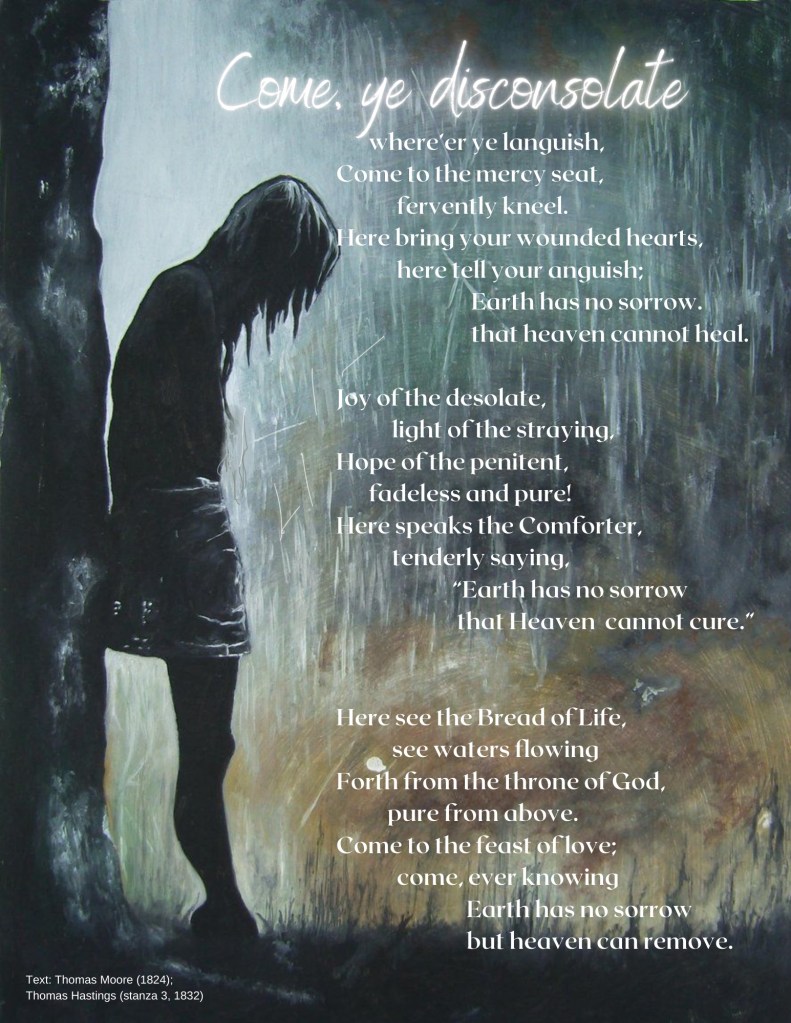

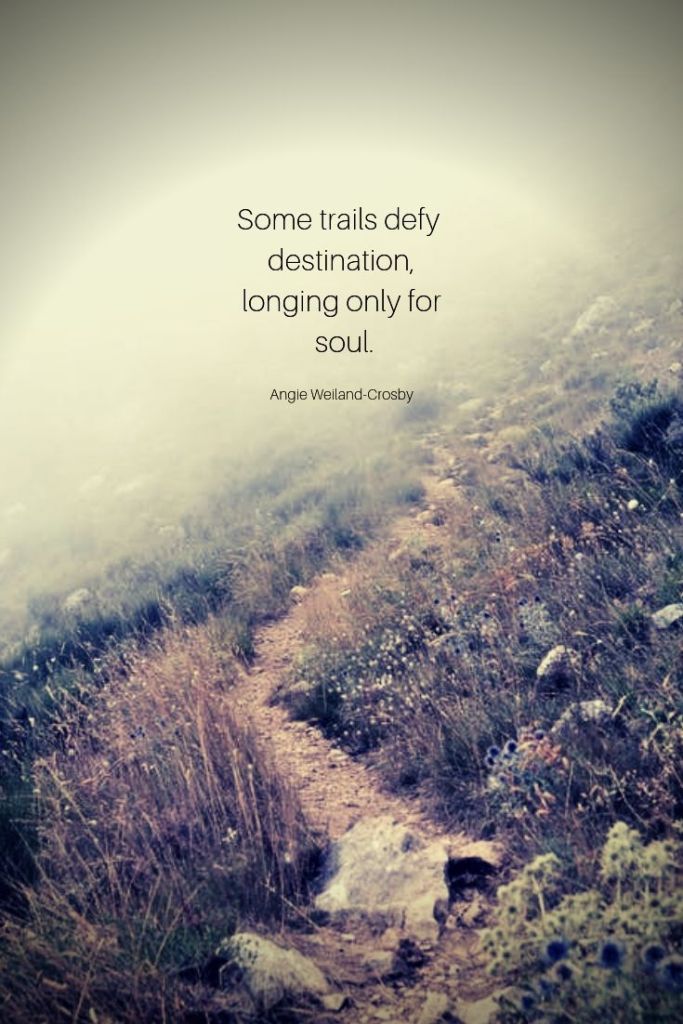





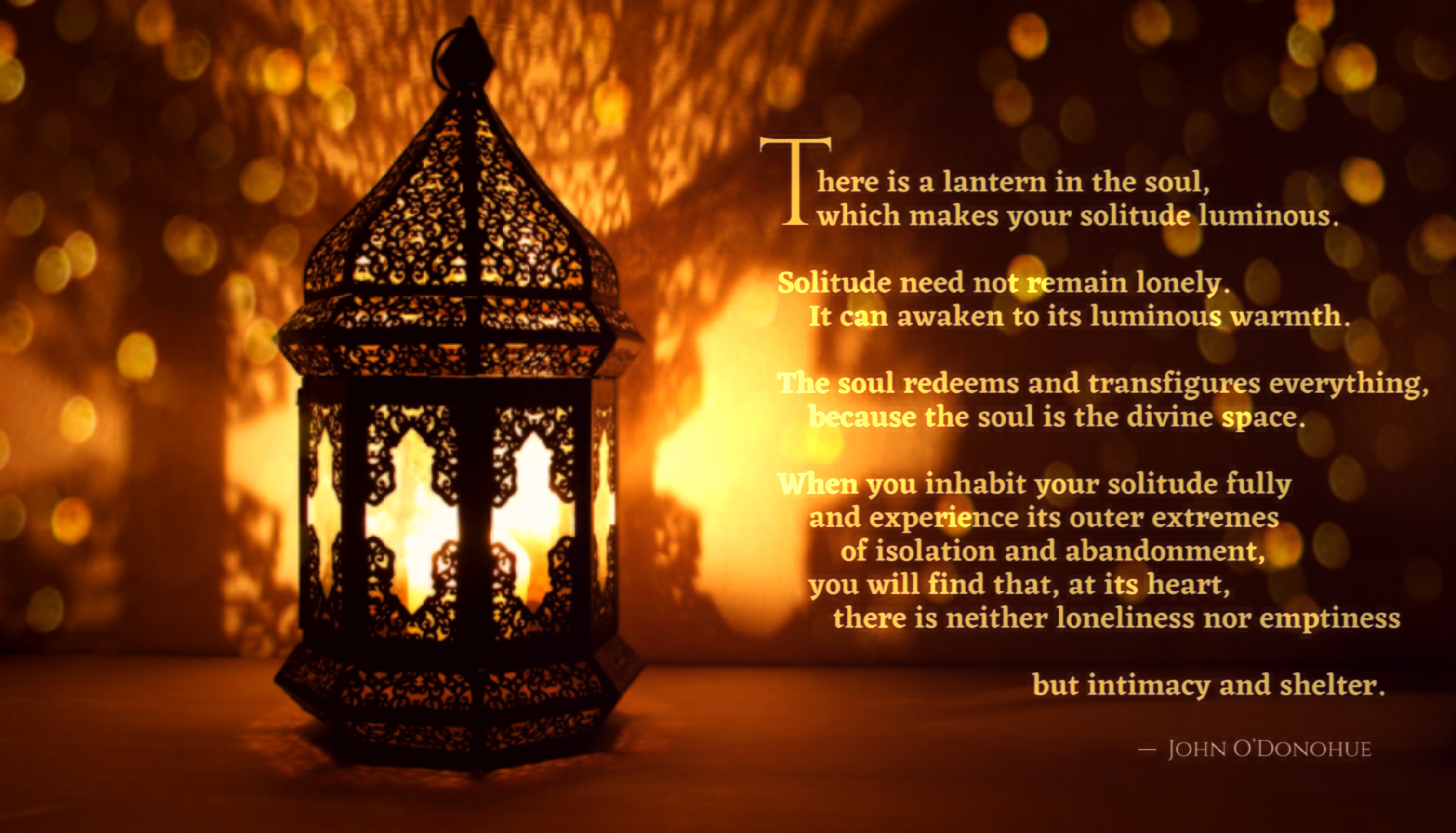


 I hear my dear friends cry out for justice. I hear them using words to make sense of it all, and I hear their voices fall silent. Silent, with just these words, “I’m tired.” A dear friend posted the words on the left this morning. I want to see her face to face. I want to be together. I want to comfort her, hoping beyond hope that it is not too late for comfort.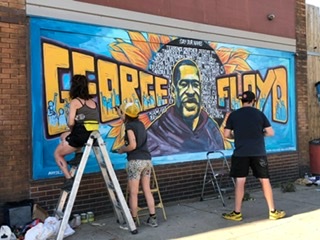
 “How we celebrate the day when the Holy Spirit breathed upon those gathered together, with gifts of wind and fire!
 In the end, there is a tiny bit of joy in George Floyd’s tragic story. It is a joy much deeper than reality’s sorrow. The artists completed their mural, and in the very center near the bottom, they had painted words that express the greatest truth of all.


 What does Maundy mean, anyway? Maybe we need Biblical scholars to refresh us on its meaning.


 The book adapts the sacred use of Runes as an alphabetic script used by the ancient Germanic and Norse peoples, creating a tool that could be helpful in the healing of body, mind and spirit.*
 The Rune I have randomly chosen is the Rune of Trust. It is the Rune of restoration that calls for the rebuilding of belief in yourself, in your life and in your relationship with God. For some, drawing this Rune asks you to show trust in a present situation. For others, it calls for embracing the changes you are facing with trust and wisdom. In relationships of the heart, remember that I love you and I trust you are two stones for crossing the same stream. Most importat is that you ask your soul if Trust has something to teach you or somewhere to lead you.
 God of the Sparrow 🌱 By Kathy Manis Findley