Activism, Advocate, Beauty of Nature, Bravery, Calling, Committment, Community, Community activism, Conflict, Courage, Dandelions, Faith, Fear, God, Grace, Holy Spirit, Hope, Injustice

Start Something! It’s Easy!

—Mary Oliver

Starting something really is easy, but the pathway from beginning something and then taking it to completion reveals challenges that test our resolve. I always begin projects with enthusiasm and optimism, filled with ideas and plans, but as obstacles arise, my motivation almost always wanes, my progress slows, and distractions multiply. In this environment, fear definitely thrives. But the projects stay on my shoulders as long as I remember them, and so the contrast between the initial excitement versus the realities of sustained effort calls for persistence and commitment. The tumultuous path from beginning to completion can cause me to become weary and quit, just to get the heavy pack of projects off my shoulders.

Of course, most of us can admit that in these days, one important example of our tumultuous path is the dismantling of our democracy. Of course, not everyone agrees about the severity of the situation, but I have to say that in my world, people are afraid, angry, despondent, disheartened . . . although some are elated. Let’s entertain this thought for a few minutes: when people are convinced that real danger is coming, they often gird themselves with “protective gear” (the Bible would say, “gird up your loins”) after which you can attack the stronghold that threatens you. We see an example of this in the protests and/or marches that are happening in cities and towns across the nation and around the world. Let me dare to say this in hopes that no person will take offense. The aim of those who dissent to the actions of the Trump administration are deeply concerned and afraid. Even people of faith are beginning to see this version of the world as something to fear. 

Today, as I write this post, I am thinking of so many people who live in fear: immigrants who are currently locked up like prisoners, children who have been separated from their parents, people who suddenly lose their jobs, thousands of immigrants being rounded up and deported, the community at-large as they lose some of their rights, and even the elected congressional leaders who are afraid of personal repercussions from Donald Tump. Afraid! All of them afraid!

“Here is the world. Beautiful and terrible things will happen.
Don’t be afraid.”

― Frederick Buechner, Beyond Words: Daily Readings in the ABC’s of Faith

You see, whether we support the relentless changes in our government or not, Mr. Trump is stoking fear among Americans as he dismantles institutions, agencies, and departments. Let me list some of them: The Department of Education, the Department of Health and Human Services, the Departments of Agriculture, Defense, Energy, Housing and Urban Development, and Transportation. And then there is the layoff of thousands of federal employees, the closing of USAID, and the indiscriminate and inhumane deportation of thousands of immigrants and immigrant U.S. citizens.

The question I ask myself over and over again is whether there is anything I can do to help end this destruction. Is it really true that starting something is easy? Not always! So what can I do to help change our trajectory. Am I kidding myself? What can one person with zero power do to end this? The answer is “nothing” every time I ask! Good intentions I may have in abundance, but the answer in my spirit does not change, “There is nothing one person can do. I have no power.”

Yet, for all of us who are people of faith, there is always an opportunity to live out our faith through our actions, and within a faith community. Perhaps we can make a significant change, together.

Jesus is our example, showing us how to heal destructive acts committed by power-hungry, destructive people. Jesus left us instructions, as did the prophets, the psalmist, and the epistle writers. Yet, we persist in believing the lie that we have no power. Contemplate these bits of wisdom:

Very truly, I tell you, the one who believes in me will also do the works that I do and, in fact, will do greater works than these      —John 14:12

When you give a banquet, invite the poor, the crippled, the lame, and the blind. And you will be blessed.     —Luke 14:12-14

When Jesus came to Nazareth . . . he went to the synagogue on the sabbath day, as was his custom. He stood up to read, and the scroll of the prophet Isaiah was given to him. He unrolled the scroll and found the place where it was written: ‘The Spirit of the Lord is upon me, because he has anointed me to bring good news to the poor. He has sent me to proclaim release to the captives and recovery of sight to the blind, to let the oppressed go free, to proclaim the year of the Lord’s favor.’      —Luke 4:16-19

But woe to you Pharisees! For you tithe mint and rue and herbs of all kinds, and neglect justice and the love of God.      —Luke 11:40

This is what the LORD Almighty said: ‘Administer true justice; show mercy and compassion to one another. Do not oppress the widow or the fatherless, the foreigner or the poor. Do not plot evil against each other.      —Zechariah 7:9-10

Defend the cause of the weak and the fatherless; maintain the rights of the poor and oppressed. Rescue the weak and needy; deliver them from the hand of the wicked.  —Psalm 82:2-4

He raises the poor from the dust and lifts the needy from the ash heap.   — Psalm 113:7

Speak up for those who cannot speak for themselves, for the rights of all who are destitute. Speak up and judge fairly; defend the rights of the poor and needy.  —Proverbs 31:8-9

Learn to do right; seek justice. Defend the oppressed. Take up the cause of the fatherless; plead the case of the widow.   —Isaiah 1:17

Loose the chains of injustice and untie the cords of the yoke, to set the oppressed free and break every yoke . . . share your food with the hungry and provide the poor wanderer with shelter— when you see the naked, clothe them.     —Isaiah 58:6-7

Do not neglect to show hospitality to strangers, for by doing that some have entertained angels without knowing it. Remember those who are in prison, as though you were in prison with them; those who are being tortured, as though you yourselves were being tortured. —Hebrews 13:1-3

Speak up for those who cannot speak for themselves, for the rights of all who are destitute. Speak up and judge fairly; defend the rights of the poor and needy.     —Proverbs 31:8-9

Defend the cause of the weak and the fatherless; maintain the rights of the poor and oppressed. Rescue the weak and needy; deliver them from the hand of the wicked.  —Psalm 82:2-4

Do not neglect to show hospitality to strangers, for by doing that some have entertained angels without knowing it. Remember those who are in prison, as though you were in prison with them; those who are being tortured, as though you yourselves were being tortured. —Hebrews 13:1-3

Speak up for those who cannot speak for themselves, for the rights of all who are destitute. Speak up and judge fairly; defend the rights of the poor and needy.     —Proverbs 31:8-9

Learn to do right; seek justice. Defend the oppressed. Take up the cause of the fatherless; plead the case of the widow.      —Isaiah 1:17

Loose the chains of injustice and untie the cords of the yoke, to set the oppressed free and break every yoke . . . share your food with the hungry and provide the poor wanderer with shelter— when you see the naked, clothe them.      —Isaiah 58:6-7

Defend the cause of the weak and the fatherless; maintain the rights of the poor and oppressed. Rescue the weak and needy; deliver them from the hand of the wicked.  —Psalm 82:2-4

“My commandment is this: Love each other as I have loved you.
Greater love has no one than this: to lay down one’s life for one’s friends.”

And we claim we have no power! Nothing is farther from the truth. It is not a new revelation that faith will be the holy impetus, the power, that pushes us into kindness, compassion, and love. This kind of kindness, compassion and love will inspire us to head into the rancor and division that currently seems to be having its way. I doubt we will ever see, in my lifetime, the completion of a more gentle and loving community of acceptance and compassion. I don’t believe we will all swing doors open instead of locking them.  I doubt we will complete the work that respects all humanity, but starting the task is easy, and important. As far as finishing the work we have chosen, maybe its “a roll of the dice” sort of thing, or a “stroke of luck,” or being in the right place at the right time. Perhaps it has more to do with being anointed by God to make change through care, compassion, and even anger. 

So I will look for you on the streets as you lead the people to the arc of justice. I will listen for your voice when you are proclaiming the evils of injustice on every corner! I will join in your song that celebrates a new day of peace, love and compassion. I will sense your sacred time of reaching out to God in prayer and lament. I will celebrate when your anger turns into righteous anger that defends the people among us who need protection.

We can start one of two ways. We can fight in anger, motivated by our rage, and risk completely destroying something we are trying to fix. We can do it through sheer human strength and force, knowing we have the power to succeed. Or we can try the better way: the tender way that leads us to solitude, meditation and prayer, and reminds us of dandelions letting go of their seeds. I think that being committed to become part of needed change is holy work. God has anointed us to confront the wrong; Jesus gives us the gift of his example of walking a sacred path; the Spirit gives us the wind to go where we need to be. Can you see yourself looking almost like a dandelion blowing its seeds about in a soft breeze? I can see it!

A woman of sacred worth, Becoming, Beginning again, Bravery, Calling, Change, Children, Committment, Courage, Creating, Dreams, Freedom, God’s beloved daughter, I am enough!, Inner peace, life, Living in the soul, Miracles, Repair the world, Rev. Kathy Manis Findley, Self-understanding, Spirit wind, Tears, Tikkun Olam, Valued by God

Living an Unapologetic Life

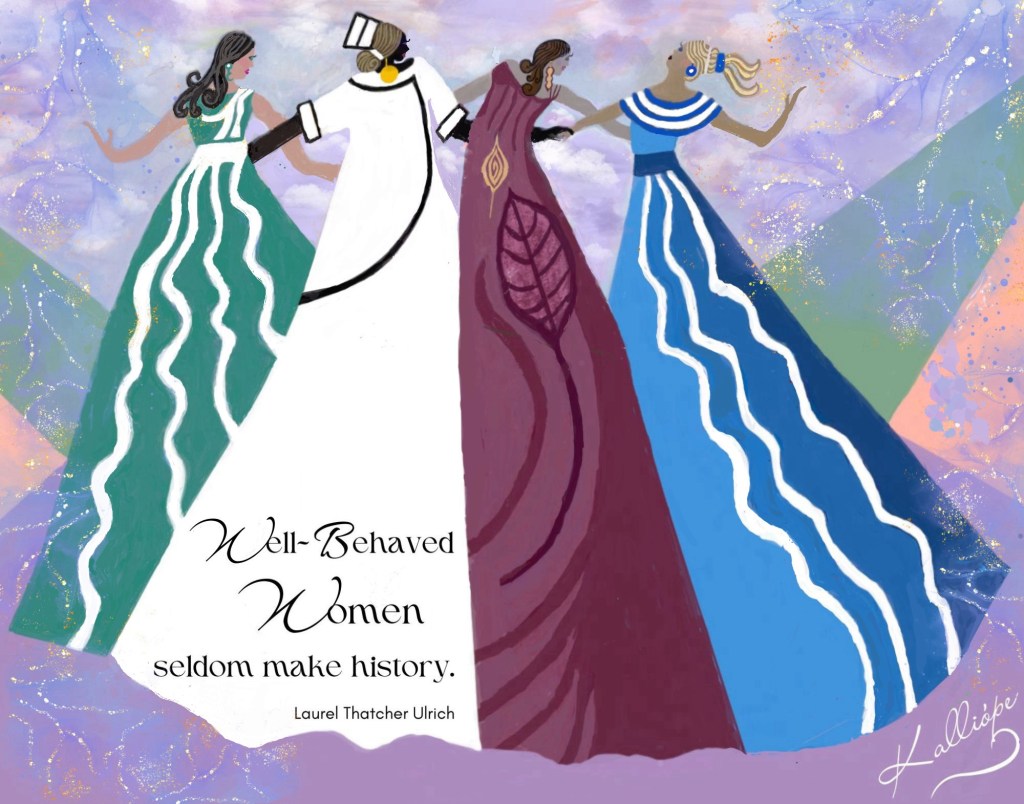
Art: “Well-behaved Women” by Kathy Manis Findley


Rev. Kathy Manis Findley
July 27, 2024

You have probably had that kind of dream at a few junctures on your journey. I know I had many dreams along the way. Sometimes they scared me to death. I dreamed of peace, equality, freedom, changing the world, and many other huge and noble dreams. I dreamed some silly dreams, too! I soon got the hint: changing the world is a formidable task. I followed all the rules, but being a rule-keeper does not make a person effective in dreaming and imagining. Women who follow the rules (someone else made up) could correctly be called well-behaved. They might even be called good girls because they don’t cause much of a flurry. They typically don’t make history and they certainly don’t change the world.

A woman with less-than-good behavior looks like someone at peace with herself, someone who radiates hope, someone with the courage and determination to do justice. I have admired and emulated so many examples of women who did make history, women who were not well-behaved at all. Here are only a few: Rosa Parks, Harriet Tubman, Lucretia Coffin Mott, Sojourner Truth, Susan B. Anthony, Nancy Sehested, Elizabeth Cody Stanton, Prathia Hall, Julian of Norwich, Malala Yousafzai, Mother Theresa of Calcutta, Ann Hasseltine Judson, Lucy Stone, and so many others!

About 24 years ago, a chaplain colleague recommended a book to me: Goodbye Good Girl: Letting Go of the Rules and Taking Back Your Self by Eileen M. Clegg. I think my chaplain friend was suggesting that I should get out of my comfort zone and take some risks, that I should courageously follow God’s call on my life. I knew that the members and churches of my denomination would “throw a fit,” like we say in the south! After all, I was an ordained minister serving as a hospital chaplain, which placed risky challenges before me every day.

So I read the book immediately and set out to become a bad girl, a girl who fully intended to change the world and to make history for it! So far, I have not made history. I have not managed to put my name in lights. I have not started any big public movements. But I have done some things that matter! I have learned how to create sacred space; I have learned the depth of liberation theology; I have found enough grace to endure the consequences of being a “bad girl” and then a woman with questionable behavior; I have held off anyone who tried to tell me who I am; and I have called up the courage to fight for justice. Colleagues, friends, family, co-workers reacted to the change in me, since they never expected me to dissent, or disagree, or refuse to behave.

Suddenly I let go of my “good girl” image and basically said “goodbye” to my restrictive behaviors. I took back my life, put aside all the rules, and followed my soul. I watched for the winds of the Spirit to lead me, and I moved forward to all the places that needed some attention. I was able to help change unjust systems, unjust policies, and unjust processes by not being so well-behaved.

Still, I sometimes think I have reached an uneasy place when it comes to letting go of my “good girl” persona. I’m really not a “good girl” and I don’t think I ever have been. My parents had to endure the sassy exclamations of my toddler years, like “Nobody’s the boss of me!” Creating shock from those who knew me, I mostly remained a “bad girl” from that day to this. I set aside the rules that were designed to keep people down and I took back my life. Today—in my mid-seventies—I continue to spew out uncommon proclamations that are quite annoying to those who are determined to hold on to their power and resist change.

Truly, it was sometimes hard being a change-maker and a rule-keeper! Always a people pleaser. Always the ultimate perfectionist. I discovered along the way that sometimes rule-keeping, people pleasing, and keeping every little thing “perfect” can harm your inner core. In fact, it’s less risky when you follow the leaders, make sure everyone is pleased, and doing everything with glowing perfection. Stepping out of line is always a bit dangerous.

When you become exactly who you are, resolute and unmovable about the things that matter to you, you will raise a few eyebrows, and sometimes people will get angry with you . You see, those people expected something else from you. Each of us becomes “me”— the “real me”— at our own peril. In a sense, we have to fight for the right to be ourselves in the world.

It is true that the people around me reacted strongly when I took back my life and became fully invested in my destiny. They thought that I had become radical, maybe even unhinged. I did not respond appropriately to their demands. To unreasonable demands, this is essentially how I might have responded, sometimes out loud, sometimes under my breath . . .

I will do it. / It’s my right! / It’s my choice! / It’s my prerogative! / It’s my decision! / I’m doing it anyway. / You can’t stop me! / Just watch!

All the while, I felt uncomfortable because of so much disdain from others, who began sending me a new message, You are not enough! I Imagine that many of you have heard someone say to you, You are not enough. At least, we may imagine someone saying those hurtful words. Unfortunately, we believe it because we don’t know ourselves, meaning we don’t know our bright and dark places, we have not yet realized our sacred worth, and we have not yet searched our souls.

For you see, you and I are afraid because it is perilous for the soul when we don’t search diligently for our soul’s passions and dreams. You and I sometimes accept what others say about us and tuck it away in our deepest places. When those words sneak all the way down into the soul, we tend to give up. We start from the moment we make ourselves nonchalant about it all, that moment when we shield our hearts from hurt. One of the saddest phrases we use is “I don’t care.” When we no longer care, we begin, one by one, eliminating the people around us, never realizing that they are hurting, too. And maybe the reason they send the message, You are not enough, is because they believe that they are not enough either.

I can honestly say that I have often heard voices—known voices, unknown voices, and the weak little voice in my head—telling me, You are not enough! I have learned that once I have embodied that negative message, it rolls around in my psyche for a long time, maybe forever. It becomes a state of being that goes deeper than skin. It penetrates in deeper places, and takes its toll on my emotional and physical well-being. I recall many such times, none more painful than the wagging tongues around my ordination . . . You know the scenario, “She can’t be a minister because she is a woman! Anyway, she’s not good enough! Other voices are often hazardous, dangerously breaking down our sense of self-worth. They may be yelling, speaking in a normal tone, whispering, or imagined in our heads. In response, we must prepare ourselves to hear the voice above all voices, saying, “You are my beloved daughter with whom I am well pleased.”

For a long time, I embodied the traits of the good girl, but to embody good girl traits is not really a once-and-done action. Embodied lasts a while! Embody does not have a shallow or surface meaning. It is deeper. I like the word embody. It seems to suggest that we can live a soulful life. In the very middle of the Greek word for “embody” we find the word σώμα, which means body. However, the Greek word for body cannot be translated in a way that reveals the depth of its meaning. The definition of σώμα is deeper than we realize. It is not skin-deep, it is deeper, approaching a definition more like soul.

I do like the word embody and the word soul. In some ways, to embody means to live in your soul. The word embody may whisper to you that in your body’s center, you will find the path to reach your soul. A person who lives in the soul is a person that does not live a shallow life, devoid of the emotion that makes us alive. The soul will help you, if you can just start by daring to touch it.

So what are the things we can actually do to take back our lives and live soulfully? What path do we follow to transform ourselves and change the world? My initial response to that is, “I don’t know.” Not very comforting, I know, but mostly true. We cannot forge the path for any other person. We cannot know what’s best for them. So not knowing anyones path, nor their dreams, I can give you a list of things others are finding the leads to their transformation. Here they are, not at all an exhaustive list, and certainly not a perfect guide for you:

  • Carve out some time for quiet, restful, meditation.
  • If you are a person of faith, get in touch with God or whatever person you worship.
  • Listen.
  • Listen some more—to your heart and your soul.
  • See if you find there a sacred direction especially for you.
  • Do you feel you are getting any closer to discovering your authentic self?
  • Can you begin to believe you will be transformed?
  • Can you take a step or two, in faith, into a holy place of transformation?
  • Pray, making your needs known to the source of your faith.
  • Read! Read the stories of others who found life transformation.
  • Find community, even one other person, who understands your journey.
  • Start all over again, leaning into the wisdom you found on your previous journey.
  • Take as long as it takes, until you realize that suddenly, you are becoming emboldened and scrappy!

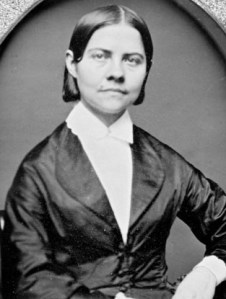
You may not know her name, but Lucy Stone was steadfast in her belief in self-authentication and in her ability to change the world. Lucy Stone was called “emboldened” and “scrappy” because of her tireless work for the abolitionist and women’s rights movements through the 19th century. A bona fide pioneer of her time, Lucy Stone stands as a historical titan. Her book “Unapologetic Life” describes a model of a revolutionary living. As for me, I would count it an honor to be described as emboldened and scrappy.

Life is more fun when you’re emboldened and scrappy. Not that we want to reduce the life experience to just scrappinesses. Life is so much more, like authenticity and the willingness to be a change-agent. Life is about having enough courage to persevere! Life for me is about my soul and all the ways it has been transformed over many years. All along my journey, I knew that my soul was a problem! At every age, there was a part of me that wouldn’t follow the easiest path. I longed to be empowered to make societal change. I chased down injustice and worked to dismantle it. I spent most of my career working with victims of domestic violence, child abuse, and human trafficking. This was not the easiest and most pleasant vocation, but the work had made its way into my soul. To do it, I had to live in the light of self-awareness and soul-awareness. I had to constantly listen to the sighs of my soul, and move only after I had heard them clearly. If I had just one nugget of advice for you, it would be to touch your soul and ride on the wings of the Spirit.

Sisters, don’t forget that when you touch your soul, you might just not be a “good girl” anymore. Or a good boy, for that matter. As for me, I am not a “good girl” living at the whims of other people! And I am definitely not a well-behaved woman! So I fully expect to make history! Because making history means leaving a legacy, creating a world brimming with peace, and embodying your best self!


anxiety, Beginning again, Brokenness, Comfort, Contemplation, Despair, Emotions, Exhaustion, Liminal space, Liminal time, Pandemic of 2020, Transformation

BETWIXT and BETWEEN: THE LIMINAL SPACE WE DID NOT ASK FOR

453E29B9-6B3B-47E6-A731-52A38872C1B3

We did not ask to be in this liminal space — this liminal time in our lives — but we are in the murky middle of it — a liminal space.

We’re in the liminal space between Covid isolation and our former, normal lives. We’re in the liminal space between the policies and tone of our current president and the hope and change of a starting fresh toward a new direction. We’re in the liminal space between racial protests against injustice and a new day of justice for all persons.

Yet, right now many of us are in a space of discontent. Like me, you may be isolated in a space of safe distancing because of a seemingly endless pandemic. You may miss your grandchildren, your family, your friends and your community of faith. You may be in one of the high risk Covid categories, not daring to go out of your house. I am there, and if that is where you are, I’m there with you feeling all the emotions you might be feeling.

In addition to discontent, we find ourselves in a space we might call discouragement as we look around us and continue to see racial injustice, signs of misogyny and the disparagement of women, evil acts of white supremacy, immigrant children separated from their parents and disrespectful rhetoric from government employees who actually work for us!

As for me, I feel as if my soul is in chaos. I feel heaviness, loss, worry, even despair once-in-a-while. All of us, in these pandemic days, are most assuredly right in the middle of liminal space, a space that is not a comfort zone for any of us. So what do we do when we’re stuck in a space that is so disturbingly out of our comfort zone? The easy answer is: to know in your very soul that liminal space is always a temporary in-between space, a threshold to something ahead, a life “time out.” A more down-to-earth answer is: we languish or we transform. We languish, struggling and sparring with everything that keeps us from finding a way out, OR we stay calmly and contentedly in this cocoon-like space and wait patiently until our “wings” begin to emerge, spread out into the light and begin to flutter away to some delightful space. At that point transformation occurs, a transformed “me” and a transformed space I now occupy.53088146-1C34-475A-852E-56F2886E3DC2

Father Richard Rohr offers this description of liminal space:

Liminal space is an inner state and sometimes an outer situation where we can begin to think and act in new ways. It is where we are betwixt and between, having left one room or stage of life but not yet entered the next. We usually enter liminal space when our former way of being is challenged or changed—perhaps when we lose a job or a loved one, during illness, at the birth of a child, or a major relocation. It is a graced time, but often does not feel “graced” in any way. In such space, we are not certain or in control. This global pandemic we now face is an example of an immense, collective liminal space.

Is it possible that instead of despairing in the space we are in at this moment in time, perhaps we can consider it just an in-between space and look ahead with hope for something new, better, brighter. Again I turn, as I often do, to author and theologian Richard Rohr who writes that liminal spaces should be introspective places rather than unsettling places. To him, “liminal” is a word meaning “threshold between one stage of life to another.” It is only within these liminal spaces that “genuine newness and the bigger world is revealed.”

The twentieth-century sociologist Joseph Campbell believed that the world was made up of sacred spaces and profane spaces in our lives. Profane spaces are places that we have to go, like our jobs, school, the grocery store or the post office. In contrast, sacred spaces are places where transformation takes place; where we encounter the world and each other to come to a deeper understanding of ourselves, and a world bigger than ourselves.

If you are in this space of betwixt and between, floating uncomfortably in this liminal space, trust that you will not stay here forever. Place your hope in the God of transformation and believe that you will see a transformation — of this current state of life, and of you!

Chaotic spaces in our lives ask us to enter into peace at a time when peace seems so impossible. Chaos urges us to seek out meditative moments of quietness, to open up our souls to God’s embrace and to let our hearts release the pain. I invite you to spend a few quiet moments listening to the music and the text of a reassuring choral anthem entitled God Gives the Song.   (Text: Susan Bentall Boersma Music: Craig Courtney)

When words are lost among the tears,
When sadness steals another day,
God hears our cries and turns our sighs into a song.

Sing to the One who mends our broken hearts with music.
Sing to the One who fills our empty hearts with love.
Sing to the One who gives us light to step into the darkest night.
Sing to the God who turns our sighs into a song.

Activism, Calling, Change, Courage, Forgiveness, God's Faithfulness, Hate, Injustice, journey, Love story, Repentance, Transformation

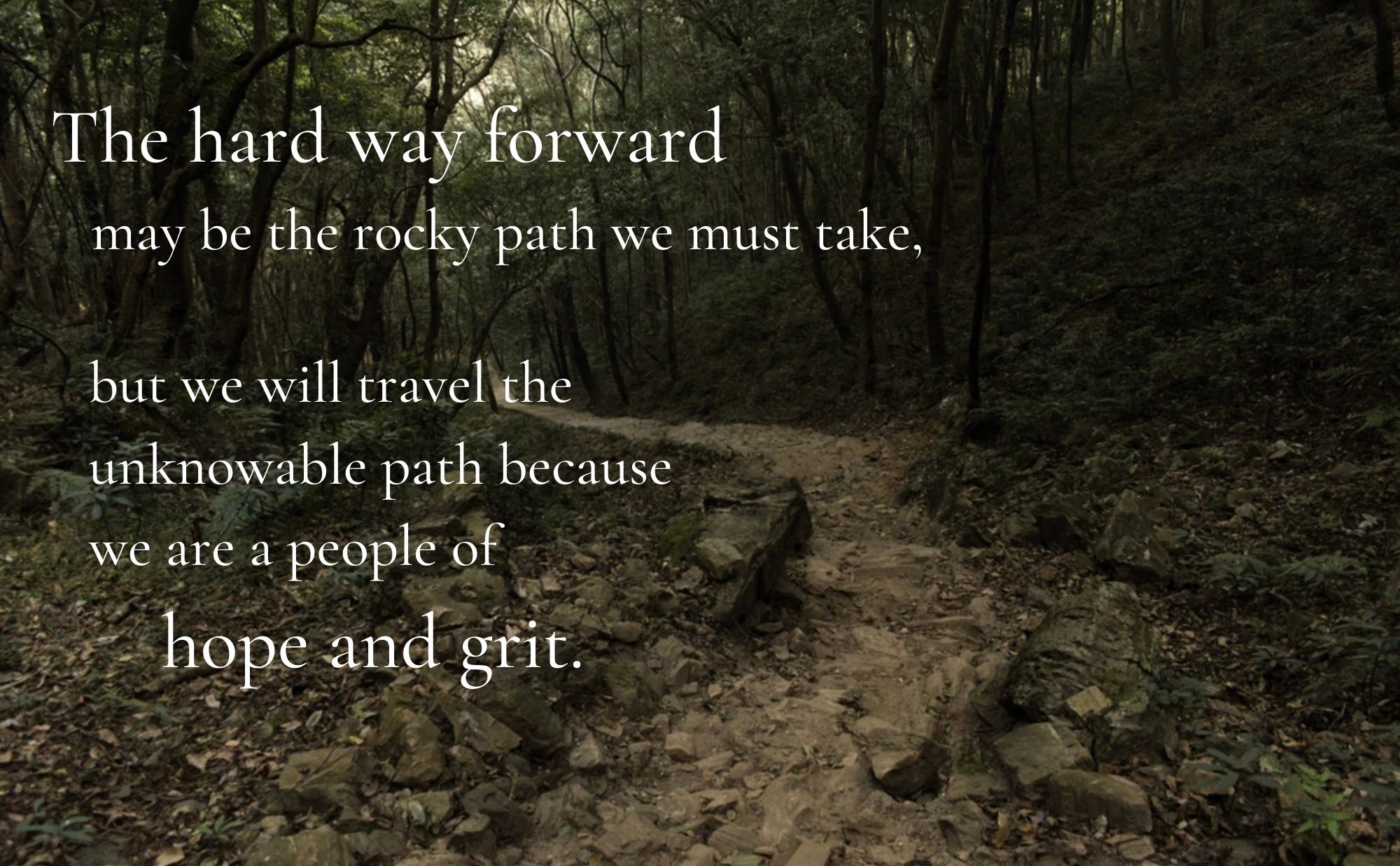
The Hard Way Forward

5834D9E4-A63C-485C-9129-9BDB644B6113

Rev. Kathy Manis Findley
The Hard Way Forward

A sermon preached in virtual worship for New Millennium Church
Little Rock, Arkansas
October 11, 2020
Scripture: Exodus 32:1-14; Psalm 106 (selected verses)

Have you ever come to a point in your life when you had to take the hard way forward? You had no other choices! In fact, the phrase “the hard way forward” paints a an unvarnished picture of these tumultuous days, and the paints on the artist’s brush are dark and foreboding.

What a journey 2020 has been! I have often called it a journey of lament — a journey that has forced us to be in places we never wanted to be and to see things we never wanted to see. 

We look around and watch people in shock and dismay — disillusioned and despondent. So many have been personally touched, even ravaged, by the deadly coronavirus, while others are overcome with fear of it. We have witnessed evil, racist assaults; watched police brutality and murder on our television screens; we have grieved over wildfires that threaten to swallow up forests, animals, homes and lives; and over it all we have felt contempt for the reprehensible leadership of an incompetent, insensitive, egocentric, self-serving president. I think it’s safe to assume that many people in this broken nation feel hopeless and heartbroken.

I often ask: 
God, are you still leading us on this hard journey?  Or have you forsaken us?
Do you have some kind of plan we do not yet see?

These months for so many people have definitely been a hard way forward. As we try to put one foot in front of the other on this journey, perhaps we can imagine ourselves walking with the people of Israel.

So let us listen and hear the Word of God in Holy Scripture

From Exodus, Chapter 32, (selected verses):

When the people saw that Moses delayed to come down from the mountain, the people gathered around Aaron, and said, “Come, make us gods who shall go before us.”

“As for this Moses, the man who brought us out of the land of Egypt, we do not know what has become of him.” 

Aaron said to them, “Take off the gold rings that are on the ears of your wives, your sons, and your daughters, and bring them to me.” 

So the people took off the gold rings and gave them to Aaron. He took the gold, formed it in a mold, and cast an image of a calf; and the people said, 

“These are your gods, O Israel, who brought you up out of the land of Egypt!” 

When Aaron saw this, he built an altar before the calf and said, “Tomorrow shall be a festival to the Lord.” They rose early the next day and offered burnt offerings and brought sacrifices; and they sat down to eat and drink, and then rose up to carouse. [my word choice]

(Now the scene changes locations.)

The Lord said to Moses, “Go down at once! Your people have acted perversely . . . they have cast for themselves an image of a calf, and have worshiped it and sacrificed to it. I have seen how stiff-necked these people are. Now leave me alone, so that my wrath may burn hot against them and I may consume them.”

But Moses implored the Lord, and said, “O Lord, why does your wrath burn hot against your people, whom you brought out of Egypt with great power and with a mighty hand? Turn from your fierce wrath; change your mind and do not bring disaster on your people.

And the Lord changed his mind about the disaster that he planned to bring on his people.

And from Psalm 106 (selected verses):

O give thanks to the LORD . . . for God’s steadfast love endures forever.
Both we and our ancestors have sinned; we have committed iniquity, have acted wickedly. They made a calf at Horeb and worshiped a cast image. They exchanged the glory of God for the image of an ox that eats grass. They forgot God who had done great things in Egypt, wondrous works in the land of Ham, and awesome deeds by the Red Sea.

Therefore he said he would destroy them — had not Moses stood in the breach before him, to turn away his wrath.

This is the word of God for the people of God.

The story of the Israelites reminds us that our kindred sojourners also traveled some rough paths. The text gives a glimpse of just one snippet of their journey. We see the Israelites on their wilderness pilgrimage, complaining, as they often did — and as we often do.

Apparently, Moses who had just received the ten commandments, stayed on Mount Horeb for a long time, patiently listening as God engaged him in a presentation of all manner of laws, rules and instructions. It took awhile — 40 days and forty nights, a very long time. And the Israelites started complaining about it to the one Moses left in charge — Aaron.

What has become of Moses?

What would he eat on that mountain, anyway?

This Moses, that brought us out here in this mess — where is he?

And then their fateful request to Aaron:

You are the one who is here with us now — make us something we can see. Make us something that will lead us forward, and we will follow it.

Now you probably remember that the Israelites had complained before:

Why did you bring us out of Egypt? To kill us with thirst?
Why have you led us into this forsaken, dangerous wilderness? To kill us with hunger?

Their complaints may sound a bit like our own complaining during the terrible months of pandemic, racial unrest, political rancor, and all manner of upheaval. 

Hey God! Are you planning to obliterate this coronavirus, or not?

Are you still with us, God, or not? 

Have you brought us to this season for some purpose? 

Like the Israelites, we sometimes lose sight of our leader — the God that would give us the courage to move. We are left as a wandering, unsettled people that simply cannot see our way forward.

As Wendell asked in last Sunday’s sermon, “Shouldn’t God do something?”

Shouldn’t a God of enduring, everlasting love do something?

Now remember — we are in good company with several holy bible people. The prophet Isaiah, for one, who asked:

“How long, O Lord
And God actually replied to him:

Until the cities lie ruined and without inhabitant,
until the land is desolate and ravaged,
until the land is utterly forsaken.

Not so reassuring!

The Psalm singer asked, too, in Psalm 94.

How much longer will the wicked be glad?
How much longer, Lord?
How much longer will criminals boast about their crimes?

They crush your people, Lord; they oppress those who belong to you.
They kill widows and orphans, and murder the strangers who live in our land.

Who stood up for me against the wicked? Who took my side against evil?

If God hadn’t been there for me, I never would have made it.
The minute I said, “I’m slipping, I’m falling!
Your love, God, took hold and held me fast.”

Like those holy bible people, we ask — in our impatience and fear — “How long, O Lord? 

And even as we ask, we have a wee inkling that God’s love is still holding us in safe arms of grace. George Matheson was a Scottish clergyman and theologian who lived in the late 1800’s. He was blind by the age of 18. Matheson wrote something quite profound about God’s love — the text of the hymn, “O Love That Will Not Let Me Go.” The hymn text formed in his mind during a “dark night of the soul” he experienced, a deeply emotional and spiritual crisis. He tells us about it in his own words.

My hymn was composed in the manse on the evening of the 6th of June, 1882. Something happened to me which was known only to myself, and which caused me the most severe mental suffering. The hymn was the fruit of that suffering. It was the quickest bit of work I ever did in my life . . . the whole work was completed in five minutes, and it never received at my hands any retouching or correction. All the other verses I have ever written are manufactured articles; this one came like a dayspring from on high.

In a time of emotional anguish, God’s creative grace rose up in George Matheson and he wrote about the kind of divine love that would never let him go. I think we owe Rev. George for reminding us about God’s unwavering love. The hymn text is most assuredly Gospel Good News that people throughout the centuries have desperately needed to remember

As you and I walk this journey, we need to know that God’s love will hold us fast, but sometimes we don’t know it. Like George Matheson, we could use a visit from the Dayspring from on high!

In truth, we need assurance — that no matter how hard the way forward, God’s love will not let us go. Threatened by a deadly virus, God’s love will not let us go. In our most disconsolate moments, God’s love will not let us go. When we courageously stand up to denounce racism, white supremacy, police violence and all manner of evil that surrounds us, God’s stubborn love will never let us go!

But that kind of love also places before us a holy mission undergirded with the foundational principle that evil cannot be reformed, it must be transformed — transformed within us before it can be transformed in the world, and transformed in the way described by Dr. King:

Only through an inner spiritual transformation do we gain the strength to fight vigorously the evils of the world in a humble and loving spirit.

You might be wondering what any of this has to do with the Israelites and their golden calf, or the psalm singer who sang something about God’s steadfast love enduring forever, or the idea that someone might possibly stand in the breach for us.

My friends, each of us are traveling through these days with at least some fear and anxiety. It is a hard way forward, and as some clever people have said, “The light at the end of the tunnel is probably a freight train!” 

Still, we are inheritors of the hope and grit of so many others who have journeyed hard roads before us — walking, marching, sometimes crawling — at times standing tall, at other times falling face-down in the dust of a hard rocky ground. We have navigated perilous roads and turbulent waters in this season. Yet we walk on, just as those who walked before us and who walk beside us.

I recently saw a news report about a little girl walking with her family among crowds of protesters. She stops at a makeshift memorial to George Floyd. As she pauses there, we can read the sign she carries — a hand printed cardboard sign that says:

My daddy plays with me. My daddy reads to me.
My daddy tucks me in at night. Please don’t kill my daddy.

The little girl walks on with her family.

Tamika Palmer walks on too, tears flowing freely. Tamika Palmer, Breonna’s mother, vows she will never stop walking forward towards justice for the daughter she lost.

It strengthens us to remember those who walked before us in years past and those who walk with us today who are those sparkling examples of hope and grit: Sojourner Truth, Harriet Tubman, Elizabeth Cady Stanton, Oscar Romero, Fannie Lou Hamer, Prathia Hall, Greta Thunberg, Rev Dr. William J. Barber, II, Rosa Parks, Dr. Martin Luther King,Jr., Dorothy Day, Bishop Michael Curry, Nelson Mandela, Ruth Bader Ginsberg, Dr. J. Alfred Smith, Jr,. US Representative John Lewis, Rev. Pastor Judge Wendell Griffen and countless others whose names we revere, as well as so many whose names we do not even know.

Walking, marching, protesting, advocating, praying, writing, speaking, weeping — throughout centuries and to this very time. Compelled by prevailing, persisting injustice, they walk on — we walk on —taking the hard way forward.

So having eavesdropped on a people constructing a golden calf to worship, will we allow their story to call our attention to our own idols? Those idols we have made for ourselves out of our own Egyptian gold?  “Idols” might just be the next sermon point, if I used sermon points!

It’s tempting to mistake our own creations for our God. It’s tempting to shape our self-made idols into an image that soothes our anxiety, feeds our anger and our egos, and convinces us it will demolish whatever is evil around us. I don’t know about you, but I can get obsessed at times. My tasks, my work, my advocacy sometimes rise up out of my obsessions. I don’t like that, but have to admit the truth.

So I have to ask myself: Is my work to dismantle injustice part of God’s call and my holy mission, or have I made it my idol?

Whatever that thing is that we have made from Egypt’s gold is not our god. That thing we idolize may symbolize strength and power. It may personify bravery. It may embody rebellion or protest. But as close as we draw to it and place it at the center of our lives, we must understand that it will not lead us to transformation, just as the Israelites’ golden calf could have never led them to the land of promise. 

Instead it will shackle us in our impatience, audacity and self-importance. It will shackle us because of our insistence on following our own way instead of God’s way. 

Here is another honest confession:  It is tempting for me to let hate become my idol, to allow my desire for retribution to goad me into facing off against injustice with hate. But God’s way is always love. 

Is it possible that our idol is our hate for people, people who may actually deserve it like white supremacists, neo-Nazis, violent police officers, men wielding projectiles and tear gas, corrupt politicians and leaders? Do we rise up against such people with hate as our weapon, while all the time, God calls us to love our enemies!

The hard way forward is the way of higher ground that invites us to turn away from the idols created by our lesser angels and walk forward in the persistent love that will never let us go. 

The hard way forward knows the pain of fear and doubt, but still chooses to follow cloud and fire through the desert-landscape and on to freedom. The hard way forward is to live into God’s abiding, never-ending love.

For you see, seekers of justice who marched the hard way before us faced firehoses and dogs because they longed for holy transformation and because they trusted that God’s love would not let them go. Seekers of justice protesting in the streets of Louisville and in other cities in these hard days face tear gas, police brutality, violent government intervention because they long for holy transformation and because their faith whispers to them, “God’s love will not let you go.”

You and I, in whatever ways we are dismantling injustice, MUST take the hard way forward — facing censure, criticism, indifference, ridicule, disrespect, even violence, because we long for holy transformation and because deep-down, we believe in our hearts that God’s love will never let us go.

That hard way forward is the path to transforming injustice! Doing the same things we’ve done the same way we’ve done them might bring some manner of reform. But we must not settle for reformation. We must set our eyes on transformation. 

One last caveat: the change we seek may never be realized even if we are brave enough to take the hard way forward, because the saved up baggage we carry weighs us down — the anger we hold on to, the hatred we feel, the impatience that makes us volatile, the fear that besets us, the hostility we refuse to let go of. Isn’t it time for you and me to kneel before God, confess our sins and accept the healing grace that wipes away our tears and transforms us into a new creation?

Kneeling at the altar of repentance, we will stand up straight and tall and brave — and most importantly, forgiven — and we will take the hard way forward, knowing in our souls that we cannot just act to reform evil, we must resolve to transform it. 

So let us bravely and confidently take the hard way forward, knowing that God is standing in the breach on our behalf and that the Dayspring from on high visits us, giving light when we walk through the darkness and the shadow of death, and guiding our feet into the way of peace.

Let us take the hard way forward, proclaiming from the depths of our being that no matter how dark and difficult and long the journey is, God’s love will never let us go. Amen.

I invite you now to spend a few moments of reflection and prayer as you listen to a benediction of choral music in the video below. May you listen in the music for the whisper of God, for Christ’s blessing of grace, for the brush of Spirit wings. 

And as you leave this time of holy worship, persevering on the hard way forward, may the God of love go with you and fill you with gentle peace through every tribulation, so that your soul may rise up in hope by the power of the Holy Spirit. Amen.


Baptism, Call, Divine Feminine, Here I am, Lord., Images of God, Sacred Worth, Transformation, Valued by God

A Heart “Cracked Open by God’s Love”

I wonder sometimes about God — how God works in us, how God graces us, how God calls us. I wonder, too, if I will hear God’s call in the voice of a Mother God or a Father God. The gender of God’s voice matters to me because I sometimes fear the voice of God our Father and instead long to hear a gentle voice spoken by the Divine Feminine. So the God I envision, a God who is both male and female, comes to me in the ways I need, calls out to me in a voice I do not fear. Still, I wonder at times if God speaks to me at all, if God values me. I wonder if I am really worth more to God than the sparrow God watches so intently. (Matthew 10:29-31)

As I contemplated my sacred worth as God’s child, I could not help but think back to my baptism, the first day I felt truly chosen, the first day of my wholeness, the first day I heard so clearly my call by God to ministry. I was eighteen years old, yet I knew beyond any doubt that my life had been transformed. In the years that followed, the brightness of my life transformation dimmed from time to time by those that would degrade my call and devalue me as a Christian and a minister. It was not easy in those days for a woman called to ministry. What God had affirmed, the Church denied, and I felt diminished and despondent many times through the years.

Which brings me to a beautiful, comforting quote I happened to read today that answered my question about whether or not God values me.These words were part of a sermon preached in January of 1998 by The Most Reverend Frank T. Griswold, XXV Presiding Bishop and Primate, The Episcopal Church, USA:

 A transformed heart is a heart that has been cracked open by God’s love; it is a heart willing to have its tendency towards accusation and judgement overruled by the same voice Jesus heard at his baptism, a voice that speaks to each one of us and says, “You are my daughter, my Son, my Child, my Beloved, my Chosen One in whom I delight, in whom I rejoice, with whom I am well pleased simply because you are. Live on in my love; enter into my joy; abide in my peace.”

Simply because I am!

I can live with that — knowing that God really does value me as a child of God and knowing that both my transformation and my call to ministry matter. “Live on in my love; enter into my joy; abide in my peace.”

For that knowledge, thanks be to God. Amen.


Every child of God is called. “Follow me” was spoken to fisherfolk, not to the religious leaders of the day. This song is special to me because it was sung at my ordination. I hope it will inspire you in the times you struggle with your call from GOD.

Awakening, Bondage, Change, Creativity, Feelings, Freedom, Grace, Insanity, Mental health, Mindfulness, Nature, New Life, Night sky, Sacred Pauses, Self care, simple joys, simple pleasures, Skies, Stars, Transformation

From Insanity’s Bondage to Creativity’s Freedom

68C9C79A-BF63-420C-A135-37505D96C6C5
INSANITY
 

Not a word we are fond of. Nothing inspiring about the word. And when the word insanity is more than just a word, we shudder in its grasp. Insanity brings its own bondage, stealing one’s freedom to live, confiscating one’s creative expression. Insanity can be a complete, all-encompassing mental breakdown, even bordering on madness, OR it can be a state of being that most of us have experienced — irrationality, instability, disorientation, mania. Many people (noted scholars) have mused that “the definition of insanity is the most overused expression of all time.” (Salon.com)

Remember the declaration about “doing the same thing over and over again and expecting a different result?” Yes, I know you remember that definition, probably have said it yourself in an exasperating moment!

Where am I going with these bizarre introductory words?

I’m actually going to a place you may not expect. I’m going to the rush and swirl of color in one of my favorite paintings, A Starry Night by the Dutch Post-Impressionist painter Vincent van Gogh. The painting draws me in — into the little village with its steepled church, into a sky filled with sparkling stars, into the glorious luminance of the crescent moon, into the swirls of blues and whites and yellows. I have pondered many times what sort of mind and soul could have created a painting like this one.

The story behind A Starry Night is the unnerving story of Van Gogh. A few months after experiencing a mental breakdown on December 23, 1988 that resulted in the self-mutilation of his left ear, Van Gogh voluntarily admitted himself to the Saint-Paul-de-Mausole Lunatic Asylum. During the year Van Gogh stayed at the asylum, his prolific output of paintings continued and he produced some of the best-known works of his career. A Starry Night was painted by around June 18, the date he wrote to his brother Theo to say he had a new study of a starry sky.

A Starry Night was the only nocturnal painting in the series of views he saw from his bedroom window. In early June, Vincent wrote to Theo, “This morning I saw the countryside from my window a long time before sunrise with nothing but the morning star, which looked very big”. Researchers have determined that Venus was indeed visible at dawn in Provence in the spring of 1889, and was at that time nearly as bright as it could be. So the brightest “star” in the painting, just to the viewer’s right of the cypress tree, is actually Venus.

Too much information? Probably, but here’s my point that is not really about insanity at all. Rather, it’s about breaking free from bondage and taking back my life. You see, sometimes the sight of a big, bright morning star can replace whatever fear or angst I am feeling. Sometimes looking into the deep of a starry night can carry me to resplendent places. Sometimes even my slight insanity can transport me to my deepest expressions of creativity.

For me, insanity is my incessant scurrying around with too many things to do, a kind of mania. That frenzied scurrying is of my own choosing and therefore, leans a little too close to self-imposed insanity. I wonder if instead of that scurrying life of bondage, I could make time for moments of thought that would enable me to say something like what Vincent Van Gogh said from his asylum: 

“This morning I saw the countryside from my window a long time before sunrise with nothing but the morning star — the brightest star — which looked very big!“

Contemplate for a moment the insanity of a life encumbered — filled to overflowing with too many things to do — compared with a life of stargazing that might just awaken fresh and bright creativity in you.

As for me, I’m heading toward a spiritual transformation — a life of sacred pauses, a stargazing life, a grace-filled re-awakening!

I hope you are, too.

anxiety, Despair, Division, Exhaustion, Injustice, Isolation, Lament, Mourning, Natural disasters, Prayer, Racism, Repentance, Violence

“If my people . . .”


I watched the news last night before bed. Not such a good idea! Halfway into the broadcast, I felt a pervasive sense of despair and became very nauseous. I’m feeling it again as I’m writing this. It was the very real and very current events that were so upsetting: hurricanes bringing destruction in Louisiana; California wildfires threatening yet again; protests after the tragic and unwarranted shooting of Jacob Blake; 17-year old Kyle Rittenhouse, who took to the streets of Kenosha, Wisconsin during protests, using a military-style rifle to kill two people; a president who is intent on meeting street protests with military violence; a president who gathers a crowd of supporters, not socially distanced and most not wearing masks; and the coronavirus hovering over it all to make situations even more devastating than they already are.

I turned off my bedside lamp and, in the darkness, pondered the news I had just seen. I could not sleep with the sorry, worry, desperation and helplessness I felt. There was not one thing I could do to change my world. My world seemed out of my control, engulfed in all of the events of our time. I wondered . . . how will we live with natural disasters, protests in the streets, killing, violence, military style weapons, police out of control, political rancor, a deadly pandemic and a seeming disregard for human life? How will I live with it? What can I do to change it?

In these times, we see before our eyes people getting very sick, people dying alone in nursing homes and hospitals because of COVID restrictions, people isolated and lonely for months, people divided by political polarization, people being killed by police, people protesting for racial justice, people pushing back hard, enshrined in their white supremacy, people losing their homes, people fighting out-of-control wildfires, people losing their jobs, people tired from working with so many hospital patients, people afraid to go back to school, people feeling angry and frustrated, people feeling complete despair. Most of all, people are hoping beyond hope for better days ahead.

My mind thought of nothing of any consequence I could personally do to reverse all of this destruction and despair. My heart memory, though, remembered some things God instructed us to do long ago. God addressed instruction to, “my people who are called by my name.” 

“I am called by God’s name,” I thought. “I know exactly what to do!” Of course, I could honor God by standing up for justice — engaging in political activism, contacting government officials to demand change or participating in peaceful protests. I could honor God’s creation by doing more to care for the earth. I could honor God by loving my neighbor and caring for those who have suffered loss. 

People of faith have God’s marching orders that dispatch those called by God’s name to practice all manner of good works. And this we must do. But the critical admonition from God that my heart recalled last night is found in Second Chronicles 7:14. If you are called by God’s name, you will likely know these words well.

If my people who are called by my name humble themselves, pray, seek my face, and turn from their wicked ways, then I will hear from heaven, and will forgive their sin and heal their land. (NRSV)

But wait, Second Chronicles 7:14 doesn’t apply to us. It was for Israel. Our Biblical interpretations must have a solid contextual underpinning. Right?

Of course, many Scriptures taken out of context have done great damage. The context of Second Chronicles is that when God brings judgment on God’s own people, Israel, as a result of their sins, that God would also heal their land. And God would re-establish their blessings when they would pray and “turn from their wicked ways.”

We may look around at all the destruction around us and say, “My sin did not cause any of this.” I don’t have military weapons. I didn’t shoot anyone. I don’t set wildfires, I always wear my mask in public. I certainly cannot stop the ominous storm surge of a hurricane.

True enough! Most of us didn’t sin by doing any of these things. Yet, we should remember two things: 1) While we did not commit those particular sins, we do not fully know the harm inflicted by other sins we may have committed; and 2) We cannot begin to know the transformative power of our sincere, repentant, intercessory prayer.

Instead of entertaining such deep and helpless despair, instead of feeling physically nauseous with worry, I think I will follow the admonition of the Chronicler who gave me God’s call to pray. Of course, the admonition in its historical context truly was for Israel, but if we intend to use the Holy Scripture to guide our lives, we cannot ignore a passage that begins with “If my people.”

Perhaps my prayers and yours will bring transformation, in our spirits and in our world.

May God make it so. Amen.


Awakening, Awareness, Beauty of Nature, Bondage, Change, Contemplation, Creation, Creativity, Emotions, Feelings, God's presence, Grace, Hemmed in, Here I am, Lord., Holy Ground, Holy Spirit, Hope, Insight, Inspiration, Introspection, Isolation, Loneliness, Mystery, Psalm 139, Sacred Pauses, Sacred Space, Soul, Spirit, Transformation, Walls, Wisdom, Writing

Hemmed In!


There are large scale, widespread forces that can trap thousands of people, even millions. Dachau, Katrina, earthquakes, tsunamis, wildfires, natural disasters all over the world and the Coronavirus of 2020. Enormous, catastrophic events can trap people. COVID19 has literally trapped me inside my home. I have to admit, the isolation has taken a toll on my spirit. No visitors! No visits with friends or family. No trips! No haircuts! I have been trapped at some level since my kidney transplant in November. Just at the March milestone that would have allowed me to break the isolation of the transplant, I was even more fully trapped by the infectiousness of this pervasive, unrelenting virus.

Being trapped for so many months has raised up in me feelings of loneliness, isolation, powerlessness, despair, anxiety, even abandonment. And yet, often there is something very good in the center of something very bad. It has been so for me. Yes, I feel trapped in the pervasive power of the coronavirus, but I also sense the arms of God and the embrace of Spirit hemming me in even further. Such a grace-gift it has been to me, as if God has said, “l am hemming you in, and in this space you will hear me clearer and sense me more fully.”

God’s words were truth. Hemmed in, my mind flourished, my heart leapt and my soul entered spaces of calm. I felt enhanced awareness! Even awakening. I saw nature in a different way and basked in the beauty of the rising sun. The sound of the hummingbirds’ trill and the rapid fluttering of their translucent wings were sounds meant just for me. I began to write and paint, to listen more carefully to God’s voice, to allow my spirit to overflow with Holy Spirit. To my hemmed-in call from God, I was compelled to answer, “Here I am, Lord!” When I finally answered God, my hemmed-in place became Holy Ground — a very good place to be that feels more like a holy mystery than a state of being.

Was this pandemic a good thing for me and for millions of people? Absolutely not! But trapped in its dark cloud, God hemmed me in further in ways I am just now beginning to understand. I can say with all honesty that being hemmed in by God has been grace to me.

If I could even begin to choose a favorite Psalm from among the many that inspire me, I would choose Psalm 139. In its weaving of words, there are many passages that are full of comfort. From childhood, I memorized a lot of Scripture and throughout Psalm 139 I memorized several snippets that I often call to mind. One verse that I did not memorize is verse 5: “You hem me in behind and before, and you lay your hand upon me.”

You have searched me, Lord,
and you know me.

You know when I sit and when I rise;
you perceive my thoughts from afar.

You discern my going out and my lying down;
you are familiar with all my ways.

Before a word is on my tongue
you, Lord, know it completely.

You hem me in behind and before,
and you lay your hand upon me.

— Psalm 139:1-5 NIV

I deplore the coronavirus and what it has done to so many people. I deplore the ways it was able to trap me, physically and emotionally. But the virus, with all its ominous, far-reaching force could not trap me spiritually. That was God’s work — hemming me in so that my spirit could rise to fresh, new heights of spiritual consciousness. Being hemmed in by our Creator has been grace for me in these days of isolation. It has become a transforming sacred pause. For in my hemmed-in space, the Creator helped me create — from my mind, from my heart, from my soul. Thanks be to God.

Activism, Beloved Community, Bewilderment, Change, Community, Community activism, Confusion, Contemplation, Covenant, Creating, Division, Exhaustion, God's presence, Hate, Hope, Injustice, Liminal time, Uncategorized

This Liminal Time

FDAFE7CF-FBCA-47E5-A560-EFA6C17EEC75


liminal

in American English
(ˈlɪmɪnəl ; ˈlaɪmɪnəl )

ADJECTIVE

1.  Relating to a transitional or initial stage of a process.

2.  At a boundary or transitional point between two conditions, stages in a process, ways of life, etc.

“Liminal” used in a sentence: We are in a transitional and liminal time: this makes everything unsettled and awkward, and most of us feel tremendous unrest and a sense of urgency.


I choose to mark this particular time in history as a liminal time that demands my courage to stand — to stand in solidarity with every person who is demanding an end to racial injustice. I cannot choose my partners in this struggle. Instead, I have to accept those that appear in my life, bringing with them a determined will to stand for justice.

I must understand that liminal time does not last forever. Liminal time is a place of transition, a liminal stage between justice and oppression, between life and death. So my choices and yours in this liminal time might very well affect what’s going on in the streets of American cities, in police precincts in every community and rural hamlet, in the halls of Congress and in the White House, in our hearts and in the hearts of those we could see as our “enemies.“

CB60C28A-A33B-4386-9B35-C3DC950FC905Here is where I must focus. My heart must long for an end to injustice. So must yours, because God’s heart grieves over the mayhem in our streets and the violence that has its way when a white police officer murders a black man or woman, even a black child.

You and I must yearn for an end to racial injustice — any kind of injustice and oppression — because God’s heart yearns to see us living in holy unity as brothers and sisters.

These days have dramatically shown us our liminal time, and it is NOW.

I have a strong sense that this liminal time has brought the widespread unrest we are witnessing, and that unrest emerges directly from a deep desire for change and transformation. It must be now!

Those of us who remember, know that the Civil Rights Movement came to its boiling point when every marcher, every protester, every non-violent activist and every violent one knew when their liminal time had come. Some people, of course, did not like that time at all, but even those who resisted that movement towards justice knew in their hearts that it was the liminal time, the time of NOW.

The fight was fought by people who spoke and marched, prayed and worshipped, who resisted and stood their ground, who preached and sang their freedom songs. Ah, how those songs of the civil rights movement helped motivate people of all ages and races, from Student Nonviolent Coordinating Committee (SNCC) activists and Freedom Riders to the thousands who marched on Washington, Selma, and Montgomery!

Yet not one person — Civil Rights leader or non-violent protester — could achieve civil rights alone. It required persons living in the poorest neighborhoods and their affluent neighbors across town. It took white folk and black folk, protestors and preachers, eloquent advocates and those who fought silently, lawyers and congresspeople and attorneys general and presidents. It required a community in solidarity. In fact, during the Civil Rights Movement, the creation of community was the quintessential coming-of-age story for Black people. 

Of that historically significant time, Father Richard Rohr writes this:

It was the particular time in history when nonviolent initiatives seeded with contemplative worship practices became acts of public theology and activism. You see, activism and contemplation are not functional opposites. Rather, contemplation is the heart’s reflective activity that is always seeking the spiritual balance between individual piety and communal justice-seeking.

Who could have predicted that America’s apartheid would fall as decisively as the walls of Jericho, when the people marched around the bastions of power carrying little more than their faith and resolve? How audacious it was to take just the remnants of a chattel community, the vague memories of mother Africa, and a desperate need to be free, and translate those wisps into a liberating vision of community. The idea of a beloved community emerged from the deeply contemplative activities of a besieged people — the people of the Civil Rights movement.
— Fr. Richard Rohr

One would think that such a movement that was so powerful, so eloquent and so determined would see its dream become reality, and that such a stunning reality would last forever. So that every person, from that time to this, would live as beneficiaries of beloved community. But here we are in another liminal space of racial indignity, cities in chaos and families mourning the death of their loved ones in Minnesota, in Georgia, in Kentucky and beyond. We did not really believe we would be in this time and space, a time that would demand a civil rights movement of its own.

The in-between liminal spaces of Scripture are pregnant with God’s transformational possibilities:

Noah and his family rebuilding the world after the flood; Abraham holding the knife above Isaac; Jacob’s struggle with the angel; Joseph in the pit; Moses and the Israelites at the edge of the Reed Sea; Israel in the wilderness; Joshua crossing the Jordan; Jesus suffering on the tree; the women at His tomb; the disciples waiting in Jerusalem.

Scripture indeed is fraught with liminal moments – moments of imminent expectation, infused with both hope and doubt — that lead to transformation and change. So change involves tension, and those of us who are longing for a paradigm shift that insists on justice, know that tension all too well.

Betwixt and Between — neither here nor there. It would be safe to say that this liminal time is mostly uncomfortable and confusing. Liminal time is the time between what was and what will be. And not one of us can predict what will be, either in this struggle against injustice or in the uncertain waxing and waning of the deadly coronavirus. The convergence of virus and death and sickness and distancing with racial injustice, violence and protest is almost too much uncertainty for us to navigate.

In the end, I want to believe that this liminal time and every liminal space is the dwelling place of God, the place where God meets us and says, “I will never leave you or forsake you . . . And remember, the Spirit of the Lord is upon you and has anointed you to announce Good News to the poor, to proclaim freedom for the imprisoned and renewed sight for the blind, to release those who have been oppressed. [my paraphrase]

Even in our current time of disconcerting fluid borders, God is with us in this liminal time. God is inseparably bound with us in this moment, and it is in this liminal space where heaven and earth, life and death, joy and sorrow, ecstasy and despair, sleeping and waking, justice and injustice, commingle.

So here’s my challenge to myself and to all of us. What if we choose to experience this liminal time, this uncomfortable now, as a time for insisting upon full solidarity with all of our brothers and sisters? What if we choose to make this particular time — with all of its pandemic and death, chaos and destruction, fire and protest, upheaval and violence as if no lives matter — a liminal time for construction and deconstruction, choice and transformation? What if you and I choose to hold hands and march on in solidarity and community until we reach the mountaintop where injustice is no more?

I want to. Do you?


anxiety, Awakening, Awareness, Challenge, Change, Community, Contemplation, Despair, Discernment, Discovering, Emotions, Epiphany, Friends, healing, Hope, Illness, Inspiration, Introspection, Kidney Transplant, Knowing, Life Journeys, Life pathways, Meditation, New Normal, Pain, Perseverance, Reflection, Relationship, Restoration, Rhythm, Soul, Spiritual Direction, strength, struggle, Suffering, Transformation, Troubles, Wholeness, Wisdom

Spiritual Direction

E82BA236-43E0-4EDA-B57B-4E7F6E31779A
Transplant Day Thirteen
November 24, 2019

I have been offered a blessing. From a stranger. 

I met this kind person through a group of clergywomen called RevGalBlogPals. She is a spiritual director from British Columbia. Through the RevGalBlogPals Facebook group, she happened upon parts of my transplant journey in my blog posts. She began praying for me. Then she offered me the gift of spiritual direction as I pass through this complicated time in my life. 

9299C4C7-3373-43D8-A11E-C2349150F942It has been several years since I worked with a spiritual director, so I was very humbled and thankful to hear from her. These were the words of lovingkindness she wrote to me in our first session.

May you feel the gentle touch of Spirit in this session.
May you know that I am holding you in healing Love.
May you be reminded of your worth and strength…
As you rest.
~ This is spiritual direction when pain does not allow for words.

Burning BushOn the day I received her message, it was so true that pain did not allow for words. The assault on my body was unspeakable on that day. I remember when many years ago my husband’s cardiologist came into his hospital room a few days after his heart surgery. The cardiologist said this: “Let’s look at this terrible thing we’ve done to you.”

His words resonated with me post transplant when, in the throes of struggle and pain, I definitely was looking at the terrible thing they had done to me. I could not quite see a brighter, pain-free future. I could only focus on the physical systems that were in complete disarray after the transplant. It did not help when medical staff told me it was all normal. The way I was experiencing it all was far from normal.

I wondered if I would ever live “normal” again. Or if perhaps I would live into a new normal of life after receiving a transplanted organ. I was not sure, and definitely not confident, that all systems would levelize into something I could tolerate. My spiritual director’s wisdom knows that to have physical normalcy, I must also seek emotional and spiritual normalcy. That would mean healing wholly — from the outer visible body to the inner invisible one. It would mean transformation. It would mean living my life while watching constantly and diligently for any sign that something was physically wrong.

Red Wooden Directional Arrow Signs In Green Forest BackgroundWhen my spiritual director suddenly appeared, I knew that she would help me explore my spiritual state, entering into community with me and pointing to the healing I could not yet see.

Thanks be to God for the beloved community she has offered me, community that forms in unexpected places, in unexpected times, just when I needed community the most.

Change, Community, Faith, Family, Fear, Friends, God's Faithfulness, healing, Holy Ground, Hope, Magic, Mayo Clinic, Miracles, New Normal, Pain, Rest, Rhythm, Sacred Space, Secrets, Social justice, struggle, Suffering, Tears, Transformation, Unfaith

A Million Seconds

0A265C1F-2FB5-49A6-95D1-6CB6E1E3AB12
Transplant Day Twelve
November 23, 2019

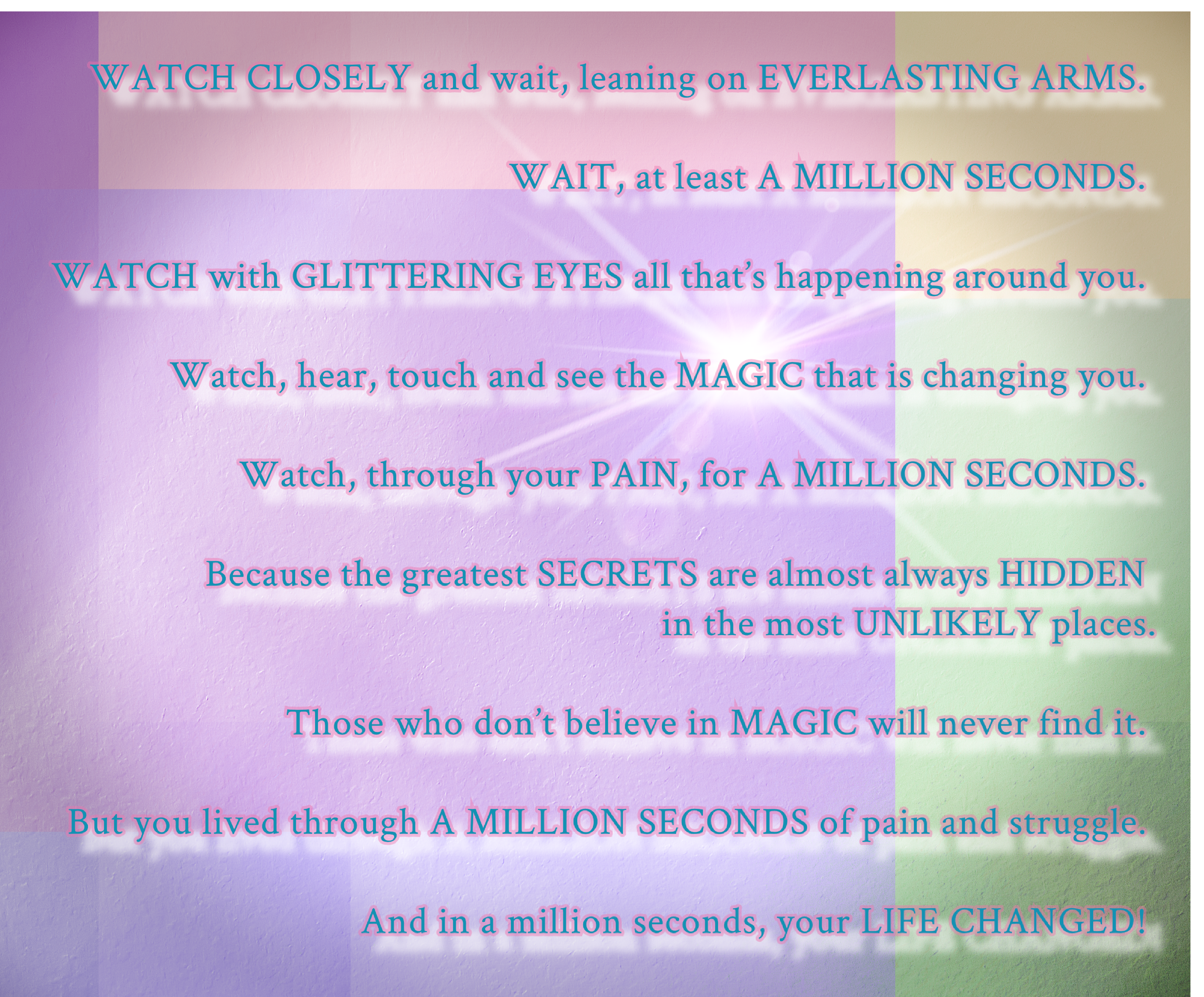
I have just reached a milestone — a million seconds. My kidney transplant started the clock on Tuesday, November 12, 2019. Today it is a million seconds later. I will remember those million seconds as a time of fear and faith, laughter and tears, rest and painful sleeplessness. I will remember a million seconds filled with hard things, the pain of a large incision spreading halfway across my abdomen, and swallowing pills, lots of pills.

I may one day see those million seconds as hidden secrets, secrets hidden from me by pain and by my body’s struggle to regain some normalcy. I may in time look at those million seconds with glittering eyes and see them as the magic they were. But today I can just share with you what I experienced in a million seconds that began on a Tuesday — November 12th to be exact.

I will remember a million seconds of so many strange things happening to my body and the numerous assaults my body endured. I will remember a million seconds of awe in knowing that a kidney was removed from a living donor at Mayo Clinic in Rochester, Minnesota and hand carried by a doctor to me, to Mayo Clinic in Jacksonville, Florida — a  distance of 1,115 miles “as the crow flies.”

I will remember a million seconds that began when my surgeon took a picture of the kidney, brought the photo on her phone to my room to show it to me, and said, “This is a beautiful, perfect kidney for you.” She planted that kidney, tucked it carefully inside me, took a photo of the incision and about five hours later came to my room to show me a picture she took on her iPhone of a large incision, impeccably sutured.

I will not forget those million seconds of the prayers of my friends, doctors and nurses caring for me and family members hovering over me with concern and relief.

I will not forget the hymn that came to my mind in the long, sleepless nights in the hospital — a million seconds of leaning on God’s everlasting arms.

What have I to dread, what have I to fear,
Leaning on the everlasting arms?
I have blessed peace with my Lord so near,
Leaning on the everlasting arms.

Leaning, leaning,
Safe and secure from all alarms;
Leaning, leaning,
Leaning on the everlasting arms.

A million seconds have changed my life, while all the while, I was leaning on the everlasting arms. It was a million seconds of holy ground, sacred space. Yet I hardly noticed it as magic or miracle as the pain of my humanity took center stage.

Yes, I focused on suffering, physical pain, worry, concern, tears. Instead, I might have focused on the hidden secrets and witnessed the miracle of holy ground inside a hospital room. I could have had a million seconds of miracle, but instead I experienced a million seconds of the raw and real humanity of suffering. In some ways, a million seconds of transformation were lost to me as I invited unfaith into my room.

And by the way, a million seconds is 12 days.

Change, Christianity, Knowing, Love, Relationship, Transformation

A Deep Unknowing

7FCC4253-B8C4-4A52-8798-8BADAEFA0519
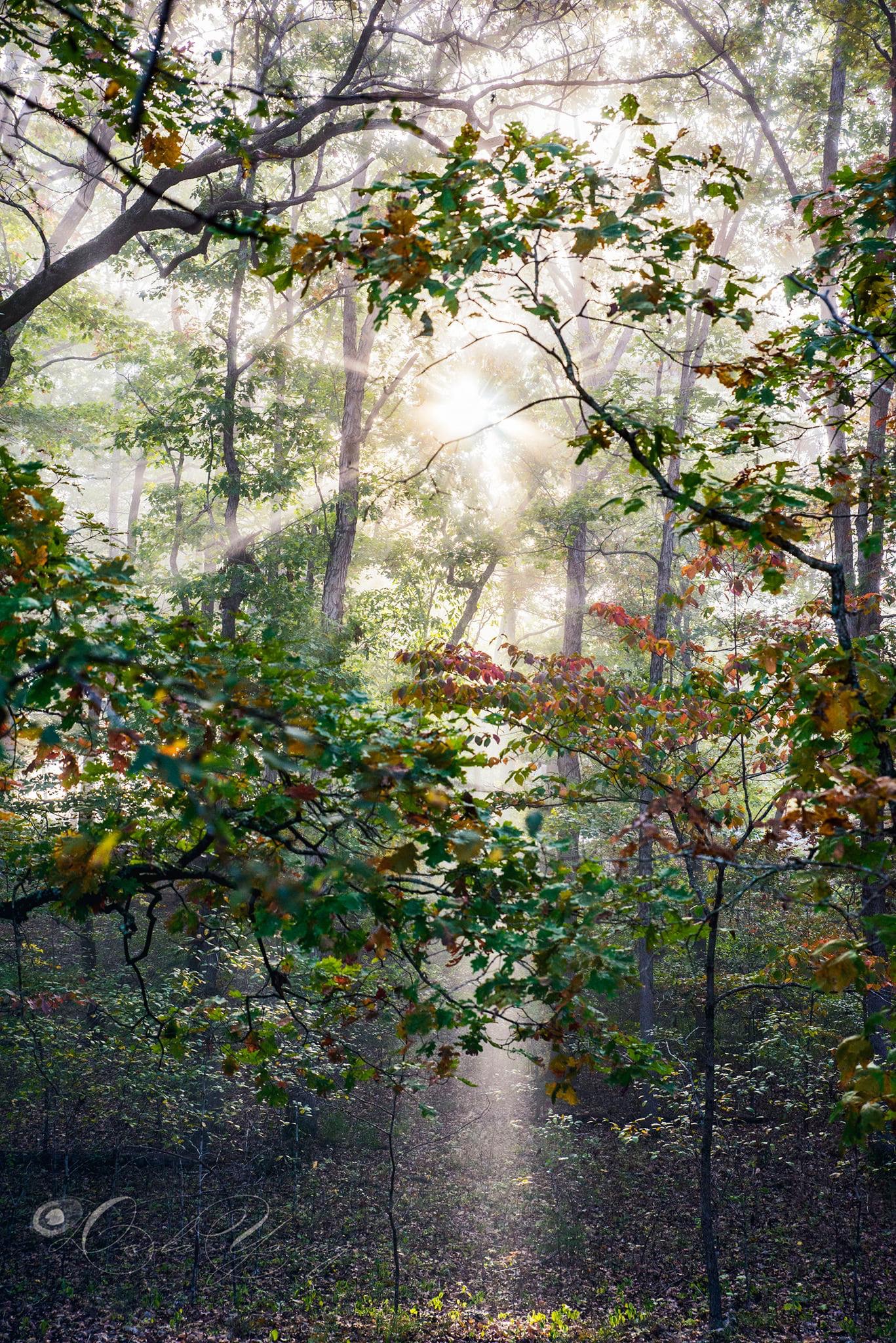
Arkansas’ White River. Photo by Darla Young.
“The fog was rising from the White River at Bull Shoals. I decided to walk a nearby trail. The sun was showing it’s appearance thru the foggy forest of lightly autumn painted leaves. I looked to the left and this was my sight.. I’ll just leave it at that..  It was beautiful!!” 
— Darla Young

When the fog descends in a forest, the path ahead looks very unknown. Even if you know the forest path well, suddenly it’s unknowable. The stunning photo by Darla Young reminds me of a phrase I heard last week: “a deep unknowing.” I’m not sure what a derp unknowing is yet, but it seems to me to describe an inner state of being that actually frees you from indecision. With a deep unknowing, you move from your inner core into the “right” places. But let’s get away from deep unknowing for a minute.

A good friend gave me a wonderful birthday gift — a journal with a lovely decorative cover that says, “She believed she was loved, so it made her brave.” Knowing that you’re loved may well be the most important thing you’ll ever know. The kind of love we need knows no boundaries and loves us exactly as we are, unconditionally. That kind of love is not easy to find. There are no guarantees that we will enjoy the emotional benefits of unconditional love. But we can be watchful for it, patiently seeking it and knowing how and when to reject love that is not genuine.

An important way of living into love is to be contemplative enough to know who we are, to embrace our true self. No masks. No disguises. No attempts to please another person and, as a result, realize that we’re not being true to ourselves. Richard Rohr recently wrote about what he calls, “the True Self in God.” 

You are not your gender, your nationality, your ethnicity, your skin color, or your social class. These are not qualities of the True Self in God. Why, oh why, do Christians allow temporary costumes, or what Thomas Merton called the “false self,” to pass for the substantial self, which is always “hidden with Christ in God”

So when we embrace our true selves that are “hidden with Christ in God” we find that we live and breathe in a different way. We find ourselves suddenly loving ourselves, and loving others as we love ourselves. What a novel idea! It’s a timeless idea that is as ancient as the Christ who taught us about love long ago. It is a state of being that places us squarely in God’s law of love. In some ways, we are transformed as something deep inside gives itself over to pure love, for self and others. Cynthia Bourgeault explains the law of love that compels us through “a deep unknowing.” This is how she says it:

As a Christian, when confronted by a tension between a religious certainty which leads me to violate the law of love and a deep unknowing that still moves in the direction of “loving my neighbor as myself,” I am bound to choose the latter course.  — Cynthia Bourgeault

I am pondering the idea of “a deep unknowing that still moves in the direction of ‘loving my neighbor as myself.’” I think it must require engaging in frequent contemplation and spiritual discipline to discover within myself a deep unknowing that prompts me to follow Christ’s example . . . as opposed to a decision of my will that eventually wins out to achieve the same result.

Perhaps the spiritual discipline I undertake can identify all of the indecision, confusion, stubbornness, refusal of love toward others, and cover it with that deep unknowing that still leads me in the direction of eventually knowing my true self within the perfect will of God.

May God make it so.

F9FA5D3C-53F0-4043-8A72-F9E2D63F7349

On another note, please pray for me as I look toward my kidney transplant on November 15th. I am grateful that you are walking with me on this journey that often felt so frightening. Your thoughts and prayers mean so much. If you would like to read the story of my illness, please visit the Georgia Transplant Foundation’s website at this link:

http://client.gatransplant.org/goto/KathyMFindley

“Go Fund Me” page is set up for contribution to help with the enormous costs related to the transplant, including medications, housing costs for the month we have to stay near the transplant center, and other unforeseeable costs for my care following the transplant. If you can, please be a part of my transplant journey by making a contribution at this link:

https://bit.ly/33KXZOj


Community, Division, Friendship, Grace, Kindness, Nature, Prayer, Reflection, Relationship, Respect, Transformation

“Always Stay Humble and Kind”

0435A7FB-18AC-4222-A445-B6B10556EC50
Even the earth’s creatures find ways to get along. Refusing to follow the lovely example of the giraffe and the butterfly, we seem to be having a big problem with getting along. Now we have to admit that the giraffe and the butterfly could not be more different from each other, but somehow the butterfly lands safely on the giraffe’s snout. It’s a reminder of the image we have loved for so long — the lion lying down with the lamb — a symbol of peaceful times.

We do not typically have that kind of peaceful relationship with those who are not like us, and in these days, we do not enjoy peaceful times. It’s nothing new, really, but we are infinitely aware that our country is polarized along partisan lines. Neither side trusts the other. Respect for one another is flagging. Kindness is in short supply. 

But this is not a commentary on current politics. Instead, I want to talk about being humble and kind to one another. One of my favorite singers, Tim McGraw, sings the song “Humble and Kind,” a gentle, sweet song written by Lori McKenna. The song’s simple lyrics remind me that kindness still exists.

Hold the door, say please, say thank you;
Don’t steal, don’t cheat, and don’t lie;
I know you got mountains to climb but
Always stay humble and kind.

When those dreams you’re dreamin’ come to you,
When the work you put in is realized,
Let yourself feel the pride but
Always stay humble and kind.

Go to church ’cause your momma says to,
Visit grandpa every chance that you can,
It won’t be a waste of time,
Always stay humble and kind.

Don’t take for granted the love this life gives you
When you get where you’re going.
Don’t forget turn back around,
Help the next one in line,
Always stay humble and kind.

I have to ask myself what I must change about my life in order to be more humble and kind. What must happen within me to enable me to offer unconditional grace to others? I almost feel ashamed that I need to ask myself such questions, but the truth is that any person can be socialized by her environment. If I constantly watch on my television the cynical, disrespectful actions of one person towards another, that exposure might well affect the way I relate to others. I’m sad to admit that the toxic political environment we live in has definitely harmed my relationship with several friends. and I find that unacceptable. 

Where was my sense of loyalty to my friends? Was there no way to maintain respectful relationships and friendships? Could I not have offered grace to my friends? Didn’t my friends mean more to me than my ideology?

I have wrestled with such questions for months. I have concluded a few realities: that I did not have the power to change the toxicity of my environment; that I could not control the emotions and actions of my friends; that I could not force communication with friends who stood steadfastly, even stubbornly, on their own beliefs.

What I could have done was pray more, spend more contemplative time with God and focus on the respectful and kind relationships I can see all around me. In short, I could have immersed myself in all things good, in the peaceful beauty of God’s creation and in the miraculous movement of the universe to unite all things in love.

I did not do that, but after months of experiencing all manner of rancor, I think it’s time for me to find in myself transformative grace through spiritual immersion, the kind of spiritual contemplation that changes everything. And by the way, I have it on good authority that always being humble and kind can be spiritually transforming. 

Do not be conformed to this world, but be transformed by the renewing of your mind, so that you may prove what the will of God is, that which is good and acceptable and perfect.

— Romans 12:2 New American Standard Bible (NASB)


F9FA5D3C-53F0-4043-8A72-F9E2D63F7349

On another note, please pray for me as I look toward my kidney transplant on November 15th. I am grateful that you are walking with me on this journey that often felt so frightening. Your thoughts and prayers mean so much. If you would like to read the story of my illness, please visit the Georgia Transplant Foundation’s website at this link:

http://client.gatransplant.org/goto/KathyMFindley

A “Go Fund Me” page is set up for contributions to help with the enormous costs related to the transplant, including medications, housing costs for the month we have to stay near the transplant center, and other unforeseeable costs for my care following the transplant. If you can, please be a part of my transplant journey by making a contribution at this link:

https://bit.ly/33KXZOj


Awakening, Awareness, Contemplation, Creation, Daybreak, Epiphany, God, Grace, Light, Mindfulness, Reflection, Spiritual awakening, Spirituality or Religion?, Transformation

Spiritual Awakenings

D0C663B9-9DCA-46A8-9EDB-68C718F86643
In God we live and move and have our being.    Acts 17:28

In years past, I would often hear talk of spiritual awakening. From pulpits around the world, there were proclamations of real and true spiritual awakening. But spiritual awakening never seemed to happen in my church. Yet some group somewhere in the world, or even some person, was always having one. To my great disappointment, I didn’t seem to be able to. I prayed. I studied the Bible. I listened to sacred music. I studied spiritual awakenings in history. I went to church a lot. I looked for a sunrise in my soul. I longed for the dawn to break in on my life with the brilliance of the rising sun.

But my spiritual awakening never came. I’m not sure what exactly I was expecting to happen so that I would know I had experienced a spiritual awakening. Would it fall upon me? Would it happen inside me? Would it be grand and glorious or quiet and holy? I really wasn’t as naive a Christian as it seems, but spiritual awakening was truly a religious mystery to me. And then I stumbled upon a very weird offer on the internet.

Click here to get your free MP3. In the first time in over 4 years, it [the spiritual awakening] is happening again (it’s even bigger this time around) and you can participate in this (click here now!) special quantum energy experiment too. Registration for this experiment includes a complimentary MP3 gift, called the Bliss Bath™ that is designed to start dissolving low vibrations (like worry, fear, and doubt) and start unblocking miracles in your life in just 7 minutes! This gift could open the doorway to miraculous shifts in your life and bathe you in the same energy of the quantum field.

Who knew that a real spiritual awakening could happen after just 7 short minutes of watching a video of low vibrations! I read more and learned that 4 years ago, experts carried out what they claimed to be “one of the largest global spiritual awakening experiments in the world.” Their experiment included a faculty of teachers, healers, scientists, inventors, and energy healing pioneers. They used ‘quantum energy’ on tens of thousands of people and included breathing techniques and mindfulness exercises to heighten the volunteer’s awareness; both spiritually and physically. After several weeks of daily consciousness work, thousands of people reported many ‘common’ and often ‘strange’ signs of a personal spiritual awakening! 

An astonishing 94.2% of them claimed that their lives had been made better. In fact, respondents reported a wide variety of effects, from turning on psychic powers to even “feeling surrounded by miracles.” And then the respondents compiled a list of the top ten positive outcomes they experienced:

  1. You have increased empathy and intuition.
  2. You feel drawn to nature.
  3. You have an aversion to negative people or behaviors.
  4. You desire a united community.
  5. You believe that all life is sacred.
  6. Your consciousness feels renewed.
  7. You begin living in “The Moment.“
  8. Your inner peace is increased
  9. Compassion and positivity surges through you.
  10. You feel enhanced authenticity.

Enough of that! Far too much information on something that actually happens in secret, in the soul, in sacred moments spent alone with God. That’s about the best description I know of “spiritual awakening.” Truth is, in those days I was searching for something real, an anointing from God, a transfiguration. I wanted my life to be transformed.

In the years since my first quest for spiritual awakening, I have learned some important things. One is that spiritual awakenings have come to me many times, in moments of glorious splendor and in moments of gentle transformation I hardly noticed. The important part is not striving for a personal awakening; the important part is waiting for it expectantly and desiring it deeply.

“Contemplative Monk,” a group focusing on intentional spirituality, offers a Facebook community that encourages one another on a spiritual journey toward a more contemplative life. The group posts daily thoughts designed to help create spiritual focus. Interestingly, today Contemplative Monk offered a piece entitled “Twelve Symptoms of Spiritual Awakening.” They are infinitely instructive, so I include them here:

1. An increased tendency to let things happen rather than make them happen.
2. Frequent attacks of smiling.
3. Feelings of being connected with other and nature.
4. Frequent overwhelming episodes of appreciation.
5. Acting spontaneously rather than from fears based on past experience.
6. An unmistakable ability to enjoy every moment.
7. A loss of ability to worry
8. A loss of interest in conflict.
9. A loss of interest in interpreting the actions of others.
10. A lost of interest in judging others.
11. A loss of interest in judging self.
12. Gaining the ability to love without expecting anything in return.

When I look at these twelve symptoms, I can’t help but measure myself by each one. I find that I am profoundly grateful when I discover that I have even one of these symptoms, that I notice even a small inching towards smiling or enjoying every moment or finding myself free of worry. I know so much more about spiritual awakening than I did in years past because I know I have experienced it many times in ways big and small. What I have learned most assuredly about spiritual awakening is that it comes from God as a gift of grace to God’s children.

I recall the time in Scripture when the Apostle Paul stood in front of the Areopagus and instructed the Athenians on the true meaning of spiritual awakening as opposed to religious idolatry.

I see how extremely religious you are in every way. For as I went through the city and looked carefully at the objects of your worship, I found among them an altar with the inscription, ‘To an unknown god.’ What therefore you worship as unknown, this I proclaim to you. The God who made the world and everything in it, he who is Lord of heaven and earth, does not live in shrines made by human hands, nor is he served by human hands, as though he needed anything, since he himself gives to all mortals life and breath and all things. From one ancestor he made all nations to inhabit the whole earth, and he allotted the times of their existence and the boundaries of the places where they would live, so that they would search for God and perhaps grope for him and find him — though indeed he is not far from each one of us. For “In him we live and move and have our being” . . .

— Acts 17:22-28 (NRSV)

Therein lies the secret, the mystery of a spiritual awakening so real and true in us that we can say “in God we live and move and have our being.”

May God make it so.


F9FA5D3C-53F0-4043-8A72-F9E2D63F7349

On another note, please pray for me as I look toward my kidney transplant on November 15th. I am grateful that you are walking with me on this journey that often felt so frightening. Your thoughts and prayers mean so much. If you would like to read the story of my illness, please visit the Georgia Transplant Foundation’s website at this link:

http://client.gatransplant.org/goto/KathyMFindley

“Go Fund Me” page is set up for contributions to help with the enormous costs related to the transplant, including medications, housing costs for the month we have to stay near the transplant center, and other unforeseeable costs for my care following the transplant. If you can, please be a part of my transplant journey by making a contribution at this link:

https://bit.ly/33KXZOj

Change, Grace, Memories, Pricks, Rebirth, Spiritual growth, St. Francis, Transformation

Pricked

4D3FD02C-69DE-4486-8517-EC0C85346DBB
In years past I remember hearing, in sermon and scripture, a rather provocative phrase that always got my attention. As a child, I was mesmerized whenever someone would speak about “the heart being pricked” and I was pretty sure I did not want any heart pricking to happen to me.

Grabbing hold of a prickly stem always results in immediately letting it go and coming up with another plan. God may well be using the pricks of uncomfortable instances in our lives to change our direction. He did this in Paul’s life, as the unsaved, but religious, man traveled on the Damascus road:

And he said, Who are you, Lord? And the Lord said, I am Jesus whom you persecute: it is hard for you to kick against the pricks.

— Acts 9:5 (paraphrased)

We also read in Acts about being pricked in the heart happening when the Holy Spirit was poured out from heaven. Just as Jesus had promised His disciples, the Holy Spirit came in a mighty way on Pentecost Sunday, and Acts 2 tells us that many wondrous things happened that day. One of the great wonders of that day is described like this:

Therefore let all the house of Israel know assuredly, that God has made that same Jesus, whom you crucified, both Lord and Christ. Now when they heard this, they were pricked in their hearts, and said to Peter and to the rest of the apostles, Brothers, what shall we do?”

— Acts 2:36-37 (paraphrased)

And in Psalm 73:

When my soul was embittered,
    when I was pricked in heart,
I was brutish and ignorant.

—Psalm 73:21-22 (ESV)

There you have it: two examples of the disconcerting messages I heard about heart and soul pricking. Obviously, I had no idea what it all meant, so I was safe and content in my ignorance. I did not intend to put myself anywhere near a heart-pricking situation. So all was well in my spiritual world.

Until I got a few years on me, and a few pricking life experiences.

“Putting away childish things” as the years passed resulted in maturity in my understanding and in my spirituality. I would know many times over the pricking of the heart, even the pricking of my soul. It was never comfortable, never welcomed, but it was a necessary part of living.

Hard times, sickness, failures, broken relationships, aggravating situations, disasters, loss of many kinds: all pricking events that change one’s life, turn a life around really. I experienced most all of them, and in those experiences, I learned what comes after the pricking.

I was reminded this morning of the life of St. Francis as told by the Dominican friar, Augustine Thompson from Richard Rohr’s daily meditation. He writes this:

[His] encounter with lepers would always be for Francis the core of his religious conversion. . . . Wherever the leprosarium was, Francis lodged there with the residents and earned his keep caring for them. . . . It was a dramatic personal reorientation that brought forth spiritual fruit. As Francis showed mercy to these outcasts, he came to experience God’s own gift of mercy to himself. As he cleaned the lepers’ bodies, dressed their wounds, and treated them as human beings, not as refuse to be fled from in horror, his perceptions changed. What before was ugly and repulsive now caused him delight and joy, not only spiritually, but also viscerally and physically.

Francis’s aesthetic sense, so central to his personality, had been transformed, even inverted. [He] sensed himself, by God’s grace and no power of his own, remade into a different man. Just as suddenly, the sins which had been tormenting him seemed to melt away, and Francis experienced a kind of spiritual rebirth and healing. Not long after this encounter, later accounts tell us, perhaps in allegory, that Francis was walking down a road and met one of these same lepers. He embraced the man in his arms and kissed him. Francis’s spiritual nightmare was over; he had found peace.

In the pricks we experience, we may well find peace. We may experience inner healing, a spiritual rebirth, a transformation of life. In any event, we will become immersed in a transformative dance through which we find ourselves being made new. God invites us to such a dance, many times through pricks of the heart and soul, but always covered in the grace of forgiveness and restoration.

When my soul was embittered,
when I was pricked in heart,
I was brutish and ignorant.

—Psalm 73:21-22 (ESV)

Let’s not stop there. Let’s read the next part of the Psalm, which does not end with the heart being pricked. Instead it ends like this:

Nevertheless, I am continually with you;
you hold my right hand.
You guide me with your counsel,
and afterward you will receive me to glory.
Whom have I in heaven but you?
And there is nothing on earth that I desire besides you.
My flesh and my heart may fail,
but God is the strength of my heart and my portion forever.

—Psalm 73:23-26 (ESV)

Thanks be to God for the pricks and afterwards, the transformation. Amen. 

*******************************************************

On another note, please pray for me as I await a life-saving kidney transplant. I am grateful that you are walking with me on this journey that often feels so frightening. Your thoughts and prayers mean so much. If you would like to read the story of my illness, please visit the Georgia Transplant Foundation’s website at this link:

http://client.gatransplant.org/goto/KathyMFindley

A “Go Fund Me” page is set up for contributions to help with the enormous costs related to the transplant, including medications, housing costs for the month we have to stay near the transplant center, and other unforeseeable costs for my care following the transplant. If you can, please be a part of my transplant journey by making a contribution at this link:

https://bit.ly/33KXZOj


Beauty of Nature, Bible, Birdsong, God's presence, Sacred Space, Serenity, Silence, Spiritual Discipline, Spirituality or Religion?, Stillness, Transformation

Lingering in God’s Presence

741A601B-BEAE-4D97-A60B-2A00547126A0
Himalayan blue poppies in the rain, Valley of Flowers National Park, Uttarakhand, India

The beauty of God’s creation often takes my breath away. This image did that. When I first saw it, I stared at for quite a long time. You might say it stopped me in my tracks, slowed me down for a moment, caused me to wonder. That’s not a bad thing, slowing me down. It does not happen easily.

So what does it mean to slow down and linger, to linger in God’s presence? One of my favorite stories in the Bible is the very brief story of Anna.

There was also a prophet, Anna, the daughter of Penuel, of the tribe of Asher. She was very old; she had lived with her husband seven years after her marriage, and then was a widow until she was eighty-four.She never left the temple but worshiped night and day, fasting and praying. Coming up to them at that very moment, she gave thanks to God and spoke about the child to all who were looking forward to the redemption of Jerusalem. (Luke 2:36-38 NIV)

What strikes me about Anna is that “she never left the temple but worshipped night and day, fasting and praying.” She lingered in God’s presence. Perhaps God honored her devotion by allowing her to see the Christ child.

And then there’s this small snippet of Joshua’s story:

 . . . When Moses entered the tabernacle, that the pillar of cloud descended and stood at the door of the tabernacle, and the Lord talked with Moses. All the people saw the pillar of cloud standing at the tabernacle door, and all the people rose and worshiped, each man in his tent door. So the Lord spoke to Moses face to face, as a man speaks to his friend. And he would return to the camp, but his servant Joshua the son of Nun, a young man, did not depart from the tabernacle. (Exodus 33:9-11 NKJV)

Joshua lingered in the tabernacle even when Moses, his mentor, left it. Perhaps it changed him. Perhaps because of his devotion in lingering in God’s presence, it was Joshua, and not Moses, who received the honor of leading the Israelites into the Promised Land.

Of course, we are not certain about any of that. Certainly we do not linger in God’s presence in hopes of receiving some reward or honor. At the same time, developing the spiritual discipline of abiding — lingering — in God’s presence brings its own reward.

What are your ways of spending time in God’s presence? Reading scripture? Writing scripture in a prayer journal? Yoga? Walking a labyrinth? Praying? Journaling? Taking in the beauty of nature? Creating a place of silence? The ways of spiritual discipline are endless.

One thing is certain: lingering in God’s presence does not just happen. We enter that sacred space and linger there only if we commit ourselves to do it. Not in a legalistic manner that is more religious than spiritual, but in ways that slowly open us up to craving that time with God, needing it more than we need to “accomplish” our never-ending daily tasks.

When we reach that place, we might discover that lingering in God’s presence is life-giving. We might suddenly realize that we are lingering in God’s presence easily and often, that it has become a part of life.

So how in the world did a blue flower get me here?

I’m not sure, but I think it is because God can be found everywhere, in any moment, in any space, in every stillness, in silence and music and birdsong, in whatever we hear and feel, through anything our eyes can see — even a blue flower covered with dew.

And in that space, we are transformed.

Amen.

Awakening, Call, Calling, Change, Discovering, journey, Kidney Transplant, life, Life pathways, Perseverance, Preaching, Rebirth, Self Awareness, Spiritual growth, Spirituality or Religion?, Transformation, Wholeness

“Me!”

D661FB1C-FE24-4C0D-9614-F12695893AEA

When I was younger, my primary life goal was to make people like me. It was something of an obsession, and it caused great harm to my spirit. For you see, I thought I had to be everyone else’s image of me. So “me” became changeable and malleable in the hands of a variety of other people. In my mind, they just had to like me.

The conundrum of life: how to accept that not everyone will like me. Maybe even most people won’t like me. So here’s the sad, but inevitable result: “me” became someone I didn’t even know. I lost myself in the impossible quest to be accepted and liked.

Then came the metamorphosis. It happened around age 47. I think what started it may have been reading the book by Sue Monk Kidd, The Dance of the Dissident Daughter.

My sisters in cyberspace, you should read that book. The thing that nearly frightened me enough to make me put the book away is the descriptor after the main title. So here’s the title of the book, in all of its feminist fullness: The Dance of the Dissident Daughter: A Woman’s Journey from Christian Tradition to the Sacred Feminine.

Well, when I read part of the book’s description — the “journey from the Christian tradition” part — it scared me to death! I had no intention at all to journey away from my Christian tradition.

I read the book anyway, and it changed my life and launched me into a journey I could never have envisioned. Sue Monk Kidd led me on an incredible, circuitous journey through fear, anger, healing, and eventually, awakening and transformation. Of course, I could never see myself turning away from my deep connection to what Kidd described as “the deep song of Christianity,” But I did discard the voices that kept me in my place, and kept me quiet, for so many years of my life.

When those discouraging, disparaging voices were silenced, I heard my own voice, finally. With clarity, my voice declared “me,” exactly the woman I was meant to be, precisely the woman God was calling to ministry. By embracing my full humanity and my spirituality — that looked very different than my religiosity had looked — I found myself.

“Me” was awakened, out in the open, in the middle of God’s world and smack dab in the center of God’s will. Oh my! Now no one would like me! When my words spoke Gospel truth, people didn’t like me. When I tenaciously followed God’s call to ordination, people didn’t like me. When I dared to preach (from a real pulpit) lots of people didn’t like me. When I worked as an advocate for women and children harmed by violence … well, no one at all liked me then because I refused to back down.

I like this quote from Denzel Washington:

“Some people will never like you because your spirit irritates their demons.”

There it is! The real, unadulterated truth! So as my spirit continued to irritate everyone’s demons, I was finally living my life as “me!” And that, my sisters, was a good place to be.

I hope you are in your own “good place.”

—————————————————————————

On another note, please pray for me as I await a life-saving kidney transplant. I am grateful that you are walking with me on this journey that often feels frightening. Your thoughts and prayers mean so much. If you would like to read the story of my illness at the Georgia Transplant Foundation’s website, please visit this link:

http://client.gatransplant.org/goto/KathyMFindley

A Go Fund Me page is set up for contributions to help with the enormous costs related to the transplant, including medications, housing costs near the transplant center, and other unforeseeable costs for my care following the transplant. If you can, please make a contribution at this link: 

https://bit.ly/33KXZOj

Holy Spirit, Inspiration, Life pathways, Mountaintop, Transformation

Can’t Stay on the Mountaintop

909AB186-15E1-4DA7-9027-5FC7B28578BDChrist-followers will always know ascent and descent, knowing and not-knowing. I can recall so many spiritual retreats that ended too soon, leaving me with a reluctance to go back into ordinary time. I wanted to stay in the place where God’s Spirit was moving within me. But every single time, I had to go home, leaving the mountaintop of my transformative spiritual experience.

In the Scriptures, two companion pieces tell of a “God experience.” Moses on Mount Sinai and Jesus on the Mount of Transfiguration. When Moses is on Mount Sinai, God is somehow manifest in thick darkness. “You saw no shape on that day at Horeb.” (Deuteronomy 4:15) Moses “sees” and “hears” to some degree, yet YHWH does not allow Moses to see God’s “glory” or “face.” The most that Moses can see is, humorously, YHWH’s backside. God placed Moses in a cleft in the rock and covered him until He had passed by. Moses would not see his face.

The Lord replied, “My Presence will go with you, and I will give you rest.”

Then Moses said to him, “If your Presence does not go with us, do not send us up from here. How will anyone know that you are pleased with me and with your people unless you go with us? What else will distinguish me and your people from all the other people on the face of the earth?”

And the Lord said to Moses, “I will do the very thing you have asked, because I am pleased with you and I know you by name.”

Then Moses said, “Now show me your glory.”

And the Lord said, “I will cause all my goodness to pass in front of you, and I will proclaim my name, the Lord, in your presence. I will have mercy on whom I will have mercy, and I will have compassion on whom I will have compassion. But,” he said, “you cannot see my face, for no one may see me and live.”

Then the Lord said, “There is a place near me where you may stand on a rock.When my glory passes by, I will put you in a cleft in the rock and cover you with my hand until I have passed by. Then I will remove my hand and you will see my back; but my face must not be seen.”

— Exodus 33:14-23 NIV

In the parallel story of Jesus on the Mount of Transfiguration (Luke 9:28-36; Mark 9:2-8; Matthew 17:1-9), there is first dazzling light. Yet a cloud soon overshadows the whole scene. Richard Rohr explains that “the epiphany is both light and darkness, knowability and unknowability, disclosure and non-disclosure.”

After the astounding experience on the mountain, Jesus deliberately walks with the disciples back down the mountain, onto the plain and desert of everyday life. Richard Rohr says that Jesus wanted to move the disciples “out of this enlightening, but also dangerously ego-inflating experience.”

We know that, always, we must return to the ordinary. We must come down from our mountaintops and walk on the rough road where life happens. We must experience the path’s twists and turns that take us through green pastures as well as through valleys of death’s shadow. That is the life we must live. Our Christian faith does not allow for permanent ascents. Mountaintop experiences for us are times of strength-gathering that make the rough roads bearable.

Jesus tells the disciples who witnessed his glorious transfiguration, “Don’t talk about it!” (Matthew 17:9). Because Jesus knew that talking too soon would only weaken the experience. Silence is important. Silence is necessary to preserve the sacred and the mysterious. Silence helps us remember how we felt on the “mountaintop.” And remembering helps us walk on, facing wherever life’s journey takes us with faith, confidence and perseverance. Thanks be to God. Amen.

Beauty of Nature, Discovering, Forest, Inspiration, Light, Nature, Ocean, peace, Serenity, Transformation

Beauty. Serenity. And a Spark of the Divine

4C981E9F-B1F2-4849-81D2-C7BA782BCDEE
Loon Park on Arkansas’ Lake Maumelle. Photography by Steven Nawojczyk. Entitled “Beauty. Serenity.”

In the middle of the natural beauty of Arkansas, my friend took a photograph and entitled it “Beauty. Serenity.” It prompted me to ponder that for a few moments.

Beauty. Serenity.

I wondered what in my life brings beauty and serenity to me and to those around me. The questions trickled through my mind slowly as I tried to place qualitative and quantitative strictures on beauty and serenity. (As if one could really quantify the whole of what beauty is or see pure serenity through a human lens.) My quest to try to interpret beauty and serenity went on into the night and into the rise of a new day. Still I could not nail it down. It is as elusive as a butterfly in flight, defying explanation.

As for beauty, it seems to be something I can see, something I can look at and see what lies beneath shapes and colors and texture and form. It is when something I see takes on life, and in it, I see a spark of the Divine.

To truly see beauty, I must intentionally expose myself to it and to its full potential. The blossom of a flower. The trees in a verdant forest. The ocean waves moving gently upon the shore. The sparkle of a flowing stream. The majesty of a range of mountains and the vibrant green of a valley.

In each of these visual images, I might very well see a spark of the Divine. But I must first look, and see, and linger before such beauty long enough to see its depth. I must look into a blossom and into the leaves of a forest. I must gaze upon the glory of a mountaintop and walk slowly through a valley of green. I must sit at the edge of the sea and watch the waves greet the shore.

And then there’s serenity, the state of being that always seems to escape me. Serenity is the peaceful sense of calm that envelops a person’s soul and spirit. But I must first allow it, embrace it, and welcome it. When I can do that — and I readily admit that I seldom can — the spark of the Divine I will see most clearly is the light of the spark within myself. I love the wonderfully positive affirmation written by Llewellyn Vaughan-Lee.

We have in us a divine spark that you can see. It’s a Light that shines in the human being. It’s our direct access to truth, our direct access to God. The purpose of all the spiritual practices that exist are to awaken that spark, to give it life, to give it energy, so that it can transform you. 

God, I would be transformed. Awaken that spark within me, so that its light will become a part of my very soul, Enliven in me the spark that brings transformation to every part of me that yearns for your Divine impulse.

The spark of the Divine is beauty and serenity all at once. It is in the moments that stop us in our tracks that we can truly see the beauty around us and within us.

It is in those unforgettable moments of life’s splendor, when we allow serenity to fully embrace us in gentle arms of peace, that we finally know deep rest.

It is when beauty and serenity link arms to surround us that we can truly know the spark of the Divine within. I recognize that spark, ever so often, in just a handful of my best moments. Even for that seldom-experienced grace, I am most thankful. 

So I wish for you the same kind of grace, that you might see beauty, know serenity, and visualize, within yourself, the spark of the Divine. The blessing I leave with you is best expressed by the 14th Century Persian poet, Hafiz.

I wish I could show you, when you are lonely or in the darkness, the astonishing light of your own being.


Contemplation, Creating, Creativity, Faith, peace, Self Awareness, Self care, Serenity, Silence, Spiritual growth, Transformation

Transformation, Pursuits and Productions

BCE50E1D-C995-4353-A940-14AABC73495E
A Recolor page that brought me fond memories of my beloved Uganda

My mind needs rest and renewal. My soul needs trasformation. My heart needs peace and serenity.

The problem is that not many activities relax me. Being the wretched Type A personality that I am, I turn every pursuit into a production. A dear friend has a saying that she uses when a task morphs into more than it should have been. “That was a production!” she would say, and we all knew what she meant — a project got way out of hand!

Such is my life. Compulsive. Driven. Perfectionist. All words that have often been used to describe me. I have to work on it diligently, this need for serenity and the renewal of my mind. Reading Scripture leads to writing a sermon, an opinion piece, or a blog post. Praying leads to a plethora of things I feel I must do. Swinging in the sunshine leads to working in flower beds that need tending.

My first waking thought is always about what project I will do or what meal I will cook. That decision influences my day. When I have decided what I will do, I’m off. I’m all in to get it done.

My greatest need is to find my way to peacefulness and serenity, to experience a renewal of my mind, to learn to be quiet and still so that in the stillness, I might find God in new ways. And I might even find myself in new ways and learn some things about the depth of my “self” snd the longings of my soul.

It is my soul, of course, that craves the serenity. I work on it often — deep breathing, brief praying at many times during the day, singing hymns (to myself) as I fall asleep at night. All of it helps. None of it makes a permanent difference.

Interestingly, I have found a pursuit that does not lead to a production. It is a computer app called Recolor, which is simply for coloring on devices like the IPad. Each day, Recolor adds two or more pages for coloring with your finger or a stylus. I have found nothing that relaxes me more than getting lost on a coloring page. As of today, I have colored 1,062 pages and have received 66 thousand “likes.”

One might observe that this pursuit is not at all a spiritual practice, not a contemplative activity, and is pretty much a waste of time. The thing is, it really is a spiritual practice for me because I am learning how to waste time. I needed to find a way to immerse myself into a creative activity that did not consume me. I needed an activity that would clear and renew my mind. As the Scripture urges, I need to be transformed by the renewal of my mind.

Do not be conformed to this world but be transformed by the renewal of your mind, that you may prove what is the will of God, what is good and acceptable and perfect.

— Romans 12:2 Revised Standard Version (RSV)

So I will continue coloring to clear my mind and slow me down. And I will keep working on the renewal of my very busy mind. Who knows? Someday I might find myself transformed.