I am aware, as you are, that time is fleeting and moments are passing. Life has taught us that. But there is more, like a dandelion will scatter with the wind as we hold it in our hand. There is no stopping any of that. Nor can we control it.
Still, there are messages for us here, right now, as we contemplate a little reality. If you know me personally, you know that I have lived an uneasy life full of trouble. In a way, tragedy became the path I traveled. I would struggle my way through one tragedy and then steeled myself waiting for the next one. The next tragedy always came eventually, a tragedy large or small.
When tragedy cruelly and abruptly stopped me in my tracks, I found that most of the time, I was resilient and full of hope. Yet, I became exhausted by the trauma, or the sorrow, or the grief.
It is true that when I fell to my knees, I always got up. Good for me! It’s not like that, though, that “good for me” attitude. I was strong enough to get up and move forward, but it was more like God graced me with the courage and hope I needed for to pick myself up and take my next step.
Void of any pending tragedy, I have felt positive for the past weeks. I finally have a stable, working kidney. My frequent falls have stopped. I didn’t get seriously hurt by falling, just a sprained wrist and later a bruised rib cage. So I firmly believed the words of faith from Julian of Norwich, “All shall be well, and all shall be well, and all manner of thing shall be well.”
Until, until, I heard the doctor say to my husband Fred and me, “You have advanced prostate cancer.”That’s when I broke my streak of resilient responses to tragedy. I have been happily married to this good, good man for 55 years! He cared for me during my long illness, five years of dialysis, and my kidney transplant. He cares for me every day in a thousand different ways! I honestly don’t know how I would live without him. Then I heard a whisper, “Where is your hope, my daughter? Where is the resilience that has always carried you through the hard times?”
That whisper was what I needed to hear, because everything about this felt different to me than any other time I had heard bad news. Questions and concerns and worries about every kind of life change flooded my psyche. I was assuming the worst right at the very beginning of this current life tragedy. I could not put my finger on it, until I saw this bit of insight from C.S. Lewis.
No one ever told me that grief felt so like fear
—C.S. Lewis, from “A Grief Observed”
I felt instantly that my feeling since the awful diagnosis day was indeed fear. That’s why it felt so different. It was not my normal response of sadness, anger, devastation, aliveness, fatigue, and more sadness. This time my grief felt more like fear. So there you have it. The gentle make up of a dandelion is not one you can hold together. It scatters with the breeze. Time continues to fleet no matter how we try to stop it. Moments are passing and that will not stop.
But we have this moment and all the comfort and peace and hope and joy we can get from it. And we can do just that: consider only the present; feel the emotion of it; recognize it as completely yours; and summon the courage to hold it in your arms and grab the good things. That is one simple definition of resilience, and you have it! You have resilience! Everyone has it! Keep it close and continue to move on your sacred path.
Poem by Rev. Kathy Manis Findley September 7, 2024
Appalachee High School Winder, Georgia, USA September 4, 2024
WITH DEEPEST SYMPATHY Killed: Two teen boys, 14-year-old students Mason Schermerhorn and Christian Angulo. Killed: Two teachers, Richard Aspinwall and Christina Irimie. Hospitalized: Eight students and one teacher. Shooter: Age 14, also lost his life that day.
How would you feel about a phrase like, war against children? Virtually no one would like such a phrase, but isn’t that exactly what happens when someone bursts into a school brandishing an AK-15 assault rifle? When someone uses a weapon to kill children inside a school room, and when a nation refuses to change its culture of weapons and bullets, then we need to own it: America wages and perpetuates war against children!
The total lack of regulation of firearms and ammunition in America is the source of the shooting that held nineteen children and two teachers hostage in a classroom at Robb Elementary School in Uvalde, Texas, in the hands of a murderer. The ultimate ”perpetrator” could be called the National Rifle Association (NRA), the group who promotes the idolatry of lethal weapons. Protesters at the site of the NRA’S National Convention this weekend were joined by Democrat Beto O’Rourke, who listed previous school shootings and called on those attending the convention to make sure that gun violence would no longer harm children in this country.
“The time to have stopped Uvalde was right after Sandy Hook,” O’Rourke said. “The time for us to have stopped Uvalde was right after Parkland. The time for us to have stopped Uvalde was right after Santa Fe High School. The time for us to stop the next mass shooting in this country is right now, right here, today with every single one of us.”
Gun violence in schools is not a national scourge in every country. There are examples of gun control our nation could follow if we had the passion and political will to do so. A case in point . . .
About a month after the Parkland school shooting, a letter of condolence addressed to the survivors arrived from survivors and parents who had endured a similar tragedy 22 years before when a local shopkeeper walked into Dunblane Primary School in Scotland and opened fire, killing 16 five and six-year-olds and their teacher.
Writing the letter to Parkland survivors was a act of solidarity. Offering hope for change, they told of their successful campaign for gun reform. They wrote, “Laws were changed, handguns were banned and the level of gun violence in Britain is now one of the lowest in the world.”
Since the 1996 Dunblane massacre, they said, “there have been no more school shootings in the United Kingdom.” Because of a grassroots campaign led by the parents of Dunblane students, leaders in the U.K took decisive legislative action. By the end of 1997, Parliament had banned private ownership of most handguns, enacted a semi-automatic weapons ban, and implemented mandatory registration for shotgun owners.
The signees ended with words of encouragement, “Wherever you march, whenever you protest, however you campaign for a more sensible approach to gun ownership, we will be there with you in spirit.”
Here in “the land of the free,” we have become callous to gun violence. We hear of mass shootings on streets, in churches, synagogues, temples or mosques, and we move on. We are becoming immune to shootings in night clubs, stores, shopping malls, military bases, restaurants, theaters and homes.
Violence inside schools, though, is on a higher, more lethal level. People who grapple with making sense of school shootings strain to come up with “reasons” that such heinous acts of violence could happen. People choose to go into restaurants, clubs and theaters, but children in school classrooms are mandated to be there.
War against children.
Do we dare look at the list of school shootings since 1969? I studied the list today, lamented over it, I guess. There were fourteen school massacres that left 169 dead children.
After every single incident, people cry, “enough is enough.” After every horrific mass murder, lawmakers and power brokers say, “enough is enough.” And then comes the question, “Why?” Why is this violence happening? The following answers for “why”—some goodand some preposterous—emerge from the national dialogue.
mental health problems; delinquent youth out of control; inattentive parents leaving guns accessible to children; weapons and ammunition too easy to get; untrained resource officers. It’s because the adults in the schools don’t have guns. They need guns.
Franklin Graham blamed school shootings on “a nation that has turned its back on God,” and on violent video games, the entertainment industry and on “taking God out of our schools.” James Dobson blamed the shooting at Sandy Hook on God’s wrath over abortion and same-sex marriage.
War against children.
This is a sad season, but it is also a sad time for Christianity. Just days after the tragic slaughter of innocent children and their teachers, the National Rifle Association meets in national conference to celebrate themselves only 300 miles away from Robb Elementary in Uvalde. Brian Kaylor and Beau Underwood name it and explain it in a recent article published in A Public Witness.
“Even after Sandy Hook, Stoneman Douglas, and now Robb Elementary — not to mention the numerous other mass shootings at churches, theaters, concerts, restaurants, grocery stores, homes, and basically any other place in our society — some Christian leaders still try to baptize the death cult that will gather in Texas this weekend.”
Shane Claiborne, co-author of Beating Guns: Hope for People Who Are Weary of Violence, criticizes pastors who “bless this group that is literally contradicting nearly every word of the Sermon on the Mount.” He continues, ”I’m going to go straight to Jesus and say we cannot serve two masters. And we really are at a crossroads where we’ve got to choose: Are we going to follow Jesus or the NRA? And literally, you couldn’t come up with much more contrasting messages. The gospel of Jesus — turn the other cheek, love our enemies — stands in direct opposition to the rhetoric of the NRA — stand your ground. The gun and the cross give us two very different versions of power.”
His words are true, as are words written by Dr. Obery Hendricks in his recent book, Christians Against Christianity. He writes a fiery epithet about what he describes as “the unholy alliance between right-wing evangelicals and the NRA. Their annual prayer breakfast,” Hendrick’s writes, ”tries to add a veneer of Christian religiosity to the NRA’s deadly agenda.”
In the article in A Public Witness, Kaylor and Underwood describe ”the NRA’s Hell” in scathing commentary. ”As the blood of more slaughtered children cries out from the ground, preparations continue for this weekend’s NRA convention.”
War against children.
There is no lack of commentary following the terror at Robb Elementary School. Stephen Reeves, executive director of Cooperative Baptist Fellowship Southwest, also criticized Christian leaders who bless the NRA, saying, “I don’t know how you pray in the name of the Prince of Peace and ask for God’s blessings on the mission of the NRA. No other country sacrifices their children on the altar of the gun.”
Yet, the prophets and the mourners somehow coalesce this weekend, in solidarity with one another regarding weapons of war and slaughter. While a Texas community mourns grievous loss, righteous prophetic critics stand on their behalf to call out sin, complacency, greed, self-interest and idolatry and those who champion the evil of it. ”As our children are killed at the altar of a semiautomatic idol,” Kaylor and Underwood write, ”high priests like Franklin Graham, James Dobson, and Jonathan Falwell help the NRA damn us all to this hell.”
Meanwhile surviving parents, siblings, grandparents and other family members and friends are oblivious to the rhetoric, to the NRA, and to anyone or anything else. Theirs is to mourn, to keep vigil over the memories of the children, and I suppose, to continue asking, ”why.” Why did this happen? Why in our school? Why did it have to take my child?
The “why” questions? Could the answer be because America is waging war against children? The ”why questions” are literally unanswerable, no matter how long we sit before them waiting for answers, for reasons. Some cataclysms have no reasons or explanations, at least none that are worth anything. One needn’t ask ”why” to pure evil, but must instead try to ease beyond ”why” to a more answerable question.
Still, getting beyond “why” brings another question that hovers over us like an ominous cloud: “What can I do about it?”
That is the question that remains. It pierces us. It drives the conversations we have and the prayers we pray.
“What can I do about it?” I can only answer with possibilities to consider. Here are a few.
Make a commitment to stand courageously against violence in the ways you are able.
Become an informed activist, aware enough to help influence the passage of legislation that protects children.
Communicate constantly with members of Congress, by phone, letter, email, text. Go to their webpages and keep on prodding them to do right.
When your activism seems small, know that it helps wage the big war against violence.
Be open to acts of tenderness. Hold a mourner in your arms, when they feel nothing and when their crying will not stop.
Many parents of the Texas children are in in shock, in trauma-induced silence. Without voice, without tears, without any emotion at all. It will be a while before they can make any audible expression of grief.
Other parents are crying uncontrollably. They will cry at the funeral home, in the church, in the graveyard, at the store, in their beds in the night. Their bodies will literally shake as grief pours out from their deepest places. It will be a while before they can stop crying.
Most of us, in fact, cannot stop crying when we see and absorb this war against children or begin to grasp the utter senseless evil of it.
In my work as a victim advocate and trauma counselor, I was present with those who were trapped in silence and with those who could not stop crying. That was the thing I could do, and after the crying, being with them in marches and sit-ins or just for a cup of coffee. In a 2021 article for The Trace, Journalist Ann Givens interviewed me about my victim advocacy and my activism to end violence. She asked me about God, about how God responds to us in a crisis to help us move beyond trauma while we are still facing so much suffering. This was my response:
“God is a God of peace. God doesn’t cause bad things to happen, but God helps us take the deep, excruciating emotions that come with bad things, and do something with them.”
In the very middle of this war against children, can we take our powerful, intense emotions and do something even more powerful? Can we persevere until the war against children is over and we can see the bright hope of children lying down with a lion and a lamb in places of peace and safety?
May God empower us to say, “Yes, we can!” and fill us to overflowing with a living hope that empowers us to say, ”Yes, we will!”
Rev. Kathy Manis Findley May 26, 2022
Please take a few moments of prayer and meditation to listen to this song, PreciousChild. Precious Child – Words & Music by Karen Taylor Good
Because many words have been written, poetry has spoken mourning, music has resounded hope, and prayers have given voice to deep lament — I offer these images.
In your moments of prayer and reflection, please join the people of the world who pray for the people of Ukraine. Perhaps this music will enhance your time of prayer and remind you of the tragedy of war and the finality of violence.
He shall judge among the nations, and shall rebuke many peoples; and they shall beat their swords into plowshares, and their spears into pruning hooks; nation shall not lift up sword against nation, nor shall they learn war any more.
There was a time when I believed that I was invincible, with all the time in the world. Lately, though, I have thought a lot about how quickly time passes and about how I tend to constantly say, “I don’t have time.” I have also been thinking about healing. The reason for my healing thoughts could well be because at least two parts of my body reallyneed physical healing, and soon. I don’t have time to be incapacitated, or so I believe. I don’t have time for pain and I wonder if my two places of physical pain were of my own making. For instance, my wrist sprain — now an orangey ochre color from my knuckles to halfway up my elbow — that the doctor says will heal in 6 to 10 weeks is taking way too long to mend. 6 to 10 weeks is entirely unacceptable! Was my ungraceful fall in the kitchen due to my carelessness or my lack of mindfulness?
And then there’s the terribly painful throat invasion, allegedly identified as a cricopharyngeal spasm, that feels like choking with a large object stuck in my throat while something is tightening around my neck. Direct from Healthline.com: “Anxiety about the condition can aggravate your symptoms.”
Aha! Anxiety! Therein may be the source of many ailments. That, and a lack of rest, relaxation, quietness, peacefulness or mindfulness, all of which are highly touted methods of natural healing. Healing of the body, yes, but also the critically important healing of my heart, my mind, my soul and my spirit — emotional and spiritual healing. That healing is often harder than physical healing.
So I turned my thoughts, while suffering incessant physical pain, on the subject of emotional and spiritual healing. My thoughts raised the question of what exactly is the difference between the soul and the spirit, and how in the world would I heal there.
Here’s my attempt at an answer. Most of us would agree that we consist of body, soul and spirit. In fact, the Bible affirms the existence of all three:
May your whole spirit, soul and body be preserved blameless at the coming of our Lord Jesus. (I Thessalonians 5:23).
Our physical bodies are fairly evident to us, but our souls and spirits are less distinguishable. In the preceding scripture passage, the Greek word for soul is psuche (ψυχή), or as we might call it, “psyche.” This word “soul” implies our mind, our will and desires as evidenced by our personal preferences, choices, and emotional responses to life’s situations. Our soul is reflected in our personality. Our soul is our life.
“Spirit” is a completely different word. The Greek word for spirit is pneuma (πνεύμα). It refers to the part of us that connects with God and receives the breath of life from the Holy Spirit (Άγιο πνεύμα). Our spirit is our breath, the breath that animates and enlivens us from deep within. I like the way Theologian David Galston explains it:
The soul is life, and the Greek word is psyche. The spirit is breath, and the Greek word is pneuma. Natural confusion exists between the [meaning of the] spirit and the soul since both words, in their roots, mean breath. But for the Greeks, there were two kinds of breath: the kind necessary for life, the psyche, and the kind necessary for [our very breath], the pneuma. In modern English, we might distinguish the two as life and energy.
I often ask my clients, mentees and friends this question: How is your heart? They usually have an understanding of how their heart is and why. But ask these questions — How is your soul? How is your spirit? — and the answers don’t come as easily. I’m not sure exactly why, but I think that, for myself, it is that I am able to more easily know my heart. I am more in touch with it. On the many times throughout my life when I was brokenhearted, I knew how my heart reacted and why. When I am sorrowful, happy, excited, surprised or feel many other emotions, I can place my hand over my heart and feel is as if I have literally touched it, that my heart has told me what emotion is there.
As for my soul and my spirit, well, they are deeper in me. In the innermost places of me, my soul mourns and celebrates and holds all manner of emotions. In my innermost parts, my spirit lies quietly within me always waiting for the brush of Spirit wings, waiting in stillness for the breath that animates and enlivens and ennobles. There was a time when I would always find time for the healing my soul and spirit needed.
So in the dense forrest of all of the 700+ words I just wrote, what is the lesson? What is the message from God we need to hear? Believe it or not, it’s not complicated. Isn’t it just like God to send us an uncomplicated message that we immediately make complicated? God’s bottom line here is easy, simple, uncomplicated: “Guard your heart, your soul, your spirit . . . all that is within you.
From Joshua Now, vigilantly guard your souls: Love God, your God.
From Deuteronomy Keep your soul diligently, so that you do not forget the things which your eyes have seen and they do not depart from your heart all the days of your life.
From Proverbs Above all, guard your heart with all diligence; for from it flow the wellsprings of life.
From 1 Thessalonians And the God of peace sanctify you wholly, and may your spirit and soul and body be preserved complete, without blame, at the coming of our Lord Jesus Christ.
And that’s it. There was a time when I would write 700 more words to tell you specifically how to do that. But today, I am not going to tell you how to heal. The ways are individually unique and the paths are many. So I will leave you with just one path that you may choose to follow: the path that leads you deep within yourself to your sacred, quiet place and then implores you to listen for God’s whisper and wait for the breeze of the Spirit. Where? In a beautiful, peaceful place, under a starlit sky, in a quiet filled with sounds of music.
In these many months of pandemic, experiencing loss and lostness, loneliness and isolation, mourning and tears, may you find comfort in the words of poet, William Wadsworth, here turned into beautiful music by Elaine Hagenberg.
Though nothing can bring back the hour Of splendour in the grass, of glory in the flower; We will grieve not, rather find Strength in what remains behind.
Complete text of anthem:
There was a time when meadow, grove, and stream, The earth, and every common sight, To me did seem Apparell’d in celestial light, The glory of a dream.
The rainbow comes and goes, And lovely is the rose; The moon doth with delight Look round her when the heavens are bare; Waters on a starry night Are beautiful and fair; The sunshine is a glorious birth; But yet I know, where’er I go, That there hath pass’d away a glory from the earth.
Though nothing can bring back the hour Of splendour in the grass, of glory in the flower; We will grieve not, rather find Strength in what remains behind.
I once preached a sermon entitled, “What Do You Say to a Broken World?” In this week, after our nation’s Capitol was breached and defiled, I have wondered if ministers who will stand before congregations in two days are asking themselves a similar question: “What will I say on this day to a broken world?”
A friend of mine is preaching this week. I am praying that she will have an extra measure of wisdom, because standing before a congregation while the nation is in chaos is not a responsibility to be taken lightly. My first feeling as I thought about preaching for this Sunday was relief that I was no longer a pastor with such a heavy responsibility, that I did not have to summon the wisdom to speak to a people with heavy hearts who need to hear of healing grace and hope. But my most intense feeling was envy, not hostile envy, but heart envy about my deep desire to speak Gospel Good News to people who need to hear good news. Still I envied my friend and wished that, this Sunday, I could stand before a congregation with wisdom, open my spirit and invite God to speak through me. It is a heavy responsibility and a sacred calling.
Dr. Greg Carey, Professor of New Testament at Lancaster Theological Seminary, wrote an essay this week entitled “Preaching When It’s Broken.” In the essay he says this:
God bless you, preachers who will address congregations this Sunday . . . Here in the United States, things are broken, most people know they’re broken, and we all need healing and truth.
For many of us, the invasion of the Capitol and the response to it by people we know, love and admire, brings this brokenness to the foreground. Since that terrible, violent day, I have heard dozens of interviews that expressed anger, frustration, contempt, indignation and all manner of raw emotion. I have also heard wise leaders express their resoluteness to lead this nation into healing, unity and hope.
Indeed, the questions about this Sunday’s preaching call us to attention: How do our pastors, our priests, our rabbis, our imams, our bhikkhus and bhikkhunis stand before their congregations offering comfort when our nation is so broken, so angry, so mournful in the face of violent acts? What will they proclaim? What will they preach? What will they pray? What will they sing?
Minneapolis Pastor and Poet, Rev. Meta Herrick Carlson, has given us a grace-gift with this poem entitled, “A Blessing for Grieving Terrorism.”
A Blessing for Grieving Terrorism
There is sickness
with symptoms as old as humankind,
a rush of power born by inciting fear in others,
a wave of victoryin causing enemies pain.
There is a push to solve the mystery,
to isolate the suspect and
explain the evil simply
to a safe distance from the anomaly.
There is a temptation
to skip the part that feels
near the suffering
that shares the sadness,
that names our shared humanity.
There is a courage
in rejecting the numbing need for data
in favor of finding the helpers,
loving the neighbor,
resisting terror through random acts of connection.
There is a sickness
with symptoms as old as humankind,
but so is the remedy.
From Rev. Meta Herrick Carlson’s book “Ordinary Blessings: Prayers, Poems, and Meditations for Everyday Life.” Used with permission.
So much truth in her words, so much wisdom “for the living of these days.” In her words, I feel all over again the desire of my heart, the impossible dream of standing in a pulpit this Sunday, speaking to a congregation that needs strength in the midst of adversity. I will not stand behind a pulpit this week, but I will pray for those who will stand in that sacred space. I will pray for them, the proclaimers, and I will pray for their hearers across this nation. I will lean on this beautiful prayer written by Reverend Valerie Bridgeman:
May God Strengthen You for Adversity
A blessing for today:
May God strengthen you for adversity
and companion you in joy.
May God give you the courage of your conviction
and the wisdom to know when to speak and act.
May you know peace.
May you be gifted with deep,true friendship and love.
May every God-breathed thing
you put your hand to prosper and succeed.
May you have laughter to fortify you
against the disappointments.
May you be brave.
When all is said and done, more important than what the “proclaimer in the pulpit” says is what the hearers hear. For in this time — when violence, riots, terrorism, pandemic and all manner of chaos is so much a part of life — those who listen need to hear a clear message of a God who dwells among us, a Christ who leads us, a Spirit who comforts us under the shadow of her wings. For hearts in these days are heavy, souls are wounded, spirits seek hope. And all the people want to believe that they do not walk alone through their present angst.
I pray that you know that you are not alone, that God’s grace-filled presence is with you and that “in God you live and move and have your being. As some of your poets have said, ‘We are God’s children.’” (Acts 17:28)
I pray that your heart will heal and be filled anew with hope. I pray that the wounds of your soul and spirit will heal and be filled anew with the peace of God. I pray that, when you listen in faith, you will hear the voice of God whispering in your ear, “You do not walk alone.”
I invite you to spend a few moments of meditation hearing the message of this music:
May you see God’s light on the path ahead
when the road you walk is dark.
May you always hear
even in your hour of sorrow
the gentle singing of the lark.
When times are hard
May you always remember when the shadows fall–
You do not walk alone.
Struggles abound in this unwelcome COVID19 season we are experiencing. Most of us are touched by this virus in some way. We have struggled with so many life changes. I have watched strugglers of the soul work through the illness, others deal with the suffering and death of a friend or family member, often being unable to be with them at their death. Some parents are struggling with decisions affecting school for their children and teachers fear they will be unable to keep their students (and themselves) safe. Others long to see loved they have not seen in months of social distancing.
My circle of friends and family are feeling short on hope while they experience struggles of the soul. Yet, Herman Melville asserts that “Hope is the struggle of the soul.” I have been wondering what exactly that might mean. Perhaps hope gives us the courage we need to move boldly and full of hope into the place where the soul struggles, moving there with the assurance that the hope that led us there will also lead us to healing.
As I look closer at Melville’s words, I begin to see and understand that hope’s struggle eventually empowers us to break loose from the perishable things we hold on to — our wealth, our home, our “things” like cars, boats, RVs, whatever “things” we cherish. Looking at what this virus could bring, knowing that we are facing real life and death situations, cannot help but move our souls to throw off the things that don’t seem so critical anymore — perishable things we do not need. This thought prompts me to look at two of my favorite passages of Scripture.
For you know that it was not with perishable things such as silver or gold that you were redeemed from the empty way of life handed down to you from your ancestors . . .
— 1 Peter 1:18-19 (New International Version)
When the perishable has been clothed with the imperishable, and the mortal with immortality, then the saying that is written will come true: “Death has been swallowed up in victory.”
— 1 Corinthians 15:54 (New International Version)
How do we get there? How do we get through the soul struggles that can bring us to our knees?
I don’t think there is a well developed plan or a series of definite steps to take. The path, the plan, will be unique to each struggler. But the soul struggles I have felt throughout my life have taught me to place hope where hope must be: in Comforter Spirit who hovers over me with her sheltering wings; in the Christ who lives in and through me guiding me as a good shepherd and empowering me to walk with courage in his footsteps; in the Eternal God who holds before me, always, my own eternity.
This is what is available to you as well as you lean into hope’s struggle of the soul and break loose from things that are not important as you bear witness to your own eternity.
May God make it so.
As you leave these words and move with hope into your soul struggles,
May the God of hope go with you and fill you with all joy and peace as you trust in God, so that you may overflow with hope by the power of the Holy Spirit.
— Romans 15:13 (New International Version)
Amen.
I hope you can spend a few minutes in prayer and contemplation as you watch this beautiful, comforting music video, “Still with Thee,” with text written by Harriet Beecher Stowe.
A blending of two photos: One is an image of protesters in Minneapolis. The second image is a portrayal of people raising their hands to celebrate Pentecost.
This morning I have no words. I have tears. I have sadness. I even have some anger that the people I love whose skin is not “white” are living in grief and frustration. I say only that injustice and oppression cling so close to my friends, today and in centuries past.
I hear my dear friends cry out for justice. I hear them using words to make sense of it all, and I hear their voices fall silent. Silent, with just these words, “I’m tired.” A dear friend posted the words on the left this morning. I want to see her face to face. I want to be together. I want to comfort her, hoping beyond hope that it is not too late for comfort.
I read this horrific headline this morning.
Prosecutors in Hennepin County, Minnesota, say evidence shows Chauvin had his knee on Floyd’s neck for a total of 8 minutes and 46 seconds, including two minutes and 53 seconds of which Floyd was non-responsive. — ABC News
Artists honor George Floyd by painting a mural in Minneapolis on Thursday, May 28, 2020. Artists began work on the mural that morning. (Photo: Jacqueline Devine/Sun-News)
Today I find myself deeply in mourning for the violence that happens in our country. I find myself trying to share in the grief of my friend and knowing I cannot fully feel the depth of it. Today I find myself unable to emotionally move away from it all. Today I contemplate George Floyd’s cry, “I can’t breathe.”
If there is any comfort at all, it comes as a gift of the artists pictured here. In an act of caring, they offer this mural at a memorial for George Floyd.
The names of other victims of violence are painted in the background. The words, “I can’t breathe!” will remain in our memories. Today we are together in mourning.
But tomorrow, I will celebrate Pentecost. I wonder how to celebrate in a time when lamentation feels more appropriate. I wonder how to celebrate when brothers and sisters have died violent deaths and when thousands of protesters line the streets of many U.S. cities. I wonder how to celebrate when protesters are obviously exposing themselves to COVID19.
Still, tomorrow — even in such a time as this — I will celebrate the breath of the Spirit. Tomorrow I will join the celebration that has something to do with being together, being one. To juxtapose the joyous celebration of Pentecost with the horrible picture of what we saw in cities throughout our country for the past few nights seems an impossible undertaking. What does one have to do with the other?
Perhaps they do share a common message. From those who protest, this message:
“We bring our broken hearts and our anger for the killing of our people, for the murders across the ages of people who are not like you. You treat us differently than you treat the people who look like you. For as long as we can remember, you have visited upon us oppression, slavery, racist violence, injustice. And we are tired. We are spent. We are beside ourselves with collective mourning. We can’t breathe!“
From those who celebrate Pentecost, this message:
“How we celebrate the day when the Holy Spirit breathed upon those gathered together, with gifts of wind and fire!
How we celebrate the story told in the 2nd chapter of Acts!”
When the day of Pentecost came, they were all together in one place.Suddenly a sound like the blowing of a violent wind came from heaven and filled the whole house where they were sitting.
They saw what seemed to be tongues of fire that separated and came to rest on each of them.All of them were filled with the Holy Spirit and began to speak in other tongues as the Spirit enabled them.
Now there were staying in Jerusalem God-fearing Jews from every nation under heaven.When they heard this sound, a crowd came together in bewilderment, because each one heard their own language being spoken.Utterly amazed, they asked: “Aren’t all these who are speaking Galileans?Then how is it that each of us hears them in our native language? Parthians, Medes and Elamites; residents of Mesopotamia, Judea and Cappadocia, Pontus and Asia, Phrygia and Pamphylia, Egypt and the parts of Libya near Cyrene; visitors from Rome(both Jews and converts to Judaism); Cretans and Arabs—we hear them declaring the wonders of God in our own tongues!”Amazed and perplexed, they asked one another, “What does this mean?”
Some, however, made fun of them and said, “They have had too much wine.”
Then Peter stood up with the Eleven, raised his voice and addressed the crowd: “Fellow Jews and all of you who live in Jerusalem, let me explain this to you; listen carefully to what I say.These people are not drunk, as you suppose. It’s only nine in the morning!No, this is what was spoken by the prophet Joel:
“‘In the last days, God says,
I will pour out my Spirit on all people.
Your sons and your daughters will prophesy, last days, God says,
your young men will see visions,
your old men will dream dreams.
Even on my servants, both men and women,
I will pour out my Spirit in those days,
and they will prophesy.’” — Acts 2:1-18 NIV
The people did not, in fact, have too much wine. Peter made it clear that wine did not empower the people who gathered in Jerusalem — “every people under heaven” — to speak and understand as they heard every word spoken in their own language. That would be a start, would it not, if we could speak the same language and truly understand — people who have flesh-colored skin, and brown and bronze, and red and black . . . every skin color under the sun. If only we could understand each other.
And then, what if we could gather together, welcoming every person? What if we could truly gather together and wait for Spirit to fall upon us with empowerment like we have never known before? What if we allowed the Spirit to give us breath, together?
In the end, there is a tiny bit of joy in George Floyd’s tragic story. It is a joy much deeper than reality’s sorrow. The artists completed their mural, and in the very center near the bottom, they had painted words that express the greatest truth of all.
Can you see it behind the little girl? “I can breathe now!”
What if we welcome Spirit Breath that will change us? What if we embrace empowerment from the Holy Spirit to help us change our world? What if we end oppression and injustice, together? What if holy perseverance could inspire us to live and act in solidarity with our sisters and brothers, all of them?
What if we dare to give our soul’s very breath to help bring about Beloved Community, together?
Together! Together!
May my God — and the God of every other person — make it so. Amen.
How long? How long will we have to feel imprisoned by social distancing? How long will we feel this loneliness? How long must we wear masks? How long until my children can safely visit their grandparents? How long until we’re past the danger of catching this virus? How long until life is normal again?
Most people I know had at least one bad day this week. At least three of us had a bad day on the same day, and I was not comforted to learn that two of my close friends suffered on the very same day that brought me suffering. It seems the longer we travel the journey of these distancing days, the more disheartened we become. We are ready to see our families and friends. We are ready to venture out of our secluded place and walk freely and without worry. We are ready to travel, to worship together in the same place and to celebrate with friends that the danger of Covid19 is over.
But it is not over. Not by a long shot. And what seems to be the second wave of the virus brings a second wave of emotion for us — a deep grief that we simply do not know when, or if, our lives will return to the lives we once enjoyed. Some of us can give our grief a name — sadness, anger, confusion, heartbreak, loneliness — maybe a combination of all of these names, and so many others.
Sadly, some people cannot name their grief. They will not! Instead they lash out in a kind of rage that hurts others. Call it domestic violence, child abuse, sexual abuse, interpersonal violation that causes permanent trauma to the soul and spirit. Call it a tragic situation. It happens, in part, to people who refuse to look at their grief and allow it to turn into rage.
Other people who cannot name their grief turn it inward, deep inside themselves. These are the people who are suffering great emotional harm that can last for a lifetime. We can call it trauma, battle fatigue, post traumatic stress injury, etc. Whatever we call it, the grief that people are experiencing as a result of this pandemic seems to be increasing the probability of a widespread mental health crisis.
The COVID-19 virus is not only attacking our physical health; it is also increasing psychological suffering: grief at the loss of loved ones, shock at the loss of jobs, isolation and restrictions on movement, difficult family dynamics, uncertainty and fear for the future. Mental health problems, including depression and anxiety, are some of the greatest causes of misery in our world. — U.N. Secretary-General António Guterres
The more we watch our communities relax social distancing, the more we experience a visceral response that speaks to our fear, disappointment and confusion. I asked my Mayo Clinic doctor yesterday via video chat — “When can I get out?” Hoping beyond hope for an answer that meant release, I listened as he gave a thorough scientific, doctor-like explanation. His primary concern, of course, was my physical outcome if I should be exposed to the virus, but he also spoke about my emotional and social needs. In the end his answer was what I feared it might be: “You must take extreme social distancing precautions, at least until you are one year post transplant.”
That means November for me, provided all goes well with my kidney and with the level of safety in my community. I think my question to my doctor was a common one, “How Long?” Sufferers ask it often. With heartbreaking angst, sufferers in hospital beds ask — “How Long?” — as do persons near death, persons with painful chronic health conditions, persons who wait for mourning to ease, persons who search desperately for work, persons who suffer from unrelenting traumatic stress, persons in a far away place who just long to go home.
“How Long?” is a question of the soul for persons of faith and for persons without faith, for persons who believe in God and for persons who believe there is no God. All persons languish with that question on their lips. People who trust in God have asked the questions in the 13th Psalm for ages, every age with its own sudden catastrophe or its own long, enduring adversity. Every person asks, as did the Psalmist, “How long?”
How long, Lord? Will you forget me forever? How long will you hide your face from me? How long must I wrestle with my thoughts and day after day have sorrow in my heart? — Psalm 13: 1-2 (NIV)
If you have been asking, “How long, O Lord?” during this pandemic, you probably know already that you will not receive easy answers. There simply are no easy answers. The current separations from family and friends are painful. The realities and risks of re-entering life as we once knew it are daunting. The irresponsibility of many people who move about without masks and closer to one another than 6 feet is troubling. The worry we carry about our safety and the safety of those we love is constant. And the heaviness of heart we are feeling is unrelenting.
So yes, you are probably asking God, “How long?”as I am. How in the world do we get to “rejoicing” during such a time as this? In these unprecedented days, it seems much harder to move ourselves all the way through Psalm 13 in order to get to a glorious utterance of praise, a declaration of trust, a rejoicing of heart, and even a song of praise to a God of “unfailing love.” The Psalmist seems to have made it all the way through the questions to a time of rejoicing and singing.
But I trust in your unfailing love; my heart rejoices in your salvation. I will sing the Lord’s praise, for he has been good to me. — Psalm 13:5-6 (NIV)
So ask your questions honestly. God can take whatever questions you ask. Go ahead and ask God, “How long?” But then allow God to restore your weary spirit, to nourish your soul and to make your heart long for something much greater than answers to your questions.
That’s what I want to do. Now if I can just muster up enough energy — and enough faith and hope — to do it.
May God make it so. For me and for you. Amen.
For your quiet time today, I invite you to use this meditative video as your prayer.
Do not be afraid; do not be discouraged,
for the Lord your God will be with you wherever you go.
— Joshua 1:9
Sometimes our reliance on Scripture fails us. We still believe. We still hold on tightly to our faith. We still delve into Biblical promises that we find throughout Scripture. Yet, the trappings of our faith seem to fail us. We feel alone, walking life’s journey alone.
In the past many weeks, several friends and former clients have shared with me intense feelings of being alone. Some of them are not physically alone, but others are. From every one of them, I hear the inner cries of aloneness. They have thought through what might be the source of their despondency and, without exception, all of them believe that the isolation of the coronavirus is causing their distressing feelings.
It’s not helpful, of course, to remind them that they do not walk alone. It does not help to assure them of my presence with them, even if separated by miles and circumstances. It does not help to tell them that they are surrounded by a community of faith. It does not help to tell them that their circle of friends will always walk with them in solidarity and comfort. It does not help to recite to them endless Bible promises that declare God’s abiding presence.
What they feel in their spirits supersedes any spoken assurance I could give, because aloneness is very real, very pervasive in the throes of this pandemic. It’s about many things: actual separation from friends and family; fear of contracting the virus; loss of normal routines of daily living; loss of employment; heavy responsibilities for aging parents; deeply held fears of the virus harming their children; pervasive uncertainty about the future. This list could continue for several lines of writing.
The isolation, the fear, the uncertainty — all of it is simply taking a significant toll on so many people. One effect is that sinking feeling of being alone.
One of my long-time friends said this to me last week as we chatted online: “Kathy, I am in this house with my family, so I should be grateful. But why do I feel so burdened, so despairing and, in the deepest recesses of myself, so completely alone?”
Of course, her words broke my heart. In years past when she was in crisis, I would simply go to her. Today I cannot do that. Even if we were not in this shelter-in-place situation, I could not go to her now. I am in Georgia and she is in the UK. Chatting online, talking by phone and Zooming will just have to do. That’s the best we can do.
Fortunately, I am learning a new pastoral care skill: how to be fully present with someone who is thousands of miles away. I am learning that compassionate care has no boundaries. I am learning that, if I am willing to enter into a soul-to-soul conversation with another person, we can be truly in one another’s presence. I think it’s a grace gift from God specially sent to us in these days of pandemic.
So if I can find my way into my friend’s person’s soul-space, in spite of miles of separation, she tells me that she does not walk alone anymore. And suddenly, by God’s grace, I do not walk alone either.
I must share with you a beautiful video I watched in our church’s virtual worship experience last Sunday. Please spend a few contemplative moments listening to the words from an old Irish blessing and watching the serene images. May it bring you peace and remind you that you do not walk alone.
The Passage of Scripture that I contemplate on this Good Friday, and on most every Good Friday I can remember, is found in the Book of Isaiah.
He is despised and rejected by men,
A Man of sorrows and acquainted with grief.
And we hid, as it were, our faces from Him;
He was despised, and we did not esteem Him.
Surely He has borne our griefs
And carried our sorrows;
Yet we esteemed Him stricken,
Smitten by God, and afflicted.
But He was wounded for our transgressions,
He was bruised for our iniquities;
The chastisement for our peace was upon Him,
And by His stripes we are healed.
All we like sheep have gone astray;
We have turned, every one, to his own way;
And the Lord has laid on Him the iniquity of us all.
— Isaiah 53:3-7 NKJV
For me, Good Friday holds so many memories. I remember vividly trekking through the woods to find a thorn tree for our crown of thorns; finding just the right tree for Fred to cut down for building our cross; draping cloth on the cross; decorating our church’s Easter Chrismon tree; finding candles blooming dogwood; and finding fabric — Lenten purple, Good Friday black and Resurrection white.
Good Friday also holds for me many memories of worship — so many years leading worship as a pastor, leading worship during my time as minister of worship, leading services in our hospital chapel, holding sunrise services in our community. Honestly, after so many years, they all run together, and I only remember snippets of the times of worship that were most meaningful to me.
There is one memory that is so clear to me that it stands out above all others. I remember it in detail and I believe that this memory shaped my best thoughts about meaningful worship. I was only a young girl, but my grandmother (Yiayia) gave me authoritative instruction about how I should devoutly observe Holy Week. That usually meant going to church every day of Holy Week, but always, it meant Good Friday worship at our Holy Trinity + Holy Cross Greek Orthodox Church in Birmingham.
I wondered then about why the day when Christians commemorate Christ’s crucifixion was called Good Friday. The son of God was flogged, insulted and ordered to carry the cross on which he would be crucified. According to Mark’s Gospel, he endured the torment of crucifixion for some six hours from the third hour, at approximately 9 am, until his death at the ninth hour, corresponding to about 3 pm.
It’s difficult to see what is “good” about Good Friday. I studied on the name Good Friday and learned some interesting information. The day was called Long Friday by the Anglo-Saxons and is referred to as such in modern Danish. The Catholic Encyclopedia says that some sources see its origins in the term God’s Friday. In German the day is called Karfreitag, or Sorrowful Friday. In our Greek Orthodox faith, the day is known as the Holy and Great Friday in the Greek Orthodox liturgy.
In truth, that terrible Friday is called Good Friday because it eventually leads us to the Resurrection of Jesus, his victory over death and finally the celebration of resurrection, the very pinnacle of Christian celebrations. According to the Baltimore Catechism, Good Friday is good because Christ “showed His great love for man, and purchased for him every blessing.” Yes! But I must paraphrase that quotation to say “Christ showed His great love for us all, and purchased for us every blessing.“
Sometimes, we tend to rush headlong past the darkness of Christ’s passion, wanting a quicker path to the glorious resurrection. Which is where I begin with my childhood memories of Holy Week. Like most Orthodox Christians, my grandmother made sure we observed Good Friday with fasting, prayer, cleanliness, self-examination, confession and good works. We did not do any chores on Good Friday because we were to honor the day of mourning. I remember that our Good Friday meant a strict fast, no food all day. My Yiayia made up a mini fast for me that included small meals and just a little juice, always calling attention to the food she did not give me because I was fasting. What a teacher and spiritual guide Yiayia was to me! The long day of fasting went on.
On Great and Holy Friday our Orthodox Church commemorated the death of Christ on the Cross. We had to go to church first thing in the morning. In this service, our priest, Father Sam, raised up Christ’s Cross very high and then took it around the church three times. We kneeled the entire time and I wondered if everyone’s knees were hurting like mine were. Anyway, Yiayia had given me instructions. “Kneel correctly and don’t look around until the Cross passes our pew. Then look at the Cross and pray to be forgiven of your sins just like the thief on the Cross who confessed.” I didn’t think I had any sins, but I did it anyway. Father Sam finally finished walking around and took the Cross to the front of the church. Then Yiayia nudged me to move and, along with everyone in the whole church, we went to the Cross and kissed it. I wasn’t a great fan of Vespers so early in the morning, but we had to be there to see the unnailing of Christ from the Cross.
Before I knew it, we were on our way back to church, even though I had plans for Friday afternoon. I felt something a little like sadness, I think, when Father Sam and several other men took Jesus from the Cross and placed him in a tomb. What I most remember was wondering why Father Sam was sprinkling the tomb with rosewater and then sprinkling all of us. The sweet smell of roses filled the sanctuary. At the end, we went behind Father Sam in a procession with the entire beautiful structure that was supposed to be the tomb of Jesus. It was like a funeral procession and it was sad. The older ladies in black clothes wept again. I think I felt a tear roll down my face, too. I think my tear came because Father Sam’s chants that day were the saddest, most sorrowful music I had ever heard.
The problem with all of it, I thought, is that we still had to fast all day and all the next day. I didn’t like that part very much, but as a dutiful child, I ate and drank the sparse morsels and juice that Yiayia served me without a single complaint. At least outwardly! Inside, I complained constantly and literally felt like I might starve.
And then it happened! In the dark of night, 11:00 pm, we went to the church — the most special liturgy of our church. Last minute instructions from Yiayia? “Sit up straight, kneel when I kneel, say all the prayers, no talking to your friends, no looking around to see who came, no crossing your legs, and don’t fall asleep” (even though we might be there until 1 am). if I broke any of those rules, Yiayia quietly, but forcefully, pinched my leg.
Father Sam took us first to the Passion of the Christ and his final moments on the cross. I remember having a bit of child like impatience with the very lengthy and heavy service. Yet today, I would give anything to sit up straight, legs uncrossed next to my Yiayia. I had no idea what was going on, but I was again stricken by the tears and the crying of the older ladies wearing black. I know now that they came there to mourn the death of Jesus. At that time, I just felt sad and kind of in awe in hearing their expressions of mourning.
Artist Raúl Berzosa
As the liturgy neared midnight, the sanctuary went dark and we sat in complete darkness for what seemed to me like an hour. Father Sam took light and gave it to those who were holding candles as he sang: “Come ye and receive light from the unwaning life, and glorify Christ, who arose from the dead,” and all the people join him in singing the hymn again and again.
Father Sam then led the entire congregation outside the church. We had begun the procession to the tomb. I was so short in a crowd of taller people that I was unsure what was going on.
Artist Raúl Berzosa “Jesus is down from the cross and placed in the arms of his mother Mary”. XIII Via Crucis Station for Guatemala. Oil on canvas http://www.raulberzosa.com
I did know that on the way to the tomb all the adults were solemn. But somehow I remembered that Father Sam would read the Gospel that gave us the Angel’s statement: “He is Risen; He is not here.” (Mark 16:1-8)
Then came the breathless moment — always the breathless moment — as the people waited for our priest to start the hymn of Resurrection. We sang with him this hymn, our most beloved hymn of Resurrection. “Christ has risen from the dead, by death trampling upon Death, and has bestowed life upon those in the tombs!” We sang it over and over again, holding our candles on a cold, dark night, facing the doors of our church
I remember Father Sam, holding the Paschal candle in his left hand, turned to face the wooden church doors and knocked three times on the closed doors with his hand-cross, saying in a loud voice, “Where is the King of glory?” Everyone responded, “He is not here for he has risen from the grave!”
This was the the high point of worship, but . . . We still had to sit quietly in the pews to hear the sermon of St. John Chrysostom. I was tired and very sleepy, but at long last, our Lenten exile had ended. The fasting was over. The penitential prayers were finished. The stone from the tomb was rolled away and we knew without any doubt that Christ had risen! He had risen indeed!
Today, wherever you are — near your loved ones or apart — know that the fear, anxiety and isolation of this virus will end. Let all of us pray for those who are ill; for the families that have lost loved ones; for medical professionals, chaplains, first responders and the hospital employees who clean and sanitize every area; for the scientists who are working to develop testing and vaccines; for the governors of every state; for those having financial difficulty; for churches facing financial struggles and for ministers who are creating worship alternatives; for all those to whom this virus is an enormous threat because of age, weakened immune system and health issues; for parents who must teach their children at home and for children who wonder where Easter is this year.
This has been a Lent to remember because it included the separation of families, schools and faith communities. Of all the Lents that have passed, I imagine we will remember this one. When we do, I hope we will remember all the compassionate deeds, all the new ways of being community and all the ways we have loved one another. After all, the command to love one another came from the Christ who faced betrayal, sorrow, death and ended his story with resurrection. That’s what all of us, people of resurrection do — suffer all of life’s slings and arrows and still end up resurrected — to newness of life.
Thanks be to God. Amen.
And thanks be to God for my Good Fridays, then and now. Amen.
I am including a video of the song, “Lamb of God” by Twila Paris for your Good Friday meditation time.
When a deep love leaves . . . deep sadness takes residence.
It happens — being unfriended or needing to unfriend someone. It happens not just on Facebook, even though Facebook participants probably coined the word “unfriended.” Unfriending happens in real life — my life and probably yours. When you really unpack it, “unfriended” is an unsettling word. There is even a rather despicable horror movie entitled “Unfriended.”
I sometimes wish we had never added the word to our vocabularies, yet it perfectly describes what we sometimes need to do. In the Facebook world, I have been unfriended more than once. I have also unfriended some of my Facebook friends. It was never easy, never done without some regret. On the other side, being the one who is unfriended is painful. Even on social media, we learned quickly when and how to divide ourselves from others.
Mourning the loss of someone you care about is a very real life response.
The sad reality is that Facebook unfriending closely imitates life. Sometimes I have needed to remove a person from my life. Maybe you have, too. If we are honest with ourselves about cutting someone out of our lives, we have to own the reality of mourning the loss of that friend or family member. The loss is very real. Harmony Yendys wrote this in her blog, The Mighty.com.
It’s OK to mourn the people you’ve had to cut off. Mourning is hard. It doesn’t matter if the person has passed away, is estranged from you or has chosen not to have contact with you. It. is. hard. Mourning can be more complicated when the person is still alive . . . since you cannot see them, speak to them, write to them, tell them about your day, your happy moments or your big achievements in life.
I would say I’m okay but I’m done lying.
Among the most painful separations are estrangements from living parents. I have experienced estrangement from a parent, a situation in which I found it necessary to remove that parent from my life completely because of abuse. The hard choice of removing my parent from my life was mine to make, but was most surely a hard choice with long-lasting effects on my emotional health. Those who must make such a choice suddenly feel orphaned and alone in the world. Over many years, I have known many people who have lost mothers and fathers with whom they’ve shared loving relationships — not through death but through purposeful estrangement. I know that the deep void this loss creates for them is devastating. The pressing question is, “Why don’t we talk about what it is like to feel orphaned by parents who are very much alive and well, but whom we have lost due to estrangement?”
The reason, I have found, is a sense of guilt about having removed a person from my life, becoming an orphan by my own choice. Of course, there are situations in which parents make the choice to become estranged from their children. Either situation leaves an orphan in its wake.
You are dead to me.
The truth is that there are few, if any, support groups for “orphans” like me. There are few instruction manuals or self-help books. We are the orphans who grieve in silence, feeling every bit as empty and abandoned as those who have lost their parents through death. Yet we have no outlet through which to mourn in a safe, nonjudgmental environment. I hide my grief from others, fearing their judgment and their hurtful comments about how “blood is thicker than water” and how I should “forgive and forget.” And the best advice of all, the one that hurts the most and goes to the very core of the soul is this: “God is not pleased with your failure to love your parents or your refusal to ask forgiveness for it.”
When a parent dies, you receive the usual appropriate condolences. But when your soul has a deep need to remove a living parent from your life, you get nothing. Like so many people I have known, I sit with the guilt and shame, with the silence of my grief. So for now I continue to grieve, hiding behind my shame of feeling like there must have been something wrong with me . . . And hiding my grief from others for fear of judgment and comments about how blood is thicker than water and how I should just forgive and forget . . . I wish more people understood what this was like and would extend the kind of compassion and sympathy they do toward those who lose a loved one by death. I sit with the silence of my grief, empty-handed. No flowers, no cards, no phone calls, nothing. Just an orphan.
Empty-handed, except for the loss I hold in my hands
As for me, well, I am not completely empty-handed. I hold in my hands — if not in my heart — so many memories, sweet, bittersweet, and even horrific. Fortunately, I have grown old and grown up. Through the years, I have learned how to hold in my heart some of my few good memories. I remember my father praising me when for my accomplishments. I remember him being very proud of me. I remember learning to cook at his feet, and I remember those joyful midnight trips from Tuscaloosa to Birmingham, singing all the way as was his custom. Yet I allowed those happy memories to be replaced by separation, tears, pain, repressed feelings and often anger. It was even more difficult to allow myself the good memories when my father was living. Harmony Yendys explains the feelings of most of us who feel this kind of grief:
Knowing they are still out there somewhere in this big ole world makes it sometimes hard to bear. We don’t know how they are doing, how life has changed for them, we don’t get to celebrate things with them anymore . . . All of these feelings are completely normal. Beating yourself up for cutting a person out of your life for your better interest is not healthy and shouldn’t be a reason to let that person back into your life. I bought in to all the common philosophies like “love is stronger than hate,” respect your parents,” or “be the better person.” The problem with such philosophies is that they are one-sided. They leave no space for the truth. Sometimes we just have bad parents, friends, relatives or relationships. That doesn’t mean we cannot still love them! It just means we choose to love them from a distance. — Harmony Yendys
I hope the information I’ve shared today will lead to honest and meaningful conversations with trusted persons in your life. Such conversations can lead to healing from the past losses or the present ones. This post has taken us all the way from “unfriending” or being “unfriended” on Facebook to losing friends, parents, children, siblings, spouses and any persons we have lost from our lives. Do not be deceived, separation can be painful, even when separation is necessary for our well-being. People who cause a toxic environment for us must sometimes be removed from our lives. It’s never easy, either to “unfriend” a person or to be “unfriended” by them. It sometimes makes us face the pain of being alone in the world, or at least feeling alone. It whispers to us that our soul is at risk.
When your soul is at risk . . .
Know that when your soul is at risk, when your relationship with another person is toxic, chaotic and harmful — either overtly or insidiously — you may need to consider moving apart to a peaceful, more tranquil place. It is most important that you become a self-advocate and diligently seek resilience and serenity. Only enter into relationships that give you comfort and calm your spirit. Still, you live with the loss. The remedy for feeling the loss, feeling orphaned or feeling alone?
That is, of course, a very personal question with many possible answers. At the risk of seeming to offer a too simple or an unhelpful answer, I will share with you what has helped me in the times I have felt most alone — a passage of Scripture from The Voice translation of the Bible, selected verses from Psalm 139:1-16.
O Eternal One, You have explored my heart and know exactly who I am;
You even know the small details like when I take a seat and when I stand up again. Even when I am far away, You know what I’m thinking.
You observe my wanderings and my sleeping, my waking and my dreaming,
and You know everything I do in more detail than even I know.
You know what I’m going to say long before I say it.
It is true, Eternal One, that You know everything and everyone.
You have surrounded me on every side, behind me and before me,
and You have placed Your hand gently on my shoulder.
It is the most amazing feeling to know how deeply You know me, inside and out;
the realization of it is so great that I cannot comprehend it.
Can I go anywhere apart from Your Spirit?
Is there anywhere I can go to escape Your watchful presence?
If I go up into heaven, You are there.
If I make my bed in the realm of the dead, You are there.
If I rise on the wings of the morning,
if I make my home in the most isolated part of the ocean,
Even then You will be there to guide me;
Your right hand will embrace me, for You are always there . . .
For You shaped me, inside and out.
You knitted me together in my mother’s womb long before I took my first breath.
I will offer You my grateful heart, for I am Your unique creation, filled with wonder and awe. You have approached even the smallest details with excellence;
Your works are wonderful; I carry this knowledge deep within my soul.
You see all things; nothing about me was hidden from You
As I took shape in secret,
carefully crafted in the heart of the earth before I was born from its womb.
You see all things;
You saw me growing, changing in my mother’s womb;
Every detail of my life was already written in Your book;
You established the length of my life before I ever tasted the sweetness of it.
For those hurtful times of “unfriending”
I pray today for each of you who have experienced, or are currently experiencing, the grief of separation and alienation from someone with whom you once shared love. I pray that you would enjoy relationships with persons faithful, true and kind. I pray for you a shared love that is pure — both given and received. I pray for you a persevering, faithful and gentle love that helps sustain and fulfill you. I pray, for you and for me, that we might have relationships with persons who help us become our best selves. I pray for genuine and life-giving friendships that grace us with full acceptance and understanding.
My thoughts today take me away, out of this house, out of this state and back to Arkansas. It’s not so much about feeling trapped inside my house because of illness. It’s more about my need to heal, to experience something new, something of beauty that also feels like home. That place would be Arkansas.
Arkansas was most definitely not a place I would have chosen as my home when we accidentally moved there in 1982! It had to be an accidental move because neither Fred nor I knew anything at all about the state of Arkansas, a landlocked state that was constantly maligned by folks that have ever been there. At first, I detested being there, but after living there for 33 years, I grieved deeply when we left our Arkansas home in 2015. It made little sense really, that a born and bred Alabama girl would fall in love with Arkansas, but I did just that.
So today my mind slips away to my Arkansas home. With a lump in my throat, I travel to that beautiful state, lush with green and dotted with stunning lakes and the magnificent Arkansas River. I visit my son and my grandchildren in my imaginary travel, and my spirit somehow feels filled with what I needed today. I walk through what was my dream house and I visit the church I pastored for nine years. I stop by the hospital where I served as a chaplain and by Little Rock City Hall and the Pulaski County Courthouse where I spent much of my time advocating for abused women and children. I head to the banks of the Arkansas River that graces Little Rock and I gaze for a few minutes at the Little Rock skyline.
Why would I make this journey today of all days? I don’t feel well at all physically, and I really don’t feel up to this level of nostalgia. I don’t want to weep for a loss that still lingers with me. And yet, this experience is strangely comforting. It feels almost like opening my arms to a place I loved and allowing myself to feel the lump in my throat for the loss of it. It feels like making peace with the past — embracing it, mourning it, allowing it to comfort me and then walking back to my present home just a little bit healed.
This is what is needed for healing after loss. I am aware that when I stop smothering my regrets and my sorrow, I will have moved my soul and spirit to a new place, a better and healthier place and a place that is open to joy and a sense that all is right in my world. Healing doesn’t happen all at once. It takes some time and some intentionality. It takes walking right through the middle of sorrow until I get to the other side. It takes a sense of knowing when I am finally standing firmly on the other side of grief.
So I journeyed back to Arkansas today to find some joy and to take it back home with me. It was a worthwhile journey. I did return a little more healed. I have learned over many years and through many losses that my spirit knows how healing comes, but sometimes my mind gets in the way, blocking the healing I need. The sign of better times is when my spirit and mind join together to create healing. I think that’s exactly what happened for me today. My mind — my imagination — took me to the place I loved and lost, and while I lingered there for awhile, my spirit tended to the healing.
Thanks be to God for my mind and spirit and for God’s healing of wounds new and old.
Make the most of your regrets; never smother your sorrow, but tend and cherish it . . .
To regret deeply is to live afresh.
Someone I loved once gave me a box full of darkness.
It took me years to understand that this too, was a gift.
― Mary Oliver
For some reason yet unknown to me, I am remembering those words today. At the same time, I have vivid memories of persons I loved — many of them through the years — who gifted me with “a box full of darkness.” Each time, it felt like anything but a gift. I accepted the boxes because I believed I had no choice. I reached out to take the boxes from people I loved and immediately discovered that it was the darkness I held in my hands. Unfortunately, the darkness in my hands was potent enough to engulf me, and for a good amount of time, the darkness was my constant companion. All around me. Above and below me. Darkness so deep that I could not begin to see the path ahead.
What would I do with these ominous gifts? How would I escape the deep effect they had on my soul? How will I cast off the heartbreak? In time, I was able to think beyond my initial acceptance of these boxes moving to the reality that they were given to me by persons I loved. These were loved ones who might ordinarily have given me gifts, but these gifts — these boxes — were filled with darkness! Why? What did these gifts mean?
I held on to the pain of those “gifts” for years, feeling anger on some days, or betrayal, or loss, or rejection. The experiences changed my life in many ways, and changed the very course of my life. Being a person who so values friendship and loyalty, I was left despondent and a bit lost. Okay, a lot lost!
Yet, the passing years actually did bring healing relief. I could not avoid the darkness that my loved ones gave me. I could not get around it, slip under it, or leap over it. It was just there with me, in my life, and feeling like it would be permanent. The boxes were to me a heart rending breach of covenant. And yes, I did experience despair in the darkness, and loneliness and lostness, and bitterness wondering how these gift boxes had such immense power over me.
When the darkness finally lifted, it brought me a brand new love of life. It gave me new courage and new excitement. It gave me an awakening! I experienced a holy transformation. I knew then that I could get on with my life, joyously, and moving forward following my dreams. So Mary Oliver knew something that I had to learn the hard way, over many years. Here’s what she wrote: “It took me years to understand that this too, was a gift.”
And then there is this wise and wonderful postscript that Annie Dillard wrote about her writing. It applies to every vocation or avocation that we love, and it’s really about living life — all out!
One of the few things I know about writing is this: spend it all, shoot it, play it, lose it all, right away, every time. Do not hoard what seems good for a later place in the book, or for another book; give it, give it all, give it now . . . something more will arise for later, something better. These things fill from behind, from beneath, like well water . . . The impulse to keep to yourself what you have learned is shameful, it is destructive. Anything you do not give freely and abundantly becomes lost to you. You open your safe and find ashes. (Annie Dillard from her book, The Writing Life)
Finally, James 1:2-4, a Scripture passage very familiar to us says it another way:
My brothers and sisters, whenever you face trials of any kind, consider it nothing but joy, because you know that the testing of your faith produces endurance; and let endurance have its full effect, so that you may be mature and complete, lacking in nothing.
So real and true it was when the people I loved betrayed me with a terrible “box full of darkness.” I had faith in each of them. I trusted them and held their love in my heart. My box full of darkness was indeed a trial and a testing of my faith. But the promise of The Epistle of James is there, in my face. It may just be a Holy Letter addressed directly to me. My challenge was to “consider it nothing but joy,” and to know that the testing of my faith most assuredly created endurance. Thanks be to God.
I have observed, at this year’s beginning, as in past years, that humans are more introspective than usual. It may begin with intentions or resolutions for the new year. What I observe is that people are revisiting the past, trying to reinterpret it, digging for the meaning the past held for them and trying to find ways to heal the wounds of the soul theyp have hidden inside them for a long time. Those woulds live in us so long that they become scars, hardened in our spirits and thus more difficult to heal.
Until we have done this spiritual and emotional inner work, we are hesitant, unwilling to move into the future. So we linger in the present and re-live the past. Usually what we revisit are past sorrows and losses, past disappointments and perceived failures, past pain that continues to pierce the soul. Seldom do we revisit past joys, because joy does not pierce like sorrow does.
It is a positive thing to linger in life review at the beginning of a new year. Just as the year is new, all of us hope that in the work of lingering, we will find newness in ourselves. The work of introspection is important for our well being and we have so many choices about how to strengthen ourselves, body and spirit. Many people use self-counseling, which may include searching their deep selves through personal contemplation and prayer. Others engage in spiritual direction, life coaching, trauma therapy or counseling. Still others tend to their souls through silent contemplation, labyrinth walks, yoga, nature walks, strenuous exercise, reading scripture, self-help books or poetry, and singing hymns or listening to music.
I want to suggest one other form of self-counseling that is unfamiliar to most people — working with Healing Runes as a part of your quiet time. Your first question probably is, “What are Healing Runes?” I want to begin by sharing an invocation written by Ralph H. Blum from his book, The Healing Runes.
Invocation
Practice the Presence of God in all ways, Both in your coming in and your going out.
In your prayers, invoke God’s Presence. In your aspirations, stay mindful of the Presence. In your meditations, breathe in the Presence.
Above all, let the Presence be reflected in your attitude, For surely then God will sing in your thoughts, Speak in your voice and shine through your acts. Let the Presence of God be the medicine To heal your life, lift your heart and renew your spirit.
Practice the Presence of God in all ways, Both in your coming in and your going out. Amen
To answer the question, a Healing Rune is a tool that provides a way of deepening reflection and stirring the soul where we find life meaning and buried emotions. There is an interpretation of each healing rune in the book, The Healing Runes, written by Ralph Blum and Susan Loughan. They offer interpretations presented in graceful and sensitive language that allows the reader to take to heart what is appropriate for their own meditation and leave the rest.
The book adapts the sacred use of Runes as an alphabetic script used by the ancient Germanic and Norse peoples, creating a tool that could be helpful in the healing of body, mind and spirit.*
I suggest that we not fear the Healing Runes by considering them to be some sort of pagan artifact or something that seems like magic. They are more like mystery, something to guide our reflection and introspection. I suggest the we see Healing Runes as one way to guide us deeper into ourselves and into the presence of God, the ultimate healer of our souls.
I would like to choose a Healing Rune for us from my bag. Its meaning may not mean anything to you or to me. It may not open up any places in your soul that need attention. Or it may awaken us to a wound that we need to give some reflective time, some time for healing.
The Rune I have randomly chosen is the Rune of Trust. It is the Rune of restoration that calls for the rebuilding of belief in yourself, in your life and in your relationship with God. For some, drawing this Rune asks you to show trust in a present situation. For others, it calls for embracing the changes you are facing with trust and wisdom. In relationships of the heart, remember that I love you and I trust you are two stones for crossing the same stream. Most importat is that you ask your soul if Trust has something to teach you or somewhere to lead you.
Thomas Moore writes, “We separate, each from the other, the sicknesses of body, emotion, meaning and connectedness.” The soul must be moved, touched and healed, and that is why we linger at the door of our pain, trying every way we know to reconcile it, heal it, eliminate it (or just blast it with a sci-fi laser gun!) Thomas Moore has a better remedy than a sci-fi laser gun, a much more informed remedy:
I am convinced that all healing ultimately comes from a shift in deep imagination, grounding our own lives and anchoring our decisions in the very quick of the heart . . . not just relief from anxiety, but profound gifts that signal the presence of soul — intimacy, pleasure, beauty, love and piety.
As you and I explore what hides in our souls as this new year beckons us, may we not be afraid to linger directly in the presence of our fear or woundedness. Instead, let us consider that we are lingering in the comforting presence of God, in the gentle protection of Spirit. It is safe in that sacred space of Presence, safe enough for us to unearth whatever lies deeply in us and allow it to surface into the healing light.
God may be gently, lovingly calling us to do that work of healing and, in that introspection, to reveal our truth — the truth that will set us free!
A new year has dawned. We’re in it, ready or not! While we cannot control what 2020 brings to us, we can control the way we respond —- to times of joy, times of sorrow and all the times that are just ordinary. No doubt we will greet them all, ready or not!
As the poet reminds us, “Live the year that lies ahead with energy and hope. Be strong, have courage. It is time now for something new.” And so it is. But embracing something new is sometimes difficult. Sometimes our hope is small. Sometimes following our journey into an unknown future is frightening. If the year past still holds us in a place of suffering, if illness lingers with us, if depression and anxiety still rages in us, if persistent grief comes with us into the new year, it is difficult, if not impossible, to leave the past pain behind and embrace something new. So if you feel that you cannot leave past suffering behind you, this little message is for you.
The most important thing you can do is to honestly acknowledge the suffering and accept the fact that it will not leave you just because the new year has arrived. Spend some time contemplating your suffering, how it impacted you in the year past. Can you find any newness at all at the beginning of a new year? Is there some of the suffering you can see in a different light? Can you respond to it differently? Can you find a way to endure it that is better than the way you endured it in the past? Can you make a concerted effort to learn something from your suffering?
Still, if you are in the throes of suffering — physical, emotional or spiritual — the suggestions above can illicit the strong response, “You’ve got to be kidding! This way of looking at the same thing I’ve endured for years is simply impossible!”
I will be the first to acknowledge the truth of that response, but I must also ask, “What do you have to lose?” Even a change in your response to one place of suffering could bring a small change for you, a change ever-so-slight that has the power to offer you increased resilience and hope. It may be worth a try.
I think it’s important to repeat these wise words: “Live the year that lies ahead with energy and hope. Be strong, have courage. It is time now for something new.”
I suggest that, even if we are enduring suffering, we can greet the new year “with energy and hope.” Hope is always available to us, even when we cannot see it or feel it.
From the promises of Scripture . . .
“ . . . so that we who have fled for refuge might have strong encouragement to hold fast to the hope set before us. We have this as a sure and steadfast anchor of the soul, a hope that enters into the inner place. — Hebrews 6:18-19
From the depths of our souls . . . “Why are you cast down, O my soul, and why are you in turmoil within me? Hope in God; for I shall again praise him, my help and my God.” — Psalm 42:11
“I wait for the Lord, my soul waits, and in his word I hope.” — Psalm 130:5
“But I will hope continually and will praise you yet more and more.” — Psalm 71:14
The Scriptures can be comforting to us. They can lift up courage in us and they can give us strength to face all of our tomorrows, but the place where hope really lives is within us. We can reach down for it, hold it close, and allow it to help us move forward. No matter what manner of suffering we hold, hope can guide us.
I leave you and your journey into 2020 with the wise words of Corrie Ten Boom:
“Never be afraid to trust an unknown future to a known God.”
The Fourth Sunday of Advent The Advent Sunday of Love Transplant Day Forty-One December 22, 2019
TO LISTEN, TO LOOK
Is it all sewn up — my life? Is it at this point so predictable, so orderly, so neat, so arranged, so right, that I don’t have time or space for listening for the rustle of angels’ wings or running to stables to see a baby? Could this be what he meant when he said Listen, those who have ears to hear . . . Look, those who have eyes to see? Oh God, give me the humbleness of those shepherds who saw in the cold December darkness the Coming of Light, the Advent of Love!
— Ann Weems
I ask myself those Ann Weems questions often:
Is it all sewn up — my life? Is it so predictable, so orderly, so neat, so arranged, so right,
that I don’t have time or space for listening for the rustle of angels’ wings or running to stables to see a baby?
These are among the most important questions I might sit with for a while, pondering my answers. On this Advent Sunday when we light the Candle of Love, I suddenly realize that Advent is ending, bringing Christmas so abruptly, or so it seems. Am I ready, I wonder? Am I ready for the birth of the Child, “Love’s Pure Light?”
Have I prepared a place in my heart for the “pure unbounded love” we sing about in the beloved hymn, “Love Divine, All Loves Excelling?” Was my life so preoccupied that I missed the gentle darkness of the Season of Advent and am now feeling pushed — shoved —into Christmas?
Love in a manger is too holy a gift to take for granted. Love in a manger offers us a gift that we must be prepared to receive, and Advent is our season of preparation. As the season ends, I cannot help but ask myself if I spent these days preparing myself, heart and soul. Did I pray enough? Did I spend enough contemplative time? Did I love my neighbor and care for the persons around me who had so many life needs? Did I create sacred, meditative moments in anticipation, preparing for Emmanuel to come into my life anew?
I’m afraid I must answer, “no.” Yes, I did reflect on Advent now and then as I wrote for my blog, but I definitely did not spend enough time in meditation, preparing myself to receive the Christ Child. I was completely preoccupied with creating my life’s new normal after my kidney transplant. New routines and schedules overwhelmed my mind. I spent virtually all my time adjusting to this new normal. Self-absorbed does not adequately describe me during this Advent.
I haven’t felt much holiness hovering around me. I didn’t have time or space “for listening for the rustle of angels’ wings.” Yet, the transplant itself was a season somewhat like Advent . . . filled with expectation, preparation, anticipation. With Bethlehem’s star shining through the darkest night, and hope — always hope.
And so it was for people waiting for kidneys to renew their lives. Advent offered us a look at journey, a journey that ended in celebration. Celebration came full circle yesterday when I learned that my transplant was a part of a chain of living donors and kidney recipients. The chain included 16 people — donors and recipients — which means eight people got new kidneys. Perhaps that felt to me something like “the rustle of angels’ wings.”
And then it dawned on me that the Christ Child was not born into a world where everything always worked perfectly, where everything was orderly and neat and planned out. The Christ Child was not born into a world where everything was sacred. He was not born into a perfect family, and the people around his manger were not always holy.
Maybe that’s part of what Advent gives us:
the grace to be genuinely who we are — on our holy days and on days we feel not-so-holy. Maybe Advent beckons us to ready ourselves and to prepare our hearts with humbleness so that we can see “in the cold December darkness . . .
The sages of the world came up with this wise saying: “It’s not over ‘till it’s over!” There are some similar sayings around, most notably one about the singing of a “fat lady.” But that one is not at all kind or sensitive! The point is that in life some things are never over. Grief at losing a loved one comes to mind, as does living with an incurable illness, losing a cherished relationship or any number of persisting, chronic, never-ending difficulties.
But the truth is, we are a resilient people, created by God who fully equips us for life’s calamities. We do not shrink in the face of loss. We know that weeping can last through a dark night, but the morning light may bring joy. We do not fear life’s dark times, because we know that our story is not over. There will be brighter days ahead. The brightest stars will give light in the darkest nights. Our resilient spirits will lift us up and, most importantly, God will be near right in the midst of our sufferings. It is not over! I am inspired by the thoughts of Ann Weems about this very thing:
IT IS NOT OVER
It is not over,
this birthing.
There are always newer skies
into which
God can throw stars.
When we begin to think
that we can predict the Advent of God,
that we can box the Christ
in a stable in Bethlehem,
that’s just the time
that God will be born
in a place we can’t imagine and won’t believe.
Those who wait for God
watch with their hearts and not their eyes,
listening
always listening
for angel words.
— Ann Weems
What profound truth: that those who wait for God watch “with their hearts and not their eyes,” listening — always listening — for angel words. We can find another take on that spoken by the Prophet Isaiah:
Those who wait upon the Lord will renew their strength. They will mount up with wings as eagles. They will run and not grow weary. They will walk and not faint.
— Isaiah 40:31
When I think that I have reached the end of my resilience, when I have become weary with my life’s tragedies and believe that it’s over, I want to be able to remember the words Ann Weems wrote, that “it is not over, this birthing, and that there are always newer skies into which God can throw stars.”
Like you, I need newer skies now and then. And if God can throw stars into those new skies, all the better. Advent’s promise is that those stars of hope will appear just when I most need them.
May God make it so, and may we remember stars of hope and angel words whenever we celebrate the Christ Child born under the light of Bethlehem’s star. Amen.
Wouldn’t it be wonderful if Advent came filled with angels and alleluias? Wouldn’t it be perfect if we were greeted on these December mornings with a hovering of heavenly hosts tuning their harps and brushing up on their fa-la-las? Wouldn’t it be incredible if their music filled our waking hours with the promise of peace on earth and if each Advent night we dreamed of nothing but goodwill? Wouldn’t we be ecstatic if we could take those angels shopping or trim the tree or have them hold our hands and dance through our houses decorating? And, oh, how glorious it would be to sit in church next to an angel and sing our hark-the-heralds! What an Advent that would be! What Christmas spirit we could have! An angel-filled Advent has so many possibilities! But in lieu of that perhaps we can give thanks for the good earthly joys we have been given and for the earthly “angels” that we know who do such a good job of filling our Advent with alleluias!
— Ann Weems
I love the idea of an angel-filled Advent. It sounds like mystical, magical Advent and, most assuredly, an angel-filled Advent does have so many possibilities!
Reality is a very different state for us and, even in Advent, we whisper the word “impossible”. We live with “impossible” in our hearts and deep within our souls where all the pain lives, and all the disappointments, all the grief and all the impossibles. “That’s life,” the sages say, the wise ones who have lived every circumstance and held on their shoulders all sorts of mourning.
And so it is with me and with you. We hold mourning and utter, “This situation is impossible!” During Advent as we prepare to celebrate Christmas, the pain is deeper in us, the losses pierce our hearts, the life challenges seem impossible. When we mourn the loss of a loved one during this season, the mourning hurts more and the loss goes deeper. When we grieve because we struggle with serious illness, the grief is more intense. When we live in fear for our children, the fear is stronger. It is in those circumstances that we ask in frustration, “Where are Advent’s angels? Where is their music?”
I hope you will take a few minutes to enjoy John Rutter’s arrangement of “Angel’s Carol.”Here are the lyrics:
Have you heard the sounds of the angel voices ringing out so sweetly, ringing out so clear?
Have you seen the star shining out so brightly
as a sign from God that Christ the Lord is here?
Have you heard the news that they bring from heaven
to the humble shepherds who have waited long?
Gloria in excelsis Deo! Gloria in excelsis Deo! Hear the angels sing their joyful song.
He is come in peace in the winter’s stillness, like a gentle snowfall in the gentle night.
He is come in joy, like the sun at morning, filling all the world with radiance and with light.
He is come in love as the child of Mary. In a simple stable we have seen his birth.
Gloria in excelsis Deo! Gloria in excelsis Deo! Hear the angels singing ‘Peace on earth.’
He will bring new light. He will bring new light to a world in darkness,
like a bright star shining in the skies above.
He will bring new hope. He will bring new hope to the waiting nations. When he comes to reign in purity and love.
Let the earth rejoice. Let the earth rejoice at the Saviour’s coming. Let the heavens answer with the joyful morn:
Gloria in excelsis Deo! Gloria in excelsis Deo! Hear the angels singing, ‘Christ is born.’
As for me, what kind of mourning am I holding this Advent season? What kind of pain, disappointment, loss am I feeling? I feel worry, of course, about my kidney transplant. When Mayo Clinic called yesterday insisting that I return immediately, I was concerned. My blood levels were dangerously high and I was experiencing a great deal of discomfort. The doctor ordered immediate ultrasounds of my kidney and right leg looking for pockets of fluid or blood clots. I am hopeful that both tests will come back with the word “normal” stamped on the report. In spite of the things that seem “impossible,” I hang on to hope.
That’s what Advent does — fills us with hope that begins on the First Sunday of Advent when we light the Hope Candle.
So to those questions about mourning, pain, disappointment, worry and fear, I have no adequate answers. No matter how much I want an angel-filled Advent and Christmas, I see no way out of the “impossible” seasons of life, but Ann Weems might:
. . . perhaps we can give thanks
for the good earthly joys we have been given
and for the earthly “angels” that we know who do such a good job of
filling our Advent with alleluias!
Each year some new heart
finally hears
finally sees
finally knows love.
And in heaven
there is great rejoicing!
There is a festival of stars!
There is celebration among the angels!
For in the finding of one lost sheep,
the heart of the Shepherd is glad, and
Christmas has happened once more.
The Child is born anew
and one more knee is bowed!
— Ann Weems
Advent promises us angels and stars. And a Child — an extraordinary Child —who is the incarnation of God born into our world. How glorious this is adventure of Advent, year after year, a journey that brings us to angel celebrations and “a festival of stars.” We can count on it. We wait for it with great anticipation. We delight in the season. Advent candles flicker, gently illuminating the darkness until we light the Christ candle. Indeed the Child is born anew! And oh, how we love the songs of the angels, the festival of stars and the brightest star of all that shines on a stable!
But there are nights, even during Advent, when stars are hidden from our sight. Clouds begin to gather and the stars dim. The clouds thicken and the stars, even the brilliant Bethlehem star, disappear. The rains come, gentle at first, and then come down upon us with an unsettling force.
Rains do fall on the lives of all of us. Stars are hidden during seasons of rain and there may even be a startling clap of thunder here and there. Rainy seasons can be times of mourning the loss of a loved one, grieving the end of a relationship, lamenting the reality of a health crisis, worrying about your children or your aging parents. Rain falls on all of us, “the just and the unjust, those who do good and those who do evil.” (Matthew 5:44)
I am reminded of a beautiful song from the Stephen Schwartz musical, “Children of Eden.” The song offers wisdom that reminds us that we are not strangers to the rain: “I won’t say I’ve never felt the pain, but I am not a stranger to the rain.” The song goes on to say something profound that we might take to heart:
I’ve learned not to tremble
When I hear the thunder roar,
I don’t curse what I can’t change . . .
Here are the lyrics to the song followed by a video.
Shed no tears for me
There’ll be rain enough today
I’m wishing you godspeed
As I wave you on your way
This won’t be the first time
I’ve stayed behind to face
The bitter consequences
Of an ancient fall from grace
I’m a daughter of the race of Cain
I am not a stranger to the rain
Orphan in the storm
That’s a role I’ve played before
I’ve learned not to tremble
When I hear the thunder roar
I don’t curse what I can’t change
I just play the hand I’m dealt
When they lighten up the rations
I tighten up my belt
I won’t say I’ve never felt the pain
But I am not a stranger to the rain
And for the boy who’s given me the sweetest love I’ve known
I wish for him another love so he won’t be alone
Because I am bound to walk among the wounded and the slain
And when the storm comes crashing on the plain
I will dance before the lightning to music sacred and profane
Oh, shed no tears for me
Light no candle for my sake
This journey I’ll be making
Is one we all must make
Shoulder to the wind
I’ll turn my face into the spray
And when the heavens open
Let the drops fall where they may
If they finally wash away the stain
From a daughter of the race of Cain
I am not a stranger to the rain
Let it rain.
If we get to a point in our lives where we can say, “let it rain,” we will have found the strength to refuse to curse the things we cannot change. Then we can truly live, free from our need to control the things in life we simply cannot control. As the song says, “when the storm comes crashing on the plain, I will dance before the lightning to music sacred and profane.”
So let it rain and let us dance! And let us delight in Advent’s festival of stars, in the celebration of the angels, in the brilliance of the star of Bethlehem!


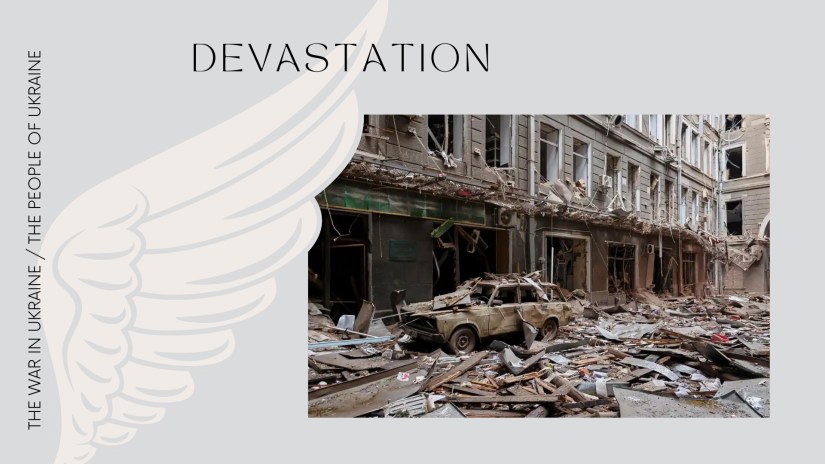

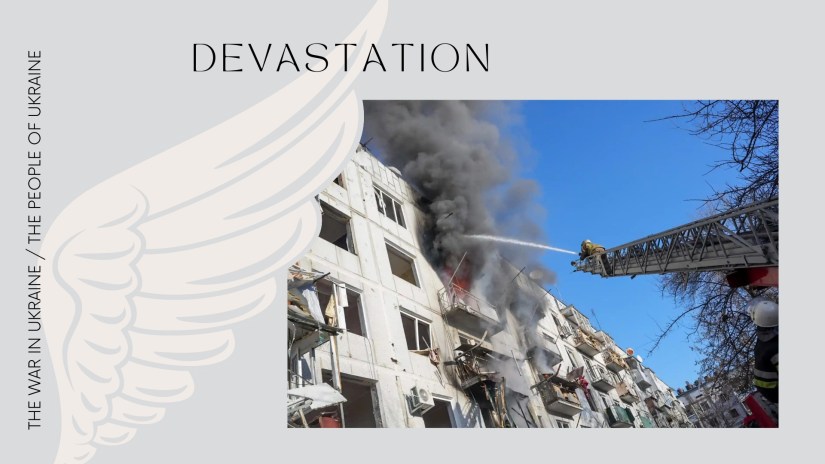


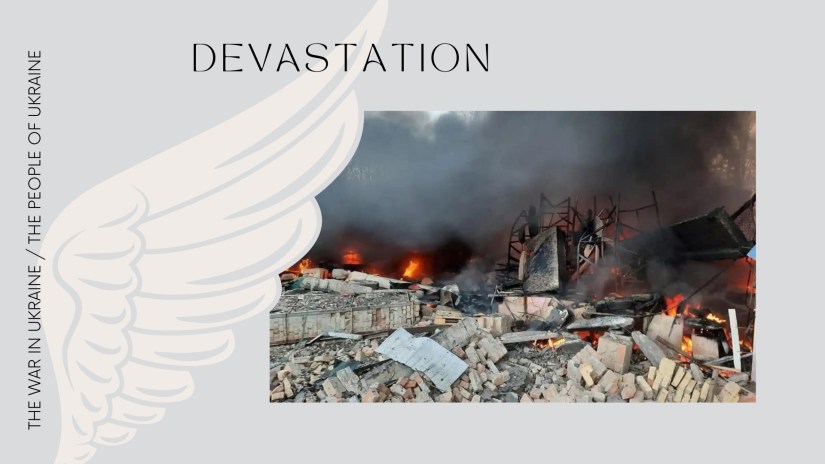


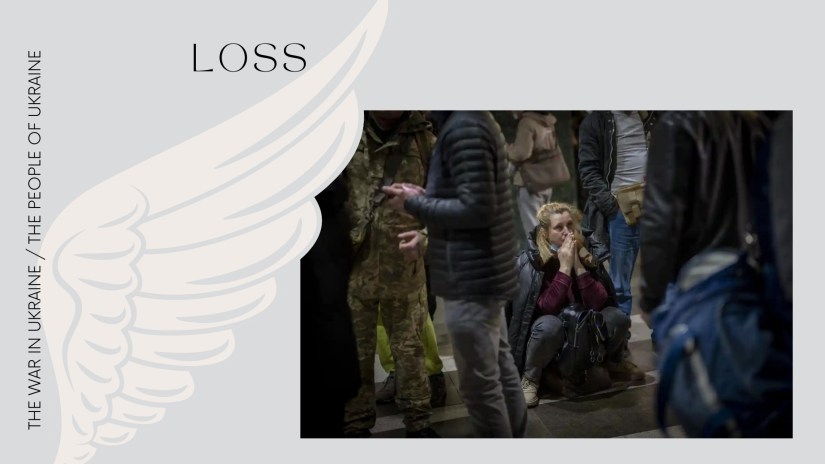
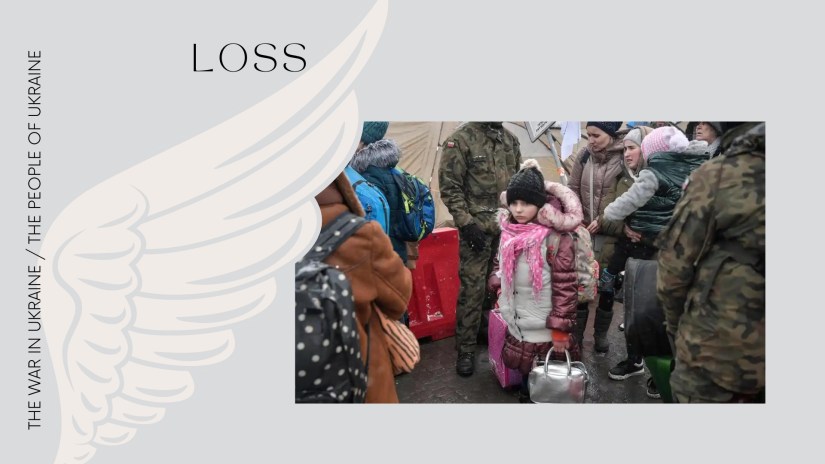


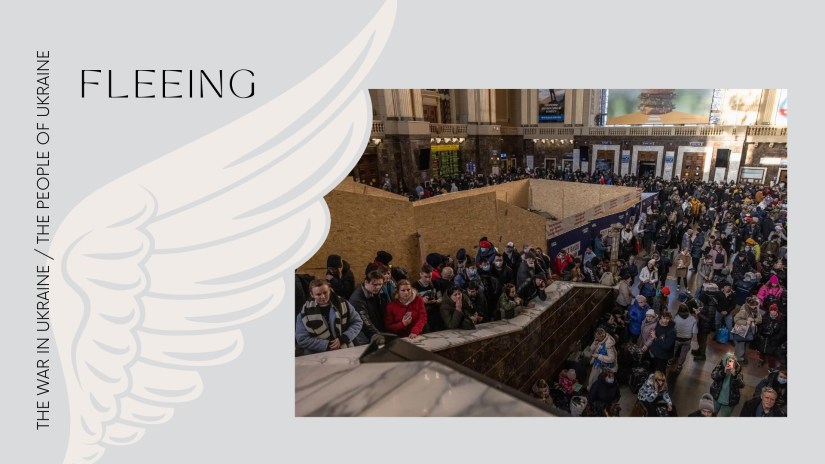





 I hear my dear friends cry out for justice. I hear them using words to make sense of it all, and I hear their voices fall silent. Silent, with just these words, “I’m tired.” A dear friend posted the words on the left this morning. I want to see her face to face. I want to be together. I want to comfort her, hoping beyond hope that it is not too late for comfort.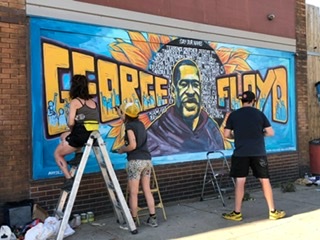
 “How we celebrate the day when the Holy Spirit breathed upon those gathered together, with gifts of wind and fire!
 In the end, there is a tiny bit of joy in George Floyd’s tragic story. It is a joy much deeper than reality’s sorrow. The artists completed their mural, and in the very center near the bottom, they had painted words that express the greatest truth of all.


 Before I knew it, we were on our way back to church, even though I had plans for Friday afternoon. I felt something a little like sadness, I think, when Father Sam and several other men took Jesus from the Cross and placed him in a tomb. What I most remember was wondering why Father Sam was sprinkling the tomb with rosewater and then sprinkling all of us. The sweet smell of roses filled the sanctuary. At the end, we went behind Father Sam in a procession with the entire beautiful structure that was supposed to be the tomb of Jesus. It was like a funeral procession and it was sad.
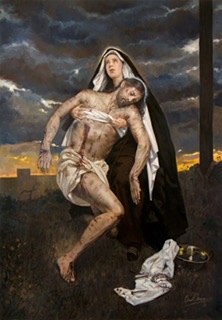

 Among the most painful separations are estrangements from living parents. I have experienced estrangement from a parent, a situation in which I found it necessary to remove that parent from my life completely because of abuse. The hard choice of removing my parent from my life was mine to make, but was most surely a hard choice with long-lasting effects on my emotional health. Those who must make such a choice suddenly feel orphaned and alone in the world. Over many years, I have known many people who have lost mothers and fathers with whom they’ve shared loving relationships — not through death but through purposeful estrangement. I know that the deep void this loss creates for them is devastating. The pressing question is, “Why don’t we talk about what it is like to feel orphaned by parents who are very much alive and well, but whom we have lost due to estrangement?”
 When your soul is at risk . . .
 I pray today for each of you who have experienced, or are currently experiencing, the grief of separation and alienation from someone with whom you once shared love. I pray that you would enjoy relationships with persons faithful, true and kind. I pray for you a shared love that is pure — both given and received. I pray for you a persevering, faithful and gentle love that helps sustain and fulfill you. I pray, for you and for me, that we might have relationships with persons who help us become our best selves. I pray for genuine and life-giving friendships that grace us with full acceptance and understanding.


 The book adapts the sacred use of Runes as an alphabetic script used by the ancient Germanic and Norse peoples, creating a tool that could be helpful in the healing of body, mind and spirit.*
 The Rune I have randomly chosen is the Rune of Trust. It is the Rune of restoration that calls for the rebuilding of belief in yourself, in your life and in your relationship with God. For some, drawing this Rune asks you to show trust in a present situation. For others, it calls for embracing the changes you are facing with trust and wisdom. In relationships of the heart, remember that I love you and I trust you are two stones for crossing the same stream. Most importat is that you ask your soul if Trust has something to teach you or somewhere to lead you.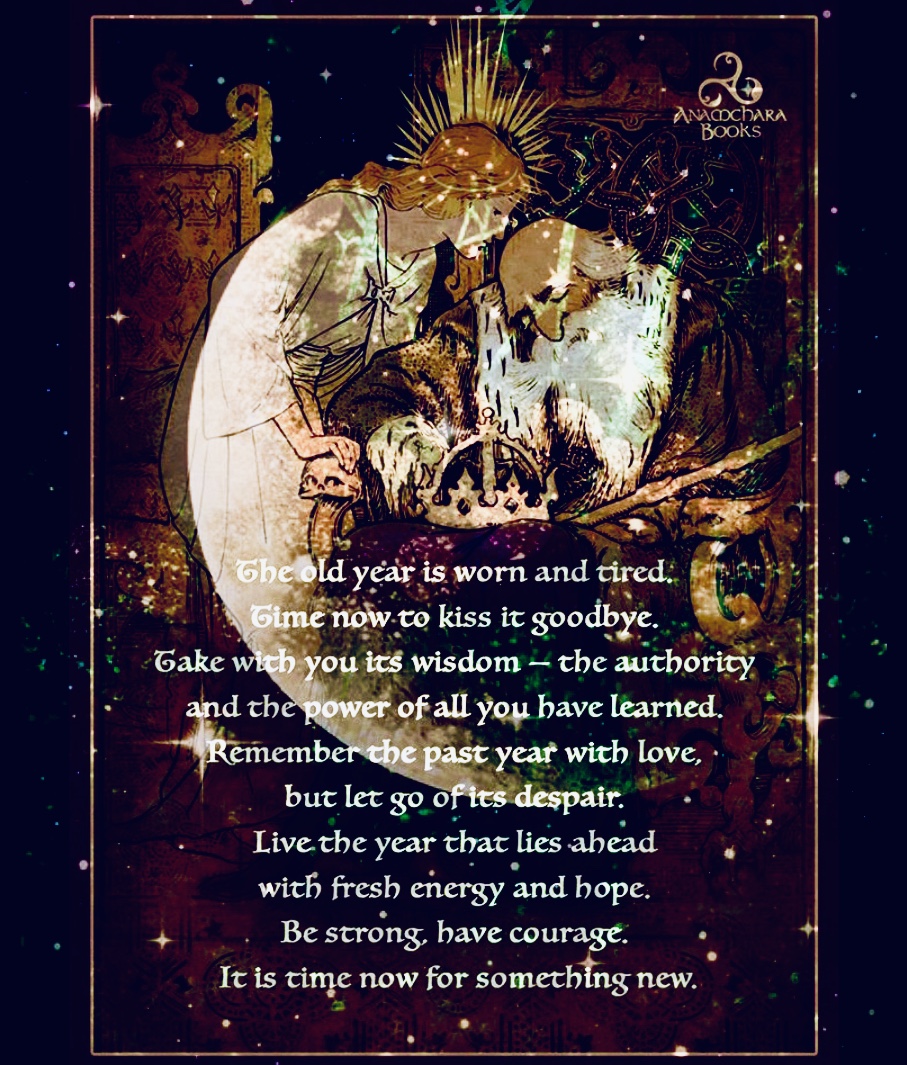


 God of the Sparrow 🌱 By Kathy Manis Findley