Comfort, Contemplation, Courage, Discernment, Discovering, Feelings, Freedom, God's presence, God’s promises, journey, Life Journeys, Meditation, Memories

What Do I Do with My Feelings?

How are you feeling today?

“Fine” is almost always the answer because usually the one who asked the question doesn’t really want to know all about how we feel. Not really. So we answer with a word — “fine.” Just “fine.” After all, we don’t often want to reveal our true feelings to anyone, and on top of that, telling them how we really feel would take more time than either of us want to spend on the conversation.

There may also be another reason for responding with just the word “fine.” Sometimes we don’t know how we’re really feeling. Some people are too busy with life responsibilities to consider how they feel. Others know there are deep feelings inside themselves, but they too are too busy to feel them. Still others sense dark, foreboding feelings in their deepest place, and they will not risk the emotional repercussions they might face by lettings their feelings rise into their consciousness. In Leo Tolstoy’s book, Anna Karenina, the dialogue asks, “Is it really possible to tell someone else what one feels?” Perhaps at that point — the seeming impossibility of telling another person how we feel — is where you and I find ourselves.

What happens when you refuse to allow your deepest feelings to enter your consciousness?

The question on the left is a very good question, even a crucial question. What does happen in us when we simply refuse to allow our feelings to come to the light os acknowledgment. The answer is at the very center of our quest for emotional wellness. We start, as the image above instructs, at owning our deepest feelings. Owning means to look at our feelings honestly and without fear. Owning means making no excuses for feelings. Owning means not blaming our feelings on others. Owning means holding our feelings in high esteem and acknowledging how they came to be. Owning means accepting our feelings, embracing then and honoring them

I was so deeply hurt that I just hold it inside until it becomes so unbearable I think I will snap.

He made me feel invisible and I just can’t let go of that feeling. I still feel invisible after all these years.

She made me so angry and I am letting that anger rage inside me and it will not go away. I don’t dare express it or let it surface.

Owning our feelings means being willing to truly “see” them, even when seeing them frightens us or creates in us a sense of dread. We sense we may experience a season of dread that the feelings will hurt us, again and for a long time. We fear what we will see. There is some truth in the fact that we tend to live into our “false self,” the self that is external and often shows little resemblance to our internal self. Contemplation is internal work. For those of us who believe in God, something divine happens when we are immersed in contemplating our hidden feelings — this thing that happens is that God meets us there, at the very moment when a buried feeling begins that awful hurting. I think of the words of promise in Holy Scripture, Jeremiah 29:11.

For I know the plans I have for you, says the Lord, thoughts of peace and not of evil, to give you a future and a hope.

I cannot help but find comfort in the presence of God in my life’s most painful times, and honestly, I have to say that some of those painful times were a part of contemplation and, through contemplation, beginning to own my down-deep feelings. The wise words of Thomas Merton are both instructive and provocative.

Everyone of us is shadowed by an illusory person: a false self . . . We are not very good at recognizing illusions, least of all the ones we cherish about ourselves. Contemplation is not and cannot be a function of this external self. There is an irreducible opposition between the deep transcendent self that awakens only in contemplation, and the superficial, external self which we commonly identify with the first person singular. Our reality, our true self, is hidden . . . We can rise above this unreality and recover our hidden reality . . . God begins to live in me not only as my Creator but as my other and true self.
Thomas Merton, New Seeds of Contemplation

In finding pieces of my hidden, true self, I also found release from harmful feelings, hurtful memories and oppressive people I held on to. Finally, after contemplation, we find the ability to share our feelings — the real ones — with the people we trust to hold them sacred and to help us better understand them. At the moment when I understood my feelings — where they came from; why I was holding on to them; who caused them; what would happen if I let my feelings rise from my depths to the light of day — that was the moment I felt free. I could live again as my best self. I could love myself, my real self. And I could be my best self. Not a small thing! A turning point in my life!

I hope you will spend some time studyIng the Feelings image above. I invite you to look at the seven feelings in the center and to then move to the outer circles. If I feel sad, for instance, the next expansion of the circle further clarifies what “sad” means for me, i.e. lonely, vulnerable or depressed. The outer section may reveal to me that I was victimized or abandoned, grieving or isolated.

Continue to contemplate your hidden, unspoken feelings. Learn to look at them and “own” them without fear, and know that God will meet you at the point of your deepest pain and that you are God’s own creation — cherished, loved, comforted and protected by a God who will never let you go. 

As a part of your contemplative moments, I hope you are strengthened by this arrangement of the  hymn, “O Love that Will Not Let Me Go.” Play it before you begin your meditation time and let its message clear your mind and comfort your soul.

Awakening, Beginning again, Discovering, Faith, God’s promises, Hope, life, New Life, Rebirth, Singing, Spring

My Spring

6121C91D-FE4A-43DD-929C-3828A1093D26
The flowers appear on the earth, the time of singing has come . . .
Song of Songs 2:12

Now that February has brought the tiniest green shoots from the ground, I know that it brings a promise of flowers — yellow ones and purple ones — bright promises of the new life that emerges every spring. Perhaps I can take a deep breath now that I am exactly three months today past my kidney transplant. This day is a milestone for my immunosuppressed self, marking the time when my transplant team might tell me that I can possibly escape from my isolation and go out to see the signs of spring. I am making February my personal commemoration month, celebrating, contemplating, dealing with a few deep-set fears and deciding to take a microshift forward.

The beginning of this story was in February of 2014 when suddenly and unexpectedly, I found myself in the emergency department of Baptist Health Medical Center with a diagnosis of end stage kidney disease. I faced a long illness that year that very nearly ended my life, three times during the 58 days I was hospitalized. When I didn’t die, I discovered that I could not walk, feed myself, name colors or even write my name. A kind and dedicated physical therapist helped me work for months after I returned home challenging me to regain those losses. For months, I was very weak, often confused and paralyzed by fear.

The only treatment available to me was dialysis, eight hours a day, seven days a week. Today though, February 12, is another February milestone that allows me to view my transplant three months ago today. Now that I am six years past it, I am looking back on that time that began in February of 2014, and I can see clearly the truths I discovered. I think they are important discoveries for me, of course, but also for anyone who must take an unexpected journey toward an uncertain future. So these are some of the discoveries that give me courage:

Fear takes on many forms and enters my psyche on its own terms.

Gratefulness floods over me at will through a kind word, a phone call, a connection with a friend, old or new.

Faith can be tiny in one moment and large in another, but either way, faith bears me up when I cannot move forward.

Hope constantly calls out to me to remember the source of my hope.

Patience with myself when I am not myself lifts me up, even when I feel physically weak and unable to do all the things I used to do.

These discoveries I know. I also know that, through it all, I have experienced periods of spiritual and emotional depression. Yet, those dark times were interrupted with times when my faith rose from within to comfort me and remind me of my “refuge and strength, an ever-present help in times of trouble. (Psalm 46:1 NASB) How wonderful to be able to see again the light of the Sun of Righteousness and to know that my slumbering soul can most surely rise from its lethargy like the stubborn crocus from the hard winter ground. It feels almost like rebirth.

Everything that has been dead through my winter is slowly waking up to new life, new vibrancy, a new season to grow and live and thrive. Along the way, I remember so much comfort from Scripture, thoughts of new life throughout the pages. This is but one:

The flowers appear on the earth, the time of singing has come,
and the voice of the turtledove is heard in our land.

— Song of Songs 2:12

So spring is near. My spring has come, bringing another season, another chance, another burst of hope. Thanks be to God.

Awakening, Dancing, Discernment, Discovering, Freedom, God's presence, Holy Spirit, journey, Life Journeys, Morality, New Life, peace, Pilgrim, Pilgrimage, Self Awareness, Singing, Soul, Spirit wind, Spiritual awakening, Stories, Transformation, Walking peacefully, wind

Walking Peacefully

BC2C5B3D-EFB1-4535-9D46-B4D8A9DB76F3
People say walking on water is a miracle,
but to me walking peacefully on earth is the real miracle.

Thich Nhat Hanh

Those words ring so true, but how does one realize “the real miracle?” “Walking peacefully on earth” is much harder than it sounds, much more challenging than it ought to be, at least for most of us. Some have poetically said that walking on earth is our pilgrim journey, and I believe that many people feel that they are walking a pilgrim journey.

In his book, The Pilgrim Journey: A History of Pilgrimage in the Western World, James Harpur asserts that we are now in a new era of pilgrimage and asks: “Why is pilgrimage coming back, especially in a time when many people are questioning traditional religion?” Harpur’s answer is that in these days, there seems to be a deep longing in humans for this form of spiritual practice.

As for me, pilgrimage and journey are very real descriptors of my life. I have often set out on one journey or another, not knowing where to go, only that my soul needs the journey. I am captivated by Harpur’s book, by his tracing the history of why countless people through the ages have embarked on spiritual pilgrimages, by his many stories of pilgrimage through the ages and by his examples of why journey is so relevant to today’s pilgrims. Harpur writes:

If that is done, the destination — a shrine, a holy mountain, or a house of God — will signify not the end of the journey, but the start: a gateway into a new way of being, of seeing life afresh with spiritually cleansed eyes.What is essential is that the journey, by whatever means it is accomplished, gives the pilgrim enough time to expose himself or herself to the possibility of a sacred metamorphosis.

Nothing seems more important to me than seeing my life afresh “with spiritually cleansed eyes.” But getting there is a long process, a journey.

3BCA9FAD-8CD2-4B6A-B300-6609E1318379Walking peacefully on earth requires my full resolve and my desire to reach that place in life. Wouldn’t any of us want to experience transformation and the freedom to be? Wouldn’t any of us want to experience a sacred metamorphosis?

Certainly, it is a long process, a long journey. There are many steps along the way that each person must determine in order to persist on the pilgrimage. There are divergent paths and rough roads and thorny ways and threatening obstacles. Though choosing the path is personal, the graphic at the top of his post illustrates a set of steps we could possibly choose for ourselves. If I chose to take those steps, it would look like this:

First, I must learn to cry again. Crying is very hard for me, as if I dared to cry, my crying might go on forever. Yet, crying is a part of cleansing the soul, and as the quotation says, there is an importance to flowing and finally letting go. Secondly, I need to accept that within me, there is fire and that I must not be afraid to let it burn. I think I must face the flame, adapt and re-ignite my inner fire. Thirdly, I must to open myself up to refreshing air — observe it, breathe it, focus and then decide whatever I need to decide.

The quote also says “remember that you are earth” and ground yourself, give, build and heal. Finally, “remember that you are Spirit” and care for your inner core so that you can connect, listen, know yourself and be still. It’s quite a lesson — a new way of seeing myself — and perhaps it is the way I must journey if I want to walk peacefully on the earth. In these days when peace is in short supply, when nations refuse to beat their swords into plowshares, when political rivals use hate speech against one another, it is so important that peace dwells within my soul.

In the end, all of us long for what James Harpur calls sacred metamorphosis. We all want to realize the miracle of walking peacefully. We want to walk peacefully in our souls. We want to walk peacefully with others. We want to walk peacefully in our families. We simply want to walk peacefully — hand in hand with God and moved by Spirit. We want the choice to walk or to be still, to run or to leap, to breathe or to hold our breath when we kneel before wonder. We want to have the freedom to speak and shout and sing and dance . . . and truly live. That is the miracle!


Adultery, Art, Awakening, Celebration, Change, Dancing, Discovering, Dreams, Freedom, Growing up, Introspection, Joy, life, New Life, Praise, Psalms, Questions, Surprise, Tambourine

With a Tambourine in My Hand

41C0A436-91ED-4E28-B2C7-8CC3FEA229B7
Water Dancers by Canadian artist, Rob Gonsalves

Women in white gowns emerge from the crashing water of  a moonlit waterfall. What in the world does that have to do with me, other than the fact that I am completely enthralled by this painting? I certainly cannot relate or see myself emerging from rushing waters or even dancing with a tambourine in my hand. Yet, there is something about this art that inspired my soul searching and brought up some questions I want to contemplate.

Where did I come from? Where will I go?
What will I do with my life? Which of my dreams will I realize?

I have asked myself similar questions, questions about what made me who I am and if I will ever feel that I have realized my life dreams. It’s true that I have entered my seventieth year of life, and one might wonder why the need for all the introspective questions. But In the core of my being, I believe that I can still dream and that I can still experience wonder about what I see in and around my life.

What people will enter my life leaving cherished gifts of friendship? What wonder will I see around me as I search for meaning? What will Spirit say to me with the gentle breath of her voice that can also enter my life as a rushing, mighty wind? And how does God continue to call me to new ministries of the heart?

I do not know the answer to those questions. Nor do I know who or what I will be when I grow up. So I struggle to know. I plead with God to give me direction. During this season of my life while I am challenged with so many things related to my kidney transplant, I have been somewhat obsessed with finding the answers to all those “who am I?” questions. I despair a little when I can’t find the answers.

Back to the art. Yesterday, I accidentally came across the painting by Canadian artist Rob Gonsalves which is at the top of this post. I was immediately captivated by the image, especially the rushing waterfall that changed into women living life — some of them dancing, others playing their tambourines, others just emerging, still others just beginning to awaken.

The art reminds me of how we might emerge into life — to grow into life, to be open to change, to be willing to embrace a process of becoming. Each of us is engaged in that kind of process whether we know it or not, whether we embrace it or not. We want to experience an awakening that opens our eyes to wonder and our souls to extraordinary newness of life. We want the freedom to be who we are. We don’t want to stay in our awakening place, reticent about moving into the best part of our lives, refusing to move because of our fear. We want to throw off our hesitation and, in search of our dreams, to sing, to dance, to play our tambourines in celebration of our unique personhood.

I am reminded of a beautiful passage of Scripture from the Psalms.

Let them praise his name with dancing,
making melody to him with tambourine and lyre.

— Psalm 149:3 (NRSV)

Isn’t that precisely what we want for our lives? To lean into our true selves so that we are compelled to sing, to dance with tambourines in our hands, to celebrate our lives, to dream and to praise the God who rejoices when we live into freedom and joy!


Awakening, Awareness, Change, Contemplation, Courage, Discernment, Discovering, Emotions, Exploration, God's presence, grief, Guilt, healing, Indecision, Introspection, journey, life, Light, Lingering, Mayo Clinic, Mystery, New Life, New Year, Pain, Prayer, Sacred Space, Self Awareness, Spiritual awakening, Trust

Lingering . . . In the Presence of God

53189F0B-8EF7-4BDC-A66A-B9834A45C0F5

I have observed, at this year’s beginning, as in past years, that humans are more introspective than usual. It may begin with intentions or resolutions for the new year. What I observe is that people are revisiting the past, trying to reinterpret it, digging for the meaning the past held for them and trying to find ways to heal the wounds of the soul theyp have hidden inside them for a long time. Those woulds live in us so long that they become scars, hardened in our spirits and thus more difficult to heal.

Until we have done this spiritual and emotional inner work, we are hesitant, unwilling to move into the future. So we linger in the present and re-live the past. Usually what we  revisit are past sorrows and losses, past disappointments and perceived failures, past pain that continues to pierce the soul. Seldom do we revisit past joys, because joy does not pierce like sorrow does.

It is a positive thing to linger in life review at the beginning of a new year. Just as the year is new, all of us hope that in the work of lingering, we will find newness in ourselves. The work of introspection is important for our well being and we have so many choices about how to strengthen ourselves, body and spirit. Many people use self-counseling, which may include searching their deep selves through personal contemplation and prayer. Others engage in spiritual direction, life coaching, trauma therapy or counseling. Still others tend to their souls through silent contemplation, labyrinth walks, yoga, nature walks, strenuous exercise, reading scripture, self-help books or poetry, and singing hymns or listening to music.

I want to suggest one other form of self-counseling that is unfamiliar to most people — working with Healing Runes as a part of your quiet time. Your first question probably is, “What are Healing Runes?” I want to begin by sharing an invocation written by Ralph H. Blum from his book, The Healing Runes.

Invocation

Practice the Presence of God in all ways,
Both in your coming in and your going out.

In your prayers, invoke God’s Presence.
In your aspirations, stay mindful of the Presence.
In your meditations, breathe in the Presence.

Above all, let the Presence be reflected in your attitude,
For surely then God will sing in your thoughts,
Speak in your voice and shine through your acts.
Let the Presence of God be the medicine
To heal your life, lift your heart and renew your spirit.

Practice the Presence of God in all ways,
Both in your coming in and your going out. Amen

To answer the question, a Healing Rune is a tool that provides a way of deepening  reflection and stirring the soul where we find life meaning and buried emotions. There is an interpretation of each healing rune in the book, The Healing Runes, written by Ralph Blum and Susan Loughan. They offer interpretations presented in graceful and sensitive language that allows the reader to take to heart what is appropriate for their own meditation and leave the rest.

A4B9545F-D3B1-40D5-AC08-23DF8FD547CAThe book adapts the sacred use of Runes as an alphabetic script used by the ancient Germanic and Norse peoples, creating a tool that could be helpful in the healing of body, mind and spirit.*

I suggest that we not fear the Healing Runes by considering them to be some sort of pagan artifact or something that seems like magic. They are more like mystery, something to guide our reflection and introspection. I suggest the we see Healing Runes as one way to guide us deeper into ourselves and into the presence of God, the ultimate healer of our souls.

I would like to choose a Healing Rune for us from my bag. Its meaning may not mean anything to you or to me. It may not open up any places in your soul that need attention. Or it may awaken us to a wound that we need to give some reflective time, some time for healing.

328A8B00-83F2-418F-BFC5-29960E0C06C7The Rune I have randomly chosen is the Rune of Trust. It is the Rune of restoration that calls for the rebuilding of belief in yourself, in your life and in your relationship with God. For some, drawing this Rune asks you to show trust in a present situation. For others, it calls for embracing the changes you are facing with trust and wisdom. In relationships of the heart, remember that I love you and I trust you are two stones for crossing the same stream. Most importat is that you ask your soul if Trust has something to teach you or somewhere to lead you.

Thomas Moore writes, “We separate, each from the other, the sicknesses of body, emotion, meaning and connectedness.” The soul must be moved, touched and healed, and that is why we linger at the door of our pain, trying every way we know to reconcile it, heal it, eliminate it (or just blast it with a sci-fi laser gun!) Thomas Moore has a better remedy than a sci-fi laser gun, a much more informed remedy:

I am convinced that all healing ultimately comes from a shift in deep imagination, grounding our own lives and anchoring our decisions in the very quick of the heart . . . not just relief from anxiety, but profound gifts that signal the presence of soul — intimacy, pleasure, beauty, love and piety.

As you and I explore what hides in our souls as this new year beckons us, may we not be afraid to linger directly in the presence of our fear or woundedness. Instead, let us consider that we are lingering in the comforting presence of God, in the gentle protection of Spirit. It is safe in that sacred space of Presence, safe enough for us to unearth whatever lies deeply in us and allow it to surface into the healing light.

God may be gently, lovingly calling us to do that work of healing and, in that introspection, to reveal our truth — the truth that will set us free!


* The Healing Runes, Ralph H Blum and Susan Loughan; Preface by Thomas Moore; St. Martin’s Press:New York, New York; ©️1995 by Ralph H. Blum.

anxiety, Awakening, Awareness, Challenge, Change, Community, Contemplation, Despair, Discernment, Discovering, Emotions, Epiphany, Friends, healing, Hope, Illness, Inspiration, Introspection, Kidney Transplant, Knowing, Life Journeys, Life pathways, Meditation, New Normal, Pain, Perseverance, Reflection, Relationship, Restoration, Rhythm, Soul, Spiritual Direction, strength, struggle, Suffering, Transformation, Troubles, Wholeness, Wisdom

Spiritual Direction

E82BA236-43E0-4EDA-B57B-4E7F6E31779A
Transplant Day Thirteen
November 24, 2019

I have been offered a blessing. From a stranger. 

I met this kind person through a group of clergywomen called RevGalBlogPals. She is a spiritual director from British Columbia. Through the RevGalBlogPals Facebook group, she happened upon parts of my transplant journey in my blog posts. She began praying for me. Then she offered me the gift of spiritual direction as I pass through this complicated time in my life. 

9299C4C7-3373-43D8-A11E-C2349150F942It has been several years since I worked with a spiritual director, so I was very humbled and thankful to hear from her. These were the words of lovingkindness she wrote to me in our first session.

May you feel the gentle touch of Spirit in this session.
May you know that I am holding you in healing Love.
May you be reminded of your worth and strength…
As you rest.
~ This is spiritual direction when pain does not allow for words.

Burning BushOn the day I received her message, it was so true that pain did not allow for words. The assault on my body was unspeakable on that day. I remember when many years ago my husband’s cardiologist came into his hospital room a few days after his heart surgery. The cardiologist said this: “Let’s look at this terrible thing we’ve done to you.”

His words resonated with me post transplant when, in the throes of struggle and pain, I definitely was looking at the terrible thing they had done to me. I could not quite see a brighter, pain-free future. I could only focus on the physical systems that were in complete disarray after the transplant. It did not help when medical staff told me it was all normal. The way I was experiencing it all was far from normal.

I wondered if I would ever live “normal” again. Or if perhaps I would live into a new normal of life after receiving a transplanted organ. I was not sure, and definitely not confident, that all systems would levelize into something I could tolerate. My spiritual director’s wisdom knows that to have physical normalcy, I must also seek emotional and spiritual normalcy. That would mean healing wholly — from the outer visible body to the inner invisible one. It would mean transformation. It would mean living my life while watching constantly and diligently for any sign that something was physically wrong.

Red Wooden Directional Arrow Signs In Green Forest BackgroundWhen my spiritual director suddenly appeared, I knew that she would help me explore my spiritual state, entering into community with me and pointing to the healing I could not yet see.


Thanks be to God for the beloved community she has offered me, community that forms in unexpected places, in unexpected times, just when I needed community the most.

Comfort, Daybreak, Discovering, God's presence, grief, Heartbreak, Praise, sadness, Silence, sunrise

From the Rising of the Sun

9C2D3103-AD71-4636-9068-9FEB5BB0C515
Just after sunrise on Arkansas’ Mount Nebo. Photography by Brad Burleson.

Praise the Lord!
Praise, O servants of the Lord;
praise the name of the Lord.

Blessed be the name of the Lord
from this time on and forevermore.

From the rising of the sun to its setting
the name of the Lord is to be praised.

The Lord is high above all nations,
and his glory above the heavens.

Who is like the Lord our God,
who is seated on high,
who looks far down
on the heavens and the earth?

He raises the poor from the dust,
and lifts the needy from the ash heap,
to make them sit with princes,
with the princes of his people.

He gives the barren woman a home,
making her the joyous mother of children.

Praise the Lord!

— Psalm 113 (NRSV)

The Palmist assures us that the sun rises and sets. The Psalmist speaks to us of the comfort of sameness, of something we can count on. But this Psalm says more. The Psalmist pictures God, not only as One who is to be praised, but also a God who is the helper of the poor and needy. This is a God-image that we need in these troubled times. The Psalmist’s story sings with praise to God, but then continues on, showing us a God who raises up those who are poor and lifts up the people whose needs are great. And nestled in the words of this Psalm are the words we have long heard:

From the rising of the sun unto the going down of the same,
the Lord’s name is to be praised. (KJV)

What a comfort it is to know that when the sun rises, God will be God, and when the same sun sets, God will be God — a constant, divine presence. The sun will sink into the horizon, leaving darkness around us. Yet, the next day will dawn, the sun will rise as it always does and God will still be present, ever watching over us.

There are times when I have needed to know that God was in place, times when I was poor in spirit, needy in heart. There are times when sadness and worry have silenced my praise. In such a time, I was unable to speak, unable to even name my silences. In those times, my silences were deep. They were hidden, unspoken places of pain.

What I now know is that my pain would ease, that my spirit would again rejoice, and that my silences would find words. That knowledge enables me to lift my eyes to the sunrise of God and to rest in the assurance of God’s abiding presence with me. 

When storm clouds threaten, God is present. 

When the earth beneath my feet quakes, God is present. 

In sunshine and in shadow, God is present.

Blessed be the name of the Lord
from this time on and forevermore.

From the rising of the sun to its setting
the name of the Lord is to be praised.


F9FA5D3C-53F0-4043-8A72-F9E2D63F7349

On another note, please pray for me as I look toward my kidney transplant on November 15th. I am grateful that you are walking with me on this journey that often felt so frightening. Your thoughts and prayers mean so much. If you would like to read the story of my illness, please visit the Georgia Transplant Foundation’s website at this link:

http://client.gatransplant.org/goto/KathyMFindley

A “Go Fund Me” page is set up for contributions to help with the enormous costs related to the transplant, including medications, housing costs for the month we have to stay near the transplant center, and other unforeseeable costs for my care following the transplant. If you can, please be a part of my transplant journey by making a contribution at this link:

https://bit.ly/33KXZOj


Awakening, Call, Calling, Change, Discovering, journey, Kidney Transplant, life, Life pathways, Perseverance, Preaching, Rebirth, Self Awareness, Spiritual growth, Spirituality or Religion?, Transformation, Wholeness

“Me!”

D661FB1C-FE24-4C0D-9614-F12695893AEA

When I was younger, my primary life goal was to make people like me. It was something of an obsession, and it caused great harm to my spirit. For you see, I thought I had to be everyone else’s image of me. So “me” became changeable and malleable in the hands of a variety of other people. In my mind, they just had to like me.

The conundrum of life: how to accept that not everyone will like me. Maybe even most people won’t like me. So here’s the sad, but inevitable result: “me” became someone I didn’t even know. I lost myself in the impossible quest to be accepted and liked.

Then came the metamorphosis. It happened around age 47. I think what started it may have been reading the book by Sue Monk Kidd, The Dance of the Dissident Daughter.

My sisters in cyberspace, you should read that book. The thing that nearly frightened me enough to make me put the book away is the descriptor after the main title. So here’s the title of the book, in all of its feminist fullness: The Dance of the Dissident Daughter: A Woman’s Journey from Christian Tradition to the Sacred Feminine.

Well, when I read part of the book’s description — the “journey from the Christian tradition” part — it scared me to death! I had no intention at all to journey away from my Christian tradition.

I read the book anyway, and it changed my life and launched me into a journey I could never have envisioned. Sue Monk Kidd led me on an incredible, circuitous journey through fear, anger, healing, and eventually, awakening and transformation. Of course, I could never see myself turning away from my deep connection to what Kidd described as “the deep song of Christianity,” But I did discard the voices that kept me in my place, and kept me quiet, for so many years of my life.

When those discouraging, disparaging voices were silenced, I heard my own voice, finally. With clarity, my voice declared “me,” exactly the woman I was meant to be, precisely the woman God was calling to ministry. By embracing my full humanity and my spirituality — that looked very different than my religiosity had looked — I found myself.

“Me” was awakened, out in the open, in the middle of God’s world and smack dab in the center of God’s will. Oh my! Now no one would like me! When my words spoke Gospel truth, people didn’t like me. When I tenaciously followed God’s call to ordination, people didn’t like me. When I dared to preach (from a real pulpit) lots of people didn’t like me. When I worked as an advocate for women and children harmed by violence … well, no one at all liked me then because I refused to back down.

I like this quote from Denzel Washington:

“Some people will never like you because your spirit irritates their demons.”

There it is! The real, unadulterated truth! So as my spirit continued to irritate everyone’s demons, I was finally living my life as “me!” And that, my sisters, was a good place to be.

I hope you are in your own “good place.”

—————————————————————————

On another note, please pray for me as I await a life-saving kidney transplant. I am grateful that you are walking with me on this journey that often feels frightening. Your thoughts and prayers mean so much. If you would like to read the story of my illness at the Georgia Transplant Foundation’s website, please visit this link:

http://client.gatransplant.org/goto/KathyMFindley

A Go Fund Me page is set up for contributions to help with the enormous costs related to the transplant, including medications, housing costs near the transplant center, and other unforeseeable costs for my care following the transplant. If you can, please make a contribution at this link: 

https://bit.ly/33KXZOj

Beauty of Nature, Challenge, Courage, Discovering, journey, life, Lostness, Moon

Freedom on the Journey and Hope Along the Way

4B8CEA44-1168-46E2-AFB5-D5DD9FA7AD34

To live without roads seemed one way not to get lost.
— Naomi Shihab Nye

It might be good advice — traveling a journey without roads. It would eliminate the decisions one must make when roads cross. It would eliminate the uncertainty when the path ahead seems unclear. We wouldn’t have to plot a course and explore all the possible routes. We might experience freedom on the journey that we have never before experienced.

I have to admit, though, I am a person who is all about road metaphors for life. I am a lover of walking labyrinths and walking the sacred path. I am constantly assessing my journey by the many kinds of roads I travel. I rejoice on smooth, friendly roads and despair on rough, ominous roads. I walk my path with trust, experience courage and wise discernment at the crossroads, and believe that I will end my journey in hope.

So the idea of “off road” living is a new, and somewhat disconcerting, prospect. And yet I am intrigued by the quote of Naomi Shihab Nye, “To live without roads seemed one way not to get lost.”

So I spent a few minutes pondering her words. With no roads, we might find ourselves discovering new places and making new paths, never fearing that we’re lost, but leaning into the exploration with anticipation. Without roads, we might wander aimlessly, passing beside astounding wonders we have not seen before. Without roads, we might find ourselves leaning into the beauty we find on our uncharted and circuitous path, beauty once hidden from us because we stayed on the road. Without roads, we might experience freedom on the journey.

The poet says that without roads, we don’t get lost. That may be a plus for us, since the fear of getting lost keeps us from the sheer, unbridled joy of exploration. Once we have dismissed that fear, we are free to roam, to discover and to observe all the beauty that lives off the path.

I think Naomi Shihab Nye’s thought about the lack of roads is an interesting parable. Its a parable about real life, and the best lesson from it may be that it is our fear keeps us from the full and fresh experiences we could embrace. When we stick too close to the roads we have always travelled, we will experience only what exists on the roads and directly beside them, nothing more. But when we have thrown off the fear that holds us hostage, courageously take leave from our familiar path, and venture into the wilderness to wander freely, we might see and experience more than we ever thought possible.

I’m not so sure this will work for me, but I plan to try some wandering that takes me far beyond my safe path. I plan to experience the emotion that comes from the fear of being lost. I plan to allow myself to be forced to place all my trust in where my heart takes me, and in God, who always gives grace to wanderers.

So the poet says I will not be lost, because there are no roads on my journey. I will not know what things I will see until they emerge before me. I may not know where I am, but I will not be lost.

Naomi Shihab Nye wrote another poem that seems to speak to this very unfamiliar concept of traveling life’s journey without familiar paths to count on. These are her words:

Where we live in the world is never one place.
Our hearts, those dogged mirrors,
keep flashing us moons before we are ready for them.

― Naomi Shihab Nye

What does it mean that our hearts “keep flashing us moons before we’re ready for them?” It sounds like a gift, that our hearts flash moons before us. It sounds like grace that, on our journey, we will see the wonder of God’s creation glowing above us in the night sky. We will be compelled to look up, gazing into a moon that changes constantly, reminding us of the waxing and waning of our lives and giving us hope to hold on to.

Thanks be to God for the freedom of the journey and the hope.

Complaints, Contemplation, Courage, Discovering, Emotions, Introspection, life, Mental health, Mindfulness, Reflection, Self Awareness, Vulnerability

What’s Underneath?

A07A5421-F042-40D4-A143-32391BBC79FBToday, a friend’s blog posed a provocative question. It was provocative enough to stop me in my tracks. Likely, I was right in the middle of a tirade of complaints when this question challenged me. This was the question: “If I let go of my complaints, what might be underneath?” *

The question presented a plethora of thoughts for me. It opened up that place underneath just for a second. But then I quickly moved back to the complaints. I have many. Or at least I believe I have many reasons to complain. But I’m realizing that complaints are surface things. They live outside of us and do not always reflect the inner emotions we are truly feeling.

A complaint develops easily and blurts out what’s on the surface of our lives. It flows easily off the tongue and falls upon any willing listener. The empathy we receive from that willing listener keeps the complaints alive. If someone listens to us and responds with caring about our complaint, it is then cemented. We have given it life, perhaps life beyond what it deserves.

This brings us back to the probing question: “If I let go of my complaints, what might be underneath?”

If gratefulness for the obvious graces that we have received replaced the urge to complain, we would be surprised at the result. If, instead of lodging a complaint, we spent some time exploring what lives “underneath,” we might well gain true insight into our emotional state. 

So we would do well to ask ourselves what’s underneath the complaint we speak out loud? Is it true that our complaint rises from a deep place inside of us but hides the emotion there?

If my complaint, for instance, is that I am overworked, perhaps underneath is the constant feeling that I’m being taken advantage of. If my complaint is that I have to endure an illness, perhaps the feeling underneath is that I fear suffering, even death. If I am terrified of death, perhaps I am not certain I left a good and lasting legacy. If I’m languishing in retirement, perhaps the emotion “underneath” is that, now that I am not “ministering,” I am questioning my self-worth.

You might be asking why this is important. It is important because whatever lives inside of us holds the power to harm us physically, emotionally and spiritually. What could we do instead of complaining? 

  • We might begin with silence that moves us a bit towards serenity.
  • Next, we will practice mindfulness that helps center us.
  • We woukd do well to contemplate gratitude for the graces of life. 
  • Then we should pray for insight, comfort and healing, not only praying for what we need from God, but also listening for God, abiding for a while in God’s presence.
  • Then we must take time for what might be the most important practice of all: introspection and self-reflection.

One of the primary goals of introspection is to better comprehend our inward life and to learn to focus it towards fulfillment of self. To go there is to invite vulnerability, healthy vulnerability that softens the hard places inside me that are wounded. Then we need to pull up from our inner resources just a little bit of courage.

When all is said and done, each of us is given a critical choice: do we complain about all that is not right? Or does courage enable us to look underneath our complaints and discover what our true emotions are?

For myself, I have to ponder these questions: What am I grieving? What have I lost? What do I fear? Underneath my whining and complaining (which I am very apt to do) I will find a gift, a treasure that is my very soul and spirit, and the emotions that abide there.

And as a bonus, I will have found a better way to live my “one wild and precious life.” **

* From A Network of Grateful Living

** From a poem by Mary Oliver. 

Discovering, Dreams, Faith, Inspiration, peace, Prayer, Serenity

Breath of Wonder

69175F90-305B-48F5-9797-D4F4BA54C428I cannot give you a better thing today than this prayer shared by Anne Fraley, rector of St. Peter’s Episcopal Church in South Windsor, Connecticut. “Listen” to her words and find yourself in them. Let grace from God refresh you as you live into peace and serenity. And as Anne writes it so eloquently, may faith carry you on the delicate breath of wonder and discovery, calling you forth beyond your wildest dreams.

I know these things to be true.

The sun dances and rainbows shine through pearls of water.

The coos of infants elicit contented sighs and gut-deep gladness.

Music stirs and tempers within the beats of its own rhythm.

The earth is rich with nourishment and holds sacred story with gentleness.

Hearts break and find renewal in healing.

Love sustains, encourages, emboldens, and makes us silly.

Divinity is everlasting.

Comfort is found in meatloaf and mashed potatoes. Or maybe sweet potato fries.

We sag and thrive, ponder and muddle through confusion.

We persist.

My prayer this day is that the best of these things will rise and claim their place on our horizons, and that the least of these things will recall our need for each other.

My prayer for this day is that faith will carry us on the delicate breath of wonder and discovery, calling us forth beyond our wildest dreams.

Amen.


Reprinted from https://revgalblogpals.org/2019/02/25/monday-prayer-these-things/.

Brokenness, Change, Chronic illness, Discovering, Emotions, grief, healing, life, Loss, New Normal

On to a New “New Normal”

7519DB43-1B31-43A9-9528-84655345CC44I’m getting to know myself. Again! Moving through life takes one through changes large and small. We slip past the small ones pretty much unscathed. But oh, those large ones! The large changes are another story altogether. Sometimes they cause us to miss a step or two. Sometimes they stop us right where we stand. Sometimes they throw us all the way to the ground. But they always get our attention.

Chronic illness is one of those ‘knock-you-to-the-ground” changes, especially when an illness happens suddenly. In a recent New York Times article, Tessa Miller shares how sudden illness changes one’s life and how chronic illness changes life forever. 

“Seven Thanksgiving ago, I got sick and I never got better,” Miller writes. She goes on to describe the conundrum of chronic illness. 

When I was diagnosed, I didn’t know how much my life would change. There’s no conversation about that foggy space between the common cold and terminal cancer, where illness won’t go away but won’t kill you, so none of us know what “chronic illness” means until we’re thrown into being sick forever.

I can identify with the changes Tessa Miller describes. The onset of my chronic illness five years ago was sudden, unexpected and permanent. My kidneys failed — simple as that. And I entered into the unfamiliar world of daily dialysis, a world I never expected to be in. And, yes, it was life-changing.

Tessa Miller makes another very insightful point. She explains how, once you find yourself in the fog of the changes you’re facing because of a chronic illness, one change presents the biggest challenge – the change in your relationship with yourself.

There is no debate: when chronic illness disturbs the equilibrium of your life, your relationship with yourself changes. You grieve a version of yourself that doesn’t exist anymore, and a future version that looks different than what you had ever imagined.

Chronic illness can shatter career goals and life plans. You learn learn a “new normal” in their place. But the acceptance of a “new normal” comes after the trauma. And trauma does happen, trauma that necessarily calls for therapy, either formal or informal.

Emotional work definitely needs to be done, and emotional work around chronic illness can look a lot like grief therapy for a passing loved one. You lose your self, at least temporarily. Your self changes.

So make sure to spend some time looking for YOU. Intentionally. Being open to whatever you find in yourself. Practice seeing yourself as the person you are instead of the person you were. Looking in the proverbial mirror gives you an image of the new version of yourself. Get to know her. Celebrate her resilience. Above all, be patient as you get to know her. You may be surprised at how much you like and admire her.


Change, Discovering, Illness, life, Loss, Pondering

Giving Primary Energy to Primary Things

ee555bd0-af25-43cd-aa2c-67edd555abba
Abstract energy formation

Yesterday was “one of those days.” I spent the day pondering my illness, the constant medical processes in my life, my sense of isolation and my losses. It seems I have failed in the work of giving primary energy to primary things. In fact, yesterday I gave up a great deal of energy obsessing on circumstances I cannot change. But there are circumstances in my life that I can change, and I made some promises to myself: 1) I will try to get out more;  2) I will work on dwelling on life’s positive aspects; and 3) I will focus on primary things and put secondary things on hold.

I received some unexpected help with Number 3 late last night. It was in the blog of Guy Sayles,* a friend I haven’t heard from in years. Stumbling across his thoughts was a serendipity for me. This is part of what he wrote.

I don’t want to reach the end, however soon or later I reach it, and have to admit that I’ve given primary energy to secondary things, toured the periphery rather than made a pilgrimage to the center, and complied with external demands instead of responding to the internal and eternal Voice. For the love of God—I mean it: for the love of God—it’s time to discover or rediscover what I most deeply believe to be true in response to questions like:

What keeps people from knowing, deep in their bones, that they are God’s beloved children? How can we help each other to know?

How can we trust that, because of God’s vast and self-giving love, there is “no condemnation” by God and “no separation” from God? What do communities enlivened by such trust look, sound and feel like? How can we fashion and sustain such communities?

How do grace and mercy heal our brokenness, even when they don’t cure our illnesses or end our pain?

How does love displace fear—in individuals; in families, tribes, and communities; and among nations?

What are the ways of life that place and keep us in harmony with the “grain of the universe”? How do we learn and encourage one another to honor them?

What does it mean—what could it mean?—that Jesus calls us his friends?

There are more. Questions like these shape my vocation now. I can’t number the times the Spirit used the poetry of Mary Oliver to call me back to my calling. It happened again last week. After she died, these words were everywhere:

“Doesn’t everything die at last, and too soon?
Tell me, what is it you plan to do with your one wild and precious life?”

That has been my question for a very long time, for years in fact: What is it you plan to do with your one wild and precious life?

I really must answer that one, knowing that what’s left of my life is much shorter than it used to be. It’s time — it’s past time — for me to give primary energy to primary things, and that’s not a bad idea for you either. For you see, we only get one wild and precious life — just one!


* I invite you to visit the blog written by Guy Sayles at this link: https://fromtheintersection.org/blog/

Change, Discovering, End Stage Renal Disease, Freedom, healing, Illness, Life Journeys, Mindfulness, Rest, Restoration, Self care, Serenity, simple joys

I used to be . . .

734D4A65-1E4E-4705-A356-D13DF9C7F9B4I used to be . . . 

It’s a phrase I use a lot these days as I fight off the feeling that in retirement, I am useless. It’s not true, of course, that I am useless. But to be honest, I do feel just a little useless these days, at least some of the time. The reason? I used to be a bona fide workaholic. I used to feel important and productive. I used to be busy all the time, night and day. I used to be a perfectionist. I used to have just a bit of obsessive compulsive disorder, and all,of that drove me to a dangerous place.

The problem is that when you love and believe in your work so much, your work can become your whole life. Then things can get unbearable. So I admit that I am a recovering workaholic. I was the person that put in far more than 40 hours a week and never took a day off. But the critical question I had to answer was this: Is my ego at the root of my workaholism?

What was the job that was important enough to push me to work so hard?

I was a minister and a trauma counselor, and I was executive director of Safe Places, a nonprofit organization that served victims of violence. There was always someone in trouble, someone who had been battered by a spouse, someone trying to escape trafficking, a teen that was recovering from rape, a child that had been abused. So the work was never done.

I loved my work. I believed in it with all my heart. But I could not see what others saw. I could not believe the truth spoken by friends and colleagues, that I needed rest, that my work was hurting me. As much as I didn’t want to admit it, I was working myself sick. Circumstances, and maybe the alignment of the stars, brought me to a “come to Jesus” moment that forced me to take stock of my life. I realized I couldn’t do it all. So I took a very slight respite and pulled back from the constant work. In the meantime, as the stars would have it, we lost our federal funding, and suddenly Safe Places was gone. It was over. 

The stress did not end, though, because those that needed help kept calling . . . my phone. I had no staff left and, though I tried, I simply could not continue helping all these hurting people by myself. So I was forced into an unwanted and unplanned rest. 

During this “rest” time, grief and loss took over my psyche. But miraculously, my body began to rest. My pace slowed down. I was becoming mindful of every moment and what was going on in every moment. And in spite of the grief and sadness, my mind and spirit began to heal. What happened next was the shock of a lifetime. As my mind and spirit began to heal, I finally allowed my body to tell me what was going on. My doctors got to the bottom of it and diagnosed me with end stage kidney disease. Before I could even begin to take it all in, I was hospitalized and on dialysis.

I honestly believe I had worked myself to death, or at least nearer to death than I wanted to be. I spent a great deal of 2014 in the hospital trying to stabilize and then working to take my life back. It was hard work learning to write again, to think again, to walk again. But I made it through to a “new normal” that meant for me at least 7 1/2 hours of dialysis every day for the rest of my life, unless, of course, I am able to get a kidney transplant.

The experience of serious illness changed me. After I began to recover, people told me that I was unusually quiet. I didn’t speak much even when others around me were engaged in meaningful conversations. I knew that I was being quiet, quite unlike my normal personality. I was often silent when normally I would have had a great deal to say. I was different, to be sure, but inside myself I was okay. If I had to describe myself I would say that I was soft, broken open and free. And I was content in that place, although my family was concerned about me. I had traveled to a new place in my life, and it was a good place to be.

So here I sit in my “new normal,” tending plants, painting, cooking, writing, reading, and doing all things for pleasure. Most often I am still tempted to dive in and work on something until I am exhausted. But when the tiredness begins to creep up, something in my body remembers. Remembers I need to rest, to embrace stillness, to just “be.”

Still, I fight my old workaholic ways. Sometimes they push me to do things faster and better and longer. Sometimes my old workaholic ways push my button, the button that accuses me of uselessness, as in, “You are not worth much anymore! What are you going to do to change the world?”

Good news! I have finally given myself permission to not change the world. It has been a major shift for me, but I am seeing the truth more clearly, that I never could have changed the world anyway! So most of the time, when I feel myself pushing past my edge, I walk away. I write a blog post or fiddle with my flowers. I cook something fabulous or watch a little Netflix. So what will I do to live happily in these retirement days? I hope that I will keep studying the secret art of rest. I hope that I will continue to learn the grace of mindfulness, just cherishing the moment, every moment.

I used to be a workaholic. Not anymore.

Oh, and one more thing . . . a prayer. Though my faith tradition has always eschewed prayers to Mary, mother of Jesus, many very beautiful and meaningful prayers are prayed to her. I leave you with this one written by Mirabai Starr.

Mother of Consolation, help me to let myself be consoled. 

I hold it all together, Blessed One. 

I have convinced myself that it is up to me to keep the airplane aloft with my own breath, that I am the only one capable of baking bread and scrubbing floors, that it is my responsibility alone to alleviate the sorrow in the heart of every single person I know. 

But I have forgotten how to weep, Tender One. 

Teach me to reach out to the ones I comfort and ask for their comfort. 

Let me feel the tender touch of the Holy One on my cheek when I wake in the night, weary and frightened. 

Help me to be vulnerable and soft now, broken open and free.

— Mirabai Starr


Contemplation, Courage, Darkness, Discovering, Fear, Forest, life, Lostness, Nature, Spiritual growth

Finding Ourselves Lost

C61646A1-BE50-4157-A898-E77F1FF191AABecause I have no sense of direction at all, I have an irrational fear of getting lost. Do not tell me to go north or south. I will have no idea how to do that. You must instead say something like, “When you see McDonalds on the right, go past it. Then go past Wendys, Burger King and Barbaritos. Look just past Barbaritos, but on the other side of the road, and you’re there.” It’s a convoluted way of making sure I don’t lose my way. And if one of those fast food places were to close down, I’m lost. 

So as I am contemplating the fear of being lost, I find in my email this morning a meditation by Richard Rohr entitled, “Practice: Being Lost.” I wanted to slip right past that meditation, as I do not need or want to practice being lost. But something held me there, captive to this bizarre meditation that described being lost as a spiritual practice.

Psychologist and wilderness guide Bill Plotkin* highly recommends wandering in nature and experiencing the great gift of “finding ourselves lost.” He calls it “Soulcraft: Crossing into the Mysteries of Nature and Psyche,” and he means that we should find ourselves lost both literally in nature and metaphorically in the midst of life’s changes.

His words remind me that at least four conditions contribute to finding oneself lost: density that conceals paths, obstacles in the pathways that force you to detour, cluelessness about direction, and darkness. I would not like finding myself in a dense forest with boulders blocking some of the pathways, hopelessly lacking any sense of direction after a few detours, and knowing that the sun is setting and darkness will make everything even worse.

And yet . . . finding myself lost as a spiritual discipline seems to be beckoning to me to enter. As a lost wanderer, I might just learn to look deeply into the face of my aloneness and discover what truly gives me life and what doesn’t. I could discover inspiration, belonging, strength, resilience and wisdom in my own company — all by myself — not knowing which way to turn. Knowing only that God will meet me there and that I can “be” who I am, right where I am, lost in a discovering moment.

As David Whyte writes:

When wandering, there is immense value in “finding ourselves lost” because we can find something when we are lost, we can find our selves . . . 

Sometimes it takes darkness and the sweet confinement of your aloneness to learn that anything or anyone that does not bring you alive is too small for you.*   

I would like to be brave enough to give it a try in some spring wood where the verdant trees form a deep, dark canopy of privacy over my soul and where aloneness takes over my psyche. A place where God will meet me, where I can fully embrace finding myself lost, and where I might just find a few sparkles of light along the way.

I have to admit that this is a terrifying prospect for me. Darkness in a dense forest, alone, lost and scared . . . I’m just not sure about that. So maybe I should settle for the swing in my yard that’s just on the edge of the woods. Safer. More acceptable. And God will meet me there, too.

*Bill Plotkin, Soulcraft: Crossing into the Mysteries of Nature and Psyche (New World Library: 2003), 234, 248-249, 263.

*David Whyte, “Fire in the Earth,” Fire in the Earth, Many Rivers Press: 1992, 8.


Beauty of Nature, Discovering, Forest, Inspiration, Light, Nature, Ocean, peace, Serenity, Transformation

Beauty. Serenity. And a Spark of the Divine

4C981E9F-B1F2-4849-81D2-C7BA782BCDEE
Loon Park on Arkansas’ Lake Maumelle. Photography by Steven Nawojczyk. Entitled “Beauty. Serenity.”

In the middle of the natural beauty of Arkansas, my friend took a photograph and entitled it “Beauty. Serenity.” It prompted me to ponder that for a few moments.

Beauty. Serenity.

I wondered what in my life brings beauty and serenity to me and to those around me. The questions trickled through my mind slowly as I tried to place qualitative and quantitative strictures on beauty and serenity. (As if one could really quantify the whole of what beauty is or see pure serenity through a human lens.) My quest to try to interpret beauty and serenity went on into the night and into the rise of a new day. Still I could not nail it down. It is as elusive as a butterfly in flight, defying explanation.

As for beauty, it seems to be something I can see, something I can look at and see what lies beneath shapes and colors and texture and form. It is when something I see takes on life, and in it, I see a spark of the Divine.

To truly see beauty, I must intentionally expose myself to it and to its full potential. The blossom of a flower. The trees in a verdant forest. The ocean waves moving gently upon the shore. The sparkle of a flowing stream. The majesty of a range of mountains and the vibrant green of a valley.

In each of these visual images, I might very well see a spark of the Divine. But I must first look, and see, and linger before such beauty long enough to see its depth. I must look into a blossom and into the leaves of a forest. I must gaze upon the glory of a mountaintop and walk slowly through a valley of green. I must sit at the edge of the sea and watch the waves greet the shore.

And then there’s serenity, the state of being that always seems to escape me. Serenity is the peaceful sense of calm that envelops a person’s soul and spirit. But I must first allow it, embrace it, and welcome it. When I can do that — and I readily admit that I seldom can — the spark of the Divine I will see most clearly is the light of the spark within myself. I love the wonderfully positive affirmation written by Llewellyn Vaughan-Lee.

We have in us a divine spark that you can see. It’s a Light that shines in the human being. It’s our direct access to truth, our direct access to God. The purpose of all the spiritual practices that exist are to awaken that spark, to give it life, to give it energy, so that it can transform you. 

God, I would be transformed. Awaken that spark within me, so that its light will become a part of my very soul, Enliven in me the spark that brings transformation to every part of me that yearns for your Divine impulse.

The spark of the Divine is beauty and serenity all at once. It is in the moments that stop us in our tracks that we can truly see the beauty around us and within us.

It is in those unforgettable moments of life’s splendor, when we allow serenity to fully embrace us in gentle arms of peace, that we finally know deep rest.

It is when beauty and serenity link arms to surround us that we can truly know the spark of the Divine within. I recognize that spark, ever so often, in just a handful of my best moments. Even for that seldom-experienced grace, I am most thankful. 

So I wish for you the same kind of grace, that you might see beauty, know serenity, and visualize, within yourself, the spark of the Divine. The blessing I leave with you is best expressed by the 14th Century Persian poet, Hafiz.

I wish I could show you, when you are lonely or in the darkness, the astonishing light of your own being.


Discovering, life, Lightheartedness, Mindfulness, peace, Self Awareness, Self care, Serenity, Sorrow, Spiritual growth, Tears

Mindfulness

9B848BD6-A066-4F2C-ADFC-E8EA7D4C99D6mind·ful·ness
ˈmīn(d)f(ə)lnəs/
noun

  1. the quality or state of being conscious or aware of something.”their mindfulness of the wider cinematic tradition”

  2. a mental state achieved by focusing one’s awareness on the present moment, while calmly acknowledging and accepting one’s feelings, thoughts, and bodily sensations, used as a therapeutic technique.

Now that we have an official definition of mindfulness out of the way, we can explore what mindfulness might mean in our lives. Mindfulness prompts us to maintain a moment by moment awareness of our thoughts, emotions, body sensations, spiritual longings and surrounding environment. Mindfulness asks us to pay close attention to our thoughts and feelings without self judgment, to fully accept the spiritual, physical and emotional space we are in, and to let go of any thought that there is a “right” or “wrong” way to feel. When we practice mindfulness, our thoughts tune into what we’re sensing in the present moment rather than rehashing the past or imagining the future.

Try this breathing meditation. It will take just three minutes out of your day.

Three-Minute Breathing Space Practice

  1. You are invited to attend to what is. The first step invites attending broadly to one’s experience, noting it, but without the need to change it. Experience your self in a wider and more open manner that is not selecting or choosing or evaluating, but simply holding—becoming a container for thoughts feelings or sensations present in the body and spirit. Linger here for about one minute.
  2. Now focus on your breathing. Let go of the wider view of step one and bring a focus that’s much more concentrated and centered on breathing in one region of your body —the breath of the abdomen, or the chest, or the nostrils, or anywhere that your breath makes itself known. The attention here is narrow, while in the first step it’s wide. Breath deeply and slowly for one minute.
  3. Now widen your attention again to include your body as a whole. Become aware of sensations in your body. Sit with your whole body, your whole breath. Spend this last minute moving back to being mindful of yourself, of who you are in te present moment, your whole being — physical, emotional and spiritual.*

Mindfulness will not allow you to miss the vibrant color of a daylily or the sweet scent of jasmine. Mindfulness will move you to notice the graceful flight of a butterfly and to really hear the delightful strains of birdsong. Mindfulness also leads you to be fully in touch with the depths of your spirit. Mindfulness creates a kind of choreography of awareness. Though it has its roots in Buddhist meditation, we find so many references to meditation in the Psalms.

Meditate in your heart upon your bed, and be still. (Psalm 4:4)

Let the words of my mouth and the meditation of my heart Be acceptable in Your sight, O LORD, my strength and my Redeemer. (Psalm 19:14)

When I remember You on my bed, I meditate on You in the night watches. (Psalm 63:6)

On the glorious splendor of Your majesty and on Your wonderful works, I will meditate. (Psalm 145:5)

So you might be asking, “What is the point?.”

The point is that all of us tend to rush through this beautiful life and miss the real and deep beauty of it. We push our bodies to accomplish its daily tasks without cherishing the workings of the body — its breathing, its moving, tasting and seeing, hearing and enjoying the aromas that surround us. And most often, we fail to pay close attention to the longings of our souls and the promptings of our spirits — what makes us whole, what fills our hearts with joy, what moves our soul, what is God saying to us, how is God calling us to satisfy both our soul’s yearning and the world’s deepest need. We simply do not cherish it enough, all of it, this life we have been given by God’s grace. Life passes through us and around us in every passing moment, and we miss it.

And yet, a life of mindfulness can almost make magic in our lives, filling us with serenity and peacefulness, with lightheartedness and laughter, even bringing us to the honesty of our sorrows and the cleansing power of our tears.

I, for one, want to be continually mindful of my life, in my body, my mind, my world, my soul, my heart, my yearnings and my sorrows, my dreams, and the deepest desires that fill me with hope for the future.

Tell me, what is it you plan to do with your one wild and precious life?
— From Mary Oliver’s poem, The Summer Day


* The Three-Minute Breathing Space Practice was developed by Zindel Segal, Distinguished Professor of Psychology in Mood Disorders at the University of Toronto Scarborough.


Contemplation, Creativity, Discovering, Epiphany, Growth, Inspiration, peace, Relationship, Restoration, Resurrection, Self Awareness, Silence, Spiritual growth, Stories, Transformation, Writing

Magical

3C204C9C-C33B-4AC8-BE97-D8784E8A5D96
Magical Night: A painting by Teressa Nichole

Tell your story. Shout it. Write it.
Whisper it if you have to.
But tell it.
 ― L.R. Knost

These words of LR. Knost are so very true.

During the weeks of Lent, I helped lead a writing group at my church. What a rich experience it was for me — watching each group member spending quiet moments meditating and contemplating the ripples of his/her life. Then witnessing one person after another begin to write as if they were expecting transformation, telling their stories, writing down the highs and lows. It was almost magical.

It seemed as if I saw the throes of stress leave their spirits. It seemed as if I watched their expressions of pain ease as pen flowed across paper. It seemed at times as if a weight was lifted, an emotion discovered, a community created, a sense of understanding settled in.

I know this: no one left the room with a broken spirit or a weight they could not carry. Instead, they left the room in covenant with one another, knowing that someone cared deeply about their story. They left the room knowing that, in this intimate space, they could spew out whatever they needed to release or they could be silent in a peaceful sanctuary of acceptance.

That Sunday School room in the tall-steepled church at the top of a street in Macon, Georgia known as High Place became a sacred space for just a brief time. It became a place almost magical, a place of rest, a place of comfort, a place where each person could feel that they were not alone and that they would never feel alone again. Truly, that was magical.

I end today’s blog post with these words written by L.R. Knost:

Tell your story. Shout it. Write it.
Whisper it if you have to.
But tell it.
Some won’t understand it.
Some will outright reject it.
But many will
thank you for it.
And then the most
magical thing will happen.
One by one, voices will start
whispering, ‘Me, too.’
And your tribe will gather.
And you will never
feel alone again.

Amen.

Contemplation, Discovering, God's presence, Inspiration, life, Life Journeys, Nature, Spiritual growth, Stars

Holy Wondering

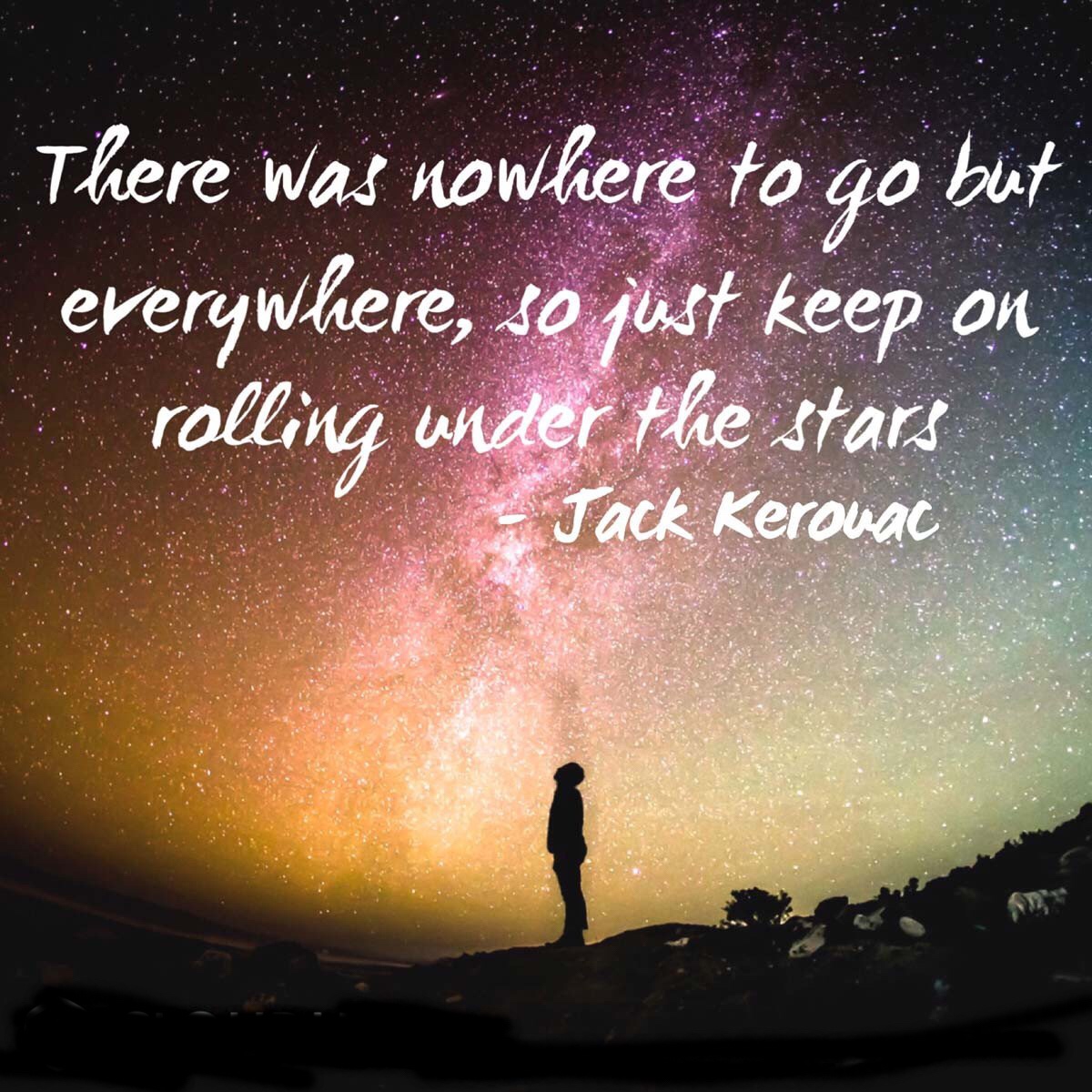
7CD31664-E73F-4B6B-B168-4291D78B28DBWandering may well be a spiritual discipline. Many years ago, young Annie Morgan sang about it as she wandered in the hills and hollows of Appalachia. . . “I wonder as I wander out under the sky.”*

Wondering while we wander makes wandering a spiritual act. It is not merely aimless meandering. Nor is it rolling on pointlessly as if there is really nowhere to go. It is not wandering around in circles because we are hopelessly lost. It is more like a contemplative journey of discovery. J.R.R. Tolkien observed a truth about wandering. He said, “Not all those who wander are lost.”

We wander, most certainly, but might there be a purpose in our wandering? Suppose our wandering becomes a joy to us. Suppose we learn and grow as we wander about. Suppose our wandering leads us to a deeper relationship with God. Suppose in our wandering we do some wondering, looking up into the sky for new light and sparkling new thoughts that change our lives forever.

So I wonder . . . How are the stars set in their places? Apart from the certainties of astronomy, of course.

I wonder . . . Why does the sun rise every day, and then set in a wondrously painted sky at dusk making way for the rising of a luminous moon? Apart from the scientific explanation, of course.

Wondering is not about science at all. It is about discovery of beauty in most unlikely places. Perhaps it is about practicing mindfulness atop a majestic mountaintop, or contemplating life on the edge of the sea, or meditating in a forest filled with all manner of living things. It is about the exploration of the heart to know its deepest desires and longings. It is about looking into the soul, and there finding both the intense pain and the tender healing that completes a life.

A well known Christmas carol, “I Wonder as I Wander”* was first sung by young Annie Morgan, a destitute girl in Appalachian North Carolina. At a Christian fundraising meeting, Annie stepped out on the edge of the platform and stood before a crowd of people. Although she wore rags, unwashed and in shreds, she stood proudly. It is said that she smiled as she sang, “smiled rather sadly, and sang only a single line of a song the people had never heard.”

I wonder as I wander out under the sky . . .

I imagine that Annie, a girl living in poverty, wondered about many things as she wandered through the Appalachian mountains. She probably wondered about the stars in the sky, the rising and setting of the sun, the brilliant moon that lit the path before her in the night. I imagine she wondered about God and about the ways God might be present with her. I imagine she wondered about herself and about what would become of her. Like her, we wander through this life, mostly alone.

As this is my very own blog, I can freely change tenses to say with great certainty that, as I have wandered through many years, I have grown by myself, but not alone. For as I wandered, I learned to wonder.

So I highly recommend wandering for the sole purpose of wondering. Our wondering might well reveal the longing in our hearts. Our wondering might lay bare the pain hidden in our souls, but also show us the balm of healing that dwells there. Our wondering might open up a place within us to hold God, all of God, more completely than ever before.

I don’t know about you, but I plan to do even more wandering. And on the journey, I will pour myself into some holy wondering. Who knows what I might discover!


* “I Wonder as I Wander” is a Christian folk hymn, typically performed as a Christmas carol, written by American folklorist and singer John Jacob Niles. The hymn has its origins in a song fragment collected by Niles on July 16, 1933.

While in the town of Murphy in Appalachian North Carolina, Niles attended a fundraising meeting held by group of evangelicals. In his unpublished autobiography, he wrote of hearing the song:

“A girl had stepped out to the edge of the little platform and began to sing. Her clothes were unbelievable dirty and ragged, and she, too, was unwashed. Her ash-blond hair hung down in long skeins…. But, best of all, she was beautiful, and in her untutored way, she could sing. She smiled as she sang, smiled rather sadly, and sang only a single line of a song.”

The girl, named Annie Morgan, repeated the fragment seven times in exchange for a quarter per performance, and Niles left with “three lines of verse, a garbled fragment of melodic material. In various accounts of this story, Niles hears between one and three lines of the song.

Based on this fragment, Niles composed the version of “I Wonder as I Wander” that is known today . . . His composition was completed on October 4, 1933. Niles first performed the song on December 19, 1933, at the John C. Campbell Folk School in Brasstown, North Carolina. It was originally published in Songs of the Hill Folk in 1934.