Stunning photo of an Oklahoma ranch provided by my friend, Molly Hunt
I was amazed today by this breathtaking image of a ranch in Oklahoma. Sometimes it doesn’t take a lot to amaze me, but today the object of amazement for me is quite stunning. It’s art, an image to contemplate and appreciate, an image in which one could find meaning. Finding meaning in it is exactly what happened for me.
I see a play of lightness and darkness and I see that to experience light is also to experience darkness. We cannot really embrace one without the other. The beauty of one enhances the beauty of the other. Light and darkness are inseparable. I have always been intrigued by the wisdom of this thought written by Gregory Maguire, “The eye is always caught by light, but shadows have more to say.” I find such truth in these words, and they are illustrated by the shadows — the times of darkness — in my life.
Oh, the stories I could tell about the many times when my reality has been lightness and darkness together. Both juxtaposed and moving, blending and coalescing, always showing me a kind of dance, a holy movement that makes both appear beautiful. But this “light and darkness together”thing came to me late in life. Emotional and spiritual maturity offered me this important insight that both darkness and light are in me and around me simultaneously. I experience them both together.
I also remember the past when I feared the darkness, wanting always to be in the middle of the light of things. During my illness and long hospitalization in 2014, I hated the nights. I had come to believe over the years that in hospitals, bad things happen at night. That thought was cemented in my mind when I was a hospital chaplain. In thinking of the many nights when I was on call, what I recall most were dark crises that happened at night — deaths, terrible accidents in the ER, patients on the psych unit having meltdowns.
What I’m recalling today is one particular night in the hospital. I was so sick for so long and so lonely at night. This particular night remains in my nightmares. It was actually in the middle of the night when I experienced an excruciating pain in my kidney area. I almost screamed in pain, but tried to stifle myself. The pain continued for several minutes, long enough that I felt as if I would pass out. I called for the nurse, who could hear panic in my voice and came immediately. The doctor followed within minutes. By that time, I had been given pain and anxiety medications, so I was in a kind of twilight. I knew that the room was now full of people doing things, but I had no idea what sort of things they were doing. The ultrasound people came and soon after that, the crisis team came to get me. I was moved to a hard stretcher and was quickly transported to . . . somewhere for some kind of procedure.
The only words I really understood were, “Call her husband and tell him to get here immediately!” Not such a calming message to hear, but in a medication-induced twilight, it really didn’t matter. The crisis team moved me into the inner sanctum of the hospital. They moved me through the cold halls so quickly that the wind felt cold and the ceilings of the corridors were a blur, one minute bright lights above, the next corridor completely dark. The speed of the ride made the corridors look as if they were one seamless movement of light and dark.
One repaired internal bleed later, the pain was eased and I was comfortable, back in my familiar hospital room full of cards and flowers, and with late night television still on. Obviously, I survived the darkness and lightness of my transport and the repair of my bleed. And I still survive, every day, the darkness and lightness that is my life. I did not know that night what I have learned since: that darkness and light always exist together.
Darkness and Light: Together
To be certain, I have experienced darknesses that seemed to smother me completely and leave me with only the darkest dark. I have felt the unrelenting darkness of the soul at times. My spirit has cohabited with the deepest darkness in life that seemed never-ending, with not a single source of light anywhere.
Thankfully, the great Teacher has taught me to see the darkness and the light all at once, moving together through my life. I have learned that light is almost always a welcomed force, but it is in the darkness that I find the most life-changing, cherished moments. in myself. The darkness is the place where my soul sees itself, where my spirit entertains its longings and urges and dreams. The darkness is where my heart can break into a million pieces in mourning and lament. In those dark moments, I can see the dance, the slow and soothing rhythms that enfold me in both — darkness and light — because the two exist together. Thanks be to God.
Darkness was and darkness was good. As with light. Light and darkness dancing together, born together, Born of each other, neither preceding, neither following, Both fully being, in joyful rhythm.
I have taken many trails throughout my life and I imagine that you have as well. It’s one of the things all of us have in common. The trails we take can sometimes lead us to places unknown. Not just places on a map, but places in the soul. Our more difficult trails can push us to our limits, mostly the limits of the soul at its depth. Sometimes, today maybe, my soul is in the depths of unknowing.
What does that sentence even mean? My soul is in the depths of unknowing? If I don’t know what that means, how can I possibly talk about it with you? I can try!
I’ll try. I’ll search for words that explain how I feel, how my soul feels and what it means — the depth of unknowing.
These days I sense an unease in my soul, in its depths. I have named it depression. I have tried in vain to make an appointment with my therapist. Isn’t that what people do when they are depressed? Anyway, I did that, but cannot see her until the end of July. So I determined that I had to become my own therapist. In doing that, I decided to search myself more deeply. I determined that perhaps what I feel isn’t depression after all. Instead, what I feel may be the depth of unknowing.
For me that means chasing away the unknowing, getting rid of it because I want to know when I will feel stronger physically, or when I will see my grandchildren, or how I will handle my emotional fragility, or where I will live for the rest of my life. Just to name a few things I need to know.
And yet, the depth of the soul’s unknowing may well be exactly where my soul begins to fully know. The trails I take while inside my soul’s depths contain lessons and treasures and wisdom. The trails bend and wind leading to an unknown path that opens its way for me. I follow it willingly, blindly, yet for some reason, expectantly. The trails are most surely my depression, their unknown, perilous way distressing me as I walk. Jagged rocks on the trails, vines creeping their way onto my path, thorns, bristles and barbs — boulders sometimes — all to remind me of the hard path I walk and the heavy load I carry.
The trails I walk may be no more ominous than yours. We all walk them and we all carry burdens on the way. You and I walk no easy trails. There is “no easy walk to freedom,” the song reminds us. Truth! The trails I walk, and your trails, are many and winding, hard and confusing. The obstacles overwhelm. I suppose this describes my depression as well as any words could, and it is precisely that unease in my soul’s depths that has come to me in these days.
The difficult thing about soul-deep depression is its dogged persistence. That kind of depression has staying power and it sits in the soul, creating that terrible sense of the soul’s unknowing. It has the power to convince me that I will never know the things I want to know. Mostly, I want to know destination. Where am I headed? What jagged rocks and prickly thorns will injure me along the way? And will I survive my injuries?
There lies the depth of depression. It lies in the desire, the need, to know. We need to know the unknown — where will the trails take us and what formidable obstacles will stop us. Now understand this, if I had answers, I would have given them to you several hundred words ago. I have no answers of my own, but I do have a nugget of wisdom written by author Angie Weiland-Crosby.
Some trails defy definition, longing only for the soul.
Angie Weiland-Crosby
There may be something in her words. If the trails defy our attempts to define them or to know them, perhaps we can find comfort knowing that the trails long only for our soul. The trails only want us to bare our souls along the way and to open them up to the new. The trails are meant for our good, for our spiritual maturing. And as for another comfort, the God we know has seen and known the trails before us. However you see and know God, you can rest in the knowledge that God has some hand in the work of the soul. God knows about the trails we take.
Haven’t I commanded you? Strength! Courage! Don’t be timid. Don’t get discouraged. God, your God, is with you every step you take.”
Joshua 1:9 (The Message Bible)
When all is said and done, I believe the trails I take are necessary ones. In a way, perhaps the trails I take are sacred ones, meant for opening up my soul to its depths where transformation can occur. No, God does not lay out my every trail or remove its thorns and rocks. The trails I take are strewn with rocks meant for me, thorns that pierce just enough to get my soul’s attention. I believe that. And I believe that there is for me a way to trust God wholly. My personal translation of Proverbs 3:5-6 gives me a tiny inkling of hope even when depression ravages my soul.
Trust in whoever you believe God to be in your life. Trust God with all your heart, and don’t rely only on what you understand. In all the twists and turns in your life, perceive this God as one who offers a depth of mercy, A God who sees and knows the trails you walk. And be assured, know deeply in your soul that God will direct your paths.
I want to share with you a video of a beautiful, meditative song entitled, “Depth of Mercy,” performed by students of Fountainview Academy, a Christian high school based in southern British Columbia, Canada. I also share this because of where it is filmed — a beautiful wooded area with various trails. Whatever trail the students took to arrive at their destination seemed a treacherous pathway to me, and even more treacherous, the place where they stood to play and sing.
They were on top of a magnificent ridge, but way too close to the edge for my comfort. At the end, as they sang, “Depth of mercy, can there be mercy still reserved for me?” The image pans across them to the jagged edge and then reveals a very deep and ominous gorge. Panning even farther across, you will see a most beautiful portrayal of nature, one that stirs the senses and reminds us of the depth of mercy our God reserves for us. I hope the video is meaningful to you.
There was a time when I believed that I was invincible, with all the time in the world. Lately, though, I have thought a lot about how quickly time passes and about how I tend to constantly say, “I don’t have time.” I have also been thinking about healing. The reason for my healing thoughts could well be because at least two parts of my body reallyneed physical healing, and soon. I don’t have time to be incapacitated, or so I believe. I don’t have time for pain and I wonder if my two places of physical pain were of my own making. For instance, my wrist sprain — now an orangey ochre color from my knuckles to halfway up my elbow — that the doctor says will heal in 6 to 10 weeks is taking way too long to mend. 6 to 10 weeks is entirely unacceptable! Was my ungraceful fall in the kitchen due to my carelessness or my lack of mindfulness?
And then there’s the terribly painful throat invasion, allegedly identified as a cricopharyngeal spasm, that feels like choking with a large object stuck in my throat while something is tightening around my neck. Direct from Healthline.com: “Anxiety about the condition can aggravate your symptoms.”
Aha! Anxiety! Therein may be the source of many ailments. That, and a lack of rest, relaxation, quietness, peacefulness or mindfulness, all of which are highly touted methods of natural healing. Healing of the body, yes, but also the critically important healing of my heart, my mind, my soul and my spirit — emotional and spiritual healing. That healing is often harder than physical healing.
So I turned my thoughts, while suffering incessant physical pain, on the subject of emotional and spiritual healing. My thoughts raised the question of what exactly is the difference between the soul and the spirit, and how in the world would I heal there.
Here’s my attempt at an answer. Most of us would agree that we consist of body, soul and spirit. In fact, the Bible affirms the existence of all three:
May your whole spirit, soul and body be preserved blameless at the coming of our Lord Jesus. (I Thessalonians 5:23).
Our physical bodies are fairly evident to us, but our souls and spirits are less distinguishable. In the preceding scripture passage, the Greek word for soul is psuche (ψυχή), or as we might call it, “psyche.” This word “soul” implies our mind, our will and desires as evidenced by our personal preferences, choices, and emotional responses to life’s situations. Our soul is reflected in our personality. Our soul is our life.
“Spirit” is a completely different word. The Greek word for spirit is pneuma (πνεύμα). It refers to the part of us that connects with God and receives the breath of life from the Holy Spirit (Άγιο πνεύμα). Our spirit is our breath, the breath that animates and enlivens us from deep within. I like the way Theologian David Galston explains it:
The soul is life, and the Greek word is psyche. The spirit is breath, and the Greek word is pneuma. Natural confusion exists between the [meaning of the] spirit and the soul since both words, in their roots, mean breath. But for the Greeks, there were two kinds of breath: the kind necessary for life, the psyche, and the kind necessary for [our very breath], the pneuma. In modern English, we might distinguish the two as life and energy.
I often ask my clients, mentees and friends this question: How is your heart? They usually have an understanding of how their heart is and why. But ask these questions — How is your soul? How is your spirit? — and the answers don’t come as easily. I’m not sure exactly why, but I think that, for myself, it is that I am able to more easily know my heart. I am more in touch with it. On the many times throughout my life when I was brokenhearted, I knew how my heart reacted and why. When I am sorrowful, happy, excited, surprised or feel many other emotions, I can place my hand over my heart and feel is as if I have literally touched it, that my heart has told me what emotion is there.
As for my soul and my spirit, well, they are deeper in me. In the innermost places of me, my soul mourns and celebrates and holds all manner of emotions. In my innermost parts, my spirit lies quietly within me always waiting for the brush of Spirit wings, waiting in stillness for the breath that animates and enlivens and ennobles. There was a time when I would always find time for the healing my soul and spirit needed.
So in the dense forrest of all of the 700+ words I just wrote, what is the lesson? What is the message from God we need to hear? Believe it or not, it’s not complicated. Isn’t it just like God to send us an uncomplicated message that we immediately make complicated? God’s bottom line here is easy, simple, uncomplicated: “Guard your heart, your soul, your spirit . . . all that is within you.
From Joshua Now, vigilantly guard your souls: Love God, your God.
From Deuteronomy Keep your soul diligently, so that you do not forget the things which your eyes have seen and they do not depart from your heart all the days of your life.
From Proverbs Above all, guard your heart with all diligence; for from it flow the wellsprings of life.
From 1 Thessalonians And the God of peace sanctify you wholly, and may your spirit and soul and body be preserved complete, without blame, at the coming of our Lord Jesus Christ.
And that’s it. There was a time when I would write 700 more words to tell you specifically how to do that. But today, I am not going to tell you how to heal. The ways are individually unique and the paths are many. So I will leave you with just one path that you may choose to follow: the path that leads you deep within yourself to your sacred, quiet place and then implores you to listen for God’s whisper and wait for the breeze of the Spirit. Where? In a beautiful, peaceful place, under a starlit sky, in a quiet filled with sounds of music.
In these many months of pandemic, experiencing loss and lostness, loneliness and isolation, mourning and tears, may you find comfort in the words of poet, William Wadsworth, here turned into beautiful music by Elaine Hagenberg.
Though nothing can bring back the hour Of splendour in the grass, of glory in the flower; We will grieve not, rather find Strength in what remains behind.
Complete text of anthem:
There was a time when meadow, grove, and stream, The earth, and every common sight, To me did seem Apparell’d in celestial light, The glory of a dream.
The rainbow comes and goes, And lovely is the rose; The moon doth with delight Look round her when the heavens are bare; Waters on a starry night Are beautiful and fair; The sunshine is a glorious birth; But yet I know, where’er I go, That there hath pass’d away a glory from the earth.
Though nothing can bring back the hour Of splendour in the grass, of glory in the flower; We will grieve not, rather find Strength in what remains behind.
I wonder if you would be willing to stop what you’re doing right now and spend a quiet moment with me, just listening? Your time might well be a needed time for you and for your soul.
There is always so much to listen to — traffic, sirens, video game sounds, annoying household noise like the washing machine/dryer, food processor, mixer, fans, buzzers and alarms and the awful sound of the disposal trying to crush that inadvertent chicken bone. These, of course, are not our favorite sounds, but they are the myriad sounds and noises we hear in a typical day.
There are sweeter sounds, too, like the sound of a gentle, falling rain or the sound of rain when it hits hard on the roof; the sound of a gusty breeze as it rustles the leaves on a tree; the sound of a flowing stream, a rolling river and constant, ever-rushing ocean sounds; the flutter of a hummingbird’s wings; the sound of cicadas on a Southern summer night; the sound of a child’s laughter; the sweet, peaceful sound of a purring kitten; and birdsong, always birdsong.
Of course, listening as pure joy is listening to music — quiet music, lyrical melodies, rhythms that slow the pulse, the sound of a bow moving across a cello’s strings, the mesmerizing sound of a harp, the velvet sound of voices in harmony or the enthralling sound of a symphony orchestra.
Sounds fill the space that surrounds us, all the time. What is rarer for us is to hear the sound of silence. Some of us fear the silence or dread silent moments. Others of us avoid it at all costs because the silence tends to bring up whatever we are afraid to hear. So the noise that enfolds us fills the place that might otherwise hear the sighs of the soul — its cries and laments, its laughter, its sound of contentedness. It seems to me that this is the place we long to be, in the soul’s sound chamber where whatever we hear — if we’re listening carefully — is the song of the soul that tells us who we are and why we are.
There is a poem that many of you will remember (if you’re old enough) as a Simon and Garfunkel song from the 1960s. The poem was written by Paul Simon and it presents a frightening picture of the modern world doomed by the lack of spirituality and the people’s aversion to the true meaning of life. It is not so different in these days that spirituality and life meaning can be elusive, no matter how hard we may search for it and yearn for it.
The poem, entitledThe Sound of Silence, is written by the voice of a visionary asking people to be serious about the true meaning of life. The poem’s message is that people are moving further and further away from true happiness because they have ignored life’s true meaning. They debate and quarrel about worthless things. They listen to or watch meaningless things. The poet writes that the people “speak and hear without listening. Like we often do?
Throughout its five stanzas, the poem presents the conflict between spiritual and material values. The poetic persona is a person of vision who warns against the lack of spiritual seriousness. The poem begins with an address by the poet persona to the darkness, saying that he has come to talk with the darkness. When he awakens, he says that the vision still remains as the sound of silence.
Some of us fear the silence or dread silent moments. Others avoid it at all costs because the silence tends to bring up whatever they are afraid to hear. So the noise that enfolds us fills the place that might otherwise hear the sighs of the soul — its cries and laments, its laughter, its sounds of contentedness. It seems to me that this is the place we long to be, in the soul’s sound chamber where whatever we hear — if we’re listening carefully — is the song of the soul that tells us who we are and why we are.
The words of the poet . . .
And in the naked light, I saw Ten thousand people, maybe more People talking without speaking People hearing without listening People writing songs that voices never share And no one dared Disturb the sound of silence
And the people bowed and prayed To the neon god they made And the sign flashed out its warning In the words that it was forming And the sign said, “The words of the prophets are written on the subway walls And tenement halls” And whispered in the sound of silence
All of that trivia about the poem certainly moved us a little farther away from my point, which is that most, if not all, of us have a deep emotional and spiritual need to listen to our souls, really listen. Even if we don’t know it, we long to hear what the depth of our being wants to say to us. We want to find our true selves, a quest only our souls can accomplish. If we are honest, we would say that we want to do the soulwork that leads us out of the darkness of our own making and into a place of light.
When we do carve out a sacred pause, when we wait in the darkness of that silent space, and when we open ourselves to deep listening, we will likely hear God’s whisper. We will probably move slowly out of darkness and realize the promise that as “God’s own people” we will “proclaim the mighty acts of God who called us out of darkness into his marvelous light.” (1 Peter 2:9)
This is the place we long to be, in the soul’s sound chamber where whatever we hear — if we’re listening carefully — is the song of the soul that tells us who we are and why we are.
— Rev. Kathy Manis Findley
Hearing God’s voice moves us to a deeper experience of life, but hearing our soul’s sighs may take us deeper still, because we open ourselves to self-knowing. It’s not a surface knowing. It is a deep knowing of who it is that lives in our skin. Without hearing the sighs our souls are making, we might never enter into fullness of self. I suggest that only the fullness of who we are can stand before the God who knows us even better than we know ourselves.
In my own experience, I think that perhaps I cannot be in deep communion with God if I try to face God as my superficial self. Perhaps God seeks relationship with my soul, my deepest place of being. To find and define my soul for myself, to know myself fully, I must find the sound of silence and sit with it patiently and expectantly. Maybe that is the essence of spirituality.
So there are a few lessons in these words and these are the obvious lessons:
Limit the harsh sounds in your life.
Surround yourself with tender, gentle sounds.
Make sacred space and holy time to listen deeply for the sounds that speak to your soul.
Listen for God’s whispers. They are important to hear.
Always consider what is, for you, the true meaning of life.
Listen to your soul — its sighs, its cries, its songs.
Andwho knows? If you linger for a while in your sacred listening space, you might just find the very essence of grace by hearing what your soul whispers to you. It will be the most beautiful sound of all.
— Rev.Kathy Manis Findley
One day I listened — really listened. And I heard the whisper of God and the song of my soul. Thanks be to God.
I invite you to hear the poem, “The Sound of Silence,” through music. It can rightly be said that no group or person could ever sing this as well as Simon and Garfunkel, but I thought you might enjoy it covered by a very popular contemporary a cappella group, Pentatonix.
Before we begin Advent’s journey on November 29th, I think we need start a few days early to create some peace for our souls — enough peace to open ourselves to Advent’s life-giving message. For you see, the Advent journey always has a particularand unique message for each of us. The message weaves through our spirit as Advent days move on, gently sparking tiny lights is us that open us up to beginning again, to dreaming again. Advent nurtures and caresses us until we can dream new dreams.
Since we saw Advent past, we have languished in the chaos of 2020. Held in bondage by a terrible pandemic, lamenting racial unrest and the violence that caused it, watching political rancor and division. This was the year of “I can’t breathe” and also the year when we found that we could not breathe. Nor could we dream, because the future was unknowable — not at all conducive to dreaming.
And yet, there remains this good word — Psalm 126:1:
When the Lord restored the fortunes of Zion, we were like those who dream.
What does it look like to live as those who dream? The prophets, the psalmists, Mary, Elizabeth, Joseph, Simeon, Anna, the shepherds and the Magi—they were all dreamers. They received, discovered, and responded to God’s dreams for the world. In Advent’s journey, we travel step by step into the mystery and awe of God’s dreams and we pray that they will shape our reality.
Advent is for the dreamers in all of us — those who dream of a deeper connection with God and those who dream of a better world. Advent is for those who dream of comfort and also for those who have given up on their dreams. Advent is for those whose dreams have been crushed and for those who wisely teach us that dreams take soul time.
In this approaching Advent, perhaps we will dream alongside prophets and angels, Mary and the Magi. Perhaps we will seek and know God’s dreams for our world.
Will you pray with me?
In this Advent of expectation, God, draw us nearer to grace, that our songs of worship might echo in the hills and valleys of this journey and also through our lives.
In this Advent of expectation, grant us a sense of peace and silence and steady calm, that the hope within our souls might be the dreams we dream, the songs we sing, and the melody of our lives.
In this Advent of expectation, grant us a vision of a shimmering star in the night sky, that the path we follow might lead us from a stable to a glimpse of eternity. Amen.
The time for Donald Trump’s airtime is over! In my life, I have no available airtime for him, and I wish the media would follow my example. I’ve heard enough of his rants and tweets. I’ve heard enough of his incendiary speech. I’ve heard enough of his indiscriminate name-calling. I’ve heard enough of his lying. I’ve heard more than enough of his disrespectful, hate-filled, divisive rhetoric. More than enough!
My soul will no longer give Donald Trump airtime. Why? Because often my responses to hearing him were anger, disgust, self righteousness and even hate. And those emotions darken my soul. Those emotions do not belong in my soul at all, because they have a way of displacing love, compassion, gentleness, peace, hope, light and grace — all the good emotions that God plants in the soul through Spirit breath.
I think of the beloved hymn . . .
Holy Spirit, breathe on me until my heart is clean. Let sunshine fill my inmost parts with not a cloud between.
Breathe on me, breathe on me, Holy Spirit, breathe on me; Take Thou my heart, cleanse every part, Holy Spirit breathe on me.
— Words by Edwin Hatch, Music by B.B. McKinney
In these days of harmful politics, racial injustice, coronavirus fear and isolation, I need a Spirit-cleansing of my heart and soul. God has been ready to begin the cleansing for a while now. God has heard my repentant prayers admitting anger and hatred. God has waited patiently for me to embrace the stillness that can begin to heal my soul.
Stillness! Stillness longing for healing. Stillness whispering words of repentance. Stillness yearning for calm. Stillness seeking peace. Stillness waiting in solitude for the presence of the Healer of the Soul.
I’m going there — to that place of solitude where one can breathe slower, sigh deeper, listen attentively to the whisper of God and the breath of the Spirit. I’m going to solitude’s “luminous warmth” as John O’Donohue’s poem in which he describes the soul as the divine space.
There is a lantern in the soul, which makes your solitude luminous. Solitude need not remain lonely. It can awaken to its luminous warmth.
The soul redeems and transfigures everything because the soul is the divine space.
When you inhabit your solitude fully and experience its outer extremes of isolation and abandonment, you will find that, at its heart, there is neither loneliness nor emptiness but intimacy and shelter.
― John O’Donohue, Anam Cara: A Book of Celtic Wisdom
Right now, in the midst of the disheartening mood of the year 2020, I am entering the solitude I desperately need so that I can experience my soul as the divine space it is.
Politicians, continue your rancor in loud and powerful voice! I will not hear you from my place of solitude, from my soul’s divine space. And as for you, Mr. Trump, I have no further airtime for you. I refuse to sit in front of my television for another minute, anticipating — hoping — that you will finally say or do something appropriate, beneficial, worthwhile, productive, compassionate or kind.
Instead, I will change the channel to more soul-healing television. In fact, I will leave the television altogether and go to a better place, higher ground where peace and silence and reverence and awe can begin the holy work of healing my soul. I am taking a sacred pause from my life that has been so anxious and worried and isolated. I will wait there in that sacred space where my “soul redeems and transfigures everything.” Thanks be to God.
Two hundred and three pills! Twenty-eight injections! Fourteen inhalations and fourteen nasal sprays!
Every week!
But I am most focused on the 203 pills — every week! Presumably it takes that many to keep my body from rejecting my kidney and keep me otherwise healthy.
203 pills! Insignificant when I explore the state of my soul — what lies inside there, what its longings are, what has become of its dreams and, most of all, whether or not I am carefully and gently tending to it. A healthy body is important, of course, but I have been thinking more and more about how to keep my soul healthy. In some ways, that’s harder. And harder to explain.
So rather than launching into a chorus of my own words about how I might care for my soul, I looked to the words of my sisters —near and far, from the past and the present. There I found the depths of wisdom I needed on this day. So clear and true it is that so many women possess an extraordinary depth of wisdom. Their voices speak their truth, and sometimes ours. Their voices call us to stand taller and to rise higher. They call us to dream and to reach into our souls to find our dreams. These wise and wonderful women invite us to care for our souls. So hear their voices and listen for whispers that give strength to your soul.
Get in touch with and resurrect the free spirit deep inside me. Being one with the spirit allowed me to soar above my everyday reality. I marveled at the beauty of all life and savored the power and possibilities of my imagination. — Maria Nhambu
Of all the paths you take, follow only those where your heart is wide open, mind enriched and your soul learns to dance. — Nikki Rowe
A wise woman wishes to be no one’s enemy; a wise woman refuses to be anyone’s victim. — Maya Angelou
We were willing to explore and be surprised. Willing to trust that there was beauty out there and love and joy. Ready to have our hearts touched and our souls hugged. — Meara O’Hara
You will never see me surrender, never see me cry, but you will often see me walk away. Turn around and just leave, without looking back. — Charlotte Eriksson
Big spirits don’t fit in small spaces.Our energy is built for open fields and wide places, room to breathe — room to grow.Room to live authentically and room to roam. — Nikki Rowe
I am homesick for a place where silence is the only language, love is the only religion, and freedom is not something to be fought for…. — Samiha Totanji
When we discover who we are We will be free — Mimi Novic
I never said it was easy to find your place in this world, but I’m coming to the conclusion that if you seek to please others, you will forever be changing because you will never be yourself, only fragments of someone you could be. You need to belong to yourself, and let others belong to themselves too. You need to be free. — Charlotte Eriksson
We have not been abandoned. We have, perhaps, in that leaving been given the gift of ourselves in a new, deeper, and more lasting way. ― Macrina Wiederkehr
If you’re always trying to be normal you will never know how amazing you can be. — Maya Angelou
I know that no one is my judge. I live according to my own conscience and value discernment which is governed by Holy Spirit. I know my intentions and I walk my path with a clear conscience. — Mishi McCoy
The truth is, in order to heal we need to tell our stories and have them witnessed…The story itself becomes a vessel that holds us up, that sustains, that allows us to order our jumbled experiences into meaning. As I told my stories of fear, awakening, struggle, and transformation and had them received, heard, and validated by other women, I found healing. — Sue Monk Kidd
You can’t put a leash on me. I’m unleashable! — Tiffany Winfree
All too often we bemoan our imperfections rather than embrace them as part of the process in which we are brought to God. Cherished emptiness gives God space in which to work. We are pure capacity for God. Let us not, then, take our littleness lightly. It is a wonderful grace. It is a gift to receive. At the same time, let us not get trapped in the confines of our littleness, but keep pushing on to claim our greatness. Remind yourself often, “I am pure capacity for God; I can be more.” ― Macrina Wiederkehr
you got to figure out which end of the needle you’re gon be, the one that’s fastened to the thread or the end that pierces the cloth. — Sue Monk Kidd
Steal my wild heart, but do not ask me to live under an umbrella when I like being soaked by the rain. — Jacqueline Simon Gunn
Honeybees depend not only on physical contact with the colony, but also require it’s social companionship and support. Isolate a honeybee from her sisters and she will soon die. — Sue Monk Kidd
I’ve never been a woman who will settle to fit in, i’d always have rathered find a little world all on my own. If people come they come and if they go they go, but for me staying authentic to my soul’s purpose is all i’ll ever know. — Nikki Rowe
You may write me down in history With your bitter, twisted lies, You may trod me in the very dirt But still, like dust, I’ll rise. — Maya Angelou
You have to find a mother inside yourself. We all do. Even if we already have a mother, we still have to find this part of ourselves inside. — Sue Monk Kidd
Do you want to paint your life using two colors (good and bad) or do you want to paint the best piece of your life with colors beyond your wildest imagination? — Helen Edwards
There is no place so awake and alive as the edge of becoming. But more than that, birthing the kind of woman who can authentically say, “My soul is my own,” and then embody it in her life, her spirituality, and her community is worth the risk and hardship. — Sue Monk Kidd
It’s an unquietness I feel deep inside. It’s not about being extraordinary, you see. It’s not about standing out. It’s simply about shedding all that’s false. And believing with everything I have that you can too. — Jacqueline Simon Gunn
When it’s time to die, go ahead and die, and when it’s time to live, live. Don’t sort-of-maybe live, but live like you’re going all out, like you’re not afraid. — Sue Monk Kidd
Let your life reflect the faith you have in God. Fear nothing and pray about everything. Be strong, trust God’s word, and trust the process. — Germany Kent
The cage wasn’t insignificant in the shaping of my wings, stillness is an experience only the deep souls can go. A quiet solitude in the midst of it all. A getting to know yourself once more. — Nikki Rowe
O God, help me to believe the truth about myself, no matter how beautiful it is. ― Macrina Wiederkehr
You’ve got to trust yourself. Be gentle with yourself. Listen to yourself.You’re the only person who can get you through this now. You’re the only one who can survive your story, the only one who can write your future. All you’ve got to do, when you’re ready, is stand up, {and begin again.}. — Tessa Shaffer
Journal became a sanctuary where I could pour out in honesty my pain and joy. It recorded my footsteps and helped me understand where I was standing, where I had been, and even where God pointed. — Sue Monk Kidd
Nothing has transformed my life more than realizing that it’s a waste of time to evaluate my worthiness by weighing the reaction of the people in the stands. — Brené Brown
Be who God meant you to be and you will set the world on fire! — St. Catherine of Siena
That’s the sacred intent of life, of God — to move us continuously toward growth, toward recovering all that is lost and orphaned within us and restoring the divine image imprinted on our soul. — Sue Monk Kidd
The seasons of my heart change like the seasons of the fields. There are seasons of wonder and hope, seasons of suffering and love, seasons of healing. There are seasons of dying and rising, seasons of faith. ― Macrina Wiederkehr
You only need to lose track of who you are, or who you thought you were supposed to be, so that you end up lying flat on the dirt floor basement of your heart. Do this, Jesus says, and you will live. — Barbara Brown Taylor
I now see how owning our story and loving ourselves through that process is the bravest thing that we will ever do. — Brené Brown
Without the burden of afflictions it is impossible to reach the height of grace. The gift of grace increases as the struggle increases. — St. Rose of Lima
Only when we are brave enough to explore the darkness will we discover the infinite power of our light. — Brené Brown
I have learned things in the dark that I could never have learned in the light, things that have saved my life over and over again … there is only one logical conclusion. I need darkness as much as I need light. — Barbara Brown Taylor
Go forth in peace, for you have followed the good road. Go forth without fear, for he who created you has made you holy, has always protected you, and loves you as a mother. — St. Clare of Assisi
For these wise women, O God, we give you thanks. For their words, so full of grace, we are grateful.
For those we call our sisters, we ask your presence — in their days of light and in their dark nights of the soul.
Heal us, God our Mother, and give us grace for the living of these days. Heal us, God our Father, and give us courage for the living of these days. Heal us, Jesus, and walk beside us as we heal the world just as you urged us to do. Heal us, Spirit, and give us your wind and fire — to live, to stand, to persist — to heal the souls of others as we heal our own souls. Amen.
This blog post is dedicated to the memory of my friend, Sister Macrina Wiederkehr, a wise and wonderful woman who left us this year and is now walking among “trees full of angels.”
This morning, I prayed a prayer of lament. Lament was the only prayer in my spirit. It is difficult to express the deep sorrow I felt yesterday when I learned that no charges were brought against the police who shot six bullets into Breonna Taylor’s body.
Shortly after midnight on March 13, 2020, Louisville police officers used a battering ram to enter the apartment of Breonna Taylor, a 26-year-old emergency medical technician who had dreams of a bright career ahead. She and her boyfriend had settled in to watch a movie in her bedroom on that tragic night. Police came to her door and minutes later, she was fatally shot. Her death sparked months of protests in Louisville.
Yesterday, six months after the fatal shooting — six bullets — a grand jury indicted a former Louisville police officer on Wednesday for wanton endangerment for his actions during the raid. A grand jury delivered the long-awaited answer about whether the officers would be punished. No charges were announced against the other two officers who fired shots, and no one was charged for causing Breonna Taylor’s death.
For me, there was only lament. I imagine that for Breonna’s family, there was the deepest kind of lament. For her mother, lament was the only response she could express as she wept uncontrollably. And, even for the protesters who filled the streets, I believe there was lament.
Theologian Soong-Chan Rah explains in his book, Prophetic Lament, that in the Bible lament is “a liturgical response to the reality of suffering and engages God in the context of pain and suffering.” He goes on to say that it is a way to “express indignation and even outrage about the experience of suffering.” Racism has inflicted incalculable suffering on black people throughout the history of the United States, and in such a context, lament is not only understandable but necessary.
Perhaps white Christians and all people of faith have an opportunity to mourn with those who mourn and to help bear the burden that racism has heaped on black people. (Romans 12:15) — Jemar Tisby, The Color of Compromise
In the end, many people see only the rage, anger, impatience, violence of the protesters. Can we also see their lament for Breonna, as well as for centuries of racially motivated murder — beatings, burnings, lynchings and murder committed by police officers?
People of faith — white people of faith — will we try to understand the rage of our black and brown sisters and brothers? Will we join them in righteous anger? Will we mourn with them? Will we lament when lament fills their souls and overflows in cries for justice?
We must, in the name of our God who created every person in God’s own image!
Last night, I heard an interview with Brittany Packnett Cunningham on MSNBC. Her words were eloquent pleas for justice. She spoke about how persistent and all-encompassing racism is in our country and about the murders and the protests and the political rancor that fuels it. She acknowledged racism’s strong, unrelenting hold on this nation, a hold that is virtually impossible to break. And she said something I have said for a long time, “Racism cannot be reformed. It must be transformed.”
To me that means a transformation of the heart and soul that compels each of us to lament, to comfort, to speak truth in government’s halls of power, to stand openly against any form of racial injustice.
May God make it so.
Will you pray this prayer of lament with me?
O God, who heals our brokenness, Receive our cries of lament and teach us how to mourn with those who mourn. Receive even our angry lament and transform our anger into righteous action. Hear the anguish of every mother assaulted by violence against her child. Hear the angry shouts of young people as shouts of frustration, fear and despair. Grant us the courage to persist in shouting out your demand for justice, for as long as it takes. When deepest suffering causes us to lament, grant us Spirit wind and help us soar. If we resist your call for justice, compel us to holy action. May our soul’s lament stir us to transform injustice, in every place, for every person, whenever racism threatens, for this is your will and our holy mission. Amen.
Are we brave enough to imagine beyond the boundaries of “the real” and then do the hard work of sculpting reality from our dreams?
Walidah Imarisha
I read a wonderful article this morning written by Madisyn Taylor, who wrote about being in a fog. I related immediately, having just taken my immunosuppressant medications that create all manner of “foggy-ness” for me. Tayler defined it as a feeling of being “muddled and unfocused, unsure of which way to turn.” I resonate with that definition, but beyond the physical fogginess of my mind, I experience an occasional fogginess of spirit. Know what I’m talking about? I would guess you do, since all of us fall into a spirit-fog once in a while.
A fog can feel downright eerie. It isn’t straightforward like darkness, yet we may feel like we can’t see where we’re going or where we’ve come from. We feel fear, as real as our fear of the darkness, afraid that if we move, we might run into something hidden in the mists that surround us. If we’re brave enough to move at all, we move slowly, feeling our way and keeping our eyes open for shapes emerging from the eerie haze.
Maybe being brave is what spirit fogginess is about. Spirit-fog is, of course, is a season of involuntary inactivity (perhaps even precipitated by coronavirus isolation). Although you and I much prefer to be able to see where we are going and move unwaveringly in that direction, maybe we can encourage our spirits to see that being in a fog often brings gifts to us — gifts of stillness, of doing absolutely nothing, a respite from forward inertia, a time to gather up our “brave” to move with forward inertia, even moments of finding for our spirits the Spirit of Comfort and Peace. We might find in the mists of fog the sacred pause that our spirit needs — the kind of sacred pause that creates resilience in us, and perseverance, and whatever we need to be brave.
In the fog, we really do need to be brave. When we are hidden in the mist, we may look within and find that the source of our fogginess is inside us — perhaps an emotional issue that needs tending before we can safely move ahead with steady resolve. The fog that engulfs us may simply be teaching us important lessons about how to continue moving forward even if we have been brought to a standstill by circumstances of life.
If we’re brave, we do not have to wait for the fog to lift. If we’re brave enough, we can center ourselves in the haze, wait for guidance and then move — move on into the unknown places on the journey. I have been a long-time fan of the song “Brave” sung by Sara Bareilles, written by Sara Bareilles and Jack Antonoff. “Brave” is on her 2013 album, “The Blessed Unrest.” The song hits me hard with these words, “sometimes the shadow wins.” I know that to be the hard truth, but I also latch onto the rest of this song’s message: I can be brave! I often think that this section of the lyrics calls out directly to me — calling me, urging me on, encouraging me to “show everyone how big my brave is.”
I wanna see you be brave
Everybody’s been there, everybody’s been stared down By the enemy Fallen for the fear and done some disappearing
Bow down to the mighty Don’t run, stop holding your tongue
Maybe there’s a way out of the cage where you live Maybe one of these days you can let the light in
Show me how big your brave is
Say what you wanna say And let the words fall out Honestly
I wanna see you be brave
Spend a few minutes enjoying this Sara Bereilles song and immerse yourself in the thought of how amazingly brave you are.
I have a certain fondness for sparrows and the spiritual stories we have ascribed to them. That my blog is named “God of the Sparrow” is no accident. I have aspired many times in my life to live like the sparrow lives. I wanted my human, adult, mature and seasoned self to know, beyond any doubt, that God is watching over me. I do not live the simple, sparrow-like life I always hoped to live. But my unshakable faith has always told me that the God who watches over my every moment is also the God of the sparrow. I remember well the words written in the Gospel of Matthew . . .
So do not be afraid; you are of more value than many sparrows. — Matthew 10:41 NRSV
Such a comforting passage of Scripture! Yet, its message to us often pales in comparison to all the things that so frighten us. The state of the world that surrounds us in these days seems to have even more power over us than Matthew’s words about our value to God.
How is it that we are valuable to God when God does not act to protect us from all of life’s slings and arrows? Yesterday in my blog post I listed our world’s bad and scary things, so I won’t list them again today. But I will venture a prognosis that many, many people are suffering in many ways in this confusing season. I am one of those suffering people, feeling a bit of hopelessness in these days of racial unrest, coronavirus unsettledness and political divisions.
I heard a moving choral performance this morning. Its text lifted up my helplessness before me and turned it into a prayer so attuned to where I find myself.
God of the sparrow, sing through us Songs of deliverance, songs of peace. Helpless we seek You, God our joy, Quiet our troubles, bid them cease. — Jonathan Cook
I need the sparrow’s God to sing through me. Perhaps you do, too. I need that God-given song because my own music seems to have become quiet, my singing turned to mourning. (Amos 8:10) But this week, I took hold of that mourning. With strong intention, I spent most of one day this week singing my heart out.
You need to know that I had to choose a day when my husband would be away so that I could sing loud, with abandon. Why did he have to be away? That’s a long story, but in a nutshell, my singing is awful these days. Probably my vocal cords have lost some of their youthful elasticity and, on top of that, I did not sing at all for more than a year. Serious illness took my music.
When I (literally) came back from the dead in 2015, I realized that I had lost so many of my former abilities. Singing was one of them. It felt strange to me when I realized I could no longer sing. My former life was filled with song. Since childhood, there was never a choir I did not join, never a solo I did not sing.
Acknowledging my inability to sing was difficult, just as my life after kidney transplant and this coronavirus is difficult. My isolation has been lengthy, most of nine months, and it is taking its toll on my spirit. Prayer has become both a burden and a grace to me. My singing was my prayer for so many years, and I really need my singing in these hard days. I need to sing my praises to God. I need to sing my lamentations. I need to sing like the sparrow who doesn’t worry about her vocal chords. I need to be like the sparrow who sits on her branch — without fear, without worry — because she knows that if she happens to light on a flimsy branch that does not hold her, her wings will lift her.
The end of this story is that I need the God of the sparrow to sing through me once again — to sing through me in shadowy days, in times of trouble, in isolation, in fear, in hopelessness. That’s what God does, after all. In a troubled and despairing soul, God creates music, tucking it into every crevice, filling it with songs that can sing out both mourning and celebration. As an added bonus, I have it on good authority that God also turns mourning into dancing.
You have turned my mourning into dancing; you have taken off my sackcloth so that my soul may praise you and not be silent. O Lord my God, I will give thanks to you forever. Psalm 30 11-12 NRSV
So as you sing, dance to the new rhythms of your soul! Because you can!
Thanks be to God.
Please spend your meditation time today listening to this beautiful song with text written by Jonathan Cook and music by Craig Courtney. The video follows the text.
God of the Sparrow
God of the sparrow, sing through us, Songs of deliverance, songs of peace. Helpless we seek You, God our joy, Quiet our troubles, bid them cease. Alleluia.
God of the sparrow, God of hope, Tenderly guide us, be our song, God of affliction, pain and hurt, Comfort Your children, make us strong. Alleluia, alleluia, alleluia.
God of the sparrow, care for us. Speak in our sorrow, Lord of grief. Sing us Your music, lift our hearts, Pour out Your mercy, send relief.
God, like the sparrow, we abide In Your protection, love and grace. Just as the sparrow in Your care,
There are large scale, widespread forces that can trap thousands of people, even millions. Dachau, Katrina, earthquakes, tsunamis, wildfires, natural disasters all over the world and the Coronavirus of 2020. Enormous, catastrophic events can trap people. COVID19 has literally trapped me inside my home. I have to admit, the isolation has taken a toll on my spirit. No visitors! No visits with friends or family. No trips! No haircuts! I have been trapped at some level since my kidney transplant in November. Just at the March milestone that would have allowed me to break the isolation of the transplant, I was even more fully trapped by the infectiousness of this pervasive, unrelenting virus.
Being trapped for so many months has raised up in me feelings of loneliness, isolation, powerlessness, despair, anxiety, even abandonment. And yet, often there is something very good in the center of something very bad. It has been so for me. Yes, I feel trapped in the pervasive power of the coronavirus, but I also sense the arms of God and the embrace of Spirit hemming me in even further. Such a grace-gift it has been to me, as if God has said, “l am hemming you in, and in this space you will hear me clearer and sense me more fully.”
God’s words were truth. Hemmed in, my mind flourished, my heart leapt and my soul entered spaces of calm. I felt enhanced awareness! Even awakening. I saw nature in a different way and basked in the beauty of the rising sun. The sound of the hummingbirds’ trill and the rapid fluttering of their translucent wings were sounds meant just for me. I began to write and paint, to listen more carefully to God’s voice, to allow my spirit to overflow with Holy Spirit. To my hemmed-in call from God, I was compelled to answer, “Here I am, Lord!” When I finally answered God, my hemmed-in place became Holy Ground — a very good place to be that feels more like a holy mystery than a state of being.
Was this pandemic a good thing for me and for millions of people? Absolutely not! But trapped in its dark cloud, God hemmed me in further in ways I am just now beginning to understand. I can say with all honesty that being hemmed in by God has been grace to me.
If I could even begin to choose a favorite Psalm from among the many that inspire me, I would choose Psalm 139. In its weaving of words, there are many passages that are full of comfort. From childhood, I memorized a lot of Scripture and throughout Psalm 139 I memorized several snippets that I often call to mind. One verse that I did not memorize is verse 5: “You hem me in behind and before, and you lay your hand upon me.”
You have searched me, Lord,
and you know me.
You know when I sit and when I rise;
you perceive my thoughts from afar.
You discern my going out and my lying down;
you are familiar with all my ways.
Before a word is on my tongue
you, Lord, know it completely.
You hem me in behind and before,
and you lay your hand upon me.
— Psalm 139:1-5 NIV
I deplore the coronavirus and what it has done to so many people. I deplore the ways it was able to trap me, physically and emotionally. But the virus, with all its ominous, far-reaching force could not trap me spiritually. That was God’s work — hemming me in so that my spirit could rise to fresh, new heights of spiritual consciousness. Being hemmed in by our Creator has been grace for me in these days of isolation. It has become a transforming sacred pause. For in my hemmed-in space, the Creator helped me create — from my mind, from my heart, from my soul. Thanks be to God.
I think I may have lost my music, and I’m not sure exactly when I lost it, or how. I can probably get away with blaming it on the coronavirus. After all, choirs cannot really sing right now, at least not safely.
The coronavirus has stolen so many things from us all — important things and things that are not so important. For me, one of the stolen things that affects me deeply in my soul is music.
When I hear music, the melodies and rhythms often reach into my soul. Music is my muse. Losing my music is one of my most troubling losses. I know, of course, that I can listen to Pandora or Spotify. Or I can listen to quality music on National Public Radio and find hundreds of concerts on YouTube.
What I am missing most is being inside my church sanctuary listening to the music of the pipe organ and anthems from our choir. Part of it may well be that I’m missing the people who offer their gift of music every week. Part of it is probably nostalgia when I contemplate the decades I spent singing with choirs and other groups. Part of it is missing my many years as a soloist. Part of it is missing my last ministry position as minister of worship at New Millennium Church in Little Rock, Arkansas. Part of it is having to leave my piano when we moved in 2015. Part of it, I am certain, is that I can’t really sing anymore, at least much of the time. After my illness in 2014 and its very long recovery, I lost my voice. This was such a profound loss for my soul.
For some reason, all of this was on my mind this morning when I had a serendipity moment. I received an email with a brief thought for the day. I receive it every day, but today it happened to include a passage of Scripture closely related to my present thoughts. This is what it said:
But now, get me a player of music, and it will come about that while the man is playing, the hand of God will come on me and I will give you the word of God: and they got a player of music, and while the man was playing, the hand of the God was upon him.
— 2 Kings 3:15
Haven’t we all heard someone singing and playing music when we were touched and changed? All creativity and beauty in this life are but a small reflection of the master musician, our Creator. Listen with your heart and be glad.
— John Gaudreau
Music can be our soul’s joy or our heart’s expression. Music can lift us from sorrow’s depths and raise us to higher planes of grace. Music can be our most lavish praise to God. Music can open our spirits and create in us expressions of gladness, even in times of trouble. May God make it so. Amen.
Let me end without any more words, just music. “Listen with your heart and be glad” and hear this beautiful anthem, “Through Love to Light” with text written by Richard Watson Gilder, 1844-1909.
Through love to light! O wonderful the way That leads from darkness to the perfect day; From darkness and from sorrow of the night To morning that comes singing o’er the sea! Through love to light! through light, O God, to Thee, Who art the Love of love, th’ eternal Light of light! Amen.
Struggles abound in this unwelcome COVID19 season we are experiencing. Most of us are touched by this virus in some way. We have struggled with so many life changes. I have watched strugglers of the soul work through the illness, others deal with the suffering and death of a friend or family member, often being unable to be with them at their death. Some parents are struggling with decisions affecting school for their children and teachers fear they will be unable to keep their students (and themselves) safe. Others long to see loved they have not seen in months of social distancing.
My circle of friends and family are feeling short on hope while they experience struggles of the soul. Yet, Herman Melville asserts that “Hope is the struggle of the soul.” I have been wondering what exactly that might mean. Perhaps hope gives us the courage we need to move boldly and full of hope into the place where the soul struggles, moving there with the assurance that the hope that led us there will also lead us to healing.
As I look closer at Melville’s words, I begin to see and understand that hope’s struggle eventually empowers us to break loose from the perishable things we hold on to — our wealth, our home, our “things” like cars, boats, RVs, whatever “things” we cherish. Looking at what this virus could bring, knowing that we are facing real life and death situations, cannot help but move our souls to throw off the things that don’t seem so critical anymore — perishable things we do not need. This thought prompts me to look at two of my favorite passages of Scripture.
For you know that it was not with perishable things such as silver or gold that you were redeemed from the empty way of life handed down to you from your ancestors . . .
— 1 Peter 1:18-19 (New International Version)
When the perishable has been clothed with the imperishable, and the mortal with immortality, then the saying that is written will come true: “Death has been swallowed up in victory.”
— 1 Corinthians 15:54 (New International Version)
How do we get there? How do we get through the soul struggles that can bring us to our knees?
I don’t think there is a well developed plan or a series of definite steps to take. The path, the plan, will be unique to each struggler. But the soul struggles I have felt throughout my life have taught me to place hope where hope must be: in Comforter Spirit who hovers over me with her sheltering wings; in the Christ who lives in and through me guiding me as a good shepherd and empowering me to walk with courage in his footsteps; in the Eternal God who holds before me, always, my own eternity.
This is what is available to you as well as you lean into hope’s struggle of the soul and break loose from things that are not important as you bear witness to your own eternity.
May God make it so.
As you leave these words and move with hope into your soul struggles,
May the God of hope go with you and fill you with all joy and peace as you trust in God, so that you may overflow with hope by the power of the Holy Spirit.
— Romans 15:13 (New International Version)
Amen.
I hope you can spend a few minutes in prayer and contemplation as you watch this beautiful, comforting music video, “Still with Thee,” with text written by Harriet Beecher Stowe.
How long? How long will we have to feel imprisoned by social distancing? How long will we feel this loneliness? How long must we wear masks? How long until my children can safely visit their grandparents? How long until we’re past the danger of catching this virus? How long until life is normal again?
Most people I know had at least one bad day this week. At least three of us had a bad day on the same day, and I was not comforted to learn that two of my close friends suffered on the very same day that brought me suffering. It seems the longer we travel the journey of these distancing days, the more disheartened we become. We are ready to see our families and friends. We are ready to venture out of our secluded place and walk freely and without worry. We are ready to travel, to worship together in the same place and to celebrate with friends that the danger of Covid19 is over.
But it is not over. Not by a long shot. And what seems to be the second wave of the virus brings a second wave of emotion for us — a deep grief that we simply do not know when, or if, our lives will return to the lives we once enjoyed. Some of us can give our grief a name — sadness, anger, confusion, heartbreak, loneliness — maybe a combination of all of these names, and so many others.
Sadly, some people cannot name their grief. They will not! Instead they lash out in a kind of rage that hurts others. Call it domestic violence, child abuse, sexual abuse, interpersonal violation that causes permanent trauma to the soul and spirit. Call it a tragic situation. It happens, in part, to people who refuse to look at their grief and allow it to turn into rage.
Other people who cannot name their grief turn it inward, deep inside themselves. These are the people who are suffering great emotional harm that can last for a lifetime. We can call it trauma, battle fatigue, post traumatic stress injury, etc. Whatever we call it, the grief that people are experiencing as a result of this pandemic seems to be increasing the probability of a widespread mental health crisis.
The COVID-19 virus is not only attacking our physical health; it is also increasing psychological suffering: grief at the loss of loved ones, shock at the loss of jobs, isolation and restrictions on movement, difficult family dynamics, uncertainty and fear for the future. Mental health problems, including depression and anxiety, are some of the greatest causes of misery in our world. — U.N. Secretary-General António Guterres
The more we watch our communities relax social distancing, the more we experience a visceral response that speaks to our fear, disappointment and confusion. I asked my Mayo Clinic doctor yesterday via video chat — “When can I get out?” Hoping beyond hope for an answer that meant release, I listened as he gave a thorough scientific, doctor-like explanation. His primary concern, of course, was my physical outcome if I should be exposed to the virus, but he also spoke about my emotional and social needs. In the end his answer was what I feared it might be: “You must take extreme social distancing precautions, at least until you are one year post transplant.”
That means November for me, provided all goes well with my kidney and with the level of safety in my community. I think my question to my doctor was a common one, “How Long?” Sufferers ask it often. With heartbreaking angst, sufferers in hospital beds ask — “How Long?” — as do persons near death, persons with painful chronic health conditions, persons who wait for mourning to ease, persons who search desperately for work, persons who suffer from unrelenting traumatic stress, persons in a far away place who just long to go home.
“How Long?” is a question of the soul for persons of faith and for persons without faith, for persons who believe in God and for persons who believe there is no God. All persons languish with that question on their lips. People who trust in God have asked the questions in the 13th Psalm for ages, every age with its own sudden catastrophe or its own long, enduring adversity. Every person asks, as did the Psalmist, “How long?”
How long, Lord? Will you forget me forever? How long will you hide your face from me? How long must I wrestle with my thoughts and day after day have sorrow in my heart? — Psalm 13: 1-2 (NIV)
If you have been asking, “How long, O Lord?” during this pandemic, you probably know already that you will not receive easy answers. There simply are no easy answers. The current separations from family and friends are painful. The realities and risks of re-entering life as we once knew it are daunting. The irresponsibility of many people who move about without masks and closer to one another than 6 feet is troubling. The worry we carry about our safety and the safety of those we love is constant. And the heaviness of heart we are feeling is unrelenting.
So yes, you are probably asking God, “How long?”as I am. How in the world do we get to “rejoicing” during such a time as this? In these unprecedented days, it seems much harder to move ourselves all the way through Psalm 13 in order to get to a glorious utterance of praise, a declaration of trust, a rejoicing of heart, and even a song of praise to a God of “unfailing love.” The Psalmist seems to have made it all the way through the questions to a time of rejoicing and singing.
But I trust in your unfailing love; my heart rejoices in your salvation. I will sing the Lord’s praise, for he has been good to me. — Psalm 13:5-6 (NIV)
So ask your questions honestly. God can take whatever questions you ask. Go ahead and ask God, “How long?” But then allow God to restore your weary spirit, to nourish your soul and to make your heart long for something much greater than answers to your questions.
That’s what I want to do. Now if I can just muster up enough energy — and enough faith and hope — to do it.
May God make it so. For me and for you. Amen.
For your quiet time today, I invite you to use this meditative video as your prayer.
I never dance anymore, and that’s a real shame. It’s about losing a part of my soul, really. Letting persnickety circumstances overshadow what my soul loves and desires, maybe even needs. Persnickety circumstances like . . . My back hurts. I’m too old now. I can’t remember how to do it anymore. There’s no room in my living room. It’s just no fun dancing when I’m dancing by myself. But those thoughts describe now! In the past? Well, as you might expect, my past was very different! I lived to dance whether the music was Rock ‘n Roll, Soul, Greek Folk Dancing or Motown. Especially Motown!
If my friends from the past described me, they would most certainly declare that I was a dancing fiend. I think that would be a fairly accurate description. As a young child, I cut my teeth on what I would describe as Big Fat Greek Dances. There was simply no place to be that was as much fun as those Greek dances that could last well past midnight. Did I fall asleep in a chair in a corner as the music filled the hall? Not a chance! When I heard music, I had to dance! Greek dances in big halls or hotel ballrooms included a lot of Greek dancing, which is probably more fun than any dancing known to humankind. But when the band played American music, I waited in my chair, smiling, and waiting for a boy (or a man) to ask me to dance. The men usually came through — favorite uncles, my Godfather, my Godbrother, family friends. It is no exaggeration to say that I traveled far and wide with my Aunt Koula and Uncle John to go to Greek dances — Montgomery, Atlanta, Mobile and, of course, at home in Birmingham.
So that’s my dance-filled childhood. My teenage years were another story altogether! I continued to dance at Greek weddings and other ballroom dances with my friends Suzanne, Frank, Demetra, Xane, Greg, Terry, Sammy and Gussie, to name only a few that come to mind.
Here’s Proof: I’m posing with my best friend, Suzanne . . . as Ancient Greek Goddesses
But my best friend, Suzanne, and I were all about Motown! With Motown, there was no holding back, and we didn’t hold back. We scandalized every Motown venue we could find with our slick and sultry dance moves.
On one day, we might be depicting beautiful and stately Ancient Greek Goddesses, golden laurels in our hair. On another day, you might find us at The Hangout in Panama City dancing to the sounds of Motown.
And that’s how I earned the reputation of being a “dancing fiend.”
Now that I think back on those years, I don’t accept the title “Dancing Fiend!” Especially now that I am remembering the ABBA song . . .
Friday night and the lights are low, looking out for a place to go
Where they play the right music, getting in the swing
You come to look for a king.
Anybody could be that guy
Night is young and the music’s high
With a bit of rock music, everything is fine.
You’re in the mood for a dance, and when you get the chance . . .
You are the dancing queen, young and sweet, only seventeen.
Dancing queen, feel the beat from the tambourine.
You can dance! You can jive!
Having the time of your life
See that girl, watch that scene
Dig in the dancing queen!
With that ABBA inspiration, I declare myself, not a dancing fiend, but (Wait for it!) “The Dancing Queen!”
But that was then and this is now. I don’t dance anymore, and that is beginning to trouble me. What troubles me isn’t really about the dancing. It’s that something that was a part of my soul has withered away. That can happen to all of us when, at some point in time, we stop hearing our soul’s music. When a certain life circumstance, a crossroads maybe, cuts us off from our muse,* we lose a part of ourselves. We awaken one morning with the stark realization that something that was important to us is lost. So I ask you, as I ask myself, what important thing have you? What does your soul long for, something that you have lost that was once so healing, so comforting, so fulfilling, so much fun?
These are the pressing questions I am asking myself: What has my soul lost? When did I lose it and how did I lose it? For some it might be singing, dancing, teaching, painting, writing, walking, reading. We could list dozens, maybe hundreds, of things that once nourished our souls and we sometimes deeply regret those soul losses.
Sometimes we seem doomed to feel nostalgic despair or disappointment. OR . . . might we find a way to unearth whatever we have lost? Could we reclaim our ability to once again do what we love, in spite of any limitation that the passing years have brought us? It is indeed a question worth pondering.
So you see, this post isn’t just about dancing. It’s about embracing whatever your soul has lost and allowing your muse to spark within you the creative spirit that nourishes the soul. So go ahead and take a chance. Dance! Sing! Teach! Preach! Garden! Read! Paint! Throw yourself again into whatever your soul loves and needs. I predict you will find comfort, peace, joy and a new refreshing of your soul.
As for me . . . If we ever break out of our social distancing mode and you drop by my house, you might just catch a glimpse of me dancing in the living room!
Motown, of course!
SPECIAL BONUS: I want to leave you with a “social distancing video” that will lift you up and inspire your soul. It isn’t Motown music at all, but its music will probably inspire you to celebrate the gift of ballet. Take a few minutes to enjoy it and to celebrate the enormous talent it brings to us from all over the world.
* The Muses were the nine Greek goddesses who presided over the arts, including music and dance. An artist or poet about to begin work would call on his particular Muse to inspire him, and a poem itself might begin with such a call; thus, Homer’s Odyssey begins, “Sing to me of the man, Muse” (that is, of Odysseus). Today a muse may be one’s special creative spirit, but some artists and writers have also chosen living human beings to serve as their muses.
Ugandan Washday at the River. Watercolor art by Kathy Manis Findley
When life moves on — from twenty to forty to seventy — you take into your inner place the ominous idea that if ever there was magic in your life, at some point, you left it behind. You know what I mean. The magic of your first love. The magic of the birth of your child. The magic of the time when you believed you could accomplish anything and everything you set your heart on. The magic that you actually did accomplish that thing, that sparkling thing that made you stand tall and celebrate yourself.
You might be wondering what in the world set my mind on life-magic this morning. I think it might have been carryover from my musings on yesterday’s blog post. But mostly, it came from reading a novel by one of my favorite authors, Sue Monk Kidd. This is the passage that captivated me, captured me as if it were some sort of sacred scripture.
There was a time in Africa the people could fly. Mauma told me this one night when I was ten years old. She said, “Handful, your granny-mauma saw it for herself. She say they flew over trees and clouds. She say they flew like blackbirds. When we came here, we left that magic behind.”
My mauma was shrewd. She didn’t get any reading and writing like me. Everything she knew came from living on the scarce side of mercy.. She looked at my face, how it flowed with such sorrow and doubt, and she said, “You don’t believe me? Where do you think these shoulder blades of yours come from, girl?”
Those skinny bones stuck out from my back like nubs. She patted them and said, “This all what left of your wings. They nothing but these flat bones now, but one day you gon get ‘em back.”
I was shrewd like mauma. Even at ten I knew this story about people flying was pure malarkey. We weren’t some special people who lost our magic. We were slave people, and we weren’t going anywhere. It was later I saw what she meant.
— Sue Monk Kidd, from her novel, The Invention of Wings
Part of why these words so thoroughly captured me is in the very first sentence that mentions the place I so love, Africa. And even though the words don’t really have all that much to do with Africa, I found myself transported, walking among the banana trees in East Africa — Fort Portal, Uganda to be exact. Walking into a village brimming with people, and oh, the children! So many glimmering eyes, wide smiles and glowing dark faces that expressed everything from sheer delight to excruciating sorrow, and everything in between.
That was in one of my former lives, and pure magic it was! Because when you are able to make a child smile with a sweety (a piece of hard candy), there’s magic in that moment and it is a moment you carry through your day and through the rest of your life. Maybe that’s the grace of growing older — that you carry with you moments of magic from every place you have been, from every soul who touched your life so deeply.
In Sue Monk Kidd’s words, the magic was being able to fly, probably meaning to soar into the clouds above your troubles and woes. It hit me in my deep place, that the Ugandan people we came to know and love did soar into the clouds. Indeed, they left the agonizing hardships of life on the dusty earth below as their wings lifted them up, higher and higher to where life’s pain was replaced by pure exhilaration.
Back on the earth, in their world, not much was very exhilarating. Life was the same, predictable day after predictable day that disheartened them with hunger, malnutrition, thirst for clean water, oppression, soldiers with their machine guns and all the commonplace bad things that formed their lives. But there were better things too, like lush banana groves and children singing; like the music of drums at dusk; like the shimmering embers from their cooking fires rising into the night sky and reminding them that the day’s toil was not so bad when family could still gather together around a centering, comforting fire. There was magic in all of it. It was the magic of surviving war and embracing the loved ones who were still alive. It was the magic of celebrating the extraordinary lives of loved ones who had died and knowing that generations would move forward carrying the family’s magic into the future. It was the magic in their remembering, remembering the holy words they had hidden in their hearts . . .
“For I know the plans I have for you,” says the Lord,
“plans for well-being and not for trouble, to give you a future and a hope.”
— Jeremiah 29:11 New Life Version (NLV)
Maybe you, like me, have forgotten that we brought our magic with us to this day from the scenes of our past, from the happenings and the people we have known. This kind of magic never leaves one’s spirit. This kind of magic is holy mystery, really. It is tucked away within us for the times when we most need to take wing. Still, it does take some courage on our part, some brave resolve that we can lift up our heads and embrace “a future and a hope.”
No, we have not left our magic behind! It waits in us for a moment when we are languishing, when we feel sorrow or discouragement, fear or desperation — for a time when we feel disconsolate. It is in that moment we fly, by the grace-filled mercy of God, on the wings of the morning,* forever lifted above the troubles of the world.
I need that sometimes. Don’t you?
For your meditation time, I share with you this beloved hymn, “Come, Ye Disconsolate.”*
* Psalm 139:9
* “Come, Ye Disconsolate”
Lyrics: Thomas Moore (1779-1852); Altered by Thomas Hastings (1784-1872)
Music: Samuel Webbe (1740-1816)
Do not be afraid; do not be discouraged,
for the Lord your God will be with you wherever you go.
— Joshua 1:9
Sometimes our reliance on Scripture fails us. We still believe. We still hold on tightly to our faith. We still delve into Biblical promises that we find throughout Scripture. Yet, the trappings of our faith seem to fail us. We feel alone, walking life’s journey alone.
In the past many weeks, several friends and former clients have shared with me intense feelings of being alone. Some of them are not physically alone, but others are. From every one of them, I hear the inner cries of aloneness. They have thought through what might be the source of their despondency and, without exception, all of them believe that the isolation of the coronavirus is causing their distressing feelings.
It’s not helpful, of course, to remind them that they do not walk alone. It does not help to assure them of my presence with them, even if separated by miles and circumstances. It does not help to tell them that they are surrounded by a community of faith. It does not help to tell them that their circle of friends will always walk with them in solidarity and comfort. It does not help to recite to them endless Bible promises that declare God’s abiding presence.
What they feel in their spirits supersedes any spoken assurance I could give, because aloneness is very real, very pervasive in the throes of this pandemic. It’s about many things: actual separation from friends and family; fear of contracting the virus; loss of normal routines of daily living; loss of employment; heavy responsibilities for aging parents; deeply held fears of the virus harming their children; pervasive uncertainty about the future. This list could continue for several lines of writing.
The isolation, the fear, the uncertainty — all of it is simply taking a significant toll on so many people. One effect is that sinking feeling of being alone.
One of my long-time friends said this to me last week as we chatted online: “Kathy, I am in this house with my family, so I should be grateful. But why do I feel so burdened, so despairing and, in the deepest recesses of myself, so completely alone?”
Of course, her words broke my heart. In years past when she was in crisis, I would simply go to her. Today I cannot do that. Even if we were not in this shelter-in-place situation, I could not go to her now. I am in Georgia and she is in the UK. Chatting online, talking by phone and Zooming will just have to do. That’s the best we can do.
Fortunately, I am learning a new pastoral care skill: how to be fully present with someone who is thousands of miles away. I am learning that compassionate care has no boundaries. I am learning that, if I am willing to enter into a soul-to-soul conversation with another person, we can be truly in one another’s presence. I think it’s a grace gift from God specially sent to us in these days of pandemic.
So if I can find my way into my friend’s person’s soul-space, in spite of miles of separation, she tells me that she does not walk alone anymore. And suddenly, by God’s grace, I do not walk alone either.
I must share with you a beautiful video I watched in our church’s virtual worship experience last Sunday. Please spend a few contemplative moments listening to the words from an old Irish blessing and watching the serene images. May it bring you peace and remind you that you do not walk alone.
In my kitchen window hangs a small faceted crystal ball. It’s purpose is to hang in the sunlight and make tiny rainbows in my kitchen. When I open the blinds in the morning, the facets on the ball do their job.
I see about eight small rainbows on the floor — just tiny, insignificant rainbows on the kitchen floor. That’s it!
My first response is, “That’s all you got?”
I had hoped for more, like refracted rainbows all over the kitchen. The little ball hanging in the window apparently needed some human help. So I twisted it several times. When I let it go, the little ball’s gift to me was dancing rainbows, not only on the kitchen floor, but also all over the walls of the kitchen, dining room and living room. Now that’s more like it!
It suddenly occurred to me that I could let the ball just hang motionless in the window, settling for the few rainbows on the floor, or I could twist it and see rainbows in motion creating a celebration all around the walls. So this morning, I made my own rainbows, which is a pretty good mental picture of creating rainbow-like times in life.
It reminds me of part of Noah’s story told in the ninth chapter of Genesis. It’s about the covenant God made with Noah after the great flood had receded. You probably know the story well, but it bears revisiting.
And God said, “This is the sign of the covenant I am making between me and you and every living creature with you, a covenant for all generations to come: I have set my rainbow in the clouds, and it will be the sign of the covenant between me and the earth.
Whenever I bring clouds over the earth and the rainbow appears in the clouds, I will remember my covenant between me and you and all living creatures of every kind. Never again will the waters become a flood to destroy all life. Whenever the rainbow appears in the clouds, I will see it and remember the everlasting covenant between God and all living creatures of every kind on the earth.”
So God said to Noah, “This is the sign of the covenant I have established between me and all life on the earth.”
— Genesis 9:12-17 NIV
I never see a rainbow without remembering the story of God’s covenant with Noah. I always remember that God made the rainbow a sign, the sign of a covenant promise.
What does that have to do with me and you? Maybe not much for some. But for some of us — those of us who want to see tangible signs of God’s promises — the appearance of a rainbow means that God still covenants with us, God still makes promises to us and God still keeps those promises. That is God’s grace to us — God’s hope, God’s light, the very peace that comes to us from God.
With that assurance, we are able to make our own rainbows. Yes, in these days we are covered with a terrible, deadly virus, along with the fear it causes us. But we also know that, in days past, we have faced life storms, dark times that threatened to destroy us. And yet, we survived — with scars from old wounds, to be sure — but we weathered each terrifying time and found our way to better days. To survive the worst times of our lives — times when dark, heavy clouds loomed over us — I’m pretty sure we found ways to make our own rainbows.
What does it look like to make our own rainbows? It looks like seeking out a comforting friend, making sacred space for nurturing your soul, owning heartbreak so that you can be open to the healing of your heart, naming in prayer the wounds and scars of your soul so that your spirit can be made whole.
It seems to me that this is what “making your own rainbows” means — being open to healing through whatever ways you find soul-nurturing. Rainbows are not a bad analogy for the living of these days. A pandemic threatens us. We cannot change that, but we can change our response to this dark time. I believe that we really can make our own rainbows. Maybe for me it will simply be the act of twisting the crystal ball in my kitchen window. But if that insignificant act reminds me of God’s promise to be with me, to be in covenant with me, then I think I can make it through another dark time.
I am confident that, if you listen, your soul will whisper to you and tell you how to make your own rainbows — during these troubling days and for all the troubling times you may face on your journey.
When a deep love leaves . . . deep sadness takes residence.
It happens — being unfriended or needing to unfriend someone. It happens not just on Facebook, even though Facebook participants probably coined the word “unfriended.” Unfriending happens in real life — my life and probably yours. When you really unpack it, “unfriended” is an unsettling word. There is even a rather despicable horror movie entitled “Unfriended.”
I sometimes wish we had never added the word to our vocabularies, yet it perfectly describes what we sometimes need to do. In the Facebook world, I have been unfriended more than once. I have also unfriended some of my Facebook friends. It was never easy, never done without some regret. On the other side, being the one who is unfriended is painful. Even on social media, we learned quickly when and how to divide ourselves from others.
Mourning the loss of someone you care about is a very real life response.
The sad reality is that Facebook unfriending closely imitates life. Sometimes I have needed to remove a person from my life. Maybe you have, too. If we are honest with ourselves about cutting someone out of our lives, we have to own the reality of mourning the loss of that friend or family member. The loss is very real. Harmony Yendys wrote this in her blog, The Mighty.com.
It’s OK to mourn the people you’ve had to cut off. Mourning is hard. It doesn’t matter if the person has passed away, is estranged from you or has chosen not to have contact with you. It. is. hard. Mourning can be more complicated when the person is still alive . . . since you cannot see them, speak to them, write to them, tell them about your day, your happy moments or your big achievements in life.
I would say I’m okay but I’m done lying.
Among the most painful separations are estrangements from living parents. I have experienced estrangement from a parent, a situation in which I found it necessary to remove that parent from my life completely because of abuse. The hard choice of removing my parent from my life was mine to make, but was most surely a hard choice with long-lasting effects on my emotional health. Those who must make such a choice suddenly feel orphaned and alone in the world. Over many years, I have known many people who have lost mothers and fathers with whom they’ve shared loving relationships — not through death but through purposeful estrangement. I know that the deep void this loss creates for them is devastating. The pressing question is, “Why don’t we talk about what it is like to feel orphaned by parents who are very much alive and well, but whom we have lost due to estrangement?”
The reason, I have found, is a sense of guilt about having removed a person from my life, becoming an orphan by my own choice. Of course, there are situations in which parents make the choice to become estranged from their children. Either situation leaves an orphan in its wake.
You are dead to me.
The truth is that there are few, if any, support groups for “orphans” like me. There are few instruction manuals or self-help books. We are the orphans who grieve in silence, feeling every bit as empty and abandoned as those who have lost their parents through death. Yet we have no outlet through which to mourn in a safe, nonjudgmental environment. I hide my grief from others, fearing their judgment and their hurtful comments about how “blood is thicker than water” and how I should “forgive and forget.” And the best advice of all, the one that hurts the most and goes to the very core of the soul is this: “God is not pleased with your failure to love your parents or your refusal to ask forgiveness for it.”
When a parent dies, you receive the usual appropriate condolences. But when your soul has a deep need to remove a living parent from your life, you get nothing. Like so many people I have known, I sit with the guilt and shame, with the silence of my grief. So for now I continue to grieve, hiding behind my shame of feeling like there must have been something wrong with me . . . And hiding my grief from others for fear of judgment and comments about how blood is thicker than water and how I should just forgive and forget . . . I wish more people understood what this was like and would extend the kind of compassion and sympathy they do toward those who lose a loved one by death. I sit with the silence of my grief, empty-handed. No flowers, no cards, no phone calls, nothing. Just an orphan.
Empty-handed, except for the loss I hold in my hands
As for me, well, I am not completely empty-handed. I hold in my hands — if not in my heart — so many memories, sweet, bittersweet, and even horrific. Fortunately, I have grown old and grown up. Through the years, I have learned how to hold in my heart some of my few good memories. I remember my father praising me when for my accomplishments. I remember him being very proud of me. I remember learning to cook at his feet, and I remember those joyful midnight trips from Tuscaloosa to Birmingham, singing all the way as was his custom. Yet I allowed those happy memories to be replaced by separation, tears, pain, repressed feelings and often anger. It was even more difficult to allow myself the good memories when my father was living. Harmony Yendys explains the feelings of most of us who feel this kind of grief:
Knowing they are still out there somewhere in this big ole world makes it sometimes hard to bear. We don’t know how they are doing, how life has changed for them, we don’t get to celebrate things with them anymore . . . All of these feelings are completely normal. Beating yourself up for cutting a person out of your life for your better interest is not healthy and shouldn’t be a reason to let that person back into your life. I bought in to all the common philosophies like “love is stronger than hate,” respect your parents,” or “be the better person.” The problem with such philosophies is that they are one-sided. They leave no space for the truth. Sometimes we just have bad parents, friends, relatives or relationships. That doesn’t mean we cannot still love them! It just means we choose to love them from a distance. — Harmony Yendys
I hope the information I’ve shared today will lead to honest and meaningful conversations with trusted persons in your life. Such conversations can lead to healing from the past losses or the present ones. This post has taken us all the way from “unfriending” or being “unfriended” on Facebook to losing friends, parents, children, siblings, spouses and any persons we have lost from our lives. Do not be deceived, separation can be painful, even when separation is necessary for our well-being. People who cause a toxic environment for us must sometimes be removed from our lives. It’s never easy, either to “unfriend” a person or to be “unfriended” by them. It sometimes makes us face the pain of being alone in the world, or at least feeling alone. It whispers to us that our soul is at risk.
When your soul is at risk . . .
Know that when your soul is at risk, when your relationship with another person is toxic, chaotic and harmful — either overtly or insidiously — you may need to consider moving apart to a peaceful, more tranquil place. It is most important that you become a self-advocate and diligently seek resilience and serenity. Only enter into relationships that give you comfort and calm your spirit. Still, you live with the loss. The remedy for feeling the loss, feeling orphaned or feeling alone?
That is, of course, a very personal question with many possible answers. At the risk of seeming to offer a too simple or an unhelpful answer, I will share with you what has helped me in the times I have felt most alone — a passage of Scripture from The Voice translation of the Bible, selected verses from Psalm 139:1-16.
O Eternal One, You have explored my heart and know exactly who I am;
You even know the small details like when I take a seat and when I stand up again. Even when I am far away, You know what I’m thinking.
You observe my wanderings and my sleeping, my waking and my dreaming,
and You know everything I do in more detail than even I know.
You know what I’m going to say long before I say it.
It is true, Eternal One, that You know everything and everyone.
You have surrounded me on every side, behind me and before me,
and You have placed Your hand gently on my shoulder.
It is the most amazing feeling to know how deeply You know me, inside and out;
the realization of it is so great that I cannot comprehend it.
Can I go anywhere apart from Your Spirit?
Is there anywhere I can go to escape Your watchful presence?
If I go up into heaven, You are there.
If I make my bed in the realm of the dead, You are there.
If I rise on the wings of the morning,
if I make my home in the most isolated part of the ocean,
Even then You will be there to guide me;
Your right hand will embrace me, for You are always there . . .
For You shaped me, inside and out.
You knitted me together in my mother’s womb long before I took my first breath.
I will offer You my grateful heart, for I am Your unique creation, filled with wonder and awe. You have approached even the smallest details with excellence;
Your works are wonderful; I carry this knowledge deep within my soul.
You see all things; nothing about me was hidden from You
As I took shape in secret,
carefully crafted in the heart of the earth before I was born from its womb.
You see all things;
You saw me growing, changing in my mother’s womb;
Every detail of my life was already written in Your book;
You established the length of my life before I ever tasted the sweetness of it.
For those hurtful times of “unfriending”
I pray today for each of you who have experienced, or are currently experiencing, the grief of separation and alienation from someone with whom you once shared love. I pray that you would enjoy relationships with persons faithful, true and kind. I pray for you a shared love that is pure — both given and received. I pray for you a persevering, faithful and gentle love that helps sustain and fulfill you. I pray, for you and for me, that we might have relationships with persons who help us become our best selves. I pray for genuine and life-giving friendships that grace us with full acceptance and understanding.
I have come to know Ash Wednesday as the time to draw nearer to my “soul’s insistent yearning.” That can be a frightening prospect, so I always approach Ash Wednesday with a bit of reticence, meeting the day with the self-awareness that I am trying to keep my distance from my “soul’s insistent yearning.” Being closer to one’s soul can well be a disconcerting proposition, but a necessary one. Ash Wednesday presents me with entry into the season of Lent.
I cherish Lent’s forty days, actually, always expecting change to happen in my soul and spirit. And yet, the prospect of repentance, renewal, transformation — and ultimately a personal resurrection — always disquiets me.
How will I spend Ash Wednesday?
How will I approach the day that will open the gate of Lent before me?
I have always thought of Lent as a spiritual journey we take alone, a solitary season of introspection and self-reflection during which we contemplate our own spiritual well-being and our relationship with God. For me, Lent has often been alone work.
So I make my Lenten journey into my alone places. I will know that God will abide with me, comforting me in my self-reflection, in my penitence and in my repentance. I will be mindful this Lent of my need to reach into my soul in search of places needing healing, constant and long-time wounds of the soul and spirit. I will search for the traces of my sinfulness, finding in my heart the will to seek sincere penitence, the sad and humble realization of and regret for my misdeeds. I will move beyond penitence to repentance as I resolve to change and to experience transformation.
How will I spend Ash Wednesday?
In whatever way I am able, I will receive ashes on my forehead imposed in a sign of the cross. I will recall the words, “Remember that you are dust, and to dust you shall return.” I will utter as my prayer, the words of Scripture, “Create in me a clean heart, O God, and renew a right spirit within me.” (Psalm 51:10)
As for the actual ashes, I have often wiped them off while in public. I never knew why, just that I was uncomfortable when others saw the cross of ash on my forehead. Perhaps I needed to keep my spiritual practice to myself, or hide the reality of my search for repentance. Years ago, I came across these words, spoken by Sr. Mary Ann Walsh, RSM:
We can feel a little funny with ashes on our foreheads, but for Catholics, that’s how we mark the start of Lent. Ashes don’t say we’re holy. They say we are sinners. They don’t say we are perfect, only that we’re willing to try. They don’t say we’re models of religiosity, but they do say we belong. In today’s world of loners and isolates, that says a lot.
~ Sr. Mary Ann Walsh, RSM
The essential truth, and gift, of Ash Wednesday is its call to come to terms with ourselves before God. Ash Wednesday says what so much of modern culture denies, namely that we are forever deceiving and justifying ourselves about our sinfulness. So on this day, when we contemplate our sins, when we pay attention to the ash on our foreheads, when we enter into Lent’s forty days, we must make prayer our utmost spiritual intention. So I pray we might embrace our Christian community that we might journey together for these forty days, praying for one another, seeking together the serenity, the reflection and the transformation of Lent, as all the while, we lean into our “soul’s insistent yearning.”
In that spirit of prayer, I hope you will take with you into Lent with this beautiful prayer from Rabbi Naomi Levy:
The rabbi in me would like to offer a prayer for you.
I pray you will learn to see you life as a meaningful story.
I pray you will learn to listen to your soul’s insistent yearning.
I pray you will learn to believe you can transform your life.
I pray you will learn to live and shine inside your imperfect life
and find meaning and joy right where you are.
Most of all I pray you will uncover a great miracle: your extra-ordinary life.
~ From Hope Will Find You by Rabbi Naomi Levy
Most importantly, pray yourself into Lent in the few days we have before Ash Wednesday. Seek God’s heart and seek the depths of your own heart and your “soul’s insistent yearning.” May you know God’s presence as you begin your Lenten journey.


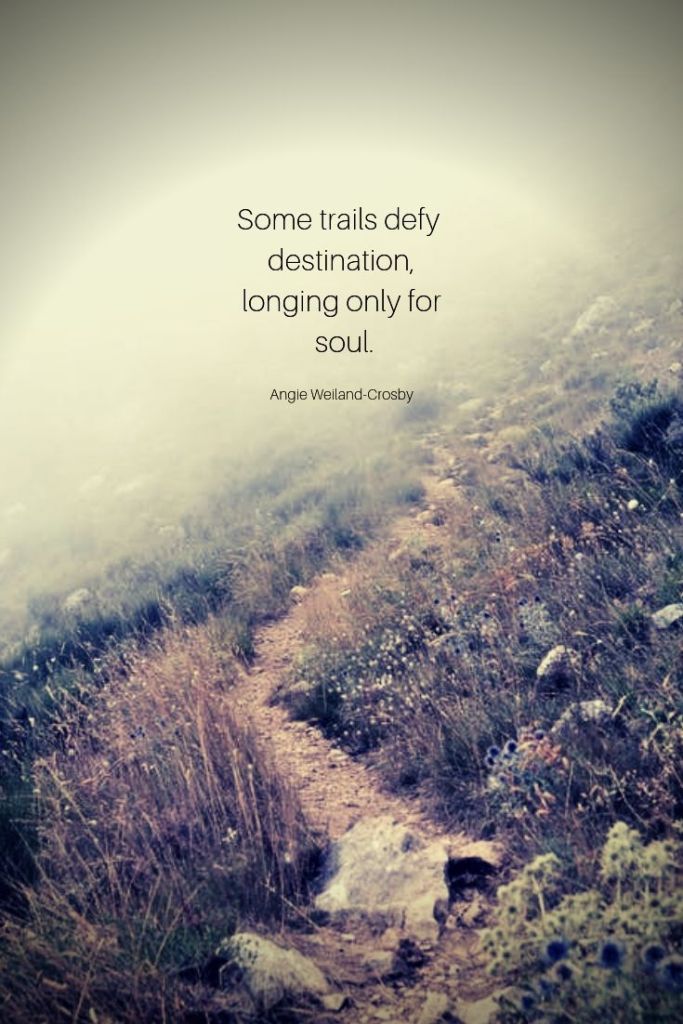

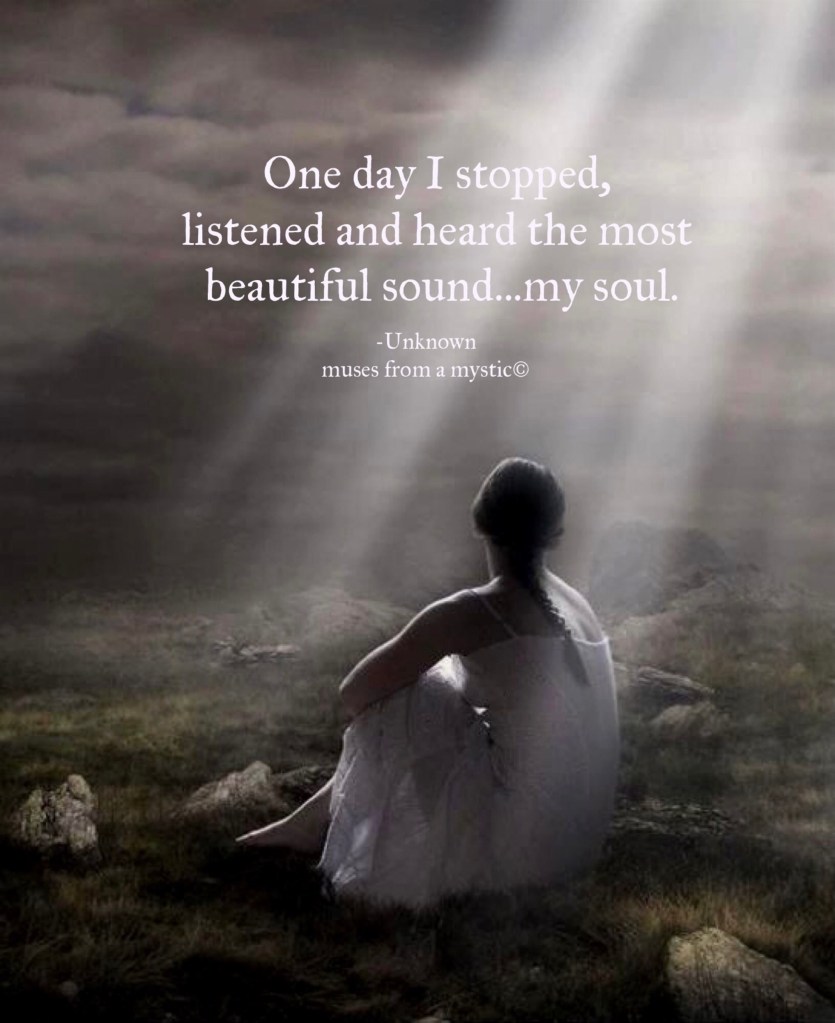


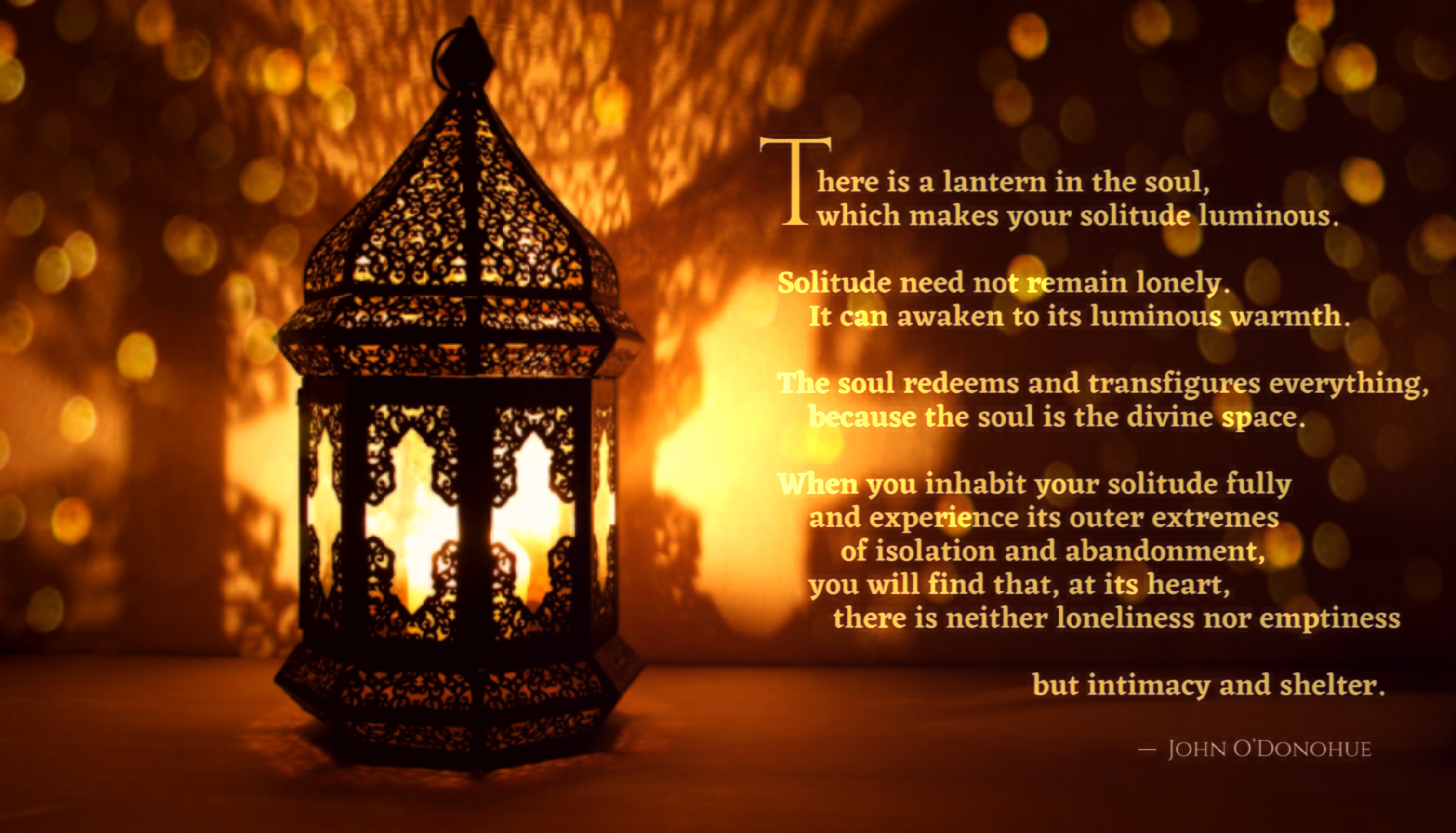
 Two hundred and three pills!
 This blog post is dedicated to the memory of my friend, Sister Macrina Wiederkehr, a wise and wonderful woman who left us this year and is now walking among


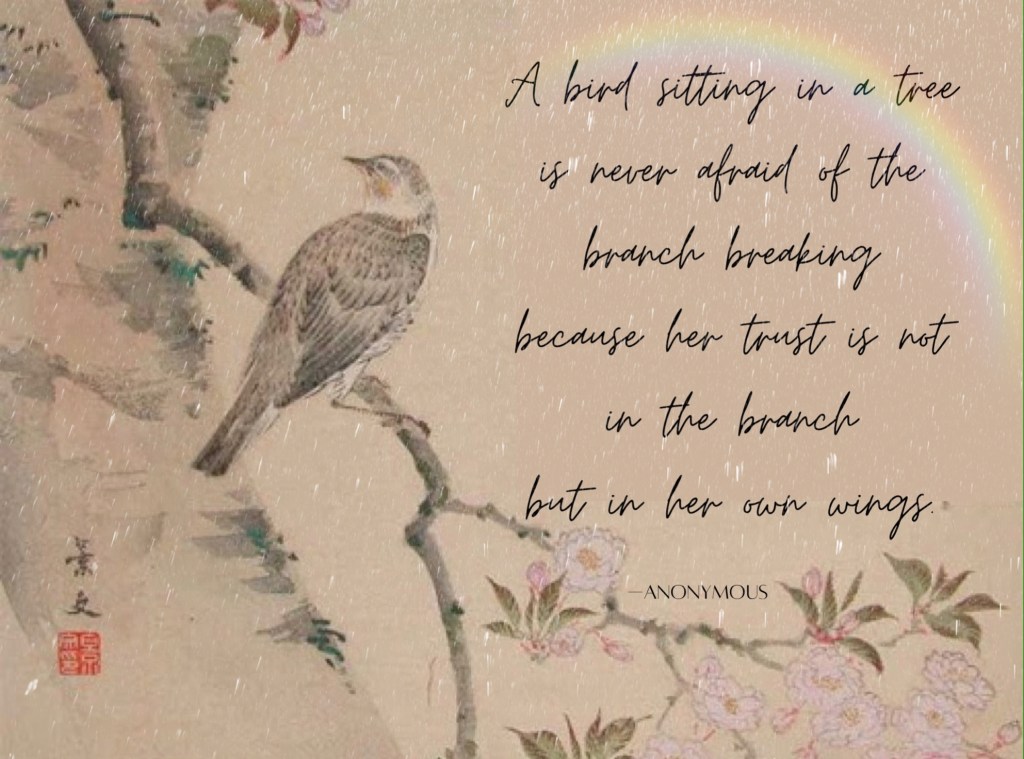





 I never see a rainbow without remembering the story of God’s covenant with Noah. I always remember that God made the rainbow a sign, the sign of a covenant promise.
 Among the most painful separations are estrangements from living parents. I have experienced estrangement from a parent, a situation in which I found it necessary to remove that parent from my life completely because of abuse. The hard choice of removing my parent from my life was mine to make, but was most surely a hard choice with long-lasting effects on my emotional health. Those who must make such a choice suddenly feel orphaned and alone in the world. Over many years, I have known many people who have lost mothers and fathers with whom they’ve shared loving relationships — not through death but through purposeful estrangement. I know that the deep void this loss creates for them is devastating. The pressing question is, “Why don’t we talk about what it is like to feel orphaned by parents who are very much alive and well, but whom we have lost due to estrangement?”
 When your soul is at risk . . .
 I pray today for each of you who have experienced, or are currently experiencing, the grief of separation and alienation from someone with whom you once shared love. I pray that you would enjoy relationships with persons faithful, true and kind. I pray for you a shared love that is pure — both given and received. I pray for you a persevering, faithful and gentle love that helps sustain and fulfill you. I pray, for you and for me, that we might have relationships with persons who help us become our best selves. I pray for genuine and life-giving friendships that grace us with full acceptance and understanding.
 How will I spend Ash Wednesday?
 The essential truth, and gift, of Ash Wednesday is its call to come to terms with ourselves before God. Ash Wednesday says what so much of modern culture denies, namely that we are forever deceiving and justifying ourselves about our sinfulness. So on this day, when we contemplate our sins, when we pay attention to the ash on our foreheads, when we enter into Lent’s forty days, we must make prayer our utmost spiritual intention. So I pray we might embrace our Christian community that we might journey together for these forty days, praying for one another, seeking together the serenity, the reflection and the transformation of Lent, as all the while, we lean into our “soul’s insistent yearning.”
 God of the Sparrow 🌱 By Kathy Manis Findley