Activism, Advocate, Asylum, Black Lives Matter, Caged children, Child trafficking, Committment, Community activism, Compassion, Courage, Creativity, Discrimination, Human trafficking, Immigrant detention, Immigration, Injustice, Justice, Let the oppressed go free, Oppression, Racial injustice, Racism, Social justice

“Let The Oppressed Go Free”

Canadian sculptor Timothy Schmalz’s work on a sculpture depicting modern-day trafficking in humans titled “Let the Oppressed Go Free” — a commentary on how slavery, via human trafficking, continues today. Schmalz laments that the modern-day travesty of forced labor, including for sex, is often ignored, not unlike slavery of the past.

Do you wonder sometimes where God is while people are being oppressed? I mean all kinds of oppression — racial injustice, human trafficking, violence and abuse, prison injustice, sexism, cissexism, classism, ableism, heterosexism. The list can go on and on, all the way down to specific stories about specific oppressed individuals. At that level, the down to earth level where we see a living person suffering, is the heartrending place. It’s the place where we find ourselves face to face and up-close with someone pouring out their story. It’s the place where we learn to talk less and listen more. It is for us an experience of holy listening with just one person.

Have you ever been in that kind of space listening to just one person? Have you ever been with a person suffering oppression who is freely sharing a heartbreaking story with you? I know that this kind of face to face encounter can be intimidating, even frightening. It can be beyond frustrating to listen to someone when you’re pretty sure you can’t do much to help.

There are at least two options for those of us who have a deep desire or calling to liberate those who are oppressed. We can offer what we have, even when we do not have a way to fix things. What do we have? Our presence, our emotional and spiritual support, our ability to advocate, housing assistance, financial assistance, employment assistance, safe shelter, understanding, constancy, presence, presence, presence . . .

The other option is to rail against a God who makes pronouncements about caring for oppressed people, yet seemingly does nothing to liberate them. This may not be our best option. Scripture reveals that God has a way of dealing with complaining people, and it is almost never a positive experience for the complainer. Moses comes to mind, and Miriam, and Job.

Poor, pitiful Job had a rough go of it and he wanted God to do some explaining and answer some questions. After all, he was a devout and faithful man, so why would God allow him to suffer so many losses? Right after Job is schooled by his three “friends” on several theological matters, including that he should never question God, God appears to Job out of a whirlwind. It was probably grand entrance, and then God basically says to him, ”I’ll ask the questions, buddy!”

Here’s a snippet of the long exchange between God and Job.

Then the Lord spoke to Job out of the whirlwind.

“Who is this that obscures my plans
    with words without knowledge?
Brace yourself like a man;
    I will question you,
    and you shall answer me.

“Where were you when I laid the earth’s foundation?
    Tell me, if you understand.
Who marked off its dimensions? Surely you know!
    Who stretched a measuring line across it?
On what were its footings set,
    or who laid its cornerstone—
while the morning stars sang together
    and all the angels shouted for joy?

— Job 38:1; 4-7 (NIV)


Job was oppressed. God was aware of it. God seemed unconcerned for too long, but there actually is a redeeming conclusion for Job. As the story goes in the last chapter of Job, God restored Job’s fortunes and gave him twice as much as he had before. All of Job’s brothers and sisters, and everyone else he knew, went to his house for Sunday dinner and they consoled him for all the trouble he had been through. Then each one gave him a piece of silver and a gold ring. It worked out!

Canadian sculptor Timothy Schmalz’s sculpture, ‘Monument of Oppression’ depicts hands emerging desperately from behind bars.

“I can’t think of one single nation of the world that did not practise slavery, including among Indigenous people,” the sculptor says.

(Photo by Handout)


What does Job’s story say to us? What does it teach us about oppression? In my mind, in order to confront oppression and free persons from every yoke on a societal scale, we must first be aware that systemic oppression exists. It is stark reality! It darkens our world! Right now, approximately 40 million people are trapped in slavery in the world. One in four of these is a child. This shame that pervades and plagues the planet does not seem to disturb people very much. Unfortunately, it is in some people’s best interest to maintain the oppressive systems that benefit them, that is fill their pockets with wealth (which is the primary reason for trafficking human beings, for instance).

Systems of oppression are very large, very complex and very powerful. Ending oppression is way too big for us to tackle alone. After sincerely asking the all-powerful God to help us bring down these all-powerful oppressive systems, we can add our hands and feet to the holy project. Contact senators, representatives, governors, mayors. Urge them, persist with them to use their position to help break down injustice. Know what you’re talking about when you contact them by reading about the work the many of anti-oppression organizations that exist. Join in their work. Look for those resources at this link.

“Angels Unawares” by Canadian sculptor Timothy Schmalz portrays the saga of Migrants and Refugees. Among the 140 faces in the sculpture are Africans, Vietnamese, a Cherokee, Jews, Irish immigrants, and Syrians. The Holy Family is also included in the sculpture. St. Joseph can be identified by his toolbox.

Finally, we must open our eyes to the people in our own communities who need our compassion, our concern, our caring presence and our advocacy on their behalf. It takes some creativity, some committment and compassion, a lot of courage and a covenant with our God of justice to change an unjust world. The outcome might just look something like what the prophet Isaiah described:

Is this not the fast that I choose:
To release the bonds of wickedness,
To undo the ropes of the yoke,
And to let the oppressed go free,
And break every yoke?

Is it not to break your bread with the hungry
And bring the homeless poor into the house;
When you see the naked, to cover him . . .

Then your light will break out like the dawn,
And your recovery will spring up quickly;
And your righteousness will go before you;
The glory of the Lord will be your rear guard.

Then you will call, and the Lord will answer;
You will cry for help, and He will say, ‘Here I am. . .’

10 And if you offer yourself to the hungry
And satisfy the need of the afflicted,
Then your light will rise in darkness,
And your gloom will become like midday.

11 And the Lord will continually guide you,
And satisfy your desire in scorched places,
And give strength to your bones;
And you will be like a watered garden,
And like a spring of water whose waters do not fail.

12 Those from among you will rebuild the ancient ruins;
You will raise up the age-old foundations;
And you will be called the repairers of the breach,
The restorer of the streets in which to dwell.

— Isaiah 58 (NASB)


I don’t know about you, but I want to be among the ”repairers of the breach.” I don’t want to live in a situation where I “hope for light, but there is darkness.” (Isaiah 59:9) Instead, let me find myself looking far beyond the world’s darkness, looking to the Creator who demands justice, looking upward to claim the promise, ” . . . satisfy the need of the afflicted, Then your light will rise in darkness, and your gloom will become like midday . . . And your light will break forth like the dawn.”

May it be so for all of us.
Images, Injustice, Racism, Slavery, The moan

Moans of Mourning

“Images” A Collage of Remembrance


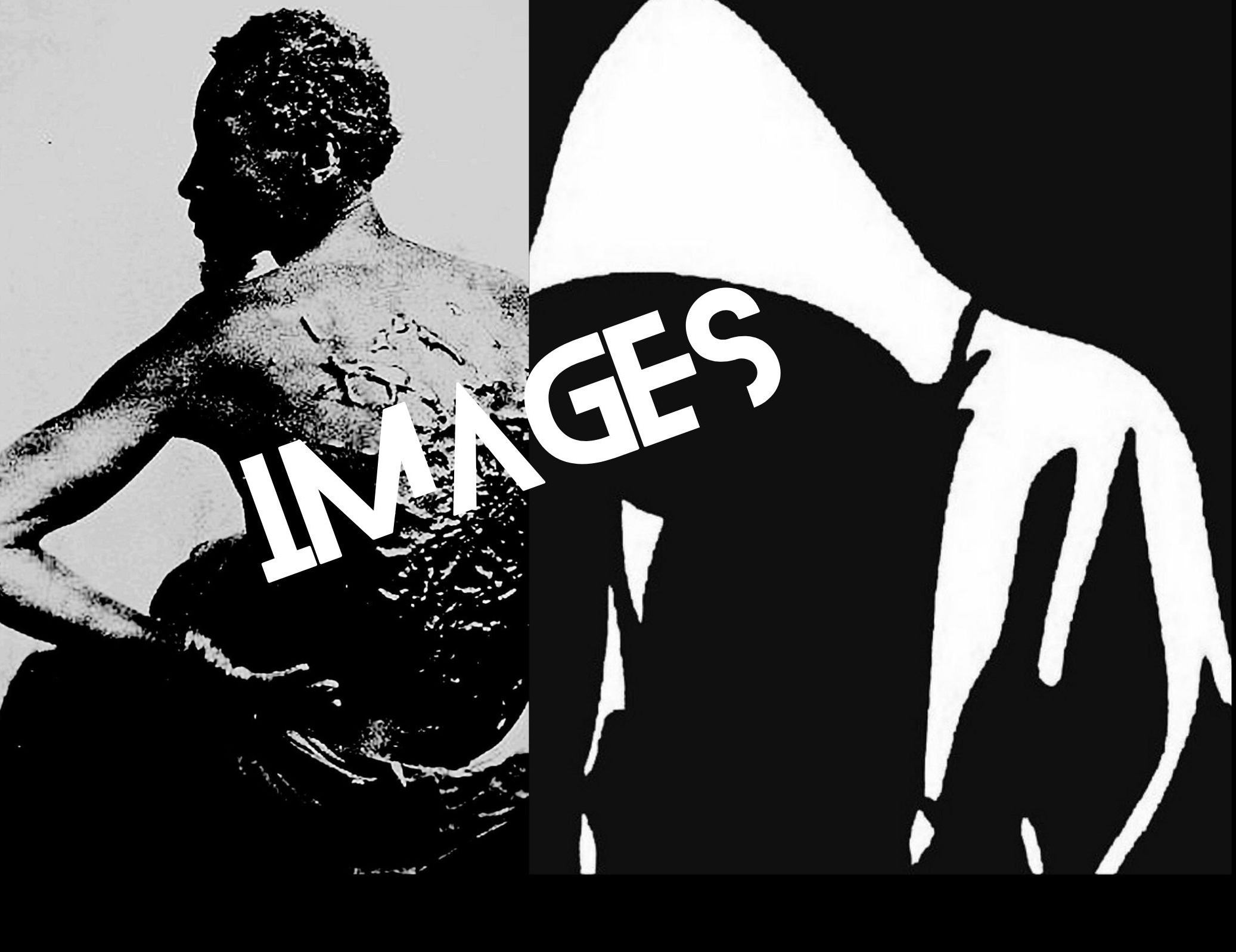
Images can affect us profoundly, leaving indelible marks on us, on the inside of us. When I saw on video the images and sounds of George Floyd’s murder, I knew that I would never forget what I saw on that day of terror, May 25, 2020. When even the date is indelibly marked in my mind, I know that what happened disturbed me to the core. 

This is true of most, if not all, of us. When images flash before our eyes — shocking images — they register immediately in us. We usually hold those events in our mind’s eye and in our spirits for a long time, perhaps forever if the shock hits us hard enough. But when some time has separated us from the initial shock, we begin the welcomed process of forgetting. Passing time melts the shocking vision away, and it gradually becomes unnoticed, leaving the seat of our emotions with fewer harsh and weighty memories.

I read their names today, these eight names and hundreds more. The names represented persons whose stories touched my soul when they were killed. Yet, I had forgotten so many of them, could not remember exactly how they died or what led to their murders. No wonder the demonstrators and marchers for justice bear signs that read, “#Say their names!”

So that we will not forget!
So that we will not forget our unspeakable history and thus risk repeating it!


The history of murder on the streets of American cities, large and small, is long and distressing. The moans of mourning can be heard still if we listen carefully, yes the moaning of today’s atrocities, but also moans echoing across the tragic history of slavery. Through history, through time, they moan and mourn.

It is worth remembering, as Black liberation theologian James Cone (1938–2018) points out, that the lynchings of African Americans and the crucifixion of Jesus share much in common: “Both the cross and the lynching tree were symbols of terror, instruments of torture and execution, reserved primarily for slaves, criminals, and insurrectionists — the lowest of the low in society.”

Yet, somehow in the midst of the horrific, there is God — perhaps seen in the unshakable voices of demonstrators, perhaps seen in people of all colors marching together, perhaps seen in the messages of the brilliant art created on old buildings, bridges and underpasses, perhaps seen in the hope-filled eyes of a child creating a protest sign. God is present in these images.

In an article entitled, “Human Cargo,” Fr. Richard Rohr points to the writing of Barbara Holmes, who suggests that “crisis contemplation” actually arose out of necessity during slavery, beginning in the Middle Passage when people were transported across the ocean as human cargo. In difficult times, contemplation becomes the soul’s strategy of survival.

The poignant words of Barbara Holmes:

The only sound that would carry Africans over the bitter waters was the moan. Moans flowed through each wracked body and drew each soul toward the center of contemplation. On the slave ships, the moan became the language of stolen strangers, the sound of unspeakable fears . . . The moan is the birthing sound The first movement toward a creative response to, the entry into the heart of contemplation through the crucible of crisis.

Barbara Holmes

Holmes explains how the stolen slaves often formed a community. “Yet, more often than not, these Africans were strangers to each other by virtue of language, culture, and tribe,” she says. “Their journey was a rite of passage of sorts that stripped captives of their personal control over the situation and forced them to turn to the spirit realm for relief and guidance.”

The reality is that contemplative moments can be found at the very center of these kinds of crises — in the holds of slave ships, on the auction blocks and in the brush arbors where slaves worshipped in secret.

In the words of Howard Thurman, “when all hope for release in this world seems unrealistic and groundless, the heart turns to a way of escape beyond the present order.” For captured Africans, there was no hope except in common cause and through the development of spiritual fortitude.

The stark and inconvenient truth is that we are hearing the echoing moan of black and brown communities today, crying out “How long, O Lord, must our people suffer?”

Poet Felicia Murrell has written words of poetry that combine a deep awareness of God’s presence while clearly naming the collective trauma of police brutality and lynchings. We must set our wills to remember. Of her poem, “Silence,” Richard Rohr says, “There is something about poetry that gives us permission to sit with the paradoxes of our pain, perhaps especially when addressing traumatic suffering.” 

He is right, so I invite you to read Felicia Murrell’s challenging poem, reading her words slowly and contemplatively, “allowing your heart to break open to God’s love amidst the suffering of the world.”

Silence

If you’re silent,

you can hear the forest breathe,
the holy hush of the tree’s limb.

“Silence,” said Thomas Merton, “is God’s first language”:
the way it soaks into your skin,
surrounds you,
blanketing you like the forest’s breath.

Silence:
The cadence of the land at rest,
the body asleep,

the heart awake.

Silence:
The deep rhythmic breathing of a mind slowed down,
an ocean still,
wet dew clinging to grass blade.

Silence:
The sacred song trapped in a bird’s breast before its first 
             chirp,
the still of night across a desert landscape
wrapped in a bone-aching chill

before the sun rises to scorch its parched earth.

Silence:
The lusty gaze of onlookers staring at the negro on the
          lynching tree,
neck snapped,
life ended,

feet dangling,
back and forth,
back and forth.

Silenced:
Hands up, don’t shoot!
Body thrumming with a heady sense of power.
Hands in pocket,
resting pose, knees embedded into a man’s neck.

Silence, please.

I. Can’t. Breathe.

Silenced.


I challenge you to remember the names,
to listen for the moans of mourning echoing across centuries,
to hear the moans of present suffering and count the tears of those who mourn,
to hear the voice of God who longs for justice. As it is written in the Book of Isaiah . . .

Therefore the Lord waits to be gracious to you, and therefore he exalts himself to show mercy to you. For the Lord is a God of justice; blessed are all those who wait for him . . . you shall weep no more. He will surely be gracious to you at the sound of your cry. As soon as he hears it, he answers you.

Isaiah 13: 18-19 ESV


I invite you to listen to “The Moan” sung by Marion Williams.

Marion Williams moans her heart out, and then goes into a heartfelt, down home rendition of “Father I Stretch My Hands To Thee.” From the album, “My Soul Looks Back”
#MeToo, Activism, Beloved Community, Bondage, Challenge, Change, Community activism, Courage, Discrimination, Freedom, Hate, Holy Spirit, Hope, Injustice, Lament, peace, Racism, Social justice, Spirit wind, Transformation, Transforming Injustice, White supremacy

Removing Yokes of Bondage

“We Sound a Call to Freedom” Hymn text by Rev. Dr. Jann Aldredge-Clanton; http://jannaldredgeclanton.com/changing-church-resource-“we-sound-a-call-to-freedom”-video-2/


Stand fast therefore in the freedom by which Christ has made us free,
and do not be entangled again with a yoke of bondage.
Galatians 5:1 (NKJV)

What is it about freedom that scares us? What is it about freedom that causes us to refuse to offer it to everyone? Are we afraid that giving freedom to another person or group of persons will diminish our own freedom? What does freedom really mean to persons who are oppressed and to those who live inside the throes of injustice?

I have written very little lately about justice and accountability, the two words most used to describe Derek Chauvin’s conviction. I can’t help but mark this very moment on the “long arc that bends toward justice.” I feel compelled to call our attention to this week! Actually it’s last week now, but you get the idea. Let’s call it “the week of the verdict.”

The week of the verdict has come full circle from George Floyd’s murder on May 25, 2020 to the conviction of Derick Chauvin almost one year later on April 29, 2021. It was a week we will not forget. It brought up emotions in me and perhaps in most people. Most of what I felt mirrored the emotions I imagine George Floyd’s family feeling — happy, calm, relieved, conflicted, hopeful, determined, vindicated. I also felt sad and helpless because the conviction did not end murders of black and brown brothers and sisters. And I felt joyful and hopeful because perhaps this flashpoint in the long history of racial injustice will help us turn the corner and finally see in our communities the justice we long for.

How can that happen? How can we turn the corner and move away from oppressive systems and oppressive people? How do we do that when just minutes after the verdict and less than ten miles away, 16 year old Ma’Khia Bryant was shot and killed by police in Ohio? It happened in the shadow of “the week of the verdict.”

Perhaps for us this is the week of the verdict — the week when the verdict will be read on our failure to end the systemic racism in our communities! Isn’t it past time for us to stand up and stand strong and stand determined and woke? My friends, it is time! This moment in the history of injustice may well be the turning point we need to end racism!

I have said this many times: We cannot just reform injustice, we must transform it. The transformation that results in genuine, lasting justice must begin in the soul and in the heart where intentions are formed. I must lament injustice, confess my own complicity in it, repent of the white supremacy within me, own other forms of oppression and commit to the hard work of transforming injustice in my community and in my world. Only then will transformation happen in the systems that oppress people.

Only transformed people can love neighbors as Jesus loved us. My friend and sister blogger never fails to remind me to answer the ultimate question, “How then shall I live?”* She offers this scripture to us today.

We know love by this, that he laid down his life for us — and we ought to lay down our lives for one another. How does God’s love abide in anyone who has the world’s goods and sees a brother or sister in need and yet refuses help?

1 John 3:16-17 

She then reminded us that conditions in India are dire and the people languish.

In India, today the virus surges
almost beyond control,

hospitals are choked,
people die in line waiting for a doctor.

How can those of us
rejoicing in vaccination,
cautious travel, new gatherings,
not ask how we can help?

Maren

How does God’s love abide in anyone who has the world’s goods and sees a brother or sister in need and yet refuses help?

And that is the soul-critical question we must answer. How then shall we live when all around us people suffer every kind of calamity — every kind of violence, disaster, racism, discrimination, dehumanization? Every kind of heartache. How do we, in our suffering world, become the heart, hands and feet of Jesus?

Getting back to the lament of my own heart, that one thing that inspires my passion — transforming the injustice of racism, xenophobia, misogyny, homophobia and all forms of evil exclusion and oppression. Transforming injustice! Setting our faces toward the hope of Beloved Community! This one thing I know, the steps of Jesus would have led him to the “healing” of injustice in any form. On every day he walked on this earth, Jesus would be loving every person who was in need and he would be lamenting every injustice that caused harm.

How can we not lament? How can we not expend ourselves in the hard work of transforming injustice? How can we not care for, and pray for, and love our brothers and sisters who are in need? How can we refuse to work for the freedom of black and brown people, indigenous peoples, LGBTQ+ people, immigrants and asylum seekers, and to any person who is enslaved? How can we deny God’s desire for justice and peace?

How can we refuse freedom to black and brown people, indigenous peoples, LGBTQ+ people, immigrants and asylum seekers, and to any person who is enslaved? How can we deny them God’s peace?

— Rev. Kathy Manis Findley

I do not have the answer for how we might do this. But I do have some convictions about it, especially about racism and white supremacy. One of my convictions is that dismantling racism begins in me, in my soul. And eradicating white supremacy begins when I look seriously at my own white supremacy. For you see, as long as white supremacy looks to me like a white-draped person burning a cross, I will never acknowledge that white supremacy is in me. As long as white supremacy looks to me like a man I might see on TV news with a truck, a confederate flag, a rifle and a mission, I can easily distance myself. I am not that white person; I am a different white person that would never tolerate racism.

Am I? Am I that different white person? Or are there ways I contribute to an unjust society? Are there ways I fail to seek Beloved Community? Are there thoughts and feelings within me that diminish other persons, persons not like me? Am I complacent about injustice? Am I complicit? Am I reticent? Am I avoiding, looking the other way?

As long as white supremacy looks to me like a white-draped person burning a cross in someone’s yard, I will never see that white supremacy is in me. As long as white supremacy looks to me like a man I might see on TV news with a pick-up truck, a confederate flag, a rifle and a mission, I can easily distance myself. I am not that kind of white person! Or am I?

Rev. Kathy Manis Findley

Racial injustice may currently be the most visible form of oppression, but we must remember that many groups of people are oppressed. Many people long for freedom from oppression. Only when we “see” and “hear” all of their voices, will we be on the way to transforming injustice. I don’t know everything about oppression, and I don’t know exactly how to make a difference. I don’t really know how to join hands with my community and set about to transform injustice. I do know that I must begin with my own lament, for only lament can open my eyes to every manner of suffering and oppression.

So meet me on the mountain where we find the strength from God to persevere, and then descend with me to all the places where oppression enslaves people. Come with me to the people, and together, let us remove from them the yoke of bondage and offer them new freedom. And may Spirit Wind surround us with courage. Thanks be to God.


*”How then Shall We Live?” was the inspiring theme of the Alliance of Baptists Annual Gathering.

VIDEO CREDITS
Words  © Jann Aldredge-Clanton, from Inclusive Hymns for Liberating Christians (Eakin Press, 2006).

Visual Artists:
David Clanton: “The Magic Begins” and dancing children photos: http://www.davidclanton.com/http://david-clanton.artistwebsites.com/

Shannon Kincaid: woman carrying torch paintings:http://www.shannonkincaid.com/

Mirta Toledo: Christ-Sophia painting:  https://www.facebook.com/mirtatoledoarthttp://www.jannaldredgeclanton.com/books.php#book3

Chad Clanton: purple irises photo

Instrumentalists:
Keyboard: Ron DiIulio
Percussion: Warren Dewey
Guitar: Danny Hubbard
Bass & Percussion: Jerry Hancock

Music Producer/Arranger:
Ron DiIulio: http://www.silverdollarsounds.com/personality-profiles/ron-diiulioSource

Activism, Beloved Community, Black History Month, Change, Civil Rights Movement, Community activism, Freedom, Injustice, Justice, Montgomery Bus Boycott, Persistence, Racism, Rosa Parks, Segregation, Social justice, Transformation, Transforming Injustice

A Birthday Celebration for Rosa Parks

84A0FA99-AA4F-4D53-9F45-ECD2A3F04B4E
Celebrate with me the birthday of Rosa Parks! 

Born in Tuskegee, Alabama on February 4, 1913, she continues to be remembered in the hearts of the American people. What a “herstory” she lived! And how could I even begin to tell her story here? What we think we know about Rosa Parks, in fact, is more like a fairy tale than an accurate picture of the person she was and the powerful transformation she brought in the quest for racial justice.

Rosa Parks was not one to dwell on one event — one bus ride, one boycott, one street named after her — she instead set her “eyes on the prize” for the long haul. She was one persistent woman. She was a mentor to the young people who would ultimately see the prize of equal justice under the law. Rosa Parks was not just a woman to be remembered by holding down one seat on one bus on one day. Instead, she set her sights on the transformation of injustice and never stopped moving towards justice for all.

I cannot tell her story adequately, but I can point to some of her milestones . . .

In August of 1955, black teenager Emmett Till, visiting relatives in Mississippi, was brutally murdered after allegedly flirting with a white woman. Till’s two murderers had just been acquitted. Rosa Parks was deeply disturbed and angered by the verdict. Just four days after hearing the verdict, she took her famous stand on the Montgomery bus ride that cemented her place as a civil rights icon. She later said this when the driver ordered her to move, “I thought of Emmett Till and I just couldn’t go back.”

Rosa Parks sat in the black section, but when the white section filled up, the bus driver demanded that the four black passengers nearest the white section give up their seats. The other three black passengers reluctantly moved, but she did not. She recounted the scene: “When he saw me still sitting, he asked if I was going to stand up, and I said, ‘No, I’m not.’ And he said, ‘Well, if you don’t stand up, I’m going to have to call the police and have you arrested.’ I said, ‘You may do that.’”

Many people have imagined Rosa Parks on that bus as an old woman tired after a long day of work. Yet, in her autobiography, My Story, Parks writes, “People always say that I didn’t give up my seat because I was tired, but that isn’t true. I was not tired physically, or no more tired than I usually was at the end of a working day. I was not old, although some people have an image of me as being old then. I was forty-two. No, the only tired I was, was tired of giving in.” 

Rosa Parks endured significant hardships in her life, both during and after the boycott. She was unjustly fired from her department store job. She received an almost constant stream of death threats, so many that she eventually left Montgomery to seek work elsewhere, ultimately moving to Detroit. There she served as secretary and receptionist for Representative John Conyers, befriended Malcolm X, and became active in the Black Power movement.

In 1995, she published her memoir, Quiet Strength, focusing on her Christian faith.  She insisted that her abilities to love her enemies and stand up for her convictions were gifts from God: 

God has always given me the strength to say what is right. I had the strength of God, and my ancestors.

Rosa Parks died in 2005 at the age of 92 and she became the 31st person, the first woman, the second African American, and the second private citizen to lie in honor in the Capitol Rotunda in Washington, D.C.

  • More than 50,000 people came through to pay their respects. 
  • Her birthday is celebrated as Rosa Parks Day in California and Missouri.
  • Ohio and Oregon celebrate the day on December 1, the anniversary of her arrest.

One last milestone of her remarkable story . . .

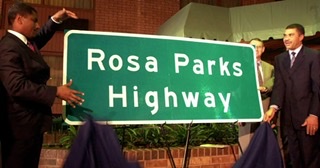
In 1994, the Ku Klux Klan applied to sponsor a section of Interstate 55 near St. Louis, Missouri, which would mean the Klan’s name would appear on roadside signs announcing the sponsorship. In 2001, the US Supreme Court ruled that the state of Missouri cannot discriminate against the Ku Klux Klan when it comes to groups that want to participate in the adopt-a-highway program. Of course, while the name of the Klan is aesthetically disgusting to many people, this decision was a victory for free speech and equal protection under the law, right?

54FF516B-B94C-4ADC-AF10-4BE8CF2BF64BIn the end, the Missouri Department of Transportation got sweet revenge! Sure, they couldn’t  remove the KKK’s adopt-the-highway sign, but few would dispute the state’s ability to name the highway itself. So the KKK is now cleaning up their adopted stretch of the highway named by the Missouri legislature and christened as “Rosa Parks Highway.”
Rosa Parks did not crave the spotlight. Nor did she care all that much about highways and byways bearing her name. She probably did want to be known as a person who persisted in the struggle for racial justice. She told us that in these words:

I would like to be known as a person who is concerned about freedom and equality and justice and prosperity for all people.

You are remembered as such a person, Mrs, Rosa Parks! Happy birthday in heaven. You are our inspiration. You are one of our sheros, our wonder woman!

Comfort, Contemplation, Emotions, Feelings, God's presence, healing, life, Meditation, Poetry, Politics, Racism, Reflection, Repentance, Restoration, Sacred Pauses, Sacred Space, Silence, Soul, Spirit, Spiritual Discipline, Stillness, Trump, Wholeness

NO MORE AIRTIME, MR. TRUMP!

 D7940A7F-BEAB-4445-B30D-C9739A8076AE

The time for Donald Trump’s airtime is over! In my life, I have no available airtime for him, and I wish the media would follow my example. I’ve heard enough of his rants and tweets. I’ve heard enough of his incendiary speech. I’ve heard enough of his indiscriminate name-calling. I’ve heard enough of his lying. I’ve heard more than enough of his disrespectful, hate-filled, divisive rhetoric. More than enough!

My soul will no longer give Donald Trump airtime. Why? Because often my responses to hearing him were anger, disgust, self righteousness and even hate. And those emotions darken my soul. Those emotions do not belong in my soul at all, because they have a way of displacing love, compassion, gentleness, peace, hope, light and grace — all the good emotions that God plants in the soul through Spirit breath.

I think of the beloved hymn . . .

Holy Spirit, breathe on me until my heart is clean.
Let sunshine fill my inmost parts with not a cloud between.

Breathe on me, breathe on me, Holy Spirit, breathe on me; 
Take Thou my heart, cleanse every part,
Holy Spirit breathe on me. 

— Words by Edwin Hatch, Music by B.B. McKinney

In these days of harmful politics, racial injustice, coronavirus fear and isolation, I need a Spirit-cleansing of my heart and soul. God has been ready to begin the cleansing for a while now. God has heard my repentant prayers admitting anger and hatred. God has waited patiently for me to embrace the stillness that can begin to heal my soul. 

Stillness! Stillness longing for healing. Stillness whispering words of repentance. Stillness yearning for calm. Stillness seeking peace. Stillness waiting in solitude for the presence of the Healer of the Soul.

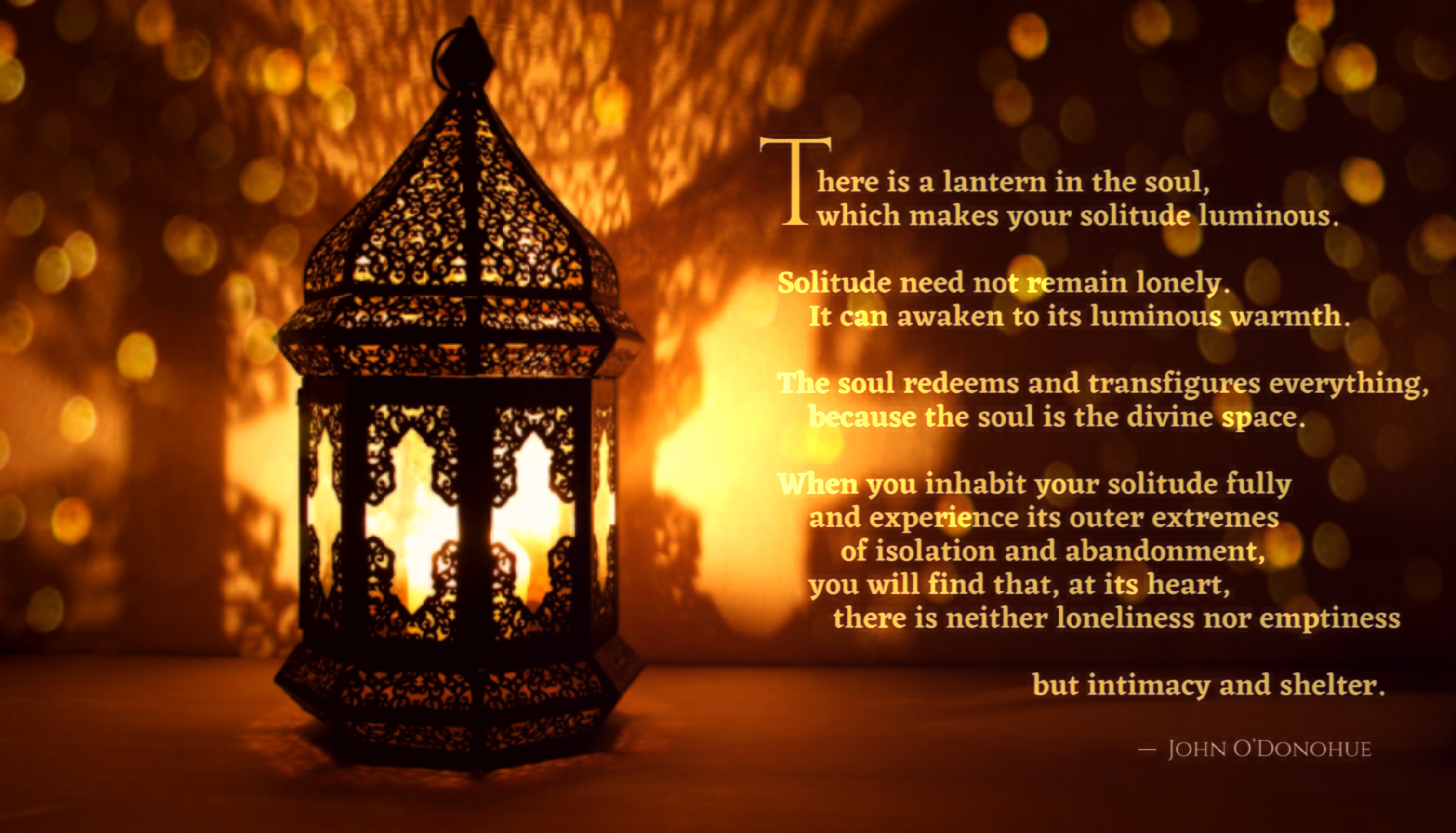
I’m going there — to that place of solitude where one can breathe slower, sigh deeper, listen attentively to the whisper of God and the breath of the Spirit. I’m going to solitude’s “luminous warmth” as John O’Donohue’s poem in which he describes the soul as the divine space. 

There is a lantern in the soul, which makes your solitude luminous. 
Solitude need not remain lonely. It can awaken to its luminous warmth. 

The soul redeems and transfigures everything
because the soul is the divine space. 

When you inhabit your solitude fully and experience its outer extremes of isolation and abandonment, you will find that, at its heart, there is neither loneliness nor emptiness but intimacy and shelter.

― John O’Donohue, Anam Cara: A Book of Celtic Wisdom

Right now, in the midst of the disheartening mood of the year 2020, I am entering the solitude I desperately need so that I can experience my soul as the divine space it is. 

Politicians, continue your rancor in loud and powerful voice! I will not hear you from my place of solitude, from my soul’s divine space. And as for you, Mr. Trump, I have no further airtime for you. I refuse to sit in front of my television for another minute, anticipating — hoping — that you will finally say or do something appropriate, beneficial, worthwhile, productive, compassionate or kind.

Instead, I will change the channel to more soul-healing television. In fact, I will leave the television altogether and go to a better place, higher ground where peace and silence and reverence and awe can begin the holy work of healing my soul. I am taking a sacred pause from my life that has been so anxious and worried and isolated. I will wait there in that sacred space where my “soul redeems and transfigures everything.” Thanks be to God.

A blessing for voters, Activism, Beloved Community, Black Lives Matter, Caged children, Calling, Community activism, Gun violence, Hate, Justice, Pandemic of 2020, Racism, Social justice, The Christian Church, Transformation, Vote 2020

May You Vote: A Blessing

068CAD40-2AD8-49FE-BD40-CE24850C9F1E
I received an inspiring blessing today from Auburn Seminary, a video entitled “May You Vote.” My first thought as I watched the video was that all of us and each of us need a blessing as we vote in this important election. For in these restless days, we are engulfed by a lethal pandemic, isolation, quarantine, violence by police, the death of many of our black, brown and indigenous brothers and sisters, protests in city streets and violence against the protesters. It is almost too much to bear.

But as people of faith who long for transformation, our vote is a part of a holy mission from God. So if we are able, we will vote, and we will vote as a part of God’s holy mission, hoping that God’s love and our perseverance will soon lead us to the gracious gift of “beloved community.”

The Senior Fellows of Auburn Seminary, faith leaders from a multifaith movement for justice, have a deeply personal video blessing for us:

May You Vote!

This is note from their president:

The Fellows gathered in their homes across the country to remind us that a government of the people only works when it’s of the people and by the people.We all have a part to play now! May you be inspired by their words and share them with others. So much is on the line with this election, and with your vote, you can help shape the future of this nation.

By mail or in person if you are able—May You Vote!

Rev. Dr. Katharine R. Henderson

President, Auburn

Please listen to their blessing in this video message:

Activism, Anger, Black Lives Matter, Breonna Taylor, Call, Change, Church, Comfort, Community activism, Compassion, Defiance, Despair, Hate, healing, Injustice, Lament, Persistence, Prayer, Racism, Sorrow, Soul, Spirit, struggle, The Christian Church, Transformation, Urgency, Violence, White supremacy

Prayers of Lament


This morning, I prayed a prayer of lament. Lament was the only prayer in my spirit. It is difficult to express the deep sorrow I felt yesterday when I learned that no charges were brought against the police who shot six bullets into Breonna Taylor’s body.

Shortly after midnight on March 13, 2020, Louisville police officers used a battering ram to enter the apartment of Breonna Taylor, a 26-year-old emergency medical technician who had dreams of a bright career ahead. She and her boyfriend had settled in to watch a movie in her bedroom on that tragic night. Police came to her door and minutes later, she was fatally shot. Her death sparked months of protests in Louisville.

Yesterday, six months after the fatal shooting — six bullets — a grand jury indicted a former Louisville police officer on Wednesday for wanton endangerment for his actions during the raid. A grand jury delivered the long-awaited answer about whether the officers would be punished. No charges were announced against the other two officers who fired shots, and no one was charged for causing Breonna Taylor’s death.

For me, there was only lament. I imagine that for Breonna’s family, there was the deepest kind of lament. For her mother, lament was the only response she could express as she wept uncontrollably. And, even for the protesters who filled the streets, I believe there was lament. 

Theologian Soong-Chan Rah explains in his book, Prophetic Lament, that in the Bible lament is “a liturgical response to the reality of suffering and engages God in the context of pain and suffering.” He goes on to say that it is a way to “express indignation and even outrage about the experience of suffering.” Racism has inflicted incalculable suffering on black people throughout the history of the United States, and in such a context, lament is not only understandable but necessary.

Perhaps white Christians and all people of faith have an opportunity to mourn with those who mourn and to help bear the burden that racism has heaped on black people. (Romans 12:15)    — Jemar Tisby, The Color of Compromise


In the end, many people see only the rage, anger, impatience, violence of the protesters. Can we also see their lament for Breonna, as well as for centuries of racially motivated murder — beatings, burnings, lynchings and murder committed by police officers? 

People of faith — white people of faith — will we try to understand the rage of our black and brown sisters and brothers? Will we join them in righteous anger? Will we mourn with them? Will we lament when lament fills their souls and overflows in cries for justice?

We must, in the name of our God who created every person in God’s own image!

Last night, I heard an interview with Brittany Packnett Cunningham on MSNBC. Her words were eloquent pleas for justice. She spoke about how persistent and all-encompassing racism is in our country and about the murders and the protests and the political rancor that fuels it. She acknowledged racism’s strong, unrelenting hold on this nation, a hold that is virtually impossible to break. And she said something I have said for a long time, “Racism cannot be reformed. It must be transformed.”

To me that means a transformation of the heart and soul that compels each of us to lament, to comfort, to speak truth in government’s halls of power, to stand openly against any form of racial injustice.

May God make it so.

Will you pray this prayer of lament with me?

O God, who heals our brokenness, Receive our cries of lament and teach us how to mourn with those who mourn. Receive even our angry lament and transform our anger into righteous action. Hear the anguish of every mother assaulted by violence against her child. Hear the angry shouts of young people as shouts of frustration, fear and despair. Grant us the courage to persist in shouting out your demand for justice, for as long as it takes. When deepest suffering causes us to lament, grant us Spirit wind and help us soar. If we resist your call for justice, compel us to holy action. May our soul’s lament stir us to transform injustice, in every place, for every person, whenever racism threatens, for this is your will and our holy mission. Amen.

anxiety, Despair, Division, Exhaustion, Injustice, Isolation, Lament, Mourning, Natural disasters, Prayer, Racism, Repentance, Violence

“If my people . . .”


I watched the news last night before bed. Not such a good idea! Halfway into the broadcast, I felt a pervasive sense of despair and became very nauseous. I’m feeling it again as I’m writing this. It was the very real and very current events that were so upsetting: hurricanes bringing destruction in Louisiana; California wildfires threatening yet again; protests after the tragic and unwarranted shooting of Jacob Blake; 17-year old Kyle Rittenhouse, who took to the streets of Kenosha, Wisconsin during protests, using a military-style rifle to kill two people; a president who is intent on meeting street protests with military violence; a president who gathers a crowd of supporters, not socially distanced and most not wearing masks; and the coronavirus hovering over it all to make situations even more devastating than they already are.

I turned off my bedside lamp and, in the darkness, pondered the news I had just seen. I could not sleep with the sorry, worry, desperation and helplessness I felt. There was not one thing I could do to change my world. My world seemed out of my control, engulfed in all of the events of our time. I wondered . . . how will we live with natural disasters, protests in the streets, killing, violence, military style weapons, police out of control, political rancor, a deadly pandemic and a seeming disregard for human life? How will I live with it? What can I do to change it?

In these times, we see before our eyes people getting very sick, people dying alone in nursing homes and hospitals because of COVID restrictions, people isolated and lonely for months, people divided by political polarization, people being killed by police, people protesting for racial justice, people pushing back hard, enshrined in their white supremacy, people losing their homes, people fighting out-of-control wildfires, people losing their jobs, people tired from working with so many hospital patients, people afraid to go back to school, people feeling angry and frustrated, people feeling complete despair. Most of all, people are hoping beyond hope for better days ahead.

My mind thought of nothing of any consequence I could personally do to reverse all of this destruction and despair. My heart memory, though, remembered some things God instructed us to do long ago. God addressed instruction to, “my people who are called by my name.” 

“I am called by God’s name,” I thought. “I know exactly what to do!” Of course, I could honor God by standing up for justice — engaging in political activism, contacting government officials to demand change or participating in peaceful protests. I could honor God’s creation by doing more to care for the earth. I could honor God by loving my neighbor and caring for those who have suffered loss. 

People of faith have God’s marching orders that dispatch those called by God’s name to practice all manner of good works. And this we must do. But the critical admonition from God that my heart recalled last night is found in Second Chronicles 7:14. If you are called by God’s name, you will likely know these words well.

If my people who are called by my name humble themselves, pray, seek my face, and turn from their wicked ways, then I will hear from heaven, and will forgive their sin and heal their land. (NRSV)

But wait, Second Chronicles 7:14 doesn’t apply to us. It was for Israel. Our Biblical interpretations must have a solid contextual underpinning. Right?

Of course, many Scriptures taken out of context have done great damage. The context of Second Chronicles is that when God brings judgment on God’s own people, Israel, as a result of their sins, that God would also heal their land. And God would re-establish their blessings when they would pray and “turn from their wicked ways.”

We may look around at all the destruction around us and say, “My sin did not cause any of this.” I don’t have military weapons. I didn’t shoot anyone. I don’t set wildfires, I always wear my mask in public. I certainly cannot stop the ominous storm surge of a hurricane.

True enough! Most of us didn’t sin by doing any of these things. Yet, we should remember two things: 1) While we did not commit those particular sins, we do not fully know the harm inflicted by other sins we may have committed; and 2) We cannot begin to know the transformative power of our sincere, repentant, intercessory prayer.

Instead of entertaining such deep and helpless despair, instead of feeling physically nauseous with worry, I think I will follow the admonition of the Chronicler who gave me God’s call to pray. Of course, the admonition in its historical context truly was for Israel, but if we intend to use the Holy Scripture to guide our lives, we cannot ignore a passage that begins with “If my people.”

Perhaps my prayers and yours will bring transformation, in our spirits and in our world.

May God make it so. Amen.


Beloved Community, Black Lives Matter, Civil Rights Movement, Courage, Good Trouble, In Memorium, John Lewis, Justice, Nonviolence, Perseverance, Persistence, Politics, Prophetic, Racism, strength, struggle, Tenacity

Remembering John Lewis

89BE8169-640A-4DDD-A2AC-E9680BE67E02
Because I am a citizen of the state of Georgia, I can call him mine — my congressman, my conscience, my inspiration.

John Lewis
A warrior in building the soul of America

Representative John Lewis, a son of sharecroppers and an apostle of nonviolence who was bloodied at Selma and across the Jim Crow South in the historic struggle for racial equality, and who then carried a mantle of moral authority into Congress, died on Friday. He was 80.*

Twice he was beaten to an inch of his life.

I have been in some kind of fight — for freedom, equality, basic human rights — for nearly my entire life.    — John Lewis

On the front lines of the bloody campaign to end Jim Crow laws, with blows to his body and a fractured skull to prove it, Mr. Lewis was a valiant stalwart of the civil rights movement and the last surviving speaker from the 1963 March on Washington — where King delivered his famous “I Have a Dream” speech — but Lewis was almost refused to be allowed to speak by march organizers because of his strident criticism of the Kennedy administration.

Lewis went on to serve 17 terms in the US House of Representatives, where he was considered the north star of conscience in Congress.**

Tributes to the life and legacy of John Lewis came from hundreds of voices.

“Not many of us get to live to see our own legacy play out in such a meaningful, remarkable way. John Lewis did,” former President Obama said in a written tribute. “And thanks to him, we now all have our marching orders — to keep believing in the possibility of remaking this country we love until it lives up to its full promise.”

Joe Biden, and his wife, Jill, issued a statement that began, “We are made in the image of God, and then there is John Lewis. How could someone in flesh and blood be so courageous, so full of hope and love in the face of so much hate, violence, and vengeance?”

Sen. Bernie Sanders of Vermont said: “His courage helped transform this country. He won’t ever be forgotten by those who believe America can change when the people stand together and demand it.”

Sen. Kamala Harris of California said of Lewis, “He carried the baton of progress and justice to the very end. It now falls on us to pick it up and march on.” ***

And so we will, to honor his memory and to persist in the fight against injustice.


John Lewis.

America’s inspiration for getting into “good trouble”

Do not get lost in a sea of despair. Be hopeful, be optimistic. Our struggle is not the struggle of a day, a week, a month, or a year, it is the struggle of a lifetime. Never, ever be afraid to make some noise and get in good trouble, necessary trouble.
— A tweet from June 2018

I appeal to all of you to get into this great revolution that is sweeping this nation.  Get in and stay in the streets of every city, every village and hamlet of this nation until true freedom comes, until the revolution of 1776 is complete.
— At the 1963 March on Washington

Freedom is not a state; it is an act. It is not some enchanted garden perched high on a distant plateau where we can finally sit down and rest. Freedom is the continuous action we all must take, and each generation must do its part to create an even more fair, more just society.
From his 2017 memoir, “Across That Bridge: A Vision for Change and the Future of America”

My dear friends: Your vote is precious, almost sacred. It is the most powerful nonviolent tool we have to create a more perfect union.
— From a 2012 speech in Charlotte, North Carolina

You are a light. You are the light. Never let anyone—any person or any force—dampen, dim or diminish your light. Study the path of others to make your way easier and more abundant.
From his 2017 memoir, “Across That Bridge: A Vision for Change and the Future of America”

We have been too quiet for too long. There comes a time when you have to say something. You have to make a little noise. You have to move your feet. This is the time.
— At a 2016 House sit-in following the Pulse shooting in Orlando

When you see something that is not right, not just, not fair, you have a moral obligation to say something. To do something. Our children and their children will ask us, ‘What did you do? What did you say?’ For some, this vote may be hard. But we have a mission and a mandate to be on the right side of history.
— 2019 remarks in the House on impeachment of President Trump


May his words echo in our hearts and reach the soul of every American. 

May he rest in peace and — from above — inspire us to “do justice, love mercy and walk humbly with our God” as he did.


John Lewis
Servant of God and champion for justice, now called to his heavenly home


With thanks to:
* Katharine Q. Seelye, https://www.nytimes.com/2020/07/17/us/john-lewis-dead.html

** Ken Sehested, http://www.prayerandpolitiks.org/

*** Janet Hook, https://www.latimes.com/politics/story/2020-07-18/tributes-rep-john-lewis-dies-civil-rights


Activism, Ahmaud Arbery, Beloved Community, Celebration, Change, Community activism, Freedom, Hope, Juneteenth, Justice, Liberty, Racism, Rebirth, reconciliation, struggle, Transformation, Uncategorized

Juneteenth 2020 — Oh Freedom!

0B59C2F5-2267-4507-A9EE-44CDC0B315B1
Today may be a Juneteenth like no other.

Juneteenth is a celebration. It’s not solemn, it’s filled with joy and pageantry. It’s not a funeral. But 2020 Juneteenth is uncomfortably juxtaposed with police violence against Black people, protesters in cities all over the nation and funerals — too many funerals.

A Bit of History . . . 

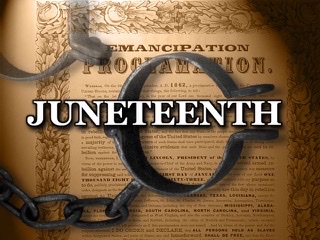
Juneteenth is one of America’s oldest holidays and is observed each year on June 19 to mark the official end of slavery in the United States. The day has long been celebrated by black Americans as a symbol of their long-awaited emancipation. But the story behind the holiday starts 155 years ago today in Galveston, Texas.

On June 19, 1865, Union troops led by General Gordon Granger arrived in Galveston, Texas, to break the news to the last remaining Confederate sympathizers that they had lost the Civil War and that all slaves must be freed. The Union general read aloud to the residents of Galveston:

The people of Texas are informed that in accordance with a Proclamation from the Executive of the United States, all slaves are free. This involves an absolute equality of rights and rights of property between former masters and slaves, and the connection heretofore existing between them becomes that between employer and hired laborer.

The newly freed slaves celebrated emancipation with prayer, feasting, song, and dance, and the following year, the first official Juneteenth celebration was born. But the importance of Juneteenth is that it is rooted in a long history of struggle for freedom and then perhaps the greater struggle to maintain freedom in the face of the enormous repression that was to come.

The Struggle for Freedom Continued

7DC48528-34CF-47FA-9272-ED91E800C437It turned out that being free did not mean being being treated with respect. Yes, it was the true end of the Civil War, but it was also the beginning of Reconstruction, a time that was supposed to be very happy and hopeful. Yet the period of Reconstruction became a miserable time for freed Black people because Reconstruction became part of the redemption of the South. As such, it set out to move African Americans to indentured servitude. While President Abraham Lincoln abolished slavery in his Jan. 1, 1863, Emancipation Proclamation, rebellious Confederate strongholds dotted across the South delayed the widespread implementation.

The South would not hear of the end of slavery, and landowners moved heaven and earth to make sure they had plenty of indentured servants. They were determined to continue the ostentatious lifestyle that they believed was their right and their legacy. They were resolute in their quest to maintain their master/servant status.

Still Today, Elusive Freedom

Juneteenth has been “passed down” through black communities since 1866, but in this year — 2020 — this nation seems to be at the height of a modern-day civil rights movement. My friend says, “2020 is the year of reset!” People throughout this nation of every race and creed hope beyond hope the 2020 will go even beyond “reset” to reconciliation, transformation and rebirth. So that every person is free, respected and cherished as a part of beloved community.

B8EBCA53-AF97-42DD-AA97-BAB122368430The cruel and violent death of George Floyd under the knee of a Minneapolis police officer might mean that this year Juneteenth may not be only about festivals, parades and cookouts. It may well be somewhat of a silent, reflective vigil for George Floyd, Breonna Taylor, Ahmaud Arbery, Rayshard Brooks, Caine Van Pelt, Michael Thomas, Lewis Ruffin, Kamal Flowers, Momodou Lamin Sisay, Ruben Smith, Modesto Reyes . . . and the list could continue.
It is a list of tragedy and horror. It is a list that is a stain that will ever remain on this nation, an indelible mark of shame. It is a list of names we must never forget. So in your commemoration of Juneteenth today, honor those names, pray for their mourning families, and pray that you will confront racial injustice with an unshakeable resolve.

Juneteenth was meant to be a celebration, although many people might not be able to celebrate today. Heartbreak and horror have a tendency to override celebration and joy. Even with hearts broken, I hope we will find in our hearts even a tiny desire to celebrate this day that was, and is, all about freedom.

May the change that comes from the “2020 movement for racial justice” cause us to celebrate, not mourn, every time Juneteenth comes around — today and forevermore. And may each of us and all of us — a people of God’s creation — witness the rebirth of a nation where every person lives under a worldwide canopy of justice, peace, equality, respect and freedom.

May God make it so through us. Amen.


Celebrate, or mourn, today as you spend a few moments watching this moving and poignant video, “Oh Freedom.”

#MeToo, Activism, Bravery, Courage, Faith, healing, Injustice, Justice, March for Our Lives, Perseverance, Persistence, Prathia Hall, Questions, Racism, Social justice, Violence against women and children, Women

The Civil Rights Movement and Womanist Theology


217FA8EB-CEFC-4F9F-896B-D1FCD86FFD34
The civil rights movement and womanist theology? Not much in common between the two, it seems. Maybe, maybe not! The thing is: God’s people are guided by Spirit into an unjust world where people are oppressed, not just through a particular movement, whether it is for civil rights or equity for women. People are oppressed beyond any movement. People are oppressed in everyday life, today, as well as in past struggles for liberation.

God is all about liberation from oppression, now and in the future. The battle for liberation is ongoing and never-ending. And God’s people — you and I — cannot follow Christ in “loving our neighbors as we love ourselves” unless we stand alongside people who are oppressed, unless we pour our lives into building a just society where every person is treated according to the well worn and well loved declaration that “all people are created equal.”

If you believe there is nothing in common between the civil rights movement and womanist theology, then you do not know much about The Rev. Dr. Prathia LauraAnn Hall (1940 – 2002), who was an undersung leader for civil rights, a bulwark of the black church in the United States and an advocate of the womanist vision of equity and equality.

In the recently published book, Freedom Faith: The Womanist Vision of Prathia Hall, Courtney Cox paints the portrait of Prathia Hall as a woman of deep conviction, courage and eloquence who literally embodied the longing for the rights of every person and the womanist vision of equality.

You may not know much about her, but Prathia Hall electrified audiences through her speaking and preaching.

I say to you our daughters and sons, it is in you! Every time you behold the world as it is and dare to dream of what it must become that’s the fire of freedom’s faith. . . Every time you grab hold of the United States of America and like Israel dare to wrestle and declare to it — We will not let you go until you bless us — That is freedom faith’s fire. It is in you — It’s in us.     — Prathia Hall

You may not know much about her, but Prathia Hall was an inspiring leader in the Southwest Georgia Project in Albany, Georgia, in the civil rights struggle in Selma, Alabama, and in the multiorganization Atlanta, Georgia project.

Prathia Hall literally changed the course of the civil rights movement. As a “firebrand” in the Student Nonviolent Coordinating Committee (SNCC), Hall labored tirelessly under the central guiding principle of her life, her activism and her ministry. Her life’s guiding principle was “Freedom Faith, the belief that God wants people to be free and equips and empowers those who work for freedom.”

In Hall’s work in door-to-door voter registration, in church-based educational programs, inspirational mass meetings, and through her scholarship and preaching, Freedom Faith found its ultimate expression in her womanist vision of the liberation of all people. For Hall, freedom was not only about the goals of the civil rights movement, it was about the many layered forms of oppression — racism, classism, sexism, ageism, heterosexism, denominationalism — all formidable obstacles to human rights.

You may not know her name, but Prathia Hall was listed in Ebony Magazine’s 1997 “15 Greatest Black Women Preachers.” It is said of Prathia Hall that her call to ministry was both her glory and her burden. Yet her preaching electrified masses of people bowed low by oppression.

They called us: ‘nigger,’ ‘winch,’ ‘buck,’ ‘slave,’ but out there in the brush arbors, the wilderness, and the woods, the God of our ancestors, the God we had known on the other side of the waters met us and whispered words in our ears, and stirred a song in our souls . . .     — Prathia Hall

You may not know much about Prathia Hall, but she was an indefatigable activist for human rights, a brilliant scholar, an engaging speaker, a compelling preacher, a distinguished theologian. Hall’s theology focused on liberation from all forms of oppression, and she did not shrink from the womanist theology that called out sexism and the duplicity of the Black Church in recognizing the call of women only in narrow and constricted ways. In an absolute articulation of her womanist vision of inclusion, Hall espoused a multidimensional structure of oppression. “Gender-based oppression,” she wrote, “isn’t a trivial inconvenuence. It’s human devastation.” As an insider, choosing to remain in ministry in the Baptist Church, Hall’s courage and conviction never ceased from criticizing a Church that opposed racism, but tolerated sexism.

It absolutely boggles my mind as well as grieves my spirit that brothers, with whom I have stood side by side in the struggle, brothers with whom I have bowed, knelt, prayed, worked, struggled, gone to jail, dodged bullets, and caught bullets, claim to be unable to make the transition from the critique of race-based oppression to the critique of gender and class-based oppression.    — Prathia Hall

You may not know much about Prathia Hall, but her very soul was embroiled in the civil rights drama. In the summer of 1962, four black churches in Georgia’s Lee and Terrell Counties, all associated with the movement, were burned by white supremacists.

Hall and other SNCC workers wept together in the ashes of the Mount Olive Baptist Church. The next day the SNCC received a phone call that Martin Luther King, Jr. intended to visit Albany to attend a prayer vigil over the ashes of Mount Olive Baptist Church in Sasser. According to the New York Times, “As the sun sets across the cotton fields, some fifty Negroes and two whites met at Mount Olive for a prayer vigil. Joining hands, they sang softly, ‘We Shall Overcome.’”

After the song, Prathia Hall led the group in prayer, her voice breaking in grief. According to oral tradition, Hall repeated the phrase “I have a dream,” each time followed by a specific vision of racial justice. After the service, King asked for her permission to use the “I have a dream” phrase, which she granted. From the oral evidence gathered from several witnesses, one can definitely make a case for Prathia Hall as the source of King’s “I Have a Dream” speech.      — Courtney Cox, Freedom Faith: The Womanist Vision of Prathia Hall

You may not know much about Prathia Hall, but in the pages of Freedom Faith: The Womanist Vision of Prathia Hall, author Courtney Cox lays bare the world of this fascinating woman of God. She presents Prathia Hall through various lenses: Christian minister, liberation theologian, civil rights activist and leader, professor and scholar, preacher and speaker, mother, daughter, wife, agitator, womanist theologian.

Until now, you may not have known much about Prathia Hall, but many notables spoke of her abilities:

One in a million . . . A model that needs to be lifted up in every seminary of all races . . . so people can get a glimpse of what someone who has really said yes to ministry and who went to her grave living that ministry daily.     — Jeremiah Wright

The best preacher in the United States, possessing proven ability to exegete, illustrate, celebrate and apply the scriptures healingly to the problems, pains and perplexities of the people who sit ready to hear a word from Yahweh.     — Charles Adams, former president of the Progressive National Baptist Convention

. . . She was known for her commitment, her dedication, her stick-to-it-ness, for hanging in there, for never giving up or giving in.      — Rep. John Lewis

So what about the civil rights movement and womanist equality? Is there any commonality between them? Certainly there is commonality — both are never-ending struggles for justice, because we are a country where various groups of people are still denied their civil rights and woman are still suppressed and oppressed. Both movements — and many other struggles for justice — require our commitment, our resolve, our persistence, our courage, our compassion, our best efforts and our faithfulness to God.

At least for me, Prathia Hall’s life begs several questions:

What is it that I am passionate about, willing to follow God with courage to fulfill that passion?

Is there an injustice I must stand against?

Is there any oppression, any wrong, that I am compelled to confront?

Is there anything I care about deeply enough that I will dig deep into myself to find the courage to defend it?

Fair questions, I think, for those who are trying to follow God into places of need! Compelling questions for those who are trying to follow God in offering compassionate  care to the oppressed and hurting people who need us! Compelling questions for those who are trying to follow God in freeing people who live in various forms of bondage!

These are urgent questions for God followers!

I pray that I am able to sit with those questions and respond to them boldly as an act of my faith. I pray that for you, too.

Finally, do we dare we ask what will be our reward for seeking justice for the oppressed people around us? Probably not, yet this beloved passage of Scripture does speak of both our call from God and what we will receive for our commitment to our call.

. . . Remove the chains of oppression and the yoke of injustice, and let the oppressed go free. Share your food with the hungry and open your homes to the homeless poor. Give clothes to those who have nothing to wear . . .

Then my favor will shine on you like the morning sun, and your wounds will be quickly healed. I will always be with you to save you; my presence will protect you on every side. When you pray, I will answer you. When you call to me, I will respond.

If you put an end to oppression, to every gesture of contempt, and to every evil word; if you give food to the hungry and satisfy those who are in need, then the darkness around you will turn to the brightness of noon. And I will always guide you and satisfy you with good things. I will keep you strong and well. You will be like a garden that has plenty of water, like a spring of water that never goes dry.

— Isaiah 58:6-11 Good News Translation (GNT)

So let us follow God into every place of need, every place of injustice, every place where oppression has raised its evil head. Let us follow God — as an embodiment of Christ’s love and compassion — until that day when “the darkness around us turns to the brightness of noon.”

May God make it so. May God find us faithful. Amen.


I offer you this music to listen to as you spend time in prayer and meditation


Activism, Advocate, Community activism, Compassion, Discrimination, Division, Hope, Inspiration, Racism, reconciliation, Repair the world

A Picture of Good Hope

0EC37F67-B415-44A7-88FC-DEAB6E8A4A81
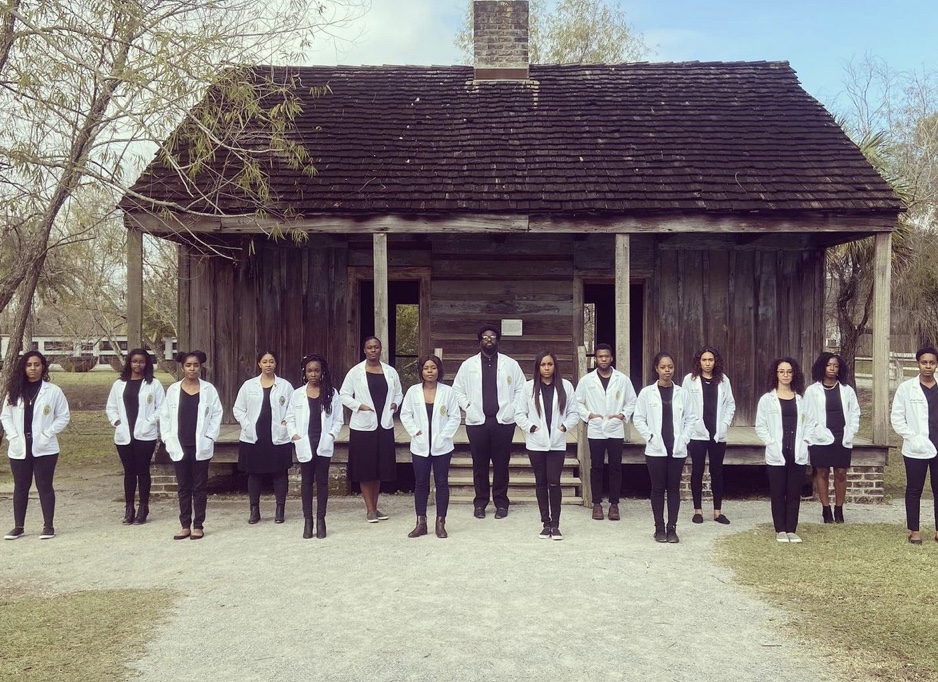
Photo credit: A group of black medical students posed in front of the slave quarters on a Louisiana plantation for a powerful photo. (Brian Washington Jr./Doyin Johnson)


It happened in Wallace, Louisiana on December 18, 2019.

On that day, a group of Tulane University medical students posed in front of the slave quarters of a Louisiana plantation for a powerful photo. Sydney Labat, one of the students, said this in an interview on Good Morning America:

Standing at the Whitney Plantation in front of the slave quarters of our ancestors with my medical school classmates . . . We are truly our ancestors’ wildest dreams. I think I speak for myself and my classmates that it was an extremely humbling experience, to say the least. We would not be here without the strength and determination of those enslaved and their strength to live and to press on.

Labat speaks of the resilience of her ancestors and she credits her ancestors’ resilience for her ability to pursue an education. I shared the photo (above) because it represents the realization of dreams that many people might label “impossible.” But seeing Labat and 14 of her Tulane University classmates in their white coats looked to me like a portrait of the realization of dreams, persistence against all odds and an emulation of the determination of the ancestors Labat spoke of. This photo of the students was posted to Twitter and was liked more than 65,000 times.

I like the photo, too —  a picture of good hope.

I cannot adequately express my emotions about seeing the photo of these students. No doubt, it brought up my deep concern about the well-being of black children in this country and the many disparities they endure. I can not begin to lay out those disparities in a coherent way, but I can cite this troubling research.

Black adolescents and young adults are at higher risk for the most physically harmful forms of violence (e.g., homicides, fights with injuries, aggravated assaults) compared with whites. In addition, black adults reported exposure to a higher number of adverse childhood experiences than whites.Disproportionate exposure to violence for blacks may contribute to disparities in physical injury and long-term mental and physical health. https://www.ncbi.nlm.nih.gov/pubmed/30139709

A study regarding youth and suicide revealed an age-related trend in racial disparities in suicide rates in elementary and middle school–aged children. The study, published in JAMA Pediatrics, showed that suicide rates for black children aged 5-12 were roughly 2 times higher than those of similarly-aged white children. https://www.ajmc.com/newsroom/racial-disparities-seen-for-black-children-age-512-in-youth-suicide-

A significant amount of research has documented the overrepresentation of certain racial and ethnic populations — including African-Americans and Native Americans —in the child welfare system when compared with their representation in the general population.Although disproportionality and disparity exist throughout the United States, the extent and the populations affected vary significantly across States and localities. https://www.childwelfare.gov/pubpdfs/racial_disproportionality.pdf

This researched information is definitely not a picture of good hope. The research deepens my concern, but what troubles me the most is that my grandchildren are growing up in a raciallly and ethnically divided world. When we raised our son, we certainly experienced racial discrimination. It was painful for all of us, and I hope beyond hope that my young grandchildren will not face the evil of discrimination. But I know better! I do not want to be pessimistic about it; I want to be optimistic that my grandchildren will not be “judged by the color of their skin” and that they will know the freedom to live out their dreams.

Tulane University Medical Students

So these Tulane University Medical students have given me a gift — a picture of good hope. And the photo of these students also introduced me to another place of hope: the Whitney Plantation, the only plantation museum in Louisiana with an exclusive focus on the lives of enslaved people.

73294CDC-A48F-4E27-ABE0-4DD30A9E02FFThe Whitney Plantation has restored buildings designed to encourage guests to enter the world of a Louisiana sugar plantation and to remember those who built and worked this property. Through an hour-and-a-half guided walking tour, a guide shows guests through slave cabins, a freedmen’s church, a detached kitchen and outbuildings, a 1790s owner’s house and memorials built to honor the enslaved.

22DDD58C-BBB8-40E5-AB21-DEA4D972D431
A stunning bronze memorial at The Whitney Plantation in Louisiana *

Guests learn about the lives of 350 people who were held in bondage on these grounds for over 100 years.

Visitors are able to view beautiful memorials built to honor over 100,000 people held in slavery in Louisiana.

Tickets for the tour are available at the Whitney Plantation’s website: https://www.whitneyplantation.org/

Information overload and emotional response

This blog post has included a bit of information and research. That’s the informational part. The truth is, though, that the harsh realities of divisiveness caused by racism, xenophobia and a host of other factors that divide us are not a part of the information we have. Instead, the realities of racism are part of our emotional angst. If we are honest with ourselves, we will realize that we receive informational material with a yawn. We have heard so many statistics and seen so much empirical evidence in our communities and schools that we have become numb to it. We have heard so much about disproportionate minorities in the criminal justice system and mass incarceration that perhaps we just try to block that information out. But we cannot block out our emotional response.

The only thing that will get our attention is a soul understanding of the pain of racism. Only then will we become agents of change, persons of conscience and advocates for justice. For me, this is a calling from God who desires that we “love our neighbors as we love ourselves.”

Consider these passages of Scripture.

In that renewal there is no longer Greek and Jew, circumcised and uncircumcised, barbarian, Scythian, slave and free; but Christ is all and in all.  — Colossians 3:11

Let mutual love continue. Do not neglect to show hospitality to strangers, for by doing that some have entertained angels without knowing it. Remember those who are in prison, as though you were in prison with them; those who are being tortured, as though you yourselves were being tortured.  — Hebrews 13:1-3

The alien who resides with you shall be to you as the citizen among you; you shall love the alien as yourself, for you were aliens in the land of Egypt: I am the Lord your God.  — Leviticus 19:34

Thus says the Lord of hosts: Render true judgments, show kindness and mercy to one another; do not oppress the widow, the orphan, the alien, or the poor; and do not devise evil in your hearts against one another.  — Zechariah 7:9-10

You have heard that it was said, ‘you shall love your neighbor and hate your enemy’. But I say to you, love your enemy and pray for those who persecute you.
— 
Matthew 5:43-44

May each of us listen carefully to the words of Scripture and allow those words to inspire us and may that inspiration compel us to end divisions that harm. May we be inspired to promote unity and justice. May we be inspired to paint a picture of good hope to guide our world.

* Photo credit: https://www.whitneyplantation.org/photo-gallery/


Activism, Advocate, Black History Month, Challenge, Change, Courage, Covenant, Injustice, Justice, Racism, reconciliation, Repair the world, Segregation

I NEED YOU to join the fight for change!

24E7C406-2AD0-47CB-A702-2E259A76DCC3
We are well into Black History Month, also called African American History Month.  We celebrate it every year in February. All manner of celebrations and commemorations happen during this month, from school plays, choral concerts, historical dramas to formal tributes and ceremonies in cities, colleges and churches. In the midst of this month, I have been contemplating the idea of white fragility drawing on the books, White Fragility by Robin DeAngelo and Radical Reconciliation: Beyond Political Pietism and Christian Quietism by Alan Boesak and Curtiss Paul De Young. I highly recommend both books to you if you want to advocate for racial justice.

A dear and very wise friend of mine would exhort us to know the history of black people, but more importantly, to enter into serious conversations about equality and unity. She would tell white people to accept the reality that we will never completely understand her history and that we should be sure our conversations include deep listening. She would remind us that the history of injustice to black people has not ended yet and that we must all continue our work for justice and equality. I want to share with you some of the history behind this month.

As a Harvard-trained historian, Carter G. Woodson, like W. E. B. Du Bois before him, believed that truth could not be denied and that reason would prevail over prejudice. His hopes to raise awareness of African American’s contributions to civilization was realized when he and the organization he founded, the Association for the Study of Negro Life and History (ASNLH), conceived and announced Negro History Week in 1925.

The event was first celebrated during a week in February 1926 that encompassed the birthdays of both Abraham Lincoln and Frederick Douglass. The response was overwhelming: Black history clubs sprang up; teachers demanded materials to instruct their pupils; and progressive whites, not simply white scholars and philanthropists, stepped forward to endorse the effort.

The Black Awakening of the 1960s dramatically expanded the consciousness of African Americans about the importance of black history, and the Civil Rights movement focused Americans of all colors on the subject of the contributions of African Americans to our history and culture.

B5AF969F-8A72-44B0-A65B-9EF5BCB8102E

Then the celebration was expanded to a month in 1976, the nation’s bicentennial. President Gerald R. Ford urged Americans to “seize the opportunity to honor the too-often neglected accomplishments of black Americans in every area of endeavor throughout our history.” That year, fifty years after the first celebration, the association held the first African American History Month. By this time, the entire nation had come to recognize the importance of Black history in the drama of the American story

There is so much more I could include, but I will finish with some random thoughts my friend would like for us to know.

— The G.I. Bill of 1944 was denied to a million black veterans of WWII (history.com). These things matter. PUBLIC POLICY throughout American history has deliberately and purposefully limited economic opportunities and advancement of black people.

— It never occurred to me that some white people thought black history month DID NOT involve them.

— During this Black History Month, I ask: Do the white people within our networks remotely get how glorious AND exhausting it is being black in America? Can we talk about why it’s exhausting? Can you handle sitting in an uncomfortable space for awhile? Can you handle it? Can you take it in without deflection, pointing fingers, becoming defensive or proclaiming yourself the victim? Can we REALLY talk?

And finally her heartfelt words about a confrontation that happened in her city, in a neighborhood she knows well, to two people who are her friends.

My soul weeps. My body trembles. Anger and fear take turns occupying the same space. Why? Two people that I hold in high regard experienced the policing of their bodies in a PUBLIC space by white people who feel they get to decide where black people can and cannot be!

As I learned of what occurred I was immediately grateful their positions (elected official and one running for office AND a friend who STEPPED UP) along with their “training “ allowed them to walk away from this experience. Yes this was potentially a life and death event.

43274C05-47A6-49F7-979E-B91258D1809CSo many what if’s ran through my mind. If you are black you will understand what I mean. If you are white, I CHALLENGE you to discuss this LOCAL event with your WHITE friends! I NEED you to discuss it in YOUR churches. I NEED you to discuss with YOUR family.

I NEED YOU to join the fight for change! YOU play a KEY role in ensuring change happens.

I thank my friend for challenging me and encouraging me, not only during Black History Month, but throughout time — every day, every month and for years ahead. To black people, Black History Month begins on January 1st and ends December 31st, and the message of the month for black people has been lifelong. As for those of us who are white, let us not be shackled by “white fragility.” Instead let us move boldly — and with courage — into our communities and confront racism wherever we find it. It is true that racism and white supremacy have been a part of our history always, but we can end this tragic injustice with resolve, unity, faith, courage and the blessing of God who created all people in One image. May God make it so.

Hate, healing, Holy Spirit, Hope, Love, Prayer, Racism, Spirit wind, Wisdom

Come Now, Spirit of Power!


CE768FCC-723B-4F8F-B86A-D871B338B1E7

Come now Spirit of power.
Come now quickly and seize this moment.
Come Spirit from all four sacred directions,
from every color and culture,
come and use this sorrowful moment for good.

Very often, the prayers of Bishop Steven Charleston become a part of my meditation time. His prayers have a way of calming my heart, comforting my spirit and inspiring me to greater works. His words are expressive and full of energy. He paints pictures of things as they are and things as they should be.

In response to the tragedies in El Paso and Dayton, Bishop Charleston speaks of the deep divisions in our nation and the old wounds that have been opened. Indeed. He is right. But then he calls us to better things, to a time for love that has the power to heal.

So let us pray this prayer today, in this moment, as we long for healing.

Come now Spirit of power, come now quickly and seize this moment. The conscience of our nation teeters on the edge of change. Old wounds between us have opened. Deep divisions have been revealed. We are stunned by the cost of our own behavior. 

Now is the time. Now is an historic opportunity for love. 

Pull prejudice from us like a poison. 

Draw out the fear that breeds our racism. 

Open our eyes to behold our common humanity. 

Silence the justifications and the denials before they begin and keep our eyes fixed firmly on the prize, not on the politics. 

Come Spirit from all four sacred directions, from every color and culture, come and use this sorrowful moment for good. Heal our racism now.

May God make it so.  Amen.


Art: “Four Sacred Directions” by Drea Jensen, 2002

Activism, Change, Christian Witness, Church, Community activism, Gun violence, Hate, Injustice, Mexican border, Mourning, peace, Perseverance, Politics, Prophetic, Racism, Repair the world, Social justice, The Christian Church, Violence

Taking Back Our World

5378F42A-B263-40F4-A454-D497E07BF325

Let’s take back our world! Let us join hands and, in the power of community and holy resolve, reclaim our world from white supremacists, racists and violent actors that threaten our people.

If not us, who? If not now, when?

After the 2012 shooting at Sandy Hook Elementary School in Connecticut that killed 20 young children, British journalist Dan Hodges wrote that the gun control debate in the U.S. was over. This is what he wrote: “Once America decided killing children was bearable, it was over.”

And then we let 2,193 shootings happen. 

The shootings that occurred this week offend us in a very deep place. You see, we are followers of Christ, the Prince of Peace. We are the people of God who know that thoughts and prayers and compassionate sentiments won’t end this kind of terroristic hate.  

The El Paso shooter told law enforcement that he wanted to shoot as many Mexicans as possible. His manifesto, which he posted on the 8chan online community  included details about himself, his weapons and his motivation. He described the El Paso attack as a “response to the Hispanic invasion of Texas,” and proclaimed that he was defending his country from “cultural and ethnic replacement brought on by an invasion.”

Most certainly, these words from an obvious white supremacist should offend every follower of God. His evil intent is also an offense to God. In response to such evil, perhaps we will raise our voices continually and persistently, without becoming weary. Perhaps we will resolve to take back our world, proclaiming God’s word in the darkness of evil just as the prophets did. Like them, perhaps we will persist tirelessly and with a holy resolve, for as long as it takes to end the evil that arises from racism and white supremacy. 

Perhaps our prophetic action will mirror that of the writer of Lamentations who wrote, “Arise, cry out in the night, as the watches of the night begin; pour out your heart like water in the presence of the Lord. Lift up your hands to him for the lives of your children.”

May God so embolden us.

Change, Children, Community activism, Courage, Dreams, Freedom, Inspiration, Justice, Little Rock Central High School, Perseverance, Racism, Segregation, Segregation, The Little Rock Nine

Growing Up Inspired: My Granddaughter and The Little Rock Nine

28332D92-A50E-4817-9663-6D13F00790D5June 16, 2012 . . . My three-year-old granddaughter standing among the bronze sculptures of The Little Rock Nine.

Her parents had told her the poignant story of The Little Rock Nine, but at age three she had no idea of the many ways their lives would impact hers. Because they crossed an invisible, but very real, line that divided black children from white children, they opened the door to educational equality in a racially divided state. Because their parents were brave enough to let their children breach the three stately doors of Little Rock Central High School, their world changed in unimaginable ways. And with that change, my granddaughter inherited the highly cherished right to equal education and all the opportunities that would follow. Because of that change, my granddaughter would grow up inspired.

In case you do not know about The Little Rock Nine, here is some background. 

On September 3, 1957, nine African American students — The Little Rock Nine — arrived to enter Little Rock Central High School only to be turned away by the Arkansas National Guard. Governor Orval Faubus had called out the Arkansas National Guard the night before to, as he put it, “maintain and restore order…” The soldiers barred the African American students from entering.

On September 24, 1957, President Dwight D. Eisenhower ordered units of the U.S. Army’s 101st Airborne Division — the “Screaming Eagles”— into Little Rock and federalized the Arkansas National Guard. In a televised speech delivered to the nation, President Eisenhower stated, “Mob rule cannot be allowed to override the decisions of the courts.”

On September 25, 1957, under federal troop escort, The Little Rock Nine made it inside for their first full day of school. The 101st Airborne left in October and the federalized Arkansas National Guard troops remained throughout the year.

They were nine solemn figures, nine teenagers just trying to do what every child up to age 18 had been mandated to do: go to school. Nine figures who entered the annals of American history the day they passed through the front door of Little Rock Central High School.

These nine African American students — Melba Pattillo, Elizabeth Eckford, Ernest Green, Gloria Ray, Carlotta Walls, Terrence Roberts, Jefferson Thomas, Minnijean Brown and Thelma Mothershed — are now immortalized in a striking memorial located on the grounds of the Arkansas State Capitol in Little Rock. The life-size bronze statues, entitled “Testament,” were designed and sculpted by Little Rock artist John Deering, assisted by his wife Kathy, also an artist. A comment from each of The Nine is found on individual bronze plaques identifying each student. Across the street sits the State Department of Education, just a few hundred yards from “Testament.” This Arkansas State Agency has been embroiled in this same desegregation lawsuit for over 50 years. 

Nine young students walked bravely, defiantly, yet filled with fear, in an act against prejudice and ignorance. These nine are heroes of every grueling story of segregation and racism in American history, every story we have heard and the millions of stories we will never hear.

So I am deeply moved by these photos of my granddaughter because there is deep meaning in each one. She seems to be looking up at the sculpture of Melba Pattillo (Beals) with what seems like admiration and awe. Dr. Beals grew up surrounded by family members who knew the importance of education. Her mother, Lois, was one of the first African Americans to graduate from the University of Arkansas in 1954. While attending all-black Horace Mann High School, Melba knew that her educational opportunities were not equal to her white counterparts at Central High. And so she became a part of the effort to integrate Central.

B3083DBA-2BEB-4137-B162-B8CB19B4AD64And my granddaughter stands in front of Little Rock Central High, a school she may choose to attend someday, a school she will be able to attend because The Little Rock Nine took a dangerous risk to make it possible.


CCBDA845-BD2D-42E4-85B2-28749F2EA762Finally, my granddaughter stands playfully on the steps of the Arkansas State Capitol. I know that it is possible that she may one day proudly walk through its golden doors as a state senator or representative. That is possible because nine Little Rock students were brave enough to be a part of changing history.


At three years old, my granddaughter probably was not very inspired by Central High School, the Little Rock Nine Memorial, or the Arkansas Capitol. But her parents took her there to see and to learn so that she would grow up inspired. When she is older she will remember what she saw and what she learned from that seemingly insignificant sightseeing trip, and she will realize that it wasn’t insignificant at all. It may just be what motivates and inspires her to follow her dreams, because now she knows that all of her dreams are possible. It’s all about growing up inspired. It’s what we want for every child.

Dr. Melba Pattillo Beals, Minniejean Brown Trickey, Elizabeth Eckford, Dr. Carlotta Walls LaNier, Mrs. Thelma Mothershed Wair, Dr. Ernest Green, Gloria Ray Karlmark, Dr. Jefferson Thomas, Dr. Terrence J. Roberts, you made sure that every child can grow up inspired. when you were just young teenagers. When you walked through the doors of segregated Little Rock Central High School, you did so much more . . . for every student who came after you and for my granddaughter