
anxiety, Calm, Contemplation, Feelings, grief, healing, Heartbreak, life, Loneliness, Loss, Lostness, Mindfulness, Pain, Pandemic of 2020, peace, Quiet, Rest, Restoration, Sacred Pauses, Sacred Space, Soul, Spirit, Spirit wind, Time

There Was a Time


There was a time when I believed that I was invincible, with all the time in the world. Lately, though, I have thought a lot about how quickly time passes and about how I tend to constantly say, “I don’t have time.” I have also been thinking about healing. The reason for my healing thoughts could well be because at least two parts of my body really need physical healing, and soon. I don’t have time to be incapacitated, or so I believe. I don’t have time for pain and I wonder if my two places of physical pain were of my own making. For instance, my wrist sprain — now an orangey ochre color from my knuckles to halfway up my elbow — that the doctor says will heal in 6 to 10 weeks is taking way too long to mend. 6 to 10 weeks is entirely unacceptable! Was my ungraceful fall in the kitchen due to my carelessness or my lack of mindfulness?

And then there’s the terribly painful throat invasion, allegedly identified as a cricopharyngeal spasm, that feels like choking with a large object stuck in my throat while something is tightening around my neck. Direct from Healthline.com: “Anxiety about the condition can aggravate your symptoms.”

Aha! Anxiety! Therein may be the source of many ailments. That, and a lack of rest, relaxation, quietness, peacefulness or mindfulness, all of which are highly touted methods of natural healing. Healing of the body, yes, but also the critically important healing of my heart, my mind, my soul and my spirit — emotional and spiritual healing. That healing is often harder than physical healing. 

So I turned my thoughts, while suffering incessant physical pain, on the subject of emotional and spiritual healing. My thoughts raised the question of what exactly is the difference between the soul and the spirit, and how in the world would I heal there.

Here’s my attempt at an answer. Most of us would agree that we consist of body, soul and spirit. In fact, the Bible affirms the existence of all three:

May your whole spirit, soul and body
be preserved blameless at the coming of our Lord Jesus.

(I Thessalonians 5:23). 

Our physical bodies are fairly evident to us, but our souls and spirits are less distinguishable. In the preceding scripture passage, the Greek word for soul is psuche (ψυχή), or as we might call it, “psyche.” This word “soul” implies our mind, our will and desires as evidenced by our personal preferences, choices, and emotional responses to life’s situations. Our soul is reflected in our personality. Our soul is our life.

“Spirit” is a completely different word. The Greek word for spirit is pneuma (πνεύμα). It refers to the part of us that connects with God and receives the breath of life from the Holy Spirit (Άγιο πνεύμα). Our spirit is our breath, the breath that animates and enlivens us from deep within. I like the way Theologian David Galston explains it: 

The soul is life, and the Greek word is psyche. The spirit is breath, and the Greek word is pneuma. Natural confusion exists between the [meaning of the] spirit and the soul since both words, in their roots, mean breath. But for the Greeks, there were two kinds of breath: the kind necessary for life, the psyche, and the kind necessary for [our very breath], the pneuma. In modern English, we might distinguish the two as life and energy.

I often ask my clients, mentees and friends this question: How is your heart? They usually have an understanding of how their heart is and why. But ask these questions — How is your soul? How is your spirit? — and the answers don’t come as easily. I’m not sure exactly why, but I think that, for myself, it is that I am able to more easily know my heart. I am more in touch with it. On the many times throughout my life when I was brokenhearted, I knew how my heart reacted and why. When I am sorrowful, happy, excited, surprised or feel many other emotions, I can place my hand over my heart and feel is as if I have literally touched it, that my heart has told me what emotion is there.

As for my soul and my spirit, well, they are deeper in me. In the innermost places of me, my soul mourns and celebrates and holds all manner of emotions. In my innermost parts, my spirit lies quietly within me always waiting for the brush of Spirit wings, waiting in stillness for the breath that animates and enlivens and ennobles. There was a time when I would always find time for the healing my soul and spirit needed.

So in the dense forrest of all of the 700+ words I just wrote, what is the lesson? What is the message from God we need to hear? Believe it or not, it’s not complicated. Isn’t it just like God to send us an uncomplicated message that we immediately make complicated? God’s bottom line here is easy, simple, uncomplicated: “Guard your heart, your soul, your spirit . . . all that is within you.

From Joshua
Now, vigilantly guard your souls: Love God, your God.

From Deuteronomy
Keep your soul diligently, so that you do not forget the things which your eyes have seen
and they do not depart from your heart all the days of your life.

From Proverbs
Above all, guard your heart with all diligence; for from it flow the wellsprings of life.

From 1 Thessalonians
And the God of peace sanctify you wholly, and may your spirit and soul and body be preserved complete, without blame, at the coming of our Lord Jesus Christ.


And that’s it. There was a time when I would write 700 more words to tell you specifically how to do that. But today, I am not going to tell you how to heal. The ways are individually unique and the paths are many. So I will leave you with just one path that you may choose to follow: the path that leads you deep within yourself to your sacred, quiet place and then implores you to listen for God’s whisper and wait for the breeze of the Spirit. Where? In a beautiful, peaceful place, under a starlit sky, in a quiet filled with sounds of music.

In these many months of pandemic, experiencing loss and lostness, loneliness and isolation, mourning and tears, may you find comfort in the words of poet, William Wadsworth, here turned into beautiful music by Elaine Hagenberg.


Though nothing can bring back the hour
Of splendour in the grass, of glory in the flower;
We will grieve not, rather find
Strength in what remains behind.


Complete text of anthem:

There was a time when meadow, grove, and stream,
The earth, and every common sight,
To me did seem
Apparell’d in celestial light,
The glory of a dream.

The rainbow comes and goes,
And lovely is the rose;
The moon doth with delight
Look round her when the heavens are bare;
Waters on a starry night
Are beautiful and fair;
The sunshine is a glorious birth;
But yet I know, where’er I go,
That there hath pass’d away a glory from the earth.

Though nothing can bring back the hour
Of splendour in the grass, of glory in the flower;
We will grieve not, rather find
Strength in what remains behind.

“There Was a Time” by Elaine Hagenberg
Poem by William Wordsworth
https://www.elainehagenberg.com/there…

Awakening, Bondage, Change, Creativity, Feelings, Freedom, Grace, Insanity, Mental health, Mindfulness, Nature, New Life, Night sky, Sacred Pauses, Self care, simple joys, simple pleasures, Skies, Stars, Transformation

From Insanity’s Bondage to Creativity’s Freedom

68C9C79A-BF63-420C-A135-37505D96C6C5
INSANITY
 

Not a word we are fond of. Nothing inspiring about the word. And when the word insanity is more than just a word, we shudder in its grasp. Insanity brings its own bondage, stealing one’s freedom to live, confiscating one’s creative expression. Insanity can be a complete, all-encompassing mental breakdown, even bordering on madness, OR it can be a state of being that most of us have experienced — irrationality, instability, disorientation, mania. Many people (noted scholars) have mused that “the definition of insanity is the most overused expression of all time.” (Salon.com)

Remember the declaration about “doing the same thing over and over again and expecting a different result?” Yes, I know you remember that definition, probably have said it yourself in an exasperating moment!

Where am I going with these bizarre introductory words?

I’m actually going to a place you may not expect. I’m going to the rush and swirl of color in one of my favorite paintings, A Starry Night by the Dutch Post-Impressionist painter Vincent van Gogh. The painting draws me in — into the little village with its steepled church, into a sky filled with sparkling stars, into the glorious luminance of the crescent moon, into the swirls of blues and whites and yellows. I have pondered many times what sort of mind and soul could have created a painting like this one.

The story behind A Starry Night is the unnerving story of Van Gogh. A few months after experiencing a mental breakdown on December 23, 1988 that resulted in the self-mutilation of his left ear, Van Gogh voluntarily admitted himself to the Saint-Paul-de-Mausole Lunatic Asylum. During the year Van Gogh stayed at the asylum, his prolific output of paintings continued and he produced some of the best-known works of his career. A Starry Night was painted by around June 18, the date he wrote to his brother Theo to say he had a new study of a starry sky.

A Starry Night was the only nocturnal painting in the series of views he saw from his bedroom window. In early June, Vincent wrote to Theo, “This morning I saw the countryside from my window a long time before sunrise with nothing but the morning star, which looked very big”. Researchers have determined that Venus was indeed visible at dawn in Provence in the spring of 1889, and was at that time nearly as bright as it could be. So the brightest “star” in the painting, just to the viewer’s right of the cypress tree, is actually Venus.

Too much information? Probably, but here’s my point that is not really about insanity at all. Rather, it’s about breaking free from bondage and taking back my life. You see, sometimes the sight of a big, bright morning star can replace whatever fear or angst I am feeling. Sometimes looking into the deep of a starry night can carry me to resplendent places. Sometimes even my slight insanity can transport me to my deepest expressions of creativity.

For me, insanity is my incessant scurrying around with too many things to do, a kind of mania. That frenzied scurrying is of my own choosing and therefore, leans a little too close to self-imposed insanity. I wonder if instead of that scurrying life of bondage, I could make time for moments of thought that would enable me to say something like what Vincent Van Gogh said from his asylum: 

“This morning I saw the countryside from my window a long time before sunrise with nothing but the morning star — the brightest star — which looked very big!“

Contemplate for a moment the insanity of a life encumbered — filled to overflowing with too many things to do — compared with a life of stargazing that might just awaken fresh and bright creativity in you.

As for me, I’m heading toward a spiritual transformation — a life of sacred pauses, a stargazing life, a grace-filled re-awakening!

I hope you are, too.

life, Mindfulness, Present moment, Reflection, Rest

In the Graceful Arms of this Present Moment


“Live in the moment.” It is a common admonition I have heard often. “Practice mindfulness,” is a more current admonition that points us to live in the present moment. We are urged to add mindfulness to our vast storehouse of spiritual disciplines. You might wonder what mindfulness means, so I found an answer from a trusted source.

Mindfulness is a mental state achieved by focusing one’s awareness on the present moment while calmly acknowledging and accepting one’s feelings, thoughts, and bodily sensations, used as a therapeutic technique. (psychologytoday.com)

Today, the thought that grabs me comes from Madisyn Taylor, who writes “rest yourself in the graceful arms of the present moment.” (https://www.dailyom.com/cgi-bin/display/inspirations.cgi?view=all )

It is an idea that seems so simple. Yet, resting in the present moment is not always simple. It can be very hard to do, often impossible to do. Sometimes we find ourselves hopelessly  stuck in the past, suffering the soul bondage of its power over us. Dwelling in the past can cause us to languish about no longer having the joys we once enjoyed, the people we loved, the places we used to live, the “best job I ever had.”  The past can also be a haunting place of reliving the past trauma, loss,disappointment or betrayal. Still, there must be an emotionally healthy place to put the past. Perhaps the difference in what we do with the past is a soul struggle between “letting the past have its place” and letting the past have its way. 

I have often let the past have its way in my life as an ominous presence that reminds me of secrets and lies, violence, abandonment, anger and so many other experiences that threaten me through my memories. The critical question I must ask is how do I let the past have its place. What can I do to embrace my past and let it be a guide on my journey, not an oppressor as I walk my journey? I wonder sometimes if I can put the past in its place, no longer allowing it to wield power over my memories and torment my soul. I know It’s worth a try.

And then there’s the future to contend with, that time in life we think we can control although we have no idea what it might hold. The future is unknowable, something to try to envision knowing I cannot. The future can look to us as bright as the sun or as dark as the center of a cave. The future can be dreaming dreams or internalizing dread and fear. The thought that ”the future is taken care of” graces me with a picture of God knowing my future and preparing me to greet it with hope.

“Rest in the graceful arms of the present moment.”

The words bring to mind the many, many times I have sung the beloved hymn, “Leaning on the Everlasting Arms.” 

What have I to dread? What have I to fear, leaning on the everlasting arms?
Leaning, leaning, safe and secure from all alarms.

I think maybe feeling safe and secure, without fear and dread, is exactly what helps us live in the present moment — not rushing through this beautiful life, not missing the real and deep beauty of it. Yet, we persist in pushing our bodies to accomplish its daily tasks without cherishing the workings of the body — its breathing, its moving, tasting and seeing, hearing and enjoying the aromas that surround us. And most often, we fail to pay close attention to the longings of our souls and the promptings of our spirits — what makes us whole, what fills our hearts with joy, what God is saying to us. We simply do not pay close attention to how is God calling us to satisfy both our soul’s yearning and the world’s deepest need.

Like me, perhaps you do not always cherish the present moment enough — all of it — this present moment we have been given by God’s grace. Life passes through us and around us in every passing moment, and we miss it.

And yet, cherishing every moment — our present moment — might just make magic in our lives, filling us with serenity and peacefulness, with lightheartedness and laughter, even bringing us to the honesty of our sorrows and the cleansing power of our tears.

I, for one, want to be continually mindful of my life — every moment of it — in my body, my mind, my world, my soul, my heart, in my yearnings and my sorrows . . . in my dreams and in the deepest desires that fill me with hope.

anxiety, Art, Community, Complaints, Dancing, Fear, Friends, healing, Home, Hope, Lent, Mindfulness, Pandemic of 2020, Perseverance, Prayer, Rebirth, Resilience, Rest, Spiritual growth

Times Terrifying and Beautiful

5079BD7F-9718-48CB-A9C2-95648BAC59BA
These days are terrifying and beautiful. After all, in times when we are harried with work responsibilities, we might just say, “I wish I was home in my pajamas!” So here we are at home — maybe in our pajamas — settled in, comfortable, rested, and maybe restless. At least some of us are settled in at home. Some of us are rested. Others, no doubt, find themselves restless. It makes me wonder if the opposite of rested is restless. So I turned to my trusted thesaurus to find out. It turns out that the antonyms — the opposites — of “restless” are peaceful, quiet, relaxed, settled, calm and unworried.

I don’t know about you, but I want to be an antonym of restless. That is, if a person can even be an antonym in the first place. I doubt it, but what I do not doubt is the existence of the kind of human resilience that can weather pandemics. Be assured that human resilience is not a “grin and bear it” state of being. Resilience is not merely being resigned to a situation or just sticking it out. Resilience is not passive acquiescence to challenging situations. Resilience resides in a soul that is able to persevere, to rest calmly through struggle, to abide in a state of mindfulness, to meditate on the goodness of God, to walk in the darkness until the light reappears.

I can certainly identify with the quote that has recently been going around: “And the people stayed home.” It’s striking that, in the midst of the fear and anxiety people feel in these pandemic days, many have recalled and published parts of this quote. Let us spend a few moments contemplating the quote in it’s entirety:

And The People Stayed Home

And the people stayed home. And read books, and listened, and rested, and exercised, and made art, and played games, and learned new ways of being, and were still. And listened more deeply. Some meditated, some prayed, some danced. Some met their shadows. And the people began to think differently.

And the people healed. And, in the absence of people living in ignorant, dangerous, mindless, and heartless ways, the earth began to heal.

And when the danger passed, and the people joined together again, they grieved their losses, and made new choices, and dreamed new images, and created new ways to live and heal the earth fully, as they had been healed.

– Kitty O’Meara

To be clear, I am not suffering this pandemic as one who has contracted the virus. I am suffering the forced isolation, the inability to reach for someone’s hand, to touch a friend, to embrace my grandchildren. And I have not been isolated only because of this pandemic; I have been isolated from others since my kidney transplant on November 12. That’s a very long time to be separated from my community. Through that time, a friend or two visited me, but we could not touch one another or be in close proximity.

And now the coronavirus has isolated virtually everyone, and I suddenly realize that we’re all in this together. It makes me wonder what everyone is doing at home. And it makes me hope that at least a few of us are doing as Kitty O’Meara writes, “Some meditated, some prayed, some danced. Some met their shadows.“

On the idea of meeting our shadows . . .  I consider Lent to be a time of confession, a time of looking into my heart of hearts, my soul of souls, confessing my sins to God and receiving God’s mercy and pardon. I emerge from my confession with my soul cleansed. Only then am I ready. I am ready to steel my heart and set my face toward the journey with Christ to the cross. and then prepare my heart for glorious resurrection.

My confession today is that I have cursed my isolation rather than giving it to God and allowing myself to enter into a place of rest and re-creation, a sacred space that would heal the anxieties of my soul. I confess that I did not dance or pray. I did not rest or make art. But the pandemic changed my soul’s response to my isolation. I found that I was no longer in post transplant isolation, I was now in pandemic isolation and it felt very different to me. It felt dangerous and potentially fatal. It felt far-reaching, pervasive and rampant. It felt lethal, at least potentially lethal.

In the face of the pandemic’s imminent danger, my soul stopped its complaining and began its healing, my healing. It was the healing I needed all along, but now an ominous virus flipped a switch inside me. I did art again for the first time since the transplant. I sang, I prayed, I meditated. And I met my shadow and re-discovered the hidden place where fear reigns within me. That was not a bad thing. Rather, it was a good thing that said to me, “Do not give power to your hidden fear. Let your hidden resilience have the power and let it rise up within you. You will be healed!”

I believed those words — literally, as I hoped for physical healing after my transplant; and completely, body and soul, as I accepted the spiritual and emotional healing my soul craved. I want to leave you with a poem written on March 11, 2020 by Lynn Ungar.

D87DE2F1-852B-4017-B25F-232CA8AB094B
Blackdeath.   Wikimedia Commons

Pandemic

What if you thought of it
as the Jews consider the Sabbath —
the most sacred of times?
Cease from travel.
Cease from buying and selling.
Give up, just for now,
on trying to make the world
different than it is.
Sing. Pray. Touch only those
to whom you commit your life.
Center down.

And when your body has become still,
reach out with your heart.
Know that we are connected
in ways that are terrifying and beautiful.
(You could hardly deny it now.)
Know that our lives
are in one another’s hands.
(Surely, that has come clear.)
Do not reach out your hands.
Reach out your heart.
Reach out your words.
Reach out all the tendrils
of compassion that move, invisibly,
where we cannot touch.

Promise this world your love —
for better or for worse,
in sickness and in health,
so long as we all shall live.

Lynn Ungar is a poet, and wrote this poem on March 11, 2020, in response to the Covid-19 pandemic.


Adventures, Beauty of Nature, Contemplation, Creation, God's presence, Introspection, Meditation, Mindfulness, Praise, Prayer, Psalms, Questions, Restoration, Sacred Space, Serenity, Silence, simple joys, simple pleasures, Soul, Stillness

“My Soul in Silence Waits”

85612761-C3E4-4F2A-ADDE-7BF472AE54D8
Photography by Jim Dailey: January 1, 2020, Lake Ouachita, Hot Springs, Arkansas

My dear, long-time friend, former Little Rock Mayor Jim Daily, sent me this photo this afternoon. Mayor Jim is a hiker, a camper, a photographer and a naturalist. He loves the outdoors. He is a person of profound thought, and he spends a good amount of his time in thoughtful contemplation — on a lake or an Arkansas River, in a verdant valley or on a mountaintop. He frequently blogs on what he calls his “adventures,” and his blog is filled with thoughts about wherever he is and whatever beauty he has found. For Jim, every day is a new adventure, and his adventures hold sway over him. They change him in so many ways

One more thing — As a tribute to my friend, Mayor Jim, I want to introduce you to his Blog, which you may enjoy viewing at this link: Last Pair of Boots

His Blog, called “Last Pair of Boots,” tells a poignant story — of nature’s beauty, of God’s presence in it, of friendships, of Arkansas’ and America’s holy places, of worship and contemplation and prayer. Here’s what Jim says about naming his blog:

The name “Last Pair of Boots” came to me when my ten year old boots broke down and it occurred to me that at my age the new pair of boots might be my last pair. Metaphorically my boots represent the trails and travels of life.

10648F62-3E20-4939-86D9-97A565CFD322
Whitaker Point … aka Hawksbill Crag! At the Buffalo National River

This is such a thought-provoking description that fits Jim’s love of nature’s splendor. He also hints at endings, not in a melancholy  way, but in words the reveal his life of contemplation and curiosity. Jim’s outings are hiking and wilderness camping, skiing, fishing, exploring, visiting every Arkansas State Park through his job as Arkansas Tourism Director, finding friendships in every small Arkansas hamlet, searching for Arkansas treasures,
finding God in all the places and faces.

I imagine he will hold all of these adventures in his heart now that he has finished his work as Arkansas Tourism Director this past December.

1F0E0755-F01A-4E45-A3BB-92C22820A3D8
HamfestWhatever it is …  it’s gotta be something special to celebrate 50 consecutive years on top of the second highest mountain in Arkansas — Rich Mountain — in the beautiful Ouachita Mountains, Queen Wilhelmina State Park.

Congratulations, Jim, for your many years of service to the citizens of Little Rock and of Arkansas. Your wisdom, your love of nature, your unquenchable thirst for adventure and your unfailing commitment will remain as one of our enduring Arkansas’ treasures.

As I mused about Jim’s outings tonight, I asked myself about the places and times that created my contemplative times. They are few, too few.

For whatever lame reason, I do not take the contemplative times I need. I think that my kidney transplant on November 12th pushed me into a soul-need that beckons me to solitude, silence, contemplation, adventure — new things to examine in the stunning beauty of nature. It calls me out of the house and into the sunlight or under the stars of the night. It calls me to breathe in the fresh air of God’s creation and, with that breath, to take in the miracle of God’s presence.

Now that I’m retired and have time, I tend to fill my time with all manner of preoccupation. At times, I feel busy and frazzled and don’t really know why. Why am I unable to make enough time to spend in the mesmerizing beauty of nature, keeping silence in God’s creation? Why do I not spend time beside still waters, listening to the silence of a pond? What is wrong with my soul that it is rarely drawn to God’s quiet places, and my heart that does not often seek God’s presence in silent space?

I dare not answer those questions until I am prepared to make some life changes. But what I can do is to hold near these reminders of what God desires for me until I can change my life. These reminders might even inspire me to seek change:

O Lord, my heart is not lifted up,
my eyes are not raised too high;
I do not occupy myself with things
too great and too marvelous for me.

But I have calmed and quieted my soul,
like a weaned child with its mother.   
(Psalm 131:1-2)

For God alone my soul in silence waits.   (Psalm 62:1)

The Lord is my shepherd, I shall not be in want. He makes me lie down in green pastures, he leads me beside quiet waters, he restores my soul.   (Psalm 23:1-3)

Let him sit alone in silence, for the Lord has laid it on him.   (Lamentations 3:28)

To you, O God, silence is praise.   (Psalm 65:1)

It is never a bad thing to offer God the praise of silence, to invite God into my contemplation and to allow God’s presence in my moments of prayer and meditation. The truth is that God has always been present with me. But my deepest desire is that I be present with God. As the Psalmist wrote, “My soul in silence waits.”

May those words become my words . . . and yours. Amen.

Acts 42, anxiety, Awareness, Beauty of Nature, Birdsong, Creation, Faith, Fear, Grace, healing, Hope, Humbug, journey, Life Journeys, Light, Mindfulness, Nature, New Year, peace, Quiet, Reflection, Self Awareness, Self care, simple pleasures, Soul

Finding Simple Pleasures

EF207F13-682F-4572-BB5B-F4AAAB1EDA50
A Saturday of football — what a simple pleasure! I am a fan of certain teams (Roll Tide!), but I am definitely not a football fanatic. And yet, this morning while half-watching Sportscenter, I realized that watching with Fred, not having to focus that much, resting in the ordinary seemed like a simple pleasure.

There are many simple pleasures, of course, far more soulful than watching football — taking a walk in the splendor of nature, listening to birdsong, snuggling with your puppy, looking up at the night’s moon and stars, taking a walk on a labyrinth’s spiritual path . . . There are so many more simple pleasures in life, and most of them do not even require a trip to the grocery store. They cost us nothing, but their worth is priceless.

These are the simple moments that caress the soul, bring peace and calm to the heart and enliven a wounded spirit. These moments, and others like them, are the moments we desperately need, especially in times when we are burdened with the weight of the world, languishing in darkness.

I have learned some things about a wounded spirit: that woundedness happens to all of us; that “dark nights of the soul” happen to everyone at some time in life; that the wounded spirit does not always require sophisticated remedies; that a simple pleasure is sometimes all it takes to begin a healing journey.

The important factor is self-awareness, being mindful of the soul’s health, accepting the reality that healing will require us to self-intervene and that our intervention could begin with entering into a simple pleasure. One worthy New Year’s resolution is to intentionally identify the simple pleasures that feed our souls and then to allow a simple pleasure to enfold us in contemplation.

Normally, I would say “bah humbug” to New Year’s Resolutions that we make, break, and then feel guilty about for an entire year! But a resolution to discover the simple pleasures that give us life is one worthy resolution. So I challenge you to look and listen for the simple pleasures that are “you,” and to hold them near whenever you are experiencing a “dark night of the soul.”

“There comes a time when both body and soul enter into such a vast darkness that one loses light,” wrote Mechtild of Magdeburg. There comes a time when the soul “sinks down into the night.”

Her words are the words of one who knew spiritual journey and seasons of darkness. There is no doubt that at some time throughout your life, you will find yourself traveling the spiritual night. I do know this within my place of deep knowing: when I give myself to spiritual journeying, allowing myself the peace of a simple pleasure that calms my spirit, I realize that God always invites us beyond where we are.

God guides us on the spiritual journey that sometimes means winding through a dark wood. The darkness may frighten us, but it is a necessary part of the trip. When we panic in the darkness, we must try to understand that it’s a holy dark and that the idea is to surrender to it and journey through until we reach God’s light.

And then on to simple pleasures!372C6D47-6761-412E-AACF-420F5B1EE76D

God will be present beside us —- in the light of simple pleasures and in the soul’s dark night.

That is the gift, the grace, that God has freely given to us, and for that we give thanks.

Awakening, Awareness, Contemplation, Creation, Daybreak, Epiphany, God, Grace, Light, Mindfulness, Reflection, Spiritual awakening, Spirituality or Religion?, Transformation

Spiritual Awakenings

D0C663B9-9DCA-46A8-9EDB-68C718F86643
In God we live and move and have our being.    Acts 17:28

In years past, I would often hear talk of spiritual awakening. From pulpits around the world, there were proclamations of real and true spiritual awakening. But spiritual awakening never seemed to happen in my church. Yet some group somewhere in the world, or even some person, was always having one. To my great disappointment, I didn’t seem to be able to. I prayed. I studied the Bible. I listened to sacred music. I studied spiritual awakenings in history. I went to church a lot. I looked for a sunrise in my soul. I longed for the dawn to break in on my life with the brilliance of the rising sun.

But my spiritual awakening never came. I’m not sure what exactly I was expecting to happen so that I would know I had experienced a spiritual awakening. Would it fall upon me? Would it happen inside me? Would it be grand and glorious or quiet and holy? I really wasn’t as naive a Christian as it seems, but spiritual awakening was truly a religious mystery to me. And then I stumbled upon a very weird offer on the internet.

Click here to get your free MP3. In the first time in over 4 years, it [the spiritual awakening] is happening again (it’s even bigger this time around) and you can participate in this (click here now!) special quantum energy experiment too. Registration for this experiment includes a complimentary MP3 gift, called the Bliss Bath™ that is designed to start dissolving low vibrations (like worry, fear, and doubt) and start unblocking miracles in your life in just 7 minutes! This gift could open the doorway to miraculous shifts in your life and bathe you in the same energy of the quantum field.

Who knew that a real spiritual awakening could happen after just 7 short minutes of watching a video of low vibrations! I read more and learned that 4 years ago, experts carried out what they claimed to be “one of the largest global spiritual awakening experiments in the world.” Their experiment included a faculty of teachers, healers, scientists, inventors, and energy healing pioneers. They used ‘quantum energy’ on tens of thousands of people and included breathing techniques and mindfulness exercises to heighten the volunteer’s awareness; both spiritually and physically. After several weeks of daily consciousness work, thousands of people reported many ‘common’ and often ‘strange’ signs of a personal spiritual awakening! 

An astonishing 94.2% of them claimed that their lives had been made better. In fact, respondents reported a wide variety of effects, from turning on psychic powers to even “feeling surrounded by miracles.” And then the respondents compiled a list of the top ten positive outcomes they experienced:

  1. You have increased empathy and intuition.
  2. You feel drawn to nature.
  3. You have an aversion to negative people or behaviors.
  4. You desire a united community.
  5. You believe that all life is sacred.
  6. Your consciousness feels renewed.
  7. You begin living in “The Moment.“
  8. Your inner peace is increased
  9. Compassion and positivity surges through you.
  10. You feel enhanced authenticity.

Enough of that! Far too much information on something that actually happens in secret, in the soul, in sacred moments spent alone with God. That’s about the best description I know of “spiritual awakening.” Truth is, in those days I was searching for something real, an anointing from God, a transfiguration. I wanted my life to be transformed.

In the years since my first quest for spiritual awakening, I have learned some important things. One is that spiritual awakenings have come to me many times, in moments of glorious splendor and in moments of gentle transformation I hardly noticed. The important part is not striving for a personal awakening; the important part is waiting for it expectantly and desiring it deeply.

“Contemplative Monk,” a group focusing on intentional spirituality, offers a Facebook community that encourages one another on a spiritual journey toward a more contemplative life. The group posts daily thoughts designed to help create spiritual focus. Interestingly, today Contemplative Monk offered a piece entitled “Twelve Symptoms of Spiritual Awakening.” They are infinitely instructive, so I include them here:

1. An increased tendency to let things happen rather than make them happen.
2. Frequent attacks of smiling.
3. Feelings of being connected with other and nature.
4. Frequent overwhelming episodes of appreciation.
5. Acting spontaneously rather than from fears based on past experience.
6. An unmistakable ability to enjoy every moment.
7. A loss of ability to worry
8. A loss of interest in conflict.
9. A loss of interest in interpreting the actions of others.
10. A lost of interest in judging others.
11. A loss of interest in judging self.
12. Gaining the ability to love without expecting anything in return.

When I look at these twelve symptoms, I can’t help but measure myself by each one. I find that I am profoundly grateful when I discover that I have even one of these symptoms, that I notice even a small inching towards smiling or enjoying every moment or finding myself free of worry. I know so much more about spiritual awakening than I did in years past because I know I have experienced it many times in ways big and small. What I have learned most assuredly about spiritual awakening is that it comes from God as a gift of grace to God’s children.

I recall the time in Scripture when the Apostle Paul stood in front of the Areopagus and instructed the Athenians on the true meaning of spiritual awakening as opposed to religious idolatry.

I see how extremely religious you are in every way. For as I went through the city and looked carefully at the objects of your worship, I found among them an altar with the inscription, ‘To an unknown god.’ What therefore you worship as unknown, this I proclaim to you. The God who made the world and everything in it, he who is Lord of heaven and earth, does not live in shrines made by human hands, nor is he served by human hands, as though he needed anything, since he himself gives to all mortals life and breath and all things. From one ancestor he made all nations to inhabit the whole earth, and he allotted the times of their existence and the boundaries of the places where they would live, so that they would search for God and perhaps grope for him and find him — though indeed he is not far from each one of us. For “In him we live and move and have our being” . . .

— Acts 17:22-28 (NRSV)

Therein lies the secret, the mystery of a spiritual awakening so real and true in us that we can say “in God we live and move and have our being.”

May God make it so.


F9FA5D3C-53F0-4043-8A72-F9E2D63F7349

On another note, please pray for me as I look toward my kidney transplant on November 15th. I am grateful that you are walking with me on this journey that often felt so frightening. Your thoughts and prayers mean so much. If you would like to read the story of my illness, please visit the Georgia Transplant Foundation’s website at this link:

http://client.gatransplant.org/goto/KathyMFindley

“Go Fund Me” page is set up for contributions to help with the enormous costs related to the transplant, including medications, housing costs for the month we have to stay near the transplant center, and other unforeseeable costs for my care following the transplant. If you can, please be a part of my transplant journey by making a contribution at this link:

https://bit.ly/33KXZOj

Awareness, God, God's presence, Knowing, life, Mindfulness

Knowing

A194BF2D-E855-4842-9DA4-DD00794DC94C
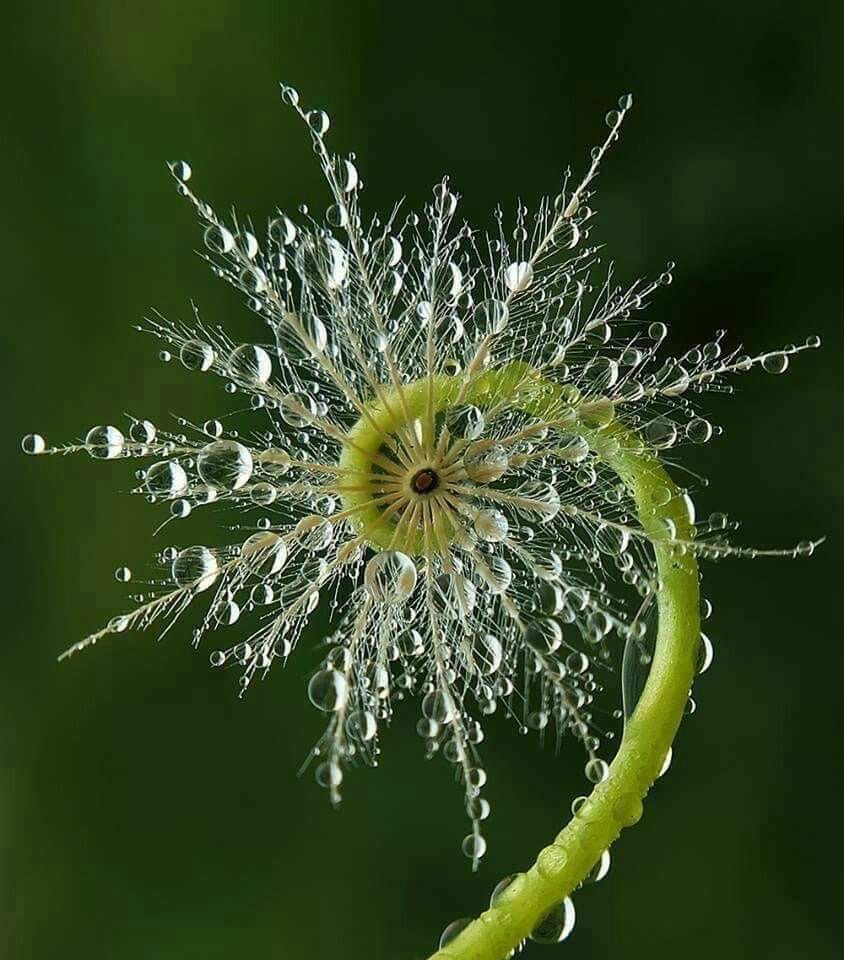
Photo credit: Amazing shot of a fiddlehead fern adorned with morning dew drops by Tristan Robin Blakeman.

I can’t readily recognize what in the world the image in this photo might be. It’s beautiful, unique, provocative, a bit strange and very unfamiliar. I just don’t know what it is . . . except that I discovered its photo credit.

Some things simply defy our knowing — 
Moments full of meaning that pass too quickly for us to understand them;
Sights too stunning for every-day, ordinary descriptions;
Sound that comes from the wind around us that we simply cannot name;
Music so deeply moving that we cannot even speak its origin.

The truth is that life is full of things we cannot know, and also devoid of things we cannot know simply because we fail to take notice. We fail to slow ourselves down enough to hear or see or know. Our awareness may be compromised for any number of reasons, like being preoccupied with life “things,” taking on too much responsibility, focusing on too many aspects of life.

Awareness is one of life’s needful things, but is also difficult to master. Kent Nerburn, in his book Voices in the Stones: Life Lessons from the Native Way, says this wise word:

We are quick to draw lines where our awareness stops. Our streets, our alleyways, our history on the land—these form boundaries enough for us. But there are truths that lie beneath our consciousness, just as there are truths that lie beneath our feet. That we do not know them does not mean that they do not exist, only that we do not have the patience and humility to hear.

It seems to me that awareness — knowing — opens us up to the mind of God, to the struggles of those around us, to the incomparable beauty of creation, to the stirrings of our own hearts. But we must learn to “know.”

Richard Rohr might say that we must keep our hearts wide open to unfamiliar and unexplainable ways of knowing. I couldn’t agree more about the value of knowing, the kind of knowing that requires awareness and mindfulness, the kind of knowing that changes life.  That kind of does, after all, open our hearts to the heart and mind of God.

F9FA5D3C-53F0-4043-8A72-F9E2D63F7349

On another note, please pray for me as I look toward my kidney transplant on November 15th. I am grateful that you are walking with me on this journey that often felt so frightening. Your thoughts and prayers mean so much. If you would like to read the story of my illness, please visit the Georgia Transplant Foundation’s website at this link:

http://client.gatransplant.org/goto/KathyMFindley

A “Go Fund Me” page is set up for contributions to help with the

enormous costs related to the transplant, including medications, housing costs for the month we have to stay near the transplant center, and other unforeseeable costs for my care following the transplant. If you can, please be a part of my transplant journey by making a contribution at this link:

https://bit.ly/33KXZOj


Beauty of Nature, Clouds, Contemplation, Creation, Fear, God's presence, Meditation, Mindfulness, Mountaintop, Nature, Ocean, Prayer, Reflection, Serenity, Silence, Skies, Spiritual Discipline, Stillness

Imposing Silence Upon Our Cares

3FEABE5F-CF16-4EB2-A5A2-89DD29771C74
Photography by Jennifer Blackwell

The only people who pray well are those who keep praying!
— Richard Rohr

Sometimes you just need to get away. You need to push back from your daily grind and be in a space that gives you life-restoring energy. The place may be a mountaintop or beside a sea. The place you love might be on a sailboat watching the changing colors of the sky. The need is a time of contemplation although I admit that contemplation is easier said than done.

Richard Rohr describes contemplation using the frightening word, “dying,” something we usually do not want to consider. Still his definition is compelling.

Contemplative prayer is one way to practice imposing “silence upon our cares, our desires and our imaginings.” Contemplative practice might be five or twenty minutes of “dying,” of letting go of the small mind in order to experience the big mind, of letting go of the false self in order to experience the True Self, of letting go of the illusion of our separation from God in order to experience our inherent union.

I am intrigued by the phrases “imposing silence upon our cares!” dying” and “letting go of the illusion of our separation from God.” We readily recall words we have long known: “Be still, and know that I am God,” and we know that we can move into God’s real and palpable presence. Still moving into God’s presence and lingering there is easier said than done. We are slaves to our lives, to our every day concerns and responsibilities. And sometimes times our responsibilities — though they may be important to us — take too much from us, robbing us of our life’s spiritual depth.

Again, Richard Rohr offers deep wisdom:

Each day that dawns is a celebration of the fact that we have been invited to consider how our lives are spent; how we embrace and recoil from the . . . darkness.

So for me, I would like to watch the hued, expansive skies — the moving clouds and the sparkle of the sun. I would like to find silence in the vastness of God’s creation, in a place where my view includes the beauty of verdant green pastures, the sound of the never-ending surf, the feel of the wind in my face, the shadows cast upon a high mountain. It takes the beauty of such a place to calm my spirit and stop the whirring of my mind. In such a place, I can try to enter into the posture of prayer and contemplation.

Don’t be fooled. Contemplation is called a practice because it truly is a practice that we must try again and again. Contemplation is not easy for many of us. It can even be disconcerting because, in truth, contemplation is meeting as much reality as we can handle in its most simple and immediate form — without filters, judgments, or commentaries. Contemplation moves us to the space our soul craves, and in that place we gain a renewal of our spirit.

Anything worth doing is worth practicing for as much or as long as it takes. Yes, at times it feels like forcing ourselves to be still for an interminable length of time and to force ourselves to fully concentrate on petitioning and listening prayer. No doubt, being silent with ourselves can be frightening. “Imposing silence upon our cares” can be threatening. But in the practice of contemplation we can hear God’s whisper clearer and sense God’s presence more deeply and fully.

I wish for you the time and space you need, the time to take in the breathtaking beauty of God’s creation, the stilling of your mind and the calming of your spirit that can guide you into the presence of God.

God is our refuge and strength, a very present help in trouble.

Therefore we will not fear, though the earth should change,
though the mountains shake in the heart of the sea,

though its waters roar and foam,
though the mountains tremble with its tumult.

“Be still, and know that I am God!”

The Lord of hosts is with us; the God of Jacob is our refuge.

— From Psalm 46 (NRSV)

Anger, Hate, Mindfulness, peace

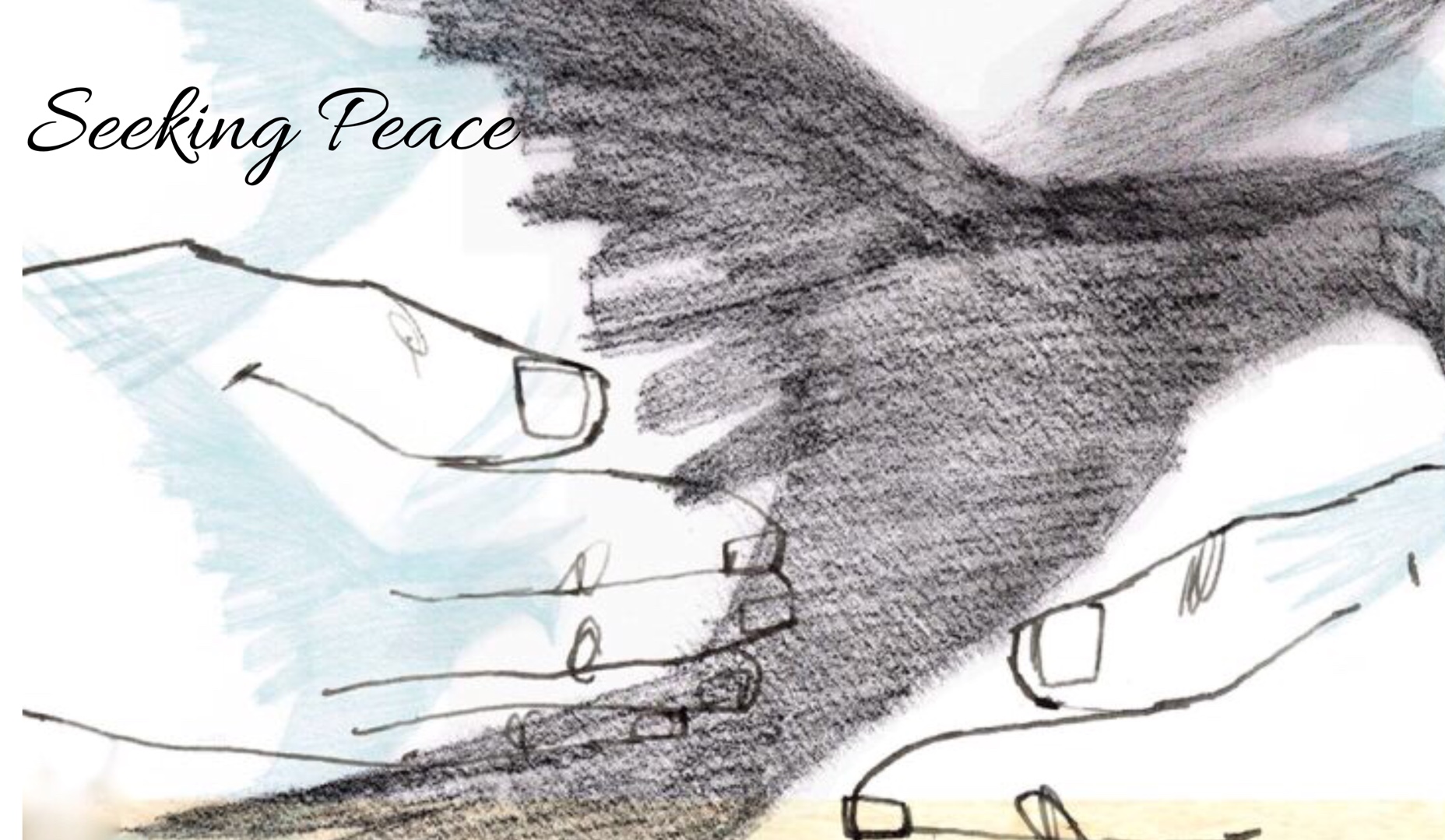
Seeking Peace

598F66C9-A7F5-45E5-9DFD-C9C2F1DA8A3D

I am generally a person of peace, typically quiet and non confrontational to a fault. Most of the time. Still, at times anger can spill out from inside me and, more importantly, I can nurse a good bit of hate. So this morning while reading my daily Richard Rohr meditation, the brilliant Franciscan hits me with some undeniable truth. Here it is:

What does it mean to be nonviolent? Coming from the Hindu/Sanskrit word ahimsa, nonviolence was defined long ago as “causing no harm, no injury, no violence to any living creature.” But Mohandas Gandhi insisted that it means much more than that. He said nonviolence was the active, unconditional love toward others, the persistent pursuit of truth, the radical forgiveness toward those who hurt us, the steadfast resistance to every form of evil, and even the loving willingness to accept suffering in the struggle for justice without the desire for retaliation. . . .

I’m not so sure about “the radical forgiveness toward those who hurt us.” That part sounds a little out of the realm of possibility for me. Maybe completely out of the realm of possibility! Luckily for me, Richard Rohr goes on to describe another way to understand nonviolence. He suggests that we look at nonviolence by setting it within the context of our identity and that we practice nonviolence by claiming our fundamental identity as the beloved children of the God of peace.

Through Holy Scripture, Jesus taught some undeniable truths: 

“Blessed are the peacemakers; for they shall be called the sons and daughters of God (Matthew 5:9)

“Love your enemies and pray for your persecutors, then you shall be sons and daughters of the God who makes the sun rise on the good and the bad, and causes rain to fall on the just and the unjust.” (Matthew 5:44-45). 

There’s that radical Jesus again challenging us in a rather remarkable way. In the context of his visionary nonviolence — radical peacemaking and love for enemies — Jesus tells us that we must be who we already are. Wow! Pretty stunning thought!

Richard Rohr would tell us that living nonviolence requires daily meditation, contemplation, study and mindfulness. These are his words of instruction:

Just as mindlessness leads to violence, steady mindfulness and conscious awareness of our true identities lead to nonviolence and peace. The social, economic, and political implications of this practice are astounding: if we are children of a loving Creator, then every human being is our sibling, and we can never hurt anyone on earth ever again, much less be silent in the face of war, starvation, racism, sexism, nuclear weapons, systemic injustice and environmental destruction. . . .

Gandhi often said that Jesus practiced perfect nonviolence. We have to ask ourselves how it was that Jesus embodied nonviolence so perfectly? The answer can be found at his beginning, at his baptism when he heard a voice say, “You are my beloved son; with you I am well pleased.” 

We do not always accept the announcement that God loves us. But Jesus does accept the announcement of God’s love for him. It happens at his baptism. In that moment, Jesus claims his true identity as the beloved son of the God of peace.

“From then on he knows who he is,” Richard Rohr reminds us, and “He’s faithful to this identity until the moment he dies. From the desert to the cross, he is faithful to who he is. He becomes who he is, and lives up to who he is, and so he acts publicly like God’s beloved.”

Would that we could live up to the persons we are, God’s beloved children of peace? Could it be that accepting God’s love will enable us to truly be a people who desire peace, who envision peace, who create peace in such a warring, violent, broken world?

There is no doubt we must be seekers peace for a world in need. The harder part may well be seeking peace inside ourselves — in our deep-down place where anger lives and where hate can thrive and destroy. May we understand God’s deep love for us. May we rest in God’s desire that peace will reign within us. May we comprehend God’s longing that we will become makers of peace.

May God make it so.


Bible, Birdsong, Change, Christ's Passion, Chronic illness, End Stage Renal Disease, Faith, Holy Week, Hope, Illness, Introspection, Lent, Mindfulness, Palm Sunday, Prayer, Psalm 23, Resurrection, Soft

On Being Soft

5716AC7C-6335-4D5F-8440-52F82A5C320F

Lent for me was quiet this year. I was sick through most of it, and I spent it pretty much alone, except for the sweet presence of my husband. I didn’t write much. I didn’t paint or craft anything. I was just quiet, and as the forty days passed, I was aware at times of being led by still waters.

Still waters was a spiritual and emotional space I discovered after I was diagnosed with end stage renal disease and throughout my lengthy hospital stays in 2014. So today, I am thinking about some life-sustaining words that were a part of my recovery —  the words of the Twenty-third Psalm, my own version of it.

The Lord is my shepherd. I lack nothing. I have around me and within me everything that I need.

The Lord invites me to stop and to lie down in lush, green meadows.
He leads me beside still waters, 
He restores and refreshes my soul.

He guides me along good and safe pathways for his name’s sake. And for my sake.

Even though I walk through the darkest valley, 
the valley of death’s shadow,

I will not be afraid, for you are close beside me.
Your grace and your care comfort me.

You prepare a place for me, even in the presence of my enemies.
You anoint my head with the oil of gladness.

My cup overflows.

Surely your grace and and your love will follow me all the days of my life,
and I will dwell with you forever.

We know the words of this Psalm far too well. We skip past it as a common text we memorized when we were young. We recite it easily. But the Psalm came to life for me during my year-long illness. It was in my heart, and often on my lips, during long, sleepless nights in the hospital. I experienced the Psalm’s comfort as never before.

As we near the beginning of Holy Week, my thoughts are of the resurrection that comes after the passion, for Christ, yes, but also for me. I’m not thinking of “us.” My thoughts tonight are focused on me, how I experienced my illness in 2014 as my own kind of passion, the passion of confusion, grief, worry, fear. I experienced an expansive and disconcerting view of my mortality, and I did not take to the stark reality of it.

I cannot, of course, even begin to compare my passion to the passion of Christ. Yet in some tender way, I experienced suffering. Palm Sunday comes this Sunday, and in Christian churches everywhere, the people of God will celebrate Christ’s “triumphal entry” into Jerusalem. We will raise our palm branches and shout “hosanna,” as well we should. But Palm Sunday moves us abruptly into the week of Christ’s passion, every pain-filled, grace-filled moment of it. We must not skip that part.

But back to my own passion story, the one that happened the year I thought I was going to die. First you must know a bit about me before the illness. I was persistent and stubborn, a fierce advocate for abused women and children. I did not flinch in a courtroom. I did not shrink when I faced-off with an abuser’s defense attorney. I did not cower standing between a woman and her batterer. I searched the nation to find legal advocacy for abused women and their children. I stood my ground against court-ordered child abuse that would consistently place children in the custody of an abusive parent. I railed against a system that refused to protect children. I was hard. 

The illness came and went over the course of a year. I did not die. Resurrection did come to me, in bits and pieces, slowly, but with the certainty of faith. I was no longer hard. I was movable, malleable, able to be blown about with good and gentle, life-giving breezes. We settled into a new home in a new state, and mostly, I embraced it over time. I fed hummingbirds, listened more deliberately for birdsong, and discovered the way of mindfulness.

When I recovered — slowly — from my illness, I remember the feeling of being soft, though I was not sure what that meant for me. Most certainly, God granted me the patience to move into my resurrection, to embrace it in God’s time, and to wait for it gratefully.

My family said that I emerged from my illness with a change in personality. I was quiet, they said, not like me at all. Inside myself, I knew that they were right. I felt the change. I sat in my own quiet for months. And even now I sense a quietness that wraps me softly as if it were a warm, light blanket. It’s a good place for me, this soft, warm, comforting place.

It’s a good place to continue my resurrection, to learn more about what it means to be soft. As it often happens, I stumbled upon this quote as I wrote this piece. I love the thought it expresses. It resonates with my soul.

Be soft. Do not let the world make you hard.
Do not let the pain make you hate.
Do not let the bitterness steal your sweetness.

— Iain Thomas

These days, I am sensing that a kidney transplant is imminent for me. So to go through that process, I will lean even more into my soft side. That will be a good emotional and spiritual space for me. Soft! Soft facing change and fear. Soft facing uncertainty and new, scary medications. Soft facing the hope of a healthy kidney bringing me a new beginning, a resurrection.

May God continue to lead me beside these still waters. It’s a good place for me to greet resurrection.


Complaints, Contemplation, Courage, Discovering, Emotions, Introspection, life, Mental health, Mindfulness, Reflection, Self Awareness, Vulnerability

What’s Underneath?

A07A5421-F042-40D4-A143-32391BBC79FBToday, a friend’s blog posed a provocative question. It was provocative enough to stop me in my tracks. Likely, I was right in the middle of a tirade of complaints when this question challenged me. This was the question: “If I let go of my complaints, what might be underneath?” *

The question presented a plethora of thoughts for me. It opened up that place underneath just for a second. But then I quickly moved back to the complaints. I have many. Or at least I believe I have many reasons to complain. But I’m realizing that complaints are surface things. They live outside of us and do not always reflect the inner emotions we are truly feeling.

A complaint develops easily and blurts out what’s on the surface of our lives. It flows easily off the tongue and falls upon any willing listener. The empathy we receive from that willing listener keeps the complaints alive. If someone listens to us and responds with caring about our complaint, it is then cemented. We have given it life, perhaps life beyond what it deserves.

This brings us back to the probing question: “If I let go of my complaints, what might be underneath?”

If gratefulness for the obvious graces that we have received replaced the urge to complain, we would be surprised at the result. If, instead of lodging a complaint, we spent some time exploring what lives “underneath,” we might well gain true insight into our emotional state. 

So we would do well to ask ourselves what’s underneath the complaint we speak out loud? Is it true that our complaint rises from a deep place inside of us but hides the emotion there?

If my complaint, for instance, is that I am overworked, perhaps underneath is the constant feeling that I’m being taken advantage of. If my complaint is that I have to endure an illness, perhaps the feeling underneath is that I fear suffering, even death. If I am terrified of death, perhaps I am not certain I left a good and lasting legacy. If I’m languishing in retirement, perhaps the emotion “underneath” is that, now that I am not “ministering,” I am questioning my self-worth.

You might be asking why this is important. It is important because whatever lives inside of us holds the power to harm us physically, emotionally and spiritually. What could we do instead of complaining? 

  • We might begin with silence that moves us a bit towards serenity.
  • Next, we will practice mindfulness that helps center us.
  • We woukd do well to contemplate gratitude for the graces of life. 
  • Then we should pray for insight, comfort and healing, not only praying for what we need from God, but also listening for God, abiding for a while in God’s presence.
  • Then we must take time for what might be the most important practice of all: introspection and self-reflection.

One of the primary goals of introspection is to better comprehend our inward life and to learn to focus it towards fulfillment of self. To go there is to invite vulnerability, healthy vulnerability that softens the hard places inside me that are wounded. Then we need to pull up from our inner resources just a little bit of courage.

When all is said and done, each of us is given a critical choice: do we complain about all that is not right? Or does courage enable us to look underneath our complaints and discover what our true emotions are?

For myself, I have to ponder these questions: What am I grieving? What have I lost? What do I fear? Underneath my whining and complaining (which I am very apt to do) I will find a gift, a treasure that is my very soul and spirit, and the emotions that abide there.

And as a bonus, I will have found a better way to live my “one wild and precious life.” **

* From A Network of Grateful Living

** From a poem by Mary Oliver. 

Advent, Contemplation, Hope, Mindfulness, Serenity, Waiting

Advent’s Invitation

ABA52B53-DF36-418D-BD71-FE6891967598What is Advent’s invitation to me? What does this season want to  teach me? What will I see in a new way as a result of Advent’s opportunities for reflection? So many questions!

“Wait,” the wiser ones tell me. “Wait for it.“

“This is the message of Advent — endure the dark places of this season knowing that the Messiah is coming again to bring light to your world and to your heart. Just wait.”

So it seems that Advent is not for impatient folk, the ones who want to get on with it, to get on to the lighthearted joys of Christmas. Advent’s call to ponder, to be mindful of the moment, and to wait catches the busy ones off guard. Our souls sing the adagio strains of “O Come, O Come Emmanuel” and the mellow hopefulness of “Come, Thou Long Expected Jesus,” while feeling in our waiting hearts the great need to belt out “Joy to the World.”

What exactly is Advent’s invitation to me? What is it that Advent promises that makes waiting worthwhile? What is it that this season has for me to learn?

These are questions I cannot answer, at least I cannot answer them at this moment. My hope is that if I am faithful in the waiting and the pondering, the answers of Advent will become clear to me. Until then, it is just one of those life mysteries that eludes me. 

In the meantime, Barbara Brown Taylor offers a wise word about it all

Advent invites us to awaken from our numbed endurance and our domesticated expectations to consider our life afresh in light of new gifts that God is about to give.

— Barbara Brown Taylor

Wait for it!

Advent, Contemplation, Darkness, grief, Hope, Light, Loss, Memories, Mindfulness, Pondering, Sacred Art, Seasons, Sorrow, Waiting

Pondering through Advent

23DCD324-DEFB-436C-8942-C4ADA60DA52AYesterday, I mused on the tenderness of this season of Advent. The waiting. The darkness. The need to linger in the season with a sense of mindfulness.

To be honest, I want to shop with reckless abandon and find fun toys for my grandchildren. I want to bake all manner of Christmas cookie. I want to decorate every corner of my house, and if I had my way, ours would be one of those houses that people drive by at night to see all the twinkling lights.

But on that outdoor winter wonderland, I definitely do not have my way. My husband’s days of hanging lights on the gutters, placing a Santa on the roof, and wrapping the trees in tiny, twinkling lights are over. He has happily passed out of that season of his life.

For me, yesterday was baking day, and I made a new discovery about mindfulness and cookie baking. The two activities pair well. Dropping cookie dough by the spoonful onto a baking sheet is slow work. It gives one time to ponder. And pondering a is a good thing to do in Advent days. Good lesson learned, with the added bonus of having 200 cookies in the house!

While dropping cookies, one by one onto an old, scratched up baking pan, I pondered. Some thoughts hinted at my inner sadness. Other thoughts were of friends who are very ill and are walking this Advent journey in darkness. Other friends have lost people in their lives, and on this day, they find themselves in mourning.

As I do in most Decembers, I find myself, along with others in my family, feeling the sadness of having lost my youngest brother, Pete, to cancer. It happened many years ago, yet the hurt remains.

No doubt, this Advent journey can be a tender time. Yet we journey into the days ahead, not with a spirit of despair, but with a glimmer of hope. Even in the darkness, we begin to awaken, knowing that something new will be born in us just as it has every Advent. This is the season when we wash our faces and rub our sleepy eyes until we wake up, eyes wide open to the Light that sleeps in a manger.

Mary treasured up all these things and pondered them in her heart.

— Luke 2:19 New International Version (NIV)

Like her, I am spending my Advent days pondering — moving in mindfulness while holding tender feelings, heart longings, mourning in the soul.

And, of course, I’m waiting in the darkness. But I know, without a doubt, that light will shine. It always does.


Advent, Bethlehem’s Star, Christmas, Darkness, Hope, Loss, Mindfulness

Today I Believe

039C1E96-30AE-46AA-8113-B98AD7414523

This season is a tender time. And oh, this darkness of mine. December brings it every year — that feeling of tenderness, of darkness. That is, if I stop to notice. Stop decorating the house. Stop shopping. Stop planning a lavish Christmas dinner. Stop baking dozens of cookies. Stop going to Christmas events — parties, pageants, gatherings, light displays . . . Just stop!

If we do stop in these advent days, we might just feel this tender time. It’s not Christmas yet, you know. It’s Advent, a time of waiting, hoping, believing. If ever there was a time to practice mindfulness, this is the season. As I move through Advent’s days, I want to move slowly and with the awareness of the tiny miracles all around me.

I want to remember past years and people I have loved. I want to linger beside the Chrismon tree that holds decades of white and gold ornaments and decades of memories. I want to be mindful of my own darkness and the tenderness that is nested in my heart.

Advent is most surely a tender time, and a time of darkness, a time when people of faith wait for the light to come to earth again. Advent causes me to wait for the light that always comes to come into my heart again. Until the light shines, though, through a little baby born in Bethlehem, days will be dark and tender.

I am remembering my youngest brother who would have had a birthday this month. The loss of him far too soon will always leave a lump in my throat. December, his birth month, is a tender time.

In these days, I miss the joy and laughter of my grandchildren. For them Christmas is all joy.  They are such a gift to me, and being separated from them by so many miles makes this a tender time.

My friend’s fourteen-year-old grandson lost his battle with cancer this week, and I cannot help thinking about what a dark and tender time this family is feeling because of this deep loss.

So many losses surround us. So much grieving. So much darkness waiting for the light of Bethlehem’s star and the infant that comes to bring light to our hearts.

I love this tiny prayer:

Lord, you have always lightened this darkness of mine; 
and though night is here, today I believe.

— Evening Office by Northumbria Community


Change, Discovering, End Stage Renal Disease, Freedom, healing, Illness, Life Journeys, Mindfulness, Rest, Restoration, Self care, Serenity, simple joys

I used to be . . .

734D4A65-1E4E-4705-A356-D13DF9C7F9B4I used to be . . . 

It’s a phrase I use a lot these days as I fight off the feeling that in retirement, I am useless. It’s not true, of course, that I am useless. But to be honest, I do feel just a little useless these days, at least some of the time. The reason? I used to be a bona fide workaholic. I used to feel important and productive. I used to be busy all the time, night and day. I used to be a perfectionist. I used to have just a bit of obsessive compulsive disorder, and all,of that drove me to a dangerous place.

The problem is that when you love and believe in your work so much, your work can become your whole life. Then things can get unbearable. So I admit that I am a recovering workaholic. I was the person that put in far more than 40 hours a week and never took a day off. But the critical question I had to answer was this: Is my ego at the root of my workaholism?

What was the job that was important enough to push me to work so hard?

I was a minister and a trauma counselor, and I was executive director of Safe Places, a nonprofit organization that served victims of violence. There was always someone in trouble, someone who had been battered by a spouse, someone trying to escape trafficking, a teen that was recovering from rape, a child that had been abused. So the work was never done.

I loved my work. I believed in it with all my heart. But I could not see what others saw. I could not believe the truth spoken by friends and colleagues, that I needed rest, that my work was hurting me. As much as I didn’t want to admit it, I was working myself sick. Circumstances, and maybe the alignment of the stars, brought me to a “come to Jesus” moment that forced me to take stock of my life. I realized I couldn’t do it all. So I took a very slight respite and pulled back from the constant work. In the meantime, as the stars would have it, we lost our federal funding, and suddenly Safe Places was gone. It was over. 

The stress did not end, though, because those that needed help kept calling . . . my phone. I had no staff left and, though I tried, I simply could not continue helping all these hurting people by myself. So I was forced into an unwanted and unplanned rest. 

During this “rest” time, grief and loss took over my psyche. But miraculously, my body began to rest. My pace slowed down. I was becoming mindful of every moment and what was going on in every moment. And in spite of the grief and sadness, my mind and spirit began to heal. What happened next was the shock of a lifetime. As my mind and spirit began to heal, I finally allowed my body to tell me what was going on. My doctors got to the bottom of it and diagnosed me with end stage kidney disease. Before I could even begin to take it all in, I was hospitalized and on dialysis.

I honestly believe I had worked myself to death, or at least nearer to death than I wanted to be. I spent a great deal of 2014 in the hospital trying to stabilize and then working to take my life back. It was hard work learning to write again, to think again, to walk again. But I made it through to a “new normal” that meant for me at least 7 1/2 hours of dialysis every day for the rest of my life, unless, of course, I am able to get a kidney transplant.

The experience of serious illness changed me. After I began to recover, people told me that I was unusually quiet. I didn’t speak much even when others around me were engaged in meaningful conversations. I knew that I was being quiet, quite unlike my normal personality. I was often silent when normally I would have had a great deal to say. I was different, to be sure, but inside myself I was okay. If I had to describe myself I would say that I was soft, broken open and free. And I was content in that place, although my family was concerned about me. I had traveled to a new place in my life, and it was a good place to be.

So here I sit in my “new normal,” tending plants, painting, cooking, writing, reading, and doing all things for pleasure. Most often I am still tempted to dive in and work on something until I am exhausted. But when the tiredness begins to creep up, something in my body remembers. Remembers I need to rest, to embrace stillness, to just “be.”

Still, I fight my old workaholic ways. Sometimes they push me to do things faster and better and longer. Sometimes my old workaholic ways push my button, the button that accuses me of uselessness, as in, “You are not worth much anymore! What are you going to do to change the world?”

Good news! I have finally given myself permission to not change the world. It has been a major shift for me, but I am seeing the truth more clearly, that I never could have changed the world anyway! So most of the time, when I feel myself pushing past my edge, I walk away. I write a blog post or fiddle with my flowers. I cook something fabulous or watch a little Netflix. So what will I do to live happily in these retirement days? I hope that I will keep studying the secret art of rest. I hope that I will continue to learn the grace of mindfulness, just cherishing the moment, every moment.

I used to be a workaholic. Not anymore.

Oh, and one more thing . . . a prayer. Though my faith tradition has always eschewed prayers to Mary, mother of Jesus, many very beautiful and meaningful prayers are prayed to her. I leave you with this one written by Mirabai Starr.

Mother of Consolation, help me to let myself be consoled. 

I hold it all together, Blessed One. 

I have convinced myself that it is up to me to keep the airplane aloft with my own breath, that I am the only one capable of baking bread and scrubbing floors, that it is my responsibility alone to alleviate the sorrow in the heart of every single person I know. 

But I have forgotten how to weep, Tender One. 

Teach me to reach out to the ones I comfort and ask for their comfort. 

Let me feel the tender touch of the Holy One on my cheek when I wake in the night, weary and frightened. 

Help me to be vulnerable and soft now, broken open and free.

— Mirabai Starr


Discovering, life, Lightheartedness, Mindfulness, peace, Self Awareness, Self care, Serenity, Sorrow, Spiritual growth, Tears

Mindfulness

9B848BD6-A066-4F2C-ADFC-E8EA7D4C99D6mind·ful·ness
ˈmīn(d)f(ə)lnəs/
noun

  1. the quality or state of being conscious or aware of something.”their mindfulness of the wider cinematic tradition”

  2. a mental state achieved by focusing one’s awareness on the present moment, while calmly acknowledging and accepting one’s feelings, thoughts, and bodily sensations, used as a therapeutic technique.

Now that we have an official definition of mindfulness out of the way, we can explore what mindfulness might mean in our lives. Mindfulness prompts us to maintain a moment by moment awareness of our thoughts, emotions, body sensations, spiritual longings and surrounding environment. Mindfulness asks us to pay close attention to our thoughts and feelings without self judgment, to fully accept the spiritual, physical and emotional space we are in, and to let go of any thought that there is a “right” or “wrong” way to feel. When we practice mindfulness, our thoughts tune into what we’re sensing in the present moment rather than rehashing the past or imagining the future.

Try this breathing meditation. It will take just three minutes out of your day.

Three-Minute Breathing Space Practice

  1. You are invited to attend to what is. The first step invites attending broadly to one’s experience, noting it, but without the need to change it. Experience your self in a wider and more open manner that is not selecting or choosing or evaluating, but simply holding—becoming a container for thoughts feelings or sensations present in the body and spirit. Linger here for about one minute.
  2. Now focus on your breathing. Let go of the wider view of step one and bring a focus that’s much more concentrated and centered on breathing in one region of your body —the breath of the abdomen, or the chest, or the nostrils, or anywhere that your breath makes itself known. The attention here is narrow, while in the first step it’s wide. Breath deeply and slowly for one minute.
  3. Now widen your attention again to include your body as a whole. Become aware of sensations in your body. Sit with your whole body, your whole breath. Spend this last minute moving back to being mindful of yourself, of who you are in te present moment, your whole being — physical, emotional and spiritual.*

Mindfulness will not allow you to miss the vibrant color of a daylily or the sweet scent of jasmine. Mindfulness will move you to notice the graceful flight of a butterfly and to really hear the delightful strains of birdsong. Mindfulness also leads you to be fully in touch with the depths of your spirit. Mindfulness creates a kind of choreography of awareness. Though it has its roots in Buddhist meditation, we find so many references to meditation in the Psalms.

Meditate in your heart upon your bed, and be still. (Psalm 4:4)

Let the words of my mouth and the meditation of my heart Be acceptable in Your sight, O LORD, my strength and my Redeemer. (Psalm 19:14)

When I remember You on my bed, I meditate on You in the night watches. (Psalm 63:6)

On the glorious splendor of Your majesty and on Your wonderful works, I will meditate. (Psalm 145:5)

So you might be asking, “What is the point?.”

The point is that all of us tend to rush through this beautiful life and miss the real and deep beauty of it. We push our bodies to accomplish its daily tasks without cherishing the workings of the body — its breathing, its moving, tasting and seeing, hearing and enjoying the aromas that surround us. And most often, we fail to pay close attention to the longings of our souls and the promptings of our spirits — what makes us whole, what fills our hearts with joy, what moves our soul, what is God saying to us, how is God calling us to satisfy both our soul’s yearning and the world’s deepest need. We simply do not cherish it enough, all of it, this life we have been given by God’s grace. Life passes through us and around us in every passing moment, and we miss it.

And yet, a life of mindfulness can almost make magic in our lives, filling us with serenity and peacefulness, with lightheartedness and laughter, even bringing us to the honesty of our sorrows and the cleansing power of our tears.

I, for one, want to be continually mindful of my life, in my body, my mind, my world, my soul, my heart, my yearnings and my sorrows, my dreams, and the deepest desires that fill me with hope for the future.

Tell me, what is it you plan to do with your one wild and precious life?
— From Mary Oliver’s poem, The Summer Day


* The Three-Minute Breathing Space Practice was developed by Zindel Segal, Distinguished Professor of Psychology in Mood Disorders at the University of Toronto Scarborough.