"Do not be afraid. You are worth more than many sparrows." —Jesus
Author: Rev Kathy
I am an ordained Baptist minister now serving in the world as retired clergy or minister-at-large. I am a wife, mother, grandmother, aunt, great aunt, and friend. I spent my career as a pastor, hospital chaplain, missionary to Uganda, spiritual director, patient mentor, victim advocate, trauma counselor, child forensic interviewer, teacher, writer, author, watercolor artist, iconographer, calligrapher, chef and blogger.
Before we begin Advent’s journey on November 29th, I think we need start a few days early to create some peace for our souls — enough peace to open ourselves to Advent’s life-giving message. For you see, the Advent journey always has a particularand unique message for each of us. The message weaves through our spirit as Advent days move on, gently sparking tiny lights is us that open us up to beginning again, to dreaming again. Advent nurtures and caresses us until we can dream new dreams.
Since we saw Advent past, we have languished in the chaos of 2020. Held in bondage by a terrible pandemic, lamenting racial unrest and the violence that caused it, watching political rancor and division. This was the year of “I can’t breathe” and also the year when we found that we could not breathe. Nor could we dream, because the future was unknowable — not at all conducive to dreaming.
And yet, there remains this good word — Psalm 126:1:
When the Lord restored the fortunes of Zion, we were like those who dream.
What does it look like to live as those who dream? The prophets, the psalmists, Mary, Elizabeth, Joseph, Simeon, Anna, the shepherds and the Magi—they were all dreamers. They received, discovered, and responded to God’s dreams for the world. In Advent’s journey, we travel step by step into the mystery and awe of God’s dreams and we pray that they will shape our reality.
Advent is for the dreamers in all of us — those who dream of a deeper connection with God and those who dream of a better world. Advent is for those who dream of comfort and also for those who have given up on their dreams. Advent is for those whose dreams have been crushed and for those who wisely teach us that dreams take soul time.
In this approaching Advent, perhaps we will dream alongside prophets and angels, Mary and the Magi. Perhaps we will seek and know God’s dreams for our world.
Will you pray with me?
In this Advent of expectation, God, draw us nearer to grace, that our songs of worship might echo in the hills and valleys of this journey and also through our lives.
In this Advent of expectation, grant us a sense of peace and silence and steady calm, that the hope within our souls might be the dreams we dream, the songs we sing, and the melody of our lives.
In this Advent of expectation, grant us a vision of a shimmering star in the night sky, that the path we follow might lead us from a stable to a glimpse of eternity. Amen.
The time for Donald Trump’s airtime is over! In my life, I have no available airtime for him, and I wish the media would follow my example. I’ve heard enough of his rants and tweets. I’ve heard enough of his incendiary speech. I’ve heard enough of his indiscriminate name-calling. I’ve heard enough of his lying. I’ve heard more than enough of his disrespectful, hate-filled, divisive rhetoric. More than enough!
My soul will no longer give Donald Trump airtime. Why? Because often my responses to hearing him were anger, disgust, self righteousness and even hate. And those emotions darken my soul. Those emotions do not belong in my soul at all, because they have a way of displacing love, compassion, gentleness, peace, hope, light and grace — all the good emotions that God plants in the soul through Spirit breath.
I think of the beloved hymn . . .
Holy Spirit, breathe on me until my heart is clean. Let sunshine fill my inmost parts with not a cloud between.
Breathe on me, breathe on me, Holy Spirit, breathe on me; Take Thou my heart, cleanse every part, Holy Spirit breathe on me.
— Words by Edwin Hatch, Music by B.B. McKinney
In these days of harmful politics, racial injustice, coronavirus fear and isolation, I need a Spirit-cleansing of my heart and soul. God has been ready to begin the cleansing for a while now. God has heard my repentant prayers admitting anger and hatred. God has waited patiently for me to embrace the stillness that can begin to heal my soul.
Stillness! Stillness longing for healing. Stillness whispering words of repentance. Stillness yearning for calm. Stillness seeking peace. Stillness waiting in solitude for the presence of the Healer of the Soul.
I’m going there — to that place of solitude where one can breathe slower, sigh deeper, listen attentively to the whisper of God and the breath of the Spirit. I’m going to solitude’s “luminous warmth” as John O’Donohue’s poem in which he describes the soul as the divine space.
There is a lantern in the soul, which makes your solitude luminous. Solitude need not remain lonely. It can awaken to its luminous warmth.
The soul redeems and transfigures everything because the soul is the divine space.
When you inhabit your solitude fully and experience its outer extremes of isolation and abandonment, you will find that, at its heart, there is neither loneliness nor emptiness but intimacy and shelter.
― John O’Donohue, Anam Cara: A Book of Celtic Wisdom
Right now, in the midst of the disheartening mood of the year 2020, I am entering the solitude I desperately need so that I can experience my soul as the divine space it is.
Politicians, continue your rancor in loud and powerful voice! I will not hear you from my place of solitude, from my soul’s divine space. And as for you, Mr. Trump, I have no further airtime for you. I refuse to sit in front of my television for another minute, anticipating — hoping — that you will finally say or do something appropriate, beneficial, worthwhile, productive, compassionate or kind.
Instead, I will change the channel to more soul-healing television. In fact, I will leave the television altogether and go to a better place, higher ground where peace and silence and reverence and awe can begin the holy work of healing my soul. I am taking a sacred pause from my life that has been so anxious and worried and isolated. I will wait there in that sacred space where my “soul redeems and transfigures everything.” Thanks be to God.
Two hundred and three pills! Twenty-eight injections! Fourteen inhalations and fourteen nasal sprays!
Every week!
But I am most focused on the 203 pills — every week! Presumably it takes that many to keep my body from rejecting my kidney and keep me otherwise healthy.
203 pills! Insignificant when I explore the state of my soul — what lies inside there, what its longings are, what has become of its dreams and, most of all, whether or not I am carefully and gently tending to it. A healthy body is important, of course, but I have been thinking more and more about how to keep my soul healthy. In some ways, that’s harder. And harder to explain.
So rather than launching into a chorus of my own words about how I might care for my soul, I looked to the words of my sisters —near and far, from the past and the present. There I found the depths of wisdom I needed on this day. So clear and true it is that so many women possess an extraordinary depth of wisdom. Their voices speak their truth, and sometimes ours. Their voices call us to stand taller and to rise higher. They call us to dream and to reach into our souls to find our dreams. These wise and wonderful women invite us to care for our souls. So hear their voices and listen for whispers that give strength to your soul.
Get in touch with and resurrect the free spirit deep inside me. Being one with the spirit allowed me to soar above my everyday reality. I marveled at the beauty of all life and savored the power and possibilities of my imagination. — Maria Nhambu
Of all the paths you take, follow only those where your heart is wide open, mind enriched and your soul learns to dance. — Nikki Rowe
A wise woman wishes to be no one’s enemy; a wise woman refuses to be anyone’s victim. — Maya Angelou
We were willing to explore and be surprised. Willing to trust that there was beauty out there and love and joy. Ready to have our hearts touched and our souls hugged. — Meara O’Hara
You will never see me surrender, never see me cry, but you will often see me walk away. Turn around and just leave, without looking back. — Charlotte Eriksson
Big spirits don’t fit in small spaces.Our energy is built for open fields and wide places, room to breathe — room to grow.Room to live authentically and room to roam. — Nikki Rowe
I am homesick for a place where silence is the only language, love is the only religion, and freedom is not something to be fought for…. — Samiha Totanji
When we discover who we are We will be free — Mimi Novic
I never said it was easy to find your place in this world, but I’m coming to the conclusion that if you seek to please others, you will forever be changing because you will never be yourself, only fragments of someone you could be. You need to belong to yourself, and let others belong to themselves too. You need to be free. — Charlotte Eriksson
We have not been abandoned. We have, perhaps, in that leaving been given the gift of ourselves in a new, deeper, and more lasting way. ― Macrina Wiederkehr
If you’re always trying to be normal you will never know how amazing you can be. — Maya Angelou
I know that no one is my judge. I live according to my own conscience and value discernment which is governed by Holy Spirit. I know my intentions and I walk my path with a clear conscience. — Mishi McCoy
The truth is, in order to heal we need to tell our stories and have them witnessed…The story itself becomes a vessel that holds us up, that sustains, that allows us to order our jumbled experiences into meaning. As I told my stories of fear, awakening, struggle, and transformation and had them received, heard, and validated by other women, I found healing. — Sue Monk Kidd
You can’t put a leash on me. I’m unleashable! — Tiffany Winfree
All too often we bemoan our imperfections rather than embrace them as part of the process in which we are brought to God. Cherished emptiness gives God space in which to work. We are pure capacity for God. Let us not, then, take our littleness lightly. It is a wonderful grace. It is a gift to receive. At the same time, let us not get trapped in the confines of our littleness, but keep pushing on to claim our greatness. Remind yourself often, “I am pure capacity for God; I can be more.” ― Macrina Wiederkehr
you got to figure out which end of the needle you’re gon be, the one that’s fastened to the thread or the end that pierces the cloth. — Sue Monk Kidd
Steal my wild heart, but do not ask me to live under an umbrella when I like being soaked by the rain. — Jacqueline Simon Gunn
Honeybees depend not only on physical contact with the colony, but also require it’s social companionship and support. Isolate a honeybee from her sisters and she will soon die. — Sue Monk Kidd
I’ve never been a woman who will settle to fit in, i’d always have rathered find a little world all on my own. If people come they come and if they go they go, but for me staying authentic to my soul’s purpose is all i’ll ever know. — Nikki Rowe
You may write me down in history With your bitter, twisted lies, You may trod me in the very dirt But still, like dust, I’ll rise. — Maya Angelou
You have to find a mother inside yourself. We all do. Even if we already have a mother, we still have to find this part of ourselves inside. — Sue Monk Kidd
Do you want to paint your life using two colors (good and bad) or do you want to paint the best piece of your life with colors beyond your wildest imagination? — Helen Edwards
There is no place so awake and alive as the edge of becoming. But more than that, birthing the kind of woman who can authentically say, “My soul is my own,” and then embody it in her life, her spirituality, and her community is worth the risk and hardship. — Sue Monk Kidd
It’s an unquietness I feel deep inside. It’s not about being extraordinary, you see. It’s not about standing out. It’s simply about shedding all that’s false. And believing with everything I have that you can too. — Jacqueline Simon Gunn
When it’s time to die, go ahead and die, and when it’s time to live, live. Don’t sort-of-maybe live, but live like you’re going all out, like you’re not afraid. — Sue Monk Kidd
Let your life reflect the faith you have in God. Fear nothing and pray about everything. Be strong, trust God’s word, and trust the process. — Germany Kent
The cage wasn’t insignificant in the shaping of my wings, stillness is an experience only the deep souls can go. A quiet solitude in the midst of it all. A getting to know yourself once more. — Nikki Rowe
O God, help me to believe the truth about myself, no matter how beautiful it is. ― Macrina Wiederkehr
You’ve got to trust yourself. Be gentle with yourself. Listen to yourself.You’re the only person who can get you through this now. You’re the only one who can survive your story, the only one who can write your future. All you’ve got to do, when you’re ready, is stand up, {and begin again.}. — Tessa Shaffer
Journal became a sanctuary where I could pour out in honesty my pain and joy. It recorded my footsteps and helped me understand where I was standing, where I had been, and even where God pointed. — Sue Monk Kidd
Nothing has transformed my life more than realizing that it’s a waste of time to evaluate my worthiness by weighing the reaction of the people in the stands. — Brené Brown
Be who God meant you to be and you will set the world on fire! — St. Catherine of Siena
That’s the sacred intent of life, of God — to move us continuously toward growth, toward recovering all that is lost and orphaned within us and restoring the divine image imprinted on our soul. — Sue Monk Kidd
The seasons of my heart change like the seasons of the fields. There are seasons of wonder and hope, seasons of suffering and love, seasons of healing. There are seasons of dying and rising, seasons of faith. ― Macrina Wiederkehr
You only need to lose track of who you are, or who you thought you were supposed to be, so that you end up lying flat on the dirt floor basement of your heart. Do this, Jesus says, and you will live. — Barbara Brown Taylor
I now see how owning our story and loving ourselves through that process is the bravest thing that we will ever do. — Brené Brown
Without the burden of afflictions it is impossible to reach the height of grace. The gift of grace increases as the struggle increases. — St. Rose of Lima
Only when we are brave enough to explore the darkness will we discover the infinite power of our light. — Brené Brown
I have learned things in the dark that I could never have learned in the light, things that have saved my life over and over again … there is only one logical conclusion. I need darkness as much as I need light. — Barbara Brown Taylor
Go forth in peace, for you have followed the good road. Go forth without fear, for he who created you has made you holy, has always protected you, and loves you as a mother. — St. Clare of Assisi
For these wise women, O God, we give you thanks. For their words, so full of grace, we are grateful.
For those we call our sisters, we ask your presence — in their days of light and in their dark nights of the soul.
Heal us, God our Mother, and give us grace for the living of these days. Heal us, God our Father, and give us courage for the living of these days. Heal us, Jesus, and walk beside us as we heal the world just as you urged us to do. Heal us, Spirit, and give us your wind and fire — to live, to stand, to persist — to heal the souls of others as we heal our own souls. Amen.
This blog post is dedicated to the memory of my friend, Sister Macrina Wiederkehr, a wise and wonderful woman who left us this year and is now walking among “trees full of angels.”
We did not ask to be in this liminal space — this liminal time in our lives — but we are in the murky middle of it — a liminal space.
We’re in the liminal space between Covid isolation and our former, normal lives. We’re in the liminal space between the policies and tone of our current president and the hope and change of a starting fresh toward a new direction. We’re in the liminal space between racial protests against injustice and a new day of justice for all persons.
Yet, right now many of us are in a space of discontent. Like me, you may be isolated in a space of safe distancing because of a seemingly endless pandemic. You may miss your grandchildren, your family, your friends and your community of faith. You may be in one of the high risk Covid categories, not daring to go out of your house. I am there, and if that is where you are, I’m there with you feeling all the emotions you might be feeling.
In addition to discontent, we find ourselves in a space we might call discouragement as we look around us and continue to see racial injustice, signs of misogyny and the disparagement of women, evil acts of white supremacy, immigrant children separated from their parents and disrespectful rhetoric from government employees who actually work for us!
As for me, I feel as if my soul is in chaos. I feel heaviness, loss, worry, even despair once-in-a-while. All of us, in these pandemic days, are most assuredly right in the middle of liminal space, a space that is not a comfort zone for any of us. So what do we do when we’re stuck in a space that is so disturbingly out of our comfort zone? The easy answer is: to know in your very soul that liminal space is always a temporary in-between space, a threshold to something ahead, a life “time out.” A more down-to-earth answer is: we languish or we transform. We languish, struggling and sparring with everything that keeps us from finding a way out, OR we stay calmly and contentedly in this cocoon-like space and wait patiently until our “wings” begin to emerge, spread out into the light and begin to flutter away to some delightful space. At that point transformation occurs, a transformed “me” and a transformed space I now occupy.
Liminal space is an inner state and sometimes an outer situation where we can begin to think and act in new ways. It is where we are betwixt and between, having left one room or stage of life but not yet entered the next. We usually enter liminal space when our former way of being is challenged or changed—perhaps when we lose a job or a loved one, during illness, at the birth of a child, or a major relocation. It is a graced time, but often does not feel “graced” in any way. In such space, we are not certain or in control. This global pandemic we now face is an example of an immense, collective liminal space.
Is it possible that instead of despairing in the space we are in at this moment in time, perhaps we can consider it just an in-between space and look ahead with hope for something new, better, brighter. Again I turn, as I often do, to author and theologian Richard Rohr who writes that liminal spaces should be introspective places rather than unsettling places. To him, “liminal” is a word meaning “threshold between one stage of life to another.” It is only within these liminal spaces that “genuine newness and the bigger world is revealed.”
The twentieth-century sociologist Joseph Campbell believed that the world was made up of sacred spaces and profane spaces in our lives. Profane spaces are places that we have to go, like our jobs, school, the grocery store or the post office. In contrast, sacred spaces are places where transformation takes place; where we encounter the world and each other to come to a deeper understanding of ourselves, and a world bigger than ourselves.
If you are in this space of betwixt and between, floating uncomfortably in this liminal space, trust that you will not stay here forever. Place your hope in the God of transformation and believe that you will see a transformation — of this current state of life, and of you!
Chaotic spaces in our lives ask us to enter into peace at a time when peace seems so impossible. Chaos urges us to seek out meditative moments of quietness, to open up our souls to God’s embrace and to let our hearts release the pain. I invite you to spend a few quiet moments listening to the music and the text of a reassuring choral anthem entitled God Gives the Song. (Text: Susan Bentall Boersma Music: Craig Courtney)
When words are lost among the tears,
When sadness steals another day,
God hears our cries and turns our sighs into a song.
Sing to the One who mends our broken hearts with music.
Sing to the One who fills our empty hearts with love.
Sing to the One who gives us light to step into the darkest night.
Sing to the God who turns our sighs into a song.
For Suzanne who graced me with a delightful story about her Yiayiá
This story really has two titles: “Greek Girls and their Yiayiás” or “How to Love America by Two Greek Women who Emigrated to America.” Either title fits the nostalgic stories told by two granddaughters, me and my life-long friend Suzanne. I hope you find in our tales a touch of wisdom for your life, a reminder of the spirit of love, and a portrait of sacrifice and resilience.
It was a gift of grace to be a young Greek girl and have your Yiayiá (grandmother) close by, although at times being trapped in an endless, one-sided conversation could be annoying. In my teenage years there were “from her lips toGod’s ears” conversations that were aimed directly at me — endless rules for good Greek girls, how to behave in church and wearing the proper church attire, old Greek sayings that sort of made sense to me, very long stories about the “old country” (which was a small Greek island), diatribes about how other families’ allowed their Greek daughters to be “loose,” and best of all, reciting to me stanza after stanza of stunningly poignant Greek poetry.
The problem was that I had to memorize those poems and dutifully stand before our house guests reciting them — forevery visitor, even the ones who didn’t care at all about Greek poems. I think Yiayiá probably made me recite Greek poetry to some visitors who knew no Greek at all and had no idea what I was saying! The poems, though, remain a lovely part of my memories of her. To this very day — with a seventy year old memory — I can recite them word for word, especially my favorite one about the Greek revolutionaries who fought for nine years (1821-1830) against the Ottoman Empire for independence. Every time I recited it, my Yiayiá’s eyes filled with tears. Today, I cannot recite it without tears.
There was always a political side of my Yiayiá, although those around her ignored it. I cherish the fact that I saw parts her that others never saw, and one significant part of her was her keen interest in all things political. She always entered the voting booth with knowledge about candidates and issues that she had learned from devouring The Birmingham News every day. It’s safe to say that my Yiayiá was an “old country” style political junkie.
After she immigrated from Karpathos with a two year old (my mother) and a baby boy, she resolved to make America her home. Adjusting wasn’t easy for her, and many times at night, I would hear her weeping. Hearing her long, intricate stories of her homeland, it seemed obvious that she missed her home. Leaving one’s homeland can be a sacrifice. It was for my Yiayiá.
She was so young when she left her island and boarded a ship for a very long ocean voyage, only to end up in a land that must have seemed so different and unfamiliar to her. Ellis Island processing was grueling, especially for one who did not know a word of English. Just a glance at early portraits of Yiayiá would tell anyone of the grief and loss she experienced during her early days in America. Still, she moved forward in her new life because of her grit and her resilience, and maybe because she was among the early “dreamers” who made their home in the land of Lady Liberty bringing just a suitcase and a dream.
What uncommon resilience and perseverance Yiayiá had! She taught herself to read and speak English. Every morning without fail, she sat at the kitchen table near the radiator to read the newspaper while she drank her coffee. She knew the local and national news, the weather forecast and the latest scoop about every politician. She enjoyed election seasons and, with her own specialized vetting process, she chose the candidates she would vote for.
Voting day for her was a big deal. During election seasons, I always have Yiayiá memories that inspire me. So on election day, she would put on her finest dress, make-up, jewelry and always a hat — maybe even a hat with an exotic-looking black veil that I admired and coveted for myself. Then she would dress me in a frilly dress accessorized with my gold cross, white socks trimmed with lace and black patent leather shoes. With a quick brush of my black curls, we were off to the polls, walking down the hill from our house hand in hand.
She always took me into the polling booth with her. When she pulled the red privacy drape around us. I was just tall enough for the bottom of it to brush my face, but my head was inside that private place. When Yiayiá finished voting, she looked down at me and gave me a stern and irrevocable political mandate: “Kalliope, remember you are a Democrat! Never vote for a Republican!” I never have!
I could always see in my Yiayiá a deep love for her adopted country. She was a true and loyal American, to her bones. And she cared deeply about what this country stood for in the world. When I see the way immigrants are treated in these troubled days, I always think of my Yiayiá — what she would think about our America, what forcefully spoken diatribe she might offer to this day’s politicians, how she would grieve over the state of our nation. I had no doubt at all — my Yiayiá loved America!
I was talking this week with my dearest childhood friend, Suzanne. It was common for us to talk about our Yiayiás as we often do when we visit. I told my “excursion to the polls” story and Suzanne told a delightful story about the time when she and her Yiayiá took an extended trip to Greece. One caveat: the story is much more delightful in Greek. Anyway, they stayed in Greece long enough that they began to miss America. When they landed at the airport in Birmingham, Alabama, they walked down the airplane’s stairs onto the concrete. As soon as their feet hit the ground, Yiayiá said in Greek, “My America! I love you so much that I will kiss the ground (in Greek — “soil”).” Suzanne adamantly replied, “No, Yiayiá! You will not kiss the ground!”
I just must add this translation for my Greek friends:
Η Αμερική μου! Σε αγαπώ τόσο πολύ. Θα το φιλήσω το χώμα.

Όχι Γιαγιά, δεν θα φιλήσεις το χώμα.
Suzanne’s sweet Yiayiá dropped to her knees and kissed the ground!
There’s something about that enchanting story that has “love” written all over it. Suzanne’s Yiayiá loved America. My Yiayiá loved America. Probably more than their granddaughters ever did! To honor their memory, Suzanne and I vote, every time there’s an election. In fact, we both have already voted in this important 2020 election.
Suzanne’s beautiful Yiayiá said, “My America! I love you so much that I will kiss the soil!”
May it be so for us, even in these politically troublesome days.
With your heart of compassion, your mind full of creative force, your spirit empowered with the rush of Spirit wind and fire!
Ah! Women, with your steady and sturdy will that stands straight and tall and moves into the fray — any fray that harms others, devalues human beings, threatens all of God’s created order, brandishes violence and acts against God’s divine desires!
Ah! Women! Silenced, dismissed, diminished from ages past to this very day!
Ah! Women, now you will summon your courage and move forward with hope and grit! Now — in these unfathomable days of pandemic and protest — you will enter the fray in ways only you can. You will enter the fray bringing with you a transformative power for righting wrongs. You will inter the fray bringing your womanwisdom and the insight that is inside you, given by Spirit!
Ah! Women! Daughters of God,
I will pour out my spirit on all flesh, and your daughters shall rise up and find their own voices, dreaming dreams and seeing visions . . . In these days, even on my female slaves, I will pour out my Spirit.
— From the Prophet Joel 2:28-29 NRSV (a feminist paraphrase)
Ah! Women! As you go forth, never forget when you enter any holy fray God has placed before you, that you do not go alone. From the wisdom of Maya Angelou:
Whenever you go forth into a new project, task or vision, remember that you do not go alone. Behind you is Harriet Tubman In front of you is Sojourner Truth. Beside you is Fannie Lou Hamer and next to you is your grandmother.
Fill in the names of your own revered women, and know that you are going forward with the power of other people.
Ah! Women! Perhaps, like Esther, God has called you for such a time as this!
Ah! Women! In you, there is hope and grit! In you, there is unbridled courage! In you, there is transformation of every wrong!!
May God continue to empower your spirit, steel your heart and grace the sound of your own voice! Amen. A*women.
Hear this choral music and contemplate the calling of God:
Rev. Kathy Manis Findley The Hard Way Forward A sermon preached in virtual worship for New Millennium Church Little Rock, Arkansas October 11, 2020 Scripture: Exodus 32:1-14; Psalm 106 (selected verses)
Have you ever come to a point in your life when you had to take the hard way forward? You had no other choices! In fact, the phrase “the hard way forward” paints a an unvarnished picture of these tumultuous days, and the paints on the artist’s brush are dark and foreboding.
What a journey 2020 has been! I have often called it a journey of lament — a journey that has forced us to be in places we never wanted to be and to see things we never wanted to see.
We look around and watch people in shock and dismay — disillusioned and despondent. So many have been personally touched, even ravaged, by the deadly coronavirus, while others are overcome with fear of it. We have witnessed evil, racist assaults; watched police brutality and murder on our television screens; we have grieved over wildfires that threaten to swallow up forests, animals, homes and lives; and over it all we have felt contempt for the reprehensible leadership of an incompetent, insensitive, egocentric, self-serving president. I think it’s safe to assume that many people in this broken nation feel hopeless and heartbroken.
I often ask: God, are you still leading us on this hard journey?Or have you forsaken us? Do you have some kind of plan we do not yet see?
These months for so many people have definitely been a hard way forward. As we try to put one foot in front of the other on this journey, perhaps we can imagine ourselves walking with the people of Israel.
So let us listen and hear the Word of God in Holy Scripture
From Exodus, Chapter 32, (selected verses):
When the people saw that Moses delayed to come down from the mountain, the people gathered around Aaron, and said,“Come, make us gods who shall go before us.”
“As for this Moses, the man who brought us out of the land of Egypt, we do not know what has become of him.”
Aaron said to them, “Take off the gold rings that are on the ears of your wives, your sons, and your daughters, and bring them to me.”
So the people took off the gold rings and gave them to Aaron. He took the gold, formed it in a mold, and cast an image of a calf; and the people said,
“These are your gods, O Israel, who brought you up out of the land of Egypt!”
When Aaron saw this, he built an altar before the calf and said, “Tomorrow shall be a festival to the Lord.”They rose early the next day and offered burnt offerings and brought sacrifices; and they sat down to eat and drink, and then rose up to carouse. [my word choice]
(Now the scene changes locations.)
The Lord said to Moses, “Go down at once! Your people have acted perversely . . . they have cast for themselves an image of a calf, and have worshiped it and sacrificed to it. I have seen how stiff-necked these people are. Now leave me alone, so that my wrath may burn hot against them and I may consume them.”
But Moses implored the Lord, and said,“O Lord, why does your wrath burn hot against your people, whom you brought out of Egypt with great power and with a mighty hand?Turn from your fierce wrath; change your mind and do not bring disaster on your people.
And the Lord changed his mind about the disaster that he planned to bring on his people.
And from Psalm 106 (selected verses):
O give thanks to the LORD . . . for God’s steadfast love endures forever. Both we and our ancestors have sinned; we have committed iniquity, have acted wickedly. They made a calf at Horeb and worshiped a cast image. They exchanged the glory of God for the image of an ox that eats grass. They forgot God who had done great things in Egypt, wondrous works in the land of Ham, and awesome deeds by the Red Sea.
Therefore he said he would destroy them — had not Moses stood in the breach before him, to turn away his wrath.
This is the word of God for the people of God.
The story of the Israelites reminds us that our kindred sojourners also traveled some rough paths. The text gives a glimpse of just one snippet of their journey. We see the Israelites on their wilderness pilgrimage, complaining, as they often did — and as we often do.
Apparently, Moses who had just received the ten commandments, stayed on Mount Horeb for a long time, patiently listening as God engaged him in a presentation of all manner of laws, rules and instructions. It took awhile — 40 days and forty nights, a very long time. And the Israelites started complaining about it to the one Moses left in charge — Aaron.
What has become of Moses?
What would he eat on that mountain, anyway?
This Moses, that brought us out here in this mess — where is he?
And then their fateful request to Aaron:
You are the one who is here with us now — make us something we can see. Make us something that will lead us forward, and we will follow it.
Now you probably remember that the Israelites had complained before:
Why did you bring us out of Egypt? To kill us with thirst? Why have you led us into this forsaken, dangerous wilderness? To kill us with hunger?
Their complaints may sound a bit like our own complaining during the terrible months of pandemic, racial unrest, political rancor, and all manner of upheaval.
Hey God! Are you planning to obliterate this coronavirus, or not?
Are you still with us, God, or not?
Have you brought us to this season for some purpose?
Like the Israelites, we sometimes lose sight of our leader — the God that would give us the courage to move. We are left as a wandering, unsettled people that simply cannot see our way forward.
As Wendell asked in last Sunday’s sermon, “Shouldn’t God do something?”
Shouldn’t a God of enduring, everlasting love do something?
Now remember — we are in good company with several holy bible people. The prophet Isaiah, for one, who asked:
“How long, O Lord And God actually replied to him:
Until the cities lie ruined and without inhabitant, until the land is desolate and ravaged, until the land is utterly forsaken.
Not so reassuring!
The Psalm singer asked, too, in Psalm 94.
How much longer will the wicked be glad? How much longer, Lord? How much longer will criminals boast about their crimes?
They crush your people, Lord; they oppress those who belong to you. They kill widows and orphans, and murder the strangers who live in our land.
Who stood up for me against the wicked? Who took my side against evil?
If God hadn’t been there for me, I never would have made it. The minute I said, “I’m slipping, I’m falling! Your love, God, took hold and held me fast.”
Like those holy bible people, we ask — in our impatience and fear — “How long, O Lord?
And even as we ask, we have a wee inkling that God’s love is still holding us in safe arms of grace. George Matheson was a Scottish clergyman and theologian who lived in the late 1800’s. He was blind by the age of 18. Matheson wrote something quite profound about God’s love — the text of the hymn, “O Love That Will Not Let Me Go.” The hymn text formed in his mind during a “dark night of the soul” he experienced, a deeply emotional and spiritual crisis. He tells us about it in his own words.
My hymn was composed in the manse on the evening of the 6th of June, 1882. Something happened to me which was known only to myself, and which caused me the most severe mental suffering. The hymn was the fruit of that suffering. It was the quickest bit of work I ever did in my life . . . the whole work was completed in five minutes, and it never received at my hands any retouching or correction. All the other verses I have ever written are manufactured articles; this one came like a dayspring from on high.
In a time of emotional anguish, God’s creative grace rose up in George Matheson and he wrote about the kind of divine love that would never let him go. I think we owe Rev. George for reminding us about God’s unwavering love. The hymn text is most assuredly Gospel Good News that people throughout the centuries have desperately needed to remember
As you and I walk this journey, we need to know that God’s love will hold us fast, but sometimes we don’t know it. Like George Matheson, we could use a visit from the Dayspring from on high!
In truth, we need assurance — that no matter how hard the way forward, God’s love will not let us go.Threatened by a deadly virus, God’s love will not let us go.In our most disconsolate moments, God’s love will not let us go.When we courageously stand up to denounce racism, white supremacy, police violence and all manner of evil that surrounds us, God’s stubborn love will never let us go!
But that kind of love also places before us a holy mission undergirded with the foundational principle that evil cannot be reformed, it must be transformed — transformed within us before it can be transformed in the world, and transformed in the way described by Dr. King:
Only through an inner spiritual transformation do we gain the strengthto fight vigorously the evils of the world in a humble and loving spirit.
You might be wondering what any of this has to do with the Israelites and their golden calf, or the psalm singer who sang something about God’s steadfast love enduring forever, or the idea that someone might possibly stand in the breach for us.
My friends, each of us are traveling through these days with at least some fear and anxiety. It is a hard way forward, and as some clever people have said, “The light at the end of the tunnel is probably a freight train!”
Still, we are inheritors of the hope and grit of so many others who have journeyed hard roads before us — walking, marching, sometimes crawling — at times standing tall, at other times falling face-down in the dust of a hard rocky ground.We have navigated perilous roads and turbulent waters in this season. Yet we walk on, just as those who walked before us and who walk beside us.
I recently saw a news report about a little girl walking with her family among crowds of protesters. She stops at a makeshift memorial to George Floyd. As she pauses there, we can read the sign she carries — a hand printed cardboard sign that says:
My daddy plays with me. My daddy reads to me. My daddy tucks me in at night. Please don’t kill my daddy.
The little girl walks on with her family.
Tamika Palmer walks on too, tears flowing freely. Tamika Palmer, Breonna’s mother, vows she will never stop walking forward towards justice for the daughter she lost.
It strengthens us to remember those who walked before us in years past and those who walk with us today who are those sparkling examples of hope and grit: Sojourner Truth, Harriet Tubman, Elizabeth Cady Stanton, Oscar Romero, Fannie Lou Hamer, Prathia Hall, Greta Thunberg, Rev Dr. William J. Barber, II, Rosa Parks, Dr. Martin Luther King,Jr., Dorothy Day, Bishop Michael Curry, Nelson Mandela, Ruth Bader Ginsberg, Dr. J. Alfred Smith, Jr,. US Representative John Lewis, Rev. Pastor Judge Wendell Griffen and countless others whose names we revere, as well as so many whose names we do not even know.
Walking, marching, protesting, advocating, praying, writing, speaking, weeping — throughout centuries and to this very time. Compelled by prevailing, persisting injustice, they walk on — we walk on —taking the hard way forward.
So having eavesdropped on a people constructing a golden calf to worship, will we allow their story to call our attention to our own idols? Those idols we have made for ourselves out of our own Egyptian gold?“Idols” might just be the next sermon point, if I used sermon points!
It’s tempting to mistake our own creations for our God. It’s tempting to shape our self-made idols into an image that soothes our anxiety, feeds our anger and our egos, and convinces us it will demolish whatever is evil around us. I don’t know about you, but I can get obsessed at times. My tasks, my work, my advocacy sometimes rise up out of my obsessions. I don’t like that, but have to admit the truth.
So I have to ask myself: Is my work to dismantle injustice part of God’s call and my holy mission, or have I made it my idol?
Whatever that thing is that we have made from Egypt’s gold is not our god. That thing we idolize may symbolize strength and power. It may personify bravery. It may embody rebellion or protest.But as close as we draw to it and place it at the center of our lives, we must understand that it will not lead us to transformation, just as the Israelites’ golden calf could have never led them to the land of promise.
Instead it will shackle us in our impatience, audacity and self-importance. It will shackle us because of our insistence on following our own way instead of God’s way.
Here is another honest confession:It is tempting for me to let hate become my idol, to allow my desire for retribution to goad me into facing off against injustice with hate. But God’s way is always love.
Is it possible that our idol is our hate for people, people who may actually deserve it like white supremacists, neo-Nazis, violent police officers, men wielding projectiles and tear gas, corrupt politicians and leaders? Do we rise up against such people with hate as our weapon, while all the time, God calls us to love our enemies!
The hard way forward is the way of higher ground that invites us to turn away from the idols created by our lesser angels and walk forward in the persistent love that will never let us go.
The hard way forward knows the pain of fear and doubt, but still chooses to follow cloud and fire through the desert-landscape and on to freedom.The hard way forward is to live into God’s abiding, never-ending love.
For you see, seekers of justice who marched the hard way before us faced firehoses and dogs because they longed for holy transformation and because they trusted that God’s love would not let them go. Seekers of justice protesting in the streets of Louisville and in other cities in these hard days face tear gas, police brutality, violent government intervention because they long for holy transformation and because their faith whispers to them, “God’s love will not let you go.”
You and I, in whatever ways we are dismantling injustice, MUST take the hard way forward — facing censure, criticism, indifference, ridicule, disrespect, even violence, because we long for holy transformation and because deep-down, we believe in our hearts that God’s love will never let us go.
That hard way forward is the path to transforming injustice! Doing the same things we’ve done the same way we’ve done them might bring some manner of reform. But we must not settle for reformation. We must set our eyes on transformation.
One last caveat: the change we seek may never be realized even if we are brave enough to take the hard way forward, because the saved up baggage we carry weighs us down — the anger we hold on to, the hatred we feel, the impatience that makes us volatile, the fear that besets us, the hostility we refuse to let go of. Isn’t it time for you and me to kneel before God, confess our sins and accept the healing grace that wipes away our tears and transforms us into a new creation?
Kneeling at the altar of repentance, we will stand up straight and tall and brave — and most importantly, forgiven — and we will take the hard way forward, knowing in our souls that we cannot just act to reform evil, we must resolve to transform it.
So let us bravely and confidently take the hard way forward, knowing that God is standing in the breach on our behalf and that the Dayspring from on high visits us, giving light when we walk through the darkness and the shadow of death, and guiding our feet into the way of peace.
Let us take the hard way forward, proclaiming from the depths of our being that no matter how dark and difficult and long the journey is, God’s love will never let us go. Amen.
I invite you now to spend a few moments of reflection and prayer as you listen to a benediction of choral music in the video below. May you listen in the music for the whisper of God, for Christ’s blessing of grace, for the brush of Spirit wings.
And as you leave this time of holy worship, persevering on the hard way forward,may the God of love go with you and fill you with gentle peace through every tribulation,so that your soul may rise up in hope by the power of the Holy Spirit. Amen.
Voting is a theological issue, not just a political one. — Rev. Dr. William J. Barber, II
As early voting begins in my state today, I pray that every person who votes will know that voting is not merely a political issue, will allow faith to inform them, will make choices based on knowledge and conscious and will remember that your vote is your voice.
In the image above there is a Hebrew word — kol – קוֹל. The word has several definitions. Two of them are voice and vote. Yes, your vote is your voice and also your power to change the issues you care about. The following words are a call to all voters from the Maryknoll missioners:
Inspired by the gospel and the commitment of the Maryknoll missioners to stand with vulnerable communities around the world, we urge U.S. citizens to vote to advance the cause of peace, social justice, and the integrity of creation.
The Maryknoll missioners have created the Faithful Voting and Global Concerns series whichuses the See-Judge-Act Method of pastoral-theological social analysis. Through this method, people of faith are invited to
SEE, or observe a situation or issue, particularly as it is experienced by the most marginalized and vulnerable people;
JUDGE, or seek to understand the situation in light of their faith, giving attention to Scripture and Church teaching;
ACT, or respond to the call to help build God’s kindom.
God has given each of us the power to be heard through our voice and our vote. Dr. William Barber says that our vote is our power unleashed, that if we know who we are and do not shrink back, we will change our nation. He adds this inspiring thought: “When we join hands, we are instruments of redemption.”
Hozier is an Irish-born, indie-folk singer who wrote a remarkable song titled, “Nina Cried Power.” The song is really a rallying cry with inspiring lyrics. The song opens:
It’s not the waking, it’s the rising It is the grounding of a foot uncompromising It’s not forgoing of the lie It’s not the opening of eyes It’s not the waking, it’s the rising.
So why do we need a rallying cry to move us to vote in this or any other election? I believe it is because we sometimes become disheartened and disappointed about the issues our nation is facing. We sometimes allow hopelessness to hold us captive, bound by the chains of “it won’t make any difference. I cannot with one vote make any difference.” Sometimes we truly believe that in our spirits, but that is precisely where Hozier’s lyrics touch us — in our spirits. That’s what needs to rise up in us, our spirits that can still cry out “HOPE!”
You see, it really isn’t the waking. We can do several things if we simply wake up from sleep and drag ourselves out of bed every day. The power of our vote and our voice, though, requires “the rising.” Our rising!
Blessings to you as you exercise your vote, your power to use your voice.
I know I have shared this video, “May You Vote” before, but as long lines form in my state today, I offer you this video that actually is a blessing.
I received an inspiring blessing today from Auburn Seminary, a video entitled “May You Vote.” My first thought as I watched the video was that all of us and each of us need a blessing as we vote in this important election. For in these restless days, we are engulfed by a lethal pandemic, isolation, quarantine, violence by police, the death of many of our black, brown and indigenous brothers and sisters, protests in city streets and violence against the protesters. It is almost too much to bear.
But as people of faith who long for transformation, our vote is a part of a holy mission from God. So if we are able, we will vote, and we will vote as a part of God’s holy mission, hoping that God’s love and our perseverance will soon lead us to the gracious gift of “beloved community.”
The Senior Fellows of Auburn Seminary, faith leaders from a multifaith movement for justice, have a deeply personal video blessing for us:
May You Vote!
This is note from their president:
The Fellows gathered in their homes across the country to remind us that a government of the people only works when it’s of the people and by the people.We all have a part to play now! May you be inspired by their words and share them with others. So much is on the line with this election, and with your vote, you can help shape the future of this nation.
By mail or in person if you are able—May You Vote!
Rev. Dr. Katharine R. Henderson
President, Auburn
Please listen to their blessing in this video message:
I wonder sometimes about God — how God works in us, how God graces us, how God calls us. I wonder, too, if I will hear God’s call in the voice of a Mother God or a Father God. The gender of God’s voice matters to me because I sometimes fear the voice of God our Father and instead long to hear a gentle voice spoken by the Divine Feminine. So the God I envision, a God who is both male and female, comes to me in the ways I need, calls out to me in a voice I do not fear. Still, I wonder at times if God speaks to me at all, if God values me. I wonder if I am really worth more to God than the sparrow God watches so intently. (Matthew 10:29-31)
As I contemplated my sacred worth as God’s child, I could not help but think back to my baptism, the first day I felt truly chosen, the first day of my wholeness, the first day I heard so clearly my call by God to ministry. I was eighteen years old, yet I knew beyond any doubt that my life had been transformed. In the years that followed, the brightness of my life transformation dimmed from time to time by those that would degrade my call and devalue me as a Christian and a minister. It was not easy in those days for a woman called to ministry. What God had affirmed, the Church denied, and I felt diminished and despondent many times through the years.
Which brings me to a beautiful, comforting quote I happened to read today that answered my question about whether or not God values me.These words were part of a sermon preached in January of 1998 by The Most Reverend Frank T. Griswold, XXV Presiding Bishop and Primate, The Episcopal Church, USA:
A transformed heart is a heart that has been cracked open by God’s love; it is a heart willing to have its tendency towards accusation and judgement overruled by the same voice Jesus heard at his baptism, a voice that speaks to each one of us and says, “You are my daughter, my Son, my Child, my Beloved, my Chosen One in whom I delight, in whom I rejoice, with whom I am well pleased simply because you are. Live on in my love; enter into my joy; abide in my peace.”
Simply because I am!
I can live with that — knowing that God really does value me as a child of God and knowing that both my transformation and my call to ministry matter. “Live on in my love; enter into my joy; abide in my peace.”
For that knowledge, thanks be to God. Amen.
Every child of God is called. “Follow me” was spoken to fisherfolk, not to the religious leaders of the day. This song is special to me because it was sung at my ordination. I hope it will inspire you in the times you struggle with your call from GOD.
This morning, I prayed a prayer of lament. Lament was the only prayer in my spirit. It is difficult to express the deep sorrow I felt yesterday when I learned that no charges were brought against the police who shot six bullets into Breonna Taylor’s body.
Shortly after midnight on March 13, 2020, Louisville police officers used a battering ram to enter the apartment of Breonna Taylor, a 26-year-old emergency medical technician who had dreams of a bright career ahead. She and her boyfriend had settled in to watch a movie in her bedroom on that tragic night. Police came to her door and minutes later, she was fatally shot. Her death sparked months of protests in Louisville.
Yesterday, six months after the fatal shooting — six bullets — a grand jury indicted a former Louisville police officer on Wednesday for wanton endangerment for his actions during the raid. A grand jury delivered the long-awaited answer about whether the officers would be punished. No charges were announced against the other two officers who fired shots, and no one was charged for causing Breonna Taylor’s death.
For me, there was only lament. I imagine that for Breonna’s family, there was the deepest kind of lament. For her mother, lament was the only response she could express as she wept uncontrollably. And, even for the protesters who filled the streets, I believe there was lament.
Theologian Soong-Chan Rah explains in his book, Prophetic Lament, that in the Bible lament is “a liturgical response to the reality of suffering and engages God in the context of pain and suffering.” He goes on to say that it is a way to “express indignation and even outrage about the experience of suffering.” Racism has inflicted incalculable suffering on black people throughout the history of the United States, and in such a context, lament is not only understandable but necessary.
Perhaps white Christians and all people of faith have an opportunity to mourn with those who mourn and to help bear the burden that racism has heaped on black people. (Romans 12:15) — Jemar Tisby, The Color of Compromise
In the end, many people see only the rage, anger, impatience, violence of the protesters. Can we also see their lament for Breonna, as well as for centuries of racially motivated murder — beatings, burnings, lynchings and murder committed by police officers?
People of faith — white people of faith — will we try to understand the rage of our black and brown sisters and brothers? Will we join them in righteous anger? Will we mourn with them? Will we lament when lament fills their souls and overflows in cries for justice?
We must, in the name of our God who created every person in God’s own image!
Last night, I heard an interview with Brittany Packnett Cunningham on MSNBC. Her words were eloquent pleas for justice. She spoke about how persistent and all-encompassing racism is in our country and about the murders and the protests and the political rancor that fuels it. She acknowledged racism’s strong, unrelenting hold on this nation, a hold that is virtually impossible to break. And she said something I have said for a long time, “Racism cannot be reformed. It must be transformed.”
To me that means a transformation of the heart and soul that compels each of us to lament, to comfort, to speak truth in government’s halls of power, to stand openly against any form of racial injustice.
May God make it so.
Will you pray this prayer of lament with me?
O God, who heals our brokenness, Receive our cries of lament and teach us how to mourn with those who mourn. Receive even our angry lament and transform our anger into righteous action. Hear the anguish of every mother assaulted by violence against her child. Hear the angry shouts of young people as shouts of frustration, fear and despair. Grant us the courage to persist in shouting out your demand for justice, for as long as it takes. When deepest suffering causes us to lament, grant us Spirit wind and help us soar. If we resist your call for justice, compel us to holy action. May our soul’s lament stir us to transform injustice, in every place, for every person, whenever racism threatens, for this is your will and our holy mission. Amen.
Not a word we are fond of. Nothing inspiring about the word. And when the word insanity is more than just a word, we shudder in its grasp. Insanity brings its own bondage, stealing one’s freedom to live, confiscating one’s creative expression. Insanity can be a complete, all-encompassing mental breakdown, even bordering on madness, OR it can be a state of being that most of us have experienced — irrationality, instability, disorientation, mania. Many people (noted scholars) have mused that “the definition of insanity is the most overused expression of all time.” (Salon.com)
Remember the declaration about “doing the same thing over and over again and expecting a different result?” Yes, I know you remember that definition, probably have said it yourself in an exasperating moment!
Where am I going with these bizarre introductory words?
I’m actually going to a place you may not expect. I’m going to the rush and swirl of color in one of my favorite paintings, A Starry Night by the Dutch Post-Impressionist painter Vincent van Gogh. The painting draws me in — into the little village with its steepled church, into a sky filled with sparkling stars, into the glorious luminance of the crescent moon, into the swirls of blues and whites and yellows. I have pondered many times what sort of mind and soul could have created a painting like this one.
The story behind A Starry Night is the unnerving story of Van Gogh. A few months after experiencing a mental breakdown on December 23, 1988 that resulted in the self-mutilation of his left ear, Van Gogh voluntarily admitted himself to the Saint-Paul-de-Mausole Lunatic Asylum. During the year Van Gogh stayed at the asylum, his prolific output of paintings continued and he produced some of the best-known works of his career. A Starry Night was painted by around June 18, the date he wrote to his brother Theo to say he had a new study of a starry sky.
A Starry Night was the only nocturnal painting in the series of views he saw from his bedroom window. In early June, Vincent wrote to Theo, “This morning I saw the countryside from my window a long time before sunrise with nothing but the morning star, which looked very big”. Researchers have determined that Venus was indeed visible at dawn in Provence in the spring of 1889, and was at that time nearly as bright as it could be. So the brightest “star” in the painting, just to the viewer’s right of the cypress tree, is actually Venus.
Too much information? Probably, but here’s my point that is not really about insanity at all. Rather, it’s about breaking free from bondage and taking back my life. You see, sometimes the sight of a big, bright morning star can replace whatever fear or angst I am feeling. Sometimes looking into the deep of a starry night can carry me to resplendent places. Sometimes even my slight insanity can transport me to my deepest expressions of creativity.
For me, insanity is my incessant scurrying around with too many things to do, a kind of mania. That frenzied scurrying is of my own choosing and therefore, leans a little too close to self-imposed insanity. I wonder if instead of that scurrying life of bondage, I could make time for moments of thought that would enable me to say something like what Vincent Van Gogh said from his asylum:
“This morning I saw the countryside from my window a long time before sunrise with nothing but the morning star — the brightest star — which looked very big!“
Contemplate for a moment the insanity of a life encumbered — filled to overflowing with too many things to do — compared with a life of stargazing that might just awaken fresh and bright creativity in you.
As for me, I’m heading toward a spiritual transformation — a life of sacred pauses, a stargazing life, a grace-filled re-awakening!
I have no words of my own in these hours of night. I have no words to express the loss of Justice Ruth Bader Ginsburg. I have no words to describe the gifts she gave this nation. I have no words to describe the ways she became an inspiration — no, a Rock Star — for women and girls. But I do have wise and true words from my friend and modern day prophet, Ken Sehested. I share his words:
There is no connection between these two things — today’s onset (at sundown) of Rosh Hashanah, the Jewish new year, and the passing of US Supreme Court Justice Ruth Bader Ginsburg — but the coincidence gives added gravitas to both.
Ginsburg, only the second woman, and the first Jewish person to serve on the Supreme Court, surely ranks among the greatest jurists in our nation’s history.
As sometimes happens, New Year festivities are joined by sorrow’s reminder of mortality. Even still, the psalmist assured, “You’ve kept track of my every toss and turn through the sleepless nights, each tear entered in your ledger, each ache written in your book.” —Psalm 56:8 (The Message)
And just as tears serve as reminders of our fervent longing for the day when death itself will come undone, so, too, do bleak and fretful days—as we are presently experiencing—are the opportunity for that hope-beyond-despair to reveal itself.
Kindred, the news is bleak.
Rouse yourselves to maintain custody of your heart.
Kindred, the news is bleak. For we live in the valley of the shadow, when:
the stock market reaches record-breaking levels in the midst of near-record-breaking rates of unemployment;
when 1% of US citizens control $30 trillion of assets while the bottom half is saddled with more debts than assets;
when the median wealth of black households is a tenth of that of whites;
when yet another unarmed black man is shot—in the back, seven times, while getting in his car where his children are sitting—by police;
when polls show 57% of Republicans (along with 33% of Independents and 10% of Democrats) believe our nation’s COVID-19 death toll (many times greater than any other nation) is “acceptable”—despite ours being the wealthiest nation in recorded history, purportedly with the world’s most advanced health care system;
when wildfires in California set yet another record in size and destructive infernos, and similar flames in the Amazon are on track to eclipse 2019’s record;
when 30 million families lacked sufficient nutrition last week, yet the suicide rate among farmers—who provide our food—is five times greater than the national average;
when the federal hourly minimum wage is $7.25 (lowest it’s been since the 1960s when adjusted for inflation), yet Amazon CEO Jeff Bezos earns approximately $8,961,187 per hour;
not to mention a monarch aspirant in high office; and our oldest living president, Jimmy Carter, having described our political economy as “moving toward an oligarchy.”
And yet, and nevertheless.
Though the fig tree does not blossom, / and no fruit is on the vines; / thought the produce of the olive fails / and the fields yield no food; / though the flock is cut off from the fold / and there is no herd in the stalls, / yet I will rejoice in the Sovereign / I will exult in the God of my salvation. (Habakkuk 3:17-18).
Which is to say, rouse yourselves to maintain custody of your heart and shield it from the bootleggers of despair.
Let the baptism of firmeza permanente* — relentless persistence — soak you to the bone, so that you may stand ready to confess: “Another world is not only possible, she is on her way. On a quiet day, I can hear her breathing” (Arundhati Roy).
Indeed, my friend, may we all be baptized in relentless persistence. Thank you, Ken Sehested, for your moving and poignant words.
*A theological movement within the Brazilian church in the 1970s, born of the same impulse as the active nonviolence campaigns of the 1930s-1940s in India and US civil rights movement in the 1950-1960s.
Are we brave enough to imagine beyond the boundaries of “the real” and then do the hard work of sculpting reality from our dreams?
Walidah Imarisha
I read a wonderful article this morning written by Madisyn Taylor, who wrote about being in a fog. I related immediately, having just taken my immunosuppressant medications that create all manner of “foggy-ness” for me. Tayler defined it as a feeling of being “muddled and unfocused, unsure of which way to turn.” I resonate with that definition, but beyond the physical fogginess of my mind, I experience an occasional fogginess of spirit. Know what I’m talking about? I would guess you do, since all of us fall into a spirit-fog once in a while.
A fog can feel downright eerie. It isn’t straightforward like darkness, yet we may feel like we can’t see where we’re going or where we’ve come from. We feel fear, as real as our fear of the darkness, afraid that if we move, we might run into something hidden in the mists that surround us. If we’re brave enough to move at all, we move slowly, feeling our way and keeping our eyes open for shapes emerging from the eerie haze.
Maybe being brave is what spirit fogginess is about. Spirit-fog is, of course, is a season of involuntary inactivity (perhaps even precipitated by coronavirus isolation). Although you and I much prefer to be able to see where we are going and move unwaveringly in that direction, maybe we can encourage our spirits to see that being in a fog often brings gifts to us — gifts of stillness, of doing absolutely nothing, a respite from forward inertia, a time to gather up our “brave” to move with forward inertia, even moments of finding for our spirits the Spirit of Comfort and Peace. We might find in the mists of fog the sacred pause that our spirit needs — the kind of sacred pause that creates resilience in us, and perseverance, and whatever we need to be brave.
In the fog, we really do need to be brave. When we are hidden in the mist, we may look within and find that the source of our fogginess is inside us — perhaps an emotional issue that needs tending before we can safely move ahead with steady resolve. The fog that engulfs us may simply be teaching us important lessons about how to continue moving forward even if we have been brought to a standstill by circumstances of life.
If we’re brave, we do not have to wait for the fog to lift. If we’re brave enough, we can center ourselves in the haze, wait for guidance and then move — move on into the unknown places on the journey. I have been a long-time fan of the song “Brave” sung by Sara Bareilles, written by Sara Bareilles and Jack Antonoff. “Brave” is on her 2013 album, “The Blessed Unrest.” The song hits me hard with these words, “sometimes the shadow wins.” I know that to be the hard truth, but I also latch onto the rest of this song’s message: I can be brave! I often think that this section of the lyrics calls out directly to me — calling me, urging me on, encouraging me to “show everyone how big my brave is.”
I wanna see you be brave
Everybody’s been there, everybody’s been stared down By the enemy Fallen for the fear and done some disappearing
Bow down to the mighty Don’t run, stop holding your tongue
Maybe there’s a way out of the cage where you live Maybe one of these days you can let the light in
Show me how big your brave is
Say what you wanna say And let the words fall out Honestly
I wanna see you be brave
Spend a few minutes enjoying this Sara Bereilles song and immerse yourself in the thought of how amazingly brave you are.
A child’s drawing of being held in US immigrant detention centers while tring to hold on to an image of hope
My first mistake for this day — reading an article published in the Huffington Post written by journalist Rowaida Abdelaziz! Here’s the headline.
More than 5,000 people have contracted the coronavirus while in immigration detention centers, including more than 800 in the last week.
On a personal note, I must say that I’m very proud of my church’s ministries, especially our English as a Second Language (ESL) classes. The teachers not only teach English, they also provide community for immigrants who often do not have family nearby, as well as many other acts of care and compassion. I could not help but give God thanks for our ESL teachers this morning when I read this headline from the Huffington Post. I can imagine our ESL teachers shifting into advocacy mode to do something about it. Not that any of them have the power to change the abysmal detention centers our government sponsors, but armies of advocates can and have changed circumstances of oppression throughout history
Back to the news article. Abdeaziz went on to further explain the treatment of immigrants:
Immigrants were given face masks only recently, but most of them are forced to reuse single-use masks without being allowed to wash them or receive new ones. Those held were not given soap or sanitizers and some were even exposed to pesticides and other toxic substances.
And then we have the horrible reality of “caged children!” It’s a term I do not want to hear because it so deeply troubling to imagine. But children draw and thousands of them have drawn images of caged children. My mind tells me unequivocally, “Don’t look at the drawings!” My heart tells me, “You must look!” My soul tells me, “Spirit will be near as my Comforter when I do look!”
At heart, I have always been an advocate for children, a fierce one. For a very long time advocacy was my career. I cannot abide the ill-treatment of any person, but when I envision thousands of children in custody and in sorely negligent circumstances, it digs at me and pierces my heart like a Holy arrow sent from God. Denise Bell, a researcher at Amnesty International USA said this, “COVID-19 has revealed the fatal flaws and the negligent medical care that ICE has historically provided to people who are detained within its facilities.” Ms. Bell goes on to say, “What’s more disturbing is the carelessness, and I’d even say callousness, with which the government is treating people in its care and custody.”
Despite global lockdown measures, ICE continued to detain, transfer and deport immigrants ― including thousands of children ― all of which has contributed to the spreadof the coronavirus nationally and globally. Foreign governments who accepted deportees said they brought the coronavirus back with them. Huffington Post, September 17, 2020
Diana Jimenez stands with her family during a protest outside of the Homestead Temporary Shelter for Unaccompanied Children, Sunday, June 16, 2019, in Homestead, Fla. A coalition of religious groups and immigrant advocates said they want the Homestead detention center closed. (AP Photo/Lynne Sladky)
How can you and I become advocates for these children? To me, it feels like a mandate from a caring, compassionate God. It feels like a mission following the footsteps of Christ who said something quite profound in the eighteenth chapter of Matthew’s Gospel.
Whoever welcomes one such child in my name welcomes me. If any of you put a stumbling block before one of these little ones who believe in me, it would be better for you if a great millstone were fastened around your neck and you were drowned in the depth of the sea.
Matthew 18: 5-6 (GNT)
And then there’s this:
When a stranger sojourns with you in your land, you shall not do him wrong. You shall treat the stranger who sojourns with you as the native among you, and you shall love him as yourself, for you were strangers in the land of Egypt: I am the Lord your God. (Jeremiah 29:33-34)
Jeremiah 2:33-34 (NRSV)
I need to make sure you understand that I know the drill: I cannot use Holy Scripture to bolster my opinions or take Scripture out of its historical context to prove a point. A learned Professor of Old Testament, James K. Hoffmeier, makes this stringent assertion, “Secularists and liberals, both political and religious, are typically loath to consult the Bible when it comes to matters of public policy. So it is somewhat surprising that in the current debate about the status of illegal immigrants, the Old Testament or Hebrew Bible is regularly cited in defense of the illegal.”
I get that. I am a liberal. I even graduated from seminary. I am not using Scripture to prove my point. Nor do I intend to exegete these texts in an effort to thoroughly understand the translation in historical context. I am just pondering these Scripture passages as inspiration, meditation and perhaps an aid in discerning a call from God to mission. To use the texts in this manner, all I really need to do is read the words and listen for God’s voice. Never in my life, all seventy years of it, has God whispered back to me, “My child, you did not translate that text correctly, nor did you place it in its historical context.”
So where does this leave me? I think it leaves me asking myself, “What will I do? What must I do? Where do I begin in demanding change? How do I call out to my government, imploring them to end this oppressive inhumanity? How do I demand that all of us, including ICE, respect the humanity and the sacred worth of the immigrants in our midst, especially the children?
I hope that you, too, will ask yourself these questions, listen for the voice of God and become a fierce advocate for justice and humanity. If then you sense a call to do something to change the worlds of caged children held in ICE detention centers, visit this website:
I have a certain fondness for sparrows and the spiritual stories we have ascribed to them. That my blog is named “God of the Sparrow” is no accident. I have aspired many times in my life to live like the sparrow lives. I wanted my human, adult, mature and seasoned self to know, beyond any doubt, that God is watching over me. I do not live the simple, sparrow-like life I always hoped to live. But my unshakable faith has always told me that the God who watches over my every moment is also the God of the sparrow. I remember well the words written in the Gospel of Matthew . . .
So do not be afraid; you are of more value than many sparrows. — Matthew 10:41 NRSV
Such a comforting passage of Scripture! Yet, its message to us often pales in comparison to all the things that so frighten us. The state of the world that surrounds us in these days seems to have even more power over us than Matthew’s words about our value to God.
How is it that we are valuable to God when God does not act to protect us from all of life’s slings and arrows? Yesterday in my blog post I listed our world’s bad and scary things, so I won’t list them again today. But I will venture a prognosis that many, many people are suffering in many ways in this confusing season. I am one of those suffering people, feeling a bit of hopelessness in these days of racial unrest, coronavirus unsettledness and political divisions.
I heard a moving choral performance this morning. Its text lifted up my helplessness before me and turned it into a prayer so attuned to where I find myself.
God of the sparrow, sing through us Songs of deliverance, songs of peace. Helpless we seek You, God our joy, Quiet our troubles, bid them cease. — Jonathan Cook
I need the sparrow’s God to sing through me. Perhaps you do, too. I need that God-given song because my own music seems to have become quiet, my singing turned to mourning. (Amos 8:10) But this week, I took hold of that mourning. With strong intention, I spent most of one day this week singing my heart out.
You need to know that I had to choose a day when my husband would be away so that I could sing loud, with abandon. Why did he have to be away? That’s a long story, but in a nutshell, my singing is awful these days. Probably my vocal cords have lost some of their youthful elasticity and, on top of that, I did not sing at all for more than a year. Serious illness took my music.
When I (literally) came back from the dead in 2015, I realized that I had lost so many of my former abilities. Singing was one of them. It felt strange to me when I realized I could no longer sing. My former life was filled with song. Since childhood, there was never a choir I did not join, never a solo I did not sing.
Acknowledging my inability to sing was difficult, just as my life after kidney transplant and this coronavirus is difficult. My isolation has been lengthy, most of nine months, and it is taking its toll on my spirit. Prayer has become both a burden and a grace to me. My singing was my prayer for so many years, and I really need my singing in these hard days. I need to sing my praises to God. I need to sing my lamentations. I need to sing like the sparrow who doesn’t worry about her vocal chords. I need to be like the sparrow who sits on her branch — without fear, without worry — because she knows that if she happens to light on a flimsy branch that does not hold her, her wings will lift her.
The end of this story is that I need the God of the sparrow to sing through me once again — to sing through me in shadowy days, in times of trouble, in isolation, in fear, in hopelessness. That’s what God does, after all. In a troubled and despairing soul, God creates music, tucking it into every crevice, filling it with songs that can sing out both mourning and celebration. As an added bonus, I have it on good authority that God also turns mourning into dancing.
You have turned my mourning into dancing; you have taken off my sackcloth so that my soul may praise you and not be silent. O Lord my God, I will give thanks to you forever. Psalm 30 11-12 NRSV
So as you sing, dance to the new rhythms of your soul! Because you can!
Thanks be to God.
Please spend your meditation time today listening to this beautiful song with text written by Jonathan Cook and music by Craig Courtney. The video follows the text.
God of the Sparrow
God of the sparrow, sing through us, Songs of deliverance, songs of peace. Helpless we seek You, God our joy, Quiet our troubles, bid them cease. Alleluia.
God of the sparrow, God of hope, Tenderly guide us, be our song, God of affliction, pain and hurt, Comfort Your children, make us strong. Alleluia, alleluia, alleluia.
God of the sparrow, care for us. Speak in our sorrow, Lord of grief. Sing us Your music, lift our hearts, Pour out Your mercy, send relief.
God, like the sparrow, we abide In Your protection, love and grace. Just as the sparrow in Your care,
I watched the news last night before bed. Not such a good idea! Halfway into the broadcast, I felt a pervasive sense of despair and became very nauseous. I’m feeling it again as I’m writing this. It was the very real and very current events that were so upsetting: hurricanes bringing destruction in Louisiana; California wildfires threatening yet again; protests after the tragic and unwarranted shooting of Jacob Blake; 17-year old Kyle Rittenhouse, who took to the streets of Kenosha, Wisconsin during protests, using a military-style rifle to kill two people; a president who is intent on meeting street protests with military violence; a president who gathers a crowd of supporters, not socially distanced and most not wearing masks; and the coronavirus hovering over it all to make situations even more devastating than they already are.
I turned off my bedside lamp and, in the darkness, pondered the news I had just seen. I could not sleep with the sorry, worry, desperation and helplessness I felt. There was not one thing I could do to change my world. My world seemed out of my control, engulfed in all of the events of our time. I wondered . . . how will we live with natural disasters, protests in the streets, killing, violence, military style weapons, police out of control, political rancor, a deadly pandemic and a seeming disregard for human life? How will I live with it? What can I do to change it? In these times, we see before our eyes people getting very sick, people dying alone in nursing homes and hospitals because of COVID restrictions, people isolated and lonely for months, people divided by political polarization, people being killed by police, people protesting for racial justice, people pushing back hard, enshrined in their white supremacy, people losing their homes, people fighting out-of-control wildfires, people losing their jobs, people tired from working with so many hospital patients, people afraid to go back to school, people feeling angry and frustrated, people feeling complete despair. Most of all, people are hoping beyond hope for better days ahead.
My mind thought of nothing of any consequence I could personally do to reverse all of this destruction and despair. My heart memory, though, remembered some things God instructed us to do long ago. God addressed instruction to, “my people who are called by my name.”
“I am called by God’s name,” I thought. “I know exactly what to do!” Of course, I could honor God by standing up for justice — engaging in political activism, contacting government officials to demand change or participating in peaceful protests. I could honor God’s creation by doing more to care for the earth. I could honor God by loving my neighbor and caring for those who have suffered loss.
People of faith have God’s marching orders that dispatch those called by God’s name to practice all manner of good works. And this we must do. But the critical admonition from God that my heart recalled last night is found in Second Chronicles 7:14. If you are called by God’s name, you will likely know these words well.
If my people who are called by my name humble themselves, pray, seek my face, and turn from their wicked ways, then I will hear from heaven, and will forgive their sin and heal their land. (NRSV)
But wait, Second Chronicles 7:14 doesn’t apply to us. It was for Israel. Our Biblical interpretations must have a solid contextual underpinning. Right?
Of course, many Scriptures taken out of context have done great damage. The context of Second Chronicles is that when God brings judgment on God’s own people, Israel, as a result of their sins, that God would also heal their land. And God would re-establish their blessings when they would pray and “turn from their wicked ways.”
We may look around at all the destruction around us and say, “My sin did not cause any of this.” I don’t have military weapons. I didn’t shoot anyone. I don’t set wildfires, I always wear my mask in public. I certainly cannot stop the ominous storm surge of a hurricane.
True enough! Most of us didn’t sin by doing any of these things. Yet, we should remember two things: 1) While we did not commit those particular sins, we do not fully know the harm inflicted by other sins we may have committed; and 2) We cannot begin to know the transformative power of our sincere, repentant, intercessory prayer.
Instead of entertaining such deep and helpless despair, instead of feeling physically nauseous with worry, I think I will follow the admonition of the Chronicler who gave me God’s call to pray. Of course, the admonition in its historical context truly was for Israel, but if we intend to use the Holy Scripture to guide our lives, we cannot ignore a passage that begins with “If my people.”
Perhaps my prayers and yours will bring transformation, in our spirits and in our world.
I think often about roots — current family roots, ancestry roots and roots in my life that were created from various communities. I can’t help but recall the very first church we served in Arab, Alabama. My husband, Fred, was the minister of music and I was (unofficially) counselor and guide for our youth group. The young people of that church surged into our hearts and, along with most of their families, became a very close community — a deeper bond than even family. I thought my heart would literally break into tiny pieces, and I grieved the loss of leaving them for years.
I was sure that I would never form that kind of bond with anyone ever again. But I did, time and time again, in new places with new people — Alabama, South Carolina, Texas, Arkansas, Georgia, Kentucky and Uganda, East Africa. Every time, deep roots of friendship would reach deeper — reaching Into the soil, reaching toward each other, tangled and intertwined in love. And every time when we pulled up roots to move on to places God was calling us to go, I grieved in the very depths of my soul. Here’s the picture: digging up a tree and pulling it out of the soil is not easy with roots so twisted and connected. Pulling up a plant or a tree does not destroy its roots, but often injures and damages them. I freely admit that this post is not really about trees and roots. It’s about belonging, forming attachments, community, love. Yet, it’s about more than belonging; it’s about walking away from your belonging, moving away, losing the relationships that mean so much to you, feeling the disconcerting feeling that comes from injuring the roots of your beloved community. A poignant quote by Beryl Markham explains the emotions of pulling up roots.
I have learned that if you must leave a place that you have lived in and loved and where all your yesteryears are buried deep, leave it any way except a slow way. Leave it the fastest way you can. Never turn back and never believe that an hour you remember is a better hour because it is dead. Passed years seem safe ones, vanquished ones, while the future lives in a cloud, formidable from a distance. ― Beryl Markham, West with the Night
“The future lives in a cloud, formidable from a distance.” There it is: our fear of a future that holds new experiences and new people. For sure, moving forward truly is formidable. But when all is said and done, it seems that the best way to live is to cherish the roots we have every single day, every moment. Love them. Nourish them. Rest in them. And in some future time in your life, when you must pull up roots and move away, go ahead and grieve your loss, but also let yourself grow deep, spreading roots in another place.
With faith and hope, throw off the fear and uncertainty of an unknown future and plant yourself in a new garden. For there, you may well flourish again, grow deeply with a new community, form new attachments. You may even stumble over a life serendipity and find yourself in a place where you love all over again.
There are large scale, widespread forces that can trap thousands of people, even millions. Dachau, Katrina, earthquakes, tsunamis, wildfires, natural disasters all over the world and the Coronavirus of 2020. Enormous, catastrophic events can trap people. COVID19 has literally trapped me inside my home. I have to admit, the isolation has taken a toll on my spirit. No visitors! No visits with friends or family. No trips! No haircuts! I have been trapped at some level since my kidney transplant in November. Just at the March milestone that would have allowed me to break the isolation of the transplant, I was even more fully trapped by the infectiousness of this pervasive, unrelenting virus.
Being trapped for so many months has raised up in me feelings of loneliness, isolation, powerlessness, despair, anxiety, even abandonment. And yet, often there is something very good in the center of something very bad. It has been so for me. Yes, I feel trapped in the pervasive power of the coronavirus, but I also sense the arms of God and the embrace of Spirit hemming me in even further. Such a grace-gift it has been to me, as if God has said, “l am hemming you in, and in this space you will hear me clearer and sense me more fully.”
God’s words were truth. Hemmed in, my mind flourished, my heart leapt and my soul entered spaces of calm. I felt enhanced awareness! Even awakening. I saw nature in a different way and basked in the beauty of the rising sun. The sound of the hummingbirds’ trill and the rapid fluttering of their translucent wings were sounds meant just for me. I began to write and paint, to listen more carefully to God’s voice, to allow my spirit to overflow with Holy Spirit. To my hemmed-in call from God, I was compelled to answer, “Here I am, Lord!” When I finally answered God, my hemmed-in place became Holy Ground — a very good place to be that feels more like a holy mystery than a state of being.
Was this pandemic a good thing for me and for millions of people? Absolutely not! But trapped in its dark cloud, God hemmed me in further in ways I am just now beginning to understand. I can say with all honesty that being hemmed in by God has been grace to me.
If I could even begin to choose a favorite Psalm from among the many that inspire me, I would choose Psalm 139. In its weaving of words, there are many passages that are full of comfort. From childhood, I memorized a lot of Scripture and throughout Psalm 139 I memorized several snippets that I often call to mind. One verse that I did not memorize is verse 5: “You hem me in behind and before, and you lay your hand upon me.”
You have searched me, Lord,
and you know me.
You know when I sit and when I rise;
you perceive my thoughts from afar.
You discern my going out and my lying down;
you are familiar with all my ways.
Before a word is on my tongue
you, Lord, know it completely.
You hem me in behind and before,
and you lay your hand upon me.
— Psalm 139:1-5 NIV
I deplore the coronavirus and what it has done to so many people. I deplore the ways it was able to trap me, physically and emotionally. But the virus, with all its ominous, far-reaching force could not trap me spiritually. That was God’s work — hemming me in so that my spirit could rise to fresh, new heights of spiritual consciousness. Being hemmed in by our Creator has been grace for me in these days of isolation. It has become a transforming sacred pause. For in my hemmed-in space, the Creator helped me create — from my mind, from my heart, from my soul. Thanks be to God.
I think I may have lost my music, and I’m not sure exactly when I lost it, or how. I can probably get away with blaming it on the coronavirus. After all, choirs cannot really sing right now, at least not safely.
The coronavirus has stolen so many things from us all — important things and things that are not so important. For me, one of the stolen things that affects me deeply in my soul is music.
When I hear music, the melodies and rhythms often reach into my soul. Music is my muse. Losing my music is one of my most troubling losses. I know, of course, that I can listen to Pandora or Spotify. Or I can listen to quality music on National Public Radio and find hundreds of concerts on YouTube.
What I am missing most is being inside my church sanctuary listening to the music of the pipe organ and anthems from our choir. Part of it may well be that I’m missing the people who offer their gift of music every week. Part of it is probably nostalgia when I contemplate the decades I spent singing with choirs and other groups. Part of it is missing my many years as a soloist. Part of it is missing my last ministry position as minister of worship at New Millennium Church in Little Rock, Arkansas. Part of it is having to leave my piano when we moved in 2015. Part of it, I am certain, is that I can’t really sing anymore, at least much of the time. After my illness in 2014 and its very long recovery, I lost my voice. This was such a profound loss for my soul.
For some reason, all of this was on my mind this morning when I had a serendipity moment. I received an email with a brief thought for the day. I receive it every day, but today it happened to include a passage of Scripture closely related to my present thoughts. This is what it said:
But now, get me a player of music, and it will come about that while the man is playing, the hand of God will come on me and I will give you the word of God: and they got a player of music, and while the man was playing, the hand of the God was upon him.
— 2 Kings 3:15
Haven’t we all heard someone singing and playing music when we were touched and changed? All creativity and beauty in this life are but a small reflection of the master musician, our Creator. Listen with your heart and be glad.
— John Gaudreau
Music can be our soul’s joy or our heart’s expression. Music can lift us from sorrow’s depths and raise us to higher planes of grace. Music can be our most lavish praise to God. Music can open our spirits and create in us expressions of gladness, even in times of trouble. May God make it so. Amen.
Let me end without any more words, just music. “Listen with your heart and be glad” and hear this beautiful anthem, “Through Love to Light” with text written by Richard Watson Gilder, 1844-1909.
Through love to light! O wonderful the way That leads from darkness to the perfect day; From darkness and from sorrow of the night To morning that comes singing o’er the sea! Through love to light! through light, O God, to Thee, Who art the Love of love, th’ eternal Light of light! Amen.

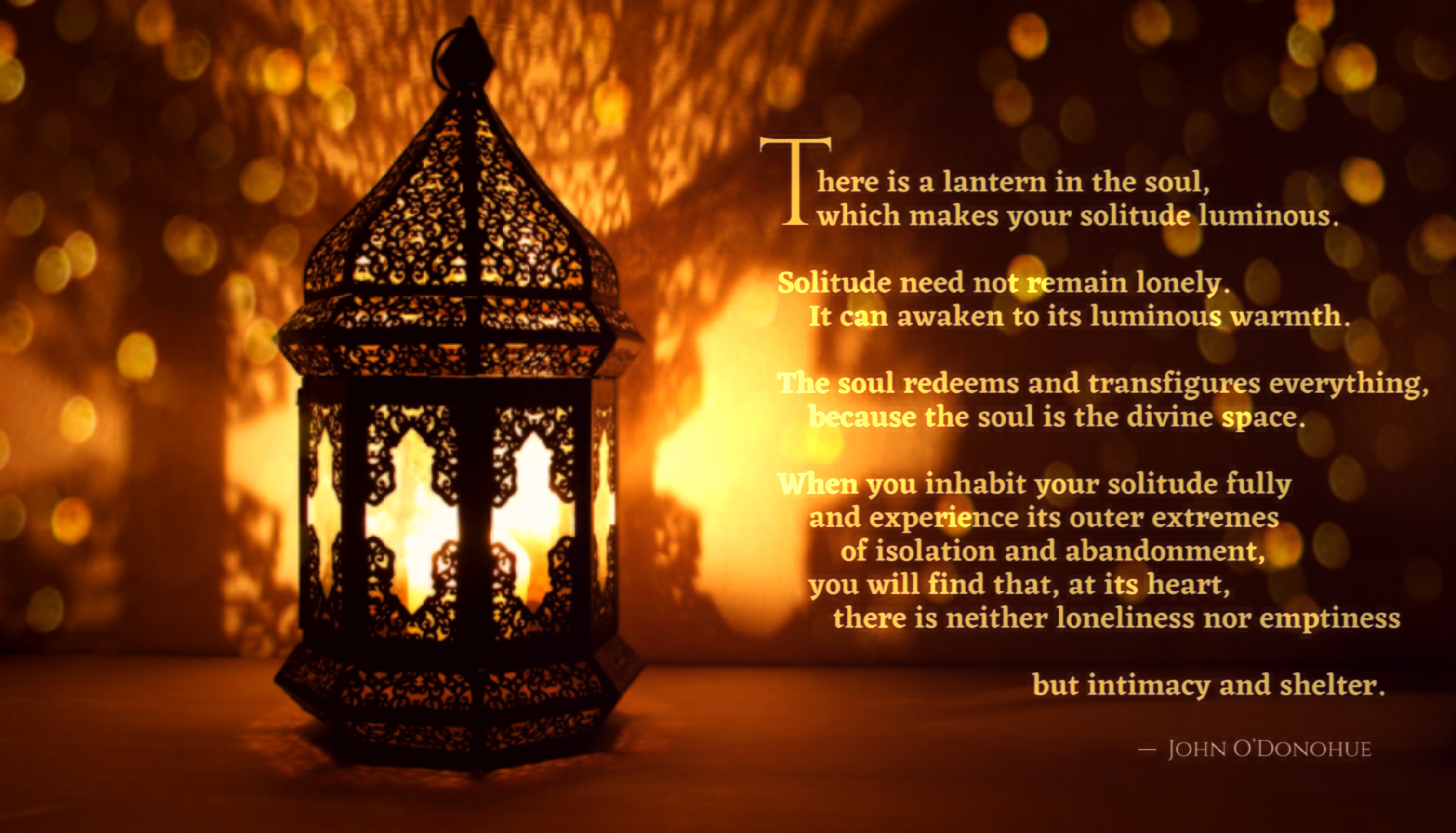
 Two hundred and three pills!
 This blog post is dedicated to the memory of my friend, Sister Macrina Wiederkehr, a wise and wonderful woman who left us this year and is now walking among

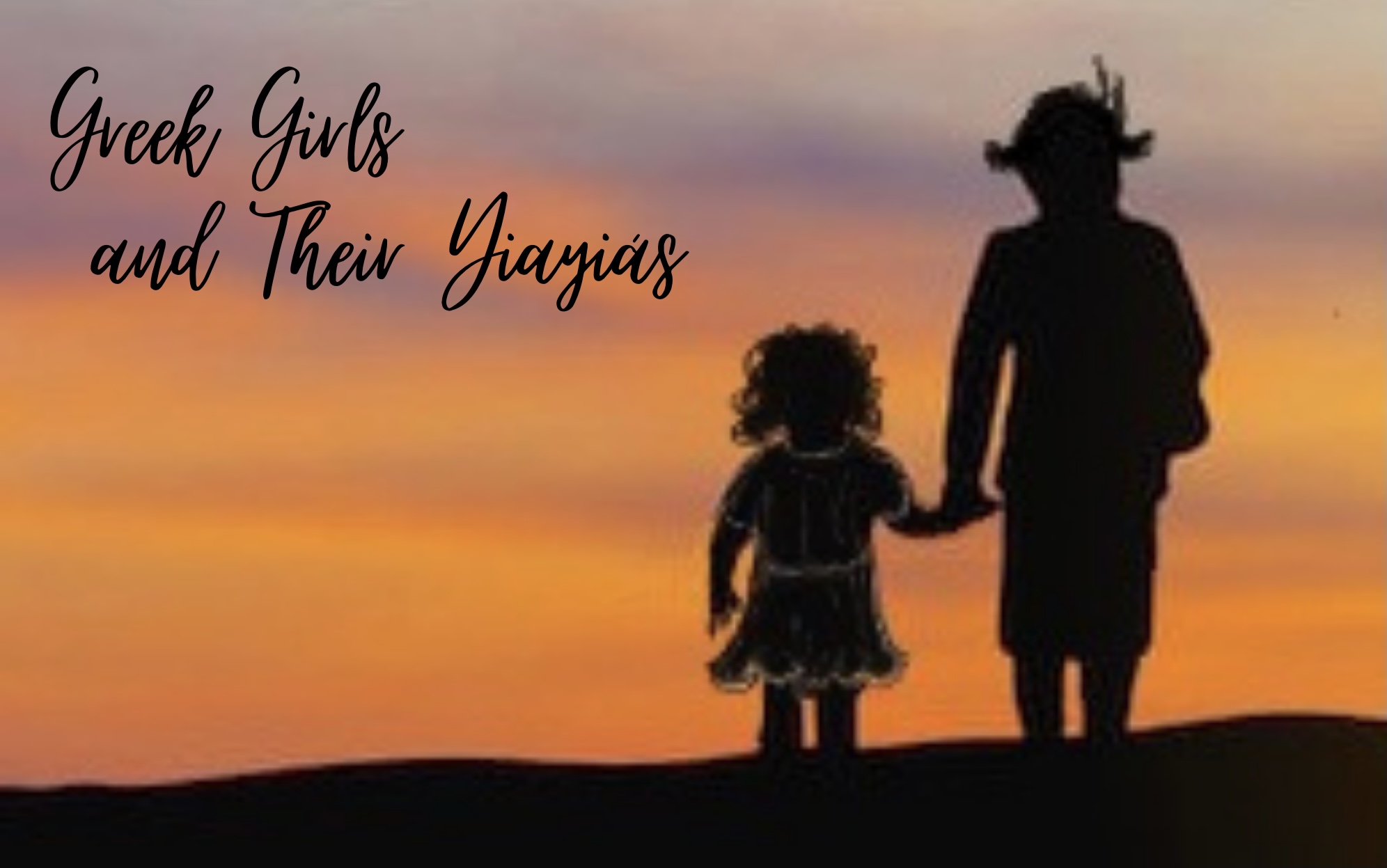
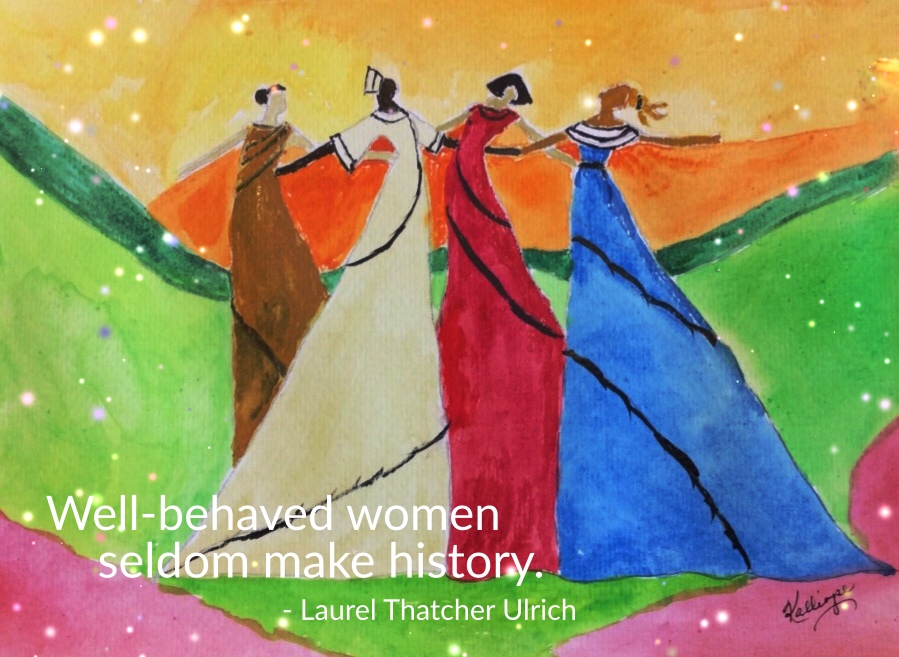
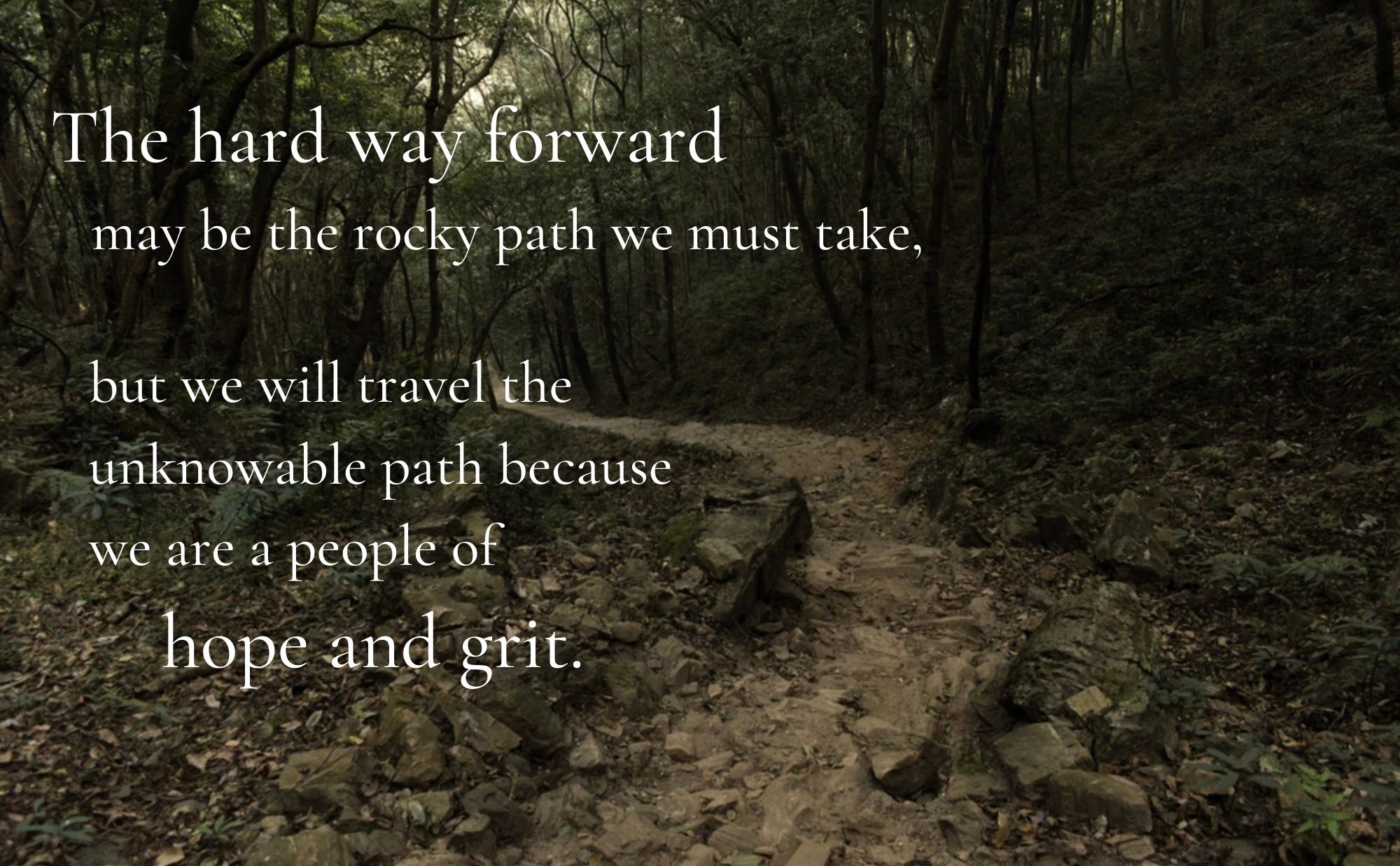
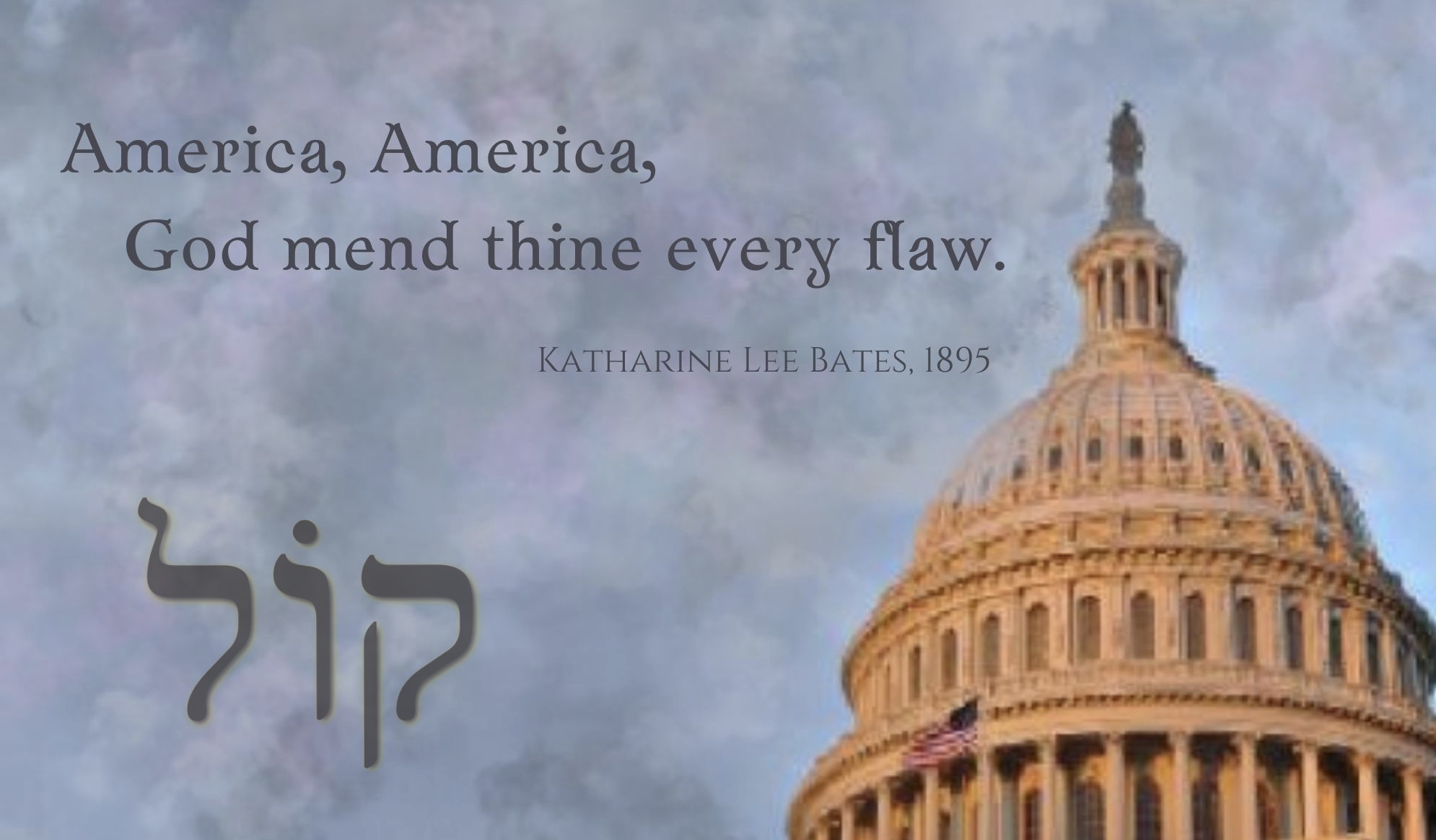


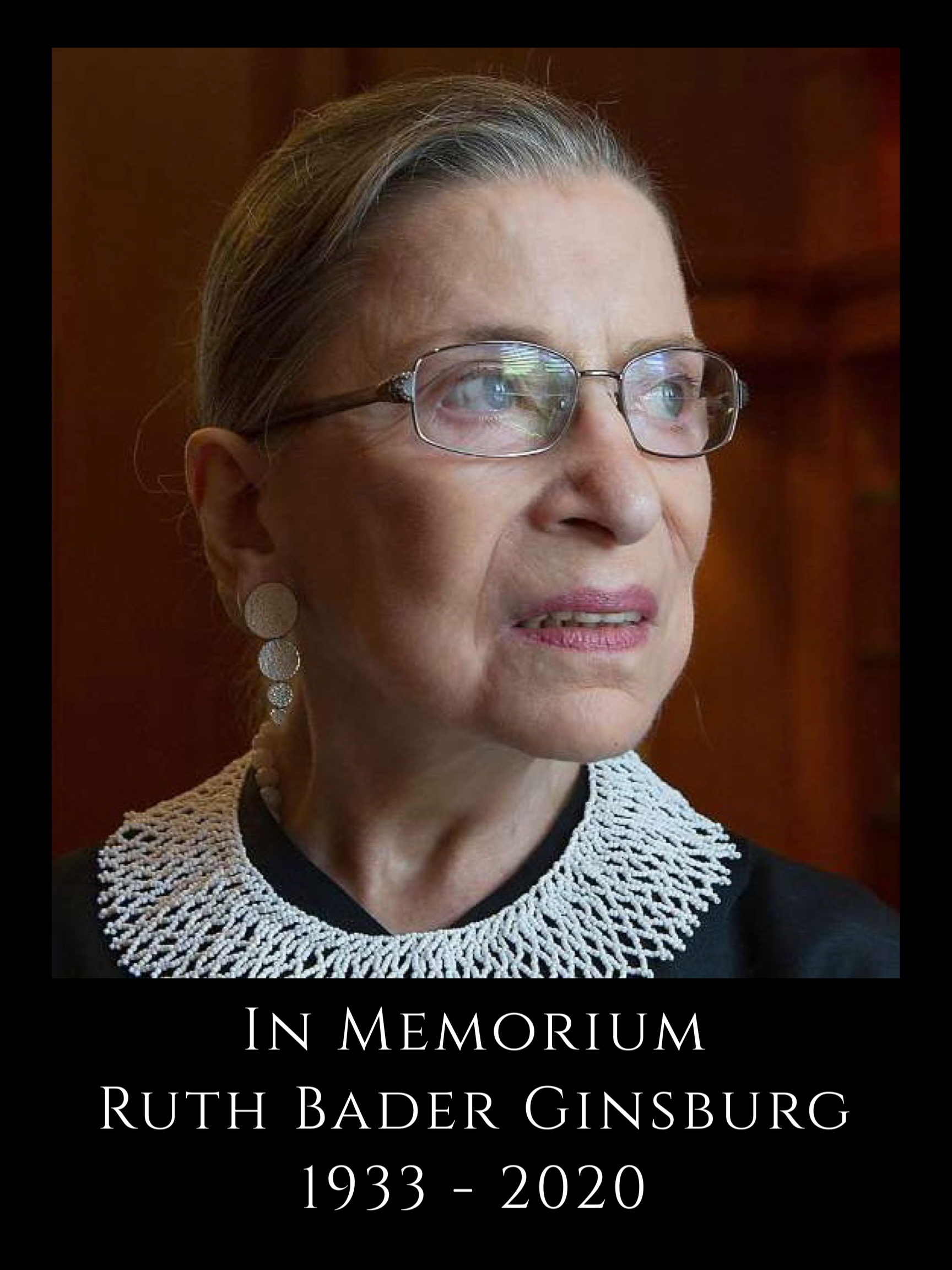


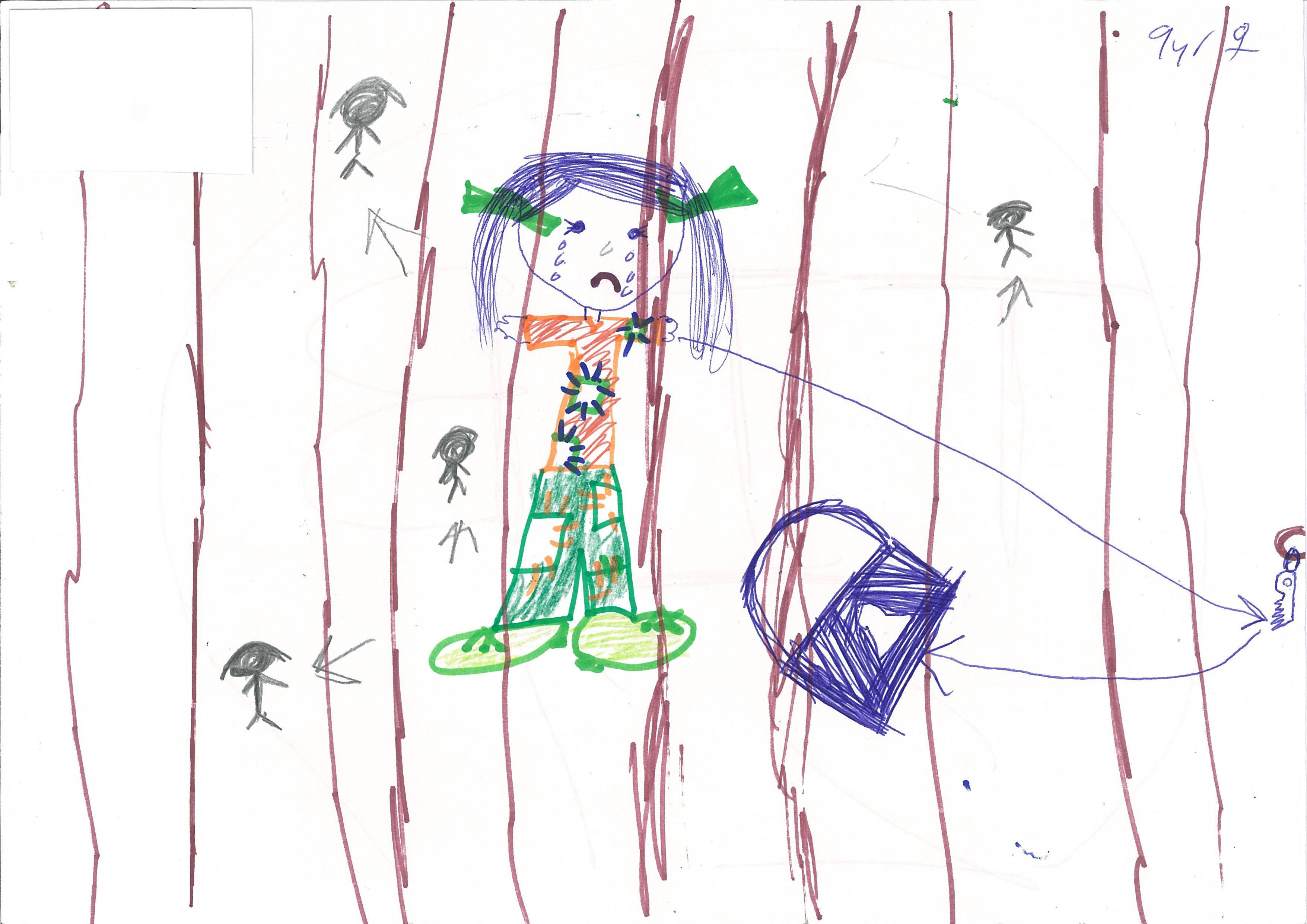

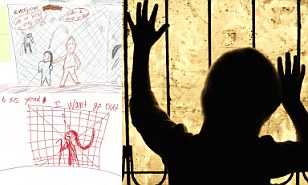


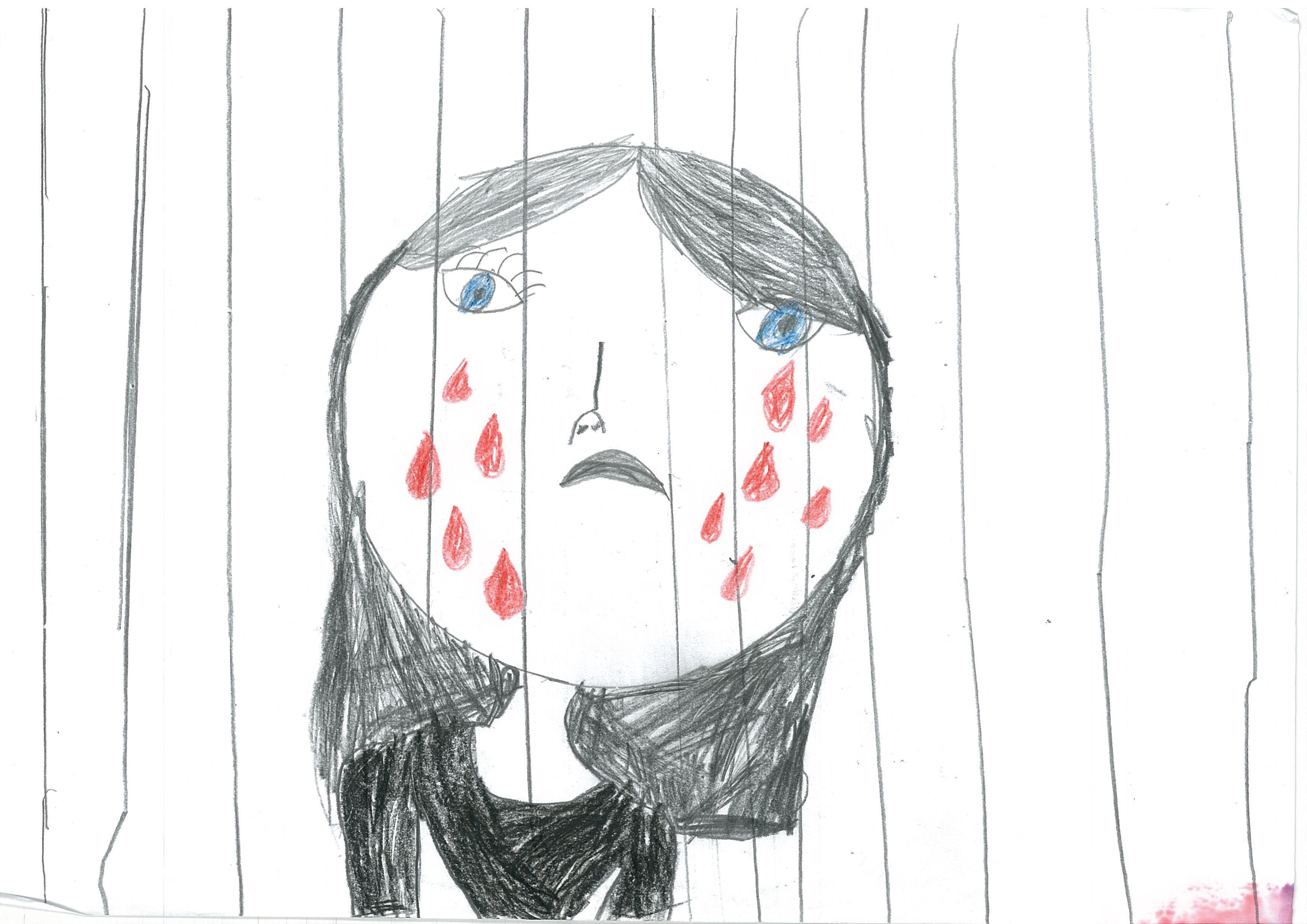

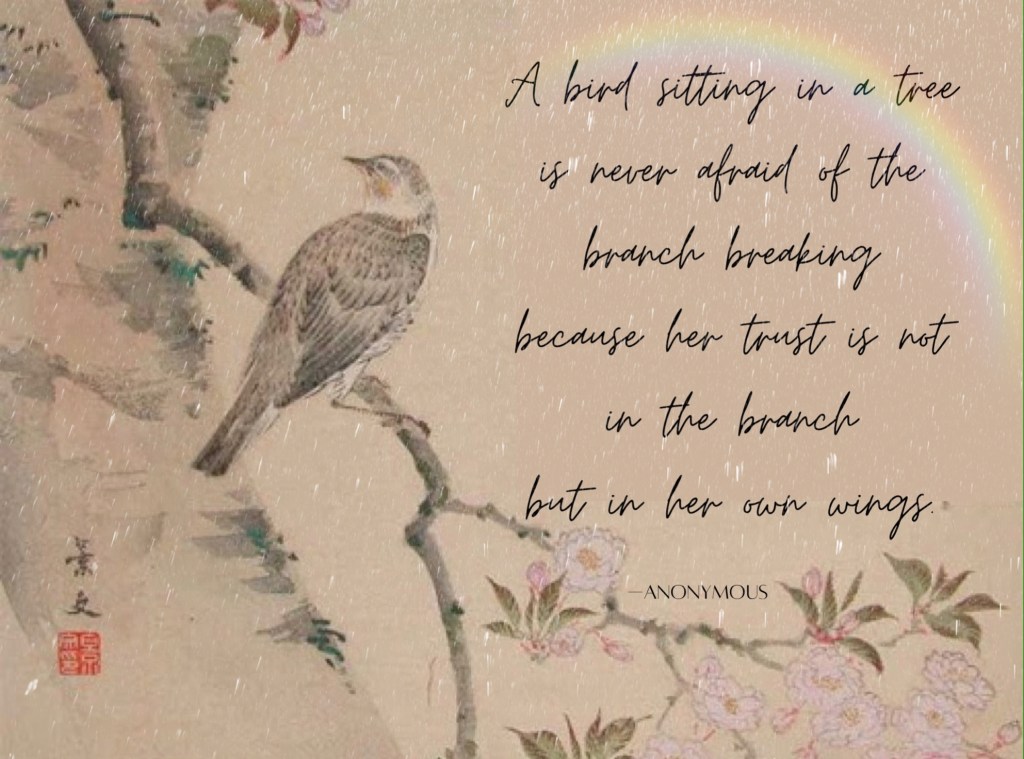


 God of the Sparrow 🌱 By Kathy Manis Findley