Beauty of Nature, Bible, Darkness, Ecclesiastes, Emotions, Faith, Gnat Line, God, Hope, Joy, Nature, simple joys, Skies

Blue Skies and Gentle Breezes

137A3E93-F8AA-42BF-BC03-8F75DE8302D8

Blue skies and gentle breezes. That’s Macon most of the time. Oh, and you have to factor in the gnats, the annoying gnats that we have because we live on the gnat line.

And there really is a such thing. Look it up. (http://southofthegnatline.blogspot.com/p/gnat-line-101_28.html) 

You will find that not only is the gnat line a real thing, but that it also sits directly on top of Macon, Georgia. No one told me that before I moved here.

Still, there are blue skies and gentle breezes this morning. For a few seconds, I am fully in the moment, fully aware of the blue skies over me and the warm breeze that points my mind to all that is good, to all the things about nature that we can count on.

Gnats notwithstanding.

In some ways, it’s a picture of life —the beauty of blue skies and gentle breezes, right along with the persistent aggravation of gnats buzzing your face. Certainly, life is like that for me. There are every day graces accompanied with aggravations, challenges and sometimes troubles. Life brings days of deep mourning sometimes and times for gladness at other times. 

Most thoughts these days take me to the very real possibility that I will receive a new kidney. The thought of it is both exhilarating and terrifying. I would not be me if I did not have the troubling thought that I might die in the middle of surgery. Or that I might contract a lethal infection and die of that. Or maybe I’ll be be compromised from the procedure and not recover.

On the other hand, maybe I’ll thrive with a new kidney. Maybe I will feel better than I have felt in five years. Maybe it’s true that I’ll live longer. Maybe life will begin again, fresh and new and full of possibilities. I love this message from the writer of Ecclesiastes.

So I commend the enjoyment of life, because there is nothing better for a person under the sun than to eat and drink and be glad. Then joy will accompany them in their toil all the days of the life God has given them under the sun.

— Ecclesiastes 8:15 (New International Version (NIV)

What a good and gracious thought! The promise that as we are enjoying life, joy will be in us through whatever “toil” we face. Struggle, trouble, travail — we experience all of these in life, right along with the joy.

So as I contemplate a kidney transplant, I might just think of it as one of life’s “toils” that, by God’s grace, will be accompanied by joy. 

I think I can do this. After all, “the joy of the Lord is my strength.” (Nehemiah 8:10)

Blue skies and gentle breezes all the way!

Pesky gnats notwithstanding!


Change, Comfort Zone, Dreams, Fear, Growth, Learning, Uncategorized

Becoming Our Better Selves

295B6520-B0A5-4F94-A0E7-9462C854C39B

I don’t usually write about charts in my blog. I’m not really a chart person at all. But my friend, Kim Rosby, recently sent me a chart that is worth contemplating. The chart is a snapshot of what it might look like when we become our better selves. It’s entitled “The Comfort Zone,” which is a place most of us want to be. 

That’s the problem. There is no growth and maturing in the comfort zone. It can become for us, not just comfortable, but also stagnant.

So I spent some time contemplating this provocative chart, and it definitely provoked some emotions in me. It appears that there are four zones that are possible for us:

  • The Comfort Zone
  • The Fear Zone
  • The Learning Zone
  • The Growth Zone

There you have it! So let’s unpack this chart a bit. When/if we manage to move ourselves out of the comfort zone, a place where we feel safe and in control, we will most likely enter the fear zone. In the fear zone, we are not at all sure of ourselves. We hang on the opinions of other people and use anything we can find as an excuse to remain frozen in place. If we don’t make a move, we can’t make a mistake. Right? We come to a point, though, where we do not believe we can move. We don’t believe we can change. We don’t believe we can seek another way.

Fortunately, some of us do make it out of the fear zone and thus find ourselves in the learning zone. What a renewing place to be, a place where new and fresh ideas are possible. It is in this zone that we realize we have moved at least a few steps past our comfort zone. We learn new skills and we discover that we can navigate challenges and solve problems. As long as we are learning, our path is clear and a future is possible.

So we move with courage into the growth zone, where we will re-invent ourselves in positive and exhilarating ways. As we conquer the objectives that were holding us back, we begin to believe in the possibility of new life goals, a deeper purpose. And then suddenly, we surprise ourselves with dreams and aspirations for something more in our lives, something fresh that inspires us to be our better selves.

I like my friend’s chart. I also like this promise that also says something very compelling about becoming our better selves:

 . . . I came that they might have life, and have it more abundantly.
—Jesus


Aging, Exclusion, Freedom, life, Possibilities, Retirement, Women

I Refuse to Disappear

5465C6E4-7A61-4177-AF37-C8CF97B048C2

I refuse to disappear! All my life, I have experienced forces and people and systems that wished for my disappearance. As an advocate for victims of violence in the court and criminal justice systems, powerful people just wanted me to go away. As a child advocate, the foster care system definitely wanted me to disappear. As chair of the Little Rock Commission on Children, Youth and Families, the city power brokers wanted me gone so that they could pretend rather than acknowledge the reality of caring for the real needs of children and families.

As a pastor, I spoke truth every week, often controversial truth that the congregation might resist. I was never one to shrink back or hide. I was never willing to disappear when proclaiming the Gospel compelled me to speak. I was always fairly brave.

But I digress. The past is the past, and even now, in retirement, I often feel very much like people want me to disappear. I am resisting the way people do “placement,” that is the way people place me in a category called retirement. It feels as if others are most comfortable acknowledging my past career but forgetting that I still have talents and gifts and creativity. So here I sit — placed in one of three slots: 1) a carefree retiree that enjoys a traveling, active lifestyle; 2) a retired “old person” who can’t really do much anymore; or 3) a shut-in who is too disabled to be an active part of society.

But sitting has never been for me. I’m terrible at it. I have never allowed others to set me aside. I have never allowed people to insist on my disappearance.

These days, though, it’s a struggle. Invitations to preach or speak or teach are few and far between. It is true that I have health issues that slow me down. It is also true that a part of retirement includes challenges. But I want to resist being dismissed as irrelevant. I want to urge people to pay attention to my abilities. I want to continue my career in ways that are possible and appropriate for me. I do not want to disappear.

I refuse to be small and quiet. I refuse to hide my fire. I am still capable of disrupting the universe. I am still going to do the next right thing. 

I love these words shared by women just like me who simply won’t disappear. And I love the writing of Glennon Doyle who speaks a lot of truth, inspiring and uplifting truth. She calls out to women, especially, inviting us to be the persons we want to be even when outside forces try to hold us back. “It’s not a woman’s job,” she writes, “to get smaller and smaller until she disappears so the world can be more comfortable.”

Amen, Glennon!

Challenge, Change, Faith, Gratitude, Hope, journey, Kidney Transplant, Life Journeys, Mountaintop, Mustard seed faith

Who will move this mountain?

DC7FCDE2-12A4-45E9-B90E-BFA83D56417C

Who will move this mountain? I’m referring to the high, steep mountain that includes hundreds of processes that might eventually (possibly, probably) lead to a kidney transplant for me. So which is it, I keep asking myself? Is a kidney transplant possible? Is it probable? Is it a done deal?

I know with pretty much certainty that having a kidney transplant is never a done deal. The possibility of a kidney transplant for anyone is always tenuous. The possibility of having a donor is even more tenuous. I keep repeating the description offered by Piedmont transplant nephrologist, Dr. Christina Klein: “99% of people who call with interest in donating are screened out by phone and 50% of the people who do the full-day evaluation are screened out.” With deep gratitude, I can say that the person who has offered to be my living donor has passed through both of these screenings and has been accepted as a donor. It is no small thing for a living donor and a recipient to both be determined healthy enough for a transplant.

Piedmont Transplant Institute personnel spent the day yesterday testing me to determine if I’m still healthy enough for a transplant. They do a re-evaluation every two years for persons on the transplant list. It was probably the last re-evaluation I will have before a transplant surgery date is determined.

I said all of that to say that, as always, I think of God as the one who moves these kinds of obstacle mountains. I am standing at the base of a pretty big one this time, looking up at the peak and whispering to myself, “Impossible!”

But that’s not the end of the story, is it? For me, the story aways ends with sacred words that remind me who has the control, who it is that can move this mountain. Sacred words about moving life’s mountains can be found in all three Synoptic Gospels — Matthew, Luke and Mark. The Gospel writers make multiple references that go to the question of who moves mountains, as told by Jesus in parable. Interestingly, Jesus never says, “God will move your mountain.” Instead the words of Jesus in the parables go something like this:

If you had faith even as small as a tiny mustard seed, you could say to this mountain, ‘Move!’ and it would go far away. Nothing would be impossible to you.

— Mark 17:20 (TLB)

What? Can this be true? That God does not move the mountain after all. That it has everything to do with faith, even my very small mustard-seed-like faith. Is it true that I am my own mountain mover? That nothing is impossible?

In reading this Scripture text that is so familiar, it seems that perhaps I am the one who can say to this mountain, “Move!” Without stretching this Gospel text beyond its original intent, I can affirm that its message is about faith, and that message is timeless. It can begin as a thought that Jesus expresses in parable and end up as a reality of faith that empowers my life and quickens my journey.

So stand with me at the bottom of this mountain. Look up at the mountain with me and pray that my mustard-seed faith will get me to the peak. I may very well receive the gift of a kidney transplant. It seems very possible at this point in my five-year journey. But whatever happens, my faith will be with me — sustaining me, guiding me, empowering me still for every future mountain that raises up before me.

For this faith that was born in me decades ago, thanks be to God.


Beauty of Nature, Cross, Faith, Gardening for the Soul, God, God's Faithfulness, Life Journeys, Psalm 118, Reflection, Serenity, Trees

The Cross in the Garden

C1C795A4-B588-4EA6-896D-D2446614D0E1

Although I have a very small yard, I do have a tiny garden beside my tiny front porch. This morning the jasmine in the garden is in full bloom filling the air with sweet jasmine perfume. The tiny water feature is making gentle water sounds that relax and heal, as rippling water tends to do. A bird is splashing around in the birdbath, the flowers are blooming, and the ferns are swaying in Macon’s gentle breeze. A large iron Celtic cross leans on the tallow tree, always reminding me where my faith comes from.

Now there is an issue with the iron cross in the garden. It falls over all the time. No matter how deep I place it in the soil, it falls over. Being an ardent tree lover, I refuse to nail the cross to the tallow tree. So it continues to fall over and I continue to prop it up.

Perhaps, as a symbol of faith, it’s appropriate that the cross falls over. My faith falls over all the time, and just as I continually prop up the cross in my garden, the Creator props my faith back up every time it falls.

I think of the Psalms where we read so many words of God’s help and protection as in Psalm 118.

I was pushed hard, so that I was falling,
but the Lord helped me.

The Lord is my strength and my might;
he has become my salvation.

— Psalm 118:13-14 New Revised Standard Version (NRSV)

 
Like the cross in the garden, I might fall over a time or two on my journey. That’s okay, because I know a God who props me up, holds me up, lifts me up, raises me up!

Thanks be to God.

Asylum, Courage, Dreams, Faith, Family, Freedom, Immigration, Life Journeys, Maren Tirabassi, Politics, Roots, Taking immigrant children

Yiayia / Γιαγιά

66642F2E-4B31-4A8F-BCEC-6286D03650A6

In my heart this week, I have held my grandmother, my “Yiayia” who came to America at age 25 with an older husband and two babies. One of them was my mother. December 16, 1916 it was when the ship Guiseppe Verdi reached Ellis Island. My Yiayia — line number 25 on the ship’s passenger manifest — had never envisioned coming to this land. She never considered she might leave the tiny Greek village on the island that was her home.

Her husband, wanted by Mussolini as a political detractor, had no choice but to flee in the dark of night in search of a place of safety and refuge for his little family. He had the courage to survive and to dream. But here’s the thing: my grandparents were welcomed into this country when they arrived to see the brightness of the Lady Liberty’s lighted torch. To be sure, their life in America was not all bright or easy. They worked hard to eek out a living and to become a part of a new community so very far from the home they loved. 

After I was born into the world, a toddler at Yiayia’s knee, I watched her struggling to learn English, to speak English well enough to be understood by her neighbors. One of my most vivid memories was sitting next to her at our kitchen table next to an enormous silver radiator that creaked and groaned, but warmed us famously. With The Birmingham News spread across the table in front of her, she drank her coffee, dipping her Zuieback toast and reading the newspaper, every morning.

She taught herself to read English, but The Birmingham News was not merely a reading primer for Yiayia. She learned from it. She understood the news events of her day. She knew that liberty was a gift worth protecting. So she studied the political climate and the political personalities asking for her vote. She would insist that you MUST vote, that you must know the candidates, that you must cherish the right to free and fair elections.

So Yiayia would dress in her finest clothing, simple but lovely dresses. She would put on her earrings and her brooch, her rings and her watch. Then she would dress me, and off we would go, across the street and down the block to the polling place. We would go together into the booth with the dark brown curtain. She would vote and I would stand in close to her with the view of only that brown curtain and her chunky shoes, heels of course.

Before we exited the booth — every time — she would look down at me and say, “We are Democrats! That’s how we vote, always!” And to this very day, I have followed her voting directive — always. The truth is that her definitive directive about voting had much more to do with the process than the political party she supported. It went deeper than any party loyalty, all the way back to reading The Birmingham News, seeing the beam of the Statue of Liberty, crossing the ominous ocean, remembering how it felt to have to flee from government oppression and grieving the loss of the island of her home.

Today, it’s not so simple for our neighbors who must flee their homes for so many reasons — safety, survival, fear, oppression. Our president says they are not welcome here. Many Americans say they are not welcome here. Just today, The New York Times reported that Mr. Trump’s growing migrant paranoia resulted in the forced resignation of homeland security secretary Kirstjen Nielsen, who resigned on Sunday. She is part of Trump’s wider “housecleaning” designed to appoint persons who will make sure migrants can not get across our southwestern borders. Only department heads who will enthusiastically implement the Trump administration’s “zero tolerance” policy will keep their jobs. May we never forget the images of thousands of migrant children who were separated from their families.

The president, in a not so presidential tweet, took aim again Sunday night when he tweeted, “Our Country is FULL!” So yes, he says that our neighbors are not welcome here. Yet, millions of us, second generation citizens of the United States of America, will never forget where we came from. We will always remember that our roots spanned the ocean and survived in a new land.

In my friend’s blog last week, I found words that touched me in a profound way and caused me to grieve the land of welcome we once knew. Her words express a startling poignancy. 

“A country that unwelcomes the world,” she writes.

I want to share with you her entire blog post — Jericho Walk — because it is well worth your time to ponder it, but first I emphasize this portion:

Often there is a shofar
to remind us just how deep
are the cracks
in the foundation of a country
that unwelcomes the world . . .

Jericho Walk
by Maren

I return to the Jericho walk,
in Manchester,
having not been well enough
for a couple months,
and it feels like home —
this moving vigil, silent, but with signs
and grateful waving for drivers
who honk their support.

We travel around the large block
of the federal building
where people we love and
some people we have never met
come to discover
if this week they’ll be deported.

We walk around seven times
hoping the walls
will come tumbling down —

around this place
that sends into certain danger
kind, hard-working,
tax paying, family-loving people
who contribute so much
to our community

Often there is a shofar
to remind us just how deep
are the cracks
in the foundation of a country
that unwelcomes the world,

but today there is a flautist
playing “Siyahamba”
over and over again —
walking
in the light of God,

and I think of that less-military
Jericho story —
the one that defines neighbor as

anyone from anywhere
who stops to help vulnerable ones
fallen on the side of the road.

Thank you, Maren. 

Thank you, my dear Yiayia, for teaching me that God grants us the grace gifts of refuge, safe haven and freedom. And no human — not even a big, bad, bully president — can take those gifts from us and from the generations that come after us.

May God make it so. Amen.


Chronic illness, Comfort, Darkness, Despair, Emotions, Faith, Grace, grief, Holy Spirit, Hope, Illness, Inspiration, Introspection, life, Light, Pain, Romans 8:26, Silence, Sorrow, struggle, Trust, Wisdom

To the Other Side of Silence

9F2CA72F-217D-4CF9-A56D-D75B789A45C1
Barbara Resch Marincel, lifeisgrace.blog

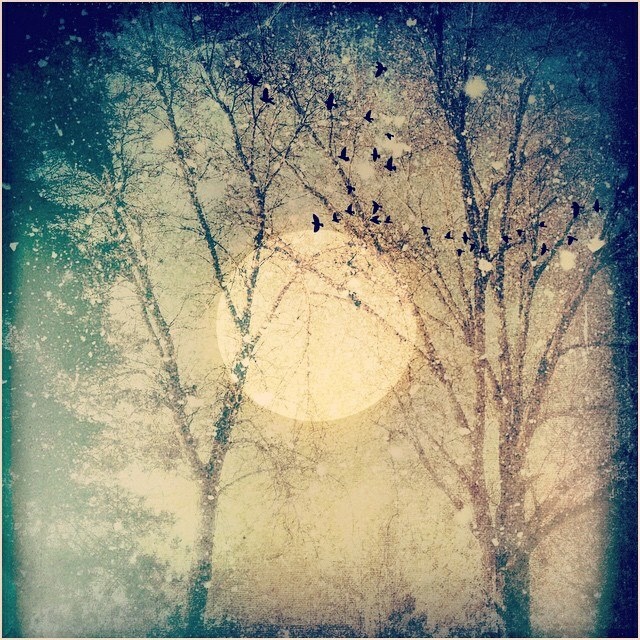
Today is another “Wordless Wednesday.” My friend, Barbara Resch Marincel, is a sister blogger, an insightful writer, and a photographer extraordinaire. You can see one of her amazing works in the image on this post. The image reminds me of a dark time that is slowly changing with the glow of new light. And in that light, the flying birds speak to me of the wind of the Spirit. Barbara’s images are a gift to me, always bringing up a range of emotions.

Here is a bit of how she describes herself on her blog, lifeisgrace.blog.

Blogger, writer, photographer, in varying order. Finding the grace in the everyday—and the not so everyday, while living a full and creative life despite chronic pain and depression.

If you take a few moments of your day to visit Barbara’s blog, you will find enchantingly stunning photography that speaks of joy, pain, life and grace.

Back to “Wordless Wednesday.” So many reasons to be wordless. Some people may not have adequate words to express joy. Others cannot speak of deep sorrow. Some of us have no words because of pain, while others are wordless because they have fallen into the depths of depression.

There is no end to the reasons people are wordless, no end to the seasons in which they find they are without words. I have lived in that season many times, and in that place I could not speak of my pain because words were completely inadequate. I could not speak the pain out loud to any friend, and even for prayer, I had no words. Silence was my close companion.

I love that my friend, Barbara, entitles her blog post “Wordless Wednesday” every week, because in the middle of every week, she reminds me of my seasons without words. Her art is a reminder for me to give thanks that I survived those times, and celebrate that I am now on the other side of silence.

But will not forget that it is no small feat to get to the other side of silence. I must remember that it is not easy to endure silent, grief-filled times and to the other side of them. While living in my seasons of unspoken angst, one passage of Scripture brought me comfort and hope.

The Spirit helps us in our weakness; for we do not know how to pray as we ought, but that very Spirit intercedes with sighs too deep for words. 
— Romans 8:26 (NRSV)

When grief has stolen our words, when we cannot speak and find ourselves in silence, may open our lives to hope, trusting the intercession of the Spirit’s sighs that are far deeper than words. 

Thank you, my friend, for “Wordless Wednesdays.”

And thanks be to God for allowing me to move to the other side of silence.

Amen.

Change, Compassion, Gofts in Open Hands, grief, journey, Lent, Life Journeys, Life pathways, Lostness, Maren Tirabassi, Risk, Travel, Vulnerability, Wisdom

Rough, Broken Roads

5E982E74-6C78-42E3-BA27-C642528A9C0CI think often about roads, the roads that take people where they want to go, or not. I think with deep fondness about the terribly rough and broken roads we traveled in Uganda. The time was immediately after the horrific reign of Idi Amin that left the roads, and the entire country, in shambles. I remember the difficulty in traveling those rough, broken roads — washed out, bombed out, neglected for years.
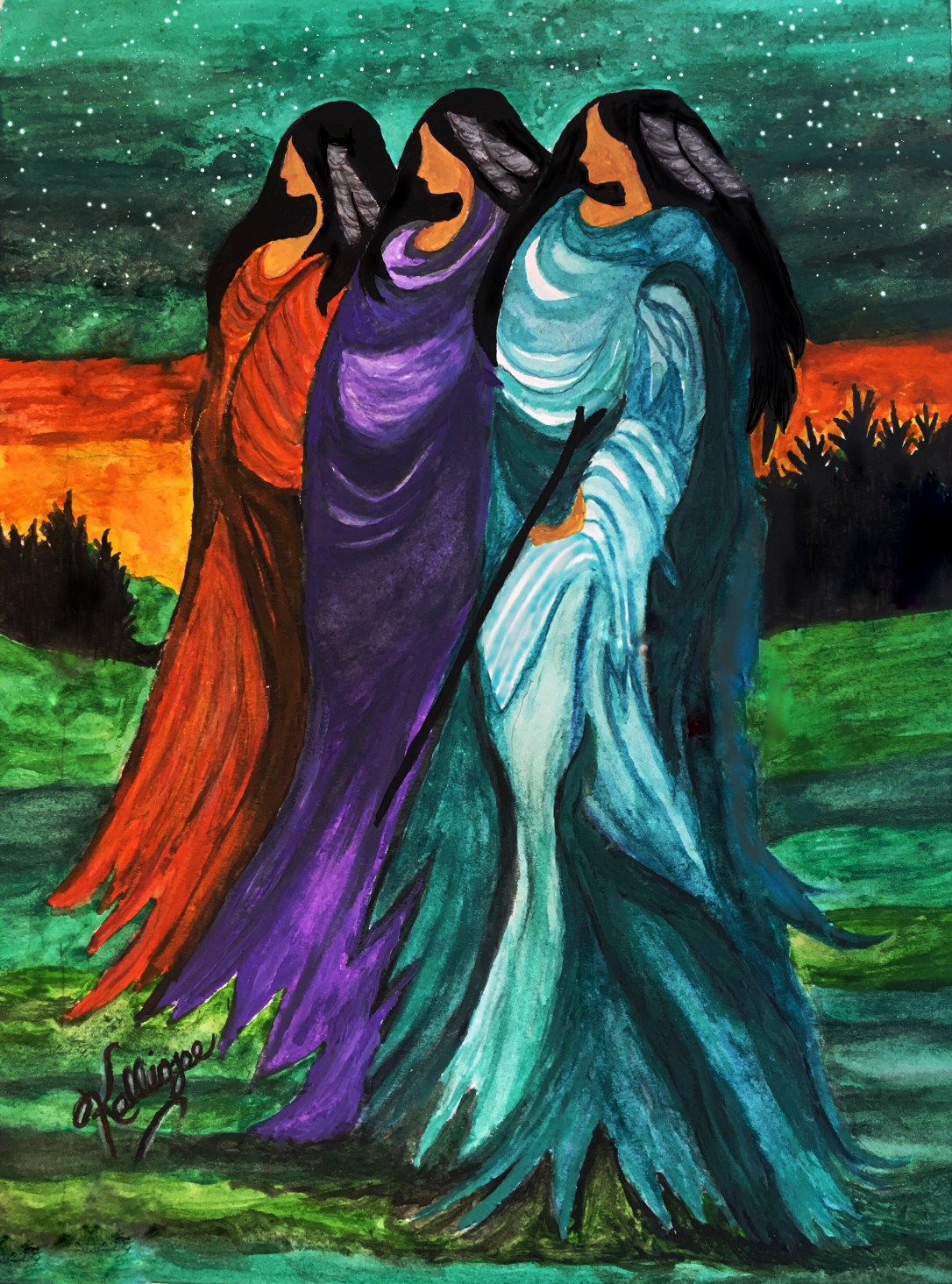
I remember the fear of traveling those roads, the frightening military roadblocks, the pointed machine guns, the soldier’s demand for all that we carried in the vehicle and even the vehicle itself. I remember how some of our missionaries were left in the bush with their vehicle “confiscated” by the occupying army. I remember the roadblock murder of the dear Ugandan man who drove our mission’s supply truck.

I think of traveling a road in the middle of the night that led to my brother’s funeral, made rough by grief. I think of the rough road I traveled in leaving my home of 32 years for a new and unfamiliar place. I can never forget my rough road through serious illness and difficult recovery.

I think of roads that take people where they do not want to go — to war, to prisons, to rehabilitation centers, to the sites of natural disasters. I think about the roads in disaster areas that are simply gone.

I remember a song in a Christian musical of many years ago titled “Rough Old Roads.” It told of the rough roads Jesus walked. The song’s climactic moment gave us these words: “the road that was roughest of all to walk was the road that led to the cross.”

It is appropriate for us during Lent to recall the rough roads Jesus walked, rough for so many reasons: rejection, danger, soul temptation, angry crowds and lynch mobs, and ultimately the rough road that Jesus walked to the cross, to his death. To learn of his roads means that we get a glimpse of our own. The roads we all walk.

None of us can avoid walking the rough and broken roads that appear before us, but it is in traversing those roads that we learn who we are. Rough roads force us to take the hard and narrow way, and thus become who we must ultimately become. Roads can wind around so that we are lost, thus inviting us to take the risk of vulnerability required for an unknown and uncharted journey. Our roads teach and challenge us. When the road ahead of us is rough or broken, our commitment to stay the course results in wisdom. I call it wisdom from the journey. Our rough, broken roads make us stronger and more resilient. The rougher they are, the more we change and grow.

I could bore you with even more personal reflection about rough roads, but instead I want to share a moving poem written by Maren Tirabassi.* In the poem, she writes of broken roads and calls for a God who attends to all who find themselves on broken roads.

Here are Maren’s moving words:

I was praying this morning, God,
for all the people in Mozambique
and Malawi and Zimbabwe,
in the midst of the terrible losses
from cyclone Idai —
the deaths and injury and destruction,
the ongoing need for rescue

and I learned that the roads are broken.

I should have known —

the roads between towns
are impassable,
the bridges smashed, ports unusable.
Also those other paths —
electricity, telephone, Internet,
are gone as well.

And I went from that
flat-hand-on-the-newspaper prayer,
to the jail and my meeting
for spiritual care
and walked among others
with no access

and realized that journey
is not a parable for Lent
for these,
your children on the inside.

And so holy Valley-uplifter,
Rough-place-leveler,
I call you to attend
to all who suffer broken roads —

broken highways or heartways,
or sometimes minds that cannot
find a way out of whatever
dead end they are in,

and teach me to pay attention, too,
put my back against
every road block,
become an opener of the way home.


May God make it so. Amen.


*Maren served as a pastor in the United Church of Christ for thirty-seven years in Massachusetts and New Hampshire and is the author or editor of 20 books. You may read more of her creative and soulful writing at her blog, “Gifts in Open Hands” at the following link:

https://giftsinopenhands.wordpress.com/2019/03/21/10101/


Covenant, Friendship, Introspection, Jephthah's Daughter, Judges 11, Lent, life, Reflection, Rhythm, Women

Together Through Lent

0373B40D-24BE-4EAE-8E78-3357B8EC97C7
Watercolor art by Kathy Manis Findley. The watercolor — “Together” — represents the spiritual covenants we share with one another, bonds that strengthen our faith. 

I have always thought of Lent as a spiritual journey we take alone, a solitary season of introspection and self-reflection during which we contemplate our own spiritual well-being and our relationship with God. For me, Lent has always been alone work. But what if it wasn’t? Suppose I experienced Lent with my community — the close community of people with whom I share my spiritual life.

I cannot help but recall the story of Jephthah’s daughter as told in Judges 11. When she faces a terrible crisis that will result in her death at the hands of her father, she makes only one request of her father. “Do what you must do, only grant me this one request: Give me two months to roam the hills and weep with my sisters.”

So she will take this journey up into the hills with her sisters — to mourn, to reflect, to pray. She will not make this journey alone. She makes the journey with the sisters who surrounded her in life and now in death. They climb up into the hills together.

Lent’s forty days represent the time Jesus spent in the wilderness, enduring the temptation of Satan and preparing to begin his ministry. He was there alone, and most often the Lenten journey is a time for reflecting alone. But I think that perhaps there is spiritual benefit in making a Lenten journey together, in community, joining together through invisible rhythms of friendship and caring.

As I make my Lenten journey this year, in my mind I will take my community with me. There into my alone places where God comforts me in my contemplative moments, in my repentance and in my penitence, I will be more mindful this Lent of my spiritual circle of friends. I will make a covenant with them in my mind and heart. I will send them positive thoughts as they make their Lenten journey and I will pray for them intentionally and faithfully.

It will be a together Lent, inspired by the sisters who went into the hills with Jephthah’s daughter where they spent a season of grief in community, together.

I hope that, together, we might embrace a sense of community as one of our Lenten spiritual disciplines, that we might journey together for these forty days, praying for one another, seeking together the serenity, the reflection and the transformation of Lent.

In that spirit of prayer, I leave with you this beautiful prayer written by Rabbi Naomi Levy:

The rabbi in me would like to offer a prayer for you.
I pray you will learn to see you life as a meaningful story.
I pray you will learn to listen to your soul’s insistent yearning.
I pray you will learn to believe you can transform your life.
I pray you will learn to live and shine inside your imperfect life
and find meaning and joy right where you are.
Most of all I pray you will uncover a great miracle: your extra-ordinary life.

— From Hope Will Find You by Rabbi Naomi Levy

Challenge, Faith, God's Faithfulness, God's presence, Hope, Lent, Life Journeys, Life pathways, Music, Restoration, Serenity, Transformation

I Can Face Tomorrow

Enlight272Yesterday was not my best day. All day long challenges got the best of me — health challenges, schedule challenges, even bad haircut challenges. My sister of the heart, Donna, said I was cranky. My husband, Fred, said I should chalk it up to Ash Wednesday. Martie, my dear Little Rock friend, said that yesterday was the first day of Mercury in retrograde and that I should do my best to survive until it’s over on March 28th.

I’m not so convinced of any of those explanations, but I’ll let it be for now. Today is a new day, a day in which I have chosen peace for the beginning of my Lenten journey. Typically, the way I find peace is through music. So Pandora is on my sacred music station today. It would be an understatement to say that the music has lifted me today and has almost made yesterday’s fiascoes a dim memory.

As I listened, a song from my past brought sweet memories. Years ago, before I learned to renounce masculine pronouns to refer to God, I was inspired greatly by these words: “Because He lives, I can face tomorrow.” We sang this Gospel song often to remind us of hope, of perseverance, of God’s faithfulness and of Christ’s resurrection. Today, those words and that melody on Pandora reminded me of those exact things. In spite of masculine pronoun referring to God, the music moved me as it has always done. The message has not changed. God has not changed. My faith in Christ has not changed. Thanks be to God!

Here’s my truth as I follow my Lenten path, the abiding truth: “Tomorrow” for me seems murky, with the path ahead unknown and somewhat disconcerting. I do not know if I will receive a kidney transplant or live on daily dialysis for the rest of my life. I do not know what tomorrow promises.

But this is as it has always been — before illness and after. I never knew what tomorrow would bring, even in those days when I thought I was fearlessly and fully in control of my life. So it feels like a Lenten testimony of my faith to say that I do not know what tomorrow looks like for me. Leaning into the reality of the unknown future, I feel embraced in the consoling truth that “because He lives, I can face tomorrow.”

Of this, I am confident. Resting on this promise, I can move onto the Lenten path before me with refreshed hope and renewed faith. Amen.

Complaints, Contemplation, Courage, Discovering, Emotions, Introspection, life, Mental health, Mindfulness, Reflection, Self Awareness, Vulnerability

What’s Underneath?

A07A5421-F042-40D4-A143-32391BBC79FBToday, a friend’s blog posed a provocative question. It was provocative enough to stop me in my tracks. Likely, I was right in the middle of a tirade of complaints when this question challenged me. This was the question: “If I let go of my complaints, what might be underneath?” *
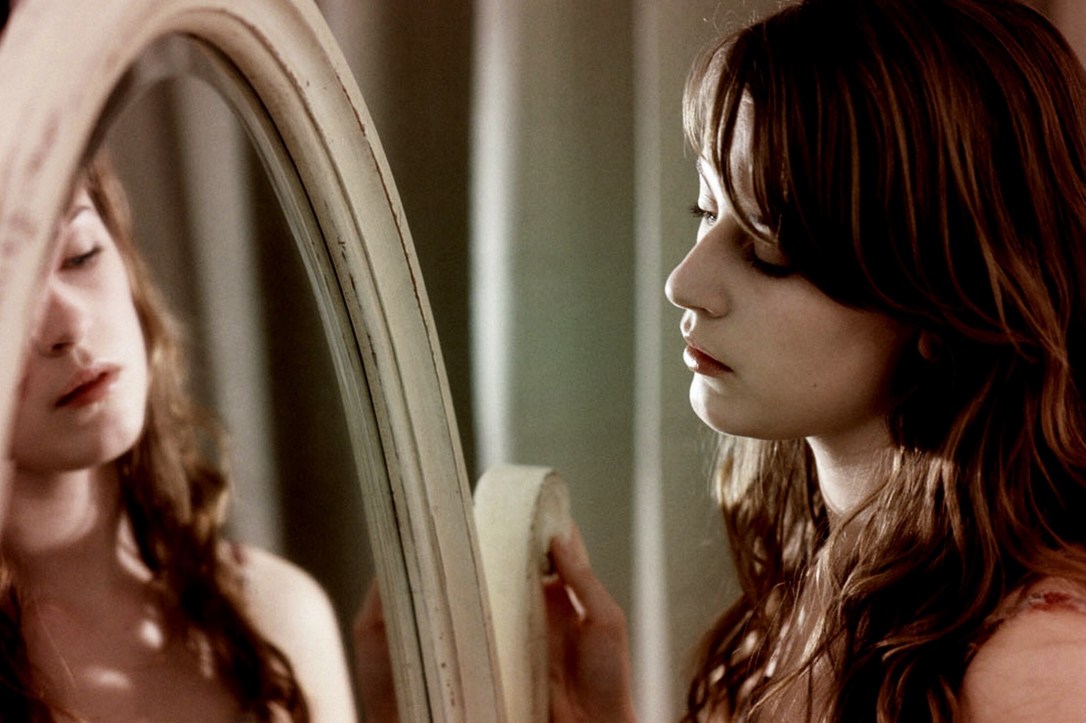
The question presented a plethora of thoughts for me. It opened up that place underneath just for a second. But then I quickly moved back to the complaints. I have many. Or at least I believe I have many reasons to complain. But I’m realizing that complaints are surface things. They live outside of us and do not always reflect the inner emotions we are truly feeling.

A complaint develops easily and blurts out what’s on the surface of our lives. It flows easily off the tongue and falls upon any willing listener. The empathy we receive from that willing listener keeps the complaints alive. If someone listens to us and responds with caring about our complaint, it is then cemented. We have given it life, perhaps life beyond what it deserves.

This brings us back to the probing question: “If I let go of my complaints, what might be underneath?”

If gratefulness for the obvious graces that we have received replaced the urge to complain, we would be surprised at the result. If, instead of lodging a complaint, we spent some time exploring what lives “underneath,” we might well gain true insight into our emotional state. 

So we would do well to ask ourselves what’s underneath the complaint we speak out loud? Is it true that our complaint rises from a deep place inside of us but hides the emotion there?

If my complaint, for instance, is that I am overworked, perhaps underneath is the constant feeling that I’m being taken advantage of. If my complaint is that I have to endure an illness, perhaps the feeling underneath is that I fear suffering, even death. If I am terrified of death, perhaps I am not certain I left a good and lasting legacy. If I’m languishing in retirement, perhaps the emotion “underneath” is that, now that I am not “ministering,” I am questioning my self-worth.

You might be asking why this is important. It is important because whatever lives inside of us holds the power to harm us physically, emotionally and spiritually. What could we do instead of complaining? 

  • We might begin with silence that moves us a bit towards serenity.
  • Next, we will practice mindfulness that helps center us.
  • We woukd do well to contemplate gratitude for the graces of life. 
  • Then we should pray for insight, comfort and healing, not only praying for what we need from God, but also listening for God, abiding for a while in God’s presence.
  • Then we must take time for what might be the most important practice of all: introspection and self-reflection.

One of the primary goals of introspection is to better comprehend our inward life and to learn to focus it towards fulfillment of self. To go there is to invite vulnerability, healthy vulnerability that softens the hard places inside me that are wounded. Then we need to pull up from our inner resources just a little bit of courage.

When all is said and done, each of us is given a critical choice: do we complain about all that is not right? Or does courage enable us to look underneath our complaints and discover what our true emotions are?

For myself, I have to ponder these questions: What am I grieving? What have I lost? What do I fear? Underneath my whining and complaining (which I am very apt to do) I will find a gift, a treasure that is my very soul and spirit, and the emotions that abide there.

And as a bonus, I will have found a better way to live my “one wild and precious life.” **

* From A Network of Grateful Living

** From a poem by Mary Oliver. 

Brokenness, Change, Chronic illness, Discovering, Emotions, grief, healing, life, Loss, New Normal

On to a New “New Normal”

7519DB43-1B31-43A9-9528-84655345CC44I’m getting to know myself. Again! Moving through life takes one through changes large and small. We slip past the small ones pretty much unscathed. But oh, those large ones! The large changes are another story altogether. Sometimes they cause us to miss a step or two. Sometimes they stop us right where we stand. Sometimes they throw us all the way to the ground. But they always get our attention.

Chronic illness is one of those ‘knock-you-to-the-ground” changes, especially when an illness happens suddenly. In a recent New York Times article, Tessa Miller shares how sudden illness changes one’s life and how chronic illness changes life forever. 

“Seven Thanksgiving ago, I got sick and I never got better,” Miller writes. She goes on to describe the conundrum of chronic illness. 

When I was diagnosed, I didn’t know how much my life would change. There’s no conversation about that foggy space between the common cold and terminal cancer, where illness won’t go away but won’t kill you, so none of us know what “chronic illness” means until we’re thrown into being sick forever.

I can identify with the changes Tessa Miller describes. The onset of my chronic illness five years ago was sudden, unexpected and permanent. My kidneys failed — simple as that. And I entered into the unfamiliar world of daily dialysis, a world I never expected to be in. And, yes, it was life-changing.

Tessa Miller makes another very insightful point. She explains how, once you find yourself in the fog of the changes you’re facing because of a chronic illness, one change presents the biggest challenge – the change in your relationship with yourself.

There is no debate: when chronic illness disturbs the equilibrium of your life, your relationship with yourself changes. You grieve a version of yourself that doesn’t exist anymore, and a future version that looks different than what you had ever imagined.

Chronic illness can shatter career goals and life plans. You learn learn a “new normal” in their place. But the acceptance of a “new normal” comes after the trauma. And trauma does happen, trauma that necessarily calls for therapy, either formal or informal.

Emotional work definitely needs to be done, and emotional work around chronic illness can look a lot like grief therapy for a passing loved one. You lose your self, at least temporarily. Your self changes.

So make sure to spend some time looking for YOU. Intentionally. Being open to whatever you find in yourself. Practice seeing yourself as the person you are instead of the person you were. Looking in the proverbial mirror gives you an image of the new version of yourself. Get to know her. Celebrate her resilience. Above all, be patient as you get to know her. You may be surprised at how much you like and admire her.


Change, Discovering, Illness, life, Loss, Pondering

Giving Primary Energy to Primary Things

ee555bd0-af25-43cd-aa2c-67edd555abba
Abstract energy formation

Yesterday was “one of those days.” I spent the day pondering my illness, the constant medical processes in my life, my sense of isolation and my losses. It seems I have failed in the work of giving primary energy to primary things. In fact, yesterday I gave up a great deal of energy obsessing on circumstances I cannot change. But there are circumstances in my life that I can change, and I made some promises to myself: 1) I will try to get out more;  2) I will work on dwelling on life’s positive aspects; and 3) I will focus on primary things and put secondary things on hold.

I received some unexpected help with Number 3 late last night. It was in the blog of Guy Sayles,* a friend I haven’t heard from in years. Stumbling across his thoughts was a serendipity for me. This is part of what he wrote.

I don’t want to reach the end, however soon or later I reach it, and have to admit that I’ve given primary energy to secondary things, toured the periphery rather than made a pilgrimage to the center, and complied with external demands instead of responding to the internal and eternal Voice. For the love of God—I mean it: for the love of God—it’s time to discover or rediscover what I most deeply believe to be true in response to questions like:

What keeps people from knowing, deep in their bones, that they are God’s beloved children? How can we help each other to know?

How can we trust that, because of God’s vast and self-giving love, there is “no condemnation” by God and “no separation” from God? What do communities enlivened by such trust look, sound and feel like? How can we fashion and sustain such communities?

How do grace and mercy heal our brokenness, even when they don’t cure our illnesses or end our pain?

How does love displace fear—in individuals; in families, tribes, and communities; and among nations?

What are the ways of life that place and keep us in harmony with the “grain of the universe”? How do we learn and encourage one another to honor them?

What does it mean—what could it mean?—that Jesus calls us his friends?

There are more. Questions like these shape my vocation now. I can’t number the times the Spirit used the poetry of Mary Oliver to call me back to my calling. It happened again last week. After she died, these words were everywhere:

“Doesn’t everything die at last, and too soon?
Tell me, what is it you plan to do with your one wild and precious life?”

That has been my question for a very long time, for years in fact: What is it you plan to do with your one wild and precious life?

I really must answer that one, knowing that what’s left of my life is much shorter than it used to be. It’s time — it’s past time — for me to give primary energy to primary things, and that’s not a bad idea for you either. For you see, we only get one wild and precious life — just one!


* I invite you to visit the blog written by Guy Sayles at this link: https://fromtheintersection.org/blog/

Challenge, Comfort, Courage, Inspiration, life, merry-go-round, Prayer, struggle

Monday’s Merry-go-Round

9BE03E1D-A1FC-4BE9-8BBD-7BCFAA9F6E03It’s one of those Mondays again, those days that just weigh on you a bit too heavily. You have to push yourself to start a new week. You feel that deep-down tiredness that overcomes you and you don’t even know why. Know the feeling?

Nothing has changed. You are still in your familiar schedule. You are still the same you that feels strong one minute and despairing the next. But you feel as if you’re on the proverbial merry-go-round that just keeps circling around the same life and all that’s in it. Round and round, again and again and again.

You might even feel down on yourself for not being “strong” enough to move joyfully through your life. All of this begs the question: Why are you so hard on yourself?

Maybe you should just take a moment for yourself.

Sit back.

Marvel at your life,
at the grief that softened you,
at the heartache that wisened you,
at the suffering that strengthened you.

Despite everything,
you still grow.

Be proud of this.

Today, I pray for you this prayer that has sustained so many through generations.

I pray that, according to the riches of his glory, God may grant that you be strengthened in your inner being with power through his Spirit, and that Christ may dwell in your heart through faith, as you are being rooted and grounded in love. I pray that you may have the power to comprehend, with all the saints, what is the breadth and length and height and depth, and to know the love of Christ that surpasses knowledge, so that you may be filled with all the fullness of God.

— Ephesians 3:16-19 New Revised Standard Version (Paraphrased)


Change, Growth, Hope, life, Life pathways, Wisdom

Starting Over

775D14C9-8802-4DEA-BD06-33C669F187B7Here’s the thing about life: things crash and break, obstacles can stop you in your tracks, you can get completely cut down. It happens to all of us.

One option is simply to give up on life. Or maybe to retreat into a private place for sulking. Another option is to be angry and to live the rest of your life angry.

But the reality is much more optimistic than any of those dismal options. Because no matter what happens in your life, you can start over. Starting over is really not so bad. I’ve done it many times and I survived it. So if we can accept the fact that something in life is over, there is hope for the days to come. 

I choose to see starting over as a fresh new beginning, another chance to do life differently. If I start over with a positive attitude, it can be an opportunity to head into the future wiser and more confident. Starting over can offer a path ahead that’s full of promise.

That’s what I’ll count on.

Children, Covenant, Inspiration, life, Little Grandmother, Singing, Stories

Birth Song

C02D591A-8BBB-42E1-96D7-9C34C45292E4
“Love” – Himba Mother and Child by Ciska McCormick

Little Grandmother — a world-renowned spiritual teacher, Shaman, Wisdom Keeper and the gatherer of the Tribe of Many Colors — tells this beautiful story.

Of all the African tribes still alive today, the Himba tribe is one of the few that counts the birth date of the children not from the day they are born or conceived, but from the day the mother decides to have the child. When a Himba woman decides to have a child, she goes off and sits under a tree, by herself, and she listens until she can hear the song of the child who wants to come. After she has heard the song of this child, she goes back to the man who will be the child’s father and teaches him the song. When they physically conceive the child, they sing the song of the child as a way of inviting the child to earth.

When she becomes pregnant, the mother teaches the child’s song to the midwives and the old women of the village, so that when the child is born, the old women and the people gather around the child and sing the child’s song to welcome him/her. As the child grows up, the other villagers are taught the child’s song. If the child falls, or gets hurt, someone picks him/her up and sings to him/her his/her song as a gift of comfort.

In the Himba tribe, there is one other occasion when the “child song” is sung to the Himba child, who has now grown up to be a tribesperson. If a Himba tribesperson commits a crime or does something that is against the Himba social norms, the villagers call him or her into the center of the village. The community forms a circle around him/her and they sing his/her birth song.

The Himba people view correction, not as a punishment, but as love and remembrance of identity. For when you recognize your own song, you have no desire or need to do anything that would hurt another person

Finally, when the Himba tribesman/tribeswoman is lying in his/her bed, ready to die, all the villagers that know his or her song come and sing, for the last time, that person’s song.

May you hear, in your heart, your own birth song, and may it give you peace, hope, courage and strength for life.


*Little Grandmother is the author of the book: “Message for the Tribe of Many Colors,” published in 13 different languages. Her talks are freely available on the web and on YouTube and have been viewed by millions of people all over the world. You may follow her work on her Facebook page, Little Grandmother Kiesha, as well as on her website: www.littlegrandmother.net. You may purchase her books at www.earthmotherpublishing.com, or you may contact her at beautyawakens@gmail.com.


Brokenness, Courage, Despair, Heartbreak, Hope, Life Journeys, struggle, Suffering, Transformation, Vulnerability

Losing Hope


Losing Hope And Interest Quote Motivational Quotes For Hope Pics 15+ Don't Lose Hope Quotes With
Dr. Michelle Bengtson

How do we live after we have lost hope? How do we live with brokenness? What do we say to a broken world? What do we do with our broken hearts? The truth is that each day can bring us heartbreak. Any season of life can bring us failure. At times, the struggle is so intense that we do lose hope. 

Khalil Gibran has written that “out of suffering have emerged the strongest souls; the most massive characters are seared with scars.” 

How true that is, that our suffering makes us stronger, that our scars make us resilient. Most of us move through life steeled against any suffering. We bravely put on our body armor to protect us against every assault. We refuse to allow our vulnerability to rise within us.

I have been strengthened by Brené Brown’s book, “Rising Strong.” She points us to wisdom that names hope is a function of struggle, and challenges us to not be afraid to lean into discomfort.

Why would we want to do that, you might ask? Who in their right mind really wants to invite adversity into their lives? Why would we want to be vulnerable? We need to be strong. We need to live into courage. We need to be impenetrable, tough and impervious to anything that might hurt us.

Here’s what Brené Brown says about that:

Hiding out, pretending and armoring up against vulnerability are killing us: killing our spirits, our hope, our potential, our creativity . . . Our love, our faith, our joy. We’re sick of being afraid and sick of hustling for our self-worth. We want to be brave, but deep inside of we know that being brave requires us to be vulnerable.

“No adversity, no hope,” she writes. “Fall. Get up. Try again.”

As people of faith, we can speak, through our own heartbreak, to a broken world. We can offer the message that if you feel that you have to give up, hope whispers, “try one more time.”

When we live in life’s fullness, with our whole hearts, we will always know heartbreak. We will push to try something new, and sometimes we will fail completely. We will experience disappointment. But without those heartbreak times, we will never know that we can get beyond them.

If we never fall, we will never know that we really can get up. If we never lose hope, we will never experience the joy of finding it again.

If we never lose hope, we will never know new hope, fresh and pointing us toward the skies.


Change, Discovering, End Stage Renal Disease, Freedom, healing, Illness, Life Journeys, Mindfulness, Rest, Restoration, Self care, Serenity, simple joys

I used to be . . .

734D4A65-1E4E-4705-A356-D13DF9C7F9B4I used to be . . . 

It’s a phrase I use a lot these days as I fight off the feeling that in retirement, I am useless. It’s not true, of course, that I am useless. But to be honest, I do feel just a little useless these days, at least some of the time. The reason? I used to be a bona fide workaholic. I used to feel important and productive. I used to be busy all the time, night and day. I used to be a perfectionist. I used to have just a bit of obsessive compulsive disorder, and all,of that drove me to a dangerous place.

The problem is that when you love and believe in your work so much, your work can become your whole life. Then things can get unbearable. So I admit that I am a recovering workaholic. I was the person that put in far more than 40 hours a week and never took a day off. But the critical question I had to answer was this: Is my ego at the root of my workaholism?

What was the job that was important enough to push me to work so hard?

I was a minister and a trauma counselor, and I was executive director of Safe Places, a nonprofit organization that served victims of violence. There was always someone in trouble, someone who had been battered by a spouse, someone trying to escape trafficking, a teen that was recovering from rape, a child that had been abused. So the work was never done.

I loved my work. I believed in it with all my heart. But I could not see what others saw. I could not believe the truth spoken by friends and colleagues, that I needed rest, that my work was hurting me. As much as I didn’t want to admit it, I was working myself sick. Circumstances, and maybe the alignment of the stars, brought me to a “come to Jesus” moment that forced me to take stock of my life. I realized I couldn’t do it all. So I took a very slight respite and pulled back from the constant work. In the meantime, as the stars would have it, we lost our federal funding, and suddenly Safe Places was gone. It was over. 

The stress did not end, though, because those that needed help kept calling . . . my phone. I had no staff left and, though I tried, I simply could not continue helping all these hurting people by myself. So I was forced into an unwanted and unplanned rest. 

During this “rest” time, grief and loss took over my psyche. But miraculously, my body began to rest. My pace slowed down. I was becoming mindful of every moment and what was going on in every moment. And in spite of the grief and sadness, my mind and spirit began to heal. What happened next was the shock of a lifetime. As my mind and spirit began to heal, I finally allowed my body to tell me what was going on. My doctors got to the bottom of it and diagnosed me with end stage kidney disease. Before I could even begin to take it all in, I was hospitalized and on dialysis.

I honestly believe I had worked myself to death, or at least nearer to death than I wanted to be. I spent a great deal of 2014 in the hospital trying to stabilize and then working to take my life back. It was hard work learning to write again, to think again, to walk again. But I made it through to a “new normal” that meant for me at least 7 1/2 hours of dialysis every day for the rest of my life, unless, of course, I am able to get a kidney transplant.

The experience of serious illness changed me. After I began to recover, people told me that I was unusually quiet. I didn’t speak much even when others around me were engaged in meaningful conversations. I knew that I was being quiet, quite unlike my normal personality. I was often silent when normally I would have had a great deal to say. I was different, to be sure, but inside myself I was okay. If I had to describe myself I would say that I was soft, broken open and free. And I was content in that place, although my family was concerned about me. I had traveled to a new place in my life, and it was a good place to be.

So here I sit in my “new normal,” tending plants, painting, cooking, writing, reading, and doing all things for pleasure. Most often I am still tempted to dive in and work on something until I am exhausted. But when the tiredness begins to creep up, something in my body remembers. Remembers I need to rest, to embrace stillness, to just “be.”

Still, I fight my old workaholic ways. Sometimes they push me to do things faster and better and longer. Sometimes my old workaholic ways push my button, the button that accuses me of uselessness, as in, “You are not worth much anymore! What are you going to do to change the world?”

Good news! I have finally given myself permission to not change the world. It has been a major shift for me, but I am seeing the truth more clearly, that I never could have changed the world anyway! So most of the time, when I feel myself pushing past my edge, I walk away. I write a blog post or fiddle with my flowers. I cook something fabulous or watch a little Netflix. So what will I do to live happily in these retirement days? I hope that I will keep studying the secret art of rest. I hope that I will continue to learn the grace of mindfulness, just cherishing the moment, every moment.

I used to be a workaholic. Not anymore.

Oh, and one more thing . . . a prayer. Though my faith tradition has always eschewed prayers to Mary, mother of Jesus, many very beautiful and meaningful prayers are prayed to her. I leave you with this one written by Mirabai Starr.

Mother of Consolation, help me to let myself be consoled. 

I hold it all together, Blessed One. 

I have convinced myself that it is up to me to keep the airplane aloft with my own breath, that I am the only one capable of baking bread and scrubbing floors, that it is my responsibility alone to alleviate the sorrow in the heart of every single person I know. 

But I have forgotten how to weep, Tender One. 

Teach me to reach out to the ones I comfort and ask for their comfort. 

Let me feel the tender touch of the Holy One on my cheek when I wake in the night, weary and frightened. 

Help me to be vulnerable and soft now, broken open and free.

— Mirabai Starr


Comfort, Contemplation, Division, Faith, grief, healing, Hope, Justice, life, Serenity

Sitting Open-Handed Before God

71184739-B4D2-4F2F-897E-1EAD2C2A56EAWhat is it like to sit open-handed before God? To abide with a compassionate God who knows the grief we are carrying? To sit in the glowing presence of a God who, not only knows the deep angst of our nation, but who can also transform it?

Yes, many of us are grieving the current state of our nation. We see our nation’s pain, just as we see the pain of the world. Yet, we who are Christ-followers live with great advantage in this pain-filled world. Yes, we grieve the divisions in our nation and lament at the ways we seem to have lost our compass of compassion, mercy and justice. We feed those who already have abundant sources of food. We provide health care to those who can afford their own. We hold open the voting entrances for those who can get there with the proper credentials. But for the people who hunger, the families that are homeless, the elderly, the children incarcerated at our borders, the prisoners, the helpless, the marginalized . . .  well, for them, we offer prayers, if we think of them at all.

So what is our great advantage? It is that our faith can carry us into spiritual realms where hope is large and dreams are possible. It is that we enjoy access to spiritual community with an accessible God. It is the spiritual luxury of quiet contemplation that opens our hearts to the whispers of God. And yes, I did say whispers of God, for it is almost always a quiet voice that beckons us into a world of turmoil. It is a quiet God-Voice that rekindles our compassionate hearts, speaks to us through the noise of discord in our nation, and shows us the good path we must follow.

We need not despair or cry out in anger or disgust. We need not attack those who seem to be wrecking our country. We need not hate those with whom we disagree. We have the great advantage of only this life task: to be silent before God, to sit in God’s presence open-handed, to pray, to listen, to seek, and then to go.

Sister of Social Service Simone Campbell, famously known as “the nun on the bus,” offers us a glimpse into one of the ways we can live as people of faith in a fractured nation. 

Finding a way to not vilify or divide into “them” and “us” in today’s federal politics goes against . . . current custom. . . . So my contemplative practice is to attempt to sit open-handed and listen to the “wee small voice” that sometimes whispers ideas and ways forward.

Simone Campbell

Thanks be to God for the quiet whisper that guides us on the path ahead, the God-Voice that ordains us to heal our nation and comfort our world.

Contemplation, Courage, Darkness, Discovering, Fear, Forest, life, Lostness, Nature, Spiritual growth

Finding Ourselves Lost

C61646A1-BE50-4157-A898-E77F1FF191AABecause I have no sense of direction at all, I have an irrational fear of getting lost. Do not tell me to go north or south. I will have no idea how to do that. You must instead say something like, “When you see McDonalds on the right, go past it. Then go past Wendys, Burger King and Barbaritos. Look just past Barbaritos, but on the other side of the road, and you’re there.” It’s a convoluted way of making sure I don’t lose my way. And if one of those fast food places were to close down, I’m lost. 

So as I am contemplating the fear of being lost, I find in my email this morning a meditation by Richard Rohr entitled, “Practice: Being Lost.” I wanted to slip right past that meditation, as I do not need or want to practice being lost. But something held me there, captive to this bizarre meditation that described being lost as a spiritual practice.

Psychologist and wilderness guide Bill Plotkin* highly recommends wandering in nature and experiencing the great gift of “finding ourselves lost.” He calls it “Soulcraft: Crossing into the Mysteries of Nature and Psyche,” and he means that we should find ourselves lost both literally in nature and metaphorically in the midst of life’s changes.

His words remind me that at least four conditions contribute to finding oneself lost: density that conceals paths, obstacles in the pathways that force you to detour, cluelessness about direction, and darkness. I would not like finding myself in a dense forest with boulders blocking some of the pathways, hopelessly lacking any sense of direction after a few detours, and knowing that the sun is setting and darkness will make everything even worse.

And yet . . . finding myself lost as a spiritual discipline seems to be beckoning to me to enter. As a lost wanderer, I might just learn to look deeply into the face of my aloneness and discover what truly gives me life and what doesn’t. I could discover inspiration, belonging, strength, resilience and wisdom in my own company — all by myself — not knowing which way to turn. Knowing only that God will meet me there and that I can “be” who I am, right where I am, lost in a discovering moment.

As David Whyte writes:

When wandering, there is immense value in “finding ourselves lost” because we can find something when we are lost, we can find our selves . . . 

Sometimes it takes darkness and the sweet confinement of your aloneness to learn that anything or anyone that does not bring you alive is too small for you.*   

I would like to be brave enough to give it a try in some spring wood where the verdant trees form a deep, dark canopy of privacy over my soul and where aloneness takes over my psyche. A place where God will meet me, where I can fully embrace finding myself lost, and where I might just find a few sparkles of light along the way.

I have to admit that this is a terrifying prospect for me. Darkness in a dense forest, alone, lost and scared . . . I’m just not sure about that. So maybe I should settle for the swing in my yard that’s just on the edge of the woods. Safer. More acceptable. And God will meet me there, too.

*Bill Plotkin, Soulcraft: Crossing into the Mysteries of Nature and Psyche (New World Library: 2003), 234, 248-249, 263.

*David Whyte, “Fire in the Earth,” Fire in the Earth, Many Rivers Press: 1992, 8.