Activism, Advocate, Beauty of Nature, Bravery, Calling, Committment, Community, Community activism, Conflict, Courage, Dandelions, Faith, Fear, God, Grace, Holy Spirit, Hope, Injustice

Start Something! It’s Easy!

—Mary Oliver

Starting something really is easy, but the pathway from beginning something and then taking it to completion reveals challenges that test our resolve. I always begin projects with enthusiasm and optimism, filled with ideas and plans, but as obstacles arise, my motivation almost always wanes, my progress slows, and distractions multiply. In this environment, fear definitely thrives. But the projects stay on my shoulders as long as I remember them, and so the contrast between the initial excitement versus the realities of sustained effort calls for persistence and commitment. The tumultuous path from beginning to completion can cause me to become weary and quit, just to get the heavy pack of projects off my shoulders.

Of course, most of us can admit that in these days, one important example of our tumultuous path is the dismantling of our democracy. Of course, not everyone agrees about the severity of the situation, but I have to say that in my world, people are afraid, angry, despondent, disheartened . . . although some are elated. Let’s entertain this thought for a few minutes: when people are convinced that real danger is coming, they often gird themselves with “protective gear” (the Bible would say, “gird up your loins”) after which you can attack the stronghold that threatens you. We see an example of this in the protests and/or marches that are happening in cities and towns across the nation and around the world. Let me dare to say this in hopes that no person will take offense. The aim of those who dissent to the actions of the Trump administration are deeply concerned and afraid. Even people of faith are beginning to see this version of the world as something to fear. 

Today, as I write this post, I am thinking of so many people who live in fear: immigrants who are currently locked up like prisoners, children who have been separated from their parents, people who suddenly lose their jobs, thousands of immigrants being rounded up and deported, the community at-large as they lose some of their rights, and even the elected congressional leaders who are afraid of personal repercussions from Donald Tump. Afraid! All of them afraid!

“Here is the world. Beautiful and terrible things will happen.
Don’t be afraid.”

― Frederick Buechner, Beyond Words: Daily Readings in the ABC’s of Faith

You see, whether we support the relentless changes in our government or not, Mr. Trump is stoking fear among Americans as he dismantles institutions, agencies, and departments. Let me list some of them: The Department of Education, the Department of Health and Human Services, the Departments of Agriculture, Defense, Energy, Housing and Urban Development, and Transportation. And then there is the layoff of thousands of federal employees, the closing of USAID, and the indiscriminate and inhumane deportation of thousands of immigrants and immigrant U.S. citizens.

The question I ask myself over and over again is whether there is anything I can do to help end this destruction. Is it really true that starting something is easy? Not always! So what can I do to help change our trajectory. Am I kidding myself? What can one person with zero power do to end this? The answer is “nothing” every time I ask! Good intentions I may have in abundance, but the answer in my spirit does not change, “There is nothing one person can do. I have no power.”

Yet, for all of us who are people of faith, there is always an opportunity to live out our faith through our actions, and within a faith community. Perhaps we can make a significant change, together.

Jesus is our example, showing us how to heal destructive acts committed by power-hungry, destructive people. Jesus left us instructions, as did the prophets, the psalmist, and the epistle writers. Yet, we persist in believing the lie that we have no power. Contemplate these bits of wisdom:

Very truly, I tell you, the one who believes in me will also do the works that I do and, in fact, will do greater works than these      —John 14:12

When you give a banquet, invite the poor, the crippled, the lame, and the blind. And you will be blessed.     —Luke 14:12-14

When Jesus came to Nazareth . . . he went to the synagogue on the sabbath day, as was his custom. He stood up to read, and the scroll of the prophet Isaiah was given to him. He unrolled the scroll and found the place where it was written: ‘The Spirit of the Lord is upon me, because he has anointed me to bring good news to the poor. He has sent me to proclaim release to the captives and recovery of sight to the blind, to let the oppressed go free, to proclaim the year of the Lord’s favor.’      —Luke 4:16-19

But woe to you Pharisees! For you tithe mint and rue and herbs of all kinds, and neglect justice and the love of God.      —Luke 11:40

This is what the LORD Almighty said: ‘Administer true justice; show mercy and compassion to one another. Do not oppress the widow or the fatherless, the foreigner or the poor. Do not plot evil against each other.      —Zechariah 7:9-10

Defend the cause of the weak and the fatherless; maintain the rights of the poor and oppressed. Rescue the weak and needy; deliver them from the hand of the wicked.  —Psalm 82:2-4

He raises the poor from the dust and lifts the needy from the ash heap.   — Psalm 113:7

Speak up for those who cannot speak for themselves, for the rights of all who are destitute. Speak up and judge fairly; defend the rights of the poor and needy.  —Proverbs 31:8-9

Learn to do right; seek justice. Defend the oppressed. Take up the cause of the fatherless; plead the case of the widow.   —Isaiah 1:17

Loose the chains of injustice and untie the cords of the yoke, to set the oppressed free and break every yoke . . . share your food with the hungry and provide the poor wanderer with shelter— when you see the naked, clothe them.     —Isaiah 58:6-7

Do not neglect to show hospitality to strangers, for by doing that some have entertained angels without knowing it. Remember those who are in prison, as though you were in prison with them; those who are being tortured, as though you yourselves were being tortured. —Hebrews 13:1-3

Speak up for those who cannot speak for themselves, for the rights of all who are destitute. Speak up and judge fairly; defend the rights of the poor and needy.     —Proverbs 31:8-9

Defend the cause of the weak and the fatherless; maintain the rights of the poor and oppressed. Rescue the weak and needy; deliver them from the hand of the wicked.  —Psalm 82:2-4

Do not neglect to show hospitality to strangers, for by doing that some have entertained angels without knowing it. Remember those who are in prison, as though you were in prison with them; those who are being tortured, as though you yourselves were being tortured. —Hebrews 13:1-3

Speak up for those who cannot speak for themselves, for the rights of all who are destitute. Speak up and judge fairly; defend the rights of the poor and needy.     —Proverbs 31:8-9

Learn to do right; seek justice. Defend the oppressed. Take up the cause of the fatherless; plead the case of the widow.      —Isaiah 1:17

Loose the chains of injustice and untie the cords of the yoke, to set the oppressed free and break every yoke . . . share your food with the hungry and provide the poor wanderer with shelter— when you see the naked, clothe them.      —Isaiah 58:6-7

Defend the cause of the weak and the fatherless; maintain the rights of the poor and oppressed. Rescue the weak and needy; deliver them from the hand of the wicked.  —Psalm 82:2-4

“My commandment is this: Love each other as I have loved you.
Greater love has no one than this: to lay down one’s life for one’s friends.”

And we claim we have no power! Nothing is farther from the truth. It is not a new revelation that faith will be the holy impetus, the power, that pushes us into kindness, compassion, and love. This kind of kindness, compassion and love will inspire us to head into the rancor and division that currently seems to be having its way. I doubt we will ever see, in my lifetime, the completion of a more gentle and loving community of acceptance and compassion. I don’t believe we will all swing doors open instead of locking them.  I doubt we will complete the work that respects all humanity, but starting the task is easy, and important. As far as finishing the work we have chosen, maybe its “a roll of the dice” sort of thing, or a “stroke of luck,” or being in the right place at the right time. Perhaps it has more to do with being anointed by God to make change through care, compassion, and even anger. 

So I will look for you on the streets as you lead the people to the arc of justice. I will listen for your voice when you are proclaiming the evils of injustice on every corner! I will join in your song that celebrates a new day of peace, love and compassion. I will sense your sacred time of reaching out to God in prayer and lament. I will celebrate when your anger turns into righteous anger that defends the people among us who need protection.

We can start one of two ways. We can fight in anger, motivated by our rage, and risk completely destroying something we are trying to fix. We can do it through sheer human strength and force, knowing we have the power to succeed. Or we can try the better way: the tender way that leads us to solitude, meditation and prayer, and reminds us of dandelions letting go of their seeds. I think that being committed to become part of needed change is holy work. God has anointed us to confront the wrong; Jesus gives us the gift of his example of walking a sacred path; the Spirit gives us the wind to go where we need to be. Can you see yourself looking almost like a dandelion blowing its seeds about in a soft breeze? I can see it!


Aging, Change, Contemplation, Courage, discouragement, Fear, Illness, Risk, Stillness

Here’s to the Crazy Ones!

It’s true, isn’t it? Without the risk of going too far, stepping out of our comfort zone, we will probably never know just how far we can possibly go. But oh, the complete comfort of that comfort zone hems us in completely. We cannot move. We cannot take a step into new life. We cannot know what we might have accomplished. We cannot free ourselves from the bondage of fear.

I’ve been there and I have a notion you have, too. In fact, I can recall many times when I could not overcome my fear enough to take a risk. One time in particular has haunted me for almost 30 years. I wonder what my life would look like today if I had taken that particular risk — moving to a new state, to a new position, to a larger city, to a different house on a different street. That one single refusal to step out of my comfort zone has troubled me to this day.

Risk-taking is not easy. Change is difficult for some people, and some of us can convince ourselves to avoid change at any cost. Huge changes, even tiny changes, simply frighten those of us who have convinced ourselves that we are not risk-takers. Yet, I can think of so many persons who have decided that changing their lives — maybe even changing the world — is worth the risk. I will never forget one of my seminary professors whose words in a chapel sermon changed the course of my life.

Is what you’re doing worth giving your life for? Because every day you live, you are actually expending your life a little at a time doing whatever it is you’re doing.

– Dr. Paul Simmons

I left the chapel that day, walked across the campus to my office and resigned from my job, setting my sights on enrolling in classes to complete a Theology degree. A risk! A big risk that I was determined to take for two reasons: 1) I actually believed I could change the world; and 2) I was young, bold and unafraid. I’m not so young anymore, and the courage and boldness to change is small in me. It feels like being stuck, and I think it’s the first time in my life I have felt so thoroughly stuck. A brand new mantra for my life is this: “Stuck is more harmful to me than risk. I am not afraid to take a risk!”

Still, there is a part of me who longs to change the world, at least my corner of it. There is this alter ego inside me who actually believes she can change the world. That is the part of me that believes injustice can be conquered, wrongs can be righted, equality can be reality and liberation can emerge out of any form of bondage. Crazy? Probably, but I know of many kindred spirits who would be all-in on changing the world — Malala Yousafzai, Emma Gonzalez, Greta Thunberg, Crystal Echo Hawk, Amanda Gorman. Men are on the list of risk-takers, too. One in particular died in 2011 at age 56, but left behind a lasting legacy that was an example of what a human being is capable of doing.

The ones who are crazy enough to think they can change the world, are the ones who do.

– Steve Jobs

I have given thought to those words, as well as something else Steve Jobs said when he was dying of pancreatic cancer: “Death is mankind’s best invention! I looked in the mirror every day wondering if what I am doing today is fun for me. If the answer was no for several consecutive days, then I have to change something!”

Yes, I am stuck right now, and for several days I have had to admit that what I am doing every day is not fun for me. Nor is it anything significant enough to change the world. So I do need to change something. I’m not sure what sort of change I need to make or how risky the change might be. STUCK! No matter what I decide to change — big risk or small risk — it won’t be easy. And I have to look into myself, into my soul, and ask myself if I am able to take a risk or even willing to take a risk. Truthfully, I know in the depths of my being that refusing to take a risk right now will leave me stuck, maybe even permanently stuck. I don’t like the sound of that. I don’t like the stark reality of that. Small risk or big risk — I know I need to change something in order to truly live!

Like the little goldfish in the small bowl, I’ll skip the bigger bowl and shoot for the ocean.

– Rev. Kathy Manis Findley


I used to be “one of the crazy ones,” always taking risks and most often taking big ones. The visual goldfish metaphor is one that described me well throughout my years. I was not one to leap from a small fishbowl to one that was a little larger. I was much more likely to take a brave, risky leap out of a fishbowl and into an ocean! Until now! Until aging and illness and displacement took its toll. I’m definitely not as young as I was in my former and more courageous days. I am not as physically well as I used to be, and I am not living in the town that was my home.

I am facing a three-headed enemy — age, health and displacement. In truth, this enemy does have enough power to keep me stuck, depressed and disheartened. At this moment, I don’t yet know what I plan to do about it, but I do know it will probably call for a leap, a risk, a change and maybe doing something a little crazy.

At this moment, I’m not up for crazy. I need a little contemplative time in my safe space to look deeper into my soul. I’m not at all sure what will come out of my time looking at soul things —maybe some extra peace or maybe renewed hope, new thinking, fresh courage, some sort of healing. Maybe even a little craziness that helps me consider some risky changes in my life. What I am sure of is that I do not enter my soul-searching space alone, for God has walked with me on every step of my journey. I cannot plan anything right now, but there is someone who watches over me who is making plans I cannot make.

For I know what I have planned for you,’ says the Lord.
‘I have plans to prosper you, not to harm you.
I have plans to give you a future filled with hope.
When you call out to me and come to me in prayer,
I will hear your prayers.’

Jeremiah 29:11-12 NET

I will take risks again someday. I will reclaim the “crazy” part of myself that was never afraid to risk going too far. I will embrace change, inevitable change, with more courage than I have at this moment. I will take another big risk one day soon that will remind me how far I can go and how high I can leap. Like the little goldfish in the small bowl, I’ll skip the bigger bowl and shoot for the ocean. Until I can do that, I’ll be in my sacred space with the One who has never left me and has never let me walk alone.

Thanks be to God. Amen.

You Do Not Walk Alone, Elaine Hagenberg


Home, Lent, Lenten reflection, Searching for God, Weariness

Tenderly Calling

6D460670-8DF4-48C0-8106-5E0A88B9E554

I find I am very still during this Lenten season, as if my heart wants to wait and my soul wants to become fully open to something holier than my normal days. Like many people, I am conditioned to productivity. Sometimes I believe I’m fixated on work — mundane work, hard work, busywork, creative work. Any kind of work that produces something tangible.

All the while, I wonder why I am not more devoted to soul work, for that is the kind of work that transforms me and creates a tender space in me. Soul work is much harder than “regular” work, because it requires a Lenten kind of spirituality. For me, soul work calls me to find silent spaces, to breathe slowly and deeply, to reflect, to contemplate, to pray, to hear music, to listen to the sighs of my soul and to find within myself that gentle, tender place that longs for the brush of Spirit wings.

Soul work brings me to holy places and sacred moments. During Lent, I usually hear the call for penitence and forgiveness. I hear God’s voice calling out to me, “ . . .return to me with all your heart.” (Joel 2:12)  Over many Lenten seasons, I have heard, again and again, a similar call.

You will seek me and find me
when you search for me with all your heart
.
Lamentations 3:22-23

It sounds hard — these calls to seek, search, find, return — and I’m not too sure I can do “hard” right now. Standing here, in the center of this Lent, I just want to say, “Not this time, God. I’m tired.” Instead of working on returning to God, this Lent I am working through serious health concerns that include being infused with massive steroid medications meant to further weaken my immune system. It seems that my body’s autoimmune response is trying to reject the kidney I received on November 12, 2019.

My brother is still recovering from an extremely dangerous case of Covid-19 that was literally life-threatening. Like so many others, I am continuing to struggle through the pandemic and all the losses it has brought. The truth is that all of it together has depleted my energy.

At this point, as I think of returning to God with all my heart, I respond with, “I can’t. I’m too exhausted to find the way back, God. The search for you is just too complicated.” Then all of a sudden in the long, dark hours before dawn on my third night without sleep, I remember that “The steadfast love of the Lord never ceases; his mercies never come to an end; they are new every morning . . . ” (Lamentations 3:22-23)

Sometimes, any of us can become deep-down weary. Life can be hard. Circumstances might be changing around us, or we might find ourselves facing debilitating challenges we never saw coming. Perhaps we’re walking through a difficult illness or a dark season, and no matter how much we’ve prayed, the difficulty seems to linger on for far too long. Like in these days. Right now in fact, God reminds us of the tender mercy that still brings peace to our hearts in seasons like this one. Mercies that never end, new every morning — a message written for God’s people when times were very difficult. Like our times, now!

God’s tender mercies really do hold us close as we face long days and hard nights. So just maybe we would do well during this Lenten season to remember, not God’s call to us to return, but rather the tenderness of Jesus as he waits for our weary souls and calls us to come home.

Thanks be to God.

FOR YOUR MOMENTS OF LENTEN REFLECTION: Sit quietly and let your soul rest for a few moments. Breathe slowly and deeply, releasing from within you what you need to let go of. Breathe in the tenderness that heals your soul and breathe out your exhaustion.

Imagine that Jesus is watching for you, waiting for you. Imagine that you do not have to do anything, but that Jesus is tenderly calling out to you, “Come home, my beloved child. I’ve been waiting. If you have become too weary on this journey, just come home.”

For so many years, I listened and sang this beautiful hymn without really understanding much about its message: “Ye who are weary, come home.” I think I get it now.

“Softly and Tenderly”
Lyrics and Music: Will Lamartine Thompson (1847-1909)
Arranged by Bill Pursell
Conducted by Buryl Red
Concertmaster:  Sheldon Kurland
Background vocal:  Cynthia Clawson

Self Awareness, Self care, Self-understanding, Soul, Wisdom, Women

203 PILLS! PLUS WISE AND WONDERFUL WOMEN


71C9865D-0EF8-482D-B6E0-CBA6F36196B9Two hundred and three pills!
Twenty-eight injections!
Fourteen inhalations and fourteen nasal sprays!

Every week!

But I am most focused on the 203 pillsevery week! Presumably it takes that many to keep my body from rejecting my kidney and keep me otherwise healthy. 

203 pills! Insignificant when I explore the state of my soul — what lies inside there, what its longings are, what has become of its dreams and, most of all, whether or not I am carefully and gently tending to it. A healthy body is important, of course, but I have been thinking more and more about how to keep my soul healthy. In some ways, that’s harder. And harder to explain.

So rather than launching into a chorus of my own words about how I might care for my soul, I looked to the words of my sisters —  near and far, from the past and the present. There I found the depths of wisdom I needed on this day. So clear and true it is that so many women possess an extraordinary depth of wisdom. Their voices speak their truth, and sometimes ours. Their voices call us to stand taller and to rise higher. They call us to dream and to reach into our souls to find our dreams. These wise and wonderful women invite us to care for our souls. So hear their voices and listen for whispers that give strength to your soul.

Get in touch with and resurrect the free spirit deep inside me. Being one with the spirit allowed me to soar above my everyday reality. I marveled at the beauty of all life and savored the power and possibilities of my imagination.   — Maria Nhambu

Of all the paths you take, follow only those where your heart is wide open, mind enriched and your soul learns to dance.   — Nikki Rowe

A wise woman wishes to be no one’s enemy; a wise woman refuses to be anyone’s victim.   — Maya Angelou

We were willing to explore and be surprised. Willing to trust that there was beauty out there and love and joy. Ready to have our hearts touched and our souls hugged.   — Meara O’Hara

You will never see me surrender, never see me cry, but you will often see me walk away. Turn around and just leave, without looking back.   — Charlotte Eriksson

Big spirits don’t fit in small spaces.Our energy is built for open fields and wide places, room to breathe — room to grow. Room to live authentically and room to roam.   — Nikki Rowe

I am homesick for a place where silence is the only language, love is the only religion, and freedom is not something to be fought for….  — Samiha Totanji

When we discover who we are We will be free   — Mimi Novic

I never said it was easy to find your place in this world, but I’m coming to the conclusion that if you seek to please others, you will forever be changing because you will never be yourself, only fragments of someone you could be. You need to belong to yourself, and let others belong to themselves too. You need to be free.   — Charlotte Eriksson

We have not been abandoned. We have, perhaps, in that leaving been given the gift of ourselves in a new, deeper, and more lasting way.
Macrina Wiederkehr

If you’re always trying to be normal you will never know how amazing you can be.   — Maya Angelou

I know that no one is my judge. I live according to my own conscience and value discernment which is governed by Holy Spirit. I know my intentions and I walk my path with a clear conscience.   —  Mishi McCoy

The truth is, in order to heal we need to tell our stories and have them witnessed…The story itself becomes a vessel that holds us up, that sustains, that allows us to order our jumbled experiences into meaning. As I told my stories of fear, awakening, struggle, and transformation and had them received, heard, and validated by other women, I found healing.   — Sue Monk Kidd

You can’t put a leash on me. I’m unleashable!   — Tiffany Winfree

All too often we bemoan our imperfections rather than embrace them as part of the process in which we are brought to God. Cherished emptiness gives God space in which to work. We are pure capacity for God. Let us not, then, take our littleness lightly. It is a wonderful grace. It is a gift to receive. At the same time, let us not get trapped in the confines of our littleness, but keep pushing on to claim our greatness. Remind yourself often, “I am pure capacity for God; I can be more.”   ― Macrina Wiederkehr

you got to figure out which end of the needle you’re gon be, the one that’s fastened to the thread or the end that pierces the cloth.   — Sue Monk Kidd

Steal my wild heart, but do not ask me to live under an umbrella when I like being soaked by the rain.   — Jacqueline Simon Gunn

Honeybees depend not only on physical contact with the colony, but also require it’s social companionship and support. Isolate a honeybee from her sisters and she will soon die.   — Sue Monk Kidd

I’ve never been a woman who will settle to fit in, i’d always have rathered find a little world all on my own. If people come they come and if they go they go, but for me staying authentic to my soul’s purpose is all i’ll ever know.  — Nikki Rowe

You may write me down in history
With your bitter, twisted lies,
You may trod me in the very dirt
But still, like dust, I’ll rise.   — Maya Angelou

You have to find a mother inside yourself. We all do. Even if we already have a mother, we still have to find this part of ourselves inside.  — Sue Monk Kidd

Do you want to paint your life using two colors (good and bad) or do you want to paint the best piece of your life with colors beyond your wildest imagination?   — Helen Edwards

There is no place so awake and alive as the edge of becoming. But more than that, birthing the kind of woman who can authentically say, “My soul is my own,” and then embody it in her life, her spirituality, and her community is worth the risk and hardship.   — Sue Monk Kidd

It’s an unquietness I feel deep inside. It’s not about being extraordinary, you see. It’s not about standing out. It’s simply about shedding all that’s false. And believing with everything I have that you can too.   — Jacqueline Simon Gunn

When it’s time to die, go ahead and die, and when it’s time to live, live. Don’t sort-of-maybe live, but live like you’re going all out, like you’re not afraid.
— Sue Monk Kidd

Let your life reflect the faith you have in God. Fear nothing and pray about everything. Be strong, trust God’s word, and trust the process.
— Germany Kent

The cage wasn’t insignificant in the shaping of my wings, stillness is an experience only the deep souls can go. A quiet solitude in the midst of it all. A getting to know yourself once more.   — Nikki Rowe

O God, help me to believe the truth about myself, no matter how beautiful it is.   ― Macrina Wiederkehr

You’ve got to trust yourself. Be gentle with yourself. Listen to yourself.You’re the only person who can get you through this now. You’re the only one who can survive your story, the only one who can write your future. All you’ve got to do, when you’re ready, is stand up, {and begin again.}.  — Tessa Shaffer

Journal became a sanctuary where I could pour out in honesty my pain and joy. It recorded my footsteps and helped me understand where I was standing, where I had been, and even where God pointed.   — Sue Monk Kidd

Nothing has transformed my life more than realizing that it’s a waste of time to evaluate my worthiness by weighing the reaction of the people in the stands.   Brené Brown

Be who God meant you to be and you will set the world on fire!
St. Catherine of Siena

That’s the sacred intent of life, of God — to move us continuously toward growth, toward recovering all that is lost and orphaned within us and restoring the divine image imprinted on our soul.  — Sue Monk Kidd

The seasons of my heart change like the seasons of the fields. There are seasons of wonder and hope, seasons of suffering and love, seasons of healing. There are seasons of dying and rising, seasons of faith.
Macrina Wiederkehr

You only need to lose track of who you are, or who you thought you were supposed to be, so that you end up lying flat on the dirt floor basement of your heart. Do this, Jesus says, and you will live.  — Barbara Brown Taylor

I now see how owning our story and loving ourselves through that process is the bravest thing that we will ever do.   Brené Brown

Without the burden of afflictions it is impossible to reach the height of grace.  The gift of grace increases as the struggle increases.   St. Rose of Lima

Only when we are brave enough to explore the darkness will we discover the infinite power of our light.  — Brené Brown

I have learned things in the dark that I could never have learned in the light, things that have saved my life over and over again … there is only one logical conclusion. I need darkness as much as I need light.   — Barbara Brown Taylor

Go forth in peace, for you have followed the good road. Go forth without fear, for he who created you has made you holy, has always protected you, and loves you as a mother.   St. Clare of Assisi

For these wise women, O God, we give you thanks.
For their words, so full of grace, we are grateful.

For those we call our sisters, we ask your presence — in their days of light and in their dark nights of the soul.

Heal us, God our Mother, and give us grace for the living of these days.
Heal us, God our Father, and give us courage for the living of these days.
Heal us, Jesus, and walk beside us as we heal the world just as you urged us to do.
Heal us, Spirit, and give us your wind and fire — to live, to stand, to persist — to heal the souls of others as we heal our own souls. Amen.


599FBE6C-0696-46CC-B8F3-19823066126BThis blog post is dedicated to the memory of my friend, Sister Macrina Wiederkehr, a wise and wonderful woman who left us this year and is now walking among “trees full of angels.”
anxiety, Challenge, Change, Chronic illness, Comfort, Contemplation, Courage, Emotions, Energy, Faith, God's presence, grief, healing, Hope, Illness, Life Journeys, New Year, Pain, Perseverance, Psalms, Sorrow, Soul, strength, Suffering, The Year Behind

Holding Hope

FA0DFF1E-0155-456C-BC1A-AF7ABBA0BE5E
A new year has dawned. We’re in it, ready or not! While we cannot control what 2020 brings to us, we can control the way we respond —- to times of joy, times of sorrow and all the times that are just ordinary. No doubt we will greet them all, ready or not!

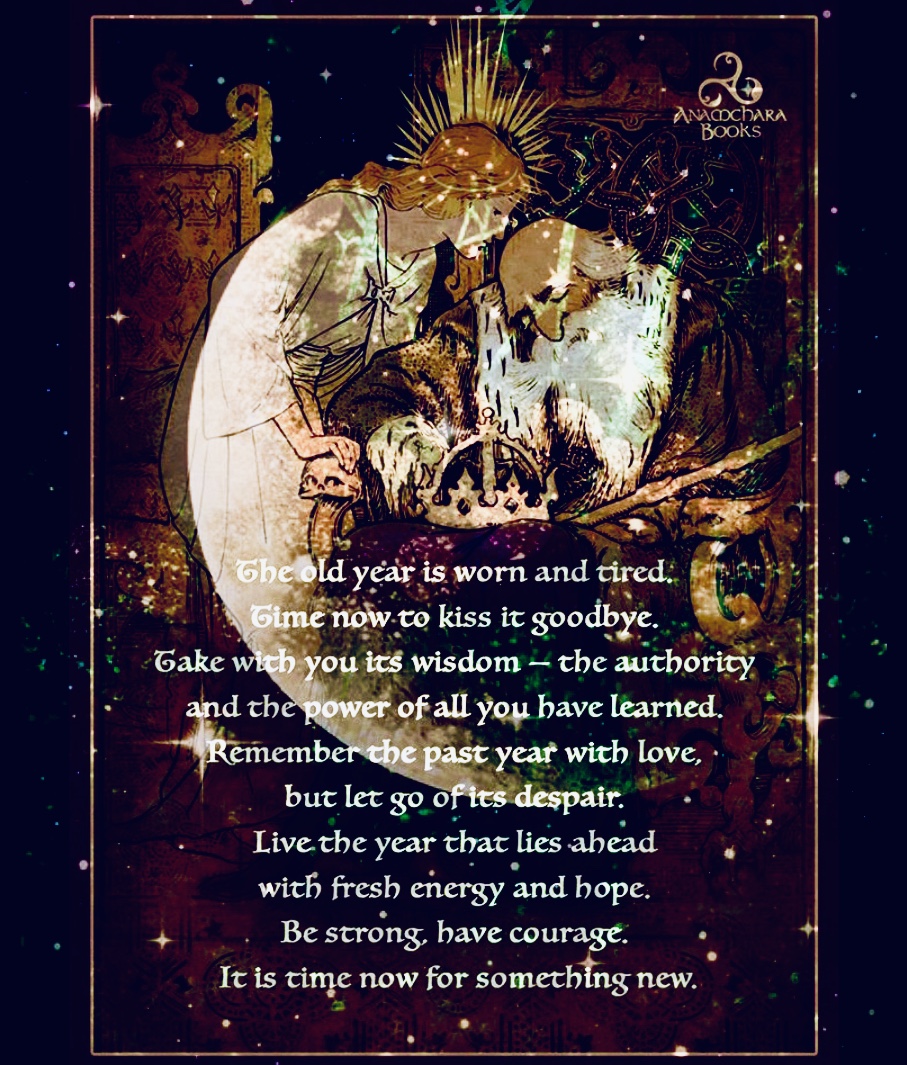
As the poet reminds us, “Live the year that lies ahead with energy and hope. Be strong, have courage. It is time now for something new.” And so it is. But embracing something new is sometimes difficult. Sometimes our hope is small. Sometimes following our journey into an unknown future is frightening. If the year past still holds us in a place of suffering, if illness lingers with us, if depression and anxiety still rages in us, if persistent grief comes with us into the new year, it is difficult, if not impossible, to leave the past pain behind and embrace something new. So if you feel that you cannot leave past suffering behind you, this little message is for you.

The most important thing you can do is to honestly acknowledge the suffering and accept the fact that it will not leave you just because the new year has arrived. Spend some time contemplating your suffering, how it impacted you in the year past. Can you find any newness at all at the beginning of a new year? Is there some of the suffering  you can see in a different light? Can you respond to it differently? Can you find a way to endure it that is better than the way you endured it in the past? Can you make a concerted effort to learn something from your suffering?

Still, if you are in the throes of suffering — physical, emotional or spiritual — the suggestions above can illicit the strong response, “You’ve got to be kidding! This way of looking at the same thing I’ve endured for years is simply impossible!”

I will be the first to acknowledge the truth of that response, but I must also ask, “What do you have to lose?” Even a change in your response to one place of suffering could bring a small change for you, a change ever-so-slight that has the power to offer you increased resilience and hope. It may be worth a try.

I think it’s important to repeat these wise words: “Live the year that lies ahead with energy and hope. Be strong, have courage. It is time now for something new.”

I suggest that, even if we are enduring suffering, we can greet the new year “with energy and hope.” Hope is always available to us, even when we cannot see it or feel it.

From the promises of Scripture . . . 
“ . . . so that we who have fled for refuge might have strong encouragement to hold fast to the hope set before us. We have this as a sure and steadfast anchor of the soul, a hope that enters into the inner place.
 — Hebrews 6:18-19

From the depths of our souls . . .
“Why are you cast down, O my soul, and why are you in turmoil within me? Hope in God; for I shall again praise him, my help and my God.”   — Psalm 42:11

“I wait for the Lord, my soul waits, and in his word I hope.”  
— Psalm 130:5

But I will hope continually and will praise you yet more and more.”  — Psalm 71:14

The Scriptures can be comforting to us. They can lift up courage in us and they can give us strength to face all of our tomorrows, but the place where hope really lives is within us. We can reach down for it, hold it close, and allow it to help us move forward. No matter what manner of suffering we hold, hope can guide us.

I leave you and your journey into 2020 with the wise words of Corrie Ten Boom:

“Never be afraid to trust an unknown future to a known God.”


Change, Family, Fear, Friends, Friendship, God's Faithfulness, Hope, Loss, Love, New Year, Passing years, Poetry, Pondering, The Year Behind

Old Year Ending ~ New Year Beginning


Of all sounds of all bells, the most solemn and touching
is the peal which rings out the Old Year.

— Charles Lamb

We do get rather nostalgic at the end of a year, on the cusp of a new year. Perhaps we have regrets from the passing year. Perhaps the old year brought losses and grief. Perhaps we have fear at the thought of what the year ahead might bring. Nostalgia just seems to go along with year end and year beginning. I have been known to get teary-eyed during the singing of “Auld Lang Syne” in spite of the fact that I had no idea what “Auld Lang Syne” even meant.

Robert Burns wrote “Auld Lang Syne” in 1788. The poem soon became a song that was traditionally used to bid farewell to the old year at the stroke of midnight on New Year’s Eve. It was a ritual song that gave people a ceremonial way to express the discomfort of ending/beginning as well as to speak of the value of old friendships that should not be forgotten.

Another poem written by Robert W. Service (1874-1957) was entitled “The Passing of the Year.” Its seven poignant stanzas come across as a lament of the passing year, and yet the poet also expresses a juxtaposition between a somber response and an expression of fond farewell. Here are some excerpts:

My glass is filled, my pipe is lit,
My den is all a cosy glow;
And snug before the fire I sit,
And wait to feel the old year go.
I dedicate to solemn thought
Amid my too-unthinking days,
This sober moment, sadly fraught
With much of blame, with little praise . . .

And You, deep shrinking in the gloom,
What find you in that filmy gaze?
What menace of a tragic doom?
What dark, condemning yesterdays?
What urge to crime, what evil done?
What cold, confronting shape of fear?
O haggard, haunted, hidden One
What see you in the dying year?

And so from face to face I flit,
The countless eyes that stare and stare;
Some are with approbation lit,
And some are shadowed with despair.
Some show a smile and some a frown;
Some joy and hope, some pain and woe:
Enough! Oh, ring the curtain down!
Old weary year! it’s time to go.

My pipe is out, my glass is dry;
My fire is almost ashes too;
But once again, before you go,
And I prepare to meet the New:
Old Year! a parting word that’s true,
For we’ve been comrades, you and I —
I thank God for each day of you;
There! bless you now! Old Year, good-bye!

As for New Year’s Resolutions, the same poet wrote an expressions of regret in the year past and the resolve inherent in a phrase we know so well: “Just do it.”

RESOLUTIONS

Each New Year’s Eve I used to brood
On my misdoings of the past,
And vowed: “This year I’ll be so good –
Well, haply better than the last.”
My record of reforms I read
To Mum who listened sweetly to it:
“Why plan all this, my son?” she said;
“Just do it.”

Of her wise words I’ve often thought –
Aye, sometimes with a pang of pain,
When resolutions come to naught,
And high resolves are sadly vain;
The human heart from failure bleeds;
Hopes may be wrecked so that we rue them . . .
Don’t let us dream of lovely deeds –
Just do them.

Now that I have shared more poetry than you ever wanted to read, let me conclude with this thought: As a new year approaches, we greet it with all the regrets and losses and emotions of the old year still pressing on our spirits. That affects our attitude about the unknown year ahead, and when we look at the path that leads us into 2020, all we see is darkness. It is for us a journey into the unknown with no instructions for moving forward. We are sometimes not sure we even want to move into the new year.

That may be the very reason for the ball drop in New York, the champagne toasts with all the hugging and kissing, the elaborate party decorations including metallic pointy hats and horns blowing in the night. Maybe we celebrate so hard because we are so hurt, so filled with regret, so shamed, so afraid of the future. We stand at the gate of the new year holding all that we brought from the old one. Sometimes the burden we are carrying is a heavy, heavy burden to carry, but we simply don’t believe we can throw it off and start on the new year’s unknown path, unburdened and free.

Yes, we do leave all our memories behind in the year that has passed, and in the new year, we hope to realize fresh, new dreams. A wise person says that around us, we have those who love us and within us, we have all we need. But the most eloquent advice I know that addresses our old year/new year dilemma comes from yet another poet, Minnie L. Haskins:

And I said to the man who stood at the gate of the year:
Give me a light that I may tread safely into the unknown.

And he replied: “Go out into the darkness and put your hand into the hand of God.
That shall be to you better than light, and safer than a known way.”

Bravery, Challenge, Change, Courage, Emotions, Faith, Grace, grief, Loss, Music, Pain, Soul, Tears, Weeping

“I Can Do This Hard Thing!”

E32E4944-6CCD-4D2D-AE7E-712C6C8A3191
From https://contemplativemonk.com/about/

I can do this hard thing, this recovery from a kidney transplant. But sometimes I need to shed some tears about it all. Tears do not come out of weakness. In fact, tears are the mark of power. Called “the soap of the soul,” tears can help diminish the angst my soul clings to so tightly. Unfortunately, I tend to fight back tears as if they will hurt as they slip down my cheeks. I also nurse the irrational desire to not let anyone see my tears. After all, someone might consider them a sign of my weakness.

Yet, God has another thought about our tears. God counts our tears, keeps up with them, gathers them up and stores them in a bottle. I can imagine the scene of a loving God gently catching every tear and preserving it as a precious elixir worth saving.

Still I avoid weeping at all costs, portraying a false, less-than-honest strength — especially if someone might see.

Today, I am so aware that if I could just cry, the hard time I am going through would feel easier. If I could cry, my tears would cleanse my heart and help minimize my physical, emotional and spiritual pain. If I could just let my tears fall, I would be reclaiming my power.

The truth is that I did not fully understand how hard it would be to endure a kidney transplant and the very, very difficult aftercare regimen. Nor could I have ever imagined the range of emotions I would experience. This is one of life’s hard things.

Last night though, a dear friend sent me a video of a song she chose just for me, just for this moment of my life. I had never heard the song before, but it was exactly what I needed to hear. A mesmerizing tune and simple lyrics written and performed by Carrie Newcomer, “You Can Do This Hard Thing” brought me to tears, tears that really needed to flow.

You can do this hard thing.
It’s not easy I know,
But I believe that its so.
You can do this hard thing.

My faith tells me that I really can do this hard thing, although most of the time I don’t feel that I can. The friends and family who surround me with love remind me that I can. My heart tells me I can do this, but my rational mind tries to convince me that I cannot. I am reminded by the hymn writer that grace for this hard thing comes from God . . .

God giveth more grace when the burdens grow greater;
He sendeth more strength when the labors increase;
To added afflictions He addeth His mercy,
To multiplied trials, His multiplied peace.

When we have exhausted our store of endurance,
When our strength has failed ere the day is half done,
When we reach the end of our hoarded resources
Our Father’s full giving is only begun.

So perhaps it does require our tears, our lament that humbles us before our God of grace. The writer of the Book of James seems to suggest that grieving and weeping brings God near and that our mourning actually strengthens us to live through hard things.

God gives all the more grace . . .
Submit yourselves therefore to God . . .
Draw near to God, and he will draw near to you . . .
Lament and mourn and weep.
Let your laughter be turned into mourning and your joy into dejection.

— From James 4 (NRSV)

It doesn’t make much sense that mourning is a good thing, that flowing tears actually cleanse the soul. But I need to see things this way: Life brings changes — hard changes sometimes. Along with the miracle of my kidney transplant comes the end of one season of life and the advent of a new season of life. While I do celebrate the transplant and the ways it will be life-giving for me, I must also grieve the loss of my previous life that had become so comfortable, so easy.

I will call out to my buried tears. I will open up my heart’s pain, grieve my losses and let my tears fall freely down my cheeks. It seems to be the best way to make sure I can do this hard thing.

Awakening, Call, Calling, Change, Discovering, journey, Kidney Transplant, life, Life pathways, Perseverance, Preaching, Rebirth, Self Awareness, Spiritual growth, Spirituality or Religion?, Transformation, Wholeness

“Me!”

D661FB1C-FE24-4C0D-9614-F12695893AEA

When I was younger, my primary life goal was to make people like me. It was something of an obsession, and it caused great harm to my spirit. For you see, I thought I had to be everyone else’s image of me. So “me” became changeable and malleable in the hands of a variety of other people. In my mind, they just had to like me.

The conundrum of life: how to accept that not everyone will like me. Maybe even most people won’t like me. So here’s the sad, but inevitable result: “me” became someone I didn’t even know. I lost myself in the impossible quest to be accepted and liked.

Then came the metamorphosis. It happened around age 47. I think what started it may have been reading the book by Sue Monk Kidd, The Dance of the Dissident Daughter.

My sisters in cyberspace, you should read that book. The thing that nearly frightened me enough to make me put the book away is the descriptor after the main title. So here’s the title of the book, in all of its feminist fullness: The Dance of the Dissident Daughter: A Woman’s Journey from Christian Tradition to the Sacred Feminine.

Well, when I read part of the book’s description — the “journey from the Christian tradition” part — it scared me to death! I had no intention at all to journey away from my Christian tradition.

I read the book anyway, and it changed my life and launched me into a journey I could never have envisioned. Sue Monk Kidd led me on an incredible, circuitous journey through fear, anger, healing, and eventually, awakening and transformation. Of course, I could never see myself turning away from my deep connection to what Kidd described as “the deep song of Christianity,” But I did discard the voices that kept me in my place, and kept me quiet, for so many years of my life.

When those discouraging, disparaging voices were silenced, I heard my own voice, finally. With clarity, my voice declared “me,” exactly the woman I was meant to be, precisely the woman God was calling to ministry. By embracing my full humanity and my spirituality — that looked very different than my religiosity had looked — I found myself.

“Me” was awakened, out in the open, in the middle of God’s world and smack dab in the center of God’s will. Oh my! Now no one would like me! When my words spoke Gospel truth, people didn’t like me. When I tenaciously followed God’s call to ordination, people didn’t like me. When I dared to preach (from a real pulpit) lots of people didn’t like me. When I worked as an advocate for women and children harmed by violence … well, no one at all liked me then because I refused to back down.

I like this quote from Denzel Washington:

“Some people will never like you because your spirit irritates their demons.”

There it is! The real, unadulterated truth! So as my spirit continued to irritate everyone’s demons, I was finally living my life as “me!” And that, my sisters, was a good place to be.

I hope you are in your own “good place.”

—————————————————————————

On another note, please pray for me as I await a life-saving kidney transplant. I am grateful that you are walking with me on this journey that often feels frightening. Your thoughts and prayers mean so much. If you would like to read the story of my illness at the Georgia Transplant Foundation’s website, please visit this link:

http://client.gatransplant.org/goto/KathyMFindley

A Go Fund Me page is set up for contributions to help with the enormous costs related to the transplant, including medications, housing costs near the transplant center, and other unforeseeable costs for my care following the transplant. If you can, please make a contribution at this link: 

https://bit.ly/33KXZOj

Change, Comfort Zone, Dreams, Fear, Growth, Learning, Uncategorized

Becoming Our Better Selves

295B6520-B0A5-4F94-A0E7-9462C854C39B

I don’t usually write about charts in my blog. I’m not really a chart person at all. But my friend, Kim Rosby, recently sent me a chart that is worth contemplating. The chart is a snapshot of what it might look like when we become our better selves. It’s entitled “The Comfort Zone,” which is a place most of us want to be. 

That’s the problem. There is no growth and maturing in the comfort zone. It can become for us, not just comfortable, but also stagnant.

So I spent some time contemplating this provocative chart, and it definitely provoked some emotions in me. It appears that there are four zones that are possible for us:

  • The Comfort Zone
  • The Fear Zone
  • The Learning Zone
  • The Growth Zone

There you have it! So let’s unpack this chart a bit. When/if we manage to move ourselves out of the comfort zone, a place where we feel safe and in control, we will most likely enter the fear zone. In the fear zone, we are not at all sure of ourselves. We hang on the opinions of other people and use anything we can find as an excuse to remain frozen in place. If we don’t make a move, we can’t make a mistake. Right? We come to a point, though, where we do not believe we can move. We don’t believe we can change. We don’t believe we can seek another way.

Fortunately, some of us do make it out of the fear zone and thus find ourselves in the learning zone. What a renewing place to be, a place where new and fresh ideas are possible. It is in this zone that we realize we have moved at least a few steps past our comfort zone. We learn new skills and we discover that we can navigate challenges and solve problems. As long as we are learning, our path is clear and a future is possible.

So we move with courage into the growth zone, where we will re-invent ourselves in positive and exhilarating ways. As we conquer the objectives that were holding us back, we begin to believe in the possibility of new life goals, a deeper purpose. And then suddenly, we surprise ourselves with dreams and aspirations for something more in our lives, something fresh that inspires us to be our better selves.

I like my friend’s chart. I also like this promise that also says something very compelling about becoming our better selves:

 . . . I came that they might have life, and have it more abundantly.
—Jesus


Brokenness, Change, Chronic illness, Discovering, Emotions, grief, healing, life, Loss, New Normal

On to a New “New Normal”

7519DB43-1B31-43A9-9528-84655345CC44I’m getting to know myself. Again! Moving through life takes one through changes large and small. We slip past the small ones pretty much unscathed. But oh, those large ones! The large changes are another story altogether. Sometimes they cause us to miss a step or two. Sometimes they stop us right where we stand. Sometimes they throw us all the way to the ground. But they always get our attention.
Chronic illness is one of those ‘knock-you-to-the-ground” changes, especially when an illness happens suddenly. In a recent New York Times article, Tessa Miller shares how sudden illness changes one’s life and how chronic illness changes life forever. 

“Seven Thanksgiving ago, I got sick and I never got better,” Miller writes. She goes on to describe the conundrum of chronic illness. 

When I was diagnosed, I didn’t know how much my life would change. There’s no conversation about that foggy space between the common cold and terminal cancer, where illness won’t go away but won’t kill you, so none of us know what “chronic illness” means until we’re thrown into being sick forever.

I can identify with the changes Tessa Miller describes. The onset of my chronic illness five years ago was sudden, unexpected and permanent. My kidneys failed — simple as that. And I entered into the unfamiliar world of daily dialysis, a world I never expected to be in. And, yes, it was life-changing.

Tessa Miller makes another very insightful point. She explains how, once you find yourself in the fog of the changes you’re facing because of a chronic illness, one change presents the biggest challenge – the change in your relationship with yourself.

There is no debate: when chronic illness disturbs the equilibrium of your life, your relationship with yourself changes. You grieve a version of yourself that doesn’t exist anymore, and a future version that looks different than what you had ever imagined.

Chronic illness can shatter career goals and life plans. You learn learn a “new normal” in their place. But the acceptance of a “new normal” comes after the trauma. And trauma does happen, trauma that necessarily calls for therapy, either formal or informal.

Emotional work definitely needs to be done, and emotional work around chronic illness can look a lot like grief therapy for a passing loved one. You lose your self, at least temporarily. Your self changes.

So make sure to spend some time looking for YOU. Intentionally. Being open to whatever you find in yourself. Practice seeing yourself as the person you are instead of the person you were. Looking in the proverbial mirror gives you an image of the new version of yourself. Get to know her. Celebrate her resilience. Above all, be patient as you get to know her. You may be surprised at how much you like and admire her.


Change, Discovering, Illness, life, Loss, Pondering

Giving Primary Energy to Primary Things

ee555bd0-af25-43cd-aa2c-67edd555abba
Abstract energy formation

Yesterday was “one of those days.” I spent the day pondering my illness, the constant medical processes in my life, my sense of isolation and my losses. It seems I have failed in the work of giving primary energy to primary things. In fact, yesterday I gave up a great deal of energy obsessing on circumstances I cannot change. But there are circumstances in my life that I can change, and I made some promises to myself: 1) I will try to get out more;  2) I will work on dwelling on life’s positive aspects; and 3) I will focus on primary things and put secondary things on hold.

I received some unexpected help with Number 3 late last night. It was in the blog of Guy Sayles,* a friend I haven’t heard from in years. Stumbling across his thoughts was a serendipity for me. This is part of what he wrote.

I don’t want to reach the end, however soon or later I reach it, and have to admit that I’ve given primary energy to secondary things, toured the periphery rather than made a pilgrimage to the center, and complied with external demands instead of responding to the internal and eternal Voice. For the love of God—I mean it: for the love of God—it’s time to discover or rediscover what I most deeply believe to be true in response to questions like:

What keeps people from knowing, deep in their bones, that they are God’s beloved children? How can we help each other to know?

How can we trust that, because of God’s vast and self-giving love, there is “no condemnation” by God and “no separation” from God? What do communities enlivened by such trust look, sound and feel like? How can we fashion and sustain such communities?

How do grace and mercy heal our brokenness, even when they don’t cure our illnesses or end our pain?

How does love displace fear—in individuals; in families, tribes, and communities; and among nations?

What are the ways of life that place and keep us in harmony with the “grain of the universe”? How do we learn and encourage one another to honor them?

What does it mean—what could it mean?—that Jesus calls us his friends?

There are more. Questions like these shape my vocation now. I can’t number the times the Spirit used the poetry of Mary Oliver to call me back to my calling. It happened again last week. After she died, these words were everywhere:

“Doesn’t everything die at last, and too soon?
Tell me, what is it you plan to do with your one wild and precious life?”

That has been my question for a very long time, for years in fact: What is it you plan to do with your one wild and precious life?

I really must answer that one, knowing that what’s left of my life is much shorter than it used to be. It’s time — it’s past time — for me to give primary energy to primary things, and that’s not a bad idea for you either. For you see, we only get one wild and precious life — just one!


* I invite you to visit the blog written by Guy Sayles at this link: https://fromtheintersection.org/blog/

Change, Growth, Hope, life, Life pathways, Wisdom

Starting Over

775D14C9-8802-4DEA-BD06-33C669F187B7Here’s the thing about life: things crash and break, obstacles can stop you in your tracks, you can get completely cut down. It happens to all of us.

One option is simply to give up on life. Or maybe to retreat into a private place for sulking. Another option is to be angry and to live the rest of your life angry.

But the reality is much more optimistic than any of those dismal options. Because no matter what happens in your life, you can start over. Starting over is really not so bad. I’ve done it many times and I survived it. So if we can accept the fact that something in life is over, there is hope for the days to come. 

I choose to see starting over as a fresh new beginning, another chance to do life differently. If I start over with a positive attitude, it can be an opportunity to head into the future wiser and more confident. Starting over can offer a path ahead that’s full of promise.

That’s what I’ll count on.

Celebration, Change, Light, Politics, Women

Celebrate!

45270512-74C2-48EE-8432-2FAB7129D11C
New Faces of Congress!  Top row (L>R) Deb Haaland, Rashida Tlaib, Judge Veronica Escobar, Jahanna Hayes;   Bottom row (L>R) Ayanna Pressley, Sharice Davids, Ilhan Omar, Alexandria Ocasio-Cortez

Some voters hoped for a Blue Wave, others a Red Wave. There wasn’t much of a wave on either side of the aisle, at least not the enormous wave they wanted to see. What we did see was a Women’s Wave, at least 117 women elected on Tuesday, 100 Democrats and 17 Republicans. Now that is something to celebrate! Here’s the scoop, by the numbers:

  • Of the 117 women elected, 42 are women of color, and at least three are L.G.B.T.Q.
  • With some ballots still being counted, women have so far claimed 96 of the House’s 435 seats (it is expected to rise to 100), up from the current 84.
  • At least 12 women won Senate seats, which will bring the total in that chamber to at least 22 (that number is expected to rise by two), of the 100 seats that exist. There are now 23 women.
  • Women won nine governorships, of 50 total. Six women currently serve.
  • Overall, at least 10 more Congressional seats will be occupied by women than before.

On a night to remember and celebrate, here is what some of the women who made history said in their victory speeches:

“When it comes to women of color candidates, folks don’t just talk about a glass ceiling; what they describe is a concrete one. But you know what breaks through concrete? Seismic shifts.” 

  • Ayanna Pressley, who will become the first African-American woman to represent Massachusetts in Congress. She beat a 10-term incumbent in the Democratic primary and vowed to pursue “activist leadership” to advance a progressive agenda.

“We have the opportunity to reset expectations about what people think when they think of Kansas. We know there are so many of us who welcome everyone, who see everyone and who know that everyone should have the opportunity to succeed.”

  • Sharice Davids, a former White House fellow, is a lesbian; she and fellow Democrat Debra Haaland of New Mexico are the first Native-American women elected to Congress.

“In my family, there were no girl chores or boy chores. There’s just things to get done. So that’s what we’re going to do. I’ve got some big plans for this state.”

  • Kristi Noem, a Republican, will be the first female governor of South Dakota. She’s a four-term congresswoman who campaigned on her conservative record and her experience working on her family’s farm.

“We launched this campaign, because in the absence of anyone giving a clear voice on the moral issues of our time, then it is up to us to voice them.” 

  • Alexandria Ocasio-Cortez, Democrat from New York, became the youngest woman elected to Congress at age 29. She has never held elected office, and like Ms. Pressley, she defeated a white man who had served 10 terms in a Democratic primary.

So there you have it — a real occasion for celebration. No doubt, these women will re-shape America’s leadership. If you know women at all, you know that they often work harder, work longer, work with a passion that changes the world.

Congratulations and God speed to each of them. 

To the new faces of leadership: We applaud you. We celebrate you. We’re proud of you. We’re holding you in the light. We’re counting on you.


Statistics in this blog are from Maya Salam, published in a special post-election edition of The New York Times Gender Letter.


Change, Discovering, End Stage Renal Disease, Freedom, healing, Illness, Life Journeys, Mindfulness, Rest, Restoration, Self care, Serenity, simple joys

I used to be . . .

734D4A65-1E4E-4705-A356-D13DF9C7F9B4I used to be . . . 

It’s a phrase I use a lot these days as I fight off the feeling that in retirement, I am useless. It’s not true, of course, that I am useless. But to be honest, I do feel just a little useless these days, at least some of the time. The reason? I used to be a bona fide workaholic. I used to feel important and productive. I used to be busy all the time, night and day. I used to be a perfectionist. I used to have just a bit of obsessive compulsive disorder, and all,of that drove me to a dangerous place.

The problem is that when you love and believe in your work so much, your work can become your whole life. Then things can get unbearable. So I admit that I am a recovering workaholic. I was the person that put in far more than 40 hours a week and never took a day off. But the critical question I had to answer was this: Is my ego at the root of my workaholism?

What was the job that was important enough to push me to work so hard?

I was a minister and a trauma counselor, and I was executive director of Safe Places, a nonprofit organization that served victims of violence. There was always someone in trouble, someone who had been battered by a spouse, someone trying to escape trafficking, a teen that was recovering from rape, a child that had been abused. So the work was never done.

I loved my work. I believed in it with all my heart. But I could not see what others saw. I could not believe the truth spoken by friends and colleagues, that I needed rest, that my work was hurting me. As much as I didn’t want to admit it, I was working myself sick. Circumstances, and maybe the alignment of the stars, brought me to a “come to Jesus” moment that forced me to take stock of my life. I realized I couldn’t do it all. So I took a very slight respite and pulled back from the constant work. In the meantime, as the stars would have it, we lost our federal funding, and suddenly Safe Places was gone. It was over. 

The stress did not end, though, because those that needed help kept calling . . . my phone. I had no staff left and, though I tried, I simply could not continue helping all these hurting people by myself. So I was forced into an unwanted and unplanned rest. 

During this “rest” time, grief and loss took over my psyche. But miraculously, my body began to rest. My pace slowed down. I was becoming mindful of every moment and what was going on in every moment. And in spite of the grief and sadness, my mind and spirit began to heal. What happened next was the shock of a lifetime. As my mind and spirit began to heal, I finally allowed my body to tell me what was going on. My doctors got to the bottom of it and diagnosed me with end stage kidney disease. Before I could even begin to take it all in, I was hospitalized and on dialysis.

I honestly believe I had worked myself to death, or at least nearer to death than I wanted to be. I spent a great deal of 2014 in the hospital trying to stabilize and then working to take my life back. It was hard work learning to write again, to think again, to walk again. But I made it through to a “new normal” that meant for me at least 7 1/2 hours of dialysis every day for the rest of my life, unless, of course, I am able to get a kidney transplant.

The experience of serious illness changed me. After I began to recover, people told me that I was unusually quiet. I didn’t speak much even when others around me were engaged in meaningful conversations. I knew that I was being quiet, quite unlike my normal personality. I was often silent when normally I would have had a great deal to say. I was different, to be sure, but inside myself I was okay. If I had to describe myself I would say that I was soft, broken open and free. And I was content in that place, although my family was concerned about me. I had traveled to a new place in my life, and it was a good place to be.

So here I sit in my “new normal,” tending plants, painting, cooking, writing, reading, and doing all things for pleasure. Most often I am still tempted to dive in and work on something until I am exhausted. But when the tiredness begins to creep up, something in my body remembers. Remembers I need to rest, to embrace stillness, to just “be.”

Still, I fight my old workaholic ways. Sometimes they push me to do things faster and better and longer. Sometimes my old workaholic ways push my button, the button that accuses me of uselessness, as in, “You are not worth much anymore! What are you going to do to change the world?”

Good news! I have finally given myself permission to not change the world. It has been a major shift for me, but I am seeing the truth more clearly, that I never could have changed the world anyway! So most of the time, when I feel myself pushing past my edge, I walk away. I write a blog post or fiddle with my flowers. I cook something fabulous or watch a little Netflix. So what will I do to live happily in these retirement days? I hope that I will keep studying the secret art of rest. I hope that I will continue to learn the grace of mindfulness, just cherishing the moment, every moment.

I used to be a workaholic. Not anymore.

Oh, and one more thing . . . a prayer. Though my faith tradition has always eschewed prayers to Mary, mother of Jesus, many very beautiful and meaningful prayers are prayed to her. I leave you with this one written by Mirabai Starr.

Mother of Consolation, help me to let myself be consoled. 

I hold it all together, Blessed One. 

I have convinced myself that it is up to me to keep the airplane aloft with my own breath, that I am the only one capable of baking bread and scrubbing floors, that it is my responsibility alone to alleviate the sorrow in the heart of every single person I know. 

But I have forgotten how to weep, Tender One. 

Teach me to reach out to the ones I comfort and ask for their comfort. 

Let me feel the tender touch of the Holy One on my cheek when I wake in the night, weary and frightened. 

Help me to be vulnerable and soft now, broken open and free.

— Mirabai Starr


Change, Courage, Dreams, Life Journeys, Memories, Passing years, Retirement, Transformation

On Disturbing the Universe

960D000A-3175-4D6F-9A36-3881E1569289You have no doubt heard about the mid life crisis. Perhaps you have even had one. I did at mid life. However, what’s more critical to me at this stage of my life is more appropriately called a late life crisis. And, lo and behold, I’m having one of those right now!

Am I in the right place? Do I need to retire nearer to my son and grandchildren? How do I live a fulfilled life while facing so many health challenges? Why did I move away from my best friend? How do I give back as I have always done now that my ministry career is over? Is it over? Is there more I could be doing? Should I write more, cook more, paint more, garden more? What in the world do I do with myself?

I recently read a book by Sue Monk Kidd,  When the Heart Waits: Spiritual Direction for Life’s Sacred Questions. I was stopped in my tracks by her words:

For some months I had been lost in a baffling crisis of spirit. Back in the autumn I had awakened to a growing darkness and cacophony, as if something in my depths were crying out. A whole chorus of voices. Orphaned voices. They seemed to speak for all the unlived parts of me . . . I know now that they were the clamor of a new self struggling to be born. I was standing on the shifting ground of midlife, having come upon that time in life when one is summoned to an inner transformation, to a crossing over from one identity to another. When change-winds swirl through our lives . . . they often call us to undertake a new passage of the spiritual journey.

I am there. Not in midlife, but in late life, and it is for me an existential crisis of spirit, definitely the time of “a new self struggling to be born.” To be sure, there are unlived parts of me, and I want to understand what exactly they are and how I can coax them to life. The ground beneath me is shifting, calling out to me to cross over from one identity to another. An inner transformation is most definitely in order for me, but how do I begin? Where do I begin? These are the questions of late life. And the symptoms? Dragging out old photos, very old photos. Looking up old friends. Examining your grandmother’s vintage jewelry. Scanning school yearbooks. All in a useless attempt at making the present as meaningful as you remember the past to be.

I sometimes agonize over my current life, wishing to dream just one more dream and to make it a reality. I worry about the future and wonder what the years ahead will bring. I want to still be relevant. I want to keep trying to change the world just as I used to. I want to stir things up and make waves in the quest for justice, just as I did in the past. I feel as if I have only two choices: to languish in the present or to find a way to be the me I used to be. And yet, something tells me that there is a third choice that involves some sort of transformation and the renewal of life, not as it used to be, but as it can be now, in the present season.

It is a quiet agony that I am experiencing. It happened to me when I came upon an unsuspecting darkness buried in late life and met the same overwhelming question that Sue Monk Kidd met: “Do I dare disturb the universe?”

My family could be scandalized if I found new life. They might wonder if I had taken too much of a medication. They might worry that I will do something inappropriate. They might know that I simply do not have the kind of energy required for dreaming big, new, important dreams. And they would be mostly right.

And yet I refuse to measure out my life with coffee spoons. It’s way too safe for me. It’s not who I am, and I am completely convinced that there are unlived parts of me looking for a way to come to life. I have no idea what that would look like. I have no idea how I will manage to pull it off. But I need to disturb the universe. And the universe needs some disturbing!

May God guide me on the way, pour blessings on my dreams, and show me just how I might disturb the universe.

Comfort, Contemplation, Division, Faith, grief, healing, Hope, Justice, life, Serenity

Sitting Open-Handed Before God

71184739-B4D2-4F2F-897E-1EAD2C2A56EAWhat is it like to sit open-handed before God? To abide with a compassionate God who knows the grief we are carrying? To sit in the glowing presence of a God who, not only knows the deep angst of our nation, but who can also transform it?
Yes, many of us are grieving the current state of our nation. We see our nation’s pain, just as we see the pain of the world. Yet, we who are Christ-followers live with great advantage in this pain-filled world. Yes, we grieve the divisions in our nation and lament at the ways we seem to have lost our compass of compassion, mercy and justice. We feed those who already have abundant sources of food. We provide health care to those who can afford their own. We hold open the voting entrances for those who can get there with the proper credentials. But for the people who hunger, the families that are homeless, the elderly, the children incarcerated at our borders, the prisoners, the helpless, the marginalized . . .  well, for them, we offer prayers, if we think of them at all.

So what is our great advantage? It is that our faith can carry us into spiritual realms where hope is large and dreams are possible. It is that we enjoy access to spiritual community with an accessible God. It is the spiritual luxury of quiet contemplation that opens our hearts to the whispers of God. And yes, I did say whispers of God, for it is almost always a quiet voice that beckons us into a world of turmoil. It is a quiet God-Voice that rekindles our compassionate hearts, speaks to us through the noise of discord in our nation, and shows us the good path we must follow.

We need not despair or cry out in anger or disgust. We need not attack those who seem to be wrecking our country. We need not hate those with whom we disagree. We have the great advantage of only this life task: to be silent before God, to sit in God’s presence open-handed, to pray, to listen, to seek, and then to go.

Sister of Social Service Simone Campbell, famously known as “the nun on the bus,” offers us a glimpse into one of the ways we can live as people of faith in a fractured nation. 

Finding a way to not vilify or divide into “them” and “us” in today’s federal politics goes against . . . current custom. . . . So my contemplative practice is to attempt to sit open-handed and listen to the “wee small voice” that sometimes whispers ideas and ways forward.

Simone Campbell

Thanks be to God for the quiet whisper that guides us on the path ahead, the God-Voice that ordains us to heal our nation and comfort our world.

Belief, Challenge, Change, Christian Witness, Community activism, Dreams, Grace, healing, Hope, Justice, Ministry, Mission, peace

A Broken, Waiting World

B507DED1-C6B2-4332-80BA-4B65623E2196

Do not be dismayed by the brokenness of the world. All things break. And all things can be mended. Not with time, as they say, but with intention. So go. Love intentionally, extravagantly, unconditionally. The broken world waits in darkness for the light that is you. ― L.R. Knost

When I was in seminary so many years ago, I worked part time in the Development Office, that extraordinary place that dreamed up words designed to gain support for the seminary and to tell the world what we were about. The one creative theme I most remember, because we made it our catch phrase and printed it on everything, was “We’re out to change the world!”

Some students left the seminary, degree in hand, and did just that. The rest of us labored mightily and did everything we knew to do to change a world that most assuredly was waiting and broken. What a mission!

I must admit, that short statement from seminary days became my personal quest. In every ministry position, I tried to change the world, much to the dismay of my parishioners. I took on every worthy cause as my own challenge to change the world. I committed myself to justice and set my face toward hope and healing for every person suffering injustice and indignity. It became a life-long quest, a personal commission. And what’s more, I sincerely believed I could do it, at least for the first few years I spent banging my head against various walls.

The song lyrics “to dream the impossible dream” come to mind. For those of you who may be too young to know about the magic of the 1964 Broadway musical, Man of La Mancha, I must give you the lyrics of the song that was the pronunciamento of the primary character, Don Quixote, and that almost instantly became the credo that many people of God embraced in trying to change the world.

To dream the impossible dream …
To fight the unbeatable foe …
To bear with unbearable sorrow …
To run where the brave dare not go …
To right the unrightable wrong …
To love pure and chaste from afar …
To try when your arms are too weary …
To reach the unreachable star …

This is my quest, to follow that star;
No matter how hopeless, no matter how far:
To fight for the right, without question or pause;
To be willing to march into Hell, for a Heavenly cause.

And I know if I’ll only be true, to this glorious quest,
That my heart will lie will lie peaceful and calm,
when I’m laid to my rest.

And the world will be better for this:
That one man, scorned and covered with scars,
Still strove, with his last ounce of courage,
To reach the unreachable star.

— Lyrics by Joe Darion

Today, as I watch military strikes against Syria and know that our country has not welcomed desperate Syrian refugees, I am painfully aware that I did not change the world. I worked in Uganda after the devastation of Idi Amin, but I did not change the world for millions of Ugandan widows and orphans.

I worked with persons who were sick and dying in hospital ministry, and I did not change their hopeless world of suffering. I have written letters, contacted government officials, participated in demonstrations, and signed hundreds of petitions, but I have not changed the world.

It has indeed been an “impossible dream.” And yet, I believe that I lived into my call from God and followed every path God placed before me. I faced off against what I viewed as evil many times and was deeply, demonstrably angry many times. But always, my mission remained in the center of God’s gentle grace and love. How?

I learned along the way — finally — that changing the world God’s way means holding tightly to lovingkindness, compassion, love and gentleness. The Scripture in Galatians 5:22-23 (NIV) says it like this:

. . . the fruit of the Spirit is love, joy, peace, forbearance, kindness, goodness, faithfulness, gentleness and self-control.

“Change the world with gentleness,” God might say to me.

While others stand for bigotry, racism, violence and war, change the world with gentleness. While leaders refuse to welcome refugees who long for a safe haven for their children, change the world with gentleness. While the highest positions in this country are embroiled in collusion, corruption, lies, greed and unkindness, change the world with gentleness.

This is a broken, waiting world that yearns, not for my righteous anger toward the world that is, but rather for my gentle hands of healing for the world that can be.

Change the world with gentleness? How? Why?

Because “Gentleness is not weakness. Just the opposite. Preserving a gentle spirit in a heartless world takes extraordinary courage, determination, and resilience. Do not underestimate the power of gentleness because gentleness is strength wrapped in peace, and therein lies the power to change the world.”

― L.R. Knost

May God lead us all in the paths of righteousness and gentleness. Amen.

Aging, Change, Christ's Passion, Faith, God's Faithfulness, Hope, Illness, Lent, Life pathways, Loss, Palm Sunday, Perseverance, Retirement

How Do You Live When You Know What’s Coming?

ABD2C8E4-5AA9-49EC-B771-A85BCDFBBD90How do you live when you know what’s coming? Jesus might have asked himself that question when the crowds were shouting “Hosanna!” and making a big deal of the fact that he was riding into town on a donkey. The Gospel of Mark tells the story well.

Many people spread their cloaks on the road, and others spread leafy branches that they had cut in the fields.

Then those who went ahead and those who followed were shouting, “Hosanna! Blessed is the one who comes in the name of the Lord! Blessed is the coming kingdom of our ancestor David! Hosanna in the highest heaven!”

Then he entered Jerusalem and went into the temple; and when he had looked around at everything, as it was already late, he went out to Bethany with the twelve.

— Mark 11:8-11 New International Version

So how do you live when you know what’s coming? Jesus went to the temple as was his custom and then set off to Bethany with his disciples. He knew what was coming, yet he did nothing very earth shattering. He sent his disciples into the city to prepare for for the Passover meal they would share. They ate the meal together, Jesus told then they would all desert him, and each one declared that they would never do such a thing.

They did. But life went on as life does. The Gospel then continues the sorrow-filled story as Jesus goes on with his disciples to a place called Gethsemane.

. . . And Jesus said to his disciples, “Sit here while I pray.”

He took with him Peter and James and John, and began to be distressed and agitated.
And said to them, “I am deeply grieved, even to death; remain here, and keep awake.”

And going a little farther, he threw himself on the ground and prayed that, if it were possible, the hour might pass from him. He said, “Abba, Father, for you all things are possible; remove this cup from me; yet, not what I want, but what you want.”

He came and found them sleeping; and he said to Peter, “Simon, are you asleep? Could you not keep awake one hour? Keep awake and pray that you may not come into the time of trial; the spirit indeed is willing, but the flesh is weak.”

And again he went away and prayed, saying the same words. And once more he came and found them sleeping, for their eyes were very heavy; and they did not know what to say to him.

He came a third time and said to them, “Are you still sleeping and taking your rest? Enough! The hour has come; the Son of Man is betrayed into the hands of sinners.

Get up, let us be going. See, my betrayer is at hand.”

Immediately, while he was still speaking, Judas, one of the twelve, arrived; and with him there was a crowd with swords and clubs, from the chief priests, the scribes, and the elders. Now the betrayer had given them a sign, saying, “The one I will kiss is the man; arrest him and lead him away under guard.”

So when he came, he went up to him at once and said, “Rabbi!” and kissed him.

Then they laid hands on him and arrested him.

— Mark 14:33-46 New Internation Versioned

So now life is earth shattering for Jesus. How do you live when you know what’s coming?

Right now in deep Lent, this is a question we probably should ask. I don’t know about you, but as for me, I know what’s coming, at least some of what’s coming. There’s aging and illness, separation from children and grandchildren, the inevitable loss of loved ones, waning energy and more loss of independence. It happens to persons of a certain age. What’s coming for me includes things that are not so positive.So how do I live when I know what’s coming?

The preacher in me wants to offer a religious platitude that minimizes the troubling reality and lifts up abiding hope. The preacher in me wants to proclaim with a great deal of passion that all will be well. The preacher in me wants to declare that whatever happens to me, God will be glorified.

How do I live when I know what’s coming?

Right smack dab through the middle of it! Living strong in the face of fear. Holding tightly to hope. Summoning my inner courage. Standing steady through the winds of change, depending on the inner resilience that has always sustained me. That’s how I live in the days I have left in this world.

But, by the way, there really is a religious word that upholds and sustains me. The preacher in me is still alive and well, so I can proclaim with great certainty the comforting truth I find in my favorite passage of scripture

You have searched me, O God,
and you know me. You know whenI sit down and when I rise;

You perceive my thoughts from afar. You discern my going out and my lying down; you are familiar with all my ways . .

You hem me in behind and before, you protect me, and you lay your hand upon me.

Such knowledge is too wonderful, too lofty for me to comprehend.

Where can I go from your Spirit?
Where can I flee from your presence?

If I go up to the heavens, you are there;
if I make my bed in the depths, you are there.

If I take the wings of the morning and dwell in the uttermost parts of the sea, even there shall your hand guide me and your right hand will hold me fast.

— Psalm 139:1-10 New International Version (paraphrased)

With that sacred promise and with the strength that has grown in me over many years, I really do know how to live when I know what’s coming. Thanks be to God.

Change, Children, Courage, grief, Gun control, healing, Hope, Justice, Politics, Violence

A Change Is Gonna Come

963A5A51-3EC5-464E-BAE6-A49BCFECAE4F
Emma González … ‘These young people will not sit in classrooms waiting.’ Photograph: Jonathan Drake/Reuters

Half a century ago, on March 7, 1965, state troopers beat down men and women who were participating in a peaceful march for voting rights in Selma, Alabama. That same day, radio listeners around the country might have heard Sam Cooke singing a song he had written and recorded several months earlier, but which could have been describing the “Bloody Sunday” confrontation on the Edmund Pettus Bridge.

There have been times that I thought I couldn’t last for long
But now I think I’m able to carry on
It’s been a long, a long time coming
But I know a change is gonna come, oh yes it will.

In “A Change Is Gonna Come,” Sam Cooke moves from bigotry and bloodshed to hope and beauty in barely three minutes. If you listen to the record today, you will hear a story that continues to be relevant. (https://m.youtube.com/watch?v=wEBlaMOmKV4)

Sam Cooke’s rough, sweet voice — a voice that is blues-born and church-bred, beat down but up again and marching — still rings.

A changs IS gonna come . . .

That message of hope rings out still in these troubling days through the passion-filled voice of Emma González, a senior at Marjory Stoneman Douglas High School, as she addresses a gun control rally in Fort Lauderdale just days after a gunman entered her school in Parkland and killed 17 people.

A change IS gonna come . . .

We are going to be the kids you read about in textbooks. Not because we’re going to be another statistic about mass shooting in America, but because . . . we are going to be the last mass shooting. We are going to change the law. That’s going to be Marjory Stoneman Douglas in that textbook and it’s going to be due to the tireless effort of the school board, the faculty members, the family members and most of all the students. The students who are dead, the students still in the hospital, the student now suffering PTSD, the students who had panic attacks during the vigil because the helicopters would not leave us alone, hovering over the school for 24 hours a day.

If the President wants to come up to me and tell me to my face that it was a terrible tragedy and how it should never have happened and maintain telling us how nothing is going to be done about it, I’m going to happily ask him how much money he received from the National Rifle Association. You want to know something? It doesn’t matter, because I already know. Thirty million dollars.  — Emma González

A change Is gonna come . . .

Just hours after the mass shooting, other students turned to social media to discuss gun control.

Guns give these disgusting people the ability to kill other human beings. This IS about guns.  — Carly Novell, a 17-year-old senior; editor of the school’s quarterly magazine.

We need to do something. We need to get out there and be politically active. Congress needs to get over their political bias with each other and work toward saving children. We’re children. You guys are the adults.  — David Hogg, 17, a senior; Stoneman Douglas student news director

Wherever you bump into someone, there is the fear that they’re the next shooter, and every bell is a gunshot. I feel like some change is going to come of this.  — Daniela Palacios, 16, a sophomore at another Broward County High School at her first protest.

A change IS gonna come . . .

And it will be our bold and compassionate children who will lead this nation into that change. Like so many Americans, I was disconsolate when watching the TV news of yet another school shooting. But then I started watching the students, and I saw the girl with the buzzcut, Emma González, wiping back her tears, mourning her dead classmates while demanding change.

Like her schoolmates, Emma is in trauma, but she is organizing. She and many of her classmates are directly challenging the donations of the National Rifle Association to Trump and other politicians. There will be school strikes. There will be organized resistance. These young people will not sit in classrooms any more. They refuse to become another tragic statistic. “We are going to be the kids you read about in textbooks,” said a weeping González.

As I remembered this week what happened  at Sandy Hook, at Columbine, at Westside, a school in my own state, I remembered feeling anger and despair. But today, for first time in a long time, I feel hope. I see true leadership as kids are standing up for one another and fighting for their lives.

Let us stand courageously beside these children, our children, and do what we can to create change . . . letters to Congress, phone calls, posts on social media, marches and demonstrations, hand-lettered signs, letters to the editor, VOTING for change. What can you do?

Emma González, Daniela Palácios, David Hogg, Carly Novell . . . and thousands of other children who are crying out, ENOUGH!

They give me hope.

A change is gonna come!

May God ennoble each of us to make it so.


Change, Covenant, God's Faithfulness, Hope, life, Loss, Mourning

A Holy Thread

Enlight137Years ago, I served The Providence Baptist Church of Little Rock as their pastor. In those days, 1992, I was the only ordained woman who was a Baptist pastor in the state. Because of the strong and vocal disapproval and disdain from Baptists in Arkansas, my ministry at Providence was a lonely nine years.

I had just experienced months of open animosity from the Arkansas Baptist State Convention as I went through a hard, hard ordination process. Threatening phone calls were just the tip of a very ugly iceberg. And I was hurt, almost broken, from the experience. But that story is a blog post in itself that I will save for another day.

I was given a rare gift, though, in the people of Providence — a congregation of deep love and unwavering support. They were a courageous people, each having come to Providence from other Baptist churches to live out their faith. They took a risk to join Providence. Many convictions led them to do so, the role of women in the church, the inclusion of all persons, the re-visioning of the idea of “Baptist,” the desire to create a covenant with like-minded brothers and sisters, the quest to build a “beloved community” in our city.

I will always remember Ethel, one of our deacons and a dear mother-figure for me, who gave me constant encouragement. She would say to me almost weekly, “Tie a knot in the rope and hang on.” One of the times she said that, I was experiencing a particularly difficult time. I responded that what she was calling a rope felt much more like a thread.

I often recall those years with a mixture of joy and pain. In those years, many of us were grieving the loss of the denomination that had long nurtured us. We mourned for the loss of our seminaries, our beloved professors scattered in a deliberate and abusive diaspora. We mourned the loss of our Foreign Mission Board and worried about our missionaries around the world and the people they ministered to in towns and villages, plains and forests.

What I can say is that the pain slowly faded and healing covered us. I can also say with firm certainty that there was always a thread to hold on to, a thread that represented hope. I am inspired by the writing of William Stafford, who must know something about the thread we grip so tightly.

There’s a thread you follow. It goes among
things that change. But it doesn’t change.
People wonder about what you are pursuing.
You have to explain about the thread.
But it is hard for others to see.
While you hold it you can’t get lost.
Tragedies happen; people get hurt
or die; and you suffer and get old.
Nothing you do can stop time’s unfolding.
You don’t ever let go of the thread.

– William Stafford, The Way It Is: New and Selected Poems (Graywolf Press: 1998), 42.

Oh, what a comfort it is to hold on to the thread that never changes, even as everything around us changes constantly. What a comfort it is to find that sacred thread and to hold it tightly through all manner of life tragedy. What a comfort it is to move through change, suffering, loss, the many threatening events of life, and to feel the holy thread in your hands . . . constant, unbreakable, given to us by a compassionate God who always knew that our pathway would be scattered with stumbling stones and ominous boulders.

Thanks be to God for the holy thread. Hold it tightly.