Beauty of Nature, Comfort, Grace, Life pathways, Nature, peace, Restoration, Serenity, simple joys, Transformation, Writing

Beside Still Waters


7C49B5E1-CD3A-4F00-B8CC-B55E370984B4
Still waters near Pulaski County, Arkansas. Photo by Steve Nawojczyk.

I long each day to live beside still waters, to dwell in serenity, to find peace in the depths of my soul. Not such a simple task, that. 

The problem is that life is not that much about still waters. It’s more often about churning waters and swelling currents. Don’t get me wrong, I love the sound of waves crashing in the ocean and then coming to the shoreline with a special kind of energy. I love the rolling of a mighty river, the trickling sounds of creeks, and the splashing sounds that streams make as  they ripple over stones.

But the sheer silence of still waters . . . That’s when you can skip a rock across the top of the water and watch its antics. In still waters, you can hear the sounds of fish flying up to the surface and turtles paddling almost silently acreoss the waters with only their heads visible in search for a morsel of food. In still waters, a family of ducklings can move through the waters with just a hint of a sound and the graceful swan can glide by with hardly any sound at all while its webbed feet move swiftly to push the waters aside.

Those still waters! Their silence and their calm show us how to be.

The truth is that rushing waters do describe our lives at times. That is our reality. Life brings what feels like raging storms. Life assails us with a power that reminds us of the breaking waves of the ocean. In this life, we come upon rivers too deep and too wide and too turbulent to cross. We will feel a force against us that may come because of serious illness or the loss of a loved one. It may come with the pain of broken relationships or with devastating financial hardship.

Life brings brokenheartedness, but it brings brokenheartedness in the midst of grace. For on this journey we call life, we travel with a divine guide, One who does lead us beside still waters. And it is there that our soul is restored and comforted in the midst of green pastures of sacred serenity and holy calm.

I am thinking, of course, of the words of the Psalmist.

The Lord is my shepherd, I shall not want.

He makes me lie down in green pastures; he leads me beside still waters;

       he restores my soul.

He leads me in right paths for his name’s sake.

Even though I walk through the darkest valley, I fear no evil; for you are with me;

        your rod and your staff — they comfort me.

— Psalm 23:1-4 (New Revised Standard Version)

I also think of my friend, Steven Nawojczyk, who is finding his much-needed peace in the forests, mountains and valleys of Arkansas. His stunning photograph illustrates today’s blog post. With his beautiful dog and companion, Feebi, he follows a path of serenity and healing, hiking through nature’s beauty most every day.

His life has not been an easy one. As a public servant — many years as Pulaski County Coroner — he has seen far too much anguish for one person. He was integrally involved, literally in the trenches, with ending and preventing Little Rock gang violence, and has been a staunch champion for young people.

He faces serious illness and harsh treatment in his retirement. but he knows that life really does have a pathway that goes around the dangers, toils and snares. He knows that he and Feebi will find lightheartedness in exploring a forest or watching a flowing stream. He knows that the simple joy of a mountain view can bring transformation. He knows about peace, and he has chosen to follow the life path that passes beside still waters. I admire him. I have always admired him, but even more so now as I witness his unwavering commitment to serenity.

That’s what it’s all about in the end — a commitment to serenity, a firm resolve to walk beside the still waters of life, and in that intentional journey, to find our souls.

May the grace and peace of God fill your soul, and may your journey, wherever it leads, bring you serenity.


Celtic Prayers, Comfort, Grace, Inspiration, Irish Blessing, life, Prayer, Worship

Grace for Your Day

75777FD8-6406-4CA0-A2BF-D043F39E8DB3To bring a bit of grace to your day, I offer prayers and blessings that have stood the test of time. Some of them have been used for centuries to lighten a load or brighten a day. In the great tradition of Celtic prayers and blessings, many of these are very much prayers and reflections from daily life, the ebb and flow of ordinary day to day life. They are petitions of the home and hearth.

In every life, there are uplifting moments and anxious moments, there are inspirational times and times of despondency. There are times when the heart is disconsolate. Some of these prayers read like hymns and could be sung as psalms. Others search the heights and depths of our faith.

With hope that you will find a sense of their deep peace, I commend these prayers, blessings and sacred art to you as an attempt to express that God is with us, always, and that in God we live and move and have our being.

Deep peace to you

32072582-2242-46F1-A21A-3560036A395F

D716109E-E232-4CF7-83BC-247DF08EBF18Prayer for evening rest

I lay my head to rest,  and in doing so,
I lay at your feet
the faces I have seen,
the voices I have heard,
the words I have spoken,
the hands I have shaken,
the service I have given,
the joys I have shared,
the sorrows revealed,
I lay them at your feet, and in doing so
lay my head to rest.


635E2A28-E43A-4BCD-8F34-6305A17273DCI arise today

I arise today
Through a mighty strength:
God’s power to guide me,
God’s might to uphold me,
God’s eyes to watch over me;
God’s ear to hear me,
God’s word to give me speech,
God’s hand to guard me,
God’s way to lie before me,
God’s shield to shelter me,
God’s host to secure me.

(first millenium – bridgid of gael)


8BD9F9D4-214E-41CA-B1FA-B86294928292Blessings of light

May the blessings of light be upon you,
Light without and light within,
And in all your comings and goings,
May you ever have a kindly greeting
From them you meet along the road.

May the nourishment of the earth be yours,
May the clarity of light be yours,
May the protection of the ancestors be yours.

May dawn find you awake and alert, approaching your new day with dreams, possibilities, and promises.
May evening find you gracious and fulfilled.
May you go into the night blessed, sheltered, and protected.
May your soul calm, console, and renew you.


40834FE7-48A9-49E1-AE4F-AEB48034D18EThrough the day

As the sun scatters the mist
at the dawning of a new day,
So you calm our fears and anxieties
if we trust you.
You give us strength and courage
to live our daily lives
knowing you are with us
and we do not walk alone.
As the midday sun warms us,
we feel your protecting arms around us
and sense your loving presence.
As the sun sinks in a kaleidoscope of colour
you give us hope and renewal.


7AD0C7EE-0F8D-4414-B99B-71D195BE3957

Dawning of the day

From the dawning of the day through the morning,
guide us,
from the noontide to the setting of the sun,
lead us,
from the evening till we sleep,
keep us,
through the night till daybreak,
protect us,
and all for your love’s sake.
Lord of the day
, Lord of the sunrise,
we give thanks for the birth of each child,
for the freshly opening rose,
for all newborn animals.
Lord of the morning,
we give thanks for energy and enthusiasm,
for the challenges of a new day,
for your Resurrection power.
Lord of the noonday,
we give thanks for the ability to work,
for all we can achieve,
for unrealized potential.
Lord of the sunset,
we give thanks for those who have died
in the faith of Christ,
for all who have inspired us, for our loved ones.
Lord of the night,
we give thanks for rest and refreshment,
for all your love and care,
for the promise of a new day.


F7E8C76C-DEB3-480C-9AF5-99166136E691Comings and goings

In our coming and going,
guide us,
in our living and our being,
protect us,
in our seeing and our hearing,
enrich us,
in our thinking and our speaking,
inspire us,
in our arriving and our departing,
preserve us.


A4E2837D-29C3-4A90-8539-636F307D3B25Morning mist

As the morning mist shrouds the river
and is then lifted by the gentle rays of the rising sun,
so may our clouded spirits be raised
by the warmth of your love.


6816D648-8E81-4524-BB93-740C91627A31This day and every day

I arise today
in your strength to uplift me,
in your power to direct me,
in your love to enfold me,
in your wisdom to guide me,
in your way to lead me
this day and every day.


A3EA52D1-2DA4-4020-A826-8C5FDA2A4C97


May God, the God of all comfort, encourage your heart and protect you from despair. May God’s face shine upon you as you rejoice in the midst of troubles and trials, putting your faith in God and being confident of God’s lovingkindness toward you. May Christ our Savior lift up blessings upon you with the riches of God’s joy and may He grant you on this day deep peace in your heart and soul. Amen.


Gnat Line, Uncategorized

The Very Real, Bona Fide Gnat Line

2F5D03EA-A564-4F67-B04E-E43DC632DAD0NEVER! You hear me? NEVER . . . Never would I have moved to Macon, Georgia four years ago if someone had bothered to tell me the place sits smack dab on top of the Gnat Line! I had a perfectly good home in Little Rock, Arkansas, a lovely home that I enjoyed for 35 years. And I had a beautiful patio garden with many plants, trees, flowers and shrubs. And NO gnats!

You think I’m exaggerating. Or maybe spinning a tale for a few laughs.

No!. I’m dead serious about the Gnat Line! This is a genuine map that shows it with a red line of dashes.

457C3485-CDAA-464D-8AF8-1ECD27E37F70I, for one, do not need a map to tell me that the infamous Gnat Line goes directly through Macon, Georgia. The line probably goes through my street! I have empirical evidence. Gnats go after me with a vengeance, lighting all over my arms, relentlessly buzzing my ears, and worse, dive-bombing into my eyes, nose and, if I don’t keep it tightly closed, my mouth. It is not a good experience.

I have applied to my skin and clothing Off, Skin-So-Soft, Deep Woods Off, Sawyer, Cutter, Repel, No-Gnatz, Natrapel, stuff with DEET, stuff without DEET, picaridin, permethrin, and a variety of highly touted plant oils.

To no avail! The Gnats are not deterred. So I designed a stylish gnat hat, thoroughly ridiculous looking, but effective. The problem is the neighbors, the sweet neighbors who try so hard not to gossip about anyone in the neighborhood. But how can they help themselves when a crazy lady with a very strange hat is working in her flower beds, still swatting gnats off both arms. The gnat hat is definitely not my finest fashion statement.

A picture is worth a thousand words, so in lieu of giving you an even wordier description, here is a photo of my gnat hat:11DA5962-66B9-4272-94E8-CAB35D42986F

If you are still skeptical about the location of the bone fide Gnat Line, let me tell you. Those of us who have spent time outdoors in Georgia know precisely where the Gnat Line is exactly 1-6 inches directly IN FRONT OF OUR FACE and probably in our nose!

But to be fair to Georgia . . . Head to the beautiful North Georgia mountains and you will not find a single gnat. And for, now, we’re safe. They’re not here quite yet.

May they get lost on their evil migration and head further north, completely out of our state. That’s my sincere hope regarding gnats!

Discovering, life, Lightheartedness, Mindfulness, peace, Self Awareness, Self care, Serenity, Sorrow, Spiritual growth, Tears

Mindfulness

9B848BD6-A066-4F2C-ADFC-E8EA7D4C99D6mind·ful·ness
ˈmīn(d)f(ə)lnəs/
noun

  1. the quality or state of being conscious or aware of something.”their mindfulness of the wider cinematic tradition”

  2. a mental state achieved by focusing one’s awareness on the present moment, while calmly acknowledging and accepting one’s feelings, thoughts, and bodily sensations, used as a therapeutic technique.

Now that we have an official definition of mindfulness out of the way, we can explore what mindfulness might mean in our lives. Mindfulness prompts us to maintain a moment by moment awareness of our thoughts, emotions, body sensations, spiritual longings and surrounding environment. Mindfulness asks us to pay close attention to our thoughts and feelings without self judgment, to fully accept the spiritual, physical and emotional space we are in, and to let go of any thought that there is a “right” or “wrong” way to feel. When we practice mindfulness, our thoughts tune into what we’re sensing in the present moment rather than rehashing the past or imagining the future.

Try this breathing meditation. It will take just three minutes out of your day.

Three-Minute Breathing Space Practice

  1. You are invited to attend to what is. The first step invites attending broadly to one’s experience, noting it, but without the need to change it. Experience your self in a wider and more open manner that is not selecting or choosing or evaluating, but simply holding—becoming a container for thoughts feelings or sensations present in the body and spirit. Linger here for about one minute.
  2. Now focus on your breathing. Let go of the wider view of step one and bring a focus that’s much more concentrated and centered on breathing in one region of your body —the breath of the abdomen, or the chest, or the nostrils, or anywhere that your breath makes itself known. The attention here is narrow, while in the first step it’s wide. Breath deeply and slowly for one minute.
  3. Now widen your attention again to include your body as a whole. Become aware of sensations in your body. Sit with your whole body, your whole breath. Spend this last minute moving back to being mindful of yourself, of who you are in te present moment, your whole being — physical, emotional and spiritual.*

Mindfulness will not allow you to miss the vibrant color of a daylily or the sweet scent of jasmine. Mindfulness will move you to notice the graceful flight of a butterfly and to really hear the delightful strains of birdsong. Mindfulness also leads you to be fully in touch with the depths of your spirit. Mindfulness creates a kind of choreography of awareness. Though it has its roots in Buddhist meditation, we find so many references to meditation in the Psalms.

Meditate in your heart upon your bed, and be still. (Psalm 4:4)

Let the words of my mouth and the meditation of my heart Be acceptable in Your sight, O LORD, my strength and my Redeemer. (Psalm 19:14)

When I remember You on my bed, I meditate on You in the night watches. (Psalm 63:6)

On the glorious splendor of Your majesty and on Your wonderful works, I will meditate. (Psalm 145:5)

So you might be asking, “What is the point?.”

The point is that all of us tend to rush through this beautiful life and miss the real and deep beauty of it. We push our bodies to accomplish its daily tasks without cherishing the workings of the body — its breathing, its moving, tasting and seeing, hearing and enjoying the aromas that surround us. And most often, we fail to pay close attention to the longings of our souls and the promptings of our spirits — what makes us whole, what fills our hearts with joy, what moves our soul, what is God saying to us, how is God calling us to satisfy both our soul’s yearning and the world’s deepest need. We simply do not cherish it enough, all of it, this life we have been given by God’s grace. Life passes through us and around us in every passing moment, and we miss it.

And yet, a life of mindfulness can almost make magic in our lives, filling us with serenity and peacefulness, with lightheartedness and laughter, even bringing us to the honesty of our sorrows and the cleansing power of our tears.

I, for one, want to be continually mindful of my life, in my body, my mind, my world, my soul, my heart, my yearnings and my sorrows, my dreams, and the deepest desires that fill me with hope for the future.

Tell me, what is it you plan to do with your one wild and precious life?
— From Mary Oliver’s poem, The Summer Day


* The Three-Minute Breathing Space Practice was developed by Zindel Segal, Distinguished Professor of Psychology in Mood Disorders at the University of Toronto Scarborough.


Bondage, Change, Freedom, Hate, Injustice, Justice, Lynching, Violence

A Prophet Among Us

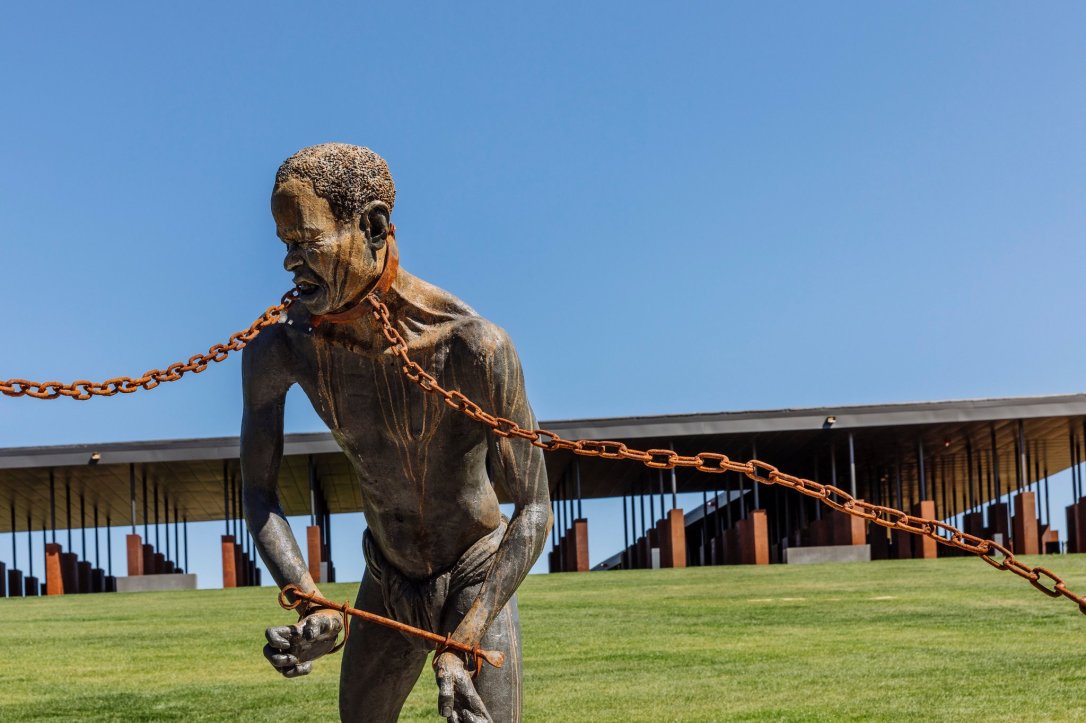
51D84C45-AF36-41C2-824C-3E29EE93E434Because of the recent opening of The National Memorial for Peace and Justice in Montgomery, Alabama, I have been contemplating the terror of lynching in our history. The Montgomery site is the nation’s first memorial dedicated to the legacy of enslaved black people, people terrorized by lynching, African Americans humiliated by racial segregation and Jim Crow, and people of color burdened with police violence.
“Set on a six-acre site, the memorial uses sculpture, art, and design to contextualize racial terror. The site includes a memorial square with 800 six-foot monuments to symbolize thousands of racial terror lynching victims in the United States and the counties and states where this terrorism took place.” (eji.org)

But racial injustice is not merely art used to contextualize racism and violence. We also have the cold, hard facts. For instance, The Tuskegee Institute reports that 4,743 people were lynched between 1882 and 1968, including 3,446 African Americans and 1,297 whites, mostly white individuals who tried to help their African American neighbors.

Who were the prophets among us who proclaimed in those days a Christian Gospel of justice?

The NAACP reports that today African Americans are incarcerated at more than 5 times the rate of white people.

Who are the prophets among us in these days? Who is calling for justice, for liberation and freedom for those who are oppressed?

Across a range of human rights issues in 2017, the United States moved backward on human rights issues. The current U.S. president has targeted refugees and immigrants, calling them criminals and security threats. He has emboldened racism by promoting white nationalism. He consistently champions anti-Muslim ideas. His administration has embraced policies that will roll back access to reproductive health care for women and has created health insurance changes that would leave many Americans without access to affordable health care. He has undermined police accountability for abuse. He has expressed disdain for independent media and for federal courts that have blocked some of his actions.

The individuals most likely to suffer abuse in our nation include members of racial and ethnic minorities, immigrants, children, the poor, prisoners and other vulnerable groups, who endure renewed attacks on their rights. Issues of injustice include gender equity, poverty, the right to health care, immigration and the rights of non-citizens, sexual orientation and gender identity, criminal and juvenile justice, harsh criminal sentencing and mass incarceration,.

Where is justice today? Who will call each injustice by name? Where is the prophetic voice among us that will proclaim liberation?

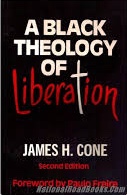
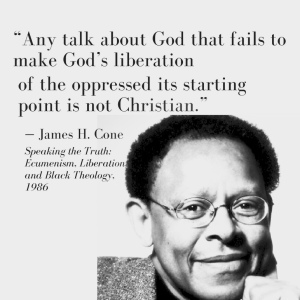
06B7213F-F174-4BD0-9B73-D8AB170F288BWhile in seminary, I immersed myself in the study of liberation theologies. Not surprisingly, my research led me to the writings of black liberation theologian, The Rev. Dr. James H. Cone. I became what some might call a follower of Dr. Cone. I saw him as a Christ-like superhero. Much of my research and writing in those days delved into the history of liberation theology, so Dr. Cone’s books covered my desk for months.
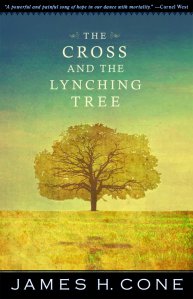
On Saturday, I learned of his death and experienced both sadness and gladness. Glad, because of his enormous contribution to Christian theology’s imperative response to injustice. And sad, because his voice of justice is now silent. By his death, we lost a prophet, a persevering voice that championed racial justice. We lost a voice that gave the world an interpretation of the Christian Gospel that paid attention to the voices of the oppressed.

YES! “A prophet was among us.”

These words from Judge Wendell Griffen honored the prophet, Rev. Dr. James H. Cone, and named him as the central figure in the development of black liberation theology in the 1960s and ’70s.

The prophet and scholar was raised in a small Arkansas town, giving him a clear view of the harsh reality of racial injustice. Dr. Cone rose up from his simple roots to become the foremost voice of his day on black liberation theology.

84C76F50-B538-4A1C-91DA-48E4357609E2Google it.

“Black liberation theology”

The first image you will see is that of James H. Cone. And then you will see image after image of him as well as a list of the plethora of books he has written and a list of the places around the world where he taught and preached.

What is my point?

First of all, I want to add my voice to those who are honoring this prophet of justice. But more importantly, I want to own and name the present reality: that there has never been a time in history that needs the message of liberation more than this day. To be sure, the horrific lynchings of African Americans in this country took place many years ago, between 1882 and 1968.BAD8200A-0958-4FBE-9241-F4E2DDEBCA70

And this is a new day, is it not?

It is a new day, a new day that has moved our society to the national shame of mass incarceration of African Americans. Consider this research:

  • By the age of 14, approximately 25 percent of African American children have experienced a parent — in most cases a father — being imprisoned for some period of time.
  • On any given school day, approximately 10 percent of African American schoolchildren have a parent who is in jail or prison, more than four times the share in 1980.
  • The comparable share for white children is 4 percent; an African American child is six times as likely as a white child to have or have had an incarcerated parent.

(Valerie Strauss, March 15, 2017; The Washington Post; https://www.washingtonpost.com/people/valerie-strauss/?utm_term=.8d67a553a8db)

  • In 2014, African Americans constituted 2.3 million, or 34%, of the total 6.8 million correctional population.
  • The imprisonment rate for African American women is twice that of white women.
  • Nationwide, African American children represent 32% of children who are arrested, 42% of children who are detained, and 52% of children whose cases are judicially waived to criminal court.

(NAACP.org)

TMI . . . Too much information, right? Perhaps it is too much information, but the amount of information here barely scratches the surface of the many ways injustice has gripped our nation in these days. We can turn our backs, stop up our ears, and blind our eyes to it, but that will not change the fact that people are being oppressed, injustice is doing its horrific work, and liberation seems a distant, unreachable dream.

The people of God must be the people of God and accept the mantle placed by God on our shoulders — being a prophetic voice in a land where injustice has its way.

The spirit of the Lord God is upon me,
because the Lord has anointed me;
he has sent me to bring good news to the oppressed,
to bind up the brokenhearted,
to proclaim liberty to the captives,
and release to the prisoners;

to proclaim the year of the Lord’s favor,
and the day of vengeance of our God;
to comfort all who mourn;

to provide for those who mourn in Zion—
to give them a garland instead of ashes,
the oil of gladness instead of mourning,
the mantle of praise instead of a faint spirit.
(Isaiah 61:1-3 NRSV)

But let justice roll down like waters,
and righteousness like an ever-flowing stream.
(Amos 6:24 NRSV)

We are the prophets among us. Let’s act like it!


Bondage, Freedom, Hate, Injustice, Justice, Lynching, Violence

Lynching’s Long Shadow: America’s Shame

0CBDE86D-3CC4-4676-8B23-66975E5DE797
The memorial is inspired by the Holocaust Memorial in Berlin and the Apartheid Museum in Johannesburg.
Photography: Audra Melton for The New York Times

Nothing casts as long and shameful a shadow on our history than does lynching. Lynching is a part of America’s history that we want to ignore. As a people, we cringe at the thought of it, yet do not often allow ourselves to think of it. We do not own lynching. It happened in another time in history, with decades separating us from its shame. We secretly hope that if we do not talk about it, we can move forward without acknowleding the depth of its impact. And above all, we cannot admit that such violence is still possible in this day.

The National Memorial for Peace and Justice is a living reminder for us. The Memorial, which opened today on a six-acre site overlooking the Alabama State Capitol, is dedicated to the victims of American white supremacy. It demands a reckoning with one of the nation’s least recognized atrocities: the lynching of thousands of black people in a decades-long campaign of racist terror.

At the center of the Memorial is a grim cloister, a walkway with 800 weathered steel columns, all hanging from a roof. Etched on each column is the name of an American county and the people who were lynched there, most listed by name, many simply as “unknown.” The columns meet you first at eye level, like the headstones that lynching victims were rarely given. But as you walk, the floor steadily descends; by the end, the columns are all dangling above, leaving you in the position of the callous spectators in old photographs of public lynchings.

17992F10-F6BC-4BD2-9EA3-9125684AB9C0
Bryan Stevenson and a small group of lawyers spent years immersing themselves in archives and county libraries to document thousands of lynchings.
Photography: Audra Melton for The New York Times


The magnitude of the killing is harrowing, all the more so when paired with the circumstances of individual lynchings, some described in brief summaries along the walk:

Parks Banks, lynched in Mississippi in 1922 for carrying a photograph of a white woman;

Caleb Gadly, hanged in Kentucky in 1894 for “walking behind the wife of his white employer”;

Mary Turner, who after denouncing her husband’s lynching by a rampaging white mob, was hung upside down, burned and then sliced open so that her unborn child fell to the ground.

D4193588-22E6-49BB-821F-0C235963ABDF
A 2017 sculpture by Titus Kaphar, “Doubt,” sat amid accounts of slaves and former slaves at the museum.
Photography: Audra Melton for The New York Times

A grassy hill rises in the middle of the memorial. From there you can see the Montgomery skyline through the thicket of hanging columns, the river where the enslaved were sold, and the State Capitol building that once housed the Confederacy. It is a striking view.

The striking exhibits and sculptures in this Memorial exist to remind us, to challenge us, to create in us a determination to always fight injustice.

7D5EAA34-62C5-46A7-98C6-01C6388B3EBD
Jars
Hundreds of jars of soil from the sites of documented lynchings, collected by families of victims or community volunteers, are on display at the museum.
Photography: Audra Melton for The New York Times

May we more deeply understand our tragically unjust and violent history. May we vow to make peace and demand justice. May we never forget what happened in this nation so that it will never happen again. It is very real that our history of lynching innocent people casts a long and dark shadow upon our existence. May we intentionally work for justice so that we will no longer live in that shadow.

This blog post is words, just words. But our words are not enough. Our declarations are empty and meaningless if we do not also immerse ourselves in the hard and grueling work that makes for justice. God does not care about our words and promises. God does not accept our carefully planned events — filled with flags and crowds and songs — held in American cities and counties and town squares to commemorate our history. God demands pure and genuine righteousness that vows to do whatever it takes to create justice in our nation and in the world.

May God lead us in making it so. May God help us to step out of lynching’s long shadow and walk in the light of justice and righteousness.

Take away from me the noise of your songs;
I will not listen to the melody of your harps.

But let justice roll down like waters,
and righteousness like an ever-flowing stream.

— Amos 5:23-24 (New Revised Standard Version)


Comfort, healing, Hope, Light, peace, Serenity

Deep Peace

F1E55829-D720-4AA8-95D8-4777BD7A8562Two of my dear family members are carrying a heavy weight in their workplace. I watch them struggle week after week, carrying oppressive burdens. Both love their work and are dedicated to it. Both speak well of their co-workers. Both take on more responsibility than they should. Neither of them see an end to the high level of work they must accomplish. I can sense their need for comfort and healing, for rest and peace.

I have wondered what the solution might be. What is it that could make their existence more tolerable? What is it that could mitigate their stress and ease their chaotic spirits?

I believe that their need is for peace. Not just run-of-mill, ordinary peace. But deep peace that goes down into the very depths of the tumultuous spirit. They need deep peace, even while trapped in the midst of chaos, even when the tasks before them are overwhelming.

Deep peace is what makes life tolerable, even if we find ourselves in the center of chaos. To be sure, in this life, in these days, we will know chaos. Chaos can come with work stress and overachieving. Chaos can come with hurtful relationships, with financial stress, with aging, with illness, with divorce, with abuse, addiction, violence in the home. Chaos is very painfully real. It engulfs us when we experience life trauma of any kind.

We need deep peace.

But acknowledging the need for peace is definitely not the same as being filled with it. How in the world does one find peace when all around things are falling apart? It’s a fair question. It’s a question many of us have asked when yearning for even a brief moment of peace.

So it’s worth asking yourself the question: what is it that swirls around my life and robs my peace? What chaotic frenzy am I facing every day? What turmoil assails my life and wounds my spirit?

I wish I could say that I have a no-fail solution. I wish that I could declare for you the end of turmoil and the advent of deep peace. I wish I could proclaim the definitive answer for you, and for myself. But I cannot. I can say what I always say, knowing that people who desperately need peace might hear just empty words. Still, this is all I have: the promise of Scripture and a heartfelt blessing.

Do not be anxious about anything, but in every situation, by prayer and petition . . . present your requests to God. And the peace of God, which transcends all understanding, will guard your hearts and your minds in Christ Jesus.

— Philippians 4:6-7 (New International Version)

Finding your own path to deep peace may be a challenging path, a journey of winding and confusing roads. But it is a journey out of turmoil, and it is a journey worth taking. It is a journey that leads to serenity and peace. And when you have found deep peace dwelling within your spirit, your soul will rejoice and finally find its rest. With deep peace, you will experience fresh signs of hope, a faith reborn and renewed, and a refreshing shower of grace, grace for the present moment and for the days to come.

With my hope and prayer that you will find deep peace, please accept the words of this Gaelic Blessing, a benediction of peace:

Deep peace of the running wave to you,
Deep peace of the flowing air to you,
Deep peace of the quiet earth to you,
Deep peace of the shining stars to you,
Deep peace of the gentle night to you,
Moon and stars pour their healing light on you,
Deep peace of Christ, of Christ,
Of Christ the light of the world to you,

Deep peace of Christ to you.

— A Gaelic blessing

I invite you to listen to this video* of a choral performance of John Rutter’s beautiful music set to the adapted text of this ancient Gaelic Blessing. It is performed by the Cambridge Singers and the City of London Sinfonia. Conducted by John Rutter.

* This video features stunning photography as well as two painted versions of “The Light of the World” by artist William Holman Hunt. 


Despair, Grace, grief, Heartbreak, Hope, life

A Life Breathtakingly Beautiful


C25B5F81-E091-4C5D-B357-414955E5AF53
Art by Darlene Gibson-Piper

Life can be tricky. Life is a living thing just waiting to grab you and pull you down, or so it seems at times. Bad things do happen to all of us. Misfortune can suddenly engulf our lives and leave us, any of us, in a heap on the ground, heads bowed low.

I know all too well the stark reality of being brought low, but when I find myself face down in the dirt, I always recall one of the most comforting passages of Scripture.

We are troubled on every side, yet not distressed; we are perplexed, but not in despair; Persecuted, but not forsaken; cast down, but not destroyed . . .

— 2 Corinthians 4:8-9 (King James Version)

At this time in my life, I am thankfully on the other side of a very serious illness. But the year 2014 was a nightmare year for me and for my family. I spent a good part of that year in the hospital, at times leaning very close to death’s door. Much of that year, I spent in a mental haze not even knowing the loved ones caring for me. I was often very afraid, but one thought came to mind again and again.

Here is the world. Beautiful and terrible things will happen. Don’t be afraid.
― Frederick Buechner, Beyond Words: Daily Readings in the ABC’s of Faith

So many people find themselves afraid and in despair. In the time it takes me to write this piece, five people in the U.S. will take their own lives. For every suicide, there will be 25 attempted suicides. Some people will suddenly and unexpectedly lose a job and plunge into financial ruin. Others will lose someone they love by death or divorce. Others will fall deeply into illness. Others will face the challenges of aging and lose their homes. Some will experience the terror of addiction. Every person — every person — will know the lowest depths of despair, an existence void of hope.

I love the writing of L.R. Knost. She is an award-winning author, feminist, and social justice activist, the founder and director of the children’s rights advocacy and family consulting group, Little Hearts/Gentle Parenting Resources, and the Editor-in-Chief of Holistic Parenting Magazine. Her writing is down to earth and uplifting, always filled with snippets of pure wisdom. This is what she writes about life.

Life is amazing. And then it’s awful. And then it’s amazing again. And in between the amazing and awful it’s ordinary and mundane and routine. Breathe in the amazing, hold on through the awful, and relax and exhale during the ordinary. That’s just living heartbreaking, soul-healing, amazing, awful, ordinary life. And it’s breathtakingly beautiful.

She is so spot-on about life, so thoroughly wise. She knows about muddling through the muck of life to the best part of it, the beautiful part of it. And that’s what we must do, muddle through until we get to the beauty. It is true that life doesn’t always get better. Sometimes the thing that breaks us down just lingers with us and keeps us on the lowest ground of desperation. Yet there is that life-giving, life-saving thing called grace, the gentle and persistent grace that is ever-present with us during every low season in life.

Here is the reality, the tried and true foundation of truth that keeps us moving forward after a difficult patch. Again, L.R. Knost describes it.

Life doesn’t always get better.
But you do. You get stronger.
You get wiser. You get softer.
With tattered wings you rise.
And the world watches in wonder at the breathless beauty of a human who survived life.

Going back to that wonderful passage in 2 Corinthians, we find this:

. . . We do not lose heart. Though outwardly we are wasting away, yet inwardly we are being renewed day by day. For our light and momentary troubles are achieving for us an eternal glory that far outweighs them all.

— 2 Corinthians 4:16-17 (New International Version)

This is, indeed, a soul-healing life, utterly beautiful during the good times, but still heart-breaking and frightening at other times. You and I will pick ourselves up from the dusty earth again and again. We will most certainly rise to our feet for another day. We will find the gentle, persistent grace that holds us upright. We will not lose heart. We will make it to the breathtakingly beautiful part of our lives. Count on it!

Aging, Celebration, Change, Family, Laughter, life, Love, Music, Rootedness

The Music of Family

068E7848-EFD1-44CD-94E5-EDB43AD57577I have come to believe that family is music, sometimes loud music, sometimes music almost inaudible. But it is music that I deeply cherish. So few things in life really matter. Family is one thing that does matter. It’s all about relationship and rootedness.

This week we lost First Lady Barbara Bush who lived a long and meaningful life for 92 years. During her lifetime, Barbara Bush — called “the enforcer” by her family —was famous for speaking her mind. One thing that was most dear to her was her love for family. This she reveals in her own words:

At the end of your life, you will never regret not having passed one more test, not winning one more verdict or not closing one more deal. You will regret time not spent with a husband, a friend, a child or a parent. When all the dust is settled and all the crowds are gone, the things that matter are faith, family and friends.

In our retirement, my husband Fred and I somehow managed to move ten hours away from our son and grandchildren. I’m not sure exactly how we made such a decision, but we certainly live each day with the reality of it. We have missed the delight of watching our three-year-old grandson grow up. We deeply miss the sweet moments we used to spend with our granddaughter who is now almost nine. We hardly know our grandson by marriage. And we hold tightly to the memories we made spending childhood days with our oldest grandson who is now in college.

We can’t call those moments back. We can’t relive the days when our grandchildren were babies and toddlers. But we will have the memories always.

This weekend, our entire family visited us, with the exception of the oldest grandson. We had a grand time celebrating our three-year-old’s birthday, complete with streamers, balloons and a Spiderman cake. The laughter was infectious. The excitement was palpable. Our small house was full and loud, very loud! The popping of balloons was a highlight for the boys, and quite NOISY for those of us who are older. But all of it was the big, boisterous music of family, a celebration to be remembered.

All too soon, the visit ended, and Fred and I watched the car crammed with grandchildren pull out of our driveway and head toward Arkansas. The house was quiet again, so very quiet. The music of our life got much softer when they left, and for a brief moment, I thought about crying a little. But I thought better of it. It was a beautiful, sunny day. The visit had been a very special time of celebration. Our family was happy and healthy. No call for tears.

My choices are: 1) to be terribly sad that my children are far away; or 2) to celebrate their lives and the bond we share, a bond that transcends the miles that separate us.

So my blog advice for this day is to hold on tightly to the music that is family. Listen intently when it’s soft and quiet. Join the celebration when it’s raucous and loud. But always know in the depths of your soul that the melody will dwell in your heart of hearts forever. That’s what the music of family does.


Change, Courage, Darkness, Fear, God's presence, healing, Heartbreak, Hope, Life pathways, Pain, Restoration, Uncategorized

Through the Fire

892264FE-E803-4E0E-B598-C7503D77F674Sometimes life hurts.
We suffer. We heal. We move on.
But sometimes life hits back. Harder.
Lethal in its cruelty.
Shattering us into a million glittering shards
of pain and loss and anguish.
And we suffer, too broken to heal,
to become what we once were.
— L.R Knost

How deeply I know that feeling of brokenness. I am personally acquainted — well acquainted — with the lethal cruelty that life can present. To heal the past requires that I pay close attention to the spiritual and emotional places within me in the present, to make sure I am healthy and whole right now. Only then will I find the strength to invite the pain of the past into my psyche so that I can face off against it.

I have learned through the years that it is not a good option to leave past pain where it is, to let it occupy the place within me it has claimed. This writing by L.R Knost is one of the best descriptions I have ever seen on healing from past pain.

Healing is not a straight and narrow road
that leads from darkness to light.
There’s no sudden epiphany to take
us from despair to serenity, no orchestrated
steps to move us from hurting to healed.
Healing is a winding mountain road with steep
climbs and sudden descents, breathtaking views
and breath-stealing drop-offs, dark tunnels
and blinding exposures, dead ends and
endless backtracks, rest stops and break downs,
sheer rock walls and panoramic vistas.
Healing is a journey with no destination,
because healing is the journey of every lifetime.

Indeed, “healing is the journey of every lifetime.” The reality is that the only way to heal from the pain of the past is to walk directly through the center of that pain in the present. Does it feel safer to just let the pain continue to smolder in the dark parts of myself? Of course it feels safer. It feels terrifying, in fact, downright terrifying.

But the dark places in me will never heal spontaneously. I have to conquer the fear and open up to the possibility that God’s Spirit can breathe life back into those embers of pain snd rekindle the fires of unhealed hurts. So as I sit cautiously at the very edge of the fires of past pain, I cannot help but recall the comforting words of the prophet Isaiah.

When you pass through the waters,
I will be with you;
and when you pass through the rivers,
they will not sweep over you.
When you walk through the fire,
you will not be burned;
the flames will not set you ablaze.

— Isaiah 43:2 New International Version (NIV)

And so many times, I have found deep comfort in singing the beloved hymn, How Firm a Foundation.

When through fiery trials thy pathway shall lie,
 My grace, all sufficient, shall be thy supply.
 The flame shall not hurt thee; I only design
 Thy dross to consume and thy gold to refine.*

Text: Attr. to Robert Keen, ca. 1787.
Music: Attr. to J. Ellis, ca. 1889

So the flames aren’t there to burn me. The flames are there to light my way through pain to healing. At times, I have approached those flames with courage and confidence. But at other times, I met the flames with terror.

Courage or terror — it didn’t matter really. I just walked through it just as I was, and as I did, the hurt transformed into hope. I had wounds, for sure, and lasting scars. But the scars tell a story of the battles I won and the battles I lost, and most importantly, the scars tell the story of a human who survived. So, in spite of fiery places of past pain, we learn to live as L.R. Knost says

. . . with the shards of pain and loss and anguish forever embedded in our souls,

and with shaking fingers we piece together the bloody fragments of who we were into a mosaic grotesque in its stark reality,

yet exquisite in its sharp-edged story of the tragic, breathless beauty of a human who survived life.

And we move on, often unaware of the light glittering behind us
showing others the way through the darkness.

This is a resilience we can be thankful for, a perseverance we can cherish, a strength straight from a present and faithful God that will ever — forever — sustain us. Amen.


* Hear the entire hymn, How Firm a Foundation, at this link:
https://m.youtube.com/watch?v=G0S62se1hAE

Belief, Challenge, Change, Christian Witness, Community activism, Dreams, Grace, healing, Hope, Justice, Ministry, Mission, peace

A Broken, Waiting World

B507DED1-C6B2-4332-80BA-4B65623E2196

Do not be dismayed by the brokenness of the world. All things break. And all things can be mended. Not with time, as they say, but with intention. So go. Love intentionally, extravagantly, unconditionally. The broken world waits in darkness for the light that is you. ― L.R. Knost

When I was in seminary so many years ago, I worked part time in the Development Office, that extraordinary place that dreamed up words designed to gain support for the seminary and to tell the world what we were about. The one creative theme I most remember, because we made it our catch phrase and printed it on everything, was “We’re out to change the world!”

Some students left the seminary, degree in hand, and did just that. The rest of us labored mightily and did everything we knew to do to change a world that most assuredly was waiting and broken. What a mission!

I must admit, that short statement from seminary days became my personal quest. In every ministry position, I tried to change the world, much to the dismay of my parishioners. I took on every worthy cause as my own challenge to change the world. I committed myself to justice and set my face toward hope and healing for every person suffering injustice and indignity. It became a life-long quest, a personal commission. And what’s more, I sincerely believed I could do it, at least for the first few years I spent banging my head against various walls.

The song lyrics “to dream the impossible dream” come to mind. For those of you who may be too young to know about the magic of the 1964 Broadway musical, Man of La Mancha, I must give you the lyrics of the song that was the pronunciamento of the primary character, Don Quixote, and that almost instantly became the credo that many people of God embraced in trying to change the world.

To dream the impossible dream …
To fight the unbeatable foe …
To bear with unbearable sorrow …
To run where the brave dare not go …
To right the unrightable wrong …
To love pure and chaste from afar …
To try when your arms are too weary …
To reach the unreachable star …

This is my quest, to follow that star;
No matter how hopeless, no matter how far:
To fight for the right, without question or pause;
To be willing to march into Hell, for a Heavenly cause.

And I know if I’ll only be true, to this glorious quest,
That my heart will lie will lie peaceful and calm,
when I’m laid to my rest.

And the world will be better for this:
That one man, scorned and covered with scars,
Still strove, with his last ounce of courage,
To reach the unreachable star.

— Lyrics by Joe Darion

Today, as I watch military strikes against Syria and know that our country has not welcomed desperate Syrian refugees, I am painfully aware that I did not change the world. I worked in Uganda after the devastation of Idi Amin, but I did not change the world for millions of Ugandan widows and orphans.

I worked with persons who were sick and dying in hospital ministry, and I did not change their hopeless world of suffering. I have written letters, contacted government officials, participated in demonstrations, and signed hundreds of petitions, but I have not changed the world.

It has indeed been an “impossible dream.” And yet, I believe that I lived into my call from God and followed every path God placed before me. I faced off against what I viewed as evil many times and was deeply, demonstrably angry many times. But always, my mission remained in the center of God’s gentle grace and love. How?

I learned along the way — finally — that changing the world God’s way means holding tightly to lovingkindness, compassion, love and gentleness. The Scripture in Galatians 5:22-23 (NIV) says it like this:

. . . the fruit of the Spirit is love, joy, peace, forbearance, kindness, goodness, faithfulness, gentleness and self-control.

“Change the world with gentleness,” God might say to me.

While others stand for bigotry, racism, violence and war, change the world with gentleness. While leaders refuse to welcome refugees who long for a safe haven for their children, change the world with gentleness. While the highest positions in this country are embroiled in collusion, corruption, lies, greed and unkindness, change the world with gentleness.

This is a broken, waiting world that yearns, not for my righteous anger toward the world that is, but rather for my gentle hands of healing for the world that can be.

Change the world with gentleness? How? Why?

Because “Gentleness is not weakness. Just the opposite. Preserving a gentle spirit in a heartless world takes extraordinary courage, determination, and resilience. Do not underestimate the power of gentleness because gentleness is strength wrapped in peace, and therein lies the power to change the world.”

― L.R. Knost

May God lead us all in the paths of righteousness and gentleness. Amen.

Challenge, Courage, Faith, Hope, Life pathways, Perseverance

Moving a Mountain with a Teaspoon

1FFB2D29-8A6E-4363-9AF5-B3744373776B
Quote by Napoleon Bonaparte

Moving a mountain with a teaspoon!

Ever feel like that’s exactly what you’re trying to do? I know the feeling personally, and I have also witnessed others in the middle of this kind of daunting task.

Making ends meet in a single parent family . . . moving a mountain with a teaspoon.

Caring for an aging loved one who needs constant attention . . . moving a mountain with a teaspoon.

Fighting a debilitating and relentless illness . . . moving a mountain with a teaspoon.

None of us are immune to life situations that get the best of us, sometimes bringing us to our knees in desperation. And sometimes, these life challenges move us to the precipice of almost giving in and giving up. There is simply not enough strength and fortitude to go on, and we find that we are sitting in the dust where we collapsed, contemplating if it’s even worth it to try to get back up.

With inner resilience and a tiny bit of hope, we do get up. We move farther along our path, part of us dreading the next collapse, and the other part of us filled with certainty that we will survive. Moving a mountain with a teaspoon is most certainly a part of life, every person’s life.

And yet, from somewhere in our past, there is this faint whisper of hope. We may not remember where the whisper comes from, and it may be ever-so-quiet. But still we hear it . . .  echoing from ages past, coming from somewhere in our lives at some devastating moment, maybe even becoming a sigh from the deepest place in the soul.

Truly I tell you, if you say to this mountain, ‘Be taken up and thrown into the sea,’ and if you do not doubt in your heart, but believe that what you say will come to pass, it will be done for you.

— Mark 11:23 NRSV

What a promise to remember when we feel as if we are moving a mountain with a teaspoon! It is a God-sent word of assurance, a message of hope that encourages us to pick ourselves up and move forward, to try one more time.

Thanks be to God.

Contemplation, Creativity, Discovering, Epiphany, Growth, Inspiration, peace, Relationship, Restoration, Resurrection, Self Awareness, Silence, Spiritual growth, Stories, Transformation, Writing

Magical

3C204C9C-C33B-4AC8-BE97-D8784E8A5D96
Magical Night: A painting by Teressa Nichole

Tell your story. Shout it. Write it.
Whisper it if you have to.
But tell it.
 ― L.R. Knost

These words of LR. Knost are so very true.

During the weeks of Lent, I helped lead a writing group at my church. What a rich experience it was for me — watching each group member spending quiet moments meditating and contemplating the ripples of his/her life. Then witnessing one person after another begin to write as if they were expecting transformation, telling their stories, writing down the highs and lows. It was almost magical.

It seemed as if I saw the throes of stress leave their spirits. It seemed as if I watched their expressions of pain ease as pen flowed across paper. It seemed at times as if a weight was lifted, an emotion discovered, a community created, a sense of understanding settled in.

I know this: no one left the room with a broken spirit or a weight they could not carry. Instead, they left the room in covenant with one another, knowing that someone cared deeply about their story. They left the room knowing that, in this intimate space, they could spew out whatever they needed to release or they could be silent in a peaceful sanctuary of acceptance.

That Sunday School room in the tall-steepled church at the top of a street in Macon, Georgia known as High Place became a sacred space for just a brief time. It became a place almost magical, a place of rest, a place of comfort, a place where each person could feel that they were not alone and that they would never feel alone again. Truly, that was magical.

I end today’s blog post with these words written by L.R. Knost:

Tell your story. Shout it. Write it.
Whisper it if you have to.
But tell it.
Some won’t understand it.
Some will outright reject it.
But many will
thank you for it.
And then the most
magical thing will happen.
One by one, voices will start
whispering, ‘Me, too.’
And your tribe will gather.
And you will never
feel alone again.

Amen.

Uncategorized

Faith and Illness: A Solid Rock in Desert Days


4EB74B81-616C-4A67-A002-B1F4AAF1EE47This piece was first published on the blog at revgalblogpals.org. Thanks to that wonderful group for publishing this article and for all their thoughtful and informative publications.


As I reflect on faith and illness, I recall the words of an old hymn, “My anchor holds and grips the solid rock.” Remembering the hymn’s message gives me hope in myself and in my faith. Still, these are empty days for me, and I ask myself these questions:

What is it about faith that raises me up when I have fallen face-first into the dirt?

What is it that gives me the strength to get up, dust myself off, and continue this faith journey?

What is it that assures me that my faith still holds “and grips the solid rock?”

My thirty-four year ministry journey was life-giving, until 2014, the year I endured a drastic life interruption. A serious illness threw me into a year of multiple hospitalizations and several brushes with death. Suddenly, I was plunged into what I can only describe as desert days. The diagnosis?

End-stage renal disease

It sounded awful to me, “end-stage.” Its meaning is simple: the final stage of kidney disease when your kidneys have failed and you cannot survive without dialysis or a kidney transplant.

Those desert days included most of the things I had always dreaded about hospitalization — near-fatal infections, endless blood draws, collapsed veins, mental confusion, physical weakness, long and sleepless nights, and debilitating fear.

In time, I found my way back to my new normal after months of therapy where I struggled to regain the ability to accomplish the simple tasks of daily living. My patient physical therapists trained me to walk again, write again, learn the alphabet, re-learn colors, place blocks in holes, and recite the name of the president of the United States. Way down on the priority list was the slim possibility of moving myself back into ministry. In those days, it was a victory just to be able to sign my name and walk a few steps unaided.

I have now settled into a different life. My days include eight hours of dialysis every day, waiting on an lengthy list for a kidney transplant, working hard in physical therapy, and trying to find myself again. Desert days they are, and at times, I wonder if my faith is still gripping that solid rock.

Like so many ministers, I found my identity in mission and ministry. To be honest, not having a “ministry identity” has left me feeling discarded. My mind tells me that I am more than my ministry, but my heart tells me I am an empty shell.

And then there is what my faith tells me: that I am grateful to be alive, that I am thankful that I feel strong, that God has a purpose for this life interruption, and that ministry really is more than a defined vocation and a specific place of service. Yes, there is an enormously empty place in me, there is.a soul that is longing and a heart that is searching for life beyond this current desert. All the while, reality tells me that my years of ministry are over and that I must learn how to “be” within that reality.

So while I still mourn the loss of my ministry, I am learning how to attend a church service without grieving. I am learning that my writing, blogging and painting is my offering to God. I am learning that I must find contemplative, holy moments to feed my thirsting spirit. I am learning that stillness might be more sacred than activity.

Faith and illness? It is a relentless challenge. There is no doubt about it: illness can be a rude interruptor of life. While I am in the center of that life interruption, watching intently while faith and illness fight a battle for my soul, I have choices.

One choice is burying my emotions and moving unmindfully through each day, without expectations, without dreams, simply going through the motions. My wiser choice is to look squarely into my soul, honestly admitting that these truly are desert days.

To make the wiser choice is to mourn the fact that some of my dreams have died, to own my angst and face off with my losses. This choice does not mean walking around the desert. Rather it means walking directly through it, hoping for manna, for perseverance, for grace.

So as I make my way through this desert, I can say this: it is not easy. It is uncomfortable and frightening. It is a journey that reminds me how fragile hope can be, a journey that tests my faith and my faithfulness. And yet, on this desert journey I have rediscovered that my faith “still holds and grips the solid rock.”

Thanks be to God!

Bright Sunday, Bright Week, Children, Church, Easter, Joy, Laughter, Lightheartedness, Music, Resurrection, sunrise

The “Laughter of the Redeemed”

4D06581C-1218-44C9-AE7E-98F2CA0E9ABC

So when the grand and glorious celebration of Christ’s resurrection is over, what do we do with our leftover joy? There is an easy answer to that. Celebrate Bright Week with laughter and loud singing, and look forward with great anticipation to Bright Sunday! You might be wondering what in the world I’m talking about. What’s Bright Week and Bright Sunday?

Well, just in case you didn’t know, Bright Week and Bright Sunday are real. genuine. bonafide things. Many Christian churches celebrate the Sunday after Easter as Bright Sunday, a day for joyful celebration. In fact, the entire week following Easter, called Bright Week, was set aside for the celebration of the Resurrection according to the 66th canon of the Council in Trullo:

. . . from the holy day of the Resurrection of Christ our God until New Sunday (or Bright Sunday) for a whole week the faithful in the holy churches should continually be repeating psalms, hymns and spiritual songs, rejoicing and celebrating Christ, and attending to the reading of the Divine Scriptures and delighting in the Holy Mysteries. For in this way shall we be exalted with Christ; raised up together with Him.

The custom was rooted in the musings of early church theologians like Augustine, Gregory of Nyssa, and John Chrysostom, including the intriguing idea that God played a practical joke on the devil by raising Jesus from the dead. “Risus paschalis – the Easter laugh,” the early theologians called it.

For centuries in Eastern Orthodox, Catholic and Protestant countries, the week following Easter Sunday, including “Bright Sunday,” the Sunday after Easter, was observed by the faithful as “days of joy and laughter” with parties and picnics to celebrate Jesus’ resurrection. Churchgoers and pastors played practical jokes on each other, drenched each other with water, told jokes, sang, and danced. Can you even imagine such hilarity in some of our most traditional churches?

Yet, theologians wrote about holy laughter. While languishing in a Nazi prison, Protestant theologian Jurgen Moltmann became fascinated by the ongoing celebrations of Jesus’ Resurrection by the early Christians that continued long after Easter Sunday. He called it “the laughter of the redeemed.”

And yet, we Christians are often viewed as offering a joyless and humorless Christianity.

Where is “the laughter of the redeemed?”

We have a Savior who, knowing that he was about to be betrayed, tortured, and crucified, told his disciples before his arrest:

“These things I have spoken to you, that my joy may be in you and that your joy may be full.” (John 15:11)

So where is our joy? Where is our laughter?

With great fondness, I remember the youth ensemble at First Baptist Church of Arab, Alabama singing an amped-up version of “Sunshine in My Soul,” lively, syncopated, full of unbridled joy! With a big smile on every face, the group sang this spirited, exuberant song about their sheer joy in Christ. Always, their offering of “Sunshine in My Soul” was a joyous event. I can hear it in my memory right now.

There is sunshine in my soul today.
It’s a glow so warm and bright.
That shines in any earthly sky
For Jesus is my light.
Oh, there’s sunshine, beautiful sunshine,
When the peaceful, happy moments roll.
When I look with love into my brother’s face, there is sunshine in my soul.

What a bright and joy-filled song! A perfect song for Bright Sunday.

Laughter, joy, fun, rejoicing!

I hope that during this Bright Week you will find sunshine in your soul. I hope that you will laugh hard and long during Bright Week, that you will pass joy along to those you love, that you will sing a song of joy or two, using your biggest, strongest outdoor voice. After all, it is Christ’s resurrection that we celebrate!


Church, Covenant, Creativity, Easter, Friendship, Grace, Lent, Memories, Resurrection, Resurrection People, Roots, Tears, The Christian Church

Resurrection People

C1D1BB39-1AD2-4D57-8ED7-8464718B35D8On Resurrection Sunday, I cry joy-tears — every time, without fail. For me, holding on to my emotions on Resurrection Sunday is impossible. After going through Lent, after hearing again of the betrayal Jesus experienced, after witnessing the suffering and execution of Christ, after acknowledging anew that Christ’s sacrifice was for the whole world and for me, I celebrate Christ’s resurrection. And when I do, I just cry.

But on Resurrection Sunday 2018, I wept with a heavy heart and a flood of memories. I thought of Easters past and the people of God with whom I celebrated. All of those precious friends now live miles away, others live in heaven. I was their pastor, and that is as holy a relationship as I can describe.

I walked with them through joy and tragedy, through days of health and days of illness, through crushing family problems, through death and divorce. But through every devastation, we celebrated Resurrection Sundays in our beautiful monastery chapel, in our little country church in small town Arkansas, at an altar on a lakeside, in the baptismal waters. We celebrated our covenant, our deep friendship, and gave thanks for the grace that gifted us with those relationships.

We were a fun and creative group. With some of them, I cut and stitched and glued and appliqued huge banners proclaiming, “Christ Is Risen!” With others, I burned palm branches for Ash Wednesday. With others, I lifted up the wooden cross onto thevaltar of the church sanctuary. And with others, I wandered through the woods searching for dogwood blossoms to adorn the wooden cross. I most fondly remember a circuitous and hilarious trek through the forest with Ethel.

Ethel was a true jewel, one of a kind. Never would you find a more loyal and loving parishioner than Ethel, who will always be known as the persevering founder of our church. She refused to let it fail. She was persistent and feisty and determined. And because of her, the church still stands firm, even now that she is gone.

But getting back to our trek in the forest, I have to say that Ethel was one of those unstoppable “elderly” people. She could barely walk at times because she suffered with a muscle disease that weakened her legs. But she pushed her way through the forest that day, leading me, pushing aside the limbs, vines and thorns, and dauntlessly creating our path over rocks and depressions in the ground. We were looking for a thorn tree . . . you guessed it . . . to use in making a crown of thorns.

Eventually we found a perfect thorn vine with angry-looking three-inch thorns on it. We carefully hauled it through the woods, trying to avoid getting stabbed by one of those sharp thorns. Then we put it in a bathtub full of water to soften it. When we began to bend it into a crown shape, we both sustained painful thorn wounds. Never to be deterred, Ethel managed to shape and finally fasten the two ends together, and the prickly vine became the crown of thorns that we used for many years.

When we placed it for the first time on the Good Friday cross during the church service, I wept. Many of us wept. We were like that because we remembered the words of the prophet Isaiah.

He is despised and rejected by men,
A Man of sorrows and acquainted with grief.
And we hid, as it were, our faces from Him;
He was despised, and we did not esteem Him.

Surely He has borne our griefs
And carried our sorrows;
Yet we esteemed Him stricken,
Smitten by God, and afflicted.

But He was wounded for our transgressions,
He was bruised for our iniquities;
The chastisement for our peace was upon Him,
And by His stripes we are healed.

All we like sheep have gone astray;
We have turned, every one, to his own way;
And the Lord has laid on Him the iniquity of us all.

He was oppressed and He was afflicted,
Yet He opened not His mouth . . .

— Isaiah 53:3-7, KJV

We knew that after the suffering, the resurrection would most surely come. Through the passion and emotion of Good Friday, we wept. But we wept even more when the stark cross flowered on Easter morning, when we lit the Christ candle, when the black shroud was removed, and when we draped the cross in glistening white cloth.

So on Resurrection Sunday 2018, while singing “Christ the Lord Is Risen Today,”I wept with tears of gratitude, gratitude for the people of God through the years who made my Easters such sacred experiences of worship.

Ethel, Barbara, Johnnie, April, Bo, Michael, Stan, Dianna, Eric and Emily, Ann, Sister Bernadette, Gail, Noah, Wendell, Pat, Joyce, Suzette, Deborah, Cindy, Barbara Fay, Regina, Tonya, Vallory, Leroy, Mary, LaVante, Shirley, Ken, Steve, Jenna . . .

So many names! So many others. My memories of them brought me to tears on Easter Sunday. I saw them in my mind and remembered our shared times of worship. They are Resurrection people all, people who know how to proclaim Christ’s resurrection with passion, devotion and celebration. For all of them, today I give thanks.

Grace, Growth, Restoration

The Dew in the Morning

9661C088-0011-4593-95AD-A1C0438649A9In some traditions, dew is celebrated in poetry and prayer as a bringer of life. Dew that accumulates during the night surrounds plant leaves every morning for approximately two to three hours past sunrise. In the early morning, the time of day when plants grow, the droplets of dew surrounds the leaves of a plant with moisture. The plant does not close its pores, so it receives the life-giving moisture that makes it grow.

I have contemplated that thought today in thinking about my own growth, about morning and night, light and darkness. All of us experience times of darkness, nights of emptiness when even the stars seem to give no light. A life faces those dark times in illness, aging, the loss of a loved one, financial problems, a difficult relationship, a fatal diagnosis.

Indeed, we live through those kinds of dark times. But our Christian faith assures us that after the night, the morning comes — every day, without fail. The miracle is that many people claim that when darkness falls on their lives, they experience growth.

I can attest to the fact that it truly is in the darkness where my soul and spirit has grown and matured. Without a doubt, it was a painful growing time, a testing time, but a time that made me stronger and more resilient.

So I find comfort in the thought that after dark nights, morning comes, and with the morning, the refreshing and healing dew. Like tender plants that open their pores to drink life-giving dew that falls gently on them, we can open ourselves to the soft touch of the “dew in the morning.” That is a gift to us, a grace-gift that we receive from a loving and caring God who knows that we hurt, but also knows that we survive and grow.

The dew in the morning just might bring us comfort after a long darkness, bringing life, healing, refreshment, growth, and new beginnings.

Change, Contemplation, Darkness, Daybreak, Death, Despair, Faith, Freedom, healing, life

When Your World Ends

66A9AA3C-258F-40E7-AB87-32000E79567EMy adult son is a master at denial. He can get very upset over a situation, but before you can blink, he has moved on as if it never happened. To be honest, I have often envied that part of his personality. As one who tends to brood over life’s challenges and problems, I would love to just be able to blow things off.

There is no chance of that happening for me. I think that this brooding part of me emerges from the trauma I have experienced over the years. My world has ended many times, or so it seemed. Yet, there has been a positive aspect of my brooding: that I have learned to sit with an issue for a while, dissect what has happened, feel the depth of hurt, and reflect on the depth of the emotional assault I’m experiencing. Blowing off pain just doesn’t work for me. Denial is not my way.

Denial never makes hurt go away. Denial never even diminishes hurt. So be warned. Blowing off pain is a path to internal disaster. As difficult as introspection can be, I am grateful that I am able to deeply feel the feelings I feel, to let the hurt wash over me, and finally to emerge better and stronger. Feeling the depth of my heartaches has served to disempower them and, most importantly, to enable me to harness my inner power to be free.

This, I believe, is the path that takes us beyond despair. This is the path that lets us own our heartbreak and then leave it behind to move into a fresh, new day. I am strengthened by the words of poet Nayyirah Waheed.

feel it.
the thing that you don’t
want to feel.
feel it and be free.

the thing you are most afraid to write, write that.

it is being honest
about
my pain
that
makes me invincible.

i don’t pay attention to the
world ending.
it has ended for me
many times
and began again in the morning.

To sit with your pain, to touch the heart of your hurt . . . that is what makes you free. And that freedom will be for you this miracle . . . when your world ends, and it may end many times, it begins again in the morning.

Thanks be to God.


Christ's Passion, Easter, Holy Week, Hope, Rebirth, Resurrection

The End Just Might Not Be the End!

31AFB058-2E74-4B96-AB35-801BFCD4C0DD
Pastel art “Resurrection Morning” by James R. C. Martin

“What do you know about Holy Week? You’re Baptist!”

It’s a common question for those who do not understand that Baptists are of many and varied sorts. And some of us Baptists do indeed walk through Holy Week with our soon-to-be crucified Savior. It is a holy walk that I would not want to miss. To miss it, to rush past it without reflection, is to miss the full glory of Christ’s resurrection and our own.

My dear friend, Guy Sayles, writes of the need to “lean in” to the passion of Holy Week.

I have leaned-in to the dramas, paradoxes, betrayals, denials, love, grace, losses and gains which characterize the wild, careening journey from Palm Sunday to Easter. The stories and events of these days reveal so much about the human condition and the divine character.

As for me, I will listen intently this week to the laments of Jesus. I will keep vigil as he prays in Gethsemane. I will try to understand the betrayal he endured. I will witness his arrest. I will cringe at the abuse inflicted upon him. I will hear his cries from the cross asking why God had forsaken him. I will watch him take his last breath. And I will understand all over again that his suffering was for me and for us all.

I will understand all over again that the Christian life is filled with little deaths and big ones, deaths that knock us to our knees, deaths that are a part of living. I will understand all over again that a Christian’s suffering and angst, that most assuredly comes to us, is the necessary preparation for our resurrection. All over again, as I have done for so many Easters, I will understand and celebrate the miracle of my own resurrection, giving thanks to our God of rebirth.

Again, I share Holy Week thoughts written by Guy Sayles.

I’ve particularly come to resonate with the silence of Holy Saturday, a silence in which the shocked grief of disillusionment and death mingle with the wonderment and anticipation that the end might not be the end. Many of our days are like this shadowy Saturday: we’re in-between the worst and the best, the bitterest last and the brightest first. Because of Easter, Saturday bends toward life and hope, and so do our lives.  We sense a shepherd in the shadows and glimmers of light in the darkness.

I hope that each of you will journey through these Holy Week days and experience both the bitterness and the brightness. Most assuredly, the message of Resurrection Sunday is about new life and hope, rebirth and resurrection, the glorious reality that the end just might not be the end. Thanks be to God.