Beauty of Nature, grief, Hope, life, Mourning, Nature, Stars

Uncommon Commoners


1B1EF9A9-9872-4163-9F93-36F39A9239F8
Terlingua, Texas. Astrophotography of the Milky Way over a field of Chisos bluebonnets.

As I write today, I think of all the ways we are ordinary extraordinary folk. We are complex at times, immersed in thoughts deep and weighty. In the next moment, we may well find ourselves acting like common, ordinary people that avoid deep thoughts at all costs.

We are divergent. We are a kind of paradox, common and uncommon all at once.

I recently saw the stunning photograph featured in today’s blog post. I was intrigued that a photographer was gifted enough to capture the juxtaposition of common flowering bluebonnets and the ethereal brilliance of the Milky Way. It is the kind of breathtaking image that makes me stop in my tracks, suspend time for a moment, and lose myself in the idea of earth and sky.

I studied the common bluebonnets and the uncommon Milky Way above them. And I wondered, “Is there something extraordinary in my ordinary life? Am I just a simple, common person? Or is there something uncommon that lives with the common in me? Inside me, in that place that even I do not fully understand, does common and uncommon grow together, entwined and twisted into one?”

As I pondered these questions that made little sense to me at the time, I read a piece written by my friend, Ken Sehested. I knew instantly that I would borrow one of his intriguing thoughts.

Uncommon commoner.

It worked for me. It defined me, the common part of me and the not-so-common part of me. You see, like most people, there is more to me than anyone can see. All of us can claim that. We are a people that can gaze skyward at the Milky Way while we sit on the ground in a patch of bluebonnets. We are a people of inner strength and resilience, the kind of resilience that makes it possible for us to endure whatever life throws at us and live to tell the story. We are a people with the kind of resilience that makes us uncommon commoners.

I know this because I have seen it time and time again up close and personal. I know this because I have stood at the bedside of a dying woman who was singing hymns of praise to God. I know this because I have kept vigil with a mother who witnessed her son being removed from life support after an accident, and as it was happening, she began to pray through her heavy sobs of grief. I know this because I walked out of the emergency room with her while she shared cherished, happy memories of the son she had just lost.

Uncommon commoners.

Ken Sehested made this so clear with these words.

What makes all of us commoners uncommon is when we experience the pain of trauma up close and personal, find the resilience to endure, take a hammer of righteous rage to that trauma and pound it on the forge of conviction that another world is possible, another way will open if we hold out, hold on, hold up, and hold over . . .

— Ken Sehested

Ah yes. We have seen, and we will see again, the pain of trauma. We will find within ourselves the resilience to endure. We will “hold out, hold on, hold up, hold over” because God has graced us with hope, enduring and abiding hope.

Life will always give us — uncommon commoners that we are — vivid fields of bluebonnets growing in the dirt and a sparkling Milky Way in the sky above. Thanks be to God.

Change, Child protection, Community activism, Courage, Gun control, Hope, Inspiration, Justice, March for Our Lives, Politics, Prayer, Uncategorized, Violence

Dear Students Marching for Our Lives,

5C1D4656-F263-49DD-8CC3-44E1AA6A3695Let us pray with our legs, let us march in unison to the rhythm of justice, because I say enough is enough.”

— A Parkland shooting survivor.

Dear students,

Yesterday you sat in classrooms all over this country. Today you are marching all over this country, all over the world. Teachers, parents and other supportive adults are marching with you. We older folk marvel at your commitment and your resolve. We are proud of you. We cheer you on and pray that your efforts will bring positive change.

You are marching to demand that your lives and safety become a priority and that we end gun violence and mass shootings in our schools. You are relentless and persistent in your quest to end gun violence. You are standing tall, lifting your voices to proclaim “Enough is enough!”

Every day, 96 Americans are killed with guns. Since the massacre at Sandy Hook Elementary School where 20 children between six and seven years old were killed by a gunman, 7,000 children age 17 and under have been killed by guns.

Today, thousands of you have gathered to call violence by its true name. You are calling out the adults. You are confronting the NRA. You are challenging all who put their own self interest above the safety of our children,You are marching today for those who died and those who live. You are marching for the children who will be in classrooms in years to come, little ones who still have the joy of innocence. You are marching for their lives. You are marching for them. You are marching for all of us, and we thank you. Our hearts are with you,

For each of you, I offer this prayer.

God who holds ouryoung in your arms of grace,

Make of us a people who hold our children in the highest esteem, who give them respect and encouragement, who take their fears seriously, who commit ourselves to their safety and protection.

Protect them, God, as they march for their lives today.

Help them to know that their resilience and persistence might just change the world.

Make every city where they march a welcoming place, filled with people that open their hearts to the message our children speak.

Assure our children of the love that surrounds them and of the support that enfolds them. Assure them of our love and respect for them.

Continue to embolden them to demand change.

Infuse them with the courage to stand and the strength to speak truth to power.

Grant them an extra measure of perseverance.

Guide their steps. Ennoble their conviction.

Calm their fears and soothe their anxious hearts.

And may their reward be a world free of violence, communities infused with peace, classrooms that surround them with understanding, acceptance, protection and learning.

For your deep love for our children, O God, we give you thanks.

For your compassion toward our young who have been so deeply harmed, we give you thanks.

For your comforting presence with friends and families who have lost people they love, we give you thanks.

For your tears mingled with our own as we mourn the loss of innocence our children have experienced, we give you thanks.

For your abiding protection and mercy in our violent and frightening world, O God, we give you thanks.  Amen.

*****

Fast Facts

  • Organizers of March for Our Lives expect millions of people to participate in today’s marches.
  • Acting out of their profound grief, students from across the country are fearless, empowered and motivated to speak out today as part of the March for Our Lives movement that was born out of the Valentine’s Day shooting in Parkland, Florida that killed 17 students and staff members.
  • President Barak Obama and First Lady Michelle Obama sent a handwritten letter to the students of Parkland’s Marjory Stoneman Douglas High School commending them for their “resilience, resolve and solidarity in helping awaken the conscience of a nation.”
  • Today, there are marches in over 800 sites across the country where students are still “calling BS.”
  • Marches are also taking place all over the world.
  • Florida students have planned a voter registration effort as a part of the march in Washington, DC.
  • The message of these students is “never again,”


Aging, Change, Christ's Passion, Faith, God's Faithfulness, Hope, Illness, Lent, Life pathways, Loss, Palm Sunday, Perseverance, Retirement

How Do You Live When You Know What’s Coming?

ABD2C8E4-5AA9-49EC-B771-A85BCDFBBD90How do you live when you know what’s coming? Jesus might have asked himself that question when the crowds were shouting “Hosanna!” and making a big deal of the fact that he was riding into town on a donkey. The Gospel of Mark tells the story well.

Many people spread their cloaks on the road, and others spread leafy branches that they had cut in the fields.

Then those who went ahead and those who followed were shouting, “Hosanna! Blessed is the one who comes in the name of the Lord! Blessed is the coming kingdom of our ancestor David! Hosanna in the highest heaven!”

Then he entered Jerusalem and went into the temple; and when he had looked around at everything, as it was already late, he went out to Bethany with the twelve.

— Mark 11:8-11 New International Version

So how do you live when you know what’s coming? Jesus went to the temple as was his custom and then set off to Bethany with his disciples. He knew what was coming, yet he did nothing very earth shattering. He sent his disciples into the city to prepare for for the Passover meal they would share. They ate the meal together, Jesus told then they would all desert him, and each one declared that they would never do such a thing.

They did. But life went on as life does. The Gospel then continues the sorrow-filled story as Jesus goes on with his disciples to a place called Gethsemane.

. . . And Jesus said to his disciples, “Sit here while I pray.”

He took with him Peter and James and John, and began to be distressed and agitated.
And said to them, “I am deeply grieved, even to death; remain here, and keep awake.”

And going a little farther, he threw himself on the ground and prayed that, if it were possible, the hour might pass from him. He said, “Abba, Father, for you all things are possible; remove this cup from me; yet, not what I want, but what you want.”

He came and found them sleeping; and he said to Peter, “Simon, are you asleep? Could you not keep awake one hour? Keep awake and pray that you may not come into the time of trial; the spirit indeed is willing, but the flesh is weak.”

And again he went away and prayed, saying the same words. And once more he came and found them sleeping, for their eyes were very heavy; and they did not know what to say to him.

He came a third time and said to them, “Are you still sleeping and taking your rest? Enough! The hour has come; the Son of Man is betrayed into the hands of sinners.

Get up, let us be going. See, my betrayer is at hand.”

Immediately, while he was still speaking, Judas, one of the twelve, arrived; and with him there was a crowd with swords and clubs, from the chief priests, the scribes, and the elders. Now the betrayer had given them a sign, saying, “The one I will kiss is the man; arrest him and lead him away under guard.”

So when he came, he went up to him at once and said, “Rabbi!” and kissed him.

Then they laid hands on him and arrested him.

— Mark 14:33-46 New Internation Versioned

So now life is earth shattering for Jesus. How do you live when you know what’s coming?

Right now in deep Lent, this is a question we probably should ask. I don’t know about you, but as for me, I know what’s coming, at least some of what’s coming. There’s aging and illness, separation from children and grandchildren, the inevitable loss of loved ones, waning energy and more loss of independence. It happens to persons of a certain age. What’s coming for me includes things that are not so positive.So how do I live when I know what’s coming?

The preacher in me wants to offer a religious platitude that minimizes the troubling reality and lifts up abiding hope. The preacher in me wants to proclaim with a great deal of passion that all will be well. The preacher in me wants to declare that whatever happens to me, God will be glorified.

How do I live when I know what’s coming?

Right smack dab through the middle of it! Living strong in the face of fear. Holding tightly to hope. Summoning my inner courage. Standing steady through the winds of change, depending on the inner resilience that has always sustained me. That’s how I live in the days I have left in this world.

But, by the way, there really is a religious word that upholds and sustains me. The preacher in me is still alive and well, so I can proclaim with great certainty the comforting truth I find in my favorite passage of scripture

You have searched me, O God,
and you know me. You know whenI sit down and when I rise;

You perceive my thoughts from afar. You discern my going out and my lying down; you are familiar with all my ways . .

You hem me in behind and before, you protect me, and you lay your hand upon me.

Such knowledge is too wonderful, too lofty for me to comprehend.

Where can I go from your Spirit?
Where can I flee from your presence?

If I go up to the heavens, you are there;
if I make my bed in the depths, you are there.

If I take the wings of the morning and dwell in the uttermost parts of the sea, even there shall your hand guide me and your right hand will hold me fast.

— Psalm 139:1-10 New International Version (paraphrased)

With that sacred promise and with the strength that has grown in me over many years, I really do know how to live when I know what’s coming. Thanks be to God.

Aging, Change, Dry seasons of life, Ministry, Mission, Music, Retirement

Baffled

6EF9CDE6-293A-4E8A-9E46-F92BDFE6901C
Art by David Hoffrichter Illustrations

At times, I am baffled by retirement and aging. It’s one of those “wonder-what-to-do-with-myself” times that is a part of life. Like so many people, I allowed my work to define me. On the other side of a life of ministry, there is a great deal of grief and loss, and mostly bewilderment. I constantly ask myself the question I should have answered decades ago: “Who am I?”

It is definitely true of me that I no longer know what to do. Oh, I keep myself busy enough with trivial pursuits. I cook. I write. I paint. I garden. I do crafty things. But none of those pursuits are engaging enough to help me redefine myself as a person who has passed her years of full time work and ministry.

Certainly, many people say that once you are a minister you never lose your ordination, your gifts, your calling and your mission. But I wonder what that really means. There is no preaching or worship planning going on in my world these days, no hospital ministry, no funerals and no weddings to officiate. If my mission and calling is for life, what does that mean in terms of day to day living?

I have to admit that, though I am busy doing “stuff,” I no longer know what to do with myself. Fortunately, I recently found a smidgen of comfort in these words written by Wendell Berry.

It may be that when we no longer know what to do
we have come to our real work,

and that when we no longer know which way to go
we have come to our real journey.

The mind that is not baffled is not employed.

The impeded stream is the one that sings.

— ‘The Real Work’ by Wendell Berry, from Collected Poems, 1987.

So when all is said and done, perhaps it’s okay to be baffled. Maybe I can become that “impeded stream” and make a bit of music, filling these baffling days with singing. Just maybe, the writer of Ephesians had some very good advice for a person in my state of baffle-ment.

. . . be filled with the Spirit, speaking to one another with psalms, hymns, and songs from the Spirit. Sing and make music from your heart to the Lord, always giving thanks to God the Father for everything, in the name of our Lord Jesus Christ.

— Ephesians 5:18-20 New International Version (NIV)

Change, Child protection, Children, grief, Gun control, Hope, Loss, Memories, Mourning, Sorrow, Violence

14,000 Shoes

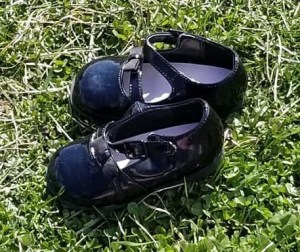
965E6AF4-46EA-445B-91E0-003F05D3284214,000 shoes placed to tell a very, very sad story.

14,000 shoes laid out so that we will never forget our history.

Seven thousand pairs of children’s shoes were lined up on the southeast lawn of the U.S. Capitol building today in memory of every child who has died due to gun violence.

The 7,000 shoes in the “Monument for our Kids” installment represent every child that was killed by gunfire since the deadly shooting at Sandy Hook elementary school in Newtown, Connecticut, in 2012.

“We are bringing Congress face to face with the heartbreak of gun violence,” said one of the activists, Oscar Soria. “All of these shoes cover more than 10,000 square feet.”

Though most of the shoes were collected in a two week period, some of those were donated by families that lost their children to gun violence.

May God grant that we never forget this national grief. May our collective mourning bring lasting change.552D1FD3-63EF-4301-8FD9-FEE605FA755D

A Prayer for Protection

Hear us, O God, protector of children.
Hear our prayer of penitence, our confession that we have failed to keep our children safe.
Hear our cries, as we shed tears of mourning for each child we have lost to gun violence.
Hear our cries of grief as we recall every danger that our children face.
Hear our voices shouting, “Enough!”
Hear our voices of commitment that make a sacred promise that we will do what must be done.
And most of all, God, ennoble us to holy action, and make us protectors of children.
We pray in the name of the Prince of Peace. Amen.

Change, Children, Courage, grief, Gun control, healing, Hope, Justice, Politics, Violence

A Change Is Gonna Come

963A5A51-3EC5-464E-BAE6-A49BCFECAE4F
Emma González … ‘These young people will not sit in classrooms waiting.’ Photograph: Jonathan Drake/Reuters

Half a century ago, on March 7, 1965, state troopers beat down men and women who were participating in a peaceful march for voting rights in Selma, Alabama. That same day, radio listeners around the country might have heard Sam Cooke singing a song he had written and recorded several months earlier, but which could have been describing the “Bloody Sunday” confrontation on the Edmund Pettus Bridge.

There have been times that I thought I couldn’t last for long
But now I think I’m able to carry on
It’s been a long, a long time coming
But I know a change is gonna come, oh yes it will.

In “A Change Is Gonna Come,” Sam Cooke moves from bigotry and bloodshed to hope and beauty in barely three minutes. If you listen to the record today, you will hear a story that continues to be relevant. (https://m.youtube.com/watch?v=wEBlaMOmKV4)

Sam Cooke’s rough, sweet voice — a voice that is blues-born and church-bred, beat down but up again and marching — still rings.

A changs IS gonna come . . .

That message of hope rings out still in these troubling days through the passion-filled voice of Emma González, a senior at Marjory Stoneman Douglas High School, as she addresses a gun control rally in Fort Lauderdale just days after a gunman entered her school in Parkland and killed 17 people.

A change IS gonna come . . .

We are going to be the kids you read about in textbooks. Not because we’re going to be another statistic about mass shooting in America, but because . . . we are going to be the last mass shooting. We are going to change the law. That’s going to be Marjory Stoneman Douglas in that textbook and it’s going to be due to the tireless effort of the school board, the faculty members, the family members and most of all the students. The students who are dead, the students still in the hospital, the student now suffering PTSD, the students who had panic attacks during the vigil because the helicopters would not leave us alone, hovering over the school for 24 hours a day.

If the President wants to come up to me and tell me to my face that it was a terrible tragedy and how it should never have happened and maintain telling us how nothing is going to be done about it, I’m going to happily ask him how much money he received from the National Rifle Association. You want to know something? It doesn’t matter, because I already know. Thirty million dollars.  — Emma González

A change Is gonna come . . .

Just hours after the mass shooting, other students turned to social media to discuss gun control.

Guns give these disgusting people the ability to kill other human beings. This IS about guns.  — Carly Novell, a 17-year-old senior; editor of the school’s quarterly magazine.

We need to do something. We need to get out there and be politically active. Congress needs to get over their political bias with each other and work toward saving children. We’re children. You guys are the adults.  — David Hogg, 17, a senior; Stoneman Douglas student news director

Wherever you bump into someone, there is the fear that they’re the next shooter, and every bell is a gunshot. I feel like some change is going to come of this.  — Daniela Palacios, 16, a sophomore at another Broward County High School at her first protest.

A change IS gonna come . . .

And it will be our bold and compassionate children who will lead this nation into that change. Like so many Americans, I was disconsolate when watching the TV news of yet another school shooting. But then I started watching the students, and I saw the girl with the buzzcut, Emma González, wiping back her tears, mourning her dead classmates while demanding change.

Like her schoolmates, Emma is in trauma, but she is organizing. She and many of her classmates are directly challenging the donations of the National Rifle Association to Trump and other politicians. There will be school strikes. There will be organized resistance. These young people will not sit in classrooms any more. They refuse to become another tragic statistic. “We are going to be the kids you read about in textbooks,” said a weeping González.

As I remembered this week what happened  at Sandy Hook, at Columbine, at Westside, a school in my own state, I remembered feeling anger and despair. But today, for first time in a long time, I feel hope. I see true leadership as kids are standing up for one another and fighting for their lives.

Let us stand courageously beside these children, our children, and do what we can to create change . . . letters to Congress, phone calls, posts on social media, marches and demonstrations, hand-lettered signs, letters to the editor, VOTING for change. What can you do?

Emma González, Daniela Palácios, David Hogg, Carly Novell . . . and thousands of other children who are crying out, ENOUGH!

They give me hope.

A change is gonna come!

May God ennoble each of us to make it so.


Child protection, Faith, Family, Foundation, Rootedness, Roots, Sexual abuse, Trees

Rootedness

FEB12BA8-9746-4E12-84C7-A6CDCCEC2347
Photo by Jeremy Bishop

I spend a good deal of energy trying to understand myself. I wonder about the places my emotions go, how I got to where I am spiritually, where my deepest convictions came from. Self-assessment is a lifelong process. Saleem Haddad expresses the process with great insight when he writes this in his book, Guapa.

 . . . Digging through my roots to understand the way my branches grew.
(https://www.goodreads.com/author/show/14107015.Saleem_Haddad)

These days, I have been digging through my own rootedness, and as I have contemplated my roots, I recalled the deep childhood influence of the two people who literally nurtured my sense of rootedness — my Aunt Koula and Yiayia, my grandmother. It is clear to me that I was rooted in the devotion of these two strong women.

From my dear Aunt Koula, I received the kind of lavish love that is most surely a part of a Greek aunt’s DNA. And from my attentive (sometimes intrusive) Greek grandmother, fierce protection. One can thrive on lavish love and fierce protection, and I did thrive.

But my teen years brought change. I was no longer near my aunt, my grandmother, or even my mother. Instead, I lived with a harsh and abusive father, a broken man held together with alcohol and the sexual abuse of his only daughter. So I was a troubled teenager, adrift for a season and feeling that I had lost my rootedness.

But inside me was a persistent resilience. In the midst of abuse, I sent my roots even deeper into the nurturing soil, a soil that still held the nutrients placed there by my aunt and my grandmother. I managed to keep myself rooted. Through the pain of abuse, I became stronger as my roots pushed deeper into the earth beneath me. I found the Divine Source that made sure I would be rooted and grounded in love.

I was always a religious child with meaningful ties to my Greek Orthodox faith. But as an eighteen year old, I discovered an even stronger foundation of faith. I found God in a new way, reborn by a fresh faith in Christ.

My roots held me firm. I was stronger than ever before. And at times during those difficult years. I would fall into God’s arms of grace as I repeated the prayer that, through the years, would inspire me more than any prayer in scripture.

. . . I bow my knees before the Father, from whom every family in heaven and on earth takes its name. I pray that, according to the riches of his glory, he may grant that you may be strengthened in your inner being with power through his Spirit, and that Christ may dwell in your hearts through faith, as you are being rooted and grounded in love. I pray that you may have the power to comprehend, with all the saints, what is the breadth and length and height and depth, and to know the love of Christ that surpasses knowledge, so that you may be filled with all the fullness of God.

— Ephesians 3:14-19 New Revised Standard Version (NRSV)

To all around me, I appeared strong and vibrant during those years of chronic and constant abuse. Like a tree that displays the splendor of its verdant leaves in the sunlight, I displayed my own “leaves,” in spite of the destructive and pain-filled environment that was my life.

Budding. Growing. Greening. Branching out.

Outwardly, I seemed healthy and strong, but the real strength was below the ground, roots and taproots pushing deeper into the soil. What happens there is unseen — below the ground. But that which happens below the ground, unseen, literally fashions the glory of what is seen, above the ground, branches reaching high into the sky toward the heavens, pointing to the God of the ages.

It is miracle, really, a grace gift from the God who longs to plant us firmly and deeply into a holy foundation. And so we can withstand the storms and the winds when they threaten, even gale force winds that move us, but cannot destroy us.

I call it rootedness.


Children, Church, Worship

Behaving in Church


76DF3F19-8108-419B-BE27-DFCA4848E379
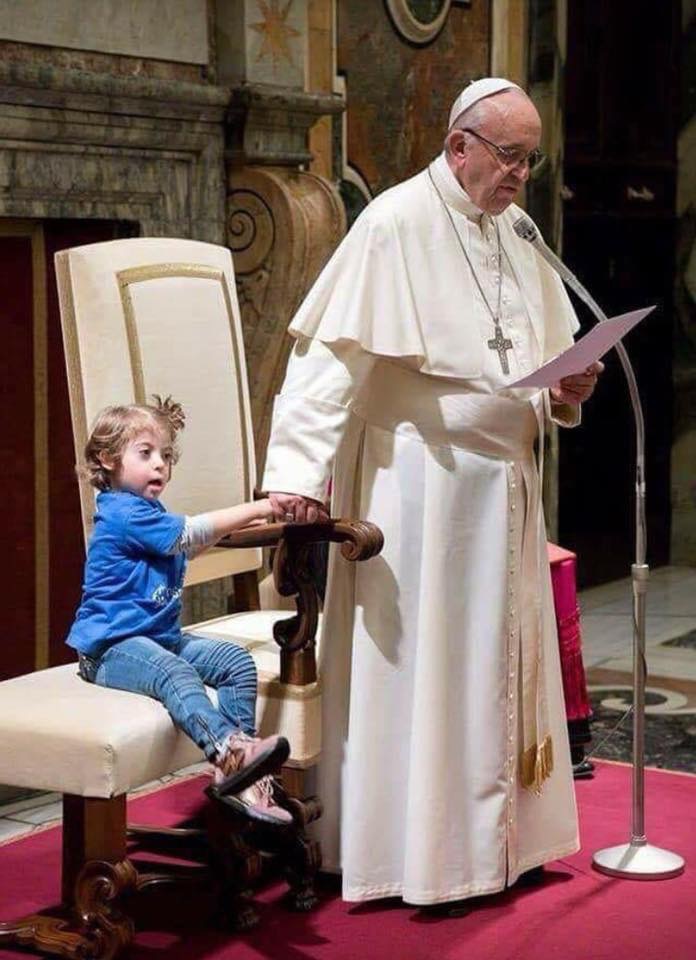
Pope Francis preaching as a child sits nearby

I was moved today by a statement a friend made in a conversation. She is a mother of young children, and she said that she loved worshipping with her children and watching their responses to the worship experience. It was such a contrast, I thought, to the typical responses of parents through the ages struggling to corral their children during worship. When my son was young, I did some powerful corralling myself trying to keep a very active boy still and quiet in church.

Looking back, I wonder what made me believe that worshipping always needed to be still and quiet. I wonder what I might have learned from my child if he had been encouraged to offer his own expressions in worship. And, of course, I cherish and miss those days of taking my very expressive toddler to “big church.”

There is a delightful article by Jamie Bruesehoff printed in The Huffington Post (https://www.huffingtonpost.com/jamie-bruesehoff/parents-kids-church_b_3909085.html) entitled “Dear Parents With Young Children in Church.”

I see you with your toddler and your preschooler. I watch you cringe when your little girl asks an innocent question in a voice that might not be an inside voice let alone a church whisper. I hear the exasperation in your voice as you beg your child to just sit, to be quiet as you feel everyone’s eyes on you . . . When you are here, the church is filled with a joyful noise . . . I know that they [the children] are learning how and why we worship . . . They are learning that worship is important.

I see them learning. In the midst of the cries, whines, and giggles, in the midst of the crinkling of pretzel bags and the growing pile of crumbs, I see a little girl who insists on going two pews up to share peace with someone she’s never met. I hear a little boy slurping (quite loudly) every last drop of his communion wine out of the cup, determined not to miss a drop of Jesus. I watch a child excitedly color a cross and point to the one in the front of the sanctuary. I hear the echos of “Amens” just a few seconds after the rest of the community says it together. I watch a boy just learning to read try to sound out the words in the worship book or count his way to Hymn 672 . . . I can see your children learning.

Jamie Bruesehoff’s words call us to cherish the children among us, just as Jesus did so long ago.

Then little children were being brought to him in order that he might lay his hands on them and pray. The disciples spoke sternly to those who brought them; but Jesus said, “Let the little children come to me, and do not stop them; for it is to such as these that the kingdom of heaven belongs.” And he laid his hands on them and went on his way.

Matthew 19:13-15 New Revised Standard Version (NRSV)

It seems that recently, Pope Francis mirrored the actions of Jesus according to a post by UCatholic.

A beautiful little girl with Down syndrome, got up from her seat during a papal audience and went toward the Pope. The security guards quickly moved in to take her back to her mother. The Pope stopped everyone and said to the girl, “come sit next to me.” The girl then sat down near him and the Holy Father continued to preach while holding hands with the little girl.

Our words matter. What we say to our children becomes a part their memories.

As a child, I heard some pretty strong words about my church behavior. I heard such words as an adult. I even said some of them myself. “Sit still in church! Quit wiggling around so much! Be quiet! Children have to behave in church! Behaving like that in church is not pleasing to God!”

Or maybe these words are more Christlike. “Let the little children come to me, and do not stop them.”

Amen.


Darkness, Faith, Hope, Illness, Light

The Light Behind Me

F4719FE4-AC10-4EF9-903D-023E96825023
Photo by Łukasz Łada

At the risk of being too dramatic, I must say that on some days, my path seems dark. Whether caused by chronic pain, illness, or other challenges, I sometimes walk through patches of darkness — often immense patches of darkness that seem to go on forever. Dark thoughts about an uncertain future can flood my mind.

Much wiser persons than I have made sense about the veil of darkness that often covers our lives. Francis Bacon left us with these words:

In order for the light to shine so brightly, the darkness must be present.

— Francis Bacon (1561-1626)

It is the dramatic contrast between darkness and light that leaves us perplexed. We can feel the promise of light on one day, and on the next, darkness prevails. So often, it is the darkness that wins the day, having its way with us. But then there is this thing we call faith.

Faith, we recall, is something that Jesus tried to explain over and over again to his disciples. They couldn’t quite get it. And like those twelve, we don’t quite get it either, that “faith” is at once simple and complex, available yet impossibly unattainable. At best, faith can be elusive.

But getting back to me on this dark day, here is a brief personal anecdote. I have my dialysis treatments for seven and a half hours every night. My dialysis machine has a screen that lights up in our dark bedroom. I have to read the screen at times during the night, and that troublesome screen shines in my eyes so intensely that I cannot see anything else in front of me.

That mundane daily experience teaches me that the most effective light in a dark place is not the light in my eyes that blinds me, rather it is the light behind me.

The light behind me stirs the depths of my soul, because I know that God’s light truly is behind me as I travel this journey. To know that the Light will guide my way is to again find my faith, in spite of illness, in spite of pain and suffering, in spite of uncertainty.

We uncover the holy mystery and the divine promise in the living words of Scripture.

The people living in darkness
have seen a great light;
on those living in the land of the shadow of death
a light has dawned.

— Matthew 4:16 New International Version (NIV)

I do not know how it all happens, that this Scripture comes to life within me and gives me life. I do not understand a God that can find me in every dark place. I do not comprehend the miracle that shines light behind me in the middle of my darkest days. I do not understand how a light can dawn “in the land of the shadow of death.”

But I do know that my fickle faith transforms at times into something solid and steadfast, comforting and constant.

Light behind me, I think.

Thanks be to God.

Contemplation, Creating, Creativity, Faith, peace, Self Awareness, Self care, Serenity, Silence, Spiritual growth, Transformation

Transformation, Pursuits and Productions

BCE50E1D-C995-4353-A940-14AABC73495E
A Recolor page that brought me fond memories of my beloved Uganda

My mind needs rest and renewal. My soul needs trasformation. My heart needs peace and serenity.

The problem is that not many activities relax me. Being the wretched Type A personality that I am, I turn every pursuit into a production. A dear friend has a saying that she uses when a task morphs into more than it should have been. “That was a production!” she would say, and we all knew what she meant — a project got way out of hand!

Such is my life. Compulsive. Driven. Perfectionist. All words that have often been used to describe me. I have to work on it diligently, this need for serenity and the renewal of my mind. Reading Scripture leads to writing a sermon, an opinion piece, or a blog post. Praying leads to a plethora of things I feel I must do. Swinging in the sunshine leads to working in flower beds that need tending.

My first waking thought is always about what project I will do or what meal I will cook. That decision influences my day. When I have decided what I will do, I’m off. I’m all in to get it done.

My greatest need is to find my way to peacefulness and serenity, to experience a renewal of my mind, to learn to be quiet and still so that in the stillness, I might find God in new ways. And I might even find myself in new ways and learn some things about the depth of my “self” snd the longings of my soul.

It is my soul, of course, that craves the serenity. I work on it often — deep breathing, brief praying at many times during the day, singing hymns (to myself) as I fall asleep at night. All of it helps. None of it makes a permanent difference.

Interestingly, I have found a pursuit that does not lead to a production. It is a computer app called Recolor, which is simply for coloring on devices like the IPad. Each day, Recolor adds two or more pages for coloring with your finger or a stylus. I have found nothing that relaxes me more than getting lost on a coloring page. As of today, I have colored 1,062 pages and have received 66 thousand “likes.”

One might observe that this pursuit is not at all a spiritual practice, not a contemplative activity, and is pretty much a waste of time. The thing is, it really is a spiritual practice for me because I am learning how to waste time. I needed to find a way to immerse myself into a creative activity that did not consume me. I needed an activity that would clear and renew my mind. As the Scripture urges, I need to be transformed by the renewal of my mind.

Do not be conformed to this world but be transformed by the renewal of your mind, that you may prove what is the will of God, what is good and acceptable and perfect.

— Romans 12:2 Revised Standard Version (RSV)

So I will continue coloring to clear my mind and slow me down. And I will keep working on the renewal of my very busy mind. Who knows? Someday I might find myself transformed.


Comfort, God's presence, healing, Heartbreak, Inspiration, life, Mourning, Pain, peace, Restoration, sadness, Serenity, Sorrow

Guard Your Heart

FF412EF2-E311-4F00-9859-65D0582E5935A heart can break so easily. Life is filled with heartbreaking things, and no person is immune to heartbreak. Hurt from one’s children, the loss of a loved one, a marriage rife with anger, abuse by a trusted person, betrayal by a lifelong friend — all of these can leave a heart crushed.

How important it is, though, to find healing for our hearts, to find the healing balm that will ease the pain. We recall the comfort of Scripture that says, “Do not let your hearts be troubled, neither let them be afraid.” We lean on the everlasting arms that always hold us, we rest on the promise that “God heals the brokenhearted and binds up their wounds,” (Psalm 147:3) and we hear again the tender words of the Psalmist.

The Lord is near to the brokenhearted and saves those who are crushed in spirit.

— Psalm 34:18

So we take these promises into our souls, and we give ourselves the time we need to heal our broken hearts. To be sure, the healing depends upon letting enough time pass for restoration to happen. Never do we heal on a swift timetable. The clock must move and the days must pass on our heartbreak. The weeks may well turn into months, even years. Yet we move ahead with confidence in our resiliency and faith in the Great Healer who abides with us for as long as it takes.

The final message is this: Be patient, but persevering, for the healing of your heart must be a life priority. Always guard your heart. Believe in the healing that will surely come. Know that your broken heart will mend as it rests in the hands of the One who heals every broken heart, every time, always.

Why is healing so important? It’s all about “the springs of life.”

Above all else, guard your heart,
For from it flow the springs of life.

— Proverbs 4:23

Contemplation, Discovering, God's presence, Inspiration, life, Life Journeys, Nature, Spiritual growth, Stars

Holy Wondering

7CD31664-E73F-4B6B-B168-4291D78B28DBWandering may well be a spiritual discipline. Many years ago, young Annie Morgan sang about it as she wandered in the hills and hollows of Appalachia. . . “I wonder as I wander out under the sky.”*

Wondering while we wander makes wandering a spiritual act. It is not merely aimless meandering. Nor is it rolling on pointlessly as if there is really nowhere to go. It is not wandering around in circles because we are hopelessly lost. It is more like a contemplative journey of discovery. J.R.R. Tolkien observed a truth about wandering. He said, “Not all those who wander are lost.”

We wander, most certainly, but might there be a purpose in our wandering? Suppose our wandering becomes a joy to us. Suppose we learn and grow as we wander about. Suppose our wandering leads us to a deeper relationship with God. Suppose in our wandering we do some wondering, looking up into the sky for new light and sparkling new thoughts that change our lives forever.

So I wonder . . . How are the stars set in their places? Apart from the certainties of astronomy, of course.

I wonder . . . Why does the sun rise every day, and then set in a wondrously painted sky at dusk making way for the rising of a luminous moon? Apart from the scientific explanation, of course.

Wondering is not about science at all. It is about discovery of beauty in most unlikely places. Perhaps it is about practicing mindfulness atop a majestic mountaintop, or contemplating life on the edge of the sea, or meditating in a forest filled with all manner of living things. It is about the exploration of the heart to know its deepest desires and longings. It is about looking into the soul, and there finding both the intense pain and the tender healing that completes a life.

A well known Christmas carol, “I Wonder as I Wander”* was first sung by young Annie Morgan, a destitute girl in Appalachian North Carolina. At a Christian fundraising meeting, Annie stepped out on the edge of the platform and stood before a crowd of people. Although she wore rags, unwashed and in shreds, she stood proudly. It is said that she smiled as she sang, “smiled rather sadly, and sang only a single line of a song the people had never heard.”

I wonder as I wander out under the sky . . .

I imagine that Annie, a girl living in poverty, wondered about many things as she wandered through the Appalachian mountains. She probably wondered about the stars in the sky, the rising and setting of the sun, the brilliant moon that lit the path before her in the night. I imagine she wondered about God and about the ways God might be present with her. I imagine she wondered about herself and about what would become of her. Like her, we wander through this life, mostly alone.

As this is my very own blog, I can freely change tenses to say with great certainty that, as I have wandered through many years, I have grown by myself, but not alone. For as I wandered, I learned to wonder.

So I highly recommend wandering for the sole purpose of wondering. Our wondering might well reveal the longing in our hearts. Our wondering might lay bare the pain hidden in our souls, but also show us the balm of healing that dwells there. Our wondering might open up a place within us to hold God, all of God, more completely than ever before.

I don’t know about you, but I plan to do even more wandering. And on the journey, I will pour myself into some holy wondering. Who knows what I might discover!


* “I Wonder as I Wander” is a Christian folk hymn, typically performed as a Christmas carol, written by American folklorist and singer John Jacob Niles. The hymn has its origins in a song fragment collected by Niles on July 16, 1933.

While in the town of Murphy in Appalachian North Carolina, Niles attended a fundraising meeting held by group of evangelicals. In his unpublished autobiography, he wrote of hearing the song:

“A girl had stepped out to the edge of the little platform and began to sing. Her clothes were unbelievable dirty and ragged, and she, too, was unwashed. Her ash-blond hair hung down in long skeins…. But, best of all, she was beautiful, and in her untutored way, she could sing. She smiled as she sang, smiled rather sadly, and sang only a single line of a song.”

The girl, named Annie Morgan, repeated the fragment seven times in exchange for a quarter per performance, and Niles left with “three lines of verse, a garbled fragment of melodic material. In various accounts of this story, Niles hears between one and three lines of the song.

Based on this fragment, Niles composed the version of “I Wonder as I Wander” that is known today . . . His composition was completed on October 4, 1933. Niles first performed the song on December 19, 1933, at the John C. Campbell Folk School in Brasstown, North Carolina. It was originally published in Songs of the Hill Folk in 1934.

Change, Comfort, Darkness, Despair, Faith, Friendship, God's Faithfulness, grief, Home, life, Loneliness, Loss, Mourning, sadness, Sorrow

“Are you upset, little friend?”

D25377E5-4CFD-428B-91CC-ADAA40BFA492
Charles M. Schulz

These days, I find myself in the very center of worry and discontent. I feel vulnerable, out of place in a new place I never expected to make my home. The problem is, I think, that I have not really made this place my home, and that reality has left me unsettled. I left forever friends behind when we moved here. I think the reason for my worry, my occasional despondency, even my fear, is that I feel alone. I recalled this week the well-known lyrics of a Carole King song from the seventies.

When you’re down and troubled
And you need a helping hand
And nothing, nothing is going right
Close your eyes and think of me
And soon I will be there
To brighten up even your darkest night.

You just call out my name
And you know wherever I am
I’ll come running to see you again;
Winter, spring, summer or fall
All you have to do is call
And I’ll be there, yeah, yeah, yeah.
You’ve got a friend.

If the sky above you
Should turn dark and full of clouds
And that old north wind should begin to blow;
Keep your head together
And call my name out loud, yeah
Soon I’ll be knocking upon your door . . .

It is a frightening state of being facing worry or illness or aging or loneliness, finding yourself disconsolate at times, and alone, without a loyal friend. But we have a mystical, magical force that leads us through the dark nights of the soul every time, without fail. I’ll name it faith.

A dear friend who just faced some devastating news reminded me of a deep-down, rock-solid truth about faith when she wrote, “My faith is bigger than my fear.” And that’s how we live a life filled with times of worry, aloneness, days of grief, fear, and sometimes mourning that engulfs us hard and long.

No person escapes such times, for they are an inevitable part of life. So we meet hard times face-to-face, up close, and we survive. We are, as the Bible says, “troubled on every hand, yet not distressed; perplexed, but not in despair . . . cast down, but not destroyed,” (2 Corinthians 4:8-9)

To be sure, we are left with scars of the soul and spirit. Yet we live on, knowing that after times of despondency, we are stronger than we were before. There is no deeper consolation than the words of Scripture proclaimed by the Prophet Isaiah.

When you pass through the waters, I will be with you;
And through the rivers, they shall not overflow you.
When you walk through the fire, you shall not be burned,
Nor shall the flame scorch you.

— Isaiah 43:2

I hang on Isaiah’s words, and I have rested on them so many times when sadness overwhelmed me and fear had its way. These Isaiah words are enough, more than enough for my disconsolate times.

But then I happened upon just the right message of consolation for me in this particular time of my life. And I found it in a most unlikely place. It’s a delightful little message of real and true comfort that speaks so sweetly to me, and perhaps to all of us who need a friend and an extra boost of encouragement in a time of worry.

Are you upset little friend? Have you been lying awake worrying? Well, don’t worry . . . I’m here. The flood waters will recede, the famine will end, the sun will shine tomorrow, and I will always be here to take care of you.

― Charles M. Schulz

Amen.

Change, Christian Witness, Courage, Faith, Freedom, Hate, Injustice, Justice, Martin Luther King, Jr., Risk, Segregation, The Christian Church

Out of Africa: White Supremacy and the Church’s Silence

D4B59064-1AD6-4121-B934-261EB10546E6I invite you to read “Out of Africa: White supremacy and the Church’s silence,” a provocative opinion piece by our guest blogger, Dr. Bill J. Leonard. Many thanks to Dr. Leonard for prompting us to more fully commemorate the day honoring Dr. Martin Luther King, Jr. If you are willing to challenge yourself, these words will shed the light you need to do so.

Out of Africa: White supremacy and the Church’s silence

45580E0C-5D54-41B6-8ECA-D4B04AAA7F7C
Dr. Bill J. Leonard

OPINION | BILL LEONARD | JANUARY 15, 2018

“Give me your tired, your poor, your huddled [Caucasian?] masses, yearning to breathe free.”

Three days before the 2018 Martin Luther King Jr. memorial observances, and in the 50th year after Dr. King’s assassination, the plague of racism in America continued, even as white supremacy, long lingering just below the surface, reasserted itself with a vengeance.

On Jan. 12, the president of the United States, at a White House meeting on immigration, allegedly asked why “all these people from shithole countries,” specifically Haiti and Africa, should be admitted to the U.S. He was also said to have wondered aloud why the U.S. could not secure more immigrants from countries like Norway (83 percent Caucasian). Confirmation of his remarks vary from those in attendance. Some confirm the alleged statements; others deny them. Somebody’s lying.

The mere report of the comments was immediately celebrated across the country’s white supremacist network, much as when Trump affirmed “good people on both sides” in last year’s violent neo-Nazi-led demonstrations in Charlottesville, Va. White nationalist Richard Spencer chastised Trump’s defenders for suggesting the statements were related to law or economics, since they were actually “all about race.” Spencer was, of course, delighted. The Neo-Nazi blog, the Daily Stormer, hailed the President’s words as “encouraging and refreshing” since they indicated that “Trump is more or less on the same page as us” regarding “race and immigration.” In America, 2018, white supremacy is now apparently “refreshing.”

Dallas Baptist pastor Robert Jeffress defended the president, noting that “apart from the vocabulary attributed to him,” Trump’s comments were “right on target” with his presidential responsibility “to place the interests of our nation above the needs of other countries.” That’s unlike Christians’ “biblical responsibility” to “place the needs of others” above themselves. (Racism’s OK; it’s vulgar language that’s the problem.)

Amid debates over the veracity of witnesses to the White House event, the fact remains that the dogmas of white supremacy lie at the center of America’s long night of racism, in politics, social structures, and racial stereotypes. At this moment in history, how can American Christians, themselves deeply divided over scripture, doctrine, sexuality, abortion, and other culture war accoutrements, foster a common compulsion to speak out against white supremacist fiction before it gains an even stronger implicit or explicit influence?

Even if President Trump did not use vulgar words to highlight his views on immigration, did he in fact wistfully promote a 21st century America where Aryans (remember the history of that word?) are preferred to immigrants of color? Surely it is time to break the silence, not simply because of those shameful remarks, but because they are part of a larger litany of racial dog whistles from Trump’s birther campaign, to attacks on a “Mexican” judge and a Gold Star Muslim family, to the infamous Charlottesville slurs.

We have many reasons to break the silence: First, because white supremacy itself is an inherently evil yet an enduring vision of the nature of humanity, and must be resisted for that fact alone. It has polluted our national psyche long enough!

Second, we break the silence on this matter because we hear again Dr. King’s words from that Birmingham jail: “Shallow understanding from people of good will is more frustrating than absolute misunderstanding from people of ill will. Lukewarm acceptance is much more bewildering than outright rejection.”

Third, we Aryan Christians cannot be silent because it’s our racial ancestors who first planted the banner of racism in our laws, our institutions (churches included), and in our hearts. And some among us still won’t let it go. We need to get “saved” from it.

Fourth, we speak out now because American churches, at least many of them, remained silent for too long. Indeed, Trump’s only a symptom; we scapegoat him at our peril. When his remarks hit the fan, I returned to James Baldwin’s The Fire Next Time, a book that has taught me, shamed me, blessed me, and broken me for decades. Baldwin writes: “It is not too much to say that whoever wishes to become a truly moral human being (and let us not ask whether or not this is possible) must first divorce him[her]self from all the prohibitions, crimes and hypocrisies of the Christian church. If the concept of God has had any validity or any use, it can only be to make us larger, freer, and more loving. If God cannot do this, then it is time we got rid of Him.” (Whatever God is, it damn sure isn’t white supremacy.)

Mercer University professor Robert Nash illustrates Baldwin’s point in a superb essay entitled, “Peculiarly Chosen: Anglo-Saxon Supremacy and Baptist Missions in the South,” documenting that ecclesiastical collusion with the case of James Franklin Love, corresponding secretary of the Foreign Mission Board of the Southern Baptist Convention, 1915-1928. Nash notes that Love “was profoundly influenced by the concept of Anglo-Saxon supremacy … that white races possessed a superior intellect, religion, and civilization.”

Love’s mission strategy focused on evangelization of Europe since white Christians could more readily convert the darker races. He wrote: “Let us not forget that to the white man God gave the instinct and talent to disseminate His ideals among other people and that he did not, to the same degree, give this instinct and talent to the yellow, brown or black race. The white race only has the genius to introduce Christianity into all lands and among all people.” (In 2017, the Southern Baptist Convention went on record condemning white supremacy then and now. It’s about time.)

Finally, we break the silence, confronting white supremacy and its accompanying racism at this moment because we will neither deny nor sully the African heritage of our African-American sisters and brothers, who as W.E.B. Dubois wrote, “would not bleach … [their] Negro soul in a flood of white Americanism,” since they know “that Negro blood has a message for the world.”

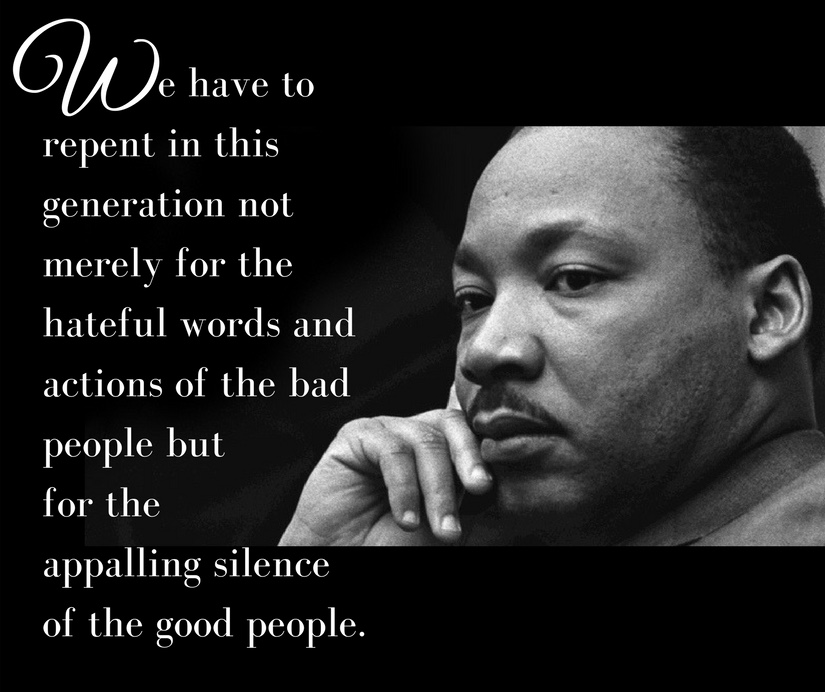
On what would have been his 89th birthday, Dr. King retains his prophetic voice for black and white alike, declaring from his jail cell then and now: “We will have to repent in this generation not merely for the hateful words and actions of the bad people but for the appalling silence of the good people. Human progress never rolls in on wheels of inevitability; it comes through the tireless efforts of men [women] willing to be co-workers with God, and without this hard work, time itself becomes an ally of the forces of social stagnation.”

Today, we read again Matthew’s haunting assessment of the Holy Family’s immigration from Herod’s not-so-holy-land:

“Out of Egypt I have called my son.”

Sweet Jesus, Egypt’s in Africa! Amen”


Bill J. Leonard is the James and Marilyn Dunn Professor of Baptist Studies, Professor of Church History, School of Divinity, Wake Forest University.


Change, Comfort, God's presence, Home, Loneliness, Uncategorized, Violence

Even There!

D2954ADE-75B4-4134-8B99-77B434376264Today, my pastor reminded me of a cherished truth, that we are not just loved by God, we are also known by God. Today’s scripture, Psalm 139, is indeed a precious gift. The Psalmist assures us that God knows when we sit down, when we lie down, and when we rise up.

The Psalmist declares that God knows our every thought. God knows our path. God knows our ways and the words we will speak, even before we speak them. The miracle? God truly and thoroughly knows us — every flaw, every bad habit, every unkind action. And God loves us anyway.

But for me, even more comforting than that grace-filled promise, is the truth beginning in verse seven, that God is with me when I feel alone. In the past few weeks, in fact, I have felt very much alone, far away from my child and grandchildren, far away from close friends, living in a new place that does not yet feel like home.

I am blessed with a loving husband of 48 years, my very best friend. We enjoy each other. We love being together day in and day out. We live in a lovely place in a pleasant neighborhood. But we are not really home.

So from the place I find myself these days, I find great comfort in hearing the Psalmist speaking, maybe even singing, about God’s abiding presence. In this part of the Psalm, one of the most meaningful scripture passages of my faith journey, I find the promise of God’s presence with me. The message calms my soul and consoles my heart.

Where can I go from Your Spirit?
Where can I flee from Your presence?

If I ascend into heaven, You are there;
If I make my bed in hell, behold, You are there.

If I take the wings of the morning,
And dwell in the uttermost parts of the sea,

Even there shall Your hand lead me,
And Your right hand shall hold me.

— Psalm 139:7-9 (NKJV)

Wherever I go, even there God’s Spirit is with me. Wherever I am, even there God is with me. Even there!

Thanks be to God for the gift of presence.

Hate, Love, Martin Luther King, Jr., peace, Politics

Only Love Can Drive Out Hate

010B6CB7-43B5-47B7-B92B-C87DF5750866It was almost shameful that President Trump on January 12th signed a proclamation honoring Dr. Martin Luther King, Jr. In all honesty, I cringe at his signing of this proclamation. I cringe because the president honors Dr. King while dishonoring Dr. King’s legacy.

I can imagine that Dr. King’s words echoed through the Oval Office during the signing, in a whisper heard only by persons of love and good will.

If we are to have peace on earth, our loyalties must become ecumenical rather than sectional. Our loyalties must transcend our race, our tribe, our class, and our nation; and this means we must develop a world perspective.”

We’ve learned to fly the air like birds, we’ve learned to swim the seas like fish, and yet we haven’t learned to walk the Earth as brothers and sisters…”

― Martin Luther King, Jr.

I cringe because I heard the words that the president said about “shithole countries.”

Why do we want all these people from Africa here? They’re shithole countries … We should have more people from Norway.

– Donald J. Trump

In his remarks, Mr. Trump, who has vowed to clamp down on illegal immigration, also questioned the need for Haitians in the United States.

Instantly, many Democrats and some Republican lawmakers called out the president. Republican United States Representative Mia Love, a daughter of Haitian immigrants, said the comments were “unkind, divisive, elitist, and fly in the face of our nation’s values,” and she called forTrump to apologize to the American people and to the countries he denigrated.

Another Republican Representative, Ileana Ros-Lehtinen, who was born in Cuba and whose south Florida district includes many Haitian immigrants, said: “Language like that shouldn’t be heard in locker rooms and it shouldn’t be heard in the White House.”

Democratic Senator Richard Blumenthal said the president’s comment “smacks of blatant racism, the most odious and insidious racism masquerading poorly as immigration policy.”

A wave of international outrage also grew against the president’s vulgar language as the president of Ghana, President Nana Akufo-Addo, said that he would “not accept such insults, even from a leader of a friendly country, no matter how powerful.”

The Ghanian president tweeted an unflinching defense of the African continent — and of Haiti and El Salvador, countries that Trump also mentioned in the Thursday meeting with a group of senators at the White House.

In addition to Ghana, the government of Botswana said Trump’s language is “reprehensible and racist,” and said it has summoned the U.S. ambassador to clarify what he meant.

Senegal’s president, Macky Sall, said in a statement that it was “shocking” and that “Africa and the black race merit the respect and consideration of all.” His West African nation has long been praised by the United States as an example of a stable democracy.

The African Union, which is made up of 55 member states, also spoke against Trump’s remarks.”Given the historical reality of how many Africans arrived in the United States as slaves, this statement flies in the face of all accepted behavior and practice,” said spokeswoman Ebba Kalondo.

Paul Altidor, Haiti’s ambassador to the U.S., called Trump’s comments “regrettable” and based on “clichés and stereotypes rather than actual fact.” He also noted the insensitivity of its timing, coming the same week as the eighth anniversary of Haiti’s 2010 earthquake, which killed more than 200,000 people.

El Salvador’s government on Friday sent a formal letter of protest to the United States over the “harsh terms detrimental to the dignity of El Salvador and other countries.”

A spokesperson representing the United Nations High Commissioner for Human Rights condemned President Trump’s “shocking and shameful” comment, saying: “I’m sorry, but there’s no other word one can use but racist.”

On January 13th, The Washington Post published an article by Karen Tumulty that calls out President Trump’s misunderstanding of this nation’s immigration history.

There is far more to the latest controversy surrounding President Trump than the vulgar and implicitly racist language he used to draw a distinction between desirable and undesirable immigrants. Trump’s choice of words also revealed a deeper and more substantive truth about how the president views — and misunderstands — America’s unique relationship with its immigrants.

Trump’s words, with their racial connotations, also suggest he wants to return to what has come to be regarded as one of the more shameful and xenophobic periods of immigration policy.

In 1924, a set of laws was passed that set quotas limiting the number of people admitted to this country based on where they came from, with a goal of preserving the United States’ ethnic homogeneity.

“The premise of national origin quotas was that some countries produce good immigrants, others produce bad immigrants,” said NPR correspondent Tom Gjelten, author of the 2015 book “A Nation of Nations: A Great American Immigration Story.”

“There were actually ‘scientific’ studies purporting to categorize countries according to the quality and characteristics of their people, and the quotas were devised in part on the basis of the testimony of ‘expert’ opinion,” Gjelten said.

There are so many voices of reason, voices that cry out for dignity, respect, unity and love, speaking out against the president of the United States. So it is with sadness and shame that I celebrate the day of remembrance for Dr. King. On his day in 2018, I hear more intensely all that he taught us about so many things, and I hear what he shared with us most profoundly — the power of love.

Returning hate for hate multiplies hate, adding deeper darkness to a night already devoid of stars. Darkness cannot drive out darkness; only light can do that. Hate cannot drive out hate; only love can do that.

Hate multiplies hate, violence multiplies violence, and toughness multiplies toughness in a descending spiral of destruction. So when Jesus says “Love your enemies,” he is setting forth a profound and ultimately inescapable admonition.

― Martin Luther King, Jr., from Strength to Love

This week, I heard a provocative statement: that hate speech is not about who Donald Trump is. Rather, it is about who we are. The statement opened up some questions for me:

How do I respond? What does it mean for me to stand with those who are marginalized?

Is it not my responsibility to stand up to persons in seats of power when they promote hate, racism, xenophobia, exclusion and hostility?”

Will I set my face towards love and my heart towards the world as it is seen through the eyes of Jesus? Is it not up to me to be a part of creating — in our nation and in our world — a “beloved community?”

For “hate cannot drive out hate. Only love can do that.” Was
Bondage, Despair, Faith, Fear, Freedom, healing, peace, Restoration

Despair

192EA03D-9DFB-4D4A-BB22-A481D2086FCDDespair has its way at times. It sneaks into my spirit and dwells there for a while, Although despair is thoroughly unwelcome and unwanted, it has a way of making a home in me at times. It has its way. It does its damage. It enslaves me with a devastating kind of bondage. It forces me into an uneasy and oppressive place.

Despair’s most damaging legacy is fear. These days are, for me at least, days of fear. I watch the current president and listen to his words in horror. He speaks with hostility. He gives welcome to divisiveness, racism, misogyny and disrespect. His words are often divisive, rude and insensitive. He uses his power to build an unsettled nation. I despair for the nation, and I despair for a world filled with violence, war, hunger, poverty, and natural disasters born of climate change.

My faith tells me that there is a remedy for despair, that fear can be conquered, and that peace might be restored in me. The poetry of Wendell Berry is a beautiful reminder.

When despair for the world grows in me
and I wake in the night at the least sound
in fear of what my life and my children’s lives may be,

I go and lie down where the wood drake
rests in his beauty on the water, and the great heron feeds.

I come into the peace of wild things
who do not tax their lives with forethought
of grief.

I come into the presence of still water.
And I feel above me the day-blind stars
waiting with their light.

For a time I rest in the grace of the world, and am free.

— From Wendell Berry’s “The Peace of Wild Things“

When despair casts its damaging spell within me, my faith still holds. They are waiting for me, always, the peace that is a balm for grief and despair, the presence of still waters and the stars sparkling in my night sky. This otherworldly beauty causes me to rest in the arms of faith and to recall the many times of despair in my life that served only to make me stronger and more resilient.

Thanks be to God.

Christmas, Courage, Epiphany, Hope, Inspiration, Light, Risk, Stars, Women

Looking into the Sky

C6F419F0-5C81-4A26-B890-76C7BCD762FCFor Christians around the world, the end of the Christmas holiday occurs on Epiphany, the 12th Day of Christmas. It commemorates how a star led the Magi, or the three kings or wise men, to the baby Jesus. Epiphany is about finding Jesus — again — in a fresh new way, looking into the light that has the power to change our lives.

In his homily on Friday before Epiphany, Pope Francis called on the faithful to be like the Magi, who, he said, continued to look at the sky, took risks and set out bearing gifts for Christ.

If we want to find Jesus, we have to overcome our fear of taking risks, our self-satisfaction and our indolent refusal to ask anything more of life. We need to take risks simply to meet a child. Those risks are immensely worth the effort, since in finding that child, in discovering his tenderness and love, we rediscover ourselves.

Looking into the sky and taking risks is a way of life for women. We have found the need to look up, above the hurts of our lives. We have looked into the sky to escape misogyny, discrimination, disrespect and abuse. We have looked into the sky to search the heavens for hope when we have felt only despair.

It has not been for us just a flighty inclination to retreat from unpleasant realities through fantasy. Instead our sky gazing has been a way to pour our souls into the kind of change that makes life worth living. We have dreamed improbable dreams. We have been wise. We have been brave and persistent. We have taken risks and defied whatever was holding us hostage. We have been determined emboldened and empowered.  We have been inspired and ennobled. We have changed our world.

Like the three Wise Men, we journeyed, wise women in search of the child that would more fully empower us. Our desire and longing led us, like a fire burning within, until we found the flaming star in the night sky. And there we found Jesus —  again. So we celebrated. We rejoiced, because Jesus wanted for us a new day, a new life of respect and well-being and inspiration and hope. That is epiphany. Amen.

Christmas, Despair, Hate, Hope, Music, peace, Violence

Peace on Earth. Good Will to Us All!

E8CBC92D-81BE-4275-B6EE-57B14513900E
We rarely sing one of my favorite Christmas Carols. Its words always cause emotions to well up within me. Although the words of this carol were written in the mid-1800’s, they still speak to the bleakness we face in these days.

It was on Christmas day in 1863, when Henry Wadsworth Longfellow — a 57-year-old widowed father of six children, the oldest of which had been nearly paralyzed as his country fought a war against itself — wrote a poem seeking to capture the dissonance in his own heart and in the world he observed around him. He heard the Church bells that December day. He heard the singing of “peace on earth,“ but he also despaired of a world of injustice and violence that seemed to mock the truthfulness of any sort of peace. Yet Longfellow’s words eventually led to a sense of confident hope even in the midst of bleak despair.

Such confident hope will also guide us through our own reality — a reality that constantly reminds us that the presence of despair, violence, injustice and intolerance destroys the hope, peace, justice and lovingkindness we so deeply desire for our world.

I heard the bells on Christmas Day
Their old, familiar carols play,
and wild and sweet
The words repeat
Of peace on earth, good-will to men!

And thought how, as the day had come,
The belfries of all Christendom
Had rolled along
The unbroken song
Of peace on earth, good-will to men!

Till ringing, singing on its way,
The world revolved from night to day,
A voice, a chime,
A chant sublime
Of peace on earth, good-will to men!

Then from each black, accursed mouth
The cannon thundered in the South,
And with the sound
The carols drowned
Of peace on earth, good-will to men!

It was as if an earthquake rent
The hearth-stones of a continent,
And made forlorn
The households born
Of peace on earth, good-will to men!

And in despair I bowed my head;
“There is no peace on earth,” I said;
“For hate is strong,
And mocks the song
Of peace on earth, good-will to men!”

Then pealed the bells more loud and deep:
“God is not dead, nor doth He sleep;
The Wrong shall fail,
The Right prevail,
With peace on earth, good-will to men.”

“Then pealed the bells more loud and deep, ‘God is not dead, nor doth He sleep.””

Amen