
Subscribe to continue reading
Subscribe to get access to the rest of this post and other subscriber-only content.
God of the Sparrow 🌱 By Kathy Manis Findley
"Do not be afraid. You are worth more than many sparrows." —Jesus
Subscribe to get access to the rest of this post and other subscriber-only content.

I write about sacred space a lot. I struggle to create sacred space a lot. I rest in sacred space . . . not so much. Certainly not enough. I confess that I, as a person who claims to cherish sacred space, can rarely find it. I must also confess that I need it. Yet, that space where I am tranquil, not agitated and troubled, is elusive to me. As some folk put it, “I’m staying busy!” Too busy!
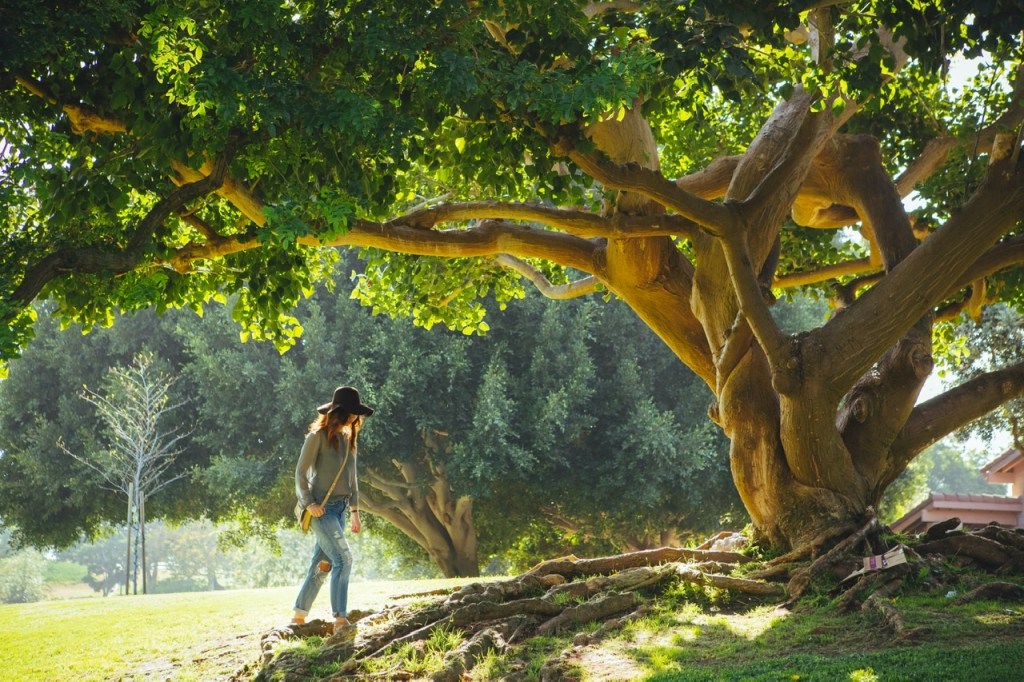
Sacred space is different for every person. Each person will know her/his sacred space intuitively, and by faith. Mine would be under a tree with spreading, low hanging branches or walking my own garden labyrinth.
Your sacred space may be beside the seashore, a place where you find calm, peace, or the ”silence” of the ever-moving ocean. Or you may not require a particular place at all, just a state of mind and an open spirit. If you long for a place of solace, inspiration, or re-creation, you will eventually create a sacred space, either a place that nature has created, a holy place that you have found, or a place you create in your own home. You will know the place, because you will sense what it is doing for your body and soul. Still, you won’t necessarily have to find your sacred space. Your sacred space may find you. And if you have only a few moments each day, make it your sacred pause.

Your sacred space may be beside the seashore, a place where you find calm, peace, or the ”silence” of the ever-moving ocean.
Do not strain to see where your sacred space is or what it should look like. A sacred space has many faces, many facets and dimensions.
Imagine . . .


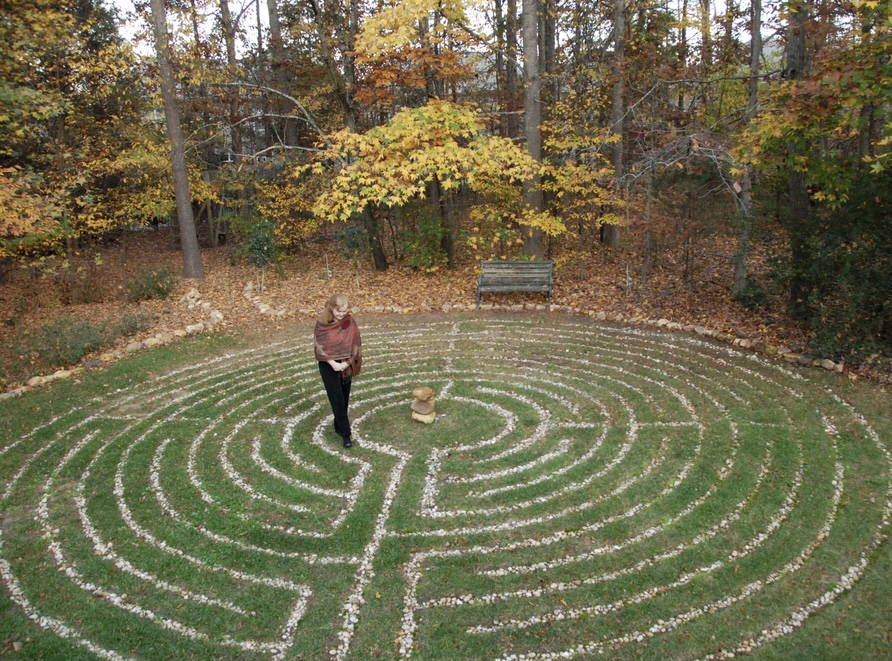
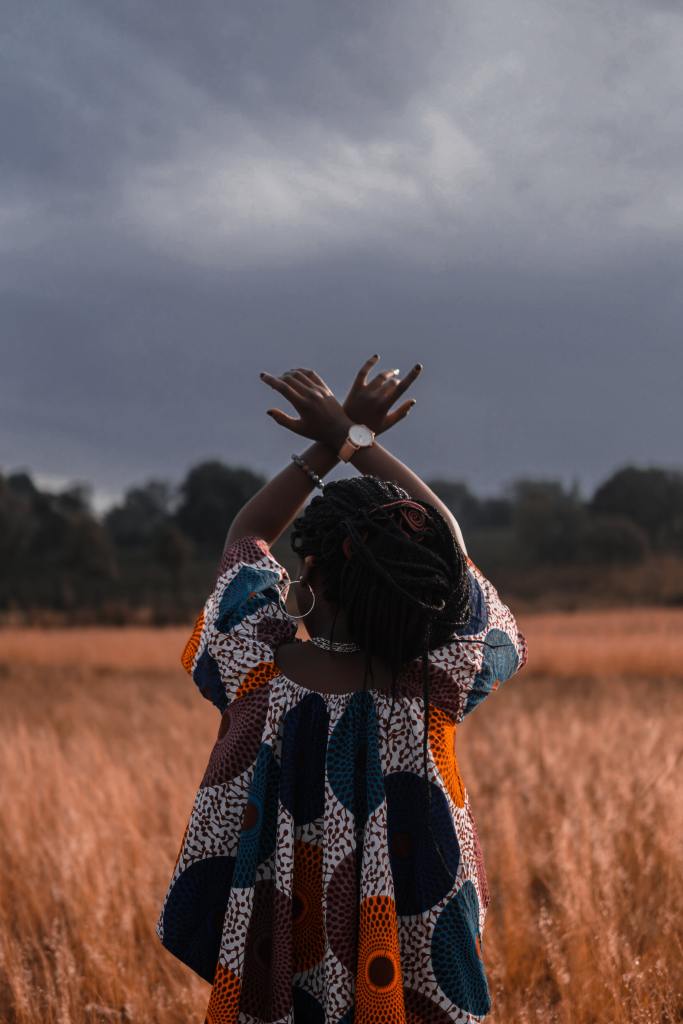
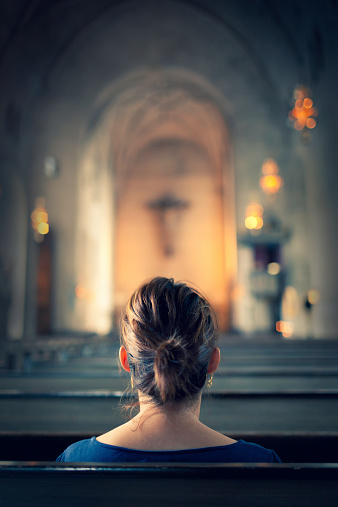


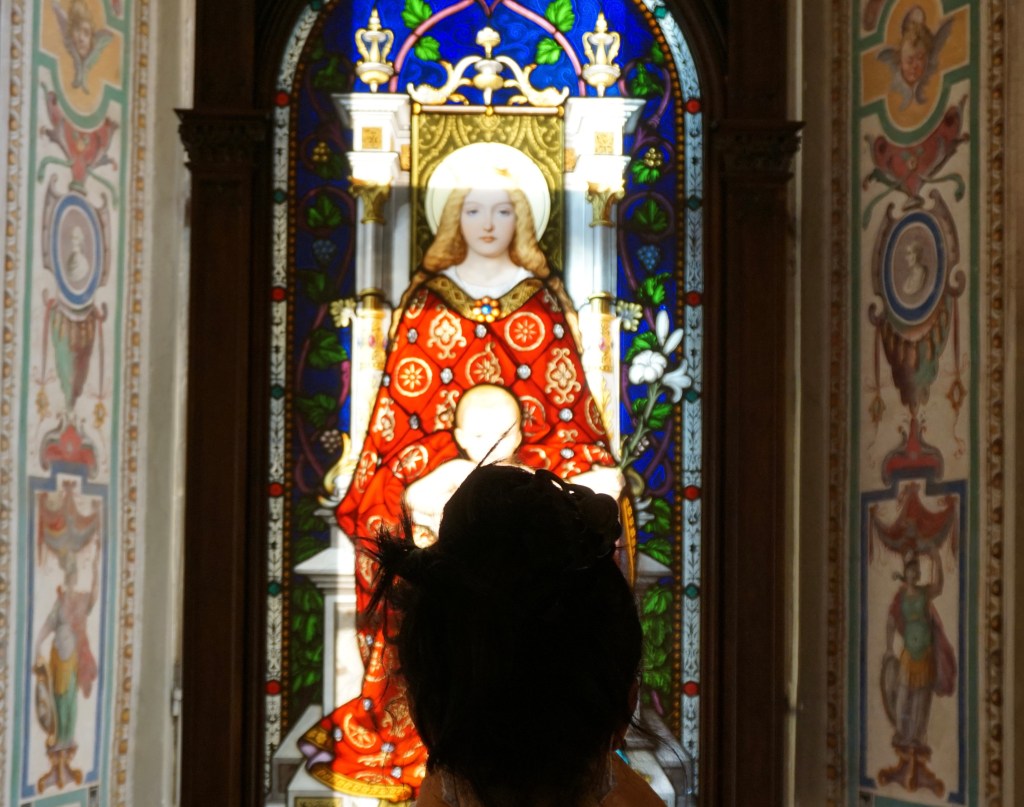
Once you find your sacred space, spend time there. You may choose to redecorate a quiet place in your home, build something in your garden that can center your thoughts, or find a quiet, beautiful place nearby that you can get to frequently and easily. As for what you do in your sacred space . . . well that will be as varied as the different spaces people choose.
Pray, breathe, sing, meditate, sit in holy silence—whatever you are moved to do is your own sacred moment—a very personal sacred moment. There is, however, one bit of wisdom that seems important—words from Joseph Campbell: “Your sacred space is where you can find yourself over and over again.”


Silence is at a premium at my house. The only time of day that is silent in my house is in the early morning—after the meowing cat goes outside; before anyone else in the house wakes up; before the iPad starts with its incessant sounds for incoming messages; and even before the sound of brewing coffee. I cherish that silence because, immersed in it, I learn all kinds of important things about myself. Including how much my soul needs silence and how little it gets.
I suppose silence is hard to come by for most people, at least those of us who are barraged by life’s incessant activity. Many culprits steal silence from us, but they are not always bad culprits. Many silence breakers are wonderful sounds like children’s laughter or a baby making baby sounds, or soothing music, gently falling rain, gentle breezes, the ebb and flow of the ocean, a flowing stream, birdsong. Some sounds are beautiful sounds.
The silence thieves I’m talking about are those that assault our places of solitude and peace. I think you will know some of them—like the sounds of gunfire in cities and communities, the sounds of family violence, the sounds of war, and even the sound of the broadcast news that tells us about all of those sounds and so many more. You will name your own sounds, the ones that strike fear in you, create inner turmoil for you, shatter your silenced places.
I think it’s important, at least for me, to find moments of silence and, in those silences, to think deeply, to calm my soul, to help mend my broken places, to discover my self and learn the truth of who I really am. And for me, I need silence to help me find my spiritual center. Believe me, silence eases every kind of headache and relaxes every painful muscle.
But then there’s that incessant news on tv! I know—I can just turn it off. The problem is that turning it off feels like turning my back on news I need to hear. If people are languishing from hunger, or suffering the violence of war, or living in fear for their lives, or dodging the violent fists of an abusive parent, or running away in fear of a terrorizing spouse, I need to know. I need to know because I care and just maybe I can do something about it. Like pray, reach out, call an ambulance, call the police, pray, offer words of comfort, cook a meal, call my Congress people, pray.
So yes, the television gives information that makes us care about our neighbor, about our communities and about the world. Still, it creates noise and sometimes we need silence. Our silence gives us the compassionate heart and the strength to help other when we can. The silence helps me find my own truth, and it is my truth that motivates me to care about what happens to others. A quote by Maxime Lagacé is full of wisdom, ”Noise creates illusions. Silence brings truth.”
I need silence and I need truth, about myself and about the world of chaos we seem to have created for ourselves. In his wonderful book, Whistling in the Dark, Frederick Buechner tells a story about Advent, how much we need to silently wait during the season of Advent for the coming of the Christ child, and also how we usually don’t get a silent moment. What overtakes our world is the noise of traffic, the noise of shoppers in overcrowded stores, the terrible noise of violence that the season always brings and, this year again, the noise of lament about those suffering from Covid-19 and the noise of the news that tells us about all of it—again and again and again. We can’t get a break and we can’t get even a smidgen of silence.
I am deeply moved by Frederick Buechner’s Advent story, especially when he writes about what he calls “the silence of a midwinter dusk.” In that dusk, he says, ”there is far off in the deeps of it somewhere a sound so faint that for all you can tell it may be only the sound of the silence itself. You hold your breath to listen.”
For me and for you, I hope for an escape from noise and constant activity, and instead slipping into a sacred space where we find silence and stillness. I don’t know about you, but I need that. I think we can somehow break away from the “madness and lostness” of the world and hightail it towards our places of silence.
But if you concentrate just for an instant, far off in the deeps of yourself somewhere you can feel the beating of your heart. For all its madness and lostness, not to mention your own, you can hear the world itself holding its breath.
– Frederick Buechner
May it be so for you.

There are times when sound does nothing but cause pain—the harsh words of disagreement, the disturbing reverberation of gunfire, the abrasive words of political battles, the crying of a baby. This Christmas season for me has been a tender time. I have longed for Christmases past that were more simple and free of worry. I have not heard this year the sound of Christmas bells ringing in this joyful season. Instead, I have needed to find a holy, silent place.
A dear friend captured my emotions in her blog today:
Many of us miss Christmas moments
familiar from other years
and expected for this one.
Many of us miss someone so precious
who was with us and will not be.
Perhaps mourning loss has made me unable to hear all the ”joyful and triumphant” sounds of Christmas. Instead of craving those familiar joyful sounds, I have been drawn to a place of silence. I feel compelled in these days to seek silent spaces and to open my soul to holy whispers. It seems that silence brings peace as nothing else can.
As I have thought through all that I feel, an old hymn came to mind. It seems to capture where my soul is right now. I will listen to it a few times today, as I try to rest in the silence I need, ”Let all the earth keep silence before him.”
I will also turn again to these comforting words in my friend’s blog:
Look around on Christmas Eve
and Christmas Day
for the tip of angel wing prepared for you.
If sounds of Christmas joy feel painful to you this year, I invite you to find the holy silence you need. As you do, listen to this calming hymn.
Most of all, I wish for you ”the tip of angel wing.”
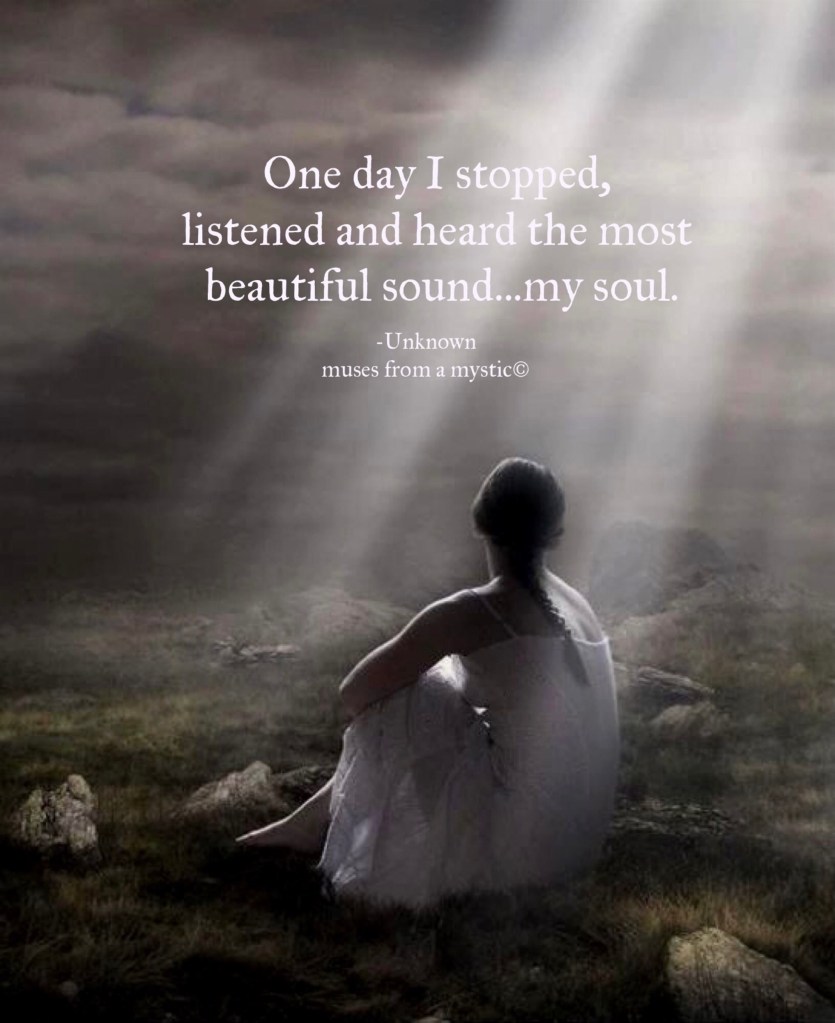
I wonder if you would be willing to stop what you’re doing right now and spend a quiet moment with me, just listening? Your time might well be a needed time for you and for your soul.
There is always so much to listen to — traffic, sirens, video game sounds, annoying household noise like the washing machine/dryer, food processor, mixer, fans, buzzers and alarms and the awful sound of the disposal trying to crush that inadvertent chicken bone. These, of course, are not our favorite sounds, but they are the myriad sounds and noises we hear in a typical day.
There are sweeter sounds, too, like the sound of a gentle, falling rain or the sound of rain when it hits hard on the roof; the sound of a gusty breeze as it rustles the leaves on a tree; the sound of a flowing stream, a rolling river and constant, ever-rushing ocean sounds; the flutter of a hummingbird’s wings; the sound of cicadas on a Southern summer night; the sound of a child’s laughter; the sweet, peaceful sound of a purring kitten; and birdsong, always birdsong.
Of course, listening as pure joy is listening to music — quiet music, lyrical melodies, rhythms that slow the pulse, the sound of a bow moving across a cello’s strings, the mesmerizing sound of a harp, the velvet sound of voices in harmony or the enthralling sound of a symphony orchestra.
Sounds fill the space that surrounds us, all the time. What is rarer for us is to hear the sound of silence. Some of us fear the silence or dread silent moments. Others of us avoid it at all costs because the silence tends to bring up whatever we are afraid to hear. So the noise that enfolds us fills the place that might otherwise hear the sighs of the soul — its cries and laments, its laughter, its sound of contentedness. It seems to me that this is the place we long to be, in the soul’s sound chamber where whatever we hear — if we’re listening carefully — is the song of the soul that tells us who we are and why we are.
There is a poem that many of you will remember (if you’re old enough) as a Simon and Garfunkel song from the 1960s. The poem was written by Paul Simon and it presents a frightening picture of the modern world doomed by the lack of spirituality and the people’s aversion to the true meaning of life. It is not so different in these days that spirituality and life meaning can be elusive, no matter how hard we may search for it and yearn for it.
The poem, entitled The Sound of Silence, is written by the voice of a visionary asking people to be serious about the true meaning of life. The poem’s message is that people are moving further and further away from true happiness because they have ignored life’s true meaning. They debate and quarrel about worthless things. They listen to or watch meaningless things. The poet writes that the people “speak and hear without listening. Like we often do?
Throughout its five stanzas, the poem presents the conflict between spiritual and material values. The poetic persona is a person of vision who warns against the lack of spiritual seriousness. The poem begins with an address by the poet persona to the darkness, saying that he has come to talk with the darkness. When he awakens, he says that the vision still remains as the sound of silence.
Some of us fear the silence or dread silent moments. Others avoid it at all costs because the silence tends to bring up whatever they are afraid to hear. So the noise that enfolds us fills the place that might otherwise hear the sighs of the soul — its cries and laments, its laughter, its sounds of contentedness. It seems to me that this is the place we long to be, in the soul’s sound chamber where whatever we hear — if we’re listening carefully — is the song of the soul that tells us who we are and why we are.
The words of the poet . . .
And in the naked light, I saw
Ten thousand people, maybe more
People talking without speaking
People hearing without listening
People writing songs that voices never share
And no one dared
Disturb the sound of silence
And the people bowed and prayed
To the neon god they made
And the sign flashed out its warning
In the words that it was forming
And the sign said,
“The words of the prophets are written on the subway walls
And tenement halls”
And whispered in the sound of silence
All of that trivia about the poem certainly moved us a little farther away from my point, which is that most, if not all, of us have a deep emotional and spiritual need to listen to our souls, really listen. Even if we don’t know it, we long to hear what the depth of our being wants to say to us. We want to find our true selves, a quest only our souls can accomplish. If we are honest, we would say that we want to do the soulwork that leads us out of the darkness of our own making and into a place of light.
When we do carve out a sacred pause, when we wait in the darkness of that silent space, and when we open ourselves to deep listening, we will likely hear God’s whisper. We will probably move slowly out of darkness and realize the promise that as “God’s own people” we will “proclaim the mighty acts of God who called us out of darkness into his marvelous light.” (1 Peter 2:9)
This is the place we long to be, in the soul’s sound chamber where whatever we hear — if we’re listening carefully — is the song of the soul that tells us who we are and why we are.
— Rev. Kathy Manis Findley
Hearing God’s voice moves us to a deeper experience of life, but hearing our soul’s sighs may take us deeper still, because we open ourselves to self-knowing. It’s not a surface knowing. It is a deep knowing of who it is that lives in our skin. Without hearing the sighs our souls are making, we might never enter into fullness of self. I suggest that only the fullness of who we are can stand before the God who knows us even better than we know ourselves.
In my own experience, I think that perhaps I cannot be in deep communion with God if I try to face God as my superficial self. Perhaps God seeks relationship with my soul, my deepest place of being. To find and define my soul for myself, to know myself fully, I must find the sound of silence and sit with it patiently and expectantly. Maybe that is the essence of spirituality.
So there are a few lessons in these words and these are the obvious lessons:

And who knows? If you linger for a while in your sacred listening space, you might just find the very essence of grace by hearing what your soul whispers to you. It will be the most beautiful sound of all.
— Rev.Kathy Manis Findley
One day I listened — really listened. And I heard the whisper of God and the song of my soul. Thanks be to God.
I invite you to hear the poem, “The Sound of Silence,” through music. It can rightly be said that no group or person could ever sing this as well as Simon and Garfunkel, but I thought you might enjoy it covered by a very popular contemporary a cappella group, Pentatonix.
The time for Donald Trump’s airtime is over! In my life, I have no available airtime for him, and I wish the media would follow my example. I’ve heard enough of his rants and tweets. I’ve heard enough of his incendiary speech. I’ve heard enough of his indiscriminate name-calling. I’ve heard enough of his lying. I’ve heard more than enough of his disrespectful, hate-filled, divisive rhetoric. More than enough!
My soul will no longer give Donald Trump airtime. Why? Because often my responses to hearing him were anger, disgust, self righteousness and even hate. And those emotions darken my soul. Those emotions do not belong in my soul at all, because they have a way of displacing love, compassion, gentleness, peace, hope, light and grace — all the good emotions that God plants in the soul through Spirit breath.
I think of the beloved hymn . . .
Holy Spirit, breathe on me until my heart is clean.
Let sunshine fill my inmost parts with not a cloud between.Breathe on me, breathe on me, Holy Spirit, breathe on me;
Take Thou my heart, cleanse every part,
Holy Spirit breathe on me.— Words by Edwin Hatch, Music by B.B. McKinney
In these days of harmful politics, racial injustice, coronavirus fear and isolation, I need a Spirit-cleansing of my heart and soul. God has been ready to begin the cleansing for a while now. God has heard my repentant prayers admitting anger and hatred. God has waited patiently for me to embrace the stillness that can begin to heal my soul.
Stillness! Stillness longing for healing. Stillness whispering words of repentance. Stillness yearning for calm. Stillness seeking peace. Stillness waiting in solitude for the presence of the Healer of the Soul.
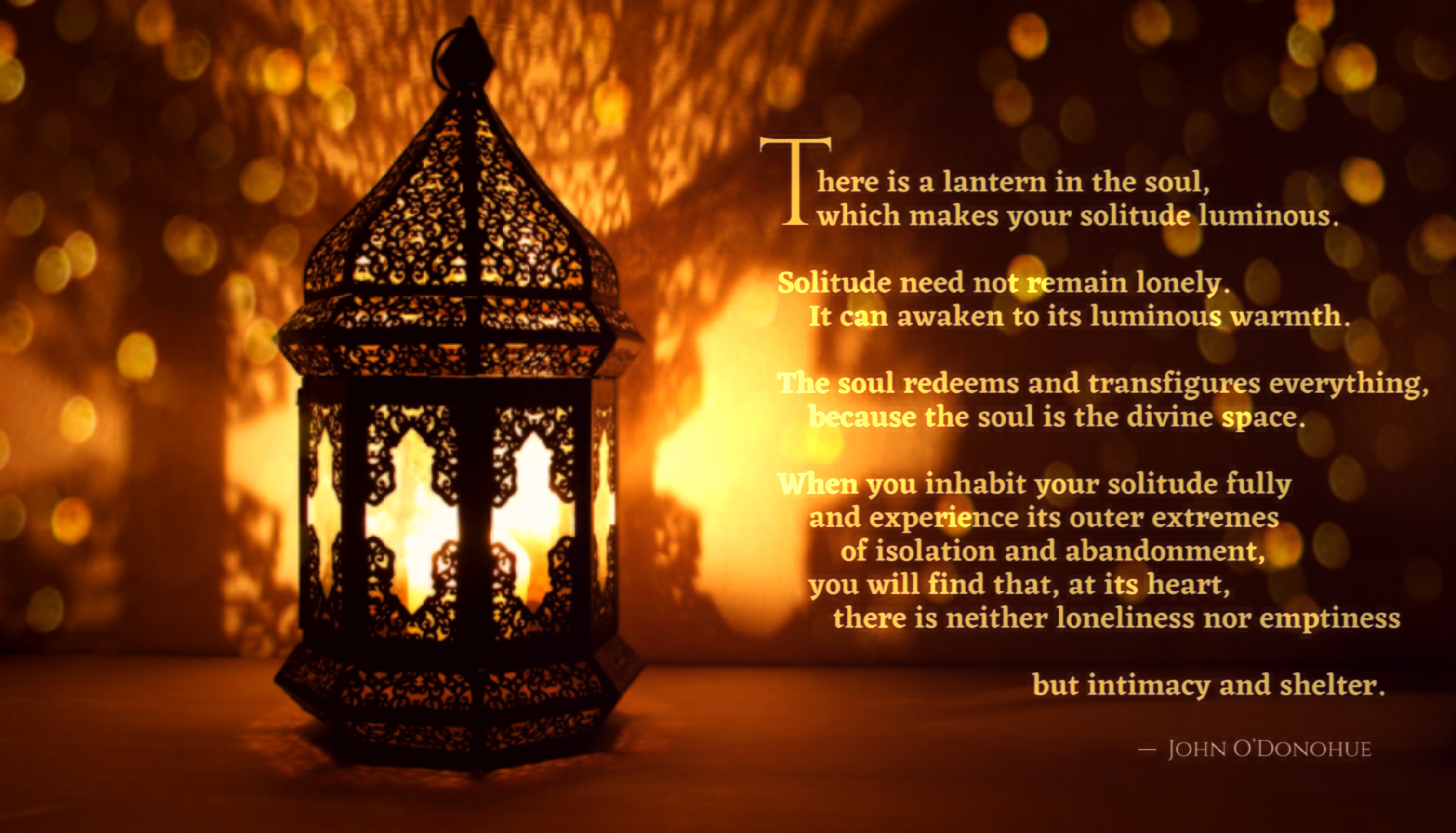
I’m going there — to that place of solitude where one can breathe slower, sigh deeper, listen attentively to the whisper of God and the breath of the Spirit. I’m going to solitude’s “luminous warmth” as John O’Donohue’s poem in which he describes the soul as the divine space.
There is a lantern in the soul, which makes your solitude luminous.
Solitude need not remain lonely. It can awaken to its luminous warmth.
The soul redeems and transfigures everything
because the soul is the divine space.
When you inhabit your solitude fully and experience its outer extremes of isolation and abandonment, you will find that, at its heart, there is neither loneliness nor emptiness but intimacy and shelter.
― John O’Donohue, Anam Cara: A Book of Celtic Wisdom
Right now, in the midst of the disheartening mood of the year 2020, I am entering the solitude I desperately need so that I can experience my soul as the divine space it is.
Politicians, continue your rancor in loud and powerful voice! I will not hear you from my place of solitude, from my soul’s divine space. And as for you, Mr. Trump, I have no further airtime for you. I refuse to sit in front of my television for another minute, anticipating — hoping — that you will finally say or do something appropriate, beneficial, worthwhile, productive, compassionate or kind.
Instead, I will change the channel to more soul-healing television. In fact, I will leave the television altogether and go to a better place, higher ground where peace and silence and reverence and awe can begin the holy work of healing my soul. I am taking a sacred pause from my life that has been so anxious and worried and isolated. I will wait there in that sacred space where my “soul redeems and transfigures everything.” Thanks be to God.

Are we brave enough to imagine beyond the boundaries of “the real” and then do the hard work of sculpting reality from our dreams?
Walidah Imarisha
I read a wonderful article this morning written by Madisyn Taylor, who wrote about being in a fog. I related immediately, having just taken my immunosuppressant medications that create all manner of “foggy-ness” for me. Tayler defined it as a feeling of being “muddled and unfocused, unsure of which way to turn.” I resonate with that definition, but beyond the physical fogginess of my mind, I experience an occasional fogginess of spirit. Know what I’m talking about? I would guess you do, since all of us fall into a spirit-fog once in a while.
A fog can feel downright eerie. It isn’t straightforward like darkness, yet we may feel like we can’t see where we’re going or where we’ve come from. We feel fear, as real as our fear of the darkness, afraid that if we move, we might run into something hidden in the mists that surround us. If we’re brave enough to move at all, we move slowly, feeling our way and keeping our eyes open for shapes emerging from the eerie haze.
Maybe being brave is what spirit fogginess is about. Spirit-fog is, of course, is a season of involuntary inactivity (perhaps even precipitated by coronavirus isolation). Although you and I much prefer to be able to see where we are going and move unwaveringly in that direction, maybe we can encourage our spirits to see that being in a fog often brings gifts to us — gifts of stillness, of doing absolutely nothing, a respite from forward inertia, a time to gather up our “brave” to move with forward inertia, even moments of finding for our spirits the Spirit of Comfort and Peace. We might find in the mists of fog the sacred pause that our spirit needs — the kind of sacred pause that creates resilience in us, and perseverance, and whatever we need to be brave.
In the fog, we really do need to be brave. When we are hidden in the mist, we may look within and find that the source of our fogginess is inside us — perhaps an emotional issue that needs tending before we can safely move ahead with steady resolve. The fog that engulfs us may simply be teaching us important lessons about how to continue moving forward even if we have been brought to a standstill by circumstances of life.
If we’re brave, we do not have to wait for the fog to lift. If we’re brave enough, we can center ourselves in the haze, wait for guidance and then move — move on into the unknown places on the journey. I have been a long-time fan of the song “Brave” sung by Sara Bareilles, written by Sara Bareilles and Jack Antonoff. “Brave” is on her 2013 album, “The Blessed Unrest.” The song hits me hard with these words, “sometimes the shadow wins.” I know that to be the hard truth, but I also latch onto the rest of this song’s message: I can be brave! I often think that this section of the lyrics calls out directly to me — calling me, urging me on, encouraging me to “show everyone how big my brave is.”
I wanna see you be brave
Everybody’s been there, everybody’s been stared down
By the enemy
Fallen for the fear and done some disappearing
Bow down to the mighty
Don’t run, stop holding your tongue
Maybe there’s a way out of the cage where you live
Maybe one of these days you can let the light in
Show me how big your brave is
Say what you wanna say
And let the words fall out
Honestly
I wanna see you be brave
Spend a few minutes enjoying this Sara Bereilles song and immerse yourself in the thought of how amazingly brave you are.

My dear, long-time friend, former Little Rock Mayor Jim Daily, sent me this photo this afternoon. Mayor Jim is a hiker, a camper, a photographer and a naturalist. He loves the outdoors. He is a person of profound thought, and he spends a good amount of his time in thoughtful contemplation — on a lake or an Arkansas River, in a verdant valley or on a mountaintop. He frequently blogs on what he calls his “adventures,” and his blog is filled with thoughts about wherever he is and whatever beauty he has found. For Jim, every day is a new adventure, and his adventures hold sway over him. They change him in so many ways
One more thing — As a tribute to my friend, Mayor Jim, I want to introduce you to his Blog, which you may enjoy viewing at this link: Last Pair of Boots
His Blog, called “Last Pair of Boots,” tells a poignant story — of nature’s beauty, of God’s presence in it, of friendships, of Arkansas’ and America’s holy places, of worship and contemplation and prayer. Here’s what Jim says about naming his blog:
The name “Last Pair of Boots” came to me when my ten year old boots broke down and it occurred to me that at my age the new pair of boots might be my last pair. Metaphorically my boots represent the trails and travels of life.

This is such a thought-provoking description that fits Jim’s love of nature’s splendor. He also hints at endings, not in a melancholy way, but in words the reveal his life of contemplation and curiosity. Jim’s outings are hiking and wilderness camping, skiing, fishing, exploring, visiting every Arkansas State Park through his job as Arkansas Tourism Director, finding friendships in every small Arkansas hamlet, searching for Arkansas treasures,
finding God in all the places and faces.
I imagine he will hold all of these adventures in his heart now that he has finished his work as Arkansas Tourism Director this past December.

Congratulations, Jim, for your many years of service to the citizens of Little Rock and of Arkansas. Your wisdom, your love of nature, your unquenchable thirst for adventure and your unfailing commitment will remain as one of our enduring Arkansas’ treasures.
As I mused about Jim’s outings tonight, I asked myself about the places and times that created my contemplative times. They are few, too few.
For whatever lame reason, I do not take the contemplative times I need. I think that my kidney transplant on November 12th pushed me into a soul-need that beckons me to solitude, silence, contemplation, adventure — new things to examine in the stunning beauty of nature. It calls me out of the house and into the sunlight or under the stars of the night. It calls me to breathe in the fresh air of God’s creation and, with that breath, to take in the miracle of God’s presence.
Now that I’m retired and have time, I tend to fill my time with all manner of preoccupation. At times, I feel busy and frazzled and don’t really know why. Why am I unable to make enough time to spend in the mesmerizing beauty of nature, keeping silence in God’s creation? Why do I not spend time beside still waters, listening to the silence of a pond? What is wrong with my soul that it is rarely drawn to God’s quiet places, and my heart that does not often seek God’s presence in silent space?
I dare not answer those questions until I am prepared to make some life changes. But what I can do is to hold near these reminders of what God desires for me until I can change my life. These reminders might even inspire me to seek change:
O Lord, my heart is not lifted up,
my eyes are not raised too high;
I do not occupy myself with things
too great and too marvelous for me.
But I have calmed and quieted my soul,
like a weaned child with its mother. (Psalm 131:1-2)
For God alone my soul in silence waits. (Psalm 62:1)
The Lord is my shepherd, I shall not be in want. He makes me lie down in green pastures, he leads me beside quiet waters, he restores my soul. (Psalm 23:1-3)
Let him sit alone in silence, for the Lord has laid it on him. (Lamentations 3:28)
To you, O God, silence is praise. (Psalm 65:1)
It is never a bad thing to offer God the praise of silence, to invite God into my contemplation and to allow God’s presence in my moments of prayer and meditation. The truth is that God has always been present with me. But my deepest desire is that I be present with God. As the Psalmist wrote, “My soul in silence waits.”
May those words become my words . . . and yours. Amen.

Praise the Lord!
Praise, O servants of the Lord;
praise the name of the Lord.
Blessed be the name of the Lord
from this time on and forevermore.
From the rising of the sun to its setting
the name of the Lord is to be praised.
The Lord is high above all nations,
and his glory above the heavens.
Who is like the Lord our God,
who is seated on high,
who looks far down
on the heavens and the earth?
He raises the poor from the dust,
and lifts the needy from the ash heap,
to make them sit with princes,
with the princes of his people.
He gives the barren woman a home,
making her the joyous mother of children.
Praise the Lord!
— Psalm 113 (NRSV)
The Palmist assures us that the sun rises and sets. The Psalmist speaks to us of the comfort of sameness, of something we can count on. But this Psalm says more. The Psalmist pictures God, not only as One who is to be praised, but also a God who is the helper of the poor and needy. This is a God-image that we need in these troubled times. The Psalmist’s story sings with praise to God, but then continues on, showing us a God who raises up those who are poor and lifts up the people whose needs are great. And nestled in the words of this Psalm are the words we have long heard:
From the rising of the sun unto the going down of the same,
the Lord’s name is to be praised. (KJV)
What a comfort it is to know that when the sun rises, God will be God, and when the same sun sets, God will be God — a constant, divine presence. The sun will sink into the horizon, leaving darkness around us. Yet, the next day will dawn, the sun will rise as it always does and God will still be present, ever watching over us.
There are times when I have needed to know that God was in place, times when I was poor in spirit, needy in heart. There are times when sadness and worry have silenced my praise. In such a time, I was unable to speak, unable to even name my silences. In those times, my silences were deep. They were hidden, unspoken places of pain.
What I now know is that my pain would ease, that my spirit would again rejoice, and that my silences would find words. That knowledge enables me to lift my eyes to the sunrise of God and to rest in the assurance of God’s abiding presence with me.
When storm clouds threaten, God is present.
When the earth beneath my feet quakes, God is present.
In sunshine and in shadow, God is present.
Blessed be the name of the Lord
from this time on and forevermore.
From the rising of the sun to its setting
the name of the Lord is to be praised.

On another note, please pray for me as I look toward my kidney transplant on November 15th. I am grateful that you are walking with me on this journey that often felt so frightening. Your thoughts and prayers mean so much. If you would like to read the story of my illness, please visit the Georgia Transplant Foundation’s website at this link:
http://client.gatransplant.org/goto/KathyMFindley
A “Go Fund Me” page is set up for contributions to help with the enormous costs related to the transplant, including medications, housing costs for the month we have to stay near the transplant center, and other unforeseeable costs for my care following the transplant. If you can, please be a part of my transplant journey by making a contribution at this link:

The only people who pray well are those who keep praying!
— Richard Rohr
Sometimes you just need to get away. You need to push back from your daily grind and be in a space that gives you life-restoring energy. The place may be a mountaintop or beside a sea. The place you love might be on a sailboat watching the changing colors of the sky. The need is a time of contemplation although I admit that contemplation is easier said than done.
Richard Rohr describes contemplation using the frightening word, “dying,” something we usually do not want to consider. Still his definition is compelling.
Contemplative prayer is one way to practice imposing “silence upon our cares, our desires and our imaginings.” Contemplative practice might be five or twenty minutes of “dying,” of letting go of the small mind in order to experience the big mind, of letting go of the false self in order to experience the True Self, of letting go of the illusion of our separation from God in order to experience our inherent union.
I am intrigued by the phrases “imposing silence upon our cares!” dying” and “letting go of the illusion of our separation from God.” We readily recall words we have long known: “Be still, and know that I am God,” and we know that we can move into God’s real and palpable presence. Still moving into God’s presence and lingering there is easier said than done. We are slaves to our lives, to our every day concerns and responsibilities. And sometimes times our responsibilities — though they may be important to us — take too much from us, robbing us of our life’s spiritual depth.
Again, Richard Rohr offers deep wisdom:
Each day that dawns is a celebration of the fact that we have been invited to consider how our lives are spent; how we embrace and recoil from the . . . darkness.
So for me, I would like to watch the hued, expansive skies — the moving clouds and the sparkle of the sun. I would like to find silence in the vastness of God’s creation, in a place where my view includes the beauty of verdant green pastures, the sound of the never-ending surf, the feel of the wind in my face, the shadows cast upon a high mountain. It takes the beauty of such a place to calm my spirit and stop the whirring of my mind. In such a place, I can try to enter into the posture of prayer and contemplation.
Don’t be fooled. Contemplation is called a practice because it truly is a practice that we must try again and again. Contemplation is not easy for many of us. It can even be disconcerting because, in truth, contemplation is meeting as much reality as we can handle in its most simple and immediate form — without filters, judgments, or commentaries. Contemplation moves us to the space our soul craves, and in that place we gain a renewal of our spirit.
Anything worth doing is worth practicing for as much or as long as it takes. Yes, at times it feels like forcing ourselves to be still for an interminable length of time and to force ourselves to fully concentrate on petitioning and listening prayer. No doubt, being silent with ourselves can be frightening. “Imposing silence upon our cares” can be threatening. But in the practice of contemplation we can hear God’s whisper clearer and sense God’s presence more deeply and fully.
I wish for you the time and space you need, the time to take in the breathtaking beauty of God’s creation, the stilling of your mind and the calming of your spirit that can guide you into the presence of God.
God is our refuge and strength, a very present help in trouble.
Therefore we will not fear, though the earth should change,
though the mountains shake in the heart of the sea,
though its waters roar and foam,
though the mountains tremble with its tumult.
“Be still, and know that I am God!”
The Lord of hosts is with us; the God of Jacob is our refuge.
— From Psalm 46 (NRSV)

. . . And the wind? Ah, who has seen the wind go by? Neither you nor I. But when we see the trees bow down their heads, we know the wind is passing by. That is the way the Holy Spirit works: silently and effectively. *
There was never a more needful time for the fresh winds of the Holy Spirit. We inhabit a world divided . . . nations divided by tenuous agreements; white people divided from brothers and sisters black and brown; people of faith divided by differing traditions; immigrants divided from those who claim to “own” this nation; citizens divided from their president; politicians divided by ideology, greed and self-interest. There are so many examples of division. And whether we will admit it or not, division diminishes us.
The divisions among us — the ones we personally experience and the ones we observe — create an unsettled environment around us and an unsettled spirit within us. The acrimony, the hate and the disrespect we witness all around creates an unrest in us. Perhaps, from the weariness of the constant hostility we see, our heart becomes hardened. Perhaps we are closed off from the Spirit Wind that fills us and creates in us rebirth, fresh and new.
We can never think of wind without recalling the day of Pentecost. The disciples of Jesus and other followers were gathered together when a rushing, mighty wind filled the entire house, and all of them were filled with the Holy Spirit. (Acts 2:1-4) That day was the beginning, and from that day when Spirit Wind came, the holy promise came into view: that God would pour out the Spirit on all people, that sons and daughters would prophesy, that some would have visions and others dreams.
We need it again, the Spirit Wind. We need it to fill us with courage for the living of these days. We need it to fill us with love that can change the world. We need it for the will to save our planet from devastating climate change. We need it to responsibly open our borders, to become again a nation of welcome, to reach out our hands to sojourners searching for safe refuge, to rescue children from the unwelcoming places where they are detained and kept from their parents. We need it to repair the world in all the ways possible to us, to repair its brokenness.
To become God’s people in a broken world, we need the wind of the Spirit. Now.
But how does Spirit Wind come in these days? I have heard of no “Pentecostal” experiences of rushing mighty wind. I have heard of no one who has seen a sudden whirlwind. (1 Kings 19:11) I do not know of a person who saw the winds cease at the command, “Peace. Be still.” (Mark 4:39)
So how does the Spirit Wind come? I can share only what I know from my own experience, and that is this: when I am very still and very present with God, the Spirit comes quietly, gently — but surely. I do not see her. I do not hear her come with any sound of rushing wind. I cannot touch her. Yet I feel her, covering me, filling me, empowering me. I go away with that sense of being reborn and renewed, like I might be “born from above.”

You know well enough how the wind blows this way and that. You hear it rustling through the trees, but you have no idea where it comes from or where it’s headed next. That’s the way it is with everyone ‘born from above’ by the wind of God, the Spirit of God.
— John 3:8 (The Message Bible)
*From the Carmelite Bulletin, Carmel of Saint Teresa of Jesus, Little Rock, Arkansas, “Who Has Seen the Wind?” Christina Rossetti – 1830-1894
*******************************************************
On another note . . .
Please pray for me as I await a life-saving kidney transplant. I am grateful that you are walking with me on this journey that often feels so frightening. Your thoughts and prayers mean so much. If you would like to read the story of my illness, please visit the Georgia Transplant Foundation’s website at this link:
http://client.gatransplant.org/goto/KathyMFindley
A “Go Fund Me” page is set up for contributions to help with the enormous costs related to the transplant, including medications, housing costs for the month we have to stay near the transplant center, and other unforeseeable costs for my care following the transplant. If you can, please be a part of my transplant journey by making a contribution at this link:

But the Lord is in his holy temple;
let all the earth keep silence before him!
— Habakkuk 2:20 New Revised Standard Version
On this past Sunday, my pastor brought up a vivid memory for me when he talked about the stark, silent, peaceful beauty of the desert. I listened to him share his experience of a silent contemplative retreat at a Benedictine monastery in the desert. I heard his expression of how keeping silence affected him, with the effects continuing for days after the experience. I heard his description of the ways the barren desert became God’s holy temple. While the New Revised Standard Version of the Bible tells of “keeping silence,” The Message Translation says it like this:
But oh! God is in his holy Temple!
Quiet everyone—a holy silence. Listen!”
The desert does create a kind of holy silence. I remember being in the desert’s silence. I remember the heat of it, the enormity of its sky, the color of beige as far as the eye could see, the silenced sound of it, the sudden peace it gave me. The time was many years ago. The place was a retreat of the Order of Ecumenical Franciscans in the desert of New Mexico.
I had spent months of spiritual direction and personal reflection to prepare to make my profession in the Order’s Novitiate. On the day of the covenant service, I spent hours walking alone in the desert wondering why in the world a Baptist pastor would want to enter into a vocation with this Order. There in the dry desert I owned the reality that I was in a dry season of my life. I knew I could not stay in that dry and barren place where my life force was languishing. In the months before, I had been exploring this crossroads in my faith journey with my Franciscan spiritual director. Over time, I had discerned that this was a call from God, and I had entered the Order’s Postulancy. Now I felt ready to move forward.
I had no idea, really, how the Franciscan journey would affect my life. I did not know how, or if, this journey could lead me into a deeper spirituality, but that is what I longed for. I had finished writing my Personal Rule of Life that afternoon. I knew that my formation would take years, that there would be distinct decision points for me after entering the Postulancy (making Novice vows, Professing lifetime vows). These places in the spiritual journey would be decision points in my discernment process that would most surely include moving forward, stepping back, or perhaps giving more time for the Holy Spirit to speak to me before taking the next step.
I would be lying if I said I did not have second thoughts about my reasons for seeking this spiritual path. I agonized in the midst of my prayer for clear direction. What I was certain about was that I needed something more. My spirit longed for fuller joy in my faith, a deeper connection to God and to the divine within myself, and peace. Mostly peace. The kind of peace that busy, overcommitted Baptist pastors have a hard time finding.
In my moments of indecision that afternoon, the parched, hot desert spoke to me out of silence. It spoke to me of peace, and I was certain that on this night I would make my Profession of the Rule and become a Novice in the Order of Ecumenical Franciscans. I was convinced that this faith commitment would bring me peace.
The community prayed over me in the spirit of St. Francis and St. Clare. They laid hands on me as I recited my Rule of Life and spoke my vows, and then they handed me a beautiful San Damiano cross. I had seen this dramatic crucifix before, but on this night it was even more striking than I remembered. I held it in my hands and gave thanks for God incarnate in Christ, for the hope of glory in us, and for the palpable sense of peace that was enfolding me in that moment.
In Franciscan thought, the incarnation of Christ is foundational. It is not easy to fully describe the spirit and gifts of Franciscan thinking, but its hallmarks are simplicity, reverence, fraternity, ecumenism, ecology, interdependence, and dialogue. Its motto and salutation is “Peace and All Good!” Francis believed that God was nonviolent, the God of Peace. And so it was in that Franciscan order that I found deep, sudden peace.
The years after that took their toll on me and on my faith. Life challenges threatened my peace many times over. But the miracle is that the peace remained. It grew stronger with each trial. It grew stronger with aging and illness and heartbreak. When calamities finished their work on me, peace was still there, every time. In me, where it always needed to be.
I think to end this very serious post with just a little whimsy. I find whimsy so often in the writing of many of my blogging friends. One of them wrote about sudden peace today of all days, just as that idea is on my mind. So I must share it with you.
I love the honesty in my friend’s words that so vividly describe the aging and changing that sometimes feels so frightening. These are her funny, quirky, very true words that describe a moment of self-realization:
That moment when your flabby underarms slap against your torso, and the sound reminds you of gentle waves lapping on a shore, and you are suddenly at peace.
— Joanna E.S. Campbell
Thank you, Joanna. Spirit-filled moments come to us in a variety of ways, and your picturesque speech reminded me today that I really am “suddenly at peace.” And that sudden peace has happened for me many times in the holy silences of my life.
Just when I needed it the most.
Quiet everyone — a holy silence. Listen!
Thanks be to God.
************************************************************
On another note . . .
please pray for me as I await a life-saving kidney transplant. I am grateful that you are walking with me on this journey that often feels so frightening. Your thoughts and prayers mean so much. If you would like to read the story of my illness, please visit the Georgia Transplant Foundation’s website at this link:
http://client.gatransplant.org/goto/KathyMFindley
A “Go Fund Me” page is set up for contributions to help with the enormous costs related to the transplant, including medications, housing costs for the month we have to stay near the transplant center, and other unforeseeable costs for my care following the transplant. If you can, please be a part of my transplant journey by making a contribution at this link:

The beauty of God’s creation often takes my breath away. This image did that. When I first saw it, I stared at for quite a long time. You might say it stopped me in my tracks, slowed me down for a moment, caused me to wonder. That’s not a bad thing, slowing me down. It does not happen easily.
So what does it mean to slow down and linger, to linger in God’s presence? One of my favorite stories in the Bible is the very brief story of Anna.
There was also a prophet, Anna, the daughter of Penuel, of the tribe of Asher. She was very old; she had lived with her husband seven years after her marriage, and then was a widow until she was eighty-four.She never left the temple but worshiped night and day, fasting and praying. Coming up to them at that very moment, she gave thanks to God and spoke about the child to all who were looking forward to the redemption of Jerusalem. (Luke 2:36-38 NIV)
What strikes me about Anna is that “she never left the temple but worshipped night and day, fasting and praying.” She lingered in God’s presence. Perhaps God honored her devotion by allowing her to see the Christ child.
And then there’s this small snippet of Joshua’s story:
. . . When Moses entered the tabernacle, that the pillar of cloud descended and stood at the door of the tabernacle, and the Lord talked with Moses. All the people saw the pillar of cloud standing at the tabernacle door, and all the people rose and worshiped, each man in his tent door. So the Lord spoke to Moses face to face, as a man speaks to his friend. And he would return to the camp, but his servant Joshua the son of Nun, a young man, did not depart from the tabernacle. (Exodus 33:9-11 NKJV)
Joshua lingered in the tabernacle even when Moses, his mentor, left it. Perhaps it changed him. Perhaps because of his devotion in lingering in God’s presence, it was Joshua, and not Moses, who received the honor of leading the Israelites into the Promised Land.
Of course, we are not certain about any of that. Certainly we do not linger in God’s presence in hopes of receiving some reward or honor. At the same time, developing the spiritual discipline of abiding — lingering — in God’s presence brings its own reward.
What are your ways of spending time in God’s presence? Reading scripture? Writing scripture in a prayer journal? Yoga? Walking a labyrinth? Praying? Journaling? Taking in the beauty of nature? Creating a place of silence? The ways of spiritual discipline are endless.
One thing is certain: lingering in God’s presence does not just happen. We enter that sacred space and linger there only if we commit ourselves to do it. Not in a legalistic manner that is more religious than spiritual, but in ways that slowly open us up to craving that time with God, needing it more than we need to “accomplish” our never-ending daily tasks.
When we reach that place, we might discover that lingering in God’s presence is life-giving. We might suddenly realize that we are lingering in God’s presence easily and often, that it has become a part of life.
So how in the world did a blue flower get me here?
I’m not sure, but I think it is because God can be found everywhere, in any moment, in any space, in every stillness, in silence and music and birdsong, in whatever we hear and feel, through anything our eyes can see — even a blue flower covered with dew.
And in that space, we are transformed.
Amen.

A friend of posts a unique message on her blog on Wednesdays. She calls it “Wordless Wednesday.” In the post, she offers beautiful photo images.
I have often wondered how she came up with the title, “Wordless Wednesdays.” Did she have writer’s block on a particular Wednesday? Did she borrow the title from another place? Did she know that on some days, she would simply have nothing to say, so she just planned it to be on Wednesdays?
It occurs to me that this is a Wednesday and I have nothing much to say. It seems like one of my empty days, when words don’t seem to emerge. My readers probably know that it is a very unusual state of being for me to not have anything to say. It rarely happens.
Sitting in my quiet time without words is a bit disconcerting for me. And yet, maybe without words, I can find a holy stillness, a silence in which God can talk to me. Maybe it is not a bad thing to be without words. Maybe a wordless stillness is exactly where God needs me to be.
A friend of mine has a way with wordless stillness. He loves nature and visits it every single day. And in the places he visits, his keen eye always catches breathtaking views of nature. I am struck by his images every time he posts them. Interestingly, he captures images from one particular place more often than not. He loves that view, capturing Arkansas sunrises, sunsets, and everything in between . . . always from that one spot. He admits it. He tells us straight up that this spot is his favorite view in Arkansas.
But here’s the thing I have discovered about his photographs of that Arkansas scene: what he captures, always, is stillness. Stillness without words.
Maybe wordless stillness is something all of us need to capture. God can find us in that place, that place that feels like Holy Ground. God can comfort us there, encourage us, forgive us, work in us, speak to our souls.
The Psalmist finds silence again and again:
Be still and know that I am God.
— Psalm 46:10 (NRSV)
For God alone my soul waits in silence,
for my hope is from him.
He alone is my rock and my salvation,
my fortress; I shall not be shaken.
— Psalm 62:5-6 (NRSV)
Elijah found silence on Horeb, the mountain of God:
“Go out and stand on the mountain before the Lord, for the Lord is about to pass by.” Now there was a great wind, so strong that it was splitting mountains and breaking rocks in pieces before the Lord, but the Lord was not in the wind; and after the wind an earthquake, but the Lord was not in the earthquake; and after the earthquake a fire, but the Lord was not in the fire; and after the fire a sound of sheer silence.
— I Kings 19:11-12 (NRSV)
Wordless stillness. Silence in the presence of God. Holy Ground.
Amen.

I struggle with the life of contemplation I most desire. I long to stand on the Holy Ground of God’s presence. And yet, I often fail in my attempts to enter that spiritual space. My mind is filled with thoughts, words, concerns, plans, worries. And with so active a mind, I am hard pressed to meditate on the divine presence of God. I simple cannot seem to find a way to enter the great silence that enables me to hear the whisper of God I so desperately need to hear.
In a recent meditation, Richard Rohr spoke of “the great silence” as he described the prayer of the contemplative. This is his thought:
The prayer of the contemplative is, essentially, an attention to the omnipresence of God. God is omnipresent not as a theological doctrine, but as the great silence that is present in every moment—but from which we are usually distracted by an overactive mind that refuses to wait in a humble unknowing for a pure wisdom from above.
As always, he nailed it, describing the kind of waiting in silence we must do if we are to encounter an omnipresent God. Certain ways of being can move us more fully into the great silence.
The beauty of nature, the sound of a gentle breeze, the patter of a soft rain can lead us on the contemplative path. Intentional prayer, journaling, experiencing the healing of music, walking the sacred path on a labyrinth — all of these can encourage us into a more contemplative life.
Most of all, we need the longing, our deepest soul desire, to encounter God. The Psalmist expressed such a longing.
As a deer longs for flowing streams,
so my soul longs for you, O God.
My soul thirsts for God . . .
— Psalm 42:1-2 (NRSV)

The saints have left us a legacy of wisdom, inspiration and challenge. I often browse through readings by the saints and find myself enthralled in the words, wondering what in their lives prompted the words they have written. Most often, there is a back story that offers a glimpse into their lives.
One of the saints that calls for my attention is Teresa of Avila. I became especially interested in her life during the years our progressive Baptist church worshipped each week in the chapel of Carmel of Saint Teresa of Jesus in Little Rock, Arkansas. I was the pastor of a church where Baptist congregants worshipped in a beautiful chapel cared for and consecrated by Carmelite Sisters, thirteen of them at that time.
How rich an experience it was for us! As we lived out our spiritual commitments in the world, we were blessed immeasurably by the inner life the Sisters modeled before us . . . a life of silence, reverence, prayer and contemplation.
Recently I came across a quote by Saint Teresa of Avila, also known as Saint Teresa of Jesus, that touched my heart.
Close your eyes and follow your breath to the still place that leads to the invisible path that leads you home.
Those words were intriguing to me, calling me to a still place. Calling me to allow my breath to lead me to the still place on the invisible path. I contemplated the meaning and what the meaning might say to me. I could not help but wonder what prompted Saint Teresa’s words. And then I looked at her back story.
It seems that Teresa of Avila was a reformer of the Carmelite Order. The movement she initiated was later joined by the younger Spanish Carmelite friar and mystic, Saint John of the Cross. It led eventually to the establishment of the Discalced Carmelites. A formal papal decree adopting the split was issued in 1580. Throughout her life, Teresa founded several new reformed Carmelite Orders.
Saint Teresa experienced years of excruciating pain and serious illness. Her spiritual life was one of dreams, visions and mystical experiences. Unfortunately, when her mystical experiences, including visions, became widely known, she was treated with ridicule and even persecution. Her religious ecstasies caused jealousy and suspicion. She lived in the period of the Spanish inquisition, a time in history when any deviation from the orthodox religious experience came under strict observation and scrutiny.
So her experiences of spiritual ecstasy subjected her to the investigations of the Inquisition. In 1576, a series of persecutions began on the part of the older observant Carmelite order against Teresa, her friends, and her reforms. Pursuant to a body of resolutions adopted at the general chapter at Piacenza, the “definitors” of the order forbade all further founding of convents. The general chapter condemned Teresa to “voluntary” retirement to one of her institutions.
But prior to her forced retirement, Saint Teresa devoted her life to traveling around Spain setting up new convents based upon ancient monastic traditions. Her travels and work were not always greeted with enthusiasm, as many resented her reforms and the implied criticism of existing religious orders. She often met with criticism, including the papal nuncio, who used the rather descriptive phrase “a restless disobedient gadabout who has gone about teaching as though she were a professor.”
Saint Teresa of Avila most assuredly had a great deal to teach us about the importance of an inner life of deep contemplation and an outer life of immersion into the hurt of the world. What a lesson we could learn about doing the inner work that enables us to do the outer work in a suffering world!
So the one who spoke those words about a “still place” had so much more to say when we readthe entirety of her writings. The following are but two small glimpses into her depth of devotion.
This magnificent refuge is inside you. Enter. Shatter the darkness that shrouds the doorway. Be bold. Be humble. Put away the incense and forget the incantations they taught you. Ask no permission from the authorities. Close your eyes and follow your breath to the still place that leads to the invisible path that leads you home.
Christ has no body now, but yours.
No hands, no feet on earth, but yours.
Yours are the eyes through which
Christ looks compassion into the world.
Yours are the feet
with which Christ walks to do good.
Yours are the hands
with which Christ blesses the world.
Saint Teresa was a contemplative mystic that showed us a life of silence and prayer. But she was also a brilliant revolutionary in the best sense of that word. We would do well in our quest to follow God to emulate her life that spoke so eloquently of our hands and feet being those of Christ on earth. She showed us deep contemplation and revolution. Our world needs both.

Today is another “Wordless Wednesday.” My friend, Barbara Resch Marincel, is a sister blogger, an insightful writer, and a photographer extraordinaire. You can see one of her amazing works in the image on this post. The image reminds me of a dark time that is slowly changing with the glow of new light. And in that light, the flying birds speak to me of the wind of the Spirit. Barbara’s images are a gift to me, always bringing up a range of emotions.
Here is a bit of how she describes herself on her blog, lifeisgrace.blog.
Blogger, writer, photographer, in varying order. Finding the grace in the everyday—and the not so everyday, while living a full and creative life despite chronic pain and depression.
If you take a few moments of your day to visit Barbara’s blog, you will find enchantingly stunning photography that speaks of joy, pain, life and grace.
Back to “Wordless Wednesday.” So many reasons to be wordless. Some people may not have adequate words to express joy. Others cannot speak of deep sorrow. Some of us have no words because of pain, while others are wordless because they have fallen into the depths of depression.
There is no end to the reasons people are wordless, no end to the seasons in which they find they are without words. I have lived in that season many times, and in that place I could not speak of my pain because words were completely inadequate. I could not speak the pain out loud to any friend, and even for prayer, I had no words. Silence was my close companion.
I love that my friend, Barbara, entitles her blog post “Wordless Wednesday” every week, because in the middle of every week, she reminds me of my seasons without words. Her art is a reminder for me to give thanks that I survived those times, and celebrate that I am now on the other side of silence.
But will not forget that it is no small feat to get to the other side of silence. I must remember that it is not easy to endure silent, grief-filled times and to the other side of them. While living in my seasons of unspoken angst, one passage of Scripture brought me comfort and hope.
The Spirit helps us in our weakness; for we do not know how to pray as we ought, but that very Spirit intercedes with sighs too deep for words.
— Romans 8:26 (NRSV)
When grief has stolen our words, when we cannot speak and find ourselves in silence, may open our lives to hope, trusting the intercession of the Spirit’s sighs that are far deeper than words.
Thank you, my friend, for “Wordless Wednesdays.”
And thanks be to God for allowing me to move to the other side of silence.
Amen.
 “I have calmed and quieted my soul.” Words from the Psalmist.
Sometimes we have to get out of the fray for a few minutes. We have to turn off the political rancor, close our eyes to the evil in the world, forget for just a moment that children have been taken from their parents at the southern border, shut out the images of refugee mothers with their children traveling miles to get to safe refuge, and finally, find the stillness that gives us strength.
Sometimes we have to leave the difficult stuff behind as we enter into a sacred place of communion with God. It is God, after all, who calls us to help those in need. So in the silence, God might just tell us how to do that.
How long has it been since you spent time in a quiet and calm place? Since you lingered in a place of holy, sacred beauty? Since you waited in silence hoping to know the healing that comes with stillness?
I must confess that I do not often calm my soul. Instead, I keep myself busy with life things. I get worked up over various injustices and, before I know it, I have spent hours signing petitions, writing my representatives in Congress, or composing opinion articles. But I never stop long enough to hear from God and, in listening, to discover how I should respond to the needs I see.
“I have calmed and quieted my soul,” the Psalmist tells us. And the Psalmist also instructs us to find the stillness: “Be still, and know that I am God.”
It is such a brief thought, a simple injunction, and yet a part of Scripture that has been quoted again and again to instruct those of us who need to find stllness in our lives.
So what is it that we do that keeps us so busy? What is it that so thoroughly prevents us from stilling our souls? Have we determined that the busyness is worth the effort we give it? God calls us to acts of compassion and justice. God might also be calling us to stillness.
One of my favorite hymns is Be Still, My Soul.* The author of this hymn, Katharina Amalia Dorothea von Schlegel, was born in Germany in 1697. Very little is known of her life though some hymnologists suggest that she may have become a Lutheran nun. Her hymn text appears at the time of German pietism, a movement led by Philipp Jacob Spener (1635-1705.) Although Spener was not a hymn writer himself, he inspired a revival in German hymnody characterized by faithfulness to Scripture, personal experience, and deep emotional expression. Katharina von Schlegel is thought to be the leading female hymn writer of this period.
To reach us, the hymn must, of course, be understandable in our own language, so it comes to us through a translation by Jane Borthwick (1813-1897), a member of the Free Church of Scotland.
Here are the moving words of the hymn:
Be still, my soul; the Lord is on thy side;
Bear patiently the cross of grief or pain;
Leave to thy God to order and provide;
In every change He faithful will remain.
Be still, my soul; thy best, thy heavenly, Friend
Through thorny ways leads to a joyful end.
Be still, my soul; thy God doth undertake
To guide the future as He has the past.
Thy hope, thy confidence, let nothing shake;
All now mysterious shall be bright at last.
Be still, my soul; the waves and winds still know
His voice who ruled them while He dwelt below.
Be still, my soul, though dearest friends depart
And all is darkened in the vale of tears;
Then shalt thou better know His love, His heart,
Who comes to soothe thy sorrows and thy fears.
Be still, my soul; thy Jesus can repay
From His own fulness all He takes away.
Be still, my soul; the hour is hastening on
When we shall be forever with the Lord,
When disappointment, grief, and fear are gone,
Sorrow forgot, love’s purest joys restored.
Be still, my soul; when change and tears are past,
All safe and blessed we shall meet at last.
In the stillness, we find God’s comfort, presence, faithfulness, grace. And with that, we are able to go into a world of need with resolve, commitment, compassion and mission. The world waits for us. The people frightened and oppressed wait for us. The stillness prepares us for the task.
May God make it so. Amen.
*During your quiet time, you may wish to listen to the hymn, Be Still My Soul. You may do so at this link:
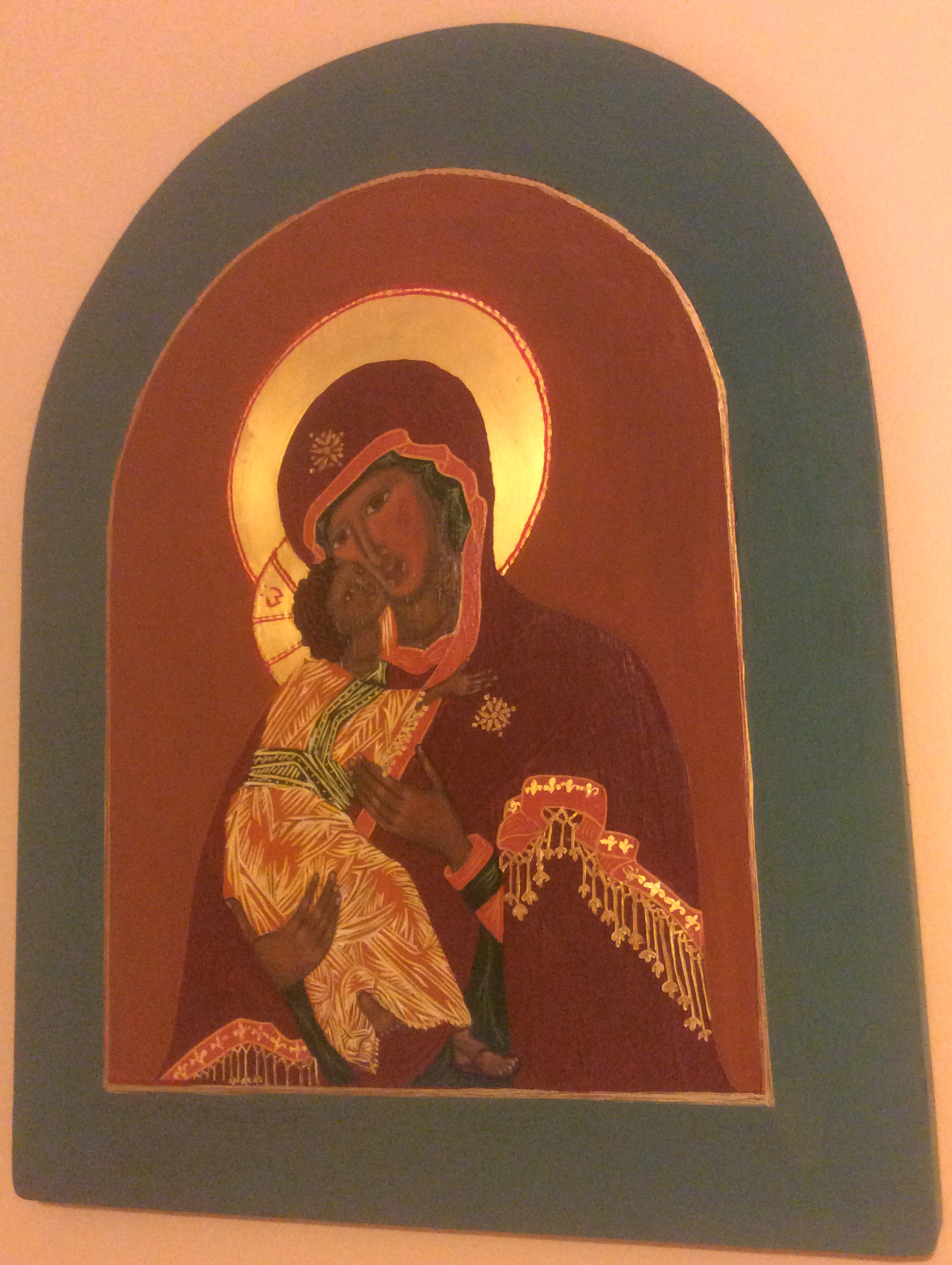 I seldom talk much about the spiritual disciplines that have given me strength. A private retreat — just me and God — in a beautifully isolated hermitage was one of the most powerful spiritual experiences of my life. While there, I also practiced another of my spiritual disciplines — iconography.
Iconography is not merely a visual art, it is Christian sacred art, and has been an integral part of the worship and mystical life of Christians since apostolic times. Referred to in the Eastern Christian tradition as “windows into heaven,” icons have inspired and uplifted millions of the faithful, and have at times been the instruments for demonstrating God’s miraculous intercession in the life of humankind.
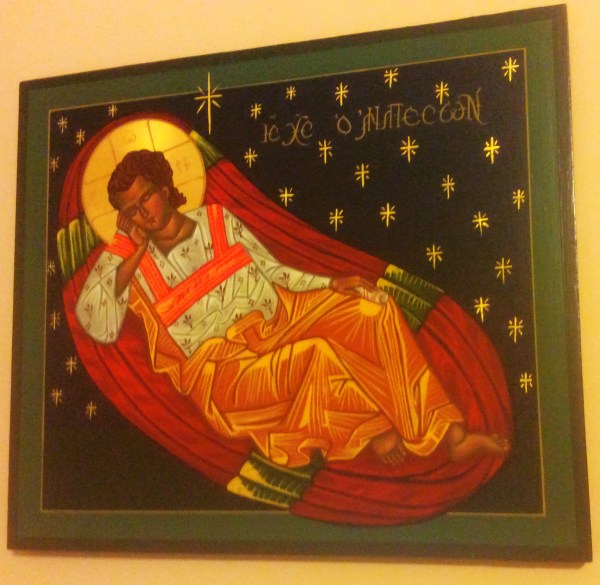 In describing the purpose of icons, the early Christians used the Greek work anagogic, literally meaning “leading one upward.” Photios Kontoglou, a renowned modern iconographer, expressed this perfectly: “Icons raise the soul and mind of the believer who sees the icon to the realm of the spirit, of the incorruptible, of the kingdom of God, as far as this can be achieved with material means.”
So to appreciate iconography fully, we must approach it as a liturgical art form whose function is essentially spiritual. Since the creation of an icon is itself a sacred activity, the iconographer must be a person of prayer, not merely a technician. If the iconographer’s work is to inspire and illumine others, then it is essential that she leads a life of prayer and fasting that she may be inspired and illumined by the Holy Spirit, that her iconography becomes itself an expression of her spiritual life. Kontoglou writes: “The iconographers painted as they prayed.”
 My love of iconography resulted from the prompting of my dear Aunt Eirene. She was an artist extraordinaire and a gifted iconographer. She studied and practiced to hone her skills and each year, she went to an intensive iconography workshop at a beautiful retreat center. One year, she persuaded me (forced is a more accurate term) to go with her. Of course, I was extremely reticent to try this new art form.
At first, I called on my artistic skills and was doing a barely decent job. But then a lovely nun who sat next to me said words that literally imprinted on my heart. She said, “Your rendering of the Holy Child is beautiful. Look into his eyes. When you see the Light coming from them, you will fall in love with your icon.”
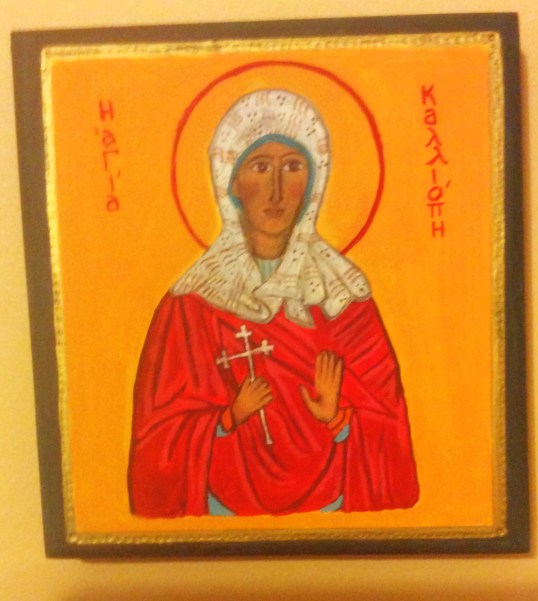 She was so wise. I began to think more about the Christ Child’s eyes than my own art, and within a day, my iconography transformed from a painting to a prayer. It was worship, meditation and reverence. It touched my soul as I added color to the board, layer upon layer. It was an incredible experience to see the Light. I share with you here some of icons I created, as I remember the experience I had with each of them that opened my soul to the Light.
 She was like the moon—part of her was always hidden away.
Yesterday, I watched a clip from the 2018 ESPY Awards. I could not help but pause to listen to the athletes tell their stories of years of abuse by U.S Olympic Team doctor, Larry Nassar. I wondered how many years of silence they each endured, holding the horrible secret inside where it had the power to do great harm. That’s the thing about sexual abuse — it’s often a big, bad secret. Victims hold the shame in the place where they pack away their secrets, and the rest of the word hopes never to have to hear about it. So the secret is safe, hidden away, at least for a time.
But not this time! The “sister survivors” of the disgraced sports doctor’s abuse accepted the Arthur Ashe Courage Award at the 2018 ESPYS. Dressed in glittering gowns, holding hands in solidarity, more than 140 women gathered onstage to share the award given to athletes whose bravery “transcends sports,” as the audience rose in a standing ovation.
Sarah Klein, a former gymnast who said she was among Nassar’s earliest victims three decades ago, was the first to address the audience. “Speaking up and speaking out is not easy,” she said. “Telling our stories of abuse, over and over and over again, in graphic detail, is not easy. We’re sacrificing privacy, we’re being judged and scrutinized, and it’s grueling and it’s painful, but it is time. We must start caring about children’s safety more than we care about adults’ reputations.”
Tiffany Thomas Lopez, who in the 1990s played softball at Michigan State University where Nassar practiced, had a message for other victims who might still be silent. “I encourage those suffering to hold tight to your faith, and stand tall when speaking your truth,” she said. “I’m here to tell you, you cannot silence the strong forever.”
Olympic gold medal gymnast Aly Raisman was the last to speak. She was unsparing in her criticism of the adults who she said for years failed to protect the victims, instead opting to silence her and others “in favor of money, medals and reputation. But we persisted, and finally, someone listened and believed us.”
In January, more than 150 women and girls gave victim impact statements at one of Nassar’s three trials. In a Lansing, Michigan courtroom, they spoke of abuse under the guise of medical treatment, which for some began when they were elementary school age. Following their testimony, Circuit Court Judge Rosemarie Aquilina sentenced Nassar to up to 175 years behind bars.
When the years of silence ended and the women released their secrets, justice followed, relief followed, inner peace followed. Therein lies a lesson for us all. How many times have women kept silent to protect others? How many times did we guard a secret because revealing it might hurt other people? Did we realize that by hiding away the secret, we were harming ourselves? The words written by Dia Reeves is true of us:
She was like the moon—part of her was always hidden away.
And so it is with women. There are always parts of us that are hidden away, often for many years. There are parts of our stories that we hold in our souls, secrets we would rather not speak. It seems important, though, for each of us to develop the wisdom of knowing what we should hold in silence and what we should speak. As for the big, bad secrets — well, saying them out loud breaks their power. The chains of our silence fall to the ground, broken!
And finally, we have freed ourselves!
 God of the Sparrow 🌱 By Kathy Manis Findley