I am aware, as you are, that time is fleeting and moments are passing. Life has taught us that. But there is more, like a dandelion will scatter with the wind as we hold it in our hand. There is no stopping any of that. Nor can we control it.
Still, there are messages for us here, right now, as we contemplate a little reality. If you know me personally, you know that I have lived an uneasy life full of trouble. In a way, tragedy became the path I traveled. I would struggle my way through one tragedy and then steeled myself waiting for the next one. The next tragedy always came eventually, a tragedy large or small.
When tragedy cruelly and abruptly stopped me in my tracks, I found that most of the time, I was resilient and full of hope. Yet, I became exhausted by the trauma, or the sorrow, or the grief.
It is true that when I fell to my knees, I always got up. Good for me! It’s not like that, though, that “good for me” attitude. I was strong enough to get up and move forward, but it was more like God graced me with the courage and hope I needed for to pick myself up and take my next step.
Void of any pending tragedy, I have felt positive for the past weeks. I finally have a stable, working kidney. My frequent falls have stopped. I didn’t get seriously hurt by falling, just a sprained wrist and later a bruised rib cage. So I firmly believed the words of faith from Julian of Norwich, “All shall be well, and all shall be well, and all manner of thing shall be well.”
Until, until, I heard the doctor say to my husband Fred and me, “You have advanced prostate cancer.”That’s when I broke my streak of resilient responses to tragedy. I have been happily married to this good, good man for 55 years! He cared for me during my long illness, five years of dialysis, and my kidney transplant. He cares for me every day in a thousand different ways! I honestly don’t know how I would live without him. Then I heard a whisper, “Where is your hope, my daughter? Where is the resilience that has always carried you through the hard times?”
That whisper was what I needed to hear, because everything about this felt different to me than any other time I had heard bad news. Questions and concerns and worries about every kind of life change flooded my psyche. I was assuming the worst right at the very beginning of this current life tragedy. I could not put my finger on it, until I saw this bit of insight from C.S. Lewis.
No one ever told me that grief felt so like fear
—C.S. Lewis, from “A Grief Observed”
I felt instantly that my feeling since the awful diagnosis day was indeed fear. That’s why it felt so different. It was not my normal response of sadness, anger, devastation, aliveness, fatigue, and more sadness. This time my grief felt more like fear. So there you have it. The gentle make up of a dandelion is not one you can hold together. It scatters with the breeze. Time continues to fleet no matter how we try to stop it. Moments are passing and that will not stop.
But we have this moment and all the comfort and peace and hope and joy we can get from it. And we can do just that: consider only the present; feel the emotion of it; recognize it as completely yours; and summon the courage to hold it in your arms and grab the good things. That is one simple definition of resilience, and you have it! You have resilience! Everyone has it! Keep it close and continue to move on your sacred path.
There was a time when I believed that I was invincible, with all the time in the world. Lately, though, I have thought a lot about how quickly time passes and about how I tend to constantly say, “I don’t have time.” I have also been thinking about healing. The reason for my healing thoughts could well be because at least two parts of my body reallyneed physical healing, and soon. I don’t have time to be incapacitated, or so I believe. I don’t have time for pain and I wonder if my two places of physical pain were of my own making. For instance, my wrist sprain — now an orangey ochre color from my knuckles to halfway up my elbow — that the doctor says will heal in 6 to 10 weeks is taking way too long to mend. 6 to 10 weeks is entirely unacceptable! Was my ungraceful fall in the kitchen due to my carelessness or my lack of mindfulness?
And then there’s the terribly painful throat invasion, allegedly identified as a cricopharyngeal spasm, that feels like choking with a large object stuck in my throat while something is tightening around my neck. Direct from Healthline.com: “Anxiety about the condition can aggravate your symptoms.”
Aha! Anxiety! Therein may be the source of many ailments. That, and a lack of rest, relaxation, quietness, peacefulness or mindfulness, all of which are highly touted methods of natural healing. Healing of the body, yes, but also the critically important healing of my heart, my mind, my soul and my spirit — emotional and spiritual healing. That healing is often harder than physical healing.
So I turned my thoughts, while suffering incessant physical pain, on the subject of emotional and spiritual healing. My thoughts raised the question of what exactly is the difference between the soul and the spirit, and how in the world would I heal there.
Here’s my attempt at an answer. Most of us would agree that we consist of body, soul and spirit. In fact, the Bible affirms the existence of all three:
May your whole spirit, soul and body be preserved blameless at the coming of our Lord Jesus. (I Thessalonians 5:23).
Our physical bodies are fairly evident to us, but our souls and spirits are less distinguishable. In the preceding scripture passage, the Greek word for soul is psuche (ψυχή), or as we might call it, “psyche.” This word “soul” implies our mind, our will and desires as evidenced by our personal preferences, choices, and emotional responses to life’s situations. Our soul is reflected in our personality. Our soul is our life.
“Spirit” is a completely different word. The Greek word for spirit is pneuma (πνεύμα). It refers to the part of us that connects with God and receives the breath of life from the Holy Spirit (Άγιο πνεύμα). Our spirit is our breath, the breath that animates and enlivens us from deep within. I like the way Theologian David Galston explains it:
The soul is life, and the Greek word is psyche. The spirit is breath, and the Greek word is pneuma. Natural confusion exists between the [meaning of the] spirit and the soul since both words, in their roots, mean breath. But for the Greeks, there were two kinds of breath: the kind necessary for life, the psyche, and the kind necessary for [our very breath], the pneuma. In modern English, we might distinguish the two as life and energy.
I often ask my clients, mentees and friends this question: How is your heart? They usually have an understanding of how their heart is and why. But ask these questions — How is your soul? How is your spirit? — and the answers don’t come as easily. I’m not sure exactly why, but I think that, for myself, it is that I am able to more easily know my heart. I am more in touch with it. On the many times throughout my life when I was brokenhearted, I knew how my heart reacted and why. When I am sorrowful, happy, excited, surprised or feel many other emotions, I can place my hand over my heart and feel is as if I have literally touched it, that my heart has told me what emotion is there.
As for my soul and my spirit, well, they are deeper in me. In the innermost places of me, my soul mourns and celebrates and holds all manner of emotions. In my innermost parts, my spirit lies quietly within me always waiting for the brush of Spirit wings, waiting in stillness for the breath that animates and enlivens and ennobles. There was a time when I would always find time for the healing my soul and spirit needed.
So in the dense forrest of all of the 700+ words I just wrote, what is the lesson? What is the message from God we need to hear? Believe it or not, it’s not complicated. Isn’t it just like God to send us an uncomplicated message that we immediately make complicated? God’s bottom line here is easy, simple, uncomplicated: “Guard your heart, your soul, your spirit . . . all that is within you.
From Joshua Now, vigilantly guard your souls: Love God, your God.
From Deuteronomy Keep your soul diligently, so that you do not forget the things which your eyes have seen and they do not depart from your heart all the days of your life.
From Proverbs Above all, guard your heart with all diligence; for from it flow the wellsprings of life.
From 1 Thessalonians And the God of peace sanctify you wholly, and may your spirit and soul and body be preserved complete, without blame, at the coming of our Lord Jesus Christ.
And that’s it. There was a time when I would write 700 more words to tell you specifically how to do that. But today, I am not going to tell you how to heal. The ways are individually unique and the paths are many. So I will leave you with just one path that you may choose to follow: the path that leads you deep within yourself to your sacred, quiet place and then implores you to listen for God’s whisper and wait for the breeze of the Spirit. Where? In a beautiful, peaceful place, under a starlit sky, in a quiet filled with sounds of music.
In these many months of pandemic, experiencing loss and lostness, loneliness and isolation, mourning and tears, may you find comfort in the words of poet, William Wadsworth, here turned into beautiful music by Elaine Hagenberg.
Though nothing can bring back the hour Of splendour in the grass, of glory in the flower; We will grieve not, rather find Strength in what remains behind.
Complete text of anthem:
There was a time when meadow, grove, and stream, The earth, and every common sight, To me did seem Apparell’d in celestial light, The glory of a dream.
The rainbow comes and goes, And lovely is the rose; The moon doth with delight Look round her when the heavens are bare; Waters on a starry night Are beautiful and fair; The sunshine is a glorious birth; But yet I know, where’er I go, That there hath pass’d away a glory from the earth.
Though nothing can bring back the hour Of splendour in the grass, of glory in the flower; We will grieve not, rather find Strength in what remains behind.
Yesterday I noticed a dogwood tree in full bloom, the first blooming dogwood I have seen this year. The sight of it did my heart good, because it reminded me that some simple and beautiful things remain. They return every year. They mark a season. They grow, and their blooms become ever more vibrant, or so it seems.
The dogwood has its own story, a lovely legend that explains the tree’s qualities. The legend holds that the tree was once very large, like a Great Oak tree, and because its wood was strong and sturdy, it provided building material for a variety of purposes. According to the story, it was the dogwood tree that provided the wood used to build the cross on which Jesus was crucified.
Because of its role in the crucifixion, it is said that God both cursed and blessed the tree. It was cursed to forever be small, so that it would never grow large enough again for its wood to be used as a cross for a crucifixion. Its branches would be narrow and crooked — not good for building at all. At the same time, the tree was blessed so that it would produce beautiful flowers each spring, just in time for Easter. The legend says that God it is gave it a few traits so that whoever looks upon it will never forget.
The petals of the dogwood actually form the shape of a cross. The blooms have four petals. The tips of each of the petals are indented, as if they bear a nail dent. The hint of color at the indentation bring to mind the drops of blood spilled during the crucifixion.
Diana Butler Bass tells the story like this:
There’s an old southern legend that dogwoods grew in Jerusalem — and that one gave its wood for Jesus’s cross. Because of this, the dogwood was cursed (its short stature a ‘punishment’ for being the wood of death) but it also became a blessing. Blessing? For on each twisted branch burst forth petals of lightness and light.
So let’s leave the dogwood’s story and look at our stories — your story and my story. People often use the term “storied past.” Well, a storied past is something all of us have.
In talking with a friend a few days ago, I asked, “How is your heart?” She began to tell me her story, which was a long and winding one that included many mini-stories — happy ones snd sad ones — from her life’s journey. Toward the end of her story, she said, “I feel as if I am cursed by God.” That was her bottom line answer to my question, “How is your heart?” Hers was an honest, heartbroken response that instantly revealed that her heart was not all that good, but that was a critical part of her story.
If you and I are honest, we will admit that our hearts were broken and hurting at several places in our stories. Recalling our brokenhearted times is something we always do when we tell our stories, and it’s an important part of the telling. My story and yours is never complete if we leave out the heartbroken moments, for at those points, what feels like God’s curse almost always transforms into God’s grace.
If not for our heartbroken moments, the hurting places in our hearts might never “burst forth with lightness and light.” Our heartbroken moments change us and grow us. They set us on better paths and they embrace our pain with grace. Our heartbroken moments give us pause, and in that pause, we find that once again, our hearts are good. Our broken hearts are once again peaceful hearts — healed, restored, transformed, filled with God’s grace.
How is your heart? That is a question we would do well to ask ourselves often, because languishing with our heartbreak for long spans of time can cause our stories to be stories mostly of pain. Instead, stop right here in this post for just a few moments and ask yourself, “How is my heart?”
Your answer may well be your path to a contemplative, sacred pause that can become a moment of healing, a time for God’s grace to embrace whatever is broken in your heart and to transform it into love, light and hope. So don’t be afraid to look into your heart when pain is there. In looking, you may find reasons, many and and complex, that are causing deep pain and brokenness. You may also find the healing touch of the Spirit of God waiting there for you and offering healing grace — a Godburst of new hope.
May your story be filled always with times when your was light with joy and times when your heart was broken with loss, mourning, discouragement, disappointment. Both create your extraordinary story — the joyful parts and the sorrowful parts. So tell your story again and again to encourage yourself and to give the hope of God’s healing grace to all who hear it.
I remember a beloved hymn that is a prayer for the Spirit of God to “descend upon my heart.” May this be your prayer today.
Spirit of God, descend upon my heart; Wean it from earth; through all its pulses move. Stoop to my weakness, mighty as Thou art, And make me love Thee as I ought to love.
Hast Thou not bid me love Thee, God and King? All, all Thine own, soul, heart and strength and mind. I see Thy cross; there teach my heart to cling: Oh, let me seek Thee, and, oh, let me find!
Teach me to feel that Thou art always nigh; Teach me the struggles of the soul to bear, To check the rising doubt, the rebel sigh; Teach me the patience of unanswered prayer.
Teach me to love Thee as Thine angels love, One holy passion filling all my frame; The kindling of the heav’n-descended Dove, My heart an altar, and Thy love the flame.
I have a certain fondness for sparrows and the spiritual stories we have ascribed to them. That my blog is named “God of the Sparrow” is no accident. I have aspired many times in my life to live like the sparrow lives. I wanted my human, adult, mature and seasoned self to know, beyond any doubt, that God is watching over me. I do not live the simple, sparrow-like life I always hoped to live. But my unshakable faith has always told me that the God who watches over my every moment is also the God of the sparrow. I remember well the words written in the Gospel of Matthew . . .
So do not be afraid; you are of more value than many sparrows. — Matthew 10:41 NRSV
Such a comforting passage of Scripture! Yet, its message to us often pales in comparison to all the things that so frighten us. The state of the world that surrounds us in these days seems to have even more power over us than Matthew’s words about our value to God.
How is it that we are valuable to God when God does not act to protect us from all of life’s slings and arrows? Yesterday in my blog post I listed our world’s bad and scary things, so I won’t list them again today. But I will venture a prognosis that many, many people are suffering in many ways in this confusing season. I am one of those suffering people, feeling a bit of hopelessness in these days of racial unrest, coronavirus unsettledness and political divisions.
I heard a moving choral performance this morning. Its text lifted up my helplessness before me and turned it into a prayer so attuned to where I find myself.
God of the sparrow, sing through us Songs of deliverance, songs of peace. Helpless we seek You, God our joy, Quiet our troubles, bid them cease. — Jonathan Cook
I need the sparrow’s God to sing through me. Perhaps you do, too. I need that God-given song because my own music seems to have become quiet, my singing turned to mourning. (Amos 8:10) But this week, I took hold of that mourning. With strong intention, I spent most of one day this week singing my heart out.
You need to know that I had to choose a day when my husband would be away so that I could sing loud, with abandon. Why did he have to be away? That’s a long story, but in a nutshell, my singing is awful these days. Probably my vocal cords have lost some of their youthful elasticity and, on top of that, I did not sing at all for more than a year. Serious illness took my music.
When I (literally) came back from the dead in 2015, I realized that I had lost so many of my former abilities. Singing was one of them. It felt strange to me when I realized I could no longer sing. My former life was filled with song. Since childhood, there was never a choir I did not join, never a solo I did not sing.
Acknowledging my inability to sing was difficult, just as my life after kidney transplant and this coronavirus is difficult. My isolation has been lengthy, most of nine months, and it is taking its toll on my spirit. Prayer has become both a burden and a grace to me. My singing was my prayer for so many years, and I really need my singing in these hard days. I need to sing my praises to God. I need to sing my lamentations. I need to sing like the sparrow who doesn’t worry about her vocal chords. I need to be like the sparrow who sits on her branch — without fear, without worry — because she knows that if she happens to light on a flimsy branch that does not hold her, her wings will lift her.
The end of this story is that I need the God of the sparrow to sing through me once again — to sing through me in shadowy days, in times of trouble, in isolation, in fear, in hopelessness. That’s what God does, after all. In a troubled and despairing soul, God creates music, tucking it into every crevice, filling it with songs that can sing out both mourning and celebration. As an added bonus, I have it on good authority that God also turns mourning into dancing.
You have turned my mourning into dancing; you have taken off my sackcloth so that my soul may praise you and not be silent. O Lord my God, I will give thanks to you forever. Psalm 30 11-12 NRSV
So as you sing, dance to the new rhythms of your soul! Because you can!
Thanks be to God.
Please spend your meditation time today listening to this beautiful song with text written by Jonathan Cook and music by Craig Courtney. The video follows the text.
God of the Sparrow
God of the sparrow, sing through us, Songs of deliverance, songs of peace. Helpless we seek You, God our joy, Quiet our troubles, bid them cease. Alleluia.
God of the sparrow, God of hope, Tenderly guide us, be our song, God of affliction, pain and hurt, Comfort Your children, make us strong. Alleluia, alleluia, alleluia.
God of the sparrow, care for us. Speak in our sorrow, Lord of grief. Sing us Your music, lift our hearts, Pour out Your mercy, send relief.
God, like the sparrow, we abide In Your protection, love and grace. Just as the sparrow in Your care,
I think often about roots — current family roots, ancestry roots and roots in my life that were created from various communities. I can’t help but recall the very first church we served in Arab, Alabama. My husband, Fred, was the minister of music and I was (unofficially) counselor and guide for our youth group. The young people of that church surged into our hearts and, along with most of their families, became a very close community — a deeper bond than even family. I thought my heart would literally break into tiny pieces, and I grieved the loss of leaving them for years.
I was sure that I would never form that kind of bond with anyone ever again. But I did, time and time again, in new places with new people — Alabama, South Carolina, Texas, Arkansas, Georgia, Kentucky and Uganda, East Africa. Every time, deep roots of friendship would reach deeper — reaching Into the soil, reaching toward each other, tangled and intertwined in love. And every time when we pulled up roots to move on to places God was calling us to go, I grieved in the very depths of my soul. Here’s the picture: digging up a tree and pulling it out of the soil is not easy with roots so twisted and connected. Pulling up a plant or a tree does not destroy its roots, but often injures and damages them. I freely admit that this post is not really about trees and roots. It’s about belonging, forming attachments, community, love. Yet, it’s about more than belonging; it’s about walking away from your belonging, moving away, losing the relationships that mean so much to you, feeling the disconcerting feeling that comes from injuring the roots of your beloved community. A poignant quote by Beryl Markham explains the emotions of pulling up roots.
I have learned that if you must leave a place that you have lived in and loved and where all your yesteryears are buried deep, leave it any way except a slow way. Leave it the fastest way you can. Never turn back and never believe that an hour you remember is a better hour because it is dead. Passed years seem safe ones, vanquished ones, while the future lives in a cloud, formidable from a distance. ― Beryl Markham, West with the Night
“The future lives in a cloud, formidable from a distance.” There it is: our fear of a future that holds new experiences and new people. For sure, moving forward truly is formidable. But when all is said and done, it seems that the best way to live is to cherish the roots we have every single day, every moment. Love them. Nourish them. Rest in them. And in some future time in your life, when you must pull up roots and move away, go ahead and grieve your loss, but also let yourself grow deep, spreading roots in another place.
With faith and hope, throw off the fear and uncertainty of an unknown future and plant yourself in a new garden. For there, you may well flourish again, grow deeply with a new community, form new attachments. You may even stumble over a life serendipity and find yourself in a place where you love all over again.
I think I may have lost my music, and I’m not sure exactly when I lost it, or how. I can probably get away with blaming it on the coronavirus. After all, choirs cannot really sing right now, at least not safely.
The coronavirus has stolen so many things from us all — important things and things that are not so important. For me, one of the stolen things that affects me deeply in my soul is music.
When I hear music, the melodies and rhythms often reach into my soul. Music is my muse. Losing my music is one of my most troubling losses. I know, of course, that I can listen to Pandora or Spotify. Or I can listen to quality music on National Public Radio and find hundreds of concerts on YouTube.
What I am missing most is being inside my church sanctuary listening to the music of the pipe organ and anthems from our choir. Part of it may well be that I’m missing the people who offer their gift of music every week. Part of it is probably nostalgia when I contemplate the decades I spent singing with choirs and other groups. Part of it is missing my many years as a soloist. Part of it is missing my last ministry position as minister of worship at New Millennium Church in Little Rock, Arkansas. Part of it is having to leave my piano when we moved in 2015. Part of it, I am certain, is that I can’t really sing anymore, at least much of the time. After my illness in 2014 and its very long recovery, I lost my voice. This was such a profound loss for my soul.
For some reason, all of this was on my mind this morning when I had a serendipity moment. I received an email with a brief thought for the day. I receive it every day, but today it happened to include a passage of Scripture closely related to my present thoughts. This is what it said:
But now, get me a player of music, and it will come about that while the man is playing, the hand of God will come on me and I will give you the word of God: and they got a player of music, and while the man was playing, the hand of the God was upon him.
— 2 Kings 3:15
Haven’t we all heard someone singing and playing music when we were touched and changed? All creativity and beauty in this life are but a small reflection of the master musician, our Creator. Listen with your heart and be glad.
— John Gaudreau
Music can be our soul’s joy or our heart’s expression. Music can lift us from sorrow’s depths and raise us to higher planes of grace. Music can be our most lavish praise to God. Music can open our spirits and create in us expressions of gladness, even in times of trouble. May God make it so. Amen.
Let me end without any more words, just music. “Listen with your heart and be glad” and hear this beautiful anthem, “Through Love to Light” with text written by Richard Watson Gilder, 1844-1909.
Through love to light! O wonderful the way That leads from darkness to the perfect day; From darkness and from sorrow of the night To morning that comes singing o’er the sea! Through love to light! through light, O God, to Thee, Who art the Love of love, th’ eternal Light of light! Amen.
I have been thinking today that this Holy Monday is the threshold into Holy Week, and that I am standing at that threshold in fear. It is true that this time of pandemic has brought a season of fear to many of us, as well as a time of heaviness, concern, confusion and lament. Just one year ago, on April 5, 2019, I posted the following thought.
Courage is not the absence of fear but rather the judgment that something is more important than fear. The brave may not live forever but the cautious do not live at all.
— From the movie “The Princess Diaries” (2001)
I testify to the reality that courage really is deciding “that something is more important than fear.” None of us anticipated what 2020 would bring. It was simpler last Holy Week to write eloquent words about fear and courage. We could contemplate such thoughts far more comfortably than we can in this season of pandemic, the virus assailing the earth and the arrival of the season of Lent just to make sure we are all weighted down sufficiently.
I do not know about you, but I am experiencing these days as heavy. It feels heavy to me being confined to home. It feels heavy to be overly worried about my suppressed immune system since the transplant. It feels heavy to know that so many people all over the world are suffering with the coronavirus and that many have died. I just feel an oppressive heaviness. I feel as though the place we must be right now is a place of lament.
Who brought the world as we know it to such an abrupt halt? Is one purpose of this pandemic to make us stop and take time to heal our souls? Is another purpose a demand for us to be still and allow our stillness to begin to heal an earth rife with environmental destruction? Is it to tell our churches to stop, to re-think worship that is sometimes predictable, stale, spiritless? Is the pandemic’s purpose to teach us to cherish the community of faith we have taken for granted, as now community is somewhat lost to us?
There are so many things to lament in these days, for all of us. But I have not intruded on your time today just to write about my laments in this season, to tell you all about my heaviness and the heaviness of the world. I write on this Holy Monday in hopes that we will sit quietly for a few moments of contemplating passion and promise — the Passion that leads to Christ’s death and the Promise that always ends up with Christ’s resurrection, and ours.
Not only is the lament, the heaviness, the anguish and fear of death that surrounds us this year a global phenomenon, but the things that Christians normally do in Holy Week to create transcendent meaning are painfully denied us for now: our palms and crosses, our washing of feet, our sharing of the bread and cup. These powerful physical and sacramental expressions of our faith we always do together. We cannot do them together this year.
In some ways, though, we are humanly and globally more united now than we have ever been (by this virus), and yet more separated than ever (by our fear of it). It is as if we have crashed suddenly and directly into the emptiness and shock of Jesus’s tragic death, before we have even started the journey to Jerusalem with him. Let us not rush. Instead may we walk the way of Christ’s story this week, through the times of passion, to the moment Jesus died, and on to the glorious resurrection Rushing through Holy Week is like controlling the story.
Controlling the coronavirus “story” is also problematic because it isn’t just a story. We are in it, and for now none of us can get out of it. But the glory of the Passion story is that it also isn’t just a story. It is, as we Christians have to remind ourselves during this time, the final and ultimate story of “the struggle between life and death” and of life being triumphant in the extraordinary power and mystery of the resurrection.
Together in Community
God’s Son breaks the bonds of death and shatters the forces of darkness and sin. We must remember that holy mystery in these days. We must remind ourselves that, even when lamenting our separation one from another, Christ’s resurrection binds us together across the boundaries of time and space and even death itself.
And, wonder of wonders, the fear and anguish of COVID-19 reminds us of this same fact: that we belong together, in need and vulnerability and compassion and mutual belonging. We are one — both in death and in life.
In this Monday of Holy Week, the coronavirus story meets the Passion story. We may be lamenting the worship we will miss this Holy Week. We may yearn for the physical and spiritual comfort of the familiar traditions that the virus has stolen from us. We quake in fear at the pandemic itself. Yet during this time, we are being stretched in new and unthinkable ways, precisely by that fear and by the temporary loss of worship with our faith community. We stretch to consider afresh the core of our baptismal faith: that the resurrected body of Christ sustains us all, even in and through death itself.
I wonder how I will spend this very different Holy Week, as I am at home feeling alone on Holy Monday. I am lamenting the temporary loss of my worshipping community. You may be lamenting the same loss. As always, this holy day will lead us into the week and through the Passion of Jesus — his heart breaking for the betrayal of Judas, his moment of feeling that God had forsaken him. We face the Passion story reluctantly this year, already troubled and fearful. We may be afraid to add the story of the crucifixion to the loss the pandemic has also brought us.
But I will not leave us in this place, each of us isolated and lamenting. The very core of our faith — during Holy Monday and always — mystically unites us not only to Christ but to each other.
The coronavirus story will not supplant the story of Christ’s passion and resurrection. The virus will not have the last word, because even in its random cruelty, it may yet turn us back to the transcendent source and unity of our faith. In its scourge, it may open us up to the realization that we are the Body of Christ in this world, together, in radiant community that will endure. The circle of the faithful will not be broken, even by a worldwide pandemic.
O God, abide with us on this holy day
and through the pain of Holy Week.
Grant that our deep lamentations cease,
even as we walk with Jesus and hear again the story of his death.
Grant that our deep lamentations cease as we lift our faith and pray for an end to the pandemic
that harms our entire world.
Help,us, God, to endure what lies before us with hope, courage, patience and faith.
Because our faith tells us, God, that as the Holy Week story continues, our laments will be replaced by praises to God as we witness again the glory of the risen Lord.
I have written often about times when I have been shaken to my core, the hard times and the seasons of angst. Not because hard times have been a constant in my life, but because in the middle of them, I have found a Divine Constant that sustained me at times and saved me at other times.
As we approach the Sunday of the Palm and Passion, we remember the journey Jesus traveled.
. . . the great crowd that had come to the festival heard that Jesus was coming to Jerusalem. So they took branches of palm trees and went out to meet him, shouting,“Hosanna! Blessed is the one who comes in the name of the Lord— the King of Israel!” (John 1:12-13 NRSV)
Yet, before the day is done, the Gospel of John tells us how troubled Jesus was as he spoke about his death.
Now my soul is troubled. And what should I say—‘Father, save me from this hour’? No, it is for this reason that I have come to this hour. (John 1:27-28 NRSV)
As we recall Christ’s passion, we cannot help but recognize our own — and the passion of our families, friends, neighbors scattered throughout the world. Each of us, no matter where we are, are covered with the fear of a pandemic we can not begin to understand, the virus that knows no boundaries. It goes where it will, infecting those exposed to its microorganisms and leaving fear and anxiety in its wake. We are shaken to the core.
Those who are infected, or have watched as their infected loved ones battle the virus, cry out for mercy, for grace and for comfort. They are in search of the Divine Constant, a “very present help,” who keeps vigil with us offering a comfort that surpasses our ability to comprehend it. There is no better description of divine comfort than the words of the Psalmist in the 46th Psalm that tells us to take heart, hang on, fear not.
God is our refuge and strength,
a very present help in trouble.
Therefore we will not fear, though the earth should change,
though the mountains shake in the heart of the sea;
though its waters roar and foam,
though the mountains tremble with its tumult.
There is a river whose streams make glad the city of God,
the holy habitation of the Most High.
God is in the midst of the city; it shall not be moved;
God will help it when the morning dawns.
The nations are in an uproar, the kingdoms totter;
he utters his voice, the earth melts.
The Lord of hosts is with us;
the God of Jacob is our refuge.
Come, behold the works of the Lord;
see what desolations he has brought on the earth.
He makes wars cease to the end of the earth;
he breaks the bow, and shatters the spear;
he burns the shields with fire.
“Be still, and know that I am God!
I am exalted among the nations,
I am exalted in the earth.”
The Lord of hosts is with us;
the God of Jacob is our refuge.
At the very beginning of the Cold War in 1952, Harry Emerson Fosdick spoke to students and faculty at the Pacific School of Religion. After acknowledging the very real fear and uncertainty in the world at that time, he spoke these words: “The highest use of a shaken time is to discover the unshakable.”
Oh, that we might find the highest use of this time! Oh, that we might find it alone — isolated in our homes, in our prayer closets, in the breeze and beauty of springtime! Oh, that we might find the highest use of this time in community — in all the ways we are striving to create holy community despite our isolation.
Yes, we are shaken right now, but again the Psalmist has the last word of divine comfort and hope.
The Lord is close to the brokenhearted
and saves those who are crushed in spirit. (Psalm 34:18 NIV)
As I look around, hearing from those closest to me and also hearing the stories of people around the world, I witness signs that we are indeed discovering the unshakable in this shaken time — the unshakable in ourselves, the unshakable faith we hold in our hearts, the unshakable spirit within us and the Unshakable Constant God who pours grace upon us when we most need it.
May each of you stay safe and healthy. May you wave your palms and witness Christ’s passion still believing in the resurrection that will dawn upon our lives again. May you find the unshakable within you and hold the Unshakable God near you.
For a time of prayer and meditation, you may be inspired by listening to this beautiful arrangement of the hymn, “Nearer, My God, to Thee.”
Today of all days, with the entire world embroiled in a real live pandemic, I will not write out of political bias. Instead, I want to open our eyes to some very troubling present realities. My focus is on the coronavirus pandemic in the United States and how circumstances have transpired, both on a logistical level and a human one. I read a Huffington Post article this morning revealing that last year the U.S. Department of Health and Human Services conducted a months-long exercise that showed that the nation was unprepared for a pandemic. The exercise, code named “Crimson Contagion,” had chilling similarities to the current real-life coronavirus pandemic. That fact got my attention!
This pandemic has taken a toll on so many Americans. Mothers are struggling with children being at home, some having to learn on the fly how to home school them. Families grieve the loss of loved ones who died from the virus. Older adults fear their increased vulnerability and their body’s inability to fight the virus. Immunosuppressed persons like I am are terrified to leave home and are incessantly washing their hands, wearing masks and using hand sanitizer. Many people have lost their jobs while businesses all over the country have shut their doors. Churches have suspended worship services and other gatherings indefinitely. That is merely a tiny snapshot of the human toll the coronavirus is taking.
On top of any list we could make describing loss, inconvenience or isolation, there is widespread, overwhelming fear that has made its way into our very souls. This is a pandemic that has descended upon all of us — real people with real fear.
I’ll get back to the human toll of this virus, but I want to say a bit more about the “Crimson Contagion” exercise, which involved officials from more than a dozen federal agencies. The Huffington Post described the “Crimson Contagion” scenario:
. . . several states and hospitals responding to a scenario in which a pandemic flu that began in China was spread by international tourists and was deemed a pandemic 47 days after the first outbreak. By then, in the scenario, 110 million Americans were expected to become ill.
The simulation that ran from January to August exposed problems that included funding shortfalls, muddled leadership roles, scarce resources, and a hodgepodge of responses from cities and states . . . It also became apparent that the U.S. was incapable of quickly manufacturing adequate equipment and medicines for such an emergency . . .
According to a New York Times report, White House officials said that an executive order following the exercise improved the availability of flu vaccines. The administration also said it moved this year to increase funding for a pandemic program in HHS.
But Trump’s administration eliminated a pandemic unit within the Department of Homeland Security in 2018. And weeks after the first real coronavirus case was diagnosed in the U.S., Trump submitted a 2021 budget proposal calling for a $693.3 million reduction in funding for the Centers for Disease Control and Prevention.
There you have it! In the throes of our real time pandemic, we hear of a “play-like” pandemic — a simulation conducted in 2019 that might have prepared us all, including our nation’s leadership. That didn’t happen, and those of us who have been in the world for so many years know the saying well: “Don’t cry over spilt milk.”
So we wipe up the milk that’s all over the table in front of us, and then we go about making our way through the dark, murky waters of this pandemic. We wash our hands, distance ourselves from others, stay at home, figure out how to handle our children who are now at home, cancel our travel plans, mourn those who have died, pray for those who are ill from the virus, grieve the loss of the life we knew before and pick up the pieces of what’s left.
What’s left? Well, what’s left is our ability to find ways to help our neighbor, to feed the hungry, to comfort the sick, to reach out to the lonely, to love the children and to pray for one another without ceasing. We may have to learn to do those things by phone or online chatting, but we will find a way.
Fr. Lawrence Lew, O.P.; public domain; St. Quirinus of Neuss – for those affected by bubonic plague and smallpox; Edwin the Martyr (St. Edmund) — for victims of pandemics; St. Anthony the Great – Patron of those affected by infectious diseases
Those of us who are religious will pray without ceasing — imploring God to be merciful, asking various saints to intercede for us, lighting candles to express devotion and sitting for a moment in the flickering light that reminds us that God’s promise is about light overcoming the darkness.
The light shines in the darkness,
and the darkness has not overcome it.
(John 1:5)
In the end, perhaps we will have discovered that, through this terrifying and expanding virus, that we have learned how to care more and to love deeper. Perhaps we will find that we have a more heartfelt capacity for compassion. For that, God will pour out grace upon our weariness and renew our eternal hope.
If you pour yourself out for the hungry and satisfy the desire of the afflicted, then shall your light rise in the darkness and your gloom be as the noonday.
(Isaiah 58:10 ESV)
WAR noun, often attributive (1)a state of usually open and declared armed hostile conflict between states or nations
(2)a period of such armed conflict
(3)a state of hostility, conflict, or antagonism
(4)a struggle or competition between opposing forces for a particular end
In a time of turmoil across the earth, I am reminded of the many ways we long for peace and the many times we fail to achieve it. As I hear reports and human stories of the warring among peoples of many nations, I am also very aware of the wars that often rage within. War and peace are complex ideologies that spurn people to action — either action to plunder and kill or action that insists upon peace and tranquillity. The British peace advocate John Bright (1811-1889) gave a speech at the Conference of the Peace Society in Edinburgh in the summer of 1853 to oppose the forthcoming war against Russia (the Crimean War 1854-56).
What is war?
What is war? I believe that half the people that talk about war have not the slightest idea of what it is. In a short sentence it may be summed up to be the combination and concentration of all the horrors, atrocities, crimes, and sufferings of which human nature on this globe is capable . . . injustice of any kind, be it bad laws, or be it a bloody, unjust, and unnecessary war, of necessity creates perils to every institution in the country. — John Bright (1811-1889)
Profound truth rests in Bright’s words, and it is a truth every person would do well to contemplate. At some point I recall seeing a provocative image on the poster for Stanley Kubrick’s film Full Metal Jacket. It was an image of the soldier’s helmet with a handwritten “born to kill” slogan . . . and a peace symbol, a provocative juxtaposition of reminding us that human beings have the capacity for both killing and peace.
Who can forget the words of the Prophet Isaiah?
And he shall judge among the nations, and shall rebuke many people: and they shall beat their swords into plowshares, and their spears into pruninghooks: nation shall not lift up sword against nation, neither shall they learn war any more. (Isaiah 2:4)
So why talk of war after Ash Wednesday and into Lent? Perhaps the subject of war occurred to me as I moved closer to this season of repentance and self-reflection. Perhaps I felt a need to consider the futility of war because of Ash Wednesday’s dictum, “Remember that you are dust, and to dust you shall return.”
One who came from dust, and who anticipates returning to dust, must certainly feel a longing for peace, peace in the world as well as peace of the soul and spirit. Neither examples of peace are easily achieved. The machinations of war between nations, and the eternal quest for finding inner peace, are two sides of the same coin. Perhaps it is those persons who have a dearth of inner peace who seriously contemplate making enemies and making war. War flourishes, at times, when the cause seems righteous, while at other times, the cause is greed, lust for power and human depravity. Either way, the losses of war are enormous beyond imagining.
I have been intrigued by the writing of Sebastian Junger in his book War (published in 2010). He echoes the famous words of Winston Churchill:
We sleep soundly in our beds because rough men stand ready in the night to visit violence on those who would do us harm.
Junger also offers interesting insights into war:
The cause doesn’t have to be righteous and battle doesn’t have to be winnable; but over and over again throughout history, men have chosen to die in battle with their friends rather than to flee on their own and survive.
The Army might screw you and your girlfriend might dump you and the enemy might kill you, but the shared commitment to safeguard one another’s lives is not negotiable and only deepens with time. The willingness to die for another person is a form of love that even religions fail to inspire, and the experience of it changes a person profoundly.
Three Christian denominations have positions on war.
Roman Catholic The fifth commandment forbids the intentional destruction of human life. Because of the evils and injustices that accompany all war, the Church insistently urges everyone to prayer and to action so that the divine Goodness may free us from the ancient bondage of war.
The Southern Baptist Convention (Adopted on June 14, 2000) Peace and War. It is the duty of Christians to seek peace with all men on principles of righteousness. In accordance with the spirit and teachings of Christ they should do all in their power to put an end to war.
The United Methodist Church (2000 United Methodist Book of Discipline)
We believe war is incompatible with the teachings and example of Christ. We therefore reject war as a usual instrument of national foreign policy and insist that the first moral duty of all nations is to resolve by peaceful means every dispute that arises between or among them; that human values must outweigh military claims as governments determine their priorities; that the militarization of society must be challenged and stopped; that the manufacture, sale, and deployment of armaments must be reduced and controlled; and that the production, possession, or use of nuclear weapons be condemned. Consequently, we endorse general and complete disarmament under strict and effective international control.
A map of Afghanistan with bullet holes at a school in the Kandahar Province. Photo by Bryan Denton for The New York Times
No doubt, this is probably more information on the deplorable subject of war than anyone needs to contemplate. And yet, war is not just “far off” in other countries where we can’t see it. “War” is all around us — in this divided nation, in the hate speech that is so prevalent, in the gun violence that takes lives, in violent acts within families, in racial division and the re-emergence of white nationalism. One can scarcely complete the list of the many ways war affects us, within us and around us.
We must remember that war is not only the catastrophic expectation of a nuclear bomb or chemical warfare, it is also a war that could raise its head in our communities, in our churches, even in our hearts, wreaking havoc on our souls. War is famine, homelessness, poverty, racism, family violence, child abuse, trafficking, homophobia and xenophobia. War is the destruction of humanity and all that we know to be right and just. The example of Jesus must be our guide and inspiration. No, Jesus did not explicitly warn against war, but he said so many things about peace.
The words of Jesus
Matthew 5: 38-48 (selected verses) You have heard that it was said, ‘An eye for an eye and a tooth for a tooth.’ But I say to you, Do not resist an evildoer. But if anyone strikes you on the right cheek, turn the other also . . .
“You have heard that it was said, ‘You shall love your neighbor and hate your enemy.’ But I say to you, Love your enemies and pray for those who persecute you, so that you may be children of your Father in heaven . . . For if you love only those who love you, what reward do you have? Do not even the tax collectors do the same? And if you greet only your brothers and sisters, what more are you doing than others? Do not even the Gentiles do the same? Be perfect, therefore, as your heavenly Father is perfect.
Mark 12:28-31 One of the teachers of the law came and heard them debating. Noticing that Jesus had given them a good answer, he asked him, “Of all the commandments, which is the most important?”
“The most important one,” answered Jesus, “is this: ‘Hear, O Israel: The Lord our God, the Lord is one. Love the Lord your God with all your heart and with all your soul and with all your mind and with all your strength. ‘The second is this: ‘Love your neighbor as yourself.’ There is no commandment greater than these.”
The early Christians took Jesus at his word. They closely identified their religion with peace; they strongly condemned war and bloodshed; they appropriated to themselves the Old Testament prophecy which foretold the transformation of the weapons of war into the implements of agriculture; they declared that it was their Christian commitment to return good for evil and to conquer evil with good.
Might we all do likewise!
What is critical for us is to fully understand that war among us or within us creates profound loss . . . always. The current political divisions are taking a toll on everyone. We no longer live in a time when political leaders held all the divisiveness. In these days, fractured politics have reached communities, churches and even families. When support for political candidates creates deep separations one from another, we have reached a dangerous and divisive environment. When we live in such a divisive environment, we risk losing relationships with those who “don’t vote like we do.” What a senseless, unfortunate and tragic loss that creates — breaches between friends, alienation among family members, rifts in communities of faith, deep schism in neighborhoods and communities.
Our spiritual intention must be a quest for peace, reconciliation, unity and respect. This is God’s intention for people of faith. This is God’s intention for the world, that nations, tribes, villages, cities — all the peoples of the world — shall not learn war anymore!
When a deep love leaves . . . deep sadness takes residence.
It happens — being unfriended or needing to unfriend someone. It happens not just on Facebook, even though Facebook participants probably coined the word “unfriended.” Unfriending happens in real life — my life and probably yours. When you really unpack it, “unfriended” is an unsettling word. There is even a rather despicable horror movie entitled “Unfriended.”
I sometimes wish we had never added the word to our vocabularies, yet it perfectly describes what we sometimes need to do. In the Facebook world, I have been unfriended more than once. I have also unfriended some of my Facebook friends. It was never easy, never done without some regret. On the other side, being the one who is unfriended is painful. Even on social media, we learned quickly when and how to divide ourselves from others.
Mourning the loss of someone you care about is a very real life response.
The sad reality is that Facebook unfriending closely imitates life. Sometimes I have needed to remove a person from my life. Maybe you have, too. If we are honest with ourselves about cutting someone out of our lives, we have to own the reality of mourning the loss of that friend or family member. The loss is very real. Harmony Yendys wrote this in her blog, The Mighty.com.
It’s OK to mourn the people you’ve had to cut off. Mourning is hard. It doesn’t matter if the person has passed away, is estranged from you or has chosen not to have contact with you. It. is. hard. Mourning can be more complicated when the person is still alive . . . since you cannot see them, speak to them, write to them, tell them about your day, your happy moments or your big achievements in life.
I would say I’m okay but I’m done lying.
Among the most painful separations are estrangements from living parents. I have experienced estrangement from a parent, a situation in which I found it necessary to remove that parent from my life completely because of abuse. The hard choice of removing my parent from my life was mine to make, but was most surely a hard choice with long-lasting effects on my emotional health. Those who must make such a choice suddenly feel orphaned and alone in the world. Over many years, I have known many people who have lost mothers and fathers with whom they’ve shared loving relationships — not through death but through purposeful estrangement. I know that the deep void this loss creates for them is devastating. The pressing question is, “Why don’t we talk about what it is like to feel orphaned by parents who are very much alive and well, but whom we have lost due to estrangement?”
The reason, I have found, is a sense of guilt about having removed a person from my life, becoming an orphan by my own choice. Of course, there are situations in which parents make the choice to become estranged from their children. Either situation leaves an orphan in its wake.
You are dead to me.
The truth is that there are few, if any, support groups for “orphans” like me. There are few instruction manuals or self-help books. We are the orphans who grieve in silence, feeling every bit as empty and abandoned as those who have lost their parents through death. Yet we have no outlet through which to mourn in a safe, nonjudgmental environment. I hide my grief from others, fearing their judgment and their hurtful comments about how “blood is thicker than water” and how I should “forgive and forget.” And the best advice of all, the one that hurts the most and goes to the very core of the soul is this: “God is not pleased with your failure to love your parents or your refusal to ask forgiveness for it.”
When a parent dies, you receive the usual appropriate condolences. But when your soul has a deep need to remove a living parent from your life, you get nothing. Like so many people I have known, I sit with the guilt and shame, with the silence of my grief. So for now I continue to grieve, hiding behind my shame of feeling like there must have been something wrong with me . . . And hiding my grief from others for fear of judgment and comments about how blood is thicker than water and how I should just forgive and forget . . . I wish more people understood what this was like and would extend the kind of compassion and sympathy they do toward those who lose a loved one by death. I sit with the silence of my grief, empty-handed. No flowers, no cards, no phone calls, nothing. Just an orphan.
Empty-handed, except for the loss I hold in my hands
As for me, well, I am not completely empty-handed. I hold in my hands — if not in my heart — so many memories, sweet, bittersweet, and even horrific. Fortunately, I have grown old and grown up. Through the years, I have learned how to hold in my heart some of my few good memories. I remember my father praising me when for my accomplishments. I remember him being very proud of me. I remember learning to cook at his feet, and I remember those joyful midnight trips from Tuscaloosa to Birmingham, singing all the way as was his custom. Yet I allowed those happy memories to be replaced by separation, tears, pain, repressed feelings and often anger. It was even more difficult to allow myself the good memories when my father was living. Harmony Yendys explains the feelings of most of us who feel this kind of grief:
Knowing they are still out there somewhere in this big ole world makes it sometimes hard to bear. We don’t know how they are doing, how life has changed for them, we don’t get to celebrate things with them anymore . . . All of these feelings are completely normal. Beating yourself up for cutting a person out of your life for your better interest is not healthy and shouldn’t be a reason to let that person back into your life. I bought in to all the common philosophies like “love is stronger than hate,” respect your parents,” or “be the better person.” The problem with such philosophies is that they are one-sided. They leave no space for the truth. Sometimes we just have bad parents, friends, relatives or relationships. That doesn’t mean we cannot still love them! It just means we choose to love them from a distance. — Harmony Yendys
I hope the information I’ve shared today will lead to honest and meaningful conversations with trusted persons in your life. Such conversations can lead to healing from the past losses or the present ones. This post has taken us all the way from “unfriending” or being “unfriended” on Facebook to losing friends, parents, children, siblings, spouses and any persons we have lost from our lives. Do not be deceived, separation can be painful, even when separation is necessary for our well-being. People who cause a toxic environment for us must sometimes be removed from our lives. It’s never easy, either to “unfriend” a person or to be “unfriended” by them. It sometimes makes us face the pain of being alone in the world, or at least feeling alone. It whispers to us that our soul is at risk.
When your soul is at risk . . .
Know that when your soul is at risk, when your relationship with another person is toxic, chaotic and harmful — either overtly or insidiously — you may need to consider moving apart to a peaceful, more tranquil place. It is most important that you become a self-advocate and diligently seek resilience and serenity. Only enter into relationships that give you comfort and calm your spirit. Still, you live with the loss. The remedy for feeling the loss, feeling orphaned or feeling alone?
That is, of course, a very personal question with many possible answers. At the risk of seeming to offer a too simple or an unhelpful answer, I will share with you what has helped me in the times I have felt most alone — a passage of Scripture from The Voice translation of the Bible, selected verses from Psalm 139:1-16.
O Eternal One, You have explored my heart and know exactly who I am;
You even know the small details like when I take a seat and when I stand up again. Even when I am far away, You know what I’m thinking.
You observe my wanderings and my sleeping, my waking and my dreaming,
and You know everything I do in more detail than even I know.
You know what I’m going to say long before I say it.
It is true, Eternal One, that You know everything and everyone.
You have surrounded me on every side, behind me and before me,
and You have placed Your hand gently on my shoulder.
It is the most amazing feeling to know how deeply You know me, inside and out;
the realization of it is so great that I cannot comprehend it.
Can I go anywhere apart from Your Spirit?
Is there anywhere I can go to escape Your watchful presence?
If I go up into heaven, You are there.
If I make my bed in the realm of the dead, You are there.
If I rise on the wings of the morning,
if I make my home in the most isolated part of the ocean,
Even then You will be there to guide me;
Your right hand will embrace me, for You are always there . . .
For You shaped me, inside and out.
You knitted me together in my mother’s womb long before I took my first breath.
I will offer You my grateful heart, for I am Your unique creation, filled with wonder and awe. You have approached even the smallest details with excellence;
Your works are wonderful; I carry this knowledge deep within my soul.
You see all things; nothing about me was hidden from You
As I took shape in secret,
carefully crafted in the heart of the earth before I was born from its womb.
You see all things;
You saw me growing, changing in my mother’s womb;
Every detail of my life was already written in Your book;
You established the length of my life before I ever tasted the sweetness of it.
For those hurtful times of “unfriending”
I pray today for each of you who have experienced, or are currently experiencing, the grief of separation and alienation from someone with whom you once shared love. I pray that you would enjoy relationships with persons faithful, true and kind. I pray for you a shared love that is pure — both given and received. I pray for you a persevering, faithful and gentle love that helps sustain and fulfill you. I pray, for you and for me, that we might have relationships with persons who help us become our best selves. I pray for genuine and life-giving friendships that grace us with full acceptance and understanding.
Today, while minding my own business — and browsing the Better Homes & Gardens website — I stumbled across a stunning image of a tree. Those of you who know me, know that I have had a lifelong passion for trees. Trees, for me, are not only beautiful, they also take me often into a spiritual place. This morning while looking at the bark of the Rainbow Eucalyptus tree (Eucalyptus deglupta), my thought was, “This is almost magic! It can’t be real!”
Rainbow Eucalyptus trees look too beautiful to be real (but they are!) (BH&G)
These trees have an astounding multicolored bark that looks like it’s been decorated with a humongous paintbrush. They seem like something one might imagine, or see in a fantasy movie, or discover in a Dr. Seuss book. But they do grow naturally with a brilliantly colored bark. The Rainbow Eucalyptus, which grow 100 to 200 feet tall, are native to tropical regions like the Philippines, Papua New Guinea, Indonesia and even in the most southern parts of the U.S. “Though pictures of these trees are stunning, they don’t quite capture the awe of seeing them in person.
A real rainbow eucalyptus can stop you in your tracks, so if you have the chance to travel to see them, it’s well worth the journey. (BH&G)
As you would expect, I did some research to find places where I could see this magical tree in person. San Diego, California, is actually becoming a travel destination for seeing these trees. One can see them at Balboa Park, along Sports Arena Boulevard, at the San Diego Zoo, and in parts of Mission Bay. One can also see them in parts of Florida, Hawaii and Texas. So there really are a few places you can see a Rainbow Eucalyptus without needing a passport.
You might ask, “What’s so important about a tree that looks fake?” And that would be a good question. I’m not sure I have a coherent answer, but I’ll give it a shot. Sometimes we find ourselves in places that feel “blah.” We’ve lost our sense of direction and maybe even our will to move forward in life. Those times can come to us because of grief, illness, family challenges, concern for our children, stagnancy in our careers, waning spirituality or simply feeling out of sorts. Hundreds of life circumstances can bring us to a lethargic or depressed place in life. It’s not a very good place to be, and most of us wonder how we got to such a place.
In those times (and there have been many) when lethargy got the best of me, I tended to search for a bit of magic. No ordinary remedy seemed adequate. I just needed some magic and I have discovered over many years that magic can be found in a myriad of places, beginning with some very hope-filled passages of Scripture.
There is nothing better for mortals than to eat and drink, and find enjoyment in their toil. This also, I saw, is from the hand of God; for apart from him who can eat or who can have enjoyment? For to the one who pleases him God gives wisdom and knowledge and joy . . .
— Ecclesiastes 2:24-26 (NRSV)
In the day of prosperity be joyful, and in the day of adversity consider; God has made the one as well as the other . . .
— Ecclesiastes 7:14 (NRSV)
So I commend enjoyment, for there is nothing better for people under the sun than to eat, and drink, and enjoy themselves, for this will go with them in their toil through the days of life that God gives them under the sun.
— Ecclesiastes 8:15 (NRSV)
For you shall go out in joy
and be led forth in peace;
the mountains and the hills before you
shall break forth into singing,
and all the trees of the field shall clap their hands.
— Isaiah 55:12 (ESV)
Nehemiah, who was the governor, and Ezra the priest and scribe, and the Levites who taught the people said to all the people, “This day is holy to the Lord your God; do not mourn or weep.” For all the people wept when they heard the words of the law. Then he said to them, “Go your way, eat the fat and drink sweet wine and send portions of them to those for whom nothing is prepared, for this day is holy to our Lord; and do not be grieved, for the joy of the Lord is your strength . . .” And all the people went their way to eat and drink and to send portions and to make great rejoicing . . . — Nehemiah 8:9-12 (NRSV)
And always, words from the Psalmist:
You show me the path of life.
In your presence there is fullness of joy;
in your right hand are pleasures forevermore.
— Psalm 16:11 (NRSV)
I believe that I shall see the goodness of the Lord in the land of the living.
— Psalm 27:13 (NRSV)
Delight yourself in the Lord, and he will give you the desires of your heart.
— Psalm 37:4 (ESV)
These messages from the pages of the Bible bring me joy and a bit of relief from feeling down. Being lifted from depression, sadness, the doldrums and other similar difficult seasons of life can feel like magic, magic that can be found in lots of places — if we’re paying attention. The magic may be found in a forest with a verdant canopy of leaves we can see if we look up. It may be found in the laughter of a child or in listening to joyful songs, the rhythmic melody moving through the heart. Magic may be found in loving relationships, in a garden, in a place of prayer and contemplation. You and I might find magic in birdsong or in the cloud shapes we see in the morning sky. We can even find magic in the darkest of our nights — for 100 thousand million stars sparkle for us in the Milky Way — a gift from the Creator, shining out of the darkness.
Photo by Danita Delimont/Getty Images
Today, I found magic in the most unlikely place — in the bark of Rainbow Eucalyptus trees. At least it felt like almost magic! I happened upon this treasure of nature quite by accident, or perhaps it was by providence. Anyway, catching sight of this whimsical, majestic tree brought me the joy of remembering afresh the varied potpourri of the gifts of creation, coming from God, the Father/Mother of lights.
Every good gift and every perfect gift is from above, and comes down from the Father of lights, with whom there is no variableness nor shadow of turning.
— James 1:17 (NKJV)
Thanks be to God for unspeakable gifts of grace. Amen.
My thoughts today take me away, out of this house, out of this state and back to Arkansas. It’s not so much about feeling trapped inside my house because of illness. It’s more about my need to heal, to experience something new, something of beauty that also feels like home. That place would be Arkansas.
Arkansas was most definitely not a place I would have chosen as my home when we accidentally moved there in 1982! It had to be an accidental move because neither Fred nor I knew anything at all about the state of Arkansas, a landlocked state that was constantly maligned by folks that have ever been there. At first, I detested being there, but after living there for 33 years, I grieved deeply when we left our Arkansas home in 2015. It made little sense really, that a born and bred Alabama girl would fall in love with Arkansas, but I did just that.
So today my mind slips away to my Arkansas home. With a lump in my throat, I travel to that beautiful state, lush with green and dotted with stunning lakes and the magnificent Arkansas River. I visit my son and my grandchildren in my imaginary travel, and my spirit somehow feels filled with what I needed today. I walk through what was my dream house and I visit the church I pastored for nine years. I stop by the hospital where I served as a chaplain and by Little Rock City Hall and the Pulaski County Courthouse where I spent much of my time advocating for abused women and children. I head to the banks of the Arkansas River that graces Little Rock and I gaze for a few minutes at the Little Rock skyline.
Why would I make this journey today of all days? I don’t feel well at all physically, and I really don’t feel up to this level of nostalgia. I don’t want to weep for a loss that still lingers with me. And yet, this experience is strangely comforting. It feels almost like opening my arms to a place I loved and allowing myself to feel the lump in my throat for the loss of it. It feels like making peace with the past — embracing it, mourning it, allowing it to comfort me and then walking back to my present home just a little bit healed.
This is what is needed for healing after loss. I am aware that when I stop smothering my regrets and my sorrow, I will have moved my soul and spirit to a new place, a better and healthier place and a place that is open to joy and a sense that all is right in my world. Healing doesn’t happen all at once. It takes some time and some intentionality. It takes walking right through the middle of sorrow until I get to the other side. It takes a sense of knowing when I am finally standing firmly on the other side of grief.
So I journeyed back to Arkansas today to find some joy and to take it back home with me. It was a worthwhile journey. I did return a little more healed. I have learned over many years and through many losses that my spirit knows how healing comes, but sometimes my mind gets in the way, blocking the healing I need. The sign of better times is when my spirit and mind join together to create healing. I think that’s exactly what happened for me today. My mind — my imagination — took me to the place I loved and lost, and while I lingered there for awhile, my spirit tended to the healing.
Thanks be to God for my mind and spirit and for God’s healing of wounds new and old.
Make the most of your regrets; never smother your sorrow, but tend and cherish it . . .
To regret deeply is to live afresh.
Looking back at the passing year, I am deeply grateful for so many things. Among them is the circle of sisters who listen to my stories so many times and hold me in the light. They are my spiritual community. They “weave invisible nets of love.” They hear my stories with compassion, caring, love and genuine acceptance. They listen, and through their listening, they affirm my soul-place where my stories live.
We are our stories. Our children gain their sense of personhood when they hear their family stories and begin to tell their own. My sense of “me” is entwined with the stories about my parents, grandparents and great grandparents, stories that I have heard over many years and embraced. The stories are origin and memory, history and nostalgia, truth and myth, and as Rachel Held Evans wrote, the stories are a “cautionary tale.” The stories, at least as an adult, have made a place in my soul, teaching me who I am so that now I hold my stories in my heart.
It is sad when we are socialized to keep our stories close to the vest, when we are cautioned not to tell our stories to just anyone. After all, aren’t our stories personal information, meant to be private? That could be our choice, and it is true that telling our stories might make us vulnerable with another person.
But oh, the joy of finding spiritual community and, in community, to find safe and sacred space to share our stories! I have found such communities over the years. Sometimes the community was sharing with just one person. Other communities through the years were made up of a four or five friends. These days, my spiritual community is a cherished circle of caring and loving sisters.
In her final book, “Inspired: Slaying Giants, Walking on Water, and Loving the Bible Again,” Rachel Held Evans wrote this about our origin stories:
The role of origin stories, both in the ancient Near Eastern culture from which the Old Testament emerged and at that familiar kitchen table where you first learned how your grandparents met, is to enlighten the present by recalling the past. Origin stories are rarely straightforward history. Over the years, they morph into a colorful amalgam of truth and myth, nostalgia and cautionary tale, the shades of their significance brought out by the particular light of a particular moment.
In many “particular moments,” I have shared some of my stories with my sisters, watching “the shades of the stories’ significance” emerge within me and with my community. My stories were “brought out by the particular light of a particular moment.”
Sometimes our stories are stories of sheer joy, but sometimes our stories are about loss, pain, heartbreak, fear or the devastating effect a particular traumatic event had on us. That’s when we hold our stories inside, fearing that telling would bring the pain back with a vengeance.
But when we protect our stories, holding them in a private place within us, we miss the healing power of being heard by another person of compassion, caring, acceptance and love. We also miss the pure joy of having been cared for by another person. That experience brings us to our spiritual center, healing old wounds of the soul and spirit; giving us the possibility of experiencing life without the pain of the past. That is God’s gift to us.
There is no better way to end the old year and begin the coming year than to tell our stories of the past, the memories we hold in our hearts, to accept God’s gift of freeing our hearts as we open ourselves to others. That’s a gift worth having! That’s a gift of grace that God wants us to have. That’s a gift that God offers us right now. If we are willing, God is able. Amen.
Of all sounds of all bells, the most solemn and touching
is the peal which rings out the Old Year.
— Charles Lamb
We do get rather nostalgic at the end of a year, on the cusp of a new year. Perhaps we have regrets from the passing year. Perhaps the old year brought losses and grief. Perhaps we have fear at the thought of what the year ahead might bring. Nostalgia just seems to go along with year end and year beginning. I have been known to get teary-eyed during the singing of “Auld Lang Syne” in spite of the fact that I had no idea what “Auld Lang Syne” even meant.
Robert Burns wrote “Auld Lang Syne” in 1788. The poem soon became a song that was traditionally used to bid farewell to the old year at the stroke of midnight on New Year’s Eve. It was a ritual song that gave people a ceremonial way to express the discomfort of ending/beginning as well as to speak of the value of old friendships that should not be forgotten.
Another poem written by Robert W. Service (1874-1957) was entitled “The Passing of the Year.” Its seven poignant stanzas come across as a lament of the passing year, and yet the poet also expresses a juxtaposition between a somber response and an expression of fond farewell. Here are some excerpts:
My glass is filled, my pipe is lit,
My den is all a cosy glow;
And snug before the fire I sit,
And wait to feel the old year go.
I dedicate to solemn thought
Amid my too-unthinking days,
This sober moment, sadly fraught
With much of blame, with little praise . . .
And You, deep shrinking in the gloom,
What find you in that filmy gaze?
What menace of a tragic doom?
What dark, condemning yesterdays?
What urge to crime, what evil done?
What cold, confronting shape of fear?
O haggard, haunted, hidden One
What see you in the dying year?
And so from face to face I flit,
The countless eyes that stare and stare;
Some are with approbation lit,
And some are shadowed with despair.
Some show a smile and some a frown;
Some joy and hope, some pain and woe:
Enough! Oh, ring the curtain down!
Old weary year! it’s time to go.
My pipe is out, my glass is dry;
My fire is almost ashes too;
But once again, before you go,
And I prepare to meet the New:
Old Year! a parting word that’s true,
For we’ve been comrades, you and I —
I thank God for each day of you;
There! bless you now! Old Year, good-bye!
As for New Year’s Resolutions, the same poet wrote an expressions of regret in the year past and the resolve inherent in a phrase we know so well: “Just do it.”
RESOLUTIONS
Each New Year’s Eve I used to brood On my misdoings of the past, And vowed: “This year I’ll be so good – Well, haply better than the last.” My record of reforms I read To Mum who listened sweetly to it: “Why plan all this, my son?” she said; “Just do it.”
Of her wise words I’ve often thought – Aye, sometimes with a pang of pain, When resolutions come to naught, And high resolves are sadly vain; The human heart from failure bleeds; Hopes may be wrecked so that we rue them . . . Don’t let us dream of lovely deeds – Just do them.
Now that I have shared more poetry than you ever wanted to read, let me conclude with this thought: As a new year approaches, we greet it with all the regrets and losses and emotions of the old year still pressing on our spirits. That affects our attitude about the unknown year ahead, and when we look at the path that leads us into 2020, all we see is darkness. It is for us a journey into the unknown with no instructions for moving forward. We are sometimes not sure we even want to move into the new year.
That may be the very reason for the ball drop in New York, the champagne toasts with all the hugging and kissing, the elaborate party decorations including metallic pointy hats and horns blowing in the night. Maybe we celebrate so hard because we are so hurt, so filled with regret, so shamed, so afraid of the future. We stand at the gate of the new year holding all that we brought from the old one. Sometimes the burden we are carrying is a heavy, heavy burden to carry, but we simply don’t believe we can throw it off and start on the new year’s unknown path, unburdened and free.
Yes, we do leave all our memories behind in the year that has passed, and in the new year, we hope to realize fresh, new dreams. A wise person says that around us, we have those who love us and within us, we have all we need. But the most eloquent advice I know that addresses our old year/new year dilemma comes from yet another poet, Minnie L. Haskins:
And I said to the man who stood at the gate of the year:
Give me a light that I may tread safely into the unknown.
And he replied: “Go out into the darkness and put your hand into the hand of God.
That shall be to you better than light, and safer than a known way.”
The Fourth Sunday of Advent The Advent Sunday of Love Transplant Day Forty-One December 22, 2019
TO LISTEN, TO LOOK
Is it all sewn up — my life? Is it at this point so predictable, so orderly, so neat, so arranged, so right, that I don’t have time or space for listening for the rustle of angels’ wings or running to stables to see a baby? Could this be what he meant when he said Listen, those who have ears to hear . . . Look, those who have eyes to see? Oh God, give me the humbleness of those shepherds who saw in the cold December darkness the Coming of Light, the Advent of Love!
— Ann Weems
I ask myself those Ann Weems questions often:
Is it all sewn up — my life? Is it so predictable, so orderly, so neat, so arranged, so right,
that I don’t have time or space for listening for the rustle of angels’ wings or running to stables to see a baby?
These are among the most important questions I might sit with for a while, pondering my answers. On this Advent Sunday when we light the Candle of Love, I suddenly realize that Advent is ending, bringing Christmas so abruptly, or so it seems. Am I ready, I wonder? Am I ready for the birth of the Child, “Love’s Pure Light?”
Have I prepared a place in my heart for the “pure unbounded love” we sing about in the beloved hymn, “Love Divine, All Loves Excelling?” Was my life so preoccupied that I missed the gentle darkness of the Season of Advent and am now feeling pushed — shoved —into Christmas?
Love in a manger is too holy a gift to take for granted. Love in a manger offers us a gift that we must be prepared to receive, and Advent is our season of preparation. As the season ends, I cannot help but ask myself if I spent these days preparing myself, heart and soul. Did I pray enough? Did I spend enough contemplative time? Did I love my neighbor and care for the persons around me who had so many life needs? Did I create sacred, meditative moments in anticipation, preparing for Emmanuel to come into my life anew?
I’m afraid I must answer, “no.” Yes, I did reflect on Advent now and then as I wrote for my blog, but I definitely did not spend enough time in meditation, preparing myself to receive the Christ Child. I was completely preoccupied with creating my life’s new normal after my kidney transplant. New routines and schedules overwhelmed my mind. I spent virtually all my time adjusting to this new normal. Self-absorbed does not adequately describe me during this Advent.
I haven’t felt much holiness hovering around me. I didn’t have time or space “for listening for the rustle of angels’ wings.” Yet, the transplant itself was a season somewhat like Advent . . . filled with expectation, preparation, anticipation. With Bethlehem’s star shining through the darkest night, and hope — always hope.
And so it was for people waiting for kidneys to renew their lives. Advent offered us a look at journey, a journey that ended in celebration. Celebration came full circle yesterday when I learned that my transplant was a part of a chain of living donors and kidney recipients. The chain included 16 people — donors and recipients — which means eight people got new kidneys. Perhaps that felt to me something like “the rustle of angels’ wings.”
And then it dawned on me that the Christ Child was not born into a world where everything always worked perfectly, where everything was orderly and neat and planned out. The Christ Child was not born into a world where everything was sacred. He was not born into a perfect family, and the people around his manger were not always holy.
Maybe that’s part of what Advent gives us:
the grace to be genuinely who we are — on our holy days and on days we feel not-so-holy. Maybe Advent beckons us to ready ourselves and to prepare our hearts with humbleness so that we can see “in the cold December darkness . . .
The sages of the world came up with this wise saying: “It’s not over ‘till it’s over!” There are some similar sayings around, most notably one about the singing of a “fat lady.” But that one is not at all kind or sensitive! The point is that in life some things are never over. Grief at losing a loved one comes to mind, as does living with an incurable illness, losing a cherished relationship or any number of persisting, chronic, never-ending difficulties.
But the truth is, we are a resilient people, created by God who fully equips us for life’s calamities. We do not shrink in the face of loss. We know that weeping can last through a dark night, but the morning light may bring joy. We do not fear life’s dark times, because we know that our story is not over. There will be brighter days ahead. The brightest stars will give light in the darkest nights. Our resilient spirits will lift us up and, most importantly, God will be near right in the midst of our sufferings. It is not over! I am inspired by the thoughts of Ann Weems about this very thing:
IT IS NOT OVER
It is not over,
this birthing.
There are always newer skies
into which
God can throw stars.
When we begin to think
that we can predict the Advent of God,
that we can box the Christ
in a stable in Bethlehem,
that’s just the time
that God will be born
in a place we can’t imagine and won’t believe.
Those who wait for God
watch with their hearts and not their eyes,
listening
always listening
for angel words.
— Ann Weems
What profound truth: that those who wait for God watch “with their hearts and not their eyes,” listening — always listening — for angel words. We can find another take on that spoken by the Prophet Isaiah:
Those who wait upon the Lord will renew their strength. They will mount up with wings as eagles. They will run and not grow weary. They will walk and not faint.
— Isaiah 40:31
When I think that I have reached the end of my resilience, when I have become weary with my life’s tragedies and believe that it’s over, I want to be able to remember the words Ann Weems wrote, that “it is not over, this birthing, and that there are always newer skies into which God can throw stars.”
Like you, I need newer skies now and then. And if God can throw stars into those new skies, all the better. Advent’s promise is that those stars of hope will appear just when I most need them.
May God make it so, and may we remember stars of hope and angel words whenever we celebrate the Christ Child born under the light of Bethlehem’s star. Amen.
The Second Day of Advent Transplant Day Twenty-One December 2, 2019
THE CHRISTMAS SPIRIT
The Christmas spirit
is that hope
which tenaciously clings
to the hearts of the faithful
and announces
in the face of any Herod the world can produce
and all the inn doors slammed in our faces
and all the dark nights of our souls
that with God
all things still are possible,
that even now
unto us
a Child is born!
What could this beautiful poem titled The Christmas Spirit possibly have to do with my recent kidney transplant? At first glance, not much. But lingering on the poet’s words made some of them leap from the page for me. I have to admit that the words most piercing to me are these: “. . . all the dark nights of our souls.”
Guilt overwhelmed me after the transplant was complete. I was back in my room six hours after the surgery — barely awake, a little confused, exhausted, in pain and, they tell me, very quick-tempered. I yelled at my husband, something I may have done twice in 50 years of marriage. The truth is I was feeling covered with a blanket of guilt. The nurses, my surgeon, my family were all celebrating the transplant miracle. I was in pain, second-guessing my decision to even have the transplant in the first place and feeling guilty for not acknowledging the miracle everyone else saw.
For the next two days, every person on my transplant team who came to see me entered my room with a large smile and expressed one word, “Congratulations!” said with joy in a most celebratory voice. All the while, I was often weeping pain’s quiet tears. I stared at each congratulating person with a little bit of concealed contempt. In my mind, if not on my lips, was a response that went something like this: “Congratulations? Do you have any idea what kind of pain I am experienced right now? And have you had this surgery yourself? Save your congratulations for another day!”
The physical pain was very real and very intense. The soul pain hurt even deeper. Body and soul — the physical, spiritual and emotional — were so intricately fused together that it was all but impossible to isolate or separate them. Is this just physical pain? Is part of it emotional pain? Am I experiencing, heaven forbid, a spiritual crisis? I found no way to tell. For me, it was pain in all three parts of me and that made it almost intolerable.
For two nights, I did not sleep at all — awake all night, feeling alone, abandoned and in a wrestling match with my pain. As I went over and over in my mind all the reasons I had for getting a transplant, my thoughts morphed into a fairly clear “What have I done?”
It felt so much like a dark night of the soul as I grieved my aloneness and isolation, mourned the loss of my previous life and felt deep fear of the dark, unknown path ahead. And all of those points of crisis made me feel that guilt for not being grateful for the living gift of a kidney.
As Ann Weems’ expresses in the poem, “Hope tenaciously clings to the hearts of the faithfuland announces in the face . . . of all the dark nights of our souls, that with God all things still are possible, that even now unto us a Child is born!”
Twenty-one days separated from my transplant, I am able to attest that hope does cling tenaciously in my heart, that hope announces in the face of the dark night of my soul that with God, all things are still possible. And most importantly, “Unto us a Child is born!”
Into me a Child is born, and that presence empowers me to walk through my soul’s darkest night into the light that Advent brings.
Sometimes an old hymn — a hymn the contemporary church has discarded from its worship — can eloquently speak to the heart. There are many hymns I call hymns of the heart because they touch me so deeply. In these days of recovery when I find myself away from home and separated from friends and family, a particular old hymn comforts me. One line specifically inspires and moves me — “Shelter me safe in that haven of rest.”
The hymn, “Nearer, Still Nearer” was written by Lelia N. Morris and published in 1898. Here are two stanzas of the hymn text.
Nearer, still nearer, close to Thy heart,
Draw me, my Savior — so precious Thou art!
Fold me, oh, fold me close to Thy breast;
Shelter me safe in that haven of rest;
Shelter me safe in that haven of rest.
Nearer, still nearer, while life shall last,
Till safe in glory my anchor is cast;
Through endless ages ever to be
Nearer, my Savior, still nearer to Thee;
Nearer, my Savior, still nearer to Thee!
Finding myself away from my communities of support, I feel the separation acutely. I feel the loneliness of “apart” time. I feel a breach of relationship and the loss of my covenant community. I know it is necessary to be near Mayo Clinic in Jacksonville, Florida for this month so that the transplant team can closely monitor my care. But I miss my home and my faith community and my friends and family, and even my stray cat. I feel isolated at a time when I most need their support and encouragement. And although I strongly feel their prayers from afar, the “afar” part is not so great. I feel vulnerable and I need to feel nearer to my people.
So this hymn that expresses nearness to God is for me a timely expression of my faith and a picture of my current reality. In your contemplative time today, may you be inspired by listening to this beautiful hymn.
Today is our day of giving thanks, intentionally. Not that we should fail to give thanks every day, it’s just that today is the day we give communal thanks. Whatever community we are a part of joins hearts in expressing gratitude. There has been no shortage of calls to thanks giving from faith communities, neighborhood groups, classes, cities . . . and the list could go on and on.
“What are you thankful for?” is the common question. But I was inspired yesterday by a message from a member of my Sunday School class who posed three questions. The questions gave giving thanks a fresh meaning for me and lifted me up from Thanksgiving Day humdrum to a time of genuine contemplation about what I am truly thankful for. These are the words of her message:
Three things I invite you to consider about gratitude: what we are grateful for, what we hope to be grateful for one day, and what we are grateful for that was borne out of hardship or pain.
I am stopped in my tracks by the third question: “What are you grateful for that was borne out of hardship or pain?” Sitting in this place — post transplant — this question gave me great pause. Under the cloud of very real physical pain, I have had many moments of doubt about my decision to have a kidney transplant. Her question forced me to contemplate that in a deeper way, considering my physical pain as well as my emotional and spiritual pain.
First, it caused me to hope beyond hope that after this pain and hardship, I will be grateful for my decision. Secondly, it caused me to recall and relive the many times of pain throughout my life and the gratitude that followed. There was sadness in this contemplation and mourning for the losses I have experienced in my life. As I revisited the times of pain in my past, recalling them one by one, there was a Scripture passage from Psalm 91 that kept repeating itself in my mind.
Whoever dwells in the shelter of the Most High
will rest in the shadow of the Almighty.
I will say of the Lord, “He is my refuge and my fortress,
my God, in whom I trust.”
Surely he will save you from the fowler’s snare
and from the deadly pestilence.
He will cover you with his feathers,
and under his wings you will find refuge;
his faithfulness will be your shield and rampart.
You will not fear the terror of night,
nor the arrow that flies by day,
nor the pestilence that stalks in the darkness,
nor the plague that destroys at midday . . .
No harm will overtake you,
no disaster will come near your tent.
For he will command his angels concerning you
to guard you in all your ways;
they will lift you up in their hands,
so that you will not strike your foot against a stone.
For that divine protection, I can give deep thanks for, over my lifetime, I have found refuge under God’s wings time and time again, safe from the terror of the night.




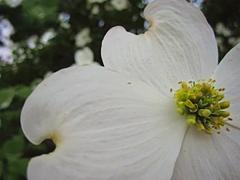
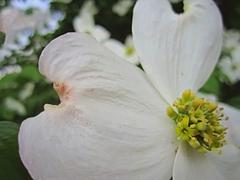
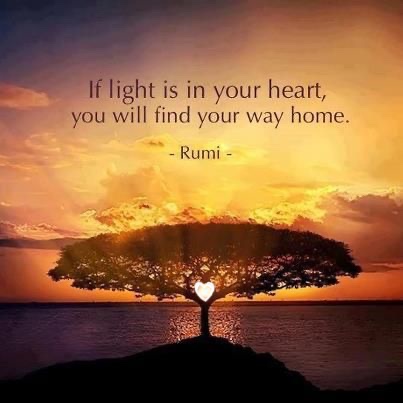


 This pandemic has taken a toll on so many Americans. Mothers are struggling with children being at home, some having to learn on the fly how to home school them. Families grieve the loss of loved ones who died from the virus. Older adults fear their increased vulnerability and their body’s inability to fight the virus. Immunosuppressed persons like I am are terrified to leave home and are incessantly washing their hands, wearing masks and using hand sanitizer. Many people have lost their jobs while businesses all over the country have shut their doors. Churches have suspended worship services and other gatherings indefinitely. That is merely a tiny snapshot of the human toll the coronavirus is taking.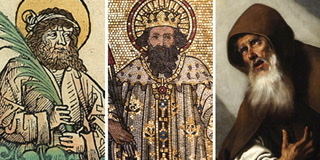

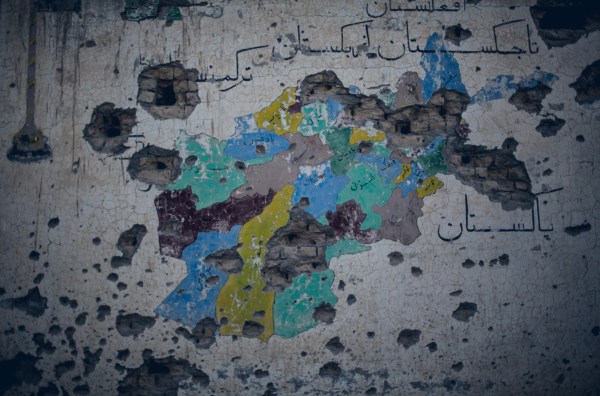

 Among the most painful separations are estrangements from living parents. I have experienced estrangement from a parent, a situation in which I found it necessary to remove that parent from my life completely because of abuse. The hard choice of removing my parent from my life was mine to make, but was most surely a hard choice with long-lasting effects on my emotional health. Those who must make such a choice suddenly feel orphaned and alone in the world. Over many years, I have known many people who have lost mothers and fathers with whom they’ve shared loving relationships — not through death but through purposeful estrangement. I know that the deep void this loss creates for them is devastating. The pressing question is, “Why don’t we talk about what it is like to feel orphaned by parents who are very much alive and well, but whom we have lost due to estrangement?”
 When your soul is at risk . . .
 I pray today for each of you who have experienced, or are currently experiencing, the grief of separation and alienation from someone with whom you once shared love. I pray that you would enjoy relationships with persons faithful, true and kind. I pray for you a shared love that is pure — both given and received. I pray for you a persevering, faithful and gentle love that helps sustain and fulfill you. I pray, for you and for me, that we might have relationships with persons who help us become our best selves. I pray for genuine and life-giving friendships that grace us with full acceptance and understanding.


 Sometimes our stories are stories of sheer joy, but sometimes our stories are about loss, pain, heartbreak, fear or the devastating effect a particular traumatic event had on us. That’s when we hold our stories inside, fearing that telling would bring the pain back with a vengeance.




 God of the Sparrow 🌱 By Kathy Manis Findley