 I asked my husband a rather strange question last night. It was about my recent preaching at First Baptist Church of Christ in Macon. This was how I posed the question to him:
“You have listened to me preach a gazillion times in past years when I was young. But now do I just seem like a little old lady in the pulpit?”
Apologies to all little old ladies who might very well preach as prophetically as ever in a similar situation! But back to my question, and my husband’s response.
“No! Not at all,” he said. “If anything, you seemed more confident and powerful than I have ever seen you.”
So much for my feelings of being inadequate just because I am now a retired senior adult who has not preached a sermon in a very long time. The truth is I agreed with my husband. I felt very confident within myself. I believed that I had received a holy and prophetic word from God, and was honored that God (and my pastor) chose me to speak that word. When I stood in the pulpit, I felt the memory and the wisdom of ministries past, all of them, and that recognition of God’s workings within me over the years filled me with assurance.
Still, we are used to prophets being young, like Jeremiah and John the Baptist. Prophets, after all, are given the mission of looking ahead. On the other hand, we think of elders as caretakers of the past.
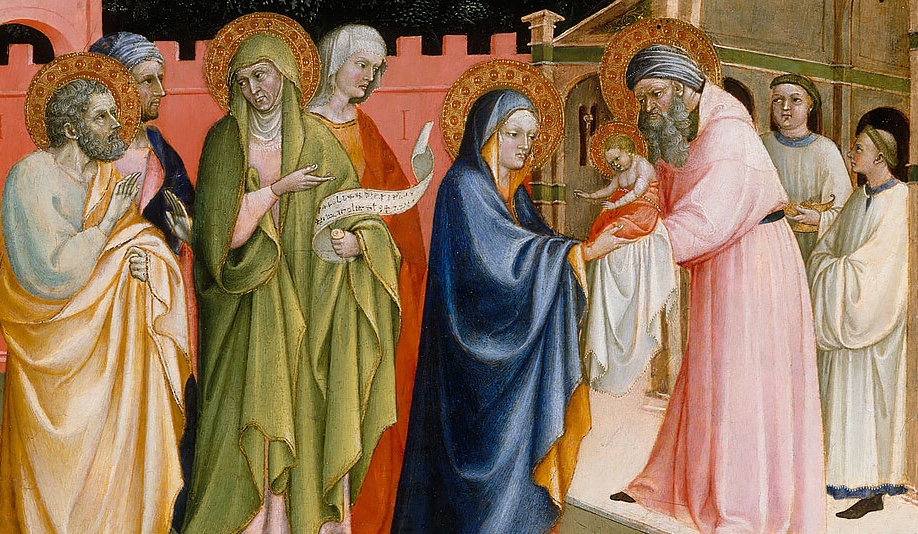
Pope Francis spoke about this in 2014 in his homily on the Feast of the Presentation of the Lord. In that homily, he asks us to see the mission of our elders as looking ahead to the future. And looking ahead to the future as persons who possess the wisdom of age. He gives us Simeon and Anna as our role models, naming them “senior citizen prophets.” And what role models they are! Among all the stories in Scripture, I have long been inspired and moved by the stories of Anna and Simeon.
In the story, this older woman and man have just met the new parents, Mary and Joseph, who were bringing their baby Jesus to the Temple. Pope Francis preached it with these words.
“It is a meeting between young people who are full of joy in observing the Law of the Lord, and the elderly who are filled with joy for the action of the Holy Spirit. It is a unique encounter between observance and prophecy, where young people are the observers and the elderly are prophetic!”
This is their story from the second chapter of Luke, verses 21-38:
And when eight days had passed, before His circumcision, His name was then called Jesus, the name given by the angel before He was conceived in the womb.
And when the days for their purification according to the law of Moses were completed, they brought Him up to Jerusalem to present Him to the Lord (as it is written in the Law of the Lord, “Every firstborn male that opens the womb shall be called holy to the Lord”), and to offer a sacrifice according to what was said in the Law of the Lord, “A pair of turtledoves or two young pigeons.”
And there was a man in Jerusalem whose name was Simeon; and this man was righteous and devout, looking for the consolation of Israel; and the Holy Spirit was upon him. And it had been revealed to him by the Holy Spirit that he would not see death before he had seen the Lord’s Christ. And he came in the Spirit into the temple; and when the parents brought in the child Jesus, to carry out for Him the custom of the Law, then he took Him into his arms, and blessed God, and said,
Lord, now lettest thou thy servant depart in peace, according to thy word:
For mine eyes have seen thy salvation,
Which thou hast prepared before the face of all people;
A light to lighten the Gentiles, and the glory of thy people Israel.
And His father and mother were amazed at the things which were being said about Him. And Simeon blessed them and said to Mary His mother, “Behold, this Child is appointed for the fall and rise of many in Israel, and for a sign to be opposed — and a sword will pierce even your own soul — to the end that thoughts from many hearts may be revealed.”
And there was a prophetess, Anna the daughter of Phanuel, of the tribe of Asher. She was advanced in years and had lived with her husband seven years after her marriage, and then as a widow to the age of eighty-four. She never left the temple, serving night and day with fastings and prayers. At that very moment she came up and began giving thanks to God, and continued to speak of Him to all those who were looking for the redemption of Jerusalem.
— Luke 2: 21-38 (KJV, NASB)
Simeon, a righteous and devout man who was looking for the consolation of Israel, was graced by the Holy Spirit. And in that Spirit, he came into the temple, finally holding Jesus in his arms and blessing him. This was the moment Simeon had hoped for over many years. And after prophesying about the child Jesus, he blessed the parents and began Mary’s preparation for the pain she was destined to experience when her son was crucified.
And the Prophetess Anna, now advanced in age, was there “at that very moment” the Scripture says. Anna never left the temple and she served God “night and day with fasting and prayer.” She lifted up her prayers of thanks to God for this child. And on top of that she proclaimed the message of hope that this child had come! Glorious news it was to “all those who were looking for the redemption of Israel.”
The stories of Anna and Simeon give us a portrait of elderly citizens, full of life’s wisdom and the Holy Spirit, who prophetically present to the world Jesus as Messiah!
And their story is full of hope for us, too. Perhaps those of us who are “of a certain age” are truly senior citizen prophets. Perhaps the hope we need to hear is the hope that, at any age, God calls us to prophetic mission. At any age, God will use our voices to speak hope to a world in despair, a world waiting for the consolation that comes only from God’s Spirit.
 Yesterday was not my best day. All day long challenges got the best of me — health challenges, schedule challenges, even bad haircut challenges. My sister of the heart, Donna, said I was cranky. My husband, Fred, said I should chalk it up to Ash Wednesday. Martie, my dear Little Rock friend, said that yesterday was the first day of Mercury in retrograde and that I should do my best to survive until it’s over on March 28th.
 “I have calmed and quieted my soul.” Words from the Psalmist.
 It’s one of those Mondays again, those days that just weigh on you a bit too heavily. You have to push yourself to start a new week. You feel that deep-down tiredness that overcomes you and you don’t even know why. Know the feeling?
 I seldom talk much about the spiritual disciplines that have given me strength. A private retreat — just me and God — in a beautifully isolated hermitage was one of the most powerful spiritual experiences of my life. While there, I also practiced another of my spiritual disciplines — iconography.
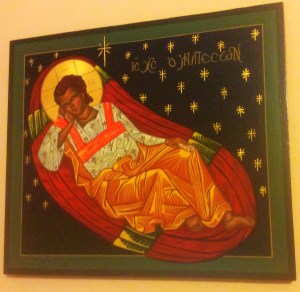 In describing the purpose of icons, the early Christians used the Greek work anagogic, literally meaning “leading one upward.” Photios Kontoglou, a renowned modern iconographer, expressed this perfectly: “Icons raise the soul and mind of the believer who sees the icon to the realm of the spirit, of the incorruptible, of the kingdom of God, as far as this can be achieved with material means.”
 My love of iconography resulted from the prompting of my dear Aunt Eirene. She was an artist extraordinaire and a gifted iconographer. She studied and practiced to hone her skills and each year, she went to an intensive iconography workshop at a beautiful retreat center. One year, she persuaded me (forced is a more accurate term) to go with her. Of course, I was extremely reticent to try this new art form.
 She was so wise. I began to think more about the Christ Child’s eyes than my own art, and within a day, my iconography transformed from a painting to a prayer. It was worship, meditation and reverence. It touched my soul as I added color to the board, layer upon layer. It was an incredible experience to see the Light. I share with you here some of icons I created, as I remember the experience I had with each of them that opened my soul to the Light.
 Christ-followers will always know ascent and descent, knowing and not-knowing. I can recall so many spiritual retreats that ended too soon, leaving me with a reluctance to go back into ordinary time. I wanted to stay in the place where God’s Spirit was moving within me. But every single time, I had to go home, leaving the mountaintop of my transformative spiritual experience.

 On this day — the day we usually spend celebrating America each year — some of us are lamenting because we don’t feel much like celebrating. The children and families separated at our borders leave us feeling deep-down-where-it-hurts grief. And it is not that we look at the border fiasco as the crisis “du jour.” No. The toddlers in detention centers have come on the heels of the Parkland shooting and the protests it sparked around the nation and throughout the world when all of us cried out in unified voice, “Not our children,”
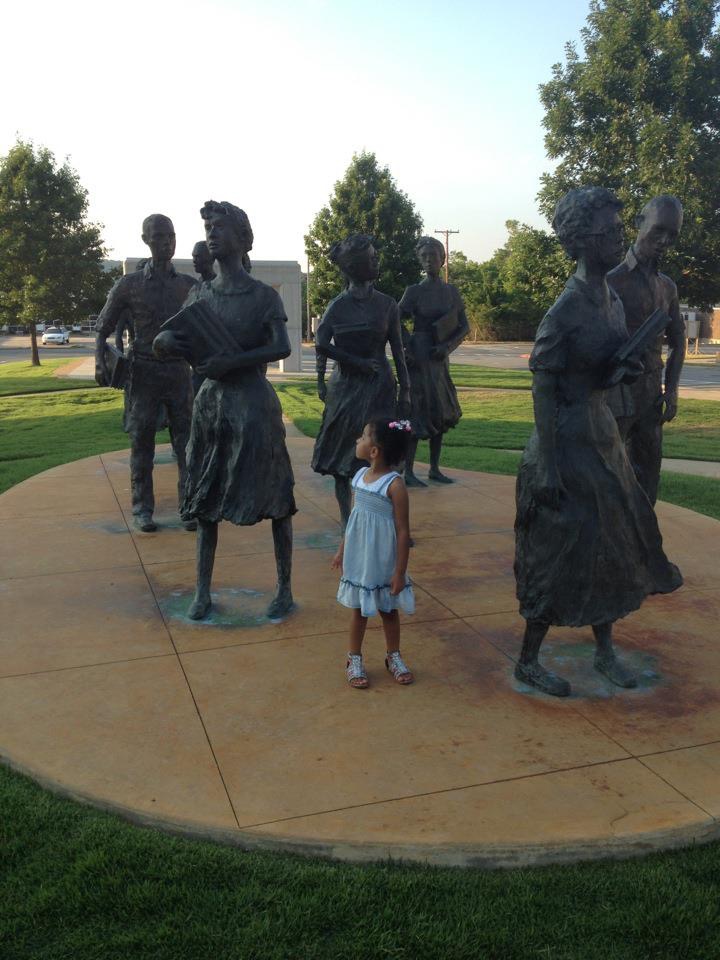 June 16, 2012 . . . My three-year-old granddaughter standing among the bronze sculptures of The Little Rock Nine.
 And my granddaughter stands in front of Little Rock Central High, a school she may choose to attend someday, a school she will be able to attend because The Little Rock Nine took a dangerous risk to make it possible.
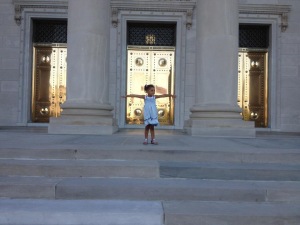 Finally, my granddaughter stands playfully on the steps of the Arkansas State Capitol. I know that it is possible that she may one day proudly walk through its golden doors as a state senator or representative. That is possible because nine Little Rock students were brave enough to be a part of changing history.

 To bring a bit of grace to your day, I offer prayers and blessings that have stood the test of time. Some of them have been used for centuries to lighten a load or brighten a day. In the great tradition of Celtic prayers and blessings, many of these are very much prayers and reflections from daily life, the ebb and flow of ordinary day to day life. They are petitions of the home and hearth.
 Prayer for evening rest
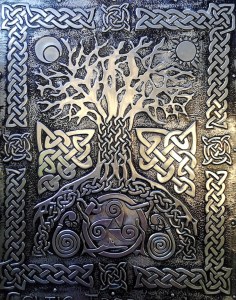 I arise today
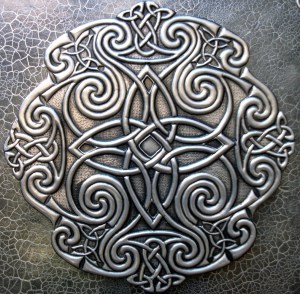 Blessings of light
 Through the day
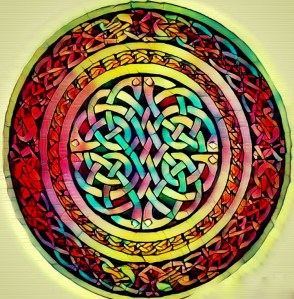 Comings and goings
 Morning mist
 This day and every day



 Wandering may well be a spiritual discipline. Many years ago, young Annie Morgan sang about it as she wandered in the hills and hollows of Appalachia. . . “I wonder as I wander out under the sky.”*
 For Christians around the world, the end of the Christmas holiday occurs on Epiphany, the 12th Day of Christmas. It commemorates how a star led the Magi, or the three kings or wise men, to the baby Jesus. Epiphany is about finding Jesus — again — in a fresh new way, looking into the light that has the power to change our lives.
 God of the Sparrow 🌱 By Kathy Manis Findley