Belief, Challenge, Change, Christian Witness, Community activism, Dreams, Grace, healing, Hope, Justice, Ministry, Mission, peace

A Broken, Waiting World

B507DED1-C6B2-4332-80BA-4B65623E2196

Do not be dismayed by the brokenness of the world. All things break. And all things can be mended. Not with time, as they say, but with intention. So go. Love intentionally, extravagantly, unconditionally. The broken world waits in darkness for the light that is you. ― L.R. Knost

When I was in seminary so many years ago, I worked part time in the Development Office, that extraordinary place that dreamed up words designed to gain support for the seminary and to tell the world what we were about. The one creative theme I most remember, because we made it our catch phrase and printed it on everything, was “We’re out to change the world!”

Some students left the seminary, degree in hand, and did just that. The rest of us labored mightily and did everything we knew to do to change a world that most assuredly was waiting and broken. What a mission!

I must admit, that short statement from seminary days became my personal quest. In every ministry position, I tried to change the world, much to the dismay of my parishioners. I took on every worthy cause as my own challenge to change the world. I committed myself to justice and set my face toward hope and healing for every person suffering injustice and indignity. It became a life-long quest, a personal commission. And what’s more, I sincerely believed I could do it, at least for the first few years I spent banging my head against various walls.

The song lyrics “to dream the impossible dream” come to mind. For those of you who may be too young to know about the magic of the 1964 Broadway musical, Man of La Mancha, I must give you the lyrics of the song that was the pronunciamento of the primary character, Don Quixote, and that almost instantly became the credo that many people of God embraced in trying to change the world.

To dream the impossible dream …
To fight the unbeatable foe …
To bear with unbearable sorrow …
To run where the brave dare not go …
To right the unrightable wrong …
To love pure and chaste from afar …
To try when your arms are too weary …
To reach the unreachable star …

This is my quest, to follow that star;
No matter how hopeless, no matter how far:
To fight for the right, without question or pause;
To be willing to march into Hell, for a Heavenly cause.

And I know if I’ll only be true, to this glorious quest,
That my heart will lie will lie peaceful and calm,
when I’m laid to my rest.

And the world will be better for this:
That one man, scorned and covered with scars,
Still strove, with his last ounce of courage,
To reach the unreachable star.

— Lyrics by Joe Darion

Today, as I watch military strikes against Syria and know that our country has not welcomed desperate Syrian refugees, I am painfully aware that I did not change the world. I worked in Uganda after the devastation of Idi Amin, but I did not change the world for millions of Ugandan widows and orphans.

I worked with persons who were sick and dying in hospital ministry, and I did not change their hopeless world of suffering. I have written letters, contacted government officials, participated in demonstrations, and signed hundreds of petitions, but I have not changed the world.

It has indeed been an “impossible dream.” And yet, I believe that I lived into my call from God and followed every path God placed before me. I faced off against what I viewed as evil many times and was deeply, demonstrably angry many times. But always, my mission remained in the center of God’s gentle grace and love. How?

I learned along the way — finally — that changing the world God’s way means holding tightly to lovingkindness, compassion, love and gentleness. The Scripture in Galatians 5:22-23 (NIV) says it like this:

. . . the fruit of the Spirit is love, joy, peace, forbearance, kindness, goodness, faithfulness, gentleness and self-control.

“Change the world with gentleness,” God might say to me.

While others stand for bigotry, racism, violence and war, change the world with gentleness. While leaders refuse to welcome refugees who long for a safe haven for their children, change the world with gentleness. While the highest positions in this country are embroiled in collusion, corruption, lies, greed and unkindness, change the world with gentleness.

This is a broken, waiting world that yearns, not for my righteous anger toward the world that is, but rather for my gentle hands of healing for the world that can be.

Change the world with gentleness? How? Why?

Because “Gentleness is not weakness. Just the opposite. Preserving a gentle spirit in a heartless world takes extraordinary courage, determination, and resilience. Do not underestimate the power of gentleness because gentleness is strength wrapped in peace, and therein lies the power to change the world.”

― L.R. Knost

May God lead us all in the paths of righteousness and gentleness. Amen.

Contemplation, Creativity, Discovering, Epiphany, Growth, Inspiration, peace, Relationship, Restoration, Resurrection, Self Awareness, Silence, Spiritual growth, Stories, Transformation, Writing

Magical

3C204C9C-C33B-4AC8-BE97-D8784E8A5D96
Magical Night: A painting by Teressa Nichole

Tell your story. Shout it. Write it.
Whisper it if you have to.
But tell it.
 ― L.R. Knost

These words of LR. Knost are so very true.

During the weeks of Lent, I helped lead a writing group at my church. What a rich experience it was for me — watching each group member spending quiet moments meditating and contemplating the ripples of his/her life. Then witnessing one person after another begin to write as if they were expecting transformation, telling their stories, writing down the highs and lows. It was almost magical.

It seemed as if I saw the throes of stress leave their spirits. It seemed as if I watched their expressions of pain ease as pen flowed across paper. It seemed at times as if a weight was lifted, an emotion discovered, a community created, a sense of understanding settled in.

I know this: no one left the room with a broken spirit or a weight they could not carry. Instead, they left the room in covenant with one another, knowing that someone cared deeply about their story. They left the room knowing that, in this intimate space, they could spew out whatever they needed to release or they could be silent in a peaceful sanctuary of acceptance.

That Sunday School room in the tall-steepled church at the top of a street in Macon, Georgia known as High Place became a sacred space for just a brief time. It became a place almost magical, a place of rest, a place of comfort, a place where each person could feel that they were not alone and that they would never feel alone again. Truly, that was magical.

I end today’s blog post with these words written by L.R. Knost:

Tell your story. Shout it. Write it.
Whisper it if you have to.
But tell it.
Some won’t understand it.
Some will outright reject it.
But many will
thank you for it.
And then the most
magical thing will happen.
One by one, voices will start
whispering, ‘Me, too.’
And your tribe will gather.
And you will never
feel alone again.

Amen.

Beauty of Nature, grief, Hope, life, Mourning, Nature, Stars

Uncommon Commoners


1B1EF9A9-9872-4163-9F93-36F39A9239F8
Terlingua, Texas. Astrophotography of the Milky Way over a field of Chisos bluebonnets.

As I write today, I think of all the ways we are ordinary extraordinary folk. We are complex at times, immersed in thoughts deep and weighty. In the next moment, we may well find ourselves acting like common, ordinary people that avoid deep thoughts at all costs.

We are divergent. We are a kind of paradox, common and uncommon all at once.

I recently saw the stunning photograph featured in today’s blog post. I was intrigued that a photographer was gifted enough to capture the juxtaposition of common flowering bluebonnets and the ethereal brilliance of the Milky Way. It is the kind of breathtaking image that makes me stop in my tracks, suspend time for a moment, and lose myself in the idea of earth and sky.

I studied the common bluebonnets and the uncommon Milky Way above them. And I wondered, “Is there something extraordinary in my ordinary life? Am I just a simple, common person? Or is there something uncommon that lives with the common in me? Inside me, in that place that even I do not fully understand, does common and uncommon grow together, entwined and twisted into one?”

As I pondered these questions that made little sense to me at the time, I read a piece written by my friend, Ken Sehested. I knew instantly that I would borrow one of his intriguing thoughts.

Uncommon commoner.

It worked for me. It defined me, the common part of me and the not-so-common part of me. You see, like most people, there is more to me than anyone can see. All of us can claim that. We are a people that can gaze skyward at the Milky Way while we sit on the ground in a patch of bluebonnets. We are a people of inner strength and resilience, the kind of resilience that makes it possible for us to endure whatever life throws at us and live to tell the story. We are a people with the kind of resilience that makes us uncommon commoners.

I know this because I have seen it time and time again up close and personal. I know this because I have stood at the bedside of a dying woman who was singing hymns of praise to God. I know this because I have kept vigil with a mother who witnessed her son being removed from life support after an accident, and as it was happening, she began to pray through her heavy sobs of grief. I know this because I walked out of the emergency room with her while she shared cherished, happy memories of the son she had just lost.

Uncommon commoners.

Ken Sehested made this so clear with these words.

What makes all of us commoners uncommon is when we experience the pain of trauma up close and personal, find the resilience to endure, take a hammer of righteous rage to that trauma and pound it on the forge of conviction that another world is possible, another way will open if we hold out, hold on, hold up, and hold over . . .

— Ken Sehested

Ah yes. We have seen, and we will see again, the pain of trauma. We will find within ourselves the resilience to endure. We will “hold out, hold on, hold up, hold over” because God has graced us with hope, enduring and abiding hope.

Life will always give us — uncommon commoners that we are — vivid fields of bluebonnets growing in the dirt and a sparkling Milky Way in the sky above. Thanks be to God.

Contemplation, Creating, Creativity, Faith, peace, Self Awareness, Self care, Serenity, Silence, Spiritual growth, Transformation

Transformation, Pursuits and Productions

BCE50E1D-C995-4353-A940-14AABC73495E
A Recolor page that brought me fond memories of my beloved Uganda

My mind needs rest and renewal. My soul needs trasformation. My heart needs peace and serenity.

The problem is that not many activities relax me. Being the wretched Type A personality that I am, I turn every pursuit into a production. A dear friend has a saying that she uses when a task morphs into more than it should have been. “That was a production!” she would say, and we all knew what she meant — a project got way out of hand!

Such is my life. Compulsive. Driven. Perfectionist. All words that have often been used to describe me. I have to work on it diligently, this need for serenity and the renewal of my mind. Reading Scripture leads to writing a sermon, an opinion piece, or a blog post. Praying leads to a plethora of things I feel I must do. Swinging in the sunshine leads to working in flower beds that need tending.

My first waking thought is always about what project I will do or what meal I will cook. That decision influences my day. When I have decided what I will do, I’m off. I’m all in to get it done.

My greatest need is to find my way to peacefulness and serenity, to experience a renewal of my mind, to learn to be quiet and still so that in the stillness, I might find God in new ways. And I might even find myself in new ways and learn some things about the depth of my “self” snd the longings of my soul.

It is my soul, of course, that craves the serenity. I work on it often — deep breathing, brief praying at many times during the day, singing hymns (to myself) as I fall asleep at night. All of it helps. None of it makes a permanent difference.

Interestingly, I have found a pursuit that does not lead to a production. It is a computer app called Recolor, which is simply for coloring on devices like the IPad. Each day, Recolor adds two or more pages for coloring with your finger or a stylus. I have found nothing that relaxes me more than getting lost on a coloring page. As of today, I have colored 1,062 pages and have received 66 thousand “likes.”

One might observe that this pursuit is not at all a spiritual practice, not a contemplative activity, and is pretty much a waste of time. The thing is, it really is a spiritual practice for me because I am learning how to waste time. I needed to find a way to immerse myself into a creative activity that did not consume me. I needed an activity that would clear and renew my mind. As the Scripture urges, I need to be transformed by the renewal of my mind.

Do not be conformed to this world but be transformed by the renewal of your mind, that you may prove what is the will of God, what is good and acceptable and perfect.

— Romans 12:2 Revised Standard Version (RSV)

So I will continue coloring to clear my mind and slow me down. And I will keep working on the renewal of my very busy mind. Who knows? Someday I might find myself transformed.


Contemplation, Discovering, God's presence, Inspiration, life, Life Journeys, Nature, Spiritual growth, Stars

Holy Wondering

7CD31664-E73F-4B6B-B168-4291D78B28DBWandering may well be a spiritual discipline. Many years ago, young Annie Morgan sang about it as she wandered in the hills and hollows of Appalachia. . . “I wonder as I wander out under the sky.”*

Wondering while we wander makes wandering a spiritual act. It is not merely aimless meandering. Nor is it rolling on pointlessly as if there is really nowhere to go. It is not wandering around in circles because we are hopelessly lost. It is more like a contemplative journey of discovery. J.R.R. Tolkien observed a truth about wandering. He said, “Not all those who wander are lost.”

We wander, most certainly, but might there be a purpose in our wandering? Suppose our wandering becomes a joy to us. Suppose we learn and grow as we wander about. Suppose our wandering leads us to a deeper relationship with God. Suppose in our wandering we do some wondering, looking up into the sky for new light and sparkling new thoughts that change our lives forever.

So I wonder . . . How are the stars set in their places? Apart from the certainties of astronomy, of course.

I wonder . . . Why does the sun rise every day, and then set in a wondrously painted sky at dusk making way for the rising of a luminous moon? Apart from the scientific explanation, of course.

Wondering is not about science at all. It is about discovery of beauty in most unlikely places. Perhaps it is about practicing mindfulness atop a majestic mountaintop, or contemplating life on the edge of the sea, or meditating in a forest filled with all manner of living things. It is about the exploration of the heart to know its deepest desires and longings. It is about looking into the soul, and there finding both the intense pain and the tender healing that completes a life.

A well known Christmas carol, “I Wonder as I Wander”* was first sung by young Annie Morgan, a destitute girl in Appalachian North Carolina. At a Christian fundraising meeting, Annie stepped out on the edge of the platform and stood before a crowd of people. Although she wore rags, unwashed and in shreds, she stood proudly. It is said that she smiled as she sang, “smiled rather sadly, and sang only a single line of a song the people had never heard.”

I wonder as I wander out under the sky . . .

I imagine that Annie, a girl living in poverty, wondered about many things as she wandered through the Appalachian mountains. She probably wondered about the stars in the sky, the rising and setting of the sun, the brilliant moon that lit the path before her in the night. I imagine she wondered about God and about the ways God might be present with her. I imagine she wondered about herself and about what would become of her. Like her, we wander through this life, mostly alone.

As this is my very own blog, I can freely change tenses to say with great certainty that, as I have wandered through many years, I have grown by myself, but not alone. For as I wandered, I learned to wonder.

So I highly recommend wandering for the sole purpose of wondering. Our wondering might well reveal the longing in our hearts. Our wondering might lay bare the pain hidden in our souls, but also show us the balm of healing that dwells there. Our wondering might open up a place within us to hold God, all of God, more completely than ever before.

I don’t know about you, but I plan to do even more wandering. And on the journey, I will pour myself into some holy wondering. Who knows what I might discover!


* “I Wonder as I Wander” is a Christian folk hymn, typically performed as a Christmas carol, written by American folklorist and singer John Jacob Niles. The hymn has its origins in a song fragment collected by Niles on July 16, 1933.

While in the town of Murphy in Appalachian North Carolina, Niles attended a fundraising meeting held by group of evangelicals. In his unpublished autobiography, he wrote of hearing the song:

“A girl had stepped out to the edge of the little platform and began to sing. Her clothes were unbelievable dirty and ragged, and she, too, was unwashed. Her ash-blond hair hung down in long skeins…. But, best of all, she was beautiful, and in her untutored way, she could sing. She smiled as she sang, smiled rather sadly, and sang only a single line of a song.”

The girl, named Annie Morgan, repeated the fragment seven times in exchange for a quarter per performance, and Niles left with “three lines of verse, a garbled fragment of melodic material. In various accounts of this story, Niles hears between one and three lines of the song.

Based on this fragment, Niles composed the version of “I Wonder as I Wander” that is known today . . . His composition was completed on October 4, 1933. Niles first performed the song on December 19, 1933, at the John C. Campbell Folk School in Brasstown, North Carolina. It was originally published in Songs of the Hill Folk in 1934.

Christmas, Courage, Epiphany, Hope, Inspiration, Light, Risk, Stars, Women

Looking into the Sky

C6F419F0-5C81-4A26-B890-76C7BCD762FCFor Christians around the world, the end of the Christmas holiday occurs on Epiphany, the 12th Day of Christmas. It commemorates how a star led the Magi, or the three kings or wise men, to the baby Jesus. Epiphany is about finding Jesus — again — in a fresh new way, looking into the light that has the power to change our lives.

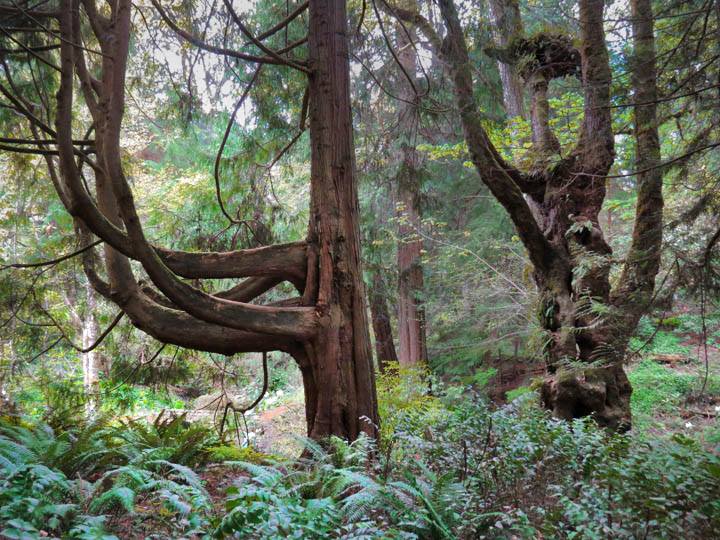
In his homily on Friday before Epiphany, Pope Francis called on the faithful to be like the Magi, who, he said, continued to look at the sky, took risks and set out bearing gifts for Christ.

If we want to find Jesus, we have to overcome our fear of taking risks, our self-satisfaction and our indolent refusal to ask anything more of life. We need to take risks simply to meet a child. Those risks are immensely worth the effort, since in finding that child, in discovering his tenderness and love, we rediscover ourselves.

Looking into the sky and taking risks is a way of life for women. We have found the need to look up, above the hurts of our lives. We have looked into the sky to escape misogyny, discrimination, disrespect and abuse. We have looked into the sky to search the heavens for hope when we have felt only despair.

It has not been for us just a flighty inclination to retreat from unpleasant realities through fantasy. Instead our sky gazing has been a way to pour our souls into the kind of change that makes life worth living. We have dreamed improbable dreams. We have been wise. We have been brave and persistent. We have taken risks and defied whatever was holding us hostage. We have been determined emboldened and empowered.  We have been inspired and ennobled. We have changed our world.

Like the three Wise Men, we journeyed, wise women in search of the child that would more fully empower us. Our desire and longing led us, like a fire burning within, until we found the flaming star in the night sky. And there we found Jesus —  again. So we celebrated. We rejoiced, because Jesus wanted for us a new day, a new life of respect and well-being and inspiration and hope. That is epiphany. Amen.

healing, Hope, Inspiration, Nature, Restoration

What do you do when you’re tired, very tired?

IMG_5889
Photo by Steven Nawojczyk

For years, Steven Nawojczyk has been one of my heroes. Yesterday I posted on my blog one of his many beautiful photographs taken while enjoying nature with his delightful dog, Feebi. The two of them explore nature every day, taking in the extraordinary beauty of Arkansas. Steve has learned to immerse himself in the life-giving sights and sounds of creation. It is therapy, really, a time of re-creation for a person who spent his life as a public servant, immersing himself far too deeply in human tragedy.

In the early 90s, Steve was the county coroner in Pulaski County, Arkansas. He saw too much, felt too much, cared too much and investigated the deaths of far too many young people. Steve was the “face” of the 1994 documentary that gave Little Rock a years-long reputation as a haven for gangs — HBO’s “Gang War: Bangin’ in Little Rock,” While that star billing turned him into a sought-after public speaker and educator throughout the country, it didn’t make him popular in Little Rock city government.

When HBO came to town, largely because of Steve’s urging, Little Rock was a city with a problem. Gang-related killings had spiked the murder count to a record high of 76 — a higher per capita murder rate than Los Angeles and New York. With the coming of crack and gang skirmishing to determine who would sell it and where, there were areas of where drugs could be purchased openly in the streets. Graffiti threats covered every wall, every bridge. Gang life had even spilled over into the suburbs, with white teens suddenly willing to do violence for their colors.

Steve Nawojczyk did not sit in his office in those days. Instead, he walked city streets, listening to gang members, hearing their life stories, holding before them the possibility of change and hope. But that kind of life commitment made him tired, more than tired.

Today, national media are again interested in the soaring murder rate in Little Rock, surmising that gangs are once again taking their place in the city. And they are calling Steve for interviews and information. This is, in part, Steve’s response to them:

ATTENTION MEDIA BOTH NATIONAL AND LOCAL WHO HAVE BEEN CALLING:

I am not doing any interviews or returning phone calls about the LR night club shoot-out nor the current status of gangs. I’ve been saying the same things about it since the early 90s when I was the county coroner . . .

I will address one question all of the reporters, even the one from CNN, seem to be leaving on my voice mail- “…how does this compare to the gang wars of the early 90s when HBO came to town?”

Here’s my answer- ask the leaders in LIttle Rock this question since almost every single one of them were involved in one way or the other back then.

The current mayor was the prosecutor. The current city manager was in the city manager’s office. The current prosecutor was the chief deputy prosecutor. Many of the city board were around then as were many of the same preachers that are still preaching the same sermons. So, they should have been working to understand this and work to prevent it from recurring for the last 20 plus years. At least you would think . . . No need to reinvent the wheel, dudes.

So, I’m retired and tired, very tired. Thanks for thinking enough of my opinion to call me. But I’m done with it all, I’m tending to other more important personal battles right now. Paz y amor.

Signed:
Steve Nawojczyk

So what does one do when they are tired, very tired? Again, Steve is our example.

Go out into the serene beauty of nature. Take in all that is right and good about God’s creation. Let the sunrise awaken your soul and the ripples of an Arkansas lake sooth your spirit. Let the weariness of the past fade into yesterday; let the present day give you strength; and lift your vision to the bright hope of tomorrow.

IMG_5908
Feebi

Steve and Feebi are restoring their souls in their daily adventures. They are opening themselves up to stunning sunrises and the gentle breezes of soul healing. So if you are tired, very tired, spend some time letting nature give you a fresh, new vision of the world.

And as Steve so often says, “Paz y amor.”

Africa, Beauty of Nature, Trees

For the Love of Trees

IMG_5780
Image by Diane Walker@Contemplative Photography

I have had a lifelong love affair with trees. Trees have inspired and strengthened me in many ways. The huge magnolia tree from my troubled childhood was a place of safety, giving me a place to hide from danger, offering to me a place to feel protected.

Miss Martha’s sprawling fig tree on the edge of our back yard bore wonderfully unusual fruit, soft and sweet and delectable. Her plum trees were loaded with plums, sweet and sour and delicious both ways. The fond memory I have of Miss Martha’s trees is punctuated with an angry Miss Martha catching us stealing figs and plums, yelling at us with an ominous voice, and chasing us from her yard.

The African plains graced my life with the gift of watching giraffes feeding on flat-topped thorn trees and elephants pushing their weight against misshaped baobab trees. The colorful swaying of ten foot tall bougainvillea trees was a mesmerizing sight. And in Africa, poinsettia plants are trees, trees like I had never before seen.

IMG_5782  IMG_5781

IMG_5783  IMG_5784

Beyond this crash course on botany, and dendrology, I share a heart-and-soul love of trees. It is almost a spiritual connection for me, one that keeps me fully grounded, one that represents life, growth, rootedness, protection and sheer enjoyment.

My friend, Elaine, writes a beautiful blog entitled The Edge. In today’s blog post, Elaine shares a quote about what we learn from trees written by Diane Walker. (https://theedgeishere.wordpress.com/2017/08/10/contemplative2017-rooted/)

It’s possible, you know — we learn it from the trees —
to be full of grace and humor, dancing in the light
while remaining fully grounded,
rooted in the gravitas of being . . .

– Diane Walker

God is pleased, I think, when we dance in the light full of grace and humor. We learn it from the trees, Diane Walker says. I believe she’s right. So today, I will be spending a few moments sitting in the shade of our Chinese Tallow tree and swinging underneath a towering Pin Oak. Perhaps in the leaves that rustle gently in the breeze, I will hear God’s  whispers.


Faith, God's presence, grief, Hope, Prayer

Nearer, My God, to Thee

Enlight136

While enjoying some quiet time on my new pergola swing, I listened to the hymn “Nearer, My God, to Thee” sung by Brigham Young University’s male choral group, Vocal Point. It would not be an exaggeration to say that I was transported to a sacred place in those few moments. The hymn I had sung for so many years took on fresh, new meaning for me. It could be because of my aging, my illness, my need for a closer relationship with God. Perhaps the hymn spoke to me simply because I needed it. I have long loved this old hymn and its simple, but profound, message.

Nearer, my God, to Thee, nearer to Thee!
E’en though it be a cross that raiseth me,
Still all my song shall be, nearer, my God, to Thee.

Refrain:
Nearer, my God, to Thee, nearer to Thee!

Though like the wanderer, the sun gone down,
Darkness be over me, my rest a stone;
Yet in my dreams I’d be nearer, my God, to Thee.

There let the way appear, steps unto Heav’n;
All that Thou sendest me, in mercy giv’n;
Angels to beckon me nearer, my God, to Thee.

Then, with my waking thoughts bright with Thy praise,
Out of my stony griefs Bethel I’ll raise;
So by my woes to be nearer, my God, to Thee.

Or, if on joyful wing cleaving the sky,
Sun, moon, and stars forgot, upward I’ll fly,
Still all my song shall be, nearer, my God, to Thee.

– Lyrics by Sarah F. Adams, 1805–1848
Music by Lowell Mason, 1792–1872
Published 1841, Hymn in public domain.

What makes this particular performance of the hymn so compelling is the inclusion of a counter melody. While a solo voice sings the words of “Nearer, My God to Thee” and paints a portrait of a life drawing near to God, the chorus sings a counter melody in Latin. The music is stunningly beautiful. The message reaches the depths of a soul in need of God’s presence. One listener described it like this:

So wonderful. It feels like angels paying a visit to earth with a hymn.

So I want to share with you the Latin text and the translation, which brings new meaning to the hymn.

In articulo mortis // At the moment of death

Caelitus mihi vires // My strength is from heaven

Deo adjuvante non timendum // God helping, nothing should be feared

In perpetuum // Forever

Dirige nos Domine // Direct us, O Lord

Ad augusta per angusta // To high places by narrow roads

Sic itur ad astra // Such is the path to the stars

Excelsior // Ever upward

Why, you might ask, am I writing a music review on my blog today? I suppose my words are an attempt to describe a need for the nearness of God. In times of grief, when sorrow overwhelms, when darkness is all we see, drawing near to a God of compassion is our healing balm and our highest hope. As I contemplate this truth, I am thinking of what was called the greatest disaster in maritime history — April 14, 1912 — the S.S. Titanic sank after striking an iceberg. As the ship disappeared into the vast ocean, Mr. W. Hartley, the ship’s bandmaster, led the band in playing “Nearer, My God, To Thee.”

I pray that, in whatever crisis you face, you will rest in the nearness of God. And I invite you to listen to BYU Vocal Point’s performance of this hymn: