Bible, Birdsong, Change, Christ's Passion, Chronic illness, End Stage Renal Disease, Faith, Holy Week, Hope, Illness, Introspection, Lent, Mindfulness, Palm Sunday, Prayer, Psalm 23, Resurrection, Soft

On Being Soft

5716AC7C-6335-4D5F-8440-52F82A5C320F

Lent for me was quiet this year. I was sick through most of it, and I spent it pretty much alone, except for the sweet presence of my husband. I didn’t write much. I didn’t paint or craft anything. I was just quiet, and as the forty days passed, I was aware at times of being led by still waters.

Still waters was a spiritual and emotional space I discovered after I was diagnosed with end stage renal disease and throughout my lengthy hospital stays in 2014. So today, I am thinking about some life-sustaining words that were a part of my recovery —  the words of the Twenty-third Psalm, my own version of it.

The Lord is my shepherd. I lack nothing. I have around me and within me everything that I need.

The Lord invites me to stop and to lie down in lush, green meadows.
He leads me beside still waters, 
He restores and refreshes my soul.

He guides me along good and safe pathways for his name’s sake. And for my sake.

Even though I walk through the darkest valley, 
the valley of death’s shadow,

I will not be afraid, for you are close beside me.
Your grace and your care comfort me.

You prepare a place for me, even in the presence of my enemies.
You anoint my head with the oil of gladness.

My cup overflows.

Surely your grace and and your love will follow me all the days of my life,
and I will dwell with you forever.

We know the words of this Psalm far too well. We skip past it as a common text we memorized when we were young. We recite it easily. But the Psalm came to life for me during my year-long illness. It was in my heart, and often on my lips, during long, sleepless nights in the hospital. I experienced the Psalm’s comfort as never before.

As we near the beginning of Holy Week, my thoughts are of the resurrection that comes after the passion, for Christ, yes, but also for me. I’m not thinking of “us.” My thoughts tonight are focused on me, how I experienced my illness in 2014 as my own kind of passion, the passion of confusion, grief, worry, fear. I experienced an expansive and disconcerting view of my mortality, and I did not take to the stark reality of it.

I cannot, of course, even begin to compare my passion to the passion of Christ. Yet in some tender way, I experienced suffering. Palm Sunday comes this Sunday, and in Christian churches everywhere, the people of God will celebrate Christ’s “triumphal entry” into Jerusalem. We will raise our palm branches and shout “hosanna,” as well we should. But Palm Sunday moves us abruptly into the week of Christ’s passion, every pain-filled, grace-filled moment of it. We must not skip that part.

But back to my own passion story, the one that happened the year I thought I was going to die. First you must know a bit about me before the illness. I was persistent and stubborn, a fierce advocate for abused women and children. I did not flinch in a courtroom. I did not shrink when I faced-off with an abuser’s defense attorney. I did not cower standing between a woman and her batterer. I searched the nation to find legal advocacy for abused women and their children. I stood my ground against court-ordered child abuse that would consistently place children in the custody of an abusive parent. I railed against a system that refused to protect children. I was hard. 

The illness came and went over the course of a year. I did not die. Resurrection did come to me, in bits and pieces, slowly, but with the certainty of faith. I was no longer hard. I was movable, malleable, able to be blown about with good and gentle, life-giving breezes. We settled into a new home in a new state, and mostly, I embraced it over time. I fed hummingbirds, listened more deliberately for birdsong, and discovered the way of mindfulness.

When I recovered — slowly — from my illness, I remember the feeling of being soft, though I was not sure what that meant for me. Most certainly, God granted me the patience to move into my resurrection, to embrace it in God’s time, and to wait for it gratefully.

My family said that I emerged from my illness with a change in personality. I was quiet, they said, not like me at all. Inside myself, I knew that they were right. I felt the change. I sat in my own quiet for months. And even now I sense a quietness that wraps me softly as if it were a warm, light blanket. It’s a good place for me, this soft, warm, comforting place.

It’s a good place to continue my resurrection, to learn more about what it means to be soft. As it often happens, I stumbled upon this quote as I wrote this piece. I love the thought it expresses. It resonates with my soul.

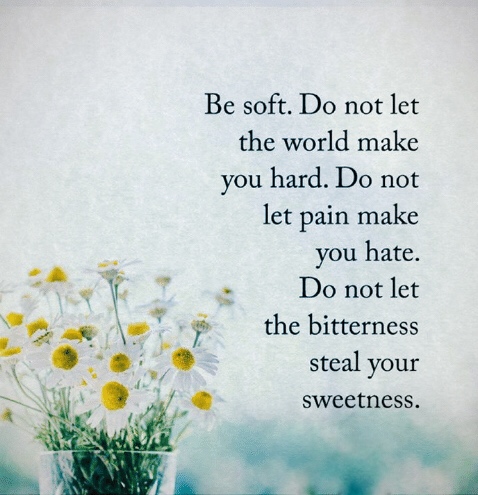
Be soft. Do not let the world make you hard.
Do not let the pain make you hate.
Do not let the bitterness steal your sweetness.

— Iain Thomas

These days, I am sensing that a kidney transplant is imminent for me. So to go through that process, I will lean even more into my soft side. That will be a good emotional and spiritual space for me. Soft! Soft facing change and fear. Soft facing uncertainty and new, scary medications. Soft facing the hope of a healthy kidney bringing me a new beginning, a resurrection.

May God continue to lead me beside these still waters. It’s a good place for me to greet resurrection.



Asylum, Courage, Dreams, Faith, Family, Freedom, Immigration, Life Journeys, Maren Tirabassi, Politics, Roots, Taking immigrant children

Yiayia / Γιαγιά

66642F2E-4B31-4A8F-BCEC-6286D03650A6

In my heart this week, I have held my grandmother, my “Yiayia” who came to America at age 25 with an older husband and two babies. One of them was my mother. December 16, 1916 it was when the ship Guiseppe Verdi reached Ellis Island. My Yiayia — line number 25 on the ship’s passenger manifest — had never envisioned coming to this land. She never considered she might leave the tiny Greek village on the island that was her home.

Her husband, wanted by Mussolini as a political detractor, had no choice but to flee in the dark of night in search of a place of safety and refuge for his little family. He had the courage to survive and to dream. But here’s the thing: my grandparents were welcomed into this country when they arrived to see the brightness of the Lady Liberty’s lighted torch. To be sure, their life in America was not all bright or easy. They worked hard to eek out a living and to become a part of a new community so very far from the home they loved. 

After I was born into the world, a toddler at Yiayia’s knee, I watched her struggling to learn English, to speak English well enough to be understood by her neighbors. One of my most vivid memories was sitting next to her at our kitchen table next to an enormous silver radiator that creaked and groaned, but warmed us famously. With The Birmingham News spread across the table in front of her, she drank her coffee, dipping her Zuieback toast and reading the newspaper, every morning.

She taught herself to read English, but The Birmingham News was not merely a reading primer for Yiayia. She learned from it. She understood the news events of her day. She knew that liberty was a gift worth protecting. So she studied the political climate and the political personalities asking for her vote. She would insist that you MUST vote, that you must know the candidates, that you must cherish the right to free and fair elections.

So Yiayia would dress in her finest clothing, simple but lovely dresses. She would put on her earrings and her brooch, her rings and her watch. Then she would dress me, and off we would go, across the street and down the block to the polling place. We would go together into the booth with the dark brown curtain. She would vote and I would stand in close to her with the view of only that brown curtain and her chunky shoes, heels of course.

Before we exited the booth — every time — she would look down at me and say, “We are Democrats! That’s how we vote, always!” And to this very day, I have followed her voting directive — always. The truth is that her definitive directive about voting had much more to do with the process than the political party she supported. It went deeper than any party loyalty, all the way back to reading The Birmingham News, seeing the beam of the Statue of Liberty, crossing the ominous ocean, remembering how it felt to have to flee from government oppression and grieving the loss of the island of her home.

Today, it’s not so simple for our neighbors who must flee their homes for so many reasons — safety, survival, fear, oppression. Our president says they are not welcome here. Many Americans say they are not welcome here. Just today, The New York Times reported that Mr. Trump’s growing migrant paranoia resulted in the forced resignation of homeland security secretary Kirstjen Nielsen, who resigned on Sunday. She is part of Trump’s wider “housecleaning” designed to appoint persons who will make sure migrants can not get across our southwestern borders. Only department heads who will enthusiastically implement the Trump administration’s “zero tolerance” policy will keep their jobs. May we never forget the images of thousands of migrant children who were separated from their families.

The president, in a not so presidential tweet, took aim again Sunday night when he tweeted, “Our Country is FULL!” So yes, he says that our neighbors are not welcome here. Yet, millions of us, second generation citizens of the United States of America, will never forget where we came from. We will always remember that our roots spanned the ocean and survived in a new land.

In my friend’s blog last week, I found words that touched me in a profound way and caused me to grieve the land of welcome we once knew. Her words express a startling poignancy. 

“A country that unwelcomes the world,” she writes.

I want to share with you her entire blog post — Jericho Walk — because it is well worth your time to ponder it, but first I emphasize this portion:

Often there is a shofar
to remind us just how deep
are the cracks
in the foundation of a country
that unwelcomes the world . . .

Jericho Walk
by Maren

I return to the Jericho walk,
in Manchester,
having not been well enough
for a couple months,
and it feels like home —
this moving vigil, silent, but with signs
and grateful waving for drivers
who honk their support.

We travel around the large block
of the federal building
where people we love and
some people we have never met
come to discover
if this week they’ll be deported.

We walk around seven times
hoping the walls
will come tumbling down —

around this place
that sends into certain danger
kind, hard-working,
tax paying, family-loving people
who contribute so much
to our community

Often there is a shofar
to remind us just how deep
are the cracks
in the foundation of a country
that unwelcomes the world,

but today there is a flautist
playing “Siyahamba”
over and over again —
walking
in the light of God,

and I think of that less-military
Jericho story —
the one that defines neighbor as

anyone from anywhere
who stops to help vulnerable ones
fallen on the side of the road.

Thank you, Maren. 

Thank you, my dear Yiayia, for teaching me that God grants us the grace gifts of refuge, safe haven and freedom. And no human — not even a big, bad, bully president — can take those gifts from us and from the generations that come after us.

May God make it so. Amen.


Chronic illness, Comfort, Darkness, Despair, Emotions, Faith, Grace, grief, Holy Spirit, Hope, Illness, Inspiration, Introspection, life, Light, Pain, Romans 8:26, Silence, Sorrow, struggle, Trust, Wisdom

To the Other Side of Silence

9F2CA72F-217D-4CF9-A56D-D75B789A45C1
Barbara Resch Marincel, lifeisgrace.blog

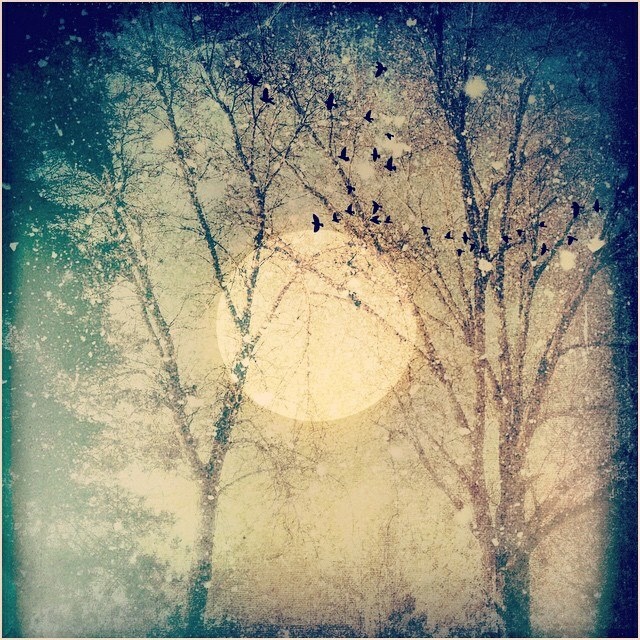
Today is another “Wordless Wednesday.” My friend, Barbara Resch Marincel, is a sister blogger, an insightful writer, and a photographer extraordinaire. You can see one of her amazing works in the image on this post. The image reminds me of a dark time that is slowly changing with the glow of new light. And in that light, the flying birds speak to me of the wind of the Spirit. Barbara’s images are a gift to me, always bringing up a range of emotions.

Here is a bit of how she describes herself on her blog, lifeisgrace.blog.

Blogger, writer, photographer, in varying order. Finding the grace in the everyday—and the not so everyday, while living a full and creative life despite chronic pain and depression.

If you take a few moments of your day to visit Barbara’s blog, you will find enchantingly stunning photography that speaks of joy, pain, life and grace.

Back to “Wordless Wednesday.” So many reasons to be wordless. Some people may not have adequate words to express joy. Others cannot speak of deep sorrow. Some of us have no words because of pain, while others are wordless because they have fallen into the depths of depression.

There is no end to the reasons people are wordless, no end to the seasons in which they find they are without words. I have lived in that season many times, and in that place I could not speak of my pain because words were completely inadequate. I could not speak the pain out loud to any friend, and even for prayer, I had no words. Silence was my close companion.

I love that my friend, Barbara, entitles her blog post “Wordless Wednesday” every week, because in the middle of every week, she reminds me of my seasons without words. Her art is a reminder for me to give thanks that I survived those times, and celebrate that I am now on the other side of silence.

But will not forget that it is no small feat to get to the other side of silence. I must remember that it is not easy to endure silent, grief-filled times and to the other side of them. While living in my seasons of unspoken angst, one passage of Scripture brought me comfort and hope.

The Spirit helps us in our weakness; for we do not know how to pray as we ought, but that very Spirit intercedes with sighs too deep for words. 
— Romans 8:26 (NRSV)

When grief has stolen our words, when we cannot speak and find ourselves in silence, may open our lives to hope, trusting the intercession of the Spirit’s sighs that are far deeper than words. 

Thank you, my friend, for “Wordless Wednesdays.”

And thanks be to God for allowing me to move to the other side of silence.

Amen.

Beauty of Nature, Challenge, Courage, Discovering, journey, life, Lostness, Moon

Freedom on the Journey and Hope Along the Way

4B8CEA44-1168-46E2-AFB5-D5DD9FA7AD34

To live without roads seemed one way not to get lost.
— Naomi Shihab Nye

It might be good advice — traveling a journey without roads. It would eliminate the decisions one must make when roads cross. It would eliminate the uncertainty when the path ahead seems unclear. We wouldn’t have to plot a course and explore all the possible routes. We might experience freedom on the journey that we have never before experienced.

I have to admit, though, I am a person who is all about road metaphors for life. I am a lover of walking labyrinths and walking the sacred path. I am constantly assessing my journey by the many kinds of roads I travel. I rejoice on smooth, friendly roads and despair on rough, ominous roads. I walk my path with trust, experience courage and wise discernment at the crossroads, and believe that I will end my journey in hope.

So the idea of “off road” living is a new, and somewhat disconcerting, prospect. And yet I am intrigued by the quote of Naomi Shihab Nye, “To live without roads seemed one way not to get lost.”

So I spent a few minutes pondering her words. With no roads, we might find ourselves discovering new places and making new paths, never fearing that we’re lost, but leaning into the exploration with anticipation. Without roads, we might wander aimlessly, passing beside astounding wonders we have not seen before. Without roads, we might find ourselves leaning into the beauty we find on our uncharted and circuitous path, beauty once hidden from us because we stayed on the road. Without roads, we might experience freedom on the journey.

The poet says that without roads, we don’t get lost. That may be a plus for us, since the fear of getting lost keeps us from the sheer, unbridled joy of exploration. Once we have dismissed that fear, we are free to roam, to discover and to observe all the beauty that lives off the path.

I think Naomi Shihab Nye’s thought about the lack of roads is an interesting parable. Its a parable about real life, and the best lesson from it may be that it is our fear keeps us from the full and fresh experiences we could embrace. When we stick too close to the roads we have always travelled, we will experience only what exists on the roads and directly beside them, nothing more. But when we have thrown off the fear that holds us hostage, courageously take leave from our familiar path, and venture into the wilderness to wander freely, we might see and experience more than we ever thought possible.

I’m not so sure this will work for me, but I plan to try some wandering that takes me far beyond my safe path. I plan to experience the emotion that comes from the fear of being lost. I plan to allow myself to be forced to place all my trust in where my heart takes me, and in God, who always gives grace to wanderers.

So the poet says I will not be lost, because there are no roads on my journey. I will not know what things I will see until they emerge before me. I may not know where I am, but I will not be lost.

Naomi Shihab Nye wrote another poem that seems to speak to this very unfamiliar concept of traveling life’s journey without familiar paths to count on. These are her words:

Where we live in the world is never one place.
Our hearts, those dogged mirrors,
keep flashing us moons before we are ready for them.

― Naomi Shihab Nye

What does it mean that our hearts “keep flashing us moons before we’re ready for them?” It sounds like a gift, that our hearts flash moons before us. It sounds like grace that, on our journey, we will see the wonder of God’s creation glowing above us in the night sky. We will be compelled to look up, gazing into a moon that changes constantly, reminding us of the waxing and waning of our lives and giving us hope to hold on to.

Thanks be to God for the freedom of the journey and the hope.

Change, Compassion, Gofts in Open Hands, grief, journey, Lent, Life Journeys, Life pathways, Lostness, Maren Tirabassi, Risk, Travel, Vulnerability, Wisdom

Rough, Broken Roads

5E982E74-6C78-42E3-BA27-C642528A9C0CI think often about roads, the roads that take people where they want to go, or not. I think with deep fondness about the terribly rough and broken roads we traveled in Uganda. The time was immediately after the horrific reign of Idi Amin that left the roads, and the entire country, in shambles. I remember the difficulty in traveling those rough, broken roads — washed out, bombed out, neglected for years.
I remember the fear of traveling those roads, the frightening military roadblocks, the pointed machine guns, the soldier’s demand for all that we carried in the vehicle and even the vehicle itself. I remember how some of our missionaries were left in the bush with their vehicle “confiscated” by the occupying army. I remember the roadblock murder of the dear Ugandan man who drove our mission’s supply truck.

I think of traveling a road in the middle of the night that led to my brother’s funeral, made rough by grief. I think of the rough road I traveled in leaving my home of 32 years for a new and unfamiliar place. I can never forget my rough road through serious illness and difficult recovery.

I think of roads that take people where they do not want to go — to war, to prisons, to rehabilitation centers, to the sites of natural disasters. I think about the roads in disaster areas that are simply gone.

I remember a song in a Christian musical of many years ago titled “Rough Old Roads.” It told of the rough roads Jesus walked. The song’s climactic moment gave us these words: “the road that was roughest of all to walk was the road that led to the cross.”

It is appropriate for us during Lent to recall the rough roads Jesus walked, rough for so many reasons: rejection, danger, soul temptation, angry crowds and lynch mobs, and ultimately the rough road that Jesus walked to the cross, to his death. To learn of his roads means that we get a glimpse of our own. The roads we all walk.

None of us can avoid walking the rough and broken roads that appear before us, but it is in traversing those roads that we learn who we are. Rough roads force us to take the hard and narrow way, and thus become who we must ultimately become. Roads can wind around so that we are lost, thus inviting us to take the risk of vulnerability required for an unknown and uncharted journey. Our roads teach and challenge us. When the road ahead of us is rough or broken, our commitment to stay the course results in wisdom. I call it wisdom from the journey. Our rough, broken roads make us stronger and more resilient. The rougher they are, the more we change and grow.

I could bore you with even more personal reflection about rough roads, but instead I want to share a moving poem written by Maren Tirabassi.* In the poem, she writes of broken roads and calls for a God who attends to all who find themselves on broken roads.

Here are Maren’s moving words:

I was praying this morning, God,
for all the people in Mozambique
and Malawi and Zimbabwe,
in the midst of the terrible losses
from cyclone Idai —
the deaths and injury and destruction,
the ongoing need for rescue

and I learned that the roads are broken.

I should have known —

the roads between towns
are impassable,
the bridges smashed, ports unusable.
Also those other paths —
electricity, telephone, Internet,
are gone as well.

And I went from that
flat-hand-on-the-newspaper prayer,
to the jail and my meeting
for spiritual care
and walked among others
with no access

and realized that journey
is not a parable for Lent
for these,
your children on the inside.

And so holy Valley-uplifter,
Rough-place-leveler,
I call you to attend
to all who suffer broken roads —

broken highways or heartways,
or sometimes minds that cannot
find a way out of whatever
dead end they are in,

and teach me to pay attention, too,
put my back against
every road block,
become an opener of the way home.


May God make it so. Amen.


*Maren served as a pastor in the United Church of Christ for thirty-seven years in Massachusetts and New Hampshire and is the author or editor of 20 books. You may read more of her creative and soulful writing at her blog, “Gifts in Open Hands” at the following link:

https://giftsinopenhands.wordpress.com/2019/03/21/10101/


Comfort, Faith, Fear, God's Faithfulness, Illness, Matthew 10, Trust, Truth, Waiting

It’s the Gospel Truth!

8832BB06-FEB5-4DAA-A86D-F8C351B53CA6I was born and raised in the South and spent most of my life in the Bible Belt. In the Bible Belt, one can hear many sayings, expressions and idioms. One of the idioms I seemed to hear continually over the years was, “It’s the Gospel truth!” Always as an exclamation. 

I learned that in life there is truth and there is Gospel truth. I learned that we need both. For instance, in my life at this moment, there is the truth that I am afraid. And there is also the Gospel truth that God watches over me through my fear. 

Sitting on the cusp between daily dialysis and the possibility of a kidney transplant, I entertain varied thoughts and feel disparate emotions. One of them is definitely fear. Thankfully, I feel relatively well physically on most days, but my body never lets me forget that I’m sick. People who know say that a transplant would change my life, that I have become so used to being ill that I don’t know what feeling really well is like. I don’t know about that.

What I do know is that the idea of a transplant is both frightening and enlivening. I also know that it may or may not happen. So I tamp down my emotions, tuck away my fear and basically try not to think about it. Where I am these days is in the place of; 1) not knowing and 2) knowing that God knows. 

As I contemplated this today, I remembered a Gospel song I used to sing back in the day. I have not thought of the song in years, but today its melody ran through my mind over and over. Many well-known musicians have sung it, but the voice I remember most clearly is the voice of Mahalia Jackson.

Why should I feel discouraged, why should the shadows come,
Why should my heart be lonely, and long for heaven and home,
When Jesus is my portion? My constant friend is He:
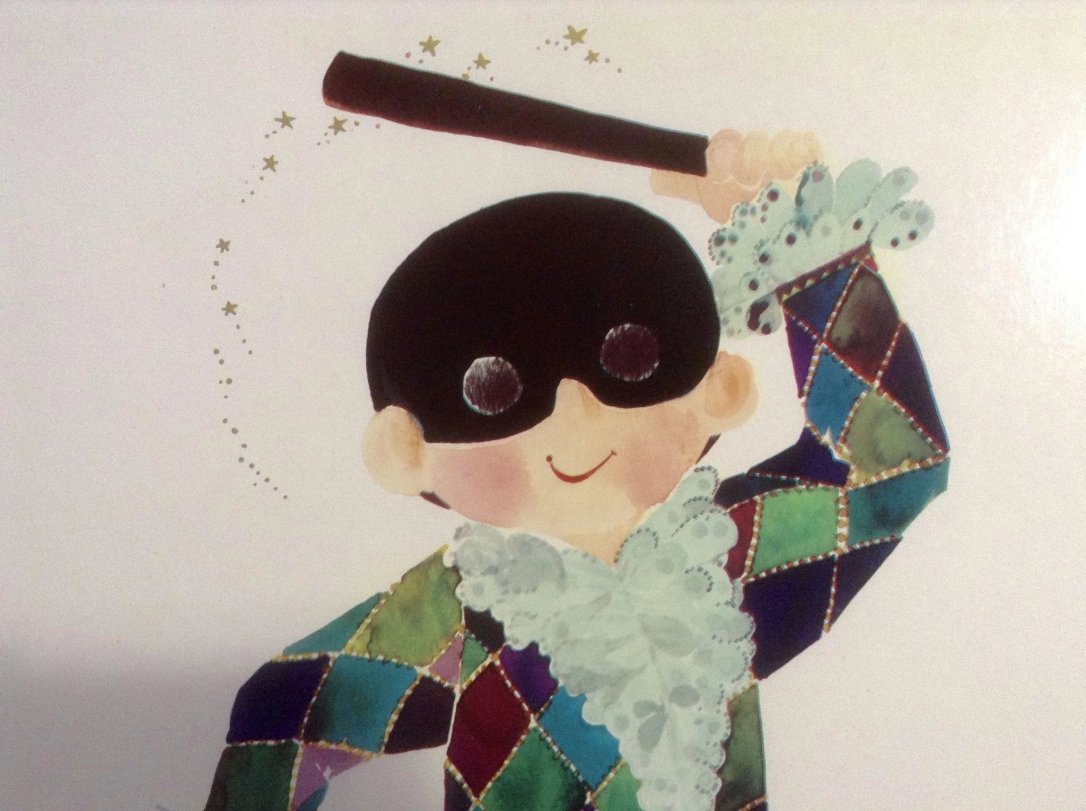
His eye is on the sparrow, and I know He watches me;
His eye is on the sparrow, and I know He watches me.

I sing because I’m happy, I sing because I’m free,
For His eye is on the sparrow, and I know He watches me.

Whenever I am tempted, whenever clouds arise,
When songs give place to sighing, when hope within me dies,
I draw still closer to Him, from care He sets me free;
His eye is on the sparrow, and I know He watches me . . .

In both Matthew and Luke, Jesus is sending his disciples out into the world. The Gospel of Matthew, chapter 10, begins with these words: 

Jesus called his twelve disciples to him and gave them authority to drive out impure spirits and to heal every disease and sickness. 

In the rest of the chapter, Matthew tells us that Jesus gives his disciples many instructions as he sends them out. Most importantly, he instructs them not to fear. 

Are not two sparrows sold for a penny? Yet not one of them will fall to the ground outside your Father’s care.  And even the very hairs of your head are all numbered. So don’t be afraid; you are worth more than many sparrows.  (Matthew10:29-31 NIV)

Transplant or dialysis for the rest of my life? I don’t know which it will be, and that’s the Gospel truth! I do know that I am afraid, but whenever I fear the future, I am often reminded that I am never outside of God’s care. It is a good thing, an important thing, to know that to God, I am worth more than many sparrows. It’s the Gospel truth!

I thought you might enjoy hearing a contemporary arrangement of “His Eye Is on the Sparrow” performed by Lauryn Hill and Tanya Blount at this link: https://m.youtube.com/watch?v=k7Pk5YMkEcg

Friendship, Gratitude, Joy, Laughter, Sharing

Clothed in the Love of My Friends

051B8A85-48BE-4FC0-979D-87125190383B
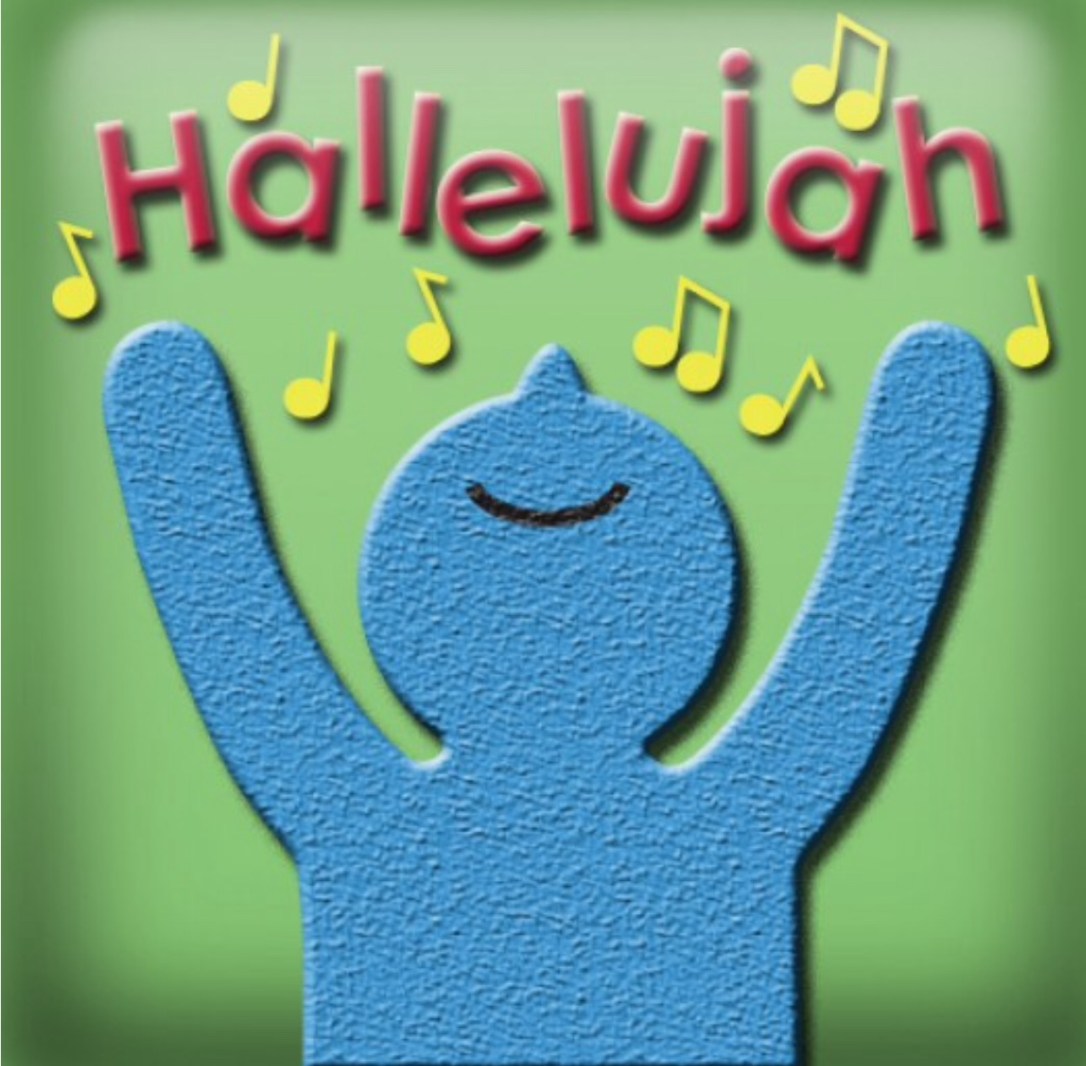
Tivoli Copenhagen Poster “Rare Masked Harlequin Boy” 1972 Richardt Denmark by Permild & Rosengreen

Tucked away in my memory, there is a charming tale of a young boy. I’m not sure from where I remember the story, but I have known a few versions of it for many years. It’s one of my favorite parables. The story introduces us to young Peter, who grew up in a very poor family. Peter loved going to school and playing with his schoolmates. 

On one particular school day, Peter noticed that his friends were laughing and chattering with excitement about the masquerade ball that was the yearly highlight of the town festival.

“I cannot wait for the ball,” Suzanne said excitedly. “I shall wear a beautiful costume of indigo silk, with a mask to match it.”

William said, “l’m wearing red, a bright shiny red.” 

And Victoria gave every detail of the gown of purple velvet her mother was sewing.

One after another, the excited children described the colorful costumes their mothers would make for them — green, purple, orange, yellow, pink, gold, silver. They told of the fine fabrics their fathers had purchased on their travels. Every mother had set aside the fabric for just this occasion.

One of the children noticed that Peter was not joining in on the gleeful conversation and walked up to him.

“Peter, what will you be wearing to the festival?” she asked.

“I’m not going to the festival,” Peter said, “I do not have fine clothes to wear and my family cannot buy cloth for a costume.”

“But you must come, Peter,” another friend said. And then others joined in.

Their mood changed from gladness to sadness, and since it was now a sad and somber time for Peter, he slowly started walking toward home.

After he left, the children talked among themselves, wondering what they could do to help Peter get to the festival. William, who had been thinking through the dilemma, finally spoke out.

“I know! I don’t need so much cloth for my costume,” William said. “I can cut a small piece from my costume and give it to Peter. Perhaps his mother can sew it into something grand.”

“Yes! I can do that too,” said another. And then another, until all the children joined in. So they devised a plan to help Peter get to the festival ball.

779892E8-E60E-4139-8F7D-BA79EABE8FFDThe next day William arrived at school with a twinkle in his eye. In fact, all the children had twinkles in their eyes as they went to find Peter. Each friend brought to Peter a small scrap of cloth they had torn from their costumes. One after another, they gave Peter pieces of cloth of every shape and size. Small scraps snd larger pieces, blue, red, yellow and purple — every color you could think of really.649A5787-671B-4447-9C81-453A595FB029

Peter was speechless, and if one looked closely, they might have seen a tear slide down his cheek. Peter took all the little pieces of cloth to his mother, who would take the scraps and do her magic with needle and thread.

The special day finally came, and the happy children arrived, each clothed in a bright, beautifully colored costume. When Peter arrived, no one recognized him at first, but there was a collective gasp in the room. He entered the room, tall and proud, wearing a black mask and a multi-colored, diamond patterned costume.

Who was this person?9C1F7151-7BE8-42F3-9A14-BE364EBACCFA

It was Peter, they finally realized, in amazement!

“Look at the beautiful red on his costume. It’s the same color as what I’m wearing!” 

Another child said, “There’s part of mine!” 

And each of Peter’s friends shrieked with happiness when they saw their own pieces of cloth cut into diamond shapes and sewn together on his costume. It was stunning — from the gold brocade, to the shimmering red satin, to the verdant hue of the green taffeta, to the sparkle of the royal blue silk. All the children were happy about what they were wearing, but they were even happier about the small piece of cloth they had shared with Peter.F76CB1DF-9191-4D1D-8C0D-0727F57C7CD1

Peter thanked them, having to speak very loudly to be heard over their happy exclamations.

“Everyone is happy tonight,” Peter said, “but I am the happiest one of all, because I am clothed in the love of my friends!”

From that day forward, Peter’s friends called him “Harlequin.” And that’s the tale of how Harlequin came to be.

So what does this little tale have to do with anything. Last week, I happened to pick up a fluffy, white blanket that’s in our extra bedroom. I held it and remembered that my friend had brought it to me in the hospital when I was so sick. Her church had prayed over the blanket in a church service and sent it to me with love. I was in bed for a long time, and each time someone covered me with the blanket, I thought of the echoes of the prayers it held and the love of the friends who sent it to me. Like Harlequin, I was clothed in the love of my friends.

As I wait on a possible kidney transplant and wonder whether or not a transplant will be in my future, the one thing that comforts me is the love of my friends. The truth is that I am covered with an abundance of love. My friends from from all over the world are praying for me, breathing prayers for my well-being and my health, offering me “colorful pieces of fine cloth” in the whispered blessings they send to me. 

Last night, the depth of caring that friendship can offer became very clear to me when I received an incredible message from a friend of many years. The message was that he had begun the process of donating a kidney for me. Stunned by his announcement, emotions tender, I remembered all over again that I am clothed in the love of my friends.

For that, I am incredibly grateful.


Covenant, Friendship, Introspection, Jephthah's Daughter, Judges 11, Lent, life, Reflection, Rhythm, Women

Together Through Lent

0373B40D-24BE-4EAE-8E78-3357B8EC97C7
Watercolor art by Kathy Manis Findley. The watercolor — “Together” — represents the spiritual covenants we share with one another, bonds that strengthen our faith. 

I have always thought of Lent as a spiritual journey we take alone, a solitary season of introspection and self-reflection during which we contemplate our own spiritual well-being and our relationship with God. For me, Lent has always been alone work. But what if it wasn’t? Suppose I experienced Lent with my community — the close community of people with whom I share my spiritual life.

I cannot help but recall the story of Jephthah’s daughter as told in Judges 11. When she faces a terrible crisis that will result in her death at the hands of her father, she makes only one request of her father. “Do what you must do, only grant me this one request: Give me two months to roam the hills and weep with my sisters.”

So she will take this journey up into the hills with her sisters — to mourn, to reflect, to pray. She will not make this journey alone. She makes the journey with the sisters who surrounded her in life and now in death. They climb up into the hills together.

Lent’s forty days represent the time Jesus spent in the wilderness, enduring the temptation of Satan and preparing to begin his ministry. He was there alone, and most often the Lenten journey is a time for reflecting alone. But I think that perhaps there is spiritual benefit in making a Lenten journey together, in community, joining together through invisible rhythms of friendship and caring.

As I make my Lenten journey this year, in my mind I will take my community with me. There into my alone places where God comforts me in my contemplative moments, in my repentance and in my penitence, I will be more mindful this Lent of my spiritual circle of friends. I will make a covenant with them in my mind and heart. I will send them positive thoughts as they make their Lenten journey and I will pray for them intentionally and faithfully.

It will be a together Lent, inspired by the sisters who went into the hills with Jephthah’s daughter where they spent a season of grief in community, together.

I hope that, together, we might embrace a sense of community as one of our Lenten spiritual disciplines, that we might journey together for these forty days, praying for one another, seeking together the serenity, the reflection and the transformation of Lent.

In that spirit of prayer, I leave with you this beautiful prayer written by Rabbi Naomi Levy:

The rabbi in me would like to offer a prayer for you.
I pray you will learn to see you life as a meaningful story.
I pray you will learn to listen to your soul’s insistent yearning.
I pray you will learn to believe you can transform your life.
I pray you will learn to live and shine inside your imperfect life
and find meaning and joy right where you are.
Most of all I pray you will uncover a great miracle: your extra-ordinary life.

— From Hope Will Find You by Rabbi Naomi Levy

Challenge, Faith, God's Faithfulness, God's presence, Hope, Lent, Life Journeys, Life pathways, Music, Restoration, Serenity, Transformation

I Can Face Tomorrow

Enlight272Yesterday was not my best day. All day long challenges got the best of me — health challenges, schedule challenges, even bad haircut challenges. My sister of the heart, Donna, said I was cranky. My husband, Fred, said I should chalk it up to Ash Wednesday. Martie, my dear Little Rock friend, said that yesterday was the first day of Mercury in retrograde and that I should do my best to survive until it’s over on March 28th.

I’m not so convinced of any of those explanations, but I’ll let it be for now. Today is a new day, a day in which I have chosen peace for the beginning of my Lenten journey. Typically, the way I find peace is through music. So Pandora is on my sacred music station today. It would be an understatement to say that the music has lifted me today and has almost made yesterday’s fiascoes a dim memory.

As I listened, a song from my past brought sweet memories. Years ago, before I learned to renounce masculine pronouns to refer to God, I was inspired greatly by these words: “Because He lives, I can face tomorrow.” We sang this Gospel song often to remind us of hope, of perseverance, of God’s faithfulness and of Christ’s resurrection. Today, those words and that melody on Pandora reminded me of those exact things. In spite of masculine pronoun referring to God, the music moved me as it has always done. The message has not changed. God has not changed. My faith in Christ has not changed. Thanks be to God!

Here’s my truth as I follow my Lenten path, the abiding truth: “Tomorrow” for me seems murky, with the path ahead unknown and somewhat disconcerting. I do not know if I will receive a kidney transplant or live on daily dialysis for the rest of my life. I do not know what tomorrow promises.

But this is as it has always been — before illness and after. I never knew what tomorrow would bring, even in those days when I thought I was fearlessly and fully in control of my life. So it feels like a Lenten testimony of my faith to say that I do not know what tomorrow looks like for me. Leaning into the reality of the unknown future, I feel embraced in the consoling truth that “because He lives, I can face tomorrow.”

Of this, I am confident. Resting on this promise, I can move onto the Lenten path before me with refreshed hope and renewed faith. Amen.

Introspection, Lent, Reflection, Self care, Serenity, Stillness

Tending to Yourself through Lent

5C466354-43F2-463A-9C04-1ACD2A85CE01Do you ever just get tired of tending to yourself? I suppose that’s not a relevant question for a general audience. It is, however, a very relevant question for those of us who are aging and/or have chronic illnesses.

I am in those categories: aging and ill. My life changed, as many of you know, in 2014 when I was diagnosed with end stage renal disease. That means my choice was dialysis for the rest of my life, a kidney transplant, or the unmentionable alternative which, very honestly, is death. I am told that without either dialysis or transplant, a person would be looking at two weeks.

So I tend to myself with all the medications, the medical appointments, the processes, the prevention measures — every day. Sometimes it feels like all day. Without a husband who is an indispensable care partner, I would be sunk. To be honest, my needs require both of us to be constantly attentive, and it is exhausting.

Still, I tend to myself, and I do sometimes get tired of having to. But I tend to myself largely without complaint and with unspeakable joy for the grace of being alive, of enjoying my family, my grandchildren, my creative pursuits and my “one wild and precious life” as poet Mary Oliver would call it.

Tending to myself is not just being sure to address my physical health needs. It is even more important to me to tend to my spiritual well-being. One of the things that means for me is choosing a spiritual path for my Lenten journey. I have just one day to choose. Today is Ash Wednesday, an important day for penitents. “From dust you have come and to dust you shall return” is Ash Wednesday’s message. And then we must begin our Lenten spiritual path.

I have to be honest by admitting that I have not yet chosen my path. It won’t be giving up chocolate. It won’t be as much giving as it will be receiving grace on the journey. So as I have contemplated what I will do, I have gathered some resources that I will share here.

I hope you will tend to yourself through your Lenten journey, and I pray that Lent’s forty days will find you walking your sacred path. Breathe deeply. Reflect on your life. Pay attention to your heart. Attend to your soul. Count your gifts. Speak your prayers. Consider Christ’s journey to the cross. Listen for God’s whisper. Receive the grace that comes to you.

All go to the same place; all come from dust, and to dust all return.
— Ecclesiastes 3:20

A FEW RESOURCES YOU MIGHT USE DURING LENT:

  • First of all, I would like to share with you the joy of walking a labyrinth or using a finger labyrinth during the days of Lent. 9889AA3B-16BB-4F9F-9B56-D883A74A49AE

You might find a labyrinth near you in a church, a park or at a spiritual retreat center. You can search at the labyrinth locator website listed below. You may also invest some creative time by making a finger labyrinth like the one pictured. Instructions  are at a link below.

Walking the labyrinth is a spiritual discipline that invites us to trust the path, to surrender to the many turns our lives take, and to walk through the confusion, the fear, the anger and the grief that we cannot avoid experiencing as we live our earthly lives.    — The Rev. Dr. Lauren Artress

Walking the labyrinth clears the mind and gives insight into the spiritual journey. It is a form of walking meditation that can enhance and deepen awareness of God. Labyrinth prayer is a contemplative spiritual discipline on a simple marked path. It is based on the ancient practice of pilgrimage. 

On a pilgrimage, a pilgrim intentionally (1) leaves the world, journeying away from the noise and distractions of life, (2) eventually arrives and rests with Christ, and (3) returns home to live more deeply in God’s presence.

The labyrinth invites us to release, receive and return. Walking the labyrinth is not a newfangled technique to jumpstart your spiritual life. It is a slow, quiet, meditative practice that has historically attended to the desire to make a journey toward God. Laid in the floor of Chartres Cathedral in France around 1220, the labyrinth has been used by pilgrims for centuries.

When you experience the labyrinth, you must give yourself to the path, leaving behind the noise and hurry of life. Just as you would pack simply for a pilgrimage, you offer your load to God as you begin your prayer journey. You move slowly toward the center and toward God. 

At times you are close to the center. Further along the path, you may be farther from the center. This represents the reality of the spiritual journey. As you walk the labyrinth, you can see the center, but you can’t see how exactly you will get there, Sometimes you find you are making surprising turns that seem to take you farther away, not closer. However, if you stay on the path, you will get to the center. Then, you will follow the path from the center and move “into the world” to do justice and love mercy. Labyrinths can be a walking meditation, a spiritual practice or simply an opportunity to calm the mind and enjoy peace, quiet and reflection. 

For resources on the labyrinth, visit https://www.gracecathedral.org/our-labyrinths/

To find labyrinths, visit The Labyrinth Society’s website: https://labyrinthlocator.com

For instructions on making a finger labyrinth, visit https://heatherplett.com/2015/01/make-finger-labyrinth-also-piece-art/

  • Living Well Through Lent 2019:
    Practicing Forgiveness with All Your Heart, Soul, Strength, and Mind

    Living Compass offers a daily email devotional throughout Lent. You will receive forty-seven daily emails, one for each day of Lent, plus Easter. The emails will begin on Ash Wednesday, March 6, 2019. If at any point you no longer want to receive the emails, you can unsubscribe at any time.  https://www.livingcompass.org/lent”>https://www.livingcompass.org/lent</
  • And my personal favorite, LIFT EVERY VOICE

PrintLift Every Voice is a Lenten resource from 2016 that is still relevant in 2019. It addresses America’s original sin of racism through the lens of Ignatian spirituality and includes daily readings. From Ash Wednesday through Easter Sunday, voices from throughout the Ignatian network will lament racial injustice in our communities and reflect on how the Gospel calls us to repent, pray, and act in solidarity with those affected by an enduring legacy of systemic and personal racial discrimination. https://ignatiansolidarity.net/lent-2016/
Christianity, Contemplation, Introspection, Lent, Life Journeys, Reflection

Hallelujah!

A79EA649-189F-4BF0-8A49-1BF3ED4D11FF

Those of us who are Jesus people should take note that there are only two days left for “Hallelujahs!” Ash Wednesday is upon us, and that marks two significant things: first, Jesus begins his journey to his crucifixion; and second, we, if we choose to, will join Christ’s journey by traveling our own spiritual journey through the forty days of Lent.

Each of us finds his or her own spiritual path through these Lenten days. Some might enter into a time of self-reflection. Others want to realign their lives to a clearer focus toward God. Some choose to give up things while also taking on life-giving practices. Still others focus on repentance, and others intend to rid themselves of distractions and selfish desires. Some of us just need to take these Lenten days to breathe, slow down, contemplate life, listen for God’s whisper.

How we spend our Lenten days may include prayer, fasting, meditation, Bible reading, taking focused labyrinth walks, service to others, reading poetry, and many other disciplines that can draw us closer to God. 

In two days, some of us might choose one of these Lenten disciplines. But until then, we can fill our hearts with hallelujahs as we contemplate the many life graces we have received. So today, I want to proclaim “hallelujah!” for a caring and loving husband . . .

for a family that is present for me when I need them, 

for a place to live that is more than just a house, 

for a church family that is community for me, 

for my medical care team who take such good care of me, 

for friends from afar who make the effort to continue to build our friendship in spite of the many miles that separate us, 

for friends nearby who listen and love and care, and then listen some more. 

Hallelujah!

Hallelujah for all of that. And Hallelujah for a good and graceful God who gives us life and breath!

Hallelujah!

So I invite you to shout out a few hallelujahs for all the graces of your life. And after the hallelujahs, may you take your journey through a Holy Lent, and on the journey, find quiet joys and a peaceful path. Amen.


I invite you to listen to a beautiful arrangement of Michael Cohen’s “Hallelujah” performed by Pentatonix here:

Complaints, Contemplation, Courage, Discovering, Emotions, Introspection, life, Mental health, Mindfulness, Reflection, Self Awareness, Vulnerability

What’s Underneath?

A07A5421-F042-40D4-A143-32391BBC79FBToday, a friend’s blog posed a provocative question. It was provocative enough to stop me in my tracks. Likely, I was right in the middle of a tirade of complaints when this question challenged me. This was the question: “If I let go of my complaints, what might be underneath?” *

The question presented a plethora of thoughts for me. It opened up that place underneath just for a second. But then I quickly moved back to the complaints. I have many. Or at least I believe I have many reasons to complain. But I’m realizing that complaints are surface things. They live outside of us and do not always reflect the inner emotions we are truly feeling.

A complaint develops easily and blurts out what’s on the surface of our lives. It flows easily off the tongue and falls upon any willing listener. The empathy we receive from that willing listener keeps the complaints alive. If someone listens to us and responds with caring about our complaint, it is then cemented. We have given it life, perhaps life beyond what it deserves.

This brings us back to the probing question: “If I let go of my complaints, what might be underneath?”

If gratefulness for the obvious graces that we have received replaced the urge to complain, we would be surprised at the result. If, instead of lodging a complaint, we spent some time exploring what lives “underneath,” we might well gain true insight into our emotional state. 

So we would do well to ask ourselves what’s underneath the complaint we speak out loud? Is it true that our complaint rises from a deep place inside of us but hides the emotion there?

If my complaint, for instance, is that I am overworked, perhaps underneath is the constant feeling that I’m being taken advantage of. If my complaint is that I have to endure an illness, perhaps the feeling underneath is that I fear suffering, even death. If I am terrified of death, perhaps I am not certain I left a good and lasting legacy. If I’m languishing in retirement, perhaps the emotion “underneath” is that, now that I am not “ministering,” I am questioning my self-worth.

You might be asking why this is important. It is important because whatever lives inside of us holds the power to harm us physically, emotionally and spiritually. What could we do instead of complaining? 

  • We might begin with silence that moves us a bit towards serenity.
  • Next, we will practice mindfulness that helps center us.
  • We woukd do well to contemplate gratitude for the graces of life. 
  • Then we should pray for insight, comfort and healing, not only praying for what we need from God, but also listening for God, abiding for a while in God’s presence.
  • Then we must take time for what might be the most important practice of all: introspection and self-reflection.

One of the primary goals of introspection is to better comprehend our inward life and to learn to focus it towards fulfillment of self. To go there is to invite vulnerability, healthy vulnerability that softens the hard places inside me that are wounded. Then we need to pull up from our inner resources just a little bit of courage.

When all is said and done, each of us is given a critical choice: do we complain about all that is not right? Or does courage enable us to look underneath our complaints and discover what our true emotions are?

For myself, I have to ponder these questions: What am I grieving? What have I lost? What do I fear? Underneath my whining and complaining (which I am very apt to do) I will find a gift, a treasure that is my very soul and spirit, and the emotions that abide there.

And as a bonus, I will have found a better way to live my “one wild and precious life.” **

* From A Network of Grateful Living

** From a poem by Mary Oliver. 

Calamity, Grace, Hope, Lightheartedness, mercy, Psalm 57, Repairing broken things, Uncategorized

Calamities and Grace

C6D6035A-FE70-4B02-8AEA-5E5E607F3278

Psalm 57 has been called “a prayer of safety from enemies.” When we believe that danger threatens to harm us, body and soul, that is the time that makes us cry out to God with the fervency of the Psalmist. Hear the Psalm’s second verse.

Be merciful to me, O God, be merciful to me!
For my soul trusts in You;
And in the shadow of Your wings I will make my refuge,
Until these calamities have passed by.

Ah, the calamities! So ever-present with us in uncertain times. Calamities! The synonyms are many and ominous:

Disaster, catastrophe, tragedy, cataclysm, crisis, adversity, blight, tribulation, woe, affliction, evil.

And those are just the first few listed in my trusty Thesaurus. There are many more, describing a state of being that is frightening, all-consuming and dangerous. Such a state of being we want to avoid at all costs. We want to take refuge swiftly before evil overtakes us.

Can you recall a time when your life was in calamity mode? So many situations can place us in calamity mode: illness, relationship problems, addictions, loneliness, aging, financial distress, the loss of a loved one and so many other situations of distress.

We feel as if “enemies” are chasing us, unrelenting in their threat. We run like the wind, if we can, to get away from them. But all too often, we look behind us and an “enemy” is right there, looming large before us and bringing us face to face with the cataclysm we feared. So we are now in the clutches of adversity, and we wonder if where we are is where we’ll ever be.

We are very good at laying out our calamities, lining them up one by one for all to see. Because when others see our calamities, we believe they will help us. We believe that our friends can help us escape our calamity du jour. In their help, we place our hope. Trouble is, sometimes we’re disappointed because hope does not often come through friends. Those around us have their own calamities. When they don’t (or won’t) reach into our troubled place and help us, we despair. What can we do? Where will we turn?

The truth is that when our soul trusts in God, we will wake up from our nightmare and find that we are sheltered in the shadow of God’s wings. Safe from calamity. Nestled in a place of refuge. Brokenness repaired. Watching gratefully as calamity after calamity passes us by.

What a grace is that! What unmitigated compassion! What sheer loving mercy from the God who might just as well have left us in the danger of our calamities.

Thanks be to God for every safe refuge, from every calamity. Amen

Discovering, Dreams, Faith, Inspiration, peace, Prayer, Serenity

Breath of Wonder

69175F90-305B-48F5-9797-D4F4BA54C428I cannot give you a better thing today than this prayer shared by Anne Fraley, rector of St. Peter’s Episcopal Church in South Windsor, Connecticut. “Listen” to her words and find yourself in them. Let grace from God refresh you as you live into peace and serenity. And as Anne writes it so eloquently, may faith carry you on the delicate breath of wonder and discovery, calling you forth beyond your wildest dreams.
I know these things to be true.

The sun dances and rainbows shine through pearls of water.

The coos of infants elicit contented sighs and gut-deep gladness.

Music stirs and tempers within the beats of its own rhythm.

The earth is rich with nourishment and holds sacred story with gentleness.

Hearts break and find renewal in healing.

Love sustains, encourages, emboldens, and makes us silly.

Divinity is everlasting.

Comfort is found in meatloaf and mashed potatoes. Or maybe sweet potato fries.

We sag and thrive, ponder and muddle through confusion.

We persist.

My prayer this day is that the best of these things will rise and claim their place on our horizons, and that the least of these things will recall our need for each other.

My prayer for this day is that faith will carry us on the delicate breath of wonder and discovery, calling us forth beyond our wildest dreams.

Amen.


Reprinted from https://revgalblogpals.org/2019/02/25/monday-prayer-these-things/.

Brokenness, Change, Chronic illness, Discovering, Emotions, grief, healing, life, Loss, New Normal

On to a New “New Normal”

7519DB43-1B31-43A9-9528-84655345CC44I’m getting to know myself. Again! Moving through life takes one through changes large and small. We slip past the small ones pretty much unscathed. But oh, those large ones! The large changes are another story altogether. Sometimes they cause us to miss a step or two. Sometimes they stop us right where we stand. Sometimes they throw us all the way to the ground. But they always get our attention.

Chronic illness is one of those ‘knock-you-to-the-ground” changes, especially when an illness happens suddenly. In a recent New York Times article, Tessa Miller shares how sudden illness changes one’s life and how chronic illness changes life forever. 

“Seven Thanksgiving ago, I got sick and I never got better,” Miller writes. She goes on to describe the conundrum of chronic illness. 

When I was diagnosed, I didn’t know how much my life would change. There’s no conversation about that foggy space between the common cold and terminal cancer, where illness won’t go away but won’t kill you, so none of us know what “chronic illness” means until we’re thrown into being sick forever.

I can identify with the changes Tessa Miller describes. The onset of my chronic illness five years ago was sudden, unexpected and permanent. My kidneys failed — simple as that. And I entered into the unfamiliar world of daily dialysis, a world I never expected to be in. And, yes, it was life-changing.

Tessa Miller makes another very insightful point. She explains how, once you find yourself in the fog of the changes you’re facing because of a chronic illness, one change presents the biggest challenge – the change in your relationship with yourself.

There is no debate: when chronic illness disturbs the equilibrium of your life, your relationship with yourself changes. You grieve a version of yourself that doesn’t exist anymore, and a future version that looks different than what you had ever imagined.

Chronic illness can shatter career goals and life plans. You learn learn a “new normal” in their place. But the acceptance of a “new normal” comes after the trauma. And trauma does happen, trauma that necessarily calls for therapy, either formal or informal.

Emotional work definitely needs to be done, and emotional work around chronic illness can look a lot like grief therapy for a passing loved one. You lose your self, at least temporarily. Your self changes.

So make sure to spend some time looking for YOU. Intentionally. Being open to whatever you find in yourself. Practice seeing yourself as the person you are instead of the person you were. Looking in the proverbial mirror gives you an image of the new version of yourself. Get to know her. Celebrate her resilience. Above all, be patient as you get to know her. You may be surprised at how much you like and admire her.


Comfort, End Stage Renal Disease, Friendship, God's presence, Grace, Hospital, Illness, Memories

A Horribly Wonderful Year

65398410-819B-4DB4-B114-256AC088A2D4
Art in foreground: “Horribly Wonderful” from The Land of Froud by Brian Froud, 1976.

Celebrating a five-year anniversary can be a fine excuse for a party! Definitely a five-year milestone can offer a chance to revisit and recall memories. My five-year anniversary is tonight, the night a phone call from my doctor ordered me to get to the ER. It was the night we learned that my kidneys had failed, just like that, out of nowhere, no notice. It was the night that end stage kidney disease turned my world upside down. It was the night that was the advent of a full year of hospital stays, biopsies, surgeries, physical and occupational therapy, loads of questions, very few answers and most of all, a very concerned and fatigued husband.

Fred was my rock, as he has always been. He slept next to me in that horrible excuse for a family bed. He kept vigil at the hospital day and night. When I was able to persuade him to go home to get some rest, he answered my phone calls in the middle of the night when I was sleepless, frightened or lonely.

“Are you up?” I would ask.

“I am now!” 

I don’t really think this anniversary calls for a party, but it does call for some reminiscing and remembering. So last night, Fred and I recalled the year I was so ill, that horribly wonderful year. Interestingly, we have two separate and differing sets of memories. He tells me that, most of that year, I was not aware of much, to the point of not even recognizing him. He tells me that I almost died during three separate critical events.

On my end, I remember none of that. I did lose time in that year, with confusion about losing days, even weeks, when I was unresponsive. I endured hundreds of needle sticks, maybe thousands since I am told my veins had collapsed. I received a port for hemodialysis that promptly caused me to nearly die of sepsis. I had a kidney biopsy that developed a painful bleed. I ate terrible food most of the time. I spent a lot of time in therapy learning to walk, write, identify colors and place square blocks in round holes.

Together we remember the love and care of my church, the family that constantly clamored for updates, the handful of good friends that were present, the food that the church brought to us every single week, and the nurses, angels in disguise.

I must say that, even to this day, I miss the sweet nurses that cared for me with great compassion. They were ever-present when I needed help and, during those long nights, they would often come in with a popsicle, sugar-free of course!

A final memory for today’s blog is the soft, fluffy afghan that my dear friend, Rev. Donna Rountree, brought me from her church. The Disciples of Christ church where my friend served as pastor barely knew me. I had preached there once. The congregation prayed for me, over the afghan, during a church service. Then Donna brought the afghan to the hospital, placed it on me, and told me that it was covered with the prayers of the people. What a special gift! What a special grace!

07CC221A-DFBC-4372-8E66-854CA41B0296When I think of that year, my description of it is “horribly wonderful.” Wonderful because, in the worst of times, God breaks in through the grace of a devoted husband, a caring family, an attentive nurse, a gentle phlebotomist, a close friend, a skilled physical therapist, a loving church family. 

So, yes, I took from that horrible year some wonderful memories, and that is what I can celebrate at this five-year milestone. And what’s more, I am here, still on this side of heaven and grateful for better health and life-saving dialysis. Pure grace!

Thanks be to God.


Comfort, Contemplation, Inspiration, Mission, Prayer, Psalms, Reflection, Restoration, Serenity, Silence, Stillness

Find the Stillness

25BC8CF9-6462-4461-A6AE-1746BCFC9B73“I have calmed and quieted my soul.” Words from the Psalmist.

Sometimes we have to get out of the fray for a few minutes. We have to turn off the political rancor, close our eyes to the evil in the world, forget for just a moment that children have been taken from their parents at the southern border, shut out the images of refugee mothers with their children traveling miles to get to safe refuge, and finally, find the stillness that gives us strength.

Sometimes we have to leave the difficult stuff behind as we enter into a sacred place of communion with God. It is God, after all, who calls us to help those in need. So in the silence, God might just tell us how to do that.

How long has it been since you spent time in a quiet and calm place? Since you lingered in a place of holy, sacred beauty? Since you waited in silence hoping to know the healing that comes with stillness?

I must confess that I do not often calm my soul. Instead, I keep myself busy with life things. I get worked up over various injustices and, before I know it, I have spent hours signing petitions, writing my representatives in Congress, or composing opinion articles. But I never stop long enough to hear from God and, in listening, to discover how I should respond to the needs I see.

“I have calmed and quieted my soul,” the Psalmist tells us. And the Psalmist also instructs us to find the stillness: “Be still, and know that I am God.” 

It is such a brief thought, a simple injunction, and yet a part of Scripture that has been quoted again and again to instruct those of us who need to find stllness in our lives.

So what is it that we do that keeps us so busy? What is it that so thoroughly prevents us from stilling our souls? Have we determined that the busyness is worth the effort we give it? God calls us to acts of compassion and justice. God might also be calling us to stillness. 

One of my favorite hymns is Be Still, My Soul.* The author of this hymn, Katharina Amalia Dorothea von Schlegel, was born in Germany in 1697. Very little is known of her life though some hymnologists suggest that she may have become a Lutheran nun. Her hymn text appears at the time of German pietism, a movement led by Philipp Jacob Spener (1635-1705.) Although Spener was not a hymn writer himself, he inspired a revival in German hymnody characterized by faithfulness to Scripture, personal experience, and deep emotional expression. Katharina von Schlegel is thought to be the leading female hymn writer of this period.

To reach us, the hymn must, of course, be understandable in our own language, so it comes to us through a translation by Jane Borthwick (1813-1897), a member of the Free Church of Scotland.

Here are the moving words of the hymn:

Be still, my soul; the Lord is on thy side;
Bear patiently the cross of grief or pain;
Leave to thy God to order and provide;
In every change He faithful will remain.
Be still, my soul; thy best, thy heavenly, Friend
Through thorny ways leads to a joyful end.

Be still, my soul; thy God doth undertake
To guide the future as He has the past.
Thy hope, thy confidence, let nothing shake;
All now mysterious shall be bright at last.
Be still, my soul; the waves and winds still know
His voice who ruled them while He dwelt below.

Be still, my soul, though dearest friends depart
And all is darkened in the vale of tears;
Then shalt thou better know His love, His heart,
Who comes to soothe thy sorrows and thy fears.
Be still, my soul; thy Jesus can repay
From His own fulness all He takes away.

Be still, my soul; the hour is hastening on
When we shall be forever with the Lord,
When disappointment, grief, and fear are gone,
Sorrow forgot, love’s purest joys restored.
Be still, my soul; when change and tears are past,
All safe and blessed we shall meet at last.

Author: Catharine Amalia Dorothea von Schlegel, 1752 – ?
Translated by: Jane Borthwick, 1855
Composer: Jean Sibelius, b. 1865, arr.
Tune: “Finlandia”


In the stillness, we find God’s comfort, presence, faithfulness, grace. And with that, we are able to go into a world of need with resolve, commitment, compassion and mission. The world waits for us. The people frightened and oppressed wait for us. The stillness prepares us for the task.

May God make it so. Amen.

*During your quiet time, you may wish to listen to the hymn, Be Still My Soul. You may do so at this link:

https://m.youtube.com/watch?v=cHNT6G9ZKik

Activism, Asylum, Community activism, Compassion, Immigration, Lenses, Refuge, struggle, Taking immigrant children, Violence, Violence against women and children

Lenses

D28C51BA-DDA4-49E8-95E0-18EA679D6545
Photo: The Power of Lenses, Wired

All of us see things through a lens. We get our lens from our life, and no one else sees things through that same lens. Just to make it clear: this is not a commentary on current politics and policies. This is simply a hodgepodge of musings that have emerged from what I am seeing through my lens.

Let me start, right off the bat, by pointing to something that doesn’t look so good through my lens, namely the unconscionable practice of separating children from their parents in the name of enhanced border security. We railed at that policy — for a while. But with the passing of time, our advocacy for these separated families has waned. These days, it is even hard to find a current news report that updates the status of the separated children.

I did find a report that quotes administration officials in the U.S. Department of Health and Human Services saying that the number of beds available for migrant children increased from 6,500 last fall to 16,000 today (CNBC; 19 Dec 2018). Apparently, the crisis we have all but forgotten is still real.

Dr. Jack Shonkoff, who heads Harvard University’s Center on the Developing Child, has called our current immigration policy “a moral disaster.” Dr. Shonkoff provided this emphatic rebuke:

There has to be some way to communicate, in unequivocal terms, that we are inflicting punishments on innocent children that will have lifelong consequences. No matter how a person feels about immigration policy, very few people hate children — and yet we are passively allowing bad things to happen to them.

According to The New York Times, population levels at federal shelters for migrant children have quietly shot up more than fivefold since last summer, reaching a total of 12,800 as of September 2018. There were 2,400 such children in custody in May.

Are we choosing to ignore the huge increases of children in custody that have placed the federal shelter system near capacity? Are we listening to the the employees who work in the migrant shelter network telling us that the bottleneck is straining both the children and the system that cares for them? Do we care that the administration announced that it will triple the size of a temporary “tent city” in Tornillo, Tex., to house up to 3,800 children?

Reports are that immigrant advocates and members of Congress reacted to this status report with distress. As well they should! 

Leader or citizen — each of us should react to this report with great distress! My lens sees that with our current immigration practices, we are participating in a sin against humanity by placing children and teens at great risk of long-term trauma and irreparable harm.

With that realization, I find myself in a place that is antithetical to the teachings of Jesus. My silence, passivity and failure to act is complicity. Have I signed enough petitions, made enough phone calls and written enough emails? There is no right answer to that question. 

I heard a discussion this morning on National Public Radio that revealed a troubling trend. The information shared is that not as many males are crossing the border into the U.S. right now. Instead, record numbers of women and children fleeing domestic violence and violence in general are coming to seek asylum, protection from horrific circumstances and safe shelter.  

For example, Guatemala has one of the most prevalent rates of violence against women in the world. Instances of gender violence in Guatemala include domestic violence, sexual violence, human trafficking, incest, and femicide (the deliberate killing of women).

Unfortunately, this problem is not unique to Guatemala. The neighboring countries of El Salvador and Honduras, for example, also face epidemic levels of femicide as well as impunity for the perpetrators. (https://www.amnestyusa.org/why-does-guatemala-have-one-of-the-highest-rates-of-femicide-in-the-world/)

For many years, I have been a vocal advocate for women and child victims of violence. For at least fifteen years, that advocacy was my life’s work. I am angered by the abuse of women and children. But today, in our current circumstance, my advocacy feels like a tempest in a teacup. While my heart may be overflowing with anger, my acts of protest against our nation’s immigration policy are relatively insignificant.

Advocacy always begins with understanding? We understand that immigration and border security is one thing; illegal immigration is another. But the desperate need for asylum is on a significantly higher level in the quest for human rights and protection from oppression!

And so this presents a dilemma for any follower of Christ living in a relatively uncaring world. How does the Gospel motivate us? How do we follow Christ into the situations that are causing women and children such harm? How do we act in ways that offer asylum for those in the midst of violence? Wouldn’t God desire safe shelter for persons in danger? What can we do to effect real, in-the-moment, significant change? Knowing that many people look at the state of immigration and security through “America first” lenses, what lens am I using to look at this abysmal situation?

Lenses are important. They guide our thoughts and actions. They develop our sense of right and wrong, good and evil. As I contemplate lenses, I am reminded of Victor Hugo’s description of the very kind Bishop Myriel, the Bishop of Digne, in Les Misérables: 

He had a strange, idiosyncratic way of looking at things.
I suspect he got it from the Gospel.

I could only hope that a description of my idiosyncratic ways would point to the Gospel. In the meantime, I intend to challenge myself to find ways to be a change agent for the way our nation is dealing with asylum seekers — women and children — who take the dangerous risk of crossing our borders to what they desperately hope is a place of safety and refuge.

May it be said of America that her doors were forever wide open to receive persons in need of refuge.

God would will such a compassionate, caring welcome.

Jesus would have embodied that kind of compassion, a compassion that rescues, shelters and protects. As followers of Jesus, should we not live out his example?


Bible, Comfort, Faith, God, Images of God, Psalm 139, sunrise

God Images

CFF083CF-7A85-489B-95DF-8300A19098CE
How do you see God? What image of God do you see?
How do you find God?
Where do you find God?

Most of us have at least one image of God. It may be a vague image, but still, we have an image in our minds of a power greater than ourselves. There are as many images of God as there are people.

Some imagine God as a benevolent spirit, others as an omnipotent ruler. Some imagine God as as a father, others as a mother. Some imagine God as a protector, others as a punisher. Some imagine God as spirit, the holiest, gentlest spirit that comes to us in times of silence.

It is the Sacred Scripture that most influences our image of God. In the fragile pages of our Bibles, we find images that sustain us, inspire us and move us. And in those times of angst we all experience from time to time, we find God images that comfort us.

If I had to choose just one Scripture text to help me imagine God, perhaps to take with me through a difficult time, it would be Psalm 139.

Where can I go from Your Spirit?
Or where can I flee from Your presence?

If I ascend into heaven, You are there;
If I make my bed in hell, behold, You are there.

If I take the wings of the morning,
And dwell in the uttermost parts of the sea,
Even there Your hand shall lead me,
And Your right hand shall hold me.

— Psalm 139:7-10 (NKJV)

I cherish the image of God I find in this Psalm, the image of a God who is ever-present. Of all the ways I have envisioned God through the years, this one is most comforting to me.

So I wonder, how is it that you see God?

May your image of God one be one that is strong and true, powerful and gentle, constant and ever-present.

Paula White, peace, Serenity, simple joys, Wendell Berry, Wisdom

What We Need Is Here

4b9b65d5-ca25-48fa-af5e-a741d86146e3I want a new microwave oven, a new disposal and a new dishwasher — the newest and best models. I want to see my son. I want to hug my grandchildren. I want to go to my church in Little Rock. I want a new dress.

I have most often gotten what I wanted in my life. From the most intense need for human connection to the frivolity of a new frock, I have gotten what I wanted. Chalk that up to being spoiled throughout childhood, or stubbornly persistent until I got what I wanted, or just being a jerk, or maybe having white privilege. 

There is no shortage of gurus telling people how to get what they want. Good health. A slimmer frame. A better television. A nice house in a nice neighborhood with a nice, lush lawn. And just this week evangelist-turned-Trump-advisor Paula White told us that sending money to her would result in riches for us!

The stark reality is that, right now, I don’t have what I want. Most people don’t. It is easy for me to lament over what I am lacking. It is common for me to feel disappointed with my life, disillusioned about my inability to secure all the things I want and think I have to have.

Like my sister and brother consumers in a consumer-driven world, I have survived on things. More and better things.

But when I stop — really stop — and look around me in wonder at this stunningly beautiful world and everything in it . . . When I catch a passing glimpse of the sweet and pure love my husband gives me every day . . . When I feel God’s gentle gift of grace on my life . . . When I stop to count the stars and watch the moon peeking around the clouds, something very surprising happens. My thoughts of the things I want turn to serene gratitude for the things I have. And in that instant, I have peace.

Recently, my pastor shared a poem by Wendell Berry. The very same poem, oddly enough, kept coming up in the things I was reading, and it touched me in the serene place within. Let me share it.

Geese appear high over us,
pass, and the sky closes. Abandon,
as in love or sleep, holds
them to their way, clear
in the ancient faith: what we need
is here. And we pray, not
for new earth or heaven, but to be
quiet in heart, and in eye,
clear. What we need is here.

Oh, to be quiet in heart and see clearly that “what we need is here.”

May God make it so.