Advent, mercy, peace, Uncategorized

Tender Mercy

E8260192-9BC4-47D0-B6F8-7DECCE4828F0Such is the tender mercy of our God,
who from on high
will bring the Rising Sun to visit us,
to give light to those who live
in darkness and the shadow of death
and to guide our feet
into the way of peace.

Luke 1:78-79 (NRSV)

There is no better time to breathe in these words from sacred Scripture: “the tender mercy of our God.” What we see around us compels us to cry out for the tender mercy of God — for the people who are living with agonizing need at our borders, for children taken from their parents, for families running from the effects of tear gas, for the changing of the climate and its devastating fury on communities, for people losing their lives because of gun violence, for young black men incarcerated for small crimes with long sentences, for people suffering through illness and poverty and homelessness. 

Cover them, God, with your tender mercy.

There is still more in this Scripture. Some translations say “The Dayspring from on high has visited us.” But in this New Revised Standard translation, we hear words that remind us anew of God’s tender mercy. Moving words that remind us of our hope in the “Rising Sun who has visited us!”

Tucked in this brief text is the divine reason for the visit. The words are not ambiguous at all, not hard to understand, not veiled in mystery. The Rising Sun’s visit has brought “light to those who live in darkness and in the shadow of death.” And finally the Sun has shone “to guide our feet into the way of peace.”

And so we live in the light of this promise, knowing that the Rising Sun will visit us again and again, whenever darkness covers us with the struggles of life. God will not fail. In our times of difficulty, no matter how serious they are, we will feel — fresh and new — the tender mercy of God who will most assuredly send light to us when we find ourselves in life’s darkness, when we need to be guided in the way of peace.

That is the message of Advent.

Advent, Contemplation, Hope, Mindfulness, Serenity, Waiting

Advent’s Invitation

ABA52B53-DF36-418D-BD71-FE6891967598What is Advent’s invitation to me? What does this season want to  teach me? What will I see in a new way as a result of Advent’s opportunities for reflection? So many questions!

“Wait,” the wiser ones tell me. “Wait for it.“

“This is the message of Advent — endure the dark places of this season knowing that the Messiah is coming again to bring light to your world and to your heart. Just wait.”

So it seems that Advent is not for impatient folk, the ones who want to get on with it, to get on to the lighthearted joys of Christmas. Advent’s call to ponder, to be mindful of the moment, and to wait catches the busy ones off guard. Our souls sing the adagio strains of “O Come, O Come Emmanuel” and the mellow hopefulness of “Come, Thou Long Expected Jesus,” while feeling in our waiting hearts the great need to belt out “Joy to the World.”

What exactly is Advent’s invitation to me? What is it that Advent promises that makes waiting worthwhile? What is it that this season has for me to learn?

These are questions I cannot answer, at least I cannot answer them at this moment. My hope is that if I am faithful in the waiting and the pondering, the answers of Advent will become clear to me. Until then, it is just one of those life mysteries that eludes me. 

In the meantime, Barbara Brown Taylor offers a wise word about it all

Advent invites us to awaken from our numbed endurance and our domesticated expectations to consider our life afresh in light of new gifts that God is about to give.

— Barbara Brown Taylor

Wait for it!

Advent, Contemplation, Darkness, grief, Hope, Light, Loss, Memories, Mindfulness, Pondering, Sacred Art, Seasons, Sorrow, Waiting

Pondering through Advent

23DCD324-DEFB-436C-8942-C4ADA60DA52AYesterday, I mused on the tenderness of this season of Advent. The waiting. The darkness. The need to linger in the season with a sense of mindfulness.

To be honest, I want to shop with reckless abandon and find fun toys for my grandchildren. I want to bake all manner of Christmas cookie. I want to decorate every corner of my house, and if I had my way, ours would be one of those houses that people drive by at night to see all the twinkling lights.

But on that outdoor winter wonderland, I definitely do not have my way. My husband’s days of hanging lights on the gutters, placing a Santa on the roof, and wrapping the trees in tiny, twinkling lights are over. He has happily passed out of that season of his life.

For me, yesterday was baking day, and I made a new discovery about mindfulness and cookie baking. The two activities pair well. Dropping cookie dough by the spoonful onto a baking sheet is slow work. It gives one time to ponder. And pondering a is a good thing to do in Advent days. Good lesson learned, with the added bonus of having 200 cookies in the house!

While dropping cookies, one by one onto an old, scratched up baking pan, I pondered. Some thoughts hinted at my inner sadness. Other thoughts were of friends who are very ill and are walking this Advent journey in darkness. Other friends have lost people in their lives, and on this day, they find themselves in mourning.

As I do in most Decembers, I find myself, along with others in my family, feeling the sadness of having lost my youngest brother, Pete, to cancer. It happened many years ago, yet the hurt remains.

No doubt, this Advent journey can be a tender time. Yet we journey into the days ahead, not with a spirit of despair, but with a glimmer of hope. Even in the darkness, we begin to awaken, knowing that something new will be born in us just as it has every Advent. This is the season when we wash our faces and rub our sleepy eyes until we wake up, eyes wide open to the Light that sleeps in a manger.

Mary treasured up all these things and pondered them in her heart.

— Luke 2:19 New International Version (NIV)

Like her, I am spending my Advent days pondering — moving in mindfulness while holding tender feelings, heart longings, mourning in the soul.

And, of course, I’m waiting in the darkness. But I know, without a doubt, that light will shine. It always does.


Advent, Bethlehem’s Star, Christmas, Darkness, Hope, Loss, Mindfulness

Today I Believe

039C1E96-30AE-46AA-8113-B98AD7414523

This season is a tender time. And oh, this darkness of mine. December brings it every year — that feeling of tenderness, of darkness. That is, if I stop to notice. Stop decorating the house. Stop shopping. Stop planning a lavish Christmas dinner. Stop baking dozens of cookies. Stop going to Christmas events — parties, pageants, gatherings, light displays . . . Just stop!

If we do stop in these advent days, we might just feel this tender time. It’s not Christmas yet, you know. It’s Advent, a time of waiting, hoping, believing. If ever there was a time to practice mindfulness, this is the season. As I move through Advent’s days, I want to move slowly and with the awareness of the tiny miracles all around me.

I want to remember past years and people I have loved. I want to linger beside the Chrismon tree that holds decades of white and gold ornaments and decades of memories. I want to be mindful of my own darkness and the tenderness that is nested in my heart.

Advent is most surely a tender time, and a time of darkness, a time when people of faith wait for the light to come to earth again. Advent causes me to wait for the light that always comes to come into my heart again. Until the light shines, though, through a little baby born in Bethlehem, days will be dark and tender.

I am remembering my youngest brother who would have had a birthday this month. The loss of him far too soon will always leave a lump in my throat. December, his birth month, is a tender time.

In these days, I miss the joy and laughter of my grandchildren. For them Christmas is all joy.  They are such a gift to me, and being separated from them by so many miles makes this a tender time.

My friend’s fourteen-year-old grandson lost his battle with cancer this week, and I cannot help thinking about what a dark and tender time this family is feeling because of this deep loss.

So many losses surround us. So much grieving. So much darkness waiting for the light of Bethlehem’s star and the infant that comes to bring light to our hearts.

I love this tiny prayer:

Lord, you have always lightened this darkness of mine; 
and though night is here, today I believe.

— Evening Office by Northumbria Community


Bravery, Courage, Exodus 1:15-22, Shiphrah and Puah, Uncategorized

Two Women

B75C112C-5CA9-4618-8CA4-455BA2F601F9
Painting of Shiphrah and Puah

This blog post is about two brave women who literally changed the world. You may have never heard of them, but they are worth knowing. Here’s how the story of the women begins.

Now a new king arose over Egypt, who did not know Joseph. He said to his people, “Look, the Israelite people are more numerous and more powerful than we. Come, let us deal shrewdly with them, or they will increase and, in the event of war, join our enemies and fight against us and escape from the land.” Therefore they set taskmasters over them to oppress them with forced labor. They built supply cities, Pithom and Rameses, for Pharaoh. But the more they were oppressed, the more they multiplied and spread, so that the Egyptians came to dread the Israelites. The Egyptians became ruthless in imposing tasks on the Israelites, and made their lives bitter with hard service in mortar and brick and in every kind of field labor. They were ruthless in all the tasks that they imposed on them. (Exodus 1:8-14)

The Hebrew people had immigrated to Egypt because of life-threatening conditions in their homeland. They thrived in the new land and their population grew. For many years, they lived peacefully in Egypt, and made great contributions to its well-being.

Then a new king arose, a king who began to spread fear about the immigrants. They were multiplying, becoming powerful. “Soon this new race will outnumber and overpower our own! So we must close ranks in fear,” he said.

Sadly, we are hearing a similar message from our president. But we won’t expound on that today. This is a story about courage.

We constantly hear leaders talking to us through our televisions — experts on various topics, members of congress, politicians, pundits. One thing shines clearly about most of them: they exhibit not an ounce of courage and conviction. For many of them, maybe most of them, the rhetoric is about their own interests, never about taking a stand against evil or injustice, never about the cost of doing what is right.

So may I tell you a story about two courageous women you may not know? Thousands of years ago two Hebrew midwives, Shiphrah and Puah, said “NO.” Shiphrah and Puah served Hebrew women who were anticipating childbirth. The Pharoah commanded the midwives to kill all the baby boys born to Hebrew women in Egypt. An ancient method of power and control!

There are only six verses in the whole Bible about these women, but their actions led to the salvation of the entire nation of Israel.  Shiphrah and Puah were in charge of all the Hebrew midwives in Egypt while Israel was enslaved in Egypt. One day, Pharaoh called Puah and Shiphrah to him and told them,

When you are helping the Hebrew women to give birth and see them upon the birthstool, if it is a son, then you shall put him to death; but if it is a daughter, then she shall live.”

At this point in history, Egypt was the largest kingdom and the Egyptian Pharaoh was considered the most powerful ruler in the world. In fact, the Egyptian people regarded Pharaoh as a leader appointed by their gods. Imagine all the leaders in the world today. Now imagine that all of their power was all given to one single leader and that’s approximately how powerful Pharaoh was — and this particular Pharaoh wasn’t very nice.

Now, the most powerful ruler in the world has just ordered Puah and Shiphrah to kill every baby boy born to a Hebrew woman. What happened next is one of the most courageous things we could imagine. Let’s look at the whole story recorded in Exodus 1:15-22, New Revised Standard Version (NRSV).

The king of Egypt said to the Hebrew midwives, one of whom was named Shiphrah and the other Puah, “When you act as midwives to the Hebrew women, and see them on the birthstool, if it is a boy, kill him; but if it is a girl, she shall live.” But the midwives feared God; they did not do as the king of Egypt commanded them, but they let the boys live.  So the king of Egypt summoned the midwives and said to them, “Why have you done this, and allowed the boys to live?” The midwives said to Pharaoh, “Because the Hebrew women are not like the Egyptian women; for they are vigorous and give birth before the midwife comes to them.” So God dealt well with the midwives; and the people multiplied and became very strong. And because the midwives feared God, he gave them families. Then Pharaoh commanded all his people, “Every boy that is born to the Hebrews you shall throw into the Nile, but you shall let every girl live.”

These two midwives had spent their lives bringing new life into the world, and now they were asked to snuff out that new life as it was about to draw its first breath. “Not a chance!” they declared with courage welling up inside them.

No! Shiphrah and Puah said “No.” Because they were called to choose life, not to end it. They acted swiftly and shrewdly. They lied, in fact, and said this to Pharoah. “What can we do? The Hebrew women are giving birth so fast that the babies are born before we can get to the birthing tents.” 

All the while, they were coaching these immigrant Hebrew women, holding their hands and catching their babies as they made their way into their complicated, inhospitable world.

Shiphrah and Puah said “No!” And among the children they saved was the baby Moses. You know the one. He was chosen and anointed by God to free the Hebrew people from Egyptian oppression and lead them back to their beloved homeland.

Today we have the opportunity to say “No” to all that is unjust. What does that mean for us? What does it mean to summon the courage to help bear life into this complicated time?

Perhaps it means not buying in to the fear some want us to feel about the caravan of refugees who are approaching our borders. Perhaps it means advocating for their well-being in every way we can, declaring that we refuse to demonize them, and understanding the heart of parents who feel they must flee from the dangers of their homeland.

Perhaps it means supporting efforts to reunite the immigrant children that are still separated from their parents.

Perhaps it means that you and I must find ways to choose life instead of death, and hope instead of fear.

I don’t know if the story of Shiphrah and Puah story speaks to you, but I hope you will ponder it and hear its truth.

There will always be new kings who arise among us and decide to deal harshly with certain groups of people. But we do not have to go along with their plans. In fact, we must not go along with their plans and instead follow the courageous path of creating justice for all people.

May God help us to make it so. Amen.


Challenge, Comfort, Courage, Inspiration, life, merry-go-round, Prayer, struggle

Monday’s Merry-go-Round

9BE03E1D-A1FC-4BE9-8BBD-7BCFAA9F6E03It’s one of those Mondays again, those days that just weigh on you a bit too heavily. You have to push yourself to start a new week. You feel that deep-down tiredness that overcomes you and you don’t even know why. Know the feeling?

Nothing has changed. You are still in your familiar schedule. You are still the same you that feels strong one minute and despairing the next. But you feel as if you’re on the proverbial merry-go-round that just keeps circling around the same life and all that’s in it. Round and round, again and again and again.

You might even feel down on yourself for not being “strong” enough to move joyfully through your life. All of this begs the question: Why are you so hard on yourself?

Maybe you should just take a moment for yourself.

Sit back.

Marvel at your life,
at the grief that softened you,
at the heartache that wisened you,
at the suffering that strengthened you.

Despite everything,
you still grow.

Be proud of this.

Today, I pray for you this prayer that has sustained so many through generations.

I pray that, according to the riches of his glory, God may grant that you be strengthened in your inner being with power through his Spirit, and that Christ may dwell in your heart through faith, as you are being rooted and grounded in love. I pray that you may have the power to comprehend, with all the saints, what is the breadth and length and height and depth, and to know the love of Christ that surpasses knowledge, so that you may be filled with all the fullness of God.

— Ephesians 3:16-19 New Revised Standard Version (Paraphrased)


Change, Growth, Hope, life, Life pathways, Wisdom

Starting Over

775D14C9-8802-4DEA-BD06-33C669F187B7Here’s the thing about life: things crash and break, obstacles can stop you in your tracks, you can get completely cut down. It happens to all of us.

One option is simply to give up on life. Or maybe to retreat into a private place for sulking. Another option is to be angry and to live the rest of your life angry.

But the reality is much more optimistic than any of those dismal options. Because no matter what happens in your life, you can start over. Starting over is really not so bad. I’ve done it many times and I survived it. So if we can accept the fact that something in life is over, there is hope for the days to come. 

I choose to see starting over as a fresh new beginning, another chance to do life differently. If I start over with a positive attitude, it can be an opportunity to head into the future wiser and more confident. Starting over can offer a path ahead that’s full of promise.

That’s what I’ll count on.

Contemplation, Creating, Iconography, Images of God, Prayer, Restoration, Sacred Art, Silence, Spiritual Discipline, Worship

Seeing the Light: A Spiritual Discipline

DF9BF7FC-6583-4F1A-A78F-3F5CD0D37117I seldom talk much about the spiritual disciplines that have given me strength. A private retreat — just me and God — in a beautifully isolated hermitage was one of the most powerful spiritual experiences of my life. While there, I also practiced another of my spiritual disciplines — iconography.
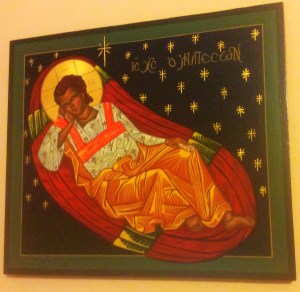
Iconography is not merely a visual art, it is Christian sacred art, and has been an integral part of the worship and mystical life of Christians since apostolic times. Referred to in the Eastern Christian tradition as “windows into heaven,” icons have inspired and uplifted millions of the faithful, and have at times been the instruments for demonstrating God’s miraculous intercession in the life of humankind.

29074C09-C2E4-49B3-ACA8-FAED6A6069B8In describing the purpose of icons, the early Christians used the Greek work anagogic, literally meaning “leading one upward.” Photios Kontoglou, a renowned modern iconographer, expressed this perfectly: “Icons raise the soul and mind of the believer who sees the icon to the realm of the spirit, of the incorruptible, of the kingdom of God, as far as this can be achieved with material means.” 

So to appreciate iconography fully, we must approach it as a liturgical art form whose function is essentially spiritual. Since the creation of an icon is itself a sacred activity, the iconographer must be a person of prayer, not merely a technician. If the iconographer’s work is to inspire and illumine others, then it is essential that she leads a life of prayer and fasting that she may be inspired and illumined by the Holy Spirit, that her iconography becomes itself an expression of her spiritual life. Kontoglou writes: “The iconographers painted as they prayed.”

355CF8CB-A1B6-4D08-B5DD-DF59A9618C9AMy love of iconography resulted from the prompting of my dear Aunt Eirene. She was an artist extraordinaire and a gifted iconographer. She studied and practiced to hone her skills and each year, she went to an intensive iconography workshop at a beautiful retreat center. One year, she persuaded me (forced is a more accurate term) to go with her. Of course, I was extremely reticent to try this new art form.

At first, I called on my artistic skills and was doing a barely decent job. But then a lovely nun who sat next to me said words that literally imprinted on my heart. She said, “Your rendering of the Holy Child is beautiful. Look into his eyes. When you see the Light coming from them, you will fall in love with your icon.”

286998AD-4ACD-4E54-BBD6-EDCC0B0D4ED0She was so wise. I began to think more about the Christ Child’s eyes than my own art, and within a day, my iconography transformed from a painting to a prayer. It was worship, meditation and reverence. It touched my soul as I added color to the board, layer upon layer. It was an incredible experience to see the Light. I share with you here some of icons I created, as I remember the experience I had with each of them that opened my soul to the Light.


Celebration, Change, Light, Politics, Women

Celebrate!

45270512-74C2-48EE-8432-2FAB7129D11C
New Faces of Congress!  Top row (L>R) Deb Haaland, Rashida Tlaib, Judge Veronica Escobar, Jahanna Hayes;   Bottom row (L>R) Ayanna Pressley, Sharice Davids, Ilhan Omar, Alexandria Ocasio-Cortez

Some voters hoped for a Blue Wave, others a Red Wave. There wasn’t much of a wave on either side of the aisle, at least not the enormous wave they wanted to see. What we did see was a Women’s Wave, at least 117 women elected on Tuesday, 100 Democrats and 17 Republicans. Now that is something to celebrate! Here’s the scoop, by the numbers:

  • Of the 117 women elected, 42 are women of color, and at least three are L.G.B.T.Q.
  • With some ballots still being counted, women have so far claimed 96 of the House’s 435 seats (it is expected to rise to 100), up from the current 84.
  • At least 12 women won Senate seats, which will bring the total in that chamber to at least 22 (that number is expected to rise by two), of the 100 seats that exist. There are now 23 women.
  • Women won nine governorships, of 50 total. Six women currently serve.
  • Overall, at least 10 more Congressional seats will be occupied by women than before.

On a night to remember and celebrate, here is what some of the women who made history said in their victory speeches:

“When it comes to women of color candidates, folks don’t just talk about a glass ceiling; what they describe is a concrete one. But you know what breaks through concrete? Seismic shifts.” 

  • Ayanna Pressley, who will become the first African-American woman to represent Massachusetts in Congress. She beat a 10-term incumbent in the Democratic primary and vowed to pursue “activist leadership” to advance a progressive agenda.

“We have the opportunity to reset expectations about what people think when they think of Kansas. We know there are so many of us who welcome everyone, who see everyone and who know that everyone should have the opportunity to succeed.”

  • Sharice Davids, a former White House fellow, is a lesbian; she and fellow Democrat Debra Haaland of New Mexico are the first Native-American women elected to Congress.

“In my family, there were no girl chores or boy chores. There’s just things to get done. So that’s what we’re going to do. I’ve got some big plans for this state.”

  • Kristi Noem, a Republican, will be the first female governor of South Dakota. She’s a four-term congresswoman who campaigned on her conservative record and her experience working on her family’s farm.

“We launched this campaign, because in the absence of anyone giving a clear voice on the moral issues of our time, then it is up to us to voice them.” 

  • Alexandria Ocasio-Cortez, Democrat from New York, became the youngest woman elected to Congress at age 29. She has never held elected office, and like Ms. Pressley, she defeated a white man who had served 10 terms in a Democratic primary.

So there you have it — a real occasion for celebration. No doubt, these women will re-shape America’s leadership. If you know women at all, you know that they often work harder, work longer, work with a passion that changes the world.

Congratulations and God speed to each of them. 

To the new faces of leadership: We applaud you. We celebrate you. We’re proud of you. We’re holding you in the light. We’re counting on you.


Statistics in this blog are from Maya Salam, published in a special post-election edition of The New York Times Gender Letter.


Compassion, grief, Gun violence, Hate, Sorrow, Tree of Life Synagogue, Violence

Remembering

34E60DDC-AACB-4E7A-9C25-E72AE0E7C44D
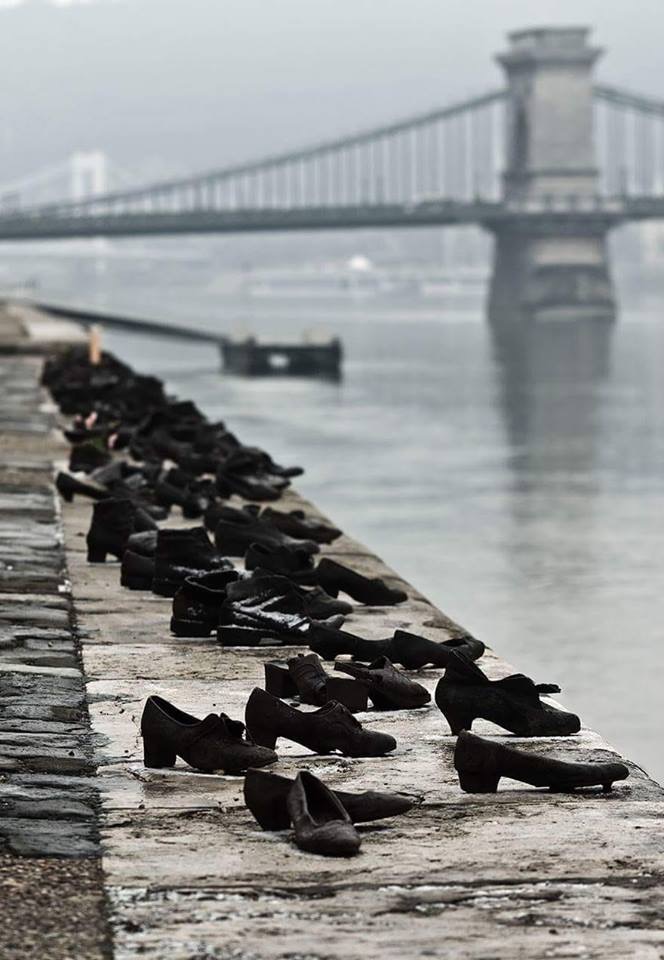
“Shoes on the Danube Promenade” by Can Togay and Gyula Pauer.

I cannot let it go — the unconscionable tragedy against the worshippers at Pittsburgh’s Tree of Life Synagogue. One week after eleven people were gunned down there, 100 people gathered on a cold, drizzly Saturday outside the still unopened place of worship for a “healing service.”

We gathered in Macon as well, to stand in solidarity, remember those who lost their lives, pray for their grieving families, and keep vigil with our Middle Georgia Jewish community. I do not know the capacity of Temple Beth Israel, but I do know that every pew was filled, people were standing along every wall and in every corner and flowing out onto the sidewalk. I was moved, as were many, by the outpouring of love and support expressed in the Macon Shabbat Service.

And so it should be. All of us must pay close attention to the stark reality that this was one of the deadliest attacks on Jews in United States history. To guard against this kind of violence, we  must link hands without considering race, ethnicity, religious tradition, gender, age, sexual orientation or any label that divides us. We must love our neighbor as we love ourselves. We must never forget the history that allowed hate and violence to harm various groups of people.

During WWII, Jews in Budapest were brought to the edge of the Danube, ordered to remove their shoes, and shot, falling into the water below. Sixty pairs of iron shoes now line the river’s bank, a ghostly memorial to the victims. It is one of many memorials erected to remind us, to ensure that we will never forget and never repeat such history.

May God make it so.


All Saints, Brokenness, Fear, Grace, grief, Gun violence, Hate, healing, Hope, Mourning, Prayer, Tikkun Olam, Tree of Life Synagogue, Violence

All Saints

05314FDF-2986-4602-8EF9-B1839FE693CEWe all need a glimpse of hope and comfort in these troubling days. Our thoughts and prayers are with our brothers and sisters of the Tree of Life Synagogue, and we are shocked at this and other recent acts of violence and evil. So today, I share with you the writing of Jemma Allen* in hopes that you will find her words as compelling and comforting as I have.
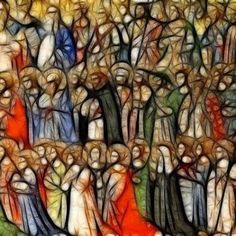
This week in many liturgical traditions we observe All Saints Day, and perhaps All Souls. In some places there is an opportunity to say the names, to light candles for, to ring the bell for those we love but see no longer, parted from us by death.  

All Saints and All Souls compel us to look death squarely in the face,
to acknowledge our mortality, and the mortality of those we love,
and still to make our song: Alleluia!

This is a season where we boldly proclaim
that death is not the last word.
Death, and fear of death, does not hold the power
to determine how we will live.

We are the dearly beloved children of the living God,
we are baptized into Christ’s death and resurrection,
we are looking to a future where justice and mercy kiss,
where nations will not learn war anymore,
where the lion lies down with the lamb,
where all things are reconciled to God.

This is our hope.
It is a hope that no power can destroy, tarnish or mar:
not white supremacy,
not anti-Semitism,
not any kind of hatred,
not any system of domination,
not any disease,
not any heartbreak. 

And when we cannot hold that hope for ourselves,
let us lean into the hope we can hold together
as communities of life, as communities of resistance,
as hope-bearers and pilgrims on the Way. 

0F547F1D-1DC0-40C3-A16E-E34DB2350099

Give rest, O Christ, to your servants, with your saints,
where sorrow and pain are no more, neither sighing, but life everlasting.
You only are immortal, our Creator and Maker;
and we are mortal, formed of the earth, and to earth we shall return.
All of us go down to the dust; yet even at the grave we make our song: Alleluia, alleluia, alleluia.

 – Russian Orthodox Kontakion of the Departed, Jim Cotter’s translation.  


*Jemma Allen is a priest in the Anglican Church of Aotearoa, New Zealand and Polynesia and a counsellor and spiritual director in private practice.  She serves on the Board of RevGalBlogPals and counts the RevGal community as one of her communities of life and resistance.

Comfort, Faith, Friendship, Gun violence, healing, Heartbreak, Holy Ground, Love, Neighbors, sadness, Sorrow, Tears, Violence, Weeping, Worship

Holy Ground

470DF6B9-F261-497E-8A59-58EABE4E7898My friend, Buddy Shurden, shared an experience he had while serving his first pastorate near Ethel. Mississippi. He tells of his frequent habit of calling on Early Steed to pray. He wrote that Mr. Early Steed always began his prayer the same way, every time. 

“Lord, we come to you one more time from this low ground of sin, shame and sorrow.”

Buddy Shurden reflects on the term Mr. Early used, “low ground,” and adds, “Oh! If Early could see us now.”

Indeed. Low ground.

We are standing in the wake of waves of violence . . .

Fifteen pipe bombs mailed to two former presidents, a former secretary of state, a news outlet, and others;

Eleven worshippers killed at the Tree of Life Synagogue in Pittsburgh, in Mr. Rogers’ real-life neighborhood;

Maurice Stallard, 69, and Vickie Jones, 67, killed in a Kroger in Jeffersontown, Kentucky.

We are standing on pretty low ground these days. There’s no doubt about that. Yet, even in grief, with memorial vigils going on around the nation, we can still hear the faint voice of Mr. Rogers singing, “Won’t you be my neighbor?”

And that resonates with us as we watch neighbors grieving alongside neighbors, Muslim neighbors reaching out to help their Jewish neighbors at Tree of Life, and the news outlet that was targeted with multiple pipe bombs speaking the names of the victims and telling bits of their life stories.

Maybe it feels like low ground we’re standing on these days. But if we look around, and listen, and watch while genuine love is being shared between grieving brothers and sisters, and friends who are grieving with them, we have to admit that this ground we’re now standing on might just feel more like holy ground.

Children, Covenant, Inspiration, life, Little Grandmother, Singing, Stories

Birth Song

C02D591A-8BBB-42E1-96D7-9C34C45292E4
“Love” – Himba Mother and Child by Ciska McCormick

Little Grandmother — a world-renowned spiritual teacher, Shaman, Wisdom Keeper and the gatherer of the Tribe of Many Colors — tells this beautiful story.

Of all the African tribes still alive today, the Himba tribe is one of the few that counts the birth date of the children not from the day they are born or conceived, but from the day the mother decides to have the child. When a Himba woman decides to have a child, she goes off and sits under a tree, by herself, and she listens until she can hear the song of the child who wants to come. After she has heard the song of this child, she goes back to the man who will be the child’s father and teaches him the song. When they physically conceive the child, they sing the song of the child as a way of inviting the child to earth.

When she becomes pregnant, the mother teaches the child’s song to the midwives and the old women of the village, so that when the child is born, the old women and the people gather around the child and sing the child’s song to welcome him/her. As the child grows up, the other villagers are taught the child’s song. If the child falls, or gets hurt, someone picks him/her up and sings to him/her his/her song as a gift of comfort.

In the Himba tribe, there is one other occasion when the “child song” is sung to the Himba child, who has now grown up to be a tribesperson. If a Himba tribesperson commits a crime or does something that is against the Himba social norms, the villagers call him or her into the center of the village. The community forms a circle around him/her and they sing his/her birth song.

The Himba people view correction, not as a punishment, but as love and remembrance of identity. For when you recognize your own song, you have no desire or need to do anything that would hurt another person

Finally, when the Himba tribesman/tribeswoman is lying in his/her bed, ready to die, all the villagers that know his or her song come and sing, for the last time, that person’s song.

May you hear, in your heart, your own birth song, and may it give you peace, hope, courage and strength for life.


*Little Grandmother is the author of the book: “Message for the Tribe of Many Colors,” published in 13 different languages. Her talks are freely available on the web and on YouTube and have been viewed by millions of people all over the world. You may follow her work on her Facebook page, Little Grandmother Kiesha, as well as on her website: www.littlegrandmother.net. You may purchase her books at www.earthmotherpublishing.com, or you may contact her at beautyawakens@gmail.com.


Comfort, Compassion, Despair, Friendship, Generosity, Grace, healing, Heartbreak, Hope, Loss, Ministry, Mourning, Restoration, sadness, Sorrow, Stars, struggle, Tears, Weeping

Weep with Those Who Weep

AD620082-4B5E-47C6-B2B0-0D553454614BWhat a caring and compassionate ministry it is to sit beside someone who is grieving and remind them of God’s grace. In recent days, I have wept for and with so many friends who are grieving for what they have lost because of the Florida hurricane. To be sure, there were losses in Georgia and in the Carolinas, but the devastation in and around Panama City was catastrophic.

Hordes of compassionate people traveled to Florida to help. They will clean up debris, repair or rebuild homes that sustained damage, do electrical work, provide help in the shelters, share their hearts and God’s heart, and stand beside families as they pick up the shattered pieces of their lives. Mostly, they will weep with people, and that’s what will help more than anything else.

Author Ann Weems paints a sparkling vision with her words that speak of the “godforsaken obscene quicksand of life.” But then she tells of a deafening alleluia arising from the souls of those who weep and from the souls of those who weep with them. From that weeping, Ann Weems tells us what will happen next. “If you watch,” she writes, you will see the hand of God putting the stars back in their skies one by one.”

I like to think that the caregivers who traveled to Florida did a lot of weeping with those who needed it and that they stayed near them long enough for them to “see the hand of God putting the stars back in their skies one by one.” When all is lost — when you learn that your loved one has died or you stand in a pile of rubble on the ground that used to be your home — seeing the hand of God putting the stars back in their skies would be for you a manifestation of pure and holy hope.

Without a doubt, Florida is experiencing “the godforsaken obscene quicksand of life.” Their memories of this devastating time will be cruel and long-lasting. They will remember better days, neighborhoods that once thrived, schools that were destroyed and friends who are trying their best to recover. But what grieving people will remember most is the care someone gave them and the loving compassion of strangers who became forever friends. I am reminded of the words of poet Khalil Gibran:

You may forget with whom you laughed, but you will never forget with whom you wept.

― Kahlil Gibran, Sand and Foam

Rejoice with those who rejoice, weep with those who weep.    Romans 12:15

Clouds, Dreams, Exclusion, Freedom, Immigration, Skies, Stars

Make Room for the Unimaginable

C0F3E414-0365-4F43-890F-EAF928810C56Don’t you love skies . . . blues and purples, the sun’s brightness, the dark black of night, clouds and stars? It is good for us to look into the heavens and lose ourselves in the beauty of God’s creation, to make room for the unimaginable.

There is a beautiful poem in German by Joseph von Eichendorff, in which the poet says to God, “You are the One who breaks up above us those roofs that we so firmly build, so that we may see the heavens. And therefore I will not despair.”

We do build firm roofs that completely cover us, fences that separate us from neighbors, walls that divide us one from another. And we hear a great deal of talk these days about building a wall that is designed to keep people from other countries out. Visitors living in this country despair at the possibility of being deported. Even those who have been here for years and have followed all the rules.

There was a time when immigrants were welcomed here, encouraged to dream of better lives for their families. It was a time when their dreams brought them to a land of freedom, without oppression. My grandparents dreamed that dream when they came to America with my infant mother. And so life began for them here, among neighbors, in a safe and welcoming haven. My brothers and I are the products of that dream. 

So I am sad about the wall and hope in my heart that it will never be built. 

I am reminded of the Berlin Wall. It stood for 10,316 days, from 1961 until 1989. A guarded concrete barrier that physically and ideologically divided Berlin, it was sometimes referred to as the Wall of Shame. Over 100,000 people attempted to escape and over 5,000 people succeeded in escaping over the Wall. More than 200 people died trying to cross the Berlin Wall, but it stood solidly, forbidding passage. It was a blight on Berlin’s landscape that proclaimed absolute division. I remember the day of the wall’s destruction, June 13, 1990.

Brother David Steindl-Rast, OSB shares a beautiful truth:

Build the walls so lightly that you are still aware that you have neighbors. And build the roofs so lightly that you can look through and see the stars.”

That kind of roof God does not have to break. If we build our life in that form, we are people of hope. If we build any more firmly . . . we should expect that God shatters it all, to make room for the unimaginable, so that we will see the stars.

Comfort, Darkness, Daybreak, Despair, Faith, Fear, God's presence, grief, Hope, Life storms, Loss, Mourning, struggle, sunrise, Tears, Vulnerability

Icons of God’s Presence

5388C091-C6CE-402C-A3DB-77B0DD838A84
Photography by Sister Macrina Wiederkher

“Sunrises anoint my soul. They are quiet prayers, icons of God’s presence.”

These are words written by my friend, Sister Macrina Wiederkher. Her words resonate with our times as we hold in the light our brothers and sisters in Florida. Their loss is immeasurable, and although we know that loss of home is not as tragic as loss of life, it is a deeply felt emptiness to lose your home and all its contents.

So many are in that heartbreaking place today, and when the night falls on this night, they will not know the safe security of home. We have only a small awareness of their heartache, but God is fully aware of all they have lost. God knows their grief and their fear, their uncertainty of the future. Sometimes all we can count on is that God knows our deepest sorrow and anoints our souls when we need it most. 

Our comfort is this: that after every storm, there is a calm. When ominous, dark clouds of destruction fill the skies, we can know with certainty that the sunrise will come.

B2904AA9-02C4-480E-B061-D174E9810346I believe my friend who tells us that sunrises anoint our souls . . . like icons of God’s presence.

And I believe it for all of the Florida folk who have lost so much.

Brokenness, Courage, Despair, Heartbreak, Hope, Life Journeys, struggle, Suffering, Transformation, Vulnerability

Losing Hope


Losing Hope And Interest Quote Motivational Quotes For Hope Pics 15+ Don't Lose Hope Quotes With
Dr. Michelle Bengtson

How do we live after we have lost hope? How do we live with brokenness? What do we say to a broken world? What do we do with our broken hearts? The truth is that each day can bring us heartbreak. Any season of life can bring us failure. At times, the struggle is so intense that we do lose hope. 

Khalil Gibran has written that “out of suffering have emerged the strongest souls; the most massive characters are seared with scars.” 

How true that is, that our suffering makes us stronger, that our scars make us resilient. Most of us move through life steeled against any suffering. We bravely put on our body armor to protect us against every assault. We refuse to allow our vulnerability to rise within us.

I have been strengthened by Brené Brown’s book, “Rising Strong.” She points us to wisdom that names hope is a function of struggle, and challenges us to not be afraid to lean into discomfort.

Why would we want to do that, you might ask? Who in their right mind really wants to invite adversity into their lives? Why would we want to be vulnerable? We need to be strong. We need to live into courage. We need to be impenetrable, tough and impervious to anything that might hurt us.

Here’s what Brené Brown says about that:

Hiding out, pretending and armoring up against vulnerability are killing us: killing our spirits, our hope, our potential, our creativity . . . Our love, our faith, our joy. We’re sick of being afraid and sick of hustling for our self-worth. We want to be brave, but deep inside of we know that being brave requires us to be vulnerable.

“No adversity, no hope,” she writes. “Fall. Get up. Try again.”

As people of faith, we can speak, through our own heartbreak, to a broken world. We can offer the message that if you feel that you have to give up, hope whispers, “try one more time.”

When we live in life’s fullness, with our whole hearts, we will always know heartbreak. We will push to try something new, and sometimes we will fail completely. We will experience disappointment. But without those heartbreak times, we will never know that we can get beyond them.

If we never fall, we will never know that we really can get up. If we never lose hope, we will never experience the joy of finding it again.

If we never lose hope, we will never know new hope, fresh and pointing us toward the skies.


#MeToo, Bible, Courage, Darkness, Fear, Hope, Injustice, Light, Sexual abuse, Violence

In the Light We Will Stand


1A6BB78E-B362-4076-8D9A-0F7A98F8B40A“I have perfect attendance pins for Sunday School going back thirty years, and until last week, I never knew that the Bible told the story of someone who had been raped.”

I have heard similar comments many times when preaching from my book about Biblical women, “Voices of Our Sisters.” The truth is that Scriptural passages like those described by Phillis Trible in “Texts of Terror” are not your Mama’s Bible stories. We don’t teach them in our classes and we definitely do not preach on them in church. The stories of violence against women in the Bible are as hushed as the stories of abused women today. Shame on us.

It was one year ago that The New York Times published an investigative article about how Harvey Weinstein had for decades paid off acusers of sexual harassment. 

“Culturally, the article hit like a meteor,” writes Maya Salam in The New York Times Gender Letter, “drastically altering the landscape around how sexual misconduct is perceived, sending the #MeToo hashtag viral and, in turn, triggering an avalanche of accusations against powerful men. It wasn’t long before #MeToo wasn’t just a turn of phrase — it was a movement.”

RAINN*, the country’s largest anti-sexual assault network, experienced a 30 percent increase in calls to the National Sexual Assault Hotline since the current #MeToo resurgence, and last Friday — the day after Christine Blasey Ford and Judge Brett Kavanaugh testified before the Senate Judiciary Committee — was the busiest day in the hotline’s 24-year history.

The women of this nation will not forget Dr. Christine Blasey Ford. Women who have been harmed by sexual violence will revere her for her courage. Because our courage, survivors all, has often been small and our fear very large. We know that people will not believe our stories of abuse, and that instead they will blame us for bringing our terrible stories to light.

We will not forget Dr. Christine Blasey Ford, and we will remember Tarana Burke who first spoke #MeToo in 2007 to let young women of color who survive sexual assault know that they are not alone.

We will remember Alyssa Milano and her Tweet that reached dozens of countries and millions of people — over 1.7 million tweets included the hashtag “#MeToo,” and 85 countries had at least 1,000 #MeToo tweets.

So we join hands with those who understand us, hold on tightly, and speak our truth, because we need to move from darkness to light.

And in the light we will stand, hearts and spirits lighter because we have spoken our terror aloud. C47C1264-7179-455D-AA1A-6DF17B4673F8

In the light we will stand, even though staying in silence’s darkness would be easier. 

In the light we will stand, even as the people around us cling stubbornly to their darkness that screams out to us, “We will not hear you!”

In the light we will stand because that’s the only way to survive.


* RAINN — Rape, Abuse and Incest National Network


Bible, Death, Despair, Mourning, Sexual abuse, Stories, Violence, Women

Remembering the Levite’s Concubine


B4F66D38-E516-4C36-84D1-1AE521D2CCFA
“The Levite’s Concubine” by artist, Dee Jones

It is art we do not want to see, art that so closely mimics reality that we are compelled to turn away. But the artist, Dee Jones, captures every emotion, all the terror, every horrific aspect of sexual violence. If we care, we must look. And we must see all the ways in which sexual and domestic violence is a travesty. 

It is true that, when we find such depraved violence in our Scripture, it is shocking. But we find It today in the 19th chapter of the Book of Judges, and we must steel ourselves to truly hear this awful story. Ken Sehested describes it with these words: “The narrative is monstrous, quite possibly the most visually brutal story in all the Bible.”

The story is about a Levite traveler and his concubine. Though you may be daunted by reading the entire 30 verses of this chapter, it’s worth your time to hear the whole story of another nameless woman in Scripture.

In those days Israel had no king.

Now a Levite who lived in a remote area in the hill country of Ephraim took a concubine from Bethlehem in Judah. But she was unfaithful to him. She left him and went back to her parents’ home in Bethlehem, Judah. After she had been there four months, her husband went to her to persuade her to return. He had with him his servant and two donkeys. She took him into her parents’ home, and when her father saw him, he gladly welcomed him. 

His father-in-law, the woman’s father, prevailed on him to stay; so he remained with him three days, eating and drinking, and sleeping there.

On the fourth day they got up early and he prepared to leave, but the woman’s father said to his son-in-law, “Refresh yourself with something to eat; then you can go.” So the two of them sat down to eat and drink together. Afterward the woman’s father said, “Please stay tonight and enjoy yourself.” And when the man got up to go, his father-in-law persuaded him, so he stayed there that night. On the morning of the fifth day, when he rose to go, the woman’s father said, “Refresh yourself. Wait till afternoon!” So the two of them ate together.

Then when the man, with his concubine and his servant, got up to leave, his father-in-law, the woman’s father, said, “Now look, it’s almost evening. Spend the night here; the day is nearly over. Stay and enjoy yourself. Early tomorrow morning you can get up and be on your way home.” But, unwilling to stay another night, the man left and went toward Jebus (that is, Jerusalem), with his two saddled donkeys and his concubine.

When they were near Jebus and the day was almost gone, the servant said to his master, “Come, let’s stop at this city of the Jebusites and spend the night.”

His master replied, “No. We won’t go into any city whose people are not Israelites. We will go on to Gibeah.” He added, “Come, let’s try to reach Gibeah or Ramah and spend the night in one of those places.” 

So they went on, and the sun set as they neared Gibeah in Benjamin. There they stopped to spend the night. They went and sat in the city square, but no one took them in for the night.

That evening an old man from the hill country of Ephraim, who was living in Gibeah (the inhabitants of the place were Benjamites), came in from his work in the fields. When he looked and saw the traveler in the city square, the old man asked, “Where are you going? Where did you come from?”

He answered, “We are on our way from Bethlehem in Judah to a remote area in the hill country of Ephraim where I live. I have been to Bethlehem in Judah and now I am going to the house of the Lord. No one has taken me in for the night. We have both straw and fodder for our donkeys and bread and wine for ourselves your servants — me, the woman and the young man with us. We don’t need anything.”

“You are welcome at my house,” the old man said. “Let me supply whatever you need. Only don’t spend the night in the square.” So he took him into his house and fed his donkeys. After they had washed their feet, they had something to eat and drink.

While they were enjoying themselves, some of the wicked men of the city surrounded the house. Pounding on the door, they shouted to the old man who owned the house, “Bring out the man who came to your house so we can have sex with him.”

The owner of the house went outside and said to them, “No, my friends, don’t be so vile. Since this man is my guest, don’t do this outrageous thing. Look, here is my virgin daughter, and his concubine. I will bring them out to you now, and you can use them and do to them whatever you wish. But as for this man, don’t do such an outrageous thing.”

But the men would not listen to him. So the man took his concubine and sent her outside to them, and they raped her and abused her throughout the night, and at dawn they let her go. At daybreak the woman went back to the house where her master was staying, fell down at the door and lay there until daylight.

When her master got up in the morning and opened the door of the house and stepped out to continue on his way, there lay his concubine, fallen in the doorway of the house, with her hands on the threshold. 

He said to her, “Get up; let’s go.” But there was no answer. Then the man put her on his donkey and set out for home.

When he reached home, he took a knife and cut up his concubine, limb by limb, into twelve parts and sent them into all the areas of Israel. Everyone who saw it was saying to one another, “Such a thing has never been seen or done, not since the day the Israelites came up out of Egypt. Just imagine! We must do something! So speak up!”

— Judges 19: 16-30 NIV

The story begins by telling us that Israel had no king, thus describing a violent and lawless situation in the land. The structures of justice had collapsed. The rest of the story is a brutal account of rape, torture and murder. In her book, Texts of Terror, Phyllis Trible offers this commentary:

Of all the characters in Scripture, she is the least. Appearing at the beginning and close of a story that rapes her, she is alone in a world of men. Neither the other characters nor the narrator recognizes her humanity. She is property, object, tool, and literary device. Without name, speech, or power, she has no friends to aid her in life or mourn her in death. Passing her back and forth among themselves, the men of Israel have obliterated her totally. Captured, betrayed, raped, tortured, murdered, dismembered and scattered—this woman is the most sinned against.” (pp. 80-81)      

The story closes with the woman’s dismemberment and the scattering of her body parts across Israel. The last verse says: “Everyone who saw it was saying to one another, ‘Such a thing has never been seen or done, not since the day the Israelites came up out of Egypt. Just imagine! We must do something! So speak up!’”

Ken sehested observes that the narrative closes with three imperatives: “Consider this, take counsel, speak.” Ken says it like this: “Let this horrible story instruct you. And finally, ‘speak.’”

For us, in these violent days, the message is just as critical, and yes, we must speak! The silence around violence against women must end. If we can find the courage to end our silence through the stories of unnamed, forgotten and reviled Biblical sisters, then their horrific stories have sacred meaning and divine purpose. 

“They have names, and we must learn them,” Ken Sehested insists. “They have histories and we must tell them. In the end, we must nurture a vision where our security and theirs are bound up together.”

It’s the only name we have for her, the Levite’s Concubine. Yet, we must mourn her and remember her and know her story. So let us hear, if we can, this monstrous Biblical narrative and allow it to instill deep within us an unwavering commitment to do everything in our power to end violence in the world.

Holy Spirit, Inspiration, Life pathways, Mountaintop, Transformation

Can’t Stay on the Mountaintop

909AB186-15E1-4DA7-9027-5FC7B28578BDChrist-followers will always know ascent and descent, knowing and not-knowing. I can recall so many spiritual retreats that ended too soon, leaving me with a reluctance to go back into ordinary time. I wanted to stay in the place where God’s Spirit was moving within me. But every single time, I had to go home, leaving the mountaintop of my transformative spiritual experience.

In the Scriptures, two companion pieces tell of a “God experience.” Moses on Mount Sinai and Jesus on the Mount of Transfiguration. When Moses is on Mount Sinai, God is somehow manifest in thick darkness. “You saw no shape on that day at Horeb.” (Deuteronomy 4:15) Moses “sees” and “hears” to some degree, yet YHWH does not allow Moses to see God’s “glory” or “face.” The most that Moses can see is, humorously, YHWH’s backside. God placed Moses in a cleft in the rock and covered him until He had passed by. Moses would not see his face.

The Lord replied, “My Presence will go with you, and I will give you rest.”

Then Moses said to him, “If your Presence does not go with us, do not send us up from here. How will anyone know that you are pleased with me and with your people unless you go with us? What else will distinguish me and your people from all the other people on the face of the earth?”

And the Lord said to Moses, “I will do the very thing you have asked, because I am pleased with you and I know you by name.”

Then Moses said, “Now show me your glory.”

And the Lord said, “I will cause all my goodness to pass in front of you, and I will proclaim my name, the Lord, in your presence. I will have mercy on whom I will have mercy, and I will have compassion on whom I will have compassion. But,” he said, “you cannot see my face, for no one may see me and live.”

Then the Lord said, “There is a place near me where you may stand on a rock.When my glory passes by, I will put you in a cleft in the rock and cover you with my hand until I have passed by. Then I will remove my hand and you will see my back; but my face must not be seen.”

— Exodus 33:14-23 NIV

In the parallel story of Jesus on the Mount of Transfiguration (Luke 9:28-36; Mark 9:2-8; Matthew 17:1-9), there is first dazzling light. Yet a cloud soon overshadows the whole scene. Richard Rohr explains that “the epiphany is both light and darkness, knowability and unknowability, disclosure and non-disclosure.”

After the astounding experience on the mountain, Jesus deliberately walks with the disciples back down the mountain, onto the plain and desert of everyday life. Richard Rohr says that Jesus wanted to move the disciples “out of this enlightening, but also dangerously ego-inflating experience.”

We know that, always, we must return to the ordinary. We must come down from our mountaintops and walk on the rough road where life happens. We must experience the path’s twists and turns that take us through green pastures as well as through valleys of death’s shadow. That is the life we must live. Our Christian faith does not allow for permanent ascents. Mountaintop experiences for us are times of strength-gathering that make the rough roads bearable.

Jesus tells the disciples who witnessed his glorious transfiguration, “Don’t talk about it!” (Matthew 17:9). Because Jesus knew that talking too soon would only weaken the experience. Silence is important. Silence is necessary to preserve the sacred and the mysterious. Silence helps us remember how we felt on the “mountaintop.” And remembering helps us walk on, facing wherever life’s journey takes us with faith, confidence and perseverance. Thanks be to God. Amen.