Sometimes blogs express grief or anger, indignation or angst, fear or struggle. But today, this blog, must express joy, relief, hope and gratitude. If you saw my last post about my week-long medical evaluation at Mayo Clinic in Jacksonville, Florida, you know that my hope was that I would be approved for a kidney transplant.
Today, I received the phone call from Mayo letting me know that I am now on the transplant list and ready for a kidney. It was a phone call that rekindled my hope. It brought instant joy and a sense of relief. And then there’s gratitude, that the God who holds the universe holds me, too.
Through the fear and struggle of 2014, through these five years of daily dialysis, God has held me in arms of love and care. I do not know if fear and struggle are over. Transplant surgery is an ominous thought at times. Strong, immunosuppressant medication for life is an ominous thought at times. My body rejecting the kidney is an ominous thought. There are dozens of “what ifs!” But I try to always look at “what ifs” through this empowering lens:
There is freedom waiting for you, On the breezes of the sky,
And you ask “What if I fall?” Oh, but my darling, What if you fly?
― Erin Hanson
What if I fly? What if I take the “wings of the morning?” What if I soar? What if the Spirit Wind blows across my life?
In a tiny book of the Bible that has only 24 verses, we find an exhortation for understanding faith and unfaith. The writer must have known us — and known our lives and our frailties and our actions — ahead of time. He must have known about our faith, and about our unfaith.
It’s troubling at times to experience the many ways unfaith moves in on us until our faith is pushed out for a time. It happens, those times of unfaith. And I have to confess that unfaith has certainly been a part of my journey at times. How does it come on me? What causes it to attack my faith? I can describe a number of ways.
Disappointment and disillusionment in the unjust actions of the leaders of our government — That’s a big one these days.
Anger that children and families are suffering at the Southern border as our country behaves as an unwelcoming place — This is a very serious one for me.
Watching God’s Church go through the motions of religion while failing to create spaces for spiritual contemplation and justice making — Always, this has been a struggle for the Church.
Experiencing personal failure to the point of feeling completely defeated — It happens when one puts herself out into the real world.
Falling down in a state of exhaustion, frustrated with the struggle, ready to give up — It’s such a common state of being for me.
It is true that the preceding situations should not have the power to create unfaith in me. Surely my faith, a faith of so many decades, is strong enough to sustain me. The little Book of Jude offers 24 verses of exhortation to me and to us all:
“But you, Beloved, build yourselves up on your most holy faith; pray in the Holy Spirit; keep yourselves in the love of God” (v. 20). In other words, keep unfaith at bay, stand firm in God’s love, keep yourself from falling.
I happen to know about falling, spiritually and literally. I can recall times in my life when I fell into a brief place of unfaith, times when my hope was small and my spirit was assailed. I know all too well that falling is a situation in which you lose control as you completely lose your footing. It happened to me last night, in fact. In one moment, I was getting ready for bed, and in the next, I was tripping over a power cord, ending up on my back end with an excruciatingly painful knee, and slightly less excruciating pain in several other places on my body.
As my knee swelled to more than twice its size, Fred rushed in and together we plotted how I would get up off the floor. It was not easy, and on top of that, now I have to deal with the repercussions of falling: a hurt knee, painful toes, pain in my shoulder, my arm, my back, my hand and my bottom. It would have been much easier to keep from falling in the first place.
And that’s what Jude, brother of James, told us in the most beautiful benediction in all of Scripture.
Jude, a servant of Jesus Christ and brother of James,
To those who are called, who are beloved in God the Father and kept safe for Jesus Christ:
May mercy, peace, and love be yours in abundance.
Now to him who is able to keep you from falling, and to make you stand without blemish in the presence of his glory with rejoicing, to the only God our Savior, through Jesus Christ our Lord, be glory, majesty, power, and authority, before all time and now and forever. Amen.
Here we have some glorious, sublime Gospel Good News that we can count on:
We are kept safe.
God is able to make us stand without blemish in the presence of God’s glory.
I’m pretty sure it’s not cool to get emotional about having a medical evaluation. But I did. I passed a life milestone yesterday when I completed my week long medical evaluation at Mayo Clinic in Jacksonville, Florida. Getting to an actual kidney transplant is a long journey, five years, ten years, people wait even longer.
I arrived exhausted and holding on to a fair amount of cynicism, barely able to believe that I might actually get a kidney transplant some day. As is my custom, I have trusted God along the way for the best outcome for me, most of the time. But five years of dialysis — every single day for eight hours a day — can wear down one’s hope. Five years of waiting on a transplant list with thousands of other waiters can test one’s faith.
About a month ago, I had a very bad experience with my first transplant center. It took me to a very low place of feeling that I had been devalued by the caregivers who had known me for almost four years. I was on the transplant list, but there was virtually no communication with me during those years. And just as we were about to turn a corner with a transplant actually in view, they abruptly took me off of the active transplant list. It became very clear that the process with this particular transplant center would probably not lead to a transplant for me anytime soon. I was emotionally devastated, but more importantly, I no longer felt comfortable placing my life in their hands. So I gathered up all my emotional baggage and took it with me to Mayo Clinic. I did not expect what happened to me there.
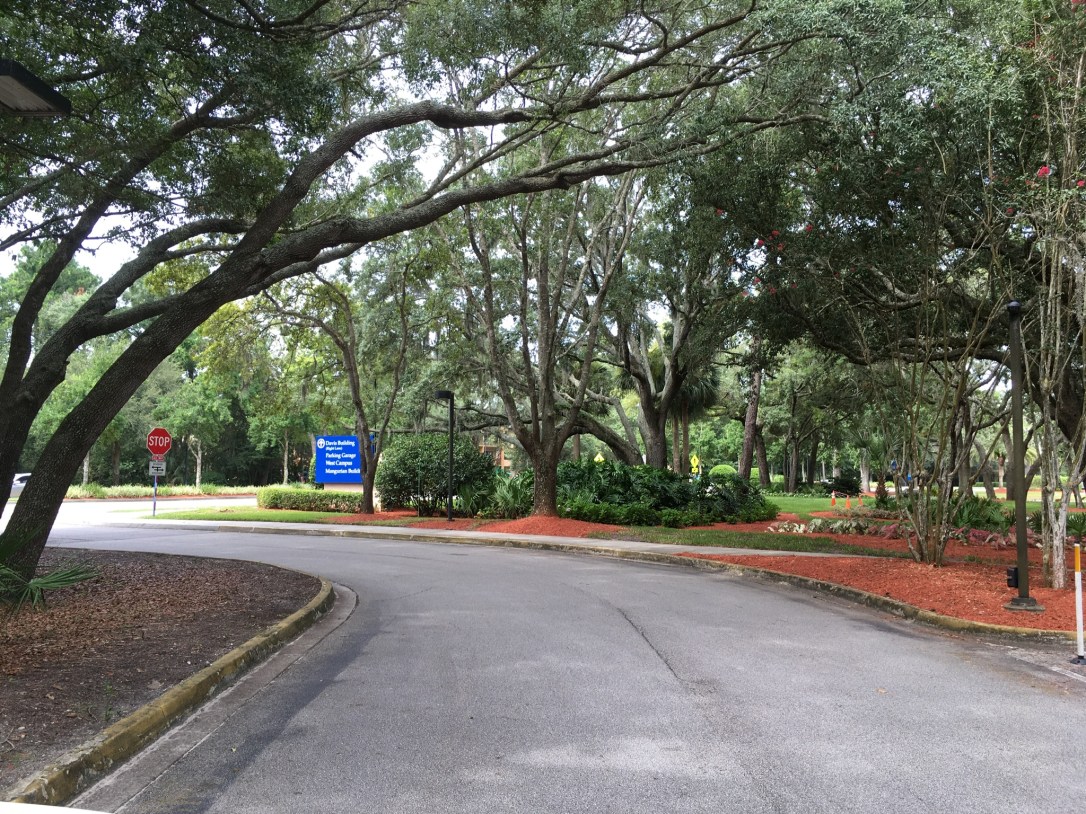
We turned in to the Mayo campus on a road framed with lush, spreading trees. Palm trees were interspersed among the large trees and plants covered the ground. The landscape was made even more beautiful by a large pond with a fountain sending water into the air. It reminded me of the Living Water that quenches our thirst forever. I looked up and saw the words, “Mayo Clinic” and suddenly felt a sense of being home, of being in a place with people who would care for me. A silent tear slid down my face and I felt very full, the lump in my throat extending into my chest.
The week was full of appointments and medical tests, beginning with the transplant nephrologist, Dr. Mai, who is one of the most compassionate and personable physicians I have ever met. He took a complete history, examined me thoroughly and answered ever question we had.
I must say that every single employee at Mayo Clinic was professional, pleasant and kind. It was an atmosphere of caring and compassion. It was a busy place that never felt rushed. They pulled off a “medical miracle” of a sorts, scheduling about thirty appointments for me and never being off schedule for even one of them.
There are places throughout the buildings to stop and rest, many of them filled with the sounds of soothing classical music. It is a place that values art, which you will find in every nook and cranny. And then there is the atrium for meditation, a space closed off from the rest of the clinic. When you enter, a large flowing fountain makes the only sound you will hear. In that silent place, the lighting is dimmed and there are comfortable places to sit. A beautiful altar-like table draws your focus.
After the full week of tests, scans, blood draws and consultations, we were back with Dr. Mai who patiently explained every test result. He was encouraging about the kidney transplant and said more than once that I needed a transplant as soon as possible. “But what do I know?” he said. “I’m just a regular doctor. The surgeon is the one who will tell us if a transplant is possible.”
Then we moved to our very last appointment with the transplant surgeon, the one who would hold my fate in her hands. I feared this last appointment and worried about it throughout the week. The surgeon would have the last word.
How delighted we were to meet Dr. Perry, a rather young woman who obviously knew her craft. She looked over all the scans and examined the potential site of the incision. After a lengthy Q & A, she sent us on our way. She had the final word, the last words of the week. “Let’s get you a kidney!” she said enthusiastically, and all the hope I thought I had lost rose up inside me.
When we drove away, I felt incredibly sad to be leaving that caring place. The lump in my throat came back and I was filled with gratitude, confident that God had chosen Mayo Clinic to help me take back my life.
This morning I was reading an interesting article about Michael, the Archangel. The headline read “Call upon the Archangel to stand guard over you . . . at night.” The article pointed out that we are the most vulnerable when we are asleep, unable to protect ourselves from harm. The Archangel Michael can protect us. The information, while interesting, was not all that earth shattering. But reading it brought to mind an unforgettable childhood memory.
As a child around the age of five, I didn’t think much of this particular day, but as an adult, I count it as one of my most cherished memories. On top of that, I now see it as an early childhood experience that shaped my view of God and began to prepare me for the vocation of ministry. But I must begin at the beginning to paint a picture of a precocious, spoiled five year old.
My mother was expecting a new baby, my first sibling. I was all in if the baby was a sister, but for some reason, I loathed the idea of a baby brother, which is exactly what I got. I was NOT happy! I remember it like it was yesterday. Yiayia (my grandmother) broke the news. I stomped my feet and declared that my mother could absolutely not return home with a boy baby!
Going on alongside my childish impertinence, the adults were experiencing a completely different reality. It appeared, in fact, that my baby brother would not come home and that his survival was doubtful. As in many Greek families, my brother’s dangerous situation remained “between us,” which meant my grandmother, my father and my two aunts, Eirene and Koula. At all costs, my mother was not to be told of the seriousness of her new baby’s health. And of course, nothing was to be said in the presence of five-year-old Kalliope, though that made no difference at all because my ears had always been finely attuned to family secrets and whispers. When adults spoke, even in hushed whispers, I heard.
So I knew, at least, that something was amiss, and if I am honest, I have to confess that I was glad I would not be having a brother in my world. Until the next day. As soon as I woke up, Yiayia washed my face, made me brush my teeth, and began to dress me. For reasons I did not yet understand, she was dressed in her church clothes and she pulled out a church dress for me. I knew it wasn’t Sunday, but I did not know that I was about to have a life-altering experience. Now you might think that a five-year-old cannot really understand a life-altering experience. But you would be mistaken. This life-altering experience has been lying in my memories for more than six decades.
Both dressed impeccably, we put on our winter coats and walked across the street and down the block to the bus stop. I was cold, ready for the bus to show up. Of course, I asked where we were going and why we were so dressed up. “Siopi! Min milas tora!” was Yiayia’s response. “Hush! Don’t talk right now!” Sensing the fear and grief in Yiayia’s mood, I sat quietly and didn’t say another word as the bus took us to downtown Birmingham. When we disembarked, I knew exactly where we were going, but I did not know why.
As we walked up the front steps at our Greek Orthodox church, I felt the warmth of the building easing the February cold. I was glad to be warm. I smelled the incense, comforted by the familiar fragrance. And I watched the flames of hundreds of thin white candles placed in a bed of sand as Yiayia lit another one, placed it in the sand, and made her cross. Immediately, I made my cross, too, three times, as I was taught to do.
The church was silent. With dim lights, it had never looked more beautiful. As we walked down the aisle through the nave, I looked to each side to see the stained glass windows. I looked up above the nave into the dome of the church where the icon of Christ, Ruler of All, looked back directly at me in a way that almost seemed eerie. I realize that we are going up the steps to the iconostasis, the wall of doors that each had an icon on them. I had never, ever been up those few steps. It was the place, I thought, where only the priest and the altar boys could be.
But up we went, and stood directly in front of the door bearing the image of Michael the Archangel. Finally, Yiayia spoke. “Your brother is going to die. We have to pray for him to St Michael, the protector of all. You pray too.
And so we did, Yiayia with a deep, reverent, desperate fervency that pleaded for the Archangel to save the baby, offering Saint Michael a promise in return for the baby’s life. As for me, I can only remember having a lump in my throat and trying not to cry. But tears streamed down my cheeks as we finished, and I made my cross three times.
We headed silently back to the bus stop to go home. The house was much quieter than usual, and I stayed quiet too, which was a huge feat for me. I didn’t say anything about not wanting my baby brother for a few days, which proves the cunning wisdom of a five-year-old. I played quietly in my room the rest of the morning, but the mood in the house lifted that very afternoon.
My father and aunts came home not many hours after our church experience and announced with unbridled joy that the baby was going to be fine. Yiayia made her cross three times and gave exuberant thanks to God and St. Michael the Archangel who heard our prayers, gave us a miracle, and saved the baby boy.
My mother did come home with the miracle baby, Andrew Michael (named after the Archangel who saved his life). I stood my ground, refused to hold him or look at him, and sternly pronounced that they should take him back and bring me a sister!
So much for my spiritual act of devotion in the church. On the other hand, isn’t that just the way God works with us? Planting spiritual experiences in us when we hardly take notice, knowing that we will hide them somewhere in our hearts for a later time in our lives.
This morning, I read a meditation from the Center for Action and Contemplation as I often do to start my day. In it, Sister Joan Chittister explores the relationship between prophetic witness through compassion and contemplation. Sounds risky to me! And that’s very close to the point Sister Joan makes:
. . . contemplation is a very dangerous activity. It not only brings us face to face with God, it brings us, as well, face to face with the world, and then it brings us face to face with the self; and then, of course, something must be done.
Something must be filled up, added to, freed from, begun again, ended at once, changed, or created or healed, because nothing stays the same once we have found the God within. . . . We become connected to everything, to everyone. We carry the whole world in our hearts, the oppression of all peoples, the suffering of our friends, the burdens of our enemies, the raping of the earth, the hunger of the starving, the joyous expectation every laughing child has a right to. Then, the zeal for justice consumes us. Then, action and prayer are one.
Bolder prophetic words were never written! Would that all of us who profess a relationship with God might rise from our knees and be ennobled by our prayers to do justice and love mercy! Largely, this is not the case for us. Our prayers feel empty, devoid of the compassion of Christ and the power of the Holy Spirit. After we have prayed, have we changed? Has our heart been softened by moments of communion with God? Does our heart move into a tragic world with the tenderness of a compassionate Christ?
As we are praying, children and families still languish at our borders, suffering in living conditions that seem impossible in America. And we hear the distant echo of Jesus asking for the children to come to him.
As we are praying, the ever-changing climate exacts its harm on oceans and rivers, having significant impact on ecosystems, economies and communities. Rising average temperatures mean balmier winters for some regions and extreme heat for others.Flooding, drought and violent storms take a dangerous toll on our beloved earth.
As we are praying, gun injuries cause the deaths of 18 children and young adults each day in the U.S. And every day, 100 Americans are killed with guns. Can we ignore the fact that nearly 1 million women alive today have been shot, or shot at, by an intimate partner?
All the while, we comfortably rest in our own kind of contemplation. Yet, contemplation must be redefined. We must learn to experience it as a change in consciousness that forces us to see the big picture, to see beyond our own boundaries, beyond our denominations, our churches. Sister Joan again says it best:
Contemplation brings us to see beyond even our own doctrines and dogmas and institutional self-interest, straight into the face of a mothering God from whose womb has come all the life that is.
Transformed from within then, the contemplative becomes a new kind of presence in the world who signals another way of being. . . . The contemplative can never again be a complacent, non-participant in an oppressive system. . . . From contemplation comes not only the consciousness of the universal connectedness of life, but the courage to model it as well.
Those who have no flame in their hearts for justice, no consciousness of personal responsibility for the reign of God, no raging commitment to human community may, indeed, be seeking God; but make no mistake, God is still, at best, only an idea to them, not a living reality.
So we struggle, Christ followers in a world of cruelty and insanity. Our struggle is about what exactly we can do when we face the world after our contemplative practice. Isn’t contemplation and compassion a pilgrimage to the heart, my own heart and God’s heart? When our moments of contemplation reveal a clear-eyed view of a suffering world, what does Christ’s love and the Holy Spirit’s prompting move us to do?
I often refer to the words Tikkun Olam, the Jewish teaching that means repair the world. Tikkun Olam is any activity that improves the world, bringing it closer to the harmonious state for which it was created. So how does our contemplation lead us to practice Tikkun Olam, to repair the world? What is it that “must be filled up, added to, freed from, begun again, ended at once, changed, or created or healed?”
It is a critical question for all of us and each of us. Indeed, each person must find her own answer and must follow her own path. The way ahead may lead to U.S. border towns. The way ahead may lead to phone calling or letter writing. It may lead to community activism or bearing witness in places where injustices occur. It may lead to protesting and marching or teaching and preaching. It may lead to deeper communion with God through even more time spent in prayer and contemplation.
It will, beyond any doubt, lead us to the places in our world where compassion touches pain. Dangerous contemplation will most definitely lead usto those places.
Ugandan Women at the River; Watercolor by Kathy Manis Findley
I tell my story best when I tell the stories of the people that God has placed in my life. Quite often, my heart recalls beautiful memories of a people that became an important part of my life. They are a people who touched me beyond measure when my husband and I served as missionaries to Uganda, East Africa.
The Ugandan people captured our hearts quickly and completely. We saw the great need and set about our work in village after village, doing whatever we could to promote self sufficiency and good health. We worshipped in their churches and learned about the amazing resilience of their Christian faith. Perhaps we helped make their lives better in small ways. There is no doubt that the Ugandan people made our lives better in big ways. It was so many years ago, but I remember it as if it happened yesterday. The two of us stepped off of a plane in the Nairobi airport to begin a new life. As very young missionaries, we had no idea what we would face in the days to come.
Getting to Uganda from Kenya was a long, dusty ride through the most beautiful places we had ever seen. Through bush country and savannah, through banana groves and rain forests, through tea plantations on the mountainsides and the deep waters of Lake Victoria, we were getting acquainted with this continent.
Ugandan Crested Cranes; Watercolor
The terrain was ever-changing, and the way was marked by the majestic beauty of elephants, giraffe, cape buffalo, gazelles, flamingos and Ugandan crested cranes.
The most moving sight of all was the people, barefoot and downtrodden, wearing rags and carrying heavy water containers. Yet, the sight of women at the banks of a river dipping their water jugs to carry to their families was a portrait of beauty and community. In spite of the toll the war had taken, these women retained their pride and dignity, and their joy. They wore basutis (native Ugandan dresses) of many vibrant African colors. In spite of the fact that their basutis were torn and tattered, they caught the rays of the equatorial sun and were bright with the greens, oranges, burgundies blues and yellows that mirrored the Ugandan landscape. The women stood together in the river, at times laughing and talking to one another, and at other times singing, in spite of their ominous sociopolitical world.
Their country had all but been destroyed by the evil dictator Idi Amin, who orchestrated the genocide of 100,000 to 500,000 Ugandans. Churches were burned to the ground, schools pillaged, roads were in shambles. Children were left orphaned in a country of widows. Their faces showed the wear of grief, their bodies the mask of mourning.
They were why we had come, sent by God to comfort a grieving people. The days ahead found us digging water wells, distributing agricultural tools and vegetable seeds, giving out books, bibles, blankets and sewing supplies, bringing in simple medicines and vaccines.
I can never think of the Ugandan people without recalling Lamentations 5, a scripture passage that was read in a church service to describe the plight of the people. As the reader read through her tears, the entire congregation wept, mourning so many losses. I offer the text here in its entirety:
Remember, Lord, what has happened to us; look, and see our disgrace.
Our inheritance has been turned over to strangers, our homes to foreigners.
We have become fatherless, our mothers are widows.
We must buy the water we drink; our wood can be had only at a price.
Those who pursue us are at our heels; we are weary and find no rest.
We submitted to Egypt and Assyria to get enough bread.
Our ancestors sinned and are no more, and we bear their punishment.
Slaves rule over us, and there is no one to free us from their hands.
We get our bread at the risk of our lives because of the sword in the desert.
Our skin is hot as an oven, feverish from hunger.
Women have been violated in Zion, and virgins in the towns of Judah.
Princes have been hung up by their hands; elders are shown no respect.
Young men toil at the millstones; boys stagger under loads of wood.
The elders are gone from the city gate; the young men have stopped their music.
Joy is gone from our hearts; our dancing has turned to mourning.
The crown has fallen from our head.
Woe to us, for we have sinned!
Because of this our hearts are faint, because of these things our eyes grow dim for Mount Zion, which lies desolate, with jackals prowling over it.You, Lord, reign forever; your throne endures from generation to generation.
Why do you always forget us?
Why do you forsake us so long?
Restore us to yourself, Lord, that we may return; renew our days as of old
unless you have utterly rejected us and are angry with us beyond measure.
— Lamentations 5, New International Version
That worship service in the Church of Uganda (Anglican) sanctuary was unlike any I had ever experienced. The people wept freely and openly, grieving the loss of husbands, children, parents. Once described as “the pearl of Africa” by Sir Winston Churchill, Uganda was a land of incomparable natural beauty that now had been ravaged by war.
As the reading of the scripture in Lamentations came to an end, one woman with tears flowing down her cheeks began to sing and dance. The congregation joined her, singing with great fervency, “Dance then, wherever you may be. I am the Lord of the Dance said he. And I’ll lead you on wherever you may be, I am the Lord of the Dance said he.”
The aisles of the sanctuary filled with dancing and weeping all at once.
Their mourning had turned to dancing. The inner joy of a people was not, and could never be, destroyed. Their hearts, so filled with the music of their faith, could not be silenced. They could sing. They could dance. Even through their tears. That is the music of abiding, persistent faith.
How grateful I am to God for choosing us to enter into community for a time with these wonderful people.
Today I want to share the poetry of my friend, Maren Tirabassi, who writes of her deeply held convictions of what is just and good and right. Most of us have a vision of what it would look like if we managed to “make America great again.” The vision must look like justice, nonviolence, racial and ethnic diversity, and above all, open hands and open hearts that welcome the stranger.
You shall also love the stranger, for you were strangers in the land of Egypt. Deuteronomy 10:19
The alien who resides with you shall be to you as the citizen among you; you shall love the alien as yourself, for you were aliens in the land of Egypt: I am the Lord your God. Leviticus 19:34
Take a few minutes to contemplate the meaning of the poem that follows, “The Eve of the Fourth of July.”
The Eve of the Fourth of July
I’ve loved the parades of other years
with bicycles decorated,
and children banging coffee-can drums,
with cars decorated with streamers
carrying the oldest citizens,
with the well-rehearsed middle school band
the cub scouts and blue birds
daisy girls and a flatbed trailer
with some church choir holding on tight,
and not a tank in sight.
I have loved parades of other years,
but the only parade I ask this year
is the parade of justice,
the only fireworks I hope to view
is legislation for gun control.
Let us recite not — “The Declaration of Independence,” but Frederick Douglass — “What to the Slave is the Fourth of July?”
Let us sing “God bless America”
remembering the immigrant
who wrote the words,
and “American the Beautiful”
celebrating the queer woman
whose vision of abundance and history
it captured
from the top of Pike’s Peak.
Let us wave no flag but a banner saying, “welcome all!”
And reading Emma Lazarus’ poem,
not call those who come “poor and huddled …”
but “rich with gifts”
the ones which,
if we have the wisdom to receive them,
will make America great again.
The saints have left us a legacy of wisdom, inspiration and challenge. I often browse through readings by the saints and find myself enthralled in the words, wondering what in their lives prompted the words they have written. Most often, there is a back story that offers a glimpse into their lives.
One of the saints that calls for my attention is Teresa of Avila. I became especially interested in her life during the years our progressive Baptist church worshipped each week in the chapel of Carmel of Saint Teresa of Jesus in Little Rock, Arkansas. I was the pastor of a church where Baptist congregants worshipped in a beautiful chapel cared for and consecrated by Carmelite Sisters, thirteen of them at that time.
How rich an experience it was for us! As we lived out our spiritual commitments in the world, we were blessed immeasurably by the inner life the Sisters modeled before us . . . a life of silence, reverence, prayer and contemplation.
Recently I came across a quote by Saint Teresa of Avila, also known as Saint Teresa of Jesus, that touched my heart.
Close your eyes and follow your breath to the still place that leads to the invisible path that leads you home.
Those words were intriguing to me, calling me to a still place. Calling me to allow my breath to lead me to the still place on the invisible path. I contemplated the meaning and what the meaning might say to me. I could not help but wonder what prompted Saint Teresa’s words. And then I looked at her back story.
It seems that Teresa of Avila was a reformer of the Carmelite Order. The movement she initiated was later joined by the younger Spanish Carmelite friar and mystic, Saint John of the Cross. It led eventually to the establishment of the Discalced Carmelites. A formal papal decree adopting the split was issued in 1580. Throughout her life, Teresa founded several new reformed Carmelite Orders.
Saint Teresa experienced years of excruciating pain and serious illness. Her spiritual life was one of dreams, visions and mystical experiences. Unfortunately, when her mystical experiences, including visions, became widely known, she was treated with ridicule and even persecution. Her religious ecstasies caused jealousy and suspicion. She lived in the period of the Spanish inquisition, a time in history when any deviation from the orthodox religious experience came understrict observation and scrutiny.
So her experiences of spiritual ecstasy subjected her to the investigations of the Inquisition. In 1576, a series of persecutions began on the part of the older observant Carmelite order against Teresa, her friends, and her reforms. Pursuant to a body of resolutions adopted at the general chapter at Piacenza, the “definitors” of the order forbade all further founding of convents. The general chapter condemned Teresa to “voluntary” retirement to one of her institutions.
But prior to her forced retirement, Saint Teresa devoted her life to traveling around Spain setting up new convents based upon ancient monastic traditions. Her travels and work were not always greeted with enthusiasm, as many resented her reforms and the implied criticism of existing religious orders. She often met with criticism, including the papal nuncio, who used the rather descriptive phrase “a restless disobedient gadabout who has gone about teaching as though she were a professor.”
Saint Teresa of Avila most assuredly had a great deal to teach us about the importance of an inner life of deep contemplation and an outer life of immersion into the hurt of the world. What a lesson we could learn about doing the inner work that enables us to do the outer work in a suffering world!
So the one who spoke those words about a “still place” had so much more to say when we readthe entirety of her writings. The following are but two small glimpses into her depth of devotion.
This magnificent refuge is inside you. Enter. Shatter the darkness that shrouds the doorway. Be bold. Be humble. Put away the incense and forget the incantations they taught you. Ask no permission from the authorities. Close your eyes and follow your breath to the still place that leads to the invisible path that leads you home.
Christ has no body now, but yours. No hands, no feet on earth, but yours. Yours are the eyes through which Christ looks compassion into the world. Yours are the feet with which Christ walks to do good. Yours are the hands with which Christ blesses the world.
Saint Teresa was a contemplative mystic that showed us a life of silence and prayer. But she was also a brilliant revolutionary in the best sense of that word. We would do well in our quest to follow God to emulate her life that spoke so eloquently of our hands and feet being those of Christ on earth. She showed us deep contemplation and revolution. Our world needs both.
My friend and sister blogger, Maren, never fails to inspire, convict or challenge me. I look forward to her blog posts, knowing that by the end, I will find myself in a gasp, or at least a sigh. She is gifted at helping her readers stay in touch with the current angst of the times, the events and realities of our world. This is her latest post:
My little hand holds (and not the great world)
the small shining of shook foil
and there is no beauty that I see,
only the blankets on children detained —
alone and frightened, cold,
and without care,
without — O you grand and broken God,
toothpaste and soap,
and parents,
without justice, compassion,
but not without hope,
because that alone, hope
is never spent, but lights the western sky
as night falls
on the long walk from the south,
even if dimly, touches
with fingers a rim of east
every morning, every detention center.
Hope brought them here
to the terrible inhospitality
that smears
all this country ever thought to be.
And it is left to us and the Holy Spirit
to brood
over those who are lost,
and bend the world
so that the living children
might someday be found
by bright wings.
And here is where it grabbed my heart . . .
What does it mean for me to join with the Holy Breath of Life “to brood over those who are lost, and bend the world?” What would that look like? How do I do it? Does it mean to “brood” over the lostness of our world and call forth life?
What a need that is! How desperately we need to bend the world toward mercy and justice. To lift up the children who sleep on cold concrete floors. To lift them high above the world’s cruelty to the place of “bright wings!”
May God help us to comprehend the brooding Spirit and her open arms. And may she reach down to grab us and hold us up inside the wind that heals.
On this Monday, prayer seems difficult to me. It feels as if I need it so much, yet cannot seem to connect with the holy. I need a quiet place, a place of peace and serenity. I need a personal retreat that enables me to touch all that is anxious within me. I need a place that can help me reach into the palpable anxiety just below the surface. I need a place that calls forth my tears so that, without fear, I can let them fall. I need a place that helps me to get to that lump in my throat that lingers with me. At my retreat, I need a person with spiritual insight and wisdom to gently guide me to my emotional and spiritual place of longing.
For many reasons, this kind of retreat is not possible right now, so I carry on. That’s what most of us have to do day in and day out, struggling to touch the holy and falling short of that. And then, on occasion, we are graced with a touch, a word of hope, a friend who understands, a prayer that reaches the heart. Today, I received that prayer from Anne Fraley. It is “a balm for hurting souls,” a word of hope. I hope it lifts your spirit as it has lifted mine.
Blessed One,
who colors our days with the glow of fireflies and the roar of the ocean,
carry us this day on the breath of your love.
Invite us into the nooks and crannies of delight,
where dreams are born and disappointments released.
Tend the bumps we suffer at the hands of the careless and the words of the thoughtless, and soothe the rough patches we inflict on others.
May our prayers resonate with the needs of the world, and our hearts connect to those who hunger for companionship.
May our song bear the imprint of all who seek you, and our chorus be as balm for hurting souls.
In all things, help us to weave the thread of love and light through the worlds in which we move, and raise our voices with joy to proclaim your name.
Amen
Anne Fraley is rector of St. Peter’s Episcopal Church in South Windsor, CT. A life-long dog-lover, she escapes the demands of parish life volunteering for animal rescue groups. She occasionally succeeds at reviving her blog at reverent irreverence. Her prayer today is published at https://revgalblogpals.org/2019/06/24/monday-prayer-214/
I read a very disturbing article today. Here is a part of it:
Attorneys who visited a Border Patrol processing center in McAllen, Texas, as part of an inspection found that officials there had been illegally jailing a sick, prematurely born one-month-old infant and her 17-year-old mother for days, BuzzFeed News reports. This same facility, known as Ursula, was last year called “the ‘epicenter’ of the Trump administration’s policy that has separated thousands of children from their parents” by an official with the Department of Homeland Security.
“You look at this baby,” said volunteer Hope Frye, “and there is no question that this baby should be in a tube with a heart monitor.” Instead, the tiny child was wrapped in a sweatshirt and was reportedly “weak and listless.” Her mom, still weak from her emergency C-section in Mexico, was in a wheelchair and hadn’t been able to sleep due to pain.
They shouldn’t have been there in the first place. “Under federal law, minors are required to be released from Border Patrol custody within 72 hours to officials in the Office of Refugee Resettlement after they are determined to be unaccompanied. Both the 17-year-old mother and her 1-month-old baby are considered unaccompanied minors.”
The Washington Post last month reported that hundreds of children “have been with the Border Patrol for longer than 72 hours, and another official said that more than 250 children 12 or younger have been in custody for an average of six days.” Who knows how much longer this mom and infant would have been in custody, had attorneys and others not intervened? (From Daily Kos)
Good question! How much longer would they have been held in the custody of officials who obviously had no regard for their well being?
Good question! Why is this horrendous treatment of refugees tolerated in our country?
Good question! Has this nation become a nation of cruelty to those coming through our borders and how did we get there?
Best question! What can you and I, as persons called by God of grace and lovingkindness, do to help bring an end to this atrocity?
There is obviously no easy answer and no quick fix, but those who are suffering need a quick fix. They need for us to stand up and help reclaim our nation’s position as a welcoming, compassionate nation. In these days, I wonder what the symbol of Lady Liberty means to us?
A gift from the people of France, Lady Liberty has watched over New York Harbor since 1886, and on her base is a tablet inscribed with words penned by Emma Lazarus in 1883:
Give me your tired, your poor, Your huddled masses yearning to breathe free, The wretched refuse of your teeming shore. Send these, the homeless, tempest-tossed to me, I lift my lamp beside the golden door!
Most importantly, we must ask this question: Can we escape from the admonitions in Holy Scripture? Can we ignore the call of Jesus to love our neighbor as we love ourselves? (Luke 10:27) Can we ignore these warnings?
You shall also love the stranger, for you were strangers in the land of Egypt.
— Deuteronomy 10:19
The alien who resides with you shall be to you as the citizen among you; you shall love the alien as yourself, for you were aliens in the land of Egypt: I am the Lord your God.
— Leviticus 19:34
Cursed is anyone who withholds justice from the foreigner, the fatherless or the widow. Then all the people shall say, ‘Amen!’
— Leviticus 27:19
. . . I was a stranger and you welcomed me.
— Matthew 25:31-46
Whoever has two coats must share with anyone who has none…
— Luke 3:11
…Bring good news to the poor…release to the captives…sight to the blind…let the oppressed go free.
— Luke 4:16-21
In light of our faith and the counsel of Holy Scripture, each of us must answer the critical question: “What must I do about this?” These are only a few of the actions we might undertake:
Hold congressional representatives accountable and constantly hold up before them the “more excellent way.” Phone calls, letters, emails, visits — not just once, but continually.
Stay aware of the credible news reports of treatment of refugees at the border. Take that information — every time — to your representatives.
Discover ways that your faith community might partner with faith communities near borders by providing clothing, personal items, blankets, towels, cash. Ship to them whatever they might need for their care of refugees.
If possible, travel to the border nearest to you and see what is happening first hand. When you have seen and heard the voices of people seeking refuge, your life will be forever changed, your heart will know genuine compassion and your impulse to intervene will be magnified.
I certainly do not know which of these actions might be possible for you. But I do know two things. I know that this issue is fluid and current, and that the raid sites are throughout the U.S. Just this minute I received this information in my news feed:
ICE is set to begin immigration raids in 10 cities on Sunday. Last year, the Executive Office for Immigration Review announced that it had begun tracking family cases filed by the Department of Homeland Security in 10 immigration court locations: Atlanta, Baltimore, Chicago, Denver, Houston, Los Angeles, Miami, New Orleans, New York and San Francisco. (CNN)
I know also that our faith calls us to compassion, kindness and a welcoming spirit. We can respond to that call in whatever ways seem good and right.
Blue skies and gentle breezes. That’s Macon most of the time. Oh, and you have to factor in the gnats, the annoying gnats that we have because we live on the gnat line.
You will find that not only is the gnat line a real thing, but that it also sits directly on top of Macon, Georgia. No one told me that before I moved here.
Still, there are blue skies and gentle breezes this morning. For a few seconds, I am fully in the moment, fully aware of the blue skies over me and the warm breeze that points my mind to all that is good, to all the things about nature that we can count on.
Gnats notwithstanding.
In some ways, it’s a picture of life —the beauty of blue skies and gentle breezes, right along with the persistent aggravation of gnats buzzing your face. Certainly, life is like that for me. There are every day graces accompanied with aggravations, challenges and sometimes troubles. Life brings days of deep mourning sometimes and times for gladness at other times.
Most thoughts these days take me to the very real possibility that I will receive a new kidney. The thought of it is both exhilarating and terrifying. I would not be me if I did not have the troubling thought that I might die in the middle of surgery. Or that I might contract a lethal infection and die of that. Or maybe I’ll be be compromised from the procedure and not recover.
On the other hand, maybe I’ll thrive with a new kidney. Maybe I will feel better than I have felt in five years. Maybe it’s true that I’ll live longer. Maybe life will begin again, fresh and new and full of possibilities. I love this message from the writer of Ecclesiastes.
So I commend the enjoyment of life, because there is nothing better for a person under the sun than to eat and drink and be glad. Then joy will accompany them in their toil all the days of the life God has given them under the sun.
— Ecclesiastes 8:15 (New International Version (NIV)
What a good and gracious thought! The promise that as we are enjoying life, joy will be in us through whatever “toil” we face. Struggle, trouble, travail — we experience all of these in life, right along with the joy.
So as I contemplate a kidney transplant, I might just think of it as one of life’s “toils” that, by God’s grace, will be accompanied by joy.
I think I can do this. After all, “the joy of the Lord is my strength.” (Nehemiah 8:10)
There is a very special call from God that lets you know that it is your call and that no one else can respond to it quite like you can. It brings with it a kind of holy, inexplicable energy.
Your call may be teaching or preaching, caring for others or working with children, tending the sick or lifting up those who live in poverty. Your call may take you down your street or halfway across the world. But when you hear your call and know it, you will also know the feeling of that holy energy. There’s really nothing quite like it. Its precisely the reason that no human has enough power to thwart your call for any reason — for being a woman, or being too old, too young, too inexperienced. No human can steal the holy energy of your call!
Preaching releases every kind of holy energy for me. Preaching creates in me a unique awareness of my body, mind and spirit. It is, above all, a soul exercise that brings me fresh new life. That’s the best way I can describe the event we call preaching, at least from my view. But it is so much more than just an event; it is a 20 minute pursuit of truth, inspiration and spirit movement. It is for the hearer and for the proclaimer, for both are in this place of spiritual replenishment in need of new awakening to the things of God.
Last fall, I preached at my church in Macon. It was a rare opportunity, a red-letter day really. It was the first time I had preached since my illness. It had been roughly five years since I stood in a pulpit to do what I have been called to do. Those who have a similar calling probably know the angst of not preaching when God has called you, for God’s call is a lifelong agreement. For me, there is something life-giving in the act of preaching a sermon. I experience a special connection to the congregation that feels as if it moves by the wind of the Spirit.
So it would not be an exaggeration to say that I miss preaching deeply. I miss being a pastor. I miss creating worship experiences for a congregation.
But back to the opportunity to preach at my church . . .
I was looking forward to the holy energy, hoping it would come back to me after so long a time. And this was such an important life event for me that I had several conversations with “my village.” Most importantly, I had a conversation with my former pastor and colleague in ministry from the previous church I served in Little Rock. I think I needed some encouragement that I could still preach after so many years of illness. The words — the right words — came just in time from a person I will always consider to be my pastor. He is a person I greatly admire, and a male minister who knows how to serve a congregation in mutuality and communion with a woman. He is a minister who embodies that holy energy I’m talking about, and he inspires others to find or reclaim their holy energy.
How rare it is to enjoy the interrelationship and kinship of male and female in mission and ministry! I miss the time we served New Millennium Church together. I miss Wendell Griffen’s support, encouragement and respect. So when we exchanged messages that day, his words were the right words, the words I really needed to hear, so transformative for me in that moment that I copied them to my journal. This is what I wrote:
From Wendell, September 30, 2018:
“Praying for and with you, Kathy!Preach like only you can!New Millennium is praying with you, Reverend!”
It occurs to me that all of us need encouragement at times. We need persons who will cheer us on, persons who will believe in us when we don’t believe so much in ourselves. For me it was an illness that interrupted my life. For others a life interruption can be any sort of change — the loss of a job, the loss of a loved one, dealing with an empty nest, moving to another home, leaving a church and searching for another church. For whatever reason, life interruptions do hold some measure of power that can break us down and assault our confidence.
It is no big news to know that life interruptions can throw us face-down in the dirt, and it is extremely important for us to have the fortitude and the will to pick ourselves up and dust ourselves off. It’s not so easy to do that for so many reasons. With self confidence eroded, we can be motionless, bereft of spirit, with little energy left.
So then, we must do two things to make sure that we can reposition ourselves — upright and moving forward after a life interruption. The first is to recall the Divine promises of a God who always holds us up. These are three of the promises that give me hope:
We are afflicted in every way, but not crushed; perplexed, but not driven to despair; persecuted, but not forsaken; struck down, but not destroyed . . .So we do not lose heart . . . For this slight momentary affliction is preparing us for an eternal weight of glory beyond all measure.
— 2 Corinthians 4:8-9; 16,17 NRSV
And after you have suffered for a little while, the God of all grace, who has called you to his eternal glory in Christ, will himself restore, support, strengthen, and establish you.
— 1 Peter 5:10 NRSV
Thus says God, the Lord . . .
I am the Lord, I have called you in righteousness, I have taken you by the hand and kept you; I have given you as a covenant to the people, a light to the nations, to open the eyes that are blind, to bring out the prisoners from the dungeon, from the prison those who sit in darkness.
— Isaiah 42:5-7 NRSV
The second thing we must do is to surround ourselves with a community of care, love and grace — individuals who will listen, understand and always encourage. The book of Hebrews offers us good instruction to “consider how to stir up one another to love and good works.” (Hebrews 10:24 RSV)
Each person has the opportunity to open up their hearts and spirits to the calling of God. Each person will hear the call to mission in their own way. Each person will decide whether or not to respond to God’s call on their life. But all of us — together in community — will be able to hear God’s call clearer and find in ourselves more courage to follow. Community, when it is genuine, is like that.
I hope that you will find your genuine community as you listen for God’s call to you, the call that no other person can fulfill. I hope that you will experience holy energy, that fire in your bones that no human can extinguish. There’s really nothing quite like it!
The Day of Pentecost — my favorite Sunday of the church year! A grand and glorious celebration of the coming of the Holy Spirit.
“Do not let your hearts be troubled,” Jesus told his friends. “I’m going to prepare a place for you. And in the meantime, know that I will ask the Father and he will send you another Comforter to be with you forever.” (From John 14:1-18,paraphrased)
On the day we celebrate as Pentecost, Jesus made good on the promise that the Comforter would come. They gathered in the upper room that day, men and women, disciples and kinfolk, perhaps waiting to be baptized with the Holy Spirit as Jesus promised. (Acts 1) Or maybe they were just there to have good conversation, to discuss the politics of the day. Or maybe they just wanted to hang out.
Whatever their reason for gathering, they were in for the surprise of a lifetime, the coming of the Holy Spirit. I can try to find the best words to tell you how it happened, but I cannot say it any better than this:
When the day of Pentecost had come, they were all together in one place. And suddenly from heaven there came a sound like the rush of a violent wind, and it filled the entire house where they were sitting. Divided tongues, as of fire, appeared among them, and a tongue rested on each of them. All of them were filled with the Holy Spirit and began to speak in other languages, as the Spirit gave them ability.
The Church was born on that day, born on the wind. The rush of the violent wind blew through their lives. Tongues that looked like flames of fire rested on every one of them, and from that dayon, their lives were changed. They left that room with renewed courage, with a confident boldness. Maybe they even believed they could change the world!
Ah, that renewing Holy Spirit! That breath of life that sweeps through us and prepares us for holy mission. In these days of ours, so many things need the kind of change that can only happen through the wind of the Spirit. There are divisions to heal and children to protect. There are wrongs that need to be righted and truth that needs to be told. There are walls to tear down and people to shelter. The world, so broken, needs repairing. To be summoned to the mission of repairing the world is our honor.
I am inspired by the Jewish teaching Tikkun Olam, which means “repair the world.”Rabbi Menachem M. Schneerson described tikkun olam as the mission of every human being. With a voice of urgency, he spoke with the conviction that in our times, one small deed could bring the world to the resolution for which it has yearned since its creation.
For this kind of mission, the Holy Spirit comes to us, bringing the breath of holy change and inviting us to be a part of it. That refreshing, renewing Holy Spirit, Pentecostal power, wind and flame that can change our world! May the wind blow among us and the flame kindle our passions to bring that change!
It is as the hymn says:
O Breath of Life, come sweeping through us,
revive your church with life and power;
O Breath of Life, come, cleanse, renew us,
and fit your church to meet this hour.
Life seems to be a marathon search for God, a search that never ends, but rather continues unrelenting in the soul. It is no secret to realize that the soul has need of God. Or perhaps it’s better that I speak for myself: My soul has need of God.
But the God I need is not the “God of our Fathers.” That God is not big enough, complete enough, for me. I long for another presence of God in my soul. I long for a God that I can experience as both father and mother.
In my defense, there are hints throughout early Christianity and in Holy Scripture that God transcends “male” and “female.”
In Genesis, for example, women and men are created in the “Imago Dei,” image of God, which suggests that God transcends socially constructed notions of gender.
In the oracles of the eighth century prophet Isaiah, God is described as a woman in labor and a mother comforting her children.
And the Book of Proverbs maintains that the feminine figure of Holy Wisdom, Sophia, assisted God during the creation of the world.
Clearly, limiting God to masculine pronouns and imagery limits the countless religious experiences of billions of Christians throughout the world.It is probably best that we heed the words and warning of bishop Augustine, who once said, “si comprehendis non est Deus.”
If you have understood, then what you have understood is not God.
But getting back to my own search for God . . . In the over-used saying about “searching in all the wrong places,” we might find more truth than we expect. God as male; God as female; God as Spirit. Does it really matter so much? Regardless of our God image, we all search.
Some people search the heavens to find God, studying the constellations for a glimpse of the Divine. Others are certain that they find God in nature. Others scour the Scripture for God. Others are convinced that their own devout meditation and prayer will reveal God. Still others count on the religious rites and sacraments of their faith traditions.
The reality is that God seems to be nowhere and everywhere, waiting for me to find my own unique way of connecting. In the end, it is likely that I will not find God through my search, but rather come to the deep conviction that God was never lost to me in the first place. Saint Teresa of Avila may well have said the truest, purest words on this idea of searching for God.
We need no wings to go in search of God, but have only to look upon God present within us.
I don’t usually write about charts in my blog. I’m not really a chart person at all. But my friend, Kim Rosby, recently sent me a chart that is worth contemplating. The chart is a snapshot of what it might look like when we become our better selves. It’s entitled “The Comfort Zone,” which is a place most of us want to be.
That’s the problem. There is no growth and maturing in the comfort zone. It can become for us, not just comfortable, but also stagnant.
So I spent some time contemplating this provocative chart, and it definitely provoked some emotions in me. It appears that there are four zones that are possible for us:
The Comfort Zone
The Fear Zone
The Learning Zone
The Growth Zone
There you have it! So let’s unpack this chart a bit. When/if we manage to move ourselves out of the comfort zone, a place where we feel safe and in control, we will most likely enter the fear zone. In the fear zone, we are not at all sure of ourselves. We hang on the opinions of other people and use anything we can find as an excuse to remain frozen in place. If we don’t make a move, we can’t make a mistake. Right? We come to a point, though, where we do not believe we can move. We don’t believe we can change. We don’t believe we can seek another way.
Fortunately, some of us do make it out of the fear zone and thus find ourselves in the learning zone. What a renewing place to be, a place where new and fresh ideas are possible. It is in this zone that we realize we have moved at least a few steps past our comfort zone. We learn new skills and we discover that we can navigate challenges and solve problems. As long as we are learning, our path is clear and a future is possible.
So we move with courage into the growth zone, where we will re-invent ourselves in positive and exhilarating ways. As we conquer the objectives that were holding us back, we begin to believe in the possibility of new life goals, a deeper purpose. And then suddenly, we surprise ourselves with dreams and aspirations for something more in our lives, something fresh that inspires us to be our better selves.
I like my friend’s chart. I also like this promise that also says something very compelling about becoming our better selves:
. . . I came that they might have life, and have it more abundantly.
—Jesus
Being lonely in a room full of people can be disconcerting. You might call it “lonely in a crowd.” Not such a great place to find yourself! In these days of waiting to be transplanted, I find that this is precisely where I am, lonely in a crowd. Not alone, just lonely, as if being where I am emotionally is a place where no one has ever been before. No one I know is with me on this massive, nationwide transplant list!
People call it a “wait list,” and that is actually a very good name for it, because all you can do when you’re on it is wait. No one ever reassures you that your name has not been accidentally removed. No one gives you a magic beeper that you keep until you hear that glorious beeping that means they have a table for you. No one says, “Thank you for waiting. One of our representatives will be with you shortly.” No one tells you anything at all. It’s just a wait list and all you can do on there is wait.
The result is that being on a huge, invisible, impersonal list is a lonely place to be. As I sat in church on Sunday, with a fairly large congregation in fact. I realized that we were gathered together but we were not really with each other. I looked all around me and thought, “I don’t know these people and they don’t know me. In a few minutes, we will all leave here, and I will have emotionally connected with no one.”
It made me sad, and all the more lonely. It’s my own fault, I suppose. I could make a concerted effort to engage more fully with the worshippers that surround me each Sunday. I could will myself to go deeper into conversations than, “How are you? I’m fine, thank you.” Surely there is another appropriate thing to say after such customary and gentile greetings. Whatever it is, I don’t say it. Therefore, I depart from the church a little bit lonelier than when I came.
I left my church in Little Rock when we moved here to Macon, Georgia, almost five years ago. Leaving New Millennium Church was heartbreaking. I grieved for the good people of New Millennium for almost two years. I served as Minister of Worship there before I got sick. My mission was to plan worship each Sunday for a congregation that already knew how to worship. When New Millennium people took my plans for prayers and hymns and litanies, they lived into them freely and fully as they worshipped, and what emerged from the people was somewhere between pure exuberance and holy reverence.
And one more thing. It can truly be said of New Millennium that no one could leave there lonely. The people of the church had a way about them, almost like they collectively gave a perennial hug that expressed this truth: “God is with you, and I’m with you, too.”
I remember well the Sunday we sang this familiar hymn with a wonderfully comforting text.
Why should I feel discouraged, why should the shadows come,
Why should my heart be lonely, and long for heaven and home,
When Jesus is my portion? My constant friend is He:
His eye is on the sparrow, and I know He watches me;
I sing because I’m happy, I sing because I’m free,
For His eye is on the sparrow, and I know He watches me.
“Let not your heart be troubled,” His tender word I hear,
And resting in His goodness, I lose my doubts and fears;
Though by the path He leadeth, but one step I may see;
His eye is on the sparrow, and I know He watches me;
Whenever I am tempted, whenever clouds arise,
When songs give place to sighing, when hope within me dies,
I draw still closer to Him, from care He sets me free;
His eye is on the sparrow, and I know He watches me;
His eye is on the sparrow, and I know He watches me.
A congregation can always sing “His Eye Is on the Sparrow,” but New Millennium Church really SANG this song — with empathy, with joy, with a special kind of conviction that forced you to believe its message. Indeed it is a message worth believing, worth taking into your very soul, all the way into that loneliest place.
Are not two sparrows sold for a penny? Yet not one of them will fall to the ground outside your Father’s care. And even the very hairs of your head are numbered.
— Matthew 10:29-30 New International Version (NIV)
Yes, I am lonely. Sometimes even in the presence of people. Sometimes even in church. But I have a couple of choices: I can make a real effort to insert myself into the lives of the people around me. OR I can just accept the reality of the lonely place I am in right now and rest in it, with the assurance that, like the song says, God really does watch over me.
In your quiet time today, perhaps you would like to hear this beautiful song. I invite you to watch this video:
I refuse to disappear! All my life, I have experienced forces and people and systems that wished for my disappearance. As an advocate for victims of violence in the court and criminal justice systems, powerful people just wanted me to go away. As a child advocate, the foster care system definitely wanted me to disappear. As chair of the Little Rock Commission on Children, Youth and Families, the city power brokers wanted me gone so that they could pretend rather than acknowledge the reality of caring for the real needs of children and families.
As a pastor, I spoke truth every week, often controversial truth that the congregation might resist. I was never one to shrink back or hide. I was never willing to disappear when proclaiming the Gospel compelled me to speak. I was always fairly brave.
But I digress. The past is the past, and even now, in retirement, I often feel very much like people want me to disappear. I am resisting the way people do “placement,” that is the way people place me in a category called retirement. It feels as if others are most comfortable acknowledging my past career but forgetting that I still have talents and gifts and creativity. So here I sit — placed in one of three slots: 1) a carefree retiree that enjoys a traveling, active lifestyle; 2) a retired “old person” who can’t really do much anymore; or 3) a shut-in who is too disabled to be an active part of society.
But sitting has never been for me. I’m terrible at it. I have never allowed others to set me aside. I have never allowed people to insist on my disappearance.
These days, though, it’s a struggle. Invitations to preach or speak or teach are few and far between. It is true that I have health issues that slow me down. It is also true that a part of retirement includes challenges. But I want to resist being dismissed as irrelevant. I want to urge people to pay attention to my abilities. I want to continue my career in ways that are possible and appropriate for me. I do not want to disappear.
I refuse to be small and quiet. I refuse to hide my fire. I am still capable of disrupting the universe. I am still going to do the next right thing.
I love these words shared by women just like me who simply won’t disappear. And I love the writing of Glennon Doyle who speaks a lot of truth, inspiring and uplifting truth. She calls out to women, especially, inviting us to be the persons we want to be even when outside forces try to hold us back. “It’s not a woman’s job,” she writes, “to get smaller and smaller until she disappears so the world can be more comfortable.”
Mine is a lonely road on a journey of one.
To be sure, I have a dear, dear life partner
And a family
Friends all over the world.
Yet, I am making this journey all by myself.
All around me, friends are working, vacationing, writing, preaching
All those things I long to do
Simple things, but out of my reach.
In the meantime, I am dialyzing for hours every day
Willing myself to eat less, much less
Focusing on healthy
Exercising through pain
And waiting for a kidney transplant.
Friends are still working, vacationing, writing, preaching
All those things I long to do, still out of my reach.
Waiting for an organ transplant is lonely.
No one I know is doing the same thing.
But everyone knows someone who had one
And died
Or did poorly
Or maybe they even did great
But I never hear much about them.
Waiting for an organ transplant is lonely.
I cannot help but second-guess myself
Why the risk?
Hard decision.
A Good decision about a dangerous thing takes time
Maybe years
Info rattles around in your head for a while
Moves on as it discerns the rhythm of your spirit
Then listens for the whisper of God
And at last finds its rest in your heart
And then you know.
Friends are still working, vacationing, writing, preaching
All those things out of my reach.
They stop their busyness long enough to give me counsel
Everyone knows someone who had a transplant
And died
Or did poorly
And so they tell me that
With all the medical details they know
And mostly they don’t know
But I am holding the good decision in my heart
The right decision
The one with all the risks
Just like life
Full of risks.
Mine is a lonely road.
But I am ennobled to move forward in good hope
My mustard seed faith is enough
I leave them in the dust
All those who are working, vacationing, writing, preaching
All those things out of my reach.
I leave them in the dust
All those who knew someone who had a transplant
And died.
Because I am not moving toward death.
I am moving toward life
And light.
Unafraid, unbound, unleashed from this earth, rising with every step, a dance to lift the human soul.
What do I do through these dark hours? How do I endure them, the lostness, the fear, the spiritual suffering? How do I make my journey and avoid the dark hours that overwhelm me along the way?
Dark hours are a part of our living, a part of our journey. They cover us — even those who are most religious and devout — like an ominous black cloud. Dark hours bring us fear, dread, a lack of hope. Dark hours steal the joy of our faith.
The term “dark night (of the soul)” describes a spiritual crisis in the journey with God, like that described by St. John of the Cross in his poem, “The Dark Night.”
In her letters, St. Teresa of Calcutta described how she endured a dark night of the soul from 1948 almost until her death in 1997, with only brief interludes of relief.
St Thérèse of the Child Jesus wrote of her own experience of the dark night, as she found herselfdoubting the existence of eternity. She struggled and suffered through a prolonged period of spiritual darkness, declaring to her fellow nuns: “If you only knew what darkness I am plunged into..!”
Examples of the experiences of those we look to as spiritual patrons of the faith do not really enlighten our own faith journeys. We walk our own spiritual paths, always hoping for the best, always striving to experience the holy along the way. And we hope beyond hope that we will not have to endure the suffering of dark hours.
The truth is that dark hours are required on the journey. We cannot walk around our dark hours, moving them aside like the sticks and brush we can so easily move off of our path. Our only option is to keep walking, to stay the course and to embrace the journey just as it is.
As I look back to take stock of my own journey, I see the the dark hours as powerful reminders of struggle and spiritual crisis. As I examine the past, I can say without hesitation that the dark hours were times I do not want to experience again. I can feel the intense pain of them, even now, the formidable affect of them on my spirit. The thought of them brings on a queasy feeling in the pit of my stomach that makes me want to quickly move on to the next life metaphor I might use in this post.
And yet . . . And yet, how clear it is from this vantage point that I endured my dark hours and emerged stronger, better, with faith intact and with a living hope to take with me on the rest of the journey. From the cloud of dark hours, I learned that I could believe again, hope again, move farther into my journey with joy — even unrestrained joy — because of God’s grace that gave me strength.
There is probably no writer that inspires me more than Bishop Steven Charleston. He has taught us how to live in his many writings over the years. In this piece, he shows us the way through our dark hours in these beautiful words:
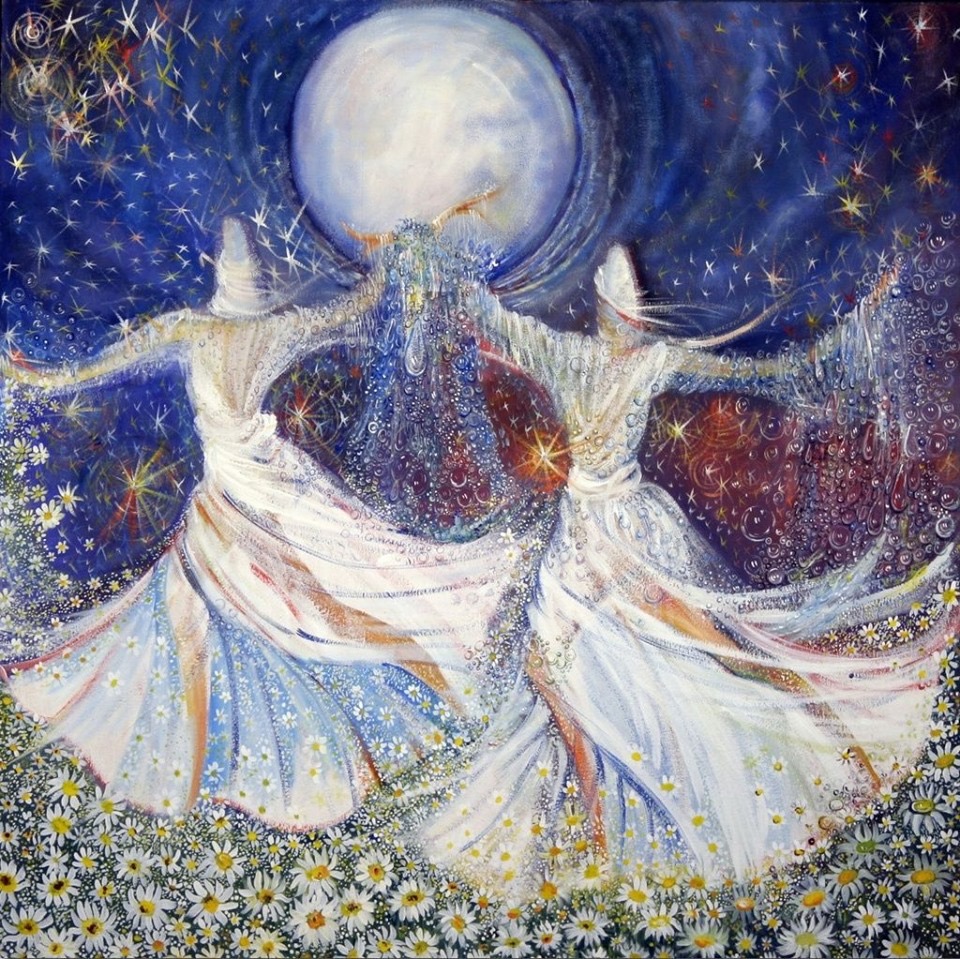
Let us dance through these dark hours, while others crouch down, seeking shelter from a worried world, hiding in the shadows, afraid to hope for tomorrow, let us give them a sign they can see, a message made of music and motion, two dancers spinning light out of darkness, a waltz in an air raid shelter, unafraid, unbound, unleashed from this earth, rising with every step, a dance to lift the human soul. Let us dance so others can dance, dancers from every direction, standing up to join us, music filling the sky, a revolution of unrestrained joy, an invitation to believe again, to hope again, to be free again, dancing through these dark hours, as if dancing was all that we were born to do.
To be sure, I have felt the pressing urge to “crouch down” many times, “to seek shelter from a worried world, hiding in the shadows, afraid to hope for tomorrow.” But in the end, through dark hours I learned to dance.
Dance then, wherever you may be. I am the Lord of the Dance, said he . . .
It’s a good way to live.
It’s a good way to give witness to the world of our living faith and unrestrained joy!









 As we are praying, gun injuries cause the deaths of 18 children and young adults each day in the U.S. And every day, 100 Americans are killed with guns. Can we ignore the fact that nearly 1 million women alive today have been shot, or shot at, by an intimate partner?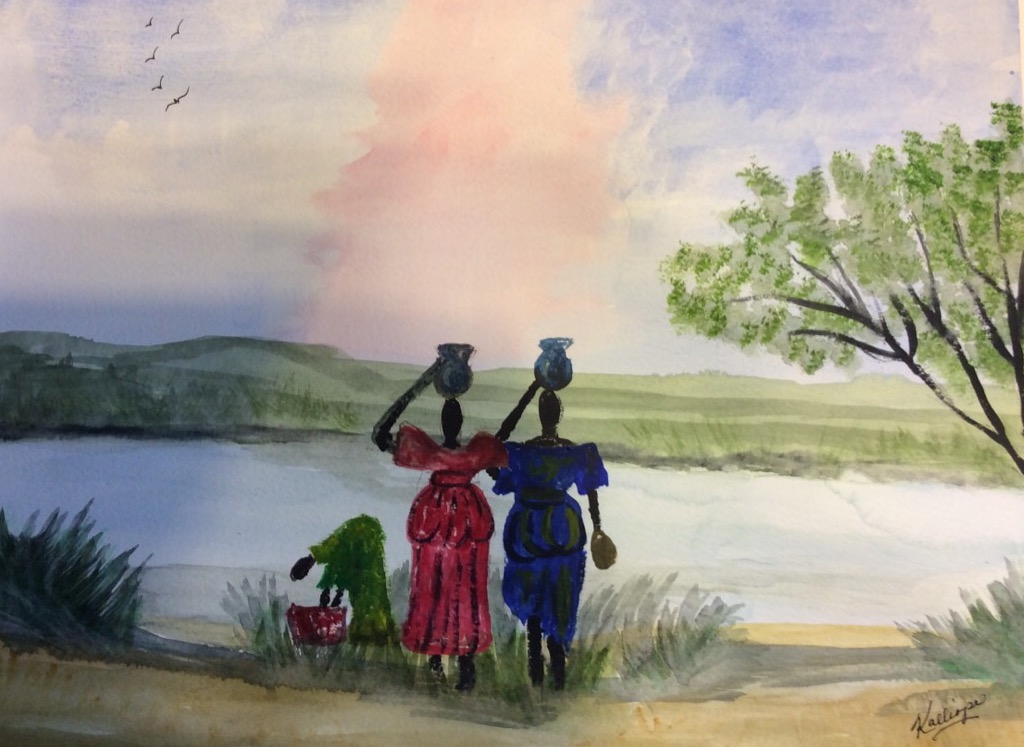







 God of the Sparrow 🌱 By Kathy Manis Findley