2024 election, A blessing for voters, Activism, anxiety, Belonging, Betrayal, Bewilderment, Bitterness, Calm, Challenge, Change, Community activism, Courage, Darkness, Daybreak, discouragement, Exclusion, Faith, God, God's presence, God’s creation, healing, Heartbreak, Hope, Kneeling Places, Lament, Liberty, Mourning, Patriotism, Pilgrim, Politics, Pondering, Prayer, Repair the world, Rev. Kathy Manis Findley, Unanswered Prayer

Prayer in Response to Tragic Victory


Together, we will transform our grief into a force for change that will build a more just, equitable society that respects the dignity of all people.

— Omar Angel Perez,  Immigrant Justice Director, Faith in Action

This is my prayer of Hope for the living of these days and my lament for almost losing my faith. It is a too-long treatise, because I release my profound grief through writing. It’s a too-long lesson to teach my class, because at our meeting time, everyone is a spent body of exhaustion that can hardly respond to dark and serious topics. It’s a too-long sermon to preach, because at minute 38.6, the congregation will start leaving. Most of all, it is a too-long dumping of grief. But still my prayer

Guard your hearts and may the week ahead freshen your hope, Kathy


Creator, Spirit of God, Star of the Morning, Son of the Dawn ~

We give you praise for creating each of us and placing us in the brilliance of Holy Light because last Tuesday’s election has left so many of us in a very dark place. We thank you, Creator God, for naming us your beloved children, even if others name us with hurtful words. Yes, it is true, this past election week has been hurtful to so many people. In fact, the entire election season has caused anxiety for at least a few of us. And the outcome? Well, God, I almost said you let us down, but I know better. Still “let down” is only a fraction of the emotion that now hangs closely around us. So, God, if you wouldn’t spare us from our president elect, could you please touch our souls with a gentle hand of comfort and hope.

Gentleness is one thing we need, maybe to minimize the harsh names and the contempt we have endured from our misogynistic brothers and sisters. The outcome of the election has left us feeling disconnected from many of our friends, neighbors and family members. God, you know our emotions and you understand our sense of feeling discarded. You know our fear, confusion and despair. Help us, Mother snd Father God, to remember that you have whispered our names. We are your beloved daughters facing the world with the name you gave us.

One election! Just one has this much power over us! We must have taken a wrong path somewhere along the way, because repairing the world was the real goal, and our destination was to create a community of love, care and decency. We did not make it there, God, and we feel a bit like pilgrims and strangers in a land we have never seen before. We imagine how exiles must feel, and recall a letter from Jeremiah to people in exile, “You will search for me and find me when you search for me with all your heart.”

It was just an election, but it rocked us to the core and left us wandering aimlessly on unfamiliar paths and turns. Yet, we are comforted still by sensing your presence with us. Every journey has paths and turns that can lead us to unexpected danger and unprecedented harm. Paths and turns can be disconcerting and downright frightening. Paths and turns leave us in uncomfortable unknown places, so that our feet walk in unfamiliar dust. Paths and turns can lead us away from all we’ve known, our comfort-place, our “home.” 

Protecting God, can you stay close to us on this harsh path ahead and protect us?

Now, God, we know you have a teaching moment for us, for to you this rocky path we follow is a holy pilgrimage. We can learn and take in the reality that paths and turns can also lead us to holy moments. Those sacred moments can inspire us to search more fervently for you, God. We did not stop believing in a new season of unity. But someone more powerful than we are has taken over our lives.

Still this week of sorrow is about more than just one election.
It is also about hurtful memories of being pushed out because of who we are or what we look like. 
It’s about the pain of being “othered” and never fitting in.
It’s about being diminished over and over again.
It’s about people who need to measure us by our wealth or power. 

There are so many better measures out there. Help us God, to throw away false tools that can only try to measure who we are, but can never measure the Light in our souls or the dreams of our hearts.

For our nation, O God, we ask for seemingly impossible unity and for as much love as we can muster between brothers and sisters. We ask you, God, to restore our hope, bring us to our feet, teach us to stand and set us on our path once again.

God, make of us peacemakers, consolers, and healers of harm. Help us control our tongues, so that we Will always speak respectfully of others. Help us spend holy moments in lament and deep prayer that can re-enliven our souls.

I confess, God, that I am failing at that right now. My soul is filled with anger and disgust. My spirit is not at one with love, but with hate directed at those who managed to do this shameful thing to our nation. I am full of confusion about how this happened; what exactly has happened; what will the repercussions be; how serious is the threat to our future; and specifically what must I do now as one person to minimize the harm for myself and all of us?

In such a time as this, God, I see myself kneeling in your holy presence with a shattered spirit and a broken heart. I see myself questioning how it is that you have the ability and the will to organize the universe, but you do not. I need the breath of Spirit to order my thoughts. I need moments of confession to name my sins. I need to repent of my own actions, whatever they are, because my action or inaction may have helped cause the results of this election.

Even now, leaders—that is political people, elected officials, teachers and professors, ministers, rabbis, Imams, priests, bishops, chaplains, etc.—are encouraging us with hope. Emails still flood my inbox, like, “We can’t give up. Let’s roll up our sleeves.” I have noticed that many people say they can’t think about it right now. They are wise to stop and tend to the grief in their souls.

I feel useless, dismissed, disrespected and weary, God. I even feel that I have completely lost my hope for brighter days. I know that losing hope is a dire place to be, because losing hope almost admits that I have also lost my faith. Yet, even in this very moment, God, you are whispering to me:

Beloved daughter, you are not just ‘one person,’ You are one person of God. A child of God. A beloved daughter. A woman whose spirit is whole with a sacred calling to shepherd the lost and weary ones.”

When circumstances, words, or people threaten us, God, help us respond with decisiveness, truth, kindness, grace, forgiveness, and respect for our brothers and sisters, our neighbors and friends, our classmates and co-workers. Because being harsh to one another can not quickly heal the wounds of political discord, or any other kind of near-fatal wound. It will take time to cast out the dark presence whose only purpose is to darken our souls and leave us in profound darkness.

In this goal, in this time, God, the dark presence has succeeded, and we need you, God, more than ever. We see the truth that we are dangerously vulnerable right now, and that we must fight against spiritual despondency. 

Creator, Spirit of God, Star of the Morning, Son of the Dawn ~ hold us near until the danger has passed. (If it ever passes!) If you can, God, speak peace to the dark presence that is still maneuvering that will harm our democracy and our souls. 

Hold us close in the brilliance of your Light, Creator God! 

Place us securely in your Light, Star of the Morning!

Hold us fast in your Light, Spirit of God!

Draw near to us and grant us Light to see daybreak, Son of the Dawn!

Mother and Father God, we will stand tall in the evil day, if you will help us refresh the Light that lights the world and brightens our hearts.

In this evil day, God, meet us in our sacred place. As we lament, restore our hope and strengthen our faith in this time of grief and confusion. Restore our spirits, God. Restore my spirit, God! 

Creator God, Mother and Father of the universe, fill us to overflowing once again. Cover our bodies and fill our souls with fresh hope, the living hope that guards our faith from any evil.

Amen.
Comfort, Contemplation, Emotions, Feelings, God's presence, healing, life, Meditation, Poetry, Politics, Racism, Reflection, Repentance, Restoration, Sacred Pauses, Sacred Space, Silence, Soul, Spirit, Spiritual Discipline, Stillness, Trump, Wholeness

NO MORE AIRTIME, MR. TRUMP!

 D7940A7F-BEAB-4445-B30D-C9739A8076AE

The time for Donald Trump’s airtime is over! In my life, I have no available airtime for him, and I wish the media would follow my example. I’ve heard enough of his rants and tweets. I’ve heard enough of his incendiary speech. I’ve heard enough of his indiscriminate name-calling. I’ve heard enough of his lying. I’ve heard more than enough of his disrespectful, hate-filled, divisive rhetoric. More than enough!

My soul will no longer give Donald Trump airtime. Why? Because often my responses to hearing him were anger, disgust, self righteousness and even hate. And those emotions darken my soul. Those emotions do not belong in my soul at all, because they have a way of displacing love, compassion, gentleness, peace, hope, light and grace — all the good emotions that God plants in the soul through Spirit breath.

I think of the beloved hymn . . .

Holy Spirit, breathe on me until my heart is clean.
Let sunshine fill my inmost parts with not a cloud between.

Breathe on me, breathe on me, Holy Spirit, breathe on me; 
Take Thou my heart, cleanse every part,
Holy Spirit breathe on me. 

— Words by Edwin Hatch, Music by B.B. McKinney

In these days of harmful politics, racial injustice, coronavirus fear and isolation, I need a Spirit-cleansing of my heart and soul. God has been ready to begin the cleansing for a while now. God has heard my repentant prayers admitting anger and hatred. God has waited patiently for me to embrace the stillness that can begin to heal my soul. 

Stillness! Stillness longing for healing. Stillness whispering words of repentance. Stillness yearning for calm. Stillness seeking peace. Stillness waiting in solitude for the presence of the Healer of the Soul.

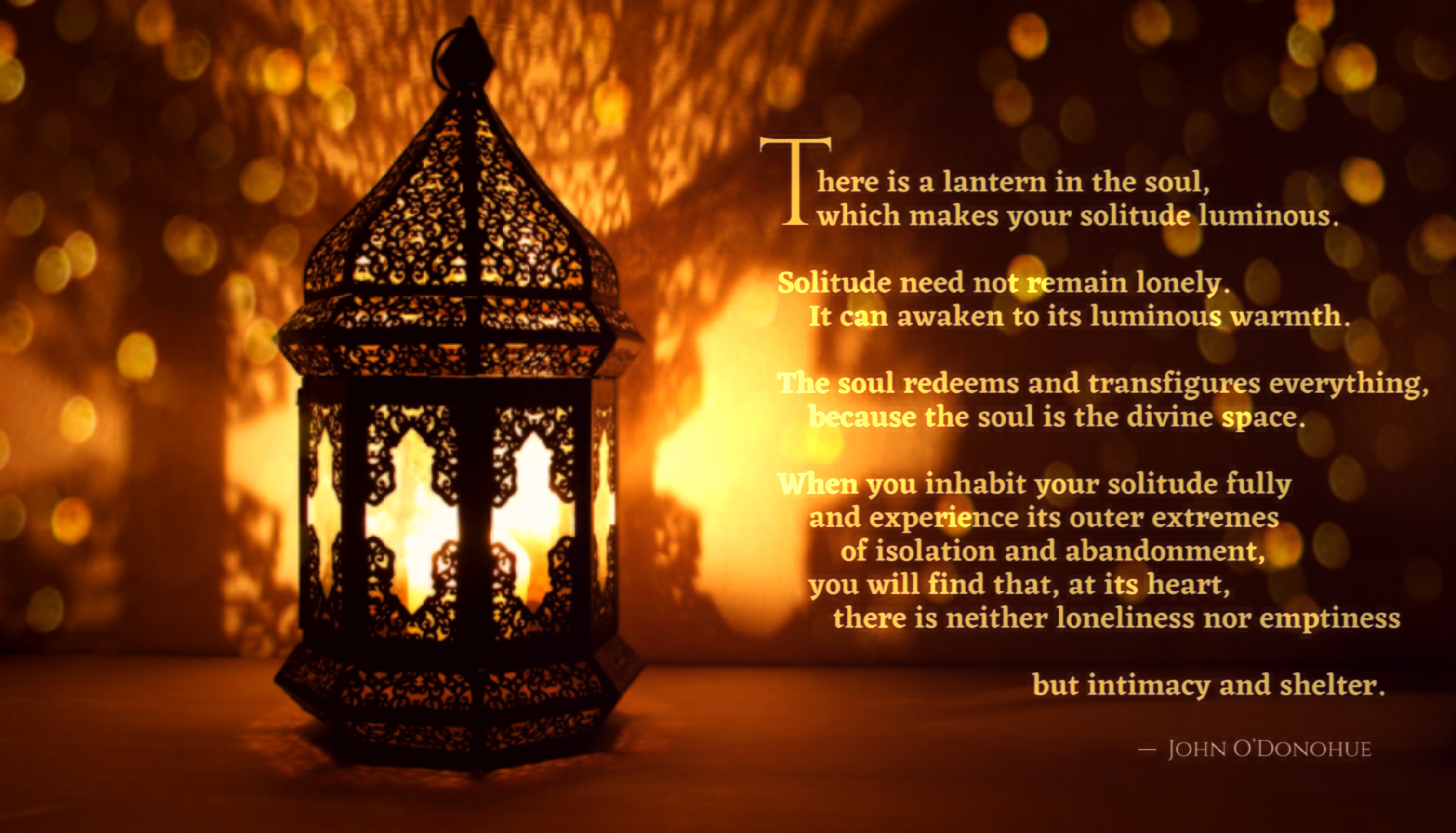
I’m going there — to that place of solitude where one can breathe slower, sigh deeper, listen attentively to the whisper of God and the breath of the Spirit. I’m going to solitude’s “luminous warmth” as John O’Donohue’s poem in which he describes the soul as the divine space. 

There is a lantern in the soul, which makes your solitude luminous. 
Solitude need not remain lonely. It can awaken to its luminous warmth. 

The soul redeems and transfigures everything
because the soul is the divine space. 

When you inhabit your solitude fully and experience its outer extremes of isolation and abandonment, you will find that, at its heart, there is neither loneliness nor emptiness but intimacy and shelter.

― John O’Donohue, Anam Cara: A Book of Celtic Wisdom

Right now, in the midst of the disheartening mood of the year 2020, I am entering the solitude I desperately need so that I can experience my soul as the divine space it is. 

Politicians, continue your rancor in loud and powerful voice! I will not hear you from my place of solitude, from my soul’s divine space. And as for you, Mr. Trump, I have no further airtime for you. I refuse to sit in front of my television for another minute, anticipating — hoping — that you will finally say or do something appropriate, beneficial, worthwhile, productive, compassionate or kind.

Instead, I will change the channel to more soul-healing television. In fact, I will leave the television altogether and go to a better place, higher ground where peace and silence and reverence and awe can begin the holy work of healing my soul. I am taking a sacred pause from my life that has been so anxious and worried and isolated. I will wait there in that sacred space where my “soul redeems and transfigures everything.” Thanks be to God.

Beloved Community, Black Lives Matter, Civil Rights Movement, Courage, Good Trouble, In Memorium, John Lewis, Justice, Nonviolence, Perseverance, Persistence, Politics, Prophetic, Racism, strength, struggle, Tenacity

Remembering John Lewis

89BE8169-640A-4DDD-A2AC-E9680BE67E02
Because I am a citizen of the state of Georgia, I can call him mine — my congressman, my conscience, my inspiration.

John Lewis
A warrior in building the soul of America

Representative John Lewis, a son of sharecroppers and an apostle of nonviolence who was bloodied at Selma and across the Jim Crow South in the historic struggle for racial equality, and who then carried a mantle of moral authority into Congress, died on Friday. He was 80.*

Twice he was beaten to an inch of his life.

I have been in some kind of fight — for freedom, equality, basic human rights — for nearly my entire life.    — John Lewis

On the front lines of the bloody campaign to end Jim Crow laws, with blows to his body and a fractured skull to prove it, Mr. Lewis was a valiant stalwart of the civil rights movement and the last surviving speaker from the 1963 March on Washington — where King delivered his famous “I Have a Dream” speech — but Lewis was almost refused to be allowed to speak by march organizers because of his strident criticism of the Kennedy administration.

Lewis went on to serve 17 terms in the US House of Representatives, where he was considered the north star of conscience in Congress.**

Tributes to the life and legacy of John Lewis came from hundreds of voices.

“Not many of us get to live to see our own legacy play out in such a meaningful, remarkable way. John Lewis did,” former President Obama said in a written tribute. “And thanks to him, we now all have our marching orders — to keep believing in the possibility of remaking this country we love until it lives up to its full promise.”

Joe Biden, and his wife, Jill, issued a statement that began, “We are made in the image of God, and then there is John Lewis. How could someone in flesh and blood be so courageous, so full of hope and love in the face of so much hate, violence, and vengeance?”

Sen. Bernie Sanders of Vermont said: “His courage helped transform this country. He won’t ever be forgotten by those who believe America can change when the people stand together and demand it.”

Sen. Kamala Harris of California said of Lewis, “He carried the baton of progress and justice to the very end. It now falls on us to pick it up and march on.” ***

And so we will, to honor his memory and to persist in the fight against injustice.


John Lewis.

America’s inspiration for getting into “good trouble”

Do not get lost in a sea of despair. Be hopeful, be optimistic. Our struggle is not the struggle of a day, a week, a month, or a year, it is the struggle of a lifetime. Never, ever be afraid to make some noise and get in good trouble, necessary trouble.
— A tweet from June 2018

I appeal to all of you to get into this great revolution that is sweeping this nation.  Get in and stay in the streets of every city, every village and hamlet of this nation until true freedom comes, until the revolution of 1776 is complete.
— At the 1963 March on Washington

Freedom is not a state; it is an act. It is not some enchanted garden perched high on a distant plateau where we can finally sit down and rest. Freedom is the continuous action we all must take, and each generation must do its part to create an even more fair, more just society.
From his 2017 memoir, “Across That Bridge: A Vision for Change and the Future of America”

My dear friends: Your vote is precious, almost sacred. It is the most powerful nonviolent tool we have to create a more perfect union.
— From a 2012 speech in Charlotte, North Carolina

You are a light. You are the light. Never let anyone—any person or any force—dampen, dim or diminish your light. Study the path of others to make your way easier and more abundant.
From his 2017 memoir, “Across That Bridge: A Vision for Change and the Future of America”

We have been too quiet for too long. There comes a time when you have to say something. You have to make a little noise. You have to move your feet. This is the time.
— At a 2016 House sit-in following the Pulse shooting in Orlando

When you see something that is not right, not just, not fair, you have a moral obligation to say something. To do something. Our children and their children will ask us, ‘What did you do? What did you say?’ For some, this vote may be hard. But we have a mission and a mandate to be on the right side of history.
— 2019 remarks in the House on impeachment of President Trump


May his words echo in our hearts and reach the soul of every American. 

May he rest in peace and — from above — inspire us to “do justice, love mercy and walk humbly with our God” as he did.


John Lewis
Servant of God and champion for justice, now called to his heavenly home


With thanks to:
* Katharine Q. Seelye, https://www.nytimes.com/2020/07/17/us/john-lewis-dead.html

** Ken Sehested, http://www.prayerandpolitiks.org/

*** Janet Hook, https://www.latimes.com/politics/story/2020-07-18/tributes-rep-john-lewis-dies-civil-rights


Advent, Angels, Bethlehem’s Star, Christ’s Birth, Joseph, journey, Mary, Politics, Stars

My Place at the Stable

07CC6147-ABFA-4F19-B826-A0BC9D4B9BFF
In this detail from de la Tour’s moving portrayal of the birth of Jesus, we see Joseph’s hand tenderly guiding the candle’s light to illuminate the Christ-child’s face. 
In the Isaiah passage for this day, the prophet foretells the coming of Christ with the language, “Everlasting Father, Prince of Peace.” In this peaceful painting, Joseph’s first gesture tells of his own fatherly love.
Georges de la Tour, painting in France in the early 17th century, was deeply affected by a religious revival based upon the teachings of the 12th century mystic, Francis of Assisi.  

— Art in the Christian Tradition, Vanderbilt

The Seventeenth Day of Advent
December 17, 2019

I have been thinking throughout this Advent season about my place at the stable. On the idea that many people gathered around the stable took various positions — some in the front or at the back, some directly facing the manger, some viewing the Child from a point farther away, angels hovering above — I wonder where my place might have been or, more importantly, where do I stand around the stable today?

Joseph, it seems, is often seen standing at the back of the stable, non- obtrusive, taking a back seat to Mary and the Christ Child. Ann Weems writes about Joseph standing at the back of the stable:

GETTING TO THE FRONT OF THE STABLE

Who put Joseph in the back of the stable?
Who dressed him in brown, put a staff in his hand,
and told him to stand in the back of the crèche,
background for the magnificent light of the Madonna?

God-chosen, this man, Joseph, was faithful
in spite of the gossip in Nazareth,
in spite of the danger from Herod.

This man, Joseph, listened to angels
and it was he who named the Child
Emmanuel.

Is this a man to be stuck for centuries
in the back of a stable?

Actually, Joseph probably stood in the doorway
guarding the mother and child
or greeting shepherds and kings. . .

Actually, he probably picked the Child up in his arms
and walked him in the night,
patting him lovingly
until he closed his eyes.

This Christmas, let us give thanks to God
for this man of incredible faith
into whose care God placed
the Christ Child.

As a gesture of gratitude,
let’s put Joseph in the front of the stable
where he can guard and greet
and cast an occasional glance
at this Child
who brought us life.

— Ann Weems

Not much more can be said about Joseph’s place at the stable, for indeed, he was the man chosen by God to be the earthly father of Jesus. Joseph managed his own emotions about Mary’s extraordinary and unexpected pregnancy with the help of an angel. He moved beyond his fears, his bewilderment, his concerns, perhaps even his mistrust or anger towards Mary and, certainly, his shattered reputation and his need to maintain his morality and his righteousness.

After pondering the angel’s visit, and his options, a slightly confused Joseph took a God-risk and moved into that bewildering relationship. He did it with courage and because of his trust in God’s word brought by an angel. And then he embraced his relationship with Mary, took her to Bethlehem, created a sheltering place, attended the birth of the Infant Christ and waited by faith for another angel message, or a star, or whatever else might burst into their lives.

Joseph’s story is a bit like ours — our stories of bewilderment, confusion, reluctance and, finally, our holy resolve to accept God’s plan for our lives and follow the journey God lays before us. And isn’t that a picture of Advent’s journey? Where is our place at the stable?Don’t we need to find our place near the Child this Advent and for all Advents to come? Doesn’t this season lead us steadily through the sacred path that leads us to the holy Child of Bethlehem . . .

So that we can, once again, experience the joy of his birth?

So that we can feel more deeply the emotions of Mary and Joseph?

So that we can, once again, hear angel voices?

So that Bethlehem’s star seems so near that we can almost touch it?B3E09502-8AB9-46F0-BB97-2C135F651B24

And so that our destinies will be fulfilled and our lives will be highly favored by God?

For all of these graces of Advent,
thanks be to God. Amen.

Activism, Awakening, Brokenness, Christian Witness, Community activism, Compassion, Contemplation, Hope, Immigration, Injustice, Introspection, Justice, Ministry, Mysticism, Politics, Reflection, Repair the world, Social justice, Tikkun Olam, Violence against women and children

What does the world need?

256F00BB-10F5-4D89-93E1-FD4534BFCD0F
“To repair, heal the world” by artist and calligrapher Michael Noyes http://www.michaelnoyes.com/gifts/religious/jewish-judaica/tikkun-olam-to-repair-heal-the-world

What does the world need?

What do I have to give in a broken world? 

I have asked myself these questions before — many times before. I have asked these questions when teaching classes and writing my blog. I have asked these questions in a sermon — actually multiple sermons. So one might expect that, through my sermon preparation through Biblical study and other research, I might have found an answer by now. I have not. Because my finding the answer is as complicated as the myriad places of brokenness i see in the world around me.

Of course, I have to pay attention to the image of a hungry child, a refugee family at the border, entire African villages that subsist without clean water, the violent streets in cities across the United States, the mother protecting her children from abuse and herself from domestic violence, racially motivated hate crimes that terrorize, the climate crisis that to some is so real and to others just a hoax, the active shooters that have terrified school children and threatened life at many other places where people are vulnerable. I can continue this list into perpetuity.

But then I have to acknowledge the more insidiously evil side of the world’s brokenness — not the actual broken places, but the injustices that create them. I have to be woke to the societal and political forces of greed that deny complicity in the oppression of the most vulnerable among us. 

So when I ask myself the question, “What do I have to give in a broken world?” I am really asking if I will: 1) personally tackle a person’s specific need; 2) seek radical change of the societal and political forces that cause oppression; 3) become both a political activist and a compassionate hands-on Samaritan; or 4) engage in a contemplative life by getting in touch with the mystic inside that prays and longs for an end to every form of brokenness.

If I were a mystic, if could pray away the brokenness, I would most assuredly enter my prayer closet and do so. Admitting to being a mystic, though, is slightly uncomfortable. I’m not completely sure what a mystic is or what a mystic does. And isn’t being a mystic reserved for monks and nuns? 

Richard Rohr is my go-to person on the duality of action and contemplation. One can find in his meditations —every day — the inseparable link between our compassionate acts and the inner spiritual work that drives us. Matthew Fox writes:

Deep down, each one of us is a mystic. When we tap into that energy we become alive again and we give birth. From the creativity that we release is born the prophetic vision and work that we all aspire to realize as our gift to the world. We want to serve in whatever capacity we can. Getting in touch with the mystic inside is the beginning of our deep service.

“Our gift to the world,” he writes. And all around that “gift,” he lifts up prophetic vision, the energy to come alive, touching our inner mystic and engaging in deep service to people and places of deep need. I can never broach this subject of a broken world without revisiting the Jewish concept known as Tikkun olam – “repair the world,” that manifests itself in acts of kindness performed to perfect or repair the world. The phrase — found in the Mishnah, a body of classical rabbinic teachings — is often used when discussing issues of social policy, insuring compassionate remedies to those who may be at a disadvantage.

As for me . . . I really do want to touch my inner mystic, to enter into a silent, deep inner space that compels me to serve humanity. I also want to enter a place of tikkun olam. I want to repair the world and tangibly care for the persons who have need. Is it even possible to do both? Isn’t it imperative for a follower of Jesus to do both? Is it not because of the hope of the Good News in Christ that I must be about ministries of compassion and justice?

It seems pretty clear when reading the words of Jesus that caring for broken persons in a broken world is most certainly a compassionate imperative. 

When the Son of Man comes in his glory, and all the angels with him, then he will sit on the throne of his glory. All the nations will be gathered before him, and he will separate people one from another as a shepherd separates the sheep from the goats, and he will put the sheep at his right hand and the goats at the left. 

Then the king will say to those at his right hand, “Come, you that are blessed by my Father, inherit the kingdom prepared for you from the foundation of the world; for I was hungry and you gave me food, I was thirsty and you gave me something to drink, I was a stranger and you welcomed me, I was naked and you gave me clothing, I was sick and you took care of me, I was in prison and you visited me.” 

Then the righteous will answer him, “Lord, when was it that we saw you hungry and gave you food, or thirsty and gave you something to drink? And when was it that we saw you a stranger and welcomed you, or naked and gave you clothing? And when was it that we saw you sick or in prison and visited you?” 

And the king will answer them, “Truly I tell you, just as you did it to one of the least of these who are members of my family, you did it to me.”

— Matthew 25:31-40 New Revised Standard Version (NRSV

It’s just downright confusing and complex. Bottom line is this: I have no idea how to repair the world or how to get in touch with my inner mystic. But I also do not want to be permanently consigned to the goat-group mentioned in this Gospel text! I would rather struggle to figure out what I must do to care compassionately for my brothers and sisters and to get in touch with the contemplative mystic that makes me come alive.

Sound advice comes from a plethora of good and wise people. This time Howard Thurman gets the last word:

Don’t ask what the world needs. Ask what makes you come alive and go do it, because what the world needs is people who have come alive.

May God make us people who have come alive. Amen


F9FA5D3C-53F0-4043-8A72-F9E2D63F7349

On another note, please pray for me as I look toward my kidney transplant currently scheduled for November 12th at Mayo Clinic in Jacksonville, Florida. I am so grateful that you are walking with me on this journey that often felt so frightening. Your thoughts and prayers mean so much. If you would like to read the story of my illness, please visit the Georgia Transplant Foundation’s website at this link:

://client.gatransplant.org/goto/KathyMFindley

“Go Fund Me” page is set up for contributions to help with the enormous costs related to the transplant, including medications, housing costs for the month we have to stay near the transplant center, and other unforeseeable costs for my care following the transplant. If you can, please be a part of my transplant journey by making a contribution at this link

https://bit.ly/33KXZOj

Activism, Change, Christian Witness, Church, Community activism, Gun violence, Hate, Injustice, Mexican border, Mourning, peace, Perseverance, Politics, Prophetic, Racism, Repair the world, Social justice, The Christian Church, Violence

Taking Back Our World

5378F42A-B263-40F4-A454-D497E07BF325

Let’s take back our world! Let us join hands and, in the power of community and holy resolve, reclaim our world from white supremacists, racists and violent actors that threaten our people.

If not us, who? If not now, when?

After the 2012 shooting at Sandy Hook Elementary School in Connecticut that killed 20 young children, British journalist Dan Hodges wrote that the gun control debate in the U.S. was over. This is what he wrote: “Once America decided killing children was bearable, it was over.”

And then we let 2,193 shootings happen. 

The shootings that occurred this week offend us in a very deep place. You see, we are followers of Christ, the Prince of Peace. We are the people of God who know that thoughts and prayers and compassionate sentiments won’t end this kind of terroristic hate.  

The El Paso shooter told law enforcement that he wanted to shoot as many Mexicans as possible. His manifesto, which he posted on the 8chan online community  included details about himself, his weapons and his motivation. He described the El Paso attack as a “response to the Hispanic invasion of Texas,” and proclaimed that he was defending his country from “cultural and ethnic replacement brought on by an invasion.”

Most certainly, these words from an obvious white supremacist should offend every follower of God. His evil intent is also an offense to God. In response to such evil, perhaps we will raise our voices continually and persistently, without becoming weary. Perhaps we will resolve to take back our world, proclaiming God’s word in the darkness of evil just as the prophets did. Like them, perhaps we will persist tirelessly and with a holy resolve, for as long as it takes to end the evil that arises from racism and white supremacy. 

Perhaps our prophetic action will mirror that of the writer of Lamentations who wrote, “Arise, cry out in the night, as the watches of the night begin; pour out your heart like water in the presence of the Lord. Lift up your hands to him for the lives of your children.”

May God so embolden us.

Activism, Bravery, Calling, Challenge, Christian Witness, Compassion, Courage, Gun violence, Hope, Immigration, Injustice, Justice, Politics

A Prophetic Voice

18785EE9-BE62-4CB7-8649-C832661BB848

There was never a time when God’s people needed a prophetic voice more than in these days. We keep hearing the phrase, “children locked up in cages,” and we continually feel righteous anger rising up within us. At the same time, we nurse a sense of hopelessness that holds us captive. 

We ask, what has happened that has created the environment in which we now live? How do we respond to this toxic environmental of racial division, harsh words and name-calling? Why is there such a blindness to gun violence? Wh is white supremacy now acceptable? When did we stop caring about the lives of immigrant families who flee for safe haven to our country? How did it happen that hate and meanness has all but replaced love and kindness?

As we watch these things happen, we recognize that voices of reason give silent ascent to the evils of the day as our leaders fail to stand for the values we hold dear. Where is their courage? Where is their ability to lead and govern? Where is their willingness to speak truth and champion change? Why are self-proclaimed people of faith giving permission for words and acts of racism, xenophobia, misogyny, and just plain out hate?

And as for us — the people of faith who see the ills of our world so clearly — where is our prophetic voice, and when and where will we use it? Yes, we may be feeling the kind of hopelessness that breeds apathy and inaction. That feeling is normal when evil looms large over us and when the wrongs and the injustices we observe far outweigh what is right and just. We are understandably overwhelmed with all that is happening in these challenging days:

The president is escalating his racist attacks against everyone from women of color in Congress to the people of Baltimore.

Attorney General William Barr is bringing back the federal death penalty.

The Trump administration wants to ban new asylum requests and new refugees, closing America’s doors to families fleeing violence and seeking a safe place of refuge.

And almost constantly, Trump’s allies on the religious right, people who call themselves Christians, continue cheering him on, constantly twisting the Gospel to help re-elect him.

It is no accident that these actions came at us all at once. The president and his allies think that if he does enough hateful things all at once, they can overwhelm and silence us. What they cannot seem to understand is that, as God’s people and as followers of Jesus Christ, we are not listening to their message of fear and hatred. Instead, we hear the voice of God proclaiming a call for justice, mercy and compassion. We are listening to Christ’s message of hope and love, and that is our clarion call to act.

Of course, there are so many things we cannot make happen, so many wrongs we cannot right. Many of the remedies for the evil that assails us are out of our hands. Yet, we must not feel disempowered. Though we may feel that we have no recourse and that there is simply nothing we can do to create real change, we must remember that our voices hold a certain power, the power of the Spirit of God. Words are powerful tools. There is deep wisdom in the quotation, “The pen is mightier than the sword.” 

As for me, I pray that God will grant me a prophetic voice, and that with boldness, courage and perseverance, I will use my voice . . . 

To speak truth to power through constant letters, phone calls and messages to members of Congress and to the President. 

To confront those who maintain silent ascent to the evils happening at our Southern border. 

To challenge a president who speaks ill of people, who demonizes his enemies, who acts with blatant disregard for humanity and who ignores the suffering of the migrant families he has abused.

And to speak with deep compassion and caring to all who suffer injustice, oppression and harm.

Finally, I pray for my brothers and sisters of faith, that God will grant a prophetic voice, and that with that voice, you are able to speak God’s message of Good News with courage, boldness and perseverance. 

At times, words find their most powerful expression in music. To that end, I have included the following hymn text, which is actually a prayer. Please use it with my permission in any way that is empowering to you.


God, Give Us a Prophetic Voice

God, give us a prophetic voice that speaks of harm and pain;
A voice that claims injustice wrong, that calls the hurt by name.
God, give us a courageous voice that speaks against all wrong;
A voice that sees when harm is done and sings oppression’s song.

Our Mother God, we seek your grace to offer words of life,
To reach our hands toward hurting hearts who live in endless strife.
We ask for courage to persist when violence owns the day,
When children live in fear and want, protect them, God, we pray.

Empower us for good, we pray, that justice may increase;   
Ennoble us to speak your Word that pain may find release;
Give us a voice to speak your truth in places of despair;
Grant wisdom, God, and make us bold with courage, is our prayer.

God, give us now compassion’s voice that we might offer peace;
A voice that comforts through the night, that bids the darkness cease.
God, help us find our voice again when silence words erase,
When evil overtakes the words of righteousness and grace. 

Words: Kathy Manis Findley, 2019
Hymn Tune: Kingsfold
Meter: 8.6.8.6.
Source: English Traditional; English Country Songs, 1893
Copyright: Public Domain


Activism, Calling, Christian Witness, Community activism, Compassion, Immigration, Justice, Politics, Refuge, Social justice

Good Questions!

AE7A6D30-3DF9-42FF-A9CD-CFE6305E4E7E

I read a very disturbing article today. Here is a part of it:

Attorneys who visited a Border Patrol processing center in McAllen, Texas, as part of an inspection found that officials there had been illegally jailing a sick, prematurely born one-month-old infant and her 17-year-old mother for days, BuzzFeed News reports. This same facility, known as Ursula, was last year called “the ‘epicenter’ of the Trump administration’s policy that has separated thousands of children from their parents” by an official with the Department of Homeland Security.

“You look at this baby,” said volunteer Hope Frye, “and there is no question that this baby should be in a tube with a heart monitor.” Instead, the tiny child was wrapped in a sweatshirt and was reportedly “weak and listless.” Her mom, still weak from her emergency C-section in Mexico, was in a wheelchair and hadn’t been able to sleep due to pain.

They shouldn’t have been there in the first place. “Under federal law, minors are required to be released from Border Patrol custody within 72 hours to officials in the Office of Refugee Resettlement after they are determined to be unaccompanied. Both the 17-year-old mother and her 1-month-old baby are considered unaccompanied minors.”

The Washington Post last month reported that hundreds of children “have been with the Border Patrol for longer than 72 hours, and another official said that more than 250 children 12 or younger have been in custody for an average of six days.” Who knows how much longer this mom and infant would have been in custody, had attorneys and others not intervened? (From Daily Kos)

Good question! How much longer would they have been held in the custody of officials who obviously had no regard for their well being? 

Good question! Why is this horrendous treatment of refugees tolerated in our country?

Good question! Has this nation become a nation of cruelty to those coming through our borders and how did we get there?

Best question! What can you and I, as persons called by God of grace and lovingkindness, do to help bring an end to this atrocity?

There is obviously no easy answer and no quick fix, but those who are suffering need a quick fix. They need for us to stand up and help reclaim our nation’s position as a welcoming, compassionate nation. In these days, I wonder what the symbol of Lady Liberty means to us? 

A gift from the people of France, Lady Liberty has watched over New York Harbor since 1886, and on her base is a tablet inscribed with words penned by Emma Lazarus in 1883:

Give me your tired, your poor,
Your huddled masses yearning to breathe free, The wretched refuse of your teeming shore. Send these, the homeless, tempest-tossed to me, I lift my lamp beside the golden door!

Most importantly, we must ask this question: Can we escape from the admonitions in Holy Scripture? Can we ignore the call of Jesus to love our neighbor as we love ourselves? (Luke 10:27) Can we ignore these warnings?

You shall also love the stranger, for you were strangers in the land of Egypt.
— Deuteronomy 10:19

The alien who resides with you shall be to you as the citizen among you; you shall love the alien as yourself, for you were aliens in the land of Egypt: I am the Lord your God.
— Leviticus 19:34

Cursed is anyone who withholds justice from the foreigner, the fatherless or the widow. Then all the people shall say, ‘Amen!’
— Leviticus 27:19

. . . I was a stranger and you welcomed me.
— Matthew 25:31-46

Whoever has two coats must share with anyone who has none…
— Luke 3:11

Bring good news to the poor…release to the captives…sight to the blind…let the oppressed go free.
— Luke 4:16-21

In light of our faith and the counsel of Holy Scripture, each of us must answer the critical question: “What must I do about this?” These are only a few of the actions we might undertake:

Hold congressional representatives accountable and constantly hold up before them the “more excellent way.” Phone calls, letters, emails, visits — not just once, but continually. 

Stay aware of the credible news reports of treatment of refugees at the border. Take that information — every time — to your representatives.

Discover ways that your faith community might partner with faith communities near borders by providing clothing, personal items, blankets, towels, cash. Ship to them whatever they might need for their care of refugees.

If possible, travel to the border nearest to you and see what is happening first hand. When you have seen and heard the voices of people seeking refuge, your life will be forever changed, your heart will know genuine compassion and your impulse to intervene will be magnified.


I certainly do not know which of these actions might be possible for you. But I do know two things. I know that this issue is fluid and current, and that the raid sites are throughout the U.S. Just this minute I received this information in my news feed:

ICE is set to begin immigration raids in 10 cities on Sunday. Last year, the Executive Office for Immigration Review announced that it had begun tracking family cases filed by the Department of Homeland Security in 10 immigration court locations: Atlanta, Baltimore, Chicago, Denver, Houston, Los Angeles, Miami, New Orleans, New York and San Francisco. (CNN)

I know also that our faith calls us to compassion, kindness and a welcoming spirit. We can respond to that call in whatever ways seem good and right.

I pray that God will make it so.

Asylum, Courage, Dreams, Faith, Family, Freedom, Immigration, Life Journeys, Maren Tirabassi, Politics, Roots, Taking immigrant children

Yiayia / Γιαγιά

66642F2E-4B31-4A8F-BCEC-6286D03650A6

In my heart this week, I have held my grandmother, my “Yiayia” who came to America at age 25 with an older husband and two babies. One of them was my mother. December 16, 1916 it was when the ship Guiseppe Verdi reached Ellis Island. My Yiayia — line number 25 on the ship’s passenger manifest — had never envisioned coming to this land. She never considered she might leave the tiny Greek village on the island that was her home.

Her husband, wanted by Mussolini as a political detractor, had no choice but to flee in the dark of night in search of a place of safety and refuge for his little family. He had the courage to survive and to dream. But here’s the thing: my grandparents were welcomed into this country when they arrived to see the brightness of the Lady Liberty’s lighted torch. To be sure, their life in America was not all bright or easy. They worked hard to eek out a living and to become a part of a new community so very far from the home they loved. 

After I was born into the world, a toddler at Yiayia’s knee, I watched her struggling to learn English, to speak English well enough to be understood by her neighbors. One of my most vivid memories was sitting next to her at our kitchen table next to an enormous silver radiator that creaked and groaned, but warmed us famously. With The Birmingham News spread across the table in front of her, she drank her coffee, dipping her Zuieback toast and reading the newspaper, every morning.

She taught herself to read English, but The Birmingham News was not merely a reading primer for Yiayia. She learned from it. She understood the news events of her day. She knew that liberty was a gift worth protecting. So she studied the political climate and the political personalities asking for her vote. She would insist that you MUST vote, that you must know the candidates, that you must cherish the right to free and fair elections.

So Yiayia would dress in her finest clothing, simple but lovely dresses. She would put on her earrings and her brooch, her rings and her watch. Then she would dress me, and off we would go, across the street and down the block to the polling place. We would go together into the booth with the dark brown curtain. She would vote and I would stand in close to her with the view of only that brown curtain and her chunky shoes, heels of course.

Before we exited the booth — every time — she would look down at me and say, “We are Democrats! That’s how we vote, always!” And to this very day, I have followed her voting directive — always. The truth is that her definitive directive about voting had much more to do with the process than the political party she supported. It went deeper than any party loyalty, all the way back to reading The Birmingham News, seeing the beam of the Statue of Liberty, crossing the ominous ocean, remembering how it felt to have to flee from government oppression and grieving the loss of the island of her home.

Today, it’s not so simple for our neighbors who must flee their homes for so many reasons — safety, survival, fear, oppression. Our president says they are not welcome here. Many Americans say they are not welcome here. Just today, The New York Times reported that Mr. Trump’s growing migrant paranoia resulted in the forced resignation of homeland security secretary Kirstjen Nielsen, who resigned on Sunday. She is part of Trump’s wider “housecleaning” designed to appoint persons who will make sure migrants can not get across our southwestern borders. Only department heads who will enthusiastically implement the Trump administration’s “zero tolerance” policy will keep their jobs. May we never forget the images of thousands of migrant children who were separated from their families.

The president, in a not so presidential tweet, took aim again Sunday night when he tweeted, “Our Country is FULL!” So yes, he says that our neighbors are not welcome here. Yet, millions of us, second generation citizens of the United States of America, will never forget where we came from. We will always remember that our roots spanned the ocean and survived in a new land.

In my friend’s blog last week, I found words that touched me in a profound way and caused me to grieve the land of welcome we once knew. Her words express a startling poignancy. 

“A country that unwelcomes the world,” she writes.

I want to share with you her entire blog post — Jericho Walk — because it is well worth your time to ponder it, but first I emphasize this portion:

Often there is a shofar
to remind us just how deep
are the cracks
in the foundation of a country
that unwelcomes the world . . .

Jericho Walk
by Maren

I return to the Jericho walk,
in Manchester,
having not been well enough
for a couple months,
and it feels like home —
this moving vigil, silent, but with signs
and grateful waving for drivers
who honk their support.

We travel around the large block
of the federal building
where people we love and
some people we have never met
come to discover
if this week they’ll be deported.

We walk around seven times
hoping the walls
will come tumbling down —

around this place
that sends into certain danger
kind, hard-working,
tax paying, family-loving people
who contribute so much
to our community

Often there is a shofar
to remind us just how deep
are the cracks
in the foundation of a country
that unwelcomes the world,

but today there is a flautist
playing “Siyahamba”
over and over again —
walking
in the light of God,

and I think of that less-military
Jericho story —
the one that defines neighbor as

anyone from anywhere
who stops to help vulnerable ones
fallen on the side of the road.

Thank you, Maren. 

Thank you, my dear Yiayia, for teaching me that God grants us the grace gifts of refuge, safe haven and freedom. And no human — not even a big, bad, bully president — can take those gifts from us and from the generations that come after us.

May God make it so. Amen.


Celebration, Change, Light, Politics, Women

Celebrate!

45270512-74C2-48EE-8432-2FAB7129D11C
New Faces of Congress!  Top row (L>R) Deb Haaland, Rashida Tlaib, Judge Veronica Escobar, Jahanna Hayes;   Bottom row (L>R) Ayanna Pressley, Sharice Davids, Ilhan Omar, Alexandria Ocasio-Cortez

Some voters hoped for a Blue Wave, others a Red Wave. There wasn’t much of a wave on either side of the aisle, at least not the enormous wave they wanted to see. What we did see was a Women’s Wave, at least 117 women elected on Tuesday, 100 Democrats and 17 Republicans. Now that is something to celebrate! Here’s the scoop, by the numbers:

  • Of the 117 women elected, 42 are women of color, and at least three are L.G.B.T.Q.
  • With some ballots still being counted, women have so far claimed 96 of the House’s 435 seats (it is expected to rise to 100), up from the current 84.
  • At least 12 women won Senate seats, which will bring the total in that chamber to at least 22 (that number is expected to rise by two), of the 100 seats that exist. There are now 23 women.
  • Women won nine governorships, of 50 total. Six women currently serve.
  • Overall, at least 10 more Congressional seats will be occupied by women than before.

On a night to remember and celebrate, here is what some of the women who made history said in their victory speeches:

“When it comes to women of color candidates, folks don’t just talk about a glass ceiling; what they describe is a concrete one. But you know what breaks through concrete? Seismic shifts.” 

  • Ayanna Pressley, who will become the first African-American woman to represent Massachusetts in Congress. She beat a 10-term incumbent in the Democratic primary and vowed to pursue “activist leadership” to advance a progressive agenda.

“We have the opportunity to reset expectations about what people think when they think of Kansas. We know there are so many of us who welcome everyone, who see everyone and who know that everyone should have the opportunity to succeed.”

  • Sharice Davids, a former White House fellow, is a lesbian; she and fellow Democrat Debra Haaland of New Mexico are the first Native-American women elected to Congress.

“In my family, there were no girl chores or boy chores. There’s just things to get done. So that’s what we’re going to do. I’ve got some big plans for this state.”

  • Kristi Noem, a Republican, will be the first female governor of South Dakota. She’s a four-term congresswoman who campaigned on her conservative record and her experience working on her family’s farm.

“We launched this campaign, because in the absence of anyone giving a clear voice on the moral issues of our time, then it is up to us to voice them.” 

  • Alexandria Ocasio-Cortez, Democrat from New York, became the youngest woman elected to Congress at age 29. She has never held elected office, and like Ms. Pressley, she defeated a white man who had served 10 terms in a Democratic primary.

So there you have it — a real occasion for celebration. No doubt, these women will re-shape America’s leadership. If you know women at all, you know that they often work harder, work longer, work with a passion that changes the world.

Congratulations and God speed to each of them. 

To the new faces of leadership: We applaud you. We celebrate you. We’re proud of you. We’re holding you in the light. We’re counting on you.


Statistics in this blog are from Maya Salam, published in a special post-election edition of The New York Times Gender Letter.


Faith, Ministry, Mission, Politics, Trump

Fault Lines and Faith

88629599-A458-49EB-B5B9-A413BEE5FD59
Aerial photo of the San Andreas Fault in the Carrizo Plain,  http://www.geologyin.com.

Last week, we were inundated with media reports about President Donald J. Trump’s performance in his private meeting with Russian President Vladimir Putin. From the outset, voices cried out in protest that the President of the United States would even consider a meeting with the Russian dictator. Now we are working through what the U.S. president said or did not say during the meeting. In a sense, we are standing on the fault lines of our nation.

There is no shortage of criticism on the opinion that President Trump took sides. In fact, he took Vladimir Putin’s word over the findings of several American intelligence agencies that Russia interfered with the 2016 election. Alina Polyakova, an expert on Russia at the Brookings Institution in Washington, D.C., said this in a conference call with reporters.“It was telling that the U.S. president did not mention Ukraine or Crimea once. The U.S. president also didn’t mention U.S. sanctions and basically let the Russian president set the agenda on Syria and other items as well.”

Condemnation of this meeting was swift, sweeping and widespread. The Chicago Tribune reported a plethora of reactions: “Bizarre. Shameful. Disgraceful. And that’s just from the Republicans.” Disgraceful, embarrassing, incompetent, disturbing, unpatriotic . . . There are so many negative descriptors in the narrative about this meeting. People of faith stand on the fault line wondering if and how we should respond. 

Now, the shock has somewhat abated. People, Democrat and Republican, are making their way back to the comfort of normalcy. To be sure, some Democrats are wringing their hands a bit more than they did before the Trump/Putin meeting, but at the end of the day, everyone will settle down on top of whatever fault line is nearest to them. I cannot help but think of the words of Edwin Muir from his poem, The Transfiguration, “But the world rolled back into its place, and we are here. And all that radiant kingdom lies forlorn, As if it had never stirred.”

So after all the upheaval caused by the Helsinki meet-up, and after all the amped-up rhetoric of condemnation of the American president’s performance, it seems as if “the world rolled back into its place,” as if nothing has stirred. And yet, some people of faith feel an unease on this fault line, a vague sense that all is not as it should be, and wondering what all of this has to do with us. Most of us are do-ers, so inaction is difficult even when no clear action is before us. For good or ill, we are here in “the living of these days,” and there are indeed some clear actions we must take.

One set of effectual actions, as suggested by my friend, Ken Sehested, is to be prepared, to listen to media reports from a variety of sources, but to remember that we draw our bearings from “a larger horizon.” Ken writes this in a meditation entitled “We Must Be Prepared: A Brief Meditation for the Living of these Days.”

We must be prepared. Things are likely to get worse before they get better. We must listen to the news, from a variety of sources. But we must not draw our bearings from that news. Ours is a larger horizon.

It seems to me that all of our responses — whether being fully informed, shaping our opinions and convictions, advocating with members of Congress, or praying for our nation and our leaders — must emerge from that place called “a larger horizon.” 

And about the living of these days? These are the days we have, the good of them and the not so good. Certainly, we can feel hopeless when we hear disturbing headlines about any number of fault line issues. The narrative from the U.S. President clashes with the best direction from his own staff. The story of the private Helsinki meeting changes from hour to hour. Lawmakers are calling for recordings of the meeting. There is a palpable lack of trust within the Trump administration. 

In these days, we do feel threatened by fault lines, feeling them shifting underneath our feet. But along with the fault lines, we also have a living faith that guides us to create positive change, compels us to continue standing up for the marginalized people among us, strengthens us to labor for the good of our communities and our nation, and ennobles us to speak out for truth and justice.

Martin Luther King, Jr., Politics, Prayer, Robert F. Kennedy, Tribute, Uncategorized

Robert F. Kennedy: A Tribute

3DBDB3DF-6217-4BB9-8558-F5C4BF3F3CC3It was called the greatest speech ever written — April 4, 1968.

A predominantly black crowd gathered in the streets of Indianapolis. They had had not yet heard the devastating news of Dr. Martin Luther King Jr.’s assassination. It was Robert F. Kennedy who brought them the pain-filled news in a brief announcement. And then he shared the unending pain he felt, but seldom mentioned publicly, of his brother’s death in Dallas. He pleaded with the crowd to “return home, to say a prayer . . . for understanding and compassion . . . to make gentle the life of the world.” 

They did go home, and Indianapolis was one of the few American cities that did not burn that night. 

When we contemplate today’s headlines, some of us can hear Robert Kennedy’s voice and imagine him speaking out in our country — on the madness of gun violence, on the shame of police brutality, on the need for compassion in welcoming immigrants and refugees, on the moral necessity to seek peace instead of war, and on the divisiveness of race, gender, sexual orientation, religion and all other challenges to our quest for unity. His way of communicating with others — personally or in crowds of people — was calming and inspiring.

When he spoke, he often called for peace and unity:

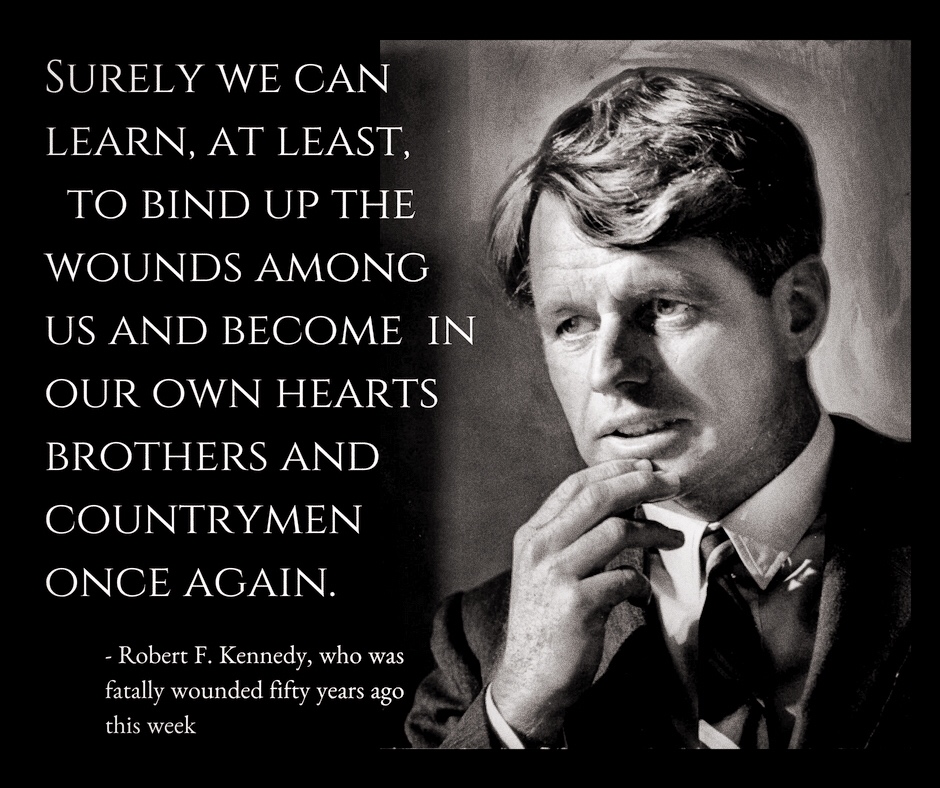
Surely we can learn, at least, to bind up the wounds among us and become in our own hearts brothers and countrymen once again.

— Robert F. Kennedy

Clearly, Robert F. Kennedy was loved by the everyday people of this nation — the factory and farm workers, the coal miners and the steel workers, the teachers and the doctors, the people who lived in the most modest neighborhoods as well as the people in the mansions on the hilltops. Why such an appeal? It could well be because his life and leadership were forged in the civil rights battles he faced as attorney general and in his own harrowing introspection after his brother’s assassination on November 22, 1963. 

Less than five years after losing his brother, “as he lay shot and bleeding on the kitchen floor of the Ambassador Hotel in Los Angeles, he looked up and asked: “Is everybody OK?”

— Robert Morris Shrum, Director and Carmen H. and Louis Warschaw Chair in Practical Politics, UNiversity of Southern California

The books and films on Robert F. Kennedy’s life are so compelling that even persons who were not yet born then can grasp why millions flocked to rail sides as his funeral train traveled ever so slowly from New York to Washington, DC. In the midst of a nation’s despondency at losing the third great American leader, the train carrying his body was a kind of defiant last rally, a tribute not only to who he had been, but to what might have been. His daughter described that day.

A train carried his body from New York City to the nation’s capital. Crowds lined the train tracks, and waved, and cried. That train ride was supposed to be three hours, and instead it turned out to be almost seven hours. Two million people came out.  African Americans in Baltimore singing the “Battle Hymn of the Republic.” Nobody organized this; it was spontaneous.

— Robert F. Kennedy’s daughter, Kathleen Kennedy Townsend

As always, we have the opportunity to grow and learn on the other side of tragic loss. We would do well to listen carefully to the plea spoken so many years ago by Robert F. Kennedy to the people grieving the death of Dr. King.

Say a prayer . . . for understanding and compassion . . . to make gentle the life of the world.

Let’s do that, right in the face of today’s angst over so many ills and wrongs. Let’s “say a prayer . . . to make gentle the life of the world.”

Amen


Change, Child protection, Community activism, Courage, Gun control, Hope, Inspiration, Justice, March for Our Lives, Politics, Prayer, Uncategorized, Violence

Dear Students Marching for Our Lives,

5C1D4656-F263-49DD-8CC3-44E1AA6A3695Let us pray with our legs, let us march in unison to the rhythm of justice, because I say enough is enough.”
— A Parkland shooting survivor.

Dear students,

Yesterday you sat in classrooms all over this country. Today you are marching all over this country, all over the world. Teachers, parents and other supportive adults are marching with you. We older folk marvel at your commitment and your resolve. We are proud of you. We cheer you on and pray that your efforts will bring positive change.

You are marching to demand that your lives and safety become a priority and that we end gun violence and mass shootings in our schools. You are relentless and persistent in your quest to end gun violence. You are standing tall, lifting your voices to proclaim “Enough is enough!”

Every day, 96 Americans are killed with guns. Since the massacre at Sandy Hook Elementary School where 20 children between six and seven years old were killed by a gunman, 7,000 children age 17 and under have been killed by guns.

Today, thousands of you have gathered to call violence by its true name. You are calling out the adults. You are confronting the NRA. You are challenging all who put their own self interest above the safety of our children,You are marching today for those who died and those who live. You are marching for the children who will be in classrooms in years to come, little ones who still have the joy of innocence. You are marching for their lives. You are marching for them. You are marching for all of us, and we thank you. Our hearts are with you,

For each of you, I offer this prayer.

God who holds ouryoung in your arms of grace,

Make of us a people who hold our children in the highest esteem, who give them respect and encouragement, who take their fears seriously, who commit ourselves to their safety and protection.

Protect them, God, as they march for their lives today.

Help them to know that their resilience and persistence might just change the world.

Make every city where they march a welcoming place, filled with people that open their hearts to the message our children speak.

Assure our children of the love that surrounds them and of the support that enfolds them. Assure them of our love and respect for them.

Continue to embolden them to demand change.

Infuse them with the courage to stand and the strength to speak truth to power.

Grant them an extra measure of perseverance.

Guide their steps. Ennoble their conviction.

Calm their fears and soothe their anxious hearts.

And may their reward be a world free of violence, communities infused with peace, classrooms that surround them with understanding, acceptance, protection and learning.

For your deep love for our children, O God, we give you thanks.

For your compassion toward our young who have been so deeply harmed, we give you thanks.

For your comforting presence with friends and families who have lost people they love, we give you thanks.

For your tears mingled with our own as we mourn the loss of innocence our children have experienced, we give you thanks.

For your abiding protection and mercy in our violent and frightening world, O God, we give you thanks.  Amen.

*****

Fast Facts

  • Organizers of March for Our Lives expect millions of people to participate in today’s marches.
  • Acting out of their profound grief, students from across the country are fearless, empowered and motivated to speak out today as part of the March for Our Lives movement that was born out of the Valentine’s Day shooting in Parkland, Florida that killed 17 students and staff members.
  • President Barak Obama and First Lady Michelle Obama sent a handwritten letter to the students of Parkland’s Marjory Stoneman Douglas High School commending them for their “resilience, resolve and solidarity in helping awaken the conscience of a nation.”
  • Today, there are marches in over 800 sites across the country where students are still “calling BS.”
  • Marches are also taking place all over the world.
  • Florida students have planned a voter registration effort as a part of the march in Washington, DC.
  • The message of these students is “never again,”


Change, Children, Courage, grief, Gun control, healing, Hope, Justice, Politics, Violence

A Change Is Gonna Come

963A5A51-3EC5-464E-BAE6-A49BCFECAE4F
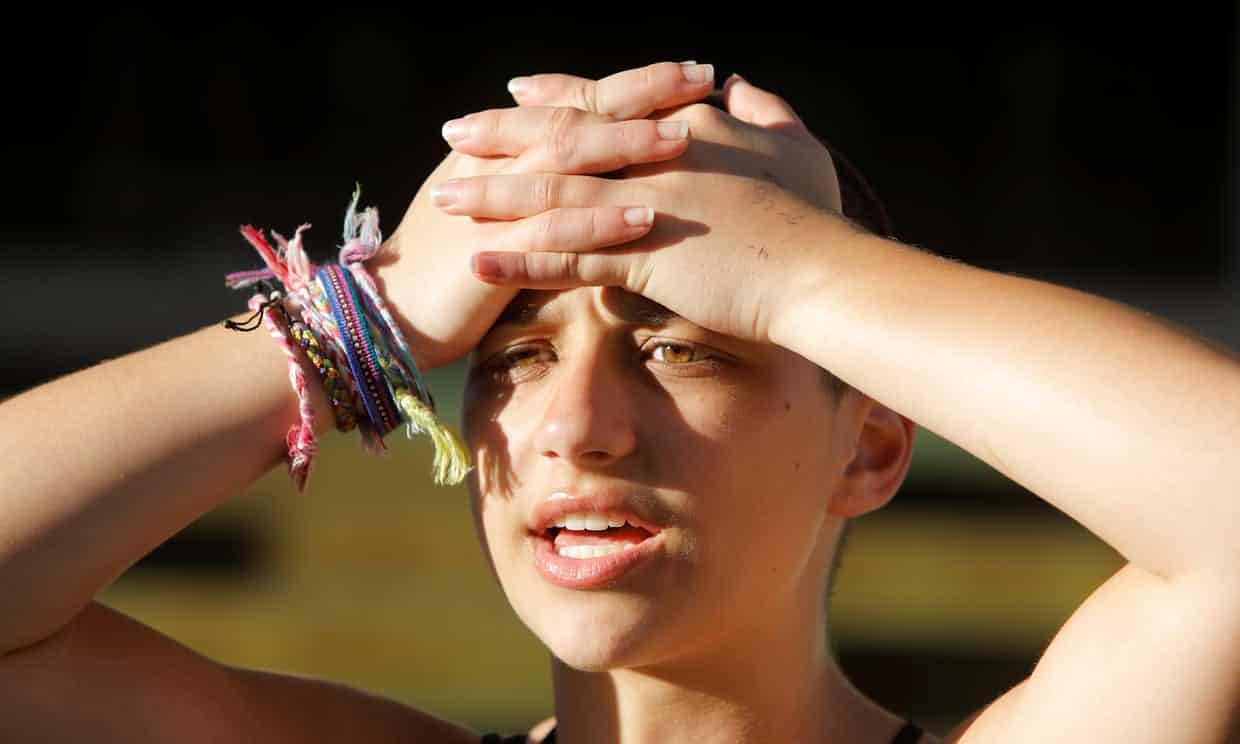
Emma González … ‘These young people will not sit in classrooms waiting.’ Photograph: Jonathan Drake/Reuters

Half a century ago, on March 7, 1965, state troopers beat down men and women who were participating in a peaceful march for voting rights in Selma, Alabama. That same day, radio listeners around the country might have heard Sam Cooke singing a song he had written and recorded several months earlier, but which could have been describing the “Bloody Sunday” confrontation on the Edmund Pettus Bridge.

There have been times that I thought I couldn’t last for long
But now I think I’m able to carry on
It’s been a long, a long time coming
But I know a change is gonna come, oh yes it will.

In “A Change Is Gonna Come,” Sam Cooke moves from bigotry and bloodshed to hope and beauty in barely three minutes. If you listen to the record today, you will hear a story that continues to be relevant. (https://m.youtube.com/watch?v=wEBlaMOmKV4)

Sam Cooke’s rough, sweet voice — a voice that is blues-born and church-bred, beat down but up again and marching — still rings.

A changs IS gonna come . . .

That message of hope rings out still in these troubling days through the passion-filled voice of Emma González, a senior at Marjory Stoneman Douglas High School, as she addresses a gun control rally in Fort Lauderdale just days after a gunman entered her school in Parkland and killed 17 people.

A change IS gonna come . . .

We are going to be the kids you read about in textbooks. Not because we’re going to be another statistic about mass shooting in America, but because . . . we are going to be the last mass shooting. We are going to change the law. That’s going to be Marjory Stoneman Douglas in that textbook and it’s going to be due to the tireless effort of the school board, the faculty members, the family members and most of all the students. The students who are dead, the students still in the hospital, the student now suffering PTSD, the students who had panic attacks during the vigil because the helicopters would not leave us alone, hovering over the school for 24 hours a day.

If the President wants to come up to me and tell me to my face that it was a terrible tragedy and how it should never have happened and maintain telling us how nothing is going to be done about it, I’m going to happily ask him how much money he received from the National Rifle Association. You want to know something? It doesn’t matter, because I already know. Thirty million dollars.  — Emma González

A change Is gonna come . . .

Just hours after the mass shooting, other students turned to social media to discuss gun control.

Guns give these disgusting people the ability to kill other human beings. This IS about guns.  — Carly Novell, a 17-year-old senior; editor of the school’s quarterly magazine.

We need to do something. We need to get out there and be politically active. Congress needs to get over their political bias with each other and work toward saving children. We’re children. You guys are the adults.  — David Hogg, 17, a senior; Stoneman Douglas student news director

Wherever you bump into someone, there is the fear that they’re the next shooter, and every bell is a gunshot. I feel like some change is going to come of this.  — Daniela Palacios, 16, a sophomore at another Broward County High School at her first protest.

A change IS gonna come . . .

And it will be our bold and compassionate children who will lead this nation into that change. Like so many Americans, I was disconsolate when watching the TV news of yet another school shooting. But then I started watching the students, and I saw the girl with the buzzcut, Emma González, wiping back her tears, mourning her dead classmates while demanding change.

Like her schoolmates, Emma is in trauma, but she is organizing. She and many of her classmates are directly challenging the donations of the National Rifle Association to Trump and other politicians. There will be school strikes. There will be organized resistance. These young people will not sit in classrooms any more. They refuse to become another tragic statistic. “We are going to be the kids you read about in textbooks,” said a weeping González.

As I remembered this week what happened  at Sandy Hook, at Columbine, at Westside, a school in my own state, I remembered feeling anger and despair. But today, for first time in a long time, I feel hope. I see true leadership as kids are standing up for one another and fighting for their lives.

Let us stand courageously beside these children, our children, and do what we can to create change . . . letters to Congress, phone calls, posts on social media, marches and demonstrations, hand-lettered signs, letters to the editor, VOTING for change. What can you do?

Emma González, Daniela Palácios, David Hogg, Carly Novell . . . and thousands of other children who are crying out, ENOUGH!

They give me hope.

A change is gonna come!

May God ennoble each of us to make it so.


Hate, Love, Martin Luther King, Jr., peace, Politics

Only Love Can Drive Out Hate

010B6CB7-43B5-47B7-B92B-C87DF5750866It was almost shameful that President Trump on January 12th signed a proclamation honoring Dr. Martin Luther King, Jr. In all honesty, I cringe at his signing of this proclamation. I cringe because the president honors Dr. King while dishonoring Dr. King’s legacy.
I can imagine that Dr. King’s words echoed through the Oval Office during the signing, in a whisper heard only by persons of love and good will.

If we are to have peace on earth, our loyalties must become ecumenical rather than sectional. Our loyalties must transcend our race, our tribe, our class, and our nation; and this means we must develop a world perspective.”

We’ve learned to fly the air like birds, we’ve learned to swim the seas like fish, and yet we haven’t learned to walk the Earth as brothers and sisters…”

― Martin Luther King, Jr.

I cringe because I heard the words that the president said about “shithole countries.”

Why do we want all these people from Africa here? They’re shithole countries … We should have more people from Norway.

– Donald J. Trump

In his remarks, Mr. Trump, who has vowed to clamp down on illegal immigration, also questioned the need for Haitians in the United States.

Instantly, many Democrats and some Republican lawmakers called out the president. Republican United States Representative Mia Love, a daughter of Haitian immigrants, said the comments were “unkind, divisive, elitist, and fly in the face of our nation’s values,” and she called forTrump to apologize to the American people and to the countries he denigrated.

Another Republican Representative, Ileana Ros-Lehtinen, who was born in Cuba and whose south Florida district includes many Haitian immigrants, said: “Language like that shouldn’t be heard in locker rooms and it shouldn’t be heard in the White House.”

Democratic Senator Richard Blumenthal said the president’s comment “smacks of blatant racism, the most odious and insidious racism masquerading poorly as immigration policy.”

A wave of international outrage also grew against the president’s vulgar language as the president of Ghana, President Nana Akufo-Addo, said that he would “not accept such insults, even from a leader of a friendly country, no matter how powerful.”

The Ghanian president tweeted an unflinching defense of the African continent — and of Haiti and El Salvador, countries that Trump also mentioned in the Thursday meeting with a group of senators at the White House.

In addition to Ghana, the government of Botswana said Trump’s language is “reprehensible and racist,” and said it has summoned the U.S. ambassador to clarify what he meant.

Senegal’s president, Macky Sall, said in a statement that it was “shocking” and that “Africa and the black race merit the respect and consideration of all.” His West African nation has long been praised by the United States as an example of a stable democracy.

The African Union, which is made up of 55 member states, also spoke against Trump’s remarks.”Given the historical reality of how many Africans arrived in the United States as slaves, this statement flies in the face of all accepted behavior and practice,” said spokeswoman Ebba Kalondo.

Paul Altidor, Haiti’s ambassador to the U.S., called Trump’s comments “regrettable” and based on “clichés and stereotypes rather than actual fact.” He also noted the insensitivity of its timing, coming the same week as the eighth anniversary of Haiti’s 2010 earthquake, which killed more than 200,000 people.

El Salvador’s government on Friday sent a formal letter of protest to the United States over the “harsh terms detrimental to the dignity of El Salvador and other countries.”

A spokesperson representing the United Nations High Commissioner for Human Rights condemned President Trump’s “shocking and shameful” comment, saying: “I’m sorry, but there’s no other word one can use but racist.”

On January 13th, The Washington Post published an article by Karen Tumulty that calls out President Trump’s misunderstanding of this nation’s immigration history.

There is far more to the latest controversy surrounding President Trump than the vulgar and implicitly racist language he used to draw a distinction between desirable and undesirable immigrants. Trump’s choice of words also revealed a deeper and more substantive truth about how the president views — and misunderstands — America’s unique relationship with its immigrants.

Trump’s words, with their racial connotations, also suggest he wants to return to what has come to be regarded as one of the more shameful and xenophobic periods of immigration policy.

In 1924, a set of laws was passed that set quotas limiting the number of people admitted to this country based on where they came from, with a goal of preserving the United States’ ethnic homogeneity.

“The premise of national origin quotas was that some countries produce good immigrants, others produce bad immigrants,” said NPR correspondent Tom Gjelten, author of the 2015 book “A Nation of Nations: A Great American Immigration Story.”

“There were actually ‘scientific’ studies purporting to categorize countries according to the quality and characteristics of their people, and the quotas were devised in part on the basis of the testimony of ‘expert’ opinion,” Gjelten said.

There are so many voices of reason, voices that cry out for dignity, respect, unity and love, speaking out against the president of the United States. So it is with sadness and shame that I celebrate the day of remembrance for Dr. King. On his day in 2018, I hear more intensely all that he taught us about so many things, and I hear what he shared with us most profoundly — the power of love.

Returning hate for hate multiplies hate, adding deeper darkness to a night already devoid of stars. Darkness cannot drive out darkness; only light can do that. Hate cannot drive out hate; only love can do that.

Hate multiplies hate, violence multiplies violence, and toughness multiplies toughness in a descending spiral of destruction. So when Jesus says “Love your enemies,” he is setting forth a profound and ultimately inescapable admonition.

― Martin Luther King, Jr., from Strength to Love

This week, I heard a provocative statement: that hate speech is not about who Donald Trump is. Rather, it is about who we are. The statement opened up some questions for me:

How do I respond? What does it mean for me to stand with those who are marginalized?

Is it not my responsibility to stand up to persons in seats of power when they promote hate, racism, xenophobia, exclusion and hostility?”

Will I set my face towards love and my heart towards the world as it is seen through the eyes of Jesus? Is it not up to me to be a part of creating — in our nation and in our world — a “beloved community?”

For “hate cannot drive out hate. Only love can do that.” Was

Change, Courage, grief, Gun control, Mourning, peace, Perseverance, Politics, Violence

How Long, O Lord?

DesignThe mass shooting in Las Vegas leaves us enraged. And confused. And heartbroken.
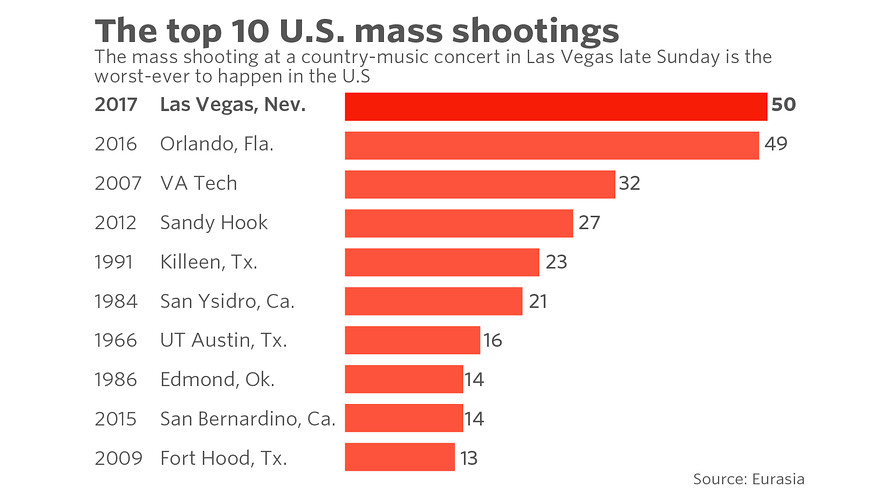

Heartbroken describes us best as we find ourselves dealing with an inescapable and horrific truth that our world is not a safe place. Once we take that into our souls, we begin to live life as victims, refugees from all that is good. The television news is filled with the stories of heartbroken people whose loved ones were gunned down at a “fun-filled” event. As people of faith, our lives are interwoven with the lives of the victims and survivors of the Las Vegas tragedy. So yes, although we were not there and did not experience the massacre, we are heartbroken, too.

We are heartbroken because of lives lost. We are heartbroken because brothers and sisters must mourn the death of persons they loved. We are heartbroken because those that survived the Las Vegas shooting now live with relentless survivor’s guilt. We are heartbroken because a healthy family event filled with music violently lost its melody. We are heartbroken because violence reigns in the world. We are heartbroken because we do not have the moral, ethical, spiritual and political will to change the climate of violence through responsible weapon control legislation.

But we have been heartbroken before, far too many times. Orlando, Fort Hood, Killeen, Virginia Tech, UT Austin, San Bernardino, Sandy Hook, among others. We have been heartbroken before, and nothing changed. Our broken hearts did not result in courageous spirits willing to persevere, persist and insist on creating change in our culture of violence.

Dan Hodges made this very sad statement in 2015.

In retrospect, Sandy Hook marked the end of the U.S. Gun control debate. Once America decided that killing children was bearable, it was over.

The facts, though, convict us of irresponsibility and refusal to effect change. The Guardian published a chart — America’s Gun Crisis in One Chart — that reveals the troubling truth: 1,516 mass shootings in 1,735 days. (https://www.theguardian.com/us-news/ng-interactive/2017/oct/02/america-mass-shootings-gun-violence) The chart, updated on October 2, 2017, reports 1,719 deaths and 6,510 injuries.IMG_5997

People of faith lament and grieve, asking God for answers. Like the Prophet Habakkuk who prayed for help in a time of trouble, we cry out to God.

How long, O Lord, must I call for help, and You will not hear? I cry out to You, “Violence!” Yet You do not save.

Why do You make me see iniquity,
And cause me to look on wickedness?
Yes, destruction and violence are before me;
Strife exists and contention arises.

– Habakkuk 1:2-3 NASB

I would never presume to know the mind and heart of God, but I imagine that God’s answer to our question, “How long, O Lord?” might sound something like this.

How long, you ask. Long enough for you to stand courageously for what is right. Long enough for you to develop the political will to seek change through advocacy in the halls of Congress. Long enough for you speak truth to power, constantly and persistently until a new day of peace and safety dawns in your nation. Do not cry, “Peace, peace where there is no peace.” Instead cry out, “Change! Change! Change now, because God desires to comfort your broken heart and wills for you a world of safety, well being, and holy peace.”

May God grant us the courage and the perseverance to make it so.

Change, Christian Witness, Courage, Freedom, Hope, Justice, peace, Perseverance, Politics

Persevering Hope

IMG_5700


PAX

(pɑks ; päks; pæks ; paks). noun

1. the Roman goddess of peace, identified with the Greek Irene

2. sign of peace


The Reverend Jennifer Butler was wearing a white clergy stole with Pax embroidered over a cross and an olive branch. Enlight126She Was singing as police officers restrained her, arms behind her back, both thumbs held tightly together with plastic straps. Next to be arrested was The Reverend Traci Blackmon, who chanted “justice, mercy” again and again as police restrained her and led her away.
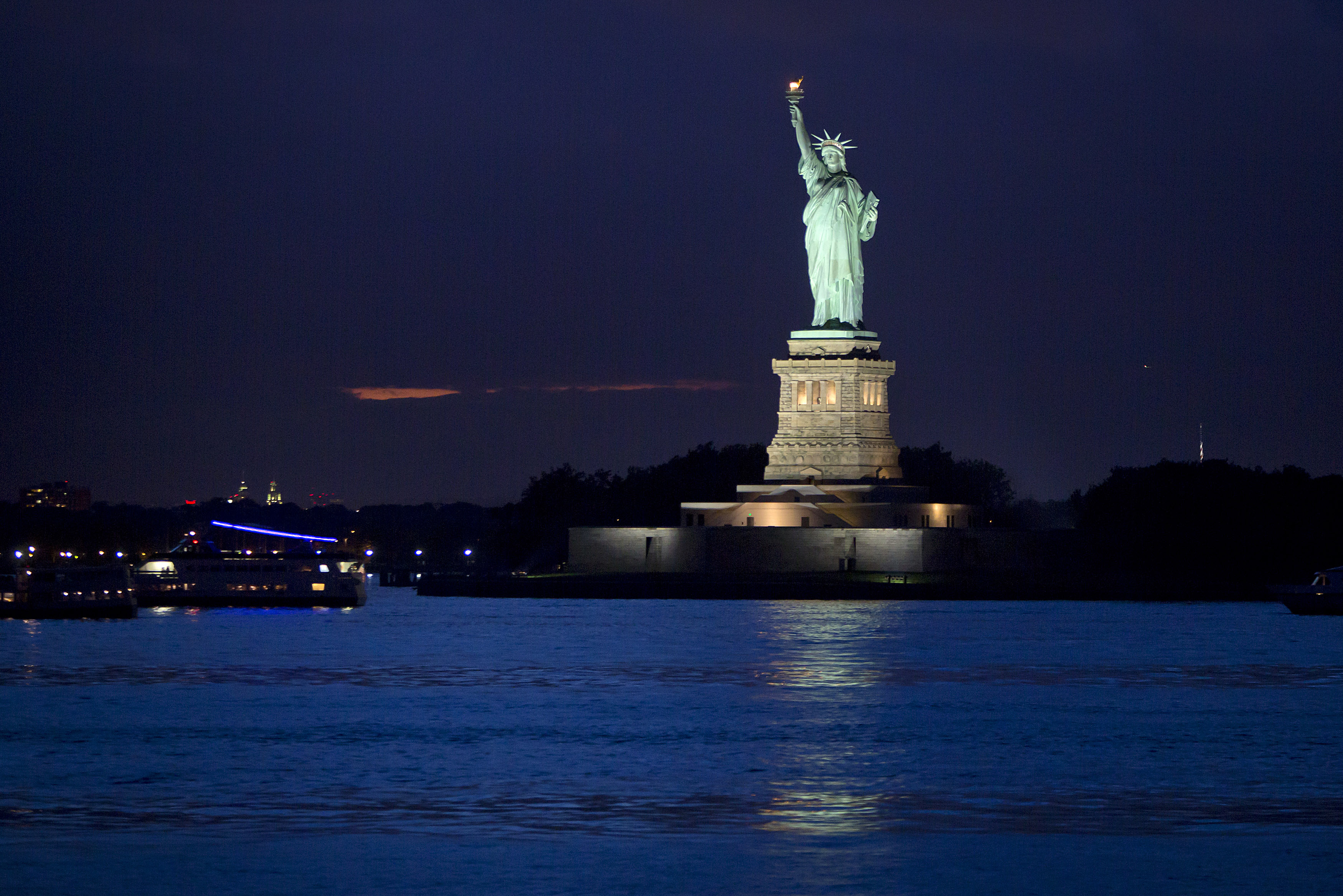
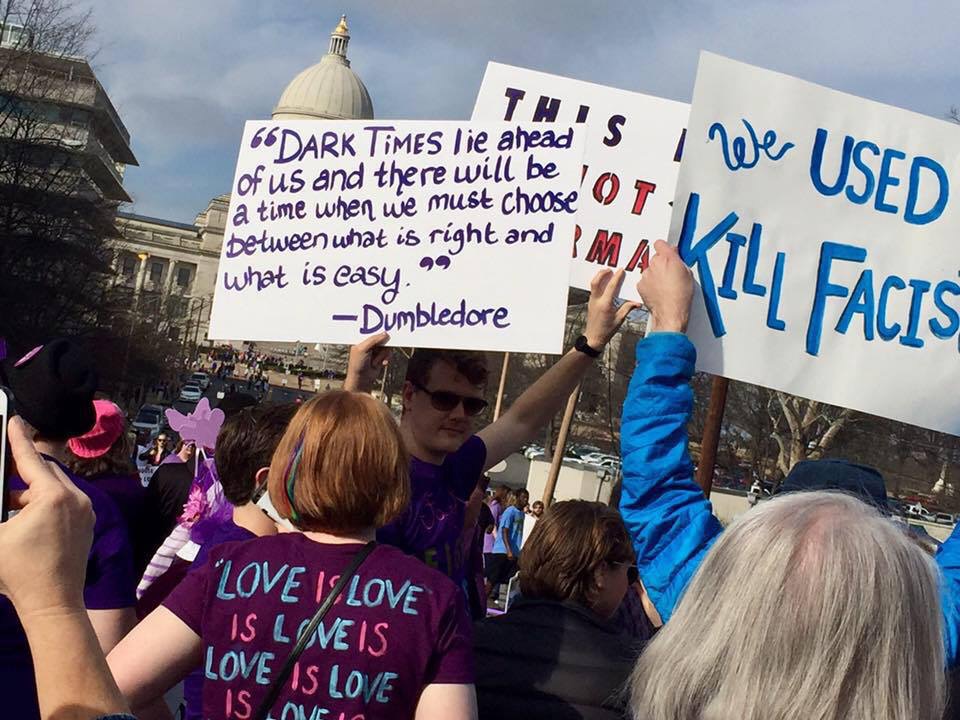
The Charlotte Examiner described the event, The March to Save Medicaid, Save Lives.

Capitol Hill police arrested the president of the North Carolina NAACP on Thursday morning after he led a protest of the Senate’s proposed health care repeal-and-replace bill.

Rev. William J. Barber II, who was protesting in his role as president of Repairers of the Breach, was released from jail by 2 p.m. On that morning, July 13, 2017, Dr. Barber and other faith leaders led a group of about 50 people to Senate Majority Leader Mitch McConnell’s office in the Capitol.

The group gathered a few blocks away at 10 a.m. and walked to the Capitol, chanting and singing along the way. Eleven protesters were arrested.

Read more at this link:

http://www.charlotteobserver.com/latest-news/article161200048.html#storylink=cpy

As I watched the live feed of this moral and courageous expression of civil disobedience, I hoped that the police would not arrest The Reverend Dr. William Butler, who was obviously experiencing pain from his physical disabilities. I hoped that other faith leaders would not be arrested.

The band of justice-seekers, clergy and persons of all faiths, gathered together in a prophetic action to protect the 22 million Americans in danger of losing healthcare because of what the group calls “immoral Congressional legislation.” The Repairers of the Breach Facebook page gives details of the event.

Together, we’ll join in song and march through the halls of power, sending a moral message that we cannot cut Medicaid — a lifeline for so many children, seniors and people with disabilities.

My heart was with them in Washington. My prayers pleaded for hope for a brighter day, for justice for those who are oppressed, for peace for every person. My mind recalled the words of the prophet Isaiah . . .

And if you spend yourselves in behalf of the hungry
and satisfy the needs of the oppressed,
then your light will rise in the darkness,
and your night will become like the noonday.

The Lord will guide you always;
And will satisfy your needs in a sun-scorched land
and will strengthen your frame.

You will be like a watered garden,
like a spring whose waters never fail.

Those from among you will rebuild the ancient ruins;
You will raise up the age-old foundations;
And you will be called the repairer of the breach,
The restorer of the streets in which to dwell.

– Isaiah 58:10-12

I watched them stand bravely as they faced the powers before them, living into the words spoken by Hannibal of Carthage, “We will either find a way or make one.” I listened to their voices echoing through the halls of the building, singing with persisting, persevering hope.

Ain’t gonna let injustice turn me around
Turn me around, turn me around
Ain’t gonna let injustice turn me around
I’m gonna keep on a-walkin’, keep on a-talkin’
Marchin’ up to freedom’s land.

Ain’t gonna let no jail cell turn me around
Turn me around, turn me around
Ain’t gonna let no jail cell turn me around
I’m gonna keep on a-walkin’, keep on a-talkin’
Marchin’ up to freedom’s land.

Ain’t gonna let nobody turn me around
Turn me around, turn me around
Ain’t gonna let nobody turn me around
I’m gonna keep on a-walkin’, keep on a-talkin’
Marchin’ up to freedom’s land.

Repairers of the Breach — http://www.breachrepairers.org/

Covenant, healing, peace, Politics, Relationship, Transformation

Reconciliation: The Heart’s Repentance

IMG_5630

The long and arduous presidential campaign left behind a fractured nation. The political parties displayed unprecedented enmity between Democrats and Republicans. The citizenry followed their lead, and the result was broken relationships among friends and even within families. My own family exchanged sharp and hurtful words during the campaign, words that continue to affect our relationships.

We have made enemies of other nations. Some among us have made enemies based on race, culture, gender, national identity, religious practice, sexual orientation. And we remain divided and hostile, with no apparent desire to reconcile. And yet, we desperately need true reconciliation.

The Biblical concept of reconciliation suggests the presence of spiritual, divine intervention that creates reconciliation in the hearts of those who are estranged. Reconciliation assumes there has been a breakdown in a relationship, but through the heart’s repentance, there is a change from a state of enmity and fragmentation to one of harmony and fellowship.

It is going to require the heart’s repentance to restore a climate of unity, mutual respect, love and peace. Michael Curry, the Presiding Bishop of the Episcopal Church in America, offers these insightful thoughts about reconciliation.

Reconciliation isn’t just singing Kumbaya and everyone being nice. Reconciliation is about the hard work of working through our differences, maybe acknowledging them and not changing them, necessarily. Working through our differences, honestly and with integrity, and sometimes repenting of where our differences or my differences or yours has actually hurt relationship and not helped the human family.

Shall we just leave everything as it is? Shall we allow the distance to continue between us and those we have lost because of our differences? Shall we accept a fractured world and the divisiveness that now assails us? Or shall we instead commit ourselves to the holy work of reconciliation?

Our sacred calling is to restore peace within the human family, creating a world that can nurture our children and grandchildren, striving for genuine reconciliation among those from whom we are estranged, restoring peace and a community of love, transforming fractured and hurting humanity. This is what God implores us to do.

. . . This is from God, who through Christ reconciled us to himself and gave us the ministry of reconciliation; that is, in Christ God was reconciling the world to himself, not counting their trespasses against them, and entrusting to us the message of reconciliation.

2 Corinthians 5:18-19


Freedom, Politics

One Nation under God

The Statue of Liberty is pictured from the Staten Island Ferry at twilight in New York

I sometimes tire of hearing talk about being “one nation under God” in a nation whose leaders want to exclude and divide. In these difficult days, our President has signed an executive order to ban persons from several countries from entering our country. Protesters object in the streets and at airports throughout the country, seeking to hold fast to the promise represented by the Statue of Liberty. We must not forget that Lady Liberty stands in New York harbor lifting her light to all the world. And on a plaque at her base, these words are inscribed:

Give me your tired, your poor, your huddled masses yearning to breathe free, the wretched refuse of your teeming shore. Send these, the homeless, tempest-tossed to me, I lift my lamp beside the golden door!

Bishop Steven Charleston writes what it means to be one nation under God. He says that ours is a holy calling, compassionate to all who seek refuge, caring for those who are poor, protecting those among us who are most vulnerable. These are his words:

One nation under God. What would that be like? I think any nation striving to live such a holy calling would be compassionate to all those in need, caring for the poor, healing the sick, protecting the most vulnerable. It would seek wisdom, supporting its schools and teachers. It would defend itself and help its friends, but never cease striving for peace. It would turn from greed and honor God’s creation. It would respect the dignity of every citizen and strive for reconciliation, finding unity in diversity, strength in mercy, authority in justice not promised but practiced.

– Steven Charleston

Dignity, diversity, strength, mercy, justice, compassion . . . May these words always define us as a nation. May God rebuke the leaders who seek to obliterate these values. And may God touch the hearts of our leaders, urgently summoning them to help make us truly one nation under God.