Disconsolate, Grace, Hesed, Hope, Soul work, Waiting, Wounds of the Soul

It Was Worth the Wait!

Wait for the Lord;
be strong, and let your heart take courage;
wait for the Lord.

Psalm 27:14 ESV

Waiting is no easy thing. Most of us don’t really like it. We’re not good at it. We are impatient people. We want things to happen quickly. Isn’t it excruciating at times to wait when a traffic light stays red far too long, and no traffic can be seen anywhere! How often we have stood in a long, slow-moving line and frustratingly declared, “This is not worth the wait!”

The more important matter, though, is when the soul must wait, when our hearts must wait for pain to ease. When our hearts have to wait, when our souls have to wait in the silence of suffering, it’s almost impossible for us to bear. Yet the the words of the psalmist and the prophets echo through the ages:

For God alone my soul waits in silence;from God comes my salvation;
God alone is my rock and my salvation, my fortress.
I shall never be shaken.

Psalm 62:1-2 ESV

Those who wait on the LORD shall renew their strength;
They shall mount up with wings like eagles,
They shall run and not be weary,
They shall walk and not faint.

Isaiah 40:31 NKJV


Messages of hope, yes. Yet when we are suffering, when we are in pain or disheartened or in trouble, nothing really sounds much like hope. Waiting for pain to ease is difficult, even excruciating. I like the way Sue Monk Kidd offers insight about waiting in her book, “When the Heart Waits.”

I had tended to view waiting as mere passivity. When I looked it up in my dictionary however, I found that the words passive and passion come from the same Latin root, pati, which means “to endure.” Waiting is thus both passive and passionate. It’s a vibrant, contemplative work. It means descending into self, into God, into the deeper labyrinths of prayer. It involves listening to disinherited voices within, facing the wounded holes in the soul, the denied and undiscovered, the places one lives falsely. It means struggling with the vision of who we really are in God and molding the courage to live that vision.

Sue Monk Kidd, “When the Heart Waits”

I cannot explain it better than that and I won’t try. My deepest self desperately grasps for these words, “listening to disinherited voices within, facing the wounded holes in the soul.” I cannot respond with any meaningful comments, but I will offer another insight about waiting for a God who covers us with pure, merciful, amazing grace.

GRACE. The Hebrew word is Hesed.

Hesed is a Hebrew word that means grace in all its fulness. Hesed is defined as compassion, mercy, love, faithfulness  and most often, grace. But none of these words fully capture this Hebrew word that means grace. Hesed is not just an emotion or a feeling. It describes the way God lavishly pours grace upon us in our most needful moments.

And so we learn to wait for God’s outpouring of grace. Sometimes we wait impatiently. Sometimes we wait in anger. Sometimes we wait with a holy sense of peace. Sometimes we wait with hope, joyfully expectant. And sometimes we wait in silence, without words, disconsolate and cast down.

A number of years ago, I found myself nursing a disconsolate, cast down soul and spirit. I had been through a trying time in my life that I can only remember as one of deep sorrow. I remember one day when I sat down at the piano after reading Psalm 42. One particular verse of the Psalm reverberated in my mind. Over and over again, I heard the words, but I did not hear them read. I heard them sung, with a simple, but hopeful strength. I heard myself singing, a soul-song from somewhere inside me. I began to play what I heard, first the melody and rhythm, then the chords that arose from somewhere I could not pinpoint. It sounded beautiful, and it sounded like it was emerging from a sacred promise from God — unequivocally for me. This was my soul song:

Why are you cast down, O my soul,
and why are you disquieted within me?

Hope in God; for I shall again praise him,
my help and my God.

Psalm 42:11 NRSV


I think I was waiting that day, though I was not sure what I was waiting for. I just know that I found hope again that day, if just for a few moments of holy music. And in my disquieted spirit, I sensed pure grace once again — grace, hesed — God’s infinite, matchless, amazing grace.

It was worth the wait!

Thanks be to God.


#MeToo, Activism, Beloved Community, Bondage, Challenge, Change, Community activism, Courage, Discrimination, Freedom, Hate, Holy Spirit, Hope, Injustice, Lament, peace, Racism, Social justice, Spirit wind, Transformation, Transforming Injustice, White supremacy

Removing Yokes of Bondage

“We Sound a Call to Freedom” Hymn text by Rev. Dr. Jann Aldredge-Clanton; http://jannaldredgeclanton.com/changing-church-resource-“we-sound-a-call-to-freedom”-video-2/


Stand fast therefore in the freedom by which Christ has made us free,
and do not be entangled again with a yoke of bondage.
Galatians 5:1 (NKJV)

What is it about freedom that scares us? What is it about freedom that causes us to refuse to offer it to everyone? Are we afraid that giving freedom to another person or group of persons will diminish our own freedom? What does freedom really mean to persons who are oppressed and to those who live inside the throes of injustice?

I have written very little lately about justice and accountability, the two words most used to describe Derek Chauvin’s conviction. I can’t help but mark this very moment on the “long arc that bends toward justice.” I feel compelled to call our attention to this week! Actually it’s last week now, but you get the idea. Let’s call it “the week of the verdict.”

The week of the verdict has come full circle from George Floyd’s murder on May 25, 2020 to the conviction of Derick Chauvin almost one year later on April 29, 2021. It was a week we will not forget. It brought up emotions in me and perhaps in most people. Most of what I felt mirrored the emotions I imagine George Floyd’s family feeling — happy, calm, relieved, conflicted, hopeful, determined, vindicated. I also felt sad and helpless because the conviction did not end murders of black and brown brothers and sisters. And I felt joyful and hopeful because perhaps this flashpoint in the long history of racial injustice will help us turn the corner and finally see in our communities the justice we long for.

How can that happen? How can we turn the corner and move away from oppressive systems and oppressive people? How do we do that when just minutes after the verdict and less than ten miles away, 16 year old Ma’Khia Bryant was shot and killed by police in Ohio? It happened in the shadow of “the week of the verdict.”

Perhaps for us this is the week of the verdict — the week when the verdict will be read on our failure to end the systemic racism in our communities! Isn’t it past time for us to stand up and stand strong and stand determined and woke? My friends, it is time! This moment in the history of injustice may well be the turning point we need to end racism!

I have said this many times: We cannot just reform injustice, we must transform it. The transformation that results in genuine, lasting justice must begin in the soul and in the heart where intentions are formed. I must lament injustice, confess my own complicity in it, repent of the white supremacy within me, own other forms of oppression and commit to the hard work of transforming injustice in my community and in my world. Only then will transformation happen in the systems that oppress people.

Only transformed people can love neighbors as Jesus loved us. My friend and sister blogger never fails to remind me to answer the ultimate question, “How then shall I live?”* She offers this scripture to us today.

We know love by this, that he laid down his life for us — and we ought to lay down our lives for one another. How does God’s love abide in anyone who has the world’s goods and sees a brother or sister in need and yet refuses help?

1 John 3:16-17 

She then reminded us that conditions in India are dire and the people languish.

In India, today the virus surges
almost beyond control,

hospitals are choked,
people die in line waiting for a doctor.

How can those of us
rejoicing in vaccination,
cautious travel, new gatherings,
not ask how we can help?

Maren

How does God’s love abide in anyone who has the world’s goods and sees a brother or sister in need and yet refuses help?

And that is the soul-critical question we must answer. How then shall we live when all around us people suffer every kind of calamity — every kind of violence, disaster, racism, discrimination, dehumanization? Every kind of heartache. How do we, in our suffering world, become the heart, hands and feet of Jesus?

Getting back to the lament of my own heart, that one thing that inspires my passion — transforming the injustice of racism, xenophobia, misogyny, homophobia and all forms of evil exclusion and oppression. Transforming injustice! Setting our faces toward the hope of Beloved Community! This one thing I know, the steps of Jesus would have led him to the “healing” of injustice in any form. On every day he walked on this earth, Jesus would be loving every person who was in need and he would be lamenting every injustice that caused harm.

How can we not lament? How can we not expend ourselves in the hard work of transforming injustice? How can we not care for, and pray for, and love our brothers and sisters who are in need? How can we refuse to work for the freedom of black and brown people, indigenous peoples, LGBTQ+ people, immigrants and asylum seekers, and to any person who is enslaved? How can we deny God’s desire for justice and peace?

How can we refuse freedom to black and brown people, indigenous peoples, LGBTQ+ people, immigrants and asylum seekers, and to any person who is enslaved? How can we deny them God’s peace?

— Rev. Kathy Manis Findley

I do not have the answer for how we might do this. But I do have some convictions about it, especially about racism and white supremacy. One of my convictions is that dismantling racism begins in me, in my soul. And eradicating white supremacy begins when I look seriously at my own white supremacy. For you see, as long as white supremacy looks to me like a white-draped person burning a cross, I will never acknowledge that white supremacy is in me. As long as white supremacy looks to me like a man I might see on TV news with a truck, a confederate flag, a rifle and a mission, I can easily distance myself. I am not that white person; I am a different white person that would never tolerate racism.

Am I? Am I that different white person? Or are there ways I contribute to an unjust society? Are there ways I fail to seek Beloved Community? Are there thoughts and feelings within me that diminish other persons, persons not like me? Am I complacent about injustice? Am I complicit? Am I reticent? Am I avoiding, looking the other way?

As long as white supremacy looks to me like a white-draped person burning a cross in someone’s yard, I will never see that white supremacy is in me. As long as white supremacy looks to me like a man I might see on TV news with a pick-up truck, a confederate flag, a rifle and a mission, I can easily distance myself. I am not that kind of white person! Or am I?

Rev. Kathy Manis Findley

Racial injustice may currently be the most visible form of oppression, but we must remember that many groups of people are oppressed. Many people long for freedom from oppression. Only when we “see” and “hear” all of their voices, will we be on the way to transforming injustice. I don’t know everything about oppression, and I don’t know exactly how to make a difference. I don’t really know how to join hands with my community and set about to transform injustice. I do know that I must begin with my own lament, for only lament can open my eyes to every manner of suffering and oppression.

So meet me on the mountain where we find the strength from God to persevere, and then descend with me to all the places where oppression enslaves people. Come with me to the people, and together, let us remove from them the yoke of bondage and offer them new freedom. And may Spirit Wind surround us with courage. Thanks be to God.


*”How then Shall We Live?” was the inspiring theme of the Alliance of Baptists Annual Gathering.

VIDEO CREDITS
Words  © Jann Aldredge-Clanton, from Inclusive Hymns for Liberating Christians (Eakin Press, 2006).

Visual Artists:
David Clanton: “The Magic Begins” and dancing children photos: http://www.davidclanton.com/http://david-clanton.artistwebsites.com/

Shannon Kincaid: woman carrying torch paintings:http://www.shannonkincaid.com/

Mirta Toledo: Christ-Sophia painting:  https://www.facebook.com/mirtatoledoarthttp://www.jannaldredgeclanton.com/books.php#book3

Chad Clanton: purple irises photo

Instrumentalists:
Keyboard: Ron DiIulio
Percussion: Warren Dewey
Guitar: Danny Hubbard
Bass & Percussion: Jerry Hancock

Music Producer/Arranger:
Ron DiIulio: http://www.silverdollarsounds.com/personality-profiles/ron-diiulioSource

All Shall Be Well, anxiety, Bewilderment, Brokenness, Comfort, Despair, discouragement, Emotions, Feelings, God's Faithfulness, Grace, healing, Heartbreak, Holy Spirit, Hope, life, Loss, Rev. Kathy Manis Findley, Sacred Pauses, sadness, Sorrow, Stories, Weeping

How Is Your Heart?

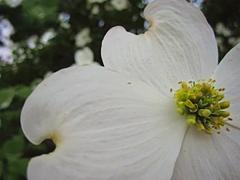
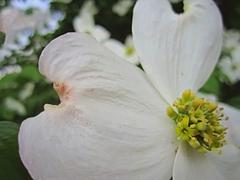
Yesterday I noticed a dogwood tree in full bloom, the first blooming dogwood I have seen this year. The sight of it did my heart good, because it reminded me that some simple and beautiful things remain. They return every year. They mark a season. They grow, and their blooms become ever more vibrant, or so it seems.

The dogwood has its own story, a lovely legend that explains the tree’s qualities. The legend holds that the tree was once very large, like a Great Oak tree, and because its wood was strong and sturdy, it provided building material for a variety of purposes. According to the story, it was the dogwood tree that provided the wood used to build the cross on which Jesus was crucified.

Because of its role in the crucifixion, it is said that God both cursed and blessed the tree. It was cursed to forever be small, so that it would never grow large enough again for its wood to be used as a cross for a crucifixion. Its branches would be narrow and crooked — not good for building at all. At the same time, the tree was blessed so that it would produce beautiful flowers each spring, just in time for Easter. The legend says that God it is gave it a few traits so that whoever looks upon it will never forget. 

81189983-8ADE-4D60-9088-C52DA3983583The petals of the dogwood actually form the shape of a cross. The blooms have four petals. The tips of each of the petals are indented, as if they bear a nail dent. The hint of color at the indentation bring to mind the drops of blood spilled during the crucifixion.
8DEA0FBE-8A3E-4AF8-8142-DA825CA72359


Diana Butler Bass tells the story like this:

There’s an old southern legend that dogwoods grew in Jerusalem — and that one gave its wood for Jesus’s cross. Because of this, the dogwood was cursed (its short stature a ‘punishment’ for being the wood of death) but it also became a blessing. Blessing? For on each twisted branch burst forth petals of lightness and light.

So let’s leave the dogwood’s story and look at our stories — your story and my story. People often use the term “storied past.” Well, a storied past is something all of us have.

In talking with a friend a few days ago, I asked, “How is your heart?” She began to tell me her story, which was a long and winding one that included many mini-stories — happy ones snd sad ones — from her life’s journey. Toward the end of her story, she said, “I feel as if I am cursed by God.” That was her bottom line answer to my question, “How is your heart?” Hers was an honest, heartbroken response that instantly revealed that her heart was not all that good, but that was a critical part of her story.

If you and I are honest, we will admit that our hearts were broken and hurting at several places in our stories. Recalling our brokenhearted times is something we always do when we tell our stories, and it’s an important part of the telling. My story and yours is never complete if we leave out the heartbroken moments, for at those points, what feels like God’s curse almost always transforms into God’s grace.

If not for our heartbroken moments, the hurting places in our hearts might never “burst forth with lightness and light.” Our heartbroken moments change us and grow us. They set us on better paths and they embrace our pain with grace. Our heartbroken moments give us pause, and in that pause, we find that once again, our hearts are good. Our broken hearts are once again peaceful hearts — healed, restored, transformed, filled with God’s grace.

How is your heart? That is a question we would do well to ask ourselves often, because languishing with our heartbreak for long spans of time can cause our stories to be stories mostly of pain. Instead, stop right here in this post for just a few moments and ask yourself, “How is my heart?”

48BB4DCE-068F-4CC2-B1D0-A6B95549B35D

Your answer may well be your path to a contemplative, sacred pause that can become a moment of healing, a time for God’s grace to embrace whatever is broken in your heart and to transform it into love, light and hope. So don’t be afraid to look into your heart when pain is there. In looking, you may find reasons, many and and complex, that are causing deep pain and brokenness. You may also find the healing touch of the Spirit of God waiting there for you and offering healing grace — a Godburst of new hope.

May your story be filled always with times when your was light with joy and times when your heart was broken with loss, mourning, discouragement, disappointment. Both create your extraordinary story — the joyful parts and the sorrowful parts. So tell your story again and again to encourage yourself and to give the hope of God’s healing grace to all who hear it.

I remember a beloved hymn that is a prayer for the Spirit of God to “descend upon my heart.” May this be your prayer today.

Spirit of God, descend upon my heart;
Wean it from earth; through all its pulses move.
Stoop to my weakness, mighty as Thou art,
And make me love Thee as I ought to love.

Hast Thou not bid me love Thee, God and King?
All, all Thine own, soul, heart and strength and mind.
I see Thy cross; there teach my heart to cling:
Oh, let me seek Thee, and, oh, let me find!

Teach me to feel that Thou art always nigh;
Teach me the struggles of the soul to bear,
To check the rising doubt, the rebel sigh;
Teach me the patience of unanswered prayer.

Teach me to love Thee as Thine angels love,
One holy passion filling all my frame;
The kindling of the heav’n-descended Dove,
My heart an altar, and Thy love the flame.

Christ’s Passion, Enough, God’s sacrifice, Good Friday, Hope, I am enough!, Lent, Lenten reflection, Pádraig Ó Tuama

Enough

Mama, 2020
By Artist/Iconographer, Kelly Latimore
See more of Kelly’s icon artwork here: https://kellylatimoreicons.com/gallery/

For me, there is never enough mourning and grieving for Good Friday — never enough remembering, never enough weeping. There is never enough time to reflect on Jesus in the tomb after being betrayed, arrested, tortured, mocked, crowned with a braid of thorns that pierced his flesh and nailed to a rough-hewn cross. What could possibly be enough for me on this day that we spend remembering a tragic murder of an innocent Christ? How do I embrace the comforting presence of ENOUGH?

As a part of my contemplation today, I read an essay on observing the days of Lent written by Pádraig Ó Tuama. These words begin the essay entitled, A Is for Alleluia:

We make space to contemplate what it is that we will celebrate in 40 days’ time. We make space to recognise our faults. We pray a little more. We allow our emptier stomachs to remind us of the pithiness of our observations in comparison with real hunger. We give more money. We confess. We reconcile. We listen to emptiness for a while. We do not say Alleluia.

He’s right, of course, in writing that we do not utter a single Alleluia during Lent’s forty days. Still, I thought, not saying Alleluia is just not enough. What else must we do or not do? So many words came to mind, interestingly, the words I remembered were songs. 

What language shall I borrow to thank thee dearest friend? So I’ll cling to the old, rugged cross… Just to think of the cross moves me now; It should have been me, it should have been me, instead I am free, I am free… Were you there when they crucified my Lord?

Yes, I was there when Jesus was crucified. I was there looking up at his anguished face, every year. Every year on Good Friday, I was there, looking for a glimmer of hope in the darkness. But it seemed not enough, not at all enough. I heard from a friend last night who told me something about her life. When she wrote all the words and all of her thoughts, it all boiled down to this: “I am not enough.” And I thought, in response, “I am not enough either! Never enough!”

What a common belief for all of us. In whatever circumstances, relationships, friendships and any other area of our lives, why do we believe that we are not enough? I won’t go into the reasons here, for they are legion But what I must say is that, if Christ endured the terrible days we remember on this Good Friday for any reason at all, it was so that each of us would know beyond any doubt: “I am enough!

Again, the words of Pádraig Ó Tuama teach me and comfort me, when he writes about the meaning he finds in the darkness of Good Friday.

We attend the Stations of the Cross on Good Friday, reminding ourselves of the emptying of God by God. We remember the descent of our tortured and abandoned brother into Hell. We allow emptiness to create hope.

How poignant are his words, “emptying of God by God” and “the descent of our tortured and abandoned brother into Hell.” The act of God was a selfless, redeeming act. The willingness to die by our “tortured and abandoned brother” was a selfless, redeeming and loving act. For all that Christ endured was for you and for me, so that we might accept our sacred worth as daughters and sons, beloved children who always believe they are enough.

Christ’s sacrifice — made so that we would believe we are enough. The walk to Golgotha bearing the weight of the heavy cross, bearing the weight of the world — he carried the weight so that we would believe we are enough. His cries from the cross, “It is finished. My God, why have you forsaken me?”  — he spoke so that we would believe we are enough.

When I think of the cross, I am moved, moved in my deepest place. I am deeply grateful for the sacrifice Jesus made for me. I remember the words of a song we sang in the 70s from the youth musical, “Natural High” . . . 

Just to think of the cross moves me now;
the nails in his hands, his bleeding brow;
to think of the cross moves me now;
It should have been me, it should have been me!
Instead I am free! I am free! I am free!
— Kurt Kaiser and Ralph Carmichael —

Thanks be to God, that giving God’s Son was sending us a critical, loving and life-giving message: 
           
                   “You, my beloved children, are always enough!”

I want to leave you with the song, “When I Think of the Cross,” recalling the words as well as my memory allows.

Long, long ago in a faraway place;
Rough, rugged timbers were raised to the sky.
There stood a man suspended in space,
And though he was blameless, they left him to die.

Just to think of the cross moves me now;
The nails in his hands, his bleeding brow;
To think of the cross moves me now;
It should have been me. It should have been me;
Instead I am free, I am free. I am free!

He put an end to my guilt and despair;
Turned bitter hating to sweet peace and love.
Even the men who put him up there,
Were offered forgiveness and life from above.

Just to think of the cross moves me now;
It should have been me. It should have been me.
Instead I am free, I am free, I am free! I am free!

Amanda Gorman, God's presence, Hope, Spirit wind, Spiritual and emotional darkness

Just Hope

I just read a powerful quote by poet extraordinaire, Amanda Gorman, in an interview published in Time Magazine. In the article, Michelle Obama interviews Amanda Gorman.

Optimism shouldn’t be seen as opposed to pessimism, but in conversation with it. Your optimism will never be as powerful as it is in that exact moment when you want to give it up. The way we can all be hopeful is to not negate the feelings of fear or doubt, but to ask: What led to this darkness? And what can lead us out of the shadows?

More than anything else, her words are about hope, just hope. We throw the word “hope” around quite often, hoping for this thing and then that thing. But that’s just hope, not necessarily real hope. Real hope is a hope that looks beyond the present moment, hope that is the glow from your soul, hope that is an abiding thing that is hidden in your soul.

The last thing I want to do today is give you all the definitions of hope I can find on the internet. In fact, if you wanted to, you could find hundreds of good quotes about hope on the internet, maybe even thousands. Like these:

Quotes and definitions may be popular, even relevant at times, but what I have desperately needed in my darkest moments was not a new definition of hope or even a lovely quote written on a picture of clouds. What I needed in my personal dark nights of terror was the kind of hope that had the gentle power to heal the deepest recesses of soul and to lift my spirit to the brilliant light that is never fully gone.

Just hope? Oh, no! Not just hope, but the abiding, living hope we know as the constant presence of God and the wings of Spirit breath. For this hope, thanks be to God.

As a gift to you on this day, I offer a video of Amanda Gorman presenting her hope-filled poem, “The Hill We Climb.” I know I previously sent a video of her presenting her poem at the Inauguration, but this video is worth watching. Find it HERE.

coronavirus, Hope, Julian of Norwich, Lament, Love, Martin Luther King, Jr., peace, Sacred Space

ALL SHALL BE WELL . . . A VIDEO BLOG ON SPIRITUALITY – EPISODE NUMBER 1

All Shall Be Well” is a video blog on spirituality.

Welcome to “ALL SHALL BE WELL,” my video blog designed to help us examine our spiritual center, to create sacred pauses, to join together in contemplation and silence.

anxiety, Calm, Comfort, Emotions, Fear, Feelings, God's Faithfulness, God’s promises, Grace, grief, Hate, healing, Hope, Pain, Pandemic of 2020, peace, Prayer, Preaching, Present moment, Resilience, Sacred Space, Spirit, Violence

What Do You Say to a Broken World?

I once preached a sermon entitled, “What Do You Say to a Broken World?” In this week, after our nation’s Capitol was breached and defiled, I have wondered if ministers who will stand before congregations in two days are asking themselves a similar question: “What will I say on this day to a broken world?”

A friend of mine is preaching this week. I am praying that she will have an extra measure of wisdom, because standing before a congregation while the nation is in chaos is not a responsibility to be taken lightly. My first feeling as I thought about preaching for this Sunday was relief that I was no longer a pastor with such a heavy responsibility, that I did not have to summon the wisdom to speak to a people with heavy hearts who need to hear of healing grace and hope. But my most intense feeling was envy, not hostile envy, but heart envy about my deep desire to speak Gospel Good News to people who need to hear good news. Still I envied my friend and wished that, this Sunday, I could stand before a congregation with wisdom, open my spirit and invite God to speak through me. It is a heavy responsibility and a sacred calling.

Dr. Greg Carey, Professor of New Testament at Lancaster Theological Seminary, wrote an essay this week entitled “Preaching When It’s Broken.” In the essay he says this:

God bless you, preachers who will address congregations this Sunday . . . Here in the United States, things are broken, most people know they’re broken, and we all need healing and truth.

For many of us, the invasion of the Capitol and the response to it by people we know, love and admire, brings this brokenness to the foreground. Since that terrible, violent day, I have heard dozens of interviews that expressed anger, frustration, contempt, indignation and all manner of raw emotion. I have also heard wise leaders express their resoluteness to lead this nation into healing, unity and hope.

Indeed, the questions about this Sunday’s preaching call us to attention: How do our pastors, our priests, our rabbis, our imams, our bhikkhus and bhikkhunis stand before their congregations offering comfort when our nation is so broken, so angry, so mournful in the face of violent acts? What will they proclaim? What will they preach? What will they pray? What will they sing?

Minneapolis Pastor and Poet, Rev. Meta Herrick Carlson, has given us a grace-gift with this poem entitled, “A Blessing for Grieving Terrorism.”

A Blessing for Grieving Terrorism

There is sickness
with symptoms as old as humankind,
a rush of power born by inciting fear in others,
a wave of victoryin causing enemies pain.

There is a push to solve the mystery,
to isolate the suspect and
explain the evil simply
to a safe distance from the anomaly.

There is a temptation
to skip the part that feels
near the suffering
that shares the sadness,
that names our shared humanity.

There is a courage
in rejecting the numbing need for data
in favor of finding the helpers,
loving the neighbor,
resisting terror through random acts of connection.

There is a sickness
with symptoms as old as humankind,
but so is the remedy.

From Rev. Meta Herrick Carlson’s book “Ordinary Blessings: Prayers, Poems, and Meditations for Everyday Life.” Used with permission.

So much truth in her words, so much wisdom “for the living of these days.” In her words, I feel all over again the desire of my heart, the impossible dream of standing in a pulpit this Sunday, speaking to a congregation that needs strength in the midst of adversity. I will not stand behind a pulpit this week, but I will pray for those who will stand in that sacred space. I will pray for them, the proclaimers, and I will pray for their hearers across this nation. I will lean on this beautiful prayer written by Reverend Valerie Bridgeman:

May God Strengthen You for Adversity

A blessing for today: 

May God strengthen you for adversity
and companion you in joy.

May God give you the courage of your conviction
and the wisdom to know when to speak and act.

May you know peace.
May you be gifted with deep,true friendship and love. 

May every God-breathed thing
you put your hand to prosper and succeed.

May you have laughter to fortify you
against the disappointments.
May you be brave. 

© Valerie Bridgeman, December 18, 2013

When all is said and done, more important than what the “proclaimer in the pulpit” says is what the hearers hear. For in this time — when violence, riots, terrorism, pandemic and all manner of chaos is so much a part of life — those who listen need to hear a clear message of a God who dwells among us, a Christ who leads us, a Spirit who comforts us under the shadow of her wings. For hearts in these days are heavy, souls are wounded, spirits seek hope. And all the people want to believe that they do not walk alone through their present angst.

I pray that you know that you are not alone, that God’s grace-filled presence is with you and that “in God you live and move and have your being. As some of your poets have said, ‘We are God’s children.’” (Acts 17:28)

I pray that your heart will heal and be filled anew with hope. I pray that the wounds of your soul and spirit will heal and be filled anew with the peace of God. I pray that, when you listen in faith, you will hear the voice of God whispering in your ear, “You do not walk alone.”

I invite you to spend a few moments of meditation hearing the message of this music:

May you see God’s light on the path ahead
when the road you walk is dark.

May you always hear
even in your hour of sorrow
the gentle singing of the lark.

When times are hard

May you always remember when the shadows fall–
You do not walk alone.

Bethlehem’s Star, Christ’s Birth, Conflict, Confusion, Darkness, Epiphany, Hope, Light, Magi, Meditation, Night sky, Repair the world, Sacred Pauses, Singing, Spirit, Stars, Tears, Transcendence

A TRANSCENDENT MOMENT IN THE SHADOW OF CHAOS

Although churches all over the world celebrated Epiphany last Sunday, today is the actual day of Epiphany. So I invite you to pause for a few moments today and celebrate Epiphany with me. Epiphany, also known as Theophany in the east, is a Christian feast day that celebrates the revelation of God incarnate that came to us in the form of the infant Christ.

In Western Christianity, Epiphany commemorates the visit of the Magi to the Christ Child, and thus Jesus’ physical manifestation to the Gentiles. Epiphany always includes the story of the star that appeared in the dark sky to guide the Magi to the infant Christ. Epiphany also reminds us to “see” and to open our hearts to the coming of God to us in the form of an infant.

So having decided to sit quietly and contemplate the light of Epiphany, I am suddenly disturbed by terrible sounds coming from the television in the next room. What sort of chaos can so forcefully disrupt my sacred pause on this day? Crowds are storming the United States Capitol, breaching the doors, pushing past the Capitol police, violent confrontations, breaking windows, persons shot, members of Congress made to shelter of place in the building, protesters engaged in an armed standoff in front of the House of Representatives’ chamber. In this very moment — on the day of Epiphany — this is what I am hearing. I feel sad, frightened, disappointed, ashamed  — tears come and I ask why the light of Epiphany seems so dim.

Why this darkness? Why this danger? Why, on the day of Epiphany?

Then I suddenly have my own personal Epiphany and it is this: God is present. In some way, by some miracle, in the mystical wind of Spirit, God is present. With me! With our nation! With the melee! With the confused crowds that have gathered!

“Celebrate through this!” the Spirit is saying to me. “Celebrate the Epiphany — keep listening for God’s voice, pray, praise, worship, sing — because the Magi followed the star in the darkness and found the Prince of Peace!”

As I celebrate Epiphany today, I am surprised by my personal epiphany — a sudden, striking realization that indeed, “The people who walked in darkness have seen a great light; those who lived in a land of deep darkness— on them light has shined.” (Isaiah 9:2)

God of light and of darkness,

My epiphany came today when I realized anew that your divine power is working in my life. When I still know that your divine power is working, even in anarchy, even in the intentions of the violent, chaotic crowds that now gather. I know, God, that your divine power brings light in the midst of darkness, as it always has. I know that your divine power brings sudden, transcendent moments, even in the shadow of chaos.

I have encountered you, God, in these troubling moments. I weep and I grieve. Yet you, God, have given me a transcendent moment of awe that will forever change how I experience this violent world that has always been violent. And so, God, I am lifting my eyes to the dark sky and I am seeing the gleaming Epiphany star in the darkness. I pray to you, God, and I worship you. My heart is filled with gratitude for your constant presence. I praise you and I sing, because singing in the darkness is the way I always get to the light. 

Grant us your peace, God. Send your Spirit of peace to hover over us in this moment of violence in our nation’s Capitol. Send your Spirit of peace for this day of darkness, for the strife of disunity, for the hate and chaos. Send us your Spirit of peace to remain with us forever. 

Help us, God, to keep our eyes on Epiphany’s star. Help us to never choose violence and hate. Help us to persist in faith. Help us to proclaim abiding hope as we lift our voices. As we sing! Amen.

And now, friends, I invite you to lift your voice with the Aeolians of Oakwood University, as they sing of the kind of hope we need, their interpretation of “Lift Every Voice and Sing” arranged by Roland M. Carter. 

Songwriters: R.M. Carter / J.R. Johnson / J.W. Johnson. Lyrics are below.

Lift every voice and sing
Till earth and heaven ring
Ring with the harmonies of Liberty;
Let our rejoicing rise,
High as the list’ning skies, let it resound loud as the rolling sea

Sing a song full of faith that the dark past has taught us,
Sing a song full of the hope that the present has brought us;
Facing the rising sun of our new day begun,
Let us march on till victory is won.

Stony the road we trod,
Bitter the chast’ning rod,
Felt in the day that hope unborn had died;
Yet with a steady beat,
Have not our weary feet,
Come to the place on which our fathers sighed?

We have come over a way that with tears has been watered,
We have come, treading our path through the blood of the slaughtered,
Out from the gloomy past, till now we stand at last
Where the white gleam of our star is cast.

God of our weary years,
God of our silent tears,
Thou who has brought us thus far on the way;
Thou who has by thy might,
Led us into the light,
Keep us forever in the path, we pray

Lest our feet stray from the places, our God, where we met thee,
Least our hearts, drunk with the wine of the world, we forget thee,
Shadowed beneath the hand,
May we forever stand,
True to our God, True to our native land.

Advent, Angels, Beginning again, Comfort, Dreamers, Dreams, God’s Gift of Stars, Hope, Introspection, Isolation, journey, peace, Prayer, Quiet, Sanctified Art, Soul

Those Who Dream: An Advent Journey


AFBBEA2A-D832-4CE0-BD27-96ACE0EDBB4A
Image from “A Sanctified Art” at https://sanctifiedart.org

Before we begin Advent’s journey on November 29th, I think we need start a few days early to create some peace for our souls — enough peace to open ourselves to Advent’s life-giving message. For you see, the Advent journey always has a particular and unique message for each of us. The message weaves through our spirit as Advent days move on, gently sparking tiny lights is us that open us up to beginning again, to dreaming again. Advent nurtures and caresses us until we can dream new dreams.

Since we saw Advent past, we have languished in the chaos of 2020. Held in bondage by a terrible pandemic, lamenting racial unrest and the violence that caused it, watching political rancor and division. This was the year of “I can’t breathe” and also the year when we found that we could not breathe. Nor could we dream, because the future was unknowable — not at all conducive to dreaming.

And yet, there remains this good word — Psalm 126:1:

When the Lord restored the fortunes of Zion, we were like those who dream.

What does it look like to live as those who dream? The prophets, the psalmists, Mary, Elizabeth, Joseph, Simeon, Anna, the shepherds and the Magi—they were all dreamers. They received, discovered, and responded to God’s dreams for the world. In Advent’s journey, we travel step by step into the mystery and awe of God’s dreams and we pray that they will shape our reality.

Advent is for the dreamers in all of us — those who dream of a deeper connection with God and those who dream of a better world. Advent is for those who dream of comfort and also for those who have given up on their dreams. Advent is for those whose dreams have been crushed and for those who wisely teach us that dreams take soul time. 

In this approaching Advent, perhaps we will dream alongside prophets and angels, Mary and the Magi. Perhaps we will seek and know God’s dreams for our world. 

Will you pray with me?


In this Advent of expectation, God,
draw us nearer to grace,
that our songs of worship
might echo in the hills and valleys of this journey
and also through our lives.

In this Advent of expectation,
grant us a sense of peace and silence and steady calm,
that the hope within our souls
might be the dreams we dream,
the songs we sing, and the melody of our lives.

In this Advent of expectation,
grant us a vision of a shimmering star in the night sky,
that the path we follow
might lead us from a stable
to a glimpse of eternity. Amen.

Those Who Dream Theme Song—PREVIEW VERSION from A Sanctified Art on Vimeo.

Activism, Bravery, Calling, Challenge, Courage, Divine Feminine, Here I am, Lord., Hope, Insight, Inspiration, March for Our Lives, Social justice, Spirit wind, Transformation

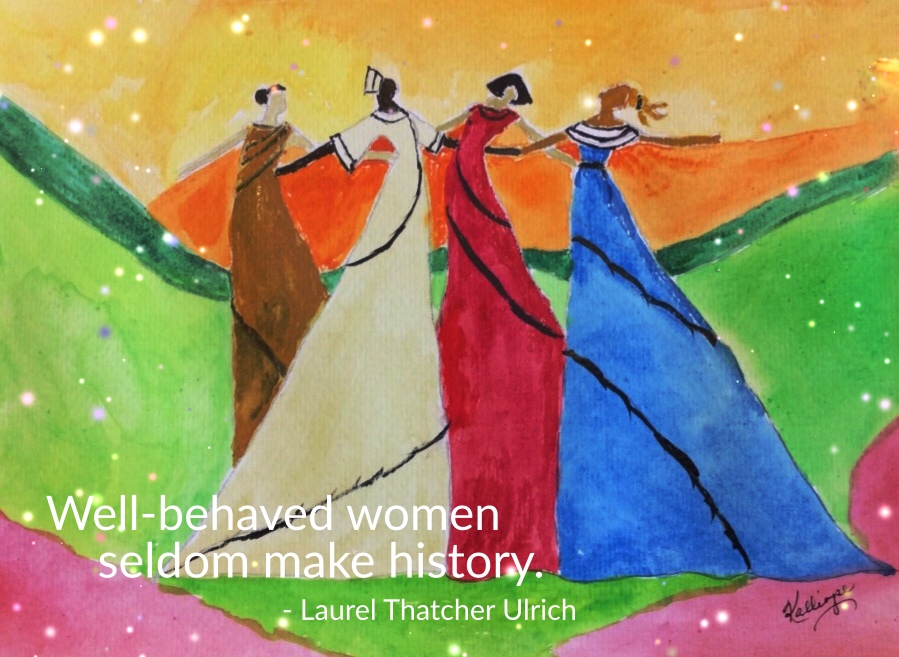
Ah! Women!

228BEA2D-360B-4749-994C-F28F1D756B13
Ah! Women!

With your heart of compassion, your mind full of creative force, your spirit empowered with the rush of Spirit wind and fire!

Ah! Women, with your steady and sturdy will that stands straight and tall and moves into the fray — any fray that harms others, devalues human beings, threatens all of God’s created order, brandishes violence and acts against God’s divine desires!

Ah! Women! Silenced, dismissed, diminished from ages past to this very day!

Ah! Women, now you will summon your courage and move forward with hope and grit! Now — in these unfathomable days of pandemic and protest — you will enter the fray in ways only you can. You will enter the fray bringing with you a transformative power for righting wrongs. You will inter the fray bringing your womanwisdom and the insight that is inside you, given by Spirit!

Ah! Women! Daughters of God,

I will pour out my spirit on all flesh, and your daughters shall rise up and find their own voices, dreaming dreams and seeing visions . . . In these days, even on my female slaves, I will pour out my Spirit.

— From the Prophet Joel 2:28-29 NRSV (a feminist paraphrase)

Ah! Women! As you go forth, never forget when you enter any holy fray God has placed before you, that you do not go alone. From the wisdom of Maya Angelou:

Whenever you go forth into a new project, task or vision, remember that you do not go alone. Behind you is Harriet Tubman In front of you is Sojourner Truth. Beside you is Fannie Lou Hamer and next to you is your grandmother.

Fill in the names of your own revered women, and know that you are going forward with the power of other people.

Ah! Women!
Perhaps, like Esther, God has called you for such a time as this! 

Ah! Women! In you, there is hope and grit!
In you, there is unbridled courage!
In you, there is transformation of every wrong!!

May God continue to empower your spirit, steel your heart and grace the sound of your own voice! Amen. A*women.

Hear this choral music and contemplate the calling of God:


Activism, Advocate, Caged children, Child protection, Children, Compassion, Determination, Dreamers, Heartbreak, Hope, ICE, Immigrant detention, Immigration, Inhumanity, Justice, Liberty, Separation, Tears

Love the Stranger as You Love Yourself

My first mistake for this day — reading an article published in the Huffington Post written by journalist Rowaida Abdelaziz! Here’s the headline.

More than 5,000 people have contracted the coronavirus while in immigration detention centers, including more than 800 in the last week.

On a personal note, I must say that I’m very proud of my church’s ministries, especially our English as a Second Language (ESL) classes. The teachers not only teach English, they also provide community for immigrants who often do not have family nearby, as well as many other acts of care and compassion. I could not help but give God thanks for our ESL teachers this morning when I read this headline from the Huffington Post. I can imagine our ESL teachers shifting into advocacy mode to do something about it. Not that any of them have the power to change the abysmal detention centers our government sponsors, but armies of advocates can and have changed circumstances of oppression throughout history

Back to the news article. Abdeaziz went on to further explain the treatment of immigrants:

Immigrants were given face masks only recently, but most of them are forced to reuse single-use masks without being allowed to wash them or receive new ones. Those held were not given soap or sanitizers and some were even exposed to pesticides and other toxic substances. 

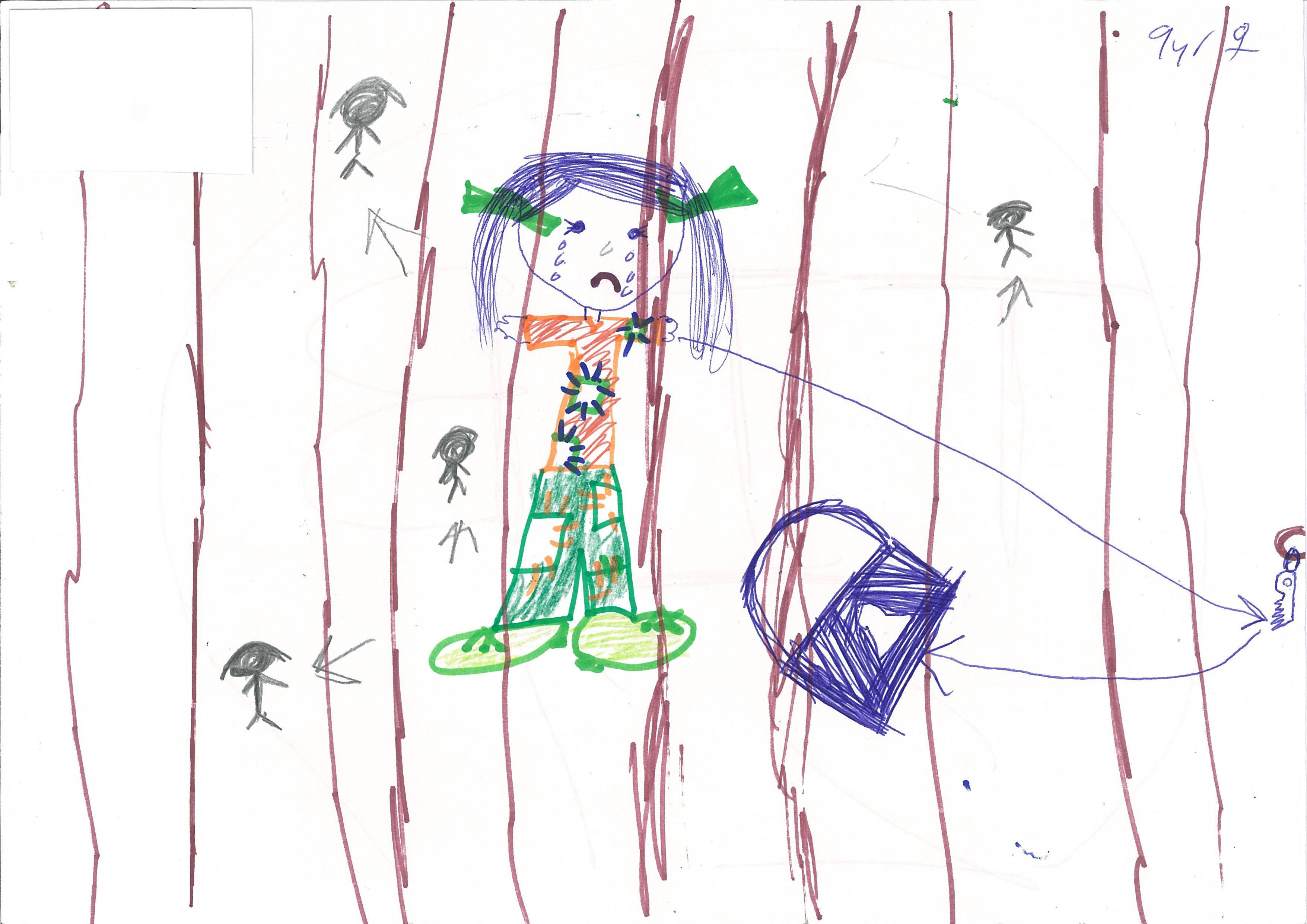
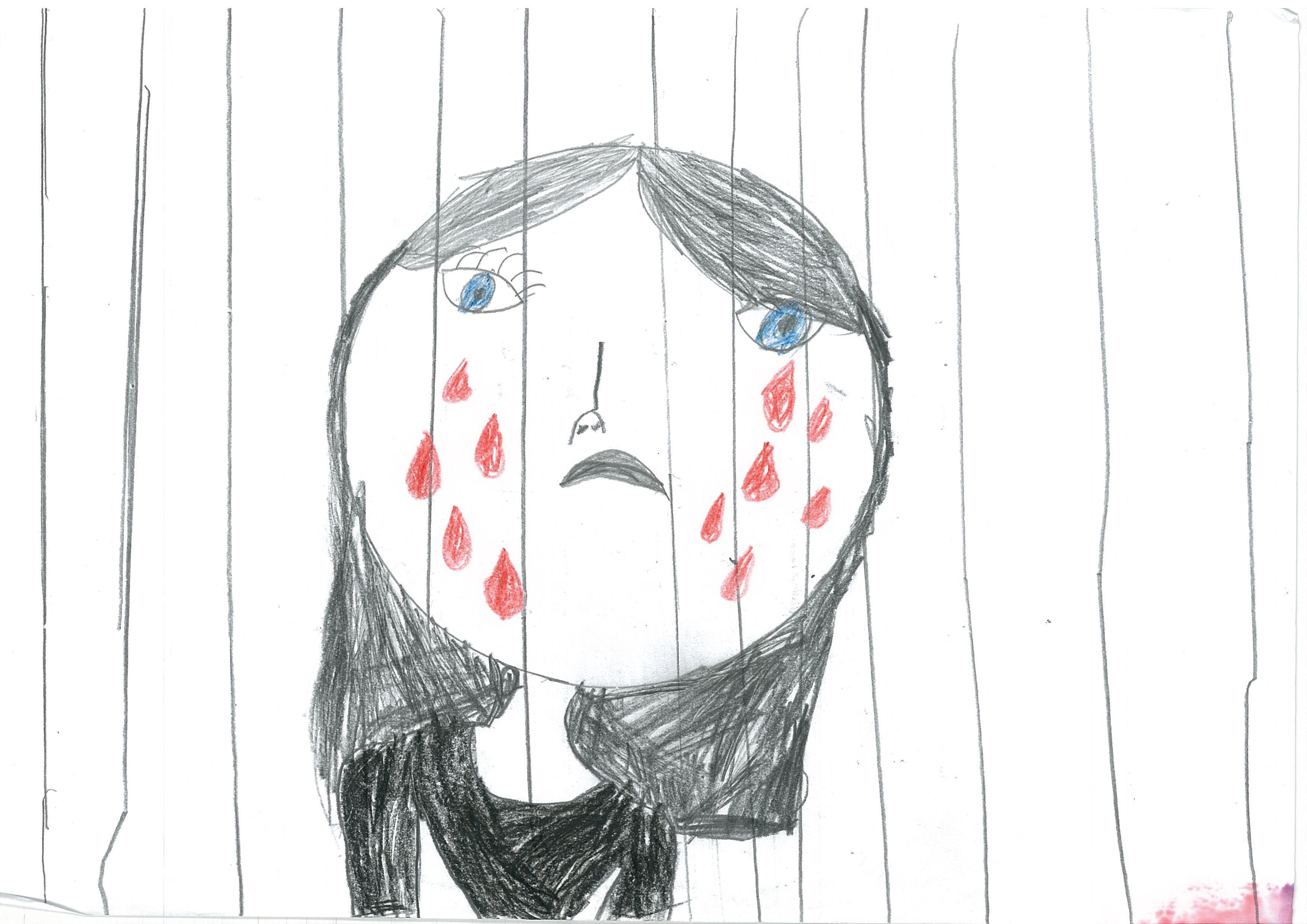
And then we have the horrible reality of “caged children!” It’s a term I do not want to hear because it so deeply troubling to imagine. But children draw and thousands of them have drawn images of caged children. My mind tells me unequivocally, “Don’t look at the drawings!” My heart tells me, “You must look!” My soul tells me, “Spirit will be near as my Comforter when I do look!”

At heart, I have always been an advocate for children, a fierce one. For a very long time advocacy was my career. I cannot abide the ill-treatment of any person, but when I envision thousands of children in custody and in sorely negligent circumstances, it digs at me and pierces my heart like a Holy arrow sent from God. Denise Bell, a researcher at Amnesty International USA said this, “COVID-19 has revealed the fatal flaws and the negligent medical care that ICE has historically provided to people who are detained within its facilities.” Ms. Bell goes on to say, “What’s more disturbing is the carelessness, and I’d even say callousness, with which the government is treating people in its care and custody.”

A969410C-B882-4AF9-A7FA-9C1F6E420740

Despite global lockdown measures, ICE continued to detain, transfer and deport immigrants ― including thousands of children ― all of which has contributed to the spreadof the coronavirus nationally and globally. Foreign governments who accepted deportees said they brought the coronavirus back with them. 
Huffington Post, September 17, 2020


From a CNN article, “Pediatricians share migrant children’s disturbing drawings of their time in US custody.” Slide show above includes drawings shared by those pediatricians and other powerful images. https://www.cnn.com/2019/07/03/health/migrant-drawings-cbp-children/index.html


How can you and I become advocates for these children? To me, it feels like a mandate from a caring, compassionate God. It feels like a mission following the footsteps of Christ who said something quite profound in the eighteenth chapter of Matthew’s Gospel. 

Whoever welcomes one such child in my name welcomes me. If any of you put a stumbling block before one of these little ones who believe in me, it would be better for you if a great millstone were fastened around your neck and you were drowned in the depth of the sea.

Matthew 18: 5-6 (GNT)


And then there’s this:

When a stranger sojourns with you in your land, you shall not do him wrong. You shall treat the stranger who sojourns with you as the native among you, and you shall love him as yourself, for you were strangers in the land of Egypt: I am the Lord your God. (Jeremiah 29:33-34)

Jeremiah 2:33-34 (NRSV)


I need to make sure you understand that I know the drill: I cannot use Holy Scripture to bolster my opinions or take Scripture out of its historical context to prove a point. A learned Professor of Old Testament, James K. Hoffmeier, makes this stringent assertion, “Secularists and liberals, both political and religious, are typically loath to consult the Bible when it comes to matters of public policy. So it is somewhat surprising that in the current debate about the status of illegal immigrants, the Old Testament or Hebrew Bible is regularly cited in defense of the illegal.”

I get that. I am a liberal. I even graduated from seminary. I am not using Scripture to prove my point. Nor do I intend to exegete these texts in an effort to thoroughly understand the translation in historical context. I am just pondering these Scripture passages as inspiration, meditation and perhaps an aid in discerning a call from God to mission. To use the texts in this manner, all I really need to do is read the words and listen for God’s voice. Never in my life, all seventy years of it, has God whispered back to me, “My child, you did not translate that text correctly, nor did you place it in its historical context.”

So where does this leave me? I think it leaves me asking myself, “What will I do? What must I do? Where do I begin in demanding change? How do I call out to my government, imploring them to end this oppressive inhumanity? How do I demand that all of us, including ICE, respect the humanity and the sacred worth of the immigrants in our midst, especially the children?

I hope that you, too, will ask yourself these questions, listen for the voice of God and become a fierce advocate for justice and humanity. If then you sense a call to do something to change the worlds of caged children held in ICE detention centers, visit this website:

https://endchilddetention.org/

Aging, anxiety, Confusion, Despair, discouragement, Faith, Fear, Feelings, God's Faithfulness, God’s promises, Grace, healing, Hope, Isolation, Loneliness, Loss, Music, Prayer, Psalms, Singing, Sorrow, Soul, struggle, Tears, Worry

When Branches Are Flimsy and Songs Cannot Be Sung

I have a certain fondness for sparrows and the spiritual stories we have ascribed to them. That my blog is named “God of the Sparrow” is no accident. I have aspired many times in my life to live like the sparrow lives. I wanted my human, adult, mature and seasoned self to know, beyond any doubt, that God is watching over me. I do not live the simple, sparrow-like life I always hoped to live. But my unshakable faith has always told me that the God who watches over my every moment is also the God of the sparrow. I remember well the words written in the Gospel of Matthew . . .

So do not be afraid; you are of more value than many sparrows. 
— Matthew 10:41 NRSV

Such a comforting passage of Scripture! Yet, its message to us often pales in comparison to all the things that so frighten us. The state of the world that surrounds us in these days seems to have even more power over us than Matthew’s words about our value to God.

How is it that we are valuable to God when God does not act to protect us from all of life’s slings and arrows? Yesterday in my blog post I listed our world’s bad and scary things, so I won’t list them again today. But I will venture a prognosis that many, many people are suffering in many ways in this confusing season. I am one of those suffering people, feeling a bit of hopelessness in these days of racial unrest, coronavirus unsettledness and political divisions.

I heard a moving choral performance this morning. Its text lifted up my helplessness before me and turned it into a prayer so attuned to where I find myself.

God of the sparrow, sing through us
Songs of deliverance, songs of peace. 
Helpless we seek You, God our joy, 
Quiet our troubles, bid them cease. 

Jonathan Cook

I need the sparrow’s God to sing through me. Perhaps you do, too. I need that God-given song because my own music seems to have become quiet, my singing turned to mourning. (Amos 8:10) But this week, I took hold of that mourning. With strong intention, I spent most of one day this week singing my heart out. 

You need to know that I had to choose a day when my husband would be away so that I could sing loud, with abandon. Why did he have to be away? That’s a long story, but in a nutshell, my singing is awful these days. Probably my vocal cords have lost some of their youthful elasticity and, on top of that, I did not sing at all for more than a year. Serious illness took my music.

When I (literally) came back from the dead in 2015, I realized that I had lost so many of my former abilities. Singing was one of them. It felt strange to me when I realized I could no longer sing. My former life was filled with song. Since childhood, there was never a choir I did not join, never a solo I did not sing.

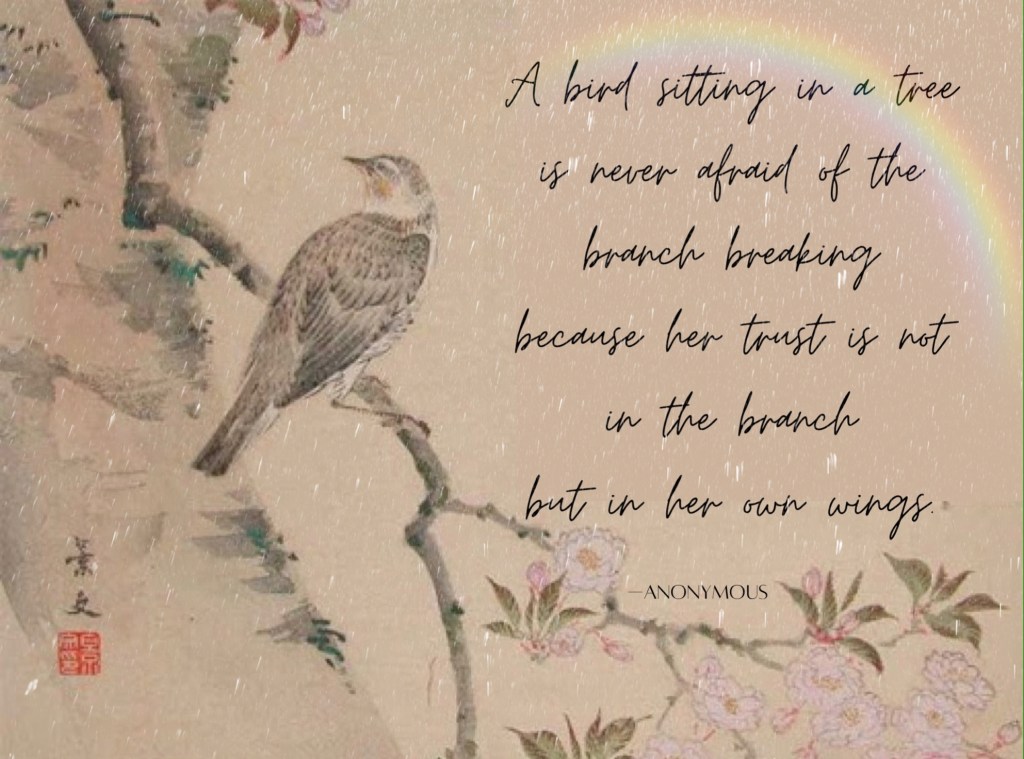
Acknowledging my inability to sing was difficult, just as my life after kidney transplant and this coronavirus is difficult. My isolation has been lengthy, most of nine months, and it is taking its toll on my spirit. Prayer has become both a burden and a grace to me. My singing was my prayer for so many years, and I really need my singing in these hard days. I need to sing my praises to God. I need to sing my lamentations. I need to sing like the sparrow who doesn’t worry about her vocal chords. I need to be like the sparrow who sits on her branch — without fear, without worry — because she knows that if she happens to light on a flimsy branch that does not hold her, her wings will lift her. 

The end of this story is that I need the God of the sparrow to sing through me once again — to sing through me in shadowy days, in times of trouble, in isolation, in fear, in hopelessness. That’s what God does, after all. In a troubled and despairing soul, God creates music, tucking it into every crevice, filling it with songs that can sing out both mourning and celebration. As an added bonus, I have it on good authority that God also turns mourning into dancing.

You have turned my mourning into dancing;
you have taken off my sackcloth
so that my soul may praise you and not be silent.
O Lord my God, I will give thanks to you forever.

Psalm 30 11-12 NRSV

So as you sing, dance to the new rhythms of your soul! Because you can!

Thanks be to God.

Please spend your meditation time today listening to this beautiful song with text written by Jonathan Cook and music by Craig Courtney. The video follows the text.

God of the Sparrow

God of the sparrow, sing through us,
Songs of deliverance, songs of peace.
Helpless we seek You, God our joy,
Quiet our troubles, bid them cease.
Alleluia.

God of the sparrow, God of hope,
Tenderly guide us, be our song,
God of affliction, pain and hurt,
Comfort Your children, make us strong.
Alleluia, alleluia, alleluia.

God of the sparrow, care for us.
Speak in our sorrow, Lord of grief.
Sing us Your music, lift our hearts,
Pour out Your mercy, send relief.

God, like the sparrow, we abide
In Your protection, love and grace.
Just as the sparrow in Your care,

May Your love keep us all our days.

Amen.

Attachments, Change, Community, Fear, Hope, Loss, Love, Roots, Separation

Roots Intertwined

I think often about roots — current family roots, ancestry roots and roots in my life that were created from various communities. I can’t help but recall the very first church we served in Arab, Alabama. My husband, Fred, was the minister of music and I was (unofficially) counselor and guide for our youth group. The young people of that church surged into our hearts and, along with most of their families, became a very close community — a deeper bond than even family. I thought my heart would literally break into tiny pieces, and I grieved the loss of leaving them for years.

I was sure that I would never form that kind of bond with anyone ever again. But I did, time and time again, in new places with new people — Alabama, South Carolina, Texas, Arkansas, Georgia, Kentucky and Uganda, East Africa. Every time, deep roots of friendship would reach deeper — reaching Into the soil, reaching toward each other, tangled and intertwined in love. And every time when we pulled up roots to move on to places God was calling us to go, I grieved in the very depths of my soul. Here’s the picture: digging up a tree and pulling it out of the soil is not easy with roots so twisted and connected. Pulling up a plant or a tree does not destroy its roots, but often injures and damages them.

I freely admit that this post is not really about trees and roots. It’s about belonging, forming attachments, community, love. Yet, it’s about more than belonging; it’s about walking away from your belonging, moving away, losing the relationships that mean so much to you, feeling the disconcerting feeling that comes from injuring the roots of your beloved community. A poignant quote by Beryl Markham explains the emotions of pulling up roots.

I have learned that if you must leave a place that you have lived in and loved and where all your yesteryears are buried deep, leave it any way except a slow way. Leave it the fastest way you can. Never turn back and never believe that an hour you remember is a better hour because it is dead. Passed years seem safe ones, vanquished ones, while the future lives in a cloud, formidable from a distance.
Beryl Markham, West with the Night

“The future lives in a cloud, formidable from a distance.” There it is: our fear of a future that holds new experiences and new people. For sure, moving forward truly is formidable. But when all is said and done, it seems that the best way to live is to cherish the roots we have every single day, every moment. Love them. Nourish them. Rest in them. And in some future time in your life, when you must pull up roots and move away, go ahead and grieve your loss, but also let yourself grow deep, spreading roots in another place.

With faith and hope, throw off the fear and uncertainty of an unknown future and plant yourself in a new garden. For there, you may well flourish again, grow deeply with a new community, form new attachments. You may even stumble over a life serendipity and find yourself in a place where you love all over again.

Awakening, Awareness, Beauty of Nature, Bondage, Change, Contemplation, Creation, Creativity, Emotions, Feelings, God's presence, Grace, Hemmed in, Here I am, Lord., Holy Ground, Holy Spirit, Hope, Insight, Inspiration, Introspection, Isolation, Loneliness, Mystery, Psalm 139, Sacred Pauses, Sacred Space, Soul, Spirit, Transformation, Walls, Wisdom, Writing

Hemmed In!


There are large scale, widespread forces that can trap thousands of people, even millions. Dachau, Katrina, earthquakes, tsunamis, wildfires, natural disasters all over the world and the Coronavirus of 2020. Enormous, catastrophic events can trap people. COVID19 has literally trapped me inside my home. I have to admit, the isolation has taken a toll on my spirit. No visitors! No visits with friends or family. No trips! No haircuts! I have been trapped at some level since my kidney transplant in November. Just at the March milestone that would have allowed me to break the isolation of the transplant, I was even more fully trapped by the infectiousness of this pervasive, unrelenting virus.

Being trapped for so many months has raised up in me feelings of loneliness, isolation, powerlessness, despair, anxiety, even abandonment. And yet, often there is something very good in the center of something very bad. It has been so for me. Yes, I feel trapped in the pervasive power of the coronavirus, but I also sense the arms of God and the embrace of Spirit hemming me in even further. Such a grace-gift it has been to me, as if God has said, “l am hemming you in, and in this space you will hear me clearer and sense me more fully.”

God’s words were truth. Hemmed in, my mind flourished, my heart leapt and my soul entered spaces of calm. I felt enhanced awareness! Even awakening. I saw nature in a different way and basked in the beauty of the rising sun. The sound of the hummingbirds’ trill and the rapid fluttering of their translucent wings were sounds meant just for me. I began to write and paint, to listen more carefully to God’s voice, to allow my spirit to overflow with Holy Spirit. To my hemmed-in call from God, I was compelled to answer, “Here I am, Lord!” When I finally answered God, my hemmed-in place became Holy Ground — a very good place to be that feels more like a holy mystery than a state of being.

Was this pandemic a good thing for me and for millions of people? Absolutely not! But trapped in its dark cloud, God hemmed me in further in ways I am just now beginning to understand. I can say with all honesty that being hemmed in by God has been grace to me.

If I could even begin to choose a favorite Psalm from among the many that inspire me, I would choose Psalm 139. In its weaving of words, there are many passages that are full of comfort. From childhood, I memorized a lot of Scripture and throughout Psalm 139 I memorized several snippets that I often call to mind. One verse that I did not memorize is verse 5: “You hem me in behind and before, and you lay your hand upon me.”

You have searched me, Lord,
and you know me.

You know when I sit and when I rise;
you perceive my thoughts from afar.

You discern my going out and my lying down;
you are familiar with all my ways.

Before a word is on my tongue
you, Lord, know it completely.

You hem me in behind and before,
and you lay your hand upon me.

— Psalm 139:1-5 NIV

I deplore the coronavirus and what it has done to so many people. I deplore the ways it was able to trap me, physically and emotionally. But the virus, with all its ominous, far-reaching force could not trap me spiritually. That was God’s work — hemming me in so that my spirit could rise to fresh, new heights of spiritual consciousness. Being hemmed in by our Creator has been grace for me in these days of isolation. It has become a transforming sacred pause. For in my hemmed-in space, the Creator helped me create — from my mind, from my heart, from my soul. Thanks be to God.

anxiety, Art, Comfort, Courage, Despair, God’s promises, grief, Hope, Life Journeys, Soul, struggle, Suffering, Transformation, Uncategorized

Hope and the Soul’s Struggle

620F798A-69A5-4B11-8719-189E926AEB6C
Struggles abound in this unwelcome COVID19 season we are experiencing. Most of us are touched by this virus in some way. We have struggled with so many life changes. I have watched strugglers of the soul work through the illness, others deal with the suffering and death of a friend or family member, often being unable to be with them at their death. Some parents are struggling with decisions affecting school for their children and teachers fear they will be unable to keep their students (and themselves) safe. Others long to see loved they have not seen in months of social distancing.

My circle of friends and family are feeling short on hope while they experience struggles of the soul. Yet, Herman Melville asserts that “Hope is the struggle of the soul.” I have been wondering what exactly that might mean. Perhaps hope gives us the courage we need to move boldly and full of hope into the place where the soul struggles, moving there with the assurance that the hope that led us there will also lead us to healing.

As I look closer at Melville’s words, I begin to see and understand that hope’s struggle eventually empowers us to break loose from the perishable things we hold on to — our wealth, our home, our “things” like cars, boats, RVs, whatever “things” we cherish. Looking at what this virus could bring, knowing that we are facing real life and death situations, cannot help but move our souls to throw off the things that don’t seem so critical anymore — perishable things we do not need. This thought prompts me to look at two of my favorite passages of Scripture.

For you know that it was not with perishable things such as silver or gold that you were redeemed from the empty way of life handed down to you from your ancestors . . .

— 1 Peter 1:18-19 (New International Version)

When the perishable has been clothed with the imperishable, and the mortal with immortality, then the saying that is written will come true: “Death has been swallowed up in victory.”

— 1 Corinthians 15:54 (New International Version)

How do we get there? How do we get through the soul struggles that can bring us to our knees?

I don’t think there is a well developed plan or a series of definite steps to take. The path, the plan, will be unique to each struggler. But the soul struggles I have felt throughout my life have taught me to place hope where hope must be: in Comforter Spirit who hovers over me with her sheltering wings; in the Christ who lives in and through me guiding me as a good shepherd and empowering me to walk with courage in his footsteps; in the Eternal God who holds before me, always, my own eternity.

This is what is available to you as well as you lean into hope’s struggle of the soul and break loose from things that are not important as you bear witness to your own eternity.

May God make it so.

As you leave these words and move with hope into your soul struggles,

May the God of hope go with you and fill you with all joy and peace as you trust in God, so that you may overflow with hope by the power of the Holy Spirit.

— Romans 15:13 (New International Version)

Amen.

I hope you can spend a few minutes in prayer and contemplation as you watch this beautiful, comforting music video, “Still with Thee,” with text written by Harriet Beecher Stowe.

Activism, Ahmaud Arbery, Beloved Community, Celebration, Change, Community activism, Freedom, Hope, Juneteenth, Justice, Liberty, Racism, Rebirth, reconciliation, struggle, Transformation, Uncategorized

Juneteenth 2020 — Oh Freedom!

0B59C2F5-2267-4507-A9EE-44CDC0B315B1
Today may be a Juneteenth like no other.

Juneteenth is a celebration. It’s not solemn, it’s filled with joy and pageantry. It’s not a funeral. But 2020 Juneteenth is uncomfortably juxtaposed with police violence against Black people, protesters in cities all over the nation and funerals — too many funerals.

A Bit of History . . . 

Juneteenth is one of America’s oldest holidays and is observed each year on June 19 to mark the official end of slavery in the United States. The day has long been celebrated by black Americans as a symbol of their long-awaited emancipation. But the story behind the holiday starts 155 years ago today in Galveston, Texas.

On June 19, 1865, Union troops led by General Gordon Granger arrived in Galveston, Texas, to break the news to the last remaining Confederate sympathizers that they had lost the Civil War and that all slaves must be freed. The Union general read aloud to the residents of Galveston:

The people of Texas are informed that in accordance with a Proclamation from the Executive of the United States, all slaves are free. This involves an absolute equality of rights and rights of property between former masters and slaves, and the connection heretofore existing between them becomes that between employer and hired laborer.

The newly freed slaves celebrated emancipation with prayer, feasting, song, and dance, and the following year, the first official Juneteenth celebration was born. But the importance of Juneteenth is that it is rooted in a long history of struggle for freedom and then perhaps the greater struggle to maintain freedom in the face of the enormous repression that was to come.

The Struggle for Freedom Continued

7DC48528-34CF-47FA-9272-ED91E800C437It turned out that being free did not mean being being treated with respect. Yes, it was the true end of the Civil War, but it was also the beginning of Reconstruction, a time that was supposed to be very happy and hopeful. Yet the period of Reconstruction became a miserable time for freed Black people because Reconstruction became part of the redemption of the South. As such, it set out to move African Americans to indentured servitude. While President Abraham Lincoln abolished slavery in his Jan. 1, 1863, Emancipation Proclamation, rebellious Confederate strongholds dotted across the South delayed the widespread implementation.

The South would not hear of the end of slavery, and landowners moved heaven and earth to make sure they had plenty of indentured servants. They were determined to continue the ostentatious lifestyle that they believed was their right and their legacy. They were resolute in their quest to maintain their master/servant status.

Still Today, Elusive Freedom

Juneteenth has been “passed down” through black communities since 1866, but in this year — 2020 — this nation seems to be at the height of a modern-day civil rights movement. My friend says, “2020 is the year of reset!” People throughout this nation of every race and creed hope beyond hope the 2020 will go even beyond “reset” to reconciliation, transformation and rebirth. So that every person is free, respected and cherished as a part of beloved community.

B8EBCA53-AF97-42DD-AA97-BAB122368430The cruel and violent death of George Floyd under the knee of a Minneapolis police officer might mean that this year Juneteenth may not be only about festivals, parades and cookouts. It may well be somewhat of a silent, reflective vigil for George Floyd, Breonna Taylor, Ahmaud Arbery, Rayshard Brooks, Caine Van Pelt, Michael Thomas, Lewis Ruffin, Kamal Flowers, Momodou Lamin Sisay, Ruben Smith, Modesto Reyes . . . and the list could continue.

It is a list of tragedy and horror. It is a list that is a stain that will ever remain on this nation, an indelible mark of shame. It is a list of names we must never forget. So in your commemoration of Juneteenth today, honor those names, pray for their mourning families, and pray that you will confront racial injustice with an unshakeable resolve.

Juneteenth was meant to be a celebration, although many people might not be able to celebrate today. Heartbreak and horror have a tendency to override celebration and joy. Even with hearts broken, I hope we will find in our hearts even a tiny desire to celebrate this day that was, and is, all about freedom.

May the change that comes from the “2020 movement for racial justice” cause us to celebrate, not mourn, every time Juneteenth comes around — today and forevermore. And may each of us and all of us — a people of God’s creation — witness the rebirth of a nation where every person lives under a worldwide canopy of justice, peace, equality, respect and freedom.

May God make it so through us. Amen.


Celebrate, or mourn, today as you spend a few moments watching this moving and poignant video, “Oh Freedom.”

Change, Dreams, Fear, Following Christ, God's Faithfulness, Grace, Gratitude, Hate, healing, Hope, Inspiration, Kindness, Nonviolence, peace, Tikkun Olam, Wholeness

Our Smallest Dreams Can Change the Big World

E43FB412-D00A-458E-8DA7-561F269CCC27
Art by Catrin Welz-Stein, from The Cosmic Dancer Facebook community

A friend sent me a lovely blessing today and I want to share it with you. These days, many neighbors and friends — people all over the world actually — have a new dream, a new calling to change the world. It’s an important dream right about now. Pandemic and protests — and all the causes lying underneath them — desperately need to change, and it will take huge dreams to change them. Trouble is, most people like me and you have only small dreams, a few small dreams that sometimes seem so insignificant. Certainly, they are dreams too small to change the big world.

But maybe not!

The message my friend sent me (actually she posted it on Facebook) reminded me that huge change can most certainly come from small acts. The message was today’s grace for me. So I share the message with you. It comes from The Cosmic Dancer* and is written by Scott Stabile.

She felt like doing her part to change the world, so she started by giving thanks for all of the blessings in her life, rather than bemoaning all that was missing from it.

Then she complimented her reflection in the mirror, instead of criticizing it as she usually did.

Next she walked into her neighborhood and offered her smile to everyone she passed, whether or not they offered theirs to her.

Each day she did these things, and soon they became a habit. Each day she lived with more gratitude, more acceptance, more kindness. And sure enough, the world around her began to change.

Because she had decided so, she was single-handedly doing her part to change it.
— Scott Stabile

Hope is tucked into these words, hidden there and bringing to mind that God highly values gratitude, acceptance, kindness and our smallest, powerful dreams. My dreams and yours can change a world filled with violence, hate, grief, fear and so many more hurts and harms.

EC0B46CE-B762-4C67-933A-BEC6BDE65077
Tikkun Olam Together provides cultural learning opportunities for mothers and  daughters’ grades 6-9 as they work to improve the world – Tikkun Olam.

There is a lovely Hebrew phrase, Tikkun Olam, that means “repair the world” or “heal the world.” The call of Tikkun Olam has always inspired me to more fully offer my life to be a part of the healing God desires for creation, for the earth’s protection and for kindness, equality and justice for all people.

Can we heal the big world with even the smallest acts of kindness and compassion? Doesn’t God whisper to us that we should begin healing the injustice, the violence, the hate, the fear, the mistrust and the deep divisions in the world? Doesn’t God inspire us to know the truth that our dreams are never too small? And doesn’t God promise to guide us and to lead us in following the compassionate footprints of Jesus until we see the world begin to change?

Resting in the grace of inspiration given to us by God, we truly can cast off the gloomy thoughts that our dreams are too small, too weak and too insignificant. And we can hide inside our hearts God’s promise that our dreams can become reality, that our tiny dreams really can change this big world. God will enlarge our smallest dreams if we offer them. We can count on it!

May each of us live “with more gratitude, more acceptance, more kindness” and may even our smallest dreams change — heal — the world.


* The Cosmic Dancer is a Facebook community that shares insights through art, poetry, dance and other “revolutionary rhythms.”


Activism, Beloved Community, Bewilderment, Change, Community, Community activism, Confusion, Contemplation, Covenant, Creating, Division, Exhaustion, God's presence, Hate, Hope, Injustice, Liminal time, Uncategorized

This Liminal Time

FDAFE7CF-FBCA-47E5-A560-EFA6C17EEC75


liminal

in American English
(ˈlɪmɪnəl ; ˈlaɪmɪnəl )

ADJECTIVE

1.  Relating to a transitional or initial stage of a process.

2.  At a boundary or transitional point between two conditions, stages in a process, ways of life, etc.

“Liminal” used in a sentence: We are in a transitional and liminal time: this makes everything unsettled and awkward, and most of us feel tremendous unrest and a sense of urgency.


I choose to mark this particular time in history as a liminal time that demands my courage to stand — to stand in solidarity with every person who is demanding an end to racial injustice. I cannot choose my partners in this struggle. Instead, I have to accept those that appear in my life, bringing with them a determined will to stand for justice.

I must understand that liminal time does not last forever. Liminal time is a place of transition, a liminal stage between justice and oppression, between life and death. So my choices and yours in this liminal time might very well affect what’s going on in the streets of American cities, in police precincts in every community and rural hamlet, in the halls of Congress and in the White House, in our hearts and in the hearts of those we could see as our “enemies.“

CB60C28A-A33B-4386-9B35-C3DC950FC905Here is where I must focus. My heart must long for an end to injustice. So must yours, because God’s heart grieves over the mayhem in our streets and the violence that has its way when a white police officer murders a black man or woman, even a black child.

You and I must yearn for an end to racial injustice — any kind of injustice and oppression — because God’s heart yearns to see us living in holy unity as brothers and sisters.

These days have dramatically shown us our liminal time, and it is NOW.

I have a strong sense that this liminal time has brought the widespread unrest we are witnessing, and that unrest emerges directly from a deep desire for change and transformation. It must be now!

Those of us who remember, know that the Civil Rights Movement came to its boiling point when every marcher, every protester, every non-violent activist and every violent one knew when their liminal time had come. Some people, of course, did not like that time at all, but even those who resisted that movement towards justice knew in their hearts that it was the liminal time, the time of NOW.

The fight was fought by people who spoke and marched, prayed and worshipped, who resisted and stood their ground, who preached and sang their freedom songs. Ah, how those songs of the civil rights movement helped motivate people of all ages and races, from Student Nonviolent Coordinating Committee (SNCC) activists and Freedom Riders to the thousands who marched on Washington, Selma, and Montgomery!

Yet not one person — Civil Rights leader or non-violent protester — could achieve civil rights alone. It required persons living in the poorest neighborhoods and their affluent neighbors across town. It took white folk and black folk, protestors and preachers, eloquent advocates and those who fought silently, lawyers and congresspeople and attorneys general and presidents. It required a community in solidarity. In fact, during the Civil Rights Movement, the creation of community was the quintessential coming-of-age story for Black people. 

Of that historically significant time, Father Richard Rohr writes this:

It was the particular time in history when nonviolent initiatives seeded with contemplative worship practices became acts of public theology and activism. You see, activism and contemplation are not functional opposites. Rather, contemplation is the heart’s reflective activity that is always seeking the spiritual balance between individual piety and communal justice-seeking.

Who could have predicted that America’s apartheid would fall as decisively as the walls of Jericho, when the people marched around the bastions of power carrying little more than their faith and resolve? How audacious it was to take just the remnants of a chattel community, the vague memories of mother Africa, and a desperate need to be free, and translate those wisps into a liberating vision of community. The idea of a beloved community emerged from the deeply contemplative activities of a besieged people — the people of the Civil Rights movement.
— Fr. Richard Rohr

One would think that such a movement that was so powerful, so eloquent and so determined would see its dream become reality, and that such a stunning reality would last forever. So that every person, from that time to this, would live as beneficiaries of beloved community. But here we are in another liminal space of racial indignity, cities in chaos and families mourning the death of their loved ones in Minnesota, in Georgia, in Kentucky and beyond. We did not really believe we would be in this time and space, a time that would demand a civil rights movement of its own.

The in-between liminal spaces of Scripture are pregnant with God’s transformational possibilities:

Noah and his family rebuilding the world after the flood; Abraham holding the knife above Isaac; Jacob’s struggle with the angel; Joseph in the pit; Moses and the Israelites at the edge of the Reed Sea; Israel in the wilderness; Joshua crossing the Jordan; Jesus suffering on the tree; the women at His tomb; the disciples waiting in Jerusalem.

Scripture indeed is fraught with liminal moments – moments of imminent expectation, infused with both hope and doubt — that lead to transformation and change. So change involves tension, and those of us who are longing for a paradigm shift that insists on justice, know that tension all too well.

Betwixt and Between — neither here nor there. It would be safe to say that this liminal time is mostly uncomfortable and confusing. Liminal time is the time between what was and what will be. And not one of us can predict what will be, either in this struggle against injustice or in the uncertain waxing and waning of the deadly coronavirus. The convergence of virus and death and sickness and distancing with racial injustice, violence and protest is almost too much uncertainty for us to navigate.

In the end, I want to believe that this liminal time and every liminal space is the dwelling place of God, the place where God meets us and says, “I will never leave you or forsake you . . . And remember, the Spirit of the Lord is upon you and has anointed you to announce Good News to the poor, to proclaim freedom for the imprisoned and renewed sight for the blind, to release those who have been oppressed. [my paraphrase]

Even in our current time of disconcerting fluid borders, God is with us in this liminal time. God is inseparably bound with us in this moment, and it is in this liminal space where heaven and earth, life and death, joy and sorrow, ecstasy and despair, sleeping and waking, justice and injustice, commingle.

So here’s my challenge to myself and to all of us. What if we choose to experience this liminal time, this uncomfortable now, as a time for insisting upon full solidarity with all of our brothers and sisters? What if we choose to make this particular time — with all of its pandemic and death, chaos and destruction, fire and protest, upheaval and violence as if no lives matter — a liminal time for construction and deconstruction, choice and transformation? What if you and I choose to hold hands and march on in solidarity and community until we reach the mountaintop where injustice is no more?

I want to. Do you?


anxiety, Beginning again, Bewilderment, Calamity, Despair, Emotions, Faith, Fear, grief, healing, Hope, New Normal, Patience, Psalms, Sorrow, Soul

How Long?

f0db89f4-cc06-4910-8d2b-99ed8dff46de
How long? How long will we have to feel imprisoned by social distancing? How long will we feel this loneliness? How long must we wear masks? How long until my children can safely visit their grandparents? How long until we’re past the danger of catching this virus? How long until life is normal again?

Most people I know had at least one bad day this week. At least three of us had a bad day on the same day, and I was not comforted to learn that two of my close friends suffered on the very same day that brought me suffering. It seems the longer we travel the journey of these distancing days, the more disheartened we become. We are ready to see our families and friends. We are ready to venture out of our secluded place and walk freely and without worry. We are ready to travel, to worship together in the same place and to celebrate with friends that the danger of Covid19 is over.

But it is not over. Not by a long shot. And what seems to be the second wave of the virus brings a second wave of emotion for us — a deep grief that we simply do not know when, or if, our lives will return to the lives we once enjoyed. Some of us can give our grief a name — sadness, anger, confusion, heartbreak, loneliness — maybe a combination of all of these names, and so many others.

Sadly, some people cannot name their grief. They will not! Instead they lash out in a kind of rage that hurts others. Call it domestic violence, child abuse, sexual abuse, interpersonal violation that causes permanent trauma to the soul and spirit. Call it a tragic situation. It happens, in part, to people who refuse to look at their grief and allow it to turn into rage.

Other people who cannot name their grief turn it inward, deep inside themselves. These are the people who are suffering great emotional harm that can last for a lifetime. We can call it trauma, battle fatigue, post traumatic stress injury, etc. Whatever we call it, the grief that people are experiencing as a result of this pandemic seems to be increasing the probability of a widespread mental health crisis.

The COVID-19 virus is not only attacking our physical health; it is also increasing psychological suffering: grief at the loss of loved ones, shock at the loss of jobs, isolation and restrictions on movement, difficult family dynamics, uncertainty and fear for the future. Mental health problems, including depression and anxiety, are some of the greatest causes of misery in our world.  
— U.N. Secretary-General António Guterres

The more we watch our communities relax social distancing, the more we experience a visceral response that speaks to our fear, disappointment and confusion. I asked my Mayo Clinic doctor yesterday via video chat — “When can I get out?” Hoping beyond hope for an answer that meant release, I listened as he gave a thorough scientific, doctor-like explanation. His primary concern, of course, was my physical outcome if  I should be exposed to the virus, but he also spoke about my emotional and social needs. In the end his answer was what I feared it might be: “You must take extreme social distancing precautions, at least until you are one year post transplant.”

That means November for me, provided all goes well with my kidney and with the level of safety in my community. I think my question to my doctor was a common one, “How Long?” Sufferers ask it often. With heartbreaking angst, sufferers in hospital beds ask — “How Long?” — as do persons near death, persons with painful chronic health conditions, persons who wait for mourning to ease, persons who search desperately for work, persons who suffer from unrelenting traumatic stress, persons in a far away place who just long to go home.

“How Long?” is a question of the soul for persons of faith and for persons without faith, for persons who believe in God and for persons who believe there is no God. All persons languish with that question on their lips. People who trust in God have asked the questions in the 13th Psalm for ages, every age with its own sudden catastrophe or its own long, enduring adversity. Every person asks, as did the Psalmist, “How long?”
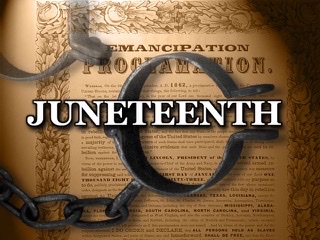
How long, Lord? Will you forget me forever?
    How long will you hide your face from me?
How long must I wrestle with my thoughts
    and day after day have sorrow in my heart?
Psalm 13: 1-2  (NIV)

If you have been asking, “How long, O Lord?” during this pandemic, you probably know already that you will not receive easy answers. There simply are no easy answers. The current separations from family and friends are painful. The realities and risks of re-entering life as we once knew it are daunting. The irresponsibility of many people who move about without masks and closer to one another than 6 feet is troubling. The worry we carry about our safety and the safety of those we love is constant. And the heaviness of heart we are feeling is unrelenting.

So yes, you are probably asking God, “How long?”as I am. How in the world do we get to “rejoicing” during such a time as this? In these unprecedented days, it seems much harder to move ourselves all the way through Psalm 13 in order to get to a glorious utterance of praise, a declaration of trust, a rejoicing of heart, and even a song of praise to a God of “unfailing love.” The Psalmist seems to have made it all the way through the questions to a time of rejoicing and singing. 

But I trust in your unfailing love;
    my heart rejoices in your salvation.
I will sing the Lord’s praise,
    for he has been good to me.

— Psalm 13:5-6 (NIV)

So ask your questions honestly. God can take whatever questions you ask. Go ahead and ask God, “How long?” But then allow God to restore your weary spirit, to nourish your soul and to make your heart long for something much greater than answers to your questions. 

That’s what I want to do. Now if I can just muster up enough energy — and enough faith and hope — to do it.

May God make it so. For me and for you. Amen.


For your quiet time today, I invite you to use this meditative video as your prayer. 


Africa, Aging, Bravery, Challenge, Change, Clouds, Comfort, Courage, discouragement, Grace, healing, Hope, Magic, mercy, Mystery, Resilience, Skies, Soul, Spirit, Sue Monk Kidd, Troubles, Uganda, wind, Wings of the morning

Leaving Our MAGIC Behind

EEAFAF51-CE51-42EA-9E96-881CDE08643B
Ugandan Washday at the River. Watercolor art by Kathy Manis Findley

When life moves on — from twenty to forty to seventy — you take into your inner place the ominous idea that if ever there was magic in your life, at some point, you left it behind. You know what I mean. The magic of your first love. The magic of the birth of your child. The magic of the time when you believed you could accomplish anything and everything you set your heart on. The magic that you actually did accomplish that thing, that sparkling thing that made you stand tall and celebrate yourself.

You might be wondering what in the world set my mind on life-magic this morning. I think it might have been carryover from my musings on yesterday’s blog post. But mostly, it came from reading a novel by one of my favorite authors, Sue Monk Kidd. This is the passage that captivated me, captured me as if it were some sort of sacred scripture.

There was a time in Africa the people could fly. Mauma told me this one night when I was ten years old. She said, “Handful, your granny-mauma saw it for herself. She say they flew over trees and clouds. She say they flew like blackbirds. When we came here, we left that magic behind.”

My mauma was shrewd. She didn’t get any reading and writing like me. Everything she knew came from living on the scarce side of mercy.. She looked at my face, how it flowed with such sorrow and doubt, and she said, “You don’t believe me? Where do you think these shoulder blades of yours come from, girl?”

Those skinny bones stuck out from my back like nubs. She patted them and said, “This all what left of your wings. They nothing but these flat bones now, but one day you gon get ‘em back.”

I was shrewd like mauma. Even at ten I knew this story about people flying was pure malarkey. We weren’t some special people who lost our magic. We were slave people, and we weren’t going anywhere. It was later I saw what she meant. 

— Sue Monk Kidd, from her novel, The Invention of Wings

Part of why these words so thoroughly captured me is in the very first sentence that mentions the place I so love, Africa. And even though the words don’t really have all that much to do with Africa, I found myself transported, walking among the banana trees in East Africa — Fort Portal, Uganda to be exact. Walking into a village brimming with people, and oh, the children! So many glimmering eyes, wide smiles and glowing dark faces that expressed everything from sheer delight to excruciating sorrow, and everything in between.

That was in one of my former lives, and pure magic it was! Because when you are able to make a child smile with a sweety (a piece of hard candy), there’s magic in that moment and it is a moment you carry through your day and through the rest of your life. Maybe that’s the grace of growing older — that you carry with you moments of magic from every place you have been, from every soul who touched your life so deeply.

In Sue Monk Kidd’s words, the magic was being able to fly, probably meaning to soar into the clouds above your troubles and woes. It hit me in my deep place, that the Ugandan people we came to know and love did soar into the clouds. Indeed, they left the agonizing hardships of life on the dusty earth below as their wings lifted them up, higher and higher to where life’s pain was replaced by pure exhilaration.

Back on the earth, in their world, not much was very exhilarating. Life was the same, predictable day after predictable day that disheartened them with hunger, malnutrition, thirst for clean water, oppression, soldiers with their machine guns and all the commonplace bad things that formed their lives. But there were better things too, like lush banana groves and children singing; like the music of drums at dusk; like the shimmering embers from their cooking fires rising into the night sky and reminding them that the day’s toil was not so bad when family could still gather together around a centering, comforting fire. There was magic in all of it. It was the magic of surviving war and embracing the loved ones who were still alive. It was the magic of celebrating the extraordinary lives of loved ones who had died and knowing that generations would move forward carrying the family’s magic into the future. It was the magic in their remembering, remembering the holy words they had hidden in their hearts . . .

“For I know the plans I have for you,” says the Lord,
“plans for well-being and not for trouble, to give you a future and a hope.”

— Jeremiah 29:11 New Life Version (NLV)

Maybe you, like me, have forgotten that we brought our magic with us to this day from the scenes of our past, from the happenings and the people we have known. This kind of magic never leaves one’s spirit. This kind of magic is holy mystery, really. It is tucked away within us for the times when we most need to take wing. Still, it does take some courage on our part, some brave resolve that we can lift up our heads and embrace “a future and a hope.”

No, we have not left our magic behind! It waits in us for a moment when we are languishing, when we feel sorrow or discouragement, fear or desperation — for a time when we feel disconsolate. It is in that moment we fly, by the grace-filled mercy of God, on the wings of the morning,* forever lifted above the troubles of the world.

I need that sometimes. Don’t you?


For your meditation time, I share with you this beloved hymn, “Come, Ye Disconsolate.”*


* Psalm 139:9

* “Come, Ye Disconsolate”
Lyrics: Thomas Moore (1779-1852); Altered by Thomas Hastings (1784-1872)
Music: Samuel Webbe (1740-1816)