anxiety, Comfort, Despair, Exhaustion, Faith, God's presence, Grace, healing, Hope, Illness, Kidney Transplant, Mayo Clinic, Music, Pain, Soul, Suffering

An Ever Present Help on Troubled Days

86BA33BB-D228-4C4B-A09D-284C6D5460D1

Transplant Day Six
November 18, 2019

Today Is a troubled day for me. I need to know God as “my ever present help in time of trouble” on this day of  kidney transplant aftercare that began early this morning. Being in the Mayo Clinic lab by 6:30 is not so gentle a way to treat a person with a huge, painful incision! On the way to Mayo Clinic, bumps and potholes in the road caused sharp pain. Walking the hallways at Mayo Clinic required far more energy than I currently have. I am weak and shaky, struggling with significant pain, and suffering from the side effects of very potent medications.

The medical visits will end around 2:00 pm today. We hoped to be able to rest until the next medical appointments on Wednesday. But the transplant doctors need to repeat my blood tests early tomorrow. They made some significant changes to my medications to try to address some concerns they have about my kidney function, excessive incision pain, blood sugar and fluid retention.

It occurred to me today, that in some ways, all of the inflexible after surgery care and the daunting medication regimen seems as if it is not at all about me; it’s about the kidney! It’s all about the kidney!

I can live with that if I can remember that God cares for me, for every part of me, and of course, for the new kidney. But my hope rests on the grace-giving God who also cares for the whole of me — what’s going on with me physically, emotionally and spiritually.

A comforting hymn text about God’s care has lifted me up into hope at various times in my life. “Day by Day, and with Each Passing Moment” was written by a young Swedish woman, Carolina Sandell Berg. Like the Psalmist, Berg learned early in life to trust in God’s strength to help her overcome times of suffering. She learned that when pain and tragedy strike, God may use that experience to deepen our faith.

When Carolina was 26-years old, she experienced a tragedy which profoundly affected her life. As she and her father crossed a Swedish lake, the ship suddenly lurched, and before her eyes, her father was thrown overboard and drowned. Like the Psalmist who gave us a strong affirmation with these words, “God is my refuge, an ever present help in time of trouble,” Carolina Berg found hope in God day by day. 

Although my present situation is very different from her tragedy, I am learning all over again about how hope and faith work for me. This is my paraphrase of Carolina Sandell Berg’s wonderful hymn:

Day by day and with each passing moment,
Strength I find to meet my trials here;
Trusting in God’s kind and wise bestowment,
I’ve no cause for worry or for fear.

God whose heart is kind beyond all measure
Gives unto each day what She deems best —
Lovingly, it’s part of pain and pleasure,
Mingling toil with peace and rest.

Every day the God of love is near me
With a special mercy for each hour;
All my cares God’s love will bear, and cheer me,
God whose name is Counselor and Power.

The protection of God’s child and treasure
Is a charge that on Herself She laid;
“As thy days, thy strength shall be in measure,”
This the pledge to me She made.

Help me then in every tribulation
So to trust Thy promises, O Lord,
That I lose not faith’s sweet consolation
Offered me within Thy holy Word.

Help me, Lord, when toil and trouble meeting,
Ever take, as from a mother’s hand,
One by one, the days, the moments fleeting,
‘Till I reach the promised land.

On days like this one when I feel weary and weak, when I experience pain and need an extra measure of compassionate care, I know I can look to God who is “my ever present help in time of trouble.” And I know that God, who is both father and mother to me, will walk beside me day by day, every day, through every passing moment.


F9FA5D3C-53F0-4043-8A72-F9E2D63F7349

On another note, please pray for me as I recover from my kidney transplant at Mayo Clinic in Jacksonville, Florida. I am so grateful that you are walking with me on this journey that often felt so frightening and is now a very difficult recovery. Your thoughts and prayers mean so much. Your donations through the Georgia Transplant Foundation have helped us get very close to our goal. The Foundation will match donations dollar for dollar up to $10,000, and you have already helped us raise $9,015. If you are able, please help us get to the $10,000 matched amount. We are almost there. If you can contribute or if you would like to read more of the story of my illness, please visit the Georgia Transplant Foundation’s website at this link:

://client.gatransplant.org/goto/KathyMFindley

“Go Fund Me” page is also set up for contributions to help with the enormous costs related to the transplant, including medications, housing costs for the month we have to stay near the transplant center, uncovered medications and medical equipment, and other unforeseeable costs for my care following the transplant. If you can, please be a part of my transplant journey by making a contribution at this link

https://bit.ly/33KXZOj

Comfort, Daybreak, Discovering, God's presence, grief, Heartbreak, Praise, sadness, Silence, sunrise

From the Rising of the Sun

9C2D3103-AD71-4636-9068-9FEB5BB0C515
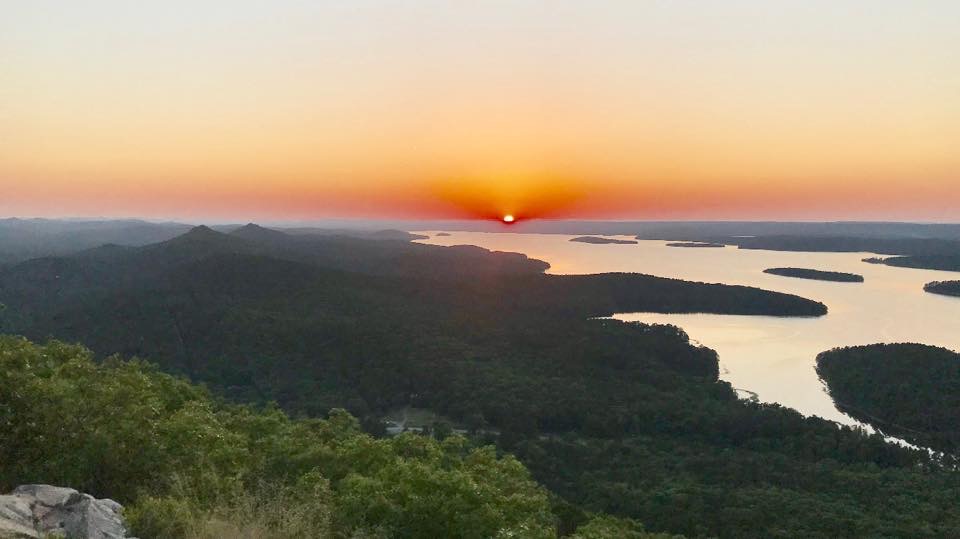
Just after sunrise on Arkansas’ Mount Nebo. Photography by Brad Burleson.

Praise the Lord!
Praise, O servants of the Lord;
praise the name of the Lord.

Blessed be the name of the Lord
from this time on and forevermore.

From the rising of the sun to its setting
the name of the Lord is to be praised.

The Lord is high above all nations,
and his glory above the heavens.

Who is like the Lord our God,
who is seated on high,
who looks far down
on the heavens and the earth?

He raises the poor from the dust,
and lifts the needy from the ash heap,
to make them sit with princes,
with the princes of his people.

He gives the barren woman a home,
making her the joyous mother of children.

Praise the Lord!

— Psalm 113 (NRSV)

The Palmist assures us that the sun rises and sets. The Psalmist speaks to us of the comfort of sameness, of something we can count on. But this Psalm says more. The Psalmist pictures God, not only as One who is to be praised, but also a God who is the helper of the poor and needy. This is a God-image that we need in these troubled times. The Psalmist’s story sings with praise to God, but then continues on, showing us a God who raises up those who are poor and lifts up the people whose needs are great. And nestled in the words of this Psalm are the words we have long heard:

From the rising of the sun unto the going down of the same,
the Lord’s name is to be praised. (KJV)

What a comfort it is to know that when the sun rises, God will be God, and when the same sun sets, God will be God — a constant, divine presence. The sun will sink into the horizon, leaving darkness around us. Yet, the next day will dawn, the sun will rise as it always does and God will still be present, ever watching over us.

There are times when I have needed to know that God was in place, times when I was poor in spirit, needy in heart. There are times when sadness and worry have silenced my praise. In such a time, I was unable to speak, unable to even name my silences. In those times, my silences were deep. They were hidden, unspoken places of pain.

What I now know is that my pain would ease, that my spirit would again rejoice, and that my silences would find words. That knowledge enables me to lift my eyes to the sunrise of God and to rest in the assurance of God’s abiding presence with me. 

When storm clouds threaten, God is present. 

When the earth beneath my feet quakes, God is present. 

In sunshine and in shadow, God is present.

Blessed be the name of the Lord
from this time on and forevermore.

From the rising of the sun to its setting
the name of the Lord is to be praised.


F9FA5D3C-53F0-4043-8A72-F9E2D63F7349

On another note, please pray for me as I look toward my kidney transplant on November 15th. I am grateful that you are walking with me on this journey that often felt so frightening. Your thoughts and prayers mean so much. If you would like to read the story of my illness, please visit the Georgia Transplant Foundation’s website at this link:

http://client.gatransplant.org/goto/KathyMFindley

A “Go Fund Me” page is set up for contributions to help with the enormous costs related to the transplant, including medications, housing costs for the month we have to stay near the transplant center, and other unforeseeable costs for my care following the transplant. If you can, please be a part of my transplant journey by making a contribution at this link:

https://bit.ly/33KXZOj


Awareness, God, God's presence, Knowing, life, Mindfulness

Knowing

A194BF2D-E855-4842-9DA4-DD00794DC94C
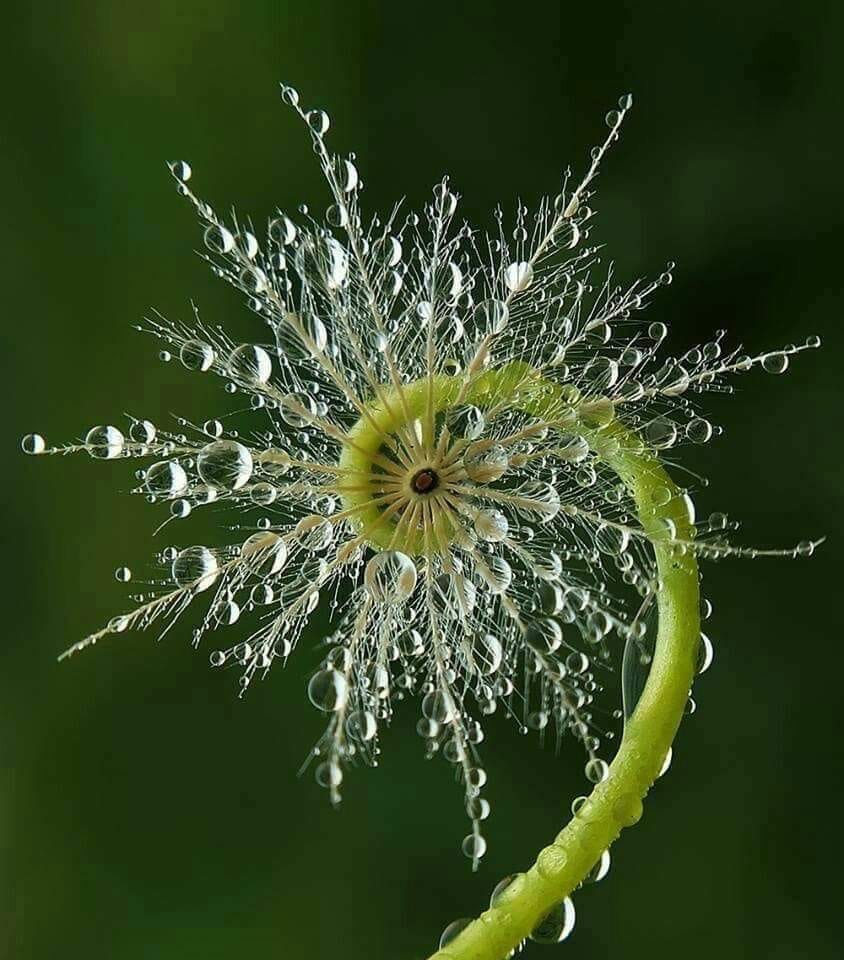
Photo credit: Amazing shot of a fiddlehead fern adorned with morning dew drops by Tristan Robin Blakeman.

I can’t readily recognize what in the world the image in this photo might be. It’s beautiful, unique, provocative, a bit strange and very unfamiliar. I just don’t know what it is . . . except that I discovered its photo credit.

Some things simply defy our knowing — 
Moments full of meaning that pass too quickly for us to understand them;
Sights too stunning for every-day, ordinary descriptions;
Sound that comes from the wind around us that we simply cannot name;
Music so deeply moving that we cannot even speak its origin.

The truth is that life is full of things we cannot know, and also devoid of things we cannot know simply because we fail to take notice. We fail to slow ourselves down enough to hear or see or know. Our awareness may be compromised for any number of reasons, like being preoccupied with life “things,” taking on too much responsibility, focusing on too many aspects of life.

Awareness is one of life’s needful things, but is also difficult to master. Kent Nerburn, in his book Voices in the Stones: Life Lessons from the Native Way, says this wise word:

We are quick to draw lines where our awareness stops. Our streets, our alleyways, our history on the land—these form boundaries enough for us. But there are truths that lie beneath our consciousness, just as there are truths that lie beneath our feet. That we do not know them does not mean that they do not exist, only that we do not have the patience and humility to hear.

It seems to me that awareness — knowing — opens us up to the mind of God, to the struggles of those around us, to the incomparable beauty of creation, to the stirrings of our own hearts. But we must learn to “know.”

Richard Rohr might say that we must keep our hearts wide open to unfamiliar and unexplainable ways of knowing. I couldn’t agree more about the value of knowing, the kind of knowing that requires awareness and mindfulness, the kind of knowing that changes life.  That kind of does, after all, open our hearts to the heart and mind of God.

F9FA5D3C-53F0-4043-8A72-F9E2D63F7349

On another note, please pray for me as I look toward my kidney transplant on November 15th. I am grateful that you are walking with me on this journey that often felt so frightening. Your thoughts and prayers mean so much. If you would like to read the story of my illness, please visit the Georgia Transplant Foundation’s website at this link:

http://client.gatransplant.org/goto/KathyMFindley

A “Go Fund Me” page is set up for contributions to help with the

enormous costs related to the transplant, including medications, housing costs for the month we have to stay near the transplant center, and other unforeseeable costs for my care following the transplant. If you can, please be a part of my transplant journey by making a contribution at this link:

https://bit.ly/33KXZOj


Beauty of Nature, Clouds, Contemplation, Creation, Fear, God's presence, Meditation, Mindfulness, Mountaintop, Nature, Ocean, Prayer, Reflection, Serenity, Silence, Skies, Spiritual Discipline, Stillness

Imposing Silence Upon Our Cares

3FEABE5F-CF16-4EB2-A5A2-89DD29771C74
Photography by Jennifer Blackwell

The only people who pray well are those who keep praying!
— Richard Rohr

Sometimes you just need to get away. You need to push back from your daily grind and be in a space that gives you life-restoring energy. The place may be a mountaintop or beside a sea. The place you love might be on a sailboat watching the changing colors of the sky. The need is a time of contemplation although I admit that contemplation is easier said than done.

Richard Rohr describes contemplation using the frightening word, “dying,” something we usually do not want to consider. Still his definition is compelling.

Contemplative prayer is one way to practice imposing “silence upon our cares, our desires and our imaginings.” Contemplative practice might be five or twenty minutes of “dying,” of letting go of the small mind in order to experience the big mind, of letting go of the false self in order to experience the True Self, of letting go of the illusion of our separation from God in order to experience our inherent union.

I am intrigued by the phrases “imposing silence upon our cares!” dying” and “letting go of the illusion of our separation from God.” We readily recall words we have long known: “Be still, and know that I am God,” and we know that we can move into God’s real and palpable presence. Still moving into God’s presence and lingering there is easier said than done. We are slaves to our lives, to our every day concerns and responsibilities. And sometimes times our responsibilities — though they may be important to us — take too much from us, robbing us of our life’s spiritual depth.

Again, Richard Rohr offers deep wisdom:

Each day that dawns is a celebration of the fact that we have been invited to consider how our lives are spent; how we embrace and recoil from the . . . darkness.

So for me, I would like to watch the hued, expansive skies — the moving clouds and the sparkle of the sun. I would like to find silence in the vastness of God’s creation, in a place where my view includes the beauty of verdant green pastures, the sound of the never-ending surf, the feel of the wind in my face, the shadows cast upon a high mountain. It takes the beauty of such a place to calm my spirit and stop the whirring of my mind. In such a place, I can try to enter into the posture of prayer and contemplation.

Don’t be fooled. Contemplation is called a practice because it truly is a practice that we must try again and again. Contemplation is not easy for many of us. It can even be disconcerting because, in truth, contemplation is meeting as much reality as we can handle in its most simple and immediate form — without filters, judgments, or commentaries. Contemplation moves us to the space our soul craves, and in that place we gain a renewal of our spirit.

Anything worth doing is worth practicing for as much or as long as it takes. Yes, at times it feels like forcing ourselves to be still for an interminable length of time and to force ourselves to fully concentrate on petitioning and listening prayer. No doubt, being silent with ourselves can be frightening. “Imposing silence upon our cares” can be threatening. But in the practice of contemplation we can hear God’s whisper clearer and sense God’s presence more deeply and fully.

I wish for you the time and space you need, the time to take in the breathtaking beauty of God’s creation, the stilling of your mind and the calming of your spirit that can guide you into the presence of God.

God is our refuge and strength, a very present help in trouble.

Therefore we will not fear, though the earth should change,
though the mountains shake in the heart of the sea,

though its waters roar and foam,
though the mountains tremble with its tumult.

“Be still, and know that I am God!”

The Lord of hosts is with us; the God of Jacob is our refuge.

— From Psalm 46 (NRSV)

Faith, Fear, God's presence, journey, Life Journeys, Life pathways, sunrise, Travel, Trust, Wendell Berry

Journey

F7F886FF-E09B-42BF-A992-04A0884A1A0A
Sunrise at Stout’s Point, Petit Jean State Park, Arkansas. Photography by Beth Buckley

“There is meaning in every journey that is unknown to the traveler.”
— Dietrich Bonhoeffer

I am a student of the journey, always examining the stones in the road, the twists of the path, the crossroads that demand decision, the mountains that must be climbed and the valley of rest that replenishes the soul. All of it has been there on my journey, and I imagine on yours as well. The milestones along the way — those that are challenging and those that offer respite — are ever common for those who travel.

I question it often, the journey, asking where it next will lead me and what obstacles I might face along the way. But the journey does not tell. It does not speak, nor does it provide a map. The journey is wise, and it knows that if we know what the journey holds as we travel, we might turn back in fear. We might determine that the journey’s risks are too great.

So the beauty of the journey is this: that we give ourselves to it with at least some sense of trust. Somehow we are able to follow journey’s path blindly, accepting whatever we face next. Embracing the changing terrain, using every ounce of strength to go forward, taking paths unknown, binding up the wounds of the falls. We move onward with our soul’s faith spurring us on and in the certain knowledge that God knows the journey and that the Comforter walks beside us.

For after all, we are strangers and pilgrims (1 Peter 2: 11) on this journey, sojourners in a world that will not always be our home. We are just passing through this life, and so we take the journey as it appears before us, by faith. We trust the journey as if preordained for us by God. We hold fast to the journey in the faith that it was destined for us, and we do not set our sights on the destination, for that remains unknown and unknowable.

I share the eloquent words of Wendell Berry, who seems to understand the journey better than most:

We travelers, walking to the sun, can’t see
ahead, but looking back the very light
that blinded us shows us the way we came,
along which blessings now appear, risen
as if from sightlessness to sight, and we
by blessing brightly lit, keep going toward
that blessed light that yet to us is dark.

— Wendell Berry

May we trust the journey, moving “toward that blessed light that yet to us is dark.” Amen.


*******************************************************

On another note, please pray for me as I await a life-saving kidney transplant. I am grateful that you are walking with me on this journey that often feels so frightening. Your thoughts and prayers mean so much. If you would like to read the story of my illness, please visit the Georgia Transplant Foundation’s website at this link:

http://client.gatransplant.org/goto/KathyMFindley

A “Go Fund Me” page is set up for contributions to help with the enormous costs related to the transplant, including medications, housing costs for the month we have to stay near the transplant center, and other unforeseeable costs for my care following the transplant. If you can, please be a part of my transplant journey by making a contribution at this link:

https://bit.ly/33KXZOj


Change, God's presence, Holy Spirit, Inspiration, Pentecost, Quiet, Rebirth, Repair the world, Sacred Space, Silence, wind

Who Has Seen the Wind?

5D279BA7-5431-4872-93DC-BDF5BFA11178

. . . And the wind? Ah, who has seen the wind go by? Neither you nor I. But when we see the trees bow down their heads, we know the wind is passing by. That is the way the Holy Spirit works: silently and effectively. *

There was never a more needful time for the fresh winds of the Holy Spirit. We inhabit a world divided . . . nations divided by tenuous agreements; white people divided from brothers and sisters black and brown; people of faith divided by differing traditions; immigrants divided from those who claim to “own” this nation; citizens divided from their president; politicians divided by ideology, greed and self-interest. There are so many examples of division. And whether we will admit it or not, division diminishes us.

The divisions among us — the ones we personally experience and the ones we observe — create an unsettled environment around us and an unsettled spirit within us. The acrimony, the hate and the disrespect we witness all around creates an unrest in us. Perhaps, from the weariness of the constant hostility we see, our heart becomes hardened. Perhaps we are closed off from the Spirit Wind that fills us and creates in us rebirth, fresh and new.

We can never think of wind without recalling the day of Pentecost. The disciples of Jesus and other followers were gathered together when a rushing, mighty wind filled the entire house, and all of them were filled with the Holy Spirit. (Acts 2:1-4) That day was the beginning, and from that day when Spirit Wind came, the holy promise came into view: that God would pour out the Spirit on all people, that sons and daughters would prophesy, that some would have visions and others dreams.

We need it again, the Spirit Wind. We need it to fill us with courage for the living of these days. We need it to fill us with love that can change the world. We need it for the will to save our planet from devastating climate change. We need it to responsibly open our borders, to become again a nation of welcome, to reach out our hands to sojourners searching for safe refuge, to rescue children from the unwelcoming places where they are detained and kept from their parents. We need it to repair the world in all the ways possible to us, to repair its brokenness.

To become God’s people in a broken world, we need the wind of the Spirit. Now.

But how does Spirit Wind come in these days? I have heard of no “Pentecostal” experiences of rushing mighty wind. I have heard of no one who has seen a sudden whirlwind. (1 Kings 19:11)  I do not know of a person who saw the winds cease at the command, “Peace. Be still.” (Mark 4:39)

So how does the Spirit Wind come? I can share only what I know from my own experience, and that is this: when I am very still and very present with God, the Spirit comes quietly, gently — but surely. I do not see her. I do not hear her come with any sound of rushing wind. I cannot touch her. Yet I feel her, covering me, filling me, empowering me. I go away with that sense of being reborn and renewed, like I might be “born from above.”

2CE74B96-9488-4F0B-81B2-69824F5EAEC8
Art by Charlotte Nickel, “Mighty Rushing Wind,” acrylic on canvas.

You know well enough how the wind blows this way and that. You hear it rustling through the trees, but you have no idea where it comes from or where it’s headed next. That’s the way it is with everyone ‘born from above’ by the wind of God, the Spirit of God.

— John 3:8 (The Message Bible)


*From the Carmelite Bulletin, Carmel of Saint Teresa of Jesus, Little Rock, Arkansas, “Who Has Seen the Wind?” Christina Rossetti – 1830-1894


*******************************************************

On another note . . .

Please pray for me as I await a life-saving kidney transplant. I am grateful that you are walking with me on this journey that often feels so frightening. Your thoughts and prayers mean so much. If you would like to read the story of my illness, please visit the Georgia Transplant Foundation’s website at this link:

http://client.gatransplant.org/goto/KathyMFindley

A “Go Fund Me” page is set up for contributions to help with the enormous costs related to the transplant, including medications, housing costs for the month we have to stay near the transplant center, and other unforeseeable costs for my care following the transplant. If you can, please be a part of my transplant journey by making a contribution at this link:

https://bit.ly/33KXZOj


Beauty of Nature, Bible, Birdsong, God's presence, Sacred Space, Serenity, Silence, Spiritual Discipline, Spirituality or Religion?, Stillness, Transformation

Lingering in God’s Presence

741A601B-BEAE-4D97-A60B-2A00547126A0
Himalayan blue poppies in the rain, Valley of Flowers National Park, Uttarakhand, India

The beauty of God’s creation often takes my breath away. This image did that. When I first saw it, I stared at for quite a long time. You might say it stopped me in my tracks, slowed me down for a moment, caused me to wonder. That’s not a bad thing, slowing me down. It does not happen easily.

So what does it mean to slow down and linger, to linger in God’s presence? One of my favorite stories in the Bible is the very brief story of Anna.

There was also a prophet, Anna, the daughter of Penuel, of the tribe of Asher. She was very old; she had lived with her husband seven years after her marriage, and then was a widow until she was eighty-four.She never left the temple but worshiped night and day, fasting and praying. Coming up to them at that very moment, she gave thanks to God and spoke about the child to all who were looking forward to the redemption of Jerusalem. (Luke 2:36-38 NIV)

What strikes me about Anna is that “she never left the temple but worshipped night and day, fasting and praying.” She lingered in God’s presence. Perhaps God honored her devotion by allowing her to see the Christ child.

And then there’s this small snippet of Joshua’s story:

 . . . When Moses entered the tabernacle, that the pillar of cloud descended and stood at the door of the tabernacle, and the Lord talked with Moses. All the people saw the pillar of cloud standing at the tabernacle door, and all the people rose and worshiped, each man in his tent door. So the Lord spoke to Moses face to face, as a man speaks to his friend. And he would return to the camp, but his servant Joshua the son of Nun, a young man, did not depart from the tabernacle. (Exodus 33:9-11 NKJV)

Joshua lingered in the tabernacle even when Moses, his mentor, left it. Perhaps it changed him. Perhaps because of his devotion in lingering in God’s presence, it was Joshua, and not Moses, who received the honor of leading the Israelites into the Promised Land.

Of course, we are not certain about any of that. Certainly we do not linger in God’s presence in hopes of receiving some reward or honor. At the same time, developing the spiritual discipline of abiding — lingering — in God’s presence brings its own reward.

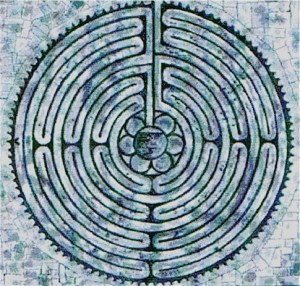
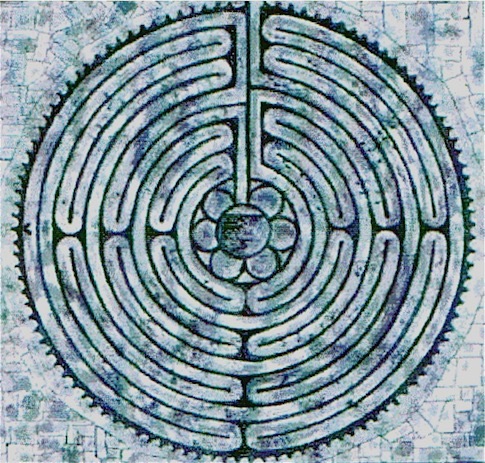
What are your ways of spending time in God’s presence? Reading scripture? Writing scripture in a prayer journal? Yoga? Walking a labyrinth? Praying? Journaling? Taking in the beauty of nature? Creating a place of silence? The ways of spiritual discipline are endless.

One thing is certain: lingering in God’s presence does not just happen. We enter that sacred space and linger there only if we commit ourselves to do it. Not in a legalistic manner that is more religious than spiritual, but in ways that slowly open us up to craving that time with God, needing it more than we need to “accomplish” our never-ending daily tasks.

When we reach that place, we might discover that lingering in God’s presence is life-giving. We might suddenly realize that we are lingering in God’s presence easily and often, that it has become a part of life.

So how in the world did a blue flower get me here?

I’m not sure, but I think it is because God can be found everywhere, in any moment, in any space, in every stillness, in silence and music and birdsong, in whatever we hear and feel, through anything our eyes can see — even a blue flower covered with dew.

And in that space, we are transformed.

Amen.

Beauty of Nature, Contemplation, God, God's presence, Holy Ground, Quiet, Silence, Stillness

Wordless Stillness

30B4F7DE-34FA-4CD9-AF28-0F7BAED8EB01
Wordless stillness: a place in Arkansas captured by Steven Nawojczyk

A friend of posts a unique message on her blog on Wednesdays. She calls it “Wordless Wednesday.” In the post, she offers beautiful photo images.

I have often wondered how she came up with the title, “Wordless Wednesdays.” Did she have writer’s block on a particular Wednesday? Did she borrow the title from another place? Did she know that on some days, she would simply have nothing to say, so she just planned it to be on Wednesdays?

It occurs to me that this is a Wednesday and I have nothing much to say. It seems like one of my empty days, when words don’t seem to emerge. My readers probably know that it is a very unusual state of being for me to not have anything to say. It rarely happens.

Sitting in my quiet time without words is a bit disconcerting for me. And yet, maybe without words, I can find a holy stillness, a silence in which God can talk to me. Maybe it is not a bad thing to be without words. Maybe a wordless stillness is exactly where God needs me to be.

A friend of mine has a way with wordless stillness. He loves nature and visits it every single day. And in the places he visits, his keen eye always catches breathtaking views of nature. I am struck by his images every time he posts them. Interestingly, he captures images from one particular place more often than not. He loves that view, capturing Arkansas sunrises, sunsets, and everything in between . . . always from that one spot. He admits it. He tells us straight up that this spot is his favorite view in Arkansas.

But here’s the thing I have discovered about his photographs of that Arkansas scene: what he captures, always, is stillness. Stillness without words.

Maybe wordless stillness is something all of us need to capture. God can find us in that place, that place that feels like Holy Ground. God can comfort us there, encourage us, forgive us, work in us, speak to our souls.

The Psalmist finds silence again and again:

Be still and know that I am God.

— Psalm 46:10 (NRSV)

For God alone my soul waits in silence,
    for my hope is from him.
He alone is my rock and my salvation,
    my fortress; I shall not be shaken.

— Psalm 62:5-6 (NRSV)


Elijah found silence on Horeb, the mountain of God:

“Go out and stand on the mountain before the Lord, for the Lord is about to pass by.” Now there was a great wind, so strong that it was splitting mountains and breaking rocks in pieces before the Lord, but the Lord was not in the wind; and after the wind an earthquake, but the Lord was not in the earthquake; and after the earthquake a fire, but the Lord was not in the fire; and after the fire a sound of sheer silence.

— I Kings 19:11-12 (NRSV)

Wordless stillness. Silence in the presence of God. Holy Ground.

Amen.

Comfort, Contemplation, Faith, God's presence, Hope, Loss, Reflection, Seeing the Face of God, Weeping

In the Presence of God

C90EDAB6-79B0-4CA2-A04E-1166EA16A59F

What does it mean to be in the presence of God? How do we get there? How do we rest there long enough for our souls to be restored?

Had I ever been able to answer those questions, I imagine my life would have been different — fuller, gentler, more peaceful. But like many people who work to achieve inner peace and a spirituality with staying power, I have struggled around the prize, never quite being able to grasp it.

I have used all of the tools available to me — my bible, my bookcase full of contemplative writing, my labyrinth, my hymnal, my writing, my art, my prayer. The list goes on, and I go on, still struggling to find God’s presence.F40CF356-14B8-489C-A6CE-0DC8F34C0B95

The worse thing I can do is to cast blame on myself for a small spirituality and an even smaller faith. Truth is, I think I do have spirituality and faith. Faith has lifted me up through many difficult times. Faith was present when fire destroyed part of our home. My faith held when I was forced to close the doors our nonprofit. My faith carried me through sudden kidney failure. Faith showed up every time I wept bitter tears of grief and mourned my life losses. My faith was present with me when I thought I was dying and when I left my home of 32 years, my son and my grandchildren.

My faith held. My anchor gripped God’s solid rock. I picked myself up every time and moved on with hope. Yet, this thing we call “the presence of God” has eluded me. I mostly can’t experience it or feel it or sense it as a reality.

I guess it gets back to faith, doesn’t it. For it is faith that whispers to us, “Know the presence of God. If you cannot sense it, know it. If you cannot feel it, believe it anyway.”

The book of Jeremiah offers this comforting advice: “You will seek me and find me, when you seek me with all your heart.”

And then I can always fall back on Richard Rohr wisdom: 

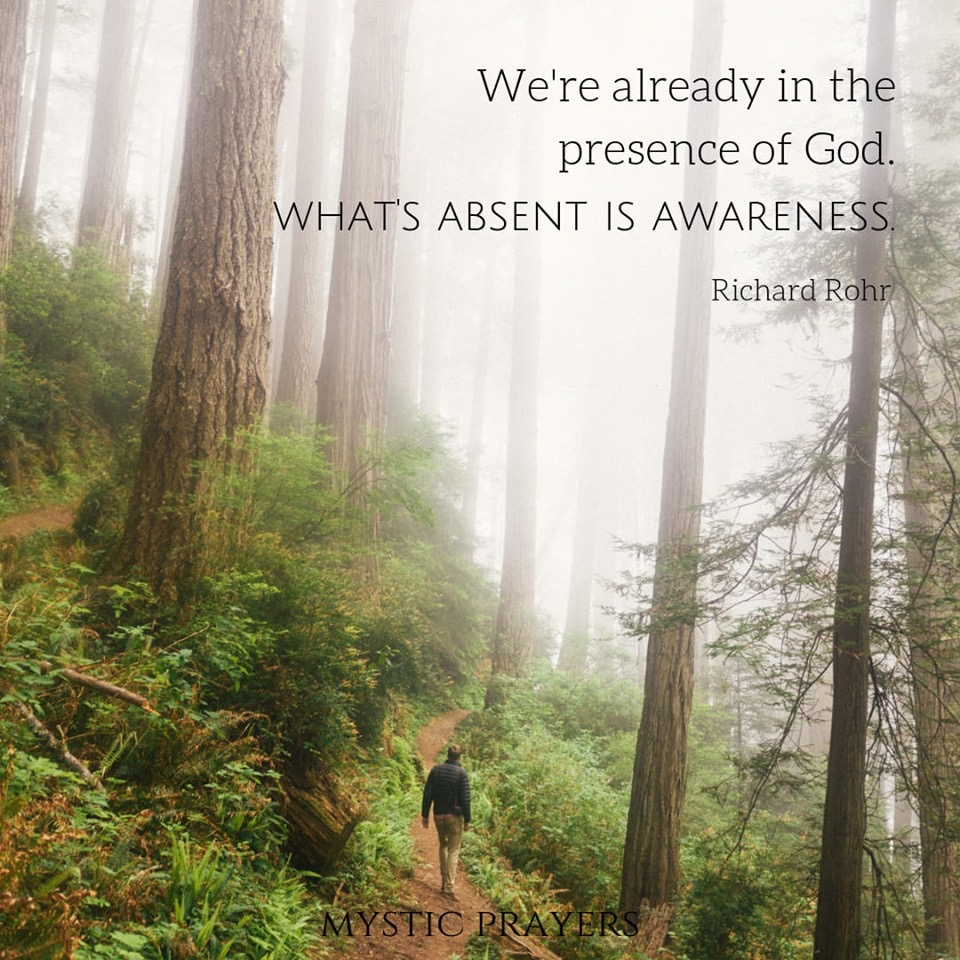
“We’re already in the presence of God. What’s absent is awareness.”

F9FA5D3C-53F0-4043-8A72-F9E2D63F7349

O Lord, you have searched me and known me!
You know when I sit down and when I rise up;
You discern my thoughts from afar.
You search out my path and my lying down
and are acquainted with all my ways.

Even before a word is on my tongue,
O Lord, you know it.
You hem me in, behind and before me,
and you gently lay your hand upon me.
Such knowledge is too wonderful for me;
I cannot begin to understand it.

Where shall I go from your Spirit?
Where shall I flee from your presence?
If I ascend to heaven, you are there!
If I make my bed in Sheol, you are there!

If I take the wings of the morning
and dwell in the uttermost parts of the sea,
even there your hand shall lead me,
and your right hand shall hold me.

— Psalm 139:1-10 ESV (paraphrased)

Celtic Prayers, Contemplation, God's presence, healing, Holy Ground, Meditation, Nature, Prayer, Serenity, Thin Places, Worship

Thin Places

49F7CE73-0BD4-4B1A-ACD6-CAF8D1EA6816

I am thinking today about thin places, those moments when the veil between heaven and earth seems very thin, sacred moments that emerge from a spiritual practice or a deep conversation that pierces the soul. A thin place can be shared with another seeker, and, in fact, finding a thin place might be even more meaningful in the presence of a friend.

It seems that “thin place” is a term that was used for millennia to describe a place in time where the space between heaven and earth grows thin, a moment in time where the sacred and the secular seem to meet. In thin places, the distance between heaven and earth collapses and we’re able to catch glimpses of the divine, or the transcendent, or the Infinite.

“Heaven and earth,” the Celtic saying goes, “are only three feet apart, but in thin places that distance is even shorter.”

John Pavlovitz describes it like this:

Religious people have often talked about the thin places; those moments when the wall between humanity and divinity is like onion-skin. 

It seems that a thin place is a holy moment. It is a sacred moment, even without a hymn or a prayer or a pew or a minister. It a place of “God with us.”

Thin places can transform us or unmask us. Thin places are often sacred sites or buildings — like a temple or a mosque, like a shrine or a monastery, like a cathedral or an old country church. But thin places do not have to be sacred buildings or holy sites. A forest or a flowing stream can be a thin place. A thin place might be found on a mountaintop or in a verdant valley or even in your back yard.

Thin places don’t always have to be special places or “holy” times. We can experience thin places anywhere and every day.

And that’s what we need to do. In a world so filled with threatening events and people that frighten us, we need to rest in thin places where we might just find that we are in a place where the space between humanity and divinity is ever so delicate, thin enough to envelop us in the comfort of God’s grace.

Let’s stop “life” for a moment and rest in a thin place. Meet me there.

#MeToo, Beauty of Nature, Comfort, Fear, God's presence, Growing up, healing, Holy Ground, Home, Hope, Memories, Nature, Roots, Sexual abuse, Trees, Violence against women and children, Weeping

A Safe and Gentle Presence

D10C41D6-4875-479D-B4BC-40762C72FD3CIf you know me well, you will know that I have a love affair with trees. I always have, ever since I was a little girl playing among the protruding, gnarly roots of the enormous, beautiful magnolia tree in our yard. I would stay there for hours sometimes, finding under the tree’s canopy my own personal and private hiding place. Though it was ill advised, the tree endured carvings in its trunk without complaining even once. That tree had multiple carved hearts, each with an arrow and the names of boyfriends that came and went.

Today I was reminded how much I love trees when I received a mailing from the Arbor Day Foundation asking me to complete a survey, which I promptly did. As a token of appreciation for completing the survey, the Arbor Day Foundation will send me a calendar, a tree book and ten free trees.

It was an offer I couldn’t refuse, dreaming of having ten new trees in my yard, but of course, knowing that the free trees they send me will be five inches tall. No matter. I’ll plant them and nurse them and hope for the best.

I was also prompted by the Arbor Day Foundation to wonder about state trees. Fred and I tried to guess a few, but eventually resorted to Wikipedia for a list. Interesting list, ranging from common trees like the ubiquitous pine all the way to more exotic-sounding trees like Utah’s Quaking Aspen, Pennsylvania’s Eastern Hemlock and Arizona’s Blue Palo Verde.

23E0BDA9-6047-4A1B-AE2A-131CC85D8385Now that you’ve had a lesson on state trees that you did not ask for, I will tell you what’s up with me and trees. The lifelong connection happened when I was just a little girl. I lived with an abusive father who made my home a very unsafe place. Other forms of violence were prevalent as well: shouting and abusive language, threats of physical harm and a violent uncle that came with a gun and broke into our house by smashing the glass in our front door.
I was a child of fear, constant fear, and so I found hiding places under our trees, two huge magnolias, an even taller pecan tree, and even under the branches of Miss Martha Tebshereny’s plum tree. An occasional plum was a bonus!

Here’s the best truth: that it is incredibly powerful that out of a troubled childhood, I brought happy memories. I brought with me into my adult years images of safety; moments of playfulness; an appreciation of nature’s beauty; the taste of fresh figs, plums and pecans; a lovely collection of magnolia cones; the treasure of memories and an abiding love of trees.

80B6B271-36DF-445D-B9B3-147572ED24FE
She wept a river of tears
holy water, sent to soften the sharp edges of sorrow
a gentle hollowing out, carving new chambers in her heart
a hallowed vessel . . . 
Kate Mullane Robertson

There was healing under the weeping branches of those trees. There was hope. I think it was Holy Ground.

That’s something for which I am very grateful. I am grateful to a loving and compassionate God, who, I am quite sure, met me a few times under one of those childhood trees. God, who knows how important it is to protect children,  and graced me with a safe and gentle presence. Because of that, I made it out of a home filled with violence to a better, safer world.

Thanks be to God.


Contemplation, God's presence, Holy Ground, Meditation, Prayer, Reflection, Serenity, Silence, Spiritual Discipline

The Great Silence

F40CF356-14B8-489C-A6CE-0DC8F34C0B95

I struggle with the life of contemplation I most desire. I long to stand on the Holy Ground of God’s presence. And yet, I often fail in my attempts to enter that spiritual space. My mind is filled with thoughts, words, concerns, plans, worries. And with so active a mind, I am hard pressed to meditate on the divine presence of God. I simple cannot seem to find a way to enter the great silence that enables me to hear the whisper of God I so desperately need to hear.

In a recent meditation, Richard Rohr spoke of “the great silence” as he described the prayer of the contemplative. This is his thought:

The prayer of the contemplative is, essentially, an attention to the omnipresence of God. God is omnipresent not as a theological doctrine, but as the great silence that is present in every moment—but from which we are usually distracted by an overactive mind that refuses to wait in a humble unknowing for a pure wisdom from above.

As always, he nailed it, describing the kind of waiting in silence we must do if we are to encounter an omnipresent God. Certain ways of being can move us more fully into the great silence. 

The beauty of nature, the sound of a gentle breeze, the patter of a soft rain can lead us on the contemplative path. Intentional prayer, journaling, experiencing the healing of music, walking the sacred path on a labyrinth — all of these can encourage us into a more contemplative life.

Most of all, we need the longing, our deepest soul desire, to encounter God. The Psalmist expressed such a longing.

As a deer longs for flowing streams,
so my soul longs for you, O God.
My soul thirsts for God . . .

— Psalm 42:1-2 (NRSV)

Christianity, God, God's presence, Images of God, Teresa of Avila

God is Nowhere and Everywhere!

Life seems to be a marathon search for God, a search that never ends, but rather continues unrelenting in the soul. It is no secret to realize that the soul has need of God. Or perhaps it’s better that I speak for myself: My soul has need of God.

But the God I need is not the “God of our Fathers.” That God is not big enough, complete enough, for me. I long for another presence of God in my soul. I long for a God that I can experience as both father and mother.

In my defense, there are hints throughout early Christianity and in Holy Scripture that God transcends “male” and “female.” 

In Genesis, for example, women and men are created in the “Imago Dei,” image of God, which suggests that God transcends socially constructed notions of gender. 

In the oracles of the eighth century prophet Isaiah, God is described as a woman in labor and a mother comforting her children.

And the Book of Proverbs maintains that the feminine figure of Holy Wisdom, Sophia, assisted God during the creation of the world.

Clearly, limiting God to masculine pronouns and imagery limits the countless religious experiences of billions of Christians throughout the world.It is probably best that we heed the words and warning of bishop Augustine, who once said, “si comprehendis non est Deus.” 

If you have understood, then what you have understood is not God.

But getting back to my own search for God . . . In the over-used saying about “searching in all the wrong places,” we might find more truth than we expect. God as male; God as female; God as Spirit. Does it really matter so much? Regardless of our God image, we all search.

Some people search the heavens to find God, studying the constellations for a glimpse of the Divine. Others are certain that they find God in nature. Others scour the Scripture for God. Others are convinced that their own devout meditation and prayer will reveal God. Still others count on the religious rites and sacraments of their faith traditions.

The reality is that God seems to be nowhere and everywhere, waiting for me to find my own unique way of connecting. In the end, it is likely that I will not find God through my search, but rather come to the deep conviction that God was never lost to me in the first place. Saint Teresa of Avila may well have said the truest, purest words on this idea of searching for God.

We need no wings to go in search of God, but have only to look upon God present within us.

— Saint Teresa of Avila


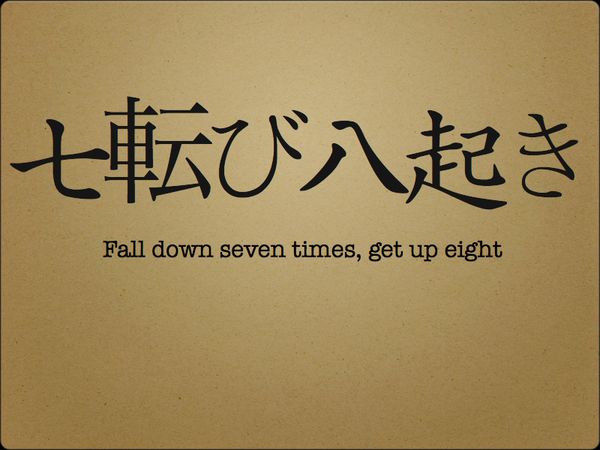
Falling down, God's presence, Grace

Falling Down!

324D54C7-5FB4-4D11-9649-5A3C500C9C2E

I really do hate falling down. Yesterday I fell in the kitchen. There was no banana peel on the floor to make me slip. Not a grape or a kalamata olive. I fell through no fault of any squishy piece of fruit on the floor. And I fell through no fault of my own, although I have to say that every time I fall or hurt myself in any way, Fred gently scolds me for being careless.

Well, yesterday I was not careless. I just fell in the kitchen with potholders in both hands. Good thing I had those grimy old potholders. My right hand potholder won the day because it broke my fall when I grabbed for the oven handle. So I only fell halfway, not all the way to the floor. A gracious gift!

Isn’t this a picture of life, all this falling? Over and over again, we nearly fall. And in between times of nearly falling, we really fall.

We fall hard sometimes. We fall all the way to hard ground sometimes. Sometimes we fall just part of the way to the ground. Sometimes we get hurt badly, and sometimes we can brush it off and move on as if it never happened.

Falling is not all bad. We learn a few things by falling:

  • We learn that people are often nearby to help us get up.
    or that no one is around to help us get up.
  • We learn that we can get up all by ourselves most of the time.
  • We learn that moving or twisting a certain way is a fall waiting to happen.
  • We learn not to be so careless.
  • We learn how not to do it again.

And we learn that there is someone always near us who can keep us from falling, someone who is mentioned in the tiny New Testament epistle we know as Jude. In one of the most beautiful benedictions in all of the Bible, Jude gives praise to this One who keeps us from falling, “the only God our Savior.”

Now to him who is able to keep you from falling, and to make you stand without blemish in the presence of his glory with rejoicing, to the only God our Savior, through Jesus Christ our Lord, be glory, majesty, power, and authority, before all time and now and forever. Amen. (Jude 24-25 NRSV)

And amen.

It’s one thing to be protected from falling. It’s quite another to “stand without blemish in the presence of God’s glory.”

That place where we stand without blemish is a sacred place, holy because of the presence of God, safe because of the protection of God. It is a good place to stand.

Thanks be to God.


Challenge, Faith, God's Faithfulness, God's presence, Hope, Lent, Life Journeys, Life pathways, Music, Restoration, Serenity, Transformation

I Can Face Tomorrow

Enlight272Yesterday was not my best day. All day long challenges got the best of me — health challenges, schedule challenges, even bad haircut challenges. My sister of the heart, Donna, said I was cranky. My husband, Fred, said I should chalk it up to Ash Wednesday. Martie, my dear Little Rock friend, said that yesterday was the first day of Mercury in retrograde and that I should do my best to survive until it’s over on March 28th.
I’m not so convinced of any of those explanations, but I’ll let it be for now. Today is a new day, a day in which I have chosen peace for the beginning of my Lenten journey. Typically, the way I find peace is through music. So Pandora is on my sacred music station today. It would be an understatement to say that the music has lifted me today and has almost made yesterday’s fiascoes a dim memory.

As I listened, a song from my past brought sweet memories. Years ago, before I learned to renounce masculine pronouns to refer to God, I was inspired greatly by these words: “Because He lives, I can face tomorrow.” We sang this Gospel song often to remind us of hope, of perseverance, of God’s faithfulness and of Christ’s resurrection. Today, those words and that melody on Pandora reminded me of those exact things. In spite of masculine pronoun referring to God, the music moved me as it has always done. The message has not changed. God has not changed. My faith in Christ has not changed. Thanks be to God!

Here’s my truth as I follow my Lenten path, the abiding truth: “Tomorrow” for me seems murky, with the path ahead unknown and somewhat disconcerting. I do not know if I will receive a kidney transplant or live on daily dialysis for the rest of my life. I do not know what tomorrow promises.

But this is as it has always been — before illness and after. I never knew what tomorrow would bring, even in those days when I thought I was fearlessly and fully in control of my life. So it feels like a Lenten testimony of my faith to say that I do not know what tomorrow looks like for me. Leaning into the reality of the unknown future, I feel embraced in the consoling truth that “because He lives, I can face tomorrow.”

Of this, I am confident. Resting on this promise, I can move onto the Lenten path before me with refreshed hope and renewed faith. Amen.

Comfort, End Stage Renal Disease, Friendship, God's presence, Grace, Hospital, Illness, Memories

A Horribly Wonderful Year

65398410-819B-4DB4-B114-256AC088A2D4
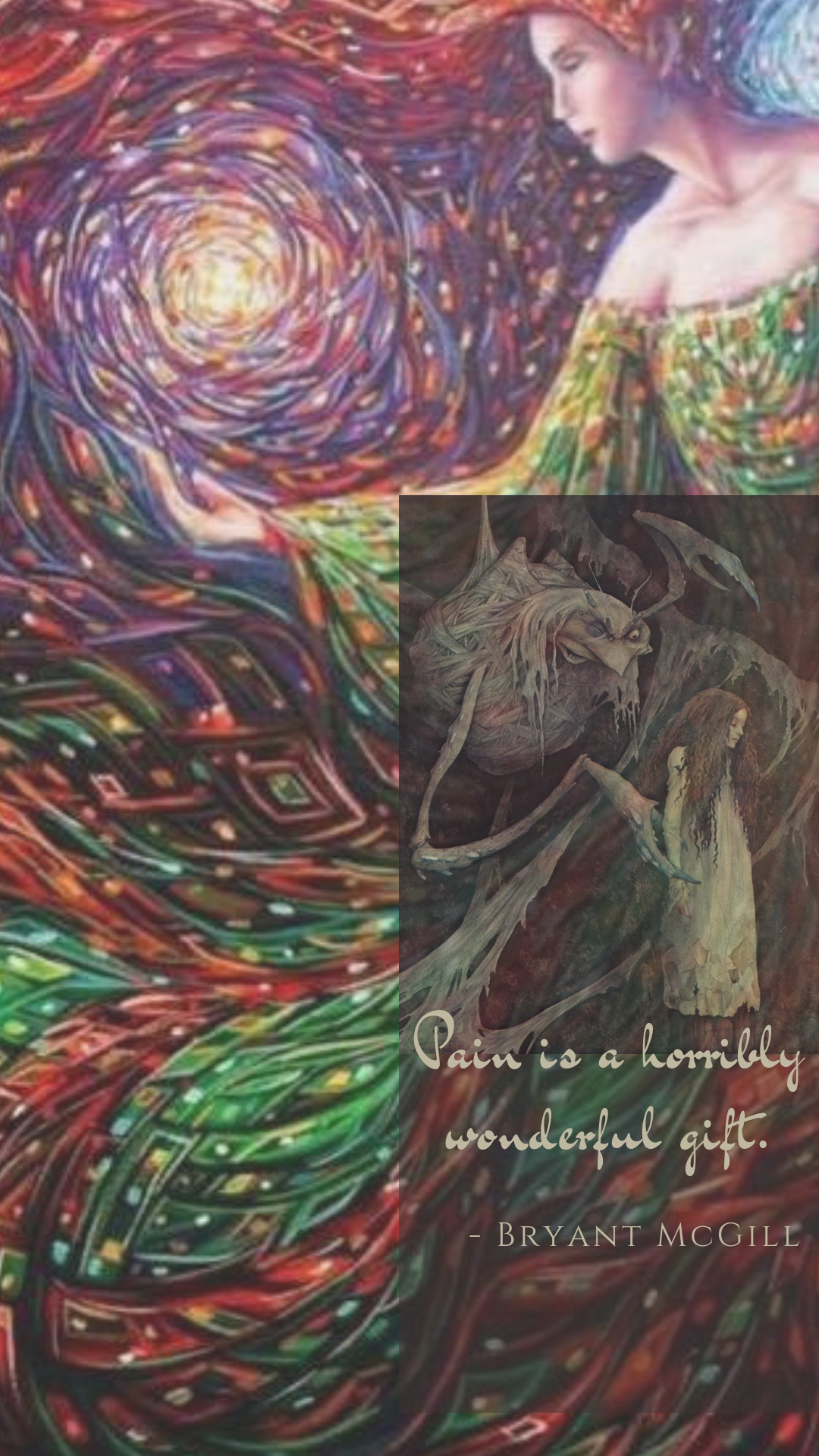
Art in foreground: “Horribly Wonderful” from The Land of Froud by Brian Froud, 1976.

Celebrating a five-year anniversary can be a fine excuse for a party! Definitely a five-year milestone can offer a chance to revisit and recall memories. My five-year anniversary is tonight, the night a phone call from my doctor ordered me to get to the ER. It was the night we learned that my kidneys had failed, just like that, out of nowhere, no notice. It was the night that end stage kidney disease turned my world upside down. It was the night that was the advent of a full year of hospital stays, biopsies, surgeries, physical and occupational therapy, loads of questions, very few answers and most of all, a very concerned and fatigued husband.

Fred was my rock, as he has always been. He slept next to me in that horrible excuse for a family bed. He kept vigil at the hospital day and night. When I was able to persuade him to go home to get some rest, he answered my phone calls in the middle of the night when I was sleepless, frightened or lonely.

“Are you up?” I would ask.

“I am now!” 

I don’t really think this anniversary calls for a party, but it does call for some reminiscing and remembering. So last night, Fred and I recalled the year I was so ill, that horribly wonderful year. Interestingly, we have two separate and differing sets of memories. He tells me that, most of that year, I was not aware of much, to the point of not even recognizing him. He tells me that I almost died during three separate critical events.

On my end, I remember none of that. I did lose time in that year, with confusion about losing days, even weeks, when I was unresponsive. I endured hundreds of needle sticks, maybe thousands since I am told my veins had collapsed. I received a port for hemodialysis that promptly caused me to nearly die of sepsis. I had a kidney biopsy that developed a painful bleed. I ate terrible food most of the time. I spent a lot of time in therapy learning to walk, write, identify colors and place square blocks in round holes.

Together we remember the love and care of my church, the family that constantly clamored for updates, the handful of good friends that were present, the food that the church brought to us every single week, and the nurses, angels in disguise.

I must say that, even to this day, I miss the sweet nurses that cared for me with great compassion. They were ever-present when I needed help and, during those long nights, they would often come in with a popsicle, sugar-free of course!

A final memory for today’s blog is the soft, fluffy afghan that my dear friend, Rev. Donna Rountree, brought me from her church. The Disciples of Christ church where my friend served as pastor barely knew me. I had preached there once. The congregation prayed for me, over the afghan, during a church service. Then Donna brought the afghan to the hospital, placed it on me, and told me that it was covered with the prayers of the people. What a special gift! What a special grace!

07CC221A-DFBC-4372-8E66-854CA41B0296When I think of that year, my description of it is “horribly wonderful.” Wonderful because, in the worst of times, God breaks in through the grace of a devoted husband, a caring family, an attentive nurse, a gentle phlebotomist, a close friend, a skilled physical therapist, a loving church family. 

So, yes, I took from that horrible year some wonderful memories, and that is what I can celebrate at this five-year milestone. And what’s more, I am here, still on this side of heaven and grateful for better health and life-saving dialysis. Pure grace!

Thanks be to God.


Forgiveness, God's presence, Life Journeys, Light, peace

Forgiveness

3904e2f4-b048-4bf3-83f1-bccdd2592165I have long pondered forgiveness, for years! It’s something that confuses me. Like forgiving my abuser. Like parents standing at their child’s graveside and considering how to forgive the shooter. Like a little girl forgiving the people that snatched her from her mother’s arms at the border.
Forgiveness can be confounding and elusive. It is not a merely a thing, or a conviction, or an emotion, or a firmly held belief. It is an act of the heart that can seem all but impossible. But the Bible seems very clear about forgiveness. When you have been wronged or betrayed by another person and you are in a tug of war with yourself about forgiveness, the words of Scripture face off with you as a challenge, perhaps even a rebuke.

Get rid of all bitterness, rage and anger, brawling and slander, along with every form of malice. Be kind and compassionate to one another, forgiving each other, just as in Christ God forgave you. (Ephesians 4:31-32)

Bear with each other and forgive one another if any of you has a grievance against someone. Forgive as the Lord forgave you. (Collosians 3:13)

And when you stand praying, if you hold anything against anyone, forgive them, so that your Father in heaven may forgive you your sins. (Mark 11:25)

For so many years, these and other Biblical admonitions troubled me. I felt as though the words stood in judgement before me. I would pray to be able to forgive. I would pray for light that could shatter the darkness around me. I would pray again, and again. Waiting. Hoping.

Eventually, I shared my inability to forgive with my spiritual director, hoping for guidance and wise counsel. We talked about it at length. I bared my most vulnerable places and revealed the unresolved anger that lived inside of those places. I mined the depths of my spirit and unearthed long-standing wounds of the soul. Our conversations were gently pushing me to a better place and shedding light on the reality that my inability to forgive was not disobedience, but unresolved pain. And then my spiritual director shared this quote with me.

Forgiveness isn’t telling someone it was okay to hurt you. 
It’s telling yourself  it’s okay to stop hurting. 

It doesn’t mean you have to trust them again. 
It means you can learn to trust yourself again. 

It doesn’t mean you have to give them a free pass back into your life. 
It means you are free to take your life back again. 

Forgiveness is simply emptying your past of its power to empty your present of its peace. 

― L.R. Knost

That experience was many years ago, but to this day, I live in the peace I found then. There is no doubt that my past did indeed have the power to empty my “present of its peace.” Reclaiming my peace made forgiveness possible, though it did not happen instantly. It’s not so easy to forgive a person who was never sorry.

Still, it was a process — a journey really — that I had to travel with God, praying all along the way that I would have the strength I needed. The journey was long and sometimes arduous. God was ever-present — patient and persistent. At journey’s end, there really was light, shining brightly where darkness had been. 

Was I healed of my sin of being an unforgiving person? After this journey, do I now forgive every person who hurts me? Sometimes!

Thank you, God, for your patient persistence. Amen.

Comfort, Darkness, Daybreak, Despair, Faith, Fear, God's presence, grief, Hope, Life storms, Loss, Mourning, struggle, sunrise, Tears, Vulnerability

Icons of God’s Presence

5388C091-C6CE-402C-A3DB-77B0DD838A84
Photography by Sister Macrina Wiederkher

“Sunrises anoint my soul. They are quiet prayers, icons of God’s presence.”

These are words written by my friend, Sister Macrina Wiederkher. Her words resonate with our times as we hold in the light our brothers and sisters in Florida. Their loss is immeasurable, and although we know that loss of home is not as tragic as loss of life, it is a deeply felt emptiness to lose your home and all its contents.

So many are in that heartbreaking place today, and when the night falls on this night, they will not know the safe security of home. We have only a small awareness of their heartache, but God is fully aware of all they have lost. God knows their grief and their fear, their uncertainty of the future. Sometimes all we can count on is that God knows our deepest sorrow and anoints our souls when we need it most. 

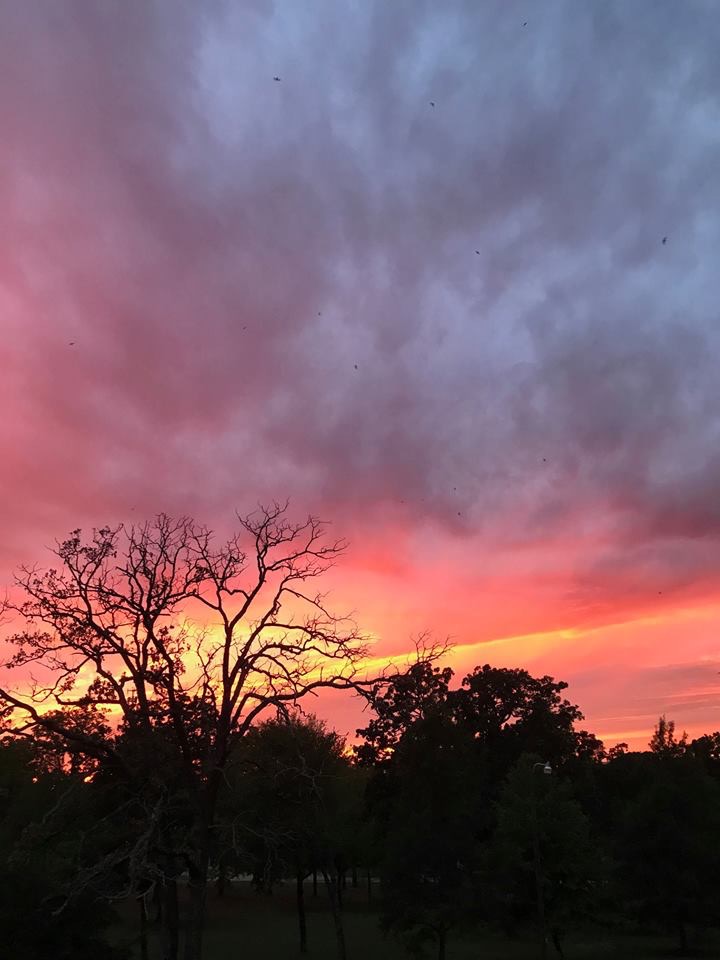
Our comfort is this: that after every storm, there is a calm. When ominous, dark clouds of destruction fill the skies, we can know with certainty that the sunrise will come.

B2904AA9-02C4-480E-B061-D174E9810346I believe my friend who tells us that sunrises anoint our souls . . . like icons of God’s presence.

And I believe it for all of the Florida folk who have lost so much.

Belief, Faith, God's presence, Grace, Images of God

God Images

B33BBCE1-46BB-404E-8429-32535C46106FHow do you see God? What images of God do you see? How do you find God? Where do you find God?
Most of us have at least one image of God. It may be a vague image, but still, we have an image in our minds of a higher power. There are as many images of God as there are people. People have images of a “god” they may or may not know as a part of their spiritual journey. Some imagine God as a benevolent spirit, others as an omnipotent ruler. Some imagine God as as a father, others as a mother. Some imagine God as a protector, others as a punisher.

I remember a sermon I heard many years ago proclaimed by a passionate, animated African American preacher. “Tell me brother,” he preached with a lyrical chant. “Tell me brother, how do you find God? Tell me sister, how do you find God?”

And he repeated the questions again and again, building into a spirited crescendo, after which he said, “You find God when you get little enough that God can get big in you!”

And all the congregation responded with exuberant “Amens” and “Hallelujahs.”

I would surmise that the image of God held by that congregation, at least in that moment, was the image of an all-powerful, mighty Spirit just waiting to hear their praises and then responding with little miracles of answered prayer.

God images fill the world: there is the Creator God, the gentle shepherd, the God of vengeance, the God Most High, and from sacred music, the Mighty God, Wonderful Counselor, Everlasting Father, Prince of Peace.*

But we must acknowledge a significant exception. Some people simply say that they do not believe in God at all, any God. No images. No spiritual need for God. Nothing. They call themselves atheists.

I have known people who profess to be atheists. By no means am I an authority on this, but in my years as a hospital chaplain, I have never known a dying patient — whether believer or atheist — fail to cry out to God. In my years as a trauma specialist, pastor and pastoral counselor, I have never known an atheist who is in the depths of trouble fail to cry out to God.

I do not say that every person who does not believe in God always reaches for God in times of trouble. I am simply saying that in my experience, people in the midst of pain, grief, fear or other kinds of chaos search for a God who, by the way, is always there.

I recently read an intriguing quote by Marcus J. Borg:

When somebody says to me, “I don’t believe in God,” my first response is, “Tell me about the God you don’t believe in.”

― Marcus J. Borg, Jesus: Uncovering the Life, Teachings, and Relevance of a Religious Revolutionary

What a wonderful response, to affirm a person’s choice of unbelief while opening the door for meaningful conversation. That response is so much more respectful than a response that 1) forces a person to listen to a treatise on the existence of God; and 2) insists that the person must immediately become a believer by following a series of simple steps.

In the last analysis, a person does not find God on our timetable or through our methods. A person will find God in his or her own way and, on the spiritual journey, will see very personal images of God. They will discover the timeless grace offered to us all: a presence of God that is is constant and never-ending.

Where can I go from Your Spirit?
Or where can I flee from Your presence?

If I ascend into heaven, You are there;
If I make my bed in hell, behold, You are there.

If I take the wings of the morning,
And dwell in the uttermost parts of the sea,

Even there Your hand shall lead me,
And Your right hand shall hold me.

— Psalm 139:7-10 (NKJV)

As for me, I hold on to the image of a constant and ever-present God. Of all the images I have of God, the God I find “on the wings of the morning” most comforts me. I see God in many ways and in many places . . .  in Scripture, in nature, in my spirit. How do you see God?

For all who have eyes to see, let them see . . . images of a God strong and true, powerful and gentle, loving and accepting. God images are most assuredly there for us, for those of us who believe in God and for those who do not.


* “Hallelujah Chorus” from Handel’s Messiah


Aging, Change, Comfort, Faith, Fear, God's Faithfulness, God's presence, Hope, Joy, Life Journeys, Life pathways, peace, Psalms

Around the Bend

8354B3D7-3728-454F-B1E7-FAB7901C5EB8
Photo by Steven Nawojczyk

I wonder sometimes what I might find around the bend. “Around the bend” is an apt metaphor for the twists and turns of life’s pathway. No matter how long I have traveled my journey, no matter how much life wisdom I have gained, I never, ever know what what’s around the bend.

The pathway before me can frighten, even while I strain to see as far as I can into what lies ahead. The bend is sharp most times, and the angle hides my view. As I age, fear on the journey looms large, for I am completely aware of the dangers I might encounter around the first bend, and the next, and all the bends that are ahead of me. And yet, I am constantly graced with flashes of hope and faith whispering that what is ahead of me could be even better than what I have left behind.

The beautiful photo above by Steven Nawojczyk is a gift of calm waters bending in a gentle flow at the foot of a mountain, lightened by the golden rays of the sun. The image makes me believe that whatever is around the bend is lovely, peaceful, comforting, safe. And that is exactly what God would want me to believe, and woukd want us all to believe. I cannot help but think of the Psalmist’s affirmation that God “leads me beside still waters.”

In so many comfort-filled passages, the Psalmist offers sure and certain comfort. Hear the Psalmist’s words . . .

Keep me safe, my God, for in you I take refuge.

Lord, you alone are my portion and my cup; you make my lot secure.

The boundary lines have fallen for me in pleasant places;
Surely I have a delightful inheritance.

I keep my eyes always on the Lord. With him at my right hand, I will not be shaken.
   Therefore my heart is glad and my tongue rejoices; my body also will rest secure . . .

You make known to me the path of life;
you will fill me with joy in your presence,
with eternal pleasures at your right hand.

— Psalm 16:1, 5-6, 8-9, 11 (NIV)

And hear the words of the Prophet Isaiah . . .

Even to your old age and gray hairs, I am he, I am he who will sustain you. 
I have made you and I will carry you; I will sustain you and I will rescue you.  

— Isaiah 46:4 (NIV)

And so “around the bend” is not so frightening after all. In God — “who makes known the path of life” —  there is comfort, safety, protection, constancy, and even joy. Thanks be to God.