I am aware, as you are, that time is fleeting and moments are passing. Life has taught us that. But there is more, like a dandelion will scatter with the wind as we hold it in our hand. There is no stopping any of that. Nor can we control it.
Still, there are messages for us here, right now, as we contemplate a little reality. If you know me personally, you know that I have lived an uneasy life full of trouble. In a way, tragedy became the path I traveled. I would struggle my way through one tragedy and then steeled myself waiting for the next one. The next tragedy always came eventually, a tragedy large or small.
When tragedy cruelly and abruptly stopped me in my tracks, I found that most of the time, I was resilient and full of hope. Yet, I became exhausted by the trauma, or the sorrow, or the grief.
It is true that when I fell to my knees, I always got up. Good for me! It’s not like that, though, that “good for me” attitude. I was strong enough to get up and move forward, but it was more like God graced me with the courage and hope I needed for to pick myself up and take my next step.
Void of any pending tragedy, I have felt positive for the past weeks. I finally have a stable, working kidney. My frequent falls have stopped. I didn’t get seriously hurt by falling, just a sprained wrist and later a bruised rib cage. So I firmly believed the words of faith from Julian of Norwich, “All shall be well, and all shall be well, and all manner of thing shall be well.”
Until, until, I heard the doctor say to my husband Fred and me, “You have advanced prostate cancer.”That’s when I broke my streak of resilient responses to tragedy. I have been happily married to this good, good man for 55 years! He cared for me during my long illness, five years of dialysis, and my kidney transplant. He cares for me every day in a thousand different ways! I honestly don’t know how I would live without him. Then I heard a whisper, “Where is your hope, my daughter? Where is the resilience that has always carried you through the hard times?”
That whisper was what I needed to hear, because everything about this felt different to me than any other time I had heard bad news. Questions and concerns and worries about every kind of life change flooded my psyche. I was assuming the worst right at the very beginning of this current life tragedy. I could not put my finger on it, until I saw this bit of insight from C.S. Lewis.
No one ever told me that grief felt so like fear
—C.S. Lewis, from “A Grief Observed”
I felt instantly that my feeling since the awful diagnosis day was indeed fear. That’s why it felt so different. It was not my normal response of sadness, anger, devastation, aliveness, fatigue, and more sadness. This time my grief felt more like fear. So there you have it. The gentle make up of a dandelion is not one you can hold together. It scatters with the breeze. Time continues to fleet no matter how we try to stop it. Moments are passing and that will not stop.
But we have this moment and all the comfort and peace and hope and joy we can get from it. And we can do just that: consider only the present; feel the emotion of it; recognize it as completely yours; and summon the courage to hold it in your arms and grab the good things. That is one simple definition of resilience, and you have it! You have resilience! Everyone has it! Keep it close and continue to move on your sacred path.
You have probably had that kind of dream at a few junctures on your journey. I know I had many dreams along the way. Sometimes they scared me to death. I dreamed of peace, equality, freedom, changing the world, and many other huge and noble dreams. I dreamed some silly dreams, too! I soon got the hint: changing the world is a formidable task. I followed all the rules, but being a rule-keeper does not make a person effective in dreaming and imagining. Women who follow the rules (someone else made up) could correctly be called well-behaved. They might even be called good girls because they don’t cause much of a flurry. They typically don’t make history and they certainly don’t change the world.
What Does a Woman who Does’nt Behave Look Like?
A woman with less-than-good behavior looks like someone at peace with herself, someone who radiates hope, someone with the courage and determination to do justice. I have admired and emulated so many examples of women who did make history, women who were not well-behaved at all. Here are only a few: Rosa Parks, Harriet Tubman, Lucretia Coffin Mott, Sojourner Truth, Susan B. Anthony, Nancy Sehested, Elizabeth Cody Stanton, Prathia Hall, Julian of Norwich, Malala Yousafzai, Mother Theresa of Calcutta, Ann Hasseltine Judson, Lucy Stone, and so many others!
Becoming a “Bad Girl”
About 24 years ago, a chaplain colleague recommended a book to me: Goodbye Good Girl: Letting Go of the Rules and Taking Back Your Self by Eileen M. Clegg. I think my chaplain friend was suggesting that I should get out of my comfort zone and take some risks, that I should courageously follow God’s call on my life. I knew that the members and churches of my denomination would “throw a fit,” like we say in the south! After all, I was an ordained minister serving as a hospital chaplain, which placed risky challenges before me every day.
Reading for Transformation
So I read the book immediately and set out to become a bad girl, a girl who fully intended to change the world and to make history for it! So far, I have not made history. I have not managed to put my name in lights. I have not started any big public movements. But I have done some things that matter! I have learned how to create sacred space; I have learned the depth of liberation theology; I have found enough grace to endure the consequences of being a “bad girl” and then a woman with questionable behavior; I have held off anyone who tried to tell me who I am; and I have called up the courage to fight for justice. Colleagues, friends, family, co-workers reacted to the change in me, since they never expected me to dissent, or disagree, or refuse to behave.
Becoming a Catalyst for Change
Suddenly I let go of my “good girl” image and basically said “goodbye” to my restrictive behaviors. I took back my life, put aside all the rules, and followed my soul. I watched for the winds of the Spirit to lead me, and I moved forward to all the places that needed some attention. I was able to help change unjust systems, unjust policies, and unjust processes by not being so well-behaved.
Becoming Your Authentic Self
Still, I sometimes think I have reached an uneasy place when it comes to letting go of my “good girl” persona. I’m really not a “good girl” and I don’t think I ever have been. My parents had to endure the sassy exclamations of my toddler years, like “Nobody’s the boss of me!” Creating shock from those who knew me, I mostly remained a “bad girl” from that day to this. I set aside the rules that were designed to keep people down and I took back my life. Today—in my mid-seventies—I continue to spew out uncommon proclamations that are quite annoying to those who are determined to hold on to their power and resist change.
Embracing Change is Hard
Truly, it was sometimes hard being a change-maker and a rule-keeper! Always a people pleaser. Always the ultimate perfectionist. I discovered along the way that sometimes rule-keeping, people pleasing, and keeping every little thing “perfect” can harm your inner core. In fact, it’s less risky when you follow the leaders, make sure everyone is pleased, and doing everything with glowing perfection. Stepping out of line is always a bit dangerous.
Being Resolute and Unmovable
When you become exactly who you are, resolute and unmovable about the things that matter to you, you will raise a few eyebrows, and sometimes people will get angry with you . You see, those people expected something else from you. Each of us becomes “me”— the “real me”— at our own peril. In a sense, we have to fight for the right to be ourselves in the world.
It is true that the people around me reacted strongly when I took back my life and became fully invested in my destiny. They thought that I had become radical, maybe even unhinged. I did not respond appropriately to their demands. To unreasonable demands, this is essentially how I might have responded, sometimes out loud, sometimes under my breath . . .
I will do it. /It’s my right! / It’s my choice! / It’s my prerogative! / It’s my decision! / I’m doing it anyway. / You can’t stop me! / Just watch!
You Are Not Enough!
All the while, I felt uncomfortable because of so much disdain from others, who began sending me a new message, You are not enough! I Imagine that many of you have heard someone say to you, You are not enough. At least, we may imagine someone saying those hurtful words. Unfortunately, we believe it because we don’t know ourselves, meaning we don’t know our bright and dark places, we have not yet realized our sacred worth, and we have not yet searched our souls.
Perilous for My Soul
For you see, you and I are afraid because it is perilous for the soul when we don’t search diligently for our soul’s passions and dreams. You and I sometimes accept what others say about us and tuck it away in our deepest places. When those words sneak all the way down into the soul, we tend to give up. We start from the moment we make ourselves nonchalant about it all, that moment when we shield our hearts from hurt. One of the saddest phrases we use is “I don’t care.” When we no longer care, we begin, one by one, eliminating the people around us, never realizing that they are hurting, too. And maybe the reason they send the message, You are not enough, is because they believe that they are not enough either.
The Hazard of Other Voices
I can honestly say that I have often heard voices—known voices, unknown voices, and the weak little voice in my head—telling me, You are not enough! I have learned that once I have embodied that negative message, it rolls around in my psyche for a long time, maybe forever. It becomes a state of being that goes deeper than skin. It penetrates in deeper places, and takes its toll on my emotional and physical well-being. I recall many such times, none more painful than the wagging tongues around my ordination . . . You know the scenario, “She can’t be a minister because she is a woman! Anyway, she’s not good enough! Other voices are often hazardous, dangerously breaking down our sense of self-worth. They may be yelling, speaking in a normal tone, whispering, or imagined in our heads. In response, we must prepare ourselves to hear the voice above all voices, saying, “You are my beloved daughter with whom I am well pleased.”
Embody—What Does It Mean?
For a long time, I embodied the traits of the good girl, but to embody good girl traits is not really a once-and-done action. Embodied lasts a while! Embody does not have a shallow or surface meaning. It is deeper. I like the word embody. It seems to suggest that we can live a soulful life. In the very middle of the Greek word for “embody” we find the word σώμα, which means body. However, the Greek word for body cannot be translated in a way that reveals the depth of its meaning. The definition of σώμα is deeper than we realize. It is not skin-deep, it is deeper, approaching a definition more like soul.
Touching My Soul
I do like the word embody and the word soul. In some ways, to embody means to live in your soul. The word embody may whisper to you that in your body’s center, you will find the path to reach your soul. A person who lives in the soul is a person that does not live a shallow life, devoid of the emotion that makes us alive. The soul will help you, if you can just start by daring to touch it.
How Do I Do It?—Live in My Soul, Change the World. . .
So what are the things we can actually do to take back our lives and live soulfully? What path do we follow to transform ourselves and change the world? My initial response to that is, “I don’t know.” Not very comforting, I know, but mostly true. We cannot forge the path for any other person. We cannot know what’s best for them. So not knowing anyones path, nor their dreams, I can give you a list of things others are finding the leads to their transformation. Here they are, not at all an exhaustive list, and certainly not a perfect guide for you:
Carve out some time for quiet, restful, meditation.
If you are a person of faith, get in touch with God or whatever person you worship.
Listen.
Listen some more—to your heart and your soul.
See if you find there a sacred direction especially for you.
Do you feel you are getting any closer to discovering your authentic self?
Can you begin to believe you will be transformed?
Can you take a step or two, in faith, into a holy place of transformation?
Pray, making your needs known to the source of your faith.
Read! Read the stories of others who found life transformation.
Find community, even one other person, who understands your journey.
Start all over again, leaning into the wisdom you found on your previous journey.
Take as long as it takes, until you realize that suddenly, you are becoming emboldened and scrappy!
emboldened and Scrappy
You may not know her name, but Lucy Stone was steadfast in her belief in self-authentication and in her ability to change the world. Lucy Stone was called “emboldened” and “scrappy” because of her tireless work for the abolitionist and women’s rights movements through the 19th century. A bona fide pioneer of her time, Lucy Stone stands as a historical titan. Her book “Unapologetic Life” describes a model of a revolutionary living. As for me, I would count it an honor to be described as emboldened and scrappy.
Riding on the Wings of the Spirit
Life is more fun when you’re emboldened and scrappy. Not that we want to reduce the life experience to just scrappinesses. Life is so much more, like authenticity and the willingness to be a change-agent. Life is about having enough courage to persevere! Life for me is about my soul and all the ways it has been transformed over many years. All along my journey, I knew that my soul was a problem! At every age, there was a part of me that wouldn’t follow the easiest path. I longed to be empowered to make societal change. I chased down injustice and worked to dismantle it. I spent most of my career working with victims of domestic violence, child abuse, and human trafficking. This was not the easiest and most pleasant vocation, but the work had made its way into my soul. To do it, I had to live in the light of self-awareness and soul-awareness. I had to constantly listen to the sighs of my soul, and move only after I had heard them clearly. If I had just one nugget of advice for you, it would be to touch your soul and ride on the wings of the Spirit.
Expect to Make History
Sisters, don’t forget that when you touch your soul, you might just not be a “good girl” anymore. Or a good boy, for that matter. As for me, I am not a “good girl” living at the whims of other people! And I am definitely not a well-behaved woman! So I fully expect to make history! Because making history means leaving a legacy, creating a world brimming with peace, and embodying your best self!
It’s my most common statement these days: ”Have a nice trip!” Saying it to my friends is the polite thing to do, given that I am landlocked in my house. And to my credit, I really mean it when I say it. I really do wish them a nice trip—fun and relaxing and safe and an experience of all things good.
At the same time, my heart is always just a little shattered when someone I know embarks on a summer adventure. It makes me long for times past when my family took amazing vacations to Disney World or Sea World, to the ocean or to the mountains, to Oregon, Seattle, or Vancouver, or Gatlinburg, or Nevada, or San Francisco, New Orleans, Reno, Nashville, Nairobi, Mombasa, Athens, Mexico . . . I can’t even remember all the places. “Those were the days,” I’ve heard it said. And so they were!
Today is a very different reality. Travel is harder, for so many reasons, and being confined to home has a host of repercussions. I have experienced many of those repercussions, physical ones, spiritual ones and emotional ones. Immediately after my kidney transplant in 2019, Covid-19 descended upon us. After that, I accepted my personal reality of taking immunosuppressant medications for the rest of my life to prevent organ rejection. That personal reality meant that, no matter the lifting of mask mandates and the full re-opening of everything, I had no immune system to fight Covid or any other infection. And that means forever!
When everyone around me seems free, and carefree, I feel imprisoned. I admit, it has taken an emotional toll on me. It still does affect my sense of freedom, safety, loneliness, boredom, isolation, creativity—the things that fill your soul. I have tried hard and long for three years to stay active and creative and never to feel bored. But I have reached a kind of stasis, worn out from ”keeping busy” and from pushing myself to be productive, creative and happy.
My husband asked me yesterday if I’m depressed. I almost said, “no” before the truth hit me. I haven’t seen my son and grandchildren for two years. I haven’t seen my Atlanta cousins since November. I haven’t seen most of my friends in months. So, yes, I suppose I am depressed, though I so want to push it away by denying it.
Depression has its own trajectory. Most of the time, I just have to ride it out and wait for better days. In the meantime, to all of you travelers out there: Have a nice trip!
How true it is that when we know nights of sorrow, when weeping is all we can muster, that daybreak does eventually come as it always has. And with the rising of the sun, perhaps our tears are replaced with at least some measure of inner joy.
The universe is wide and wondrous, full of love, full of grace, and sparked by freedom. Those three—love, grace and freedom—are the things we most need, all of us.
I offer you this meditation, praying that you are surrounded in love, that you know the grace that accepts every part of yourself, and that you feel the the freedom to run with the wind in wide and wondrous places, toward your dreams.
As you continue the quiet time you claim for yourself today, I hope you will be be inspired and comforted by this beautiful choral piece by the brilliant composer Elaine Hagenberg, ”All Things New.”
Poem by Frances Havergal and text adapted from Revelation 21:5-6
Light after darkness, gain after loss Strength after weakness, crown after cross; Sweet after bitter, hope after fears Home after wandering, praise after tears
Alpha and Omega Beginning and the end He is making all things new Springs of living water Shall wash away each tear He is making all things new Sight after mystery, sun after rain Joy after sorrow, peace after pain; Near after distant, gleam after gloom Love aftеr wandering, life after tomb
“Freedom” is a painting by Tamer and Cindy Elsharouni which was uploaded to Fine Art America on March 5th, 2012.
Not like the brazen giant of Greek fame, With conquering limbs astride from land to land; Here at our sea-washed, sunset gates shall stand A mighty woman with a torch, whose flame Is the imprisoned lightning, and her name . . .
From her beacon-hand Glows world-wide welcome; her mild eyes command The air-bridged harbor that twin cities frame. “Keep, ancient lands, your storied pomp!” cries she with silent lips.
“Give me your tired, your poor, Your huddled masses yearning to breathe free, The wretched refuse of your teeming shore. Send these, the homeless, tempest-tost to me, I lift my lamp beside the golden door.”
— Emma Lazarus
In the year 1883, Poet Emma Lazarus wrote this sonnet, “The New Colossus,” to raise money for the pedestal on which the Statue of Liberty would stand. The sonnet ends with the poignant, passionate words that were added to the base of the statue in 1903: “Give me your tired, your poor, Your huddled masses yearning to breathe free, The wretched refuse of your teeming shore. Send these, the homeless, tempest-tost to me, I lift my lamp beside the golden door.”
For me, these words always held deep significance, first of all, because both of my parents emigrated to this country from Greece and secondly, because I worked as an advocate and trauma counselor for victims of human trafficking, both adults and children. My work was not merely a job; it was a calling that took me into emotionally and physically dark places that challenged my theology of good and evil. It opened my eyes to the intrinsic evil of politics, wealth, greed, inhumanity and depravity. As I toiled with broken, traumatized women, men and children, trying to help them change their lives, my own life was changed, transformed really.
Lady Liberty spoke to me in those days. I know she is a mere statue with no human attributes to admire, but she is to me a powerful symbol. The Statue of Liberty has been called “Mother of Exiles.” People who have been exiled for so many different reasons have found inspiration in her, in this inanimate sculpture that comes alive in people who yearn for freedom. Lady Liberty is sculpted from the inspiration of Libertas, the Roman goddess of liberty with broken shackle and chain at her feet. The Statue of Liberty became an icon of freedom, a symbol of welcome to immigrants, especially immigrants arriving by sea. I remember hearing my grandmother’s many stories of sailing to America, and one of her memories was seeing the Statue of Liberty’s welcoming light.
I’m writing this today as my commemoration of July 4th, a day that represents freedom, yet not for all. For if you ask your African American brother or sister, “What does July 4th mean to you? You will get an answer expressing something like this: “Are you asking me, a descendant of the American slave, what the 4th of July means to me? I answer: It is a day that reveals to me, more than all other days in the year, the gross injustice and cruelty to which I am a constant victim.”
So I am always uncomfortable “celebrating” the 4th of July with fireworks and cookouts and a proliferation of mini American flags. Instead, I choose to commemorate, not celebrate. So I will acknowledge the day, yet never forget its full meaning, its meaning not just to me, but to my brothers and sisters — descendants of slaves, immigrants fleeing from oppression, victims of human trafficking.
Are you asking me, a descendant of the American slave, what the 4th of July means to me? I answer: it is a day that reveals to me, more than all other days in the year, the gross injustice and cruelty to which I am a constant victim.
So think of Lady Liberty for a moment. The image of a woman, not a man — a woman who is standing tall and steady, with her torch lifted to offer light to all who need light. She is an image of a woman who represents compassion, invitation, protection, acceptance, freedom. The broken shackles at her feet declare the end of enslavement, cruelty and bondage for all people as she proclaims welcome for the tired, the poor, the ones who yearn to breathe free, the homeless, those tossed by the tempests of their lives. “Send them to me,” she says, “I lift my lamp to light their way!”
In our country, we entertain hard questions in these days, questions about our nation’s borders, about how welcoming we will be, about equality and equity and whether or not black lives really matter. So today I wonder. Will we lock our gates of welcome? Will we turn away persons escaping tyranny, danger and oppression seeking a land of freedom in our homeland? Will we act as if black and brown lives truly matter? Will we act in the spirit of the Lady, the “mother of exiles” who stands in New York Harbor? Or will we pick up the broken chains at her feet, forge them back together and use them to enslave?
These are the questions we should be asking in these days. Of course, political debate continues dissecting our nation’s immigration policies, as always. Politicians do that, often with little thought about the real people, the real families who bring their children to our nation for safety, protection and freedom. Politicians will do what they do as they always have, but I must ask my American compatriots, “What will we do? Will you and I speak in solidarity with the people who seek to live free in our country? I pray that we will show up when it matters and speak from our hearts of compassion, advocating for a nation that will always say, “Give me your tired, your poor.”
Mother of Exiles, may we stand in welcome with you, and in the spirit of our loving God, may we always love the stranger as we love ourselves. Amen.
You shall also love the stranger, for you were strangers in the land of Egypt.
Stand fast therefore in the freedom by which Christ has made us free, and do not be entangled again with a yoke of bondage. Galatians 5:1 (NKJV)
What is it about freedom that scares us? What is it about freedom that causes us to refuse to offer it to everyone? Are we afraid that giving freedom to another person or group of persons will diminish our own freedom? What does freedom really mean to persons who are oppressed and to those who live inside the throes of injustice?
I have written very little lately about justice and accountability, the two words most used to describe Derek Chauvin’s conviction. Ican’t help but mark this very moment on the “long arc that bends toward justice.” I feel compelled to call our attention to this week! Actually it’s last week now, but you get the idea. Let’s call it “the week of the verdict.”
The week of the verdict has come full circle from George Floyd’s murder on May 25, 2020 to the conviction of Derick Chauvin almost one year later on April 29, 2021. It was a week we will not forget. It brought up emotions in me and perhaps in most people. Most of what I felt mirrored the emotions I imagine George Floyd’s family feeling — happy, calm, relieved, conflicted, hopeful, determined, vindicated. I also felt sad and helpless because the conviction did not end murders of black and brown brothers and sisters. And I felt joyful and hopeful because perhaps this flashpoint in the long history of racial injustice will help us turn the corner and finally see in our communities the justice we long for.
How can that happen? How can we turn the corner and move away from oppressive systems and oppressive people? How do we do that when just minutes after the verdict and less than ten miles away, 16 year old Ma’Khia Bryant was shot and killed by police in Ohio? It happened in the shadow of “the week of the verdict.”
Perhaps for us this is the week of the verdict — the week when the verdict will be read on our failure to end the systemic racism in our communities! Isn’t it past time for us to stand up and stand strong and stand determined and woke? My friends, it is time! This moment in the history of injustice may well be the turning point we need to end racism!
I have said this many times: We cannot just reform injustice, we must transform it. The transformation that results in genuine, lasting justice must begin in the soul and in the heart where intentions are formed. I must lament injustice, confess my own complicity in it, repent of the white supremacy within me, own other forms of oppression and commit to the hard work of transforming injustice in my community and in my world. Only then will transformation happen in the systems that oppress people.
Only transformed people can love neighbors as Jesus loved us. My friend and sister blogger never fails to remind me to answer the ultimate question, “How then shall I live?”* She offers this scripture to us today.
We know love by this, that he laid down his life for us — and we ought to lay down our lives for one another. How does God’s love abide in anyone who has the world’s goods and sees a brother or sister in need and yet refuses help?
1 John 3:16-17
She then reminded us that conditions in India are dire and the people languish.
In India, today the virus surges almost beyond control, hospitals are choked, people die in line waiting for a doctor. How can those of us rejoicing in vaccination, cautious travel, new gatherings, not ask how we can help?
How does God’s love abide in anyone who has the world’s goods and sees a brother or sister in need and yet refuses help?
And that is the soul-critical question we must answer. How then shall we live when all around us people suffer every kind of calamity — every kind of violence, disaster, racism, discrimination, dehumanization? Every kind of heartache. How do we, in our suffering world, become the heart, hands and feet of Jesus?
Getting back to the lament of my own heart, that one thing that inspires my passion — transforming the injustice of racism, xenophobia, misogyny, homophobia and all forms of evil exclusion and oppression. Transforming injustice! Setting our faces toward the hope of Beloved Community! This one thing I know, the steps of Jesus would have led him to the “healing” of injustice in any form. On every day he walked on this earth, Jesus would be loving every person who was in need and he would be lamenting every injustice that caused harm.
How can we not lament? How can we not expend ourselves in the hard work of transforming injustice? How can we not care for, and pray for, and love our brothers and sisters who are in need? How can we refuse to work for the freedom of black and brown people, indigenous peoples, LGBTQ+ people, immigrants and asylum seekers, and to any person who is enslaved? How can we deny God’s desire for justice and peace?
How can we refuse freedom to black and brown people, indigenous peoples, LGBTQ+ people, immigrants and asylum seekers, and to any person who is enslaved? How can we deny them God’s peace?
— Rev. Kathy Manis Findley
I do not have the answer for how we might do this. But I do have some convictions about it, especially about racism and white supremacy. One of my convictions is that dismantling racism begins in me, in my soul. And eradicating white supremacy begins when I look seriously at my own white supremacy. For you see, as long as white supremacy looks to me like a white-draped person burning a cross, I will never acknowledge that white supremacy is in me. As long as white supremacy looks to me like a man I might see on TV news with a truck, a confederate flag, a rifle and a mission, I can easily distance myself. I am not that white person; I am a different white person that would never tolerate racism.
Am I? Am I that different white person? Or are there ways I contribute to an unjust society? Are there ways I fail to seek Beloved Community? Are there thoughts and feelings within me that diminish other persons, persons not like me? Am I complacent about injustice? Am I complicit? Am I reticent? Am I avoiding, looking the other way?
As long as white supremacy looks to me like a white-draped person burning a cross in someone’s yard, I will never see that white supremacy is in me. As long as white supremacy looks to me like a man I might see on TV news with a pick-up truck, a confederate flag, a rifle and a mission, I can easily distance myself. I am not that kind of white person! Or am I?
Rev. Kathy Manis Findley
Racial injustice may currently be the most visible form of oppression, but we must remember that many groups of people are oppressed. Many people long for freedom from oppression. Only when we “see” and “hear” all of their voices, will we be on the way to transforming injustice. I don’t know everything about oppression, and I don’t know exactly how to make a difference. I don’t really know how to join hands with my community and set about to transform injustice. I do know that I must begin with my own lament, for only lament can open my eyes to every manner of suffering and oppression.
So meet me on the mountain where we find the strength from God to persevere, and then descend with me to all the places where oppression enslaves people. Come with me to the people, and together, let us remove from them the yoke of bondage and offer them new freedom. And may Spirit Wind surround us with courage. Thanks be to God.
*”How then Shall We Live?” was the inspiring theme of the Alliance of Baptists Annual Gathering.
Born in Tuskegee, Alabama on February 4, 1913, she continues to be remembered in the hearts of the American people. What a “herstory” she lived! And how could I even begin to tell her story here? What we think we know about Rosa Parks, in fact, is more like a fairy tale than an accurate picture of the person she was and the powerful transformation she brought in the quest for racial justice.
Rosa Parks was not one to dwell on one event — one bus ride, one boycott, one street named after her — she instead set her “eyes on the prize” for the long haul. She was one persistent woman. She was a mentor to the young people who would ultimately see the prize of equal justice under the law. Rosa Parks was not just a woman to be remembered by holding down one seat on one bus on one day. Instead, she set her sights on the transformation of injustice and never stopped moving towards justice for all.
I cannot tell her story adequately, but I can point to some of her milestones . . .
In August of 1955, black teenager Emmett Till, visiting relatives in Mississippi, was brutally murdered after allegedly flirting with a white woman. Till’s two murderers had just been acquitted. Rosa Parks was deeply disturbed and angered by the verdict. Just four days after hearing the verdict, she took her famous stand on the Montgomery bus ride that cemented her place as a civil rights icon. She later said this when the driver ordered her to move, “I thought of Emmett Till and I just couldn’t go back.”
Rosa Parks sat in the black section, but when the white section filled up, the bus driver demanded that the four black passengers nearest the white section give up their seats. The other three black passengers reluctantly moved, but she did not. She recounted the scene: “When he saw me still sitting, he asked if I was going to stand up, and I said, ‘No, I’m not.’ And he said, ‘Well, if you don’t stand up, I’m going to have to call the police and have you arrested.’ I said, ‘You may do that.’”
Many people have imagined Rosa Parks on that bus as an old woman tired after a long day of work. Yet, in her autobiography, My Story, Parks writes, “People always say that I didn’t give up my seat because I was tired, but that isn’t true. I was not tired physically, or no more tired than I usually was at the end of a working day. I was not old, although some people have an image of me as being old then. I was forty-two. No, the only tired I was, was tired of giving in.”
Rosa Parks endured significant hardships in her life, both during and after the boycott. She was unjustly fired from her department store job. She received an almost constant stream of death threats, so many that she eventually left Montgomery to seek work elsewhere, ultimately moving to Detroit. There she served as secretary and receptionist for Representative John Conyers, befriended Malcolm X, and became active in the Black Power movement.
In 1995, she published her memoir, Quiet Strength, focusing on her Christian faith.She insisted that her abilities to love her enemies and stand up for her convictions were gifts from God:
God has always given me the strength to say what is right. I had the strength of God, and my ancestors.
Rosa Parks died in 2005 at the age of 92 and she became the 31st person, the first woman, the second African American, and the second private citizen to lie in honor in the Capitol Rotunda in Washington, D.C.
More than 50,000 people came through to pay their respects.
Her birthday is celebrated as Rosa Parks Day in California and Missouri.
Ohio and Oregon celebrate the day on December 1, the anniversary of her arrest.
One last milestone of her remarkable story . . .
In 1994, the Ku Klux Klan applied to sponsor a section of Interstate 55 near St. Louis, Missouri, which would mean the Klan’s name would appear on roadside signs announcing the sponsorship. In 2001, the US Supreme Court ruled that the state of Missouri cannot discriminate against the Ku Klux Klan when it comes to groups that want to participate in the adopt-a-highway program. Of course, while the name of the Klan is aesthetically disgusting to many people, this decision was a victory for free speech and equal protection under the law, right?
In the end, the Missouri Department of Transportation got sweet revenge! Sure, they couldn’t remove the KKK’s adopt-the-highway sign, but few would dispute the state’s ability to name the highway itself. So the KKK is now cleaning up their adopted stretch of the highway named by the Missouri legislature and christened as “Rosa Parks Highway.”
Rosa Parks did not crave the spotlight. Nor did she care all that much about highways and byways bearing her name. She probably did want to be known as a person who persisted in the struggle for racial justice. She told us that in these words:
I would like to be known as a person who is concerned about freedom and equality and justice and prosperity for all people.
You are remembered as such a person, Mrs, Rosa Parks! Happy birthday in heaven. You are our inspiration. You are one of our sheros, our wonder woman!
Not a word we are fond of. Nothing inspiring about the word. And when the word insanity is more than just a word, we shudder in its grasp. Insanity brings its own bondage, stealing one’s freedom to live, confiscating one’s creative expression. Insanity can be a complete, all-encompassing mental breakdown, even bordering on madness, OR it can be a state of being that most of us have experienced — irrationality, instability, disorientation, mania. Many people (noted scholars) have mused that “the definition of insanity is the most overused expression of all time.” (Salon.com)
Remember the declaration about “doing the same thing over and over again and expecting a different result?” Yes, I know you remember that definition, probably have said it yourself in an exasperating moment!
Where am I going with these bizarre introductory words?
I’m actually going to a place you may not expect. I’m going to the rush and swirl of color in one of my favorite paintings, A Starry Night by the Dutch Post-Impressionist painter Vincent van Gogh. The painting draws me in — into the little village with its steepled church, into a sky filled with sparkling stars, into the glorious luminance of the crescent moon, into the swirls of blues and whites and yellows. I have pondered many times what sort of mind and soul could have created a painting like this one.
The story behind A Starry Night is the unnerving story of Van Gogh. A few months after experiencing a mental breakdown on December 23, 1988 that resulted in the self-mutilation of his left ear, Van Gogh voluntarily admitted himself to the Saint-Paul-de-Mausole Lunatic Asylum. During the year Van Gogh stayed at the asylum, his prolific output of paintings continued and he produced some of the best-known works of his career. A Starry Night was painted by around June 18, the date he wrote to his brother Theo to say he had a new study of a starry sky.
A Starry Night was the only nocturnal painting in the series of views he saw from his bedroom window. In early June, Vincent wrote to Theo, “This morning I saw the countryside from my window a long time before sunrise with nothing but the morning star, which looked very big”. Researchers have determined that Venus was indeed visible at dawn in Provence in the spring of 1889, and was at that time nearly as bright as it could be. So the brightest “star” in the painting, just to the viewer’s right of the cypress tree, is actually Venus.
Too much information? Probably, but here’s my point that is not really about insanity at all. Rather, it’s about breaking free from bondage and taking back my life. You see, sometimes the sight of a big, bright morning star can replace whatever fear or angst I am feeling. Sometimes looking into the deep of a starry night can carry me to resplendent places. Sometimes even my slight insanity can transport me to my deepest expressions of creativity.
For me, insanity is my incessant scurrying around with too many things to do, a kind of mania. That frenzied scurrying is of my own choosing and therefore, leans a little too close to self-imposed insanity. I wonder if instead of that scurrying life of bondage, I could make time for moments of thought that would enable me to say something like what Vincent Van Gogh said from his asylum:
“This morning I saw the countryside from my window a long time before sunrise with nothing but the morning star — the brightest star — which looked very big!“
Contemplate for a moment the insanity of a life encumbered — filled to overflowing with too many things to do — compared with a life of stargazing that might just awaken fresh and bright creativity in you.
As for me, I’m heading toward a spiritual transformation — a life of sacred pauses, a stargazing life, a grace-filled re-awakening!
“Fine” is almost always the answer because usually the one who asked the question doesn’t really want to know all about how we feel. Not really. So we answer with a word — “fine.” Just “fine.” After all, we don’t often want to reveal our true feelings to anyone, and on top of that, telling them how we really feel would take more time than either of us want to spend on the conversation.
There may also be another reason for responding with just the word “fine.” Sometimes we don’t know how we’re really feeling. Some people are too busy with life responsibilities to consider how they feel. Others know there are deep feelings inside themselves, but they too are too busy to feel them. Still others sense dark, foreboding feelings in their deepest place, and they will not risk the emotional repercussions they might face by lettings their feelings rise into their consciousness. In Leo Tolstoy’s book, Anna Karenina, the dialogue asks, “Is it really possible to tell someone else what one feels?” Perhaps at that point — the seeming impossibility of telling another person how we feel — is where you and I find ourselves.
What happens when you refuse to allow your deepest feelings to enter your consciousness?
The question on the left is a very good question, even a crucial question. What does happen in us when we simply refuse to allow our feelings to come to the light os acknowledgment. The answer is at the very center of our quest for emotional wellness. We start, as the image above instructs, at owning our deepest feelings. Owning means to look at our feelings honestly and without fear. Owning means making no excuses for feelings. Owning means not blaming our feelings on others. Owning means holding our feelings in high esteem and acknowledging how they came to be. Owning means accepting our feelings, embracing then and honoring them
I was so deeply hurt that I just hold it inside until it becomes so unbearable I think I will snap.
He made me feel invisible and I just can’t let go of that feeling. I still feel invisible after all these years.
She made me so angry and I am letting that anger rage inside me and it will not go away. I don’t dare express it or let it surface.
Owning our feelings means being willing to truly “see” them, even when seeing them frightens us or creates in us a sense of dread. We sense we may experience a season of dread that the feelings will hurt us, again and for a long time. We fear what we will see. There is some truth in the fact that we tend to live into our “false self,” the self that is external and often shows little resemblance to our internal self. Contemplation is internal work. For those of us who believe in God, something divine happens when we are immersed in contemplating our hidden feelings — this thing that happens is that God meets us there, at the very moment when a buried feeling begins that awful hurting. I think of the words of promise in Holy Scripture, Jeremiah 29:11.
For I know the plans I have for you, says the Lord, thoughts of peace and not of evil, to give you a future and a hope.
I cannot help but find comfort in the presence of God in my life’s most painful times, and honestly, I have to say that some of those painful times were a part of contemplation and, through contemplation, beginning to own my down-deep feelings. The wise words of Thomas Merton are both instructive and provocative.
Everyone of us is shadowed by an illusory person: a false self . . . We are not very good at recognizing illusions, least of all the ones we cherish about ourselves. Contemplation is not and cannot be a function of this external self. There is an irreducible opposition between the deep transcendent self that awakens only in contemplation, and the superficial, external self which we commonly identify with the first person singular. Our reality, our true self, is hidden . . . We can rise above this unreality and recover our hidden reality . . . God begins to live in me not only as my Creator but as my other and true self. ― Thomas Merton, New Seeds of Contemplation
In finding pieces of my hidden, true self, I also found release from harmful feelings, hurtful memories and oppressive people I held on to. Finally, after contemplation, we find the ability to share our feelings — the real ones — with the people we trust to hold them sacred and to help us better understand them. At the moment when I understood my feelings — where they came from; why I was holding on to them; who caused them; what would happen if I let my feelings rise from my depths to the light of day — that was the moment I felt free. I could live again as my best self. I could love myself, my real self. And I could be my best self. Not a small thing! A turning point in my life!
I hope you will spend some time studyIng the Feelings image above. I invite you to look at the seven feelings in the center and to then move to the outer circles. If I feel sad, for instance, the next expansion of the circle further clarifies what “sad” means for me, i.e. lonely, vulnerable or depressed. The outer section may reveal to me that I was victimized or abandoned, grieving or isolated.
Continue to contemplate your hidden, unspoken feelings. Learn to look at them and “own” them without fear, and know that God will meet you at the point of your deepest pain and that you are God’s own creation — cherished, loved, comforted and protected by a God who will never let you go.
As a part of your contemplative moments, I hope you are strengthened by this arrangement of the hymn, “O Love that Will Not Let Me Go.” Play it before you begin your meditation time and let its message clear your mind and comfort your soul.
Juneteenth is a celebration. It’s not solemn, it’s filled with joy and pageantry. It’s not a funeral. But 2020 Juneteenth is uncomfortably juxtaposed with police violence against Black people, protesters in cities all over the nation and funerals — too many funerals.
A Bit of History . . .
Juneteenth is one of America’s oldest holidays and is observed each year on June 19 to mark the official end of slavery in the United States. The day has long been celebrated by black Americans as a symbol of their long-awaited emancipation. But the story behind the holiday starts 155 years ago today in Galveston, Texas.
On June 19, 1865, Union troops led by General Gordon Granger arrived in Galveston, Texas, to break the news to the last remaining Confederate sympathizers that they had lost the Civil War and that all slaves must be freed. The Union general read aloud to the residents of Galveston:
The people of Texas are informed that in accordance with a Proclamation from the Executive of the United States, all slaves are free. This involves an absolute equality of rights and rights of property between former masters and slaves, and the connection heretofore existing between them becomes that between employer and hired laborer.
The newly freed slaves celebrated emancipation with prayer, feasting, song, and dance, and the following year, the first official Juneteenth celebration was born. But the importance of Juneteenth is that it is rooted in a long history of struggle for freedom and then perhaps the greater struggle to maintain freedom in the face of the enormous repression that was to come.
The Struggle for Freedom Continued
It turned out that being free did not mean being being treated with respect. Yes, it was the true end of the Civil War, but it was also the beginning of Reconstruction, a time that was supposed to be very happy and hopeful. Yet the period of Reconstruction became a miserable time for freed Black people because Reconstruction became part of the redemption of the South. As such, it set out to move African Americans to indentured servitude. While President Abraham Lincoln abolished slavery in his Jan. 1, 1863, Emancipation Proclamation, rebellious Confederate strongholds dotted across the South delayed the widespread implementation.
The South would not hear of the end of slavery, and landowners moved heaven and earth to make sure they had plenty of indentured servants. They were determined to continue the ostentatious lifestyle that they believed was their right and their legacy. They were resolute in their quest to maintain their master/servant status.
Still Today, Elusive Freedom
Juneteenth has been “passed down” through black communities since 1866, but in this year — 2020 — this nation seems to be at the height of a modern-day civil rights movement. My friend says, “2020 is the year of reset!” People throughout this nation of every race and creed hope beyond hope the 2020 will go even beyond “reset” to reconciliation, transformation and rebirth. So that every person is free, respected and cherished as a part of beloved community.
The cruel and violent death of George Floyd under the knee of a Minneapolis police officer might mean that this year Juneteenth may not be only about festivals, parades and cookouts. It may well be somewhat of a silent, reflective vigil for George Floyd, Breonna Taylor, Ahmaud Arbery, Rayshard Brooks, Caine Van Pelt, Michael Thomas, Lewis Ruffin, Kamal Flowers, Momodou Lamin Sisay, Ruben Smith, Modesto Reyes . . . and the list could continue.
It is a list of tragedy and horror. It is a list that is a stain that will ever remain on this nation, an indelible mark of shame. It is a list of names we must never forget. So in your commemoration of Juneteenth today, honor those names, pray for their mourning families, and pray that you will confront racial injustice with an unshakeable resolve.
Juneteenth was meant to be a celebration, although many people might not be able to celebrate today. Heartbreak and horror have a tendency to override celebration and joy. Even with hearts broken, I hope we will find in our hearts even a tiny desire to celebrate this day that was, and is, all about freedom.
May the change that comes from the “2020 movement for racial justice” cause us to celebrate, not mourn, every time Juneteenth comes around — today and forevermore. And may each of us and all of us — a people of God’s creation — witness the rebirth of a nation where every person lives under a worldwide canopy of justice, peace, equality, respect and freedom.
May God make it so through us. Amen.
Celebrate, or mourn, today as you spend a few moments watching this moving and poignant video, “Oh Freedom.”
A blending of two photos: One is an image of protesters in Minneapolis. The second image is a portrayal of people raising their hands to celebrate Pentecost.
This morning I have no words. I have tears. I have sadness. I even have some anger that the people I love whose skin is not “white” are living in grief and frustration. I say only that injustice and oppression cling so close to my friends, today and in centuries past.
I hear my dear friends cry out for justice. I hear them using words to make sense of it all, and I hear their voices fall silent. Silent, with just these words, “I’m tired.” A dear friend posted the words on the left this morning. I want to see her face to face. I want to be together. I want to comfort her, hoping beyond hope that it is not too late for comfort.
I read this horrific headline this morning.
Prosecutors in Hennepin County, Minnesota, say evidence shows Chauvin had his knee on Floyd’s neck for a total of 8 minutes and 46 seconds, including two minutes and 53 seconds of which Floyd was non-responsive. — ABC News
Artists honor George Floyd by painting a mural in Minneapolis on Thursday, May 28, 2020. Artists began work on the mural that morning. (Photo: Jacqueline Devine/Sun-News)
Today I find myself deeply in mourning for the violence that happens in our country. I find myself trying to share in the grief of my friend and knowing I cannot fully feel the depth of it. Today I find myself unable to emotionally move away from it all. Today I contemplate George Floyd’s cry, “I can’t breathe.”
If there is any comfort at all, it comes as a gift of the artists pictured here. In an act of caring, they offer this mural at a memorial for George Floyd.
The names of other victims of violence are painted in the background. The words, “I can’t breathe!” will remain in our memories. Today we are together in mourning.
But tomorrow, I will celebrate Pentecost. I wonder how to celebrate in a time when lamentation feels more appropriate. I wonder how to celebrate when brothers and sisters have died violent deaths and when thousands of protesters line the streets of many U.S. cities. I wonder how to celebrate when protesters are obviously exposing themselves to COVID19.
Still, tomorrow — even in such a time as this — I will celebrate the breath of the Spirit. Tomorrow I will join the celebration that has something to do with being together, being one. To juxtapose the joyous celebration of Pentecost with the horrible picture of what we saw in cities throughout our country for the past few nights seems an impossible undertaking. What does one have to do with the other?
Perhaps they do share a common message. From those who protest, this message:
“We bring our broken hearts and our anger for the killing of our people, for the murders across the ages of people who are not like you. You treat us differently than you treat the people who look like you. For as long as we can remember, you have visited upon us oppression, slavery, racist violence, injustice. And we are tired. We are spent. We are beside ourselves with collective mourning. We can’t breathe!“
From those who celebrate Pentecost, this message:
“How we celebrate the day when the Holy Spirit breathed upon those gathered together, with gifts of wind and fire!
How we celebrate the story told in the 2nd chapter of Acts!”
When the day of Pentecost came, they were all together in one place.Suddenly a sound like the blowing of a violent wind came from heaven and filled the whole house where they were sitting.
They saw what seemed to be tongues of fire that separated and came to rest on each of them.All of them were filled with the Holy Spirit and began to speak in other tongues as the Spirit enabled them.
Now there were staying in Jerusalem God-fearing Jews from every nation under heaven.When they heard this sound, a crowd came together in bewilderment, because each one heard their own language being spoken.Utterly amazed, they asked: “Aren’t all these who are speaking Galileans?Then how is it that each of us hears them in our native language? Parthians, Medes and Elamites; residents of Mesopotamia, Judea and Cappadocia, Pontus and Asia, Phrygia and Pamphylia, Egypt and the parts of Libya near Cyrene; visitors from Rome(both Jews and converts to Judaism); Cretans and Arabs—we hear them declaring the wonders of God in our own tongues!”Amazed and perplexed, they asked one another, “What does this mean?”
Some, however, made fun of them and said, “They have had too much wine.”
Then Peter stood up with the Eleven, raised his voice and addressed the crowd: “Fellow Jews and all of you who live in Jerusalem, let me explain this to you; listen carefully to what I say.These people are not drunk, as you suppose. It’s only nine in the morning!No, this is what was spoken by the prophet Joel:
“‘In the last days, God says,
I will pour out my Spirit on all people.
Your sons and your daughters will prophesy, last days, God says,
your young men will see visions,
your old men will dream dreams.
Even on my servants, both men and women,
I will pour out my Spirit in those days,
and they will prophesy.’” — Acts 2:1-18 NIV
The people did not, in fact, have too much wine. Peter made it clear that wine did not empower the people who gathered in Jerusalem — “every people under heaven” — to speak and understand as they heard every word spoken in their own language. That would be a start, would it not, if we could speak the same language and truly understand — people who have flesh-colored skin, and brown and bronze, and red and black . . . every skin color under the sun. If only we could understand each other.
And then, what if we could gather together, welcoming every person? What if we could truly gather together and wait for Spirit to fall upon us with empowerment like we have never known before? What if we allowed the Spirit to give us breath, together?
In the end, there is a tiny bit of joy in George Floyd’s tragic story. It is a joy much deeper than reality’s sorrow. The artists completed their mural, and in the very center near the bottom, they had painted words that express the greatest truth of all.
Can you see it behind the little girl? “I can breathe now!”
What if we welcome Spirit Breath that will change us? What if we embrace empowerment from the Holy Spirit to help us change our world? What if we end oppression and injustice, together? What if holy perseverance could inspire us to live and act in solidarity with our sisters and brothers, all of them?
What if we dare to give our soul’s very breath to help bring about Beloved Community, together?
Together! Together!
May my God — and the God of every other person — make it so. Amen.
I share this blog post today in memory of Ahmaud Arbery, who was killed in the state of Georgia, the state in which I live in full and free safety. Ahmaud Arbery did not know such safety. But today we say his name and honor his memory. There are so many names we could speak today: Tamir Rice, Trayvon Martin, George Floyd. Breonna Taylor and hundreds more, even thousands. What can black parents possibly tell their kids now about staying safe? I also honor the parents who try to find the right words, the right admonitions to say to their children. Most of all, I honor the strong and powerful voices who continually cry out: “Justice!” My friend and pastor, Wendell Griffen, is one who cries “justice” with a particular eloquence.
Wendell Griffen is a pastor, state court trial judge, and social justice activist in Little Rock, Arkansas who lectures and writes about social justice. I am pleased to share with you his most recent article. He will call you out. He will speak plainly to those of us who are white. He will call you to act against injustice, drawing your courage from God, who whose children are deeply loved — all of them!
For they sow the wind, and they shall reap the whirlwind.
Hosea 8:7 (NRSV)
Have you viewed the ten minute and twelve second video of the May 25, 2020 killing of George Floyd by former members of the Minneapolis Police Department?
Why haven’t you? What are you afraid you will see? What are you unwilling to see? What are you unwilling to admit?
Have the four now former members of the Minneapolis Police Department responsible for killing George Floyd in broad daylight before onlookers who also videotaped their conduct been arrested on suspicion of committing a homicide (causing the death of another person) of George Floyd?
Why haven’t they been arrested? Why have they not been held in custody and required to post bond? Who decided they should not be arrested? What message was sent when they were not arrested?
The killing of George Floyd was a criminal act. There are witnesses to the act. The fact of Mr. Floyd’s death is indisputable. Mr. Floyd was not threatening anyone — none of the officers nor anyone else — when he was killed. The actions of the officers were not taken or necessary to prevent him from threatening anyone.
In other words, there is no legal justification for the actions of the four former police officers who killed George Floyd. None. Period. Full stop.
We should not be surprised that people around the world, including Minneapolis, are furious. George Floyd was slain by agents of the state. His killers are still at large. They have not been arrested. We should not be surprised that people in Minneapolis are outraged by statements on Thursday from local and federal prosecutors calling for “patience.” Why should they be patient about deliberate refusals to arrest known homicide suspects? Why should they “trust” a “process” that reeks with corruption and injustice?
We should not be surprised that people are outraged by the decision of the Minnesota Governor to mobilize the state militia — the Minnesota National Guard. Minneapolis is not under siege or being attacked. The “peace” and “order” of the Minneapolis area is not threatened by the civilians who protested while four Minneapolis police officers killed Mr. Floyd. It is not threatened by Mr. Floyd’s family members and friends. It is not threatened by the many people who took to the streets to protest his death and how local authorities refused to arrest his killers.
Do the Mayor of Minneapolis and Governor of Minnesota believe that it takes 500 National Guard soldiers to arrest four suspected killers?
And does anyone really believe that the fiery protests seen tonight would have happened if the four suspected killers had been already arrested?
Let’s talk plainly. George Floyd was killed. At minimum, he was recklessly killed. At worse, he was knowingly killed. In Minnesota and every other US jurisdiction, recklessly causing the death of another person is manslaughter. In Minnesota, state prosecutors can charge people who commit manslaughter without convening a grand jury.
Let’s talk plainly. In Minnesota and elsewhere in the United States, a person who cooperates with, assists, helps to conceal, or otherwise interferes with efforts to stop a homicide is liable for the homicide as an accomplice. Each of the officers involved in the homicide of George Floyd should have been arrested and charged days ago with manslaughter! The prosecutors can later seek grand jury indictments for murder if other evidence is uncovered.
Let’s talk plainly. The Minnesota Governor and Minneapolis Police Department, and the Hennepin County prosecutor are demonstrating their cultural incompetence. That incompetence is not merely personal. It is institutional, pervasive, pernicious, and infuriating!
The same cultural incompetence happened when Ahmaud Arbery was killed in Georgia.
The same cultural incompetence happened when Breonna Taylor was killed in Kentucky.
The same cultural incompetence happened when a white woman named Amy Cooper falsely accused a black man named Christian Cooper (no relationship) of threatening her life.
That cultural incompetence is not new.
The Louisville Police officers who killed Breonna Taylor in her home have not been arrested – yet!
The killers of Ahmaud Arbery were not arrested for months after he was attacked and slain. They were only arrested after (and because) a video was exposed that chronicled how he was killed and who killed him.
We should also demand that the former police officers involved in the Floyd matter be arrested immediately on suspicion of manslaughter. There is plainly probable cause for arresting the officer who held his knees on Floyd. However, there is also probable cause for arresting the other officers as accessories (accomplices) because of their active presence and complicity in the homicide (manslaughter).
Few statements to date have stressed this fundamental issue. Arrests do not need simultaneous charging actions. There is no need to await charges before each of the former officers who were involved in the homicide of George Floyd is arrested on suspicion of manslaughter. There is no requirement that the autopsy be completed before persons suspected of manslaughter are arrested. There is no requirement that ALL possible information be gathered before suspected killers are arrested.
Each former officer should be arrested on suspicion of having committed manslaughter in the death of George Floyd.
Prophetic people know that refusal to arrest of the former officers is a political statement by the Minneapolis Police Department. The Department has chosen to not arrest killers. That fact should be strongly proclaimed. Prosecutors do not arrest suspects. That is a policing decision, and the police have deliberately exercised their discretion to NOT arrest four homicide suspects.
Telling people to “trust the process” is infuriating when “the process” is openly working to perpetuate a blatant injustice.
Stop saying “you feel the anger” of people in Minneapolis, and especially “feel the anger” of black and brown people. No, you don’t! You haven’t suffered this mess. You haven’t dealt with it every day and night.
You haven’t seen people be called “lawless” for loudly protesting a homicide except when the victim is a person of color.
You don’t “feel our anger.” You may feel your own anger. Good. But don’t claim that you “feel our anger” or “share our anger.” You don’t unless you have shared our pain, shared our discrimination, and shared the centuries of blatant state sanctioned slaughter of black and brown people by law enforcement officials. We know you don’t feel and share our anger. Stop fooling yourselves and stop trying to fool us!
Black people are not fools. The U.S. Justice Department is headed by William Barr, the same person who decided that the United States would not charge Daniel Pantaleo, the NYPD officer who killed Eric Garner by choking him to death, with violating Garner’s civil rights.
We live with discrimination every day. We do not have to act like we like it. We do not have to put on a good face about it. And we will not do so. If you aren’t comfortable with our anger and the way we express it, get out of the way. If you aren’t turning over the institutions responsible for our anger and angry behavior, get out of the way.
As the prophet Hosea wrote concerning the ancient Hebrew nation of Israel, this society has always sown the wind of white supremacy with its tolerance of state-sponsored terrorism and slaughter of black, brown, red, yellow, and poor white people. People of color have long known that this society “shall reap the whirlwind.”
The whirlwind from the seeds of long pent-up outrage about systemic law enforcement abusive and homicidal conduct has arrived at the same time the nation and world are gripped by the global Covid 19 pandemic which highlights racial disparities in countless areas of life. The whirlwind from generations of corrupt and racist political leadership now has arrived when the US is led by a vicious idiot, despot, racist, and sociopath named Donald John Trump.
The whirlwind is here. The United States cannot, should not, and will not escape.
Amen, my brother. Yes, our country has reaped the whirlwind. We have reaped the whirlwind. Let us gather our resolve and look to our faith to guide us, and then let each of us work to break the bonds of injustice in whatever ways we are able. Today I committed to using my art and writing to portray the rise of white supremacy and the oppression of non-white persons. What gifts could you use to enter the struggle for justice? Can each of us work for justice with a sense of urgency?
May our God find us faithful to the creation of Beloved Community. Amen.
Peace, joy and freedom. All three are needed things, soul things that make us content. They are not easily gained, however, as the daily routine we call life attacks them on a regular basis.
How troubling it is to lose one’s sense of peace. A number of life situations can result in a loss of soul-peace — worry about illness, financial concerns, difficulty with children, caring for aging parents, moving to another home. It would be impossible to complete the list of things that can steal our sense of peace.
Perhaps we should go one step further, though, and acknowledge that our loss is not merely the loss of peace, it is the loss of peacefulness. That loss can be disconcerting at best and devastating at worse. All of us long for a deep and abiding sense of peacefulness. We sometimes cry out “peace, peace, when there is no peace.” (Jeremiah 6:14)
Joy! At times, it can be hard for us to feel joy. I think it is because we’re not at all sure what joy hidden inside the soul feels like. For joy is not simply happiness over something that has come to us — a new house or car, a life milestone like graduation or a wedding, a celebration of the birth of a child. Such things seem to bring joy, but our actual response to such events is a brief burst of happiness. Genuine joy — soul joy — happens when something inside of us deeply responds to joy and we tuck it away safely in our hearts. And that kind of joy is not a brief response to a happy event, it is an abiding, spiritual state of being that comes with a grace-filled assurance that Christ came to make sure we live our lives ‘more abundantly.” The message from Jesus comes to us using various words:
I have come that you might have life, and have it more abundantly.
(John 10:10, paraphrased)
I came to give life with joy and abundance.
(The VOICE translation)
I have come in order that you might have life—life in all its fullness.
(The Good News Bible)
Living “Life in all its fullness” seems to be the end result of abiding joy, in the soul and in the heart. Even when we listened to the song our children learned to sing, “I’ve got that joy, joy, joy, joy down in my heart,” we somehow knew that true joy was internal not external. That joy resided in our hearts and in our souls.
Finally freedom — the kind of freedom we have when peace and joy is hidden in the deepest recesses of our being. Freedom does not leave those who practice gratefulness, prayer, meditation and confession. It is at the altar of confession that God offers us assurance of pardon. It’s the opposite of the soul’s bondage. I cannot help but recall the words of the Apostle Paul about the nature of Christian freedom that so boldly introduce the 5th chapter of Galatians:
For freedom Christ has set us free. Stand firm, therefore, and do not submit again to a yoke of bondage. (Galatians 5:1)
Frederick Buechner added a new dimension to our longing for peace, joy and freedom with this powerful thought:
Unless there is peace and joy and freedom for you,
there can be no real peace or joy or freedom for me.
Therein lies the crux of living the Christian life: an interconnectedness among those who follow Christ, a community of faith in which each one supports the other. It is an interconnectedness that transcends differences of opinion, different ways of practicing faith, disagreements about which hymns are more appropriate in worship or, even more trivial, what kind of light bulbs should we use in the sanctuary.
Our interconnectedness ensures that each of us will have the will and the faithfulness to enjoy the kind of peace, joy and freedom that abides in us when we “do not forsake the assembling of ourselves together and when we exhort and encourage one another. The Message translation by Eugene Peterson calls it “spurring each other on.” (Hebrews 10:25)
Perhaps caring for one another — exhorting, encouraging and “spurring each other on” — is the message of this beloved hymn that so often informs our worship and our community when we sing it together:
Brother, sister, let me serve you;
Let me be as Christ to you;
Pray that I might have the grace to
Let you be my servant, too.
We are pilgrims on a journey;
We are family on the road;
We are here to help each other
Walk the miles and bear the load.
I will hold the Christ-light for you
In the nighttime of your fear;
I will hold my hand out to you,
Speak the peace you long to hear.
I will weep when you are weeping;
When you laugh I’ll laugh with you;
I will share your joys and sorrows
Till we’ve seen this journey through.
When we sing to God in Heaven
We shall find such harmony,
Born of all we’ve known together
Of Christ’s love and agony.
— THE SERVANT SONG, Words and music by Richard Gillard
In our deepest time of prayer and contemplation and in the sacred refuge of our community of faith, our souls find peace, joy and freedom — for all of us, for each of us.
WAR noun, often attributive (1)a state of usually open and declared armed hostile conflict between states or nations
(2)a period of such armed conflict
(3)a state of hostility, conflict, or antagonism
(4)a struggle or competition between opposing forces for a particular end
In a time of turmoil across the earth, I am reminded of the many ways we long for peace and the many times we fail to achieve it. As I hear reports and human stories of the warring among peoples of many nations, I am also very aware of the wars that often rage within. War and peace are complex ideologies that spurn people to action — either action to plunder and kill or action that insists upon peace and tranquillity. The British peace advocate John Bright (1811-1889) gave a speech at the Conference of the Peace Society in Edinburgh in the summer of 1853 to oppose the forthcoming war against Russia (the Crimean War 1854-56).
What is war?
What is war? I believe that half the people that talk about war have not the slightest idea of what it is. In a short sentence it may be summed up to be the combination and concentration of all the horrors, atrocities, crimes, and sufferings of which human nature on this globe is capable . . . injustice of any kind, be it bad laws, or be it a bloody, unjust, and unnecessary war, of necessity creates perils to every institution in the country. — John Bright (1811-1889)
Profound truth rests in Bright’s words, and it is a truth every person would do well to contemplate. At some point I recall seeing a provocative image on the poster for Stanley Kubrick’s film Full Metal Jacket. It was an image of the soldier’s helmet with a handwritten “born to kill” slogan . . . and a peace symbol, a provocative juxtaposition of reminding us that human beings have the capacity for both killing and peace.
Who can forget the words of the Prophet Isaiah?
And he shall judge among the nations, and shall rebuke many people: and they shall beat their swords into plowshares, and their spears into pruninghooks: nation shall not lift up sword against nation, neither shall they learn war any more. (Isaiah 2:4)
So why talk of war after Ash Wednesday and into Lent? Perhaps the subject of war occurred to me as I moved closer to this season of repentance and self-reflection. Perhaps I felt a need to consider the futility of war because of Ash Wednesday’s dictum, “Remember that you are dust, and to dust you shall return.”
One who came from dust, and who anticipates returning to dust, must certainly feel a longing for peace, peace in the world as well as peace of the soul and spirit. Neither examples of peace are easily achieved. The machinations of war between nations, and the eternal quest for finding inner peace, are two sides of the same coin. Perhaps it is those persons who have a dearth of inner peace who seriously contemplate making enemies and making war. War flourishes, at times, when the cause seems righteous, while at other times, the cause is greed, lust for power and human depravity. Either way, the losses of war are enormous beyond imagining.
I have been intrigued by the writing of Sebastian Junger in his book War (published in 2010). He echoes the famous words of Winston Churchill:
We sleep soundly in our beds because rough men stand ready in the night to visit violence on those who would do us harm.
Junger also offers interesting insights into war:
The cause doesn’t have to be righteous and battle doesn’t have to be winnable; but over and over again throughout history, men have chosen to die in battle with their friends rather than to flee on their own and survive.
The Army might screw you and your girlfriend might dump you and the enemy might kill you, but the shared commitment to safeguard one another’s lives is not negotiable and only deepens with time. The willingness to die for another person is a form of love that even religions fail to inspire, and the experience of it changes a person profoundly.
Three Christian denominations have positions on war.
Roman Catholic The fifth commandment forbids the intentional destruction of human life. Because of the evils and injustices that accompany all war, the Church insistently urges everyone to prayer and to action so that the divine Goodness may free us from the ancient bondage of war.
The Southern Baptist Convention (Adopted on June 14, 2000) Peace and War. It is the duty of Christians to seek peace with all men on principles of righteousness. In accordance with the spirit and teachings of Christ they should do all in their power to put an end to war.
The United Methodist Church (2000 United Methodist Book of Discipline)
We believe war is incompatible with the teachings and example of Christ. We therefore reject war as a usual instrument of national foreign policy and insist that the first moral duty of all nations is to resolve by peaceful means every dispute that arises between or among them; that human values must outweigh military claims as governments determine their priorities; that the militarization of society must be challenged and stopped; that the manufacture, sale, and deployment of armaments must be reduced and controlled; and that the production, possession, or use of nuclear weapons be condemned. Consequently, we endorse general and complete disarmament under strict and effective international control.
A map of Afghanistan with bullet holes at a school in the Kandahar Province. Photo by Bryan Denton for The New York Times
No doubt, this is probably more information on the deplorable subject of war than anyone needs to contemplate. And yet, war is not just “far off” in other countries where we can’t see it. “War” is all around us — in this divided nation, in the hate speech that is so prevalent, in the gun violence that takes lives, in violent acts within families, in racial division and the re-emergence of white nationalism. One can scarcely complete the list of the many ways war affects us, within us and around us.
We must remember that war is not only the catastrophic expectation of a nuclear bomb or chemical warfare, it is also a war that could raise its head in our communities, in our churches, even in our hearts, wreaking havoc on our souls. War is famine, homelessness, poverty, racism, family violence, child abuse, trafficking, homophobia and xenophobia. War is the destruction of humanity and all that we know to be right and just. The example of Jesus must be our guide and inspiration. No, Jesus did not explicitly warn against war, but he said so many things about peace.
The words of Jesus
Matthew 5: 38-48 (selected verses) You have heard that it was said, ‘An eye for an eye and a tooth for a tooth.’ But I say to you, Do not resist an evildoer. But if anyone strikes you on the right cheek, turn the other also . . .
“You have heard that it was said, ‘You shall love your neighbor and hate your enemy.’ But I say to you, Love your enemies and pray for those who persecute you, so that you may be children of your Father in heaven . . . For if you love only those who love you, what reward do you have? Do not even the tax collectors do the same? And if you greet only your brothers and sisters, what more are you doing than others? Do not even the Gentiles do the same? Be perfect, therefore, as your heavenly Father is perfect.
Mark 12:28-31 One of the teachers of the law came and heard them debating. Noticing that Jesus had given them a good answer, he asked him, “Of all the commandments, which is the most important?”
“The most important one,” answered Jesus, “is this: ‘Hear, O Israel: The Lord our God, the Lord is one. Love the Lord your God with all your heart and with all your soul and with all your mind and with all your strength. ‘The second is this: ‘Love your neighbor as yourself.’ There is no commandment greater than these.”
The early Christians took Jesus at his word. They closely identified their religion with peace; they strongly condemned war and bloodshed; they appropriated to themselves the Old Testament prophecy which foretold the transformation of the weapons of war into the implements of agriculture; they declared that it was their Christian commitment to return good for evil and to conquer evil with good.
Might we all do likewise!
What is critical for us is to fully understand that war among us or within us creates profound loss . . . always. The current political divisions are taking a toll on everyone. We no longer live in a time when political leaders held all the divisiveness. In these days, fractured politics have reached communities, churches and even families. When support for political candidates creates deep separations one from another, we have reached a dangerous and divisive environment. When we live in such a divisive environment, we risk losing relationships with those who “don’t vote like we do.” What a senseless, unfortunate and tragic loss that creates — breaches between friends, alienation among family members, rifts in communities of faith, deep schism in neighborhoods and communities.
Our spiritual intention must be a quest for peace, reconciliation, unity and respect. This is God’s intention for people of faith. This is God’s intention for the world, that nations, tribes, villages, cities — all the peoples of the world — shall not learn war anymore!
People say walking on water is a miracle,
but to me walking peacefully on earth is the real miracle.
Thich Nhat Hanh
Those words ring so true, but how does one realize “the real miracle?” “Walking peacefully on earth” is much harder than it sounds, much more challenging than it ought to be, at least for most of us. Some have poetically said that walking on earth is our pilgrim journey, and I believe that many people feel that they are walking a pilgrim journey.
In his book, The Pilgrim Journey: A History of Pilgrimage in the Western World, James Harpur asserts that we are now in a new era of pilgrimage and asks: “Why is pilgrimage coming back, especially in a time when many people are questioning traditional religion?” Harpur’s answer is that in these days, there seems to be a deep longing in humans for this form of spiritual practice.
As for me, pilgrimage and journey are very real descriptors of my life. I have often set out on one journey or another, not knowing where to go, only that my soul needs the journey. I am captivated by Harpur’s book, by his tracing the history of why countless people through the ages have embarked on spiritual pilgrimages, by his many stories of pilgrimage through the ages and by his examples of why journey is so relevant to today’s pilgrims. Harpur writes:
If that is done, the destination — a shrine, a holy mountain, or a house of God — will signify not the end of the journey, but the start: a gateway into a new way of being, of seeing life afresh with spiritually cleansed eyes.What is essential is that the journey, by whatever means it is accomplished, gives the pilgrim enough time to expose himself or herself to the possibility of a sacred metamorphosis.
Nothing seems more important to me than seeing my life afresh “with spiritually cleansed eyes.” But getting there is a long process, a journey.
Walking peacefully on earth requires my full resolve and my desire to reach that place in life. Wouldn’t any of us want to experience transformation and the freedom to be? Wouldn’t any of us want to experience a sacred metamorphosis?
Certainly, it is a long process, a long journey. There are many steps along the way that each person must determine in order to persist on the pilgrimage. There are divergent paths and rough roads and thorny ways and threatening obstacles. Though choosing the path is personal, the graphic at the top of his post illustrates a set of steps we could possibly choose for ourselves. If I chose to take those steps, it would look like this:
First, I must learn to cry again. Crying is very hard for me, as if I dared to cry, my crying might go on forever. Yet, crying is a part of cleansing the soul, and as the quotation says, there is an importance to flowing and finally letting go. Secondly, I need to accept that within me, there is fire and that I must not be afraid to let it burn. I think I must face the flame, adapt and re-ignite my inner fire. Thirdly, I must to open myself up to refreshing air — observe it, breathe it, focus and then decide whatever I need to decide.
The quote also says “remember that you are earth” and ground yourself, give, build and heal. Finally, “remember that you are Spirit” and care for your inner core so that you can connect, listen, know yourself and be still. It’s quite a lesson — a new way of seeing myself — and perhaps it is the way I must journey if I want to walk peacefully on the earth. In these days when peace is in short supply, when nations refuse to beat their swords into plowshares, when political rivals use hate speech against one another, it is so important that peace dwells within my soul.
In the end, all of us long for what James Harpur calls sacred metamorphosis. We all want to realize the miracle of walking peacefully. We want to walk peacefully in our souls. We want to walk peacefully with others. We want to walk peacefully in our families. We simply want to walk peacefully — hand in hand with God and moved by Spirit. We want the choice to walk or to be still, to run or to leap, to breathe or to hold our breath when we kneel before wonder. We want to have the freedom to speak and shout and sing and dance . . . and truly live. That is the miracle!
Women in white gowns emerge from the crashing water of a moonlit waterfall. What in the world does that have to do with me, other than the fact that I am completely enthralled by this painting? I certainly cannot relate or see myself emerging from rushing waters or even dancing with a tambourine in my hand. Yet, there is something about this art that inspired my soul searching and brought up some questions I want to contemplate.
Where did I come from? Where will I go?
What will I do with my life? Which of my dreams will I realize?
I have asked myself similar questions, questions about what made me who I am and if I will ever feel that I have realized my life dreams. It’s true that I have entered my seventieth year of life, and one might wonder why the need for all the introspective questions. But In the core of my being, I believe that I can still dream and that I can still experience wonder about what I see in and around my life.
What people will enter my life leaving cherished gifts of friendship? What wonder will I see around me as I search for meaning? What will Spirit say to me with the gentle breath of her voice that can also enter my life as a rushing, mighty wind? And how does God continue to call me to new ministries of the heart?
I do not know the answer to those questions. Nor do I know who or what I will be when I grow up. So I struggle to know. I plead with God to give me direction. During this season of my life while I am challenged with so many things related to my kidney transplant, I have been somewhat obsessed with finding the answers to all those “who am I?” questions. I despair a little when I can’t find the answers.
Back to the art. Yesterday, I accidentally came across the painting by Canadian artist Rob Gonsalves which is at the top of this post. I was immediately captivated by the image, especially the rushing waterfall that changed into women living life — some of them dancing, others playing their tambourines, others just emerging, still others just beginning to awaken.
The art reminds me of how we might emerge into life — to grow into life, to be open to change, to be willing to embrace a process of becoming. Each of us is engaged in that kind of process whether we know it or not, whether we embrace it or not. We want to experience an awakening that opens our eyes to wonder and our souls to extraordinary newness of life. We want the freedom to be who we are. We don’t want to stay in our awakening place, reticent about moving into the best part of our lives, refusing to move because of our fear. We want to throw off our hesitation and, in search of our dreams, to sing, to dance, to play our tambourines in celebration of our unique personhood.
I am reminded of a beautiful passage of Scripture from the Psalms.
Let them praise his name with dancing,
making melody to him with tambourine and lyre.
— Psalm 149:3 (NRSV)
Isn’t that precisely what we want for our lives? To lean into our true selves so that we are compelled to sing, to dance with tambourines in our hands, to celebrate our lives, to dream and to praise the God who rejoices when we live into freedom and joy!
Looking back at the passing year, I am deeply grateful for so many things. Among them is the circle of sisters who listen to my stories so many times and hold me in the light. They are my spiritual community. They “weave invisible nets of love.” They hear my stories with compassion, caring, love and genuine acceptance. They listen, and through their listening, they affirm my soul-place where my stories live.
We are our stories. Our children gain their sense of personhood when they hear their family stories and begin to tell their own. My sense of “me” is entwined with the stories about my parents, grandparents and great grandparents, stories that I have heard over many years and embraced. The stories are origin and memory, history and nostalgia, truth and myth, and as Rachel Held Evans wrote, the stories are a “cautionary tale.” The stories, at least as an adult, have made a place in my soul, teaching me who I am so that now I hold my stories in my heart.
It is sad when we are socialized to keep our stories close to the vest, when we are cautioned not to tell our stories to just anyone. After all, aren’t our stories personal information, meant to be private? That could be our choice, and it is true that telling our stories might make us vulnerable with another person.
But oh, the joy of finding spiritual community and, in community, to find safe and sacred space to share our stories! I have found such communities over the years. Sometimes the community was sharing with just one person. Other communities through the years were made up of a four or five friends. These days, my spiritual community is a cherished circle of caring and loving sisters.
In her final book, “Inspired: Slaying Giants, Walking on Water, and Loving the Bible Again,” Rachel Held Evans wrote this about our origin stories:
The role of origin stories, both in the ancient Near Eastern culture from which the Old Testament emerged and at that familiar kitchen table where you first learned how your grandparents met, is to enlighten the present by recalling the past. Origin stories are rarely straightforward history. Over the years, they morph into a colorful amalgam of truth and myth, nostalgia and cautionary tale, the shades of their significance brought out by the particular light of a particular moment.
In many “particular moments,” I have shared some of my stories with my sisters, watching “the shades of the stories’ significance” emerge within me and with my community. My stories were “brought out by the particular light of a particular moment.”
Sometimes our stories are stories of sheer joy, but sometimes our stories are about loss, pain, heartbreak, fear or the devastating effect a particular traumatic event had on us. That’s when we hold our stories inside, fearing that telling would bring the pain back with a vengeance.
But when we protect our stories, holding them in a private place within us, we miss the healing power of being heard by another person of compassion, caring, acceptance and love. We also miss the pure joy of having been cared for by another person. That experience brings us to our spiritual center, healing old wounds of the soul and spirit; giving us the possibility of experiencing life without the pain of the past. That is God’s gift to us.
There is no better way to end the old year and begin the coming year than to tell our stories of the past, the memories we hold in our hearts, to accept God’s gift of freeing our hearts as we open ourselves to others. That’s a gift worth having! That’s a gift of grace that God wants us to have. That’s a gift that God offers us right now. If we are willing, God is able. Amen.
Today I want to share the poetry of my friend, Maren Tirabassi, who writes of her deeply held convictions of what is just and good and right. Most of us have a vision of what it would look like if we managed to “make America great again.” The vision must look like justice, nonviolence, racial and ethnic diversity, and above all, open hands and open hearts that welcome the stranger.
You shall also love the stranger, for you were strangers in the land of Egypt. Deuteronomy 10:19
The alien who resides with you shall be to you as the citizen among you; you shall love the alien as yourself, for you were aliens in the land of Egypt: I am the Lord your God. Leviticus 19:34
Take a few minutes to contemplate the meaning of the poem that follows, “The Eve of the Fourth of July.”
The Eve of the Fourth of July
I’ve loved the parades of other years
with bicycles decorated,
and children banging coffee-can drums,
with cars decorated with streamers
carrying the oldest citizens,
with the well-rehearsed middle school band
the cub scouts and blue birds
daisy girls and a flatbed trailer
with some church choir holding on tight,
and not a tank in sight.
I have loved parades of other years,
but the only parade I ask this year
is the parade of justice,
the only fireworks I hope to view
is legislation for gun control.
Let us recite not — “The Declaration of Independence,” but Frederick Douglass — “What to the Slave is the Fourth of July?”
Let us sing “God bless America”
remembering the immigrant
who wrote the words,
and “American the Beautiful”
celebrating the queer woman
whose vision of abundance and history
it captured
from the top of Pike’s Peak.
Let us wave no flag but a banner saying, “welcome all!”
And reading Emma Lazarus’ poem,
not call those who come “poor and huddled …”
but “rich with gifts”
the ones which,
if we have the wisdom to receive them,
will make America great again.
I refuse to disappear! All my life, I have experienced forces and people and systems that wished for my disappearance. As an advocate for victims of violence in the court and criminal justice systems, powerful people just wanted me to go away. As a child advocate, the foster care system definitely wanted me to disappear. As chair of the Little Rock Commission on Children, Youth and Families, the city power brokers wanted me gone so that they could pretend rather than acknowledge the reality of caring for the real needs of children and families.
As a pastor, I spoke truth every week, often controversial truth that the congregation might resist. I was never one to shrink back or hide. I was never willing to disappear when proclaiming the Gospel compelled me to speak. I was always fairly brave.
But I digress. The past is the past, and even now, in retirement, I often feel very much like people want me to disappear. I am resisting the way people do “placement,” that is the way people place me in a category called retirement. It feels as if others are most comfortable acknowledging my past career but forgetting that I still have talents and gifts and creativity. So here I sit — placed in one of three slots: 1) a carefree retiree that enjoys a traveling, active lifestyle; 2) a retired “old person” who can’t really do much anymore; or 3) a shut-in who is too disabled to be an active part of society.
But sitting has never been for me. I’m terrible at it. I have never allowed others to set me aside. I have never allowed people to insist on my disappearance.
These days, though, it’s a struggle. Invitations to preach or speak or teach are few and far between. It is true that I have health issues that slow me down. It is also true that a part of retirement includes challenges. But I want to resist being dismissed as irrelevant. I want to urge people to pay attention to my abilities. I want to continue my career in ways that are possible and appropriate for me. I do not want to disappear.
I refuse to be small and quiet. I refuse to hide my fire. I am still capable of disrupting the universe. I am still going to do the next right thing.
I love these words shared by women just like me who simply won’t disappear. And I love the writing of Glennon Doyle who speaks a lot of truth, inspiring and uplifting truth. She calls out to women, especially, inviting us to be the persons we want to be even when outside forces try to hold us back. “It’s not a woman’s job,” she writes, “to get smaller and smaller until she disappears so the world can be more comfortable.”
Unafraid, unbound, unleashed from this earth, rising with every step, a dance to lift the human soul.
What do I do through these dark hours? How do I endure them, the lostness, the fear, the spiritual suffering? How do I make my journey and avoid the dark hours that overwhelm me along the way?
Dark hours are a part of our living, a part of our journey. They cover us — even those who are most religious and devout — like an ominous black cloud. Dark hours bring us fear, dread, a lack of hope. Dark hours steal the joy of our faith.
The term “dark night (of the soul)” describes a spiritual crisis in the journey with God, like that described by St. John of the Cross in his poem, “The Dark Night.”
In her letters, St. Teresa of Calcutta described how she endured a dark night of the soul from 1948 almost until her death in 1997, with only brief interludes of relief.
St Thérèse of the Child Jesus wrote of her own experience of the dark night, as she found herselfdoubting the existence of eternity. She struggled and suffered through a prolonged period of spiritual darkness, declaring to her fellow nuns: “If you only knew what darkness I am plunged into..!”
Examples of the experiences of those we look to as spiritual patrons of the faith do not really enlighten our own faith journeys. We walk our own spiritual paths, always hoping for the best, always striving to experience the holy along the way. And we hope beyond hope that we will not have to endure the suffering of dark hours.
The truth is that dark hours are required on the journey. We cannot walk around our dark hours, moving them aside like the sticks and brush we can so easily move off of our path. Our only option is to keep walking, to stay the course and to embrace the journey just as it is.
As I look back to take stock of my own journey, I see the the dark hours as powerful reminders of struggle and spiritual crisis. As I examine the past, I can say without hesitation that the dark hours were times I do not want to experience again. I can feel the intense pain of them, even now, the formidable affect of them on my spirit. The thought of them brings on a queasy feeling in the pit of my stomach that makes me want to quickly move on to the next life metaphor I might use in this post.
And yet . . . And yet, how clear it is from this vantage point that I endured my dark hours and emerged stronger, better, with faith intact and with a living hope to take with me on the rest of the journey. From the cloud of dark hours, I learned that I could believe again, hope again, move farther into my journey with joy — even unrestrained joy — because of God’s grace that gave me strength.
There is probably no writer that inspires me more than Bishop Steven Charleston. He has taught us how to live in his many writings over the years. In this piece, he shows us the way through our dark hours in these beautiful words:
Let us dance through these dark hours, while others crouch down, seeking shelter from a worried world, hiding in the shadows, afraid to hope for tomorrow, let us give them a sign they can see, a message made of music and motion, two dancers spinning light out of darkness, a waltz in an air raid shelter, unafraid, unbound, unleashed from this earth, rising with every step, a dance to lift the human soul. Let us dance so others can dance, dancers from every direction, standing up to join us, music filling the sky, a revolution of unrestrained joy, an invitation to believe again, to hope again, to be free again, dancing through these dark hours, as if dancing was all that we were born to do.
To be sure, I have felt the pressing urge to “crouch down” many times, “to seek shelter from a worried world, hiding in the shadows, afraid to hope for tomorrow.” But in the end, through dark hours I learned to dance.
Dance then, wherever you may be. I am the Lord of the Dance, said he . . .
It’s a good way to live.
It’s a good way to give witness to the world of our living faith and unrestrained joy!


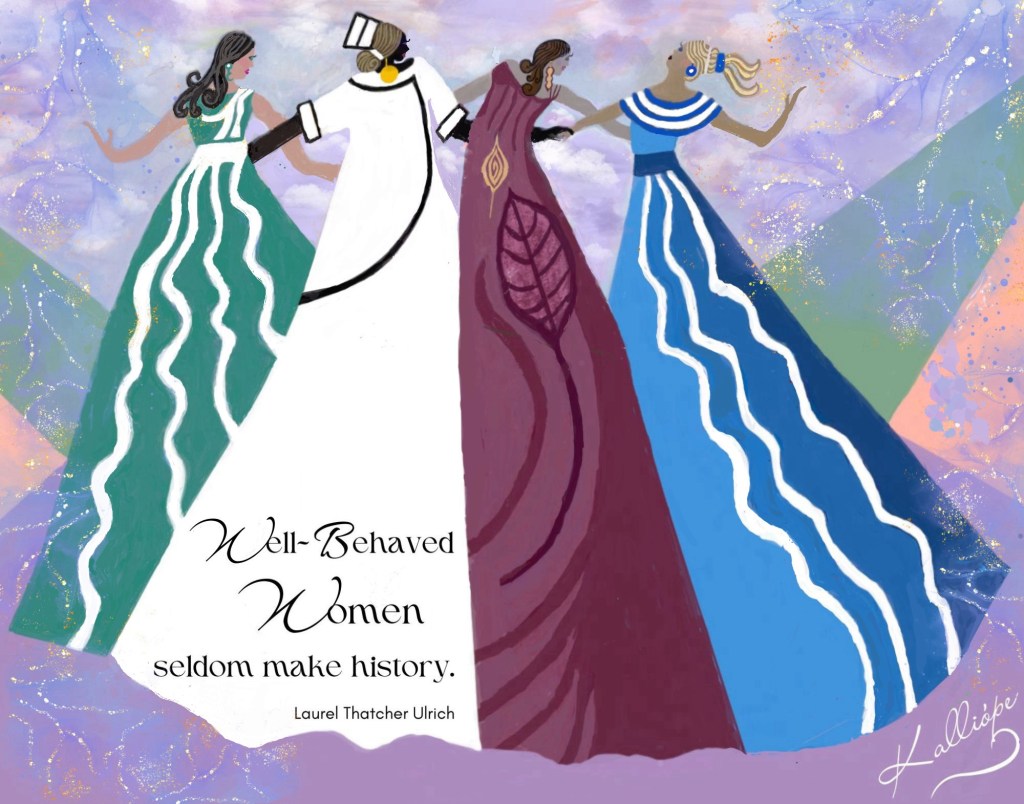

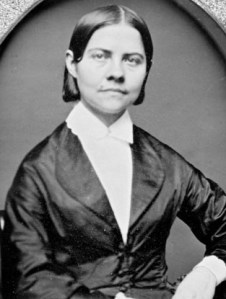


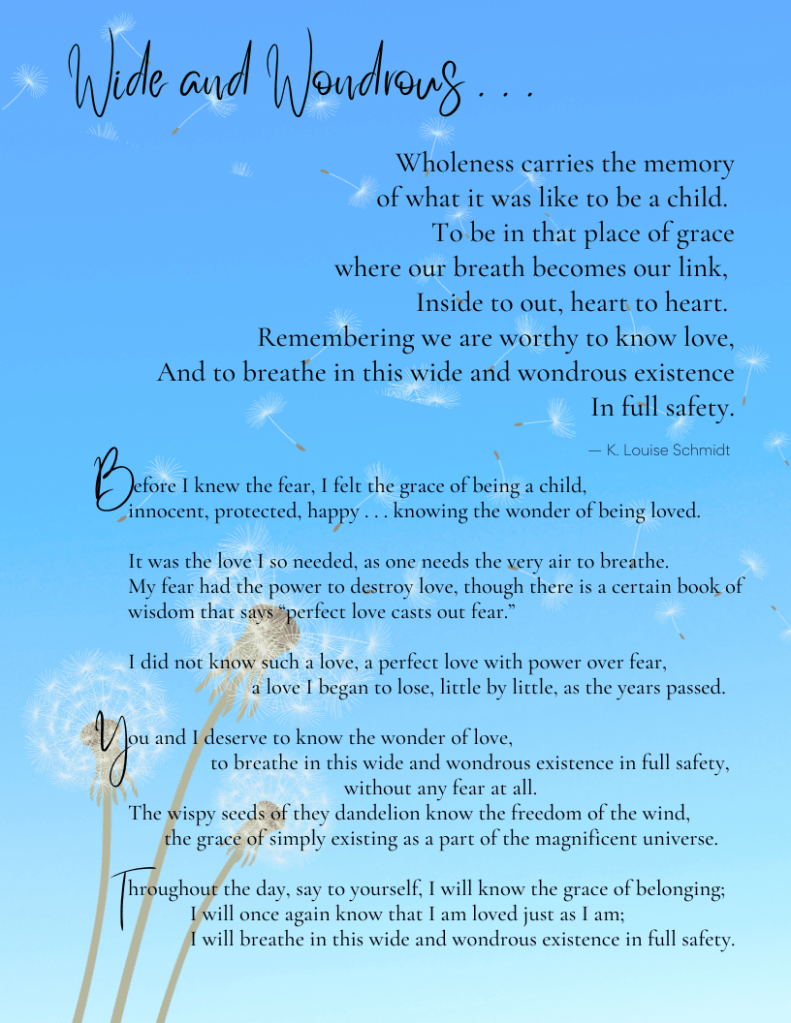


 In the end, the Missouri Department of Transportation got sweet revenge! Sure, they couldn’t remove the KKK’s adopt-the-highway sign, but few would dispute the state’s ability to name the highway itself. So the


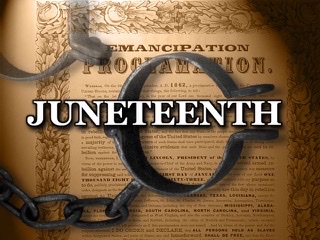 It turned out that being free did not mean being being treated with respect. Yes, it was the true end of the Civil War, but it was also the beginning of Reconstruction, a time that was supposed to be very happy and hopeful. Yet the period of Reconstruction became a miserable time for freed Black people because Reconstruction became part of the redemption of the South. As such, it set out to move African Americans to indentured servitude. While President Abraham Lincoln abolished slavery in his Jan. 1, 1863, Emancipation Proclamation, rebellious Confederate strongholds dotted across the South delayed the widespread implementation.
 The cruel and violent death of George Floyd under the knee of a Minneapolis police officer might mean that this year Juneteenth may not be only about festivals, parades and cookouts. It may well be somewhat of a silent, reflective vigil for George Floyd, Breonna Taylor, Ahmaud Arbery, Rayshard Brooks, Caine Van Pelt, Michael Thomas, Lewis Ruffin, Kamal Flowers, Momodou Lamin Sisay, Ruben Smith, Modesto Reyes . . . and the list could continue.
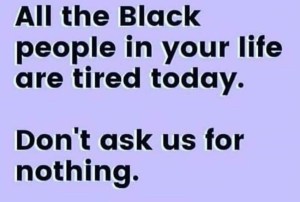 I hear my dear friends cry out for justice. I hear them using words to make sense of it all, and I hear their voices fall silent. Silent, with just these words, “I’m tired.” A dear friend posted the words on the left this morning. I want to see her face to face. I want to be together. I want to comfort her, hoping beyond hope that it is not too late for comfort.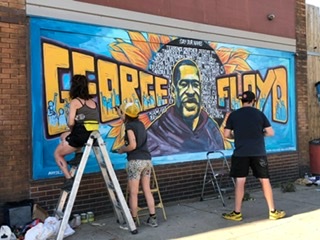
 “How we celebrate the day when the Holy Spirit breathed upon those gathered together, with gifts of wind and fire!
 In the end, there is a tiny bit of joy in George Floyd’s tragic story. It is a joy much deeper than reality’s sorrow. The artists completed their mural, and in the very center near the bottom, they had painted words that express the greatest truth of all.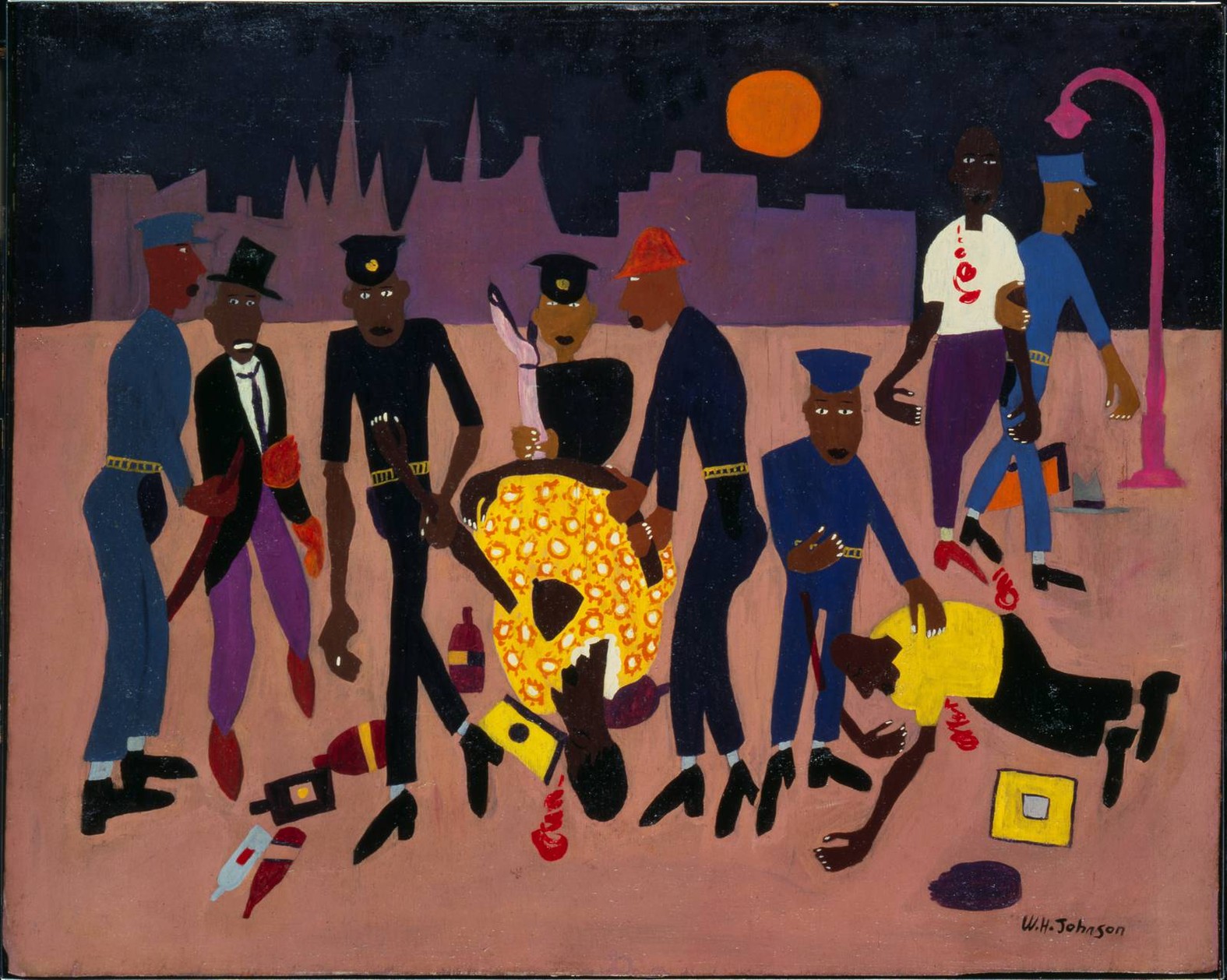

 Perhaps we should go one step further, though, and acknowledge that our loss is not merely the loss of peace, it is the loss of peacefulness. That loss can be disconcerting at best and devastating at worse. All of us long for a deep and abiding sense of peacefulness. We sometimes cry out “peace, peace, when there is no peace.” (Jeremiah 6:14)
 Finally freedom — the kind of freedom we have when peace and joy is hidden in the deepest recesses of our being. Freedom does not leave those who practice gratefulness, prayer, meditation and confession. It is at the altar of confession that God offers us assurance of pardon. It’s the opposite of the soul’s bondage. I cannot help but recall the words of the Apostle Paul about the nature of Christian freedom that so boldly introduce the 5th chapter of Galatians:
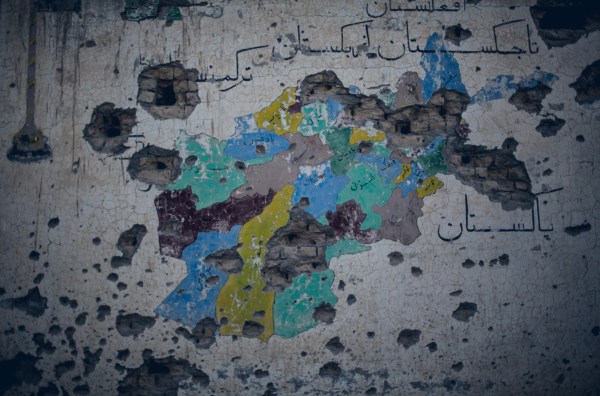

 Walking peacefully on earth requires my full resolve and my desire to reach that place in life. Wouldn’t any of us want to experience transformation and the freedom to be? Wouldn’t any of us want to experience a sacred metamorphosis?
 Sometimes our stories are stories of sheer joy, but sometimes our stories are about loss, pain, heartbreak, fear or the devastating effect a particular traumatic event had on us. That’s when we hold our stories inside, fearing that telling would bring the pain back with a vengeance.

 God of the Sparrow 🌱 By Kathy Manis Findley