A way in the wilderness, All Shall Be Well, Alone, Anger, anxiety, Awareness, Belief, Bewilderment, Bitterness, Brokenness, Challenge, Change, Come, Ye Disconsolate, Comfort, Confusion, Creativity, Depression, Determination, Disconsolate, Emotions, Faith, Falling down, Fear, Feelings, Freedom, God's Faithfulness, God’s beloved daughter, grief, Gun control, Gun violence, Harbinger, Hate, healing, Heartbreak, Hope, Isolation, Joy, Julian of Norwich, Kidney Transplant, Life pathways, Loneliness, Loss

Fleeting Time, Passing Moments


I am aware, as you are, that time is fleeting and moments are passing. Life has taught us that. But there is more, like a dandelion will scatter with the wind as we hold it in our hand. There is no stopping any of that. Nor can we control it.

Still, there are messages for us here, right now, as we contemplate a little reality. If you know me personally, you know that I have lived an uneasy life full of trouble. In a way, tragedy became the path I traveled. I would struggle my way through one tragedy and then steeled myself waiting for the next one. The next tragedy always came eventually, a tragedy large or small.

When tragedy cruelly and abruptly stopped me in my tracks, I found that most of the time, I was resilient and full of hope. Yet, I became exhausted by the trauma, or the sorrow, or the grief.

It is true that when I fell to my knees, I always got up. Good for me! It’s not like that, though, that “good for me” attitude. I was strong enough to get up and move forward, but it was more like God graced me with the courage and hope I needed for to pick myself up and take my next step.

Void of any pending tragedy, I have felt positive for the past weeks. I finally have a stable, working kidney. My frequent falls have stopped. I didn’t get seriously hurt by falling, just a sprained wrist and later a bruised rib cage. So I firmly believed the words of faith from Julian of Norwich, “All shall be well, and all shall be well, and all manner of thing shall be well.” 

Until, until, I heard the doctor say to my husband Fred and me, “You have advanced prostate cancer.”That’s when I broke my streak of resilient responses to tragedy. I have been happily married to this good, good man for 55 years! He cared for me during my long illness, five years of dialysis, and my kidney transplant. He cares for me every day in a thousand different ways! I honestly don’t know how I would live without him. Then I heard a whisper, “Where is your hope, my daughter? Where is the resilience that has always carried you through the hard times?”

That whisper was what I needed to hear, because everything about this felt different to me than any other time I had heard bad news. Questions and concerns and worries about every kind of life change flooded my psyche. I was assuming the worst right at the very beginning of this current life tragedy. I could not put my finger on it, until I saw this bit of insight from C.S. Lewis.

I felt instantly that my feeling since the awful diagnosis day was indeed fear. That’s why it felt so different. It was not my normal response of sadness, anger, devastation, aliveness, fatigue, and more sadness. This time my grief felt more like fear. So there you have it. The gentle make up of a dandelion is not one you can hold together. It scatters with the breeze. Time continues to fleet no matter how we try to stop it. Moments are passing and that will not stop.

But we have this moment and all the comfort and peace and hope and joy we can get from it. And we can do just that: consider only the present; feel the emotion of it; recognize it as completely yours; and summon the courage to hold it in your arms and grab the good things. That is one simple definition of resilience, and you have it! You have resilience! Everyone has it! Keep it close and continue to move on your sacred path.

Activism, All Shall Be Well, anxiety, Attachments, Bewilderment, Brokenness, Caged children, Calm, Change, Confusion, Courage, Defiance, Despair, Determination, Dreams, Emerging new, Falling down, Fear, Feelings, Following Christ, healing, Hope, Injustice, Psalms, Questions, Reflection, Transformation

In these Evil Days, Dream a Little Dream

Rev. Kathy Manis Findley

Lately, I have been trying to figure out a number of mysteries, but I have not figured out one single thing-, not lament, not how to fix my life, not transformation, not even the continuous mess in my closet. I simply have not yet been able to go through a reorganization process. The prospect of reorganizing my life—my soul, my spirit, my heart—plus all the treasures in my closet and armoire is so terribly daunting to me. Marie Kondo comes to mind, but I quickly shoo her away from my mess in the closet.

Lots of folk complain about “these days.” I confess that I do my share of complaining. What is it about “these days” that seems so troubling? I cannot fully give you an answer to that question yet, but I have some ideas about it. The issue at hand reminds me that the Bible often refers to “evil days.” I believe that many people see these days as “evil days,” and that cannot turn out well for anyone!

Jennifer Senior, a journalist with The Atlantic, recently wrote a news article in which she asked a another provocative question: What will happen to the American psyche if Trump is reelected? (Don’t worry, this post is not about Donald Trump!) On this question, maybe we really don’t want to know the answer. Instead of taking her question seriously and considering what might happen to “American psyches” following the November election, some folk would rather complain about the division all around, the evil around us, or other things nobody likes.

When we dare to make an honest evaluation of circumstances that surround us, we dig in our heels and balk. We balk because we don’t want to see the division in our nation or the impasse we have reached on important issues. We balk because, in truth, no one wants to lament. Remember, I’m not talking about divisions among us like liberal or conservative, Democrat or Republican, male or female, immigrant or American citizen, black or white . . . I could go on and on naming divisions among us. We have always co-existed with division, but most often in the past we have acknowledged division and simultaneously practiced kindness, respect, and tolerance. Given the current national environment, we might just be justified in calling these days “evil days.

If reading the Bible is something you typically do, then you might understand more fully the term “evil day.” My heart tells me that “evil days” are definitely taking a toll on us. Instinct tells me that “the evil day” is not a single day, but refers to the times in our lives when we face overwhelming , troubling circumstances. If you are willing, meditate on the following words for a few moments.


Therefore, take up the whole armor of God, so that you may be able to withstand the evil day and, having prevailed against everything, to stand firm. 16 Stand, therefore, and belt your waist with truth and put on the breastplate of righteousness15 and lace up your sandals in preparation for the gospel of peace. 16 With all of these, take the shield of faith, with which you will be able to quench all the flaming arrows of the evil one.17 Take the helmet of salvation and the sword of the Spirit, which is the word of God.

Ephesians 6:13-17 NRSVUE

I want to remind us all about the unrest we hold inside, too close to our heart and spirit. The proximity is important to pay attention to, as well as the flashpoints, past and present, that people have endured. I would guess that there are many flashpoints and memories of times that have held power over you. You probably face off with flashpoints, knowing that they not only create stress in our bodies, but also create bondage. We can become chained to our lives. Until we have exert some control of the present time of division, hate, turmoil, distrust, disrespect, contempt and other forms of bondage, we cannot find peace that changes the world. We certainly cannot figure out how to accept the possibility of transformation.

These evil days may well be causing our hearts to lament. These days may be days full of nightmares—no dreams at all, not even little dreams. You can name your own tragedies—the ones that are making it hard to breathe for you, or the ones that cover the whole troubled world with sadness. When I think of choosing my personal places of lament, those places where I can pour out the most anxiety, I feel the heavy burden of hopelessness. If you feel that too, you are not alone.

Always looking for a scapegoat, we try to discern what is bringing us down. Of course, life often brings us unforeseen personal tragedies that we must deal with. And there is certainly enough shared anxiety to go around. If you read the daily news, you will undoubtedly hear about the fierce war in Ukraine, the inability to create peace in the Middle East, the rising cost of food, the food deserts in our country, refugee children separated from their parents, difficult financial challenges, mass shootings, fractured relationships, long-term estrangement from loved ones, the opioid crisis and addiction, racism, injustice of all kinds, and politics. Evil days!

There are so many more ills we could add to this list, but we know them already, and the news programs are anxious to tell us about broken politics, as well as the way politics creates broken people. So there you have it! Among the many sources of stress we each experience, we continually stress over the dozens of pointless news stories about politics and the behavior of politicians every day. To top it off, Gloria Mark points out that “we are once again facing a news cycle that will shove our attention—as well as our output, our nerves, our sanity—through a Cuisinart.” No matter how skillfully we deny it, our bodies are not designed to handle chronic stress and trauma.

Just about now, you might want to say that politics doesn’t affect us that much, certainly doesn’t cause depression and hopelessness. But consider this viewpoint written by Pulitzer Prize winning journalist, Jennifer Senior:

The American Psychological Association’s annual stress survey, conducted by the Harris Poll, found that 68 percent of Americans reported that the 2020 election was a significant source of strain. Kevin B. Smith, a political-science professor at the University of Nebraska at Lincoln, found that about 40 percent of American adults identified politics as “a significant source of stress in their lives,” based on YouGov surveys . . . Even more remarkably, Smith found that about 5 percent reported having had suicidal thoughts because of our politics. Evil days!

And of the most divisive election in decades, psychologists are saying that their research shows that more than two-thirds of U.S. adults (68%) say that the 2020 U.S. presidential election was a significant source of stress in life.

It is not a stretch to say that stress plays havoc on our dreams, even our little dreams. I have to confess that my big dreams disappeared into the “impossible“ file, and were then swallowed up by the churning in my stomach and my psyche. I remember my first year in seminary, working part time jobs and going to class. For a while, I worked in the development office where all the catchy slogans, mottos and themes were born. One year, the staff got together to write a theme for the annual development campaign. I don’t know who came up with our brilliant theme, but we loved it. I really loved it and made it my personal mission.

“We’re Out to Change the World!”

I tried to do just that, and I honestly thought I could, but eventually the scene in my mind of one young woman alone trying to change the world on her own made me shiver. All the lofty goals and the many little dreams, along with a few big dreams, that had my attention were disappearing before me. I despaired at first and then carried long-term grief about it. There would be no big dreams in my heart. I would never see the glory of a big dream come true. Nor would I dream small dreams. People usually don’t dream of whatever is better while they are covered in grief—mourning, lamenting that they lost their dreams in the first place. In “these evil days” we must let go of despair and pray for an extra portion of holy determination!

But people do see the sacred light that sparks dreams. It dawns over them again and again until their dreamless spirit transforms from death, to life, to get their bearings again, and to summon the energ to get up and try

This is my message to you, and to myself: After your time of lament, rejoice! After you have escaped the bondage of evil days, rejoice! After you name your loss, and then put yourself back together, rejoice!

Take heart. Up in the heavens, there is rejoicing for you! Even in the gloomy shadow of dark and evil days, there is rejoicing for you! Even if you are trying to dream even the littlest dream, there is rejoicing for you!

So try a big dream! Change the world a little bit! Your heart longs for it, the world needs it, and the heavens will do what they always do—rejoice!

May even your smallest dreams change the world!
anxiety, Calm, Comfort, Fear, Feelings, Kindness, Life storms, Nature, Protection, Psalm 57, Refuge, Tenderly

Safe Under the Shadow of Your Wings

O God, be gracious to me,
For my soul takes refuge in you;
And in the shadow of your wings
I will take refuge
Until destruction passes by.

— Psalm 57:1


Last night we had thunderstorms, loud ones. All of us were awakened from a deep sleep—me, my husband Fred, and Kikí the cat. And all three of us ended up in the bed together, Kikí snuggled between us in the soft covers. Sleeping in our bed is not Kikí’s normal habit, but the storm frightened her, and it was her safe place for the long, long night of the scary thunder!

Most of us tend to take feeling safe for granted. It’s all about knowing we live in a safe home, in a safe neighborhood, with the things we need. Typically, we aren’t stranded outdoors in a storm or wandering about in a scorching desert. For the most part, we are not left outdoors in freezing weather. We are the fortunate ones who have choices, but there are people all over the world who do not have the comforts they need and deserve.

In this season, we think about people who have needs more than we do in other times of the year. We may give more to organizations that help them, or we may reach out ourselves to offer a safe place for them. As we think about gifts and ribbons and bows (and gift cards for our teens), I hope all of us will remember the many people in our communities who truly need our gifts and our caring.

Truth is, we all need safe places almost more than we need anything else—physical safe places as well as emotional safe places. I suspect the little puppy in the photo above found both in the shelter of a goose’s wings. The animal kingdom is truly incredible. While we assume that animals are only focused on the safety and survival of their own kind, this simply isn’t true.

We have all heard stories about interspecies friendships. A dog who makes friends a cat. Or even a dog and a cow who have become friends. Usually the story is about an animal who went out of his/her way to comfort another, even though the two animals might be of different species and have very little in common. I want to share a true story with you.

It’s the story of a goose who sheltered a puppy from the cold during some dangerously low temperatures. The original story of this unlikely couple went something like this: In January of 2019, a polar vortex hit North America. In Montana, an especially frigid place, a passerby spotted a goose cradling a freezing puppy under its wings.

This goose’s motherly instincts immediately kicked in when she saw the puppy. Not wanting the tiny puppy to suffer, she covered the baby with her plumage to shelter it from the bitter cold. She hoped that her efforts would keep the puppy alive. Another source of this story tells us that the goose and the puppy—not at all of the same species—were adopted together. What a truly beautiful thing to witness!

There are plenty of humans that love and respect one another and even go out of their way to help those in need, even those who are not like them. But there is still far too much hatred and intolerance in the world. What might it be like if every person, animal, and every part of God’s creation could count on safe places, shelter from the danger, protection from fear, or a refuge in troubled times?

And how graced we are when we believe the Psalmist’s promise . . .

In the shadow of your wings I will take refuge
Until destruction passes by.


During your meditation time, you may listen to the lyrics of this song.
Original Songwriter/Composer: Scott Brenner, Cheryl Thomas

Adventures, Covid-19, Creativity, Depression, Feelings, Freedom, Friends, fun, Immunocompromised, Isolation, Loneliness, New Normal, Rev. Kathy Manis Findley, Travel

Have a Nice Trip!

It’s my most common statement these days: ”Have a nice trip!” Saying it to my friends is the polite thing to do, given that I am landlocked in my house. And to my credit, I really mean it when I say it. I really do wish them a nice trip—fun and relaxing and safe and an experience of all things good.

At the same time, my heart is always just a little shattered when someone I know embarks on a summer adventure. It makes me long for times past when my family took amazing vacations to Disney World or Sea World, to the ocean or to the mountains, to Oregon, Seattle, or Vancouver, or Gatlinburg, or Nevada, or San Francisco, New Orleans, Reno, Nashville, Nairobi, Mombasa, Athens, Mexico . . . I can’t even remember all the places. “Those were the days,” I’ve heard it said. And so they were!

Today is a very different reality. Travel is harder, for so many reasons, and being confined to home has a host of repercussions. I have experienced many of those repercussions, physical ones, spiritual ones and emotional ones. Immediately after my kidney transplant in 2019, Covid-19 descended upon us. After that, I accepted my personal reality of taking immunosuppressant medications for the rest of my life to prevent organ rejection. That personal reality meant that, no matter the lifting of mask mandates and the full re-opening of everything, I had no immune system to fight Covid or any other infection. And that means forever!

When everyone around me seems free, and carefree, I feel imprisoned. I admit, it has taken an emotional toll on me. It still does affect my sense of freedom, safety, loneliness, boredom, isolation, creativity—the things that fill your soul. I have tried hard and long for three years to stay active and creative and never to feel bored. But I have reached a kind of stasis, worn out from ”keeping busy” and from pushing myself to be productive, creative and happy.

My husband asked me yesterday if I’m depressed. I almost said, “no” before the truth hit me. I haven’t seen my son and grandchildren for two years. I haven’t seen my Atlanta cousins since November. I haven’t seen most of my friends in months. So, yes, I suppose I am depressed, though I so want to push it away by denying it.

Depression has its own trajectory. Most of the time, I just have to ride it out and wait for better days. In the meantime, to all of you travelers out there: Have a nice trip!

I really mean it!

#Uvalde, Texas, Bewilderment, Discernment, Emotions, Feelings, God's presence, Indecision, peace, Understanding

Elusive Understanding

Photography by Andrew Charney on Unsplash

You may have noticed there have been no words coming from this blog in quite a while. No new posts. No graphics. No music. The reason is that inside me, there is nothing, and that has been my situation for several weeks. Part of the reason is that I was very sick for a while, hospitalized actually. In addition, I simply felt empty, without a creative spark that is usually so common for me.

Physically, I have felt unwell for a long time. Emotionally, I have felt the continued sting of isolation because getting Covid could be deadly for my immunocompromised body. Spiritually, I would have to say that the gun violence that has taken the lives of children and teachers in Uvalde has wounded my spirit and left me with so many unanswerable questions about faith and hope.

When all of those things rustle through my mind, it cannot help but reduce me into a silent kind of melancholia that affects my body, mind and spirit. It seems that this time, I can’t move past it. My husband asked me today if I am depressed. I answered, ”yes,” but honestly, I feel more sad than depressed. I don’t understand it this time. I can’t put my finger on the cause no matter how hard I have tried to figure it out.

The myth is that figuring out the root of depression or sadness will help one overcome it. Once you understand your depression and where it comes from, you can get beyond it. Also not necessarily true! Understanding is not a bad thing, but it is also not a cure-all.

These days, I simply cannot understand things—all things me! I recognize my sense of feeling empty, and I still have the ability to use reason and discernment to try to understand my feelings. But the truth is I don’t understand what’s going on in me. The internal web of my physical hurts, my emotional disturbance and my spiritual emptiness defy explanation and understanding. It’s complicated, outside of my ability to understand. So I have craved any flicker of light and life I could find.

I found it today, in a quote shared by a dear friend. This is the quote.

I didn’t need to understand the hypostatic unity of the Trinity; I just needed to turn my life over to whoever came up with redwood trees.
~ Anne Lamott

I can rest in that. I can find peace beyond my understanding. I can lean into the treasure of not being compelled to understand complicated things, even complicated things about myself. By the way, complicated things about myself may well be the most difficult things to understand, sometimes baffling and elusive. So Instead of the constant struggle to understand, I plan to turn my life over, again, to the One who created me to be complicated in the first place.

Thanks be to God for the ”peace that passes all understanding.” Amen.

anxiety, Bewilderment, Depression, Depth of Mercy, Depth of Soul, Emotions, Feelings, God’s Mercy, Hope, Life pathways, Rev. Kathy Manis Findley, Soul, Trails, Unknowing

The Trails I Take

I have taken many trails throughout my life and I imagine that you have as well. It’s one of the things all of us have in common. The trails we take can sometimes lead us to places unknown. Not just places on a map, but places in the soul. Our more difficult trails can push us to our limits, mostly the limits of the soul at its depth. Sometimes, today maybe, my soul is in the depths of unknowing.

What does that sentence even mean? My soul is in the depths of unknowing? If I don’t know what that means, how can I possibly talk about it with you? I can try!

I’ll try.
I’ll search for words
that explain
how I feel, how my soul feels
and what it means —
the depth of unknowing.

These days I sense an unease in my soul, in its depths. I have named it depression. I have tried in vain to make an appointment with my therapist. Isn’t that what people do when they are depressed? Anyway, I did that, but cannot see her until the end of July. So I determined that I had to become my own therapist. In doing that, I decided to search myself more deeply. I determined that perhaps what I feel isn’t depression after all. Instead, what I feel may be the depth of unknowing.

For me that means chasing away the unknowing, getting rid of it because I want to know when I will feel stronger physically, or when I will see my grandchildren, or how I will handle my emotional fragility, or where I will live for the rest of my life. Just to name a few things I need to know.

And yet, the depth of the soul’s unknowing may well be exactly where my soul begins to fully know. The trails I take while inside my soul’s depths contain lessons and treasures and wisdom. The trails bend and wind leading to an unknown path that opens its way for me. I follow it willingly, blindly, yet for some reason, expectantly. The trails are most surely my depression, their unknown, perilous way distressing me as I walk. Jagged rocks on the trails, vines creeping their way onto my path, thorns, bristles and barbs — boulders sometimes — all to remind me of the hard path I walk and the heavy load I carry.

The trails I walk may be no more ominous than yours. We all walk them and we all carry burdens on the way. You and I walk no easy trails. There is “no easy walk to freedom,” the song reminds us. Truth! The trails I walk, and your trails, are many and winding, hard and confusing. The obstacles overwhelm. I suppose this describes my depression as well as any words could, and it is precisely that unease in my soul’s depths that has come to me in these days.

The difficult thing about soul-deep depression is its dogged persistence. That kind of depression has staying power and it sits in the soul, creating that terrible sense of the soul’s unknowing. It has the power to convince me that I will never know the things I want to know. Mostly, I want to know destination. Where am I headed? What jagged rocks and prickly thorns will injure me along the way? And will I survive my injuries?

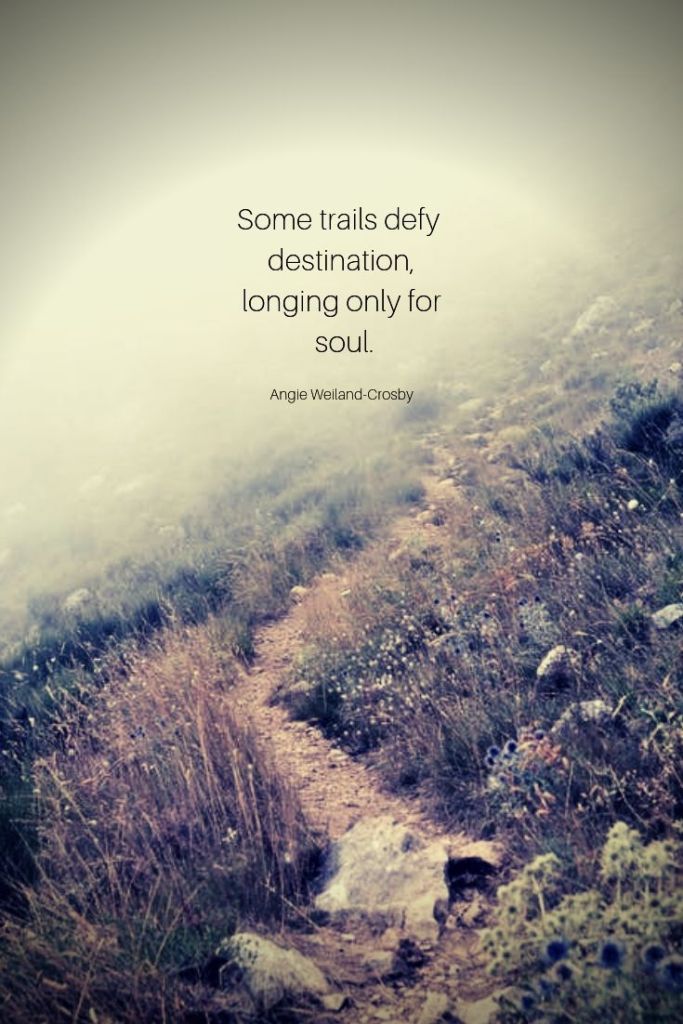
There lies the depth of depression. It lies in the desire, the need, to know. We need to know the unknown — where will the trails take us and what formidable obstacles will stop us. Now understand this, if I had answers, I would have given them to you several hundred words ago. I have no answers of my own, but I do have a nugget of wisdom written by author Angie Weiland-Crosby.

Some trails defy definition,
longing only for the soul.

Angie Weiland-Crosby

There may be something in her words. If the trails defy our attempts to define them or to know them, perhaps we can find comfort knowing that the trails long only for our soul. The trails only want us to bare our souls along the way and to open them up to the new. The trails are meant for our good, for our spiritual maturing. And as for another comfort, the God we know has seen and known the trails before us. However you see and know God, you can rest in the knowledge that God has some hand in the work of the soul. God knows about the trails we take.

Haven’t I commanded you? Strength! Courage! Don’t be timid. Don’t get discouraged. God, your God, is with you every step you take.”

Joshua 1:9 (The Message Bible)

When all is said and done, I believe the trails I take are necessary ones. In a way, perhaps the trails I take are sacred ones, meant for opening up my soul to its depths where transformation can occur. No, God does not lay out my every trail or remove its thorns and rocks. The trails I take are strewn with rocks meant for me, thorns that pierce just enough to get my soul’s attention. I believe that. And I believe that there is for me a way to trust God wholly. My personal translation of Proverbs 3:5-6 gives me a tiny inkling of hope even when depression ravages my soul.

Trust in whoever you believe God to be in your life.
Trust God with all your heart,

and don’t rely only on what you understand.
In all the twists and turns in your life,

perceive this God as one who offers a depth of mercy,
A God who sees and knows the trails you walk.
And be assured, know deeply in your soul

that God will direct your paths.

I want to share with you a video of a beautiful, meditative song entitled, “Depth of Mercy,” performed by students of Fountainview Academy, a Christian high school based in southern British Columbia, Canada. I also share this because of where it is filmed — a beautiful wooded area with various trails. Whatever trail the students took to arrive at their destination seemed a treacherous pathway to me, and even more treacherous, the place where they stood to play and sing.

They were on top of a magnificent ridge, but way too close to the edge for my comfort. At the end, as they sang, “Depth of mercy, can there be mercy still reserved for me?” The image pans across them to the jagged edge and then reveals a very deep and ominous gorge. Panning even farther across, you will see a most beautiful portrayal of nature, one that stirs the senses and reminds us of the depth of mercy our God reserves for us. I hope the video is meaningful to you.

anxiety, Calm, Contemplation, Feelings, grief, healing, Heartbreak, life, Loneliness, Loss, Lostness, Mindfulness, Pain, Pandemic of 2020, peace, Quiet, Rest, Restoration, Sacred Pauses, Sacred Space, Soul, Spirit, Spirit wind, Time

There Was a Time


There was a time when I believed that I was invincible, with all the time in the world. Lately, though, I have thought a lot about how quickly time passes and about how I tend to constantly say, “I don’t have time.” I have also been thinking about healing. The reason for my healing thoughts could well be because at least two parts of my body really need physical healing, and soon. I don’t have time to be incapacitated, or so I believe. I don’t have time for pain and I wonder if my two places of physical pain were of my own making. For instance, my wrist sprain — now an orangey ochre color from my knuckles to halfway up my elbow — that the doctor says will heal in 6 to 10 weeks is taking way too long to mend. 6 to 10 weeks is entirely unacceptable! Was my ungraceful fall in the kitchen due to my carelessness or my lack of mindfulness?

And then there’s the terribly painful throat invasion, allegedly identified as a cricopharyngeal spasm, that feels like choking with a large object stuck in my throat while something is tightening around my neck. Direct from Healthline.com: “Anxiety about the condition can aggravate your symptoms.”

Aha! Anxiety! Therein may be the source of many ailments. That, and a lack of rest, relaxation, quietness, peacefulness or mindfulness, all of which are highly touted methods of natural healing. Healing of the body, yes, but also the critically important healing of my heart, my mind, my soul and my spirit — emotional and spiritual healing. That healing is often harder than physical healing. 

So I turned my thoughts, while suffering incessant physical pain, on the subject of emotional and spiritual healing. My thoughts raised the question of what exactly is the difference between the soul and the spirit, and how in the world would I heal there.

Here’s my attempt at an answer. Most of us would agree that we consist of body, soul and spirit. In fact, the Bible affirms the existence of all three:

May your whole spirit, soul and body
be preserved blameless at the coming of our Lord Jesus.

(I Thessalonians 5:23). 

Our physical bodies are fairly evident to us, but our souls and spirits are less distinguishable. In the preceding scripture passage, the Greek word for soul is psuche (ψυχή), or as we might call it, “psyche.” This word “soul” implies our mind, our will and desires as evidenced by our personal preferences, choices, and emotional responses to life’s situations. Our soul is reflected in our personality. Our soul is our life.

“Spirit” is a completely different word. The Greek word for spirit is pneuma (πνεύμα). It refers to the part of us that connects with God and receives the breath of life from the Holy Spirit (Άγιο πνεύμα). Our spirit is our breath, the breath that animates and enlivens us from deep within. I like the way Theologian David Galston explains it: 

The soul is life, and the Greek word is psyche. The spirit is breath, and the Greek word is pneuma. Natural confusion exists between the [meaning of the] spirit and the soul since both words, in their roots, mean breath. But for the Greeks, there were two kinds of breath: the kind necessary for life, the psyche, and the kind necessary for [our very breath], the pneuma. In modern English, we might distinguish the two as life and energy.

I often ask my clients, mentees and friends this question: How is your heart? They usually have an understanding of how their heart is and why. But ask these questions — How is your soul? How is your spirit? — and the answers don’t come as easily. I’m not sure exactly why, but I think that, for myself, it is that I am able to more easily know my heart. I am more in touch with it. On the many times throughout my life when I was brokenhearted, I knew how my heart reacted and why. When I am sorrowful, happy, excited, surprised or feel many other emotions, I can place my hand over my heart and feel is as if I have literally touched it, that my heart has told me what emotion is there.

As for my soul and my spirit, well, they are deeper in me. In the innermost places of me, my soul mourns and celebrates and holds all manner of emotions. In my innermost parts, my spirit lies quietly within me always waiting for the brush of Spirit wings, waiting in stillness for the breath that animates and enlivens and ennobles. There was a time when I would always find time for the healing my soul and spirit needed.

So in the dense forrest of all of the 700+ words I just wrote, what is the lesson? What is the message from God we need to hear? Believe it or not, it’s not complicated. Isn’t it just like God to send us an uncomplicated message that we immediately make complicated? God’s bottom line here is easy, simple, uncomplicated: “Guard your heart, your soul, your spirit . . . all that is within you.

From Joshua
Now, vigilantly guard your souls: Love God, your God.

From Deuteronomy
Keep your soul diligently, so that you do not forget the things which your eyes have seen
and they do not depart from your heart all the days of your life.

From Proverbs
Above all, guard your heart with all diligence; for from it flow the wellsprings of life.

From 1 Thessalonians
And the God of peace sanctify you wholly, and may your spirit and soul and body be preserved complete, without blame, at the coming of our Lord Jesus Christ.


And that’s it. There was a time when I would write 700 more words to tell you specifically how to do that. But today, I am not going to tell you how to heal. The ways are individually unique and the paths are many. So I will leave you with just one path that you may choose to follow: the path that leads you deep within yourself to your sacred, quiet place and then implores you to listen for God’s whisper and wait for the breeze of the Spirit. Where? In a beautiful, peaceful place, under a starlit sky, in a quiet filled with sounds of music.

In these many months of pandemic, experiencing loss and lostness, loneliness and isolation, mourning and tears, may you find comfort in the words of poet, William Wadsworth, here turned into beautiful music by Elaine Hagenberg.


Though nothing can bring back the hour
Of splendour in the grass, of glory in the flower;
We will grieve not, rather find
Strength in what remains behind.


Complete text of anthem:

There was a time when meadow, grove, and stream,
The earth, and every common sight,
To me did seem
Apparell’d in celestial light,
The glory of a dream.

The rainbow comes and goes,
And lovely is the rose;
The moon doth with delight
Look round her when the heavens are bare;
Waters on a starry night
Are beautiful and fair;
The sunshine is a glorious birth;
But yet I know, where’er I go,
That there hath pass’d away a glory from the earth.

Though nothing can bring back the hour
Of splendour in the grass, of glory in the flower;
We will grieve not, rather find
Strength in what remains behind.

“There Was a Time” by Elaine Hagenberg
Poem by William Wordsworth
https://www.elainehagenberg.com/there…

All Shall Be Well, anxiety, Bewilderment, Brokenness, Comfort, Despair, discouragement, Emotions, Feelings, God's Faithfulness, Grace, healing, Heartbreak, Holy Spirit, Hope, life, Loss, Rev. Kathy Manis Findley, Sacred Pauses, sadness, Sorrow, Stories, Weeping

How Is Your Heart?

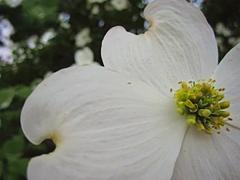
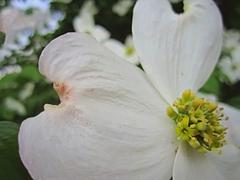
Yesterday I noticed a dogwood tree in full bloom, the first blooming dogwood I have seen this year. The sight of it did my heart good, because it reminded me that some simple and beautiful things remain. They return every year. They mark a season. They grow, and their blooms become ever more vibrant, or so it seems.

The dogwood has its own story, a lovely legend that explains the tree’s qualities. The legend holds that the tree was once very large, like a Great Oak tree, and because its wood was strong and sturdy, it provided building material for a variety of purposes. According to the story, it was the dogwood tree that provided the wood used to build the cross on which Jesus was crucified.

Because of its role in the crucifixion, it is said that God both cursed and blessed the tree. It was cursed to forever be small, so that it would never grow large enough again for its wood to be used as a cross for a crucifixion. Its branches would be narrow and crooked — not good for building at all. At the same time, the tree was blessed so that it would produce beautiful flowers each spring, just in time for Easter. The legend says that God it is gave it a few traits so that whoever looks upon it will never forget. 

81189983-8ADE-4D60-9088-C52DA3983583The petals of the dogwood actually form the shape of a cross. The blooms have four petals. The tips of each of the petals are indented, as if they bear a nail dent. The hint of color at the indentation bring to mind the drops of blood spilled during the crucifixion.
8DEA0FBE-8A3E-4AF8-8142-DA825CA72359


Diana Butler Bass tells the story like this:

There’s an old southern legend that dogwoods grew in Jerusalem — and that one gave its wood for Jesus’s cross. Because of this, the dogwood was cursed (its short stature a ‘punishment’ for being the wood of death) but it also became a blessing. Blessing? For on each twisted branch burst forth petals of lightness and light.

So let’s leave the dogwood’s story and look at our stories — your story and my story. People often use the term “storied past.” Well, a storied past is something all of us have.

In talking with a friend a few days ago, I asked, “How is your heart?” She began to tell me her story, which was a long and winding one that included many mini-stories — happy ones snd sad ones — from her life’s journey. Toward the end of her story, she said, “I feel as if I am cursed by God.” That was her bottom line answer to my question, “How is your heart?” Hers was an honest, heartbroken response that instantly revealed that her heart was not all that good, but that was a critical part of her story.

If you and I are honest, we will admit that our hearts were broken and hurting at several places in our stories. Recalling our brokenhearted times is something we always do when we tell our stories, and it’s an important part of the telling. My story and yours is never complete if we leave out the heartbroken moments, for at those points, what feels like God’s curse almost always transforms into God’s grace.

If not for our heartbroken moments, the hurting places in our hearts might never “burst forth with lightness and light.” Our heartbroken moments change us and grow us. They set us on better paths and they embrace our pain with grace. Our heartbroken moments give us pause, and in that pause, we find that once again, our hearts are good. Our broken hearts are once again peaceful hearts — healed, restored, transformed, filled with God’s grace.

How is your heart? That is a question we would do well to ask ourselves often, because languishing with our heartbreak for long spans of time can cause our stories to be stories mostly of pain. Instead, stop right here in this post for just a few moments and ask yourself, “How is my heart?”

48BB4DCE-068F-4CC2-B1D0-A6B95549B35D

Your answer may well be your path to a contemplative, sacred pause that can become a moment of healing, a time for God’s grace to embrace whatever is broken in your heart and to transform it into love, light and hope. So don’t be afraid to look into your heart when pain is there. In looking, you may find reasons, many and and complex, that are causing deep pain and brokenness. You may also find the healing touch of the Spirit of God waiting there for you and offering healing grace — a Godburst of new hope.

May your story be filled always with times when your was light with joy and times when your heart was broken with loss, mourning, discouragement, disappointment. Both create your extraordinary story — the joyful parts and the sorrowful parts. So tell your story again and again to encourage yourself and to give the hope of God’s healing grace to all who hear it.

I remember a beloved hymn that is a prayer for the Spirit of God to “descend upon my heart.” May this be your prayer today.

Spirit of God, descend upon my heart;
Wean it from earth; through all its pulses move.
Stoop to my weakness, mighty as Thou art,
And make me love Thee as I ought to love.

Hast Thou not bid me love Thee, God and King?
All, all Thine own, soul, heart and strength and mind.
I see Thy cross; there teach my heart to cling:
Oh, let me seek Thee, and, oh, let me find!

Teach me to feel that Thou art always nigh;
Teach me the struggles of the soul to bear,
To check the rising doubt, the rebel sigh;
Teach me the patience of unanswered prayer.

Teach me to love Thee as Thine angels love,
One holy passion filling all my frame;
The kindling of the heav’n-descended Dove,
My heart an altar, and Thy love the flame.

anxiety, Calm, Comfort, Emotions, Fear, Feelings, God's Faithfulness, God’s promises, Grace, grief, Hate, healing, Hope, Pain, Pandemic of 2020, peace, Prayer, Preaching, Present moment, Resilience, Sacred Space, Spirit, Violence

What Do You Say to a Broken World?

I once preached a sermon entitled, “What Do You Say to a Broken World?” In this week, after our nation’s Capitol was breached and defiled, I have wondered if ministers who will stand before congregations in two days are asking themselves a similar question: “What will I say on this day to a broken world?”

A friend of mine is preaching this week. I am praying that she will have an extra measure of wisdom, because standing before a congregation while the nation is in chaos is not a responsibility to be taken lightly. My first feeling as I thought about preaching for this Sunday was relief that I was no longer a pastor with such a heavy responsibility, that I did not have to summon the wisdom to speak to a people with heavy hearts who need to hear of healing grace and hope. But my most intense feeling was envy, not hostile envy, but heart envy about my deep desire to speak Gospel Good News to people who need to hear good news. Still I envied my friend and wished that, this Sunday, I could stand before a congregation with wisdom, open my spirit and invite God to speak through me. It is a heavy responsibility and a sacred calling.

Dr. Greg Carey, Professor of New Testament at Lancaster Theological Seminary, wrote an essay this week entitled “Preaching When It’s Broken.” In the essay he says this:

God bless you, preachers who will address congregations this Sunday . . . Here in the United States, things are broken, most people know they’re broken, and we all need healing and truth.

For many of us, the invasion of the Capitol and the response to it by people we know, love and admire, brings this brokenness to the foreground. Since that terrible, violent day, I have heard dozens of interviews that expressed anger, frustration, contempt, indignation and all manner of raw emotion. I have also heard wise leaders express their resoluteness to lead this nation into healing, unity and hope.

Indeed, the questions about this Sunday’s preaching call us to attention: How do our pastors, our priests, our rabbis, our imams, our bhikkhus and bhikkhunis stand before their congregations offering comfort when our nation is so broken, so angry, so mournful in the face of violent acts? What will they proclaim? What will they preach? What will they pray? What will they sing?

Minneapolis Pastor and Poet, Rev. Meta Herrick Carlson, has given us a grace-gift with this poem entitled, “A Blessing for Grieving Terrorism.”

A Blessing for Grieving Terrorism

There is sickness
with symptoms as old as humankind,
a rush of power born by inciting fear in others,
a wave of victoryin causing enemies pain.

There is a push to solve the mystery,
to isolate the suspect and
explain the evil simply
to a safe distance from the anomaly.

There is a temptation
to skip the part that feels
near the suffering
that shares the sadness,
that names our shared humanity.

There is a courage
in rejecting the numbing need for data
in favor of finding the helpers,
loving the neighbor,
resisting terror through random acts of connection.

There is a sickness
with symptoms as old as humankind,
but so is the remedy.

From Rev. Meta Herrick Carlson’s book “Ordinary Blessings: Prayers, Poems, and Meditations for Everyday Life.” Used with permission.

So much truth in her words, so much wisdom “for the living of these days.” In her words, I feel all over again the desire of my heart, the impossible dream of standing in a pulpit this Sunday, speaking to a congregation that needs strength in the midst of adversity. I will not stand behind a pulpit this week, but I will pray for those who will stand in that sacred space. I will pray for them, the proclaimers, and I will pray for their hearers across this nation. I will lean on this beautiful prayer written by Reverend Valerie Bridgeman:

May God Strengthen You for Adversity

A blessing for today: 

May God strengthen you for adversity
and companion you in joy.

May God give you the courage of your conviction
and the wisdom to know when to speak and act.

May you know peace.
May you be gifted with deep,true friendship and love. 

May every God-breathed thing
you put your hand to prosper and succeed.

May you have laughter to fortify you
against the disappointments.
May you be brave. 

© Valerie Bridgeman, December 18, 2013

When all is said and done, more important than what the “proclaimer in the pulpit” says is what the hearers hear. For in this time — when violence, riots, terrorism, pandemic and all manner of chaos is so much a part of life — those who listen need to hear a clear message of a God who dwells among us, a Christ who leads us, a Spirit who comforts us under the shadow of her wings. For hearts in these days are heavy, souls are wounded, spirits seek hope. And all the people want to believe that they do not walk alone through their present angst.

I pray that you know that you are not alone, that God’s grace-filled presence is with you and that “in God you live and move and have your being. As some of your poets have said, ‘We are God’s children.’” (Acts 17:28)

I pray that your heart will heal and be filled anew with hope. I pray that the wounds of your soul and spirit will heal and be filled anew with the peace of God. I pray that, when you listen in faith, you will hear the voice of God whispering in your ear, “You do not walk alone.”

I invite you to spend a few moments of meditation hearing the message of this music:

May you see God’s light on the path ahead
when the road you walk is dark.

May you always hear
even in your hour of sorrow
the gentle singing of the lark.

When times are hard

May you always remember when the shadows fall–
You do not walk alone.

Comfort, Contemplation, Emotions, Feelings, God's presence, healing, life, Meditation, Poetry, Politics, Racism, Reflection, Repentance, Restoration, Sacred Pauses, Sacred Space, Silence, Soul, Spirit, Spiritual Discipline, Stillness, Trump, Wholeness

NO MORE AIRTIME, MR. TRUMP!

 D7940A7F-BEAB-4445-B30D-C9739A8076AE

The time for Donald Trump’s airtime is over! In my life, I have no available airtime for him, and I wish the media would follow my example. I’ve heard enough of his rants and tweets. I’ve heard enough of his incendiary speech. I’ve heard enough of his indiscriminate name-calling. I’ve heard enough of his lying. I’ve heard more than enough of his disrespectful, hate-filled, divisive rhetoric. More than enough!

My soul will no longer give Donald Trump airtime. Why? Because often my responses to hearing him were anger, disgust, self righteousness and even hate. And those emotions darken my soul. Those emotions do not belong in my soul at all, because they have a way of displacing love, compassion, gentleness, peace, hope, light and grace — all the good emotions that God plants in the soul through Spirit breath.

I think of the beloved hymn . . .

Holy Spirit, breathe on me until my heart is clean.
Let sunshine fill my inmost parts with not a cloud between.

Breathe on me, breathe on me, Holy Spirit, breathe on me; 
Take Thou my heart, cleanse every part,
Holy Spirit breathe on me. 

— Words by Edwin Hatch, Music by B.B. McKinney

In these days of harmful politics, racial injustice, coronavirus fear and isolation, I need a Spirit-cleansing of my heart and soul. God has been ready to begin the cleansing for a while now. God has heard my repentant prayers admitting anger and hatred. God has waited patiently for me to embrace the stillness that can begin to heal my soul. 

Stillness! Stillness longing for healing. Stillness whispering words of repentance. Stillness yearning for calm. Stillness seeking peace. Stillness waiting in solitude for the presence of the Healer of the Soul.

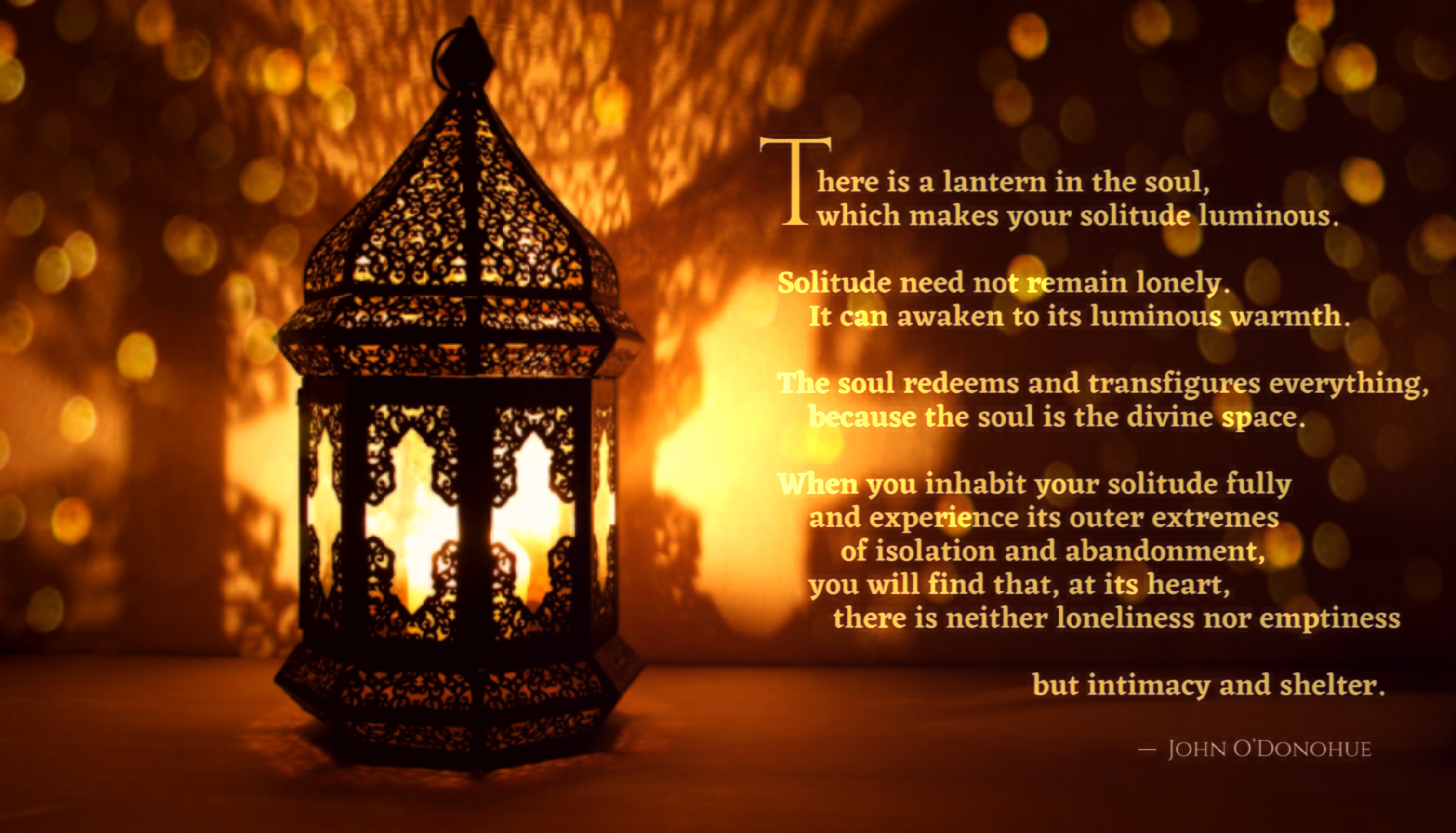
I’m going there — to that place of solitude where one can breathe slower, sigh deeper, listen attentively to the whisper of God and the breath of the Spirit. I’m going to solitude’s “luminous warmth” as John O’Donohue’s poem in which he describes the soul as the divine space. 

There is a lantern in the soul, which makes your solitude luminous. 
Solitude need not remain lonely. It can awaken to its luminous warmth. 

The soul redeems and transfigures everything
because the soul is the divine space. 

When you inhabit your solitude fully and experience its outer extremes of isolation and abandonment, you will find that, at its heart, there is neither loneliness nor emptiness but intimacy and shelter.

― John O’Donohue, Anam Cara: A Book of Celtic Wisdom

Right now, in the midst of the disheartening mood of the year 2020, I am entering the solitude I desperately need so that I can experience my soul as the divine space it is. 

Politicians, continue your rancor in loud and powerful voice! I will not hear you from my place of solitude, from my soul’s divine space. And as for you, Mr. Trump, I have no further airtime for you. I refuse to sit in front of my television for another minute, anticipating — hoping — that you will finally say or do something appropriate, beneficial, worthwhile, productive, compassionate or kind.

Instead, I will change the channel to more soul-healing television. In fact, I will leave the television altogether and go to a better place, higher ground where peace and silence and reverence and awe can begin the holy work of healing my soul. I am taking a sacred pause from my life that has been so anxious and worried and isolated. I will wait there in that sacred space where my “soul redeems and transfigures everything.” Thanks be to God.

Awakening, Bondage, Change, Creativity, Feelings, Freedom, Grace, Insanity, Mental health, Mindfulness, Nature, New Life, Night sky, Sacred Pauses, Self care, simple joys, simple pleasures, Skies, Stars, Transformation

From Insanity’s Bondage to Creativity’s Freedom

68C9C79A-BF63-420C-A135-37505D96C6C5
INSANITY
 

Not a word we are fond of. Nothing inspiring about the word. And when the word insanity is more than just a word, we shudder in its grasp. Insanity brings its own bondage, stealing one’s freedom to live, confiscating one’s creative expression. Insanity can be a complete, all-encompassing mental breakdown, even bordering on madness, OR it can be a state of being that most of us have experienced — irrationality, instability, disorientation, mania. Many people (noted scholars) have mused that “the definition of insanity is the most overused expression of all time.” (Salon.com)

Remember the declaration about “doing the same thing over and over again and expecting a different result?” Yes, I know you remember that definition, probably have said it yourself in an exasperating moment!

Where am I going with these bizarre introductory words?

I’m actually going to a place you may not expect. I’m going to the rush and swirl of color in one of my favorite paintings, A Starry Night by the Dutch Post-Impressionist painter Vincent van Gogh. The painting draws me in — into the little village with its steepled church, into a sky filled with sparkling stars, into the glorious luminance of the crescent moon, into the swirls of blues and whites and yellows. I have pondered many times what sort of mind and soul could have created a painting like this one.

The story behind A Starry Night is the unnerving story of Van Gogh. A few months after experiencing a mental breakdown on December 23, 1988 that resulted in the self-mutilation of his left ear, Van Gogh voluntarily admitted himself to the Saint-Paul-de-Mausole Lunatic Asylum. During the year Van Gogh stayed at the asylum, his prolific output of paintings continued and he produced some of the best-known works of his career. A Starry Night was painted by around June 18, the date he wrote to his brother Theo to say he had a new study of a starry sky.

A Starry Night was the only nocturnal painting in the series of views he saw from his bedroom window. In early June, Vincent wrote to Theo, “This morning I saw the countryside from my window a long time before sunrise with nothing but the morning star, which looked very big”. Researchers have determined that Venus was indeed visible at dawn in Provence in the spring of 1889, and was at that time nearly as bright as it could be. So the brightest “star” in the painting, just to the viewer’s right of the cypress tree, is actually Venus.

Too much information? Probably, but here’s my point that is not really about insanity at all. Rather, it’s about breaking free from bondage and taking back my life. You see, sometimes the sight of a big, bright morning star can replace whatever fear or angst I am feeling. Sometimes looking into the deep of a starry night can carry me to resplendent places. Sometimes even my slight insanity can transport me to my deepest expressions of creativity.

For me, insanity is my incessant scurrying around with too many things to do, a kind of mania. That frenzied scurrying is of my own choosing and therefore, leans a little too close to self-imposed insanity. I wonder if instead of that scurrying life of bondage, I could make time for moments of thought that would enable me to say something like what Vincent Van Gogh said from his asylum: 

“This morning I saw the countryside from my window a long time before sunrise with nothing but the morning star — the brightest star — which looked very big!“

Contemplate for a moment the insanity of a life encumbered — filled to overflowing with too many things to do — compared with a life of stargazing that might just awaken fresh and bright creativity in you.

As for me, I’m heading toward a spiritual transformation — a life of sacred pauses, a stargazing life, a grace-filled re-awakening!

I hope you are, too.

Aging, anxiety, Confusion, Despair, discouragement, Faith, Fear, Feelings, God's Faithfulness, God’s promises, Grace, healing, Hope, Isolation, Loneliness, Loss, Music, Prayer, Psalms, Singing, Sorrow, Soul, struggle, Tears, Worry

When Branches Are Flimsy and Songs Cannot Be Sung

I have a certain fondness for sparrows and the spiritual stories we have ascribed to them. That my blog is named “God of the Sparrow” is no accident. I have aspired many times in my life to live like the sparrow lives. I wanted my human, adult, mature and seasoned self to know, beyond any doubt, that God is watching over me. I do not live the simple, sparrow-like life I always hoped to live. But my unshakable faith has always told me that the God who watches over my every moment is also the God of the sparrow. I remember well the words written in the Gospel of Matthew . . .

So do not be afraid; you are of more value than many sparrows. 
— Matthew 10:41 NRSV

Such a comforting passage of Scripture! Yet, its message to us often pales in comparison to all the things that so frighten us. The state of the world that surrounds us in these days seems to have even more power over us than Matthew’s words about our value to God.

How is it that we are valuable to God when God does not act to protect us from all of life’s slings and arrows? Yesterday in my blog post I listed our world’s bad and scary things, so I won’t list them again today. But I will venture a prognosis that many, many people are suffering in many ways in this confusing season. I am one of those suffering people, feeling a bit of hopelessness in these days of racial unrest, coronavirus unsettledness and political divisions.

I heard a moving choral performance this morning. Its text lifted up my helplessness before me and turned it into a prayer so attuned to where I find myself.

God of the sparrow, sing through us
Songs of deliverance, songs of peace. 
Helpless we seek You, God our joy, 
Quiet our troubles, bid them cease. 

Jonathan Cook

I need the sparrow’s God to sing through me. Perhaps you do, too. I need that God-given song because my own music seems to have become quiet, my singing turned to mourning. (Amos 8:10) But this week, I took hold of that mourning. With strong intention, I spent most of one day this week singing my heart out. 

You need to know that I had to choose a day when my husband would be away so that I could sing loud, with abandon. Why did he have to be away? That’s a long story, but in a nutshell, my singing is awful these days. Probably my vocal cords have lost some of their youthful elasticity and, on top of that, I did not sing at all for more than a year. Serious illness took my music.

When I (literally) came back from the dead in 2015, I realized that I had lost so many of my former abilities. Singing was one of them. It felt strange to me when I realized I could no longer sing. My former life was filled with song. Since childhood, there was never a choir I did not join, never a solo I did not sing.

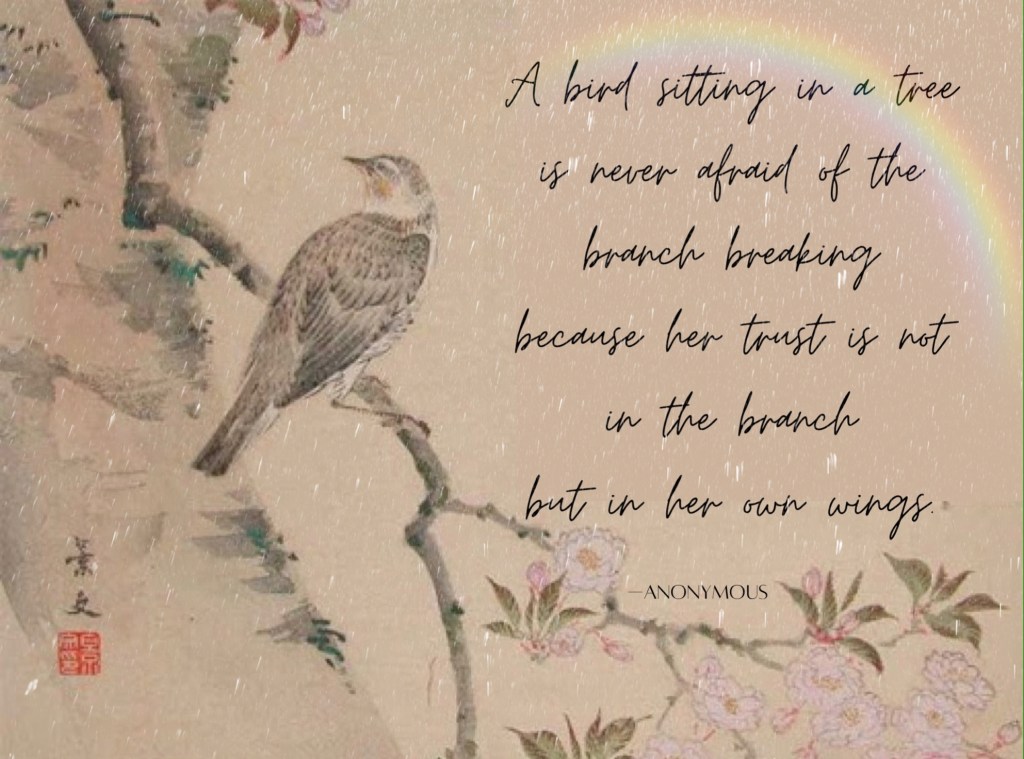
Acknowledging my inability to sing was difficult, just as my life after kidney transplant and this coronavirus is difficult. My isolation has been lengthy, most of nine months, and it is taking its toll on my spirit. Prayer has become both a burden and a grace to me. My singing was my prayer for so many years, and I really need my singing in these hard days. I need to sing my praises to God. I need to sing my lamentations. I need to sing like the sparrow who doesn’t worry about her vocal chords. I need to be like the sparrow who sits on her branch — without fear, without worry — because she knows that if she happens to light on a flimsy branch that does not hold her, her wings will lift her. 

The end of this story is that I need the God of the sparrow to sing through me once again — to sing through me in shadowy days, in times of trouble, in isolation, in fear, in hopelessness. That’s what God does, after all. In a troubled and despairing soul, God creates music, tucking it into every crevice, filling it with songs that can sing out both mourning and celebration. As an added bonus, I have it on good authority that God also turns mourning into dancing.

You have turned my mourning into dancing;
you have taken off my sackcloth
so that my soul may praise you and not be silent.
O Lord my God, I will give thanks to you forever.

Psalm 30 11-12 NRSV

So as you sing, dance to the new rhythms of your soul! Because you can!

Thanks be to God.

Please spend your meditation time today listening to this beautiful song with text written by Jonathan Cook and music by Craig Courtney. The video follows the text.

God of the Sparrow

God of the sparrow, sing through us,
Songs of deliverance, songs of peace.
Helpless we seek You, God our joy,
Quiet our troubles, bid them cease.
Alleluia.

God of the sparrow, God of hope,
Tenderly guide us, be our song,
God of affliction, pain and hurt,
Comfort Your children, make us strong.
Alleluia, alleluia, alleluia.

God of the sparrow, care for us.
Speak in our sorrow, Lord of grief.
Sing us Your music, lift our hearts,
Pour out Your mercy, send relief.

God, like the sparrow, we abide
In Your protection, love and grace.
Just as the sparrow in Your care,

May Your love keep us all our days.

Amen.

Awakening, Awareness, Beauty of Nature, Bondage, Change, Contemplation, Creation, Creativity, Emotions, Feelings, God's presence, Grace, Hemmed in, Here I am, Lord., Holy Ground, Holy Spirit, Hope, Insight, Inspiration, Introspection, Isolation, Loneliness, Mystery, Psalm 139, Sacred Pauses, Sacred Space, Soul, Spirit, Transformation, Walls, Wisdom, Writing

Hemmed In!


There are large scale, widespread forces that can trap thousands of people, even millions. Dachau, Katrina, earthquakes, tsunamis, wildfires, natural disasters all over the world and the Coronavirus of 2020. Enormous, catastrophic events can trap people. COVID19 has literally trapped me inside my home. I have to admit, the isolation has taken a toll on my spirit. No visitors! No visits with friends or family. No trips! No haircuts! I have been trapped at some level since my kidney transplant in November. Just at the March milestone that would have allowed me to break the isolation of the transplant, I was even more fully trapped by the infectiousness of this pervasive, unrelenting virus.

Being trapped for so many months has raised up in me feelings of loneliness, isolation, powerlessness, despair, anxiety, even abandonment. And yet, often there is something very good in the center of something very bad. It has been so for me. Yes, I feel trapped in the pervasive power of the coronavirus, but I also sense the arms of God and the embrace of Spirit hemming me in even further. Such a grace-gift it has been to me, as if God has said, “l am hemming you in, and in this space you will hear me clearer and sense me more fully.”

God’s words were truth. Hemmed in, my mind flourished, my heart leapt and my soul entered spaces of calm. I felt enhanced awareness! Even awakening. I saw nature in a different way and basked in the beauty of the rising sun. The sound of the hummingbirds’ trill and the rapid fluttering of their translucent wings were sounds meant just for me. I began to write and paint, to listen more carefully to God’s voice, to allow my spirit to overflow with Holy Spirit. To my hemmed-in call from God, I was compelled to answer, “Here I am, Lord!” When I finally answered God, my hemmed-in place became Holy Ground — a very good place to be that feels more like a holy mystery than a state of being.

Was this pandemic a good thing for me and for millions of people? Absolutely not! But trapped in its dark cloud, God hemmed me in further in ways I am just now beginning to understand. I can say with all honesty that being hemmed in by God has been grace to me.

If I could even begin to choose a favorite Psalm from among the many that inspire me, I would choose Psalm 139. In its weaving of words, there are many passages that are full of comfort. From childhood, I memorized a lot of Scripture and throughout Psalm 139 I memorized several snippets that I often call to mind. One verse that I did not memorize is verse 5: “You hem me in behind and before, and you lay your hand upon me.”

You have searched me, Lord,
and you know me.

You know when I sit and when I rise;
you perceive my thoughts from afar.

You discern my going out and my lying down;
you are familiar with all my ways.

Before a word is on my tongue
you, Lord, know it completely.

You hem me in behind and before,
and you lay your hand upon me.

— Psalm 139:1-5 NIV

I deplore the coronavirus and what it has done to so many people. I deplore the ways it was able to trap me, physically and emotionally. But the virus, with all its ominous, far-reaching force could not trap me spiritually. That was God’s work — hemming me in so that my spirit could rise to fresh, new heights of spiritual consciousness. Being hemmed in by our Creator has been grace for me in these days of isolation. It has become a transforming sacred pause. For in my hemmed-in space, the Creator helped me create — from my mind, from my heart, from my soul. Thanks be to God.

Comfort, Contemplation, Courage, Discernment, Discovering, Feelings, Freedom, God's presence, God’s promises, journey, Life Journeys, Meditation, Memories

What Do I Do with My Feelings?

How are you feeling today?

“Fine” is almost always the answer because usually the one who asked the question doesn’t really want to know all about how we feel. Not really. So we answer with a word — “fine.” Just “fine.” After all, we don’t often want to reveal our true feelings to anyone, and on top of that, telling them how we really feel would take more time than either of us want to spend on the conversation.

There may also be another reason for responding with just the word “fine.” Sometimes we don’t know how we’re really feeling. Some people are too busy with life responsibilities to consider how they feel. Others know there are deep feelings inside themselves, but they too are too busy to feel them. Still others sense dark, foreboding feelings in their deepest place, and they will not risk the emotional repercussions they might face by lettings their feelings rise into their consciousness. In Leo Tolstoy’s book, Anna Karenina, the dialogue asks, “Is it really possible to tell someone else what one feels?” Perhaps at that point — the seeming impossibility of telling another person how we feel — is where you and I find ourselves.

What happens when you refuse to allow your deepest feelings to enter your consciousness?

The question on the left is a very good question, even a crucial question. What does happen in us when we simply refuse to allow our feelings to come to the light os acknowledgment. The answer is at the very center of our quest for emotional wellness. We start, as the image above instructs, at owning our deepest feelings. Owning means to look at our feelings honestly and without fear. Owning means making no excuses for feelings. Owning means not blaming our feelings on others. Owning means holding our feelings in high esteem and acknowledging how they came to be. Owning means accepting our feelings, embracing then and honoring them

I was so deeply hurt that I just hold it inside until it becomes so unbearable I think I will snap.

He made me feel invisible and I just can’t let go of that feeling. I still feel invisible after all these years.

She made me so angry and I am letting that anger rage inside me and it will not go away. I don’t dare express it or let it surface.

Owning our feelings means being willing to truly “see” them, even when seeing them frightens us or creates in us a sense of dread. We sense we may experience a season of dread that the feelings will hurt us, again and for a long time. We fear what we will see. There is some truth in the fact that we tend to live into our “false self,” the self that is external and often shows little resemblance to our internal self. Contemplation is internal work. For those of us who believe in God, something divine happens when we are immersed in contemplating our hidden feelings — this thing that happens is that God meets us there, at the very moment when a buried feeling begins that awful hurting. I think of the words of promise in Holy Scripture, Jeremiah 29:11.

For I know the plans I have for you, says the Lord, thoughts of peace and not of evil, to give you a future and a hope.

I cannot help but find comfort in the presence of God in my life’s most painful times, and honestly, I have to say that some of those painful times were a part of contemplation and, through contemplation, beginning to own my down-deep feelings. The wise words of Thomas Merton are both instructive and provocative.

Everyone of us is shadowed by an illusory person: a false self . . . We are not very good at recognizing illusions, least of all the ones we cherish about ourselves. Contemplation is not and cannot be a function of this external self. There is an irreducible opposition between the deep transcendent self that awakens only in contemplation, and the superficial, external self which we commonly identify with the first person singular. Our reality, our true self, is hidden . . . We can rise above this unreality and recover our hidden reality . . . God begins to live in me not only as my Creator but as my other and true self.
Thomas Merton, New Seeds of Contemplation

In finding pieces of my hidden, true self, I also found release from harmful feelings, hurtful memories and oppressive people I held on to. Finally, after contemplation, we find the ability to share our feelings — the real ones — with the people we trust to hold them sacred and to help us better understand them. At the moment when I understood my feelings — where they came from; why I was holding on to them; who caused them; what would happen if I let my feelings rise from my depths to the light of day — that was the moment I felt free. I could live again as my best self. I could love myself, my real self. And I could be my best self. Not a small thing! A turning point in my life!

I hope you will spend some time studyIng the Feelings image above. I invite you to look at the seven feelings in the center and to then move to the outer circles. If I feel sad, for instance, the next expansion of the circle further clarifies what “sad” means for me, i.e. lonely, vulnerable or depressed. The outer section may reveal to me that I was victimized or abandoned, grieving or isolated.

Continue to contemplate your hidden, unspoken feelings. Learn to look at them and “own” them without fear, and know that God will meet you at the point of your deepest pain and that you are God’s own creation — cherished, loved, comforted and protected by a God who will never let you go. 

As a part of your contemplative moments, I hope you are strengthened by this arrangement of the  hymn, “O Love that Will Not Let Me Go.” Play it before you begin your meditation time and let its message clear your mind and comfort your soul.