A woman of sacred worth, Becoming, Beginning again, Bravery, Calling, Change, Children, Committment, Courage, Creating, Dreams, Freedom, God’s beloved daughter, I am enough!, Inner peace, life, Living in the soul, Miracles, Repair the world, Rev. Kathy Manis Findley, Self-understanding, Spirit wind, Tears, Tikkun Olam, Valued by God

Living an Unapologetic Life

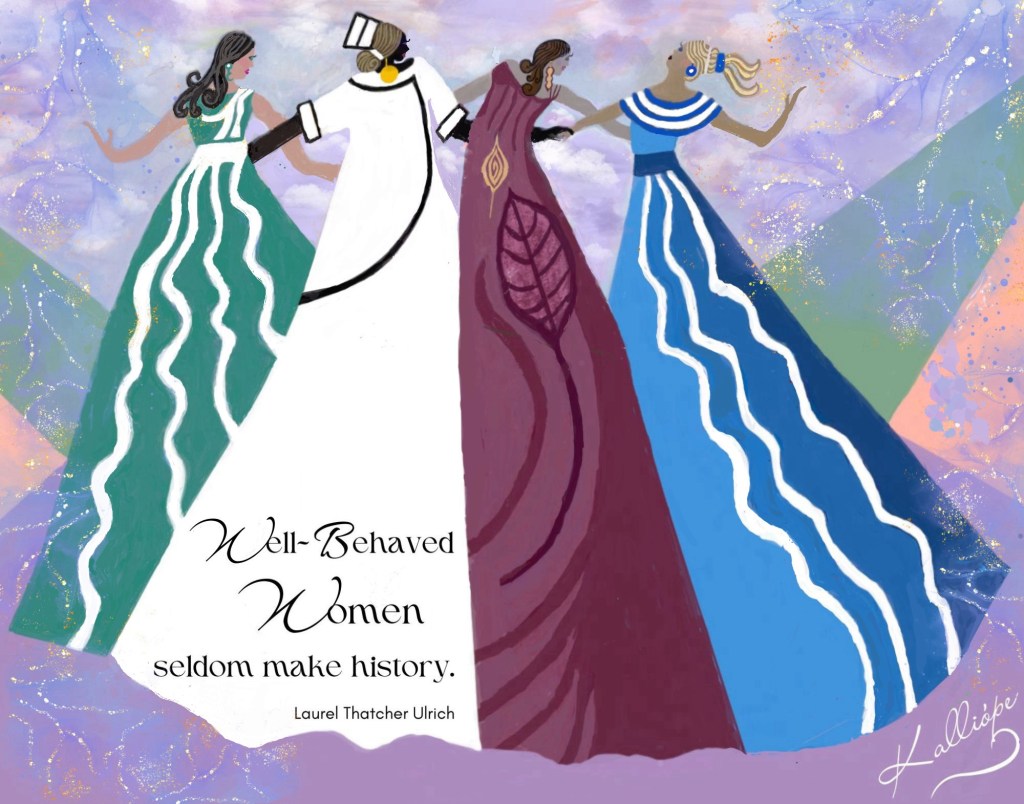
Art: “Well-behaved Women” by Kathy Manis Findley


Rev. Kathy Manis Findley
July 27, 2024

You have probably had that kind of dream at a few junctures on your journey. I know I had many dreams along the way. Sometimes they scared me to death. I dreamed of peace, equality, freedom, changing the world, and many other huge and noble dreams. I dreamed some silly dreams, too! I soon got the hint: changing the world is a formidable task. I followed all the rules, but being a rule-keeper does not make a person effective in dreaming and imagining. Women who follow the rules (someone else made up) could correctly be called well-behaved. They might even be called good girls because they don’t cause much of a flurry. They typically don’t make history and they certainly don’t change the world.

A woman with less-than-good behavior looks like someone at peace with herself, someone who radiates hope, someone with the courage and determination to do justice. I have admired and emulated so many examples of women who did make history, women who were not well-behaved at all. Here are only a few: Rosa Parks, Harriet Tubman, Lucretia Coffin Mott, Sojourner Truth, Susan B. Anthony, Nancy Sehested, Elizabeth Cody Stanton, Prathia Hall, Julian of Norwich, Malala Yousafzai, Mother Theresa of Calcutta, Ann Hasseltine Judson, Lucy Stone, and so many others!

About 24 years ago, a chaplain colleague recommended a book to me: Goodbye Good Girl: Letting Go of the Rules and Taking Back Your Self by Eileen M. Clegg. I think my chaplain friend was suggesting that I should get out of my comfort zone and take some risks, that I should courageously follow God’s call on my life. I knew that the members and churches of my denomination would “throw a fit,” like we say in the south! After all, I was an ordained minister serving as a hospital chaplain, which placed risky challenges before me every day.

So I read the book immediately and set out to become a bad girl, a girl who fully intended to change the world and to make history for it! So far, I have not made history. I have not managed to put my name in lights. I have not started any big public movements. But I have done some things that matter! I have learned how to create sacred space; I have learned the depth of liberation theology; I have found enough grace to endure the consequences of being a “bad girl” and then a woman with questionable behavior; I have held off anyone who tried to tell me who I am; and I have called up the courage to fight for justice. Colleagues, friends, family, co-workers reacted to the change in me, since they never expected me to dissent, or disagree, or refuse to behave.

Suddenly I let go of my “good girl” image and basically said “goodbye” to my restrictive behaviors. I took back my life, put aside all the rules, and followed my soul. I watched for the winds of the Spirit to lead me, and I moved forward to all the places that needed some attention. I was able to help change unjust systems, unjust policies, and unjust processes by not being so well-behaved.

Still, I sometimes think I have reached an uneasy place when it comes to letting go of my “good girl” persona. I’m really not a “good girl” and I don’t think I ever have been. My parents had to endure the sassy exclamations of my toddler years, like “Nobody’s the boss of me!” Creating shock from those who knew me, I mostly remained a “bad girl” from that day to this. I set aside the rules that were designed to keep people down and I took back my life. Today—in my mid-seventies—I continue to spew out uncommon proclamations that are quite annoying to those who are determined to hold on to their power and resist change.

Truly, it was sometimes hard being a change-maker and a rule-keeper! Always a people pleaser. Always the ultimate perfectionist. I discovered along the way that sometimes rule-keeping, people pleasing, and keeping every little thing “perfect” can harm your inner core. In fact, it’s less risky when you follow the leaders, make sure everyone is pleased, and doing everything with glowing perfection. Stepping out of line is always a bit dangerous.

When you become exactly who you are, resolute and unmovable about the things that matter to you, you will raise a few eyebrows, and sometimes people will get angry with you . You see, those people expected something else from you. Each of us becomes “me”— the “real me”— at our own peril. In a sense, we have to fight for the right to be ourselves in the world.

It is true that the people around me reacted strongly when I took back my life and became fully invested in my destiny. They thought that I had become radical, maybe even unhinged. I did not respond appropriately to their demands. To unreasonable demands, this is essentially how I might have responded, sometimes out loud, sometimes under my breath . . .

I will do it. / It’s my right! / It’s my choice! / It’s my prerogative! / It’s my decision! / I’m doing it anyway. / You can’t stop me! / Just watch!

All the while, I felt uncomfortable because of so much disdain from others, who began sending me a new message, You are not enough! I Imagine that many of you have heard someone say to you, You are not enough. At least, we may imagine someone saying those hurtful words. Unfortunately, we believe it because we don’t know ourselves, meaning we don’t know our bright and dark places, we have not yet realized our sacred worth, and we have not yet searched our souls.

For you see, you and I are afraid because it is perilous for the soul when we don’t search diligently for our soul’s passions and dreams. You and I sometimes accept what others say about us and tuck it away in our deepest places. When those words sneak all the way down into the soul, we tend to give up. We start from the moment we make ourselves nonchalant about it all, that moment when we shield our hearts from hurt. One of the saddest phrases we use is “I don’t care.” When we no longer care, we begin, one by one, eliminating the people around us, never realizing that they are hurting, too. And maybe the reason they send the message, You are not enough, is because they believe that they are not enough either.

I can honestly say that I have often heard voices—known voices, unknown voices, and the weak little voice in my head—telling me, You are not enough! I have learned that once I have embodied that negative message, it rolls around in my psyche for a long time, maybe forever. It becomes a state of being that goes deeper than skin. It penetrates in deeper places, and takes its toll on my emotional and physical well-being. I recall many such times, none more painful than the wagging tongues around my ordination . . . You know the scenario, “She can’t be a minister because she is a woman! Anyway, she’s not good enough! Other voices are often hazardous, dangerously breaking down our sense of self-worth. They may be yelling, speaking in a normal tone, whispering, or imagined in our heads. In response, we must prepare ourselves to hear the voice above all voices, saying, “You are my beloved daughter with whom I am well pleased.”

For a long time, I embodied the traits of the good girl, but to embody good girl traits is not really a once-and-done action. Embodied lasts a while! Embody does not have a shallow or surface meaning. It is deeper. I like the word embody. It seems to suggest that we can live a soulful life. In the very middle of the Greek word for “embody” we find the word σώμα, which means body. However, the Greek word for body cannot be translated in a way that reveals the depth of its meaning. The definition of σώμα is deeper than we realize. It is not skin-deep, it is deeper, approaching a definition more like soul.

I do like the word embody and the word soul. In some ways, to embody means to live in your soul. The word embody may whisper to you that in your body’s center, you will find the path to reach your soul. A person who lives in the soul is a person that does not live a shallow life, devoid of the emotion that makes us alive. The soul will help you, if you can just start by daring to touch it.

So what are the things we can actually do to take back our lives and live soulfully? What path do we follow to transform ourselves and change the world? My initial response to that is, “I don’t know.” Not very comforting, I know, but mostly true. We cannot forge the path for any other person. We cannot know what’s best for them. So not knowing anyones path, nor their dreams, I can give you a list of things others are finding the leads to their transformation. Here they are, not at all an exhaustive list, and certainly not a perfect guide for you:

  • Carve out some time for quiet, restful, meditation.
  • If you are a person of faith, get in touch with God or whatever person you worship.
  • Listen.
  • Listen some more—to your heart and your soul.
  • See if you find there a sacred direction especially for you.
  • Do you feel you are getting any closer to discovering your authentic self?
  • Can you begin to believe you will be transformed?
  • Can you take a step or two, in faith, into a holy place of transformation?
  • Pray, making your needs known to the source of your faith.
  • Read! Read the stories of others who found life transformation.
  • Find community, even one other person, who understands your journey.
  • Start all over again, leaning into the wisdom you found on your previous journey.
  • Take as long as it takes, until you realize that suddenly, you are becoming emboldened and scrappy!

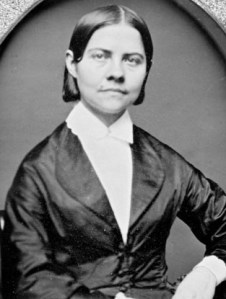
You may not know her name, but Lucy Stone was steadfast in her belief in self-authentication and in her ability to change the world. Lucy Stone was called “emboldened” and “scrappy” because of her tireless work for the abolitionist and women’s rights movements through the 19th century. A bona fide pioneer of her time, Lucy Stone stands as a historical titan. Her book “Unapologetic Life” describes a model of a revolutionary living. As for me, I would count it an honor to be described as emboldened and scrappy.

Life is more fun when you’re emboldened and scrappy. Not that we want to reduce the life experience to just scrappinesses. Life is so much more, like authenticity and the willingness to be a change-agent. Life is about having enough courage to persevere! Life for me is about my soul and all the ways it has been transformed over many years. All along my journey, I knew that my soul was a problem! At every age, there was a part of me that wouldn’t follow the easiest path. I longed to be empowered to make societal change. I chased down injustice and worked to dismantle it. I spent most of my career working with victims of domestic violence, child abuse, and human trafficking. This was not the easiest and most pleasant vocation, but the work had made its way into my soul. To do it, I had to live in the light of self-awareness and soul-awareness. I had to constantly listen to the sighs of my soul, and move only after I had heard them clearly. If I had just one nugget of advice for you, it would be to touch your soul and ride on the wings of the Spirit.

Sisters, don’t forget that when you touch your soul, you might just not be a “good girl” anymore. Or a good boy, for that matter. As for me, I am not a “good girl” living at the whims of other people! And I am definitely not a well-behaved woman! So I fully expect to make history! Because making history means leaving a legacy, creating a world brimming with peace, and embodying your best self!

Faith, God's Faithfulness, Labyrinth, Spirituality

“This is the way. Walk in it.”

Art by Kalliope

If you know about labyrinths, you might get this. People often ask me what a labyrinth is or what it’s for. Truth is, you can’t fully understand a labyrinth by definition, nor by reading about it. You won’t get the significance of a labyrinth by what I write here, no matter how eloquent my writing may be. To know a labyrinth, you have to walk one, or trace the circuits of a finger labyrinth, or trace the path on a sand labyrinth and feel the sand under your fingers.

As a part of spiritual direction, many folk tell me that a labyrinth looks like a maze to them, and they fear they’ll get hopelessly lost, unable to make it out. That sounds a lot like life to me. Isn’t there always fear that we’ll get lost on this journey we call life? After we’ve made a few wrong turns in life, we are often fearful of living it. Afraid our wrong turns will end badly. Afraid we’ll get lost.

The truth of the labyrinth is that it is a clearly marked path that will lead you in—to the center—and then lead you out by the same path. Perhaps that’s why it has been called “the sacred path.”

If you know me or follow my blog, you already know that my life has been made up of many curves, turns, twists, dead ends and crossroads. At times, it has felt unnavigable, a dangerous and unpredictable journey. Yours has probably felt much the same. I have learned a few good lessons along the way, though, lessons that I hope will stick with me.

The one overarching lesson is that I can neither predict, nor control my path. The twists and turns will appear before me, and I will walk through them. The curves will seem treacherous at times, and I will lean into them hoping to stay firmly on the road. I will stop in my tracks at the dead ends and simply turn around and start over. The crossroads? Well, they have their own precariousness, danger. The crossroads demand a decision. The road I choose could make a world of difference, good or bad.

It’s enough to make life frightening! And it does. Life is frightening, especially for those of us who need to control our pathways. Here’s where the labyrinth offers me so much comfort. It is a pre-created path in and then out, and when I follow it’s path, I am reminded of one of the core beliefs of my faith: that God has laid out a path uniquely for me. Whether I follow it or not is another part of my faith. I get to make that decision.

When I walk a labyrinth or even trace its circular pathways with my finger, I am aware of a guiding hand, a Comforter beside me, and the peace of knowing the path was created for me. I feel Spirit winds and hear the holy voices of thousands of years of Wisdom whispering into my ear.

And when you turn to the right or when you turn to the left, your ears shall hear a word behind you, saying, “This is the way; walk in it.”

—Isaiah 30:21 (NRSVUE)

Amen.

Birdsong, Calm, Creation, Fear, Grace, Knowing, Life’s meaning, Listening, Paul Simon, peace, Prayer, Quiet, Reflection, Sacred Pauses, Sacred Space, Self Awareness, Self care, Self-understanding, Serenity, Silence, Simon and Garfunkel, Soul, Soul work, Spirituality, Stillness, The Sound of Silence, Whispers of the Soul, Wholeness

One Day I Listened

I wonder if you would be willing to stop what you’re doing right now and spend a quiet moment with me, just listening? Your time might well be a needed time for you and for your soul.

There is always so much to listen to — traffic, sirens, video game sounds, annoying household noise like the washing machine/dryer, food processor, mixer, fans, buzzers and alarms and the awful sound of the disposal trying to crush that inadvertent chicken bone. These, of course, are not our favorite sounds, but they are the myriad sounds and noises we hear in a typical day.

There are sweeter sounds, too, like the sound of a gentle, falling rain or the sound of rain when it hits hard on the roof; the sound of a gusty breeze as it rustles the leaves on a tree; the sound of a flowing stream, a rolling river and constant, ever-rushing ocean sounds; the flutter of a hummingbird’s wings; the sound of cicadas on a Southern summer night; the sound of a child’s laughter; the sweet, peaceful sound of a purring kitten; and birdsong, always birdsong.

Of course, listening as pure joy is listening to music — quiet music, lyrical melodies, rhythms that slow the pulse, the sound of a bow moving across a cello’s strings, the mesmerizing sound of a harp, the velvet sound of voices in harmony or the enthralling sound of a symphony orchestra.

Sounds fill the space that surrounds us, all the time. What is rarer for us is to hear the sound of silence. Some of us fear the silence or dread silent moments. Others of us avoid it at all costs because the silence tends to bring up whatever we are afraid to hear. So the noise that enfolds us fills the place that might otherwise hear the sighs of the soul — its cries and laments, its laughter, its sound of contentedness. It seems to me that this is the place we long to be, in the soul’s sound chamber where whatever we hear — if we’re listening carefully — is the song of the soul that tells us who we are and why we are.

There is a poem that many of you will remember (if you’re old enough) as a Simon and Garfunkel song from the 1960s. The poem was written by Paul Simon and it presents a frightening picture of the modern world doomed by the lack of spirituality and the people’s aversion to the true meaning of life. It is not so different in these days that spirituality and life meaning can be elusive, no matter how hard we may search for it and yearn for it.

The poem, entitled The Sound of Silence, is written by the voice of a visionary asking people to be serious about the true meaning of life. The poem’s message is that people are moving further and further away from true happiness because they have ignored life’s true meaning. They debate and quarrel about worthless things. They listen to or watch meaningless things. The poet writes that the people “speak and hear without listening. Like we often do?

Throughout its five stanzas, the poem presents the conflict between spiritual and material values. The poetic persona is a person of vision who warns against the lack of spiritual seriousness. The poem begins with an address by the poet persona to the darkness, saying that he has come to talk with the darkness. When he awakens, he says that the vision still remains as the sound of silence.

Some of us fear the silence or dread silent moments. Others avoid it at all costs because the silence tends to bring up whatever they are afraid to hear. So the noise that enfolds us fills the place that might otherwise hear the sighs of the soul — its cries and laments, its laughter, its sounds of contentedness. It seems to me that this is the place we long to be, in the soul’s sound chamber where whatever we hear — if we’re listening carefully — is the song of the soul that tells us who we are and why we are.

The words of the poet . . .

And in the naked light, I saw
Ten thousand people, maybe more
People talking without speaking

People hearing without listening
People writing songs that voices never share
And no one dared
Disturb the sound of silence

And the people bowed and prayed
To the neon god they made
And the sign flashed out its warning
In the words that it was forming
And the sign said,
“The words of the prophets are written on the subway walls

And tenement halls”
And whispered in the sound of silence

All of that trivia about the poem certainly moved us a little farther away from my point, which is that most, if not all, of us have a deep emotional and spiritual need to listen to our souls, really listen. Even if we don’t know it, we long to hear what the depth of our being wants to say to us. We want to find our true selves, a quest only our souls can accomplish. If we are honest, we would say that we want to do the soulwork that leads us out of the darkness of our own making and into a place of light.

When we do carve out a sacred pause, when we wait in the darkness of that silent space, and when we open ourselves to deep listening, we will likely hear God’s whisper. We will probably move slowly out of darkness and realize the promise that as “God’s own people” we will “proclaim the mighty acts of God who called us out of darkness into his marvelous light.”   (1 Peter 2:9)

This is the place we long to be, in the soul’s sound chamber where whatever we hear — if we’re listening carefully — is the song of the soul that tells us who we are and why we are.

— Rev. Kathy Manis Findley

Hearing God’s voice moves us to a deeper experience of life, but hearing our soul’s sighs may take us deeper still, because we open ourselves to self-knowing. It’s not a surface knowing. It is a deep knowing of who it is that lives in our skin. Without hearing the sighs our souls are making, we might never enter into fullness of self. I suggest that only the fullness of who we are can stand before the God who knows us even better than we know ourselves. 

In my own experience, I think that perhaps I cannot be in deep communion with God if I try to face God as my superficial self. Perhaps God seeks relationship with my soul, my deepest place of being. To find and define my soul for myself, to know myself fully, I must find the sound of silence and sit with it patiently and expectantly. Maybe that is the essence of spirituality.

So there are a few lessons in these words and these are the obvious lessons:

  • Limit the harsh sounds in your life.
  • Surround yourself with tender, gentle sounds.
  • Make sacred space and holy time to listen deeply for the sounds that speak to your soul.
  • Listen for God’s whispers. They are important to hear.
  • Always consider what is, for you, the true meaning of life.
  • Listen to your soul — its sighs, its cries, its songs. 

And who knows? If you linger for a while in your sacred listening space, you might just find the very essence of grace by hearing what your soul whispers to you. It will be the most beautiful sound of all.

— Rev.Kathy Manis Findley


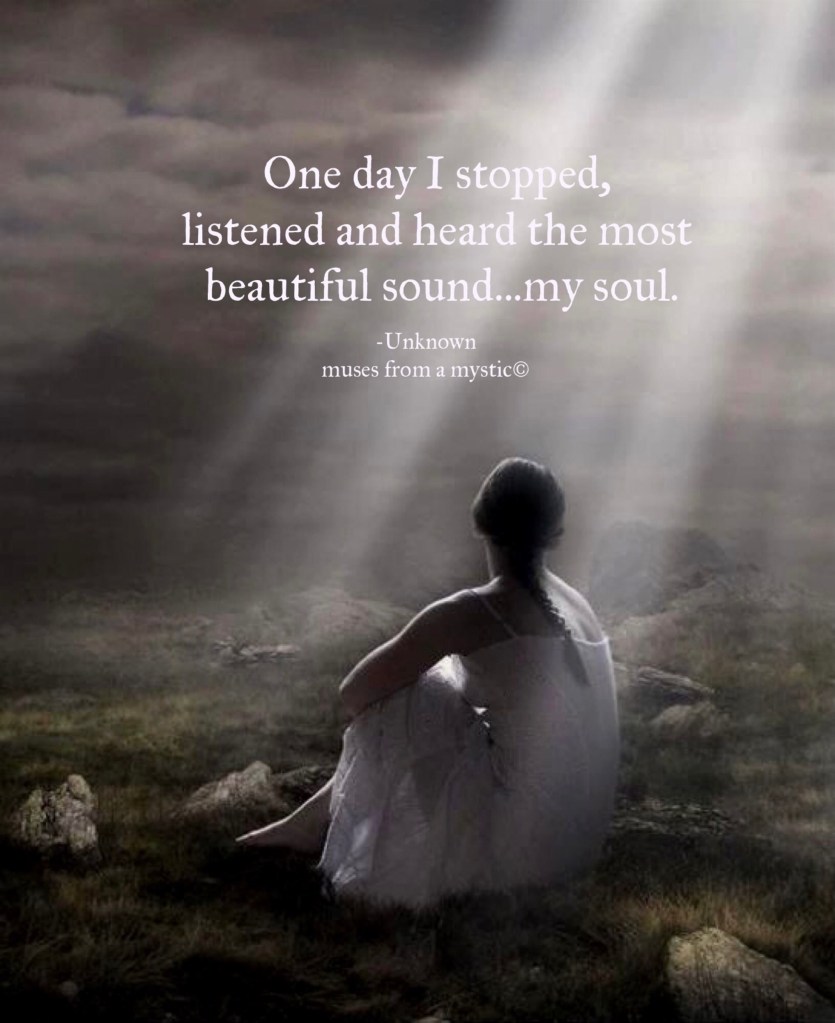
One day I listened — really listened. And I heard the whisper of God and the song of my soul. Thanks be to God.


I invite you to hear the poem, “The Sound of Silence,” through music. It can rightly be said that no group or person could ever sing this as well as Simon and Garfunkel, but I thought you might enjoy it covered by a very popular contemporary a cappella group, Pentatonix. 


The Sound of Silence by Paul Simon

Here I am, Lord., Rule of Life, Spiritual Discipline, Spiritual growth, Spirituality, St. Benedict, St. Clare of Assisi, St. Francis

Rule of Life


Today is the eleventh day of Lent and Lent always orders me to order my life — again. Isn’t that what we do, put order back into our lives over and over again?

02D6C44D-9692-4DA6-86C3-0A256C32DB27That’s what I do, because I have learned the wisdom of ducks. Even ducklings sometimes step out of the line behind a Mama duck who bids them to walk a straight line, single file!

1BF24480-E6DE-4F28-90ED-192BAAA2105A
Or even to swim in an ordered line! Something ducks are very good at!
For me, achieving a well-ordered life is a constant struggle, yet something I need and want. What do I mean by “ordered life?” I envision for myself a life that longs to move toward physical, emotional and spiritual well-being. Especially spiritual well-being.

Perhaps I will turn to ducks for an inspiration to order my life or, even more compelling, perhaps I will turn to one of the streams of spirituality that comes from very deep in the Christian tradition — the wisdom of Benedictine Monasticism.

Now, stay with me! I’m not going out on a shaky spiritual limb.

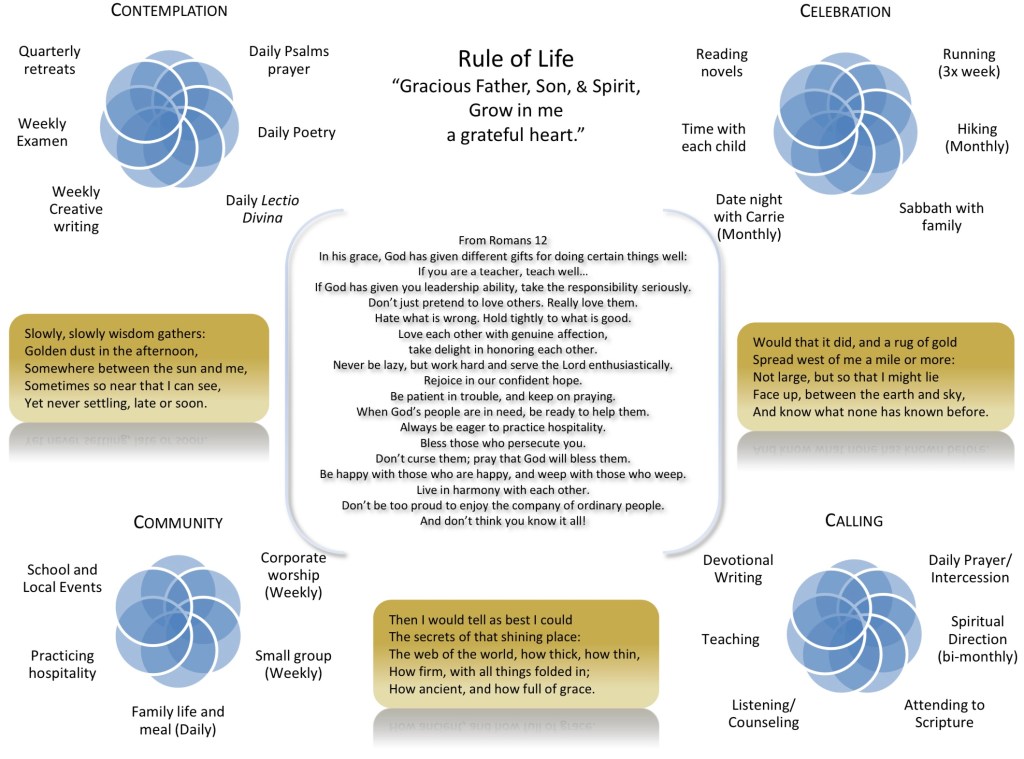
Saint Benedict wrote his rule of life in the 6th century and thus left us with its simple and stable legacy of “Ora et Labora”: “Prayer and Work.” Today’s monasteries and convents still function under a Rule of Life, the best-known of which is that of Saint Benedict. A spiritual rule of life offers a fundamental rhythm for the balancing and ordering of life. Several years ago while seeking a deeper spiritual life, I entered into the novitiate of the Order of Ecumenical Franciscans. In the process to full profession into the Order, I was asked to write a personal rule of life.

Rule of life? I had no idea where to start. Nor did I really know what a rule of life looked like! I found this definition from a very helpful website, “Sacred Ordinary Days.”

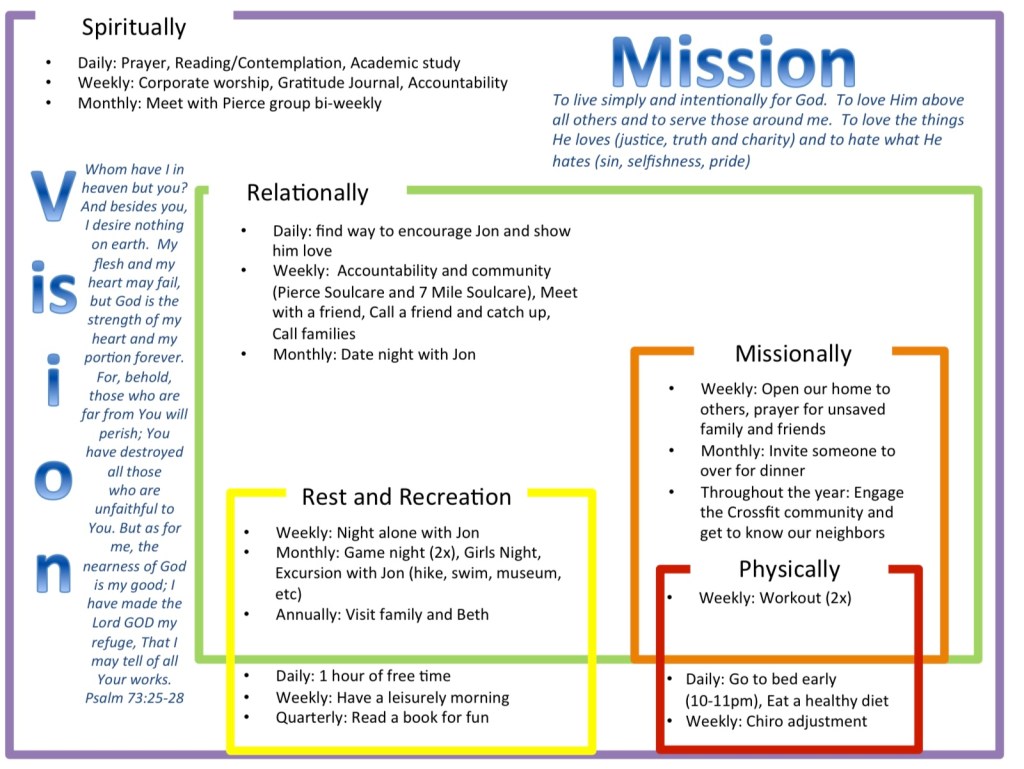
A rule of life is a commitment to live your life in a particular way. It is meant to be crafted with prayer and discernment, in partnership with God, as you consider the way God made you and the values God has inscribed upon your heart. Once written, it serves as a tool that can help you make decisions for your life and determine how best to order your days. A rule is different than the goals, intentions, or resolutions we tend to set for ourselves. Those methods are task-based and measurable, and they’re often focused on what we do. A rule of life, on the other hand, helps you become. It is comprised of several simple statements that guide the posture of your life and the living of your days. It is not lived perfectly but can be lived faithfully while fostering within you an integrated and embodied life of faith.

So, attentive to the lives of Saints Francis and Clare of Assisi, I began discovering and creating my rule of life. What I learned in that experience is that crafting a rule of life is a spiritual discipline, whether I am writing, drawing, designing or graphing it. If you know me, you know that mine was handwritten because, for me, writing becomes the sigh of my soul. Once I began writing, I sensed a pull drawing me inward. The writing called me to open up my spirit to God in a deeper way and, from that place, to write down the ways I desired and intended to follow Christ and order my Christian life. In a nutshell, that’s what I discovered about a rule of life.

Sister Joan D. Chittister, O.S.B., an American Benedictine nun, theologian, author and speaker,  explains the idea of a rule of life more clearly in her writing about Saint Benedict’s Rule. She describes how the Rule of Benedict provides an opportunity for transformation for everyone who chooses to follow its wisdom.

All in all, the Rule of Benedict is designed for ordinary people who live ordinary lives. It was not written for priests or mystics or hermits or ascetics; it was written by a layman for laymen. It was written to provide a model of spiritual development for the average person who intends to live life beyond the superficial or the uncaring.

Benedict was quite precise about it all. Time was to be spent in prayer, in sacred reading, in work, and in community participation. In other words, it was to be spent on listening to the Word, on study, on making life better for others, and on community building. It was public as well as private; it was private as well as public. It was balanced. No one thing consumed the monastic’s life. No one thing got exaggerated out of all proportion to the other dimensions of life. No one thing absorbed the human spirit to the exclusion of every other. Life was made up of many facets and only together did they form a whole. 

A rule of life is rooted in Scripture, pointing always to Christ; and, in the words of Saint Benedict, it is “simply a handbook to make the very radical demands of the gospel a practical reality in daily life.”

Lent is upon us. I don’t know about you, but I need to get my ducks in a row and, more importantly, I need to revisit the rule of life I wrote decades ago. I have a notion that, while my life has changed over the years, my rule of life hasn’t. But my need for genuine repentance is this: I don’t even remember my rule of life. What did I write? In what ways did I live it out? How many years or months or weeks did I live by it? Why is my rule of life now lost in a pile of old papers? I contritely confess that I remember (sort of) only this small part of it:

I will live my life and speak truth in the manner of love, for God is love
and, in Christ, I live and move and have my being.

I vaguely remember those words, but I intend look through my archived treasures and scraps of paper to find my rule of life and to revisit it. Maybe I will even begin living it again. From now on, I want to remember to remember it, so that its expressions will become like the air I breathe. And I will remember what Saint Benedict wrote 1,500 years ago, “Your way of acting should be different from the world’s way. The love of Christ must come before all else.”  

As for me, the one thing I do remember so strongly about the act of writing my rule of life is that I was on a spiritual retreat in Albuquerque, New Mexico, a sacred place that made me imagine the lives of the desert mothers and fathers, the monastics who sparked spirituality for centuries. I also remember that, as I was writing, I would continually relive my ordination and its deep meaning for me. I continued to think and write on the day I had to finish, while the prayer of my heart and the longing of my soul continually whispered the same words sung at my ordination many years before:

Here I am, Lord. It is I, Lord. I have heard you calling in the night.
I will go, Lord, if you lead me. I will hold your people in my heart.

“Here I Am, Lord”
Daniel L. Schutte (b.1947)
Arranged by Ovid Young (1940-2014)

More Information on crafting your rule of life:

I found this website to be very helpful for people who want to craft a rule of life. Remember that your rule of life is for you, your way of enhancing your life and increasing your devotion to God. So every person’s rule will look different. 

coronavirus, Hope, Julian of Norwich, Lament, Love, Martin Luther King, Jr., peace, Sacred Space

ALL SHALL BE WELL . . . A VIDEO BLOG ON SPIRITUALITY – EPISODE NUMBER 1

All Shall Be Well” is a video blog on spirituality.

Welcome to “ALL SHALL BE WELL,” my video blog designed to help us examine our spiritual center, to create sacred pauses, to join together in contemplation and silence.

All Shall Be Well, Julian of Norwich, Sacred Pauses, Sacred Space, Spirituality, Video Blog

ALL SHALL BE WELL . . . VIDEO BLOG

ALL SHALL BE WELL” is a video blog to help enhance our personal spirituality and lead us together into sacred pauses that will nourish our souls.

I am pleased to offer something new in hopes of communicating with you in new ways. “All Shall Be Well” is a video blog on spirituality — mine and yours. We will explore together ways to deepen our communion with God as we lean more into contemplative prayer, meditation, silence, centering prayer, listening for God, prayer of the hours and other ways of inviting the whispers of God to grace us.

I invite you to hear each video message, and I ask you to accept each message only if it feels good in your heart. Your spirit knows what you need. Listen to your spirit.

Please feel free to send your comments to let me know what kind of spiritual disciplines are most helpful and meaningful to you. Share a bit about your own spiritual journey and some of the ways you care for your soul and draw closer to God.

The following video message is an introduction to this video blog and offers a blessing for you as you move into a new year. I pray that 2021 will lead you into holy places and sacred pauses that enhance your spirituality. Though I do not personally know each person who follows my blog, I hold you in my heart, and as I prepare to send each blog post, I pray for each person who will watch or read it.

May God’s blessings be upon you and may the God of Hope walk beside you and fill you with all joy and peace that you may abound in confident hope by the power of the Spirit. Amen.

Community, Division, Friendship, Grace, Kindness, Nature, Prayer, Reflection, Relationship, Respect, Transformation

“Always Stay Humble and Kind”

0435A7FB-18AC-4222-A445-B6B10556EC50
Even the earth’s creatures find ways to get along. Refusing to follow the lovely example of the giraffe and the butterfly, we seem to be having a big problem with getting along. Now we have to admit that the giraffe and the butterfly could not be more different from each other, but somehow the butterfly lands safely on the giraffe’s snout. It’s a reminder of the image we have loved for so long — the lion lying down with the lamb — a symbol of peaceful times.

We do not typically have that kind of peaceful relationship with those who are not like us, and in these days, we do not enjoy peaceful times. It’s nothing new, really, but we are infinitely aware that our country is polarized along partisan lines. Neither side trusts the other. Respect for one another is flagging. Kindness is in short supply. 

But this is not a commentary on current politics. Instead, I want to talk about being humble and kind to one another. One of my favorite singers, Tim McGraw, sings the song “Humble and Kind,” a gentle, sweet song written by Lori McKenna. The song’s simple lyrics remind me that kindness still exists.

Hold the door, say please, say thank you;
Don’t steal, don’t cheat, and don’t lie;
I know you got mountains to climb but
Always stay humble and kind.

When those dreams you’re dreamin’ come to you,
When the work you put in is realized,
Let yourself feel the pride but
Always stay humble and kind.

Go to church ’cause your momma says to,
Visit grandpa every chance that you can,
It won’t be a waste of time,
Always stay humble and kind.

Don’t take for granted the love this life gives you
When you get where you’re going.
Don’t forget turn back around,
Help the next one in line,
Always stay humble and kind.

I have to ask myself what I must change about my life in order to be more humble and kind. What must happen within me to enable me to offer unconditional grace to others? I almost feel ashamed that I need to ask myself such questions, but the truth is that any person can be socialized by her environment. If I constantly watch on my television the cynical, disrespectful actions of one person towards another, that exposure might well affect the way I relate to others. I’m sad to admit that the toxic political environment we live in has definitely harmed my relationship with several friends. and I find that unacceptable. 

Where was my sense of loyalty to my friends? Was there no way to maintain respectful relationships and friendships? Could I not have offered grace to my friends? Didn’t my friends mean more to me than my ideology?

I have wrestled with such questions for months. I have concluded a few realities: that I did not have the power to change the toxicity of my environment; that I could not control the emotions and actions of my friends; that I could not force communication with friends who stood steadfastly, even stubbornly, on their own beliefs.

What I could have done was pray more, spend more contemplative time with God and focus on the respectful and kind relationships I can see all around me. In short, I could have immersed myself in all things good, in the peaceful beauty of God’s creation and in the miraculous movement of the universe to unite all things in love.

I did not do that, but after months of experiencing all manner of rancor, I think it’s time for me to find in myself transformative grace through spiritual immersion, the kind of spiritual contemplation that changes everything. And by the way, I have it on good authority that always being humble and kind can be spiritually transforming. 

Do not be conformed to this world, but be transformed by the renewing of your mind, so that you may prove what the will of God is, that which is good and acceptable and perfect.

— Romans 12:2 New American Standard Bible (NASB)


F9FA5D3C-53F0-4043-8A72-F9E2D63F7349

On another note, please pray for me as I look toward my kidney transplant on November 15th. I am grateful that you are walking with me on this journey that often felt so frightening. Your thoughts and prayers mean so much. If you would like to read the story of my illness, please visit the Georgia Transplant Foundation’s website at this link:

http://client.gatransplant.org/goto/KathyMFindley

A “Go Fund Me” page is set up for contributions to help with the enormous costs related to the transplant, including medications, housing costs for the month we have to stay near the transplant center, and other unforeseeable costs for my care following the transplant. If you can, please be a part of my transplant journey by making a contribution at this link:

https://bit.ly/33KXZOj


Comfort, Contemplation, Faith, God's presence, Hope, Loss, Reflection, Seeing the Face of God, Weeping

In the Presence of God

C90EDAB6-79B0-4CA2-A04E-1166EA16A59F

What does it mean to be in the presence of God? How do we get there? How do we rest there long enough for our souls to be restored?

Had I ever been able to answer those questions, I imagine my life would have been different — fuller, gentler, more peaceful. But like many people who work to achieve inner peace and a spirituality with staying power, I have struggled around the prize, never quite being able to grasp it.

I have used all of the tools available to me — my bible, my bookcase full of contemplative writing, my labyrinth, my hymnal, my writing, my art, my prayer. The list goes on, and I go on, still struggling to find God’s presence.F40CF356-14B8-489C-A6CE-0DC8F34C0B95

The worse thing I can do is to cast blame on myself for a small spirituality and an even smaller faith. Truth is, I think I do have spirituality and faith. Faith has lifted me up through many difficult times. Faith was present when fire destroyed part of our home. My faith held when I was forced to close the doors our nonprofit. My faith carried me through sudden kidney failure. Faith showed up every time I wept bitter tears of grief and mourned my life losses. My faith was present with me when I thought I was dying and when I left my home of 32 years, my son and my grandchildren.

My faith held. My anchor gripped God’s solid rock. I picked myself up every time and moved on with hope. Yet, this thing we call “the presence of God” has eluded me. I mostly can’t experience it or feel it or sense it as a reality.

I guess it gets back to faith, doesn’t it. For it is faith that whispers to us, “Know the presence of God. If you cannot sense it, know it. If you cannot feel it, believe it anyway.”

The book of Jeremiah offers this comforting advice: “You will seek me and find me, when you seek me with all your heart.”

And then I can always fall back on Richard Rohr wisdom: 

“We’re already in the presence of God. What’s absent is awareness.”

F9FA5D3C-53F0-4043-8A72-F9E2D63F7349

O Lord, you have searched me and known me!
You know when I sit down and when I rise up;
You discern my thoughts from afar.
You search out my path and my lying down
and are acquainted with all my ways.

Even before a word is on my tongue,
O Lord, you know it.
You hem me in, behind and before me,
and you gently lay your hand upon me.
Such knowledge is too wonderful for me;
I cannot begin to understand it.

Where shall I go from your Spirit?
Where shall I flee from your presence?
If I ascend to heaven, you are there!
If I make my bed in Sheol, you are there!

If I take the wings of the morning
and dwell in the uttermost parts of the sea,
even there your hand shall lead me,
and your right hand shall hold me.

— Psalm 139:1-10 ESV (paraphrased)

Beauty of Nature, Birdsong, Inspiration, Joy, Laughter, life, Magic, Nature, simple joys

Life Can Lose Its Magic


ADD6C2DE-A04C-4699-93E8-97923440A118
Photography  from Lize Bard’s blog, Haiku out of Africa at https://wandererhaiku.wordpress.com/2018/07/18/aura/

Life can lose its magic. 

It happens. 

It happens when labor eclipses the joy of leisure. 

It happens when busyness replaces moments of re-creation. 

It happens when meaningless prayers are more common than deep spiritual contemplation. 

It happens when relationships are taken for granted. 

It happens when entitlement replaces gratitude. 

It happens when despondency is more present that genuine laughter. 

It happens when nature becomes commonplace and we miss its breathtaking beauty. 

It happens when we hear the sounds of the birds as white noise instead of captivating birdsong. 

It happens when the dawn’s sunrise happens without our notice.

It happens when a serene, pink sunset that gently paints the sky loses its enchantment.

it happens when music becomes noise rather than the soul’s inspiration.

It happens when the shimmer of the moon is just a nightly expectation and the sparkle of the stars in the night sky becomes ordinary.

Life can lose its magic. 

How tragic.


Contemplation, Courage, Darkness, Discovering, Fear, Forest, life, Lostness, Nature, Spiritual growth

Finding Ourselves Lost

C61646A1-BE50-4157-A898-E77F1FF191AABecause I have no sense of direction at all, I have an irrational fear of getting lost. Do not tell me to go north or south. I will have no idea how to do that. You must instead say something like, “When you see McDonalds on the right, go past it. Then go past Wendys, Burger King and Barbaritos. Look just past Barbaritos, but on the other side of the road, and you’re there.” It’s a convoluted way of making sure I don’t lose my way. And if one of those fast food places were to close down, I’m lost. 

So as I am contemplating the fear of being lost, I find in my email this morning a meditation by Richard Rohr entitled, “Practice: Being Lost.” I wanted to slip right past that meditation, as I do not need or want to practice being lost. But something held me there, captive to this bizarre meditation that described being lost as a spiritual practice.

Psychologist and wilderness guide Bill Plotkin* highly recommends wandering in nature and experiencing the great gift of “finding ourselves lost.” He calls it “Soulcraft: Crossing into the Mysteries of Nature and Psyche,” and he means that we should find ourselves lost both literally in nature and metaphorically in the midst of life’s changes.

His words remind me that at least four conditions contribute to finding oneself lost: density that conceals paths, obstacles in the pathways that force you to detour, cluelessness about direction, and darkness. I would not like finding myself in a dense forest with boulders blocking some of the pathways, hopelessly lacking any sense of direction after a few detours, and knowing that the sun is setting and darkness will make everything even worse.

And yet . . . finding myself lost as a spiritual discipline seems to be beckoning to me to enter. As a lost wanderer, I might just learn to look deeply into the face of my aloneness and discover what truly gives me life and what doesn’t. I could discover inspiration, belonging, strength, resilience and wisdom in my own company — all by myself — not knowing which way to turn. Knowing only that God will meet me there and that I can “be” who I am, right where I am, lost in a discovering moment.

As David Whyte writes:

When wandering, there is immense value in “finding ourselves lost” because we can find something when we are lost, we can find our selves . . . 

Sometimes it takes darkness and the sweet confinement of your aloneness to learn that anything or anyone that does not bring you alive is too small for you.*   

I would like to be brave enough to give it a try in some spring wood where the verdant trees form a deep, dark canopy of privacy over my soul and where aloneness takes over my psyche. A place where God will meet me, where I can fully embrace finding myself lost, and where I might just find a few sparkles of light along the way.

I have to admit that this is a terrifying prospect for me. Darkness in a dense forest, alone, lost and scared . . . I’m just not sure about that. So maybe I should settle for the swing in my yard that’s just on the edge of the woods. Safer. More acceptable. And God will meet me there, too.

*Bill Plotkin, Soulcraft: Crossing into the Mysteries of Nature and Psyche (New World Library: 2003), 234, 248-249, 263.

*David Whyte, “Fire in the Earth,” Fire in the Earth, Many Rivers Press: 1992, 8.


Celtic Prayers, Comfort, Grace, Inspiration, Irish Blessing, life, Prayer, Worship

Grace for Your Day

75777FD8-6406-4CA0-A2BF-D043F39E8DB3To bring a bit of grace to your day, I offer prayers and blessings that have stood the test of time. Some of them have been used for centuries to lighten a load or brighten a day. In the great tradition of Celtic prayers and blessings, many of these are very much prayers and reflections from daily life, the ebb and flow of ordinary day to day life. They are petitions of the home and hearth.
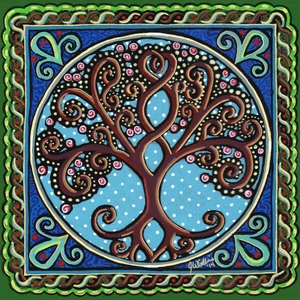
In every life, there are uplifting moments and anxious moments, there are inspirational times and times of despondency. There are times when the heart is disconsolate. Some of these prayers read like hymns and could be sung as psalms. Others search the heights and depths of our faith.

With hope that you will find a sense of their deep peace, I commend these prayers, blessings and sacred art to you as an attempt to express that God is with us, always, and that in God we live and move and have our being.

Deep peace to you

32072582-2242-46F1-A21A-3560036A395F

D716109E-E232-4CF7-83BC-247DF08EBF18Prayer for evening rest

I lay my head to rest,  and in doing so,
I lay at your feet
the faces I have seen,
the voices I have heard,
the words I have spoken,
the hands I have shaken,
the service I have given,
the joys I have shared,
the sorrows revealed,
I lay them at your feet, and in doing so
lay my head to rest.


635E2A28-E43A-4BCD-8F34-6305A17273DCI arise today

I arise today
Through a mighty strength:
God’s power to guide me,
God’s might to uphold me,
God’s eyes to watch over me;
God’s ear to hear me,
God’s word to give me speech,
God’s hand to guard me,
God’s way to lie before me,
God’s shield to shelter me,
God’s host to secure me.

(first millenium – bridgid of gael)


8BD9F9D4-214E-41CA-B1FA-B86294928292Blessings of light

May the blessings of light be upon you,
Light without and light within,
And in all your comings and goings,
May you ever have a kindly greeting
From them you meet along the road.

May the nourishment of the earth be yours,
May the clarity of light be yours,
May the protection of the ancestors be yours.

May dawn find you awake and alert, approaching your new day with dreams, possibilities, and promises.
May evening find you gracious and fulfilled.
May you go into the night blessed, sheltered, and protected.
May your soul calm, console, and renew you.


40834FE7-48A9-49E1-AE4F-AEB48034D18EThrough the day

As the sun scatters the mist
at the dawning of a new day,
So you calm our fears and anxieties
if we trust you.
You give us strength and courage
to live our daily lives
knowing you are with us
and we do not walk alone.
As the midday sun warms us,
we feel your protecting arms around us
and sense your loving presence.
As the sun sinks in a kaleidoscope of colour
you give us hope and renewal.


7AD0C7EE-0F8D-4414-B99B-71D195BE3957

Dawning of the day

From the dawning of the day through the morning,
guide us,
from the noontide to the setting of the sun,
lead us,
from the evening till we sleep,
keep us,
through the night till daybreak,
protect us,
and all for your love’s sake.
Lord of the day
, Lord of the sunrise,
we give thanks for the birth of each child,
for the freshly opening rose,
for all newborn animals.
Lord of the morning,
we give thanks for energy and enthusiasm,
for the challenges of a new day,
for your Resurrection power.
Lord of the noonday,
we give thanks for the ability to work,
for all we can achieve,
for unrealized potential.
Lord of the sunset,
we give thanks for those who have died
in the faith of Christ,
for all who have inspired us, for our loved ones.
Lord of the night,
we give thanks for rest and refreshment,
for all your love and care,
for the promise of a new day.


F7E8C76C-DEB3-480C-9AF5-99166136E691Comings and goings

In our coming and going,
guide us,
in our living and our being,
protect us,
in our seeing and our hearing,
enrich us,
in our thinking and our speaking,
inspire us,
in our arriving and our departing,
preserve us.


A4E2837D-29C3-4A90-8539-636F307D3B25Morning mist

As the morning mist shrouds the river
and is then lifted by the gentle rays of the rising sun,
so may our clouded spirits be raised
by the warmth of your love.


6816D648-8E81-4524-BB93-740C91627A31This day and every day

I arise today
in your strength to uplift me,
in your power to direct me,
in your love to enfold me,
in your wisdom to guide me,
in your way to lead me
this day and every day.


A3EA52D1-2DA4-4020-A826-8C5FDA2A4C97


May God, the God of all comfort, encourage your heart and protect you from despair. May God’s face shine upon you as you rejoice in the midst of troubles and trials, putting your faith in God and being confident of God’s lovingkindness toward you. May Christ our Savior lift up blessings upon you with the riches of God’s joy and may He grant you on this day deep peace in your heart and soul. Amen.


Contemplation, Creativity, Discovering, Epiphany, Growth, Inspiration, peace, Relationship, Restoration, Resurrection, Self Awareness, Silence, Spiritual growth, Stories, Transformation, Writing

Magical

3C204C9C-C33B-4AC8-BE97-D8784E8A5D96
Magical Night: A painting by Teressa Nichole

Tell your story. Shout it. Write it.
Whisper it if you have to.
But tell it.
 ― L.R. Knost

These words of LR. Knost are so very true.

During the weeks of Lent, I helped lead a writing group at my church. What a rich experience it was for me — watching each group member spending quiet moments meditating and contemplating the ripples of his/her life. Then witnessing one person after another begin to write as if they were expecting transformation, telling their stories, writing down the highs and lows. It was almost magical.

It seemed as if I saw the throes of stress leave their spirits. It seemed as if I watched their expressions of pain ease as pen flowed across paper. It seemed at times as if a weight was lifted, an emotion discovered, a community created, a sense of understanding settled in.

I know this: no one left the room with a broken spirit or a weight they could not carry. Instead, they left the room in covenant with one another, knowing that someone cared deeply about their story. They left the room knowing that, in this intimate space, they could spew out whatever they needed to release or they could be silent in a peaceful sanctuary of acceptance.

That Sunday School room in the tall-steepled church at the top of a street in Macon, Georgia known as High Place became a sacred space for just a brief time. It became a place almost magical, a place of rest, a place of comfort, a place where each person could feel that they were not alone and that they would never feel alone again. Truly, that was magical.

I end today’s blog post with these words written by L.R. Knost:

Tell your story. Shout it. Write it.
Whisper it if you have to.
But tell it.
Some won’t understand it.
Some will outright reject it.
But many will
thank you for it.
And then the most
magical thing will happen.
One by one, voices will start
whispering, ‘Me, too.’
And your tribe will gather.
And you will never
feel alone again.

Amen.

Contemplation, Discovering, God's presence, Inspiration, life, Life Journeys, Nature, Spiritual growth, Stars

Holy Wondering

7CD31664-E73F-4B6B-B168-4291D78B28DBWandering may well be a spiritual discipline. Many years ago, young Annie Morgan sang about it as she wandered in the hills and hollows of Appalachia. . . “I wonder as I wander out under the sky.”*

Wondering while we wander makes wandering a spiritual act. It is not merely aimless meandering. Nor is it rolling on pointlessly as if there is really nowhere to go. It is not wandering around in circles because we are hopelessly lost. It is more like a contemplative journey of discovery. J.R.R. Tolkien observed a truth about wandering. He said, “Not all those who wander are lost.”

We wander, most certainly, but might there be a purpose in our wandering? Suppose our wandering becomes a joy to us. Suppose we learn and grow as we wander about. Suppose our wandering leads us to a deeper relationship with God. Suppose in our wandering we do some wondering, looking up into the sky for new light and sparkling new thoughts that change our lives forever.

So I wonder . . . How are the stars set in their places? Apart from the certainties of astronomy, of course.

I wonder . . . Why does the sun rise every day, and then set in a wondrously painted sky at dusk making way for the rising of a luminous moon? Apart from the scientific explanation, of course.

Wondering is not about science at all. It is about discovery of beauty in most unlikely places. Perhaps it is about practicing mindfulness atop a majestic mountaintop, or contemplating life on the edge of the sea, or meditating in a forest filled with all manner of living things. It is about the exploration of the heart to know its deepest desires and longings. It is about looking into the soul, and there finding both the intense pain and the tender healing that completes a life.

A well known Christmas carol, “I Wonder as I Wander”* was first sung by young Annie Morgan, a destitute girl in Appalachian North Carolina. At a Christian fundraising meeting, Annie stepped out on the edge of the platform and stood before a crowd of people. Although she wore rags, unwashed and in shreds, she stood proudly. It is said that she smiled as she sang, “smiled rather sadly, and sang only a single line of a song the people had never heard.”

I wonder as I wander out under the sky . . .

I imagine that Annie, a girl living in poverty, wondered about many things as she wandered through the Appalachian mountains. She probably wondered about the stars in the sky, the rising and setting of the sun, the brilliant moon that lit the path before her in the night. I imagine she wondered about God and about the ways God might be present with her. I imagine she wondered about herself and about what would become of her. Like her, we wander through this life, mostly alone.

As this is my very own blog, I can freely change tenses to say with great certainty that, as I have wandered through many years, I have grown by myself, but not alone. For as I wandered, I learned to wonder.

So I highly recommend wandering for the sole purpose of wondering. Our wondering might well reveal the longing in our hearts. Our wondering might lay bare the pain hidden in our souls, but also show us the balm of healing that dwells there. Our wondering might open up a place within us to hold God, all of God, more completely than ever before.

I don’t know about you, but I plan to do even more wandering. And on the journey, I will pour myself into some holy wondering. Who knows what I might discover!


* “I Wonder as I Wander” is a Christian folk hymn, typically performed as a Christmas carol, written by American folklorist and singer John Jacob Niles. The hymn has its origins in a song fragment collected by Niles on July 16, 1933.

While in the town of Murphy in Appalachian North Carolina, Niles attended a fundraising meeting held by group of evangelicals. In his unpublished autobiography, he wrote of hearing the song:

“A girl had stepped out to the edge of the little platform and began to sing. Her clothes were unbelievable dirty and ragged, and she, too, was unwashed. Her ash-blond hair hung down in long skeins…. But, best of all, she was beautiful, and in her untutored way, she could sing. She smiled as she sang, smiled rather sadly, and sang only a single line of a song.”

The girl, named Annie Morgan, repeated the fragment seven times in exchange for a quarter per performance, and Niles left with “three lines of verse, a garbled fragment of melodic material. In various accounts of this story, Niles hears between one and three lines of the song.

Based on this fragment, Niles composed the version of “I Wonder as I Wander” that is known today . . . His composition was completed on October 4, 1933. Niles first performed the song on December 19, 1933, at the John C. Campbell Folk School in Brasstown, North Carolina. It was originally published in Songs of the Hill Folk in 1934.

Change, Contemplation, Illness, Silence, Spiritual growth, Transformation, Waiting

The Truth Is

3F006831-75A4-4D11-AABD-DDA91B9AF938The truth is I never expected to have an illness with the ominous descriptor “end stage.” I never saw it coming, but after a very brief, sudden and inexplicable illness, I was diagnosed in 2014 with end stage kidney disease. I was put on dialysis immediately and spent the rest of that year struggling and suffering.

The truth is I lost myself that year. For a time, I lost the ability to walk, think, name my colors, write my name. I lost my ministry and my ability to engage in the work I so loved. I ended up on seven and a half hours of dialysis daily.

The truth is that those many days, most of them spent in the hospital, may well have been sent to me as a call to awaken from my predictable existence. It was as if an inner, divine grace was demanding my spiritual growth. The truth is I was plunged deeply into a state of being filled with questions and voices I did not really want to hear. If all of this was a message from God, it was the message that all of my illusions, realities and identities were about to spill over the sides of my life, forcing me to stand still in the chaos.

The truth is that apart from this level of life upheaval, I would have lived on as usual, comfortable in the life I had built for myself. But in the middle of those long nights in the hospital, I asked God if this was a new summons to me, an urgent summons that called for my transformation.

I have trouble describing that time of my life. I have struggled for the words to express what was going on in me. Then I found a brilliant description written by one of my favorite authors. This is how she described a similar season in her life.

For months I had been lost in a baffling crisis of spirit . . . I had awakened to a growing darkness and cacophony, as if something in my depths were crying out. A whole chorus of voices. Orphaned voices. They seemed to speak for all the unlived parts of me, and they came with a force and dazzle that I couldn’t contain. They seemed to explode the boundaries of my existence. I know now that they were the clamor of a new self struggling to be born.

– From When the Heart Waits: Spiritual Direction for Life’s Sacred Questions by Sue Monk Kidd

Bingo! Whatever my year of illness was about, I knew it was about “the clamor of a new self struggling to be born.” The truth is that is exactly what occurred in me. The new self was about to show itself. It was on the verge of emerging and morphing so that “who I am” became someone I hardly recognized. My family commented often that I had become very quiet, that I seldom spoke (very unlike the person they knew).

The truth is I really was quiet, even silent at times. But I see now that it was all about this season in my life, my time to listen to God, to listen to my deepest self, to hear those “orphaned voices” that had been silent for a lifetime. Would this be a transformative experience for me?

The truth is I did not want to be so sick. I did not want to feel that bone-deep fatigue. I did not want to be tethered to a dialysis machine for so many hours every single day. I did not want to lose my ministry. I did not want to lose the self I was so comfortable with. I did not want to lose my gregarious personality, becoming quiet, introspective and silent. I did not want to live this season of life.

The truth is I did not want to build a cocoon around my life and wait, wait, and wait, and wait some more for my new life to emerge. And I did not want to give thanks to a God who employed such a severe means of transformation for me.

But the real truth is that I found this tiny scripture passage to be completely and mercifully true.

In everything give thanks; for this is God’s will for you in Christ Jesus.

– 1 Thessalonians 5:18 New American Standard Bible (NASB)

Thanks be to God. Amen.

Belief, Contemplation, Judgmental, Mysticism, Sharing God's light, Spirituality or Religion?, Transformation

On Being a Mystic

IMG_5941
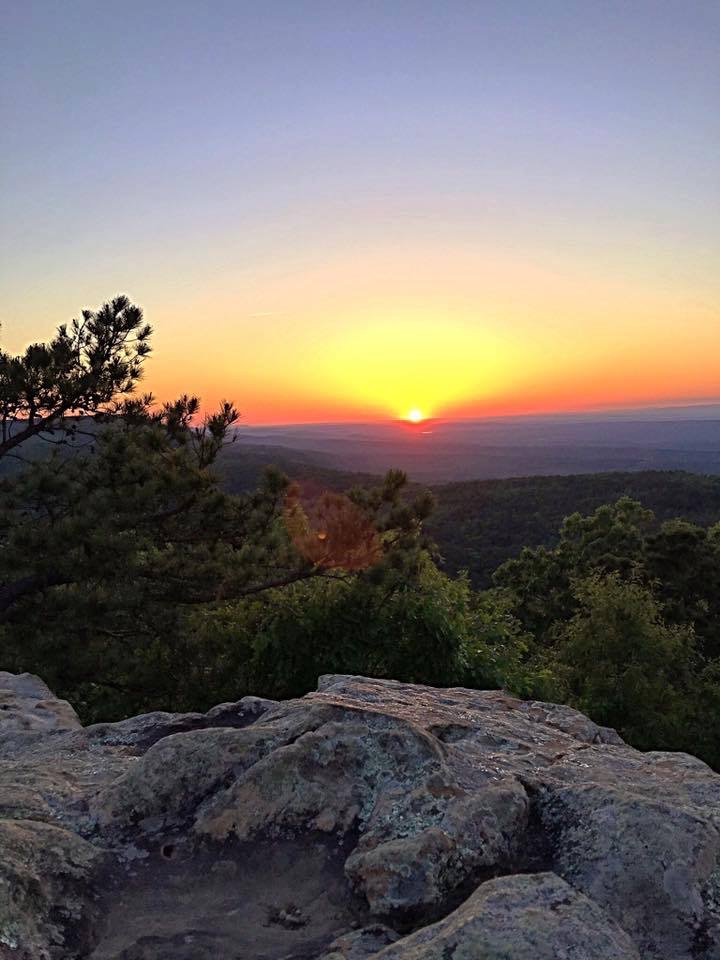
A breathtaking sunset over Arkansas’ Mount Nebo photographed by Josh McCray.

Some Christians tend to be frightened by the word “mysticism.” The word “mystic” raises irrational fears based on a misunderstanding of mysticism as a part of the Christian’s spiritual experience. So what exactly is a mystic? A mystic is simply one who has moved from mere belief systems to an actual inner experience with God.

That brings us to the sticky concept of belief systems. Christians definitely have belief systems, sometimes rigid and judgmental belief systems. The reality is that there is never a shortage of persons spouting out their beliefs, beliefs that are often based on systems of fake religious piety.

A life lived in the spiritual realm of God is much, much more than a set of rigid beliefs. Spirituality is much more than what we think or what we say. Spirituality is who we are, our inner spirit, our soul that dances to the rhythms of the God who dwells within us.

Richard Rohr understands the inner spiritual experience.

Until people have had some mystical, inner spiritual experience, there is no point in asking them to follow the ethical ideals of Jesus or to really understand religious beliefs beyond the level of formula. At most, such moral ideals and doctrinal affirmations are only a source of deeper anxiety because we don’t have the power to follow any of Jesus’ major teachings about forgiveness, love of enemies, nonviolence, humble use of power, and so on, except in and through radical union with God. Further, doctrines like the Trinity, the Real Presence, and the significance of Incarnation itself have little active power. They are just “believed” at the rational level.

– Richard Rohr, Center for Action and Contemplation

Any of us can believe at the rational level. We can easily formulate a set of personal doctrines, doctrines that often hold us captive to self-righteousness and rigid relationships with others. To be truly free is to be open to the winds of the Spirit, to rest in the presence of God, to follow Christ into places of deep need, to give ourselves over to inner spiritual experiences.

When we live in the comforting place of the mysticism of spirituality, we will not find in ourselves a judgmental spirit that uses our beliefs to denigrate those whose beliefs differ from ours. We will not find in ourselves the need for the criticism and condemnation that results in divisions.

What we will find within ourselves is the ability to love as Christ loved, the longing to bury our souls in the gentle grace of God, the deepest desire to transform the world around us and thus create the “beloved community.”

So I, for one, want to be a mystic. I want to live in the very center God’s spiritual realm, to be moved by the Spirit, to scatter the love of Christ in all the places I walk.

May God make it so.

Africa, Beauty of Nature, Trees

For the Love of Trees

IMG_5780
Image by Diane Walker@Contemplative Photography

I have had a lifelong love affair with trees. Trees have inspired and strengthened me in many ways. The huge magnolia tree from my troubled childhood was a place of safety, giving me a place to hide from danger, offering to me a place to feel protected.

Miss Martha’s sprawling fig tree on the edge of our back yard bore wonderfully unusual fruit, soft and sweet and delectable. Her plum trees were loaded with plums, sweet and sour and delicious both ways. The fond memory I have of Miss Martha’s trees is punctuated with an angry Miss Martha catching us stealing figs and plums, yelling at us with an ominous voice, and chasing us from her yard.

The African plains graced my life with the gift of watching giraffes feeding on flat-topped thorn trees and elephants pushing their weight against misshaped baobab trees. The colorful swaying of ten foot tall bougainvillea trees was a mesmerizing sight. And in Africa, poinsettia plants are trees, trees like I had never before seen.

IMG_5782  IMG_5781

IMG_5783  IMG_5784

Beyond this crash course on botany, and dendrology, I share a heart-and-soul love of trees. It is almost a spiritual connection for me, one that keeps me fully grounded, one that represents life, growth, rootedness, protection and sheer enjoyment.

My friend, Elaine, writes a beautiful blog entitled The Edge. In today’s blog post, Elaine shares a quote about what we learn from trees written by Diane Walker. (https://theedgeishere.wordpress.com/2017/08/10/contemplative2017-rooted/)

It’s possible, you know — we learn it from the trees —
to be full of grace and humor, dancing in the light
while remaining fully grounded,
rooted in the gravitas of being . . .

– Diane Walker

God is pleased, I think, when we dance in the light full of grace and humor. We learn it from the trees, Diane Walker says. I believe she’s right. So today, I will be spending a few moments sitting in the shade of our Chinese Tallow tree and swinging underneath a towering Pin Oak. Perhaps in the leaves that rustle gently in the breeze, I will hear God’s  whispers.


Contemplation, Darkness, Faith, Fear, Grace, grief, Loss

In the Dark


IMG_5755

I was asked recently to write about faith and chronic illness. The request prompted me to recall the year I lived in the dark, the year that I was so seriously ill. It made me think about the losses I have experienced since the diagnosis of end stage kidney disease. It reminded me of the freedom I have lost because of the eight hours I spend on dialysis every day.

The truth is that, in 2014, I thought I was going to die. The greater truth is that I did not die. In fact, I slowly grew physically stronger. Spiritually and emotionally, I descended into grief and despair and somehow managed to emerge with fresh hope and deeper faith.

It was a grueling process learning to write again, practicing with the occupational therapist’s endless pages of ABCs over and over until I began to form legible letters. It was hard learning to walk again, regaining the strength and balance I had lost. It was hard being unable to cook, to care for the house, to bathe myself, to browse the web, to do all the simple things I used to do so easily.

To be sure, it was a dark time of frightening uncertainty and doubt. I mourned for the life I once enjoyed. But in time, I discovered an unexpected grace: that spiritual transformation often happens in the dark. The writing of Richard Rohr offers a way to describe this time of my life. This is what he writes.

We seldom go willingly into the belly of the beast. Unless we face a major disaster . . . we usually will not go there on our own accord. Mature spirituality will always teach us to enter willingly, trustingly into the dark periods of life, which is why we speak so much of “faith” or trust.

Transformative power is discovered in the dark—in questions and doubts, seldom in the answers . . . Wise people tell us we must learn to stay with the pain of life, without answers, without conclusions, and some days without meaning. That is the dark path of contemplative prayer. Grace leads us to a state of emptiness, to that momentary sense of meaninglessness in which we ask, “What is it all for?” 

– Richard Rohr

It was indeed “the belly of the beast” for me. And as Richard Rohr writes so eloquently, I needed to learn to “stay with the pain of life, without answers, without conclusions, and some days without meaning.”

Here’s the outcome. Smack dab in the middle of the darkness I experienced, there was God. There was grace. There was transformation. And there was renewed life. Thanks be to God.

Faith, God's presence, grief, Hope, Prayer

Nearer, My God, to Thee

Enlight136

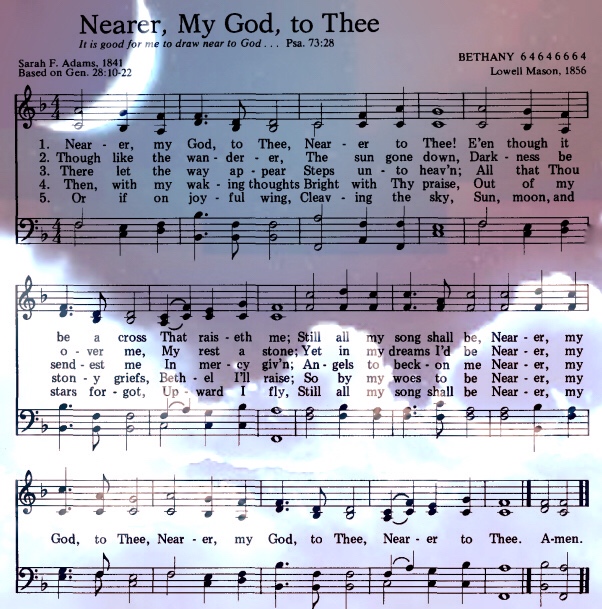
While enjoying some quiet time on my new pergola swing, I listened to the hymn “Nearer, My God, to Thee” sung by Brigham Young University’s male choral group, Vocal Point. It would not be an exaggeration to say that I was transported to a sacred place in those few moments. The hymn I had sung for so many years took on fresh, new meaning for me. It could be because of my aging, my illness, my need for a closer relationship with God. Perhaps the hymn spoke to me simply because I needed it. I have long loved this old hymn and its simple, but profound, message.

Nearer, my God, to Thee, nearer to Thee!
E’en though it be a cross that raiseth me,
Still all my song shall be, nearer, my God, to Thee.

Refrain:
Nearer, my God, to Thee, nearer to Thee!

Though like the wanderer, the sun gone down,
Darkness be over me, my rest a stone;
Yet in my dreams I’d be nearer, my God, to Thee.

There let the way appear, steps unto Heav’n;
All that Thou sendest me, in mercy giv’n;
Angels to beckon me nearer, my God, to Thee.

Then, with my waking thoughts bright with Thy praise,
Out of my stony griefs Bethel I’ll raise;
So by my woes to be nearer, my God, to Thee.

Or, if on joyful wing cleaving the sky,
Sun, moon, and stars forgot, upward I’ll fly,
Still all my song shall be, nearer, my God, to Thee.

– Lyrics by Sarah F. Adams, 1805–1848
Music by Lowell Mason, 1792–1872
Published 1841, Hymn in public domain.

What makes this particular performance of the hymn so compelling is the inclusion of a counter melody. While a solo voice sings the words of “Nearer, My God to Thee” and paints a portrait of a life drawing near to God, the chorus sings a counter melody in Latin. The music is stunningly beautiful. The message reaches the depths of a soul in need of God’s presence. One listener described it like this:

So wonderful. It feels like angels paying a visit to earth with a hymn.

So I want to share with you the Latin text and the translation, which brings new meaning to the hymn.

In articulo mortis // At the moment of death

Caelitus mihi vires // My strength is from heaven

Deo adjuvante non timendum // God helping, nothing should be feared

In perpetuum // Forever

Dirige nos Domine // Direct us, O Lord

Ad augusta per angusta // To high places by narrow roads

Sic itur ad astra // Such is the path to the stars

Excelsior // Ever upward

Why, you might ask, am I writing a music review on my blog today? I suppose my words are an attempt to describe a need for the nearness of God. In times of grief, when sorrow overwhelms, when darkness is all we see, drawing near to a God of compassion is our healing balm and our highest hope. As I contemplate this truth, I am thinking of what was called the greatest disaster in maritime history — April 14, 1912 — the S.S. Titanic sank after striking an iceberg. As the ship disappeared into the vast ocean, Mr. W. Hartley, the ship’s bandmaster, led the band in playing “Nearer, My God, To Thee.”

I pray that, in whatever crisis you face, you will rest in the nearness of God. And I invite you to listen to BYU Vocal Point’s performance of this hymn:


Contemplation, Courage, Covenant, Prayer

Raising Cain

IMG_5745
“The Resurrection of Lazarus.” Oil on canvas painting by Henry Ossawa Tanner, 1896 

As someone born and raised in the south, I know a lot about “piddlin’ around.” I do it all the time, and when the day’s light comes to an end, I always wonder if I have done anything at all worthwhile.

Don’t get me wrong. I heartily approve of some piddlin’ around in life. Especially holy piddlin’ like getting quiet and getting in touch with God. Holy piddlin’ like sitting in silent contemplation can bring God close to me. Praying can take me to a special place for sensing God’s touch. Listening to sacred music opens my soul to the whisper of God.

Piddlin’ can be a very life-giving pastime. On the other hand, some of us God followers long to change the world, to face off against oppression, to do justice, to end wars . . . to do something of eternal meaning.

Our problem is that changing the world can be a heavy burden that we simply cannot carry around for long. The secret, I think, is a balance between pensive spiritual moments with God and those once-in-a-while moments of sparkling mission and calling, those moments when we rise courageously above ourselves and almost see miracles. Truth is, it is not a common happening for us to find ourselves raising anyone from the dead or healing someone who is suffering illness.

It seems that the best we can do is to say to God, “I offer you, God, my silent devotion. And I offer you my willingness to follow your highest calling and your most extraordinary mission, wherever it leads and whatever the cost. Here’s my heart. Do with my life as you will.”

I very much enjoy the writing of Annie Dillard, and she has written eloquently on this very subject. Here’s what she writes.

There is always the temptation in life to diddle around making itsy-bitsy friends and meals and journeys for years on end… But I won’t have it. The world is wilder than that in all directions, more dangerous…more extravagant and bright. We are…raising tomatoes when we should be raising Cain, or Lazarus.

– Annie Dillard

I hope that you will find many of those sacred “be still, my soul” moments with God. But I pray also that you will, along the way, have eyes wide open for those bright and extravagant miracle moments when it just might be possible to raise Cain or raise Lazarus.

Spirituality or Religion?

On Spirituality

image

I have been asked many times to explain the difference between religion and spirituality. So today, I will give it a try.

Most of us long for a sense of connection to something bigger than ourselves, and that Longing typically involves a search for meaning in life. We call that longing for connection spirituality, a universal human experience that touches every person. Spirituality asks its own questions about life and identity, such as:

Am I a good person?
What is this feeling I have deep inside myself?
What does it mean to abide with the Divine?
What is the meaning of my suffering?
What is my connection to the world around me?
Do things happen for a reason?
How can I live my life in the best way possible?

Christina Puchalski, MD, Director of the George Washington Institute for Spirituality and Health, says that “spirituality is the aspect of humanity that refers to the way individuals seek and express meaning and purpose and the way they experience their connectedness to the moment, to self, to others, to nature, and to the significant or the sacred.”

Perhaps the most meaningful explanation of spirituality comes from its root: The word spirituality comes from root words in Hebrew, Latin, and Greek that all mean wind, breath, or air—that which gives life.

In my spiritual quest, I look for the breath that restores my life, the fresh wind of the Spirit that carries me on the wings of the morning, the air that allows me to breathe in the world that surrounds me.


Spirituality and Religion

While spirituality may incorporate elements of religion, it is generally a broader concept. Religion and spirituality are not the same thing, nor are they entirely distinct from one another. The best way to understand this is to think of two overlapping circles like this:

image

Venn Diagram of Religion and Spirituality

In spirituality, the questions are: where do I personally find meaning, connection, and value?
– In religion, the questions are: what is true and right?
Where the circles overlap is the individual experience, which affects the way you think, feel, and behave.


Obviously, spirituality is difficult to define. Words do not seem adequate to describe something that is swirling inside every person. It’s a soul thing, and everyone has a unique soul. But, as always, the words of Bishop Steven Charleston offer us the most eloquent description.

I have been thinking about the cycle of spirituality. It is very much like the rain cycle. First we rise up into the clouds, seeking out inspiration, and then we return to earth, entering into the ground of reality to bring forth new life. Spirituality only works when that cycle continues. Too much time in the clouds and we disconnect. We fail to nourish our own world. Too much time on the ground and we wither. We miss finding renewal. Spirituality is a process, a balance, a constant movement between the high winds of wonder and the organic struggle for the birth of hope.