Activism, Advocate, Beauty of Nature, Bravery, Calling, Committment, Community, Community activism, Conflict, Courage, Dandelions, Faith, Fear, God, Grace, Holy Spirit, Hope, Injustice

Start Something! It’s Easy!

—Mary Oliver

Starting something really is easy, but the pathway from beginning something and then taking it to completion reveals challenges that test our resolve. I always begin projects with enthusiasm and optimism, filled with ideas and plans, but as obstacles arise, my motivation almost always wanes, my progress slows, and distractions multiply. In this environment, fear definitely thrives. But the projects stay on my shoulders as long as I remember them, and so the contrast between the initial excitement versus the realities of sustained effort calls for persistence and commitment. The tumultuous path from beginning to completion can cause me to become weary and quit, just to get the heavy pack of projects off my shoulders.

Of course, most of us can admit that in these days, one important example of our tumultuous path is the dismantling of our democracy. Of course, not everyone agrees about the severity of the situation, but I have to say that in my world, people are afraid, angry, despondent, disheartened . . . although some are elated. Let’s entertain this thought for a few minutes: when people are convinced that real danger is coming, they often gird themselves with “protective gear” (the Bible would say, “gird up your loins”) after which you can attack the stronghold that threatens you. We see an example of this in the protests and/or marches that are happening in cities and towns across the nation and around the world. Let me dare to say this in hopes that no person will take offense. The aim of those who dissent to the actions of the Trump administration are deeply concerned and afraid. Even people of faith are beginning to see this version of the world as something to fear. 

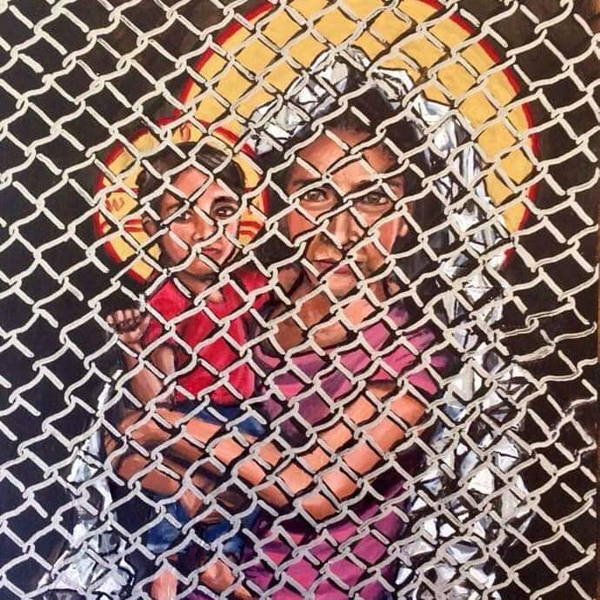
Today, as I write this post, I am thinking of so many people who live in fear: immigrants who are currently locked up like prisoners, children who have been separated from their parents, people who suddenly lose their jobs, thousands of immigrants being rounded up and deported, the community at-large as they lose some of their rights, and even the elected congressional leaders who are afraid of personal repercussions from Donald Tump. Afraid! All of them afraid!

“Here is the world. Beautiful and terrible things will happen.
Don’t be afraid.”

― Frederick Buechner, Beyond Words: Daily Readings in the ABC’s of Faith

You see, whether we support the relentless changes in our government or not, Mr. Trump is stoking fear among Americans as he dismantles institutions, agencies, and departments. Let me list some of them: The Department of Education, the Department of Health and Human Services, the Departments of Agriculture, Defense, Energy, Housing and Urban Development, and Transportation. And then there is the layoff of thousands of federal employees, the closing of USAID, and the indiscriminate and inhumane deportation of thousands of immigrants and immigrant U.S. citizens.

The question I ask myself over and over again is whether there is anything I can do to help end this destruction. Is it really true that starting something is easy? Not always! So what can I do to help change our trajectory. Am I kidding myself? What can one person with zero power do to end this? The answer is “nothing” every time I ask! Good intentions I may have in abundance, but the answer in my spirit does not change, “There is nothing one person can do. I have no power.”

Yet, for all of us who are people of faith, there is always an opportunity to live out our faith through our actions, and within a faith community. Perhaps we can make a significant change, together.

Jesus is our example, showing us how to heal destructive acts committed by power-hungry, destructive people. Jesus left us instructions, as did the prophets, the psalmist, and the epistle writers. Yet, we persist in believing the lie that we have no power. Contemplate these bits of wisdom:

Very truly, I tell you, the one who believes in me will also do the works that I do and, in fact, will do greater works than these      —John 14:12

When you give a banquet, invite the poor, the crippled, the lame, and the blind. And you will be blessed.     —Luke 14:12-14

When Jesus came to Nazareth . . . he went to the synagogue on the sabbath day, as was his custom. He stood up to read, and the scroll of the prophet Isaiah was given to him. He unrolled the scroll and found the place where it was written: ‘The Spirit of the Lord is upon me, because he has anointed me to bring good news to the poor. He has sent me to proclaim release to the captives and recovery of sight to the blind, to let the oppressed go free, to proclaim the year of the Lord’s favor.’      —Luke 4:16-19

But woe to you Pharisees! For you tithe mint and rue and herbs of all kinds, and neglect justice and the love of God.      —Luke 11:40

This is what the LORD Almighty said: ‘Administer true justice; show mercy and compassion to one another. Do not oppress the widow or the fatherless, the foreigner or the poor. Do not plot evil against each other.      —Zechariah 7:9-10

Defend the cause of the weak and the fatherless; maintain the rights of the poor and oppressed. Rescue the weak and needy; deliver them from the hand of the wicked.  —Psalm 82:2-4

He raises the poor from the dust and lifts the needy from the ash heap.   — Psalm 113:7

Speak up for those who cannot speak for themselves, for the rights of all who are destitute. Speak up and judge fairly; defend the rights of the poor and needy.  —Proverbs 31:8-9

Learn to do right; seek justice. Defend the oppressed. Take up the cause of the fatherless; plead the case of the widow.   —Isaiah 1:17

Loose the chains of injustice and untie the cords of the yoke, to set the oppressed free and break every yoke . . . share your food with the hungry and provide the poor wanderer with shelter— when you see the naked, clothe them.     —Isaiah 58:6-7

Do not neglect to show hospitality to strangers, for by doing that some have entertained angels without knowing it. Remember those who are in prison, as though you were in prison with them; those who are being tortured, as though you yourselves were being tortured. —Hebrews 13:1-3

Speak up for those who cannot speak for themselves, for the rights of all who are destitute. Speak up and judge fairly; defend the rights of the poor and needy.     —Proverbs 31:8-9

Defend the cause of the weak and the fatherless; maintain the rights of the poor and oppressed. Rescue the weak and needy; deliver them from the hand of the wicked.  —Psalm 82:2-4

Do not neglect to show hospitality to strangers, for by doing that some have entertained angels without knowing it. Remember those who are in prison, as though you were in prison with them; those who are being tortured, as though you yourselves were being tortured. —Hebrews 13:1-3

Speak up for those who cannot speak for themselves, for the rights of all who are destitute. Speak up and judge fairly; defend the rights of the poor and needy.     —Proverbs 31:8-9

Learn to do right; seek justice. Defend the oppressed. Take up the cause of the fatherless; plead the case of the widow.      —Isaiah 1:17

Loose the chains of injustice and untie the cords of the yoke, to set the oppressed free and break every yoke . . . share your food with the hungry and provide the poor wanderer with shelter— when you see the naked, clothe them.      —Isaiah 58:6-7

Defend the cause of the weak and the fatherless; maintain the rights of the poor and oppressed. Rescue the weak and needy; deliver them from the hand of the wicked.  —Psalm 82:2-4

“My commandment is this: Love each other as I have loved you.
Greater love has no one than this: to lay down one’s life for one’s friends.”

And we claim we have no power! Nothing is farther from the truth. It is not a new revelation that faith will be the holy impetus, the power, that pushes us into kindness, compassion, and love. This kind of kindness, compassion and love will inspire us to head into the rancor and division that currently seems to be having its way. I doubt we will ever see, in my lifetime, the completion of a more gentle and loving community of acceptance and compassion. I don’t believe we will all swing doors open instead of locking them.  I doubt we will complete the work that respects all humanity, but starting the task is easy, and important. As far as finishing the work we have chosen, maybe its “a roll of the dice” sort of thing, or a “stroke of luck,” or being in the right place at the right time. Perhaps it has more to do with being anointed by God to make change through care, compassion, and even anger. 

So I will look for you on the streets as you lead the people to the arc of justice. I will listen for your voice when you are proclaiming the evils of injustice on every corner! I will join in your song that celebrates a new day of peace, love and compassion. I will sense your sacred time of reaching out to God in prayer and lament. I will celebrate when your anger turns into righteous anger that defends the people among us who need protection.

We can start one of two ways. We can fight in anger, motivated by our rage, and risk completely destroying something we are trying to fix. We can do it through sheer human strength and force, knowing we have the power to succeed. Or we can try the better way: the tender way that leads us to solitude, meditation and prayer, and reminds us of dandelions letting go of their seeds. I think that being committed to become part of needed change is holy work. God has anointed us to confront the wrong; Jesus gives us the gift of his example of walking a sacred path; the Spirit gives us the wind to go where we need to be. Can you see yourself looking almost like a dandelion blowing its seeds about in a soft breeze? I can see it!

2024 election, A blessing for voters, Activism, anxiety, Belonging, Betrayal, Bewilderment, Bitterness, Calm, Challenge, Change, Community activism, Courage, Darkness, Daybreak, discouragement, Exclusion, Faith, God, God's presence, God’s creation, healing, Heartbreak, Hope, Kneeling Places, Lament, Liberty, Mourning, Patriotism, Pilgrim, Politics, Pondering, Prayer, Repair the world, Rev. Kathy Manis Findley, Unanswered Prayer

Prayer in Response to Tragic Victory


Together, we will transform our grief into a force for change that will build a more just, equitable society that respects the dignity of all people.

— Omar Angel Perez,  Immigrant Justice Director, Faith in Action

This is my prayer of Hope for the living of these days and my lament for almost losing my faith. It is a too-long treatise, because I release my profound grief through writing. It’s a too-long lesson to teach my class, because at our meeting time, everyone is a spent body of exhaustion that can hardly respond to dark and serious topics. It’s a too-long sermon to preach, because at minute 38.6, the congregation will start leaving. Most of all, it is a too-long dumping of grief. But still my prayer

Guard your hearts and may the week ahead freshen your hope, Kathy


Creator, Spirit of God, Star of the Morning, Son of the Dawn ~

We give you praise for creating each of us and placing us in the brilliance of Holy Light because last Tuesday’s election has left so many of us in a very dark place. We thank you, Creator God, for naming us your beloved children, even if others name us with hurtful words. Yes, it is true, this past election week has been hurtful to so many people. In fact, the entire election season has caused anxiety for at least a few of us. And the outcome? Well, God, I almost said you let us down, but I know better. Still “let down” is only a fraction of the emotion that now hangs closely around us. So, God, if you wouldn’t spare us from our president elect, could you please touch our souls with a gentle hand of comfort and hope.

Gentleness is one thing we need, maybe to minimize the harsh names and the contempt we have endured from our misogynistic brothers and sisters. The outcome of the election has left us feeling disconnected from many of our friends, neighbors and family members. God, you know our emotions and you understand our sense of feeling discarded. You know our fear, confusion and despair. Help us, Mother snd Father God, to remember that you have whispered our names. We are your beloved daughters facing the world with the name you gave us.

One election! Just one has this much power over us! We must have taken a wrong path somewhere along the way, because repairing the world was the real goal, and our destination was to create a community of love, care and decency. We did not make it there, God, and we feel a bit like pilgrims and strangers in a land we have never seen before. We imagine how exiles must feel, and recall a letter from Jeremiah to people in exile, “You will search for me and find me when you search for me with all your heart.”

It was just an election, but it rocked us to the core and left us wandering aimlessly on unfamiliar paths and turns. Yet, we are comforted still by sensing your presence with us. Every journey has paths and turns that can lead us to unexpected danger and unprecedented harm. Paths and turns can be disconcerting and downright frightening. Paths and turns leave us in uncomfortable unknown places, so that our feet walk in unfamiliar dust. Paths and turns can lead us away from all we’ve known, our comfort-place, our “home.” 

Protecting God, can you stay close to us on this harsh path ahead and protect us?

Now, God, we know you have a teaching moment for us, for to you this rocky path we follow is a holy pilgrimage. We can learn and take in the reality that paths and turns can also lead us to holy moments. Those sacred moments can inspire us to search more fervently for you, God. We did not stop believing in a new season of unity. But someone more powerful than we are has taken over our lives.

Still this week of sorrow is about more than just one election.
It is also about hurtful memories of being pushed out because of who we are or what we look like. 
It’s about the pain of being “othered” and never fitting in.
It’s about being diminished over and over again.
It’s about people who need to measure us by our wealth or power. 

There are so many better measures out there. Help us God, to throw away false tools that can only try to measure who we are, but can never measure the Light in our souls or the dreams of our hearts.

For our nation, O God, we ask for seemingly impossible unity and for as much love as we can muster between brothers and sisters. We ask you, God, to restore our hope, bring us to our feet, teach us to stand and set us on our path once again.

God, make of us peacemakers, consolers, and healers of harm. Help us control our tongues, so that we Will always speak respectfully of others. Help us spend holy moments in lament and deep prayer that can re-enliven our souls.

I confess, God, that I am failing at that right now. My soul is filled with anger and disgust. My spirit is not at one with love, but with hate directed at those who managed to do this shameful thing to our nation. I am full of confusion about how this happened; what exactly has happened; what will the repercussions be; how serious is the threat to our future; and specifically what must I do now as one person to minimize the harm for myself and all of us?

In such a time as this, God, I see myself kneeling in your holy presence with a shattered spirit and a broken heart. I see myself questioning how it is that you have the ability and the will to organize the universe, but you do not. I need the breath of Spirit to order my thoughts. I need moments of confession to name my sins. I need to repent of my own actions, whatever they are, because my action or inaction may have helped cause the results of this election.

Even now, leaders—that is political people, elected officials, teachers and professors, ministers, rabbis, Imams, priests, bishops, chaplains, etc.—are encouraging us with hope. Emails still flood my inbox, like, “We can’t give up. Let’s roll up our sleeves.” I have noticed that many people say they can’t think about it right now. They are wise to stop and tend to the grief in their souls.

I feel useless, dismissed, disrespected and weary, God. I even feel that I have completely lost my hope for brighter days. I know that losing hope is a dire place to be, because losing hope almost admits that I have also lost my faith. Yet, even in this very moment, God, you are whispering to me:

Beloved daughter, you are not just ‘one person,’ You are one person of God. A child of God. A beloved daughter. A woman whose spirit is whole with a sacred calling to shepherd the lost and weary ones.”

When circumstances, words, or people threaten us, God, help us respond with decisiveness, truth, kindness, grace, forgiveness, and respect for our brothers and sisters, our neighbors and friends, our classmates and co-workers. Because being harsh to one another can not quickly heal the wounds of political discord, or any other kind of near-fatal wound. It will take time to cast out the dark presence whose only purpose is to darken our souls and leave us in profound darkness.

In this goal, in this time, God, the dark presence has succeeded, and we need you, God, more than ever. We see the truth that we are dangerously vulnerable right now, and that we must fight against spiritual despondency. 

Creator, Spirit of God, Star of the Morning, Son of the Dawn ~ hold us near until the danger has passed. (If it ever passes!) If you can, God, speak peace to the dark presence that is still maneuvering that will harm our democracy and our souls. 

Hold us close in the brilliance of your Light, Creator God! 

Place us securely in your Light, Star of the Morning!

Hold us fast in your Light, Spirit of God!

Draw near to us and grant us Light to see daybreak, Son of the Dawn!

Mother and Father God, we will stand tall in the evil day, if you will help us refresh the Light that lights the world and brightens our hearts.

In this evil day, God, meet us in our sacred place. As we lament, restore our hope and strengthen our faith in this time of grief and confusion. Restore our spirits, God. Restore my spirit, God! 

Creator God, Mother and Father of the universe, fill us to overflowing once again. Cover our bodies and fill our souls with fresh hope, the living hope that guards our faith from any evil.

Amen.

Child protection, Children, Compassion, Conflict, Confusion, Consolation, Darkness, Despair, Determination, Fear, God’s Mercy, grief, Gun violence, Justice

After the Horror

Poem by Rev. Kathy Manis Findley
September 7, 2024

Appalachee High School
Winder, Georgia, USA
September 4, 2024


A woman of sacred worth, Becoming, Beginning again, Bravery, Calling, Change, Children, Committment, Courage, Creating, Dreams, Freedom, God’s beloved daughter, I am enough!, Inner peace, life, Living in the soul, Miracles, Repair the world, Rev. Kathy Manis Findley, Self-understanding, Spirit wind, Tears, Tikkun Olam, Valued by God

Living an Unapologetic Life

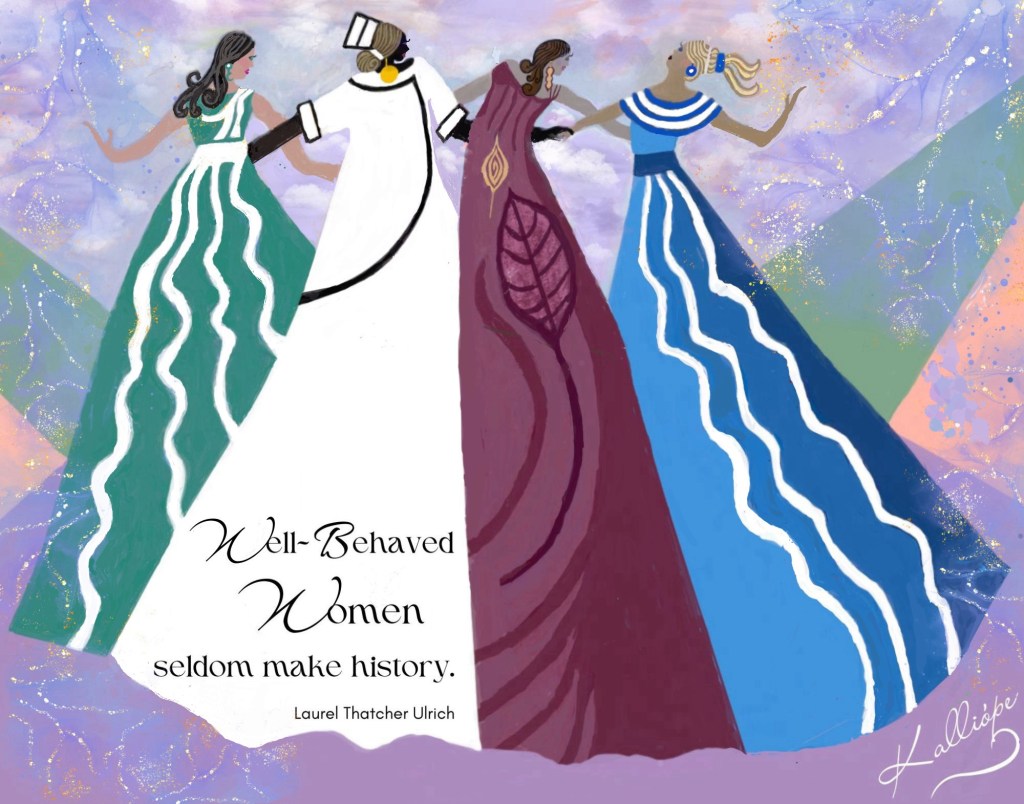
Art: “Well-behaved Women” by Kathy Manis Findley


Rev. Kathy Manis Findley
July 27, 2024

You have probably had that kind of dream at a few junctures on your journey. I know I had many dreams along the way. Sometimes they scared me to death. I dreamed of peace, equality, freedom, changing the world, and many other huge and noble dreams. I dreamed some silly dreams, too! I soon got the hint: changing the world is a formidable task. I followed all the rules, but being a rule-keeper does not make a person effective in dreaming and imagining. Women who follow the rules (someone else made up) could correctly be called well-behaved. They might even be called good girls because they don’t cause much of a flurry. They typically don’t make history and they certainly don’t change the world.

A woman with less-than-good behavior looks like someone at peace with herself, someone who radiates hope, someone with the courage and determination to do justice. I have admired and emulated so many examples of women who did make history, women who were not well-behaved at all. Here are only a few: Rosa Parks, Harriet Tubman, Lucretia Coffin Mott, Sojourner Truth, Susan B. Anthony, Nancy Sehested, Elizabeth Cody Stanton, Prathia Hall, Julian of Norwich, Malala Yousafzai, Mother Theresa of Calcutta, Ann Hasseltine Judson, Lucy Stone, and so many others!

About 24 years ago, a chaplain colleague recommended a book to me: Goodbye Good Girl: Letting Go of the Rules and Taking Back Your Self by Eileen M. Clegg. I think my chaplain friend was suggesting that I should get out of my comfort zone and take some risks, that I should courageously follow God’s call on my life. I knew that the members and churches of my denomination would “throw a fit,” like we say in the south! After all, I was an ordained minister serving as a hospital chaplain, which placed risky challenges before me every day.

So I read the book immediately and set out to become a bad girl, a girl who fully intended to change the world and to make history for it! So far, I have not made history. I have not managed to put my name in lights. I have not started any big public movements. But I have done some things that matter! I have learned how to create sacred space; I have learned the depth of liberation theology; I have found enough grace to endure the consequences of being a “bad girl” and then a woman with questionable behavior; I have held off anyone who tried to tell me who I am; and I have called up the courage to fight for justice. Colleagues, friends, family, co-workers reacted to the change in me, since they never expected me to dissent, or disagree, or refuse to behave.

Suddenly I let go of my “good girl” image and basically said “goodbye” to my restrictive behaviors. I took back my life, put aside all the rules, and followed my soul. I watched for the winds of the Spirit to lead me, and I moved forward to all the places that needed some attention. I was able to help change unjust systems, unjust policies, and unjust processes by not being so well-behaved.

Still, I sometimes think I have reached an uneasy place when it comes to letting go of my “good girl” persona. I’m really not a “good girl” and I don’t think I ever have been. My parents had to endure the sassy exclamations of my toddler years, like “Nobody’s the boss of me!” Creating shock from those who knew me, I mostly remained a “bad girl” from that day to this. I set aside the rules that were designed to keep people down and I took back my life. Today—in my mid-seventies—I continue to spew out uncommon proclamations that are quite annoying to those who are determined to hold on to their power and resist change.

Truly, it was sometimes hard being a change-maker and a rule-keeper! Always a people pleaser. Always the ultimate perfectionist. I discovered along the way that sometimes rule-keeping, people pleasing, and keeping every little thing “perfect” can harm your inner core. In fact, it’s less risky when you follow the leaders, make sure everyone is pleased, and doing everything with glowing perfection. Stepping out of line is always a bit dangerous.

When you become exactly who you are, resolute and unmovable about the things that matter to you, you will raise a few eyebrows, and sometimes people will get angry with you . You see, those people expected something else from you. Each of us becomes “me”— the “real me”— at our own peril. In a sense, we have to fight for the right to be ourselves in the world.

It is true that the people around me reacted strongly when I took back my life and became fully invested in my destiny. They thought that I had become radical, maybe even unhinged. I did not respond appropriately to their demands. To unreasonable demands, this is essentially how I might have responded, sometimes out loud, sometimes under my breath . . .

I will do it. / It’s my right! / It’s my choice! / It’s my prerogative! / It’s my decision! / I’m doing it anyway. / You can’t stop me! / Just watch!

All the while, I felt uncomfortable because of so much disdain from others, who began sending me a new message, You are not enough! I Imagine that many of you have heard someone say to you, You are not enough. At least, we may imagine someone saying those hurtful words. Unfortunately, we believe it because we don’t know ourselves, meaning we don’t know our bright and dark places, we have not yet realized our sacred worth, and we have not yet searched our souls.

For you see, you and I are afraid because it is perilous for the soul when we don’t search diligently for our soul’s passions and dreams. You and I sometimes accept what others say about us and tuck it away in our deepest places. When those words sneak all the way down into the soul, we tend to give up. We start from the moment we make ourselves nonchalant about it all, that moment when we shield our hearts from hurt. One of the saddest phrases we use is “I don’t care.” When we no longer care, we begin, one by one, eliminating the people around us, never realizing that they are hurting, too. And maybe the reason they send the message, You are not enough, is because they believe that they are not enough either.

I can honestly say that I have often heard voices—known voices, unknown voices, and the weak little voice in my head—telling me, You are not enough! I have learned that once I have embodied that negative message, it rolls around in my psyche for a long time, maybe forever. It becomes a state of being that goes deeper than skin. It penetrates in deeper places, and takes its toll on my emotional and physical well-being. I recall many such times, none more painful than the wagging tongues around my ordination . . . You know the scenario, “She can’t be a minister because she is a woman! Anyway, she’s not good enough! Other voices are often hazardous, dangerously breaking down our sense of self-worth. They may be yelling, speaking in a normal tone, whispering, or imagined in our heads. In response, we must prepare ourselves to hear the voice above all voices, saying, “You are my beloved daughter with whom I am well pleased.”

For a long time, I embodied the traits of the good girl, but to embody good girl traits is not really a once-and-done action. Embodied lasts a while! Embody does not have a shallow or surface meaning. It is deeper. I like the word embody. It seems to suggest that we can live a soulful life. In the very middle of the Greek word for “embody” we find the word σώμα, which means body. However, the Greek word for body cannot be translated in a way that reveals the depth of its meaning. The definition of σώμα is deeper than we realize. It is not skin-deep, it is deeper, approaching a definition more like soul.

I do like the word embody and the word soul. In some ways, to embody means to live in your soul. The word embody may whisper to you that in your body’s center, you will find the path to reach your soul. A person who lives in the soul is a person that does not live a shallow life, devoid of the emotion that makes us alive. The soul will help you, if you can just start by daring to touch it.

So what are the things we can actually do to take back our lives and live soulfully? What path do we follow to transform ourselves and change the world? My initial response to that is, “I don’t know.” Not very comforting, I know, but mostly true. We cannot forge the path for any other person. We cannot know what’s best for them. So not knowing anyones path, nor their dreams, I can give you a list of things others are finding the leads to their transformation. Here they are, not at all an exhaustive list, and certainly not a perfect guide for you:

  • Carve out some time for quiet, restful, meditation.
  • If you are a person of faith, get in touch with God or whatever person you worship.
  • Listen.
  • Listen some more—to your heart and your soul.
  • See if you find there a sacred direction especially for you.
  • Do you feel you are getting any closer to discovering your authentic self?
  • Can you begin to believe you will be transformed?
  • Can you take a step or two, in faith, into a holy place of transformation?
  • Pray, making your needs known to the source of your faith.
  • Read! Read the stories of others who found life transformation.
  • Find community, even one other person, who understands your journey.
  • Start all over again, leaning into the wisdom you found on your previous journey.
  • Take as long as it takes, until you realize that suddenly, you are becoming emboldened and scrappy!

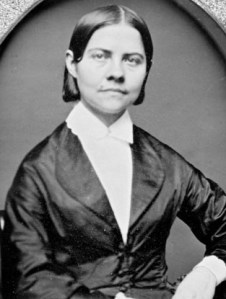
You may not know her name, but Lucy Stone was steadfast in her belief in self-authentication and in her ability to change the world. Lucy Stone was called “emboldened” and “scrappy” because of her tireless work for the abolitionist and women’s rights movements through the 19th century. A bona fide pioneer of her time, Lucy Stone stands as a historical titan. Her book “Unapologetic Life” describes a model of a revolutionary living. As for me, I would count it an honor to be described as emboldened and scrappy.

Life is more fun when you’re emboldened and scrappy. Not that we want to reduce the life experience to just scrappinesses. Life is so much more, like authenticity and the willingness to be a change-agent. Life is about having enough courage to persevere! Life for me is about my soul and all the ways it has been transformed over many years. All along my journey, I knew that my soul was a problem! At every age, there was a part of me that wouldn’t follow the easiest path. I longed to be empowered to make societal change. I chased down injustice and worked to dismantle it. I spent most of my career working with victims of domestic violence, child abuse, and human trafficking. This was not the easiest and most pleasant vocation, but the work had made its way into my soul. To do it, I had to live in the light of self-awareness and soul-awareness. I had to constantly listen to the sighs of my soul, and move only after I had heard them clearly. If I had just one nugget of advice for you, it would be to touch your soul and ride on the wings of the Spirit.

Sisters, don’t forget that when you touch your soul, you might just not be a “good girl” anymore. Or a good boy, for that matter. As for me, I am not a “good girl” living at the whims of other people! And I am definitely not a well-behaved woman! So I fully expect to make history! Because making history means leaving a legacy, creating a world brimming with peace, and embodying your best self!


#Uvalde, Texas, Bright Sunday, Calamity, Calm, Gun violence, Hope, Injustice, Palm Sunday, peace, Psalm 1, Rev. Kathy Manis Findley, Silence, Stillness, Sunday of the Palm and Passion, Transcendence, Transformation, Transforming Injustice, Violence, Violence against women and children

O Lord, How Long Shall I Cry?

Subscribe to continue reading

Subscribe to get access to the rest of this post and other subscriber-only content.

Activism, All Shall Be Well, anxiety, Attachments, Bewilderment, Brokenness, Caged children, Calm, Change, Confusion, Courage, Defiance, Despair, Determination, Dreams, Emerging new, Falling down, Fear, Feelings, Following Christ, healing, Hope, Injustice, Psalms, Questions, Reflection, Transformation

In these Evil Days, Dream a Little Dream

Rev. Kathy Manis Findley

Lately, I have been trying to figure out a number of mysteries, but I have not figured out one single thing-, not lament, not how to fix my life, not transformation, not even the continuous mess in my closet. I simply have not yet been able to go through a reorganization process. The prospect of reorganizing my life—my soul, my spirit, my heart—plus all the treasures in my closet and armoire is so terribly daunting to me. Marie Kondo comes to mind, but I quickly shoo her away from my mess in the closet.

Lots of folk complain about “these days.” I confess that I do my share of complaining. What is it about “these days” that seems so troubling? I cannot fully give you an answer to that question yet, but I have some ideas about it. The issue at hand reminds me that the Bible often refers to “evil days.” I believe that many people see these days as “evil days,” and that cannot turn out well for anyone!

Jennifer Senior, a journalist with The Atlantic, recently wrote a news article in which she asked a another provocative question: What will happen to the American psyche if Trump is reelected? (Don’t worry, this post is not about Donald Trump!) On this question, maybe we really don’t want to know the answer. Instead of taking her question seriously and considering what might happen to “American psyches” following the November election, some folk would rather complain about the division all around, the evil around us, or other things nobody likes.

When we dare to make an honest evaluation of circumstances that surround us, we dig in our heels and balk. We balk because we don’t want to see the division in our nation or the impasse we have reached on important issues. We balk because, in truth, no one wants to lament. Remember, I’m not talking about divisions among us like liberal or conservative, Democrat or Republican, male or female, immigrant or American citizen, black or white . . . I could go on and on naming divisions among us. We have always co-existed with division, but most often in the past we have acknowledged division and simultaneously practiced kindness, respect, and tolerance. Given the current national environment, we might just be justified in calling these days “evil days.

If reading the Bible is something you typically do, then you might understand more fully the term “evil day.” My heart tells me that “evil days” are definitely taking a toll on us. Instinct tells me that “the evil day” is not a single day, but refers to the times in our lives when we face overwhelming , troubling circumstances. If you are willing, meditate on the following words for a few moments.


Therefore, take up the whole armor of God, so that you may be able to withstand the evil day and, having prevailed against everything, to stand firm. 16 Stand, therefore, and belt your waist with truth and put on the breastplate of righteousness15 and lace up your sandals in preparation for the gospel of peace. 16 With all of these, take the shield of faith, with which you will be able to quench all the flaming arrows of the evil one.17 Take the helmet of salvation and the sword of the Spirit, which is the word of God.

Ephesians 6:13-17 NRSVUE

I want to remind us all about the unrest we hold inside, too close to our heart and spirit. The proximity is important to pay attention to, as well as the flashpoints, past and present, that people have endured. I would guess that there are many flashpoints and memories of times that have held power over you. You probably face off with flashpoints, knowing that they not only create stress in our bodies, but also create bondage. We can become chained to our lives. Until we have exert some control of the present time of division, hate, turmoil, distrust, disrespect, contempt and other forms of bondage, we cannot find peace that changes the world. We certainly cannot figure out how to accept the possibility of transformation.

These evil days may well be causing our hearts to lament. These days may be days full of nightmares—no dreams at all, not even little dreams. You can name your own tragedies—the ones that are making it hard to breathe for you, or the ones that cover the whole troubled world with sadness. When I think of choosing my personal places of lament, those places where I can pour out the most anxiety, I feel the heavy burden of hopelessness. If you feel that too, you are not alone.

Always looking for a scapegoat, we try to discern what is bringing us down. Of course, life often brings us unforeseen personal tragedies that we must deal with. And there is certainly enough shared anxiety to go around. If you read the daily news, you will undoubtedly hear about the fierce war in Ukraine, the inability to create peace in the Middle East, the rising cost of food, the food deserts in our country, refugee children separated from their parents, difficult financial challenges, mass shootings, fractured relationships, long-term estrangement from loved ones, the opioid crisis and addiction, racism, injustice of all kinds, and politics. Evil days!

There are so many more ills we could add to this list, but we know them already, and the news programs are anxious to tell us about broken politics, as well as the way politics creates broken people. So there you have it! Among the many sources of stress we each experience, we continually stress over the dozens of pointless news stories about politics and the behavior of politicians every day. To top it off, Gloria Mark points out that “we are once again facing a news cycle that will shove our attention—as well as our output, our nerves, our sanity—through a Cuisinart.” No matter how skillfully we deny it, our bodies are not designed to handle chronic stress and trauma.

Just about now, you might want to say that politics doesn’t affect us that much, certainly doesn’t cause depression and hopelessness. But consider this viewpoint written by Pulitzer Prize winning journalist, Jennifer Senior:

The American Psychological Association’s annual stress survey, conducted by the Harris Poll, found that 68 percent of Americans reported that the 2020 election was a significant source of strain. Kevin B. Smith, a political-science professor at the University of Nebraska at Lincoln, found that about 40 percent of American adults identified politics as “a significant source of stress in their lives,” based on YouGov surveys . . . Even more remarkably, Smith found that about 5 percent reported having had suicidal thoughts because of our politics. Evil days!

And of the most divisive election in decades, psychologists are saying that their research shows that more than two-thirds of U.S. adults (68%) say that the 2020 U.S. presidential election was a significant source of stress in life.

It is not a stretch to say that stress plays havoc on our dreams, even our little dreams. I have to confess that my big dreams disappeared into the “impossible“ file, and were then swallowed up by the churning in my stomach and my psyche. I remember my first year in seminary, working part time jobs and going to class. For a while, I worked in the development office where all the catchy slogans, mottos and themes were born. One year, the staff got together to write a theme for the annual development campaign. I don’t know who came up with our brilliant theme, but we loved it. I really loved it and made it my personal mission.

“We’re Out to Change the World!”

I tried to do just that, and I honestly thought I could, but eventually the scene in my mind of one young woman alone trying to change the world on her own made me shiver. All the lofty goals and the many little dreams, along with a few big dreams, that had my attention were disappearing before me. I despaired at first and then carried long-term grief about it. There would be no big dreams in my heart. I would never see the glory of a big dream come true. Nor would I dream small dreams. People usually don’t dream of whatever is better while they are covered in grief—mourning, lamenting that they lost their dreams in the first place. In “these evil days” we must let go of despair and pray for an extra portion of holy determination!

But people do see the sacred light that sparks dreams. It dawns over them again and again until their dreamless spirit transforms from death, to life, to get their bearings again, and to summon the energ to get up and try

This is my message to you, and to myself: After your time of lament, rejoice! After you have escaped the bondage of evil days, rejoice! After you name your loss, and then put yourself back together, rejoice!

Take heart. Up in the heavens, there is rejoicing for you! Even in the gloomy shadow of dark and evil days, there is rejoicing for you! Even if you are trying to dream even the littlest dream, there is rejoicing for you!

So try a big dream! Change the world a little bit! Your heart longs for it, the world needs it, and the heavens will do what they always do—rejoice!

May even your smallest dreams change the world!

Activism, Advocate, Challenge, Change, Community activism, Compassion, Covenant, Dreamers, Dreams, God’s Gift of Stars, Good Trouble, Hope, In Memorium, Justice, Racial injustice, reconciliation, Rev. Kathy Manis Findley, Separation, Sheltering children, Social justice, Transcendence, Transforming Injustice, Violence, Wade in the Water, War

Do You Have a Dream?

Consolation, Despair, Dreams, Epiphany, God’s creation, God’s Gift of Stars, Godburst, Hope, Injustice, Isaiah 6, Lament

Epiphany’s GodBurst!

By Rev. Kathy Manis Findley

Fowler, John. Rising Star, Milky Way, from Art in the Christian Tradition, a project of the Vanderbilt Divinity Library, Nashville, TN. https://diglib.library.vanderbilt.edu/act-imagelink.pl?RC=56313 [retrieved January 6, 2024].
Original source: https://commons.wikimedia.org/wiki/File:Milky_Way_-_28_June_2014.jpg.


Epiphany ~ January 6, 2024

Isaiah 60:1-6

Arise, shine; for your light has come, and the glory of the LORD has risen upon you. For darkness shall cover the earth, and thick darkness the peoples; but the LORD will arise upon you, and his glory will appear over you. Nations shall come to your light, and kings to the brightness of your dawn.

Lift up your eyes and look around; they all gather together, they come to you; your sons shall come from far away, and your daughters shall be carried on their nurses’ arms. Then you shall see and be radiant; your heart shall thrill and rejoice, because the abundance of the sea shall be brought to you, the wealth of the nations shall come to you.

A multitude of camels shall cover you, the young camels of Midian and Ephah; all those from Sheba shall come. They shall bring gold and frankincense, and shall proclaim the praise of the LORD.


On this particular day, I am finding it difficult to declare that Epiphany is my favorite day in the Liturgical Calendar. But it is my favorite day of celebration in the Church year! The truth is that this day of Epiphany, 2023 reminds me that today is both a day of shining splendor and a day of shameful scourge. After all, this year Epiphany falls on the sixth day of January, the third anniversary of the day the United States Capitol was violated by a mob of insurrectionists. Thousands of attendees, some armed, walked to the Capitol, with hundreds breaching police perimeters as Congress was beginning the electoral vote count. Among the rioters were leaders of the Proud Boys and the Oath Keepers militia groups, who conspired to use violence to interfere with the peaceful transfer of power.

Within 36 hours of the event, five people had died: one was shot by Capitol Police, another died of a drug overdose, and three died of natural causes, including a police officer. Many people were injured, including 174 police officers. Four officers who responded to the attack died by suicide within seven months.

That day was a disgraceful moment in this nation and beyond, as many countries around the globe lost confidence in America. American citizens also reacted strongly and suddenly questioned our nation’s democracy, the sovereignty of free and fair elections, and the participation in “a historic and profound abuse of the judicial process.” We were questioning our ethics, our morals, our human decency, our abhorrence for violence, and sadly, our sudden refusal to discern the vast difference between peaceful protest and seditious mutiny.

Can we finish this unpleasant conversation and change our view to the stars, thousands and thousands of stars in the Milky Way galaxy? They are perhaps a sparkling reminder of other sparkling things that are worth remembering—the birth of America’s democracy, the toil of creating the United States Constitution, the Veteran’s Day commemorations year after year, the moving inaugurations of the line of U.S. presidents, America’s many fragile freedoms, the outstanding individuals we become when we give the best of our hearts and spirits to dreams of peace and justice.

And yet, these are earthly accomplishments and events. We must keep looking up into the heavens, listening for the Prophet’s voice saying, “Arise, shine; for your light has come, and the glory of the LORD has risen upon you. For darkness shall cover the earth, and thick darkness the peoples; but the LORD will arise upon you, and his glory will appear over you.”

This is the holy proclamation from the Prophet that Epiphany gives us every January. It is the soulful serendipity of the new year. It is a kind of GodBurst that gives us the energy to keep moving closer to dreams of peace and justice.

I need Epiphany this year. Perhaps you do too. There is far too much darkness surrounding us all—war, violence, abuse, division, rancor, injustice, racism, misogyny, xenophobia, gun violence, illness, drug abuse, homelessness, hopelessness—darkness. I think maybe our Epiphany prayer needs to be a prayer of lament for the part, large or small, that we have played to bring the darkness upon us and our world.

But after lament, we can always look up to see the stars. You know the ones, the ones God placed in the galaxies to brighten our darkest nights and lift our darkest spirits. God set these glittering Stars in the sky to always remind us to look for Epiphanies, and find them when we least expect to. Even if we have only one brief, transcendent, shining moment, we can claim as our own the brilliance of the stars that hover above us in the night sky. Our GodBurst! Your sacred path and mine definitely does take us through dark and frightening places sometimes, but look up! That’s the command I keep saying to myself. Look up! “Arise, shine, for your light has come and the glory of the Lord has risen upon you!”So look up into the heavens and see the most brilliant, glimmering stars giving light for your journey.

May God make it so. Amen.


A Prayer of Lament


Radiant Star of Hope, we lament the darkness of our world.

Forgive us the darkness we ourselves create.
Star of our deepest Hope, you grace us with guidance and mystery, 
Visit our troubled rest with disturbing dreams,

and our journeys with strange companions. 
Grace us with the hospitality to open our hearts and homes

to visitors filled with unfamiliar wisdom, bearing profound and unusual gifts.

Guide us on Epiphany’s path and disturb us with Stars, O God,

that the radiance and Spirit working in the world

might gather together all peoples and nations in one community 
to offer you worship and proclaim your everlasting splendor. Amen.

Fowler, John. Milky Way, from Art Original source: https://commons.wikimedia.org/wiki/File:Milky_Way_-_28_June_2014.jpg. John Fowler, CC BY 2.0 https://creativecommons.org/licenses/by/2.0, via Wikimedia Commons [retrieved January 6, 2024].

Afghanistan, Maren Tirabassi, Prayer, Women

Afghanistan: Grace and Mercy

Afghan woman in traditional cover, known as a burka, at the Blue Mosque in Mazar.
Photo: Jawad Jalail


Part One

A Story of Grace and Mercy


The following story printed in the Daily Beast tells how the villagers of a small Afghan village rescued and saved the life of a gravely wounded U.S. Navy Seal. Their motivation? What motivated them was their culture of kindness and their respect of the ‘Pashtunwali Code’, which admonishes that hospitality, asylum, mercy and shelter must be provided for all who require it, friend or enemy.

Nearly eight-and-a-half years after Mohammad Gulab and his fellow villagers harbored and saved the life of a gravely wounded U.S. Navy SEAL, they say they are still proud of their courageous action and would do it again in spite of the disappointments and troubles that have followed.

In the face of point-blank Taliban threats to overrun the small village of Sabray in remote Kunar Province, along the porous and mountainous frontier with Pakistan, the villagers bravely protected, gave first aid to, fed, and clothed Marcus Luttrell, the wounded Special Warfare Operator, the only survivor of a four-man SEAL patrol. A village elder even secretly carried a note hidden inside his clothing—written by Luttrell and indicating the exact spot where he could be rescued—through Taliban lines at great personal danger. “I have no regrets for what my family, my fellow villagers and I have done,” Gulab tells the Daily Beast. “We knew what the Taliban’s reaction would be from the day we carried him in our door.”

Gulab and the other villagers insist that they saved Luttrell out of obedience to the ages-old ethnic-Pashtun tradition known as Pashtunwali. That ancient code obliges Pashtuns to help and protect anyone in need, friend or enemy. “We did not rescue Marcus for money or privileges,” Gulab says. “By rescuing and keeping him safe for five nights in our home we were only doing our cultural obligation.”

And Jesus told us,
“You shall love your neighbor as you love yourself.”


Part Two

Advocating for the Women of Afghanistan

The Taliban have been in charge of Kabul for 48 hours. Women have already disappeared from the streets.

Photo: AP News
https://apnews.com/article/religion-taliban-7ab054c063e4ea1c14be9e4811f42982


As an advocate for women for many decades, I must share today the terrible plight of Afghan women as a result of the Taliban takeover of Afghanistan.

In only 10 days, Taliban militants captured dozens of provincial capitals left vulnerable by the withdrawal of US and allied troops. 

In only 10 days, the freedom of Afghan women was taken back 20 years.

In only 10 days . . .

The speed of the militants’ advance caught the people of Afghanistan off guard, especially Afghan women. Some women said they had no time to buy a burqa to comply with Taliban rules that women should be covered up and accompanied by a male relative when they leave the house.

To Afghanistan’s women, the flowing cloth represents the sudden and devastating loss of rights gained over 20 years — the right to work, study, move and even live in peace — that they fear will never be regained.

Burqas hang in a market in Kabul on July 31. The price has surged tenfold as women rush to cover themselves to avoid attracting the militants’ attention.


Over the last 10 days, a succession of Taliban victories over dozens of provincial capitals took Afghan women closer to a past they desperately wanted to leave behind. 

When the Taliban last ruled Afghanistan between 1996 and 2001, they closed girls’ schools and banned women from working. After the US invaded in 2001, restrictions on women eased, and even as the war raged, a local commitment to improving women’s rights, supported by international groups and donors, led to the creation of new legal protections. But gains for women were partial and fragile. In 2009, the Elimination of Violence Against Women law criminalized rape, battery and forced marriage and made it illegal to stop women or girls from working or studying.

Afghan women stand to lose 20 years of gains as the Taliban seize control.


According to an article by Mitchell Hartman published today, the situation is fluid and chaotic in Afghanistan, as the Taliban continue consolidating power over the country and the capital, Kabul. Afghans with connections to the U.S. Embassy or military over the past 20 years are still hoping to get out of the country. But many who stand to lose rights and jobs and possibly their freedom under a new Taliban regime are hunkering down, hiding, covering their tracks. 

Especially women, and when it comes to women’s freedom to participate in society and the economy, people who’ve been observing the Taliban aren’t optimistic. “The Taliban are no friends of girls and women. And for many years they really had control over the country, girls education and women’s education was forbidden,” said Rebecca Winthrop, who co-directs the Center for Universal Education at the Brookings Institution. Winthrop helped get Afghan girls into new government schools after the Taliban fell in 2001.

She said the U.S. has invested more than $700 million in girls’ and women’s education, and attendance has increased. So has Afghan women’s participation in the labor force — up from 15% to nearly 22%. 

But where the Taliban have taken control in recent years, Winthrop said, “we were seeing girls not being able to go past seventh grade – which is when they hit puberty; bombing girls schools; targeting female teachers.” In the big cities, many women have gone to university and entered business, government, academia and the media. But now “they’re literally finding safe houses where they can hide,” said Elisa Lees Munoz, who directs the International Women’s Media Foundation.

You and I may feel helpless, unable to find ways to ease the fear and desperation of women a world away. We cannot know their world, and we definitely cannot fix it. We are at a loss when we consider options that could help. And yet, the words of Jesus remain, imprinted upon our hearts . . . “You shall love your neighbor as you love yourself.” And we know that one important thing we can do is to pray for the well-being of every Afghan woman and girl. At least we can pray, and pray with a fervency that holds the power to change hearts and minds. We can pray even without words because the Spirit intercedes for us.

So as we pray, I want to share with you this moving prayer for Afghanistan written by my friend who always prays prayers from her beautiful and compassionate heart. It was published today on her blog, “Gifts in Open Hands.”

God of many names, the Generous,
the All-Merciful, the Source of Peace,

we pray in thanks for Afghanistan
land of pomegranates and grapes,
birthplace of Rumi,
and ‘I am the beggar of the world,’
landays of contemporary Afghan women.

We celebrate people –
Tajik and Hazaras, Uzbek and Pashtun.
We hear tabla, sitar, santur, tabur, flute,
and watch the attan danced.
We gaze upon art ancient and new –
miniatures and the weaves of rugs,
like no other in the world.

All earth opens its hands
and receives the gifts of Afghans,
and all the people pray,
each in their own many names and words
for safety of Afghans in these days –
seeking evacuation in the airport
moving quickly on the street,
hiding in homes,
wondering about schools.

For those who evacuate
and for those who wait for what is next,

for those who are foreign nationals,
and those bone-deep with history in the hills,

for faithful journalists still reporting,
and medical facilities desperate
for blocked supplies,

for Sikh and Hindu communities
and their holy places,

for the welcome of Australia,
and families across the ocean and near at hand
grieving loved ones lost,
life, body, mind in the long war.

for the afghan elder who has seen much
and the child born today
who will grow up to give a new gift,

we pray, O Compassionate, O Preserver. amen

— Maren C. Tirabassi


*Please take time to follow this link to a poignant, timely and very real story about the fears of Afghan women published by “Vanity Fair.”

Activism, Anger, Black Lives Matter, Breonna Taylor, Call, Change, Church, Comfort, Community activism, Compassion, Defiance, Despair, Hate, healing, Injustice, Lament, Persistence, Prayer, Racism, Sorrow, Soul, Spirit, struggle, The Christian Church, Transformation, Urgency, Violence, White supremacy

Prayers of Lament


This morning, I prayed a prayer of lament. Lament was the only prayer in my spirit. It is difficult to express the deep sorrow I felt yesterday when I learned that no charges were brought against the police who shot six bullets into Breonna Taylor’s body.

Shortly after midnight on March 13, 2020, Louisville police officers used a battering ram to enter the apartment of Breonna Taylor, a 26-year-old emergency medical technician who had dreams of a bright career ahead. She and her boyfriend had settled in to watch a movie in her bedroom on that tragic night. Police came to her door and minutes later, she was fatally shot. Her death sparked months of protests in Louisville.

Yesterday, six months after the fatal shooting — six bullets — a grand jury indicted a former Louisville police officer on Wednesday for wanton endangerment for his actions during the raid. A grand jury delivered the long-awaited answer about whether the officers would be punished. No charges were announced against the other two officers who fired shots, and no one was charged for causing Breonna Taylor’s death.

For me, there was only lament. I imagine that for Breonna’s family, there was the deepest kind of lament. For her mother, lament was the only response she could express as she wept uncontrollably. And, even for the protesters who filled the streets, I believe there was lament. 

Theologian Soong-Chan Rah explains in his book, Prophetic Lament, that in the Bible lament is “a liturgical response to the reality of suffering and engages God in the context of pain and suffering.” He goes on to say that it is a way to “express indignation and even outrage about the experience of suffering.” Racism has inflicted incalculable suffering on black people throughout the history of the United States, and in such a context, lament is not only understandable but necessary.

Perhaps white Christians and all people of faith have an opportunity to mourn with those who mourn and to help bear the burden that racism has heaped on black people. (Romans 12:15)    — Jemar Tisby, The Color of Compromise


In the end, many people see only the rage, anger, impatience, violence of the protesters. Can we also see their lament for Breonna, as well as for centuries of racially motivated murder — beatings, burnings, lynchings and murder committed by police officers? 

People of faith — white people of faith — will we try to understand the rage of our black and brown sisters and brothers? Will we join them in righteous anger? Will we mourn with them? Will we lament when lament fills their souls and overflows in cries for justice?

We must, in the name of our God who created every person in God’s own image!

Last night, I heard an interview with Brittany Packnett Cunningham on MSNBC. Her words were eloquent pleas for justice. She spoke about how persistent and all-encompassing racism is in our country and about the murders and the protests and the political rancor that fuels it. She acknowledged racism’s strong, unrelenting hold on this nation, a hold that is virtually impossible to break. And she said something I have said for a long time, “Racism cannot be reformed. It must be transformed.”

To me that means a transformation of the heart and soul that compels each of us to lament, to comfort, to speak truth in government’s halls of power, to stand openly against any form of racial injustice.

May God make it so.

Will you pray this prayer of lament with me?

O God, who heals our brokenness, Receive our cries of lament and teach us how to mourn with those who mourn. Receive even our angry lament and transform our anger into righteous action. Hear the anguish of every mother assaulted by violence against her child. Hear the angry shouts of young people as shouts of frustration, fear and despair. Grant us the courage to persist in shouting out your demand for justice, for as long as it takes. When deepest suffering causes us to lament, grant us Spirit wind and help us soar. If we resist your call for justice, compel us to holy action. May our soul’s lament stir us to transform injustice, in every place, for every person, whenever racism threatens, for this is your will and our holy mission. Amen.

Beloved Community, Black Lives Matter, Civil Rights Movement, Courage, Good Trouble, In Memorium, John Lewis, Justice, Nonviolence, Perseverance, Persistence, Politics, Prophetic, Racism, strength, struggle, Tenacity

Remembering John Lewis

89BE8169-640A-4DDD-A2AC-E9680BE67E02
Because I am a citizen of the state of Georgia, I can call him mine — my congressman, my conscience, my inspiration.

John Lewis
A warrior in building the soul of America

Representative John Lewis, a son of sharecroppers and an apostle of nonviolence who was bloodied at Selma and across the Jim Crow South in the historic struggle for racial equality, and who then carried a mantle of moral authority into Congress, died on Friday. He was 80.*

Twice he was beaten to an inch of his life.

I have been in some kind of fight — for freedom, equality, basic human rights — for nearly my entire life.    — John Lewis

On the front lines of the bloody campaign to end Jim Crow laws, with blows to his body and a fractured skull to prove it, Mr. Lewis was a valiant stalwart of the civil rights movement and the last surviving speaker from the 1963 March on Washington — where King delivered his famous “I Have a Dream” speech — but Lewis was almost refused to be allowed to speak by march organizers because of his strident criticism of the Kennedy administration.

Lewis went on to serve 17 terms in the US House of Representatives, where he was considered the north star of conscience in Congress.**

Tributes to the life and legacy of John Lewis came from hundreds of voices.

“Not many of us get to live to see our own legacy play out in such a meaningful, remarkable way. John Lewis did,” former President Obama said in a written tribute. “And thanks to him, we now all have our marching orders — to keep believing in the possibility of remaking this country we love until it lives up to its full promise.”

Joe Biden, and his wife, Jill, issued a statement that began, “We are made in the image of God, and then there is John Lewis. How could someone in flesh and blood be so courageous, so full of hope and love in the face of so much hate, violence, and vengeance?”

Sen. Bernie Sanders of Vermont said: “His courage helped transform this country. He won’t ever be forgotten by those who believe America can change when the people stand together and demand it.”

Sen. Kamala Harris of California said of Lewis, “He carried the baton of progress and justice to the very end. It now falls on us to pick it up and march on.” ***

And so we will, to honor his memory and to persist in the fight against injustice.


John Lewis.

America’s inspiration for getting into “good trouble”

Do not get lost in a sea of despair. Be hopeful, be optimistic. Our struggle is not the struggle of a day, a week, a month, or a year, it is the struggle of a lifetime. Never, ever be afraid to make some noise and get in good trouble, necessary trouble.
— A tweet from June 2018

I appeal to all of you to get into this great revolution that is sweeping this nation.  Get in and stay in the streets of every city, every village and hamlet of this nation until true freedom comes, until the revolution of 1776 is complete.
— At the 1963 March on Washington

Freedom is not a state; it is an act. It is not some enchanted garden perched high on a distant plateau where we can finally sit down and rest. Freedom is the continuous action we all must take, and each generation must do its part to create an even more fair, more just society.
From his 2017 memoir, “Across That Bridge: A Vision for Change and the Future of America”

My dear friends: Your vote is precious, almost sacred. It is the most powerful nonviolent tool we have to create a more perfect union.
— From a 2012 speech in Charlotte, North Carolina

You are a light. You are the light. Never let anyone—any person or any force—dampen, dim or diminish your light. Study the path of others to make your way easier and more abundant.
From his 2017 memoir, “Across That Bridge: A Vision for Change and the Future of America”

We have been too quiet for too long. There comes a time when you have to say something. You have to make a little noise. You have to move your feet. This is the time.
— At a 2016 House sit-in following the Pulse shooting in Orlando

When you see something that is not right, not just, not fair, you have a moral obligation to say something. To do something. Our children and their children will ask us, ‘What did you do? What did you say?’ For some, this vote may be hard. But we have a mission and a mandate to be on the right side of history.
— 2019 remarks in the House on impeachment of President Trump


May his words echo in our hearts and reach the soul of every American. 

May he rest in peace and — from above — inspire us to “do justice, love mercy and walk humbly with our God” as he did.


John Lewis
Servant of God and champion for justice, now called to his heavenly home


With thanks to:
* Katharine Q. Seelye, https://www.nytimes.com/2020/07/17/us/john-lewis-dead.html

** Ken Sehested, http://www.prayerandpolitiks.org/

*** Janet Hook, https://www.latimes.com/politics/story/2020-07-18/tributes-rep-john-lewis-dies-civil-rights


Activism, Ahmaud Arbery, Beloved Community, Celebration, Change, Community activism, Freedom, Hope, Juneteenth, Justice, Liberty, Racism, Rebirth, reconciliation, struggle, Transformation, Uncategorized

Juneteenth 2020 — Oh Freedom!

0B59C2F5-2267-4507-A9EE-44CDC0B315B1
Today may be a Juneteenth like no other.

Juneteenth is a celebration. It’s not solemn, it’s filled with joy and pageantry. It’s not a funeral. But 2020 Juneteenth is uncomfortably juxtaposed with police violence against Black people, protesters in cities all over the nation and funerals — too many funerals.

A Bit of History . . . 

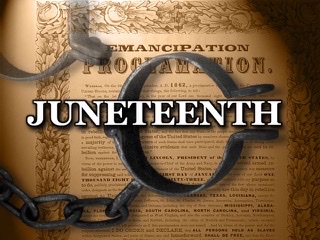
Juneteenth is one of America’s oldest holidays and is observed each year on June 19 to mark the official end of slavery in the United States. The day has long been celebrated by black Americans as a symbol of their long-awaited emancipation. But the story behind the holiday starts 155 years ago today in Galveston, Texas.

On June 19, 1865, Union troops led by General Gordon Granger arrived in Galveston, Texas, to break the news to the last remaining Confederate sympathizers that they had lost the Civil War and that all slaves must be freed. The Union general read aloud to the residents of Galveston:

The people of Texas are informed that in accordance with a Proclamation from the Executive of the United States, all slaves are free. This involves an absolute equality of rights and rights of property between former masters and slaves, and the connection heretofore existing between them becomes that between employer and hired laborer.

The newly freed slaves celebrated emancipation with prayer, feasting, song, and dance, and the following year, the first official Juneteenth celebration was born. But the importance of Juneteenth is that it is rooted in a long history of struggle for freedom and then perhaps the greater struggle to maintain freedom in the face of the enormous repression that was to come.

The Struggle for Freedom Continued

7DC48528-34CF-47FA-9272-ED91E800C437It turned out that being free did not mean being being treated with respect. Yes, it was the true end of the Civil War, but it was also the beginning of Reconstruction, a time that was supposed to be very happy and hopeful. Yet the period of Reconstruction became a miserable time for freed Black people because Reconstruction became part of the redemption of the South. As such, it set out to move African Americans to indentured servitude. While President Abraham Lincoln abolished slavery in his Jan. 1, 1863, Emancipation Proclamation, rebellious Confederate strongholds dotted across the South delayed the widespread implementation.

The South would not hear of the end of slavery, and landowners moved heaven and earth to make sure they had plenty of indentured servants. They were determined to continue the ostentatious lifestyle that they believed was their right and their legacy. They were resolute in their quest to maintain their master/servant status.

Still Today, Elusive Freedom

Juneteenth has been “passed down” through black communities since 1866, but in this year — 2020 — this nation seems to be at the height of a modern-day civil rights movement. My friend says, “2020 is the year of reset!” People throughout this nation of every race and creed hope beyond hope the 2020 will go even beyond “reset” to reconciliation, transformation and rebirth. So that every person is free, respected and cherished as a part of beloved community.

B8EBCA53-AF97-42DD-AA97-BAB122368430The cruel and violent death of George Floyd under the knee of a Minneapolis police officer might mean that this year Juneteenth may not be only about festivals, parades and cookouts. It may well be somewhat of a silent, reflective vigil for George Floyd, Breonna Taylor, Ahmaud Arbery, Rayshard Brooks, Caine Van Pelt, Michael Thomas, Lewis Ruffin, Kamal Flowers, Momodou Lamin Sisay, Ruben Smith, Modesto Reyes . . . and the list could continue.

It is a list of tragedy and horror. It is a list that is a stain that will ever remain on this nation, an indelible mark of shame. It is a list of names we must never forget. So in your commemoration of Juneteenth today, honor those names, pray for their mourning families, and pray that you will confront racial injustice with an unshakeable resolve.

Juneteenth was meant to be a celebration, although many people might not be able to celebrate today. Heartbreak and horror have a tendency to override celebration and joy. Even with hearts broken, I hope we will find in our hearts even a tiny desire to celebrate this day that was, and is, all about freedom.

May the change that comes from the “2020 movement for racial justice” cause us to celebrate, not mourn, every time Juneteenth comes around — today and forevermore. And may each of us and all of us — a people of God’s creation — witness the rebirth of a nation where every person lives under a worldwide canopy of justice, peace, equality, respect and freedom.

May God make it so through us. Amen.


Celebrate, or mourn, today as you spend a few moments watching this moving and poignant video, “Oh Freedom.”

#MeToo, Activism, Bravery, Courage, Faith, healing, Injustice, Justice, March for Our Lives, Perseverance, Persistence, Prathia Hall, Questions, Racism, Social justice, Violence against women and children, Women

The Civil Rights Movement and Womanist Theology


217FA8EB-CEFC-4F9F-896B-D1FCD86FFD34
The civil rights movement and womanist theology? Not much in common between the two, it seems. Maybe, maybe not! The thing is: God’s people are guided by Spirit into an unjust world where people are oppressed, not just through a particular movement, whether it is for civil rights or equity for women. People are oppressed beyond any movement. People are oppressed in everyday life, today, as well as in past struggles for liberation.

God is all about liberation from oppression, now and in the future. The battle for liberation is ongoing and never-ending. And God’s people — you and I — cannot follow Christ in “loving our neighbors as we love ourselves” unless we stand alongside people who are oppressed, unless we pour our lives into building a just society where every person is treated according to the well worn and well loved declaration that “all people are created equal.”

If you believe there is nothing in common between the civil rights movement and womanist theology, then you do not know much about The Rev. Dr. Prathia LauraAnn Hall (1940 – 2002), who was an undersung leader for civil rights, a bulwark of the black church in the United States and an advocate of the womanist vision of equity and equality.

In the recently published book, Freedom Faith: The Womanist Vision of Prathia Hall, Courtney Cox paints the portrait of Prathia Hall as a woman of deep conviction, courage and eloquence who literally embodied the longing for the rights of every person and the womanist vision of equality.

You may not know much about her, but Prathia Hall electrified audiences through her speaking and preaching.

I say to you our daughters and sons, it is in you! Every time you behold the world as it is and dare to dream of what it must become that’s the fire of freedom’s faith. . . Every time you grab hold of the United States of America and like Israel dare to wrestle and declare to it — We will not let you go until you bless us — That is freedom faith’s fire. It is in you — It’s in us.     — Prathia Hall

You may not know much about her, but Prathia Hall was an inspiring leader in the Southwest Georgia Project in Albany, Georgia, in the civil rights struggle in Selma, Alabama, and in the multiorganization Atlanta, Georgia project.

Prathia Hall literally changed the course of the civil rights movement. As a “firebrand” in the Student Nonviolent Coordinating Committee (SNCC), Hall labored tirelessly under the central guiding principle of her life, her activism and her ministry. Her life’s guiding principle was “Freedom Faith, the belief that God wants people to be free and equips and empowers those who work for freedom.”

In Hall’s work in door-to-door voter registration, in church-based educational programs, inspirational mass meetings, and through her scholarship and preaching, Freedom Faith found its ultimate expression in her womanist vision of the liberation of all people. For Hall, freedom was not only about the goals of the civil rights movement, it was about the many layered forms of oppression — racism, classism, sexism, ageism, heterosexism, denominationalism — all formidable obstacles to human rights.

You may not know her name, but Prathia Hall was listed in Ebony Magazine’s 1997 “15 Greatest Black Women Preachers.” It is said of Prathia Hall that her call to ministry was both her glory and her burden. Yet her preaching electrified masses of people bowed low by oppression.

They called us: ‘nigger,’ ‘winch,’ ‘buck,’ ‘slave,’ but out there in the brush arbors, the wilderness, and the woods, the God of our ancestors, the God we had known on the other side of the waters met us and whispered words in our ears, and stirred a song in our souls . . .     — Prathia Hall

You may not know much about Prathia Hall, but she was an indefatigable activist for human rights, a brilliant scholar, an engaging speaker, a compelling preacher, a distinguished theologian. Hall’s theology focused on liberation from all forms of oppression, and she did not shrink from the womanist theology that called out sexism and the duplicity of the Black Church in recognizing the call of women only in narrow and constricted ways. In an absolute articulation of her womanist vision of inclusion, Hall espoused a multidimensional structure of oppression. “Gender-based oppression,” she wrote, “isn’t a trivial inconvenuence. It’s human devastation.” As an insider, choosing to remain in ministry in the Baptist Church, Hall’s courage and conviction never ceased from criticizing a Church that opposed racism, but tolerated sexism.

It absolutely boggles my mind as well as grieves my spirit that brothers, with whom I have stood side by side in the struggle, brothers with whom I have bowed, knelt, prayed, worked, struggled, gone to jail, dodged bullets, and caught bullets, claim to be unable to make the transition from the critique of race-based oppression to the critique of gender and class-based oppression.    — Prathia Hall

You may not know much about Prathia Hall, but her very soul was embroiled in the civil rights drama. In the summer of 1962, four black churches in Georgia’s Lee and Terrell Counties, all associated with the movement, were burned by white supremacists.

Hall and other SNCC workers wept together in the ashes of the Mount Olive Baptist Church. The next day the SNCC received a phone call that Martin Luther King, Jr. intended to visit Albany to attend a prayer vigil over the ashes of Mount Olive Baptist Church in Sasser. According to the New York Times, “As the sun sets across the cotton fields, some fifty Negroes and two whites met at Mount Olive for a prayer vigil. Joining hands, they sang softly, ‘We Shall Overcome.’”

After the song, Prathia Hall led the group in prayer, her voice breaking in grief. According to oral tradition, Hall repeated the phrase “I have a dream,” each time followed by a specific vision of racial justice. After the service, King asked for her permission to use the “I have a dream” phrase, which she granted. From the oral evidence gathered from several witnesses, one can definitely make a case for Prathia Hall as the source of King’s “I Have a Dream” speech.      — Courtney Cox, Freedom Faith: The Womanist Vision of Prathia Hall

You may not know much about Prathia Hall, but in the pages of Freedom Faith: The Womanist Vision of Prathia Hall, author Courtney Cox lays bare the world of this fascinating woman of God. She presents Prathia Hall through various lenses: Christian minister, liberation theologian, civil rights activist and leader, professor and scholar, preacher and speaker, mother, daughter, wife, agitator, womanist theologian.

Until now, you may not have known much about Prathia Hall, but many notables spoke of her abilities:

One in a million . . . A model that needs to be lifted up in every seminary of all races . . . so people can get a glimpse of what someone who has really said yes to ministry and who went to her grave living that ministry daily.     — Jeremiah Wright

The best preacher in the United States, possessing proven ability to exegete, illustrate, celebrate and apply the scriptures healingly to the problems, pains and perplexities of the people who sit ready to hear a word from Yahweh.     — Charles Adams, former president of the Progressive National Baptist Convention

. . . She was known for her commitment, her dedication, her stick-to-it-ness, for hanging in there, for never giving up or giving in.      — Rep. John Lewis

So what about the civil rights movement and womanist equality? Is there any commonality between them? Certainly there is commonality — both are never-ending struggles for justice, because we are a country where various groups of people are still denied their civil rights and woman are still suppressed and oppressed. Both movements — and many other struggles for justice — require our commitment, our resolve, our persistence, our courage, our compassion, our best efforts and our faithfulness to God.

At least for me, Prathia Hall’s life begs several questions:

What is it that I am passionate about, willing to follow God with courage to fulfill that passion?

Is there an injustice I must stand against?

Is there any oppression, any wrong, that I am compelled to confront?

Is there anything I care about deeply enough that I will dig deep into myself to find the courage to defend it?

Fair questions, I think, for those who are trying to follow God into places of need! Compelling questions for those who are trying to follow God in offering compassionate  care to the oppressed and hurting people who need us! Compelling questions for those who are trying to follow God in freeing people who live in various forms of bondage!

These are urgent questions for God followers!

I pray that I am able to sit with those questions and respond to them boldly as an act of my faith. I pray that for you, too.

Finally, do we dare we ask what will be our reward for seeking justice for the oppressed people around us? Probably not, yet this beloved passage of Scripture does speak of both our call from God and what we will receive for our commitment to our call.

. . . Remove the chains of oppression and the yoke of injustice, and let the oppressed go free. Share your food with the hungry and open your homes to the homeless poor. Give clothes to those who have nothing to wear . . .

Then my favor will shine on you like the morning sun, and your wounds will be quickly healed. I will always be with you to save you; my presence will protect you on every side. When you pray, I will answer you. When you call to me, I will respond.

If you put an end to oppression, to every gesture of contempt, and to every evil word; if you give food to the hungry and satisfy those who are in need, then the darkness around you will turn to the brightness of noon. And I will always guide you and satisfy you with good things. I will keep you strong and well. You will be like a garden that has plenty of water, like a spring of water that never goes dry.

— Isaiah 58:6-11 Good News Translation (GNT)

So let us follow God into every place of need, every place of injustice, every place where oppression has raised its evil head. Let us follow God — as an embodiment of Christ’s love and compassion — until that day when “the darkness around us turns to the brightness of noon.”

May God make it so. May God find us faithful. Amen.


I offer you this music to listen to as you spend time in prayer and meditation


Activism, Advocate, Black History Month, Challenge, Change, Courage, Covenant, Injustice, Justice, Racism, reconciliation, Repair the world, Segregation

I NEED YOU to join the fight for change!

24E7C406-2AD0-47CB-A702-2E259A76DCC3
We are well into Black History Month, also called African American History Month.  We celebrate it every year in February. All manner of celebrations and commemorations happen during this month, from school plays, choral concerts, historical dramas to formal tributes and ceremonies in cities, colleges and churches. In the midst of this month, I have been contemplating the idea of white fragility drawing on the books, White Fragility by Robin DeAngelo and Radical Reconciliation: Beyond Political Pietism and Christian Quietism by Alan Boesak and Curtiss Paul De Young. I highly recommend both books to you if you want to advocate for racial justice.

A dear and very wise friend of mine would exhort us to know the history of black people, but more importantly, to enter into serious conversations about equality and unity. She would tell white people to accept the reality that we will never completely understand her history and that we should be sure our conversations include deep listening. She would remind us that the history of injustice to black people has not ended yet and that we must all continue our work for justice and equality. I want to share with you some of the history behind this month.

As a Harvard-trained historian, Carter G. Woodson, like W. E. B. Du Bois before him, believed that truth could not be denied and that reason would prevail over prejudice. His hopes to raise awareness of African American’s contributions to civilization was realized when he and the organization he founded, the Association for the Study of Negro Life and History (ASNLH), conceived and announced Negro History Week in 1925.

The event was first celebrated during a week in February 1926 that encompassed the birthdays of both Abraham Lincoln and Frederick Douglass. The response was overwhelming: Black history clubs sprang up; teachers demanded materials to instruct their pupils; and progressive whites, not simply white scholars and philanthropists, stepped forward to endorse the effort.

The Black Awakening of the 1960s dramatically expanded the consciousness of African Americans about the importance of black history, and the Civil Rights movement focused Americans of all colors on the subject of the contributions of African Americans to our history and culture.

B5AF969F-8A72-44B0-A65B-9EF5BCB8102E

Then the celebration was expanded to a month in 1976, the nation’s bicentennial. President Gerald R. Ford urged Americans to “seize the opportunity to honor the too-often neglected accomplishments of black Americans in every area of endeavor throughout our history.” That year, fifty years after the first celebration, the association held the first African American History Month. By this time, the entire nation had come to recognize the importance of Black history in the drama of the American story

There is so much more I could include, but I will finish with some random thoughts my friend would like for us to know.

— The G.I. Bill of 1944 was denied to a million black veterans of WWII (history.com). These things matter. PUBLIC POLICY throughout American history has deliberately and purposefully limited economic opportunities and advancement of black people.

— It never occurred to me that some white people thought black history month DID NOT involve them.

— During this Black History Month, I ask: Do the white people within our networks remotely get how glorious AND exhausting it is being black in America? Can we talk about why it’s exhausting? Can you handle sitting in an uncomfortable space for awhile? Can you handle it? Can you take it in without deflection, pointing fingers, becoming defensive or proclaiming yourself the victim? Can we REALLY talk?

And finally her heartfelt words about a confrontation that happened in her city, in a neighborhood she knows well, to two people who are her friends.

My soul weeps. My body trembles. Anger and fear take turns occupying the same space. Why? Two people that I hold in high regard experienced the policing of their bodies in a PUBLIC space by white people who feel they get to decide where black people can and cannot be!

As I learned of what occurred I was immediately grateful their positions (elected official and one running for office AND a friend who STEPPED UP) along with their “training “ allowed them to walk away from this experience. Yes this was potentially a life and death event.

43274C05-47A6-49F7-979E-B91258D1809CSo many what if’s ran through my mind. If you are black you will understand what I mean. If you are white, I CHALLENGE you to discuss this LOCAL event with your WHITE friends! I NEED you to discuss it in YOUR churches. I NEED you to discuss with YOUR family.

I NEED YOU to join the fight for change! YOU play a KEY role in ensuring change happens.

I thank my friend for challenging me and encouraging me, not only during Black History Month, but throughout time — every day, every month and for years ahead. To black people, Black History Month begins on January 1st and ends December 31st, and the message of the month for black people has been lifelong. As for those of us who are white, let us not be shackled by “white fragility.” Instead let us move boldly — and with courage — into our communities and confront racism wherever we find it. It is true that racism and white supremacy have been a part of our history always, but we can end this tragic injustice with resolve, unity, faith, courage and the blessing of God who created all people in One image. May God make it so.

Advent, Angels, Bethlehem’s Star, Christ’s Birth, Fear, Hope, Justice, Mary’s Song, Singing, Stars, strength, Truth, Wisdom

Mary’s Spirit Song

943A85DA-7DF3-4FB9-AA79-145F5D159A84

The Thirteenth Day of Advent
December 14, 2019

*MARY’S SPIRIT SONG

Mary did you know,
that your ancient words
would still leap off our pages?

Mary did you know,
that your spirit song
would echo through the ages?

Did you know that your holy cry
would be subversive word,
that the tyrants would be trembling
when they know your truth is heard?

Mary did you know,
that your lullaby
would stir your own Child’s passion?

Mary did you know,
that your song inspires
the work of liberation?

Did you know that your Jubilee
is hope within the heart
of all who dream of justice,
who yearn for it to start?

The truth will teach, the drum will sound, healing for the pain;
The poor will rise, the rich will fall. Hope will live again.

Mary did you know,
that we hear your voice
for the healing of the nations?

Mary did you know,
your unsettling cry
can help renew creation?

Do you know, that we need your faith,
the confidence of you,
May the God that you believe in,
be so true.

— Lyrics by Jennifer Henry (inspired by the song “Mary, Did You Know?”)

On the eve of Advent’s third Sunday, the Sunday of joy, we reflect on Mary. On other Advents, we have been inspired by the angel’s visit to Mary, by her willingness to say, “I am the Lord’s servant,” by her confession of faith in God’s divine plan, by her song that we have loved and know as The Magnificat . . .

My soul magnifies the Lord
and my spirit rejoices in God my Savior,
for he has been mindful
of the humble state of his servant.
From now on all generations will call me blessed,
for the Mighty One has done great things for me —
holy is his name.

— Luke 1:46-49 NIV

But on this Advent, I hope to reflect on other truths about Mary and perhaps see another view of her. Perhaps her song was not merely a song of surrender, a willingness to be the handmaiden of God. Perhaps it was not just a song declaring that she would now be called “blessed” for generations.

This Advent, I invite you to ponder the song lyrics of “Mary’s Spirit Song” written by Jennifer Henry. The words reveal another side of Mary. The song leads us to look at all of Mary and discover some of the things she very likely held in her heart.

Perhaps this Advent we will recognize her as one with the courage to proclaim her society’s truth. Perhaps we will notice that she is singing about God scattering the proud, removing rulers from their thrones and lifting up those who are humble. Mary will sing to us of feeding the hungry and sending the rich away empty.

Is this the subversive Mary proclaiming justice, that “the poor will rise, the rich will fall. hope will live again?” The last part of Mary’s song reveals a Mary who is wise beyond her years, who knows the political climate around her, who is compassionate enough to proclaim mercy for those who hunger, who is strong enough to proclaim her Jubilee of justice and liberation, who is brave enough to say that tyrants will tremble.

His mercy extends to those who fear him,
from generation to generation.
He has performed mighty deeds with his arm;
He has scattered those who are proud in their inmost thoughts.
He has brought down rulers from their thrones
but has lifted up the humble.
He has filled the hungry with good things
but has sent the rich away empty.

He has helped his servant Israel,
remembering to be merciful
to Abraham and his descendants forever,
just as he promised our ancestors.

— Luke 1:50-55 NIV

If we dare to understand the whole of Mary, we can more fully emulate her courage that called for justice and liberation. We will remember the words the angel proclaimed to her, “Do not be afraid, Mary; you have found favor with God. You will conceive and give birth to a son, and you are to call him Jesus.”

We will remember Mary’s fear and the angel who calmed her. We will remember her confession of faith in the God who sent the Holy Spirit to “overshadow” her. And, yes, we will always let Mary lead us to the wondrous gift of the Christ Child as she gently cradles him in her arms — with Bethlehem’s star shining over him, and the joyous song of the angels . . .04E87215-AC50-4CC9-B2F4-6612E56D0CB9

“Glory to God in the highest,
And on earth peace, goodwill toward all!”

 
*Many thanks to Darlene Flaming for sharing “Mary’s Spirit Song” with me.


Belief, Christ’s face, Christianity, Compassion, Iconography, Immigration, Paula White, Sacred Art, Social justice, Taking immigrant children, The Christian Church, Trump, wind

Showing Christ’s Face to the World

6C28F758-DBFD-4071-83A5-62877D45408F
Mother of God, Protectress of the Oppressed.  Iconography by Kelly Latimore.

On many fronts, I am troubled today by the appointment of Paula White as head of the White House’s Faith and Opportunity Initiative, a successor to previous administrations’ faith-based office that coordinates outreach to religious communities. The news reports point out that she is neither seminary trained nor qualified to hold this position, and yet the president identifies her as his “pastor.” I cannot help but wonder: When did it become acceptable to evangelicals to tolerate a woman as their president’s pastor?

It appears that Donald Trump has employed a Pentecostal televangelist from Florida, an outsider whose populist brand of Christianity mirrors his own conquest of the Republican Party.  She is in many ways a quintessentially Trump figure: a television preacher, married three times, lives in a mansion.

And like her president, Ms. White has survived accusations of financial misconduct and ethical improprieties. Among Christians, she is a divisive figure because of her association with the belief that God wants followers to have wealth  — commonly called the prosperity gospel. This theological perspective is highly unorthodox, and is also considered heretical by many Christians.

The Rev. William J. Barber II, who organized the Moral Mondays protests in North Carolina and who spoke at the Democratic National Convention in 2016, calls White’s appointment “a very ominous sign” and signals that “Christian narcissism” has come into the White House. He said this:

The so-called prosperity gospel is a false gospel that can be compared to the theology that justified slavery because of economic prosperity. It is an attempt to interpret the gospel to be primarily about personal wealth and personal power, which is contrary to the theology of Jesus where the good news was always focused on caring for the poor, the least of these, the stranger, the sick.

I just spent five paragraphs trying to show Paula White’s face to the world when what is infinitely more needful is showing Christ’s face to the world. With that in mind, I feel compelled to switch focus to the theology of Jesus that insists upon caring for the oppressed.

Some of you may know that I am an iconographer and one who is very interested in the theology of icons and their call to holy introspection. An iconographer colleague of mine gave me this wise counsel:

Look at the eyes first and see the light that shines through them. Stand reverently and quietly before the icon until the image speaks to you.

Icons hold a spiritual effect, a history and a message. So in thinking about caring for the oppressed, I turn to two icons depicting the Mother of God and her Son. 

The first, an icon by Kelly Latimore, is Mother of God, Protectress of the Oppressed. Russian Christians for centuries have called Mary the Protectress of the Oppressed. While some icons embrace traditional forms, this one has been re-imagined. It reflects current political morés related to the treatment of refugees and migrants at our southern border. Christ has assured us that He will always be found among the poor and oppressed. In that light, this depiction of Mary is a refugee mother and child behind the fence our government has erected to separate them from “God-fearing Americans.”

964C5DCC-D500-4E83-8132-6C43132AAF53
Mother of the Streets.   Iconography by Br. Robert Lentz, OFM

The second icon, written by Brother Robert Lentz, OFM, is Mother of the Streets. Each year, larger numbers of homeless people live in the streets of our cities — jobless workers, battered women, the untreated mentally ill, or simply those too poor to get by. They tend to be “invisible” to us. This icon depicts the Mother of God as the mother of those on the streets. Her garments, and those of her Son, are covered with jewels and gold decoration, making manifest the hidden worth and dignity of street people, who are living icons of God. In 1984 the Catholic bishops of the U.S. declared, “To turn aside from those on the margins of society, the needy and the powerless, is to turn aside from Jesus. Such people show His face to the world.”

It matters whose face we show to the world. It matters whose face we see. We can choose to “see” the Donald Trumps and Paula Whites of the world, or we can turn our eyes on Jesus. It matters whose face we “see!” And it really matters whether or not we will be found in the city streets, on the border and at the fences, at the margins of society where so much oppression holds sway. It really matters whether or not our every day, holy acts of compassion show Christ’s face to the world.

May God create in us compassionate hearts. Amen.


F9FA5D3C-53F0-4043-8A72-F9E2D63F7349

On another note, please pray for me as I look toward my kidney transplant currently scheduled for November 12th at Mayo Clinic in Jacksonville, Florida. I am so grateful that you are walking with me on this journey that often felt so frightening. Your thoughts and prayers mean so much. If you would like to read the story of my illness, please visit the Georgia Transplant Foundation’s website at this link:

://client.gatransplant.org/goto/KathyMFindley

“Go Fund Me” page is set up for contributions to help with the enormous costs related to the transplant, including medications, housing costs for the month we have to stay near the transplant center, and other unforeseeable costs for my care following the transplant. If you can, please be a part of my transplant journey by making a contribution at this link

https://bit.ly/33KXZOj

Activism, Bravery, Calling, Challenge, Christian Witness, Compassion, Courage, Gun violence, Hope, Immigration, Injustice, Justice, Politics

A Prophetic Voice

18785EE9-BE62-4CB7-8649-C832661BB848

There was never a time when God’s people needed a prophetic voice more than in these days. We keep hearing the phrase, “children locked up in cages,” and we continually feel righteous anger rising up within us. At the same time, we nurse a sense of hopelessness that holds us captive. 

We ask, what has happened that has created the environment in which we now live? How do we respond to this toxic environmental of racial division, harsh words and name-calling? Why is there such a blindness to gun violence? Wh is white supremacy now acceptable? When did we stop caring about the lives of immigrant families who flee for safe haven to our country? How did it happen that hate and meanness has all but replaced love and kindness?

As we watch these things happen, we recognize that voices of reason give silent ascent to the evils of the day as our leaders fail to stand for the values we hold dear. Where is their courage? Where is their ability to lead and govern? Where is their willingness to speak truth and champion change? Why are self-proclaimed people of faith giving permission for words and acts of racism, xenophobia, misogyny, and just plain out hate?

And as for us — the people of faith who see the ills of our world so clearly — where is our prophetic voice, and when and where will we use it? Yes, we may be feeling the kind of hopelessness that breeds apathy and inaction. That feeling is normal when evil looms large over us and when the wrongs and the injustices we observe far outweigh what is right and just. We are understandably overwhelmed with all that is happening in these challenging days:

The president is escalating his racist attacks against everyone from women of color in Congress to the people of Baltimore.

Attorney General William Barr is bringing back the federal death penalty.

The Trump administration wants to ban new asylum requests and new refugees, closing America’s doors to families fleeing violence and seeking a safe place of refuge.

And almost constantly, Trump’s allies on the religious right, people who call themselves Christians, continue cheering him on, constantly twisting the Gospel to help re-elect him.

It is no accident that these actions came at us all at once. The president and his allies think that if he does enough hateful things all at once, they can overwhelm and silence us. What they cannot seem to understand is that, as God’s people and as followers of Jesus Christ, we are not listening to their message of fear and hatred. Instead, we hear the voice of God proclaiming a call for justice, mercy and compassion. We are listening to Christ’s message of hope and love, and that is our clarion call to act.

Of course, there are so many things we cannot make happen, so many wrongs we cannot right. Many of the remedies for the evil that assails us are out of our hands. Yet, we must not feel disempowered. Though we may feel that we have no recourse and that there is simply nothing we can do to create real change, we must remember that our voices hold a certain power, the power of the Spirit of God. Words are powerful tools. There is deep wisdom in the quotation, “The pen is mightier than the sword.” 

As for me, I pray that God will grant me a prophetic voice, and that with boldness, courage and perseverance, I will use my voice . . . 

To speak truth to power through constant letters, phone calls and messages to members of Congress and to the President. 

To confront those who maintain silent ascent to the evils happening at our Southern border. 

To challenge a president who speaks ill of people, who demonizes his enemies, who acts with blatant disregard for humanity and who ignores the suffering of the migrant families he has abused.

And to speak with deep compassion and caring to all who suffer injustice, oppression and harm.

Finally, I pray for my brothers and sisters of faith, that God will grant a prophetic voice, and that with that voice, you are able to speak God’s message of Good News with courage, boldness and perseverance. 

At times, words find their most powerful expression in music. To that end, I have included the following hymn text, which is actually a prayer. Please use it with my permission in any way that is empowering to you.


God, Give Us a Prophetic Voice

God, give us a prophetic voice that speaks of harm and pain;
A voice that claims injustice wrong, that calls the hurt by name.
God, give us a courageous voice that speaks against all wrong;
A voice that sees when harm is done and sings oppression’s song.

Our Mother God, we seek your grace to offer words of life,
To reach our hands toward hurting hearts who live in endless strife.
We ask for courage to persist when violence owns the day,
When children live in fear and want, protect them, God, we pray.

Empower us for good, we pray, that justice may increase;   
Ennoble us to speak your Word that pain may find release;
Give us a voice to speak your truth in places of despair;
Grant wisdom, God, and make us bold with courage, is our prayer.

God, give us now compassion’s voice that we might offer peace;
A voice that comforts through the night, that bids the darkness cease.
God, help us find our voice again when silence words erase,
When evil overtakes the words of righteousness and grace. 

Words: Kathy Manis Findley, 2019
Hymn Tune: Kingsfold
Meter: 8.6.8.6.
Source: English Traditional; English Country Songs, 1893
Copyright: Public Domain


Activism, Christian Witness, Community activism, Compassion, Contemplation, Gun violence, Injustice, Ministry, Prayer, Repair the world, Social justice, struggle, Tikkun Olam, Violence, Violence against women and children

Dangerous Contemplation

4374BEEE-0A02-4B14-BE5E-E3914C3ADFAA

This morning, I read a meditation from the Center for Action and Contemplation as I often do to start my day. In it, Sister Joan Chittister explores the relationship between prophetic witness through compassion and contemplation. Sounds risky to me! And that’s very close to the point Sister Joan makes:

. . . contemplation is a very dangerous activity. It not only brings us face to face with God, it brings us, as well, face to face with the world, and then it brings us face to face with the self; and then, of course, something must be done. 

Something must be filled up, added to, freed from, begun again, ended at once, changed, or created or healed, because nothing stays the same once we have found the God within. . . . We become connected to everything, to everyone. We carry the whole world in our hearts, the oppression of all peoples, the suffering of our friends, the burdens of our enemies, the raping of the earth, the hunger of the starving, the joyous expectation every laughing child has a right to. Then, the zeal for justice consumes us. Then, action and prayer are one.

Bolder prophetic words were never written! Would that all of us who profess a relationship with God might rise from our knees and be ennobled by our prayers to do justice and love mercy! Largely, this is not the case for us. Our prayers feel empty, devoid of the compassion of Christ and the power of the Holy Spirit. After we have prayed, have we changed? Has our heart been softened by moments of communion with God? Does our heart move into a tragic world with the tenderness of a compassionate Christ?

As we are praying, children and families still languish at our borders, suffering in living conditions that seem impossible in America. And we hear the distant echo of Jesus asking for the children to come to him.

As we are praying, the ever-changing climate exacts its harm on oceans and rivers, having significant impact on ecosystems, economies and communities. Rising average temperatures mean balmier winters for some regions and extreme heat for others. Flooding, drought and violent storms take a dangerous toll on our beloved earth.

250ACCE1-377E-4980-9A7B-546C7B31A8FEAs we are praying, gun injuries cause the deaths of 18 children and young adults each day in the U.S. And every day, 100 Americans are killed with guns. Can we ignore the fact that nearly 1 million women alive today have been shot, or shot at, by an intimate partner?


All the while, we comfortably rest in our own kind of contemplation. Yet, contemplation must be redefined. We must learn to experience it as a change in consciousness that forces us to see the big picture, to see beyond our own boundaries, beyond our denominations, our churches. Sister Joan again says it best:

Contemplation brings us to see beyond even our own doctrines and dogmas and institutional self-interest, straight into the face of a mothering God from whose womb has come all the life that is.

Transformed from within then, the contemplative becomes a new kind of presence in the world who signals another way of being. . . . The contemplative can never again be a complacent, non-participant in an oppressive system. . . . From contemplation comes not only the consciousness of the universal connectedness of life, but the courage to model it as well.

Those who have no flame in their hearts for justice, no consciousness of personal responsibility for the reign of God, no raging commitment to human community may, indeed, be seeking God; but make no mistake, God is still, at best, only an idea to them, not a living reality.

So we struggle, Christ followers in a world of cruelty and insanity. Our struggle is about what exactly we can do when we face the world after our contemplative practice. Isn’t contemplation and compassion a pilgrimage to the heart, my own heart and God’s heart? When our moments of contemplation reveal a clear-eyed view of a suffering world, what does Christ’s love and the Holy Spirit’s prompting move us to do?

I often refer to the words Tikkun Olam, the Jewish teaching that means repair the world. Tikkun Olam is any activity that improves the world, bringing it closer to the harmonious state for which it was created. So how does our contemplation lead us to practice Tikkun Olam, to repair the world? What is it that “must be filled up, added to, freed from, begun again, ended at once, changed, or created or healed?”

It is a critical question for all of us and each of us. Indeed, each person must find her own answer and must follow her own path. The way ahead may lead to U.S. border towns. The way ahead may lead to phone calling or letter writing. It may lead to community activism or bearing witness in places where injustices occur. It may lead to protesting and marching or teaching and preaching. It may lead to deeper communion with God through even more time spent in prayer and contemplation.

It will, beyond any doubt, lead us to the places in our world where compassion touches pain. Dangerous contemplation will most definitely lead us to those places.

May God make it so!


Celebration, Child protection, Christian Witness, Freedom, Freedom Songs, Immigration, July 4th, Maren Tirabassi, Patriotism

About Making America Great

790BA1AB-5811-493A-B9C4-9130CC7F1C02

Today I want to share the poetry of my friend, Maren Tirabassi, who writes of her deeply held convictions of what is just and good and right. Most of us have a vision of what it would look like if we managed to “make America great again.” The vision must look like justice, nonviolence, racial and ethnic diversity, and above all, open hands and open hearts that welcome the stranger.

You shall also love the stranger, for you were strangers in the land of Egypt.
Deuteronomy 10:19

The alien who resides with you shall be to you as the citizen among you; you shall love the alien as yourself, for you were aliens in the land of Egypt: I am the Lord your God.
Leviticus 19:34

Take a few minutes to contemplate the meaning of the poem that follows, “The Eve of the Fourth of July.”


The Eve of the Fourth of July

I’ve loved the parades of other years
with bicycles decorated,
and children banging coffee-can drums,
with cars decorated with streamers
carrying the oldest citizens,
with the well-rehearsed middle school band
the cub scouts and blue birds
daisy girls and a flatbed trailer
with some church choir holding on tight,

and not a tank in sight.

I have loved parades of other years,
but the only parade I ask this year
is the parade of justice,
the only fireworks I hope to view
is legislation for gun control.

Let us recite not —
“The Declaration of Independence,”
but Frederick Douglass —
“What to the Slave is the Fourth of July?”

Let us sing “God bless America”
remembering the immigrant
who wrote the words,
and “American the Beautiful”
celebrating the queer woman
whose vision of abundance and history
it captured
from the top of Pike’s Peak.

Let us wave no flag
but a banner saying, “welcome all!”

And reading Emma Lazarus’ poem,
not call those who come “poor and huddled …”
but “rich with gifts”
the ones which,
if we have the wisdom to receive them,
will make America great again.

— Maren Tirabassi, 2019

Read more of Maren’s blog at https://wp.me/p1ThDo-2Jw.

Child protection, Children, Compassion, healing, Holy Spirit, Hope, Immigration, Justice, Maren Tirabassi, Repair the world, Spirit wind

Brooding

1A4072F7-B30A-43DB-9F51-A5AFBF363C94

My friend and sister blogger, Maren, never fails to inspire, convict or challenge me. I look forward to her blog posts, knowing that by the end, I will find myself in a gasp, or at least a sigh. She is gifted at helping her readers stay in touch with the current angst of the times, the events and realities of our world. This is her latest post:

My little hand holds (and not the great world)
the small shining of shook foil

and there is no beauty that I see,
only the blankets on children detained —
alone and frightened, cold,

and without care,
without — O you grand and broken God,
toothpaste and soap,

and parents,

without justice, compassion,
but not without hope,
because that alone, hope

is never spent, but lights the western sky
as night falls
on the long walk from the south,
even if dimly, touches
with fingers a rim of east
every morning, every detention center.

Hope brought them here
to the terrible inhospitality
that smears
all this country ever thought to be.

And it is left to us and the Holy Spirit
to brood
over those who are lost,
and bend the world
so that the living children
might someday be found
by bright wings.

And here is where it grabbed my heart . . .

What does it mean for me to join with the Holy Breath of Life “to brood over those who are lost, and bend the world?” What would that look like? How do I do it? Does it mean to “brood” over the lostness of our world and call forth life?

What a need that is! How desperately we need to bend the world toward mercy and justice. To lift up the children who sleep on cold concrete floors. To lift them high above the world’s cruelty to the place of “bright wings!”

May God help us to comprehend the brooding Spirit and her open arms. And may she reach down to grab us and hold us up inside the wind that heals.


Maren C. Tirabassi served as local church pastor in the United Church of Christ for thirty-seven years in Massachusetts and New Hampshire.  She is the author or editor of twenty books. Visit her blog at:
https://giftsinopenhands.wordpress.com/2019/06/26/prayer-for-the-immigration-crisis-an-homage-to-gerard-manley-hopkins-gods-grandeur/