I once preached a sermon entitled, “What Do You Say to a Broken World?” In this week, after our nation’s Capitol was breached and defiled, I have wondered if ministers who will stand before congregations in two days are asking themselves a similar question: “What will I say on this day to a broken world?”
A friend of mine is preaching this week. I am praying that she will have an extra measure of wisdom, because standing before a congregation while the nation is in chaos is not a responsibility to be taken lightly. My first feeling as I thought about preaching for this Sunday was relief that I was no longer a pastor with such a heavy responsibility, that I did not have to summon the wisdom to speak to a people with heavy hearts who need to hear of healing grace and hope. But my most intense feeling was envy, not hostile envy, but heart envy about my deep desire to speak Gospel Good News to people who need to hear good news. Still I envied my friend and wished that, this Sunday, I could stand before a congregation with wisdom, open my spirit and invite God to speak through me. It is a heavy responsibility and a sacred calling.
Dr. Greg Carey, Professor of New Testament at Lancaster Theological Seminary, wrote an essay this week entitled “Preaching When It’s Broken.” In the essay he says this:
God bless you, preachers who will address congregations this Sunday . . . Here in the United States, things are broken, most people know they’re broken, and we all need healing and truth.
For many of us, the invasion of the Capitol and the response to it by people we know, love and admire, brings this brokenness to the foreground. Since that terrible, violent day, I have heard dozens of interviews that expressed anger, frustration, contempt, indignation and all manner of raw emotion. I have also heard wise leaders express their resoluteness to lead this nation into healing, unity and hope.
Indeed, the questions about this Sunday’s preaching call us to attention: How do our pastors, our priests, our rabbis, our imams, our bhikkhus and bhikkhunis stand before their congregations offering comfort when our nation is so broken, so angry, so mournful in the face of violent acts? What will they proclaim? What will they preach? What will they pray? What will they sing?
Minneapolis Pastor and Poet, Rev. Meta Herrick Carlson, has given us a grace-gift with this poem entitled, “A Blessing for Grieving Terrorism.”
A Blessing for Grieving Terrorism
There is sickness
with symptoms as old as humankind,
a rush of power born by inciting fear in others,
a wave of victoryin causing enemies pain.
There is a push to solve the mystery,
to isolate the suspect and
explain the evil simply
to a safe distance from the anomaly.
There is a temptation
to skip the part that feels
near the suffering
that shares the sadness,
that names our shared humanity.
There is a courage
in rejecting the numbing need for data
in favor of finding the helpers,
loving the neighbor,
resisting terror through random acts of connection.
There is a sickness
with symptoms as old as humankind,
but so is the remedy.
From Rev. Meta Herrick Carlson’s book “Ordinary Blessings: Prayers, Poems, and Meditations for Everyday Life.” Used with permission.
So much truth in her words, so much wisdom “for the living of these days.” In her words, I feel all over again the desire of my heart, the impossible dream of standing in a pulpit this Sunday, speaking to a congregation that needs strength in the midst of adversity. I will not stand behind a pulpit this week, but I will pray for those who will stand in that sacred space. I will pray for them, the proclaimers, and I will pray for their hearers across this nation. I will lean on this beautiful prayer written by Reverend Valerie Bridgeman:
May God Strengthen You for Adversity
A blessing for today:
May God strengthen you for adversity
and companion you in joy.
May God give you the courage of your conviction
and the wisdom to know when to speak and act.
May you know peace.
May you be gifted with deep,true friendship and love.
May every God-breathed thing
you put your hand to prosper and succeed.
May you have laughter to fortify you
against the disappointments.
May you be brave.
When all is said and done, more important than what the “proclaimer in the pulpit” says is what the hearers hear. For in this time — when violence, riots, terrorism, pandemic and all manner of chaos is so much a part of life — those who listen need to hear a clear message of a God who dwells among us, a Christ who leads us, a Spirit who comforts us under the shadow of her wings. For hearts in these days are heavy, souls are wounded, spirits seek hope. And all the people want to believe that they do not walk alone through their present angst.
I pray that you know that you are not alone, that God’s grace-filled presence is with you and that “in God you live and move and have your being. As some of your poets have said, ‘We are God’s children.’” (Acts 17:28)
I pray that your heart will heal and be filled anew with hope. I pray that the wounds of your soul and spirit will heal and be filled anew with the peace of God. I pray that, when you listen in faith, you will hear the voice of God whispering in your ear, “You do not walk alone.”
I invite you to spend a few moments of meditation hearing the message of this music:
May you see God’s light on the path ahead
when the road you walk is dark.
May you always hear
even in your hour of sorrow
the gentle singing of the lark.
When times are hard
May you always remember when the shadows fall–
You do not walk alone.
Although churches all over the world celebrated Epiphany last Sunday, today is the actual day of Epiphany. So I invite you to pause for a few moments today and celebrate Epiphany with me. Epiphany, also known as Theophany in the east, is a Christian feast day that celebrates the revelation of God incarnate that came to us in the form of the infant Christ.
In Western Christianity, Epiphany commemorates the visit of the Magi to the Christ Child, and thus Jesus’ physical manifestation to the Gentiles. Epiphany always includes the story of the star that appeared in the dark sky to guide the Magi to the infant Christ. Epiphany also reminds us to “see” and to open our hearts to the coming of God to us in the form of an infant.
So having decided to sit quietly and contemplate the light of Epiphany, I am suddenly disturbed by terrible sounds coming from the television in the next room. What sort of chaos can so forcefully disrupt my sacred pause on this day? Crowds are storming the United States Capitol, breaching the doors, pushing past the Capitol police, violent confrontations, breaking windows, persons shot, members of Congress made to shelter of place in the building, protesters engaged in an armed standoff in front of the House of Representatives’ chamber. In this very moment — on the day of Epiphany — this is what I am hearing. I feel sad, frightened, disappointed, ashamed— tears come and I ask why the light of Epiphany seems so dim.
Why this darkness? Why this danger? Why, on the day of Epiphany?
Then I suddenly have my own personal Epiphany and it is this: God is present. In some way, by some miracle, in the mystical wind of Spirit, God is present. With me! With our nation! With the melee! With the confused crowds that have gathered!
“Celebrate through this!” the Spirit is saying to me. “Celebrate the Epiphany — keep listening for God’s voice, pray, praise, worship, sing — because the Magi followed the star in the darkness and found the Prince of Peace!”
As I celebrate Epiphany today, I am surprised by my personal epiphany — a sudden, striking realization that indeed, “The people who walked in darkness have seen a great light; those who lived in a land of deep darkness— on them light has shined.” (Isaiah 9:2)
God of light and of darkness,
My epiphany came today when I realized anew that your divine power is working in my life. When I still know that your divine power is working, even in anarchy, even in the intentions of the violent, chaotic crowds that now gather. I know, God, that your divine power brings light in the midst of darkness, as it always has. I know that your divine power brings sudden, transcendent moments, even in the shadow of chaos.
I have encountered you, God, in these troubling moments. I weep and I grieve. Yet you, God, have given me a transcendent moment of awe that will forever change how I experience this violent world that has always been violent. And so, God, I am lifting my eyes to the dark sky and I am seeing the gleaming Epiphany star in the darkness. I pray to you, God, and I worship you. My heart is filled with gratitude for your constant presence. I praise you and I sing, because singing in the darkness is the way I always get to the light.
Grant us your peace, God. Send your Spirit of peace to hover over us in this moment of violence in our nation’s Capitol. Send your Spirit of peace for this day of darkness, for the strife of disunity, for the hate and chaos. Send us your Spirit of peace to remain with us forever.
Help us, God, to keep our eyes on Epiphany’s star. Help us to never choose violence and hate. Help us to persist in faith. Help us to proclaim abiding hope as we lift our voices. As we sing! Amen.
And now, friends, I invite you to lift your voice with the Aeolians of Oakwood University, as they sing of the kind of hope we need, their interpretation of “Lift Every Voice and Sing” arranged by Roland M. Carter.
Songwriters: R.M. Carter / J.R. Johnson / J.W. Johnson. Lyrics are below.
Lift every voice and sing Till earth and heaven ring
Ring with the harmonies of Liberty;
Let our rejoicing rise,
High as the list’ning skies, let it resound loud as the rolling sea
Sing a song full of faith that the dark past has taught us, Sing a song full of the hope that the present has brought us; Facing the rising sun of our new day begun, Let us march on till victory is won.
Stony the road we trod, Bitter the chast’ning rod, Felt in the day that hope unborn had died; Yet with a steady beat, Have not our weary feet, Come to the place on which our fathers sighed?
We have come over a way that with tears has been watered, We have come, treading our path through the blood of the slaughtered, Out from the gloomy past, till now we stand at last Where the white gleam of our star is cast.
God of our weary years, God of our silent tears, Thou who has brought us thus far on the way; Thou who has by thy might, Led us into the light, Keep us forever in the path, we pray
Lest our feet stray from the places, our God, where we met thee, Least our hearts, drunk with the wine of the world, we forget thee, Shadowed beneath the hand, May we forever stand, True to our God, True to our native land.
On this Epiphany Sunday, I want to give you a gift — a star.Not just any ordinary star. My gift to you is a Star Word that I randomly select, eyes closed, from a large bowl. You might be wondering what a Star Word is and what it is for. What is its meaning, if it has any meaning at all?
The use of Star Words, also called “star gifts,” is a prayer practice connected to Epiphany and the new year. The idea is that a list of intention words, or guiding words, are written or printed on paper stars. These paper stars are then arranged face down on a table or in a bowl or large basket. You are invited to draw a word and to use that word as a guiding word for you throughout the year.
I wish I could choose a Star Word for every one of you reading this blog post. Since I can’t do that, I will choose one word from a beautiful set of 150 cards entitled, “Those Who Dream.” My prayer is that this Star Word will become for you whatever it needs to be — a word to contemplate, a word to emulate, a word that becomes an intention for you, a word that guides you in new ways to new places on your spiritual journeymand into the year 2021. More about your Star Word later. First let us think a bit about Epiphany.
Epiphany, you know, is all about the special, more brilliant star that caught the eye and the imagination of three Magi (or Wise Men or scholars or astrologers) or more widely known throughout the world as The Three Kings. Nations and cultures near and far celebrate them in various ways and are amazed by their story. As the story goes, a brightly shining star in the East appeared suddenly in the dark sky and these three saw it and followed it. Each of them bearing gifts for the “King” they had looked for and hoped for.
As scholarly as these three might have been, they had no idea when this new King would appear, where they would find him or how far they might have to travel. So their journey would have to be a faith journey. And once they saw this sight in the inky black sky, this one star that had serendipitously appeared to them, they knew this would be a journey of trust. Their maps could no longer lead them because something significant about the universe had changed. I imagine that this single star had never before been a part of the constellations they studied.
This star was just unexpectedly up there, in the vast expanse of night sky, sparkling all by itself — among the constellations, but in no way a part of them. “The universe has changed,” the three Magi might have thought. And then their thoughts likely went something like this:
We cannot travel with our old maps, our long held assumptions about the ways the stars align in the sky,
our logic and reasoning about where the new King might be found,
our deductions about when he might appear to us,
our intricate, detailed drawings of constellation patterns and webs,
our studies of the prophecies that foretold the King’s coming.
No, these things we have pondered and studied over the decades can no longer lead us to the King foretold! We must follow that one surprising, unforeseen, unpredicted, astonishing, dazzling, breathtaking, bewildering star!
“Star of wonder,” we sing each year. And so it was — a star of wonder, yet a bewildering star, that called to them and beckoned them to follow. They left their old maps behind, I think, and took with them trust. Just trust. And, of course, their gifts, presumably gifts of gold, frankincense and myrrh. Gifts fit for a real live King foretold, if not for an infant born in a stable.
Trust may well be the one single, simple gift we can take to the Christ child in these days. For when our normals are no longer in place, trust is the only real and needful thing we have left. We trust even beyond pandemics and wildfires and earthquakes and storms, even beyond upheaval and confusion and uncertainty and isolation and loss and grief and death. We trust still, maybe because when we look up into the dark expanse we call sky, we still see the dazzling glow of starlight! The stars are still up there aligned in their patterns even if patterns on earth are in disarray.
I think I probably use these lines from a poem** written by Sarah Williams every single Epiphany because I so love its message. At the end of 2020 — knowing that we will still face many of the same challenges in 2021 — I am now, more than ever, comforted by these words that have passed through so many minds and lips before mine.
Though my soul may set in darkness, it will rise in perfect light; I have loved the stars too fondly to be fearful of the night.
The words call us to trust, even through fear, even when our soul is in the dark. Trust is a compelling and timely message for me for the new year. Perhaps the message of trust will also guide you forward on your journey — through pleasant places along the way, but also through fearful, dark passages. May trust be your guide and lead you well, and may you know that behind trust is a God that never leaves our side.
I am at this moment looking at the bowl of Star Words. I wanted you to see the bowl and the cards inside it. I will turn them over before selecting one.
The card below is the Star Word I have drawn out of the bowl for you, in hopes that it might offer you some extra insight for your journey.
Place your Star Word somewhere where you will see it regularly, and consistently reflect on how God moves in you, through you and around you as you contemplate your Star Word. And may the blessings of God be upon you in the coming year.
** This poem by Sarah Williams was published in Twilight Hours in 1868, the same year the poet died. These lines from the poem became the tombstone epitaph of two amateur astronomers, John and Phoebe Brashear, and is located under the Keeler Memorial Reflecting Telescope at the Allegheny Observatory in Pittsburgh, Pennsylvania in a tiny basement room decorated in luminous mosaic tiles. The crypt contains the mortal remains of Brashear and his wife, Phoebe. The epitaph on their tomb, an excerpt from Sarah Williams’s poem “The Old Astronomer to His Pupil,” still speaks to all those who have looked upward in awe.
The last line of the poem also offers comfort: “God will mercifully guide me on my way amongst the stars.”
That’s the problem, isn’t it, that the Angel Gabriel departed from her!
It happens to us, too.
Our angel departs Leaves us Goes away Just when the deepest shadow of fear hovers over us.
Goes away Just when grief has shattered our hearts.
Goes away Just when our deep, deep life losses have left us disconsolate.
Our angel goes away. Just at the moment of our most profound impoverishment, Just at the moment when we know, beyond doubt, That we will never dream again.
As for the dreams we long held hidden in our hearts . . .
Well, those dreams disappeared!
Vanished!
The dreams we held so closely are not in us anymore Can not be dreamed anymore.
Suddenly, our angel left And we were no longer those who dream.
Yet, we moved headlong into Mary’s story and Elizabeth’s; Life growing in their wombs; Holy Life growing in their wombs. Both of them holding the dreams God gave them Both dreaming into an unknown and unknowable journey
As women often do.
And on that journey, as we follow these two dreaming women, we see it! The Star in the East! The Bethlehem Star sparkling in night sky!
Our angel left us But courage and hope still courses inside us.
We lift our gaze still and we see Bethlehem’s star
And the dark indigo sky sparkles Brilliance incarnate! Manifested before us in human form!
The Word Made Flesh who would never leave us like our angel did.
We follow that holy star Determined. Undaunted. Unrestrained.
Because we know what we hold deeply in our souls;
We know exactly who we are —
Those who dream!
We are those who dream!
Rev. Kathy Manis Findley, Advent 2020
In your sacred pauses during this Advent season, may you find peace, knowing all is calm. Listen to this music in your contemplative time.
A passage of Scripture that encourages me every time I read it came up this week in my Advent devotional booklet entitled, “Those Who Dream.” The beauty of reflection I have found in this booklet has definitely awakened dreams in me. As I reflected on Advent Scripture each morning, God never failed to remind me that the world is in chaos in so many ways. In the year we will remember as 2020, people languished and lamented through a seemingly uncontrollable pandemic. Many people prayed, many died, many wept, and some were even able to dream.
The sacred text for this past Thursday was from the eloquent Prophet Isaiah. I have always thought of this Prophet as a realistic dreamer who never failed to paint a true picture of a world both evil and good. Isaiah had a way of proclaiming the deep need for repentance while also calling the people to dream of all that could be better and brighter. The bottom line for this Prophet was sin followed by repentance, what that would look like and what a world of righteousness would look like. Thursday’s prophetic and inspiring word was from Isaiah 61.
The spirit of the Lord God is upon me, because the Lord has anointed me; he has sent me to bring good news to the oppressed, to bind up the brokenhearted, to proclaim liberty to the captives, and release to the prisoners; to proclaim the year of the Lord’s favor, and the day of vengeance of our God; to comfort all who mourn; to provide for those who mourn in Zion — to give them a garland instead of ashes, the oil of gladness instead of mourning, the mantle of praise instead of a faint spirit.
They will be called oaks of righteousness, the planting of the Lord, to display his glory.
They shall build up the ancient ruins; they shall raise up the former devastations; they shall repair the ruined cities, the devastations of many generations.
Isaiah 61:1-4 NRSV
For I the Lord love justice, I hate robbery and wrongdoing; I will faithfully give them their recompense, and I will make an everlasting covenant with them. Their descendants shall be known among the nations, and their offspring among the peoples; all who see them shall acknowledge that they are a people whom the Lord has blessed.
I will greatly rejoice in the Lord, my whole being shall exult in my God, ffor he has clothed me with the garments of salvation, he has covered me with the robe of righteousness as a bridegroom decks himself with a garland, and as a bride adorns herself with her jewels.
For as the earth brings forth its shoots, and as a garden causes what is sown in it to spring up, so the Lord God will cause righteousness and praise to spring up before all the nations.
Isaiah 61:8-11 NRSV
Standing in the midst of a pandemic world with all the grave challenges before us, Advent sends us a message. The last good word in these proclamations from Isaiah tell us that our Lord will cause righteousness to spring up before us, before all nations. When righteousness has her way in us, then — and only then — will we dream again. Our dreams empowered with God’s anointing will bring the advent of righteousness.
After repentance! Only after repentance!
Look closely at Isaiah’s words and you will see anew that God has anointed us to bring good news to oppressed people, to hold in our arms those who are brokenhearted, to comfort the mourning people, to set free people who are bound with chains of their own making and finally, as the Prophet said, “to give them a garland instead of ashes, the oil of gladness instead of mourning, the mantle of praise instead of a faint spirit.”
What Isaiah tells us after that is my dream for this Advent 2020: “They shall build up the ancient ruins; they shall raise up the former devastations; they shall repair the ruined cities, the devastations of many generations.”
All around us are the ruins we have left behind from all that we have done to our world, collectively and individually. The politicians make war among themselves, increasing the chasm that divides them. The people put politics before unity and spew hate at one another. The white supremacists barrage our cities with evil. Some of our people protest the racial injustice they have long endured. Hungry people still wait in the cold for a morsel of sustenance. People who have no home shiver in cold porticos, in parks, under bridges. Violence with its many faces is ever with us. The Coronavirus ravages on. The teachers and parents languish in confusion and disappointment. The frontline health professionals fall in literal exhaustion. Our children ask us when life will be normal again.
Every year, I recall the text of one of my favorite Christmas carols, “I Heard the Bells on Christmas Day.” The carol’s text, written by Henry Wadsworth Longfellow on Christmas Day of 1863, is a poem in which he expresses the terror of peace evolving into a world of darkness, hate and war. Two years before writing this poem, Longfellow‘s personal peace was shaken when his wife of 18 years was fatally burned in an accidental fire. Then in 1862, during the American Civil War, Longfellow’s oldest son joined the Union Army and was severely wounded in November of 1863 in the Battle of Mine Run. Longfellow’s words reach deeply into my soul and plant sadness there. Yet, the words are real and true about his world and perhaps, in some ways, his words are real in the world in which we live.
Till, ringing, singing on its way, The world revolved from night to day A voice, a chime, A chant sublime Of peace on earth, good-will to men!
Then from each black, accursed mouth, The cannon thundered in the South, And with the sound The carols drowned Of peace on earth, good-will to men!
It was as if an earthquake rent The hearth-stones of a continent, And made forlorn The households born Of peace on earth, good-will to men!
And in despair I bowed my head ; “There is no peace on earth,” I said; “For hate is strong And mocks the song Of peace on earth, good-will to men!”
Then pealed the bells more loud and deep: “God is not dead ; nor doth he sleep! The Wrong shall fail, The Right prevail, With peace on earth, good-will to men!”
We do not fully understand the ways that Longfellow suffered when he wrote this poem. Yet, we might have an inkling that some of the words describe us, describe our world. In the end, when all is said and done, the carol proclaims that the bells are still ringing loudly and deeply, that God is not dead, nor is God sleeping. Instead God is speaking to us so that we will know, beyond any doubt, that “the Spirit of the Lord is upon us.” And with that anointing, we will fulfill a covenant with God — the mission God has given us to pray and labor and dream God’s dream of repairing the ruined cities, the devastations of past generations, as well as the devastations we are seeing before us in this moment in time.
May God make it so. Amen.
An version of Longfellow’s carol was sung by The Carpenters many years ago. Here is the video:
In these day following the Sunday of Advent that brings us Mary’s Magnificat, I cannot help but think of Mary this week, pondering how she must have felt to be specially and unexpectedly chosen by God to bear the Christ Child. In these days, we celebrate Mary as God-Bearer, Mother, Theotokos, solemnly. What might her innermost reflections have been? Was she afraid, confused, bewildered? My imagination of her makes me think she felt all of those emotions, and more. She was, after all, a young girl with dreams for her life, dreams that the angel who came to her might have shattered.
This morning, my quiet time brought to mind a plethora of prose and poetry reflecting on Mary. I recently read a lovely three-pronged reflection on Mary written by Madeleine L’Engle in which she explores the inner experience of Mary within the context of the Incarnation-Christmas Mystery. May Mary and Joseph accompany and guide you to the places you need to be this year so that your spirit may encounter the Word made flesh.
Three Songs Of Mary
O Simplicitas
An angel came to me
and I was unprepared
to be what God was using.
Mother I was to be.
A moment I despaired,
thought briefly of refusing.
The angel knew I heard
according to God’s Word,
I bowed to this strange choosing.
A palace should have been
the birthplace of a king
(I had no way of knowing).
We went to Bethlehem;
it was so strange a thing.
The wind was cold, and blowing,
my cloak was old, and thin.
They turned us from the inn;
the town was overflowing.
God’s Word, a child so small
who still must learn to speak
lay in humiliation.
Joseph stood, strong and tall.
The beasts were warm and meek
and moved in hesitation.
The Child born in a stall?
I understood it: all.
Kings came in adoration.
Perhaps it was absurd;
a stable set apart,
the sleeping cattle lowing;
and the incarnate Word
resting against my heart.
My joy was overflowing.
The shepherds came, adored
the folly of the Lord,
wiser than all men’s knowing.
O Oriens
O come, O come Emmanuel
within this fragile vessel here to dwell.
O Child conceived by heaven’s power
give me thy strength: it is the hour.
O come, thou Wisdom from on high;
like any babe at life you cry;
for me, like any mother, birth
Was hard, O light of earth.
O come, O come, thou Lord of might,
whose birth came hastily at night,
born in a stable, in blood and pain
is this the king who comes to reign?
O come, thou Rod of Jesse’s stem,
the stars will be thy diadem.
How can the infinite finite be?
Why choose, child, to be born of me?
O come, thou key of David, come,
open the door to my heart-home.
I cannot love thee as a king –
so fragile and so small a thing.
O come, thou Dayspring from on high:
I saw the signs that marked the sky.
I heard the beat of angels’ wings
I saw the shepherds and the kings.
O come, Desire of nations, be
simply a human child to me.
Let me not weep that you are born.
The night is gone. Now gleams the morn.
Rejoice, rejoice, Emmanuel,
God’s Son, God’s Self, with us to dwell.
O Sapientia
It was from Joseph first I learned of love.
Like me he was dismayed.
How easily he could have turned
me from his house; but, unafraid,
he put me not away from him
(O God-sent angel, pray for him).
Thus through his love was Love obeyed.
The Child’s first cry came like a bell:
God’s Word aloud, God’s Word in deed.
The angel spoke: so it befell,
and Joseph with me in my need.
O Child whose father came from heaven,
to you another gift was given,
your earthly father chosen well.
With Joseph I was always warmed
and cherished. Even in the stable
I knew that I would not be harmed.
And, thou above the angels swarmed,
man’s love it was that made me able
to bear God’s love, wild, formidable,
to bear God’s will, through me performed.
I have always been mesmerized with the striking lyrics of the hymn, “Some Children See Him,” and the way it poignantly describes the way children all over the world see the Christ Child. “Some children see Him lily white, the baby Jesus born this night,” the song says to us, “Some children see Him bronzed and brown . . . Some children see Him almond eyed . . . Some children see Him dark as they.” In the same way, every person in the world sees Mary from the unique perspective of the world they know.I hope these words written about Mary bless your day and lead you gently through your Advent days.
May Advent’s hope, peace, joy and love touch your heart even if it is broken, calm your spirit even if it is in chaos, caress your soul even if it is grieving. Amen.
The angel visit left Mary confused. And so — in a haze — she runs away, seeking refuge in the hill country with a family that would keep her safe and help her make sense of her world turned upside down . . . As soon as she fell into Elizabeth’s arms, Elizabeth knows and feels it to be true . . . “Yes, I feel it too. We are pregnant with promise . . . a dream that will birth joy.”
My soul magnifies the Lord, and my spirit rejoices in God my Savior. He has exalted me and, humbly, His servant I will be.
All generations, henceforth, shall call be blessed.
For He has done great things for me and holy is His name.
I will probably always remember those words penned by a lyricist whose name I cannot remember. (Apologies to John W. Peterson, Anna Laura Page, Ragan Courtney or whoever helped create this arrangement. I remember the tune and every word, but I can’t remember you.)
I have sung, in my short lifetime, dozens of versions of Mary’s song that we know from the Gospel of Luke. We often call it Mary’s Magnificat. I sang the version quoted above many, many years ago as a part of my church’s Advent music. I looked through the music in our first Advent choir rehearsal and immediately turned the pages to this one that was called “Mary’s Song.” I knew I would sing it since the churches we served seldom had willing sopranos.
As November and December moved along, I rehearsed Mary’s Song over and over again, not to enunciate all the lyrics clearly or to sing all the notes correctly. I sang it again and again because the act of getting into Mary’s skin brought me to tears every time I sang it. Tears were okay, but being unable to sing because I was weeping was not okay with me. And yet, I didn’t want to rehearse the emotion out of it. I wanted to “be” Mary for just those moments and I wanted the hearers in the sanctuary to emotionally connect with her.
In the end, I prayed and left it in God’s hands, because in the end, that’s what people of faith do. Today, as we do every year, we lit the Advent candle of joy — the pink candle, Mary’s candle — hoping that the sheer joy of her news to Elizabeth would ring true enough in us to bring us joy. How? “How can this be?” as Mary said to the angel.
I suppose that in these Advent days, in this particular year, many of us have asked “How?” How will we get through this bewildering time? How can joy fill us, enter into our souls and enliven our spirits, as we bury our loved ones? As we wait for word by phone about the person we love who is hospitalized? As we touch the hand of our grandmother through the window of her nursing home? As health care professionals become almost too weary to go on while people with the virus keep coming? As we know we will not see our family this Christmas — to keep them safe, to keep us safe?
How can we sing, this year, “My spirit rejoices in God my Savior” — Mary’s magnificat? Joy is a hard thing this year, for 2020 has brought us grief upon grief, fear upon fear and uncertainty upon uncertainty. Yet, we have held one another close, even over Zoom, because together we have found strength to go on. Over the senseless racially motivated violence we saw on our televisions this year, we saw also a people languishing in a pandemic that took so much.
We saw politicians fighting each other over what some of them see as truth and others see as deliberate, hurtful lies. We saw children who wondered about where school would be and parents agonizing over hard decisions. We saw congregations gathering in parking lots and sanctuaries still, silent, without voices. We saw devastating unemployment and small businesses closing their doors. We saw medically vulnerable or immunosuppressed people locked in their homes. We saw people struggling to pay their bills — very poor people wanting and the very rich, as always, continuing their lavish lifestyles. We saw the rich continuing to oppress the poor, if not in their direct actions, then in their greed that, at least indirectly, deprives those among them who are poor.
The young girl Mary spoke about that, too, in the words of her Magnificat from the Gospel of Luke.
He has shown strength with his arm;
he has scattered the proud in the thoughts of their hearts.
He has brought down the powerful from their thrones,
and lifted up the lowly;
he has filled the hungry with good things,
and sent the rich away empty.
Luke 1:51-53 (NRSV)
The young girl we have called the Virgin Mary, the holy one that accepted the strange and frightening mission from God to bear God’s Son — this Mary is also the subversive one who called out the rich, the powerful and the proud. In her Magnificat? Oh yes, Mary said that God would scatter the proud in the thoughts of their hearts, bring down the powerful from their thrones and send the rich away empty.
Subversive! Courageous! Defiant! Bold! Audacious! Wise! She was all those things when she spoke the kind of subversive truth no young girl in those days would have dared to speak. The miracle of it is that God chose a young girl who possessed the tenderness to nurture a newborn, the wisdom to raise him to live into his mission and the courage to help him stand in a world that would both adore him and hate him — worship him at a manger and then crucify him on a hill. Dr. Marcia Riggs described Mary’s Magnificat like this: “The song sows joy that is the seed of a social revolution.” Indeed!
This was the Mary of our pink candle, the Mary who would be submissive enough to agree to a holy life of chaos and the Mary whose inner strength enabled her to look up and watch her son die.
To be sure, her Magnificat has been read and sung in millions of voices, with thousands of tunes, in cathedral-like sanctuaries and in mud huts. The words have been translated into various versions of the Bible and composers have woven paraphrases of her words into hundreds of melodies and rhythms. Still to this day, one phrase remains . . .
Holy! Holy! Holy is His name.
May Mary’s joy find us on this day and in our own worlds — wherever we are, however we feel, whatever sadness we hold. Amen.
For your quiet, meditative time — one version of Mary’s song:
Watercolor art by Kathy Manis Findley
Watercolor art by Kathy Manis Findley
In Advent’s first week, I really want to feel that all is calm, but in the world that revolves around me, things are anything but calm. During this season of Advent — in the first week of Advent 2020 — hearts are not calm at all and nothing feels more appropriate to do than prayer and lament.
13,822,249 Coronavirus cases in this country. 272,525 deaths. And worldwide, 66,786,028 Coronavirus cases and 1,533,302 deaths.
Lament feels right. Calm does not. Lamenting during this season of waiting is not easy. The Psalmist offers us one of the Penitential psalms, Psalm 130 that begins with a cry to God from a place of deep sorrow, from “out of the depths.” The Psalmist also speaks to us of waiting:
I wait for the Lord, my whole being waits, and in his word I put my hope. I wait for the Lord more than watchmen wait for the morning, more than watchmen wait for the morning. — Psalm 130:5-6
I’ve been trying to wait this year, to practice meditation and prayer that emerges “out of the depths” of my soul. How else could it be when I hear the story of five children who lost both parents when Covid ravaged their family? How could I not cry out from the depths when my own family members and friends are suffering with this deadly virus? How could I do anything but Lament as I watch my friends and family suffering the ravages of this virus that has descended upon the world?
My deep prayers and laments, as well as my practice of meditation, has not been going all that well. It’s just too still for me right now, too quiet. Being still makes me impatient to do something. When I stop moving, my mind whirls and all I can think of is all the things I want or need to do.
This voice in my mind is hard to resist, because it seems so reasonable. When I consider the world’s suffering and see it so clearly in my own circle, being still feels like a sin. With the pandemic surging, the injustice we see everywhere, the suffering people who have profound need, how can I justify being calm — still, quiet, resting, breathing, waiting?
Into my place of anxiety and restlessness, the liturgical year invites me into the holy waiting of Advent. Into a culture that places productivity over presence, Advent invites us to believe that we need to be still. Into a culture that tells us if we don’t do it, it won’t get done, Advent asks us to stop working for a season.
Isn’t is an act of humility and trust to stop moving and fixing and tending and meddling, to sit still during Advent? Advent teaches us that there are forces at work beyond our own working, beyond our own dreams of repairing the world. The beautiful reality Advent wants us to know is that even when we stop, God still works. So we really can lay down our tools, set aside our pridefulness, and wait for the morning that God always brings.
In these Advent days, practicing stillness is more important than ever, because in this pandemic winter of 2020, everyone’s most important vocation is to be still and wait — at home and distanced from others. Whether we are essential workers, working from home, unemployed, managing our kids’ education, or some combination of these – we are all being called to be still and wait this winter. We are being asked to wait to hug the people we love. We are waiting for visiting our friends, waiting to eat at our favorite restaurant, waiting to fly to places we want to see, waiting to see the ocean again. We are waiting with hurting hearts to visit our families. We are waiting with aching souls to worship together in our sacred spaces.
Our stillness in this pandemic Advent matters more than it ever has. Yet, we wonder if we can survive it. We wonder if this interminable waiting will eventually make us give up, give in and just go out. Leave our homes. Disregard social distancing. Go visit our best friend in person. Go to church — inside the beautiful sanctuary we so miss — and worship God with loud singing.
In the waiting, in the stillness, how do we find the calm we long for? In the stillness, does God still work in us? We may not be so certain about how to answer those questions, but we do know that this stillness is exactly what will save our neighbors’ lives. This winter, the most important way that we can love our neighbor is to practice stillness.
This winter, we practice Advent as an act of love and an act of hope – hope that this too shall pass. The year 2020 will pass. The pandemic will ease, and we will someday see light emerge from of this dark time. Winter’s cold darkness is not forever. Winter always moves to spring. Night always turns to day. The solitude of Advent always gives way to the Immanuel, God with us of Christmas.
The Psalmist reminds us in poetic verse that the night will pass. “I wait for the Lord,” the poet sings, “more than watchmen wait for the morning, more than watchmen wait for the morning.”
Julian of Norwich might remind us that “All will be well, and all will be well, and every kind of thing will be well.” I am struck again, as always, by these words . “All will be well” is her golden thought. It is a provocative saying, as much in its calming, repetitive sound as in its assurance of a future reality beyond our grasp. In these days, it is a deeply grounding promise in the midst of a chaotic, painful world. Somehow, despite our current experiences, “All will be well, and all will be well, and every kind of thing will be well.”
And yet, all is not well. We have a growing awareness that our current public health crisis will continue in waves, for God knows how long. Schools and businesses will struggle to prepare for the looming unknown. The economic situation is staggering. And the recent murders of black Americans are forcing yet another reckoning with systemic racism in this country. We yearn for calm while we nurse mixed feelings about how we can navigate this troubling time.
Julian would understand these mixed feelings. Julian lived in isolation during a pandemic — the Black Death. The Black Death (also known as the Pestilence, the Great Mortality, or the Plague) was the deadliest pandemic recorded in human history. The Black Death resulted in the deaths of up to 75–200 million people in Eurasia and North Africa, peaking in Europe from 1347 to 1351.
In 1373, at age thirty and so seriously ill she thought she was on her deathbed, Julian received a series of visions or “shewings” of the Passion of Christ. While Julian was struck down with the illness, she experienced the visions, which have been passed down to us as “The Revelations of Divine Love” or the “Showings.” For Julian, her revelation that “all will be well” was not calming or soothing, at least not at first. Instead it shocked her. By her own account, the Showings included the divine words “heavily” and “mournfully” and with “very great fear.” Lament perhaps.
“All will be well?” Her instant response was, essentially, how could this possibly be, given the reality of pain, suffering and human frailty we experience? Or in her words: “Ah, good Lord, how could all things be well, because of the great harm which has come through sin to your creatures?”
According to the final chapter of Showings, she then spent at least 15 years isolated in her cell, immersed in a deep struggle to comprehend the divine meaning of the words that had filled her spirit. Just imagine. Fifteen years contemplating that one line. In other words, she lamented, how can it possibly be that all will be well?
Through love, she concluded — not that fleeting feeling but the divine love itself, a power and an action that beckons and encompasses everything, even the enormity of human suffering. Without context, without the awareness of Julian’s life-long struggle and spiritual quest, her calming words — “All will be well, and all will be well, and every kind of thing will be well.” — becomes mere platitude.
No, all is not calm in these days, at least in the world we can see. But all is calm in the places we cannot see, in our spirit depths and in our longing souls. Advent helps bring holy calm as we wait in the quietude God desires for us. Advent helps us practice stillness. Even when we are lamenting “the sufferings of this present time,” Advent teaches us to trust that the sun is always going to rise, that the night never goes on forever, that into dark, long periods of history — God comes. Every time.
On the starry, silent night we wait for, all is calm.
Before we begin Advent’s journey on November 29th, I think we need start a few days early to create some peace for our souls — enough peace to open ourselves to Advent’s life-giving message. For you see, the Advent journey always has a particularand unique message for each of us. The message weaves through our spirit as Advent days move on, gently sparking tiny lights is us that open us up to beginning again, to dreaming again. Advent nurtures and caresses us until we can dream new dreams.
Since we saw Advent past, we have languished in the chaos of 2020. Held in bondage by a terrible pandemic, lamenting racial unrest and the violence that caused it, watching political rancor and division. This was the year of “I can’t breathe” and also the year when we found that we could not breathe. Nor could we dream, because the future was unknowable — not at all conducive to dreaming.
And yet, there remains this good word — Psalm 126:1:
When the Lord restored the fortunes of Zion, we were like those who dream.
What does it look like to live as those who dream? The prophets, the psalmists, Mary, Elizabeth, Joseph, Simeon, Anna, the shepherds and the Magi—they were all dreamers. They received, discovered, and responded to God’s dreams for the world. In Advent’s journey, we travel step by step into the mystery and awe of God’s dreams and we pray that they will shape our reality.
Advent is for the dreamers in all of us — those who dream of a deeper connection with God and those who dream of a better world. Advent is for those who dream of comfort and also for those who have given up on their dreams. Advent is for those whose dreams have been crushed and for those who wisely teach us that dreams take soul time.
In this approaching Advent, perhaps we will dream alongside prophets and angels, Mary and the Magi. Perhaps we will seek and know God’s dreams for our world.
Will you pray with me?
In this Advent of expectation, God, draw us nearer to grace, that our songs of worship might echo in the hills and valleys of this journey and also through our lives.
In this Advent of expectation, grant us a sense of peace and silence and steady calm, that the hope within our souls might be the dreams we dream, the songs we sing, and the melody of our lives.
In this Advent of expectation, grant us a vision of a shimmering star in the night sky, that the path we follow might lead us from a stable to a glimpse of eternity. Amen.
The time for Donald Trump’s airtime is over! In my life, I have no available airtime for him, and I wish the media would follow my example. I’ve heard enough of his rants and tweets. I’ve heard enough of his incendiary speech. I’ve heard enough of his indiscriminate name-calling. I’ve heard enough of his lying. I’ve heard more than enough of his disrespectful, hate-filled, divisive rhetoric. More than enough!
My soul will no longer give Donald Trump airtime. Why? Because often my responses to hearing him were anger, disgust, self righteousness and even hate. And those emotions darken my soul. Those emotions do not belong in my soul at all, because they have a way of displacing love, compassion, gentleness, peace, hope, light and grace — all the good emotions that God plants in the soul through Spirit breath.
I think of the beloved hymn . . .
Holy Spirit, breathe on me until my heart is clean. Let sunshine fill my inmost parts with not a cloud between.
Breathe on me, breathe on me, Holy Spirit, breathe on me; Take Thou my heart, cleanse every part, Holy Spirit breathe on me.
— Words by Edwin Hatch, Music by B.B. McKinney
In these days of harmful politics, racial injustice, coronavirus fear and isolation, I need a Spirit-cleansing of my heart and soul. God has been ready to begin the cleansing for a while now. God has heard my repentant prayers admitting anger and hatred. God has waited patiently for me to embrace the stillness that can begin to heal my soul.
Stillness! Stillness longing for healing. Stillness whispering words of repentance. Stillness yearning for calm. Stillness seeking peace. Stillness waiting in solitude for the presence of the Healer of the Soul.
I’m going there — to that place of solitude where one can breathe slower, sigh deeper, listen attentively to the whisper of God and the breath of the Spirit. I’m going to solitude’s “luminous warmth” as John O’Donohue’s poem in which he describes the soul as the divine space.
There is a lantern in the soul, which makes your solitude luminous. Solitude need not remain lonely. It can awaken to its luminous warmth.
The soul redeems and transfigures everything because the soul is the divine space.
When you inhabit your solitude fully and experience its outer extremes of isolation and abandonment, you will find that, at its heart, there is neither loneliness nor emptiness but intimacy and shelter.
― John O’Donohue, Anam Cara: A Book of Celtic Wisdom
Right now, in the midst of the disheartening mood of the year 2020, I am entering the solitude I desperately need so that I can experience my soul as the divine space it is.
Politicians, continue your rancor in loud and powerful voice! I will not hear you from my place of solitude, from my soul’s divine space. And as for you, Mr. Trump, I have no further airtime for you. I refuse to sit in front of my television for another minute, anticipating — hoping — that you will finally say or do something appropriate, beneficial, worthwhile, productive, compassionate or kind.
Instead, I will change the channel to more soul-healing television. In fact, I will leave the television altogether and go to a better place, higher ground where peace and silence and reverence and awe can begin the holy work of healing my soul. I am taking a sacred pause from my life that has been so anxious and worried and isolated. I will wait there in that sacred space where my “soul redeems and transfigures everything.” Thanks be to God.
Two hundred and three pills! Twenty-eight injections! Fourteen inhalations and fourteen nasal sprays!
Every week!
But I am most focused on the 203 pills — every week! Presumably it takes that many to keep my body from rejecting my kidney and keep me otherwise healthy.
203 pills! Insignificant when I explore the state of my soul — what lies inside there, what its longings are, what has become of its dreams and, most of all, whether or not I am carefully and gently tending to it. A healthy body is important, of course, but I have been thinking more and more about how to keep my soul healthy. In some ways, that’s harder. And harder to explain.
So rather than launching into a chorus of my own words about how I might care for my soul, I looked to the words of my sisters —near and far, from the past and the present. There I found the depths of wisdom I needed on this day. So clear and true it is that so many women possess an extraordinary depth of wisdom. Their voices speak their truth, and sometimes ours. Their voices call us to stand taller and to rise higher. They call us to dream and to reach into our souls to find our dreams. These wise and wonderful women invite us to care for our souls. So hear their voices and listen for whispers that give strength to your soul.
Get in touch with and resurrect the free spirit deep inside me. Being one with the spirit allowed me to soar above my everyday reality. I marveled at the beauty of all life and savored the power and possibilities of my imagination. — Maria Nhambu
Of all the paths you take, follow only those where your heart is wide open, mind enriched and your soul learns to dance. — Nikki Rowe
A wise woman wishes to be no one’s enemy; a wise woman refuses to be anyone’s victim. — Maya Angelou
We were willing to explore and be surprised. Willing to trust that there was beauty out there and love and joy. Ready to have our hearts touched and our souls hugged. — Meara O’Hara
You will never see me surrender, never see me cry, but you will often see me walk away. Turn around and just leave, without looking back. — Charlotte Eriksson
Big spirits don’t fit in small spaces.Our energy is built for open fields and wide places, room to breathe — room to grow.Room to live authentically and room to roam. — Nikki Rowe
I am homesick for a place where silence is the only language, love is the only religion, and freedom is not something to be fought for…. — Samiha Totanji
When we discover who we are We will be free — Mimi Novic
I never said it was easy to find your place in this world, but I’m coming to the conclusion that if you seek to please others, you will forever be changing because you will never be yourself, only fragments of someone you could be. You need to belong to yourself, and let others belong to themselves too. You need to be free. — Charlotte Eriksson
We have not been abandoned. We have, perhaps, in that leaving been given the gift of ourselves in a new, deeper, and more lasting way. ― Macrina Wiederkehr
If you’re always trying to be normal you will never know how amazing you can be. — Maya Angelou
I know that no one is my judge. I live according to my own conscience and value discernment which is governed by Holy Spirit. I know my intentions and I walk my path with a clear conscience. — Mishi McCoy
The truth is, in order to heal we need to tell our stories and have them witnessed…The story itself becomes a vessel that holds us up, that sustains, that allows us to order our jumbled experiences into meaning. As I told my stories of fear, awakening, struggle, and transformation and had them received, heard, and validated by other women, I found healing. — Sue Monk Kidd
You can’t put a leash on me. I’m unleashable! — Tiffany Winfree
All too often we bemoan our imperfections rather than embrace them as part of the process in which we are brought to God. Cherished emptiness gives God space in which to work. We are pure capacity for God. Let us not, then, take our littleness lightly. It is a wonderful grace. It is a gift to receive. At the same time, let us not get trapped in the confines of our littleness, but keep pushing on to claim our greatness. Remind yourself often, “I am pure capacity for God; I can be more.” ― Macrina Wiederkehr
you got to figure out which end of the needle you’re gon be, the one that’s fastened to the thread or the end that pierces the cloth. — Sue Monk Kidd
Steal my wild heart, but do not ask me to live under an umbrella when I like being soaked by the rain. — Jacqueline Simon Gunn
Honeybees depend not only on physical contact with the colony, but also require it’s social companionship and support. Isolate a honeybee from her sisters and she will soon die. — Sue Monk Kidd
I’ve never been a woman who will settle to fit in, i’d always have rathered find a little world all on my own. If people come they come and if they go they go, but for me staying authentic to my soul’s purpose is all i’ll ever know. — Nikki Rowe
You may write me down in history With your bitter, twisted lies, You may trod me in the very dirt But still, like dust, I’ll rise. — Maya Angelou
You have to find a mother inside yourself. We all do. Even if we already have a mother, we still have to find this part of ourselves inside. — Sue Monk Kidd
Do you want to paint your life using two colors (good and bad) or do you want to paint the best piece of your life with colors beyond your wildest imagination? — Helen Edwards
There is no place so awake and alive as the edge of becoming. But more than that, birthing the kind of woman who can authentically say, “My soul is my own,” and then embody it in her life, her spirituality, and her community is worth the risk and hardship. — Sue Monk Kidd
It’s an unquietness I feel deep inside. It’s not about being extraordinary, you see. It’s not about standing out. It’s simply about shedding all that’s false. And believing with everything I have that you can too. — Jacqueline Simon Gunn
When it’s time to die, go ahead and die, and when it’s time to live, live. Don’t sort-of-maybe live, but live like you’re going all out, like you’re not afraid. — Sue Monk Kidd
Let your life reflect the faith you have in God. Fear nothing and pray about everything. Be strong, trust God’s word, and trust the process. — Germany Kent
The cage wasn’t insignificant in the shaping of my wings, stillness is an experience only the deep souls can go. A quiet solitude in the midst of it all. A getting to know yourself once more. — Nikki Rowe
O God, help me to believe the truth about myself, no matter how beautiful it is. ― Macrina Wiederkehr
You’ve got to trust yourself. Be gentle with yourself. Listen to yourself.You’re the only person who can get you through this now. You’re the only one who can survive your story, the only one who can write your future. All you’ve got to do, when you’re ready, is stand up, {and begin again.}. — Tessa Shaffer
Journal became a sanctuary where I could pour out in honesty my pain and joy. It recorded my footsteps and helped me understand where I was standing, where I had been, and even where God pointed. — Sue Monk Kidd
Nothing has transformed my life more than realizing that it’s a waste of time to evaluate my worthiness by weighing the reaction of the people in the stands. — Brené Brown
Be who God meant you to be and you will set the world on fire! — St. Catherine of Siena
That’s the sacred intent of life, of God — to move us continuously toward growth, toward recovering all that is lost and orphaned within us and restoring the divine image imprinted on our soul. — Sue Monk Kidd
The seasons of my heart change like the seasons of the fields. There are seasons of wonder and hope, seasons of suffering and love, seasons of healing. There are seasons of dying and rising, seasons of faith. ― Macrina Wiederkehr
You only need to lose track of who you are, or who you thought you were supposed to be, so that you end up lying flat on the dirt floor basement of your heart. Do this, Jesus says, and you will live. — Barbara Brown Taylor
I now see how owning our story and loving ourselves through that process is the bravest thing that we will ever do. — Brené Brown
Without the burden of afflictions it is impossible to reach the height of grace. The gift of grace increases as the struggle increases. — St. Rose of Lima
Only when we are brave enough to explore the darkness will we discover the infinite power of our light. — Brené Brown
I have learned things in the dark that I could never have learned in the light, things that have saved my life over and over again … there is only one logical conclusion. I need darkness as much as I need light. — Barbara Brown Taylor
Go forth in peace, for you have followed the good road. Go forth without fear, for he who created you has made you holy, has always protected you, and loves you as a mother. — St. Clare of Assisi
For these wise women, O God, we give you thanks. For their words, so full of grace, we are grateful.
For those we call our sisters, we ask your presence — in their days of light and in their dark nights of the soul.
Heal us, God our Mother, and give us grace for the living of these days. Heal us, God our Father, and give us courage for the living of these days. Heal us, Jesus, and walk beside us as we heal the world just as you urged us to do. Heal us, Spirit, and give us your wind and fire — to live, to stand, to persist — to heal the souls of others as we heal our own souls. Amen.
This blog post is dedicated to the memory of my friend, Sister Macrina Wiederkehr, a wise and wonderful woman who left us this year and is now walking among “trees full of angels.”
We did not ask to be in this liminal space — this liminal time in our lives — but we are in the murky middle of it — a liminal space.
We’re in the liminal space between Covid isolation and our former, normal lives. We’re in the liminal space between the policies and tone of our current president and the hope and change of a starting fresh toward a new direction. We’re in the liminal space between racial protests against injustice and a new day of justice for all persons.
Yet, right now many of us are in a space of discontent. Like me, you may be isolated in a space of safe distancing because of a seemingly endless pandemic. You may miss your grandchildren, your family, your friends and your community of faith. You may be in one of the high risk Covid categories, not daring to go out of your house. I am there, and if that is where you are, I’m there with you feeling all the emotions you might be feeling.
In addition to discontent, we find ourselves in a space we might call discouragement as we look around us and continue to see racial injustice, signs of misogyny and the disparagement of women, evil acts of white supremacy, immigrant children separated from their parents and disrespectful rhetoric from government employees who actually work for us!
As for me, I feel as if my soul is in chaos. I feel heaviness, loss, worry, even despair once-in-a-while. All of us, in these pandemic days, are most assuredly right in the middle of liminal space, a space that is not a comfort zone for any of us. So what do we do when we’re stuck in a space that is so disturbingly out of our comfort zone? The easy answer is: to know in your very soul that liminal space is always a temporary in-between space, a threshold to something ahead, a life “time out.” A more down-to-earth answer is: we languish or we transform. We languish, struggling and sparring with everything that keeps us from finding a way out, OR we stay calmly and contentedly in this cocoon-like space and wait patiently until our “wings” begin to emerge, spread out into the light and begin to flutter away to some delightful space. At that point transformation occurs, a transformed “me” and a transformed space I now occupy.
Liminal space is an inner state and sometimes an outer situation where we can begin to think and act in new ways. It is where we are betwixt and between, having left one room or stage of life but not yet entered the next. We usually enter liminal space when our former way of being is challenged or changed—perhaps when we lose a job or a loved one, during illness, at the birth of a child, or a major relocation. It is a graced time, but often does not feel “graced” in any way. In such space, we are not certain or in control. This global pandemic we now face is an example of an immense, collective liminal space.
Is it possible that instead of despairing in the space we are in at this moment in time, perhaps we can consider it just an in-between space and look ahead with hope for something new, better, brighter. Again I turn, as I often do, to author and theologian Richard Rohr who writes that liminal spaces should be introspective places rather than unsettling places. To him, “liminal” is a word meaning “threshold between one stage of life to another.” It is only within these liminal spaces that “genuine newness and the bigger world is revealed.”
The twentieth-century sociologist Joseph Campbell believed that the world was made up of sacred spaces and profane spaces in our lives. Profane spaces are places that we have to go, like our jobs, school, the grocery store or the post office. In contrast, sacred spaces are places where transformation takes place; where we encounter the world and each other to come to a deeper understanding of ourselves, and a world bigger than ourselves.
If you are in this space of betwixt and between, floating uncomfortably in this liminal space, trust that you will not stay here forever. Place your hope in the God of transformation and believe that you will see a transformation — of this current state of life, and of you!
Chaotic spaces in our lives ask us to enter into peace at a time when peace seems so impossible. Chaos urges us to seek out meditative moments of quietness, to open up our souls to God’s embrace and to let our hearts release the pain. I invite you to spend a few quiet moments listening to the music and the text of a reassuring choral anthem entitled God Gives the Song. (Text: Susan Bentall Boersma Music: Craig Courtney)
When words are lost among the tears,
When sadness steals another day,
God hears our cries and turns our sighs into a song.
Sing to the One who mends our broken hearts with music.
Sing to the One who fills our empty hearts with love.
Sing to the One who gives us light to step into the darkest night.
Sing to the God who turns our sighs into a song.
For Suzanne who graced me with a delightful story about her Yiayiá
This story really has two titles: “Greek Girls and their Yiayiás” or “How to Love America by Two Greek Women who Emigrated to America.” Either title fits the nostalgic stories told by two granddaughters, me and my life-long friend Suzanne. I hope you find in our tales a touch of wisdom for your life, a reminder of the spirit of love, and a portrait of sacrifice and resilience.
It was a gift of grace to be a young Greek girl and have your Yiayiá (grandmother) close by, although at times being trapped in an endless, one-sided conversation could be annoying. In my teenage years there were “from her lips toGod’s ears” conversations that were aimed directly at me — endless rules for good Greek girls, how to behave in church and wearing the proper church attire, old Greek sayings that sort of made sense to me, very long stories about the “old country” (which was a small Greek island), diatribes about how other families’ allowed their Greek daughters to be “loose,” and best of all, reciting to me stanza after stanza of stunningly poignant Greek poetry.
The problem was that I had to memorize those poems and dutifully stand before our house guests reciting them — forevery visitor, even the ones who didn’t care at all about Greek poems. I think Yiayiá probably made me recite Greek poetry to some visitors who knew no Greek at all and had no idea what I was saying! The poems, though, remain a lovely part of my memories of her. To this very day — with a seventy year old memory — I can recite them word for word, especially my favorite one about the Greek revolutionaries who fought for nine years (1821-1830) against the Ottoman Empire for independence. Every time I recited it, my Yiayiá’s eyes filled with tears. Today, I cannot recite it without tears.
There was always a political side of my Yiayiá, although those around her ignored it. I cherish the fact that I saw parts her that others never saw, and one significant part of her was her keen interest in all things political. She always entered the voting booth with knowledge about candidates and issues that she had learned from devouring The Birmingham News every day. It’s safe to say that my Yiayiá was an “old country” style political junkie.
After she immigrated from Karpathos with a two year old (my mother) and a baby boy, she resolved to make America her home. Adjusting wasn’t easy for her, and many times at night, I would hear her weeping. Hearing her long, intricate stories of her homeland, it seemed obvious that she missed her home. Leaving one’s homeland can be a sacrifice. It was for my Yiayiá.
She was so young when she left her island and boarded a ship for a very long ocean voyage, only to end up in a land that must have seemed so different and unfamiliar to her. Ellis Island processing was grueling, especially for one who did not know a word of English. Just a glance at early portraits of Yiayiá would tell anyone of the grief and loss she experienced during her early days in America. Still, she moved forward in her new life because of her grit and her resilience, and maybe because she was among the early “dreamers” who made their home in the land of Lady Liberty bringing just a suitcase and a dream.
What uncommon resilience and perseverance Yiayiá had! She taught herself to read and speak English. Every morning without fail, she sat at the kitchen table near the radiator to read the newspaper while she drank her coffee. She knew the local and national news, the weather forecast and the latest scoop about every politician. She enjoyed election seasons and, with her own specialized vetting process, she chose the candidates she would vote for.
Voting day for her was a big deal. During election seasons, I always have Yiayiá memories that inspire me. So on election day, she would put on her finest dress, make-up, jewelry and always a hat — maybe even a hat with an exotic-looking black veil that I admired and coveted for myself. Then she would dress me in a frilly dress accessorized with my gold cross, white socks trimmed with lace and black patent leather shoes. With a quick brush of my black curls, we were off to the polls, walking down the hill from our house hand in hand.
She always took me into the polling booth with her. When she pulled the red privacy drape around us. I was just tall enough for the bottom of it to brush my face, but my head was inside that private place. When Yiayiá finished voting, she looked down at me and gave me a stern and irrevocable political mandate: “Kalliope, remember you are a Democrat! Never vote for a Republican!” I never have!
I could always see in my Yiayiá a deep love for her adopted country. She was a true and loyal American, to her bones. And she cared deeply about what this country stood for in the world. When I see the way immigrants are treated in these troubled days, I always think of my Yiayiá — what she would think about our America, what forcefully spoken diatribe she might offer to this day’s politicians, how she would grieve over the state of our nation. I had no doubt at all — my Yiayiá loved America!
I was talking this week with my dearest childhood friend, Suzanne. It was common for us to talk about our Yiayiás as we often do when we visit. I told my “excursion to the polls” story and Suzanne told a delightful story about the time when she and her Yiayiá took an extended trip to Greece. One caveat: the story is much more delightful in Greek. Anyway, they stayed in Greece long enough that they began to miss America. When they landed at the airport in Birmingham, Alabama, they walked down the airplane’s stairs onto the concrete. As soon as their feet hit the ground, Yiayiá said in Greek, “My America! I love you so much that I will kiss the ground (in Greek — “soil”).” Suzanne adamantly replied, “No, Yiayiá! You will not kiss the ground!”
I just must add this translation for my Greek friends:
Η Αμερική μου! Σε αγαπώ τόσο πολύ. Θα το φιλήσω το χώμα.

Όχι Γιαγιά, δεν θα φιλήσεις το χώμα.
Suzanne’s sweet Yiayiá dropped to her knees and kissed the ground!
There’s something about that enchanting story that has “love” written all over it. Suzanne’s Yiayiá loved America. My Yiayiá loved America. Probably more than their granddaughters ever did! To honor their memory, Suzanne and I vote, every time there’s an election. In fact, we both have already voted in this important 2020 election.
Suzanne’s beautiful Yiayiá said, “My America! I love you so much that I will kiss the soil!”
May it be so for us, even in these politically troublesome days.
With your heart of compassion, your mind full of creative force, your spirit empowered with the rush of Spirit wind and fire!
Ah! Women, with your steady and sturdy will that stands straight and tall and moves into the fray — any fray that harms others, devalues human beings, threatens all of God’s created order, brandishes violence and acts against God’s divine desires!
Ah! Women! Silenced, dismissed, diminished from ages past to this very day!
Ah! Women, now you will summon your courage and move forward with hope and grit! Now — in these unfathomable days of pandemic and protest — you will enter the fray in ways only you can. You will enter the fray bringing with you a transformative power for righting wrongs. You will inter the fray bringing your womanwisdom and the insight that is inside you, given by Spirit!
Ah! Women! Daughters of God,
I will pour out my spirit on all flesh, and your daughters shall rise up and find their own voices, dreaming dreams and seeing visions . . . In these days, even on my female slaves, I will pour out my Spirit.
— From the Prophet Joel 2:28-29 NRSV (a feminist paraphrase)
Ah! Women! As you go forth, never forget when you enter any holy fray God has placed before you, that you do not go alone. From the wisdom of Maya Angelou:
Whenever you go forth into a new project, task or vision, remember that you do not go alone. Behind you is Harriet Tubman In front of you is Sojourner Truth. Beside you is Fannie Lou Hamer and next to you is your grandmother.
Fill in the names of your own revered women, and know that you are going forward with the power of other people.
Ah! Women! Perhaps, like Esther, God has called you for such a time as this!
Ah! Women! In you, there is hope and grit! In you, there is unbridled courage! In you, there is transformation of every wrong!!
May God continue to empower your spirit, steel your heart and grace the sound of your own voice! Amen. A*women.
Hear this choral music and contemplate the calling of God:
Rev. Kathy Manis Findley The Hard Way Forward A sermon preached in virtual worship for New Millennium Church Little Rock, Arkansas October 11, 2020 Scripture: Exodus 32:1-14; Psalm 106 (selected verses)
Have you ever come to a point in your life when you had to take the hard way forward? You had no other choices! In fact, the phrase “the hard way forward” paints a an unvarnished picture of these tumultuous days, and the paints on the artist’s brush are dark and foreboding.
What a journey 2020 has been! I have often called it a journey of lament — a journey that has forced us to be in places we never wanted to be and to see things we never wanted to see.
We look around and watch people in shock and dismay — disillusioned and despondent. So many have been personally touched, even ravaged, by the deadly coronavirus, while others are overcome with fear of it. We have witnessed evil, racist assaults; watched police brutality and murder on our television screens; we have grieved over wildfires that threaten to swallow up forests, animals, homes and lives; and over it all we have felt contempt for the reprehensible leadership of an incompetent, insensitive, egocentric, self-serving president. I think it’s safe to assume that many people in this broken nation feel hopeless and heartbroken.
I often ask: God, are you still leading us on this hard journey?Or have you forsaken us? Do you have some kind of plan we do not yet see?
These months for so many people have definitely been a hard way forward. As we try to put one foot in front of the other on this journey, perhaps we can imagine ourselves walking with the people of Israel.
So let us listen and hear the Word of God in Holy Scripture
From Exodus, Chapter 32, (selected verses):
When the people saw that Moses delayed to come down from the mountain, the people gathered around Aaron, and said,“Come, make us gods who shall go before us.”
“As for this Moses, the man who brought us out of the land of Egypt, we do not know what has become of him.”
Aaron said to them, “Take off the gold rings that are on the ears of your wives, your sons, and your daughters, and bring them to me.”
So the people took off the gold rings and gave them to Aaron. He took the gold, formed it in a mold, and cast an image of a calf; and the people said,
“These are your gods, O Israel, who brought you up out of the land of Egypt!”
When Aaron saw this, he built an altar before the calf and said, “Tomorrow shall be a festival to the Lord.”They rose early the next day and offered burnt offerings and brought sacrifices; and they sat down to eat and drink, and then rose up to carouse. [my word choice]
(Now the scene changes locations.)
The Lord said to Moses, “Go down at once! Your people have acted perversely . . . they have cast for themselves an image of a calf, and have worshiped it and sacrificed to it. I have seen how stiff-necked these people are. Now leave me alone, so that my wrath may burn hot against them and I may consume them.”
But Moses implored the Lord, and said,“O Lord, why does your wrath burn hot against your people, whom you brought out of Egypt with great power and with a mighty hand?Turn from your fierce wrath; change your mind and do not bring disaster on your people.
And the Lord changed his mind about the disaster that he planned to bring on his people.
And from Psalm 106 (selected verses):
O give thanks to the LORD . . . for God’s steadfast love endures forever. Both we and our ancestors have sinned; we have committed iniquity, have acted wickedly. They made a calf at Horeb and worshiped a cast image. They exchanged the glory of God for the image of an ox that eats grass. They forgot God who had done great things in Egypt, wondrous works in the land of Ham, and awesome deeds by the Red Sea.
Therefore he said he would destroy them — had not Moses stood in the breach before him, to turn away his wrath.
This is the word of God for the people of God.
The story of the Israelites reminds us that our kindred sojourners also traveled some rough paths. The text gives a glimpse of just one snippet of their journey. We see the Israelites on their wilderness pilgrimage, complaining, as they often did — and as we often do.
Apparently, Moses who had just received the ten commandments, stayed on Mount Horeb for a long time, patiently listening as God engaged him in a presentation of all manner of laws, rules and instructions. It took awhile — 40 days and forty nights, a very long time. And the Israelites started complaining about it to the one Moses left in charge — Aaron.
What has become of Moses?
What would he eat on that mountain, anyway?
This Moses, that brought us out here in this mess — where is he?
And then their fateful request to Aaron:
You are the one who is here with us now — make us something we can see. Make us something that will lead us forward, and we will follow it.
Now you probably remember that the Israelites had complained before:
Why did you bring us out of Egypt? To kill us with thirst? Why have you led us into this forsaken, dangerous wilderness? To kill us with hunger?
Their complaints may sound a bit like our own complaining during the terrible months of pandemic, racial unrest, political rancor, and all manner of upheaval.
Hey God! Are you planning to obliterate this coronavirus, or not?
Are you still with us, God, or not?
Have you brought us to this season for some purpose?
Like the Israelites, we sometimes lose sight of our leader — the God that would give us the courage to move. We are left as a wandering, unsettled people that simply cannot see our way forward.
As Wendell asked in last Sunday’s sermon, “Shouldn’t God do something?”
Shouldn’t a God of enduring, everlasting love do something?
Now remember — we are in good company with several holy bible people. The prophet Isaiah, for one, who asked:
“How long, O Lord And God actually replied to him:
Until the cities lie ruined and without inhabitant, until the land is desolate and ravaged, until the land is utterly forsaken.
Not so reassuring!
The Psalm singer asked, too, in Psalm 94.
How much longer will the wicked be glad? How much longer, Lord? How much longer will criminals boast about their crimes?
They crush your people, Lord; they oppress those who belong to you. They kill widows and orphans, and murder the strangers who live in our land.
Who stood up for me against the wicked? Who took my side against evil?
If God hadn’t been there for me, I never would have made it. The minute I said, “I’m slipping, I’m falling! Your love, God, took hold and held me fast.”
Like those holy bible people, we ask — in our impatience and fear — “How long, O Lord?
And even as we ask, we have a wee inkling that God’s love is still holding us in safe arms of grace. George Matheson was a Scottish clergyman and theologian who lived in the late 1800’s. He was blind by the age of 18. Matheson wrote something quite profound about God’s love — the text of the hymn, “O Love That Will Not Let Me Go.” The hymn text formed in his mind during a “dark night of the soul” he experienced, a deeply emotional and spiritual crisis. He tells us about it in his own words.
My hymn was composed in the manse on the evening of the 6th of June, 1882. Something happened to me which was known only to myself, and which caused me the most severe mental suffering. The hymn was the fruit of that suffering. It was the quickest bit of work I ever did in my life . . . the whole work was completed in five minutes, and it never received at my hands any retouching or correction. All the other verses I have ever written are manufactured articles; this one came like a dayspring from on high.
In a time of emotional anguish, God’s creative grace rose up in George Matheson and he wrote about the kind of divine love that would never let him go. I think we owe Rev. George for reminding us about God’s unwavering love. The hymn text is most assuredly Gospel Good News that people throughout the centuries have desperately needed to remember
As you and I walk this journey, we need to know that God’s love will hold us fast, but sometimes we don’t know it. Like George Matheson, we could use a visit from the Dayspring from on high!
In truth, we need assurance — that no matter how hard the way forward, God’s love will not let us go.Threatened by a deadly virus, God’s love will not let us go.In our most disconsolate moments, God’s love will not let us go.When we courageously stand up to denounce racism, white supremacy, police violence and all manner of evil that surrounds us, God’s stubborn love will never let us go!
But that kind of love also places before us a holy mission undergirded with the foundational principle that evil cannot be reformed, it must be transformed — transformed within us before it can be transformed in the world, and transformed in the way described by Dr. King:
Only through an inner spiritual transformation do we gain the strengthto fight vigorously the evils of the world in a humble and loving spirit.
You might be wondering what any of this has to do with the Israelites and their golden calf, or the psalm singer who sang something about God’s steadfast love enduring forever, or the idea that someone might possibly stand in the breach for us.
My friends, each of us are traveling through these days with at least some fear and anxiety. It is a hard way forward, and as some clever people have said, “The light at the end of the tunnel is probably a freight train!”
Still, we are inheritors of the hope and grit of so many others who have journeyed hard roads before us — walking, marching, sometimes crawling — at times standing tall, at other times falling face-down in the dust of a hard rocky ground.We have navigated perilous roads and turbulent waters in this season. Yet we walk on, just as those who walked before us and who walk beside us.
I recently saw a news report about a little girl walking with her family among crowds of protesters. She stops at a makeshift memorial to George Floyd. As she pauses there, we can read the sign she carries — a hand printed cardboard sign that says:
My daddy plays with me. My daddy reads to me. My daddy tucks me in at night. Please don’t kill my daddy.
The little girl walks on with her family.
Tamika Palmer walks on too, tears flowing freely. Tamika Palmer, Breonna’s mother, vows she will never stop walking forward towards justice for the daughter she lost.
It strengthens us to remember those who walked before us in years past and those who walk with us today who are those sparkling examples of hope and grit: Sojourner Truth, Harriet Tubman, Elizabeth Cady Stanton, Oscar Romero, Fannie Lou Hamer, Prathia Hall, Greta Thunberg, Rev Dr. William J. Barber, II, Rosa Parks, Dr. Martin Luther King,Jr., Dorothy Day, Bishop Michael Curry, Nelson Mandela, Ruth Bader Ginsberg, Dr. J. Alfred Smith, Jr,. US Representative John Lewis, Rev. Pastor Judge Wendell Griffen and countless others whose names we revere, as well as so many whose names we do not even know.
Walking, marching, protesting, advocating, praying, writing, speaking, weeping — throughout centuries and to this very time. Compelled by prevailing, persisting injustice, they walk on — we walk on —taking the hard way forward.
So having eavesdropped on a people constructing a golden calf to worship, will we allow their story to call our attention to our own idols? Those idols we have made for ourselves out of our own Egyptian gold?“Idols” might just be the next sermon point, if I used sermon points!
It’s tempting to mistake our own creations for our God. It’s tempting to shape our self-made idols into an image that soothes our anxiety, feeds our anger and our egos, and convinces us it will demolish whatever is evil around us. I don’t know about you, but I can get obsessed at times. My tasks, my work, my advocacy sometimes rise up out of my obsessions. I don’t like that, but have to admit the truth.
So I have to ask myself: Is my work to dismantle injustice part of God’s call and my holy mission, or have I made it my idol?
Whatever that thing is that we have made from Egypt’s gold is not our god. That thing we idolize may symbolize strength and power. It may personify bravery. It may embody rebellion or protest.But as close as we draw to it and place it at the center of our lives, we must understand that it will not lead us to transformation, just as the Israelites’ golden calf could have never led them to the land of promise.
Instead it will shackle us in our impatience, audacity and self-importance. It will shackle us because of our insistence on following our own way instead of God’s way.
Here is another honest confession:It is tempting for me to let hate become my idol, to allow my desire for retribution to goad me into facing off against injustice with hate. But God’s way is always love.
Is it possible that our idol is our hate for people, people who may actually deserve it like white supremacists, neo-Nazis, violent police officers, men wielding projectiles and tear gas, corrupt politicians and leaders? Do we rise up against such people with hate as our weapon, while all the time, God calls us to love our enemies!
The hard way forward is the way of higher ground that invites us to turn away from the idols created by our lesser angels and walk forward in the persistent love that will never let us go.
The hard way forward knows the pain of fear and doubt, but still chooses to follow cloud and fire through the desert-landscape and on to freedom.The hard way forward is to live into God’s abiding, never-ending love.
For you see, seekers of justice who marched the hard way before us faced firehoses and dogs because they longed for holy transformation and because they trusted that God’s love would not let them go. Seekers of justice protesting in the streets of Louisville and in other cities in these hard days face tear gas, police brutality, violent government intervention because they long for holy transformation and because their faith whispers to them, “God’s love will not let you go.”
You and I, in whatever ways we are dismantling injustice, MUST take the hard way forward — facing censure, criticism, indifference, ridicule, disrespect, even violence, because we long for holy transformation and because deep-down, we believe in our hearts that God’s love will never let us go.
That hard way forward is the path to transforming injustice! Doing the same things we’ve done the same way we’ve done them might bring some manner of reform. But we must not settle for reformation. We must set our eyes on transformation.
One last caveat: the change we seek may never be realized even if we are brave enough to take the hard way forward, because the saved up baggage we carry weighs us down — the anger we hold on to, the hatred we feel, the impatience that makes us volatile, the fear that besets us, the hostility we refuse to let go of. Isn’t it time for you and me to kneel before God, confess our sins and accept the healing grace that wipes away our tears and transforms us into a new creation?
Kneeling at the altar of repentance, we will stand up straight and tall and brave — and most importantly, forgiven — and we will take the hard way forward, knowing in our souls that we cannot just act to reform evil, we must resolve to transform it.
So let us bravely and confidently take the hard way forward, knowing that God is standing in the breach on our behalf and that the Dayspring from on high visits us, giving light when we walk through the darkness and the shadow of death, and guiding our feet into the way of peace.
Let us take the hard way forward, proclaiming from the depths of our being that no matter how dark and difficult and long the journey is, God’s love will never let us go. Amen.
I invite you now to spend a few moments of reflection and prayer as you listen to a benediction of choral music in the video below. May you listen in the music for the whisper of God, for Christ’s blessing of grace, for the brush of Spirit wings.
And as you leave this time of holy worship, persevering on the hard way forward,may the God of love go with you and fill you with gentle peace through every tribulation,so that your soul may rise up in hope by the power of the Holy Spirit. Amen.
Voting is a theological issue, not just a political one. — Rev. Dr. William J. Barber, II
As early voting begins in my state today, I pray that every person who votes will know that voting is not merely a political issue, will allow faith to inform them, will make choices based on knowledge and conscious and will remember that your vote is your voice.
In the image above there is a Hebrew word — kol – קוֹל. The word has several definitions. Two of them are voice and vote. Yes, your vote is your voice and also your power to change the issues you care about. The following words are a call to all voters from the Maryknoll missioners:
Inspired by the gospel and the commitment of the Maryknoll missioners to stand with vulnerable communities around the world, we urge U.S. citizens to vote to advance the cause of peace, social justice, and the integrity of creation.
The Maryknoll missioners have created the Faithful Voting and Global Concerns series whichuses the See-Judge-Act Method of pastoral-theological social analysis. Through this method, people of faith are invited to
SEE, or observe a situation or issue, particularly as it is experienced by the most marginalized and vulnerable people;
JUDGE, or seek to understand the situation in light of their faith, giving attention to Scripture and Church teaching;
ACT, or respond to the call to help build God’s kindom.
God has given each of us the power to be heard through our voice and our vote. Dr. William Barber says that our vote is our power unleashed, that if we know who we are and do not shrink back, we will change our nation. He adds this inspiring thought: “When we join hands, we are instruments of redemption.”
Hozier is an Irish-born, indie-folk singer who wrote a remarkable song titled, “Nina Cried Power.” The song is really a rallying cry with inspiring lyrics. The song opens:
It’s not the waking, it’s the rising It is the grounding of a foot uncompromising It’s not forgoing of the lie It’s not the opening of eyes It’s not the waking, it’s the rising.
So why do we need a rallying cry to move us to vote in this or any other election? I believe it is because we sometimes become disheartened and disappointed about the issues our nation is facing. We sometimes allow hopelessness to hold us captive, bound by the chains of “it won’t make any difference. I cannot with one vote make any difference.” Sometimes we truly believe that in our spirits, but that is precisely where Hozier’s lyrics touch us — in our spirits. That’s what needs to rise up in us, our spirits that can still cry out “HOPE!”
You see, it really isn’t the waking. We can do several things if we simply wake up from sleep and drag ourselves out of bed every day. The power of our vote and our voice, though, requires “the rising.” Our rising!
Blessings to you as you exercise your vote, your power to use your voice.
I know I have shared this video, “May You Vote” before, but as long lines form in my state today, I offer you this video that actually is a blessing.
I received an inspiring blessing today from Auburn Seminary, a video entitled “May You Vote.” My first thought as I watched the video was that all of us and each of us need a blessing as we vote in this important election. For in these restless days, we are engulfed by a lethal pandemic, isolation, quarantine, violence by police, the death of many of our black, brown and indigenous brothers and sisters, protests in city streets and violence against the protesters. It is almost too much to bear.
But as people of faith who long for transformation, our vote is a part of a holy mission from God. So if we are able, we will vote, and we will vote as a part of God’s holy mission, hoping that God’s love and our perseverance will soon lead us to the gracious gift of “beloved community.”
The Senior Fellows of Auburn Seminary, faith leaders from a multifaith movement for justice, have a deeply personal video blessing for us:
May You Vote!
This is note from their president:
The Fellows gathered in their homes across the country to remind us that a government of the people only works when it’s of the people and by the people.We all have a part to play now! May you be inspired by their words and share them with others. So much is on the line with this election, and with your vote, you can help shape the future of this nation.
By mail or in person if you are able—May You Vote!
Rev. Dr. Katharine R. Henderson
President, Auburn
Please listen to their blessing in this video message:
I wonder sometimes about God — how God works in us, how God graces us, how God calls us. I wonder, too, if I will hear God’s call in the voice of a Mother God or a Father God. The gender of God’s voice matters to me because I sometimes fear the voice of God our Father and instead long to hear a gentle voice spoken by the Divine Feminine. So the God I envision, a God who is both male and female, comes to me in the ways I need, calls out to me in a voice I do not fear. Still, I wonder at times if God speaks to me at all, if God values me. I wonder if I am really worth more to God than the sparrow God watches so intently. (Matthew 10:29-31)
As I contemplated my sacred worth as God’s child, I could not help but think back to my baptism, the first day I felt truly chosen, the first day of my wholeness, the first day I heard so clearly my call by God to ministry. I was eighteen years old, yet I knew beyond any doubt that my life had been transformed. In the years that followed, the brightness of my life transformation dimmed from time to time by those that would degrade my call and devalue me as a Christian and a minister. It was not easy in those days for a woman called to ministry. What God had affirmed, the Church denied, and I felt diminished and despondent many times through the years.
Which brings me to a beautiful, comforting quote I happened to read today that answered my question about whether or not God values me.These words were part of a sermon preached in January of 1998 by The Most Reverend Frank T. Griswold, XXV Presiding Bishop and Primate, The Episcopal Church, USA:
A transformed heart is a heart that has been cracked open by God’s love; it is a heart willing to have its tendency towards accusation and judgement overruled by the same voice Jesus heard at his baptism, a voice that speaks to each one of us and says, “You are my daughter, my Son, my Child, my Beloved, my Chosen One in whom I delight, in whom I rejoice, with whom I am well pleased simply because you are. Live on in my love; enter into my joy; abide in my peace.”
Simply because I am!
I can live with that — knowing that God really does value me as a child of God and knowing that both my transformation and my call to ministry matter. “Live on in my love; enter into my joy; abide in my peace.”
For that knowledge, thanks be to God. Amen.
Every child of God is called. “Follow me” was spoken to fisherfolk, not to the religious leaders of the day. This song is special to me because it was sung at my ordination. I hope it will inspire you in the times you struggle with your call from GOD.
This morning, I prayed a prayer of lament. Lament was the only prayer in my spirit. It is difficult to express the deep sorrow I felt yesterday when I learned that no charges were brought against the police who shot six bullets into Breonna Taylor’s body.
Shortly after midnight on March 13, 2020, Louisville police officers used a battering ram to enter the apartment of Breonna Taylor, a 26-year-old emergency medical technician who had dreams of a bright career ahead. She and her boyfriend had settled in to watch a movie in her bedroom on that tragic night. Police came to her door and minutes later, she was fatally shot. Her death sparked months of protests in Louisville.
Yesterday, six months after the fatal shooting — six bullets — a grand jury indicted a former Louisville police officer on Wednesday for wanton endangerment for his actions during the raid. A grand jury delivered the long-awaited answer about whether the officers would be punished. No charges were announced against the other two officers who fired shots, and no one was charged for causing Breonna Taylor’s death.
For me, there was only lament. I imagine that for Breonna’s family, there was the deepest kind of lament. For her mother, lament was the only response she could express as she wept uncontrollably. And, even for the protesters who filled the streets, I believe there was lament.
Theologian Soong-Chan Rah explains in his book, Prophetic Lament, that in the Bible lament is “a liturgical response to the reality of suffering and engages God in the context of pain and suffering.” He goes on to say that it is a way to “express indignation and even outrage about the experience of suffering.” Racism has inflicted incalculable suffering on black people throughout the history of the United States, and in such a context, lament is not only understandable but necessary.
Perhaps white Christians and all people of faith have an opportunity to mourn with those who mourn and to help bear the burden that racism has heaped on black people. (Romans 12:15) — Jemar Tisby, The Color of Compromise
In the end, many people see only the rage, anger, impatience, violence of the protesters. Can we also see their lament for Breonna, as well as for centuries of racially motivated murder — beatings, burnings, lynchings and murder committed by police officers?
People of faith — white people of faith — will we try to understand the rage of our black and brown sisters and brothers? Will we join them in righteous anger? Will we mourn with them? Will we lament when lament fills their souls and overflows in cries for justice?
We must, in the name of our God who created every person in God’s own image!
Last night, I heard an interview with Brittany Packnett Cunningham on MSNBC. Her words were eloquent pleas for justice. She spoke about how persistent and all-encompassing racism is in our country and about the murders and the protests and the political rancor that fuels it. She acknowledged racism’s strong, unrelenting hold on this nation, a hold that is virtually impossible to break. And she said something I have said for a long time, “Racism cannot be reformed. It must be transformed.”
To me that means a transformation of the heart and soul that compels each of us to lament, to comfort, to speak truth in government’s halls of power, to stand openly against any form of racial injustice.
May God make it so.
Will you pray this prayer of lament with me?
O God, who heals our brokenness, Receive our cries of lament and teach us how to mourn with those who mourn. Receive even our angry lament and transform our anger into righteous action. Hear the anguish of every mother assaulted by violence against her child. Hear the angry shouts of young people as shouts of frustration, fear and despair. Grant us the courage to persist in shouting out your demand for justice, for as long as it takes. When deepest suffering causes us to lament, grant us Spirit wind and help us soar. If we resist your call for justice, compel us to holy action. May our soul’s lament stir us to transform injustice, in every place, for every person, whenever racism threatens, for this is your will and our holy mission. Amen.



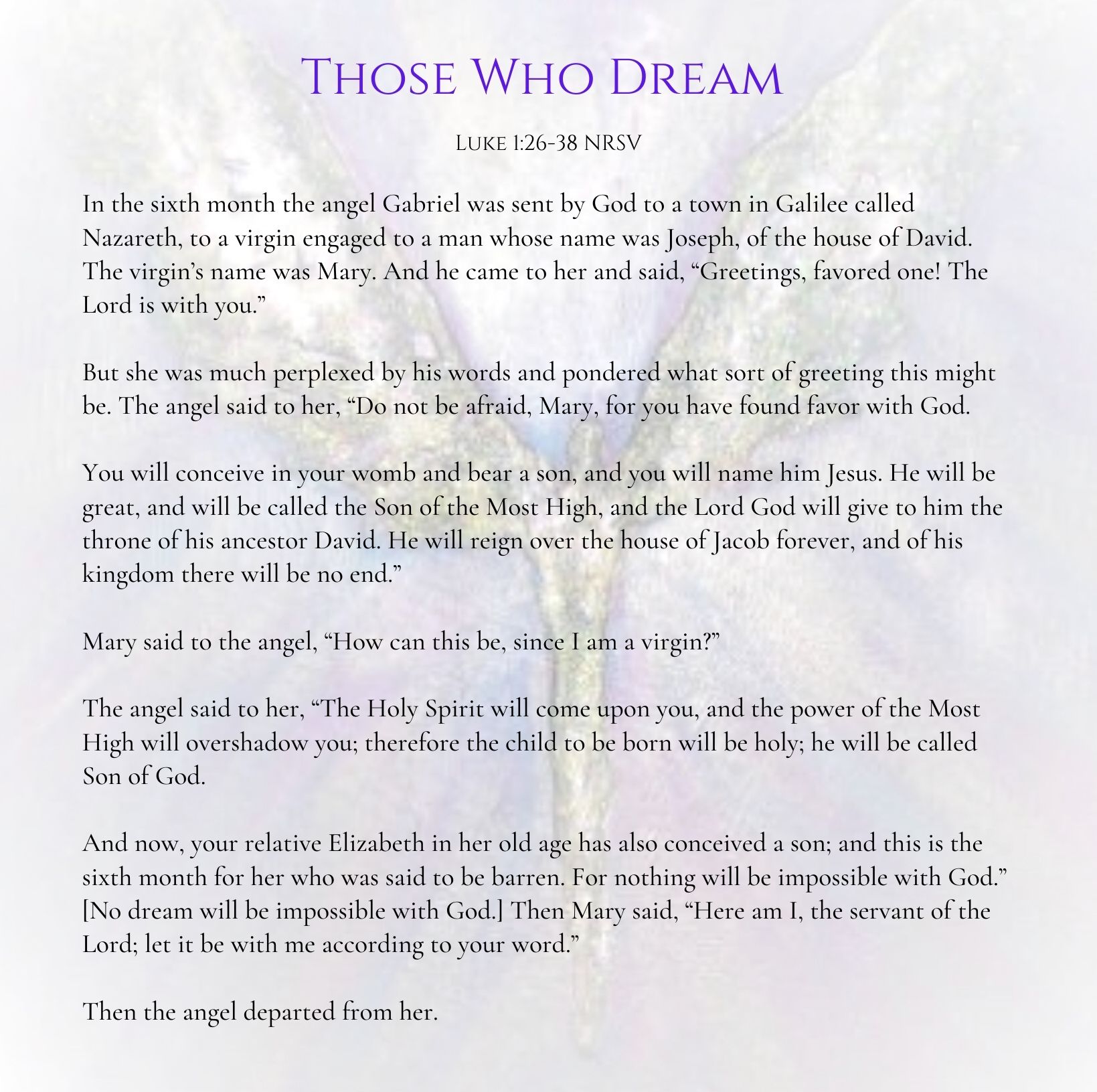

 In these day following the Sunday of Advent that brings us Mary’s Magnificat, I cannot help but think of Mary this week, pondering how she must have felt to be specially and unexpectedly chosen by God to bear the Christ Child. In these days, we celebrate Mary as God-Bearer, Mother, Theotokos, solemnly. What might her innermost reflections have been? Was she afraid, confused, bewildered? My imagination of her makes me think she felt all of those emotions, and more. She was, after all, a young girl with dreams for her life, dreams that the angel who came to her might have shattered.
This morning, my quiet time brought to mind a plethora of prose and poetry reflecting on Mary. I recently read a lovely three-pronged reflection on Mary written by Madeleine L’Engle in which she explores the inner experience of Mary within the context of the Incarnation-Christmas Mystery. May Mary and Joseph accompany and guide you to the places you need to be this year so that your spirit may encounter the Word made flesh.
In these day following the Sunday of Advent that brings us Mary’s Magnificat, I cannot help but think of Mary this week, pondering how she must have felt to be specially and unexpectedly chosen by God to bear the Christ Child. In these days, we celebrate Mary as God-Bearer, Mother, Theotokos, solemnly. What might her innermost reflections have been? Was she afraid, confused, bewildered? My imagination of her makes me think she felt all of those emotions, and more. She was, after all, a young girl with dreams for her life, dreams that the angel who came to her might have shattered.
This morning, my quiet time brought to mind a plethora of prose and poetry reflecting on Mary. I recently read a lovely three-pronged reflection on Mary written by Madeleine L’Engle in which she explores the inner experience of Mary within the context of the Incarnation-Christmas Mystery. May Mary and Joseph accompany and guide you to the places you need to be this year so that your spirit may encounter the Word made flesh.
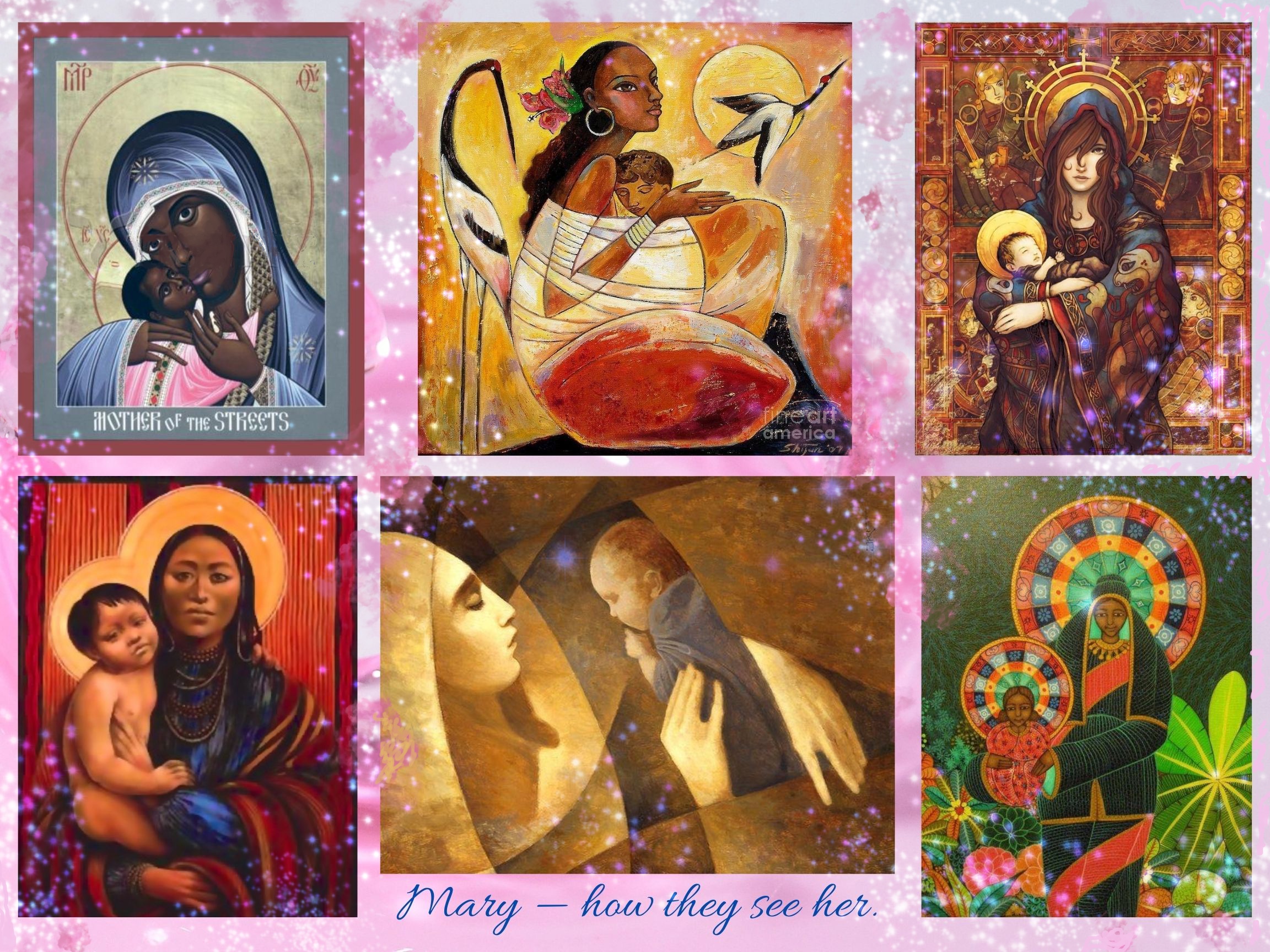


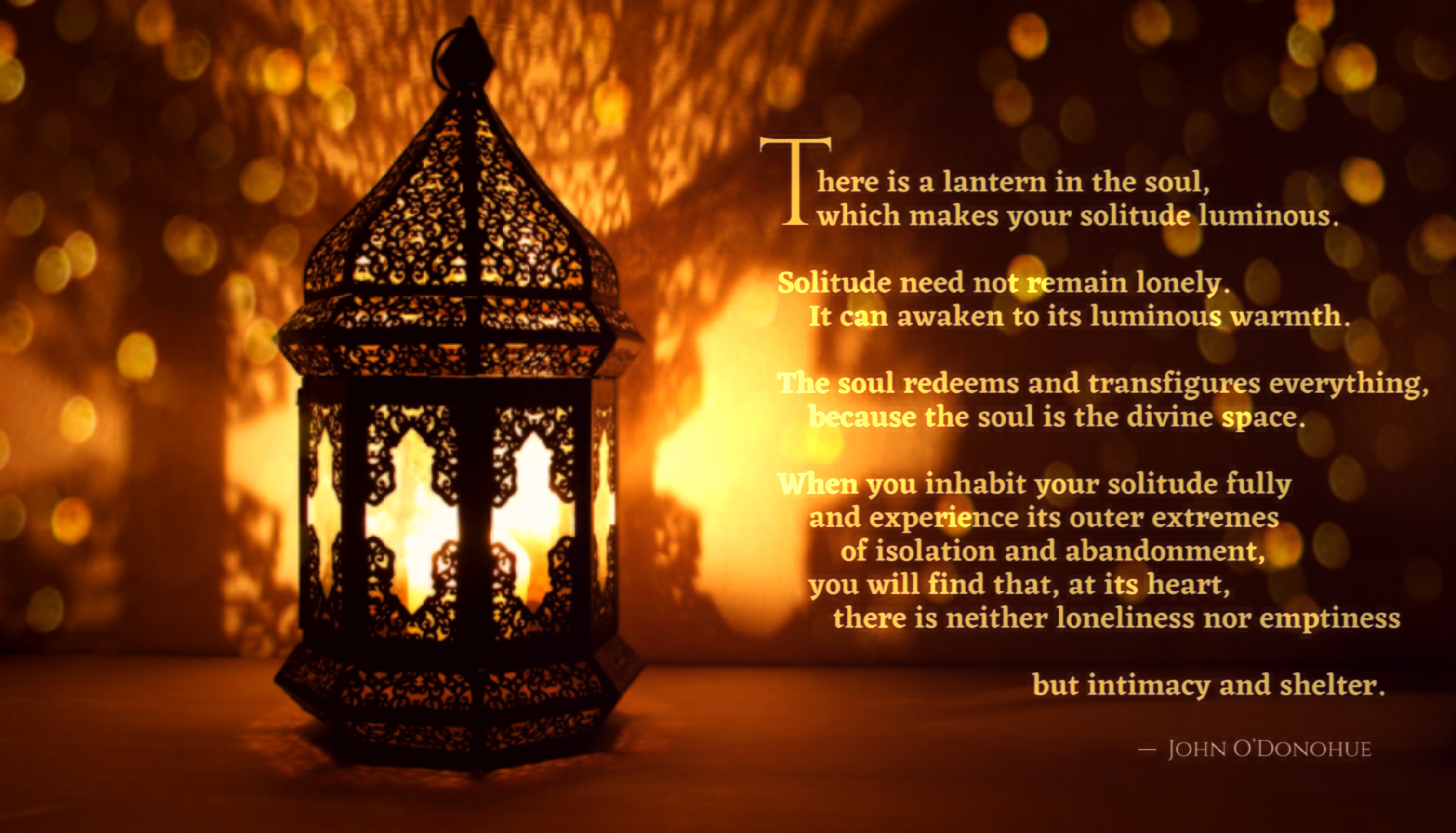
 Two hundred and three pills!
 This blog post is dedicated to the memory of my friend, Sister Macrina Wiederkehr, a wise and wonderful woman who left us this year and is now walking among

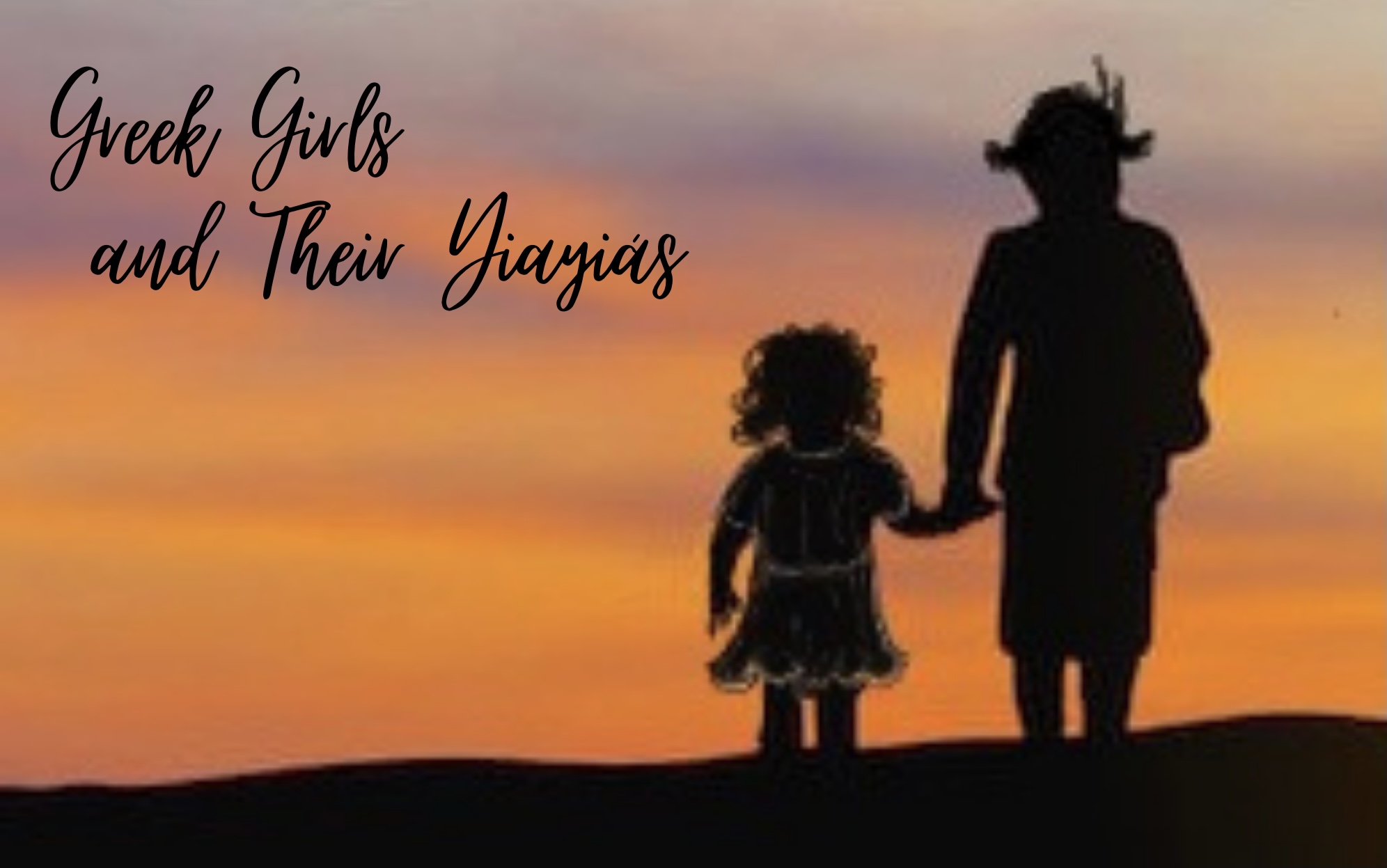
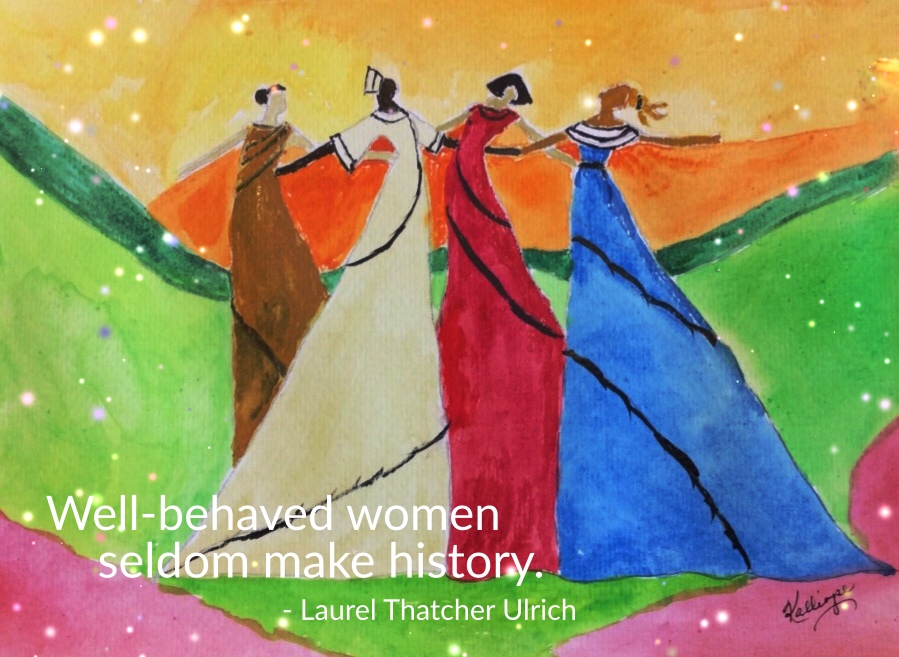


 God of the Sparrow 🌱 By Kathy Manis Findley