Holy Spirit, Inspiration, Life pathways, Mountaintop, Transformation

Can’t Stay on the Mountaintop

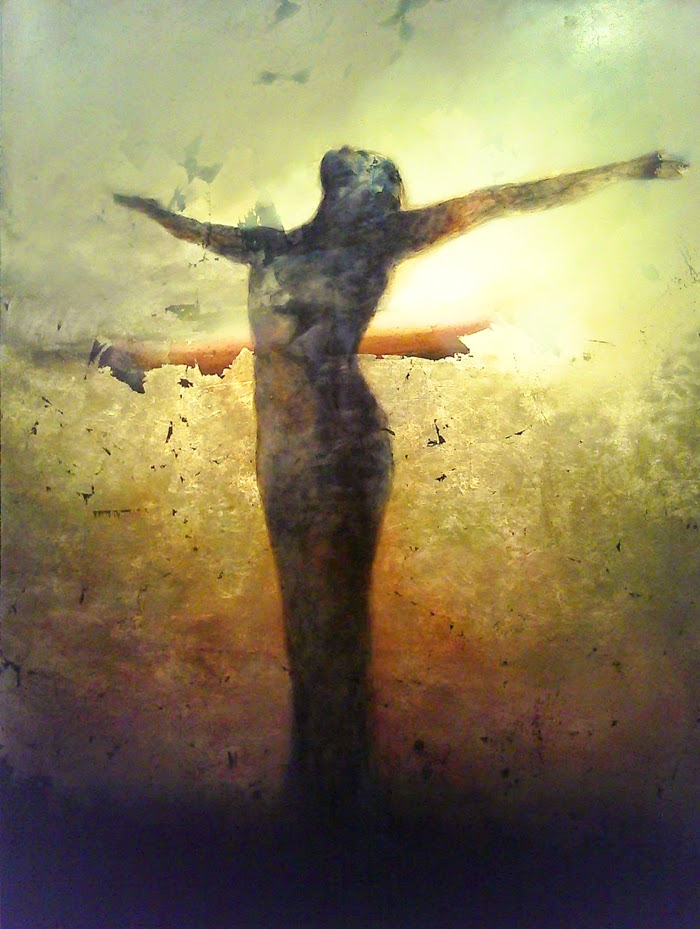
909AB186-15E1-4DA7-9027-5FC7B28578BDChrist-followers will always know ascent and descent, knowing and not-knowing. I can recall so many spiritual retreats that ended too soon, leaving me with a reluctance to go back into ordinary time. I wanted to stay in the place where God’s Spirit was moving within me. But every single time, I had to go home, leaving the mountaintop of my transformative spiritual experience.

In the Scriptures, two companion pieces tell of a “God experience.” Moses on Mount Sinai and Jesus on the Mount of Transfiguration. When Moses is on Mount Sinai, God is somehow manifest in thick darkness. “You saw no shape on that day at Horeb.” (Deuteronomy 4:15) Moses “sees” and “hears” to some degree, yet YHWH does not allow Moses to see God’s “glory” or “face.” The most that Moses can see is, humorously, YHWH’s backside. God placed Moses in a cleft in the rock and covered him until He had passed by. Moses would not see his face.

The Lord replied, “My Presence will go with you, and I will give you rest.”

Then Moses said to him, “If your Presence does not go with us, do not send us up from here. How will anyone know that you are pleased with me and with your people unless you go with us? What else will distinguish me and your people from all the other people on the face of the earth?”

And the Lord said to Moses, “I will do the very thing you have asked, because I am pleased with you and I know you by name.”

Then Moses said, “Now show me your glory.”

And the Lord said, “I will cause all my goodness to pass in front of you, and I will proclaim my name, the Lord, in your presence. I will have mercy on whom I will have mercy, and I will have compassion on whom I will have compassion. But,” he said, “you cannot see my face, for no one may see me and live.”

Then the Lord said, “There is a place near me where you may stand on a rock.When my glory passes by, I will put you in a cleft in the rock and cover you with my hand until I have passed by. Then I will remove my hand and you will see my back; but my face must not be seen.”

— Exodus 33:14-23 NIV

In the parallel story of Jesus on the Mount of Transfiguration (Luke 9:28-36; Mark 9:2-8; Matthew 17:1-9), there is first dazzling light. Yet a cloud soon overshadows the whole scene. Richard Rohr explains that “the epiphany is both light and darkness, knowability and unknowability, disclosure and non-disclosure.”

After the astounding experience on the mountain, Jesus deliberately walks with the disciples back down the mountain, onto the plain and desert of everyday life. Richard Rohr says that Jesus wanted to move the disciples “out of this enlightening, but also dangerously ego-inflating experience.”

We know that, always, we must return to the ordinary. We must come down from our mountaintops and walk on the rough road where life happens. We must experience the path’s twists and turns that take us through green pastures as well as through valleys of death’s shadow. That is the life we must live. Our Christian faith does not allow for permanent ascents. Mountaintop experiences for us are times of strength-gathering that make the rough roads bearable.

Jesus tells the disciples who witnessed his glorious transfiguration, “Don’t talk about it!” (Matthew 17:9). Because Jesus knew that talking too soon would only weaken the experience. Silence is important. Silence is necessary to preserve the sacred and the mysterious. Silence helps us remember how we felt on the “mountaintop.” And remembering helps us walk on, facing wherever life’s journey takes us with faith, confidence and perseverance. Thanks be to God. Amen.

Aging, Bible, Dreams, Faith, Holy Spirit, Hope, Inspiration, Luke 2: 21-38, Passing years, Prayer, Preaching, Prophetic, Waiting, Wisdom

At Any Age

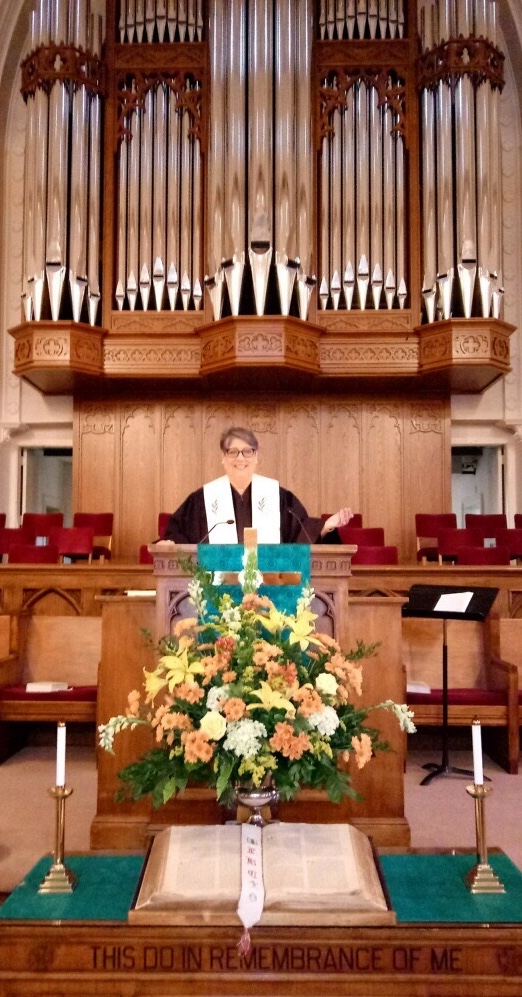
D543405F-29D8-492C-B48A-4BB0EC12CF72I asked my husband a rather strange question last night. It was about my recent preaching at First Baptist Church of Christ in Macon. This was how I posed the question to him:

“You have listened to me preach a gazillion times in past years when I was young. But now do I just seem like a little old lady in the pulpit?”

Apologies to all little old ladies who might very well preach as prophetically as ever in a similar situation! But back to my question, and my husband’s response.

“No! Not at all,” he said. “If anything, you seemed more confident and powerful than I have ever seen you.”

So much for my feelings of being inadequate just because I am now a retired senior adult who has not preached a sermon in a very long time. The truth is I agreed with my husband. I felt very confident within myself. I believed that I had received a holy and prophetic word from God, and was honored that God (and my pastor) chose me to speak that word. When I stood in the pulpit, I felt the memory and the wisdom of ministries past, all of them, and that recognition of God’s workings within me over the years filled me with assurance.

Still, we are used to prophets being young, like Jeremiah and John the Baptist. Prophets, after all, are given the mission of looking ahead. On the other hand, we think of elders as caretakers of the past. 

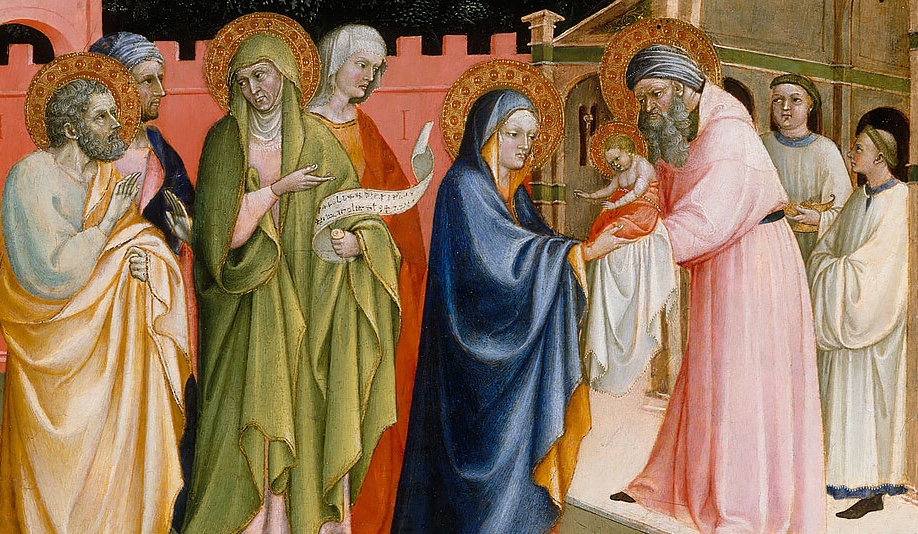
Pope Francis spoke about this in 2014 in his homily on the Feast of the Presentation of the Lord. In that homily, he asks us to see the mission of our elders as looking ahead to the future. And looking ahead to the future as persons who possess the wisdom of age. He gives us Simeon and Anna as our role models, naming them “senior citizen prophets.” And what role models they are! Among all the stories in Scripture, I have long been inspired and moved by the stories of Anna and Simeon.

In the story, this older woman and man have just met the new parents, Mary and Joseph, who were bringing their baby Jesus to the Temple. Pope Francis preached it with these words.

“It is a meeting between young people who are full of joy in observing the Law of the Lord, and the elderly who are filled with joy for the action of the Holy Spirit. It is a unique encounter between observance and prophecy, where young people are the observers and the elderly are prophetic!”

This is their story from the second chapter of Luke, verses 21-38:

And when eight days had passed, before His circumcision, His name was then called Jesus, the name given by the angel before He was conceived in the womb.

And when the days for their purification according to the law of Moses were completed, they brought Him up to Jerusalem to present Him to the Lord (as it is written in the Law of the Lord, “Every firstborn male that opens the womb shall be called holy to the Lord”), and to offer a sacrifice according to what was said in the Law of the Lord, “A pair of turtledoves or two young pigeons.”

And there was a man in Jerusalem whose name was Simeon; and this man was righteous and devout, looking for the consolation of Israel; and the Holy Spirit was upon him. And it had been revealed to him by the Holy Spirit that he would not see death before he had seen the Lord’s Christ. And he came in the Spirit into the temple; and when the parents brought in the child Jesus, to carry out for Him the custom of the Law, then he took Him into his arms, and blessed God, and said,

Lord, now lettest thou thy servant depart in peace, according to thy word:
For mine eyes have seen thy salvation,
Which thou hast prepared before the face of all people;
A light to lighten the Gentiles, and the glory of thy people Israel.

And His father and mother were amazed at the things which were being said about Him. And Simeon blessed them and said to Mary His mother, “Behold, this Child is appointed for the fall and rise of many in Israel, and for a sign to be opposed — and a sword will pierce even your own soul — to the end that thoughts from many hearts may be revealed.”

And there was a prophetess, Anna the daughter of Phanuel, of the tribe of Asher. She was advanced in years and had lived with her husband seven years after her marriage, and then as a widow to the age of eighty-four. She never left the temple, serving night and day with fastings and prayers. At that very moment she came up and began giving thanks to God, and continued to speak of Him to all those who were looking for the redemption of Jerusalem.

— Luke 2: 21-38 (KJV, NASB)

Simeon, a righteous and devout man who was looking for the consolation of Israel, was graced by the Holy Spirit. And in that Spirit, he came into the temple, finally holding Jesus in his arms and blessing him. This was the moment Simeon had hoped for over many years. And after prophesying about the child Jesus, he blessed the parents and began Mary’s preparation for the pain she was destined to experience when her son was crucified.

And the Prophetess Anna, now advanced in age, was there “at that very moment” the Scripture says. Anna never left the temple and she served God “night and day with fasting and prayer.” She lifted up her prayers of thanks to God for this child. And on top of that she proclaimed the message of hope that this child had come! Glorious news it was to “all those who were looking for the redemption of Israel.”

The stories of Anna and Simeon give us a portrait of elderly citizens, full of life’s wisdom and the Holy Spirit, who prophetically present to the world Jesus as Messiah!

And their story is full of hope for us, too. Perhaps those of us who are “of a certain age” are truly senior citizen prophets. Perhaps the hope we need to hear is the hope that, at any age, God calls us to prophetic mission. At any age, God will use our voices to speak hope to a world in despair, a world waiting for the consolation that comes only from God’s Spirit.

Absolom, Bible, Church, Darkness, Daybreak, Family, Grace, Justice, Preaching, Sexual abuse, Tamar, Violence, Women, Worship

“Think Justice!”

DFDDBB19-8E9F-4852-9804-4F97B176E9A3

A sermon preached on September 30, 2018 at the First Baptist Church of Christ, Macon, Georgia

Let the words of my mouth and the meditations of our hearts be acceptable in your sight, O Lord, our hope and our refuge. Amen.

I

In July, I received a note from Ellen. She is 22-years-old, a college graduate with honors, a strong, confident young woman. This is what she wrote:

“I love all of you so much. None of this would be possible without you. My time with you had such an enormous impact on who I am, and I can’t thank you enough for everything you’ve done to get me to this point. You’re my family forever and always.    Ellen.”       (Written on her wedding day, July 8, 2018)

Thirteen-year-old Ellen came to us at Safe Places, an organization where my staff and I cared for women who had been abused, children exposed to violence, and young girls who had escaped the evil grip of human trafficking. When we first met Ellen, she was silent, lifeless, angry — hurt deeply in her soul. But after a few months, Ellen’s vivacious personality began to emerge. Slowly, she opened up her hurt place and let healing in. 

Ellen was eventually strong enough to be a part of our Princess Program, where girls who had experienced violence spent the summer learning and sharing, and discovering their inner courage, resilience, and sacred worth. After the summer, we celebrated the girls at the Arkansas Governor’s Mansion with a grand ball, a very grand ball. 

When they put on their sparkling gowns, and the most glittering shoes I had ever seen, they believed — for at least one magical night — that truly they were princesses. Our wise staff taught them that even princesses can be violated, but they already knew that. They had lived through the humiliation of verbal abuse, the pain of physical and sexual abuse, and the long-lasting effects of emotional abuse. For many of them, it happened in the one place that should have been safe — in their homes.

II

Throughout history, we encounter stories of violence. Such is our story today, a story about how violence devastates Princess Tamar, King David’s daughter. Sometimes historians, biblical expositors and even story-telling preachers come upon stories that are hard to tell. This is one of those stories. It’s probably not included in any anthology of  “The World’s Most Inspiring Bible Stories.” It’s a story we don’t tell to our children. We might prefer to skip this story altogether. Theologian, Phyllis Trible, would call it a text of terror. And yet, it is the word of the Lord, and, as such, it offers some truths, some warnings, some questions, and maybe even a smidgen of grace.

So even though we find trouble in this text, God might just whisper, and gently nudge us to listen and to let the story reveal some important ways God calls us to do justice. 

Listen for the whisper of God in the reading of sacred scripture, 2 Samuel 13: 1-22.

In the course of time, Amnon son of David fell in love with Tamar, the beautiful sister of Absalom son of David. Amnon became so obsessed with his sister Tamar that he made himself ill. She was a virgin, and it seemed impossible for him to do anything to her.

Now Amnon had an adviser named Jonadab son of Shimeah, David’s brother. Jonadab was a very shrewd man. He asked Amnon, “Why do you, the king’s son, look so haggard morning after morning? Won’t you tell me?”

Amnon said to him, “I’m in love with Tamar, my brother Absalom’s sister.”

”Go to bed and pretend to be ill,” Jonadab said. “When your father comes to see you, say to him, ‘I would like my sister Tamar to come and give me something to eat. Let her prepare the food in my sight so I may watch her and then eat it from her hand.’”

So Amnon lay down and pretended to be ill. When the king came to see him, Amnon said to him, “I would like my sister Tamar to come and make some special bread in my sight, so I may eat from her hand.”

David sent word to Tamar at the palace: “Go to the house of your brother Amnon and prepare some food for him.” So Tamar went to the house of her brother Amnon, who was lying down. She took some dough, kneaded it, made the bread in his sight and baked it. Then she took the pan and served him the bread, but he refused to eat.

“Send everyone out of here,” Amnon said. So everyone left him. Then Amnon said to Tamar, “Bring the food here into my bedroom so I may eat from your hand.” And Tamar took the bread she had prepared and brought it to her brother Amnon in his bedroom. But when she took it to him to eat, he grabbed her and said, “Come to bed with me, my sister.”

“No, my brother!” she said to him. “Don’t force me! Such a thing should not be done in Israel! Don’t do this wicked thing. What about me? Where could I get rid of my disgrace? And what about you? You would be like one of the wicked fools in Israel. Please speak to the king; he will not keep me from being married to you.” But he refused to listen to her, and since he was stronger than she, he raped her.

Then Amnon hated her with intense hatred. In fact, he hated her more than he had loved her. Amnon said to her, “Get up and get out!”

“No!” she said to him. “Sending me away would be a greater wrong than what you have already done to me.”

But he refused to listen to her. He called his personal servant and said, “Get this woman out of my sight and bolt the door after her.” So his servant put her out and bolted the door after her. She was wearing an ornate robe, for this was the kind of garment the virgin daughters of the king wore. Tamar put ashes on her head and tore the ornate robe she was wearing. She put her hands on her head and went away, weeping aloud as she went.

Her brother Absalom said to her, “Has that Amnon, your brother, been with you? Be quiet for now, my sister; he is your brother. Don’t take this thing to heart.” And Tamar lived in her brother Absalom’s house, a desolate woman.

When King David heard all this, he was furious. And Absalom never said a word to Amnon, either good or bad; he hated Amnon because he had disgraced his sister Tamar.

III

Indeed, there is trouble in this disturbing text. We discover it when we eavesdrop on Princess Tamar — daughter of King David, sister of Absolom, and half sister of Amnon. We learn that Amnon conspired to be alone with her. His sly servant came up with a plan, and she ended up in Amnon’s room. After hurting her, he rejected her harshly. He called for his servant: “Get rid of this woman! Banish her from my presence! Bolt the door after her!” 

He would not even use her name.

Tamar collapsed outside the door, plunged her hand into the cooling ashes of the fire, and rubbed the ashes into her hair. As she staggered away, she tore her richly embroidered gown as a sign of her deep-down despair. Even princesses can be violated!

King David was angry, but did nothing either to punish his beloved son or to comfort his despairing daughter. There was no consolation from father to daughter, not a single trace of compassion.  And her mother is silent.

Near the end of the story, we stumble upon a tiny touch of grace when we learn that brother Absolom takes Tamar into his home. But she is no longer a princess of royal lineage. She fades into oblivion and lives out her days as a refugee in her brother’s house, a desolate woman who will never marry and bear children. But did Tamar fade into oblivion? 

I don’t think so! Tamar’s voice was not silenced. She told someone her story, and that someone heard her, and remembered her story, and re-told her story, and told it at the right time to the right person so that this story made its way into our holy scripture. Thousands of years later, we do know Tamar’s name. Across all barriers of history and culture, and if we imagine, we can hear her speak across the ages:  

“I lost my life that day. Here in my brother Absolom’s house, I am a prisoner. I will never have children that will bear my name through the generations. I will not know that deepest of joys.”

IV

So just keep silence, King David!  Stay silent, mother of Tamar! Protect your violent son at all costs. 

What a deadly picture of family violence — the violence of a brother overpowering his sister, and emotional violence because both parents remained silent.

We might ask: where were the voices of her parents? We cannot help but wonder how Tamar’s father and mother might have responded differently. But this royal family decided to keep silence to protect Amnon.

In her sermon, “The Silences We Keep,” Rev. MarQuita Carmichael Burton speaks of “conspiratorial silence.” Reflecting on Tamar’s story, Rev. Burton speaks these words:

Reclaim our voices, shatter the façade of the deadly silence we keep. . .

We must trade in our torn robes and ashes for a bull horn and a listening ear and tell the truth of our story, so that our souls, minds, bodies and the people we say we love might be healed. 

As former silenced victims choose to no longer acquiesce to the demands of the clan elders and refuse the false healing promised by our conspiratorial muteness,  we move forward to reclaim freedom and wholeness on our terms, because we need it and so does the village.

V

In the end, it’s all about justice, and the Prophet Isaiah knew a lot about that.

Break every yoke!  Then your light shall rise in the darkness! 

You shall be called the repairers of the breach!

We have seen a breach, and from the abyss of that breach, the “Me Too” movement erupted. The movement is a wonder to behold, and perhaps the cry of “Me Too” is precisely where we find the movement of God. Secrets held for decades came out of the darkness into the light, and grief-filled silences found words. Tears flowed freely from hearts that held on far too long to painful stories.

But I wish that no person had ever needed to cry out “MeToo.” That no one had ever endured the horrifying violence that caused them to live with a silence and secrecy that held such power over their lives. 

I wish they had never felt the grief that tormented them in the voiceless spaces of their spirits. 

I wish that Tamar had always been a princess — loved, cherished, protected by her parents. 

But she was not. And so many of our sisters and brothers and neighbors and friends are not. 

We may not always know who they are, but perhaps it is most important for them to know who we are, a people committed to justice.

VI

Dear people of First Baptist Church of Christ, I marvel at the many and mighty ways you do justice — creating beloved community across racial and cultural and ethnic divides, feeding the hungry, caring for the poor, seeing the sacred worth of every person. 

Can we also find ways to do justice within families? One in four of us in this sanctuary have experienced — or are currently experiencing — family violence. 

Among all the things that doing justice is, it is also being healers of the wounds that happen in the prisons of family secrecy. What does that mean exactly? 

I believe it means finding healing and gentle ways to give voice to a family’s secrets and silences. 

It means being ever a kind listener and never a judgmental voice. 

It means making sure that church is a safe and sacred space. 

It means keeping a watchful eye, always, over children, teaching them to be safe, not only from strangers, but from people they know and trust. 

It means being aware of the invisible wounds that others carry, and reaching out with tenderness that brings healing. 

If Jesus were among us today, I imagine him speaking justice to the unconscionable abuse of power that causes violence. He would call out husbands who abuse their wives, brothers who hurt their sisters, parents who harm their children.  Jesus might look into homes and cry out, “Woe to you!” 

And then, in his gentle, loving way, Jesus would reach out to the those who suffer violence, take their hands, and speak hope to despair. 

Jesus is not physically among us. but he left us in charge. So when we fail to seek justice in every place where abuse happens, we confine him. Joseph B. Clower, Jr. expresses this most eloquently in the final lines of his book, The Church in the Thought of Jesus:

If the indwelling Christ is not confined, then the Church’s eyes flow with his tears, her heart is moved with his compassion, her hands are coarsened with his labor, her feet are wearied with his walking among men [people].

 When we accept this weighty call and this daunting responsibility, the prophet Isaiah might call us repairers of the breach!

VII

So let’s end our story . . . Yes, Princess Tamar lost her royal status. But the final word in this story belongs to the brother who loved and esteemed her, and who honored her. In the chapter following our text, we learn that Absalom was the father of three sons and a beautiful daughter he named Tamar, in honor of his sister.  

Can you imagine Tamar taking her infant niece into longing arms that never expected to cradle a child who would carry her name? 

Can you imagine her full heart as she envisions the future of Princess Tamar the Second, daughter of Absalom, granddaughter of King David, niece of Princess Tamar the First?

What a surprise from God — anointing Tamar’s wounds with a holy, healing balm! 

And this is the very foundation of our Christian hope: the faith, the conviction, the assurance, the certainty that when Tamar was crying, God was listening. 

People of God, we must repair the breach and seize this holy task: covering survivors of family violence with the compassionate cloak of justice, confronting violence wherever it casts its shadow, following God into every place where justice must overcome oppression.

On the campus of Philander Smith College in Little Rock, Arkansas, there is a building that faces the interstate. On that building is a huge sign declaring a strong, prophetic message to over 100,000 motorists traveling past it every day. The sign reads “Think Justice!” But it means so much more! 

It means longing for justice, praying for justice, insisting upon justice — persisting, prevailing, creating — doing justice, breathing justice — in families, in communities, and to the ends of the earth. 

Then the mighty waters of justice will roll over us, and we will wade together in ever-flowing streams of righteousness. Amen.
Christian Witness, Comfort, Hope, Sunset

Beyond the Sunset

5A51E078-B55E-4610-B65C-93628EB8E621
“The Beautiful Sunset of Lancashire” Photography by Martine Camlin

The song, “Beyond the Sunset” was recorded by Hank Williams, Bill and Gloria Gaither, Pat Boone, and other recording artists. But I remember the song as a beloved hymn of faith. It was an old fashioned hymn, to be sure, because the elderly church members sang it with deep emotion, every word tucked into their memories.

As a child in the church pew, I observed that, for many worshippers, this hymn is a testimony of their strong faith in eternal life. The comfort of music that sings of eternal life is powerful, touching even the most hardened hearts. So “Beyond the Sunset” lives in the hearts of worshippers as a thoroughly Christian hymn, not so much as a popular song. 

Beyond the sunset, O blissful morning,
When with our Saviour heav’n is begun.
Earth’s toiling ended, O glorious dawning;
Beyond the sunset when day is done.

Beyond the sunset, no clouds will gather,
No storms will threaten, No fears annoy;
O day of gladness, O day unending,
Beyond the sunset, Eternal Joy.

Beyond the sunset, Oh, glad reunion,
With our dear loved ones who’ve gone before,
In that fair homeland we’ll know no parting,
Beyond the sunset, forever more.

— Blanche Kerr Brock / Virgil P. Brock

Christian hope for many devout believers is that they will see the glorious sunset ahead, and that when they get beyond the sunset, life’s earthly toil will end, joy will be eternal, and that they will reunited with loved ones gone before.

What a comforting, lovely message!

Uncategorized

“Justice Could Have Called but Mercy Came”


82A65550-B655-4B99-9635-7EE6D11BC6A2I am a church woman, and I was a church girl — religious to the core. I have been in churches, and served on the staff of churches, large and small — Greek Orthodox churches, Episcopal, Presbyterian, United Methodist, Baptist. Mostly Baptist. A 50-year Baptist and an ordained Baptist minister for 26 of those years.

I enjoy so many fond memories of my time in all of those faith traditions. Some poignant times, some hard times, some joy-filled times, some hilarious times — all made my journey a very rich one. So I will share with you just one funny story. I once was a part of a women’s choral ensemble in one of our Baptist churches. We sang lovely hymn arrangements, some contemporary pieces, and a few high-brow anthems. But at rehearsal one night, our director pulled out a piece of music that was rather mind-blowing. We looked at the lyrics and began to giggle. Soon we were laughing uncontrollably as we saw the opening line of the song’s refrain: “Justice could have called but mercy came instead.”*

Turns out, this was a bonafide gospel song, a quartet song, and we thought ourselves much too musically sophisticated to sing a gospel quartet song. But this is the interesting thing about those song lyrics that seemed to us so funny. In applying my theological and doctrinal knowledge to those lyrics, I determined that the sentence is true. It is very true that God can confront our sins and flaws with justice, but instead covers them with mercy. How full of grace is that truth! How many times have we needed God’s touch of mercy and grace! How many times has my sinfulness convinced me that mercy is out of my reach, that grace is impossible for me!

Pope Francis clearly understands sin in this way. Shortly after he proclaimed the Holy Year of Mercy in 2015, he was asked why humanity is so in need of mercy. He replied, “considering our illness, our sins, to be incurable, things that cannot be healed or forgiven. We lack the actual concrete experience of mercy. The fragility of our era is this, too: we don’t believe that there is a chance for redemption; for a hand to raise you up; for an embrace to save you, forgive you, pick you up, flood you with infinite, patient, indulgent love; to put you back on your feet. We need mercy.” 

When all is said and done, the words of that gospel song are true. Indeed, “justice could have called, but mercy came instead.” It is my hope and prayer that all of us will find redemptive mercy in the God of grace who offers us love, patience and forgiveness.


* Written by R.R. Christian as listed in the Catalog of Published Music

Freedom Songs, healing, Hope, John 5, Miracles, Music, Wade in the Water

Troubled Waters and Miracles

abstract background beach color
Photo by Pixabay on Pexels.com

I love the words and the melody of the spiritual, “Wade in the Water.”

Wade in the water.
Wade in the water, children.
Wade in the water.
God’s gonna’ trouble the water.

There is just something about it that is moving to me. It digs down into my spirit and stops me in my tracks. I don’t know why I react so deeply to that simple bit of music. It could be that what draws me to it is its strong reference to healing as it recalls the miracle story recorded in the Gospel of John.

After a feast of the Jews, Jesus went to Jerusalem. Now there is in Jerusalem by the Sheep Gate a pool, which is called in Hebrew, Bethesda. It has five porches, and lying in these porches are many sick people who are blind, lame, paralyzed, each waiting for the moving of the water.

For an angel went down at a certain time into the pool and troubled the water; then whoever stepped in first, after the troubling of the water, was made well of whatever disease she had. 

Now a certain man was there who suffered from an infirmity for thirty-eight years. When Jesus saw him lying there, and knew that he already had been in that condition a long time, He said to him, “Do you want to be made well?”

The sick man answered Him, “Sir, I have no one to put me into the pool when the water is troubled. Before I can get into the water, someone else gets in before me.”

Jesus said to him, “Rise, take up your bed and walk.” And immediately the man was made well, took up his bed, and walked.

— John 5:1-8 NKJV (paraphrased)

Or what inspires me about the song could be the stories that surround it. Some folk claim that “Wade in the Water” contained secret coded instructions to fugitive slaves on how to avoid capture as they followed the route to take them to freedom. The website Pathways to Freedom: Maryland & the Underground Railroad explains how Harriet Tubman used the song to tell escaping slaves to get off the trail and into the water to make sure that the dogs employed by the slavers lost their scent. “Wade in the Water” was one of their most inspiring freedom songs.

Those moving stories remind me of the many ways music touches my life with inspiration, courage, and hope, how it reaches the depths of my soul during the times when nothing else can reach me, how it lifts me up when I have fallen into despair, how it fills my heart with just the melody I need to give voice to my sorrow and then gives me a way to express my moments of greatest joy.

Most of us can recall times in our lives when we needed a dose of Divine healing. We can remember times of sorrow and despair and fear when only an encounter with God could move us toward peace, times when we needed to be made whole again, times when we hoped beyond hope that God would trouble the water. Read it again.

 . . . An angel went down at a certain time into the pool and troubled the water; then whoever stepped in first, after the troubling of the water, was made well of whatever disease she had. 

So in John’s Gospel story, a man who had been sick for thirty-eight years was healed. He was too ill to make it into the troubled waters of the pool no matter how many times he tried. But Jesus was there and asked him, “Do you want to be made well?”

The sick man answered that there was no one to put him into the pool when the water was troubled. “Before I can get into the water,” he said, “someone else gets in before me.”

But Jesus said those extraordinary words to him: “Rise, take up your bed and walk.” 

Immediately it happened. The man was healed, and he picked up his bed and walked. Maybe the man rushed off to tell friends about the wonderful thing that had happened to him. Or maybe could only stand there in awe, not moving at all because the moment was just too overwhelming.

It was a miracle. Actually, the story tells of at least two miracles: that Jesus healed the suffering man and that an angel descended from above and troubled the water in that otherwise ordinary pool.

I don’t know about you, but when I encounter a pool of healing water, troubled and swirling, I want to get in. I want my faith to be big enough to expect a miracle from ordinary water, in an ordinary pool, on an ordinary day.


Please visit this link to hear a stunning arrangement of “Wade in the Water” featuring an excellent soloist and choir from the A Cappella Academy from Los Angeles.

https://m.youtube.com/watch?v=uiqQKZZo-Uc


Comfort, healing, Resurrection, Rhythm

Rhythms

E9BB2F49-CFC4-4F5C-AB91-3DDC3A588333This morning I’m watching the sea, comforting waves that roll onto the shoreline one after another. The sound is hypnotic and very healing. The sea has a rhythm, an unending rhythm all its own. The weather affects the tides, of course, but the sea’s rhythm continues day after day, year after year. I can count on it to be there always, surging on to the shore with a bit of white foam at the end. And one more thing: nothing disturbs the sea’s rhythm. Not swimmers who frolic at the water’s edge. Not gulls that sweep down to get their fishy breakfast. Not dolphins that occasionally rise majestically above the water. Not boats that float by.

People have rhythms, too, almost as predictable. It’s what comforts us during turbulent times, that rhythm, because we know down deep that after our personal storm, our rhythm will still be there. What is it that can disturb our rhythms? Illness, loss of a significant other, problems in a relationship, worries about children. You name it. Our rhythms can go haywire for a time, but always to return to the predictable rhythms that make up life.

When Jesus was crucified, those around him lost their rhythm. Mary Magdalene, the other Mary and Salome, no doubt were gripped in their heart of hearts with grief and confusion. Mary the mother of Jesus kept vigil at the cross, mourning the senseless death of her son. But most quickly of all the disciples, the women gathered themselves and reclaimed their rhythm. The women at the tomb saw Jesus alive and they ran from the tomb to tell the others about the astounding miracle. 

Their personal stories after the resurrection move on through history, giving us the example of strength in turmoil. Do we hear from them again? Oh yes, for centuries we have told their stories to our children and grandchildren. Painters have captured them in stunning frescoes. Iconographers have captured them in icons from which worshippers through the ages have seen the sacred light. After the resurrection, we may not hear much from the women in the pages of the Bible. But the history of our faith venerates them, and has done so for generations.

The message? It’s a rather simple one, really. Just count on the rhythm of your life to continue, because it will, and it continues until the moment you take your last earthly breath. That’s a comfort.

Change, Discovering, End Stage Renal Disease, Freedom, healing, Illness, Life Journeys, Mindfulness, Rest, Restoration, Self care, Serenity, simple joys

I used to be . . .

734D4A65-1E4E-4705-A356-D13DF9C7F9B4I used to be . . . 

It’s a phrase I use a lot these days as I fight off the feeling that in retirement, I am useless. It’s not true, of course, that I am useless. But to be honest, I do feel just a little useless these days, at least some of the time. The reason? I used to be a bona fide workaholic. I used to feel important and productive. I used to be busy all the time, night and day. I used to be a perfectionist. I used to have just a bit of obsessive compulsive disorder, and all,of that drove me to a dangerous place.

The problem is that when you love and believe in your work so much, your work can become your whole life. Then things can get unbearable. So I admit that I am a recovering workaholic. I was the person that put in far more than 40 hours a week and never took a day off. But the critical question I had to answer was this: Is my ego at the root of my workaholism?

What was the job that was important enough to push me to work so hard?

I was a minister and a trauma counselor, and I was executive director of Safe Places, a nonprofit organization that served victims of violence. There was always someone in trouble, someone who had been battered by a spouse, someone trying to escape trafficking, a teen that was recovering from rape, a child that had been abused. So the work was never done.

I loved my work. I believed in it with all my heart. But I could not see what others saw. I could not believe the truth spoken by friends and colleagues, that I needed rest, that my work was hurting me. As much as I didn’t want to admit it, I was working myself sick. Circumstances, and maybe the alignment of the stars, brought me to a “come to Jesus” moment that forced me to take stock of my life. I realized I couldn’t do it all. So I took a very slight respite and pulled back from the constant work. In the meantime, as the stars would have it, we lost our federal funding, and suddenly Safe Places was gone. It was over. 

The stress did not end, though, because those that needed help kept calling . . . my phone. I had no staff left and, though I tried, I simply could not continue helping all these hurting people by myself. So I was forced into an unwanted and unplanned rest. 

During this “rest” time, grief and loss took over my psyche. But miraculously, my body began to rest. My pace slowed down. I was becoming mindful of every moment and what was going on in every moment. And in spite of the grief and sadness, my mind and spirit began to heal. What happened next was the shock of a lifetime. As my mind and spirit began to heal, I finally allowed my body to tell me what was going on. My doctors got to the bottom of it and diagnosed me with end stage kidney disease. Before I could even begin to take it all in, I was hospitalized and on dialysis.

I honestly believe I had worked myself to death, or at least nearer to death than I wanted to be. I spent a great deal of 2014 in the hospital trying to stabilize and then working to take my life back. It was hard work learning to write again, to think again, to walk again. But I made it through to a “new normal” that meant for me at least 7 1/2 hours of dialysis every day for the rest of my life, unless, of course, I am able to get a kidney transplant.

The experience of serious illness changed me. After I began to recover, people told me that I was unusually quiet. I didn’t speak much even when others around me were engaged in meaningful conversations. I knew that I was being quiet, quite unlike my normal personality. I was often silent when normally I would have had a great deal to say. I was different, to be sure, but inside myself I was okay. If I had to describe myself I would say that I was soft, broken open and free. And I was content in that place, although my family was concerned about me. I had traveled to a new place in my life, and it was a good place to be.

So here I sit in my “new normal,” tending plants, painting, cooking, writing, reading, and doing all things for pleasure. Most often I am still tempted to dive in and work on something until I am exhausted. But when the tiredness begins to creep up, something in my body remembers. Remembers I need to rest, to embrace stillness, to just “be.”

Still, I fight my old workaholic ways. Sometimes they push me to do things faster and better and longer. Sometimes my old workaholic ways push my button, the button that accuses me of uselessness, as in, “You are not worth much anymore! What are you going to do to change the world?”

Good news! I have finally given myself permission to not change the world. It has been a major shift for me, but I am seeing the truth more clearly, that I never could have changed the world anyway! So most of the time, when I feel myself pushing past my edge, I walk away. I write a blog post or fiddle with my flowers. I cook something fabulous or watch a little Netflix. So what will I do to live happily in these retirement days? I hope that I will keep studying the secret art of rest. I hope that I will continue to learn the grace of mindfulness, just cherishing the moment, every moment.

I used to be a workaholic. Not anymore.

Oh, and one more thing . . . a prayer. Though my faith tradition has always eschewed prayers to Mary, mother of Jesus, many very beautiful and meaningful prayers are prayed to her. I leave you with this one written by Mirabai Starr.

Mother of Consolation, help me to let myself be consoled. 

I hold it all together, Blessed One. 

I have convinced myself that it is up to me to keep the airplane aloft with my own breath, that I am the only one capable of baking bread and scrubbing floors, that it is my responsibility alone to alleviate the sorrow in the heart of every single person I know. 

But I have forgotten how to weep, Tender One. 

Teach me to reach out to the ones I comfort and ask for their comfort. 

Let me feel the tender touch of the Holy One on my cheek when I wake in the night, weary and frightened. 

Help me to be vulnerable and soft now, broken open and free.

— Mirabai Starr


Aging, Faith, grief, Illness, Joy, Life Journeys, Lightheartedness, Music, Pain, simple joys, Sorrow

Joy

102F7D81-F946-4E11-A42A-07566031DEABAs I often do, I found today, in my lengthy list of unread emails, a plethora of pleas to do something. Save the bees. Save the libraries. Save the children. Save the political candidate . . . and several other things that someone wants to save.  I care deeply about most of those things that need saving, like the libraries and the children and the bees. And I spend a fair amount of time worrying about them and praying for them to be saved.

But for this day, I am laser focused on saving myself, saving myself from the onslaught of various illnesses, from nature’s effects of aging, and mostly, from a life filled with worry where there should be joy.

Memories flood my mind with sweet, little songs from the past: “The joy of the Lord is my strength . . .”  (1)  “I’ve got that joy, joy, joy, joy down in my heart . . .” (2) Simple songs they were for us when as children we learned every word and took the melodies into our hearts to recall in the years to come.

And so today, I recall them, realizing that whatever may come, I have joy in my heart, and most of all, that I am leaning into the truth that the joy of the Lord is my strength. These were good and positive lessons to learn as a child, with simple music as the teacher. So today, I remember the songs, singing them silently as I write. Singing them aloud would most surely disturb the household. So I keep silent.

It can be a dangerous thing to keep silence, for in those silent times, there can be a flood of memories, thoughts, recollections, and the sacred space so essential to the spiritual life. Today’s sacred space brings these words to my heart:

The Lord is my strength and my shield;
in him my heart trusts;
so I am helped, and my heart exults,
and with my song I give thanks to him.

— Psalm 28:7 (RSV)

You are being strengthened with all power according to his glorious might, so that you might patiently endure everything with joy.

— Colossians 1:11(ISV)

Nehemiah said, “Go and enjoy choice food and sweet drinks, and send some to those who have nothing prepared. This day is holy to our Lord. Do not grieve, for the joy of the Lord is your strength.”

— Nehemiah 8:10 (NIV)

On top of my end stage kidney disease, debilitating fibromyalgia, diabetes, and an almost constant barrage of new diagnoses, I have one job really: to find ways of guarding the joy that makes its home in my heart, to patiently endure whatever comes with joy. I must trust that joy really is there in my heart. I must believe that joy is still a part of my faith. I must know that joy has been with me on my journey, every day, at every turn, over every mountain and through every valley.

I must guard my joy lovingly and persistently. And I must guard my heart, joy’s dwelling place. When new illnesses come along, new concerns, new challenges, new problems and new sorrows, perhaps the most important thing I can do is to guard my heart.

Along with the other passages of scripture that have entered my sacred soace today, there is another tiny scripture passage that has moved me over the years. The writer of the book of Proverbs begins chapter four with a list of life instructions, and for twenty-two verses, the writer admonishes the reader to be vigilant, to be careful, to hold on to instruction, to avoid the path of the wicked, etc. And then in verse 23, the writer of the everlasting wisdom of the Proverbs gives us one more tidbit of advice and advises us to pay attention to this one instruction, above all else.

Above all else, guard your heart,
for from it flow the wellsprings of life.

— Proverbs 4:23 

I am never 100% certain about the meaning of scripture passages, but this one feels very clear to me — guard your heart and the wellsprings of your life will flow from it. I think the wellsprings might be joy! Not such a simple message, is it, that we have “joy down in our hearts to stay.”


(1) The Joy of the Lord Is My Strength, written by Alliene Vale, ©️1971, Universal Music.

(2) Joy In My Heart, written by George William Cooke, 1925

Change, Courage, Dreams, Life Journeys, Memories, Passing years, Retirement, Transformation

On Disturbing the Universe

960D000A-3175-4D6F-9A36-3881E1569289You have no doubt heard about the mid life crisis. Perhaps you have even had one. I did at mid life. However, what’s more critical to me at this stage of my life is more appropriately called a late life crisis. And, lo and behold, I’m having one of those right now!
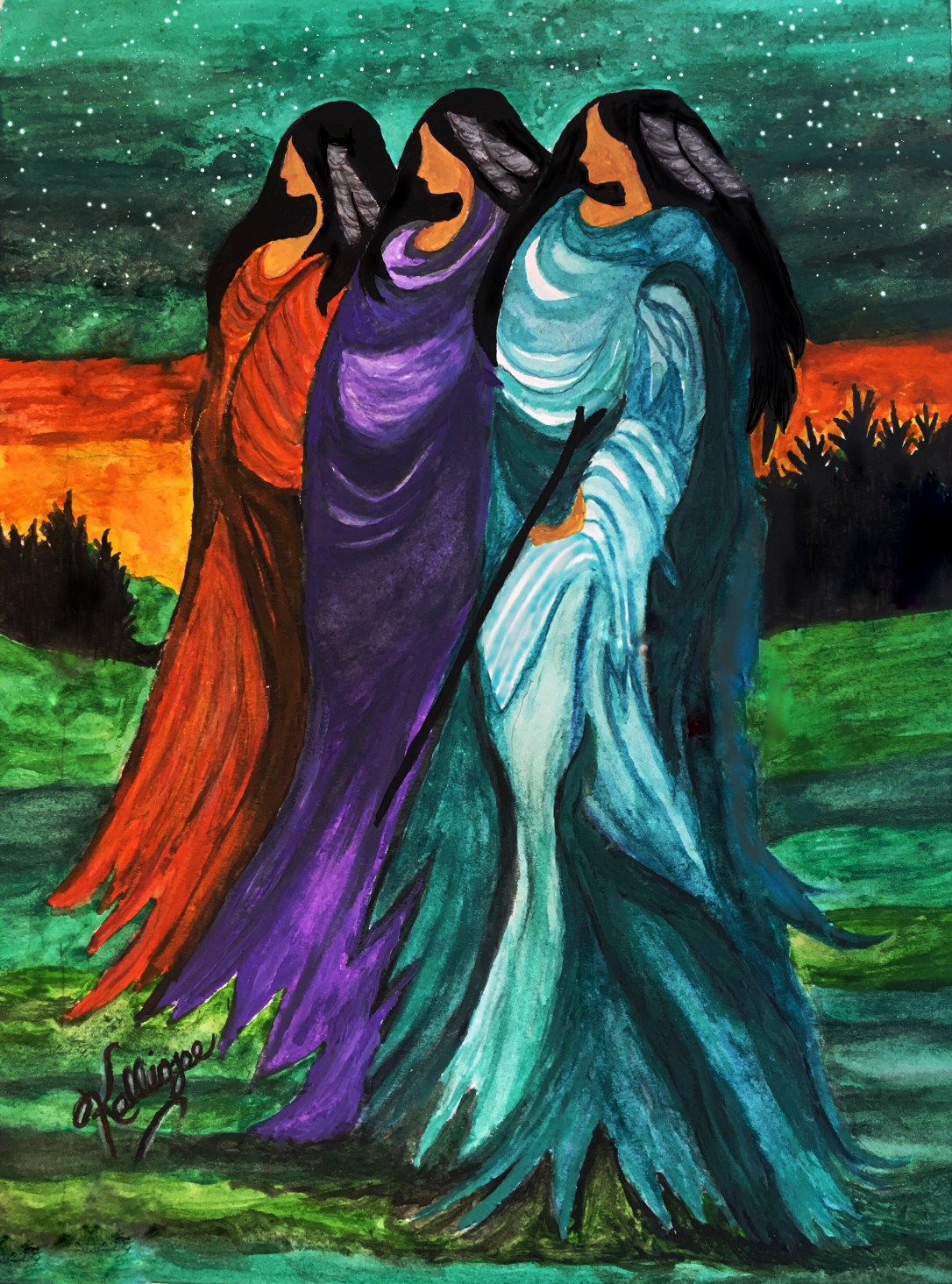
Am I in the right place? Do I need to retire nearer to my son and grandchildren? How do I live a fulfilled life while facing so many health challenges? Why did I move away from my best friend? How do I give back as I have always done now that my ministry career is over? Is it over? Is there more I could be doing? Should I write more, cook more, paint more, garden more? What in the world do I do with myself?

I recently read a book by Sue Monk Kidd,  When the Heart Waits: Spiritual Direction for Life’s Sacred Questions. I was stopped in my tracks by her words:

For some months I had been lost in a baffling crisis of spirit. Back in the autumn I had awakened to a growing darkness and cacophony, as if something in my depths were crying out. A whole chorus of voices. Orphaned voices. They seemed to speak for all the unlived parts of me . . . I know now that they were the clamor of a new self struggling to be born. I was standing on the shifting ground of midlife, having come upon that time in life when one is summoned to an inner transformation, to a crossing over from one identity to another. When change-winds swirl through our lives . . . they often call us to undertake a new passage of the spiritual journey.

I am there. Not in midlife, but in late life, and it is for me an existential crisis of spirit, definitely the time of “a new self struggling to be born.” To be sure, there are unlived parts of me, and I want to understand what exactly they are and how I can coax them to life. The ground beneath me is shifting, calling out to me to cross over from one identity to another. An inner transformation is most definitely in order for me, but how do I begin? Where do I begin? These are the questions of late life. And the symptoms? Dragging out old photos, very old photos. Looking up old friends. Examining your grandmother’s vintage jewelry. Scanning school yearbooks. All in a useless attempt at making the present as meaningful as you remember the past to be.

I sometimes agonize over my current life, wishing to dream just one more dream and to make it a reality. I worry about the future and wonder what the years ahead will bring. I want to still be relevant. I want to keep trying to change the world just as I used to. I want to stir things up and make waves in the quest for justice, just as I did in the past. I feel as if I have only two choices: to languish in the present or to find a way to be the me I used to be. And yet, something tells me that there is a third choice that involves some sort of transformation and the renewal of life, not as it used to be, but as it can be now, in the present season.

It is a quiet agony that I am experiencing. It happened to me when I came upon an unsuspecting darkness buried in late life and met the same overwhelming question that Sue Monk Kidd met: “Do I dare disturb the universe?”

My family could be scandalized if I found new life. They might wonder if I had taken too much of a medication. They might worry that I will do something inappropriate. They might know that I simply do not have the kind of energy required for dreaming big, new, important dreams. And they would be mostly right.

And yet I refuse to measure out my life with coffee spoons. It’s way too safe for me. It’s not who I am, and I am completely convinced that there are unlived parts of me looking for a way to come to life. I have no idea what that would look like. I have no idea how I will manage to pull it off. But I need to disturb the universe. And the universe needs some disturbing!

May God guide me on the way, pour blessings on my dreams, and show me just how I might disturb the universe.

Friendship, fun, Growing up, Passing years, Uncategorized

Friends

0373B40D-24BE-4EAE-8E78-3357B8EC97C7
Watercolor art by Kathy Manis Findley

There is nothing as enriching to life as genuine friendship. Not the superficial kind of friendship that boasts hundreds of “friends” on social media. Not the fickle kind of friendship described as a “fair weather” friendship. Not the exploitive kind of friendship that befriends someone only if there is something to gain by it. 

I’m actually talking about a specific friendship with a friend that is dearly special to me. But I am also talking about friendship in general. The kind of friendship I’m talking about is tried and true friendship that stands up to the test of time. It’s friendship that remains even though miles separate friend from friend. It’s friendship that cares through the years and deepens as time passes. It’s friendship that gives of your best to another person without thought of getting something in return. It’s friendship that is sweeter because you have allowed another person to know the real “you.”

Through the years, I recall many friendships that occurred in threes — three friends that were virtually inseparable so that when you saw one, the other two were close by. Of course, the friendship of three fluctuated with opportunity, going to different schools, living in different neighborhoods, and even those little spats that occurred every once in a while. Within those three, there were always the constant two — the twins, so to speak. For a time, I had this kind of friend.

So what did we do to build such friendships? That’s easy. We talked about boys and first loves, rivals for the boys we liked, as in girls that we didn’t like. We talked about going on dates, who was the cutest boy, and which boy liked which girl. We discussed the ways we might let a certain boy know that one of us liked him. We planned attendance at the next dance and how we could finagle to sit by a particular boy in church. We talked about going to Panama City to find a new crop of boys at the famous Hangout. We talked about clothes and shoes, especially shorts, and how we would sneak the shortest shorts by our ever-watchful parents. And of course, we planned times of spending the night together — eating, laughing, sitting in the dark around the lighted Christmas tree, listening to Otis Redding’s  “Try a Little Tenderness” and talking about boys all night long.

Sounds rather superficial, right? Maybe. But the truth is, in those relationships we learned how to share ourselves. Those giggly teenagers, who shared every intimate secret with one another while acting completely and unabashedly silly, grew up to be good and wise and strong women who still needed friends with whom to share their most intimate secrets. And guess what? We do. We still do. Across the miles, we interact with one another as if we have always been together. We share a love that is sweet and comforting.

Deep in myinnermost spirit, I know I can still count on the friend I made as a teenager. Apparently, ours was a bond that could not break. So thanks, Suzanne. I love you, then and now.

Brokenness, Hope, Mission, Prayer, Repairing broken things

On Being Fixers

261712B8-A5C0-440B-A40A-43EBFED54F47
A Broken World: For those who have lost their lives to terrorism in the twenty first century
By Rennett Stowe on Flikr

I certainly do not want to put out pessimistic vibes, but from what I observe, the world and its inhabitants are standing in the need of prayer. Children and parents at the border are still hopelessly separated. The Trump administration continues to cozy up with the world’s tyrants and dictators. Wildfires ravaged a Greek village, and continue their destruction in other parts of the world. Scores of people are hopelessly addicted to opioids, with very little assistance available to them. Veterans of our many wars are still homeless, scouring the streets for shelter, food and care. Elderly citizens of this nation cannot afford the medications prescribed for them. Growers and farmers assess their crops and contemplate how to navigate the very real effects of climate change, while U.S. leadership continues to deny that climate change has any devastating effects. Shall I go on, or spare us all from an endless and ominous list of broken things?

We need a fixer, an all purpose, jack-of-all-trades fixer that can fix the gamut of broken things. The dilemma is worse, though, because werry does not stop at a broken world. In that broken world — in every frenetic city and in every quiet hamlet — we find broken people, heartbreaking broken people. But even as our heart breaks, we look at the brokenness with our hands tied because the remedies are far too complicated. Prayer is a definite option for such a time. My new friend, Maren, has written a poignant prayer on her blog. This is the beginning of her prayer.

God, who is never in earthquake
not wind, not wildfire,
but comes walking across storms,
speaking with a still small voice
holding those who fear,
comforting those who grieve,
hear the prayers of the world . . . 

By Maren; Prayer for Lombok — Indonesia
https://giftsinopenhands.wordpress.com/2018/07/29/prayer-for-lombok-indonesia/

Prayers are necessary. Awareness is critical. Reaching out in specific, authentic ways is imperative. Yet, we still need a fixer, or at least a place to find hope and comfort. I always turn to the words of the prophet Isaiah for hope, while at the same time, I understand — with just a bit of reticence, fear and trembling — that Isaiah’s remedy points directly back to me.

The Spirit of the Lord is upon me,
because the Lord has anointed me
to proclaim good news to the poor.

He has sent me to bind up the brokenhearted,
to proclaim freedom for the captives
and release from darkness for the prisoners,
to proclaim the year of the Lord’s favor
and the day of vengeance of our God,

to comfort all who mourn,
and provide for those who grieve in Zion—

to bestow on them a crown of beauty instead of ashes,
the oil of joy instead of mourning,
a garment of praise instead of a spirit of despair.

They will be called oaks of righteousness, a planting of the Lord
for the display of his splendor.

They will rebuild the ancient ruins
and restore the places long devastated;
they will repair the broken cities
that have been devastated for generations.

— Isaiah 61:1-4 

There’s the catch, the description of the fixer as one who has first been anointed by the Lord and then is sent. That would be me, and you, fixers all!

May God anoint us as we go into all the broken places and draw near to all the broken people.

Wisdom, Women

Woman Wisdom

C9DDA313-A81D-4148-8B30-33C313F12802
Watercolor art by Kathy Manis Findley.

I remember the many spirited discussions in meetings during my career. Often the dialogue deteriorated into a rancorous exchange, but inevitably, someone would rise to speak words of conciliation and wisdom. The gathering would settle down, and forward progress was possible. The voice of wisdom? Well, nine times out of ten, it was a woman’s voice.

When things are as they should be, women form themselves into positive friendships and relationships. In such groups, their collective energy and gathered wisdom can be a force to be reckoned with. Groups of women are unstoppable. They get things done. They serve others and they serve one another. At the very foundation of that kind of group is wisdom, the kind of wisdom that sees beyond the present situation and is able to dream something better and stronger.

Wisdom births strength and the courage to lead. It was this kind of wisdom that compelled Deborah, a prophet and judge of Israel, who rendered her wise judgments beneath a date palm tree. Deborah offered counsel before battle and declared that the glory of the victory would belong to a woman. The Song of Deborah is a hymn that celebrates a military victory helped by two women: Deborah and Jael. The Biblical account ends with the statement that after the battle, there was peace in the land for 40 years (Judges 5:31). 

Wisdom formed the bond between Shiphrah and Puah, Hebrew midwives who refused to follow the Egyptian Pharaoh’s genocidal instruction to murder all Hebrew male children. Their courage to refuse his order may well be the first known incident of civil disobedience in history. Some scholars have called the two midwives the earliest, and in some ways the most powerful, examples, of resistance to an evil regime.

Woman wisdom can be a powerful force of change, of compassion, and of love. At their best, women join together to create invisible nets of love and caring that hold up those who are weak and protect those who are in harm’s way. Women can dance into hope in the presence of danger and sing with great joy when life brings celebration.

Unstoppable! Wise! Committed! Calm! Courageous! Persistent! 

Just a few words that describe woman wisdom, and words that remind us of the inner strength, courage, and power we possess in great measure. Enough measure to change the world!

So sisters, let us join hands and do it. The world needs us. The children at the border ripped from their parents need us. The places of pain all around the world need us. Our sick neighbor needs us. The hungry families in downtown alcoves need us. The woman being beaten by her husband needs us. Children, abused and neglected, need us. 

To help them, all of them, is no easy calling. To know how to help them is no simple mission. We will need to dig deep, call up every ounce of wisdom we have, and then follow that wisdom, hand in hand, toward a better day.

May God strengthen us for the task.

Faith, Ministry, Mission, Politics, Trump

Fault Lines and Faith

88629599-A458-49EB-B5B9-A413BEE5FD59
Aerial photo of the San Andreas Fault in the Carrizo Plain,  http://www.geologyin.com.

Last week, we were inundated with media reports about President Donald J. Trump’s performance in his private meeting with Russian President Vladimir Putin. From the outset, voices cried out in protest that the President of the United States would even consider a meeting with the Russian dictator. Now we are working through what the U.S. president said or did not say during the meeting. In a sense, we are standing on the fault lines of our nation.

There is no shortage of criticism on the opinion that President Trump took sides. In fact, he took Vladimir Putin’s word over the findings of several American intelligence agencies that Russia interfered with the 2016 election. Alina Polyakova, an expert on Russia at the Brookings Institution in Washington, D.C., said this in a conference call with reporters.“It was telling that the U.S. president did not mention Ukraine or Crimea once. The U.S. president also didn’t mention U.S. sanctions and basically let the Russian president set the agenda on Syria and other items as well.”

Condemnation of this meeting was swift, sweeping and widespread. The Chicago Tribune reported a plethora of reactions: “Bizarre. Shameful. Disgraceful. And that’s just from the Republicans.” Disgraceful, embarrassing, incompetent, disturbing, unpatriotic . . . There are so many negative descriptors in the narrative about this meeting. People of faith stand on the fault line wondering if and how we should respond. 

Now, the shock has somewhat abated. People, Democrat and Republican, are making their way back to the comfort of normalcy. To be sure, some Democrats are wringing their hands a bit more than they did before the Trump/Putin meeting, but at the end of the day, everyone will settle down on top of whatever fault line is nearest to them. I cannot help but think of the words of Edwin Muir from his poem, The Transfiguration, “But the world rolled back into its place, and we are here. And all that radiant kingdom lies forlorn, As if it had never stirred.”

So after all the upheaval caused by the Helsinki meet-up, and after all the amped-up rhetoric of condemnation of the American president’s performance, it seems as if “the world rolled back into its place,” as if nothing has stirred. And yet, some people of faith feel an unease on this fault line, a vague sense that all is not as it should be, and wondering what all of this has to do with us. Most of us are do-ers, so inaction is difficult even when no clear action is before us. For good or ill, we are here in “the living of these days,” and there are indeed some clear actions we must take.

One set of effectual actions, as suggested by my friend, Ken Sehested, is to be prepared, to listen to media reports from a variety of sources, but to remember that we draw our bearings from “a larger horizon.” Ken writes this in a meditation entitled “We Must Be Prepared: A Brief Meditation for the Living of these Days.”

We must be prepared. Things are likely to get worse before they get better. We must listen to the news, from a variety of sources. But we must not draw our bearings from that news. Ours is a larger horizon.

It seems to me that all of our responses — whether being fully informed, shaping our opinions and convictions, advocating with members of Congress, or praying for our nation and our leaders — must emerge from that place called “a larger horizon.” 

And about the living of these days? These are the days we have, the good of them and the not so good. Certainly, we can feel hopeless when we hear disturbing headlines about any number of fault line issues. The narrative from the U.S. President clashes with the best direction from his own staff. The story of the private Helsinki meeting changes from hour to hour. Lawmakers are calling for recordings of the meeting. There is a palpable lack of trust within the Trump administration. 

In these days, we do feel threatened by fault lines, feeling them shifting underneath our feet. But along with the fault lines, we also have a living faith that guides us to create positive change, compels us to continue standing up for the marginalized people among us, strengthens us to labor for the good of our communities and our nation, and ennobles us to speak out for truth and justice.

Adultery, Belief, Bible, Division, Morality, Southern Baptists, Trump

God People, Trump, Morality and the First and Greatest Commandment

352F795F-C66F-45DB-838E-B2CEDFF6EA39Take a trip with me into the Bible Belt for a visit to the town of Luverne, Alabama, population 2,700. In the First Baptist Church on Main Street, we can hear a sermon on one of the Ten Commandments, one sermon in a ten part series. The people in the pews are good people, “salt of the earth” Christians who seek to live exemplary and moral Christian lives.

Good to see you this morning,” the pastor said, shaking hands as the worshippers took their usual places in the wooden pews. He walked up to the pulpit and opened his King James Bible.

“Today we’re going to be looking at the Seventh Commandment,” he began. “Exodus 20:14, the Seventh Commandment, ‘Thou shalt not commit adultery.’ ”

And from there the pastor’s dilemma is whether or not to mention the adultery of the president of the United States, the man that these Baptists believe is their savior.

Surveys and polls abound, but one particular survey indicates that Trump’s support among Southern Baptists is over 80 percent. These are the 80 percent people who showed up on Sunday morning to hear what their pastor had to say about committing adultery. 

On this day, in this sermon, the U.S. president will get a pass. After all, the people insist, he alone has saved them from sure and certain annihilation by hordes of illegal immigrants, MS-13 gang members, Muslims, terrorists, abortion supporters, liberals, and black people who most certainly would have taken over their country and killed all the white Christians.

Does that sound a bit too dramatic to be real? Tragically, it’s not an exaggeration. It is exactly what these people believe.

The Washington Post article sums it up:

The First Baptist Church’s pastor “looked out at all the faces of people who felt threatened and despised in a changing America, who thought Barack Obama and Hillary Clinton were sent by Satan to destroy them, and that Donald Trump was sent by God to protect them, and who could always count on [pastor] Clay Crum to remind them of what they all believed to be the true meaning of Jesus Christ — that he died to forgive all of their sins, to save them from death and secure their salvation in a place that was 15,000 miles wide, full of gardens, appliances, and a floor of stars.”

And there you have it . . . a snapshot of the erroneous beliefs that have divided the American people. The remedy? Who knows what might unite a people of such disparate convictions and skewed ideas? It is a question worth pondering and asking for God’s wisdom in finding the answer. One thing I do know: divisions, xenophobia, racism and general hatred between the people who carry the labels “liberal” and “conservative” is not pleasing to God. In fact, God might counsel us to focus less on “Thou shalt not commit adultery” and instead to live into “the first and greatest  commandment” and the second one too:

Teacher, which is the greatest commandment in the Law?”

Jesus replied: “‘Love the Lord your God with all your heart and with all your soul and with all your mind.’

This is the first and greatest commandment. 

And the second is like it: ‘Love your neighbor as yourself.’

All the Law and the Prophets hang on these two commandments.”

— Matthew 22:36-40 (NIV)

Comfort, Contemplation, Division, Faith, grief, healing, Hope, Justice, life, Serenity

Sitting Open-Handed Before God

71184739-B4D2-4F2F-897E-1EAD2C2A56EAWhat is it like to sit open-handed before God? To abide with a compassionate God who knows the grief we are carrying? To sit in the glowing presence of a God who, not only knows the deep angst of our nation, but who can also transform it?

Yes, many of us are grieving the current state of our nation. We see our nation’s pain, just as we see the pain of the world. Yet, we who are Christ-followers live with great advantage in this pain-filled world. Yes, we grieve the divisions in our nation and lament at the ways we seem to have lost our compass of compassion, mercy and justice. We feed those who already have abundant sources of food. We provide health care to those who can afford their own. We hold open the voting entrances for those who can get there with the proper credentials. But for the people who hunger, the families that are homeless, the elderly, the children incarcerated at our borders, the prisoners, the helpless, the marginalized . . .  well, for them, we offer prayers, if we think of them at all.

So what is our great advantage? It is that our faith can carry us into spiritual realms where hope is large and dreams are possible. It is that we enjoy access to spiritual community with an accessible God. It is the spiritual luxury of quiet contemplation that opens our hearts to the whispers of God. And yes, I did say whispers of God, for it is almost always a quiet voice that beckons us into a world of turmoil. It is a quiet God-Voice that rekindles our compassionate hearts, speaks to us through the noise of discord in our nation, and shows us the good path we must follow.

We need not despair or cry out in anger or disgust. We need not attack those who seem to be wrecking our country. We need not hate those with whom we disagree. We have the great advantage of only this life task: to be silent before God, to sit in God’s presence open-handed, to pray, to listen, to seek, and then to go.

Sister of Social Service Simone Campbell, famously known as “the nun on the bus,” offers us a glimpse into one of the ways we can live as people of faith in a fractured nation. 

Finding a way to not vilify or divide into “them” and “us” in today’s federal politics goes against . . . current custom. . . . So my contemplative practice is to attempt to sit open-handed and listen to the “wee small voice” that sometimes whispers ideas and ways forward.

Simone Campbell

Thanks be to God for the quiet whisper that guides us on the path ahead, the God-Voice that ordains us to heal our nation and comfort our world.

Bondage, Child protection, Courage, healing, Justice, Secrets, Sexual abuse, Silence, Stories, Women

Hidden Away

878930EE-0F89-44EE-B45A-4352E1A8387DShe was like the moon—part of her was always hidden away. 

Dia Reeves, Bleeding Violet

Yesterday, I watched a clip from the 2018 ESPY Awards. I could not help but pause to listen to the athletes tell their stories of years of abuse by U.S Olympic Team doctor, Larry Nassar. I wondered how many years of silence they each endured, holding the horrible secret inside where it had the power to do great harm. That’s the thing about sexual abuse — it’s often a big, bad secret. Victims hold the shame in the place where they pack away their secrets, and the rest of the word hopes never to have to hear about it. So the secret is safe, hidden away, at least for a time.

But not this time! The “sister survivors” of the disgraced sports doctor’s abuse accepted the Arthur Ashe Courage Award at the 2018 ESPYS. Dressed in glittering gowns, holding hands in solidarity, more than 140 women gathered onstage to share the award given to athletes whose bravery “transcends sports,” as the audience rose in a standing ovation.

Sarah Klein, a former gymnast who said she was among Nassar’s earliest victims three decades ago, was the first to address the audience. “Speaking up and speaking out is not easy,” she said. “Telling our stories of abuse, over and over and over again, in graphic detail, is not easy. We’re sacrificing privacy, we’re being judged and scrutinized, and it’s grueling and it’s painful, but it is time. We must start caring about children’s safety more than we care about adults’ reputations.”

Tiffany Thomas Lopez, who in the 1990s played softball at Michigan State University where Nassar practiced, had a message for other victims who might still be silent. “I encourage those suffering to hold tight to your faith, and stand tall when speaking your truth,” she said. “I’m here to tell you, you cannot silence the strong forever.”

Olympic gold medal gymnast Aly Raisman was the last to speak. She was unsparing in her criticism of the adults who she said for years failed to protect the victims, instead opting to silence her and others “in favor of money, medals and reputation. But we persisted, and finally, someone listened and believed us.”

In January, more than 150 women and girls gave victim impact statements at one of Nassar’s three trials. In a Lansing, Michigan courtroom, they spoke of abuse under the guise of medical treatment, which for some began when they were elementary school age. Following their testimony, Circuit Court Judge Rosemarie Aquilina sentenced Nassar to up to 175 years behind bars.

When the years of silence ended and the women released their secrets, justice followed, relief followed, inner peace followed. Therein lies a lesson for us all. How many times have women kept silent to protect others? How many times did we guard a secret because revealing it might hurt other people? Did we realize that by hiding away the secret, we were harming ourselves? The words written by Dia Reeves is true of us:

She was like the moon—part of her was always hidden away. 

And so it is with women. There are always parts of us that are hidden away, often for many years. There are parts of our stories that we hold in our souls, secrets we would rather not speak. It seems important, though, for each of us to develop the wisdom of knowing what we should hold in silence and what we should speak. As for the big, bad secrets — well, saying them out loud breaks their power. The chains of our silence fall to the ground, broken! 

And finally, we have freed ourselves! 

Beauty of Nature, Birdsong, Inspiration, Joy, Laughter, life, Magic, Nature, simple joys

Life Can Lose Its Magic


ADD6C2DE-A04C-4699-93E8-97923440A118
Photography  from Lize Bard’s blog, Haiku out of Africa at https://wandererhaiku.wordpress.com/2018/07/18/aura/

Life can lose its magic. 

It happens. 

It happens when labor eclipses the joy of leisure. 

It happens when busyness replaces moments of re-creation. 

It happens when meaningless prayers are more common than deep spiritual contemplation. 

It happens when relationships are taken for granted. 

It happens when entitlement replaces gratitude. 

It happens when despondency is more present that genuine laughter. 

It happens when nature becomes commonplace and we miss its breathtaking beauty. 

It happens when we hear the sounds of the birds as white noise instead of captivating birdsong. 

It happens when the dawn’s sunrise happens without our notice.

It happens when a serene, pink sunset that gently paints the sky loses its enchantment.

it happens when music becomes noise rather than the soul’s inspiration.

It happens when the shimmer of the moon is just a nightly expectation and the sparkle of the stars in the night sky becomes ordinary.

Life can lose its magic. 

How tragic.


Brokenness, Courage, Despair, Faith, grief, healing, Hope, Kintsugi, Rabbi Yitzchak Luria, Repairing broken things, Tikkun Olam, Wholeness

Whole Again

23A0B57C-5487-4E6C-B48B-C45552916C23So many people have been broken. I join them in their brokenness, for I, too, have been broken. Not just once, but again and again. So I know how it feels to look down in the dust at my feet and see the shards of a broken spirit. I know the emotional response I have when I sit on the ground examining the broken shards, and I know how I despair of the daunting  task of putting the broken pieces back together.

I know the fear of doubting that I will even be able to put them together again. I know the terror of believing that my broken life will forever be broken. I know the suffocating feeling of having been broken beyond repair, without hope, without the faith I will need to repair my own brokenness.

And then, we look at our world, lamenting its groaning in so many ways and in so many places around the globe. Ours is a world that seems broken into pieces. I often find encouragement in the Jewish concept known as Tikkun Olam, a phrase found in the Mishnah that means to heal or repair the world. While Tikkun Olam is used today to define social action and the pursuit of social justice, the phrase has ancient roots with origins in classical rabbinic literature. It means so much more than examining broken pieces and finding a “glue” that might possibly put them back together.

Rabbi Yitzchak Luria* pondered the world’s brokenness and came to believe that, even before time, something must have gone terribly wrong with the world. As he continued to mull it over in his mind, he proclaimed that the world had shattered. He taught that we are anointed to repair a world which he defined as “all that is eternal,” insisting that “at the very core of reality is G-d’s shattered dream, waiting for us to pick up the pieces.”

Things break. The world breaks. Dreams break. We break. Such is the reality we know. And yes, we can become disconsolate as we take on the task of putting the pieces back together again. But there is a higher truth, a more noble calling than just putting together broken pieces. It is the calling to make things whole again, to make the world whole again, to make your spirit whole again.

In Scripture, we find many stories of persons being made whole. Each one looks like a miracle. Remember the story of the woman who had suffered for twelve years?

A woman, who was very ill for twelve years, came behind Jesus, and touched the hem of his garment: For she said within herself, “If I but touch his garment, I shall be whole.”

Jesus turned about, and when he saw her, he said, “Daughter, be of good comfort; your faith has made you whole.” And the woman was made whole from that hour.

— Matthew 9:20-22

Surely it was a miracle that this woman received. But for us, miracles are rare. We are burdened heavily by the brokenness, usually without the benefit of miracles. So what is it around you that is broken? What broken shards do you have before you? A broken relationship? A broken faith community? A broken dream? Is your city broken? Your nation? Your world? Or it it your own spirit that lies in broken pieces at your feet?

I cannot promise you a miracle. Even so, you must pick up the broken pieces and get started. You may get a little help from the people in your life. Then again, they may offer no help at all. But I do know that you have within yourself all the strength you need to take what is broken, put the pieces back together and find yourself whole again.

She is a beautiful piece of broken pottery, put back together by her own hands. And a critical world judges her cracks while missing the beauty of how she made herself whole again.

— J.M. Foster

The Japanese art of repairing broken pottery is called kintsugi. Repaired with pure gold, the Japanese art embraces the imperfections of the broken object. The flaws are seen as a unique part of the object’s history, which adds to its beauty. The glistening gold cracks are seen as very lovely features of the pottery, and Japanese artists say that the pottery is even stronger at the broken places. 

And so are we!

* https://www.chabad.org/library/article_cdo/aid/3593030/jewish/Fallen-Sparks.htm

Immigration, July 4th, Liberty, Patriotism, Uncategorized

“Let America Be America Again”

FA175E90-7908-4E1C-8B8C-76AE402ACC80On this day — the day we usually spend celebrating America each year — some of us are lamenting because we don’t feel much like celebrating. The children and families separated at our borders leave us feeling deep-down-where-it-hurts grief. And it is not that we look at the border fiasco as the crisis “du jour.” No. The toddlers in detention centers have come on the heels of the Parkland shooting and the protests it sparked around the nation and throughout the world when all of us cried out in unified voice, “Not our children,”

Again and again, we have witnessed tragedies inflicted on the children. We have  wept over them and have seen the horror that left our children unprotected and in harm’s way. There are, of course, other issues before us that cause grave concern, but it’s the children that leave us speechless and breathless. If we are a free and just nation at all, then we simply cannot abide the thought of children being in danger.

So what do I do today? What do I celebrate? Do I display the American flag in my front yard? What do I say about today? 

I have determined to say nothing further, but instead to offer the poignant poem written in 1935 by American poet Langston Hughes.

Let America Be America Again
Langston Hughes, 1902 – 1967

Let America be America again.
Let it be the dream it used to be.
Let it be the pioneer on the plain
Seeking a home where he himself is free.

(America never was America to me.)

Let America be the dream the dreamers dreamed—
Let it be that great strong land of love
Where never kings connive nor tyrants scheme
That any man be crushed by one above.

(It never was America to me.)

O, let my land be a land where Liberty
Is crowned with no false patriotic wreath,
But opportunity is real, and life is free,
Equality is in the air we breathe.

(There’s never been equality for me,
Nor freedom in this “homeland of the free.”)

Say, who are you that mumbles in the dark? And who are you that draws your veil across the stars?

I am the poor white, fooled and pushed apart,
I am the Negro bearing slavery’s scars.
I am the red man driven from the land,
I am the immigrant clutching the hope I seek—
And finding only the same old stupid plan
Of dog eat dog, of mighty crush the weak.

I am the young man, full of strength and hope,
Tangled in that ancient endless chain
Of profit, power, gain, of grab the land!
Of grab the gold! Of grab the ways of satisfying need!
Of work the men! Of take the pay!
Of owning everything for one’s own greed!

I am the farmer, bondsman to the soil.
I am the worker sold to the machine.
I am the Negro, servant to you all.
I am the people, humble, hungry, mean—
Hungry yet today despite the dream.

Beaten yet today — O, Pioneers!

I am the man who never got ahead,
The poorest worker bartered through the years.
Yet I’m the one who dreamt our basic dream
In the Old World while still a serf of kings,
Who dreamt a dream so strong, so brave, so true,
That even yet its mighty daring sings
In every brick and stone, in every furrow turned
That’s made America the land it has become.

O, I’m the man who sailed those early seas
In search of what I meant to be my home—
For I’m the one who left dark Ireland’s shore,
And Poland’s plain, and England’s grassy lea,
And torn from Black Africa’s strand I came
To build a “homeland of the free.”

The free?

Who said the free?  Not me?

Surely not me? 

The millions on relief today?
The millions shot down when we strike?
The millions who have nothing for our pay?
For all the dreams we’ve dreamed
And all the songs we’ve sung
And all the hopes we’ve held
And all the flags we’ve hung,
The millions who have nothing for our pay—
Except the dream that’s almost dead today.

O, let America be America again—
The land that never has been yet—
And yet must be—the land where every man is free.
The land that’s mine—the poor man’s, Indian’s, Negro’s, ME—
Who made America,
Whose sweat and blood, whose faith and pain,
Whose hand at the foundry, whose plow in the rain,
Must bring back our mighty dream again.

Sure, call me any ugly name you choose—
The steel of freedom does that not stain.
From those who live like leeches on the people’s lives,
We must take back our land again,

America!

O, yes,

I say it plain,

America never was America to me,
And yet I swear this oath—

America will be!

Out of the rack and ruin of our gangster death,
The rape and rot of graft, and stealth, and lies,
We, the people, must redeem
The land, the mines, the plants, the rivers.
The mountains and the endless plain—
All, all the stretch of these great green states—

And make America again!