
Subscribe to continue reading
Subscribe to get access to the rest of this post and other subscriber-only content.
God of the Sparrow 🌱 By Kathy Manis Findley
"Do not be afraid. You are worth more than many sparrows." —Jesus
Subscribe to get access to the rest of this post and other subscriber-only content.


I once preached a sermon entitled, “What Do You Say to a Broken World?” In this week, after our nation’s Capitol was breached and defiled, I have wondered if ministers who will stand before congregations in two days are asking themselves a similar question: “What will I say on this day to a broken world?”
A friend of mine is preaching this week. I am praying that she will have an extra measure of wisdom, because standing before a congregation while the nation is in chaos is not a responsibility to be taken lightly. My first feeling as I thought about preaching for this Sunday was relief that I was no longer a pastor with such a heavy responsibility, that I did not have to summon the wisdom to speak to a people with heavy hearts who need to hear of healing grace and hope. But my most intense feeling was envy, not hostile envy, but heart envy about my deep desire to speak Gospel Good News to people who need to hear good news. Still I envied my friend and wished that, this Sunday, I could stand before a congregation with wisdom, open my spirit and invite God to speak through me. It is a heavy responsibility and a sacred calling.
Dr. Greg Carey, Professor of New Testament at Lancaster Theological Seminary, wrote an essay this week entitled “Preaching When It’s Broken.” In the essay he says this:
God bless you, preachers who will address congregations this Sunday . . . Here in the United States, things are broken, most people know they’re broken, and we all need healing and truth.
For many of us, the invasion of the Capitol and the response to it by people we know, love and admire, brings this brokenness to the foreground. Since that terrible, violent day, I have heard dozens of interviews that expressed anger, frustration, contempt, indignation and all manner of raw emotion. I have also heard wise leaders express their resoluteness to lead this nation into healing, unity and hope.
Indeed, the questions about this Sunday’s preaching call us to attention: How do our pastors, our priests, our rabbis, our imams, our bhikkhus and bhikkhunis stand before their congregations offering comfort when our nation is so broken, so angry, so mournful in the face of violent acts? What will they proclaim? What will they preach? What will they pray? What will they sing?
Minneapolis Pastor and Poet, Rev. Meta Herrick Carlson, has given us a grace-gift with this poem entitled, “A Blessing for Grieving Terrorism.”
A Blessing for Grieving Terrorism
There is sickness
with symptoms as old as humankind,
a rush of power born by inciting fear in others,
a wave of victoryin causing enemies pain.
There is a push to solve the mystery,
to isolate the suspect and
explain the evil simply
to a safe distance from the anomaly.
There is a temptation
to skip the part that feels
near the suffering
that shares the sadness,
that names our shared humanity.
There is a courage
in rejecting the numbing need for data
in favor of finding the helpers,
loving the neighbor,
resisting terror through random acts of connection.
There is a sickness
with symptoms as old as humankind,
but so is the remedy.
From Rev. Meta Herrick Carlson’s book “Ordinary Blessings: Prayers, Poems, and Meditations for Everyday Life.” Used with permission.
So much truth in her words, so much wisdom “for the living of these days.” In her words, I feel all over again the desire of my heart, the impossible dream of standing in a pulpit this Sunday, speaking to a congregation that needs strength in the midst of adversity. I will not stand behind a pulpit this week, but I will pray for those who will stand in that sacred space. I will pray for them, the proclaimers, and I will pray for their hearers across this nation. I will lean on this beautiful prayer written by Reverend Valerie Bridgeman:
May God Strengthen You for Adversity
A blessing for today:
May God strengthen you for adversity
and companion you in joy.
May God give you the courage of your conviction
and the wisdom to know when to speak and act.
May you know peace.
May you be gifted with deep,true friendship and love.
May every God-breathed thing
you put your hand to prosper and succeed.
May you have laughter to fortify you
against the disappointments.
May you be brave.
© Valerie Bridgeman, December 18, 2013
When all is said and done, more important than what the “proclaimer in the pulpit” says is what the hearers hear. For in this time — when violence, riots, terrorism, pandemic and all manner of chaos is so much a part of life — those who listen need to hear a clear message of a God who dwells among us, a Christ who leads us, a Spirit who comforts us under the shadow of her wings. For hearts in these days are heavy, souls are wounded, spirits seek hope. And all the people want to believe that they do not walk alone through their present angst.
I pray that you know that you are not alone, that God’s grace-filled presence is with you and that “in God you live and move and have your being. As some of your poets have said, ‘We are God’s children.’” (Acts 17:28)
I pray that your heart will heal and be filled anew with hope. I pray that the wounds of your soul and spirit will heal and be filled anew with the peace of God. I pray that, when you listen in faith, you will hear the voice of God whispering in your ear, “You do not walk alone.”
I invite you to spend a few moments of meditation hearing the message of this music:
May you see God’s light on the path ahead
when the road you walk is dark.
May you always hear
even in your hour of sorrow
the gentle singing of the lark.
When times are hard
May you always remember when the shadows fall–
You do not walk alone.

This morning, I prayed a prayer of lament. Lament was the only prayer in my spirit. It is difficult to express the deep sorrow I felt yesterday when I learned that no charges were brought against the police who shot six bullets into Breonna Taylor’s body.
Shortly after midnight on March 13, 2020, Louisville police officers used a battering ram to enter the apartment of Breonna Taylor, a 26-year-old emergency medical technician who had dreams of a bright career ahead. She and her boyfriend had settled in to watch a movie in her bedroom on that tragic night. Police came to her door and minutes later, she was fatally shot. Her death sparked months of protests in Louisville.
Yesterday, six months after the fatal shooting — six bullets — a grand jury indicted a former Louisville police officer on Wednesday for wanton endangerment for his actions during the raid. A grand jury delivered the long-awaited answer about whether the officers would be punished. No charges were announced against the other two officers who fired shots, and no one was charged for causing Breonna Taylor’s death.
For me, there was only lament. I imagine that for Breonna’s family, there was the deepest kind of lament. For her mother, lament was the only response she could express as she wept uncontrollably. And, even for the protesters who filled the streets, I believe there was lament.
Theologian Soong-Chan Rah explains in his book, Prophetic Lament, that in the Bible lament is “a liturgical response to the reality of suffering and engages God in the context of pain and suffering.” He goes on to say that it is a way to “express indignation and even outrage about the experience of suffering.” Racism has inflicted incalculable suffering on black people throughout the history of the United States, and in such a context, lament is not only understandable but necessary.
Perhaps white Christians and all people of faith have an opportunity to mourn with those who mourn and to help bear the burden that racism has heaped on black people. (Romans 12:15) — Jemar Tisby, The Color of Compromise

In the end, many people see only the rage, anger, impatience, violence of the protesters. Can we also see their lament for Breonna, as well as for centuries of racially motivated murder — beatings, burnings, lynchings and murder committed by police officers?
People of faith — white people of faith — will we try to understand the rage of our black and brown sisters and brothers? Will we join them in righteous anger? Will we mourn with them? Will we lament when lament fills their souls and overflows in cries for justice?
We must, in the name of our God who created every person in God’s own image!
Last night, I heard an interview with Brittany Packnett Cunningham on MSNBC. Her words were eloquent pleas for justice. She spoke about how persistent and all-encompassing racism is in our country and about the murders and the protests and the political rancor that fuels it. She acknowledged racism’s strong, unrelenting hold on this nation, a hold that is virtually impossible to break. And she said something I have said for a long time, “Racism cannot be reformed. It must be transformed.”
To me that means a transformation of the heart and soul that compels each of us to lament, to comfort, to speak truth in government’s halls of power, to stand openly against any form of racial injustice.
May God make it so.
Will you pray this prayer of lament with me?
O God, who heals our brokenness, Receive our cries of lament and teach us how to mourn with those who mourn. Receive even our angry lament and transform our anger into righteous action. Hear the anguish of every mother assaulted by violence against her child. Hear the angry shouts of young people as shouts of frustration, fear and despair. Grant us the courage to persist in shouting out your demand for justice, for as long as it takes. When deepest suffering causes us to lament, grant us Spirit wind and help us soar. If we resist your call for justice, compel us to holy action. May our soul’s lament stir us to transform injustice, in every place, for every person, whenever racism threatens, for this is your will and our holy mission. Amen.

I watched the news last night before bed. Not such a good idea! Halfway into the broadcast, I felt a pervasive sense of despair and became very nauseous. I’m feeling it again as I’m writing this. It was the very real and very current events that were so upsetting: hurricanes bringing destruction in Louisiana; California wildfires threatening yet again; protests after the tragic and unwarranted shooting of Jacob Blake; 17-year old Kyle Rittenhouse, who took to the streets of Kenosha, Wisconsin during protests, using a military-style rifle to kill two people; a president who is intent on meeting street protests with military violence; a president who gathers a crowd of supporters, not socially distanced and most not wearing masks; and the coronavirus hovering over it all to make situations even more devastating than they already are.
I turned off my bedside lamp and, in the darkness, pondered the news I had just seen. I could not sleep with the sorry, worry, desperation and helplessness I felt. There was not one thing I could do to change my world. My world seemed out of my control, engulfed in all of the events of our time. I wondered . . . how will we live with natural disasters, protests in the streets, killing, violence, military style weapons, police out of control, political rancor, a deadly pandemic and a seeming disregard for human life? How will I live with it? What can I do to change it?
In these times, we see before our eyes people getting very sick, people dying alone in nursing homes and hospitals because of COVID restrictions, people isolated and lonely for months, people divided by political polarization, people being killed by police, people protesting for racial justice, people pushing back hard, enshrined in their white supremacy, people losing their homes, people fighting out-of-control wildfires, people losing their jobs, people tired from working with so many hospital patients, people afraid to go back to school, people feeling angry and frustrated, people feeling complete despair. Most of all, people are hoping beyond hope for better days ahead.
My mind thought of nothing of any consequence I could personally do to reverse all of this destruction and despair. My heart memory, though, remembered some things God instructed us to do long ago. God addressed instruction to, “my people who are called by my name.”
“I am called by God’s name,” I thought. “I know exactly what to do!” Of course, I could honor God by standing up for justice — engaging in political activism, contacting government officials to demand change or participating in peaceful protests. I could honor God’s creation by doing more to care for the earth. I could honor God by loving my neighbor and caring for those who have suffered loss.
People of faith have God’s marching orders that dispatch those called by God’s name to practice all manner of good works. And this we must do. But the critical admonition from God that my heart recalled last night is found in Second Chronicles 7:14. If you are called by God’s name, you will likely know these words well.
If my people who are called by my name humble themselves, pray, seek my face, and turn from their wicked ways, then I will hear from heaven, and will forgive their sin and heal their land. (NRSV)
But wait, Second Chronicles 7:14 doesn’t apply to us. It was for Israel. Our Biblical interpretations must have a solid contextual underpinning. Right?
Of course, many Scriptures taken out of context have done great damage. The context of Second Chronicles is that when God brings judgment on God’s own people, Israel, as a result of their sins, that God would also heal their land. And God would re-establish their blessings when they would pray and “turn from their wicked ways.”
We may look around at all the destruction around us and say, “My sin did not cause any of this.” I don’t have military weapons. I didn’t shoot anyone. I don’t set wildfires, I always wear my mask in public. I certainly cannot stop the ominous storm surge of a hurricane.
True enough! Most of us didn’t sin by doing any of these things. Yet, we should remember two things: 1) While we did not commit those particular sins, we do not fully know the harm inflicted by other sins we may have committed; and 2) We cannot begin to know the transformative power of our sincere, repentant, intercessory prayer.
Instead of entertaining such deep and helpless despair, instead of feeling physically nauseous with worry, I think I will follow the admonition of the Chronicler who gave me God’s call to pray. Of course, the admonition in its historical context truly was for Israel, but if we intend to use the Holy Scripture to guide our lives, we cannot ignore a passage that begins with “If my people.”
Perhaps my prayers and yours will bring transformation, in our spirits and in our world.
May God make it so. Amen.

This morning I have no words. I have tears. I have sadness. I even have some anger that the people I love whose skin is not “white” are living in grief and frustration. I say only that injustice and oppression cling so close to my friends, today and in centuries past.
 I hear my dear friends cry out for justice. I hear them using words to make sense of it all, and I hear their voices fall silent. Silent, with just these words, “I’m tired.” A dear friend posted the words on the left this morning. I want to see her face to face. I want to be together. I want to comfort her, hoping beyond hope that it is not too late for comfort.
I read this horrific headline this morning.
Prosecutors in Hennepin County, Minnesota, say evidence shows Chauvin had his knee on Floyd’s neck for a total of 8 minutes and 46 seconds, including two minutes and 53 seconds of which Floyd was non-responsive. — ABC News
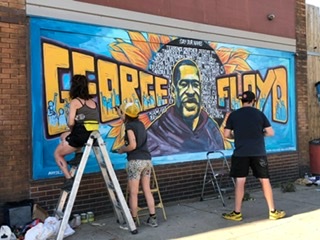
Today I find myself deeply in mourning for the violence that happens in our country. I find myself trying to share in the grief of my friend and knowing I cannot fully feel the depth of it. Today I find myself unable to emotionally move away from it all. Today I contemplate George Floyd’s cry, “I can’t breathe.”
If there is any comfort at all, it comes as a gift of the artists pictured here. In an act of caring, they offer this mural at a memorial for George Floyd.
The names of other victims of violence are painted in the background. The words, “I can’t breathe!” will remain in our memories. Today we are together in mourning.
But tomorrow, I will celebrate Pentecost. I wonder how to celebrate in a time when lamentation feels more appropriate. I wonder how to celebrate when brothers and sisters have died violent deaths and when thousands of protesters line the streets of many U.S. cities. I wonder how to celebrate when protesters are obviously exposing themselves to COVID19.
Still, tomorrow — even in such a time as this — I will celebrate the breath of the Spirit. Tomorrow I will join the celebration that has something to do with being together, being one. To juxtapose the joyous celebration of Pentecost with the horrible picture of what we saw in cities throughout our country for the past few nights seems an impossible undertaking. What does one have to do with the other?
Perhaps they do share a common message. From those who protest, this message:
“We bring our broken hearts and our anger for the killing of our people, for the murders across the ages of people who are not like you. You treat us differently than you treat the people who look like you. For as long as we can remember, you have visited upon us oppression, slavery, racist violence, injustice. And we are tired. We are spent. We are beside ourselves with collective mourning. We can’t breathe!“
From those who celebrate Pentecost, this message:
 “How we celebrate the day when the Holy Spirit breathed upon those gathered together, with gifts of wind and fire!
How we celebrate the story told in the 2nd chapter of Acts!”
When the day of Pentecost came, they were all together in one place. Suddenly a sound like the blowing of a violent wind came from heaven and filled the whole house where they were sitting.
They saw what seemed to be tongues of fire that separated and came to rest on each of them. All of them were filled with the Holy Spirit and began to speak in other tongues as the Spirit enabled them.
Now there were staying in Jerusalem God-fearing Jews from every nation under heaven. When they heard this sound, a crowd came together in bewilderment, because each one heard their own language being spoken. Utterly amazed, they asked: “Aren’t all these who are speaking Galileans? Then how is it that each of us hears them in our native language? Parthians, Medes and Elamites; residents of Mesopotamia, Judea and Cappadocia, Pontus and Asia, Phrygia and Pamphylia, Egypt and the parts of Libya near Cyrene; visitors from Rome (both Jews and converts to Judaism); Cretans and Arabs—we hear them declaring the wonders of God in our own tongues!” Amazed and perplexed, they asked one another, “What does this mean?”
Some, however, made fun of them and said, “They have had too much wine.”
Then Peter stood up with the Eleven, raised his voice and addressed the crowd: “Fellow Jews and all of you who live in Jerusalem, let me explain this to you; listen carefully to what I say. These people are not drunk, as you suppose. It’s only nine in the morning! No, this is what was spoken by the prophet Joel:
“‘In the last days, God says,
I will pour out my Spirit on all people.
Your sons and your daughters will prophesy, last days, God says,
your young men will see visions,
your old men will dream dreams.
Even on my servants, both men and women,
I will pour out my Spirit in those days,
and they will prophesy.’” — Acts 2:1-18 NIV
The people did not, in fact, have too much wine. Peter made it clear that wine did not empower the people who gathered in Jerusalem — “every people under heaven” — to speak and understand as they heard every word spoken in their own language. That would be a start, would it not, if we could speak the same language and truly understand — people who have flesh-colored skin, and brown and bronze, and red and black . . . every skin color under the sun. If only we could understand each other.
And then, what if we could gather together, welcoming every person? What if we could truly gather together and wait for Spirit to fall upon us with empowerment like we have never known before? What if we allowed the Spirit to give us breath, together?
 In the end, there is a tiny bit of joy in George Floyd’s tragic story. It is a joy much deeper than reality’s sorrow. The artists completed their mural, and in the very center near the bottom, they had painted words that express the greatest truth of all.
Can you see it behind the little girl? “I can breathe now!”
What if we welcome Spirit Breath that will change us? What if we embrace empowerment from the Holy Spirit to help us change our world? What if we end oppression and injustice, together? What if holy perseverance could inspire us to live and act in solidarity with our sisters and brothers, all of them?
What if we dare to give our soul’s very breath to help bring about Beloved Community, together?
Together! Together!
May my God — and the God of every other person — make it so. Amen.
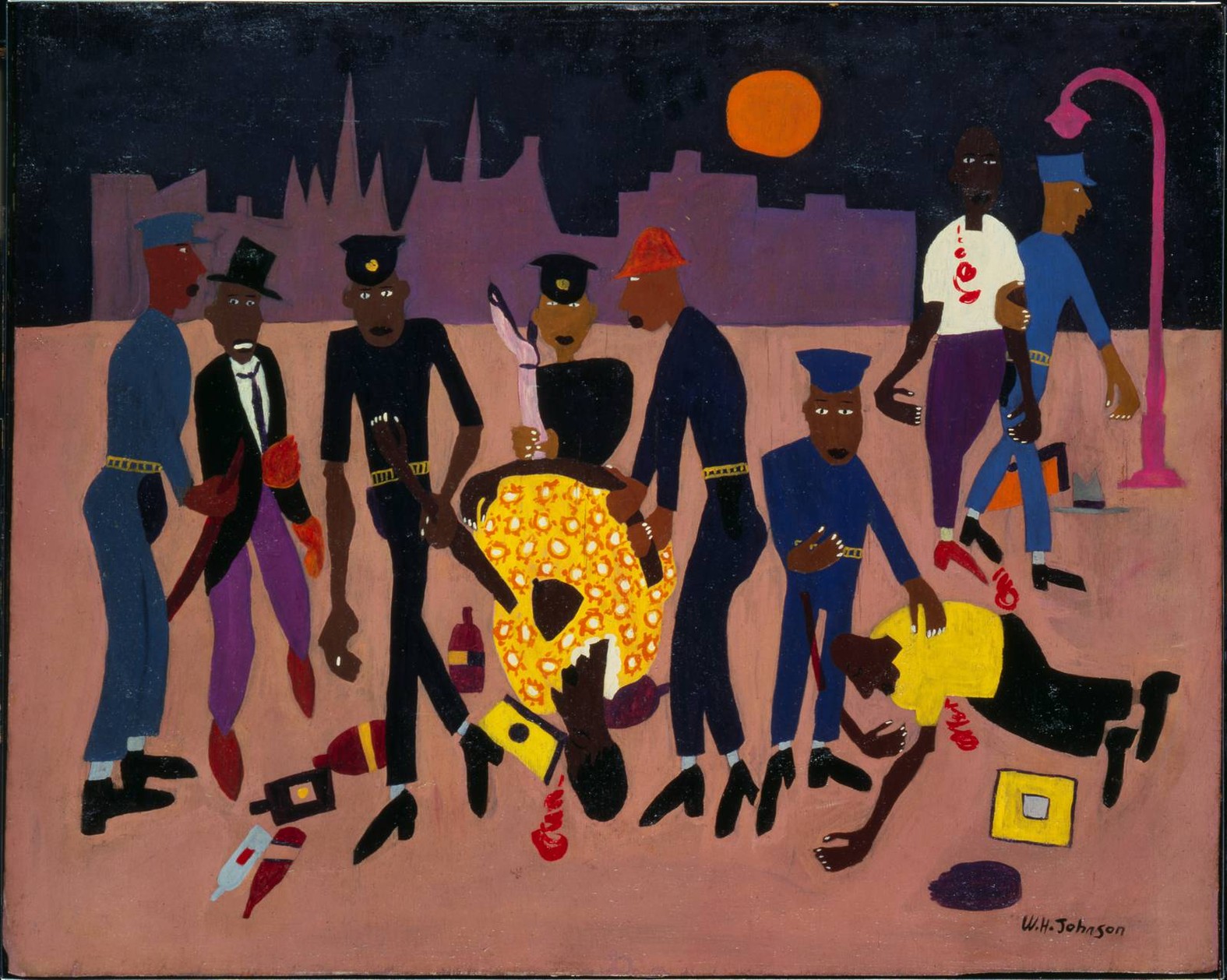
I share this blog post today in memory of Ahmaud Arbery, who was killed in the state of Georgia, the state in which I live in full and free safety. Ahmaud Arbery did not know such safety. But today we say his name and honor his memory. There are so many names we could speak today: Tamir Rice, Trayvon Martin, George Floyd. Breonna Taylor and hundreds more, even thousands. What can black parents possibly tell their kids now about staying safe? I also honor the parents who try to find the right words, the right admonitions to say to their children. Most of all, I honor the strong and powerful voices who continually cry out: “Justice!” My friend and pastor, Wendell Griffen, is one who cries “justice” with a particular eloquence.
Wendell Griffen is a pastor, state court trial judge, and social justice activist in Little Rock, Arkansas who lectures and writes about social justice. I am pleased to share with you his most recent article. He will call you out. He will speak plainly to those of us who are white. He will call you to act against injustice, drawing your courage from God, who whose children are deeply loved — all of them!
For they sow the wind, and they shall reap the whirlwind.
Hosea 8:7 (NRSV)
Have you viewed the ten minute and twelve second video of the May 25, 2020 killing of George Floyd by former members of the Minneapolis Police Department?
Why haven’t you? What are you afraid you will see? What are you unwilling to see? What are you unwilling to admit?
Have the four now former members of the Minneapolis Police Department responsible for killing George Floyd in broad daylight before onlookers who also videotaped their conduct been arrested on suspicion of committing a homicide (causing the death of another person) of George Floyd?
Why haven’t they been arrested? Why have they not been held in custody and required to post bond? Who decided they should not be arrested? What message was sent when they were not arrested?
The killing of George Floyd was a criminal act. There are witnesses to the act. The fact of Mr. Floyd’s death is indisputable. Mr. Floyd was not threatening anyone — none of the officers nor anyone else — when he was killed. The actions of the officers were not taken or necessary to prevent him from threatening anyone.
In other words, there is no legal justification for the actions of the four former police officers who killed George Floyd. None. Period. Full stop.
We should not be surprised that people around the world, including Minneapolis, are furious. George Floyd was slain by agents of the state. His killers are still at large. They have not been arrested. We should not be surprised that people in Minneapolis are outraged by statements on Thursday from local and federal prosecutors calling for “patience.” Why should they be patient about deliberate refusals to arrest known homicide suspects? Why should they “trust” a “process” that reeks with corruption and injustice?
We should not be surprised that people are outraged by the decision of the Minnesota Governor to mobilize the state militia — the Minnesota National Guard. Minneapolis is not under siege or being attacked. The “peace” and “order” of the Minneapolis area is not threatened by the civilians who protested while four Minneapolis police officers killed Mr. Floyd. It is not threatened by Mr. Floyd’s family members and friends. It is not threatened by the many people who took to the streets to protest his death and how local authorities refused to arrest his killers.
Do the Mayor of Minneapolis and Governor of Minnesota believe that it takes 500 National Guard soldiers to arrest four suspected killers?
And does anyone really believe that the fiery protests seen tonight would have happened if the four suspected killers had been already arrested?
Let’s talk plainly. George Floyd was killed. At minimum, he was recklessly killed. At worse, he was knowingly killed. In Minnesota and every other US jurisdiction, recklessly causing the death of another person is manslaughter. In Minnesota, state prosecutors can charge people who commit manslaughter without convening a grand jury.
Let’s talk plainly. In Minnesota and elsewhere in the United States, a person who cooperates with, assists, helps to conceal, or otherwise interferes with efforts to stop a homicide is liable for the homicide as an accomplice. Each of the officers involved in the homicide of George Floyd should have been arrested and charged days ago with manslaughter! The prosecutors can later seek grand jury indictments for murder if other evidence is uncovered.
Let’s talk plainly. The Minnesota Governor and Minneapolis Police Department, and the Hennepin County prosecutor are demonstrating their cultural incompetence. That incompetence is not merely personal. It is institutional, pervasive, pernicious, and infuriating!
The same cultural incompetence happened when Ahmaud Arbery was killed in Georgia.
The same cultural incompetence happened when Breonna Taylor was killed in Kentucky.
The same cultural incompetence happened when a white woman named Amy Cooper falsely accused a black man named Christian Cooper (no relationship) of threatening her life.
That cultural incompetence is not new.
The Louisville Police officers who killed Breonna Taylor in her home have not been arrested – yet!
The killers of Ahmaud Arbery were not arrested for months after he was attacked and slain. They were only arrested after (and because) a video was exposed that chronicled how he was killed and who killed him.
We should also demand that the former police officers involved in the Floyd matter be arrested immediately on suspicion of manslaughter. There is plainly probable cause for arresting the officer who held his knees on Floyd. However, there is also probable cause for arresting the other officers as accessories (accomplices) because of their active presence and complicity in the homicide (manslaughter).
Few statements to date have stressed this fundamental issue. Arrests do not need simultaneous charging actions. There is no need to await charges before each of the former officers who were involved in the homicide of George Floyd is arrested on suspicion of manslaughter. There is no requirement that the autopsy be completed before persons suspected of manslaughter are arrested. There is no requirement that ALL possible information be gathered before suspected killers are arrested.
Each former officer should be arrested on suspicion of having committed manslaughter in the death of George Floyd.
Prophetic people know that refusal to arrest of the former officers is a political statement by the Minneapolis Police Department. The Department has chosen to not arrest killers. That fact should be strongly proclaimed. Prosecutors do not arrest suspects. That is a policing decision, and the police have deliberately exercised their discretion to NOT arrest four homicide suspects.
Telling people to “trust the process” is infuriating when “the process” is openly working to perpetuate a blatant injustice.
Stop saying “you feel the anger” of people in Minneapolis, and especially “feel the anger” of black and brown people. No, you don’t! You haven’t suffered this mess. You haven’t dealt with it every day and night.
You haven’t seen people be called “lawless” for loudly protesting a homicide except when the victim is a person of color.
You don’t “feel our anger.” You may feel your own anger. Good. But don’t claim that you “feel our anger” or “share our anger.” You don’t unless you have shared our pain, shared our discrimination, and shared the centuries of blatant state sanctioned slaughter of black and brown people by law enforcement officials. We know you don’t feel and share our anger. Stop fooling yourselves and stop trying to fool us!
Black people are not fools. The U.S. Justice Department is headed by William Barr, the same person who decided that the United States would not charge Daniel Pantaleo, the NYPD officer who killed Eric Garner by choking him to death, with violating Garner’s civil rights.
We live with discrimination every day. We do not have to act like we like it. We do not have to put on a good face about it. And we will not do so. If you aren’t comfortable with our anger and the way we express it, get out of the way. If you aren’t turning over the institutions responsible for our anger and angry behavior, get out of the way.
As the prophet Hosea wrote concerning the ancient Hebrew nation of Israel, this society has always sown the wind of white supremacy with its tolerance of state-sponsored terrorism and slaughter of black, brown, red, yellow, and poor white people. People of color have long known that this society “shall reap the whirlwind.”
The whirlwind from the seeds of long pent-up outrage about systemic law enforcement abusive and homicidal conduct has arrived at the same time the nation and world are gripped by the global Covid 19 pandemic which highlights racial disparities in countless areas of life. The whirlwind from generations of corrupt and racist political leadership now has arrived when the US is led by a vicious idiot, despot, racist, and sociopath named Donald John Trump.
The whirlwind is here. The United States cannot, should not, and will not escape.
©Wendell Griffen, 2020
Amen, my brother. Yes, our country has reaped the whirlwind. We have reaped the whirlwind. Let us gather our resolve and look to our faith to guide us, and then let each of us work to break the bonds of injustice in whatever ways we are able. Today I committed to using my art and writing to portray the rise of white supremacy and the oppression of non-white persons. What gifts could you use to enter the struggle for justice? Can each of us work for justice with a sense of urgency?
May our God find us faithful to the creation of Beloved Community. Amen.
KMF

Let’s take back our world! Let us join hands and, in the power of community and holy resolve, reclaim our world from white supremacists, racists and violent actors that threaten our people.
If not us, who? If not now, when?
After the 2012 shooting at Sandy Hook Elementary School in Connecticut that killed 20 young children, British journalist Dan Hodges wrote that the gun control debate in the U.S. was over. This is what he wrote: “Once America decided killing children was bearable, it was over.”
And then we let 2,193 shootings happen.
The shootings that occurred this week offend us in a very deep place. You see, we are followers of Christ, the Prince of Peace. We are the people of God who know that thoughts and prayers and compassionate sentiments won’t end this kind of terroristic hate.
The El Paso shooter told law enforcement that he wanted to shoot as many Mexicans as possible. His manifesto, which he posted on the 8chan online community included details about himself, his weapons and his motivation. He described the El Paso attack as a “response to the Hispanic invasion of Texas,” and proclaimed that he was defending his country from “cultural and ethnic replacement brought on by an invasion.”
Most certainly, these words from an obvious white supremacist should offend every follower of God. His evil intent is also an offense to God. In response to such evil, perhaps we will raise our voices continually and persistently, without becoming weary. Perhaps we will resolve to take back our world, proclaiming God’s word in the darkness of evil just as the prophets did. Like them, perhaps we will persist tirelessly and with a holy resolve, for as long as it takes to end the evil that arises from racism and white supremacy.
Perhaps our prophetic action will mirror that of the writer of Lamentations who wrote, “Arise, cry out in the night, as the watches of the night begin; pour out your heart like water in the presence of the Lord. Lift up your hands to him for the lives of your children.”
May God so embolden us.

This morning, I read a meditation from the Center for Action and Contemplation as I often do to start my day. In it, Sister Joan Chittister explores the relationship between prophetic witness through compassion and contemplation. Sounds risky to me! And that’s very close to the point Sister Joan makes:
. . . contemplation is a very dangerous activity. It not only brings us face to face with God, it brings us, as well, face to face with the world, and then it brings us face to face with the self; and then, of course, something must be done.
Something must be filled up, added to, freed from, begun again, ended at once, changed, or created or healed, because nothing stays the same once we have found the God within. . . . We become connected to everything, to everyone. We carry the whole world in our hearts, the oppression of all peoples, the suffering of our friends, the burdens of our enemies, the raping of the earth, the hunger of the starving, the joyous expectation every laughing child has a right to. Then, the zeal for justice consumes us. Then, action and prayer are one.
Bolder prophetic words were never written! Would that all of us who profess a relationship with God might rise from our knees and be ennobled by our prayers to do justice and love mercy! Largely, this is not the case for us. Our prayers feel empty, devoid of the compassion of Christ and the power of the Holy Spirit. After we have prayed, have we changed? Has our heart been softened by moments of communion with God? Does our heart move into a tragic world with the tenderness of a compassionate Christ?
As we are praying, children and families still languish at our borders, suffering in living conditions that seem impossible in America. And we hear the distant echo of Jesus asking for the children to come to him.
As we are praying, the ever-changing climate exacts its harm on oceans and rivers, having significant impact on ecosystems, economies and communities. Rising average temperatures mean balmier winters for some regions and extreme heat for others. Flooding, drought and violent storms take a dangerous toll on our beloved earth.
 As we are praying, gun injuries cause the deaths of 18 children and young adults each day in the U.S. And every day, 100 Americans are killed with guns. Can we ignore the fact that nearly 1 million women alive today have been shot, or shot at, by an intimate partner?
All the while, we comfortably rest in our own kind of contemplation. Yet, contemplation must be redefined. We must learn to experience it as a change in consciousness that forces us to see the big picture, to see beyond our own boundaries, beyond our denominations, our churches. Sister Joan again says it best:
Contemplation brings us to see beyond even our own doctrines and dogmas and institutional self-interest, straight into the face of a mothering God from whose womb has come all the life that is.
Transformed from within then, the contemplative becomes a new kind of presence in the world who signals another way of being. . . . The contemplative can never again be a complacent, non-participant in an oppressive system. . . . From contemplation comes not only the consciousness of the universal connectedness of life, but the courage to model it as well.
Those who have no flame in their hearts for justice, no consciousness of personal responsibility for the reign of God, no raging commitment to human community may, indeed, be seeking God; but make no mistake, God is still, at best, only an idea to them, not a living reality.
So we struggle, Christ followers in a world of cruelty and insanity. Our struggle is about what exactly we can do when we face the world after our contemplative practice. Isn’t contemplation and compassion a pilgrimage to the heart, my own heart and God’s heart? When our moments of contemplation reveal a clear-eyed view of a suffering world, what does Christ’s love and the Holy Spirit’s prompting move us to do?
I often refer to the words Tikkun Olam, the Jewish teaching that means repair the world. Tikkun Olam is any activity that improves the world, bringing it closer to the harmonious state for which it was created. So how does our contemplation lead us to practice Tikkun Olam, to repair the world? What is it that “must be filled up, added to, freed from, begun again, ended at once, changed, or created or healed?”
It is a critical question for all of us and each of us. Indeed, each person must find her own answer and must follow her own path. The way ahead may lead to U.S. border towns. The way ahead may lead to phone calling or letter writing. It may lead to community activism or bearing witness in places where injustices occur. It may lead to protesting and marching or teaching and preaching. It may lead to deeper communion with God through even more time spent in prayer and contemplation.
It will, beyond any doubt, lead us to the places in our world where compassion touches pain. Dangerous contemplation will most definitely lead us to those places.
May God make it so!

All of us see things through a lens. We get our lens from our life, and no one else sees things through that same lens. Just to make it clear: this is not a commentary on current politics and policies. This is simply a hodgepodge of musings that have emerged from what I am seeing through my lens.
Let me start, right off the bat, by pointing to something that doesn’t look so good through my lens, namely the unconscionable practice of separating children from their parents in the name of enhanced border security. We railed at that policy — for a while. But with the passing of time, our advocacy for these separated families has waned. These days, it is even hard to find a current news report that updates the status of the separated children.
I did find a report that quotes administration officials in the U.S. Department of Health and Human Services saying that the number of beds available for migrant children increased from 6,500 last fall to 16,000 today (CNBC; 19 Dec 2018). Apparently, the crisis we have all but forgotten is still real.
Dr. Jack Shonkoff, who heads Harvard University’s Center on the Developing Child, has called our current immigration policy “a moral disaster.” Dr. Shonkoff provided this emphatic rebuke:
There has to be some way to communicate, in unequivocal terms, that we are inflicting punishments on innocent children that will have lifelong consequences. No matter how a person feels about immigration policy, very few people hate children — and yet we are passively allowing bad things to happen to them.
According to The New York Times, population levels at federal shelters for migrant children have quietly shot up more than fivefold since last summer, reaching a total of 12,800 as of September 2018. There were 2,400 such children in custody in May.
Are we choosing to ignore the huge increases of children in custody that have placed the federal shelter system near capacity? Are we listening to the the employees who work in the migrant shelter network telling us that the bottleneck is straining both the children and the system that cares for them? Do we care that the administration announced that it will triple the size of a temporary “tent city” in Tornillo, Tex., to house up to 3,800 children?
Reports are that immigrant advocates and members of Congress reacted to this status report with distress. As well they should!
Leader or citizen — each of us should react to this report with great distress! My lens sees that with our current immigration practices, we are participating in a sin against humanity by placing children and teens at great risk of long-term trauma and irreparable harm.
With that realization, I find myself in a place that is antithetical to the teachings of Jesus. My silence, passivity and failure to act is complicity. Have I signed enough petitions, made enough phone calls and written enough emails? There is no right answer to that question.
I heard a discussion this morning on National Public Radio that revealed a troubling trend. The information shared is that not as many males are crossing the border into the U.S. right now. Instead, record numbers of women and children fleeing domestic violence and violence in general are coming to seek asylum, protection from horrific circumstances and safe shelter.
For example, Guatemala has one of the most prevalent rates of violence against women in the world. Instances of gender violence in Guatemala include domestic violence, sexual violence, human trafficking, incest, and femicide (the deliberate killing of women).
Unfortunately, this problem is not unique to Guatemala. The neighboring countries of El Salvador and Honduras, for example, also face epidemic levels of femicide as well as impunity for the perpetrators. (https://www.amnestyusa.org/why-does-guatemala-have-one-of-the-highest-rates-of-femicide-in-the-world/)
For many years, I have been a vocal advocate for women and child victims of violence. For at least fifteen years, that advocacy was my life’s work. I am angered by the abuse of women and children. But today, in our current circumstance, my advocacy feels like a tempest in a teacup. While my heart may be overflowing with anger, my acts of protest against our nation’s immigration policy are relatively insignificant.
Advocacy always begins with understanding? We understand that immigration and border security is one thing; illegal immigration is another. But the desperate need for asylum is on a significantly higher level in the quest for human rights and protection from oppression!
And so this presents a dilemma for any follower of Christ living in a relatively uncaring world. How does the Gospel motivate us? How do we follow Christ into the situations that are causing women and children such harm? How do we act in ways that offer asylum for those in the midst of violence? Wouldn’t God desire safe shelter for persons in danger? What can we do to effect real, in-the-moment, significant change? Knowing that many people look at the state of immigration and security through “America first” lenses, what lens am I using to look at this abysmal situation?
Lenses are important. They guide our thoughts and actions. They develop our sense of right and wrong, good and evil. As I contemplate lenses, I am reminded of Victor Hugo’s description of the very kind Bishop Myriel, the Bishop of Digne, in Les Misérables:
He had a strange, idiosyncratic way of looking at things.
I suspect he got it from the Gospel.
I could only hope that a description of my idiosyncratic ways would point to the Gospel. In the meantime, I intend to challenge myself to find ways to be a change agent for the way our nation is dealing with asylum seekers — women and children — who take the dangerous risk of crossing our borders to what they desperately hope is a place of safety and refuge.
May it be said of America that her doors were forever wide open to receive persons in need of refuge.
God would will such a compassionate, caring welcome.
Jesus would have embodied that kind of compassion, a compassion that rescues, shelters and protects. As followers of Jesus, should we not live out his example?

Bishop Steven Charleston writes, “Help me call a blessing down, for I think our poor old world needs it.”
I have listened this week to folk bemoaning the downward movement of the stock market that diminished their retirement savings. I have heard expressions of real fear about what the president is doing and might do. Many people seem despondent about children taken from their parents and placed in detention centers. People are angry that two young children have died there in the past couple of weeks. People are embarrassed about the way other countries now view America. Every day, there is another reason to feel concern, anger, fear,and many other emotions about what our nation has become.
And on top of that, we see the grief and pain of people all over the world. They face repressive governments in countries like North Korea, Syria, Equatorial Guinea, Turkmenistan, Saudi Arabia, Eritrea, Yemen, Uzbekistan and the Central African Republic.
They have endured natural disasters like the earthquake and tsunami in Indonesia, volcanoes in Guatemala and Hawaii, the dust storm in India, the wildfires in California, flooding and mudslides in Japan, numerous earthquakes around the world. People are living in countries in the midst of wars that persist for decades.
They have witnessed with horror events like the Marjory Stoneman Douglas school ahooting, the Waffle House shooting, the shooting at Santa Fe High School, the Capital Gazette shooting, the Jeffersontown, Kentucky shooting, the Tree of Life Synagogue shooting, the Thousand Oaks bar shooting, the Chicago Mercy Hospital shooting. All over the world, disasters — natural disasters and disasters caused by humans — have the power to bring us to our knees.
On our knees is perhaps the very place we must be. And as we fall to our knees to pray for our world, perhaps we might whisper the Hebrew phrase, Tikkum Olam, heal the world. Perhaps we might repeat the prayer of Bishop Steven Charleston:
Help me call a blessing down, for I think our poor old world needs it, a blessing of peace, a blessing of the ordinary, a blessing of national life without chaos and personal life without fear.
Help me pray a healing down, for I know how much we need it, a strengthening of the bonds between us, simple respect and patient listening, a new beginning for us all.
Help me welcome the sacred down, the wide-winged Spirit, drawn from every corner of heaven, to walk among us once more, to show us again how it can be, when justice is the path and love the destination.
Amen.
 “Dozens of institutions across the country
received email threats Thursday afternoon,
prompting evacuations and sweeps of buildings.” (CNN)
This troubling news juxtaposed with the words of the music playing as I work.
“Peace on earth, good will to all people . . .”
“The glories of His righteousness and wonders of his love . . .”
“All is calm, all is bright . . .”
It is a contrast for us. The songs of peace, hope and joy sung during this season are in conflict with the acts of violence and hatred we see in the world. And thus we are conflicted. As people of faith, we search for our place in being agents of change. We believe that our faith calls us to scatter love wherever there is hate. But we don’t know how.
We are powerless and paralyzed, and the songs of the season just make it more pronounced. I remember singing the compelling words of Henry Wadsworth Longfellow’s poem that eventually became a carol:
“And in despair, I bowed my head. ‘There is no peace on earth,” I said. ‘For hate is strong and mocks the song of peace on earth goodwill to men.’”
For now, peace on earth is elusive. The email and bomb threats have been sent to places throughout the country: Pennsylvania, Seattle, Chicago, San Francisco, Utah. Threats were also emailed to locations in New York City and Atlanta; the Charlotte News & Observer and the Raleigh News & Observer newspapers in North Carolina; and to three sites in Miami.
Over these terrible signs of hate, we have no control. But we do have control over what we will allow into our hearts. To be sure, we should be informed by the events in the world. We should be persistent in raising our voices in the face of hate, denouncing it, and praying for its end. But we must not choose to dwell completely on the violence all around us. We can give our souls a break from the harsh reality bynfinding ways to meditate on the peace and love of God. Even when hate triumphs, we have full access to the Prince of Peace who will visit us and dwell in our hearts.
Still . . . “Hate is strong and mocks the song of peace on earth . . . “
These words are as true today as on the day they were penned on Christmas Day, 1863. Henry Wadsworth Longfellow wrote the poem, “Christmas Bells” during a time of personal despair and in deep concern over the American Civil War. The poem was set to music in 1872, and Longfellow’s references to the Civil War are prevalent in some of the verses that are not commonly sung. This is the entire text of Longfellow’s poem:
I heard the bells on Christmas Day
Their old, familiar carols play,
and wild and sweet
The words repeat
Of peace on earth, good-will to men!
And thought how, as the day had come,
The belfries of all Christendom
Had rolled along
The unbroken song
Of peace on earth, good-will to men!
Till ringing, singing on its way,
The world revolved from night to day,
A voice, a chime,
A chant sublime
Of peace on earth, good-will to men!
Then from each black, accursed mouth
The cannon thundered in the South,
And with the sound
The carols drowned
Of peace on earth, good-will to men!
It was as if an earthquake rent
The hearth-stones of a continent,
And made forlorn
The households born
Of peace on earth, good-will to men!
And in despair I bowed my head;
“There is no peace on earth,” I said;
“For hate is strong,
And mocks the song
Of peace on earth, good-will to men!”
Then pealed the bells more loud and deep:
“God is not dead, nor doth He sleep;
The Wrong shall fail,
The Right prevail,
With peace on earth, good-will to men.
What the poet concluded is truth: “to God is not dead nor doth He sleep. The wrong shall fail, the right prevail . . .”
May God make it so.
I cannot let it go — the unconscionable tragedy against the worshippers at Pittsburgh’s Tree of Life Synagogue. One week after eleven people were gunned down there, 100 people gathered on a cold, drizzly Saturday outside the still unopened place of worship for a “healing service.”
We gathered in Macon as well, to stand in solidarity, remember those who lost their lives, pray for their grieving families, and keep vigil with our Middle Georgia Jewish community. I do not know the capacity of Temple Beth Israel, but I do know that every pew was filled, people were standing along every wall and in every corner and flowing out onto the sidewalk. I was moved, as were many, by the outpouring of love and support expressed in the Macon Shabbat Service.
And so it should be. All of us must pay close attention to the stark reality that this was one of the deadliest attacks on Jews in United States history. To guard against this kind of violence, we must link hands without considering race, ethnicity, religious tradition, gender, age, sexual orientation or any label that divides us. We must love our neighbor as we love ourselves. We must never forget the history that allowed hate and violence to harm various groups of people.
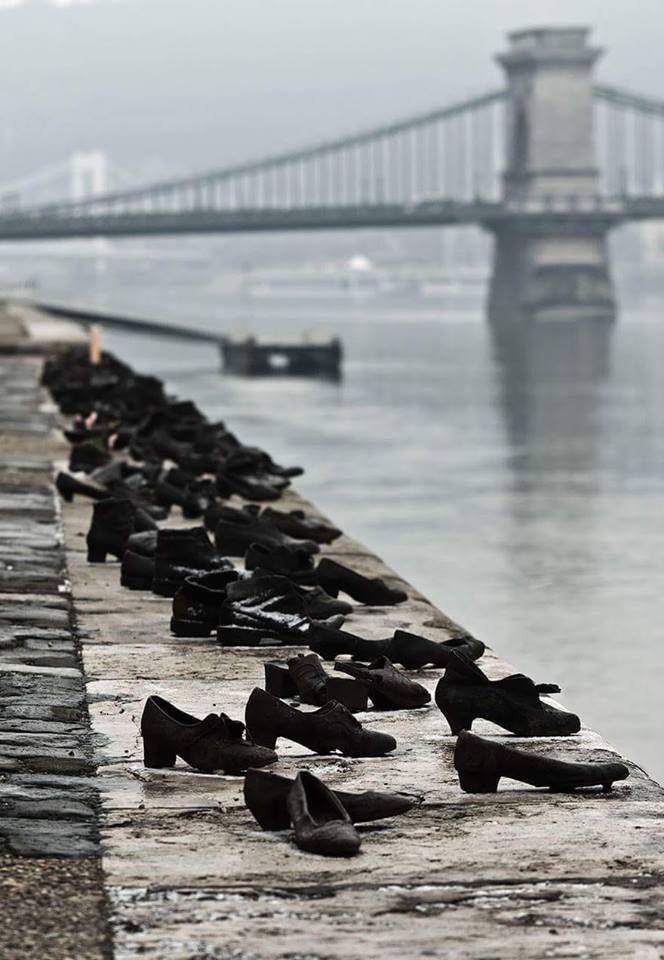
During WWII, Jews in Budapest were brought to the edge of the Danube, ordered to remove their shoes, and shot, falling into the water below. Sixty pairs of iron shoes now line the river’s bank, a ghostly memorial to the victims. It is one of many memorials erected to remind us, to ensure that we will never forget and never repeat such history.
May God make it so.
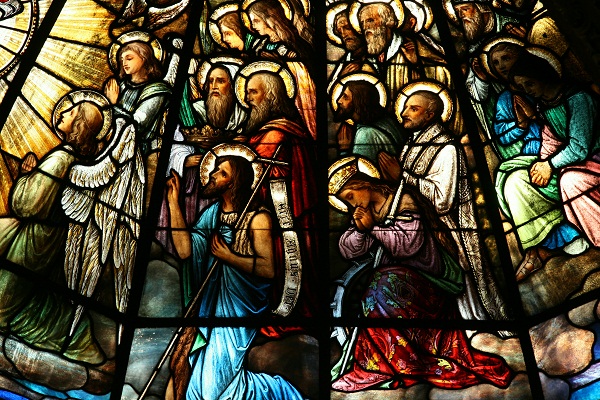 We all need a glimpse of hope and comfort in these troubling days. Our thoughts and prayers are with our brothers and sisters of the Tree of Life Synagogue, and we are shocked at this and other recent acts of violence and evil. So today, I share with you the writing of Jemma Allen* in hopes that you will find her words as compelling and comforting as I have.
This week in many liturgical traditions we observe All Saints Day, and perhaps All Souls. In some places there is an opportunity to say the names, to light candles for, to ring the bell for those we love but see no longer, parted from us by death.
All Saints and All Souls compel us to look death squarely in the face,
to acknowledge our mortality, and the mortality of those we love,
and still to make our song: Alleluia!
This is a season where we boldly proclaim
that death is not the last word.
Death, and fear of death, does not hold the power
to determine how we will live.
We are the dearly beloved children of the living God,
we are baptized into Christ’s death and resurrection,
we are looking to a future where justice and mercy kiss,
where nations will not learn war anymore,
where the lion lies down with the lamb,
where all things are reconciled to God.
This is our hope.
It is a hope that no power can destroy, tarnish or mar:
not white supremacy,
not anti-Semitism,
not any kind of hatred,
not any system of domination,
not any disease,
not any heartbreak.
And when we cannot hold that hope for ourselves,
let us lean into the hope we can hold together
as communities of life, as communities of resistance,
as hope-bearers and pilgrims on the Way.

Give rest, O Christ, to your servants, with your saints,
where sorrow and pain are no more, neither sighing, but life everlasting.
You only are immortal, our Creator and Maker;
and we are mortal, formed of the earth, and to earth we shall return.
All of us go down to the dust; yet even at the grave we make our song: Alleluia, alleluia, alleluia.
– Russian Orthodox Kontakion of the Departed, Jim Cotter’s translation.
*Jemma Allen is a priest in the Anglican Church of Aotearoa, New Zealand and Polynesia and a counsellor and spiritual director in private practice. She serves on the Board of RevGalBlogPals and counts the RevGal community as one of her communities of life and resistance.
 My friend, Buddy Shurden, shared an experience he had while serving his first pastorate near Ethel. Mississippi. He tells of his frequent habit of calling on Early Steed to pray. He wrote that Mr. Early Steed always began his prayer the same way, every time.
“Lord, we come to you one more time from this low ground of sin, shame and sorrow.”
Buddy Shurden reflects on the term Mr. Early used, “low ground,” and adds, “Oh! If Early could see us now.”
Indeed. Low ground.
We are standing in the wake of waves of violence . . .
Fifteen pipe bombs mailed to two former presidents, a former secretary of state, a news outlet, and others;
Eleven worshippers killed at the Tree of Life Synagogue in Pittsburgh, in Mr. Rogers’ real-life neighborhood;
Maurice Stallard, 69, and Vickie Jones, 67, killed in a Kroger in Jeffersontown, Kentucky.
We are standing on pretty low ground these days. There’s no doubt about that. Yet, even in grief, with memorial vigils going on around the nation, we can still hear the faint voice of Mr. Rogers singing, “Won’t you be my neighbor?”
And that resonates with us as we watch neighbors grieving alongside neighbors, Muslim neighbors reaching out to help their Jewish neighbors at Tree of Life, and the news outlet that was targeted with multiple pipe bombs speaking the names of the victims and telling bits of their life stories.
Maybe it feels like low ground we’re standing on these days. But if we look around, and listen, and watch while genuine love is being shared between grieving brothers and sisters, and friends who are grieving with them, we have to admit that this ground we’re now standing on might just feel more like holy ground.
 “I have perfect attendance pins for Sunday School going back thirty years, and until last week, I never knew that the Bible told the story of someone who had been raped.”
I have heard similar comments many times when preaching from my book about Biblical women, “Voices of Our Sisters.” The truth is that Scriptural passages like those described by Phillis Trible in “Texts of Terror” are not your Mama’s Bible stories. We don’t teach them in our classes and we definitely do not preach on them in church. The stories of violence against women in the Bible are as hushed as the stories of abused women today. Shame on us.
It was one year ago that The New York Times published an investigative article about how Harvey Weinstein had for decades paid off acusers of sexual harassment.
“Culturally, the article hit like a meteor,” writes Maya Salam in The New York Times Gender Letter, “drastically altering the landscape around how sexual misconduct is perceived, sending the #MeToo hashtag viral and, in turn, triggering an avalanche of accusations against powerful men. It wasn’t long before #MeToo wasn’t just a turn of phrase — it was a movement.”
RAINN*, the country’s largest anti-sexual assault network, experienced a 30 percent increase in calls to the National Sexual Assault Hotline since the current #MeToo resurgence, and last Friday — the day after Christine Blasey Ford and Judge Brett Kavanaugh testified before the Senate Judiciary Committee — was the busiest day in the hotline’s 24-year history.
The women of this nation will not forget Dr. Christine Blasey Ford. Women who have been harmed by sexual violence will revere her for her courage. Because our courage, survivors all, has often been small and our fear very large. We know that people will not believe our stories of abuse, and that instead they will blame us for bringing our terrible stories to light.
We will not forget Dr. Christine Blasey Ford, and we will remember Tarana Burke who first spoke #MeToo in 2007 to let young women of color who survive sexual assault know that they are not alone.
We will remember Alyssa Milano and her Tweet that reached dozens of countries and millions of people — over 1.7 million tweets included the hashtag “#MeToo,” and 85 countries had at least 1,000 #MeToo tweets.
So we join hands with those who understand us, hold on tightly, and speak our truth, because we need to move from darkness to light.
And in the light we will stand, hearts and spirits lighter because we have spoken our terror aloud. 
In the light we will stand, even though staying in silence’s darkness would be easier.
In the light we will stand, even as the people around us cling stubbornly to their darkness that screams out to us, “We will not hear you!”
In the light we will stand because that’s the only way to survive.
* RAINN — Rape, Abuse and Incest National Network

It is art we do not want to see, art that so closely mimics reality that we are compelled to turn away. But the artist, Dee Jones, captures every emotion, all the terror, every horrific aspect of sexual violence. If we care, we must look. And we must see all the ways in which sexual and domestic violence is a travesty.
It is true that, when we find such depraved violence in our Scripture, it is shocking. But we find It today in the 19th chapter of the Book of Judges, and we must steel ourselves to truly hear this awful story. Ken Sehested describes it with these words: “The narrative is monstrous, quite possibly the most visually brutal story in all the Bible.”
The story is about a Levite traveler and his concubine. Though you may be daunted by reading the entire 30 verses of this chapter, it’s worth your time to hear the whole story of another nameless woman in Scripture.
In those days Israel had no king.
Now a Levite who lived in a remote area in the hill country of Ephraim took a concubine from Bethlehem in Judah. But she was unfaithful to him. She left him and went back to her parents’ home in Bethlehem, Judah. After she had been there four months, her husband went to her to persuade her to return. He had with him his servant and two donkeys. She took him into her parents’ home, and when her father saw him, he gladly welcomed him.
His father-in-law, the woman’s father, prevailed on him to stay; so he remained with him three days, eating and drinking, and sleeping there.
On the fourth day they got up early and he prepared to leave, but the woman’s father said to his son-in-law, “Refresh yourself with something to eat; then you can go.” So the two of them sat down to eat and drink together. Afterward the woman’s father said, “Please stay tonight and enjoy yourself.” And when the man got up to go, his father-in-law persuaded him, so he stayed there that night. On the morning of the fifth day, when he rose to go, the woman’s father said, “Refresh yourself. Wait till afternoon!” So the two of them ate together.
Then when the man, with his concubine and his servant, got up to leave, his father-in-law, the woman’s father, said, “Now look, it’s almost evening. Spend the night here; the day is nearly over. Stay and enjoy yourself. Early tomorrow morning you can get up and be on your way home.” But, unwilling to stay another night, the man left and went toward Jebus (that is, Jerusalem), with his two saddled donkeys and his concubine.
When they were near Jebus and the day was almost gone, the servant said to his master, “Come, let’s stop at this city of the Jebusites and spend the night.”
His master replied, “No. We won’t go into any city whose people are not Israelites. We will go on to Gibeah.” He added, “Come, let’s try to reach Gibeah or Ramah and spend the night in one of those places.”
So they went on, and the sun set as they neared Gibeah in Benjamin. There they stopped to spend the night. They went and sat in the city square, but no one took them in for the night.
That evening an old man from the hill country of Ephraim, who was living in Gibeah (the inhabitants of the place were Benjamites), came in from his work in the fields. When he looked and saw the traveler in the city square, the old man asked, “Where are you going? Where did you come from?”
He answered, “We are on our way from Bethlehem in Judah to a remote area in the hill country of Ephraim where I live. I have been to Bethlehem in Judah and now I am going to the house of the Lord. No one has taken me in for the night. We have both straw and fodder for our donkeys and bread and wine for ourselves your servants — me, the woman and the young man with us. We don’t need anything.”
“You are welcome at my house,” the old man said. “Let me supply whatever you need. Only don’t spend the night in the square.” So he took him into his house and fed his donkeys. After they had washed their feet, they had something to eat and drink.
While they were enjoying themselves, some of the wicked men of the city surrounded the house. Pounding on the door, they shouted to the old man who owned the house, “Bring out the man who came to your house so we can have sex with him.”
The owner of the house went outside and said to them, “No, my friends, don’t be so vile. Since this man is my guest, don’t do this outrageous thing. Look, here is my virgin daughter, and his concubine. I will bring them out to you now, and you can use them and do to them whatever you wish. But as for this man, don’t do such an outrageous thing.”
But the men would not listen to him. So the man took his concubine and sent her outside to them, and they raped her and abused her throughout the night, and at dawn they let her go. At daybreak the woman went back to the house where her master was staying, fell down at the door and lay there until daylight.
When her master got up in the morning and opened the door of the house and stepped out to continue on his way, there lay his concubine, fallen in the doorway of the house, with her hands on the threshold.
He said to her, “Get up; let’s go.” But there was no answer. Then the man put her on his donkey and set out for home.
When he reached home, he took a knife and cut up his concubine, limb by limb, into twelve parts and sent them into all the areas of Israel. Everyone who saw it was saying to one another, “Such a thing has never been seen or done, not since the day the Israelites came up out of Egypt. Just imagine! We must do something! So speak up!”
— Judges 19: 16-30 NIV
The story begins by telling us that Israel had no king, thus describing a violent and lawless situation in the land. The structures of justice had collapsed. The rest of the story is a brutal account of rape, torture and murder. In her book, Texts of Terror, Phyllis Trible offers this commentary:
Of all the characters in Scripture, she is the least. Appearing at the beginning and close of a story that rapes her, she is alone in a world of men. Neither the other characters nor the narrator recognizes her humanity. She is property, object, tool, and literary device. Without name, speech, or power, she has no friends to aid her in life or mourn her in death. Passing her back and forth among themselves, the men of Israel have obliterated her totally. Captured, betrayed, raped, tortured, murdered, dismembered and scattered—this woman is the most sinned against.” (pp. 80-81)
The story closes with the woman’s dismemberment and the scattering of her body parts across Israel. The last verse says: “Everyone who saw it was saying to one another, ‘Such a thing has never been seen or done, not since the day the Israelites came up out of Egypt. Just imagine! We must do something! So speak up!’”
Ken sehested observes that the narrative closes with three imperatives: “Consider this, take counsel, speak.” Ken says it like this: “Let this horrible story instruct you. And finally, ‘speak.’”
For us, in these violent days, the message is just as critical, and yes, we must speak! The silence around violence against women must end. If we can find the courage to end our silence through the stories of unnamed, forgotten and reviled Biblical sisters, then their horrific stories have sacred meaning and divine purpose.
“They have names, and we must learn them,” Ken Sehested insists. “They have histories and we must tell them. In the end, we must nurture a vision where our security and theirs are bound up together.”
It’s the only name we have for her, the Levite’s Concubine. Yet, we must mourn her and remember her and know her story. So let us hear, if we can, this monstrous Biblical narrative and allow it to instill deep within us an unwavering commitment to do everything in our power to end violence in the world.

A sermon preached on September 30, 2018 at the First Baptist Church of Christ, Macon, Georgia
Let the words of my mouth and the meditations of our hearts be acceptable in your sight, O Lord, our hope and our refuge. Amen.
I
In July, I received a note from Ellen. She is 22-years-old, a college graduate with honors, a strong, confident young woman. This is what she wrote:
“I love all of you so much. None of this would be possible without you. My time with you had such an enormous impact on who I am, and I can’t thank you enough for everything you’ve done to get me to this point. You’re my family forever and always. Ellen.” (Written on her wedding day, July 8, 2018)
Thirteen-year-old Ellen came to us at Safe Places, an organization where my staff and I cared for women who had been abused, children exposed to violence, and young girls who had escaped the evil grip of human trafficking. When we first met Ellen, she was silent, lifeless, angry — hurt deeply in her soul. But after a few months, Ellen’s vivacious personality began to emerge. Slowly, she opened up her hurt place and let healing in.
Ellen was eventually strong enough to be a part of our Princess Program, where girls who had experienced violence spent the summer learning and sharing, and discovering their inner courage, resilience, and sacred worth. After the summer, we celebrated the girls at the Arkansas Governor’s Mansion with a grand ball, a very grand ball.
When they put on their sparkling gowns, and the most glittering shoes I had ever seen, they believed — for at least one magical night — that truly they were princesses. Our wise staff taught them that even princesses can be violated, but they already knew that. They had lived through the humiliation of verbal abuse, the pain of physical and sexual abuse, and the long-lasting effects of emotional abuse. For many of them, it happened in the one place that should have been safe — in their homes.
II
Throughout history, we encounter stories of violence. Such is our story today, a story about how violence devastates Princess Tamar, King David’s daughter. Sometimes historians, biblical expositors and even story-telling preachers come upon stories that are hard to tell. This is one of those stories. It’s probably not included in any anthology of “The World’s Most Inspiring Bible Stories.” It’s a story we don’t tell to our children. We might prefer to skip this story altogether. Theologian, Phyllis Trible, would call it a text of terror. And yet, it is the word of the Lord, and, as such, it offers some truths, some warnings, some questions, and maybe even a smidgen of grace.
So even though we find trouble in this text, God might just whisper, and gently nudge us to listen and to let the story reveal some important ways God calls us to do justice.
Listen for the whisper of God in the reading of sacred scripture, 2 Samuel 13: 1-22.
In the course of time, Amnon son of David fell in love with Tamar, the beautiful sister of Absalom son of David. Amnon became so obsessed with his sister Tamar that he made himself ill. She was a virgin, and it seemed impossible for him to do anything to her.
Now Amnon had an adviser named Jonadab son of Shimeah, David’s brother. Jonadab was a very shrewd man. He asked Amnon, “Why do you, the king’s son, look so haggard morning after morning? Won’t you tell me?”
Amnon said to him, “I’m in love with Tamar, my brother Absalom’s sister.”
”Go to bed and pretend to be ill,” Jonadab said. “When your father comes to see you, say to him, ‘I would like my sister Tamar to come and give me something to eat. Let her prepare the food in my sight so I may watch her and then eat it from her hand.’”
So Amnon lay down and pretended to be ill. When the king came to see him, Amnon said to him, “I would like my sister Tamar to come and make some special bread in my sight, so I may eat from her hand.”
David sent word to Tamar at the palace: “Go to the house of your brother Amnon and prepare some food for him.” So Tamar went to the house of her brother Amnon, who was lying down. She took some dough, kneaded it, made the bread in his sight and baked it. Then she took the pan and served him the bread, but he refused to eat.
“Send everyone out of here,” Amnon said. So everyone left him. Then Amnon said to Tamar, “Bring the food here into my bedroom so I may eat from your hand.” And Tamar took the bread she had prepared and brought it to her brother Amnon in his bedroom. But when she took it to him to eat, he grabbed her and said, “Come to bed with me, my sister.”
“No, my brother!” she said to him. “Don’t force me! Such a thing should not be done in Israel! Don’t do this wicked thing. What about me? Where could I get rid of my disgrace? And what about you? You would be like one of the wicked fools in Israel. Please speak to the king; he will not keep me from being married to you.” But he refused to listen to her, and since he was stronger than she, he raped her.
Then Amnon hated her with intense hatred. In fact, he hated her more than he had loved her. Amnon said to her, “Get up and get out!”
“No!” she said to him. “Sending me away would be a greater wrong than what you have already done to me.”
But he refused to listen to her. He called his personal servant and said, “Get this woman out of my sight and bolt the door after her.” So his servant put her out and bolted the door after her. She was wearing an ornate robe, for this was the kind of garment the virgin daughters of the king wore. Tamar put ashes on her head and tore the ornate robe she was wearing. She put her hands on her head and went away, weeping aloud as she went.
Her brother Absalom said to her, “Has that Amnon, your brother, been with you? Be quiet for now, my sister; he is your brother. Don’t take this thing to heart.” And Tamar lived in her brother Absalom’s house, a desolate woman.
When King David heard all this, he was furious. And Absalom never said a word to Amnon, either good or bad; he hated Amnon because he had disgraced his sister Tamar.
III
Indeed, there is trouble in this disturbing text. We discover it when we eavesdrop on Princess Tamar — daughter of King David, sister of Absolom, and half sister of Amnon. We learn that Amnon conspired to be alone with her. His sly servant came up with a plan, and she ended up in Amnon’s room. After hurting her, he rejected her harshly. He called for his servant: “Get rid of this woman! Banish her from my presence! Bolt the door after her!”
He would not even use her name.
Tamar collapsed outside the door, plunged her hand into the cooling ashes of the fire, and rubbed the ashes into her hair. As she staggered away, she tore her richly embroidered gown as a sign of her deep-down despair. Even princesses can be violated!
King David was angry, but did nothing either to punish his beloved son or to comfort his despairing daughter. There was no consolation from father to daughter, not a single trace of compassion. And her mother is silent.
Near the end of the story, we stumble upon a tiny touch of grace when we learn that brother Absolom takes Tamar into his home. But she is no longer a princess of royal lineage. She fades into oblivion and lives out her days as a refugee in her brother’s house, a desolate woman who will never marry and bear children. But did Tamar fade into oblivion?
I don’t think so! Tamar’s voice was not silenced. She told someone her story, and that someone heard her, and remembered her story, and re-told her story, and told it at the right time to the right person so that this story made its way into our holy scripture. Thousands of years later, we do know Tamar’s name. Across all barriers of history and culture, and if we imagine, we can hear her speak across the ages:
“I lost my life that day. Here in my brother Absolom’s house, I am a prisoner. I will never have children that will bear my name through the generations. I will not know that deepest of joys.”
IV
So just keep silence, King David! Stay silent, mother of Tamar! Protect your violent son at all costs.
What a deadly picture of family violence — the violence of a brother overpowering his sister, and emotional violence because both parents remained silent.
We might ask: where were the voices of her parents? We cannot help but wonder how Tamar’s father and mother might have responded differently. But this royal family decided to keep silence to protect Amnon.
In her sermon, “The Silences We Keep,” Rev. MarQuita Carmichael Burton speaks of “conspiratorial silence.” Reflecting on Tamar’s story, Rev. Burton speaks these words:
Reclaim our voices, shatter the façade of the deadly silence we keep. . .
We must trade in our torn robes and ashes for a bull horn and a listening ear and tell the truth of our story, so that our souls, minds, bodies and the people we say we love might be healed.
As former silenced victims choose to no longer acquiesce to the demands of the clan elders and refuse the false healing promised by our conspiratorial muteness, we move forward to reclaim freedom and wholeness on our terms, because we need it and so does the village.
V
In the end, it’s all about justice, and the Prophet Isaiah knew a lot about that.
Break every yoke! Then your light shall rise in the darkness!
You shall be called the repairers of the breach!
We have seen a breach, and from the abyss of that breach, the “Me Too” movement erupted. The movement is a wonder to behold, and perhaps the cry of “Me Too” is precisely where we find the movement of God. Secrets held for decades came out of the darkness into the light, and grief-filled silences found words. Tears flowed freely from hearts that held on far too long to painful stories.
But I wish that no person had ever needed to cry out “MeToo.” That no one had ever endured the horrifying violence that caused them to live with a silence and secrecy that held such power over their lives.
I wish they had never felt the grief that tormented them in the voiceless spaces of their spirits.
I wish that Tamar had always been a princess — loved, cherished, protected by her parents.
But she was not. And so many of our sisters and brothers and neighbors and friends are not.
We may not always know who they are, but perhaps it is most important for them to know who we are, a people committed to justice.
VI
Dear people of First Baptist Church of Christ, I marvel at the many and mighty ways you do justice — creating beloved community across racial and cultural and ethnic divides, feeding the hungry, caring for the poor, seeing the sacred worth of every person.
Can we also find ways to do justice within families? One in four of us in this sanctuary have experienced — or are currently experiencing — family violence.
Among all the things that doing justice is, it is also being healers of the wounds that happen in the prisons of family secrecy. What does that mean exactly?
I believe it means finding healing and gentle ways to give voice to a family’s secrets and silences.
It means being ever a kind listener and never a judgmental voice.
It means making sure that church is a safe and sacred space.
It means keeping a watchful eye, always, over children, teaching them to be safe, not only from strangers, but from people they know and trust.
It means being aware of the invisible wounds that others carry, and reaching out with tenderness that brings healing.
If Jesus were among us today, I imagine him speaking justice to the unconscionable abuse of power that causes violence. He would call out husbands who abuse their wives, brothers who hurt their sisters, parents who harm their children. Jesus might look into homes and cry out, “Woe to you!”
And then, in his gentle, loving way, Jesus would reach out to the those who suffer violence, take their hands, and speak hope to despair.
Jesus is not physically among us. but he left us in charge. So when we fail to seek justice in every place where abuse happens, we confine him. Joseph B. Clower, Jr. expresses this most eloquently in the final lines of his book, The Church in the Thought of Jesus:
If the indwelling Christ is not confined, then the Church’s eyes flow with his tears, her heart is moved with his compassion, her hands are coarsened with his labor, her feet are wearied with his walking among men [people].
When we accept this weighty call and this daunting responsibility, the prophet Isaiah might call us repairers of the breach!
VII
So let’s end our story . . . Yes, Princess Tamar lost her royal status. But the final word in this story belongs to the brother who loved and esteemed her, and who honored her. In the chapter following our text, we learn that Absalom was the father of three sons and a beautiful daughter he named Tamar, in honor of his sister.
Can you imagine Tamar taking her infant niece into longing arms that never expected to cradle a child who would carry her name?
Can you imagine her full heart as she envisions the future of Princess Tamar the Second, daughter of Absalom, granddaughter of King David, niece of Princess Tamar the First?
What a surprise from God — anointing Tamar’s wounds with a holy, healing balm!
And this is the very foundation of our Christian hope: the faith, the conviction, the assurance, the certainty that when Tamar was crying, God was listening.
People of God, we must repair the breach and seize this holy task: covering survivors of family violence with the compassionate cloak of justice, confronting violence wherever it casts its shadow, following God into every place where justice must overcome oppression.
On the campus of Philander Smith College in Little Rock, Arkansas, there is a building that faces the interstate. On that building is a huge sign declaring a strong, prophetic message to over 100,000 motorists traveling past it every day. The sign reads “Think Justice!” But it means so much more!
It means longing for justice, praying for justice, insisting upon justice — persisting, prevailing, creating — doing justice, breathing justice — in families, in communities, and to the ends of the earth.
Then the mighty waters of justice will roll over us, and we will wade together in ever-flowing streams of righteousness. Amen.
 I could decide to stand on this side wondering what life might hold on the other side. I can see the brilliant sunrise, perhaps a symbol for a bright new life for my children. I can see the tiny lights of dwellings or businesses. I’m not sure what they are but perhaps each tiny light is a warm welcome, a place of refuge, a safe haven.
I hold on tightly to the hands of my children, and now I look back and remember the violence, the fear, the drugs, the hopelessness for the future of my children. I consider going back, barricading my family in our tiny hovel and hoping for the best. It’s the life we know. It’s what we’re used to. But do I want my children to grow us “used to” violence and crime? Do I want then to be used to fear and hopelessness?
I decide to take a chance toward the sunrise and the tiny lights that will surely open their doors to a mother and her children. The land of the sunrise is called “the land of the free.” The land of the sunrise offers the wonderful promise of welcome . . .
Give me your tired, your poor, your huddled masses yearning to be free . . .
Give these, the homeless tempest tossed to me.
I lift my lamp beside the golden door.
Yes, I resolve. We will go forward. Yes!
I make, in this very moment, the most significant and life-altering decision of our lives. I choose hope! We will go!
With great fear in the depths of my spirit, I move us toward the sunrise. I hold tightly to my children and begin the hope-filled crossing. Holding them all close on a grueling hike, I can see that we have almost made it to the other side.
Now we are actually standing in the light of the sunrise. We have crossed. Those who are to welcome us are approaching. Finally, I have made the journey to new hope for my beautiful children. Thanks be to God for safe passage!
The welcoming people come near. But they are loud, boisterous, frightening. I never expected this. Oh my God, they have ripped my children from me. The youngest is crying, pleading for me, struggling to get away. The others are screaming “no” as they try in vain to work themselves loose from the powerful arms of those who restrain them. But the grip on them is too strong. I cry out and plead that they will not harm my children. I fall into the dirt, sobbing as they take my children away.
Dear God, what have I done?
May God have mercy on us all.
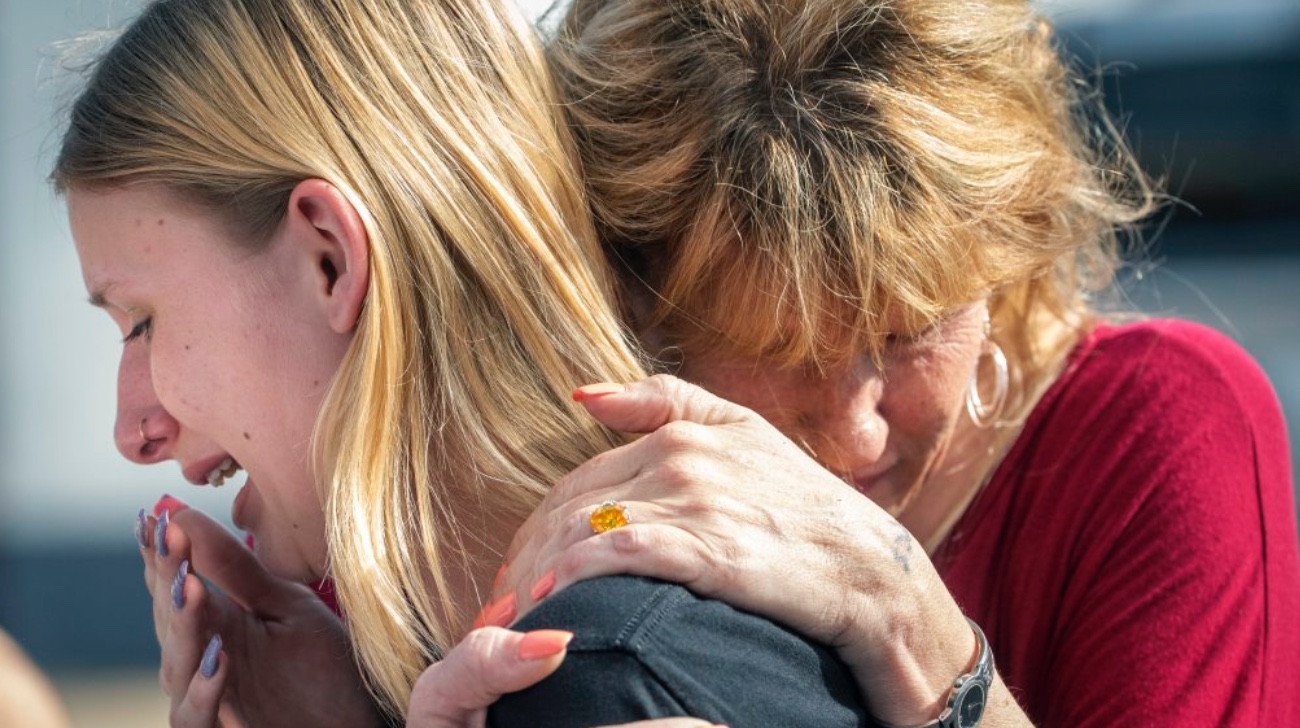 God whose love holds our children in your hands,
You must be weeping today, as we are.
Again.
School children in Santa Fe, Texas gunned down. And then explosive devices — including pipe bombs and pressure cookers — found in and near the school.
The horror. Again.
Terrified children run from their schoolrooms into the woods, sit in the brush, hiding until the terror passes. Tears and screaming, chaos and fear.
Again.
A tenth grade girl spoke truth to tragedy:
Every school shooting, kids getting killed, innocent kids getting killed.
The Governor of Texas, Greg Abbott, described the shooting:
One of the most heinous attacks that we’ve ever seen in the history of Texas schools.*
Another student spoke of her fear:
It’s been happening everywhere. I’ve always kind of felt like eventually it was going to happen here, too. I don’t know. I wasn’t surprised. I was just scared.
We acknowledge, God, that the unsafeness of our children in their schoolrooms is our national shame.
And we talk incessantly, God, about what should be done and what could be done, what ought to be done and what must be done.
And we promise our “thoughts and prayers” — empty without our action.
Then we ask you to intervene, God, but we fail to give our own energy and commitment. We refuse to stand courageously and work diligently until we see change. We refuse to storm the offices of our Congressional representatives demanding their promises to address this national failure.
Discussions cover the news channels. Again.
The president says he’s heartbroken and orders flags flown at half staff. Again.
Empty words, God.
Again.
Grant us, God, a shield of protection over our innocent children. Give grace and peace to parents, siblings, grandparents, teachers, friends who grieve great loss in this very moment.
Give extra strength to those attending those who are wounded.
And most of all, God, we ask that you ennoble us — every one of us — with the courage and the resolve to seek what is just and right, so that this kind of horrific tragedy will not befall another school, will not terrorize another child, again.
Amen.
* 
 God of the Sparrow 🌱 By Kathy Manis Findley