Into this silent night
as we make our weary way
we know not where,
just when the night becomes its darkest
and we cannot see our path,
just then
is when the angels rush in,
their hands full of stars.
— Ann Weems
All of us find ourselves in dark places — when the darkness is thick, when we are immersed in silence, when we try our best to make our weary way but the way ahead is veiled.
How disconcerting it is when the night becomes its darkest and we cannot see our path. I have been in that kind of place, and I imagine you have as well. It’s dark when you lose a loved one; when you relocate to a different, unknown place; when you must be away from those you love and who love you back; when a divorce brings you grief and uncertainty; when your children are in trouble; when you suffer an illness or endure a major surgery or treatment. The list of dark seasons of life is endless, personal, hiding in the depths of our wounded places.
We feel a deep kind of despair that does not seem to lift. We hold inside us invisible wounds of the soul and spirit that cannot be healed quickly or easily. Healing of the soul is a long, slow process but it does happen as time brings healing grace. Still, we experience the darkness at a time when the world around us is trying to rush us ever so quickly into Christmas. It is to our benefit if we can hold back and let the darkness call us to places we have never been. Gayle Boss expresses it like this:
Advent, to the Church Fathers, was the right naming of the season when light and life are fading. They urged the faithful to set aside four weeks to fast, give, and pray — all ways to strip down, to let the bared soul recall what it knows beneath its fear of the dark, to know what Jesus called “the one thing necessary”: that there is One who is the source of all life, One who comes to be with us and in us, even, especially, in darkness and death. One who brings a new beginning.
I wonder if in this Advent season I can let my “bared soul recall what it knows beneath its fear of the dark?” I wonder for all of us, will we let Advent be a time of waiting, a time of hoping without knowing, a time of emptying so that we can be filled with God’s Presence? Will we take time to allow the Advent darkness to do its work in us? Because the beautiful hope of Advent is that while we are waiting, lingering in its darkness, just when we realize we cannot see our path “is when angels rush in, their hands full of stars.
Sleep would not come easily last night. It occurred to me that I would probably struggle all night to get to sleep, and I began to hope for the coming of daybreak. As I drifted slowly into sleep, I did what I often do on sleepless nights. I began to sing a hymn, under my breath of course, careful not to disturb Fred’s sleep. I began to sing a Gospel hymn Fred and I used to sing many years ago. In our church, or in concert at other churches, “His Eye Is on the Sparrow” was one of the favorites every time we sang it. It was certainly one of my favorites and last night while experiencing a little pain, it came to mind that God was indeed watching over me and, as the hymn says, “Jesus is my portion, my constant friend . . .”
Of course, I also began whispering the Scripture text that inspired this hymn.
Are not two sparrows sold for a penny? Yet not one of them will fall to the ground outside your Father’s care. And even the very hairs of your head are all numbered. So don’t be afraid; you are worth more than many sparrows.
— Matthew 10:29-31 New International Version (NIV)
And then the hymn:
Why should I feel discouraged? Why should the shadows come?
Why should my heart feel lonely and long for heaven and home?
When Jesus is my portion, a constant friend is he.
His eye is on the sparrow and I know he watches me.
His eye is on the sparrow and I know he watches me.
I sing because I’m happy.
I sing because I’m free.
His eye is on the sparrow, and I know he watches me.
Let not your heart be troubled,” His tender word I hear,
And resting on His goodness, I lose my doubts and fears;
Though by the path He leadeth, but one step I may see;
His eye is on the sparrow, and I know He watches me;
His eye is on the sparrow, and I know He watches me.
Whenever I am tempted, whenever clouds arise,
When songs give place to sighing, when hope within me dies,
I draw still closer to Him, from care He sets me free;
His eye is on the sparrow, and I know He watches me;
His eye is on the sparrow, and I know He watches me.
I sing because I’m happy.
I sing because I’m free.
For His eye is on the sparrow, and I know He watches me.
I love learning the stories behind the hymns we sing. This is the writer’s story behind “His Eye Is on the Sparrow.”
Civilla Martin was born in Nova Scotia in 1866. Her husband was an evangelist who traveled all over the United States. She accompanied him and they worked together on most of the musical arrangements.
In 1904 Civilla was visiting a very ill friend. Although discouraged and sick, her friend remembered that God was watching over each sparrow and would certainly watch overher. She shared with Civilla the words in Matthew 10: ” . . . don’t be afraid; you are worth more than many sparrows.”
Civilla was a poet and thought this would be a perfect idea for a poem. She jotted down the idea and by the end of the day, had completed “His Eye is On The Sparrow.” The entire poem was sent to a well-known composer of that day, Charles Gabriel. His lovely music has carried it all around the world in small churches and great crusades.
And then there is my story behind this hymn: that I learned it decades ago and sang it often; that it spoke comfort to me back then, just as it did last night when sleep would not come; that God has given me the gift I call hymn memory so that every time I need encouragement, the text of a hymn — usually every word of the hymn — comes to mind to comfort me.
For this gift, I give thanks to God. Daybreak did come this morning, but before that I was led by the message of “His Eye Is on the Sparrow” into a restorative night of sleep. And I know this truth in all my deep places: “Jesus is my portion, my constant friend.”
I hope you will take a moment to enjoy this video of the hymn.
I met this kind person through a group of clergywomen called RevGalBlogPals. She is a spiritual director from British Columbia. Through the RevGalBlogPals Facebook group, she happened upon parts of my transplant journey in my blog posts. She began praying for me. Then she offered me the gift of spiritual direction as I pass through this complicated time in my life.
It has been several years since I worked with a spiritual director, so I was very humbled and thankful to hear from her. These were the words of lovingkindness she wrote to me in our first session.
May you feel the gentle touch of Spirit in this session.
May you know that I am holding you in healing Love.
May you be reminded of your worth and strength…
As you rest.
~ This is spiritual direction when pain does not allow for words.
On the day I received her message, it was so true that pain did not allow for words. The assault on my body was unspeakable on that day. I remember when many years ago my husband’s cardiologist came into his hospital room a few days after his heart surgery. The cardiologist said this: “Let’s look at this terrible thing we’ve done to you.”
His words resonated with me post transplant when, in the throes of struggle and pain, I definitely was looking at the terrible thing they had done to me. I could not quite see a brighter, pain-free future. I could only focus on the physical systems that were in complete disarray after the transplant. It did not help when medical staff told me it was all normal. The way I was experiencing it all was far from normal.
I wondered if I would ever live “normal” again. Or if perhaps I would live into a new normal of life after receiving a transplanted organ. I was not sure, and definitely not confident, that all systems would levelize into something I could tolerate. My spiritual director’s wisdom knows that to have physical normalcy, I must also seek emotional and spiritual normalcy. That would mean healing wholly — from the outer visible body to the inner invisible one. It would mean transformation. It would mean living my life while watching constantly and diligently for any sign that something was physically wrong.
When my spiritual director suddenly appeared, I knew that she would help me explore my spiritual state, entering into community with me and pointing to the healing I could not yet see.
Thanks be to God for the beloved community she has offered me, community that forms in unexpected places, in unexpected times, just when I needed community the most.
I may not be able to speak of joyful things today. The physical pain I am experiencing is far too strong, covering me with just a little bit of despair. More than one of my good friends told me in the past few days that I am strong. I am not and, thankfully I don’t have to be because the friends that surround me are being strong for me. They are calling on the minuscule strength I do have and bringing it into view for me. They have told me joyful things when I could not name joyful things for myself. In the process of loving me, my friends call out to the joy and strength that is in me to make itself known. And on top of that, they allow me, without judgement, to be where I am and feel what I feel.
So although I may not be able to speak of joyful things right now, I know that you have already tucked joyfulness into the recesses of your heart. I may not have much hope to send to you today, but you have hope in abundance and it breathes over your spirit during times of courage and times of fear, times when you feel certainty and times when you feel disillusioned. Out of your stores of faith, you encircle me and breathe hope into my spirit . . . and strength and joy.
For that, I am most grateful. And I am grateful that when I am weak, God is my strength. When I am joyless, God covers me with joy. I believe this by faith (a smidgen of mustard seed faith) in those times when I cannot experience those comforts within me, times like this present time of struggle and recovery.
I’ll leave you with these words of comfort that you already know so intimately, words that I also know intimately, but that I need to hear anew today.
And God, the giver of all grace, who has called you to share His eternal glory, through Christ, after you have suffered for a short time, will make you perfect, firm, and strong. — 1 Peter 5:10
For our light and temporary affliction is producing for us an eternal glory that far outweighs our troubles. — 2 Corinthians 4:17
Though I cannot manage to speak of joyful things today, the writers of 1 Peter and 2 Corinthians most definitely can!
Today, I am singing in my mind a sacred hymn that often speaks hope to me. The
text was written by William Cowper (1731-1800) and the music by William Howard Doane (1832-1915). In the darkness of the past week, I have been surprised by light.
Sometimes a light surprises
The child of God who sings;
It is the Lord who rises
With healing in His wings:
When comforts are declining,
God grants the soul again
A season of clear shining,
To cheer it after the rain
In holy contemplation
We sweetly then pursue
The theme of God’s salvation,
And find it ever new;
Set free from present sorrow,
We cheerfully can say,
Let the unknown tomorrow
Bring with it what it may.
Tomorrow can bring us nothing,
But God will bear us through:
Who gives the lilies clothing
Will clothe His people, too:
Beneath the spreading heavens
No creature but is fed;
And God Who feeds the ravens
Will give His children bread.
Though vine nor fig tree neither
Their wonted fruit should bear,
Though all the fields should wither,
Nor flocks or herds be there
Yet, God the same abiding,
God’s praise shall tune my voice;
For, while in Him confiding,
I cannot but rejoice.
It is so true that “sometimes a light surprises the child of God who sings.” The surprise is almost magic. Surely the light is miracle, and I thank God for the miracle of this new day. The miracle, I think, is that I am able to look at this day in a way that leads to gratitude for life.
I am determined that this will not be a day I describe by pain, but that I would declare this day a day of healing. Today, I want to lean into healing, not suffering — faith, not fear. I am convinced that this is God’s desire for me.
There is no doubt that I have walked through darkness in the past week. It is also my truth that light really does shine out of dark places. My pondering light and darkness this morning brings up a Scripture text I have leaned on many times in my life. I love the New Century Version of this text.
God once said, “Let the light shine out of the darkness!” This is the same God who made his light shine in our hearts by letting us know the glory of God that is in the face of Christ.
We have this treasure from God, but we are like clay jars that hold the treasure. This shows that the great power is from God, not from us.
We have troubles all around us, but we are not defeated. We do not know what to do, but we do not give up the hope of living. We are persecuted, but God does not leave us. We are hurt sometimes, but we are not destroyed.
— 2 Corinthians 4:1-11 New Century Version (NCV)
How accurately this text describes my past few days! How true it is that I have not known what to do about the pain and suffering, yet I refuse to “give up the hope of living.” This is as it should be. This is God’s desire for us — to never give up the hope of living and to cling to the good hope that light really does shine out of darkness.
Sometimes a light really does surprise us when we sing. Singing beats weeping every time. Singing drives out darkness. I have heard often that only light can drive out darkness and I believe that truth. In fact, when I find myself in the middle of darkness, I am convinced that darkness is precisely the place where I am able to see the light at its brightest.
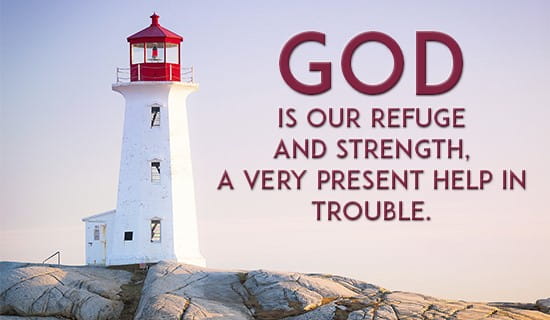
Today Is a troubled day for me. I need to know God as “my ever present help in time of trouble” on this day of kidney transplant aftercare that began early this morning. Being in the Mayo Clinic lab by 6:30 is not so gentle a way to treat a person with a huge, painful incision! On the way to Mayo Clinic, bumps and potholes in the road caused sharp pain. Walking the hallways at Mayo Clinic required far more energy than I currently have. I am weak and shaky, struggling with significant pain, and suffering from the side effects of very potent medications.
The medical visits will end around 2:00 pm today. We hoped to be able to rest until the next medical appointments on Wednesday. But the transplant doctors need to repeat my blood tests early tomorrow. They made some significant changes to my medications to try to address some concerns they have about my kidney function, excessive incision pain, blood sugar and fluid retention.
It occurred to me today, that in some ways, all of the inflexible after surgery care and the daunting medication regimen seems as if it is not at all about me; it’s about the kidney! It’s all about the kidney!
I can live with that if I can remember that God cares for me, for every part of me, and of course, for the new kidney. But my hope rests on the grace-giving God who also cares for the whole of me — what’s going on with me physically, emotionally and spiritually.
A comforting hymn text about God’s care has lifted me up into hope at various times in my life. “Day by Day, and with Each Passing Moment” was written by a young Swedish woman, Carolina Sandell Berg. Like the Psalmist, Berg learned early in life to trust in God’s strength to help her overcome times of suffering. She learned that when pain and tragedy strike, God may use that experience to deepen our faith.
When Carolina was 26-years old, she experienced a tragedy which profoundly affected her life. As she and her father crossed a Swedish lake, the ship suddenly lurched, and before her eyes, her father was thrown overboard and drowned. Like the Psalmist who gave us a strong affirmation with these words, “God is my refuge, an ever present help in time of trouble,” Carolina Berg found hope in God day by day.
Although my present situation is very different from her tragedy, I am learning all over again about how hope and faith work for me. This is my paraphrase of Carolina Sandell Berg’s wonderful hymn:
Day by day and with each passing moment,
Strength I find to meet my trials here;
Trusting in God’s kind and wise bestowment,
I’ve no cause for worry or for fear.
God whose heart is kind beyond all measure
Gives unto each day what She deems best —
Lovingly, it’s part of pain and pleasure,
Mingling toil with peace and rest.
Every day the God of love is near me
With a special mercy for each hour;
All my cares God’s love will bear, and cheer me,
God whose name is Counselor and Power.
The protection of God’s child and treasure
Is a charge that on Herself She laid;
“As thy days, thy strength shall be in measure,”
This the pledge to me She made.
Help me then in every tribulation
So to trust Thy promises, O Lord,
That I lose not faith’s sweet consolation
Offered me within Thy holy Word.
Help me, Lord, when toil and trouble meeting,
Ever take, as from a mother’s hand,
One by one, the days, the moments fleeting,
‘Till I reach the promised land.
On days like this one when I feel weary and weak, when I experience pain and need an extra measure of compassionate care, I know I can look to God who is “my ever present help in time of trouble.” And I know that God, who is both father and mother to me, will walk beside me day by day, every day, through every passing moment.
On another note, please pray for me as I recover from my kidney transplant at Mayo Clinic in Jacksonville, Florida. I am so grateful that you are walking with me on this journey that often felt so frightening and is now a very difficult recovery. Your thoughts and prayers mean so much. Your donations through the Georgia Transplant Foundation have helped us get very close to our goal. The Foundation will match donations dollar for dollar up to $10,000, and you have already helped us raise $9,015. If you are able, please help us get to the $10,000 matched amount. We are almost there. If you can contribute or if you would like to read more of the story of my illness, please visit the Georgia Transplant Foundation’s website at this link:
A “Go Fund Me” page is also set up for contributions to help with the enormous costs related to the transplant, including medications, housing costs for the month we have to stay near the transplant center, uncovered medications and medical equipment, and other unforeseeable costs for my care following the transplant. If you can, please be a part of my transplant journey by making a contribution at this link
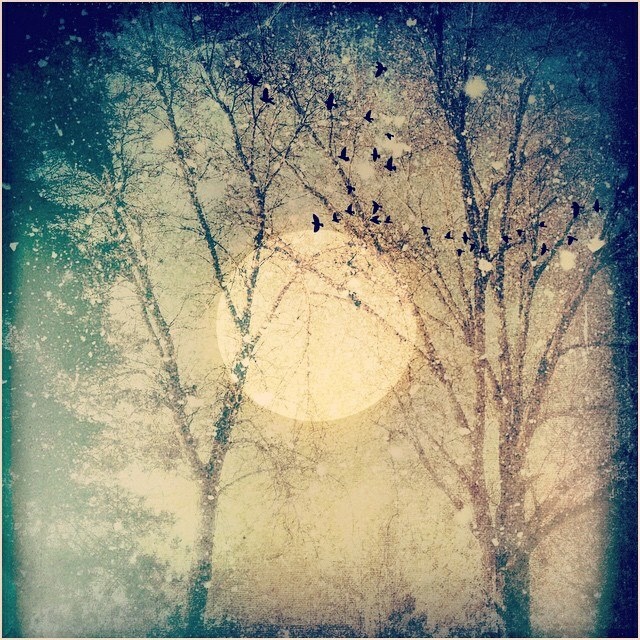
October Hunter’s moon rising over Arkansas’ Mallard Lake. Photography by Debbie Marie Smith.
Life can be swampy and murky at times, with not enough light to see the way forward. Not to mention the danger of being mired in the mud unable to move! You have probably been there. I know I have, and when the journey has taken me through those murky waters, I have despaired. So many circumstances can take us through rough places, but the circumstance that immediately comes to mind for me is indecision.
Indecision is that uncomfortably in-between place where you have no idea how to find the way forward, yet you cannot stay in the place you are. Waiting is born of indecision and waiting can be excruciating. Right about now, I wish I could report that one must simply pray and God will instantly change indecision into forward motion, out of any murky swamp.
I cannot say, however, that a single prayer can make that happen. At least for me, there have been no instant-miraculous-life-changing answers to my prayers. Not even once in my faith journey of many years! What I can tell you with deep assurance is that, although no single prayer has changed my life, continual prayer has changed my life. It is not the prayer of occasional consolation that changes the course of one’s life journey. It is the life of prayer that seeks God in prayer, abiding in God’s presence, for as long as it takes. Richard Rohr says this wise thing about prayer:
The only people who pray well are those who keep praying! In fact, continued re-connecting is what I mean by prayer, not occasional consolations that we may experience.
No doubt, life’s journey will take us through murky, swampy places without enough light to find our way through them. The murkiness of indecision is real, and with it we may experience confusion, fear, despair, desperation. We may even lose hope and question our faith. But we cannot stay there. People of faith are people of resilience and courage. We have within us all the resilience and courage we need. So we must believe in ourselves enough to take a step forward and out, through the mud and the sludge, trusting in faith that God’s light will light up the dark places and give us the strength to move through to the other side.
That’s what I have to believe about painful, oppressive places of indecision. That’s what I have to believe about getting through swampy, murky places. That’s what I have to believe about God.
In the beginning was the Word, and the Word was with God, and the Word was God. He was in the beginning with God. All things came into being through him, and without him not one thing came into being. In him was life, and the life was the light of all people. The light shines in the darkness, and the darkness has not overcome it.
Unafraid, unbound, unleashed from this earth, rising with every step, a dance to lift the human soul.
What do I do through these dark hours? How do I endure them, the lostness, the fear, the spiritual suffering? How do I make my journey and avoid the dark hours that overwhelm me along the way?
Dark hours are a part of our living, a part of our journey. They cover us — even those who are most religious and devout — like an ominous black cloud. Dark hours bring us fear, dread, a lack of hope. Dark hours steal the joy of our faith.
The term “dark night (of the soul)” describes a spiritual crisis in the journey with God, like that described by St. John of the Cross in his poem, “The Dark Night.”
In her letters, St. Teresa of Calcutta described how she endured a dark night of the soul from 1948 almost until her death in 1997, with only brief interludes of relief.
St Thérèse of the Child Jesus wrote of her own experience of the dark night, as she found herselfdoubting the existence of eternity. She struggled and suffered through a prolonged period of spiritual darkness, declaring to her fellow nuns: “If you only knew what darkness I am plunged into..!”
Examples of the experiences of those we look to as spiritual patrons of the faith do not really enlighten our own faith journeys. We walk our own spiritual paths, always hoping for the best, always striving to experience the holy along the way. And we hope beyond hope that we will not have to endure the suffering of dark hours.
The truth is that dark hours are required on the journey. We cannot walk around our dark hours, moving them aside like the sticks and brush we can so easily move off of our path. Our only option is to keep walking, to stay the course and to embrace the journey just as it is.
As I look back to take stock of my own journey, I see the the dark hours as powerful reminders of struggle and spiritual crisis. As I examine the past, I can say without hesitation that the dark hours were times I do not want to experience again. I can feel the intense pain of them, even now, the formidable affect of them on my spirit. The thought of them brings on a queasy feeling in the pit of my stomach that makes me want to quickly move on to the next life metaphor I might use in this post.
And yet . . . And yet, how clear it is from this vantage point that I endured my dark hours and emerged stronger, better, with faith intact and with a living hope to take with me on the rest of the journey. From the cloud of dark hours, I learned that I could believe again, hope again, move farther into my journey with joy — even unrestrained joy — because of God’s grace that gave me strength.
There is probably no writer that inspires me more than Bishop Steven Charleston. He has taught us how to live in his many writings over the years. In this piece, he shows us the way through our dark hours in these beautiful words:
Let us dance through these dark hours, while others crouch down, seeking shelter from a worried world, hiding in the shadows, afraid to hope for tomorrow, let us give them a sign they can see, a message made of music and motion, two dancers spinning light out of darkness, a waltz in an air raid shelter, unafraid, unbound, unleashed from this earth, rising with every step, a dance to lift the human soul. Let us dance so others can dance, dancers from every direction, standing up to join us, music filling the sky, a revolution of unrestrained joy, an invitation to believe again, to hope again, to be free again, dancing through these dark hours, as if dancing was all that we were born to do.
To be sure, I have felt the pressing urge to “crouch down” many times, “to seek shelter from a worried world, hiding in the shadows, afraid to hope for tomorrow.” But in the end, through dark hours I learned to dance.
Dance then, wherever you may be. I am the Lord of the Dance, said he . . .
It’s a good way to live.
It’s a good way to give witness to the world of our living faith and unrestrained joy!
Today is another “Wordless Wednesday.” My friend, Barbara Resch Marincel, is a sister blogger, an insightful writer, and a photographer extraordinaire. You can see one of her amazing works in the image on this post. The image reminds me of a dark time that is slowly changing with the glow of new light. And in that light, the flying birds speak to me of the wind of the Spirit. Barbara’s images are a gift to me, always bringing up a range of emotions.
Here is a bit of how she describes herself on her blog, lifeisgrace.blog.
Blogger, writer, photographer, in varying order. Finding the grace in the everyday—and the not so everyday, while living a full and creative life despite chronic pain and depression.
If you take a few moments of your day to visit Barbara’s blog, you will find enchantingly stunning photography that speaks of joy, pain, life and grace.
Back to “Wordless Wednesday.” So many reasons to be wordless. Some people may not have adequate words to express joy. Others cannot speak of deep sorrow. Some of us have no words because of pain, while others are wordless because they have fallen into the depths of depression.
There is no end to the reasons people are wordless, no end to the seasons in which they find they are without words. I have lived in that season many times, and in that place I could not speak of my pain because words were completely inadequate. I could not speak the pain out loud to any friend, and even for prayer, I had no words. Silence was my close companion.
I love that my friend, Barbara, entitles her blog post “Wordless Wednesday” every week, because in the middle of every week, she reminds me of my seasons without words. Her art is a reminder for me to give thanks that I survived those times, and celebrate that I am now on the other side of silence.
But will not forget that it is no small feat to get to the other side of silence. I must remember that it is not easy to endure silent, grief-filled times and to the other side of them. While living in my seasons of unspoken angst, one passage of Scripture brought me comfort and hope.
The Spirit helps us in our weakness; for we do not know how to pray as we ought, but that very Spirit intercedes with sighs too deep for words.
— Romans 8:26 (NRSV)
When grief has stolen our words, when we cannot speak and find ourselves in silence, may open our lives to hope, trusting the intercession of the Spirit’s sighs that are far deeper than words.
Thank you, my friend, for “Wordless Wednesdays.”
And thanks be to God for allowing me to move to the other side of silence.
Bishop Steven Charleston writes, “Help me call a blessing down, for I think our poor old world needs it.”
I have listened this week to folk bemoaning the downward movement of the stock market that diminished their retirement savings. I have heard expressions of real fear about what the president is doing and might do. Many people seem despondent about children taken from their parents and placed in detention centers. People are angry that two young children have died there in the past couple of weeks. People are embarrassed about the way other countries now view America. Every day, there is another reason to feel concern, anger, fear,and many other emotions about what our nation has become.
And on top of that, we see the grief and pain of people all over the world. They face repressive governments in countries like North Korea, Syria, Equatorial Guinea, Turkmenistan, Saudi Arabia, Eritrea, Yemen, Uzbekistan and the Central African Republic.
They have endured natural disasters like the earthquake and tsunami in Indonesia, volcanoes in Guatemala and Hawaii, the dust storm in India, the wildfires in California, flooding and mudslides in Japan, numerous earthquakes around the world. People are living in countries in the midst of wars that persist for decades.
They have witnessed with horror events like the Marjory Stoneman Douglas school ahooting, the Waffle House shooting, the shooting at Santa Fe High School, the Capital Gazette shooting, the Jeffersontown, Kentucky shooting, the Tree of Life Synagogue shooting, the Thousand Oaks bar shooting, the Chicago Mercy Hospital shooting. All over the world, disasters — natural disasters and disasters caused by humans — have the power to bring us to our knees.
On our knees is perhaps the very place we must be. And as we fall to our knees to pray for our world, perhaps we might whisper the Hebrew phrase, TikkumOlam, heal the world. Perhaps we might repeat the prayer of Bishop Steven Charleston:
Help me call a blessing down, for I think our poor old world needs it, a blessing of peace, a blessing of the ordinary, a blessing of national life without chaos and personal life without fear.
Help me pray a healing down, for I know how much we need it, a strengthening of the bonds between us, simple respect and patient listening, a new beginning for us all.
Help me welcome the sacred down, the wide-winged Spirit, drawn from every corner of heaven, to walk among us once more, to show us again how it can be, when justice is the path and love the destination.
What a caring and compassionate ministry it is to sit beside someone who is grieving and remind them of God’s grace. In recent days, I have wept for and with so many friends who are grieving for what they have lost because of the Florida hurricane. To be sure, there were losses in Georgia and in the Carolinas, but the devastation in and around Panama City was catastrophic.
Hordes of compassionate people traveled to Florida to help. They will clean up debris, repair or rebuild homes that sustained damage, do electrical work, provide help in the shelters, share their hearts and God’s heart, and stand beside families as they pick up the shattered pieces of their lives. Mostly, they will weep with people, and that’s what will help more than anything else.
Author Ann Weems paints a sparkling vision with her words that speak of the “godforsaken obscene quicksand of life.” But then she tells of a deafening alleluia arising from the souls of those who weep and from the souls of those who weep with them. From that weeping, Ann Weems tells us what will happen next. “If you watch,” she writes, you will see the hand of God putting the stars back in their skies one by one.”
I like to think that the caregivers who traveled to Florida did a lot of weeping with those who needed it and that they stayed near them long enough for them to “see the hand of God putting the stars back in their skies one by one.” When all is lost — when you learn that your loved one has died or you stand in a pile of rubble on the ground that used to be your home — seeing the hand of God putting the stars back in their skies would be for you a manifestation of pure and holy hope.
Without a doubt, Florida is experiencing “the godforsaken obscene quicksand of life.” Their memories of this devastating time will be cruel and long-lasting. They will remember better days, neighborhoods that once thrived, schools that were destroyed and friends who are trying their best to recover. But what grieving people will remember most is the care someone gave them and the loving compassion of strangers who became forever friends. I am reminded of the words of poet Khalil Gibran:
You may forget with whom you laughed, but you will never forget with whom you wept.
“Sunrises anoint my soul. They are quiet prayers, icons of God’s presence.”
These are words written by my friend, Sister Macrina Wiederkher. Her words resonate with our times as we hold in the light our brothers and sisters in Florida. Their loss is immeasurable, and although we know that loss of home is not as tragic as loss of life, it is a deeply felt emptiness to lose your home and all its contents.
So many are in that heartbreaking place today, and when the night falls on this night, they will not know the safe security of home. We have only a small awareness of their heartache, but God is fully aware of all they have lost. God knows their grief and their fear, their uncertainty of the future. Sometimes all we can count on is that God knows our deepest sorrow and anoints our souls when we need it most.
Our comfort is this: that after every storm, there is a calm. When ominous, dark clouds of destruction fill the skies, we can know with certainty that the sunrise will come.
I believe my friend who tells us that sunrises anoint our souls . . . like icons of God’s presence.
And I believe it for all of the Florida folk who have lost so much.
How do we live after we have lost hope? How do we live with brokenness? What do we say to a broken world? What do we do with our broken hearts? The truth is that each day can bring us heartbreak. Any season of life can bring us failure. At times, the struggle is so intense that we do lose hope.
Khalil Gibran has written that “out of suffering have emerged the strongest souls; the most massive characters are seared with scars.”
How true that is, that our suffering makes us stronger, that our scars make us resilient. Most of us move through life steeled against any suffering. We bravely put on our body armor to protect us against every assault. We refuse to allow our vulnerability to rise within us.
I have been strengthened by Brené Brown’s book, “Rising Strong.” She points us to wisdom that names hope is a function of struggle, and challenges us to not be afraid to lean into discomfort.
Why would we want to do that, you might ask? Who in their right mind really wants to invite adversity into their lives? Why would we want to be vulnerable? We need to be strong. We need to live into courage. We need to be impenetrable, tough and impervious to anything that might hurt us.
Here’s what Brené Brown says about that:
Hidingout, pretending and armoring up against vulnerability are killing us: killing our spirits, our hope, our potential, our creativity . . . Our love, our faith, our joy. We’re sick of being afraid and sick of hustling for our self-worth. We want to be brave, but deep inside of we know that being brave requires us to be vulnerable.
“No adversity, no hope,” she writes. “Fall. Get up. Try again.”
As people of faith, we can speak, through our own heartbreak, to a broken world. We can offer the message that if you feel that you have to give up, hope whispers, “try one more time.”
When we live in life’s fullness, with our whole hearts, we will always know heartbreak. We will push to try something new, and sometimes we will fail completely. We will experience disappointment. But without those heartbreak times, we will never know that we can get beyond them.
If we never fall, we will never know that we really can get up. If we never lose hope, we will never experience the joy of finding it again.
If we never lose hope, we will never know new hope, fresh and pointing us toward the skies.
It is art we do not want to see, art that so closely mimics reality that we are compelled to turn away. But the artist, Dee Jones, captures every emotion, all the terror, every horrific aspect of sexual violence. If we care, we must look. And we must see all the ways in which sexual and domestic violence is a travesty.
It is true that, when we find such depraved violence in our Scripture, it is shocking. But we find It today in the 19th chapter of the Book of Judges, and we must steel ourselves to truly hear this awful story. Ken Sehested describes it with these words: “The narrative is monstrous, quite possibly the most visually brutal story in all the Bible.”
The story is about a Levite traveler and his concubine. Though you may be daunted by reading the entire 30 verses of this chapter, it’s worth your time to hear the whole story of another nameless woman in Scripture.
In those days Israel had no king.
Now a Levite who lived in a remote area in the hill country of Ephraim took a concubine from Bethlehem in Judah. But she was unfaithful to him. She left him and went back to her parents’ home in Bethlehem, Judah. After she had been there four months, her husband went to her to persuade her to return. He had with him his servant and two donkeys. She took him into her parents’ home, and when her father saw him, he gladly welcomed him.
His father-in-law, the woman’s father, prevailed on him to stay; so he remained with him three days, eating and drinking, and sleeping there.
On the fourth day they got up early and he prepared to leave, but the woman’s father said to his son-in-law, “Refresh yourself with something to eat; then you can go.” So the two of them sat down to eat and drink together. Afterward the woman’s father said, “Please stay tonight and enjoy yourself.” And when the man got up to go, his father-in-law persuaded him, so he stayed there that night. On the morning of the fifth day, when he rose to go, the woman’s father said, “Refresh yourself. Wait till afternoon!” So the two of them ate together.
Then when the man, with his concubine and his servant, got up to leave, his father-in-law, the woman’s father, said, “Now look, it’s almost evening. Spend the night here; the day is nearly over. Stay and enjoy yourself. Early tomorrow morning you can get up and be on your way home.” But, unwilling to stay another night, the man left and went toward Jebus (that is, Jerusalem), with his two saddled donkeys and his concubine.
When they were near Jebus and the day was almost gone, the servant said to his master, “Come, let’s stop at this city of the Jebusites and spend the night.”
His master replied, “No. We won’t go into any city whose people are not Israelites. We will go on to Gibeah.” He added, “Come, let’s try to reach Gibeah or Ramah and spend the night in one of those places.”
So they went on, and the sun set as they neared Gibeah in Benjamin. There they stopped to spend the night. They went and sat in the city square, but no one took them in for the night.
That evening an old man from the hill country of Ephraim, who was living in Gibeah (the inhabitants of the place were Benjamites), came in from his work in the fields. When he looked and saw the traveler in the city square, the old man asked, “Where are you going? Where did you come from?”
He answered, “We are on our way from Bethlehem in Judah to a remote area in the hill country of Ephraim where I live. I have been to Bethlehem in Judah and now I am going to the house of the Lord. No one has taken me in for the night. We have both straw and fodder for our donkeys and bread and wine for ourselves your servants — me, the woman and the young man with us. We don’t need anything.”
“You are welcome at my house,” the old man said. “Let me supply whatever you need. Only don’t spend the night in the square.” So he took him into his house and fed his donkeys. After they had washed their feet, they had something to eat and drink.
While they were enjoying themselves, some of the wicked men of the city surrounded the house. Pounding on the door, they shouted to the old man who owned the house, “Bring out the man who came to your house so we can have sex with him.”
The owner of the house went outside and said to them, “No, my friends, don’t be so vile. Since this man is my guest, don’t do this outrageous thing. Look, here is my virgin daughter, and his concubine. I will bring them out to you now, and you can use them and do to them whatever you wish. But as for this man, don’t do such an outrageous thing.”
But the men would not listen to him. So the man took his concubine and sent her outside to them, and they raped her and abused her throughout the night, and at dawn they let her go. At daybreak the woman went back to the house where her master was staying, fell down at the door and lay there until daylight.
When her master got up in the morning and opened the door of the house and stepped out to continue on his way, there lay his concubine, fallen in the doorway of the house, with her hands on the threshold.
He said to her, “Get up; let’s go.” But there was no answer. Then the man put her on his donkey and set out for home.
When he reached home, he took a knife and cut up his concubine, limb by limb, into twelve parts and sent them into all the areas of Israel. Everyone who saw it was saying to one another, “Such a thing has never been seen or done, not since the day the Israelites came up out of Egypt. Just imagine! We must do something! So speak up!”
— Judges 19: 16-30 NIV
The story begins by telling us that Israel had no king, thus describing a violent and lawless situation in the land. The structures of justice had collapsed. The rest of the story is a brutal account of rape, torture and murder. In her book, Texts of Terror, Phyllis Trible offers this commentary:
Of all the characters in Scripture, she is the least. Appearing at the beginning and close of a story that rapes her, she is alone in a world of men. Neither the other characters nor the narrator recognizes her humanity. She is property, object, tool, and literary device. Without name, speech, or power, she has no friends to aid her in life or mourn her in death. Passing her back and forth among themselves, the men of Israel have obliterated her totally. Captured, betrayed, raped, tortured, murdered, dismembered and scattered—this woman is the most sinned against.” (pp. 80-81)
The story closes with the woman’s dismemberment and the scattering of her body parts across Israel. The last verse says: “Everyone who saw it was saying to one another, ‘Such a thing has never been seen or done, not since the day the Israelites came up out of Egypt. Just imagine! We must do something! So speak up!’”
Ken sehested observes that the narrative closes with three imperatives: “Consider this, take counsel, speak.” Ken says it like this: “Let this horrible story instruct you. And finally, ‘speak.’”
For us, in these violent days, the message is just as critical, and yes, we must speak! The silence around violence against women must end. If we can find the courage to end our silence through the stories of unnamed, forgotten and reviled Biblical sisters, then their horrific stories have sacred meaning and divine purpose.
“They have names, and we must learn them,” Ken Sehested insists. “They have histories and we must tell them. In the end, we must nurture a vision where our security and theirs are bound up together.”
It’s the only name we have for her, the Levite’s Concubine. Yet, we must mourn her and remember her and know her story. So let us hear, if we can, this monstrous Biblical narrative and allow it to instill deep within us an unwavering commitment to do everything in our power to end violence in the world.
So many people have been broken. I join them in their brokenness, for I, too, have been broken. Not just once, but again and again. So I know how it feels to look down in the dust at my feet and see the shards of a broken spirit. I know the emotional response I have when I sit on the ground examining the broken shards, and I know how I despair of the dauntingtask of putting the broken pieces back together.
I know the fear of doubting that I will even be able to put them together again. I know the terror of believing that my broken life will forever be broken. I know the suffocating feeling of having been broken beyond repair, without hope, without the faith I will need to repair my own brokenness.
And then, we look at our world, lamenting its groaning in so many ways and in so many places around the globe. Ours is a world that seems broken into pieces. I often find encouragement in the Jewish concept known as Tikkun Olam, a phrase found in the Mishnah that means to heal or repair the world. While Tikkun Olam is used today to define social action and the pursuit of social justice, the phrase has ancient roots with origins in classical rabbinic literature. It means so much more than examining broken pieces and finding a “glue” that might possibly put them back together.
Rabbi Yitzchak Luria* pondered the world’s brokenness and came to believe that, even before time, something must have gone terribly wrong with the world. As he continued to mull it over in his mind, he proclaimed that the world had shattered. He taught that we are anointed to repair a world which he defined as “all that is eternal,” insisting that “at the very core of reality is G-d’s shattered dream, waiting for us to pick up the pieces.”
Things break. The world breaks. Dreams break. We break. Such is the reality we know. And yes, we can become disconsolate as we take on the task of putting the pieces back together again. But there is a higher truth, a more noble calling than just putting together broken pieces. It is the calling to make things whole again, to make the world whole again, to make your spirit whole again.
In Scripture, we find many stories of persons being made whole. Each one looks like a miracle. Remember the story of the woman who had suffered for twelve years?
A woman, who was very ill for twelve years, came behind Jesus, and touched the hem of his garment: For she said within herself, “If I but touch his garment, I shall be whole.”
Jesus turned about, and when he saw her, he said, “Daughter, be of good comfort; your faith has made you whole.” And the woman was made whole from that hour.
— Matthew 9:20-22
Surely it was a miracle that this woman received. But for us, miracles are rare. We are burdened heavily by the brokenness, usually without the benefit of miracles. So what is it around you that is broken? What broken shards do you have before you? A broken relationship? A broken faith community? A broken dream? Is your city broken? Your nation? Your world? Or it it your own spirit that lies in broken pieces at your feet?
I cannot promise you a miracle. Even so, you must pick up the broken pieces and get started. You may get a little help from the people in your life. Then again, they may offer no help at all. But I do know that you have within yourself all the strength you need to take what is broken, put the pieces back together and find yourself whole again.
She is a beautiful piece of broken pottery, put back together by her own hands. And a critical world judges her cracks while missing the beauty of how she made herself whole again.
— J.M. Foster
The Japanese art of repairing broken pottery is called kintsugi. Repaired with pure gold, the Japanese art embraces the imperfections of the broken object. The flaws are seen as a unique part of the object’s history, which adds to its beauty. The glistening gold cracks are seen as very lovely features of the pottery, and Japanese artists say that the pottery is even stronger at the broken places.
Comfort in the magnificent Arkansas skies. Photography by Steven Nawojczyk.
As I write on this day, I am aware that many friends are in the throes of darkness and despair. Some are facing devastating medical diagnoses. Some are yearning to have a child and are going through difficult medical procedures. Some are grieving for a family member in trouble. Some are waiting with hope for a cure for a disease that is bringing them to their knees. Others are enduring harsh medical treatments, hoping their lives will be saved. Many of them are at the point of losing all hope.
It hurts me deeply every time I am at a loss for comforting words. A little part of my heart breaks because I know I cannot “do something” to ease the suffering. And so I search for my own comfort as I search for ways to hold my friends in the light. As always, I am led to Scripture, not for easy answers, miraculous cures, or an instant panacea. I peek into the Bible to find words that will lift up hope in the middle of dark days and darker nights.
Often the words I find point me to the skies, as if gazing into an expanse beyond imagination might open my eyes to a radiant and holy hope. In truth, the words of Scripture do point me to hope.
From the Prophet Isaiah:
Look up into the heavens. Who created all the stars? He brings them out like an army, one after another, calling each by its name. Because of his great power and incomparable strength, not a single one is missing. O Jacob, how can you say the LORD does not see your troubles?
Have you never heard? The LORD is the everlasting God, the Creator of all the earth. He never grows weak or weary. No one can measure the depths of his understanding. He gives power to the weak and strength to the powerless.
— Isaiah 40:26-29
From the Psalmist:
When I look at the night sky and see the work of your fingers — the moon and the stars you have set in place — what are mere mortals that you should think about them, human beings that you should care for them?
— Psalm 8:3-4
And so whoever you are, whatever pain you are carrying, know that the hands that made the stars are holding your heart.
The quiet beauty of Arkansas. Photo by Steven Nawojczyk.
This I call to mind, and therefore I have hope.
I have been without hope at times, disconsolate, forsaken, wondering why my faith seemed to fail me. My struggle overcame my hope even as I listened desperately to hear the Spirit of hope. I heard nothing. Day after day, in the long dark night of my soul’s anguish, I heard nothing.
That’s the thing about hope. She doesn’t shout our her presence. She doesn’t get your attention in a loud, thunderous manner. Hope, it seems to me, is the quiet whisper of the Holy Spirit that goes beyond your conscious mind deep into the depths of your soul. That is the only kind of hope that works, the only kind of hope that can comfort us in times of affliction. The Scripture offers a promise in the book of Romans: “By the Holy Spirit you may abound in hope.”
The prophet Jeremiah speaks in the book of Lamentations with words filled with devastating pain. Certainly Jeremiah was a man of abiding and genuine faith. Yet, he suffered. Although it may not be our understanding, Jeremiah understood his times of anguish to be at the hand of the God he served. In hearing Jeremiah’s words of lament, we hear his loss of hope. Listen to this prophet’s heart.
I am one who has seen affliction under the rod of God’s wrath; he has driven and brought me into darkness without any light;
against me alone he turns his hand again and again, all day long.
though I call and cry for help, he shuts out my prayer;
He has blocked my ways with hewn stones, he has made my paths crooked. He has filled me with bitterness . . . My soul is bereft of peace;
I have forgotten what happiness is; so I say, “Gone is my glory, and all that I had hoped for from the Lord.”
The thought of my affliction and my homelessness is wormwood and gall! My soul continually thinks of it and is bowed down within me.
But this I call to mind, and therefore I have hope:
The steadfast love of the Lord never ceases, his mercies never come to an end; they are new every morning; great is your faithfulness.
“The Lord is my portion,” says my soul, “therefore I will hope in him.”
— Lamentations 3: 1-3; 8-10; 17-24 (New Revised Standard Version)
To reassure the prophet, God did not shout out a proclamation of new hope. There were no loud, boisterous declarations. Instead, the prophet calls to mind the mercies of God. And as he calls God’s faithfulness to mind, his soul speaks of hope.
If you are a long-time Baptist, you may have sung an old hymn that speaks of the quiet presence of hope. The hymn, Whispering Hope,* promises a gentle hope that comforts us in a whisper. Here is a portion of that hymn.
Soft as the voice of an angel breathing a lesson unheard,
Hope with a gentle persuasion whispers her comforting word:
Wait till the darkness is over, Wait till the tempest is done,
Hope for the sunshine tomorrow, after the shower is gone.
Whispering hope, oh, how welcome thy voice, making my heart in its sorrow rejoice.
— Septimus Winner, 1868
Hope with a gentle persuasion whispers her comforting word . . . To me, that sounds like the whisper of the Holy Spirit who, in our times of despair, in the times when we feel that we have lost all hope, brings her comfort, her assurance, her peace to us again and again.
May you hear the Spirit’s whisper when you need it most.
And may the God of hope fill you with all joy and peace in believing, so that by the power of the Holy Spirit you may abound in hope. (Romans 15:13)
Amen.
* If you would like to listen to a lovely arrangement of “Whispering Hope” sung by Hayley Westenra, or if you have not heard this hymn in a while, please visit this link: https://m.youtube.com/watch?v=zj3N9LE9FPs
Life can be tricky. Life is a living thing just waiting to grab you and pull you down, or so it seems at times. Bad things do happen to all of us. Misfortune can suddenly engulf our lives and leave us, any of us, in a heap on the ground, heads bowed low.
I know all too well the stark reality of being brought low, but when I find myself face down in the dirt, I always recall one of the most comforting passages of Scripture.
We are troubled on every side, yet not distressed; we are perplexed, but not in despair; Persecuted, but not forsaken; cast down, but not destroyed . . .
— 2 Corinthians 4:8-9 (King James Version)
At this time in my life, I am thankfully on the other side of a very serious illness. But the year 2014 was a nightmare year for me and for my family. I spent a good part of that year in the hospital, at times leaning very close to death’s door. Much of that year, I spent in a mental haze not even knowing the loved ones caring for me. I was often very afraid, but one thought came to mind again and again.
Here is the world. Beautiful and terrible things will happen. Don’t be afraid.
― Frederick Buechner, Beyond Words: Daily Readings in the ABC’s of Faith
So many people find themselves afraid and in despair. In the time it takes me to write this piece, five people in the U.S. will take their own lives. For every suicide, there will be 25 attempted suicides. Some people will suddenly and unexpectedly lose a job and plunge into financial ruin. Others will lose someone they love by death or divorce. Others will fall deeply into illness. Others will face the challenges of aging and lose their homes. Some will experience the terror of addiction. Every person — every person — will know the lowest depths of despair, an existence void of hope.
I love the writing of L.R. Knost. She is an award-winning author, feminist, and social justice activist, the founder and director of the children’s rights advocacy and family consulting group, Little Hearts/Gentle Parenting Resources, and the Editor-in-Chief of Holistic Parenting Magazine. Her writing is down to earth and uplifting, always filled with snippets of pure wisdom. This is what she writes about life.
Life is amazing. And then it’s awful. And then it’s amazing again. And in between the amazing and awful it’s ordinary and mundane and routine. Breathe in the amazing, hold on through the awful, and relax and exhale during the ordinary. That’s just living heartbreaking, soul-healing, amazing, awful, ordinary life. And it’s breathtakingly beautiful.
She is so spot-on about life, so thoroughly wise. She knows about muddling through the muck of life to the best part of it, the beautiful part of it. And that’s what we must do, muddle through until we get to the beauty. It is true that life doesn’t always get better. Sometimes the thing that breaks us down just lingers with us and keeps us on the lowest ground of desperation. Yet there is that life-giving, life-saving thing called grace, the gentle and persistent grace that is ever-present with us during every low season in life.
Here is the reality, the tried and true foundation of truth that keeps us moving forward after a difficult patch. Again, L.R. Knost describes it.
Life doesn’t always get better.
But you do. You get stronger.
You get wiser. You get softer.
With tattered wings you rise.
And the world watches in wonder at the breathless beauty of a human who survived life.
Going back to that wonderful passage in 2 Corinthians, we find this:
. . . We do not lose heart. Though outwardly we are wasting away, yet inwardly we are being renewed day by day. For our light and momentary troubles are achieving for us an eternal glory that far outweighs them all.
— 2 Corinthians 4:16-17 (New International Version)
This is, indeed, a soul-healing life, utterly beautiful during the good times, but still heart-breaking and frightening at other times. You and I will pick ourselves up from the dusty earth again and again. We will most certainly rise to our feet for another day. We will find the gentle, persistent grace that holds us upright. We will not lose heart. We will make it to the breathtakingly beautiful part of our lives. Count on it!
My adult son is a master at denial. He can get very upset over a situation, but before you can blink, he has moved on as if it never happened. To be honest, I have often envied that part of his personality. As one who tends to brood over life’s challenges and problems, I would love to just be able to blow things off.
There is no chance of that happening for me. I think that this brooding part of me emerges from the trauma I have experienced over the years. My world has ended many times, or so it seemed. Yet, there has been a positive aspect of my brooding: that I have learned to sit with an issue for a while, dissect what has happened, feel the depth of hurt, and reflect on the depth of the emotional assault I’m experiencing. Blowing off pain just doesn’t work for me. Denial is not my way.
Denial never makes hurt go away. Denial never even diminishes hurt. So be warned. Blowing off pain is a path to internal disaster. As difficult as introspection can be, I am grateful that I am able to deeply feel the feelings I feel, to let the hurt wash over me, and finally to emerge better and stronger. Feeling the depth of my heartaches has served to disempower them and, most importantly, to enable me to harness my inner power to be free.
This, I believe, is the path that takes us beyond despair. This is the path that lets us own our heartbreak and then leave it behind to move into a fresh, new day. I am strengthened by the words of poet Nayyirah Waheed.
feel it.
the thing that you don’t
want to feel.
feel it and be free.
the thing you are most afraid to write, write that.
it is being honest
about
my pain
that
makes me invincible.
i don’t pay attention to the
world ending.
it has ended for me
many times
and began again in the morning.
To sit with your pain, to touch the heart of your hurt . . . that is what makes you free. And that freedom will be for you this miracle . . . when your world ends, and it may end many times, it begins again in the morning.
These days, I find myself in the very center of worry and discontent. I feel vulnerable, out of place in a new place I never expected to make my home. The problem is, I think, that I have not really made this place my home, and that reality has left me unsettled. I left forever friends behind when we moved here. I think the reason for my worry, my occasional despondency, even my fear, is that I feel alone. I recalled this week the well-known lyrics of a Carole King song from the seventies.
When you’re down and troubled
And you need a helping hand
And nothing, nothing is going right
Close your eyes and think of me
And soon I will be there
To brighten up even your darkest night.
You just call out my name
And you know wherever I am
I’ll come running to see you again;
Winter, spring, summer or fall
All you have to do is call
And I’ll be there, yeah, yeah, yeah.
You’ve got a friend.
If the sky above you
Should turn dark and full of clouds
And that old north wind should begin to blow;
Keep your head together
And call my name out loud, yeah
Soon I’ll be knocking upon your door . . .
It is a frightening state of being facing worry or illness or aging or loneliness, finding yourself disconsolate at times, and alone, without a loyal friend. But we have a mystical, magical force that leads us through the dark nights of the soul every time, without fail. I’ll name it faith.
A dear friend who just faced some devastating news reminded me of a deep-down, rock-solid truth about faith when she wrote, “My faith is bigger than my fear.” And that’s how we live a life filled with times of worry, aloneness, days of grief, fear, and sometimes mourning that engulfs us hard and long.
No person escapes such times, for they are an inevitable part of life. So we meet hard times face-to-face, up close, and we survive. We are, as the Bible says, “troubled on every hand, yet not distressed; perplexed, but not in despair . . . cast down, but not destroyed,” (2 Corinthians 4:8-9)
To be sure, we are left with scars of the soul and spirit. Yet we live on, knowing that after times of despondency, we are stronger than we were before. There is no deeper consolation than the words of Scripture proclaimed by the Prophet Isaiah.
When you pass through the waters, I will be with you;
And through the rivers, they shall not overflow you.
When you walk through the fire, you shall not be burned,
Nor shall the flame scorch you.
— Isaiah 43:2
I hang on Isaiah’s words, and I have rested on them so many times when sadness overwhelmed me and fear had its way. These Isaiah words are enough, more than enough for my disconsolate times.
But then I happened upon just the right message of consolation for me in this particular time of my life. And I found it in a most unlikely place. It’s a delightful little message of real and true comfort that speaks so sweetly to me, and perhaps to all of us who need a friend and an extra boost of encouragement in a time of worry.
Are you upset little friend? Have you been lying awake worrying? Well, don’t worry . . . I’m here. The flood waters will recede, the famine will end, the sun will shine tomorrow, and I will always be here to take care of you.



 It has been several years since I worked with a spiritual director, so I was very humbled and thankful to hear from her. These were the words of lovingkindness she wrote to me in our first session.
 On the day I received her message, it was so true that pain did not allow for words. The assault on my body was unspeakable on that day. I remember when many years ago my husband’s cardiologist came into his hospital room a few days after his heart surgery. The cardiologist said this: “Let’s look at this terrible thing we’ve done to you.”
 When my spiritual director suddenly appeared, I knew that she would help me explore my spiritual state, entering into community with me and pointing to the healing I could not yet see.





 What a caring and compassionate ministry it is to sit beside someone who is grieving and remind them of God’s grace. In recent days, I have wept for and with so many friends who are grieving for what they have lost because of the Florida hurricane. To be sure, there were losses in Georgia and in the Carolinas, but the devastation in and around Panama City was catastrophic.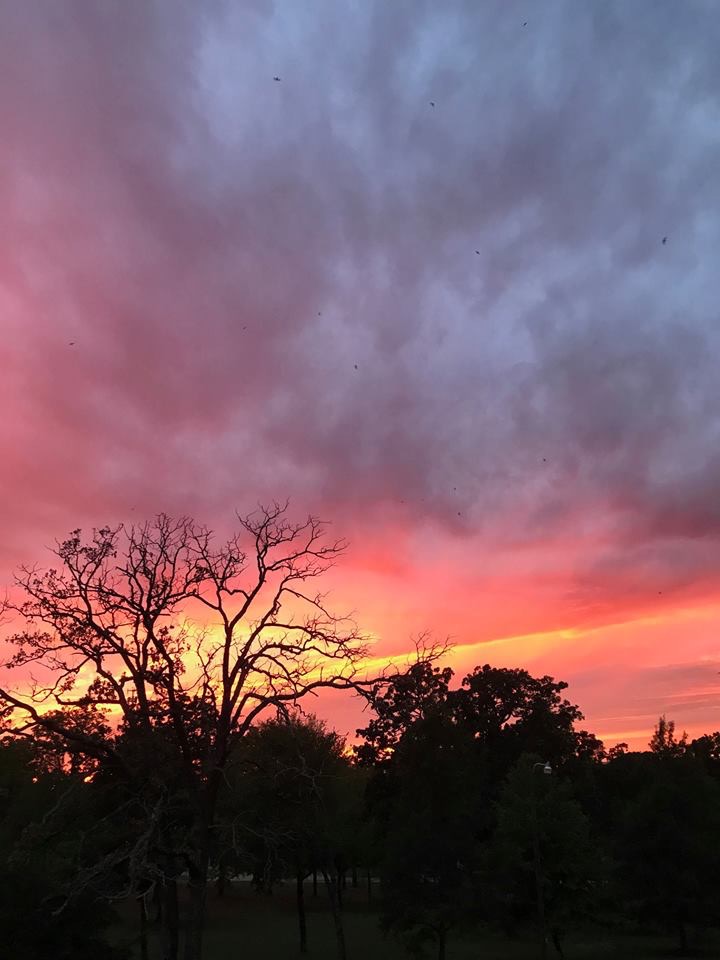
 I believe my friend who tells us that sunrises anoint our souls . . . like icons of God’s presence.
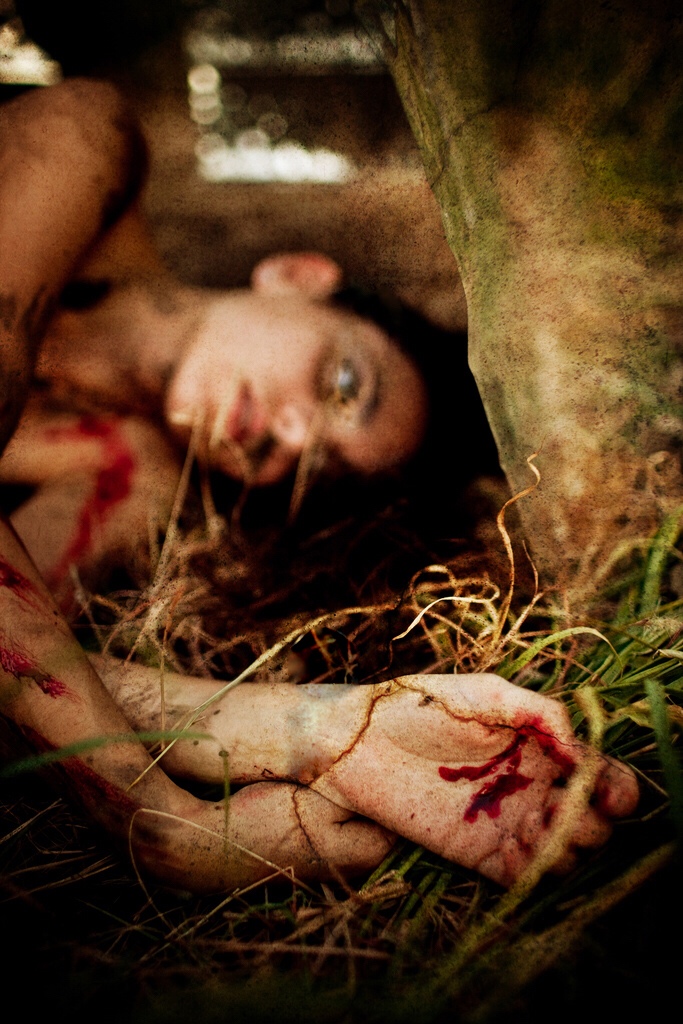
 So many people have been broken. I join them in their brokenness, for I, too, have been broken. Not just once, but again and again. So I know how it feels to look down in the dust at my feet and see the shards of a broken spirit. I know the emotional response I have when I sit on the ground examining the broken shards, and I know how I despair of the daunting


 My adult son is a master at denial. He can get very upset over a situation, but before you can blink, he has moved on as if it never happened. To be honest, I have often envied that part of his personality. As one who tends to brood over life’s challenges and problems, I would love to just be able to blow things off.
 God of the Sparrow 🌱 By Kathy Manis Findley