Advent, Angels, Comfort, Dancing, Darkness, Faith, God's Faithfulness, God’s Gift of Stars, Grace, healing, Hope, Kidney Transplant, Sacred Space, Stars

Holding Hope

0DF415DB-2F19-41A6-9BA9-064139041C19
The Sixth Day of Advent
Transplant Day Twenty-five
December 6, 2019


HOLDING

The Day is here
and we made it to Bethlehem!

The time has come for kneeling
and we’ve seen the Child!

There is singing in the stable
and we want desperately to hold on to it . . .
hold on to the Star!
and the angels!
and the spirit of love!

How do we hold on
to the Christmas spirit?
Why can’t every day be Christmas?

The world mutters “Be realistic,”
and sometimes we church people mutter too.

On our way back from Bethlehem
sometimes we forget
what we’ve been warned about in a dream:
to return another way.

Once we’ve seen the Child,
we’re left holding hearts
wherein angels dance
and stars sing!

Once we’ve been to Bethlehem,
every day is Christmas!

— Ann Weems

I am holding, grasping tightly “the Star and the angels and the spirit of love.” My journey to Bethlehem is Advent’s gift. I walk the path with expectation and hope (even just a wee bit of hope some days), and I imagine the glory of the promised Child.

This year during Advent’s pilgrimage, I also walk the rocky path I call my transplant journey. I do hold on to hope as I travel the rough transplant path, and along the way I see tiny glimpses of hope. But not every day. Minute by minute I navigate symptoms and side effects and, on the worse days, my community holds hope for me when I can’t hold it for myself.

On the path — the path of both Bethlehem and transplant journeys — I see graces along the way: stars, angels, Bethlehem’s brightest star, the Child in a simple manger! It’s enough for me, the images that cry out “Hope!” It is holy ground, sacred space. Hope will get me there, sustaining me along the way, as God’s grace carries me.

And the poet’s words are true:

Once I’ve seen the Child, I’m left holding my heart wherein 04E87215-AC50-4CC9-B2F4-6612E56D0CB9angels dance and stars sing!

Thanks be to God!


Advent, Angels, anxiety, Belief, Change, Comfort, Courage, Darkness, God, God’s Gift of Stars, Hope, Kidney Transplant, Laughter, New Normal, peace, Suffering

Sometimes God Flings Stars!

0E6B5F26-6125-45C7-8B3C-48718E5A951D
The Fifth Day of Advent

Transplant Day Twenty-four
December 5, 2019

THIS YEAR

I wonder if God comes to the edge of heaven each Advent
and flings the Star into the December sky,
laughing with joy as it lights the darkness of the earth;
and the angels, hearing the laughter of God,
begin to congregate in some celestial chamber
to practice their alleluias.

I wonder if there’s some ordering of rank among the angels
as they move into procession
the seraphim bumping the cherubim from top spot,
the new inhabitants of heaven standing in the back
until they get the knack of it.
(After all, treading air over a stable and annunciating
at the same time can’t be all that easy!)
Or is everybody — that is, every “soul” — free to fly
wherever the spirit moves?
Or do they even think about it?

Perhaps when God calls, perhaps they just come,
this multitude of heavenly hosts.
Perhaps they come,
winging through the winds of time
full of expectancy
full of hope
that this year
perhaps this year
(perhaps)
the earth will fall to its knees
in a whisper of “Peace.”

— Ann Weems

This year for me is unlike any other year, not at all like Advents of my past. This Advent for me is not at all ordinary. It is an Advent that finds me in a bit of suffering, a bit of pain and, most of all, crying out for peace.

The poet asks: “What might it look like if the earth fell to its knees in a whisper of ‘Peace?’” We are always full of expectancy, full of hope that during some Advent, perhaps this year’s Advent, we will finally hear the earth whispering “Peace.” 

From the place I find myself today, I look for that Peace. Recovering from a kidney transplant and trying to live into a new normal, what I need most is peace. Peace after a life upheaval. Peace after a physical trauma. Peace that might help restore my emotional and spiritual self.

I do so want to fall to my knees in a whisper of “Peace.” But probably not today. Not until some parts of me heal a little more. It’s not always an easy thing, falling to my knees, even in the best of times. Today, though — far from home and family, separated from my friends and my faith community — most things are not easy.

I will remember these recovery days as a season of harsh medications, pain, swelling, itching, tremors, instability and anxiety. But there is another part of my memory that remembers that the Apostle Paul wrote some words that have always spoken deep peace to me. He wrote of being “troubled on every side, yet not distressed; perplexed, but not in despair; persecuted, but not forsaken; cast down, but not destroyed.”

And then his most comforting words of all: “We do not lose heart. . . for our light affliction, which is but for a moment, works for us a far more exceeding and eternal weight of glory.” (From 2 Corinthians 4)

Walking through those words of hope, I think I can make it another day. Even in my darkness of a difficult recovery, perhaps I can gather up my courage and perseverance and walk a few more steps. Yes, this is a hard time.

04E87215-AC50-4CC9-B2F4-6612E56D0CB9And yet, I still believe that, in some mysterious way, God comes to the edge of Advent and flings the Star into the night sky, maybe many stars. I can still envision God laughing with joy as starlights illuminate the darkness. And I can almost hear the singing of angels practicing their alleluias.

It is Advent, after all!

Advent, Angels, Comfort, Courage, Darkness, Emotions, Faith, God’s Gift of Stars, healing, Hope, Humbug, Kidney Transplant, Light, New Normal, Patience, Perseverance, Skies, Soul, Stars, struggle, Weeping

“Humbug!” and Hope!

AC24B7A2-58F3-416F-9366-0FA2DA829A60
The Fourth Day of Advent

Transplant Day Twenty-three
December 4, 2019

IN DECEMBER DARKNESS

The whole world waits in December darkness
for a glimpse of the Light of God.
Even those who snarl “Humbug!”
and chase away the carolers
have been looking toward the skies.

The one who declared he never would forgive
has forgiven,
and those who left home
have returned,

and even wars are halted,
if briefly,
as the whole world looks starward.

In the December darkness
we peer from our windows
watching for an angel with rainbow wings
to announce the Hope of the World.

— Ann Weems

In this season of my life, it would be easy to snarl “Humbug!” and move on to ordinary, tedious, plodding daily living. It’s hard to look starward when pain is your nightly companion, sticking much too close in the darkness of night, the darkness of life. My words this morning are not Advent-inspired words. They are, pure and simple, a factual and real assessment of where I find myself. My most pressing question? How do I get from “Humbug!” to Hope?

It will require an extra measure of faith, patience and perseverance. It will require my willingness to welcome a new normal. It may call for a little extra weeping, a bit more courage, a wide-open soul and maybe even a few angels to illuminate the way ahead.

To be honest, I have to say that on top of my physical pain is my incessant emotional pain that whispers, “You are not okay!” over and over and over again. I know this is not very Advent-like. This view of my current health and well-being is most definitely not Advent-like. But instead of my constant post- transplant complaints and consternations, I want to look for the star in the night sky. I want to listen for the hope-filled sound of the heavenly host singing “Alleluia!” I want to be standing in awe of angels with rainbow wings.

All of this descriptive information is about my current emotional/physical/spiritual space. I know that I don’t want to stay here in this dark place. I know it’s a temporary, necessary time of moving into healing and wholeness. Still, it often feels like darkness. Much more like “Humbug!” than Hope!

So from this dark place, I will myself to look starward, even briefly. I will see past the December darkness. I plan to peer out of my transplant-veiled windows, watching for an angel with rainbow wings announcing the Hope of the World!

May Spirit make it so.

Advent, Bethlehem’s Star, Darkness, Emotions, Faith, God’s Gift of Stars, healing, Hope, Miracles, Stars, struggle, Trust

Star-Giving

The Third Day of Advent
Transplant Day Twenty-Two
December 3, 2019

4C9D51BE-2835-4353-9899-134D6EF882DE
STAR-GIVING

What I’d really like to give you for Christmas is a star . . . .
Brilliance in a package,
something that you could keep in the pocket of your jeans
or in the pocket of your being.
Something to take out in times of darkness,
something that would never snuff out or tarnish,
something you could hold in your hand,
something for wonderment,
something for pondering,
something that would remind you of
what Christmas has always meant:
God’s Advent Light into the darkness of this world.

But stars are only God’s for giving,
and I must be content to give you words and wishes
and packages without stars.

But I can wish you life
as radiant as the Star
that announced the Christ Child’s coming,
and as filled with awe as the shepherds who stood
beneath its light.

And I can pass on to you the love
that has been given to me,
ignited countless times by others
who have knelt in Bethlehem’s light.

Perhaps, if you ask, God will give you a star.

— Ann Weems

This poem by Ann Weems called me to think about gifts, about giving gifts and receiving them, about learning how to cherish the gifts we receive, even those gifts we fail to recognize as gifts. My husband, Fred, tells stories of delightful Christmas parties at his country church — a full pot luck meal, tables lined with deserts of every kind, a decorated cedar Christmas tree and, of course, the gift exchange. He tells about wondering what gift he would receive days before the party and how the party-goers seemed to bring the same gifts every year: chocolate covered cherries, socks, a Claxton fruitcake, ear muffs, puzzles, home-canned jelly, ornaments, maybe even a knit toboggan from the Dollar Store. As for Fred, he always hoped for the cherries.

The party was mostly about the gifts — humble, simple, inexpensive, cherished. In thinking about gifts, the idea of cherishing gifts seems important. After all, if one can cherish a Claxton fruitcake, it would be easy to learn to cherish other gifts. Ann Weems expressed like this:

What I’d really like to give you for Christmas is a star . . . .Brilliance in a package, something that you could keep in the pocket of your jeans or in the pocket of your being.

Something to take out in times of darkness, something that would never snuff out or tarnish, something you could hold in your hand, Something for wonderment. . .

My attention went directly to “something for wonderment.” A kidney from my living donor is a gift for wonderment, to cherish. My new spiritual director who found me through an online group of female clergy is a gift for wonderment. My compassionate, tireless caregiver during this trying recuperation is a gift for wonderment. My friends and family — constantly caring, constantly praying — is a gift for wonderment. I can cherish those gifts.

Still, cherishing the gifts you receive is not a given. It’s not always easy. Let me offer an example. I had a phone conversation yesterday with a new friend who is also a kidney transplant traveler. Though every transplant recipient is unique in the way they adjust to life after a transplant, the two of us shared some definite commonalities. Both of us spoke of physical pain — his about 15 years ago; mine current, constant and debilitating. I could closely identify with much of what he told me he experienced. He spoke of his lack of faith in the immunosuppressant medications, a lack of trust in decisions doctors made during his year of follow-up care, and even very little hope that having a transplant was a wise decision.

We also talked about gifts for wonderment, gifts to cherish, gifts we should cherish, but sometimes cannot. A kidney transplant — especially when you are in the throes of recovery with a 9 inch incision held together with 33 metal staples — doesn’t always feel like a gift.

The last thing my new friend said about our kidney transplants is this:

“It’s a gift! It’s a miracle!”

Most assuredly, a kidney transplant is a miracle and a gift of wonderment, a gift to be cherished. Much like the stars in Ann Weems’ poem —- “brilliance in a package, something to take out in times of darkness, a gift of wonderment, something like God’s gift of stars.” Such a gift is radiance, light breaking through our darkness, a gift to be cherished.

I think I’ll try to be visionary enough, present enough, hopeful enough to catch one of God’s stars to hold in my hand and to keep until I need them most.04E87215-AC50-4CC9-B2F4-6612E56D0CB9

Amen.

Advent, anxiety, Bitterness, Darkness, Despair, Exhaustion, Faith, Fear, grief, Guilt, healing, Hope, Light, Loss, Mental health, Mourning, Pain, Perseverance, Reflection, Sorrow, Soul, Suffering, Unfaith, Weeping, Worry

Dark Night or Advent Light

DF745CFF-118C-480C-B837-0A81F4520CEA

The Second Day of Advent
Transplant Day Twenty-One
December 2, 2019

THE CHRISTMAS SPIRIT

The Christmas spirit
is that hope
which tenaciously clings
to the hearts of the faithful
and announces
in the face of any Herod the world can produce
and all the inn doors slammed in our faces
and all the dark nights of our souls
that with God
all things still are possible,
that even now
unto us
a Child is born!

What could this beautiful poem titled The Christmas Spirit possibly have to do with my recent kidney transplant? At first glance, not much. But lingering on the poet’s words made some of them leap from the page for me. I have to admit that the words most piercing to me are these: “. . . all the dark nights of our souls.”

Guilt overwhelmed me after the transplant was complete. I was back in my room six hours after the surgery — barely awake, a little confused, exhausted, in pain and, they tell me, very quick-tempered. I yelled at my husband, something I may have done twice in 50 years of marriage. The truth is I was feeling covered with a blanket of guilt. The nurses, my surgeon, my family were all celebrating the transplant miracle. I was in pain, second-guessing my decision to even have the transplant in the first place and feeling guilty for not acknowledging the miracle everyone else saw.

For the next two days, every person on my transplant team who came to see me entered my room with a large smile and expressed one word, “Congratulations!” said with joy in a most celebratory voice. All the while, I was often weeping pain’s quiet tears. I stared at each congratulating person with a little bit of concealed contempt. In my mind, if not on my lips, was a response that went something like this: “Congratulations? Do you have any idea what kind of pain I am experienced right now? And have you had this surgery yourself? Save your congratulations for another day!”

The physical pain was very real and very intense. The soul pain hurt even deeper. Body and soul — the physical, spiritual and emotional — were so intricately fused together that it was all but impossible to isolate or separate them. Is this just physical pain? Is part of it emotional pain? Am I experiencing, heaven forbid, a spiritual crisis? I found no way to tell. For me, it was pain in all three parts of me and that made it almost intolerable.

For two nights, I did not sleep at all — awake all night, feeling alone, abandoned and in a wrestling match with my pain. As I went over and over in my mind all the reasons I had for getting a transplant, my thoughts morphed into a fairly clear “What have I done?”

It felt so much like a dark night of the soul as I grieved my aloneness and isolation, mourned the loss of my previous life and felt deep fear of the dark, unknown path ahead. And all of those points of crisis made me feel that guilt for not being grateful for the living gift of a kidney.

As Ann Weems’ expresses in the poem, “Hope tenaciously clings to the hearts of the faithful and announces in the face . . . of all the dark nights of our souls, that with God all things still are possible, that even now unto us a Child is born!”

Twenty-one days separated from my transplant, I am able to attest that hope does cling tenaciously in my heart, that hope announces in the face of the dark night of my soul that with God, all things are still possible. And most importantly, “Unto us a Child is born!”

Into me a Child is born, and that presence empowers me to walk through my soul’s darkest night into the light that Advent brings.

Thanks be to God.


Advent, Angels, Bethlehem’s Star, Darkness, Despair, discouragement, God's presence, Grace, healing, Heartbreak, Hope, Light, Stars

Into This Dark and Silent Night

The First Sunday of Advent
December 1, 2019

C2024C51-565D-41A0-832D-EA67795E72FE
INTO THIS SILENT NIGHT

Into this silent night
as we make our weary way
we know not where,
just when the night becomes its darkest
and we cannot see our path,
just then
is when the angels rush in,
their hands full of stars.

— Ann Weems

All of us find ourselves in dark places — when the darkness is thick, when we are immersed in silence, when we try our best to make our weary way but the way ahead is veiled.

How disconcerting it is when the night becomes its darkest and we cannot see our path. I have been in that kind of place, and I imagine you have as well. It’s dark when you lose a loved one; when you relocate to a different, unknown place; when you must be away from those you love and who love you back; when a divorce brings you grief and uncertainty; when your children are in trouble; when you suffer an illness or endure a major surgery or treatment. The list of dark seasons of life is endless, personal, hiding in the depths of our wounded places.

We feel a deep kind of despair that does not seem to lift. We hold inside us invisible wounds of the soul and spirit that cannot be healed quickly or easily. Healing of the soul is a long, slow process but it does happen as time brings healing grace. Still, we experience the darkness at a time when the world around us is trying to rush us ever so quickly into Christmas. It is to our benefit if we can hold back and let the darkness call us to places we have never been. Gayle Boss expresses it like this:

Advent, to the Church Fathers, was the right naming of the season when light and life are fading. They urged the faithful to set aside four weeks to fast, give, and pray — all ways to strip down, to let the bared soul recall what it knows beneath its fear of the dark, to know what Jesus called “the one thing necessary”: that there is One who is the source of all life, One who comes to be with us and in us, even, especially, in darkness and death. One who brings a new beginning.

I wonder if in this Advent season I can let my “bared soul recall what it knows beneath its fear of the dark?” I wonder for all of us, will we let Advent be a time of waiting, a time of hoping without knowing, a time of emptying so that we can be filled with God’s Presence? Will we take time to allow the Advent darkness to do its work in us? Because the beautiful hope of Advent is that while we are waiting, lingering in its darkness, just when we realize we cannot see our path “is when angels rush in, their hands full of stars.

Amen.

Angels, Darkness, Fear, Gratitude, Illness, Kidney Transplant, Loss, Pain, Psalm 91, Refuge, Suffering, Thanksgiving

Safe from the Terror of the Night

44DCD866-9186-4497-9DAB-0A6A3B9633CF

Today is our day of giving thanks, intentionally. Not that we should fail to give thanks every day, it’s just that today is the day we give communal thanks. Whatever community we are a part of joins hearts in expressing gratitude. There has been no shortage of calls to thanks giving from faith communities, neighborhood groups, classes, cities . . . and the list could go on and on.

“What are you thankful for?” is the common question. But I was inspired yesterday by a message from a member of my Sunday School class who posed three questions. The questions gave giving thanks a fresh meaning for me and lifted me up from Thanksgiving Day humdrum to a time of genuine contemplation about what I am truly thankful for. These are the words of her message:

Three things I invite you to consider about gratitude: what we are grateful for, what we hope to be grateful for one day, and what we are grateful for that was borne out of hardship or pain.  

I am stopped in my tracks by the third question: “What are you grateful for that was borne out of hardship or pain?” Sitting in this place — post transplant — this question gave me great pause. Under the cloud of very real physical pain, I have had many moments of doubt about my decision to have a kidney transplant. Her question forced me to contemplate that in a deeper way, considering my physical pain as well as my emotional and spiritual pain. 

First, it caused me to hope beyond hope that after this pain and hardship, I will be grateful for my decision. Secondly, it caused me to recall and relive the many times of pain throughout my life and the gratitude that followed. There was sadness in this contemplation and mourning for the losses I have experienced in my life. As I revisited the times of pain in my past, recalling them one by one, there was a Scripture passage from Psalm 91 that kept repeating itself in my mind.

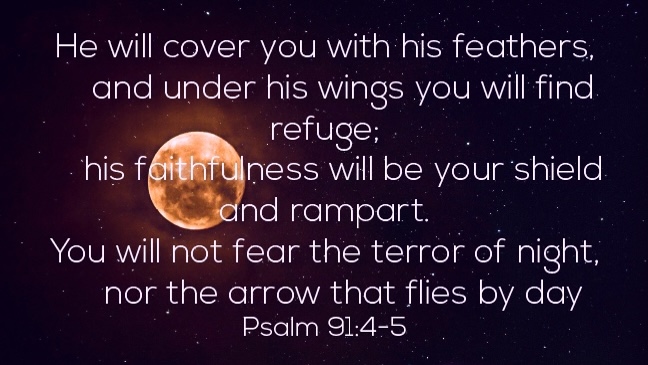
Whoever dwells in the shelter of the Most High
will rest in the shadow of the Almighty.

I will say of the Lord, “He is my refuge and my fortress,
my God, in whom I trust.”

Surely he will save you from the fowler’s snare
and from the deadly pestilence.

He will cover you with his feathers,
and under his wings you will find refuge;
his faithfulness will be your shield and rampart.

You will not fear the terror of night,
nor the arrow that flies by day,
nor the pestilence that stalks in the darkness,
nor the plague that destroys at midday . . .

No harm will overtake you,
no disaster will come near your tent.

For he will command his angels concerning you
to guard you in all your ways;
they will lift you up in their hands,
so that you will not strike your foot against a stone.

For that divine protection, I can give deep thanks for, over my lifetime, I have found refuge under God’s wings time and time again, safe from the terror of the night.

Thanks be to God.

Comfort, Darkness, Despair, Faith, Fear, healing, Hope, Illness, Light, Magic, Miracles, Suffering, Surprise

Surprised by Light

297A1795-F8AF-485F-B9E4-68A92714798E
Transplant Day Seven
November 19, 2019

Today, I am singing in my mind a sacred hymn that often speaks hope to me. The
text was written by William Cowper (1731-1800) and the music by William Howard Doane (1832-1915). In the darkness of the past week, I have been surprised by light.

Sometimes a light surprises
The child of God who sings;
It is the Lord who rises
With healing in His wings:
When comforts are declining,
God grants the soul again
A season of clear shining,
To cheer it after the rain

In holy contemplation
We sweetly then pursue
The theme of God’s’ salvation,
And find it ever new;
Set free from present sorrow,
We cheerfully can say,
Let the unknown tomorrow
Bring with it what it may.

Tomorrow can bring us nothing,
But God will bear us through:
Who gives the lilies clothing
Will clothe His people, too:
Beneath the spreading heavens
No creature but is fed;
And God Who feeds the ravens
Will give His children bread.

Though vine nor fig tree neither
Their wonted fruit should bear,
Though all the fields should wither,
Nor flocks or herds be there
Yet, God the same abiding,
God’s praise shall tune my voice;
For, while in Him confiding,
I cannot but rejoice.

It is so true that “sometimes a light surprises the child of God who sings.” The surprise is almost magic. Surely the light is miracle, and I thank God for the miracle of this new day. The miracle, I think, is that I am able to look at this day in a way that leads to gratitude for life.

I am determined that this will not be a day I describe by pain, but that I would declare this day a day of healing. Today, I want to lean into healing, not suffering — faith, not fear. I am convinced that this is God’s desire for me.

There is no doubt that I have walked through darkness in the past week. It is also my truth that light really does shine out of dark places. My pondering light and darkness this morning brings up a Scripture text I have leaned on many times in my life. I love the New Century Version of this text.

God once said, “Let the light shine out of the darkness!” 
This is the same God who made his light shine in our hearts by letting us know the glory of God that is in the face of Christ.

We have this treasure from God, but we are like clay jars that hold the treasure. This shows that the great power is from God, not from us. 

We have troubles all around us, but we are not defeated. 
We do not know what to do, but we do not give up the hope of living. 
We are persecuted, but God does not leave us. 
We are hurt sometimes, but we are not destroyed.

— 2 Corinthians 4:1-11 New Century Version (NCV)

How accurately this text describes my past few days! How true it is that I have not known what to do about the pain and suffering, yet I refuse to “give up the hope of living.” This is as it should be. This is God’s desire for us — to never give up the hope of living and to cling to the good hope that light really does shine out of darkness.

Sometimes a light really does surprise us when we sing. Singing beats weeping every time. Singing drives out darkness. I have heard often that only light can drive out darkness and I believe that truth. In fact, when I find myself in the middle of darkness, I am convinced that darkness is precisely the place where I am able to see the light at its brightest.

Thanks be to God.

anxiety, Comfort, Darkness, God's Faithfulness, Grace, Hope, Kidney Transplant, Light, Pain, Rest, Sacred Art, Suffering

Light Pierces Through

8F32B7EC-4A08-49E7-97E2-9F56183DE8A6
“Light Pierces Through” by artist Lisle Gwynn Garrity; Available at https://sanctifiedart.org/original-art/light-pierces-through

Transplant Day Five
November 17, 2019

Today is not such a good day for me. I am enduring a great deal of discomfort, and what seemed like light for me a week ago has diminished, at least for now. Pain can certainly bring darkness into the soul, and suffering, which is much deeper than physical pain, also assaults the psyche. One can wonder whether or not the light will ever return, whether pain and suffering will subside.

I must admit I am wondering that today, with my faith and hope feeling a bit shaky. Yet, quite often I stumble upon grace-filled truth just when I need it most. Today grace-filled truth seemed to come out of nowhere to teach me a fresh lesson about pain and suffering, light and darkness.

From the Facebook page, “A Sanctified Art” I found this nugget of comforting truth.

Light can travel endlessly through a vacuum. Light waves won’t diminish no matter how far they have to travel. Can you imagine that? Perhaps that’s God’s nature and constant posture — endlessly traveling through time and space just to reach us.

For this day it is such a blessing to know that light pierces through the darkness and that, no matter how far light travels, it does not diminish.

Thanks be to God.

F9FA5D3C-53F0-4043-8A72-F9E2D63F7349

On another note, please pray for me as I recover from my kidney transplant at Mayo Clinic in Jacksonville, Florida. I am so grateful that you are walking with me on this journey that often felt so frightening. Your thoughts and prayers mean so much. If you would like to rea the story of my illness, please visit the Georgia Transplant Foundation’s website at this link:

://client.gatransplant.org/goto/KathyMFindley

“Go Fund Me” page is set up for contributions to help with the enormous costs related to the transplant, including medications, housing costs for the month we have to stay near the transplant center, and other unforeseeable costs for my care following the transplant. If you can, please be a part of my transplant journey by making a contribution at this link:

https://bit.ly/33KXZOj


Darkness, Kidney Transplant, Pain, Stars, Suffering

Transplant Day Two

3D00A425-15FE-42D9-A510-431F1F9174B9
Image credit: Starry Night Over the Rhône (detail), Vincent van Gogh, 1888, Musé


November 14, 2019
Kidney Transplant Day Two

What I can say definitively about Day Two of my kidney transplant is that it was infinitely better than Day One! Sometimes a little mayhem comes right on the heels of miracles. So it was with me. The hard days of recovery are not over, but life’s hard days never are.

So here’s my plan, hatched out of a little touch of Day Two despair. 

Today was very rainy today in “sunny Florida.”

Tonight the sky is dark without a star in sight, and I am reminded that physical darkness can so easily twist and turn into something much worse — emotional and spiritual darkness. 

I don’t need to get to that place. I am counting on your prayers to help me remember that stars are still in the sky even on the darkest nights. We simply cannot see them for a time. 

Sarah Williams has written some wonderful words in her book, Twilight Hours: A Legacy of Verse. These two lines have led me through many a dark night.

Though my soul may set in darkness, it will rise in perfect light;
I have loved the stars too fondly to be fearful of the night.

As I lean again into the poem’s message, I’ll remember that Transplant Day Three is just minutes away.

Confusion, Courage, Darkness, Despair, Faith, Fear, God's Faithfulness, Hope, Indecision, journey, Life Journeys, Life’s murk, Light, Prayer

Swampy, Murky Places

91413DC1-1962-4B79-95D7-004819D8EEF0
October Hunter’s moon rising over Arkansas’ Mallard Lake. Photography by Debbie Marie Smith.

Life can be swampy and murky at times, with not enough light to see the way forward. Not to mention the danger of being mired in the mud unable to move! You have probably been there. I know I have, and when the journey has taken me through those murky waters, I have despaired. So many circumstances can take us through rough places, but the circumstance that immediately comes to mind for me is indecision.

Indecision is that uncomfortably in-between place where you have no idea how to find the way forward, yet you cannot stay in the place you are. Waiting is born of indecision and waiting can be excruciating. Right about now, I wish I could report that one must simply pray and God will instantly change indecision into forward motion, out of any murky swamp. 

I cannot say, however, that a single prayer can make that happen. At least for me, there have been no instant-miraculous-life-changing answers to my prayers. Not even once in my faith journey of many years! What I can tell you with deep assurance is that, although no single prayer has changed my life, continual prayer has changed my life. It is not the prayer of occasional consolation that changes the course of one’s life journey. It is the life of prayer that seeks God in prayer, abiding in God’s presence, for as long as it takes. Richard Rohr says this wise thing about prayer:

The only people who pray well are those who keep praying! In fact, continued re-connecting is what I mean by prayer, not occasional consolations that we may experience.

No doubt, life’s journey will take us through murky, swampy places without enough light to find our way through them. The murkiness of indecision is real, and with it we may experience confusion, fear, despair, desperation. We may even lose hope and question our faith. But we cannot stay there. People of faith are people of resilience and courage. We have within us all the resilience and courage we need. So we must believe in ourselves enough to take a step forward and out, through the mud and the sludge, trusting in faith that God’s light will light up the dark places and give us the strength to move through to the other side.

That’s what I have to believe about painful, oppressive places of indecision. That’s what I have to believe about getting through swampy, murky places. That’s what I have to believe about God.

In the beginning was the Word, and the Word was with God, and the Word was God. He was in the beginning with God. All things came into being through him, and without him not one thing came into being. In him was life, and the life was the light of all people. The light shines in the darkness, and the darkness has not overcome it.

— John 1:1-5

Beauty of Nature, Bible, Darkness, Ecclesiastes, Emotions, Faith, Gnat Line, God, Hope, Joy, Nature, simple joys, Skies

Blue Skies and Gentle Breezes

137A3E93-F8AA-42BF-BC03-8F75DE8302D8

Blue skies and gentle breezes. That’s Macon most of the time. Oh, and you have to factor in the gnats, the annoying gnats that we have because we live on the gnat line.

And there really is a such thing. Look it up. (http://southofthegnatline.blogspot.com/p/gnat-line-101_28.html) 

You will find that not only is the gnat line a real thing, but that it also sits directly on top of Macon, Georgia. No one told me that before I moved here.

Still, there are blue skies and gentle breezes this morning. For a few seconds, I am fully in the moment, fully aware of the blue skies over me and the warm breeze that points my mind to all that is good, to all the things about nature that we can count on.

Gnats notwithstanding.

In some ways, it’s a picture of life —the beauty of blue skies and gentle breezes, right along with the persistent aggravation of gnats buzzing your face. Certainly, life is like that for me. There are every day graces accompanied with aggravations, challenges and sometimes troubles. Life brings days of deep mourning sometimes and times for gladness at other times. 

Most thoughts these days take me to the very real possibility that I will receive a new kidney. The thought of it is both exhilarating and terrifying. I would not be me if I did not have the troubling thought that I might die in the middle of surgery. Or that I might contract a lethal infection and die of that. Or maybe I’ll be be compromised from the procedure and not recover.

On the other hand, maybe I’ll thrive with a new kidney. Maybe I will feel better than I have felt in five years. Maybe it’s true that I’ll live longer. Maybe life will begin again, fresh and new and full of possibilities. I love this message from the writer of Ecclesiastes.

So I commend the enjoyment of life, because there is nothing better for a person under the sun than to eat and drink and be glad. Then joy will accompany them in their toil all the days of the life God has given them under the sun.

— Ecclesiastes 8:15 (New International Version (NIV)

What a good and gracious thought! The promise that as we are enjoying life, joy will be in us through whatever “toil” we face. Struggle, trouble, travail — we experience all of these in life, right along with the joy.

So as I contemplate a kidney transplant, I might just think of it as one of life’s “toils” that, by God’s grace, will be accompanied by joy. 

I think I can do this. After all, “the joy of the Lord is my strength.” (Nehemiah 8:10)

Blue skies and gentle breezes all the way!

Pesky gnats notwithstanding!


Dancing, Darkness, Despair, Faith, Fear, Freedom, Hope, Joy, Life Journeys, Life pathways, Pain

Through These Dark Hours

521C7942-66C7-4FF0-A54B-6720CF0EB419
Unafraid, unbound, unleashed from this earth, rising with every step, a dance to lift the human soul.

What do I do through these dark hours? How do I endure them, the lostness, the fear, the spiritual suffering? How do I make my journey and avoid the dark hours that overwhelm me along the way?

Dark hours are a part of our living, a part of our journey. They cover us — even those who are most religious and devout — like an ominous black cloud. Dark hours bring us fear, dread, a lack of hope. Dark hours steal the joy of our faith.

The term “dark night (of the soul)” describes a spiritual crisis in the journey with God, like that described by St. John of the Cross in his poem, “The Dark Night.”

In her letters, St. Teresa of Calcutta described how she endured a dark night of the soul from 1948 almost until her death in 1997, with only brief interludes of relief.

St Thérèse of the Child Jesus wrote of her own experience of the dark night, as she found herself doubting the existence of eternity. She struggled and suffered through a prolonged period of spiritual darkness, declaring to her fellow nuns: “If you only knew what darkness I am plunged into..!”

Examples of the experiences of those we look to as spiritual patrons of the faith do not really enlighten our own faith journeys. We walk our own spiritual paths, always hoping for the best, always striving to experience the holy along the way. And we hope beyond hope that we will not have to endure the suffering of dark hours.

The truth is that dark hours are required on the journey. We cannot walk around our dark hours, moving them aside like the sticks and brush we can so easily move off of our path. Our only option is to keep walking, to stay the course and to embrace the journey just as it is.

As I look back to take stock of my own journey, I see the the dark hours as powerful reminders of struggle and spiritual crisis. As I examine the past, I can say without hesitation that the dark hours were times I do not want to experience again. I can feel the intense pain of them, even now, the formidable affect of them on my spirit. The thought of them brings on a queasy feeling in the pit of my stomach that makes me want to quickly move on to the next life metaphor I might use in this post.

And yet . . . And yet, how clear it is from this vantage point that I endured my dark hours and emerged stronger, better, with faith intact and with a living hope to take with me on the rest of the journey. From the cloud of dark hours, I learned that I could believe again, hope again, move farther into my journey with joy — even unrestrained joy — because of God’s grace that gave me strength.

There is probably no writer that inspires me more than Bishop Steven Charleston. He has taught us how to live in his many writings over the years. In this piece, he shows us the way through our dark hours in these beautiful words:

Let us dance through these dark hours, while others crouch down, seeking shelter from a worried world, hiding in the shadows, afraid to hope for tomorrow, let us give them a sign they can see, a message made of music and motion, two dancers spinning light out of darkness, a waltz in an air raid shelter, unafraid, unbound, unleashed from this earth, rising with every step, a dance to lift the human soul. Let us dance so others can dance, dancers from every direction, standing up to join us, music filling the sky, a revolution of unrestrained joy, an invitation to believe again, to hope again, to be free again, dancing through these dark hours, as if dancing was all that we were born to do.

To be sure, I have felt the pressing urge to “crouch down” many times, “to seek shelter from a worried world, hiding in the shadows, afraid to hope for tomorrow.” But in the end, through dark hours I learned to dance.

Dance then, wherever you may be. I am the Lord of the Dance, said he . . .

It’s a good way to live.

It’s a good way to give witness to the world of our living faith and unrestrained joy!

Amen.

Christ’s Resurrection, Darkness, Death, Easter, grief, Mourning, Resurrection, Uncategorized

Resurrection!

DBAA4746-144B-4AC0-9132-B0E3CDEB06EB
“Art: Resurrection Morning” by James Martin

As people often say, things come and go. Today the resurrection came, so clearly in our worship service and especially in our Sunday School class. When we are gathered in community, the sharing of our lives becomes resurrection for us all. So for us resurrection came, but it did not go.

It remains in the resurrection stories we share and in the ways we bear witness to the grace-full acts of God. The stories around the circle were about places of darkness and death and about the resurrection that always follows. For some, physical health reaches a dark place and we pray for the resurrection to come in their lives. For others, emotions around fear are on the surface and we pray for the resurrection to overcome the fear. Still others grieve for friendships that feel like the end, and we pray for the resurrection they need. Others mourn the loss of friends to death and, as we pray for the healing of those left behind, we also rejoice in the promise of resurrection for those that leave their earthly life.

Death comes in myriad ways. But resurrection comes, every time, to shatter death’s darkness in ways that seem like mighty wonders and wondrous acts of God. Ready or not, resurrection comes to us and makes its home in us. We are resurrection people because we made the choice to proclaim to the world that Christ is risen! 

The Scripture gives us so many stories of resurrection. Sacred texts allow us to look into the lives of many people who have looked at death and have come through it to resurrection. And in our own lives, we can bear witness to the glorious reality that we know the One who is “the resurrection and the life,” that because we believe in the Christ, we will never die. (John 11:25-26)

As you enjoy Easter and lean into the resurrection that never leaves you, think on these Scripture texts:

Mary stood weeping outside the tomb. As she wept, she bent over to look into the tomb; and she saw two angels in white, sitting where the body of Jesus had been lying, one at the head and the other at the feet. They said to her, “Woman, why are you weeping?” She said to them, “They have taken away my Lord, and I do not know where they have laid him.” 

When she had said this, she turned around and saw Jesus standing there, but she did not know that it was Jesus. Jesus said to her, “Woman, why are you weeping? Whom are you looking for?” Supposing him to be the gardener, she said to him, “Sir, if you have carried him away, tell me where you have laid him, and I will take him away.”

Jesus said to her, “Mary!” 

She turned and said to him in Hebrew, “Rabbouni!” (which means Teacher). Jesus said to her, “Do not hold on to me, because I have not yet ascended to the Father. But go to my brothers and say to them, ‘I am ascending to my Father and your Father, to my God and your God.’” Mary Magdalene went and announced to the disciples, “I have seen the Lord”; and she told them that he had said these things to her.

— John 20:11-18 (NRSV)


Blessed be the God and Father of our Lord Jesus Christ! By his great mercy he has given us a new birth into a living hope through the resurrection of Jesus Christ from the dead, and into an inheritance that is imperishable, undefiled, and unfading, kept in heaven for you, who are being protected by the power of God through faith for a salvation ready to be revealed in the last time. 

In this you rejoice, even if now for a little while you have had to suffer various trials, so that the genuineness of your faith—being more precious than gold that, though perishable, is tested by fire—may be found to result in praise and glory and honor when Jesus Christ is revealed. 

— 1 Peter 1:3-7 (NRSV)


With great power the apostles gave their testimony to the resurrection of the Lord Jesus, and great grace was upon them all.

— Acts 4:33 (NRSV)


*James Martin’s art is available at http://www.veritasse.me.uk/artists/james-martin/

Chronic illness, Comfort, Darkness, Despair, Emotions, Faith, Grace, grief, Holy Spirit, Hope, Illness, Inspiration, Introspection, life, Light, Pain, Romans 8:26, Silence, Sorrow, struggle, Trust, Wisdom

To the Other Side of Silence

9F2CA72F-217D-4CF9-A56D-D75B789A45C1
Barbara Resch Marincel, lifeisgrace.blog

Today is another “Wordless Wednesday.” My friend, Barbara Resch Marincel, is a sister blogger, an insightful writer, and a photographer extraordinaire. You can see one of her amazing works in the image on this post. The image reminds me of a dark time that is slowly changing with the glow of new light. And in that light, the flying birds speak to me of the wind of the Spirit. Barbara’s images are a gift to me, always bringing up a range of emotions.

Here is a bit of how she describes herself on her blog, lifeisgrace.blog.

Blogger, writer, photographer, in varying order. Finding the grace in the everyday—and the not so everyday, while living a full and creative life despite chronic pain and depression.

If you take a few moments of your day to visit Barbara’s blog, you will find enchantingly stunning photography that speaks of joy, pain, life and grace.

Back to “Wordless Wednesday.” So many reasons to be wordless. Some people may not have adequate words to express joy. Others cannot speak of deep sorrow. Some of us have no words because of pain, while others are wordless because they have fallen into the depths of depression.

There is no end to the reasons people are wordless, no end to the seasons in which they find they are without words. I have lived in that season many times, and in that place I could not speak of my pain because words were completely inadequate. I could not speak the pain out loud to any friend, and even for prayer, I had no words. Silence was my close companion.

I love that my friend, Barbara, entitles her blog post “Wordless Wednesday” every week, because in the middle of every week, she reminds me of my seasons without words. Her art is a reminder for me to give thanks that I survived those times, and celebrate that I am now on the other side of silence.

But will not forget that it is no small feat to get to the other side of silence. I must remember that it is not easy to endure silent, grief-filled times and to the other side of them. While living in my seasons of unspoken angst, one passage of Scripture brought me comfort and hope.

The Spirit helps us in our weakness; for we do not know how to pray as we ought, but that very Spirit intercedes with sighs too deep for words. 
— Romans 8:26 (NRSV)

When grief has stolen our words, when we cannot speak and find ourselves in silence, may open our lives to hope, trusting the intercession of the Spirit’s sighs that are far deeper than words. 

Thank you, my friend, for “Wordless Wednesdays.”

And thanks be to God for allowing me to move to the other side of silence.

Amen.

Advent, Contemplation, Darkness, grief, Hope, Light, Loss, Memories, Mindfulness, Pondering, Sacred Art, Seasons, Sorrow, Waiting

Pondering through Advent

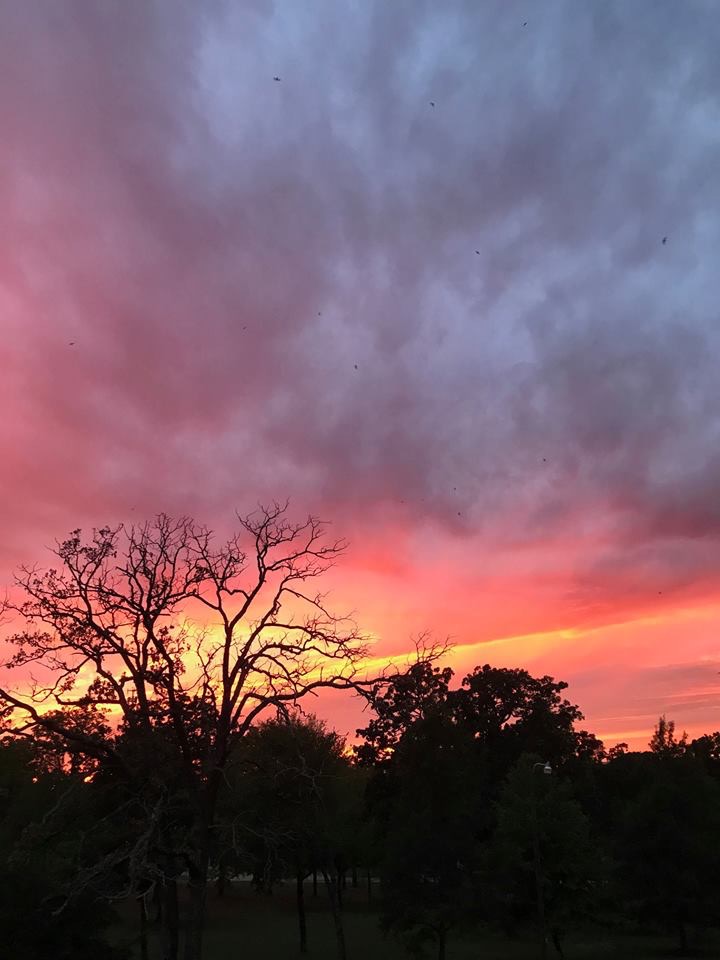
23DCD324-DEFB-436C-8942-C4ADA60DA52AYesterday, I mused on the tenderness of this season of Advent. The waiting. The darkness. The need to linger in the season with a sense of mindfulness.
To be honest, I want to shop with reckless abandon and find fun toys for my grandchildren. I want to bake all manner of Christmas cookie. I want to decorate every corner of my house, and if I had my way, ours would be one of those houses that people drive by at night to see all the twinkling lights.

But on that outdoor winter wonderland, I definitely do not have my way. My husband’s days of hanging lights on the gutters, placing a Santa on the roof, and wrapping the trees in tiny, twinkling lights are over. He has happily passed out of that season of his life.

For me, yesterday was baking day, and I made a new discovery about mindfulness and cookie baking. The two activities pair well. Dropping cookie dough by the spoonful onto a baking sheet is slow work. It gives one time to ponder. And pondering a is a good thing to do in Advent days. Good lesson learned, with the added bonus of having 200 cookies in the house!

While dropping cookies, one by one onto an old, scratched up baking pan, I pondered. Some thoughts hinted at my inner sadness. Other thoughts were of friends who are very ill and are walking this Advent journey in darkness. Other friends have lost people in their lives, and on this day, they find themselves in mourning.

As I do in most Decembers, I find myself, along with others in my family, feeling the sadness of having lost my youngest brother, Pete, to cancer. It happened many years ago, yet the hurt remains.

No doubt, this Advent journey can be a tender time. Yet we journey into the days ahead, not with a spirit of despair, but with a glimmer of hope. Even in the darkness, we begin to awaken, knowing that something new will be born in us just as it has every Advent. This is the season when we wash our faces and rub our sleepy eyes until we wake up, eyes wide open to the Light that sleeps in a manger.

Mary treasured up all these things and pondered them in her heart.

— Luke 2:19 New International Version (NIV)

Like her, I am spending my Advent days pondering — moving in mindfulness while holding tender feelings, heart longings, mourning in the soul.

And, of course, I’m waiting in the darkness. But I know, without a doubt, that light will shine. It always does.


Advent, Bethlehem’s Star, Christmas, Darkness, Hope, Loss, Mindfulness

Today I Believe

039C1E96-30AE-46AA-8113-B98AD7414523

This season is a tender time. And oh, this darkness of mine. December brings it every year — that feeling of tenderness, of darkness. That is, if I stop to notice. Stop decorating the house. Stop shopping. Stop planning a lavish Christmas dinner. Stop baking dozens of cookies. Stop going to Christmas events — parties, pageants, gatherings, light displays . . . Just stop!

If we do stop in these advent days, we might just feel this tender time. It’s not Christmas yet, you know. It’s Advent, a time of waiting, hoping, believing. If ever there was a time to practice mindfulness, this is the season. As I move through Advent’s days, I want to move slowly and with the awareness of the tiny miracles all around me.

I want to remember past years and people I have loved. I want to linger beside the Chrismon tree that holds decades of white and gold ornaments and decades of memories. I want to be mindful of my own darkness and the tenderness that is nested in my heart.

Advent is most surely a tender time, and a time of darkness, a time when people of faith wait for the light to come to earth again. Advent causes me to wait for the light that always comes to come into my heart again. Until the light shines, though, through a little baby born in Bethlehem, days will be dark and tender.

I am remembering my youngest brother who would have had a birthday this month. The loss of him far too soon will always leave a lump in my throat. December, his birth month, is a tender time.

In these days, I miss the joy and laughter of my grandchildren. For them Christmas is all joy.  They are such a gift to me, and being separated from them by so many miles makes this a tender time.

My friend’s fourteen-year-old grandson lost his battle with cancer this week, and I cannot help thinking about what a dark and tender time this family is feeling because of this deep loss.

So many losses surround us. So much grieving. So much darkness waiting for the light of Bethlehem’s star and the infant that comes to bring light to our hearts.

I love this tiny prayer:

Lord, you have always lightened this darkness of mine; 
and though night is here, today I believe.

— Evening Office by Northumbria Community


Comfort, Darkness, Daybreak, Despair, Faith, Fear, God's presence, grief, Hope, Life storms, Loss, Mourning, struggle, sunrise, Tears, Vulnerability

Icons of God’s Presence

5388C091-C6CE-402C-A3DB-77B0DD838A84
Photography by Sister Macrina Wiederkher

“Sunrises anoint my soul. They are quiet prayers, icons of God’s presence.”

These are words written by my friend, Sister Macrina Wiederkher. Her words resonate with our times as we hold in the light our brothers and sisters in Florida. Their loss is immeasurable, and although we know that loss of home is not as tragic as loss of life, it is a deeply felt emptiness to lose your home and all its contents.

So many are in that heartbreaking place today, and when the night falls on this night, they will not know the safe security of home. We have only a small awareness of their heartache, but God is fully aware of all they have lost. God knows their grief and their fear, their uncertainty of the future. Sometimes all we can count on is that God knows our deepest sorrow and anoints our souls when we need it most. 

Our comfort is this: that after every storm, there is a calm. When ominous, dark clouds of destruction fill the skies, we can know with certainty that the sunrise will come.

B2904AA9-02C4-480E-B061-D174E9810346I believe my friend who tells us that sunrises anoint our souls . . . like icons of God’s presence.
And I believe it for all of the Florida folk who have lost so much.

#MeToo, Bible, Courage, Darkness, Fear, Hope, Injustice, Light, Sexual abuse, Violence

In the Light We Will Stand


1A6BB78E-B362-4076-8D9A-0F7A98F8B40A“I have perfect attendance pins for Sunday School going back thirty years, and until last week, I never knew that the Bible told the story of someone who had been raped.”

I have heard similar comments many times when preaching from my book about Biblical women, “Voices of Our Sisters.” The truth is that Scriptural passages like those described by Phillis Trible in “Texts of Terror” are not your Mama’s Bible stories. We don’t teach them in our classes and we definitely do not preach on them in church. The stories of violence against women in the Bible are as hushed as the stories of abused women today. Shame on us.

It was one year ago that The New York Times published an investigative article about how Harvey Weinstein had for decades paid off acusers of sexual harassment. 

“Culturally, the article hit like a meteor,” writes Maya Salam in The New York Times Gender Letter, “drastically altering the landscape around how sexual misconduct is perceived, sending the #MeToo hashtag viral and, in turn, triggering an avalanche of accusations against powerful men. It wasn’t long before #MeToo wasn’t just a turn of phrase — it was a movement.”

RAINN*, the country’s largest anti-sexual assault network, experienced a 30 percent increase in calls to the National Sexual Assault Hotline since the current #MeToo resurgence, and last Friday — the day after Christine Blasey Ford and Judge Brett Kavanaugh testified before the Senate Judiciary Committee — was the busiest day in the hotline’s 24-year history.

The women of this nation will not forget Dr. Christine Blasey Ford. Women who have been harmed by sexual violence will revere her for her courage. Because our courage, survivors all, has often been small and our fear very large. We know that people will not believe our stories of abuse, and that instead they will blame us for bringing our terrible stories to light.

We will not forget Dr. Christine Blasey Ford, and we will remember Tarana Burke who first spoke #MeToo in 2007 to let young women of color who survive sexual assault know that they are not alone.

We will remember Alyssa Milano and her Tweet that reached dozens of countries and millions of people — over 1.7 million tweets included the hashtag “#MeToo,” and 85 countries had at least 1,000 #MeToo tweets.

So we join hands with those who understand us, hold on tightly, and speak our truth, because we need to move from darkness to light.

And in the light we will stand, hearts and spirits lighter because we have spoken our terror aloud. C47C1264-7179-455D-AA1A-6DF17B4673F8

In the light we will stand, even though staying in silence’s darkness would be easier. 

In the light we will stand, even as the people around us cling stubbornly to their darkness that screams out to us, “We will not hear you!”

In the light we will stand because that’s the only way to survive.


* RAINN — Rape, Abuse and Incest National Network


Absolom, Bible, Church, Darkness, Daybreak, Family, Grace, Justice, Preaching, Sexual abuse, Tamar, Violence, Women, Worship

“Think Justice!”

DFDDBB19-8E9F-4852-9804-4F97B176E9A3

A sermon preached on September 30, 2018 at the First Baptist Church of Christ, Macon, Georgia

Let the words of my mouth and the meditations of our hearts be acceptable in your sight, O Lord, our hope and our refuge. Amen.

I

In July, I received a note from Ellen. She is 22-years-old, a college graduate with honors, a strong, confident young woman. This is what she wrote:

“I love all of you so much. None of this would be possible without you. My time with you had such an enormous impact on who I am, and I can’t thank you enough for everything you’ve done to get me to this point. You’re my family forever and always.    Ellen.”       (Written on her wedding day, July 8, 2018)

Thirteen-year-old Ellen came to us at Safe Places, an organization where my staff and I cared for women who had been abused, children exposed to violence, and young girls who had escaped the evil grip of human trafficking. When we first met Ellen, she was silent, lifeless, angry — hurt deeply in her soul. But after a few months, Ellen’s vivacious personality began to emerge. Slowly, she opened up her hurt place and let healing in. 

Ellen was eventually strong enough to be a part of our Princess Program, where girls who had experienced violence spent the summer learning and sharing, and discovering their inner courage, resilience, and sacred worth. After the summer, we celebrated the girls at the Arkansas Governor’s Mansion with a grand ball, a very grand ball. 

When they put on their sparkling gowns, and the most glittering shoes I had ever seen, they believed — for at least one magical night — that truly they were princesses. Our wise staff taught them that even princesses can be violated, but they already knew that. They had lived through the humiliation of verbal abuse, the pain of physical and sexual abuse, and the long-lasting effects of emotional abuse. For many of them, it happened in the one place that should have been safe — in their homes.

II

Throughout history, we encounter stories of violence. Such is our story today, a story about how violence devastates Princess Tamar, King David’s daughter. Sometimes historians, biblical expositors and even story-telling preachers come upon stories that are hard to tell. This is one of those stories. It’s probably not included in any anthology of  “The World’s Most Inspiring Bible Stories.” It’s a story we don’t tell to our children. We might prefer to skip this story altogether. Theologian, Phyllis Trible, would call it a text of terror. And yet, it is the word of the Lord, and, as such, it offers some truths, some warnings, some questions, and maybe even a smidgen of grace.

So even though we find trouble in this text, God might just whisper, and gently nudge us to listen and to let the story reveal some important ways God calls us to do justice. 

Listen for the whisper of God in the reading of sacred scripture, 2 Samuel 13: 1-22.

In the course of time, Amnon son of David fell in love with Tamar, the beautiful sister of Absalom son of David. Amnon became so obsessed with his sister Tamar that he made himself ill. She was a virgin, and it seemed impossible for him to do anything to her.

Now Amnon had an adviser named Jonadab son of Shimeah, David’s brother. Jonadab was a very shrewd man. He asked Amnon, “Why do you, the king’s son, look so haggard morning after morning? Won’t you tell me?”

Amnon said to him, “I’m in love with Tamar, my brother Absalom’s sister.”

”Go to bed and pretend to be ill,” Jonadab said. “When your father comes to see you, say to him, ‘I would like my sister Tamar to come and give me something to eat. Let her prepare the food in my sight so I may watch her and then eat it from her hand.’”

So Amnon lay down and pretended to be ill. When the king came to see him, Amnon said to him, “I would like my sister Tamar to come and make some special bread in my sight, so I may eat from her hand.”

David sent word to Tamar at the palace: “Go to the house of your brother Amnon and prepare some food for him.” So Tamar went to the house of her brother Amnon, who was lying down. She took some dough, kneaded it, made the bread in his sight and baked it. Then she took the pan and served him the bread, but he refused to eat.

“Send everyone out of here,” Amnon said. So everyone left him. Then Amnon said to Tamar, “Bring the food here into my bedroom so I may eat from your hand.” And Tamar took the bread she had prepared and brought it to her brother Amnon in his bedroom. But when she took it to him to eat, he grabbed her and said, “Come to bed with me, my sister.”

“No, my brother!” she said to him. “Don’t force me! Such a thing should not be done in Israel! Don’t do this wicked thing. What about me? Where could I get rid of my disgrace? And what about you? You would be like one of the wicked fools in Israel. Please speak to the king; he will not keep me from being married to you.” But he refused to listen to her, and since he was stronger than she, he raped her.

Then Amnon hated her with intense hatred. In fact, he hated her more than he had loved her. Amnon said to her, “Get up and get out!”

“No!” she said to him. “Sending me away would be a greater wrong than what you have already done to me.”

But he refused to listen to her. He called his personal servant and said, “Get this woman out of my sight and bolt the door after her.” So his servant put her out and bolted the door after her. She was wearing an ornate robe, for this was the kind of garment the virgin daughters of the king wore. Tamar put ashes on her head and tore the ornate robe she was wearing. She put her hands on her head and went away, weeping aloud as she went.

Her brother Absalom said to her, “Has that Amnon, your brother, been with you? Be quiet for now, my sister; he is your brother. Don’t take this thing to heart.” And Tamar lived in her brother Absalom’s house, a desolate woman.

When King David heard all this, he was furious. And Absalom never said a word to Amnon, either good or bad; he hated Amnon because he had disgraced his sister Tamar.

III

Indeed, there is trouble in this disturbing text. We discover it when we eavesdrop on Princess Tamar — daughter of King David, sister of Absolom, and half sister of Amnon. We learn that Amnon conspired to be alone with her. His sly servant came up with a plan, and she ended up in Amnon’s room. After hurting her, he rejected her harshly. He called for his servant: “Get rid of this woman! Banish her from my presence! Bolt the door after her!” 

He would not even use her name.

Tamar collapsed outside the door, plunged her hand into the cooling ashes of the fire, and rubbed the ashes into her hair. As she staggered away, she tore her richly embroidered gown as a sign of her deep-down despair. Even princesses can be violated!

King David was angry, but did nothing either to punish his beloved son or to comfort his despairing daughter. There was no consolation from father to daughter, not a single trace of compassion.  And her mother is silent.

Near the end of the story, we stumble upon a tiny touch of grace when we learn that brother Absolom takes Tamar into his home. But she is no longer a princess of royal lineage. She fades into oblivion and lives out her days as a refugee in her brother’s house, a desolate woman who will never marry and bear children. But did Tamar fade into oblivion? 

I don’t think so! Tamar’s voice was not silenced. She told someone her story, and that someone heard her, and remembered her story, and re-told her story, and told it at the right time to the right person so that this story made its way into our holy scripture. Thousands of years later, we do know Tamar’s name. Across all barriers of history and culture, and if we imagine, we can hear her speak across the ages:  

“I lost my life that day. Here in my brother Absolom’s house, I am a prisoner. I will never have children that will bear my name through the generations. I will not know that deepest of joys.”

IV

So just keep silence, King David!  Stay silent, mother of Tamar! Protect your violent son at all costs. 

What a deadly picture of family violence — the violence of a brother overpowering his sister, and emotional violence because both parents remained silent.

We might ask: where were the voices of her parents? We cannot help but wonder how Tamar’s father and mother might have responded differently. But this royal family decided to keep silence to protect Amnon.

In her sermon, “The Silences We Keep,” Rev. MarQuita Carmichael Burton speaks of “conspiratorial silence.” Reflecting on Tamar’s story, Rev. Burton speaks these words:

Reclaim our voices, shatter the façade of the deadly silence we keep. . .

We must trade in our torn robes and ashes for a bull horn and a listening ear and tell the truth of our story, so that our souls, minds, bodies and the people we say we love might be healed. 

As former silenced victims choose to no longer acquiesce to the demands of the clan elders and refuse the false healing promised by our conspiratorial muteness,  we move forward to reclaim freedom and wholeness on our terms, because we need it and so does the village.

V

In the end, it’s all about justice, and the Prophet Isaiah knew a lot about that.

Break every yoke!  Then your light shall rise in the darkness! 

You shall be called the repairers of the breach!

We have seen a breach, and from the abyss of that breach, the “Me Too” movement erupted. The movement is a wonder to behold, and perhaps the cry of “Me Too” is precisely where we find the movement of God. Secrets held for decades came out of the darkness into the light, and grief-filled silences found words. Tears flowed freely from hearts that held on far too long to painful stories.

But I wish that no person had ever needed to cry out “MeToo.” That no one had ever endured the horrifying violence that caused them to live with a silence and secrecy that held such power over their lives. 

I wish they had never felt the grief that tormented them in the voiceless spaces of their spirits. 

I wish that Tamar had always been a princess — loved, cherished, protected by her parents. 

But she was not. And so many of our sisters and brothers and neighbors and friends are not. 

We may not always know who they are, but perhaps it is most important for them to know who we are, a people committed to justice.

VI

Dear people of First Baptist Church of Christ, I marvel at the many and mighty ways you do justice — creating beloved community across racial and cultural and ethnic divides, feeding the hungry, caring for the poor, seeing the sacred worth of every person. 

Can we also find ways to do justice within families? One in four of us in this sanctuary have experienced — or are currently experiencing — family violence. 

Among all the things that doing justice is, it is also being healers of the wounds that happen in the prisons of family secrecy. What does that mean exactly? 

I believe it means finding healing and gentle ways to give voice to a family’s secrets and silences. 

It means being ever a kind listener and never a judgmental voice. 

It means making sure that church is a safe and sacred space. 

It means keeping a watchful eye, always, over children, teaching them to be safe, not only from strangers, but from people they know and trust. 

It means being aware of the invisible wounds that others carry, and reaching out with tenderness that brings healing. 

If Jesus were among us today, I imagine him speaking justice to the unconscionable abuse of power that causes violence. He would call out husbands who abuse their wives, brothers who hurt their sisters, parents who harm their children.  Jesus might look into homes and cry out, “Woe to you!” 

And then, in his gentle, loving way, Jesus would reach out to the those who suffer violence, take their hands, and speak hope to despair. 

Jesus is not physically among us. but he left us in charge. So when we fail to seek justice in every place where abuse happens, we confine him. Joseph B. Clower, Jr. expresses this most eloquently in the final lines of his book, The Church in the Thought of Jesus:

If the indwelling Christ is not confined, then the Church’s eyes flow with his tears, her heart is moved with his compassion, her hands are coarsened with his labor, her feet are wearied with his walking among men [people].

 When we accept this weighty call and this daunting responsibility, the prophet Isaiah might call us repairers of the breach!

VII

So let’s end our story . . . Yes, Princess Tamar lost her royal status. But the final word in this story belongs to the brother who loved and esteemed her, and who honored her. In the chapter following our text, we learn that Absalom was the father of three sons and a beautiful daughter he named Tamar, in honor of his sister.  

Can you imagine Tamar taking her infant niece into longing arms that never expected to cradle a child who would carry her name? 

Can you imagine her full heart as she envisions the future of Princess Tamar the Second, daughter of Absalom, granddaughter of King David, niece of Princess Tamar the First?

What a surprise from God — anointing Tamar’s wounds with a holy, healing balm! 

And this is the very foundation of our Christian hope: the faith, the conviction, the assurance, the certainty that when Tamar was crying, God was listening. 

People of God, we must repair the breach and seize this holy task: covering survivors of family violence with the compassionate cloak of justice, confronting violence wherever it casts its shadow, following God into every place where justice must overcome oppression.

On the campus of Philander Smith College in Little Rock, Arkansas, there is a building that faces the interstate. On that building is a huge sign declaring a strong, prophetic message to over 100,000 motorists traveling past it every day. The sign reads “Think Justice!” But it means so much more! 

It means longing for justice, praying for justice, insisting upon justice — persisting, prevailing, creating — doing justice, breathing justice — in families, in communities, and to the ends of the earth. 

Then the mighty waters of justice will roll over us, and we will wade together in ever-flowing streams of righteousness. Amen.