Activism, Bravery, Challenge, Change, Community activism, Courage, Injustice, Social justice, Women

Moving Elephants

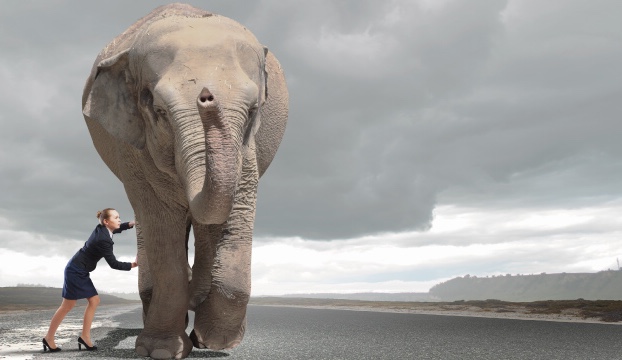
1d7ce45b-06ac-4a0a-92a0-8d51176ca80fThe wisdom for this day comes from Hannibal of Carthage: “We will either find a way or make one.” It was a Latin proverb, most commonly attributed to Hannibal in response to his generals who had declared it impossible to cross the Alps with elephants.

We need this wisdom for today because for the past two years, racism and other divisions have been promoted by the extremist in the White House and his enablers in the Congress. In general, Congressional leaders are creating policies that enforce systemic poverty. Plain and simple!

The truth is that this country has a long and tragic history of classicism, sexism, misogyny, and violence against women. And those who participate in oppression against women are often on the same side as racism, homophobia, xenophobia, and fascism.

This is not the way a nation and government should be moving, and the masses have said it will not be tolerated. They have looked squarely at the injustices and have determined to “find a way or make one.” They cannot be deterred or thwarted. They will persist as they have always done. “A change is gonna’ come,” sisters!

What are the signs? 

Sign number 1: a record number women were elected to seats in the House of Representatives, many of them flipping districts from red to blue. This nation elected the first Native American and Muslim women to Congress, and the first openly bisexual woman to the Senate. South Dakota elected its first female governor. North Carolina elected another African American woman to the state supreme court.

Sign number 2: the powers that be fear women who persist. As Rev. William Barber points out, they are afraid of women like Rosa Parks. They cower in the presence of women like Rev. Dr. Liz Theoharis of the Poor People’s Campaign’s who has fought to tear down systemic poverty and oppression. They are terrified of women like Women’s March national co-chairs ― Carmen Perez, Linda Sarsour and Tamika Mallory ― who are bringing women together across every race, creed, color, religion, sexuality, and class. They fear women like Sister Simone who fights for affordable health care or like Lucy Parsons who fought for labor rights and living wages.

They’re afraid we’ll march, or vote, or advocate, or speak the truth, or run for office, or persist. But “a change is gonna’ come,” sisters! It won’t be easy. It won’t happen overnight. But if any people can find a way to cross the Alps with elephants, sisters standing together in solidarity can do it! Women have shown that they will “either find a way or make one!”

But there is one caveat: stick together! Forget about infighting.

Yes, There may be realities of real conflict that need to be addressed head on. No social justice movement is without conflict, and disagreements around the Women’s March were there from the start: Should the march include anti-abortion women? Were the needs of women of color overshadowed by the priorities of white women? What about transgender women? Is it true that accusations of anti-semitism hang over the march?

Let us pray that women and those who support women will find ways to mitigate these concerns and show up on Saturday ready to march. After all, we made history together. That was our stellar beginning. Remember?

It started just days after the fateful 2016 election. A small group of women who feared the Trump presidency joined together at a New York restaurant to plan a demonstration. What resulted from that meeting was the largest single-day protest in U.S history, the Women’s March, which took place in about 600 American cities and towns and on every continent in the world. And that march was a part of what inspired a record number of women to run for office and win. Elephants or not, we “will either find a way or make one!”

So let us march on Saturday and if we cannot march, send positive energy in solidarity with those who do march. Be encouraged. Be encouraged by the words of Dr. William J. Barber:

As you march this weekend and as you step into the new year, I urge you to keep fighting. Do not relax until poverty is eradicated, until every American receives a living wage for their work, until racism, bigotry, homophobia, xenophobia, and misogyny are words of the past. Continue to register your friends and family and neighbors to vote. Continue to run for office. Continue to march, protest, and make your voices heard.

Keep the faith. Keep fighting.


Change, Growth, Hope, life, Life pathways, Wisdom

Starting Over

775D14C9-8802-4DEA-BD06-33C669F187B7Here’s the thing about life: things crash and break, obstacles can stop you in your tracks, you can get completely cut down. It happens to all of us.

One option is simply to give up on life. Or maybe to retreat into a private place for sulking. Another option is to be angry and to live the rest of your life angry.

But the reality is much more optimistic than any of those dismal options. Because no matter what happens in your life, you can start over. Starting over is really not so bad. I’ve done it many times and I survived it. So if we can accept the fact that something in life is over, there is hope for the days to come. 

I choose to see starting over as a fresh new beginning, another chance to do life differently. If I start over with a positive attitude, it can be an opportunity to head into the future wiser and more confident. Starting over can offer a path ahead that’s full of promise.

That’s what I’ll count on.

Celebration, Change, Light, Politics, Women

Celebrate!

45270512-74C2-48EE-8432-2FAB7129D11C
New Faces of Congress!  Top row (L>R) Deb Haaland, Rashida Tlaib, Judge Veronica Escobar, Jahanna Hayes;   Bottom row (L>R) Ayanna Pressley, Sharice Davids, Ilhan Omar, Alexandria Ocasio-Cortez

Some voters hoped for a Blue Wave, others a Red Wave. There wasn’t much of a wave on either side of the aisle, at least not the enormous wave they wanted to see. What we did see was a Women’s Wave, at least 117 women elected on Tuesday, 100 Democrats and 17 Republicans. Now that is something to celebrate! Here’s the scoop, by the numbers:

  • Of the 117 women elected, 42 are women of color, and at least three are L.G.B.T.Q.
  • With some ballots still being counted, women have so far claimed 96 of the House’s 435 seats (it is expected to rise to 100), up from the current 84.
  • At least 12 women won Senate seats, which will bring the total in that chamber to at least 22 (that number is expected to rise by two), of the 100 seats that exist. There are now 23 women.
  • Women won nine governorships, of 50 total. Six women currently serve.
  • Overall, at least 10 more Congressional seats will be occupied by women than before.

On a night to remember and celebrate, here is what some of the women who made history said in their victory speeches:

“When it comes to women of color candidates, folks don’t just talk about a glass ceiling; what they describe is a concrete one. But you know what breaks through concrete? Seismic shifts.” 

  • Ayanna Pressley, who will become the first African-American woman to represent Massachusetts in Congress. She beat a 10-term incumbent in the Democratic primary and vowed to pursue “activist leadership” to advance a progressive agenda.

“We have the opportunity to reset expectations about what people think when they think of Kansas. We know there are so many of us who welcome everyone, who see everyone and who know that everyone should have the opportunity to succeed.”

  • Sharice Davids, a former White House fellow, is a lesbian; she and fellow Democrat Debra Haaland of New Mexico are the first Native-American women elected to Congress.

“In my family, there were no girl chores or boy chores. There’s just things to get done. So that’s what we’re going to do. I’ve got some big plans for this state.”

  • Kristi Noem, a Republican, will be the first female governor of South Dakota. She’s a four-term congresswoman who campaigned on her conservative record and her experience working on her family’s farm.

“We launched this campaign, because in the absence of anyone giving a clear voice on the moral issues of our time, then it is up to us to voice them.” 

  • Alexandria Ocasio-Cortez, Democrat from New York, became the youngest woman elected to Congress at age 29. She has never held elected office, and like Ms. Pressley, she defeated a white man who had served 10 terms in a Democratic primary.

So there you have it — a real occasion for celebration. No doubt, these women will re-shape America’s leadership. If you know women at all, you know that they often work harder, work longer, work with a passion that changes the world.

Congratulations and God speed to each of them. 

To the new faces of leadership: We applaud you. We celebrate you. We’re proud of you. We’re holding you in the light. We’re counting on you.


Statistics in this blog are from Maya Salam, published in a special post-election edition of The New York Times Gender Letter.


Change, Discovering, End Stage Renal Disease, Freedom, healing, Illness, Life Journeys, Mindfulness, Rest, Restoration, Self care, Serenity, simple joys

I used to be . . .

734D4A65-1E4E-4705-A356-D13DF9C7F9B4I used to be . . . 

It’s a phrase I use a lot these days as I fight off the feeling that in retirement, I am useless. It’s not true, of course, that I am useless. But to be honest, I do feel just a little useless these days, at least some of the time. The reason? I used to be a bona fide workaholic. I used to feel important and productive. I used to be busy all the time, night and day. I used to be a perfectionist. I used to have just a bit of obsessive compulsive disorder, and all,of that drove me to a dangerous place.

The problem is that when you love and believe in your work so much, your work can become your whole life. Then things can get unbearable. So I admit that I am a recovering workaholic. I was the person that put in far more than 40 hours a week and never took a day off. But the critical question I had to answer was this: Is my ego at the root of my workaholism?

What was the job that was important enough to push me to work so hard?

I was a minister and a trauma counselor, and I was executive director of Safe Places, a nonprofit organization that served victims of violence. There was always someone in trouble, someone who had been battered by a spouse, someone trying to escape trafficking, a teen that was recovering from rape, a child that had been abused. So the work was never done.

I loved my work. I believed in it with all my heart. But I could not see what others saw. I could not believe the truth spoken by friends and colleagues, that I needed rest, that my work was hurting me. As much as I didn’t want to admit it, I was working myself sick. Circumstances, and maybe the alignment of the stars, brought me to a “come to Jesus” moment that forced me to take stock of my life. I realized I couldn’t do it all. So I took a very slight respite and pulled back from the constant work. In the meantime, as the stars would have it, we lost our federal funding, and suddenly Safe Places was gone. It was over. 

The stress did not end, though, because those that needed help kept calling . . . my phone. I had no staff left and, though I tried, I simply could not continue helping all these hurting people by myself. So I was forced into an unwanted and unplanned rest. 

During this “rest” time, grief and loss took over my psyche. But miraculously, my body began to rest. My pace slowed down. I was becoming mindful of every moment and what was going on in every moment. And in spite of the grief and sadness, my mind and spirit began to heal. What happened next was the shock of a lifetime. As my mind and spirit began to heal, I finally allowed my body to tell me what was going on. My doctors got to the bottom of it and diagnosed me with end stage kidney disease. Before I could even begin to take it all in, I was hospitalized and on dialysis.

I honestly believe I had worked myself to death, or at least nearer to death than I wanted to be. I spent a great deal of 2014 in the hospital trying to stabilize and then working to take my life back. It was hard work learning to write again, to think again, to walk again. But I made it through to a “new normal” that meant for me at least 7 1/2 hours of dialysis every day for the rest of my life, unless, of course, I am able to get a kidney transplant.

The experience of serious illness changed me. After I began to recover, people told me that I was unusually quiet. I didn’t speak much even when others around me were engaged in meaningful conversations. I knew that I was being quiet, quite unlike my normal personality. I was often silent when normally I would have had a great deal to say. I was different, to be sure, but inside myself I was okay. If I had to describe myself I would say that I was soft, broken open and free. And I was content in that place, although my family was concerned about me. I had traveled to a new place in my life, and it was a good place to be.

So here I sit in my “new normal,” tending plants, painting, cooking, writing, reading, and doing all things for pleasure. Most often I am still tempted to dive in and work on something until I am exhausted. But when the tiredness begins to creep up, something in my body remembers. Remembers I need to rest, to embrace stillness, to just “be.”

Still, I fight my old workaholic ways. Sometimes they push me to do things faster and better and longer. Sometimes my old workaholic ways push my button, the button that accuses me of uselessness, as in, “You are not worth much anymore! What are you going to do to change the world?”

Good news! I have finally given myself permission to not change the world. It has been a major shift for me, but I am seeing the truth more clearly, that I never could have changed the world anyway! So most of the time, when I feel myself pushing past my edge, I walk away. I write a blog post or fiddle with my flowers. I cook something fabulous or watch a little Netflix. So what will I do to live happily in these retirement days? I hope that I will keep studying the secret art of rest. I hope that I will continue to learn the grace of mindfulness, just cherishing the moment, every moment.

I used to be a workaholic. Not anymore.

Oh, and one more thing . . . a prayer. Though my faith tradition has always eschewed prayers to Mary, mother of Jesus, many very beautiful and meaningful prayers are prayed to her. I leave you with this one written by Mirabai Starr.

Mother of Consolation, help me to let myself be consoled. 

I hold it all together, Blessed One. 

I have convinced myself that it is up to me to keep the airplane aloft with my own breath, that I am the only one capable of baking bread and scrubbing floors, that it is my responsibility alone to alleviate the sorrow in the heart of every single person I know. 

But I have forgotten how to weep, Tender One. 

Teach me to reach out to the ones I comfort and ask for their comfort. 

Let me feel the tender touch of the Holy One on my cheek when I wake in the night, weary and frightened. 

Help me to be vulnerable and soft now, broken open and free.

— Mirabai Starr


Change, Courage, Dreams, Life Journeys, Memories, Passing years, Retirement, Transformation

On Disturbing the Universe

960D000A-3175-4D6F-9A36-3881E1569289You have no doubt heard about the mid life crisis. Perhaps you have even had one. I did at mid life. However, what’s more critical to me at this stage of my life is more appropriately called a late life crisis. And, lo and behold, I’m having one of those right now!
Am I in the right place? Do I need to retire nearer to my son and grandchildren? How do I live a fulfilled life while facing so many health challenges? Why did I move away from my best friend? How do I give back as I have always done now that my ministry career is over? Is it over? Is there more I could be doing? Should I write more, cook more, paint more, garden more? What in the world do I do with myself?

I recently read a book by Sue Monk Kidd,  When the Heart Waits: Spiritual Direction for Life’s Sacred Questions. I was stopped in my tracks by her words:

For some months I had been lost in a baffling crisis of spirit. Back in the autumn I had awakened to a growing darkness and cacophony, as if something in my depths were crying out. A whole chorus of voices. Orphaned voices. They seemed to speak for all the unlived parts of me . . . I know now that they were the clamor of a new self struggling to be born. I was standing on the shifting ground of midlife, having come upon that time in life when one is summoned to an inner transformation, to a crossing over from one identity to another. When change-winds swirl through our lives . . . they often call us to undertake a new passage of the spiritual journey.

I am there. Not in midlife, but in late life, and it is for me an existential crisis of spirit, definitely the time of “a new self struggling to be born.” To be sure, there are unlived parts of me, and I want to understand what exactly they are and how I can coax them to life. The ground beneath me is shifting, calling out to me to cross over from one identity to another. An inner transformation is most definitely in order for me, but how do I begin? Where do I begin? These are the questions of late life. And the symptoms? Dragging out old photos, very old photos. Looking up old friends. Examining your grandmother’s vintage jewelry. Scanning school yearbooks. All in a useless attempt at making the present as meaningful as you remember the past to be.

I sometimes agonize over my current life, wishing to dream just one more dream and to make it a reality. I worry about the future and wonder what the years ahead will bring. I want to still be relevant. I want to keep trying to change the world just as I used to. I want to stir things up and make waves in the quest for justice, just as I did in the past. I feel as if I have only two choices: to languish in the present or to find a way to be the me I used to be. And yet, something tells me that there is a third choice that involves some sort of transformation and the renewal of life, not as it used to be, but as it can be now, in the present season.

It is a quiet agony that I am experiencing. It happened to me when I came upon an unsuspecting darkness buried in late life and met the same overwhelming question that Sue Monk Kidd met: “Do I dare disturb the universe?”

My family could be scandalized if I found new life. They might wonder if I had taken too much of a medication. They might worry that I will do something inappropriate. They might know that I simply do not have the kind of energy required for dreaming big, new, important dreams. And they would be mostly right.

And yet I refuse to measure out my life with coffee spoons. It’s way too safe for me. It’s not who I am, and I am completely convinced that there are unlived parts of me looking for a way to come to life. I have no idea what that would look like. I have no idea how I will manage to pull it off. But I need to disturb the universe. And the universe needs some disturbing!

May God guide me on the way, pour blessings on my dreams, and show me just how I might disturb the universe.

Change, Children, Community activism, Courage, Dreams, Freedom, Inspiration, Justice, Little Rock Central High School, Perseverance, Racism, Segregation, Segregation, The Little Rock Nine

Growing Up Inspired: My Granddaughter and The Little Rock Nine

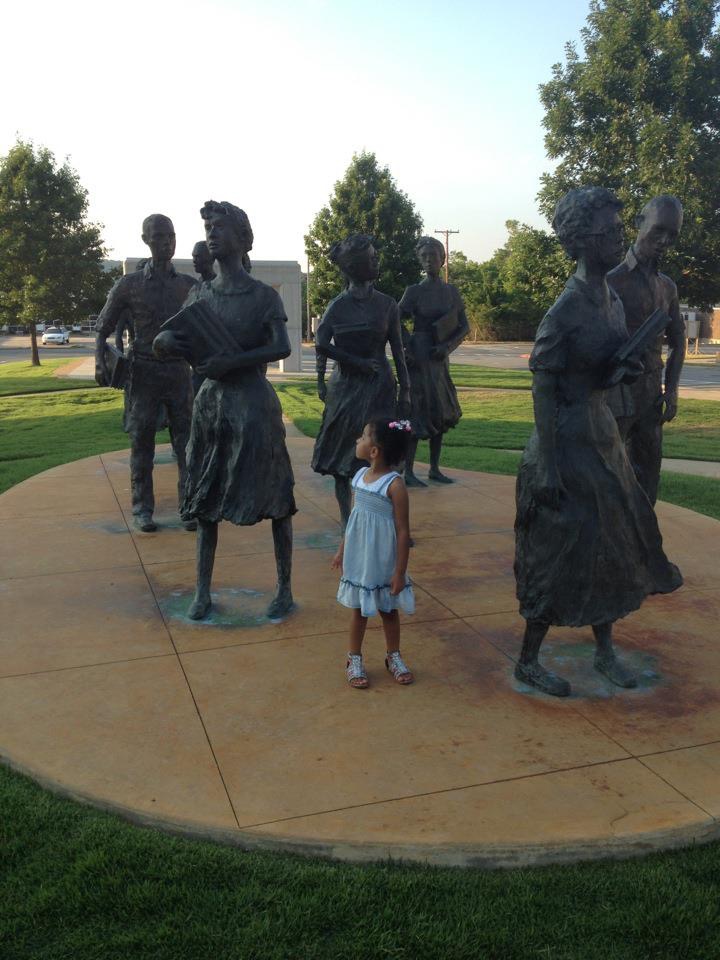
28332D92-A50E-4817-9663-6D13F00790D5June 16, 2012 . . . My three-year-old granddaughter standing among the bronze sculptures of The Little Rock Nine.

Her parents had told her the poignant story of The Little Rock Nine, but at age three she had no idea of the many ways their lives would impact hers. Because they crossed an invisible, but very real, line that divided black children from white children, they opened the door to educational equality in a racially divided state. Because their parents were brave enough to let their children breach the three stately doors of Little Rock Central High School, their world changed in unimaginable ways. And with that change, my granddaughter inherited the highly cherished right to equal education and all the opportunities that would follow. Because of that change, my granddaughter would grow up inspired.

In case you do not know about The Little Rock Nine, here is some background. 

On September 3, 1957, nine African American students — The Little Rock Nine — arrived to enter Little Rock Central High School only to be turned away by the Arkansas National Guard. Governor Orval Faubus had called out the Arkansas National Guard the night before to, as he put it, “maintain and restore order…” The soldiers barred the African American students from entering.

On September 24, 1957, President Dwight D. Eisenhower ordered units of the U.S. Army’s 101st Airborne Division — the “Screaming Eagles”— into Little Rock and federalized the Arkansas National Guard. In a televised speech delivered to the nation, President Eisenhower stated, “Mob rule cannot be allowed to override the decisions of the courts.”

On September 25, 1957, under federal troop escort, The Little Rock Nine made it inside for their first full day of school. The 101st Airborne left in October and the federalized Arkansas National Guard troops remained throughout the year.

They were nine solemn figures, nine teenagers just trying to do what every child up to age 18 had been mandated to do: go to school. Nine figures who entered the annals of American history the day they passed through the front door of Little Rock Central High School.

These nine African American students — Melba Pattillo, Elizabeth Eckford, Ernest Green, Gloria Ray, Carlotta Walls, Terrence Roberts, Jefferson Thomas, Minnijean Brown and Thelma Mothershed — are now immortalized in a striking memorial located on the grounds of the Arkansas State Capitol in Little Rock. The life-size bronze statues, entitled “Testament,” were designed and sculpted by Little Rock artist John Deering, assisted by his wife Kathy, also an artist. A comment from each of The Nine is found on individual bronze plaques identifying each student. Across the street sits the State Department of Education, just a few hundred yards from “Testament.” This Arkansas State Agency has been embroiled in this same desegregation lawsuit for over 50 years. 

Nine young students walked bravely, defiantly, yet filled with fear, in an act against prejudice and ignorance. These nine are heroes of every grueling story of segregation and racism in American history, every story we have heard and the millions of stories we will never hear.

So I am deeply moved by these photos of my granddaughter because there is deep meaning in each one. She seems to be looking up at the sculpture of Melba Pattillo (Beals) with what seems like admiration and awe. Dr. Beals grew up surrounded by family members who knew the importance of education. Her mother, Lois, was one of the first African Americans to graduate from the University of Arkansas in 1954. While attending all-black Horace Mann High School, Melba knew that her educational opportunities were not equal to her white counterparts at Central High. And so she became a part of the effort to integrate Central.

B3083DBA-2BEB-4137-B162-B8CB19B4AD64And my granddaughter stands in front of Little Rock Central High, a school she may choose to attend someday, a school she will be able to attend because The Little Rock Nine took a dangerous risk to make it possible.
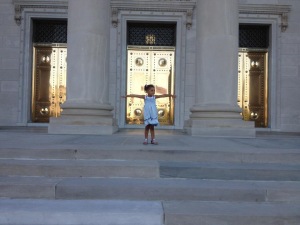


CCBDA845-BD2D-42E4-85B2-28749F2EA762Finally, my granddaughter stands playfully on the steps of the Arkansas State Capitol. I know that it is possible that she may one day proudly walk through its golden doors as a state senator or representative. That is possible because nine Little Rock students were brave enough to be a part of changing history.

 

At three years old, my granddaughter probably was not very inspired by Central High School, the Little Rock Nine Memorial, or the Arkansas Capitol. But her parents took her there to see and to learn so that she would grow up inspired. When she is older she will remember what she saw and what she learned from that seemingly insignificant sightseeing trip, and she will realize that it wasn’t insignificant at all. It may just be what motivates and inspires her to follow her dreams, because now she knows that all of her dreams are possible. It’s all about growing up inspired. It’s what we want for every child.

Dr. Melba Pattillo Beals, Minniejean Brown Trickey, Elizabeth Eckford, Dr. Carlotta Walls LaNier, Mrs. Thelma Mothershed Wair, Dr. Ernest Green, Gloria Ray Karlmark, Dr. Jefferson Thomas, Dr. Terrence J. Roberts, you made sure that every child can grow up inspired. when you were just young teenagers. When you walked through the doors of segregated Little Rock Central High School, you did so much more . . . for every student who came after you and for my granddaughter 


Aging, Change, Comfort, Faith, Fear, God's Faithfulness, God's presence, Hope, Joy, Life Journeys, Life pathways, peace, Psalms

Around the Bend

8354B3D7-3728-454F-B1E7-FAB7901C5EB8
Photo by Steven Nawojczyk

I wonder sometimes what I might find around the bend. “Around the bend” is an apt metaphor for the twists and turns of life’s pathway. No matter how long I have traveled my journey, no matter how much life wisdom I have gained, I never, ever know what what’s around the bend.

The pathway before me can frighten, even while I strain to see as far as I can into what lies ahead. The bend is sharp most times, and the angle hides my view. As I age, fear on the journey looms large, for I am completely aware of the dangers I might encounter around the first bend, and the next, and all the bends that are ahead of me. And yet, I am constantly graced with flashes of hope and faith whispering that what is ahead of me could be even better than what I have left behind.

The beautiful photo above by Steven Nawojczyk is a gift of calm waters bending in a gentle flow at the foot of a mountain, lightened by the golden rays of the sun. The image makes me believe that whatever is around the bend is lovely, peaceful, comforting, safe. And that is exactly what God would want me to believe, and woukd want us all to believe. I cannot help but think of the Psalmist’s affirmation that God “leads me beside still waters.”

In so many comfort-filled passages, the Psalmist offers sure and certain comfort. Hear the Psalmist’s words . . .

Keep me safe, my God, for in you I take refuge.

Lord, you alone are my portion and my cup; you make my lot secure.

The boundary lines have fallen for me in pleasant places;
Surely I have a delightful inheritance.

I keep my eyes always on the Lord. With him at my right hand, I will not be shaken.
   Therefore my heart is glad and my tongue rejoices; my body also will rest secure . . .

You make known to me the path of life;
you will fill me with joy in your presence,
with eternal pleasures at your right hand.

— Psalm 16:1, 5-6, 8-9, 11 (NIV)

And hear the words of the Prophet Isaiah . . .

Even to your old age and gray hairs, I am he, I am he who will sustain you. 
I have made you and I will carry you; I will sustain you and I will rescue you.  

— Isaiah 46:4 (NIV)

And so “around the bend” is not so frightening after all. In God — “who makes known the path of life” —  there is comfort, safety, protection, constancy, and even joy. Thanks be to God.

Bondage, Change, Freedom, Hate, Injustice, Justice, Lynching, Violence

A Prophet Among Us

51D84C45-AF36-41C2-824C-3E29EE93E434Because of the recent opening of The National Memorial for Peace and Justice in Montgomery, Alabama, I have been contemplating the terror of lynching in our history. The Montgomery site is the nation’s first memorial dedicated to the legacy of enslaved black people, people terrorized by lynching, African Americans humiliated by racial segregation and Jim Crow, and people of color burdened with police violence.
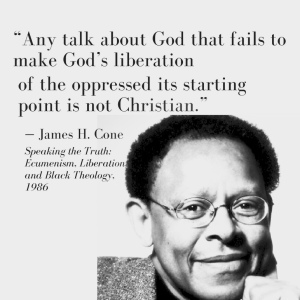
“Set on a six-acre site, the memorial uses sculpture, art, and design to contextualize racial terror. The site includes a memorial square with 800 six-foot monuments to symbolize thousands of racial terror lynching victims in the United States and the counties and states where this terrorism took place.” (eji.org)

But racial injustice is not merely art used to contextualize racism and violence. We also have the cold, hard facts. For instance, The Tuskegee Institute reports that 4,743 people were lynched between 1882 and 1968, including 3,446 African Americans and 1,297 whites, mostly white individuals who tried to help their African American neighbors.

Who were the prophets among us who proclaimed in those days a Christian Gospel of justice?

The NAACP reports that today African Americans are incarcerated at more than 5 times the rate of white people.

Who are the prophets among us in these days? Who is calling for justice, for liberation and freedom for those who are oppressed?

Across a range of human rights issues in 2017, the United States moved backward on human rights issues. The current U.S. president has targeted refugees and immigrants, calling them criminals and security threats. He has emboldened racism by promoting white nationalism. He consistently champions anti-Muslim ideas. His administration has embraced policies that will roll back access to reproductive health care for women and has created health insurance changes that would leave many Americans without access to affordable health care. He has undermined police accountability for abuse. He has expressed disdain for independent media and for federal courts that have blocked some of his actions.

The individuals most likely to suffer abuse in our nation include members of racial and ethnic minorities, immigrants, children, the poor, prisoners and other vulnerable groups, who endure renewed attacks on their rights. Issues of injustice include gender equity, poverty, the right to health care, immigration and the rights of non-citizens, sexual orientation and gender identity, criminal and juvenile justice, harsh criminal sentencing and mass incarceration,.

Where is justice today? Who will call each injustice by name? Where is the prophetic voice among us that will proclaim liberation?

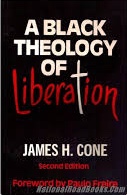
06B7213F-F174-4BD0-9B73-D8AB170F288BWhile in seminary, I immersed myself in the study of liberation theologies. Not surprisingly, my research led me to the writings of black liberation theologian, The Rev. Dr. James H. Cone. I became what some might call a follower of Dr. Cone. I saw him as a Christ-like superhero. Much of my research and writing in those days delved into the history of liberation theology, so Dr. Cone’s books covered my desk for months.
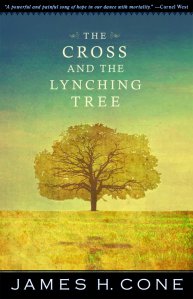
On Saturday, I learned of his death and experienced both sadness and gladness. Glad, because of his enormous contribution to Christian theology’s imperative response to injustice. And sad, because his voice of justice is now silent. By his death, we lost a prophet, a persevering voice that championed racial justice. We lost a voice that gave the world an interpretation of the Christian Gospel that paid attention to the voices of the oppressed.

YES! “A prophet was among us.”

These words from Judge Wendell Griffen honored the prophet, Rev. Dr. James H. Cone, and named him as the central figure in the development of black liberation theology in the 1960s and ’70s.

The prophet and scholar was raised in a small Arkansas town, giving him a clear view of the harsh reality of racial injustice. Dr. Cone rose up from his simple roots to become the foremost voice of his day on black liberation theology.

84C76F50-B538-4A1C-91DA-48E4357609E2Google it.

“Black liberation theology”

The first image you will see is that of James H. Cone. And then you will see image after image of him as well as a list of the plethora of books he has written and a list of the places around the world where he taught and preached.

What is my point?

First of all, I want to add my voice to those who are honoring this prophet of justice. But more importantly, I want to own and name the present reality: that there has never been a time in history that needs the message of liberation more than this day. To be sure, the horrific lynchings of African Americans in this country took place many years ago, between 1882 and 1968.BAD8200A-0958-4FBE-9241-F4E2DDEBCA70

And this is a new day, is it not?

It is a new day, a new day that has moved our society to the national shame of mass incarceration of African Americans. Consider this research:

  • By the age of 14, approximately 25 percent of African American children have experienced a parent — in most cases a father — being imprisoned for some period of time.
  • On any given school day, approximately 10 percent of African American schoolchildren have a parent who is in jail or prison, more than four times the share in 1980.
  • The comparable share for white children is 4 percent; an African American child is six times as likely as a white child to have or have had an incarcerated parent.

(Valerie Strauss, March 15, 2017; The Washington Post; https://www.washingtonpost.com/people/valerie-strauss/?utm_term=.8d67a553a8db)

  • In 2014, African Americans constituted 2.3 million, or 34%, of the total 6.8 million correctional population.
  • The imprisonment rate for African American women is twice that of white women.
  • Nationwide, African American children represent 32% of children who are arrested, 42% of children who are detained, and 52% of children whose cases are judicially waived to criminal court.

(NAACP.org)

TMI . . . Too much information, right? Perhaps it is too much information, but the amount of information here barely scratches the surface of the many ways injustice has gripped our nation in these days. We can turn our backs, stop up our ears, and blind our eyes to it, but that will not change the fact that people are being oppressed, injustice is doing its horrific work, and liberation seems a distant, unreachable dream.

The people of God must be the people of God and accept the mantle placed by God on our shoulders — being a prophetic voice in a land where injustice has its way.

The spirit of the Lord God is upon me,
because the Lord has anointed me;
he has sent me to bring good news to the oppressed,
to bind up the brokenhearted,
to proclaim liberty to the captives,
and release to the prisoners;

to proclaim the year of the Lord’s favor,
and the day of vengeance of our God;
to comfort all who mourn;

to provide for those who mourn in Zion—
to give them a garland instead of ashes,
the oil of gladness instead of mourning,
the mantle of praise instead of a faint spirit.
(Isaiah 61:1-3 NRSV)

But let justice roll down like waters,
and righteousness like an ever-flowing stream.
(Amos 6:24 NRSV)

We are the prophets among us. Let’s act like it!


Aging, Celebration, Change, Family, Laughter, life, Love, Music, Rootedness

The Music of Family

068E7848-EFD1-44CD-94E5-EDB43AD57577I have come to believe that family is music, sometimes loud music, sometimes music almost inaudible. But it is music that I deeply cherish. So few things in life really matter. Family is one thing that does matter. It’s all about relationship and rootedness.

This week we lost First Lady Barbara Bush who lived a long and meaningful life for 92 years. During her lifetime, Barbara Bush — called “the enforcer” by her family —was famous for speaking her mind. One thing that was most dear to her was her love for family. This she reveals in her own words:

At the end of your life, you will never regret not having passed one more test, not winning one more verdict or not closing one more deal. You will regret time not spent with a husband, a friend, a child or a parent. When all the dust is settled and all the crowds are gone, the things that matter are faith, family and friends.

In our retirement, my husband Fred and I somehow managed to move ten hours away from our son and grandchildren. I’m not sure exactly how we made such a decision, but we certainly live each day with the reality of it. We have missed the delight of watching our three-year-old grandson grow up. We deeply miss the sweet moments we used to spend with our granddaughter who is now almost nine. We hardly know our grandson by marriage. And we hold tightly to the memories we made spending childhood days with our oldest grandson who is now in college.

We can’t call those moments back. We can’t relive the days when our grandchildren were babies and toddlers. But we will have the memories always.

This weekend, our entire family visited us, with the exception of the oldest grandson. We had a grand time celebrating our three-year-old’s birthday, complete with streamers, balloons and a Spiderman cake. The laughter was infectious. The excitement was palpable. Our small house was full and loud, very loud! The popping of balloons was a highlight for the boys, and quite NOISY for those of us who are older. But all of it was the big, boisterous music of family, a celebration to be remembered.

All too soon, the visit ended, and Fred and I watched the car crammed with grandchildren pull out of our driveway and head toward Arkansas. The house was quiet again, so very quiet. The music of our life got much softer when they left, and for a brief moment, I thought about crying a little. But I thought better of it. It was a beautiful, sunny day. The visit had been a very special time of celebration. Our family was happy and healthy. No call for tears.

My choices are: 1) to be terribly sad that my children are far away; or 2) to celebrate their lives and the bond we share, a bond that transcends the miles that separate us.

So my blog advice for this day is to hold on tightly to the music that is family. Listen intently when it’s soft and quiet. Join the celebration when it’s raucous and loud. But always know in the depths of your soul that the melody will dwell in your heart of hearts forever. That’s what the music of family does.


Change, Courage, Darkness, Fear, God's presence, healing, Heartbreak, Hope, Life pathways, Pain, Restoration, Uncategorized

Through the Fire

892264FE-E803-4E0E-B598-C7503D77F674Sometimes life hurts.
We suffer. We heal. We move on.
But sometimes life hits back. Harder.
Lethal in its cruelty.
Shattering us into a million glittering shards
of pain and loss and anguish.
And we suffer, too broken to heal,
to become what we once were.
— L.R Knost

How deeply I know that feeling of brokenness. I am personally acquainted — well acquainted — with the lethal cruelty that life can present. To heal the past requires that I pay close attention to the spiritual and emotional places within me in the present, to make sure I am healthy and whole right now. Only then will I find the strength to invite the pain of the past into my psyche so that I can face off against it.

I have learned through the years that it is not a good option to leave past pain where it is, to let it occupy the place within me it has claimed. This writing by L.R Knost is one of the best descriptions I have ever seen on healing from past pain.

Healing is not a straight and narrow road
that leads from darkness to light.
There’s no sudden epiphany to take
us from despair to serenity, no orchestrated
steps to move us from hurting to healed.
Healing is a winding mountain road with steep
climbs and sudden descents, breathtaking views
and breath-stealing drop-offs, dark tunnels
and blinding exposures, dead ends and
endless backtracks, rest stops and break downs,
sheer rock walls and panoramic vistas.
Healing is a journey with no destination,
because healing is the journey of every lifetime.

Indeed, “healing is the journey of every lifetime.” The reality is that the only way to heal from the pain of the past is to walk directly through the center of that pain in the present. Does it feel safer to just let the pain continue to smolder in the dark parts of myself? Of course it feels safer. It feels terrifying, in fact, downright terrifying.

But the dark places in me will never heal spontaneously. I have to conquer the fear and open up to the possibility that God’s Spirit can breathe life back into those embers of pain snd rekindle the fires of unhealed hurts. So as I sit cautiously at the very edge of the fires of past pain, I cannot help but recall the comforting words of the prophet Isaiah.

When you pass through the waters,
I will be with you;
and when you pass through the rivers,
they will not sweep over you.
When you walk through the fire,
you will not be burned;
the flames will not set you ablaze.

— Isaiah 43:2 New International Version (NIV)

And so many times, I have found deep comfort in singing the beloved hymn, How Firm a Foundation.

When through fiery trials thy pathway shall lie,
 My grace, all sufficient, shall be thy supply.
 The flame shall not hurt thee; I only design
 Thy dross to consume and thy gold to refine.*

Text: Attr. to Robert Keen, ca. 1787.
Music: Attr. to J. Ellis, ca. 1889

So the flames aren’t there to burn me. The flames are there to light my way through pain to healing. At times, I have approached those flames with courage and confidence. But at other times, I met the flames with terror.

Courage or terror — it didn’t matter really. I just walked through it just as I was, and as I did, the hurt transformed into hope. I had wounds, for sure, and lasting scars. But the scars tell a story of the battles I won and the battles I lost, and most importantly, the scars tell the story of a human who survived. So, in spite of fiery places of past pain, we learn to live as L.R. Knost says

. . . with the shards of pain and loss and anguish forever embedded in our souls,

and with shaking fingers we piece together the bloody fragments of who we were into a mosaic grotesque in its stark reality,

yet exquisite in its sharp-edged story of the tragic, breathless beauty of a human who survived life.

And we move on, often unaware of the light glittering behind us
showing others the way through the darkness.

This is a resilience we can be thankful for, a perseverance we can cherish, a strength straight from a present and faithful God that will ever — forever — sustain us. Amen.


* Hear the entire hymn, How Firm a Foundation, at this link:
https://m.youtube.com/watch?v=G0S62se1hAE

Belief, Challenge, Change, Christian Witness, Community activism, Dreams, Grace, healing, Hope, Justice, Ministry, Mission, peace

A Broken, Waiting World

B507DED1-C6B2-4332-80BA-4B65623E2196

Do not be dismayed by the brokenness of the world. All things break. And all things can be mended. Not with time, as they say, but with intention. So go. Love intentionally, extravagantly, unconditionally. The broken world waits in darkness for the light that is you. ― L.R. Knost

When I was in seminary so many years ago, I worked part time in the Development Office, that extraordinary place that dreamed up words designed to gain support for the seminary and to tell the world what we were about. The one creative theme I most remember, because we made it our catch phrase and printed it on everything, was “We’re out to change the world!”

Some students left the seminary, degree in hand, and did just that. The rest of us labored mightily and did everything we knew to do to change a world that most assuredly was waiting and broken. What a mission!

I must admit, that short statement from seminary days became my personal quest. In every ministry position, I tried to change the world, much to the dismay of my parishioners. I took on every worthy cause as my own challenge to change the world. I committed myself to justice and set my face toward hope and healing for every person suffering injustice and indignity. It became a life-long quest, a personal commission. And what’s more, I sincerely believed I could do it, at least for the first few years I spent banging my head against various walls.

The song lyrics “to dream the impossible dream” come to mind. For those of you who may be too young to know about the magic of the 1964 Broadway musical, Man of La Mancha, I must give you the lyrics of the song that was the pronunciamento of the primary character, Don Quixote, and that almost instantly became the credo that many people of God embraced in trying to change the world.

To dream the impossible dream …
To fight the unbeatable foe …
To bear with unbearable sorrow …
To run where the brave dare not go …
To right the unrightable wrong …
To love pure and chaste from afar …
To try when your arms are too weary …
To reach the unreachable star …

This is my quest, to follow that star;
No matter how hopeless, no matter how far:
To fight for the right, without question or pause;
To be willing to march into Hell, for a Heavenly cause.

And I know if I’ll only be true, to this glorious quest,
That my heart will lie will lie peaceful and calm,
when I’m laid to my rest.

And the world will be better for this:
That one man, scorned and covered with scars,
Still strove, with his last ounce of courage,
To reach the unreachable star.

— Lyrics by Joe Darion

Today, as I watch military strikes against Syria and know that our country has not welcomed desperate Syrian refugees, I am painfully aware that I did not change the world. I worked in Uganda after the devastation of Idi Amin, but I did not change the world for millions of Ugandan widows and orphans.

I worked with persons who were sick and dying in hospital ministry, and I did not change their hopeless world of suffering. I have written letters, contacted government officials, participated in demonstrations, and signed hundreds of petitions, but I have not changed the world.

It has indeed been an “impossible dream.” And yet, I believe that I lived into my call from God and followed every path God placed before me. I faced off against what I viewed as evil many times and was deeply, demonstrably angry many times. But always, my mission remained in the center of God’s gentle grace and love. How?

I learned along the way — finally — that changing the world God’s way means holding tightly to lovingkindness, compassion, love and gentleness. The Scripture in Galatians 5:22-23 (NIV) says it like this:

. . . the fruit of the Spirit is love, joy, peace, forbearance, kindness, goodness, faithfulness, gentleness and self-control.

“Change the world with gentleness,” God might say to me.

While others stand for bigotry, racism, violence and war, change the world with gentleness. While leaders refuse to welcome refugees who long for a safe haven for their children, change the world with gentleness. While the highest positions in this country are embroiled in collusion, corruption, lies, greed and unkindness, change the world with gentleness.

This is a broken, waiting world that yearns, not for my righteous anger toward the world that is, but rather for my gentle hands of healing for the world that can be.

Change the world with gentleness? How? Why?

Because “Gentleness is not weakness. Just the opposite. Preserving a gentle spirit in a heartless world takes extraordinary courage, determination, and resilience. Do not underestimate the power of gentleness because gentleness is strength wrapped in peace, and therein lies the power to change the world.”

― L.R. Knost

May God lead us all in the paths of righteousness and gentleness. Amen.

Change, Contemplation, Darkness, Daybreak, Death, Despair, Faith, Freedom, healing, life

When Your World Ends

66A9AA3C-258F-40E7-AB87-32000E79567EMy adult son is a master at denial. He can get very upset over a situation, but before you can blink, he has moved on as if it never happened. To be honest, I have often envied that part of his personality. As one who tends to brood over life’s challenges and problems, I would love to just be able to blow things off.

There is no chance of that happening for me. I think that this brooding part of me emerges from the trauma I have experienced over the years. My world has ended many times, or so it seemed. Yet, there has been a positive aspect of my brooding: that I have learned to sit with an issue for a while, dissect what has happened, feel the depth of hurt, and reflect on the depth of the emotional assault I’m experiencing. Blowing off pain just doesn’t work for me. Denial is not my way.

Denial never makes hurt go away. Denial never even diminishes hurt. So be warned. Blowing off pain is a path to internal disaster. As difficult as introspection can be, I am grateful that I am able to deeply feel the feelings I feel, to let the hurt wash over me, and finally to emerge better and stronger. Feeling the depth of my heartaches has served to disempower them and, most importantly, to enable me to harness my inner power to be free.

This, I believe, is the path that takes us beyond despair. This is the path that lets us own our heartbreak and then leave it behind to move into a fresh, new day. I am strengthened by the words of poet Nayyirah Waheed.

feel it.
the thing that you don’t
want to feel.
feel it and be free.

the thing you are most afraid to write, write that.

it is being honest
about
my pain
that
makes me invincible.

i don’t pay attention to the
world ending.
it has ended for me
many times
and began again in the morning.

To sit with your pain, to touch the heart of your hurt . . . that is what makes you free. And that freedom will be for you this miracle . . . when your world ends, and it may end many times, it begins again in the morning.

Thanks be to God.


Change, Child protection, Community activism, Courage, Gun control, Hope, Inspiration, Justice, March for Our Lives, Politics, Prayer, Uncategorized, Violence

Dear Students Marching for Our Lives,

5C1D4656-F263-49DD-8CC3-44E1AA6A3695Let us pray with our legs, let us march in unison to the rhythm of justice, because I say enough is enough.”
— A Parkland shooting survivor.

Dear students,

Yesterday you sat in classrooms all over this country. Today you are marching all over this country, all over the world. Teachers, parents and other supportive adults are marching with you. We older folk marvel at your commitment and your resolve. We are proud of you. We cheer you on and pray that your efforts will bring positive change.

You are marching to demand that your lives and safety become a priority and that we end gun violence and mass shootings in our schools. You are relentless and persistent in your quest to end gun violence. You are standing tall, lifting your voices to proclaim “Enough is enough!”

Every day, 96 Americans are killed with guns. Since the massacre at Sandy Hook Elementary School where 20 children between six and seven years old were killed by a gunman, 7,000 children age 17 and under have been killed by guns.

Today, thousands of you have gathered to call violence by its true name. You are calling out the adults. You are confronting the NRA. You are challenging all who put their own self interest above the safety of our children,You are marching today for those who died and those who live. You are marching for the children who will be in classrooms in years to come, little ones who still have the joy of innocence. You are marching for their lives. You are marching for them. You are marching for all of us, and we thank you. Our hearts are with you,

For each of you, I offer this prayer.

God who holds ouryoung in your arms of grace,

Make of us a people who hold our children in the highest esteem, who give them respect and encouragement, who take their fears seriously, who commit ourselves to their safety and protection.

Protect them, God, as they march for their lives today.

Help them to know that their resilience and persistence might just change the world.

Make every city where they march a welcoming place, filled with people that open their hearts to the message our children speak.

Assure our children of the love that surrounds them and of the support that enfolds them. Assure them of our love and respect for them.

Continue to embolden them to demand change.

Infuse them with the courage to stand and the strength to speak truth to power.

Grant them an extra measure of perseverance.

Guide their steps. Ennoble their conviction.

Calm their fears and soothe their anxious hearts.

And may their reward be a world free of violence, communities infused with peace, classrooms that surround them with understanding, acceptance, protection and learning.

For your deep love for our children, O God, we give you thanks.

For your compassion toward our young who have been so deeply harmed, we give you thanks.

For your comforting presence with friends and families who have lost people they love, we give you thanks.

For your tears mingled with our own as we mourn the loss of innocence our children have experienced, we give you thanks.

For your abiding protection and mercy in our violent and frightening world, O God, we give you thanks.  Amen.

*****

Fast Facts

  • Organizers of March for Our Lives expect millions of people to participate in today’s marches.
  • Acting out of their profound grief, students from across the country are fearless, empowered and motivated to speak out today as part of the March for Our Lives movement that was born out of the Valentine’s Day shooting in Parkland, Florida that killed 17 students and staff members.
  • President Barak Obama and First Lady Michelle Obama sent a handwritten letter to the students of Parkland’s Marjory Stoneman Douglas High School commending them for their “resilience, resolve and solidarity in helping awaken the conscience of a nation.”
  • Today, there are marches in over 800 sites across the country where students are still “calling BS.”
  • Marches are also taking place all over the world.
  • Florida students have planned a voter registration effort as a part of the march in Washington, DC.
  • The message of these students is “never again,”


Aging, Change, Christ's Passion, Faith, God's Faithfulness, Hope, Illness, Lent, Life pathways, Loss, Palm Sunday, Perseverance, Retirement

How Do You Live When You Know What’s Coming?

ABD2C8E4-5AA9-49EC-B771-A85BCDFBBD90How do you live when you know what’s coming? Jesus might have asked himself that question when the crowds were shouting “Hosanna!” and making a big deal of the fact that he was riding into town on a donkey. The Gospel of Mark tells the story well.

Many people spread their cloaks on the road, and others spread leafy branches that they had cut in the fields.

Then those who went ahead and those who followed were shouting, “Hosanna! Blessed is the one who comes in the name of the Lord! Blessed is the coming kingdom of our ancestor David! Hosanna in the highest heaven!”

Then he entered Jerusalem and went into the temple; and when he had looked around at everything, as it was already late, he went out to Bethany with the twelve.

— Mark 11:8-11 New International Version

So how do you live when you know what’s coming? Jesus went to the temple as was his custom and then set off to Bethany with his disciples. He knew what was coming, yet he did nothing very earth shattering. He sent his disciples into the city to prepare for for the Passover meal they would share. They ate the meal together, Jesus told then they would all desert him, and each one declared that they would never do such a thing.

They did. But life went on as life does. The Gospel then continues the sorrow-filled story as Jesus goes on with his disciples to a place called Gethsemane.

. . . And Jesus said to his disciples, “Sit here while I pray.”

He took with him Peter and James and John, and began to be distressed and agitated.
And said to them, “I am deeply grieved, even to death; remain here, and keep awake.”

And going a little farther, he threw himself on the ground and prayed that, if it were possible, the hour might pass from him. He said, “Abba, Father, for you all things are possible; remove this cup from me; yet, not what I want, but what you want.”

He came and found them sleeping; and he said to Peter, “Simon, are you asleep? Could you not keep awake one hour? Keep awake and pray that you may not come into the time of trial; the spirit indeed is willing, but the flesh is weak.”

And again he went away and prayed, saying the same words. And once more he came and found them sleeping, for their eyes were very heavy; and they did not know what to say to him.

He came a third time and said to them, “Are you still sleeping and taking your rest? Enough! The hour has come; the Son of Man is betrayed into the hands of sinners.

Get up, let us be going. See, my betrayer is at hand.”

Immediately, while he was still speaking, Judas, one of the twelve, arrived; and with him there was a crowd with swords and clubs, from the chief priests, the scribes, and the elders. Now the betrayer had given them a sign, saying, “The one I will kiss is the man; arrest him and lead him away under guard.”

So when he came, he went up to him at once and said, “Rabbi!” and kissed him.

Then they laid hands on him and arrested him.

— Mark 14:33-46 New Internation Versioned

So now life is earth shattering for Jesus. How do you live when you know what’s coming?

Right now in deep Lent, this is a question we probably should ask. I don’t know about you, but as for me, I know what’s coming, at least some of what’s coming. There’s aging and illness, separation from children and grandchildren, the inevitable loss of loved ones, waning energy and more loss of independence. It happens to persons of a certain age. What’s coming for me includes things that are not so positive.So how do I live when I know what’s coming?

The preacher in me wants to offer a religious platitude that minimizes the troubling reality and lifts up abiding hope. The preacher in me wants to proclaim with a great deal of passion that all will be well. The preacher in me wants to declare that whatever happens to me, God will be glorified.

How do I live when I know what’s coming?

Right smack dab through the middle of it! Living strong in the face of fear. Holding tightly to hope. Summoning my inner courage. Standing steady through the winds of change, depending on the inner resilience that has always sustained me. That’s how I live in the days I have left in this world.

But, by the way, there really is a religious word that upholds and sustains me. The preacher in me is still alive and well, so I can proclaim with great certainty the comforting truth I find in my favorite passage of scripture

You have searched me, O God,
and you know me. You know whenI sit down and when I rise;

You perceive my thoughts from afar. You discern my going out and my lying down; you are familiar with all my ways . .

You hem me in behind and before, you protect me, and you lay your hand upon me.

Such knowledge is too wonderful, too lofty for me to comprehend.

Where can I go from your Spirit?
Where can I flee from your presence?

If I go up to the heavens, you are there;
if I make my bed in the depths, you are there.

If I take the wings of the morning and dwell in the uttermost parts of the sea, even there shall your hand guide me and your right hand will hold me fast.

— Psalm 139:1-10 New International Version (paraphrased)

With that sacred promise and with the strength that has grown in me over many years, I really do know how to live when I know what’s coming. Thanks be to God.

Aging, Change, Dry seasons of life, Ministry, Mission, Music, Retirement

Baffled

6EF9CDE6-293A-4E8A-9E46-F92BDFE6901C
Art by David Hoffrichter Illustrations

At times, I am baffled by retirement and aging. It’s one of those “wonder-what-to-do-with-myself” times that is a part of life. Like so many people, I allowed my work to define me. On the other side of a life of ministry, there is a great deal of grief and loss, and mostly bewilderment. I constantly ask myself the question I should have answered decades ago: “Who am I?”

It is definitely true of me that I no longer know what to do. Oh, I keep myself busy enough with trivial pursuits. I cook. I write. I paint. I garden. I do crafty things. But none of those pursuits are engaging enough to help me redefine myself as a person who has passed her years of full time work and ministry.

Certainly, many people say that once you are a minister you never lose your ordination, your gifts, your calling and your mission. But I wonder what that really means. There is no preaching or worship planning going on in my world these days, no hospital ministry, no funerals and no weddings to officiate. If my mission and calling is for life, what does that mean in terms of day to day living?

I have to admit that, though I am busy doing “stuff,” I no longer know what to do with myself. Fortunately, I recently found a smidgen of comfort in these words written by Wendell Berry.

It may be that when we no longer know what to do
we have come to our real work,

and that when we no longer know which way to go
we have come to our real journey.

The mind that is not baffled is not employed.

The impeded stream is the one that sings.

— ‘The Real Work’ by Wendell Berry, from Collected Poems, 1987.

So when all is said and done, perhaps it’s okay to be baffled. Maybe I can become that “impeded stream” and make a bit of music, filling these baffling days with singing. Just maybe, the writer of Ephesians had some very good advice for a person in my state of baffle-ment.

. . . be filled with the Spirit, speaking to one another with psalms, hymns, and songs from the Spirit. Sing and make music from your heart to the Lord, always giving thanks to God the Father for everything, in the name of our Lord Jesus Christ.

— Ephesians 5:18-20 New International Version (NIV)

Change, Child protection, Children, grief, Gun control, Hope, Loss, Memories, Mourning, Sorrow, Violence

14,000 Shoes

965E6AF4-46EA-445B-91E0-003F05D3284214,000 shoes placed to tell a very, very sad story.
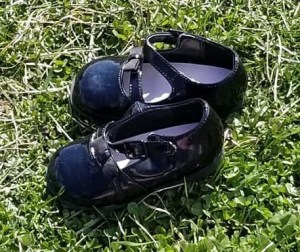
14,000 shoes laid out so that we will never forget our history.

Seven thousand pairs of children’s shoes were lined up on the southeast lawn of the U.S. Capitol building today in memory of every child who has died due to gun violence.

The 7,000 shoes in the “Monument for our Kids” installment represent every child that was killed by gunfire since the deadly shooting at Sandy Hook elementary school in Newtown, Connecticut, in 2012.

“We are bringing Congress face to face with the heartbreak of gun violence,” said one of the activists, Oscar Soria. “All of these shoes cover more than 10,000 square feet.”

Though most of the shoes were collected in a two week period, some of those were donated by families that lost their children to gun violence.

May God grant that we never forget this national grief. May our collective mourning bring lasting change.552D1FD3-63EF-4301-8FD9-FEE605FA755D

A Prayer for Protection

Hear us, O God, protector of children.
Hear our prayer of penitence, our confession that we have failed to keep our children safe.
Hear our cries, as we shed tears of mourning for each child we have lost to gun violence.
Hear our cries of grief as we recall every danger that our children face.
Hear our voices shouting, “Enough!”
Hear our voices of commitment that make a sacred promise that we will do what must be done.
And most of all, God, ennoble us to holy action, and make us protectors of children.
We pray in the name of the Prince of Peace. Amen.

Change, Children, Courage, grief, Gun control, healing, Hope, Justice, Politics, Violence

A Change Is Gonna Come

963A5A51-3EC5-464E-BAE6-A49BCFECAE4F
Emma González … ‘These young people will not sit in classrooms waiting.’ Photograph: Jonathan Drake/Reuters

Half a century ago, on March 7, 1965, state troopers beat down men and women who were participating in a peaceful march for voting rights in Selma, Alabama. That same day, radio listeners around the country might have heard Sam Cooke singing a song he had written and recorded several months earlier, but which could have been describing the “Bloody Sunday” confrontation on the Edmund Pettus Bridge.

There have been times that I thought I couldn’t last for long
But now I think I’m able to carry on
It’s been a long, a long time coming
But I know a change is gonna come, oh yes it will.

In “A Change Is Gonna Come,” Sam Cooke moves from bigotry and bloodshed to hope and beauty in barely three minutes. If you listen to the record today, you will hear a story that continues to be relevant. (https://m.youtube.com/watch?v=wEBlaMOmKV4)

Sam Cooke’s rough, sweet voice — a voice that is blues-born and church-bred, beat down but up again and marching — still rings.

A changs IS gonna come . . .

That message of hope rings out still in these troubling days through the passion-filled voice of Emma González, a senior at Marjory Stoneman Douglas High School, as she addresses a gun control rally in Fort Lauderdale just days after a gunman entered her school in Parkland and killed 17 people.

A change IS gonna come . . .

We are going to be the kids you read about in textbooks. Not because we’re going to be another statistic about mass shooting in America, but because . . . we are going to be the last mass shooting. We are going to change the law. That’s going to be Marjory Stoneman Douglas in that textbook and it’s going to be due to the tireless effort of the school board, the faculty members, the family members and most of all the students. The students who are dead, the students still in the hospital, the student now suffering PTSD, the students who had panic attacks during the vigil because the helicopters would not leave us alone, hovering over the school for 24 hours a day.

If the President wants to come up to me and tell me to my face that it was a terrible tragedy and how it should never have happened and maintain telling us how nothing is going to be done about it, I’m going to happily ask him how much money he received from the National Rifle Association. You want to know something? It doesn’t matter, because I already know. Thirty million dollars.  — Emma González

A change Is gonna come . . .

Just hours after the mass shooting, other students turned to social media to discuss gun control.

Guns give these disgusting people the ability to kill other human beings. This IS about guns.  — Carly Novell, a 17-year-old senior; editor of the school’s quarterly magazine.

We need to do something. We need to get out there and be politically active. Congress needs to get over their political bias with each other and work toward saving children. We’re children. You guys are the adults.  — David Hogg, 17, a senior; Stoneman Douglas student news director

Wherever you bump into someone, there is the fear that they’re the next shooter, and every bell is a gunshot. I feel like some change is going to come of this.  — Daniela Palacios, 16, a sophomore at another Broward County High School at her first protest.

A change IS gonna come . . .

And it will be our bold and compassionate children who will lead this nation into that change. Like so many Americans, I was disconsolate when watching the TV news of yet another school shooting. But then I started watching the students, and I saw the girl with the buzzcut, Emma González, wiping back her tears, mourning her dead classmates while demanding change.

Like her schoolmates, Emma is in trauma, but she is organizing. She and many of her classmates are directly challenging the donations of the National Rifle Association to Trump and other politicians. There will be school strikes. There will be organized resistance. These young people will not sit in classrooms any more. They refuse to become another tragic statistic. “We are going to be the kids you read about in textbooks,” said a weeping González.

As I remembered this week what happened  at Sandy Hook, at Columbine, at Westside, a school in my own state, I remembered feeling anger and despair. But today, for first time in a long time, I feel hope. I see true leadership as kids are standing up for one another and fighting for their lives.

Let us stand courageously beside these children, our children, and do what we can to create change . . . letters to Congress, phone calls, posts on social media, marches and demonstrations, hand-lettered signs, letters to the editor, VOTING for change. What can you do?

Emma González, Daniela Palácios, David Hogg, Carly Novell . . . and thousands of other children who are crying out, ENOUGH!

They give me hope.

A change is gonna come!

May God ennoble each of us to make it so.


Change, Comfort, Darkness, Despair, Faith, Friendship, God's Faithfulness, grief, Home, life, Loneliness, Loss, Mourning, sadness, Sorrow

“Are you upset, little friend?”

D25377E5-4CFD-428B-91CC-ADAA40BFA492
Charles M. Schulz

These days, I find myself in the very center of worry and discontent. I feel vulnerable, out of place in a new place I never expected to make my home. The problem is, I think, that I have not really made this place my home, and that reality has left me unsettled. I left forever friends behind when we moved here. I think the reason for my worry, my occasional despondency, even my fear, is that I feel alone. I recalled this week the well-known lyrics of a Carole King song from the seventies.

When you’re down and troubled
And you need a helping hand
And nothing, nothing is going right
Close your eyes and think of me
And soon I will be there
To brighten up even your darkest night.

You just call out my name
And you know wherever I am
I’ll come running to see you again;
Winter, spring, summer or fall
All you have to do is call
And I’ll be there, yeah, yeah, yeah.
You’ve got a friend.

If the sky above you
Should turn dark and full of clouds
And that old north wind should begin to blow;
Keep your head together
And call my name out loud, yeah
Soon I’ll be knocking upon your door . . .

It is a frightening state of being facing worry or illness or aging or loneliness, finding yourself disconsolate at times, and alone, without a loyal friend. But we have a mystical, magical force that leads us through the dark nights of the soul every time, without fail. I’ll name it faith.

A dear friend who just faced some devastating news reminded me of a deep-down, rock-solid truth about faith when she wrote, “My faith is bigger than my fear.” And that’s how we live a life filled with times of worry, aloneness, days of grief, fear, and sometimes mourning that engulfs us hard and long.

No person escapes such times, for they are an inevitable part of life. So we meet hard times face-to-face, up close, and we survive. We are, as the Bible says, “troubled on every hand, yet not distressed; perplexed, but not in despair . . . cast down, but not destroyed,” (2 Corinthians 4:8-9)

To be sure, we are left with scars of the soul and spirit. Yet we live on, knowing that after times of despondency, we are stronger than we were before. There is no deeper consolation than the words of Scripture proclaimed by the Prophet Isaiah.

When you pass through the waters, I will be with you;
And through the rivers, they shall not overflow you.
When you walk through the fire, you shall not be burned,
Nor shall the flame scorch you.

— Isaiah 43:2

I hang on Isaiah’s words, and I have rested on them so many times when sadness overwhelmed me and fear had its way. These Isaiah words are enough, more than enough for my disconsolate times.

But then I happened upon just the right message of consolation for me in this particular time of my life. And I found it in a most unlikely place. It’s a delightful little message of real and true comfort that speaks so sweetly to me, and perhaps to all of us who need a friend and an extra boost of encouragement in a time of worry.

Are you upset little friend? Have you been lying awake worrying? Well, don’t worry . . . I’m here. The flood waters will recede, the famine will end, the sun will shine tomorrow, and I will always be here to take care of you.

― Charles M. Schulz

Amen.

Change, Christian Witness, Courage, Faith, Freedom, Hate, Injustice, Justice, Martin Luther King, Jr., Risk, Segregation, The Christian Church

Out of Africa: White Supremacy and the Church’s Silence

D4B59064-1AD6-4121-B934-261EB10546E6I invite you to read “Out of Africa: White supremacy and the Church’s silence,” a provocative opinion piece by our guest blogger, Dr. Bill J. Leonard. Many thanks to Dr. Leonard for prompting us to more fully commemorate the day honoring Dr. Martin Luther King, Jr. If you are willing to challenge yourself, these words will shed the light you need to do so.

Out of Africa: White supremacy and the Church’s silence

45580E0C-5D54-41B6-8ECA-D4B04AAA7F7C
Dr. Bill J. Leonard

OPINION | BILL LEONARD | JANUARY 15, 2018

“Give me your tired, your poor, your huddled [Caucasian?] masses, yearning to breathe free.”

Three days before the 2018 Martin Luther King Jr. memorial observances, and in the 50th year after Dr. King’s assassination, the plague of racism in America continued, even as white supremacy, long lingering just below the surface, reasserted itself with a vengeance.

On Jan. 12, the president of the United States, at a White House meeting on immigration, allegedly asked why “all these people from shithole countries,” specifically Haiti and Africa, should be admitted to the U.S. He was also said to have wondered aloud why the U.S. could not secure more immigrants from countries like Norway (83 percent Caucasian). Confirmation of his remarks vary from those in attendance. Some confirm the alleged statements; others deny them. Somebody’s lying.

The mere report of the comments was immediately celebrated across the country’s white supremacist network, much as when Trump affirmed “good people on both sides” in last year’s violent neo-Nazi-led demonstrations in Charlottesville, Va. White nationalist Richard Spencer chastised Trump’s defenders for suggesting the statements were related to law or economics, since they were actually “all about race.” Spencer was, of course, delighted. The Neo-Nazi blog, the Daily Stormer, hailed the President’s words as “encouraging and refreshing” since they indicated that “Trump is more or less on the same page as us” regarding “race and immigration.” In America, 2018, white supremacy is now apparently “refreshing.”

Dallas Baptist pastor Robert Jeffress defended the president, noting that “apart from the vocabulary attributed to him,” Trump’s comments were “right on target” with his presidential responsibility “to place the interests of our nation above the needs of other countries.” That’s unlike Christians’ “biblical responsibility” to “place the needs of others” above themselves. (Racism’s OK; it’s vulgar language that’s the problem.)

Amid debates over the veracity of witnesses to the White House event, the fact remains that the dogmas of white supremacy lie at the center of America’s long night of racism, in politics, social structures, and racial stereotypes. At this moment in history, how can American Christians, themselves deeply divided over scripture, doctrine, sexuality, abortion, and other culture war accoutrements, foster a common compulsion to speak out against white supremacist fiction before it gains an even stronger implicit or explicit influence?

Even if President Trump did not use vulgar words to highlight his views on immigration, did he in fact wistfully promote a 21st century America where Aryans (remember the history of that word?) are preferred to immigrants of color? Surely it is time to break the silence, not simply because of those shameful remarks, but because they are part of a larger litany of racial dog whistles from Trump’s birther campaign, to attacks on a “Mexican” judge and a Gold Star Muslim family, to the infamous Charlottesville slurs.

We have many reasons to break the silence: First, because white supremacy itself is an inherently evil yet an enduring vision of the nature of humanity, and must be resisted for that fact alone. It has polluted our national psyche long enough!

Second, we break the silence on this matter because we hear again Dr. King’s words from that Birmingham jail: “Shallow understanding from people of good will is more frustrating than absolute misunderstanding from people of ill will. Lukewarm acceptance is much more bewildering than outright rejection.”

Third, we Aryan Christians cannot be silent because it’s our racial ancestors who first planted the banner of racism in our laws, our institutions (churches included), and in our hearts. And some among us still won’t let it go. We need to get “saved” from it.

Fourth, we speak out now because American churches, at least many of them, remained silent for too long. Indeed, Trump’s only a symptom; we scapegoat him at our peril. When his remarks hit the fan, I returned to James Baldwin’s The Fire Next Time, a book that has taught me, shamed me, blessed me, and broken me for decades. Baldwin writes: “It is not too much to say that whoever wishes to become a truly moral human being (and let us not ask whether or not this is possible) must first divorce him[her]self from all the prohibitions, crimes and hypocrisies of the Christian church. If the concept of God has had any validity or any use, it can only be to make us larger, freer, and more loving. If God cannot do this, then it is time we got rid of Him.” (Whatever God is, it damn sure isn’t white supremacy.)

Mercer University professor Robert Nash illustrates Baldwin’s point in a superb essay entitled, “Peculiarly Chosen: Anglo-Saxon Supremacy and Baptist Missions in the South,” documenting that ecclesiastical collusion with the case of James Franklin Love, corresponding secretary of the Foreign Mission Board of the Southern Baptist Convention, 1915-1928. Nash notes that Love “was profoundly influenced by the concept of Anglo-Saxon supremacy … that white races possessed a superior intellect, religion, and civilization.”

Love’s mission strategy focused on evangelization of Europe since white Christians could more readily convert the darker races. He wrote: “Let us not forget that to the white man God gave the instinct and talent to disseminate His ideals among other people and that he did not, to the same degree, give this instinct and talent to the yellow, brown or black race. The white race only has the genius to introduce Christianity into all lands and among all people.” (In 2017, the Southern Baptist Convention went on record condemning white supremacy then and now. It’s about time.)

Finally, we break the silence, confronting white supremacy and its accompanying racism at this moment because we will neither deny nor sully the African heritage of our African-American sisters and brothers, who as W.E.B. Dubois wrote, “would not bleach … [their] Negro soul in a flood of white Americanism,” since they know “that Negro blood has a message for the world.”

On what would have been his 89th birthday, Dr. King retains his prophetic voice for black and white alike, declaring from his jail cell then and now: “We will have to repent in this generation not merely for the hateful words and actions of the bad people but for the appalling silence of the good people. Human progress never rolls in on wheels of inevitability; it comes through the tireless efforts of men [women] willing to be co-workers with God, and without this hard work, time itself becomes an ally of the forces of social stagnation.”

Today, we read again Matthew’s haunting assessment of the Holy Family’s immigration from Herod’s not-so-holy-land:

“Out of Egypt I have called my son.”

Sweet Jesus, Egypt’s in Africa! Amen”


Bill J. Leonard is the James and Marilyn Dunn Professor of Baptist Studies, Professor of Church History, School of Divinity, Wake Forest University.


Change, Comfort, God's presence, Home, Loneliness, Uncategorized, Violence

Even There!

D2954ADE-75B4-4134-8B99-77B434376264Today, my pastor reminded me of a cherished truth, that we are not just loved by God, we are also known by God. Today’s scripture, Psalm 139, is indeed a precious gift. The Psalmist assures us that God knows when we sit down, when we lie down, and when we rise up.

The Psalmist declares that God knows our every thought. God knows our path. God knows our ways and the words we will speak, even before we speak them. The miracle? God truly and thoroughly knows us — every flaw, every bad habit, every unkind action. And God loves us anyway.

But for me, even more comforting than that grace-filled promise, is the truth beginning in verse seven, that God is with me when I feel alone. In the past few weeks, in fact, I have felt very much alone, far away from my child and grandchildren, far away from close friends, living in a new place that does not yet feel like home.

I am blessed with a loving husband of 48 years, my very best friend. We enjoy each other. We love being together day in and day out. We live in a lovely place in a pleasant neighborhood. But we are not really home.

So from the place I find myself these days, I find great comfort in hearing the Psalmist speaking, maybe even singing, about God’s abiding presence. In this part of the Psalm, one of the most meaningful scripture passages of my faith journey, I find the promise of God’s presence with me. The message calms my soul and consoles my heart.

Where can I go from Your Spirit?
Where can I flee from Your presence?

If I ascend into heaven, You are there;
If I make my bed in hell, behold, You are there.

If I take the wings of the morning,
And dwell in the uttermost parts of the sea,

Even there shall Your hand lead me,
And Your right hand shall hold me.

— Psalm 139:7-9 (NKJV)

Wherever I go, even there God’s Spirit is with me. Wherever I am, even there God is with me. Even there!

Thanks be to God for the gift of presence.