2024 election, A blessing for voters, Activism, anxiety, Belonging, Betrayal, Bewilderment, Bitterness, Calm, Challenge, Change, Community activism, Courage, Darkness, Daybreak, discouragement, Exclusion, Faith, God, God's presence, God’s creation, healing, Heartbreak, Hope, Kneeling Places, Lament, Liberty, Mourning, Patriotism, Pilgrim, Politics, Pondering, Prayer, Repair the world, Rev. Kathy Manis Findley, Unanswered Prayer

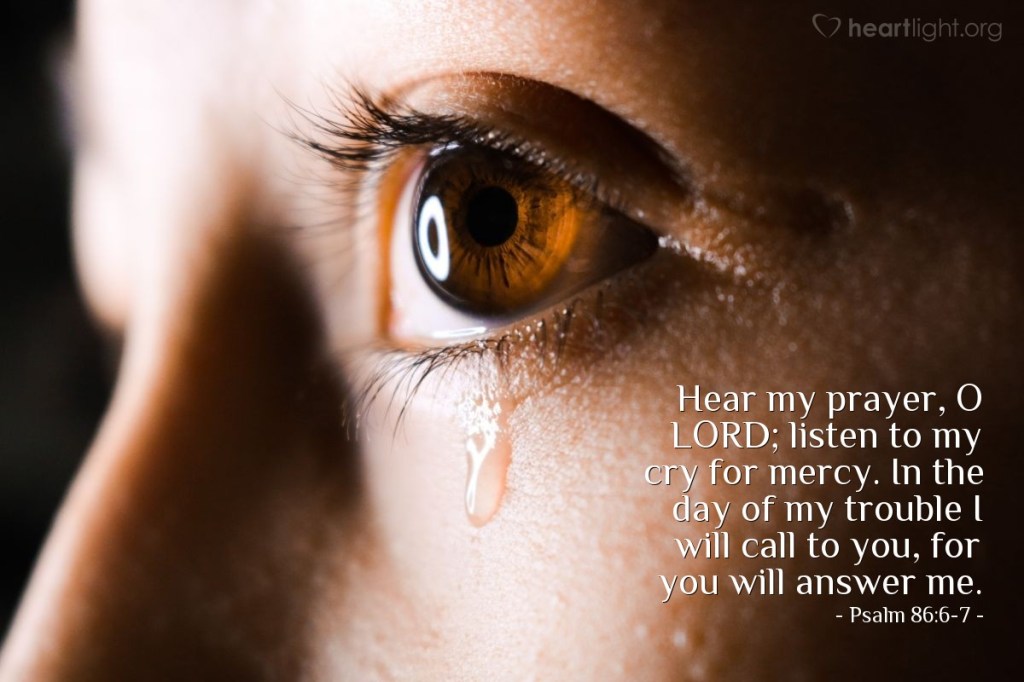
Prayer in Response to Tragic Victory


Together, we will transform our grief into a force for change that will build a more just, equitable society that respects the dignity of all people.

— Omar Angel Perez,  Immigrant Justice Director, Faith in Action

This is my prayer of Hope for the living of these days and my lament for almost losing my faith. It is a too-long treatise, because I release my profound grief through writing. It’s a too-long lesson to teach my class, because at our meeting time, everyone is a spent body of exhaustion that can hardly respond to dark and serious topics. It’s a too-long sermon to preach, because at minute 38.6, the congregation will start leaving. Most of all, it is a too-long dumping of grief. But still my prayer

Guard your hearts and may the week ahead freshen your hope, Kathy


Creator, Spirit of God, Star of the Morning, Son of the Dawn ~

We give you praise for creating each of us and placing us in the brilliance of Holy Light because last Tuesday’s election has left so many of us in a very dark place. We thank you, Creator God, for naming us your beloved children, even if others name us with hurtful words. Yes, it is true, this past election week has been hurtful to so many people. In fact, the entire election season has caused anxiety for at least a few of us. And the outcome? Well, God, I almost said you let us down, but I know better. Still “let down” is only a fraction of the emotion that now hangs closely around us. So, God, if you wouldn’t spare us from our president elect, could you please touch our souls with a gentle hand of comfort and hope.

Gentleness is one thing we need, maybe to minimize the harsh names and the contempt we have endured from our misogynistic brothers and sisters. The outcome of the election has left us feeling disconnected from many of our friends, neighbors and family members. God, you know our emotions and you understand our sense of feeling discarded. You know our fear, confusion and despair. Help us, Mother snd Father God, to remember that you have whispered our names. We are your beloved daughters facing the world with the name you gave us.

One election! Just one has this much power over us! We must have taken a wrong path somewhere along the way, because repairing the world was the real goal, and our destination was to create a community of love, care and decency. We did not make it there, God, and we feel a bit like pilgrims and strangers in a land we have never seen before. We imagine how exiles must feel, and recall a letter from Jeremiah to people in exile, “You will search for me and find me when you search for me with all your heart.”

It was just an election, but it rocked us to the core and left us wandering aimlessly on unfamiliar paths and turns. Yet, we are comforted still by sensing your presence with us. Every journey has paths and turns that can lead us to unexpected danger and unprecedented harm. Paths and turns can be disconcerting and downright frightening. Paths and turns leave us in uncomfortable unknown places, so that our feet walk in unfamiliar dust. Paths and turns can lead us away from all we’ve known, our comfort-place, our “home.” 

Protecting God, can you stay close to us on this harsh path ahead and protect us?

Now, God, we know you have a teaching moment for us, for to you this rocky path we follow is a holy pilgrimage. We can learn and take in the reality that paths and turns can also lead us to holy moments. Those sacred moments can inspire us to search more fervently for you, God. We did not stop believing in a new season of unity. But someone more powerful than we are has taken over our lives.

Still this week of sorrow is about more than just one election.
It is also about hurtful memories of being pushed out because of who we are or what we look like. 
It’s about the pain of being “othered” and never fitting in.
It’s about being diminished over and over again.
It’s about people who need to measure us by our wealth or power. 

There are so many better measures out there. Help us God, to throw away false tools that can only try to measure who we are, but can never measure the Light in our souls or the dreams of our hearts.

For our nation, O God, we ask for seemingly impossible unity and for as much love as we can muster between brothers and sisters. We ask you, God, to restore our hope, bring us to our feet, teach us to stand and set us on our path once again.

God, make of us peacemakers, consolers, and healers of harm. Help us control our tongues, so that we Will always speak respectfully of others. Help us spend holy moments in lament and deep prayer that can re-enliven our souls.

I confess, God, that I am failing at that right now. My soul is filled with anger and disgust. My spirit is not at one with love, but with hate directed at those who managed to do this shameful thing to our nation. I am full of confusion about how this happened; what exactly has happened; what will the repercussions be; how serious is the threat to our future; and specifically what must I do now as one person to minimize the harm for myself and all of us?

In such a time as this, God, I see myself kneeling in your holy presence with a shattered spirit and a broken heart. I see myself questioning how it is that you have the ability and the will to organize the universe, but you do not. I need the breath of Spirit to order my thoughts. I need moments of confession to name my sins. I need to repent of my own actions, whatever they are, because my action or inaction may have helped cause the results of this election.

Even now, leaders—that is political people, elected officials, teachers and professors, ministers, rabbis, Imams, priests, bishops, chaplains, etc.—are encouraging us with hope. Emails still flood my inbox, like, “We can’t give up. Let’s roll up our sleeves.” I have noticed that many people say they can’t think about it right now. They are wise to stop and tend to the grief in their souls.

I feel useless, dismissed, disrespected and weary, God. I even feel that I have completely lost my hope for brighter days. I know that losing hope is a dire place to be, because losing hope almost admits that I have also lost my faith. Yet, even in this very moment, God, you are whispering to me:

Beloved daughter, you are not just ‘one person,’ You are one person of God. A child of God. A beloved daughter. A woman whose spirit is whole with a sacred calling to shepherd the lost and weary ones.”

When circumstances, words, or people threaten us, God, help us respond with decisiveness, truth, kindness, grace, forgiveness, and respect for our brothers and sisters, our neighbors and friends, our classmates and co-workers. Because being harsh to one another can not quickly heal the wounds of political discord, or any other kind of near-fatal wound. It will take time to cast out the dark presence whose only purpose is to darken our souls and leave us in profound darkness.

In this goal, in this time, God, the dark presence has succeeded, and we need you, God, more than ever. We see the truth that we are dangerously vulnerable right now, and that we must fight against spiritual despondency. 

Creator, Spirit of God, Star of the Morning, Son of the Dawn ~ hold us near until the danger has passed. (If it ever passes!) If you can, God, speak peace to the dark presence that is still maneuvering that will harm our democracy and our souls. 

Hold us close in the brilliance of your Light, Creator God! 

Place us securely in your Light, Star of the Morning!

Hold us fast in your Light, Spirit of God!

Draw near to us and grant us Light to see daybreak, Son of the Dawn!

Mother and Father God, we will stand tall in the evil day, if you will help us refresh the Light that lights the world and brightens our hearts.

In this evil day, God, meet us in our sacred place. As we lament, restore our hope and strengthen our faith in this time of grief and confusion. Restore our spirits, God. Restore my spirit, God! 

Creator God, Mother and Father of the universe, fill us to overflowing once again. Cover our bodies and fill our souls with fresh hope, the living hope that guards our faith from any evil.

Amen.
A woman of sacred worth, Becoming, Beginning again, Bravery, Calling, Change, Children, Committment, Courage, Creating, Dreams, Freedom, God’s beloved daughter, I am enough!, Inner peace, life, Living in the soul, Miracles, Repair the world, Rev. Kathy Manis Findley, Self-understanding, Spirit wind, Tears, Tikkun Olam, Valued by God

Living an Unapologetic Life

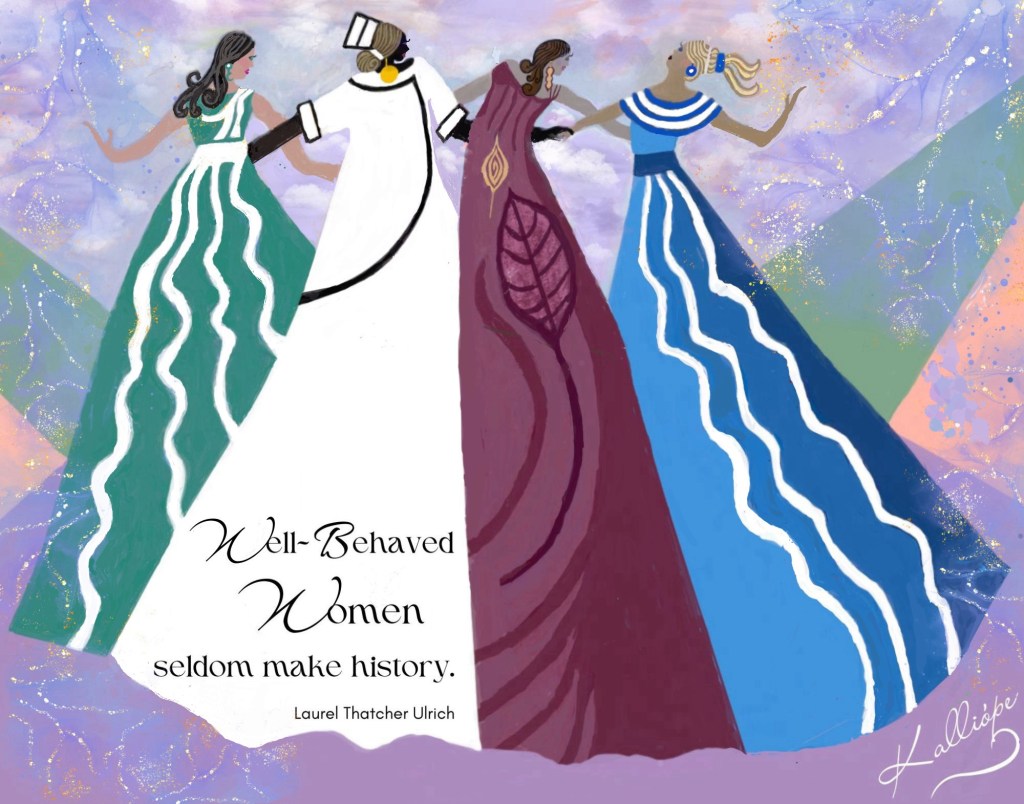
Art: “Well-behaved Women” by Kathy Manis Findley


Rev. Kathy Manis Findley
July 27, 2024

You have probably had that kind of dream at a few junctures on your journey. I know I had many dreams along the way. Sometimes they scared me to death. I dreamed of peace, equality, freedom, changing the world, and many other huge and noble dreams. I dreamed some silly dreams, too! I soon got the hint: changing the world is a formidable task. I followed all the rules, but being a rule-keeper does not make a person effective in dreaming and imagining. Women who follow the rules (someone else made up) could correctly be called well-behaved. They might even be called good girls because they don’t cause much of a flurry. They typically don’t make history and they certainly don’t change the world.

A woman with less-than-good behavior looks like someone at peace with herself, someone who radiates hope, someone with the courage and determination to do justice. I have admired and emulated so many examples of women who did make history, women who were not well-behaved at all. Here are only a few: Rosa Parks, Harriet Tubman, Lucretia Coffin Mott, Sojourner Truth, Susan B. Anthony, Nancy Sehested, Elizabeth Cody Stanton, Prathia Hall, Julian of Norwich, Malala Yousafzai, Mother Theresa of Calcutta, Ann Hasseltine Judson, Lucy Stone, and so many others!

About 24 years ago, a chaplain colleague recommended a book to me: Goodbye Good Girl: Letting Go of the Rules and Taking Back Your Self by Eileen M. Clegg. I think my chaplain friend was suggesting that I should get out of my comfort zone and take some risks, that I should courageously follow God’s call on my life. I knew that the members and churches of my denomination would “throw a fit,” like we say in the south! After all, I was an ordained minister serving as a hospital chaplain, which placed risky challenges before me every day.

So I read the book immediately and set out to become a bad girl, a girl who fully intended to change the world and to make history for it! So far, I have not made history. I have not managed to put my name in lights. I have not started any big public movements. But I have done some things that matter! I have learned how to create sacred space; I have learned the depth of liberation theology; I have found enough grace to endure the consequences of being a “bad girl” and then a woman with questionable behavior; I have held off anyone who tried to tell me who I am; and I have called up the courage to fight for justice. Colleagues, friends, family, co-workers reacted to the change in me, since they never expected me to dissent, or disagree, or refuse to behave.

Suddenly I let go of my “good girl” image and basically said “goodbye” to my restrictive behaviors. I took back my life, put aside all the rules, and followed my soul. I watched for the winds of the Spirit to lead me, and I moved forward to all the places that needed some attention. I was able to help change unjust systems, unjust policies, and unjust processes by not being so well-behaved.

Still, I sometimes think I have reached an uneasy place when it comes to letting go of my “good girl” persona. I’m really not a “good girl” and I don’t think I ever have been. My parents had to endure the sassy exclamations of my toddler years, like “Nobody’s the boss of me!” Creating shock from those who knew me, I mostly remained a “bad girl” from that day to this. I set aside the rules that were designed to keep people down and I took back my life. Today—in my mid-seventies—I continue to spew out uncommon proclamations that are quite annoying to those who are determined to hold on to their power and resist change.

Truly, it was sometimes hard being a change-maker and a rule-keeper! Always a people pleaser. Always the ultimate perfectionist. I discovered along the way that sometimes rule-keeping, people pleasing, and keeping every little thing “perfect” can harm your inner core. In fact, it’s less risky when you follow the leaders, make sure everyone is pleased, and doing everything with glowing perfection. Stepping out of line is always a bit dangerous.
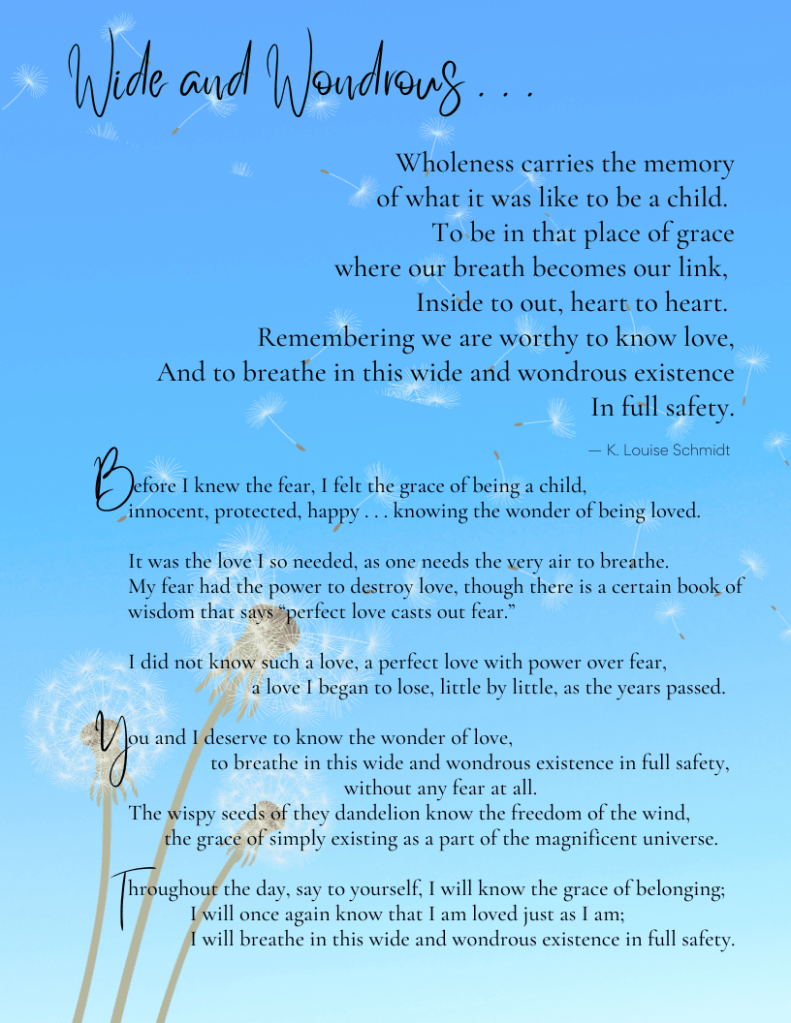
When you become exactly who you are, resolute and unmovable about the things that matter to you, you will raise a few eyebrows, and sometimes people will get angry with you . You see, those people expected something else from you. Each of us becomes “me”— the “real me”— at our own peril. In a sense, we have to fight for the right to be ourselves in the world.

It is true that the people around me reacted strongly when I took back my life and became fully invested in my destiny. They thought that I had become radical, maybe even unhinged. I did not respond appropriately to their demands. To unreasonable demands, this is essentially how I might have responded, sometimes out loud, sometimes under my breath . . .

I will do it. / It’s my right! / It’s my choice! / It’s my prerogative! / It’s my decision! / I’m doing it anyway. / You can’t stop me! / Just watch!

All the while, I felt uncomfortable because of so much disdain from others, who began sending me a new message, You are not enough! I Imagine that many of you have heard someone say to you, You are not enough. At least, we may imagine someone saying those hurtful words. Unfortunately, we believe it because we don’t know ourselves, meaning we don’t know our bright and dark places, we have not yet realized our sacred worth, and we have not yet searched our souls.

For you see, you and I are afraid because it is perilous for the soul when we don’t search diligently for our soul’s passions and dreams. You and I sometimes accept what others say about us and tuck it away in our deepest places. When those words sneak all the way down into the soul, we tend to give up. We start from the moment we make ourselves nonchalant about it all, that moment when we shield our hearts from hurt. One of the saddest phrases we use is “I don’t care.” When we no longer care, we begin, one by one, eliminating the people around us, never realizing that they are hurting, too. And maybe the reason they send the message, You are not enough, is because they believe that they are not enough either.

I can honestly say that I have often heard voices—known voices, unknown voices, and the weak little voice in my head—telling me, You are not enough! I have learned that once I have embodied that negative message, it rolls around in my psyche for a long time, maybe forever. It becomes a state of being that goes deeper than skin. It penetrates in deeper places, and takes its toll on my emotional and physical well-being. I recall many such times, none more painful than the wagging tongues around my ordination . . . You know the scenario, “She can’t be a minister because she is a woman! Anyway, she’s not good enough! Other voices are often hazardous, dangerously breaking down our sense of self-worth. They may be yelling, speaking in a normal tone, whispering, or imagined in our heads. In response, we must prepare ourselves to hear the voice above all voices, saying, “You are my beloved daughter with whom I am well pleased.”

For a long time, I embodied the traits of the good girl, but to embody good girl traits is not really a once-and-done action. Embodied lasts a while! Embody does not have a shallow or surface meaning. It is deeper. I like the word embody. It seems to suggest that we can live a soulful life. In the very middle of the Greek word for “embody” we find the word σώμα, which means body. However, the Greek word for body cannot be translated in a way that reveals the depth of its meaning. The definition of σώμα is deeper than we realize. It is not skin-deep, it is deeper, approaching a definition more like soul.

I do like the word embody and the word soul. In some ways, to embody means to live in your soul. The word embody may whisper to you that in your body’s center, you will find the path to reach your soul. A person who lives in the soul is a person that does not live a shallow life, devoid of the emotion that makes us alive. The soul will help you, if you can just start by daring to touch it.

So what are the things we can actually do to take back our lives and live soulfully? What path do we follow to transform ourselves and change the world? My initial response to that is, “I don’t know.” Not very comforting, I know, but mostly true. We cannot forge the path for any other person. We cannot know what’s best for them. So not knowing anyones path, nor their dreams, I can give you a list of things others are finding the leads to their transformation. Here they are, not at all an exhaustive list, and certainly not a perfect guide for you:

  • Carve out some time for quiet, restful, meditation.
  • If you are a person of faith, get in touch with God or whatever person you worship.
  • Listen.
  • Listen some more—to your heart and your soul.
  • See if you find there a sacred direction especially for you.
  • Do you feel you are getting any closer to discovering your authentic self?
  • Can you begin to believe you will be transformed?
  • Can you take a step or two, in faith, into a holy place of transformation?
  • Pray, making your needs known to the source of your faith.
  • Read! Read the stories of others who found life transformation.
  • Find community, even one other person, who understands your journey.
  • Start all over again, leaning into the wisdom you found on your previous journey.
  • Take as long as it takes, until you realize that suddenly, you are becoming emboldened and scrappy!

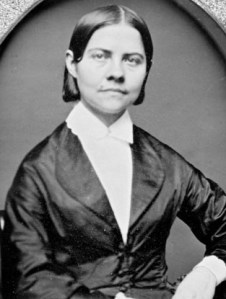
You may not know her name, but Lucy Stone was steadfast in her belief in self-authentication and in her ability to change the world. Lucy Stone was called “emboldened” and “scrappy” because of her tireless work for the abolitionist and women’s rights movements through the 19th century. A bona fide pioneer of her time, Lucy Stone stands as a historical titan. Her book “Unapologetic Life” describes a model of a revolutionary living. As for me, I would count it an honor to be described as emboldened and scrappy.

Life is more fun when you’re emboldened and scrappy. Not that we want to reduce the life experience to just scrappinesses. Life is so much more, like authenticity and the willingness to be a change-agent. Life is about having enough courage to persevere! Life for me is about my soul and all the ways it has been transformed over many years. All along my journey, I knew that my soul was a problem! At every age, there was a part of me that wouldn’t follow the easiest path. I longed to be empowered to make societal change. I chased down injustice and worked to dismantle it. I spent most of my career working with victims of domestic violence, child abuse, and human trafficking. This was not the easiest and most pleasant vocation, but the work had made its way into my soul. To do it, I had to live in the light of self-awareness and soul-awareness. I had to constantly listen to the sighs of my soul, and move only after I had heard them clearly. If I had just one nugget of advice for you, it would be to touch your soul and ride on the wings of the Spirit.

Sisters, don’t forget that when you touch your soul, you might just not be a “good girl” anymore. Or a good boy, for that matter. As for me, I am not a “good girl” living at the whims of other people! And I am definitely not a well-behaved woman! So I fully expect to make history! Because making history means leaving a legacy, creating a world brimming with peace, and embodying your best self!


#Uvalde, Texas, Bright Sunday, Calamity, Calm, Gun violence, Hope, Injustice, Palm Sunday, peace, Psalm 1, Rev. Kathy Manis Findley, Silence, Stillness, Sunday of the Palm and Passion, Transcendence, Transformation, Transforming Injustice, Violence, Violence against women and children

O Lord, How Long Shall I Cry?

Subscribe to continue reading

Subscribe to get access to the rest of this post and other subscriber-only content.

A frenzied life, All Things New, “I Can See Clearly Now”, Beginning again, Bishop Steven Charleston, Bravery, Calm, Challenge, Contemplation, Courage, Determination, Dreamers, Dreams, Following Christ, God's Faithfulness, Heart, Here I am, Lord., I am enough!, Inspiration, New Things, Re-claiming self, Rev. Kathy Manis Findley, Spiritual growth, strength, struggle, Tenacity, Tikkun Olam, Vision, Whispers of God

A Snail’s Pace to the Mountaintop

By Kathy Manis Findley

Slow, slow, up the mountain I’ll go . . .


A PAUSE FOR SOME WHIMSY . . . Why don’t we have a little whimsy today? I have invited my snail-friend to join us. And anyway, we all need a little whimsy in these troubling days! So here goes!

I’m sorry to tell you that the snail in the picture will take forever to reach that mountaintop, and you and I simply don’t have the patience to walk with a snail. Even so, I feel good about my chances when racing a snail to get up on top of a mountain!

DOES THIS MAKE ANY SENSE AT ALL? . . . Not that this makes any sense at all. Why I would even be considering such a race! In fact, this is completely nonsensical, and if you know me, you know I’m far too serious to entertain whimsy! Makes no sense at all. Oh, but it does make some sense. Let me tell you something about me and what I have learned about the wisdom of the snail and its slow journey!

LIFE CAN BE DEVASTATING . . . When I think of the life catastrophes that have been the hardest for me, the ones that hurt me the most, I immediately recognize that I never slowed down enough to clearly see the unrest brewing around me and inside me. Multi-tasking and acting like an overcommitted, overwhelmed wife, mother, professional minister and hospital chaplain squeezed my spirit enough that I became hopelessly entrapped. That was in my younger days, those days when most of us stretch our commitments to the breaking point.

Before I could change course, I could see my dreams fading and my ability failing. It was impossible for me to reach the top of my mountain. It happened before I realized I was in trouble.

In the light of day, I can somewhat see, but at night, I can hardly see anything—literally and figuratively. But at least I have learned to take time to look up at the stars in a dark sky. It’s easy to see, to envision stars twinkling in the heavens, when you’re still young and when you can still find your hope-filled dreaming place inside you. You can still be breathless, open-eyed and awestruck!

CAN I STILL BE BREATHLESS, OPEN-EYED & AWESTRUCK? . . . To be honest, I must confess to you that I find it difficult to see with my soul, to be open-eyed and enthusiastic. I have lived my life with visions of dreams and hopes, and I have loved the fullness of my days. But being retired is another story altogether.

The story of my young and middle adult days was a story of constant activity, challenges, and tall mountains to climb in search of dreams. Dreams, dreams everywhere! Wherever I looked, I found another dream to dream!

RETIREMENT CAN BE DISHEARTENING . . . Retirement is another thing, and I am there! Illness and aging has nearly shut off my dreaming and visioning. Still, though I am sparring mightily with retirement, in the end I have slowed down to a snail’s pace. And snails probably don’t climb mountains or search for dreams.

What pieces of wisdom can we receive from a snail on a slow slither? Perhaps we should look elsewhere for such wisdom. One of my favorite authors gets to my soul with almost everything he writes. His keen spiritual insight has guided my path time after time. This is what Bishop Steven Charleston has to say about seeing more clearly.

I see more clearly, now that I am aging. Not with my eyesight, but with my soul. I see the fine detail of what I missed in younger years. I see the place of faith and forgiveness in my story. I see the possibilities of life in ways I never imagined. I was not blind in my youth, but my vision was limited to only a few seasons of seeing.

Now I am an old man standing on a hill. I see more clearly. The universe stretches above me in infinite glory and the Earth spreads her shawl to wrap me in creation. Open the eyes of your spirit. Look out in wonder. See the fullness of the life you have received. See the promise of love walking in beauty before you.

— Bishop Steven Charleston

MY FRIENDS FINDING NEW WAYS TO DREAM . . . These are words I can hang on to and patiently learn how aging folk can still hope and dream, and maybe even climb new mountains. It’s possible. I have seen several aging folk on top of the mountains they dreamed of. One of my 70 year old friends travels all over the world. Another has launched out in a new calling to counsel kidney transplant patients. Yet another friend faced a closed door, so she picked up her skills and began a brand new ministry. And one friend left the United States to feed hungry people across the ocean.

All of these friends made it up to the mountaintop, though some of them might have traveled at a snail’s pace. That doesn’t matter, and I have a notion that their secret to life has to do with slowing down and stopping their frenetic pace. Why do that?

To give yourself time to dream, time to contemplate and pray, time to pull your soul back together, time to open your eyes and truly see, time to meet God who may well whisper in your ear . . .

Then I heard the voice of the Lord saying,
“Whom shall I send? And who will go for us?”
And I said, “Here am I. Send me!”


—Isaiah 6:8 NIV

TIME FOR SILENCE AND CONTEMPLATION . . .So walk on, slow if you have to. Take your time and wait until you hear God’s voice or sense the presence of the Spirit. Give yourself time for silence and prayer and a lot of contemplation. Keep your courage ready, and then go with all your courage when your heart says it’s time. Don’t let the snail discourage you. Your pace, whatever it is, will get you there. Don’t let anyone block your path or steal your dreams! And I’ll meet you on a mountaintop somewhere!


A LOVELY HYMN FOR YOUR QUIET TIME . . .

Here I Am, Lord (Anniversary Recording) · Dan Schutte
Here I Am, Lord (30th Anniversary Edition)
℗ 2001 2009 OCP, 5536 NE Hassalo, Portland, OR 97213. All rights reserved. Made in USA.
All selections BMI.


SHARE YOUR STORY . . .

If you are a new to my blog or have been reading it for years, you are welcome here. If you would like to leave a comment about your experience with slowing down your pace, finding time for prayer and contemplation, or renewing your spiritual, physical, and emotional life, please tell us about it in the comments. Your story can help others see life more clearly.

Activism, Advocate, Challenge, Change, Community activism, Compassion, Covenant, Dreamers, Dreams, God’s Gift of Stars, Good Trouble, Hope, In Memorium, Justice, Racial injustice, reconciliation, Rev. Kathy Manis Findley, Separation, Sheltering children, Social justice, Transcendence, Transforming Injustice, Violence, Wade in the Water, War

Do You Have a Dream?

A woman of sacred worth, Aha! Moment, Epiphany, God’s beloved daughter, God’s Mercy, Grace, Hope, Rev. Kathy Manis Findley, Singing, Skies, Spirit wind, wind

“Measure Me, Sky”*

By Rev. Kathy Manis Findley


You might have received a blog post from me yesterday. It would be the one with the photo of the sky and with random words printed on the page in a totally “cattywonkered” fashion! (not of my own doing) It was a mess, and I tried to write and publish it for at least 8 hours!

What a frustrating yesterday and a discombobulated writing and publishing process! My computer took control and declared sovereignty over my blog post! The document disappeared at least seven times. There was literally nothing I could do. The computer had a mind of her own (urged on with the help of WordPress) and I was the focus of her destructive acts.

Sometimes I long for the days before computers, those olden days when thoughts would just tumble gently out of my soul as I wrote with ink and paper and exceptionally good handwriting. (Remember cursive?) Yes, I lived in those days when I had no computer or even a manual typewriter with striker arms with the letter engraved on them that popped up on to the paper! (And often three or four of those would come up too fast so that they stuck together!) On top of that, my 6th grade teacher, Miss Hamill, made us use a fountain pen and manually fill it with real, bona fide black ink, even when doing math! How impractical that was—with absolutely no way to erase so many math errors!

If I think I’m frustrated writing my blog post using a perfectly fine online publishing site, I should try to remember the “good old days” when my fingers were always marked with black ink. In all seriousness, I just sat down in my special writing chair hoping to share thoughts from my soul for a few minutes, but instead ended up spending hours trying to get my blog post to format correctly! It’s enough to frustrate even experienced bloggers. Therefore, I want you to know that, since yesterday, I have been annoyed and distressed because of my inability to achieve anything resembling a blog post!

End of the rant!


I confess that I spend a lot of time measuring my self. Can I even format this so that it makes sense? Are my rambling thoughts worth all this toil and trouble? Does anyone read my blog anyway? Do I even write well enough to publish? I don’t know the answers, so I am still insisting on continuing to measure my self.

Beyond my rigid, strict, and stringent measuring standards, there is good news—Holy Good News that God is well pleased with me. God is pleased with you, too! I love the way the writer of this article expresses it.

I had an “aha” moment recently when I realized that, while I had never struggled with the false belief that I had to work to earn my salvation, or even to earn God’s love, I did live and think as if I needed to earn God’s pleasure in me. For me, salvation was a free gift, love was a free gift, but pleasure was earned. I subconsciously believed that if I did a lot of good things and earned a lot of “spiritual gold stars,” I would gain more of [God’s] pleasure.

https://mercymultiplied.com/god-is-well-pleased-with-   you/#:~:text=He%20reminded%20me%20of%20how,love%2C%20delight%20of%20my%20life.


Ditto!
For me, it’s still about Epiphany! Epiphany always graced me with lovely “aha moments.” Epiphany also brought clear vision and keen awareness, so I could see that I was making a habit of measuring. I knew all along that I had to learn how to stop measuring my self. Self-measuring is a hard practice to break, but the nasty little secret about it is that virtually no one measures themselves accurately or fairly. We get the measurements wrong every time, or at least most of the time! Instead of continuing the frustrating task of measuring my self and finding the results abyssmal, maybe I will figure out how to let God do the measuring. The alternative is to continue to measure my self as I always have, exhausted and disheartened by the measurements that never measure up to my aspirations.

Remember that when Jesus was baptized the Spirit descended on him and God said, “This is my son, whom I love; in him I am well pleased.” (Matthew 3:17, NIV) God affirmed God’s love for Jesus before Jesus had performed a single miracle! Jesus’ ministry had not even started, but God’s pleasure already rested on Jesus just because Jesus was God’s Son. God was pleased because of relationship, not because of achievement or good-ness.

Wouldn’t we be encouraged if we truly believed that God’s pleasure fully rests on us? Period. I have a notion that God is not even measuring us with much precision and scrutiny. Instead, God is well pleased with you and with me. I hope that this knowledge frees me up to move forward without working to earn something that’s already mine. So I for one am holding my head up, eyes toward the skies, and with a song on my lips, because I know that God’s pleasure in me isn’t going anywhere. Zephaniah 3:17 says that God delights in us and rejoices over us with singing.

I know there is a better way to live my life. Measuring my self constantly to determine if I’m a good enough person—as in smart, gifted, compassionate, resilient, educated, beautiful, articulate, personable, spiritual, good enough to please God. Knowing all the while that by my self-measurements, I am not even close to “good enough.”

I wonder . . . What could be wrong with letting God take over the measuring? Why not let my “self” be measured by God’s golden yardstick in the clouds? To be honest, God does not really need a physical, wooden, for-real measuring stick. And I don’t need to toil for and worry about how I am measuring up. Why not just look up into the sky and wait until I hear God’s voice?

You are my beloved daughter. In you, I am well pleased.
God delights in us and rejoices over us with singing.

Singing is the place where my heart meets God’s heart. Singing lifts my soul and lifts my eyes toward the skies, even through the darkest times and on the rockiest pathways. It seems that, in response to the eternal grace God gives us, we would want to honor God by breaking out into song, singing God’s praise with reckless abandon . . .

Come, thou Fount of every blessing; Tune my heart to sing thy grace;
Streams of mercy, never ceasing, Call for songs of loudest praise.
Teach me some melodious sonnet, sung by flaming tongues above;
Praise the mount! I’m fixed upon it, mount of God’s redeeming love!

In the beautifully written poem below, the poet speaks of being able to reach for the sky by a song! I can identify with that thought from my experiences of reaching for the music of my soul during difficult times. It was as if I could ease closer to sky and breathe in the cleansing wind of transformation. I have pondered the meaning of the words “measure me, sky.” You can probably guess how I twist things to make a point, so maybe this is worthless: Sky— God; Clouds—Music; Wind—Transformation. It’s a hard, hard concept to define, so I don’t try. I just take in the imagery and allow it to perfect my spiritual vision. As many of the other phrases in this poem, “measure me, sky” likely has as many meanings as the people who have read it. This poem must be interpreted by its readers as each one contemplates the meaning they find there. When all our pondering brings no conclusion on the meaning, we can know, at least, that poet Leonora Speyer writes of wisdom that leads us as we walk our sacred path . . .

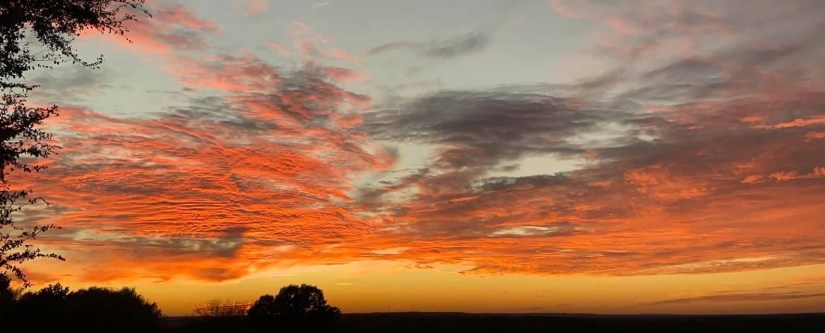
September Sunset in Fort Worth; photo by Pam Overton Stoker

As you consider the message of this post and rhe image of the sky, please spend a few minutes listening to this hymn and meditating on its meaning to you.

“Measure Me, Sky!”
SATB and piano by Elaine Hagenberg
Poem by Leonora Speyer https://www.elainehagenberg.com/measu…
Performed by the Tallgrass Chamber Choir Jacob Narverud, conductor

* Measure Me, Sky is a soulful poem written by Leonora Speyer and later used as a hymn text.

A frenzied life, Aging, Beginning again, Detours, Melancholy, Rev. Kathy Manis Findley, Sacred Path

Detours Not Chosen


Have you ever found yourself on a path you did not choose? I am on such a path right now, in my aging years when nostalgia is rampant in me. Since I did not choose any part of this path for myself, I would have to say I have been detoured by some other force. The bottom line is that I have been detoured onto a path that seldom makes me happy.

Empty and desolate is this path, at least much of the time. My path detoured after a sudden diagnosis of end stage renal failure, followed by a year (2014) of being in and out of the hospital, daily dialysis, moving to another state far from my son and grandchildren, a kidney transplant, and the difficult change it brought to my existence. I can say unequivocally that I don’t like the forced detour and I don’t like this path.

Most of us begin our adult lives with plans and dreams. We have arranged our first-world lives so that we will have many choices for a bright future. When we age, though, our choices become limited, and sometimes the choices for our lives are made by someone else. So I find myself in the season of life when my path is narrowed and my choices are limited. This is a stifling place to be, leaving me with at least three emotional responses:

1) I am in a constant state of melancholy and cannot seem to pull myself out of it.

2) I live with a deep hurt in the pit of my stomach, like when you miss someone so much.

3) I feel a fear I have never felt before, that the next change I did not choose will be even worse than the changes before it.

Although I can readily list everything that is not good about this path, I have never been a complainer and certainly not one who refuses to hear God’s whispers to me. I can’t explain where these whispers come from or how it is that I hear them, but I have always chosen to believe that it is God who whispers in my ear. So after a sudden and frightening diagnosis, I began to hear God’s whispers—gently, tenderly, patiently, and full of compassion. Then I heard an unusual kind of whisper, one that was emphatic and a little more forceful than the usual whispers . . .

“Enough! Enough of your frenzied life. Enough of working day and night. Enough of caring for others and ignoring yourself. Enough of not listening to the cries of your soul. Enough of constantly writing grants to fund your ministry. Enough of serving on dozens of committees all at once. Enough of putting away your creativity to direct corporate shenanigans. Enough of not drawing near to me. Enough!”

Almost immediately after that striking whisper, I ran headlong into the illness that stopped me in my tracks! The detour was severe and the path was definitely not a sacred path. I asked myself this question one late night of melancholy while resting in my hospital room: What will I do now, what will I be able to do now except pray, meditate, listen, breathe, journal, dream, sit in silence, and pray some more?

I did just that when I was well enough. And from months of recuperation and meditation, my creativity was restored. I started painting watercolors, writing in this blog, listening to music, singing hymns, creating beautiful things, writing two books, playing piano, growing plants and arranging flowers, and so many other creative things. During those days, when I needed to comfort myself, my mind pulled up many passages of scripture that urged me towards a more contemplative life.

Be still, and know that I am God. Come close to God, and God will come close to you. I have calmed and quieted myself. I rise early, before the sun is up; I cry out for help and put my hope in your words. My eyes are awake before the watches of the night, that I may meditate on your promise. Above all things, guard your heart, for from it flow the wellsprings of life.

Doing all those creative and spiritual things helped my soul, of course, but no matter how I tried, nothing could completely take away my melancholy. It is still in me. Although I did pull myself out of the darkness I felt on the abysmal path I did not choose, the melancholy remained with me. As it does for any of us, at times. Life happens. Forced detours happen. Bad things happen to good people. None of these happen on our schedule, nor does our sacred path always lead us where we want to go.

Isn’t that just life? Isn’t that life for anyone, no matter how devout?

It helps to remember that our path is a sacred path, no matter how everything seems. We walk it “by faith and not by sight.” I leave you with a verse from the twenty-third Psalm.

Even when I walk
    through the darkest valley,
I will not be afraid,
    for you are close beside me.

May all your paths be sacred and your detours chosen by you.
~ Rev. Kathy


For your meditation time today, I share with you this beautiful song offered by John Michael Talbot.

All Things New, Bishop Steven Charleston, Blessing, Call, Change, Covenant, Faith, healing, Holy Spirit, Hope, Meditation, New Things, Rev. Kathy Manis Findley

Help Me Call a Blessing Down


Help me call a blessing down, for I think our poor old world needs it, a blessing of peace, a blessing of the ordinary, a blessing of national life without chaos and personal life without fear. 

Help me pray a healing down, for I know how much we need it, a strengthening of the bonds between us, simple respect and patient listening, a new beginning for us all. 

Help me welcome the sacred down, the wide-winged Spirit, drawn from every corner of heaven, to walk among us once more, to show us again how it can be, when justice is the path and love the destination.

~ Bishop Steven Charleston

Art, Beauty of Nature, Birdsong, Contemplation, Creation, Emotions, Forest, healing, Inner peace, Insight, Pilgrimage, Resilience, Rev. Kathy Manis Findley, Stories, struggle, Truth, Worry, Writing

Reflecting on a Memoir


If I do any reflection or contemplation of spiritual truth, I can best do it in a peaceful place like the one depicted in this watercolor art—soft light, peaceful color, a canopy of trees, nothing going on, just silence with a bit of birdsong. I can’t often go to such places so I paint them and imagine myself there. It works.

I have been writing a spiritual memoir to be released sometime in August. Just imagine—all the multitude of my stories from this blog together in one book! I sort of cringe when I think about it. I have been writing my memoir for months, and the process revealed many truths to me. The stories—I call them Spirit Stories—unfold from reflection, contemplation, and experiencing my life events all over again. Emotions arise in me as I remember, and tears cleanse my spirit. Experiencing past life in present time reveals so much insight and healing. I am learning a lot about “my truth” in the process. These are just a few of the things I have realized so far.

  1. Even the smallest events in my life teach me big, important lessons.
  2. People are not always what they seem, including me!
  3. I think I may have been placed on the earth to be hurt by mean people.
  4. When I fall—face-in-the-dirt fall—I always get back up. So far!
  5. Sometimes I do not fall. Someone pushes me!
  6. I found my truth while reflecting on and writing my memoir.

So that’s what I’ve been up to. That’s why you haven’t heard from me much here. But just wait for the book to be released. You will learn more about me than you ever wanted to know! Deciding to write my memoir was a long, confusing process for me. I ruminated about it for years. But I landed on the fact that speaking my truth (to all three people who want to hear it) is important. Saying it clearly and out loud is an important life thing, even if I’m the only person who hears.

Anne Lamott expresses the important life thing like this:

You are going to feel like hell if you never write the stuff that is tugging on the sleeves of your heart—your stories, visions, memories, songs: your truth, your version of things, in your voice. That is really all you have to offer us, and it’s why you were born.

Anne Lamott
Beauty, Bewilderment, Brokenness, Color, Covid-19, God’s creation, Grace, Gun violence, Hate, Heartbreak, Hope, Injustice, Inspiration, Movement, Rev. Kathy Manis Findley, Ukraine

Beauty

Beauty

I know some things about beauty . . .

Most folk don’t take nearly enough time to notice it.
These days way too much ugliness hides the beauty that’s always around us.
Even when we don’t pay attention, beauty surprises us with magic and mystery.
Beauty is a lot like hope.

The magical appearance of beauty is, indeed, in the eye of the beholder. For me, beauty can inspire me by color and movement, by the shimmering stars on a clear night, by the magnificence of a tree’s movement in the breeze, by looking into the eyes of my grandchildren. Beauty is there for us always—to be seen, to be heard, to be sensed deeply in our bodies and in our spirits.

These days, I need more of it—more hope, more beauty. I need more visions of beauty to supersede the ugliness of injustice, division, racism, misogyny, homophobia, political warring, brokenhearted immigrants looking for life, mass shootings, Covid, gun violence, child trafficking, suffering in Ukraine—all the varied chaos around the world.

And then there are the people here and there who bring grace to us all by transforming ugliness into beauty and hope.


As for the beauty revealed in the opening photo, I don’t know who created it or photographed it. I do know that he or she is a person who finds beauty in unlikely places at unexpected times, and translates that beauty into grace to be shared with those who most need it.

Who knows about that image? The striking silhouette of the trees, the birds flying above, the twinkling stars in the sky, and all of that with swirls of color that seem to me like holy movement. Regardless of the source of that photograph, I like to believe that its beauty—all beauty—comes directly from God as grace for me, and for you.

Hope! Beauty! Even in the ugliest of times!

Forest, Interconnectedness, John Muir, Rev. Kathy Manis Findley, Smithsonian Magazine, Trees

Our Enchanted Forest

A large limb fallen in our backyard, blown to the ground by heavy winds.


This is the time of year for celebrating trees as they put on their autumn display. Enchanted forests transform into even more magical places in this season. It can be pure glory to watch the vibrancy of fall. So I’m thinking about trees today, but I’m thinking of them with a bit of nostalgia. Several months ago our landlord had my favorite tree cut down to the ground—all the way with nothing left but a stump and an ugly, sawdust-looking mess. I was angry. I still am. The problem was the tree’s roots endangering the foundation of the house.

For me, the peril of the house’s foundation was not a significant concern. My concern was simply losing a “friend.” When we first moved into our house in Macon, I began photographing the tree, almost every day for a year, to capture its fascinating life cycle. I took photos of the leaves and the limbs and the bark, and found the tree’s transitions to be fascinating. In that time, I became attached to my Chinese Tallow tree with its beautiful leaves.

Scroll left to see a brief slideshow of a few of those Chinese Tallow photos.

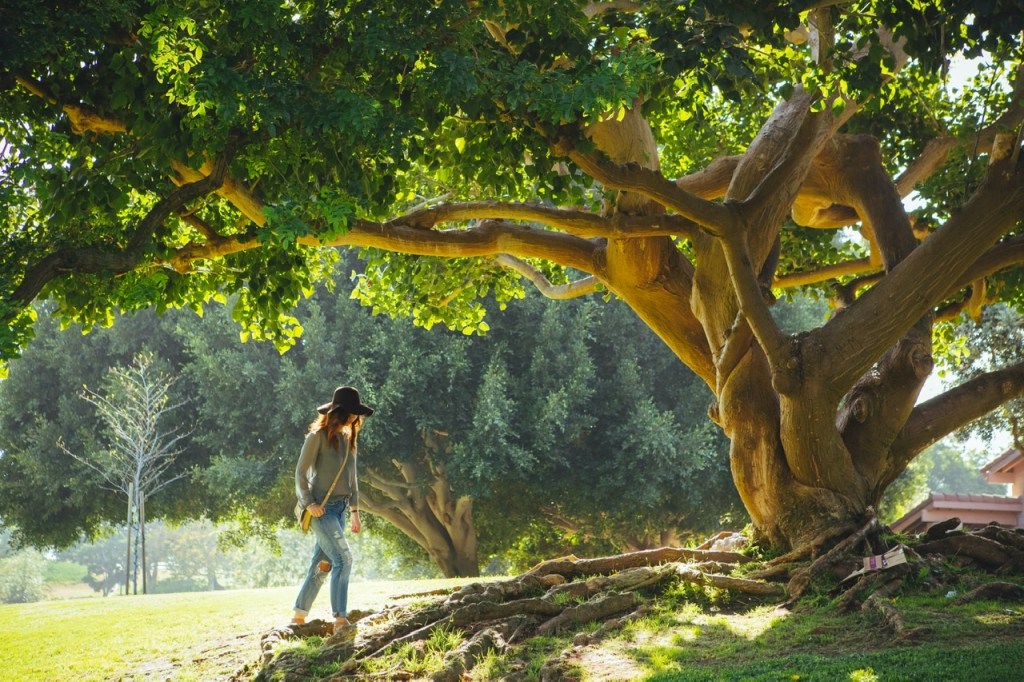
Just a few months after I lost my tallow tree, a large limb in our enchanting backyard forest succumbed to heavy winds and fell to the ground, just missing our house. Behind our house, by the way, is a small forest. The forest is dense, with very large, tall trees providing a lush canopy, smaller trees providing a shorter canopy, and even smaller shrub-like trees and bushes filling in the rest. Sunlight peeks in through small areas of the thick canopy, but not enough to breach the dense foliage underneath. The forest provided shade for us, cool breezes in that part of our yard, nesting birds and small creatures, pleasant forest noises of rustling leaves and creaking limbs—natural beauty.

So, back to the limb that fell down in our forest. The landlord arrived with a small work crew to remove the limb and clean up. The small crew created big chaos in our little forest. The landlord asked them to go ahead and cut down the entire huge tree that had lost the one limb. Down came that tree. And another, and another, and another, leaving behind scarred, dusty, devastated earth. It hurt my heart. I could not look at it for several hours, as my husband described the desolation of our once-enchanting forest. Eventually, I went with him to the backyard. I could barely look at it. A lump rose up in my throat followed by anger that asked how humans dare to cut down large, living trees that may have been alive for a hundred years or more. Who gives us humans the right to do that?

I know that plenty of things (and people) harm trees. Lethal threats come in many forms: windstorms, ice storms, lightning strikes, wildfires, droughts, floods, a host of constantly evolving diseases, swarms of voracious insects.

Tender young seedlings are easily consumed by grazing mammals. Hostile fungi are a constant menace, waiting to exploit a wound, or a weakness, and begin devouring a tree’s flesh. But there is one predator whose acts are unforgivable. That predator is a human who is intent on cutting down breathing, oxygen-creating, life-giving trees.

Research tells us that the trees known as “mother trees” are a vital defense against many of these threats. When the biggest, oldest trees are cut down in a forest, the survival rate of younger trees is substantially diminished.

For young saplings in a deeply shaded part of the forest, the network of trees is literally a lifeline. Lacking the sunlight to photosynthesize, they survive because big trees pump sugar into their roots through the network.

At the University of British Columbia in Vancouver, Suzanne Simard and her grad students are making astonishing new discoveries about the sensitivity and interconnectedness of trees. Her research described the concept of “mother trees,” which she describes as the biggest, oldest trees in the forest with the most fungal connections. She says that the trees are not necessarily female, but she sees them performing a nurturing, supportive, maternal role. With their deep roots, they draw up water and make it available to shallow-rooted seedlings. They help neighboring trees by sending them nutrients, and when the neighbors are struggling, mother trees detect their distress signals and increase the flow of nutrients accordingly.

But you don’t have to take my word for it, especially if what I’m saying sounds unbelievable to you. Instead, I point you to an article published in The Smithsonian Magazine website, where I gleaned the scientific information for this blog post.

Journalist Richard Grant begins his article in The Smithsonian Magazine with an intriguing question: Do Trees Talk to Each Other? The controversial German forester, Peter Wohlleben, says yes, and his ideas are shaking up the scientific world.

Richard Grant writes, “My guide here is a kind of tree whisperer. Peter Wohlleben, a German forester and author, has a rare understanding of the inner life of trees, and is able to describe it in accessible, evocative language. Wohlleben has devoted his life to the study and care of trees.”

Grant goes on to explain . . .

Now, at the age of 53, Wohlleben has become an unlikely publishing sensation. His book The Hidden Life of Trees: What They Feel, How They Communicate, written at his wife’s insistence, sold more than 800,000 copies in Germany, and has now hit the best-seller lists in 11 other countries, including the United States and Canada. 

— Richard Grant

“Some are calling it the ‘wood-wide web,’” says Wohlleben. “All the trees here, and in every forest that is not too damaged, are connected to each other through underground fungal networks. Trees share water and nutrients through the networks, and also use them to communicate. They send distress signals about drought and disease, for example, or insect attacks, and other trees alter their behavior when they receive these messages.”

Grant continues . . .

Wohlleben takes me to two massive beech trees growing next to each other. He points up at their skeletal winter crowns, which appear careful not to encroach into each other’s space. “These two are old friends,” he says. “They are very considerate in sharing the sunlight, and their root systems are closely connected. In cases like this, when one dies, the other usually dies soon afterward, because they are dependent on each other.”

– Richard Grant

One can only be mesmerized by this botanical research that gives a “human quality” to trees and makes forests even more enchanting to us.

. . . majestic crowns approaching one another make a glorious canopy, through the feathery arches of which the sunbeams pour, silvering the needles and gilding the stately columns and the ground into a scene of enchantment. —John Muir*


Enchanted forests, trees that talk with one another, connectedness between trees—is it science or fantasy? Scientists are only just beginning to learn the language of trees. They admit that most of the time they don’t know what the trees are saying with pheromones. They don’t know how exactly how the trees communicate within their own bodies. They don’t have nervous systems, but they can still feel what’s going on, and experience something analogous to pain. Another plant scientist, Allen Larocque, says, “When a tree is cut, it sends electrical signals like wounded human tissue.”

Perhaps I should just end with these provocative words by John Muir:

A few minutes ago every tree was excited, bowing to the roaring storm, waving, swirling, tossing their branches in glorious enthusiasm like worship. But though to the outer ear these trees are now silent, their songs never cease. Every hidden cell is throbbing with music and life, every fiber thrilling like harp strings, while incense is ever flowing from the balsam bells and leaves. No wonder the hills and groves were God’s first temples, and the more they are cut down and hewn into cathedrals and churches, the farther off and dimmer seems the Lord himself.

— John Muir


*Photography by W. Toman; http://hdr-photographer.com/

Beauty of Nature, Beekeeping, Creation, God’s creation, Honeybees, Nature, Rev. Kathy Manis Findley

Three Echoes Away

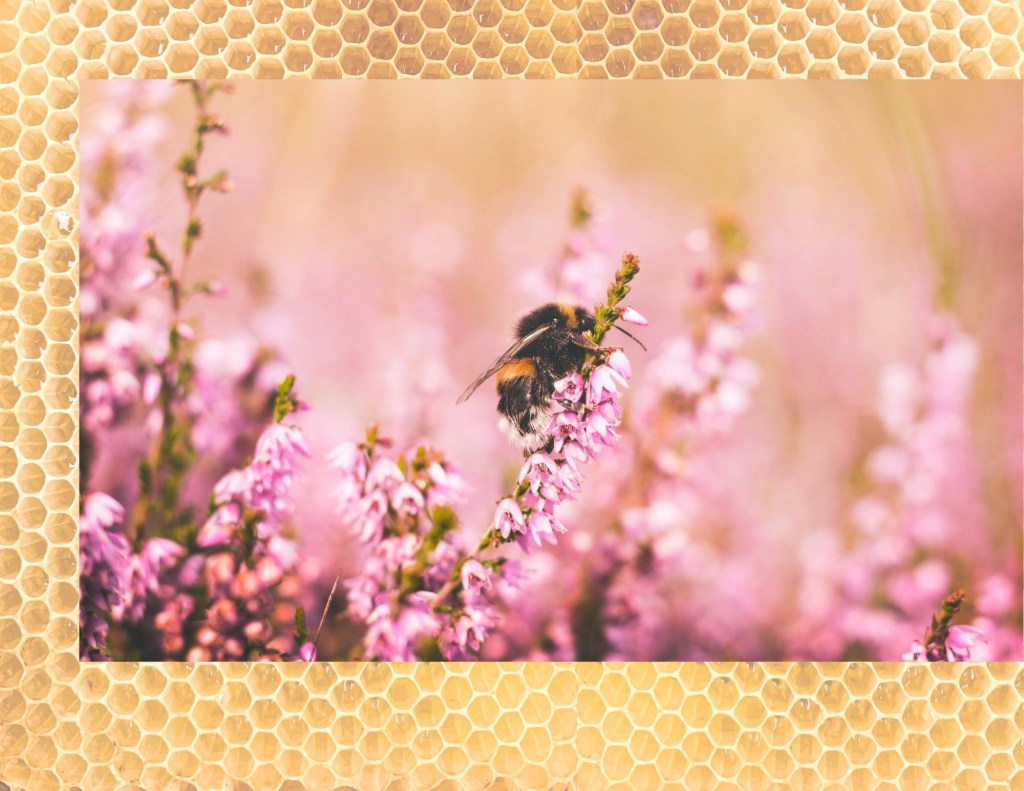
Photography by Josephine Amalie Paysen, Upsplash

I have always been drawn to honeybees, mesmerized by them and by the beekeepers who care for them. Once many years ago, I put on the beekeepers garb and that big, fashionable hat with the dark veil of netting. A friend who had several hives was teaching me how to handle the bees. I actually held them in my hands, rather hesitantly, while noticing how gently the beekeeper held them. From this uncomfortably close proximity, I was able to listen to the buzzing sound of the honeybees, buzzing that I did not hear as harsh, but rather hushed. The honeybees greeted him when he approached the hive. When he held them in his hands and they moved up his arms, it looked like a graceful dance of the beekeeper and his constantly moving honeybees totally in sync with one another. How could one not be enchanted by this wonder of creation?

Yesterday while reading a fascinating interview with Tom Blue Wolf, I was reminded of those breathtaking moments I spent with the honeybees. Tom is a descendant of the AniCoosa, which means “peaceful people,” who are also known as the Creek Tribe, which is a part of the Muscogee Nation. He is a Native American spiritual guide, a man in love with nature, and a keeper of honeybees. One of the questions he was asked in the interview was, “What is it like to be in the presence of the bees, to listen to them?” This is how Tom Blue Wolf responded.

Creator is always talking to us. Most of us are about seven echoes away from the true voice of the Creator. Try to get closer, try to get maybe three echoes away. If you get too close, it’s almost too intense for most people. Like a burning bush. Aaaaah!

His response to the follow-up question was just as intriguing . . .

“What do you and the bees do for each other on the spiritual journey?

How is your relationship to them a spiritual one?”

They give life, and we protect it. We keep the harm away from them; we protect them. I have been in love with honeybees all my life . . . We beekeepers are integral to the bees’ world. They know us; they are in our dreams. We tend to them barefoot, they crawl all over us, they kiss us, they tickle us. It’s hard to talk about. So, of course we think it’s spiritual. Absolutely. The bees love us and we love them.

That kind of spiritual relationship between a human being and one of God’s created inhabitants of the earth would place any of us in a sacred space. Tom Blue Wolf described a state of being as “three echoes away from the true voice of the Creator.” It’s the kind of space most of us never enter, and for so many reasons—we don’t have time; we’re busy with our jobs; we have children to care for, laundry to do, and a plethora of responsibilities listed on the to-do list we seldom complete. We simply get too busy to embrace the beauty of nature and draw closer to the Creator.

Tom Blue Wolf would summon us, if he could, to be “three echoes away” from God’s true voice. So he writes about the Creator, the creation and the importance of protecting it, and our role as caretakers. He urges humans to follow the guidelines of Saint Francis, who thought it critical to have a close and enduring relationship with nature.

From the years I spent as a postulant in the Order of Ecumenical Franciscans, I learned about the many ways Saint Frances was devoted to the best characteristics of what it means to be a human being on the planet: benevolent, loving, kind, gentle, merciful, reverent, respectful. He treated every life form with dignity.

Saint Francis helps us pull ourselves out of the trap of being completely focused on two-legged humans. An example of that shows how most people describe a destructive incident only be the impact it has on humans. They might report, for instance, that a plane crashed and “we lost 180 people.” Or “the fire killed four hundred people.” In contrast, Saint Francis would say, “Not only did we lose four hundred brothers and sisters, but we also lost three thousand acres of Mother Earth’s flesh. We lost sixty-four thousand winged ones. We lost untold amounts of water, and what’s left is toxic and the ones that swim are no longer with us.”

Like Saint Frances, perhaps we should focus more of our attention on the natural world, the magnificent creation given to us by the Creator God we worship. For one thing, attention to the creation and its Creator draws us into holy moments that we desperately need for our spiritual nurture. If we lean into those holy moments, and linger there for a time, the burdens we carry could become lighter. The cares that dishearten us might become uncommonly dim. And we just might find ourselves in a most sacred space—the one that places us “three echoes away” from God’s whisper. And as an added grace, perhaps we will also hear the gentle buzz of honeybees!

May it be so for each of us.

Adventures, Covid-19, Creativity, Depression, Feelings, Freedom, Friends, fun, Immunocompromised, Isolation, Loneliness, New Normal, Rev. Kathy Manis Findley, Travel

Have a Nice Trip!

It’s my most common statement these days: ”Have a nice trip!” Saying it to my friends is the polite thing to do, given that I am landlocked in my house. And to my credit, I really mean it when I say it. I really do wish them a nice trip—fun and relaxing and safe and an experience of all things good.

At the same time, my heart is always just a little shattered when someone I know embarks on a summer adventure. It makes me long for times past when my family took amazing vacations to Disney World or Sea World, to the ocean or to the mountains, to Oregon, Seattle, or Vancouver, or Gatlinburg, or Nevada, or San Francisco, New Orleans, Reno, Nashville, Nairobi, Mombasa, Athens, Mexico . . . I can’t even remember all the places. “Those were the days,” I’ve heard it said. And so they were!

Today is a very different reality. Travel is harder, for so many reasons, and being confined to home has a host of repercussions. I have experienced many of those repercussions, physical ones, spiritual ones and emotional ones. Immediately after my kidney transplant in 2019, Covid-19 descended upon us. After that, I accepted my personal reality of taking immunosuppressant medications for the rest of my life to prevent organ rejection. That personal reality meant that, no matter the lifting of mask mandates and the full re-opening of everything, I had no immune system to fight Covid or any other infection. And that means forever!

When everyone around me seems free, and carefree, I feel imprisoned. I admit, it has taken an emotional toll on me. It still does affect my sense of freedom, safety, loneliness, boredom, isolation, creativity—the things that fill your soul. I have tried hard and long for three years to stay active and creative and never to feel bored. But I have reached a kind of stasis, worn out from ”keeping busy” and from pushing myself to be productive, creative and happy.

My husband asked me yesterday if I’m depressed. I almost said, “no” before the truth hit me. I haven’t seen my son and grandchildren for two years. I haven’t seen my Atlanta cousins since November. I haven’t seen most of my friends in months. So, yes, I suppose I am depressed, though I so want to push it away by denying it.

Depression has its own trajectory. Most of the time, I just have to ride it out and wait for better days. In the meantime, to all of you travelers out there: Have a nice trip!

I really mean it!

#Uvalde, Texas, Bewilderment, Birdsong, Consolation, Leo Tolstoy, Melancholia, Rev. Kathy Manis Findley

Melancholia and Consolation

Overlayed photos by Jeremy Bishop and Christian Holzinger on Unsplash.

I don’t like feeling melancholy. The feeling is just too tentative and unspecific. Trying to get free of melancholia is not an easy feat. You can curse it and yank it around trying to break it. You can throw big rocks at it or try to drown it in a bathtub. But it is so uncatchable. You can’t get your hands around it, and if you do, you can’t hold on to it. It just slips away from you before you know it. You cannot control melancholia. Perhaps you cannot even get consolation from it.

Other states of mind are more responsive to being removed or conquered or broken or even thrown out. Sadness, anger, rage—those you can eventually grab and choke out. Melancholia is enduring and constant, and it can hold you hostage for undetermined amounts of time, making a nest in you and dwelling there without your permission. Relentless, hardy, pervasive, persistent!

Understand this: I am not writing about melancholia as a clinical depressive episode and I’m certainly not trying to scientifically classify melancholia in a range of psychiatric disorders. I simply mean to unravel the threads of the state of being of feeling trapped inside melancholia.

I know there are circumstances that brought me here this week, not the least of which is that I have experienced a full week of a severe stomach virus. And then, there is the constant news reporting of horrible cases of gun violence. In fact, ABC News published this troubling statement about gun violence on May 31, 2022: “374 deaths and 782 injuries over the past week.”

I cannot help but weep about the terrible loss of nineteen children, two teachers, one teacher’s husband, and the perpetrator of the murders in #Uvalde, Texas.

I cannot help but be emotionally moved by the gift a Texas man gave the grieving families. Trey Ganem refused to be paid for the 19 hand-painted caskets. (Picture: SoulShine Industries)


Have these circumstances resulted in my feeling melancholy? I’m not sure. Melancholia might not primarily be situational. Rather, it might be embedded in a person’a psyche and brought to the heart by a gloomy, cold morning in winter, or a long-lived rainstorm, or a gloomy, foggy night without a smidgen of light. Perhaps melancholia can come upon a person by a sad movie, by hearing a hauntingly beautiful requiem, by the melodic strains of birdsong, or the somber sounds of a viola.

Melancholia is rather unexplainable for me. When it takes over my psyche from time to time, I feel multiple emotions. Not just a depression-like sadness, but also a lump-in-the-throat nostalgic feeling. I think that’s what’s going on with me right now. Truthfully, I have found the best description of melancholia in the words of Leo Tolstoy.

There is something so enchanting in the smile of melancholy. It is a ray of light in the darkness, a shade between sadness and despair, showing the possibility of consolation.

— Leo Tolstoy, War and Peace

It does feel to me like ”a shade between sadness and despair.” Whatever melancholy is, however it comes to me, whatever it feels like and whenever it visits me, I like Tolstoy’s phrase about melancholy ”showing the possibility of consolation.” In my mind, that is the Godsend part of it: that when I feel the emotion “between sadness and despair,” covered in a misty veil of melancholy, God’s holy way is that consolation is always possible. Always!

The Apostle Paul has the last word in the beautiful blessing he wrote to the church in Corinth:

3 Blessed be the God and Father of our Lord Jesus Christ, the Father of mercies and the God of all consolation, who consoles us in all our affliction, so that we may be able to console those who are in any affliction with the consolation with which we ourselves are consoled by God. For just as the sufferings of Christ are abundant for us, so also our consolation is abundant through Christ. If we are being afflicted, it is for your consolation and salvation; if we are being consoled, it is for your consolation, which you experience when you patiently endure the same sufferings that we are also suffering. Our hope for you is unshaken, for we know that as you share in our sufferings, so also you share in our consolation.

— 2 Corinthians 1:3-7 NRSV

Thanks be to God.

Activism, Advocate, Anger, Child protection, Children, Despair, Disconsolate, grief, Gun violence, Mourning, NRA, Rev. Kathy Manis Findley, Robb Elementary School, Sandy Hook, School shooting, Uvalde, Texas, War, War on Children

War Against Children: America’s Heinous Sin

Digital Art by Kalliope

How would you feel about a phrase like, war against children? Virtually no one would like such a phrase, but isn’t that exactly what happens when someone bursts into a school brandishing an AK-15 assault rifle? When someone uses a weapon to kill children inside a school room, and when a nation refuses to change its culture of weapons and bullets, then we need to own it: America wages and perpetuates war against children!

The total lack of regulation of firearms and ammunition in America is the source of the shooting that held nineteen children and two teachers hostage in a classroom at Robb Elementary School in Uvalde, Texas, in the hands of a murderer. The ultimate ”perpetrator” could be called the National Rifle Association (NRA), the group who promotes the idolatry of lethal weapons. Protesters at the site of the NRA’S National Convention this weekend were joined by Democrat Beto O’Rourke, who listed previous school shootings and called on those attending the convention to make sure that gun violence would no longer harm children in this country.

“The time to have stopped Uvalde was right after Sandy Hook,” O’Rourke said. “The time for us to have stopped Uvalde was right after Parkland. The time for us to have stopped Uvalde was right after Santa Fe High School. The time for us to stop the next mass shooting in this country is right now, right here, today with every single one of us.”

Gun violence in schools is not a national scourge in every country. There are examples of gun control our nation could follow if we had the passion and political will to do so. A case in point . . .

About a month after the Parkland school shooting, a letter of condolence addressed to the survivors arrived from survivors and parents who had endured a similar tragedy 22 years before when a local shopkeeper walked into Dunblane Primary School in Scotland and opened fire, killing 16 five and six-year-olds and their teacher.

Writing the letter to Parkland survivors was a act of solidarity. Offering hope for change, they told of their successful campaign for gun reform. They wrote, “Laws were changed, handguns were banned and the level of gun violence in Britain is now one of the lowest in the world.” 

Since the 1996 Dunblane massacre, they said, “there have been no more school shootings in the United Kingdom.” Because of a grassroots campaign led by the parents of Dunblane students, leaders in the U.K took decisive legislative action. By the end of 1997, Parliament had banned private ownership of most handguns, enacted a semi-automatic weapons ban, and implemented mandatory registration for shotgun owners.

The signees ended with words of encouragement, “Wherever you march, whenever you protest, however you campaign for a more sensible approach to gun ownership, we will be there with you in spirit.”

Here in “the land of the free,” we have become callous to gun violence. We hear of mass shootings on streets, in churches, synagogues, temples or mosques, and we move on. We are becoming immune to shootings in night clubs, stores, shopping malls, military bases, restaurants, theaters and homes.

Violence inside schools, though, is on a higher, more lethal level. People who grapple with making sense of school shootings strain to come up with “reasons” that such heinous acts of violence could happen. People choose to go into restaurants, clubs and theaters, but children in school classrooms are mandated to be there.

War against children.

Do we dare look at the list of school shootings since 1969? I studied the list today, lamented over it, I guess. There were fourteen school massacres that left 169 dead children.

After every single incident, people cry, “enough is enough.” After every horrific mass murder, lawmakers and power brokers say, “enough is enough.” And then comes the question, “Why?” Why is this violence happening? The following answers for “why”—some good and some preposterous—emerge from the national dialogue.

mental health problems; delinquent youth out of control; inattentive parents leaving guns accessible to children; weapons and ammunition too easy to get; untrained resource officers. It’s because the adults in the schools don’t have guns. They need guns.

Franklin Graham blamed school shootings on “a nation that has turned its back on God,” and on violent video games, the entertainment industry and on “taking God out of our schools.” James Dobson blamed the shooting at Sandy Hook on God’s wrath over abortion and same-sex marriage. 

War against children.

This is a sad season, but it is also a sad time for Christianity. Just days after the tragic slaughter of innocent children and their teachers, the National Rifle Association meets in national conference to celebrate themselves only 300 miles away from Robb Elementary in Uvalde. Brian Kaylor and Beau Underwood name it and explain it in a recent article published in A Public Witness.

“Even after Sandy Hook, Stoneman Douglas, and now Robb Elementary — not to mention the numerous other mass shootings at churches, theaters, concerts, restaurants, grocery stores, homes, and basically any other place in our society — some Christian leaders still try to baptize the death cult that will gather in Texas this weekend.”

Shane Claiborne, co-author of Beating Guns: Hope for People Who Are Weary of Violence, criticizes pastors who “bless this group that is literally contradicting nearly every word of the Sermon on the Mount.” He continues, ”I’m going to go straight to Jesus and say we cannot serve two masters. And we really are at a crossroads where we’ve got to choose: Are we going to follow Jesus or the NRA? And literally, you couldn’t come up with much more contrasting messages. The gospel of Jesus — turn the other cheek, love our enemies — stands in direct opposition to the rhetoric of the NRA — stand your ground. The gun and the cross give us two very different versions of power.”

His words are true, as are words written by Dr. Obery Hendricks in his recent book, Christians Against Christianity. He writes a fiery epithet about what he describes as “the unholy alliance between right-wing evangelicals and the NRA. Their annual prayer breakfast,” Hendrick’s writes, ”tries to add a veneer of Christian religiosity to the NRA’s deadly agenda.”

In the article in A Public Witness, Kaylor and Underwood describe ”the NRA’s Hell” in scathing commentary. ”As the blood of more slaughtered children cries out from the ground, preparations continue for this weekend’s NRA convention.”

War against children.

There is no lack of commentary following the terror at Robb Elementary School. Stephen Reeves, executive director of Cooperative Baptist Fellowship Southwest, also criticized Christian leaders who bless the NRA, saying, “I don’t know how you pray in the name of the Prince of Peace and ask for God’s blessings on the mission of the NRA. No other country sacrifices their children on the altar of the gun.”

Yet, the prophets and the mourners somehow coalesce this weekend, in solidarity with one another regarding weapons of war and slaughter. While a Texas community mourns grievous loss, righteous prophetic critics stand on their behalf to call out sin, complacency, greed, self-interest and idolatry and those who champion the evil of it. ”As our children are killed at the altar of a semiautomatic idol,” Kaylor and Underwood write, ”high priests like Franklin Graham, James Dobson, and Jonathan Falwell help the NRA damn us all to this hell.”

Meanwhile surviving parents, siblings, grandparents and other family members and friends are oblivious to the rhetoric, to the NRA, and to anyone or anything else. Theirs is to mourn, to keep vigil over the memories of the children, and I suppose, to continue asking, ”why.” Why did this happen? Why in our school? Why did it have to take my child?

The “why” questions? Could the answer be because America is waging war against children? The ”why questions” are literally unanswerable, no matter how long we sit before them waiting for answers, for reasons. Some cataclysms have no reasons or explanations, at least none that are worth anything. One needn’t ask ”why” to pure evil, but must instead try to ease beyond ”why” to a more answerable question.

Still, getting beyond “why” brings another question that hovers over us like an ominous cloud: “What can I do about it?” 

That is the question that remains. It pierces us. It drives the conversations we have and the prayers we pray. 

“What can I do about it?” I can only answer with possibilities to consider. Here are a few.

  • Make a commitment to stand courageously against violence in the ways you are able.
  • Become an informed activist, aware enough to help influence the passage of legislation that protects children.
  • Communicate constantly with members of Congress, by phone, letter, email, text. Go to their webpages and keep on prodding them to do right.
  • When your activism seems small, know that it helps wage the big war against violence.
  • Be open to acts of tenderness. Hold a mourner in your arms, when they feel nothing and when their crying will not stop.

Many parents of the Texas children are in in shock, in trauma-induced silence. Without voice, without tears, without any emotion at all. It will be a while before they can make any audible expression of grief.

Other parents are crying uncontrollably. They will cry at the funeral home, in the church, in the graveyard, at the store, in their beds in the night. Their bodies will literally shake as grief pours out from their deepest places. It will be a while before they can stop crying.

Most of us, in fact, cannot stop crying when we see and absorb this war against children or begin to grasp the utter senseless evil of it.

In my work as a victim advocate and trauma counselor, I was present with those who were trapped in silence and with those who could not stop crying. That was the thing I could do, and after the crying, being with them in marches and sit-ins or just for a cup of coffee. In a 2021 article for The Trace, Journalist Ann Givens interviewed me about my victim advocacy and my activism to end violence. She asked me about God, about how God responds to us in a crisis to help us move beyond trauma while we are still facing so much suffering. This was my response:

“God is a God of peace. God doesn’t cause bad things to happen, but God helps us take the deep, excruciating emotions that come with bad things, and do something with them.”

In the very middle of this war against children, can we take our powerful, intense emotions and do something even more powerful? Can we persevere until the war against children is over and we can see the bright hope of children lying down with a lion and a lamb in places of peace and safety?

May God empower us to say, “Yes, we can!” and fill us to overflowing with a living hope that empowers us to say, ”Yes, we will!”

Rev. Kathy Manis Findley
May 26, 2022

Please take a few moments of prayer and meditation to listen to this song, Precious Child.
Precious Child – Words & Music by Karen Taylor Good

Abandonment, Antibodies, Covid variants, Covid-19, Immunocompromised, Isolation, Loneliness, Rev. Kathy Manis Findley, Social distancing

Abandoned in a Covid World

Most of you, maybe all of you, are past Covid-19 mandated restrictions. You are going out to eat, going to theaters, going to church, going to school, to ballgames, reunions, pools, parties and most every place you want to go—unmasked!

“Finally,” you say to yourself, “it’s way past the time of staying locked up! We’re free!” And everyone celebrates, ”No more masking! No more isolating! Just the sun and the sky and a bright and shiny future!”

Congratulations! You have broken out of this terrible Covid isolation. In doing so, you have abandoned about 7 million of us who are so immunocompromised, we must wait here in isolation until it is safe for us to break free. Our Covid isolation time is indeterminable because it’s based on so many unknown factors—the Covid trajectory itself, the level of immunosuppression a person has, other health problems and the age of the person, the availability of antibody medications, vaccines and boosters. AND does this person have even one antibody?

As for me (a kidney transplant patient taking massive doses of immunosuppressive medications), after two Covid vaccines and two boosters, my antibody tests revealed that I have zero (0) antibodies! So the very minute all the people threw their masks in the trash, I was abandoned in this unpredictable world of the indomitable, evolving Covid-19 virus and all of its 772 variants, including double and triple mutant variants.

Covid-19 double mutant variant
Covid-19 triple mutant variant


I could not help but feel abandoned. No sooner than I could safely go unmasked after my kidney transplant, the pandemic descended and the mask returned to my Covid wardrobe. I am now a three-year mask wearer.

But there’s more . . . for me and 7 million other immunosuppressed people in this country. I spend time on several Facebook transplant support groups. So while I certainly do not know the experience of 7 million people, I do know literally hundreds of transplant patients through dialogue on various online platforms.

Here’s what I mean: group conversations on Facebook and Zoom patient support groups, dozens of them every month! In those conversations, I have heard the voices of confusion, despair, isolation, anger, frustration, indecision, fear, uncertainty . . . The people are saying things like this:

They keep telling us that some masks are not effective. What kind should we use? Where do we get them? When do we wear them? How? Where should we wear them? What if others don’t wear them?

We can’t find out whether or not we should get the vaccine—how manydoses? How many boosters? When to get them? Where to get them?

Doctors don’t know, hospitals don’t know, pharmacies don’t know!
Even my transplant center doesn’t know.

Wow, there’s this medication that has been authorized for emergency use for immunocompromised persons! It’s called Evusheld! It is not a vaccine, it’s antibodies, real antibodies because we don’t have any!

EVUSHELD? I can’t find it. What does it do? My doctor never heard of it!
I found some three hours from here, but they don’t have the okay to give it yet.

I flew across the country and finally got some.
No one knows what dose they’re supposed to give.
My transplant center doesn’t have it and they don’t know if they will get some.
I have searched the internet in every state and can’t find it.
Now that the public is not wearing masks, we need it, and we need it now before we contract Covid!
There’s a website that lists every facility in the US and how many doses they received. You could call and see if you might get an appointment.
I found a place that didn’t even know they had any, but they called around and got permission to give it.

All these sentiments, and more, reveal to me that those of us who have no or low immunity are abandoned in isolation limbo, while the rest of the people have broken free to resume a normalcy of life that is unavailable to the rest of us.

Think about us, the 7 million who can’t go with you to a movie or a restaurant. Pray for our safety. Pray for the our well-being that’s harmed by the continuing angst of isolation we are in. Send us positive thoughts. We’ll do the same for you, and hope you never have to say, ”Oh, the places I’ve been! I should have worn a mask.”

And may all of us hope for better, brighter, safer days from Covid, from gun violence, from hate crimes and mass shootings, from abuse, from environmental toxicity and natural disasters, from war, from domestic terrorism and from the dismantling of the civil rights and human rights we hold inviolable.

And may it soon be said of all of us, ”Oh, the places you’ll go!”

Abundance, All Things New, Beginning again, Belonging, Bewilderment, Change, Comfort, Contemplation, Daybreak, Dreams, Fear, Freedom, God's love, Grace, healing, Heartbreak, I am enough!, Joy, New Life, Re-claiming self, Rev. Kathy Manis Findley, Sorrow, Tears, Weeping

Wide and Wondrous

How true it is that when we know nights of sorrow, when weeping is all we can muster, that daybreak does eventually come as it always has. And with the rising of the sun, perhaps our tears are replaced with at least some measure of inner joy.

The universe is wide and wondrous, full of love, full of grace, and sparked by freedom. Those three—love, grace and freedom—are the things we most need, all of us.

I offer you this meditation, praying that you are surrounded in love, that you know the grace that accepts every part of yourself, and that you feel the the freedom to run with the wind in wide and wondrous places, toward your dreams.

As you continue the quiet time you claim for yourself today, I hope you will be be inspired and comforted by this beautiful choral piece by the brilliant composer Elaine Hagenberg, ”All Things New.”

Poem by Frances Havergal
and text adapted from
Revelation 21:5-6

Light after darkness, gain after loss
Strength after weakness, crown after cross;
Sweet after bitter, hope after fears
Home after wandering, praise after tears

Alpha and Omega
Beginning and the end
He is making all things new
Springs of living water
Shall wash away each tear
He is making all things new


Sight after mystery, sun after rain
Joy after sorrow, peace after pain;
Near after distant, gleam after gloom
Love aftеr wandering, life after tomb

Alone, Contemplation, Meditation, Prayer, Quiet, Quietude, Reflection, Rev. Kathy Manis Findley, Sacred Pauses, Sacred Space, Silence

In My Sacred Space

Photography by Johannes Groll

I write about sacred space a lot. I struggle to create sacred space a lot. I rest in sacred space . . . not so much. Certainly not enough. I confess that I, as a person who claims to cherish sacred space, can rarely find it. I must also confess that I need it. Yet, that space where I am tranquil, not agitated and troubled, is elusive to me. As some folk put it, “I’m staying busy!” Too busy!

Photography by Kevin Young

Sacred space is different for every person. Each person will know her/his sacred space intuitively, and by faith. Mine would be under a tree with spreading, low hanging branches or walking my own garden labyrinth.


Your sacred space may be beside the seashore, a place where you find calm, peace, or the ”silence” of the ever-moving ocean. Or you may not require a particular place at all, just a state of mind and an open spirit. If you long for a place of solace, inspiration, or re-creation, you will eventually create a sacred space, either a place that nature has created, a holy place that you have found, or a place you create in your own home. You will know the place, because you will sense what it is doing for your body and soul. Still, you won’t necessarily have to find your sacred space. Your sacred space may find you. And if you have only a few moments each day, make it your sacred pause.

Your sacred space may be beside the seashore, a place where you find calm, peace, or the ”silence” of the ever-moving ocean.


Do not strain to see where your sacred space is or what it should look like. A sacred space has many faces, many facets and dimensions.

Imagine . . .

Once you find your sacred space, spend time there. You may choose to redecorate a quiet place in your home, build something in your garden that can center your thoughts, or find a quiet, beautiful place nearby that you can get to frequently and easily. As for what you do in your sacred space . . . well that will be as varied as the different spaces people choose.

Pray, breathe, sing, meditate, sit in holy silence—whatever you are moved to do is your own sacred moment—a very personal sacred moment. There is, however, one bit of wisdom that seems important—words from Joseph Campbell: “Your sacred space is where you can find yourself over and over again.”


Music for Contemplation

Sacred Space ~ Music for Meditation


anxiety, Bewilderment, Depression, Depth of Mercy, Depth of Soul, Emotions, Feelings, God’s Mercy, Hope, Life pathways, Rev. Kathy Manis Findley, Soul, Trails, Unknowing

The Trails I Take

I have taken many trails throughout my life and I imagine that you have as well. It’s one of the things all of us have in common. The trails we take can sometimes lead us to places unknown. Not just places on a map, but places in the soul. Our more difficult trails can push us to our limits, mostly the limits of the soul at its depth. Sometimes, today maybe, my soul is in the depths of unknowing.

What does that sentence even mean? My soul is in the depths of unknowing? If I don’t know what that means, how can I possibly talk about it with you? I can try!

I’ll try.
I’ll search for words
that explain
how I feel, how my soul feels
and what it means —
the depth of unknowing.

These days I sense an unease in my soul, in its depths. I have named it depression. I have tried in vain to make an appointment with my therapist. Isn’t that what people do when they are depressed? Anyway, I did that, but cannot see her until the end of July. So I determined that I had to become my own therapist. In doing that, I decided to search myself more deeply. I determined that perhaps what I feel isn’t depression after all. Instead, what I feel may be the depth of unknowing.

For me that means chasing away the unknowing, getting rid of it because I want to know when I will feel stronger physically, or when I will see my grandchildren, or how I will handle my emotional fragility, or where I will live for the rest of my life. Just to name a few things I need to know.

And yet, the depth of the soul’s unknowing may well be exactly where my soul begins to fully know. The trails I take while inside my soul’s depths contain lessons and treasures and wisdom. The trails bend and wind leading to an unknown path that opens its way for me. I follow it willingly, blindly, yet for some reason, expectantly. The trails are most surely my depression, their unknown, perilous way distressing me as I walk. Jagged rocks on the trails, vines creeping their way onto my path, thorns, bristles and barbs — boulders sometimes — all to remind me of the hard path I walk and the heavy load I carry.

The trails I walk may be no more ominous than yours. We all walk them and we all carry burdens on the way. You and I walk no easy trails. There is “no easy walk to freedom,” the song reminds us. Truth! The trails I walk, and your trails, are many and winding, hard and confusing. The obstacles overwhelm. I suppose this describes my depression as well as any words could, and it is precisely that unease in my soul’s depths that has come to me in these days.

The difficult thing about soul-deep depression is its dogged persistence. That kind of depression has staying power and it sits in the soul, creating that terrible sense of the soul’s unknowing. It has the power to convince me that I will never know the things I want to know. Mostly, I want to know destination. Where am I headed? What jagged rocks and prickly thorns will injure me along the way? And will I survive my injuries?

There lies the depth of depression. It lies in the desire, the need, to know. We need to know the unknown — where will the trails take us and what formidable obstacles will stop us. Now understand this, if I had answers, I would have given them to you several hundred words ago. I have no answers of my own, but I do have a nugget of wisdom written by author Angie Weiland-Crosby.

Some trails defy definition,
longing only for the soul.

Angie Weiland-Crosby

There may be something in her words. If the trails defy our attempts to define them or to know them, perhaps we can find comfort knowing that the trails long only for our soul. The trails only want us to bare our souls along the way and to open them up to the new. The trails are meant for our good, for our spiritual maturing. And as for another comfort, the God we know has seen and known the trails before us. However you see and know God, you can rest in the knowledge that God has some hand in the work of the soul. God knows about the trails we take.

Haven’t I commanded you? Strength! Courage! Don’t be timid. Don’t get discouraged. God, your God, is with you every step you take.”

Joshua 1:9 (The Message Bible)

When all is said and done, I believe the trails I take are necessary ones. In a way, perhaps the trails I take are sacred ones, meant for opening up my soul to its depths where transformation can occur. No, God does not lay out my every trail or remove its thorns and rocks. The trails I take are strewn with rocks meant for me, thorns that pierce just enough to get my soul’s attention. I believe that. And I believe that there is for me a way to trust God wholly. My personal translation of Proverbs 3:5-6 gives me a tiny inkling of hope even when depression ravages my soul.

Trust in whoever you believe God to be in your life.
Trust God with all your heart,

and don’t rely only on what you understand.
In all the twists and turns in your life,

perceive this God as one who offers a depth of mercy,
A God who sees and knows the trails you walk.
And be assured, know deeply in your soul

that God will direct your paths.

I want to share with you a video of a beautiful, meditative song entitled, “Depth of Mercy,” performed by students of Fountainview Academy, a Christian high school based in southern British Columbia, Canada. I also share this because of where it is filmed — a beautiful wooded area with various trails. Whatever trail the students took to arrive at their destination seemed a treacherous pathway to me, and even more treacherous, the place where they stood to play and sing.

They were on top of a magnificent ridge, but way too close to the edge for my comfort. At the end, as they sang, “Depth of mercy, can there be mercy still reserved for me?” The image pans across them to the jagged edge and then reveals a very deep and ominous gorge. Panning even farther across, you will see a most beautiful portrayal of nature, one that stirs the senses and reminds us of the depth of mercy our God reserves for us. I hope the video is meaningful to you.

All Shall Be Well, anxiety, Bewilderment, Brokenness, Comfort, Despair, discouragement, Emotions, Feelings, God's Faithfulness, Grace, healing, Heartbreak, Holy Spirit, Hope, life, Loss, Rev. Kathy Manis Findley, Sacred Pauses, sadness, Sorrow, Stories, Weeping

How Is Your Heart?

Yesterday I noticed a dogwood tree in full bloom, the first blooming dogwood I have seen this year. The sight of it did my heart good, because it reminded me that some simple and beautiful things remain. They return every year. They mark a season. They grow, and their blooms become ever more vibrant, or so it seems.

The dogwood has its own story, a lovely legend that explains the tree’s qualities. The legend holds that the tree was once very large, like a Great Oak tree, and because its wood was strong and sturdy, it provided building material for a variety of purposes. According to the story, it was the dogwood tree that provided the wood used to build the cross on which Jesus was crucified.

Because of its role in the crucifixion, it is said that God both cursed and blessed the tree. It was cursed to forever be small, so that it would never grow large enough again for its wood to be used as a cross for a crucifixion. Its branches would be narrow and crooked — not good for building at all. At the same time, the tree was blessed so that it would produce beautiful flowers each spring, just in time for Easter. The legend says that God it is gave it a few traits so that whoever looks upon it will never forget. 

81189983-8ADE-4D60-9088-C52DA3983583The petals of the dogwood actually form the shape of a cross. The blooms have four petals. The tips of each of the petals are indented, as if they bear a nail dent. The hint of color at the indentation bring to mind the drops of blood spilled during the crucifixion.
8DEA0FBE-8A3E-4AF8-8142-DA825CA72359


Diana Butler Bass tells the story like this:

There’s an old southern legend that dogwoods grew in Jerusalem — and that one gave its wood for Jesus’s cross. Because of this, the dogwood was cursed (its short stature a ‘punishment’ for being the wood of death) but it also became a blessing. Blessing? For on each twisted branch burst forth petals of lightness and light.

So let’s leave the dogwood’s story and look at our stories — your story and my story. People often use the term “storied past.” Well, a storied past is something all of us have.

In talking with a friend a few days ago, I asked, “How is your heart?” She began to tell me her story, which was a long and winding one that included many mini-stories — happy ones snd sad ones — from her life’s journey. Toward the end of her story, she said, “I feel as if I am cursed by God.” That was her bottom line answer to my question, “How is your heart?” Hers was an honest, heartbroken response that instantly revealed that her heart was not all that good, but that was a critical part of her story.

If you and I are honest, we will admit that our hearts were broken and hurting at several places in our stories. Recalling our brokenhearted times is something we always do when we tell our stories, and it’s an important part of the telling. My story and yours is never complete if we leave out the heartbroken moments, for at those points, what feels like God’s curse almost always transforms into God’s grace.

If not for our heartbroken moments, the hurting places in our hearts might never “burst forth with lightness and light.” Our heartbroken moments change us and grow us. They set us on better paths and they embrace our pain with grace. Our heartbroken moments give us pause, and in that pause, we find that once again, our hearts are good. Our broken hearts are once again peaceful hearts — healed, restored, transformed, filled with God’s grace.

How is your heart? That is a question we would do well to ask ourselves often, because languishing with our heartbreak for long spans of time can cause our stories to be stories mostly of pain. Instead, stop right here in this post for just a few moments and ask yourself, “How is my heart?”

48BB4DCE-068F-4CC2-B1D0-A6B95549B35D

Your answer may well be your path to a contemplative, sacred pause that can become a moment of healing, a time for God’s grace to embrace whatever is broken in your heart and to transform it into love, light and hope. So don’t be afraid to look into your heart when pain is there. In looking, you may find reasons, many and and complex, that are causing deep pain and brokenness. You may also find the healing touch of the Spirit of God waiting there for you and offering healing grace — a Godburst of new hope.

May your story be filled always with times when your was light with joy and times when your heart was broken with loss, mourning, discouragement, disappointment. Both create your extraordinary story — the joyful parts and the sorrowful parts. So tell your story again and again to encourage yourself and to give the hope of God’s healing grace to all who hear it.

I remember a beloved hymn that is a prayer for the Spirit of God to “descend upon my heart.” May this be your prayer today.

Spirit of God, descend upon my heart;
Wean it from earth; through all its pulses move.
Stoop to my weakness, mighty as Thou art,
And make me love Thee as I ought to love.

Hast Thou not bid me love Thee, God and King?
All, all Thine own, soul, heart and strength and mind.
I see Thy cross; there teach my heart to cling:
Oh, let me seek Thee, and, oh, let me find!

Teach me to feel that Thou art always nigh;
Teach me the struggles of the soul to bear,
To check the rising doubt, the rebel sigh;
Teach me the patience of unanswered prayer.

Teach me to love Thee as Thine angels love,
One holy passion filling all my frame;
The kindling of the heav’n-descended Dove,
My heart an altar, and Thy love the flame.