anxiety, Calm, Comfort, Fear, Feelings, Kindness, Life storms, Nature, Protection, Psalm 57, Refuge, Tenderly

Safe Under the Shadow of Your Wings

O God, be gracious to me,
For my soul takes refuge in you;
And in the shadow of your wings
I will take refuge
Until destruction passes by.

— Psalm 57:1


Last night we had thunderstorms, loud ones. All of us were awakened from a deep sleep—me, my husband Fred, and Kikí the cat. And all three of us ended up in the bed together, Kikí snuggled between us in the soft covers. Sleeping in our bed is not Kikí’s normal habit, but the storm frightened her, and it was her safe place for the long, long night of the scary thunder!

Most of us tend to take feeling safe for granted. It’s all about knowing we live in a safe home, in a safe neighborhood, with the things we need. Typically, we aren’t stranded outdoors in a storm or wandering about in a scorching desert. For the most part, we are not left outdoors in freezing weather. We are the fortunate ones who have choices, but there are people all over the world who do not have the comforts they need and deserve.

In this season, we think about people who have needs more than we do in other times of the year. We may give more to organizations that help them, or we may reach out ourselves to offer a safe place for them. As we think about gifts and ribbons and bows (and gift cards for our teens), I hope all of us will remember the many people in our communities who truly need our gifts and our caring.

Truth is, we all need safe places almost more than we need anything else—physical safe places as well as emotional safe places. I suspect the little puppy in the photo above found both in the shelter of a goose’s wings. The animal kingdom is truly incredible. While we assume that animals are only focused on the safety and survival of their own kind, this simply isn’t true.

We have all heard stories about interspecies friendships. A dog who makes friends a cat. Or even a dog and a cow who have become friends. Usually the story is about an animal who went out of his/her way to comfort another, even though the two animals might be of different species and have very little in common. I want to share a true story with you.

It’s the story of a goose who sheltered a puppy from the cold during some dangerously low temperatures. The original story of this unlikely couple went something like this: In January of 2019, a polar vortex hit North America. In Montana, an especially frigid place, a passerby spotted a goose cradling a freezing puppy under its wings.

This goose’s motherly instincts immediately kicked in when she saw the puppy. Not wanting the tiny puppy to suffer, she covered the baby with her plumage to shelter it from the bitter cold. She hoped that her efforts would keep the puppy alive. Another source of this story tells us that the goose and the puppy—not at all of the same species—were adopted together. What a truly beautiful thing to witness!

There are plenty of humans that love and respect one another and even go out of their way to help those in need, even those who are not like them. But there is still far too much hatred and intolerance in the world. What might it be like if every person, animal, and every part of God’s creation could count on safe places, shelter from the danger, protection from fear, or a refuge in troubled times?

And how graced we are when we believe the Psalmist’s promise . . .

In the shadow of your wings I will take refuge
Until destruction passes by.


During your meditation time, you may listen to the lyrics of this song.
Original Songwriter/Composer: Scott Brenner, Cheryl Thomas
Beauty of Nature, Beekeeping, Creation, God’s creation, Honeybees, Nature, Rev. Kathy Manis Findley

Three Echoes Away

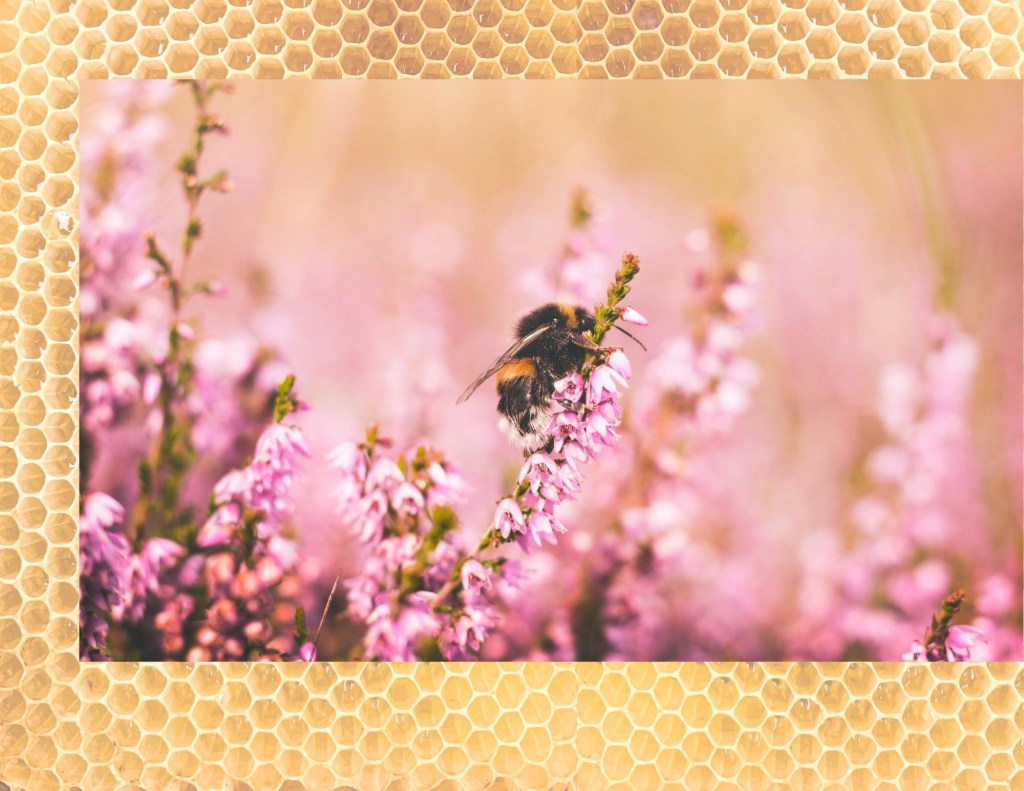
Photography by Josephine Amalie Paysen, Upsplash

I have always been drawn to honeybees, mesmerized by them and by the beekeepers who care for them. Once many years ago, I put on the beekeepers garb and that big, fashionable hat with the dark veil of netting. A friend who had several hives was teaching me how to handle the bees. I actually held them in my hands, rather hesitantly, while noticing how gently the beekeeper held them. From this uncomfortably close proximity, I was able to listen to the buzzing sound of the honeybees, buzzing that I did not hear as harsh, but rather hushed. The honeybees greeted him when he approached the hive. When he held them in his hands and they moved up his arms, it looked like a graceful dance of the beekeeper and his constantly moving honeybees totally in sync with one another. How could one not be enchanted by this wonder of creation?

Yesterday while reading a fascinating interview with Tom Blue Wolf, I was reminded of those breathtaking moments I spent with the honeybees. Tom is a descendant of the AniCoosa, which means “peaceful people,” who are also known as the Creek Tribe, which is a part of the Muscogee Nation. He is a Native American spiritual guide, a man in love with nature, and a keeper of honeybees. One of the questions he was asked in the interview was, “What is it like to be in the presence of the bees, to listen to them?” This is how Tom Blue Wolf responded.

Creator is always talking to us. Most of us are about seven echoes away from the true voice of the Creator. Try to get closer, try to get maybe three echoes away. If you get too close, it’s almost too intense for most people. Like a burning bush. Aaaaah!

His response to the follow-up question was just as intriguing . . .

“What do you and the bees do for each other on the spiritual journey?

How is your relationship to them a spiritual one?”

They give life, and we protect it. We keep the harm away from them; we protect them. I have been in love with honeybees all my life . . . We beekeepers are integral to the bees’ world. They know us; they are in our dreams. We tend to them barefoot, they crawl all over us, they kiss us, they tickle us. It’s hard to talk about. So, of course we think it’s spiritual. Absolutely. The bees love us and we love them.

That kind of spiritual relationship between a human being and one of God’s created inhabitants of the earth would place any of us in a sacred space. Tom Blue Wolf described a state of being as “three echoes away from the true voice of the Creator.” It’s the kind of space most of us never enter, and for so many reasons—we don’t have time; we’re busy with our jobs; we have children to care for, laundry to do, and a plethora of responsibilities listed on the to-do list we seldom complete. We simply get too busy to embrace the beauty of nature and draw closer to the Creator.

Tom Blue Wolf would summon us, if he could, to be “three echoes away” from God’s true voice. So he writes about the Creator, the creation and the importance of protecting it, and our role as caretakers. He urges humans to follow the guidelines of Saint Francis, who thought it critical to have a close and enduring relationship with nature.

From the years I spent as a postulant in the Order of Ecumenical Franciscans, I learned about the many ways Saint Frances was devoted to the best characteristics of what it means to be a human being on the planet: benevolent, loving, kind, gentle, merciful, reverent, respectful. He treated every life form with dignity.

Saint Francis helps us pull ourselves out of the trap of being completely focused on two-legged humans. An example of that shows how most people describe a destructive incident only be the impact it has on humans. They might report, for instance, that a plane crashed and “we lost 180 people.” Or “the fire killed four hundred people.” In contrast, Saint Francis would say, “Not only did we lose four hundred brothers and sisters, but we also lost three thousand acres of Mother Earth’s flesh. We lost sixty-four thousand winged ones. We lost untold amounts of water, and what’s left is toxic and the ones that swim are no longer with us.”

Like Saint Frances, perhaps we should focus more of our attention on the natural world, the magnificent creation given to us by the Creator God we worship. For one thing, attention to the creation and its Creator draws us into holy moments that we desperately need for our spiritual nurture. If we lean into those holy moments, and linger there for a time, the burdens we carry could become lighter. The cares that dishearten us might become uncommonly dim. And we just might find ourselves in a most sacred space—the one that places us “three echoes away” from God’s whisper. And as an added grace, perhaps we will also hear the gentle buzz of honeybees!

May it be so for each of us.

Beauty of Nature, Nature, Seeing, Vision

See! I Mean It!

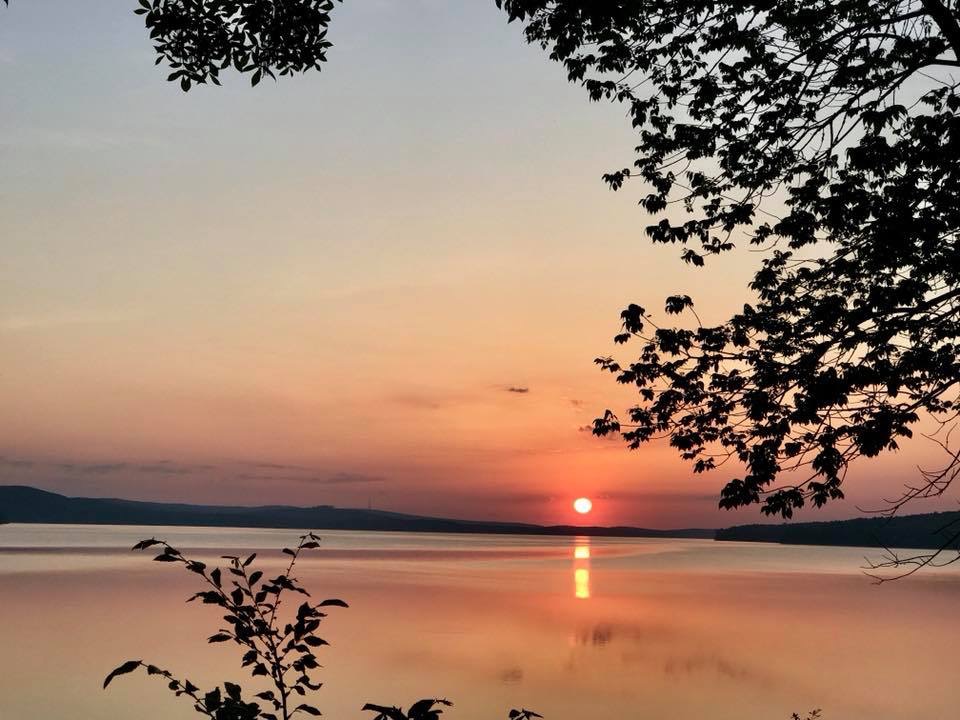
Sunset Over Beaver Lake Sunset ~ Northwest Arkansas ~ Photography by Gregory Ballos

One thing pandemic isolation has done is to inspire me by images of places I cannot see in person. Now that I live in Georgia, it is difficult to travel back home to Arkansas. So if I am to once again see and enjoy the beautiful landscapes in Arkansas, I must see them in images like this stunning photograph by Gregory Ballos.

There are images to see everywhere one looks—in nature, in books, in National Geographic photographs and videos, in blogs like this one, in one’s imagination, everywhere we are willing to look. The Creator paints swashes of vibrant color across nature’s enormous canvas, and it is there for those who have eyes to see. The sky, the forest, the mountains and the valleys, the oceans, the streams and rivers, the lakes and the waterfalls—in greens and blues and grays streaked with every hue imaginable—all of it is there if we take a moment to look.

To all my pandemic brothers and sisters all over the world, I pray that you are in the places you want to be seeing the things you want to see. Yet I am very aware that many of you, like me, are not where you truly want to be. I long for my home, for Arkansas, where I can see my son and my grandchildren and where I can see the natural beauty I took for granted in the thirty-five years I lived there. The pandemic holds me fast, right where I am at this moment, and I cannot see my heart’s desire.

There is another kind of seeing. It is the seeing that involves both the eyes and the soul. You and I have some control over what I call soul-seeing. I have to admit that my problem with soul-seeing is that I rarely truly see when I look. It doesn’t matter really whether I am looking at nature or at a photographic image, I seldom look long enough to really see. I admit that I am the problem, because I feel compelled to be busy, all the time, with projects and writing and various endeavors that have the potential to consume me. Truthfully, I allow those endeavors to consume me. I admit it. I am far too busy to intentionally see. Soul-seeing is being able to see beauty with your eyes and your soul.

You may have seen the lovely books of the late Beatrix Potter, who was was an English writer, illustrator, natural scientist and conservationist. From her life’s work, one can assume that she is a keen observer. I imagine that she was a person who was able to truly see. She wrote, in fact, that she was grateful to have what she called ”the seeing eye.”

Thank God I have the seeing eye, that is to say, as I lie in bed I can walk step by step on the fells and rough land seeing every stone and flower and patch of bog and cotton pass where my old legs will never take me again.
— Beatrix Potter

For Potter, seeing seemed natural in her ability to consider nature and conservation as well as prose and art. Seeing is natural. We see without thinking. Truth is, seeing seems easy, doesn’t it? Everyone with the gift of sight knows how to do it, and those who are unable to see physically figure out how to ”see” in myriads of ways.

I wonder about it, though. I wonder if I am too preoccupied to really see what’s around me. Is my busy-work more important to me than mindfulness? If seeing is so easy, how do we miss all of the magnificent beauty that surrounds us?

It’s a ponderable question

Why not take a few quiet, meditative moments to answer it? The video below is two minutes and eight seconds long. Can you spare that much time? If you can, I invite you to relax in those two minutes and eight seconds. I invite you to mindfulness, to be fully present in those few moments. I hope you will see, with your soul’s sight, nature’s beauty in this video.

See! I mean it!

Video editing by M. Anthony Black ~ Song: “The Tides of Time” ~ Artist: Joachim Horsley
Awakening, Bondage, Change, Creativity, Feelings, Freedom, Grace, Insanity, Mental health, Mindfulness, Nature, New Life, Night sky, Sacred Pauses, Self care, simple joys, simple pleasures, Skies, Stars, Transformation

From Insanity’s Bondage to Creativity’s Freedom

68C9C79A-BF63-420C-A135-37505D96C6C5
INSANITY
 

Not a word we are fond of. Nothing inspiring about the word. And when the word insanity is more than just a word, we shudder in its grasp. Insanity brings its own bondage, stealing one’s freedom to live, confiscating one’s creative expression. Insanity can be a complete, all-encompassing mental breakdown, even bordering on madness, OR it can be a state of being that most of us have experienced — irrationality, instability, disorientation, mania. Many people (noted scholars) have mused that “the definition of insanity is the most overused expression of all time.” (Salon.com)

Remember the declaration about “doing the same thing over and over again and expecting a different result?” Yes, I know you remember that definition, probably have said it yourself in an exasperating moment!

Where am I going with these bizarre introductory words?

I’m actually going to a place you may not expect. I’m going to the rush and swirl of color in one of my favorite paintings, A Starry Night by the Dutch Post-Impressionist painter Vincent van Gogh. The painting draws me in — into the little village with its steepled church, into a sky filled with sparkling stars, into the glorious luminance of the crescent moon, into the swirls of blues and whites and yellows. I have pondered many times what sort of mind and soul could have created a painting like this one.

The story behind A Starry Night is the unnerving story of Van Gogh. A few months after experiencing a mental breakdown on December 23, 1988 that resulted in the self-mutilation of his left ear, Van Gogh voluntarily admitted himself to the Saint-Paul-de-Mausole Lunatic Asylum. During the year Van Gogh stayed at the asylum, his prolific output of paintings continued and he produced some of the best-known works of his career. A Starry Night was painted by around June 18, the date he wrote to his brother Theo to say he had a new study of a starry sky.

A Starry Night was the only nocturnal painting in the series of views he saw from his bedroom window. In early June, Vincent wrote to Theo, “This morning I saw the countryside from my window a long time before sunrise with nothing but the morning star, which looked very big”. Researchers have determined that Venus was indeed visible at dawn in Provence in the spring of 1889, and was at that time nearly as bright as it could be. So the brightest “star” in the painting, just to the viewer’s right of the cypress tree, is actually Venus.

Too much information? Probably, but here’s my point that is not really about insanity at all. Rather, it’s about breaking free from bondage and taking back my life. You see, sometimes the sight of a big, bright morning star can replace whatever fear or angst I am feeling. Sometimes looking into the deep of a starry night can carry me to resplendent places. Sometimes even my slight insanity can transport me to my deepest expressions of creativity.

For me, insanity is my incessant scurrying around with too many things to do, a kind of mania. That frenzied scurrying is of my own choosing and therefore, leans a little too close to self-imposed insanity. I wonder if instead of that scurrying life of bondage, I could make time for moments of thought that would enable me to say something like what Vincent Van Gogh said from his asylum: 

“This morning I saw the countryside from my window a long time before sunrise with nothing but the morning star — the brightest star — which looked very big!“

Contemplate for a moment the insanity of a life encumbered — filled to overflowing with too many things to do — compared with a life of stargazing that might just awaken fresh and bright creativity in you.

As for me, I’m heading toward a spiritual transformation — a life of sacred pauses, a stargazing life, a grace-filled re-awakening!

I hope you are, too.

Beauty of Nature, Bible, Birdsong, Comfort, Darkness, Ecclesiastes, Emotions, God’s Gift of Stars, healing, Hope, Joy, Laughter, life, Loss, Music, Nature, Psalms, Restoration, simple joys, Stars, Trees, Troubles

Almost Magic!

3A2F0634-063D-4F26-B01F-F36B8CFE6EF9
Photo by James Ronan,  FOAP/Getty Images

Today, while minding my own business — and browsing the Better Homes & Gardens website — I stumbled across a stunning image of a tree. Those of you who know me, know that I have had a lifelong passion for trees. Trees, for me, are not only beautiful, they also take me often into a spiritual place. This morning while looking at the bark of the Rainbow Eucalyptus tree (Eucalyptus deglupta), my thought was, “This is almost magic! It can’t be real!”

Rainbow Eucalyptus trees look too beautiful to be real (but they are!) (BH&G) 

These  trees have an astounding multicolored bark that looks like it’s been decorated with a humongous paintbrush. They seem like something one might imagine, or see in a fantasy movie, or discover in a Dr. Seuss book. But they do grow naturally with a brilliantly colored bark. The Rainbow Eucalyptus, which grow 100 to 200 feet tall, are native to tropical regions like the Philippines, Papua New Guinea, Indonesia and even in the most southern parts of the U.S. “Though pictures of these trees are stunning, they don’t quite capture the awe of seeing them in person.

A real rainbow eucalyptus can stop you in your tracks, so if you have the chance to travel to see them, it’s well worth the journey. (BH&G)

As you would expect, I did some research to find places where I could see this magical tree in person. San Diego, California, is actually becoming a travel destination for seeing these trees. One can see them at Balboa Park, along Sports Arena Boulevard, at the San Diego Zoo, and in parts of Mission Bay. One can also see them in parts of Florida, Hawaii and Texas. So there really are a few places you can see a Rainbow Eucalyptus without needing a passport.

You might ask, “What’s so important about a tree that looks fake?” And that would be a good question. I’m not sure I have a coherent answer, but I’ll give it a shot. Sometimes we find ourselves in places that feel “blah.” We’ve lost our sense of direction and maybe even our will to move forward in life. Those times can come to us because of grief, illness, family challenges, concern for our children, stagnancy in our careers, waning spirituality or simply feeling out of sorts. Hundreds of life circumstances can bring us to a lethargic or depressed place in life. It’s not a very good place to be, and most of us wonder how we got to such a place.

In those times (and there have been many) when lethargy got the best of me, I tended to search for a bit of magic. No ordinary remedy seemed adequate. I just needed some magic and I have discovered over many years that magic can be found in a myriad of places, beginning with some very hope-filled passages of Scripture.

There is nothing better for mortals than to eat and drink, and find enjoyment in their toil. This also, I saw, is from the hand of God; for apart from him who can eat or who can have enjoyment? For to the one who pleases him God gives wisdom and knowledge and joy . . .
— Ecclesiastes 2:24-26 (NRSV)

In the day of prosperity be joyful, and in the day of adversity consider; God has made the one as well as the other . . .
— Ecclesiastes 7:14 (NRSV)

So I commend enjoyment, for there is nothing better for people under the sun than to eat, and drink, and enjoy themselves, for this will go with them in their toil through the days of life that God gives them under the sun.
— Ecclesiastes 8:15 (NRSV)

For you shall go out in joy
and be led forth in peace;
the mountains and the hills before you
shall break forth into singing,
and all the trees of the field shall clap their hands.

— Isaiah 55:12 (ESV)

Nehemiah, who was the governor, and Ezra the priest and scribe, and the Levites who taught the people said to all the people, “This day is holy to the Lord your God; do not mourn or weep.” For all the people wept when they heard the words of the law. Then he said to them, “Go your way, eat the fat and drink sweet wine and send portions of them to those for whom nothing is prepared, for this day is holy to our Lord; and do not be grieved, for the joy of the Lord is your strength . . .” And all the people went their way to eat and drink and to send portions and to make great rejoicing . . .
— Nehemiah 8:9-12 (NRSV)

And always, words from the Psalmist:

You show me the path of life.
In your presence there is fullness of joy;
in your right hand are pleasures forevermore.

— Psalm 16:11 (NRSV)

I believe that I shall see the goodness of the Lord in the land of the living.
— Psalm 27:13 (NRSV)

Delight yourself in the Lord, and he will give you the desires of your heart.
— Psalm 37:4 (ESV)

These messages from the pages of the Bible bring me joy and a bit of relief from feeling down. Being lifted from depression, sadness, the doldrums and other similar difficult seasons of life can feel like magic, magic that can be found in lots of places — if we’re paying attention. The magic may be found in a forest with a verdant canopy of leaves we can see if we look up. It may be found in the laughter of a child or in listening to joyful songs, the rhythmic melody moving through the heart. Magic may be found in loving relationships, in a garden, in a place of prayer and contemplation. You and I might find magic in birdsong or in the cloud shapes we see in the morning sky. We can even find magic in the darkest of our nights — for 100 thousand million stars sparkle for us in the Milky Way — a gift from the Creator, shining out of the darkness.

4D690E1C-A9E8-491E-8019-44F2602378A5
Photo by Danita Delimont/Getty Images

Today, I found magic in the most unlikely place — in the bark of Rainbow Eucalyptus trees. At least it felt like almost magic! I happened upon this treasure of nature quite by accident, or perhaps it was by providence. Anyway, catching sight of this whimsical, majestic tree brought me the joy of remembering afresh the varied potpourri of the gifts of creation, coming from God, the Father/Mother of lights.

Every good gift and every perfect gift is from above, and comes down from the Father of lights, with whom there is no variableness nor shadow of turning.
— James 1:17 (NKJV)

Thanks be to God for unspeakable gifts of grace. Amen.


Acts 42, anxiety, Awareness, Beauty of Nature, Birdsong, Creation, Faith, Fear, Grace, healing, Hope, Humbug, journey, Life Journeys, Light, Mindfulness, Nature, New Year, peace, Quiet, Reflection, Self Awareness, Self care, simple pleasures, Soul

Finding Simple Pleasures

EF207F13-682F-4572-BB5B-F4AAAB1EDA50
A Saturday of football — what a simple pleasure! I am a fan of certain teams (Roll Tide!), but I am definitely not a football fanatic. And yet, this morning while half-watching Sportscenter, I realized that watching with Fred, not having to focus that much, resting in the ordinary seemed like a simple pleasure.

There are many simple pleasures, of course, far more soulful than watching football — taking a walk in the splendor of nature, listening to birdsong, snuggling with your puppy, looking up at the night’s moon and stars, taking a walk on a labyrinth’s spiritual path . . . There are so many more simple pleasures in life, and most of them do not even require a trip to the grocery store. They cost us nothing, but their worth is priceless.

These are the simple moments that caress the soul, bring peace and calm to the heart and enliven a wounded spirit. These moments, and others like them, are the moments we desperately need, especially in times when we are burdened with the weight of the world, languishing in darkness.

I have learned some things about a wounded spirit: that woundedness happens to all of us; that “dark nights of the soul” happen to everyone at some time in life; that the wounded spirit does not always require sophisticated remedies; that a simple pleasure is sometimes all it takes to begin a healing journey.

The important factor is self-awareness, being mindful of the soul’s health, accepting the reality that healing will require us to self-intervene and that our intervention could begin with entering into a simple pleasure. One worthy New Year’s resolution is to intentionally identify the simple pleasures that feed our souls and then to allow a simple pleasure to enfold us in contemplation.

Normally, I would say “bah humbug” to New Year’s Resolutions that we make, break, and then feel guilty about for an entire year! But a resolution to discover the simple pleasures that give us life is one worthy resolution. So I challenge you to look and listen for the simple pleasures that are “you,” and to hold them near whenever you are experiencing a “dark night of the soul.”

“There comes a time when both body and soul enter into such a vast darkness that one loses light,” wrote Mechtild of Magdeburg. There comes a time when the soul “sinks down into the night.”

Her words are the words of one who knew spiritual journey and seasons of darkness. There is no doubt that at some time throughout your life, you will find yourself traveling the spiritual night. I do know this within my place of deep knowing: when I give myself to spiritual journeying, allowing myself the peace of a simple pleasure that calms my spirit, I realize that God always invites us beyond where we are.

God guides us on the spiritual journey that sometimes means winding through a dark wood. The darkness may frighten us, but it is a necessary part of the trip. When we panic in the darkness, we must try to understand that it’s a holy dark and that the idea is to surrender to it and journey through until we reach God’s light.

And then on to simple pleasures!372C6D47-6761-412E-AACF-420F5B1EE76D

God will be present beside us —- in the light of simple pleasures and in the soul’s dark night.

That is the gift, the grace, that God has freely given to us, and for that we give thanks.

Community, Division, Friendship, Grace, Kindness, Nature, Prayer, Reflection, Relationship, Respect, Transformation

“Always Stay Humble and Kind”

0435A7FB-18AC-4222-A445-B6B10556EC50
Even the earth’s creatures find ways to get along. Refusing to follow the lovely example of the giraffe and the butterfly, we seem to be having a big problem with getting along. Now we have to admit that the giraffe and the butterfly could not be more different from each other, but somehow the butterfly lands safely on the giraffe’s snout. It’s a reminder of the image we have loved for so long — the lion lying down with the lamb — a symbol of peaceful times.

We do not typically have that kind of peaceful relationship with those who are not like us, and in these days, we do not enjoy peaceful times. It’s nothing new, really, but we are infinitely aware that our country is polarized along partisan lines. Neither side trusts the other. Respect for one another is flagging. Kindness is in short supply. 

But this is not a commentary on current politics. Instead, I want to talk about being humble and kind to one another. One of my favorite singers, Tim McGraw, sings the song “Humble and Kind,” a gentle, sweet song written by Lori McKenna. The song’s simple lyrics remind me that kindness still exists.

Hold the door, say please, say thank you;
Don’t steal, don’t cheat, and don’t lie;
I know you got mountains to climb but
Always stay humble and kind.

When those dreams you’re dreamin’ come to you,
When the work you put in is realized,
Let yourself feel the pride but
Always stay humble and kind.

Go to church ’cause your momma says to,
Visit grandpa every chance that you can,
It won’t be a waste of time,
Always stay humble and kind.

Don’t take for granted the love this life gives you
When you get where you’re going.
Don’t forget turn back around,
Help the next one in line,
Always stay humble and kind.

I have to ask myself what I must change about my life in order to be more humble and kind. What must happen within me to enable me to offer unconditional grace to others? I almost feel ashamed that I need to ask myself such questions, but the truth is that any person can be socialized by her environment. If I constantly watch on my television the cynical, disrespectful actions of one person towards another, that exposure might well affect the way I relate to others. I’m sad to admit that the toxic political environment we live in has definitely harmed my relationship with several friends. and I find that unacceptable. 

Where was my sense of loyalty to my friends? Was there no way to maintain respectful relationships and friendships? Could I not have offered grace to my friends? Didn’t my friends mean more to me than my ideology?

I have wrestled with such questions for months. I have concluded a few realities: that I did not have the power to change the toxicity of my environment; that I could not control the emotions and actions of my friends; that I could not force communication with friends who stood steadfastly, even stubbornly, on their own beliefs.

What I could have done was pray more, spend more contemplative time with God and focus on the respectful and kind relationships I can see all around me. In short, I could have immersed myself in all things good, in the peaceful beauty of God’s creation and in the miraculous movement of the universe to unite all things in love.

I did not do that, but after months of experiencing all manner of rancor, I think it’s time for me to find in myself transformative grace through spiritual immersion, the kind of spiritual contemplation that changes everything. And by the way, I have it on good authority that always being humble and kind can be spiritually transforming. 

Do not be conformed to this world, but be transformed by the renewing of your mind, so that you may prove what the will of God is, that which is good and acceptable and perfect.

— Romans 12:2 New American Standard Bible (NASB)


F9FA5D3C-53F0-4043-8A72-F9E2D63F7349

On another note, please pray for me as I look toward my kidney transplant on November 15th. I am grateful that you are walking with me on this journey that often felt so frightening. Your thoughts and prayers mean so much. If you would like to read the story of my illness, please visit the Georgia Transplant Foundation’s website at this link:

http://client.gatransplant.org/goto/KathyMFindley

A “Go Fund Me” page is set up for contributions to help with the enormous costs related to the transplant, including medications, housing costs for the month we have to stay near the transplant center, and other unforeseeable costs for my care following the transplant. If you can, please be a part of my transplant journey by making a contribution at this link:

https://bit.ly/33KXZOj


Beauty of Nature, Clouds, Contemplation, Creation, Fear, God's presence, Meditation, Mindfulness, Mountaintop, Nature, Ocean, Prayer, Reflection, Serenity, Silence, Skies, Spiritual Discipline, Stillness

Imposing Silence Upon Our Cares

3FEABE5F-CF16-4EB2-A5A2-89DD29771C74
Photography by Jennifer Blackwell

The only people who pray well are those who keep praying!
— Richard Rohr

Sometimes you just need to get away. You need to push back from your daily grind and be in a space that gives you life-restoring energy. The place may be a mountaintop or beside a sea. The place you love might be on a sailboat watching the changing colors of the sky. The need is a time of contemplation although I admit that contemplation is easier said than done.

Richard Rohr describes contemplation using the frightening word, “dying,” something we usually do not want to consider. Still his definition is compelling.

Contemplative prayer is one way to practice imposing “silence upon our cares, our desires and our imaginings.” Contemplative practice might be five or twenty minutes of “dying,” of letting go of the small mind in order to experience the big mind, of letting go of the false self in order to experience the True Self, of letting go of the illusion of our separation from God in order to experience our inherent union.

I am intrigued by the phrases “imposing silence upon our cares!” dying” and “letting go of the illusion of our separation from God.” We readily recall words we have long known: “Be still, and know that I am God,” and we know that we can move into God’s real and palpable presence. Still moving into God’s presence and lingering there is easier said than done. We are slaves to our lives, to our every day concerns and responsibilities. And sometimes times our responsibilities — though they may be important to us — take too much from us, robbing us of our life’s spiritual depth.

Again, Richard Rohr offers deep wisdom:

Each day that dawns is a celebration of the fact that we have been invited to consider how our lives are spent; how we embrace and recoil from the . . . darkness.

So for me, I would like to watch the hued, expansive skies — the moving clouds and the sparkle of the sun. I would like to find silence in the vastness of God’s creation, in a place where my view includes the beauty of verdant green pastures, the sound of the never-ending surf, the feel of the wind in my face, the shadows cast upon a high mountain. It takes the beauty of such a place to calm my spirit and stop the whirring of my mind. In such a place, I can try to enter into the posture of prayer and contemplation.

Don’t be fooled. Contemplation is called a practice because it truly is a practice that we must try again and again. Contemplation is not easy for many of us. It can even be disconcerting because, in truth, contemplation is meeting as much reality as we can handle in its most simple and immediate form — without filters, judgments, or commentaries. Contemplation moves us to the space our soul craves, and in that place we gain a renewal of our spirit.

Anything worth doing is worth practicing for as much or as long as it takes. Yes, at times it feels like forcing ourselves to be still for an interminable length of time and to force ourselves to fully concentrate on petitioning and listening prayer. No doubt, being silent with ourselves can be frightening. “Imposing silence upon our cares” can be threatening. But in the practice of contemplation we can hear God’s whisper clearer and sense God’s presence more deeply and fully.

I wish for you the time and space you need, the time to take in the breathtaking beauty of God’s creation, the stilling of your mind and the calming of your spirit that can guide you into the presence of God.

God is our refuge and strength, a very present help in trouble.

Therefore we will not fear, though the earth should change,
though the mountains shake in the heart of the sea,

though its waters roar and foam,
though the mountains tremble with its tumult.

“Be still, and know that I am God!”

The Lord of hosts is with us; the God of Jacob is our refuge.

— From Psalm 46 (NRSV)

Beauty of Nature, Birdsong, Change, Comfort, Inspiration, Introspection, Nature, peace, Prayer, Rebirth, Reflection, simple joys, Trees, Unfaith

Stay Awhile!

E0A3E9A4-310C-4286-8DD1-F07DCB104F2C

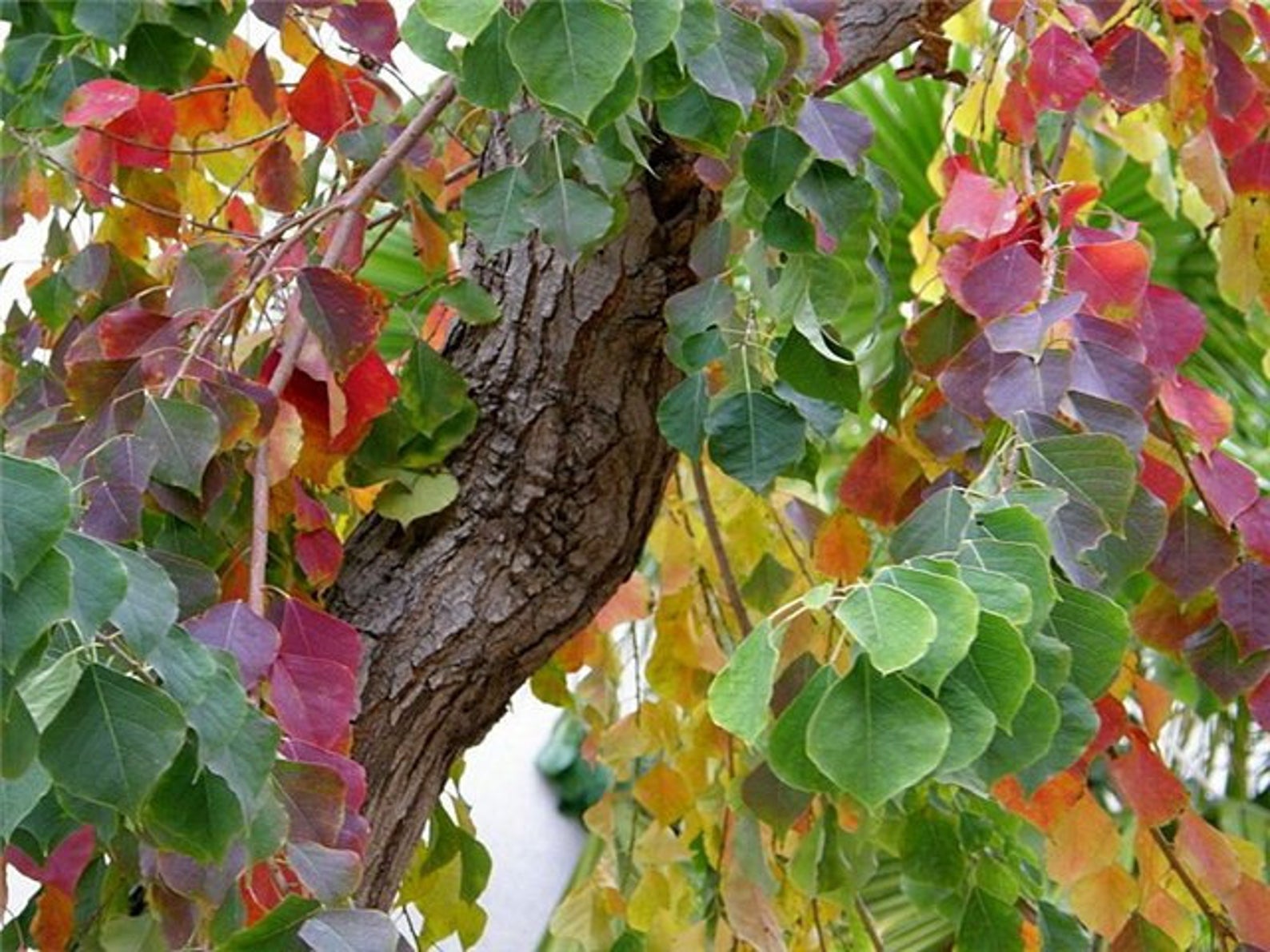
I am a lover of trees — all trees. I religiously follow the life cycle of the only tree in my yard. It’s a Chinese Tallow tree and every botanist calls it a nuisance tree, an invasive species that should be controlled. I find the tree fascinating, even mesmerizing, as it changes.

57891E38-0267-4B76-8B1C-7F0BCEEE1412

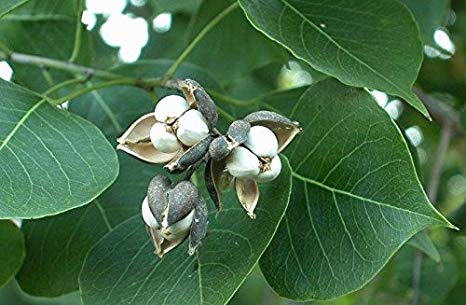
Not only do the heart-shaped, bright green leaves turn yellow, orange, purple and red in autumn, but the tree produces seeds that start out green, turn brown-black and then white. The changing colors call my attention to my constant life changes and, in a way, bring the comfort of knowing that we really do survive life changes.

87E8B050-CC6B-4AC6-B717-AE5D7FEB5E8A


The tree captures my spirit every year as autumn approaches. In a way, I meditate on my tallow tree. I watch its changes. I feel the raindrops of its sticky sap that drips on me when I’m under it. I listen to the birdsong that echoes among its boughs. I even hear my tree whisper to me sometimes when the breeze blows through it in just the right way. The tree can call me to introspection. It can inspire me on days when inspiration is beyond my grasp and unfaith threatens. On those days, the inspiration that stirs in me is peace. It is prayer.

I have to admit, though, that I walk past my tree dozens of times a day without notice, taking its shade for granted and completely unaware of its enchanting beauty. Therein lies the human dilemma of dispassionate inattention, our failure to notice or to take in nature’s extravagance. It is when a tree is just a tree. It is when we miss the spiritual experience that creation offers us as gift. 

B5263037-5BBB-4505-AF52-1DC541DB2290There is no better expression I could share than Mary Oliver’s poem, When I Am Among Trees.

When I am among the trees, 
especially the willows and the honey locust,
equally the beech, the oaks, and the pines, 
they give off such hints of gladness.

I would almost say that they save me, and daily.

I am so distant from the hope of myself,
in which I have goodness, and discernment, 
and never hurry through the world 
but walk slowly, and bow often. 

Around me the trees stir in their leaves
and call out, “Stay awhile.”

The light flows from their branches.

And they call again, “It’s simple,”
they say, “and you, too, have come
into the world to do this, to go easy,
to be filled with light, and to shine.”

1EBD15F8-1BF9-468E-9543-51C89F27DCCAOh, to claim our place in the world, to go easy, to embody the message of the trees: “It’s simple!” And then to remember that the changing seed pod, as its life cycle moves around, is really a portrait of rebirth.
On my way to the car dozens of times a week, might I take notice as I pass my tree, never hurrying, walking slowly and bowing often. Might I see more and hear more and feel more, recalling Mary Oliver’s words:

Around me the trees stir in their leaves
and call out, “Stay awhile.”


******************************

On another note, please pray for me as I await a life-saving kidney transplant. I am grateful that you are walking with me on this journey that often feels so frightening. Your thoughts and prayers mean so much. If you would like to read the story of my illness, please visit the Georgia Transplant Foundation’s website at this link:

http://client.gatransplant.org/goto/KathyMFindley

A “Go Fund Me” page is set up for contributions to help with the enormous costs related to the transplant, including medications, housing costs for the month we have to stay near the transplant center, and other unforeseeable costs for my care following the transplant. If you can, please be a part of my transplant journey by making a contribution at this link:

https://bit.ly/33KXZOj


Celtic Prayers, Contemplation, God's presence, healing, Holy Ground, Meditation, Nature, Prayer, Serenity, Thin Places, Worship

Thin Places

49F7CE73-0BD4-4B1A-ACD6-CAF8D1EA6816

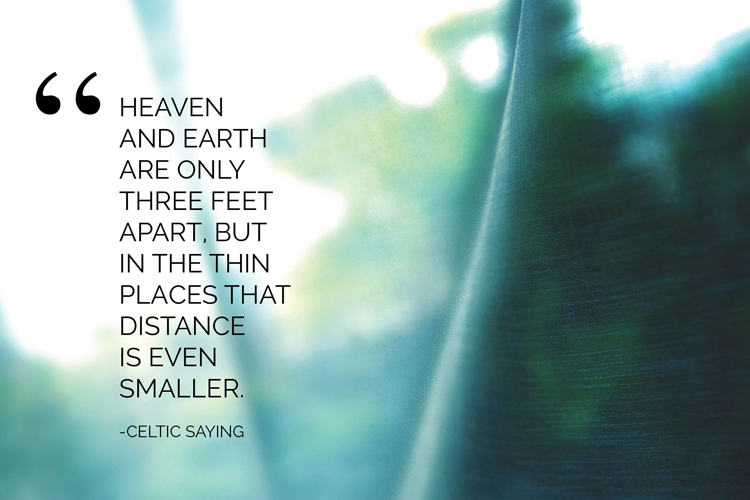
I am thinking today about thin places, those moments when the veil between heaven and earth seems very thin, sacred moments that emerge from a spiritual practice or a deep conversation that pierces the soul. A thin place can be shared with another seeker, and, in fact, finding a thin place might be even more meaningful in the presence of a friend.

It seems that “thin place” is a term that was used for millennia to describe a place in time where the space between heaven and earth grows thin, a moment in time where the sacred and the secular seem to meet. In thin places, the distance between heaven and earth collapses and we’re able to catch glimpses of the divine, or the transcendent, or the Infinite.

“Heaven and earth,” the Celtic saying goes, “are only three feet apart, but in thin places that distance is even shorter.”

John Pavlovitz describes it like this:

Religious people have often talked about the thin places; those moments when the wall between humanity and divinity is like onion-skin. 

It seems that a thin place is a holy moment. It is a sacred moment, even without a hymn or a prayer or a pew or a minister. It a place of “God with us.”

Thin places can transform us or unmask us. Thin places are often sacred sites or buildings — like a temple or a mosque, like a shrine or a monastery, like a cathedral or an old country church. But thin places do not have to be sacred buildings or holy sites. A forest or a flowing stream can be a thin place. A thin place might be found on a mountaintop or in a verdant valley or even in your back yard.

Thin places don’t always have to be special places or “holy” times. We can experience thin places anywhere and every day.

And that’s what we need to do. In a world so filled with threatening events and people that frighten us, we need to rest in thin places where we might just find that we are in a place where the space between humanity and divinity is ever so delicate, thin enough to envelop us in the comfort of God’s grace.

Let’s stop “life” for a moment and rest in a thin place. Meet me there.

#MeToo, Beauty of Nature, Comfort, Fear, God's presence, Growing up, healing, Holy Ground, Home, Hope, Memories, Nature, Roots, Sexual abuse, Trees, Violence against women and children, Weeping

A Safe and Gentle Presence

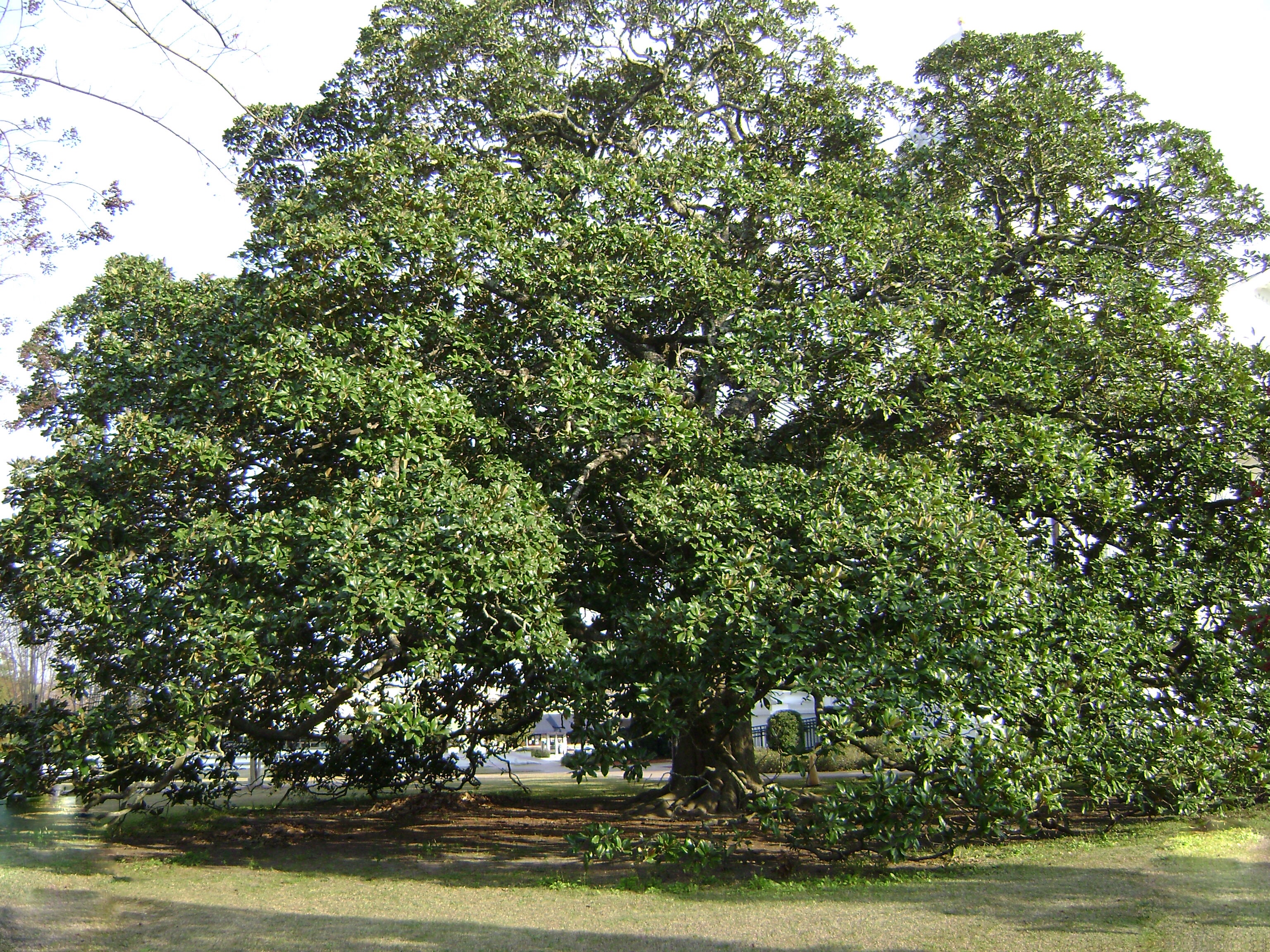
D10C41D6-4875-479D-B4BC-40762C72FD3CIf you know me well, you will know that I have a love affair with trees. I always have, ever since I was a little girl playing among the protruding, gnarly roots of the enormous, beautiful magnolia tree in our yard. I would stay there for hours sometimes, finding under the tree’s canopy my own personal and private hiding place. Though it was ill advised, the tree endured carvings in its trunk without complaining even once. That tree had multiple carved hearts, each with an arrow and the names of boyfriends that came and went.

Today I was reminded how much I love trees when I received a mailing from the Arbor Day Foundation asking me to complete a survey, which I promptly did. As a token of appreciation for completing the survey, the Arbor Day Foundation will send me a calendar, a tree book and ten free trees.

It was an offer I couldn’t refuse, dreaming of having ten new trees in my yard, but of course, knowing that the free trees they send me will be five inches tall. No matter. I’ll plant them and nurse them and hope for the best.

I was also prompted by the Arbor Day Foundation to wonder about state trees. Fred and I tried to guess a few, but eventually resorted to Wikipedia for a list. Interesting list, ranging from common trees like the ubiquitous pine all the way to more exotic-sounding trees like Utah’s Quaking Aspen, Pennsylvania’s Eastern Hemlock and Arizona’s Blue Palo Verde.

23E0BDA9-6047-4A1B-AE2A-131CC85D8385Now that you’ve had a lesson on state trees that you did not ask for, I will tell you what’s up with me and trees. The lifelong connection happened when I was just a little girl. I lived with an abusive father who made my home a very unsafe place. Other forms of violence were prevalent as well: shouting and abusive language, threats of physical harm and a violent uncle that came with a gun and broke into our house by smashing the glass in our front door.

I was a child of fear, constant fear, and so I found hiding places under our trees, two huge magnolias, an even taller pecan tree, and even under the branches of Miss Martha Tebshereny’s plum tree. An occasional plum was a bonus!

Here’s the best truth: that it is incredibly powerful that out of a troubled childhood, I brought happy memories. I brought with me into my adult years images of safety; moments of playfulness; an appreciation of nature’s beauty; the taste of fresh figs, plums and pecans; a lovely collection of magnolia cones; the treasure of memories and an abiding love of trees.

80B6B271-36DF-445D-B9B3-147572ED24FE
She wept a river of tears
holy water, sent to soften the sharp edges of sorrow
a gentle hollowing out, carving new chambers in her heart
a hallowed vessel . . . 
― Kate Mullane Robertson

There was healing under the weeping branches of those trees. There was hope. I think it was Holy Ground.

That’s something for which I am very grateful. I am grateful to a loving and compassionate God, who, I am quite sure, met me a few times under one of those childhood trees. God, who knows how important it is to protect children,  and graced me with a safe and gentle presence. Because of that, I made it out of a home filled with violence to a better, safer world.

Thanks be to God.


Beauty of Nature, Bible, Darkness, Ecclesiastes, Emotions, Faith, Gnat Line, God, Hope, Joy, Nature, simple joys, Skies

Blue Skies and Gentle Breezes

137A3E93-F8AA-42BF-BC03-8F75DE8302D8

Blue skies and gentle breezes. That’s Macon most of the time. Oh, and you have to factor in the gnats, the annoying gnats that we have because we live on the gnat line.

And there really is a such thing. Look it up. (http://southofthegnatline.blogspot.com/p/gnat-line-101_28.html) 

You will find that not only is the gnat line a real thing, but that it also sits directly on top of Macon, Georgia. No one told me that before I moved here.

Still, there are blue skies and gentle breezes this morning. For a few seconds, I am fully in the moment, fully aware of the blue skies over me and the warm breeze that points my mind to all that is good, to all the things about nature that we can count on.

Gnats notwithstanding.

In some ways, it’s a picture of life —the beauty of blue skies and gentle breezes, right along with the persistent aggravation of gnats buzzing your face. Certainly, life is like that for me. There are every day graces accompanied with aggravations, challenges and sometimes troubles. Life brings days of deep mourning sometimes and times for gladness at other times. 

Most thoughts these days take me to the very real possibility that I will receive a new kidney. The thought of it is both exhilarating and terrifying. I would not be me if I did not have the troubling thought that I might die in the middle of surgery. Or that I might contract a lethal infection and die of that. Or maybe I’ll be be compromised from the procedure and not recover.

On the other hand, maybe I’ll thrive with a new kidney. Maybe I will feel better than I have felt in five years. Maybe it’s true that I’ll live longer. Maybe life will begin again, fresh and new and full of possibilities. I love this message from the writer of Ecclesiastes.

So I commend the enjoyment of life, because there is nothing better for a person under the sun than to eat and drink and be glad. Then joy will accompany them in their toil all the days of the life God has given them under the sun.

— Ecclesiastes 8:15 (New International Version (NIV)

What a good and gracious thought! The promise that as we are enjoying life, joy will be in us through whatever “toil” we face. Struggle, trouble, travail — we experience all of these in life, right along with the joy.

So as I contemplate a kidney transplant, I might just think of it as one of life’s “toils” that, by God’s grace, will be accompanied by joy. 

I think I can do this. After all, “the joy of the Lord is my strength.” (Nehemiah 8:10)

Blue skies and gentle breezes all the way!

Pesky gnats notwithstanding!


Beauty of Nature, Birdsong, Inspiration, Joy, Laughter, life, Magic, Nature, simple joys

Life Can Lose Its Magic


ADD6C2DE-A04C-4699-93E8-97923440A118
Photography  from Lize Bard’s blog, Haiku out of Africa at https://wandererhaiku.wordpress.com/2018/07/18/aura/

Life can lose its magic. 

It happens. 

It happens when labor eclipses the joy of leisure. 

It happens when busyness replaces moments of re-creation. 

It happens when meaningless prayers are more common than deep spiritual contemplation. 

It happens when relationships are taken for granted. 

It happens when entitlement replaces gratitude. 

It happens when despondency is more present that genuine laughter. 

It happens when nature becomes commonplace and we miss its breathtaking beauty. 

It happens when we hear the sounds of the birds as white noise instead of captivating birdsong. 

It happens when the dawn’s sunrise happens without our notice.

It happens when a serene, pink sunset that gently paints the sky loses its enchantment.

it happens when music becomes noise rather than the soul’s inspiration.

It happens when the shimmer of the moon is just a nightly expectation and the sparkle of the stars in the night sky becomes ordinary.

Life can lose its magic. 

How tragic.


Comfort, Faith, God's presence, Inspiration, Nature

My Lord Is Near Me All the Time

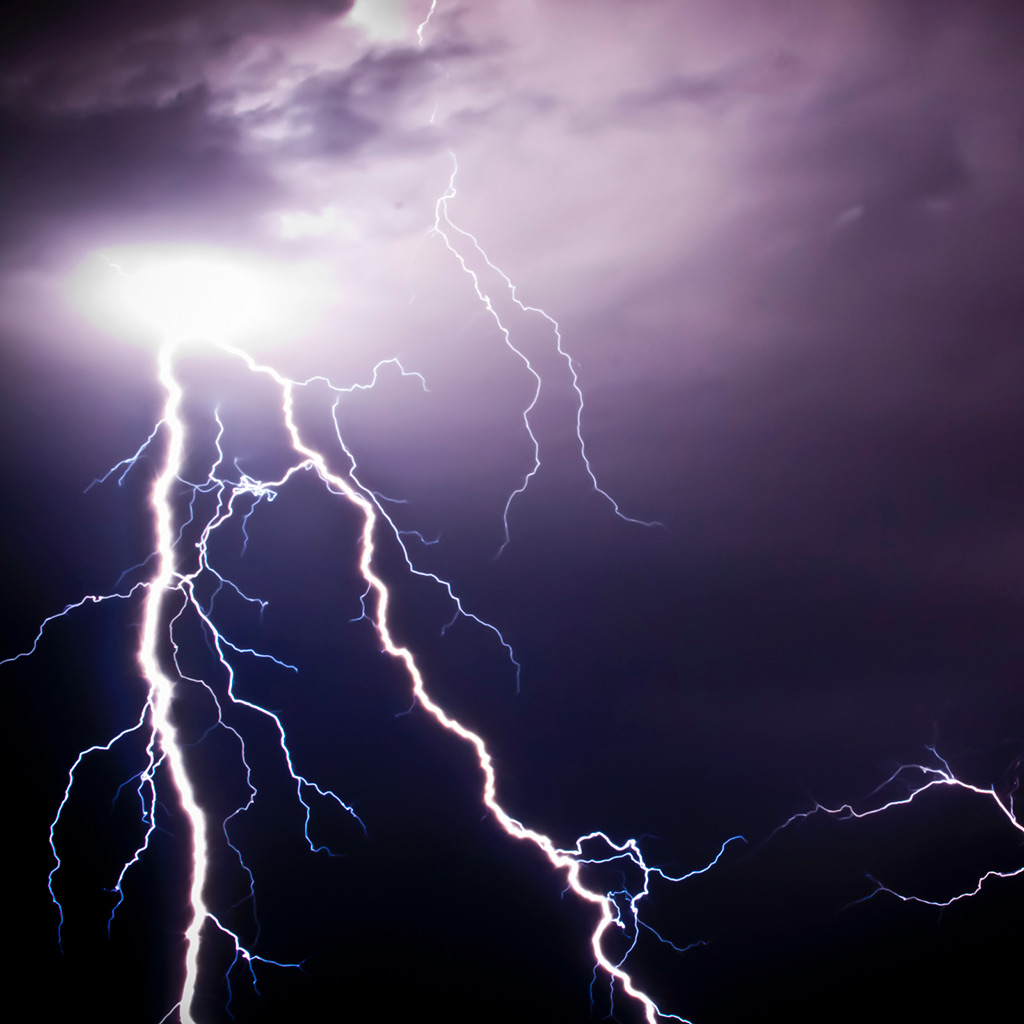
635D7269-16B0-4C30-8A96-05536FDFF587Magnificent power! On a ride through the Georgia countryside, I witnessed nature’s beauty in a thunderstorm. The sky lit up from one end of the horizon to the other and then enormous streaks of lightning flashed in astounding display. It took my breath away, not because of its danger, but because of its brilliance. I struggle to find words to describe it.

Here’s how to scientifically explain it. Within a thundercloud way up in the sky, many small bits of ice (frozen raindrops) bump into each other as they move around in the air. All of those collisions create an electric charge. After a while, the whole cloud fills up with electrical charges.

And so it was tonight. I do not always find spiritual significance in acts of nature, but this night I was overwhelmed with the idea of the absolute power of God’s creation. At the same time, I considered my close relationship with Jesus.

God, whose ultimate power can be beyond our human comprehension, visited us through his Son who walked among us on this earth. All of it dawned on me in the midst of a powerful, resplendent thunderstorm that reminded me of the eternal truth of a beautiful hymn, “My Lord Is Near Me All The Time.” *

In the lightning flash across the sky
His mighty pow’r I see,
And I know if He can reign on high,
His light can shine on me.

I’ve seen it in the lightning, heard it in the thunder,
And felt it in the rain;
My Lord is near me all the time, My Lord is near me all the time.

When the thunder shakes the mighty hills
And trembles ev’ry tree,
Then I know a God so great and strong
Can surely harbor me.

I’ve seen it in the lightning, heard it in the thunder,
And felt it in the rain;
My Lord is near me all the time, My Lord is near me all the time.

When refreshing showers cool the earth
And sweep across the sea,
Then His rainbow shines within my heart,
His nearness comforts me.

I’ve seen it in the lightning, heard it in the thunder,
And felt it in the rain;
My Lord is near me all the time, My Lord is near me all the time.

As a child my overprotective grandmother made sure that lightening would frighten me. It worked because of her very frightened demeanor at the first sign of a storm. I remember how she gathered my brothers and me close beside her on the sofa, wrapping her gentle arms around us. At every clap of thunder, she screamed.

But as an adult, I actually love thunderstorms. When thunder roars, I hear it as a reminder of God’s strength. When lightning flashes across the sky, I see it as a marvel of God’s power. When I feel showers of rain, I feel God’s presence in the provision of life-giving water. In all of it, I am grateful for the nearness of a relationship with Christ. It is abiding truth: my Lord really is near me all the time.

Amen.

To listen to the hymn, “My Lord Is Near Me All the Time” click on the video below:

 
* Georgia hymn writer, Barbara Fowler Gaultney (1935-1974), turned to writing hymns as a source of hope and an expression of her faith. In tenuous health throughout her life, Gaultney was educated in the Atlanta public schools and attended the University of Georgia. While a member of the First Baptist Church of Forest Park near the Atlanta airport, she penned both the words and music to “My Lord Is Near Me All the Time.” Her minister of music, Julian Wilson, assisted her in submitting it for publication. Her hymn was first published in the Baptist church music periodical, The Church Musician, April 1960. It then appeared in the 1975 Baptist Hymnal and has become a favorite of many congregations.  (Harry Eskew, https://gabaptistworshipmusic.org/my-lord-is-near-me-all-the-time/)


Please feel free to contact me by completing the following form.

Go back

Your message has been sent

Warning
Warning
Warning

Warning.

Contemplation, Courage, Darkness, Discovering, Fear, Forest, life, Lostness, Nature, Spiritual growth

Finding Ourselves Lost

C61646A1-BE50-4157-A898-E77F1FF191AABecause I have no sense of direction at all, I have an irrational fear of getting lost. Do not tell me to go north or south. I will have no idea how to do that. You must instead say something like, “When you see McDonalds on the right, go past it. Then go past Wendys, Burger King and Barbaritos. Look just past Barbaritos, but on the other side of the road, and you’re there.” It’s a convoluted way of making sure I don’t lose my way. And if one of those fast food places were to close down, I’m lost. 

So as I am contemplating the fear of being lost, I find in my email this morning a meditation by Richard Rohr entitled, “Practice: Being Lost.” I wanted to slip right past that meditation, as I do not need or want to practice being lost. But something held me there, captive to this bizarre meditation that described being lost as a spiritual practice.

Psychologist and wilderness guide Bill Plotkin* highly recommends wandering in nature and experiencing the great gift of “finding ourselves lost.” He calls it “Soulcraft: Crossing into the Mysteries of Nature and Psyche,” and he means that we should find ourselves lost both literally in nature and metaphorically in the midst of life’s changes.

His words remind me that at least four conditions contribute to finding oneself lost: density that conceals paths, obstacles in the pathways that force you to detour, cluelessness about direction, and darkness. I would not like finding myself in a dense forest with boulders blocking some of the pathways, hopelessly lacking any sense of direction after a few detours, and knowing that the sun is setting and darkness will make everything even worse.

And yet . . . finding myself lost as a spiritual discipline seems to be beckoning to me to enter. As a lost wanderer, I might just learn to look deeply into the face of my aloneness and discover what truly gives me life and what doesn’t. I could discover inspiration, belonging, strength, resilience and wisdom in my own company — all by myself — not knowing which way to turn. Knowing only that God will meet me there and that I can “be” who I am, right where I am, lost in a discovering moment.

As David Whyte writes:

When wandering, there is immense value in “finding ourselves lost” because we can find something when we are lost, we can find our selves . . . 

Sometimes it takes darkness and the sweet confinement of your aloneness to learn that anything or anyone that does not bring you alive is too small for you.*   

I would like to be brave enough to give it a try in some spring wood where the verdant trees form a deep, dark canopy of privacy over my soul and where aloneness takes over my psyche. A place where God will meet me, where I can fully embrace finding myself lost, and where I might just find a few sparkles of light along the way.

I have to admit that this is a terrifying prospect for me. Darkness in a dense forest, alone, lost and scared . . . I’m just not sure about that. So maybe I should settle for the swing in my yard that’s just on the edge of the woods. Safer. More acceptable. And God will meet me there, too.

*Bill Plotkin, Soulcraft: Crossing into the Mysteries of Nature and Psyche (New World Library: 2003), 234, 248-249, 263.

*David Whyte, “Fire in the Earth,” Fire in the Earth, Many Rivers Press: 1992, 8.


Beauty of Nature, Discovering, Forest, Inspiration, Light, Nature, Ocean, peace, Serenity, Transformation

Beauty. Serenity. And a Spark of the Divine

4C981E9F-B1F2-4849-81D2-C7BA782BCDEE
Loon Park on Arkansas’ Lake Maumelle. Photography by Steven Nawojczyk. Entitled “Beauty. Serenity.”

In the middle of the natural beauty of Arkansas, my friend took a photograph and entitled it “Beauty. Serenity.” It prompted me to ponder that for a few moments.

Beauty. Serenity.

I wondered what in my life brings beauty and serenity to me and to those around me. The questions trickled through my mind slowly as I tried to place qualitative and quantitative strictures on beauty and serenity. (As if one could really quantify the whole of what beauty is or see pure serenity through a human lens.) My quest to try to interpret beauty and serenity went on into the night and into the rise of a new day. Still I could not nail it down. It is as elusive as a butterfly in flight, defying explanation.

As for beauty, it seems to be something I can see, something I can look at and see what lies beneath shapes and colors and texture and form. It is when something I see takes on life, and in it, I see a spark of the Divine.

To truly see beauty, I must intentionally expose myself to it and to its full potential. The blossom of a flower. The trees in a verdant forest. The ocean waves moving gently upon the shore. The sparkle of a flowing stream. The majesty of a range of mountains and the vibrant green of a valley.

In each of these visual images, I might very well see a spark of the Divine. But I must first look, and see, and linger before such beauty long enough to see its depth. I must look into a blossom and into the leaves of a forest. I must gaze upon the glory of a mountaintop and walk slowly through a valley of green. I must sit at the edge of the sea and watch the waves greet the shore.

And then there’s serenity, the state of being that always seems to escape me. Serenity is the peaceful sense of calm that envelops a person’s soul and spirit. But I must first allow it, embrace it, and welcome it. When I can do that — and I readily admit that I seldom can — the spark of the Divine I will see most clearly is the light of the spark within myself. I love the wonderfully positive affirmation written by Llewellyn Vaughan-Lee.

We have in us a divine spark that you can see. It’s a Light that shines in the human being. It’s our direct access to truth, our direct access to God. The purpose of all the spiritual practices that exist are to awaken that spark, to give it life, to give it energy, so that it can transform you. 

God, I would be transformed. Awaken that spark within me, so that its light will become a part of my very soul, Enliven in me the spark that brings transformation to every part of me that yearns for your Divine impulse.

The spark of the Divine is beauty and serenity all at once. It is in the moments that stop us in our tracks that we can truly see the beauty around us and within us.

It is in those unforgettable moments of life’s splendor, when we allow serenity to fully embrace us in gentle arms of peace, that we finally know deep rest.

It is when beauty and serenity link arms to surround us that we can truly know the spark of the Divine within. I recognize that spark, ever so often, in just a handful of my best moments. Even for that seldom-experienced grace, I am most thankful. 

So I wish for you the same kind of grace, that you might see beauty, know serenity, and visualize, within yourself, the spark of the Divine. The blessing I leave with you is best expressed by the 14th Century Persian poet, Hafiz.

I wish I could show you, when you are lonely or in the darkness, the astonishing light of your own being.


Beauty of Nature, Birdsong, Inspiration, Joy, Music, Nature, Praise, Singing

Every Bird’s a Songbird

11498DF6-463F-4716-8BB1-C853BBB20654
Art: “Songbirds in Apple Blossoms” by James Hautman.

As I sit on my porch this morning in a light, refreshing rain, the most prominent sound I hear is joyous birdsong, different strains of music from a variety of birds that co-habit in our tiny bird sanctuary. A statue of St. Francis appropriately stands among the feeders and the suet. The hummingbird feeders are in a separate spot, providing a banquet of sweet nectar to these delightful birds, whose fast moving wings create their most unique song.

I love to listen to the songbirds, and we are graciously blessed to live in a neighborhood with very few sounds — no traffic, no motorcycles, no speeding cars, usually not even people voices. Just the birdsong, with an occasional tree frog and the wonderful southern gift of cicadas. 

In my opinion, every bird is a songbird. According to scientists at The Nature Conservancy, the term “songbirds” refers to a wide range of bird species. Songbirds typically include finches, sparrows and warblers, but most often when someone is defining “songbird” they refer to beautifully colored birds that we’ve never heard of. The Nature Conservancy website features three: the Dickcissel, the Blackburnian Warbler, and the Kirtland’s Warbler.

I have never seen any of those birds, but I have heard lots of glorious birdsong. So I stand by my opinion that every bird’s a songbird. And in my better moments, I hear their songs as an offering to God, their songs of praise to God who gave them voice. During those times, I am drawn to the many beautiful and lyrical Psalms. This is one that is particularly moving to me

Praise the Lord, my soul.

Lord my God, you are very great; you are clothed with splendor and majesty.

You wrap yourself in light as with a garment;

You stretch out the heavens like a tent and lay the beams of your upper chambers on their waters.

You make the clouds your chariot and you ride on the wings of the wind.

You make the winds your messengers . . .

How many are your works, Lord!

In wisdom you made them all; the earth is full of your creatures.

There is the sea, vast and spacious, teeming with creatures beyond number — living things both large and small.

When you send your Spirit, they are created, and you renew the face of the ground.

You make springs gush forth in the valleys; they flow between the hills,

You give water to all the beasts of the field; the wild donkeys quench their thirst.

The birds of the sky nest by the waters; they sing among the branches.

— Psalm 104: 1-3;10-12; 24-25, 30 (paraphrased)

Many of the Psalms urge us to sing, to praise God with our voices. 

Sing to the Lord a new song . . .

I will sing to the LORD all my life; I will sing praise to my God as long as I live.

As far as singing, well sometimes we are reluctant, holding back an imperfect voice that does not always make pleasant songs. Sometimes we are convinced that our singing would not be such a worthy offering of praise. So we should probably remember that every bird’s a songbird. And as for us humans, it might help to remember that every person has a voice, every heart has a song, every soul has a melody.

Then sings my soul, my Saviour God, to thee. How great thou art! How great thou art!*

Amen.


* From the hymn, “How Great Thou Art,” a Swedish traditional melody and a poem written by Carl Boberg (1859–1940) in Mönsterås, Sweden in 1885. It was translated into German and then into Russian and became a hymn. It was translated into English from the Russian by English missionary Stuart K. Hine, who also added two original verses of his own.


Beauty of Nature, Comfort, Grace, Life pathways, Nature, peace, Restoration, Serenity, simple joys, Transformation, Writing

Beside Still Waters


7C49B5E1-CD3A-4F00-B8CC-B55E370984B4
Still waters near Pulaski County, Arkansas. Photo by Steve Nawojczyk.

I long each day to live beside still waters, to dwell in serenity, to find peace in the depths of my soul. Not such a simple task, that. 

The problem is that life is not that much about still waters. It’s more often about churning waters and swelling currents. Don’t get me wrong, I love the sound of waves crashing in the ocean and then coming to the shoreline with a special kind of energy. I love the rolling of a mighty river, the trickling sounds of creeks, and the splashing sounds that streams make as  they ripple over stones.

But the sheer silence of still waters . . . That’s when you can skip a rock across the top of the water and watch its antics. In still waters, you can hear the sounds of fish flying up to the surface and turtles paddling almost silently acreoss the waters with only their heads visible in search for a morsel of food. In still waters, a family of ducklings can move through the waters with just a hint of a sound and the graceful swan can glide by with hardly any sound at all while its webbed feet move swiftly to push the waters aside.

Those still waters! Their silence and their calm show us how to be.

The truth is that rushing waters do describe our lives at times. That is our reality. Life brings what feels like raging storms. Life assails us with a power that reminds us of the breaking waves of the ocean. In this life, we come upon rivers too deep and too wide and too turbulent to cross. We will feel a force against us that may come because of serious illness or the loss of a loved one. It may come with the pain of broken relationships or with devastating financial hardship.

Life brings brokenheartedness, but it brings brokenheartedness in the midst of grace. For on this journey we call life, we travel with a divine guide, One who does lead us beside still waters. And it is there that our soul is restored and comforted in the midst of green pastures of sacred serenity and holy calm.

I am thinking, of course, of the words of the Psalmist.

The Lord is my shepherd, I shall not want.

He makes me lie down in green pastures; he leads me beside still waters;

       he restores my soul.

He leads me in right paths for his name’s sake.

Even though I walk through the darkest valley, I fear no evil; for you are with me;

        your rod and your staff — they comfort me.

— Psalm 23:1-4 (New Revised Standard Version)

I also think of my friend, Steven Nawojczyk, who is finding his much-needed peace in the forests, mountains and valleys of Arkansas. His stunning photograph illustrates today’s blog post. With his beautiful dog and companion, Feebi, he follows a path of serenity and healing, hiking through nature’s beauty most every day.

His life has not been an easy one. As a public servant — many years as Pulaski County Coroner — he has seen far too much anguish for one person. He was integrally involved, literally in the trenches, with ending and preventing Little Rock gang violence, and has been a staunch champion for young people.

He faces serious illness and harsh treatment in his retirement. but he knows that life really does have a pathway that goes around the dangers, toils and snares. He knows that he and Feebi will find lightheartedness in exploring a forest or watching a flowing stream. He knows that the simple joy of a mountain view can bring transformation. He knows about peace, and he has chosen to follow the life path that passes beside still waters. I admire him. I have always admired him, but even more so now as I witness his unwavering commitment to serenity.

That’s what it’s all about in the end — a commitment to serenity, a firm resolve to walk beside the still waters of life, and in that intentional journey, to find our souls.

May the grace and peace of God fill your soul, and may your journey, wherever it leads, bring you serenity.


Beauty of Nature, grief, Hope, life, Mourning, Nature, Stars

Uncommon Commoners


1B1EF9A9-9872-4163-9F93-36F39A9239F8
Terlingua, Texas. Astrophotography of the Milky Way over a field of Chisos bluebonnets.

As I write today, I think of all the ways we are ordinary extraordinary folk. We are complex at times, immersed in thoughts deep and weighty. In the next moment, we may well find ourselves acting like common, ordinary people that avoid deep thoughts at all costs.

We are divergent. We are a kind of paradox, common and uncommon all at once.

I recently saw the stunning photograph featured in today’s blog post. I was intrigued that a photographer was gifted enough to capture the juxtaposition of common flowering bluebonnets and the ethereal brilliance of the Milky Way. It is the kind of breathtaking image that makes me stop in my tracks, suspend time for a moment, and lose myself in the idea of earth and sky.

I studied the common bluebonnets and the uncommon Milky Way above them. And I wondered, “Is there something extraordinary in my ordinary life? Am I just a simple, common person? Or is there something uncommon that lives with the common in me? Inside me, in that place that even I do not fully understand, does common and uncommon grow together, entwined and twisted into one?”

As I pondered these questions that made little sense to me at the time, I read a piece written by my friend, Ken Sehested. I knew instantly that I would borrow one of his intriguing thoughts.

Uncommon commoner.

It worked for me. It defined me, the common part of me and the not-so-common part of me. You see, like most people, there is more to me than anyone can see. All of us can claim that. We are a people that can gaze skyward at the Milky Way while we sit on the ground in a patch of bluebonnets. We are a people of inner strength and resilience, the kind of resilience that makes it possible for us to endure whatever life throws at us and live to tell the story. We are a people with the kind of resilience that makes us uncommon commoners.

I know this because I have seen it time and time again up close and personal. I know this because I have stood at the bedside of a dying woman who was singing hymns of praise to God. I know this because I have kept vigil with a mother who witnessed her son being removed from life support after an accident, and as it was happening, she began to pray through her heavy sobs of grief. I know this because I walked out of the emergency room with her while she shared cherished, happy memories of the son she had just lost.

Uncommon commoners.

Ken Sehested made this so clear with these words.

What makes all of us commoners uncommon is when we experience the pain of trauma up close and personal, find the resilience to endure, take a hammer of righteous rage to that trauma and pound it on the forge of conviction that another world is possible, another way will open if we hold out, hold on, hold up, and hold over . . .

— Ken Sehested

Ah yes. We have seen, and we will see again, the pain of trauma. We will find within ourselves the resilience to endure. We will “hold out, hold on, hold up, hold over” because God has graced us with hope, enduring and abiding hope.

Life will always give us — uncommon commoners that we are — vivid fields of bluebonnets growing in the dirt and a sparkling Milky Way in the sky above. Thanks be to God.

Contemplation, Discovering, God's presence, Inspiration, life, Life Journeys, Nature, Spiritual growth, Stars

Holy Wondering

7CD31664-E73F-4B6B-B168-4291D78B28DBWandering may well be a spiritual discipline. Many years ago, young Annie Morgan sang about it as she wandered in the hills and hollows of Appalachia. . . “I wonder as I wander out under the sky.”*

Wondering while we wander makes wandering a spiritual act. It is not merely aimless meandering. Nor is it rolling on pointlessly as if there is really nowhere to go. It is not wandering around in circles because we are hopelessly lost. It is more like a contemplative journey of discovery. J.R.R. Tolkien observed a truth about wandering. He said, “Not all those who wander are lost.”

We wander, most certainly, but might there be a purpose in our wandering? Suppose our wandering becomes a joy to us. Suppose we learn and grow as we wander about. Suppose our wandering leads us to a deeper relationship with God. Suppose in our wandering we do some wondering, looking up into the sky for new light and sparkling new thoughts that change our lives forever.

So I wonder . . . How are the stars set in their places? Apart from the certainties of astronomy, of course.

I wonder . . . Why does the sun rise every day, and then set in a wondrously painted sky at dusk making way for the rising of a luminous moon? Apart from the scientific explanation, of course.

Wondering is not about science at all. It is about discovery of beauty in most unlikely places. Perhaps it is about practicing mindfulness atop a majestic mountaintop, or contemplating life on the edge of the sea, or meditating in a forest filled with all manner of living things. It is about the exploration of the heart to know its deepest desires and longings. It is about looking into the soul, and there finding both the intense pain and the tender healing that completes a life.

A well known Christmas carol, “I Wonder as I Wander”* was first sung by young Annie Morgan, a destitute girl in Appalachian North Carolina. At a Christian fundraising meeting, Annie stepped out on the edge of the platform and stood before a crowd of people. Although she wore rags, unwashed and in shreds, she stood proudly. It is said that she smiled as she sang, “smiled rather sadly, and sang only a single line of a song the people had never heard.”

I wonder as I wander out under the sky . . .

I imagine that Annie, a girl living in poverty, wondered about many things as she wandered through the Appalachian mountains. She probably wondered about the stars in the sky, the rising and setting of the sun, the brilliant moon that lit the path before her in the night. I imagine she wondered about God and about the ways God might be present with her. I imagine she wondered about herself and about what would become of her. Like her, we wander through this life, mostly alone.

As this is my very own blog, I can freely change tenses to say with great certainty that, as I have wandered through many years, I have grown by myself, but not alone. For as I wandered, I learned to wonder.

So I highly recommend wandering for the sole purpose of wondering. Our wondering might well reveal the longing in our hearts. Our wondering might lay bare the pain hidden in our souls, but also show us the balm of healing that dwells there. Our wondering might open up a place within us to hold God, all of God, more completely than ever before.

I don’t know about you, but I plan to do even more wandering. And on the journey, I will pour myself into some holy wondering. Who knows what I might discover!


* “I Wonder as I Wander” is a Christian folk hymn, typically performed as a Christmas carol, written by American folklorist and singer John Jacob Niles. The hymn has its origins in a song fragment collected by Niles on July 16, 1933.

While in the town of Murphy in Appalachian North Carolina, Niles attended a fundraising meeting held by group of evangelicals. In his unpublished autobiography, he wrote of hearing the song:

“A girl had stepped out to the edge of the little platform and began to sing. Her clothes were unbelievable dirty and ragged, and she, too, was unwashed. Her ash-blond hair hung down in long skeins…. But, best of all, she was beautiful, and in her untutored way, she could sing. She smiled as she sang, smiled rather sadly, and sang only a single line of a song.”

The girl, named Annie Morgan, repeated the fragment seven times in exchange for a quarter per performance, and Niles left with “three lines of verse, a garbled fragment of melodic material. In various accounts of this story, Niles hears between one and three lines of the song.

Based on this fragment, Niles composed the version of “I Wonder as I Wander” that is known today . . . His composition was completed on October 4, 1933. Niles first performed the song on December 19, 1933, at the John C. Campbell Folk School in Brasstown, North Carolina. It was originally published in Songs of the Hill Folk in 1934.