2024 election, A blessing for voters, Activism, anxiety, Belonging, Betrayal, Bewilderment, Bitterness, Calm, Challenge, Change, Community activism, Courage, Darkness, Daybreak, discouragement, Exclusion, Faith, God, God's presence, God’s creation, healing, Heartbreak, Hope, Kneeling Places, Lament, Liberty, Mourning, Patriotism, Pilgrim, Politics, Pondering, Prayer, Repair the world, Rev. Kathy Manis Findley, Unanswered Prayer

Prayer in Response to Tragic Victory


Together, we will transform our grief into a force for change that will build a more just, equitable society that respects the dignity of all people.

— Omar Angel Perez,  Immigrant Justice Director, Faith in Action

This is my prayer of Hope for the living of these days and my lament for almost losing my faith. It is a too-long treatise, because I release my profound grief through writing. It’s a too-long lesson to teach my class, because at our meeting time, everyone is a spent body of exhaustion that can hardly respond to dark and serious topics. It’s a too-long sermon to preach, because at minute 38.6, the congregation will start leaving. Most of all, it is a too-long dumping of grief. But still my prayer

Guard your hearts and may the week ahead freshen your hope, Kathy


Creator, Spirit of God, Star of the Morning, Son of the Dawn ~

We give you praise for creating each of us and placing us in the brilliance of Holy Light because last Tuesday’s election has left so many of us in a very dark place. We thank you, Creator God, for naming us your beloved children, even if others name us with hurtful words. Yes, it is true, this past election week has been hurtful to so many people. In fact, the entire election season has caused anxiety for at least a few of us. And the outcome? Well, God, I almost said you let us down, but I know better. Still “let down” is only a fraction of the emotion that now hangs closely around us. So, God, if you wouldn’t spare us from our president elect, could you please touch our souls with a gentle hand of comfort and hope.

Gentleness is one thing we need, maybe to minimize the harsh names and the contempt we have endured from our misogynistic brothers and sisters. The outcome of the election has left us feeling disconnected from many of our friends, neighbors and family members. God, you know our emotions and you understand our sense of feeling discarded. You know our fear, confusion and despair. Help us, Mother snd Father God, to remember that you have whispered our names. We are your beloved daughters facing the world with the name you gave us.

One election! Just one has this much power over us! We must have taken a wrong path somewhere along the way, because repairing the world was the real goal, and our destination was to create a community of love, care and decency. We did not make it there, God, and we feel a bit like pilgrims and strangers in a land we have never seen before. We imagine how exiles must feel, and recall a letter from Jeremiah to people in exile, “You will search for me and find me when you search for me with all your heart.”

It was just an election, but it rocked us to the core and left us wandering aimlessly on unfamiliar paths and turns. Yet, we are comforted still by sensing your presence with us. Every journey has paths and turns that can lead us to unexpected danger and unprecedented harm. Paths and turns can be disconcerting and downright frightening. Paths and turns leave us in uncomfortable unknown places, so that our feet walk in unfamiliar dust. Paths and turns can lead us away from all we’ve known, our comfort-place, our “home.” 

Protecting God, can you stay close to us on this harsh path ahead and protect us?

Now, God, we know you have a teaching moment for us, for to you this rocky path we follow is a holy pilgrimage. We can learn and take in the reality that paths and turns can also lead us to holy moments. Those sacred moments can inspire us to search more fervently for you, God. We did not stop believing in a new season of unity. But someone more powerful than we are has taken over our lives.

Still this week of sorrow is about more than just one election.
It is also about hurtful memories of being pushed out because of who we are or what we look like. 
It’s about the pain of being “othered” and never fitting in.
It’s about being diminished over and over again.
It’s about people who need to measure us by our wealth or power. 

There are so many better measures out there. Help us God, to throw away false tools that can only try to measure who we are, but can never measure the Light in our souls or the dreams of our hearts.

For our nation, O God, we ask for seemingly impossible unity and for as much love as we can muster between brothers and sisters. We ask you, God, to restore our hope, bring us to our feet, teach us to stand and set us on our path once again.

God, make of us peacemakers, consolers, and healers of harm. Help us control our tongues, so that we Will always speak respectfully of others. Help us spend holy moments in lament and deep prayer that can re-enliven our souls.

I confess, God, that I am failing at that right now. My soul is filled with anger and disgust. My spirit is not at one with love, but with hate directed at those who managed to do this shameful thing to our nation. I am full of confusion about how this happened; what exactly has happened; what will the repercussions be; how serious is the threat to our future; and specifically what must I do now as one person to minimize the harm for myself and all of us?

In such a time as this, God, I see myself kneeling in your holy presence with a shattered spirit and a broken heart. I see myself questioning how it is that you have the ability and the will to organize the universe, but you do not. I need the breath of Spirit to order my thoughts. I need moments of confession to name my sins. I need to repent of my own actions, whatever they are, because my action or inaction may have helped cause the results of this election.

Even now, leaders—that is political people, elected officials, teachers and professors, ministers, rabbis, Imams, priests, bishops, chaplains, etc.—are encouraging us with hope. Emails still flood my inbox, like, “We can’t give up. Let’s roll up our sleeves.” I have noticed that many people say they can’t think about it right now. They are wise to stop and tend to the grief in their souls.

I feel useless, dismissed, disrespected and weary, God. I even feel that I have completely lost my hope for brighter days. I know that losing hope is a dire place to be, because losing hope almost admits that I have also lost my faith. Yet, even in this very moment, God, you are whispering to me:

Beloved daughter, you are not just ‘one person,’ You are one person of God. A child of God. A beloved daughter. A woman whose spirit is whole with a sacred calling to shepherd the lost and weary ones.”

When circumstances, words, or people threaten us, God, help us respond with decisiveness, truth, kindness, grace, forgiveness, and respect for our brothers and sisters, our neighbors and friends, our classmates and co-workers. Because being harsh to one another can not quickly heal the wounds of political discord, or any other kind of near-fatal wound. It will take time to cast out the dark presence whose only purpose is to darken our souls and leave us in profound darkness.

In this goal, in this time, God, the dark presence has succeeded, and we need you, God, more than ever. We see the truth that we are dangerously vulnerable right now, and that we must fight against spiritual despondency. 

Creator, Spirit of God, Star of the Morning, Son of the Dawn ~ hold us near until the danger has passed. (If it ever passes!) If you can, God, speak peace to the dark presence that is still maneuvering that will harm our democracy and our souls. 

Hold us close in the brilliance of your Light, Creator God! 

Place us securely in your Light, Star of the Morning!

Hold us fast in your Light, Spirit of God!

Draw near to us and grant us Light to see daybreak, Son of the Dawn!

Mother and Father God, we will stand tall in the evil day, if you will help us refresh the Light that lights the world and brightens our hearts.

In this evil day, God, meet us in our sacred place. As we lament, restore our hope and strengthen our faith in this time of grief and confusion. Restore our spirits, God. Restore my spirit, God! 

Creator God, Mother and Father of the universe, fill us to overflowing once again. Cover our bodies and fill our souls with fresh hope, the living hope that guards our faith from any evil.

Amen.

Activism, Advocate, Anger, Child protection, Children, Despair, Disconsolate, grief, Gun violence, Mourning, NRA, Rev. Kathy Manis Findley, Robb Elementary School, Sandy Hook, School shooting, Uvalde, Texas, War, War on Children

War Against Children: America’s Heinous Sin

Digital Art by Kalliope

How would you feel about a phrase like, war against children? Virtually no one would like such a phrase, but isn’t that exactly what happens when someone bursts into a school brandishing an AK-15 assault rifle? When someone uses a weapon to kill children inside a school room, and when a nation refuses to change its culture of weapons and bullets, then we need to own it: America wages and perpetuates war against children!

The total lack of regulation of firearms and ammunition in America is the source of the shooting that held nineteen children and two teachers hostage in a classroom at Robb Elementary School in Uvalde, Texas, in the hands of a murderer. The ultimate ”perpetrator” could be called the National Rifle Association (NRA), the group who promotes the idolatry of lethal weapons. Protesters at the site of the NRA’S National Convention this weekend were joined by Democrat Beto O’Rourke, who listed previous school shootings and called on those attending the convention to make sure that gun violence would no longer harm children in this country.

“The time to have stopped Uvalde was right after Sandy Hook,” O’Rourke said. “The time for us to have stopped Uvalde was right after Parkland. The time for us to have stopped Uvalde was right after Santa Fe High School. The time for us to stop the next mass shooting in this country is right now, right here, today with every single one of us.”

Gun violence in schools is not a national scourge in every country. There are examples of gun control our nation could follow if we had the passion and political will to do so. A case in point . . .

About a month after the Parkland school shooting, a letter of condolence addressed to the survivors arrived from survivors and parents who had endured a similar tragedy 22 years before when a local shopkeeper walked into Dunblane Primary School in Scotland and opened fire, killing 16 five and six-year-olds and their teacher.

Writing the letter to Parkland survivors was a act of solidarity. Offering hope for change, they told of their successful campaign for gun reform. They wrote, “Laws were changed, handguns were banned and the level of gun violence in Britain is now one of the lowest in the world.” 

Since the 1996 Dunblane massacre, they said, “there have been no more school shootings in the United Kingdom.” Because of a grassroots campaign led by the parents of Dunblane students, leaders in the U.K took decisive legislative action. By the end of 1997, Parliament had banned private ownership of most handguns, enacted a semi-automatic weapons ban, and implemented mandatory registration for shotgun owners.

The signees ended with words of encouragement, “Wherever you march, whenever you protest, however you campaign for a more sensible approach to gun ownership, we will be there with you in spirit.”

Here in “the land of the free,” we have become callous to gun violence. We hear of mass shootings on streets, in churches, synagogues, temples or mosques, and we move on. We are becoming immune to shootings in night clubs, stores, shopping malls, military bases, restaurants, theaters and homes.

Violence inside schools, though, is on a higher, more lethal level. People who grapple with making sense of school shootings strain to come up with “reasons” that such heinous acts of violence could happen. People choose to go into restaurants, clubs and theaters, but children in school classrooms are mandated to be there.

War against children.

Do we dare look at the list of school shootings since 1969? I studied the list today, lamented over it, I guess. There were fourteen school massacres that left 169 dead children.

After every single incident, people cry, “enough is enough.” After every horrific mass murder, lawmakers and power brokers say, “enough is enough.” And then comes the question, “Why?” Why is this violence happening? The following answers for “why”—some good and some preposterous—emerge from the national dialogue.

mental health problems; delinquent youth out of control; inattentive parents leaving guns accessible to children; weapons and ammunition too easy to get; untrained resource officers. It’s because the adults in the schools don’t have guns. They need guns.

Franklin Graham blamed school shootings on “a nation that has turned its back on God,” and on violent video games, the entertainment industry and on “taking God out of our schools.” James Dobson blamed the shooting at Sandy Hook on God’s wrath over abortion and same-sex marriage. 

War against children.

This is a sad season, but it is also a sad time for Christianity. Just days after the tragic slaughter of innocent children and their teachers, the National Rifle Association meets in national conference to celebrate themselves only 300 miles away from Robb Elementary in Uvalde. Brian Kaylor and Beau Underwood name it and explain it in a recent article published in A Public Witness.

“Even after Sandy Hook, Stoneman Douglas, and now Robb Elementary — not to mention the numerous other mass shootings at churches, theaters, concerts, restaurants, grocery stores, homes, and basically any other place in our society — some Christian leaders still try to baptize the death cult that will gather in Texas this weekend.”

Shane Claiborne, co-author of Beating Guns: Hope for People Who Are Weary of Violence, criticizes pastors who “bless this group that is literally contradicting nearly every word of the Sermon on the Mount.” He continues, ”I’m going to go straight to Jesus and say we cannot serve two masters. And we really are at a crossroads where we’ve got to choose: Are we going to follow Jesus or the NRA? And literally, you couldn’t come up with much more contrasting messages. The gospel of Jesus — turn the other cheek, love our enemies — stands in direct opposition to the rhetoric of the NRA — stand your ground. The gun and the cross give us two very different versions of power.”

His words are true, as are words written by Dr. Obery Hendricks in his recent book, Christians Against Christianity. He writes a fiery epithet about what he describes as “the unholy alliance between right-wing evangelicals and the NRA. Their annual prayer breakfast,” Hendrick’s writes, ”tries to add a veneer of Christian religiosity to the NRA’s deadly agenda.”

In the article in A Public Witness, Kaylor and Underwood describe ”the NRA’s Hell” in scathing commentary. ”As the blood of more slaughtered children cries out from the ground, preparations continue for this weekend’s NRA convention.”

War against children.

There is no lack of commentary following the terror at Robb Elementary School. Stephen Reeves, executive director of Cooperative Baptist Fellowship Southwest, also criticized Christian leaders who bless the NRA, saying, “I don’t know how you pray in the name of the Prince of Peace and ask for God’s blessings on the mission of the NRA. No other country sacrifices their children on the altar of the gun.”

Yet, the prophets and the mourners somehow coalesce this weekend, in solidarity with one another regarding weapons of war and slaughter. While a Texas community mourns grievous loss, righteous prophetic critics stand on their behalf to call out sin, complacency, greed, self-interest and idolatry and those who champion the evil of it. ”As our children are killed at the altar of a semiautomatic idol,” Kaylor and Underwood write, ”high priests like Franklin Graham, James Dobson, and Jonathan Falwell help the NRA damn us all to this hell.”

Meanwhile surviving parents, siblings, grandparents and other family members and friends are oblivious to the rhetoric, to the NRA, and to anyone or anything else. Theirs is to mourn, to keep vigil over the memories of the children, and I suppose, to continue asking, ”why.” Why did this happen? Why in our school? Why did it have to take my child?

The “why” questions? Could the answer be because America is waging war against children? The ”why questions” are literally unanswerable, no matter how long we sit before them waiting for answers, for reasons. Some cataclysms have no reasons or explanations, at least none that are worth anything. One needn’t ask ”why” to pure evil, but must instead try to ease beyond ”why” to a more answerable question.

Still, getting beyond “why” brings another question that hovers over us like an ominous cloud: “What can I do about it?” 

That is the question that remains. It pierces us. It drives the conversations we have and the prayers we pray. 

“What can I do about it?” I can only answer with possibilities to consider. Here are a few.

  • Make a commitment to stand courageously against violence in the ways you are able.
  • Become an informed activist, aware enough to help influence the passage of legislation that protects children.
  • Communicate constantly with members of Congress, by phone, letter, email, text. Go to their webpages and keep on prodding them to do right.
  • When your activism seems small, know that it helps wage the big war against violence.
  • Be open to acts of tenderness. Hold a mourner in your arms, when they feel nothing and when their crying will not stop.

Many parents of the Texas children are in in shock, in trauma-induced silence. Without voice, without tears, without any emotion at all. It will be a while before they can make any audible expression of grief.

Other parents are crying uncontrollably. They will cry at the funeral home, in the church, in the graveyard, at the store, in their beds in the night. Their bodies will literally shake as grief pours out from their deepest places. It will be a while before they can stop crying.

Most of us, in fact, cannot stop crying when we see and absorb this war against children or begin to grasp the utter senseless evil of it.

In my work as a victim advocate and trauma counselor, I was present with those who were trapped in silence and with those who could not stop crying. That was the thing I could do, and after the crying, being with them in marches and sit-ins or just for a cup of coffee. In a 2021 article for The Trace, Journalist Ann Givens interviewed me about my victim advocacy and my activism to end violence. She asked me about God, about how God responds to us in a crisis to help us move beyond trauma while we are still facing so much suffering. This was my response:

“God is a God of peace. God doesn’t cause bad things to happen, but God helps us take the deep, excruciating emotions that come with bad things, and do something with them.”

In the very middle of this war against children, can we take our powerful, intense emotions and do something even more powerful? Can we persevere until the war against children is over and we can see the bright hope of children lying down with a lion and a lamb in places of peace and safety?

May God empower us to say, “Yes, we can!” and fill us to overflowing with a living hope that empowers us to say, ”Yes, we will!”

Rev. Kathy Manis Findley
May 26, 2022

Please take a few moments of prayer and meditation to listen to this song, Precious Child.
Precious Child – Words & Music by Karen Taylor Good

Christmas, Christmas bells, Inner peace, Mourning, peace, Silence

Let All the Earth Keep Silence

A silent, holy night

There are times when sound does nothing but cause pain—the harsh words of disagreement, the disturbing reverberation of gunfire, the abrasive words of political battles, the crying of a baby. This Christmas season for me has been a tender time. I have longed for Christmases past that were more simple and free of worry. I have not heard this year the sound of Christmas bells ringing in this joyful season. Instead, I have needed to find a holy, silent place.

A dear friend captured my emotions in her blog today:

Many of us miss Christmas moments
familiar from other years
and expected for this one.
Many of us miss someone so precious
who was with us and will not be.

Perhaps mourning loss has made me unable to hear all the ”joyful and triumphant” sounds of Christmas. Instead of craving those familiar joyful sounds, I have been drawn to a place of silence. I feel compelled in these days to seek silent spaces and to open my soul to holy whispers. It seems that silence brings peace as nothing else can.

As I have thought through all that I feel, an old hymn came to mind. It seems to capture where my soul is right now. I will listen to it a few times today, as I try to rest in the silence I need, ”Let all the earth keep silence before him.”

I will also turn again to these comforting words in my friend’s blog:

Look around on Christmas Eve
and Christmas Day
for the tip of angel wing prepared for you.

If sounds of Christmas joy feel painful to you this year, I invite you to find the holy silence you need. As you do, listen to this calming hymn.

Most of all, I wish for you ”the tip of angel wing.”

anxiety, Despair, Division, Exhaustion, Injustice, Isolation, Lament, Mourning, Natural disasters, Prayer, Racism, Repentance, Violence

“If my people . . .”


I watched the news last night before bed. Not such a good idea! Halfway into the broadcast, I felt a pervasive sense of despair and became very nauseous. I’m feeling it again as I’m writing this. It was the very real and very current events that were so upsetting: hurricanes bringing destruction in Louisiana; California wildfires threatening yet again; protests after the tragic and unwarranted shooting of Jacob Blake; 17-year old Kyle Rittenhouse, who took to the streets of Kenosha, Wisconsin during protests, using a military-style rifle to kill two people; a president who is intent on meeting street protests with military violence; a president who gathers a crowd of supporters, not socially distanced and most not wearing masks; and the coronavirus hovering over it all to make situations even more devastating than they already are.

I turned off my bedside lamp and, in the darkness, pondered the news I had just seen. I could not sleep with the sorry, worry, desperation and helplessness I felt. There was not one thing I could do to change my world. My world seemed out of my control, engulfed in all of the events of our time. I wondered . . . how will we live with natural disasters, protests in the streets, killing, violence, military style weapons, police out of control, political rancor, a deadly pandemic and a seeming disregard for human life? How will I live with it? What can I do to change it?

In these times, we see before our eyes people getting very sick, people dying alone in nursing homes and hospitals because of COVID restrictions, people isolated and lonely for months, people divided by political polarization, people being killed by police, people protesting for racial justice, people pushing back hard, enshrined in their white supremacy, people losing their homes, people fighting out-of-control wildfires, people losing their jobs, people tired from working with so many hospital patients, people afraid to go back to school, people feeling angry and frustrated, people feeling complete despair. Most of all, people are hoping beyond hope for better days ahead.

My mind thought of nothing of any consequence I could personally do to reverse all of this destruction and despair. My heart memory, though, remembered some things God instructed us to do long ago. God addressed instruction to, “my people who are called by my name.” 

“I am called by God’s name,” I thought. “I know exactly what to do!” Of course, I could honor God by standing up for justice — engaging in political activism, contacting government officials to demand change or participating in peaceful protests. I could honor God’s creation by doing more to care for the earth. I could honor God by loving my neighbor and caring for those who have suffered loss. 

People of faith have God’s marching orders that dispatch those called by God’s name to practice all manner of good works. And this we must do. But the critical admonition from God that my heart recalled last night is found in Second Chronicles 7:14. If you are called by God’s name, you will likely know these words well.

If my people who are called by my name humble themselves, pray, seek my face, and turn from their wicked ways, then I will hear from heaven, and will forgive their sin and heal their land. (NRSV)

But wait, Second Chronicles 7:14 doesn’t apply to us. It was for Israel. Our Biblical interpretations must have a solid contextual underpinning. Right?

Of course, many Scriptures taken out of context have done great damage. The context of Second Chronicles is that when God brings judgment on God’s own people, Israel, as a result of their sins, that God would also heal their land. And God would re-establish their blessings when they would pray and “turn from their wicked ways.”

We may look around at all the destruction around us and say, “My sin did not cause any of this.” I don’t have military weapons. I didn’t shoot anyone. I don’t set wildfires, I always wear my mask in public. I certainly cannot stop the ominous storm surge of a hurricane.

True enough! Most of us didn’t sin by doing any of these things. Yet, we should remember two things: 1) While we did not commit those particular sins, we do not fully know the harm inflicted by other sins we may have committed; and 2) We cannot begin to know the transformative power of our sincere, repentant, intercessory prayer.

Instead of entertaining such deep and helpless despair, instead of feeling physically nauseous with worry, I think I will follow the admonition of the Chronicler who gave me God’s call to pray. Of course, the admonition in its historical context truly was for Israel, but if we intend to use the Holy Scripture to guide our lives, we cannot ignore a passage that begins with “If my people.”

Perhaps my prayers and yours will bring transformation, in our spirits and in our world.

May God make it so. Amen.


Celebration, Funeral, In Memorium, John Lewis, Laughter, Mourning, Tears, Uncategorized

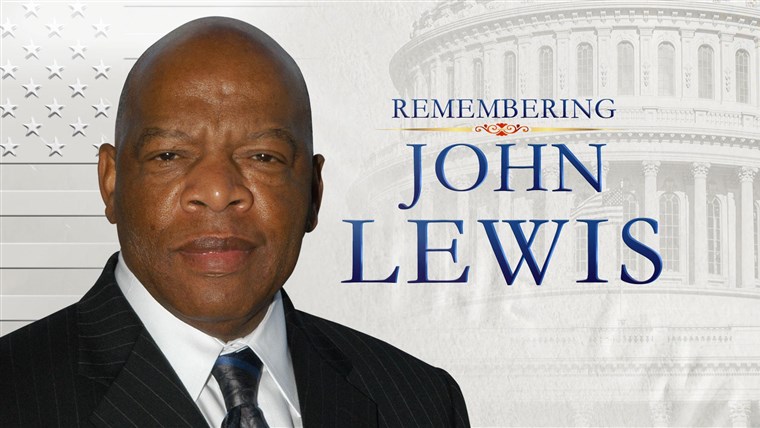
Mourning John Lewis — Celebrating His Life

John Robert Lewis
Laid to Rest on July 30, 2020

3E00A651-AF51-47E9-A01F-87B2145D4166

One might have been able to hear church bells ringing this morning, eighty times,
in cities and towns across America, to pay homage to his eighty years of life
.

Later, the headline read, “Three living presidents came together to honor Congressman John Lewis at his funeral today in Atlanta, Georgia.” Yes, three presidents spoke words of mourning, and celebration today — President George W. Bush, President William J Clinton, President Barak Obama. President Jimmy Carter sent his words to be read.
So four living United States Presidents honored John Lewis today. A fifth living United States President did not.

Eloquent words were spoken by so many today at Atlanta’s historic Ebenezer Baptist Church, which has been known best because of its most famous pastor, Dr. Martin Luther King, Jr. We heard stories, memories, words marked with laughter and tears from friends and family members of John Lewis — Rev. Dr. Bernice King, an activist and Martin Luther King Jr.‘s daughter, civil rights pioneer Xernona Clayton, James Lawson,   an activist, Speaker of the House Nancy Pelosi, our three living presidents and many others.

Years later, when I was elected a U.S. Senator, I told him that I stood on his shoulders. When I was elected President of the United States, I hugged him on the inauguration stand before I was sworn in and told him I was only there because of the sacrifices he made. And through all those years, he never stopped providing wisdom and encouragement to me and Michelle and our family. We will miss him dearly.
— President Barak Obama


Americans live in a country that is better today because of John Lewis. John always looked outward, not inward. He always thought of others. He always believed in preaching the gospel, in word and in deed, insisting that hate and fear had to be answered with love and hope. John Lewis believed in the Lord. He believed in humanity, and he believed in America.
— President George W. Bush


John always kept walking to reach the beloved community. He got into a lot of good trouble along the way, but let’s not forget, he developed an absolutely uncanny ability to heal troubled waters. When he could have been angry and determined to cancel his adversaries, he tried to get converts instead. He thought the open hand was better than the clenched fist. He lived by the faith and promise of St. Paul: “Let us not grow weary in doing good, for in due season we will reap if we do not lose heart.” He never lost heart. He fought the good fight, he kept the faith, but we got our last letter from him today on the pages of the New York Times. Keep moving. It is so fitting on the day of his service, he leaves us our marching orders: Keep moving.

John Lewis was many things, but he was a man, a friend and sunshine in the storm, a friend who would walk the stony road that he asked you to walk, that would brave the chastening rods he asked you to be whipped by, always keeping his eyes on the prize, always believing none of us would be free until all of us are equal. I just loved him. I always will. And I’m so grateful that he stayed true to form. He’s gone up yonder and left us with marching orders. I suggest since he’s close enough to God to keep his eye on the sparrow and on us, we salute, suit up and march on.
— President Bill Clinton


We come with a flag flown over the Capitol the night that John passed. When this flag flew there, it said goodbye. It waved goodbye to John. Our friend, our mentor, our colleague. This beautiful man that we all had the privilege of serving with.
— Speaker of the House Nancy Pelosi

That’s when I cried, as I did many times during the four hours I watched this morning, bearing witness to his life, holding vigil at his glag-draped casket I had watched all week. There is no doubt that moving words were uttered today in that holy place where Beloved Community gathered to mourn John Lewis, but none were more full of heart that the words of Ebenezer’s senior pastor, the Rev. Dr. Raphael G. Warnock:

We have come to say goodbye to our friend in these difficult days. Come on, let the nation celebrate, let the angels rejoice … John Lewis, the boy from Troy, the conscience of the Congress. His deeds etched into eternity, he loved America until America learned to love him back.

From 1 Corinthians 15:51-55
Behold, I show you a mystery; We shall not all sleep, but we shall all be changed, 
In a moment, in the twinkling of an eye, at the last trump: for the trumpet shall sound, and the dead shall be raised incorruptible, and we shall be changed. For this corruptible must put on incorruption, and this mortal must put on immortality.

So when this corruptible shall have put on incorruption, and this mortal shall have put on immortality, then shall be brought to pass the saying that is written, Death is swallowed up in victory. O death, where is thy sting? O grave, where is thy victory? 

From Revelation 14: 12-13
Here is a call for the endurance of the saints, those who keep the commandments of God and hold fast to the faith of Jesus. 
And I heard a voice from heaven saying, “Write this: Blessed are the dead who from now on die in the Lord.” “Yes,” says the Spirit, “they will rest from their labors, for their deeds will follow them.”

From the works of William Shakespeare
When he shall die,
Take him and cut him out in little stars,
And he will make the face of heaven so fine
That all the world will be in love with night
And pay no worship to the garish sun.


I cried today, but I laughed a lot, too. I sang a little and — though I did not rise to my feet to dance in celebration of his life well-lived — I still celebrated more than I mourned, because that’s what John Lewis would do. In the end I laughed out loud at the image of mourners dancing their way out of the sanctuary, following the casket, and being glad that John Lewis loved dancing to the music of “Happy Feet!”

Why don’t we all dance our way to Beloved Community!

May God make it so!

Rest in Peace, John Lewis. Rest in Celebration. We got this!

Christ's Passion, Christ’s Resurrection, Good Friday, grief, Holy Week, Mourning, Pandemic of 2020, Resurrection, Resurrection People, Weeping, Yiayia

Good Friday — Now and in My Memories

68E974EB-6AE4-4A60-BD35-1C1FD10D821A
The Passage of Scripture that I contemplate on this Good Friday, and on most every Good Friday I can remember, is found in the Book of Isaiah.

He is despised and rejected by men,
A Man of sorrows and acquainted with grief.
And we hid, as it were, our faces from Him;
He was despised, and we did not esteem Him.

Surely He has borne our griefs
And carried our sorrows;
Yet we esteemed Him stricken,
Smitten by God, and afflicted.

But He was wounded for our transgressions,
He was bruised for our iniquities;
The chastisement for our peace was upon Him,
And by His stripes we are healed.

All we like sheep have gone astray;
We have turned, every one, to his own way;
And the Lord has laid on Him the iniquity of us all.

— Isaiah 53:3-7 NKJV

For me, Good Friday holds so many memories. I remember vividly trekking through the woods to find a thorn tree for our crown of thorns; finding just the right tree for Fred to cut down for building our cross; draping cloth on the cross; decorating our church’s Easter Chrismon tree; finding candles blooming dogwood; and finding fabric — Lenten purple, Good Friday black and Resurrection white.

Good Friday also holds for me many memories of worship — so many years leading worship as a pastor, leading worship during my time as minister of worship, leading services in our hospital chapel, holding sunrise services in our community. Honestly, after so many years, they all run together, and I only remember snippets of the times of worship that were most meaningful to me.

There is one memory that is so clear to me that it stands out above all others. I remember it in detail and I believe that this memory shaped my best thoughts about meaningful worship. I was only a young girl, but my grandmother (Yiayia) gave me authoritative instruction about how I should devoutly observe Holy Week. That usually meant going to church every day of Holy Week, but always, it meant Good Friday worship at our Holy Trinity + Holy Cross Greek Orthodox Church in Birmingham.

I wondered then about why the day when Christians commemorate Christ’s crucifixion was called Good Friday. The son of God was flogged, insulted and ordered to carry the cross on which he would be crucified. According to Mark’s Gospel, he endured the torment of crucifixion for some six hours from the third hour, at approximately 9 am, until his death at the ninth hour, corresponding to about 3 pm.

It’s difficult to see what is “good” about Good Friday. I studied on the name Good Friday and learned some interesting information. The day was called Long Friday by the Anglo-Saxons and is referred to as such in modern Danish. The Catholic Encyclopedia says that some sources see its origins in the term God’s Friday. In German the day is called Karfreitag, or Sorrowful Friday. In our Greek Orthodox faith, the day is known as the Holy and Great Friday in the Greek Orthodox liturgy.

In truth, that terrible Friday is called Good Friday because it eventually leads us to the Resurrection of Jesus, his victory over death and finally the celebration of resurrection, the very pinnacle of Christian celebrations. According to the Baltimore Catechism, Good Friday is good because Christ “showed His great love for man, and purchased for him every blessing.” Yes! But I must paraphrase that quotation to say “Christ showed His great love for us all, and purchased for us every blessing.“

Sometimes, we tend to rush headlong past the darkness of Christ’s passion, wanting a quicker path to the glorious resurrection. Which is where I begin with my childhood memories of Holy Week. Like most Orthodox Christians, my grandmother made sure we observed Good Friday with fasting, prayer, cleanliness, self-examination, confession and good works. We did not do any chores on Good Friday because we were to honor the day of mourning. I remember that our Good Friday meant a strict fast, no food all day. My Yiayia made up a mini fast for me that included small meals and just a little juice, always calling attention to the food she did not give me because I was fasting. What a teacher and spiritual guide Yiayia was to me! The long day of fasting went on.

On Great and Holy Friday our Orthodox Church commemorated the death of Christ on the Cross. We had to go to church first thing in the morning. In this service, our priest, Father Sam, raised up Christ’s Cross very high and then took it around the church three times. We kneeled the entire time and I wondered if everyone’s knees were hurting like mine were. Anyway, Yiayia had given me instructions. “Kneel correctly and don’t look around until the Cross passes our pew. Then look at the Cross and pray to be forgiven of your sins just like the thief on the Cross who confessed.” I didn’t think I had any sins, but I did it anyway. Father Sam finally finished walking around and took the Cross to the front of the church. Then Yiayia nudged me to move and, along with everyone in the whole church, we went to the Cross and kissed it. I wasn’t a great fan of  Vespers so early in the morning, but we had to be there to see the unnailing of Christ from the Cross.

F606DA9C-27C2-459C-AD12-1CF83EA594CDBefore I knew it, we were on our way back to church, even though I had plans for Friday afternoon. I felt something a little like sadness, I think, when Father Sam and several other men took Jesus from the Cross and placed him in a tomb. What I most remember was wondering why Father Sam was sprinkling the tomb with rosewater and then sprinkling all of us. The sweet smell of roses filled the sanctuary. At the end, we went behind Father Sam in a procession with the entire beautiful structure that was supposed to be the tomb of Jesus. It was like a funeral procession and it was sad. The older ladies in black clothes wept again. I think I felt a tear roll down my face, too. I think my tear came because Father Sam’s chants that day were the saddest, most sorrowful music I had ever heard.

The problem with all of it, I thought, is that we still had to fast all day and all the next day. I didn’t like that part very much, but as a dutiful child, I ate and drank the sparse morsels and juice that Yiayia served me without a single complaint. At least outwardly! Inside, I complained constantly and literally felt like I might starve.

And then it happened! In the dark of night, 11:00 pm, we went to the church — the most special liturgy of our church. Last minute instructions from Yiayia? “Sit up straight, kneel when I kneel, say all the prayers, no talking to your friends, no looking around to see who came, no crossing your legs, and don’t fall asleep” (even though we might be there until 1 am). if I broke any of those rules, Yiayia quietly, but forcefully, pinched my leg.

Father Sam took us first to the Passion of the Christ and his final moments on the cross. I remember having a bit of child like impatience with the very lengthy and heavy service. Yet today, I would give anything to sit up straight, legs uncrossed next to my Yiayia. I had no idea what was going on, but I was again stricken by the tears and the crying of the older ladies wearing black. I know now that they came there to mourn the death of Jesus. At that time, I just felt sad and kind of in awe in hearing their expressions of mourning.

62A22590-A6B4-4D3E-A2B1-02C2C0B9E447
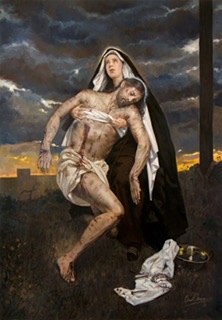
Artist Raúl Berzosa

As the liturgy neared midnight, the sanctuary went dark and we sat in complete darkness for what seemed to me like an hour. Father Sam took light and gave it to those who were holding candles as he sang: “Come ye and receive light from the unwaning life, and glorify Christ, who arose from the dead,” and all the people join him in singing the hymn again and again.

Father Sam then led the entire congregation outside the church. We had begun the procession to the tomb. I was so short in a crowd of taller people that I was unsure what was going on.

51F4B672-11C5-4715-837D-D8044A5E16EA
Artist Raúl Berzosa
“Jesus is down from the cross and placed in the arms of his mother Mary”.
XIII Via Crucis Station for Guatemala.
Oil on canvas
http://www.raulberzosa.com

I did know that on the way to the tomb all the adults were solemn. But somehow I remembered that Father Sam would read the Gospel that gave us the Angel’s statement: “He is Risen; He is not here.” (Mark 16:1-8)

Then came the breathless moment — always the breathless moment — as the people waited for our priest to start the hymn of Resurrection. We sang with him this hymn, our most beloved hymn of Resurrection. “Christ has risen from the dead, by death trampling upon Death, and has bestowed life upon those in the tombs!” We sang it over and over again, holding our candles on a cold, dark night, facing the doors of our church

I remember Father Sam, holding the Paschal candle in his left hand, turned to face the wooden church doors and knocked three times on the closed doors with his hand-cross, saying in a loud voice, “Where is the King of glory?” Everyone responded, “He is not here for he has risen from the grave!”

This was the the high point of worship, but . . . We still had to sit quietly in the pews to hear the sermon of St. John Chrysostom. I was tired and very sleepy, but at long last, our Lenten exile had ended. The fasting was over. The penitential prayers were finished. The stone from the tomb was rolled away and we knew without any doubt that Christ had risen! He had risen indeed!

Today, wherever you are — near your loved ones or apart — know that the fear, anxiety and isolation of this virus will end. Let all of us pray for those who are ill; for the families that have lost loved ones; for medical professionals, chaplains, first responders and the hospital employees who clean and sanitize every area; for the scientists who are working to develop testing and vaccines; for the governors of every state; for those having financial difficulty; for churches facing financial struggles and for ministers who are creating worship alternatives; for all those to whom this virus is an enormous threat because of age, weakened immune system and health issues; for parents who must teach their children at home and for children who wonder where Easter is this year.

This has been a Lent to remember because it included the separation of families, schools and faith communities. Of all the Lents that have passed, I imagine we will remember this one. When we do, I hope we will remember all the compassionate deeds, all the new ways of being community and all the ways we have loved one another. After all, the command to love one another came from the Christ who faced betrayal, sorrow, death and ended his story with resurrection. That’s what all of us, people of resurrection do — suffer all of life’s slings and arrows and still end up resurrected — to newness of life.

Thanks be to God. Amen.

And thanks be to God for my Good Fridays, then and now. Amen.

I am including a video of the song, “Lamb of God” by Twila Paris for your Good Friday meditation time.


anxiety, Calamity, Change, Comfort, Community, Compassion, Confusion, Darkness, Death, Despair, Fear, God's Faithfulness, Grace, Hope, Illness, Isolation, life, Loneliness, Loss, Love, Mourning, Pandemic of 2020, Sorrow, Suffering, Tears, Terror

“Crimson Contagion,” Grace and Eternal Hope

1639C8B4-DC47-49B6-84A3-CC49557F0464
Today of all days, with the entire world embroiled in a real live pandemic, I will not write out of political bias. Instead, I want to open our eyes to some very troubling present realities. My focus is on the coronavirus pandemic in the United States and how circumstances have transpired, both on a logistical level and a human one. I read a Huffington Post article this morning revealing that last year the U.S. Department of Health and Human Services conducted a months-long exercise that showed that the nation was unprepared for a pandemic. The exercise, code named “Crimson Contagion,” had chilling similarities to the current real-life coronavirus pandemic. That fact got my attention!

microscopic magnification of coronavirus that causes flu and chronic pneumonia leading to deathThis pandemic has taken a toll on so many Americans. Mothers are struggling with children being at home, some having to learn on the fly how to home school them. Families grieve the loss of loved ones who died from the virus. Older adults fear their increased vulnerability and their body’s inability to fight the virus. Immunosuppressed persons like I am are terrified to leave home and are incessantly washing their hands, wearing masks and using hand sanitizer. Many people have lost their jobs while businesses all over the country have shut their doors. Churches have suspended worship services and other gatherings indefinitely. That is merely a tiny snapshot of the human toll the coronavirus is taking.
On top of any list we could make describing loss, inconvenience or isolation, there is widespread, overwhelming fear that has made its way into our very souls. This is a pandemic that has descended upon all of us — real people with real fear.

I’ll get back to the human toll of this virus, but I want to say a bit more about the “Crimson Contagion” exercise, which involved officials from more than a dozen federal agencies. The Huffington Post described the “Crimson Contagion” scenario:

 . . . several states and hospitals responding to a scenario in which a pandemic flu that began in China was spread by international tourists and was deemed a pandemic 47 days after the first outbreak. By then, in the scenario, 110 million Americans were expected to become ill.

The simulation that ran from January to August exposed problems that included funding shortfalls, muddled leadership roles, scarce resources, and a hodgepodge of responses from cities and states . . . It also became apparent that the U.S. was incapable of quickly manufacturing adequate equipment and medicines for such an emergency . . .

According to a New York Times report, White House officials said that an executive order following the exercise improved the availability of flu vaccines. The administration also said it moved this year to increase funding for a pandemic program in HHS.

But Trump’s administration eliminated a pandemic unit within the Department of Homeland Security in 2018. And weeks after the first real coronavirus case was diagnosed in the U.S., Trump submitted a 2021 budget proposal calling for a $693.3 million reduction in funding for the Centers for Disease Control and Prevention.

There you have it! In the throes of our real time pandemic, we hear of a “play-like” pandemic — a simulation conducted in 2019 that might have prepared us all, including our nation’s leadership. That didn’t happen, and those of us who have been in the world for so many years know the saying well: “Don’t cry over spilt milk.”

So we wipe up the milk that’s all over the table in front of us, and then we go about making our way through the dark, murky waters of this pandemic. We wash our hands, distance ourselves from others, stay at home, figure out how to handle our children who are now at home, cancel our travel plans, mourn those who have died, pray for those who are ill from the virus, grieve the loss of the life we knew before and pick up the pieces of what’s left.

What’s left? Well, what’s left is our ability to find ways to help our neighbor, to feed the hungry, to comfort the sick, to reach out to the lonely, to love the children and to pray for one another without ceasing. We may have to learn to do those things by phone or online chatting, but we will find a way.

1CA928D0-F17B-45DA-87F8-BC306F38EA32
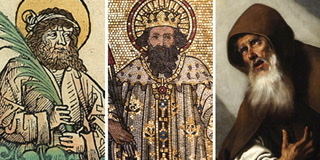
Fr. Lawrence Lew, O.P.; public domain; St. Quirinus of Neuss – for those affected by bubonic plague and smallpox; Edwin the Martyr (St. Edmund) — for victims of pandemics; St. Anthony the Great – Patron of those affected by infectious diseases

Those of us who are religious will pray without ceasing — imploring God to be merciful, asking various saints to intercede for us, lighting candles to express devotion and sitting for a moment in the flickering light that reminds us that God’s promise is about light overcoming the darkness.

The light shines in the darkness,
and the darkness has not overcome it.
(John 1:5)

In the end, perhaps we will have discovered that, through this terrifying and expanding virus, that we have learned how to care more and to love deeper. Perhaps we will find that we have a more heartfelt capacity for compassion. For that, God will pour out grace upon our weariness and renew our eternal hope.

If you pour yourself out for the hungry and satisfy the desire of the afflicted, then shall your light rise in the darkness and your gloom be as the noonday.
(Isaiah 58:10 ESV)

May God make it so. Amen.


Arkansas, Beginning again, Comfort, Emotions, grief, healing, Home, Loss, Mourning, Self care

Back to Arkansas

67DC7450-EB99-4AF7-BA3A-D4876B06D2E4
Beautiful Hot Springs, Arkansas

My thoughts today take me away, out of this house, out of this state and back to Arkansas. It’s not so much about feeling trapped inside my house because of illness. It’s more about my need to heal, to experience something new, something of beauty that also feels like home. That place would be Arkansas.

Arkansas was most definitely not a place I would have chosen as my home when we accidentally moved there in 1982! It had to be an accidental move because neither Fred nor I knew anything at all about the state of Arkansas, a landlocked state that was constantly maligned by folks that have ever been there. At first, I detested being there, but after living there for 33 years, I grieved deeply when we left our Arkansas home in 2015. It made little sense really, that a born and bred Alabama girl would fall in love with Arkansas, but I did just that.

So today my mind slips away to my Arkansas home. With a lump in my throat, I travel to that beautiful state, lush with green and dotted with stunning lakes and the magnificent Arkansas River. I visit my son and my grandchildren in my imaginary travel, and my spirit somehow feels filled with what I needed today. I walk through what was my dream house and I visit the church I pastored for nine years. I stop by the hospital where I served as a chaplain and by Little Rock City Hall and the Pulaski County Courthouse where I spent much of my time advocating for abused women and children. I head to the banks of the Arkansas River that graces Little Rock and I gaze for a few minutes at the Little Rock skyline.

Why would I make this journey today of all days? I don’t feel well at all physically, and I really don’t feel up to this level of nostalgia. I don’t want to weep for a loss that still lingers with me. And yet, this experience is strangely comforting. It feels almost like opening my arms to a place I loved and allowing myself to feel the lump in my throat for the loss of it. It feels like making peace with the past — embracing it, mourning it, allowing it to comfort me and then walking back to my present home just a little bit healed.

This is what is needed for healing after loss. I am aware that when I stop smothering my regrets and my sorrow, I will have moved my soul and spirit to a new place, a better and healthier place and a place that is open to joy and a sense that all is right in my world. Healing doesn’t happen all at once. It takes some time and some intentionality. It takes walking right through the middle of sorrow until I get to the other side. It takes a sense of knowing when I am finally standing firmly on the other side of grief.

So I journeyed back to Arkansas today to find some joy and to take it back home with me. It was a worthwhile journey. I did return a little more healed. I have learned over many years and through many losses that my spirit knows how healing comes, but sometimes my mind gets in the way, blocking the healing I need. The sign of better times is when my spirit and mind join together to create healing. I think that’s exactly what happened for me today. My mind — my imagination — took me to the place I loved and lost, and while I lingered there for awhile, my spirit tended to the healing.

Thanks be to God for my mind and spirit and for God’s healing of wounds new and old.

Make the most of your regrets; never smother your sorrow, but tend and cherish it . . .
To regret deeply is to live afresh.

— Henry David Thoreau


Advent, Angels, Bethlehem’s Star, Christ’s Birth, Comfort, Despair, Emotions, Fear, God’s Gift of Stars, Grace, grief, healing, Hope, Loss, Love, Mourning, New Normal, Questions, Resilience, struggle, Tears

“Listening for the Rustle of Angels’ Wings”

D621BE3F-47CD-4621-8417-E85BDA660590

The Fourth Sunday of Advent
The Advent Sunday of Love
Transplant Day Forty-One
December 22, 2019


TO LISTEN, TO LOOK

Is it all sewn up — my life?
Is it at this point so predictable,
so orderly,
so neat,
so arranged,
so right,
that I don’t have time or space
for listening for the rustle of angels’ wings
or running to stables to see a baby?
Could this be what he meant when he said
Listen, those who have ears to hear . . .
Look, those who have eyes to see?
Oh God, give me the humbleness of those shepherds
who saw in the cold December darkness
the Coming of Light,
the Advent of Love!

— Ann Weems

I ask myself those Ann Weems questions often:

Is it all sewn up — my life? Is it so predictable, so orderly, so neat, so arranged, so right,
that I don’t have time or space for listening for the rustle of angels’ wings or running to stables to see a baby?

These are among the most important questions I might sit with for a while, pondering my answers. On this Advent Sunday when we light the Candle of Love, I suddenly realize that Advent is ending, bringing Christmas so abruptly, or so it seems. Am I ready, I wonder? Am I ready for the birth of the Child, “Love’s Pure Light?”486917B0-E862-4C44-895D-D08210690B48

Have I prepared a place in my heart for the “pure unbounded love” we sing about in the beloved hymn, “Love Divine, All Loves Excelling?” Was my life so preoccupied that I missed the gentle darkness of the Season of Advent and am now feeling pushed — shoved —into Christmas?

Love in a manger is too holy a gift to take for granted. Love in a manger offers us a gift that we must be prepared to receive, and Advent is our season of preparation. As the season ends, I cannot help but ask myself if I spent these days preparing myself, heart and soul. Did I pray enough? Did I spend enough contemplative time? Did I love my neighbor and care for the persons around me who had so many life needs? Did I create sacred, meditative moments in anticipation, preparing for Emmanuel to come into my life anew?

I’m afraid I must answer, “no.” Yes, I did reflect on Advent now and then as I wrote for my blog, but I definitely did not spend enough time in meditation, preparing myself to receive the Christ Child. I was completely preoccupied with creating my life’s new normal after my kidney transplant. New routines and schedules overwhelmed my mind. I spent virtually all my time adjusting to this new normal. Self-absorbed does not adequately describe me during this Advent.

I haven’t felt much holiness hovering around me. I didn’t have time or space “for listening for the rustle of angels’ wings.” Yet, the transplant itself was a season somewhat like Advent . . . filled with expectation, preparation, anticipation. With Bethlehem’s star shining through the darkest night, and hope — always hope.

And so it was for people waiting for kidneys to renew their lives. Advent offered us a look at journey, a journey that ended in celebration. Celebration came full circle yesterday when I learned that my transplant was a part of a chain of living donors and kidney recipients. The chain included 16 people — donors and recipients — which means eight people got new kidneys. Perhaps that felt to me something like “the rustle of angels’ wings.”

And then it dawned on me that the Christ Child was not born into a world where everything always worked perfectly, where everything was orderly and neat and planned out. The Christ Child was not born into a world where everything was sacred. He was not born into a perfect family, and the people around his manger were not always holy.

Maybe that’s part of what Advent gives us:

the grace to be genuinely who we are — on our holy days and on days we feel not-so-holy. Maybe Advent beckons us to ready ourselves and to prepare our hearts with humbleness so that we can see “in the cold December darkness . . .

the Coming of Light, the Advent of Love!”


Advent, anxiety, Bitterness, Darkness, Despair, Exhaustion, Faith, Fear, grief, Guilt, healing, Hope, Light, Loss, Mental health, Mourning, Pain, Perseverance, Reflection, Sorrow, Soul, Suffering, Unfaith, Weeping, Worry

Dark Night or Advent Light

DF745CFF-118C-480C-B837-0A81F4520CEA

The Second Day of Advent
Transplant Day Twenty-One
December 2, 2019

THE CHRISTMAS SPIRIT

The Christmas spirit
is that hope
which tenaciously clings
to the hearts of the faithful
and announces
in the face of any Herod the world can produce
and all the inn doors slammed in our faces
and all the dark nights of our souls
that with God
all things still are possible,
that even now
unto us
a Child is born!

What could this beautiful poem titled The Christmas Spirit possibly have to do with my recent kidney transplant? At first glance, not much. But lingering on the poet’s words made some of them leap from the page for me. I have to admit that the words most piercing to me are these: “. . . all the dark nights of our souls.”

Guilt overwhelmed me after the transplant was complete. I was back in my room six hours after the surgery — barely awake, a little confused, exhausted, in pain and, they tell me, very quick-tempered. I yelled at my husband, something I may have done twice in 50 years of marriage. The truth is I was feeling covered with a blanket of guilt. The nurses, my surgeon, my family were all celebrating the transplant miracle. I was in pain, second-guessing my decision to even have the transplant in the first place and feeling guilty for not acknowledging the miracle everyone else saw.

For the next two days, every person on my transplant team who came to see me entered my room with a large smile and expressed one word, “Congratulations!” said with joy in a most celebratory voice. All the while, I was often weeping pain’s quiet tears. I stared at each congratulating person with a little bit of concealed contempt. In my mind, if not on my lips, was a response that went something like this: “Congratulations? Do you have any idea what kind of pain I am experienced right now? And have you had this surgery yourself? Save your congratulations for another day!”

The physical pain was very real and very intense. The soul pain hurt even deeper. Body and soul — the physical, spiritual and emotional — were so intricately fused together that it was all but impossible to isolate or separate them. Is this just physical pain? Is part of it emotional pain? Am I experiencing, heaven forbid, a spiritual crisis? I found no way to tell. For me, it was pain in all three parts of me and that made it almost intolerable.

For two nights, I did not sleep at all — awake all night, feeling alone, abandoned and in a wrestling match with my pain. As I went over and over in my mind all the reasons I had for getting a transplant, my thoughts morphed into a fairly clear “What have I done?”

It felt so much like a dark night of the soul as I grieved my aloneness and isolation, mourned the loss of my previous life and felt deep fear of the dark, unknown path ahead. And all of those points of crisis made me feel that guilt for not being grateful for the living gift of a kidney.

As Ann Weems’ expresses in the poem, “Hope tenaciously clings to the hearts of the faithful and announces in the face . . . of all the dark nights of our souls, that with God all things still are possible, that even now unto us a Child is born!”

Twenty-one days separated from my transplant, I am able to attest that hope does cling tenaciously in my heart, that hope announces in the face of the dark night of my soul that with God, all things are still possible. And most importantly, “Unto us a Child is born!”

Into me a Child is born, and that presence empowers me to walk through my soul’s darkest night into the light that Advent brings.

Thanks be to God.


Activism, Change, Christian Witness, Church, Community activism, Gun violence, Hate, Injustice, Mexican border, Mourning, peace, Perseverance, Politics, Prophetic, Racism, Repair the world, Social justice, The Christian Church, Violence

Taking Back Our World

5378F42A-B263-40F4-A454-D497E07BF325

Let’s take back our world! Let us join hands and, in the power of community and holy resolve, reclaim our world from white supremacists, racists and violent actors that threaten our people.

If not us, who? If not now, when?

After the 2012 shooting at Sandy Hook Elementary School in Connecticut that killed 20 young children, British journalist Dan Hodges wrote that the gun control debate in the U.S. was over. This is what he wrote: “Once America decided killing children was bearable, it was over.”

And then we let 2,193 shootings happen. 

The shootings that occurred this week offend us in a very deep place. You see, we are followers of Christ, the Prince of Peace. We are the people of God who know that thoughts and prayers and compassionate sentiments won’t end this kind of terroristic hate.  

The El Paso shooter told law enforcement that he wanted to shoot as many Mexicans as possible. His manifesto, which he posted on the 8chan online community  included details about himself, his weapons and his motivation. He described the El Paso attack as a “response to the Hispanic invasion of Texas,” and proclaimed that he was defending his country from “cultural and ethnic replacement brought on by an invasion.”

Most certainly, these words from an obvious white supremacist should offend every follower of God. His evil intent is also an offense to God. In response to such evil, perhaps we will raise our voices continually and persistently, without becoming weary. Perhaps we will resolve to take back our world, proclaiming God’s word in the darkness of evil just as the prophets did. Like them, perhaps we will persist tirelessly and with a holy resolve, for as long as it takes to end the evil that arises from racism and white supremacy. 

Perhaps our prophetic action will mirror that of the writer of Lamentations who wrote, “Arise, cry out in the night, as the watches of the night begin; pour out your heart like water in the presence of the Lord. Lift up your hands to him for the lives of your children.”

May God so embolden us.

Africa, Christian Witness, Dancing, Faith, Hope, Lamentations 5, Mission, Mourning, Music, Praise, Singing, Uganda, Weeping

The People of Uganda: The Music of Abiding Faith


image
Ugandan Women at the River; Watercolor by Kathy Manis Findley

I tell my story best when I tell the stories of the people that God has placed in my life. Quite often, my heart recalls beautiful memories of a people that became an important part of my life. They are a people who touched me beyond measure when my husband and I served as missionaries to Uganda, East Africa.

The Ugandan people captured our hearts quickly and completely. We saw the great need and set about our work in village after village, doing whatever we could to promote self sufficiency and good health. We worshipped in their churches and learned about the amazing resilience of their Christian faith. Perhaps we helped make their lives better in small ways. There is no doubt that the Ugandan people made our lives better in big ways. It was so many years ago, but I remember it as if it happened yesterday. The two of us stepped off of a plane in the Nairobi airport to begin a new life. As very young missionaries, we had no idea what we would face in the days to come.

Getting to Uganda from Kenya was a long, dusty ride through the most beautiful places we had ever seen. Through bush country and savannah, through banana groves and rain forests, through tea plantations on the mountainsides and the deep waters of Lake Victoria, we were getting acquainted with this continent.

D7C695AB-EF03-4B50-97FB-A60D047CBF9F
Ugandan Crested Cranes; Watercolor

The terrain was ever-changing, and the way was marked by the majestic beauty of elephants, giraffe, cape buffalo, gazelles, flamingos and Ugandan crested cranes.

The most moving sight of all was the people, barefoot and downtrodden, wearing rags and carrying heavy water containers. Yet, the sight of women at the banks of a river dipping their water jugs to carry to their families was a portrait of beauty and community. In spite of the toll the war had taken, these women retained their pride and dignity, and their joy. They wore basutis (native Ugandan dresses) of many vibrant African colors. In spite of the fact that their basutis were torn and tattered, they caught the rays of the equatorial sun and were bright with the greens, oranges, burgundies blues and yellows that mirrored the Ugandan landscape. The women stood together in the river, at times laughing and talking to one another, and at other times singing, in spite of their ominous sociopolitical world.

Their country had all but been destroyed by the evil dictator Idi Amin, who orchestrated the genocide of 100,000 to 500,000 Ugandans. Churches were burned to the ground, schools pillaged, roads were in shambles. Children were left orphaned in a country of widows. Their faces showed the wear of grief, their bodies the mask of mourning.

They were why we had come, sent by God to comfort a grieving people. The days ahead found us digging water wells, distributing agricultural tools and vegetable seeds, giving out books, bibles, blankets and sewing supplies, bringing in simple medicines and vaccines.

I can never think of the Ugandan people without recalling Lamentations 5, a scripture passage that was read in a church service to describe the plight of the people. As the reader read through her tears, the entire congregation wept, mourning so many losses. I offer the text here in its entirety:

Remember, Lord, what has happened to us; look, and see our disgrace.
Our inheritance has been turned over to strangers, our homes to foreigners.
We have become fatherless, our mothers are widows.
We must buy the water we drink; our wood can be had only at a price.
Those who pursue us are at our heels; we are weary and find no rest.

We submitted to Egypt and Assyria to get enough bread.
Our ancestors sinned and are no more, and we bear their punishment.
Slaves rule over us, and there is no one to free us from their hands.
We get our bread at the risk of our lives because of the sword in the desert.
Our skin is hot as an oven, feverish from hunger.

Women have been violated in Zion, and virgins in the towns of Judah.
Princes have been hung up by their hands; elders are shown no respect.
Young men toil at the millstones; boys stagger under loads of wood.
The elders are gone from the city gate; the young men have stopped their music.

Joy is gone from our hearts; our dancing has turned to mourning.
The crown has fallen from our head.
Woe to us, for we have sinned!

Because of this our hearts are faint, because of these things our eyes grow dim for Mount Zion, which lies desolate, with jackals prowling over it.You, Lord, reign forever; your throne endures from generation to generation.
Why do you always forget us?
Why do you forsake us so long?

Restore us to yourself, Lord, that we may return; renew our days as of old
unless you have utterly rejected us and are angry with us beyond measure.

— Lamentations 5, New International Version

That worship service in the Church of Uganda (Anglican) sanctuary was unlike any I had ever experienced. The people wept freely and openly, grieving the loss of husbands, children, parents. Once described as “the pearl of Africa” by Sir Winston Churchill, Uganda was a land of incomparable natural beauty that now had been ravaged by war.

As the reading of the scripture in Lamentations came to an end, one woman with tears flowing down her cheeks began to sing and dance. The congregation joined her, singing with great fervency, “Dance then, wherever you may be. I am the Lord of the Dance said he. And I’ll lead you on wherever you may be, I am the Lord of the Dance said he.”

The aisles of the sanctuary filled with dancing and weeping all at once.

Their mourning had turned to dancing. The inner joy of a people was not, and could never be, destroyed. Their hearts, so filled with the music of their faith, could not be silenced. They could sing. They could dance. Even through their tears. That is the music of abiding, persistent faith.

How grateful I am to God for choosing us to enter into community for a time with these wonderful people.


Christ’s Resurrection, Darkness, Death, Easter, grief, Mourning, Resurrection, Uncategorized

Resurrection!

DBAA4746-144B-4AC0-9132-B0E3CDEB06EB
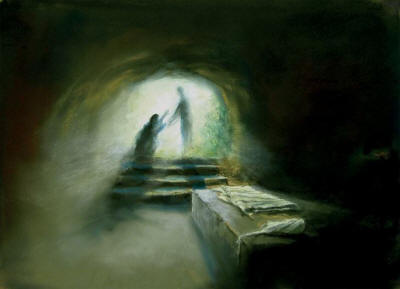
“Art: Resurrection Morning” by James Martin

As people often say, things come and go. Today the resurrection came, so clearly in our worship service and especially in our Sunday School class. When we are gathered in community, the sharing of our lives becomes resurrection for us all. So for us resurrection came, but it did not go.

It remains in the resurrection stories we share and in the ways we bear witness to the grace-full acts of God. The stories around the circle were about places of darkness and death and about the resurrection that always follows. For some, physical health reaches a dark place and we pray for the resurrection to come in their lives. For others, emotions around fear are on the surface and we pray for the resurrection to overcome the fear. Still others grieve for friendships that feel like the end, and we pray for the resurrection they need. Others mourn the loss of friends to death and, as we pray for the healing of those left behind, we also rejoice in the promise of resurrection for those that leave their earthly life.

Death comes in myriad ways. But resurrection comes, every time, to shatter death’s darkness in ways that seem like mighty wonders and wondrous acts of God. Ready or not, resurrection comes to us and makes its home in us. We are resurrection people because we made the choice to proclaim to the world that Christ is risen! 

The Scripture gives us so many stories of resurrection. Sacred texts allow us to look into the lives of many people who have looked at death and have come through it to resurrection. And in our own lives, we can bear witness to the glorious reality that we know the One who is “the resurrection and the life,” that because we believe in the Christ, we will never die. (John 11:25-26)

As you enjoy Easter and lean into the resurrection that never leaves you, think on these Scripture texts:

Mary stood weeping outside the tomb. As she wept, she bent over to look into the tomb; and she saw two angels in white, sitting where the body of Jesus had been lying, one at the head and the other at the feet. They said to her, “Woman, why are you weeping?” She said to them, “They have taken away my Lord, and I do not know where they have laid him.” 

When she had said this, she turned around and saw Jesus standing there, but she did not know that it was Jesus. Jesus said to her, “Woman, why are you weeping? Whom are you looking for?” Supposing him to be the gardener, she said to him, “Sir, if you have carried him away, tell me where you have laid him, and I will take him away.”

Jesus said to her, “Mary!” 

She turned and said to him in Hebrew, “Rabbouni!” (which means Teacher). Jesus said to her, “Do not hold on to me, because I have not yet ascended to the Father. But go to my brothers and say to them, ‘I am ascending to my Father and your Father, to my God and your God.’” Mary Magdalene went and announced to the disciples, “I have seen the Lord”; and she told them that he had said these things to her.

— John 20:11-18 (NRSV)


Blessed be the God and Father of our Lord Jesus Christ! By his great mercy he has given us a new birth into a living hope through the resurrection of Jesus Christ from the dead, and into an inheritance that is imperishable, undefiled, and unfading, kept in heaven for you, who are being protected by the power of God through faith for a salvation ready to be revealed in the last time. 

In this you rejoice, even if now for a little while you have had to suffer various trials, so that the genuineness of your faith—being more precious than gold that, though perishable, is tested by fire—may be found to result in praise and glory and honor when Jesus Christ is revealed. 

— 1 Peter 1:3-7 (NRSV)


With great power the apostles gave their testimony to the resurrection of the Lord Jesus, and great grace was upon them all.

— Acts 4:33 (NRSV)


*James Martin’s art is available at http://www.veritasse.me.uk/artists/james-martin/

All Saints, Brokenness, Fear, Grace, grief, Gun violence, Hate, healing, Hope, Mourning, Prayer, Tikkun Olam, Tree of Life Synagogue, Violence

All Saints

05314FDF-2986-4602-8EF9-B1839FE693CEWe all need a glimpse of hope and comfort in these troubling days. Our thoughts and prayers are with our brothers and sisters of the Tree of Life Synagogue, and we are shocked at this and other recent acts of violence and evil. So today, I share with you the writing of Jemma Allen* in hopes that you will find her words as compelling and comforting as I have.

This week in many liturgical traditions we observe All Saints Day, and perhaps All Souls. In some places there is an opportunity to say the names, to light candles for, to ring the bell for those we love but see no longer, parted from us by death.  

All Saints and All Souls compel us to look death squarely in the face,
to acknowledge our mortality, and the mortality of those we love,
and still to make our song: Alleluia!

This is a season where we boldly proclaim
that death is not the last word.
Death, and fear of death, does not hold the power
to determine how we will live.

We are the dearly beloved children of the living God,
we are baptized into Christ’s death and resurrection,
we are looking to a future where justice and mercy kiss,
where nations will not learn war anymore,
where the lion lies down with the lamb,
where all things are reconciled to God.

This is our hope.
It is a hope that no power can destroy, tarnish or mar:
not white supremacy,
not anti-Semitism,
not any kind of hatred,
not any system of domination,
not any disease,
not any heartbreak. 

And when we cannot hold that hope for ourselves,
let us lean into the hope we can hold together
as communities of life, as communities of resistance,
as hope-bearers and pilgrims on the Way. 

0F547F1D-1DC0-40C3-A16E-E34DB2350099

Give rest, O Christ, to your servants, with your saints,
where sorrow and pain are no more, neither sighing, but life everlasting.
You only are immortal, our Creator and Maker;
and we are mortal, formed of the earth, and to earth we shall return.
All of us go down to the dust; yet even at the grave we make our song: Alleluia, alleluia, alleluia.

 – Russian Orthodox Kontakion of the Departed, Jim Cotter’s translation.  


*Jemma Allen is a priest in the Anglican Church of Aotearoa, New Zealand and Polynesia and a counsellor and spiritual director in private practice.  She serves on the Board of RevGalBlogPals and counts the RevGal community as one of her communities of life and resistance.

Comfort, Compassion, Despair, Friendship, Generosity, Grace, healing, Heartbreak, Hope, Loss, Ministry, Mourning, Restoration, sadness, Sorrow, Stars, struggle, Tears, Weeping

Weep with Those Who Weep

AD620082-4B5E-47C6-B2B0-0D553454614BWhat a caring and compassionate ministry it is to sit beside someone who is grieving and remind them of God’s grace. In recent days, I have wept for and with so many friends who are grieving for what they have lost because of the Florida hurricane. To be sure, there were losses in Georgia and in the Carolinas, but the devastation in and around Panama City was catastrophic.
Hordes of compassionate people traveled to Florida to help. They will clean up debris, repair or rebuild homes that sustained damage, do electrical work, provide help in the shelters, share their hearts and God’s heart, and stand beside families as they pick up the shattered pieces of their lives. Mostly, they will weep with people, and that’s what will help more than anything else.

Author Ann Weems paints a sparkling vision with her words that speak of the “godforsaken obscene quicksand of life.” But then she tells of a deafening alleluia arising from the souls of those who weep and from the souls of those who weep with them. From that weeping, Ann Weems tells us what will happen next. “If you watch,” she writes, you will see the hand of God putting the stars back in their skies one by one.”

I like to think that the caregivers who traveled to Florida did a lot of weeping with those who needed it and that they stayed near them long enough for them to “see the hand of God putting the stars back in their skies one by one.” When all is lost — when you learn that your loved one has died or you stand in a pile of rubble on the ground that used to be your home — seeing the hand of God putting the stars back in their skies would be for you a manifestation of pure and holy hope.

Without a doubt, Florida is experiencing “the godforsaken obscene quicksand of life.” Their memories of this devastating time will be cruel and long-lasting. They will remember better days, neighborhoods that once thrived, schools that were destroyed and friends who are trying their best to recover. But what grieving people will remember most is the care someone gave them and the loving compassion of strangers who became forever friends. I am reminded of the words of poet Khalil Gibran:

You may forget with whom you laughed, but you will never forget with whom you wept.

― Kahlil Gibran, Sand and Foam

Rejoice with those who rejoice, weep with those who weep.    Romans 12:15

Comfort, Darkness, Daybreak, Despair, Faith, Fear, God's presence, grief, Hope, Life storms, Loss, Mourning, struggle, sunrise, Tears, Vulnerability

Icons of God’s Presence

5388C091-C6CE-402C-A3DB-77B0DD838A84
Photography by Sister Macrina Wiederkher

“Sunrises anoint my soul. They are quiet prayers, icons of God’s presence.”

These are words written by my friend, Sister Macrina Wiederkher. Her words resonate with our times as we hold in the light our brothers and sisters in Florida. Their loss is immeasurable, and although we know that loss of home is not as tragic as loss of life, it is a deeply felt emptiness to lose your home and all its contents.

So many are in that heartbreaking place today, and when the night falls on this night, they will not know the safe security of home. We have only a small awareness of their heartache, but God is fully aware of all they have lost. God knows their grief and their fear, their uncertainty of the future. Sometimes all we can count on is that God knows our deepest sorrow and anoints our souls when we need it most. 

Our comfort is this: that after every storm, there is a calm. When ominous, dark clouds of destruction fill the skies, we can know with certainty that the sunrise will come.

B2904AA9-02C4-480E-B061-D174E9810346I believe my friend who tells us that sunrises anoint our souls . . . like icons of God’s presence.

And I believe it for all of the Florida folk who have lost so much.

Bible, Death, Despair, Mourning, Sexual abuse, Stories, Violence, Women

Remembering the Levite’s Concubine


B4F66D38-E516-4C36-84D1-1AE521D2CCFA
“The Levite’s Concubine” by artist, Dee Jones

It is art we do not want to see, art that so closely mimics reality that we are compelled to turn away. But the artist, Dee Jones, captures every emotion, all the terror, every horrific aspect of sexual violence. If we care, we must look. And we must see all the ways in which sexual and domestic violence is a travesty. 

It is true that, when we find such depraved violence in our Scripture, it is shocking. But we find It today in the 19th chapter of the Book of Judges, and we must steel ourselves to truly hear this awful story. Ken Sehested describes it with these words: “The narrative is monstrous, quite possibly the most visually brutal story in all the Bible.”

The story is about a Levite traveler and his concubine. Though you may be daunted by reading the entire 30 verses of this chapter, it’s worth your time to hear the whole story of another nameless woman in Scripture.

In those days Israel had no king.

Now a Levite who lived in a remote area in the hill country of Ephraim took a concubine from Bethlehem in Judah. But she was unfaithful to him. She left him and went back to her parents’ home in Bethlehem, Judah. After she had been there four months, her husband went to her to persuade her to return. He had with him his servant and two donkeys. She took him into her parents’ home, and when her father saw him, he gladly welcomed him. 

His father-in-law, the woman’s father, prevailed on him to stay; so he remained with him three days, eating and drinking, and sleeping there.

On the fourth day they got up early and he prepared to leave, but the woman’s father said to his son-in-law, “Refresh yourself with something to eat; then you can go.” So the two of them sat down to eat and drink together. Afterward the woman’s father said, “Please stay tonight and enjoy yourself.” And when the man got up to go, his father-in-law persuaded him, so he stayed there that night. On the morning of the fifth day, when he rose to go, the woman’s father said, “Refresh yourself. Wait till afternoon!” So the two of them ate together.

Then when the man, with his concubine and his servant, got up to leave, his father-in-law, the woman’s father, said, “Now look, it’s almost evening. Spend the night here; the day is nearly over. Stay and enjoy yourself. Early tomorrow morning you can get up and be on your way home.” But, unwilling to stay another night, the man left and went toward Jebus (that is, Jerusalem), with his two saddled donkeys and his concubine.

When they were near Jebus and the day was almost gone, the servant said to his master, “Come, let’s stop at this city of the Jebusites and spend the night.”

His master replied, “No. We won’t go into any city whose people are not Israelites. We will go on to Gibeah.” He added, “Come, let’s try to reach Gibeah or Ramah and spend the night in one of those places.” 

So they went on, and the sun set as they neared Gibeah in Benjamin. There they stopped to spend the night. They went and sat in the city square, but no one took them in for the night.

That evening an old man from the hill country of Ephraim, who was living in Gibeah (the inhabitants of the place were Benjamites), came in from his work in the fields. When he looked and saw the traveler in the city square, the old man asked, “Where are you going? Where did you come from?”

He answered, “We are on our way from Bethlehem in Judah to a remote area in the hill country of Ephraim where I live. I have been to Bethlehem in Judah and now I am going to the house of the Lord. No one has taken me in for the night. We have both straw and fodder for our donkeys and bread and wine for ourselves your servants — me, the woman and the young man with us. We don’t need anything.”

“You are welcome at my house,” the old man said. “Let me supply whatever you need. Only don’t spend the night in the square.” So he took him into his house and fed his donkeys. After they had washed their feet, they had something to eat and drink.

While they were enjoying themselves, some of the wicked men of the city surrounded the house. Pounding on the door, they shouted to the old man who owned the house, “Bring out the man who came to your house so we can have sex with him.”

The owner of the house went outside and said to them, “No, my friends, don’t be so vile. Since this man is my guest, don’t do this outrageous thing. Look, here is my virgin daughter, and his concubine. I will bring them out to you now, and you can use them and do to them whatever you wish. But as for this man, don’t do such an outrageous thing.”

But the men would not listen to him. So the man took his concubine and sent her outside to them, and they raped her and abused her throughout the night, and at dawn they let her go. At daybreak the woman went back to the house where her master was staying, fell down at the door and lay there until daylight.

When her master got up in the morning and opened the door of the house and stepped out to continue on his way, there lay his concubine, fallen in the doorway of the house, with her hands on the threshold. 

He said to her, “Get up; let’s go.” But there was no answer. Then the man put her on his donkey and set out for home.

When he reached home, he took a knife and cut up his concubine, limb by limb, into twelve parts and sent them into all the areas of Israel. Everyone who saw it was saying to one another, “Such a thing has never been seen or done, not since the day the Israelites came up out of Egypt. Just imagine! We must do something! So speak up!”

— Judges 19: 16-30 NIV

The story begins by telling us that Israel had no king, thus describing a violent and lawless situation in the land. The structures of justice had collapsed. The rest of the story is a brutal account of rape, torture and murder. In her book, Texts of Terror, Phyllis Trible offers this commentary:

Of all the characters in Scripture, she is the least. Appearing at the beginning and close of a story that rapes her, she is alone in a world of men. Neither the other characters nor the narrator recognizes her humanity. She is property, object, tool, and literary device. Without name, speech, or power, she has no friends to aid her in life or mourn her in death. Passing her back and forth among themselves, the men of Israel have obliterated her totally. Captured, betrayed, raped, tortured, murdered, dismembered and scattered—this woman is the most sinned against.” (pp. 80-81)      

The story closes with the woman’s dismemberment and the scattering of her body parts across Israel. The last verse says: “Everyone who saw it was saying to one another, ‘Such a thing has never been seen or done, not since the day the Israelites came up out of Egypt. Just imagine! We must do something! So speak up!’”

Ken sehested observes that the narrative closes with three imperatives: “Consider this, take counsel, speak.” Ken says it like this: “Let this horrible story instruct you. And finally, ‘speak.’”

For us, in these violent days, the message is just as critical, and yes, we must speak! The silence around violence against women must end. If we can find the courage to end our silence through the stories of unnamed, forgotten and reviled Biblical sisters, then their horrific stories have sacred meaning and divine purpose. 

“They have names, and we must learn them,” Ken Sehested insists. “They have histories and we must tell them. In the end, we must nurture a vision where our security and theirs are bound up together.”

It’s the only name we have for her, the Levite’s Concubine. Yet, we must mourn her and remember her and know her story. So let us hear, if we can, this monstrous Biblical narrative and allow it to instill deep within us an unwavering commitment to do everything in our power to end violence in the world.

Beauty of Nature, grief, Hope, life, Mourning, Nature, Stars

Uncommon Commoners


1B1EF9A9-9872-4163-9F93-36F39A9239F8
Terlingua, Texas. Astrophotography of the Milky Way over a field of Chisos bluebonnets.

As I write today, I think of all the ways we are ordinary extraordinary folk. We are complex at times, immersed in thoughts deep and weighty. In the next moment, we may well find ourselves acting like common, ordinary people that avoid deep thoughts at all costs.

We are divergent. We are a kind of paradox, common and uncommon all at once.

I recently saw the stunning photograph featured in today’s blog post. I was intrigued that a photographer was gifted enough to capture the juxtaposition of common flowering bluebonnets and the ethereal brilliance of the Milky Way. It is the kind of breathtaking image that makes me stop in my tracks, suspend time for a moment, and lose myself in the idea of earth and sky.

I studied the common bluebonnets and the uncommon Milky Way above them. And I wondered, “Is there something extraordinary in my ordinary life? Am I just a simple, common person? Or is there something uncommon that lives with the common in me? Inside me, in that place that even I do not fully understand, does common and uncommon grow together, entwined and twisted into one?”

As I pondered these questions that made little sense to me at the time, I read a piece written by my friend, Ken Sehested. I knew instantly that I would borrow one of his intriguing thoughts.

Uncommon commoner.

It worked for me. It defined me, the common part of me and the not-so-common part of me. You see, like most people, there is more to me than anyone can see. All of us can claim that. We are a people that can gaze skyward at the Milky Way while we sit on the ground in a patch of bluebonnets. We are a people of inner strength and resilience, the kind of resilience that makes it possible for us to endure whatever life throws at us and live to tell the story. We are a people with the kind of resilience that makes us uncommon commoners.

I know this because I have seen it time and time again up close and personal. I know this because I have stood at the bedside of a dying woman who was singing hymns of praise to God. I know this because I have kept vigil with a mother who witnessed her son being removed from life support after an accident, and as it was happening, she began to pray through her heavy sobs of grief. I know this because I walked out of the emergency room with her while she shared cherished, happy memories of the son she had just lost.

Uncommon commoners.

Ken Sehested made this so clear with these words.

What makes all of us commoners uncommon is when we experience the pain of trauma up close and personal, find the resilience to endure, take a hammer of righteous rage to that trauma and pound it on the forge of conviction that another world is possible, another way will open if we hold out, hold on, hold up, and hold over . . .

— Ken Sehested

Ah yes. We have seen, and we will see again, the pain of trauma. We will find within ourselves the resilience to endure. We will “hold out, hold on, hold up, hold over” because God has graced us with hope, enduring and abiding hope.

Life will always give us — uncommon commoners that we are — vivid fields of bluebonnets growing in the dirt and a sparkling Milky Way in the sky above. Thanks be to God.

Change, Child protection, Children, grief, Gun control, Hope, Loss, Memories, Mourning, Sorrow, Violence

14,000 Shoes

965E6AF4-46EA-445B-91E0-003F05D3284214,000 shoes placed to tell a very, very sad story.
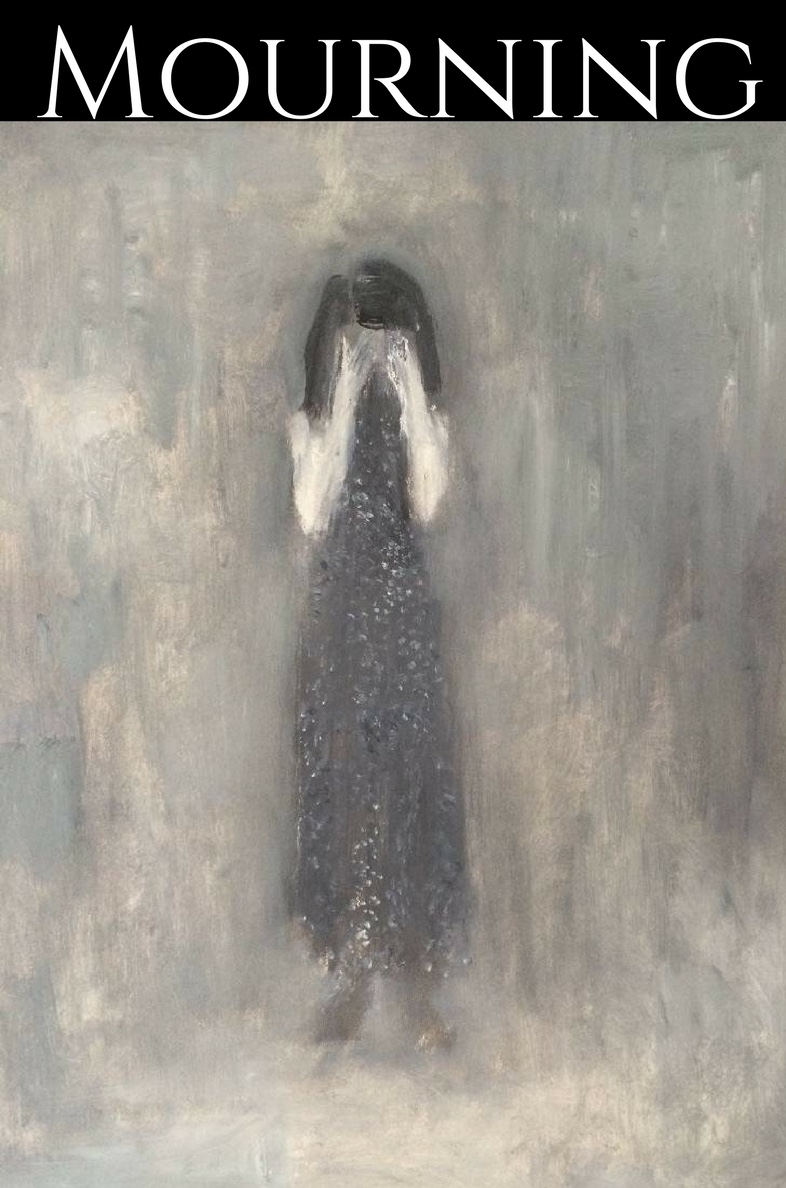
14,000 shoes laid out so that we will never forget our history.

Seven thousand pairs of children’s shoes were lined up on the southeast lawn of the U.S. Capitol building today in memory of every child who has died due to gun violence.

The 7,000 shoes in the “Monument for our Kids” installment represent every child that was killed by gunfire since the deadly shooting at Sandy Hook elementary school in Newtown, Connecticut, in 2012.

“We are bringing Congress face to face with the heartbreak of gun violence,” said one of the activists, Oscar Soria. “All of these shoes cover more than 10,000 square feet.”

Though most of the shoes were collected in a two week period, some of those were donated by families that lost their children to gun violence.

May God grant that we never forget this national grief. May our collective mourning bring lasting change.552D1FD3-63EF-4301-8FD9-FEE605FA755D

A Prayer for Protection

Hear us, O God, protector of children.
Hear our prayer of penitence, our confession that we have failed to keep our children safe.
Hear our cries, as we shed tears of mourning for each child we have lost to gun violence.
Hear our cries of grief as we recall every danger that our children face.
Hear our voices shouting, “Enough!”
Hear our voices of commitment that make a sacred promise that we will do what must be done.
And most of all, God, ennoble us to holy action, and make us protectors of children.
We pray in the name of the Prince of Peace. Amen.