Transplant Day Four was a blur. There are no words to adequately describe the volume of information we had to digest just to know how to protect this new kidney. So with all the education we had to learn, both Fred and I are on overload. The pain continues, and hopefully the healing.
But hovering over all the physical and emotional pain are the prayers of the people — my people — my dear friends and family members who are holding hope up high so I can see it. Their love and their compassionate concern is grace for me.
I have few words of my own today, but this prayer shared by Joanna Harader speaks exactly what I need God to hear from me today.
Holy One,
This day may I know
Your health in my body;
Your enlightenment in my mind;
Your grace in my missteps;
Your patience in my frustrations;
Your inspiration where I am stuck
And your tranquility where I need to slow down and rest.
This day may I
Breathe each breath with gratitude,
See each color with wonder,
Hear the hum of the Divine beneath the noise,
Feel your solid presence with each step I take.
Let me live out of your joy
And within your power.
Amen.
Rev. Joanna Harader serves as pastor of Peace Mennonite Church in Lawrence, KS, and blogs at SpaciousFaith.com.
October Hunter’s moon rising over Arkansas’ Mallard Lake. Photography by Debbie Marie Smith.
Life can be swampy and murky at times, with not enough light to see the way forward. Not to mention the danger of being mired in the mud unable to move! You have probably been there. I know I have, and when the journey has taken me through those murky waters, I have despaired. So many circumstances can take us through rough places, but the circumstance that immediately comes to mind for me is indecision.
Indecision is that uncomfortably in-between place where you have no idea how to find the way forward, yet you cannot stay in the place you are. Waiting is born of indecision and waiting can be excruciating. Right about now, I wish I could report that one must simply pray and God will instantly change indecision into forward motion, out of any murky swamp.
I cannot say, however, that a single prayer can make that happen. At least for me, there have been no instant-miraculous-life-changing answers to my prayers. Not even once in my faith journey of many years! What I can tell you with deep assurance is that, although no single prayer has changed my life, continual prayer has changed my life. It is not the prayer of occasional consolation that changes the course of one’s life journey. It is the life of prayer that seeks God in prayer, abiding in God’s presence, for as long as it takes. Richard Rohr says this wise thing about prayer:
The only people who pray well are those who keep praying! In fact, continued re-connecting is what I mean by prayer, not occasional consolations that we may experience.
No doubt, life’s journey will take us through murky, swampy places without enough light to find our way through them. The murkiness of indecision is real, and with it we may experience confusion, fear, despair, desperation. We may even lose hope and question our faith. But we cannot stay there. People of faith are people of resilience and courage. We have within us all the resilience and courage we need. So we must believe in ourselves enough to take a step forward and out, through the mud and the sludge, trusting in faith that God’s light will light up the dark places and give us the strength to move through to the other side.
That’s what I have to believe about painful, oppressive places of indecision. That’s what I have to believe about getting through swampy, murky places. That’s what I have to believe about God.
In the beginning was the Word, and the Word was with God, and the Word was God. He was in the beginning with God. All things came into being through him, and without him not one thing came into being. In him was life, and the life was the light of all people. The light shines in the darkness, and the darkness has not overcome it.
There was never a time when God’s people needed a prophetic voice more than in these days. We keep hearing the phrase, “children locked up in cages,” and we continually feel righteous anger rising up within us. At the same time, we nurse a sense of hopelessness that holds us captive.
We ask, what has happened that has created the environment in which we now live? How do we respond to this toxic environmental of racial division, harsh words and name-calling? Why is there such a blindness to gun violence? Wh is white supremacy now acceptable? When did we stop caring about the lives of immigrant families who flee for safe haven to our country? How did it happen that hate and meanness has all but replaced love and kindness?
As we watch these things happen, we recognize that voices of reason give silent ascent to the evils of the day as our leaders fail to stand for the values we hold dear. Where is their courage? Where is their ability to lead and govern? Where is their willingness to speak truth and champion change? Why are self-proclaimed people of faith giving permission for words and acts of racism, xenophobia, misogyny, and just plain out hate?
And as for us — the people of faith who see the ills of our world so clearly — where is our prophetic voice, and when and where will we use it? Yes, we may be feeling the kind of hopelessness that breeds apathy and inaction. That feeling is normal when evil looms large over us and when the wrongs and the injustices we observe far outweigh what is right and just. We are understandably overwhelmed with all that is happening in these challenging days:
The president is escalating his racist attacks against everyone from women of color in Congress to the people of Baltimore.
Attorney General William Barr is bringing back the federal death penalty.
The Trump administration wants to ban new asylum requests and new refugees, closing America’s doors to families fleeing violence and seeking a safe place of refuge.
And almost constantly, Trump’s allies on the religious right, people who call themselves Christians, continue cheering him on, constantly twisting the Gospel to help re-elect him.
It is no accident that these actions came at us all at once. The president and his allies think that if he does enough hateful things all at once, they can overwhelm and silence us. What they cannot seem to understand is that, as God’s people and as followers of Jesus Christ, we are not listening to their message of fear and hatred. Instead, we hear the voice of God proclaiming a call for justice, mercy and compassion. We are listening to Christ’s message of hope and love, and that is our clarion call to act.
Of course, there are so many things we cannot make happen, so many wrongs we cannot right. Many of the remedies for the evil that assails us are out of our hands. Yet, we must not feel disempowered. Though we may feel that we have no recourse and that there is simply nothing we can do to create real change, we must remember that our voices hold a certain power, the power of the Spirit of God. Words are powerful tools. There is deep wisdom in the quotation, “The pen is mightier than the sword.”
As for me, I pray that God will grant me a prophetic voice, and that with boldness, courage and perseverance, I will use my voice . . .
To speak truth to power through constant letters, phone calls and messages to members of Congress and to the President.
To confront those who maintain silent ascent to the evils happening at our Southern border.
To challenge a president who speaks ill of people, who demonizes his enemies, who acts with blatant disregard for humanity and who ignores the suffering of the migrant families he has abused.
And to speak with deep compassion and caring to all who suffer injustice, oppression and harm.
Finally, I pray for my brothers and sisters of faith, that God will grant a prophetic voice, and that with that voice, you are able to speak God’s message of Good News with courage, boldness and perseverance.
At times, words find their most powerful expression in music. To that end, I have included the following hymn text, which is actually a prayer. Please use it with my permission in any way that is empowering to you.
God, Give Us a Prophetic Voice
God, give us a prophetic voice that speaks of harm and pain;
A voice that claims injustice wrong, that calls the hurt by name.
God, give us a courageous voice that speaks against all wrong;
A voice that sees when harm is done and sings oppression’s song.
Our Mother God, we seek your grace to offer words of life,
To reach our hands toward hurting hearts who live in endless strife.
We ask for courage to persist when violence owns the day,
When children live in fear and want, protect them, God, we pray.
Empower us for good, we pray, that justice may increase;
Ennoble us to speak your Word that pain may find release;
Give us a voice to speak your truth in places of despair;
Grant wisdom, God, and make us bold with courage, is our prayer.
God, give us now compassion’s voice that we might offer peace;
A voice that comforts through the night, that bids the darkness cease.
God, help us find our voice again when silence words erase,
When evil overtakes the words of righteousness and grace.
Words: Kathy Manis Findley, 2019
Hymn Tune: Kingsfold
Meter: 8.6.8.6.
Source: English Traditional; English Country Songs, 1893
Copyright: Public Domain
The saints have left us a legacy of wisdom, inspiration and challenge. I often browse through readings by the saints and find myself enthralled in the words, wondering what in their lives prompted the words they have written. Most often, there is a back story that offers a glimpse into their lives.
One of the saints that calls for my attention is Teresa of Avila. I became especially interested in her life during the years our progressive Baptist church worshipped each week in the chapel of Carmel of Saint Teresa of Jesus in Little Rock, Arkansas. I was the pastor of a church where Baptist congregants worshipped in a beautiful chapel cared for and consecrated by Carmelite Sisters, thirteen of them at that time.
How rich an experience it was for us! As we lived out our spiritual commitments in the world, we were blessed immeasurably by the inner life the Sisters modeled before us . . . a life of silence, reverence, prayer and contemplation.
Recently I came across a quote by Saint Teresa of Avila, also known as Saint Teresa of Jesus, that touched my heart.
Close your eyes and follow your breath to the still place that leads to the invisible path that leads you home.
Those words were intriguing to me, calling me to a still place. Calling me to allow my breath to lead me to the still place on the invisible path. I contemplated the meaning and what the meaning might say to me. I could not help but wonder what prompted Saint Teresa’s words. And then I looked at her back story.
It seems that Teresa of Avila was a reformer of the Carmelite Order. The movement she initiated was later joined by the younger Spanish Carmelite friar and mystic, Saint John of the Cross. It led eventually to the establishment of the Discalced Carmelites. A formal papal decree adopting the split was issued in 1580. Throughout her life, Teresa founded several new reformed Carmelite Orders.
Saint Teresa experienced years of excruciating pain and serious illness. Her spiritual life was one of dreams, visions and mystical experiences. Unfortunately, when her mystical experiences, including visions, became widely known, she was treated with ridicule and even persecution. Her religious ecstasies caused jealousy and suspicion. She lived in the period of the Spanish inquisition, a time in history when any deviation from the orthodox religious experience came understrict observation and scrutiny.
So her experiences of spiritual ecstasy subjected her to the investigations of the Inquisition. In 1576, a series of persecutions began on the part of the older observant Carmelite order against Teresa, her friends, and her reforms. Pursuant to a body of resolutions adopted at the general chapter at Piacenza, the “definitors” of the order forbade all further founding of convents. The general chapter condemned Teresa to “voluntary” retirement to one of her institutions.
But prior to her forced retirement, Saint Teresa devoted her life to traveling around Spain setting up new convents based upon ancient monastic traditions. Her travels and work were not always greeted with enthusiasm, as many resented her reforms and the implied criticism of existing religious orders. She often met with criticism, including the papal nuncio, who used the rather descriptive phrase “a restless disobedient gadabout who has gone about teaching as though she were a professor.”
Saint Teresa of Avila most assuredly had a great deal to teach us about the importance of an inner life of deep contemplation and an outer life of immersion into the hurt of the world. What a lesson we could learn about doing the inner work that enables us to do the outer work in a suffering world!
So the one who spoke those words about a “still place” had so much more to say when we readthe entirety of her writings. The following are but two small glimpses into her depth of devotion.
This magnificent refuge is inside you. Enter. Shatter the darkness that shrouds the doorway. Be bold. Be humble. Put away the incense and forget the incantations they taught you. Ask no permission from the authorities. Close your eyes and follow your breath to the still place that leads to the invisible path that leads you home.
Christ has no body now, but yours. No hands, no feet on earth, but yours. Yours are the eyes through which Christ looks compassion into the world. Yours are the feet with which Christ walks to do good. Yours are the hands with which Christ blesses the world.
Saint Teresa was a contemplative mystic that showed us a life of silence and prayer. But she was also a brilliant revolutionary in the best sense of that word. We would do well in our quest to follow God to emulate her life that spoke so eloquently of our hands and feet being those of Christ on earth. She showed us deep contemplation and revolution. Our world needs both.
In my heart this week, I have held my grandmother, my “Yiayia” who came to America at age 25 with an older husband and two babies. One of them was my mother. December 16, 1916 it was when the ship Guiseppe Verdi reached Ellis Island. My Yiayia — line number 25 on the ship’s passenger manifest — had never envisioned coming to this land. She never considered she might leave the tiny Greek village on the island that was her home.
Her husband, wanted by Mussolini as a political detractor, had no choice but to flee in the dark of night in search of a place of safety and refuge for his little family. He had the courage to survive and to dream. But here’s the thing: my grandparents were welcomed into this country when they arrived to see the brightness of the Lady Liberty’s lighted torch. To be sure, their life in America was not all bright or easy. They worked hard to eek out a living and to become a part of a new community so very far from the home they loved.
After I was born into the world, a toddler at Yiayia’s knee, I watched her struggling to learn English, to speak English well enough to be understood by her neighbors. One of my most vivid memories was sitting next to her at our kitchen table next to an enormous silver radiator that creaked and groaned, but warmed us famously. With The Birmingham News spread across the table in front of her, she drank her coffee, dipping her Zuieback toast and reading the newspaper, every morning.
She taught herself to read English, but The Birmingham News was not merely a reading primer for Yiayia. She learned from it. She understood the news events of her day. She knew that liberty was a gift worth protecting. So she studied the political climate and the political personalities asking for her vote. She would insist that you MUST vote, that you must know the candidates, that you must cherish the right to free and fair elections.
So Yiayia would dress in her finest clothing, simple but lovely dresses. She would put on her earrings and her brooch, her rings and her watch. Then she would dress me, and off we would go, across the street and down the block to the polling place. We would go together into the booth with the dark brown curtain. She would vote and I would stand in close to her with the view of only that brown curtain and her chunky shoes, heels of course.
Before we exited the booth — every time — she would look down at me and say, “We are Democrats! That’s how we vote, always!” And to this very day, I have followed her voting directive — always. The truth is that her definitive directive about voting had much more to do with the process than the political party she supported. It went deeper than any party loyalty, all the way back to reading The Birmingham News, seeing the beam of the Statue of Liberty, crossing the ominous ocean, remembering how it felt to have to flee from government oppression and grieving the loss of the island of her home.
Today, it’s not so simple for our neighbors who must flee their homes for so many reasons — safety, survival, fear, oppression. Our president says they are not welcome here. Many Americans say they are not welcome here. Just today, The New York Times reported that Mr. Trump’s growing migrant paranoia resulted in the forced resignation of homeland security secretary Kirstjen Nielsen, who resigned on Sunday. She is part of Trump’s wider “housecleaning” designed to appoint persons who will make sure migrants can not get across our southwestern borders. Only department heads who will enthusiastically implement the Trump administration’s “zero tolerance” policy will keep their jobs. May we never forget the images of thousands of migrant children who were separated from their families.
The president, in a not so presidential tweet, took aim again Sunday night when he tweeted, “Our Country is FULL!” So yes, he says that our neighbors are not welcome here. Yet, millions of us, second generation citizens of the United States of America, will never forget where we came from. We will always remember that our roots spanned the ocean and survived in a new land.
In my friend’s blog last week, I found words that touched me in a profound way and caused me to grieve the land of welcome we once knew. Her words express a startling poignancy.
“A country that unwelcomes the world,” she writes.
I want to share with you her entire blog post — Jericho Walk — because it is well worth your time to ponder it, but first I emphasize this portion:
Often there is a shofar
to remind us just how deep
are the cracks
in the foundation of a country
that unwelcomes the world . . .
I return to the Jericho walk,
in Manchester,
having not been well enough
for a couple months,
and it feels like home —
this moving vigil, silent, but with signs
and grateful waving for drivers
who honk their support.
We travel around the large block
of the federal building
where people we love and
some people we have never met
come to discover
if this week they’ll be deported.
We walk around seven times
hoping the walls
will come tumbling down —
around this place
that sends into certain danger
kind, hard-working,
tax paying, family-loving people
who contribute so much
to our community
Often there is a shofar
to remind us just how deep
are the cracks
in the foundation of a country
that unwelcomes the world,
but today there is a flautist
playing “Siyahamba”
over and over again —
walking
in the light of God,
and I think of that less-military
Jericho story —
the one that defines neighbor as
anyone from anywhere
who stops to help vulnerable ones
fallen on the side of the road.
Thank you, Maren.
Thank you, my dear Yiayia, for teaching me that God grants us the grace gifts of refuge, safe haven and freedom. And no human — not even a big, bad, bully president — can take those gifts from us and from the generations that come after us.
To live without roads seemed one way not to get lost.
— Naomi Shihab Nye
It might be good advice — traveling a journey without roads. It would eliminate the decisions one must make when roads cross. It would eliminate the uncertainty when the path ahead seems unclear. We wouldn’t have to plot a course and explore all the possible routes. We might experience freedom on the journey that we have never before experienced.
I have to admit, though, I am a person who is all about road metaphors for life. I am a lover of walking labyrinths and walking the sacred path. I am constantly assessing my journey by the many kinds of roads I travel. I rejoice on smooth, friendly roads and despair on rough, ominous roads. I walk my path with trust, experience courage and wise discernment at the crossroads, and believe that I will end my journey in hope.
So the idea of “off road” living is a new, and somewhat disconcerting, prospect. And yet I am intrigued by the quote of Naomi Shihab Nye, “To live without roads seemed one way not to get lost.”
So I spent a few minutes pondering her words. With no roads, we might find ourselves discovering new places and making new paths, never fearing that we’re lost, but leaning into the exploration with anticipation. Without roads, we might wander aimlessly, passing beside astounding wonders we have not seen before. Without roads, we might find ourselves leaning into the beauty we find on our uncharted and circuitous path, beauty once hidden from us because we stayed on the road. Without roads, we might experience freedom on the journey.
The poet says that without roads, we don’t get lost. That may be a plus for us, since the fear of getting lost keeps us from the sheer, unbridled joy of exploration. Once we have dismissed that fear, we are free to roam, to discover and to observe all the beauty that lives off the path.
I think Naomi Shihab Nye’s thought about the lack of roads is an interesting parable. Its a parable about real life, and the best lesson from it may be that it is our fear keeps us from the full and fresh experiences we could embrace. When we stick too close to the roads we have always travelled, we will experience only what exists on the roads and directly beside them, nothing more. But when we have thrown off the fear that holds us hostage, courageously take leave from our familiar path, and venture into the wilderness to wander freely, we might see and experience more than we ever thought possible.
I’m not so sure this will work for me, but I plan to try some wandering that takes me far beyond my safe path. I plan to experience the emotion that comes from the fear of being lost. I plan to allow myself to be forced to place all my trust in where my heart takes me, and in God, who always gives grace to wanderers.
So the poet says I will not be lost, because there are no roads on my journey. I will not know what things I will see until they emerge before me. I may not know where I am, but I will not be lost.
Naomi Shihab Nye wrote another poem that seems to speak to this very unfamiliar concept of traveling life’s journey without familiar paths to count on. These are her words:
Where we live in the world is never one place.
Our hearts, those dogged mirrors,
keep flashing us moons before we are ready for them.
― Naomi Shihab Nye
What does it mean that our hearts “keep flashing us moons before we’re ready for them?” It sounds like a gift, that our hearts flash moons before us. It sounds like grace that, on our journey, we will see the wonder of God’s creation glowing above us in the night sky. We will be compelled to look up, gazing into a moon that changes constantly, reminding us of the waxing and waning of our lives and giving us hope to hold on to.
Thanks be to God for the freedom of the journey and the hope.
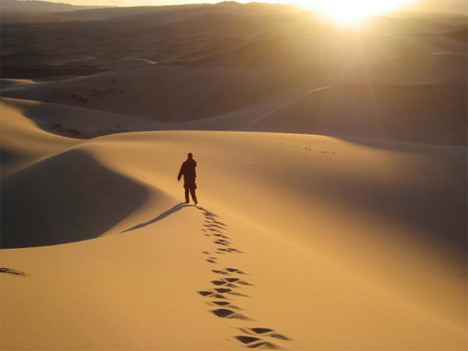
Today, a friend’s blog posed a provocative question. It was provocative enough to stop me in my tracks. Likely, I was right in the middle of a tirade of complaints when this question challenged me. This was the question: “If I let go of my complaints, what might be underneath?” *
The question presented a plethora of thoughts for me. It opened up that place underneath just for a second. But then I quickly moved back to the complaints. I have many. Or at least I believe I have many reasons to complain. But I’m realizing that complaints are surface things. They live outside of us and do not always reflect the inner emotions we are truly feeling.
A complaint develops easily and blurts out what’s on the surface of our lives. It flows easily off the tongue and falls upon any willing listener. The empathy we receive from that willing listener keeps the complaints alive. If someone listens to us and responds with caring about our complaint, it is then cemented. We have given it life, perhaps life beyond what it deserves.
This brings us back to the probing question: “If I let go of my complaints, what might be underneath?”
If gratefulness for the obvious graces that we have received replaced the urge to complain, we would be surprised at the result. If, instead of lodging a complaint, we spent some time exploring what lives “underneath,” we might well gain true insight into our emotional state.
So we would do well to ask ourselves what’s underneath the complaint we speak out loud? Is it true that our complaint rises from a deep place inside of us but hides the emotion there?
If my complaint, for instance, is that I am overworked, perhaps underneath is the constant feeling that I’m being taken advantage of. If my complaint is that I have to endure an illness, perhaps the feeling underneath is that I fear suffering, even death. If I am terrified of death, perhaps I am not certain I left a good and lasting legacy. If I’m languishing in retirement, perhaps the emotion “underneath” is that, now that I am not “ministering,” I am questioning my self-worth.
You might be asking why this is important. It is important because whatever lives inside of us holds the power to harm us physically, emotionally and spiritually. What could we do instead of complaining?
We might begin with silence that moves us a bit towards serenity.
Next, we will practice mindfulness that helps center us.
We woukd do well to contemplate gratitude for the graces of life.
Then we should pray for insight, comfort and healing, not only praying for what we need from God, but also listening for God, abiding for a while in God’s presence.
Then we must take time for what might be the most important practice of all: introspection and self-reflection.
One of the primary goals of introspection is to better comprehend our inward life and to learn to focus it towards fulfillment of self. To go there is to invite vulnerability, healthy vulnerability that softens the hard places inside me that are wounded. Then we need to pull up from our inner resources just a little bit of courage.
When all is said and done, each of us is given a critical choice: do we complain about all that is not right? Or does courage enable us to look underneath our complaints and discover what our true emotions are?
For myself, I have to ponder these questions: What am I grieving? What have I lost? What do I fear? Underneath my whining and complaining (which I am very apt to do) I will find a gift, a treasure that is my very soul and spirit, and the emotions that abide there.
And as a bonus, I will have found a better way to live my “one wild and precious life.” **
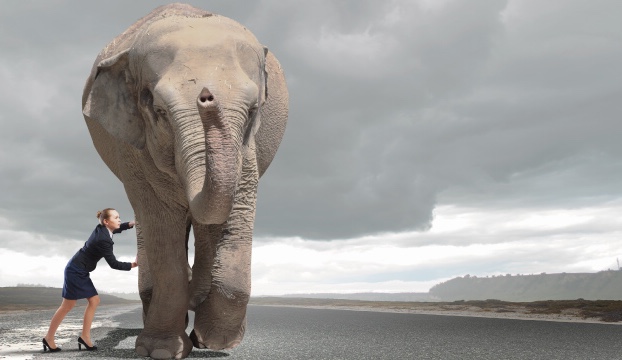
The wisdom for this day comes from Hannibal of Carthage: “We will either find a way or make one.” It was a Latin proverb, most commonly attributed to Hannibal in response to his generals who had declared it impossible to cross the Alps with elephants.
We need this wisdom for today because for the past two years, racism and other divisions have been promoted by the extremist in the White House and his enablers in the Congress. In general, Congressional leaders are creating policies that enforce systemic poverty. Plain and simple!
The truth is that this country has a long and tragic history of classicism, sexism, misogyny, and violence against women. And those who participate in oppression against women are often on the same side as racism, homophobia, xenophobia, and fascism.
This is not the way a nation and government should be moving, and the masses have said it will not be tolerated. They have looked squarely at the injustices and have determined to “find a way or make one.” They cannot be deterred or thwarted. They will persist as they have always done. “A change is gonna’ come,” sisters!
What are the signs?
Sign number 1: a record number women were elected to seats in the House of Representatives, many of them flipping districts from red to blue. This nation elected the first Native American and Muslim women to Congress, and the first openly bisexual woman to the Senate. South Dakota elected its first female governor. North Carolina elected another African American woman to the state supreme court.
Sign number 2: the powers that be fear women who persist. As Rev. William Barber points out, they are afraid of women like Rosa Parks. They cower in the presence of women like Rev. Dr. Liz Theoharis of the Poor People’s Campaign’s who has fought to tear down systemic poverty and oppression. They are terrified of women like Women’s March national co-chairs ― Carmen Perez, Linda Sarsour and Tamika Mallory ― who are bringing women together across every race, creed, color, religion, sexuality, and class. They fear women like Sister Simone who fights for affordable health care or like Lucy Parsons who fought for labor rights and living wages.
They’re afraid we’ll march, or vote, or advocate, or speak the truth, or run for office, or persist. But “a change is gonna’ come,” sisters! It won’t be easy. It won’t happen overnight. But if any people can find a way to cross the Alps with elephants, sisters standing together in solidarity can do it! Women have shown that they will “either find a way or make one!”
But there is one caveat: stick together! Forget about infighting.
Yes, There may be realities of real conflict that need to be addressed head on. No social justice movement is without conflict, and disagreements around the Women’s March were there from the start: Should the march include anti-abortion women? Were the needs of women of color overshadowed by the priorities of white women? What about transgender women? Is it true that accusations of anti-semitism hang over the march?
Let us pray that women and those who support women will find ways to mitigate these concerns and show up on Saturday ready to march. After all, we made history together. That was our stellar beginning. Remember?
It started just days after the fateful 2016 election. A small group of women who feared the Trump presidency joined together at a New York restaurant to plan a demonstration. What resulted from that meeting was the largest single-day protest in U.S history, the Women’s March, which took place in about 600 American cities and towns and on every continent in the world. And that march was a part of what inspired a record number of women to run for office and win. Elephants or not, we “will either find a way or make one!”
So let us march on Saturday and if we cannot march, send positive energy in solidarity with those who do march. Be encouraged. Be encouraged by the words of Dr. William J. Barber:
As you march this weekend and as you step into the new year, I urge you to keep fighting. Do not relax until poverty is eradicated, until every American receives a living wage for their work, until racism, bigotry, homophobia, xenophobia, and misogyny are words of the past. Continue to register your friends and family and neighbors to vote. Continue to run for office. Continue to march, protest, and make your voices heard.
This blog post is about two brave women who literally changed the world. You may have never heard of them, but they are worth knowing. Here’s how the story of the women begins.
Now a new king arose over Egypt, who did not know Joseph. He said to his people, “Look, the Israelite people are more numerous and more powerful than we. Come, let us deal shrewdly with them, or they will increase and, in the event of war, join our enemies and fight against us and escape from the land.” Therefore they set taskmasters over them to oppress them with forced labor. They built supply cities, Pithom and Rameses, for Pharaoh. But the more they were oppressed, the more they multiplied and spread, so that the Egyptians came to dread the Israelites. The Egyptians became ruthless in imposing tasks on the Israelites, and made their lives bitter with hard service in mortar and brick and in every kind of field labor. They were ruthless in all the tasks that they imposed on them. (Exodus 1:8-14)
The Hebrew people had immigrated to Egypt because of life-threatening conditions in their homeland. They thrived in the new land and their population grew. For many years, they lived peacefully in Egypt, and made great contributions to its well-being.
Then a new king arose, a king who began to spread fear about the immigrants. They were multiplying, becoming powerful. “Soon this new race will outnumber and overpower our own! So we must close ranks in fear,” he said.
Sadly, we are hearing a similar message from our president. But we won’t expound on that today. This is a story about courage.
We constantly hear leaders talking to us through our televisions — experts on various topics, members of congress, politicians, pundits. One thing shines clearly about most of them: they exhibit not an ounce of courage and conviction. For many of them, maybe most of them, the rhetoric is about their own interests, never about taking a stand against evil or injustice, never about the cost of doing what is right.
So may I tell you a story about two courageous women you may not know? Thousands of years ago two Hebrew midwives, Shiphrah and Puah, said “NO.” Shiphrah and Puah served Hebrew women who were anticipating childbirth. The Pharoah commanded the midwives to kill all the baby boys born to Hebrew women in Egypt. An ancient method of power and control!
There are only six verses in the whole Bible about these women, but their actions led to the salvation of the entire nation of Israel.Shiphrah and Puah were in charge of all the Hebrew midwives in Egypt while Israel was enslaved in Egypt. One day, Pharaoh called Puah and Shiphrah to him and told them,
“When you are helping the Hebrew women to give birth and see them upon the birthstool, if it is a son, then you shall put him to death; but if it is a daughter, then she shall live.”
At this point in history, Egypt was the largest kingdom and the Egyptian Pharaoh was considered the most powerful ruler in the world. In fact, the Egyptian people regarded Pharaoh as a leader appointed by their gods. Imagine all the leaders in the world today. Now imagine that all of their power was all given to one single leader and that’s approximately how powerful Pharaoh was — and this particular Pharaoh wasn’t very nice.
Now, the most powerful ruler in the world has just ordered Puah and Shiphrah to kill every baby boy born to a Hebrew woman. What happened next is one of the most courageous things we could imagine. Let’s look at the whole story recorded in Exodus 1:15-22, New Revised Standard Version (NRSV).
The king of Egypt said to the Hebrew midwives, one of whom was named Shiphrah and the other Puah, “When you act as midwives to the Hebrew women, and see them on the birthstool, if it is a boy, kill him; but if it is a girl, she shall live.” But the midwives feared God; they did not do as the king of Egypt commanded them, but they let the boys live.So the king of Egypt summoned the midwives and said to them, “Why have you done this, and allowed the boys to live?” The midwives said to Pharaoh, “Because the Hebrew women are not like the Egyptian women; for they are vigorous and give birth before the midwife comes to them.” So God dealt well with the midwives; and the people multiplied and became very strong. And because the midwives feared God, he gave them families. Then Pharaoh commanded all his people, “Every boy that is born to the Hebrews you shall throw into the Nile, but you shall let every girl live.”
These two midwives had spent their lives bringing new life into the world, and now they were asked to snuff out that new life as it was about to draw its first breath. “Not a chance!” they declared with courage welling up inside them.
No! Shiphrah and Puah said “No.” Because they were called to choose life, not to end it. They acted swiftly and shrewdly. They lied, in fact, and said this to Pharoah. “What can we do? The Hebrew women are giving birth so fast that the babies are born before we can get to the birthing tents.”
All the while, they were coaching these immigrant Hebrew women, holding their hands and catching their babies as they made their way into their complicated, inhospitable world.
Shiphrah and Puah said “No!” And among the children they saved was the baby Moses. You know the one. He was chosen and anointed by God to free the Hebrew people from Egyptian oppression and lead them back to their beloved homeland.
Today we have the opportunity to say “No” to all that is unjust. What does that mean for us? What does it mean to summon the courage to help bear life into this complicated time?
Perhaps it means not buying in to the fear some want us to feel about the caravan of refugees who are approaching our borders. Perhaps it means advocating for their well-being in every way we can, declaring that we refuse to demonize them, and understanding the heart of parents who feel they must flee from the dangers of their homeland.
Perhaps it means supporting efforts to reunite the immigrant children that are still separated from their parents.
Perhaps it means that you and I must find ways to choose life instead of death, and hope instead of fear.
I don’t know if the story of Shiphrah and Puah story speaks to you, but I hope you will ponder it and hear its truth.
There will always be new kings who arise among us and decide to deal harshly with certain groups of people. But we do not have to go along with their plans. In fact, we mustnot go along with their plans and instead follow the courageous path of creating justice for all people.
It’s one of those Mondays again, those days that just weigh on you a bit too heavily. You have to push yourself to start a new week. You feel that deep-down tiredness that overcomes you and you don’t even know why. Know the feeling?
Nothing has changed. You are still in your familiar schedule. You are still the same you that feels strong one minute and despairing the next. But you feel as if you’re on the proverbial merry-go-round that just keeps circling around the same life and all that’s in it. Round and round, again and again and again.
You might even feel down on yourself for not being “strong” enough to move joyfully through your life. All of this begs the question: Why are you so hard on yourself?
Maybe you should just take a moment for yourself.
Sit back.
Marvel at your life,
at the grief that softened you,
at the heartache that wisened you,
at the suffering that strengthened you.
Despite everything,
you still grow.
Be proud of this.
Today, I pray for you this prayer that has sustained so many through generations.
I pray that, according to the riches of his glory, God may grant that you be strengthened in your inner being with power through his Spirit, and that Christ may dwell in your heart through faith, as you are being rooted and grounded in love. I pray that you may have the power to comprehend, with all the saints, what is the breadth and length and height and depth, and to know the love of Christ that surpasses knowledge, so that you may be filled with all the fullness of God.
— Ephesians 3:16-19 New Revised Standard Version (Paraphrased)
How do we live after we have lost hope? How do we live with brokenness? What do we say to a broken world? What do we do with our broken hearts? The truth is that each day can bring us heartbreak. Any season of life can bring us failure. At times, the struggle is so intense that we do lose hope.
Khalil Gibran has written that “out of suffering have emerged the strongest souls; the most massive characters are seared with scars.”
How true that is, that our suffering makes us stronger, that our scars make us resilient. Most of us move through life steeled against any suffering. We bravely put on our body armor to protect us against every assault. We refuse to allow our vulnerability to rise within us.
I have been strengthened by Brené Brown’s book, “Rising Strong.” She points us to wisdom that names hope is a function of struggle, and challenges us to not be afraid to lean into discomfort.
Why would we want to do that, you might ask? Who in their right mind really wants to invite adversity into their lives? Why would we want to be vulnerable? We need to be strong. We need to live into courage. We need to be impenetrable, tough and impervious to anything that might hurt us.
Here’s what Brené Brown says about that:
Hidingout, pretending and armoring up against vulnerability are killing us: killing our spirits, our hope, our potential, our creativity . . . Our love, our faith, our joy. We’re sick of being afraid and sick of hustling for our self-worth. We want to be brave, but deep inside of we know that being brave requires us to be vulnerable.
“No adversity, no hope,” she writes. “Fall. Get up. Try again.”
As people of faith, we can speak, through our own heartbreak, to a broken world. We can offer the message that if you feel that you have to give up, hope whispers, “try one more time.”
When we live in life’s fullness, with our whole hearts, we will always know heartbreak. We will push to try something new, and sometimes we will fail completely. We will experience disappointment. But without those heartbreak times, we will never know that we can get beyond them.
If we never fall, we will never know that we really can get up. If we never lose hope, we will never experience the joy of finding it again.
If we never lose hope, we will never know new hope, fresh and pointing us toward the skies.
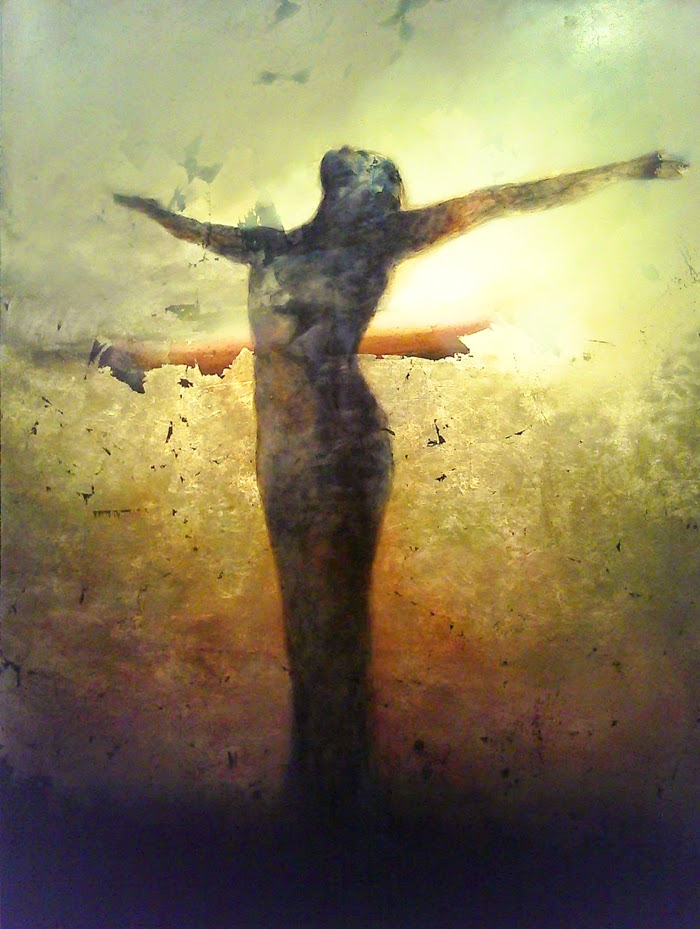
“I have perfect attendance pins for Sunday School going back thirty years, and until last week, I never knew that the Bible told the story of someone who had been raped.”
I have heard similar comments many times when preaching from my book about Biblical women, “Voices of Our Sisters.” The truth is that Scriptural passages like those described by Phillis Trible in “Texts of Terror” are not your Mama’s Bible stories. We don’t teach them in our classes and we definitely do not preach on them in church. The stories of violence against women in the Bible are as hushed as the stories of abused women today. Shame on us.
It was one year ago that The New York Times published an investigative article about how Harvey Weinstein had for decades paid off acusers of sexual harassment.
“Culturally, the article hit like a meteor,” writes Maya Salam in The New York Times Gender Letter, “drastically altering the landscape around how sexual misconduct is perceived, sending the #MeToo hashtag viral and, in turn, triggering an avalanche of accusations against powerful men. It wasn’t long before #MeToo wasn’t just a turn of phrase — it was a movement.”
RAINN*, the country’s largest anti-sexual assault network, experienced a 30 percent increase in calls to the National Sexual Assault Hotline since the current #MeToo resurgence, and last Friday — the day after Christine Blasey Ford and Judge Brett Kavanaugh testified before the Senate Judiciary Committee — was the busiest day in the hotline’s 24-year history.
The women of this nation will not forget Dr. Christine Blasey Ford. Women who have been harmed by sexual violence will revere her for her courage. Because our courage, survivors all, has often been small and our fear very large. We know that people will not believe our stories of abuse, and that instead they will blame us for bringing our terrible stories to light.
We will not forget Dr. Christine Blasey Ford, and we will remember Tarana Burke who first spoke #MeToo in 2007 to let young women of color who survive sexual assault know that they are not alone.
We will remember Alyssa Milano and her Tweet that reached dozens of countries and millions of people — over 1.7 million tweets included the hashtag “#MeToo,” and 85 countries had at least 1,000 #MeToo tweets.
So we join hands with those who understand us, hold on tightly, and speak our truth, because we need to move from darkness to light.
And in the light we will stand, hearts and spirits lighter because we have spoken our terror aloud.
In the light we will stand, even though staying in silence’s darkness would be easier.
In the light we will stand, even as the people around us cling stubbornly to their darkness that screams out to us, “We will not hear you!”
In the light we will stand because that’s the only way to survive.
You have no doubt heard about the mid life crisis. Perhaps you have even had one. I did at mid life. However, what’s more critical to me at this stage of my life is more appropriately called a late life crisis. And, lo and behold, I’m having one of those right now!
Am I in the right place? Do I need to retire nearer to my son and grandchildren? How do I live a fulfilled life while facing so many health challenges? Why did I move away from my best friend? How do I give back as I have always done now that my ministry career is over? Is it over? Is there more I could be doing? Should I write more, cook more, paint more, garden more? What in the world do I do with myself?
For some months I had been lost in a baffling crisis of spirit. Back in the autumn I had awakened to a growing darkness and cacophony, as if something in my depths were crying out. A whole chorus of voices. Orphaned voices. They seemed to speak for all the unlived parts of me . . . I know now that they were the clamor of a new self struggling to be born. I was standing on the shifting ground of midlife, having come upon that time in life when one is summoned to an inner transformation, to a crossing over from one identity to another. When change-winds swirl through our lives . . . they often call us to undertake a new passage of the spiritual journey.
I am there. Not in midlife, but in late life, and it is for me an existential crisis of spirit, definitely the time of “a new self struggling to be born.” To be sure, there are unlived parts of me, and I want to understand what exactly they are and how I can coax them to life. The ground beneath me is shifting, calling out to me to cross over from one identity to another. An inner transformation is most definitely in order for me, but how do I begin? Where do I begin? These are the questions of late life. And the symptoms? Dragging out old photos, very old photos. Looking up old friends. Examining your grandmother’s vintage jewelry. Scanning school yearbooks. All in a useless attempt at making the present as meaningful as you remember the past to be.
I sometimes agonize over my current life, wishing to dream just one more dream and to make it a reality. I worry about the future and wonder what the years ahead will bring. I want to still be relevant. I want to keep trying to change the world just as I used to. I want to stir things up and make waves in the quest for justice, just as I did in the past. I feel as if I have only two choices: to languish in the present or to find a way to be the me I used to be. And yet, something tells me that there is a third choice that involves some sort of transformation and the renewal of life, not as it used to be, but as it can be now, in the present season.
It is a quiet agony that I am experiencing. It happened to me when I came upon an unsuspecting darkness buried in late life and met the same overwhelming question that Sue Monk Kidd met: “Do I dare disturb the universe?”
My family could be scandalized if I found new life. They might wonder if I had taken too much of a medication. They might worry that I will do something inappropriate. They might know that I simply do not have the kind of energy required for dreaming big, new, important dreams. And they would be mostly right.
And yet I refuse to measure out my life with coffee spoons. It’s way too safe for me. It’s not who I am, and I am completely convinced that there are unlived parts of me looking for a way to come to life. I have no idea what that would look like. I have no idea how I will manage to pull it off. But I need to disturb the universe. And the universe needs some disturbing!
May God guide me on the way, pour blessings on my dreams, and show me just how I might disturb the universe.
Yesterday, I watched a clip from the 2018 ESPY Awards. I could not help but pause to listen to the athletes tell their stories of years of abuse by U.S Olympic Team doctor, Larry Nassar. I wondered how many years of silence they each endured, holding the horrible secret inside where it had the power to do great harm. That’s the thing about sexual abuse — it’s often a big, bad secret. Victims hold the shame in the place where they pack away their secrets, and the rest of the word hopes never to have to hear about it. So the secret is safe, hidden away, at least for a time.
But not this time! The “sister survivors” of the disgraced sports doctor’s abuse accepted the Arthur Ashe Courage Award at the 2018 ESPYS. Dressed in glittering gowns, holding hands in solidarity, more than 140 women gathered onstage to share the award given to athletes whose bravery “transcends sports,” as the audience rose in a standing ovation.
Sarah Klein, a former gymnast who said she was among Nassar’s earliest victims three decades ago, was the first to address the audience. “Speaking up and speaking out is not easy,” she said. “Telling our stories of abuse, over and over and over again, in graphic detail, is not easy. We’re sacrificing privacy, we’re being judged and scrutinized, and it’s grueling and it’s painful, but it is time. We must start caring about children’s safety more than we care about adults’ reputations.”
Tiffany Thomas Lopez, who in the 1990s played softball at Michigan State University where Nassar practiced, had a message for other victims who might still be silent. “I encourage those suffering to hold tight to your faith, and stand tall when speaking your truth,” she said. “I’m here to tell you, you cannot silence the strong forever.”
Olympic gold medal gymnast Aly Raisman was the last to speak. She was unsparing in her criticism of the adults who she said for years failed to protect the victims, instead opting to silence her and others “in favor of money, medals and reputation. But we persisted, and finally, someone listened and believed us.”
In January, more than 150 women and girls gave victim impact statements at one of Nassar’s three trials. In a Lansing, Michigan courtroom, they spoke of abuse under the guise of medical treatment, which for some began when they were elementary school age. Following their testimony, Circuit Court Judge Rosemarie Aquilina sentenced Nassar to up to 175 years behind bars.
When the years of silence ended and the women released their secrets, justice followed, relief followed, inner peace followed. Therein lies a lesson for us all. How many times have women kept silent to protect others? How many times did we guard a secret because revealing it might hurt other people? Did we realize that by hiding away the secret, we were harming ourselves? The words written by Dia Reeves is true of us:
She was like the moon—part of her was always hidden away.
And so it is with women. There are always parts of us that are hidden away, often for many years. There are parts of our stories that we hold in our souls, secrets we would rather not speak. It seems important, though, for each of us to develop the wisdom of knowing what we should hold in silence and what we should speak. As for the big, bad secrets — well, saying them out loud breaks their power. The chains of our silence fall to the ground, broken!
So many people have been broken. I join them in their brokenness, for I, too, have been broken. Not just once, but again and again. So I know how it feels to look down in the dust at my feet and see the shards of a broken spirit. I know the emotional response I have when I sit on the ground examining the broken shards, and I know how I despair of the dauntingtask of putting the broken pieces back together.
I know the fear of doubting that I will even be able to put them together again. I know the terror of believing that my broken life will forever be broken. I know the suffocating feeling of having been broken beyond repair, without hope, without the faith I will need to repair my own brokenness.
And then, we look at our world, lamenting its groaning in so many ways and in so many places around the globe. Ours is a world that seems broken into pieces. I often find encouragement in the Jewish concept known as Tikkun Olam, a phrase found in the Mishnah that means to heal or repair the world. While Tikkun Olam is used today to define social action and the pursuit of social justice, the phrase has ancient roots with origins in classical rabbinic literature. It means so much more than examining broken pieces and finding a “glue” that might possibly put them back together.
Rabbi Yitzchak Luria* pondered the world’s brokenness and came to believe that, even before time, something must have gone terribly wrong with the world. As he continued to mull it over in his mind, he proclaimed that the world had shattered. He taught that we are anointed to repair a world which he defined as “all that is eternal,” insisting that “at the very core of reality is G-d’s shattered dream, waiting for us to pick up the pieces.”
Things break. The world breaks. Dreams break. We break. Such is the reality we know. And yes, we can become disconsolate as we take on the task of putting the pieces back together again. But there is a higher truth, a more noble calling than just putting together broken pieces. It is the calling to make things whole again, to make the world whole again, to make your spirit whole again.
In Scripture, we find many stories of persons being made whole. Each one looks like a miracle. Remember the story of the woman who had suffered for twelve years?
A woman, who was very ill for twelve years, came behind Jesus, and touched the hem of his garment: For she said within herself, “If I but touch his garment, I shall be whole.”
Jesus turned about, and when he saw her, he said, “Daughter, be of good comfort; your faith has made you whole.” And the woman was made whole from that hour.
— Matthew 9:20-22
Surely it was a miracle that this woman received. But for us, miracles are rare. We are burdened heavily by the brokenness, usually without the benefit of miracles. So what is it around you that is broken? What broken shards do you have before you? A broken relationship? A broken faith community? A broken dream? Is your city broken? Your nation? Your world? Or it it your own spirit that lies in broken pieces at your feet?
I cannot promise you a miracle. Even so, you must pick up the broken pieces and get started. You may get a little help from the people in your life. Then again, they may offer no help at all. But I do know that you have within yourself all the strength you need to take what is broken, put the pieces back together and find yourself whole again.
She is a beautiful piece of broken pottery, put back together by her own hands. And a critical world judges her cracks while missing the beauty of how she made herself whole again.
— J.M. Foster
The Japanese art of repairing broken pottery is called kintsugi. Repaired with pure gold, the Japanese art embraces the imperfections of the broken object. The flaws are seen as a unique part of the object’s history, which adds to its beauty. The glistening gold cracks are seen as very lovely features of the pottery, and Japanese artists say that the pottery is even stronger at the broken places.
June 16, 2012 . . . My three-year-old granddaughter standing among the bronze sculptures of The Little Rock Nine.
Her parents had told her the poignant story of The Little Rock Nine, but at age three she had no idea of the many ways their lives would impact hers. Because they crossed an invisible, but very real, line that divided black children from white children, they opened the door to educational equality in a racially divided state. Because their parents were brave enough to let their children breach the three stately doors of Little Rock Central High School, their world changed in unimaginable ways. And with that change, my granddaughter inherited the highly cherished right to equal education and all the opportunities that would follow. Because of that change, my granddaughter would grow up inspired.
In case you do not know about The Little Rock Nine, here is some background.
On September 3, 1957, nine African American students — The Little Rock Nine — arrived to enter Little Rock Central High School only to be turned away by the Arkansas National Guard. Governor Orval Faubus had called out the Arkansas National Guard the night before to, as he put it, “maintain and restore order…” The soldiers barred the African American students from entering.
On September 24, 1957, President Dwight D. Eisenhower ordered units of the U.S. Army’s 101st Airborne Division — the “Screaming Eagles”— into Little Rock and federalized the Arkansas National Guard. In a televised speech delivered to the nation, President Eisenhower stated, “Mob rule cannot be allowed to override the decisions of the courts.”
On September 25, 1957, under federal troop escort, The Little Rock Nine made it inside for their first full day of school. The 101st Airborne left in October and the federalized Arkansas National Guard troops remained throughout the year.
They were nine solemn figures, nine teenagers just trying to do what every child up to age 18 had been mandated to do: go to school. Nine figures who entered the annals of American history the day they passed through the front door of Little Rock Central High School.
These nine African American students — Melba Pattillo, Elizabeth Eckford, Ernest Green, Gloria Ray, Carlotta Walls, Terrence Roberts, Jefferson Thomas, Minnijean Brown and Thelma Mothershed — are now immortalized in a striking memorial located on the grounds of the Arkansas State Capitol in Little Rock. The life-size bronze statues, entitled “Testament,” were designed and sculpted by Little Rock artist John Deering, assisted by his wife Kathy, also an artist. A comment from each of The Nine is found on individual bronze plaques identifying each student. Across the street sits the State Department of Education, just a few hundred yards from “Testament.” This Arkansas State Agency has been embroiled in this same desegregation lawsuit for over 50 years.
Nine young students walked bravely, defiantly, yet filled with fear, in an act against prejudice and ignorance. These nine are heroes of every grueling story of segregation and racism in American history, every story we have heard and the millions of stories we will never hear.
So I am deeply moved by these photos of my granddaughter because there is deep meaning in each one. She seems to be looking up at the sculpture of Melba Pattillo (Beals) with what seems like admiration and awe. Dr. Beals grew up surrounded by family members who knew the importance of education. Her mother, Lois, was one of the first African Americans to graduate from the University of Arkansas in 1954. While attending all-black Horace Mann High School, Melba knew that her educational opportunities were not equal to her white counterparts at Central High. And so she became a part of the effort to integrate Central.
And my granddaughter stands in front of Little Rock Central High, a school she may choose to attend someday, a school she will be able to attend because The Little Rock Nine took a dangerous risk to make it possible.
Finally, my granddaughter stands playfully on the steps of the Arkansas State Capitol. I know that it is possible that she may one day proudly walk through its golden doors as a state senator or representative. That is possible because nine Little Rock students were brave enough to be a part of changing history.
At three years old, my granddaughter probably was not very inspired by Central High School, the Little Rock Nine Memorial, or the Arkansas Capitol. But her parents took her there to see and to learn so that she would grow up inspired. When she is older she will remember what she saw and what she learned from that seemingly insignificant sightseeing trip, and she will realize that it wasn’t insignificant at all. It may just be what motivates and inspires her to follow her dreams, because now she knows that all of her dreams are possible. It’s all about growing up inspired. It’s what we want for every child.
Dr. Melba Pattillo Beals, Minniejean Brown Trickey, Elizabeth Eckford, Dr. Carlotta Walls LaNier, Mrs. Thelma Mothershed Wair, Dr. Ernest Green, Gloria Ray Karlmark, Dr. Jefferson Thomas, Dr. Terrence J. Roberts, you made sure that every child can grow up inspired. when you were just young teenagers. When you walked through the doors of segregated Little Rock Central High School, you did so much more . . . for every student who came after you and for my granddaughter
Because I have no sense of direction at all, I have an irrational fear of getting lost. Do not tell me to go north or south. I will have no idea how to do that. You must instead say something like, “When you see McDonalds on the right, go past it. Then go past Wendys, Burger King and Barbaritos. Look just past Barbaritos, but on the other side of the road, and you’re there.” It’s a convoluted way of making sure I don’t lose my way. And if one of those fast food places were to close down, I’m lost.
So as I am contemplating the fear of being lost, I find in my email this morning a meditation by Richard Rohr entitled, “Practice: Being Lost.” I wanted to slip right past that meditation, as I do not need or want to practice being lost. But something held me there, captive to this bizarre meditation that described being lost as a spiritual practice.
Psychologist and wilderness guide Bill Plotkin* highly recommends wandering in nature and experiencing the great gift of “finding ourselves lost.” He calls it “Soulcraft: Crossing into the Mysteries of Nature and Psyche,” and he means that we should find ourselves lost both literally in nature and metaphorically in the midst of life’s changes.
His words remind me that at least four conditions contribute to finding oneselflost: density that conceals paths, obstacles in the pathways that force you to detour, cluelessness about direction, and darkness. I would not like finding myself in a dense forest with boulders blocking some of the pathways, hopelessly lacking any sense of direction after a few detours, and knowing that the sun is setting and darkness will make everything even worse.
And yet . . . finding myself lost as a spiritual discipline seems to be beckoning to me to enter. As a lost wanderer, I might just learn to look deeply into the face of my aloneness and discover what truly gives me life and what doesn’t. I could discover inspiration, belonging, strength, resilience and wisdom in my own company — all by myself — not knowing which way to turn. Knowing only that God will meet me there and that I can “be” who I am, right where I am, lost in a discovering moment.
As David Whyte writes:
When wandering, there is immense value in “finding ourselves lost” because we can find something when we are lost, we can find our selves . . .
Sometimes it takes darkness and the sweet confinement of your aloneness to learn that anything or anyone that does not bring you alive is too small for you.*
I would like to be brave enough to give it a try in some spring wood where the verdant trees form a deep, dark canopy of privacy over my soul and where aloneness takes over my psyche. A place where God will meet me, where I can fully embrace finding myself lost, and where I might just find a few sparkles of light along the way.
I have to admit that this is a terrifying prospect for me. Darkness in a dense forest, alone, lost and scared . . . I’m just not sure about that. So maybe I should settle for the swing in my yard that’s just on the edge of the woods. Safer. More acceptable. And God will meet me there, too.
*Bill Plotkin, Soulcraft: Crossing into the Mysteries of Nature and Psyche (New World Library: 2003), 234, 248-249, 263.
*David Whyte, “Fire in the Earth,” Fire in the Earth, Many Rivers Press: 1992, 8.
Sometimes life hurts.
We suffer. We heal. We move on.
But sometimes life hits back. Harder.
Lethal in its cruelty.
Shattering us into a million glittering shards
of pain and loss and anguish.
And we suffer, too broken to heal,
to become what we once were. — L.R Knost
How deeply I know that feeling of brokenness. I am personally acquainted — well acquainted — with the lethal cruelty that life can present. To heal the past requires that I pay close attention to the spiritual and emotional places within me in the present, to make sure I am healthy and whole right now. Only then will I find the strength to invite the pain of the past into my psyche so that I can face off against it.
I have learned through the years that it is not a good option to leave past pain where it is, to let it occupy the place within me it has claimed. This writing by L.R Knost is one of the best descriptions I have ever seen on healing from past pain.
Healing is not a straight and narrow road
that leads from darkness to light.
There’s no sudden epiphany to take
us from despair to serenity, no orchestrated
steps to move us from hurting to healed.
Healing is a winding mountain road with steep
climbs and sudden descents, breathtaking views
and breath-stealing drop-offs, dark tunnels
and blinding exposures, dead ends and
endless backtracks, rest stops and break downs,
sheer rock walls and panoramic vistas.
Healing is a journey with no destination,
because healing is the journey of every lifetime.
Indeed, “healing is the journey of every lifetime.” The reality is that the only way to heal from the pain of the past is to walk directly through the center of that pain in the present. Does it feel safer to just let the pain continue to smolder in the dark parts of myself? Of course it feels safer. It feels terrifying, in fact, downright terrifying.
But the dark places in me will never heal spontaneously. I have to conquer the fear and open up to the possibility that God’s Spirit can breathe life back into those embers of pain snd rekindle the fires of unhealed hurts. So as I sit cautiously at the very edge of the fires of past pain, I cannot help but recall the comforting words of the prophet Isaiah.
When you pass through the waters,
I will be with you;
and when you pass through the rivers,
they will not sweep over you.
When you walk through the fire,
you will not be burned;
the flames will not set you ablaze.
— Isaiah 43:2 New International Version (NIV)
And so many times, I have found deep comfort in singing the beloved hymn, How Firm a Foundation.
When through fiery trials thy pathway shall lie, My grace, all sufficient, shall be thy supply. The flame shall not hurt thee; I only design Thy dross to consume and thy gold to refine.*
Text: Attr. to Robert Keen, ca. 1787. Music: Attr. to J. Ellis, ca. 1889
So the flames aren’t there to burn me. The flames are there to light my way through pain to healing. At times, I have approached those flames with courage and confidence. But at other times, I met the flames with terror.
Courage or terror — it didn’t matter really. I just walked through it just as I was, and as I did, the hurt transformed into hope. I had wounds, for sure, and lasting scars. But the scars tell a story of the battles I won and the battles I lost, and most importantly, the scars tell the story of a human who survived. So, in spite of fiery places of past pain, we learn to live as L.R. Knost says
. . . with the shards of pain and loss and anguish forever embedded in our souls,
and with shaking fingers we piece together the bloody fragments of who we were into a mosaic grotesque in its stark reality,
yet exquisite in its sharp-edged story of the tragic, breathless beauty of a human who survived life.
And we move on, often unaware of the light glittering behind us
showing others the way through the darkness.
This is a resilience we can be thankful for, a perseverance we can cherish, a strength straight from a present and faithful God that will ever — forever — sustain us. Amen.
Ever feel like that’s exactly what you’re trying to do? I know the feeling personally, and I have also witnessed others in the middle of this kind of daunting task.
Making ends meet in a single parent family . . . moving a mountain with a teaspoon.
Caring for an aging loved one who needs constant attention . . . moving a mountain with a teaspoon.
Fighting a debilitating and relentless illness . . . moving a mountain with a teaspoon.
None of us are immune to life situations that get the best of us, sometimes bringing us to our knees in desperation. And sometimes, these life challenges move us to the precipice of almost giving in and giving up. There is simply not enough strength and fortitude to go on, and we find that we are sitting in the dust where we collapsed, contemplating if it’s even worth it to try to get back up.
With inner resilience and a tiny bit of hope, we do get up. We move farther along our path, part of us dreading the next collapse, and the other part of us filled with certainty that we will survive. Moving a mountain with a teaspoon is most certainly a part of life, every person’s life.
And yet, from somewhere in our past, there is this faint whisper of hope. We may not remember where the whisper comes from, and it may be ever-so-quiet. But still we hear it . . . echoing from ages past, coming from somewhere in our lives at some devastating moment, maybe even becoming a sigh from the deepest place in the soul.
Truly I tell you, if you say to this mountain, ‘Be taken up and thrown into the sea,’ and if you do not doubt in your heart, but believe that what you say will come to pass, it will be done for you.
— Mark 11:23 NRSV
What a promise to remember when we feel as if we are moving a mountain with a teaspoon! It is a God-sent word of assurance, a message of hope that encourages us to pick ourselves up and move forward, to try one more time.
Let us pray with our legs, let us march in unison to the rhythm of justice, because I say enough is enough.”
— A Parkland shooting survivor.
Dear students,
Yesterday you sat in classrooms all over this country. Today you are marching all over this country, all over the world. Teachers, parents and other supportive adults are marching with you. We older folk marvel at your commitment and your resolve. We are proud of you. We cheer you on and pray that your efforts will bring positive change.
You are marching to demand that your lives and safety become a priority and that we end gun violence and mass shootings in our schools. You are relentless and persistent in your quest to end gun violence. You are standing tall, lifting your voices to proclaim “Enough is enough!”
Every day, 96 Americans are killed with guns. Since the massacre at Sandy Hook Elementary School where 20 children between six and seven years old were killed by a gunman, 7,000 children age 17 and under have been killed by guns.
Today, thousands of you have gathered to call violence by its true name. You are calling out the adults. You are confronting the NRA. You are challenging all who put their own self interest above the safety of our children,You are marching today for those who died and those who live. You are marching for the children who will be in classrooms in years to come, little ones who still have the joy of innocence. You are marching for their lives. You are marching for them. You are marching for all of us, and we thank you. Our hearts are with you,
For each of you, I offer this prayer.
God who holds ouryoung in your arms of grace,
Make of us a people who hold our children in the highest esteem, who give them respect and encouragement, who take their fears seriously, who commit ourselves to their safety and protection.
Protect them, God, as they march for their lives today.
Help them to know that their resilience and persistence might just change the world.
Make every city where they march a welcoming place, filled with people that open their hearts to the message our children speak.
Assure our children of the love that surrounds them and of the support that enfolds them. Assure them of our love and respect for them.
Continue to embolden them to demand change.
Infuse them with the courage to stand and the strength to speak truth to power.
Grant them an extra measure of perseverance.
Guide their steps. Ennoble their conviction.
Calm their fears and soothe their anxious hearts.
And may their reward be a world free of violence, communities infused with peace, classrooms that surround them with understanding, acceptance, protection and learning.
For your deep love for our children, O God, we give you thanks.
For your compassion toward our young who have been so deeply harmed, we give you thanks.
For your comforting presence with friends and families who have lost people they love, we give you thanks.
For your tears mingled with our own as we mourn the loss of innocence our children have experienced, we give you thanks.
For your abiding protection and mercy in our violent and frightening world, O God, we give you thanks. Amen.
*****
Fast Facts
Organizers of March for Our Lives expect millions of people to participate in today’s marches.
Acting out of their profound grief, students from across the country are fearless, empowered and motivated to speak out today as part of the March for Our Lives movement that was born out of the Valentine’s Day shooting in Parkland, Florida that killed 17 students and staff members.
President Barak Obama and First Lady Michelle Obama sent a handwritten letter to the students of Parkland’s Marjory Stoneman Douglas High School commending them for their “resilience, resolve and solidarity in helping awaken the conscience of a nation.”
Today, there are marches in over 800 sites across the country where students are still “calling BS.”
Marches are also taking place all over the world.
Florida students have planned a voter registration effort as a part of the march in Washington, DC.



 Today, a friend’s blog posed a provocative question. It was provocative enough to stop me in my tracks. Likely, I was right in the middle of a tirade of complaints when this question challenged me. This was the question: “If I let go of my complaints, what might be underneath?” *
 The wisdom for this day comes from Hannibal of Carthage: “We will either find a way or make one.” It was a Latin proverb, most commonly attributed to Hannibal in response to his generals who had declared it impossible to cross the Alps with elephants.
 It’s one of those Mondays again, those days that just weigh on you a bit too heavily. You have to push yourself to start a new week. You feel that deep-down tiredness that overcomes you and you don’t even know why. Know the feeling?
 “I have perfect attendance pins for Sunday School going back thirty years, and until last week, I never knew that the Bible told the story of someone who had been raped.”
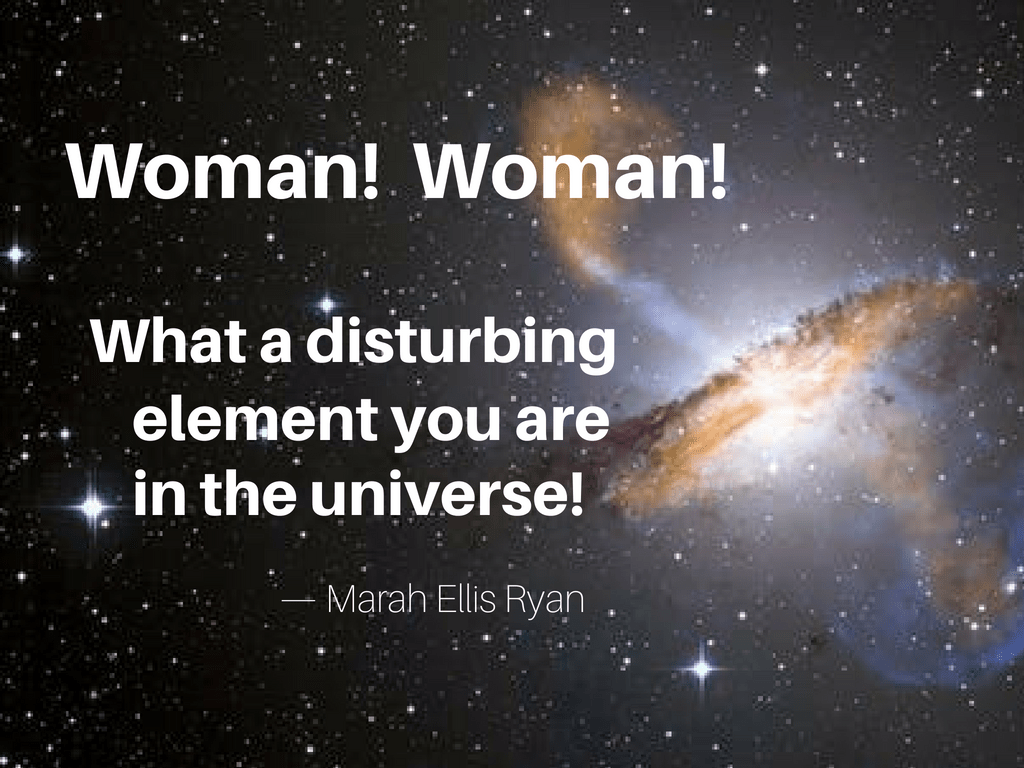 You have no doubt heard about the mid life crisis. Perhaps you have even had one. I did at mid life. However, what’s more critical to me at this stage of my life is more appropriately called a late life crisis. And, lo and behold, I’m having one of those right now!
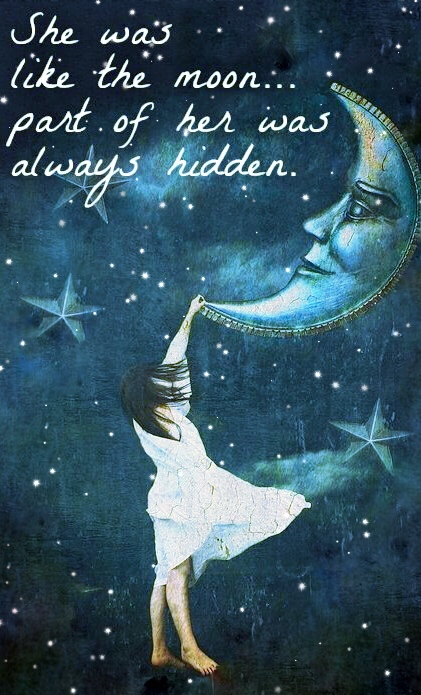 She was like the moon—part of her was always hidden away.
 So many people have been broken. I join them in their brokenness, for I, too, have been broken. Not just once, but again and again. So I know how it feels to look down in the dust at my feet and see the shards of a broken spirit. I know the emotional response I have when I sit on the ground examining the broken shards, and I know how I despair of the daunting
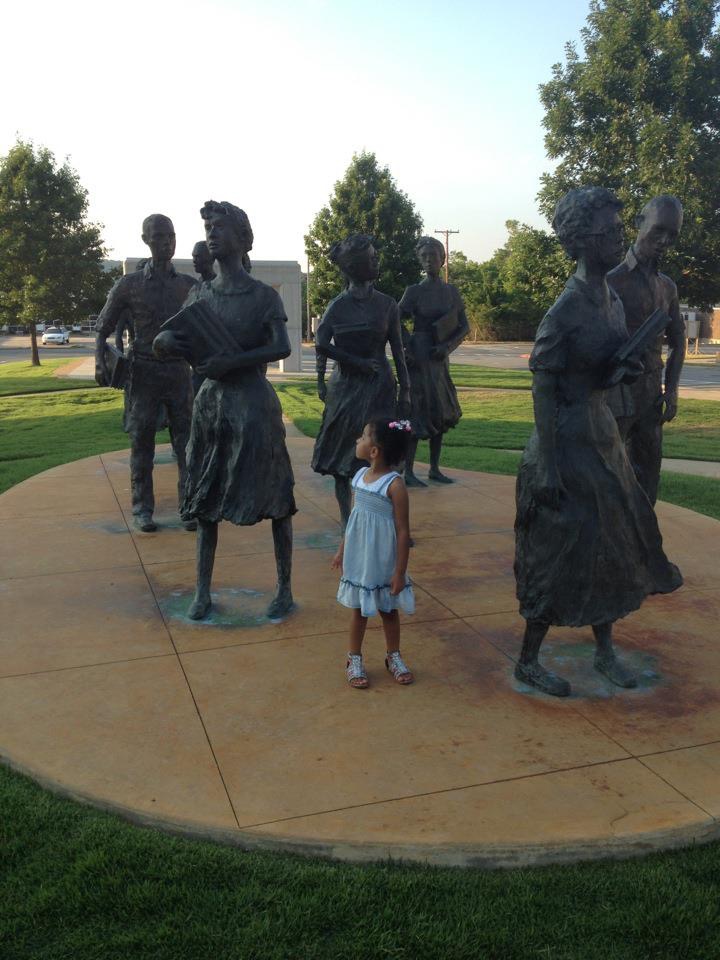 June 16, 2012 . . . My three-year-old granddaughter standing among the bronze sculptures of The Little Rock Nine.
 And my granddaughter stands in front of Little Rock Central High, a school she may choose to attend someday, a school she will be able to attend because The Little Rock Nine took a dangerous risk to make it possible.
 Finally, my granddaughter stands playfully on the steps of the Arkansas State Capitol. I know that it is possible that she may one day proudly walk through its golden doors as a state senator or representative. That is possible because nine Little Rock students were brave enough to be a part of changing history.
 Because I have no sense of direction at all, I have an irrational fear of getting lost. Do not tell me to go north or south. I will have no idea how to do that. You must instead say something like, “When you see McDonalds on the right, go past it. Then go past Wendys, Burger King and Barbaritos. Look just past Barbaritos, but on the other side of the road, and you’re there.” It’s a convoluted way of making sure I don’t lose my way. And if one of those fast food places were to close down, I’m lost.
 Sometimes life hurts.
 Let us pray with our legs, let us march in unison to the rhythm of justice, because I say enough is enough.”
 God of the Sparrow 🌱 By Kathy Manis Findley