"Do not be afraid. You are worth more than many sparrows." —Jesus
Author: Rev Kathy
I am an ordained Baptist minister now serving in the world as retired clergy or minister-at-large. I am a wife, mother, grandmother, aunt, great aunt, and friend. I spent my career as a pastor, hospital chaplain, missionary to Uganda, spiritual director, patient mentor, victim advocate, trauma counselor, child forensic interviewer, teacher, writer, author, watercolor artist, iconographer, calligrapher, chef and blogger.
In this secondweekofAdvent, I am searching for peace. I feel a little like the prophet Jeremiah who said, ”They have treated the wound of my people carelessly, saying, ‘Peace, peace,’ when there is no peace.” (Jeremiah 6:1)
Indeed, how difficult it is to embody a sense of peace when we look around us only to see yet another school shooting, yet another Covid variant (Omicron), yet another tragic example of police brutality, yet another child abused . . . and more, one after another un-peaceful thing in our world. Yet, one of our lectionary texts for this week seems to promise that peace can be within reach.
Through the tender mercy of our God, the Dayspring from on high has visited us; To give light to those who sit in darkness and in the shadow of death, To guide our feet into the way of peace.
Luke 1:78-79 NKJV
But on this day, in the middle of Advent’s week of peace, I wonder how I might find even a bit of God’s promised peace. Peace remains elusive to me as I look around me at a world of chaos, discontent, oppression, unrelenting pandemic, fear, uncertainty and all manner of disturbance. ”I need peace of mind!” the people cry. If I have ears to hear their cry, and my own, I must own the reality that I need peace of mind, too. But I also need peace of the soul. I need deep down peace to make its way to where my emotions live.
Isn’t it true that Advent Peace is about soul transformation—the kind of transformation that stops with the decorating, baking, shopping and all things frenzy? Isn’t it true that instead of Christmas frenzy, all of us yearn for Advent peace?
And so I stop and close my eyes. I breathe slowly and deeply. Again. Again.Again. I breathe deeply and, as I slowly exhale, I feel my heart beating slower. I feel my arms relaxing and my muscles releasing the tightness they always hold on to.
I rest in arms of grace and listen for Spirit breeze that calms me. I contemplate what’s in my heart and wait silently to hear my soul’s whisper.
Does deep breathing allow the Spirit of Peace to envelop me with her tranquility? Do those few quiet moments take me to that place inside me where all is calm? It seems so, at least for a while. Interspersing my frenzied life with brief moments of contemplation makes all the difference in the world for me. I do sense Advent peace in those moments. Or is it that I reached down deeply enough into my soul and found the peace that was already there? Either way, I still held on to a few moments of peace.
If you and I are able to find that place of peace, we can then pass it on to others who need it and even to the chaotic world around us. During this week of Advent peace, wouldn’t it be wonderful to see dozens of random acts of peace? Whether that’s raking a neighbor’s yard, or taking a meal to a family with a new baby, or doing a home repair for an elderly couple, or sending a card, might we seek out someone who could use a little more peace in their lives?
When we reach out to other souls with random acts of peace, we give human form to the Peace of Christ. Christ clothes us in His humanity. We are His continuing incarnation in the world. These thoughts are described beautifully by Joseph B. Clower in his book, ”The Church in the Thought of Jesus.”
If the indwelling Christ is not confined, then our eyes flow with His tears, our hearts are moved with His compassion, our hands are coarsened with His labor, our feet are wearied with His walking among all people.
(Slightly paraphrased)
Now, take a slow, deep breath. Let it out. Take another breath. Contemplate the Prince of Peace and how much He wants peace for your life. Breathe deeply. Let it out.
Now keepbreathing, and find something peaceful to do today for another person who needs peace as much as you do—a random act of peace. Amen.
I invite you to spend a few moments of contemplation by listening to this video, Dona Nobis Pacem— Grant Us Peace.
When the angels had left them and gone into heaven, the shepherds said to one another, “Let’s go to Bethlehem and see this thing that has happened, which the Lord has told us about.” So they hurried off and found Mary and Joseph, and the baby, who was lying in the manger. Luke 2:15-16 NIV
I am searching this Advent season for hope—hope that’s a tiny bit brighter, hope that lifts up my eyes to see more than I have seen before, hope that stirs in my heart, even for a moment. I feel the words of this hymn, ”I come in half-belief.” It’s not the most promising mood to bring to Advent, but it’s all I’ve got. The reasons don’t matter. They are myriad, as perhaps your reasons for hesitatingly approaching Advent.
The truth is that many of us have experienced struggles in the past year. The truth is that our country has seemed unbalanced, troubled, confused. It is also true that suffering has made its way into villages and cities and hamlets all over the world. I feel the strain. It affects my soul and troubles my spirit, so I longing for a gentle sign of hope to make its home in my heart.
My contemplation led me today to the hymn I share with you for your own reflection as we approach Advent’s first Sunday. I hope you will ponder the text and listen to the video of the choral arrangement. I am moved by this hymn every time I hear or sing it. The words invite me to the manger, the place where there is room and welcome always and forever. Even as hope eludes me, the eternal truth still stirs my soul: How could I forget how Love was born, and burned its way into my heart—unasked, unforced, unearned, to die, to live, and not alone for me. For all the world, the Hope of the world!
For to us a child is born, to us a son is given, and the government will be on his shoulders. And he will be called Wonderful Counselor, Mighty God, Everlasting Father, Prince of Peace.
Isaiah 9:6 NIV
Where shepherds lately knelt and kept the angel’s word, I come in half-belief, a pilgrim strangely stirred; But there is room and welcome there for me, But there is room and welcome there for me.
In that unlikely place I find him as they said: Sweet newborn Babe, how frail! And in a manger bed: A still, small voice to cry one day for me, A still, small voice to cry one day for me.
How should I not have known Isaiah would be there, His prophecies fulfilled? With pounding heart I stare: A child, a son, the Prince of Peace for me, A child, a son, the Prince of Peace for me.
Can I, will I forget how Love was born, and burned It’s way into my heart—unasked, unforced, unearned, To die, to live, and not alone for me, To die, to live, and not alone for me?
Dr. Jaroslav Vajda (1919-2008)
“Where Shepherds Lately Knelt” arranged by Craig Courtney | BYU Men’s Chorus featuring Laurence Lowe, French horn
With all the chaos blowing about in the world—the swirling debris of discord, fear, hate, division, tumult all around us—we cannot help but try to drill down to the solid place of our foundation. When we shake in the chaos, swaying from side to side until we fear we may by pushed over, our soul speaks up to come to our aid. It’s simple really, to find our sure foundation, the solid rock of who we are and what we must do to stay upright—that means healthy in body, mind and spirit.
I think some of you are pray-ers and others sing until you feel safely grounded. Some of you meditate and others of you read Holy Scripture. Some write poetry or create art. Whatever you might do in your times of unsteadiness, remember that you do not have to repair everything in your life or turn yourself into a person of incomparable strength and courage. I know what you’re thinking! That these are terrifying evil days that require unparalleled faith and perseverance. True enough! I remember the terrifying parts every time I watch the news. And more than once in the past several years, I have thought of this text:
Therefore take up the whole armor of God, that you may be able to withstand in the evil day, and having done all, to stand.
Ephesians 6:13 (NKJV)
That’s the way I learned that verse of scripture, but others have translated it differently, maybe better. The New International Reader’s Version perhaps speaks to us more simply and directly, and with the bold promise that we could be able to stand up to any evil day, any evil person.
So put on all of God’s armor. Evil days will come. But you will be able to stand up to anything. And after you have done everything you can, you will still be standing. —Ephesians 6:13 (NIRV)
I concur that I will still be standing, whatever comes. Too many things in my life have knocked me to the ground, and every time I have gotten up on my feet to try to live another day. I suspect you have had the same experience.We were able to stand, not because we had built up incomparable strength, but because Spirit was strength in us, beside us, before and behind us. You see, that was God’s plan all along. ”I will not leave you comfortless,” said Jesus, carrying out the precise plan of the Creator God. “I will ask the Father, and he will give you another Comforter, to be with you forever … the Spirit of truth.” (From John 14)
Just one more bit of wisdom for evil days! I have a notion that you and I do many things to protect ourselves from evil or chaos or betrayal or difficulty . … the list goes on and on. Every remedy helps a little. Every act of self-help or self-care helps a little. Some of it helps a lot. In my experience, everything I do to maintain my equilibrium and keep myself safe from chaos helps. But there is one word of advice that has stayed with me through the years, and it is this:
Above all else, guard your heart. For from it flows the wellspring of life.
Proverbs 4:23
That admonishment from Proverbs 4 is translated in many different ways—guard your heard with all diligence; with all vigilance; with utmost care; with all watchfulness; guard your heart above all else. I think we get the message clearly. And so I leave you with this blessing .…
As you journey through all manner of evil chaos, May you walk the road without fear, Knowing the deep peace of God’s grace, With the shadow of Christ walking ahead of you, With the presence of the Holy Spirit dwelling in your soul, Withyour resolve firmly set to guard your heart with all watchfulness, So that you will know beyond any doubt that from your heart flows the wellspring of life. Amen
After about five years of co-teaching my Sunday School class, known as the Voices Class, I have had an insight, a rather critical insight. Teaching this class, in particular, has been a gift for me and possibly for the other class members. We have bonded in important and meaningful ways. Most importantly, we “bear one another’s burdens” (Galatians 6:2) and most definitely, we weep with our sisters who have found themselves weeping along the journey. (Romans 12:15)
And what a journey it has been for our class. We began with a lovely Lenten study titled, “Praying with Your Pen,” which took us into the wonderful world of contemplative writing. Such a spiritual disciple leads into all manner of emotional and spiritual discovery, not all of which is positive. The study was emotionally and spiritually taxing at times, while being life-giving for us all.
We then studied a three-month series of biblical women who faced various hardships and later revisited that study for an additional seven weeks. As we followed the journeys of these biblical women, we found kindred spirits and grace for our own journeys. But the lives of the biblical women were harsh, harsh enough to bring up in us an examination of the harshness we have encountered. So this study was a difficult one as well.
Other Lenten and Advent studies through the years kept us in a contemplative, and often melancholy, space where we learned so much about ourselves, our faith and our relationship with God and with each other. We followed Christ Sophia for a while, as we considered the feminine nature of God, and as we followed her, we uncovered spiritual layers in us that have long been touched by Spirit Wisdom.
All of our studies along the way took us to tender places within, places where spiritual maturity occurs and faith deepens. A deepened faith, it seems, was especially important as we entered the pandemic that separated us from each other, at least physically. We adapted valiantly and immediately, and our class continued via virtual Zoom meetings. The meetings, that regularly lasted two hours or more, seemed to ensure our sanity as we navigated pandemic lifestyles that we certainly did not choose. Suddenly, the day to day living became harder, school more complicated, safety measures all-encompassing, family isolation straining. Figuring out this new way to live became draining beyond belief.
That, too, we navigated together, holding one another in the light, learning to find church in uncommon places and keeping each other gathered close, covered in the love each of us brought to our circle. Gathering close to each other was critically important as we lost friends, church members and close family members to this pandemic. Apart from the pandemic tragedies we watched, our class was brought low by other illness and deaths of persons close to us.
So a few weeks ago, my soul cried out, “Enough!” Then I asked myself, ”Where is our joy?” We’ve got the ‘weep with those who weep’ part, God. Can we just move on to the ‘rejoicing with those who rejoice’ part?”
Where is our joy? That’s the part of faith I cannot discern, because right now, it’s just too far away. Still, I asked myself the question.
And I answered myself immediately. It’s in our hymns! Our joy is in our singing.
So the Voices Class started a new study titled,
Singing Theology: Hymns & the Formation of Faith OurWorship, Hymnody and Theology
A delightful study it has been for us, as we explore how hymns express the theology of a particular Christian community or tradition. Searching deeply into one hymn each week, we have asked: how does the hymn’s theology shape and form our faith, our belief, our mission and our action? “As the church sings, so she believes,” writes Beth Bowers. We had discovered in this new study an informative, important—and fun—exploration of song!
Hymns We Have Studied Each Week . . .
Here is our joy, in the hymns we sing — in their rhythms and their melodies, their thoughts and words. Hymns express our faith, our longing, our petition, our awe, our need, our regret, our grief, our testimony, our theology, our conviction and the deepest joy of our hearts. May it always be so!
My life goes on in endless song Above earth´s lamentations, I hear the real, though far-off hymn That hails a new creation.
Through all the tumult and the strife I hear its music ringing, It sounds an echo in my soul. How can I keep from singing?
While though the tempest loudly roars, I hear the truth, it liveth. And though the darkness ’round me close, Songs in the night it giveth.
No storm can shake my inmost calm, While to that rock I´m clinging. Since love is lord of heaven and earth How can I keep from singing?
When tyrants tremble in their fear And hear their death knell ringing, When friends rejoice both far and near How can I keep from singing?
In prison cell and dungeon vile Our thoughts to them are winging, When friends by shame are undefiled How can I keep from singing?
Songwriters: Eithne Ni Bhraonain / Nicky Ryan / Roma Ryan
There are days! Don’t you have those troublesome days when feeling good about yourself seems impossible? I am guessing we all have those days, because there are just too darn many things about ourselves we don’t feel very good about. What are those things? you might ask.
“I missed that deadline.” “I was too irritable with the kids.” “I hate my hair.” “I have gained far too much weight.” “I have made a mess of my life.”
The list of what we don’t like, or even what we loathe, about ourselves can be a long one, and when we ponder such a list for very long, we can develop a skewed image of ourselves. Fortunately, many of us have been able to see that the person we really are can be measured on many levels, far more important levels than, say, appearance. Maturity helps, and aging has a way of putting all that negative ”stuff” about me in a box that I keep locked. And the key, well, I threw that key in a river!
What’s left is definitely a healthier perspective that allows me to look at myself in different ways and to make kinder conclusions. I have learned over decades that my image of myself is important, that I have to see my self with accepting eyes and that self-deprecating thoughts have the power to bring me to the edge of despondency.
. . . aging has a way of putting all that negative “stuff” about me in a box that I keep locked. And the key, well, I threw that key in a river!
kmf
Still those days come, bringing me a boatload of reasons to detest myself. There is a certain season of life in which self-flagellation is downright dangerous, wielding power over your life in very destructive ways. You’ll likely know it when you have reached that season of life — you know, the season when you can actually go out without make-up, wear a blouse two days in a row, love yourself for the whole person you are and wearing black support stockings in public, having convinced yourself that they really are stylish!
I don’t know about you, but I have to admit that I do have just a tad of trouble wearing support hose in public. That tells me that I need help, that I do not adequately value myself as a rule, that I still believe that my appearance defines me and that I need a shove to get to the point of loving who I am.
I don’t know about you, but I have to admit that I do have just a tad of trouble wearing support hose in public. That tells me that I need help, that I do not adequately value myself as a rule, that I still believe that my appearance defines me and that I need a shove to get to the point of loving who I am.
There is no better place to seek help with that than in the words of the psalmist in the 139th Psalm that say so much about how God created us and how God knows us inside and out. The Psalm tells us that we are ”fearfully and wonderfully made.” (v.14)
And then there are the inspiring words of artist and writer morgan harper nichols that so inspire me towards love, courage, audacity and the Light that runs wild within me, the Light that shines through my darkness and never goes out.
andperhaps whatmadeherbeautiful wasnotherappearance orwhatsheachieved butinher love and inhercourage, andheraudacity tobelieve no matter the darkness around her, Lightranwild withinher, andthatwastheway shecamealive, anditshowedup ineverything. — morgan harper nichols
May you have the strength to navigate those days when darkness threatens your light. May you love yourself and dig deep for the courage and audacity that frees you and lets the Light run wild within you!
My cousins visited this weekend for the first time in months, a needed visit for all of us. We laughed and played and enjoyed one another. We talked a lot, too, into the wee hours. We talked about sweet memories, of course, remembering so many good and fun times. We talked about old boyfriends and childhood disagreements and family idiosyncrasies.
I think we talked most about aging and the physical and emotional changes it brings. We lamented it, of course, and wished it away. We cursed it just a bit, and tried in vain to find ways around it. In the end, we agreed that we can’t get around it, but just have to go through it. Right through the middle of it until the pathway ends.
Right smack dab in the middle of dialogue about age spots, edema, muscle pain and a plethora of bodily ills, we stopped, suddenly realizing that there must be more to the aging process than physical symptoms. Where is life’s meaning when we draw nearer to life’s end? How do we grow old held by the same grace that held us when we were children, young adults, middle aged?
I came across an intriguing word this morning in an NPR article. The word is Lastingness What an astounding word to ponder. Perhaps we should consider lastingness instead of aging. Various creative artists are the subjects of Nicholas Delbanco’s latest book, Lastingness: The Art of Old Age. Delbanco examines artists who either maintained or advanced their work past the age of 70 — from Claude Monet, to Giuseppe Verdi, to Georgia O’Keeffe. Because I am an artist, I was captivated by the idea of lastingness, especially when Delbanco told the story of Monet’s later years.
Delbanco writes that French impressionist Claude Monet — who painted well into his 80s, even after his vision was clouded by cataracts — created some of his most well-known works in the last decades of his life. After a long career as a renowned and financially successful artist, Monet retreated to the beloved gardens of his home in Giverny, 20 miles outside of Paris. His gardens became his artistic obsession. It was Monet’s failing eyesight that posed the greatest threat to his work. “He became more or less legally blind as we would describe it now,” Delbanco says. “So Monet compensated for, or focused on, the visible world in very different ways in his older age.” The works Monet created in his last years at Giverny are regarded as masterpieces.
In the last decades of his life, French impressionist painter Claude Monet focused much of his work on the water lilies in his garden at Giverny. He continued painting well into his 80s, even after his vision had been clouded by cataracts.
The Art Institute of Chicago
Monet’s exquisite impressionist paintings eventually ended because of his cataracts. The poet Lisel Mueller has captured Monet’s cataract story brilliantly, in “Monet Refuses the Operation.” As of 1919, the Monet was urged to have the cataracts attended to; in 1923 he had operations on his right eye, and glasses improved his eyesight — but only briefly, fitfully, and he had trouble distinguishing color. Mueller’s poem begins:
Doctor, you say there are no haloes around the streetlights in Paris and what I see is an aberration caused by old age, an affliction. I tell you it has taken me all my life to arrive at the vision of gas lamps as angels, to soften and blur and finally banish the edges you regret I don’t see, to learn that the line I called the horizon does not exist and sky and water, so long apart, are the same state of being . . .
I don’t know exactly what “lastingness” means, but I think it might mean seeing haloes glowing around street lights or the ”vision of gas lamps as angels.” I’m pretty sure it means learning to look at life as softened and blurred, banishing life’s sharp edges. Perhaps “lastingness” means that my writing or my art will have a lasting impact on the world. Maybe it means that I will pass on my wisdom to my grandchildren. Or that the child I helped recover from long-term sexual abuse will find happiness in her life. Perhaps “lastingness” means that my faith in God will carry me to the grace that is the end of life. That kind of “lastingness” brings a kind of peace to my aging, a grace that assures me that aging is much more than painful joints and aching muscles. “Lastingness” is holier than physical afflictions and I think it blurs and softens them until they are tolerable.
When I cannot find the right words, I can always count on Bishop Steven Charleston to write them.
I see more clearly, now that I am aging. Not with my eyesight, but with my soul. I see the fine detail of what I missed in younger years. I see the place of faith and forgiveness in my story. I see the possibilities of life in ways I never imagined. I was not blind in my youth, but my vision was limited to only a few seasons of seeing. Now I am an old man standing on a hill. I see more clearly. The universe stretches above me in infinite glory and the Earth spreads her shawl to wrap me in creation. Open the eyes of your spirit. Look out in wonder. See the fullness of the life you have received. See the promise of love walking in beauty before you.
Bishop Charleston’s words might just be the very best description of ”lastingness.” Maybe “lastingness” means that because I am aging, I now see not only with my eyesight, but with my soul. Maybe it means that now I can clearly see the fullness of the life I have received and the promise of lasting grace holding me close.
Even to your old age I will be the same, And even to your graying years I will bear you! I have done it, and I will carry you; And I will bear you and I will deliver you. — Isaiah 46:4 —
I’m not sure I know what it feels like to have God “undo me with grace,” but I have learned how it feels to need more grace, to long for Spirit breezes to gently blow around me with winds of grace. I need grace for enduring illness, grace for being separated from my son and his family, especially my five grandchildren. I need grace when I’m angry or disappointed or heartbroken. I need grace when I feel like giving up and giving in. I need God’s grace — the grace of the Spirit — to help me live in this season of my life.
I read a provocative prayer today. It kind of grabbed at my heart, asking me what exactly is in my heart right now. It asked me what I’m struggling with. The brilliant writer of prayers, Diane Strickland, writes again and again in her prayer the words, ”Undo my life with your grace,” leaving me asking myself what might happen if God decided to undo my life, even through God would likely be merciful enough to undo my life with grace.
The truth is that those words so grabbed me that my prayer was, ”God, I think I need to let you undo my life.” Maybe I feel the need to re-do my life with string of second chances. Maybe I need forgiveness for regrets, release from memories of pain. Whatever it means to have one’s life undone by God, my heart responded, with longing, to this prayer.
O, my Creator,
In the injustice of my country I caught a glimpse of the bottom of the iceberg this week. I saw how my life lived above the waterline rests on wrong assumptions of privilege, great and small and many. I am cold inside. I don’t want to be cold inside.
Undo my life with your grace. Pick out the seams sewn by fear and mend the tears made by violence. Patch the holes that were always there from the start because I don’t know much about the rest of the world or how life works for others you love just as much as you love me.
Undo me with your grace. Shake out the fabric of me. Unfold and fold me anew. Reveal your image in there somewhere and surprise me with what You make of me when mercy prevails and justice leads and love accompanies us.
Undo me with your grace. I’ve lived a long time now, long enough to know there’s more to be if I can lay down what has mattered more than it needed to, and take up what I’ve barely used at all.
I don’t feel there’s so much wrong with me that we must start over. I feel there’s more of me somewhere that fits better for now and will make room for later. Release more gospel into my life and from my life. Warm me up again. Humble me with wisdom and truth and promise and hold me together with those same gifts.
Undo me with your grace. Just a little bit more today, Spirit. Just a little more.
“Undo me with your grace. Just a little bit more today, Spirit. Just a little more.”
As I reflected on those words, my thoughts ended up with this conclusion. I don’t need grace to extricate me or liberate me from all that is difficult, heartbreaking and oppressive about my life. But I definitely need Spirit wind to live my life.
I don’t need grace to rescue me. But I do need Spirit-grace that moves in my life with me, giving me life-saving and healing grace for each moment. I need Spirit because I have known her holy presence with me and I have learned to experience the wonder of being moved by wind wild and calm, her breeze blowing around me with both tender comfort and empowering promise.
With that kind of sacred promise, I can live into my life, not shrink from it or fear it. I can move into my life, whatever it brings, with Spirit’s blessing. That’s how she impels me to honor the grace I have received — by giving it away. Her winds have impelled me for many years to minister to God’s people, and I do not intend to stop now. My call from God was for life, not meant to expire when I retired or when my health failed.
I know that God gives grace for waning health and I have it on good authority that God gives “more grace when burdens grow greater.”* When I consider the grace that has so filled my life, I think of the story of Annie Johnson Flint who wrote the text of the hymn, ”He Giveth More Grace.”
Annie Johnson Flint, born in 1866, was an inspiration to all who knew her. This is just a tiny bit of her story. The fullness of Annie Johnson Flint’s story includes a life-long string of losses and difficulties. By the time she was six years old, she had lost her mother and father to illnesses and was adopted by a family named Flint. She loved poetry and dreamed of being a composer and concert pianist. After graduating from high school, Annie went on to become an elementary school teacher, but in her second year was afflicted with arthritis that steadily and quickly worsened. She lost her ability to walk, but she became a prolific writer of poems and hymn texts.
The many stories written about her stories tell how later in life she was unable to open her hands and could no longer write, yet continued to compose her on a typewriter using her knuckles. And that “she sought healing, but in the end she was thoroughly convinced that God intended to glory Himself through her, in her weak earthen vessel.”
The words of the hymn text she wrote, ”He Giveth More Grace,” reflect the many disheartening moments she experienced throughout her life. She died at the age of 66, leaving as her legacy so many faith-strengthening words, including these:
He giveth more grace when the burdens grow greater, He sendeth more strength when the labours increase; To added afflictions He addeth His mercy, To multiplied trials, His multiplied peace.
When we have exhausted our store of endurance, When our strength has failed ere the day is half done, When we reach the end of our hoarded resources Our Father’s full giving is only begun.
Fear not that your need shall exceed His provision, Our God ever yearns His resources to share; Lean hard on the arm everlasting, availing; The Father, both you and your load will upbear.
His love has no limits, His grace has no measure, His power no boundary known unto men; For out of His infinite riches in Jesus He giveth, and giveth, and giveth again.
I have loved this hymn for years in spite of its masculine language. It moves me and uplifts me. It always reminds me of the infinite grace I have known in my life. I hope you will listen to this hymn as a part of your contemplative time.
“He Giveth More Grace” performed by The Celebrant Singers. From their album, “Still Standing.”
*Diane Strickland is in her 33rd year as an ordained minister now serving in The United Church of Canada as retired clergy. She is a Certified Community and Workplace Traumatologist, Compassion Fatigue Specialist-Therapist, and Critical Incident Responder, author and creator of trauma informed resources.
Canadian sculptor Timothy Schmalz’s work on a sculpture depicting modern-day trafficking in humans titled “Let the Oppressed Go Free” — a commentary on how slavery, via human trafficking, continues today. Schmalz laments that the modern-day travesty of forced labor, including for sex, is often ignored, not unlike slavery of the past.
Do you wonder sometimes where God is while people are being oppressed? I mean all kinds of oppression — racial injustice, human trafficking, violence and abuse, prison injustice, sexism, cissexism, classism, ableism, heterosexism. The list can go on and on, all the way down to specific stories about specific oppressed individuals. At that level, the down to earth level where we see a living person suffering, is the heartrending place. It’s the place where we find ourselves face to face and up-close with someone pouring out their story. It’s the place where we learn to talk less and listen more. It is for us an experience of holy listening with just one person.
Have you ever been in that kind of space listening to just one person? Have you ever been with a person suffering oppression who is freely sharing a heartbreaking story with you? I know that this kind of face to face encounter can be intimidating, even frightening. It can be beyond frustrating to listen to someone when you’re pretty sure you can’t do much to help.
There are at least two options for those of us who have a deep desire or calling to liberate those who are oppressed. We can offer what we have, even when we do not have a way to fix things. What do we have? Our presence, our emotional and spiritual support, our ability to advocate, housing assistance, financial assistance, employment assistance, safe shelter, understanding, constancy, presence, presence, presence . . .
The other option is to rail against a God who makes pronouncements about caring for oppressed people, yet seemingly does nothing to liberate them. This may not be our best option. Scripture reveals that God has a way of dealing with complaining people, and it is almost never a positive experience for the complainer. Moses comes to mind, and Miriam, and Job.
Poor, pitiful Job had a rough go of it and he wanted God to do some explaining and answer some questions. After all, he was a devout and faithful man, so why would God allow him to suffer so many losses? Right after Job is schooled by his three “friends” on several theological matters, including that he should never question God, God appears to Job out of a whirlwind. It was probably grand entrance, and then God basically says to him, ”I’ll ask the questions, buddy!”
Here’s a snippet of the long exchange between God and Job.
Then the Lord spoke to Job out of the whirlwind.
2 “Who is this that obscures my plans with words without knowledge? 3 Brace yourself like a man; I will question you, and you shall answer me.
4 “Where were you when I laid the earth’s foundation? Tell me, if you understand. 5 Who marked off its dimensions? Surely you know! Who stretched a measuring line across it? 6 On what were its footings set, or who laid its cornerstone— 7 while the morning stars sang together and all the angels shouted for joy?
— Job 38:1; 4-7 (NIV)
Job was oppressed. God was aware of it. God seemed unconcerned for too long, but there actually is a redeeming conclusion for Job. As the story goes in the last chapter of Job, God restored Job’s fortunes and gave him twice as much as he had before. All of Job’s brothers and sisters, and everyone else he knew, went to his house for Sunday dinner and they consoled him for all the trouble he had been through. Then each one gave him a piece of silver and a gold ring. It worked out!
Canadian sculptor Timothy Schmalz’s sculpture, ‘Monument of Oppression’ depicts hands emerging desperately from behind bars.
“I can’t think of one single nation of the world that did not practise slavery, including among Indigenous people,” the sculptor says.
(Photo by Handout)
What does Job’s story say to us? What does it teach us about oppression? In my mind, in order to confront oppression and free persons from every yoke on a societal scale, we must first be aware that systemic oppression exists. It is stark reality! It darkens our world! Right now, approximately 40 million people are trapped in slavery in the world. One in four of these is a child. This shame that pervades and plagues the planet does not seem to disturb people very much. Unfortunately, it is in some people’s best interest to maintain the oppressive systems that benefit them, that is fill their pockets with wealth (which is the primary reason for trafficking human beings, for instance).
Systems of oppression are very large, very complex and very powerful. Ending oppression is way too big for us to tackle alone. After sincerely asking the all-powerful God to help us bring down these all-powerful oppressive systems, we can add our hands and feet to the holy project. Contact senators, representatives, governors, mayors. Urge them, persist with them to use their position to help break down injustice. Know what you’re talking about when you contact them by reading about the work the many of anti-oppression organizations that exist. Join in their work. Look for those resources at this link.
“Angels Unawares” by Canadian sculptor Timothy Schmalz portrays the saga of Migrants and Refugees. Among the 140 faces in the sculpture are Africans, Vietnamese, a Cherokee, Jews, Irish immigrants, and Syrians. The Holy Family is also included in the sculpture. St. Joseph can be identified by his toolbox.
Finally, we must open our eyes to the people in our own communities who need our compassion, our concern, our caring presence and our advocacy on their behalf. It takes some creativity, some committment and compassion, a lot of courage and a covenant with our God of justice to change an unjust world. The outcome might just look something like what the prophet Isaiah described:
Is this not the fast that I choose: To release the bonds of wickedness, To undo the ropes of the yoke, And to let the oppressed go free, And break every yoke?
7 Is it not to break your bread with the hungry And bring the homeless poor into the house; When you see the naked, to cover him . . .
8 Then your light will break out like the dawn, And your recovery will spring up quickly; And your righteousness will go before you; The glory of the Lord will be your rear guard.
9 Then you will call, and the Lord will answer; You will cry for help, and He will say, ‘Here I am. . .’
10 And if you offer yourself to the hungry And satisfy the need of the afflicted, Then your light will rise in darkness, And your gloom will become like midday.
11 And the Lord will continually guide you, And satisfy your desire in scorched places, And give strength to your bones; And you will be like a watered garden, And like a spring of water whose waters do not fail.
12 Those from among you will rebuild the ancient ruins; You will raise up the age-old foundations; And you will be called the repairers of the breach, The restorer of the streets in which to dwell.
— Isaiah 58 (NASB)
I don’t know about you, but I want to be among the ”repairers of the breach.” I don’t want to live in a situation where I “hope for light, but there is darkness.” (Isaiah 59:9) Instead, let me find myself looking far beyond the world’s darkness, looking to the Creator who demands justice, looking upward to claim the promise, ” . . . satisfy the need of the afflicted, Then your light will rise in darkness, and your gloom will become like midday . . . And your light will break forth like the dawn.”
How often we find ourselves wandering in what feels like wilderness. We wander, and then wander some more, in barren places — in parched, dusty and dry deserts of the soul. We wander in aimless travel that moves us from one nowhere to another. The truth is that we have been nowhere and we’re going nowhere.
It’s a long, hard way, this wilderness wandering. I have found myself there at times. You probably know the desert, too. Like the people of Israel, we don’t much like wilderness wanderings. Remember their laments and complaints?
The Israelites looked up, and there were the Egyptians, marching after them. They were terrified and cried out to the Lord. They said to Moses, “Was it because there were no graves in Egypt that you brought us to the desert to die? What have you done to us by bringing us out of Egypt? Didn’t we say to you in Egypt, ‘Leave us alone; let us serve the Egyptians’? It would have been better for us to serve the Egyptians than to die in the desert!” Exodus 14:10-12 (NIV)
Other Biblical passages speak more favorably about walking in a desert wilderness and about finding there comfort and hope. One of my favorite passages is rather obscure, so I want to share it with you.
The Lord said, “Therefore, I will now persuade Israel, and bring her into the wilderness, and speak tenderly to her. From there I will give her her vineyards, and make the Valley of Achor a door of hope. Hosea 2:14-23 (NRSV)
Finding ourselves wandering in a parched and barren desert can cause us to feel, not only exhaustion, but also exclusion. How bewildering it is when we are excluded, left alone to wander and feeling that no one is near, no one hears our laments, no one cares. My hope for you this day is that, whenever you have to wander in the wilderness, you will find on your way a friend beside you and at the end of your path, a door of hope.
I leave you with these words, a benediction spoken by a dear friend.
Stunning photo of an Oklahoma ranch provided by my friend, Molly Hunt
I was amazed today by this breathtaking image of a ranch in Oklahoma. Sometimes it doesn’t take a lot to amaze me, but today the object of amazement for me is quite stunning. It’s art, an image to contemplate and appreciate, an image in which one could find meaning. Finding meaning in it is exactly what happened for me.
I see a play of lightness and darkness and I see that to experience light is also to experience darkness. We cannot really embrace one without the other. The beauty of one enhances the beauty of the other. Light and darkness are inseparable. I have always been intrigued by the wisdom of this thought written by Gregory Maguire, “The eye is always caught by light, but shadows have more to say.” I find such truth in these words, and they are illustrated by the shadows — the times of darkness — in my life.
Oh, the stories I could tell about the many times when my reality has been lightness and darkness together. Both juxtaposed and moving, blending and coalescing, always showing me a kind of dance, a holy movement that makes both appear beautiful. But this “light and darkness together”thing came to me late in life. Emotional and spiritual maturity offered me this important insight that both darkness and light are in me and around me simultaneously. I experience them both together.
I also remember the past when I feared the darkness, wanting always to be in the middle of the light of things. During my illness and long hospitalization in 2014, I hated the nights. I had come to believe over the years that in hospitals, bad things happen at night. That thought was cemented in my mind when I was a hospital chaplain. In thinking of the many nights when I was on call, what I recall most were dark crises that happened at night — deaths, terrible accidents in the ER, patients on the psych unit having meltdowns.
What I’m recalling today is one particular night in the hospital. I was so sick for so long and so lonely at night. This particular night remains in my nightmares. It was actually in the middle of the night when I experienced an excruciating pain in my kidney area. I almost screamed in pain, but tried to stifle myself. The pain continued for several minutes, long enough that I felt as if I would pass out. I called for the nurse, who could hear panic in my voice and came immediately. The doctor followed within minutes. By that time, I had been given pain and anxiety medications, so I was in a kind of twilight. I knew that the room was now full of people doing things, but I had no idea what sort of things they were doing. The ultrasound people came and soon after that, the crisis team came to get me. I was moved to a hard stretcher and was quickly transported to . . . somewhere for some kind of procedure.
The only words I really understood were, “Call her husband and tell him to get here immediately!” Not such a calming message to hear, but in a medication-induced twilight, it really didn’t matter. The crisis team moved me into the inner sanctum of the hospital. They moved me through the cold halls so quickly that the wind felt cold and the ceilings of the corridors were a blur, one minute bright lights above, the next corridor completely dark. The speed of the ride made the corridors look as if they were one seamless movement of light and dark.
One repaired internal bleed later, the pain was eased and I was comfortable, back in my familiar hospital room full of cards and flowers, and with late night television still on. Obviously, I survived the darkness and lightness of my transport and the repair of my bleed. And I still survive, every day, the darkness and lightness that is my life. I did not know that night what I have learned since: that darkness and light always exist together.
Darkness and Light: Together
To be certain, I have experienced darknesses that seemed to smother me completely and leave me with only the darkest dark. I have felt the unrelenting darkness of the soul at times. My spirit has cohabited with the deepest darkness in life that seemed never-ending, with not a single source of light anywhere.
Thankfully, the great Teacher has taught me to see the darkness and the light all at once, moving together through my life. I have learned that light is almost always a welcomed force, but it is in the darkness that I find the most life-changing, cherished moments. in myself. The darkness is the place where my soul sees itself, where my spirit entertains its longings and urges and dreams. The darkness is where my heart can break into a million pieces in mourning and lament. In those dark moments, I can see the dance, the slow and soothing rhythms that enfold me in both — darkness and light — because the two exist together. Thanks be to God.
Darkness was and darkness was good. As with light. Light and darkness dancing together, born together, Born of each other, neither preceding, neither following, Both fully being, in joyful rhythm.
I like to think that God whispers, that God never shouts at me or speaks to me with a harsh, loud voice. I like knowing that when God speaks to me, God will always whisper. Because shouting frightens me and harsh speaking causes me to cover my ears so that I cannot clearly hear what God is saying.
I heard once that, more important than all the loud, big proclamations preachers speak from the pulpit, the people in the church pews truly listen when preachers whisper. That’s when preachers say the most important things, it seems. Or so I’ve been told by people who know that sort of thing.
It turns out I have always known a whispering God, from the very beginning of our relationship. That first whisper of God, and all the others I have heard in my long life, reached my ears as “a still, small voice.” I’m not really sure about this, but God may very well shout once in a while. I have never heard a loud word from God myself. I have heard only whispers, gentle whispers of very important things I needed to hear clearly and surely.
I’m thinking today about the bombings at the airport in Kabul. I’m praying today tor the Americans who are currently trying to flee from Afghanistan, the U.S. military with an impossible task, our Afghan allies who also need to leave quickly and the Afghan people who are hopelessly and helplessly stuck in a country filled with danger. I mourn those who died today and I lament the volatility of the situation that exists there. I can only imagine the chaos, the fear, the sound of the bombs, the screaming and shouting, the loud calls for help. The people surely can’t hear themselves think in such a situation.
Maybe it’s even too loud to pray. Maybe even God cannot be heard over the ear-piercing sounds of a bombed place. I believe that God is present there, hearing prayers and speaking softly to the terrified people with whispers of comfort . . .
Fear not, for I am with you; be not dismayed, for I am your God; I will strengthen you, I will help you, I will uphold you with my righteous right hand. Isaiah 41: 10
In all the noise, the people near the bombings most likely could not hear, not even yelling or shouting. I like to imagine that what they can hear is God whispering to them, whispers of comfort, whispers of peace, whispers of hope. That is the voice of God I have always known, the God who whispers to me when I am still and quiet, waiting to hear God’s holy whisper. But I have also heard God’s whispers in the midst of deafening noise. In those noisy times, I have heard God’s whisper still. God’s voice — the whisper — has talked me through many seasons when fear, pain, grief and other negative things were literally shouting at me from every direction.
I have learned to hear the whisper of God. It is the balm for my soul, the sound that keeps reminding me that all shall be well. I have loved the thoughts of Prathia Hall who was an American leader and activist in the Civil Rights Movement, a womanist theologian and ethicist. She was the key inspiration for Dr. Martin Luther King, Jr’s “I Have a Dream” speech and she often found herself immersed in trouble of every sort. These are words she spoke that offer encouragement in frightening times:
“Out there in the brush arbors, the wilderness, and the woods, the God of our ancestors, the God we had known on the other side of the waters met us and whispered words in our ears, and stirred a song in our souls.” — Prathia Hall (Quoted by Courtney Pace in Freedom Faith: The Womanist Vision of Prathia Hall)
I wonder if you could tune your ears to God’s holy whisper. You will hear it when everything around you is quiet and when everything around you is reverberating with noise and clamor, tumult and uproar. I pray that, even in all the turmoil visited upon the people who suffer in Afghanistan this night, they will be able to hear God’s comforting, healing whisper.
Afghan woman in traditional cover, known as a burka, at the Blue Mosque in Mazar. Photo: Jawad Jalail
Part One
A Story of Grace and Mercy
The following story printed in the Daily Beast tells how the villagers of a small Afghan village rescued and saved the life of a gravely wounded U.S. Navy Seal. Their motivation? What motivated them was their culture of kindness and their respect of the ‘Pashtunwali Code’, which admonishes that hospitality, asylum, mercy and shelter must be provided for all who require it, friend or enemy.
Nearly eight-and-a-half years after Mohammad Gulab and his fellow villagers harbored and saved the life of a gravely wounded U.S. Navy SEAL, they say they are still proud of their courageous action and would do it again in spite of the disappointments and troubles that have followed.
In the face of point-blank Taliban threats to overrun the small village of Sabray in remote Kunar Province, along the porous and mountainous frontier with Pakistan, the villagers bravely protected, gave first aid to, fed, and clothed Marcus Luttrell, the wounded Special Warfare Operator, the only survivor of a four-man SEAL patrol. A village elder even secretly carried a note hidden inside his clothing—written by Luttrell and indicating the exact spot where he could be rescued—through Taliban lines at great personal danger. “I have no regrets for what my family, my fellow villagers and I have done,” Gulab tells the Daily Beast. “We knew what the Taliban’s reaction would be from the day we carried him in our door.”
Gulab and the other villagers insist that they saved Luttrell out of obedience to the ages-old ethnic-Pashtun tradition known as Pashtunwali. That ancient code obliges Pashtuns to help and protect anyone in need, friend or enemy. “We did not rescue Marcus for money or privileges,” Gulab says. “By rescuing and keeping him safe for five nights in our home we were only doing our cultural obligation.”
And Jesus told us, “You shall love your neighbor as you love yourself.”
Part Two
Advocating for the Women of Afghanistan
The Taliban have been in charge of Kabul for 48 hours. Women have already disappeared from the streets.
As an advocate for women for many decades, I must share today the terrible plight of Afghan women as a result of the Taliban takeover of Afghanistan.
In only 10 days, Taliban militants captured dozens of provincial capitals left vulnerable by the withdrawal of US and allied troops.
In only 10 days, the freedom of Afghan women was taken back 20 years.
In only 10 days . . .
The speed of the militants’ advance caught the people of Afghanistan off guard, especially Afghan women. Some women said they had no time to buy a burqa to comply with Taliban rules that women should be covered up and accompanied by a male relative when they leave the house.
To Afghanistan’s women, the flowing cloth represents the sudden and devastating loss of rights gained over 20 years — the right to work, study, move and even live in peace — that they fear will never be regained.
Burqas hang in a market in Kabul on July 31. The price has surged tenfold as women rush to cover themselves to avoid attracting the militants’ attention.
Over the last 10 days, a succession of Taliban victories over dozens of provincial capitals took Afghan women closer to a past they desperately wanted to leave behind.
When the Taliban last ruled Afghanistan between 1996 and 2001, they closed girls’ schools and banned women from working. After the US invaded in 2001, restrictions on women eased, and even as the war raged, a local commitment to improving women’s rights, supported by international groups and donors, led to the creation of new legal protections. But gains for women were partial and fragile. In 2009, the Elimination of Violence Against Women law criminalized rape, battery and forced marriage and made it illegal to stop women or girls from working or studying.
Afghan women stand to lose 20 years of gains as the Taliban seize control.
According to an article by Mitchell Hartman published today, the situation is fluid and chaotic in Afghanistan, as the Taliban continue consolidating power over the country and the capital, Kabul. Afghans with connections to the U.S. Embassy or military over the past 20 years are still hoping to get out of the country. But many who stand to lose rights and jobs and possibly their freedom under a new Taliban regime are hunkering down, hiding, covering their tracks.
Especially women, and when it comes to women’s freedom to participate in society and the economy, people who’ve been observing the Taliban aren’t optimistic. “The Taliban are no friends of girls and women. And for many years they really had control over the country, girls education and women’s education was forbidden,” said Rebecca Winthrop, who co-directs the Center for Universal Education at the Brookings Institution. Winthrop helped get Afghan girls into new government schools after the Taliban fell in 2001.
But where the Taliban have taken control in recent years, Winthrop said, “we were seeing girls not being able to go past seventh grade – which is when they hit puberty; bombing girls schools; targeting female teachers.” In the big cities, many women have gone to university and entered business, government, academia and the media. But now “they’re literally finding safe houses where they can hide,” said Elisa Lees Munoz, who directs the International Women’s Media Foundation.
You and I may feel helpless, unable to find ways to ease the fear and desperation of women a world away. We cannot know their world, and we definitely cannot fix it. We are at a loss when we consider options that could help. And yet, the words of Jesus remain, imprinted upon our hearts . . . “You shall love your neighbor as you love yourself.” And we know that one important thing we can do is to pray for the well-being of every Afghan woman and girl. At least we can pray, and pray with a fervency that holds the power to change hearts and minds. We can pray even without words because the Spirit intercedes for us.
So as we pray, I want to share with you this moving prayer for Afghanistan written by my friend who always prays prayers from her beautiful and compassionate heart. It was published today on her blog, “Gifts in Open Hands.”
God of many names, the Generous, the All-Merciful, the Source of Peace,
we pray in thanks for Afghanistan land of pomegranates and grapes, birthplace of Rumi, and ‘I am the beggar of the world,’ landays of contemporary Afghan women.
We celebrate people – Tajik and Hazaras, Uzbek and Pashtun. We hear tabla, sitar, santur, tabur, flute, and watch the attan danced. We gaze upon art ancient and new – miniatures and the weaves of rugs, like no other in the world.
All earth opens its hands and receives the gifts of Afghans, and all the people pray, each in their own many names and words for safety of Afghans in these days – seeking evacuation in the airport moving quickly on the street, hiding in homes, wondering about schools.
For those who evacuate and for those who wait for what is next,
for those who are foreign nationals, and those bone-deep with history in the hills,
for faithful journalists still reporting, and medical facilities desperate for blocked supplies,
for Sikh and Hindu communities and their holy places,
for the welcome of Australia, and families across the ocean and near at hand grieving loved ones lost, life, body, mind in the long war.
for the afghan elder who has seen much and the child born today who will grow up to give a new gift,
we pray, O Compassionate, O Preserver. amen
— Maren C. Tirabassi
*Please take time to follow this link to a poignant, timely and very real story about the fears of Afghan women published by “Vanity Fair.”
Some of us feel compelled to rescue the world, and we try to do it in so many ways. The ways we rescue may be simple or complex, close to home or global. We try to repair them all, from multiple interventions when our kids get in trouble at school to advocating for an end to the climate change that’s currently burning down the beautiful Greek island of Evia.
For me, it’s a given that I should rescue things and people. After all, I am a minister. Isn’t that what we do? I really do want to save the whole world from whatever ailments or tragedies are inflicted upon it — the earth itself and the people in it. The thought that writer and theologian Frederick Buechner writes about this makes so much sense to me: “Your vocation in life is where your greatest joy meets the world’s greatest need.” I suppose that my desire to change, rescue and fix could very well be my undoing, because the stark reality is that I — one person — can do very little that would make much of a difference.
That’s the overwhelming part. How can we watch the world’s great need and not answer our inner compulsion to repair it? When asking myself this kind of question, I always think of tikkun olam, which is a jewish concept defined by acts of kindness performed to perfect or repair the world.
The phrase tikkun olam is found in the Mishnah, a body of classical rabbinic teachings. It is often used when discussing issues of social policy, insuring a safeguard to those who may be at a disadvantage. In modern Jewish circles, tikkun olam has become synonymous with the notion of social action and the pursuit of social justice.
To those who, like me, have this inner desire to change things and fix things, I can not offer any easy answers, because I do not have any. There simply aren’t any. I’m fond, though, of this idea: do the next right thing. When faced with big needs and small ones, sometimes that’s all we know to do, the next right thing.
I think that’s okay. The “next right thing” is like following the light we have or following God into the pressing needs the Spirit shows us. One thing I have learned is that before any act of repairing or helping, there must be a time of waiting, a time when the soul finds a sacred pause and waits there for holy direction. Then, just maybe we will have discovered what we need to “save the whole world.”
I love the way that poet and author Martha Postlethwaite describes a way forward for us fixers. I also love the way she invites us to find “the song that is our life” and to open our hands to receive it. Her thoughts come through so powerfully in her beautiful poem, “The Clearing.”
Do not try to save the whole world or do anything grandiose.
Instead, create a clearing in the dense forest of your life and wait there patiently until the song that is your life falls into your own cupped hands and you recognize and greet it.
Only then will you know how to give yourself to this world so worthy of rescue. Creating a clearing.
“The Clearing” by Martha Postlethwaite
We probably can all agree with the song John Mayer sings that we’re “waiting on the world to change.” We need changes big and small for bees, elephants, giraffes, oceans, blue whales, sea turtles, polar bears, monarch butterflies and all things nature. And then we need to clearly see the humans who probably need help most of all. So many humans live lives of deep need through no fault of their own, suffering because they’re facing incredible hardships and personal tragedies.
Martha Postlethwaite would suggest that we clear away the forest of our life and wait patiently in the clearing until what she calls, “the song that is our life,” becomes crystal clear. With that song, we will find the place of the world’s great need that is calling out to us for help.
So be present and mindful in the clearing. May God help each of us open our hands to receive our song, and then go out into the needy world singing. Amen.
Few words have been written that are more thought provoking than these words offered by Julia Wright. Ponder them. Reflect on them. Take a few moments to consider where you are in these words.
This beautiful poem was written by Julia Wright on August 6, 2021
Here’s the bottom line: in every nation of the world, one can see the oppression of children. No matter how one views the wars and the skirmishes, the occupations and the trafficking, the rationed medical care and the failure to administer the Covid vaccine, the stark reality is a picture of child endangerment and physical, sexual and emotional abuses.
The estimated number of children trafficked around the world is 5.5 million. They suffer violence, exploitation and abuse — ending up in forced marriage, prostitution, illegal adoption, labor, drug smuggling, begging and armed recruitment. They are taken from all around the world and sold by human traffickers as slaves. Child trafficking is linked to demand for cheap labor, especially where the working conditions are poor. Children may be forced into many dangerous and/or illegal situations, including slavery, domesticlabor, sexual exploitation or prostitution, drug couriering and/or being turned into child soldiers.
And then, we must remember the immigrant children who have been separated from parents or guardians. An NBC News report on June 8, 2021 cites a 22-page progress report submitted to President Joe Biden last week by the task force for reuniting families. The report indicates that 2,127 children are awaiting their reunions. The report also states that 3,913 children separated from their families between July 2017 and January have been identified. The ACLU has said more than 5,400 children were separated at the border. The discrepancy, the DHS official said, is due to thousands of yet-to-be-reviewed files by the task force.
The estimated number of children trafficked around the world is 5.5 million. They suffer violence, exploitation and abuse — ending up in forced marriage, prostitution, illegal adoption, labor, drug smuggling and armed recruitment.
I could give many more statistics, hundreds of them, but we have all learned to hear statistics and simply dismiss them as irrelevant data. And yet, one single number in a spreadsheet of statistical information represents one particular child. A child stolen from her parents. A child exploited and enslaved. A child taken from the arms of protection and forced into danger. There is high lethality in child trafficking. A child loses his or her life forever because it is impossible to return to the life the child once knew.
So I will spare you from any more abysmal statistics. Instead, I want to share with you a portion of passionate, heartbreaking message I read today.
Iwish to request that all those receiving this email pray for the children of Palestine living under a brutal Israeli occupation. Hardly a week goes by when 3-4 Palestinian children are summarily shot. Worst yet, Israel has not allowed the COVID vaccines to be administered in the Occupied West Bank and Gaza. If this is not a genocidal act, then what is? And to think that a $3.8 billion dollar aid package was only last week sent to Israel . . . Folks, if this generous give-away of your hard earned tax dollars does not peeve you, then I urge you to start reading the papers and informing yourselves about the many genocidal acts of terror against brown people – Syria, Palestine, Iraq, Libya, Afghanistan. As Christians, we are called upon to stand up for the oppressed.
In Deep Sorrow, Raouf J. Halaby
What does this tragic situation as expressed by Mr. Halaby have to do with us? Maybe nothing. Probably nothing. But wait! I want to talk more about the inconceivable practice of modern day slavery — child trafficking.
Could my child be kidnapped and trafficked? It doesn’t happen here!
A very common misconception about human trafficking is that it does not happen in the United States. The truth is that the United States is ranked as one of the worst countries globally for human trafficking. It is estimated that 199,000 incidents occur within the United States every year.
Here are the 10 states with the highest rates of human trafficking:
Nevada
Mississippi
Florida
Georgia
Ohio
Delaware
California
Missouri
Michigan
Texas
Victims of trafficking frequently do not seek help due to language barriers, fear of their traffickers, or fear of law enforcement. Because human trafficking is considered a hidden crime, we can be diligent in reporting it when we see it happening. But we have to know what to look for. Several key warning signs can help us recognize potential endangerment and notify law enforcement. The United Nations Office on Drugs and Crime has a list of indicators we can use to help identify victims. These indicators include:
Appearing malnourished
Appearing injured or having signs of physical abuse
Avoiding eye contact, social interaction, and law enforcement
Responding in manners that seem rehearsed or scripted
Lacking personal identification documents
Lacking personal possessions
Every day there are things — bad things — that happen. Usually we think they have nothing to do with us, and usually they don’t, not directly at least. But the ministry of the Christ, who walked on this earth and who cared for the most vulnerable and endangered people he encountered, is our example. As Christians, do we follow Christ to the dangerous places? Do we pray for every child in every land, asking God to pay heed their circumstances and protect them from evil?
Prayer is the one thing, perhaps the most important thing, we can do. Mr. Halaby asks this of us: “Iwish to request that all those receiving this email pray for the children of Palestine.” Let us start there, with that single request for prayer. And then, may all of us become more aware of the lives of children everywhere and pray that they will be protected from all harm.
Prayer is one thing we can do! Will we?
AWARENESS . . .
If you believe you may have information about a trafficking situation:
Call the National Human Trafficking Hotline toll-free at 1-888-373-7888: Anti-Trafficking Hotline Advocates are available 24/7 to take reports of potential human trafficking.
Text the National Human Trafficking Hotline at 233733. Message and data rates may apply.
Submit a tip online through the anonymous online reporting form below. However, please note that if the situation is urgent or occurred within the last 24 hours we would encourage you to call, text or chat.
Report missing children or child pornography to the National Center for Missing and Exploited Children (NCMEC) at 1-800-THE-LOST (843-5678) or through their Cybertipline.
What’s on your mind today? I ask because for me there are days, like today, when my mind is free-flowing without one thought, idea or plan. That can be troubling for a person like me who almost constantly churns out thoughts and creative responses to those thoughts. My blog, for instance, is a preaching platform for this retired and frustrated preacher. And there is almost always a sermon in me just itching to see the light of day!
But not today! You’ll get no sermon today, just words without organization and thoughts floating in the wind. Perhaps my thoughts will be energized by Spirit Wind, or not! It seems to me to be a good time for floating thoughts and random words, because in this pandemic world, there are simply no words.
When I look at pandemic facts and trends in my state, Georgia, I am aghast at this reality released today by WMAZ News: “The number of Covid cases in Georgia children has jumped in a month from 40 to 488. That’s more than 1,100 percent.”* Dr. Edward Clark, an Atrium Health Navicent pediatrician, says parents should be very concerned. “We’ve seen a spike in kids ranging from infants anywhere up to age 18,” he said. On top of that, children ages 12 and older have been approved only for the Pfizer vaccine at this time.
The truth is that some parents are very alarmed — even terrified — about the rising number of delta variant cases in children and teenagers. As well they should be, as they watch with great alarm the highly-contagious Delta variant cases increasing so rapidly in children. Parents are frightened and many of them worry that in-person school is not the best decision in these conditions. Teachers, too, are dealing with difficult issues as in-person school begins.
The number of Covid cases in Georgia children has jumped in a month from 40 to 488. That’s more than 1100%!
WMAZ News
In the midst of my free-flowing thoughts today, I am finding focus enough to ask why we did virtual learning last school year when children were less likely to be infected, yet in this school year when the Delta variant is rapidly infecting children, we are sending them to in-person school, some schools without mask mandate. Someone far less cautious than I am must have made that decision! I would have never sent children into harm’s way, into a place where they could spread the surging Delta variant to each other! Is it time for another season of sheltering-in-place?
Let us be careful about the ways we inadvertently expose children to danger. Let us be mindful of our responsibility to protect all children. Let us be diligent in letting our faith inform our compassion and care for children.
After all, Jesus was clear about drawing children close and sheltering them from harm. We should be just as committed to holding children close in a shelter of protection. May God make it so!
Sometimes some things don’t work! Like today as I am trying to insert the image for this post. It’s a watercolor painting I did a couple of years ago titled “Grays.” I don’t remember what was gray about that day or why I felt surrounded by gray, but I know that something was troubling about the day.
Like today! No, it’s definitely not gray outdoors. No gray skies above while the sun is shining brightly. Yet, I feel the “gray” closing in on me today, and for the past few days. News of the world’s hurt certainly has something to do about it. I can’t bear to hear of the spike in Covid cases, the danger of the Delta variant, exhausted health care providers gasping for relief, maltreated children at the overcrowded migrant center in Fort Bliss, Texas. I can hardly bear to hear another report about my friend who is very ill or about another friend I spoke to this morning who lost two love ones this week.
It feels gray in me right now. I think the gray feeling has a lot to do with the chat I had with my nephrologist at Mayo Clinic this week. He was beyond concerned about our current pandemic situation for his transplant patients. Of course, I am one of those patients. He was adamant that we immunosuppressed patients must begin isolating again immediately.
So again, the outlook for me is bleak. Not only am I one of his patients who are on high doses of immunosuppressant medications, but also I am one of the people for whom vaccines are not very effective. So while the general vaccinated public is around 90% protected from the virus, we are 50% (or less) protected. My doctor ordered an antibody test and, sure enough, it revealed that I have zero antibodies, which means I am not protected from Covid and that I can infect others.
I think that means retreating again from public gatherings — from stores, from groups of friends, from medical offices, from church. The time I was so looking forward to — seeing my grandchildren — is now a more distant possibility. All of that looks pretty darn gray to me!
I know in the depths of my soul that there are no simple answers for the gray times, the times when I am disconsolate and despondent. I know that I cannot change every adverse circumstance of my life. I know, too, that we cannot always change our soul’s response to those difficult circumstances. Sometimes, the “gray” of despondency simply has its way in me, and I cannot pull myself up and out. Sometimes I feel as if I am in a desert wilderness, and although streams of water may be there, I do not find them.
In such times, I have found that my ability to hold on to my very self comes directly from the Spirit, who is my sure and certain comforter. And I have learned that, while Holy Scripture and contemplative space do not always mysteriously rescue me or magically change my circumstance, I receive the peace and strength I need to live.
Jesus said to them: “I must leave you, butI will ask God, and our Mother snd Father God will give you another Comforter. This Comforter will stay with you forever. She is the Spirit, who reveals all that is true and real about God. . . . So when I go, you will not be left all alone . . . I leave my peace with you. I give my peace to you. So do not let your hearts be troubled. And do not be afraid.”
John 14:1, 16-18, 27 (my translation)
My flesh and my heart may fail, but God is the strength of my heart and my portion forever.
Psalm 73:26
May you find that Spirit wind is moving gently within your spirit, and may God be the strength of your heart forever. Amen
What is it about this statement from God and recorded by the Prophet Isaiah?
I will make a way in the wilderness and rivers in the desert.
This statement, or this promise, recorded in Isaiah 43 touches me to the core. It reaches into my soul that is so often parched by the events of life. As for the watercolor painting above, A Way in the Wilderness, you may have seen it before. I published it in this blog already. But this time, I would like for you to engage with me in a few moments of art appreciation. Consider the following questions.
What do you see in the painting?
What strikes you about it?
If you could choose one word or phrase or sentence in it that most relates to your life, what would you choose?
What do you see in the images and colors?
What do you see as the overarching theme of it?
What does it say to you? Or ask of you?
Okay! So maybe the painting says nothing to you! You’re not into art appreciation and it has no deeper meaning than paint to paper! I totally get that, but still, I want to tell you what it meant for me as I was creating it.
So much more than paint on paper, painting it was an emotional and spiritual release from my own wilderness. It was my way of learning to find rivers in my desert. Understand, it did not mean I could leave the desert and put the wilderness in my rear view. Instead, it allowed me to express my reality: that I live in the wilderness, but streams of river water quench my soul’s thirst in the desert.
That’s real and honest. A gut-punch of reality for me. Wilderness and desert terrain are common life habitations, for me and probably for you as well. I don’t live near the breezes of an ocean or on a ridge in breathtaking, snow-capped mountains.
I just live on a regular street in a regular town, and sometimes that can feel like wilderness.
What does that have to do with anything? Just this: During the times I feel as if I’m living in a desert wilderness, I need to remember the river. Or putting it another way, what I feel emotionally may be MY reality, but it is not THE reality.
It is not the ultimate reality of a life that is so filled with deserts and streams, storms and sunshine, smooth ways and rocky pathways, despair and hope, doubt and faith, sorrow and joy, death and life . . .
May your life be filled to overflowing with all of those things.
I feel exasperated sometimes with the constant ups and downs that are a normal part of my life. I would surmise that ups and downs are probably a part of your life, too.
Don’t we have a knack for riding them out on something akin to a roller coaster? I have truly become a master at riding out ups and downs since my kidney transplant, but then I never really wanted a roller coaster life. So much for life plans!
Even with ups and downs, I am comforted when my faith opens up insight I have gained over the years, like not worrying about tomorrow (Matthew 6:34), not leaning on my own understanding (Proverbs 3:5) and not being anxious about anything (Philippians 4:6-7). Those stay-the-course words should surely be enough to help, shouldn’t they?
Not always! Faith and spiritual maturity and scripture are simply not enough at times to keep me from the despondency of the “downs.” That’s just the way my psyche reacts when I feel down or when a circumstance pushes me down. The trouble is, things that get me down are not always enormously critical things. Even an insignificant down moment can let depression plant itself in my spirit. That just doesn’t work for me, so I need to find a way to even out my roller coaster life and not let everything that happens be a potential for depression.
What do I want? I cannot say it simpler than this: stabilizing peace. It is not an exaggeration to say that since my transplant eighteen months ago, almost nothing has been stable. Immunosuppression medications are constantly being moved up or down; my lab numbers are constantly fluctuating; my emotions are up and down; my energy waxes and wanes; my blood sugar rises and plummets; and, on one day my kidney might be okay, but on another day, I am dealing with kidney rejection. My physical, emotional and spiritual well being rises and falls with each change.
Oh, for some stabilizing peace that stays constant through the ups and downs!
I keep going back, though, to the ultimate words that promise me the kind of constant, stabilizing peace that I so need:
Always be glad because of the Lord! I will say it again: Be glad. Always be gentle with others. The Lord will soon be here. Don’t worry about anything, but pray about everything. With thankful hearts offer up your prayers and requests to God. Then, because you belong to Christ Jesus, God will bless you with peace that no one can completely understand. And this peace will control the way you think and feel.
Finally, my friends, keep your minds on whatever is true, pure, right, holy, friendly, and proper.
Don’t ever stop thinking about what is truly worthwhile and worthy of praise.
You know the teachings I gave you, and you know what you heard me say and saw me do. So follow my example. And God, who gives peace, will be with you.
Philippians 4:4-9 CEV
I wage war, much of the time, with depression that continues its haunting presence. It is not the debilitating kind of depression that can knock one to the ground to the point of needing medication. It is not the kind of depression that leaves one in tears and prevents any meaningful activity. It is not even the kind of depression that affects one’s life to the point of complete stagnancy. But it is a depression that hurts the heart and leaves the spirit languishing — on some days more than others.
Yet, I am grateful for lessons learned. In my times of depression — through my ups and downs — I have learned a few helpful and hopeful lessons.
These are just a few of them:
I must not fall into the bottomless pit of anticipatory anxiety. The things that fill me with such anxiety and worry rarely even happen.
My spirit is resilient, much stronger than I think it will be.
The bad things that happen to me don’t usually last forever. I can ride them out.
It is not “pie-in-the-sky” fantasy to fall back on the faith that has always sustained me. The truth is that the God who promised to be with me, really has been with me — every time.
My “downs” have always graced me with a fresh view of my soul and spirit, the deep places in me that fall to the dust but still manage to get up and move forward.
I admit I haven’t made peace with my ups and downs. I suspect I will have them as lifelong companions, but I have made peace with the soul of my being. I have discovered that there are some soul-things that I can never really touch unless I have gone as low as I can go. In those times, my emotions are discernible and my spirit is tender. In those times, there is a holy presence that will take my hands and lift me up. Of that, I am confident.
Debasiah Mridha wrote these words that are so true and so full of wisdom, “Life has its ups and downs. When you are up, enjoy the scenery. When you are down, touch the soul of your being and feel the beauty.”
I would like to be able to leave you with a sparkling, new solution for all of the times you go from up to down. I would like to be able to tell you in your ups, and in your downs, that you will find peace enough to sustain you. I wish I could tell you, even, that your life will be all “ups.” I wish I could believe it for myself. But there are very few things that any of us can count on. I intend to keep holding on tightly to my faith and my belief that God’s Spirit of Wisdom walks beside me. Sits next to me on that terrifying roller coaster!
I also love this thought that I stumbled upon in a most unlikely place. Brent Schlender, in his book entitled, Becoming Steve Jobs: The Evolution of a Reckless Upstart into a Visionary Leader, made the most lovely, comforting observation. This is what he wrote: “The sun will set and the sun will rise, and it will shine upon us tomorrow in our grief and our gratitude, and we will continue to live with purpose, memory, passion, and love.”




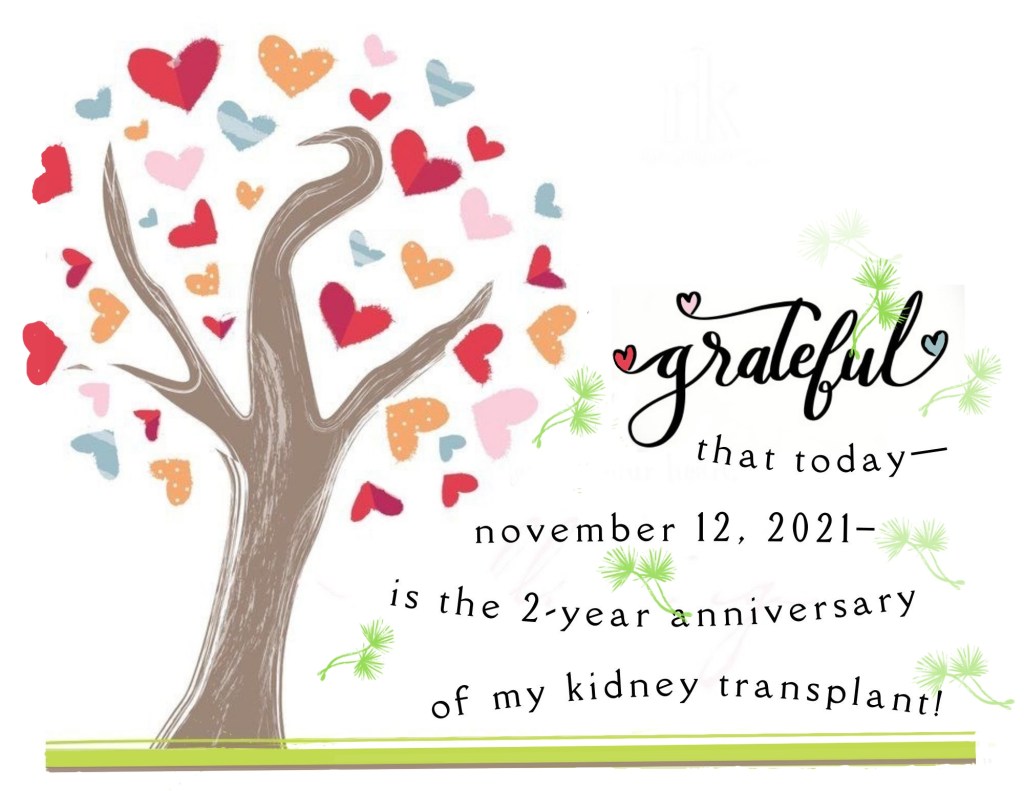






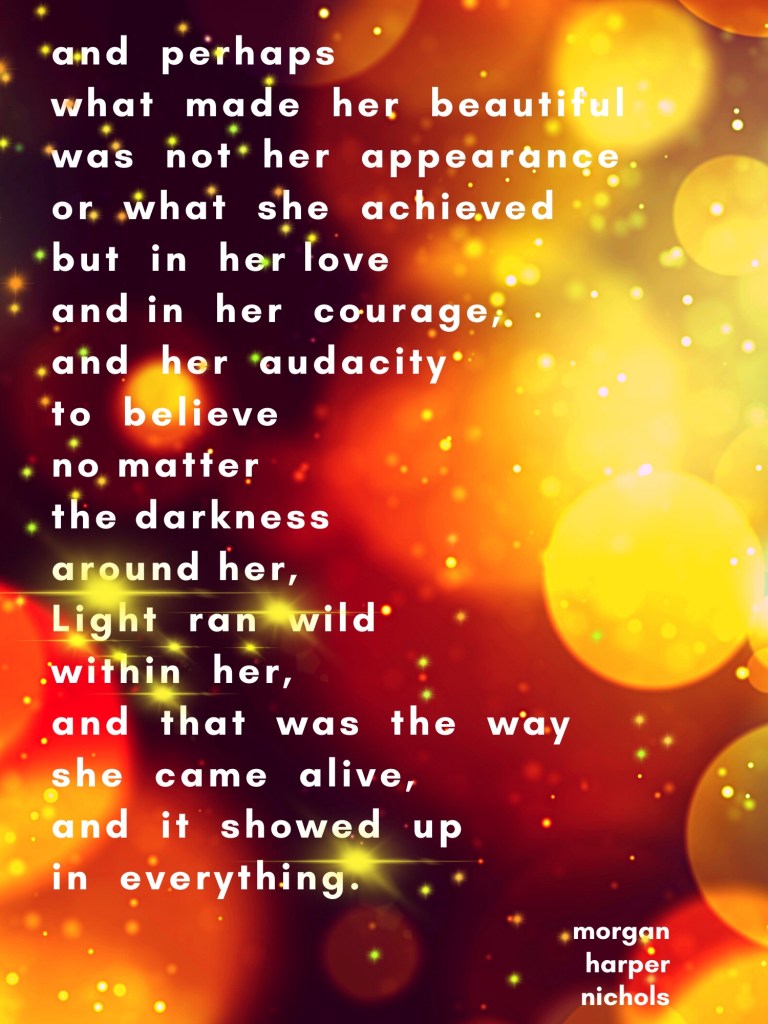


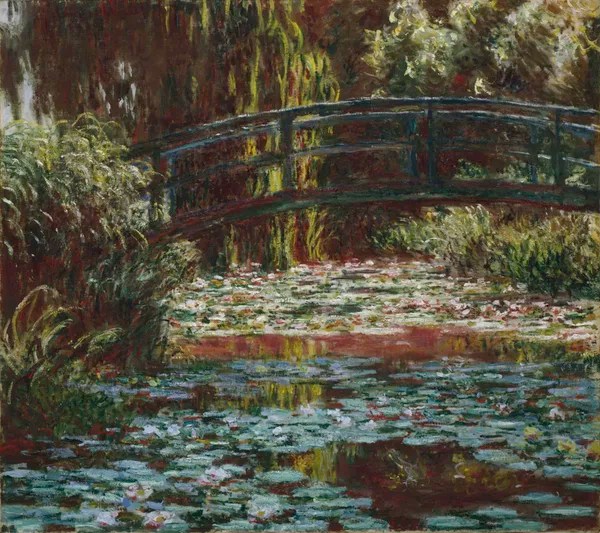







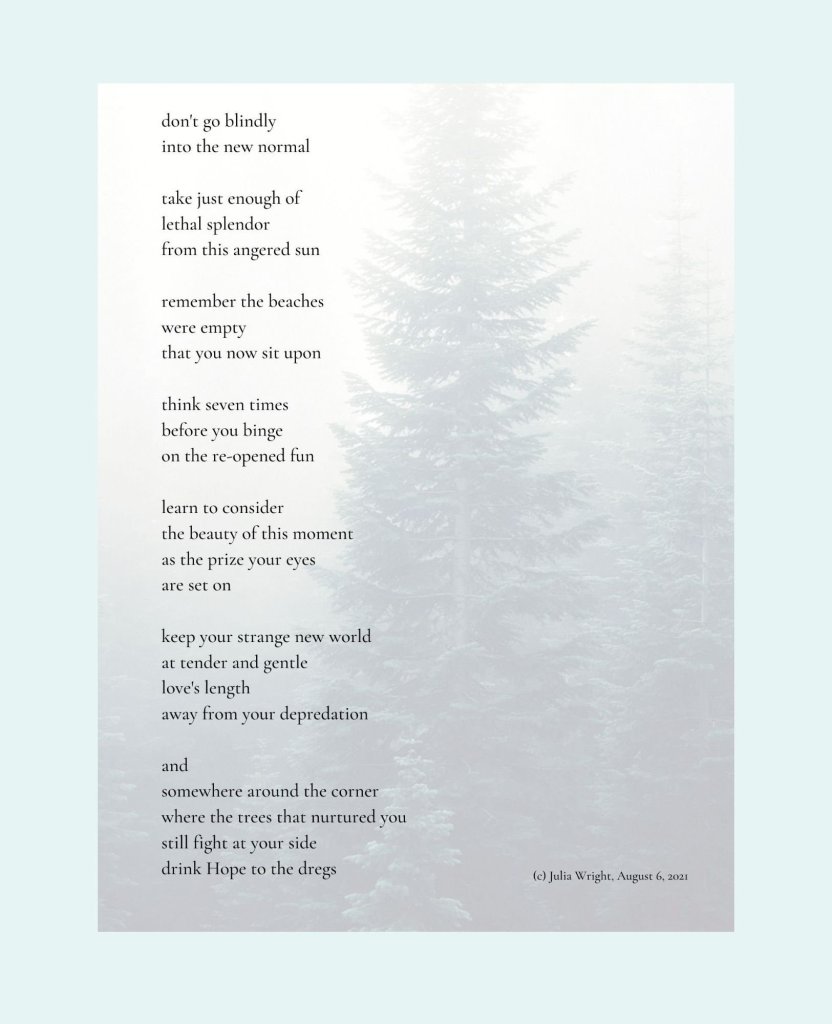







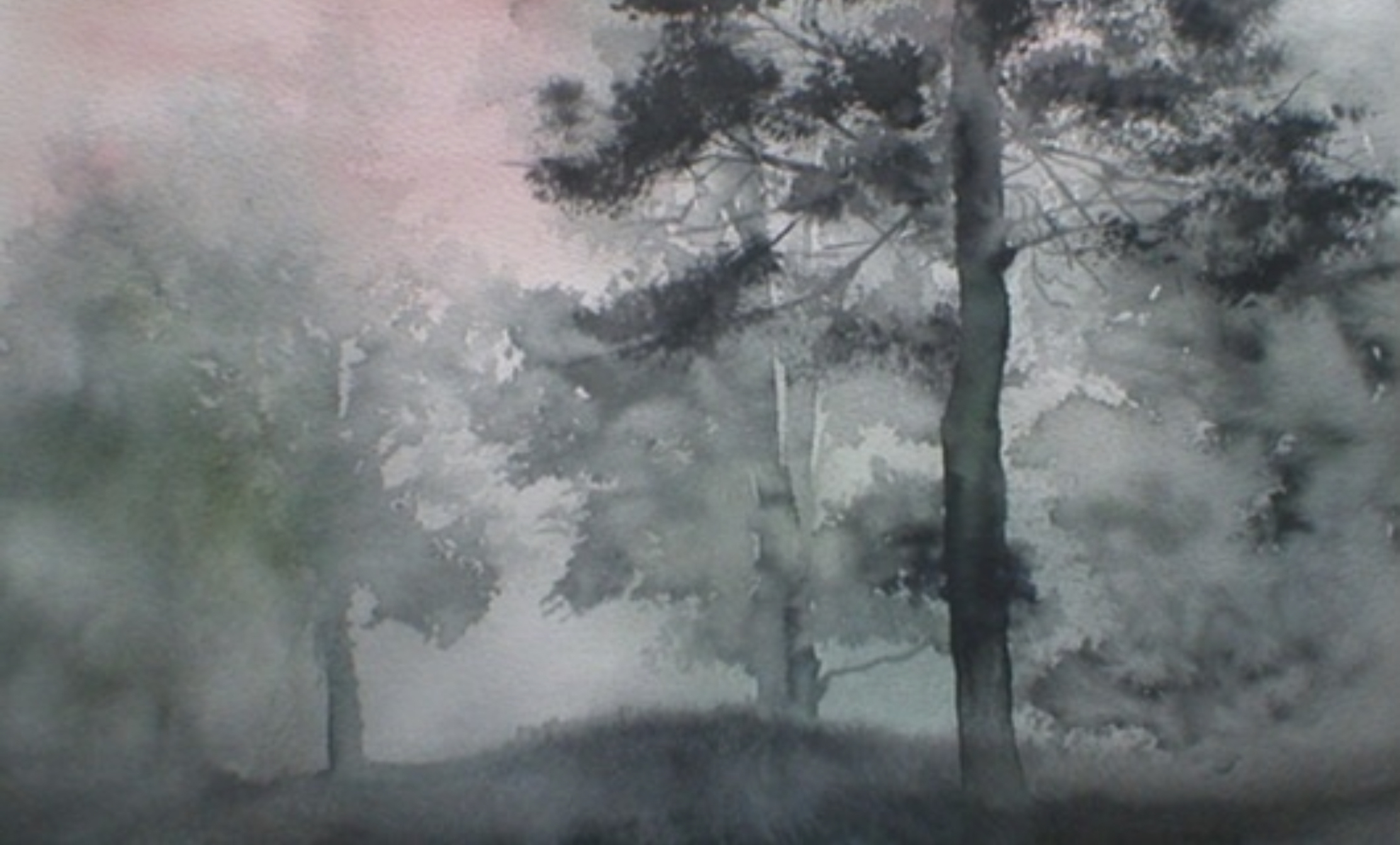


 God of the Sparrow 🌱 By Kathy Manis Findley