"Do not be afraid. You are worth more than many sparrows." —Jesus
Author: Rev Kathy
I am an ordained Baptist minister now serving in the world as retired clergy or minister-at-large. I am a wife, mother, grandmother, aunt, great aunt, and friend. I spent my career as a pastor, hospital chaplain, missionary to Uganda, spiritual director, patient mentor, victim advocate, trauma counselor, child forensic interviewer, teacher, writer, author, watercolor artist, iconographer, calligrapher, chef and blogger.
You may have noticed there have been no words coming from this blog in quite a while. No new posts. No graphics. No music. The reason is that inside me, there is nothing, and that has been my situation for several weeks. Part of the reason is that I was very sick for a while, hospitalized actually. In addition, I simply felt empty, without a creative spark that is usually so common for me.
Physically, I have felt unwell for a long time. Emotionally, I have felt the continued sting of isolation because getting Covid could be deadly for my immunocompromised body. Spiritually, I would have to say that the gun violence that has taken the lives of children and teachers in Uvalde has wounded my spirit and left me with so many unanswerable questions about faith and hope.
When all of those things rustle through my mind, it cannot help but reduce me into a silent kind of melancholia that affects my body, mind and spirit. It seems that this time, I can’t move past it. My husband asked me today if I am depressed. I answered, ”yes,” but honestly, I feel more sad than depressed. I don’t understand it this time. I can’t put my finger on the cause no matter how hard I have tried to figure it out.
The myth is that figuring out the root of depression or sadness will help one overcome it. Once you understand your depression and where it comes from, you can get beyond it. Also not necessarily true! Understanding is not a bad thing, but it is also not a cure-all.
These days, I simply cannot understand things—all things me! I recognize my sense of feeling empty, and I still have the ability to use reason and discernment to try to understand my feelings. But the truth is I don’t understand what’s going on in me. The internal web of my physical hurts, my emotional disturbance and my spiritual emptiness defy explanation and understanding. It’s complicated, outside of my ability to understand. So I have craved any flicker of light and life I could find.
I found it today, in a quote shared by a dear friend. This is the quote.
I didn’t need to understand the hypostatic unity of the Trinity; I just needed to turn my life over to whoever came up with redwood trees. ~ Anne Lamott
I can rest in that. I can find peace beyond my understanding. I can lean into the treasure of not being compelled to understand complicated things, even complicated things about myself. By the way, complicated things about myself may well be the most difficult things to understand, sometimes baffling and elusive. So Instead of the constant struggle to understand, I plan to turn my life over, again, to the One who created me to be complicated in the first place.
Thanks be to God for the ”peace that passes all understanding.” Amen.
I don’t like feeling melancholy. The feeling is just too tentative and unspecific. Trying to get free of melancholia is not an easy feat. You can curse it and yank it around trying to break it. You can throw big rocks at it or try to drown it in a bathtub. But it is so uncatchable. You can’t get your hands around it, and if you do, you can’t hold on to it. It just slips away from you before you know it. You cannot control melancholia. Perhaps you cannot even get consolation from it.
Other states of mind are more responsive to being removed or conquered or broken or even thrown out. Sadness, anger, rage—those you can eventually grab and choke out. Melancholia is enduring and constant, and it can hold you hostage for undetermined amounts of time, making a nest in you and dwelling there without your permission. Relentless, hardy, pervasive, persistent!
Understand this: I am not writing about melancholia as a clinical depressive episode and I’m certainly not trying to scientifically classify melancholia in a range of psychiatric disorders. I simply mean to unravel the threads of the state of being of feeling trapped inside melancholia.
I know there are circumstances that brought me here this week, not the least of which is that I have experienced a full week of a severe stomach virus. And then, there is the constant news reporting of horrible cases of gun violence. In fact, ABC News published this troubling statement about gun violence on May 31, 2022: “374 deaths and 782 injuries over the past week.”
I cannot help but weep about the terrible loss of nineteen children, two teachers, one teacher’s husband, and the perpetrator of the murders in #Uvalde, Texas.
I cannot help but be emotionally moved by the gift a Texas man gave the grieving families.Trey Ganem refused to be paid for the 19 hand-painted caskets. (Picture: SoulShine Industries)
Have these circumstances resulted in my feeling melancholy? I’m not sure. Melancholia might not primarily be situational. Rather, it might be embedded in a person’a psyche and brought to the heart by a gloomy, cold morning in winter, or a long-lived rainstorm, or a gloomy, foggy night without a smidgen of light. Perhaps melancholia can come upon a person by a sad movie, by hearing a hauntingly beautiful requiem, by the melodic strains of birdsong, or the somber sounds of a viola.
Melancholia is rather unexplainable for me. When it takes over my psyche from time to time, I feel multiple emotions. Not just a depression-like sadness, but also a lump-in-the-throat nostalgic feeling. I think that’s what’s going on with me right now. Truthfully, I have found the best description of melancholia in the words of Leo Tolstoy.
There is something so enchanting in the smile of melancholy. It is a ray of light in the darkness, a shade between sadness and despair, showing the possibility of consolation.
— Leo Tolstoy, War and Peace
It does feel to me like ”a shade between sadness and despair.” Whatever melancholy is, however it comes to me, whatever it feels like and whenever it visits me, I like Tolstoy’s phrase about melancholy ”showing the possibility of consolation.” In my mind, that is the Godsend part of it: that when I feel the emotion “between sadness and despair,” covered in a misty veil of melancholy, God’s holy way is that consolation is always possible. Always!
The Apostle Paul has the last word in the beautiful blessing he wrote to the church in Corinth:
3Blessed be the God and Father of our Lord Jesus Christ, the Father of mercies and the God of all consolation, 4 who consoles us in all our affliction, so that we may be able to console those who are in any affliction with the consolation with which we ourselves are consoled by God. 5 For just as the sufferings of Christ are abundant for us, so also our consolation is abundant through Christ. 6 If we are being afflicted, it is for your consolation and salvation; if we are being consoled, it is for your consolation, which you experience when you patiently endure the same sufferings that we are also suffering. 7 Our hope for you is unshaken, for we know that as you share in our sufferings, so also you share in our consolation.
How would you feel about a phrase like, war against children? Virtually no one would like such a phrase, but isn’t that exactly what happens when someone bursts into a school brandishing an AK-15 assault rifle? When someone uses a weapon to kill children inside a school room, and when a nation refuses to change its culture of weapons and bullets, then we need to own it: America wages and perpetuates war against children!
The total lack of regulation of firearms and ammunition in America is the source of the shooting that held nineteen children and two teachers hostage in a classroom at Robb Elementary School in Uvalde, Texas, in the hands of a murderer. The ultimate ”perpetrator” could be called the National Rifle Association (NRA), the group who promotes the idolatry of lethal weapons. Protesters at the site of the NRA’S National Convention this weekend were joined by Democrat Beto O’Rourke, who listed previous school shootings and called on those attending the convention to make sure that gun violence would no longer harm children in this country.
“The time to have stopped Uvalde was right after Sandy Hook,” O’Rourke said. “The time for us to have stopped Uvalde was right after Parkland. The time for us to have stopped Uvalde was right after Santa Fe High School. The time for us to stop the next mass shooting in this country is right now, right here, today with every single one of us.”
Gun violence in schools is not a national scourge in every country. There are examples of gun control our nation could follow if we had the passion and political will to do so. A case in point . . .
About a month after the Parkland school shooting, a letter of condolence addressed to the survivors arrived from survivors and parents who had endured a similar tragedy 22 years before when a local shopkeeper walked into Dunblane Primary School in Scotland and opened fire, killing 16 five and six-year-olds and their teacher.
Writing the letter to Parkland survivors was a act of solidarity. Offering hope for change, they told of their successful campaign for gun reform. They wrote, “Laws were changed, handguns were banned and the level of gun violence in Britain is now one of the lowest in the world.”
Since the 1996 Dunblane massacre, they said, “there have been no more school shootings in the United Kingdom.” Because of a grassroots campaign led by the parents of Dunblane students, leaders in the U.K took decisive legislative action. By the end of 1997, Parliament had banned private ownership of most handguns, enacted a semi-automatic weapons ban, and implemented mandatory registration for shotgun owners.
The signees ended with words of encouragement, “Wherever you march, whenever you protest, however you campaign for a more sensible approach to gun ownership, we will be there with you in spirit.”
Here in “the land of the free,” we have become callous to gun violence. We hear of mass shootings on streets, in churches, synagogues, temples or mosques, and we move on. We are becoming immune to shootings in night clubs, stores, shopping malls, military bases, restaurants, theaters and homes.
Violence inside schools, though, is on a higher, more lethal level. People who grapple with making sense of school shootings strain to come up with “reasons” that such heinous acts of violence could happen. People choose to go into restaurants, clubs and theaters, but children in school classrooms are mandated to be there.
War against children.
Do we dare look at the list of school shootings since 1969? I studied the list today, lamented over it, I guess. There were fourteen school massacres that left 169 dead children.
After every single incident, people cry, “enough is enough.” After every horrific mass murder, lawmakers and power brokers say, “enough is enough.” And then comes the question, “Why?” Why is this violence happening? The following answers for “why”—some goodand some preposterous—emerge from the national dialogue.
mental health problems; delinquent youth out of control; inattentive parents leaving guns accessible to children; weapons and ammunition too easy to get; untrained resource officers. It’s because the adults in the schools don’t have guns. They need guns.
Franklin Graham blamed school shootings on “a nation that has turned its back on God,” and on violent video games, the entertainment industry and on “taking God out of our schools.” James Dobson blamed the shooting at Sandy Hook on God’s wrath over abortion and same-sex marriage.
War against children.
This is a sad season, but it is also a sad time for Christianity. Just days after the tragic slaughter of innocent children and their teachers, the National Rifle Association meets in national conference to celebrate themselves only 300 miles away from Robb Elementary in Uvalde. Brian Kaylor and Beau Underwood name it and explain it in a recent article published in A Public Witness.
“Even after Sandy Hook, Stoneman Douglas, and now Robb Elementary — not to mention the numerous other mass shootings at churches, theaters, concerts, restaurants, grocery stores, homes, and basically any other place in our society — some Christian leaders still try to baptize the death cult that will gather in Texas this weekend.”
Shane Claiborne, co-author of Beating Guns: Hope for People Who Are Weary of Violence, criticizes pastors who “bless this group that is literally contradicting nearly every word of the Sermon on the Mount.” He continues, ”I’m going to go straight to Jesus and say we cannot serve two masters. And we really are at a crossroads where we’ve got to choose: Are we going to follow Jesus or the NRA? And literally, you couldn’t come up with much more contrasting messages. The gospel of Jesus — turn the other cheek, love our enemies — stands in direct opposition to the rhetoric of the NRA — stand your ground. The gun and the cross give us two very different versions of power.”
His words are true, as are words written by Dr. Obery Hendricks in his recent book, Christians Against Christianity. He writes a fiery epithet about what he describes as “the unholy alliance between right-wing evangelicals and the NRA. Their annual prayer breakfast,” Hendrick’s writes, ”tries to add a veneer of Christian religiosity to the NRA’s deadly agenda.”
In the article in A Public Witness, Kaylor and Underwood describe ”the NRA’s Hell” in scathing commentary. ”As the blood of more slaughtered children cries out from the ground, preparations continue for this weekend’s NRA convention.”
War against children.
There is no lack of commentary following the terror at Robb Elementary School. Stephen Reeves, executive director of Cooperative Baptist Fellowship Southwest, also criticized Christian leaders who bless the NRA, saying, “I don’t know how you pray in the name of the Prince of Peace and ask for God’s blessings on the mission of the NRA. No other country sacrifices their children on the altar of the gun.”
Yet, the prophets and the mourners somehow coalesce this weekend, in solidarity with one another regarding weapons of war and slaughter. While a Texas community mourns grievous loss, righteous prophetic critics stand on their behalf to call out sin, complacency, greed, self-interest and idolatry and those who champion the evil of it. ”As our children are killed at the altar of a semiautomatic idol,” Kaylor and Underwood write, ”high priests like Franklin Graham, James Dobson, and Jonathan Falwell help the NRA damn us all to this hell.”
Meanwhile surviving parents, siblings, grandparents and other family members and friends are oblivious to the rhetoric, to the NRA, and to anyone or anything else. Theirs is to mourn, to keep vigil over the memories of the children, and I suppose, to continue asking, ”why.” Why did this happen? Why in our school? Why did it have to take my child?
The “why” questions? Could the answer be because America is waging war against children? The ”why questions” are literally unanswerable, no matter how long we sit before them waiting for answers, for reasons. Some cataclysms have no reasons or explanations, at least none that are worth anything. One needn’t ask ”why” to pure evil, but must instead try to ease beyond ”why” to a more answerable question.
Still, getting beyond “why” brings another question that hovers over us like an ominous cloud: “What can I do about it?”
That is the question that remains. It pierces us. It drives the conversations we have and the prayers we pray.
“What can I do about it?” I can only answer with possibilities to consider. Here are a few.
Make a commitment to stand courageously against violence in the ways you are able.
Become an informed activist, aware enough to help influence the passage of legislation that protects children.
Communicate constantly with members of Congress, by phone, letter, email, text. Go to their webpages and keep on prodding them to do right.
When your activism seems small, know that it helps wage the big war against violence.
Be open to acts of tenderness. Hold a mourner in your arms, when they feel nothing and when their crying will not stop.
Many parents of the Texas children are in in shock, in trauma-induced silence. Without voice, without tears, without any emotion at all. It will be a while before they can make any audible expression of grief.
Other parents are crying uncontrollably. They will cry at the funeral home, in the church, in the graveyard, at the store, in their beds in the night. Their bodies will literally shake as grief pours out from their deepest places. It will be a while before they can stop crying.
Most of us, in fact, cannot stop crying when we see and absorb this war against children or begin to grasp the utter senseless evil of it.
In my work as a victim advocate and trauma counselor, I was present with those who were trapped in silence and with those who could not stop crying. That was the thing I could do, and after the crying, being with them in marches and sit-ins or just for a cup of coffee. In a 2021 article for The Trace, Journalist Ann Givens interviewed me about my victim advocacy and my activism to end violence. She asked me about God, about how God responds to us in a crisis to help us move beyond trauma while we are still facing so much suffering. This was my response:
“God is a God of peace. God doesn’t cause bad things to happen, but God helps us take the deep, excruciating emotions that come with bad things, and do something with them.”
In the very middle of this war against children, can we take our powerful, intense emotions and do something even more powerful? Can we persevere until the war against children is over and we can see the bright hope of children lying down with a lion and a lamb in places of peace and safety?
May God empower us to say, “Yes, we can!” and fill us to overflowing with a living hope that empowers us to say, ”Yes, we will!”
Rev. Kathy Manis Findley May 26, 2022
Please take a few moments of prayer and meditation to listen to this song, PreciousChild. Precious Child – Words & Music by Karen Taylor Good
Most of you, maybe all of you, are past Covid-19 mandated restrictions. You are going out to eat, going to theaters, going to church, going to school, to ballgames, reunions, pools, parties and most every place you want to go—unmasked!
“Finally,” you say to yourself, “it’s way past the time of staying locked up! We’re free!” And everyone celebrates, ”No more masking! No more isolating! Just the sun and the sky and a bright and shiny future!”
Congratulations! You have broken out of this terrible Covid isolation. In doing so, you have abandoned about 7 million of us who are so immunocompromised, we must wait here in isolation until it is safe for us to break free. Our Covid isolation time is indeterminable because it’s based on so many unknown factors—the Covid trajectory itself, the level of immunosuppression a person has, other health problems and the age of the person, the availability of antibody medications, vaccines and boosters. AND does this person have even one antibody?
As for me (a kidney transplant patient taking massive doses of immunosuppressive medications), after two Covid vaccines and two boosters, my antibody tests revealed that I have zero (0) antibodies! So the very minute all the people threw their masks in the trash, I was abandoned in this unpredictable world of the indomitable, evolving Covid-19 virus and all of its 772 variants, including double and triple mutant variants.
Covid-19 double mutant variant
Covid-19 triple mutant variant
I could not help but feel abandoned. No sooner than I could safely go unmasked after my kidney transplant, the pandemic descended and the mask returned to my Covid wardrobe. I am now a three-year mask wearer.
But there’s more . . . for me and 7 million other immunosuppressed people in this country. I spend time on several Facebook transplant support groups. So while I certainly do not know the experience of 7 million people, I do know literally hundreds of transplant patients through dialogue on various online platforms.
Here’s what I mean: group conversations on Facebook and Zoom patient support groups, dozens of them every month! In those conversations, I have heard the voices of confusion, despair, isolation, anger, frustration, indecision, fear, uncertainty . . . The people are saying things like this:
They keep telling us that some masks are not effective. What kind should we use? Where do we get them? When do we wear them? How? Where should we wear them? What if others don’t wear them?
We can’t find out whether or not we should get the vaccine—how manydoses? How many boosters? When to get them? Where to get them?
Doctors don’t know, hospitals don’t know, pharmacies don’t know! Even my transplant center doesn’t know.
Wow, there’s this medication that has been authorized for emergency use for immunocompromised persons! It’s called Evusheld! It is not a vaccine, it’s antibodies, real antibodies because we don’t have any!
EVUSHELD? I can’t find it. What does it do?My doctor never heard of it! I found some three hours from here, but they don’t have the okay to give ityet.
I flew across the country and finally got some. No one knows what dose they’re supposed to give. My transplant center doesn’t have it and they don’t know if they will get some. I have searched the internet in every state and can’t find it. Now that the public is not wearing masks, we need it, and we need it now before we contract Covid! There’s a website that lists every facility in the US and how many doses they received. You could call and see if you might get an appointment. I found a place that didn’t even know they had any, but they called around and got permission to give it.
All these sentiments, and more, reveal to me that those of us who have no or low immunity are abandoned in isolation limbo, while the rest of the people have broken free to resume a normalcy of life that is unavailable to the rest of us.
Think about us, the 7 million who can’t go with you to a movie or a restaurant. Pray for our safety. Pray for the our well-being that’s harmed by the continuing angst of isolation we are in. Send us positive thoughts. We’ll do the same for you, and hope you never have to say, ”Oh, the places I’ve been! I should have worn a mask.”
And may all of us hope for better, brighter, safer days from Covid, from gun violence, from hate crimes and mass shootings, from abuse, from environmental toxicity and natural disasters, from war, from domestic terrorism and from the dismantling of the civil rights and human rights we hold inviolable.
And may it soon be said of all of us, ”Oh, the places you’ll go!”
How true it is that when we know nights of sorrow, when weeping is all we can muster, that daybreak does eventually come as it always has. And with the rising of the sun, perhaps our tears are replaced with at least some measure of inner joy.
The universe is wide and wondrous, full of love, full of grace, and sparked by freedom. Those three—love, grace and freedom—are the things we most need, all of us.
I offer you this meditation, praying that you are surrounded in love, that you know the grace that accepts every part of yourself, and that you feel the the freedom to run with the wind in wide and wondrous places, toward your dreams.
As you continue the quiet time you claim for yourself today, I hope you will be be inspired and comforted by this beautiful choral piece by the brilliant composer Elaine Hagenberg, ”All Things New.”
Poem by Frances Havergal and text adapted from Revelation 21:5-6
Light after darkness, gain after loss Strength after weakness, crown after cross; Sweet after bitter, hope after fears Home after wandering, praise after tears
Alpha and Omega Beginning and the end He is making all things new Springs of living water Shall wash away each tear He is making all things new Sight after mystery, sun after rain Joy after sorrow, peace after pain; Near after distant, gleam after gloom Love aftеr wandering, life after tomb
This will be a time women will remember for a long time. Whatever is your conviction or mine on a woman’s right to have an abortion, I hope we will pray for all women and girls affected by the Supreme Court’s intention.
“The Supreme Court is poised to overturn the constitutionally protected right to abortion ensured by the nearly 50-year-old Roe v. Wade ruling, according to a leaked initial draft of the new opinion obtained by Politico. The draft was written by Justice Samuel Alito, with the concurrence of at leastfour other conservative members of the Supreme Court.” (CNBC)
Strong reactions are occurring all over this country. Women are speaking out in powerful voice as they gather in front of state capitols. Another very strong reaction comes from Don Winslow who has created a powerful video with the theme #TEXASWarOnWomen.
Winslow has, for the past several years, been creating and posting powerful (and popular) videos that take aim at political hypocrisy. Winslow on Friday shared his latest, which highlights the savage effects the new anti abortion law in Texas will have on some women. It had just under 2 million views in 24 hours.
Over a chant of “My body, my choice,” the video’s narrator lays out some stark first-person realities for women in Texas: “If I am beaten and raped in the state of Texas, I have to give birth to my rapist’s baby,” she begins. “If I am raped by my father, brother or uncle in the state of Texas,” she continues, “I have to give birth to the body of my family abuser.”
Texas women are not the only women who will lose a human right. Other states will surely follow. ”I am a woman, is a statement that repeats over and over again. Watch the video here:
The is the video’s powerful text:
If I am beaten and raped in the state of Texas, I have to give birth to the baby of my rapist.
If I am raped by my father, brother or uncle and get pregnant in the state of Texas, I have to give birth to the baby of my family abuser.
This new law is so draconian that I can be prosecuted for having an abortion, and so can my doctor, friends and family who advise me, or even the UBER driver who simply drives me to the clinic.
This is madness.
The same people who have been protesting and screaming, “my body, my choice” when it comes to the Covid vaccine, are now saying I don’t have control over my own body.
Texas Republicans won’t require a 12 year old girl to wear a mask in school, but they will force her to keep a baby regardless of how she got pregnant.
The video winds to a close with a powerful list of affirmations, each of which begin with the same mantra:
“I am a woman, and I have a constitutional right to make decisions for my own body.”
“I am a woman, and I have a human right to refuse to give birth to my rapist’s baby.”
“I am a woman. This is my body.”
“I am a woman. This is the United States of America.”
“I am a woman. You do not own or control my mind or my body.”
In 1998, I wrote a book of thirty-one meditations, Meditations for Healing, specifically for survivors of sexual abuse. In 2006, I revised the the first addition and in 2022, I intend to revise it again. The meditations for each day of the month are prompts to help us find contemplative sacred pauses, very needful not only for survivors of violence, but also for all of us.
As I work on the revision, I am struck by the reality that all of us are survivors of violence, depending on how one defines violence. Is violence a horrific attack on a person’s body? Is that all it is? People who have experienced violence, and I contend that means all of us, know that violence is not only a physical assault, it is also an emotional and spiritual assault on everything we are.
“Violence in all its forms” is a phrase I use often. Defining that phrase is straightforward. Violence in all its forms does, of course, means the obvious: sexual violence, intimate partner violence, homicide, suicide and all the other big, bad forms of violence we observe or experience.
Might violence also manifest its destructive power in verbal abuse, gaslighting, racially motivated acts, the marginalization of women, homophobia, xenophobia, child neglect . . . this list could go on and on.
So as you and I name the forms of violence we have experienced in our lives, contemplative healing becomes important. So I offer you this meditation for healing:
As you enter into moments of sacred pause, this musical arrangement may open your soul to rest, peace, comfort and new hope.
The text of this choral arrangement by Elaine Hagenberg, Still with Thee, uses excerpts from a poem by Harriet Beecher Stowe.
Still, still with Thee, when purple morning breaketh, When the bird waketh and the shadows flee; Fairer than morning, lovelier than the daylight, Dawns the sweet consciousness, I am with Thee!
When sinks the soul, subdued by toil, to slumber, Its closing eye looks up to Thee in prayer; Sweet the repose beneath the wings o’ershading, But sweeter still to wake and find Thee there.
So shall it be at last, in that bright morning When the soul waketh and life’s shadows flee; O in that hour, fairer than daylight dawning, Shall rise the glorious thought, I am with Thee!
I write about sacred space a lot. I struggle to create sacred space a lot. I rest in sacred space . . . not so much. Certainly not enough. I confess that I, as a person who claims to cherish sacred space, can rarely find it. I must also confess that I need it. Yet, that space where I am tranquil, not agitated and troubled, is elusive to me. As some folk put it, “I’m staying busy!” Too busy!
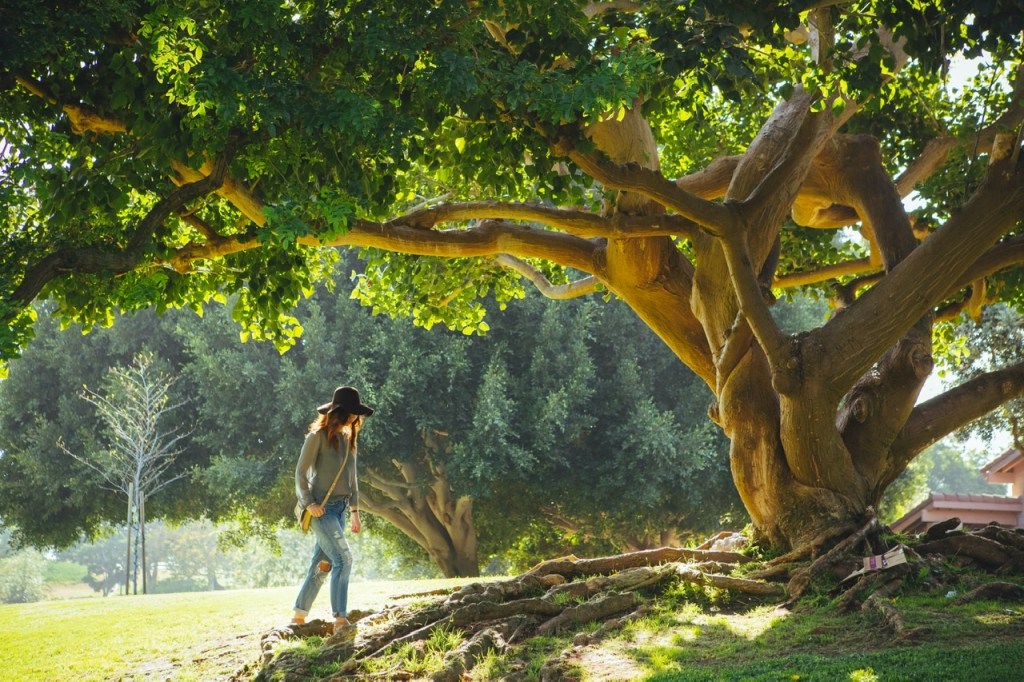
Photography by Kevin Young
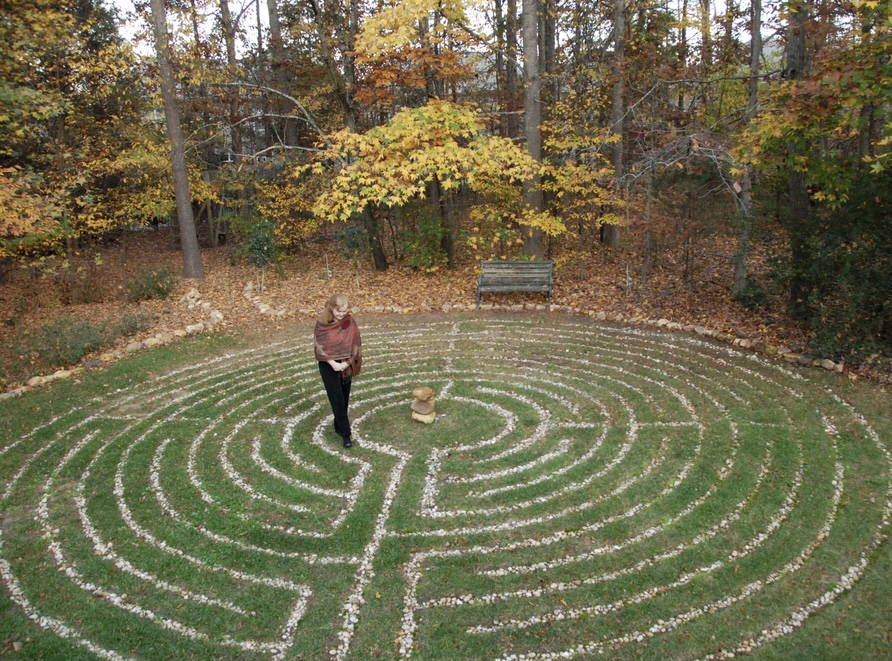
Sacred space is different for every person. Each person will know her/his sacred space intuitively, and by faith. Mine would be under a tree with spreading, low hanging branches or walking my own garden labyrinth.
Your sacred space may be beside the seashore, a place where you find calm, peace, or the ”silence” of the ever-moving ocean. Or you may not require a particular place at all, just a state of mind and an open spirit. If you long for a place of solace, inspiration, or re-creation, you will eventually create a sacred space, either a place that nature has created, a holy place that you have found, or a place you create in your own home. You will know the place, because you will sense what it is doing for your body and soul. Still, you won’t necessarily have to find your sacred space. Your sacred space may find you. And if you have only a few moments each day, make it your sacred pause.
Your sacred space may be beside the seashore, a place where you find calm, peace, or the ”silence” of the ever-moving ocean.
Do not strain to see where your sacred space is or what it should look like. A sacred space has many faces, many facets and dimensions.
Imagine . . .
Once you find your sacred space, spend time there. You may choose to redecorate a quiet place in your home, build something in your garden that can center your thoughts, or find a quiet, beautiful place nearby that you can get to frequently and easily. As for what you do in your sacred space . . . well that will be as varied as the different spaces people choose.
Pray, breathe, sing, meditate, sit in holy silence—whatever you are moved to do is your own sacred moment—a very personal sacred moment. There is, however, one bit of wisdom that seems important—words from Joseph Campbell: “Your sacred space is where you can find yourself over and over again.”
Let the same mind be in you that was in Christ Jesus, who, though he was in the form of God, did not regard equality with God as something to be exploited, but emptied himself, taking the form of a slave, being born in human likeness. And being found in human form, he humbled himself and became obedient to the point of death— even death on a cross.
Therefore God also highly exalted him and gave him the name that is above every name, so that at the name of Jesus every knee should bend, in heaven and on earth and under the earth, and every tongue should confess that Jesus Christ is Lord, to the glory of God the Father.
Philippians 2:5-11 NRSV
This is Palm Sunday, of course. This morning I saw proof of that. Proof that today is Palm Sunday was all around my church this morning—the bright flower arrangement with palm branches as its foundation; the children who processed down the aisles joyfully waving palm branches; the live artist painting beautiful palm branches on her painting; the jubilant singing so filled with ”Hosannas.”
But there is more. In many churches, today is called ”The Sunday of the Palm and Passion.” When we hear the story of Jesus riding a donkey into Jerusalem, greeted by a jubilant crowd shouting ”Hosanna!” and waving palm branches, we cannot help but rejoice. But notice also how quickly the cheers of the crowd turned into jeers. Almost instantly, the palm waving stopped and the passion began.
After the green fronds moving gracefully in the breeze become still, we immediately sense passion—the passion that moved Jesus toward death on the cross, the passion we will see and feel in the week ahead.
In this stained glass window entitled ”Christ Crucified,” one can most definitely see an aura of passion. We see color, shape, movement and light that tells all of the story—Palm and Passion and everything in between. The window portrays a Black Jesus with arms outstretched, his right hand symbolizing oppression, his left forgiveness. We see pathos in the stained glass artist’s symbolism of oppression and forgiveness, and perhaps we interpret it as a message for us: that embracing both oppression and forgiveness creates our fullness of life.
The window was a gift to the Sixteenth Street Baptist Church in Birmingham, Alabama, from the people of Wales, U.K. in 1964. You might remember that on September 15, 1963, the congregation of the Sixteenth Street Baptist Church in Birmingham, Alabama were greeting one another before the start of their Sunday service. In the basement of the church, five young girls, two of them sisters, gathered in the ladies room in their best dresses. It was Youth Day and they were excited about taking part in the Sunday worship service.
Just before 11 o’clock, instead of rising to begin prayers, the congregation was knocked to the ground. As a bomb exploded under the steps of the church, they sought safety under the pews and shielded each other from falling debris. In the basement, four little girls, 14-year-olds Addie Mae Collins, Denise McNair, Carole Robertson, and 11-year-old Cynthia Wesley, were killed. Addie’s sister Sarah survived, but lost her right eye.
There it is. The oppression and forgiveness—The Passion—the passion of Christ, the passion that a church family in Birmingham faced in 1963, the passion being endured right now among the people of Ukraine . . . and the passion that at times leaves each of us brokenhearted and despairing.
Yet, I call your attention back to the stained glass window. Of course, it portrays the passion of Christ, but surrounding his image are signs of hope beyond passion. From across the ocean, another country felt the angst of a church in mourning, parents of little girls laid low. I imagine that this extravagant gift from Wales represents hope beyond passion to this very day for the congregation of the Sixteenth Street Baptist Church.
The stained glass visually expresses oppression and forgiveness, yet in its vibrant color and light, shouts of hope beyond passion:
Above Christ’s head, the rainbow colors of his halo. Surrounding him, the large circle of blues that looks like eternity. And Christ’s hands— his right hand symbolizing oppression and his left, forgiveness.
Whenever we dare to reach down into the soul to find our faith at its very core, we will always find oppression and forgiveness. I think that’s what passion is really about, when all is said and done—oppression and forgiveness.
A Prayer in Remembrance of Christ’s Passion
God of Life and Death, As we lean into this holiest of weeks, we will see both, Life and Death.
Life in the waving of palms. Life in the cheering of crowd celebrating a king riding a donkey. Life in the washing of feet. Life in the sharing of the supper we call “Last.” Even in the sound of the cock, loudly crowing.
But we sense this feeling of dread, because we know also that this will be a week of death, Even death on a cross.
Comfort us as we relive the death of Jesus, The Passion of Christ. And help us to remember that in life and in death, there is more; There is more oppression and there is more forgiveness, and it brings us hope.
There is so much more . . . After life After death
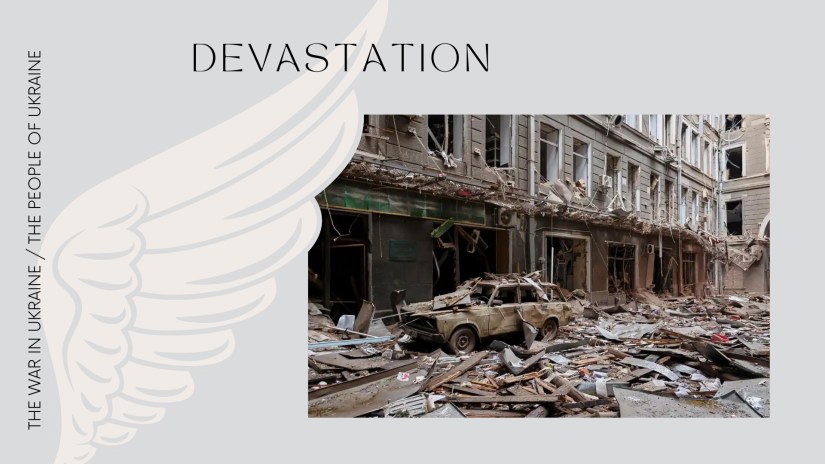
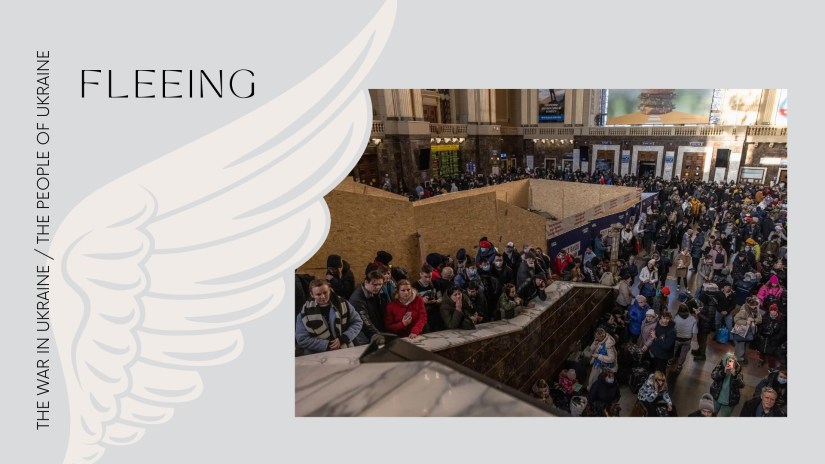
There are no words enraged enough to write about the horrific devastation in Ukraine!
There are no words angry enough to write about the devastating loss, the despondent people, the frightened children!
There are no words incendiary enough to decry a violent, inhumane Russian military or the power-hungry, evil man that commands them!
There are no words poweful enough to condemn what happened today: that at least 50 people were killed and around 100 injured in a Russian rocket attack on the Kramatorsk train station. The station was being used to evacuate civilians from eastern Ukraine’s Donbas region. At least five children were killed in the attack.
There are not enough words to intercede in prayer and lament for a nation destroyed, with a wasteland left behind. Not enough words to cry out for peace. Not enough words to whisper in mourning for the Ukrainian people and their children who have been killed, wounded, and forced to leave their homeland. When will wars be over?
Of course, butterflies will still be beautiful after war, but what do we do in this season of war? How do we help? How should we pray? Where do we go to search for hope for the despondent people of Ukraine? How do we help repair Ukraine’s ruined cities? Of all the sources of hope we could seek, this passage of scripture, Isaiah 61: 1-4, always offers me a sense of new hope amidst devastation.
The spirit of the Lord God is upon me, because the Lord has anointed me; he has sent me to bring good news to the oppressed, to bind up the brokenhearted, to proclaim liberty to the captives, and release to the prisoners; to proclaim the year of the Lord’s favor, and the day of vengeance of our God; to comfort all who mourn;
to provide for those who mourn in Zion— to give them a garland instead of ashes, the oil of gladness instead of mourning, the mantle of praise instead of a faint spirit.
They will be called oaks of righteousness, the planting of the Lord, to display his glory.
They shall build up the ancient ruins, they shall raise up the former devastations; they shall repair the ruined cities, the devastations of many generations.
A PRAYER FOR PEACE FOR THE UKRAINIAN PEOPLE
God of mercy, Prince of Peace help us to listen to your holy voice, a voice that speaks of peace to all people, and in this moment, to the despairing people of Ukraine.
Let the sound of your voice resonate within us, until a whisper becomes a shout which cannot be ignored.
Move us with your love, so that our actions echo your peace, so that we may offer compassion and comfort to the Ukrainian people, brought low by conflict.
Comfort them, God, with your peace that is beyond understanding, beyond all conflict, stronger than war’s destruction.
Fill us with your hope, O Lord, and let peace begin with us.
Quiet the fear and hatred that divides us as we live into your calling to “repair the ruined cities” in our world, grace us, in your mercy, with courage and hope, so that we may see beyond the dark clouds of war, a true and lasting peace; so that we may see that beyond destruction, there is restoration; so that we may see that beyond death, there is life everlasting and eternal.
We offer this prayer, O God, with heavy hearts, Lamenting the evils of war, longing for a fresh breeze of peace by Spirit wind, Through Christ our Lord, the eternal Prince of Peace. Amen.
The Prince of Peace with the World in His Arms
Hear this message of peace offered by the Harlem Boys’ Choir.
This is a moment to remember and celebrate! By a vote of 53 to 4, we will call a Black woman “Justice!” The historic pronouncement was made in the United States Senate Chamber by another Black woman, Vice President Kamala Harris.
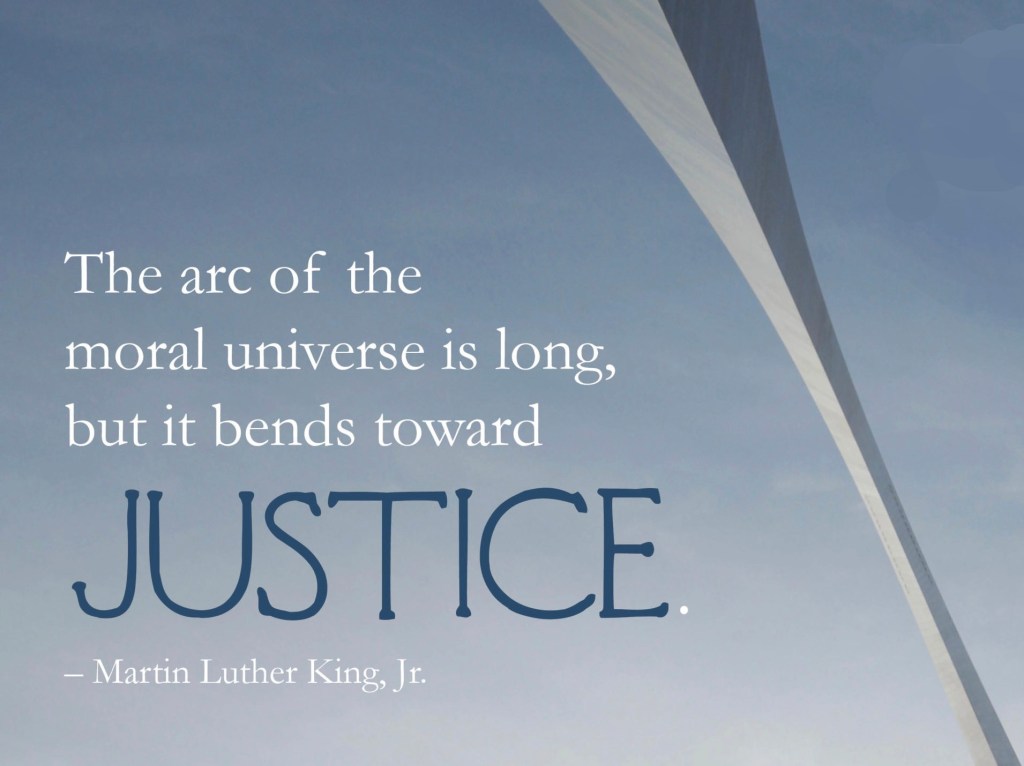
What a clear picture of the arc of the moral universe bending toward justice! The arc does indeed bend toward all that is right and just. Today the arc bent ever so slightly, yet far enough to cause a nation to celebrate.
This confirmation of soon to be Justice Ketanji Brown Jackson is historic for this nation. The first Black woman will serve as a Supreme Court Justice, while her presence will make the Supreme Court look more like America and will more closely reflect the American people.
I stood up from my chair in the living room to join the Democrats who stood to their feet in an extended standing ovation! While we cheered, the Republicans filed out silently, unwilling to offer this highly qualified woman the respect she deserves. I wonder if the fact that they could not get out of there fast enough reflects their shame of how they treated her. I doubt it. I heard this today.
White women have to break glass ceilings. Black women have to break out of a glass cube.
It’s true I think, especially when I consider that soon to be Justice Jackson endured 24 hours of grueling and often disrespectful questioning. She responded to every disparaging question with grace and dignity throughout the long hours. She knew, as women know all too well, that the first would have to be the best. She probably also knew that her ancestors, remembering their centuries of enslavement, encircled her in solidarity and celebration! A cloud of witnesses, witnessing what must look to them like a miracle!
It was not a resounding YES, but it will be a bright day in our history of days!
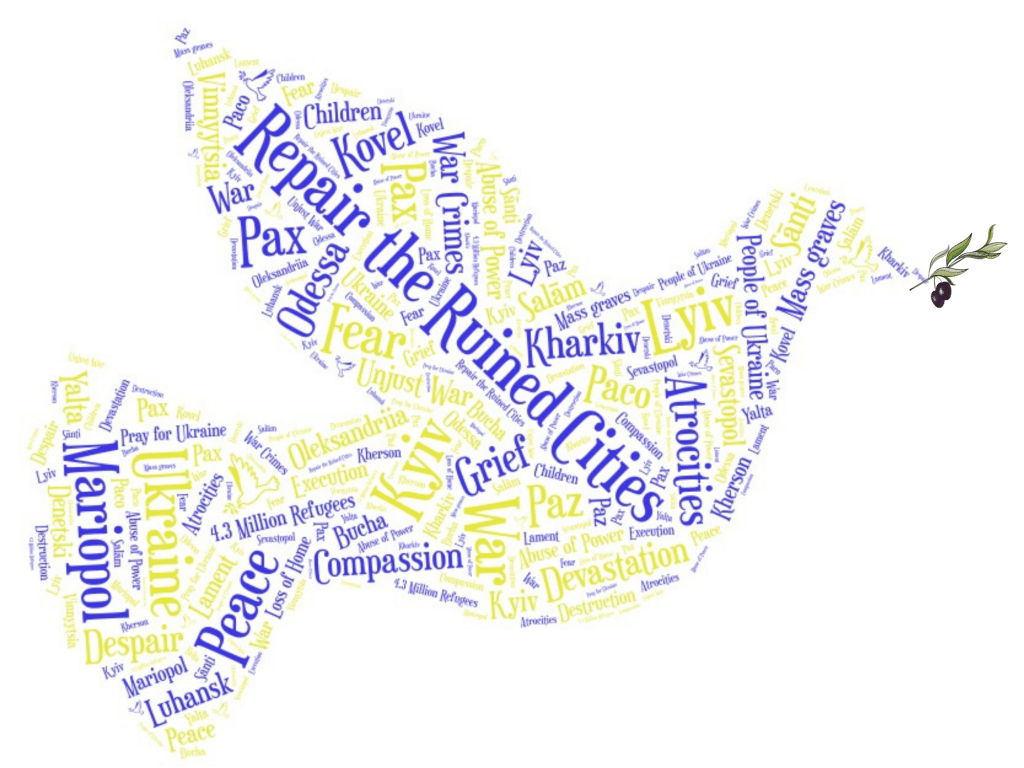
I tried to remember the name of every person who has prayed for me over the years. I know that every name does not appear in this image of the dove, but all of you, and those I left out, are gifts to me. Thank you all wherever you are.
OThrough eight years of serious illness, dialysis, kidney transplant and all the other areas of my angst, I have heard one very special message again and again from folks I love all over the world. Each person said it to me in a unique way, and remembering their message makes me want to reach out to all of them with deep gratitude. I could never begin to list each of their names, although I tried to in the image of the dove. Their message was a cherished gift . . .
”I need you to survive.”
During a personal life assessment this past week, I thought a lot about this message I heard so many times. I realized that these might be the most loving words I have ever heard. Hearing the words again moved me to a tender time, one of those times when life and death and mortality somehow come to mind. Truth is, I am able to think about these kinds of life things only in my tender times. This week my favorite doctor, who knows a lot about all things tender, said something to me I won’t soon forget . . .
“When you first came to me five years ago, I didn’t think you would live another five years.”
Such a statement would most definitely bring to one’s mind all that is important and all that isn’t. Thinking on her words brought me to the tender moment I have needed for quite a while. I lingered there for a few days, hoping to let my soul rest and my spirit begin to see things in a new way.
It isn’t such a bad place to be right now in the midst of Lent. In fact, Lent is the perfect time to pay attention to my soul and spirit. Lent is the perfect time for tender moments and tender thoughts. Lent is the best time to be tender with myself while searching my spirit for the parts of me that must repent and return to God with all my heart. (Joel 2:12)
Search me, O God, and know my heart; test me and know my thoughts. See if there is any wicked way in me, and lead me in the way everlasting. Psalm 139:23-24 NRSV
Lent draws me to this psalm and its invitation to God. I might very well need to send this very invitation to God about searching me and knowing me, testing me and knowing my every thought. I come, though, to the part that asks God to see if in me there are “wicked ways.” I’m not so sure I want to do that. I know there are wicked ways in me that I try my best to keep secret. But this is Lent, and God already knows all about that.
During these Lenten days, be tender with yourself. Take a look at your secret wicked ways, but remember that God sends you the message clearly — that you are God’s beloved and that you receive the grace of God’s forgiveness even before you utter a single word of repentance. God’s like that, especially in our tender moments.
In your quiet time, listen for even a minute to this music video and celebrate its joyful message. It lifts my heart every time I hear it.
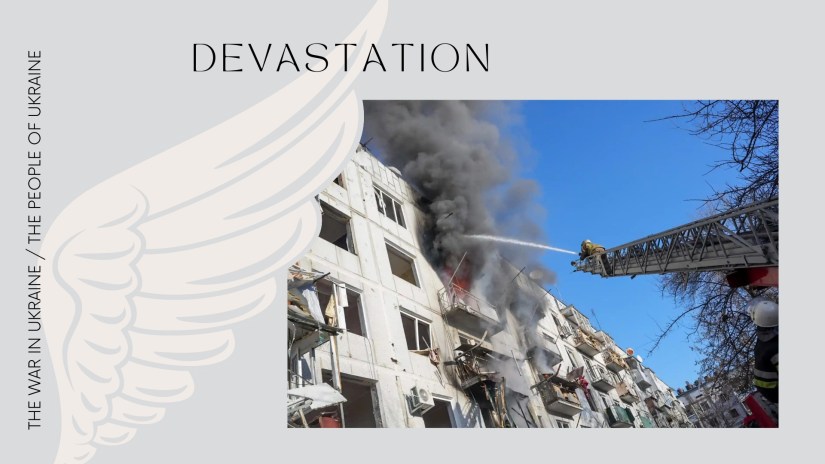
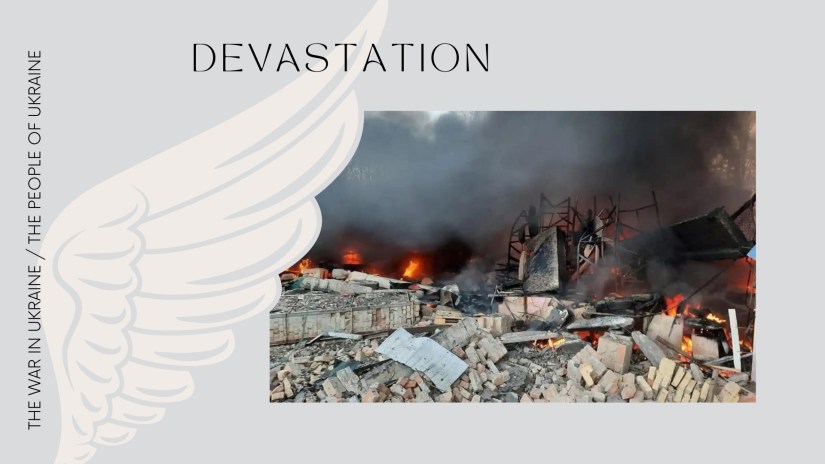
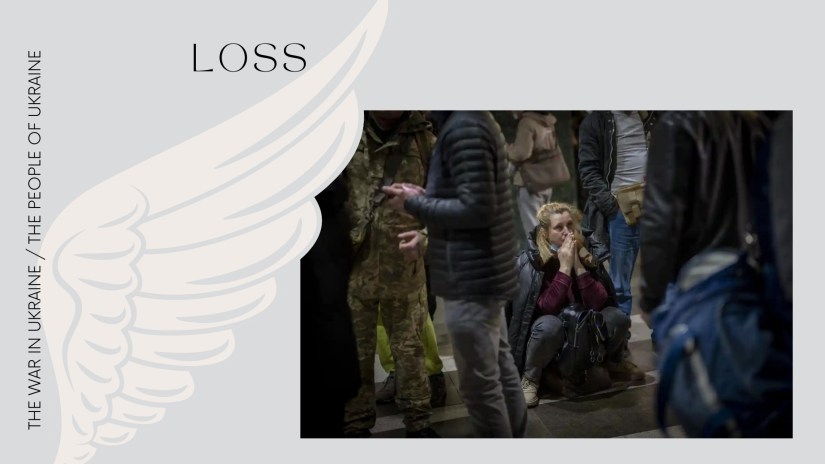
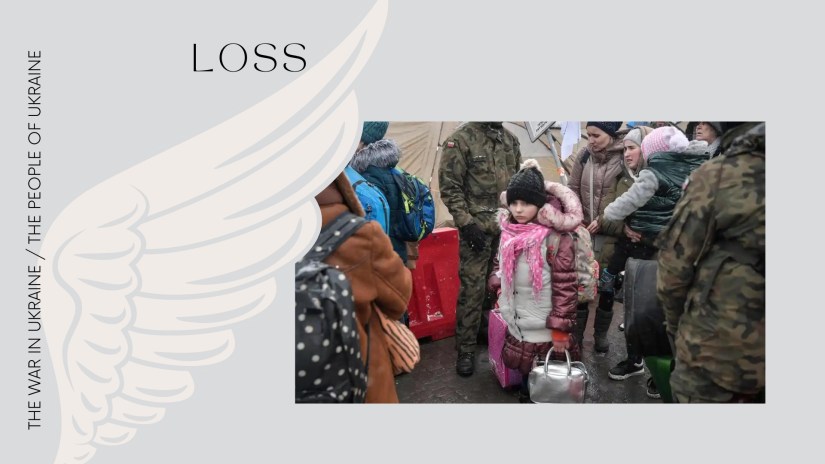
Because many words have been written, poetry has spoken mourning, music has resounded hope, and prayers have given voice to deep lament — I offer these images.
In your moments of prayer and reflection, please join the people of the world who pray for the people of Ukraine. Perhaps this music will enhance your time of prayer and remind you of the tragedy of war and the finality of violence.
He shall judge among the nations, and shall rebuke many peoples; and they shall beat their swords into plowshares, and their spears into pruning hooks; nation shall not lift up sword against nation, nor shall they learn war any more.
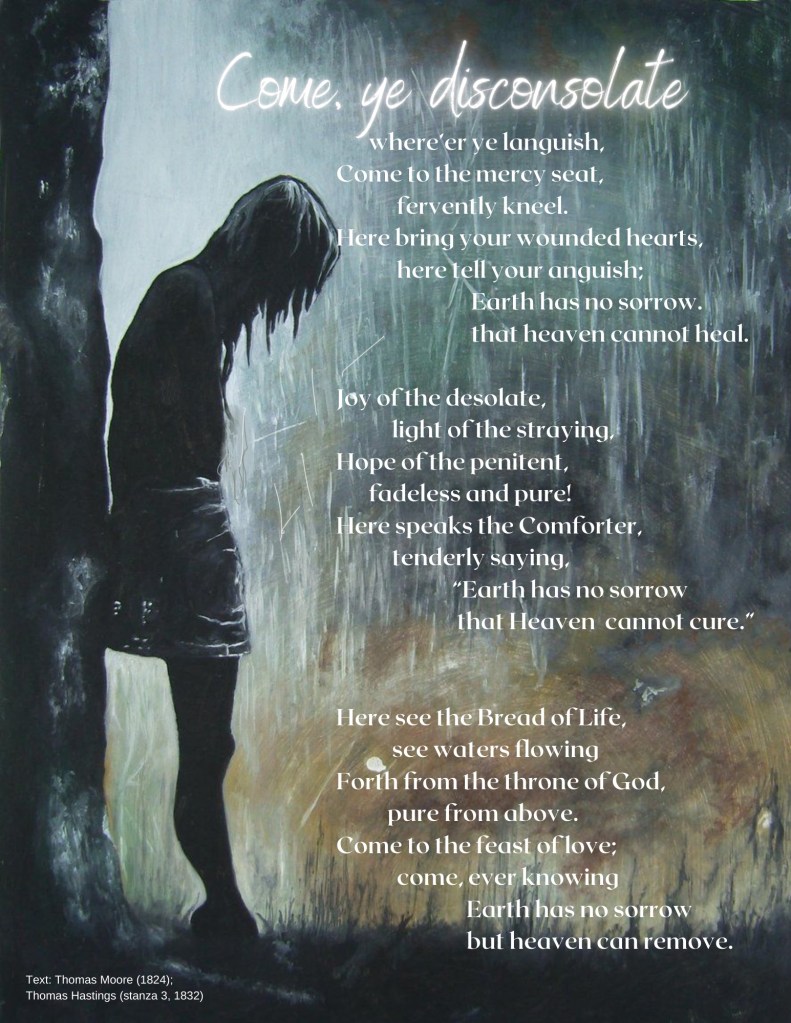
“Come, Ye Disconsolate” is one of my favorite hymns. You might ask why. In every person’s life, there are times of sorrow that fall very deeply into the soul. There is a sense in which deep sorrow communes with us like no other emotion. Being disconsolate can be a beautiful experience.
It is a beautiful word — disconsolate — a word full of depth and full of meaning. Yet, it is not a word we often use. It sounds a bit like an ”old” word to me, perhaps more widely used in decades past. The definition? According to Merriam-Webster, the word disconsolate means “cheerless.” I don’t find enough soul angst in that definition, but the word has many soulful synonyms.
Synonyms for disconsolate can be as heart-rending as the word itself: downcast, inconsolable, dispirited, desolate, crushed, despairing, destroyed, despondent, hopeless, heartbroken ~ comfortless
So many words, so full of sorrow. Still, I love the word disconsolate. It has been my companion on many a journey and, although I did not welcome it as an emotion, I learned to own it, which is surely the most important way to have full awareness of your spirit. The truth is, when one is disconsolate, it is an opportunity to imagine being wrapped tenderly with a soft blanket of hope. Wrapped completely, face-under-the-covers wrapped!
How can such a word remind me of a soft blanket tenderly wrapped around me? How can the soft cover be called a blanket of hope? I will offer one reason that is a personal story about my friend and colleague in ministry, Donna. When I was desperately ill with end stage kidney disease, Donna came to visit me in the hospital often. Many of those visits I can’t remember, but she came one day holding a gift in her hands. The gift was a fluffy, white crocheted blanket that her entire congregation had prayed over as they petitioned God to restore me to health.
Every time, from that day to this, that I covered myself with that blanket, I would think of Donna and her church members and their act of love and concern. I imagined them nearby and sensed their prayers becoming a part of my soul’s lament. They did not leave me comfortless.
Whenever I feel disconsolate, comfortless, it helps me to remember these words from the Gospel of John, one of the most beautifully poignant passages in all of scripture:
16 And I will pray to God who will send you another Comforter who will abide with you forever, the Spirit of truth; Sadly, the world cannot accept the Comforter, because it does not truly see her or know her. But you know her; for she dwells with you, and shall be in you.
18 I will not leave you comfortless: I will come to you. 19 In a little while, the world will see me no more; but you see me: because I live, you shall live also.
25 These things have I spoken unto you while I am still present with you.
26 But the Comforter — the Holy Spirit — God will send in my name,
and the Spirit will teach you all things, and bring all things to your remembrance, all the things I have said to you.
27 Peace I leave with you, my peace I give to you: I do not give you peace as the world gives,
Instead I give you peace as if it were from God. And so, my beloved children, do not let your heart be troubled, neither let your heart be afraid. — Jesus, recorded in John 14: 16-19; 25-27, paraphrased
During the times I felt disconsolate through the years, I have always been able to rest under the comforting wings of the Spirit, the Comforter who is with me always. Yes, it is true that many times my heart was troubled and afraid. The words of Jesus did not always repair the state of my heart or diminish my fear. But the promise of Jesus — that I would not be left comfortless — soothed and strengthened my heart.
The words of this hymn held for me a depth of meaning that has spoken comfort and truth to my disconsolate spirit — every time — easing my suffering and leaving me with hope.
Come, ye disconsolate, where’er ye languish; come to the mercy seat, fervently kneel. Here bring your wounded hearts, here tell your anguish; earth has no sorrow that heaven cannot heal.
Joy of the desolate, light of the straying, hope of the penitent, fadeless and pure! Here speaks the Comforter, in mercy saying, “Earth has no sorrow that heaven cannot cure.”
Here see the bread of life; see waters flowing forth from the throne of God, pure from above. Come to the feast prepared; come, ever knowing earth has no sorrow but heaven can remove. Thomas Moore (1779-1852)
I have experienced the “joy of the desolate” many times. It is a joy that fills my heart, in spite of how deeply desolate I feel. As for what this all means during this Lenten season. For me, it means that a Lenten experience can help me see the ”light of the straying,” and that I will experience the ”hope of the penitent” and once again hear the words of the Comforter “in mercy saying, ‘Earth has no sorrow that heaven cannot cure.’”
From this time forth and forevermore. Amen.
As you spend a few quiet moments during this Second Week of Lent, the following video of this moving hymn may give you peace and hope.
The Georgia Boy Choir singing “Come, Ye Disconsolate” arranged by Terre Johnson. This performance was recorded on July 24, 2021, during the regional concert tour at Mulberry Street United Methodist Church in Macon, Georgia.
“ALL SHALL BE WELL” is a video blog that will help us enhance our personal spirituality and lead us into sacred pauses that will nourish our souls.
Welcome to “All Shall Be Well,” where we will explore together our spiritual center, create a moment of sacred pause and join together in contemplation and silence. In this episode, I want to focus our thoughts on the spirituality of Lent. On Ash Wednesday, the first day of Lent. God speaks to us through the Prophet Joel in chapter 2, saying,
“Even now,” declares the Lord, “return to me with all your heart, with fasting and weeping and mourning.”
“Rend your heart and not your garments.”
We begin Lent with Ash Wednesday, the day that we receive a cross on our foreheads — a cross of ashes blended with just a drop of sanctified oil. I do not wipe off the cross, but let it remain for the entire day.
In a way, it’s comforting to know that something holy and tangible interrupted my ordinary day, a cross of ashes to remind me of sacred things I already know — that Lent is a time of reflection, penitence, repentance, prayer, fasting, giving up things, returning to God. And on top of all of those things I must ponder for forty days, things that weigh heavily on my heart, a minister says this to me as she (he) forms the ashen cross on my forehead:
Remember you are dust, and to dust you will return.
God’s words to Adam in Genesis 3:19
There are so many life events to remind us that we are but dust. But is that really what a Lenten journey is about? Is it really meant to hold our sins over us and urge us to do penance? Is Lent just a time of repentance, remembering our sin and our frailty?
Maybe Lent is also about God’s extravagant mercy, God’s grace that is greater than all our sins, and the ultimate sacrifice of Jesus that made us all beloved children of God.
Imagine for a moment that our cross of ashes is really not really made of ashes at all. If you look at it closely — as you imagine God’s lavish grace — you might not see ashes, but instead, stardust!
Please join me via video for a few moments of Lenten reflection . . .
I didn’t get ashes today. I don’t really understand why, considering that I have always been very religious and sometimes even spiritual. I think I may be in denial and don’t want to hear that I am dust (as I inch closer to dust each day that passes). I confess, I did feel emotional about not getting ashes today. I couldn’t name my emotions for some reason, so I began looking at images that might help me name them.
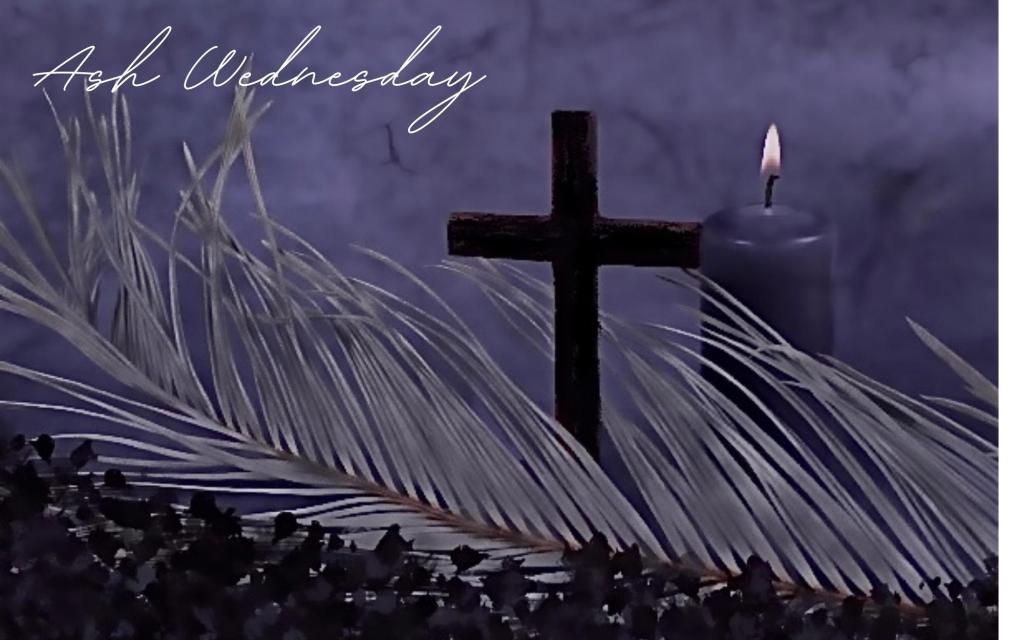
I found this image and, once I played with it a bit on my digital art program, I liked it. Most other Ash Wednesday images are gray and somber. I settled on this one because it has abstract ashes at the bottom and the palm that is burned to create them. It has a cross to remind me what Lent is ultimately about. It has some color, and there is light.
Digital art by Kathy Manis Findley
I didn’t get ashes today, but I got what is in this image! ashes, palm, a cross, color and light. I’m convincing myself that it’s okay that I didn’t get ashes.
Sometimes I wonder what I should do with Ash Wednesday? A better question might be, What does Ash Wednesday do with me? Must this day remind me that I am merely dust and will return to dust? At my age this is not a comforting thought.
And yet, I have to admit that standing before a minister to receive a smudge of ashes on my forehead is always like standing on holy ground, like standing in the presence of a transfigured Jesus who just last week showed us what transfiguration looks like. With a smudged cross made of ashes on my face, I walk on with just the tiniest hope that I will be transfigured, too, during the next forty days. Still, I got no ashes today.
What do I do with this day that invites me into the season of Lent by giving me ashes? How do I walk this forty day journey that is always marked by repentance, return, fasting, prayer, giving up something, and lamenting over what is, what has been, and what is to come? I am never quite sure that I want to travel Lent’s forty day journey.
So what will I do with this Lent? Some of all of it, I think — fasting, praying, hoping, healing, lamenting, giving up a thing, repenting and returning to God with all my heart.
Even now,” declares the Lord, “return to me with all your heart, with fasting and weeping and mourning.”
Rend your heart and not your garments.
Return to the Lord your God, for he is gracious and compassionate, slow to anger and abounding in love, and he relents from sending calamity.
Joel 2:12-13 NIV
That’s my spiritual state on this Ash Wednesday, with a need for “fasting and weeping and mourning.” Lent has always been about penitence for me, but penitence without shame or guilt. Instead of shame or guilt when I return to God with all my heart, I will hear this:
I will arise and go to Jesus; He will embrace me in his arms, In the arms of my dear savior, Oh, there are ten thousand charms.
Shame and guilt can never create newness and transformation for anyone. Sincere metanoia (sincere repentance) will create transformation.
If you know me at all, you know that hymns always offer me ”the whole story” — all the emotions that grab my heart, all the theology that matters, all the melody that lifts my soul. This hymn, one of my heart-hymns, says it all for me. And in this holy season, all that the hymn affirms will be my Lent. Please take a few moments to hear the hymn in the video below as you take time for reflection.
Come, ye sinners, poor and needy,
Weak and wounded, sick and sore
Jesus ready stands to save you,
Full of pity, love and pow'r.

I will arise and go to Jesus,
He will embrace me in His arms
In the arms of my dear Savior,
Oh, there are ten thousand charms.

Come, ye thirsty, come and welcome,
God's free bounty glorify,
True belief and true repentance,
Every grace that brings you nigh.

Come, ye weary, heavy-laden,
Lost and ruined by the fall
If you tarry till you're better,
You will never come at all.

Let not conscience make you linger,
Nor of fitness fondly dream
All the fitness He requireth
Is to feel your need of Him.

I will arise and go to Jesus,
He will embrace me in His arms
In the arms of my dear Savior,
Oh, there are ten thousand charms.
We could have a long conversation about the potter’s messy hands, about the mud under his nails, about the strength of hands that look as if they are using every muscle to shape the pot. We would probably talk about the dynamic force of his hands that hold the pot lightly enough to form it, but controlled enough to avoid marring or damaging it.
In our conversation, we would probably remember the prophet Jeremiah’s encounter with a potter and the ways we have used that passage of scripture over the years. I don’t know about you, but my teachers and preachers used this text to teach me about the ways God can mold me into a worthy vessel that can hold enough faith and hope to get me through the hard times. Plus, being remolded would mean I was being ”obedient to God!”
We certainly do not want to use scripture out of its historical context, but another use of a scripture passage is to consider its imagery, its symbolism and its relevance to us in a given life situation. The following scripture, as translated in The Voice, contains a powerful section after verse 1 that tells us how God’s message comes through a prophetic drama played out at a potter’s wheel, and that there, the prophet sees an ordinary event from which he receives an extraordinary message.
1 The word of the Eternal came to Jeremiah
Now God’s message comes through another prophetic drama played out in a potter’s shop somewhere in the city. The prophet sees an ordinary event but receives an extraordinary message.
Eternal One:2 Go down to the potter’s shop in the city, and wait for My word. 3 So I went down to the potter’s shop and found him making something on his wheel.
4 And as I watched, the clay vessel in his hands became flawed and unusable. So the potter started again with the same clay. He crushed and squeezed and shaped it into another vessel that was to his liking. — Jeremiah 18:1-4 (The VOICE)
I cannot help but remember the many times throughout my life that this passage was interpreted as a potter (God) forming me. The message inevitably moved to the part where ”God is not pleased with me and is trying to remold me into a more worthy vessel for God’s glory.” Not the best biblical message we could glean from Jeremiah’s drama! Not only that, but I don’t much like the idea of the potter ”crushing, squeezing and shaping” me.
The best truth is that God does remold us in so many ways, gently and intentionally, so that we are always in the process of change and growth. In our case, the God who loves us just as we are, also holds us, as if in a potter’s hands. Though this passage does speak of serious remolding, it never indicates that the potter throws the damaged pot into the trash pile.
It is true that we are damaged again and again in this life, but God loves who we are, and like the potter, God gently remolds us along the way, creating of us the best we can be. God never throws us away, no matter how severe our damage — damage on the outside, visible to all; and on the inside, where the deepest damage rests, in the soul and spirit. Visible to no one, excruciatingly visible to us.
We can choose to be like clay in the potter’s hands, allowing a gentle God to remold us, repair our damaged life, and empower us to be new, remade. This sounds like hope to me, and grace.
This is Jeremian’s story, his vision. He sees it as an ordinary event that graces us with an extraordinary message. Jeremiah’s story is ours to ponder and to ask ourselves if there is any damage to us or in us. If you sometimes view yourself as damaged, seek help from someone you trust — a friend or family member, a therapist, a spiritual director, your minister.
And remember, the potter is always near for gentle remolding.
My Church ~ First Baptist Church of Christ, Macon, Georgia
Such a beautiful place to worship, isn’t it? To me, this image of my church is both beautiful and mournful. This image of my church sanctuary is a picture of what my church experience feels like these days. The image of an empty church brings several words to mind—empty, quiet, lonely, dark, worshipful, silent, desolate, disconsolate.
I cannot sit in these pews right now. My doctors say it is to risky for me because of my suppressed immune system following a kidney transplant. The social risks that others are able to take are not risks that I can take. Worship ideally happens in community and I am separated from my community. Isolated.
I feel sorrow about it. I miss my friends, my Sunday School class. I miss the sound of the organ and the voices of the choir. I feel very alone and isolated, a prisoner of Covid19. Even though I am an avid Zoomer watching our worship and even teaching my Sunday School class, it is not enough for my soul.
I admit that I dwell too much on the aloneness of it all, the feeling that I walk my journey without spiritual companions. I feel a deep need to worship in a sanctuary, a soul-need for me. I sometimes feel that I am simply watching the livestream of worship, not worshipping at all. I watch many churches and sermons just to make up for it.
I even fear that when it is safe enough to be back in public spaces, I will have decided that it’s just easier to stay home. Most of all, I find myself forgetting the highest and holiest remedy for aloneness—God’s promises to be with us always—recorded in so many passages of Scripture.
Fear not, for I am with you;
    be not dismayed, for I am your God;
I will strengthen you, I will help you,
    I will uphold you with my righteous right hand.
— Isaiah 41:10 ESV
Thanks be to God. If you have a few minutes, spend them quietly as you watch this comforting video.
“You Do Not Walk Alone” traditional Irish blessing Original music by Elaine Hagenberg
Superior National Forest emcompasses much of the Northeastern corner of Minnesota and is bordered by Lake Superior to the east, Canada to the North. Hiking trail to Eagle Mountain
Hope is like a road in the country; there was never a road, but when many people walk on it, the road comes into existence.
Author, poet, critic and Chinese literary giant Lu Xun. (Lu was a pen name; his real name was Zhou Shuren.)
I have stumbled upon places where there was no road and no way to move forward. I am mulling over the poet’s affirmation that ”Hope is like a road in the country.” I know a little about hope, a little less about country roads, and even less about walking trails in a forest. I also know many, many people who hang on to hope through every narrow, rocky path they encounter. These hope-filled ones follow the path ahead of them and persist on their journey, in spite of the reality that the path is steep, arduous and sometimes not beaten down enough to walk on.
That’s the important thing about paths—that travelers might walk on one for years when it is barely passable, beating it down for smoother walking. It’s called a beaten path. I imagine you have walked some beaten paths.
Even I have walked a few, like when I was just a wee girl. The path for me was a short one, but nevertheless ominous. It went from my back yard to Miss Martha’s back yard next door. But wait! You must know that the path also led us to Miss Martha’s plum tree, filled with delicIous plums just waiting for my brothers and me to devour. We felt hope every time we got to the tree and began to shake it so that the plums would come tumbling to the ground. We hoped—until we heard Miss Martha’s shrill, frightening voice yelling, ”Get away from my plum tree!”
Because we so feared Miss Martha, hearing her loud voice chastening us made us run immediately home and into the house. We also knew she would tell our Yiayiá (grandmother), and we feared that too. Like Miss Martha, Yiayia could give rise in us the most daunting fear of all. We hoped for plums that day, but got fear instead.
Fear can be the enemy of hope, which brings us back to our path. The poet says to us that hope is like a country road. While reading the poet’s words, I imagine reaching a place where is no road and no way forward—a situation of facing a path without much hope. But there is hope after all! Because many people had walked on the path, it was eventually beaten down. Now the people could travel on with hope. There was an open way, a possible path. There was hope.
What’s the message in this parable-like tale? Just this. All of us walk a journey that leads us to pleasant places as well as to sorrowful and terrible places. No one can make the pilgrimage we call life without encountering rough and rocky roads and impassable paths along the way. They are the places that hold the power to steal our hope and leave us paralyzed.
I know how it feels to lose hope. I have known abuse, violence, illness, betrayal, loss, grief. And I have known it first hand, these things that took my hope. I can also bear witness that my hope has returned many times, just in time, but not before I had to struggle with the real, deep despair of absent hope. When I stood at the entrance of the way where there was no way, at the beginning of the path that was impassable and impossible, I often thought of this testimony of hope and faith found in 2 Corinthians 4:8-9; 16-17.
We are hard-pressed on every side, yet not crushed; we are perplexed, but not in despair; persecuted, but not forsaken; cast down, but not destroyed . . .
Therefore we do not lose heart. Even though we are outwardly perishing, the inner place in us is being renewed day by day.
For our light affliction, which is but for a moment, is working for us a far more exceeding and eternal weight of glory.
Yes, you and I may feel cast down and almost crushed by the weight of the world. We may feel the strongest despair. But we must know that, even on this day of threats and pandemics, some of our paths will be smooth and passable. We will feel hope when we least expect it. Hope will surprise us and flood us with grace, directly at the juncture of our despair. A beaten path might appear before us today—rightnow—and invite us to travel from fear to hope.
Sunset Over Beaver Lake Sunset ~ Northwest Arkansas ~ Photography by Gregory Ballos
One thing pandemic isolation has done is to inspire me by images of places I cannot see in person. Now that I live in Georgia, it is difficult to travel back home to Arkansas. So if I am to once again see and enjoy the beautiful landscapes in Arkansas, I must see them in images like this stunning photograph by Gregory Ballos.
There are images to see everywhere one looks—in nature, in books, in National Geographic photographs and videos, in blogs like this one, in one’s imagination, everywhere we are willing to look. The Creator paints swashes of vibrant color across nature’s enormous canvas, and it is there for those who have eyes to see. The sky, the forest, the mountains and the valleys, the oceans, the streams and rivers, the lakes and the waterfalls—in greens and blues and grays streaked with every hue imaginable—all of it is there if we take a moment to look.
To all my pandemic brothers and sisters all over the world, I pray that you are in the places you want to be seeing the things you want to see. Yet I am very aware that many of you, like me, are not where you truly want to be. I long for my home, for Arkansas, where I can see my son and my grandchildren and where I can see the natural beauty I took for granted in the thirty-five years I lived there. The pandemic holds me fast, right where I am at this moment, and I cannot see my heart’s desire.
There is another kind of seeing. It is the seeing that involves both the eyes and the soul. You and I have some control over what I call soul-seeing. I have to admit that my problem with soul-seeing is that I rarely truly see when I look. It doesn’t matter really whether I am looking at nature or at a photographic image, I seldom look long enough to really see. I admit that I am the problem, because I feel compelled to be busy, all the time, with projects and writing and various endeavors that have the potential to consume me. Truthfully, I allow those endeavors to consume me. I admit it. I am far too busy to intentionally see. Soul-seeing is being able to see beauty with your eyes and your soul.
You may have seen the lovely books of the late Beatrix Potter, who was was an English writer, illustrator, natural scientist and conservationist. From her life’s work, one can assume that she is a keen observer. I imagine that she was a person who was able to truly see. She wrote, in fact, that she was grateful to have what she called ”the seeing eye.”
Thank God I have the seeing eye, that is to say, as I lie in bed I can walk step by step on the fells and rough land seeing every stone and flower and patch of bog and cotton pass where my old legs will never take me again. — Beatrix Potter
For Potter, seeing seemed natural in her ability to consider nature and conservation as well as prose and art. Seeing is natural. We see without thinking. Truth is, seeing seems easy, doesn’t it? Everyone with the gift of sight knows how to do it, and those who are unable to see physically figure out how to ”see” in myriads of ways.
I wonder about it, though. I wonder if I am too preoccupied to really see what’s around me. Is my busy-work more important to me than mindfulness? If seeing is so easy, how do we miss all of the magnificent beauty that surrounds us?
It’s a ponderable question
Why not take a few quiet, meditative moments to answer it? The video below is two minutes and eight seconds long. Can you spare that much time? If you can, I invite you to relax in those two minutes and eight seconds. I invite you to mindfulness, to be fully present in those few moments. I hope you will see, with your soul’s sight, nature’s beauty in this video.
See! I mean it!
Video editing by M. Anthony Black ~ Song: “The Tides of Time” ~ Artist: Joachim Horsley



































 God of the Sparrow 🌱 By Kathy Manis Findley