“ALL SHALL BE WELL” is a video blog that will help us enhance our personal spirituality and lead us into sacred pauses that will nourish our souls.
Welcome to “All Shall Be Well,” where we will explore together our spiritual center, create a moment of sacred pause and join together in contemplation and silence. In this episode, I want to focus our thoughts on the spirituality of Lent. On Ash Wednesday, the first day of Lent. God speaks to us through the Prophet Joel in chapter 2, saying,
“Even now,” declares the Lord, “return to me with all your heart, with fasting and weeping and mourning.”
“Rend your heart and not your garments.”
We begin Lent with Ash Wednesday, the day that we receive a cross on our foreheads — a cross of ashes blended with just a drop of sanctified oil. I do not wipe off the cross, but let it remain for the entire day.
In a way, it’s comforting to know that something holy and tangible interrupted my ordinary day, a cross of ashes to remind me of sacred things I already know — that Lent is a time of reflection, penitence, repentance, prayer, fasting, giving up things, returning to God. And on top of all of those things I must ponder for forty days, things that weigh heavily on my heart, a minister says this to me as she (he) forms the ashen cross on my forehead:
Remember you are dust, and to dust you will return.
God’s words to Adam in Genesis 3:19
There are so many life events to remind us that we are but dust. But is that really what a Lenten journey is about? Is it really meant to hold our sins over us and urge us to do penance? Is Lent just a time of repentance, remembering our sin and our frailty?
Maybe Lent is also about God’s extravagant mercy, God’s grace that is greater than all our sins, and the ultimate sacrifice of Jesus that made us all beloved children of God.
Imagine for a moment that our cross of ashes is really not really made of ashes at all. If you look at it closely — as you imagine God’s lavish grace — you might not see ashes, but instead, stardust!
Please join me via video for a few moments of Lenten reflection . . .
I didn’t get ashes today. I don’t really understand why, considering that I have always been very religious and sometimes even spiritual. I think I may be in denial and don’t want to hear that I am dust (as I inch closer to dust each day that passes). I confess, I did feel emotional about not getting ashes today. I couldn’t name my emotions for some reason, so I began looking at images that might help me name them.
I found this image and, once I played with it a bit on my digital art program, I liked it. Most other Ash Wednesday images are gray and somber. I settled on this one because it has abstract ashes at the bottom and the palm that is burned to create them. It has a cross to remind me what Lent is ultimately about. It has some color, and there is light.
Digital art by Kathy Manis Findley
I didn’t get ashes today, but I got what is in this image! ashes, palm, a cross, color and light. I’m convincing myself that it’s okay that I didn’t get ashes.
Sometimes I wonder what I should do with Ash Wednesday? A better question might be, What does Ash Wednesday do with me? Must this day remind me that I am merely dust and will return to dust? At my age this is not a comforting thought.
And yet, I have to admit that standing before a minister to receive a smudge of ashes on my forehead is always like standing on holy ground, like standing in the presence of a transfigured Jesus who just last week showed us what transfiguration looks like. With a smudged cross made of ashes on my face, I walk on with just the tiniest hope that I will be transfigured, too, during the next forty days. Still, I got no ashes today.
What do I do with this day that invites me into the season of Lent by giving me ashes? How do I walk this forty day journey that is always marked by repentance, return, fasting, prayer, giving up something, and lamenting over what is, what has been, and what is to come? I am never quite sure that I want to travel Lent’s forty day journey.
So what will I do with this Lent? Some of all of it, I think — fasting, praying, hoping, healing, lamenting, giving up a thing, repenting and returning to God with all my heart.
Even now,” declares the Lord, “return to me with all your heart, with fasting and weeping and mourning.”
Rend your heart and not your garments.
Return to the Lord your God, for he is gracious and compassionate, slow to anger and abounding in love, and he relents from sending calamity.
Joel 2:12-13 NIV
That’s my spiritual state on this Ash Wednesday, with a need for “fasting and weeping and mourning.” Lent has always been about penitence for me, but penitence without shame or guilt. Instead of shame or guilt when I return to God with all my heart, I will hear this:
I will arise and go to Jesus; He will embrace me in his arms, In the arms of my dear savior, Oh, there are ten thousand charms.
Shame and guilt can never create newness and transformation for anyone. Sincere metanoia (sincere repentance) will create transformation.
If you know me at all, you know that hymns always offer me ”the whole story” — all the emotions that grab my heart, all the theology that matters, all the melody that lifts my soul. This hymn, one of my heart-hymns, says it all for me. And in this holy season, all that the hymn affirms will be my Lent. Please take a few moments to hear the hymn in the video below as you take time for reflection.
Come, ye sinners, poor and needy,
Weak and wounded, sick and sore
Jesus ready stands to save you,
Full of pity, love and pow'r.

I will arise and go to Jesus,
He will embrace me in His arms
In the arms of my dear Savior,
Oh, there are ten thousand charms.

Come, ye thirsty, come and welcome,
God's free bounty glorify,
True belief and true repentance,
Every grace that brings you nigh.

Come, ye weary, heavy-laden,
Lost and ruined by the fall
If you tarry till you're better,
You will never come at all.

Let not conscience make you linger,
Nor of fitness fondly dream
All the fitness He requireth
Is to feel your need of Him.

I will arise and go to Jesus,
He will embrace me in His arms
In the arms of my dear Savior,
Oh, there are ten thousand charms.
Bright Monday Out of Darkness ~ Digital image by Kathy Manis Findley
Bright Monday is here! You might be wondering if “Bright Monday” is even a thing. It is, in fact. Just keep reading.
I suppose when you and I look back on all that we experienced throughout Lent — what thoughts we had, what emotions we felt, what we wrote or said, what we saw and heard, what was painful and what was dark — we might see our experience through many facets. We have had to look at our multilayered experiences alone for the most part, because many of us are still in full or partial Covid isolation. You know that isolation, the one that has made Lent 2021 even more somber, quiet and reflective than Lents past have been. Doesn’t Covid seem to do that — magnify the parts of our lives that are disheartening and make them worse? Being alone has been one of the hardships of this Lenten journey, at least for me. I was forced to look at my Lenten experiences alone, for the most part, and I discovered that making some journeys alone can be emotionally and spiritually detrimental to the soul.
Someday we would do well to look our experience of this past Lent together, with our faith community. Someday we shoukd gather up all of our memories of Lent 2021, look through them together and realize that some of them held pain and some of them held joy — all at once — pain and joy intermingled. Still, we have journeyed through the darker days of this Lent — each of us walking alone and separated at times, but walking together, side by side at other times. Together or alone, we have arrived today to Easter Monday, Bright Monday. We are here, “out of the darkness and into the light!” We are here in the light, together!
Practically speaking, what does happen on Easter Monday? You may be asking the same thing, and you may even say, “We’ve walked some hard roads through Lent, we have endured the darkness of Holy Week, we have celebrated Easter. But, come Monday, its all over!” You might be right. After looking at a few websites and a few religious websites, I learned that nothing happens today! Nothing happens on Easter Monday! But how can that be true? After the drama of Good Friday, the depression of Black Saturday and the pure joy of Resurrection Sunday, surely something remarkable must happen today.
Did you know that all over the world Christians celebrate this day. If we look at other religious traditions, this day is called “Bright Monday” and is it the first day of “Bright Week.” For Christians, Bright Monday is the first day of our renewed, restored and resurrected lives. It is also the first day of Jesus’s 40 days on earth before he ascended to heaven — the time in Christian history when Jesus appeared to believers, healed the sick, raised the dead, spread the word of God and set the believers on the path of becoming God’s Body and building God’s Church. How wonderful is that!
Looking back to the story of Jesus we have just told and remembered, I wonder what the disciples and other followers who loved Jesus would tell us about what happened on Easter Monday. Just imagine you are Mary or Peter or any of the other disciples. How would you feel? What would you be saying to others? Would you shake off the events of the last few days and just go back to work thinking,“Wow, that was some weekend!”
You would probably be stunned, confused, overjoyed, disoriented and asking yourself, “Did that really happen? Is this a dream? Is Jesus really alive?”
It was real on that first Bright Monday! All of it was real! It is still real on this Bright Monday! It is unbelievable Good News! Because of the empty tomb, because of Christ’s act of love in his darkest hour, Bright Monday can only be called a bright, sunlit and wonderfully sunshiny new day! We can see clearly now! Everything has changed!
Let us offer praise to the God of all things bright! Let us see ourselves standing in the light and warmth of the sun! Let us sing in the sunshine! Let us continue our Resurrection celebration into this Bright Week, because what was dark has now become bright!
Every good and perfect gift is from above. It comes down to us from the God of lights, with whom there is no variableness, neither shadow of turning. James 1:17 (paraphrased)
You, my children, are a chosen race, a royal priesthood, a holy nation, God’s own people, and you will proclaim the mighty acts of the one who called you out of darkness and into God’s marvelous light. I Peter 2:9 (paraphrased)
Thanks be to God that you and I were called by God to come out of the darkness and to stand in God’s marvelous light!
Happy Bright Monday to you!
Song: “I Can See Clearly Now” Artist: Johnny Nash
I can see clearly now, the rain is gone, I can see all obstacles in my way Gone are the dark clouds that had me blind It’s gonna be a bright (bright), bright (bright) Sun-Shiny day.
I think I can make it now, the pain is gone All of the bad feelings have disappeared Here is the rainbow I’ve been praying for It’s gonna be a bright (bright), bright (bright) Sun-Shiny day.
Look all around, there’s nothin but blue skies Look straight ahead, nothin but blue skies
For me, there is never enough mourning and grieving for Good Friday — never enough remembering, never enough weeping. There is never enough time to reflect on Jesus in the tomb after being betrayed, arrested, tortured, mocked, crowned with a braid of thorns that pierced his flesh and nailed to a rough-hewn cross. What could possibly be enough for me on this day that we spend remembering a tragic murder of an innocent Christ? How do I embrace the comforting presence of ENOUGH?
As a part of my contemplation today, I read an essay on observing the days of Lent written by Pádraig Ó Tuama. These words begin the essay entitled, A Is for Alleluia:
We make space to contemplate what it is that we will celebrate in 40 days’ time. We make space to recognise our faults. We pray a little more. We allow our emptier stomachs to remind us of the pithiness of our observations in comparison with real hunger. We give more money. We confess. We reconcile. We listen to emptiness for a while. We do not say Alleluia.
He’s right, of course, in writing that we do not utter a single Alleluia during Lent’s forty days. Still, I thought, not saying Alleluia is just not enough. What else must we do or not do? So many words came to mind, interestingly, the words I remembered were songs.
What language shall I borrow to thank thee dearest friend? So I’ll cling to the old, rugged cross… Just to think of the cross moves me now; It should have been me, it should have been me, instead I am free, I am free… Were you there when they crucified my Lord?
Yes, I was there when Jesus was crucified. I was there looking up at his anguished face, every year. Every year on Good Friday, I was there, looking for a glimmer of hope in the darkness. But it seemed not enough, not at all enough. I heard from a friend last night who told me something about her life. When she wrote all the words and all of her thoughts, it all boiled down to this: “I am not enough.” And I thought, in response, “I am not enough either! Never enough!”
What a common belief for all of us. In whatever circumstances, relationships, friendships and any other area of our lives, why do we believe that we are not enough? I won’t go into the reasons here, for they are legion But what I must say is that, if Christ endured the terrible days we remember on this Good Friday for any reason at all, it was so that each of us would know beyond any doubt: “I am enough!
Again, the words of Pádraig Ó Tuama teach me and comfort me, when he writes about the meaning he finds in the darkness of Good Friday.
We attend the Stations of the Cross on Good Friday, reminding ourselves of the emptying of God by God. We remember the descent of our tortured and abandoned brother into Hell. We allow emptiness to create hope.
How poignant are his words, “emptying of God by God” and “the descent of our tortured and abandoned brother into Hell.” The act of God was a selfless, redeeming act. The willingness to die by our “tortured and abandoned brother” was a selfless, redeeming and loving act. For all that Christ endured was for you and for me, so that we might accept our sacred worth as daughters and sons, beloved children who always believe they are enough.
Christ’s sacrifice — made so that we would believe we are enough. The walk to Golgotha bearing the weight of the heavy cross, bearing the weight of the world — he carried the weight so that we would believe we are enough. His cries from the cross, “It is finished. My God, why have you forsaken me?” — he spoke so that we would believe we are enough.
When I think of the cross, I am moved, moved in my deepest place. I am deeply grateful for the sacrifice Jesus made for me. I remember the words of a song we sang in the 70s from the youth musical, “Natural High” . . .
Just to think of the cross moves me now; the nails in his hands, his bleeding brow; to think of the cross moves me now; It should have been me, it should have been me! Instead I am free! I am free! I am free! — Kurt Kaiser and Ralph Carmichael —
Thanks be to God, that giving God’s Son was sending us a critical, loving and life-giving message: “You, my beloved children, are always enough!”
I want to leave you with the song, “When I Think of the Cross,” recalling the words as well as my memory allows.
Long, long ago in a faraway place; Rough, rugged timbers were raised to the sky. There stood a man suspended in space, And though he was blameless, they left him to die.
Just to think of the cross moves me now; The nails in his hands, his bleeding brow; To think of the cross moves me now; It should have been me. It should have been me; Instead I am free, I am free. I am free!
He put an end to my guilt and despair; Turned bitter hating to sweet peace and love. Even the men who put him up there, Were offered forgiveness and life from above.
Just to think of the cross moves me now; It should have been me. It should have been me. Instead I am free, I am free, I am free! I am free!
JEREMIAH 31:31-34 (NIV) 31 “The days are coming,” declares the Lord, “when I will make a new covenant with the people of Israel and with the people of Judah.
32 It will not be like the covenant I made with their ancestors when I took them by the hand to lead them out of Egypt, because they broke my covenant, though I was a husband to them,” declares the Lord.
33 “This is the covenant I will make with the people of Israel after that time,” declares the Lord. “I will put my law in their minds and write it on their hearts. I will be their God, and they will be my people.
34 No longer will they teach their neighbor, or say to one another, ‘Know the Lord,’ because they will all know me, from the least of them to the greatest,” declares the Lord. “For I will forgive their wickedness and will remember their sins no more.”
PSALM 51:1-12 (NIV) 1 Have mercy on me, O God, according to your unfailing love; according to your great compassion blot out my transgressions. 2 Wash away all my iniquity and cleanse me from my sin.
3 For I know my transgressions, and my sin is always before me. 4 Against you, you only, have I sinned and done what is evil in your sight; so you are right in your verdict and justified when you judge. 5 Surely I was sinful at birth, sinful from the time my mother conceived me. 6 Yet you desired faithfulness even in the womb; you taught me wisdom in that secret place.
7 Cleanse me with hyssop, and I will be clean; wash me, and I will be whiter than snow. 8 Let me hear joy and gladness; let the bones you have crushed rejoice. 9 Hide your face from my sins and blot out all my iniquity.
10 Create in me a pure heart, O God, and renew a steadfast spirit within me. 11 Do not cast me from your presence or take your Holy Spirit from me. 12 Restore to me the joy of your salvation and grant me a willing spirit, to sustain me.
We are the faithful daughters and sons of God who wait. We are God’s people who wait for the promised days that are coming. For in those days the Prophet Jeremiah tells us that God will invite us into a covenant relationship. Like the people of Israel, we believe we are in covenant with God already. But this Lenten scripture speaks of a new covenant, a deeper covenant, a covenant not like the previous one. This covenant will be different, a new covenant.
As for me, well I desperately need a new covenant, because for this covenant, God will write God’s law upon my heart, where I need it most, when I need it most. For me, the season of need is right now — in the middle of a pandemic of isolation, in the midst of isolation due to acute kidney rejection, in the isolation caused by immunosuppressant medications, in the throes of worry and confusion. For me, these days promised need to come now — these days that affirm that we are God’s people and that, indeed, God is our God. God will remember our sin no more.
But we remember do our sin. Indeed, our sin is ever before us. As our teachers and preachers and parents used to say, we sin by both commission and omission. I know immediately, in my soul, when I have willfully committed a sin. That kind of sin is clear to me, and I quickly cry out to God, “Create in me a clean heart and renew a right spirit within me.” But sins of omission get me every time. What have I left undone that endangers my spirit? What have I left undone that harms another person? What have I done to sin against God?
These twelve verses of Psalm 51 are arguably the most heartfelt and poignant words of prayer and confession in the whole of scripture. The Psalmist’s words fully reveal his heart, open his spirit to God and speak fully and clearly of sin and of his deep longing to put his sin away. The Psalmist does not want his sin to be ever before him. Instead, he beseeches God . . .
Cleanse me with hyssop, and I will be clean; wash me, and I will be whiter than snow.
I have no words to illuminate today’s scripture, no words of reflection that would enhance the message of this beautiful Psalm. I have no thoughts to add to its essence. But from the depths of my disconsolate soul, I pray, “Create in me a clean heart, O God, and renew a right spirit within me.” Amen.
Create in Me a Clean Heart, O God, arr. Victor Johnson Sanctuary Choir, First United Methodist, Downtown, Houston Texas Dr. Terry Morris, Director of Traditional Music John Gearhart, Organist Jonathon Saint-Thomas, Pianist
I find I am very still during this Lenten season, as if my heart wants to wait and my soul wants to become fully open to something holier than my normal days. Like many people, I am conditioned to productivity. Sometimes I believe I’m fixated on work — mundane work, hard work, busywork, creative work. Any kind of work that produces something tangible.
All the while, I wonder why I am not more devoted to soul work, for that is the kind of work that transforms me and creates a tender space in me. Soul work is much harder than “regular” work, because it requires a Lenten kind of spirituality. For me, soul work calls me to find silent spaces, to breathe slowly and deeply, to reflect, to contemplate, to pray, to hear music, to listen to the sighs of my soul and to find within myself that gentle, tender place that longs for the brush of Spirit wings.
Soul work brings me to holy places and sacred moments. During Lent, I usually hear the call for penitence and forgiveness. I hear God’s voice calling out to me, “ . . .return to me with all your heart.” (Joel 2:12) Over many Lenten seasons, I have heard, again and again, a similar call.
You will seek me and find me when you search for me with all your heart. Lamentations 3:22-23
It sounds hard — these calls to seek, search, find, return — and I’m not too sure I can do “hard” right now. Standing here, in the center of this Lent, I just want to say, “Not this time, God. I’m tired.” Instead of working on returning to God, this Lent I am working through serious health concerns that include being infused with massive steroid medications meant to further weaken my immune system. It seems that my body’s autoimmune response is trying to reject the kidney I received on November 12, 2019.
My brother is still recovering from an extremely dangerous case of Covid-19 that was literally life-threatening. Like so many others, I am continuing to struggle through the pandemic and all the losses it has brought. The truth is that all of it together has depleted my energy.
At this point, as I think of returning to God with all my heart, I respond with, “I can’t. I’m too exhausted to find the way back, God. The search for you is just too complicated.” Then all of a sudden in the long, dark hours before dawn on my third night without sleep, I remember that “The steadfast love of the Lord never ceases; his mercies never come to an end; they are new every morning . . . ” (Lamentations 3:22-23)
Sometimes, any of us can become deep-down weary. Life can be hard. Circumstances might be changing around us, or we might find ourselves facing debilitating challenges we never saw coming. Perhaps we’re walking through a difficult illness or a dark season, and no matter how much we’ve prayed, the difficulty seems to linger on for far too long. Like in these days. Right now in fact, God reminds us of the tender mercy that still brings peace to our hearts in seasons like this one. Mercies that never end, new every morning — a message written for God’s people when times were very difficult. Like our times, now!
God’s tender mercies really do hold us close as we face long days and hard nights. So just maybe we would do well during this Lenten season to remember, not God’s call to us to return, but rather the tenderness of Jesus as he waits for our weary souls and calls us to come home.
Thanks be to God.
FOR YOUR MOMENTS OF LENTEN REFLECTION: Sit quietly and let your soul rest for a few moments. Breathe slowly and deeply, releasing from within you what you need to let go of. Breathe in the tenderness that heals your soul and breathe out your exhaustion.
Imagine that Jesus is watching for you, waiting for you. Imagine that you do not have to do anything, but that Jesus is tenderly calling out to you, “Come home, my beloved child. I’ve been waiting. If you have become too weary on this journey, just come home.”
For so many years, I listened and sang this beautiful hymn without really understanding much about its message: “Ye who are weary, come home.” I think I get it now.
“Softly and Tenderly” Lyrics and Music: Will Lamartine Thompson (1847-1909) Arranged by Bill Pursell Conducted by Buryl Red Concertmaster: Sheldon Kurland Background vocal: Cynthia Clawson
“ALL SHALL BE WELL” is a video blog that will help us enhance our personal spirituality and lead us into sacred pauses that will nourish our souls.
Welcome to “All Shall Be Well,” where we will explore together our spiritual center, create a moment of sacred pause and join together in contemplation and silence. In this episode, I want to focus our thoughts on spirituality and Lent. Today, Ash Wednesday, is the first day of Lent. God speaks to us through the Prophet Joel in chapter 2, saying,
Even now,” declares the Lord, “return to me with all your heart, with fasting and weeping and mourning.”
13 Rend your heart and not your garments.
Finding sacred space as Ash Wednesday leads us into Lent
These days are terrifying and beautiful. After all, in times when we are harried with work responsibilities, we might just say, “I wish I was home in my pajamas!” So here we are at home — maybe in our pajamas — settled in, comfortable, rested, and maybe restless. At least some of us are settled in at home. Some of us are rested. Others, no doubt, find themselves restless. It makes me wonder if the opposite of rested is restless. So I turned to my trusted thesaurus to find out. It turns out that the antonyms — the opposites — of “restless” are peaceful, quiet, relaxed, settled, calm and unworried.
I don’t know about you, but I want to be an antonym of restless. That is, if a person can even be an antonym in the first place. I doubt it, but what I do not doubt is the existence of the kind of human resilience that can weather pandemics. Be assured that human resilience is not a “grin and bear it” state of being. Resilience is not merely being resigned to a situation or just sticking it out. Resilience is not passive acquiescence to challenging situations. Resilience resides in a soul that is able to persevere, to rest calmly through struggle, to abide in a state of mindfulness, to meditate on the goodness of God, to walk in the darkness until the light reappears.
I can certainly identify with the quote that has recently been going around: “And the people stayed home.” It’s striking that, in the midst of the fear and anxiety people feel in these pandemic days, many have recalled and published parts of this quote. Let us spend a few moments contemplating the quote in it’s entirety:
And The People Stayed Home
And the people stayed home. And read books, and listened, and rested, and exercised, and made art, and played games, and learned new ways of being, and were still. And listened more deeply. Some meditated, some prayed, some danced. Some met their shadows. And the people began to think differently.
And the people healed. And, in the absence of people living in ignorant, dangerous, mindless, and heartless ways, the earth began to heal.
And when the danger passed, and the people joined together again, they grieved their losses, and made new choices, and dreamed new images, and created new ways to live and heal the earth fully, as they had been healed.
– Kitty O’Meara
To be clear, I am not suffering this pandemic as one who has contracted the virus. I am suffering the forced isolation, the inability to reach for someone’s hand, to touch a friend, to embrace my grandchildren. And I have not been isolated only because of this pandemic; I have been isolated from others since my kidney transplant on November 12. That’s a very long time to be separated from my community. Through that time, a friend or two visited me, but we could not touch one another or be in close proximity.
And now the coronavirus has isolated virtually everyone, and I suddenly realize that we’re all in this together. It makes me wonder what everyone is doing at home. And it makes me hope that at least a few of us are doing as Kitty O’Meara writes, “Some meditated, some prayed, some danced. Some met their shadows.“
On the idea of meeting our shadows . . . I consider Lent to be a time of confession, a time of looking into my heart of hearts, my soul of souls, confessing my sins to God and receiving God’s mercy and pardon. I emerge from my confession with my soul cleansed. Only then am I ready. I am ready to steel my heart and set my face toward the journey with Christ to the cross. and then prepare my heart for glorious resurrection.
My confession today is that I have cursed my isolation rather than giving it to God and allowing myself to enter into a place of rest and re-creation, a sacred space that would heal the anxieties of my soul. I confess that I did not dance or pray. I did not rest or make art. But the pandemic changed my soul’s response to my isolation. I found that I was no longer in post transplant isolation, I was now in pandemic isolation and it felt very different to me. It felt dangerous and potentially fatal. It felt far-reaching, pervasive and rampant. It felt lethal, at least potentially lethal.
In the face of the pandemic’s imminent danger, my soul stopped its complaining and began its healing, my healing. It was the healing I needed all along, but now an ominous virus flipped a switch inside me. I did art again for the first time since the transplant. I sang, I prayed, I meditated. And I met my shadow and re-discovered the hidden place where fear reigns within me. That was not a bad thing. Rather, it was a good thing that said to me, “Do not give power to your hidden fear. Let your hidden resilience have the power and let it rise up within you. You will be healed!”
I believed those words — literally, as I hoped for physical healing after my transplant; and completely, body and soul, as I accepted the spiritual and emotional healing my soul craved. I want to leave you with a poem written on March 11, 2020 by Lynn Ungar.
What if you thought of it
as the Jews consider the Sabbath —
the most sacred of times?
Cease from travel.
Cease from buying and selling.
Give up, just for now,
on trying to make the world
different than it is.
Sing. Pray. Touch only those
to whom you commit your life.
Center down.
And when your body has become still,
reach out with your heart.
Know that we are connected
in ways that are terrifying and beautiful.
(You could hardly deny it now.)
Know that our lives
are in one another’s hands.
(Surely, that has come clear.)
Do not reach out your hands.
Reach out your heart.
Reach out your words.
Reach out all the tendrils
of compassion that move, invisibly,
where we cannot touch.
Promise this world your love —
for better or for worse,
in sickness and in health,
so long as we all shall live.
Lynn Ungar is a poet, and wrote this poem on March 11, 2020, in response to the Covid-19 pandemic.
WAR noun, often attributive (1)a state of usually open and declared armed hostile conflict between states or nations
(2)a period of such armed conflict
(3)a state of hostility, conflict, or antagonism
(4)a struggle or competition between opposing forces for a particular end
In a time of turmoil across the earth, I am reminded of the many ways we long for peace and the many times we fail to achieve it. As I hear reports and human stories of the warring among peoples of many nations, I am also very aware of the wars that often rage within. War and peace are complex ideologies that spurn people to action — either action to plunder and kill or action that insists upon peace and tranquillity. The British peace advocate John Bright (1811-1889) gave a speech at the Conference of the Peace Society in Edinburgh in the summer of 1853 to oppose the forthcoming war against Russia (the Crimean War 1854-56).
What is war?
What is war? I believe that half the people that talk about war have not the slightest idea of what it is. In a short sentence it may be summed up to be the combination and concentration of all the horrors, atrocities, crimes, and sufferings of which human nature on this globe is capable . . . injustice of any kind, be it bad laws, or be it a bloody, unjust, and unnecessary war, of necessity creates perils to every institution in the country. — John Bright (1811-1889)
Profound truth rests in Bright’s words, and it is a truth every person would do well to contemplate. At some point I recall seeing a provocative image on the poster for Stanley Kubrick’s film Full Metal Jacket. It was an image of the soldier’s helmet with a handwritten “born to kill” slogan . . . and a peace symbol, a provocative juxtaposition of reminding us that human beings have the capacity for both killing and peace.
Who can forget the words of the Prophet Isaiah?
And he shall judge among the nations, and shall rebuke many people: and they shall beat their swords into plowshares, and their spears into pruninghooks: nation shall not lift up sword against nation, neither shall they learn war any more. (Isaiah 2:4)
So why talk of war after Ash Wednesday and into Lent? Perhaps the subject of war occurred to me as I moved closer to this season of repentance and self-reflection. Perhaps I felt a need to consider the futility of war because of Ash Wednesday’s dictum, “Remember that you are dust, and to dust you shall return.”
One who came from dust, and who anticipates returning to dust, must certainly feel a longing for peace, peace in the world as well as peace of the soul and spirit. Neither examples of peace are easily achieved. The machinations of war between nations, and the eternal quest for finding inner peace, are two sides of the same coin. Perhaps it is those persons who have a dearth of inner peace who seriously contemplate making enemies and making war. War flourishes, at times, when the cause seems righteous, while at other times, the cause is greed, lust for power and human depravity. Either way, the losses of war are enormous beyond imagining.
I have been intrigued by the writing of Sebastian Junger in his book War (published in 2010). He echoes the famous words of Winston Churchill:
We sleep soundly in our beds because rough men stand ready in the night to visit violence on those who would do us harm.
Junger also offers interesting insights into war:
The cause doesn’t have to be righteous and battle doesn’t have to be winnable; but over and over again throughout history, men have chosen to die in battle with their friends rather than to flee on their own and survive.
The Army might screw you and your girlfriend might dump you and the enemy might kill you, but the shared commitment to safeguard one another’s lives is not negotiable and only deepens with time. The willingness to die for another person is a form of love that even religions fail to inspire, and the experience of it changes a person profoundly.
Three Christian denominations have positions on war.
Roman Catholic The fifth commandment forbids the intentional destruction of human life. Because of the evils and injustices that accompany all war, the Church insistently urges everyone to prayer and to action so that the divine Goodness may free us from the ancient bondage of war.
The Southern Baptist Convention (Adopted on June 14, 2000) Peace and War. It is the duty of Christians to seek peace with all men on principles of righteousness. In accordance with the spirit and teachings of Christ they should do all in their power to put an end to war.
The United Methodist Church (2000 United Methodist Book of Discipline)
We believe war is incompatible with the teachings and example of Christ. We therefore reject war as a usual instrument of national foreign policy and insist that the first moral duty of all nations is to resolve by peaceful means every dispute that arises between or among them; that human values must outweigh military claims as governments determine their priorities; that the militarization of society must be challenged and stopped; that the manufacture, sale, and deployment of armaments must be reduced and controlled; and that the production, possession, or use of nuclear weapons be condemned. Consequently, we endorse general and complete disarmament under strict and effective international control.
A map of Afghanistan with bullet holes at a school in the Kandahar Province. Photo by Bryan Denton for The New York Times
No doubt, this is probably more information on the deplorable subject of war than anyone needs to contemplate. And yet, war is not just “far off” in other countries where we can’t see it. “War” is all around us — in this divided nation, in the hate speech that is so prevalent, in the gun violence that takes lives, in violent acts within families, in racial division and the re-emergence of white nationalism. One can scarcely complete the list of the many ways war affects us, within us and around us.
We must remember that war is not only the catastrophic expectation of a nuclear bomb or chemical warfare, it is also a war that could raise its head in our communities, in our churches, even in our hearts, wreaking havoc on our souls. War is famine, homelessness, poverty, racism, family violence, child abuse, trafficking, homophobia and xenophobia. War is the destruction of humanity and all that we know to be right and just. The example of Jesus must be our guide and inspiration. No, Jesus did not explicitly warn against war, but he said so many things about peace.
The words of Jesus
Matthew 5: 38-48 (selected verses) You have heard that it was said, ‘An eye for an eye and a tooth for a tooth.’ But I say to you, Do not resist an evildoer. But if anyone strikes you on the right cheek, turn the other also . . .
“You have heard that it was said, ‘You shall love your neighbor and hate your enemy.’ But I say to you, Love your enemies and pray for those who persecute you, so that you may be children of your Father in heaven . . . For if you love only those who love you, what reward do you have? Do not even the tax collectors do the same? And if you greet only your brothers and sisters, what more are you doing than others? Do not even the Gentiles do the same? Be perfect, therefore, as your heavenly Father is perfect.
Mark 12:28-31 One of the teachers of the law came and heard them debating. Noticing that Jesus had given them a good answer, he asked him, “Of all the commandments, which is the most important?”
“The most important one,” answered Jesus, “is this: ‘Hear, O Israel: The Lord our God, the Lord is one. Love the Lord your God with all your heart and with all your soul and with all your mind and with all your strength. ‘The second is this: ‘Love your neighbor as yourself.’ There is no commandment greater than these.”
The early Christians took Jesus at his word. They closely identified their religion with peace; they strongly condemned war and bloodshed; they appropriated to themselves the Old Testament prophecy which foretold the transformation of the weapons of war into the implements of agriculture; they declared that it was their Christian commitment to return good for evil and to conquer evil with good.
Might we all do likewise!
What is critical for us is to fully understand that war among us or within us creates profound loss . . . always. The current political divisions are taking a toll on everyone. We no longer live in a time when political leaders held all the divisiveness. In these days, fractured politics have reached communities, churches and even families. When support for political candidates creates deep separations one from another, we have reached a dangerous and divisive environment. When we live in such a divisive environment, we risk losing relationships with those who “don’t vote like we do.” What a senseless, unfortunate and tragic loss that creates — breaches between friends, alienation among family members, rifts in communities of faith, deep schism in neighborhoods and communities.
Our spiritual intention must be a quest for peace, reconciliation, unity and respect. This is God’s intention for people of faith. This is God’s intention for the world, that nations, tribes, villages, cities — all the peoples of the world — shall not learn war anymore!
I have come to know Ash Wednesday as the time to draw nearer to my “soul’s insistent yearning.” That can be a frightening prospect, so I always approach Ash Wednesday with a bit of reticence, meeting the day with the self-awareness that I am trying to keep my distance from my “soul’s insistent yearning.” Being closer to one’s soul can well be a disconcerting proposition, but a necessary one. Ash Wednesday presents me with entry into the season of Lent.
I cherish Lent’s forty days, actually, always expecting change to happen in my soul and spirit. And yet, the prospect of repentance, renewal, transformation — and ultimately a personal resurrection — always disquiets me.
How will I spend Ash Wednesday?
How will I approach the day that will open the gate of Lent before me?
I have always thought of Lent as a spiritual journey we take alone, a solitary season of introspection and self-reflection during which we contemplate our own spiritual well-being and our relationship with God. For me, Lent has often been alone work.
So I make my Lenten journey into my alone places. I will know that God will abide with me, comforting me in my self-reflection, in my penitence and in my repentance. I will be mindful this Lent of my need to reach into my soul in search of places needing healing, constant and long-time wounds of the soul and spirit. I will search for the traces of my sinfulness, finding in my heart the will to seek sincere penitence, the sad and humble realization of and regret for my misdeeds. I will move beyond penitence to repentance as I resolve to change and to experience transformation.
How will I spend Ash Wednesday?
In whatever way I am able, I will receive ashes on my forehead imposed in a sign of the cross. I will recall the words, “Remember that you are dust, and to dust you shall return.” I will utter as my prayer, the words of Scripture, “Create in me a clean heart, O God, and renew a right spirit within me.” (Psalm 51:10)
As for the actual ashes, I have often wiped them off while in public. I never knew why, just that I was uncomfortable when others saw the cross of ash on my forehead. Perhaps I needed to keep my spiritual practice to myself, or hide the reality of my search for repentance. Years ago, I came across these words, spoken by Sr. Mary Ann Walsh, RSM:
We can feel a little funny with ashes on our foreheads, but for Catholics, that’s how we mark the start of Lent. Ashes don’t say we’re holy. They say we are sinners. They don’t say we are perfect, only that we’re willing to try. They don’t say we’re models of religiosity, but they do say we belong. In today’s world of loners and isolates, that says a lot.
~ Sr. Mary Ann Walsh, RSM
The essential truth, and gift, of Ash Wednesday is its call to come to terms with ourselves before God. Ash Wednesday says what so much of modern culture denies, namely that we are forever deceiving and justifying ourselves about our sinfulness. So on this day, when we contemplate our sins, when we pay attention to the ash on our foreheads, when we enter into Lent’s forty days, we must make prayer our utmost spiritual intention. So I pray we might embrace our Christian community that we might journey together for these forty days, praying for one another, seeking together the serenity, the reflection and the transformation of Lent, as all the while, we lean into our “soul’s insistent yearning.”
In that spirit of prayer, I hope you will take with you into Lent with this beautiful prayer from Rabbi Naomi Levy:
The rabbi in me would like to offer a prayer for you.
I pray you will learn to see you life as a meaningful story.
I pray you will learn to listen to your soul’s insistent yearning.
I pray you will learn to believe you can transform your life.
I pray you will learn to live and shine inside your imperfect life
and find meaning and joy right where you are.
Most of all I pray you will uncover a great miracle: your extra-ordinary life.
~ From Hope Will Find You by Rabbi Naomi Levy
Most importantly, pray yourself into Lent in the few days we have before Ash Wednesday. Seek God’s heart and seek the depths of your own heart and your “soul’s insistent yearning.” May you know God’s presence as you begin your Lenten journey.
Lent for me was quiet this year. I was sick through most of it, and I spent it pretty much alone, except for the sweet presence of my husband. I didn’t write much. I didn’t paint or craft anything. I was just quiet, and as the forty days passed, I was aware at times of being led by still waters.
Still waters was a spiritual and emotional space I discovered after I was diagnosed with end stage renal disease and throughout my lengthy hospital stays in 2014. So today, I am thinking about some life-sustaining words that were a part of my recovery —the words of the Twenty-third Psalm, my own version of it.
The Lord is my shepherd. I lack nothing. I have around me and within me everything that I need.
The Lord invites me to stop and to lie down in lush, green meadows.
He leads me beside still waters,
He restores and refreshes my soul.
He guides me along good and safe pathways for his name’s sake. And for my sake.
Even though I walk through the darkest valley,
the valley of death’s shadow,
I will not be afraid, for you are close beside me.
Your grace and your care comfort me.
You prepare a place for me, even in the presence of my enemies.
You anoint my head with the oil of gladness. My cup overflows.
Surely your grace and and your love will follow me all the days of my life,
and I will dwell with you forever.
We know the words of this Psalm far too well. We skip past it as a common text we memorized when we were young. We recite it easily. But the Psalm came to life for me during my year-long illness. It was in my heart, and often on my lips, during long, sleepless nights in the hospital. I experienced the Psalm’s comfort as never before.
As we near the beginning of Holy Week, my thoughts are of the resurrection that comes after the passion, for Christ, yes, but also for me. I’m not thinking of “us.” My thoughts tonight are focused on me, how I experienced my illness in 2014 as my own kind of passion, the passion of confusion, grief, worry, fear. I experienced an expansive and disconcerting view of my mortality, and I did not take to the stark reality of it.
I cannot, of course, even begin to compare my passion to the passion of Christ. Yet in some tender way, I experienced suffering. Palm Sunday comes this Sunday, and in Christian churches everywhere, the people of God will celebrate Christ’s “triumphal entry” into Jerusalem. We will raise our palm branches and shout “hosanna,” as well we should. But Palm Sunday moves us abruptly into the week of Christ’s passion, every pain-filled, grace-filled moment of it. We must not skip that part.
But back to my own passion story, the one that happened the year I thought I was going to die. First you must know a bit about me before the illness. I was persistent and stubborn, a fierce advocate for abused women and children. I did not flinch in a courtroom. I did not shrink when I faced-off with an abuser’s defense attorney. I did not cower standing between a woman and her batterer. I searched the nation to find legal advocacy for abused women and their children. I stood my ground against court-ordered child abuse that would consistently place children in the custody of an abusive parent. I railed against a system that refused to protect children. I was hard.
The illness came and went over the course of a year. I did not die. Resurrection did come to me, in bits and pieces, slowly, but with the certainty of faith. I was no longer hard. I was movable, malleable, able to be blown about with good and gentle, life-giving breezes. We settled into a new home in a new state, and mostly, I embraced it over time. I fed hummingbirds, listened more deliberately for birdsong, and discovered the way of mindfulness.
When I recovered — slowly — from my illness, I remember the feeling of being soft, though I was not sure what that meant for me. Most certainly, God granted me the patience to move into my resurrection, to embrace it in God’s time, and to wait for it gratefully.
My family said that I emerged from my illness with a change in personality. I was quiet, they said, not like me at all. Inside myself, I knew that they were right. I felt the change. I sat in my own quiet for months. And even now I sense a quietness that wraps me softly as if it were a warm, light blanket. It’s a good place for me, this soft, warm, comforting place.
It’s a good place to continue my resurrection, to learn more about what it means to be soft. As it often happens, I stumbled upon this quote as I wrote this piece. I love the thought it expresses. It resonates with my soul.
Be soft. Do not let the world make you hard. Do not let the pain make you hate. Do not let the bitterness steal your sweetness.
— Iain Thomas
These days, I am sensing that a kidney transplant is imminent for me. So to go through that process, I will lean even more into my soft side. That will be a good emotional and spiritual space for me. Soft! Soft facing change and fear. Soft facing uncertainty and new, scary medications. Soft facing the hope of a healthy kidney bringing me a new beginning, a resurrection.
May God continue to lead me beside these still waters. It’s a good place for me to greet resurrection.
I think often about roads, the roads that take people where they want to go, or not. I think with deep fondness about the terribly rough and broken roads we traveled in Uganda. The time was immediately after the horrific reign of Idi Amin that left the roads, and the entire country, in shambles. I remember the difficulty in traveling those rough, broken roads — washed out, bombed out, neglected for years.
I remember the fear of traveling those roads, the frightening military roadblocks, the pointed machine guns, the soldier’s demand for all that we carried in the vehicle and even the vehicle itself. I remember how some of our missionaries were left in the bush with their vehicle “confiscated” by the occupying army. I remember the roadblock murder of the dear Ugandan man who drove our mission’s supply truck.
I think of traveling a road in the middle of the night that led to my brother’s funeral, made rough by grief. I think of the rough road I traveled in leaving my home of 32 years for a new and unfamiliar place. I can never forget my rough road through serious illness and difficult recovery.
I think of roads that take people where they do not want to go — to war, to prisons, to rehabilitation centers, to the sites of natural disasters. I think about the roads in disaster areas that are simply gone.
I remember a song in a Christian musical of many years ago titled “Rough Old Roads.” It told of the rough roads Jesus walked. The song’s climactic moment gave us these words: “the road that was roughest of all to walk was the road that led to the cross.”
It is appropriate for us during Lent to recall the rough roads Jesus walked, rough for so many reasons: rejection, danger, soul temptation, angry crowds and lynch mobs, and ultimately the rough road that Jesus walked to the cross, to his death. To learn of his roads means that we get a glimpse of our own. The roads we all walk.
None of us can avoid walking the rough and broken roads that appear before us, but it is in traversing those roads that we learn who we are. Rough roads force us to take the hard and narrow way, and thus become who we must ultimately become. Roads can wind around so that we are lost, thus inviting us to take the risk of vulnerability required for an unknown and uncharted journey. Our roads teach and challenge us. When the road ahead of us is rough or broken, our commitment to stay the course results in wisdom. I call it wisdom from the journey. Our rough, broken roads make us stronger and more resilient. The rougher they are, the more we change and grow.
I could bore you with even more personal reflection about rough roads, but instead I want to share a moving poem written by Maren Tirabassi.* In the poem, she writes of broken roads and calls for a God who attends to all who find themselves on broken roads.
Here are Maren’s moving words:
I was praying this morning, God,
for all the people in Mozambique
and Malawi and Zimbabwe,
in the midst of the terrible losses
from cyclone Idai —
the deaths and injury and destruction,
the ongoing need for rescue
and I learned that the roads are broken.
I should have known —
the roads between towns
are impassable,
the bridges smashed, ports unusable.
Also those other paths —
electricity, telephone, Internet,
are gone as well.
And I went from that
flat-hand-on-the-newspaper prayer,
to the jail and my meeting
for spiritual care
and walked among others
with no access
and realized that journey
is not a parable for Lent
for these,
your children on the inside.
And so holy Valley-uplifter,
Rough-place-leveler,
I call you to attend
to all who suffer broken roads —
broken highways or heartways,
or sometimes minds that cannot
find a way out of whatever
dead end they are in,
and teach me to pay attention, too,
put my back against
every road block,
become an opener of the way home.
May God make it so. Amen.
*Maren served as a pastor in the United Church of Christ for thirty-seven years in Massachusetts and New Hampshire and is the author or editor of 20 books. You may read more of her creative and soulful writing at her blog, “Gifts in Open Hands” at the following link:
Watercolor art by Kathy Manis Findley. The watercolor — “Together” — represents the spiritual covenants we share with one another, bonds that strengthen our faith.
I have always thought of Lent as a spiritual journey we take alone, a solitary season of introspection and self-reflection during which we contemplate our own spiritual well-being and our relationship with God. For me, Lent has always been alone work. But what if it wasn’t? Suppose I experienced Lent with my community — the close community of people with whom I share my spiritual life.
I cannot help but recall the story of Jephthah’s daughter as told in Judges 11. When she faces a terrible crisis that will result in her death at the hands of her father, she makes only one request of her father. “Do what you must do, only grant me this one request: Give me two months to roam the hills and weep with my sisters.”
So she will take this journey up into the hills with her sisters — to mourn, to reflect, to pray. She will not make this journey alone. She makes the journey with the sisters who surrounded her in life and now in death. They climb up into the hills together.
Lent’s forty days represent the time Jesus spent in the wilderness, enduring the temptation of Satan and preparing to begin his ministry. He was there alone, and most often the Lenten journey is a time for reflecting alone. But I think that perhaps there is spiritual benefit in making a Lenten journey together, in community, joining together through invisible rhythms of friendship and caring.
As I make my Lenten journey this year, in my mind I will take my community with me. There into my alone places where God comforts me in my contemplative moments, in my repentance and in my penitence, I will be more mindful this Lent of my spiritual circle of friends. I will make a covenant with them in my mind and heart. I will send them positive thoughts as they make their Lenten journey and I will pray for them intentionally and faithfully.
It will be a together Lent, inspired by the sisters who went into the hills with Jephthah’s daughter where they spent a season of grief in community, together.
I hope that, together, we might embrace a sense of community as one of our Lenten spiritual disciplines, that we might journey together for these forty days, praying for one another, seeking together the serenity, the reflection and the transformation of Lent.
In that spirit of prayer, I leave with you this beautiful prayer written by Rabbi Naomi Levy:
The rabbi in me would like to offer a prayer for you.
I pray you will learn to see you life as a meaningful story.
I pray you will learn to listen to your soul’s insistent yearning.
I pray you will learn to believe you can transform your life.
I pray you will learn to live and shine inside your imperfect life
and find meaning and joy right where you are.
Most of all I pray you will uncover a great miracle: your extra-ordinary life.
Yesterday was not my best day. All day long challenges got the best of me — health challenges, schedule challenges, even bad haircut challenges. My sister of the heart, Donna, said I was cranky. My husband, Fred, said I should chalk it up to Ash Wednesday. Martie, my dear Little Rock friend, said that yesterday was the first day of Mercury in retrograde and that I should do my best to survive until it’s over on March 28th.
I’m not so convinced of any of those explanations, but I’ll let it be for now. Today is a new day, a day in which I have chosen peace for the beginning of my Lenten journey. Typically, the way I find peace is through music. So Pandora is on my sacred music station today. It would be an understatement to say that the music has lifted me today and has almost made yesterday’s fiascoes a dim memory.
As I listened, a song from my past brought sweet memories. Years ago, before I learned to renounce masculine pronouns to refer to God, I was inspired greatly by these words: “Because He lives, I can face tomorrow.” We sang this Gospel song often to remind us of hope, of perseverance, of God’s faithfulness and of Christ’s resurrection. Today, those words and that melody on Pandora reminded me of those exact things. In spite of masculine pronoun referring to God, the music moved me as it has always done. The message has not changed. God has not changed. My faith in Christ has not changed. Thanks be to God!
Here’s my truth as I follow my Lenten path, the abiding truth: “Tomorrow” for me seems murky, with the path ahead unknown and somewhat disconcerting. I do not know if I will receive a kidney transplant or live on daily dialysis for the rest of my life. I do not know what tomorrow promises.
But this is as it has always been — before illness and after. I never knew what tomorrow would bring, even in those days when I thought I was fearlessly and fully in control of my life. So it feels like a Lenten testimony of my faith to say that I do not know what tomorrow looks like for me. Leaning into the reality of the unknown future, I feel embraced in the consoling truth that “because He lives, I can face tomorrow.”
Of this, I am confident. Resting on this promise, I can move onto the Lenten path before me with refreshed hope and renewed faith. Amen.
Do you ever just get tired of tending to yourself? I suppose that’s not a relevant question for a general audience. It is, however, a very relevant question for those of us who are aging and/or have chronic illnesses.
I am in those categories: aging and ill. My life changed, as many of you know, in 2014 when I was diagnosed with end stage renal disease. That means my choice was dialysis for the rest of my life, a kidney transplant, or the unmentionable alternative which, very honestly, is death. I am told that without either dialysis or transplant, a person would be looking at two weeks.
So I tend to myself with all the medications, the medical appointments, the processes, the prevention measures — every day. Sometimes it feels like all day. Without a husband who is an indispensable care partner, I would be sunk. To be honest, my needs require both of us to be constantly attentive, and it is exhausting.
Still, I tend to myself, and I do sometimes get tired of having to. But I tend to myself largely without complaint and with unspeakable joy for the grace of being alive, of enjoying my family, my grandchildren, my creative pursuits and my “one wild and precious life” as poet Mary Oliver would call it.
Tending to myself is not just being sure to address my physical health needs. It is even more important to me to tend to my spiritual well-being. One of the things that means for me is choosing a spiritual path for my Lenten journey. I have just one day to choose. Today is Ash Wednesday, an important day for penitents. “From dust you have come and to dust you shall return” is Ash Wednesday’s message. And then we must begin our Lenten spiritual path.
I have to be honest by admitting that I have not yet chosen my path. It won’t be giving up chocolate. It won’t be as much giving as it will be receiving grace on the journey. So as I have contemplated what I will do, I have gathered some resources that I will share here.
I hope you will tend to yourself through your Lenten journey, and I pray that Lent’s forty days will find you walking your sacred path. Breathe deeply. Reflect on your life. Pay attention to your heart. Attend to your soul. Count your gifts. Speak your prayers. Consider Christ’s journey to the cross. Listen for God’s whisper. Receive the grace that comes to you.
All go to the same place; all come from dust, and to dust all return.
— Ecclesiastes 3:20
A FEW RESOURCES YOU MIGHT USE DURING LENT:
First of all, I would like to share with you the joy of walking a labyrinth or using a finger labyrinth during the days of Lent.
You might find a labyrinth near you in a church, a park or at a spiritual retreat center. You can search at the labyrinth locator website listed below. You may also invest some creative time by making a finger labyrinth like the one pictured. Instructions are at a link below.
Walking the labyrinth is a spiritual discipline that invites us to trust the path, to surrender to the many turns our lives take, and to walk through the confusion, the fear, the anger and the grief that we cannot avoid experiencing as we live our earthly lives. — The Rev. Dr. Lauren Artress
Walking the labyrinth clears the mind and gives insight into the spiritual journey. It is a form of walking meditation that can enhance and deepen awareness of God. Labyrinth prayer is a contemplative spiritual discipline on a simple marked path. It is based on the ancient practice of pilgrimage.
On a pilgrimage, a pilgrim intentionally (1) leaves the world, journeying away from the noise and distractions of life, (2) eventually arrives and rests with Christ, and (3) returns home to live more deeply in God’s presence.
The labyrinth invites us to release, receive and return. Walking the labyrinth is not a newfangled technique to jumpstart your spiritual life. It is a slow, quiet, meditative practice that has historically attended to the desire to make a journey toward God. Laid in the floor of Chartres Cathedral in France around 1220, the labyrinth has been used by pilgrims for centuries.
When you experience the labyrinth, you must give yourself to the path, leaving behind the noise and hurry of life. Just as you would pack simply for a pilgrimage, you offer your load to God as you begin your prayer journey. You move slowly toward the center and toward God.
At times you are close to the center. Further along the path, you may be farther from the center. This represents the reality of the spiritual journey. As you walk the labyrinth, you can see the center, but you can’t see how exactly you will get there, Sometimes you find you are making surprising turns that seem to take you farther away, not closer. However, if you stay on the path, you will get to the center. Then, you will follow the path from the center and move “into the world” to do justice and love mercy. Labyrinths can be a walking meditation, a spiritual practice or simply an opportunity to calm the mind and enjoy peace, quiet and reflection.
Living Well Through Lent 2019:
Practicing Forgiveness with All Your Heart, Soul, Strength, and Mind
Living Compass offers a daily email devotional throughout Lent. You will receive forty-seven daily emails, one for each day of Lent, plus Easter. The emails will begin on Ash Wednesday, March 6, 2019. If at any point you no longer want to receive the emails, you can unsubscribe at any time.https://www.livingcompass.org/lent”>https://www.livingcompass.org/lent</
Lift Every Voice is a Lenten resource from 2016 that is still relevant in 2019. It addresses America’s original sin of racism through the lens of Ignatian spirituality and includes daily readings. From Ash Wednesday through Easter Sunday, voices from throughout the Ignatian network will lament racial injustice in our communities and reflect on how the Gospel calls us to repent, pray, and act in solidarity with those affected by an enduring legacy of systemic and personal racial discrimination. https://ignatiansolidarity.net/lent-2016/
Those of us who are Jesus people should take note that there are only two days left for “Hallelujahs!” Ash Wednesday is upon us, and that marks two significant things:first, Jesus begins his journey to his crucifixion; and second, we, if we choose to, will join Christ’s journey by traveling our own spiritual journey through the forty days of Lent.
Each of us finds his or her own spiritual path through these Lenten days. Some might enter into a time of self-reflection. Others want to realign their lives to a clearer focus toward God. Some choose to give up things while also taking on life-giving practices. Still others focus on repentance, and others intend to rid themselves of distractions and selfish desires. Some of us just need to take these Lenten days to breathe, slow down, contemplate life, listen for God’s whisper.
How we spend our Lenten days may include prayer, fasting, meditation, Bible reading, taking focused labyrinth walks, service to others, reading poetry, and many other disciplines that can draw us closer to God.
In two days, some of us might choose one of these Lenten disciplines. But until then, we can fill our hearts with hallelujahs as we contemplate the many life graces we have received. So today, I want to proclaim “hallelujah!” for a caring and loving husband . . .
for a family that is present for me when I need them,
for a place to live that is more than just a house,
for a church family that is community for me,
for my medical care team who take such good care of me,
for friends from afar who make the effort to continue to build our friendship in spite of the many miles that separate us,
for friends nearby who listen and love and care, and then listen some more.
Hallelujah!
Hallelujah for all of that. And Hallelujah for a good and graceful God who gives us life and breath!
Hallelujah!
So I invite you to shout out a few hallelujahs for all the graces of your life. And after the hallelujahs, may you take your journey through a Holy Lent, and on the journey, find quiet joys and a peaceful path. Amen.
I invite you to listen to a beautiful arrangement of Michael Cohen’s “Hallelujah” performed by Pentatonix here:
On Resurrection Sunday, I cry joy-tears — every time, without fail. For me, holding on to my emotions on Resurrection Sunday is impossible. After going through Lent, after hearing again of the betrayal Jesus experienced, after witnessing the suffering and execution of Christ, after acknowledging anew that Christ’s sacrifice was for the whole world and for me, I celebrate Christ’s resurrection. And when I do, I just cry.
But on Resurrection Sunday 2018, I wept with a heavy heart and a flood of memories. I thought of Easters past and the people of God with whom I celebrated. All of those precious friends now live miles away, others live in heaven. I was their pastor, and that is as holy a relationship as I can describe.
I walked with them through joy and tragedy, through days of health and days of illness, through crushing family problems, through death and divorce. But through every devastation, we celebrated Resurrection Sundays in our beautiful monastery chapel, in our little country church in small town Arkansas, at an altar on a lakeside, in the baptismal waters. We celebrated our covenant, our deep friendship, and gave thanks for the grace that gifted us with those relationships.
We were a fun and creative group. With some of them, I cut and stitched and glued and appliqued huge banners proclaiming, “Christ Is Risen!” With others, I burned palm branches for Ash Wednesday. With others, I lifted up the wooden cross onto thevaltar of the church sanctuary. And with others, I wandered through the woods searching for dogwood blossoms to adorn the wooden cross. I most fondly remember a circuitous and hilarious trek through the forest with Ethel.
Ethel was a true jewel, one of a kind. Never would you find a more loyal and loving parishioner than Ethel, who will always be known as the persevering founder of our church. She refused to let it fail. She was persistent and feisty and determined. And because of her, the church still stands firm, even now that she is gone.
But getting back to our trek in the forest, I have to say that Ethel was one of those unstoppable “elderly” people. She could barely walk at times because she suffered with a muscle disease that weakened her legs. But she pushed her way through the forest that day, leading me, pushing aside the limbs, vines and thorns, and dauntlessly creating our path over rocks and depressions in the ground. We were looking for a thorn tree . . . you guessed it . . . to use in making a crown of thorns.
Eventually we found a perfect thorn vine with angry-looking three-inch thorns on it. We carefully hauled it through the woods, trying to avoid getting stabbed by one of those sharp thorns. Then we put it in a bathtub full of water to soften it. When we began to bend it into a crown shape, we both sustained painful thorn wounds. Never to be deterred, Ethel managed to shape and finally fasten the two ends together, and the prickly vine became the crown of thorns that we used for many years.
When we placed it for the first time on the Good Friday cross during the church service, I wept. Many of us wept. We were like that because we remembered the words of the prophet Isaiah.
He is despised and rejected by men,
A Man of sorrows and acquainted with grief.
And we hid, as it were, our faces from Him;
He was despised, and we did not esteem Him.
Surely He has borne our griefs
And carried our sorrows;
Yet we esteemed Him stricken,
Smitten by God, and afflicted.
But He was wounded for our transgressions,
He was bruised for our iniquities;
The chastisement for our peace was upon Him,
And by His stripes we are healed.
All we like sheep have gone astray;
We have turned, every one, to his own way;
And the Lord has laid on Him the iniquity of us all.
He was oppressed and He was afflicted,
Yet He opened not His mouth . . .
— Isaiah 53:3-7, KJV
We knew that after the suffering, the resurrection would most surely come. Through the passion and emotion of Good Friday, we wept. But we wept even more when the stark cross flowered on Easter morning, when we lit the Christ candle, when the black shroud was removed, and when we draped the cross in glistening white cloth.
So on Resurrection Sunday 2018, while singing “Christ the Lord Is Risen Today,”I wept with tears of gratitude, gratitude for the people of God through the years who made my Easters such sacred experiences of worship.
Ethel, Barbara, Johnnie, April, Bo, Michael, Stan, Dianna, Eric and Emily, Ann, Sister Bernadette, Gail, Noah, Wendell, Pat, Joyce, Suzette, Deborah, Cindy, Barbara Fay, Regina, Tonya, Vallory, Leroy, Mary, LaVante, Shirley, Ken, Steve, Jenna . . .
So many names! So many others. My memories of them brought me to tears on Easter Sunday. I saw them in my mind and remembered our shared times of worship. They are Resurrection people all, people who know how to proclaim Christ’s resurrection with passion, devotion and celebration. For all of them, today I give thanks.
How do you live when you know what’s coming? Jesus might have asked himself that question when the crowds were shouting “Hosanna!” and making a big deal of the fact that he was riding into town on a donkey. The Gospel of Mark tells the story well.
Many people spread their cloaks on the road, and others spread leafy branches that they had cut in the fields.
Then those who went ahead and those who followed were shouting, “Hosanna! Blessed is the one who comes in the name of the Lord! Blessed is the coming kingdom of our ancestor David! Hosanna in the highest heaven!”
Then he entered Jerusalem and went into the temple; and when he had looked around at everything, as it was already late, he went out to Bethany with the twelve.
— Mark 11:8-11 New International Version
So how do you live when you know what’s coming? Jesus went to the temple as was his custom and then set off to Bethany with his disciples. He knew what was coming, yet he did nothing very earth shattering. He sent his disciples into the city to prepare for for the Passover meal they would share. They ate the meal together, Jesus told then they would all desert him, and each one declared that they would never do such a thing.
They did. But life went on as life does. The Gospel then continues the sorrow-filled story as Jesus goes on with his disciples to a place called Gethsemane.
. . . And Jesus said to his disciples, “Sit here while I pray.”
He took with him Peter and James and John, and began to be distressed and agitated.
And said to them, “I am deeply grieved, even to death; remain here, and keep awake.”
And going a little farther, he threw himself on the ground and prayed that, if it were possible, the hour might pass from him. He said, “Abba, Father, for you all things are possible; remove this cup from me; yet, not what I want, but what you want.”
He came and found them sleeping; and he said to Peter, “Simon, are you asleep? Could you not keep awake one hour? Keep awake and pray that you may not come into the time of trial; the spirit indeed is willing, but the flesh is weak.”
And again he went away and prayed, saying the same words. And once more he came and found them sleeping, for their eyes were very heavy; and they did not know what to say to him.
He came a third time and said to them, “Are you still sleeping and taking your rest? Enough! The hour has come; the Son of Man is betrayed into the hands of sinners.
Get up, let us be going. See, my betrayer is at hand.”
Immediately, while he was still speaking, Judas, one of the twelve, arrived; and with him there was a crowd with swords and clubs, from the chief priests, the scribes, and the elders. Now the betrayer had given them a sign, saying, “The one I will kiss is the man; arrest him and lead him away under guard.”
So when he came, he went up to him at once and said, “Rabbi!” and kissed him.
Then they laid hands on him and arrested him.
— Mark 14:33-46 New Internation Versioned
So now life is earth shattering for Jesus. How do you live when you know what’s coming?
Right now in deep Lent, this is a question we probably should ask. I don’t know about you, but as for me, I know what’s coming, at least some of what’s coming. There’s aging and illness, separation from children and grandchildren, the inevitable loss of loved ones, waning energy and more loss of independence. It happens to persons of a certain age. What’s coming for me includes things that are not so positive.So how do I live when I know what’s coming?
The preacher in me wants to offer a religious platitude that minimizes the troubling reality and lifts up abiding hope. The preacher in me wants to proclaim with a great deal of passion that all will be well. The preacher in me wants to declare that whatever happens to me, God will be glorified.
How do I live when I know what’s coming?
Right smack dab through the middle of it! Living strong in the face of fear. Holding tightly to hope. Summoning my inner courage. Standing steady through the winds of change, depending on the inner resilience that has always sustained me. That’s how I live in the days I have left in this world.
But, by the way, there really is a religious word that upholds and sustains me. The preacher in me is still alive and well, so I can proclaim with great certainty the comforting truth I find in my favorite passage of scripture
You have searched me, O God,
and you know me. You know whenI sit down and when I rise;
You perceive my thoughts from afar. You discern my going out and my lying down; you are familiar with all my ways . .
You hem me in behind and before, you protect me, and you lay your hand upon me.
Such knowledge is too wonderful, too lofty for me to comprehend.
Where can I go from your Spirit?
Where can I flee from your presence?
If I go up to the heavens, you are there;
if I make my bed in the depths, you are there.
If I take the wings of the morning and dwell in the uttermost parts of the sea, even there shall your hand guide me and your right hand will hold me fast.
— Psalm 139:1-10 New International Version (paraphrased)
With that sacred promise and with the strength that has grown in me over many years, I really do know how to live when I know what’s coming. Thanks be to God.
The Lenten journey always reminds me of wandering through a wilderness. Today, I thought about the Exodus story that details a part of the journey of the Israelites. The story tells how the Israelite community traveled from place to place as the Lord commanded. When they camped at Rephidim, they found no water, so, of course, they complained to Moses.
An exasperated Moses cried out to the Lord, “What am I to do with these people? They are almost ready to stone me.”
Of course they were. It was so much easier to blame Moses than to take responsibility for their own decision to make this journey. I am well acquainted with the tendency to blame other people or other circumstances for my own mistakes and missteps. And like the Israelites, I have often been exasperated enough to cry out as they did: “Is the Lord among us or not?”
As always, God showed up to help Moses with this dilemma.
The Lord answered Moses, “Go out in front of the people. Take with you some of the elders of Israel and take in your hand the staff with which you struck the Nile, and go. I will stand there before you by the rock at Horeb. Strike the rock, and water will come out of it for the people to drink. (From Exodus 17)
Moses did just that and obeyed a God who provided the miracle. Water spewed out of Horeb’s rock and the people drank the miracle water until they thirsted no more. They would see God’s miracles again. They would witness the glory of the Lord again, and again.
But the journey continued, the wilderness was barren, the way was long. The people would complain again. They would sin, even as they witnessed life-changing events. They would be very human.
Just as we are. So take heart as you travel your Lenten journey. There will be dry, wilderness patches. But there will also be miracles. Keep your eyes open for them. You’ll be grateful that you did.
Moving through Lent brings us ever closer to the cross, to the events that mark the passion of Christ. For now, the cross is barely visible, just a shadow, but we know it is a part of this journey. We know that if Lent is genuinely a part of our faith journey, we will get to the cross and all that it means to us. On the way, we will participate in the passion of Jesus.
Marcus Borg writes about this kind of participation.
Imagine that it’s about participating in Jesus’s passion for the transformation of “this world” into a world of justice and peace. Imagine that it’s about a passion to change “this world.” What difference might that make for what it means to be Christian – and to be an American Christian?
Might our Lenten journey become more than forty empty days of observing this part of the Christian year? Might Lent become a deeply sincere expression of our devotion? Might we find along our Lenten path a renewed passion to transform our world?
God grant that we can experience a holy passion. It is not an easy road for us. Dietrich Bonhoeffer does not describe a Christ that is gloriously transported to heaven. Instead, he says this:
Christ is not gloriously transported from earth into heaven. He must instead go to the cross. And precisely there, where the cross stands, the resurrection is near. Precisely here, where all lose faith in God, where all despair about the power of God, God is fully there, and Christ is alive and near.
― Dietrich Bonhoeffer, God Is on the Cross: Reflections on Lent and Easter
The glorious miracle is that what we see now as a mere shadow of a cross becomes a clear vision of resurrection — Christ’s and ours.

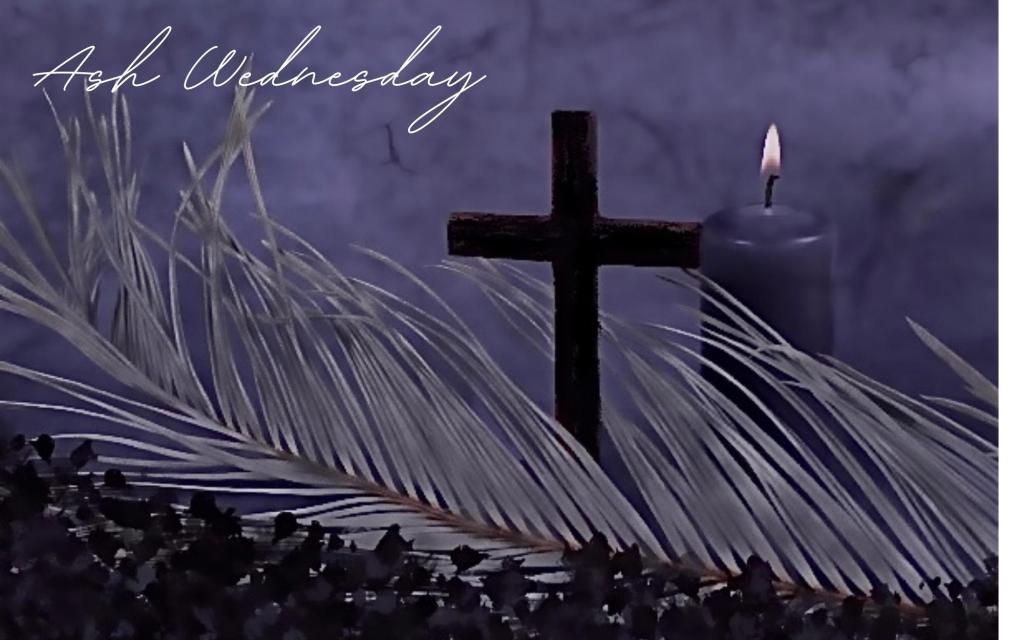
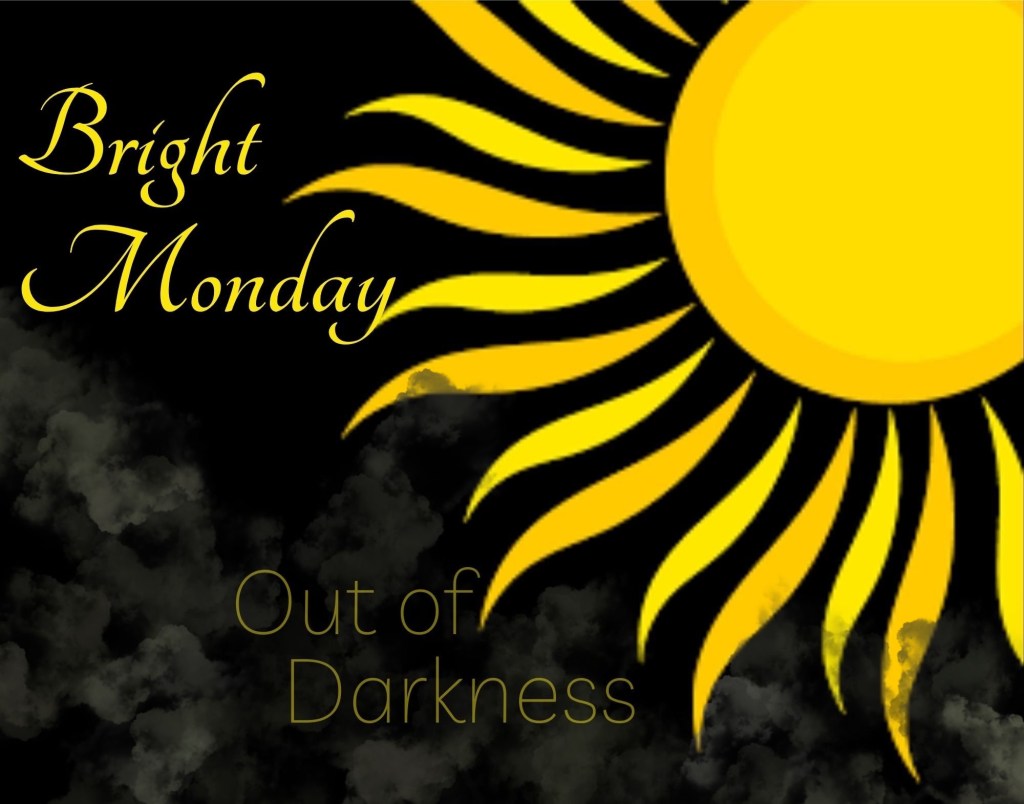


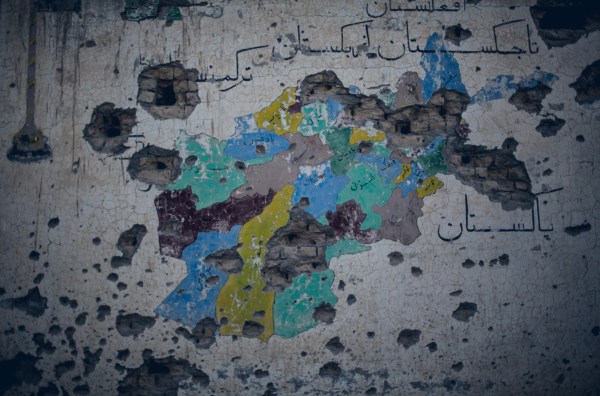

 How will I spend Ash Wednesday?
 The essential truth, and gift, of Ash Wednesday is its call to come to terms with ourselves before God. Ash Wednesday says what so much of modern culture denies, namely that we are forever deceiving and justifying ourselves about our sinfulness. So on this day, when we contemplate our sins, when we pay attention to the ash on our foreheads, when we enter into Lent’s forty days, we must make prayer our utmost spiritual intention. So I pray we might embrace our Christian community that we might journey together for these forty days, praying for one another, seeking together the serenity, the reflection and the transformation of Lent, as all the while, we lean into our “soul’s insistent yearning.”
 I think often about roads, the roads that take people where they want to go, or not. I think with deep fondness about the terribly rough and broken roads we traveled in Uganda. The time was immediately after the horrific reign of Idi Amin that left the roads, and the entire country, in shambles. I remember the difficulty in traveling those rough, broken roads — washed out, bombed out, neglected for years.
 Yesterday was not my best day. All day long challenges got the best of me — health challenges, schedule challenges, even bad haircut challenges. My sister of the heart, Donna, said I was cranky. My husband, Fred, said I should chalk it up to Ash Wednesday. Martie, my dear Little Rock friend, said that yesterday was the first day of Mercury in retrograde and that I should do my
 Do you ever just get tired of tending to yourself? I suppose that’s not a relevant question for a general audience. It is, however, a very relevant question for those of us who are aging and/or have chronic illnesses.
 Lift Every Voice is a Lenten resource from 2016 that is still relevant in 2019. It addresses America’s original sin of racism through the lens of Ignatian spirituality and includes daily readings. From Ash Wednesday through Easter Sunday, voices from throughout the Ignatian network will lament racial injustice in our communities and reflect on how the Gospel calls us to repent, pray, and act in solidarity with those affected by an enduring legacy of systemic and personal racial discrimination.
 On Resurrection Sunday, I cry joy-tears — every time, without fail. For me, holding on to my emotions on Resurrection Sunday is impossible. After going through Lent, after hearing again of the betrayal Jesus experienced, after witnessing the suffering and execution of Christ, after acknowledging anew that Christ’s sacrifice was for the whole world and for me, I celebrate Christ’s resurrection. And when I do, I just cry.
 How do you live when you know what’s coming? Jesus might have asked himself that question when the crowds were shouting “Hosanna!” and making a big deal of the fact that he was riding into town on a donkey. The Gospel of Mark tells the story well.

 God of the Sparrow 🌱 By Kathy Manis Findley