Contemplation, Creativity, Discovering, Epiphany, Growth, Inspiration, peace, Relationship, Restoration, Resurrection, Self Awareness, Silence, Spiritual growth, Stories, Transformation, Writing

Magical

3C204C9C-C33B-4AC8-BE97-D8784E8A5D96
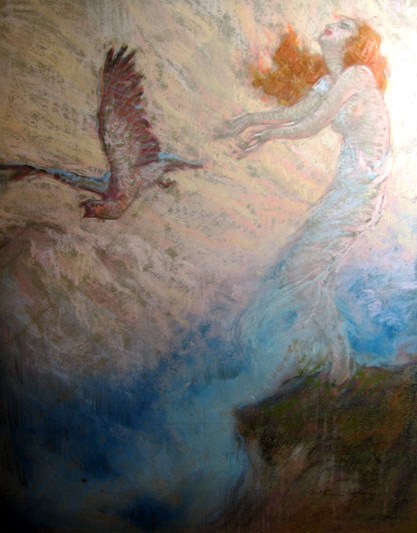
Magical Night: A painting by Teressa Nichole

Tell your story. Shout it. Write it.
Whisper it if you have to.
But tell it.
 ― L.R. Knost

These words of LR. Knost are so very true.

During the weeks of Lent, I helped lead a writing group at my church. What a rich experience it was for me — watching each group member spending quiet moments meditating and contemplating the ripples of his/her life. Then witnessing one person after another begin to write as if they were expecting transformation, telling their stories, writing down the highs and lows. It was almost magical.

It seemed as if I saw the throes of stress leave their spirits. It seemed as if I watched their expressions of pain ease as pen flowed across paper. It seemed at times as if a weight was lifted, an emotion discovered, a community created, a sense of understanding settled in.

I know this: no one left the room with a broken spirit or a weight they could not carry. Instead, they left the room in covenant with one another, knowing that someone cared deeply about their story. They left the room knowing that, in this intimate space, they could spew out whatever they needed to release or they could be silent in a peaceful sanctuary of acceptance.

That Sunday School room in the tall-steepled church at the top of a street in Macon, Georgia known as High Place became a sacred space for just a brief time. It became a place almost magical, a place of rest, a place of comfort, a place where each person could feel that they were not alone and that they would never feel alone again. Truly, that was magical.

I end today’s blog post with these words written by L.R. Knost:

Tell your story. Shout it. Write it.
Whisper it if you have to.
But tell it.
Some won’t understand it.
Some will outright reject it.
But many will
thank you for it.
And then the most
magical thing will happen.
One by one, voices will start
whispering, ‘Me, too.’
And your tribe will gather.
And you will never
feel alone again.

Amen.

Uncategorized

Faith and Illness: A Solid Rock in Desert Days


4EB74B81-616C-4A67-A002-B1F4AAF1EE47This piece was first published on the blog at revgalblogpals.org. Thanks to that wonderful group for publishing this article and for all their thoughtful and informative publications.


As I reflect on faith and illness, I recall the words of an old hymn, “My anchor holds and grips the solid rock.” Remembering the hymn’s message gives me hope in myself and in my faith. Still, these are empty days for me, and I ask myself these questions:

What is it about faith that raises me up when I have fallen face-first into the dirt?

What is it that gives me the strength to get up, dust myself off, and continue this faith journey?

What is it that assures me that my faith still holds “and grips the solid rock?”

My thirty-four year ministry journey was life-giving, until 2014, the year I endured a drastic life interruption. A serious illness threw me into a year of multiple hospitalizations and several brushes with death. Suddenly, I was plunged into what I can only describe as desert days. The diagnosis?

End-stage renal disease

It sounded awful to me, “end-stage.” Its meaning is simple: the final stage of kidney disease when your kidneys have failed and you cannot survive without dialysis or a kidney transplant.

Those desert days included most of the things I had always dreaded about hospitalization — near-fatal infections, endless blood draws, collapsed veins, mental confusion, physical weakness, long and sleepless nights, and debilitating fear.

In time, I found my way back to my new normal after months of therapy where I struggled to regain the ability to accomplish the simple tasks of daily living. My patient physical therapists trained me to walk again, write again, learn the alphabet, re-learn colors, place blocks in holes, and recite the name of the president of the United States. Way down on the priority list was the slim possibility of moving myself back into ministry. In those days, it was a victory just to be able to sign my name and walk a few steps unaided.

I have now settled into a different life. My days include eight hours of dialysis every day, waiting on an lengthy list for a kidney transplant, working hard in physical therapy, and trying to find myself again. Desert days they are, and at times, I wonder if my faith is still gripping that solid rock.

Like so many ministers, I found my identity in mission and ministry. To be honest, not having a “ministry identity” has left me feeling discarded. My mind tells me that I am more than my ministry, but my heart tells me I am an empty shell.

And then there is what my faith tells me: that I am grateful to be alive, that I am thankful that I feel strong, that God has a purpose for this life interruption, and that ministry really is more than a defined vocation and a specific place of service. Yes, there is an enormously empty place in me, there is.a soul that is longing and a heart that is searching for life beyond this current desert. All the while, reality tells me that my years of ministry are over and that I must learn how to “be” within that reality.

So while I still mourn the loss of my ministry, I am learning how to attend a church service without grieving. I am learning that my writing, blogging and painting is my offering to God. I am learning that I must find contemplative, holy moments to feed my thirsting spirit. I am learning that stillness might be more sacred than activity.

Faith and illness? It is a relentless challenge. There is no doubt about it: illness can be a rude interruptor of life. While I am in the center of that life interruption, watching intently while faith and illness fight a battle for my soul, I have choices.

One choice is burying my emotions and moving unmindfully through each day, without expectations, without dreams, simply going through the motions. My wiser choice is to look squarely into my soul, honestly admitting that these truly are desert days.

To make the wiser choice is to mourn the fact that some of my dreams have died, to own my angst and face off with my losses. This choice does not mean walking around the desert. Rather it means walking directly through it, hoping for manna, for perseverance, for grace.

So as I make my way through this desert, I can say this: it is not easy. It is uncomfortable and frightening. It is a journey that reminds me how fragile hope can be, a journey that tests my faith and my faithfulness. And yet, on this desert journey I have rediscovered that my faith “still holds and grips the solid rock.”

Thanks be to God!

Bright Sunday, Bright Week, Children, Church, Easter, Joy, Laughter, Lightheartedness, Music, Resurrection, sunrise

The “Laughter of the Redeemed”

4D06581C-1218-44C9-AE7E-98F2CA0E9ABC

So when the grand and glorious celebration of Christ’s resurrection is over, what do we do with our leftover joy? There is an easy answer to that. Celebrate Bright Week with laughter and loud singing, and look forward with great anticipation to Bright Sunday! You might be wondering what in the world I’m talking about. What’s Bright Week and Bright Sunday?

Well, just in case you didn’t know, Bright Week and Bright Sunday are real. genuine. bonafide things. Many Christian churches celebrate the Sunday after Easter as Bright Sunday, a day for joyful celebration. In fact, the entire week following Easter, called Bright Week, was set aside for the celebration of the Resurrection according to the 66th canon of the Council in Trullo:

. . . from the holy day of the Resurrection of Christ our God until New Sunday (or Bright Sunday) for a whole week the faithful in the holy churches should continually be repeating psalms, hymns and spiritual songs, rejoicing and celebrating Christ, and attending to the reading of the Divine Scriptures and delighting in the Holy Mysteries. For in this way shall we be exalted with Christ; raised up together with Him.

The custom was rooted in the musings of early church theologians like Augustine, Gregory of Nyssa, and John Chrysostom, including the intriguing idea that God played a practical joke on the devil by raising Jesus from the dead. “Risus paschalis – the Easter laugh,” the early theologians called it.

For centuries in Eastern Orthodox, Catholic and Protestant countries, the week following Easter Sunday, including “Bright Sunday,” the Sunday after Easter, was observed by the faithful as “days of joy and laughter” with parties and picnics to celebrate Jesus’ resurrection. Churchgoers and pastors played practical jokes on each other, drenched each other with water, told jokes, sang, and danced. Can you even imagine such hilarity in some of our most traditional churches?

Yet, theologians wrote about holy laughter. While languishing in a Nazi prison, Protestant theologian Jurgen Moltmann became fascinated by the ongoing celebrations of Jesus’ Resurrection by the early Christians that continued long after Easter Sunday. He called it “the laughter of the redeemed.”

And yet, we Christians are often viewed as offering a joyless and humorless Christianity.

Where is “the laughter of the redeemed?”

We have a Savior who, knowing that he was about to be betrayed, tortured, and crucified, told his disciples before his arrest:

“These things I have spoken to you, that my joy may be in you and that your joy may be full.” (John 15:11)

So where is our joy? Where is our laughter?

With great fondness, I remember the youth ensemble at First Baptist Church of Arab, Alabama singing an amped-up version of “Sunshine in My Soul,” lively, syncopated, full of unbridled joy! With a big smile on every face, the group sang this spirited, exuberant song about their sheer joy in Christ. Always, their offering of “Sunshine in My Soul” was a joyous event. I can hear it in my memory right now.

There is sunshine in my soul today.
It’s a glow so warm and bright.
That shines in any earthly sky
For Jesus is my light.
Oh, there’s sunshine, beautiful sunshine,
When the peaceful, happy moments roll.
When I look with love into my brother’s face, there is sunshine in my soul.

What a bright and joy-filled song! A perfect song for Bright Sunday.

Laughter, joy, fun, rejoicing!

I hope that during this Bright Week you will find sunshine in your soul. I hope that you will laugh hard and long during Bright Week, that you will pass joy along to those you love, that you will sing a song of joy or two, using your biggest, strongest outdoor voice. After all, it is Christ’s resurrection that we celebrate!


Church, Covenant, Creativity, Easter, Friendship, Grace, Lent, Memories, Resurrection, Resurrection People, Roots, Tears, The Christian Church

Resurrection People

C1D1BB39-1AD2-4D57-8ED7-8464718B35D8On Resurrection Sunday, I cry joy-tears — every time, without fail. For me, holding on to my emotions on Resurrection Sunday is impossible. After going through Lent, after hearing again of the betrayal Jesus experienced, after witnessing the suffering and execution of Christ, after acknowledging anew that Christ’s sacrifice was for the whole world and for me, I celebrate Christ’s resurrection. And when I do, I just cry.

But on Resurrection Sunday 2018, I wept with a heavy heart and a flood of memories. I thought of Easters past and the people of God with whom I celebrated. All of those precious friends now live miles away, others live in heaven. I was their pastor, and that is as holy a relationship as I can describe.

I walked with them through joy and tragedy, through days of health and days of illness, through crushing family problems, through death and divorce. But through every devastation, we celebrated Resurrection Sundays in our beautiful monastery chapel, in our little country church in small town Arkansas, at an altar on a lakeside, in the baptismal waters. We celebrated our covenant, our deep friendship, and gave thanks for the grace that gifted us with those relationships.

We were a fun and creative group. With some of them, I cut and stitched and glued and appliqued huge banners proclaiming, “Christ Is Risen!” With others, I burned palm branches for Ash Wednesday. With others, I lifted up the wooden cross onto thevaltar of the church sanctuary. And with others, I wandered through the woods searching for dogwood blossoms to adorn the wooden cross. I most fondly remember a circuitous and hilarious trek through the forest with Ethel.

Ethel was a true jewel, one of a kind. Never would you find a more loyal and loving parishioner than Ethel, who will always be known as the persevering founder of our church. She refused to let it fail. She was persistent and feisty and determined. And because of her, the church still stands firm, even now that she is gone.

But getting back to our trek in the forest, I have to say that Ethel was one of those unstoppable “elderly” people. She could barely walk at times because she suffered with a muscle disease that weakened her legs. But she pushed her way through the forest that day, leading me, pushing aside the limbs, vines and thorns, and dauntlessly creating our path over rocks and depressions in the ground. We were looking for a thorn tree . . . you guessed it . . . to use in making a crown of thorns.

Eventually we found a perfect thorn vine with angry-looking three-inch thorns on it. We carefully hauled it through the woods, trying to avoid getting stabbed by one of those sharp thorns. Then we put it in a bathtub full of water to soften it. When we began to bend it into a crown shape, we both sustained painful thorn wounds. Never to be deterred, Ethel managed to shape and finally fasten the two ends together, and the prickly vine became the crown of thorns that we used for many years.

When we placed it for the first time on the Good Friday cross during the church service, I wept. Many of us wept. We were like that because we remembered the words of the prophet Isaiah.

He is despised and rejected by men,
A Man of sorrows and acquainted with grief.
And we hid, as it were, our faces from Him;
He was despised, and we did not esteem Him.

Surely He has borne our griefs
And carried our sorrows;
Yet we esteemed Him stricken,
Smitten by God, and afflicted.

But He was wounded for our transgressions,
He was bruised for our iniquities;
The chastisement for our peace was upon Him,
And by His stripes we are healed.

All we like sheep have gone astray;
We have turned, every one, to his own way;
And the Lord has laid on Him the iniquity of us all.

He was oppressed and He was afflicted,
Yet He opened not His mouth . . .

— Isaiah 53:3-7, KJV

We knew that after the suffering, the resurrection would most surely come. Through the passion and emotion of Good Friday, we wept. But we wept even more when the stark cross flowered on Easter morning, when we lit the Christ candle, when the black shroud was removed, and when we draped the cross in glistening white cloth.

So on Resurrection Sunday 2018, while singing “Christ the Lord Is Risen Today,”I wept with tears of gratitude, gratitude for the people of God through the years who made my Easters such sacred experiences of worship.

Ethel, Barbara, Johnnie, April, Bo, Michael, Stan, Dianna, Eric and Emily, Ann, Sister Bernadette, Gail, Noah, Wendell, Pat, Joyce, Suzette, Deborah, Cindy, Barbara Fay, Regina, Tonya, Vallory, Leroy, Mary, LaVante, Shirley, Ken, Steve, Jenna . . .

So many names! So many others. My memories of them brought me to tears on Easter Sunday. I saw them in my mind and remembered our shared times of worship. They are Resurrection people all, people who know how to proclaim Christ’s resurrection with passion, devotion and celebration. For all of them, today I give thanks.

Grace, Growth, Restoration

The Dew in the Morning

9661C088-0011-4593-95AD-A1C0438649A9In some traditions, dew is celebrated in poetry and prayer as a bringer of life. Dew that accumulates during the night surrounds plant leaves every morning for approximately two to three hours past sunrise. In the early morning, the time of day when plants grow, the droplets of dew surrounds the leaves of a plant with moisture. The plant does not close its pores, so it receives the life-giving moisture that makes it grow.

I have contemplated that thought today in thinking about my own growth, about morning and night, light and darkness. All of us experience times of darkness, nights of emptiness when even the stars seem to give no light. A life faces those dark times in illness, aging, the loss of a loved one, financial problems, a difficult relationship, a fatal diagnosis.

Indeed, we live through those kinds of dark times. But our Christian faith assures us that after the night, the morning comes — every day, without fail. The miracle is that many people claim that when darkness falls on their lives, they experience growth.

I can attest to the fact that it truly is in the darkness where my soul and spirit has grown and matured. Without a doubt, it was a painful growing time, a testing time, but a time that made me stronger and more resilient.

So I find comfort in the thought that after dark nights, morning comes, and with the morning, the refreshing and healing dew. Like tender plants that open their pores to drink life-giving dew that falls gently on them, we can open ourselves to the soft touch of the “dew in the morning.” That is a gift to us, a grace-gift that we receive from a loving and caring God who knows that we hurt, but also knows that we survive and grow.

The dew in the morning just might bring us comfort after a long darkness, bringing life, healing, refreshment, growth, and new beginnings.

Change, Contemplation, Darkness, Daybreak, Death, Despair, Faith, Freedom, healing, life

When Your World Ends

66A9AA3C-258F-40E7-AB87-32000E79567EMy adult son is a master at denial. He can get very upset over a situation, but before you can blink, he has moved on as if it never happened. To be honest, I have often envied that part of his personality. As one who tends to brood over life’s challenges and problems, I would love to just be able to blow things off.

There is no chance of that happening for me. I think that this brooding part of me emerges from the trauma I have experienced over the years. My world has ended many times, or so it seemed. Yet, there has been a positive aspect of my brooding: that I have learned to sit with an issue for a while, dissect what has happened, feel the depth of hurt, and reflect on the depth of the emotional assault I’m experiencing. Blowing off pain just doesn’t work for me. Denial is not my way.

Denial never makes hurt go away. Denial never even diminishes hurt. So be warned. Blowing off pain is a path to internal disaster. As difficult as introspection can be, I am grateful that I am able to deeply feel the feelings I feel, to let the hurt wash over me, and finally to emerge better and stronger. Feeling the depth of my heartaches has served to disempower them and, most importantly, to enable me to harness my inner power to be free.

This, I believe, is the path that takes us beyond despair. This is the path that lets us own our heartbreak and then leave it behind to move into a fresh, new day. I am strengthened by the words of poet Nayyirah Waheed.

feel it.
the thing that you don’t
want to feel.
feel it and be free.

the thing you are most afraid to write, write that.

it is being honest
about
my pain
that
makes me invincible.

i don’t pay attention to the
world ending.
it has ended for me
many times
and began again in the morning.

To sit with your pain, to touch the heart of your hurt . . . that is what makes you free. And that freedom will be for you this miracle . . . when your world ends, and it may end many times, it begins again in the morning.

Thanks be to God.


Christ's Passion, Easter, Holy Week, Hope, Rebirth, Resurrection

The End Just Might Not Be the End!

31AFB058-2E74-4B96-AB35-801BFCD4C0DD
Pastel art “Resurrection Morning” by James R. C. Martin

“What do you know about Holy Week? You’re Baptist!”

It’s a common question for those who do not understand that Baptists are of many and varied sorts. And some of us Baptists do indeed walk through Holy Week with our soon-to-be crucified Savior. It is a holy walk that I would not want to miss. To miss it, to rush past it without reflection, is to miss the full glory of Christ’s resurrection and our own.

My dear friend, Guy Sayles, writes of the need to “lean in” to the passion of Holy Week.

I have leaned-in to the dramas, paradoxes, betrayals, denials, love, grace, losses and gains which characterize the wild, careening journey from Palm Sunday to Easter. The stories and events of these days reveal so much about the human condition and the divine character.

As for me, I will listen intently this week to the laments of Jesus. I will keep vigil as he prays in Gethsemane. I will try to understand the betrayal he endured. I will witness his arrest. I will cringe at the abuse inflicted upon him. I will hear his cries from the cross asking why God had forsaken him. I will watch him take his last breath. And I will understand all over again that his suffering was for me and for us all.

I will understand all over again that the Christian life is filled with little deaths and big ones, deaths that knock us to our knees, deaths that are a part of living. I will understand all over again that a Christian’s suffering and angst, that most assuredly comes to us, is the necessary preparation for our resurrection. All over again, as I have done for so many Easters, I will understand and celebrate the miracle of my own resurrection, giving thanks to our God of rebirth.

Again, I share Holy Week thoughts written by Guy Sayles.

I’ve particularly come to resonate with the silence of Holy Saturday, a silence in which the shocked grief of disillusionment and death mingle with the wonderment and anticipation that the end might not be the end. Many of our days are like this shadowy Saturday: we’re in-between the worst and the best, the bitterest last and the brightest first. Because of Easter, Saturday bends toward life and hope, and so do our lives.  We sense a shepherd in the shadows and glimmers of light in the darkness.

I hope that each of you will journey through these Holy Week days and experience both the bitterness and the brightness. Most assuredly, the message of Resurrection Sunday is about new life and hope, rebirth and resurrection, the glorious reality that the end just might not be the end. Thanks be to God.

Beauty of Nature, grief, Hope, life, Mourning, Nature, Stars

Uncommon Commoners


1B1EF9A9-9872-4163-9F93-36F39A9239F8
Terlingua, Texas. Astrophotography of the Milky Way over a field of Chisos bluebonnets.

As I write today, I think of all the ways we are ordinary extraordinary folk. We are complex at times, immersed in thoughts deep and weighty. In the next moment, we may well find ourselves acting like common, ordinary people that avoid deep thoughts at all costs.

We are divergent. We are a kind of paradox, common and uncommon all at once.

I recently saw the stunning photograph featured in today’s blog post. I was intrigued that a photographer was gifted enough to capture the juxtaposition of common flowering bluebonnets and the ethereal brilliance of the Milky Way. It is the kind of breathtaking image that makes me stop in my tracks, suspend time for a moment, and lose myself in the idea of earth and sky.

I studied the common bluebonnets and the uncommon Milky Way above them. And I wondered, “Is there something extraordinary in my ordinary life? Am I just a simple, common person? Or is there something uncommon that lives with the common in me? Inside me, in that place that even I do not fully understand, does common and uncommon grow together, entwined and twisted into one?”

As I pondered these questions that made little sense to me at the time, I read a piece written by my friend, Ken Sehested. I knew instantly that I would borrow one of his intriguing thoughts.

Uncommon commoner.

It worked for me. It defined me, the common part of me and the not-so-common part of me. You see, like most people, there is more to me than anyone can see. All of us can claim that. We are a people that can gaze skyward at the Milky Way while we sit on the ground in a patch of bluebonnets. We are a people of inner strength and resilience, the kind of resilience that makes it possible for us to endure whatever life throws at us and live to tell the story. We are a people with the kind of resilience that makes us uncommon commoners.

I know this because I have seen it time and time again up close and personal. I know this because I have stood at the bedside of a dying woman who was singing hymns of praise to God. I know this because I have kept vigil with a mother who witnessed her son being removed from life support after an accident, and as it was happening, she began to pray through her heavy sobs of grief. I know this because I walked out of the emergency room with her while she shared cherished, happy memories of the son she had just lost.

Uncommon commoners.

Ken Sehested made this so clear with these words.

What makes all of us commoners uncommon is when we experience the pain of trauma up close and personal, find the resilience to endure, take a hammer of righteous rage to that trauma and pound it on the forge of conviction that another world is possible, another way will open if we hold out, hold on, hold up, and hold over . . .

— Ken Sehested

Ah yes. We have seen, and we will see again, the pain of trauma. We will find within ourselves the resilience to endure. We will “hold out, hold on, hold up, hold over” because God has graced us with hope, enduring and abiding hope.

Life will always give us — uncommon commoners that we are — vivid fields of bluebonnets growing in the dirt and a sparkling Milky Way in the sky above. Thanks be to God.

Change, Child protection, Community activism, Courage, Gun control, Hope, Inspiration, Justice, March for Our Lives, Politics, Prayer, Uncategorized, Violence

Dear Students Marching for Our Lives,

5C1D4656-F263-49DD-8CC3-44E1AA6A3695Let us pray with our legs, let us march in unison to the rhythm of justice, because I say enough is enough.”

— A Parkland shooting survivor.

Dear students,

Yesterday you sat in classrooms all over this country. Today you are marching all over this country, all over the world. Teachers, parents and other supportive adults are marching with you. We older folk marvel at your commitment and your resolve. We are proud of you. We cheer you on and pray that your efforts will bring positive change.

You are marching to demand that your lives and safety become a priority and that we end gun violence and mass shootings in our schools. You are relentless and persistent in your quest to end gun violence. You are standing tall, lifting your voices to proclaim “Enough is enough!”

Every day, 96 Americans are killed with guns. Since the massacre at Sandy Hook Elementary School where 20 children between six and seven years old were killed by a gunman, 7,000 children age 17 and under have been killed by guns.

Today, thousands of you have gathered to call violence by its true name. You are calling out the adults. You are confronting the NRA. You are challenging all who put their own self interest above the safety of our children,You are marching today for those who died and those who live. You are marching for the children who will be in classrooms in years to come, little ones who still have the joy of innocence. You are marching for their lives. You are marching for them. You are marching for all of us, and we thank you. Our hearts are with you,

For each of you, I offer this prayer.

God who holds ouryoung in your arms of grace,

Make of us a people who hold our children in the highest esteem, who give them respect and encouragement, who take their fears seriously, who commit ourselves to their safety and protection.

Protect them, God, as they march for their lives today.

Help them to know that their resilience and persistence might just change the world.

Make every city where they march a welcoming place, filled with people that open their hearts to the message our children speak.

Assure our children of the love that surrounds them and of the support that enfolds them. Assure them of our love and respect for them.

Continue to embolden them to demand change.

Infuse them with the courage to stand and the strength to speak truth to power.

Grant them an extra measure of perseverance.

Guide their steps. Ennoble their conviction.

Calm their fears and soothe their anxious hearts.

And may their reward be a world free of violence, communities infused with peace, classrooms that surround them with understanding, acceptance, protection and learning.

For your deep love for our children, O God, we give you thanks.

For your compassion toward our young who have been so deeply harmed, we give you thanks.

For your comforting presence with friends and families who have lost people they love, we give you thanks.

For your tears mingled with our own as we mourn the loss of innocence our children have experienced, we give you thanks.

For your abiding protection and mercy in our violent and frightening world, O God, we give you thanks.  Amen.

*****

Fast Facts

  • Organizers of March for Our Lives expect millions of people to participate in today’s marches.
  • Acting out of their profound grief, students from across the country are fearless, empowered and motivated to speak out today as part of the March for Our Lives movement that was born out of the Valentine’s Day shooting in Parkland, Florida that killed 17 students and staff members.
  • President Barak Obama and First Lady Michelle Obama sent a handwritten letter to the students of Parkland’s Marjory Stoneman Douglas High School commending them for their “resilience, resolve and solidarity in helping awaken the conscience of a nation.”
  • Today, there are marches in over 800 sites across the country where students are still “calling BS.”
  • Marches are also taking place all over the world.
  • Florida students have planned a voter registration effort as a part of the march in Washington, DC.
  • The message of these students is “never again,”


Aging, Change, Christ's Passion, Faith, God's Faithfulness, Hope, Illness, Lent, Life pathways, Loss, Palm Sunday, Perseverance, Retirement

How Do You Live When You Know What’s Coming?

ABD2C8E4-5AA9-49EC-B771-A85BCDFBBD90How do you live when you know what’s coming? Jesus might have asked himself that question when the crowds were shouting “Hosanna!” and making a big deal of the fact that he was riding into town on a donkey. The Gospel of Mark tells the story well.

Many people spread their cloaks on the road, and others spread leafy branches that they had cut in the fields.

Then those who went ahead and those who followed were shouting, “Hosanna! Blessed is the one who comes in the name of the Lord! Blessed is the coming kingdom of our ancestor David! Hosanna in the highest heaven!”

Then he entered Jerusalem and went into the temple; and when he had looked around at everything, as it was already late, he went out to Bethany with the twelve.

— Mark 11:8-11 New International Version

So how do you live when you know what’s coming? Jesus went to the temple as was his custom and then set off to Bethany with his disciples. He knew what was coming, yet he did nothing very earth shattering. He sent his disciples into the city to prepare for for the Passover meal they would share. They ate the meal together, Jesus told then they would all desert him, and each one declared that they would never do such a thing.

They did. But life went on as life does. The Gospel then continues the sorrow-filled story as Jesus goes on with his disciples to a place called Gethsemane.

. . . And Jesus said to his disciples, “Sit here while I pray.”

He took with him Peter and James and John, and began to be distressed and agitated.
And said to them, “I am deeply grieved, even to death; remain here, and keep awake.”

And going a little farther, he threw himself on the ground and prayed that, if it were possible, the hour might pass from him. He said, “Abba, Father, for you all things are possible; remove this cup from me; yet, not what I want, but what you want.”

He came and found them sleeping; and he said to Peter, “Simon, are you asleep? Could you not keep awake one hour? Keep awake and pray that you may not come into the time of trial; the spirit indeed is willing, but the flesh is weak.”

And again he went away and prayed, saying the same words. And once more he came and found them sleeping, for their eyes were very heavy; and they did not know what to say to him.

He came a third time and said to them, “Are you still sleeping and taking your rest? Enough! The hour has come; the Son of Man is betrayed into the hands of sinners.

Get up, let us be going. See, my betrayer is at hand.”

Immediately, while he was still speaking, Judas, one of the twelve, arrived; and with him there was a crowd with swords and clubs, from the chief priests, the scribes, and the elders. Now the betrayer had given them a sign, saying, “The one I will kiss is the man; arrest him and lead him away under guard.”

So when he came, he went up to him at once and said, “Rabbi!” and kissed him.

Then they laid hands on him and arrested him.

— Mark 14:33-46 New Internation Versioned

So now life is earth shattering for Jesus. How do you live when you know what’s coming?

Right now in deep Lent, this is a question we probably should ask. I don’t know about you, but as for me, I know what’s coming, at least some of what’s coming. There’s aging and illness, separation from children and grandchildren, the inevitable loss of loved ones, waning energy and more loss of independence. It happens to persons of a certain age. What’s coming for me includes things that are not so positive.So how do I live when I know what’s coming?

The preacher in me wants to offer a religious platitude that minimizes the troubling reality and lifts up abiding hope. The preacher in me wants to proclaim with a great deal of passion that all will be well. The preacher in me wants to declare that whatever happens to me, God will be glorified.

How do I live when I know what’s coming?

Right smack dab through the middle of it! Living strong in the face of fear. Holding tightly to hope. Summoning my inner courage. Standing steady through the winds of change, depending on the inner resilience that has always sustained me. That’s how I live in the days I have left in this world.

But, by the way, there really is a religious word that upholds and sustains me. The preacher in me is still alive and well, so I can proclaim with great certainty the comforting truth I find in my favorite passage of scripture

You have searched me, O God,
and you know me. You know whenI sit down and when I rise;

You perceive my thoughts from afar. You discern my going out and my lying down; you are familiar with all my ways . .

You hem me in behind and before, you protect me, and you lay your hand upon me.

Such knowledge is too wonderful, too lofty for me to comprehend.

Where can I go from your Spirit?
Where can I flee from your presence?

If I go up to the heavens, you are there;
if I make my bed in the depths, you are there.

If I take the wings of the morning and dwell in the uttermost parts of the sea, even there shall your hand guide me and your right hand will hold me fast.

— Psalm 139:1-10 New International Version (paraphrased)

With that sacred promise and with the strength that has grown in me over many years, I really do know how to live when I know what’s coming. Thanks be to God.
Aging, Change, Dry seasons of life, Ministry, Mission, Music, Retirement

Baffled

6EF9CDE6-293A-4E8A-9E46-F92BDFE6901C
Art by David Hoffrichter Illustrations

At times, I am baffled by retirement and aging. It’s one of those “wonder-what-to-do-with-myself” times that is a part of life. Like so many people, I allowed my work to define me. On the other side of a life of ministry, there is a great deal of grief and loss, and mostly bewilderment. I constantly ask myself the question I should have answered decades ago: “Who am I?”

It is definitely true of me that I no longer know what to do. Oh, I keep myself busy enough with trivial pursuits. I cook. I write. I paint. I garden. I do crafty things. But none of those pursuits are engaging enough to help me redefine myself as a person who has passed her years of full time work and ministry.

Certainly, many people say that once you are a minister you never lose your ordination, your gifts, your calling and your mission. But I wonder what that really means. There is no preaching or worship planning going on in my world these days, no hospital ministry, no funerals and no weddings to officiate. If my mission and calling is for life, what does that mean in terms of day to day living?

I have to admit that, though I am busy doing “stuff,” I no longer know what to do with myself. Fortunately, I recently found a smidgen of comfort in these words written by Wendell Berry.

It may be that when we no longer know what to do
we have come to our real work,

and that when we no longer know which way to go
we have come to our real journey.

The mind that is not baffled is not employed.

The impeded stream is the one that sings.

— ‘The Real Work’ by Wendell Berry, from Collected Poems, 1987.

So when all is said and done, perhaps it’s okay to be baffled. Maybe I can become that “impeded stream” and make a bit of music, filling these baffling days with singing. Just maybe, the writer of Ephesians had some very good advice for a person in my state of baffle-ment.

. . . be filled with the Spirit, speaking to one another with psalms, hymns, and songs from the Spirit. Sing and make music from your heart to the Lord, always giving thanks to God the Father for everything, in the name of our Lord Jesus Christ.

— Ephesians 5:18-20 New International Version (NIV)

Change, Child protection, Children, grief, Gun control, Hope, Loss, Memories, Mourning, Sorrow, Violence

14,000 Shoes

965E6AF4-46EA-445B-91E0-003F05D3284214,000 shoes placed to tell a very, very sad story.
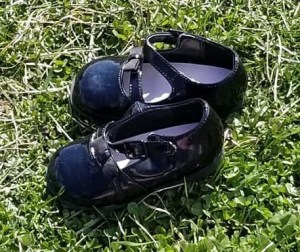
14,000 shoes laid out so that we will never forget our history.

Seven thousand pairs of children’s shoes were lined up on the southeast lawn of the U.S. Capitol building today in memory of every child who has died due to gun violence.

The 7,000 shoes in the “Monument for our Kids” installment represent every child that was killed by gunfire since the deadly shooting at Sandy Hook elementary school in Newtown, Connecticut, in 2012.

“We are bringing Congress face to face with the heartbreak of gun violence,” said one of the activists, Oscar Soria. “All of these shoes cover more than 10,000 square feet.”

Though most of the shoes were collected in a two week period, some of those were donated by families that lost their children to gun violence.

May God grant that we never forget this national grief. May our collective mourning bring lasting change.552D1FD3-63EF-4301-8FD9-FEE605FA755D

A Prayer for Protection

Hear us, O God, protector of children.
Hear our prayer of penitence, our confession that we have failed to keep our children safe.
Hear our cries, as we shed tears of mourning for each child we have lost to gun violence.
Hear our cries of grief as we recall every danger that our children face.
Hear our voices shouting, “Enough!”
Hear our voices of commitment that make a sacred promise that we will do what must be done.
And most of all, God, ennoble us to holy action, and make us protectors of children.
We pray in the name of the Prince of Peace. Amen.

Change, Children, Courage, grief, Gun control, healing, Hope, Justice, Politics, Violence

A Change Is Gonna Come

963A5A51-3EC5-464E-BAE6-A49BCFECAE4F
Emma González … ‘These young people will not sit in classrooms waiting.’ Photograph: Jonathan Drake/Reuters

Half a century ago, on March 7, 1965, state troopers beat down men and women who were participating in a peaceful march for voting rights in Selma, Alabama. That same day, radio listeners around the country might have heard Sam Cooke singing a song he had written and recorded several months earlier, but which could have been describing the “Bloody Sunday” confrontation on the Edmund Pettus Bridge.

There have been times that I thought I couldn’t last for long
But now I think I’m able to carry on
It’s been a long, a long time coming
But I know a change is gonna come, oh yes it will.

In “A Change Is Gonna Come,” Sam Cooke moves from bigotry and bloodshed to hope and beauty in barely three minutes. If you listen to the record today, you will hear a story that continues to be relevant. (https://m.youtube.com/watch?v=wEBlaMOmKV4)

Sam Cooke’s rough, sweet voice — a voice that is blues-born and church-bred, beat down but up again and marching — still rings.

A changs IS gonna come . . .

That message of hope rings out still in these troubling days through the passion-filled voice of Emma González, a senior at Marjory Stoneman Douglas High School, as she addresses a gun control rally in Fort Lauderdale just days after a gunman entered her school in Parkland and killed 17 people.

A change IS gonna come . . .

We are going to be the kids you read about in textbooks. Not because we’re going to be another statistic about mass shooting in America, but because . . . we are going to be the last mass shooting. We are going to change the law. That’s going to be Marjory Stoneman Douglas in that textbook and it’s going to be due to the tireless effort of the school board, the faculty members, the family members and most of all the students. The students who are dead, the students still in the hospital, the student now suffering PTSD, the students who had panic attacks during the vigil because the helicopters would not leave us alone, hovering over the school for 24 hours a day.

If the President wants to come up to me and tell me to my face that it was a terrible tragedy and how it should never have happened and maintain telling us how nothing is going to be done about it, I’m going to happily ask him how much money he received from the National Rifle Association. You want to know something? It doesn’t matter, because I already know. Thirty million dollars.  — Emma González

A change Is gonna come . . .

Just hours after the mass shooting, other students turned to social media to discuss gun control.

Guns give these disgusting people the ability to kill other human beings. This IS about guns.  — Carly Novell, a 17-year-old senior; editor of the school’s quarterly magazine.

We need to do something. We need to get out there and be politically active. Congress needs to get over their political bias with each other and work toward saving children. We’re children. You guys are the adults.  — David Hogg, 17, a senior; Stoneman Douglas student news director

Wherever you bump into someone, there is the fear that they’re the next shooter, and every bell is a gunshot. I feel like some change is going to come of this.  — Daniela Palacios, 16, a sophomore at another Broward County High School at her first protest.

A change IS gonna come . . .

And it will be our bold and compassionate children who will lead this nation into that change. Like so many Americans, I was disconsolate when watching the TV news of yet another school shooting. But then I started watching the students, and I saw the girl with the buzzcut, Emma González, wiping back her tears, mourning her dead classmates while demanding change.

Like her schoolmates, Emma is in trauma, but she is organizing. She and many of her classmates are directly challenging the donations of the National Rifle Association to Trump and other politicians. There will be school strikes. There will be organized resistance. These young people will not sit in classrooms any more. They refuse to become another tragic statistic. “We are going to be the kids you read about in textbooks,” said a weeping González.

As I remembered this week what happened  at Sandy Hook, at Columbine, at Westside, a school in my own state, I remembered feeling anger and despair. But today, for first time in a long time, I feel hope. I see true leadership as kids are standing up for one another and fighting for their lives.

Let us stand courageously beside these children, our children, and do what we can to create change . . . letters to Congress, phone calls, posts on social media, marches and demonstrations, hand-lettered signs, letters to the editor, VOTING for change. What can you do?

Emma González, Daniela Palácios, David Hogg, Carly Novell . . . and thousands of other children who are crying out, ENOUGH!

They give me hope.

A change is gonna come!

May God ennoble each of us to make it so.


Child protection, Faith, Family, Foundation, Rootedness, Roots, Sexual abuse, Trees

Rootedness

FEB12BA8-9746-4E12-84C7-A6CDCCEC2347
Photo by Jeremy Bishop

I spend a good deal of energy trying to understand myself. I wonder about the places my emotions go, how I got to where I am spiritually, where my deepest convictions came from. Self-assessment is a lifelong process. Saleem Haddad expresses the process with great insight when he writes this in his book, Guapa.

 . . . Digging through my roots to understand the way my branches grew.
(https://www.goodreads.com/author/show/14107015.Saleem_Haddad)

These days, I have been digging through my own rootedness, and as I have contemplated my roots, I recalled the deep childhood influence of the two people who literally nurtured my sense of rootedness — my Aunt Koula and Yiayia, my grandmother. It is clear to me that I was rooted in the devotion of these two strong women.

From my dear Aunt Koula, I received the kind of lavish love that is most surely a part of a Greek aunt’s DNA. And from my attentive (sometimes intrusive) Greek grandmother, fierce protection. One can thrive on lavish love and fierce protection, and I did thrive.

But my teen years brought change. I was no longer near my aunt, my grandmother, or even my mother. Instead, I lived with a harsh and abusive father, a broken man held together with alcohol and the sexual abuse of his only daughter. So I was a troubled teenager, adrift for a season and feeling that I had lost my rootedness.

But inside me was a persistent resilience. In the midst of abuse, I sent my roots even deeper into the nurturing soil, a soil that still held the nutrients placed there by my aunt and my grandmother. I managed to keep myself rooted. Through the pain of abuse, I became stronger as my roots pushed deeper into the earth beneath me. I found the Divine Source that made sure I would be rooted and grounded in love.

I was always a religious child with meaningful ties to my Greek Orthodox faith. But as an eighteen year old, I discovered an even stronger foundation of faith. I found God in a new way, reborn by a fresh faith in Christ.

My roots held me firm. I was stronger than ever before. And at times during those difficult years. I would fall into God’s arms of grace as I repeated the prayer that, through the years, would inspire me more than any prayer in scripture.

. . . I bow my knees before the Father, from whom every family in heaven and on earth takes its name. I pray that, according to the riches of his glory, he may grant that you may be strengthened in your inner being with power through his Spirit, and that Christ may dwell in your hearts through faith, as you are being rooted and grounded in love. I pray that you may have the power to comprehend, with all the saints, what is the breadth and length and height and depth, and to know the love of Christ that surpasses knowledge, so that you may be filled with all the fullness of God.

— Ephesians 3:14-19 New Revised Standard Version (NRSV)

To all around me, I appeared strong and vibrant during those years of chronic and constant abuse. Like a tree that displays the splendor of its verdant leaves in the sunlight, I displayed my own “leaves,” in spite of the destructive and pain-filled environment that was my life.

Budding. Growing. Greening. Branching out.

Outwardly, I seemed healthy and strong, but the real strength was below the ground, roots and taproots pushing deeper into the soil. What happens there is unseen — below the ground. But that which happens below the ground, unseen, literally fashions the glory of what is seen, above the ground, branches reaching high into the sky toward the heavens, pointing to the God of the ages.

It is miracle, really, a grace gift from the God who longs to plant us firmly and deeply into a holy foundation. And so we can withstand the storms and the winds when they threaten, even gale force winds that move us, but cannot destroy us.

I call it rootedness.


Children, Church, Worship

Behaving in Church


76DF3F19-8108-419B-BE27-DFCA4848E379
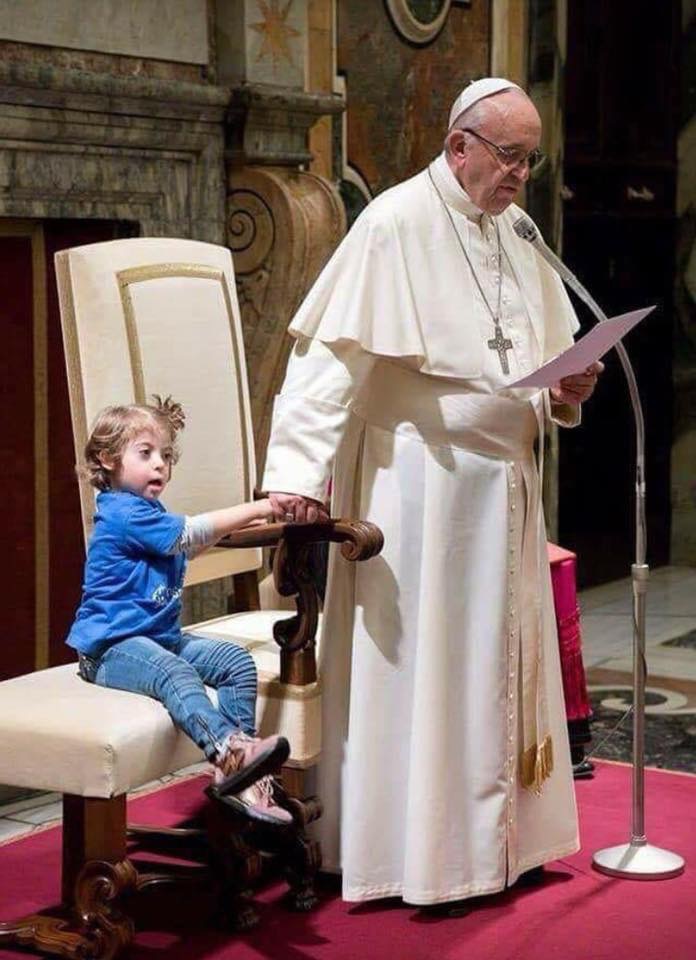
Pope Francis preaching as a child sits nearby

I was moved today by a statement a friend made in a conversation. She is a mother of young children, and she said that she loved worshipping with her children and watching their responses to the worship experience. It was such a contrast, I thought, to the typical responses of parents through the ages struggling to corral their children during worship. When my son was young, I did some powerful corralling myself trying to keep a very active boy still and quiet in church.

Looking back, I wonder what made me believe that worshipping always needed to be still and quiet. I wonder what I might have learned from my child if he had been encouraged to offer his own expressions in worship. And, of course, I cherish and miss those days of taking my very expressive toddler to “big church.”

There is a delightful article by Jamie Bruesehoff printed in The Huffington Post (https://www.huffingtonpost.com/jamie-bruesehoff/parents-kids-church_b_3909085.html) entitled “Dear Parents With Young Children in Church.”

I see you with your toddler and your preschooler. I watch you cringe when your little girl asks an innocent question in a voice that might not be an inside voice let alone a church whisper. I hear the exasperation in your voice as you beg your child to just sit, to be quiet as you feel everyone’s eyes on you . . . When you are here, the church is filled with a joyful noise . . . I know that they [the children] are learning how and why we worship . . . They are learning that worship is important.

I see them learning. In the midst of the cries, whines, and giggles, in the midst of the crinkling of pretzel bags and the growing pile of crumbs, I see a little girl who insists on going two pews up to share peace with someone she’s never met. I hear a little boy slurping (quite loudly) every last drop of his communion wine out of the cup, determined not to miss a drop of Jesus. I watch a child excitedly color a cross and point to the one in the front of the sanctuary. I hear the echos of “Amens” just a few seconds after the rest of the community says it together. I watch a boy just learning to read try to sound out the words in the worship book or count his way to Hymn 672 . . . I can see your children learning.

Jamie Bruesehoff’s words call us to cherish the children among us, just as Jesus did so long ago.

Then little children were being brought to him in order that he might lay his hands on them and pray. The disciples spoke sternly to those who brought them; but Jesus said, “Let the little children come to me, and do not stop them; for it is to such as these that the kingdom of heaven belongs.” And he laid his hands on them and went on his way.

Matthew 19:13-15 New Revised Standard Version (NRSV)

It seems that recently, Pope Francis mirrored the actions of Jesus according to a post by UCatholic.

A beautiful little girl with Down syndrome, got up from her seat during a papal audience and went toward the Pope. The security guards quickly moved in to take her back to her mother. The Pope stopped everyone and said to the girl, “come sit next to me.” The girl then sat down near him and the Holy Father continued to preach while holding hands with the little girl.

Our words matter. What we say to our children becomes a part their memories.

As a child, I heard some pretty strong words about my church behavior. I heard such words as an adult. I even said some of them myself. “Sit still in church! Quit wiggling around so much! Be quiet! Children have to behave in church! Behaving like that in church is not pleasing to God!”

Or maybe these words are more Christlike. “Let the little children come to me, and do not stop them.”

Amen.


Darkness, Faith, Hope, Illness, Light

The Light Behind Me

F4719FE4-AC10-4EF9-903D-023E96825023
Photo by Łukasz Łada

At the risk of being too dramatic, I must say that on some days, my path seems dark. Whether caused by chronic pain, illness, or other challenges, I sometimes walk through patches of darkness — often immense patches of darkness that seem to go on forever. Dark thoughts about an uncertain future can flood my mind.

Much wiser persons than I have made sense about the veil of darkness that often covers our lives. Francis Bacon left us with these words:

In order for the light to shine so brightly, the darkness must be present.

— Francis Bacon (1561-1626)

It is the dramatic contrast between darkness and light that leaves us perplexed. We can feel the promise of light on one day, and on the next, darkness prevails. So often, it is the darkness that wins the day, having its way with us. But then there is this thing we call faith.

Faith, we recall, is something that Jesus tried to explain over and over again to his disciples. They couldn’t quite get it. And like those twelve, we don’t quite get it either, that “faith” is at once simple and complex, available yet impossibly unattainable. At best, faith can be elusive.

But getting back to me on this dark day, here is a brief personal anecdote. I have my dialysis treatments for seven and a half hours every night. My dialysis machine has a screen that lights up in our dark bedroom. I have to read the screen at times during the night, and that troublesome screen shines in my eyes so intensely that I cannot see anything else in front of me.

That mundane daily experience teaches me that the most effective light in a dark place is not the light in my eyes that blinds me, rather it is the light behind me.

The light behind me stirs the depths of my soul, because I know that God’s light truly is behind me as I travel this journey. To know that the Light will guide my way is to again find my faith, in spite of illness, in spite of pain and suffering, in spite of uncertainty.

We uncover the holy mystery and the divine promise in the living words of Scripture.

The people living in darkness
have seen a great light;
on those living in the land of the shadow of death
a light has dawned.

— Matthew 4:16 New International Version (NIV)

I do not know how it all happens, that this Scripture comes to life within me and gives me life. I do not understand a God that can find me in every dark place. I do not comprehend the miracle that shines light behind me in the middle of my darkest days. I do not understand how a light can dawn “in the land of the shadow of death.”

But I do know that my fickle faith transforms at times into something solid and steadfast, comforting and constant.

Light behind me, I think.

Thanks be to God.

Contemplation, Creating, Creativity, Faith, peace, Self Awareness, Self care, Serenity, Silence, Spiritual growth, Transformation

Transformation, Pursuits and Productions

BCE50E1D-C995-4353-A940-14AABC73495E
A Recolor page that brought me fond memories of my beloved Uganda

My mind needs rest and renewal. My soul needs trasformation. My heart needs peace and serenity.

The problem is that not many activities relax me. Being the wretched Type A personality that I am, I turn every pursuit into a production. A dear friend has a saying that she uses when a task morphs into more than it should have been. “That was a production!” she would say, and we all knew what she meant — a project got way out of hand!

Such is my life. Compulsive. Driven. Perfectionist. All words that have often been used to describe me. I have to work on it diligently, this need for serenity and the renewal of my mind. Reading Scripture leads to writing a sermon, an opinion piece, or a blog post. Praying leads to a plethora of things I feel I must do. Swinging in the sunshine leads to working in flower beds that need tending.

My first waking thought is always about what project I will do or what meal I will cook. That decision influences my day. When I have decided what I will do, I’m off. I’m all in to get it done.

My greatest need is to find my way to peacefulness and serenity, to experience a renewal of my mind, to learn to be quiet and still so that in the stillness, I might find God in new ways. And I might even find myself in new ways and learn some things about the depth of my “self” snd the longings of my soul.

It is my soul, of course, that craves the serenity. I work on it often — deep breathing, brief praying at many times during the day, singing hymns (to myself) as I fall asleep at night. All of it helps. None of it makes a permanent difference.

Interestingly, I have found a pursuit that does not lead to a production. It is a computer app called Recolor, which is simply for coloring on devices like the IPad. Each day, Recolor adds two or more pages for coloring with your finger or a stylus. I have found nothing that relaxes me more than getting lost on a coloring page. As of today, I have colored 1,062 pages and have received 66 thousand “likes.”

One might observe that this pursuit is not at all a spiritual practice, not a contemplative activity, and is pretty much a waste of time. The thing is, it really is a spiritual practice for me because I am learning how to waste time. I needed to find a way to immerse myself into a creative activity that did not consume me. I needed an activity that would clear and renew my mind. As the Scripture urges, I need to be transformed by the renewal of my mind.

Do not be conformed to this world but be transformed by the renewal of your mind, that you may prove what is the will of God, what is good and acceptable and perfect.

— Romans 12:2 Revised Standard Version (RSV)

So I will continue coloring to clear my mind and slow me down. And I will keep working on the renewal of my very busy mind. Who knows? Someday I might find myself transformed.


Comfort, God's presence, healing, Heartbreak, Inspiration, life, Mourning, Pain, peace, Restoration, sadness, Serenity, Sorrow

Guard Your Heart

FF412EF2-E311-4F00-9859-65D0582E5935A heart can break so easily. Life is filled with heartbreaking things, and no person is immune to heartbreak. Hurt from one’s children, the loss of a loved one, a marriage rife with anger, abuse by a trusted person, betrayal by a lifelong friend — all of these can leave a heart crushed.

How important it is, though, to find healing for our hearts, to find the healing balm that will ease the pain. We recall the comfort of Scripture that says, “Do not let your hearts be troubled, neither let them be afraid.” We lean on the everlasting arms that always hold us, we rest on the promise that “God heals the brokenhearted and binds up their wounds,” (Psalm 147:3) and we hear again the tender words of the Psalmist.

The Lord is near to the brokenhearted and saves those who are crushed in spirit.

— Psalm 34:18

So we take these promises into our souls, and we give ourselves the time we need to heal our broken hearts. To be sure, the healing depends upon letting enough time pass for restoration to happen. Never do we heal on a swift timetable. The clock must move and the days must pass on our heartbreak. The weeks may well turn into months, even years. Yet we move ahead with confidence in our resiliency and faith in the Great Healer who abides with us for as long as it takes.

The final message is this: Be patient, but persevering, for the healing of your heart must be a life priority. Always guard your heart. Believe in the healing that will surely come. Know that your broken heart will mend as it rests in the hands of the One who heals every broken heart, every time, always.

Why is healing so important? It’s all about “the springs of life.”

Above all else, guard your heart,
For from it flow the springs of life.

— Proverbs 4:23