
I got in touch this week with my inner warrior. She was in me all along, in a deep place inside, just waiting for the summons that I needed her. If you have read many of my blog posts, you know that I have been terrified at the thought of having a kidney transplant. For almost five years, the frightened part of me was able to put the transplant possibility away, tucked in a place inside that kept it off my mind. When I did consider transplant — like the times when my nephrologist told me that it was by far the best treatment for me — I reasoned that it was not something I was willing to do.
Why would I want to change anything? Dialysis has been good to me and, most of the time, I have felt well. So I have struggled with the transplant decision, but at the same time, I went through the medical evaluation that kept me on the transplant list. My nephrologist has insisted for years that I would feel better and live longer with a transplant. I remained unconvinced, and then I participated in a webinar that pushed my decision. The physician who was presenting said something that got my attention. He said that patients with end stage renal disease must be on dialysis, and dialysis is essentially end of life care that includes palliative care. If a patient has an illness that cannot be cured, such as end stage renal disease, he explained, palliative care keeps the patient as comfortable as possible by managing pain and other physical challenges, and by providing psychological, social and spiritual support. He went even further by saying that patients who stop dialysis live about two weeks on average.
I have been on the transplant list for five years, and in that time there has been no movement toward a transplant. The last time I went to the transplant center to update my medical evaluation, they told me that a transplant was not likely to happen in the next two years. I was okay with that. Nothing to get anxious about. The transplant decision was not going to happen in the near future.
And then, out of the blue, I hear from an old friend who tells me he is contemplating the possibility of being a living donor for me. That was March 12. As of Monday, April 15, he had completed the thorough donor evaluation at Piedmont Transplant Institute in Atlanta, and by Wednesday of that week, Piedmont had called me in for testing.
My heart began to race this week and has continued, on and off. I would describe my current state as much, much more than anxious. I texted this week with a friend of mine and shared my fears. She told me about her multiple back surgeries and about how frightening surgery was for her. Then she said this: “I was really afraid before each back surgery, but I somehow dug down deep to a warrior place inside of me.”
Oh my! How well she described my current emotional place! I am certain that, indeed, there is a warrior place inside me. I reached it this week after the racing heart episodes eased up a bit. It is a surprise to me that now I find myself in deep peace, with a sense of calm. Not always have I been able to let God take control of my path. I am a person who will do almost anything to stay in control, to the point of fairly powerful wrestling with God for the proverbial reins of my life.
Not this time. This time, in this season of my life, I have taken a hands off approach, replacing my tendency to hold tightly to the reins with a sense of trust that has covered me like a soft blanket. I have thought in the last few days of the many passages of scripture about trust, but the one that stands out is the simplest one, the short one that we learned to recite as young children.
What time I am afraid, I will trust in you.
— Psalm 56:3
I am certain that there is a warrior place deep inside me. It brought me out of my year of life-threatening illness in 2014. It pushed me to get stronger. No doubt, it will be in play as I move closer to a kidney transplant. I am grateful that my friend reminded me this week of that deep, down warrior place. But I am also comforted in the assurance that, along with my inner warrior, there is in me a heart that can still trust God.



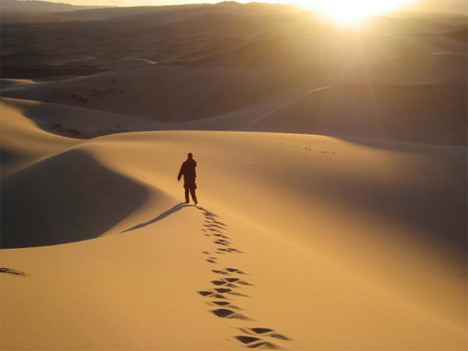
 I think often about roads, the roads that take people where they want to go, or not. I think with deep fondness about the terribly rough and broken roads we traveled in Uganda. The time was immediately after the horrific reign of Idi Amin that left the roads, and the entire country, in shambles. I remember the difficulty in traveling those rough, broken roads — washed out, bombed out, neglected for years.
 I was born and raised in the South and spent most of my life in the Bible Belt. In the Bible Belt, one can hear many sayings, expressions and idioms. One of the idioms I seemed to hear continually over the years was, “It’s the Gospel truth!” Always as an exclamation.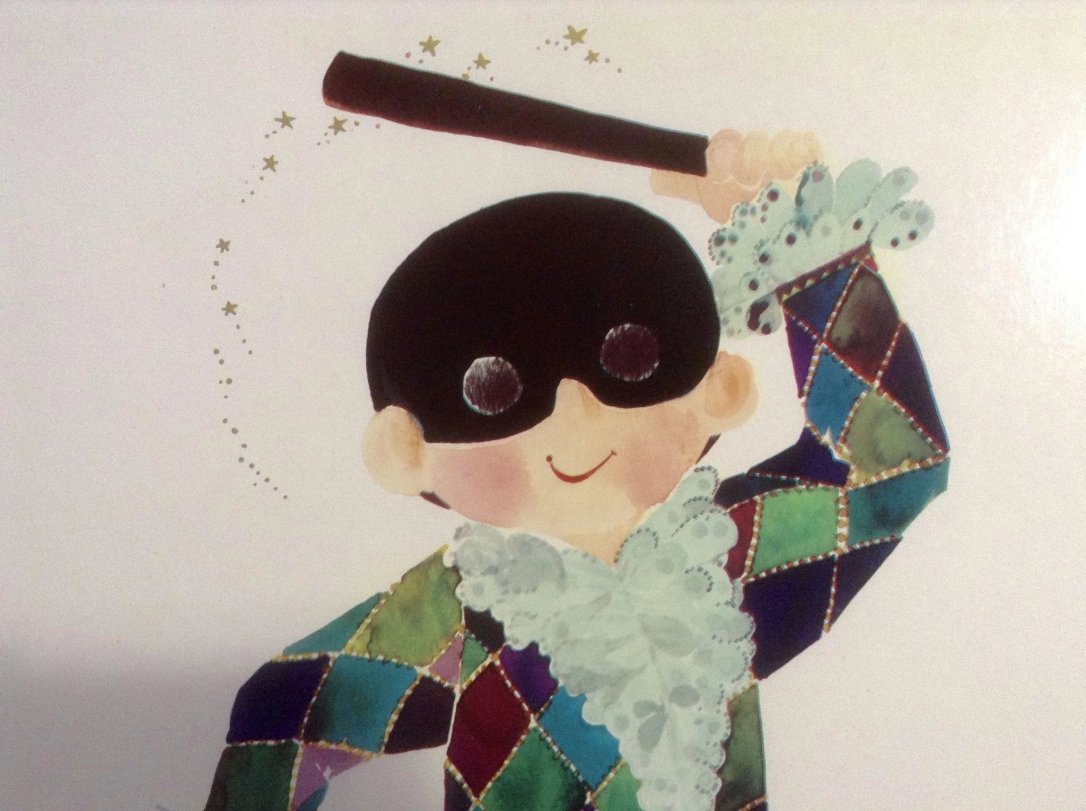
 The next day William arrived at school with a twinkle in his eye. In fact, all the children had twinkles in their eyes as they went to find Peter. Each friend brought to Peter a small scrap of cloth they had torn from their costumes. One after another, they gave Peter pieces of cloth of every shape and size. Small scraps snd larger pieces, blue, red, yellow and purple — every color you could think of really.


 Yesterday was not my best day. All day long challenges got the best of me — health challenges, schedule challenges, even bad haircut challenges. My sister of the heart, Donna, said I was cranky. My husband, Fred, said I should chalk it up to Ash Wednesday. Martie, my dear Little Rock friend, said that yesterday was the first day of Mercury in retrograde and that I should do my
 Do you ever just get tired of tending to yourself? I suppose that’s not a relevant question for a general audience. It is, however, a very relevant question for those of us who are aging and/or have chronic illnesses.
 Lift Every Voice is a Lenten resource from 2016 that is still relevant in 2019. It addresses America’s original sin of racism through the lens of Ignatian spirituality and includes daily readings. From Ash Wednesday through Easter Sunday, voices from throughout the Ignatian network will lament racial injustice in our communities and reflect on how the Gospel calls us to repent, pray, and act in solidarity with those affected by an enduring legacy of systemic and personal racial discrimination.
 Today, a friend’s blog posed a provocative question. It was provocative enough to stop me in my tracks. Likely, I was right in the middle of a tirade of complaints when this question challenged me. This was the question: “If I let go of my complaints, what might be underneath?” *
 I cannot give you a better thing today than this prayer shared by
 I’m getting to know myself. Again! Moving through life takes one through changes large and small. We slip past the small ones pretty much unscathed. But oh, those large ones! The large changes are another story altogether. Sometimes they cause us to miss a step or two. Sometimes they stop us right where we stand. Sometimes they throw us all the way to the ground. But they always get our attention.
 When I think of that year, my description of it is “horribly wonderful.” Wonderful because, in the worst of times, God breaks in through the grace of a devoted husband, a caring family, an attentive nurse, a gentle phlebotomist, a close friend, a skilled physical therapist, a loving church family.
 “I have calmed and quieted my soul.” Words from the Psalmist.
 God of the Sparrow 🌱 By Kathy Manis Findley