Struggles abound in this unwelcome COVID19 season we are experiencing. Most of us are touched by this virus in some way. We have struggled with so many life changes. I have watched strugglers of the soul work through the illness, others deal with the suffering and death of a friend or family member, often being unable to be with them at their death. Some parents are struggling with decisions affecting school for their children and teachers fear they will be unable to keep their students (and themselves) safe. Others long to see loved they have not seen in months of social distancing.
My circle of friends and family are feeling short on hope while they experience struggles of the soul. Yet, Herman Melville asserts that “Hope is the struggle of the soul.” I have been wondering what exactly that might mean. Perhaps hope gives us the courage we need to move boldly and full of hope into the place where the soul struggles, moving there with the assurance that the hope that led us there will also lead us to healing.
As I look closer at Melville’s words, I begin to see and understand that hope’s struggle eventually empowers us to break loose from the perishable things we hold on to — our wealth, our home, our “things” like cars, boats, RVs, whatever “things” we cherish. Looking at what this virus could bring, knowing that we are facing real life and death situations, cannot help but move our souls to throw off the things that don’t seem so critical anymore — perishable things we do not need. This thought prompts me to look at two of my favorite passages of Scripture.
For you know that it was not with perishable things such as silver or gold that you were redeemed from the empty way of life handed down to you from your ancestors . . .
— 1 Peter 1:18-19 (New International Version)
When the perishable has been clothed with the imperishable, and the mortal with immortality, then the saying that is written will come true: “Death has been swallowed up in victory.”
— 1 Corinthians 15:54 (New International Version)
How do we get there? How do we get through the soul struggles that can bring us to our knees?
I don’t think there is a well developed plan or a series of definite steps to take. The path, the plan, will be unique to each struggler. But the soul struggles I have felt throughout my life have taught me to place hope where hope must be: in Comforter Spirit who hovers over me with her sheltering wings; in the Christ who lives in and through me guiding me as a good shepherd and empowering me to walk with courage in his footsteps; in the Eternal God who holds before me, always, my own eternity.
This is what is available to you as well as you lean into hope’s struggle of the soul and break loose from things that are not important as you bear witness to your own eternity.
May God make it so.
As you leave these words and move with hope into your soul struggles,
May the God of hope go with you and fill you with all joy and peace as you trust in God, so that you may overflow with hope by the power of the Holy Spirit.
— Romans 15:13 (New International Version)
Amen.
I hope you can spend a few minutes in prayer and contemplation as you watch this beautiful, comforting music video, “Still with Thee,” with text written by Harriet Beecher Stowe.
“The Wings of the Morning” reflects on Psalm 139:9, 10. The Psalm has been one of Great comfort to me in difficult times. I hope you enjoy this piece, calligraphic art rendered in ink and pastels.
To purchase this or other prints in my collection, click HERE.
What’s all this about supermoons and sacred pauses?
You might legitimately ask that question!
Well, this stream of thought began for me when astrological experts said that the Super Pink Moon that appeared on April 7th would be the “most super” of all supermoons this year. They also said that the moon would not be pink at all.
Before you get your hopes up, this “Super Pink Moon” won’t actually look “super pink”—or any hue of pink, really. The Moon will be its usual golden color near the horizon and fade to a bright white as it glides overhead.
That information did not please me at all. I had really looked forward to seeing a pink moon. The Farmer’s Almanac — always a reliable source of information since its founding in 1792 — described what the April 7th moon would look like.
It is not to be missed — The Super Pink Moon: The Biggest and Brightest Supermoon of the Year! April’s full Moon will be closer to Earth than any other supermoon in the series. It will be the biggest and brightest full Moon of 2020! How big and how bright, exactly? On average, supermoons are about 7% bigger and about 15% brighter than a typical full Moon.
There you have it, from every farmer’s most tried and tested source on all things earth! But in addition to the disappointment that this supermoon would not be pink in any way, the most devastating disappointment of all was that on April 7, 2020, Macon, Georgia was completely overcast! For all gazing intentions, there was no moon at all that night, not a pink moon and not even a white one. Like other Middle Georgia folk, I missed the whole thing, the entire phenomenally astounding sight!
Other people in other places saw it, though, in all its splendor. They took pictures, some of which looked like a round, dull white ball in the sky. But others — including NASA of course — posted pictures of a brilliant, unforgettable moon. And one person took a stunning picture of this supermoon that was brilliant white and surrounded by an ethereal pink ring! And they said it would definitely not be pink!
The pink-ringed moon picture made me very happy! It was the emotional boost I needed in a time of pandemic isolation. In the midst of such a troubling and fear-filled time when all over the earth, a supervirus was touching people with upheaval, sickness and death, it was a very opportune time for an uplifting supermoon. Still, I wonder why it even mattered to me or anyone else. After all, moons rise and fall every single day. Even supermoons rise on a predictable astrological schedule.
So maybe my lesson here is acknowledging that I seldom go out at night just to gaze at the moon. When I notice a moon in passing, it’s as if I’m thinking, “So what! It’s just another moon!” And yet, the moon might be in the night sky just to remind me that the moon is the Creator’s metaphor for something that is everlasting, permanent and yet changing. I actually do look to the sky once in a while and see a new sliver of a moon on a cloudless night or a full moon glowing brightly enough to light my path. Ever so often, I’m thrilled by the discovery, as though I were seeing it for the first time.
Instead of ignoring a moon that appears most every night, perhaps moon gazing can be a spiritual moment that helps me know that at least something in my life is everlasting, that the promises of God are ever near, that my faith can light my path, that, as the Psalmist writes, the moon is eternal, a “faithful witness in the sky!”
It will be as eternal as the moon, my faithful witness in the sky!
— Psalm 89:37 NLT
Moon gazing can also be my time of spiritual comfort as I recall the words of the prophet Isaiah, who speaks of the rising of the sun and the moon as a part of binding up those who are injured and healing the wounds of God’s people.
Moreover the light of the moon will be like the light of the sun, and the light of the sun will be sevenfold, like the light of seven days, on the day when the Lord binds up the injuries of his people, and heals the wounds inflicted by his blow.
— Isaiah 30:26 NRSV
At the end of the day, we can know this: gazing at the moon can remind us of the magnificent smallness of humanity and the overwhelming magnificence of God. The Psalmist invites us to marvel at how we dearly we are prized by God in a Psalm that lifts up both Divine majesty and human dignity, unequivocally declaring that God cares for me, and that God cares for you.
O Lord, our Sovereign,
how majestic is your name in all the earth!
You have set your glory above the heavens . . .
When I look at your heavens, the work of your fingers,
the moon and the stars that you have established;
what are human beings that you are mindful of them,
mortals that you care for them?
Yet you have made them a little lower than God,
and crowned them with glory and honor.
You have given them dominion over the works of your hands;
you have put all things under their feet,
all sheep and oxen,
and also the beasts of the field,
the birds of the air, and the fish of the sea,
whatever passes along the paths of the seas.
O Lord, our Sovereign,
how majestic is your name in all the earth!
— Psalm 8:1, 3-9 NRSV
The last word in my story On this day is that the moon, the sun, the stars — all created things — are not merely created, they are God-created, and God’s creation may very well be worth a few extra moments of gazing into night’s quiet pauses — praying and praising, reflecting and listening. Listening for the voice of God. Listening for the sigh of the soul!
I love the photo of that moon surrounded by a pink circle of reflected light, because it was for me a divine and holy light. I know that it was divine and holy, because it abruptly stopped me. Just a picture it was, not the real moon that I might have seen in my night sky. Yet, it took on the power of my faith that has always assured me that God can be found in all things, simple or sacred, ordinary or holy.
My faith has taught me that, more times than not, a very ordinary thing — an ordinary act or an ordinary moment — can suddenly and surprisingly become holy. Just that one ethereal moon captured in a commonplace photograph silenced me, calmed me, reached into my soul and divinely interrupted me for a much needed sacred pause.
Maybe that’s the meaning of the words we often say about a picture being worth a thousand words. As for me, I will just say thanks be to God for beckoning me to night’s quiet pauses, sacred pauses that I needed so deeply.
Juneteenth is a celebration. It’s not solemn, it’s filled with joy and pageantry. It’s not a funeral. But 2020 Juneteenth is uncomfortably juxtaposed with police violence against Black people, protesters in cities all over the nation and funerals — too many funerals.
A Bit of History . . .
Juneteenth is one of America’s oldest holidays and is observed each year on June 19 to mark the official end of slavery in the United States. The day has long been celebrated by black Americans as a symbol of their long-awaited emancipation. But the story behind the holiday starts 155 years ago today in Galveston, Texas.
On June 19, 1865, Union troops led by General Gordon Granger arrived in Galveston, Texas, to break the news to the last remaining Confederate sympathizers that they had lost the Civil War and that all slaves must be freed. The Union general read aloud to the residents of Galveston:
The people of Texas are informed that in accordance with a Proclamation from the Executive of the United States, all slaves are free. This involves an absolute equality of rights and rights of property between former masters and slaves, and the connection heretofore existing between them becomes that between employer and hired laborer.
The newly freed slaves celebrated emancipation with prayer, feasting, song, and dance, and the following year, the first official Juneteenth celebration was born. But the importance of Juneteenth is that it is rooted in a long history of struggle for freedom and then perhaps the greater struggle to maintain freedom in the face of the enormous repression that was to come.
The Struggle for Freedom Continued
It turned out that being free did not mean being being treated with respect. Yes, it was the true end of the Civil War, but it was also the beginning of Reconstruction, a time that was supposed to be very happy and hopeful. Yet the period of Reconstruction became a miserable time for freed Black people because Reconstruction became part of the redemption of the South. As such, it set out to move African Americans to indentured servitude. While President Abraham Lincoln abolished slavery in his Jan. 1, 1863, Emancipation Proclamation, rebellious Confederate strongholds dotted across the South delayed the widespread implementation.
The South would not hear of the end of slavery, and landowners moved heaven and earth to make sure they had plenty of indentured servants. They were determined to continue the ostentatious lifestyle that they believed was their right and their legacy. They were resolute in their quest to maintain their master/servant status.
Still Today, Elusive Freedom
Juneteenth has been “passed down” through black communities since 1866, but in this year — 2020 — this nation seems to be at the height of a modern-day civil rights movement. My friend says, “2020 is the year of reset!” People throughout this nation of every race and creed hope beyond hope the 2020 will go even beyond “reset” to reconciliation, transformation and rebirth. So that every person is free, respected and cherished as a part of beloved community.
The cruel and violent death of George Floyd under the knee of a Minneapolis police officer might mean that this year Juneteenth may not be only about festivals, parades and cookouts. It may well be somewhat of a silent, reflective vigil for George Floyd, Breonna Taylor, Ahmaud Arbery, Rayshard Brooks, Caine Van Pelt, Michael Thomas, Lewis Ruffin, Kamal Flowers, Momodou Lamin Sisay, Ruben Smith, Modesto Reyes . . . and the list could continue.
It is a list of tragedy and horror. It is a list that is a stain that will ever remain on this nation, an indelible mark of shame. It is a list of names we must never forget. So in your commemoration of Juneteenth today, honor those names, pray for their mourning families, and pray that you will confront racial injustice with an unshakeable resolve.
Juneteenth was meant to be a celebration, although many people might not be able to celebrate today. Heartbreak and horror have a tendency to override celebration and joy. Even with hearts broken, I hope we will find in our hearts even a tiny desire to celebrate this day that was, and is, all about freedom.
May the change that comes from the “2020 movement for racial justice” cause us to celebrate, not mourn, every time Juneteenth comes around — today and forevermore. And may each of us and all of us — a people of God’s creation — witness the rebirth of a nation where every person lives under a worldwide canopy of justice, peace, equality, respect and freedom.
May God make it so through us. Amen.
Celebrate, or mourn, today as you spend a few moments watching this moving and poignant video, “Oh Freedom.”
liminal in American English (ˈlɪmɪnəl ; ˈlaɪmɪnəl )
ADJECTIVE
1. Relating to a transitional or initial stage of a process.
2. At a boundary or transitional point between two conditions, stages in a process, ways of life, etc.
“Liminal” used in a sentence:We are in a transitional and liminal time: this makes everything unsettled and awkward, and most of us feel tremendous unrest and a sense of urgency.
I choose to mark this particular time in history as a liminal time that demands my courage to stand — to stand in solidarity with every person who is demanding an end to racial injustice. I cannot choose my partners in this struggle. Instead, I have to accept those that appear in my life, bringing with them a determined will to stand for justice.
I must understand that liminal time does not last forever. Liminal time is a place of transition, a liminal stage between justice and oppression, between life and death. So my choices and yours in this liminal time might very well affect what’s going on in the streets of American cities, in police precincts in every community and rural hamlet, in the halls of Congress and in the White House, in our hearts and in the hearts of those we could see as our “enemies.“
Here is where I must focus. My heart must long for an end to injustice. So must yours, because God’s heart grieves over the mayhem in our streets and the violence that has its way when a white police officer murders a black man or woman, even a black child.
You and I must yearn for an end to racial injustice — any kind of injustice and oppression — because God’s heart yearns to see us living in holy unity as brothers and sisters.
These days have dramatically shown us our liminal time, and it is NOW.
I have a strong sense that this liminal time has brought the widespread unrest we are witnessing, and that unrest emerges directly from a deep desire for change and transformation. It must be now!
Those of us who remember, know that the Civil Rights Movement came to its boiling point when every marcher, every protester, every non-violent activist and every violent one knew when their liminal time had come. Some people, of course, did not like that time at all, but even those who resisted that movement towards justice knew in their hearts that it was the liminal time, the time of NOW.
The fight was fought by people who spoke and marched, prayed and worshipped, who resisted and stood their ground, who preached and sang their freedom songs. Ah, how those songs of the civil rights movement helped motivate people of all ages and races, from Student Nonviolent Coordinating Committee (SNCC) activists and Freedom Riders to the thousands who marched on Washington, Selma, and Montgomery!
Yet not one person — Civil Rights leader or non-violent protester — could achieve civil rights alone. It required persons living in the poorest neighborhoods and their affluent neighbors across town. It took white folk and black folk, protestors and preachers, eloquent advocates and those who fought silently, lawyers and congresspeople and attorneys general and presidents. It required a community in solidarity. In fact, during the Civil Rights Movement, the creation of community was the quintessential coming-of-age story for Black people.
Of that historically significant time, Father Richard Rohr writes this:
It was the particular time in history when nonviolent initiatives seeded with contemplative worship practices became acts of public theology and activism. You see, activism and contemplation are not functional opposites. Rather, contemplation is the heart’s reflective activity that is always seeking the spiritual balance between individual piety and communal justice-seeking.
Who could have predicted that America’s apartheid would fall as decisively as the walls of Jericho, when the people marched around the bastions of power carrying little more than their faith and resolve? How audacious it was to take just the remnants of a chattel community, the vague memories of mother Africa, and a desperate need to be free, and translate those wisps into a liberating vision of community. The idea of a beloved community emerged from the deeply contemplative activities of a besieged people — the people of the Civil Rights movement. — Fr. Richard Rohr
One would think that such a movement that was so powerful, so eloquent and so determined would see its dream become reality, and that such a stunning reality would last forever. So that every person, from that time to this, would live as beneficiaries of beloved community. But here we are in another liminal space of racial indignity, cities in chaos and families mourning the death of their loved ones in Minnesota, in Georgia, in Kentucky and beyond. We did not really believe we would be in this time and space, a time that would demand a civil rights movement of its own.
The in-between liminal spaces of Scripture are pregnant with God’s transformational possibilities:
Noah and his family rebuilding the world after the flood; Abraham holding the knife above Isaac; Jacob’s struggle with the angel; Joseph in the pit; Moses and the Israelites at the edge of the Reed Sea; Israel in the wilderness; Joshua crossing the Jordan; Jesus suffering on the tree; the women at His tomb; the disciples waiting in Jerusalem.
Scripture indeed is fraught with liminal moments – moments of imminent expectation, infused with both hope and doubt — that lead to transformation and change. So change involves tension, and those of us who are longing for a paradigm shift that insists on justice, know that tension all too well.
Betwixt and Between — neither here nor there. It would be safe to say that this liminal time is mostly uncomfortable and confusing. Liminal time is the time between what was and what will be. And not one of us can predict what will be, either in this struggle against injustice or in the uncertain waxing and waning of the deadly coronavirus. The convergence of virus and death and sickness and distancing with racial injustice, violence and protest is almost too much uncertainty for us to navigate.
In the end, I want to believe that this liminal time and every liminal space is the dwelling place of God, the place where God meets us and says, “I will never leave you or forsake you . . . And remember, the Spirit of the Lord is upon you and has anointed you to announce Good News to the poor, to proclaim freedom for the imprisoned and renewed sight for the blind, to release those who have been oppressed. [my paraphrase]
Even in our current time of disconcerting fluid borders, God is with us in this liminal time. God is inseparably bound with us in this moment, and it is in this liminal space where heaven and earth, life and death, joy and sorrow, ecstasy and despair, sleeping and waking, justice and injustice, commingle.
So here’s my challenge to myself and to all of us. What if we choose to experience this liminal time, this uncomfortable now, as a time for insisting upon full solidarity with all of our brothers and sisters? What if we choose to make this particular time — with all of its pandemic and death, chaos and destruction, fire and protest, upheaval and violence as if no lives matter — a liminal time for construction and deconstruction, choice and transformation? What if you and I choose to hold hands and march on in solidarity and community until we reach the mountaintop where injustice is no more?
Holy Anger! What does it mean for us as followers of the Prince of Peace?
I have learned to use my anger for good . . .
Without it, we would not be motivated to rise to a challenge.
It is an energy that compels us to define what is just and unjust.
—- Gandhi
Holy Anger! What in the world does holy anger mean for me?
We can begin to understand holy anger in the context of the present reality — the very real truth that so many of us are angry. After all, we saw with our own eyes a video of a white police officer with his knee on the neck of a black man. After all, we heard the man’s plea for mercy as he cried out, “I can’t breathe!” How could we not be angry? And shocked? And filled with grief? What we saw on a street in Minneapolis was a striking portrait of the kind of racial injustice and oppression that black people have suffered throughout history, now fully visible to us in the year of our Lord, 2020.
The tragic moments — 8 minutes and 46 seconds — are burned in our memories by the righteous fire of everything that is so wrong about George Floyd’s life slipping away, his breathing becoming more and more labored as the minutes moved on. I suggest that we who are God’s people are appropriately seething with holy anger.
Still, we seek an answer to the question, “What must we do with our holy anger?“ As we follow the way of Christ, what must we do to “overturn the tables of the money changers?” (Matthew 21:12-13) What do we do with our holy anger when we recall the anger of Jesus who threw tables to the ground and said, “My house shall be called a house of prayer; but you are making it a den of robbers.”
Perhaps, like me, you have been dealing with the struggle of reconciling your heart’s faith with the anger you hold in your heart right now. Dr. Barbara Holmes describes our dilemma well and gives us a construct that is true to our faith.
We all need a way to channel and reconcile our anger with our faith. . . . A theology of anger [for communities under siege] assumes that anger as a response to injustice is spiritually healthy.
Dr. Holmes suggests that, even though we serve a God of love, a theology of anger can wake us up and ask us to stand firmly on the holy ground of “justice for all.” Indeed, our holy anger can wake us up to the reality of racial oppression, of white privilege and of the violent brutality of systemic racism in our nation. Perhaps our holy anger will compel us to throw off the chains of weak resignation, as well as our persistent denial of the high cost of racial injustice. Perhaps our holy anger can empower us to transform our despair into compassionate action that transforms racial injustice and oppression. Perhaps we could even be labeled “justice-seeking folks.”
During a 2016 demonstration in Minneapolis, Minnesota, after the police shot an unarmed black man, Pastor Danny Givens publicly and peacefully challenged the Governor of Minnesota as he shouted these words into a microphone:
Your people keep killing my people. You keep telling me that you are going to do something. I just want you to put some action on it, put some respect on our people’s names . . . This isn’t black anger. This is black grief! [1]
How do we even begin to separate our anger from our grief? Pastor Danny Givens spoke in 2016. Understand that racial violence did not suddenly take over our community in 2020. It was a plague hovering over us in 2016, and before that — centuries of white supremacy, systemic brutality, lynchings and lashings, system-sanctioned murders. People of God, how can we not be angry?
I wonder how our holy anger will move us to holy action. I wonder where our holy anger will lead us with the mandate of ending racial injustice and creating Beloved Community. I am a long-time member of the Alliance of Baptists. Through many years, I have been proud of their broad influence against injustice and oppression. Today I am particularly proud of their recent statement on racism in the United States and I share portions of it here.
A Joint Statement on Racism in the United States
from the The Alliance of Baptists,
Baptist Peace Fellowship of North America – Bautistas por la Paz,
and the American Baptist Home Mission Societies. June 9, 2020
We have seen with dismay, pain and horror the destructive mark of racism on the soul of the U.S. Throughout our history, racism being the backbone of this nation’s development and unjust enrichment of many has become the choking source of black communities and people of color affecting every aspect of our collective life. The coronavirus pandemic has exposed these racial inequities that hurt black and brown communities by hindering their access to health but also their development, freedom, and pursuit of happiness. George Floyd’s words became prophetic for as a nation, we can’t breathe anymore.
The brutal and disturbing deaths of George Floyd, Breonna Taylor, Ahmaud Arbery, and Tony McDade have shaken our nation to its soul and painfully demonstrated the daily danger of being black in this nation . . .
The undersigned organizations publicly denounce the murder of George Floyd, its race-related violence, including the police brutality shown, and demand that each one of the four police officers involved in his death face justice for all engaged in disdaining the worth of this man as a human being and as a citizen. As peacemakers, we painfully recognize the sinful prejudice ingrained in our hearts, the violent actions deflecting the affirmation of justice, and the biased attitudes justifying hurting other human beings just because of the color of their skin and commit ourselves to dismantle racial oppression however we can . . .
We acknowledge our present time is difficult. We have become overwhelmed with a pandemic death toll surpassing 100,000 deaths, the desperation of millions unemployed, and the continuous disregard of black human lives. While these successive “pangs of birth,” can madden us, as peacemakers, it is essential to remember that grace and forgiveness heal our hearts, that we belong to each other (Rom 12:4-5) and that justice will be done for we seek it (Matt. 6:33). Under this yoke of darkness our actions today will define the future we want to build. We ask the Spirit to break us free and help us breathe.*
Amen! I can enthusiastically sign this transformational statement, with my commitment to respond to our beckoning God, to follow Christ in the way of peace, to breathe in the Spirit’s wind and fire, to use my holy anger against evil oppression. For me, the task of dismantling racial oppression is a holy calling that demands decisive action motivated by my holy anger.
May the holy anger in my soul abide with the holy peace in my heart, and may both compel and empower me to do the holy work of transforming injustice.
May God make it so for all of us and each of us. Amen.
*Please read the full statement from the Alliance of Baptists that includes five points that call for justice HERE.
[1] Morgan Winsor and Julia Jacobo, “Pastor Shouts at Governor: ‘This Is Black Grief,’ After Police Shooting of Minnesota Man,” ABC News (July 7, 2016). Available at http://abcnews.go.com/US/pastor-challenges-minnesota-gov-put-action-cop-shooting/story?id=40406186
Unfaith! Such an unsettling word that may well describe where we sometimes find ourselves! I am certain that unfaith applies to me, to the times when my soul is troubled, to the seasons when my faith becomes small. Unfaith most definitely takes over in my heart at times, and in those times, my journey is a struggle. So I battle against unfaith, all the while simply wanting to understand it. This is my truth: I fight unfaith, praying to be rid of it, writing down my emotions around it, reading my Bible when I cannot live with unfaith another minute. My skirmish with unfaith often leads me to the words of the Psalmist.
In yesterday’s struggle with unfaith, I happened upon Psalm 73. It is a rather lengthy Psalm, as Psalms go, and it spends a great deal of time describing wicked people. I rushed through it, I think, because I was searching for inspiring words about unfaith and because I all already know a lot about wicked people. I can, in fact, describe wicked people almost as passionately as does the Psalmist. On top of that, my description of wicked people often includes some choice and inappropriate words.
I plowed on through the Psalm when, out of the blue, one particular verse “hit me upside the head!” (That’s southern slang!) Verse 14 came much too close to my soul. It described my emotions and showed me myself.
All day long I have been afflicted,
and every morning brings new punishments.
— Psalm 73:14 NIV
Oh my! There it is: a succinct statement that so fully reflects what I had been feeling for the past week. It is unpleasant to read, as if it is stating my disconcerting reality and then forcing me to ask myself a question I would rather avoid. Still, I dare to ask myself — “So what are you going to do about your current state?” — knowing that I will likely not have an immediate answer nor a reassuring one. Sometimes I think that all of my feelings and responses come from my unfaith.
I should give you the backdrop for my Psalm 73 experience. I have felt unwell for several days — unrelenting fatigue, deep muscle aches, shortness of breath, trembling, hand tremors and several other troubling symptoms. The reality is that since my kidney transplant in November, I have been plagued with less than perfect health and a very compromised immune system.
Last week, my immunosuppressant medication dosage was increased, something I always dread because I know the distress that usually follows. This time, the side-effects seem worse than they have ever been. I struggle with the reality that so many parts of my body are just not working normally and despair is one of my recurring feelings, despair that, on most days, I have to fight against.
I have learned that I can fight against despair and that often I must. Despair does a number on the soul and spirit, on the place where my emotions live. So, yes, I can fight it, but the fight is exhausting. I can stand courageously and face off with despair. At times, I can even rise above it, but the encounter leaves me deep-down weary.
As for my spirit? Well, my spirit constantly searches for God’s comfort, for holy relief and answers to my questions. I try to attend to my spiritual health, as well as my emotional and physical health, often without much success. I sometimes experience God as a comforter who is far away. I do not often hear God’s voice, and I am not one to beg God for healing. Is all of this struggle because of my unfaith?
I have shared far more confession and self-revelation than anyone needs to hear. I do it because sometimes I believe that release might come if I can give voice to my pain and discouragement, if I can own my weariness and tell my story. Telling is not a quick-fix miracle cure, but telling another person how I feel gives me an extra measure of strength and resolve. And telling all of you who read my blog always means that many of you will offer prayers for me.
After sharing with you that I sometimes feel distant from God, this morning I caught an unexpected glimpse of God. It was just a tiny glimpse, though it was also a comforting, healing glimpse. I caught a glimpse of God in the place I find God most often — through the words of the Prophet Isaiah. The Book of Isaiah is my go-to place when I find myself so weary that I feel as if I cannot take another step.
Selected passages from Isaiah 40 and 41:
Do you not know? Have you not heard?
The Lord is the everlasting God, the Creator of the ends of the earth.
He will not grow tired or weary, and his understanding no one can fathom.
He gives strength to the weary and increases the power of the weak.
Even youths grow tired and weary, and young men stumble and fall;
but those who hope in the Lord will renew their strength.
They will soar on wings like eagles;
they will run and not grow weary,
they will walk and not be faint.
— Isaiah 40:28-31 NIV
So do not fear, for I am with you; do not be dismayed, for I am your God.
I will strengthen you and help you; I will uphold you with my righteous right hand.
For I am the Lord your God who takes hold of your right hand
and says to you, Do not fear; I will help you.
— Isaiah 41:10,13 NIV
For some reason, I felt an urging to read Psalm 73 again. As I read it again, I found a clear and enduring declaration of God’s presence that rings so true to me on my best days.
Yet I am always with you; you hold me by my right hand.
You guide me with your counsel, and afterward you will take me into glory.
Whom have I in heaven but you? And earth has nothing I desire besides you.
My flesh and my heart may fail,
but God is the strength of my heartand my portion forever.
—Psalm 73:23-26 NIV
This is the spiritual place I want to be — the place where I know that God is the strength of my heartand my portion forever — in spite of pain, in spite of discomfort, in spite of uncertainty, in spite of the life reality that my questions will not always have answers, in spite of my unfaith. I am convinced that unfaith is always with us like “a thorn in the flesh,” an ever-present oppressor, a silent demon that steals into the soul. But I am even more certain that, along with unfaith, there is pure and true faith. Perhaps we cannot know abidingfaith without also knowing the disconcerting seasons of unfaith.
So these are my musings about unfaith, prompted by a Psalm. Isn’t that just like God, though, offering me a grace gift by gently guiding me through a Psalm that reaffirms God’s protection? Isn’t that like God, to freely give me reassuring grace? Isn’t it just like God, to give me the gift of presence, a gift freely given to me even when I doubt, even when I am struggling with a season of unfaith?
Thanks be to God for the epiphany that, in my heart and soul, faith has most assuredly come, though bringing unfaith with it. Thanks be to God for this insight: that growing in faith means descending into my unfaith for as long as it takes for its oppressive darkness to give way to God’s wonderful light.
As I walked through this part of my faith journey, I could not help but remember the words of a hymn that declares that we are held by a firm foundation and, through words spoken by God, promises us protection, strength and grace.
* Fear not, I am with thee, O be not dismayed,
For I am thy God, and will still give thee aid;
I’ll strengthen thee, help thee, and cause thee to stand,
Upheld by My righteous, omnipotent hand.
When through the deep waters I call thee to go,
The rivers of sorrow shall not overflow;
For I will be with thee, thy troubles to bless,
And sanctify to thee thy deepest distress.
When through fiery trials thy pathway shall lie,
My grace, all sufficient, shall be thy supply;
The flame shall not hurt thee; I only design
Thy dross to consume, and thy gold to refine.
In your quiet time, spend a few moments hearing this hymn as you worship with the congregation of First-Plymouth Church in Lincoln, Nebraska.
*Author: George Keith 1787; R. Keen, 1787
Source: Rippon’s A Selection of Hymns, 1787
Copyright: Public Domain
World Kidney Day is observed every year. All across the globe many hundreds of events take place from public screenings in Argentina to Zumba marathons in Malaysia. But for me, the day means something personal and very real. March 12 will be exactly four months since I had my kidney transplant at Mayo Clinic in Jacksonville, Florida. Five years on dialysis presented its own challenges. But these past four months post transplant have been grueling, challenging and confining. In fact, for various reasons including bouts of infection, I am still quarantined at home. I deal every day with the harsh reality that powerful immunosuppressant medications have decimated my immune system to the point that getting out among people is not possible, for now. On top of that, the side effects of my drugs are harrowing at times. There are so many things I love to do are now very difficult, if not impossible. I knew, of course, that a transplant is not a cure. It is just a treatment, the best treatment available. All of the post transplant realities have been bewildering and unsettling. I sometimes describe post transplant reality as the disarrangement of my way of life.
At the same time, I celebrate the miracle of the living gift I have received. I am deeply grateful and humbled by the living donor who contacted me months ago to offer his kidney — my long-time friend Greg Adams of Little Rock, Arkansas. After almost two years of testing at hospitals in Atlanta and Jacksonville, Florida, Greg was approved to donate. He was not a match for me, so the matching began. I was eventually gifted with a kidney that traveled to me from Mayo Clinic in Rochester, Minnesota, from a kind and lovely woman — Corita. Greg gave his kidney to Autry at Mayo Clinic in Jacksonville, Florida.
But that was only the beginning of the miracle. Greg’s willingness to donate his kidney to someone he did not know created a chain of eight donors and eight recipients. His altruistic donation enabled eight patients to receive new kidneys and new lives.
For all of this, I say: Thanks be to God, the Giver of Life.
It is a difficult prospect to ask someone to consider donating a kidney. I can not forget that they experience the pain of surgery and recovery, as well as feeling the loss of losing a vital organ. So when someone like Greg appears out of the blue and offers his kidney, I can only respond with heartfelt gratefulness and deep humility. Because it is so difficult for most everyone to ask another person to donate, the National Kidney Foundation offers this word of encouragement: A CONVERSATION CAN SAVE A LIFE!
Whether you need a kidney or are considering donation, I encourage you to start the conversation, first with a trusted friend or family member. Get comfortable with the idea of asking someone for a kidney. Begin “the conversation” with anyone that might consider donating. For thise of you who might consider donation, again start the conversation with someone you trust. Then visit some of the websites below to learn all you can. Start the conversation because all of us want kidney health for every person.
Understanding Living Donation
Relatives, loved ones, friends and even individuals who wish to remain anonymous often serve as living donors to spare a patient a long and uncertain wait. In 2019, more than 7,300 transplants were made possible by living donors. If you are considering living donation, it is critical to gather as much information as you can from various sources. Start here for living donor information: https://unos.org/transplant/living-donation/
So celebrating March 12 — World Kidney Day and my own kidney transplant anniversary — is a way to create awareness. Awareness must be about preventive behaviors, about risk factors, about how to live with kidney disease and awareness of the possibility of becoming a living donor. Consider these alarming statements:
15% of US adults—37 million people—are estimated to have Chronic Kidney Disease (CKD).
Most (9 in 10) adults with CKD do not know they have it.
In 2016, nearly 125,000 people in the United States started treatment for End Stage Kidney Disease (ESKD), and more than 726,000 (2 in every 1,000 people) were on dialysis or were living with a kidney transplant.
Over 3,000 new patients are added to the kidney waiting list each month.
Every 14 minutes someone is added to the kidney transplant list.13 people die each day while waiting for a life-saving kidney transplant.
In 2014, 4,761 patients died while waiting for a kidney transplant. Another, 3,668 people became too sick to receive a kidney transplant.
There are currently 121,678 people waiting for lifesaving organ transplants in the U.S. Of these, 100,791 await kidney transplants.
The median wait time for an individual’s first kidney transplant is 3.6 years and can vary depending on health, compatibility and availability of organs.
Every day, more than 240 people on dialysis die.
In 2014, 17,107 kidney transplants took place in the US. Of these, 11,570 came from deceased donors and 5,537 came from living donors.
We don’t want to know this part, but here it is anyway:
— About 1,400 children began care for kidney failure in 2013.
— The number of children with kidney failure is increasing every year.
— About 9,900 children were being treated for kidney failure as of December 31, 2013.
— The most common initial treatment for kidney failure among children overall is hemodialysis (56%).
— Peritoneal dialysis is the most common initial treatment in children younger than 9 years and for those who weigh less than 44 pounds (20 kg).
— There were over 1000 children waiting for a kidney transplant as of November 27, 2015.
— The number of children receiving kidney transplants was highest in 2005 at 899.
— About 700 children received a kidney transplant in 2014.
— About 70% of children with kidney disease will develop kidney failure by age 20.
— Children with kidney disease have a greater chance of dying than children in the general population.
The organ shortage continues . . .
Each year, the number of people on the waiting list continues to be much larger than both the number of donors and transplants. Perhaps we can make a difference by supporting persons on dialysis, persons who are making the decision about dialysis, persons who are recovering from a transplant and persons who are considering donating a kidney. Perhaps we could start conversations.
Still, there is good news:
Yes, there is good news in 2019 statistical information for persons who have suffered with kidney disease for years, maybe even their entire lives. I do not exaggerate when I say that thousands of persons languishing on dialysis reallyneed good news!
I can definitely celebrate these statistics. But I will never forget that Jalen, my youngest grandson, was born with kidney disease and went on dialysis. I will never forget the fear and frustration his parents felt. I will never forget the sheer joy we all experienced when his kidney disease resoled itself as his little body grew.
As I celebrate World Kidney Day on the 12th day of March and my day — on the 12th day of November, it is fair to say that my life has changed in ways I know and in ways I do not yet know. Yet, on this day I will think of Greg’s words about donating and receiving: “We are forever connected in a special way — and that’s a good thing.” On this day, I will know that healing for me will continue. I will be propped up by my dearest and closest friends, by my friends all over the world who pray for me, by my loving church family, by my dear caregiver husband and by my family near and far.
I will say again: For all of this, thanks be to God, the Giver of Life.
For more information about kidney disease and about Living Donor programs, please visit these links:
Peace, joy and freedom. All three are needed things, soul things that make us content. They are not easily gained, however, as the daily routine we call life attacks them on a regular basis.
How troubling it is to lose one’s sense of peace. A number of life situations can result in a loss of soul-peace — worry about illness, financial concerns, difficulty with children, caring for aging parents, moving to another home. It would be impossible to complete the list of things that can steal our sense of peace.
Perhaps we should go one step further, though, and acknowledge that our loss is not merely the loss of peace, it is the loss of peacefulness. That loss can be disconcerting at best and devastating at worse. All of us long for a deep and abiding sense of peacefulness. We sometimes cry out “peace, peace, when there is no peace.” (Jeremiah 6:14)
Joy! At times, it can be hard for us to feel joy. I think it is because we’re not at all sure what joy hidden inside the soul feels like. For joy is not simply happiness over something that has come to us — a new house or car, a life milestone like graduation or a wedding, a celebration of the birth of a child. Such things seem to bring joy, but our actual response to such events is a brief burst of happiness. Genuine joy — soul joy — happens when something inside of us deeply responds to joy and we tuck it away safely in our hearts. And that kind of joy is not a brief response to a happy event, it is an abiding, spiritual state of being that comes with a grace-filled assurance that Christ came to make sure we live our lives ‘more abundantly.” The message from Jesus comes to us using various words:
I have come that you might have life, and have it more abundantly.
(John 10:10, paraphrased)
I came to give life with joy and abundance.
(The VOICE translation)
I have come in order that you might have life—life in all its fullness.
(The Good News Bible)
Living “Life in all its fullness” seems to be the end result of abiding joy, in the soul and in the heart. Even when we listened to the song our children learned to sing, “I’ve got that joy, joy, joy, joy down in my heart,” we somehow knew that true joy was internal not external. That joy resided in our hearts and in our souls.
Finally freedom — the kind of freedom we have when peace and joy is hidden in the deepest recesses of our being. Freedom does not leave those who practice gratefulness, prayer, meditation and confession. It is at the altar of confession that God offers us assurance of pardon. It’s the opposite of the soul’s bondage. I cannot help but recall the words of the Apostle Paul about the nature of Christian freedom that so boldly introduce the 5th chapter of Galatians:
For freedom Christ has set us free. Stand firm, therefore, and do not submit again to a yoke of bondage. (Galatians 5:1)
Frederick Buechner added a new dimension to our longing for peace, joy and freedom with this powerful thought:
Unless there is peace and joy and freedom for you,
there can be no real peace or joy or freedom for me.
Therein lies the crux of living the Christian life: an interconnectedness among those who follow Christ, a community of faith in which each one supports the other. It is an interconnectedness that transcends differences of opinion, different ways of practicing faith, disagreements about which hymns are more appropriate in worship or, even more trivial, what kind of light bulbs should we use in the sanctuary.
Our interconnectedness ensures that each of us will have the will and the faithfulness to enjoy the kind of peace, joy and freedom that abides in us when we “do not forsake the assembling of ourselves together and when we exhort and encourage one another. The Message translation by Eugene Peterson calls it “spurring each other on.” (Hebrews 10:25)
Perhaps caring for one another — exhorting, encouraging and “spurring each other on” — is the message of this beloved hymn that so often informs our worship and our community when we sing it together:
Brother, sister, let me serve you;
Let me be as Christ to you;
Pray that I might have the grace to
Let you be my servant, too.
We are pilgrims on a journey;
We are family on the road;
We are here to help each other
Walk the miles and bear the load.
I will hold the Christ-light for you
In the nighttime of your fear;
I will hold my hand out to you,
Speak the peace you long to hear.
I will weep when you are weeping;
When you laugh I’ll laugh with you;
I will share your joys and sorrows
Till we’ve seen this journey through.
When we sing to God in Heaven
We shall find such harmony,
Born of all we’ve known together
Of Christ’s love and agony.
— THE SERVANT SONG, Words and music by Richard Gillard
In our deepest time of prayer and contemplation and in the sacred refuge of our community of faith, our souls find peace, joy and freedom — for all of us, for each of us.
WAR noun, often attributive (1)a state of usually open and declared armed hostile conflict between states or nations
(2)a period of such armed conflict
(3)a state of hostility, conflict, or antagonism
(4)a struggle or competition between opposing forces for a particular end
In a time of turmoil across the earth, I am reminded of the many ways we long for peace and the many times we fail to achieve it. As I hear reports and human stories of the warring among peoples of many nations, I am also very aware of the wars that often rage within. War and peace are complex ideologies that spurn people to action — either action to plunder and kill or action that insists upon peace and tranquillity. The British peace advocate John Bright (1811-1889) gave a speech at the Conference of the Peace Society in Edinburgh in the summer of 1853 to oppose the forthcoming war against Russia (the Crimean War 1854-56).
What is war?
What is war? I believe that half the people that talk about war have not the slightest idea of what it is. In a short sentence it may be summed up to be the combination and concentration of all the horrors, atrocities, crimes, and sufferings of which human nature on this globe is capable . . . injustice of any kind, be it bad laws, or be it a bloody, unjust, and unnecessary war, of necessity creates perils to every institution in the country. — John Bright (1811-1889)
Profound truth rests in Bright’s words, and it is a truth every person would do well to contemplate. At some point I recall seeing a provocative image on the poster for Stanley Kubrick’s film Full Metal Jacket. It was an image of the soldier’s helmet with a handwritten “born to kill” slogan . . . and a peace symbol, a provocative juxtaposition of reminding us that human beings have the capacity for both killing and peace.
Who can forget the words of the Prophet Isaiah?
And he shall judge among the nations, and shall rebuke many people: and they shall beat their swords into plowshares, and their spears into pruninghooks: nation shall not lift up sword against nation, neither shall they learn war any more. (Isaiah 2:4)
So why talk of war after Ash Wednesday and into Lent? Perhaps the subject of war occurred to me as I moved closer to this season of repentance and self-reflection. Perhaps I felt a need to consider the futility of war because of Ash Wednesday’s dictum, “Remember that you are dust, and to dust you shall return.”
One who came from dust, and who anticipates returning to dust, must certainly feel a longing for peace, peace in the world as well as peace of the soul and spirit. Neither examples of peace are easily achieved. The machinations of war between nations, and the eternal quest for finding inner peace, are two sides of the same coin. Perhaps it is those persons who have a dearth of inner peace who seriously contemplate making enemies and making war. War flourishes, at times, when the cause seems righteous, while at other times, the cause is greed, lust for power and human depravity. Either way, the losses of war are enormous beyond imagining.
I have been intrigued by the writing of Sebastian Junger in his book War (published in 2010). He echoes the famous words of Winston Churchill:
We sleep soundly in our beds because rough men stand ready in the night to visit violence on those who would do us harm.
Junger also offers interesting insights into war:
The cause doesn’t have to be righteous and battle doesn’t have to be winnable; but over and over again throughout history, men have chosen to die in battle with their friends rather than to flee on their own and survive.
The Army might screw you and your girlfriend might dump you and the enemy might kill you, but the shared commitment to safeguard one another’s lives is not negotiable and only deepens with time. The willingness to die for another person is a form of love that even religions fail to inspire, and the experience of it changes a person profoundly.
Three Christian denominations have positions on war.
Roman Catholic The fifth commandment forbids the intentional destruction of human life. Because of the evils and injustices that accompany all war, the Church insistently urges everyone to prayer and to action so that the divine Goodness may free us from the ancient bondage of war.
The Southern Baptist Convention (Adopted on June 14, 2000) Peace and War. It is the duty of Christians to seek peace with all men on principles of righteousness. In accordance with the spirit and teachings of Christ they should do all in their power to put an end to war.
The United Methodist Church (2000 United Methodist Book of Discipline)
We believe war is incompatible with the teachings and example of Christ. We therefore reject war as a usual instrument of national foreign policy and insist that the first moral duty of all nations is to resolve by peaceful means every dispute that arises between or among them; that human values must outweigh military claims as governments determine their priorities; that the militarization of society must be challenged and stopped; that the manufacture, sale, and deployment of armaments must be reduced and controlled; and that the production, possession, or use of nuclear weapons be condemned. Consequently, we endorse general and complete disarmament under strict and effective international control.
A map of Afghanistan with bullet holes at a school in the Kandahar Province. Photo by Bryan Denton for The New York Times
No doubt, this is probably more information on the deplorable subject of war than anyone needs to contemplate. And yet, war is not just “far off” in other countries where we can’t see it. “War” is all around us — in this divided nation, in the hate speech that is so prevalent, in the gun violence that takes lives, in violent acts within families, in racial division and the re-emergence of white nationalism. One can scarcely complete the list of the many ways war affects us, within us and around us.
We must remember that war is not only the catastrophic expectation of a nuclear bomb or chemical warfare, it is also a war that could raise its head in our communities, in our churches, even in our hearts, wreaking havoc on our souls. War is famine, homelessness, poverty, racism, family violence, child abuse, trafficking, homophobia and xenophobia. War is the destruction of humanity and all that we know to be right and just. The example of Jesus must be our guide and inspiration. No, Jesus did not explicitly warn against war, but he said so many things about peace.
The words of Jesus
Matthew 5: 38-48 (selected verses) You have heard that it was said, ‘An eye for an eye and a tooth for a tooth.’ But I say to you, Do not resist an evildoer. But if anyone strikes you on the right cheek, turn the other also . . .
“You have heard that it was said, ‘You shall love your neighbor and hate your enemy.’ But I say to you, Love your enemies and pray for those who persecute you, so that you may be children of your Father in heaven . . . For if you love only those who love you, what reward do you have? Do not even the tax collectors do the same? And if you greet only your brothers and sisters, what more are you doing than others? Do not even the Gentiles do the same? Be perfect, therefore, as your heavenly Father is perfect.
Mark 12:28-31 One of the teachers of the law came and heard them debating. Noticing that Jesus had given them a good answer, he asked him, “Of all the commandments, which is the most important?”
“The most important one,” answered Jesus, “is this: ‘Hear, O Israel: The Lord our God, the Lord is one. Love the Lord your God with all your heart and with all your soul and with all your mind and with all your strength. ‘The second is this: ‘Love your neighbor as yourself.’ There is no commandment greater than these.”
The early Christians took Jesus at his word. They closely identified their religion with peace; they strongly condemned war and bloodshed; they appropriated to themselves the Old Testament prophecy which foretold the transformation of the weapons of war into the implements of agriculture; they declared that it was their Christian commitment to return good for evil and to conquer evil with good.
Might we all do likewise!
What is critical for us is to fully understand that war among us or within us creates profound loss . . . always. The current political divisions are taking a toll on everyone. We no longer live in a time when political leaders held all the divisiveness. In these days, fractured politics have reached communities, churches and even families. When support for political candidates creates deep separations one from another, we have reached a dangerous and divisive environment. When we live in such a divisive environment, we risk losing relationships with those who “don’t vote like we do.” What a senseless, unfortunate and tragic loss that creates — breaches between friends, alienation among family members, rifts in communities of faith, deep schism in neighborhoods and communities.
Our spiritual intention must be a quest for peace, reconciliation, unity and respect. This is God’s intention for people of faith. This is God’s intention for the world, that nations, tribes, villages, cities — all the peoples of the world — shall not learn war anymore!
Duc In Altum . . . a different sort of phrase for beginning a blog post. Until recently, I had no idea what this Latin phrase meant! The phrase Duc In Altum is generally translated to mean “put out into the deep.” The phrase draws its name from Luke 5:4 where Jesus instructs Simon Peter to “launch into the deep” or “put out into deep water” or “draw into the deep.” More specifically, the phrase comes to us from the Latin (Vulgate) translation of Luke’s Gospel of the call of Peter.
But “launching into the deep” does not stop with the experience of Simon Peter. It is a part of the Holy Calling of each of us to go deeper in loving, caring and compassion for others. The dilemma we face as Christ followers is that cannot we go to the deeper level with others unless we do so within our own hearts first. Knowing our hearts, searching our hearts is apart of a contemplative life that prepares us to be “fishers of people.” Holy calling is what Duc In Altum is about and is so clear in the story of Jesus calling his first disciples.
One day as Jesus was standing by the Lake of Gennesaret, the people were crowding around him and listening to the word of God. He saw at the water’s edge two boats, left there by the fishermen, who were washing their nets. He got into one of the boats, the one belonging to Simon, and asked him to put out a little from shore. Then he sat down and taught the people from the boat.
When he had finished speaking, he said to Simon, “Put out into deep water, (Duc In Altum) and let down the nets for a catch.”
Simon answered, “Master, we’ve worked hard all night and haven’t caught anything. But because you say so, I will let down the nets.”
When they had done so, they caught such a large number of fish that their nets began to break. So they signaled their partners in the other boat to come and help them, and they came and filled both boats so full that they began to sink.
When Simon Peter saw this, he fell at Jesus’ knees and said, “Go away from me, Lord; I am a sinful man!” For he and all his companions were astonished at the catch of fish they had taken, and so were James and John, the sons of Zebedee, Simon’s partners.
Then Jesus said to Simon, “Don’t be afraid; from now on you will fish for people.” So they pulled their boats up on shore, left everything and followed him.
— Luke 5:1-11 New International Version (NIV)
Launch out into deep waters . . . Duc In Altum . . . A Holy Calling . . .
It was not only a calling to Simon Peter. It was not only a calling for the other men who were with him on that day to experience that sacred encounter with Jesus of Nazareth. The Holy Calling in those days was also a call to women, just as it is today. For all of us have watched many women go out into the deep places of ministry and service. All of us have borne witness to women of faith who “headed out into the deep waters.”
Duc In Altum is not only a holy message of call, it is a place. In the Holy Land, in the town of Magdala, there is a beautiful architectural offering called Duc In Altum. It has been called “the most unique spiritual center in the Holy Land.” The Center does only commemorate the men Jesus called, but also the women. Included in the design and construction of Duc In Altum is a women’s atrium designed to exalt the presence of women in the Gospel. In what the builders and developers call Divine Providence, the idea for this Center materialized in Magdala, birthplace of Mary Magdalene, who was a follower of Jesus, along with other women who supported him with their own means (Luke 8).
The Women’s Atrium features eight pillars, seven of which represent women in the Bible who followed Jesus, while the eighth honors women of faith across all time.
These are the honored women whose names are on the pillars:
Mary Magdalene – follower of Jesus and present at his crucifixion (Luke 8:2)
Susana and Joanna, the wife of Chuza – followers of Jesus (Luke 8:3)
Mary and her sister Martha – followers of Jesus (Luke 10:38)
Salome, the mother of James and John – supporter of Jesus and wife of Zebedee (Matthew 20:20)
Simon Peter’s mother-in-law – healed by Jesus, then supporter of Jesus (Matthew 8:15)
Mary, wife of Cleopas – follower of Jesus and present at his crucifixion (John 19:25)
The Unmarked Pillar – for women of all time who love God and live by faith
The Unmarked Pillar is for you and me, for all women who have heard the Holy Calling and have responded, “Yes!” The Holy Calling is a call for every age with the same message, Duc In Altum, “launch into the deep waters” in faith and commitment. It is for so many women who have set their faces toward a Holy Calling and headed out into the deep waters to meet people in need wherever they are, whatever their needs. It is for women who have heard the Holy Calling and responded, “Here I am, Lord. Send me.”
Jesus said, “I will make you fishers of people!” Amen.
Jesus and the Stubbornly Tenacious Woman from Canaan
Leaving that place, Jesus withdrew to the region of Tyre and Sidon. A Canaanite woman from that vicinity came to him, crying out, “Lord, Son of David, have mercy on me! My daughter is demon-possessed and suffering terribly.”
Jesus did not answer a word. So his disciples came to him and urged him, “Send her away, for she keeps crying out after us.”
He answered, “I was sent only to the lost sheep of Israel.”
The woman came and knelt before him. “Lord, help me!” she said. He replied,
“It is not right to take the children’s bread and toss it to the dogs.”
“Yes it is, Lord,” she said. “Even the dogs eat the crumbs that fall from their master’s table.”
Then Jesus said to her, “Woman, you have great faith! Your request is granted.” And her daughter was healed at that moment.
(Matthew 15:21-28)
I wonder . . . was it her faith or her stubborn tenacity that led to her daughter’s healing? Stubbornness is typically not one of the virtues to which Christians aspire. In fact most of Christendom would rebuke a stubborn woman, in ages past as well as in our day. I know this to be truth! I have been rebuked a time or two, or at least received “strong suggestions” that I should dial back my demeanor. The woman of Canaan, though, returned to Jesus again and again until he healed her suffering daughter.
I can be a bit tenacious, but no one would describe me as stubborn. I typically have a very calm and quiet demeanor, but I remember well one of the few times in my life when I was fierce and stubborn. Our son Jonathan was quite young and very sick with severe vomiting, along with strong spasms that caused him to be unable to breathe. The loud inhalations as he struggled to get a breath were extremely frightening to us, especially to him. Jonathan was a strong boy, an athlete, and very self-sufficient, but these long episodes brought him directly to his Momma. We had been to the hospital emergency room and were now in his pediatrician’s office. This violent gasping for air had been going on for hours, and it should have been obvious to the office staff that Jonathan was in trouble.
Now they would know real trouble!
Jonathan had another violent attack. I jumped up from my chair, went to the desk, and had some strong words to say, in a loud voice, with the passion of a mother desperate to protect her child. I got the familiar line about the doctor running behind.
You know, I don’t care if the doctor is behind! (in my loudest voice) Can you not see and hear that my child is throwing up all over your waiting area and is unable to breathe? Do you realize that he could be infecting every child in here? Take us to an exam room, NOW, and get the doctor away from whatever he’s doing! Because if you don’t, I am headed to the president of Baptist Medical Center who knows me very well because I am a chaplain in this hospital!
Not like me at all! But that is a “Momma response” that almost always erupts when her child is hurting or in trouble. We were in a desperate place and were being ignored. Jonathan was terribly frightened and had been dealing with these spasms for hours. In time (too much time) it was resolved and we were able to get Jonathan settled and resting.
And about the “Canaanite Momma” . . . well, she was definitely stubborn and persistent that day. Clearly, Jesus did not realize who he was dealing with. Maybe he did know! Perhaps Jesus knew precisely what he was doing and chose to use his encounter with the woman from Canaan as a teaching moment for his hearers. Or perhaps he was simply in a stubborn mood and found himself facing someone who could easily match him, stubborn for stubborn!
Either way, the story shows us that when it comes to saving what needs to be saved, being merely nice and calm won’t usually win the day. Sometimes we need to dig in our heels and do some hollering! The text simply portrays the Canaanite woman as a stubborn, persistent mother of a very sick daughter.
Remember, the disciples urged Jesus to send her away. She was obviously making a lot of noise, crying out and disturbing their quietude! On top of that, Jesus was somewhat stubborn himself, saying that he was sent only to the lost sheep of Israel.
But this “Canaanite Momma” went back to Jesus straightaway, knelt down before him, saying, “Lord, help me!”
And we know what Jesus finally did. He praised her faith and healed her daughter. So was it faith or was it stubbornness, persistence? Maybe it was both, that her faith empowered her to stubborn persistence. Clearly, she believed Jesus was able to heal her daughter, so she tried to convince Jesus more than once. The disciples didn’t deter her. Jesus Could not dissuade her with his statement about dogs!
“Woman, you have great faith.”
A wonderful portrayal of what this woman might have said about her encounter with Jesus is a poem written by Jan Richardson entitled “Stubborn Blessing.”
Stubborn Blessing
Don’t tell me no.
i have seen you
feed the thousands,
seen miracles spill from your hands like water, like wine,
seen you with circles and circles of crowds pressed around you
and not one soul turned away.
Don’t start with me.
i am saying
you can close the door
but i will keep knocking.
You can go silent
but i will keep shouting.
You can tighten the circle
but i will trace a bigger one
around you,
around the life of my child
who will tell you
no one surpasses a mother for stubbornness.
i am saying
i know what you
can do with crumbs
and i am claiming mine,
every morsel and scrap
you have up your sleeve.
unclench your hand,
your heart.
let the scraps fall
like manna,
like mercy
for the life
of my child,
the life of
the world.
The work of protection is definitely not for the faint of heart. The work of advocacy on behalf of another person may take some stubborn persistence, the kind of stubborn persistence that Jesus seemed to call by another name — “great faith.” When we advocate for people who are suffering, especially people in need of profound physical healing or deep spiritual healing, their greatest need calls us to our greatest resolve, a fierce resolve. Maybe a touch of defiance! It is in those moments that we call on our hearts to give us strength for sacred stubbornness that will heal the broken, comfort the brokenhearted, restore justice to those who are oppressed.
Wishing you and those you love a new year of deep kindness, exuberant joy and gentle peace. And may you go forward into the unknown without fear, knowing that God will lead you safely into the new year ahead.
Isaid to the man who stood at the gate of the new year:
Give me a light that I may tread safely into the unknown.
And he replied:
“Go out into the darkness and put your hand into the hand of God.
That shall be to you better than light, and safer than a known way.”
Later
after the angels,
after the stable,
after the Child,
they went back …
as we always must,
back to the world that doesn’t understand
our talk of angels and stars
and especially not the Child.
We go back complaining that it doesn’t last.
They went back singing praises to God!
We do have to go back,
but we can still sing the alleluias!
— Ann Weems
Christmas Day — it will pass too soon, out of sight for another year. The angels topping our trees will be packed away. The stars on our garlands will be neatly rolled up and packed into a box. The tinsel gone! The ornaments gone! The lights unplugged! The candles extinguished! Until another year.
And we all go back to a “world that doesn’t understand our talk of angels and stars and especially not the Child.” The world goes back to life as usual, no longer graced with the brilliance of Christmas. The wars rage on across the globe, swords replacing plowshares. The racism again begins to reign. The political parties spew hatred one to the other. Hunger remains and poverty still devastates. The border wall continues to send its message of exclusion.
It’s all the same, just as it was before. It seems that the gentle spirit of Christmas changed our spirits for only a brief moment. We slip back again into our normal lives, perhaps forgetting the silent night when the star shone over a Child. As the poem says so poignantly, Christmas doesn’t last. We do have to go back to a life that can be oppressively normal, a world that can be oppressively cruel.
But there is Good News! Because God Incarnate came to us, there is Gospel Good News! Even though we have to go back, “we can still sing the alleluias!” We can sing year around if we want to. We can sing alleluias in good times and bad, in times of joy and in times of sorrow.
We can sing alleluias, like the angels who still sing in the heavens. We can sing alleluias because “The Word became flesh and dwelt among us.”
The Second Sunday in Advent The Sunday of Peace December 8, 2019
PEACE ON EARTH
“Peace on earth, goodwill to all” . . .
The song came out like one loud hosanna
hurled through the earth’s darkness,
lighting the Bethlehem sky.
Sometimes I hear it now,
but it means a baby in a manger;
it means a time of year,
a cozy feeling,
a few coins in the Salvation Army bucket.
It doesn’t mean much —
and then it’s gone,
lost in the tinsel.
Where did the angels’ song go?
Who hushed the alleluias?
Was it death and war and disease and poverty?
Was it darkness and chaos and famine and plague?
Who brought violence and took away the sweet plucking of heavenly harps?
Who brought despair and took away hope?
Who brought barrenness and crushed the flowers?
Who stole the music and brought the silence?
What Herods lurk within our world seeking to kill our children?
Are there are still those
who listen for the brush of angel wings
and look for stars above some godforsaken little stable?
Are there still those
who long to hear an angel’s song
and touch a star?
To kneel beside some shepherd
in the hope of catching a glimpse of eternity
in a baby’s smile?
Are there still those who sing
“Peace on earth, goodwill to all?”
If there are — then, O Lord,
keep ablaze their flickering candle
in the darkness of this world!
— Ann Weems
How to I manage to keep my candle ablaze in the darkness of this world? Doing so is a hard thing at times. I watch. I listen for sights and sounds that herald peace on earth, yet almost every day I see the world’s chaos instead. I contemplate what I might do in creating peace and come up empty. As in the carol I have sung during so many Advents …
Then in despair I bowed my head;
There is no peace on earth,” I said.
“For hate is strong and mocks the song
Of peace on earth, goodwill to men.”
Despair seems to be a constant companion in these days. Children separated from parents and detained in cages. Gun violence rampant. Vitriolic relationships among those who govern our nation. Climate change harming communities. Refugees searching for safe havens.
I turn toward the words of Ann Weems and ask, “Who stole the music and brought the silence?”
Are there are still those
who listen for the brush of angel wings
and look for stars above some godforsaken little stable?
Are there still those
who long to hear an angel’s song
and touch a star?
Are people of peace still singing “Peace on earth, goodwill to all?” If there are — even if there are only a few — then we pray to God that their flickering candle of peace would light the world’s darkness,
Advent’s prayer for peace remains on our lips:
O Lord, keep ablaze their flickering candle in the darkness of this world!
Around 3:00 am this morning, I was awake and alert, having tossed and turned for hours, wishing for daybreak. I was also fasted and prepared for medical tests. But before I tell you about this day’s fasting, I need to reach back and call up some of my memories of other times. While wide awake in bed, I thought about some of the fasting times I have experienced, each a singular blessing making way for sacred space.
Fasting was a part of my early childhood. Being a Greek Orthodox child with a religiously devout Yiayia (grandmother), I learned early in life about fasting. Even though I was only 8-years old, Yiayia adamantly believed I was old enough to memorize prayers from the liturgy and recite them — in Greek. And a part of her plan was designed to prepare me for Holy Communion. I must give her some good-grandmothing credit — she did have a fasting experience for me that was age-appropriate, meaning it was not as long a fasting time as the adults observed and certainly not as stringent. No meat, of course, but some laxity on dairy and liquids because I was always an orange juice child that needed to drink a lot.
Yiayia accommodated my need for plenty of juice and chocolate milk. Still, I thought I might starve before my fast was over and I received the wine and, finally, the little square of communion bread that I scarfed down. I am pretty certain, though, that I did not fully embrace this sacred mystery of prayer, fasting and the sacrament of Holy Communion.
Years passed and young adult fasting times came in times of deep angst. There were troubled times when the only hope I thought I had came through prayer and fasting. Looking back on that time, I realize that I experienced just a glimpse of the meaning behind a fast. More awareness and appreciation of the sacred mystery would come much later in life.
Maturity and age created in me a seeking spirit that longed for deep meaning. I remember so vividly my time of fasting for my profession of vows before entering the novitiate of the Order of Ecumenical Franciscans. The occasion happened in the desert of Albuquerque, New Mexico, quite an appropriate setting for my introduction to a contemplative life. Dry, expansive desert and big skies that went on forever captured my imagination. It occurred to me at the time that I was experiencing just a tiny glimmer of desert spirituality. This fast in the desert was really the first time I immersed myself fully in the sacred mystery of fasting.
Now back to this day while waiting for daybreak after a night of tossing and worrying. This fasting morning was not religious at all, but necessary for information the kidney doctors needed from the 30 vials of blood The Mayo Clinic phlebotomist retrieved from my flimsy vein.
But come to think of it, today’s fasting may be the most sacred of all because it leads to the mystery and science of a kidney transplant. When a donor comes forward willing to give a gift of life from his or her own body, that feels very much like sacred mystery.
God orchestrated the entire experience. And by the way, God knows all about my tossing and turning in the wee hours of this morning. God understands my anxiety and fear. God understands the emotional place of anticipating a kidney transplant after five years of waiting.
I have always loved the imagery of this scripture verse written by the Psalmist. Today seems like a good day to ponder it.
You have kept count of my tossings;
put my tears in your bottle.
Are they not in your record?
— Psalm 56:8 (NRSV)
Tomorrow is the day. If all goes well, tomorrow I will get a new kidney. If for some medical reason, the transplant does not happen, I still know and understand the sacred mystery that God keeps count of my tossings and saves my tears in a bottle. And that’s enough for me.
On another note, please pray for me as I look toward my kidney transplant tomorrow at Mayo Clinic in Jacksonville, Florida. I am so grateful that you are walking with me on this journey that often felt so frightening. Your thoughts and prayers mean so much. If you would like to rea the story of my illness, please visit the Georgia Transplant Foundation’s website at this link:
A “Go Fund Me” page is set up for contributions to help with the enormous costs related to the transplant, including medications, housing costs for the month we have to stay near the transplant center, and other unforeseeable costs for my care following the transplant. If you can, please be a part of my transplant journey by making a contribution at this link
This past Friday, Fred and I celebrated our 50th wedding anniversary. My “techie computer geek” husband declared it our 18,262nd Day-versary! Either way, it has been a long run, and one for which I am very grateful.
Not that you care about our love story, but I want to tell it. When we met during my first year of college, neither of us were looking for a romantic relationship. It could not happen, in fact, with the two of us. Our friends insisted we were not a good match. Fred asked me out on a dare from his friends who told him I wouldn’t go out with him.
They were very wrong! After all, Fred had Andy Williams and Roger Miller concert tickets. (Now I have revealed my age and my era!) On top of that, it was Homecoming weekend at the University of Alabama! I really wanted to go to that concert!
After the concert, Fred walked me to the door of my dorm. When I turned to leave, he pulled me back and kissed me. I’m not sure exactly what it was about that kiss, but it was instantaneous. I was in love! Silly, right? I walked up the stairs to my third floor dorm room and found my roommate and my across-the-hall friends waiting for me.
They looked at me with great anticipation. “Well, how was it?” they asked, not at all expecting my response.
I said simply, “I’m going to marry him.”
Raucous laughter filled the room, and as we used to say, “They rolled in the floor laughing!”
I assured them that I was not kidding as all three of them stared at me with expressions that ranged from puzzlement to complete disbelief. And that was that for a Friday night first date!
On Monday, Fred had not called me as I expected he would. So I called him and asked him to come over on Monday evening for a walk on the campus. His response was that he might come after his fraternity meeting.
That kind of noncommittal response was not acceptable to me. I fretted for several hours wondering if he would come.
He came. We walked. And then next to a huge tree in the middle of the campus quadrangle, I said, “God told me we are going to get married.”
His response was a typical “Fred” response. “God has not told me anything about that!”
Be that as it may, we got married nine months’ later, beginning a life journey filled with experiences in five states, several cities, and a few foreign countries, a 50 year journey.
I don’t really need to make this story religious, but I can’t help but think of the love story of Rebekah and Isaac and the ways it intersects with our story. First of all, Rebekah’s family did not arrange her marriage as was the custom. It all began by a well of water where a servant of Abraham landed in his search for a wife for Isaac. He had asked God for a sign, saying that whoever agrees to draw water from the well for him and his camels will be the woman for Isaac.
Rebekah was near that well, and as the story goes, she very kindly drew water for Abraham’s servant and all of his animals. She was the one God had chosen, then.
Almost immediately, the decision was finalized with Rebekah’s parents. The servant asked that they might leave the next day, definitely not enough time to gather a dowry and pack Rebekah’s things. Her parents asked for ten days to prepare, but the servant was insistent that they leave immediately.
Rebekah would very likely be leaving her home and her family forever. So the parents asked her if she was willing to leave the next day. She said, “I will go.” (Genesis 25:50-67) She made the decision to marry a stranger, sight unseen, and began her long journey to Isaac and his homeland and his people.
As for Isaac, he loved her instantly, and it seems that their marriage was good and solid and filled with love. Life had not blessed them with the children they desperately wanted. They waited, and prayed, for twenty years. And then God answered their prayers and Rebekah conceived. Twin boys were born to them, another story in itself.
But in these two love stories, mine and Rebekah’s, there are common threads: love out of the blue; an unexpected, almost spur of the moment, decision to marry; an immediate journey far away from home; a long unrequited desire to have children; God in the center of it all.
I could describe my own relationship with Fred in much the same way as Rebekah might have described hers. There was love — instantaneous love — that came out of the blue, a quick decision to marry, a journey to a new state, the inability to conceive, and most importantly, God in the center of all of it.
Ours has been a beautiful love story, exciting at times and at other times mundane, joyful at times and at other times covered with sorrow. There was disappointment and hope along the way, and times of despair. All of it, we faced together — as one — hanging on to each other and to God. In spite of the risk of sounding syrupy religious, I could say that God wrote our love story.
Our journey has been long and winding, and I would be lying if I said the road we traveled had no rough places. Our journey, in fact, took us over broken roads strewn with jagged rocks, even boulders that stopped us in our tracks for a time. Still, it was a journey we loved.
Over our fifty years together, much has been said about our love story, from the first burst of our friends’ laughter and disbelief, to the comments that we didn’t seem at all like a good match. In the end, if there’s anything to be said, it is that ours has been a love constant and enduring. It was a soul match, actually, and I thank God for giving it to us.
You simply cannot underestimate your emotional response to the sight of the ocean and its sunlit glistening waters. It’s almost like being able to take a deep breath when you haven’t breathed deeply for weeks, even months. This morning, for a few minutes of a lovely vacation, I looked down from our balcony to watch the stunning Gulf waters light up like tiny fireworks, such a beautiful escape from reality.
Still, you cannot escape when the world keeps turning, Hurricane Dorian threatens communities, and there is, once again, a reason to grieve the headline news of the day. How disheartening it is when the president of this nation goes lower and lower in his determination to dehumanize people and cause irreparable harm.
All the glistening ocean waters in the world cannot ease this sadness — learning the stories of very sick children who have 33 days to leave hospital intensive care units and return to their countries, while mourning a nation that seems to be disappearing.
Anthony Marino, director of immigration legal services, described the horrific dilemma: “I don’t know how they expect parents to pull their children from hospital beds, disconnect them from lifesaving treatments and go some place where they are know they are going to die. But that is what they are telling them to do.”
Often, I have posted the poignant and beautiful words written by my friend, Maren. I must do that today for the readers of my blog. Maren has captured the emotion of our shared grief.
PRAYER FOR THE SICK CHILDREN DEPORTATION
God, whom I’ve called
to sit with me all night long,
when I rocked children
with sore throats, swollen tonsils,
coughs that wouldn’t let them sleep,
when I promised
a precious one
everything would be better
as they pulled on their ear lobes,
or cried to be brave
with their broken bones,
rest your hands and heart
on parents who have come here
with their children
to be treated for
cancer or cerebral palsy,
cystic fibrosis or HIV,
eye malignancies,
short bowel syndrome,
heart disease,
or during the long wait
for a transplant.
For this government
is taking the lullabies away,
and in this new and cruel
deportation
turned Make-a-Wish
into Lose a Hope.
This is not a “ripped from the headlines” opinion article. It is not about a current crisis going on in the world, though I could write about many. But since it’s Friday, how about a gentler and kinder blog post on a subject easier to contemplate, one that hints at real joy!
This blog post is about something as old as time, something timeless and enduring and cherished. Something that is meant, among other things, to bring us joy. It’s about the music that tells our stories — the stories of a nation, of a community, of a church.
The benefits of music on the mind and body have been recognized since the days of the Greek philosophers. According to Plato, music “gives soul to the universe, wings to the mind, flight to the imagination, a charm to sadness, gaiety and life to everything.”
Today, researchers and scientists continue to explore how music affects emotions by improving and enriching the way we think, feel and relate to the world.So we might ask the researchers, “where is our music?” Those in the know say that our music is in theright side of our brains, but researchers also tell us that listening to and performing music impacts the brain as a whole. Music stimulates both halves of the brain — the analytical brain (left) and the subjective-artistic brain (right). While the left brain processes elements in music such as pitch, tempo and structure, the right brain — often considered the more creative hemisphere — focuses on the melody in the music.
And that’s all the physiological and psychological, scientific trivia I have about music. What I really want to share is how music affects worship. Where is our music when we worship?
I happen to be Baptist, and Baptists have deep roots in musical expressions of worship, seldom finding it difficult to sing from the heart — with unbridled joy — making melody and harmony that would soar through church sanctuaries large and small, simple and ornate.
Hymn singing has long been one of the most cherished acts of worship for Baptists. I dare say that many Baptists remember hearing about “the great hymns of the church” from an early age and learning about church music in their Music Makers or Young Musicians choirs. If funds allowed, the minister of music (AKA choir director) would receive music booklets from a subscription service designed so that children would learn about hymnody, music in worship, choir member deportment and, as we used to describe it, “singing parts.”
Not so much today. These days, it seems that joyful, exuberant hymn singing is a little more difficult for worshippers. Many congregations are regrettably a bit more restrained than they once were. As for music in my personal experience, well these days the church music in my world is restrained enough to make me wonder, where is our music?
I have to say that our music is still an important element of our church’s worship, with hymns carefully and creatively selected to enhance worship. Then what’s the problem? I believe problem to be our disimpassioned attitude when we sing. That kind of attitude is robbing us of music’s full spiritual expression. I am not, by any means, a professional musician that can comment on hymn texts, hymn tunes, meter, or the history of Christian hymnody. I am merely a worshipper who finds music to be a primary expression of true worship. With a bit of reticence, I approach the conclusion that some of us sometimes sing words without paying attention to their meaning, sing hymns without noticing their theological message, or sadly, do not really sing at all, certainly not from the heart.
It is not for me to ensure that congregations sing and appreciate the words they are singing. I have no power at all to make individuals sing from their hearts. Yet, music that does not come from the heart is something like “fake worship.”
There are so many ways our hymns can touch the heart and aid worship. I mention only three that seem most important to remember.
MUSIC EXPRESSES JOY . . .
Most certainly, our songs and hymns can and should be expressions of joy. People in church don’t smile much, but singing, “then sings my soul, my Savior, God, to Thee, how great Thou art!” ought to cause us to smile with holy joy! The Scripture calls us to joy:
My lips will shout for joy when I sing praise to you— I whom you have delivered. — Psalm 71:23
Come, let us sing for joy to the Lord;
let us shout aloud to the Rock of our salvation.
Let us come before God with thanksgiving
and extol God with music and song. — Psalm 95:1-2
MUSIC EXPRESSES THEOLOGICALLY SOUND THOUGHTS . . .
The hymns we sing in worship not only inspire us, they instruct us. A hymn like “A Mighty Fortress Is Our God” is theologically sound, proclaiming the attributes of God. There are many such hymns that enhance our knowledge of God. The Scripture challenges us to wisdom and identifies singing hymns as one way we learn.
Let the message of Christ dwell among you richly as you teach and admonish one another with all wisdom through psalms, hymns, and songs from the Spirit, singing to God with gratitude in your hearts. — Colossians 3:16
MUSIC EXPRESSES OUR BEST WORSHIP . . .
When I contemplate that phrase in Colossians — singing to God with gratitude in your heart — I am prompted to more fully express my faith through song. I hope that our singing truly is an act of true worship, a time when we invite the presence of God and the Holy Spirit to be in our midst. Consider Solomon’s dedication of the temple. When all the preparations were done and the temple was finished, the worshippers sang and played instruments as an expression of praise, and the result was astounding.
The trumpeters and musicians joined in unison to give praise and thanks to the Lord. Accompanied by trumpets, cymbals and other instruments, the singers raised their voices in praise to the Lord and sang:
“He is good; his love endures forever.”
Then the temple of the Lord was filled with the cloud, and the priests could not perform their service because of the cloud, for the glory of the Lord filled the temple of God. — 2 Chronicles 5: 13-14
So I wonder: where is our music? Do we find it through our casual singing of three hymns every Sunday, or it is more than that? Could we make our singing more personally meaningful by paying closer attention to the words of a hymn, receiving the thoughts expressed in the hymn into our spirit and reacting to them as part of our expression of worship?
I don’t know exactly what a temple “filled with the cloud” looks like. But it seems that a result of our songs of praise might well become cloud-like, as God’s Holy Spirit joins us in worship and fills the sanctuary with the power of wind and flame.
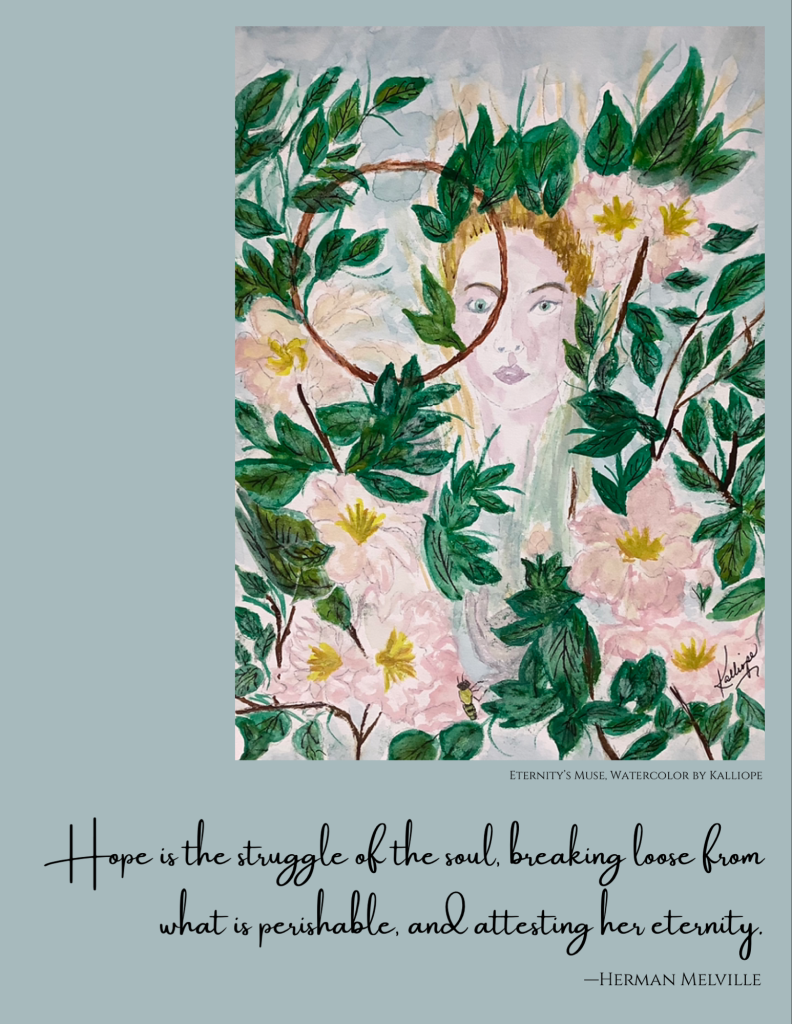

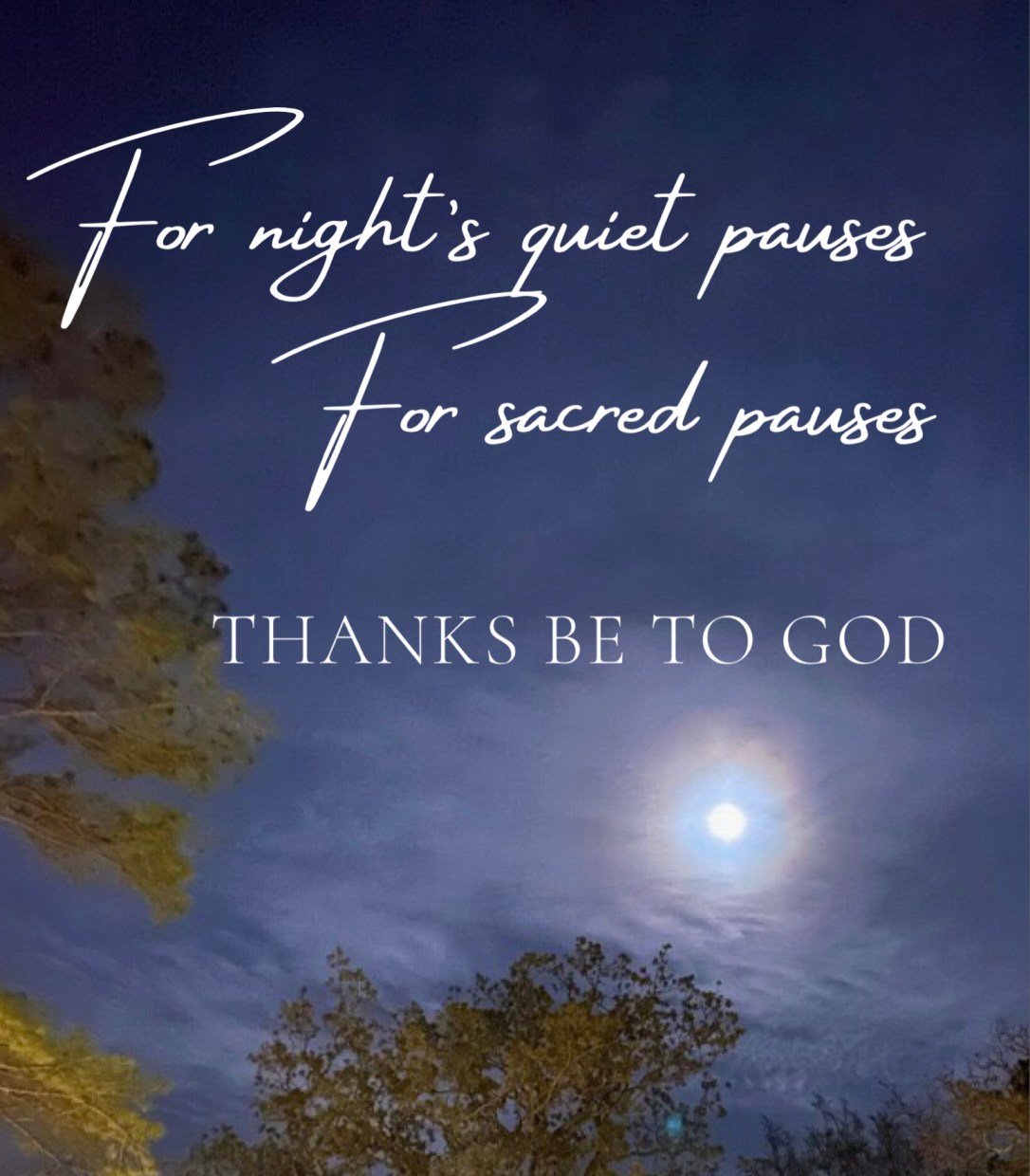

 It turned out that being free did not mean being being treated with respect. Yes, it was the true end of the Civil War, but it was also the beginning of Reconstruction, a time that was supposed to be very happy and hopeful. Yet the period of Reconstruction became a miserable time for freed Black people because Reconstruction became part of the redemption of the South. As such, it set out to move African Americans to indentured servitude. While President Abraham Lincoln abolished slavery in his Jan. 1, 1863, Emancipation Proclamation, rebellious Confederate strongholds dotted across the South delayed the widespread implementation.
 The cruel and violent death of George Floyd under the knee of a Minneapolis police officer might mean that this year Juneteenth may not be only about festivals, parades and cookouts. It may well be somewhat of a silent, reflective vigil for George Floyd, Breonna Taylor, Ahmaud Arbery, Rayshard Brooks, Caine Van Pelt, Michael Thomas, Lewis Ruffin, Kamal Flowers, Momodou Lamin Sisay, Ruben Smith, Modesto Reyes . . . and the list could continue.
 Here is where I must focus. My heart must long for an end to injustice. So must yours, because God’s heart grieves over the mayhem in our streets and the violence that has its way when a white police officer murders a black man or woman, even a black child.



 It is a difficult prospect to ask someone to consider donating a kidney. I can not forget that they experience the pain of surgery and recovery, as well as feeling the loss of losing a vital organ. So when someone like Greg appears out of the blue and offers his kidney, I can only respond with heartfelt gratefulness and deep humility. Because it is so difficult for most everyone to ask another person to donate, the National Kidney Foundation offers this word of encouragement:
  We don’t want to know this part, but here it is anyway:
 Each year, the number of people on the waiting list continues to be much larger than both the number of donors and transplants. Perhaps we can make a difference by supporting persons on dialysis, persons who are making the decision about dialysis, persons who are recovering from a transplant and persons who are considering donating a kidney. Perhaps we could start conversations.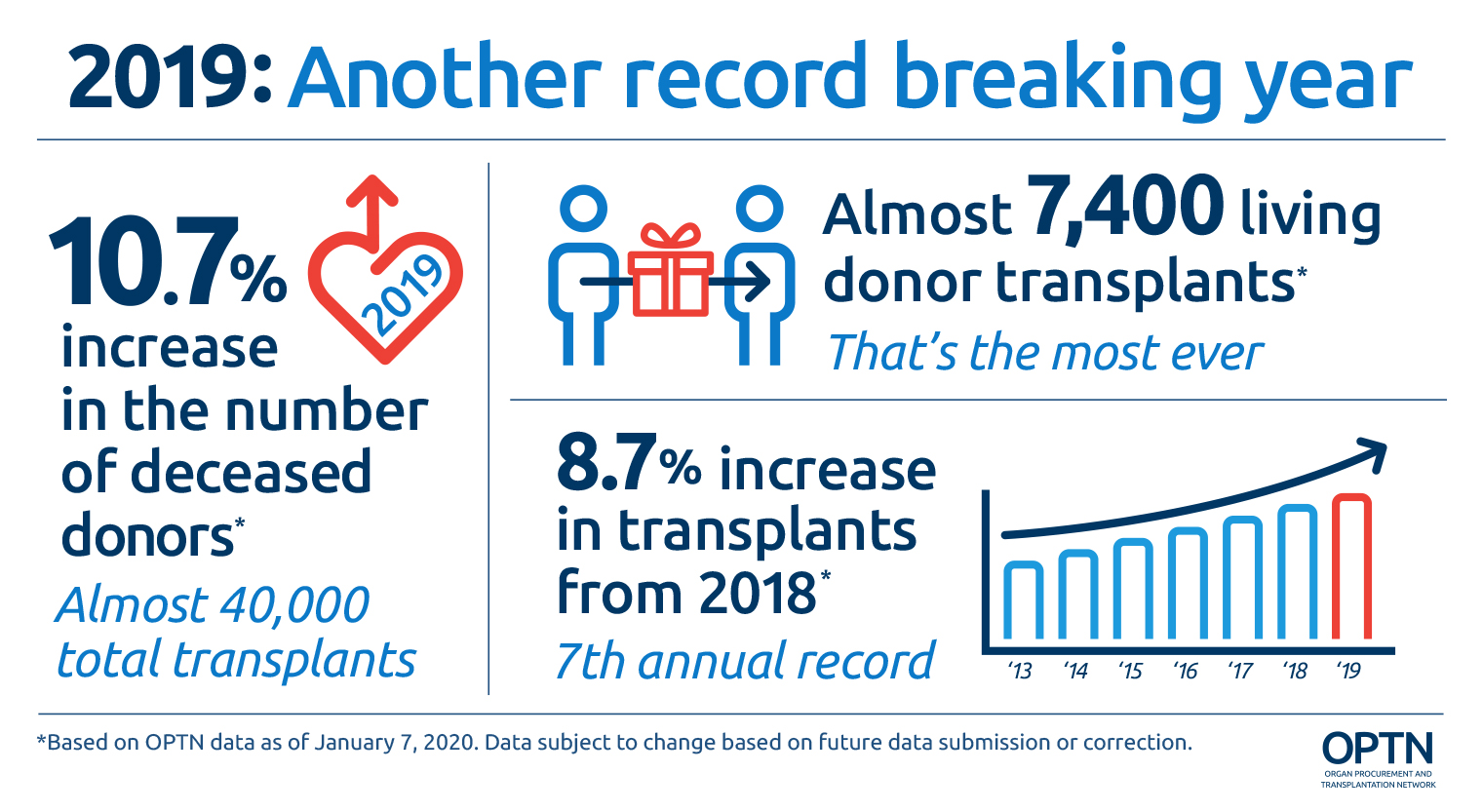

 Perhaps we should go one step further, though, and acknowledge that our loss is not merely the loss of peace, it is the loss of peacefulness. That loss can be disconcerting at best and devastating at worse. All of us long for a deep and abiding sense of peacefulness. We sometimes cry out “peace, peace, when there is no peace.” (Jeremiah 6:14)
 Finally freedom — the kind of freedom we have when peace and joy is hidden in the deepest recesses of our being. Freedom does not leave those who practice gratefulness, prayer, meditation and confession. It is at the altar of confession that God offers us assurance of pardon. It’s the opposite of the soul’s bondage. I cannot help but recall the words of the Apostle Paul about the nature of Christian freedom that so boldly introduce the 5th chapter of Galatians:
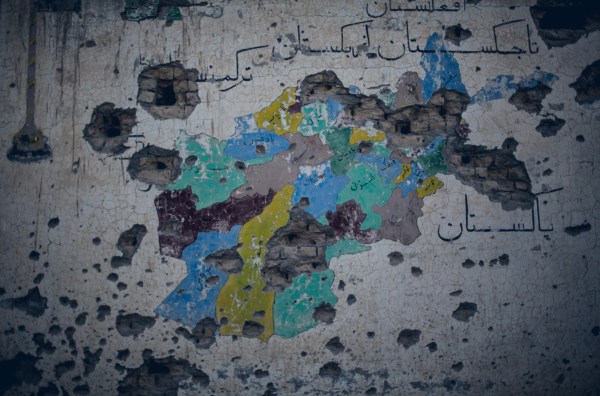


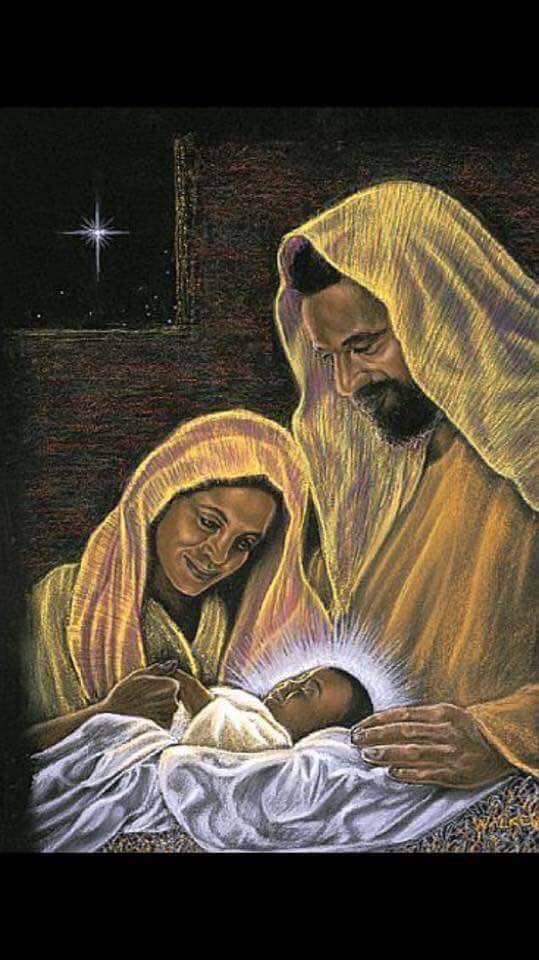
 We can sing alleluias because “The Word became flesh and dwelt among us.”




 God of the Sparrow 🌱 By Kathy Manis Findley