A frenzied life, All Things New, “I Can See Clearly Now”, Beginning again, Bishop Steven Charleston, Bravery, Calm, Challenge, Contemplation, Courage, Determination, Dreamers, Dreams, Following Christ, God's Faithfulness, Heart, Here I am, Lord., I am enough!, Inspiration, New Things, Re-claiming self, Rev. Kathy Manis Findley, Spiritual growth, strength, struggle, Tenacity, Tikkun Olam, Vision, Whispers of God

A Snail’s Pace to the Mountaintop

By Kathy Manis Findley

Slow, slow, up the mountain I’ll go . . .


A PAUSE FOR SOME WHIMSY . . . Why don’t we have a little whimsy today? I have invited my snail-friend to join us. And anyway, we all need a little whimsy in these troubling days! So here goes!

I’m sorry to tell you that the snail in the picture will take forever to reach that mountaintop, and you and I simply don’t have the patience to walk with a snail. Even so, I feel good about my chances when racing a snail to get up on top of a mountain!

DOES THIS MAKE ANY SENSE AT ALL? . . . Not that this makes any sense at all. Why I would even be considering such a race! In fact, this is completely nonsensical, and if you know me, you know I’m far too serious to entertain whimsy! Makes no sense at all. Oh, but it does make some sense. Let me tell you something about me and what I have learned about the wisdom of the snail and its slow journey!

LIFE CAN BE DEVASTATING . . . When I think of the life catastrophes that have been the hardest for me, the ones that hurt me the most, I immediately recognize that I never slowed down enough to clearly see the unrest brewing around me and inside me. Multi-tasking and acting like an overcommitted, overwhelmed wife, mother, professional minister and hospital chaplain squeezed my spirit enough that I became hopelessly entrapped. That was in my younger days, those days when most of us stretch our commitments to the breaking point.

Before I could change course, I could see my dreams fading and my ability failing. It was impossible for me to reach the top of my mountain. It happened before I realized I was in trouble.

In the light of day, I can somewhat see, but at night, I can hardly see anything—literally and figuratively. But at least I have learned to take time to look up at the stars in a dark sky. It’s easy to see, to envision stars twinkling in the heavens, when you’re still young and when you can still find your hope-filled dreaming place inside you. You can still be breathless, open-eyed and awestruck!

CAN I STILL BE BREATHLESS, OPEN-EYED & AWESTRUCK? . . . To be honest, I must confess to you that I find it difficult to see with my soul, to be open-eyed and enthusiastic. I have lived my life with visions of dreams and hopes, and I have loved the fullness of my days. But being retired is another story altogether.

The story of my young and middle adult days was a story of constant activity, challenges, and tall mountains to climb in search of dreams. Dreams, dreams everywhere! Wherever I looked, I found another dream to dream!

RETIREMENT CAN BE DISHEARTENING . . . Retirement is another thing, and I am there! Illness and aging has nearly shut off my dreaming and visioning. Still, though I am sparring mightily with retirement, in the end I have slowed down to a snail’s pace. And snails probably don’t climb mountains or search for dreams.

What pieces of wisdom can we receive from a snail on a slow slither? Perhaps we should look elsewhere for such wisdom. One of my favorite authors gets to my soul with almost everything he writes. His keen spiritual insight has guided my path time after time. This is what Bishop Steven Charleston has to say about seeing more clearly.

I see more clearly, now that I am aging. Not with my eyesight, but with my soul. I see the fine detail of what I missed in younger years. I see the place of faith and forgiveness in my story. I see the possibilities of life in ways I never imagined. I was not blind in my youth, but my vision was limited to only a few seasons of seeing.

Now I am an old man standing on a hill. I see more clearly. The universe stretches above me in infinite glory and the Earth spreads her shawl to wrap me in creation. Open the eyes of your spirit. Look out in wonder. See the fullness of the life you have received. See the promise of love walking in beauty before you.

— Bishop Steven Charleston

MY FRIENDS FINDING NEW WAYS TO DREAM . . . These are words I can hang on to and patiently learn how aging folk can still hope and dream, and maybe even climb new mountains. It’s possible. I have seen several aging folk on top of the mountains they dreamed of. One of my 70 year old friends travels all over the world. Another has launched out in a new calling to counsel kidney transplant patients. Yet another friend faced a closed door, so she picked up her skills and began a brand new ministry. And one friend left the United States to feed hungry people across the ocean.

All of these friends made it up to the mountaintop, though some of them might have traveled at a snail’s pace. That doesn’t matter, and I have a notion that their secret to life has to do with slowing down and stopping their frenetic pace. Why do that?

To give yourself time to dream, time to contemplate and pray, time to pull your soul back together, time to open your eyes and truly see, time to meet God who may well whisper in your ear . . .

Then I heard the voice of the Lord saying,
“Whom shall I send? And who will go for us?”
And I said, “Here am I. Send me!”


—Isaiah 6:8 NIV

TIME FOR SILENCE AND CONTEMPLATION . . .So walk on, slow if you have to. Take your time and wait until you hear God’s voice or sense the presence of the Spirit. Give yourself time for silence and prayer and a lot of contemplation. Keep your courage ready, and then go with all your courage when your heart says it’s time. Don’t let the snail discourage you. Your pace, whatever it is, will get you there. Don’t let anyone block your path or steal your dreams! And I’ll meet you on a mountaintop somewhere!


A LOVELY HYMN FOR YOUR QUIET TIME . . .

Here I Am, Lord (Anniversary Recording) · Dan Schutte
Here I Am, Lord (30th Anniversary Edition)
℗ 2001 2009 OCP, 5536 NE Hassalo, Portland, OR 97213. All rights reserved. Made in USA.
All selections BMI.


SHARE YOUR STORY . . .

If you are a new to my blog or have been reading it for years, you are welcome here. If you would like to leave a comment about your experience with slowing down your pace, finding time for prayer and contemplation, or renewing your spiritual, physical, and emotional life, please tell us about it in the comments. Your story can help others see life more clearly.


Dark night of the soul, Darkness, Light, Soul, Spirit, Spiritual and emotional darkness, Spiritual growth, Spirituality

The Dance of Darkness and Light

Stunning photo of an Oklahoma ranch provided by my friend, Molly Hunt

I was amazed today by this breathtaking image of a ranch in Oklahoma. Sometimes it doesn’t take a lot to amaze me, but today the object of amazement for me is quite stunning. It’s art, an image to contemplate and appreciate, an image in which one could find meaning. Finding meaning in it is exactly what happened for me.

I see a play of lightness and darkness and I see that to experience light is also to experience darkness. We cannot really embrace one without the other. The beauty of one enhances the beauty of the other. Light and darkness are inseparable. I have always been intrigued by the wisdom of this thought written by Gregory Maguire, “The eye is always caught by light, but shadows have more to say.” I find such truth in these words, and they are illustrated by the shadows — the times of darkness — in my life.

Oh, the stories I could tell about the many times when my reality has been lightness and darkness together. Both juxtaposed and moving, blending and coalescing, always showing me a kind of dance, a holy movement that makes both appear beautiful. But this “light and darkness together”thing came to me late in life. Emotional and spiritual maturity offered me this important insight that both darkness and light are in me and around me simultaneously. I experience them both together.

I also remember the past when I feared the darkness, wanting always to be in the middle of the light of things. During my illness and long hospitalization in 2014, I hated the nights. I had come to believe over the years that in hospitals, bad things happen at night. That thought was cemented in my mind when I was a hospital chaplain. In thinking of the many nights when I was on call, what I recall most were dark crises that happened at night — deaths, terrible accidents in the ER, patients on the psych unit having meltdowns.

What I’m recalling today is one particular night in the hospital. I was so sick for so long and so lonely at night. This particular night remains in my nightmares. It was actually in the middle of the night when I experienced an excruciating pain in my kidney area. I almost screamed in pain, but tried to stifle myself. The pain continued for several minutes, long enough that I felt as if I would pass out. I called for the nurse, who could hear panic in my voice and came immediately. The doctor followed within minutes. By that time, I had been given pain and anxiety medications, so I was in a kind of twilight. I knew that the room was now full of people doing things, but I had no idea what sort of things they were doing. The ultrasound people came and soon after that, the crisis team came to get me. I was moved to a hard stretcher and was quickly transported to . . . somewhere for some kind of procedure.

The only words I really understood were, “Call her husband and tell him to get here immediately!” Not such a calming message to hear, but in a medication-induced twilight, it really didn’t matter. The crisis team moved me into the inner sanctum of the hospital. They moved me through the cold halls so quickly that the wind felt cold and the ceilings of the corridors were a blur, one minute bright lights above, the next corridor completely dark. The speed of the ride made the corridors look as if they were one seamless movement of light and dark.

One repaired internal bleed later, the pain was eased and I was comfortable, back in my familiar hospital room full of cards and flowers, and with late night television still on. Obviously, I survived the darkness and lightness of my transport and the repair of my bleed. And I still survive, every day, the darkness and lightness that is my life. I did not know that night what I have learned since: that darkness and light always exist together.

Darkness and Light:
Together


To be certain, I have experienced darknesses that seemed to smother me completely and leave me with only the darkest dark. I have felt the unrelenting darkness of the soul at times. My spirit has cohabited with the deepest darkness in life that seemed never-ending, with not a single source of light anywhere.

Thankfully, the great Teacher has taught me to see the darkness and the light all at once, moving together through my life. I have learned that light is almost always a welcomed force, but it is in the darkness that I find the most life-changing, cherished moments. in myself. The darkness is the place where my soul sees itself, where my spirit entertains its longings and urges and dreams. The darkness is where my heart can break into a million pieces in mourning and lament. In those dark moments, I can see the dance, the slow and soothing rhythms that enfold me in both — darkness and light — because the two exist together. Thanks be to God.

Darkness was
and darkness was good.
As with light.
Light and darkness
dancing together,
born together,
Born of each other,
neither preceding,
neither following,
Both fully being,
in joyful rhythm
.

— Madeleine L’Engle
anxiety, Depression, peace, Spiritual growth, Ups and Downs

Ups and Downs

I feel exasperated sometimes with the constant ups and downs that are a normal part of my life. I would surmise that ups and downs are probably a part of your life, too.

Don’t we have a knack for riding them out on something akin to a roller coaster? I have truly become a master at riding out ups and downs since my kidney transplant, but then I never really wanted a roller coaster life. So much for life plans!

Even with ups and downs, I am comforted when my faith opens up insight I have gained over the years, like not worrying about tomorrow (Matthew 6:34), not leaning on my own understanding (Proverbs 3:5) and not being anxious about anything (Philippians 4:6-7). Those stay-the-course words should surely be enough to help, shouldn’t they?

Not always! Faith and spiritual maturity and scripture are simply not enough at times to keep me from the despondency of the “downs.” That’s just the way my psyche reacts when I feel down or when a circumstance pushes me down. The trouble is, things that get me down are not always enormously critical things. Even an insignificant down moment can let depression plant itself in my spirit. That just doesn’t work for me, so I need to find a way to even out my roller coaster life and not let everything that happens be a potential for depression.

What do I want? I cannot say it simpler than this: stabilizing peace. It is not an exaggeration to say that since my transplant eighteen months ago, almost nothing has been stable. Immunosuppression medications are constantly being moved up or down; my lab numbers are constantly fluctuating; my emotions are up and down; my energy waxes and wanes; my blood sugar rises and plummets; and, on one day my kidney might be okay, but on another day, I am dealing with kidney rejection. My physical, emotional and spiritual well being rises and falls with each change.

Oh, for some stabilizing peace that stays constant through the ups and downs!

I keep going back, though, to the ultimate words that promise me the kind of constant, stabilizing peace that I so need:

Always be glad because of the Lord! I will say it again: Be glad. 
Always be gentle with others. The Lord will soon be here.
Don’t worry about anything, but pray about everything.
With thankful hearts offer up your prayers and requests to God.
Then, because you belong to Christ Jesus,
God will bless you with peace that no one can completely understand.
And this peace will control the way you think and feel.

Finally, my friends, keep your minds on whatever is true, pure, right, holy, friendly, and proper.

Don’t ever stop thinking about what is truly worthwhile
and worthy of praise.

You know the teachings I gave you,
and you know what you heard me say and saw me do.
So follow my example. And God, who gives peace, will be with you.

Philippians 4:4-9 CEV


I wage war, much of the time, with depression that continues its haunting presence. It is not the debilitating kind of depression that can knock one to the ground to the point of needing medication. It is not the kind of depression that leaves one in tears and prevents any meaningful activity. It is not even the kind of depression that affects one’s life to the point of complete stagnancy. But it is a depression that hurts the heart and leaves the spirit languishing — on some days more than others.

Yet, I am grateful for lessons learned. In my times of depression — through my ups and downs — I have learned a few helpful and hopeful lessons.

These are just a few of them:


  1. I must not fall into the bottomless pit of anticipatory anxiety. The things that fill me with such anxiety and worry rarely even happen.
  2. My spirit is resilient, much stronger than I think it will be.
  3. The bad things that happen to me don’t usually last forever. I can ride them out.
  4. It is not “pie-in-the-sky” fantasy to fall back on the faith that has always sustained me. The truth is that the God who promised to be with me, really has been with me — every time.
  5. My “downs” have always graced me with a fresh view of my soul and spirit, the deep places in me that fall to the dust but still manage to get up and move forward.

I admit I haven’t made peace with my ups and downs. I suspect I will have them as lifelong companions, but I have made peace with the soul of my being. I have discovered that there are some soul-things that I can never really touch unless I have gone as low as I can go. In those times, my emotions are discernible and my spirit is tender. In those times, there is a holy presence that will take my hands and lift me up. Of that, I am confident.

Debasiah Mridha wrote these words that are so true and so full of wisdom, “Life has its ups and downs. When you are up, enjoy the scenery. When you are down, touch the soul of your being and feel the beauty.” 

I would like to be able to leave you with a sparkling, new solution for all of the times you go from up to down. I would like to be able to tell you in your ups, and in your downs, that you will find peace enough to sustain you. I wish I could tell you, even, that your life will be all “ups.” I wish I could believe it for myself. But there are very few things that any of us can count on. I intend to keep holding on tightly to my faith and my belief that God’s Spirit of Wisdom walks beside me. Sits next to me on that terrifying roller coaster!

I also love this thought that I stumbled upon in a most unlikely place. Brent Schlender, in his book entitled, Becoming Steve Jobs: The Evolution of a Reckless Upstart into a Visionary Leader, made the most lovely, comforting observation. This is what he wrote: “The sun will set and the sun will rise, and it will shine upon us tomorrow in our grief and our gratitude, and we will continue to live with purpose, memory, passion, and love.” 

May the Holy One make it so. Amen


Here I am, Lord., Rule of Life, Spiritual Discipline, Spiritual growth, Spirituality, St. Benedict, St. Clare of Assisi, St. Francis

Rule of Life


Today is the eleventh day of Lent and Lent always orders me to order my life — again. Isn’t that what we do, put order back into our lives over and over again?

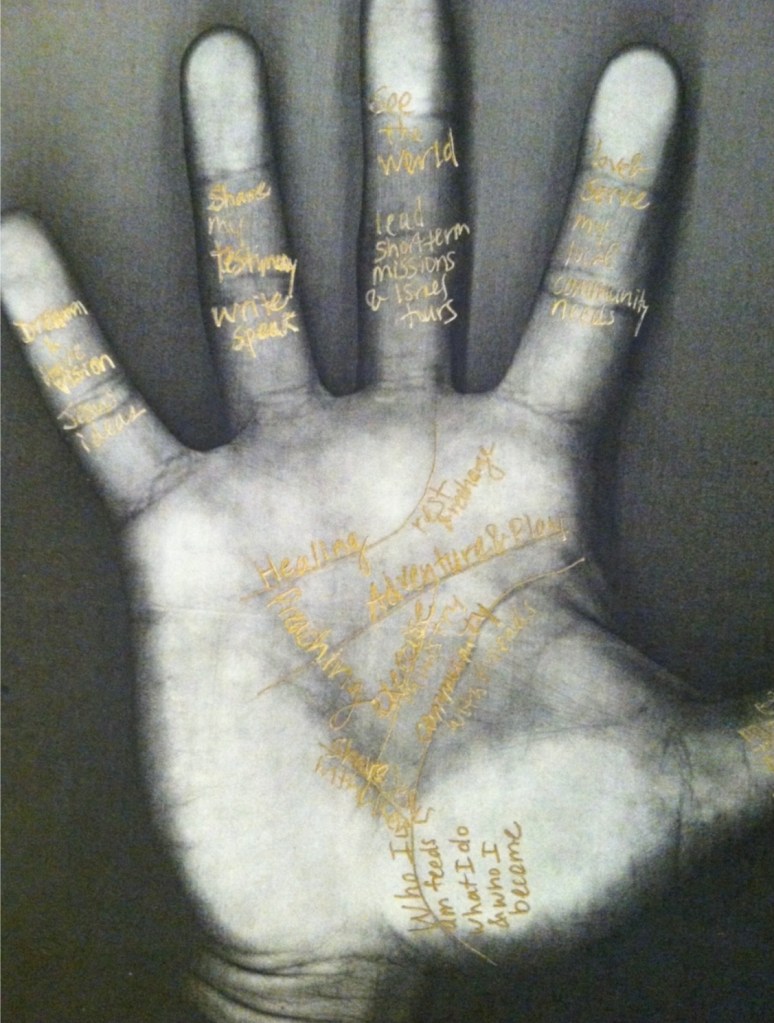
02D6C44D-9692-4DA6-86C3-0A256C32DB27That’s what I do, because I have learned the wisdom of ducks. Even ducklings sometimes step out of the line behind a Mama duck who bids them to walk a straight line, single file!

1BF24480-E6DE-4F28-90ED-192BAAA2105A
Or even to swim in an ordered line! Something ducks are very good at!
For me, achieving a well-ordered life is a constant struggle, yet something I need and want. What do I mean by “ordered life?” I envision for myself a life that longs to move toward physical, emotional and spiritual well-being. Especially spiritual well-being.

Perhaps I will turn to ducks for an inspiration to order my life or, even more compelling, perhaps I will turn to one of the streams of spirituality that comes from very deep in the Christian tradition — the wisdom of Benedictine Monasticism.

Now, stay with me! I’m not going out on a shaky spiritual limb.

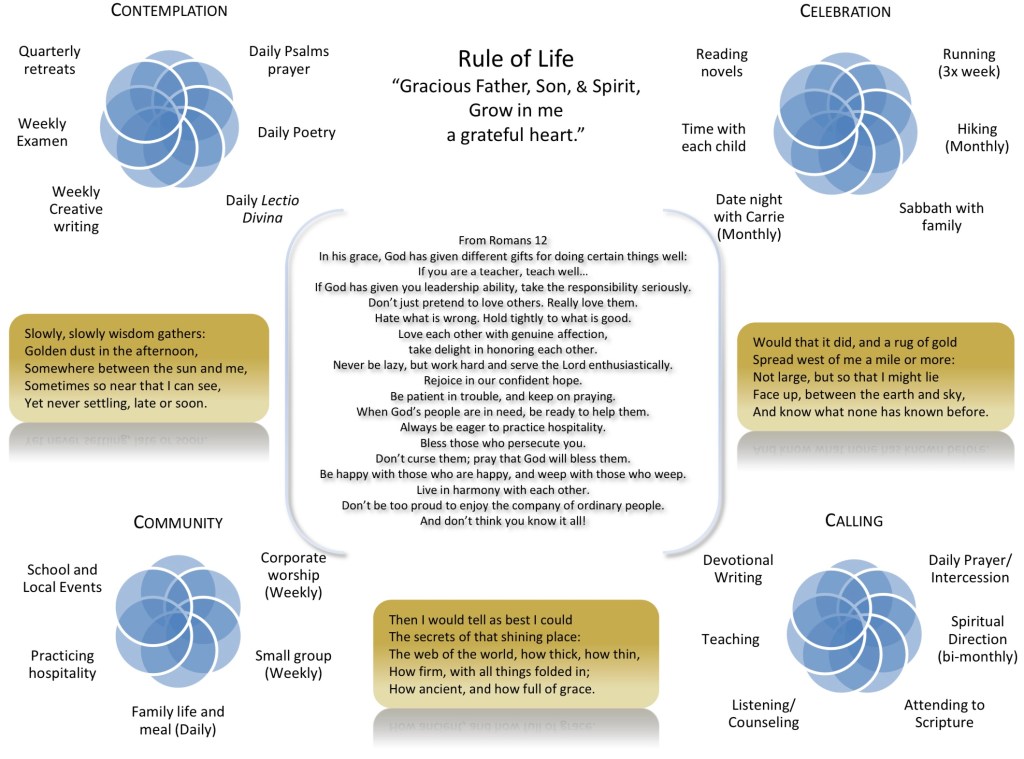
Saint Benedict wrote his rule of life in the 6th century and thus left us with its simple and stable legacy of “Ora et Labora”: “Prayer and Work.” Today’s monasteries and convents still function under a Rule of Life, the best-known of which is that of Saint Benedict. A spiritual rule of life offers a fundamental rhythm for the balancing and ordering of life. Several years ago while seeking a deeper spiritual life, I entered into the novitiate of the Order of Ecumenical Franciscans. In the process to full profession into the Order, I was asked to write a personal rule of life.

Rule of life? I had no idea where to start. Nor did I really know what a rule of life looked like! I found this definition from a very helpful website, “Sacred Ordinary Days.”

A rule of life is a commitment to live your life in a particular way. It is meant to be crafted with prayer and discernment, in partnership with God, as you consider the way God made you and the values God has inscribed upon your heart. Once written, it serves as a tool that can help you make decisions for your life and determine how best to order your days. A rule is different than the goals, intentions, or resolutions we tend to set for ourselves. Those methods are task-based and measurable, and they’re often focused on what we do. A rule of life, on the other hand, helps you become. It is comprised of several simple statements that guide the posture of your life and the living of your days. It is not lived perfectly but can be lived faithfully while fostering within you an integrated and embodied life of faith.

So, attentive to the lives of Saints Francis and Clare of Assisi, I began discovering and creating my rule of life. What I learned in that experience is that crafting a rule of life is a spiritual discipline, whether I am writing, drawing, designing or graphing it. If you know me, you know that mine was handwritten because, for me, writing becomes the sigh of my soul. Once I began writing, I sensed a pull drawing me inward. The writing called me to open up my spirit to God in a deeper way and, from that place, to write down the ways I desired and intended to follow Christ and order my Christian life. In a nutshell, that’s what I discovered about a rule of life.

Sister Joan D. Chittister, O.S.B., an American Benedictine nun, theologian, author and speaker,  explains the idea of a rule of life more clearly in her writing about Saint Benedict’s Rule. She describes how the Rule of Benedict provides an opportunity for transformation for everyone who chooses to follow its wisdom.

All in all, the Rule of Benedict is designed for ordinary people who live ordinary lives. It was not written for priests or mystics or hermits or ascetics; it was written by a layman for laymen. It was written to provide a model of spiritual development for the average person who intends to live life beyond the superficial or the uncaring.

Benedict was quite precise about it all. Time was to be spent in prayer, in sacred reading, in work, and in community participation. In other words, it was to be spent on listening to the Word, on study, on making life better for others, and on community building. It was public as well as private; it was private as well as public. It was balanced. No one thing consumed the monastic’s life. No one thing got exaggerated out of all proportion to the other dimensions of life. No one thing absorbed the human spirit to the exclusion of every other. Life was made up of many facets and only together did they form a whole. 

A rule of life is rooted in Scripture, pointing always to Christ; and, in the words of Saint Benedict, it is “simply a handbook to make the very radical demands of the gospel a practical reality in daily life.”

Lent is upon us. I don’t know about you, but I need to get my ducks in a row and, more importantly, I need to revisit the rule of life I wrote decades ago. I have a notion that, while my life has changed over the years, my rule of life hasn’t. But my need for genuine repentance is this: I don’t even remember my rule of life. What did I write? In what ways did I live it out? How many years or months or weeks did I live by it? Why is my rule of life now lost in a pile of old papers? I contritely confess that I remember (sort of) only this small part of it:

I will live my life and speak truth in the manner of love, for God is love
and, in Christ, I live and move and have my being.

I vaguely remember those words, but I intend look through my archived treasures and scraps of paper to find my rule of life and to revisit it. Maybe I will even begin living it again. From now on, I want to remember to remember it, so that its expressions will become like the air I breathe. And I will remember what Saint Benedict wrote 1,500 years ago, “Your way of acting should be different from the world’s way. The love of Christ must come before all else.”  

As for me, the one thing I do remember so strongly about the act of writing my rule of life is that I was on a spiritual retreat in Albuquerque, New Mexico, a sacred place that made me imagine the lives of the desert mothers and fathers, the monastics who sparked spirituality for centuries. I also remember that, as I was writing, I would continually relive my ordination and its deep meaning for me. I continued to think and write on the day I had to finish, while the prayer of my heart and the longing of my soul continually whispered the same words sung at my ordination many years before:

Here I am, Lord. It is I, Lord. I have heard you calling in the night.
I will go, Lord, if you lead me. I will hold your people in my heart.

“Here I Am, Lord”
Daniel L. Schutte (b.1947)
Arranged by Ovid Young (1940-2014)

More Information on crafting your rule of life:

I found this website to be very helpful for people who want to craft a rule of life. Remember that your rule of life is for you, your way of enhancing your life and increasing your devotion to God. So every person’s rule will look different. 

anxiety, Art, Community, Complaints, Dancing, Fear, Friends, healing, Home, Hope, Lent, Mindfulness, Pandemic of 2020, Perseverance, Prayer, Rebirth, Resilience, Rest, Spiritual growth

Times Terrifying and Beautiful

5079BD7F-9718-48CB-A9C2-95648BAC59BA
These days are terrifying and beautiful. After all, in times when we are harried with work responsibilities, we might just say, “I wish I was home in my pajamas!” So here we are at home — maybe in our pajamas — settled in, comfortable, rested, and maybe restless. At least some of us are settled in at home. Some of us are rested. Others, no doubt, find themselves restless. It makes me wonder if the opposite of rested is restless. So I turned to my trusted thesaurus to find out. It turns out that the antonyms — the opposites — of “restless” are peaceful, quiet, relaxed, settled, calm and unworried.

I don’t know about you, but I want to be an antonym of restless. That is, if a person can even be an antonym in the first place. I doubt it, but what I do not doubt is the existence of the kind of human resilience that can weather pandemics. Be assured that human resilience is not a “grin and bear it” state of being. Resilience is not merely being resigned to a situation or just sticking it out. Resilience is not passive acquiescence to challenging situations. Resilience resides in a soul that is able to persevere, to rest calmly through struggle, to abide in a state of mindfulness, to meditate on the goodness of God, to walk in the darkness until the light reappears.

I can certainly identify with the quote that has recently been going around: “And the people stayed home.” It’s striking that, in the midst of the fear and anxiety people feel in these pandemic days, many have recalled and published parts of this quote. Let us spend a few moments contemplating the quote in it’s entirety:

And The People Stayed Home

And the people stayed home. And read books, and listened, and rested, and exercised, and made art, and played games, and learned new ways of being, and were still. And listened more deeply. Some meditated, some prayed, some danced. Some met their shadows. And the people began to think differently.

And the people healed. And, in the absence of people living in ignorant, dangerous, mindless, and heartless ways, the earth began to heal.

And when the danger passed, and the people joined together again, they grieved their losses, and made new choices, and dreamed new images, and created new ways to live and heal the earth fully, as they had been healed.

– Kitty O’Meara

To be clear, I am not suffering this pandemic as one who has contracted the virus. I am suffering the forced isolation, the inability to reach for someone’s hand, to touch a friend, to embrace my grandchildren. And I have not been isolated only because of this pandemic; I have been isolated from others since my kidney transplant on November 12. That’s a very long time to be separated from my community. Through that time, a friend or two visited me, but we could not touch one another or be in close proximity.

And now the coronavirus has isolated virtually everyone, and I suddenly realize that we’re all in this together. It makes me wonder what everyone is doing at home. And it makes me hope that at least a few of us are doing as Kitty O’Meara writes, “Some meditated, some prayed, some danced. Some met their shadows.“

On the idea of meeting our shadows . . .  I consider Lent to be a time of confession, a time of looking into my heart of hearts, my soul of souls, confessing my sins to God and receiving God’s mercy and pardon. I emerge from my confession with my soul cleansed. Only then am I ready. I am ready to steel my heart and set my face toward the journey with Christ to the cross. and then prepare my heart for glorious resurrection.

My confession today is that I have cursed my isolation rather than giving it to God and allowing myself to enter into a place of rest and re-creation, a sacred space that would heal the anxieties of my soul. I confess that I did not dance or pray. I did not rest or make art. But the pandemic changed my soul’s response to my isolation. I found that I was no longer in post transplant isolation, I was now in pandemic isolation and it felt very different to me. It felt dangerous and potentially fatal. It felt far-reaching, pervasive and rampant. It felt lethal, at least potentially lethal.

In the face of the pandemic’s imminent danger, my soul stopped its complaining and began its healing, my healing. It was the healing I needed all along, but now an ominous virus flipped a switch inside me. I did art again for the first time since the transplant. I sang, I prayed, I meditated. And I met my shadow and re-discovered the hidden place where fear reigns within me. That was not a bad thing. Rather, it was a good thing that said to me, “Do not give power to your hidden fear. Let your hidden resilience have the power and let it rise up within you. You will be healed!”

I believed those words — literally, as I hoped for physical healing after my transplant; and completely, body and soul, as I accepted the spiritual and emotional healing my soul craved. I want to leave you with a poem written on March 11, 2020 by Lynn Ungar.

D87DE2F1-852B-4017-B25F-232CA8AB094B
Blackdeath.   Wikimedia Commons

Pandemic

What if you thought of it
as the Jews consider the Sabbath —
the most sacred of times?
Cease from travel.
Cease from buying and selling.
Give up, just for now,
on trying to make the world
different than it is.
Sing. Pray. Touch only those
to whom you commit your life.
Center down.

And when your body has become still,
reach out with your heart.
Know that we are connected
in ways that are terrifying and beautiful.
(You could hardly deny it now.)
Know that our lives
are in one another’s hands.
(Surely, that has come clear.)
Do not reach out your hands.
Reach out your heart.
Reach out your words.
Reach out all the tendrils
of compassion that move, invisibly,
where we cannot touch.

Promise this world your love —
for better or for worse,
in sickness and in health,
so long as we all shall live.

Lynn Ungar is a poet, and wrote this poem on March 11, 2020, in response to the Covid-19 pandemic.


Ash Wednesday, Community, Cross, Introspection, journey, Lent, Life Journeys, Pilgrimage, Rebirth, reconciliation, Reflection, Resurrection, Soul, Spiritual awakening, Spiritual Discipline, Spiritual growth, Transformation

The “Soul’s Insistent Yearning”

8E851EAE-1859-4A68-831D-C2914D9B3213
I have come to know Ash Wednesday as the time to draw nearer to my “soul’s insistent yearning.” That can be a frightening prospect, so I always approach Ash Wednesday with a bit of reticence, meeting the day with the self-awareness that I am trying to keep my distance from my “soul’s insistent yearning.” Being closer to one’s soul can well be a disconcerting proposition, but a necessary one. Ash Wednesday presents me with entry into the season of Lent.

I cherish Lent’s forty days, actually, always expecting change to happen in my soul and spirit. And yet, the prospect of repentance, renewal, transformation — and ultimately a personal resurrection — always disquiets me.

83D4AF68-A9AD-40EC-9D26-F0787CFE6D7BHow will I spend Ash Wednesday?

How will I approach the day
that will open the gate of Lent before me?

I have always thought of Lent as a spiritual journey we take alone, a solitary season of introspection and self-reflection during which we contemplate our own spiritual well-being and our relationship with God. For me, Lent has often been alone work.

So I make my Lenten journey into my alone places. I will know that God will abide with me, comforting me in my self-reflection, in my penitence and in my repentance. I will be mindful this Lent of my need to reach into my soul in search of places needing healing, constant and long-time wounds of the soul and spirit. I will search for the traces of my sinfulness, finding in my heart the will to seek sincere penitence, the sad and humble realization of and regret for my misdeeds. I will move beyond penitence to repentance as I resolve to change and to experience transformation.

How will I spend Ash Wednesday?

In whatever way I am able, I will receive ashes on my forehead imposed in a sign of the cross. I will recall the words, “Remember that you are dust, and to dust you shall return.” I will utter as my prayer, the words of Scripture, “Create in me a clean heart, O God, and renew a right spirit within me.” (Psalm 51:10)

As for the actual ashes, I have often wiped them off while in public. I never knew why, just that I was uncomfortable when others saw the cross of ash on my forehead. Perhaps I needed to keep my spiritual practice to myself, or hide the reality of my search for repentance. Years ago, I came across these words, spoken by Sr. Mary Ann Walsh, RSM:

We can feel a little funny with ashes on our foreheads, but for Catholics, that’s how we mark the start of Lent. Ashes don’t say we’re holy. They say we are sinners. They don’t say we are perfect, only that we’re willing to try. They don’t say we’re models of religiosity, but they do say we belong. In today’s world of loners and isolates, that says a lot.

~ Sr. Mary Ann Walsh, RSM

7FA58B58-0019-4809-B3B9-F956F3B06D7BThe essential truth, and gift, of Ash Wednesday is its call to come to terms with ourselves before God. Ash Wednesday says what so much of modern culture denies, namely that we are forever deceiving and justifying ourselves about our sinfulness. So on this day, when we contemplate our sins, when we pay attention to the ash on our foreheads, when we enter into Lent’s forty days, we must make prayer our utmost spiritual intention. So I pray we might embrace our Christian community that we might journey together for these forty days, praying for one another, seeking together the serenity, the reflection and the transformation of Lent, as all the while, we lean into our “soul’s insistent yearning.”

In that spirit of prayer, I hope you will take with you into Lent with this beautiful prayer from Rabbi Naomi Levy:

The rabbi in me would like to offer a prayer for you.
I pray you will learn to see you life as a meaningful story.
I pray you will learn to listen to your soul’s insistent yearning.
I pray you will learn to believe you can transform your life.
I pray you will learn to live and shine inside your imperfect life
and find meaning and joy right where you are.
Most of all I pray you will uncover a great miracle: your extra-ordinary life.

~ From Hope Will Find You by Rabbi Naomi Levy

Most importantly, pray yourself into Lent in the few days we have before Ash Wednesday. Seek God’s heart and seek the depths of your own heart and your “soul’s insistent yearning.” May you know God’s presence as you begin your Lenten journey.

Change, Grace, Memories, Pricks, Rebirth, Spiritual growth, St. Francis, Transformation

Pricked

4D3FD02C-69DE-4486-8517-EC0C85346DBB
In years past I remember hearing, in sermon and scripture, a rather provocative phrase that always got my attention. As a child, I was mesmerized whenever someone would speak about “the heart being pricked” and I was pretty sure I did not want any heart pricking to happen to me.

Grabbing hold of a prickly stem always results in immediately letting it go and coming up with another plan. God may well be using the pricks of uncomfortable instances in our lives to change our direction. He did this in Paul’s life, as the unsaved, but religious, man traveled on the Damascus road:

And he said, Who are you, Lord? And the Lord said, I am Jesus whom you persecute: it is hard for you to kick against the pricks.

— Acts 9:5 (paraphrased)

We also read in Acts about being pricked in the heart happening when the Holy Spirit was poured out from heaven. Just as Jesus had promised His disciples, the Holy Spirit came in a mighty way on Pentecost Sunday, and Acts 2 tells us that many wondrous things happened that day. One of the great wonders of that day is described like this:

Therefore let all the house of Israel know assuredly, that God has made that same Jesus, whom you crucified, both Lord and Christ. Now when they heard this, they were pricked in their hearts, and said to Peter and to the rest of the apostles, Brothers, what shall we do?”

— Acts 2:36-37 (paraphrased)

And in Psalm 73:

When my soul was embittered,
    when I was pricked in heart,
I was brutish and ignorant.

—Psalm 73:21-22 (ESV)

There you have it: two examples of the disconcerting messages I heard about heart and soul pricking. Obviously, I had no idea what it all meant, so I was safe and content in my ignorance. I did not intend to put myself anywhere near a heart-pricking situation. So all was well in my spiritual world.

Until I got a few years on me, and a few pricking life experiences.

“Putting away childish things” as the years passed resulted in maturity in my understanding and in my spirituality. I would know many times over the pricking of the heart, even the pricking of my soul. It was never comfortable, never welcomed, but it was a necessary part of living.

Hard times, sickness, failures, broken relationships, aggravating situations, disasters, loss of many kinds: all pricking events that change one’s life, turn a life around really. I experienced most all of them, and in those experiences, I learned what comes after the pricking.

I was reminded this morning of the life of St. Francis as told by the Dominican friar, Augustine Thompson from Richard Rohr’s daily meditation. He writes this:

[His] encounter with lepers would always be for Francis the core of his religious conversion. . . . Wherever the leprosarium was, Francis lodged there with the residents and earned his keep caring for them. . . . It was a dramatic personal reorientation that brought forth spiritual fruit. As Francis showed mercy to these outcasts, he came to experience God’s own gift of mercy to himself. As he cleaned the lepers’ bodies, dressed their wounds, and treated them as human beings, not as refuse to be fled from in horror, his perceptions changed. What before was ugly and repulsive now caused him delight and joy, not only spiritually, but also viscerally and physically.

Francis’s aesthetic sense, so central to his personality, had been transformed, even inverted. [He] sensed himself, by God’s grace and no power of his own, remade into a different man. Just as suddenly, the sins which had been tormenting him seemed to melt away, and Francis experienced a kind of spiritual rebirth and healing. Not long after this encounter, later accounts tell us, perhaps in allegory, that Francis was walking down a road and met one of these same lepers. He embraced the man in his arms and kissed him. Francis’s spiritual nightmare was over; he had found peace.

In the pricks we experience, we may well find peace. We may experience inner healing, a spiritual rebirth, a transformation of life. In any event, we will become immersed in a transformative dance through which we find ourselves being made new. God invites us to such a dance, many times through pricks of the heart and soul, but always covered in the grace of forgiveness and restoration.

When my soul was embittered,
when I was pricked in heart,
I was brutish and ignorant.

—Psalm 73:21-22 (ESV)

Let’s not stop there. Let’s read the next part of the Psalm, which does not end with the heart being pricked. Instead it ends like this:

Nevertheless, I am continually with you;
you hold my right hand.
You guide me with your counsel,
and afterward you will receive me to glory.
Whom have I in heaven but you?
And there is nothing on earth that I desire besides you.
My flesh and my heart may fail,
but God is the strength of my heart and my portion forever.

—Psalm 73:23-26 (ESV)

Thanks be to God for the pricks and afterwards, the transformation. Amen. 

*******************************************************

On another note, please pray for me as I await a life-saving kidney transplant. I am grateful that you are walking with me on this journey that often feels so frightening. Your thoughts and prayers mean so much. If you would like to read the story of my illness, please visit the Georgia Transplant Foundation’s website at this link:

http://client.gatransplant.org/goto/KathyMFindley

A “Go Fund Me” page is set up for contributions to help with the enormous costs related to the transplant, including medications, housing costs for the month we have to stay near the transplant center, and other unforeseeable costs for my care following the transplant. If you can, please be a part of my transplant journey by making a contribution at this link:

https://bit.ly/33KXZOj


Calling, Contemplation, Covenant, Dry seasons of life, Faith, journey, peace, Prayer, Quiet, Silence, Spiritual growth

Sudden Peace and Holy Silence

9B60ABDD-83BD-48D4-9213-3698F680EB93

But the Lord is in his holy temple;
let all the earth keep silence before him!

— Habakkuk 2:20 New Revised Standard Version

On this past Sunday, my pastor brought up a vivid memory for me when he talked about the stark, silent, peaceful beauty of the desert. I listened to him share his experience of a silent contemplative retreat at a Benedictine monastery in the desert. I heard his expression of how keeping silence affected him, with the effects continuing for days after the experience. I heard his description of the ways the barren desert became God’s holy temple. While the New Revised Standard Version of the Bible tells of “keeping silence,” The Message Translation says it like this:

But oh! God is in his holy Temple!
Quiet everyone—a holy silence. Listen!”

The desert does create a kind of holy silence. I remember being in the desert’s silence. I remember the heat of it, the enormity of its sky, the color of beige as far as the eye could see, the silenced sound of it, the sudden peace it gave me. The time was many years ago. The place was a retreat of the Order of Ecumenical Franciscans in the desert of New Mexico.

I had spent months of spiritual direction and personal reflection to prepare to make my profession in the Order’s Novitiate. On the day of the covenant service, I spent hours walking alone in the desert wondering why in the world a Baptist pastor would want to enter into a vocation with this Order. There in the dry desert I owned the reality that I was in a dry season of my life. I knew I could not stay in that dry and barren place where my life force was languishing. In the months before, I had been exploring this crossroads in my faith journey with my Franciscan spiritual director. Over time, I had discerned that this was a call from God, and I had entered the Order’s Postulancy. Now I felt ready to move forward.

I had no idea, really, how the Franciscan journey would affect my life. I did not know how, or if, this journey could lead me into a deeper spirituality, but that is what I longed for. I had finished writing my Personal Rule of Life that afternoon. I knew that my formation would take years, that there would be distinct decision points for me after entering the Postulancy (making Novice vows, Professing lifetime vows). These places in the spiritual journey would be decision points in my discernment process that would most surely include moving forward, stepping back, or perhaps giving more time for the Holy Spirit to speak to me before taking the next step. 

I would be lying if I said I did not have second thoughts about my reasons for seeking this spiritual path. I agonized in the midst of my prayer for clear direction. What I was certain about was that I needed something more. My spirit longed for fuller joy in my faith, a deeper connection to God and to the divine within myself, and peace. Mostly peace. The kind of peace that busy, overcommitted Baptist pastors have a hard time finding. 

In my moments of indecision that afternoon, the parched, hot desert spoke to me out of silence. It spoke to me of peace, and I was certain that on this night I would make my Profession of the Rule and become a Novice in the Order of Ecumenical Franciscans. I was convinced that this faith commitment would bring me peace.

The community prayed over me in the spirit of St. Francis and St. Clare. They laid hands on me as I recited my Rule of Life and spoke my vows, and then they handed me a beautiful San Damiano cross.67401824-A9BD-4B39-857E-97CC62B25B1D I had seen this dramatic crucifix before, but on this night it was even more striking than I remembered. I held it in my hands and gave thanks for God incarnate in Christ, for the hope of glory in us, and for the palpable sense of peace that was enfolding me in that moment.

In Franciscan thought, the incarnation of Christ is foundational. It is not easy to fully describe the spirit and gifts of Franciscan thinking, but its hallmarks are simplicity, reverence, fraternity, ecumenism, ecology, interdependence, and dialogue. Its motto and salutation is “Peace and All Good!” Francis believed that God was nonviolent, the God of Peace. And so it was in that Franciscan order that I found deep, sudden peace.

The years after that took their toll on me and on my faith. Life challenges threatened my peace many times over. But the miracle is that the peace remained. It grew stronger with each trial. It grew stronger with aging and illness and heartbreak. When calamities finished their work on me, peace was still there, every time. In me, where it always needed to be.

I think to end this very serious post with just a little whimsy. I find whimsy so often in the writing of many of my blogging friends. One of them wrote about sudden peace today of all days, just as that idea is on my mind. So I must share it with you. 

I love the honesty in my friend’s words that so vividly describe the aging and changing that sometimes feels so frightening. These are her funny, quirky, very true words that describe a moment of self-realization:

That moment when your flabby underarms slap against your torso, and the sound reminds you of gentle waves lapping on a shore, and you are suddenly at peace.

— Joanna E.S. Campbell

Thank you, Joanna. Spirit-filled moments come to us in a variety of ways, and your picturesque speech reminded me today that I really am “suddenly at peace.” And that sudden peace has happened for me many times in the holy silences of my life.

Just when I needed it the most.

Quiet everyone — a holy silence. Listen!

Thanks be to God.


************************************************************

On another note . . .

please pray for me as I await a life-saving kidney transplant. I am grateful that you are walking with me on this journey that often feels so frightening. Your thoughts and prayers mean so much. If you would like to read the story of my illness, please visit the Georgia Transplant Foundation’s website at this link:

http://client.gatransplant.org/goto/KathyMFindley

A “Go Fund Me” page is set up for contributions to help with the enormous costs related to the transplant, including medications, housing costs for the month we have to stay near the transplant center, and other unforeseeable costs for my care following the transplant. If you can, please be a part of my transplant journey by making a contribution at this link:

https://bit.ly/33KXZOj


Awakening, Call, Calling, Change, Discovering, journey, Kidney Transplant, life, Life pathways, Perseverance, Preaching, Rebirth, Self Awareness, Spiritual growth, Spirituality or Religion?, Transformation, Wholeness

“Me!”

D661FB1C-FE24-4C0D-9614-F12695893AEA

When I was younger, my primary life goal was to make people like me. It was something of an obsession, and it caused great harm to my spirit. For you see, I thought I had to be everyone else’s image of me. So “me” became changeable and malleable in the hands of a variety of other people. In my mind, they just had to like me.

The conundrum of life: how to accept that not everyone will like me. Maybe even most people won’t like me. So here’s the sad, but inevitable result: “me” became someone I didn’t even know. I lost myself in the impossible quest to be accepted and liked.

Then came the metamorphosis. It happened around age 47. I think what started it may have been reading the book by Sue Monk Kidd, The Dance of the Dissident Daughter.

My sisters in cyberspace, you should read that book. The thing that nearly frightened me enough to make me put the book away is the descriptor after the main title. So here’s the title of the book, in all of its feminist fullness: The Dance of the Dissident Daughter: A Woman’s Journey from Christian Tradition to the Sacred Feminine.

Well, when I read part of the book’s description — the “journey from the Christian tradition” part — it scared me to death! I had no intention at all to journey away from my Christian tradition.

I read the book anyway, and it changed my life and launched me into a journey I could never have envisioned. Sue Monk Kidd led me on an incredible, circuitous journey through fear, anger, healing, and eventually, awakening and transformation. Of course, I could never see myself turning away from my deep connection to what Kidd described as “the deep song of Christianity,” But I did discard the voices that kept me in my place, and kept me quiet, for so many years of my life.

When those discouraging, disparaging voices were silenced, I heard my own voice, finally. With clarity, my voice declared “me,” exactly the woman I was meant to be, precisely the woman God was calling to ministry. By embracing my full humanity and my spirituality — that looked very different than my religiosity had looked — I found myself.

“Me” was awakened, out in the open, in the middle of God’s world and smack dab in the center of God’s will. Oh my! Now no one would like me! When my words spoke Gospel truth, people didn’t like me. When I tenaciously followed God’s call to ordination, people didn’t like me. When I dared to preach (from a real pulpit) lots of people didn’t like me. When I worked as an advocate for women and children harmed by violence … well, no one at all liked me then because I refused to back down.

I like this quote from Denzel Washington:

“Some people will never like you because your spirit irritates their demons.”

There it is! The real, unadulterated truth! So as my spirit continued to irritate everyone’s demons, I was finally living my life as “me!” And that, my sisters, was a good place to be.

I hope you are in your own “good place.”

—————————————————————————

On another note, please pray for me as I await a life-saving kidney transplant. I am grateful that you are walking with me on this journey that often feels frightening. Your thoughts and prayers mean so much. If you would like to read the story of my illness at the Georgia Transplant Foundation’s website, please visit this link:

http://client.gatransplant.org/goto/KathyMFindley

A Go Fund Me page is set up for contributions to help with the enormous costs related to the transplant, including medications, housing costs near the transplant center, and other unforeseeable costs for my care following the transplant. If you can, please make a contribution at this link: 

https://bit.ly/33KXZOj

Contemplation, Courage, Darkness, Discovering, Fear, Forest, life, Lostness, Nature, Spiritual growth

Finding Ourselves Lost

C61646A1-BE50-4157-A898-E77F1FF191AABecause I have no sense of direction at all, I have an irrational fear of getting lost. Do not tell me to go north or south. I will have no idea how to do that. You must instead say something like, “When you see McDonalds on the right, go past it. Then go past Wendys, Burger King and Barbaritos. Look just past Barbaritos, but on the other side of the road, and you’re there.” It’s a convoluted way of making sure I don’t lose my way. And if one of those fast food places were to close down, I’m lost. 

So as I am contemplating the fear of being lost, I find in my email this morning a meditation by Richard Rohr entitled, “Practice: Being Lost.” I wanted to slip right past that meditation, as I do not need or want to practice being lost. But something held me there, captive to this bizarre meditation that described being lost as a spiritual practice.

Psychologist and wilderness guide Bill Plotkin* highly recommends wandering in nature and experiencing the great gift of “finding ourselves lost.” He calls it “Soulcraft: Crossing into the Mysteries of Nature and Psyche,” and he means that we should find ourselves lost both literally in nature and metaphorically in the midst of life’s changes.

His words remind me that at least four conditions contribute to finding oneself lost: density that conceals paths, obstacles in the pathways that force you to detour, cluelessness about direction, and darkness. I would not like finding myself in a dense forest with boulders blocking some of the pathways, hopelessly lacking any sense of direction after a few detours, and knowing that the sun is setting and darkness will make everything even worse.

And yet . . . finding myself lost as a spiritual discipline seems to be beckoning to me to enter. As a lost wanderer, I might just learn to look deeply into the face of my aloneness and discover what truly gives me life and what doesn’t. I could discover inspiration, belonging, strength, resilience and wisdom in my own company — all by myself — not knowing which way to turn. Knowing only that God will meet me there and that I can “be” who I am, right where I am, lost in a discovering moment.

As David Whyte writes:

When wandering, there is immense value in “finding ourselves lost” because we can find something when we are lost, we can find our selves . . . 

Sometimes it takes darkness and the sweet confinement of your aloneness to learn that anything or anyone that does not bring you alive is too small for you.*   

I would like to be brave enough to give it a try in some spring wood where the verdant trees form a deep, dark canopy of privacy over my soul and where aloneness takes over my psyche. A place where God will meet me, where I can fully embrace finding myself lost, and where I might just find a few sparkles of light along the way.

I have to admit that this is a terrifying prospect for me. Darkness in a dense forest, alone, lost and scared . . . I’m just not sure about that. So maybe I should settle for the swing in my yard that’s just on the edge of the woods. Safer. More acceptable. And God will meet me there, too.

*Bill Plotkin, Soulcraft: Crossing into the Mysteries of Nature and Psyche (New World Library: 2003), 234, 248-249, 263.

*David Whyte, “Fire in the Earth,” Fire in the Earth, Many Rivers Press: 1992, 8.


Discovering, life, Lightheartedness, Mindfulness, peace, Self Awareness, Self care, Serenity, Sorrow, Spiritual growth, Tears

Mindfulness

9B848BD6-A066-4F2C-ADFC-E8EA7D4C99D6mind·ful·ness
ˈmīn(d)f(ə)lnəs/
noun

  1. the quality or state of being conscious or aware of something.”their mindfulness of the wider cinematic tradition”

  2. a mental state achieved by focusing one’s awareness on the present moment, while calmly acknowledging and accepting one’s feelings, thoughts, and bodily sensations, used as a therapeutic technique.

Now that we have an official definition of mindfulness out of the way, we can explore what mindfulness might mean in our lives. Mindfulness prompts us to maintain a moment by moment awareness of our thoughts, emotions, body sensations, spiritual longings and surrounding environment. Mindfulness asks us to pay close attention to our thoughts and feelings without self judgment, to fully accept the spiritual, physical and emotional space we are in, and to let go of any thought that there is a “right” or “wrong” way to feel. When we practice mindfulness, our thoughts tune into what we’re sensing in the present moment rather than rehashing the past or imagining the future.

Try this breathing meditation. It will take just three minutes out of your day.

Three-Minute Breathing Space Practice

  1. You are invited to attend to what is. The first step invites attending broadly to one’s experience, noting it, but without the need to change it. Experience your self in a wider and more open manner that is not selecting or choosing or evaluating, but simply holding—becoming a container for thoughts feelings or sensations present in the body and spirit. Linger here for about one minute.
  2. Now focus on your breathing. Let go of the wider view of step one and bring a focus that’s much more concentrated and centered on breathing in one region of your body —the breath of the abdomen, or the chest, or the nostrils, or anywhere that your breath makes itself known. The attention here is narrow, while in the first step it’s wide. Breath deeply and slowly for one minute.
  3. Now widen your attention again to include your body as a whole. Become aware of sensations in your body. Sit with your whole body, your whole breath. Spend this last minute moving back to being mindful of yourself, of who you are in te present moment, your whole being — physical, emotional and spiritual.*

Mindfulness will not allow you to miss the vibrant color of a daylily or the sweet scent of jasmine. Mindfulness will move you to notice the graceful flight of a butterfly and to really hear the delightful strains of birdsong. Mindfulness also leads you to be fully in touch with the depths of your spirit. Mindfulness creates a kind of choreography of awareness. Though it has its roots in Buddhist meditation, we find so many references to meditation in the Psalms.

Meditate in your heart upon your bed, and be still. (Psalm 4:4)

Let the words of my mouth and the meditation of my heart Be acceptable in Your sight, O LORD, my strength and my Redeemer. (Psalm 19:14)

When I remember You on my bed, I meditate on You in the night watches. (Psalm 63:6)

On the glorious splendor of Your majesty and on Your wonderful works, I will meditate. (Psalm 145:5)

So you might be asking, “What is the point?.”

The point is that all of us tend to rush through this beautiful life and miss the real and deep beauty of it. We push our bodies to accomplish its daily tasks without cherishing the workings of the body — its breathing, its moving, tasting and seeing, hearing and enjoying the aromas that surround us. And most often, we fail to pay close attention to the longings of our souls and the promptings of our spirits — what makes us whole, what fills our hearts with joy, what moves our soul, what is God saying to us, how is God calling us to satisfy both our soul’s yearning and the world’s deepest need. We simply do not cherish it enough, all of it, this life we have been given by God’s grace. Life passes through us and around us in every passing moment, and we miss it.

And yet, a life of mindfulness can almost make magic in our lives, filling us with serenity and peacefulness, with lightheartedness and laughter, even bringing us to the honesty of our sorrows and the cleansing power of our tears.

I, for one, want to be continually mindful of my life, in my body, my mind, my world, my soul, my heart, my yearnings and my sorrows, my dreams, and the deepest desires that fill me with hope for the future.

Tell me, what is it you plan to do with your one wild and precious life?
— From Mary Oliver’s poem, The Summer Day


* The Three-Minute Breathing Space Practice was developed by Zindel Segal, Distinguished Professor of Psychology in Mood Disorders at the University of Toronto Scarborough.


Contemplation, Creativity, Discovering, Epiphany, Growth, Inspiration, peace, Relationship, Restoration, Resurrection, Self Awareness, Silence, Spiritual growth, Stories, Transformation, Writing

Magical

3C204C9C-C33B-4AC8-BE97-D8784E8A5D96
Magical Night: A painting by Teressa Nichole

Tell your story. Shout it. Write it.
Whisper it if you have to.
But tell it.
 ― L.R. Knost

These words of LR. Knost are so very true.

During the weeks of Lent, I helped lead a writing group at my church. What a rich experience it was for me — watching each group member spending quiet moments meditating and contemplating the ripples of his/her life. Then witnessing one person after another begin to write as if they were expecting transformation, telling their stories, writing down the highs and lows. It was almost magical.

It seemed as if I saw the throes of stress leave their spirits. It seemed as if I watched their expressions of pain ease as pen flowed across paper. It seemed at times as if a weight was lifted, an emotion discovered, a community created, a sense of understanding settled in.

I know this: no one left the room with a broken spirit or a weight they could not carry. Instead, they left the room in covenant with one another, knowing that someone cared deeply about their story. They left the room knowing that, in this intimate space, they could spew out whatever they needed to release or they could be silent in a peaceful sanctuary of acceptance.

That Sunday School room in the tall-steepled church at the top of a street in Macon, Georgia known as High Place became a sacred space for just a brief time. It became a place almost magical, a place of rest, a place of comfort, a place where each person could feel that they were not alone and that they would never feel alone again. Truly, that was magical.

I end today’s blog post with these words written by L.R. Knost:

Tell your story. Shout it. Write it.
Whisper it if you have to.
But tell it.
Some won’t understand it.
Some will outright reject it.
But many will
thank you for it.
And then the most
magical thing will happen.
One by one, voices will start
whispering, ‘Me, too.’
And your tribe will gather.
And you will never
feel alone again.

Amen.

Contemplation, Creating, Creativity, Faith, peace, Self Awareness, Self care, Serenity, Silence, Spiritual growth, Transformation

Transformation, Pursuits and Productions

BCE50E1D-C995-4353-A940-14AABC73495E
A Recolor page that brought me fond memories of my beloved Uganda

My mind needs rest and renewal. My soul needs trasformation. My heart needs peace and serenity.

The problem is that not many activities relax me. Being the wretched Type A personality that I am, I turn every pursuit into a production. A dear friend has a saying that she uses when a task morphs into more than it should have been. “That was a production!” she would say, and we all knew what she meant — a project got way out of hand!

Such is my life. Compulsive. Driven. Perfectionist. All words that have often been used to describe me. I have to work on it diligently, this need for serenity and the renewal of my mind. Reading Scripture leads to writing a sermon, an opinion piece, or a blog post. Praying leads to a plethora of things I feel I must do. Swinging in the sunshine leads to working in flower beds that need tending.

My first waking thought is always about what project I will do or what meal I will cook. That decision influences my day. When I have decided what I will do, I’m off. I’m all in to get it done.

My greatest need is to find my way to peacefulness and serenity, to experience a renewal of my mind, to learn to be quiet and still so that in the stillness, I might find God in new ways. And I might even find myself in new ways and learn some things about the depth of my “self” snd the longings of my soul.

It is my soul, of course, that craves the serenity. I work on it often — deep breathing, brief praying at many times during the day, singing hymns (to myself) as I fall asleep at night. All of it helps. None of it makes a permanent difference.

Interestingly, I have found a pursuit that does not lead to a production. It is a computer app called Recolor, which is simply for coloring on devices like the IPad. Each day, Recolor adds two or more pages for coloring with your finger or a stylus. I have found nothing that relaxes me more than getting lost on a coloring page. As of today, I have colored 1,062 pages and have received 66 thousand “likes.”

One might observe that this pursuit is not at all a spiritual practice, not a contemplative activity, and is pretty much a waste of time. The thing is, it really is a spiritual practice for me because I am learning how to waste time. I needed to find a way to immerse myself into a creative activity that did not consume me. I needed an activity that would clear and renew my mind. As the Scripture urges, I need to be transformed by the renewal of my mind.

Do not be conformed to this world but be transformed by the renewal of your mind, that you may prove what is the will of God, what is good and acceptable and perfect.

— Romans 12:2 Revised Standard Version (RSV)

So I will continue coloring to clear my mind and slow me down. And I will keep working on the renewal of my very busy mind. Who knows? Someday I might find myself transformed.


Contemplation, Discovering, God's presence, Inspiration, life, Life Journeys, Nature, Spiritual growth, Stars

Holy Wondering

7CD31664-E73F-4B6B-B168-4291D78B28DBWandering may well be a spiritual discipline. Many years ago, young Annie Morgan sang about it as she wandered in the hills and hollows of Appalachia. . . “I wonder as I wander out under the sky.”*

Wondering while we wander makes wandering a spiritual act. It is not merely aimless meandering. Nor is it rolling on pointlessly as if there is really nowhere to go. It is not wandering around in circles because we are hopelessly lost. It is more like a contemplative journey of discovery. J.R.R. Tolkien observed a truth about wandering. He said, “Not all those who wander are lost.”

We wander, most certainly, but might there be a purpose in our wandering? Suppose our wandering becomes a joy to us. Suppose we learn and grow as we wander about. Suppose our wandering leads us to a deeper relationship with God. Suppose in our wandering we do some wondering, looking up into the sky for new light and sparkling new thoughts that change our lives forever.

So I wonder . . . How are the stars set in their places? Apart from the certainties of astronomy, of course.

I wonder . . . Why does the sun rise every day, and then set in a wondrously painted sky at dusk making way for the rising of a luminous moon? Apart from the scientific explanation, of course.

Wondering is not about science at all. It is about discovery of beauty in most unlikely places. Perhaps it is about practicing mindfulness atop a majestic mountaintop, or contemplating life on the edge of the sea, or meditating in a forest filled with all manner of living things. It is about the exploration of the heart to know its deepest desires and longings. It is about looking into the soul, and there finding both the intense pain and the tender healing that completes a life.

A well known Christmas carol, “I Wonder as I Wander”* was first sung by young Annie Morgan, a destitute girl in Appalachian North Carolina. At a Christian fundraising meeting, Annie stepped out on the edge of the platform and stood before a crowd of people. Although she wore rags, unwashed and in shreds, she stood proudly. It is said that she smiled as she sang, “smiled rather sadly, and sang only a single line of a song the people had never heard.”

I wonder as I wander out under the sky . . .

I imagine that Annie, a girl living in poverty, wondered about many things as she wandered through the Appalachian mountains. She probably wondered about the stars in the sky, the rising and setting of the sun, the brilliant moon that lit the path before her in the night. I imagine she wondered about God and about the ways God might be present with her. I imagine she wondered about herself and about what would become of her. Like her, we wander through this life, mostly alone.

As this is my very own blog, I can freely change tenses to say with great certainty that, as I have wandered through many years, I have grown by myself, but not alone. For as I wandered, I learned to wonder.

So I highly recommend wandering for the sole purpose of wondering. Our wondering might well reveal the longing in our hearts. Our wondering might lay bare the pain hidden in our souls, but also show us the balm of healing that dwells there. Our wondering might open up a place within us to hold God, all of God, more completely than ever before.

I don’t know about you, but I plan to do even more wandering. And on the journey, I will pour myself into some holy wondering. Who knows what I might discover!


* “I Wonder as I Wander” is a Christian folk hymn, typically performed as a Christmas carol, written by American folklorist and singer John Jacob Niles. The hymn has its origins in a song fragment collected by Niles on July 16, 1933.

While in the town of Murphy in Appalachian North Carolina, Niles attended a fundraising meeting held by group of evangelicals. In his unpublished autobiography, he wrote of hearing the song:

“A girl had stepped out to the edge of the little platform and began to sing. Her clothes were unbelievable dirty and ragged, and she, too, was unwashed. Her ash-blond hair hung down in long skeins…. But, best of all, she was beautiful, and in her untutored way, she could sing. She smiled as she sang, smiled rather sadly, and sang only a single line of a song.”

The girl, named Annie Morgan, repeated the fragment seven times in exchange for a quarter per performance, and Niles left with “three lines of verse, a garbled fragment of melodic material. In various accounts of this story, Niles hears between one and three lines of the song.

Based on this fragment, Niles composed the version of “I Wonder as I Wander” that is known today . . . His composition was completed on October 4, 1933. Niles first performed the song on December 19, 1933, at the John C. Campbell Folk School in Brasstown, North Carolina. It was originally published in Songs of the Hill Folk in 1934.

Change, Contemplation, Illness, Silence, Spiritual growth, Transformation, Waiting

The Truth Is

3F006831-75A4-4D11-AABD-DDA91B9AF938The truth is I never expected to have an illness with the ominous descriptor “end stage.” I never saw it coming, but after a very brief, sudden and inexplicable illness, I was diagnosed in 2014 with end stage kidney disease. I was put on dialysis immediately and spent the rest of that year struggling and suffering.
The truth is I lost myself that year. For a time, I lost the ability to walk, think, name my colors, write my name. I lost my ministry and my ability to engage in the work I so loved. I ended up on seven and a half hours of dialysis daily.

The truth is that those many days, most of them spent in the hospital, may well have been sent to me as a call to awaken from my predictable existence. It was as if an inner, divine grace was demanding my spiritual growth. The truth is I was plunged deeply into a state of being filled with questions and voices I did not really want to hear. If all of this was a message from God, it was the message that all of my illusions, realities and identities were about to spill over the sides of my life, forcing me to stand still in the chaos.

The truth is that apart from this level of life upheaval, I would have lived on as usual, comfortable in the life I had built for myself. But in the middle of those long nights in the hospital, I asked God if this was a new summons to me, an urgent summons that called for my transformation.

I have trouble describing that time of my life. I have struggled for the words to express what was going on in me. Then I found a brilliant description written by one of my favorite authors. This is how she described a similar season in her life.

For months I had been lost in a baffling crisis of spirit . . . I had awakened to a growing darkness and cacophony, as if something in my depths were crying out. A whole chorus of voices. Orphaned voices. They seemed to speak for all the unlived parts of me, and they came with a force and dazzle that I couldn’t contain. They seemed to explode the boundaries of my existence. I know now that they were the clamor of a new self struggling to be born.

– From When the Heart Waits: Spiritual Direction for Life’s Sacred Questions by Sue Monk Kidd

Bingo! Whatever my year of illness was about, I knew it was about “the clamor of a new self struggling to be born.” The truth is that is exactly what occurred in me. The new self was about to show itself. It was on the verge of emerging and morphing so that “who I am” became someone I hardly recognized. My family commented often that I had become very quiet, that I seldom spoke (very unlike the person they knew).

The truth is I really was quiet, even silent at times. But I see now that it was all about this season in my life, my time to listen to God, to listen to my deepest self, to hear those “orphaned voices” that had been silent for a lifetime. Would this be a transformative experience for me?

The truth is I did not want to be so sick. I did not want to feel that bone-deep fatigue. I did not want to be tethered to a dialysis machine for so many hours every single day. I did not want to lose my ministry. I did not want to lose the self I was so comfortable with. I did not want to lose my gregarious personality, becoming quiet, introspective and silent. I did not want to live this season of life.

The truth is I did not want to build a cocoon around my life and wait, wait, and wait, and wait some more for my new life to emerge. And I did not want to give thanks to a God who employed such a severe means of transformation for me.

But the real truth is that I found this tiny scripture passage to be completely and mercifully true.

In everything give thanks; for this is God’s will for you in Christ Jesus.

– 1 Thessalonians 5:18 New American Standard Bible (NASB)

Thanks be to God. Amen.

Contemplation, Self Awareness, Spiritual growth

Maps

IMG_5258

“I like to know where I am, not just where I’m going.”

That’s a statement made by my husband, who absolutely loves maps. In fact, he doesn’t like the GPS in the car to determine his route. Instead, he wants to see the map of the entire area so that he can determine his own route.

He gets this love of maps honestly from his father before him. And what’s more important is that he never, ever gets lost. He possesses a keen sense of direction that can take us through any city, on any highway, over any country road. He always finds the way back to familiar territory.

Knowing maps, reading maps is a gift, a gift I definitely do not have. But here is what I think is most important: to know where we are, not just where we are going. Knowing where we are is a part of knowing who we are, and that is a necessary part of a content life.

No doubt, many of us are not self-aware. We fail to spend time getting to know ourselves and getting comfortable in our own skin. There are no maps that can adequately chart our humanity. Maps do not show deep down emotions. Maps do not reveal the passion of our hearts. Maps cannot describe what lives inside a soul.

We must explore those things ourselves, in earnest and in prayer, discovering the person God wants us to be.

Spiritual growth

Toward Resurrection: Never Rest

design

A Meditation for Thursday after Ash Wednesday

Forty days! That seems like a very long time to reflect and repent. It’s not about giving up some material thing or some personal vice. It’s much more about giving up yourself, being willing to die to self and hoping that there really is a resurrection on the other side.

Lent is scary in a very real way because it is a journey we take alone, looking inside to see what is in our spirit, in our heart. We hope beyond hope that after the dry wilderness there will be living water. We hope beyond hope that after death, there will be resurrection.

Still, we stay on the journey, and if it means anything at all to us, we will have moments of fear, despair, shame, stubbornness, hopelessness, contrition, and finally exhilaration. We will not stop. We will not shrink back from the journey. We will not rest.

A.W. Tozer wrote, “We must never rest until everything inside us worships God.”

Artist of souls,
you sculpted a people for yourself
out of the rocks of wilderness and fasting.
Help us as we take up your invitation to prayer and simplicity,
that the discipline of these forty days
may sharpen our hunger for the feast of your holy friendship,
and whet our thirst for the living water you offer
through Jesus Christ. Amen.

– From the Revised Common Lectionary

Hope, Spiritual growth

Resurrection: The Holy Miracle

design

Ash Wednesday 2017

Ashes on my forehead remind me of the need for renewal of my spirit. The ashes remind me of my longing to push past the deathly places within me and to re-experience a resurrection. One author has described Ash Wednesday as a time for smudges on the soul. Deeper than the sign of the cross imposed with ashes on my forehead is the smudge on my soul, a smudge that almost hurts in its reminder of my need for renewed and refreshed faith.

The Prophet Joel expresses it best:

Yet even now, says the LORD, return to me with all your heart, with fasting, with weeping, and with mourning; rend your hearts and not your clothing. Return to the LORD, your God, for he is gracious and merciful, slow to anger, and abounding in steadfast love, and relents from punishing.

– Joel 2:12-13, NRSV

“Rend your hearts and not your garments,” the prophet said. Open up your soul to the ashes of repentance. Experience Ash Wednesday deeply and personally. For the gift of this day is a season of confession and change, hope for a fresh start.

So today we begin the arduous Lenten journey from shadow to light, from hopelessness to hope, from unfaith to faith, from emptiness to wholeness, from death to resurrection. The Prophet Joel prophesied that the Holy Spirit would be poured out upon all people through the Savior of the world (Joel 2:28-32). At the end of this journey, may each of us experience the lavish, gracious outpouring of the Holy Spirit and the holy miracle of resurrection.

God of life,
On this journey we pass from the shadow of death
to the light of the resurrection.
Remain with us and give us hope
that, rejoicing in the gift of the Spirit
who gives life to our mortal flesh,
we may be clothed with the garment of immortality,
through Jesus Christ our Lord. Amen.

– From the Revised Common Lectionary

Gardening for the Soul, Spiritual growth

Brutal Pruning

enlight1

The Chinese Tallow tree in my yard used to be covered with vibrant leaves and white berries. Fred pruned it this year . . . brutally. I’m concerned that it won’t survive the assault. And I will so miss the shade of my beautiful tree.

Time will tell. As the spring draws nearer, I will watch the tree with hope. The theory is that after severe pruning, the tree will come back fuller and stronger, with superior shape. I’m not convinced. But I will hang on to hope.

Pruning times are important for humans too. After we survive a spiritual pruning, we bear more fruit, better fruit. The Bible describes the process.

He cuts off every branch in me that bears no fruit, while every branch that does bear fruit he prunes so that it will be even more fruitful.

– John 15:2 NIV

I don’t like it much when I am enduring a pruning. It hurts. It feels like it is diminishing me. But I have learned, after enduring a few seasons of holy pruning, that I really do come back fuller and more vibrant.

I am hoping that this will also be true for my once-beautiful tree. I’ll keep you posted.

Darkness, Faith, Spiritual growth, Suffering

Faith Restored


design

Sometimes life has so assailed us that We cannot take another step. At such times, our faith shrinks and we can only manage to crawl out of that place of pain. Yet, it may well be that the times when we can barely crawl become the times of the most meaningful spiritual growth.

We cannot move forward on our own strength. We cannot get ourselves out of darkness and back into God’s light. We cannot rest in the faith that has always sustained us. We cannot feel hope. We cannot believe for ourselves.

I have been in such a place a time or two, fearing that I would never again be restored to my faith. I have been in a place where I felt I could not believe anymore. But I have heard some words that reminded me of my faith. They are strengthening words that I once heard from one of my seminary professors, Dr. Frank Tupper.

“When you can’t believe for yourself anymore, crawl to the edge of the Garden of Gethsemane and let Jesus believe the rest of the way for you.”

Thank you, Dr. Tupper. And thank you to the ever-abiding God who waits with us in hard times, for as long as it takes, until our faith is restored.