Confusion, Courage, Darkness, Despair, Faith, Fear, God's Faithfulness, Hope, Indecision, journey, Life Journeys, Life’s murk, Light, Prayer

Swampy, Murky Places

91413DC1-1962-4B79-95D7-004819D8EEF0
October Hunter’s moon rising over Arkansas’ Mallard Lake. Photography by Debbie Marie Smith.

Life can be swampy and murky at times, with not enough light to see the way forward. Not to mention the danger of being mired in the mud unable to move! You have probably been there. I know I have, and when the journey has taken me through those murky waters, I have despaired. So many circumstances can take us through rough places, but the circumstance that immediately comes to mind for me is indecision.

Indecision is that uncomfortably in-between place where you have no idea how to find the way forward, yet you cannot stay in the place you are. Waiting is born of indecision and waiting can be excruciating. Right about now, I wish I could report that one must simply pray and God will instantly change indecision into forward motion, out of any murky swamp. 

I cannot say, however, that a single prayer can make that happen. At least for me, there have been no instant-miraculous-life-changing answers to my prayers. Not even once in my faith journey of many years! What I can tell you with deep assurance is that, although no single prayer has changed my life, continual prayer has changed my life. It is not the prayer of occasional consolation that changes the course of one’s life journey. It is the life of prayer that seeks God in prayer, abiding in God’s presence, for as long as it takes. Richard Rohr says this wise thing about prayer:

The only people who pray well are those who keep praying! In fact, continued re-connecting is what I mean by prayer, not occasional consolations that we may experience.

No doubt, life’s journey will take us through murky, swampy places without enough light to find our way through them. The murkiness of indecision is real, and with it we may experience confusion, fear, despair, desperation. We may even lose hope and question our faith. But we cannot stay there. People of faith are people of resilience and courage. We have within us all the resilience and courage we need. So we must believe in ourselves enough to take a step forward and out, through the mud and the sludge, trusting in faith that God’s light will light up the dark places and give us the strength to move through to the other side.

That’s what I have to believe about painful, oppressive places of indecision. That’s what I have to believe about getting through swampy, murky places. That’s what I have to believe about God.

In the beginning was the Word, and the Word was with God, and the Word was God. He was in the beginning with God. All things came into being through him, and without him not one thing came into being. In him was life, and the life was the light of all people. The light shines in the darkness, and the darkness has not overcome it.

— John 1:1-5

Faith, Fear, God's presence, journey, Life Journeys, Life pathways, sunrise, Travel, Trust, Wendell Berry

Journey

F7F886FF-E09B-42BF-A992-04A0884A1A0A
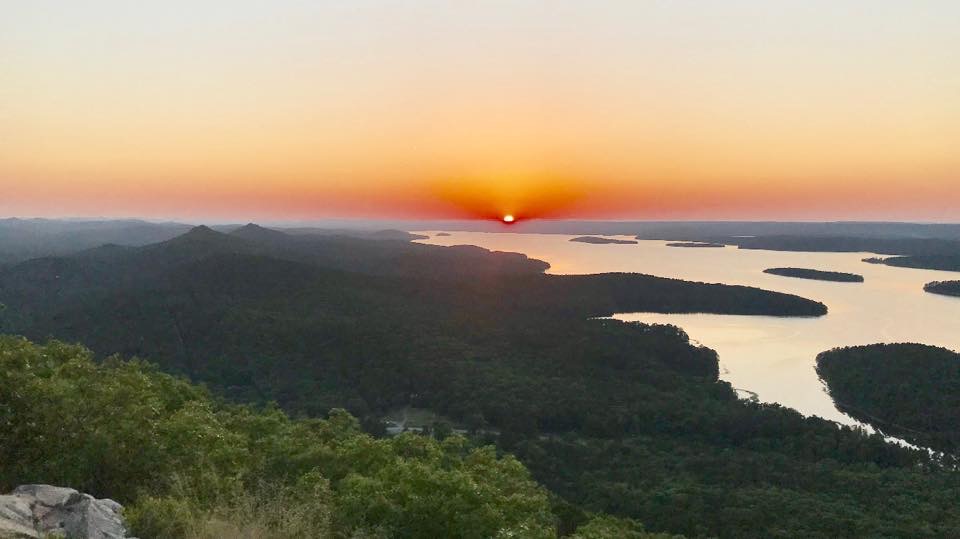
Sunrise at Stout’s Point, Petit Jean State Park, Arkansas. Photography by Beth Buckley

“There is meaning in every journey that is unknown to the traveler.”
— Dietrich Bonhoeffer

I am a student of the journey, always examining the stones in the road, the twists of the path, the crossroads that demand decision, the mountains that must be climbed and the valley of rest that replenishes the soul. All of it has been there on my journey, and I imagine on yours as well. The milestones along the way — those that are challenging and those that offer respite — are ever common for those who travel.

I question it often, the journey, asking where it next will lead me and what obstacles I might face along the way. But the journey does not tell. It does not speak, nor does it provide a map. The journey is wise, and it knows that if we know what the journey holds as we travel, we might turn back in fear. We might determine that the journey’s risks are too great.

So the beauty of the journey is this: that we give ourselves to it with at least some sense of trust. Somehow we are able to follow journey’s path blindly, accepting whatever we face next. Embracing the changing terrain, using every ounce of strength to go forward, taking paths unknown, binding up the wounds of the falls. We move onward with our soul’s faith spurring us on and in the certain knowledge that God knows the journey and that the Comforter walks beside us.

For after all, we are strangers and pilgrims (1 Peter 2: 11) on this journey, sojourners in a world that will not always be our home. We are just passing through this life, and so we take the journey as it appears before us, by faith. We trust the journey as if preordained for us by God. We hold fast to the journey in the faith that it was destined for us, and we do not set our sights on the destination, for that remains unknown and unknowable.

I share the eloquent words of Wendell Berry, who seems to understand the journey better than most:

We travelers, walking to the sun, can’t see
ahead, but looking back the very light
that blinded us shows us the way we came,
along which blessings now appear, risen
as if from sightlessness to sight, and we
by blessing brightly lit, keep going toward
that blessed light that yet to us is dark.

— Wendell Berry

May we trust the journey, moving “toward that blessed light that yet to us is dark.” Amen.


*******************************************************

On another note, please pray for me as I await a life-saving kidney transplant. I am grateful that you are walking with me on this journey that often feels so frightening. Your thoughts and prayers mean so much. If you would like to read the story of my illness, please visit the Georgia Transplant Foundation’s website at this link:

http://client.gatransplant.org/goto/KathyMFindley

A “Go Fund Me” page is set up for contributions to help with the enormous costs related to the transplant, including medications, housing costs for the month we have to stay near the transplant center, and other unforeseeable costs for my care following the transplant. If you can, please be a part of my transplant journey by making a contribution at this link:

https://bit.ly/33KXZOj


Community, Emotions, Friendship, Introspection, Laughter, Life Journeys, Memories, Reflection, Relationship, Stories, Vulnerability, Women

All Because of the Stories

9B0410BB-65D0-4A15-82BC-F05226DB1028

Telling our stories is one of the most sacred things we do. I am reminded of that as I enjoy my church’s annual women’s retreat on St. Simon’s Island. Now understand this: being on an island means sun and breezes, ocean waves, white sand and palm trees. So the physical environment of this retreat is very conducive to re-creating. On top of that, our sessions have focused our thoughts on knowing ourselves and finding the peace that comes from mindfulness and balance.

But at lunch today with three of the women, I rediscovered the power of our stories as we each told about vivid snippets of our lives and histories. One person commented that we might never have known these things about each other by just greeting one another in church. She was so right! The retreat gave us the gift of safe space in which to tell our stories.

All four of us delighted in the stories the others told. Each of us grew in our own spirituality as we told one another things about our faith. We shared our dreams. One shared her 15-year plan. Another shared her hopes for the year ahead. Two of us shared parts of life past, as the other two celebrated us.

We shared some pain, too, and some loss. We shared times of disappointment and times of plain old survival. We shared stories that brought laughter to the lunch table. We shared communion, in a way, when we created community — a safe community for sharing some of the experiences that brought such meaning to our lives.

We spoke and we listened. We told our stories, each voice around the table willing to be vulnerable enough to share their lives. There was power in the telling. And then there was another kind of power in the listening.

Each of us — just the four of us — were enriched, emboldened, supported and celebrated in the brief lunch activity of hearing one another’s story.

For today at least, four strangers became friends — all because of the stories.

Comfort, Compassion, Faith, Family, Friendship, Gratitude, healing, Life Journeys

Faith and Friends

BB7C1AE3-9E51-4550-9D96-3DEEE925019D

In this frenetic and fractured world, we can use all the comfort and assurance we can get. We want to know that everything’s going to be alright. We want to know that we will be alright. And we want to know that the people we love will be alright. Yet, these are things we cannot know, not really.

While we cannot have knowledge, we can have faith. Scripture offers us so many promises of care and protection:

“We are hard-pressed on every side, yet not crushed; we are perplexed, but not in despair; persecuted, but not forsaken; struck down, but not destroyed.”
(2 Corinthians 4:9)

“So do not fear, for I am with you; do not be dismayed, for I am your God. I will strengthen you and help you; I will uphold you with my righteous right hand.” (Isaiah 41:10)

“Be strong and courageous. Do not be afraid or terrified because of them, for the Lord your God goes with you; she will never leave you nor forsake you.” (Deuteronomy 31:6)

“The Lord will keep you from all harm; she will watch over your life; The Lord will watch over your coming and going both now and forevermore.” (Psalm 121:7-8)

“When you pass through the waters, I will be with you; and when you pass through the rivers, they will not sweep over you. When you walk through the fire, you will not be burned; the flames will not set you ablaze.” (Isaiah 43:2)

“You keep track of all my sorrows. You have collected all my tears in your bottle.
You have recorded each one in your book.” ( Psalm 56:8)

What a gift that we have faith and friends! I never minimize the care and comfort I receive from my friends, the many ways they offer blessings on my life. Sometimes a kind word from a friend far away brings me deep comfort just when I need it most. Sometimes a phone call from a friend, just to check on me, feels like the warmth of the sun. Sometimes one of my doctors will know exactly what to say to ease my concerns. And so often one of my dialysis nurses hones in on a worry that’s just underneath the surface and helps me bring it to the light that begins a healing process. Caring friends — and family — are most definitely grace gifts from God.

The truth is that we do not have to bear our burdens alone. Faith gives us the awareness of a God who cares and comforts. The promises of Scripture are not merely words on a page. They are messages of hope that we can hold onto when  nights are long and frightening.

So faith brings us hope and comfort from a caring God who knows what is in our hearts. And life’s journey brings us friends willing to walk with us. It is not unusual for a friend to know intuitively when I really need to hear a comforting word. When that happens, our conversation often results in tears, probably tears that I had held back in an effort to “be strong.” My friends show me, in so many ways, that I don’t have to be strong and that I can just “be.” When we talk, I feel that lump in my throat that is both an awareness of a hurt I’ve been holding onto and a response of gratitude for a friend who truly cares.

Thanks be to God for faith and friends.

Faith, Friendship, Hope, Indecision, Kidney Transplant, life, Life Journeys, Loneliness, Mustard seed faith, Uncategorized

Mine Is a Lonely Road

8808506F-1DFD-468B-B945-9D1E379E483E
Into the Blue, Painting by db Waterman

Mine is a lonely road on a journey of one. 
To be sure, I have a dear, dear life partner
And a family
Friends all over the world.

Yet, I am making this journey all by myself.

All around me, friends are working, vacationing, writing, preaching

All those things I long to do 
Simple things, but out of my reach.

In the meantime, I am dialyzing for hours every day
Willing myself to eat less, much less
Focusing on healthy 
Exercising through pain

And waiting for a kidney transplant.

Friends are still working, vacationing, writing, preaching
All those things I long to do, still out of my reach.

Waiting for an organ transplant is lonely.

No one I know is doing the same thing.
But everyone knows someone who had one
And died
Or did poorly
Or maybe they even did great
But I never hear much about them.

Waiting for an organ transplant is lonely.

I cannot help but second-guess myself
Why the risk?
Hard decision.

A Good decision about a dangerous thing takes time
Maybe years
Info rattles around in your head for a while
Moves on as it discerns the rhythm of your spirit
Then listens for the whisper of God
And at last finds its rest in your heart

And then you know.

Friends are still working, vacationing, writing, preaching
All those things out of my reach.

They stop their busyness long enough to give me counsel
Everyone knows someone who had a transplant
And died
Or did poorly

And so they tell me that
With all the medical details they know
And mostly they don’t know

But I am holding the good decision in my heart
The right decision 
The one with all the risks
Just like life
Full of risks.

Mine is a lonely road.

But I am ennobled to move forward in good hope
My mustard seed faith is enough
I leave them in the dust
All those who are working, vacationing, writing, preaching
All those things out of my reach.

I  leave them in the dust
All those who knew someone who had a transplant
And died.

Because I am not moving toward death.
I am moving toward life
And light.

Alone.

Still lonely.

Determined to persevere
Until the road ends.

Dancing, Darkness, Despair, Faith, Fear, Freedom, Hope, Joy, Life Journeys, Life pathways, Pain

Through These Dark Hours

521C7942-66C7-4FF0-A54B-6720CF0EB419
Unafraid, unbound, unleashed from this earth, rising with every step, a dance to lift the human soul.

What do I do through these dark hours? How do I endure them, the lostness, the fear, the spiritual suffering? How do I make my journey and avoid the dark hours that overwhelm me along the way?

Dark hours are a part of our living, a part of our journey. They cover us — even those who are most religious and devout — like an ominous black cloud. Dark hours bring us fear, dread, a lack of hope. Dark hours steal the joy of our faith.

The term “dark night (of the soul)” describes a spiritual crisis in the journey with God, like that described by St. John of the Cross in his poem, “The Dark Night.”

In her letters, St. Teresa of Calcutta described how she endured a dark night of the soul from 1948 almost until her death in 1997, with only brief interludes of relief.

St Thérèse of the Child Jesus wrote of her own experience of the dark night, as she found herself doubting the existence of eternity. She struggled and suffered through a prolonged period of spiritual darkness, declaring to her fellow nuns: “If you only knew what darkness I am plunged into..!”

Examples of the experiences of those we look to as spiritual patrons of the faith do not really enlighten our own faith journeys. We walk our own spiritual paths, always hoping for the best, always striving to experience the holy along the way. And we hope beyond hope that we will not have to endure the suffering of dark hours.

The truth is that dark hours are required on the journey. We cannot walk around our dark hours, moving them aside like the sticks and brush we can so easily move off of our path. Our only option is to keep walking, to stay the course and to embrace the journey just as it is.

As I look back to take stock of my own journey, I see the the dark hours as powerful reminders of struggle and spiritual crisis. As I examine the past, I can say without hesitation that the dark hours were times I do not want to experience again. I can feel the intense pain of them, even now, the formidable affect of them on my spirit. The thought of them brings on a queasy feeling in the pit of my stomach that makes me want to quickly move on to the next life metaphor I might use in this post.

And yet . . . And yet, how clear it is from this vantage point that I endured my dark hours and emerged stronger, better, with faith intact and with a living hope to take with me on the rest of the journey. From the cloud of dark hours, I learned that I could believe again, hope again, move farther into my journey with joy — even unrestrained joy — because of God’s grace that gave me strength.

There is probably no writer that inspires me more than Bishop Steven Charleston. He has taught us how to live in his many writings over the years. In this piece, he shows us the way through our dark hours in these beautiful words:

Let us dance through these dark hours, while others crouch down, seeking shelter from a worried world, hiding in the shadows, afraid to hope for tomorrow, let us give them a sign they can see, a message made of music and motion, two dancers spinning light out of darkness, a waltz in an air raid shelter, unafraid, unbound, unleashed from this earth, rising with every step, a dance to lift the human soul. Let us dance so others can dance, dancers from every direction, standing up to join us, music filling the sky, a revolution of unrestrained joy, an invitation to believe again, to hope again, to be free again, dancing through these dark hours, as if dancing was all that we were born to do.

To be sure, I have felt the pressing urge to “crouch down” many times, “to seek shelter from a worried world, hiding in the shadows, afraid to hope for tomorrow.” But in the end, through dark hours I learned to dance.

Dance then, wherever you may be. I am the Lord of the Dance, said he . . .

It’s a good way to live.

It’s a good way to give witness to the world of our living faith and unrestrained joy!

Amen.

Challenge, Change, Faith, Gratitude, Hope, journey, Kidney Transplant, Life Journeys, Mountaintop, Mustard seed faith

Who will move this mountain?

DC7FCDE2-12A4-45E9-B90E-BFA83D56417C

Who will move this mountain? I’m referring to the high, steep mountain that includes hundreds of processes that might eventually (possibly, probably) lead to a kidney transplant for me. So which is it, I keep asking myself? Is a kidney transplant possible? Is it probable? Is it a done deal?

I know with pretty much certainty that having a kidney transplant is never a done deal. The possibility of a kidney transplant for anyone is always tenuous. The possibility of having a donor is even more tenuous. I keep repeating the description offered by Piedmont transplant nephrologist, Dr. Christina Klein: “99% of people who call with interest in donating are screened out by phone and 50% of the people who do the full-day evaluation are screened out.” With deep gratitude, I can say that the person who has offered to be my living donor has passed through both of these screenings and has been accepted as a donor. It is no small thing for a living donor and a recipient to both be determined healthy enough for a transplant.

Piedmont Transplant Institute personnel spent the day yesterday testing me to determine if I’m still healthy enough for a transplant. They do a re-evaluation every two years for persons on the transplant list. It was probably the last re-evaluation I will have before a transplant surgery date is determined.

I said all of that to say that, as always, I think of God as the one who moves these kinds of obstacle mountains. I am standing at the base of a pretty big one this time, looking up at the peak and whispering to myself, “Impossible!”

But that’s not the end of the story, is it? For me, the story aways ends with sacred words that remind me who has the control, who it is that can move this mountain. Sacred words about moving life’s mountains can be found in all three Synoptic Gospels — Matthew, Luke and Mark. The Gospel writers make multiple references that go to the question of who moves mountains, as told by Jesus in parable. Interestingly, Jesus never says, “God will move your mountain.” Instead the words of Jesus in the parables go something like this:

If you had faith even as small as a tiny mustard seed, you could say to this mountain, ‘Move!’ and it would go far away. Nothing would be impossible to you.

— Mark 17:20 (TLB)

What? Can this be true? That God does not move the mountain after all. That it has everything to do with faith, even my very small mustard-seed-like faith. Is it true that I am my own mountain mover? That nothing is impossible?

In reading this Scripture text that is so familiar, it seems that perhaps I am the one who can say to this mountain, “Move!” Without stretching this Gospel text beyond its original intent, I can affirm that its message is about faith, and that message is timeless. It can begin as a thought that Jesus expresses in parable and end up as a reality of faith that empowers my life and quickens my journey.

So stand with me at the bottom of this mountain. Look up at the mountain with me and pray that my mustard-seed faith will get me to the peak. I may very well receive the gift of a kidney transplant. It seems very possible at this point in my five-year journey. But whatever happens, my faith will be with me — sustaining me, guiding me, empowering me still for every future mountain that raises up before me.

For this faith that was born in me decades ago, thanks be to God.


Beauty of Nature, Cross, Faith, Gardening for the Soul, God, God's Faithfulness, Life Journeys, Psalm 118, Reflection, Serenity, Trees

The Cross in the Garden

C1C795A4-B588-4EA6-896D-D2446614D0E1

Although I have a very small yard, I do have a tiny garden beside my tiny front porch. This morning the jasmine in the garden is in full bloom filling the air with sweet jasmine perfume. The tiny water feature is making gentle water sounds that relax and heal, as rippling water tends to do. A bird is splashing around in the birdbath, the flowers are blooming, and the ferns are swaying in Macon’s gentle breeze. A large iron Celtic cross leans on the tallow tree, always reminding me where my faith comes from.

Now there is an issue with the iron cross in the garden. It falls over all the time. No matter how deep I place it in the soil, it falls over. Being an ardent tree lover, I refuse to nail the cross to the tallow tree. So it continues to fall over and I continue to prop it up.

Perhaps, as a symbol of faith, it’s appropriate that the cross falls over. My faith falls over all the time, and just as I continually prop up the cross in my garden, the Creator props my faith back up every time it falls.

I think of the Psalms where we read so many words of God’s help and protection as in Psalm 118.

I was pushed hard, so that I was falling,
but the Lord helped me.

The Lord is my strength and my might;
he has become my salvation.

— Psalm 118:13-14 New Revised Standard Version (NRSV)

 
Like the cross in the garden, I might fall over a time or two on my journey. That’s okay, because I know a God who props me up, holds me up, lifts me up, raises me up!

Thanks be to God.

Faith, Fear, journey, Kidney Transplant, Life Journeys, Possibilities, Uncategorized

One Step Past Possible

5F59BC0D-8530-45AE-B0BA-403D4E2DC1F2

All journeys begin with one step, just one step, usually into the unknown. Each step that follows goes farther into a journey that most often is made up of twists and turns and sometimes stones in the road. It takes a little faith, embarking on a journey.

Still, faith does not make things easy. But faith does makes them possible. Mildred McAfee says something very wise about moving forward in faith. She says “If you have a great ambition, take as big a step as possible in the direction of fulfilling it. The step may only be a tiny one, but trust that it may be the largest one possible for now.”

Tiny steps remind me of the book microShifts by Gary Jansen who suggests that transforming your life happens one small step at a time. The book’s message makes it quite acceptable to take micro shifts toward something in your life. As for me, microshifts are important. I have made dozens of microshifts to get comfortable with the idea of a kidney transplant.

Microshifts are still shifts, and that means change that we sometimes fear. Faith slips in on us at this point. There’s a tiny verse in the Gospel of Luke that those of us who are followers of Christ grab onto. We believe the message because we want to. We hold the message close to our hearts because we need to. 

For with God nothing shall be impossible.

That’s it. Luke 1:37. Simple and clear. Without superfluous language, Luke asserts that nothing is impossible. And about the “with God” part. Well, I’m guessing that Luke adds that to remind us that faith includes a contract between us and the God of the possible. 

So I am thinking today about what is really is possible, globally and personally. For instance, is it possible to end hate-motivated violence? It is possible to end racial divides? Is it possible to make sure schools are safe places? Is it possible to protect the earth from the effects of climate change? Is it possible for this nation to hold free, fair, respectful political campaigns and elections?

Global questions like those are endless — so many questions, so few answers.

But then I also ask what is possible on a personal level. What’s possible for me or you? Is it possible to live out our faith on the margins where hurt prevails? Is it possible to carve out time for contemplation, meditation and prayer?

And then there’s the question I often ask myself. Is it possible to envision a day of better health? I am thinking specifically about a kidney transplant. Right now, a transplant seems to be one step past possible, meaning that it’s just a little more than possible that it will happen. The possibility , however small, brings up feelings, emotions that have begun to escape from the place inside me that had them locked up. 

I finally believe that a kidney transplant for me is probably going to happen. The stars have aligned. A brave and magnanimous donor has been evaluated by Piedmont Transplant Institute  in Atlanta where both donor and recipient (me) will have the surgery. The National Kidney Registry will search for matches among paired exchange program participants. Even surgery dates are being contemplated. It’s real! After almost five years of wondering, and doubting a transplant would ever happen, a transplant is imminent.

It would not be an exaggeration to say that I feel panic and fear. My heart beats a bit faster these days. I am taking lots of deep, cleansing, centering breaths. My heart is preparing for a surgery that could well offer a new sense of freedom for me. By coincidence, blasting through my speakers I am hearing one of my favorite old country tunes, Martina McBride’s “Independence Day.” It is reminding me that I lost a certain amount of independence the day I got sick in 2014.

So today feels a bit like an independence day is coming for me. It feels like independence to think about a future of not being tethered to a dialysis machine for eight hours a day, every day. It feels like independence to not have permanent tubing emerging from my body. It feels like independence to be able to travel without the strain of taking large medical equipment and multiple boxes of dialysis supplies.

As with anything medical, things can go wrong. There are numerous disqualifying factors that could still preclude a kidney transplant. But right now, living donor and recipient are fully evaluated and the transplant is at least one step past possible. This is a good place to be.

Asylum, Courage, Dreams, Faith, Family, Freedom, Immigration, Life Journeys, Maren Tirabassi, Politics, Roots, Taking immigrant children

Yiayia / Γιαγιά

66642F2E-4B31-4A8F-BCEC-6286D03650A6

In my heart this week, I have held my grandmother, my “Yiayia” who came to America at age 25 with an older husband and two babies. One of them was my mother. December 16, 1916 it was when the ship Guiseppe Verdi reached Ellis Island. My Yiayia — line number 25 on the ship’s passenger manifest — had never envisioned coming to this land. She never considered she might leave the tiny Greek village on the island that was her home.

Her husband, wanted by Mussolini as a political detractor, had no choice but to flee in the dark of night in search of a place of safety and refuge for his little family. He had the courage to survive and to dream. But here’s the thing: my grandparents were welcomed into this country when they arrived to see the brightness of the Lady Liberty’s lighted torch. To be sure, their life in America was not all bright or easy. They worked hard to eek out a living and to become a part of a new community so very far from the home they loved. 

After I was born into the world, a toddler at Yiayia’s knee, I watched her struggling to learn English, to speak English well enough to be understood by her neighbors. One of my most vivid memories was sitting next to her at our kitchen table next to an enormous silver radiator that creaked and groaned, but warmed us famously. With The Birmingham News spread across the table in front of her, she drank her coffee, dipping her Zuieback toast and reading the newspaper, every morning.

She taught herself to read English, but The Birmingham News was not merely a reading primer for Yiayia. She learned from it. She understood the news events of her day. She knew that liberty was a gift worth protecting. So she studied the political climate and the political personalities asking for her vote. She would insist that you MUST vote, that you must know the candidates, that you must cherish the right to free and fair elections.

So Yiayia would dress in her finest clothing, simple but lovely dresses. She would put on her earrings and her brooch, her rings and her watch. Then she would dress me, and off we would go, across the street and down the block to the polling place. We would go together into the booth with the dark brown curtain. She would vote and I would stand in close to her with the view of only that brown curtain and her chunky shoes, heels of course.

Before we exited the booth — every time — she would look down at me and say, “We are Democrats! That’s how we vote, always!” And to this very day, I have followed her voting directive — always. The truth is that her definitive directive about voting had much more to do with the process than the political party she supported. It went deeper than any party loyalty, all the way back to reading The Birmingham News, seeing the beam of the Statue of Liberty, crossing the ominous ocean, remembering how it felt to have to flee from government oppression and grieving the loss of the island of her home.

Today, it’s not so simple for our neighbors who must flee their homes for so many reasons — safety, survival, fear, oppression. Our president says they are not welcome here. Many Americans say they are not welcome here. Just today, The New York Times reported that Mr. Trump’s growing migrant paranoia resulted in the forced resignation of homeland security secretary Kirstjen Nielsen, who resigned on Sunday. She is part of Trump’s wider “housecleaning” designed to appoint persons who will make sure migrants can not get across our southwestern borders. Only department heads who will enthusiastically implement the Trump administration’s “zero tolerance” policy will keep their jobs. May we never forget the images of thousands of migrant children who were separated from their families.

The president, in a not so presidential tweet, took aim again Sunday night when he tweeted, “Our Country is FULL!” So yes, he says that our neighbors are not welcome here. Yet, millions of us, second generation citizens of the United States of America, will never forget where we came from. We will always remember that our roots spanned the ocean and survived in a new land.

In my friend’s blog last week, I found words that touched me in a profound way and caused me to grieve the land of welcome we once knew. Her words express a startling poignancy. 

“A country that unwelcomes the world,” she writes.

I want to share with you her entire blog post — Jericho Walk — because it is well worth your time to ponder it, but first I emphasize this portion:

Often there is a shofar
to remind us just how deep
are the cracks
in the foundation of a country
that unwelcomes the world . . .

Jericho Walk
by Maren

I return to the Jericho walk,
in Manchester,
having not been well enough
for a couple months,
and it feels like home —
this moving vigil, silent, but with signs
and grateful waving for drivers
who honk their support.

We travel around the large block
of the federal building
where people we love and
some people we have never met
come to discover
if this week they’ll be deported.

We walk around seven times
hoping the walls
will come tumbling down —

around this place
that sends into certain danger
kind, hard-working,
tax paying, family-loving people
who contribute so much
to our community

Often there is a shofar
to remind us just how deep
are the cracks
in the foundation of a country
that unwelcomes the world,

but today there is a flautist
playing “Siyahamba”
over and over again —
walking
in the light of God,

and I think of that less-military
Jericho story —
the one that defines neighbor as

anyone from anywhere
who stops to help vulnerable ones
fallen on the side of the road.

Thank you, Maren. 

Thank you, my dear Yiayia, for teaching me that God grants us the grace gifts of refuge, safe haven and freedom. And no human — not even a big, bad, bully president — can take those gifts from us and from the generations that come after us.

May God make it so. Amen.


Change, Compassion, Gofts in Open Hands, grief, journey, Lent, Life Journeys, Life pathways, Lostness, Maren Tirabassi, Risk, Travel, Vulnerability, Wisdom

Rough, Broken Roads

5E982E74-6C78-42E3-BA27-C642528A9C0CI think often about roads, the roads that take people where they want to go, or not. I think with deep fondness about the terribly rough and broken roads we traveled in Uganda. The time was immediately after the horrific reign of Idi Amin that left the roads, and the entire country, in shambles. I remember the difficulty in traveling those rough, broken roads — washed out, bombed out, neglected for years.

I remember the fear of traveling those roads, the frightening military roadblocks, the pointed machine guns, the soldier’s demand for all that we carried in the vehicle and even the vehicle itself. I remember how some of our missionaries were left in the bush with their vehicle “confiscated” by the occupying army. I remember the roadblock murder of the dear Ugandan man who drove our mission’s supply truck.

I think of traveling a road in the middle of the night that led to my brother’s funeral, made rough by grief. I think of the rough road I traveled in leaving my home of 32 years for a new and unfamiliar place. I can never forget my rough road through serious illness and difficult recovery.

I think of roads that take people where they do not want to go — to war, to prisons, to rehabilitation centers, to the sites of natural disasters. I think about the roads in disaster areas that are simply gone.

I remember a song in a Christian musical of many years ago titled “Rough Old Roads.” It told of the rough roads Jesus walked. The song’s climactic moment gave us these words: “the road that was roughest of all to walk was the road that led to the cross.”

It is appropriate for us during Lent to recall the rough roads Jesus walked, rough for so many reasons: rejection, danger, soul temptation, angry crowds and lynch mobs, and ultimately the rough road that Jesus walked to the cross, to his death. To learn of his roads means that we get a glimpse of our own. The roads we all walk.

None of us can avoid walking the rough and broken roads that appear before us, but it is in traversing those roads that we learn who we are. Rough roads force us to take the hard and narrow way, and thus become who we must ultimately become. Roads can wind around so that we are lost, thus inviting us to take the risk of vulnerability required for an unknown and uncharted journey. Our roads teach and challenge us. When the road ahead of us is rough or broken, our commitment to stay the course results in wisdom. I call it wisdom from the journey. Our rough, broken roads make us stronger and more resilient. The rougher they are, the more we change and grow.

I could bore you with even more personal reflection about rough roads, but instead I want to share a moving poem written by Maren Tirabassi.* In the poem, she writes of broken roads and calls for a God who attends to all who find themselves on broken roads.

Here are Maren’s moving words:

I was praying this morning, God,
for all the people in Mozambique
and Malawi and Zimbabwe,
in the midst of the terrible losses
from cyclone Idai —
the deaths and injury and destruction,
the ongoing need for rescue

and I learned that the roads are broken.

I should have known —

the roads between towns
are impassable,
the bridges smashed, ports unusable.
Also those other paths —
electricity, telephone, Internet,
are gone as well.

And I went from that
flat-hand-on-the-newspaper prayer,
to the jail and my meeting
for spiritual care
and walked among others
with no access

and realized that journey
is not a parable for Lent
for these,
your children on the inside.

And so holy Valley-uplifter,
Rough-place-leveler,
I call you to attend
to all who suffer broken roads —

broken highways or heartways,
or sometimes minds that cannot
find a way out of whatever
dead end they are in,

and teach me to pay attention, too,
put my back against
every road block,
become an opener of the way home.


May God make it so. Amen.


*Maren served as a pastor in the United Church of Christ for thirty-seven years in Massachusetts and New Hampshire and is the author or editor of 20 books. You may read more of her creative and soulful writing at her blog, “Gifts in Open Hands” at the following link:

https://giftsinopenhands.wordpress.com/2019/03/21/10101/


Challenge, Faith, God's Faithfulness, God's presence, Hope, Lent, Life Journeys, Life pathways, Music, Restoration, Serenity, Transformation

I Can Face Tomorrow

Enlight272Yesterday was not my best day. All day long challenges got the best of me — health challenges, schedule challenges, even bad haircut challenges. My sister of the heart, Donna, said I was cranky. My husband, Fred, said I should chalk it up to Ash Wednesday. Martie, my dear Little Rock friend, said that yesterday was the first day of Mercury in retrograde and that I should do my best to survive until it’s over on March 28th.

I’m not so convinced of any of those explanations, but I’ll let it be for now. Today is a new day, a day in which I have chosen peace for the beginning of my Lenten journey. Typically, the way I find peace is through music. So Pandora is on my sacred music station today. It would be an understatement to say that the music has lifted me today and has almost made yesterday’s fiascoes a dim memory.

As I listened, a song from my past brought sweet memories. Years ago, before I learned to renounce masculine pronouns to refer to God, I was inspired greatly by these words: “Because He lives, I can face tomorrow.” We sang this Gospel song often to remind us of hope, of perseverance, of God’s faithfulness and of Christ’s resurrection. Today, those words and that melody on Pandora reminded me of those exact things. In spite of masculine pronoun referring to God, the music moved me as it has always done. The message has not changed. God has not changed. My faith in Christ has not changed. Thanks be to God!

Here’s my truth as I follow my Lenten path, the abiding truth: “Tomorrow” for me seems murky, with the path ahead unknown and somewhat disconcerting. I do not know if I will receive a kidney transplant or live on daily dialysis for the rest of my life. I do not know what tomorrow promises.

But this is as it has always been — before illness and after. I never knew what tomorrow would bring, even in those days when I thought I was fearlessly and fully in control of my life. So it feels like a Lenten testimony of my faith to say that I do not know what tomorrow looks like for me. Leaning into the reality of the unknown future, I feel embraced in the consoling truth that “because He lives, I can face tomorrow.”

Of this, I am confident. Resting on this promise, I can move onto the Lenten path before me with refreshed hope and renewed faith. Amen.

Christianity, Contemplation, Introspection, Lent, Life Journeys, Reflection

Hallelujah!

A79EA649-189F-4BF0-8A49-1BF3ED4D11FF

Those of us who are Jesus people should take note that there are only two days left for “Hallelujahs!” Ash Wednesday is upon us, and that marks two significant things: first, Jesus begins his journey to his crucifixion; and second, we, if we choose to, will join Christ’s journey by traveling our own spiritual journey through the forty days of Lent.

Each of us finds his or her own spiritual path through these Lenten days. Some might enter into a time of self-reflection. Others want to realign their lives to a clearer focus toward God. Some choose to give up things while also taking on life-giving practices. Still others focus on repentance, and others intend to rid themselves of distractions and selfish desires. Some of us just need to take these Lenten days to breathe, slow down, contemplate life, listen for God’s whisper.

How we spend our Lenten days may include prayer, fasting, meditation, Bible reading, taking focused labyrinth walks, service to others, reading poetry, and many other disciplines that can draw us closer to God. 

In two days, some of us might choose one of these Lenten disciplines. But until then, we can fill our hearts with hallelujahs as we contemplate the many life graces we have received. So today, I want to proclaim “hallelujah!” for a caring and loving husband . . .

for a family that is present for me when I need them, 

for a place to live that is more than just a house, 

for a church family that is community for me, 

for my medical care team who take such good care of me, 

for friends from afar who make the effort to continue to build our friendship in spite of the many miles that separate us, 

for friends nearby who listen and love and care, and then listen some more. 

Hallelujah!

Hallelujah for all of that. And Hallelujah for a good and graceful God who gives us life and breath!

Hallelujah!

So I invite you to shout out a few hallelujahs for all the graces of your life. And after the hallelujahs, may you take your journey through a Holy Lent, and on the journey, find quiet joys and a peaceful path. Amen.


I invite you to listen to a beautiful arrangement of Michael Cohen’s “Hallelujah” performed by Pentatonix here:

Forgiveness, God's presence, Life Journeys, Light, peace

Forgiveness

3904e2f4-b048-4bf3-83f1-bccdd2592165I have long pondered forgiveness, for years! It’s something that confuses me. Like forgiving my abuser. Like parents standing at their child’s graveside and considering how to forgive the shooter. Like a little girl forgiving the people that snatched her from her mother’s arms at the border.

Forgiveness can be confounding and elusive. It is not a merely a thing, or a conviction, or an emotion, or a firmly held belief. It is an act of the heart that can seem all but impossible. But the Bible seems very clear about forgiveness. When you have been wronged or betrayed by another person and you are in a tug of war with yourself about forgiveness, the words of Scripture face off with you as a challenge, perhaps even a rebuke.

Get rid of all bitterness, rage and anger, brawling and slander, along with every form of malice. Be kind and compassionate to one another, forgiving each other, just as in Christ God forgave you. (Ephesians 4:31-32)

Bear with each other and forgive one another if any of you has a grievance against someone. Forgive as the Lord forgave you. (Collosians 3:13)

And when you stand praying, if you hold anything against anyone, forgive them, so that your Father in heaven may forgive you your sins. (Mark 11:25)

For so many years, these and other Biblical admonitions troubled me. I felt as though the words stood in judgement before me. I would pray to be able to forgive. I would pray for light that could shatter the darkness around me. I would pray again, and again. Waiting. Hoping.

Eventually, I shared my inability to forgive with my spiritual director, hoping for guidance and wise counsel. We talked about it at length. I bared my most vulnerable places and revealed the unresolved anger that lived inside of those places. I mined the depths of my spirit and unearthed long-standing wounds of the soul. Our conversations were gently pushing me to a better place and shedding light on the reality that my inability to forgive was not disobedience, but unresolved pain. And then my spiritual director shared this quote with me.

Forgiveness isn’t telling someone it was okay to hurt you. 
It’s telling yourself  it’s okay to stop hurting. 

It doesn’t mean you have to trust them again. 
It means you can learn to trust yourself again. 

It doesn’t mean you have to give them a free pass back into your life. 
It means you are free to take your life back again. 

Forgiveness is simply emptying your past of its power to empty your present of its peace. 

― L.R. Knost

That experience was many years ago, but to this day, I live in the peace I found then. There is no doubt that my past did indeed have the power to empty my “present of its peace.” Reclaiming my peace made forgiveness possible, though it did not happen instantly. It’s not so easy to forgive a person who was never sorry.

Still, it was a process — a journey really — that I had to travel with God, praying all along the way that I would have the strength I needed. The journey was long and sometimes arduous. God was ever-present — patient and persistent. At journey’s end, there really was light, shining brightly where darkness had been. 

Was I healed of my sin of being an unforgiving person? After this journey, do I now forgive every person who hurts me? Sometimes!

Thank you, God, for your patient persistence. Amen.

Brokenness, Courage, Despair, Heartbreak, Hope, Life Journeys, struggle, Suffering, Transformation, Vulnerability

Losing Hope


Losing Hope And Interest Quote Motivational Quotes For Hope Pics 15+ Don't Lose Hope Quotes With
Dr. Michelle Bengtson

How do we live after we have lost hope? How do we live with brokenness? What do we say to a broken world? What do we do with our broken hearts? The truth is that each day can bring us heartbreak. Any season of life can bring us failure. At times, the struggle is so intense that we do lose hope. 

Khalil Gibran has written that “out of suffering have emerged the strongest souls; the most massive characters are seared with scars.” 

How true that is, that our suffering makes us stronger, that our scars make us resilient. Most of us move through life steeled against any suffering. We bravely put on our body armor to protect us against every assault. We refuse to allow our vulnerability to rise within us.

I have been strengthened by Brené Brown’s book, “Rising Strong.” She points us to wisdom that names hope is a function of struggle, and challenges us to not be afraid to lean into discomfort.

Why would we want to do that, you might ask? Who in their right mind really wants to invite adversity into their lives? Why would we want to be vulnerable? We need to be strong. We need to live into courage. We need to be impenetrable, tough and impervious to anything that might hurt us.

Here’s what Brené Brown says about that:

Hiding out, pretending and armoring up against vulnerability are killing us: killing our spirits, our hope, our potential, our creativity . . . Our love, our faith, our joy. We’re sick of being afraid and sick of hustling for our self-worth. We want to be brave, but deep inside of we know that being brave requires us to be vulnerable.

“No adversity, no hope,” she writes. “Fall. Get up. Try again.”

As people of faith, we can speak, through our own heartbreak, to a broken world. We can offer the message that if you feel that you have to give up, hope whispers, “try one more time.”

When we live in life’s fullness, with our whole hearts, we will always know heartbreak. We will push to try something new, and sometimes we will fail completely. We will experience disappointment. But without those heartbreak times, we will never know that we can get beyond them.

If we never fall, we will never know that we really can get up. If we never lose hope, we will never experience the joy of finding it again.

If we never lose hope, we will never know new hope, fresh and pointing us toward the skies.


Change, Discovering, End Stage Renal Disease, Freedom, healing, Illness, Life Journeys, Mindfulness, Rest, Restoration, Self care, Serenity, simple joys

I used to be . . .

734D4A65-1E4E-4705-A356-D13DF9C7F9B4I used to be . . . 

It’s a phrase I use a lot these days as I fight off the feeling that in retirement, I am useless. It’s not true, of course, that I am useless. But to be honest, I do feel just a little useless these days, at least some of the time. The reason? I used to be a bona fide workaholic. I used to feel important and productive. I used to be busy all the time, night and day. I used to be a perfectionist. I used to have just a bit of obsessive compulsive disorder, and all,of that drove me to a dangerous place.

The problem is that when you love and believe in your work so much, your work can become your whole life. Then things can get unbearable. So I admit that I am a recovering workaholic. I was the person that put in far more than 40 hours a week and never took a day off. But the critical question I had to answer was this: Is my ego at the root of my workaholism?

What was the job that was important enough to push me to work so hard?

I was a minister and a trauma counselor, and I was executive director of Safe Places, a nonprofit organization that served victims of violence. There was always someone in trouble, someone who had been battered by a spouse, someone trying to escape trafficking, a teen that was recovering from rape, a child that had been abused. So the work was never done.

I loved my work. I believed in it with all my heart. But I could not see what others saw. I could not believe the truth spoken by friends and colleagues, that I needed rest, that my work was hurting me. As much as I didn’t want to admit it, I was working myself sick. Circumstances, and maybe the alignment of the stars, brought me to a “come to Jesus” moment that forced me to take stock of my life. I realized I couldn’t do it all. So I took a very slight respite and pulled back from the constant work. In the meantime, as the stars would have it, we lost our federal funding, and suddenly Safe Places was gone. It was over. 

The stress did not end, though, because those that needed help kept calling . . . my phone. I had no staff left and, though I tried, I simply could not continue helping all these hurting people by myself. So I was forced into an unwanted and unplanned rest. 

During this “rest” time, grief and loss took over my psyche. But miraculously, my body began to rest. My pace slowed down. I was becoming mindful of every moment and what was going on in every moment. And in spite of the grief and sadness, my mind and spirit began to heal. What happened next was the shock of a lifetime. As my mind and spirit began to heal, I finally allowed my body to tell me what was going on. My doctors got to the bottom of it and diagnosed me with end stage kidney disease. Before I could even begin to take it all in, I was hospitalized and on dialysis.

I honestly believe I had worked myself to death, or at least nearer to death than I wanted to be. I spent a great deal of 2014 in the hospital trying to stabilize and then working to take my life back. It was hard work learning to write again, to think again, to walk again. But I made it through to a “new normal” that meant for me at least 7 1/2 hours of dialysis every day for the rest of my life, unless, of course, I am able to get a kidney transplant.

The experience of serious illness changed me. After I began to recover, people told me that I was unusually quiet. I didn’t speak much even when others around me were engaged in meaningful conversations. I knew that I was being quiet, quite unlike my normal personality. I was often silent when normally I would have had a great deal to say. I was different, to be sure, but inside myself I was okay. If I had to describe myself I would say that I was soft, broken open and free. And I was content in that place, although my family was concerned about me. I had traveled to a new place in my life, and it was a good place to be.

So here I sit in my “new normal,” tending plants, painting, cooking, writing, reading, and doing all things for pleasure. Most often I am still tempted to dive in and work on something until I am exhausted. But when the tiredness begins to creep up, something in my body remembers. Remembers I need to rest, to embrace stillness, to just “be.”

Still, I fight my old workaholic ways. Sometimes they push me to do things faster and better and longer. Sometimes my old workaholic ways push my button, the button that accuses me of uselessness, as in, “You are not worth much anymore! What are you going to do to change the world?”

Good news! I have finally given myself permission to not change the world. It has been a major shift for me, but I am seeing the truth more clearly, that I never could have changed the world anyway! So most of the time, when I feel myself pushing past my edge, I walk away. I write a blog post or fiddle with my flowers. I cook something fabulous or watch a little Netflix. So what will I do to live happily in these retirement days? I hope that I will keep studying the secret art of rest. I hope that I will continue to learn the grace of mindfulness, just cherishing the moment, every moment.

I used to be a workaholic. Not anymore.

Oh, and one more thing . . . a prayer. Though my faith tradition has always eschewed prayers to Mary, mother of Jesus, many very beautiful and meaningful prayers are prayed to her. I leave you with this one written by Mirabai Starr.

Mother of Consolation, help me to let myself be consoled. 

I hold it all together, Blessed One. 

I have convinced myself that it is up to me to keep the airplane aloft with my own breath, that I am the only one capable of baking bread and scrubbing floors, that it is my responsibility alone to alleviate the sorrow in the heart of every single person I know. 

But I have forgotten how to weep, Tender One. 

Teach me to reach out to the ones I comfort and ask for their comfort. 

Let me feel the tender touch of the Holy One on my cheek when I wake in the night, weary and frightened. 

Help me to be vulnerable and soft now, broken open and free.

— Mirabai Starr


Aging, Faith, grief, Illness, Joy, Life Journeys, Lightheartedness, Music, Pain, simple joys, Sorrow

Joy

102F7D81-F946-4E11-A42A-07566031DEABAs I often do, I found today, in my lengthy list of unread emails, a plethora of pleas to do something. Save the bees. Save the libraries. Save the children. Save the political candidate . . . and several other things that someone wants to save.  I care deeply about most of those things that need saving, like the libraries and the children and the bees. And I spend a fair amount of time worrying about them and praying for them to be saved.
But for this day, I am laser focused on saving myself, saving myself from the onslaught of various illnesses, from nature’s effects of aging, and mostly, from a life filled with worry where there should be joy.

Memories flood my mind with sweet, little songs from the past: “The joy of the Lord is my strength . . .”  (1)  “I’ve got that joy, joy, joy, joy down in my heart . . .” (2) Simple songs they were for us when as children we learned every word and took the melodies into our hearts to recall in the years to come.

And so today, I recall them, realizing that whatever may come, I have joy in my heart, and most of all, that I am leaning into the truth that the joy of the Lord is my strength. These were good and positive lessons to learn as a child, with simple music as the teacher. So today, I remember the songs, singing them silently as I write. Singing them aloud would most surely disturb the household. So I keep silent.

It can be a dangerous thing to keep silence, for in those silent times, there can be a flood of memories, thoughts, recollections, and the sacred space so essential to the spiritual life. Today’s sacred space brings these words to my heart:

The Lord is my strength and my shield;
in him my heart trusts;
so I am helped, and my heart exults,
and with my song I give thanks to him.

— Psalm 28:7 (RSV)

You are being strengthened with all power according to his glorious might, so that you might patiently endure everything with joy.

— Colossians 1:11(ISV)

Nehemiah said, “Go and enjoy choice food and sweet drinks, and send some to those who have nothing prepared. This day is holy to our Lord. Do not grieve, for the joy of the Lord is your strength.”

— Nehemiah 8:10 (NIV)

On top of my end stage kidney disease, debilitating fibromyalgia, diabetes, and an almost constant barrage of new diagnoses, I have one job really: to find ways of guarding the joy that makes its home in my heart, to patiently endure whatever comes with joy. I must trust that joy really is there in my heart. I must believe that joy is still a part of my faith. I must know that joy has been with me on my journey, every day, at every turn, over every mountain and through every valley.

I must guard my joy lovingly and persistently. And I must guard my heart, joy’s dwelling place. When new illnesses come along, new concerns, new challenges, new problems and new sorrows, perhaps the most important thing I can do is to guard my heart.

Along with the other passages of scripture that have entered my sacred soace today, there is another tiny scripture passage that has moved me over the years. The writer of the book of Proverbs begins chapter four with a list of life instructions, and for twenty-two verses, the writer admonishes the reader to be vigilant, to be careful, to hold on to instruction, to avoid the path of the wicked, etc. And then in verse 23, the writer of the everlasting wisdom of the Proverbs gives us one more tidbit of advice and advises us to pay attention to this one instruction, above all else.

Above all else, guard your heart,
for from it flow the wellsprings of life.

— Proverbs 4:23 

I am never 100% certain about the meaning of scripture passages, but this one feels very clear to me — guard your heart and the wellsprings of your life will flow from it. I think the wellsprings might be joy! Not such a simple message, is it, that we have “joy down in our hearts to stay.”


(1) The Joy of the Lord Is My Strength, written by Alliene Vale, ©️1971, Universal Music.

(2) Joy In My Heart, written by George William Cooke, 1925

Change, Courage, Dreams, Life Journeys, Memories, Passing years, Retirement, Transformation

On Disturbing the Universe

960D000A-3175-4D6F-9A36-3881E1569289You have no doubt heard about the mid life crisis. Perhaps you have even had one. I did at mid life. However, what’s more critical to me at this stage of my life is more appropriately called a late life crisis. And, lo and behold, I’m having one of those right now!
Am I in the right place? Do I need to retire nearer to my son and grandchildren? How do I live a fulfilled life while facing so many health challenges? Why did I move away from my best friend? How do I give back as I have always done now that my ministry career is over? Is it over? Is there more I could be doing? Should I write more, cook more, paint more, garden more? What in the world do I do with myself?

I recently read a book by Sue Monk Kidd,  When the Heart Waits: Spiritual Direction for Life’s Sacred Questions. I was stopped in my tracks by her words:

For some months I had been lost in a baffling crisis of spirit. Back in the autumn I had awakened to a growing darkness and cacophony, as if something in my depths were crying out. A whole chorus of voices. Orphaned voices. They seemed to speak for all the unlived parts of me . . . I know now that they were the clamor of a new self struggling to be born. I was standing on the shifting ground of midlife, having come upon that time in life when one is summoned to an inner transformation, to a crossing over from one identity to another. When change-winds swirl through our lives . . . they often call us to undertake a new passage of the spiritual journey.

I am there. Not in midlife, but in late life, and it is for me an existential crisis of spirit, definitely the time of “a new self struggling to be born.” To be sure, there are unlived parts of me, and I want to understand what exactly they are and how I can coax them to life. The ground beneath me is shifting, calling out to me to cross over from one identity to another. An inner transformation is most definitely in order for me, but how do I begin? Where do I begin? These are the questions of late life. And the symptoms? Dragging out old photos, very old photos. Looking up old friends. Examining your grandmother’s vintage jewelry. Scanning school yearbooks. All in a useless attempt at making the present as meaningful as you remember the past to be.

I sometimes agonize over my current life, wishing to dream just one more dream and to make it a reality. I worry about the future and wonder what the years ahead will bring. I want to still be relevant. I want to keep trying to change the world just as I used to. I want to stir things up and make waves in the quest for justice, just as I did in the past. I feel as if I have only two choices: to languish in the present or to find a way to be the me I used to be. And yet, something tells me that there is a third choice that involves some sort of transformation and the renewal of life, not as it used to be, but as it can be now, in the present season.

It is a quiet agony that I am experiencing. It happened to me when I came upon an unsuspecting darkness buried in late life and met the same overwhelming question that Sue Monk Kidd met: “Do I dare disturb the universe?”

My family could be scandalized if I found new life. They might wonder if I had taken too much of a medication. They might worry that I will do something inappropriate. They might know that I simply do not have the kind of energy required for dreaming big, new, important dreams. And they would be mostly right.

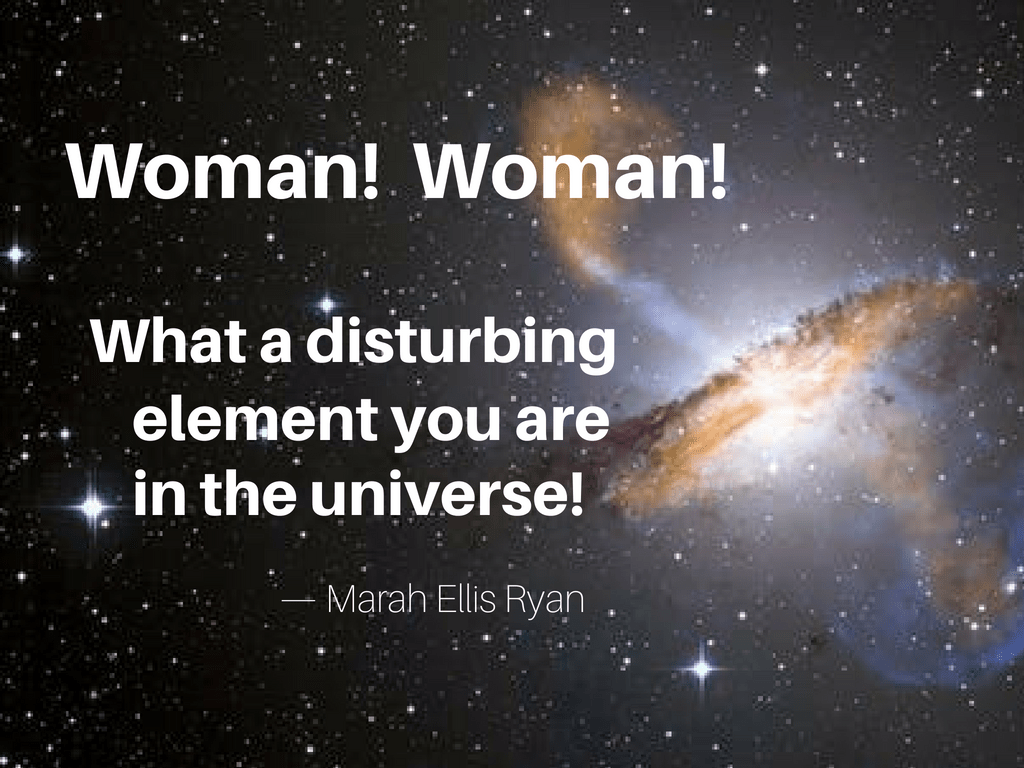
And yet I refuse to measure out my life with coffee spoons. It’s way too safe for me. It’s not who I am, and I am completely convinced that there are unlived parts of me looking for a way to come to life. I have no idea what that would look like. I have no idea how I will manage to pull it off. But I need to disturb the universe. And the universe needs some disturbing!

May God guide me on the way, pour blessings on my dreams, and show me just how I might disturb the universe.

Aging, Change, Comfort, Faith, Fear, God's Faithfulness, God's presence, Hope, Joy, Life Journeys, Life pathways, peace, Psalms

Around the Bend

8354B3D7-3728-454F-B1E7-FAB7901C5EB8
Photo by Steven Nawojczyk

I wonder sometimes what I might find around the bend. “Around the bend” is an apt metaphor for the twists and turns of life’s pathway. No matter how long I have traveled my journey, no matter how much life wisdom I have gained, I never, ever know what what’s around the bend.

The pathway before me can frighten, even while I strain to see as far as I can into what lies ahead. The bend is sharp most times, and the angle hides my view. As I age, fear on the journey looms large, for I am completely aware of the dangers I might encounter around the first bend, and the next, and all the bends that are ahead of me. And yet, I am constantly graced with flashes of hope and faith whispering that what is ahead of me could be even better than what I have left behind.

The beautiful photo above by Steven Nawojczyk is a gift of calm waters bending in a gentle flow at the foot of a mountain, lightened by the golden rays of the sun. The image makes me believe that whatever is around the bend is lovely, peaceful, comforting, safe. And that is exactly what God would want me to believe, and woukd want us all to believe. I cannot help but think of the Psalmist’s affirmation that God “leads me beside still waters.”

In so many comfort-filled passages, the Psalmist offers sure and certain comfort. Hear the Psalmist’s words . . .

Keep me safe, my God, for in you I take refuge.

Lord, you alone are my portion and my cup; you make my lot secure.

The boundary lines have fallen for me in pleasant places;
Surely I have a delightful inheritance.

I keep my eyes always on the Lord. With him at my right hand, I will not be shaken.
   Therefore my heart is glad and my tongue rejoices; my body also will rest secure . . .

You make known to me the path of life;
you will fill me with joy in your presence,
with eternal pleasures at your right hand.

— Psalm 16:1, 5-6, 8-9, 11 (NIV)

And hear the words of the Prophet Isaiah . . .

Even to your old age and gray hairs, I am he, I am he who will sustain you. 
I have made you and I will carry you; I will sustain you and I will rescue you.  

— Isaiah 46:4 (NIV)

And so “around the bend” is not so frightening after all. In God — “who makes known the path of life” —  there is comfort, safety, protection, constancy, and even joy. Thanks be to God.

Dreams, Laughter, Legacy, Life Journeys, Relationship

Dream, Always!

3EBA32DC-4D61-4073-9AEF-78FFD295DE48Today, I am celebrating my granddaughter’s birthday. More accurately, I am contemplating my granddaughter’s birthday. I do not celebrate the day, really, I celebrate her, the person she has become in the last nine years. I celebrate her smile, her humor, her laughter, her sweet spirit, her strength, her talent and her beauty. I celebrate hope for the ways she will grow and mature.

I want to tell her everything about life, how it will lift her up and also let her down. I want to tell her about love and how to know when it’s real. I want to talk with her about faith and what it means to draw close to God. I want to tell her about the joy of life so that she will know how to transcend the sorrows of the world and claim abiding happiness and contentment. I want to tell her about the healing power of laughter, and of tears. I want to tell her that she has within her all the resilience she needs to overcome adversity. I want to tell her to dream, always. And I want to tell her about inner strength and how to develop the ability to rise up on wings of confidence and soar. 

I want to tell her that I will be near her always, so that when she falls, I can pick her up, wipe off the dust, clean her wounds, tell her she is okay, and set her back on her life journey. But that I cannot promise, because I won’t be with her forever in this life.

So I want to tell her about the adventures that marked my life and how each one made me wiser and stronger. And that’s really my point for this day’s post: that I need to make adventures! I need to live a life full of new experiences and new discoveries. I need to fill my life with substance. What I do and what I discover in this life will be my legacy for my granddaughter and for my other grandchildren. I think of the words of Cristina Garcia on this subject.

Before you know it you’ll be my age telling your own granddaughter the story of your life, and you wanna make it an interesting one, don’t you? You wanna be able to tell her some adventures, some excitements, some something. How you live your life . . . is a gift for those who come after you, a kind of inheritance.   (Cristina Garcia)

I hope the story I leave for my granddaughter will give her courage and determination. I hope she will find in my life story an example of one who chased dreams always and actually caught them, sometimes. I hope that in my story, she will see perseverance and persistence, so that she will know that she can run like the wind toward every dream she chooses.

Happy birthday, my sweet Jordan! I love you.