Activism, Advocate, Beauty of Nature, Bravery, Calling, Committment, Community, Community activism, Conflict, Courage, Dandelions, Faith, Fear, God, Grace, Holy Spirit, Hope, Injustice

Start Something! It’s Easy!

—Mary Oliver

Starting something really is easy, but the pathway from beginning something and then taking it to completion reveals challenges that test our resolve. I always begin projects with enthusiasm and optimism, filled with ideas and plans, but as obstacles arise, my motivation almost always wanes, my progress slows, and distractions multiply. In this environment, fear definitely thrives. But the projects stay on my shoulders as long as I remember them, and so the contrast between the initial excitement versus the realities of sustained effort calls for persistence and commitment. The tumultuous path from beginning to completion can cause me to become weary and quit, just to get the heavy pack of projects off my shoulders.

Of course, most of us can admit that in these days, one important example of our tumultuous path is the dismantling of our democracy. Of course, not everyone agrees about the severity of the situation, but I have to say that in my world, people are afraid, angry, despondent, disheartened . . . although some are elated. Let’s entertain this thought for a few minutes: when people are convinced that real danger is coming, they often gird themselves with “protective gear” (the Bible would say, “gird up your loins”) after which you can attack the stronghold that threatens you. We see an example of this in the protests and/or marches that are happening in cities and towns across the nation and around the world. Let me dare to say this in hopes that no person will take offense. The aim of those who dissent to the actions of the Trump administration are deeply concerned and afraid. Even people of faith are beginning to see this version of the world as something to fear. 

Today, as I write this post, I am thinking of so many people who live in fear: immigrants who are currently locked up like prisoners, children who have been separated from their parents, people who suddenly lose their jobs, thousands of immigrants being rounded up and deported, the community at-large as they lose some of their rights, and even the elected congressional leaders who are afraid of personal repercussions from Donald Tump. Afraid! All of them afraid!

“Here is the world. Beautiful and terrible things will happen.
Don’t be afraid.”

― Frederick Buechner, Beyond Words: Daily Readings in the ABC’s of Faith

You see, whether we support the relentless changes in our government or not, Mr. Trump is stoking fear among Americans as he dismantles institutions, agencies, and departments. Let me list some of them: The Department of Education, the Department of Health and Human Services, the Departments of Agriculture, Defense, Energy, Housing and Urban Development, and Transportation. And then there is the layoff of thousands of federal employees, the closing of USAID, and the indiscriminate and inhumane deportation of thousands of immigrants and immigrant U.S. citizens.

The question I ask myself over and over again is whether there is anything I can do to help end this destruction. Is it really true that starting something is easy? Not always! So what can I do to help change our trajectory. Am I kidding myself? What can one person with zero power do to end this? The answer is “nothing” every time I ask! Good intentions I may have in abundance, but the answer in my spirit does not change, “There is nothing one person can do. I have no power.”

Yet, for all of us who are people of faith, there is always an opportunity to live out our faith through our actions, and within a faith community. Perhaps we can make a significant change, together.

Jesus is our example, showing us how to heal destructive acts committed by power-hungry, destructive people. Jesus left us instructions, as did the prophets, the psalmist, and the epistle writers. Yet, we persist in believing the lie that we have no power. Contemplate these bits of wisdom:

Very truly, I tell you, the one who believes in me will also do the works that I do and, in fact, will do greater works than these      —John 14:12

When you give a banquet, invite the poor, the crippled, the lame, and the blind. And you will be blessed.     —Luke 14:12-14

When Jesus came to Nazareth . . . he went to the synagogue on the sabbath day, as was his custom. He stood up to read, and the scroll of the prophet Isaiah was given to him. He unrolled the scroll and found the place where it was written: ‘The Spirit of the Lord is upon me, because he has anointed me to bring good news to the poor. He has sent me to proclaim release to the captives and recovery of sight to the blind, to let the oppressed go free, to proclaim the year of the Lord’s favor.’      —Luke 4:16-19

But woe to you Pharisees! For you tithe mint and rue and herbs of all kinds, and neglect justice and the love of God.      —Luke 11:40

This is what the LORD Almighty said: ‘Administer true justice; show mercy and compassion to one another. Do not oppress the widow or the fatherless, the foreigner or the poor. Do not plot evil against each other.      —Zechariah 7:9-10

Defend the cause of the weak and the fatherless; maintain the rights of the poor and oppressed. Rescue the weak and needy; deliver them from the hand of the wicked.  —Psalm 82:2-4

He raises the poor from the dust and lifts the needy from the ash heap.   — Psalm 113:7

Speak up for those who cannot speak for themselves, for the rights of all who are destitute. Speak up and judge fairly; defend the rights of the poor and needy.  —Proverbs 31:8-9

Learn to do right; seek justice. Defend the oppressed. Take up the cause of the fatherless; plead the case of the widow.   —Isaiah 1:17

Loose the chains of injustice and untie the cords of the yoke, to set the oppressed free and break every yoke . . . share your food with the hungry and provide the poor wanderer with shelter— when you see the naked, clothe them.     —Isaiah 58:6-7

Do not neglect to show hospitality to strangers, for by doing that some have entertained angels without knowing it. Remember those who are in prison, as though you were in prison with them; those who are being tortured, as though you yourselves were being tortured. —Hebrews 13:1-3

Speak up for those who cannot speak for themselves, for the rights of all who are destitute. Speak up and judge fairly; defend the rights of the poor and needy.     —Proverbs 31:8-9

Defend the cause of the weak and the fatherless; maintain the rights of the poor and oppressed. Rescue the weak and needy; deliver them from the hand of the wicked.  —Psalm 82:2-4

Do not neglect to show hospitality to strangers, for by doing that some have entertained angels without knowing it. Remember those who are in prison, as though you were in prison with them; those who are being tortured, as though you yourselves were being tortured. —Hebrews 13:1-3

Speak up for those who cannot speak for themselves, for the rights of all who are destitute. Speak up and judge fairly; defend the rights of the poor and needy.     —Proverbs 31:8-9

Learn to do right; seek justice. Defend the oppressed. Take up the cause of the fatherless; plead the case of the widow.      —Isaiah 1:17

Loose the chains of injustice and untie the cords of the yoke, to set the oppressed free and break every yoke . . . share your food with the hungry and provide the poor wanderer with shelter— when you see the naked, clothe them.      —Isaiah 58:6-7

Defend the cause of the weak and the fatherless; maintain the rights of the poor and oppressed. Rescue the weak and needy; deliver them from the hand of the wicked.  —Psalm 82:2-4

“My commandment is this: Love each other as I have loved you.
Greater love has no one than this: to lay down one’s life for one’s friends.”

And we claim we have no power! Nothing is farther from the truth. It is not a new revelation that faith will be the holy impetus, the power, that pushes us into kindness, compassion, and love. This kind of kindness, compassion and love will inspire us to head into the rancor and division that currently seems to be having its way. I doubt we will ever see, in my lifetime, the completion of a more gentle and loving community of acceptance and compassion. I don’t believe we will all swing doors open instead of locking them.  I doubt we will complete the work that respects all humanity, but starting the task is easy, and important. As far as finishing the work we have chosen, maybe its “a roll of the dice” sort of thing, or a “stroke of luck,” or being in the right place at the right time. Perhaps it has more to do with being anointed by God to make change through care, compassion, and even anger. 

So I will look for you on the streets as you lead the people to the arc of justice. I will listen for your voice when you are proclaiming the evils of injustice on every corner! I will join in your song that celebrates a new day of peace, love and compassion. I will sense your sacred time of reaching out to God in prayer and lament. I will celebrate when your anger turns into righteous anger that defends the people among us who need protection.

We can start one of two ways. We can fight in anger, motivated by our rage, and risk completely destroying something we are trying to fix. We can do it through sheer human strength and force, knowing we have the power to succeed. Or we can try the better way: the tender way that leads us to solitude, meditation and prayer, and reminds us of dandelions letting go of their seeds. I think that being committed to become part of needed change is holy work. God has anointed us to confront the wrong; Jesus gives us the gift of his example of walking a sacred path; the Spirit gives us the wind to go where we need to be. Can you see yourself looking almost like a dandelion blowing its seeds about in a soft breeze? I can see it!

Art, Beauty of Nature, Birdsong, Contemplation, Creation, Emotions, Forest, healing, Inner peace, Insight, Pilgrimage, Resilience, Rev. Kathy Manis Findley, Stories, struggle, Truth, Worry, Writing

Reflecting on a Memoir


If I do any reflection or contemplation of spiritual truth, I can best do it in a peaceful place like the one depicted in this watercolor art—soft light, peaceful color, a canopy of trees, nothing going on, just silence with a bit of birdsong. I can’t often go to such places so I paint them and imagine myself there. It works.

I have been writing a spiritual memoir to be released sometime in August. Just imagine—all the multitude of my stories from this blog together in one book! I sort of cringe when I think about it. I have been writing my memoir for months, and the process revealed many truths to me. The stories—I call them Spirit Stories—unfold from reflection, contemplation, and experiencing my life events all over again. Emotions arise in me as I remember, and tears cleanse my spirit. Experiencing past life in present time reveals so much insight and healing. I am learning a lot about “my truth” in the process. These are just a few of the things I have realized so far.

  1. Even the smallest events in my life teach me big, important lessons.
  2. People are not always what they seem, including me!
  3. I think I may have been placed on the earth to be hurt by mean people.
  4. When I fall—face-in-the-dirt fall—I always get back up. So far!
  5. Sometimes I do not fall. Someone pushes me!
  6. I found my truth while reflecting on and writing my memoir.

So that’s what I’ve been up to. That’s why you haven’t heard from me much here. But just wait for the book to be released. You will learn more about me than you ever wanted to know! Deciding to write my memoir was a long, confusing process for me. I ruminated about it for years. But I landed on the fact that speaking my truth (to all three people who want to hear it) is important. Saying it clearly and out loud is an important life thing, even if I’m the only person who hears.

Anne Lamott expresses the important life thing like this:

You are going to feel like hell if you never write the stuff that is tugging on the sleeves of your heart—your stories, visions, memories, songs: your truth, your version of things, in your voice. That is really all you have to offer us, and it’s why you were born.

Anne Lamott
Beauty of Nature, Beekeeping, Creation, God’s creation, Honeybees, Nature, Rev. Kathy Manis Findley

Three Echoes Away

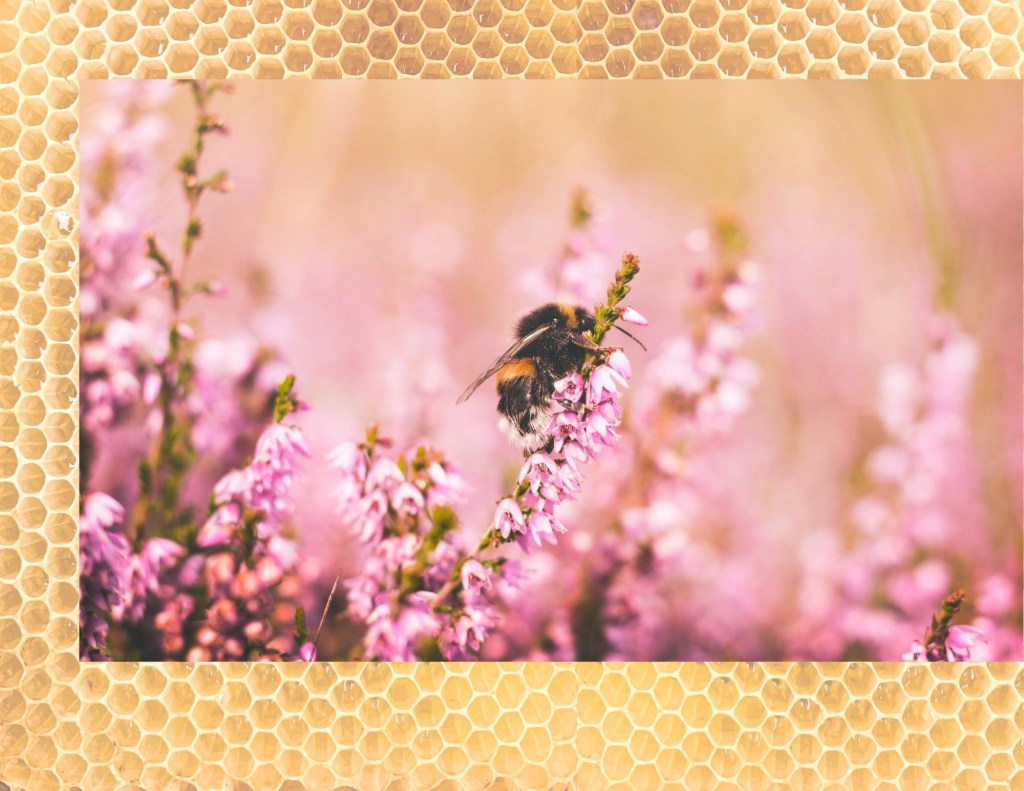
Photography by Josephine Amalie Paysen, Upsplash

I have always been drawn to honeybees, mesmerized by them and by the beekeepers who care for them. Once many years ago, I put on the beekeepers garb and that big, fashionable hat with the dark veil of netting. A friend who had several hives was teaching me how to handle the bees. I actually held them in my hands, rather hesitantly, while noticing how gently the beekeeper held them. From this uncomfortably close proximity, I was able to listen to the buzzing sound of the honeybees, buzzing that I did not hear as harsh, but rather hushed. The honeybees greeted him when he approached the hive. When he held them in his hands and they moved up his arms, it looked like a graceful dance of the beekeeper and his constantly moving honeybees totally in sync with one another. How could one not be enchanted by this wonder of creation?

Yesterday while reading a fascinating interview with Tom Blue Wolf, I was reminded of those breathtaking moments I spent with the honeybees. Tom is a descendant of the AniCoosa, which means “peaceful people,” who are also known as the Creek Tribe, which is a part of the Muscogee Nation. He is a Native American spiritual guide, a man in love with nature, and a keeper of honeybees. One of the questions he was asked in the interview was, “What is it like to be in the presence of the bees, to listen to them?” This is how Tom Blue Wolf responded.

Creator is always talking to us. Most of us are about seven echoes away from the true voice of the Creator. Try to get closer, try to get maybe three echoes away. If you get too close, it’s almost too intense for most people. Like a burning bush. Aaaaah!

His response to the follow-up question was just as intriguing . . .

“What do you and the bees do for each other on the spiritual journey?

How is your relationship to them a spiritual one?”

They give life, and we protect it. We keep the harm away from them; we protect them. I have been in love with honeybees all my life . . . We beekeepers are integral to the bees’ world. They know us; they are in our dreams. We tend to them barefoot, they crawl all over us, they kiss us, they tickle us. It’s hard to talk about. So, of course we think it’s spiritual. Absolutely. The bees love us and we love them.

That kind of spiritual relationship between a human being and one of God’s created inhabitants of the earth would place any of us in a sacred space. Tom Blue Wolf described a state of being as “three echoes away from the true voice of the Creator.” It’s the kind of space most of us never enter, and for so many reasons—we don’t have time; we’re busy with our jobs; we have children to care for, laundry to do, and a plethora of responsibilities listed on the to-do list we seldom complete. We simply get too busy to embrace the beauty of nature and draw closer to the Creator.

Tom Blue Wolf would summon us, if he could, to be “three echoes away” from God’s true voice. So he writes about the Creator, the creation and the importance of protecting it, and our role as caretakers. He urges humans to follow the guidelines of Saint Francis, who thought it critical to have a close and enduring relationship with nature.

From the years I spent as a postulant in the Order of Ecumenical Franciscans, I learned about the many ways Saint Frances was devoted to the best characteristics of what it means to be a human being on the planet: benevolent, loving, kind, gentle, merciful, reverent, respectful. He treated every life form with dignity.

Saint Francis helps us pull ourselves out of the trap of being completely focused on two-legged humans. An example of that shows how most people describe a destructive incident only be the impact it has on humans. They might report, for instance, that a plane crashed and “we lost 180 people.” Or “the fire killed four hundred people.” In contrast, Saint Francis would say, “Not only did we lose four hundred brothers and sisters, but we also lost three thousand acres of Mother Earth’s flesh. We lost sixty-four thousand winged ones. We lost untold amounts of water, and what’s left is toxic and the ones that swim are no longer with us.”

Like Saint Frances, perhaps we should focus more of our attention on the natural world, the magnificent creation given to us by the Creator God we worship. For one thing, attention to the creation and its Creator draws us into holy moments that we desperately need for our spiritual nurture. If we lean into those holy moments, and linger there for a time, the burdens we carry could become lighter. The cares that dishearten us might become uncommonly dim. And we just might find ourselves in a most sacred space—the one that places us “three echoes away” from God’s whisper. And as an added grace, perhaps we will also hear the gentle buzz of honeybees!

May it be so for each of us.

Beauty of Nature, Nature, Seeing, Vision

See! I Mean It!

Sunset Over Beaver Lake Sunset ~ Northwest Arkansas ~ Photography by Gregory Ballos

One thing pandemic isolation has done is to inspire me by images of places I cannot see in person. Now that I live in Georgia, it is difficult to travel back home to Arkansas. So if I am to once again see and enjoy the beautiful landscapes in Arkansas, I must see them in images like this stunning photograph by Gregory Ballos.

There are images to see everywhere one looks—in nature, in books, in National Geographic photographs and videos, in blogs like this one, in one’s imagination, everywhere we are willing to look. The Creator paints swashes of vibrant color across nature’s enormous canvas, and it is there for those who have eyes to see. The sky, the forest, the mountains and the valleys, the oceans, the streams and rivers, the lakes and the waterfalls—in greens and blues and grays streaked with every hue imaginable—all of it is there if we take a moment to look.

To all my pandemic brothers and sisters all over the world, I pray that you are in the places you want to be seeing the things you want to see. Yet I am very aware that many of you, like me, are not where you truly want to be. I long for my home, for Arkansas, where I can see my son and my grandchildren and where I can see the natural beauty I took for granted in the thirty-five years I lived there. The pandemic holds me fast, right where I am at this moment, and I cannot see my heart’s desire.

There is another kind of seeing. It is the seeing that involves both the eyes and the soul. You and I have some control over what I call soul-seeing. I have to admit that my problem with soul-seeing is that I rarely truly see when I look. It doesn’t matter really whether I am looking at nature or at a photographic image, I seldom look long enough to really see. I admit that I am the problem, because I feel compelled to be busy, all the time, with projects and writing and various endeavors that have the potential to consume me. Truthfully, I allow those endeavors to consume me. I admit it. I am far too busy to intentionally see. Soul-seeing is being able to see beauty with your eyes and your soul.

You may have seen the lovely books of the late Beatrix Potter, who was was an English writer, illustrator, natural scientist and conservationist. From her life’s work, one can assume that she is a keen observer. I imagine that she was a person who was able to truly see. She wrote, in fact, that she was grateful to have what she called ”the seeing eye.”

Thank God I have the seeing eye, that is to say, as I lie in bed I can walk step by step on the fells and rough land seeing every stone and flower and patch of bog and cotton pass where my old legs will never take me again.
— Beatrix Potter

For Potter, seeing seemed natural in her ability to consider nature and conservation as well as prose and art. Seeing is natural. We see without thinking. Truth is, seeing seems easy, doesn’t it? Everyone with the gift of sight knows how to do it, and those who are unable to see physically figure out how to ”see” in myriads of ways.

I wonder about it, though. I wonder if I am too preoccupied to really see what’s around me. Is my busy-work more important to me than mindfulness? If seeing is so easy, how do we miss all of the magnificent beauty that surrounds us?

It’s a ponderable question

Why not take a few quiet, meditative moments to answer it? The video below is two minutes and eight seconds long. Can you spare that much time? If you can, I invite you to relax in those two minutes and eight seconds. I invite you to mindfulness, to be fully present in those few moments. I hope you will see, with your soul’s sight, nature’s beauty in this video.

See! I mean it!

Video editing by M. Anthony Black ~ Song: “The Tides of Time” ~ Artist: Joachim Horsley
Beauty of Nature, Creation, Darkness, God’s creation, Light, Night sky, Spiritual and emotional darkness

Needing More than Light

Northern Lights illuminate the dark sky in Kolari, Finland on January 15, 2022.
Photo by Irene Stachon Lehtikuva/AFP/Getty Images

If you know me at all, you know that I am a minister, an artist and a writer. Those three are not all of who I am, but they encompass a big chunk of my identity. You may also know that I find deep spiritual nurture from images like the Northern Lights image above. It’s breathtaking. I cannot fathom the sense of wonder of a person who is physically present, in person, looking up into this wondrous sky.

What sort of Creator gave us the ethereal experience of witnessing these Lights of the North? What grace we receive when we take even a moment to breathe it in, to see its splendor, even in a photograph! As spiritual beings who are on a pilgrimage on this earth, we know what it is like to experience darkness.

I imagine that we do everything we can to avoid the dark places of our journey. You know about those dark places—losing a loved one, living with illness, being suddenly injured, moving out of your home, dealing with a troubled child . . . We know about the dark places. We know about the pandemic that has upended our lives and left us in an unknowable, seemingly endless darkness.

We also know about struggling to get to light. We know about walking through the darkness for so long that we become almost desperate to see light again. The LIGHT—that amazing miracle that shatters the darkness and brightens our path.

Of course, we long for it! Sometimes we live through so much darkness—physical, emotional and spiritual darkness—that we almost need more than light. Sometimes we need release, room to breathe, freedom to experience. Sometimes we need an expanse above us, a newness we can fully experience and the inspiration to soar in the clouds until we sense something new and fresh. Sometimes we just need more than light.

So there is light, and then there are the Northern Lights. And we can at least see them in images. When we do see them, our souls might take a deep breath. These lights are different than the lights we usually count on. These Lights of the North are more than the lights that guide us along the journey and through the darkness. These lights are almost mystical—light and color and vastness. These are lights that come as if God is writing “hope” in the sky with an electric-neon crayon. Angela Abraham describes the Northern Lights in a unique way.

The Northern lights were a river of green in the midnight blue. They were what dreams could be if they were ever allowed to dance so free. The northern lights were green rivers in the black heavens, a congregation of stars, how they resonate with my soul.

— Angela Abraham

That’s it! Lights that resonate with the soul. For you, the light that feeds your soul could come from the light of brilliant stars, or moonlight, or sunrise, or even holiday lights. For me on this day, my soul awakened when I took the time to see the splendor of the Northern Lights. In a way I can’t really explain, I looked and I lingered, and then the dancing green light against the black sky caused my spirit to take flight, just for a few minutes. I realized that this was not just about light, it was also about indescribable beauty that can be seen best in God’s creation.

In the words of Angela Abraham, ”Nature’s beauty is an echo of creation’s song, it lives out there and within, as if we are spoken into being together.” I was transported to thoughts of a Creator who gave us not only life and breath, but also gave us extravagant beauty.

Maybe you need more than light right now. When circumstances are dark and bleak in my life, I often need more than light. In fact, like most strugglers and travelers on this journey of life, I have learned to get around in the dark. Most of the time, I can walk through darkness blindly and reach my destination. Barbara Brown Taylor’s book, ”Learning to Walk in the Dark,” is filled with bits of wisdom that I hang on to when I’m in a dark place.

I have learned things in the dark that I could never have learned in the light, things that have saved my life over and over again, so that there is really only one logical conclusion. I need darkness as much as I need light. There is a light that shines in the darkness, which is only visible there.

— Barbara Brown Taylor

It is true that sometimes I need more than light. Sometimes I need a grace-gift that reminds me that I am a small speck in a vast universe, and that the Creator that formed our immense, extravagant, beautiful world also created us, each of us tiny specks known by God. Sometimes I need more than light, but what I need is already mine to see—a world filled with beauty that takes my breath away.

Oh, just one more thing about me . . . when beauty really reaches the deep places of my soul, I often burst into song. For today, looking at the beauty of the Lights of the North, I am singing John Rutter’s, ”For the Beauty of the Earth.” Maybe you would like to sing it too, or at least listen to it. Find it below, turn up your volume and give praise to the Creator for giving us the beauty of the earth.

For the beauty of the earth,
For the beauty of the skies,
For the love which from our birth
Over and around us lies,
Lord of all, to thee we raise
This our hymn of grateful praise.

For the beauty of each hour
Of the day and of the night,
Hill and vale, and tree and flow’r,
Sun and moon, and stars of light,
Lord of all, to thee we raise
This our hymn of grateful praise.

For the joy of human love,
Brother, sister, parent, child,
Friends on earth, and friends above,
For all gentle thoughts and mild,
Lord of all, to thee we raise
This our hymn of grateful praise.

Music by John Rutter (1980) 
Lyrics by Folliott S. Pierpoint, 1835-1917

Aging, anxiety, Awareness, Beauty of Nature, Bishop Steven Charleston, Change, Faith, Forest, Grace, life, Life Journeys, Living Hope, Pondering, Spirit

Pondering a Soul in Transit

“A soul in transit.” What does that phrase even mean? It sounds a bit ominous to me, like something bad couched in flowery language. Maybe like words of a poem that make little sense because they point to something otherworldly. Perhaps it means something related to a soul that lives, gets old, and dies — in transit from birth to death and beyond. Pondering!

I’m not up for those thoughts right now, because I am in the troubling place of feeling old sometimes. It’s something like aging anxiety, I think. Feeling old should not be so surprising to me since I really am kind of old. But sometimes I feel old in a bad way, the way that sends negative thoughts through my mind. Thoughts like . . .

I can’t do much anymore,
I don’t feel well most of the time,
my joints hurt,
or even, I may die soon.

It is not helpful for my soul to entertain such thoughts, even though some of them are downright truth. Pondering! You have probably heard that “getting old is not for sissies.” It holds some truth, I imagine, for those of us who have come face to face with normal aging, aging that feels not so normal at all. But what about the great juxtaposition? What about the positive exercise that puts thoughts side by side so that we can see what is life-giving instead of what is troubling? For instance . . .

I am old. — I am wise.

I feel weak. — My spirit is strong and still vibrant.

My back aches when I exert myself. — I can still move.

So much for pondering juxtaposed thoughts. They may not be all that helpful, although re-imagining so that we recognize what is spirited and sparkling about ourselves can be very helpful. Still my words on this subject are pretty empty. I think I need assurance from someone else’s words, and I can’t help but turn to a very wise and insightful spiritual guide, Bishop Steven Charleston, whose thoughts are captivating, enlightening and filled with wisdom. And on top of that, the wise bishop is the one who offered up the phrase, “a soul in transit” in the first place.

We will not grow old, not in spirit. In mind and body, yes, we will age as all things age, all making the pilgrimage through time to find the place of sources. But in our spirit, no, we will not grow old. The child that was us will run forever through the fields. The dreams we spun from the fine wool of cloud watching will forever lead us to the next wonder that awaits us. The love we knew, so quiet, so life giving, will always be there to lift us up and hold us close. The spirit of life is eternal. It does not diminish. It does not forget. It does not alter. The spirit within us is the sum total of our sacred experience. It is what we were sent here to be and to do. Our spirit, a soul in transit, has a life outside of time. It will not grow old because it is on loan from a source more ancient than time itself.

Bishop Steven Charleston

Still pondering! I see more clearly that the “soul in transit” has “a life outside of time.” Eternal! That is what our faith has taught us for generations, for ages, always. But it is a truth that we can barely fathom, much less find comfort in. It’s not so easy to accept a truth that ultimately represents death, even if it includes that timeless and stunning place that is called eternity. The introductory words of 1 Peter give us a most glorious glimpse of eternity, a living hope.

May grace and peace be yours in abundance. Blessed be the God and Father of our Lord Jesus Christ! By his great mercy he has given us a new birth into a living hope through the resurrection of Jesus Christ from the dead, and into an inheritance that is imperishable, undefiled, and unfading, kept in heaven for you, who are being protected by the power of God through faith for a salvation ready to be revealed in the last time.

— 1 Peter 1: 2-5 NRSV


Pondering still as I ask, “what does it all mean for me, the words, the images?” I feel much like the Psalmist who said, “my eyes are not raised too high; I do not occupy myself with things too great and too marvelous for me.” (Psalm 131:1) And yet, I do search and struggle with the thought of aging, of what it means for me and of what comes next. I hear the words:

“. . . in our spirit, no, we will not grow old. The child that was us will run forever through the fields. The dreams we spun from the fine wool of cloud watching will forever lead us to the next wonder that awaits us. The love we knew, so quiet, so life giving, will always be there to lift us up and hold us close. The spirit of life is eternal. It does not diminish. It does not forget. It does not alter. The spirit within us is the sum total of our sacred experience.”

I hear the words, and the spirit of me understands, even if my mind does not. When I write, I ponder deeply. In my pondering this day, I am compelled to admit that I definitely feel the sting of aging. I am very human, after all! But I can usually move from anxiety to a good kind of awareness. That good awareness shows me that it is comforting to hold on tightly to the thought that the spirit is eternal, that my spirit is eternal. Dwelling on aging isolates me, but knowing in my heart that my spirit is eternal is a grace-gift that sets me free to really live.

I know from experience that pondering can be hurtful, leading me through all kinds of unpleasant scenarios. But sacred pondering, the kind that allows one’s faith to sit with a problem until it seems acceptable, can open the mind and heart to the eternal and empower us to see the plans for good that God has for us, “a future and a hope.” (Jeremiah 29:11)

So, after a time of sacred pondering, I am blessed with a fresh awareness. I can see more clearly God’s truth that my spirit will remain with my grandchildren, always. My spirit will hold on to the sweet love I have known. My spirit will immerse itself in the beauty of nature that has always been present. My spirit will run through the fields like a young person, and through the forests, it will love the trees I have always loved.

My body will do what bodies do, but my spirit will not die and will not grow old!

Thanks be to God. Amen.

Awakening, Awareness, Beauty of Nature, Bondage, Change, Contemplation, Creation, Creativity, Emotions, Feelings, God's presence, Grace, Hemmed in, Here I am, Lord., Holy Ground, Holy Spirit, Hope, Insight, Inspiration, Introspection, Isolation, Loneliness, Mystery, Psalm 139, Sacred Pauses, Sacred Space, Soul, Spirit, Transformation, Walls, Wisdom, Writing

Hemmed In!


There are large scale, widespread forces that can trap thousands of people, even millions. Dachau, Katrina, earthquakes, tsunamis, wildfires, natural disasters all over the world and the Coronavirus of 2020. Enormous, catastrophic events can trap people. COVID19 has literally trapped me inside my home. I have to admit, the isolation has taken a toll on my spirit. No visitors! No visits with friends or family. No trips! No haircuts! I have been trapped at some level since my kidney transplant in November. Just at the March milestone that would have allowed me to break the isolation of the transplant, I was even more fully trapped by the infectiousness of this pervasive, unrelenting virus.

Being trapped for so many months has raised up in me feelings of loneliness, isolation, powerlessness, despair, anxiety, even abandonment. And yet, often there is something very good in the center of something very bad. It has been so for me. Yes, I feel trapped in the pervasive power of the coronavirus, but I also sense the arms of God and the embrace of Spirit hemming me in even further. Such a grace-gift it has been to me, as if God has said, “l am hemming you in, and in this space you will hear me clearer and sense me more fully.”

God’s words were truth. Hemmed in, my mind flourished, my heart leapt and my soul entered spaces of calm. I felt enhanced awareness! Even awakening. I saw nature in a different way and basked in the beauty of the rising sun. The sound of the hummingbirds’ trill and the rapid fluttering of their translucent wings were sounds meant just for me. I began to write and paint, to listen more carefully to God’s voice, to allow my spirit to overflow with Holy Spirit. To my hemmed-in call from God, I was compelled to answer, “Here I am, Lord!” When I finally answered God, my hemmed-in place became Holy Ground — a very good place to be that feels more like a holy mystery than a state of being.

Was this pandemic a good thing for me and for millions of people? Absolutely not! But trapped in its dark cloud, God hemmed me in further in ways I am just now beginning to understand. I can say with all honesty that being hemmed in by God has been grace to me.

If I could even begin to choose a favorite Psalm from among the many that inspire me, I would choose Psalm 139. In its weaving of words, there are many passages that are full of comfort. From childhood, I memorized a lot of Scripture and throughout Psalm 139 I memorized several snippets that I often call to mind. One verse that I did not memorize is verse 5: “You hem me in behind and before, and you lay your hand upon me.”

You have searched me, Lord,
and you know me.

You know when I sit and when I rise;
you perceive my thoughts from afar.

You discern my going out and my lying down;
you are familiar with all my ways.

Before a word is on my tongue
you, Lord, know it completely.

You hem me in behind and before,
and you lay your hand upon me.

— Psalm 139:1-5 NIV

I deplore the coronavirus and what it has done to so many people. I deplore the ways it was able to trap me, physically and emotionally. But the virus, with all its ominous, far-reaching force could not trap me spiritually. That was God’s work — hemming me in so that my spirit could rise to fresh, new heights of spiritual consciousness. Being hemmed in by our Creator has been grace for me in these days of isolation. It has become a transforming sacred pause. For in my hemmed-in space, the Creator helped me create — from my mind, from my heart, from my soul. Thanks be to God.

Beauty of Nature, Birdsong, Challenge, Comfort, Creation, Inner joy, Music, Skies, Social distancing, Trees

For the Beauty of the Earth

1A185192-9A16-489A-A77E-2023DA7580B7

All the beauty of the world,
the beauty that calls our admiration, our gratitude,
our worthship at the earthly level,
is meant as a set of hints, of conspiratorial whispers,
of clues and suggestions and flickers of light,
all nudging us into believing that behind the beautiful world
is not random chance but the loving God.  

N.T. Wright, For All God’s Worth

These days I give over many of my thoughts to the millions of devastated lives that have been besieged by the coronavirus. I cannot stop the tears at times when I hear people tell their stories on news reports or when I see the ugliness of images around the world — people suffering, people in hunger, people grieving and languishing as the lives they once knew are snatched away from them. My one solace is a gift from a friend who is a lover of nature. She graces me every time we communicate with the many ways she has learned to find peace in the beauty of the world.

This morning, a cool wind was blowing as the sun warmed my face. I was warmed not only physically, but also emotionally and spiritually. All was quiet, except the wind, the flutter of hummingbird wings, the gentle tinkling of the wind chimes and the birdsong that I could hear all around me. I looked up into my favorite tree with its background of a perfect, cloudless bright blue sky. I could not help but notice the leaves in the tree, moving in the wind and presenting a shimmering display showing off hundreds of shades of green.

It carried me away, even if just for a few minutes, and I found myself embracing the beauty of the earth and the God who created it. I found a smidgen of comfort, peace and the kind of inner joy that is beyond any sorrow I might feel. Instead of being swallowed by the ugliness of the television news, I was blessed by delighting in the freshness and the beauty of the world around me.

And God blessed them. And God said to them, “Be fruitful and multiply and fill the earth and subdue it, and have dominion over the fish of the sea and over the birds of the heavens and over every living thing that moves on the earth.” And God said, “Behold, I have given you every plant yielding seed that is on the face of all the earth, and every tree with seed in its fruit. You shall have them for food. And to every beast of the earth and to every bird of the heavens and to everything that creeps on the earth, everything that has the breath of life, I have given every green plant for food.” And it was so. And God saw everything that he had made, and behold, it was very good.  — Genesis 1:28-31

For by him all things were created, in heaven and on earth, visible and invisible . . . all things were created through him and for him.  — Collosians 1:16

In this present moment in time, I cannot help but see the finger of God in all of creation. I cannot help but offer praise to God through the words of the hymn we often sing, For the Beauty of the Earth.

For beauty of each hour
Of the day and of the night,
Hill and vale, and tree and flower,
Sun and moon and stars of light:
Christ, our God, to Thee we raise
This our grateful hymn of praise.

Text: Folliott Sandford Pierpoint; Music: William Chatterton Dix (1864)

I invite you to listen to the video below. For just a few moments, pay attention to this lovely hymn of praise, perhaps as part of your meditation time.

Beauty of Nature, Bible, Birdsong, Comfort, Darkness, Ecclesiastes, Emotions, God’s Gift of Stars, healing, Hope, Joy, Laughter, life, Loss, Music, Nature, Psalms, Restoration, simple joys, Stars, Trees, Troubles

Almost Magic!

3A2F0634-063D-4F26-B01F-F36B8CFE6EF9
Photo by James Ronan,  FOAP/Getty Images

Today, while minding my own business — and browsing the Better Homes & Gardens website — I stumbled across a stunning image of a tree. Those of you who know me, know that I have had a lifelong passion for trees. Trees, for me, are not only beautiful, they also take me often into a spiritual place. This morning while looking at the bark of the Rainbow Eucalyptus tree (Eucalyptus deglupta), my thought was, “This is almost magic! It can’t be real!”

Rainbow Eucalyptus trees look too beautiful to be real (but they are!) (BH&G) 

These  trees have an astounding multicolored bark that looks like it’s been decorated with a humongous paintbrush. They seem like something one might imagine, or see in a fantasy movie, or discover in a Dr. Seuss book. But they do grow naturally with a brilliantly colored bark. The Rainbow Eucalyptus, which grow 100 to 200 feet tall, are native to tropical regions like the Philippines, Papua New Guinea, Indonesia and even in the most southern parts of the U.S. “Though pictures of these trees are stunning, they don’t quite capture the awe of seeing them in person.

A real rainbow eucalyptus can stop you in your tracks, so if you have the chance to travel to see them, it’s well worth the journey. (BH&G)

As you would expect, I did some research to find places where I could see this magical tree in person. San Diego, California, is actually becoming a travel destination for seeing these trees. One can see them at Balboa Park, along Sports Arena Boulevard, at the San Diego Zoo, and in parts of Mission Bay. One can also see them in parts of Florida, Hawaii and Texas. So there really are a few places you can see a Rainbow Eucalyptus without needing a passport.

You might ask, “What’s so important about a tree that looks fake?” And that would be a good question. I’m not sure I have a coherent answer, but I’ll give it a shot. Sometimes we find ourselves in places that feel “blah.” We’ve lost our sense of direction and maybe even our will to move forward in life. Those times can come to us because of grief, illness, family challenges, concern for our children, stagnancy in our careers, waning spirituality or simply feeling out of sorts. Hundreds of life circumstances can bring us to a lethargic or depressed place in life. It’s not a very good place to be, and most of us wonder how we got to such a place.

In those times (and there have been many) when lethargy got the best of me, I tended to search for a bit of magic. No ordinary remedy seemed adequate. I just needed some magic and I have discovered over many years that magic can be found in a myriad of places, beginning with some very hope-filled passages of Scripture.

There is nothing better for mortals than to eat and drink, and find enjoyment in their toil. This also, I saw, is from the hand of God; for apart from him who can eat or who can have enjoyment? For to the one who pleases him God gives wisdom and knowledge and joy . . .
— Ecclesiastes 2:24-26 (NRSV)

In the day of prosperity be joyful, and in the day of adversity consider; God has made the one as well as the other . . .
— Ecclesiastes 7:14 (NRSV)

So I commend enjoyment, for there is nothing better for people under the sun than to eat, and drink, and enjoy themselves, for this will go with them in their toil through the days of life that God gives them under the sun.
— Ecclesiastes 8:15 (NRSV)

For you shall go out in joy
and be led forth in peace;
the mountains and the hills before you
shall break forth into singing,
and all the trees of the field shall clap their hands.

— Isaiah 55:12 (ESV)

Nehemiah, who was the governor, and Ezra the priest and scribe, and the Levites who taught the people said to all the people, “This day is holy to the Lord your God; do not mourn or weep.” For all the people wept when they heard the words of the law. Then he said to them, “Go your way, eat the fat and drink sweet wine and send portions of them to those for whom nothing is prepared, for this day is holy to our Lord; and do not be grieved, for the joy of the Lord is your strength . . .” And all the people went their way to eat and drink and to send portions and to make great rejoicing . . .
— Nehemiah 8:9-12 (NRSV)

And always, words from the Psalmist:

You show me the path of life.
In your presence there is fullness of joy;
in your right hand are pleasures forevermore.

— Psalm 16:11 (NRSV)

I believe that I shall see the goodness of the Lord in the land of the living.
— Psalm 27:13 (NRSV)

Delight yourself in the Lord, and he will give you the desires of your heart.
— Psalm 37:4 (ESV)

These messages from the pages of the Bible bring me joy and a bit of relief from feeling down. Being lifted from depression, sadness, the doldrums and other similar difficult seasons of life can feel like magic, magic that can be found in lots of places — if we’re paying attention. The magic may be found in a forest with a verdant canopy of leaves we can see if we look up. It may be found in the laughter of a child or in listening to joyful songs, the rhythmic melody moving through the heart. Magic may be found in loving relationships, in a garden, in a place of prayer and contemplation. You and I might find magic in birdsong or in the cloud shapes we see in the morning sky. We can even find magic in the darkest of our nights — for 100 thousand million stars sparkle for us in the Milky Way — a gift from the Creator, shining out of the darkness.

4D690E1C-A9E8-491E-8019-44F2602378A5
Photo by Danita Delimont/Getty Images

Today, I found magic in the most unlikely place — in the bark of Rainbow Eucalyptus trees. At least it felt like almost magic! I happened upon this treasure of nature quite by accident, or perhaps it was by providence. Anyway, catching sight of this whimsical, majestic tree brought me the joy of remembering afresh the varied potpourri of the gifts of creation, coming from God, the Father/Mother of lights.

Every good gift and every perfect gift is from above, and comes down from the Father of lights, with whom there is no variableness nor shadow of turning.
— James 1:17 (NKJV)

Thanks be to God for unspeakable gifts of grace. Amen.


Adventures, Beauty of Nature, Contemplation, Creation, God's presence, Introspection, Meditation, Mindfulness, Praise, Prayer, Psalms, Questions, Restoration, Sacred Space, Serenity, Silence, simple joys, simple pleasures, Soul, Stillness

“My Soul in Silence Waits”

85612761-C3E4-4F2A-ADDE-7BF472AE54D8
Photography by Jim Dailey: January 1, 2020, Lake Ouachita, Hot Springs, Arkansas

My dear, long-time friend, former Little Rock Mayor Jim Daily, sent me this photo this afternoon. Mayor Jim is a hiker, a camper, a photographer and a naturalist. He loves the outdoors. He is a person of profound thought, and he spends a good amount of his time in thoughtful contemplation — on a lake or an Arkansas River, in a verdant valley or on a mountaintop. He frequently blogs on what he calls his “adventures,” and his blog is filled with thoughts about wherever he is and whatever beauty he has found. For Jim, every day is a new adventure, and his adventures hold sway over him. They change him in so many ways

One more thing — As a tribute to my friend, Mayor Jim, I want to introduce you to his Blog, which you may enjoy viewing at this link: Last Pair of Boots

His Blog, called “Last Pair of Boots,” tells a poignant story — of nature’s beauty, of God’s presence in it, of friendships, of Arkansas’ and America’s holy places, of worship and contemplation and prayer. Here’s what Jim says about naming his blog:

The name “Last Pair of Boots” came to me when my ten year old boots broke down and it occurred to me that at my age the new pair of boots might be my last pair. Metaphorically my boots represent the trails and travels of life.

10648F62-3E20-4939-86D9-97A565CFD322
Whitaker Point … aka Hawksbill Crag! At the Buffalo National River

This is such a thought-provoking description that fits Jim’s love of nature’s splendor. He also hints at endings, not in a melancholy  way, but in words the reveal his life of contemplation and curiosity. Jim’s outings are hiking and wilderness camping, skiing, fishing, exploring, visiting every Arkansas State Park through his job as Arkansas Tourism Director, finding friendships in every small Arkansas hamlet, searching for Arkansas treasures,
finding God in all the places and faces.

I imagine he will hold all of these adventures in his heart now that he has finished his work as Arkansas Tourism Director this past December.

1F0E0755-F01A-4E45-A3BB-92C22820A3D8
HamfestWhatever it is …  it’s gotta be something special to celebrate 50 consecutive years on top of the second highest mountain in Arkansas — Rich Mountain — in the beautiful Ouachita Mountains, Queen Wilhelmina State Park.

Congratulations, Jim, for your many years of service to the citizens of Little Rock and of Arkansas. Your wisdom, your love of nature, your unquenchable thirst for adventure and your unfailing commitment will remain as one of our enduring Arkansas’ treasures.

As I mused about Jim’s outings tonight, I asked myself about the places and times that created my contemplative times. They are few, too few.

For whatever lame reason, I do not take the contemplative times I need. I think that my kidney transplant on November 12th pushed me into a soul-need that beckons me to solitude, silence, contemplation, adventure — new things to examine in the stunning beauty of nature. It calls me out of the house and into the sunlight or under the stars of the night. It calls me to breathe in the fresh air of God’s creation and, with that breath, to take in the miracle of God’s presence.

Now that I’m retired and have time, I tend to fill my time with all manner of preoccupation. At times, I feel busy and frazzled and don’t really know why. Why am I unable to make enough time to spend in the mesmerizing beauty of nature, keeping silence in God’s creation? Why do I not spend time beside still waters, listening to the silence of a pond? What is wrong with my soul that it is rarely drawn to God’s quiet places, and my heart that does not often seek God’s presence in silent space?

I dare not answer those questions until I am prepared to make some life changes. But what I can do is to hold near these reminders of what God desires for me until I can change my life. These reminders might even inspire me to seek change:

O Lord, my heart is not lifted up,
my eyes are not raised too high;
I do not occupy myself with things
too great and too marvelous for me.

But I have calmed and quieted my soul,
like a weaned child with its mother.   
(Psalm 131:1-2)

For God alone my soul in silence waits.   (Psalm 62:1)

The Lord is my shepherd, I shall not be in want. He makes me lie down in green pastures, he leads me beside quiet waters, he restores my soul.   (Psalm 23:1-3)

Let him sit alone in silence, for the Lord has laid it on him.   (Lamentations 3:28)

To you, O God, silence is praise.   (Psalm 65:1)

It is never a bad thing to offer God the praise of silence, to invite God into my contemplation and to allow God’s presence in my moments of prayer and meditation. The truth is that God has always been present with me. But my deepest desire is that I be present with God. As the Psalmist wrote, “My soul in silence waits.”

May those words become my words . . . and yours. Amen.

Acts 42, anxiety, Awareness, Beauty of Nature, Birdsong, Creation, Faith, Fear, Grace, healing, Hope, Humbug, journey, Life Journeys, Light, Mindfulness, Nature, New Year, peace, Quiet, Reflection, Self Awareness, Self care, simple pleasures, Soul

Finding Simple Pleasures

EF207F13-682F-4572-BB5B-F4AAAB1EDA50
A Saturday of football — what a simple pleasure! I am a fan of certain teams (Roll Tide!), but I am definitely not a football fanatic. And yet, this morning while half-watching Sportscenter, I realized that watching with Fred, not having to focus that much, resting in the ordinary seemed like a simple pleasure.

There are many simple pleasures, of course, far more soulful than watching football — taking a walk in the splendor of nature, listening to birdsong, snuggling with your puppy, looking up at the night’s moon and stars, taking a walk on a labyrinth’s spiritual path . . . There are so many more simple pleasures in life, and most of them do not even require a trip to the grocery store. They cost us nothing, but their worth is priceless.

These are the simple moments that caress the soul, bring peace and calm to the heart and enliven a wounded spirit. These moments, and others like them, are the moments we desperately need, especially in times when we are burdened with the weight of the world, languishing in darkness.

I have learned some things about a wounded spirit: that woundedness happens to all of us; that “dark nights of the soul” happen to everyone at some time in life; that the wounded spirit does not always require sophisticated remedies; that a simple pleasure is sometimes all it takes to begin a healing journey.

The important factor is self-awareness, being mindful of the soul’s health, accepting the reality that healing will require us to self-intervene and that our intervention could begin with entering into a simple pleasure. One worthy New Year’s resolution is to intentionally identify the simple pleasures that feed our souls and then to allow a simple pleasure to enfold us in contemplation.

Normally, I would say “bah humbug” to New Year’s Resolutions that we make, break, and then feel guilty about for an entire year! But a resolution to discover the simple pleasures that give us life is one worthy resolution. So I challenge you to look and listen for the simple pleasures that are “you,” and to hold them near whenever you are experiencing a “dark night of the soul.”

“There comes a time when both body and soul enter into such a vast darkness that one loses light,” wrote Mechtild of Magdeburg. There comes a time when the soul “sinks down into the night.”

Her words are the words of one who knew spiritual journey and seasons of darkness. There is no doubt that at some time throughout your life, you will find yourself traveling the spiritual night. I do know this within my place of deep knowing: when I give myself to spiritual journeying, allowing myself the peace of a simple pleasure that calms my spirit, I realize that God always invites us beyond where we are.

God guides us on the spiritual journey that sometimes means winding through a dark wood. The darkness may frighten us, but it is a necessary part of the trip. When we panic in the darkness, we must try to understand that it’s a holy dark and that the idea is to surrender to it and journey through until we reach God’s light.

And then on to simple pleasures!372C6D47-6761-412E-AACF-420F5B1EE76D

God will be present beside us —- in the light of simple pleasures and in the soul’s dark night.

That is the gift, the grace, that God has freely given to us, and for that we give thanks.

Beauty of Nature, Clouds, Contemplation, Creation, Fear, God's presence, Meditation, Mindfulness, Mountaintop, Nature, Ocean, Prayer, Reflection, Serenity, Silence, Skies, Spiritual Discipline, Stillness

Imposing Silence Upon Our Cares

3FEABE5F-CF16-4EB2-A5A2-89DD29771C74
Photography by Jennifer Blackwell

The only people who pray well are those who keep praying!
— Richard Rohr

Sometimes you just need to get away. You need to push back from your daily grind and be in a space that gives you life-restoring energy. The place may be a mountaintop or beside a sea. The place you love might be on a sailboat watching the changing colors of the sky. The need is a time of contemplation although I admit that contemplation is easier said than done.

Richard Rohr describes contemplation using the frightening word, “dying,” something we usually do not want to consider. Still his definition is compelling.

Contemplative prayer is one way to practice imposing “silence upon our cares, our desires and our imaginings.” Contemplative practice might be five or twenty minutes of “dying,” of letting go of the small mind in order to experience the big mind, of letting go of the false self in order to experience the True Self, of letting go of the illusion of our separation from God in order to experience our inherent union.

I am intrigued by the phrases “imposing silence upon our cares!” dying” and “letting go of the illusion of our separation from God.” We readily recall words we have long known: “Be still, and know that I am God,” and we know that we can move into God’s real and palpable presence. Still moving into God’s presence and lingering there is easier said than done. We are slaves to our lives, to our every day concerns and responsibilities. And sometimes times our responsibilities — though they may be important to us — take too much from us, robbing us of our life’s spiritual depth.

Again, Richard Rohr offers deep wisdom:

Each day that dawns is a celebration of the fact that we have been invited to consider how our lives are spent; how we embrace and recoil from the . . . darkness.

So for me, I would like to watch the hued, expansive skies — the moving clouds and the sparkle of the sun. I would like to find silence in the vastness of God’s creation, in a place where my view includes the beauty of verdant green pastures, the sound of the never-ending surf, the feel of the wind in my face, the shadows cast upon a high mountain. It takes the beauty of such a place to calm my spirit and stop the whirring of my mind. In such a place, I can try to enter into the posture of prayer and contemplation.

Don’t be fooled. Contemplation is called a practice because it truly is a practice that we must try again and again. Contemplation is not easy for many of us. It can even be disconcerting because, in truth, contemplation is meeting as much reality as we can handle in its most simple and immediate form — without filters, judgments, or commentaries. Contemplation moves us to the space our soul craves, and in that place we gain a renewal of our spirit.

Anything worth doing is worth practicing for as much or as long as it takes. Yes, at times it feels like forcing ourselves to be still for an interminable length of time and to force ourselves to fully concentrate on petitioning and listening prayer. No doubt, being silent with ourselves can be frightening. “Imposing silence upon our cares” can be threatening. But in the practice of contemplation we can hear God’s whisper clearer and sense God’s presence more deeply and fully.

I wish for you the time and space you need, the time to take in the breathtaking beauty of God’s creation, the stilling of your mind and the calming of your spirit that can guide you into the presence of God.

God is our refuge and strength, a very present help in trouble.

Therefore we will not fear, though the earth should change,
though the mountains shake in the heart of the sea,

though its waters roar and foam,
though the mountains tremble with its tumult.

“Be still, and know that I am God!”

The Lord of hosts is with us; the God of Jacob is our refuge.

— From Psalm 46 (NRSV)

Beauty of Nature, Birdsong, Change, Comfort, Inspiration, Introspection, Nature, peace, Prayer, Rebirth, Reflection, simple joys, Trees, Unfaith

Stay Awhile!

E0A3E9A4-310C-4286-8DD1-F07DCB104F2C

I am a lover of trees — all trees. I religiously follow the life cycle of the only tree in my yard. It’s a Chinese Tallow tree and every botanist calls it a nuisance tree, an invasive species that should be controlled. I find the tree fascinating, even mesmerizing, as it changes.

57891E38-0267-4B76-8B1C-7F0BCEEE1412

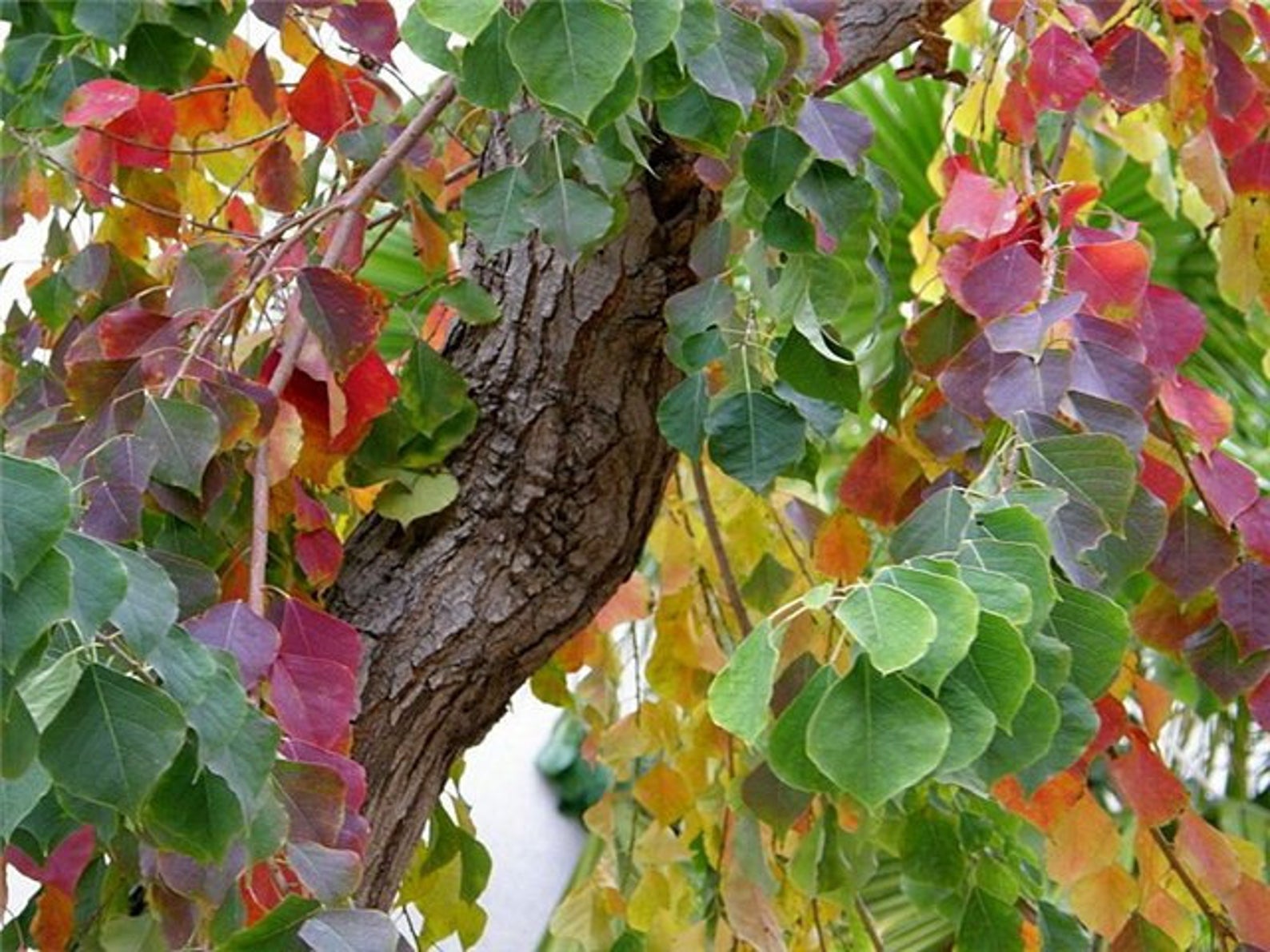
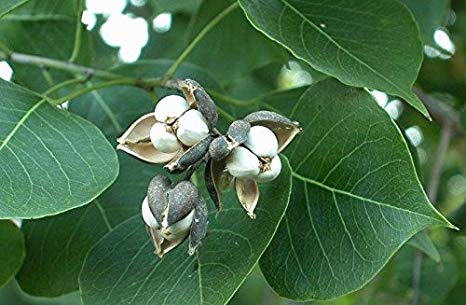
Not only do the heart-shaped, bright green leaves turn yellow, orange, purple and red in autumn, but the tree produces seeds that start out green, turn brown-black and then white. The changing colors call my attention to my constant life changes and, in a way, bring the comfort of knowing that we really do survive life changes.

87E8B050-CC6B-4AC6-B717-AE5D7FEB5E8A


The tree captures my spirit every year as autumn approaches. In a way, I meditate on my tallow tree. I watch its changes. I feel the raindrops of its sticky sap that drips on me when I’m under it. I listen to the birdsong that echoes among its boughs. I even hear my tree whisper to me sometimes when the breeze blows through it in just the right way. The tree can call me to introspection. It can inspire me on days when inspiration is beyond my grasp and unfaith threatens. On those days, the inspiration that stirs in me is peace. It is prayer.

I have to admit, though, that I walk past my tree dozens of times a day without notice, taking its shade for granted and completely unaware of its enchanting beauty. Therein lies the human dilemma of dispassionate inattention, our failure to notice or to take in nature’s extravagance. It is when a tree is just a tree. It is when we miss the spiritual experience that creation offers us as gift. 

B5263037-5BBB-4505-AF52-1DC541DB2290There is no better expression I could share than Mary Oliver’s poem, When I Am Among Trees.

When I am among the trees, 
especially the willows and the honey locust,
equally the beech, the oaks, and the pines, 
they give off such hints of gladness.

I would almost say that they save me, and daily.

I am so distant from the hope of myself,
in which I have goodness, and discernment, 
and never hurry through the world 
but walk slowly, and bow often. 

Around me the trees stir in their leaves
and call out, “Stay awhile.”

The light flows from their branches.

And they call again, “It’s simple,”
they say, “and you, too, have come
into the world to do this, to go easy,
to be filled with light, and to shine.”

1EBD15F8-1BF9-468E-9543-51C89F27DCCAOh, to claim our place in the world, to go easy, to embody the message of the trees: “It’s simple!” And then to remember that the changing seed pod, as its life cycle moves around, is really a portrait of rebirth.

On my way to the car dozens of times a week, might I take notice as I pass my tree, never hurrying, walking slowly and bowing often. Might I see more and hear more and feel more, recalling Mary Oliver’s words:

Around me the trees stir in their leaves
and call out, “Stay awhile.”


******************************

On another note, please pray for me as I await a life-saving kidney transplant. I am grateful that you are walking with me on this journey that often feels so frightening. Your thoughts and prayers mean so much. If you would like to read the story of my illness, please visit the Georgia Transplant Foundation’s website at this link:

http://client.gatransplant.org/goto/KathyMFindley

A “Go Fund Me” page is set up for contributions to help with the enormous costs related to the transplant, including medications, housing costs for the month we have to stay near the transplant center, and other unforeseeable costs for my care following the transplant. If you can, please be a part of my transplant journey by making a contribution at this link:

https://bit.ly/33KXZOj


Beauty of Nature, Change, Defiance, Determination, Faith, Grace, Hope, life, Life’s murk, Lotus, Perseverance, Rebirth, Resurrection, Transformation

Rebirth

47A0C7FC-3DCC-4CC5-AF55-D993D1032FDC

I love the simple beauty of a lotus blossom. Since the lotus is often associated with yoga (a practice I avoid with every fiber of my being), I have never really considered the lotus and its intriguing life cycle. But lately I have been curious about the story of the lotus, which has long been considered one of the most sacred flowers. I wondered what it is about this mysterious bloom makes it so enrapturing and symbolic to so many people and cultures.

I think the answer is that the life cycle of the lotus is unlike any other flower. With its roots buried in mud, the lotus submerges every night into murky river water and miraculously re-blooms the next morning without any muddy residue on its petals.

The general consensus among ancient texts that the lotus symbolizes spiritual enlightenment and rebirth. Over centuries and across cultures, the lotus stunned people with its ability to dip into the grime and revive itself unscathed—an incredible daily cycle of life, death, and a sudden immaculate rebirth that can only be described as spiritual. In fact, the lotus flower blooms most beautifully from the deepest and thickest mud.

The lotus flower’s daily resurrection is certainly interesting and symbolic of revival, transformation and new life. But even more interesting is the flower’s stubborn will to live. A lotus seed can withstand thousands of years without water, able to germinate over two centuries later.

The lotus also blooms in the most unlikely of places such as the mud of murky river water in Australia or Southern Asia. Not only does it find sanctuary in the muck, but due to the waxy protection layer on its petals, its beauty is unaffected when it re-blooms each morning. It continues to resurrect itself, coming back just as beautiful as it was last seen. With such refusal to accept defeat, it’s almost impossible not to associate the lotus flower with unwavering faith, more specifically the faith within ourselves. 

My serendipitous lotus research did what my research often does: It prompted me to re-examine my faith. I can readily identify times when I had to wade through the murky, muddy waters that life sometimes brings. And although it seemed impossible to re-emerge from the mud clean and renewed, I did, every time, because of a God who understands both the murk and the rebirth.

It’s all about faith, after all is said and done. Once again God’s creation gives us a stunning example of experiencing thick, murky, dark life experiences; going under into the thickest mud when you no longer have the strength to stay above water; and miraculously emerging again — clean, new, reborn. We can learn a valuable lesson about determination, defiance and perseverance from the determined, defiant lotus seed that can survive over centuries. It hints to me about God’s “long game” for my life that simply shouts “hope” not just in my present circumstance, but in a future I can not begin to envision. God envisions it, though — a year from now, two years, my future, the years God has already numbered for me and the mystery we name “eternity.”

Thanks be to God for my eternity and for a faith that is reborn again and again and again by grace.


*********************

On another note, please pray for me as I await a life-saving kidney transplant. I am grateful that you are walking with me on this journey that often feels so frightening. Your thoughts and prayers mean so much. If you would like to read the story of my illness, visit the Georgia Transplant Foundation’s website at this link:

http://client.gatransplant.org/goto/KathyMFindley

A “Go Fund Me” page is set up for contributions to help with the enormous costs related to the transplant, including medications, housing costs near the transplant center, and other unforeseeable costs for my care following the transplant. If you can, please make a contribution at this link:

https://bit.ly/33KXZOj

Beauty of Nature, Bible, Birdsong, God's presence, Sacred Space, Serenity, Silence, Spiritual Discipline, Spirituality or Religion?, Stillness, Transformation

Lingering in God’s Presence

741A601B-BEAE-4D97-A60B-2A00547126A0
Himalayan blue poppies in the rain, Valley of Flowers National Park, Uttarakhand, India

The beauty of God’s creation often takes my breath away. This image did that. When I first saw it, I stared at for quite a long time. You might say it stopped me in my tracks, slowed me down for a moment, caused me to wonder. That’s not a bad thing, slowing me down. It does not happen easily.

So what does it mean to slow down and linger, to linger in God’s presence? One of my favorite stories in the Bible is the very brief story of Anna.

There was also a prophet, Anna, the daughter of Penuel, of the tribe of Asher. She was very old; she had lived with her husband seven years after her marriage, and then was a widow until she was eighty-four.She never left the temple but worshiped night and day, fasting and praying. Coming up to them at that very moment, she gave thanks to God and spoke about the child to all who were looking forward to the redemption of Jerusalem. (Luke 2:36-38 NIV)

What strikes me about Anna is that “she never left the temple but worshipped night and day, fasting and praying.” She lingered in God’s presence. Perhaps God honored her devotion by allowing her to see the Christ child.

And then there’s this small snippet of Joshua’s story:

 . . . When Moses entered the tabernacle, that the pillar of cloud descended and stood at the door of the tabernacle, and the Lord talked with Moses. All the people saw the pillar of cloud standing at the tabernacle door, and all the people rose and worshiped, each man in his tent door. So the Lord spoke to Moses face to face, as a man speaks to his friend. And he would return to the camp, but his servant Joshua the son of Nun, a young man, did not depart from the tabernacle. (Exodus 33:9-11 NKJV)

Joshua lingered in the tabernacle even when Moses, his mentor, left it. Perhaps it changed him. Perhaps because of his devotion in lingering in God’s presence, it was Joshua, and not Moses, who received the honor of leading the Israelites into the Promised Land.

Of course, we are not certain about any of that. Certainly we do not linger in God’s presence in hopes of receiving some reward or honor. At the same time, developing the spiritual discipline of abiding — lingering — in God’s presence brings its own reward.

What are your ways of spending time in God’s presence? Reading scripture? Writing scripture in a prayer journal? Yoga? Walking a labyrinth? Praying? Journaling? Taking in the beauty of nature? Creating a place of silence? The ways of spiritual discipline are endless.

One thing is certain: lingering in God’s presence does not just happen. We enter that sacred space and linger there only if we commit ourselves to do it. Not in a legalistic manner that is more religious than spiritual, but in ways that slowly open us up to craving that time with God, needing it more than we need to “accomplish” our never-ending daily tasks.

When we reach that place, we might discover that lingering in God’s presence is life-giving. We might suddenly realize that we are lingering in God’s presence easily and often, that it has become a part of life.

So how in the world did a blue flower get me here?

I’m not sure, but I think it is because God can be found everywhere, in any moment, in any space, in every stillness, in silence and music and birdsong, in whatever we hear and feel, through anything our eyes can see — even a blue flower covered with dew.

And in that space, we are transformed.

Amen.

Beauty of Nature, Contemplation, God, God's presence, Holy Ground, Quiet, Silence, Stillness

Wordless Stillness

30B4F7DE-34FA-4CD9-AF28-0F7BAED8EB01
Wordless stillness: a place in Arkansas captured by Steven Nawojczyk

A friend of posts a unique message on her blog on Wednesdays. She calls it “Wordless Wednesday.” In the post, she offers beautiful photo images.

I have often wondered how she came up with the title, “Wordless Wednesdays.” Did she have writer’s block on a particular Wednesday? Did she borrow the title from another place? Did she know that on some days, she would simply have nothing to say, so she just planned it to be on Wednesdays?

It occurs to me that this is a Wednesday and I have nothing much to say. It seems like one of my empty days, when words don’t seem to emerge. My readers probably know that it is a very unusual state of being for me to not have anything to say. It rarely happens.

Sitting in my quiet time without words is a bit disconcerting for me. And yet, maybe without words, I can find a holy stillness, a silence in which God can talk to me. Maybe it is not a bad thing to be without words. Maybe a wordless stillness is exactly where God needs me to be.

A friend of mine has a way with wordless stillness. He loves nature and visits it every single day. And in the places he visits, his keen eye always catches breathtaking views of nature. I am struck by his images every time he posts them. Interestingly, he captures images from one particular place more often than not. He loves that view, capturing Arkansas sunrises, sunsets, and everything in between . . . always from that one spot. He admits it. He tells us straight up that this spot is his favorite view in Arkansas.

But here’s the thing I have discovered about his photographs of that Arkansas scene: what he captures, always, is stillness. Stillness without words.

Maybe wordless stillness is something all of us need to capture. God can find us in that place, that place that feels like Holy Ground. God can comfort us there, encourage us, forgive us, work in us, speak to our souls.

The Psalmist finds silence again and again:

Be still and know that I am God.

— Psalm 46:10 (NRSV)

For God alone my soul waits in silence,
    for my hope is from him.
He alone is my rock and my salvation,
    my fortress; I shall not be shaken.

— Psalm 62:5-6 (NRSV)


Elijah found silence on Horeb, the mountain of God:

“Go out and stand on the mountain before the Lord, for the Lord is about to pass by.” Now there was a great wind, so strong that it was splitting mountains and breaking rocks in pieces before the Lord, but the Lord was not in the wind; and after the wind an earthquake, but the Lord was not in the earthquake; and after the earthquake a fire, but the Lord was not in the fire; and after the fire a sound of sheer silence.

— I Kings 19:11-12 (NRSV)

Wordless stillness. Silence in the presence of God. Holy Ground.

Amen.

#MeToo, Beauty of Nature, Comfort, Fear, God's presence, Growing up, healing, Holy Ground, Home, Hope, Memories, Nature, Roots, Sexual abuse, Trees, Violence against women and children, Weeping

A Safe and Gentle Presence

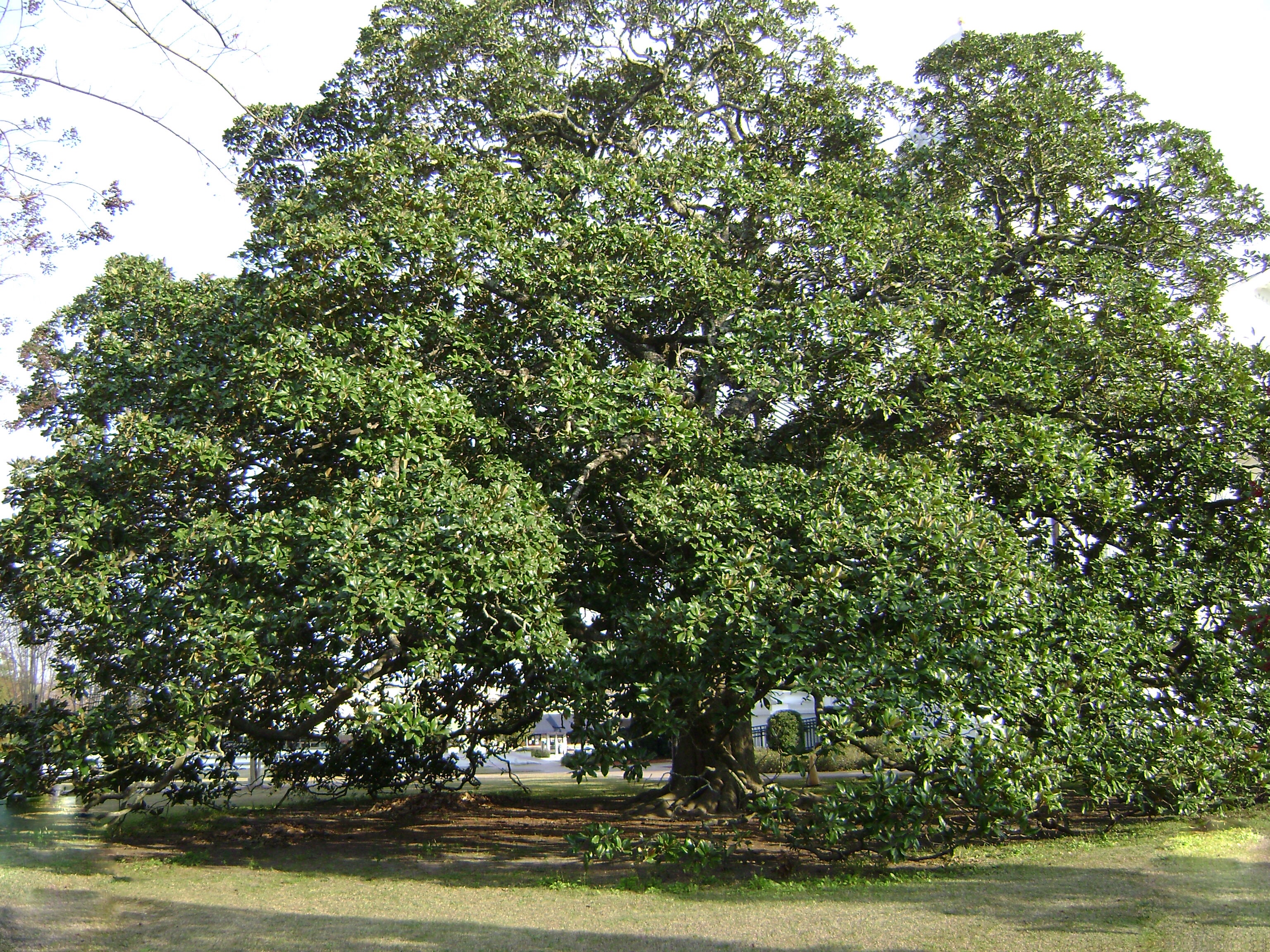
D10C41D6-4875-479D-B4BC-40762C72FD3CIf you know me well, you will know that I have a love affair with trees. I always have, ever since I was a little girl playing among the protruding, gnarly roots of the enormous, beautiful magnolia tree in our yard. I would stay there for hours sometimes, finding under the tree’s canopy my own personal and private hiding place. Though it was ill advised, the tree endured carvings in its trunk without complaining even once. That tree had multiple carved hearts, each with an arrow and the names of boyfriends that came and went.

Today I was reminded how much I love trees when I received a mailing from the Arbor Day Foundation asking me to complete a survey, which I promptly did. As a token of appreciation for completing the survey, the Arbor Day Foundation will send me a calendar, a tree book and ten free trees.

It was an offer I couldn’t refuse, dreaming of having ten new trees in my yard, but of course, knowing that the free trees they send me will be five inches tall. No matter. I’ll plant them and nurse them and hope for the best.

I was also prompted by the Arbor Day Foundation to wonder about state trees. Fred and I tried to guess a few, but eventually resorted to Wikipedia for a list. Interesting list, ranging from common trees like the ubiquitous pine all the way to more exotic-sounding trees like Utah’s Quaking Aspen, Pennsylvania’s Eastern Hemlock and Arizona’s Blue Palo Verde.

23E0BDA9-6047-4A1B-AE2A-131CC85D8385Now that you’ve had a lesson on state trees that you did not ask for, I will tell you what’s up with me and trees. The lifelong connection happened when I was just a little girl. I lived with an abusive father who made my home a very unsafe place. Other forms of violence were prevalent as well: shouting and abusive language, threats of physical harm and a violent uncle that came with a gun and broke into our house by smashing the glass in our front door.

I was a child of fear, constant fear, and so I found hiding places under our trees, two huge magnolias, an even taller pecan tree, and even under the branches of Miss Martha Tebshereny’s plum tree. An occasional plum was a bonus!

Here’s the best truth: that it is incredibly powerful that out of a troubled childhood, I brought happy memories. I brought with me into my adult years images of safety; moments of playfulness; an appreciation of nature’s beauty; the taste of fresh figs, plums and pecans; a lovely collection of magnolia cones; the treasure of memories and an abiding love of trees.

80B6B271-36DF-445D-B9B3-147572ED24FE
She wept a river of tears
holy water, sent to soften the sharp edges of sorrow
a gentle hollowing out, carving new chambers in her heart
a hallowed vessel . . . 
Kate Mullane Robertson

There was healing under the weeping branches of those trees. There was hope. I think it was Holy Ground.

That’s something for which I am very grateful. I am grateful to a loving and compassionate God, who, I am quite sure, met me a few times under one of those childhood trees. God, who knows how important it is to protect children,  and graced me with a safe and gentle presence. Because of that, I made it out of a home filled with violence to a better, safer world.

Thanks be to God.


Beauty of Nature, Bible, Darkness, Ecclesiastes, Emotions, Faith, Gnat Line, God, Hope, Joy, Nature, simple joys, Skies

Blue Skies and Gentle Breezes

137A3E93-F8AA-42BF-BC03-8F75DE8302D8

Blue skies and gentle breezes. That’s Macon most of the time. Oh, and you have to factor in the gnats, the annoying gnats that we have because we live on the gnat line.

And there really is a such thing. Look it up. (http://southofthegnatline.blogspot.com/p/gnat-line-101_28.html) 

You will find that not only is the gnat line a real thing, but that it also sits directly on top of Macon, Georgia. No one told me that before I moved here.

Still, there are blue skies and gentle breezes this morning. For a few seconds, I am fully in the moment, fully aware of the blue skies over me and the warm breeze that points my mind to all that is good, to all the things about nature that we can count on.

Gnats notwithstanding.

In some ways, it’s a picture of life —the beauty of blue skies and gentle breezes, right along with the persistent aggravation of gnats buzzing your face. Certainly, life is like that for me. There are every day graces accompanied with aggravations, challenges and sometimes troubles. Life brings days of deep mourning sometimes and times for gladness at other times. 

Most thoughts these days take me to the very real possibility that I will receive a new kidney. The thought of it is both exhilarating and terrifying. I would not be me if I did not have the troubling thought that I might die in the middle of surgery. Or that I might contract a lethal infection and die of that. Or maybe I’ll be be compromised from the procedure and not recover.

On the other hand, maybe I’ll thrive with a new kidney. Maybe I will feel better than I have felt in five years. Maybe it’s true that I’ll live longer. Maybe life will begin again, fresh and new and full of possibilities. I love this message from the writer of Ecclesiastes.

So I commend the enjoyment of life, because there is nothing better for a person under the sun than to eat and drink and be glad. Then joy will accompany them in their toil all the days of the life God has given them under the sun.

— Ecclesiastes 8:15 (New International Version (NIV)

What a good and gracious thought! The promise that as we are enjoying life, joy will be in us through whatever “toil” we face. Struggle, trouble, travail — we experience all of these in life, right along with the joy.

So as I contemplate a kidney transplant, I might just think of it as one of life’s “toils” that, by God’s grace, will be accompanied by joy. 

I think I can do this. After all, “the joy of the Lord is my strength.” (Nehemiah 8:10)

Blue skies and gentle breezes all the way!

Pesky gnats notwithstanding!


Beauty of Nature, Cross, Faith, Gardening for the Soul, God, God's Faithfulness, Life Journeys, Psalm 118, Reflection, Serenity, Trees

The Cross in the Garden

C1C795A4-B588-4EA6-896D-D2446614D0E1

Although I have a very small yard, I do have a tiny garden beside my tiny front porch. This morning the jasmine in the garden is in full bloom filling the air with sweet jasmine perfume. The tiny water feature is making gentle water sounds that relax and heal, as rippling water tends to do. A bird is splashing around in the birdbath, the flowers are blooming, and the ferns are swaying in Macon’s gentle breeze. A large iron Celtic cross leans on the tallow tree, always reminding me where my faith comes from.

Now there is an issue with the iron cross in the garden. It falls over all the time. No matter how deep I place it in the soil, it falls over. Being an ardent tree lover, I refuse to nail the cross to the tallow tree. So it continues to fall over and I continue to prop it up.

Perhaps, as a symbol of faith, it’s appropriate that the cross falls over. My faith falls over all the time, and just as I continually prop up the cross in my garden, the Creator props my faith back up every time it falls.

I think of the Psalms where we read so many words of God’s help and protection as in Psalm 118.

I was pushed hard, so that I was falling,
but the Lord helped me.

The Lord is my strength and my might;
he has become my salvation.

— Psalm 118:13-14 New Revised Standard Version (NRSV)

 
Like the cross in the garden, I might fall over a time or two on my journey. That’s okay, because I know a God who props me up, holds me up, lifts me up, raises me up!

Thanks be to God.

Beauty of Nature, Challenge, Courage, Discovering, journey, life, Lostness, Moon

Freedom on the Journey and Hope Along the Way

4B8CEA44-1168-46E2-AFB5-D5DD9FA7AD34

To live without roads seemed one way not to get lost.
— Naomi Shihab Nye

It might be good advice — traveling a journey without roads. It would eliminate the decisions one must make when roads cross. It would eliminate the uncertainty when the path ahead seems unclear. We wouldn’t have to plot a course and explore all the possible routes. We might experience freedom on the journey that we have never before experienced.

I have to admit, though, I am a person who is all about road metaphors for life. I am a lover of walking labyrinths and walking the sacred path. I am constantly assessing my journey by the many kinds of roads I travel. I rejoice on smooth, friendly roads and despair on rough, ominous roads. I walk my path with trust, experience courage and wise discernment at the crossroads, and believe that I will end my journey in hope.

So the idea of “off road” living is a new, and somewhat disconcerting, prospect. And yet I am intrigued by the quote of Naomi Shihab Nye, “To live without roads seemed one way not to get lost.”

So I spent a few minutes pondering her words. With no roads, we might find ourselves discovering new places and making new paths, never fearing that we’re lost, but leaning into the exploration with anticipation. Without roads, we might wander aimlessly, passing beside astounding wonders we have not seen before. Without roads, we might find ourselves leaning into the beauty we find on our uncharted and circuitous path, beauty once hidden from us because we stayed on the road. Without roads, we might experience freedom on the journey.

The poet says that without roads, we don’t get lost. That may be a plus for us, since the fear of getting lost keeps us from the sheer, unbridled joy of exploration. Once we have dismissed that fear, we are free to roam, to discover and to observe all the beauty that lives off the path.

I think Naomi Shihab Nye’s thought about the lack of roads is an interesting parable. Its a parable about real life, and the best lesson from it may be that it is our fear keeps us from the full and fresh experiences we could embrace. When we stick too close to the roads we have always travelled, we will experience only what exists on the roads and directly beside them, nothing more. But when we have thrown off the fear that holds us hostage, courageously take leave from our familiar path, and venture into the wilderness to wander freely, we might see and experience more than we ever thought possible.

I’m not so sure this will work for me, but I plan to try some wandering that takes me far beyond my safe path. I plan to experience the emotion that comes from the fear of being lost. I plan to allow myself to be forced to place all my trust in where my heart takes me, and in God, who always gives grace to wanderers.

So the poet says I will not be lost, because there are no roads on my journey. I will not know what things I will see until they emerge before me. I may not know where I am, but I will not be lost.

Naomi Shihab Nye wrote another poem that seems to speak to this very unfamiliar concept of traveling life’s journey without familiar paths to count on. These are her words:

Where we live in the world is never one place.
Our hearts, those dogged mirrors,
keep flashing us moons before we are ready for them.

― Naomi Shihab Nye

What does it mean that our hearts “keep flashing us moons before we’re ready for them?” It sounds like a gift, that our hearts flash moons before us. It sounds like grace that, on our journey, we will see the wonder of God’s creation glowing above us in the night sky. We will be compelled to look up, gazing into a moon that changes constantly, reminding us of the waxing and waning of our lives and giving us hope to hold on to.

Thanks be to God for the freedom of the journey and the hope.