Change, God's presence, Holy Spirit, Inspiration, Pentecost, Quiet, Rebirth, Repair the world, Sacred Space, Silence, wind

Who Has Seen the Wind?

5D279BA7-5431-4872-93DC-BDF5BFA11178

. . . And the wind? Ah, who has seen the wind go by? Neither you nor I. But when we see the trees bow down their heads, we know the wind is passing by. That is the way the Holy Spirit works: silently and effectively. *

There was never a more needful time for the fresh winds of the Holy Spirit. We inhabit a world divided . . . nations divided by tenuous agreements; white people divided from brothers and sisters black and brown; people of faith divided by differing traditions; immigrants divided from those who claim to “own” this nation; citizens divided from their president; politicians divided by ideology, greed and self-interest. There are so many examples of division. And whether we will admit it or not, division diminishes us.

The divisions among us — the ones we personally experience and the ones we observe — create an unsettled environment around us and an unsettled spirit within us. The acrimony, the hate and the disrespect we witness all around creates an unrest in us. Perhaps, from the weariness of the constant hostility we see, our heart becomes hardened. Perhaps we are closed off from the Spirit Wind that fills us and creates in us rebirth, fresh and new.

We can never think of wind without recalling the day of Pentecost. The disciples of Jesus and other followers were gathered together when a rushing, mighty wind filled the entire house, and all of them were filled with the Holy Spirit. (Acts 2:1-4) That day was the beginning, and from that day when Spirit Wind came, the holy promise came into view: that God would pour out the Spirit on all people, that sons and daughters would prophesy, that some would have visions and others dreams.

We need it again, the Spirit Wind. We need it to fill us with courage for the living of these days. We need it to fill us with love that can change the world. We need it for the will to save our planet from devastating climate change. We need it to responsibly open our borders, to become again a nation of welcome, to reach out our hands to sojourners searching for safe refuge, to rescue children from the unwelcoming places where they are detained and kept from their parents. We need it to repair the world in all the ways possible to us, to repair its brokenness.

To become God’s people in a broken world, we need the wind of the Spirit. Now.

But how does Spirit Wind come in these days? I have heard of no “Pentecostal” experiences of rushing mighty wind. I have heard of no one who has seen a sudden whirlwind. (1 Kings 19:11)  I do not know of a person who saw the winds cease at the command, “Peace. Be still.” (Mark 4:39)

So how does the Spirit Wind come? I can share only what I know from my own experience, and that is this: when I am very still and very present with God, the Spirit comes quietly, gently — but surely. I do not see her. I do not hear her come with any sound of rushing wind. I cannot touch her. Yet I feel her, covering me, filling me, empowering me. I go away with that sense of being reborn and renewed, like I might be “born from above.”

2CE74B96-9488-4F0B-81B2-69824F5EAEC8
Art by Charlotte Nickel, “Mighty Rushing Wind,” acrylic on canvas.

You know well enough how the wind blows this way and that. You hear it rustling through the trees, but you have no idea where it comes from or where it’s headed next. That’s the way it is with everyone ‘born from above’ by the wind of God, the Spirit of God.

— John 3:8 (The Message Bible)


*From the Carmelite Bulletin, Carmel of Saint Teresa of Jesus, Little Rock, Arkansas, “Who Has Seen the Wind?” Christina Rossetti – 1830-1894


*******************************************************

On another note . . .

Please pray for me as I await a life-saving kidney transplant. I am grateful that you are walking with me on this journey that often feels so frightening. Your thoughts and prayers mean so much. If you would like to read the story of my illness, please visit the Georgia Transplant Foundation’s website at this link:

http://client.gatransplant.org/goto/KathyMFindley

A “Go Fund Me” page is set up for contributions to help with the enormous costs related to the transplant, including medications, housing costs for the month we have to stay near the transplant center, and other unforeseeable costs for my care following the transplant. If you can, please be a part of my transplant journey by making a contribution at this link:

https://bit.ly/33KXZOj


Calling, Contemplation, Covenant, Dry seasons of life, Faith, journey, peace, Prayer, Quiet, Silence, Spiritual growth

Sudden Peace and Holy Silence

9B60ABDD-83BD-48D4-9213-3698F680EB93

But the Lord is in his holy temple;
let all the earth keep silence before him!

— Habakkuk 2:20 New Revised Standard Version

On this past Sunday, my pastor brought up a vivid memory for me when he talked about the stark, silent, peaceful beauty of the desert. I listened to him share his experience of a silent contemplative retreat at a Benedictine monastery in the desert. I heard his expression of how keeping silence affected him, with the effects continuing for days after the experience. I heard his description of the ways the barren desert became God’s holy temple. While the New Revised Standard Version of the Bible tells of “keeping silence,” The Message Translation says it like this:

But oh! God is in his holy Temple!
Quiet everyone—a holy silence. Listen!”

The desert does create a kind of holy silence. I remember being in the desert’s silence. I remember the heat of it, the enormity of its sky, the color of beige as far as the eye could see, the silenced sound of it, the sudden peace it gave me. The time was many years ago. The place was a retreat of the Order of Ecumenical Franciscans in the desert of New Mexico.

I had spent months of spiritual direction and personal reflection to prepare to make my profession in the Order’s Novitiate. On the day of the covenant service, I spent hours walking alone in the desert wondering why in the world a Baptist pastor would want to enter into a vocation with this Order. There in the dry desert I owned the reality that I was in a dry season of my life. I knew I could not stay in that dry and barren place where my life force was languishing. In the months before, I had been exploring this crossroads in my faith journey with my Franciscan spiritual director. Over time, I had discerned that this was a call from God, and I had entered the Order’s Postulancy. Now I felt ready to move forward.

I had no idea, really, how the Franciscan journey would affect my life. I did not know how, or if, this journey could lead me into a deeper spirituality, but that is what I longed for. I had finished writing my Personal Rule of Life that afternoon. I knew that my formation would take years, that there would be distinct decision points for me after entering the Postulancy (making Novice vows, Professing lifetime vows). These places in the spiritual journey would be decision points in my discernment process that would most surely include moving forward, stepping back, or perhaps giving more time for the Holy Spirit to speak to me before taking the next step. 

I would be lying if I said I did not have second thoughts about my reasons for seeking this spiritual path. I agonized in the midst of my prayer for clear direction. What I was certain about was that I needed something more. My spirit longed for fuller joy in my faith, a deeper connection to God and to the divine within myself, and peace. Mostly peace. The kind of peace that busy, overcommitted Baptist pastors have a hard time finding. 

In my moments of indecision that afternoon, the parched, hot desert spoke to me out of silence. It spoke to me of peace, and I was certain that on this night I would make my Profession of the Rule and become a Novice in the Order of Ecumenical Franciscans. I was convinced that this faith commitment would bring me peace.

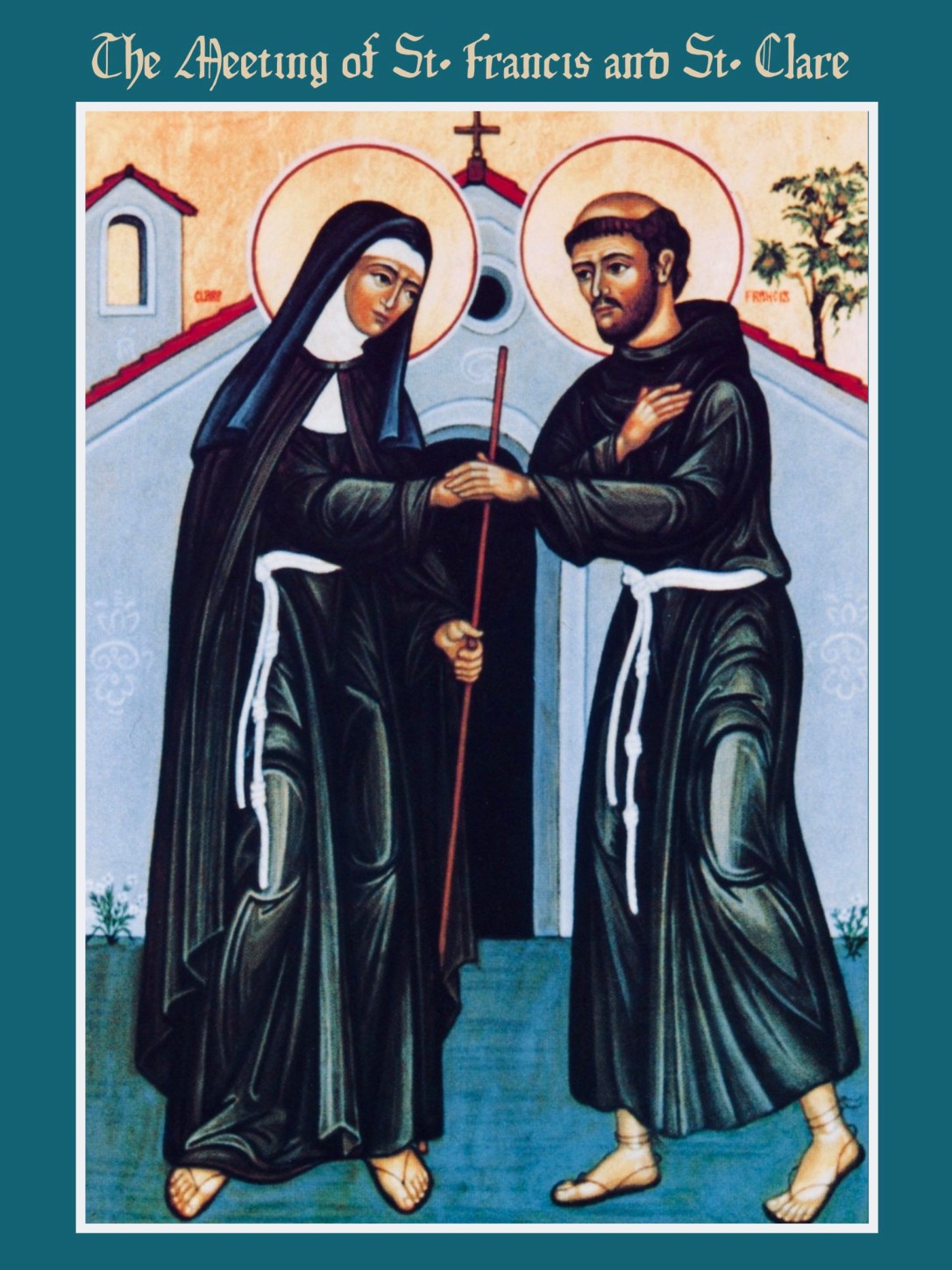
The community prayed over me in the spirit of St. Francis and St. Clare. They laid hands on me as I recited my Rule of Life and spoke my vows, and then they handed me a beautiful San Damiano cross.67401824-A9BD-4B39-857E-97CC62B25B1D I had seen this dramatic crucifix before, but on this night it was even more striking than I remembered. I held it in my hands and gave thanks for God incarnate in Christ, for the hope of glory in us, and for the palpable sense of peace that was enfolding me in that moment.

In Franciscan thought, the incarnation of Christ is foundational. It is not easy to fully describe the spirit and gifts of Franciscan thinking, but its hallmarks are simplicity, reverence, fraternity, ecumenism, ecology, interdependence, and dialogue. Its motto and salutation is “Peace and All Good!” Francis believed that God was nonviolent, the God of Peace. And so it was in that Franciscan order that I found deep, sudden peace.

The years after that took their toll on me and on my faith. Life challenges threatened my peace many times over. But the miracle is that the peace remained. It grew stronger with each trial. It grew stronger with aging and illness and heartbreak. When calamities finished their work on me, peace was still there, every time. In me, where it always needed to be.

I think to end this very serious post with just a little whimsy. I find whimsy so often in the writing of many of my blogging friends. One of them wrote about sudden peace today of all days, just as that idea is on my mind. So I must share it with you. 

I love the honesty in my friend’s words that so vividly describe the aging and changing that sometimes feels so frightening. These are her funny, quirky, very true words that describe a moment of self-realization:

That moment when your flabby underarms slap against your torso, and the sound reminds you of gentle waves lapping on a shore, and you are suddenly at peace.

— Joanna E.S. Campbell

Thank you, Joanna. Spirit-filled moments come to us in a variety of ways, and your picturesque speech reminded me today that I really am “suddenly at peace.” And that sudden peace has happened for me many times in the holy silences of my life.

Just when I needed it the most.

Quiet everyone — a holy silence. Listen!

Thanks be to God.


************************************************************

On another note . . .

please pray for me as I await a life-saving kidney transplant. I am grateful that you are walking with me on this journey that often feels so frightening. Your thoughts and prayers mean so much. If you would like to read the story of my illness, please visit the Georgia Transplant Foundation’s website at this link:

http://client.gatransplant.org/goto/KathyMFindley

A “Go Fund Me” page is set up for contributions to help with the enormous costs related to the transplant, including medications, housing costs for the month we have to stay near the transplant center, and other unforeseeable costs for my care following the transplant. If you can, please be a part of my transplant journey by making a contribution at this link:

https://bit.ly/33KXZOj


Bible, Birthday parties, Celebration, Contemplation, Creation, Friends, Grace, Gratitude, Lectio Divina, Prayer, Reflection, Surprise, Women

Surprised!

B493965F-0A08-42CD-9D12-475A36EFB534

I always write in the moment — what I’m feeling or experiencing, what fills me with joy or what brings forth tears of sadness. That’s my blog. It’s not about me really. It’s more about what exists before me, behind me, around me, within me . . . in the moment. This morning’s moment is all about sweet memories of being surprised. Completely surprised by the surprise birthday party planned and executed by my wonderful Sunday School class.

Last night was a night to remember for me. It was indeed a surprise —an unexpected, shocking, out-of-the-blue, lavish, wonderfully loving surprise. This morning I am giving thanks for the grace gift of that group of women. And I am enjoying one of the gifts they gave me — a beautiful Lectio Divina prayer bible. 

I began my reading this morning at the beginning — Genesis 1: 1-19 — with the intention of reading the passage as if it were my first time. I read it using the pattern of reflective bible reading that included the following steps of Lectio Divina:

  1. A slow, thoughtful reading of the Biblical text
  2. Reflection on the meaning of the text
  3. Prayer
  4. A decision on what I should do in my life as a result of my contemplative experience

In other words, how does action and contemplation meet for me in this time, in this place?

Gathering all the parts of me into a quiet place, I read the first part of the creation story. I took it in as a story fresh and new, and within seconds I was struck by these words:

When God began to create the heavens and the earth — the earth was without shape or form, it was dark over the deep sea, and God’s wind swept over the waters — God said, “Let there be light.” And so light appeared.

God’s wind swept over the waters . . . I could visualize it. I could hear its sound. I could feel the wind sweeping over me gently, but surely. It was fresh and new, as if I was reading it for the first time. Funny how sacred Scripture can do that “fresh and new” magic!

Today’s life lesson? It’s all about gracious gifts from a loving God . . . Wind and water, sea and sky, light and darkness, and friends of the heart who offer acts of love. 8A5E3A3F-C6E4-47B2-9F75-245B231ADA55Like a birthday party full of meaning beyond the hats and the food and the gifts and the cake.

At the back of the prayer bible, there is a collection of classic Christian prayers. This one — “A Prayer to the Holy Spirit” — is a Native American Traditional prayer that expresses wonderfully the thoughts of my life lesson for today.

O Great Spirit, 
whose breath gives life to the world,
and whose voice is heard in the soft breeze:


We need your strength and wisdom.
Cause us to walk in beauty. Give us eyes
ever to behold the red and purple sunset.
Make us wise so that we may understand
what you have taught us.
Help us learn the lessons you have hidden
in every leaf and rock.
Make us always ready to come to you
with clean hands and steady eyes,
so when life fades, like the fading sunset,
our spirits may come to you without shame. Amen.

May God — the Mother of all created things, the Father of life itself — make it so.

I am deeply grateful on this day for:

  • Quiet moments of reflection
  • The story of God’s hand in all created things
  • The ability to pray
  • The will to point my life toward actions inspired by faith
  • The gift of friends of the heart (who throw spectacular, startling, and
    completely surprising birthday parties!)

Thanks be to God.


***************************************

On another note, please pray for me as I await a life-saving kidney transplant. I am grateful that you are walking with me on this journey that often feels so frightening. Your thoughts and prayers mean so much. If you would like to read the story of my illness, please visit the Georgia Transplant Foundation’s website at this link:

http://client.gatransplant.org/goto/KathyMFindley

A “Go Fund Me” page is set up for contributions to help with the enormous costs related to the transplant, including medications, housing costs for the month we have to stay near the transplant center, and other unforeseeable costs for my care following the transplant. If you can, please be a part of my transplant journey by making a contribution at this link:

https://bit.ly/33KXZOj


Beauty of Nature, Birdsong, Change, Comfort, Inspiration, Introspection, Nature, peace, Prayer, Rebirth, Reflection, simple joys, Trees, Unfaith

Stay Awhile!

E0A3E9A4-310C-4286-8DD1-F07DCB104F2C

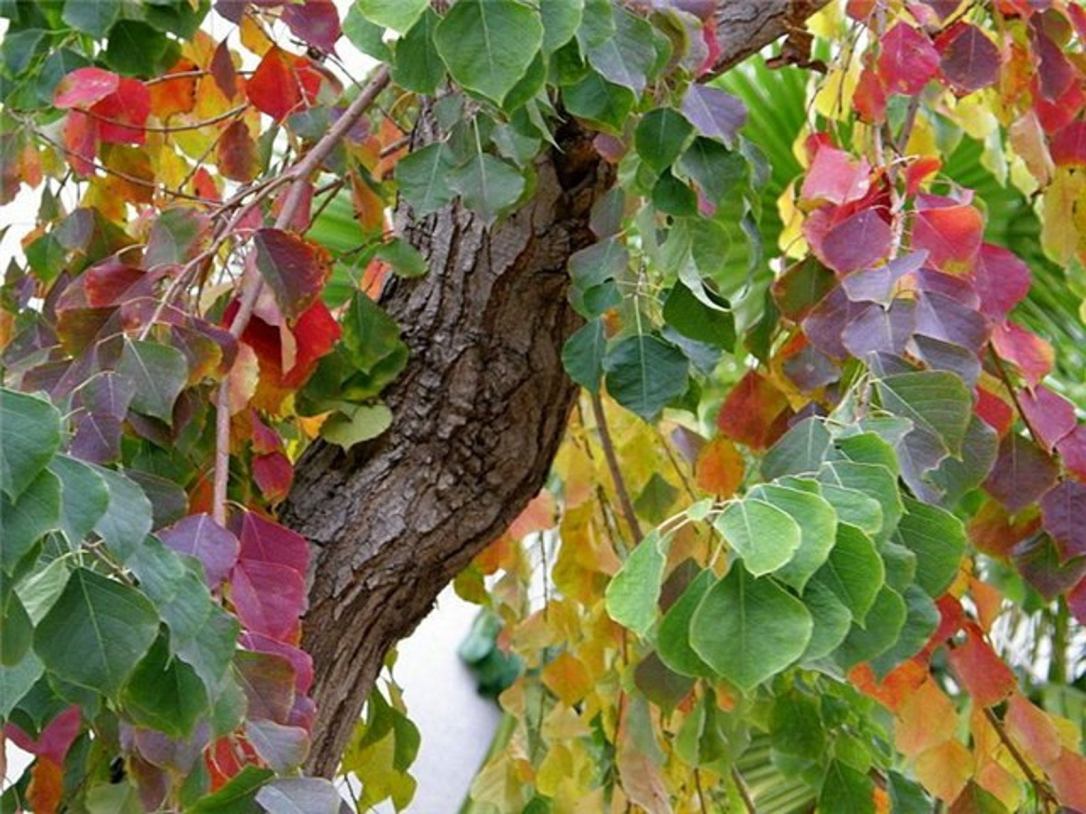
I am a lover of trees — all trees. I religiously follow the life cycle of the only tree in my yard. It’s a Chinese Tallow tree and every botanist calls it a nuisance tree, an invasive species that should be controlled. I find the tree fascinating, even mesmerizing, as it changes.

57891E38-0267-4B76-8B1C-7F0BCEEE1412

Not only do the heart-shaped, bright green leaves turn yellow, orange, purple and red in autumn, but the tree produces seeds that start out green, turn brown-black and then white. The changing colors call my attention to my constant life changes and, in a way, bring the comfort of knowing that we really do survive life changes.

87E8B050-CC6B-4AC6-B717-AE5D7FEB5E8A


The tree captures my spirit every year as autumn approaches. In a way, I meditate on my tallow tree. I watch its changes. I feel the raindrops of its sticky sap that drips on me when I’m under it. I listen to the birdsong that echoes among its boughs. I even hear my tree whisper to me sometimes when the breeze blows through it in just the right way. The tree can call me to introspection. It can inspire me on days when inspiration is beyond my grasp and unfaith threatens. On those days, the inspiration that stirs in me is peace. It is prayer.

I have to admit, though, that I walk past my tree dozens of times a day without notice, taking its shade for granted and completely unaware of its enchanting beauty. Therein lies the human dilemma of dispassionate inattention, our failure to notice or to take in nature’s extravagance. It is when a tree is just a tree. It is when we miss the spiritual experience that creation offers us as gift. 

B5263037-5BBB-4505-AF52-1DC541DB2290There is no better expression I could share than Mary Oliver’s poem, When I Am Among Trees.

When I am among the trees, 
especially the willows and the honey locust,
equally the beech, the oaks, and the pines, 
they give off such hints of gladness.

I would almost say that they save me, and daily.

I am so distant from the hope of myself,
in which I have goodness, and discernment, 
and never hurry through the world 
but walk slowly, and bow often. 

Around me the trees stir in their leaves
and call out, “Stay awhile.”

The light flows from their branches.

And they call again, “It’s simple,”
they say, “and you, too, have come
into the world to do this, to go easy,
to be filled with light, and to shine.”

1EBD15F8-1BF9-468E-9543-51C89F27DCCAOh, to claim our place in the world, to go easy, to embody the message of the trees: “It’s simple!” And then to remember that the changing seed pod, as its life cycle moves around, is really a portrait of rebirth.

On my way to the car dozens of times a week, might I take notice as I pass my tree, never hurrying, walking slowly and bowing often. Might I see more and hear more and feel more, recalling Mary Oliver’s words:

Around me the trees stir in their leaves
and call out, “Stay awhile.”


******************************

On another note, please pray for me as I await a life-saving kidney transplant. I am grateful that you are walking with me on this journey that often feels so frightening. Your thoughts and prayers mean so much. If you would like to read the story of my illness, please visit the Georgia Transplant Foundation’s website at this link:

http://client.gatransplant.org/goto/KathyMFindley

A “Go Fund Me” page is set up for contributions to help with the enormous costs related to the transplant, including medications, housing costs for the month we have to stay near the transplant center, and other unforeseeable costs for my care following the transplant. If you can, please be a part of my transplant journey by making a contribution at this link:

https://bit.ly/33KXZOj


Beauty of Nature, Change, Defiance, Determination, Faith, Grace, Hope, life, Life’s murk, Lotus, Perseverance, Rebirth, Resurrection, Transformation

Rebirth

47A0C7FC-3DCC-4CC5-AF55-D993D1032FDC

I love the simple beauty of a lotus blossom. Since the lotus is often associated with yoga (a practice I avoid with every fiber of my being), I have never really considered the lotus and its intriguing life cycle. But lately I have been curious about the story of the lotus, which has long been considered one of the most sacred flowers. I wondered what it is about this mysterious bloom makes it so enrapturing and symbolic to so many people and cultures.

I think the answer is that the life cycle of the lotus is unlike any other flower. With its roots buried in mud, the lotus submerges every night into murky river water and miraculously re-blooms the next morning without any muddy residue on its petals.

The general consensus among ancient texts that the lotus symbolizes spiritual enlightenment and rebirth. Over centuries and across cultures, the lotus stunned people with its ability to dip into the grime and revive itself unscathed—an incredible daily cycle of life, death, and a sudden immaculate rebirth that can only be described as spiritual. In fact, the lotus flower blooms most beautifully from the deepest and thickest mud.

The lotus flower’s daily resurrection is certainly interesting and symbolic of revival, transformation and new life. But even more interesting is the flower’s stubborn will to live. A lotus seed can withstand thousands of years without water, able to germinate over two centuries later.

The lotus also blooms in the most unlikely of places such as the mud of murky river water in Australia or Southern Asia. Not only does it find sanctuary in the muck, but due to the waxy protection layer on its petals, its beauty is unaffected when it re-blooms each morning. It continues to resurrect itself, coming back just as beautiful as it was last seen. With such refusal to accept defeat, it’s almost impossible not to associate the lotus flower with unwavering faith, more specifically the faith within ourselves. 

My serendipitous lotus research did what my research often does: It prompted me to re-examine my faith. I can readily identify times when I had to wade through the murky, muddy waters that life sometimes brings. And although it seemed impossible to re-emerge from the mud clean and renewed, I did, every time, because of a God who understands both the murk and the rebirth.

It’s all about faith, after all is said and done. Once again God’s creation gives us a stunning example of experiencing thick, murky, dark life experiences; going under into the thickest mud when you no longer have the strength to stay above water; and miraculously emerging again — clean, new, reborn. We can learn a valuable lesson about determination, defiance and perseverance from the determined, defiant lotus seed that can survive over centuries. It hints to me about God’s “long game” for my life that simply shouts “hope” not just in my present circumstance, but in a future I can not begin to envision. God envisions it, though — a year from now, two years, my future, the years God has already numbered for me and the mystery we name “eternity.”

Thanks be to God for my eternity and for a faith that is reborn again and again and again by grace.


*********************

On another note, please pray for me as I await a life-saving kidney transplant. I am grateful that you are walking with me on this journey that often feels so frightening. Your thoughts and prayers mean so much. If you would like to read the story of my illness, visit the Georgia Transplant Foundation’s website at this link:

http://client.gatransplant.org/goto/KathyMFindley

A “Go Fund Me” page is set up for contributions to help with the enormous costs related to the transplant, including medications, housing costs near the transplant center, and other unforeseeable costs for my care following the transplant. If you can, please make a contribution at this link:

https://bit.ly/33KXZOj

Change, Family, Friendship, life, Patience, struggle, Surprise, Waiting

Waiting

4C2E439F-D260-4410-8330-259452828A93

Most people don’t really like waiting. Being stopped at one of those very long red lights can be frustrating. Waiting your turn in the grocery line is trying on the more impatient among us. Waiting for a wisp of autumn in the south — when it’s 100 degrees in late September — is particularly exasperating. But these are trivial waiting experiences.

There are persons who are waiting today for a diagnosis from their doctor. Students wait for results from important tests, hoping to at least get a passing grade. Others wait at the bedside of an elderly parent, hoping for and dreading that last breath. These are serious seasons of waiting, life-changing experiences of waiting.

There is at least one more example of waiting — the one I’m experiencing today. My waiting is an exciting, joyful waiting for the car full of my grandchildren to pull up in our driveway. I seldom get to see them, or my son, since they live 11 hours away in Little Rock, Arkansas. So this is a special waiting time. Today I’m waiting expectantly, joyfully, gleefully for my family. It’s the best kind of waiting.

These days whenever I ponder what it means to wait, my thoughts go immediately to my five years of waiting for a life-altering kidney transplant. In these years, my teacher has been faith and my lesson has been patience. I have managed to develop an abundance of patience that has served me in every area of my life.

Patience has not always been one of my strongest character traits, though. I used to have very little patience, and that reality led me to some very raucous encounters with other people. As a victim advocate, I was very trying on judges — to my detriment. As a hospital chaplain, I was insistent when a patient’s medication was delayed. I could cite many examples of my impatience causing upheaval.

Which leads me to my memories of Ethel. I will never forget Ethel — my parishioner, my friend, my sister, my mother — the one person who was loyal to me and protective of me to a fault. To Ethel, it seemed I could do no wrong. She was wrong about that, of course.

Ethel was with me during the difficult time when my church refused my request for ordination. For six months they refused in every way that could hurt me. Ethel was in my corner through every pain-filled business meeting, including the final one that sealed the church’s decision to decline the opportunity to ordain the first Baptist woman in Arkansas.

I was impatiently devastated and saw no way toward ordination or toward the continuation of my ministry as a chaplain. I was “surrounded by a cloud of witnesses” that had seen what I had endured from my church. They lifted me up with their prayers and their constant encouragement. Ethel, however, did more than pray for and encourage me. In the midst of holding my pain with me, Ethel brought up the important fact that I needed to learn patience. Ethel loved me enough to be honest, and so with Bible in hand, she gave me this gift:

For the vision is yet for the appointed time;
It hastens toward the goal and it will not fail.
Though it tarries, wait for it;
For it will certainly come, it will not delay.   
(Habakkuk 2:3 NASB)

Wait for it, Ethel insisted, with a faith that knew exactly how to insist.

Wait for it!

She was right, as always.

So that is my personal experience of learning how to wait. It was a life lesson I needed to learn. And I did learn it (sort of). In the end, I did not become the first Baptist woman ordained in Arkansas, but I did become the first woman in Arkansas to serve as the pastor of a Baptist church. What a surprise from a constantly surprising God who did not intend for me to be a hospital chaplain, but instead led me into a nine-year ministry of being a pastor.

Today, though, I am just waiting for my beautiful grandchildren.

That’s the best surprise of all!


*************************************************

On another note, please pray for me as I wait for my kidney transplant. I am grateful that you are walking with me on this journey that often feels frightening. Your thoughts and prayers mean so much. If you would like to read the story of my journey at the Georgia Transplant Foundation’s website, please visit this link:

http://client.gatransplant.org/goto/KathyMFindley

A “Go Fund Me” page is set up for contributions to help with the enormous costs related to the transplant, including medications, housing costs near the transplant center, and other unforeseeable costs for my care following the transplant. If you can, please make a contribution at this link:

https://bit.ly/33KXZOj


Community, Emotions, Friendship, Introspection, Laughter, Life Journeys, Memories, Reflection, Relationship, Stories, Vulnerability, Women

All Because of the Stories

9B0410BB-65D0-4A15-82BC-F05226DB1028

Telling our stories is one of the most sacred things we do. I am reminded of that as I enjoy my church’s annual women’s retreat on St. Simon’s Island. Now understand this: being on an island means sun and breezes, ocean waves, white sand and palm trees. So the physical environment of this retreat is very conducive to re-creating. On top of that, our sessions have focused our thoughts on knowing ourselves and finding the peace that comes from mindfulness and balance.

But at lunch today with three of the women, I rediscovered the power of our stories as we each told about vivid snippets of our lives and histories. One person commented that we might never have known these things about each other by just greeting one another in church. She was so right! The retreat gave us the gift of safe space in which to tell our stories.

All four of us delighted in the stories the others told. Each of us grew in our own spirituality as we told one another things about our faith. We shared our dreams. One shared her 15-year plan. Another shared her hopes for the year ahead. Two of us shared parts of life past, as the other two celebrated us.

We shared some pain, too, and some loss. We shared times of disappointment and times of plain old survival. We shared stories that brought laughter to the lunch table. We shared communion, in a way, when we created community — a safe community for sharing some of the experiences that brought such meaning to our lives.

We spoke and we listened. We told our stories, each voice around the table willing to be vulnerable enough to share their lives. There was power in the telling. And then there was another kind of power in the listening.

Each of us — just the four of us — were enriched, emboldened, supported and celebrated in the brief lunch activity of hearing one another’s story.

For today at least, four strangers became friends — all because of the stories.

Beauty of Nature, Bible, Birdsong, God's presence, Sacred Space, Serenity, Silence, Spiritual Discipline, Spirituality or Religion?, Stillness, Transformation

Lingering in God’s Presence

741A601B-BEAE-4D97-A60B-2A00547126A0
Himalayan blue poppies in the rain, Valley of Flowers National Park, Uttarakhand, India

The beauty of God’s creation often takes my breath away. This image did that. When I first saw it, I stared at for quite a long time. You might say it stopped me in my tracks, slowed me down for a moment, caused me to wonder. That’s not a bad thing, slowing me down. It does not happen easily.

So what does it mean to slow down and linger, to linger in God’s presence? One of my favorite stories in the Bible is the very brief story of Anna.

There was also a prophet, Anna, the daughter of Penuel, of the tribe of Asher. She was very old; she had lived with her husband seven years after her marriage, and then was a widow until she was eighty-four.She never left the temple but worshiped night and day, fasting and praying. Coming up to them at that very moment, she gave thanks to God and spoke about the child to all who were looking forward to the redemption of Jerusalem. (Luke 2:36-38 NIV)

What strikes me about Anna is that “she never left the temple but worshipped night and day, fasting and praying.” She lingered in God’s presence. Perhaps God honored her devotion by allowing her to see the Christ child.

And then there’s this small snippet of Joshua’s story:

 . . . When Moses entered the tabernacle, that the pillar of cloud descended and stood at the door of the tabernacle, and the Lord talked with Moses. All the people saw the pillar of cloud standing at the tabernacle door, and all the people rose and worshiped, each man in his tent door. So the Lord spoke to Moses face to face, as a man speaks to his friend. And he would return to the camp, but his servant Joshua the son of Nun, a young man, did not depart from the tabernacle. (Exodus 33:9-11 NKJV)

Joshua lingered in the tabernacle even when Moses, his mentor, left it. Perhaps it changed him. Perhaps because of his devotion in lingering in God’s presence, it was Joshua, and not Moses, who received the honor of leading the Israelites into the Promised Land.

Of course, we are not certain about any of that. Certainly we do not linger in God’s presence in hopes of receiving some reward or honor. At the same time, developing the spiritual discipline of abiding — lingering — in God’s presence brings its own reward.

What are your ways of spending time in God’s presence? Reading scripture? Writing scripture in a prayer journal? Yoga? Walking a labyrinth? Praying? Journaling? Taking in the beauty of nature? Creating a place of silence? The ways of spiritual discipline are endless.

One thing is certain: lingering in God’s presence does not just happen. We enter that sacred space and linger there only if we commit ourselves to do it. Not in a legalistic manner that is more religious than spiritual, but in ways that slowly open us up to craving that time with God, needing it more than we need to “accomplish” our never-ending daily tasks.

When we reach that place, we might discover that lingering in God’s presence is life-giving. We might suddenly realize that we are lingering in God’s presence easily and often, that it has become a part of life.

So how in the world did a blue flower get me here?

I’m not sure, but I think it is because God can be found everywhere, in any moment, in any space, in every stillness, in silence and music and birdsong, in whatever we hear and feel, through anything our eyes can see — even a blue flower covered with dew.

And in that space, we are transformed.

Amen.

Beauty of Nature, Contemplation, God, God's presence, Holy Ground, Quiet, Silence, Stillness

Wordless Stillness

30B4F7DE-34FA-4CD9-AF28-0F7BAED8EB01
Wordless stillness: a place in Arkansas captured by Steven Nawojczyk

A friend of posts a unique message on her blog on Wednesdays. She calls it “Wordless Wednesday.” In the post, she offers beautiful photo images.

I have often wondered how she came up with the title, “Wordless Wednesdays.” Did she have writer’s block on a particular Wednesday? Did she borrow the title from another place? Did she know that on some days, she would simply have nothing to say, so she just planned it to be on Wednesdays?

It occurs to me that this is a Wednesday and I have nothing much to say. It seems like one of my empty days, when words don’t seem to emerge. My readers probably know that it is a very unusual state of being for me to not have anything to say. It rarely happens.

Sitting in my quiet time without words is a bit disconcerting for me. And yet, maybe without words, I can find a holy stillness, a silence in which God can talk to me. Maybe it is not a bad thing to be without words. Maybe a wordless stillness is exactly where God needs me to be.

A friend of mine has a way with wordless stillness. He loves nature and visits it every single day. And in the places he visits, his keen eye always catches breathtaking views of nature. I am struck by his images every time he posts them. Interestingly, he captures images from one particular place more often than not. He loves that view, capturing Arkansas sunrises, sunsets, and everything in between . . . always from that one spot. He admits it. He tells us straight up that this spot is his favorite view in Arkansas.

But here’s the thing I have discovered about his photographs of that Arkansas scene: what he captures, always, is stillness. Stillness without words.

Maybe wordless stillness is something all of us need to capture. God can find us in that place, that place that feels like Holy Ground. God can comfort us there, encourage us, forgive us, work in us, speak to our souls.

The Psalmist finds silence again and again:

Be still and know that I am God.

— Psalm 46:10 (NRSV)

For God alone my soul waits in silence,
    for my hope is from him.
He alone is my rock and my salvation,
    my fortress; I shall not be shaken.

— Psalm 62:5-6 (NRSV)


Elijah found silence on Horeb, the mountain of God:

“Go out and stand on the mountain before the Lord, for the Lord is about to pass by.” Now there was a great wind, so strong that it was splitting mountains and breaking rocks in pieces before the Lord, but the Lord was not in the wind; and after the wind an earthquake, but the Lord was not in the earthquake; and after the earthquake a fire, but the Lord was not in the fire; and after the fire a sound of sheer silence.

— I Kings 19:11-12 (NRSV)

Wordless stillness. Silence in the presence of God. Holy Ground.

Amen.

Comfort, Contemplation, Faith, God's presence, Hope, Loss, Reflection, Seeing the Face of God, Weeping

In the Presence of God

C90EDAB6-79B0-4CA2-A04E-1166EA16A59F

What does it mean to be in the presence of God? How do we get there? How do we rest there long enough for our souls to be restored?

Had I ever been able to answer those questions, I imagine my life would have been different — fuller, gentler, more peaceful. But like many people who work to achieve inner peace and a spirituality with staying power, I have struggled around the prize, never quite being able to grasp it.

I have used all of the tools available to me — my bible, my bookcase full of contemplative writing, my labyrinth, my hymnal, my writing, my art, my prayer. The list goes on, and I go on, still struggling to find God’s presence.F40CF356-14B8-489C-A6CE-0DC8F34C0B95

The worse thing I can do is to cast blame on myself for a small spirituality and an even smaller faith. Truth is, I think I do have spirituality and faith. Faith has lifted me up through many difficult times. Faith was present when fire destroyed part of our home. My faith held when I was forced to close the doors our nonprofit. My faith carried me through sudden kidney failure. Faith showed up every time I wept bitter tears of grief and mourned my life losses. My faith was present with me when I thought I was dying and when I left my home of 32 years, my son and my grandchildren.

My faith held. My anchor gripped God’s solid rock. I picked myself up every time and moved on with hope. Yet, this thing we call “the presence of God” has eluded me. I mostly can’t experience it or feel it or sense it as a reality.

I guess it gets back to faith, doesn’t it. For it is faith that whispers to us, “Know the presence of God. If you cannot sense it, know it. If you cannot feel it, believe it anyway.”

The book of Jeremiah offers this comforting advice: “You will seek me and find me, when you seek me with all your heart.”

And then I can always fall back on Richard Rohr wisdom: 

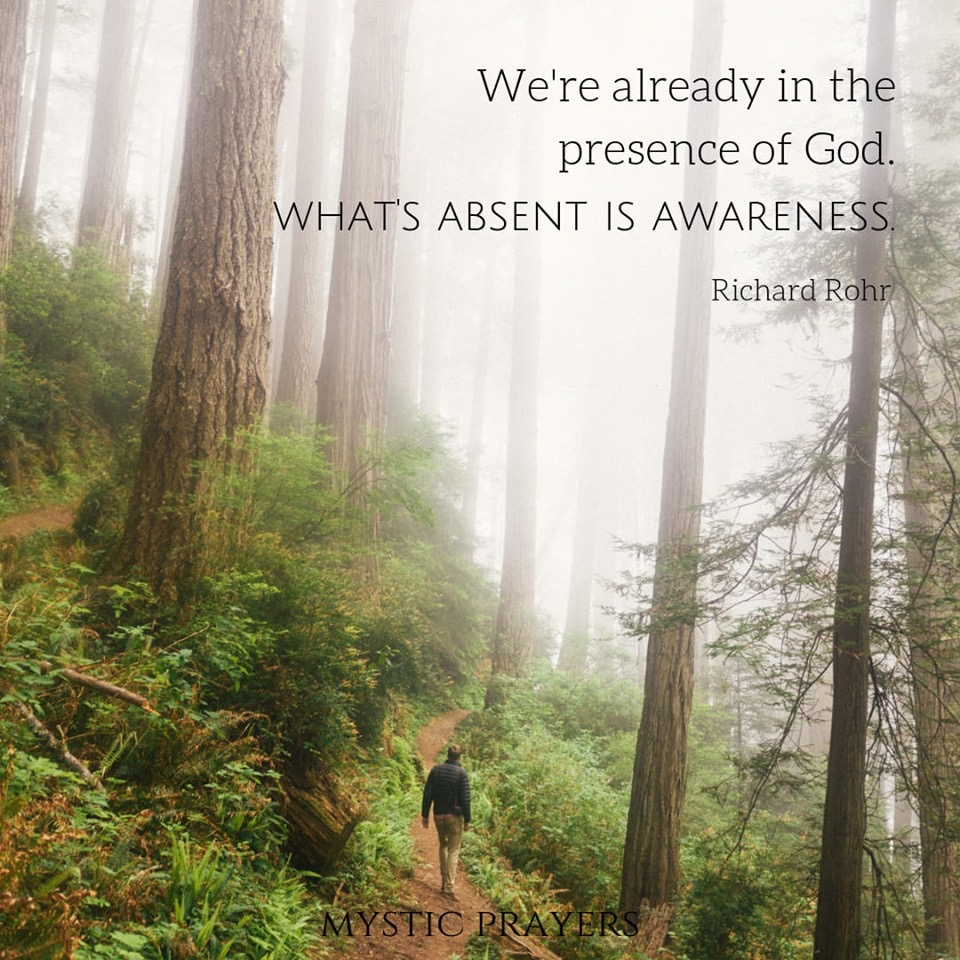
“We’re already in the presence of God. What’s absent is awareness.”

F9FA5D3C-53F0-4043-8A72-F9E2D63F7349

O Lord, you have searched me and known me!
You know when I sit down and when I rise up;
You discern my thoughts from afar.
You search out my path and my lying down
and are acquainted with all my ways.

Even before a word is on my tongue,
O Lord, you know it.
You hem me in, behind and before me,
and you gently lay your hand upon me.
Such knowledge is too wonderful for me;
I cannot begin to understand it.

Where shall I go from your Spirit?
Where shall I flee from your presence?
If I ascend to heaven, you are there!
If I make my bed in Sheol, you are there!

If I take the wings of the morning
and dwell in the uttermost parts of the sea,
even there your hand shall lead me,
and your right hand shall hold me.

— Psalm 139:1-10 ESV (paraphrased)

Anniversary, Love story, Marriage, Uncategorized

Two Love Stories

284EA1E5-F562-400C-A5C8-564DB864EE84

This past Friday, Fred and I celebrated our 50th wedding anniversary. My “techie computer geek” husband declared it our 18,262nd Day-versary! Either way, it has been a long run, and one for which I am very grateful.

Not that you care about our love story, but I want to tell it. When we met during my first year of college, neither of us were looking for a romantic relationship. It could not happen, in fact, with the two of us. Our friends insisted we were not a good match. Fred asked me out on a dare from his friends who told him I wouldn’t go out with him.

They were very wrong! After all, Fred had Andy Williams and Roger Miller concert tickets. (Now I have revealed my age and my era!) On top of that, it was Homecoming weekend at the University of Alabama! I really wanted to go to that concert!

After the concert, Fred walked me to the door of my dorm. When I turned to leave, he pulled me back and kissed me. I’m not sure exactly what it was about that kiss, but it was instantaneous. I was in love! Silly, right? I walked up the stairs to my third floor dorm room and found my roommate and my across-the-hall friends waiting for me.

They looked at me with great anticipation. “Well, how was it?” they asked, not at all expecting my response.

I said simply, “I’m going to marry him.”

Raucous laughter filled the room, and as we used to say, “They rolled in the floor laughing!”

I assured them that I was not kidding as all three of them stared at me with expressions that ranged from puzzlement to complete disbelief. And that was that for a Friday night first date!

On Monday, Fred had not called me as I expected he would. So I called him and asked him to come over on Monday evening for a walk on the campus. His response was that he might come after his fraternity meeting.

That kind of noncommittal response was not acceptable to me. I fretted for several hours wondering if he would come.

He came. We walked. And then next to a huge tree in the middle of the campus quadrangle, I said, “God told me we are going to get married.”

His response was a typical “Fred” response. “God has not told me anything about that!”

Be that as it may, we got married nine months’ later, beginning a life journey filled with experiences in five states, several cities, and a few foreign countries, a 50 year journey.

I don’t really need to make this story religious, but I can’t help but think of the love story of Rebekah and Isaac and the ways it intersects with our story. First of all, Rebekah’s family did not arrange her marriage as was the custom. It all began by a well of water where a servant of Abraham landed in his search for a wife for Isaac. He had asked God for a sign, saying that whoever agrees to draw water from the well for him and his camels will be the woman for Isaac.

Rebekah was near that well, and as the story goes, she very kindly drew water for Abraham’s servant and all of his animals. She was the one God had chosen, then.

Almost immediately, the decision was finalized with Rebekah’s parents. The servant asked that they might leave the next day, definitely not enough time to gather a dowry and pack Rebekah’s things. Her parents asked for ten days to prepare, but the servant was insistent that they leave immediately.

Rebekah would very likely be leaving her home and her family forever. So the parents asked her if she was willing to leave the next day. She said, “I will go.” (Genesis 25:50-67) She made the decision to marry a stranger, sight unseen, and began her long journey to Isaac and his homeland and his people.

As for Isaac, he loved her instantly, and it seems that their marriage was good and solid and filled with love. Life had not blessed them with the children they desperately wanted. They waited, and prayed, for twenty years. And then God answered their prayers and Rebekah conceived. Twin boys were born to them, another story in itself.

But in these two love stories, mine and Rebekah’s, there are common threads: love out of the blue; an unexpected, almost spur of the moment, decision to marry; an immediate journey far away from home; a long unrequited desire to have children; God in the center of it all.

I could describe my own relationship with Fred in much the same way as Rebekah might have described hers. There was love — instantaneous love — that came out of the blue, a quick decision to marry, a journey to a new state, the inability to conceive, and most importantly, God in the center of all of it.

Ours has been a beautiful love story, exciting at times and at other times mundane, joyful at times and at other times covered with sorrow. There was disappointment and hope along the way, and times of despair. All of it, we faced together — as one — hanging on to each other and to God. In spite of the risk of sounding syrupy religious, I could say that God wrote our love story.

Our journey has been long and winding, and I would be lying if I said the road we traveled had no rough places. Our journey, in fact, took us over broken roads strewn with jagged rocks, even boulders that stopped us in our tracks for a time. Still, it was a journey we loved.

Over our fifty years together, much has been said about our love story, from the first burst of our friends’ laughter and disbelief, to the comments that we didn’t seem at all like a good match. In the end, if there’s anything to be said, it is that ours has been a love constant and enduring. It was a soul match, actually, and I thank God for giving it to us.


Immigration, Ocean, Sick children deportation, Uncategorized

Glistening Waters

F8A3FDC3-C66D-453E-BBAC-6DCE75F15A1B

You simply cannot underestimate your emotional response to the sight of the ocean and its sunlit glistening waters. It’s almost like being able to take a deep breath when you haven’t breathed deeply for weeks, even months. This morning, for a few minutes of a lovely vacation, I looked down from our balcony to watch the stunning Gulf waters light up like tiny fireworks, such a beautiful escape from reality.

Still, you cannot escape when the world keeps turning, Hurricane Dorian threatens communities, and there is, once again, a reason to grieve the headline news of the day. How disheartening it is when the president of this nation goes lower and lower in his determination to dehumanize people and cause irreparable harm.

All the glistening ocean waters in the world cannot ease this sadness — learning the stories of very sick children who have 33 days to leave hospital intensive care units and return to their countries, while mourning a nation that seems to be disappearing.

Anthony Marino, director of immigration legal services, described the horrific dilemma: “I don’t know how they expect parents to pull their children from hospital beds, disconnect them from lifesaving treatments and go some place where they are know they are going to die. But that is what they are telling them to do.”

Often, I have posted the poignant and beautiful words written by my friend, Maren. I must do that today for the readers of my blog. Maren has captured the emotion of our shared grief.


PRAYER FOR THE SICK CHILDREN DEPORTATION

God, whom I’ve called
to sit with me all night long,
when I rocked children
with sore throats, swollen tonsils,
coughs that wouldn’t let them sleep,

when I promised
a precious one
everything would be better
as they pulled on their ear lobes,
or cried to be brave
with their broken bones,

rest your hands and heart
on parents who have come here
with their children
to be treated for
cancer or cerebral palsy,
cystic fibrosis or HIV,
eye malignancies,
short bowel syndrome,
heart disease,
or during the long wait
for a transplant.

For this government
is taking the lullabies away,

and in this new and cruel
deportation
turned Make-a-Wish
into Lose a Hope.


Visit Maren’s blog at: https://giftsinopenhands.wordpress.com/2019/08/30/prayer-for-the-sick-children-deportation/

Joy, Music, Uncategorized, Worship

Where Is Our Music?

Basic RGB

This is not a “ripped from the headlines” opinion article. It is not about a current crisis going on in the world, though I could write about many. But since it’s Friday, how about a gentler and kinder blog post on a subject easier to contemplate, one that hints at real joy!

This blog post is about something as old as time, something timeless and enduring and cherished. Something that is meant, among other things, to bring us joy. It’s about the music that tells our stories — the stories of a nation, of a community, of a church.

The benefits of music on the mind and body have been recognized since the days of the Greek philosophers. According to Plato, music “gives soul to the universe, wings to the mind, flight to the imagination, a charm to sadness, gaiety and life to everything.”

Today, researchers and scientists continue to explore how music affects emotions by  improving and enriching the way we think, feel and relate to the world. So we might ask the researchers, “where is our music?” Those in the know say that our music is in the right side of our brains, but researchers also tell us that listening to and performing music impacts the brain as a whole. Music stimulates both halves of the brain — the analytical brain (left) and the subjective-artistic brain (right). While the left brain processes elements in music such as pitch, tempo and structure, the right brain — often considered the more creative hemisphere — focuses on the melody in the music. 

And that’s all the physiological and psychological, scientific trivia I have about music. What I really want to share is how music affects worship. Where is our music when we worship?

I happen to be Baptist, and Baptists have deep roots in musical expressions of worship, seldom finding it difficult to sing from the heart — with unbridled joy — making melody and harmony that would soar through church sanctuaries large and small, simple and ornate.

Hymn singing has long been one of the most cherished acts of worship for Baptists. I dare say that many Baptists remember hearing about “the great hymns of the church” from an early age and learning about church music in their Music Makers or Young Musicians choirs. If funds allowed, the minister of music (AKA choir director) would receive music booklets from a subscription service designed so that children would learn about hymnody, music in worship, choir member deportment and, as we used to describe it, “singing parts.” 

Not so much today. These days, it seems that joyful, exuberant hymn singing is a little more difficult for worshippers. Many congregations are regrettably a bit more restrained than they once were. As for music in my personal experience, well these days the church music in my world is restrained enough to make me wonder, where is our music?

I have to say that our music is still an important element of our church’s worship, with hymns carefully and creatively selected to enhance worship. Then what’s the problem? I believe problem to be our disimpassioned attitude when we sing. That kind of attitude is robbing us of music’s full spiritual expression. I am not, by any means, a professional musician that can comment on hymn texts, hymn tunes, meter, or the history of Christian hymnody. I am merely a worshipper who finds music to be a primary expression of true worship. With a bit of reticence, I approach the conclusion that some of us sometimes sing words without paying attention to their meaning, sing hymns without noticing their theological message, or sadly, do not really sing at all, certainly not from the heart.

It is not for me to ensure that congregations sing and appreciate the words they are singing. I have no power at all to make individuals sing from their hearts. Yet, music that does not come from the heart is something like “fake worship.” 

There are so many ways our hymns can touch the heart and aid worship. I mention only three that seem most important to remember.

MUSIC EXPRESSES JOY . . . 

Most certainly, our songs and hymns can and should be expressions of joy. People in church don’t smile much, but singing, “then sings my soul, my Savior, God, to Thee, how great Thou art!” ought to cause us to smile with holy joy! The Scripture calls us to joy:

My lips will shout for joy when I sing praise to you—
I whom you have delivered.   — Psalm 71:23

Come, let us sing for joy to the Lord;
let us shout aloud to the Rock of our salvation.
Let us come before God with thanksgiving
and extol God with music and song.  
 — Psalm 95:1-2

MUSIC EXPRESSES THEOLOGICALLY SOUND THOUGHTS . . .

The hymns we sing in worship not only inspire us, they instruct us. A hymn like “A Mighty Fortress Is Our God” is theologically sound, proclaiming the attributes of God. There are many such hymns that enhance our knowledge of God. The Scripture challenges us to wisdom and identifies singing hymns as one way we learn.

Let the message of Christ dwell among you richly as you teach and admonish one another with all wisdom through psalms, hymns, and songs from the Spirit, singing to God with gratitude in your hearts.  — Colossians 3:16

MUSIC EXPRESSES OUR BEST WORSHIP . . .

When I contemplate that phrase in Colossians — singing to God with gratitude in your heart — I am prompted to more fully express my faith through song. I hope that our singing truly is an act of true worship, a time when we invite the presence of God and the Holy Spirit to be in our midst. Consider Solomon’s dedication of the temple. When all the preparations were done and the temple was finished, the worshippers sang and played instruments as an expression of praise, and the result was astounding.

The trumpeters and musicians joined in unison to give praise and thanks to the Lord. Accompanied by trumpets, cymbals and other instruments, the singers raised their voices in praise to the Lord and sang:

“He is good; his love endures forever.”

Then the temple of the Lord was filled with the cloud,
and the priests could not perform their service because of the cloud,
for the glory of the Lord filled the temple of God.   — 2 Chronicles 5: 13-14

So I wonder: where is our music? Do we find it through our casual singing of three hymns every Sunday, or it is more than that? Could we make our singing more personally meaningful by paying  closer attention to the words of a hymn, receiving the thoughts expressed in the hymn into our spirit and reacting to them as part of our expression of worship?

I don’t know exactly what a temple “filled with the cloud” looks like. But it seems that a result of our songs of praise might well become cloud-like, as God’s Holy Spirit joins us in worship and fills the sanctuary with the power of wind and flame.

Don’t we need that kind of worship experience?
Activism, Determination, Ecclesiastes, Mothering, Nonviolence, peace, Perseverance, Prophetic, Sermon on the Mount, Transformation, Women

“Blessed Are the Peacemakers”

A9D2FCDB-B949-42F0-95A3-990C8A5D484D
Image: The Sleeping Gypsy by Henry Rousseau, 1897, Museum of Modern Art, New York, NY.

In a world of division, violence, hate, racism, misogyny, xenophobia, homophobia and all manner of angst, perhaps we need to draw nearer to Jesus for a moment to listen to the thoughts of his heart. It happened before, you know, when Jesus went up on a mountainside and sat down. His disciples came to him, and he began to teach them.

The things he taught them that day are ever so important for us in these days.

Love your enemies . . .

“You have heard that it was said, ‘Love your neighbor and hate your enemy.’ But I tell you, love your enemies and pray for those who persecute you, that you may be children of your Father in heaven. (Matthew 5:43-45 NIV)

Turn your other cheek . . . 

“You have heard that it was said, ‘Eye for eye, and tooth for tooth.’ But I tell you, do not resist an evil person. If anyone slaps you on the right cheek, turn to them the other cheek also. (Matthew 5:38-39 NIV)

Make peace . . .

Blessed are the peacemakers, for they will be called children of God. (Matthew 5:9 NIV)

I have heard it said that one would not likely find the words of Jesus from the Sermon on the Mount on display on any courthouse lawn. They might never be inscribed on a slate in a state capitol building. But the most important inscription for these words of Jesus is an inscription on our hearts. Not physically possible, of course, but spiritually, we can open our hearts to receive these words within us, allowing them to transform us in ways that empower us to create peace.

Richard Rohr asks how it is that many Christians have managed to avoid what Jesus actually taught? How have we evaded major parts of the Sermon on the Mount: Jesus’ clear directive and example of nonviolence, and his command to love our enemies?

Perhaps we do not believe that nonviolence actually possible or that it will not effect any significant change. Many peacemakers know better. The Pope has singled out one active peacemaker we should know. Leymah Gbowee, the 2011 Nobel prize winner from Liberia, organized pray-ins and nonviolent protests that resulted in high-level peace talks to end the second civil war in Liberia. There are other peacemakers living out a commitment to peace. Not surprisingly, most of them are women. The contributions of women such as Leymah Gbowee in Liberia and Marguerite Barankitse in Burundi are showing the way to the eventual end of violence and the dawning of peace. Their work is working.

Two other women, Erica Chenoweth and Maria Stephan, write in their book, Why Civil Resistance Works, about the effectiveness of nonviolence, drawing from examples in Iran, Palestine, the Philippines, and Burma. They insist, based on their research, that nonviolent resistance is “nearly twice as likely to achieve full or partial success as its violent counterparts. ” 

Perhaps it is that mothering, protecting instinct that makes women lovers of peace. Perhaps it is their capacity for hope and determination. Perhaps it is that women persevere in faith. Perhaps women are a prophetic people who insist that transformation is possible. Women who love peace know that nonviolent movements are made of loyalty, resilience, commitment, creativity and love. Fortunately, women are not afraid of love or creativity or commitment. Women do fear the destruction of hate, violence and war.

So sisters in the struggle, let us keep on. Let us persevere in our quest for peace. Let us persist, struggling for as long as it takes to see holy peace gently cover our world from East to West, North to South, so that every man and woman, every child will be able to lie down in safety.

After all, Jesus said, “Blessed are the peacemakers, for they will be called children of God.”

Awakening, Call, Calling, Change, Discovering, journey, Kidney Transplant, life, Life pathways, Perseverance, Preaching, Rebirth, Self Awareness, Spiritual growth, Spirituality or Religion?, Transformation, Wholeness

“Me!”

D661FB1C-FE24-4C0D-9614-F12695893AEA

When I was younger, my primary life goal was to make people like me. It was something of an obsession, and it caused great harm to my spirit. For you see, I thought I had to be everyone else’s image of me. So “me” became changeable and malleable in the hands of a variety of other people. In my mind, they just had to like me.

The conundrum of life: how to accept that not everyone will like me. Maybe even most people won’t like me. So here’s the sad, but inevitable result: “me” became someone I didn’t even know. I lost myself in the impossible quest to be accepted and liked.

Then came the metamorphosis. It happened around age 47. I think what started it may have been reading the book by Sue Monk Kidd, The Dance of the Dissident Daughter.

My sisters in cyberspace, you should read that book. The thing that nearly frightened me enough to make me put the book away is the descriptor after the main title. So here’s the title of the book, in all of its feminist fullness: The Dance of the Dissident Daughter: A Woman’s Journey from Christian Tradition to the Sacred Feminine.

Well, when I read part of the book’s description — the “journey from the Christian tradition” part — it scared me to death! I had no intention at all to journey away from my Christian tradition.

I read the book anyway, and it changed my life and launched me into a journey I could never have envisioned. Sue Monk Kidd led me on an incredible, circuitous journey through fear, anger, healing, and eventually, awakening and transformation. Of course, I could never see myself turning away from my deep connection to what Kidd described as “the deep song of Christianity,” But I did discard the voices that kept me in my place, and kept me quiet, for so many years of my life.

When those discouraging, disparaging voices were silenced, I heard my own voice, finally. With clarity, my voice declared “me,” exactly the woman I was meant to be, precisely the woman God was calling to ministry. By embracing my full humanity and my spirituality — that looked very different than my religiosity had looked — I found myself.

“Me” was awakened, out in the open, in the middle of God’s world and smack dab in the center of God’s will. Oh my! Now no one would like me! When my words spoke Gospel truth, people didn’t like me. When I tenaciously followed God’s call to ordination, people didn’t like me. When I dared to preach (from a real pulpit) lots of people didn’t like me. When I worked as an advocate for women and children harmed by violence … well, no one at all liked me then because I refused to back down.

I like this quote from Denzel Washington:

“Some people will never like you because your spirit irritates their demons.”

There it is! The real, unadulterated truth! So as my spirit continued to irritate everyone’s demons, I was finally living my life as “me!” And that, my sisters, was a good place to be.

I hope you are in your own “good place.”

—————————————————————————

On another note, please pray for me as I await a life-saving kidney transplant. I am grateful that you are walking with me on this journey that often feels frightening. Your thoughts and prayers mean so much. If you would like to read the story of my illness at the Georgia Transplant Foundation’s website, please visit this link:

http://client.gatransplant.org/goto/KathyMFindley

A Go Fund Me page is set up for contributions to help with the enormous costs related to the transplant, including medications, housing costs near the transplant center, and other unforeseeable costs for my care following the transplant. If you can, please make a contribution at this link: 

https://bit.ly/33KXZOj

Anger, Hate, Mindfulness, peace

Seeking Peace

598F66C9-A7F5-45E5-9DFD-C9C2F1DA8A3D

I am generally a person of peace, typically quiet and non confrontational to a fault. Most of the time. Still, at times anger can spill out from inside me and, more importantly, I can nurse a good bit of hate. So this morning while reading my daily Richard Rohr meditation, the brilliant Franciscan hits me with some undeniable truth. Here it is:

What does it mean to be nonviolent? Coming from the Hindu/Sanskrit word ahimsa, nonviolence was defined long ago as “causing no harm, no injury, no violence to any living creature.” But Mohandas Gandhi insisted that it means much more than that. He said nonviolence was the active, unconditional love toward others, the persistent pursuit of truth, the radical forgiveness toward those who hurt us, the steadfast resistance to every form of evil, and even the loving willingness to accept suffering in the struggle for justice without the desire for retaliation. . . .

I’m not so sure about “the radical forgiveness toward those who hurt us.” That part sounds a little out of the realm of possibility for me. Maybe completely out of the realm of possibility! Luckily for me, Richard Rohr goes on to describe another way to understand nonviolence. He suggests that we look at nonviolence by setting it within the context of our identity and that we practice nonviolence by claiming our fundamental identity as the beloved children of the God of peace.

Through Holy Scripture, Jesus taught some undeniable truths: 

“Blessed are the peacemakers; for they shall be called the sons and daughters of God (Matthew 5:9)

“Love your enemies and pray for your persecutors, then you shall be sons and daughters of the God who makes the sun rise on the good and the bad, and causes rain to fall on the just and the unjust.” (Matthew 5:44-45). 

There’s that radical Jesus again challenging us in a rather remarkable way. In the context of his visionary nonviolence — radical peacemaking and love for enemies — Jesus tells us that we must be who we already are. Wow! Pretty stunning thought!

Richard Rohr would tell us that living nonviolence requires daily meditation, contemplation, study and mindfulness. These are his words of instruction:

Just as mindlessness leads to violence, steady mindfulness and conscious awareness of our true identities lead to nonviolence and peace. The social, economic, and political implications of this practice are astounding: if we are children of a loving Creator, then every human being is our sibling, and we can never hurt anyone on earth ever again, much less be silent in the face of war, starvation, racism, sexism, nuclear weapons, systemic injustice and environmental destruction. . . .

Gandhi often said that Jesus practiced perfect nonviolence. We have to ask ourselves how it was that Jesus embodied nonviolence so perfectly? The answer can be found at his beginning, at his baptism when he heard a voice say, “You are my beloved son; with you I am well pleased.” 

We do not always accept the announcement that God loves us. But Jesus does accept the announcement of God’s love for him. It happens at his baptism. In that moment, Jesus claims his true identity as the beloved son of the God of peace.

“From then on he knows who he is,” Richard Rohr reminds us, and “He’s faithful to this identity until the moment he dies. From the desert to the cross, he is faithful to who he is. He becomes who he is, and lives up to who he is, and so he acts publicly like God’s beloved.”

Would that we could live up to the persons we are, God’s beloved children of peace? Could it be that accepting God’s love will enable us to truly be a people who desire peace, who envision peace, who create peace in such a warring, violent, broken world?

There is no doubt we must be seekers peace for a world in need. The harder part may well be seeking peace inside ourselves — in our deep-down place where anger lives and where hate can thrive and destroy. May we understand God’s deep love for us. May we rest in God’s desire that peace will reign within us. May we comprehend God’s longing that we will become makers of peace.

May God make it so.


Celtic Prayers, Contemplation, God's presence, healing, Holy Ground, Meditation, Nature, Prayer, Serenity, Thin Places, Worship

Thin Places

49F7CE73-0BD4-4B1A-ACD6-CAF8D1EA6816

I am thinking today about thin places, those moments when the veil between heaven and earth seems very thin, sacred moments that emerge from a spiritual practice or a deep conversation that pierces the soul. A thin place can be shared with another seeker, and, in fact, finding a thin place might be even more meaningful in the presence of a friend.

It seems that “thin place” is a term that was used for millennia to describe a place in time where the space between heaven and earth grows thin, a moment in time where the sacred and the secular seem to meet. In thin places, the distance between heaven and earth collapses and we’re able to catch glimpses of the divine, or the transcendent, or the Infinite.

“Heaven and earth,” the Celtic saying goes, “are only three feet apart, but in thin places that distance is even shorter.”

John Pavlovitz describes it like this:

Religious people have often talked about the thin places; those moments when the wall between humanity and divinity is like onion-skin. 

It seems that a thin place is a holy moment. It is a sacred moment, even without a hymn or a prayer or a pew or a minister. It a place of “God with us.”

Thin places can transform us or unmask us. Thin places are often sacred sites or buildings — like a temple or a mosque, like a shrine or a monastery, like a cathedral or an old country church. But thin places do not have to be sacred buildings or holy sites. A forest or a flowing stream can be a thin place. A thin place might be found on a mountaintop or in a verdant valley or even in your back yard.

Thin places don’t always have to be special places or “holy” times. We can experience thin places anywhere and every day.

And that’s what we need to do. In a world so filled with threatening events and people that frighten us, we need to rest in thin places where we might just find that we are in a place where the space between humanity and divinity is ever so delicate, thin enough to envelop us in the comfort of God’s grace.

Let’s stop “life” for a moment and rest in a thin place. Meet me there.

#MeToo, Beauty of Nature, Comfort, Fear, God's presence, Growing up, healing, Holy Ground, Home, Hope, Memories, Nature, Roots, Sexual abuse, Trees, Violence against women and children, Weeping

A Safe and Gentle Presence

D10C41D6-4875-479D-B4BC-40762C72FD3CIf you know me well, you will know that I have a love affair with trees. I always have, ever since I was a little girl playing among the protruding, gnarly roots of the enormous, beautiful magnolia tree in our yard. I would stay there for hours sometimes, finding under the tree’s canopy my own personal and private hiding place. Though it was ill advised, the tree endured carvings in its trunk without complaining even once. That tree had multiple carved hearts, each with an arrow and the names of boyfriends that came and went.

Today I was reminded how much I love trees when I received a mailing from the Arbor Day Foundation asking me to complete a survey, which I promptly did. As a token of appreciation for completing the survey, the Arbor Day Foundation will send me a calendar, a tree book and ten free trees.

It was an offer I couldn’t refuse, dreaming of having ten new trees in my yard, but of course, knowing that the free trees they send me will be five inches tall. No matter. I’ll plant them and nurse them and hope for the best.

I was also prompted by the Arbor Day Foundation to wonder about state trees. Fred and I tried to guess a few, but eventually resorted to Wikipedia for a list. Interesting list, ranging from common trees like the ubiquitous pine all the way to more exotic-sounding trees like Utah’s Quaking Aspen, Pennsylvania’s Eastern Hemlock and Arizona’s Blue Palo Verde.

23E0BDA9-6047-4A1B-AE2A-131CC85D8385Now that you’ve had a lesson on state trees that you did not ask for, I will tell you what’s up with me and trees. The lifelong connection happened when I was just a little girl. I lived with an abusive father who made my home a very unsafe place. Other forms of violence were prevalent as well: shouting and abusive language, threats of physical harm and a violent uncle that came with a gun and broke into our house by smashing the glass in our front door.

I was a child of fear, constant fear, and so I found hiding places under our trees, two huge magnolias, an even taller pecan tree, and even under the branches of Miss Martha Tebshereny’s plum tree. An occasional plum was a bonus!

Here’s the best truth: that it is incredibly powerful that out of a troubled childhood, I brought happy memories. I brought with me into my adult years images of safety; moments of playfulness; an appreciation of nature’s beauty; the taste of fresh figs, plums and pecans; a lovely collection of magnolia cones; the treasure of memories and an abiding love of trees.

80B6B271-36DF-445D-B9B3-147572ED24FE
She wept a river of tears
holy water, sent to soften the sharp edges of sorrow
a gentle hollowing out, carving new chambers in her heart
a hallowed vessel . . . 
Kate Mullane Robertson

There was healing under the weeping branches of those trees. There was hope. I think it was Holy Ground.

That’s something for which I am very grateful. I am grateful to a loving and compassionate God, who, I am quite sure, met me a few times under one of those childhood trees. God, who knows how important it is to protect children,  and graced me with a safe and gentle presence. Because of that, I made it out of a home filled with violence to a better, safer world.

Thanks be to God.


Contemplation, God's presence, Holy Ground, Meditation, Prayer, Reflection, Serenity, Silence, Spiritual Discipline

The Great Silence

F40CF356-14B8-489C-A6CE-0DC8F34C0B95

I struggle with the life of contemplation I most desire. I long to stand on the Holy Ground of God’s presence. And yet, I often fail in my attempts to enter that spiritual space. My mind is filled with thoughts, words, concerns, plans, worries. And with so active a mind, I am hard pressed to meditate on the divine presence of God. I simple cannot seem to find a way to enter the great silence that enables me to hear the whisper of God I so desperately need to hear.

In a recent meditation, Richard Rohr spoke of “the great silence” as he described the prayer of the contemplative. This is his thought:

The prayer of the contemplative is, essentially, an attention to the omnipresence of God. God is omnipresent not as a theological doctrine, but as the great silence that is present in every moment—but from which we are usually distracted by an overactive mind that refuses to wait in a humble unknowing for a pure wisdom from above.

As always, he nailed it, describing the kind of waiting in silence we must do if we are to encounter an omnipresent God. Certain ways of being can move us more fully into the great silence. 

The beauty of nature, the sound of a gentle breeze, the patter of a soft rain can lead us on the contemplative path. Intentional prayer, journaling, experiencing the healing of music, walking the sacred path on a labyrinth — all of these can encourage us into a more contemplative life.

Most of all, we need the longing, our deepest soul desire, to encounter God. The Psalmist expressed such a longing.

As a deer longs for flowing streams,
so my soul longs for you, O God.
My soul thirsts for God . . .

— Psalm 42:1-2 (NRSV)

Hate, healing, Holy Spirit, Hope, Love, Prayer, Racism, Spirit wind, Wisdom

Come Now, Spirit of Power!


CE768FCC-723B-4F8F-B86A-D871B338B1E7

Come now Spirit of power.
Come now quickly and seize this moment.
Come Spirit from all four sacred directions,
from every color and culture,
come and use this sorrowful moment for good.

Very often, the prayers of Bishop Steven Charleston become a part of my meditation time. His prayers have a way of calming my heart, comforting my spirit and inspiring me to greater works. His words are expressive and full of energy. He paints pictures of things as they are and things as they should be.

In response to the tragedies in El Paso and Dayton, Bishop Charleston speaks of the deep divisions in our nation and the old wounds that have been opened. Indeed. He is right. But then he calls us to better things, to a time for love that has the power to heal.

So let us pray this prayer today, in this moment, as we long for healing.

Come now Spirit of power, come now quickly and seize this moment. The conscience of our nation teeters on the edge of change. Old wounds between us have opened. Deep divisions have been revealed. We are stunned by the cost of our own behavior. 

Now is the time. Now is an historic opportunity for love. 

Pull prejudice from us like a poison. 

Draw out the fear that breeds our racism. 

Open our eyes to behold our common humanity. 

Silence the justifications and the denials before they begin and keep our eyes fixed firmly on the prize, not on the politics. 

Come Spirit from all four sacred directions, from every color and culture, come and use this sorrowful moment for good. Heal our racism now.

May God make it so.  Amen.


Art: “Four Sacred Directions” by Drea Jensen, 2002