Despair, Grace, grief, Heartbreak, Hope, life

A Life Breathtakingly Beautiful


C25B5F81-E091-4C5D-B357-414955E5AF53
Art by Darlene Gibson-Piper

Life can be tricky. Life is a living thing just waiting to grab you and pull you down, or so it seems at times. Bad things do happen to all of us. Misfortune can suddenly engulf our lives and leave us, any of us, in a heap on the ground, heads bowed low.

I know all too well the stark reality of being brought low, but when I find myself face down in the dirt, I always recall one of the most comforting passages of Scripture.

We are troubled on every side, yet not distressed; we are perplexed, but not in despair; Persecuted, but not forsaken; cast down, but not destroyed . . .

— 2 Corinthians 4:8-9 (King James Version)

At this time in my life, I am thankfully on the other side of a very serious illness. But the year 2014 was a nightmare year for me and for my family. I spent a good part of that year in the hospital, at times leaning very close to death’s door. Much of that year, I spent in a mental haze not even knowing the loved ones caring for me. I was often very afraid, but one thought came to mind again and again.

Here is the world. Beautiful and terrible things will happen. Don’t be afraid.
― Frederick Buechner, Beyond Words: Daily Readings in the ABC’s of Faith

So many people find themselves afraid and in despair. In the time it takes me to write this piece, five people in the U.S. will take their own lives. For every suicide, there will be 25 attempted suicides. Some people will suddenly and unexpectedly lose a job and plunge into financial ruin. Others will lose someone they love by death or divorce. Others will fall deeply into illness. Others will face the challenges of aging and lose their homes. Some will experience the terror of addiction. Every person — every person — will know the lowest depths of despair, an existence void of hope.

I love the writing of L.R. Knost. She is an award-winning author, feminist, and social justice activist, the founder and director of the children’s rights advocacy and family consulting group, Little Hearts/Gentle Parenting Resources, and the Editor-in-Chief of Holistic Parenting Magazine. Her writing is down to earth and uplifting, always filled with snippets of pure wisdom. This is what she writes about life.

Life is amazing. And then it’s awful. And then it’s amazing again. And in between the amazing and awful it’s ordinary and mundane and routine. Breathe in the amazing, hold on through the awful, and relax and exhale during the ordinary. That’s just living heartbreaking, soul-healing, amazing, awful, ordinary life. And it’s breathtakingly beautiful.

She is so spot-on about life, so thoroughly wise. She knows about muddling through the muck of life to the best part of it, the beautiful part of it. And that’s what we must do, muddle through until we get to the beauty. It is true that life doesn’t always get better. Sometimes the thing that breaks us down just lingers with us and keeps us on the lowest ground of desperation. Yet there is that life-giving, life-saving thing called grace, the gentle and persistent grace that is ever-present with us during every low season in life.

Here is the reality, the tried and true foundation of truth that keeps us moving forward after a difficult patch. Again, L.R. Knost describes it.

Life doesn’t always get better.
But you do. You get stronger.
You get wiser. You get softer.
With tattered wings you rise.
And the world watches in wonder at the breathless beauty of a human who survived life.

Going back to that wonderful passage in 2 Corinthians, we find this:

. . . We do not lose heart. Though outwardly we are wasting away, yet inwardly we are being renewed day by day. For our light and momentary troubles are achieving for us an eternal glory that far outweighs them all.

— 2 Corinthians 4:16-17 (New International Version)

This is, indeed, a soul-healing life, utterly beautiful during the good times, but still heart-breaking and frightening at other times. You and I will pick ourselves up from the dusty earth again and again. We will most certainly rise to our feet for another day. We will find the gentle, persistent grace that holds us upright. We will not lose heart. We will make it to the breathtakingly beautiful part of our lives. Count on it!

Aging, Celebration, Change, Family, Laughter, life, Love, Music, Rootedness

The Music of Family

068E7848-EFD1-44CD-94E5-EDB43AD57577I have come to believe that family is music, sometimes loud music, sometimes music almost inaudible. But it is music that I deeply cherish. So few things in life really matter. Family is one thing that does matter. It’s all about relationship and rootedness.

This week we lost First Lady Barbara Bush who lived a long and meaningful life for 92 years. During her lifetime, Barbara Bush — called “the enforcer” by her family —was famous for speaking her mind. One thing that was most dear to her was her love for family. This she reveals in her own words:

At the end of your life, you will never regret not having passed one more test, not winning one more verdict or not closing one more deal. You will regret time not spent with a husband, a friend, a child or a parent. When all the dust is settled and all the crowds are gone, the things that matter are faith, family and friends.

In our retirement, my husband Fred and I somehow managed to move ten hours away from our son and grandchildren. I’m not sure exactly how we made such a decision, but we certainly live each day with the reality of it. We have missed the delight of watching our three-year-old grandson grow up. We deeply miss the sweet moments we used to spend with our granddaughter who is now almost nine. We hardly know our grandson by marriage. And we hold tightly to the memories we made spending childhood days with our oldest grandson who is now in college.

We can’t call those moments back. We can’t relive the days when our grandchildren were babies and toddlers. But we will have the memories always.

This weekend, our entire family visited us, with the exception of the oldest grandson. We had a grand time celebrating our three-year-old’s birthday, complete with streamers, balloons and a Spiderman cake. The laughter was infectious. The excitement was palpable. Our small house was full and loud, very loud! The popping of balloons was a highlight for the boys, and quite NOISY for those of us who are older. But all of it was the big, boisterous music of family, a celebration to be remembered.

All too soon, the visit ended, and Fred and I watched the car crammed with grandchildren pull out of our driveway and head toward Arkansas. The house was quiet again, so very quiet. The music of our life got much softer when they left, and for a brief moment, I thought about crying a little. But I thought better of it. It was a beautiful, sunny day. The visit had been a very special time of celebration. Our family was happy and healthy. No call for tears.

My choices are: 1) to be terribly sad that my children are far away; or 2) to celebrate their lives and the bond we share, a bond that transcends the miles that separate us.

So my blog advice for this day is to hold on tightly to the music that is family. Listen intently when it’s soft and quiet. Join the celebration when it’s raucous and loud. But always know in the depths of your soul that the melody will dwell in your heart of hearts forever. That’s what the music of family does.


Change, Contemplation, Darkness, Daybreak, Death, Despair, Faith, Freedom, healing, life

When Your World Ends

66A9AA3C-258F-40E7-AB87-32000E79567EMy adult son is a master at denial. He can get very upset over a situation, but before you can blink, he has moved on as if it never happened. To be honest, I have often envied that part of his personality. As one who tends to brood over life’s challenges and problems, I would love to just be able to blow things off.
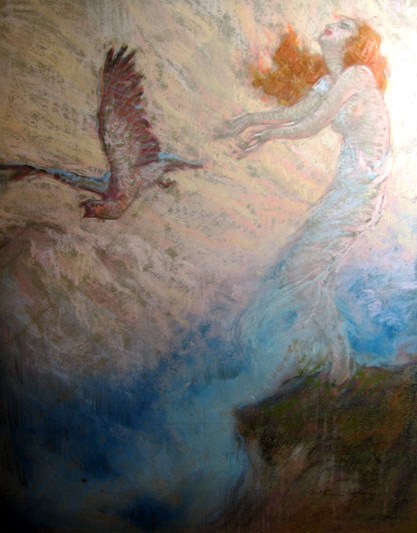
There is no chance of that happening for me. I think that this brooding part of me emerges from the trauma I have experienced over the years. My world has ended many times, or so it seemed. Yet, there has been a positive aspect of my brooding: that I have learned to sit with an issue for a while, dissect what has happened, feel the depth of hurt, and reflect on the depth of the emotional assault I’m experiencing. Blowing off pain just doesn’t work for me. Denial is not my way.

Denial never makes hurt go away. Denial never even diminishes hurt. So be warned. Blowing off pain is a path to internal disaster. As difficult as introspection can be, I am grateful that I am able to deeply feel the feelings I feel, to let the hurt wash over me, and finally to emerge better and stronger. Feeling the depth of my heartaches has served to disempower them and, most importantly, to enable me to harness my inner power to be free.

This, I believe, is the path that takes us beyond despair. This is the path that lets us own our heartbreak and then leave it behind to move into a fresh, new day. I am strengthened by the words of poet Nayyirah Waheed.

feel it.
the thing that you don’t
want to feel.
feel it and be free.

the thing you are most afraid to write, write that.

it is being honest
about
my pain
that
makes me invincible.

i don’t pay attention to the
world ending.
it has ended for me
many times
and began again in the morning.

To sit with your pain, to touch the heart of your hurt . . . that is what makes you free. And that freedom will be for you this miracle . . . when your world ends, and it may end many times, it begins again in the morning.

Thanks be to God.


Beauty of Nature, grief, Hope, life, Mourning, Nature, Stars

Uncommon Commoners


1B1EF9A9-9872-4163-9F93-36F39A9239F8
Terlingua, Texas. Astrophotography of the Milky Way over a field of Chisos bluebonnets.

As I write today, I think of all the ways we are ordinary extraordinary folk. We are complex at times, immersed in thoughts deep and weighty. In the next moment, we may well find ourselves acting like common, ordinary people that avoid deep thoughts at all costs.

We are divergent. We are a kind of paradox, common and uncommon all at once.

I recently saw the stunning photograph featured in today’s blog post. I was intrigued that a photographer was gifted enough to capture the juxtaposition of common flowering bluebonnets and the ethereal brilliance of the Milky Way. It is the kind of breathtaking image that makes me stop in my tracks, suspend time for a moment, and lose myself in the idea of earth and sky.

I studied the common bluebonnets and the uncommon Milky Way above them. And I wondered, “Is there something extraordinary in my ordinary life? Am I just a simple, common person? Or is there something uncommon that lives with the common in me? Inside me, in that place that even I do not fully understand, does common and uncommon grow together, entwined and twisted into one?”

As I pondered these questions that made little sense to me at the time, I read a piece written by my friend, Ken Sehested. I knew instantly that I would borrow one of his intriguing thoughts.

Uncommon commoner.

It worked for me. It defined me, the common part of me and the not-so-common part of me. You see, like most people, there is more to me than anyone can see. All of us can claim that. We are a people that can gaze skyward at the Milky Way while we sit on the ground in a patch of bluebonnets. We are a people of inner strength and resilience, the kind of resilience that makes it possible for us to endure whatever life throws at us and live to tell the story. We are a people with the kind of resilience that makes us uncommon commoners.

I know this because I have seen it time and time again up close and personal. I know this because I have stood at the bedside of a dying woman who was singing hymns of praise to God. I know this because I have kept vigil with a mother who witnessed her son being removed from life support after an accident, and as it was happening, she began to pray through her heavy sobs of grief. I know this because I walked out of the emergency room with her while she shared cherished, happy memories of the son she had just lost.

Uncommon commoners.

Ken Sehested made this so clear with these words.

What makes all of us commoners uncommon is when we experience the pain of trauma up close and personal, find the resilience to endure, take a hammer of righteous rage to that trauma and pound it on the forge of conviction that another world is possible, another way will open if we hold out, hold on, hold up, and hold over . . .

— Ken Sehested

Ah yes. We have seen, and we will see again, the pain of trauma. We will find within ourselves the resilience to endure. We will “hold out, hold on, hold up, hold over” because God has graced us with hope, enduring and abiding hope.

Life will always give us — uncommon commoners that we are — vivid fields of bluebonnets growing in the dirt and a sparkling Milky Way in the sky above. Thanks be to God.

Aging, Change, Christ's Passion, Faith, God's Faithfulness, Hope, Illness, Lent, Life pathways, Loss, Palm Sunday, Perseverance, Retirement

How Do You Live When You Know What’s Coming?

ABD2C8E4-5AA9-49EC-B771-A85BCDFBBD90How do you live when you know what’s coming? Jesus might have asked himself that question when the crowds were shouting “Hosanna!” and making a big deal of the fact that he was riding into town on a donkey. The Gospel of Mark tells the story well.


Many people spread their cloaks on the road, and others spread leafy branches that they had cut in the fields.

Then those who went ahead and those who followed were shouting, “Hosanna! Blessed is the one who comes in the name of the Lord! Blessed is the coming kingdom of our ancestor David! Hosanna in the highest heaven!”

Then he entered Jerusalem and went into the temple; and when he had looked around at everything, as it was already late, he went out to Bethany with the twelve.

— Mark 11:8-11 New International Version

So how do you live when you know what’s coming? Jesus went to the temple as was his custom and then set off to Bethany with his disciples. He knew what was coming, yet he did nothing very earth shattering. He sent his disciples into the city to prepare for for the Passover meal they would share. They ate the meal together, Jesus told then they would all desert him, and each one declared that they would never do such a thing.

They did. But life went on as life does. The Gospel then continues the sorrow-filled story as Jesus goes on with his disciples to a place called Gethsemane.

. . . And Jesus said to his disciples, “Sit here while I pray.”

He took with him Peter and James and John, and began to be distressed and agitated.
And said to them, “I am deeply grieved, even to death; remain here, and keep awake.”

And going a little farther, he threw himself on the ground and prayed that, if it were possible, the hour might pass from him. He said, “Abba, Father, for you all things are possible; remove this cup from me; yet, not what I want, but what you want.”

He came and found them sleeping; and he said to Peter, “Simon, are you asleep? Could you not keep awake one hour? Keep awake and pray that you may not come into the time of trial; the spirit indeed is willing, but the flesh is weak.”

And again he went away and prayed, saying the same words. And once more he came and found them sleeping, for their eyes were very heavy; and they did not know what to say to him.

He came a third time and said to them, “Are you still sleeping and taking your rest? Enough! The hour has come; the Son of Man is betrayed into the hands of sinners.

Get up, let us be going. See, my betrayer is at hand.”

Immediately, while he was still speaking, Judas, one of the twelve, arrived; and with him there was a crowd with swords and clubs, from the chief priests, the scribes, and the elders. Now the betrayer had given them a sign, saying, “The one I will kiss is the man; arrest him and lead him away under guard.”

So when he came, he went up to him at once and said, “Rabbi!” and kissed him.

Then they laid hands on him and arrested him.

— Mark 14:33-46 New Internation Versioned

So now life is earth shattering for Jesus. How do you live when you know what’s coming?

Right now in deep Lent, this is a question we probably should ask. I don’t know about you, but as for me, I know what’s coming, at least some of what’s coming. There’s aging and illness, separation from children and grandchildren, the inevitable loss of loved ones, waning energy and more loss of independence. It happens to persons of a certain age. What’s coming for me includes things that are not so positive.So how do I live when I know what’s coming?

The preacher in me wants to offer a religious platitude that minimizes the troubling reality and lifts up abiding hope. The preacher in me wants to proclaim with a great deal of passion that all will be well. The preacher in me wants to declare that whatever happens to me, God will be glorified.

How do I live when I know what’s coming?

Right smack dab through the middle of it! Living strong in the face of fear. Holding tightly to hope. Summoning my inner courage. Standing steady through the winds of change, depending on the inner resilience that has always sustained me. That’s how I live in the days I have left in this world.

But, by the way, there really is a religious word that upholds and sustains me. The preacher in me is still alive and well, so I can proclaim with great certainty the comforting truth I find in my favorite passage of scripture

You have searched me, O God,
and you know me. You know whenI sit down and when I rise;

You perceive my thoughts from afar. You discern my going out and my lying down; you are familiar with all my ways . .

You hem me in behind and before, you protect me, and you lay your hand upon me.

Such knowledge is too wonderful, too lofty for me to comprehend.

Where can I go from your Spirit?
Where can I flee from your presence?

If I go up to the heavens, you are there;
if I make my bed in the depths, you are there.

If I take the wings of the morning and dwell in the uttermost parts of the sea, even there shall your hand guide me and your right hand will hold me fast.

— Psalm 139:1-10 New International Version (paraphrased)

With that sacred promise and with the strength that has grown in me over many years, I really do know how to live when I know what’s coming. Thanks be to God.

Aging, Change, Dry seasons of life, Ministry, Mission, Music, Retirement

Baffled

6EF9CDE6-293A-4E8A-9E46-F92BDFE6901C
Art by David Hoffrichter Illustrations

At times, I am baffled by retirement and aging. It’s one of those “wonder-what-to-do-with-myself” times that is a part of life. Like so many people, I allowed my work to define me. On the other side of a life of ministry, there is a great deal of grief and loss, and mostly bewilderment. I constantly ask myself the question I should have answered decades ago: “Who am I?”

It is definitely true of me that I no longer know what to do. Oh, I keep myself busy enough with trivial pursuits. I cook. I write. I paint. I garden. I do crafty things. But none of those pursuits are engaging enough to help me redefine myself as a person who has passed her years of full time work and ministry.

Certainly, many people say that once you are a minister you never lose your ordination, your gifts, your calling and your mission. But I wonder what that really means. There is no preaching or worship planning going on in my world these days, no hospital ministry, no funerals and no weddings to officiate. If my mission and calling is for life, what does that mean in terms of day to day living?

I have to admit that, though I am busy doing “stuff,” I no longer know what to do with myself. Fortunately, I recently found a smidgen of comfort in these words written by Wendell Berry.

It may be that when we no longer know what to do
we have come to our real work,

and that when we no longer know which way to go
we have come to our real journey.

The mind that is not baffled is not employed.

The impeded stream is the one that sings.

— ‘The Real Work’ by Wendell Berry, from Collected Poems, 1987.

So when all is said and done, perhaps it’s okay to be baffled. Maybe I can become that “impeded stream” and make a bit of music, filling these baffling days with singing. Just maybe, the writer of Ephesians had some very good advice for a person in my state of baffle-ment.

. . . be filled with the Spirit, speaking to one another with psalms, hymns, and songs from the Spirit. Sing and make music from your heart to the Lord, always giving thanks to God the Father for everything, in the name of our Lord Jesus Christ.

— Ephesians 5:18-20 New International Version (NIV)

Darkness, Faith, Hope, Illness, Light

The Light Behind Me

F4719FE4-AC10-4EF9-903D-023E96825023
Photo by Łukasz Łada

At the risk of being too dramatic, I must say that on some days, my path seems dark. Whether caused by chronic pain, illness, or other challenges, I sometimes walk through patches of darkness — often immense patches of darkness that seem to go on forever. Dark thoughts about an uncertain future can flood my mind.

Much wiser persons than I have made sense about the veil of darkness that often covers our lives. Francis Bacon left us with these words:

In order for the light to shine so brightly, the darkness must be present.

— Francis Bacon (1561-1626)

It is the dramatic contrast between darkness and light that leaves us perplexed. We can feel the promise of light on one day, and on the next, darkness prevails. So often, it is the darkness that wins the day, having its way with us. But then there is this thing we call faith.

Faith, we recall, is something that Jesus tried to explain over and over again to his disciples. They couldn’t quite get it. And like those twelve, we don’t quite get it either, that “faith” is at once simple and complex, available yet impossibly unattainable. At best, faith can be elusive.

But getting back to me on this dark day, here is a brief personal anecdote. I have my dialysis treatments for seven and a half hours every night. My dialysis machine has a screen that lights up in our dark bedroom. I have to read the screen at times during the night, and that troublesome screen shines in my eyes so intensely that I cannot see anything else in front of me.

That mundane daily experience teaches me that the most effective light in a dark place is not the light in my eyes that blinds me, rather it is the light behind me.

The light behind me stirs the depths of my soul, because I know that God’s light truly is behind me as I travel this journey. To know that the Light will guide my way is to again find my faith, in spite of illness, in spite of pain and suffering, in spite of uncertainty.

We uncover the holy mystery and the divine promise in the living words of Scripture.

The people living in darkness
have seen a great light;
on those living in the land of the shadow of death
a light has dawned.

— Matthew 4:16 New International Version (NIV)

I do not know how it all happens, that this Scripture comes to life within me and gives me life. I do not understand a God that can find me in every dark place. I do not comprehend the miracle that shines light behind me in the middle of my darkest days. I do not understand how a light can dawn “in the land of the shadow of death.”

But I do know that my fickle faith transforms at times into something solid and steadfast, comforting and constant.

Light behind me, I think.

Thanks be to God.

Contemplation, Creating, Creativity, Faith, peace, Self Awareness, Self care, Serenity, Silence, Spiritual growth, Transformation

Transformation, Pursuits and Productions

BCE50E1D-C995-4353-A940-14AABC73495E
A Recolor page that brought me fond memories of my beloved Uganda

My mind needs rest and renewal. My soul needs trasformation. My heart needs peace and serenity.

The problem is that not many activities relax me. Being the wretched Type A personality that I am, I turn every pursuit into a production. A dear friend has a saying that she uses when a task morphs into more than it should have been. “That was a production!” she would say, and we all knew what she meant — a project got way out of hand!

Such is my life. Compulsive. Driven. Perfectionist. All words that have often been used to describe me. I have to work on it diligently, this need for serenity and the renewal of my mind. Reading Scripture leads to writing a sermon, an opinion piece, or a blog post. Praying leads to a plethora of things I feel I must do. Swinging in the sunshine leads to working in flower beds that need tending.

My first waking thought is always about what project I will do or what meal I will cook. That decision influences my day. When I have decided what I will do, I’m off. I’m all in to get it done.

My greatest need is to find my way to peacefulness and serenity, to experience a renewal of my mind, to learn to be quiet and still so that in the stillness, I might find God in new ways. And I might even find myself in new ways and learn some things about the depth of my “self” snd the longings of my soul.

It is my soul, of course, that craves the serenity. I work on it often — deep breathing, brief praying at many times during the day, singing hymns (to myself) as I fall asleep at night. All of it helps. None of it makes a permanent difference.

Interestingly, I have found a pursuit that does not lead to a production. It is a computer app called Recolor, which is simply for coloring on devices like the IPad. Each day, Recolor adds two or more pages for coloring with your finger or a stylus. I have found nothing that relaxes me more than getting lost on a coloring page. As of today, I have colored 1,062 pages and have received 66 thousand “likes.”

One might observe that this pursuit is not at all a spiritual practice, not a contemplative activity, and is pretty much a waste of time. The thing is, it really is a spiritual practice for me because I am learning how to waste time. I needed to find a way to immerse myself into a creative activity that did not consume me. I needed an activity that would clear and renew my mind. As the Scripture urges, I need to be transformed by the renewal of my mind.

Do not be conformed to this world but be transformed by the renewal of your mind, that you may prove what is the will of God, what is good and acceptable and perfect.

— Romans 12:2 Revised Standard Version (RSV)

So I will continue coloring to clear my mind and slow me down. And I will keep working on the renewal of my very busy mind. Who knows? Someday I might find myself transformed.


Comfort, God's presence, healing, Heartbreak, Inspiration, life, Mourning, Pain, peace, Restoration, sadness, Serenity, Sorrow

Guard Your Heart

FF412EF2-E311-4F00-9859-65D0582E5935A heart can break so easily. Life is filled with heartbreaking things, and no person is immune to heartbreak. Hurt from one’s children, the loss of a loved one, a marriage rife with anger, abuse by a trusted person, betrayal by a lifelong friend — all of these can leave a heart crushed.

How important it is, though, to find healing for our hearts, to find the healing balm that will ease the pain. We recall the comfort of Scripture that says, “Do not let your hearts be troubled, neither let them be afraid.” We lean on the everlasting arms that always hold us, we rest on the promise that “God heals the brokenhearted and binds up their wounds,” (Psalm 147:3) and we hear again the tender words of the Psalmist.

The Lord is near to the brokenhearted and saves those who are crushed in spirit.

— Psalm 34:18

So we take these promises into our souls, and we give ourselves the time we need to heal our broken hearts. To be sure, the healing depends upon letting enough time pass for restoration to happen. Never do we heal on a swift timetable. The clock must move and the days must pass on our heartbreak. The weeks may well turn into months, even years. Yet we move ahead with confidence in our resiliency and faith in the Great Healer who abides with us for as long as it takes.

The final message is this: Be patient, but persevering, for the healing of your heart must be a life priority. Always guard your heart. Believe in the healing that will surely come. Know that your broken heart will mend as it rests in the hands of the One who heals every broken heart, every time, always.

Why is healing so important? It’s all about “the springs of life.”

Above all else, guard your heart,
For from it flow the springs of life.

— Proverbs 4:23

Contemplation, Discovering, God's presence, Inspiration, life, Life Journeys, Nature, Spiritual growth, Stars

Holy Wondering

7CD31664-E73F-4B6B-B168-4291D78B28DBWandering may well be a spiritual discipline. Many years ago, young Annie Morgan sang about it as she wandered in the hills and hollows of Appalachia. . . “I wonder as I wander out under the sky.”*

Wondering while we wander makes wandering a spiritual act. It is not merely aimless meandering. Nor is it rolling on pointlessly as if there is really nowhere to go. It is not wandering around in circles because we are hopelessly lost. It is more like a contemplative journey of discovery. J.R.R. Tolkien observed a truth about wandering. He said, “Not all those who wander are lost.”

We wander, most certainly, but might there be a purpose in our wandering? Suppose our wandering becomes a joy to us. Suppose we learn and grow as we wander about. Suppose our wandering leads us to a deeper relationship with God. Suppose in our wandering we do some wondering, looking up into the sky for new light and sparkling new thoughts that change our lives forever.

So I wonder . . . How are the stars set in their places? Apart from the certainties of astronomy, of course.

I wonder . . . Why does the sun rise every day, and then set in a wondrously painted sky at dusk making way for the rising of a luminous moon? Apart from the scientific explanation, of course.

Wondering is not about science at all. It is about discovery of beauty in most unlikely places. Perhaps it is about practicing mindfulness atop a majestic mountaintop, or contemplating life on the edge of the sea, or meditating in a forest filled with all manner of living things. It is about the exploration of the heart to know its deepest desires and longings. It is about looking into the soul, and there finding both the intense pain and the tender healing that completes a life.

A well known Christmas carol, “I Wonder as I Wander”* was first sung by young Annie Morgan, a destitute girl in Appalachian North Carolina. At a Christian fundraising meeting, Annie stepped out on the edge of the platform and stood before a crowd of people. Although she wore rags, unwashed and in shreds, she stood proudly. It is said that she smiled as she sang, “smiled rather sadly, and sang only a single line of a song the people had never heard.”

I wonder as I wander out under the sky . . .

I imagine that Annie, a girl living in poverty, wondered about many things as she wandered through the Appalachian mountains. She probably wondered about the stars in the sky, the rising and setting of the sun, the brilliant moon that lit the path before her in the night. I imagine she wondered about God and about the ways God might be present with her. I imagine she wondered about herself and about what would become of her. Like her, we wander through this life, mostly alone.

As this is my very own blog, I can freely change tenses to say with great certainty that, as I have wandered through many years, I have grown by myself, but not alone. For as I wandered, I learned to wonder.

So I highly recommend wandering for the sole purpose of wondering. Our wondering might well reveal the longing in our hearts. Our wondering might lay bare the pain hidden in our souls, but also show us the balm of healing that dwells there. Our wondering might open up a place within us to hold God, all of God, more completely than ever before.

I don’t know about you, but I plan to do even more wandering. And on the journey, I will pour myself into some holy wondering. Who knows what I might discover!


* “I Wonder as I Wander” is a Christian folk hymn, typically performed as a Christmas carol, written by American folklorist and singer John Jacob Niles. The hymn has its origins in a song fragment collected by Niles on July 16, 1933.

While in the town of Murphy in Appalachian North Carolina, Niles attended a fundraising meeting held by group of evangelicals. In his unpublished autobiography, he wrote of hearing the song:

“A girl had stepped out to the edge of the little platform and began to sing. Her clothes were unbelievable dirty and ragged, and she, too, was unwashed. Her ash-blond hair hung down in long skeins…. But, best of all, she was beautiful, and in her untutored way, she could sing. She smiled as she sang, smiled rather sadly, and sang only a single line of a song.”

The girl, named Annie Morgan, repeated the fragment seven times in exchange for a quarter per performance, and Niles left with “three lines of verse, a garbled fragment of melodic material. In various accounts of this story, Niles hears between one and three lines of the song.

Based on this fragment, Niles composed the version of “I Wonder as I Wander” that is known today . . . His composition was completed on October 4, 1933. Niles first performed the song on December 19, 1933, at the John C. Campbell Folk School in Brasstown, North Carolina. It was originally published in Songs of the Hill Folk in 1934.

Change, Comfort, Darkness, Despair, Faith, Friendship, God's Faithfulness, grief, Home, life, Loneliness, Loss, Mourning, sadness, Sorrow

“Are you upset, little friend?”

D25377E5-4CFD-428B-91CC-ADAA40BFA492
Charles M. Schulz

These days, I find myself in the very center of worry and discontent. I feel vulnerable, out of place in a new place I never expected to make my home. The problem is, I think, that I have not really made this place my home, and that reality has left me unsettled. I left forever friends behind when we moved here. I think the reason for my worry, my occasional despondency, even my fear, is that I feel alone. I recalled this week the well-known lyrics of a Carole King song from the seventies.

When you’re down and troubled
And you need a helping hand
And nothing, nothing is going right
Close your eyes and think of me
And soon I will be there
To brighten up even your darkest night.

You just call out my name
And you know wherever I am
I’ll come running to see you again;
Winter, spring, summer or fall
All you have to do is call
And I’ll be there, yeah, yeah, yeah.
You’ve got a friend.

If the sky above you
Should turn dark and full of clouds
And that old north wind should begin to blow;
Keep your head together
And call my name out loud, yeah
Soon I’ll be knocking upon your door . . .

It is a frightening state of being facing worry or illness or aging or loneliness, finding yourself disconsolate at times, and alone, without a loyal friend. But we have a mystical, magical force that leads us through the dark nights of the soul every time, without fail. I’ll name it faith.

A dear friend who just faced some devastating news reminded me of a deep-down, rock-solid truth about faith when she wrote, “My faith is bigger than my fear.” And that’s how we live a life filled with times of worry, aloneness, days of grief, fear, and sometimes mourning that engulfs us hard and long.

No person escapes such times, for they are an inevitable part of life. So we meet hard times face-to-face, up close, and we survive. We are, as the Bible says, “troubled on every hand, yet not distressed; perplexed, but not in despair . . . cast down, but not destroyed,” (2 Corinthians 4:8-9)

To be sure, we are left with scars of the soul and spirit. Yet we live on, knowing that after times of despondency, we are stronger than we were before. There is no deeper consolation than the words of Scripture proclaimed by the Prophet Isaiah.

When you pass through the waters, I will be with you;
And through the rivers, they shall not overflow you.
When you walk through the fire, you shall not be burned,
Nor shall the flame scorch you.

— Isaiah 43:2

I hang on Isaiah’s words, and I have rested on them so many times when sadness overwhelmed me and fear had its way. These Isaiah words are enough, more than enough for my disconsolate times.

But then I happened upon just the right message of consolation for me in this particular time of my life. And I found it in a most unlikely place. It’s a delightful little message of real and true comfort that speaks so sweetly to me, and perhaps to all of us who need a friend and an extra boost of encouragement in a time of worry.

Are you upset little friend? Have you been lying awake worrying? Well, don’t worry . . . I’m here. The flood waters will recede, the famine will end, the sun will shine tomorrow, and I will always be here to take care of you.

― Charles M. Schulz

Amen.

Bondage, Despair, Faith, Fear, Freedom, healing, peace, Restoration

Despair

192EA03D-9DFB-4D4A-BB22-A481D2086FCDDespair has its way at times. It sneaks into my spirit and dwells there for a while, Although despair is thoroughly unwelcome and unwanted, it has a way of making a home in me at times. It has its way. It does its damage. It enslaves me with a devastating kind of bondage. It forces me into an uneasy and oppressive place.

Despair’s most damaging legacy is fear. These days are, for me at least, days of fear. I watch the current president and listen to his words in horror. He speaks with hostility. He gives welcome to divisiveness, racism, misogyny and disrespect. His words are often divisive, rude and insensitive. He uses his power to build an unsettled nation. I despair for the nation, and I despair for a world filled with violence, war, hunger, poverty, and natural disasters born of climate change.

My faith tells me that there is a remedy for despair, that fear can be conquered, and that peace might be restored in me. The poetry of Wendell Berry is a beautiful reminder.

When despair for the world grows in me
and I wake in the night at the least sound
in fear of what my life and my children’s lives may be,

I go and lie down where the wood drake
rests in his beauty on the water, and the great heron feeds.

I come into the peace of wild things
who do not tax their lives with forethought
of grief.

I come into the presence of still water.
And I feel above me the day-blind stars
waiting with their light.

For a time I rest in the grace of the world, and am free.

— From Wendell Berry’s “The Peace of Wild Things“

When despair casts its damaging spell within me, my faith still holds. They are waiting for me, always, the peace that is a balm for grief and despair, the presence of still waters and the stars sparkling in my night sky. This otherworldly beauty causes me to rest in the arms of faith and to recall the many times of despair in my life that served only to make me stronger and more resilient.

Thanks be to God.

Christmas, Courage, Epiphany, Hope, Inspiration, Light, Risk, Stars, Women

Looking into the Sky

C6F419F0-5C81-4A26-B890-76C7BCD762FCFor Christians around the world, the end of the Christmas holiday occurs on Epiphany, the 12th Day of Christmas. It commemorates how a star led the Magi, or the three kings or wise men, to the baby Jesus. Epiphany is about finding Jesus — again — in a fresh new way, looking into the light that has the power to change our lives.

In his homily on Friday before Epiphany, Pope Francis called on the faithful to be like the Magi, who, he said, continued to look at the sky, took risks and set out bearing gifts for Christ.

If we want to find Jesus, we have to overcome our fear of taking risks, our self-satisfaction and our indolent refusal to ask anything more of life. We need to take risks simply to meet a child. Those risks are immensely worth the effort, since in finding that child, in discovering his tenderness and love, we rediscover ourselves.

Looking into the sky and taking risks is a way of life for women. We have found the need to look up, above the hurts of our lives. We have looked into the sky to escape misogyny, discrimination, disrespect and abuse. We have looked into the sky to search the heavens for hope when we have felt only despair.

It has not been for us just a flighty inclination to retreat from unpleasant realities through fantasy. Instead our sky gazing has been a way to pour our souls into the kind of change that makes life worth living. We have dreamed improbable dreams. We have been wise. We have been brave and persistent. We have taken risks and defied whatever was holding us hostage. We have been determined emboldened and empowered.  We have been inspired and ennobled. We have changed our world.

Like the three Wise Men, we journeyed, wise women in search of the child that would more fully empower us. Our desire and longing led us, like a fire burning within, until we found the flaming star in the night sky. And there we found Jesus —  again. So we celebrated. We rejoiced, because Jesus wanted for us a new day, a new life of respect and well-being and inspiration and hope. That is epiphany. Amen.

Creativity, Family, Friendship, Joy, Laughter, Lightheartedness, Music

Lighthearted Living

IMG_6028
Photo by Tim Ernst. Harvest moonrise, Hawksbill Crag, Upper Buffalo Wilderness Area, Ozark National Forest, Arkansas.

I often think of my Aunt Eirene and wish she was still with us. She was the queen of lighthearted living, in good times and in not-so-good times. She had a beautiful, playful spirit. She was always bejeweled when she dressed for any occasion. She was creative, with many talents from drawing house plans to interior decorating to iconography.

She invited me into her iconography world by urging me to go with her to a week-long iconography workshop on Weeks Bay, a beautiful, serene spot near Fairhope, . Weeks Bay is described with the phrase “where rivers meet the sea.” With its stunning marshes and shorelines, it made a perfect backdrop for a week of rest, creativity and spiritual experiences.

As the sun set each day, we lingered near the river and wondered about the delightful reality that this river’s current actually meets the sea’s tide. Then, after a pleasant community dinner, we enjoyed creating sacred icons in an atmosphere of soft music and quiet conversation that always included talk about how our icons were taking shape, the blending of colors, and the strokes of the brush that had to be precise.

IMG_6030“It’s not looking right” was a frequent comment. And always someone would reply that we were doing very well and that we should prayerfully continue. My aunt would constantly call attention to my icon, making sure that everyone within earshot knew that her niece’s iconography was the most beautiful she had ever seen. The workshop was a creative and spiritual week that enriched my life for years to come. For that, I am grateful to my Aunt Eirene, one of my two fun-loving aunts.
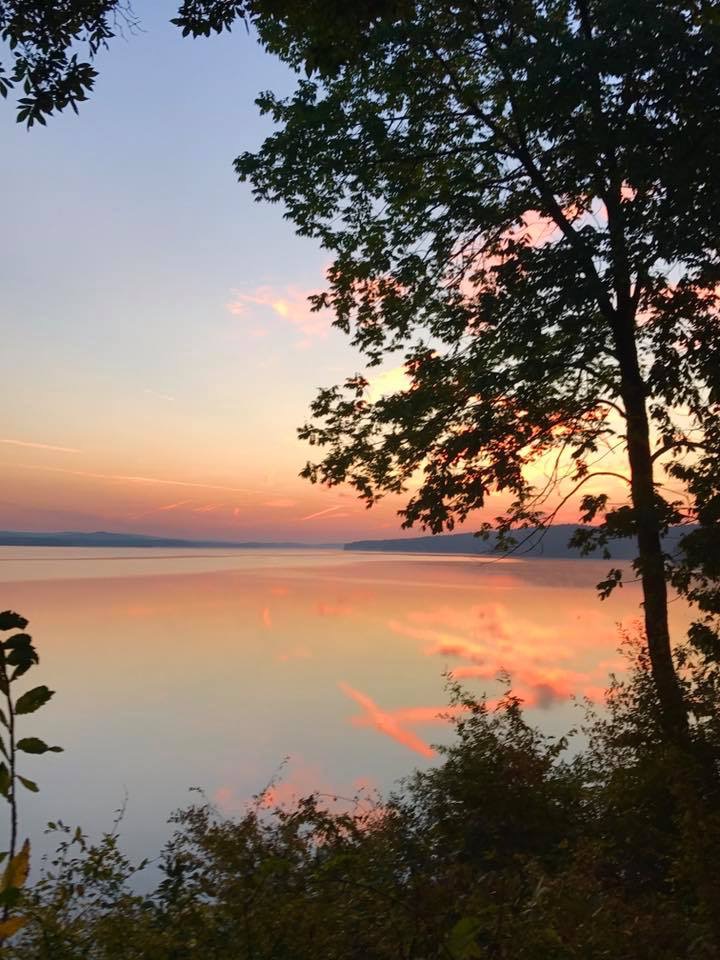
But there is another thing that I remember fondly about Eirene. Music! Thanks to Eirene, I may have been the only toddler in the world that could sing every word of dozens of songs from the early 1900s . . .

Shine on, shine on harvest moon up in the sky;
I ain’t had no lovin’ since January, February, June or July . . .

I’ll spare you the remaining lyrics. But to this day, I sing along to the Pandora tunes of Frank Sinatra, Bing Crosby, and even the songs of the Ziegfield Follies — every word!

I thought of Eirene just the other night when the gorgeous harvest moon appeared in the night sky. I thought of her gifts to me — music, painting, dancing, and most importantly, lighthearted living. By nature, I’m not particularly lighthearted, so it’s important for me to have lighthearted people in my life for balance.

If you look around, you might find fun-loving people who could add a little laughter and levity to your life. I don’t know about you, but I can use more of that lighthearted living.

Thanks, Eirene. Rest in fun.

Darkness, Daybreak, Despair, Faith, God's presence, Hope, Light

Life’s Darkest Place

IMG_5929Sometimes, the heart cries out in anguish, “Comfort me, God, in this my life’s darkest place.” There are times when all of us find ourselves in the midst of darkness. Almost despairing, we hope beyond hope for a new dawn. We speak our prayers, often with groanings too deep for words. We look deeper within, hoping that in the depths of our spirits, we will find an enduring faith. We turn to the comfort of Scripture.

If I had to choose one passage of Scripture that has been for me a source of constant comfort, I would turn to Second Corinthians.

In times of betrayal, I turned to this passage. In times times when I felt persecuted, I turned to this passage. In serious illness, I whispered the words of this passage in the deepest darkness of the night.

We are troubled on every side, yet not distressed; we are perplexed, but not in despair;
Persecuted, but not forsaken; cast down, but not destroyed . . .

For all things are for our good, that the abundant grace might through the thanksgiving of many redound to the glory of God.

For which cause we faint not; but though outwardly we may perish, inwardly we are renewed day by day. For our light affliction, which is but for a moment, works within us a far more exceeding and eternal weight of glory;

So we look not at the things which are seen, but at the things which are not seen: for the things which are seen are temporary; but the things which are not seen are eternal.

– From II Corinthians 4 (paraphrased)

I can only imagine how many survivors of the recent natural disasters have spoken the words of this passage, prayerfully and with hearts disconsolate. I can imagine many of them crying out from what feels like life’s darkest place. The hymn writer expresses so eloquently the presence of hope for all of us who find ourselves languishing, inviting us to bring our sorrows to the mercy seat of God.

Come, ye disconsolate, where’er ye languish,
Come to the mercy seat, fervently kneel.
Here bring your wounded hearts, here tell your anguish;
Earth has no sorrow that heav’n cannot heal.

– Thomas Moore, 1816

May those who are disconsolate this day find consolation in the lavish grace of God. May those who languish find respite in God’s never-ending mercy. May those who are suffering in what feels like life’s darkest place experience the brilliance of a new dawn. Amen.


Creating, healing, Hope, Justice, Light, peace

A Perfect World?

IMG_5924When you realize how perfect everything is, you will tilt your head back and laugh at the sky.

– Buddha

Perfect is not a word I would use to describe the world. Ominous storms, wildfires, demonstrations of hate, violence, terrorism, threats of deportation, leaders devoid of compassion, homelessness, war, refugees seeking safe haven and shelter . . . This is just a partial description of the world we call our own. So perfect is but a dream. And yet, it is perhaps our calling to expend ourselves creating a more perfect world.

Today, my friend Elaine posted this passage on her wonderful blog, “The Edge.”

Learn where there is wisdom, where there is strength, where there is understanding, so that you may at the same time discern where there is length of days, and life, where there is light for the eyes, and peace.

– Baruch 3:14

The wisdom in these words prompted a time of contemplation for me. I pondered the refreshing possibility of finding “length of days, life, light and peace.” Sounds like getting closer to a perfect world.

In these unsettling days, that is the kind of world we long for, the kind of life we desperately want. And yet we find that at times we are crying out for peace, and there simply is no peace.

Baruch’s words present us with a task, a rather difficult task to be sure, but one that leads to the goodness of life we seek. Baruch’s wisdom calls for us to learn, to increase our ability for discernment. And most importantly, Baruch proclaims our critical need to discover where we might find wisdom, strength and understanding.

My world is filled with incessant voices — politicians, governmental leaders, media personalities, newscasts that include everyone who has an opinion on every possible subject. Certainly, I have the choice to turn off the news and listen to soothing music on Pandora. And I do that frequently.

But the state of the world is so volatile that I am compelled daily to be aware of what is going on. In fact, that is a part of my personal mission — to know what is going on and to respond by making my voice heard advocating for justice and compassion. Which is exactly the reason it is so important to “learn where there is wisdom, where there is strength, where there is understanding.”

So may we all create moments when we can silence the incessant voices and instead enter into quiet times of solitude, contemplation and prayer. That is what we can do for a very imperfect world that seems to be falling apart. In the process, we will more clearly hear the voices that lift hope high before us. In that holy space where hope abides with us, we will find “length of days, and life . . . light for the eyes and peace.”

Tikkun Olam is a lovely jewish concept defined by acts of kindness performed to heal the world, to perfect or repair the world. The phrase is found in the Mishnah and is often used when discussing issues of social justice, insuring compassion and care for persons who are oppressed.

Tikkun Olam! Heal the world! This is our highest calling.

Is it even possible to create a perfect world? Maybe not. But shouldn’t we envision it, work for it, pray for it, ennobled by God to return our world into the perfect creation of God?

May God guide us in making it so.


(Visit my friend Elaine’s blog at https://theedgeishere.wordpress.com/2017/09/08/contemplative2017-wisdom-4/)


Change, Covenant, God's Faithfulness, Hope, life, Loss, Mourning

A Holy Thread

Enlight137Years ago, I served The Providence Baptist Church of Little Rock as their pastor. In those days, 1992, I was the only ordained woman who was a Baptist pastor in the state. Because of the strong and vocal disapproval and disdain from Baptists in Arkansas, my ministry at Providence was a lonely nine years.

I had just experienced months of open animosity from the Arkansas Baptist State Convention as I went through a hard, hard ordination process. Threatening phone calls were just the tip of a very ugly iceberg. And I was hurt, almost broken, from the experience. But that story is a blog post in itself that I will save for another day.

I was given a rare gift, though, in the people of Providence — a congregation of deep love and unwavering support. They were a courageous people, each having come to Providence from other Baptist churches to live out their faith. They took a risk to join Providence. Many convictions led them to do so, the role of women in the church, the inclusion of all persons, the re-visioning of the idea of “Baptist,” the desire to create a covenant with like-minded brothers and sisters, the quest to build a “beloved community” in our city.

I will always remember Ethel, one of our deacons and a dear mother-figure for me, who gave me constant encouragement. She would say to me almost weekly, “Tie a knot in the rope and hang on.” One of the times she said that, I was experiencing a particularly difficult time. I responded that what she was calling a rope felt much more like a thread.

I often recall those years with a mixture of joy and pain. In those years, many of us were grieving the loss of the denomination that had long nurtured us. We mourned for the loss of our seminaries, our beloved professors scattered in a deliberate and abusive diaspora. We mourned the loss of our Foreign Mission Board and worried about our missionaries around the world and the people they ministered to in towns and villages, plains and forests.

What I can say is that the pain slowly faded and healing covered us. I can also say with firm certainty that there was always a thread to hold on to, a thread that represented hope. I am inspired by the writing of William Stafford, who must know something about the thread we grip so tightly.

There’s a thread you follow. It goes among
things that change. But it doesn’t change.
People wonder about what you are pursuing.
You have to explain about the thread.
But it is hard for others to see.
While you hold it you can’t get lost.
Tragedies happen; people get hurt
or die; and you suffer and get old.
Nothing you do can stop time’s unfolding.
You don’t ever let go of the thread.

– William Stafford, The Way It Is: New and Selected Poems (Graywolf Press: 1998), 42.

Oh, what a comfort it is to hold on to the thread that never changes, even as everything around us changes constantly. What a comfort it is to find that sacred thread and to hold it tightly through all manner of life tragedy. What a comfort it is to move through change, suffering, loss, the many threatening events of life, and to feel the holy thread in your hands . . . constant, unbreakable, given to us by a compassionate God who always knew that our pathway would be scattered with stumbling stones and ominous boulders.

Thanks be to God for the holy thread. Hold it tightly.

Grace, Hope, Illness, life

Life Is a Gift

IMG_5772

Today I read an inspiring blog post written by my long-time friend, Guy Sayles. He recalls his medical diagnosis of Multiple Myeloma three years ago and describes the experience of “vivid remembering of hard days of treatment.”

Around the same time, I entered a time of serious and unexpected illness which led to a diagnosis of end stage kidney disease. I spent most of 2014 in the hospital, literally fighting for my life on at least three occasions. My husband was terrified. Mercifully, I knew nothing of the urgency of what was happening to me.

Guy Sayles writes of a reality that I completely understand when he says, “The first two years of my having Multiple Myeloma were so challenging that I didn’t expect to be alive now. That I am is sheer and surprising gift to me.” (http://www.fromtheintersection.org/blog/2017/8/8/its-all-gift)

For me, it was not so much that I expected imminent death, but throughout my long period of recovery and rehabilitation, I never expected to be able to care for myself again. That I now am able to live a relatively normal life is most certainly a gift of grace I never expected. Healing and recuperating was much like a resurrection for me. I got my life back.

So my constant question to myself is what will I do with this gift of life? I am inspired by the way Mary Oliver asks this question in her poem, The Summer Day.

Tell me, what is it you plan to do with your one wild and precious life?

I am compelled to answer that question, to use the gift of my life as a gift to others. To care for people with compassion. To do justice where oppression reigns. To make peace in the face of violence. To scatter hope in the places where despair has taken hold.

I hope you will truly hear the way Guy Sayles expresses this.

The awareness which gently and repeatedly washed over me was, “Life is gift and my response may, can, and should be gift-giving.”

And my calling is to lavish gift-giving—to share freely and fully whatever I manage to harvest. There’s no need now for barns and bins, for storing up for another day, or for worrying about markets and prices. “Freely you have received,” Paul said, “freely give.”

These days, I aspire, in every dimension of life, to this the wisdom Annie Dillard offered to writers:

“One of the few things I know about writing is this: spend it all, shoot it, play it, lose it all, right away, every time. Do not hoard what seems good for a later place in the book, or for another book; give it, give it all, give it now . . . something more will arise for later, something better. These things fill from behind, from beneath, like well water . . . The impulse to keep to yourself what you have learned is shameful, it is destructive.  Anything you do not give freely and abundantly becomes lost to you. You open your safe and find ashes.” (The Writing Life, pp. 78-79)

Amen and amen. May God make it so.

Contemplation, Darkness, Faith, Fear, Grace, grief, Loss

In the Dark


IMG_5755

I was asked recently to write about faith and chronic illness. The request prompted me to recall the year I lived in the dark, the year that I was so seriously ill. It made me think about the losses I have experienced since the diagnosis of end stage kidney disease. It reminded me of the freedom I have lost because of the eight hours I spend on dialysis every day.

The truth is that, in 2014, I thought I was going to die. The greater truth is that I did not die. In fact, I slowly grew physically stronger. Spiritually and emotionally, I descended into grief and despair and somehow managed to emerge with fresh hope and deeper faith.

It was a grueling process learning to write again, practicing with the occupational therapist’s endless pages of ABCs over and over until I began to form legible letters. It was hard learning to walk again, regaining the strength and balance I had lost. It was hard being unable to cook, to care for the house, to bathe myself, to browse the web, to do all the simple things I used to do so easily.

To be sure, it was a dark time of frightening uncertainty and doubt. I mourned for the life I once enjoyed. But in time, I discovered an unexpected grace: that spiritual transformation often happens in the dark. The writing of Richard Rohr offers a way to describe this time of my life. This is what he writes.

We seldom go willingly into the belly of the beast. Unless we face a major disaster . . . we usually will not go there on our own accord. Mature spirituality will always teach us to enter willingly, trustingly into the dark periods of life, which is why we speak so much of “faith” or trust.

Transformative power is discovered in the dark—in questions and doubts, seldom in the answers . . . Wise people tell us we must learn to stay with the pain of life, without answers, without conclusions, and some days without meaning. That is the dark path of contemplative prayer. Grace leads us to a state of emptiness, to that momentary sense of meaninglessness in which we ask, “What is it all for?” 

– Richard Rohr

It was indeed “the belly of the beast” for me. And as Richard Rohr writes so eloquently, I needed to learn to “stay with the pain of life, without answers, without conclusions, and some days without meaning.”

Here’s the outcome. Smack dab in the middle of the darkness I experienced, there was God. There was grace. There was transformation. And there was renewed life. Thanks be to God.

Faith, God's presence, healing, Hope

A Perfect Place to Die

IMG_5744
Japan’s Aokigahara Suicide Forest

I watched a very thoughtful and intriguing movie last week — The Sea of Trees. The film was captivating, telling the story of a despondent professor who despaired of life and searched for a way to end his life. His search led him to Aokigahara, a forest in Japan known also as the Sea of Trees or the Suicide Forest.  Aokigahara Forest has been home to over 500 confirmed suicides since the 1950s. It is called “the perfect place to die” and is the world’s second most popular place for suicide.

One might say that suicide is not the most uplifting subject for a blog. But suicide is a very real and present tragedy in the world. Consider these startling statistics reported by The Jason Foundation. (http://prp.jasonfoundation.com/facts/youth-suicide-statistics/)

▪️Suicide is the second leading cause of death for ages 10-24. (2015 CDC)

▪️Suicide is the second leading cause of death for college-age youth and ages 12-18. (2015 CDC)

▪️More teenagers and young adults die from suicide than from cancer, heart disease, AIDS, birth defects, stroke, pneumonia, influenza, and chronic lung disease, combined.

▪️Each day in our nation, there are an average of over 5,240 attempts by young people grades 7-12.

▪️Each year, 30,000 Americans die by suicide. An additional 500,000 Americans attempt suicide annually. (http://www.mentalhealthamerica.net/suicide)

Some people have found help through suicide prevention programs. Others choose to turn to 24-hour suicide helplines available around the clock to provide crisis intervention. (https://suicidepreventionlifeline.org/) Still others find that it is their faith that raises fresh hope within them and lifts their sight above the darkest of days.

There is a special kind of renewed hope when people who have been on the brink of taking their own lives share their stories of faith, the depth of faith that ultimately gave them the inner strength to live. Samuel Trevor Francis (1835-1925) told such a story of faith. He experienced a spiritual turning point as a teenager, contemplating suicide one night on a bridge over the River Thames. An unexpected renewal of his faith saved his life that night. At age 41, Samuel Trevor Francis recalled the faith that saved him and penned the words of the well-known Christian hymn, “O the Deep Deep, Love of Jesus.”

O the deep, deep love of Jesus, vast, unmeasured, boundless, free!
Rolling as a mighty ocean in its fullness over me!
Underneath me, all around me, is the current of Thy love
Leading onward, leading homeward to Thy glorious rest above!

O the deep, deep love of Jesus, spread His praise from shore to shore!
How He loveth, ever loveth, changeth never, nevermore!
How He watches o’er His loved ones, died to call them all His own;
How for them He intercedeth, watcheth o’er them from the throne!

O the deep, deep love of Jesus, love of every love the best!
‘Tis an ocean vast of blessing, ’tis a haven sweet of rest!
O the deep, deep love of Jesus, ’tis a heaven of heavens to me;
And it lifts me up to glory, for it lifts me up to Thee!

But let’s go back to where we began —  the best place to die.

Many years ago, I looked for that place, a way out of many years of relentless, chronic pain. I traveled alone to Mayo Clinic to receive two weeks of specialized medical care and physical therapy.  Perhaps a city very far from my home would be the best place to die. After an upsetting treatment at the clinic, I managed to make it to my hotel room. I took out all the bottles of prescription medication I had with me. The phone rang, and a friend distracted my focus from the tablets I had poured out in front of me. And through our conversation, with tears falling on my freshly-made bed, I learned something very life-giving about the depth of my faith, and most of all, about the depth of God’s abiding, ever-present love.

And so today I can say with strong assurance that the best place to die — or to live — is in middle of the deep, deep love of Jesus, a love that is for me “vast, unmeasured, boundless, free!” A love that restored hope in the midst of my despair. A love that was enough.

Today, as I silently sing “O the Deep, Deep Love of Jesus,” the words of that beautiful hymn ring real and true. God’s love truly was underneath me and all around me, even on that cold and lonely night in Minnesota.

Thanks be to God.