 “Dozens of institutions across the country
received email threats Thursday afternoon,
prompting evacuations and sweeps of buildings.” (CNN)
This troubling news juxtaposed with the words of the music playing as I work.
“Peace on earth, good will to all people . . .”
“The glories of His righteousness and wonders of his love . . .”
“All is calm, all is bright . . .”
It is a contrast for us. The songs of peace, hope and joy sung during this season are in conflict with the acts of violence and hatred we see in the world. And thus we are conflicted. As people of faith, we search for our place in being agents of change. We believe that our faith calls us to scatter love wherever there is hate. But we don’t know how.
We are powerless and paralyzed, and the songs of the season just make it more pronounced. I remember singing the compelling words of Henry Wadsworth Longfellow’s poem that eventually became a carol:
“And in despair, I bowed my head. ‘There is no peace on earth,” I said. ‘For hate is strong and mocks the song of peace on earth goodwill to men.’”
For now, peace on earth is elusive. The email and bomb threats have been sent to places throughout the country: Pennsylvania, Seattle, Chicago, San Francisco, Utah. Threats were also emailed to locations in New York City and Atlanta; the Charlotte News & Observer and the Raleigh News & Observer newspapers in North Carolina; and to three sites in Miami.
Over these terrible signs of hate, we have no control. But we do have control over what we will allow into our hearts. To be sure, we should be informed by the events in the world. We should be persistent in raising our voices in the face of hate, denouncing it, and praying for its end. But we must not choose to dwell completely on the violence all around us. We can give our souls a break from the harsh reality bynfinding ways to meditate on the peace and love of God. Even when hate triumphs, we have full access to the Prince of Peace who will visit us and dwell in our hearts.
Still . . . “Hate is strong and mocks the song of peace on earth . . . “
These words are as true today as on the day they were penned on Christmas Day, 1863. Henry Wadsworth Longfellow wrote the poem, “Christmas Bells” during a time of personal despair and in deep concern over the American Civil War. The poem was set to music in 1872, and Longfellow’s references to the Civil War are prevalent in some of the verses that are not commonly sung. This is the entire text of Longfellow’s poem:
I heard the bells on Christmas Day
Their old, familiar carols play,
and wild and sweet
The words repeat
Of peace on earth, good-will to men!
And thought how, as the day had come,
The belfries of all Christendom
Had rolled along
The unbroken song
Of peace on earth, good-will to men!
Till ringing, singing on its way,
The world revolved from night to day,
A voice, a chime,
A chant sublime
Of peace on earth, good-will to men!
Then from each black, accursed mouth
The cannon thundered in the South,
And with the sound
The carols drowned
Of peace on earth, good-will to men!
It was as if an earthquake rent
The hearth-stones of a continent,
And made forlorn
The households born
Of peace on earth, good-will to men!
And in despair I bowed my head;
“There is no peace on earth,” I said;
“For hate is strong,
And mocks the song
Of peace on earth, good-will to men!”
Then pealed the bells more loud and deep:
“God is not dead, nor doth He sleep;
The Wrong shall fail,
The Right prevail,
With peace on earth, good-will to men.
What the poet concluded is truth: “to God is not dead nor doth He sleep. The wrong shall fail, the right prevail . . .”
May God make it so.
 Such is the tender mercy of our God,


 mind·ful·ness
 Two of my dear family members are carrying a heavy weight in their workplace. I watch them struggle week after week, carrying oppressive burdens. Both love their work and are dedicated to it. Both speak well of their co-workers. Both take on more responsibility than they should. Neither of them see an end to the high level of work they must accomplish. I can sense their need for comfort and healing, for rest and peace.


 A heart can break so easily. Life is filled with heartbreaking things, and no person is immune to heartbreak. Hurt from one’s children, the loss of a loved one, a marriage rife with anger, abuse by a trusted person, betrayal by a lifelong friend — all of these can leave a heart crushed.
 It was almost shameful that President Trump on January 12th signed a proclamation honoring Dr. Martin Luther King, Jr. In all honesty, I cringe at his signing of this proclamation. I cringe because the president honors Dr. King while dishonoring Dr. King’s legacy.
 Despair has its way at times. It sneaks into my spirit and dwells there for a while, Although despair is thoroughly unwelcome and unwanted, it has a way of making a home in me at times. It has its way. It does its damage. It enslaves me with a devastating kind of bondage. It forces me into an uneasy and oppressive place.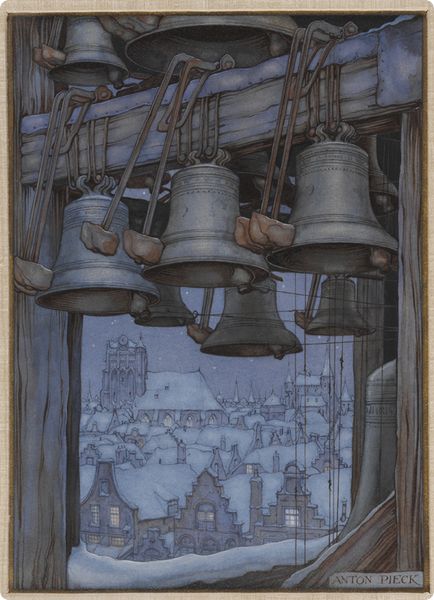
 Loving God, Creator of all,
 The mass shooting in Las Vegas leaves us enraged. And confused. And heartbroken.

 When you realize how perfect everything is, you will tilt your head back and laugh at the sky.
 A twelve year-old girl, Sadako Sasaki, died of radiation induced leukemia ten years after the atomic bomb had fallen near her home in Hiroshima. Her story has inspired millions around the world, and her memory transformed a simple paper crane into an international symbol of peace and hope.
 God of the Sparrow 🌱 By Kathy Manis Findley