We end Advent with Love—that heart emotion that makes its way into our souls and remains there. Love isn’t always easy. Love may well require putting away your self-interest, your tendency to be self-absorbed and your compulsion to hold grudges.
There are much better things to hold than grudges. Like the constant Love you hold for your children and grandchildren. Like the lasting Love of a life partner. Like the deep love you hold for your family. Like the soul-Love you experience when you remember a baby laying in a manger in Bethlehem.
When you remember that baby, with a brilliant star shining over him and angels singing overhead, that is when you know genuine Love. That is the Love of “God With Us.” That is the Love that dwells in us for eternity. That is the Love that helps us Love one another as God has Loved us.
God loves you simply because God has chosen to do so. God loves you when you don’t feel lovely. God loves you when no one else loves you. Others may abandon you, divorce you, and ignore you, but God will love you always. No matter what! — Max Lucado
Don’t let anyone or anything take that Love from you like the grinch stole Christmas! Don’t let your quarrels and your anger steal that Love from you. Don’t let petty misunderstandings crush the Love that is in you, because that Love became flesh and came to live among us and in us.
Glory to God in the highest, and on earth peace, good will toward all people!
I’m a little short on words this year for Advent’s Sunday of Love. Love is fragile, you know. Love can turn on a dime. Or at least love can turn on the turn of a phrase A difficult conversation Or a harsh word.
Then you lose it—love, that is If only for a time But you look around for it And love is gone Replaced with heartbreak Uncertainty Bitterness Broken hearts Angry words.
Can’t get it back, either At least not right away.
Left then with Advent Hope You hope for a kinder moment To make its way into your heart.
Left with Advent Peace You look for other things That might fill your heart With calm With serenity.
Left with Advent Joy You can only mourn its passing.
But Advent Love Well, you just hold your heart tightly so that it doesn’t shatter completely Before Love comes down at Christmas.
The year was 1963. I was 14 years old. So it could not have been that I was unaware of what was going on in my city, but more likely that I was sheltered from it. I’m referring to two events: the day Dr. Martin Luther King, Jr. was arrested and incarcerated in the Birmingham jail; and in that same year — Sunday, September 13 — the 16th Street Baptist Church was bombed, taking the lives of four little girls as they left their Sunday School class to go into the sanctuary.
It was a white supremacist terrorist bombing, just before 11 o’clock, when instead of rising to begin prayers, the congregation was knocked to the ground. As the bomb exploded under the steps of the church, the congregants sought safety under the pews and shielded each other from falling debris.
Five months earlier, on April 12, 1963, Dr. Martin Luther King, Jr. was arrested with SCLC activists Ralph Abernathy, Fred Shuttlesworth, and other marchers, while thousands of African Americans dressed for Good Friday wondered what in the world the future might hold.
As a child, I would proudly sing a song I learned in school, “Birmingham’s My Home. In the days of 1963, I was not so proud that Birmingham, Alabama was my home. Today, I feel deep shame to admit that even at age 14, I had no idea what was happening or why it was happening. To be sure, I was not yet “woke” in any sense of the word.
While incarcerated, Dr. King wrote a letter. Some of his most eloquent, scorching, but hopeful words were penned during his time in the Birmingham Jail. These words he wrote from there are quite striking to me:
“. . . in some not too distant tomorrow
the radiant stars of love and brotherhood will shine over our great nation
with all their scintillating beauty.”
How is it that we have not yet seen the “radiant stars of love and brotherhood” [and sisterhood] “shining over our great nation with all their scintillating beauty?” Why does the struggle for racial justice still play out in the streets of this nation’s cities as the oppressed still cry out against the injustice that continues to hold them in chains?
I will not attempt to answer those unanswerable questions. I will point out the mountains that still stand ominously before us. We cannot move those mountains, it seems, as they loom over us — immense, towering, formidable, oppressive. The rocks, crags and peaks of them looking like peaceful protests by persons crying out for freedom in June, white supremacists violently storming the United States Capitol just 12 days ago, and the terrifying Coronavirus that still threatens after so many months.
How will we see the radiant stars of beloved community, of hope, of peace when we cannot move those mountains? Words cannot move mountains, but words can give us the strength and courage to try. And so I leave you with Dr. King’s words as we honor him on this day:
“Out of the mountain of despair, the stone of hope.”*
I wish for you radiant stars of love, the sunlight of hope that is new every morning, and the glistening wings of peace to guide your way.
*Dr. King delivered this line during his “I Have a Dream” speech in Washington, D.C. on August 28, 1963. It now appears is one of the most prominently featured quotes on the Martin Luther King, Jr. Memorial in Washington.
“All Shall Be Well” is a video blog on spirituality.
Welcome to “ALL SHALL BE WELL,” my video blog designed to help us examine our spiritual center, to create sacred pauses, to join together in contemplation and silence.
For Suzanne who graced me with a delightful story about her Yiayiá
This story really has two titles: “Greek Girls and their Yiayiás” or “How to Love America by Two Greek Women who Emigrated to America.” Either title fits the nostalgic stories told by two granddaughters, me and my life-long friend Suzanne. I hope you find in our tales a touch of wisdom for your life, a reminder of the spirit of love, and a portrait of sacrifice and resilience.
It was a gift of grace to be a young Greek girl and have your Yiayiá (grandmother) close by, although at times being trapped in an endless, one-sided conversation could be annoying. In my teenage years there were “from her lips toGod’s ears” conversations that were aimed directly at me — endless rules for good Greek girls, how to behave in church and wearing the proper church attire, old Greek sayings that sort of made sense to me, very long stories about the “old country” (which was a small Greek island), diatribes about how other families’ allowed their Greek daughters to be “loose,” and best of all, reciting to me stanza after stanza of stunningly poignant Greek poetry.
The problem was that I had to memorize those poems and dutifully stand before our house guests reciting them — forevery visitor, even the ones who didn’t care at all about Greek poems. I think Yiayiá probably made me recite Greek poetry to some visitors who knew no Greek at all and had no idea what I was saying! The poems, though, remain a lovely part of my memories of her. To this very day — with a seventy year old memory — I can recite them word for word, especially my favorite one about the Greek revolutionaries who fought for nine years (1821-1830) against the Ottoman Empire for independence. Every time I recited it, my Yiayiá’s eyes filled with tears. Today, I cannot recite it without tears.
There was always a political side of my Yiayiá, although those around her ignored it. I cherish the fact that I saw parts her that others never saw, and one significant part of her was her keen interest in all things political. She always entered the voting booth with knowledge about candidates and issues that she had learned from devouring The Birmingham News every day. It’s safe to say that my Yiayiá was an “old country” style political junkie.
After she immigrated from Karpathos with a two year old (my mother) and a baby boy, she resolved to make America her home. Adjusting wasn’t easy for her, and many times at night, I would hear her weeping. Hearing her long, intricate stories of her homeland, it seemed obvious that she missed her home. Leaving one’s homeland can be a sacrifice. It was for my Yiayiá.
She was so young when she left her island and boarded a ship for a very long ocean voyage, only to end up in a land that must have seemed so different and unfamiliar to her. Ellis Island processing was grueling, especially for one who did not know a word of English. Just a glance at early portraits of Yiayiá would tell anyone of the grief and loss she experienced during her early days in America. Still, she moved forward in her new life because of her grit and her resilience, and maybe because she was among the early “dreamers” who made their home in the land of Lady Liberty bringing just a suitcase and a dream.
What uncommon resilience and perseverance Yiayiá had! She taught herself to read and speak English. Every morning without fail, she sat at the kitchen table near the radiator to read the newspaper while she drank her coffee. She knew the local and national news, the weather forecast and the latest scoop about every politician. She enjoyed election seasons and, with her own specialized vetting process, she chose the candidates she would vote for.
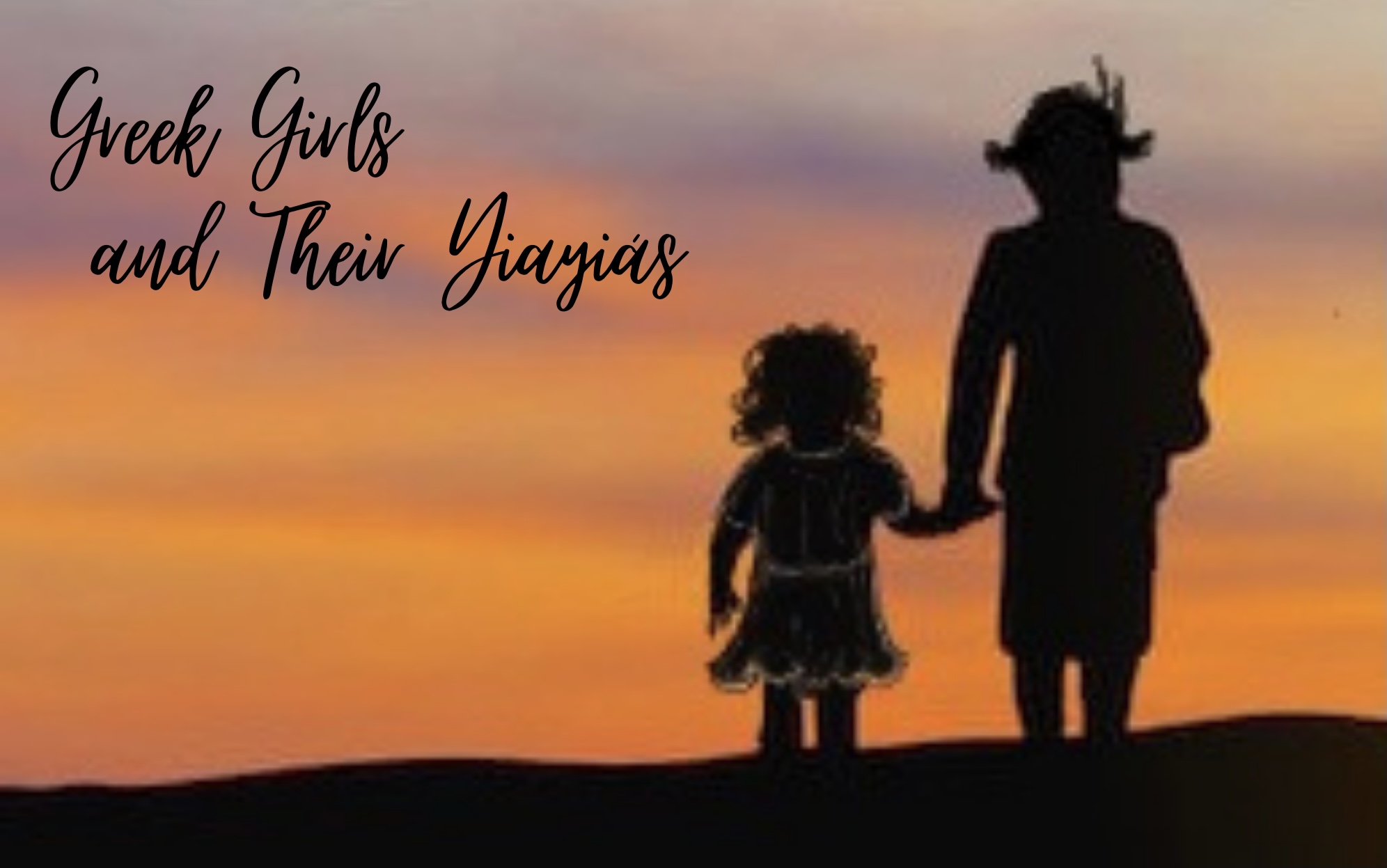
Voting day for her was a big deal. During election seasons, I always have Yiayiá memories that inspire me. So on election day, she would put on her finest dress, make-up, jewelry and always a hat — maybe even a hat with an exotic-looking black veil that I admired and coveted for myself. Then she would dress me in a frilly dress accessorized with my gold cross, white socks trimmed with lace and black patent leather shoes. With a quick brush of my black curls, we were off to the polls, walking down the hill from our house hand in hand.
She always took me into the polling booth with her. When she pulled the red privacy drape around us. I was just tall enough for the bottom of it to brush my face, but my head was inside that private place. When Yiayiá finished voting, she looked down at me and gave me a stern and irrevocable political mandate: “Kalliope, remember you are a Democrat! Never vote for a Republican!” I never have!
I could always see in my Yiayiá a deep love for her adopted country. She was a true and loyal American, to her bones. And she cared deeply about what this country stood for in the world. When I see the way immigrants are treated in these troubled days, I always think of my Yiayiá — what she would think about our America, what forcefully spoken diatribe she might offer to this day’s politicians, how she would grieve over the state of our nation. I had no doubt at all — my Yiayiá loved America!
I was talking this week with my dearest childhood friend, Suzanne. It was common for us to talk about our Yiayiás as we often do when we visit. I told my “excursion to the polls” story and Suzanne told a delightful story about the time when she and her Yiayiá took an extended trip to Greece. One caveat: the story is much more delightful in Greek. Anyway, they stayed in Greece long enough that they began to miss America. When they landed at the airport in Birmingham, Alabama, they walked down the airplane’s stairs onto the concrete. As soon as their feet hit the ground, Yiayiá said in Greek, “My America! I love you so much that I will kiss the ground (in Greek — “soil”).” Suzanne adamantly replied, “No, Yiayiá! You will not kiss the ground!”
I just must add this translation for my Greek friends:
Η Αμερική μου! Σε αγαπώ τόσο πολύ. Θα το φιλήσω το χώμα.

Όχι Γιαγιά, δεν θα φιλήσεις το χώμα.
Suzanne’s sweet Yiayiá dropped to her knees and kissed the ground!
There’s something about that enchanting story that has “love” written all over it. Suzanne’s Yiayiá loved America. My Yiayiá loved America. Probably more than their granddaughters ever did! To honor their memory, Suzanne and I vote, every time there’s an election. In fact, we both have already voted in this important 2020 election.
Suzanne’s beautiful Yiayiá said, “My America! I love you so much that I will kiss the soil!”
May it be so for us, even in these politically troublesome days.
I think often about roots — current family roots, ancestry roots and roots in my life that were created from various communities. I can’t help but recall the very first church we served in Arab, Alabama. My husband, Fred, was the minister of music and I was (unofficially) counselor and guide for our youth group. The young people of that church surged into our hearts and, along with most of their families, became a very close community — a deeper bond than even family. I thought my heart would literally break into tiny pieces, and I grieved the loss of leaving them for years.
I was sure that I would never form that kind of bond with anyone ever again. But I did, time and time again, in new places with new people — Alabama, South Carolina, Texas, Arkansas, Georgia, Kentucky and Uganda, East Africa. Every time, deep roots of friendship would reach deeper — reaching Into the soil, reaching toward each other, tangled and intertwined in love. And every time when we pulled up roots to move on to places God was calling us to go, I grieved in the very depths of my soul. Here’s the picture: digging up a tree and pulling it out of the soil is not easy with roots so twisted and connected. Pulling up a plant or a tree does not destroy its roots, but often injures and damages them. I freely admit that this post is not really about trees and roots. It’s about belonging, forming attachments, community, love. Yet, it’s about more than belonging; it’s about walking away from your belonging, moving away, losing the relationships that mean so much to you, feeling the disconcerting feeling that comes from injuring the roots of your beloved community. A poignant quote by Beryl Markham explains the emotions of pulling up roots.
I have learned that if you must leave a place that you have lived in and loved and where all your yesteryears are buried deep, leave it any way except a slow way. Leave it the fastest way you can. Never turn back and never believe that an hour you remember is a better hour because it is dead. Passed years seem safe ones, vanquished ones, while the future lives in a cloud, formidable from a distance. ― Beryl Markham, West with the Night
“The future lives in a cloud, formidable from a distance.” There it is: our fear of a future that holds new experiences and new people. For sure, moving forward truly is formidable. But when all is said and done, it seems that the best way to live is to cherish the roots we have every single day, every moment. Love them. Nourish them. Rest in them. And in some future time in your life, when you must pull up roots and move away, go ahead and grieve your loss, but also let yourself grow deep, spreading roots in another place.
With faith and hope, throw off the fear and uncertainty of an unknown future and plant yourself in a new garden. For there, you may well flourish again, grow deeply with a new community, form new attachments. You may even stumble over a life serendipity and find yourself in a place where you love all over again.
Today of all days, with the entire world embroiled in a real live pandemic, I will not write out of political bias. Instead, I want to open our eyes to some very troubling present realities. My focus is on the coronavirus pandemic in the United States and how circumstances have transpired, both on a logistical level and a human one. I read a Huffington Post article this morning revealing that last year the U.S. Department of Health and Human Services conducted a months-long exercise that showed that the nation was unprepared for a pandemic. The exercise, code named “Crimson Contagion,” had chilling similarities to the current real-life coronavirus pandemic. That fact got my attention!
This pandemic has taken a toll on so many Americans. Mothers are struggling with children being at home, some having to learn on the fly how to home school them. Families grieve the loss of loved ones who died from the virus. Older adults fear their increased vulnerability and their body’s inability to fight the virus. Immunosuppressed persons like I am are terrified to leave home and are incessantly washing their hands, wearing masks and using hand sanitizer. Many people have lost their jobs while businesses all over the country have shut their doors. Churches have suspended worship services and other gatherings indefinitely. That is merely a tiny snapshot of the human toll the coronavirus is taking.
On top of any list we could make describing loss, inconvenience or isolation, there is widespread, overwhelming fear that has made its way into our very souls. This is a pandemic that has descended upon all of us — real people with real fear.
I’ll get back to the human toll of this virus, but I want to say a bit more about the “Crimson Contagion” exercise, which involved officials from more than a dozen federal agencies. The Huffington Post described the “Crimson Contagion” scenario:
. . . several states and hospitals responding to a scenario in which a pandemic flu that began in China was spread by international tourists and was deemed a pandemic 47 days after the first outbreak. By then, in the scenario, 110 million Americans were expected to become ill.
The simulation that ran from January to August exposed problems that included funding shortfalls, muddled leadership roles, scarce resources, and a hodgepodge of responses from cities and states . . . It also became apparent that the U.S. was incapable of quickly manufacturing adequate equipment and medicines for such an emergency . . .
According to a New York Times report, White House officials said that an executive order following the exercise improved the availability of flu vaccines. The administration also said it moved this year to increase funding for a pandemic program in HHS.
But Trump’s administration eliminated a pandemic unit within the Department of Homeland Security in 2018. And weeks after the first real coronavirus case was diagnosed in the U.S., Trump submitted a 2021 budget proposal calling for a $693.3 million reduction in funding for the Centers for Disease Control and Prevention.
There you have it! In the throes of our real time pandemic, we hear of a “play-like” pandemic — a simulation conducted in 2019 that might have prepared us all, including our nation’s leadership. That didn’t happen, and those of us who have been in the world for so many years know the saying well: “Don’t cry over spilt milk.”
So we wipe up the milk that’s all over the table in front of us, and then we go about making our way through the dark, murky waters of this pandemic. We wash our hands, distance ourselves from others, stay at home, figure out how to handle our children who are now at home, cancel our travel plans, mourn those who have died, pray for those who are ill from the virus, grieve the loss of the life we knew before and pick up the pieces of what’s left.
What’s left? Well, what’s left is our ability to find ways to help our neighbor, to feed the hungry, to comfort the sick, to reach out to the lonely, to love the children and to pray for one another without ceasing. We may have to learn to do those things by phone or online chatting, but we will find a way.
Fr. Lawrence Lew, O.P.; public domain; St. Quirinus of Neuss – for those affected by bubonic plague and smallpox; Edwin the Martyr (St. Edmund) — for victims of pandemics; St. Anthony the Great – Patron of those affected by infectious diseases
Those of us who are religious will pray without ceasing — imploring God to be merciful, asking various saints to intercede for us, lighting candles to express devotion and sitting for a moment in the flickering light that reminds us that God’s promise is about light overcoming the darkness.
The light shines in the darkness,
and the darkness has not overcome it.
(John 1:5)
In the end, perhaps we will have discovered that, through this terrifying and expanding virus, that we have learned how to care more and to love deeper. Perhaps we will find that we have a more heartfelt capacity for compassion. For that, God will pour out grace upon our weariness and renew our eternal hope.
If you pour yourself out for the hungry and satisfy the desire of the afflicted, then shall your light rise in the darkness and your gloom be as the noonday.
(Isaiah 58:10 ESV)
When a deep love leaves . . . deep sadness takes residence.
It happens — being unfriended or needing to unfriend someone. It happens not just on Facebook, even though Facebook participants probably coined the word “unfriended.” Unfriending happens in real life — my life and probably yours. When you really unpack it, “unfriended” is an unsettling word. There is even a rather despicable horror movie entitled “Unfriended.”
I sometimes wish we had never added the word to our vocabularies, yet it perfectly describes what we sometimes need to do. In the Facebook world, I have been unfriended more than once. I have also unfriended some of my Facebook friends. It was never easy, never done without some regret. On the other side, being the one who is unfriended is painful. Even on social media, we learned quickly when and how to divide ourselves from others.
Mourning the loss of someone you care about is a very real life response.
The sad reality is that Facebook unfriending closely imitates life. Sometimes I have needed to remove a person from my life. Maybe you have, too. If we are honest with ourselves about cutting someone out of our lives, we have to own the reality of mourning the loss of that friend or family member. The loss is very real. Harmony Yendys wrote this in her blog, The Mighty.com.
It’s OK to mourn the people you’ve had to cut off. Mourning is hard. It doesn’t matter if the person has passed away, is estranged from you or has chosen not to have contact with you. It. is. hard. Mourning can be more complicated when the person is still alive . . . since you cannot see them, speak to them, write to them, tell them about your day, your happy moments or your big achievements in life.
I would say I’m okay but I’m done lying.
Among the most painful separations are estrangements from living parents. I have experienced estrangement from a parent, a situation in which I found it necessary to remove that parent from my life completely because of abuse. The hard choice of removing my parent from my life was mine to make, but was most surely a hard choice with long-lasting effects on my emotional health. Those who must make such a choice suddenly feel orphaned and alone in the world. Over many years, I have known many people who have lost mothers and fathers with whom they’ve shared loving relationships — not through death but through purposeful estrangement. I know that the deep void this loss creates for them is devastating. The pressing question is, “Why don’t we talk about what it is like to feel orphaned by parents who are very much alive and well, but whom we have lost due to estrangement?”
The reason, I have found, is a sense of guilt about having removed a person from my life, becoming an orphan by my own choice. Of course, there are situations in which parents make the choice to become estranged from their children. Either situation leaves an orphan in its wake.
You are dead to me.
The truth is that there are few, if any, support groups for “orphans” like me. There are few instruction manuals or self-help books. We are the orphans who grieve in silence, feeling every bit as empty and abandoned as those who have lost their parents through death. Yet we have no outlet through which to mourn in a safe, nonjudgmental environment. I hide my grief from others, fearing their judgment and their hurtful comments about how “blood is thicker than water” and how I should “forgive and forget.” And the best advice of all, the one that hurts the most and goes to the very core of the soul is this: “God is not pleased with your failure to love your parents or your refusal to ask forgiveness for it.”
When a parent dies, you receive the usual appropriate condolences. But when your soul has a deep need to remove a living parent from your life, you get nothing. Like so many people I have known, I sit with the guilt and shame, with the silence of my grief. So for now I continue to grieve, hiding behind my shame of feeling like there must have been something wrong with me . . . And hiding my grief from others for fear of judgment and comments about how blood is thicker than water and how I should just forgive and forget . . . I wish more people understood what this was like and would extend the kind of compassion and sympathy they do toward those who lose a loved one by death. I sit with the silence of my grief, empty-handed. No flowers, no cards, no phone calls, nothing. Just an orphan.
Empty-handed, except for the loss I hold in my hands
As for me, well, I am not completely empty-handed. I hold in my hands — if not in my heart — so many memories, sweet, bittersweet, and even horrific. Fortunately, I have grown old and grown up. Through the years, I have learned how to hold in my heart some of my few good memories. I remember my father praising me when for my accomplishments. I remember him being very proud of me. I remember learning to cook at his feet, and I remember those joyful midnight trips from Tuscaloosa to Birmingham, singing all the way as was his custom. Yet I allowed those happy memories to be replaced by separation, tears, pain, repressed feelings and often anger. It was even more difficult to allow myself the good memories when my father was living. Harmony Yendys explains the feelings of most of us who feel this kind of grief:
Knowing they are still out there somewhere in this big ole world makes it sometimes hard to bear. We don’t know how they are doing, how life has changed for them, we don’t get to celebrate things with them anymore . . . All of these feelings are completely normal. Beating yourself up for cutting a person out of your life for your better interest is not healthy and shouldn’t be a reason to let that person back into your life. I bought in to all the common philosophies like “love is stronger than hate,” respect your parents,” or “be the better person.” The problem with such philosophies is that they are one-sided. They leave no space for the truth. Sometimes we just have bad parents, friends, relatives or relationships. That doesn’t mean we cannot still love them! It just means we choose to love them from a distance. — Harmony Yendys
I hope the information I’ve shared today will lead to honest and meaningful conversations with trusted persons in your life. Such conversations can lead to healing from the past losses or the present ones. This post has taken us all the way from “unfriending” or being “unfriended” on Facebook to losing friends, parents, children, siblings, spouses and any persons we have lost from our lives. Do not be deceived, separation can be painful, even when separation is necessary for our well-being. People who cause a toxic environment for us must sometimes be removed from our lives. It’s never easy, either to “unfriend” a person or to be “unfriended” by them. It sometimes makes us face the pain of being alone in the world, or at least feeling alone. It whispers to us that our soul is at risk.
When your soul is at risk . . .
Know that when your soul is at risk, when your relationship with another person is toxic, chaotic and harmful — either overtly or insidiously — you may need to consider moving apart to a peaceful, more tranquil place. It is most important that you become a self-advocate and diligently seek resilience and serenity. Only enter into relationships that give you comfort and calm your spirit. Still, you live with the loss. The remedy for feeling the loss, feeling orphaned or feeling alone?
That is, of course, a very personal question with many possible answers. At the risk of seeming to offer a too simple or an unhelpful answer, I will share with you what has helped me in the times I have felt most alone — a passage of Scripture from The Voice translation of the Bible, selected verses from Psalm 139:1-16.
O Eternal One, You have explored my heart and know exactly who I am;
You even know the small details like when I take a seat and when I stand up again. Even when I am far away, You know what I’m thinking.
You observe my wanderings and my sleeping, my waking and my dreaming,
and You know everything I do in more detail than even I know.
You know what I’m going to say long before I say it.
It is true, Eternal One, that You know everything and everyone.
You have surrounded me on every side, behind me and before me,
and You have placed Your hand gently on my shoulder.
It is the most amazing feeling to know how deeply You know me, inside and out;
the realization of it is so great that I cannot comprehend it.
Can I go anywhere apart from Your Spirit?
Is there anywhere I can go to escape Your watchful presence?
If I go up into heaven, You are there.
If I make my bed in the realm of the dead, You are there.
If I rise on the wings of the morning,
if I make my home in the most isolated part of the ocean,
Even then You will be there to guide me;
Your right hand will embrace me, for You are always there . . .
For You shaped me, inside and out.
You knitted me together in my mother’s womb long before I took my first breath.
I will offer You my grateful heart, for I am Your unique creation, filled with wonder and awe. You have approached even the smallest details with excellence;
Your works are wonderful; I carry this knowledge deep within my soul.
You see all things; nothing about me was hidden from You
As I took shape in secret,
carefully crafted in the heart of the earth before I was born from its womb.
You see all things;
You saw me growing, changing in my mother’s womb;
Every detail of my life was already written in Your book;
You established the length of my life before I ever tasted the sweetness of it.
For those hurtful times of “unfriending”
I pray today for each of you who have experienced, or are currently experiencing, the grief of separation and alienation from someone with whom you once shared love. I pray that you would enjoy relationships with persons faithful, true and kind. I pray for you a shared love that is pure — both given and received. I pray for you a persevering, faithful and gentle love that helps sustain and fulfill you. I pray, for you and for me, that we might have relationships with persons who help us become our best selves. I pray for genuine and life-giving friendships that grace us with full acceptance and understanding.
Someone I loved once gave me a box full of darkness.
It took me years to understand that this too, was a gift.
― Mary Oliver
For some reason yet unknown to me, I am remembering those words today. At the same time, I have vivid memories of persons I loved — many of them through the years — who gifted me with “a box full of darkness.” Each time, it felt like anything but a gift. I accepted the boxes because I believed I had no choice. I reached out to take the boxes from people I loved and immediately discovered that it was the darkness I held in my hands. Unfortunately, the darkness in my hands was potent enough to engulf me, and for a good amount of time, the darkness was my constant companion. All around me. Above and below me. Darkness so deep that I could not begin to see the path ahead.
What would I do with these ominous gifts? How would I escape the deep effect they had on my soul? How will I cast off the heartbreak? In time, I was able to think beyond my initial acceptance of these boxes moving to the reality that they were given to me by persons I loved. These were loved ones who might ordinarily have given me gifts, but these gifts — these boxes — were filled with darkness! Why? What did these gifts mean?
I held on to the pain of those “gifts” for years, feeling anger on some days, or betrayal, or loss, or rejection. The experiences changed my life in many ways, and changed the very course of my life. Being a person who so values friendship and loyalty, I was left despondent and a bit lost. Okay, a lot lost!
Yet, the passing years actually did bring healing relief. I could not avoid the darkness that my loved ones gave me. I could not get around it, slip under it, or leap over it. It was just there with me, in my life, and feeling like it would be permanent. The boxes were to me a heart rending breach of covenant. And yes, I did experience despair in the darkness, and loneliness and lostness, and bitterness wondering how these gift boxes had such immense power over me.
When the darkness finally lifted, it brought me a brand new love of life. It gave me new courage and new excitement. It gave me an awakening! I experienced a holy transformation. I knew then that I could get on with my life, joyously, and moving forward following my dreams. So Mary Oliver knew something that I had to learn the hard way, over many years. Here’s what she wrote: “It took me years to understand that this too, was a gift.”
And then there is this wise and wonderful postscript that Annie Dillard wrote about her writing. It applies to every vocation or avocation that we love, and it’s really about living life — all out!
One of the few things I know about writing is this: spend it all, shoot it, play it, lose it all, right away, every time. Do not hoard what seems good for a later place in the book, or for another book; give it, give it all, give it now . . . something more will arise for later, something better. These things fill from behind, from beneath, like well water . . . The impulse to keep to yourself what you have learned is shameful, it is destructive. Anything you do not give freely and abundantly becomes lost to you. You open your safe and find ashes. (Annie Dillard from her book, The Writing Life)
Finally, James 1:2-4, a Scripture passage very familiar to us says it another way:
My brothers and sisters, whenever you face trials of any kind, consider it nothing but joy, because you know that the testing of your faith produces endurance; and let endurance have its full effect, so that you may be mature and complete, lacking in nothing.
So real and true it was when the people I loved betrayed me with a terrible “box full of darkness.” I had faith in each of them. I trusted them and held their love in my heart. My box full of darkness was indeed a trial and a testing of my faith. But the promise of The Epistle of James is there, in my face. It may just be a Holy Letter addressed directly to me. My challenge was to “consider it nothing but joy,” and to know that the testing of my faith most assuredly created endurance. Thanks be to God.
Of all sounds of all bells, the most solemn and touching
is the peal which rings out the Old Year.
— Charles Lamb
We do get rather nostalgic at the end of a year, on the cusp of a new year. Perhaps we have regrets from the passing year. Perhaps the old year brought losses and grief. Perhaps we have fear at the thought of what the year ahead might bring. Nostalgia just seems to go along with year end and year beginning. I have been known to get teary-eyed during the singing of “Auld Lang Syne” in spite of the fact that I had no idea what “Auld Lang Syne” even meant.
Robert Burns wrote “Auld Lang Syne” in 1788. The poem soon became a song that was traditionally used to bid farewell to the old year at the stroke of midnight on New Year’s Eve. It was a ritual song that gave people a ceremonial way to express the discomfort of ending/beginning as well as to speak of the value of old friendships that should not be forgotten.
Another poem written by Robert W. Service (1874-1957) was entitled “The Passing of the Year.” Its seven poignant stanzas come across as a lament of the passing year, and yet the poet also expresses a juxtaposition between a somber response and an expression of fond farewell. Here are some excerpts:
My glass is filled, my pipe is lit,
My den is all a cosy glow;
And snug before the fire I sit,
And wait to feel the old year go.
I dedicate to solemn thought
Amid my too-unthinking days,
This sober moment, sadly fraught
With much of blame, with little praise . . .
And You, deep shrinking in the gloom,
What find you in that filmy gaze?
What menace of a tragic doom?
What dark, condemning yesterdays?
What urge to crime, what evil done?
What cold, confronting shape of fear?
O haggard, haunted, hidden One
What see you in the dying year?
And so from face to face I flit,
The countless eyes that stare and stare;
Some are with approbation lit,
And some are shadowed with despair.
Some show a smile and some a frown;
Some joy and hope, some pain and woe:
Enough! Oh, ring the curtain down!
Old weary year! it’s time to go.
My pipe is out, my glass is dry;
My fire is almost ashes too;
But once again, before you go,
And I prepare to meet the New:
Old Year! a parting word that’s true,
For we’ve been comrades, you and I —
I thank God for each day of you;
There! bless you now! Old Year, good-bye!
As for New Year’s Resolutions, the same poet wrote an expressions of regret in the year past and the resolve inherent in a phrase we know so well: “Just do it.”
RESOLUTIONS
Each New Year’s Eve I used to brood On my misdoings of the past, And vowed: “This year I’ll be so good – Well, haply better than the last.” My record of reforms I read To Mum who listened sweetly to it: “Why plan all this, my son?” she said; “Just do it.”
Of her wise words I’ve often thought – Aye, sometimes with a pang of pain, When resolutions come to naught, And high resolves are sadly vain; The human heart from failure bleeds; Hopes may be wrecked so that we rue them . . . Don’t let us dream of lovely deeds – Just do them.
Now that I have shared more poetry than you ever wanted to read, let me conclude with this thought: As a new year approaches, we greet it with all the regrets and losses and emotions of the old year still pressing on our spirits. That affects our attitude about the unknown year ahead, and when we look at the path that leads us into 2020, all we see is darkness. It is for us a journey into the unknown with no instructions for moving forward. We are sometimes not sure we even want to move into the new year.
That may be the very reason for the ball drop in New York, the champagne toasts with all the hugging and kissing, the elaborate party decorations including metallic pointy hats and horns blowing in the night. Maybe we celebrate so hard because we are so hurt, so filled with regret, so shamed, so afraid of the future. We stand at the gate of the new year holding all that we brought from the old one. Sometimes the burden we are carrying is a heavy, heavy burden to carry, but we simply don’t believe we can throw it off and start on the new year’s unknown path, unburdened and free.
Yes, we do leave all our memories behind in the year that has passed, and in the new year, we hope to realize fresh, new dreams. A wise person says that around us, we have those who love us and within us, we have all we need. But the most eloquent advice I know that addresses our old year/new year dilemma comes from yet another poet, Minnie L. Haskins:
And I said to the man who stood at the gate of the year:
Give me a light that I may tread safely into the unknown.
And he replied: “Go out into the darkness and put your hand into the hand of God.
That shall be to you better than light, and safer than a known way.”
The Fourth Sunday of Advent The Advent Sunday of Love Transplant Day Forty-One December 22, 2019
TO LISTEN, TO LOOK
Is it all sewn up — my life? Is it at this point so predictable, so orderly, so neat, so arranged, so right, that I don’t have time or space for listening for the rustle of angels’ wings or running to stables to see a baby? Could this be what he meant when he said Listen, those who have ears to hear . . . Look, those who have eyes to see? Oh God, give me the humbleness of those shepherds who saw in the cold December darkness the Coming of Light, the Advent of Love!
— Ann Weems
I ask myself those Ann Weems questions often:
Is it all sewn up — my life? Is it so predictable, so orderly, so neat, so arranged, so right,
that I don’t have time or space for listening for the rustle of angels’ wings or running to stables to see a baby?
These are among the most important questions I might sit with for a while, pondering my answers. On this Advent Sunday when we light the Candle of Love, I suddenly realize that Advent is ending, bringing Christmas so abruptly, or so it seems. Am I ready, I wonder? Am I ready for the birth of the Child, “Love’s Pure Light?”
Have I prepared a place in my heart for the “pure unbounded love” we sing about in the beloved hymn, “Love Divine, All Loves Excelling?” Was my life so preoccupied that I missed the gentle darkness of the Season of Advent and am now feeling pushed — shoved —into Christmas?
Love in a manger is too holy a gift to take for granted. Love in a manger offers us a gift that we must be prepared to receive, and Advent is our season of preparation. As the season ends, I cannot help but ask myself if I spent these days preparing myself, heart and soul. Did I pray enough? Did I spend enough contemplative time? Did I love my neighbor and care for the persons around me who had so many life needs? Did I create sacred, meditative moments in anticipation, preparing for Emmanuel to come into my life anew?
I’m afraid I must answer, “no.” Yes, I did reflect on Advent now and then as I wrote for my blog, but I definitely did not spend enough time in meditation, preparing myself to receive the Christ Child. I was completely preoccupied with creating my life’s new normal after my kidney transplant. New routines and schedules overwhelmed my mind. I spent virtually all my time adjusting to this new normal. Self-absorbed does not adequately describe me during this Advent.
I haven’t felt much holiness hovering around me. I didn’t have time or space “for listening for the rustle of angels’ wings.” Yet, the transplant itself was a season somewhat like Advent . . . filled with expectation, preparation, anticipation. With Bethlehem’s star shining through the darkest night, and hope — always hope.
And so it was for people waiting for kidneys to renew their lives. Advent offered us a look at journey, a journey that ended in celebration. Celebration came full circle yesterday when I learned that my transplant was a part of a chain of living donors and kidney recipients. The chain included 16 people — donors and recipients — which means eight people got new kidneys. Perhaps that felt to me something like “the rustle of angels’ wings.”
And then it dawned on me that the Christ Child was not born into a world where everything always worked perfectly, where everything was orderly and neat and planned out. The Christ Child was not born into a world where everything was sacred. He was not born into a perfect family, and the people around his manger were not always holy.
Maybe that’s part of what Advent gives us:
the grace to be genuinely who we are — on our holy days and on days we feel not-so-holy. Maybe Advent beckons us to ready ourselves and to prepare our hearts with humbleness so that we can see “in the cold December darkness . . .
In each heart lies a Bethlehem,
an inn where we must ultimately answer
whether there is room or not.
When we are Bethlehem-bound
we experience our own advent in his.
When we are Bethlehem-bound
we can no longer look the other way
conveniently not seeing stars
not hearing angel voices.
We can no longer excuse ourselves by busily
tending our sheep or our kingdoms.
This Advent let’s go to Bethlehem
and see this thing the the Lord has made known to us.
In the midst of shopping sprees
let’s ponder in our hearts the Gift of Gifts.
Through the tinsel
let’s look for the gold of the Christmas Star.
In the excitement and confusion, in the merry chaos,
let’s listen for the brush of angels’ wings.
This Advent, let’s go to Bethlehem
and find our kneeling places.
— Ann Weems
The words of Ann Weems this morning seem to call us to Bethlehem. Perhaps the call intends for us to remember more clearly the birth of the Christ Child, the incarnation of God. Perhaps this call wants us to focus more fully on what this Child’s birth really means for us. Perhaps the call wants us to find our kneeling places, those places that enable us to open ourselves to God’s presence in us, God’s call to us.
When, in your own kneeling place, have you responded to a call from God? Was it a call that would change your life? Was it a call that you could only answer by saying, “Here am I. Send me.”
Among all the meanings of Advent is a call to watch, to wait, to worship, to be full of expectation, to rejoice in the birth of the Christ Child and to offer our lives to God. Advent is a call to find our kneeling places.
So I am thinking today about the many ways God has called me through the years. Some of those calls became divine appointments for me. Some were hard calls, risky and frightening. Some were calls that I answered with an immediate “Yes!” There were calls that summoned me to find my kneeling places. One specific call is the one that emerged from my most impassioned, fervent kneeling place. It was the call that asked, “Whom shall I send? And who will go for us?”
To respond “yes” to that call required extended time spent at my kneeling place. To respond “yes” to that call would alter the course of my life. Looking back, I can see that saying “yes” to that call call brought me life’s deepest sorrows and matchless joys. That call from God was to be transformative for me, transcending whatever I had imagined. I vividly remember that call, and from my kneeling place, I answered, “Here I am, Lord.”
“Here I am,Lord!” Those words from my heart would bring a plethora of emotions in the months that followed — through times of testing, disparagement, condemnation, criticism, disappointment, struggle, and eventually, peace. Thinking back to my ordination service brings a host of special memories: my friends and family gathered for the holy service; the church family that laid hands of blessing on me; my husband and my best friend singing words I remember to this day.
Here I am, Lord.
Is it I Lord?
I have heard You calling in the night.
I will go Lord if You lead me.
I will hold Your people in my heart.
I, the Lord of sea and sky,
I have heard my people cry,
All who dwell in dark and sin
My hand will save.
I have made the stars of night.
I will make their darkness bright.
Who will bear my light to them?
Whom shall I send?
I, the lord of wind and flame,
I will tend the poor and lame,
I will set a feast for them,
My hand will save.
Finest bread I will provide
Till their hearts be satisfied.
I will give my life to them,
Whom shall I send?
— Songwriters: Anna Laura Page / Daniel L. Schutte; Based on Isaiah 6:8 and 1 Samuel 3
If you like, take a few minutes to view the video of this song, reflecting on the words and their meaning for you.
And so it was, from my kneeling place, I answered God’s call: “Here I am, Lord!”
The season of Advent calls us in a voice just as compelling to find our kneeling places . . .
to focus on Advent’s promises of hope, peace, joy and love,
to wait in anticipation for the birth of our Savior,
to lift our eyes and sing with the angels, “Hallelujah!”
At the moment, I am literally stitched together after a kidney transplant. I know everyone likes to tell how many stitches they have, but I can’t give you that detail because I can’t see my incision well enough to count them. It’s just as well. Those stitches don’t matter all that much. They certainly don’t matter as much as being stitched together by song lyrics, book quotes, adventures . . . and moonlight. What matters most is that I am pieces of all the places I have been and all the people I have loved.
For my Sabbath yesterday, I played hymns on Pandora. As I listened for hours, I heard music that reminded me of places I have been over the years, from the single traffic light in Reform, Alabama to the rugged beauty of the Mountains of the Moon in Uganda, East Africa. And I heard hymn texts that reminded me of people I have loved, from beloved seminary professors to people I served as pastor. I sang along much of the time, singing hymn texts that ranged from “Come, Thou Long Expected Jesus” to “I’ll Fly Away,” and everything in between.
The hymns portrayed the story of my faith with Gospel songs that marked my conversion and my early years to the Great Hymns of the Church that expressed my faith in my later years. I could see myself singing in many different choirs, as a pastor leading congregational singing, as a worship leader at national gatherings, as a missionary in a mud hut and even as a teenager sitting on the back row of the church, inappropriately close to my boyfriend.
Each hymn I heard yesterday reminded me of those times and told the story of my faith journey. Indeed, I envisioned myself as one who truly is pieces of the places I’ve been and the people I have loved along the way. For at least a few hours, I was able to lay aside my physical pain, forget about my surgical stitches and give thanks that I am stitched together by hymns and people and adventures and hope on my journey of faith.
Being a part of a community of faith is one of God’s gifts to us, stitched together with sacred threads that remind us continually who we are. Being stitched together as a faith community is beautifully described in this passage from the book of Acts.
They devoted themselves to the apostles’ teaching and to fellowship, to the breaking of bread and to prayer. Everyone was filled with awe at the many wonders and signs performed by the apostles. All the believers were together and had everything in common. They sold property and possessions to give to anyone who had need. Every day they continued to meet together in the temple courts. They broke bread in their homes and ate together with glad and sincere hearts, praising God and enjoying the favor of all the people.
— Acts 2:42-47
Interesting — and one of God’s very special gifts — that when we are stitched together, we discover that we are whole.
Arkansas’ White River. Photo by Darla Young. “The fog was rising from the White River at Bull Shoals. I decided to walk a nearby trail. The sun was showing it’s appearance thru the foggy forest of lightly autumn painted leaves. I looked to the left and this was my sight.. I’ll just leave it at that..It was beautiful!!” — Darla Young
When the fog descends in a forest, the path ahead looks very unknown. Even if you know the forest path well, suddenly it’s unknowable. The stunning photo by Darla Young reminds me of a phrase I heard last week: “a deep unknowing.” I’m not sure what a derp unknowing is yet, but it seems to me to describe an inner state of being that actually frees you from indecision. With a deep unknowing, you move from your inner core into the “right” places. But let’s get away from deep unknowing for a minute.
A good friend gave me a wonderful birthday gift — a journal with a lovely decorative cover that says, “She believed she was loved, so it made her brave.” Knowing that you’re loved may well be the most important thing you’ll ever know. The kind of love we need knows no boundaries and loves us exactly as we are, unconditionally. That kind of love is not easy to find. There are no guarantees that we will enjoy the emotional benefits of unconditional love. But we can be watchful for it, patiently seeking it and knowing how and when to reject love that is not genuine.
An important way of living into love is to be contemplative enough to know who we are, to embrace our true self. No masks. No disguises. No attempts to please another person and, as a result, realize that we’re not being true to ourselves. Richard Rohr recently wrote about what he calls, “the True Self in God.”
You are not your gender, your nationality, your ethnicity, your skin color, or your social class. These are not qualities of the True Self in God. Why, oh why, do Christians allow temporary costumes, or what Thomas Merton called the “false self,” to pass for the substantial self, which is always “hidden with Christ in God”
So when we embrace our true selves that are “hidden with Christ in God” we find that we live and breathe in a different way. We find ourselves suddenly loving ourselves, and loving others as we love ourselves. What a novel idea! It’s a timeless idea that is as ancient as the Christ who taught us about love long ago. It is a state of being that places us squarely in God’s law of love. In some ways, we are transformed as something deep inside gives itself over to pure love, for self and others. Cynthia Bourgeault explains the law of love that compels us through “a deep unknowing.” This is how she says it:
As a Christian, when confronted by a tension between a religious certainty which leads me to violate the law of love and a deep unknowing that still moves in the direction of “loving my neighbor as myself,” I am bound to choose the latter course. — Cynthia Bourgeault
I am pondering the idea of “a deep unknowing that still moves in the direction of ‘loving my neighbor as myself.’” I think it must require engaging in frequent contemplation and spiritual discipline to discover within myself a deep unknowing that prompts me to follow Christ’s example . . . as opposed to a decision of my will that eventually wins out to achieve the same result.
Perhaps the spiritual discipline I undertake can identify all of the indecision, confusion, stubbornness, refusal of love toward others, and cover it with that deep unknowing that still leads me in the direction of eventually knowing my true self within the perfect will of God.
May God make it so.
On another note, please pray for me as I look toward my kidney transplant on November 15th. I am grateful that you are walking with me on this journey that often felt so frightening. Your thoughts and prayers mean so much. If you would like to read the story of my illness, please visit the Georgia Transplant Foundation’s website at this link:
A “Go Fund Me” page is set up for contribution to help with the enormous costs related to the transplant, including medications, housing costs for the month we have to stay near the transplant center, and other unforeseeable costs for my care following the transplant. If you can, please be a part of my transplant journey by making a contribution at this link:
“Surrounded by Love” — A watercolor by Kathy Manis Findley
On May 17th, I received some devastating news from Piedmont Transplant Center in Atlanta where I had been four years on the transplant list for a kidney. They abruptly placed me on the inactive list, which meant they would no longer be working to match a kidney for me. I was devastated. My friend told me recently that she feared I would give up on the process, but instead she watched me gather up my courage and move forward.
There’s a reason for that, something that empowered me to find another route on the journey that would eventually lead to a transplant. The reason? I call it surrounded by love and all that goes with that kind of love. I found it, I think, at a meeting of Baptist women ministers held at my house on May 17th. After the news from Piedmont, the last thing I felt like doing was hosting a gathering. But they came, a group of women I didn’t really know so well. One of them was a close and trusted friend. The others were friends I needed to know better.
As we enjoyed one another’s company, I avoided talking about my disheartening news, but eventually someone asked about my progress toward a transplant. I could have responded by sobbing uncontrollably. I could have simply said that the process toward a transplant is ongoing. Instead I took a deep breath and gave them the details.
Now you must know that each one of them is a trained and gifted minister, so they knew what to say and how to say it. But the end of the conversation caught me completely off guard. Everyone stood and they created a huddle with me in the middle. It was a hugging huddle — one big, comforting hug. Those moments were comforting, empowering, encouraging, full of grace. My friends mothered me and then they prayed for me, each one.
In those moments I was surrounded by love that has grown deeper with the passing days. From that huddle I was graced with the will to go on, and I did. On November 15, if all goes well, I am scheduled for a transplant at Jacksonville’s Mayo Clinic.
All because I was surrounded by love, a love that I know will not let me go.
Come now Spirit of power.
Come now quickly and seize this moment.
Come Spirit from all four sacred directions,
from every color and culture,
come and use this sorrowful moment for good.
Very often, the prayers of Bishop Steven Charleston become a part of my meditation time. His prayers have a way of calming my heart, comforting my spirit and inspiring me to greater works. His words are expressive and full of energy. He paints pictures of things as they are and things as they should be.
In response to the tragedies in El Paso and Dayton, Bishop Charleston speaks of the deep divisions in our nation and the old wounds that have been opened. Indeed. He is right. But then he calls us to better things, to a time for love that has the power to heal.
So let us pray this prayer today, in this moment, as we long for healing.
Come now Spirit of power, come now quickly and seize this moment. The conscience of our nation teeters on the edge of change. Old wounds between us have opened. Deep divisions have been revealed. We are stunned by the cost of our own behavior.
Now is the time. Now is an historic opportunity for love.
Pull prejudice from us like a poison.
Draw out the fear that breeds our racism.
Open our eyes to behold our common humanity.
Silence the justifications and the denials before they begin and keep our eyes fixed firmly on the prize, not on the politics.
Come Spirit from all four sacred directions, from every color and culture, come and use this sorrowful moment for good. Heal our racism now.
May God make it so. Amen.
Art: “Four Sacred Directions” by Drea Jensen, 2002
My friend, Buddy Shurden, shared an experience he had while serving his first pastorate near Ethel. Mississippi. He tells of his frequent habit of calling on Early Steed to pray. He wrote that Mr. Early Steed always began his prayer the same way, every time.
“Lord, we come to you one more time from this low ground of sin, shame and sorrow.”
Buddy Shurden reflects on the term Mr. Early used, “low ground,” and adds, “Oh! If Early could see us now.”
Indeed. Low ground.
We are standing in the wake of waves of violence . . .
Fifteen pipe bombs mailed to two former presidents, a former secretary of state, a news outlet, and others;
Eleven worshippers killed at the Tree of Life Synagogue in Pittsburgh, in Mr. Rogers’ real-life neighborhood;
Maurice Stallard, 69, and Vickie Jones, 67, killed in a Kroger in Jeffersontown, Kentucky.
We are standing on pretty low ground these days. There’s no doubt about that. Yet, even in grief, with memorial vigils going on around the nation, we can still hear the faint voice of Mr. Rogers singing, “Won’t you be my neighbor?”
And that resonates with us as we watch neighbors grieving alongside neighbors, Muslim neighbors reaching out to help their Jewish neighbors at Tree of Life, and the news outlet that was targeted with multiple pipe bombs speaking the names of the victims and telling bits of their life stories.
Maybe it feels like low ground we’re standing on these days. But if we look around, and listen, and watch while genuine love is being shared between grieving brothers and sisters, and friends who are grieving with them, we have to admit that this ground we’re now standing on might just feel more like holy ground.
I have come to believe that family is music, sometimes loud music, sometimes music almost inaudible. But it is music that I deeply cherish. So few things in life really matter. Family is one thing that does matter. It’s all about relationship and rootedness.
This week we lost First Lady Barbara Bush who lived a long and meaningful life for 92 years. During her lifetime, Barbara Bush — called “the enforcer” by her family —was famous for speaking her mind. One thing that was most dear to her was her love for family. This she reveals in her own words:
At the end of your life, you will never regret not having passed one more test, not winning one more verdict or not closing one more deal. You will regret time not spent with a husband, a friend, a child or a parent. When all the dust is settled and all the crowds are gone, the things that matter are faith, family and friends.
In our retirement, my husband Fred and I somehow managed to move ten hours away from our son and grandchildren. I’m not sure exactly how we made such a decision, but we certainly live each day with the reality of it. We have missed the delight of watching our three-year-old grandson grow up. We deeply miss the sweet moments we used to spend with our granddaughter who is now almost nine. We hardly know our grandson by marriage. And we hold tightly to the memories we made spending childhood days with our oldest grandson who is now in college.
We can’t call those moments back. We can’t relive the days when our grandchildren were babies and toddlers. But we will have the memories always.
This weekend, our entire family visited us, with the exception of the oldest grandson. We had a grand time celebrating our three-year-old’s birthday, complete with streamers, balloons and a Spiderman cake. The laughter was infectious. The excitement was palpable. Our small house was full and loud, very loud! The popping of balloons was a highlight for the boys, and quite NOISY for those of us who are older. But all of it was the big, boisterous music of family, a celebration to be remembered.
All too soon, the visit ended, and Fred and I watched the car crammed with grandchildren pull out of our driveway and head toward Arkansas. The house was quiet again, so very quiet. The music of our life got much softer when they left, and for a brief moment, I thought about crying a little. But I thought better of it. It was a beautiful, sunny day. The visit had been a very special time of celebration. Our family was happy and healthy. No call for tears.
My choices are: 1) to be terribly sad that my children are far away; or 2) to celebrate their lives and the bond we share, a bond that transcends the miles that separate us.
So my blog advice for this day is to hold on tightly to the music that is family. Listen intently when it’s soft and quiet. Join the celebration when it’s raucous and loud. But always know in the depths of your soul that the melody will dwell in your heart of hearts forever. That’s what the music of family does.
It was almost shameful that President Trump on January 12th signed a proclamation honoring Dr. Martin Luther King, Jr. In all honesty, I cringe at his signing of this proclamation. I cringe because the president honors Dr. King while dishonoring Dr. King’s legacy.
I can imagine that Dr. King’s words echoed through the Oval Office during the signing, in a whisper heard only by persons of love and good will.
If we are to have peace on earth, our loyalties must become ecumenical rather than sectional. Our loyalties must transcend our race, our tribe, our class, and our nation; and this means we must develop a world perspective.”
We’ve learned to fly the air like birds, we’ve learned to swim the seas like fish, and yet we haven’t learned to walk the Earth as brothers and sisters…”
― Martin Luther King, Jr.
I cringe because I heard the words that the president said about “shithole countries.”
Why do we want all these people from Africa here? They’re shithole countries … We should have more people from Norway.
– Donald J. Trump
In his remarks, Mr. Trump, who has vowed to clamp down on illegal immigration, also questioned the need for Haitians in the United States.
Instantly, many Democrats and some Republican lawmakers called out the president. Republican United States Representative Mia Love, a daughter of Haitian immigrants, said the comments were “unkind, divisive, elitist, and fly in the face of our nation’s values,” and she called forTrump to apologize to the American people and to the countries he denigrated.
Another Republican Representative, Ileana Ros-Lehtinen, who was born in Cuba and whose south Florida district includes many Haitian immigrants, said: “Language like that shouldn’t be heard in locker rooms and it shouldn’t be heard in the White House.”
Democratic Senator Richard Blumenthal said the president’s comment “smacks of blatant racism, the most odious and insidious racism masquerading poorly as immigration policy.”
A wave of international outrage also grew against the president’s vulgar language as the president of Ghana, President Nana Akufo-Addo, said that he would “not accept such insults, even from a leader of a friendly country, no matter how powerful.”
The Ghanian president tweeted an unflinching defense of the African continent — and of Haiti and El Salvador, countries that Trump also mentioned in the Thursday meeting with a group of senators at the White House.
In addition to Ghana, the government of Botswana said Trump’s language is “reprehensible and racist,” and said it has summoned the U.S. ambassador to clarify what he meant.
Senegal’s president, Macky Sall, said in a statement that it was “shocking” and that “Africa and the black race merit the respect and consideration of all.” His West African nation has long been praised by the United States as an example of a stable democracy.
The African Union, which is made up of 55 member states, also spoke against Trump’s remarks.”Given the historical reality of how many Africans arrived in the United States as slaves, this statement flies in the face of all accepted behavior and practice,” said spokeswoman Ebba Kalondo.
Paul Altidor, Haiti’s ambassador to the U.S., called Trump’s comments “regrettable” and based on “clichés and stereotypes rather than actual fact.” He also noted the insensitivity of its timing, coming the same week as the eighth anniversary of Haiti’s 2010 earthquake, which killed more than 200,000 people.
El Salvador’s government on Friday sent a formal letter of protest to the United States over the “harsh terms detrimental to the dignity of El Salvador and other countries.”
A spokesperson representing the United Nations High Commissioner for Human Rights condemned President Trump’s “shocking and shameful” comment, saying: “I’m sorry, but there’s no other word one can use but racist.”
On January 13th, The Washington Post published an article by Karen Tumulty that calls out President Trump’s misunderstanding of this nation’s immigration history.
There is far more to the latest controversy surrounding President Trump than the vulgar and implicitly racist language he used to draw a distinction between desirable and undesirable immigrants. Trump’s choice of words also revealed a deeper and more substantive truth about how the president views — and misunderstands — America’s unique relationship with its immigrants.
Trump’s words, with their racial connotations, also suggest he wants to return to what has come to be regarded as one of the more shameful and xenophobic periods of immigration policy.
In 1924, a set of laws was passed that set quotas limiting the number of people admitted to this country based on where they came from, with a goal of preserving the United States’ ethnic homogeneity.
“The premise of national origin quotas was that some countries produce good immigrants, others produce bad immigrants,” said NPR correspondent Tom Gjelten, author of the 2015 book “A Nation of Nations: A Great American Immigration Story.”
“There were actually ‘scientific’ studies purporting to categorize countries according to the quality and characteristics of their people, and the quotas were devised in part on the basis of the testimony of ‘expert’ opinion,” Gjelten said.
There are so many voices of reason, voices that cry out for dignity, respect, unity and love, speaking out against the president of the United States. So it is with sadness and shame that I celebrate the day of remembrance for Dr. King. On his day in 2018, I hear more intensely all that he taught us about so many things, and I hear what he shared with us most profoundly — the power of love.
Returning hate for hate multiplies hate, adding deeper darkness to a night already devoid of stars. Darkness cannot drive out darkness; only light can do that. Hate cannot drive out hate; only love can do that.
Hate multiplies hate, violence multiplies violence, and toughness multiplies toughness in a descending spiral of destruction. So when Jesus says “Love your enemies,” he is setting forth a profound and ultimately inescapable admonition.
― Martin Luther King, Jr., from Strength to Love
This week, I heard a provocative statement: that hate speech is not about who Donald Trump is. Rather, it is about who we are. The statement opened up some questions for me:
How do I respond? What does it mean for me to stand with those who are marginalized?
Is it not my responsibility to stand up to persons in seats of power when they promote hate, racism, xenophobia, exclusion and hostility?”
Will I set my face towards love and my heart towards the world as it is seen through the eyes of Jesus? Is it not up to me to be a part of creating — in our nation and in our world — a “beloved community?”
For “hate cannot drive out hate. Only love can do that.” Was
August 27, 2017, marked an action of sacred change among the congregation of the First Baptist Church of Christ in Macon, Georgia. I was proud of the church I have recently become a part of, not only because of our adoption of a policy that ensures the full acceptance of LGBTQ parsons, but also because of the thoughtful and intentional process that resulted in the decision for inclusion, acceptance, unity, justice and love.
The church leadership spent a great deal of time and energy in a discerning process that led to this recommendation:
“The Church Council and Board of Deacons of the First Baptist Church of Christ support the full inclusion in the life of the church of all people, regardless of sexual orientation or gender identity. In light of this statement, the Church Council and Board of Deacons recommend thar full inclusion encompasses same-sex marriage in our church facilities.”
The leadership then planned a series of congregational meetings so that every member felt respected and heard. I was present at two of three community meetings that included review of Scripture, open dialogue, listening to one another, respecting diverse views, eating together, singing and praying. Following those meetings, the motion was brought to the church in business conference. The motion passed with 73% of the congregation voting to approve. An amazing phenomenon for a Georgia Baptist church!
I could not help but think that this result was much more than a single vote. It was inclusion and acceptance. It was a proclamation of justice and unity among people of faith. It was a community of God’s people seeking to live out Christ’s commandment to love one another.
This week I read about the creation of a newly penned doctrinal statement in which a coalition of conservative evangelical leaders laid out their beliefs on human sexuality, including opposition to same-sex marriage and fluid gender identity.
The signers of the Nashville Statement say that it is their response to an “increasingly post-Christian, Western culture that thinks it can change God’s design for humans.” Since it was released Tuesday morning, the Nashville Statement has received praise for its clarity. It has also been denounced as very hurtful and harmful to LGBTQ people.
I read the Preamble and pondered each of the fourteen Articles of the statement. With sadness, I looked through the list of hundreds of signers, finding the names of leaders from all of our original Southern Baptist seminaries. I remembered the loss of our seminaries and the painful times that our beloved seminary professors endured. Most of all, I cringed at the statement’s language. I thought about my many LGBTQ friends and recalled their Christian faith. And I was very troubled, frightened by the many ways that hate can flourish in our world.
I then read an article in response to the Nashville Statement by my long time friend, Nancy Hastings Sehested, published in the latest edition of prayer and politiks.org. I can come up with no words that are as fully Christian as Nancy’s thoughts in this insightful article. I print it here in its entirety.
Tired of Being Mean: A Response to the “Nashville Statement”
It was the last night of Vacation Bible School at the Sweet Fellowship Baptist Church. All week our five year olds rehearsed the story of Pharaoh and Moses to dramatize for their parents. All four boys wanted to be mean ‘ole Pharaoh.
With the church pews filled with family, the performance commenced. Our wee Pharaoh sat on his throne holding his plastic sword. Then little Moses walked up to him with his shepherd’s crook and said, “Pharaoh, stop hurting my people. Let my people go.”
Our Pharaoh wielded his sword in the air and said, “Never, never, never!”
Moses walked away and then returned with the same words. “Pharaoh, stop hurting my people. Let my people go!”
Pharaoh said nothing. I thought he’d forgotten his lines. I scooted toward him and whispered, “Say ‘Never, Never, Never’.”
Nothing.
Then our little Pharaoh jumped down from his throne, threw down his sword and said, “I’m tired of being mean. I don’t want to be mean anymore!”
Imagine meanness in the world ending due to fatigue.
It seems that we are simply not tired enough. But surely we are close to exhaustion sorting out who needs our meanness now. Just flipping through the Bible to find which people to hate is draining. These days it’s hard to find a Midianite to kill. Stoning incorrigible teenagers to death in the town square could leave few maturing into adulthood. Abominating people who are “sowers of discord” or have “haughty eyes” could unleash a bloodbath in our churches.
Aren’t we worn out yet from using the Bible as a bully stick for meanness?
The “Nashville Statement” is a clear indication that some religious Pharaohs are not tired of wielding their sword of hatred. But the rest of us are tired of one more abusive word against gay, lesbian and transgendered people in the name of religion. Who’s next? Women ministers? Oh, wait. That’s a mean streak that started decades ago.
Signers of the statement, here is a word to you: Don’t you have something better to do? Feed the hungry? Visit the prisoners? Shelter the homeless from the hurricane? Give the thirsty some clean drinking water? Stop mad men from starting a nuclear war? If you are afraid of the world changing too fast or becoming too complex for you, then say, “I’m afraid.” Then be assured that God is with you in this changing world. But don’t use your own selective Bible verses to hurt beloved people of God. We’re tired of your meanness. God is too.
– Rev. Nancy Hastings Sehested
Co-Pastor, Circle of Mercy Congregation, Asheville, North Carolina
August 31, 2017
My final words for this day’s blog post are simple:
Amen.
Thank you, Nancy.
May God bless the extravagant love shown by Macon’s First Baptist Church of Christ.






 This pandemic has taken a toll on so many Americans. Mothers are struggling with children being at home, some having to learn on the fly how to home school them. Families grieve the loss of loved ones who died from the virus. Older adults fear their increased vulnerability and their body’s inability to fight the virus. Immunosuppressed persons like I am are terrified to leave home and are incessantly washing their hands, wearing masks and using hand sanitizer. Many people have lost their jobs while businesses all over the country have shut their doors. Churches have suspended worship services and other gatherings indefinitely. That is merely a tiny snapshot of the human toll the coronavirus is taking.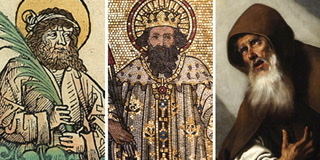

 Among the most painful separations are estrangements from living parents. I have experienced estrangement from a parent, a situation in which I found it necessary to remove that parent from my life completely because of abuse. The hard choice of removing my parent from my life was mine to make, but was most surely a hard choice with long-lasting effects on my emotional health. Those who must make such a choice suddenly feel orphaned and alone in the world. Over many years, I have known many people who have lost mothers and fathers with whom they’ve shared loving relationships — not through death but through purposeful estrangement. I know that the deep void this loss creates for them is devastating. The pressing question is, “Why don’t we talk about what it is like to feel orphaned by parents who are very much alive and well, but whom we have lost due to estrangement?”
 When your soul is at risk . . .
 I pray today for each of you who have experienced, or are currently experiencing, the grief of separation and alienation from someone with whom you once shared love. I pray that you would enjoy relationships with persons faithful, true and kind. I pray for you a shared love that is pure — both given and received. I pray for you a persevering, faithful and gentle love that helps sustain and fulfill you. I pray, for you and for me, that we might have relationships with persons who help us become our best selves. I pray for genuine and life-giving friendships that grace us with full acceptance and understanding.


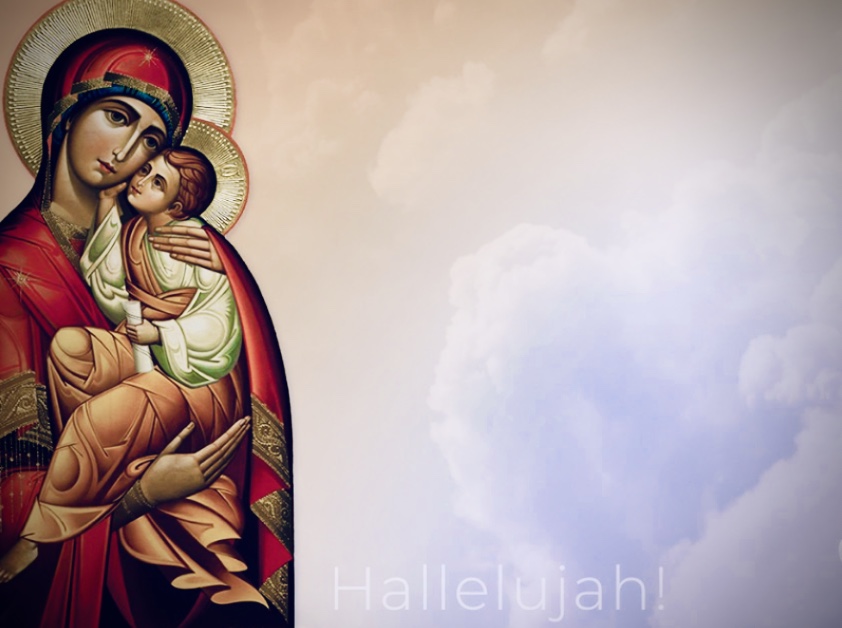

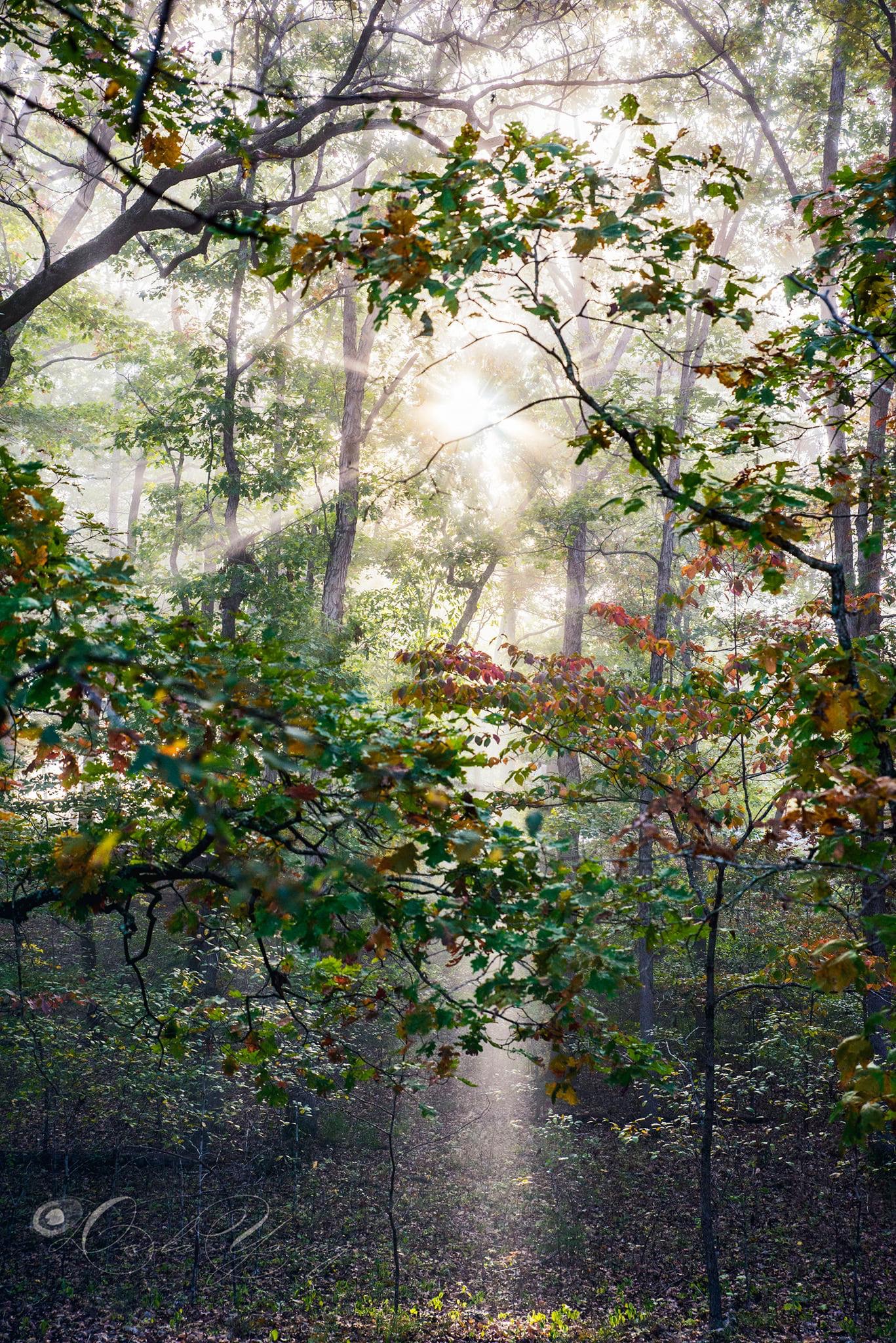


 My friend, Buddy Shurden, shared an experience he had while serving his first pastorate near Ethel. Mississippi. He tells of his frequent habit of calling on Early Steed to pray. He wrote that Mr. Early Steed always began his prayer the same way, every time.
 I have come to believe that family is music, sometimes loud music, sometimes music almost inaudible. But it is music that I deeply cherish. So few things in life really matter. Family is one thing that does matter. It’s all about relationship and rootedness.
 It was almost shameful that President Trump on January 12th signed a proclamation honoring Dr. Martin Luther King, Jr. In all honesty, I cringe at his signing of this proclamation. I cringe because the president honors Dr. King while dishonoring Dr. King’s legacy.
 August 27, 2017, marked an action of sacred change among the congregation of the First Baptist Church of Christ in Macon, Georgia. I was proud of the church I have recently become a part of, not only because of our adoption of a policy that ensures the full acceptance of LGBTQ parsons, but also because of the thoughtful and intentional process that resulted in the decision for inclusion, acceptance, unity, justice and love.
 God of the Sparrow 🌱 By Kathy Manis Findley