Chronic illness, Comfort, Darkness, Despair, Emotions, Faith, Grace, grief, Holy Spirit, Hope, Illness, Inspiration, Introspection, life, Light, Pain, Romans 8:26, Silence, Sorrow, struggle, Trust, Wisdom

To the Other Side of Silence

9F2CA72F-217D-4CF9-A56D-D75B789A45C1
Barbara Resch Marincel, lifeisgrace.blog

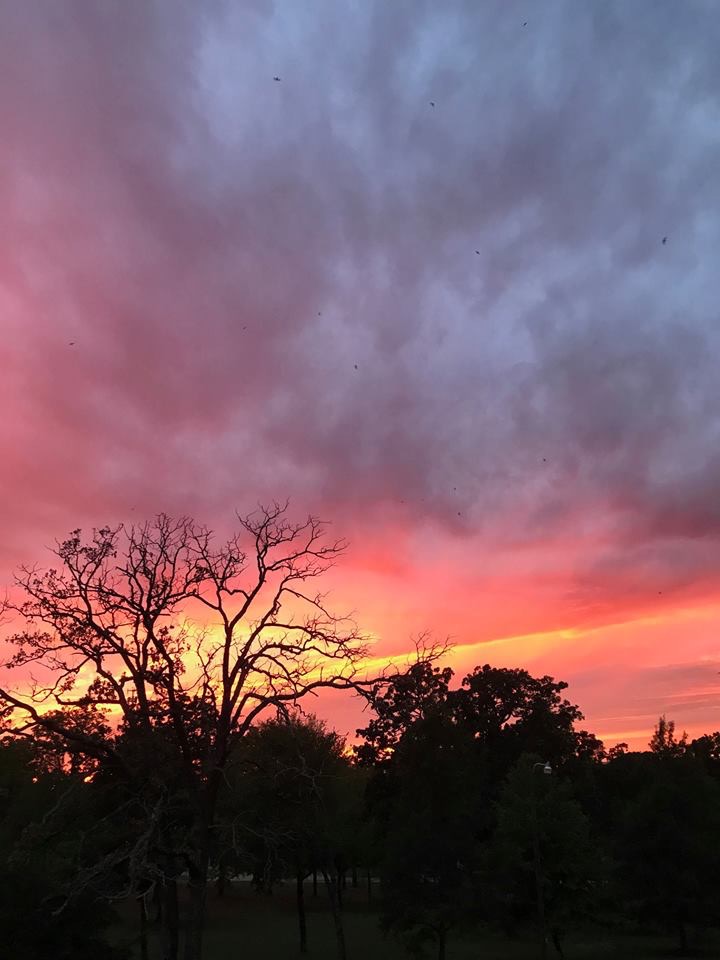
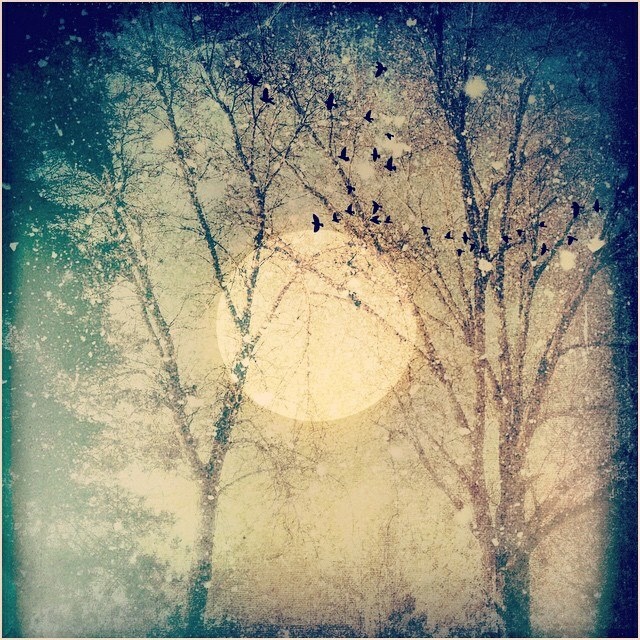
Today is another “Wordless Wednesday.” My friend, Barbara Resch Marincel, is a sister blogger, an insightful writer, and a photographer extraordinaire. You can see one of her amazing works in the image on this post. The image reminds me of a dark time that is slowly changing with the glow of new light. And in that light, the flying birds speak to me of the wind of the Spirit. Barbara’s images are a gift to me, always bringing up a range of emotions.

Here is a bit of how she describes herself on her blog, lifeisgrace.blog.

Blogger, writer, photographer, in varying order. Finding the grace in the everyday—and the not so everyday, while living a full and creative life despite chronic pain and depression.

If you take a few moments of your day to visit Barbara’s blog, you will find enchantingly stunning photography that speaks of joy, pain, life and grace.

Back to “Wordless Wednesday.” So many reasons to be wordless. Some people may not have adequate words to express joy. Others cannot speak of deep sorrow. Some of us have no words because of pain, while others are wordless because they have fallen into the depths of depression.

There is no end to the reasons people are wordless, no end to the seasons in which they find they are without words. I have lived in that season many times, and in that place I could not speak of my pain because words were completely inadequate. I could not speak the pain out loud to any friend, and even for prayer, I had no words. Silence was my close companion.

I love that my friend, Barbara, entitles her blog post “Wordless Wednesday” every week, because in the middle of every week, she reminds me of my seasons without words. Her art is a reminder for me to give thanks that I survived those times, and celebrate that I am now on the other side of silence.

But will not forget that it is no small feat to get to the other side of silence. I must remember that it is not easy to endure silent, grief-filled times and to the other side of them. While living in my seasons of unspoken angst, one passage of Scripture brought me comfort and hope.

The Spirit helps us in our weakness; for we do not know how to pray as we ought, but that very Spirit intercedes with sighs too deep for words. 
— Romans 8:26 (NRSV)

When grief has stolen our words, when we cannot speak and find ourselves in silence, may open our lives to hope, trusting the intercession of the Spirit’s sighs that are far deeper than words. 

Thank you, my friend, for “Wordless Wednesdays.”

And thanks be to God for allowing me to move to the other side of silence.

Amen.

Challenge, Faith, God's Faithfulness, God's presence, Hope, Lent, Life Journeys, Life pathways, Music, Restoration, Serenity, Transformation

I Can Face Tomorrow

Enlight272Yesterday was not my best day. All day long challenges got the best of me — health challenges, schedule challenges, even bad haircut challenges. My sister of the heart, Donna, said I was cranky. My husband, Fred, said I should chalk it up to Ash Wednesday. Martie, my dear Little Rock friend, said that yesterday was the first day of Mercury in retrograde and that I should do my best to survive until it’s over on March 28th.

I’m not so convinced of any of those explanations, but I’ll let it be for now. Today is a new day, a day in which I have chosen peace for the beginning of my Lenten journey. Typically, the way I find peace is through music. So Pandora is on my sacred music station today. It would be an understatement to say that the music has lifted me today and has almost made yesterday’s fiascoes a dim memory.

As I listened, a song from my past brought sweet memories. Years ago, before I learned to renounce masculine pronouns to refer to God, I was inspired greatly by these words: “Because He lives, I can face tomorrow.” We sang this Gospel song often to remind us of hope, of perseverance, of God’s faithfulness and of Christ’s resurrection. Today, those words and that melody on Pandora reminded me of those exact things. In spite of masculine pronoun referring to God, the music moved me as it has always done. The message has not changed. God has not changed. My faith in Christ has not changed. Thanks be to God!

Here’s my truth as I follow my Lenten path, the abiding truth: “Tomorrow” for me seems murky, with the path ahead unknown and somewhat disconcerting. I do not know if I will receive a kidney transplant or live on daily dialysis for the rest of my life. I do not know what tomorrow promises.

But this is as it has always been — before illness and after. I never knew what tomorrow would bring, even in those days when I thought I was fearlessly and fully in control of my life. So it feels like a Lenten testimony of my faith to say that I do not know what tomorrow looks like for me. Leaning into the reality of the unknown future, I feel embraced in the consoling truth that “because He lives, I can face tomorrow.”

Of this, I am confident. Resting on this promise, I can move onto the Lenten path before me with refreshed hope and renewed faith. Amen.

Calamity, Grace, Hope, Lightheartedness, mercy, Psalm 57, Repairing broken things, Uncategorized

Calamities and Grace

C6D6035A-FE70-4B02-8AEA-5E5E607F3278

Psalm 57 has been called “a prayer of safety from enemies.” When we believe that danger threatens to harm us, body and soul, that is the time that makes us cry out to God with the fervency of the Psalmist. Hear the Psalm’s second verse.

Be merciful to me, O God, be merciful to me!
For my soul trusts in You;
And in the shadow of Your wings I will make my refuge,
Until these calamities have passed by.

Ah, the calamities! So ever-present with us in uncertain times. Calamities! The synonyms are many and ominous:

Disaster, catastrophe, tragedy, cataclysm, crisis, adversity, blight, tribulation, woe, affliction, evil.

And those are just the first few listed in my trusty Thesaurus. There are many more, describing a state of being that is frightening, all-consuming and dangerous. Such a state of being we want to avoid at all costs. We want to take refuge swiftly before evil overtakes us.

Can you recall a time when your life was in calamity mode? So many situations can place us in calamity mode: illness, relationship problems, addictions, loneliness, aging, financial distress, the loss of a loved one and so many other situations of distress.

We feel as if “enemies” are chasing us, unrelenting in their threat. We run like the wind, if we can, to get away from them. But all too often, we look behind us and an “enemy” is right there, looming large before us and bringing us face to face with the cataclysm we feared. So we are now in the clutches of adversity, and we wonder if where we are is where we’ll ever be.

We are very good at laying out our calamities, lining them up one by one for all to see. Because when others see our calamities, we believe they will help us. We believe that our friends can help us escape our calamity du jour. In their help, we place our hope. Trouble is, sometimes we’re disappointed because hope does not often come through friends. Those around us have their own calamities. When they don’t (or won’t) reach into our troubled place and help us, we despair. What can we do? Where will we turn?

The truth is that when our soul trusts in God, we will wake up from our nightmare and find that we are sheltered in the shadow of God’s wings. Safe from calamity. Nestled in a place of refuge. Brokenness repaired. Watching gratefully as calamity after calamity passes us by.

What a grace is that! What unmitigated compassion! What sheer loving mercy from the God who might just as well have left us in the danger of our calamities.

Thanks be to God for every safe refuge, from every calamity. Amen

Advent, Contemplation, Hope, Mindfulness, Serenity, Waiting

Advent’s Invitation

ABA52B53-DF36-418D-BD71-FE6891967598What is Advent’s invitation to me? What does this season want to  teach me? What will I see in a new way as a result of Advent’s opportunities for reflection? So many questions!

“Wait,” the wiser ones tell me. “Wait for it.“

“This is the message of Advent — endure the dark places of this season knowing that the Messiah is coming again to bring light to your world and to your heart. Just wait.”

So it seems that Advent is not for impatient folk, the ones who want to get on with it, to get on to the lighthearted joys of Christmas. Advent’s call to ponder, to be mindful of the moment, and to wait catches the busy ones off guard. Our souls sing the adagio strains of “O Come, O Come Emmanuel” and the mellow hopefulness of “Come, Thou Long Expected Jesus,” while feeling in our waiting hearts the great need to belt out “Joy to the World.”

What exactly is Advent’s invitation to me? What is it that Advent promises that makes waiting worthwhile? What is it that this season has for me to learn?

These are questions I cannot answer, at least I cannot answer them at this moment. My hope is that if I am faithful in the waiting and the pondering, the answers of Advent will become clear to me. Until then, it is just one of those life mysteries that eludes me. 

In the meantime, Barbara Brown Taylor offers a wise word about it all

Advent invites us to awaken from our numbed endurance and our domesticated expectations to consider our life afresh in light of new gifts that God is about to give.

— Barbara Brown Taylor

Wait for it!

Advent, Contemplation, Darkness, grief, Hope, Light, Loss, Memories, Mindfulness, Pondering, Sacred Art, Seasons, Sorrow, Waiting

Pondering through Advent

23DCD324-DEFB-436C-8942-C4ADA60DA52AYesterday, I mused on the tenderness of this season of Advent. The waiting. The darkness. The need to linger in the season with a sense of mindfulness.

To be honest, I want to shop with reckless abandon and find fun toys for my grandchildren. I want to bake all manner of Christmas cookie. I want to decorate every corner of my house, and if I had my way, ours would be one of those houses that people drive by at night to see all the twinkling lights.

But on that outdoor winter wonderland, I definitely do not have my way. My husband’s days of hanging lights on the gutters, placing a Santa on the roof, and wrapping the trees in tiny, twinkling lights are over. He has happily passed out of that season of his life.

For me, yesterday was baking day, and I made a new discovery about mindfulness and cookie baking. The two activities pair well. Dropping cookie dough by the spoonful onto a baking sheet is slow work. It gives one time to ponder. And pondering a is a good thing to do in Advent days. Good lesson learned, with the added bonus of having 200 cookies in the house!

While dropping cookies, one by one onto an old, scratched up baking pan, I pondered. Some thoughts hinted at my inner sadness. Other thoughts were of friends who are very ill and are walking this Advent journey in darkness. Other friends have lost people in their lives, and on this day, they find themselves in mourning.

As I do in most Decembers, I find myself, along with others in my family, feeling the sadness of having lost my youngest brother, Pete, to cancer. It happened many years ago, yet the hurt remains.

No doubt, this Advent journey can be a tender time. Yet we journey into the days ahead, not with a spirit of despair, but with a glimmer of hope. Even in the darkness, we begin to awaken, knowing that something new will be born in us just as it has every Advent. This is the season when we wash our faces and rub our sleepy eyes until we wake up, eyes wide open to the Light that sleeps in a manger.

Mary treasured up all these things and pondered them in her heart.

— Luke 2:19 New International Version (NIV)

Like her, I am spending my Advent days pondering — moving in mindfulness while holding tender feelings, heart longings, mourning in the soul.

And, of course, I’m waiting in the darkness. But I know, without a doubt, that light will shine. It always does.


Advent, Bethlehem’s Star, Christmas, Darkness, Hope, Loss, Mindfulness

Today I Believe

039C1E96-30AE-46AA-8113-B98AD7414523

This season is a tender time. And oh, this darkness of mine. December brings it every year — that feeling of tenderness, of darkness. That is, if I stop to notice. Stop decorating the house. Stop shopping. Stop planning a lavish Christmas dinner. Stop baking dozens of cookies. Stop going to Christmas events — parties, pageants, gatherings, light displays . . . Just stop!

If we do stop in these advent days, we might just feel this tender time. It’s not Christmas yet, you know. It’s Advent, a time of waiting, hoping, believing. If ever there was a time to practice mindfulness, this is the season. As I move through Advent’s days, I want to move slowly and with the awareness of the tiny miracles all around me.

I want to remember past years and people I have loved. I want to linger beside the Chrismon tree that holds decades of white and gold ornaments and decades of memories. I want to be mindful of my own darkness and the tenderness that is nested in my heart.

Advent is most surely a tender time, and a time of darkness, a time when people of faith wait for the light to come to earth again. Advent causes me to wait for the light that always comes to come into my heart again. Until the light shines, though, through a little baby born in Bethlehem, days will be dark and tender.

I am remembering my youngest brother who would have had a birthday this month. The loss of him far too soon will always leave a lump in my throat. December, his birth month, is a tender time.

In these days, I miss the joy and laughter of my grandchildren. For them Christmas is all joy.  They are such a gift to me, and being separated from them by so many miles makes this a tender time.

My friend’s fourteen-year-old grandson lost his battle with cancer this week, and I cannot help thinking about what a dark and tender time this family is feeling because of this deep loss.

So many losses surround us. So much grieving. So much darkness waiting for the light of Bethlehem’s star and the infant that comes to bring light to our hearts.

I love this tiny prayer:

Lord, you have always lightened this darkness of mine; 
and though night is here, today I believe.

— Evening Office by Northumbria Community


Change, Growth, Hope, life, Life pathways, Wisdom

Starting Over

775D14C9-8802-4DEA-BD06-33C669F187B7Here’s the thing about life: things crash and break, obstacles can stop you in your tracks, you can get completely cut down. It happens to all of us.

One option is simply to give up on life. Or maybe to retreat into a private place for sulking. Another option is to be angry and to live the rest of your life angry.

But the reality is much more optimistic than any of those dismal options. Because no matter what happens in your life, you can start over. Starting over is really not so bad. I’ve done it many times and I survived it. So if we can accept the fact that something in life is over, there is hope for the days to come. 

I choose to see starting over as a fresh new beginning, another chance to do life differently. If I start over with a positive attitude, it can be an opportunity to head into the future wiser and more confident. Starting over can offer a path ahead that’s full of promise.

That’s what I’ll count on.

All Saints, Brokenness, Fear, Grace, grief, Gun violence, Hate, healing, Hope, Mourning, Prayer, Tikkun Olam, Tree of Life Synagogue, Violence

All Saints

05314FDF-2986-4602-8EF9-B1839FE693CEWe all need a glimpse of hope and comfort in these troubling days. Our thoughts and prayers are with our brothers and sisters of the Tree of Life Synagogue, and we are shocked at this and other recent acts of violence and evil. So today, I share with you the writing of Jemma Allen* in hopes that you will find her words as compelling and comforting as I have.

This week in many liturgical traditions we observe All Saints Day, and perhaps All Souls. In some places there is an opportunity to say the names, to light candles for, to ring the bell for those we love but see no longer, parted from us by death.  

All Saints and All Souls compel us to look death squarely in the face,
to acknowledge our mortality, and the mortality of those we love,
and still to make our song: Alleluia!

This is a season where we boldly proclaim
that death is not the last word.
Death, and fear of death, does not hold the power
to determine how we will live.

We are the dearly beloved children of the living God,
we are baptized into Christ’s death and resurrection,
we are looking to a future where justice and mercy kiss,
where nations will not learn war anymore,
where the lion lies down with the lamb,
where all things are reconciled to God.

This is our hope.
It is a hope that no power can destroy, tarnish or mar:
not white supremacy,
not anti-Semitism,
not any kind of hatred,
not any system of domination,
not any disease,
not any heartbreak. 

And when we cannot hold that hope for ourselves,
let us lean into the hope we can hold together
as communities of life, as communities of resistance,
as hope-bearers and pilgrims on the Way. 

0F547F1D-1DC0-40C3-A16E-E34DB2350099

Give rest, O Christ, to your servants, with your saints,
where sorrow and pain are no more, neither sighing, but life everlasting.
You only are immortal, our Creator and Maker;
and we are mortal, formed of the earth, and to earth we shall return.
All of us go down to the dust; yet even at the grave we make our song: Alleluia, alleluia, alleluia.

 – Russian Orthodox Kontakion of the Departed, Jim Cotter’s translation.  


*Jemma Allen is a priest in the Anglican Church of Aotearoa, New Zealand and Polynesia and a counsellor and spiritual director in private practice.  She serves on the Board of RevGalBlogPals and counts the RevGal community as one of her communities of life and resistance.

Comfort, Compassion, Despair, Friendship, Generosity, Grace, healing, Heartbreak, Hope, Loss, Ministry, Mourning, Restoration, sadness, Sorrow, Stars, struggle, Tears, Weeping

Weep with Those Who Weep

AD620082-4B5E-47C6-B2B0-0D553454614BWhat a caring and compassionate ministry it is to sit beside someone who is grieving and remind them of God’s grace. In recent days, I have wept for and with so many friends who are grieving for what they have lost because of the Florida hurricane. To be sure, there were losses in Georgia and in the Carolinas, but the devastation in and around Panama City was catastrophic.

Hordes of compassionate people traveled to Florida to help. They will clean up debris, repair or rebuild homes that sustained damage, do electrical work, provide help in the shelters, share their hearts and God’s heart, and stand beside families as they pick up the shattered pieces of their lives. Mostly, they will weep with people, and that’s what will help more than anything else.

Author Ann Weems paints a sparkling vision with her words that speak of the “godforsaken obscene quicksand of life.” But then she tells of a deafening alleluia arising from the souls of those who weep and from the souls of those who weep with them. From that weeping, Ann Weems tells us what will happen next. “If you watch,” she writes, you will see the hand of God putting the stars back in their skies one by one.”

I like to think that the caregivers who traveled to Florida did a lot of weeping with those who needed it and that they stayed near them long enough for them to “see the hand of God putting the stars back in their skies one by one.” When all is lost — when you learn that your loved one has died or you stand in a pile of rubble on the ground that used to be your home — seeing the hand of God putting the stars back in their skies would be for you a manifestation of pure and holy hope.

Without a doubt, Florida is experiencing “the godforsaken obscene quicksand of life.” Their memories of this devastating time will be cruel and long-lasting. They will remember better days, neighborhoods that once thrived, schools that were destroyed and friends who are trying their best to recover. But what grieving people will remember most is the care someone gave them and the loving compassion of strangers who became forever friends. I am reminded of the words of poet Khalil Gibran:

You may forget with whom you laughed, but you will never forget with whom you wept.

― Kahlil Gibran, Sand and Foam

Rejoice with those who rejoice, weep with those who weep.    — Romans 12:15

Comfort, Darkness, Daybreak, Despair, Faith, Fear, God's presence, grief, Hope, Life storms, Loss, Mourning, struggle, sunrise, Tears, Vulnerability

Icons of God’s Presence

5388C091-C6CE-402C-A3DB-77B0DD838A84
Photography by Sister Macrina Wiederkher

“Sunrises anoint my soul. They are quiet prayers, icons of God’s presence.”

These are words written by my friend, Sister Macrina Wiederkher. Her words resonate with our times as we hold in the light our brothers and sisters in Florida. Their loss is immeasurable, and although we know that loss of home is not as tragic as loss of life, it is a deeply felt emptiness to lose your home and all its contents.

So many are in that heartbreaking place today, and when the night falls on this night, they will not know the safe security of home. We have only a small awareness of their heartache, but God is fully aware of all they have lost. God knows their grief and their fear, their uncertainty of the future. Sometimes all we can count on is that God knows our deepest sorrow and anoints our souls when we need it most. 

Our comfort is this: that after every storm, there is a calm. When ominous, dark clouds of destruction fill the skies, we can know with certainty that the sunrise will come.

B2904AA9-02C4-480E-B061-D174E9810346I believe my friend who tells us that sunrises anoint our souls . . . like icons of God’s presence.

And I believe it for all of the Florida folk who have lost so much.

Brokenness, Courage, Despair, Heartbreak, Hope, Life Journeys, struggle, Suffering, Transformation, Vulnerability

Losing Hope


Losing Hope And Interest Quote Motivational Quotes For Hope Pics 15+ Don't Lose Hope Quotes With
Dr. Michelle Bengtson

How do we live after we have lost hope? How do we live with brokenness? What do we say to a broken world? What do we do with our broken hearts? The truth is that each day can bring us heartbreak. Any season of life can bring us failure. At times, the struggle is so intense that we do lose hope. 

Khalil Gibran has written that “out of suffering have emerged the strongest souls; the most massive characters are seared with scars.” 

How true that is, that our suffering makes us stronger, that our scars make us resilient. Most of us move through life steeled against any suffering. We bravely put on our body armor to protect us against every assault. We refuse to allow our vulnerability to rise within us.

I have been strengthened by Brené Brown’s book, “Rising Strong.” She points us to wisdom that names hope is a function of struggle, and challenges us to not be afraid to lean into discomfort.

Why would we want to do that, you might ask? Who in their right mind really wants to invite adversity into their lives? Why would we want to be vulnerable? We need to be strong. We need to live into courage. We need to be impenetrable, tough and impervious to anything that might hurt us.

Here’s what Brené Brown says about that:

Hiding out, pretending and armoring up against vulnerability are killing us: killing our spirits, our hope, our potential, our creativity . . . Our love, our faith, our joy. We’re sick of being afraid and sick of hustling for our self-worth. We want to be brave, but deep inside of we know that being brave requires us to be vulnerable.

“No adversity, no hope,” she writes. “Fall. Get up. Try again.”

As people of faith, we can speak, through our own heartbreak, to a broken world. We can offer the message that if you feel that you have to give up, hope whispers, “try one more time.”

When we live in life’s fullness, with our whole hearts, we will always know heartbreak. We will push to try something new, and sometimes we will fail completely. We will experience disappointment. But without those heartbreak times, we will never know that we can get beyond them.

If we never fall, we will never know that we really can get up. If we never lose hope, we will never experience the joy of finding it again.

If we never lose hope, we will never know new hope, fresh and pointing us toward the skies.


#MeToo, Bible, Courage, Darkness, Fear, Hope, Injustice, Light, Sexual abuse, Violence

In the Light We Will Stand


1A6BB78E-B362-4076-8D9A-0F7A98F8B40A“I have perfect attendance pins for Sunday School going back thirty years, and until last week, I never knew that the Bible told the story of someone who had been raped.”

I have heard similar comments many times when preaching from my book about Biblical women, “Voices of Our Sisters.” The truth is that Scriptural passages like those described by Phillis Trible in “Texts of Terror” are not your Mama’s Bible stories. We don’t teach them in our classes and we definitely do not preach on them in church. The stories of violence against women in the Bible are as hushed as the stories of abused women today. Shame on us.

It was one year ago that The New York Times published an investigative article about how Harvey Weinstein had for decades paid off acusers of sexual harassment. 

“Culturally, the article hit like a meteor,” writes Maya Salam in The New York Times Gender Letter, “drastically altering the landscape around how sexual misconduct is perceived, sending the #MeToo hashtag viral and, in turn, triggering an avalanche of accusations against powerful men. It wasn’t long before #MeToo wasn’t just a turn of phrase — it was a movement.”

RAINN*, the country’s largest anti-sexual assault network, experienced a 30 percent increase in calls to the National Sexual Assault Hotline since the current #MeToo resurgence, and last Friday — the day after Christine Blasey Ford and Judge Brett Kavanaugh testified before the Senate Judiciary Committee — was the busiest day in the hotline’s 24-year history.

The women of this nation will not forget Dr. Christine Blasey Ford. Women who have been harmed by sexual violence will revere her for her courage. Because our courage, survivors all, has often been small and our fear very large. We know that people will not believe our stories of abuse, and that instead they will blame us for bringing our terrible stories to light.

We will not forget Dr. Christine Blasey Ford, and we will remember Tarana Burke who first spoke #MeToo in 2007 to let young women of color who survive sexual assault know that they are not alone.

We will remember Alyssa Milano and her Tweet that reached dozens of countries and millions of people — over 1.7 million tweets included the hashtag “#MeToo,” and 85 countries had at least 1,000 #MeToo tweets.

So we join hands with those who understand us, hold on tightly, and speak our truth, because we need to move from darkness to light.

And in the light we will stand, hearts and spirits lighter because we have spoken our terror aloud. C47C1264-7179-455D-AA1A-6DF17B4673F8

In the light we will stand, even though staying in silence’s darkness would be easier. 

In the light we will stand, even as the people around us cling stubbornly to their darkness that screams out to us, “We will not hear you!”

In the light we will stand because that’s the only way to survive.


* RAINN — Rape, Abuse and Incest National Network


Aging, Bible, Dreams, Faith, Holy Spirit, Hope, Inspiration, Luke 2: 21-38, Passing years, Prayer, Preaching, Prophetic, Waiting, Wisdom

At Any Age

D543405F-29D8-492C-B48A-4BB0EC12CF72I asked my husband a rather strange question last night. It was about my recent preaching at First Baptist Church of Christ in Macon. This was how I posed the question to him:

“You have listened to me preach a gazillion times in past years when I was young. But now do I just seem like a little old lady in the pulpit?”

Apologies to all little old ladies who might very well preach as prophetically as ever in a similar situation! But back to my question, and my husband’s response.

“No! Not at all,” he said. “If anything, you seemed more confident and powerful than I have ever seen you.”

So much for my feelings of being inadequate just because I am now a retired senior adult who has not preached a sermon in a very long time. The truth is I agreed with my husband. I felt very confident within myself. I believed that I had received a holy and prophetic word from God, and was honored that God (and my pastor) chose me to speak that word. When I stood in the pulpit, I felt the memory and the wisdom of ministries past, all of them, and that recognition of God’s workings within me over the years filled me with assurance.

Still, we are used to prophets being young, like Jeremiah and John the Baptist. Prophets, after all, are given the mission of looking ahead. On the other hand, we think of elders as caretakers of the past. 

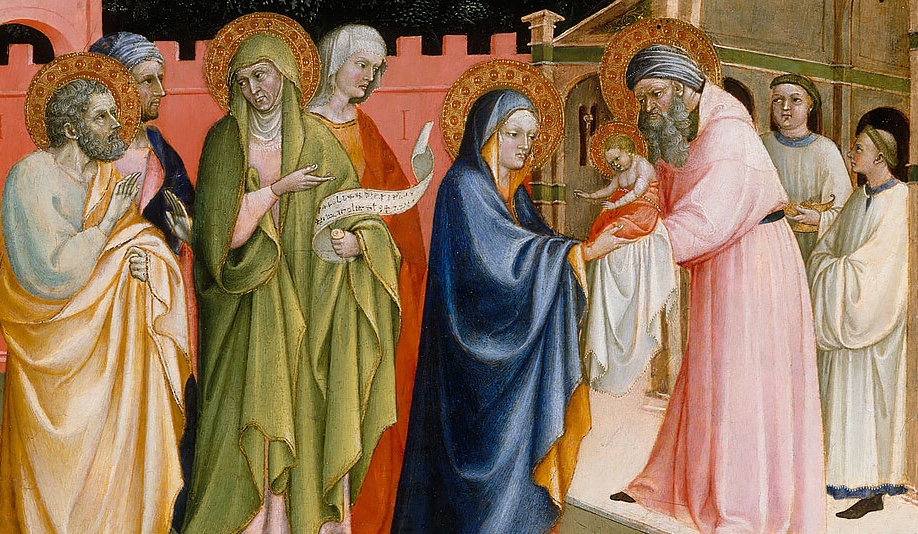
Pope Francis spoke about this in 2014 in his homily on the Feast of the Presentation of the Lord. In that homily, he asks us to see the mission of our elders as looking ahead to the future. And looking ahead to the future as persons who possess the wisdom of age. He gives us Simeon and Anna as our role models, naming them “senior citizen prophets.” And what role models they are! Among all the stories in Scripture, I have long been inspired and moved by the stories of Anna and Simeon.

In the story, this older woman and man have just met the new parents, Mary and Joseph, who were bringing their baby Jesus to the Temple. Pope Francis preached it with these words.

“It is a meeting between young people who are full of joy in observing the Law of the Lord, and the elderly who are filled with joy for the action of the Holy Spirit. It is a unique encounter between observance and prophecy, where young people are the observers and the elderly are prophetic!”

This is their story from the second chapter of Luke, verses 21-38:

And when eight days had passed, before His circumcision, His name was then called Jesus, the name given by the angel before He was conceived in the womb.

And when the days for their purification according to the law of Moses were completed, they brought Him up to Jerusalem to present Him to the Lord (as it is written in the Law of the Lord, “Every firstborn male that opens the womb shall be called holy to the Lord”), and to offer a sacrifice according to what was said in the Law of the Lord, “A pair of turtledoves or two young pigeons.”

And there was a man in Jerusalem whose name was Simeon; and this man was righteous and devout, looking for the consolation of Israel; and the Holy Spirit was upon him. And it had been revealed to him by the Holy Spirit that he would not see death before he had seen the Lord’s Christ. And he came in the Spirit into the temple; and when the parents brought in the child Jesus, to carry out for Him the custom of the Law, then he took Him into his arms, and blessed God, and said,

Lord, now lettest thou thy servant depart in peace, according to thy word:
For mine eyes have seen thy salvation,
Which thou hast prepared before the face of all people;
A light to lighten the Gentiles, and the glory of thy people Israel.

And His father and mother were amazed at the things which were being said about Him. And Simeon blessed them and said to Mary His mother, “Behold, this Child is appointed for the fall and rise of many in Israel, and for a sign to be opposed — and a sword will pierce even your own soul — to the end that thoughts from many hearts may be revealed.”

And there was a prophetess, Anna the daughter of Phanuel, of the tribe of Asher. She was advanced in years and had lived with her husband seven years after her marriage, and then as a widow to the age of eighty-four. She never left the temple, serving night and day with fastings and prayers. At that very moment she came up and began giving thanks to God, and continued to speak of Him to all those who were looking for the redemption of Jerusalem.

— Luke 2: 21-38 (KJV, NASB)

Simeon, a righteous and devout man who was looking for the consolation of Israel, was graced by the Holy Spirit. And in that Spirit, he came into the temple, finally holding Jesus in his arms and blessing him. This was the moment Simeon had hoped for over many years. And after prophesying about the child Jesus, he blessed the parents and began Mary’s preparation for the pain she was destined to experience when her son was crucified.

And the Prophetess Anna, now advanced in age, was there “at that very moment” the Scripture says. Anna never left the temple and she served God “night and day with fasting and prayer.” She lifted up her prayers of thanks to God for this child. And on top of that she proclaimed the message of hope that this child had come! Glorious news it was to “all those who were looking for the redemption of Israel.”

The stories of Anna and Simeon give us a portrait of elderly citizens, full of life’s wisdom and the Holy Spirit, who prophetically present to the world Jesus as Messiah!

And their story is full of hope for us, too. Perhaps those of us who are “of a certain age” are truly senior citizen prophets. Perhaps the hope we need to hear is the hope that, at any age, God calls us to prophetic mission. At any age, God will use our voices to speak hope to a world in despair, a world waiting for the consolation that comes only from God’s Spirit.
Christian Witness, Comfort, Hope, Sunset

Beyond the Sunset

5A51E078-B55E-4610-B65C-93628EB8E621
“The Beautiful Sunset of Lancashire” Photography by Martine Camlin

The song, “Beyond the Sunset” was recorded by Hank Williams, Bill and Gloria Gaither, Pat Boone, and other recording artists. But I remember the song as a beloved hymn of faith. It was an old fashioned hymn, to be sure, because the elderly church members sang it with deep emotion, every word tucked into their memories.

As a child in the church pew, I observed that, for many worshippers, this hymn is a testimony of their strong faith in eternal life. The comfort of music that sings of eternal life is powerful, touching even the most hardened hearts. So “Beyond the Sunset” lives in the hearts of worshippers as a thoroughly Christian hymn, not so much as a popular song. 

Beyond the sunset, O blissful morning,
When with our Saviour heav’n is begun.
Earth’s toiling ended, O glorious dawning;
Beyond the sunset when day is done.

Beyond the sunset, no clouds will gather,
No storms will threaten, No fears annoy;
O day of gladness, O day unending,
Beyond the sunset, Eternal Joy.

Beyond the sunset, Oh, glad reunion,
With our dear loved ones who’ve gone before,
In that fair homeland we’ll know no parting,
Beyond the sunset, forever more.

— Blanche Kerr Brock / Virgil P. Brock

Christian hope for many devout believers is that they will see the glorious sunset ahead, and that when they get beyond the sunset, life’s earthly toil will end, joy will be eternal, and that they will reunited with loved ones gone before.

What a comforting, lovely message!

Freedom Songs, healing, Hope, John 5, Miracles, Music, Wade in the Water

Troubled Waters and Miracles

abstract background beach color
Photo by Pixabay on Pexels.com

I love the words and the melody of the spiritual, “Wade in the Water.”

Wade in the water.
Wade in the water, children.
Wade in the water.
God’s gonna’ trouble the water.

There is just something about it that is moving to me. It digs down into my spirit and stops me in my tracks. I don’t know why I react so deeply to that simple bit of music. It could be that what draws me to it is its strong reference to healing as it recalls the miracle story recorded in the Gospel of John.

After a feast of the Jews, Jesus went to Jerusalem. Now there is in Jerusalem by the Sheep Gate a pool, which is called in Hebrew, Bethesda. It has five porches, and lying in these porches are many sick people who are blind, lame, paralyzed, each waiting for the moving of the water.

For an angel went down at a certain time into the pool and troubled the water; then whoever stepped in first, after the troubling of the water, was made well of whatever disease she had. 

Now a certain man was there who suffered from an infirmity for thirty-eight years. When Jesus saw him lying there, and knew that he already had been in that condition a long time, He said to him, “Do you want to be made well?”

The sick man answered Him, “Sir, I have no one to put me into the pool when the water is troubled. Before I can get into the water, someone else gets in before me.”

Jesus said to him, “Rise, take up your bed and walk.” And immediately the man was made well, took up his bed, and walked.

— John 5:1-8 NKJV (paraphrased)

Or what inspires me about the song could be the stories that surround it. Some folk claim that “Wade in the Water” contained secret coded instructions to fugitive slaves on how to avoid capture as they followed the route to take them to freedom. The website Pathways to Freedom: Maryland & the Underground Railroad explains how Harriet Tubman used the song to tell escaping slaves to get off the trail and into the water to make sure that the dogs employed by the slavers lost their scent. “Wade in the Water” was one of their most inspiring freedom songs.

Those moving stories remind me of the many ways music touches my life with inspiration, courage, and hope, how it reaches the depths of my soul during the times when nothing else can reach me, how it lifts me up when I have fallen into despair, how it fills my heart with just the melody I need to give voice to my sorrow and then gives me a way to express my moments of greatest joy.

Most of us can recall times in our lives when we needed a dose of Divine healing. We can remember times of sorrow and despair and fear when only an encounter with God could move us toward peace, times when we needed to be made whole again, times when we hoped beyond hope that God would trouble the water. Read it again.

 . . . An angel went down at a certain time into the pool and troubled the water; then whoever stepped in first, after the troubling of the water, was made well of whatever disease she had. 

So in John’s Gospel story, a man who had been sick for thirty-eight years was healed. He was too ill to make it into the troubled waters of the pool no matter how many times he tried. But Jesus was there and asked him, “Do you want to be made well?”

The sick man answered that there was no one to put him into the pool when the water was troubled. “Before I can get into the water,” he said, “someone else gets in before me.”

But Jesus said those extraordinary words to him: “Rise, take up your bed and walk.” 

Immediately it happened. The man was healed, and he picked up his bed and walked. Maybe the man rushed off to tell friends about the wonderful thing that had happened to him. Or maybe could only stand there in awe, not moving at all because the moment was just too overwhelming.

It was a miracle. Actually, the story tells of at least two miracles: that Jesus healed the suffering man and that an angel descended from above and troubled the water in that otherwise ordinary pool.

I don’t know about you, but when I encounter a pool of healing water, troubled and swirling, I want to get in. I want my faith to be big enough to expect a miracle from ordinary water, in an ordinary pool, on an ordinary day.


Please visit this link to hear a stunning arrangement of “Wade in the Water” featuring an excellent soloist and choir from the A Cappella Academy from Los Angeles.

https://m.youtube.com/watch?v=uiqQKZZo-Uc


Brokenness, Hope, Mission, Prayer, Repairing broken things

On Being Fixers

261712B8-A5C0-440B-A40A-43EBFED54F47
A Broken World: For those who have lost their lives to terrorism in the twenty first century
By Rennett Stowe on Flikr

I certainly do not want to put out pessimistic vibes, but from what I observe, the world and its inhabitants are standing in the need of prayer. Children and parents at the border are still hopelessly separated. The Trump administration continues to cozy up with the world’s tyrants and dictators. Wildfires ravaged a Greek village, and continue their destruction in other parts of the world. Scores of people are hopelessly addicted to opioids, with very little assistance available to them. Veterans of our many wars are still homeless, scouring the streets for shelter, food and care. Elderly citizens of this nation cannot afford the medications prescribed for them. Growers and farmers assess their crops and contemplate how to navigate the very real effects of climate change, while U.S. leadership continues to deny that climate change has any devastating effects. Shall I go on, or spare us all from an endless and ominous list of broken things?

We need a fixer, an all purpose, jack-of-all-trades fixer that can fix the gamut of broken things. The dilemma is worse, though, because werry does not stop at a broken world. In that broken world — in every frenetic city and in every quiet hamlet — we find broken people, heartbreaking broken people. But even as our heart breaks, we look at the brokenness with our hands tied because the remedies are far too complicated. Prayer is a definite option for such a time. My new friend, Maren, has written a poignant prayer on her blog. This is the beginning of her prayer.

God, who is never in earthquake
not wind, not wildfire,
but comes walking across storms,
speaking with a still small voice
holding those who fear,
comforting those who grieve,
hear the prayers of the world . . . 

By Maren; Prayer for Lombok — Indonesia
https://giftsinopenhands.wordpress.com/2018/07/29/prayer-for-lombok-indonesia/

Prayers are necessary. Awareness is critical. Reaching out in specific, authentic ways is imperative. Yet, we still need a fixer, or at least a place to find hope and comfort. I always turn to the words of the prophet Isaiah for hope, while at the same time, I understand — with just a bit of reticence, fear and trembling — that Isaiah’s remedy points directly back to me.

The Spirit of the Lord is upon me,
because the Lord has anointed me
to proclaim good news to the poor.

He has sent me to bind up the brokenhearted,
to proclaim freedom for the captives
and release from darkness for the prisoners,
to proclaim the year of the Lord’s favor
and the day of vengeance of our God,

to comfort all who mourn,
and provide for those who grieve in Zion—

to bestow on them a crown of beauty instead of ashes,
the oil of joy instead of mourning,
a garment of praise instead of a spirit of despair.

They will be called oaks of righteousness, a planting of the Lord
for the display of his splendor.

They will rebuild the ancient ruins
and restore the places long devastated;
they will repair the broken cities
that have been devastated for generations.

— Isaiah 61:1-4 

There’s the catch, the description of the fixer as one who has first been anointed by the Lord and then is sent. That would be me, and you, fixers all!

May God anoint us as we go into all the broken places and draw near to all the broken people.

Comfort, Contemplation, Division, Faith, grief, healing, Hope, Justice, life, Serenity

Sitting Open-Handed Before God

71184739-B4D2-4F2F-897E-1EAD2C2A56EAWhat is it like to sit open-handed before God? To abide with a compassionate God who knows the grief we are carrying? To sit in the glowing presence of a God who, not only knows the deep angst of our nation, but who can also transform it?

Yes, many of us are grieving the current state of our nation. We see our nation’s pain, just as we see the pain of the world. Yet, we who are Christ-followers live with great advantage in this pain-filled world. Yes, we grieve the divisions in our nation and lament at the ways we seem to have lost our compass of compassion, mercy and justice. We feed those who already have abundant sources of food. We provide health care to those who can afford their own. We hold open the voting entrances for those who can get there with the proper credentials. But for the people who hunger, the families that are homeless, the elderly, the children incarcerated at our borders, the prisoners, the helpless, the marginalized . . .  well, for them, we offer prayers, if we think of them at all.

So what is our great advantage? It is that our faith can carry us into spiritual realms where hope is large and dreams are possible. It is that we enjoy access to spiritual community with an accessible God. It is the spiritual luxury of quiet contemplation that opens our hearts to the whispers of God. And yes, I did say whispers of God, for it is almost always a quiet voice that beckons us into a world of turmoil. It is a quiet God-Voice that rekindles our compassionate hearts, speaks to us through the noise of discord in our nation, and shows us the good path we must follow.

We need not despair or cry out in anger or disgust. We need not attack those who seem to be wrecking our country. We need not hate those with whom we disagree. We have the great advantage of only this life task: to be silent before God, to sit in God’s presence open-handed, to pray, to listen, to seek, and then to go.

Sister of Social Service Simone Campbell, famously known as “the nun on the bus,” offers us a glimpse into one of the ways we can live as people of faith in a fractured nation. 

Finding a way to not vilify or divide into “them” and “us” in today’s federal politics goes against . . . current custom. . . . So my contemplative practice is to attempt to sit open-handed and listen to the “wee small voice” that sometimes whispers ideas and ways forward.

— Simone Campbell

Thanks be to God for the quiet whisper that guides us on the path ahead, the God-Voice that ordains us to heal our nation and comfort our world.

Brokenness, Courage, Despair, Faith, grief, healing, Hope, Kintsugi, Rabbi Yitzchak Luria, Repairing broken things, Tikkun Olam, Wholeness

Whole Again

23A0B57C-5487-4E6C-B48B-C45552916C23So many people have been broken. I join them in their brokenness, for I, too, have been broken. Not just once, but again and again. So I know how it feels to look down in the dust at my feet and see the shards of a broken spirit. I know the emotional response I have when I sit on the ground examining the broken shards, and I know how I despair of the daunting  task of putting the broken pieces back together.

I know the fear of doubting that I will even be able to put them together again. I know the terror of believing that my broken life will forever be broken. I know the suffocating feeling of having been broken beyond repair, without hope, without the faith I will need to repair my own brokenness.

And then, we look at our world, lamenting its groaning in so many ways and in so many places around the globe. Ours is a world that seems broken into pieces. I often find encouragement in the Jewish concept known as Tikkun Olam, a phrase found in the Mishnah that means to heal or repair the world. While Tikkun Olam is used today to define social action and the pursuit of social justice, the phrase has ancient roots with origins in classical rabbinic literature. It means so much more than examining broken pieces and finding a “glue” that might possibly put them back together.

Rabbi Yitzchak Luria* pondered the world’s brokenness and came to believe that, even before time, something must have gone terribly wrong with the world. As he continued to mull it over in his mind, he proclaimed that the world had shattered. He taught that we are anointed to repair a world which he defined as “all that is eternal,” insisting that “at the very core of reality is G-d’s shattered dream, waiting for us to pick up the pieces.”

Things break. The world breaks. Dreams break. We break. Such is the reality we know. And yes, we can become disconsolate as we take on the task of putting the pieces back together again. But there is a higher truth, a more noble calling than just putting together broken pieces. It is the calling to make things whole again, to make the world whole again, to make your spirit whole again.

In Scripture, we find many stories of persons being made whole. Each one looks like a miracle. Remember the story of the woman who had suffered for twelve years?

A woman, who was very ill for twelve years, came behind Jesus, and touched the hem of his garment: For she said within herself, “If I but touch his garment, I shall be whole.”

Jesus turned about, and when he saw her, he said, “Daughter, be of good comfort; your faith has made you whole.” And the woman was made whole from that hour.

— Matthew 9:20-22

Surely it was a miracle that this woman received. But for us, miracles are rare. We are burdened heavily by the brokenness, usually without the benefit of miracles. So what is it around you that is broken? What broken shards do you have before you? A broken relationship? A broken faith community? A broken dream? Is your city broken? Your nation? Your world? Or it it your own spirit that lies in broken pieces at your feet?

I cannot promise you a miracle. Even so, you must pick up the broken pieces and get started. You may get a little help from the people in your life. Then again, they may offer no help at all. But I do know that you have within yourself all the strength you need to take what is broken, put the pieces back together and find yourself whole again.

She is a beautiful piece of broken pottery, put back together by her own hands. And a critical world judges her cracks while missing the beauty of how she made herself whole again.

— J.M. Foster

The Japanese art of repairing broken pottery is called kintsugi. Repaired with pure gold, the Japanese art embraces the imperfections of the broken object. The flaws are seen as a unique part of the object’s history, which adds to its beauty. The glistening gold cracks are seen as very lovely features of the pottery, and Japanese artists say that the pottery is even stronger at the broken places. 

And so are we!

* https://www.chabad.org/library/article_cdo/aid/3593030/jewish/Fallen-Sparks.htm

Bondage, Child protection, Children, Fear, Freedom, Hope, Immigration, Liberty, Mexican border, Risk, sunrise, Taking immigrant children, Violence

Moving Towards the Sunrise: An Essay on Immigration

F6C9AEAC-5F90-4F42-B0D9-FF50DDA7D60F.jpegI could decide to stand on this side wondering what life might hold on the other side. I can see the brilliant sunrise, perhaps a symbol for a bright new life for my children. I can see the tiny lights of dwellings or businesses. I’m not sure what they are but perhaps each tiny light is a warm welcome, a place of refuge, a safe haven.

I hold on tightly to the hands of my children, and now I look back and remember the violence, the fear, the drugs, the hopelessness for the future of my children. I consider going back, barricading my family in our tiny hovel and hoping for the best. It’s the life we know. It’s what we’re used to. But do I want my children to grow us “used to” violence and crime? Do I want then to be used to fear and hopelessness?

I decide to take a chance toward the sunrise and the tiny lights that will surely open their doors to a mother and her children. The land of the sunrise is called “the land of the free.” The land of the sunrise offers the wonderful promise of welcome . . .

Give me your tired, your poor, your huddled masses yearning to be free . . . 

Give these, the homeless tempest tossed to me. 

I lift my lamp beside the golden door.

Yes, I resolve. We will go forward. Yes!

I make, in this very moment, the most significant and life-altering decision of our lives. I choose  hope! We will go!

With great fear in the depths of my spirit, I move us toward the sunrise. I hold tightly to my children and begin the hope-filled crossing. Holding them all close on a grueling hike, I can see that we have almost made it to the other side.

Now we are actually standing in the light of the sunrise. We have crossed. Those who are to welcome us are approaching. Finally, I have made the journey to new hope for my beautiful children. Thanks be to God for safe passage! 

The welcoming people come near. But they are loud, boisterous, frightening. I never expected this. Oh my God, they have ripped my children from me. The youngest is crying, pleading for me, struggling to get away. The others are screaming “no” as they try in vain to work themselves loose from the powerful arms of those who restrain them. But the grip on them is too strong. I cry out and plead that they will not harm my children. I fall into the dirt, sobbing as they take my children away. 

Dear God, what have I done?

May God have mercy on us all.

Aging, Change, Comfort, Faith, Fear, God's Faithfulness, God's presence, Hope, Joy, Life Journeys, Life pathways, peace, Psalms

Around the Bend

8354B3D7-3728-454F-B1E7-FAB7901C5EB8
Photo by Steven Nawojczyk

I wonder sometimes what I might find around the bend. “Around the bend” is an apt metaphor for the twists and turns of life’s pathway. No matter how long I have traveled my journey, no matter how much life wisdom I have gained, I never, ever know what what’s around the bend.

The pathway before me can frighten, even while I strain to see as far as I can into what lies ahead. The bend is sharp most times, and the angle hides my view. As I age, fear on the journey looms large, for I am completely aware of the dangers I might encounter around the first bend, and the next, and all the bends that are ahead of me. And yet, I am constantly graced with flashes of hope and faith whispering that what is ahead of me could be even better than what I have left behind.

The beautiful photo above by Steven Nawojczyk is a gift of calm waters bending in a gentle flow at the foot of a mountain, lightened by the golden rays of the sun. The image makes me believe that whatever is around the bend is lovely, peaceful, comforting, safe. And that is exactly what God would want me to believe, and woukd want us all to believe. I cannot help but think of the Psalmist’s affirmation that God “leads me beside still waters.”

In so many comfort-filled passages, the Psalmist offers sure and certain comfort. Hear the Psalmist’s words . . .

Keep me safe, my God, for in you I take refuge.

Lord, you alone are my portion and my cup; you make my lot secure.

The boundary lines have fallen for me in pleasant places;
Surely I have a delightful inheritance.

I keep my eyes always on the Lord. With him at my right hand, I will not be shaken.
   Therefore my heart is glad and my tongue rejoices; my body also will rest secure . . .

You make known to me the path of life;
you will fill me with joy in your presence,
with eternal pleasures at your right hand.

— Psalm 16:1, 5-6, 8-9, 11 (NIV)

And hear the words of the Prophet Isaiah . . .

Even to your old age and gray hairs, I am he, I am he who will sustain you. 
I have made you and I will carry you; I will sustain you and I will rescue you.  

— Isaiah 46:4 (NIV)

And so “around the bend” is not so frightening after all. In God — “who makes known the path of life” —  there is comfort, safety, protection, constancy, and even joy. Thanks be to God.